EP4167325A1 - Negative current collector and secondary battery comprising same, and battery module, battery pack and electric device - Google Patents
Negative current collector and secondary battery comprising same, and battery module, battery pack and electric device Download PDFInfo
- Publication number
- EP4167325A1 EP4167325A1 EP21933482.8A EP21933482A EP4167325A1 EP 4167325 A1 EP4167325 A1 EP 4167325A1 EP 21933482 A EP21933482 A EP 21933482A EP 4167325 A1 EP4167325 A1 EP 4167325A1
- Authority
- EP
- European Patent Office
- Prior art keywords
- metal layer
- negative electrode
- current collector
- layer
- electrode current
- Prior art date
- Legal status (The legal status is an assumption and is not a legal conclusion. Google has not performed a legal analysis and makes no representation as to the accuracy of the status listed.)
- Pending
Links
- 229910052751 metal Inorganic materials 0.000 claims abstract description 222
- 239000002184 metal Substances 0.000 claims abstract description 222
- RYGMFSIKBFXOCR-UHFFFAOYSA-N Copper Chemical compound [Cu] RYGMFSIKBFXOCR-UHFFFAOYSA-N 0.000 claims description 54
- 229910052744 lithium Inorganic materials 0.000 claims description 39
- WHXSMMKQMYFTQS-UHFFFAOYSA-N Lithium Chemical group [Li] WHXSMMKQMYFTQS-UHFFFAOYSA-N 0.000 claims description 32
- 239000000463 material Substances 0.000 claims description 32
- 239000011149 active material Substances 0.000 claims description 30
- 229910052802 copper Inorganic materials 0.000 claims description 23
- 239000010949 copper Substances 0.000 claims description 23
- 239000011889 copper foil Substances 0.000 claims description 23
- 239000006260 foam Substances 0.000 claims description 20
- 239000011148 porous material Substances 0.000 claims description 15
- 239000011888 foil Substances 0.000 claims description 14
- 239000000843 powder Substances 0.000 claims description 8
- PXHVJJICTQNCMI-UHFFFAOYSA-N Nickel Chemical group [Ni] PXHVJJICTQNCMI-UHFFFAOYSA-N 0.000 claims description 5
- 230000033116 oxidation-reduction process Effects 0.000 claims description 4
- 229910021332 silicide Inorganic materials 0.000 claims description 4
- FVBUAEGBCNSCDD-UHFFFAOYSA-N silicide(4-) Chemical compound [Si-4] FVBUAEGBCNSCDD-UHFFFAOYSA-N 0.000 claims description 4
- 239000010935 stainless steel Substances 0.000 claims description 3
- 229910001220 stainless steel Inorganic materials 0.000 claims description 3
- 239000010410 layer Substances 0.000 description 284
- HBBGRARXTFLTSG-UHFFFAOYSA-N Lithium ion Chemical compound [Li+] HBBGRARXTFLTSG-UHFFFAOYSA-N 0.000 description 27
- 229910001416 lithium ion Inorganic materials 0.000 description 27
- -1 lithium salt compound Chemical class 0.000 description 23
- 238000000034 method Methods 0.000 description 23
- 239000002131 composite material Substances 0.000 description 19
- 230000008569 process Effects 0.000 description 18
- OKTJSMMVPCPJKN-UHFFFAOYSA-N Carbon Chemical compound [C] OKTJSMMVPCPJKN-UHFFFAOYSA-N 0.000 description 15
- 239000007773 negative electrode material Substances 0.000 description 15
- 238000010586 diagram Methods 0.000 description 14
- 239000011230 binding agent Substances 0.000 description 11
- 239000003792 electrolyte Substances 0.000 description 10
- 239000008151 electrolyte solution Substances 0.000 description 10
- 230000000052 comparative effect Effects 0.000 description 9
- 239000007774 positive electrode material Substances 0.000 description 9
- 239000000654 additive Substances 0.000 description 8
- 230000000996 additive effect Effects 0.000 description 8
- 238000003487 electrochemical reaction Methods 0.000 description 8
- 238000002360 preparation method Methods 0.000 description 8
- 230000015572 biosynthetic process Effects 0.000 description 7
- 238000003490 calendering Methods 0.000 description 7
- 239000006258 conductive agent Substances 0.000 description 7
- 238000007599 discharging Methods 0.000 description 7
- 238000005755 formation reaction Methods 0.000 description 7
- 239000011267 electrode slurry Substances 0.000 description 6
- 239000004698 Polyethylene Substances 0.000 description 5
- 229910052782 aluminium Inorganic materials 0.000 description 5
- XAGFODPZIPBFFR-UHFFFAOYSA-N aluminium Chemical compound [Al] XAGFODPZIPBFFR-UHFFFAOYSA-N 0.000 description 5
- 229910052799 carbon Inorganic materials 0.000 description 5
- 229920000573 polyethylene Polymers 0.000 description 5
- 239000002904 solvent Substances 0.000 description 5
- 239000004743 Polypropylene Substances 0.000 description 4
- 239000006230 acetylene black Substances 0.000 description 4
- 230000000694 effects Effects 0.000 description 4
- 150000002500 ions Chemical class 0.000 description 4
- 239000007788 liquid Substances 0.000 description 4
- VNWKTOKETHGBQD-UHFFFAOYSA-N methane Chemical compound C VNWKTOKETHGBQD-UHFFFAOYSA-N 0.000 description 4
- 229920001155 polypropylene Polymers 0.000 description 4
- 229920002981 polyvinylidene fluoride Polymers 0.000 description 4
- 239000000243 solution Substances 0.000 description 4
- 238000012360 testing method Methods 0.000 description 4
- 238000012546 transfer Methods 0.000 description 4
- XEKOWRVHYACXOJ-UHFFFAOYSA-N Ethyl acetate Chemical compound CCOC(C)=O XEKOWRVHYACXOJ-UHFFFAOYSA-N 0.000 description 3
- KMTRUDSVKNLOMY-UHFFFAOYSA-N Ethylene carbonate Chemical compound O=C1OCCO1 KMTRUDSVKNLOMY-UHFFFAOYSA-N 0.000 description 3
- SECXISVLQFMRJM-UHFFFAOYSA-N N-Methylpyrrolidone Chemical compound CN1CCCC1=O SECXISVLQFMRJM-UHFFFAOYSA-N 0.000 description 3
- 229910019142 PO4 Inorganic materials 0.000 description 3
- 239000002033 PVDF binder Substances 0.000 description 3
- 238000006243 chemical reaction Methods 0.000 description 3
- 238000013461 design Methods 0.000 description 3
- 238000004146 energy storage Methods 0.000 description 3
- JBTWLSYIZRCDFO-UHFFFAOYSA-N ethyl methyl carbonate Chemical compound CCOC(=O)OC JBTWLSYIZRCDFO-UHFFFAOYSA-N 0.000 description 3
- GELKBWJHTRAYNV-UHFFFAOYSA-K lithium iron phosphate Chemical compound [Li+].[Fe+2].[O-]P([O-])([O-])=O GELKBWJHTRAYNV-UHFFFAOYSA-K 0.000 description 3
- 239000000203 mixture Substances 0.000 description 3
- 239000010452 phosphate Substances 0.000 description 3
- NBIIXXVUZAFLBC-UHFFFAOYSA-K phosphate Chemical compound [O-]P([O-])([O-])=O NBIIXXVUZAFLBC-UHFFFAOYSA-K 0.000 description 3
- 229920001707 polybutylene terephthalate Polymers 0.000 description 3
- 239000002861 polymer material Substances 0.000 description 3
- 238000003825 pressing Methods 0.000 description 3
- 239000011734 sodium Substances 0.000 description 3
- 239000013589 supplement Substances 0.000 description 3
- VAYTZRYEBVHVLE-UHFFFAOYSA-N 1,3-dioxol-2-one Chemical compound O=C1OC=CO1 VAYTZRYEBVHVLE-UHFFFAOYSA-N 0.000 description 2
- IXPNQXFRVYWDDI-UHFFFAOYSA-N 1-methyl-2,4-dioxo-1,3-diazinane-5-carboximidamide Chemical compound CN1CC(C(N)=N)C(=O)NC1=O IXPNQXFRVYWDDI-UHFFFAOYSA-N 0.000 description 2
- 229920002845 Poly(methacrylic acid) Polymers 0.000 description 2
- 239000004372 Polyvinyl alcohol Substances 0.000 description 2
- RTAQQCXQSZGOHL-UHFFFAOYSA-N Titanium Chemical compound [Ti] RTAQQCXQSZGOHL-UHFFFAOYSA-N 0.000 description 2
- DPXJVFZANSGRMM-UHFFFAOYSA-N acetic acid;2,3,4,5,6-pentahydroxyhexanal;sodium Chemical compound [Na].CC(O)=O.OCC(O)C(O)C(O)C(O)C=O DPXJVFZANSGRMM-UHFFFAOYSA-N 0.000 description 2
- 239000000853 adhesive Substances 0.000 description 2
- 230000001070 adhesive effect Effects 0.000 description 2
- 239000002671 adjuvant Substances 0.000 description 2
- 229910021383 artificial graphite Inorganic materials 0.000 description 2
- 239000006229 carbon black Substances 0.000 description 2
- 239000002134 carbon nanofiber Substances 0.000 description 2
- 229910021393 carbon nanotube Inorganic materials 0.000 description 2
- 239000002041 carbon nanotube Substances 0.000 description 2
- 239000001768 carboxy methyl cellulose Substances 0.000 description 2
- 150000001875 compounds Chemical class 0.000 description 2
- 238000009831 deintercalation Methods 0.000 description 2
- 210000001787 dendrite Anatomy 0.000 description 2
- IEJIGPNLZYLLBP-UHFFFAOYSA-N dimethyl carbonate Chemical compound COC(=O)OC IEJIGPNLZYLLBP-UHFFFAOYSA-N 0.000 description 2
- 125000002573 ethenylidene group Chemical group [*]=C=C([H])[H] 0.000 description 2
- FKRCODPIKNYEAC-UHFFFAOYSA-N ethyl propionate Chemical compound CCOC(=O)CC FKRCODPIKNYEAC-UHFFFAOYSA-N 0.000 description 2
- 229910021389 graphene Inorganic materials 0.000 description 2
- 238000012994 industrial processing Methods 0.000 description 2
- 230000002687 intercalation Effects 0.000 description 2
- 238000009830 intercalation Methods 0.000 description 2
- 230000016507 interphase Effects 0.000 description 2
- 239000003273 ketjen black Substances 0.000 description 2
- 238000006138 lithiation reaction Methods 0.000 description 2
- 229910021437 lithium-transition metal oxide Inorganic materials 0.000 description 2
- DVATZODUVBMYHN-UHFFFAOYSA-K lithium;iron(2+);manganese(2+);phosphate Chemical compound [Li+].[Mn+2].[Fe+2].[O-]P([O-])([O-])=O DVATZODUVBMYHN-UHFFFAOYSA-K 0.000 description 2
- ILXAVRFGLBYNEJ-UHFFFAOYSA-K lithium;manganese(2+);phosphate Chemical compound [Li+].[Mn+2].[O-]P([O-])([O-])=O ILXAVRFGLBYNEJ-UHFFFAOYSA-K 0.000 description 2
- 238000004519 manufacturing process Methods 0.000 description 2
- 239000007769 metal material Substances 0.000 description 2
- TZIHFWKZFHZASV-UHFFFAOYSA-N methyl formate Chemical compound COC=O TZIHFWKZFHZASV-UHFFFAOYSA-N 0.000 description 2
- 239000004745 nonwoven fabric Substances 0.000 description 2
- 239000010450 olivine Substances 0.000 description 2
- 229910052609 olivine Inorganic materials 0.000 description 2
- 239000003960 organic solvent Substances 0.000 description 2
- 238000011056 performance test Methods 0.000 description 2
- 229920003023 plastic Polymers 0.000 description 2
- 239000004033 plastic Substances 0.000 description 2
- 229920002401 polyacrylamide Polymers 0.000 description 2
- 229920000139 polyethylene terephthalate Polymers 0.000 description 2
- 239000005020 polyethylene terephthalate Substances 0.000 description 2
- 229920001343 polytetrafluoroethylene Polymers 0.000 description 2
- 239000004810 polytetrafluoroethylene Substances 0.000 description 2
- 229920002451 polyvinyl alcohol Polymers 0.000 description 2
- 239000000047 product Substances 0.000 description 2
- 230000002035 prolonged effect Effects 0.000 description 2
- 150000003839 salts Chemical class 0.000 description 2
- 238000004904 shortening Methods 0.000 description 2
- 239000002210 silicon-based material Substances 0.000 description 2
- 239000000661 sodium alginate Substances 0.000 description 2
- 235000010413 sodium alginate Nutrition 0.000 description 2
- 229940005550 sodium alginate Drugs 0.000 description 2
- 235000019812 sodium carboxymethyl cellulose Nutrition 0.000 description 2
- 229920001027 sodium carboxymethylcellulose Polymers 0.000 description 2
- 239000007784 solid electrolyte Substances 0.000 description 2
- 238000003756 stirring Methods 0.000 description 2
- 229920003048 styrene butadiene rubber Polymers 0.000 description 2
- 239000000758 substrate Substances 0.000 description 2
- 229920001897 terpolymer Polymers 0.000 description 2
- 239000002562 thickening agent Substances 0.000 description 2
- 239000011366 tin-based material Substances 0.000 description 2
- 239000002699 waste material Substances 0.000 description 2
- XLYOFNOQVPJJNP-UHFFFAOYSA-N water Chemical compound O XLYOFNOQVPJJNP-UHFFFAOYSA-N 0.000 description 2
- 238000004804 winding Methods 0.000 description 2
- ZZXUZKXVROWEIF-UHFFFAOYSA-N 1,2-butylene carbonate Chemical compound CCC1COC(=O)O1 ZZXUZKXVROWEIF-UHFFFAOYSA-N 0.000 description 1
- HNAGHMKIPMKKBB-UHFFFAOYSA-N 1-benzylpyrrolidine-3-carboxamide Chemical compound C1C(C(=O)N)CCN1CC1=CC=CC=C1 HNAGHMKIPMKKBB-UHFFFAOYSA-N 0.000 description 1
- MBDUIEKYVPVZJH-UHFFFAOYSA-N 1-ethylsulfonylethane Chemical compound CCS(=O)(=O)CC MBDUIEKYVPVZJH-UHFFFAOYSA-N 0.000 description 1
- YBJCDTIWNDBNTM-UHFFFAOYSA-N 1-methylsulfonylethane Chemical compound CCS(C)(=O)=O YBJCDTIWNDBNTM-UHFFFAOYSA-N 0.000 description 1
- UHOPWFKONJYLCF-UHFFFAOYSA-N 2-(2-sulfanylethyl)isoindole-1,3-dione Chemical compound C1=CC=C2C(=O)N(CCS)C(=O)C2=C1 UHOPWFKONJYLCF-UHFFFAOYSA-N 0.000 description 1
- YEJRWHAVMIAJKC-UHFFFAOYSA-N 4-Butyrolactone Chemical compound O=C1CCCO1 YEJRWHAVMIAJKC-UHFFFAOYSA-N 0.000 description 1
- SBLRHMKNNHXPHG-UHFFFAOYSA-N 4-fluoro-1,3-dioxolan-2-one Chemical compound FC1COC(=O)O1 SBLRHMKNNHXPHG-UHFFFAOYSA-N 0.000 description 1
- 229910001316 Ag alloy Inorganic materials 0.000 description 1
- 229910000838 Al alloy Inorganic materials 0.000 description 1
- 229920001661 Chitosan Polymers 0.000 description 1
- OIFBSDVPJOWBCH-UHFFFAOYSA-N Diethyl carbonate Chemical compound CCOC(=O)OCC OIFBSDVPJOWBCH-UHFFFAOYSA-N 0.000 description 1
- DGAQECJNVWCQMB-PUAWFVPOSA-M Ilexoside XXIX Chemical compound C[C@@H]1CC[C@@]2(CC[C@@]3(C(=CC[C@H]4[C@]3(CC[C@@H]5[C@@]4(CC[C@@H](C5(C)C)OS(=O)(=O)[O-])C)C)[C@@H]2[C@]1(C)O)C)C(=O)O[C@H]6[C@@H]([C@H]([C@@H]([C@H](O6)CO)O)O)O.[Na+] DGAQECJNVWCQMB-PUAWFVPOSA-M 0.000 description 1
- JGFBQFKZKSSODQ-UHFFFAOYSA-N Isothiocyanatocyclopropane Chemical compound S=C=NC1CC1 JGFBQFKZKSSODQ-UHFFFAOYSA-N 0.000 description 1
- 229910032387 LiCoO2 Inorganic materials 0.000 description 1
- 229910052493 LiFePO4 Inorganic materials 0.000 description 1
- 229910002993 LiMnO2 Inorganic materials 0.000 description 1
- 229910000668 LiMnPO4 Inorganic materials 0.000 description 1
- 229910012619 LiNi0.5Co0.25Mn0.25O2 Inorganic materials 0.000 description 1
- 229910002991 LiNi0.5Co0.2Mn0.3O2 Inorganic materials 0.000 description 1
- 229910011329 LiNi0.6Co0.2Mn0.202 Inorganic materials 0.000 description 1
- 229910015872 LiNi0.8Co0.1Mn0.1O2 Inorganic materials 0.000 description 1
- 229910003005 LiNiO2 Inorganic materials 0.000 description 1
- 229910001290 LiPF6 Inorganic materials 0.000 description 1
- 229910001228 Li[Ni1/3Co1/3Mn1/3]O2 (NCM 111) Inorganic materials 0.000 description 1
- 229910000572 Lithium Nickel Cobalt Manganese Oxide (NCM) Inorganic materials 0.000 description 1
- 229910002097 Lithium manganese(III,IV) oxide Inorganic materials 0.000 description 1
- RJUFJBKOKNCXHH-UHFFFAOYSA-N Methyl propionate Chemical compound CCC(=O)OC RJUFJBKOKNCXHH-UHFFFAOYSA-N 0.000 description 1
- 229910000990 Ni alloy Inorganic materials 0.000 description 1
- AUBNQVSSTJZVMY-UHFFFAOYSA-M P(=O)([O-])(O)O.C(C(=O)O)(=O)F.C(C(=O)O)(=O)F.C(C(=O)O)(=O)F.C(C(=O)O)(=O)F.[Li+] Chemical compound P(=O)([O-])(O)O.C(C(=O)O)(=O)F.C(C(=O)O)(=O)F.C(C(=O)O)(=O)F.C(C(=O)O)(=O)F.[Li+] AUBNQVSSTJZVMY-UHFFFAOYSA-M 0.000 description 1
- 239000004793 Polystyrene Substances 0.000 description 1
- XBDQKXXYIPTUBI-UHFFFAOYSA-M Propionate Chemical compound CCC([O-])=O XBDQKXXYIPTUBI-UHFFFAOYSA-M 0.000 description 1
- 229910000676 Si alloy Inorganic materials 0.000 description 1
- XUIMIQQOPSSXEZ-UHFFFAOYSA-N Silicon Chemical compound [Si] XUIMIQQOPSSXEZ-UHFFFAOYSA-N 0.000 description 1
- BQCADISMDOOEFD-UHFFFAOYSA-N Silver Chemical compound [Ag] BQCADISMDOOEFD-UHFFFAOYSA-N 0.000 description 1
- 229910001128 Sn alloy Inorganic materials 0.000 description 1
- 229920002125 Sokalan® Polymers 0.000 description 1
- 229910000831 Steel Inorganic materials 0.000 description 1
- 229920006172 Tetrafluoroethylene propylene Polymers 0.000 description 1
- 229910001069 Ti alloy Inorganic materials 0.000 description 1
- ATJFFYVFTNAWJD-UHFFFAOYSA-N Tin Chemical compound [Sn] ATJFFYVFTNAWJD-UHFFFAOYSA-N 0.000 description 1
- VIEVWNYBKMKQIH-UHFFFAOYSA-N [Co]=O.[Mn].[Li] Chemical compound [Co]=O.[Mn].[Li] VIEVWNYBKMKQIH-UHFFFAOYSA-N 0.000 description 1
- QTHKJEYUQSLYTH-UHFFFAOYSA-N [Co]=O.[Ni].[Li] Chemical compound [Co]=O.[Ni].[Li] QTHKJEYUQSLYTH-UHFFFAOYSA-N 0.000 description 1
- UMVBXBACMIOFDO-UHFFFAOYSA-N [N].[Si] Chemical compound [N].[Si] UMVBXBACMIOFDO-UHFFFAOYSA-N 0.000 description 1
- FBDMTTNVIIVBKI-UHFFFAOYSA-N [O-2].[Mn+2].[Co+2].[Ni+2].[Li+] Chemical compound [O-2].[Mn+2].[Co+2].[Ni+2].[Li+] FBDMTTNVIIVBKI-UHFFFAOYSA-N 0.000 description 1
- 238000009825 accumulation Methods 0.000 description 1
- KXKVLQRXCPHEJC-UHFFFAOYSA-N acetic acid trimethyl ester Natural products COC(C)=O KXKVLQRXCPHEJC-UHFFFAOYSA-N 0.000 description 1
- 230000032683 aging Effects 0.000 description 1
- NDPGDHBNXZOBJS-UHFFFAOYSA-N aluminum lithium cobalt(2+) nickel(2+) oxygen(2-) Chemical compound [Li+].[O--].[O--].[O--].[O--].[Al+3].[Co++].[Ni++] NDPGDHBNXZOBJS-UHFFFAOYSA-N 0.000 description 1
- 239000012300 argon atmosphere Substances 0.000 description 1
- OBNCKNCVKJNDBV-UHFFFAOYSA-N butanoic acid ethyl ester Natural products CCCC(=O)OCC OBNCKNCVKJNDBV-UHFFFAOYSA-N 0.000 description 1
- PWLNAUNEAKQYLH-UHFFFAOYSA-N butyric acid octyl ester Natural products CCCCCCCCOC(=O)CCC PWLNAUNEAKQYLH-UHFFFAOYSA-N 0.000 description 1
- 239000006227 byproduct Substances 0.000 description 1
- 125000002057 carboxymethyl group Chemical group [H]OC(=O)C([H])([H])[*] 0.000 description 1
- 230000015556 catabolic process Effects 0.000 description 1
- 210000004027 cell Anatomy 0.000 description 1
- 230000008859 change Effects 0.000 description 1
- 239000003153 chemical reaction reagent Substances 0.000 description 1
- 239000000470 constituent Substances 0.000 description 1
- 229920001577 copolymer Polymers 0.000 description 1
- 125000004122 cyclic group Chemical group 0.000 description 1
- 238000006731 degradation reaction Methods 0.000 description 1
- 239000008367 deionised water Substances 0.000 description 1
- 229910021641 deionized water Inorganic materials 0.000 description 1
- 230000006866 deterioration Effects 0.000 description 1
- 238000011161 development Methods 0.000 description 1
- 230000018109 developmental process Effects 0.000 description 1
- VUPKGFBOKBGHFZ-UHFFFAOYSA-N dipropyl carbonate Chemical compound CCCOC(=O)OCCC VUPKGFBOKBGHFZ-UHFFFAOYSA-N 0.000 description 1
- 238000001035 drying Methods 0.000 description 1
- 239000007772 electrode material Substances 0.000 description 1
- 238000005516 engineering process Methods 0.000 description 1
- BVWQQMASDVGFGI-UHFFFAOYSA-N ethene propyl hydrogen carbonate Chemical compound C(CC)OC(O)=O.C=C BVWQQMASDVGFGI-UHFFFAOYSA-N 0.000 description 1
- 229940093499 ethyl acetate Drugs 0.000 description 1
- ZYMKZMDQUPCXRP-UHFFFAOYSA-N fluoro prop-2-enoate Chemical compound FOC(=O)C=C ZYMKZMDQUPCXRP-UHFFFAOYSA-N 0.000 description 1
- 239000003365 glass fiber Substances 0.000 description 1
- 229910002804 graphite Inorganic materials 0.000 description 1
- 239000010439 graphite Substances 0.000 description 1
- 229910021385 hard carbon Inorganic materials 0.000 description 1
- 238000009434 installation Methods 0.000 description 1
- 230000002427 irreversible effect Effects 0.000 description 1
- 238000003475 lamination Methods 0.000 description 1
- 229910000625 lithium cobalt oxide Inorganic materials 0.000 description 1
- 229910002102 lithium manganese oxide Inorganic materials 0.000 description 1
- FRMOHNDAXZZWQI-UHFFFAOYSA-N lithium manganese(2+) nickel(2+) oxygen(2-) Chemical compound [O-2].[Mn+2].[Ni+2].[Li+] FRMOHNDAXZZWQI-UHFFFAOYSA-N 0.000 description 1
- MHCFAGZWMAWTNR-UHFFFAOYSA-M lithium perchlorate Chemical compound [Li+].[O-]Cl(=O)(=O)=O MHCFAGZWMAWTNR-UHFFFAOYSA-M 0.000 description 1
- 229910001486 lithium perchlorate Inorganic materials 0.000 description 1
- 229910003002 lithium salt Inorganic materials 0.000 description 1
- 229910001496 lithium tetrafluoroborate Inorganic materials 0.000 description 1
- QSZMZKBZAYQGRS-UHFFFAOYSA-N lithium;bis(trifluoromethylsulfonyl)azanide Chemical compound [Li+].FC(F)(F)S(=O)(=O)[N-]S(=O)(=O)C(F)(F)F QSZMZKBZAYQGRS-UHFFFAOYSA-N 0.000 description 1
- IGILRSKEFZLPKG-UHFFFAOYSA-M lithium;difluorophosphinate Chemical compound [Li+].[O-]P(F)(F)=O IGILRSKEFZLPKG-UHFFFAOYSA-M 0.000 description 1
- BFZPBUKRYWOWDV-UHFFFAOYSA-N lithium;oxido(oxo)cobalt Chemical compound [Li+].[O-][Co]=O BFZPBUKRYWOWDV-UHFFFAOYSA-N 0.000 description 1
- VLXXBCXTUVRROQ-UHFFFAOYSA-N lithium;oxido-oxo-(oxomanganiooxy)manganese Chemical compound [Li+].[O-][Mn](=O)O[Mn]=O VLXXBCXTUVRROQ-UHFFFAOYSA-N 0.000 description 1
- URIIGZKXFBNRAU-UHFFFAOYSA-N lithium;oxonickel Chemical compound [Li].[Ni]=O URIIGZKXFBNRAU-UHFFFAOYSA-N 0.000 description 1
- MCVFFRWZNYZUIJ-UHFFFAOYSA-M lithium;trifluoromethanesulfonate Chemical compound [Li+].[O-]S(=O)(=O)C(F)(F)F MCVFFRWZNYZUIJ-UHFFFAOYSA-M 0.000 description 1
- 229940017219 methyl propionate Drugs 0.000 description 1
- KKQAVHGECIBFRQ-UHFFFAOYSA-N methyl propyl carbonate Chemical compound CCCOC(=O)OC KKQAVHGECIBFRQ-UHFFFAOYSA-N 0.000 description 1
- 229940016409 methylsulfonylmethane Drugs 0.000 description 1
- 238000012986 modification Methods 0.000 description 1
- 230000004048 modification Effects 0.000 description 1
- YKYONYBAUNKHLG-UHFFFAOYSA-N n-Propyl acetate Natural products CCCOC(C)=O YKYONYBAUNKHLG-UHFFFAOYSA-N 0.000 description 1
- UUIQMZJEGPQKFD-UHFFFAOYSA-N n-butyric acid methyl ester Natural products CCCC(=O)OC UUIQMZJEGPQKFD-UHFFFAOYSA-N 0.000 description 1
- 229910021382 natural graphite Inorganic materials 0.000 description 1
- 229910052759 nickel Inorganic materials 0.000 description 1
- 230000010287 polarization Effects 0.000 description 1
- 229920000058 polyacrylate Polymers 0.000 description 1
- 229920002961 polybutylene succinate Polymers 0.000 description 1
- 239000004631 polybutylene succinate Substances 0.000 description 1
- 229940090181 propyl acetate Drugs 0.000 description 1
- RUOJZAUFBMNUDX-UHFFFAOYSA-N propylene carbonate Chemical compound CC1COC(=O)O1 RUOJZAUFBMNUDX-UHFFFAOYSA-N 0.000 description 1
- 238000006479 redox reaction Methods 0.000 description 1
- 239000011347 resin Substances 0.000 description 1
- 229920005989 resin Polymers 0.000 description 1
- 238000007789 sealing Methods 0.000 description 1
- 238000007086 side reaction Methods 0.000 description 1
- 239000010703 silicon Substances 0.000 description 1
- 229910052710 silicon Inorganic materials 0.000 description 1
- 229910052814 silicon oxide Inorganic materials 0.000 description 1
- 239000002153 silicon-carbon composite material Substances 0.000 description 1
- 229910052709 silver Inorganic materials 0.000 description 1
- 239000004332 silver Substances 0.000 description 1
- 239000002356 single layer Substances 0.000 description 1
- 229910052708 sodium Inorganic materials 0.000 description 1
- 229910021384 soft carbon Inorganic materials 0.000 description 1
- 239000007787 solid Substances 0.000 description 1
- 239000010959 steel Substances 0.000 description 1
- 239000000126 substance Substances 0.000 description 1
- HXJUTPCZVOIRIF-UHFFFAOYSA-N sulfolane Chemical compound O=S1(=O)CCCC1 HXJUTPCZVOIRIF-UHFFFAOYSA-N 0.000 description 1
- HHVIBTZHLRERCL-UHFFFAOYSA-N sulfonyldimethane Chemical compound CS(C)(=O)=O HHVIBTZHLRERCL-UHFFFAOYSA-N 0.000 description 1
- 230000002194 synthesizing effect Effects 0.000 description 1
- 229910001887 tin oxide Inorganic materials 0.000 description 1
- 239000010936 titanium Substances 0.000 description 1
- 229910052719 titanium Inorganic materials 0.000 description 1
- NQPDZGIKBAWPEJ-UHFFFAOYSA-N valeric acid Chemical compound CCCCC(O)=O NQPDZGIKBAWPEJ-UHFFFAOYSA-N 0.000 description 1
- 238000003466 welding Methods 0.000 description 1
Images


Classifications
-
- H—ELECTRICITY
- H01—ELECTRIC ELEMENTS
- H01M—PROCESSES OR MEANS, e.g. BATTERIES, FOR THE DIRECT CONVERSION OF CHEMICAL ENERGY INTO ELECTRICAL ENERGY
- H01M4/00—Electrodes
- H01M4/02—Electrodes composed of, or comprising, active material
- H01M4/64—Carriers or collectors
- H01M4/66—Selection of materials
- H01M4/661—Metal or alloys, e.g. alloy coatings
-
- H—ELECTRICITY
- H01—ELECTRIC ELEMENTS
- H01M—PROCESSES OR MEANS, e.g. BATTERIES, FOR THE DIRECT CONVERSION OF CHEMICAL ENERGY INTO ELECTRICAL ENERGY
- H01M10/00—Secondary cells; Manufacture thereof
- H01M10/05—Accumulators with non-aqueous electrolyte
- H01M10/052—Li-accumulators
-
- H—ELECTRICITY
- H01—ELECTRIC ELEMENTS
- H01M—PROCESSES OR MEANS, e.g. BATTERIES, FOR THE DIRECT CONVERSION OF CHEMICAL ENERGY INTO ELECTRICAL ENERGY
- H01M10/00—Secondary cells; Manufacture thereof
- H01M10/05—Accumulators with non-aqueous electrolyte
- H01M10/052—Li-accumulators
- H01M10/0525—Rocking-chair batteries, i.e. batteries with lithium insertion or intercalation in both electrodes; Lithium-ion batteries
-
- H—ELECTRICITY
- H01—ELECTRIC ELEMENTS
- H01M—PROCESSES OR MEANS, e.g. BATTERIES, FOR THE DIRECT CONVERSION OF CHEMICAL ENERGY INTO ELECTRICAL ENERGY
- H01M4/00—Electrodes
- H01M4/02—Electrodes composed of, or comprising, active material
- H01M4/04—Processes of manufacture in general
- H01M4/0402—Methods of deposition of the material
- H01M4/0404—Methods of deposition of the material by coating on electrode collectors
-
- H—ELECTRICITY
- H01—ELECTRIC ELEMENTS
- H01M—PROCESSES OR MEANS, e.g. BATTERIES, FOR THE DIRECT CONVERSION OF CHEMICAL ENERGY INTO ELECTRICAL ENERGY
- H01M4/00—Electrodes
- H01M4/02—Electrodes composed of, or comprising, active material
- H01M4/13—Electrodes for accumulators with non-aqueous electrolyte, e.g. for lithium-accumulators; Processes of manufacture thereof
-
- H—ELECTRICITY
- H01—ELECTRIC ELEMENTS
- H01M—PROCESSES OR MEANS, e.g. BATTERIES, FOR THE DIRECT CONVERSION OF CHEMICAL ENERGY INTO ELECTRICAL ENERGY
- H01M4/00—Electrodes
- H01M4/02—Electrodes composed of, or comprising, active material
- H01M4/13—Electrodes for accumulators with non-aqueous electrolyte, e.g. for lithium-accumulators; Processes of manufacture thereof
- H01M4/134—Electrodes based on metals, Si or alloys
-
- H—ELECTRICITY
- H01—ELECTRIC ELEMENTS
- H01M—PROCESSES OR MEANS, e.g. BATTERIES, FOR THE DIRECT CONVERSION OF CHEMICAL ENERGY INTO ELECTRICAL ENERGY
- H01M4/00—Electrodes
- H01M4/02—Electrodes composed of, or comprising, active material
- H01M4/13—Electrodes for accumulators with non-aqueous electrolyte, e.g. for lithium-accumulators; Processes of manufacture thereof
- H01M4/139—Processes of manufacture
- H01M4/1395—Processes of manufacture of electrodes based on metals, Si or alloys
-
- H—ELECTRICITY
- H01—ELECTRIC ELEMENTS
- H01M—PROCESSES OR MEANS, e.g. BATTERIES, FOR THE DIRECT CONVERSION OF CHEMICAL ENERGY INTO ELECTRICAL ENERGY
- H01M4/00—Electrodes
- H01M4/02—Electrodes composed of, or comprising, active material
- H01M4/36—Selection of substances as active materials, active masses, active liquids
- H01M4/362—Composites
- H01M4/366—Composites as layered products
-
- H—ELECTRICITY
- H01—ELECTRIC ELEMENTS
- H01M—PROCESSES OR MEANS, e.g. BATTERIES, FOR THE DIRECT CONVERSION OF CHEMICAL ENERGY INTO ELECTRICAL ENERGY
- H01M4/00—Electrodes
- H01M4/02—Electrodes composed of, or comprising, active material
- H01M4/36—Selection of substances as active materials, active masses, active liquids
- H01M4/38—Selection of substances as active materials, active masses, active liquids of elements or alloys
- H01M4/381—Alkaline or alkaline earth metals elements
- H01M4/382—Lithium
-
- H—ELECTRICITY
- H01—ELECTRIC ELEMENTS
- H01M—PROCESSES OR MEANS, e.g. BATTERIES, FOR THE DIRECT CONVERSION OF CHEMICAL ENERGY INTO ELECTRICAL ENERGY
- H01M4/00—Electrodes
- H01M4/02—Electrodes composed of, or comprising, active material
- H01M4/64—Carriers or collectors
- H01M4/66—Selection of materials
-
- H—ELECTRICITY
- H01—ELECTRIC ELEMENTS
- H01M—PROCESSES OR MEANS, e.g. BATTERIES, FOR THE DIRECT CONVERSION OF CHEMICAL ENERGY INTO ELECTRICAL ENERGY
- H01M4/00—Electrodes
- H01M4/02—Electrodes composed of, or comprising, active material
- H01M4/64—Carriers or collectors
- H01M4/66—Selection of materials
- H01M4/661—Metal or alloys, e.g. alloy coatings
- H01M4/662—Alloys
-
- H—ELECTRICITY
- H01—ELECTRIC ELEMENTS
- H01M—PROCESSES OR MEANS, e.g. BATTERIES, FOR THE DIRECT CONVERSION OF CHEMICAL ENERGY INTO ELECTRICAL ENERGY
- H01M4/00—Electrodes
- H01M4/02—Electrodes composed of, or comprising, active material
- H01M4/64—Carriers or collectors
- H01M4/66—Selection of materials
- H01M4/665—Composites
-
- H—ELECTRICITY
- H01—ELECTRIC ELEMENTS
- H01M—PROCESSES OR MEANS, e.g. BATTERIES, FOR THE DIRECT CONVERSION OF CHEMICAL ENERGY INTO ELECTRICAL ENERGY
- H01M4/00—Electrodes
- H01M4/02—Electrodes composed of, or comprising, active material
- H01M4/64—Carriers or collectors
- H01M4/66—Selection of materials
- H01M4/665—Composites
- H01M4/667—Composites in the form of layers, e.g. coatings
-
- H—ELECTRICITY
- H01—ELECTRIC ELEMENTS
- H01M—PROCESSES OR MEANS, e.g. BATTERIES, FOR THE DIRECT CONVERSION OF CHEMICAL ENERGY INTO ELECTRICAL ENERGY
- H01M4/00—Electrodes
- H01M4/02—Electrodes composed of, or comprising, active material
- H01M4/64—Carriers or collectors
- H01M4/66—Selection of materials
- H01M4/669—Steels
-
- H—ELECTRICITY
- H01—ELECTRIC ELEMENTS
- H01M—PROCESSES OR MEANS, e.g. BATTERIES, FOR THE DIRECT CONVERSION OF CHEMICAL ENERGY INTO ELECTRICAL ENERGY
- H01M4/00—Electrodes
- H01M4/02—Electrodes composed of, or comprising, active material
- H01M4/64—Carriers or collectors
- H01M4/70—Carriers or collectors characterised by shape or form
-
- H—ELECTRICITY
- H01—ELECTRIC ELEMENTS
- H01M—PROCESSES OR MEANS, e.g. BATTERIES, FOR THE DIRECT CONVERSION OF CHEMICAL ENERGY INTO ELECTRICAL ENERGY
- H01M4/00—Electrodes
- H01M4/02—Electrodes composed of, or comprising, active material
- H01M4/64—Carriers or collectors
- H01M4/70—Carriers or collectors characterised by shape or form
- H01M4/72—Grids
- H01M4/74—Meshes or woven material; Expanded metal
-
- H—ELECTRICITY
- H01—ELECTRIC ELEMENTS
- H01M—PROCESSES OR MEANS, e.g. BATTERIES, FOR THE DIRECT CONVERSION OF CHEMICAL ENERGY INTO ELECTRICAL ENERGY
- H01M4/00—Electrodes
- H01M4/02—Electrodes composed of, or comprising, active material
- H01M4/64—Carriers or collectors
- H01M4/70—Carriers or collectors characterised by shape or form
- H01M4/75—Wires, rods or strips
-
- H—ELECTRICITY
- H01—ELECTRIC ELEMENTS
- H01M—PROCESSES OR MEANS, e.g. BATTERIES, FOR THE DIRECT CONVERSION OF CHEMICAL ENERGY INTO ELECTRICAL ENERGY
- H01M4/00—Electrodes
- H01M4/02—Electrodes composed of, or comprising, active material
- H01M4/64—Carriers or collectors
- H01M4/70—Carriers or collectors characterised by shape or form
- H01M4/80—Porous plates, e.g. sintered carriers
-
- H—ELECTRICITY
- H01—ELECTRIC ELEMENTS
- H01M—PROCESSES OR MEANS, e.g. BATTERIES, FOR THE DIRECT CONVERSION OF CHEMICAL ENERGY INTO ELECTRICAL ENERGY
- H01M4/00—Electrodes
- H01M4/02—Electrodes composed of, or comprising, active material
- H01M4/64—Carriers or collectors
- H01M4/70—Carriers or collectors characterised by shape or form
- H01M4/80—Porous plates, e.g. sintered carriers
- H01M4/808—Foamed, spongy materials
-
- H—ELECTRICITY
- H01—ELECTRIC ELEMENTS
- H01M—PROCESSES OR MEANS, e.g. BATTERIES, FOR THE DIRECT CONVERSION OF CHEMICAL ENERGY INTO ELECTRICAL ENERGY
- H01M4/00—Electrodes
- H01M4/02—Electrodes composed of, or comprising, active material
- H01M2004/021—Physical characteristics, e.g. porosity, surface area
-
- H—ELECTRICITY
- H01—ELECTRIC ELEMENTS
- H01M—PROCESSES OR MEANS, e.g. BATTERIES, FOR THE DIRECT CONVERSION OF CHEMICAL ENERGY INTO ELECTRICAL ENERGY
- H01M4/00—Electrodes
- H01M4/02—Electrodes composed of, or comprising, active material
- H01M2004/026—Electrodes composed of, or comprising, active material characterised by the polarity
- H01M2004/027—Negative electrodes
-
- Y—GENERAL TAGGING OF NEW TECHNOLOGICAL DEVELOPMENTS; GENERAL TAGGING OF CROSS-SECTIONAL TECHNOLOGIES SPANNING OVER SEVERAL SECTIONS OF THE IPC; TECHNICAL SUBJECTS COVERED BY FORMER USPC CROSS-REFERENCE ART COLLECTIONS [XRACs] AND DIGESTS
- Y02—TECHNOLOGIES OR APPLICATIONS FOR MITIGATION OR ADAPTATION AGAINST CLIMATE CHANGE
- Y02E—REDUCTION OF GREENHOUSE GAS [GHG] EMISSIONS, RELATED TO ENERGY GENERATION, TRANSMISSION OR DISTRIBUTION
- Y02E60/00—Enabling technologies; Technologies with a potential or indirect contribution to GHG emissions mitigation
- Y02E60/10—Energy storage using batteries
Definitions
- an area of the first metal layer or the second metal layer is larger than an area of the prelithiation layer.
- an oxidation- reduction potential of the first metal layer and the second metal layer is greater than or equal to 0.337V
- the present application also provides a battery module, including the secondary battery according to the second aspect of the present application.
- first metal layer 101 and the second metal layer 102 may be the same or different. Preferably, the same material is used for the first metal layer 101 and the second metal layer 102.
- the copper foam has a porosity of 50-80%.
- FIG. 5 shows a schematic structural diagram of a secondary battery of an embodiment of the present application.
- the negative active material may employ a negative active material for a battery known in the art.
- the negative active material may include at least one of artificial graphite, natural graphite, soft carbon, hard carbon, silicon-based materials, tin-based materials, lithium titanate, or the like.
- the silicon-based material may be selected from at least one of elemental silicon, silicon oxide compound, silicon-carbon composite, silicon-nitrogen composite, and silicon alloy.
- the tin-based material may be selected from at least one of elemental tin, tin oxide compound, and tin alloy.
- the present application is not limited to these materials, and other conventional materials that can be used as a negative active material for a battery may also be used.
- One type of these negative active materials may be used alone, or two or more types thereof may be used in combination.
- the solvent may be selected from at least one of ethylene carbonate, propylene carbonate, ethyl methyl carbonate, diethyl carbonate, dimethyl carbonate, dipropyl carbonate, methyl propyl carbonate, ethylene propyl carbonate, butylene carbonate, fluoroethylene carbonate, methyl formate, methyl acetate, ethyl acetate, propyl acetate, methyl propionate, ethyl propionate, propyl propionate, methyl butyrate, ethyl butyrate, 1,4-butyrolactone, sulfolane, methyl sulfonyl methane, ethyl methyl sulfone, and diethyl sulfone.
- the present application has no particular limitation on the shape of the secondary battery, which may be a cylinder, a square, or any other shape.
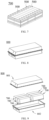
- FIG. 6 shows a secondary battery 500 of a square structure as an example.
- a secondary battery, a battery module, or a battery pack may be selected according to usage requirements.
Landscapes
- Chemical & Material Sciences (AREA)
- Chemical Kinetics & Catalysis (AREA)
- Electrochemistry (AREA)
- General Chemical & Material Sciences (AREA)
- Engineering & Computer Science (AREA)
- Materials Engineering (AREA)
- Composite Materials (AREA)
- Manufacturing & Machinery (AREA)
- Battery Electrode And Active Subsutance (AREA)
- Cell Electrode Carriers And Collectors (AREA)
Abstract
Description
- The present application relates to the field of battery technologies, and in particular, to a negative electrode current collector, a secondary battery containing the same, a battery module, a battery pack, and a power consumption apparatus.
- In recent years, secondary batteries have been widely used in energy storage power systems such as hydropower, firepower, wind power and solar power plants, as well as electric tools, electric bicycles, electric motorcycles, electric automobiles, military devices, aerospace and other fields. As secondary batteries have been greatly developed, higher demands have been placed on their energy density, cycle performance, or the like.
- How to make the secondary battery take into account both higher energy density and better cycle performance is a technical problem to be solved urgently.
- The present application is made in view of the foregoing technical problem, and an objective thereof is to provide a negative electrode current collector, which could effectively prolong a cycle life of a secondary battery while improving coulombic efficiency and energy density of the secondary battery.
- In order to achieve the foregoing objective, the present application provides a negative electrode current collector, a secondary battery containing the same, a battery module, a battery pack, and a power consumption apparatus.
- According to a first aspect, the present application provides a negative electrode current collector, including: a first metal layer, a prelithiation layer, and a second metal layer, where the prelithiation layer is disposed between the first metal layer and the second metal layer, and at least one of the first metal layer and the second metal layer has a porous structure.
- In an embodiment of the present application, a negative electrode current collector has a composite sandwich structure of a metal layer-a prelithiation layer-a metal layer. On the one hand, at least one of the two metal layers has a porous structure, so that a negative active material disposed on a surface of the current collector can be in contact with the prelithiation layer, and the prelithiation layer can be used as a lithium source to pre-compensate for active lithium consumed by processes such as the formation of a negative electrode SEI (solid electrolyte interphase) film in the first cycle of the lithium-ion battery, thereby effectively improving the first-cycle coulombic efficiency of the battery. A gap left by the consumption of the lithium layer provides a space for volume expansion of the negative material during lithium intercalation, which can reduce fracture and polarization of graphite, and improve mechanical stability of the negative electrode and cycle performance. On the other hand, the special composite sandwich structure makes consumption of the prelithiation layer not affect the bonding strength between the negative electrode film layer and the current collector, that is, the negative electrode film layer is not removed from the negative electrode current collector due to the consumption of the prelithiation layer, without compromising the cycle life of the battery.
- In any embodiment, the first metal layer and the second metal layer each have a porous structure.
- When the first metal layer and the second metal layer each have a porous structure, the coulombic efficiency and energy density of the battery may be further improved.
- In any embodiment, the first metal layer is connected to a first surface of the prelithiation layer, and the second metal layer is connected to a second surface of the prelithiation layer.
- It should be understood that the prelithiation layer is disposed between the first metal layer and the second metal layer, and the prelithiation layer may be disposed in various manners. In one embodiment, the prelithiation layer has a first surface and a second surface opposite in a thickness direction, and the first metal layer and the second metal layer are connected or partially connected to the first surface and the second surface of the prelithiation layer, respectively. In another embodiment, the prelithiation layer is disposed between the first metal layer and the second metal layer by metal calendering. Preferably, the first metal layer and the second metal layer are fixedly connected to the first surface and the second surface of the prelithiation layer, respectively, in other words, the first metal layer and the second metal layer are in close contact with the first surface and the second surface of the prelithiation layer, respectively.
- In any embodiment, an area of the first metal layer or the second metal layer is larger than an area of the prelithiation layer.
- In any embodiment, a ratio of an area of the first metal layer to an area of the prelithiation layer is greater than or equal to 1.1.
- In any embodiment, a ratio of an area of the second metal layer to an area of the prelithiation layer is greater than or equal to 1.1.
- In an embodiment of the present application, through structural design, an area of the metal layer in the negative electrode current collector is larger than an area of the prelithiation layer, and the metal layer partially or completely covers the prelithiation layer. Therefore, the exposed area of the prelithiation layer at a solid-liquid interface of the electrode/electrolytic solution is reduced or the direct exposure of the prelithiation layer is avoided, thereby effectively suppressing or avoiding the formation of lithium dendrites on the prelithiation layer, reducing the safety risk, and the waste of the lithium source, improving the prelithiation effect, and further improving the coulombic efficiency of the secondary battery.
- In any embodiment, an area of the first metal layer is equal to an area of the second metal layer.
- In an embodiment of the present application, a first metal layer and a second metal layer with the same area are used. The first metal layer and the second metal layer with the same area are adopted, which facilitates industrial processing and improves the production efficiency of the secondary battery.
- In any embodiment, the prelithiation layer is a lithium foil.
- In an embodiment of the present application, a lithium foil is used as the prelithiation layer, no other binders or adhesives are required, and the lithium foil may be used to obtain a negative electrode current collector with the foregoing composite sandwich structure by a calendering process. The process is simple and the lithium metal is in direct contact with the current collector and the active material, facilitating the transfer of electrons in the electrochemical reaction, shortening the mass transfer distance of lithium ions, and improving the charging and discharging efficiency of the secondary battery.
- In any embodiment, the prelithiation layer is lithium metal powder.
- In any embodiment, the prelithiation layer is lithium silicide powder.
- In any embodiment, an oxidation- reduction potential of the first metal layer and the second metal layer is greater than or equal to 0.337V
- In any embodiment, the first metal layer and/or the second metal layer is a metallic copper material.
- It should be understood that materials of the first metal layer and the second metal layer may be the same or different. Preferably, the first metal layer and the second metal layer are of the same the material.
- In any embodiment, the first metal layer and/or the second metal layer is a porous copper foil.
- In any embodiment, a pore in the porous copper foil has a pore size of 15-500µm, preferably 20-100µm.
- In any embodiment, the porous copper foil has a porosity less than or equal to 50%.
- In any embodiment, the porous copper foil has a thickness of 2.5-6µm, preferably 2.5-4µm.
- In any embodiment, the first metal layer and/or the second metal layer is copper foam.
- It should be understood that structures of the first metal layer and the second metal layer may be the same or different. Illustratively, the first metal layer is a porous copper foil, and the second metal layer is a copper foam. Preferably, the first metal layer and the second metal layer use materials of the same structure.
- In any embodiment, a pore in the copper foam has a pore size of 0.3-7mm.
- In any embodiment, the copper foam has a porosity greater than or equal to 50%, optionally 50%-80%.
- In any embodiment, the copper foam has a thickness of 0.8-10mm.
- In any embodiment, the first metal layer and/or the second metal layer is a copper wire with a mesh structure.
- In any embodiment, the copper wire has a diameter of 0.02-2mm.
- In any embodiment, the first metal layer and/or the second metal layer is a metallic nickel material.
- In any embodiment, the first metal layer and/or the second metal layer is a stainless steel material.
- In a second aspect, the present application provides a secondary battery, including a negative electrode sheet, the negative electrode sheet including the negative electrode current collector according to the first aspect of the present application.
- In a third aspect, the present application also provides a battery module, including the secondary battery according to the second aspect of the present application.
- In a fourth aspect, the present application also provides a battery pack, including one of the secondary battery according to the second aspect of the present application, and the battery module according to the third aspect of the present application.
- In a fifth aspect, the present application also provides a power consuming apparatus, includincluding at least one of the secondary battery according to the second aspect of the present application, the battery module according to the third aspect of the present application, and the battery pack according to the fourth aspect of the present application.
- A negative electrode current collector provided by the present application has a composite sandwich structure composed of a metal layer-a prelithiation layer-a metal layer, which can provide a sufficient lithium source for a negative active material through a porous structure of the metal layer without exposing the prelithiation layer to an electrode/electrolytic solution, so as to supplement active lithium ions consumed by the negative electrode during the formation of the SEI film and the battery cycle. Thus the first-cycle coulombic efficiency of the battery is effectively improved, the energy density of the battery is enhanced, and the cycle life of the battery is prolonged.
- In order to illustrate technical solutions in embodiments of the present application more clearly, brief description will be made below to accompanying drawings required in the embodiments of the present application. Apparently, the accompanying drawings described below are some embodiments of the present application only, and other drawings could be obtained based on these accompanying drawings by persons of ordinary skilled in this art without creative efforts. In the accompanying drawings, the drawings are not drawn to actual scale.
-
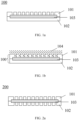
FIG. 1a is a schematic diagram of a negative electrode current collector of the present application. -
FIG. 1b is a schematic diagram of a negative electrode current collector provided with an active material of the present application. -
FIG. 2a is a schematic diagram of another negative electrode current collector of the present application. -
FIG. 2b is a schematic diagram of another negative electrode current collector provided with an active material of the present application. -
FIG. 3 is a schematic flowchart for preparing a negative electrode current collector of the present application. -
FIG. 4a is a schematic diagram of yet another negative electrode current collector of the present application. -
FIG. 4b is a schematic diagram of still another negative electrode current collector of the present application. -
FIG. 5 is a schematic structural diagram of a secondary battery of the present application. -
FIG. 6 is a schematic diagram of a secondary battery with a square structure of the present application. -
FIG. 7 is a schematic diagram of a battery module of the present application. -
FIG. 8 is a schematic diagram of a battery pack of the present application. -
FIG. 9 is an exploded view of a battery pack of the present application. - Hereinafter, embodiments that specifically disclose a negative electrode current collector, a secondary battery containing the same, a battery module, and a power consumption apparatus of the present application will be described in detail with reference to the accompanying drawings as appropriate. However, unnecessarily detailed descriptions may be omitted in some cases. For example, detailed descriptions of well-known matters and repeated descriptions of practically identical structures are omitted. This is done to avoid unnecessarily redundant descriptions for ease of understanding by persons skilled in the art. In addition, the drawings and the following description are provided for a full understanding of the present application by persons skilled in the art, and are not intended to limit the subject matter in the claims.
- A "range" disclosed herein is defined in the form of a lower limit and an upper limit. A given range is defined by selecting a lower limit and an upper limit, and the selected lower limit and upper limit define a boundary of a particular range. The range defined in this manner may or may not include end values, and may be combined arbitrarily, that is, any lower limit may be combined with any upper limit to form a range. For example, if ranges of 60-120 and 80-110 are listed for a particular parameter, it is understood that ranges of 60-110 and 80-120 are also contemplated. In addition, if the minimum range values listed are 1 and 2, and the maximum range values listed are 3, 4 and 5, all the following ranges are contemplated: 1-3, 1-4, 1-5, 2-3, 2-4, and 2-5. In the present application, unless otherwise specified, a numerical range "a-b" represents an abbreviated representation of any combination of real numbers between a and b, where both a and b are real numbers. For example, a numerical range "0-5" means that all real numbers between "0-5" have been listed herein, and "0-5" is just an abbreviated representation of a combination of these numerical values. In addition, when a certain parameter is expressed as an integer ≥2, it is equivalent to disclosing that the parameter is, for example, an integer of 2, 3, 4, 5, 6, 7, 8, 9, 10, 11, 12, or the like.
- In the depiction of the present application, it should be noted that, unless otherwise illustrated, the meaning of "a plurality of" is two or more; and orientations or positional relationships indicated by terms such as "up", "down", "left", "right", "inside", and "outside" are merely for convenience of describing the present application and for simplifying the description, rather than for indicating or implying that an apparatus or element indicated must have a specific orientation, and must be constructed and operated in a specific orientation, which thus shall not be understood as limitation to the present application In addition, the terms such as "first", "second", and "third" are merely intended for the purpose of description, and shall not be understood as an indication or implication of relative importance. "Vertical" is not strictly vertical, but within the allowable range of error. "Parallel" is not strictly parallel, but within the allowable range of error.
- The terms representing orientations in the following description are all directions shown in the drawings, and do not limit the specific structure of the present application. In the description of the present application, it should be further noted that, unless otherwise explicitly specified and defined, terms "installation", "interconnection", and "connection" should be understood in a broad sense; for example, they may be either a fixed connection, or a detachable connection, or an integrated connection; and they may be either a direct connection, or an indirect connection through an intermediate medium. Persons of ordinary skill in the art may appreciate the specific meanings of the foregoing terms in the present application according to specific conditions.
- Unless otherwise specified, "comprising" and "containing" mentioned in the present application are open-ended or closed-ended. For example, the "comprising" and "containing" may mean that other components that are not listed may further be comprised or contained, or only listed components may be comprised or contained.
- In the present application, unless otherwise specified, the term "or" is inclusive. For example, the phrase "A or B" means "A, B or both A and B". More particularly, a condition "A or B" is satisfied by any one of the following: A is true (or present) and B is false (or not present); A is false (or not present) and B is true (or present); or both A and B are true (or present).
- Unless otherwise specified, all embodiments and optional embodiments of the present application may be combined with each other to form a new technical solution.
- Unless otherwise specified, all technical features and optional technical features of the present application may be combined with each other to form a new technical solution.
- Generally, a secondary battery includes a positive electrode sheet, a negative electrode sheet, an electrolyte, and a separator. During charging and discharging of a battery, active ions are intercalated and deintercalated back and forth between the positive electrode sheet and the negative electrode sheet. The electrolyte plays a role of conducting ions between the positive electrode sheet and the negative electrode sheet. The separator is disposed between the positive electrode sheet and the negative electrode sheet, which mainly plays the role of preventing a short circuit between the positive and negative electrodes while allowing ions to pass through.
- In the present application, a lithium-ion battery is taken as an example, the lithium-ion battery is a typical secondary battery, and since it relies on chemical reaction of deintercalation of lithium ions between the positive and negative electrodes for charging and discharging, the lithium-ion battery is also referred to as a rocking chair battery. In the charging process of the lithium-ion battery, lithium ions are deintercalated from the positive electrode, move, and are intercalated into the negative electrode; and in the discharging process, lithium ions are deintercalated from the negative electrode, move, and are intercalated into the positive electrode.
- In the electrochemical reaction of lithium-ion batteries, due to structural changes of the electrode materials in the process of lithiation and delithiation, side reactions of the active material and other factors, the lithium ions deintercalated from the positive electrode materials can not completely return to the positive electrode, which results in the capacity loss of lithium-ion batteries, the decrease of coulombic efficiency, and the development of high energy density lithium-ion batteries is limited.
- For the negative electrode material, the formation of SEI (Solid electrolyte interphase) film is one of the main reasons that the first discharge capacity of the negative electrode is less than the charge capacity.
- It should be understood that processes of "lithiation" and "intercalation" described in the present application refer to processes in which lithium ions are intercalated in the positive material and the negative material due to electrochemical reactions, and processes of "deintercalated", "delithiation" and " deintercalation" described in the present application refer to processes in which lithium ions are deintercalated from the positive material and the negative material due to electrochemical reaction.
- A negative electrode sheet generally includes a negative electrode current collector and a negative electrode film layer disposed on at least one surface of the negative electrode current collector, and the negative electrode film layer includes a negative active material.
- The negative electrode current collector of the present application solves the problems of low coulombic efficiency and short service life of the battery due to irreversible consumption of lithium ions in the secondary battery by means of a special structural design. A composite sandwich structure of a metal layer-a prelithiation layer-a metal layer is used as the negative electrode current collector of the secondary battery, which can prolong the cycle life of the battery while improving the energy density and Coulombic efficiency of the secondary battery. Specifically, in one embodiment, as shown in
FIG. 1a , a negative electrodecurrent collector 100 includes:
afirst metal layer 101, aprelithiation layer 103, and asecond metal layer 102. - The
prelithiation layer 103 is configured to supplement lithium ions for an active material disposed on a surface of the negative electrode current collector in an electrochemical reaction of a lithium-ion battery, and theprelithiation layer 103 is disposed between thefirst metal layer 101 and thesecond metal layer 102, and at least one of thefirst metal layer 101 and thesecond metal layer 102 has a porous structure. - In this embodiment, the first metal layer, the prelithiation layer, and the second metal layer form a special composite sandwich structure. The negative active material is disposed on a surface of the current collector, that is, a surface of the metal layer, and at least one of the two metal layers has a porous structure, so that the active material disposed on the surface of the current collector can be in contact with the prelithiation layer through the porous structure, and the prelithiation layer can be used as a lithium source to supplement the active lithium consumed during the formation of the SEI film and the cycle of the battery, thereby effectively improving the first-cycle coulombic efficiency of the secondary battery. In addition, the special composite sandwich structure makes the consumption of the prelithiation layer not affect the structure between the active material and the current collector, that is, the active material is not removed from the negative electrode current collector due to the consumption of the prelithiation layer, and the cycle life of the battery is prolonged. In addition, when the prelithiation layer is completely consumed, as for the negative electrode current collector, a hollow structure composed of the two metal layers is formed. On the one hand, it can improve the problem of performance degradation of the battery due to volume expansion caused by the accumulation of by-products at the electrodes during the cycle of the battery. On the other hand, it can also provide a space for expansion due to structural change of the active material during the cycle of the battery, to solve the problem of deterioration of kinetic performance of the battery caused by the expansion of the active material, and to further prolong the cycle life of the battery.
- In the negative electrode current collector of the present application, at least one of the
first metal layer 101 or thesecond metal layer 102 has a porous structure. - In some embodiments, the
first metal layer 101 and thesecond metal layer 102 each have a porous structure. When the first metal layer and the second metal layer each have a porous structure, both faces of the negative electrode current collector may be in contact with the negative active material through the porous structure, which increases the contact area between the prelithiation layer and the negative active material, and further improves the coulombic efficiency of the lithium-ion battery. The active materials may be disposed on both faces of the negative electrode current collector, and therefore the active materials on both faces may participate in the reaction of the lithium-ion battery, which effectively improves the energy density of the lithium-ion battery. - It should be understood that the negative active material is in contact with the prelithiation layer through a metal layer having a porous structure.
- The
prelithiation layer 103 has a first surface and a second surface opposite in its own thickness direction. - Optionally, in one embodiment, the
first metal layer 101 is connected to a first surface of theprelithiation layer 103, and thesecond metal layer 102 is connected or partially connected to a second surface ofprelithiation layer 103. - Specifically, calendering and other processes may be performed on the first metal layer, the prelithiation layer, and the second metal layer, such that the first surface and the second surface of the prelithiation layer are connected or partially connected to the first metal layer and the second metal layer, respectively.
- Optionally, in one embodiment, the
prelithiation layer 103 is disposed between thefirst metal layer 101 and thesecond metal layer 102 by a binder. - It should be understood that the prelithiation layer may be disposed between the first metal layer and the second metal layer in various ways, preferably, the
first metal layer 101 and thesecond metal layer 102 are fixedly connected to the first surface and the second surface of theprelithiation layer 103, respectively. In other words, thefirst metal layer 101 and thesecond metal layer 102 are in close contact with the first surface and the second surface of theprelithiation layer 103, respectively. - Optionally, as shown in
FIG. 2a ., in one embodiment, afirst metal layer 101 and asecond metal layer 102 each have a porous structure. A negative electrodecurrent collector 200 having a double-face porous structure is provided with an active material thereon. Preferably, as shown inFIG. 2b , afirst metal layer 101 and asecond metal layer 102 of a negative electrodecurrent collector 200 that each have a porous structure are provided with an active material thereon. - In this embodiment, the negative electrode current collector has two metal layers with the porous structure, so that both faces of the negative electrode current collector may be in contact with the active material through the porous structure, which increases the contact area between the prelithiation layer and the active material, and further improves the coulombic efficiency of the secondary battery. The active materials may be disposed on both faces of the negative electrode current collector, and the active materials on both faces may participate in the reaction of the battery, which effectively improves the energy density of the secondary battery.
- Optionally, in one embodiment, an area of the
first metal layer 101 and/or an area of thesecond metal layer 102 is larger than an area of theprelithiation layer 103. Specifically, a ratio of the area of thefirst metal layer 101 to the area of theprelithiation layer 103 is greater than or equal to 1.1; and/or a ratio of the area of thesecond metal layer 102 to the area of theprelithiation layer 103 is greater than or equal to 1.1. - In an embodiment of the present application, through structural design, an area of the metal layer in the negative electrode current collector is larger than an area of the prelithiation layer, and the metal layer partially or completely covers the prelithiation layer, and can be closed at the edge of the prelithiation layer so as to wrap the prelithiation layer. Therefore, the exposed area of the prelithiation layer at a solid-liquid interface of the electrode/electrolytic solution is reduced, or the direct exposure of the prelithiation layer is avoided, thereby effectively suppressing or avoiding the formation of lithium dendrites on the prelithiation layer, reducing the waste of the lithium source, improving the prelithiation effect, and further improving the coulombic efficiency of the secondary battery.
- Optionally, in one embodiment, the
first metal layer 101 has a first region and a second region, and thesecond metal layer 102 has a first region and a second region, where the first region of thefirst metal layer 101 is connected to the first surface of theprelithiation layer 103, the first region of thesecond metal layer 102 is connected to the second surface of theprelithiation layer 103, and the second region of thefirst metal layer 101 is connected to the second region of thesecond metal layer 102. - Preferably, in one embodiment, the second region of the
first metal layer 101 surrounds the first region of thefirst metal layer 101; and the second region of thesecond metal layer 102 surrounds the first region of thesecond metal layer 102. - Optionally, in one embodiment, the area of the
first metal layer 101 is equal to the area of thesecond metal layer 102. - In the embodiment of the present application, by using the first metal layer and the second metal layer with the same area, on the one hand, the area of the first metal layer and the area of the second metal layer are each greater than the area of the prelithiation layer, so that the prelithiation layer is completely covered, thereby avoiding the exposure of the prelithiation layer to the solid-liquid interface of the electrode/electrolytic solution, and improving the prelithiation effect. Meanwhile, on the other hand, the use of the first metal layer and the second metal layer with the same area is convenient for industrial processing and improves the production efficiency of the secondary battery.
- Optionally, in one embodiment, the
prelithiation layer 103 is a lithium foil. - Specifically, as shown in
FIG. 3, FIG. 3 is a schematic flowchart for preparing a negative electrode current collector of an embodiment of the present application. A lithium foil is inserted into a first metal layer and a second metal layer, and the three are connected together by means of calendering, to obtain a composite sandwich structure of a metal layer-lithium foil-metal layer. - In an embodiment of the present application, a lithium foil is used as the prelithiation layer, no other binders or adhesives are required, and the lithium foil may be directly connected to the metal layer through a calendering process, to obtain a negative electrode current collector with the foregoing composite sandwich structure. The process is simple and the lithium metal is in direct contact with the current collector and the active material, facilitating the transfer of electrons in the electrochemical reaction, shortening the mass transfer distance of lithium ions, and improving the charging and discharging efficiency of the secondary battery.
- Optionally, in one embodiment, the
prelithiation layer 103 is lithium metal powder. - Optionally, in one embodiment, the
prelithiation layer 103 is lithium silicide powder. - Specifically, the lithium metal powder or lithium silicide powder may be directly provided between the
first metal layer 101 and thesecond metal layer 102, or may be provided between thefirst metal layer 101 and thesecond metal layer 102 through a binder and/or other adjuvants, which is not limited by the embodiment of the present application. - Optionally, in one embodiment, the
prelithiation layer 103 is a lithium salt compound capable of providing lithium ions to the active material. - Optionally, in one embodiment, an oxidation-reduction potential of the
first metal layer 101 and thesecond metal layer 102 is greater than or equal to 0.337V. - It should be understood that in the secondary battery, the negative electrode has a lower potential relative to the positive electrode. In this embodiment, a metal material with an oxidation-reduction potential greater than or equal to 0.377V is used as a current collector, which can maintain electrochemical stability at a low potential, that is, no oxidation-reduction reaction occurs at a low potential, and thus the electrochemical reaction of the battery is ensured to proceed normally.
- Optionally, in one embodiment, the
first metal layer 101 and/or thesecond metal layer 102 is a metallic copper material. - It should be understood that the materials of the
first metal layer 101 and thesecond metal layer 102 may be the same or different. Preferably, the same material is used for thefirst metal layer 101 and thesecond metal layer 102. - Optionally, in one embodiment, the
first metal layer 101 and/or thesecond metal layer 102 is a porous copper foil. - Optionally, in one embodiment, a pore in the porous copper foil has a pore size of 15-500µm, preferably 20-100µm.
- Optionally, in one embodiment, the porous copper foil has a porosity of less than or equal to 50%.
- Optionally, in one embodiment, the porous copper foil has a thickness of 2.5-6µm, preferably 2.5-4µm.
- Optionally, in one embodiment, the
first metal layer 101 and/or thesecond metal layer 102 is copper foam. - It should be understood that structures of the
first metal layer 101 and thesecond metal layer 102 may be the same or different. Illustratively, thefirst metal layer 101 is a porous copper foil, and thesecond metal layer 102 is a copper foam. Preferably, thefirst metal layer 101 and thesecond metal layer 102 use materials of the same structure. - In this embodiment, copper foam is used as a metal layer material of the negative electrode current collector, and the copper foam has a larger specific surface area, and can support more active materials than planar materials, so as to provide more active materials for the electrochemical reaction of the secondary battery, which further improves the energy density of the secondary battery.
-
FIG. 4a is a schematic diagram of yet another negative electrode current collector 401 of an embodiment of the present application.FIG.4b is a schematic diagram of still another negative electrode current collector 402 of an embodiment of the present application. - Illustratively, in
FIG. 4a , afirst metal layer 101 of the negative electrode current collector 401 is a porous copper foil, and asecond metal layer 102 is a copper foam. InFIG. 4b , afirst metal layer 101 and asecond metal layer 102 of the negative electrode current collector both 402 are copper foam. - Optionally, in one embodiment, a pore in the copper foam has a pore size of 0.3-7mm.
- Optionally, in one embodiment, the copper foam has a porosity of 50-80%.
- Optionally, in one embodiment, the copper foam has a thickness of 0.8-10mm.
- Optionally, in one embodiment, the
first metal layer 101 and/or thesecond metal layer 102 is a copper wire with a mesh structure. - Optionally, in one embodiment, the copper wire has a diameter of 0.02-2mm.
- Optionally, in one embodiment, the
first metal layer 101 and/or thesecond metal layer 102 is a metallic nickel material. - Optionally, in one embodiment, the
first metal layer 101 and/or thesecond metal layer 102 is a stainless steel material. - Preferably, the first copper foil and the second copper foil have the same area, thickness, pore size, and porosity.
-
FIG. 5 shows a schematic structural diagram of a secondary battery of an embodiment of the present application. - As shown in
FIG. 5 , the present application also provides asecondary battery 500, including:
anegative electrode sheet 501 including the negative electrode current collector of any embodiment of the present application. - Optionally, in one embodiment, the
negative electrode sheet 501 further includes:
anactive material layer 502, the active material layer being disposed on a surface of the negative electrode current collector and being in contact with a prelithiation layer of the negative electrode current collector through a porous structure of the negative electrode current collector; and an area of the active material layer being larger than an area of the prelithiation layer. - The negative electrode film layer may be disposed on only one surface of the negative electrode current collector, or on both surfaces of the negative electrode current collector at the same time.
- Optionally, in one embodiment, the negative active material may employ a negative active material for a battery known in the art. As an example, the negative active material may include at least one of artificial graphite, natural graphite, soft carbon, hard carbon, silicon-based materials, tin-based materials, lithium titanate, or the like. The silicon-based material may be selected from at least one of elemental silicon, silicon oxide compound, silicon-carbon composite, silicon-nitrogen composite, and silicon alloy. The tin-based material may be selected from at least one of elemental tin, tin oxide compound, and tin alloy. However, the present application is not limited to these materials, and other conventional materials that can be used as a negative active material for a battery may also be used. One type of these negative active materials may be used alone, or two or more types thereof may be used in combination.
- As shown in
FIG. 1b , it is a schematic diagram of a negative electrode current collector and an active material disposed thereon of an embodiment of the present application. Specifically, a negative active material and an additive form a negative electrode film layer and are coated on the negative electrodecurrent collector 100, and thus a negativeelectrode film layer 104 is formed. Preferably, an active material is provided on thefirst metal layer 101 of the negative electrodecurrent collector 100 that has a porous structure. - Optionally, in one embodiment, the negative electrode film layer further includes a binder. The binder may be selected from at least one of styrene-butadiene rubber (SBR), polyacrylic acid (PAA), polyacrylate sodium (PAAS), polyacrylamide (PAM), polyvinyl alcohol (PVA), sodium alginate (SA), polymethacrylic acid (PMAA), and carboxymethyl chitosan (CMCS).
- Optionally, in one embodiment, the negative electrode film layer also includes a conductive agent. The conductive agent may be selected from at least one of superconducting carbon, acetylene black, carbon black, Ketjen black, carbon dots, carbon nanotubes, graphene, and carbon nanofibers.
- Optionally, in one embodiment, the negative electrode film layer also optionally includes other adjuvants, for example, thickening agents (such as sodium carboxymethyl cellulose (CMC-Na)), or the like.
- A positive electrode sheet include a positive electrode current collector and a positive electrode film layer disposed on at least one surface of the positive electrode current collector, and the positive electrode film layer includes the positive active material of the first aspect of the present application.
- As an example, the positive electrode current collector has two surfaces opposite in its own thickness direction, and the positive electrode film layer is disposed on either or both of the two opposite surfaces of the positive electrode current collector.
- In some embodiments, the positive electrode current collector may be a metal foil or a composite current collector. For example, as the metal foil, an aluminum foil may be used. The composite current collector may include a polymer material base layer and a metal layer formed on at least one surface of the polymer material base layer. The composite current collector may be formed by synthesizing a metal material (aluminum, aluminum alloy, nickel, nickel alloy, titanium, titanium alloy, silver, silver alloy, or the like) on a polymer material substrate (such as a substrate of polypropylene (PP), polyethylene terephthalate (PET), polybutylene terephthalate (PBT), polystyrene (PS), polyethylene (PE), or the like).
- In some embodiments, the positive active material may employ a positive active material for a battery known in the art. As an example, the positive active material may include at least one of the following materials: a lithium containing phosphate in an olivine structure, a lithium transition metal oxide and their respective modified compounds. However, the present application is not limited to these materials, and other conventional materials that can be used as a positive active material for a battery may also be used. One type of these positive active materials may be used alone, or two or more types thereof may be used in combination. Examples of the lithium transition metal oxide may include, but are not limited to, at least one of lithium cobalt oxide (such as LiCoO2), lithium nickel oxide (such as LiNiO2), lithium manganese oxide (such as LiMnO2, LiMn2O4), lithium nickel cobalt oxide, lithium manganese cobalt oxide, lithium nickel manganese oxide, lithium nickel cobalt manganese oxide (such as LiNi1/3Co1/3Mn1/3O2 (NCM333 for short), LiNi0.5Co0.2Mn0.3O2 (NCM523 for short), LiNi0.5Co0.25Mn0.25O2 (NCM211 for short), LiNi0.6Co0.2Mn0.202 (NCM622 for short), LiNi0.8Co0.1Mn0.1O2 (NCM811 for short)), lithium nickel cobalt aluminum oxide (such as LiNi0.85Co0.15A10.05O2), their modified compounds, or the like. Examples of the lithium containing phosphate in the olivine structure may include, but are not limited to, at least one of lithium iron phosphate (such as LiFePO4 (LFP for short)), composite materials of lithium iron phosphate and carbon, lithium manganese phosphate (such as LiMnPO4), composite materials of lithium manganese phosphate and carbon, lithium manganese iron phosphate, and composite materials of lithium manganese iron phosphate and carbon.
- In some embodiments, the positive electrode film layer also optionally includes a binder. As an example, the binder may include at least one of polyvinylidene fluoride (PVDF), polytetrafluoroethylene (PTFE), vinylidene fluoride-tetrafluoroethylene-propylene terpolymer, vinylidene fluoride-hexafluoropropylene-tetrafluoroethylene terpolymer, tetrafluoroethylene-hexafluoropropylene copolymer and fluoroacrylate resin.
- In some embodiments, the positive electrode film layer also optionally includes a conductive agent. As an example, the conductive agent may include at least one of superconducting carbon, acetylene black, carbon black, Ketjen black, carbon dots, carbon nanotubes, graphene, and carbon nanofibers.
- In some embodiments, the positive electrode sheet may be prepared in the following manner. The foregoing components for preparing the positive electrode sheet such as the positive active material, the conductive agent, the binder, and any other components are dispersed in a solvent (such as N-methylpyrrolidone), to form a positive electrode slurry, the positive electrode slurry is coated on the positive electrode current collector, and then after drying, cold pressing and other processes are performed, a positive electrode sheet may be obtained.
- The electrolyte plays the role of conducting ions between the positive electrode sheet and the negative electrode sheet. The type of the electrolyte is not specifically limited in the present application, and may be selected according to needs. For example, the electrolyte may be in a liquid state, gel state, or all solid state.
- In some embodiments, the electrolyte is an electrolytic solution. The electrolytic solution includes an electrolyte salt and a solvent.
- In some embodiments, the electrolyte salt may be selected from at least one of lithium hexafluorophosphate, lithium tetrafluoroborate, lithium perchlorate, lithium hexafluoroarsenate, lithium bisfluorosulfonimide, lithium bistrifluoromethanesulfonimide, lithium trifluoromethanesulfonate, lithium difluorophosphate, lithium difluorooxalateborate, lithium bisoxalateborate, lithium difluorobisoxalate phosphate, and lithium tetrafluorooxalate phosphate.
- In some embodiments, the solvent may be selected from at least one of ethylene carbonate, propylene carbonate, ethyl methyl carbonate, diethyl carbonate, dimethyl carbonate, dipropyl carbonate, methyl propyl carbonate, ethylene propyl carbonate, butylene carbonate, fluoroethylene carbonate, methyl formate, methyl acetate, ethyl acetate, propyl acetate, methyl propionate, ethyl propionate, propyl propionate, methyl butyrate, ethyl butyrate, 1,4-butyrolactone, sulfolane, methyl sulfonyl methane, ethyl methyl sulfone, and diethyl sulfone.
- In some embodiments, the electrolytic solution also optionally includes an additive. For example, the additive may include a negative electrode film-forming additive, a positive electrode film-forming additive, and an additive capable of improving specific performance of the battery, for example, an additive for improving overcharge performance of the battery, or an additive for improving high-temperature or low-temperature performance of the battery, or the like.
- In some embodiments, a separator is further included in the secondary battery. The type of the separator is not particularly limited in the present application, and any well-known porous structure separator with good chemical stability and mechanical stability may be selected.
- In some embodiments, the material of the separator may be selected from at least one of glass fiber, non-woven fabric, polyethylene, polypropylene, and polyvinylidene difluoride. The separator may be a single-layer film or a multi-layer composite film, which is not particularly limited. When the separator is a multi-layer composite film, the materials of each layer may be the same or different, which is not particularly limited.
- In some embodiments, the positive electrode sheet, the negative electrode sheet, and the separator may be subject to a winding process or a lamination process, to obtain an electrode assembly.
- In some embodiments, the secondary battery may include an outer package. The outer package may be used to package the foregoing electrode assembly and electrolyte.
- In some embodiments, the outer package of the secondary battery may be a hard shell such as a hard plastic shell, an aluminum shell, or a steel shell. In some embodiments, the outer package of the battery cell may be a soft package, such as a bag-type soft package. A material of the soft package may be plastic, for example, polypropylene, polybutylene terephthalate, and polybutylene succinate.
- The present application has no particular limitation on the shape of the secondary battery, which may be a cylinder, a square, or any other shape. For example,
FIG. 6 shows asecondary battery 500 of a square structure as an example. -
FIG. 7 shows abattery module 700 as an example. Referring toFIG. 7 , in thebattery module 700, a plurality ofsecondary batteries 500 may be sequentially arranged along a length direction of thebattery module 700. Certainly, they may be arranged in accordance with any other manner. Further, the plurality ofsecondary batteries 500 may be fixed by using fasteners. - Optionally, the
battery module 700 may further include a shell with an accommodating space, and the plurality ofsecondary batteries 500 are accommodated in the accommodating space. - In some embodiments, battery modules may be further assembled into a battery pack, and the number of battery modules included in the battery pack may be one or more, and the specific number may be selected by persons skilled in the art according to application and capacity of the battery pack.
-
FIG. 8 and FIG. 9 show abattery pack 800 as an example. Referring toFIG. 8 and FIG. 9 , thebattery pack 800 may include a battery box and a plurality ofbattery modules 700 disposed in the battery box. The battery box includes anupper box 801 and alower box 802. Theupper box 801 can cover thelower box 802 and form an enclosed space for accommodating thebattery modules 700. The plurality ofbattery modules 700 may be arranged in the battery box in any manner. - In addition, the present application also provides a power consumption apparatus including at least one of a secondary battery, a battery module, or a battery pack provided by the present application. The secondary battery, the battery module, or the battery pack may be used as a power source for the power consumption apparatus as well as an energy storage unit for the power consumption apparatus. The power consumption apparatus may include a mobile device (for example, a mobile phone, a notebook computer), an electric vehicle (for example, a pure electric vehicle, a hybrid electric vehicle, a plug-in hybrid electric vehicle, an electric bicycle, an electric scooter, an electric golf cart, an electric truck), an electric train, a ship and a satellite, an energy storage system, or the like, but is not limited to this.
- As the power consumption apparatus, a secondary battery, a battery module, or a battery pack may be selected according to usage requirements.
- A power consumption apparatus is as an example. The power consumption apparatus is a pure electric vehicle, a hybrid electric vehicle, a plug-in hybrid electric vehicle, or the like. To meet a requirement of the power consumption apparatus for high power and high energy density of a secondary battery, a battery pack or a battery module may be used.
- In another example, the apparatus may be a mobile phone, a tablet computer, a notebook computer, or the like. The apparatus usually requires lightness and thinness, and a secondary battery may be used as a power source.
- Hereinafter, an embodiment of the present application will be described. The embodiments described below are illustrative, only used to explain the present application, and should not be construed as a limitation to the present application. Where specific techniques or conditions are not specified in the embodiments, they are performed according to techniques or conditions described in the literature in the art or according to product specifications. The reagents or instruments used without specifying the manufacturer are conventional products that can be obtained from the market.
-
- (1) Preparation of Negative Electrode Current Collector: Use a porous copper foil, a copper foam, and a copper wire as a first metal layer and a second metal layer, respectively, and perform calendering together with a lithium foil (a prelithiation layer), to obtain a negative electrode current collector with a composite sandwich structure as a current collector of a negative electrode of a secondary battery, where an area of the first metal layer is equal to an area of the second metal layer, and the area of the first metal layer and the area of the second metal layer both are greater than an area of the prelithiation layer, and a ratio of the area of the first metal layer or the area of the second metal layer to the area of the prelithiation layer is greater than or equal to 1.1. For example, side lengths of the square first and second metal layers with the same area are 5-10 mm longer than a side length of the square prelithiation layer. The specific parameters of the first metal layer and the second metal layer are shown in Table 1.
- In Table 1, A represents a porous copper foil, B represents a copper wire non-woven fabric, C represents copper foam, D represents a non-porous copper foil, and X/Y represents a ratio of an area of a first metal layer or an area of a second metal layer to an area of a prelithiation layer.
- (2) Preparation of Negative Electrode Sheet: Mix artificial graphite as a negative active material, acetylene black as a conductive agent, styrene-butadiene rubber (SBR) as a binder, and sodium carboxymethyl cellulose (CMC-Na) as a thickening agent in a mass ratio of 96:1:1:1, then add deionized water as a solvent, and fully stir them according to a well-known method in the art, to obtain a negative electrode slurry; and evenly coat the negative electrode slurry on a copper foil of a negative electrode current collector, and dry it to obtain a negative electrode film layer, and then perform cold pressing, to obtain a negative electrode sheet.
- (3) Preparation of Positive Electrode Sheet: Mix lithium iron phosphate as a positive active material, polyvinylidene fluoride as a binder, and acetylene black as a conductive agent in a mass ratio of 97:2:1, add N-methylpyrrolidone (NMP) as a solvent to adjust viscosity, and fully stir them according to a well-known method in the art, to obtain a positive electrode slurry; and evenly coat the positive electrode slurry on an aluminum foil of a positive electrode current collector, and dry it to obtain a positive electrode film layer, and then perform cold pressing, to obtain a positive electrode sheet.
- (4) Preparation of Separator: Use a polyethylene (PE) film as a separator.
- (5) Preparation of Electrolytic Solution: In an argon atmosphere glove box with water content less than 10ppm, uniformly mix ethylene carbonate (EC), dimethyl carbonate (DMC), and ethyl methyl carbonate (EMC) in a volume ratio of 30:40:3, to obtain an organic solvent, add vinylene carbonate (VC) with a mass fraction of 1%, and then uniformly dissolve 1mol/L of LiPF6 in the foregoing organic solvent, to obtain an electrolytic solution.
- (6) Preparation of Secondary Battery: Stack a positive electrode sheet, a separator, and a negative electrode sheet in sequence, and perform winding, to obtain an electrode assembly; put the electrode assembly into an aluminum shell, weld a top cover, dry it and then inject an electrolytic solution, and perform processes such as standing, formation, sealing and welding, aging, and capacity, to obtain a secondary battery.
- The preparation steps of Comparative Example 1 are the same as those of Embodiment 1, except that in step (1), a copper foil with a thickness of 6µm is used as the negative electrode current collector of the lithium-ion battery.
- The preparation steps of Comparative Example 2 are the same as those of Embodiment 1, except that in step (1), the negative electrode current collector includes a first metal layer, and a porous copper foil is selected as the first metal layer, and a lithium foil is disposed on the first metal layer by a calendering process.
- At 25° C, charge the secondary battery prepared in each Embodiment and Comparative Example at a constant current rate of 1C until a charge cutoff voltage V1, then charge it at a constant voltage until a current is equal to or less than 0.05C, and stand for 5 min; and perform discharging on the secondary battery prepared in each Example and Comparative Example at a constant current rate of 1C until a cutoff voltage V2, and stand for 5 min, which is the first charge-discharge cycle; and record the first-cycle charge capacity and the first-cycle discharge capacity, where the first-cycle coulombic efficiency is a ratio of the first-cycle discharge capacity to the first-cycle charge capacity, and test results are shown in Table 2.
- At 25°C, charge the secondary battery prepared in each Embodiment and Comparative Example at a constant current rate of 1C until a charge cutoff voltage V1, then charge it at a constant voltage until a current is equal to or less than 0.05C, and stand for 5 min; and then perform discharging at a constant current rate of 0.33C until a discharge cutoff voltage V2, and stand for 5min, which is a charge-discharge cycle; and according to this method, perform a cyclic charge/discharge test on the battery, until the battery capacity decays to 80%, where the number of cycles at this time is the cycle life of the battery, and test results are shown in Table 2.
Table 2 First-cycle coulombic efficiency Cycle life (cycles) Embodiment 1 99.80% 5849 Embodiment 2 99.76% 5137 Embodiment 3 98.90% 4457 Embodiment 4 97.20% 4186 Embodiment 5 98.50% 4964 Embodiment 6 99.10% 4050 Embodiment 7 99.84% 4832 Embodiment 8 99.84% 4597 Embodiment 9 99.60% 4854 Embodiment 10 99.41% 4525 Embodiment 11 99.74% 5461 Embodiment 12 99.53% 5206 Embodiment 13 98.26% 4967 Comparative example 1 93.00% 2800 Comparative example 2 95.30% 4000 - It can be seen from the foregoing performance test for the lithium-ion battery that the negative electrode current collector provided by the present application can effectively improve the first-cycle coulombic efficiency and cycle life of the lithium-ion battery.
- It should be noted that the present application is not limited to the foregoing embodiments. The foregoing embodiments are merely examples, and embodiments having substantially the same constitution as the technical idea and exerting the same effects within the technical solution of the present application are all included within the technical scope of the present application. In addition, various modifications may be made to the embodiments by persons skilled in the art without departing from the spirit and scope of the present application, and other embodiments that are constructed by combining some of the constituent elements of the embodiments are also included in the scope of the present application.
| Embodi ment | First metal layer | Prelit hiatio n layer | Second metal layer | X/Y | ||||||
| Mat erial | Pore size | Porosit y | Thick ness | Thick ness | Mat erial | Pore size | Porosity | Thick ness | ||
| 1 | A | 40µm | 25% | 3.5µm | 3µm | A | 40µm | 25% | 3.5µm | 1.1 |
| 2 | A | 40µm | 25% | 3.5µm | 3µm | A | 40µm | 25% | 3.5µm | 1.15 |
| 3 | B | / | / | 1.5m m | 3µm | A | 40µm | 25% | 3.5µm | 1.1 |
| 4 | B | / | / | 1.5m m | 3µm | B | / | / | 1.5m m | 1.1 |
| 5 | C | 0.3mm | 50% | 0.8m m | 3µm | D | / | / | 6µm | 1.1 |
| 6 | C | 0.3mm | 50% | 0.8m m | 3µm | C | 0.3m m | 50% | 0.8m m | 1.1 |
| 7 | A | 40µm | 40% | 3.5µm | 3µm | A | 40µm | 25% | 3.5µm | 1.1 |
| 8 | A | 40µm | 40% | 3.5µm | 3µm | A | 40µm | 40% | 3.5µm | 1.1 |
| 9 | A | 80µm | 25% | 3.5µm | 3µm | A | 40µm | 25% | 3.5µm | 1.1 |
| 10 | A | 80µm | 25% | 3.5µm | 3µm | A | 80µm | 25% | 3.5µm | 1.1 |
| 11 | A | 40µm | 25% | 5µm | 3µm | A | 40µm | 25% | 3.5µm | 1.1 |
| 12 | A | 40µm | 25% | 5µm | 3µm | A | 40µm | 25% | 5µm | 1.1 |
| 13 | A | 40µm | 25% | 3.5µm | 2µm | A | 40µm | 25% | 3.5µm | 1.1 |
| 14 | A | 40µm | 25% | 3.5µm | 5µm | A | 40µm | 25% | 3.5µm | 1.1 |
Claims (26)
- A negative electrode current collector, comprising:a first metal layer, a prelithiation layer, and a second metal layer;wherein the prelithiation layer is disposed between the first metal layer and the second metal layer, and at least one of the first metal layer and the second metal layer has a porous structure.
- The negative electrode current collector according to claim 1, wherein the first metal layer and the second metal layer each have a porous structure.
- The negative electrode current collector according to claim 1 or 2, wherein an area of the first metal layer or the second metal layer is larger than an area of the prelithiation layer;optionally, a ratio of an area of the first metal layer to an area of the prelithiation layer is greater than or equal to 1.1; andoptionally, a ratio of an area of the second metal layer to an area of the prelithiation layer is greater than or equal to 1.1.
- The negative electrode current collector according to claim 3, wherein an area of the first metal layer is equal to an area of the second metal layer.
- The negative electrode current collector according to any one of claims 1 to 4, wherein the prelithiation layer is a lithium foil.
- The negative electrode current collector according to any one of claims 1 to 4, wherein the prelithiation layer is lithium metal powder.
- The negative electrode current collector according to any one of claims 1 to 4, wherein the prelithiation layer is lithium silicide powder.
- The negative electrode current collector according to any one of claims 1 to 7, wherein an oxidation-reduction potential of the first metal layer and the second metal layer is greater than or equal to 0.337V.
- The negative electrode current collector according to any one of claims 1 to 8, wherein the first metal layer and/or the second metal layer is a metallic copper material.
- The negative electrode current collector according to claim 9, wherein the first metal layer and/or the second metal layer is a porous copper foil.
- The negative electrode current collector according to claim 10, wherein a pore in the porous copper foil has a pore size of 15-500µm.
- The negative electrode current collector according to claim 10, wherein the porous copper foil has a porosity less than or equal to 50%.
- The negative electrode current collector according to claim 10, wherein the porous copper foil has a thickness of 2.5-6µm.
- The negative electrode current collector according to any one of claims 1 to 13, wherein the first metal layer and/or the second metal layer is copper foam.
- The negative electrode current collector according to claim 14, wherein a pore in the copper foam has a pore size of 0.3-7mm.
- The negative electrode current collector according to claim 14, wherein the copper foam has a porosity greater than or equal to 50%, optionally 50%-80%.
- The negative electrode current collector according to claim 14, wherein the copper foam has a thickness of 0.8-10mm.
- The negative electrode current collector according to any one of claims 1 to 17, wherein the first metal layer and/or the second metal layer is a copper wire with a mesh structure.
- The negative electrode current collector according to claim 18, wherein the copper wire has a diameter of 0.02-2mm.
- The negative electrode current collector according to any one of claims 1 to 7, wherein the first metal layer and/or the second metal layer is a metallic nickel material.
- The negative electrode current collector according to any one of claims 1 to 7, wherein the first metal layer and/or the second metal layer is a stainless steel material.
- A secondary battery, comprising a negative electrode sheet, the negative electrode sheet comprising the negative electrode current collector of any one of claims 1 to 21.
- The secondary battery according to claim 22, wherein the negative electrode sheet further comprises:
an active material layer, the active material layer being disposed on a surface of the negative electrode current collector and being in contact with a prelithiation layer of the negative electrode current collector through a porous structure of the negative electrode current collector; and an area of the active material layer being larger than an area of the prelithiation layer. - A battery module comprising the secondary battery according to claim 22 or 23.
- A battery pack, comprising one of the secondary battery according to claim 22 or 23, and the battery module according to claim 24.
- A power consumption apparatus, comprising at least one of the secondary battery according to claim 22 or 23, the battery module according to claim 24, and the battery pack according to claim 25.
Applications Claiming Priority (1)
| Application Number | Priority Date | Filing Date | Title |
|---|---|---|---|
| PCT/CN2021/116532 WO2023029002A1 (en) | 2021-09-03 | 2021-09-03 | Negative current collector and secondary battery comprising same, and battery module, battery pack and electric device |
Publications (2)
| Publication Number | Publication Date |
|---|---|
| EP4167325A1 true EP4167325A1 (en) | 2023-04-19 |
| EP4167325A4 EP4167325A4 (en) | 2023-07-26 |
Family
ID=85411848
Family Applications (1)
| Application Number | Title | Priority Date | Filing Date |
|---|---|---|---|
| EP21933482.8A Pending EP4167325A4 (en) | 2021-09-03 | 2021-09-03 | NEGATIVE CURRENT COLLECTOR AND SECONDARY BATTERY THEREOF, AND BATTERY MODULE, BATTERY PACK AND ELECTRICAL DEVICE |
Country Status (4)
| Country | Link |
|---|---|
| US (1) | US20230116710A1 (en) |
| EP (1) | EP4167325A4 (en) |
| CN (1) | CN116075955B (en) |
| WO (1) | WO2023029002A1 (en) |
Families Citing this family (5)
| Publication number | Priority date | Publication date | Assignee | Title |
|---|---|---|---|---|
| CN116565138A (en) * | 2022-01-28 | 2023-08-08 | 通用汽车环球科技运作有限责任公司 | Prelithiated precursor electrode and methods of making and using same |
| CN116705981B (en) * | 2023-07-27 | 2024-05-03 | 宁德时代新能源科技股份有限公司 | Negative electrode sheet and preparation method thereof, battery and electrical equipment |
| CN117276468B (en) * | 2023-11-23 | 2024-04-12 | 宁德时代新能源科技股份有限公司 | Negative electrode sheet, battery and electrical device |
| CN120072954A (en) * | 2025-04-28 | 2025-05-30 | 吉林大学 | Lithium metal battery current collector with composite structure and preparation method thereof |
| CN121123293B (en) * | 2025-11-10 | 2026-03-06 | 重庆太蓝新能源有限公司 | Negative current collector and preparation method and application thereof |
Family Cites Families (8)
| Publication number | Priority date | Publication date | Assignee | Title |
|---|---|---|---|---|
| US9385397B2 (en) * | 2011-08-19 | 2016-07-05 | Nanotek Instruments, Inc. | Prelithiated current collector and secondary lithium cells containing same |
| KR102362887B1 (en) * | 2018-01-03 | 2022-02-14 | 주식회사 엘지에너지솔루션 | Method of pre-lithiating an anode for lithium secondary battery and Lithium metal laminate for being used therefor |
| CN209626322U (en) * | 2018-09-29 | 2019-11-12 | 珠海格力电器股份有限公司 | Negative current collector, negative pole piece and lithium ion battery |
| CN110350202A (en) * | 2019-07-24 | 2019-10-18 | 江苏塔菲尔新能源科技股份有限公司 | A kind of collector and preparation method thereof and lithium ion battery |
| CN112563559A (en) * | 2019-09-26 | 2021-03-26 | 宁德时代新能源科技股份有限公司 | Secondary battery, and battery module, battery pack, and device each including same |
| CN212113927U (en) * | 2020-06-30 | 2020-12-08 | 傲普(上海)新能源有限公司 | Lithium ion battery with pre-lithiated cathode |
| CN112599723A (en) * | 2020-12-03 | 2021-04-02 | 天津市捷威动力工业有限公司 | Lithium-supplement negative pole piece, preparation method thereof and lithium ion battery |
| CN113299883A (en) * | 2021-06-24 | 2021-08-24 | 湖南立方新能源科技有限责任公司 | Negative plate and lithium ion battery comprising same |
-
2021
- 2021-09-03 WO PCT/CN2021/116532 patent/WO2023029002A1/en not_active Ceased
- 2021-09-03 EP EP21933482.8A patent/EP4167325A4/en active Pending
- 2021-09-03 CN CN202180008315.9A patent/CN116075955B/en active Active
-
2022
- 2022-11-03 US US18/052,397 patent/US20230116710A1/en active Pending
Also Published As
| Publication number | Publication date |
|---|---|
| CN116075955A (en) | 2023-05-05 |
| CN116075955B (en) | 2025-05-16 |
| US20230116710A1 (en) | 2023-04-13 |
| EP4167325A4 (en) | 2023-07-26 |
| WO2023029002A1 (en) | 2023-03-09 |
Similar Documents
| Publication | Publication Date | Title |
|---|---|---|
| JP7403653B2 (en) | Secondary batteries and devices containing the secondary batteries | |
| JP7174863B2 (en) | Secondary battery and device with secondary battery | |
| US20230116710A1 (en) | Negative electrode current collector, secondary battery containing the same, battery module, battery pack, and power consumption apparatus | |
| US20240313203A1 (en) | Positive electrode plate, secondary battery, battery module, battery pack, and electric apparatus | |
| JP7267509B2 (en) | Secondary batteries and devices containing secondary batteries | |
| US20250149625A1 (en) | Lithium-ion battery and electric apparatus | |
| US20250379220A1 (en) | Positive electrode plate and manufacturing method therefor, battery cell, battery and electrical apparatus | |
| JP2023514769A (en) | Lithium ion batteries, battery modules, battery packs and power consumption devices | |
| EP4276934A1 (en) | Positive electrode plate and lithium ion battery containing electrode plate | |
| JP2025060853A (en) | Electrolyte, secondary battery, battery module, battery pack, and device | |
| US11996515B2 (en) | Lithium-ion secondary battery, battery module, battery pack, and power consumption apparatus | |
| CN219591429U (en) | Cathode pole piece, electrode assembly, cell, battery cell, battery and electrical device | |
| KR102783255B1 (en) | Electrode assembly, secondary battery, battery module, battery pack and power consuming device | |
| EP4280298A1 (en) | Secondary battery having long service life, battery module, battery pack, and electric apparatus | |
| EP4131554A1 (en) | Secondary battery and preparation method therefor, and device containing secondary battery | |
| EP4358176A1 (en) | Positive pole piece, secondary battery, and electrical apparatus | |
| CN119069624B (en) | Electrode plates and their preparation methods, secondary batteries and electrical devices | |
| JP7825034B2 (en) | Secondary battery and its manufacturing method, battery module, battery pack and power consumption device | |
| JP7727822B2 (en) | Secondary battery and its manufacturing method, battery module, battery pack and power consumption device | |
| JP7699290B2 (en) | Secondary battery, battery module, battery pack and power consuming device | |
| US20250279414A1 (en) | Positive electrode plate and manufacturing method therefor, battery cell, battery, and electrical apparatus | |
| US20260081238A1 (en) | Separator, preparation method thereof, secondary battery, and electric apparatus | |
| US20240282937A1 (en) | Pore-forming agent for secondary battery and preparation method thereof, negative electrode plate, electrode assembly, and secondary battery | |
| US20230395776A1 (en) | Lithium-ion battery, battery module, battery pack, and power consumption apparatus | |
| JP2026505077A (en) | Electrolyte, secondary battery and power consumption device |
Legal Events
| Date | Code | Title | Description |
|---|---|---|---|
| STAA | Information on the status of an ep patent application or granted ep patent |
Free format text: STATUS: UNKNOWN |
|
| STAA | Information on the status of an ep patent application or granted ep patent |
Free format text: STATUS: THE INTERNATIONAL PUBLICATION HAS BEEN MADE |
|
| PUAI | Public reference made under article 153(3) epc to a published international application that has entered the european phase |
Free format text: ORIGINAL CODE: 0009012 |
|
| STAA | Information on the status of an ep patent application or granted ep patent |
Free format text: STATUS: REQUEST FOR EXAMINATION WAS MADE |
|
| 17P | Request for examination filed |
Effective date: 20221004 |
|
| AK | Designated contracting states |
Kind code of ref document: A1 Designated state(s): AL AT BE BG CH CY CZ DE DK EE ES FI FR GB GR HR HU IE IS IT LI LT LU LV MC MK MT NL NO PL PT RO RS SE SI SK SM TR |
|
| A4 | Supplementary search report drawn up and despatched |
Effective date: 20230623 |
|
| RIC1 | Information provided on ipc code assigned before grant |
Ipc: H01M 4/80 20060101ALI20230619BHEP Ipc: H01M 4/75 20060101ALI20230619BHEP Ipc: H01M 4/70 20060101ALI20230619BHEP Ipc: H01M 4/66 20060101AFI20230619BHEP |
|
| STAA | Information on the status of an ep patent application or granted ep patent |
Free format text: STATUS: EXAMINATION IS IN PROGRESS |
|
| 17Q | First examination report despatched |
Effective date: 20240704 |
|
| RAP1 | Party data changed (applicant data changed or rights of an application transferred) |
Owner name: CONTEMPORARY AMPEREX TECHNOLOGY(HONG KONG) LIMITED |
|
| DAV | Request for validation of the european patent (deleted) | ||
| DAX | Request for extension of the european patent (deleted) |