EP4166753B1 - Rotor with balancing features and balancing method - Google Patents
Rotor with balancing features and balancing method Download PDFInfo
- Publication number
- EP4166753B1 EP4166753B1 EP22181602.8A EP22181602A EP4166753B1 EP 4166753 B1 EP4166753 B1 EP 4166753B1 EP 22181602 A EP22181602 A EP 22181602A EP 4166753 B1 EP4166753 B1 EP 4166753B1
- Authority
- EP
- European Patent Office
- Prior art keywords
- axis
- wheel
- blade
- balancing
- rotation
- Prior art date
- Legal status (The legal status is an assumption and is not a legal conclusion. Google has not performed a legal analysis and makes no representation as to the accuracy of the status listed.)
- Active
Links
Images





Classifications
-
- F—MECHANICAL ENGINEERING; LIGHTING; HEATING; WEAPONS; BLASTING
- F01—MACHINES OR ENGINES IN GENERAL; ENGINE PLANTS IN GENERAL; STEAM ENGINES
- F01D—NON-POSITIVE DISPLACEMENT MACHINES OR ENGINES, e.g. STEAM TURBINES
- F01D5/00—Blades; Blade-carrying members; Heating, heat-insulating, cooling or antivibration means on the blades or the members
- F01D5/02—Blade-carrying members, e.g. rotors
- F01D5/027—Arrangements for balancing
-
- F—MECHANICAL ENGINEERING; LIGHTING; HEATING; WEAPONS; BLASTING
- F01—MACHINES OR ENGINES IN GENERAL; ENGINE PLANTS IN GENERAL; STEAM ENGINES
- F01D—NON-POSITIVE DISPLACEMENT MACHINES OR ENGINES, e.g. STEAM TURBINES
- F01D5/00—Blades; Blade-carrying members; Heating, heat-insulating, cooling or antivibration means on the blades or the members
- F01D5/12—Blades
- F01D5/14—Form or construction
- F01D5/141—Shape, i.e. outer, aerodynamic form
-
- F—MECHANICAL ENGINEERING; LIGHTING; HEATING; WEAPONS; BLASTING
- F02—COMBUSTION ENGINES; HOT-GAS OR COMBUSTION-PRODUCT ENGINE PLANTS
- F02C—GAS-TURBINE PLANTS; AIR INTAKES FOR JET-PROPULSION PLANTS; CONTROLLING FUEL SUPPLY IN AIR-BREATHING JET-PROPULSION PLANTS
- F02C6/00—Plural gas-turbine plants; Combinations of gas-turbine plants with other apparatus; Adaptations of gas-turbine plants for special use
- F02C6/04—Gas-turbine plants providing heated or pressurised working fluid for other apparatus, e.g. without mechanical power output
- F02C6/10—Gas-turbine plants providing heated or pressurised working fluid for other apparatus, e.g. without mechanical power output supplying working fluid to a user, e.g. a chemical process, which returns working fluid to a turbine of the plant
- F02C6/12—Turbochargers, i.e. plants for augmenting mechanical power output of internal-combustion piston engines by increase of charge pressure
-
- F—MECHANICAL ENGINEERING; LIGHTING; HEATING; WEAPONS; BLASTING
- F04—POSITIVE - DISPLACEMENT MACHINES FOR LIQUIDS; PUMPS FOR LIQUIDS OR ELASTIC FLUIDS
- F04D—NON-POSITIVE-DISPLACEMENT PUMPS
- F04D29/00—Details, component parts, or accessories
- F04D29/26—Rotors specially for elastic fluids
- F04D29/28—Rotors specially for elastic fluids for centrifugal or helico-centrifugal pumps for radial-flow or helico-centrifugal pumps
- F04D29/284—Rotors specially for elastic fluids for centrifugal or helico-centrifugal pumps for radial-flow or helico-centrifugal pumps for compressors
-
- F—MECHANICAL ENGINEERING; LIGHTING; HEATING; WEAPONS; BLASTING
- F04—POSITIVE - DISPLACEMENT MACHINES FOR LIQUIDS; PUMPS FOR LIQUIDS OR ELASTIC FLUIDS
- F04D—NON-POSITIVE-DISPLACEMENT PUMPS
- F04D29/00—Details, component parts, or accessories
- F04D29/66—Combating cavitation, whirls, noise, vibration or the like; Balancing
- F04D29/661—Combating cavitation, whirls, noise, vibration or the like; Balancing especially adapted for elastic fluid pumps
- F04D29/662—Balancing of rotors
-
- G—PHYSICS
- G01—MEASURING; TESTING
- G01M—TESTING STATIC OR DYNAMIC BALANCE OF MACHINES OR STRUCTURES; TESTING OF STRUCTURES OR APPARATUS, NOT OTHERWISE PROVIDED FOR
- G01M1/00—Testing static or dynamic balance of machines or structures
- G01M1/30—Compensating imbalance
- G01M1/34—Compensating imbalance by removing material from the body to be tested, e.g. from the tread of tyres
-
- F—MECHANICAL ENGINEERING; LIGHTING; HEATING; WEAPONS; BLASTING
- F05—INDEXING SCHEMES RELATING TO ENGINES OR PUMPS IN VARIOUS SUBCLASSES OF CLASSES F01-F04
- F05D—INDEXING SCHEME FOR ASPECTS RELATING TO NON-POSITIVE-DISPLACEMENT MACHINES OR ENGINES, GAS-TURBINES OR JET-PROPULSION PLANTS
- F05D2220/00—Application
- F05D2220/40—Application in turbochargers
-
- F—MECHANICAL ENGINEERING; LIGHTING; HEATING; WEAPONS; BLASTING
- F05—INDEXING SCHEMES RELATING TO ENGINES OR PUMPS IN VARIOUS SUBCLASSES OF CLASSES F01-F04
- F05D—INDEXING SCHEME FOR ASPECTS RELATING TO NON-POSITIVE-DISPLACEMENT MACHINES OR ENGINES, GAS-TURBINES OR JET-PROPULSION PLANTS
- F05D2250/00—Geometry
- F05D2250/10—Two-dimensional
- F05D2250/19—Two-dimensional machined; miscellaneous
- F05D2250/193—Two-dimensional machined; miscellaneous milled
-
- F—MECHANICAL ENGINEERING; LIGHTING; HEATING; WEAPONS; BLASTING
- F05—INDEXING SCHEMES RELATING TO ENGINES OR PUMPS IN VARIOUS SUBCLASSES OF CLASSES F01-F04
- F05D—INDEXING SCHEME FOR ASPECTS RELATING TO NON-POSITIVE-DISPLACEMENT MACHINES OR ENGINES, GAS-TURBINES OR JET-PROPULSION PLANTS
- F05D2250/00—Geometry
- F05D2250/20—Three-dimensional
- F05D2250/29—Three-dimensional machined; miscellaneous
- F05D2250/294—Three-dimensional machined; miscellaneous grooved
-
- F—MECHANICAL ENGINEERING; LIGHTING; HEATING; WEAPONS; BLASTING
- F05—INDEXING SCHEMES RELATING TO ENGINES OR PUMPS IN VARIOUS SUBCLASSES OF CLASSES F01-F04
- F05D—INDEXING SCHEME FOR ASPECTS RELATING TO NON-POSITIVE-DISPLACEMENT MACHINES OR ENGINES, GAS-TURBINES OR JET-PROPULSION PLANTS
- F05D2250/00—Geometry
- F05D2250/70—Shape
-
- F—MECHANICAL ENGINEERING; LIGHTING; HEATING; WEAPONS; BLASTING
- F05—INDEXING SCHEMES RELATING TO ENGINES OR PUMPS IN VARIOUS SUBCLASSES OF CLASSES F01-F04
- F05D—INDEXING SCHEME FOR ASPECTS RELATING TO NON-POSITIVE-DISPLACEMENT MACHINES OR ENGINES, GAS-TURBINES OR JET-PROPULSION PLANTS
- F05D2250/00—Geometry
- F05D2250/70—Shape
- F05D2250/71—Shape curved
-
- F—MECHANICAL ENGINEERING; LIGHTING; HEATING; WEAPONS; BLASTING
- F05—INDEXING SCHEMES RELATING TO ENGINES OR PUMPS IN VARIOUS SUBCLASSES OF CLASSES F01-F04
- F05D—INDEXING SCHEME FOR ASPECTS RELATING TO NON-POSITIVE-DISPLACEMENT MACHINES OR ENGINES, GAS-TURBINES OR JET-PROPULSION PLANTS
- F05D2260/00—Function
- F05D2260/15—Load balancing
-
- Y—GENERAL TAGGING OF NEW TECHNOLOGICAL DEVELOPMENTS; GENERAL TAGGING OF CROSS-SECTIONAL TECHNOLOGIES SPANNING OVER SEVERAL SECTIONS OF THE IPC; TECHNICAL SUBJECTS COVERED BY FORMER USPC CROSS-REFERENCE ART COLLECTIONS [XRACs] AND DIGESTS
- Y02—TECHNOLOGIES OR APPLICATIONS FOR MITIGATION OR ADAPTATION AGAINST CLIMATE CHANGE
- Y02T—CLIMATE CHANGE MITIGATION TECHNOLOGIES RELATED TO TRANSPORTATION
- Y02T10/00—Road transport of goods or passengers
- Y02T10/10—Internal combustion engine [ICE] based vehicles
- Y02T10/12—Improving ICE efficiencies
Definitions
- the present invention generally relates to a rotor for a rotary machine and, more particularly, relates to a rotor with balancing features and a balancing method for a rotor, such as a rotor of a turbocharger.
- Fluid machines include a rotor that is supported for rotation therein.
- the rotor rotates to convert energy of a fluid into mechanical energy or vice versa.
- vehicle turbochargers include a rotor that rotates within a housing.
- the rotor may be driven in rotation for boosting the performance of an internal combustion engine. More specifically, these devices can increase the engine's efficiency and power output by forcing extra air into the combustion chamber of an engine.
- the rotor preferably may be supported for balanced rotation about a rotation axis. Undesirable vibration or other loads may be reduced if the rotor is sufficiently balanced.
- the balancing method may detrimentally affect the strength or other properties of the rotor.
- the balancing method may be difficult, inconvenient, labor-intensive, etc.
- EP 3 653 836 A1 discloses a rotor of a fluid machine comprising a wheel having a hub and a back disc extending radially away from the hub and terminating in a radial direction at an outer rim edge, the back disc having a front face and a back face, blades projecting from the front face of the back disc, an inter-blade area defined circumferentially between a first blade and a second blade, and wherein the wheel includes a first fillet at a transition between the inter-blade area and the first blade and the wheel includes a second fillet at another transition between the inter-blade area and the second blade, and a balancing mark on the wheel and within the inter-blade area, the balancing mark being elongate and having a first end and a second end, the first end and the second end being stepped axially into the inter-blade area, the balancing mark extending arcuately between the first end and the second end, the balancing mark having a depth that
- a rotor of a fluid machine as defined in claim 1 is disclosed herein.
- the invention disclosed herein relates to a rotor of a fluid machine, such as a turbocharger or other charger device of a vehicle.
- the rotor includes a wheel, such as a compressor wheel, that is supported for rotation about an axis of rotation.
- the wheel includes a plurality of blades that are spaced apart about the axis of rotation.
- the rotor includes at least one balancing mark, such as a recess, groove, notch, channel, or other aperture, that is included in an inter-blade area of the wheel.
- the balancing mark is elongate and includes a defined and shaped first and second end.
- At least one end may be cupped (i.e., cupped in shape) to include three-dimensional contour and the elongate balancing mark may extend away from the cupped end(s).
- both the first end and the second end may be shaped to have cupped, contoured surfaces, and the elongate balancing mark may extend therebetween.
- the width and/or depth varies between the first end and the second end.
- the width, depth, location, and/or other features of the balancing feature may be configured to reduce unbalance of the rotor.
- these features may be configured according to predetermined characteristics of the wheel. For example, the width, depth, location, and/or other features may be configured according to a known stress profile of the wheel.
- the deepest and/or widest portion of the balancing mark may be disposed proximate a pressure side of one blade whereas the shallower and narrower portions may be disposed proximate a suction side of a neighboring blade.
- the balancing mark may be angularly and radially disposed at a predetermined position and may extend along a predetermined area of the wheel. The balancing mark may be located according to the particular characteristics of the wheel. Methods of manufacturing and methods of balancing these rotors are also disclosed according to example embodiments of the present invention.
- rotors may be accurately and precisely balanced with a balancing mark, aperture, recess, groove, notch, etc. that is tailored for a particular wheel, wheel configuration, etc.
- the present teachings provide high quality, balanced rotors and highly efficient methods for manufacturing the same.
- FIG. 1 is a schematic view of an example turbocharger system 100 that includes a turbocharger 112.
- the turbocharger 112 generally includes a turbocharger housing 101 and a rotor 102.
- the rotor 102 is configured to rotate within the turbocharger housing 101 about an axis of rotor rotation 103.
- the rotor 102 may be supported for rotation about the axis 103 via one or more bearings (not shown).
- the rotor 102 may be rotationally supported by thrust bearings and a plurality of journal bearings. Alternatively, other bearings may be included.
- the turbocharger housing 101 may include a turbine housing 105, a compressor housing 107, and a bearing housing 109.
- the bearing housing 109 may be disposed between the turbine and compressor housings 105, 107.
- the bearing housing 109 may contain the bearings of the rotor 102.
- the rotor 102 includes a turbine wheel 111, a compressor wheel 113, and a shaft 115.
- the turbine wheel 111 is located substantially within the turbine housing 105.
- the compressor wheel 113 is located substantially within the compressor housing 107.
- the shaft 115 extends along the axis of rotation 103, through the bearing housing 109, to connect the turbine wheel 111 to the compressor wheel 113. Accordingly, the turbine wheel 111 and the compressor wheel 113 rotate together about the axis 103.
- the turbine housing 105 and the turbine wheel 111 cooperate to form a turbine (i.e., turbine section, turbine stage) configured to circumferentially receive a high-pressure and high-temperature exhaust gas stream 121 from an engine (e.g., from an exhaust manifold 123 of an internal combustion engine 125).
- the turbine wheel 111 and, thus, the rotor 102 are driven in rotation around the axis 103 by the high-pressure and high-temperature exhaust gas stream 121, which becomes a lower-pressure and lower-temperature exhaust gas stream 127 that is released into a downstream exhaust pipe 126.
- the engine 125 may be of another type, such as a diesel fueled engine.
- the compressor housing 107 and compressor wheel 113 form a compressor (i.e., compressor section, compressor stage).
- the compressor wheel 113 being driven in rotation by the exhaust-gas driven turbine wheel 111, is configured to compress received input air 131 (e.g., ambient air, or already-pressurized air from a previous-stage in a multi-stage compressor) into a pressurized air stream 133 that is ejected circumferentially from the compressor housing 107.
- the compressor housing 107 may have a shape (e.g., a volute shape or otherwise) configured to direct and pressurize the air blown from the compressor wheel 113. Due to the compression process, the pressurized air stream 133 is characterized by an increased temperature, over that of the input air 131.
- the pressurized air stream 133 may be channeled through an air cooler 144 (i.e., intercooler), such as a convectively cooled charge air cooler.
- the air cooler 144 may be configured to dissipate heat from the pressurized air stream 133, increasing its density.
- the resulting cooled and pressurized output air stream 146 is channeled into an intake manifold 148 of the internal combustion engine 125, or alternatively, into a subsequent-stage, in-series compressor.
- the operation of the system 100 may be controlled by an ECU 150 (engine control unit) that connects to the remainder of the system via communication connections 152.
- the compressor wheel 113 of the rotor 102 is illustrated according to example embodiments.
- the compressor wheel 113 includes one or more balancing features 170 that balance the rotor 102 in rotation about the axis 103.
- one or more balancing features 170 may be included on the rotor 102 in a location other than the compressor wheel 113 without departing from the scope of the present invention.
- balancing features 170 may be included on another rotor (e.g., a rotor of a supercharger or e-charger) without departing from the scope of the present invention.
- the compressor wheel 113 may be a unitary, one-piece member that is made out of metal or other material. In some embodiments, the compressor wheel 113 may be formed at least partly by a casting process.
- the compressor wheel 113 includes a hub 162.
- the hub 162 may be cylindrical and may receive the shaft 115 of the rotor 102.
- the hub 162 may be fixed to the shaft 115 (e.g., with a nut or other fastener) for rotation therewith.
- the compressor wheel 113 also includes a back disc 164.
- the back disc 164 extends radially away from the hub 162 and terminates in the radial direction at an outer rim edge 165.
- the outer rim edge 165 may be substantially circular, may extend continuously about the axis 103, and may be substantially centered on the axis 103.
- the back disc 164 also includes a front face 167 and a back face 169. Both the front face 167 and the back face 169 may extend radially between the axis 103 and the outer rim edge 165.
- the back face 169 may generally face toward the turbine wheel 111 of the rotor 102 ( FIG. 1 ), and the front face 167 may face generally in the opposite direction (away from the turbine wheel 111).
- the front face 167 may be contoured and may extend substantially in the axial direction (i.e., along the axis 103) proximate the hub 162, may extend substantially in the radial direction proximate the outer rim edge 165, and may have a gradual concave contour between the hub 162 and the outer rim edge 165.
- the compressor wheel 113 further includes a plurality of blades 166.
- the blades 166 may be relatively thin and are attached to the front face 167 of the back disc 164.
- the blades 166 project from the front face 167.
- the blades 166 may also be arranged about the axis of rotation 103 and may radiate outward therefrom.
- the outer radial ends of the blades 166 may terminate at the outer rim edge 165.
- the blades 166 may be spaced apart substantially evenly in the circumferential direction about the axis 103.
- the blades 166 may have a predetermined shape, profile, size, etc. for moving the input air 131 through the compressor housing 107, compressing the input air 131, and creating the pressurized air stream 133 as the rotor 102 rotates about the axis 103.
- the blades 166 may have a number of different configurations without departing from the scope of the present invention.
- the compressor wheel 113 may have a splitter blade wheel configuration where every other blade 166 is shorter than the full blade next to it.
- the blades 166 may have a backward-curved impellor configuration such that at least some of the blades 166 (e.g., the so-called "full blades") curve backward relative to the direction of rotation, which is clockwise as indicated by arrow 149.
- the plurality of blades 166 include a first blade 141 and a neighboring second blade 142.
- the first blade 141 may be axially longer than the second blade 142 (i.e., may project outward further axially from the back disc 164) in some embodiments.
- the first blade 141 includes a pressure side 143 and a suction side 145.
- the wheel 113 also includes a pressure side fillet 147, which may be concave to define a smooth transition between the front face 167 and the pressure side 143 of the first blade 141.
- the wheel 113 includes a suction side fillet 151, which may be concave to define a smooth transition between the front face 167 and the suction side 145 of the first blade 141.
- the second blade 142 includes a pressure side 153 and a suction side 155.
- a pressure side fillet 157 which may be concave to define a smooth transition between the front face 167 and the pressure side 153 of the second blade 142.
- a suction side fillet 159 which may be concave to define a smooth transition between the front face 167 and the suction side 155 of the second blade 142.
- the compressor wheel 113 includes a plurality of inter-blade areas defined between neighboring ones of the blades 166 on the front face 167 of the compressor wheel 113.
- the inter-blade area 168 may extend radially between the hub 162 and the outer rim edge 165 (i.e., may radiate relative to the axis of rotation 103).
- the inter-blade area 168 may be contoured along a radiating direction of the wheel 113 (i.e., curved as the area 168 extends radially between the hub 162 and the outer rim edge 165). This contour in the radiating direction may correspond to that of the plurality of blades 166.
- the width of the inter-blade area 168 (measured circumferentially between the first and second blades 141, 142) may be tapered and may increase gradually in the radial direction from the hub 162 to the outer rim edge 165.
- the compressor wheel 113 includes the balancing feature 170.
- the balancing feature 170 may distribute the weight of the rotor 102 to cause the center of gravity of the rotor 102 to be located substantially on the axis 103.
- the balancing feature 170 may ameliorate unbalance due to, for example, stackup of manufacturing and assembly tolerances relating to the rotor 102.
- the balancing feature 170 may provide substantially balanced rotation of the rotor 102 about the axis 103. While the balancing feature 170 is included on the compressor wheel 113 in the illustrated embodiments, it will be appreciated that the turbine wheel 111 may include the balancing feature 170 in some embodiments of the present invention.
- the balancing feature 170 includes one or more marks comprising as a recess, groove, channel, or other aperture.
- the back disc 164 includes a first balancing mark 172 ( FIGS. 2 and 3 ) that provides balancing with respect to a first plane (e.g., a plane that is normal to the axis 103).
- the hub 162 may include a second balancing mark 171 that balances the rotor 102 with respect to a plane that is parallel to the axis 103.
- the balancing marks 171, 172 may cooperate to provide two-plane balancing for the rotor 102.
- the first balancing mark 172 comprises an elongated recess, slot, notch, or groove.
- the first balancing mark 172 is formed at least partly in the front face 167 of the wheel 113, within the inter-blade area 168.
- the first balancing mark 172 is recessed within the front face 167.
- the balancing mark 172 extends across the inter-blade area 168 along an axis 161 and includes a first end 174 and a second end 176.
- the axis 161 is arcuate and may be centered substantially on the axis 103 so as to be substantially concentric with the outer rim edge 165.
- the axis 161 may be spaced inwardly in the radial direction at a distance from the outer rim edge 165.
- the balancing mark 172 has a width 180 (i.e., a width dimension), which may be measured transverse to the axis 161.
- the width 180 may be measured in the radial direction relative to the axis 103 between an inboard edge 192 and an outboard edge 194 of the mark 172.
- the width 180 varies as the balancing mark 172 extends arcuately between the first end 174 and the second end 176.
- the balancing mark 172 may have an elongated bean-shape in some embodiments.
- the inboard edge 192 may be more contoured than the outboard edge 194.
- the first end 174 is recessed into the pressure side fillet 147.
- the second end 176 terminates at or before reaching the suction side fillet 159. In other words, the suction side fillet 159 is uninterrupted by the second end 176.
- the width 180 of the balancing mark 172 may be configured to reduce unbalance of the rotor 102. Furthermore, the width 180 may vary according to a particular stress profile of the wheel 113. For example, there may be more stress margin on the pressure side 143 than on the suction side 155 of the neighboring blade 166. As such, the width 180 may be larger proximate the first end 174 as compared to the second end 176. In other words, there may be more material available for removal at the pressure side 143; therefore, the balancing mark 172 may be wider at the first end 174 without negatively affecting strength or robustness of the wheel 113.
- the balancing mark 172 has a depth 190 (i.e., a depth dimension), which may be measured substantially in an axial direction along the axis 103.
- the depth 190 may be measured in the axial direction and may be the distance recessed from the front face 167, in areas adjacent the balancing mark 172.
- the depth 190 varies as the balancing mark 172 extends arcuately between the first end 174 and the second end 176.
- the depth 190 of the balancing mark 172 may be configured to reduce unbalance of the rotor 102.
- the depth 190 may vary according to a particular stress profile of the wheel 113. As mentioned, there may be more stress margin on the pressure side 143 than on the suction side 155. As such, the depth 190 may be larger proximate the first end 174 as compared to the second end 176. Also, as shown in FIG. 3 , the depth 190 may vary to define a first segment 195 and a second segment 196. The second segment 196 may be shallower than the first segment 195.
- the first end 174 may be a cupped end (i.e., cupped in shape).
- the first end 174 may have a hemispherical or ball-segment-shaped concave contour on its outer edge, except where the mark 172 extends from the first end 174 toward the second end 176.
- the second end 176 may be a cupped end (i.e., cupped in shape).
- the second end 176 may have a hemispherical or ball-segment-shaped concave contour on its outer edge, except where the mark 172 extends from the second end 176 toward the first end 174.
- Both the first end 174 and the second end 176 may be cupped in shape.
- the depth 190 of the mark 172 may vary between the cupped first end 174 and cupped second end 176.
- the balancing mark 172 may be stepped in the axial direction along the axis 103 at the steps 182, 184, and the inboard edge 192 and the outboard edge 194 may be continuous with the edge defined at the first step 1823 and the second step 184.
- the mark 172 may be shaped along its elongate length to a high degree of precision and accuracy.
- the width 180 and depth 190 may vary as a function of the angular position within the inter-blade area 168.
- Both ends 174, 176 may be shaped to a high degree of contour in some embodiments to precisely balance the rotor 102 while also retaining high strength and robustness of the wheel 113.
- the balancing mark 172 may be tailored for a particular wheel 113, for a particular wheel configuration, for a particular stress profile of the wheel 113, etc.
- the location of the mark 172 may be advantageous because it is highly accessible (e.g., during a machining process). Also, there is a relatively large amount of area for the balancing mark 172 at this location. Therefore, the balancing procedure may be performed with high precision and accuracy.
- a method 1500 of balancing the rotor 102 and forming the balancing mark 172 will be discussed according to example embodiments of the present invention.
- a balancing apparatus 1600 FIG. 5 may be employed for performing the method 1500.
- Embodiments of the present invention may be described herein in terms of functional and/or logical block components and various processing steps. It should be appreciated that such block components may be realized by any number of hardware, software, and/or firmware components configured to perform the specified functions. For example, an embodiment of the present invention may employ various integrated circuit components, e.g., memory elements, digital signal processing elements, logic elements, look-up tables, or the like, which may carry out a variety of functions under the control of one or more microprocessors or other control devices. In addition, those skilled in the art will appreciate that embodiments of the present invention may be practiced in conjunction with any number of systems, and that the air quality control system described herein is merely one exemplary embodiment of the present invention.
- the balancing apparatus 1600 may also include a cutting tool 1602.
- the cutting tool 1602 may be one of a variety of tools used to remove material from a workpiece.
- the cutting tool 1602 may include a cutter 1604, such as a ball-end or hemispherical milling cutter.
- the cutter 1604 may have any suitable radius and may be operatively connected to a milling machine.
- the method 1500 may be employed using a different cutting tool 1602 without departing from the scope of the present invention.
- the balancing apparatus 1600 may further include a control system 1606.
- the control system 1606 may be configured as a computing device with at least one processor 1608 and memory device 1609.
- the control system 1606 may be in communication with an actuator system 1616.
- the control system 1606 may include a hard-wired computing circuit (or circuits).
- the control system 1606 may also be configured as a hydraulic, electrical or electro-hydraulic controller, or otherwise. As such, the control system 1606 may be configured to execute various computational and control functionality with respect to the actuator system 1616.
- the cutter axis 1605 may be disposed at an acute angle 1607 relative to the axis 103 of the rotor 102. (The cutter axis 1605 may lie within the plane of FIG. 5 .) Additionally, the actuator system 1616 may actuate the cutter 1604 linearly (telescopingly) back and forth along the cutter axis 1605 as indicated by arrow 1620. Furthermore, the actuator system 1616 may selectively move the cutter 1604 linearly along and substantially parallel to the axis 103 of the rotor 102 as indicated by arrow 1624.
- the unbalance detection module 1610 may be operatively connected to a sensor, such as a vibration sensor, that detects unbalance in the rotation of the rotor 102 during rotation.
- the control system 1606 may include a balance model module 1614.
- the balance model module 1614 may be used to generate an electronic (computerized) module of the rotor 102 with balancing marks 172 suitable for balancing the rotor 102.
- the module 1614 may determine the width 180, depth 190, location, and/or other characteristics of the balancing mark 172.
- the module 1614 may determine these characteristics for sufficiently balancing the rotation of the rotor 102, while also considering the stress profile of the wheel 113. Once the module 1614 generates the model, it may be saved in the memory device 1609.
- the method 1500 may begin at 1502 at which an unbalance test of the rotor 102 is performed.
- the actuator module 1612 may generate a control command for rotating the rotor 102 about the axis 103.
- the rotor 102 may be rotated continuously for a predetermined amount of time and at a predetermined angular velocity.
- one or more vibration sensors may detect the amount of vibration in the rotor 102.
- the unbalance detection module 1610 may receive vibration data from the sensors and process the signal and calculate and determine the unbalance in the rotor 102.
- the balance model module 1614 may be used to generate a computer model of the rotor 102 with one or more balancing marks 172 suitable for balancing the rotation of the rotor 102.
- the balance model module 1614 may rely on computerized logic and modeling software to determine the size, dimension, etc. of the balancing mark(s) 172 as well as the placement of such mark(s) 172 on the compressor wheel 113.
- the marks 172 generated in the model may be sized, shaped, and placed on the compressor wheel 113 as discussed above with respect to FIGS. 2 and 3 in some embodiments.
- the model may also be generated to indicate how the actuator system 1616 should be used to form the mark 172.
- the model may be used to generate control signals for the actuator system 1616 for moving the cutter 1604 and/or the wheel 113 for forming the mark 172.
- the balance model module 1614 may be saved in the memory device 1609. It will be appreciated that the model may also dictate the process steps for creating the balancing marks 172.
- the rotor 102 may be machined to create the balancing marks 172 according to the model generated at 1506.
- the actuator module 1612 may access the model (generated at 1506 and saved in the memory device 1609) and actuate the rotor 102 and/or the cutter 1604 according to the model.
- the actuator module 1612 may generate control signals for rotating the cutter 1604 about the cutter axis 1605 at a predetermined angular speed according to the model.
- the actuator module 1612 may also generate and send control commands to the cutter 1604 for moving the cutter 1604 along the cutter axis 1605 (at least partly along the axis 103) and to position the cutter 1604 at a radial distance 1660 away from the axis 103 according to the model generated at 1506.
- the actuator module 1612 may also generate control commands for moving the cutter 1604 parallel to the axis 103 toward the wheel and to a predetermined depth 190 into the back disc 164 of the compressor wheel 113 according to the model. This movement may cause the cutter 1604 to contact and cut material away from the compressor wheel 113 as represented in FIG. 6 .
- control commands may be generated for moving the cutter 1604 axially (parallel to the axis 103, along the axis, etc.) and away from the back disc 164, for example, at the first end 174 or the second end 176.
- the cutter 1604 may shape the cupped first end 174 and/or the cupped second end 176 before being withdrawn from the wheel 113.
- the actuator module 1612 may generate control commands for rotating the rotor 102 about the axis 103 for a predetermined amount of angular displacement according to the model.
- the compressor wheel 113 may be rotated clockwise about the axis 103.
- the compressor wheel 113 may be rotated counterclockwise about the axis 103.
- the cutter 1604 may remain at a fixed angular location relative to the axis 103 during the machining process. Additionally, the cutter 1604 and/or the wheel 113 may be moved axially simultaneously while the compressor wheel 113 is rotated according to the model generated at 1506. This may provide the varying with 180 and depth 190 discussed above.
- the entire mark 172 may be created in a single pass with the cutter 1604 and wheel 113 moving relative to each other in both the axial direction and the angular (circumferential) direction. Accordingly, the mark 172 may be formed in a highly efficient manner. However, in other embodiments, the mark 172 may be created through multiple passes of the cutter 1604, and the cutter 1604 may be progressively moved deeper and deeper into the back disc 164 for each pass until the mark 172 is fully formed.
- the method 1500 may loop back to 1502, where the unbalance of the wheel 113 may be re-checked. Then, at 1504, if it is determined that the wheel 113 is sufficiently balanced, then the method 1500 may terminate. However, if the wheel 113 shows significant unbalance, then the method 1500 may continue to 1506, where an updated model may be generated, and then the mark 172 may be re-shaped and/or a new mark 172 may be added to the wheel 113. The method 1500 may continue until the wheel 113 is sufficiently balanced.
- rotors of fluid machines may be accurately and precisely balanced according to the present teachings in an efficient and repeatable fashion.
- Balancing marks may be formed and shaped to be tailor-made for the wheel 113 without compromising wheel strength and robustness.
- the mark 272 may extend along its arcuate axis 261 within the inter-blade area 268 between the first end 274 and the second end 276.
- the mark 272 may be substantially centered on the axis 261.
- the width 280 may vary as the mark 272 extends along the axis 261 between the first end 274 and the second end 276.
- the depth of the mark 272 may vary as the mark 272 extends along the axis 261 between the first end 274 and the second end 276.
- both the first end 274 and the second end 276 may be cupped in shape in some embodiments, similar to the embodiments discussed above in relation to FIG. 3 .
- the arcuate axis 261 may be arcuate such that the mark 272 bows and curves along the inter-blade area 268.
- the arcuate axis 261 may curve and arc with respect to a second axis 299.
- the arcuate axis 261 of the mark 272 may be circular and centered about the second axis 299.
- the second axis 299 may be misaligned with the axis of rotation 203.
- the axis 299 may be parallel to the axis of rotation 203; however, the axis 299 may be spaced apart at a radial distance therefrom.
- the mark 272 may arc along a non-circular path with respect to the axis 299 in other embodiments.
- the arcuate axis 261 may bow, arc, or bend with respect to the outer rim edge 265.
- the arcuate axis 261 may bow inwardly from the adjacent portion of the outer rim edge 265 and slightly toward the axis of rotation 203.
- the first end 274 may be disposed further outward radially from the axis of rotation 203 as compared to the second end 276.
- the balancing mark 272 may be routed along areas of the wheel that are generally subject to less stress, that include more material available for removal, etc.
- the mark 372 may extend along its arcuate axis 361 within the inter-blade area 368 between the first end 374 and the second end 376.
- the width 380 may vary as the mark 372 extends along the axis 361 between the first end 374 and the second end 376.
- the depth of the mark 372 may vary as the mark 372 extends along the axis 361 between the first end 374 and the second end 376.
- both the first end 374 and the second end 376 may be cupped in shape in some embodiments, similar to the embodiments discussed above in relation to FIG. 3 .
- the arcuate axis 361 may be arcuate with respect to a second axis 399.
- the axis 361 may be centered about the second axis 399.
- the second axis 399 may be misaligned with the axis of rotation 303.
- the axis 399 may be parallel to the axis of rotation 303; however, the axis 399 may be spaced apart at a radial distance therefrom.
- the arcuate axis 361 may bow outwardly toward an adjacent portion of the outer rim edge 365 of the wheel with the first end 374 disposed further outward radially from the axis of rotation 303 as compared to the second end 376. Moreover, the arcuate axis 361 be bowed generally in the same direction as the contour of the blades and the inter-blade area 368.
- the balancing mark 372 may be routed along areas of the wheel that are generally subject to less stress, that include more material available for removal, etc.
- the mark 472 may extend along its arcuate axis 461 within the inter-blade area 468 between the first end 474 and the second end 476. Also, in some embodiments, the width 480 may vary as the mark 472 extends along the axis 461 between the first end 474 and the second end 476. Moreover, like the embodiments of FIG. 3 , the depth of the mark 472 may vary as the mark 472 extends along the axis 461 between the first end 474 and the second end 476. Furthermore, both the first end 474 and the second end 476 may be cupped in shape in some embodiments, similar to the embodiments discussed above in relation to FIG. 3 .
- the arcuate axis 461 may be arcuate with respect to a second axis 499.
- the axis 461 may be centered about the second axis 499.
- the second axis 499 may misaligned with the axis of rotation 403.
- the axis 499 may be parallel to the axis of rotation 403; however, the axis 499 may be spaced apart at a radial distance therefrom.
- the arcuate axis 461 may bow outwardly toward an adjacent portion of the outer rim edge 465 of the wheel. Also, the arcuate axis 461 may bow opposite the direction of rotation of the wheel as shown. Additionally, as shown in the illustrated embodiment, the first end 474 may be disposed further inward radially from the axis of rotation 403 as compared to the second end 476. The balancing mark 472 may be routed along areas of the wheel that are generally subject to less stress, that include more material available for removal, etc. Thus, in some embodiments, the first end 474 may define the deepest portion of the mark 472, and the mark 472 may get progressively shallower until it terminates at the shaped second end 476.
Landscapes
- Engineering & Computer Science (AREA)
- Mechanical Engineering (AREA)
- General Engineering & Computer Science (AREA)
- Chemical & Material Sciences (AREA)
- Physics & Mathematics (AREA)
- Chemical Kinetics & Catalysis (AREA)
- General Chemical & Material Sciences (AREA)
- Combustion & Propulsion (AREA)
- General Physics & Mathematics (AREA)
- Fluid Mechanics (AREA)
- Testing Of Balance (AREA)
- Structures Of Non-Positive Displacement Pumps (AREA)
Description
- The present invention generally relates to a rotor for a rotary machine and, more particularly, relates to a rotor with balancing features and a balancing method for a rotor, such as a rotor of a turbocharger.
- Fluid machines include a rotor that is supported for rotation therein. The rotor rotates to convert energy of a fluid into mechanical energy or vice versa. For example, vehicle turbochargers include a rotor that rotates within a housing. The rotor may be driven in rotation for boosting the performance of an internal combustion engine. More specifically, these devices can increase the engine's efficiency and power output by forcing extra air into the combustion chamber of an engine.
- The rotor preferably may be supported for balanced rotation about a rotation axis. Undesirable vibration or other loads may be reduced if the rotor is sufficiently balanced. However, the balancing method may detrimentally affect the strength or other properties of the rotor. Furthermore, there may be insufficient access to the rotor for performing conventional balancing methods. Also, the balancing method may be difficult, inconvenient, labor-intensive, etc.
- Thus, it is desirable to provide a rotor with improved balancing features. It is also desirable to provide a balancing method that accurately and precisely balances the rotor, and that maintains the integrity of the rotor. Furthermore, it is desirable to provide an improved balancing method that is convenient, accurate, and that increases manufacturing efficiency. Other desirable features and characteristics of the present invention will become apparent from the subsequent detailed description and the appended claims, taken in conjunction with the accompanying drawings and this background discussion. Documents cited during prosecution include
EP 3 653 836 A1WO 2017/060086 A1 ; andUS 2016/363134 A1 -
EP 3 653 836 A1 - Aspects and preferred embodiments are defined in the appended claims. A rotor of a fluid machine as defined in claim 1 is disclosed herein.
- In addition, a method of balancing a rotor of a fluid machine as defined in claim 9 is disclosed.
- In an addition, a fluid charger device as defined in claim 13 is disclosed.
- The present invention will hereinafter be described in conjunction with the following drawing figures, wherein like numerals denote like elements, and wherein:
-
FIG. 1 is a schematic view of a turbocharger system with a rotor that is balanced according to example embodiments of the present invention; -
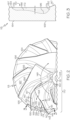
FIG. 2 is a front view of a compressor wheel of the rotor ofFIG. 1 with a balancing mark according to example embodiments; -
FIG. 3 is a cross-sectional view of the compressor wheel taken along the line 3-3 ofFIG. 2 ; -
FIG. 4 is a flowchart illustrating a method of balancing the rotor ofFIGS. 2 and 3 according to example embodiments; -
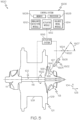
FIG. 5 is a schematic view of a balancing system used to balance the rotor ofFIGS. 2-3 according to example embodiments; -
FIG. 6 is a schematic side view of the compressor wheel and a cutting tool for forming the balancing feature according to example embodiments; -
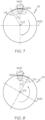
FIG. 7 is a schematic end view of the compressor wheel and cutting tool according to example embodiments; -
FIG. 8 is a schematic end view of the compressor wheel and cutting tool according to additional example embodiments. -
FIG. 9 is a front view of the compressor wheel of the rotor ofFIG. 1 with a balancing mark according to additional example embodiments not falling within the scope of the claims; -
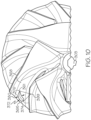
FIG. 10 is a front view of the compressor wheel of the rotor ofFIG. 1 with a balancing mark according to additional example embodiments not falling within the scope of the claims; and -
FIG. 11 is a front view of the compressor wheel of the rotor ofFIG. 1 with a balancing mark according to additional example embodiments not falling within the scope of the claims. - The following detailed description is merely exemplary in nature and is not intended to limit the present invention or the application and uses of the present invention. Furthermore, there is no intention to be bound by any theory presented in the preceding background or the following detailed description.
- Broadly, the invention disclosed herein relates to a rotor of a fluid machine, such as a turbocharger or other charger device of a vehicle. The rotor includes a wheel, such as a compressor wheel, that is supported for rotation about an axis of rotation. The wheel includes a plurality of blades that are spaced apart about the axis of rotation. Furthermore, the rotor includes at least one balancing mark, such as a recess, groove, notch, channel, or other aperture, that is included in an inter-blade area of the wheel. The balancing mark is elongate and includes a defined and shaped first and second end. At least one end may be cupped (i.e., cupped in shape) to include three-dimensional contour and the elongate balancing mark may extend away from the cupped end(s). In some embodiments, both the first end and the second end may be shaped to have cupped, contoured surfaces, and the elongate balancing mark may extend therebetween. The width and/or depth varies between the first end and the second end. The width, depth, location, and/or other features of the balancing feature may be configured to reduce unbalance of the rotor. In addition, these features may be configured according to predetermined characteristics of the wheel. For example, the width, depth, location, and/or other features may be configured according to a known stress profile of the wheel. In some embodiments, for example, the deepest and/or widest portion of the balancing mark may be disposed proximate a pressure side of one blade whereas the shallower and narrower portions may be disposed proximate a suction side of a neighboring blade. In the embodiments illustrated, there may generally be a higher stress margin at the pressure side; therefore more material may be available for removal without negatively affecting wheel strength, robustness, etc. Furthermore, the balancing mark may be angularly and radially disposed at a predetermined position and may extend along a predetermined area of the wheel. The balancing mark may be located according to the particular characteristics of the wheel. Methods of manufacturing and methods of balancing these rotors are also disclosed according to example embodiments of the present invention.
- Accordingly, rotors may be accurately and precisely balanced with a balancing mark, aperture, recess, groove, notch, etc. that is tailored for a particular wheel, wheel configuration, etc. The present teachings provide high quality, balanced rotors and highly efficient methods for manufacturing the same.
-
FIG. 1 is a schematic view of anexample turbocharger system 100 that includes aturbocharger 112. Theturbocharger 112 generally includes aturbocharger housing 101 and arotor 102. Therotor 102 is configured to rotate within theturbocharger housing 101 about an axis ofrotor rotation 103. Therotor 102 may be supported for rotation about theaxis 103 via one or more bearings (not shown). In some embodiments, therotor 102 may be rotationally supported by thrust bearings and a plurality of journal bearings. Alternatively, other bearings may be included. - As shown in the illustrated embodiment, the
turbocharger housing 101 may include aturbine housing 105, acompressor housing 107, and abearing housing 109. The bearinghousing 109 may be disposed between the turbine andcompressor housings housing 109 may contain the bearings of therotor 102. - Additionally, the
rotor 102 includes aturbine wheel 111, acompressor wheel 113, and ashaft 115. Theturbine wheel 111 is located substantially within theturbine housing 105. Thecompressor wheel 113 is located substantially within thecompressor housing 107. Theshaft 115 extends along the axis ofrotation 103, through the bearinghousing 109, to connect theturbine wheel 111 to thecompressor wheel 113. Accordingly, theturbine wheel 111 and thecompressor wheel 113 rotate together about theaxis 103. - The
turbine housing 105 and theturbine wheel 111 cooperate to form a turbine (i.e., turbine section, turbine stage) configured to circumferentially receive a high-pressure and high-temperatureexhaust gas stream 121 from an engine (e.g., from anexhaust manifold 123 of an internal combustion engine 125). Theturbine wheel 111 and, thus, therotor 102 are driven in rotation around theaxis 103 by the high-pressure and high-temperatureexhaust gas stream 121, which becomes a lower-pressure and lower-temperatureexhaust gas stream 127 that is released into adownstream exhaust pipe 126. In other embodiments, theengine 125 may be of another type, such as a diesel fueled engine. - The
compressor housing 107 andcompressor wheel 113 form a compressor (i.e., compressor section, compressor stage). Thecompressor wheel 113, being driven in rotation by the exhaust-gas driventurbine wheel 111, is configured to compress received input air 131 (e.g., ambient air, or already-pressurized air from a previous-stage in a multi-stage compressor) into apressurized air stream 133 that is ejected circumferentially from thecompressor housing 107. Thecompressor housing 107 may have a shape (e.g., a volute shape or otherwise) configured to direct and pressurize the air blown from thecompressor wheel 113. Due to the compression process, thepressurized air stream 133 is characterized by an increased temperature, over that of theinput air 131. - The
pressurized air stream 133 may be channeled through an air cooler 144 (i.e., intercooler), such as a convectively cooled charge air cooler. Theair cooler 144 may be configured to dissipate heat from thepressurized air stream 133, increasing its density. The resulting cooled and pressurizedoutput air stream 146 is channeled into anintake manifold 148 of theinternal combustion engine 125, or alternatively, into a subsequent-stage, in-series compressor. The operation of thesystem 100 may be controlled by an ECU 150 (engine control unit) that connects to the remainder of the system viacommunication connections 152. - Referring now to
FIGS. 2 and 3 , additional details of therotor 102 will be discussed according to example embodiments. Specifically, thecompressor wheel 113 of therotor 102 is illustrated according to example embodiments. As will be discussed, thecompressor wheel 113 includes one or more balancing features 170 that balance therotor 102 in rotation about theaxis 103. It will be appreciated that one or more balancing features 170 may be included on therotor 102 in a location other than thecompressor wheel 113 without departing from the scope of the present invention. Furthermore, it will be appreciated that balancing features 170 may be included on another rotor (e.g., a rotor of a supercharger or e-charger) without departing from the scope of the present invention. - In some embodiments, the
compressor wheel 113 may be a unitary, one-piece member that is made out of metal or other material. In some embodiments, thecompressor wheel 113 may be formed at least partly by a casting process. - As shown, the
compressor wheel 113 includes ahub 162. Thehub 162 may be cylindrical and may receive theshaft 115 of therotor 102. Thehub 162 may be fixed to the shaft 115 (e.g., with a nut or other fastener) for rotation therewith. - The
compressor wheel 113 also includes aback disc 164. Theback disc 164 extends radially away from thehub 162 and terminates in the radial direction at anouter rim edge 165. Theouter rim edge 165 may be substantially circular, may extend continuously about theaxis 103, and may be substantially centered on theaxis 103. Theback disc 164 also includes afront face 167 and aback face 169. Both thefront face 167 and theback face 169 may extend radially between theaxis 103 and theouter rim edge 165. Theback face 169 may generally face toward theturbine wheel 111 of the rotor 102 (FIG. 1 ), and thefront face 167 may face generally in the opposite direction (away from the turbine wheel 111). Thefront face 167 may be contoured and may extend substantially in the axial direction (i.e., along the axis 103) proximate thehub 162, may extend substantially in the radial direction proximate theouter rim edge 165, and may have a gradual concave contour between thehub 162 and theouter rim edge 165. - The
compressor wheel 113 further includes a plurality ofblades 166. Theblades 166 may be relatively thin and are attached to thefront face 167 of theback disc 164. Theblades 166 project from thefront face 167. Theblades 166 may also be arranged about the axis ofrotation 103 and may radiate outward therefrom. The outer radial ends of theblades 166 may terminate at theouter rim edge 165. Theblades 166 may be spaced apart substantially evenly in the circumferential direction about theaxis 103. Theblades 166 may have a predetermined shape, profile, size, etc. for moving theinput air 131 through thecompressor housing 107, compressing theinput air 131, and creating thepressurized air stream 133 as therotor 102 rotates about theaxis 103. - It will be appreciated that the
blades 166 may have a number of different configurations without departing from the scope of the present invention. In the illustrated embodiments, for example, thecompressor wheel 113 may have a splitter blade wheel configuration where everyother blade 166 is shorter than the full blade next to it. Moreover, theblades 166 may have a backward-curved impellor configuration such that at least some of the blades 166 (e.g., the so-called "full blades") curve backward relative to the direction of rotation, which is clockwise as indicated byarrow 149. - The plurality of
blades 166 include afirst blade 141 and a neighboringsecond blade 142. Thefirst blade 141 may be axially longer than the second blade 142 (i.e., may project outward further axially from the back disc 164) in some embodiments. Also, thefirst blade 141 includes apressure side 143 and asuction side 145. Thewheel 113 also includes apressure side fillet 147, which may be concave to define a smooth transition between thefront face 167 and thepressure side 143 of thefirst blade 141. Likewise, thewheel 113 includes asuction side fillet 151, which may be concave to define a smooth transition between thefront face 167 and thesuction side 145 of thefirst blade 141. Similarly, thesecond blade 142 includes a pressure side 153 and asuction side 155. There is a pressure side fillet 157, which may be concave to define a smooth transition between thefront face 167 and the pressure side 153 of thesecond blade 142. Likewise, there is asuction side fillet 159, which may be concave to define a smooth transition between thefront face 167 and thesuction side 155 of thesecond blade 142. - Moreover, the
compressor wheel 113 includes a plurality of inter-blade areas defined between neighboring ones of theblades 166 on thefront face 167 of thecompressor wheel 113. This includes aninter-blade area 168 defined between thefirst blade 141 and thesecond blade 142. Theinter-blade area 168 may extend radially between thehub 162 and the outer rim edge 165 (i.e., may radiate relative to the axis of rotation 103). Also, theinter-blade area 168 may be contoured along a radiating direction of the wheel 113 (i.e., curved as thearea 168 extends radially between thehub 162 and the outer rim edge 165). This contour in the radiating direction may correspond to that of the plurality ofblades 166. Moreover, the width of the inter-blade area 168 (measured circumferentially between the first andsecond blades 141, 142) may be tapered and may increase gradually in the radial direction from thehub 162 to theouter rim edge 165. - In addition, the
compressor wheel 113 includes thebalancing feature 170. Generally, thebalancing feature 170 may distribute the weight of therotor 102 to cause the center of gravity of therotor 102 to be located substantially on theaxis 103. Thebalancing feature 170 may ameliorate unbalance due to, for example, stackup of manufacturing and assembly tolerances relating to therotor 102. Thus, thebalancing feature 170 may provide substantially balanced rotation of therotor 102 about theaxis 103. While thebalancing feature 170 is included on thecompressor wheel 113 in the illustrated embodiments, it will be appreciated that theturbine wheel 111 may include thebalancing feature 170 in some embodiments of the present invention. - The
balancing feature 170 includes one or more marks comprising as a recess, groove, channel, or other aperture. Theback disc 164 includes a first balancing mark 172 (FIGS. 2 and 3 ) that provides balancing with respect to a first plane (e.g., a plane that is normal to the axis 103). Also, as shown inFIG. 2 , thehub 162 may include asecond balancing mark 171 that balances therotor 102 with respect to a plane that is parallel to theaxis 103. Thus, the balancing marks 171, 172 may cooperate to provide two-plane balancing for therotor 102. - As shown in
FIGS. 2 and 3 , thefirst balancing mark 172 comprises an elongated recess, slot, notch, or groove. Thefirst balancing mark 172 is formed at least partly in thefront face 167 of thewheel 113, within theinter-blade area 168. Thefirst balancing mark 172 is recessed within thefront face 167. - As shown in
FIG. 2 , the balancingmark 172 extends across theinter-blade area 168 along anaxis 161 and includes afirst end 174 and asecond end 176. Theaxis 161 is arcuate and may be centered substantially on theaxis 103 so as to be substantially concentric with theouter rim edge 165. Theaxis 161 may be spaced inwardly in the radial direction at a distance from theouter rim edge 165. - As shown in
FIG. 2 , the balancingmark 172 has a width 180 (i.e., a width dimension), which may be measured transverse to theaxis 161. Thewidth 180 may be measured in the radial direction relative to theaxis 103 between aninboard edge 192 and anoutboard edge 194 of themark 172. As shown inFIG. 2 , thewidth 180 varies as the balancingmark 172 extends arcuately between thefirst end 174 and thesecond end 176. - The balancing
mark 172 may have an elongated bean-shape in some embodiments. Theinboard edge 192 may be more contoured than theoutboard edge 194. - Additionally, as shown in
FIG. 2 , thefirst end 174 is recessed into thepressure side fillet 147. Thesecond end 176 terminates at or before reaching thesuction side fillet 159. In other words, thesuction side fillet 159 is uninterrupted by thesecond end 176. - The
width 180 of the balancingmark 172 may be configured to reduce unbalance of therotor 102. Furthermore, thewidth 180 may vary according to a particular stress profile of thewheel 113. For example, there may be more stress margin on thepressure side 143 than on thesuction side 155 of the neighboringblade 166. As such, thewidth 180 may be larger proximate thefirst end 174 as compared to thesecond end 176. In other words, there may be more material available for removal at thepressure side 143; therefore, the balancingmark 172 may be wider at thefirst end 174 without negatively affecting strength or robustness of thewheel 113. - Additionally, as shown in
FIG. 3 , the balancingmark 172 has a depth 190 (i.e., a depth dimension), which may be measured substantially in an axial direction along theaxis 103. Thedepth 190 may be measured in the axial direction and may be the distance recessed from thefront face 167, in areas adjacent the balancingmark 172. As shown inFIG. 3 , thedepth 190 varies as the balancingmark 172 extends arcuately between thefirst end 174 and thesecond end 176. - The
depth 190 of the balancingmark 172 may be configured to reduce unbalance of therotor 102. In addition, thedepth 190 may vary according to a particular stress profile of thewheel 113. As mentioned, there may be more stress margin on thepressure side 143 than on thesuction side 155. As such, thedepth 190 may be larger proximate thefirst end 174 as compared to thesecond end 176. Also, as shown inFIG. 3 , thedepth 190 may vary to define afirst segment 195 and asecond segment 196. Thesecond segment 196 may be shallower than thefirst segment 195. - Also, as shown in
FIG. 3 , thefirst end 174 may be a cupped end (i.e., cupped in shape). In other words, thefirst end 174 may have a hemispherical or ball-segment-shaped concave contour on its outer edge, except where themark 172 extends from thefirst end 174 toward thesecond end 176. Likewise, thesecond end 176 may be a cupped end (i.e., cupped in shape). As such, thesecond end 176 may have a hemispherical or ball-segment-shaped concave contour on its outer edge, except where themark 172 extends from thesecond end 176 toward thefirst end 174. Both thefirst end 174 and thesecond end 176 may be cupped in shape. Thedepth 190 of themark 172 may vary between the cuppedfirst end 174 and cuppedsecond end 176. As shown inFIG. 3 , there may be afirst step 182 at the transition between thefront face 167 and the cupped, contoured surface of thefirst end 174. Likewise, there may be asecond step 184 at the transition between thefront face 167 and the contoured surface of thesecond end 176. The balancingmark 172 may be stepped in the axial direction along theaxis 103 at thesteps inboard edge 192 and theoutboard edge 194 may be continuous with the edge defined at the first step 1823 and thesecond step 184. - Accordingly, the
mark 172 may be shaped along its elongate length to a high degree of precision and accuracy. Thewidth 180 anddepth 190 may vary as a function of the angular position within theinter-blade area 168. Both ends 174, 176 may be shaped to a high degree of contour in some embodiments to precisely balance therotor 102 while also retaining high strength and robustness of thewheel 113. The balancingmark 172 may be tailored for aparticular wheel 113, for a particular wheel configuration, for a particular stress profile of thewheel 113, etc. - Moreover, the location of the
mark 172 may be advantageous because it is highly accessible (e.g., during a machining process). Also, there is a relatively large amount of area for the balancingmark 172 at this location. Therefore, the balancing procedure may be performed with high precision and accuracy. - Referring now to
FIG. 4 , amethod 1500 of balancing therotor 102 and forming the balancingmark 172 will be discussed according to example embodiments of the present invention. In some embodiments, a balancing apparatus 1600 (FIG. 5 ) may be employed for performing themethod 1500. - Embodiments of the present invention may be described herein in terms of functional and/or logical block components and various processing steps. It should be appreciated that such block components may be realized by any number of hardware, software, and/or firmware components configured to perform the specified functions. For example, an embodiment of the present invention may employ various integrated circuit components, e.g., memory elements, digital signal processing elements, logic elements, look-up tables, or the like, which may carry out a variety of functions under the control of one or more microprocessors or other control devices. In addition, those skilled in the art will appreciate that embodiments of the present invention may be practiced in conjunction with any number of systems, and that the air quality control system described herein is merely one exemplary embodiment of the present invention.
- For the sake of brevity, conventional techniques related to signal processing, data transmission, signaling, control, and other functional aspects of the systems (and the individual operating components of the systems) may not be described in detail herein. Furthermore, the connecting lines shown in the various figures contained herein are intended to represent example functional relationships and/or physical couplings between the various elements. It should be noted that many alternative or additional functional relationships or physical connections may be present in an embodiment of the present invention.
- As shown in
FIG. 5 , thebalancing apparatus 1600 may support therotor 102 for rotation about theaxis 103. Therotor 102 may be supported within the bearinghousing 109 when performing thebalancing method 1500. More specifically, as shown inFIG. 5 , therotor 102 may include thecompressor wheel 113, theshaft 115, and theturbine wheel 111. Therotor 102 may be supported on one or more bearings and may be provided within the bearinghousing 109. Thefront face 167 of thecompressor wheel 113 may remain exposed outside the bearinghousing 109 during thebalancing method 1500. - The
balancing apparatus 1600 may also include acutting tool 1602. Thecutting tool 1602 may be one of a variety of tools used to remove material from a workpiece. For example, as shown inFIG. 5 , thecutting tool 1602 may include acutter 1604, such as a ball-end or hemispherical milling cutter. Thecutter 1604 may have any suitable radius and may be operatively connected to a milling machine. However, it will be appreciated that themethod 1500 may be employed using adifferent cutting tool 1602 without departing from the scope of the present invention. - The
balancing apparatus 1600 may further include acontrol system 1606. Thecontrol system 1606 may be configured as a computing device with at least one processor 1608 andmemory device 1609. Thecontrol system 1606 may be in communication with anactuator system 1616. Thecontrol system 1606 may include a hard-wired computing circuit (or circuits). Thecontrol system 1606 may also be configured as a hydraulic, electrical or electro-hydraulic controller, or otherwise. As such, thecontrol system 1606 may be configured to execute various computational and control functionality with respect to theactuator system 1616. - The
actuator system 1616 may include one or more electric motors, hydraulic actuators, pneumatic actuators, etc. In some embodiments, theactuator system 1616 may selectively actuate therotor 102 relative to thecutter 1604. For example, theactuator system 1616 may selectively rotate therotor 102 about theaxis 103 as indicated byarrow 1622. In some embodiments, theactuator system 1616 may selectively rotate therotor 102 in either the clockwise or counterclockwise direction. Additionally, theactuator system 1616 may selectively actuate thecutter 1604 relative to therotor 102. For example, theactuator system 1616 may selectively rotate thecutter 1604 about acutter axis 1605. In some embodiments, thecutter axis 1605 may be disposed at anacute angle 1607 relative to theaxis 103 of therotor 102. (Thecutter axis 1605 may lie within the plane ofFIG. 5 .) Additionally, theactuator system 1616 may actuate thecutter 1604 linearly (telescopingly) back and forth along thecutter axis 1605 as indicated byarrow 1620. Furthermore, theactuator system 1616 may selectively move thecutter 1604 linearly along and substantially parallel to theaxis 103 of therotor 102 as indicated byarrow 1624. - The
control system 1606 may include various modules. As used herein, the term "module" refers to any hardware, software, firmware, electronic control component, processing logic, and/or processor device, individually or in any combination, including without limitation: application specific integrated circuit (ASIC), an electronic circuit, a processor (shared, dedicated, or group) and memory that executes one or more software or firmware programs, a combinational logic circuit, and/or other suitable components that provide the described functionality. - In some embodiments, the
control system 1606 may include anactuator module 1612. Theactuator module 1612 may be used to generate and output control signals or control commands to theactuator system 1616 for selectively moving thecutter 1604 relative to therotor 102 and/or selectively moving therotor 102 relative to thecutter 1604. Thecontrol system 1606 may further include anunbalance detection module 1610. Theunbalance detection module 1610 may be used for detecting that therotor 102 is unbalanced for rotation about theaxis 103. Theunbalance detection module 1610 may also detect an amount or degree to which therotor 102 is unbalanced. In some embodiments, theunbalance detection module 1610 may be operatively connected to a sensor, such as a vibration sensor, that detects unbalance in the rotation of therotor 102 during rotation. Moreover, thecontrol system 1606 may include abalance model module 1614. Thebalance model module 1614 may be used to generate an electronic (computerized) module of therotor 102 with balancingmarks 172 suitable for balancing therotor 102. Themodule 1614 may determine thewidth 180,depth 190, location, and/or other characteristics of the balancingmark 172. Themodule 1614 may determine these characteristics for sufficiently balancing the rotation of therotor 102, while also considering the stress profile of thewheel 113. Once themodule 1614 generates the model, it may be saved in thememory device 1609. - As shown in
FIG. 4 , themethod 1500 may begin at 1502 at which an unbalance test of therotor 102 is performed. For example, theactuator module 1612 may generate a control command for rotating therotor 102 about theaxis 103. Therotor 102 may be rotated continuously for a predetermined amount of time and at a predetermined angular velocity. Meanwhile, one or more vibration sensors may detect the amount of vibration in therotor 102. Theunbalance detection module 1610 may receive vibration data from the sensors and process the signal and calculate and determine the unbalance in therotor 102. - Next, at 1504 of the
method 1500, thecontrol system 1606 may determine whether therotor 102 is sufficiently balanced. For example, the unbalance detected at 1502 may be compared to a predetermined threshold amount of unbalance. This predetermined threshold may be stored in thememory device 1609 and may be accessed by thecontrol system 1606 when making the determination of 1504. If the amount of unbalance detected at 1502 is below the predetermined threshold (i.e., rotor is sufficiently balanced), then the method may terminate as shown inFIG. 4 . In contrast, if at 1504 thecontrol system 1606 determines that the detected unbalance is above the threshold, then themethod 1500 may continue at 1506. - At 1506, the
balance model module 1614 may be used to generate a computer model of therotor 102 with one or more balancing marks 172 suitable for balancing the rotation of therotor 102. Thebalance model module 1614 may rely on computerized logic and modeling software to determine the size, dimension, etc. of the balancing mark(s) 172 as well as the placement of such mark(s) 172 on thecompressor wheel 113. Themarks 172 generated in the model may be sized, shaped, and placed on thecompressor wheel 113 as discussed above with respect toFIGS. 2 and 3 in some embodiments. - The model may also be generated to indicate how the
actuator system 1616 should be used to form themark 172. In other words, the model may be used to generate control signals for theactuator system 1616 for moving thecutter 1604 and/or thewheel 113 for forming themark 172. Once thebalance model module 1614 generates the model of thebalanced rotor 102, the model may be saved in thememory device 1609. It will be appreciated that the model may also dictate the process steps for creating the balancing marks 172. - Next, at 1508 of the
method 1500, therotor 102 may be machined to create the balancing marks 172 according to the model generated at 1506. Specifically, theactuator module 1612 may access the model (generated at 1506 and saved in the memory device 1609) and actuate therotor 102 and/or thecutter 1604 according to the model. - The
actuator module 1612 may generate control signals for rotating thecutter 1604 about thecutter axis 1605 at a predetermined angular speed according to the model. Theactuator module 1612 may also generate and send control commands to thecutter 1604 for moving thecutter 1604 along the cutter axis 1605 (at least partly along the axis 103) and to position thecutter 1604 at aradial distance 1660 away from theaxis 103 according to the model generated at 1506. Theactuator module 1612 may also generate control commands for moving thecutter 1604 parallel to theaxis 103 toward the wheel and to apredetermined depth 190 into theback disc 164 of thecompressor wheel 113 according to the model. This movement may cause thecutter 1604 to contact and cut material away from thecompressor wheel 113 as represented inFIG. 6 . - Moreover, control commands may be generated for moving the
cutter 1604 axially (parallel to theaxis 103, along the axis, etc.) and away from theback disc 164, for example, at thefirst end 174 or thesecond end 176. In so doing, thecutter 1604 may shape the cuppedfirst end 174 and/or the cuppedsecond end 176 before being withdrawn from thewheel 113. - Furthermore, as shown in
FIGS. 7 and 8 , theactuator module 1612 may generate control commands for rotating therotor 102 about theaxis 103 for a predetermined amount of angular displacement according to the model. In some embodiments illustrated inFIG. 7 , thecompressor wheel 113 may be rotated clockwise about theaxis 103. In additional embodiments illustrated inFIG. 8 , thecompressor wheel 113 may be rotated counterclockwise about theaxis 103. Furthermore, in some embodiments, thecutter 1604 may remain at a fixed angular location relative to theaxis 103 during the machining process. Additionally, thecutter 1604 and/or thewheel 113 may be moved axially simultaneously while thecompressor wheel 113 is rotated according to the model generated at 1506. This may provide the varying with 180 anddepth 190 discussed above. - In some embodiments, the
entire mark 172 may be created in a single pass with thecutter 1604 andwheel 113 moving relative to each other in both the axial direction and the angular (circumferential) direction. Accordingly, themark 172 may be formed in a highly efficient manner. However, in other embodiments, themark 172 may be created through multiple passes of thecutter 1604, and thecutter 1604 may be progressively moved deeper and deeper into theback disc 164 for each pass until themark 172 is fully formed. - Once the
mark 172 is formed at 1508, themethod 1500 may loop back to 1502, where the unbalance of thewheel 113 may be re-checked. Then, at 1504, if it is determined that thewheel 113 is sufficiently balanced, then themethod 1500 may terminate. However, if thewheel 113 shows significant unbalance, then themethod 1500 may continue to 1506, where an updated model may be generated, and then themark 172 may be re-shaped and/or anew mark 172 may be added to thewheel 113. Themethod 1500 may continue until thewheel 113 is sufficiently balanced. - Accordingly, rotors of fluid machines may be accurately and precisely balanced according to the present teachings in an efficient and repeatable fashion. Balancing marks may be formed and shaped to be tailor-made for the
wheel 113 without compromising wheel strength and robustness. - Additional embodiments not falling within the scope of the claims are illustrated in
FIG. 9 . (Features that correspond to those ofFIGS. 1-3 are indicated with corresponding reference numbers increased by 100.) Themark 272 may extend along itsarcuate axis 261 within theinter-blade area 268 between thefirst end 274 and thesecond end 276. Themark 272 may be substantially centered on theaxis 261. Also, in some embodiments, thewidth 280 may vary as themark 272 extends along theaxis 261 between thefirst end 274 and thesecond end 276. Moreover, like the embodiments ofFIG. 3 , the depth of themark 272 may vary as themark 272 extends along theaxis 261 between thefirst end 274 and thesecond end 276. Furthermore, both thefirst end 274 and thesecond end 276 may be cupped in shape in some embodiments, similar to the embodiments discussed above in relation toFIG. 3 . - The
arcuate axis 261 may be arcuate such that themark 272 bows and curves along theinter-blade area 268. For reference purposes, thearcuate axis 261 may curve and arc with respect to asecond axis 299. In some embodiments, thearcuate axis 261 of themark 272 may be circular and centered about thesecond axis 299. Also, thesecond axis 299 may be misaligned with the axis of rotation 203. Theaxis 299 may be parallel to the axis of rotation 203; however, theaxis 299 may be spaced apart at a radial distance therefrom. However, it will be appreciated that themark 272 may arc along a non-circular path with respect to theaxis 299 in other embodiments. - Furthermore, the
arcuate axis 261 may bow, arc, or bend with respect to the outer rim edge 265. For example, thearcuate axis 261 may bow inwardly from the adjacent portion of the outer rim edge 265 and slightly toward the axis of rotation 203. Also, as shown in the illustrated embodiment, thefirst end 274 may be disposed further outward radially from the axis of rotation 203 as compared to thesecond end 276. The balancingmark 272 may be routed along areas of the wheel that are generally subject to less stress, that include more material available for removal, etc. - Further embodiments not falling within the scope of the claims are illustrated in
FIG. 10 . (Features that correspond to those ofFIGS. 1-3 are indicated with corresponding reference numbers increased by 200.) Themark 372 may extend along itsarcuate axis 361 within theinter-blade area 368 between thefirst end 374 and thesecond end 376. Also, in some embodiments, thewidth 380 may vary as themark 372 extends along theaxis 361 between thefirst end 374 and thesecond end 376. Moreover, like the embodiments ofFIG. 3 , the depth of themark 372 may vary as themark 372 extends along theaxis 361 between thefirst end 374 and thesecond end 376. Furthermore, both thefirst end 374 and thesecond end 376 may be cupped in shape in some embodiments, similar to the embodiments discussed above in relation toFIG. 3 . - The
arcuate axis 361 may be arcuate with respect to asecond axis 399. In some embodiments, theaxis 361 may be centered about thesecond axis 399. Also, thesecond axis 399 may be misaligned with the axis ofrotation 303. Theaxis 399 may be parallel to the axis ofrotation 303; however, theaxis 399 may be spaced apart at a radial distance therefrom. - Furthermore, the
arcuate axis 361 may bow outwardly toward an adjacent portion of theouter rim edge 365 of the wheel with thefirst end 374 disposed further outward radially from the axis ofrotation 303 as compared to thesecond end 376. Moreover, thearcuate axis 361 be bowed generally in the same direction as the contour of the blades and theinter-blade area 368. The balancingmark 372 may be routed along areas of the wheel that are generally subject to less stress, that include more material available for removal, etc. - Additional embodiments not falling within the scope of the claims are illustrated in
FIG. 11 . (Features that correspond to those ofFIGS. 1-3 are indicated with corresponding reference numbers increased by 300.) Themark 472 may extend along itsarcuate axis 461 within theinter-blade area 468 between thefirst end 474 and thesecond end 476. Also, in some embodiments, thewidth 480 may vary as themark 472 extends along theaxis 461 between thefirst end 474 and thesecond end 476. Moreover, like the embodiments ofFIG. 3 , the depth of themark 472 may vary as themark 472 extends along theaxis 461 between thefirst end 474 and thesecond end 476. Furthermore, both thefirst end 474 and thesecond end 476 may be cupped in shape in some embodiments, similar to the embodiments discussed above in relation toFIG. 3 . - The
arcuate axis 461 may be arcuate with respect to asecond axis 499. In some embodiments, theaxis 461 may be centered about thesecond axis 499. Also, thesecond axis 499 may misaligned with the axis ofrotation 403. Theaxis 499 may be parallel to the axis ofrotation 403; however, theaxis 499 may be spaced apart at a radial distance therefrom. - Furthermore, the
arcuate axis 461 may bow outwardly toward an adjacent portion of theouter rim edge 465 of the wheel. Also, thearcuate axis 461 may bow opposite the direction of rotation of the wheel as shown. Additionally, as shown in the illustrated embodiment, thefirst end 474 may be disposed further inward radially from the axis ofrotation 403 as compared to thesecond end 476. The balancingmark 472 may be routed along areas of the wheel that are generally subject to less stress, that include more material available for removal, etc. Thus, in some embodiments, thefirst end 474 may define the deepest portion of themark 472, and themark 472 may get progressively shallower until it terminates at the shapedsecond end 476. - While at least one exemplary embodiment has been presented in the foregoing detailed description, it should be appreciated that a vast number of variations exist. It should also be appreciated that the exemplary embodiment or exemplary embodiments are only examples, and are not intended to limit the scope, applicability, or configuration of the present invention in any way. Rather, the foregoing detailed description will provide those skilled in the art with a convenient road map for implementing an exemplary embodiment of the present invention. It is understood that various changes may be made in the function and arrangement of elements described in an exemplary embodiment without departing from the scope of the present invention as set forth in the appended claims.
Claims (13)
- A rotor of a fluid machine comprising:a wheel (113) that is supported for rotation about an axis of rotation (103), the wheel having a hub (162) and a back disc (164) extending radially away from the hub and terminating in a radial direction at an outer rim edge (165), the back disc having a front face (167) and a back face (169);a plurality of blades (166) included on the wheel, the plurality of blades projecting from the front face of the back disc (164);an inter-blade area (168) defined circumferentially between a first blade (141) and a second blade (142) of the plurality of blades (166) with respect to the axis of rotation, wherein the first blade includes a pressure side (143), and the second blade includes a suction side (155), the pressure side facing toward the suction side across the inter-blade area, and wherein the wheel includes a first fillet (147) at a transition between the inter-blade area and the first blade and the wheel includes a second fillet (159) at another transition between the inter-blade area and the second blade; anda balancing mark (172) on the wheel and within the inter-blade area, the balancing mark being elongate and having a first end (174) and a second end (176), the first end and the second end being stepped axially into the inter-blade area, the balancing mark extending arcuately between the first end and the second end, the balancing mark having a depth (190) that varies as the balancing mark extends arcuately between the first end and the second end, the balancing mark having a width (180) that varies as the balancing mark extends arcuately between the first end and the second end, wherein the first end is disposed proximate the pressure side of the first blade, and wherein the second end is disposed proximate the suction side of the second blade, wherein the first end is deeper than the second end; and wherein the first end is recessed into the first fillet and the second fillet is uninterrupted by the second end.
- The rotor of claim 1, wherein the depth (190) is greatest at the first end (174).
- The rotor of any preceding claim, wherein the balancing mark (172) extends along an arcuate axis between the first end (174) and the second end (176); and wherein the arcuate axis is centered substantially on the axis of rotation (103).
- The rotor of any of claim 1, 2 or 3, wherein the balancing mark (172) extends arcuately; and wherein the balancing mark (172) is off-center with respect to the axis of rotation (103).
- The rotor of claim 4, wherein the wheel (113) defines a direction of rotation about the axis of rotation (103), wherein the arcuate axis is bowed between the first end and the second end, and wherein the arcuate axis is bowed along the direction of rotation.
- The rotor of claim 4, wherein the wheel (113) defines a direction of rotation about the axis of rotation (103), wherein the arcuate axis is bowed between the first end and the second end, and wherein the arcuate axis is bowed opposite the direction of rotation.
- The rotor of claim 4, 5 or 6, wherein the wheel includes an outer rim edge (265) with a portion that is adjacent the balancing mark;
wherein the arcuate axis is bowed between the first end and the second end, and wherein the arcuate axis is bowed toward the portion of the outer rim edge. - The rotor of claim 4, 5 or 6, wherein the wheel includes an outer rim edge (265) with a portion that is adjacent the balancing mark;
wherein the arcuate axis is bowed between the first end and the second end, and wherein the arcuate axis is bowed away from the portion of the outer rim edge. - A method of balancing a rotor of a fluid machine comprising:supporting a wheel (113) for rotation about an axis of rotation (103), the wheel including a plurality of blades (166) and an inter-blade area (168) defined circumferentially between a first blade (141) and a second blade (142) of the plurality of blades with respect to the axis of rotation, the wheel having a hub (162) and a back disc (164) extending radially away from the hub and terminating in a radial direction at an outer rim edge (165), the back disc (164) having a front face (167) and a back face (169), the plurality of blades (166) projecting from the front face of the back disc (164), wherein the wheel includes a first fillet (147) at a transition between the inter-blade area and the first blade, wherein the wheel includes a second fillet (159) at another transition between the inter-blade area and the second blade, wherein the first blade includes a pressure side (143), and the second blade includes a suction side (155), the pressure side facing toward the suction side across the inter-blade area; andforming a balancing mark (172) on the wheel and within the inter-blade area, the balancing mark being elongate and having a first end (174) and a second end (176), wherein the first end is disposed proximate the pressure side of the first blade, and wherein the second end is disposed proximate the suction side of the second blade, wherein the first end is deeper than the second end the first end and the second end being stepped axially into the inter-blade area, the balancing mark extending arcuately between the first end and the second end, the balancing mark having a depth (190) that varies as the balancing mark extends arcuately between the first end and the second end, the balancing mark having a width (180) that varies as the balancing mark extends arcuately between the first end and the second end, wherein forming the balancing mark includes recessing the first end into the first fillet and leaving the second fillet uninterrupted by the second end.
- The method of claim 9, further comprising determining (1506) a balancing model for a wheel that is supported for rotation about an axis of rotation;
wherein forming the balancing mark includes removing (1508), with a removal tool, material from the wheel at the inter-blade area according to the determined balancing model. - The method of claim 9, wherein forming the balancing mark includes forming the first end to have the depth (190) greatest at the first end (176).
- The method of claim 9, 10 or 11, further comprising providing a cutting tool (1602) configured to remove material from the wheel; andwherein forming the balancing mark includes moving at least one of the cutting tool and the wheel relative to the other along an axial direction and along an arcuate axis between the first end and the second end, and wherein the arcuate axis is centered substantially on the axis of rotation, or wherein the method further comprises
providing a cutting tool configured to remove material from the wheel; andwherein forming the balancing mark includes moving at least one of the cutting tool and the wheel relative to the other along an axial direction and along an arcuate axis between the first end and the second end such that the balancing mark extends arcuately and such that the balancing mark is off-center with respect to the axis of rotation. - A fluid charger device comprising:a housing (101);a rotor (102) supported for rotation within the housing for rotation about an axis of rotation, the rotor being a rotor according to any of claims 1 to 8.
Applications Claiming Priority (1)
| Application Number | Priority Date | Filing Date | Title |
|---|---|---|---|
| US17/450,719 US11971053B2 (en) | 2021-10-13 | 2021-10-13 | Rotor with balancing features and balancing method |
Publications (2)
| Publication Number | Publication Date |
|---|---|
| EP4166753A1 EP4166753A1 (en) | 2023-04-19 |
| EP4166753B1 true EP4166753B1 (en) | 2025-04-09 |
Family
ID=82403569
Family Applications (1)
| Application Number | Title | Priority Date | Filing Date |
|---|---|---|---|
| EP22181602.8A Active EP4166753B1 (en) | 2021-10-13 | 2022-06-28 | Rotor with balancing features and balancing method |
Country Status (3)
| Country | Link |
|---|---|
| US (1) | US11971053B2 (en) |
| EP (1) | EP4166753B1 (en) |
| CN (1) | CN115962146B (en) |
Family Cites Families (21)
| Publication number | Priority date | Publication date | Assignee | Title |
|---|---|---|---|---|
| FR2855671B1 (en) | 2003-05-26 | 2005-12-02 | Valeo Equip Electr Moteur | ROTATING ELECTRIC MACHINE COMPRISING A FAN |
| JP4554189B2 (en) * | 2003-11-26 | 2010-09-29 | 株式会社エンプラス | Centrifugal impeller |
| JP5439112B2 (en) * | 2009-10-07 | 2014-03-12 | 三菱重工業株式会社 | Turbine blade |
| DE102010063812B4 (en) | 2010-12-21 | 2016-05-12 | Siemens Aktiengesellschaft | Method for balancing a shaft for a rotating machine, in particular for a turbocharger |
| US10087762B2 (en) * | 2011-07-11 | 2018-10-02 | Hamilton Sundstrand Corporation | Scallop curvature for radial turbine wheel |
| US8936439B2 (en) * | 2011-07-11 | 2015-01-20 | Hamilton Sundstrand Corporation | Radial turbine backface curvature stress reduction |
| RU2015101483A (en) * | 2012-07-02 | 2016-08-10 | Боргварнер Инк. | METHOD FOR REMOVING TURBIN WHEEL ALLOWANCE |
| DE202012103554U1 (en) * | 2012-09-18 | 2013-12-20 | Ebm-Papst Mulfingen Gmbh & Co. Kg | Impeller with balancing |
| EP2960465B1 (en) * | 2013-02-22 | 2017-05-10 | Mitsubishi Heavy Industries, Ltd. | Compressor assembly |
| KR20150138272A (en) * | 2013-04-05 | 2015-12-09 | 보르그워너 인코퍼레이티드 | Turbine wheel of an exhaust-gas turbocharger |
| WO2015132896A1 (en) * | 2014-03-05 | 2015-09-11 | 三菱重工業株式会社 | Rotating fluid element and method for correcting unbalance of rotating fluid element |
| WO2015142517A1 (en) | 2014-03-20 | 2015-09-24 | Borgwarner Inc. | Balancing method for a turbocharger |
| US9217331B1 (en) * | 2015-02-27 | 2015-12-22 | Borgwarner Inc. | Impeller balancing using additive process |
| US20160265359A1 (en) * | 2015-03-09 | 2016-09-15 | Caterpillar Inc. | Turbocharger wheel and method of balancing the same |
| DE102015103670B4 (en) | 2015-03-12 | 2016-12-01 | Schenck Rotec Gmbh | Method and device for compensating an imbalance of a rotor |
| DE102015214864A1 (en) * | 2015-08-04 | 2017-02-09 | Bosch Mahle Turbo Systems Gmbh & Co. Kg | Compressor wheel with wavy wheel back |
| DE102015219374B4 (en) * | 2015-10-07 | 2022-05-25 | Vitesco Technologies GmbH | Method for introducing a balancing mark into the compressor wheel of an exhaust gas turbocharger and exhaust gas turbocharger with a compressor wheel having a balancing mark |
| DE102016112521B4 (en) * | 2016-07-07 | 2025-01-02 | Ihi Charging Systems International Germany Gmbh | Impeller for an exhaust gas turbocharger, exhaust gas turbocharger and method for balancing an impeller for an exhaust gas turbocharger |
| DE102017123819A1 (en) * | 2017-10-12 | 2019-04-18 | Ihi Charging Systems International Germany Gmbh | Impeller for an exhaust gas turbocharger, exhaust gas turbocharger and method for balancing a running gear for an exhaust gas turbocharger |
| US10989224B2 (en) * | 2018-11-14 | 2021-04-27 | Garrett Transportation I Inc | Rotor with balancing features and balancing method |
| US11603762B2 (en) * | 2019-06-11 | 2023-03-14 | Garrett Transportation I Inc. | Turbocharger turbine wheel |
-
2021
- 2021-10-13 US US17/450,719 patent/US11971053B2/en active Active
-
2022
- 2022-06-28 EP EP22181602.8A patent/EP4166753B1/en active Active
- 2022-10-13 CN CN202211254101.2A patent/CN115962146B/en active Active
Also Published As
| Publication number | Publication date |
|---|---|
| CN115962146B (en) | 2025-11-11 |
| US11971053B2 (en) | 2024-04-30 |
| EP4166753A1 (en) | 2023-04-19 |
| US20230111525A1 (en) | 2023-04-13 |
| CN115962146A (en) | 2023-04-14 |
Similar Documents
| Publication | Publication Date | Title |
|---|---|---|
| US11421712B2 (en) | Rotor with balancing features and balancing method | |
| US8850703B2 (en) | Method for the manufacture of the blade tips of rotor wheels made in BLISK design | |
| CN112065508B (en) | Turbocharger turbine wheel | |
| US20050106013A1 (en) | Profiled blades for turbocharger turbines, compressors, and the like | |
| US20120321458A1 (en) | Wheel and replaceable nose piece | |
| CN205422835U (en) | Turbo charger impeller | |
| US20180163739A1 (en) | Turbocharger assembly | |
| CN107366576B (en) | A processing and detection device and method for engine oil supply support plate casing | |
| EP3428392B1 (en) | Turbine wheel with reduced inertia | |
| EP4166753B1 (en) | Rotor with balancing features and balancing method | |
| US10480325B2 (en) | Balanced mixed flow turbine wheel | |
| WO2018093808A1 (en) | Turbocharger impeller blade stiffeners and manufacturing method | |
| CN112032105B (en) | Rotor blade tip clearance control method and rotor blade manufactured by using same | |
| EP3763945B1 (en) | Rotor and centrifugal compressor comprising rotor | |
| CN117759558A (en) | Fault detection method and device for centrifugal compressor and storage medium | |
| US10495097B2 (en) | Turbocharger assembly | |
| US11346226B2 (en) | Turbocharger and turbine wheel | |
| CN103969001B (en) | Detachable turbocharger entirety dynamic balancing measurement spiral case | |
| CN113748310B (en) | Method for dimensional inspection of turbine components | |
| JP6390493B2 (en) | Balance inspection device | |
| EP3406848B1 (en) | Turbocharger having compressor portion with imbalance correction region | |
| JP2016089708A (en) | engine | |
| CN119754863A (en) | Method for optimizing natural frequency of turbocharger turbine and turbocharger turbine |
Legal Events
| Date | Code | Title | Description |
|---|---|---|---|
| PUAI | Public reference made under article 153(3) epc to a published international application that has entered the european phase |
Free format text: ORIGINAL CODE: 0009012 |
|
| STAA | Information on the status of an ep patent application or granted ep patent |
Free format text: STATUS: REQUEST FOR EXAMINATION WAS MADE |
|
| 17P | Request for examination filed |
Effective date: 20220628 |
|
| AK | Designated contracting states |
Kind code of ref document: A1 Designated state(s): AL AT BE BG CH CY CZ DE DK EE ES FI FR GB GR HR HU IE IS IT LI LT LU LV MC MK MT NL NO PL PT RO RS SE SI SK SM TR |
|
| GRAP | Despatch of communication of intention to grant a patent |
Free format text: ORIGINAL CODE: EPIDOSNIGR1 |
|
| STAA | Information on the status of an ep patent application or granted ep patent |
Free format text: STATUS: GRANT OF PATENT IS INTENDED |
|
| INTG | Intention to grant announced |
Effective date: 20250124 |
|
| GRAS | Grant fee paid |
Free format text: ORIGINAL CODE: EPIDOSNIGR3 |
|
| GRAA | (expected) grant |
Free format text: ORIGINAL CODE: 0009210 |
|
| STAA | Information on the status of an ep patent application or granted ep patent |
Free format text: STATUS: THE PATENT HAS BEEN GRANTED |
|
| AK | Designated contracting states |
Kind code of ref document: B1 Designated state(s): AL AT BE BG CH CY CZ DE DK EE ES FI FR GB GR HR HU IE IS IT LI LT LU LV MC MK MT NL NO PL PT RO RS SE SI SK SM TR |
|
| REG | Reference to a national code |
Ref country code: GB Ref legal event code: FG4D |
|
| REG | Reference to a national code |
Ref country code: CH Ref legal event code: EP |
|
| REG | Reference to a national code |
Ref country code: DE Ref legal event code: R096 Ref document number: 602022012796 Country of ref document: DE |
|
| REG | Reference to a national code |
Ref country code: IE Ref legal event code: FG4D |
|
| PGFP | Annual fee paid to national office [announced via postgrant information from national office to epo] |
Ref country code: DE Payment date: 20250626 Year of fee payment: 4 |
|
| PGFP | Annual fee paid to national office [announced via postgrant information from national office to epo] |
Ref country code: FR Payment date: 20250624 Year of fee payment: 4 |
|
| PGFP | Annual fee paid to national office [announced via postgrant information from national office to epo] |
Ref country code: AT Payment date: 20250721 Year of fee payment: 4 |
|
| REG | Reference to a national code |
Ref country code: NL Ref legal event code: MP Effective date: 20250409 |
|
| PG25 | Lapsed in a contracting state [announced via postgrant information from national office to epo] |
Ref country code: NL Free format text: LAPSE BECAUSE OF FAILURE TO SUBMIT A TRANSLATION OF THE DESCRIPTION OR TO PAY THE FEE WITHIN THE PRESCRIBED TIME-LIMIT Effective date: 20250409 |
|
| REG | Reference to a national code |
Ref country code: AT Ref legal event code: MK05 Ref document number: 1783667 Country of ref document: AT Kind code of ref document: T Effective date: 20250409 |
|
| PG25 | Lapsed in a contracting state [announced via postgrant information from national office to epo] |
Ref country code: FI Free format text: LAPSE BECAUSE OF FAILURE TO SUBMIT A TRANSLATION OF THE DESCRIPTION OR TO PAY THE FEE WITHIN THE PRESCRIBED TIME-LIMIT Effective date: 20250409 Ref country code: PT Free format text: LAPSE BECAUSE OF FAILURE TO SUBMIT A TRANSLATION OF THE DESCRIPTION OR TO PAY THE FEE WITHIN THE PRESCRIBED TIME-LIMIT Effective date: 20250811 Ref country code: ES Free format text: LAPSE BECAUSE OF FAILURE TO SUBMIT A TRANSLATION OF THE DESCRIPTION OR TO PAY THE FEE WITHIN THE PRESCRIBED TIME-LIMIT Effective date: 20250409 |
|
| REG | Reference to a national code |
Ref country code: LT Ref legal event code: MG9D |
|
| PG25 | Lapsed in a contracting state [announced via postgrant information from national office to epo] |
Ref country code: GR Free format text: LAPSE BECAUSE OF FAILURE TO SUBMIT A TRANSLATION OF THE DESCRIPTION OR TO PAY THE FEE WITHIN THE PRESCRIBED TIME-LIMIT Effective date: 20250710 Ref country code: NO Free format text: LAPSE BECAUSE OF FAILURE TO SUBMIT A TRANSLATION OF THE DESCRIPTION OR TO PAY THE FEE WITHIN THE PRESCRIBED TIME-LIMIT Effective date: 20250709 |
|
| PG25 | Lapsed in a contracting state [announced via postgrant information from national office to epo] |
Ref country code: PL Free format text: LAPSE BECAUSE OF FAILURE TO SUBMIT A TRANSLATION OF THE DESCRIPTION OR TO PAY THE FEE WITHIN THE PRESCRIBED TIME-LIMIT Effective date: 20250409 |
|
| PG25 | Lapsed in a contracting state [announced via postgrant information from national office to epo] |
Ref country code: BG Free format text: LAPSE BECAUSE OF FAILURE TO SUBMIT A TRANSLATION OF THE DESCRIPTION OR TO PAY THE FEE WITHIN THE PRESCRIBED TIME-LIMIT Effective date: 20250409 |
|
| PG25 | Lapsed in a contracting state [announced via postgrant information from national office to epo] |
Ref country code: HR Free format text: LAPSE BECAUSE OF FAILURE TO SUBMIT A TRANSLATION OF THE DESCRIPTION OR TO PAY THE FEE WITHIN THE PRESCRIBED TIME-LIMIT Effective date: 20250409 Ref country code: AT Free format text: LAPSE BECAUSE OF FAILURE TO SUBMIT A TRANSLATION OF THE DESCRIPTION OR TO PAY THE FEE WITHIN THE PRESCRIBED TIME-LIMIT Effective date: 20250409 |
|
| PG25 | Lapsed in a contracting state [announced via postgrant information from national office to epo] |
Ref country code: RS Free format text: LAPSE BECAUSE OF FAILURE TO SUBMIT A TRANSLATION OF THE DESCRIPTION OR TO PAY THE FEE WITHIN THE PRESCRIBED TIME-LIMIT Effective date: 20250709 |
|
| PG25 | Lapsed in a contracting state [announced via postgrant information from national office to epo] |
Ref country code: IS Free format text: LAPSE BECAUSE OF FAILURE TO SUBMIT A TRANSLATION OF THE DESCRIPTION OR TO PAY THE FEE WITHIN THE PRESCRIBED TIME-LIMIT Effective date: 20250809 |
|
| PG25 | Lapsed in a contracting state [announced via postgrant information from national office to epo] |
Ref country code: LV Free format text: LAPSE BECAUSE OF FAILURE TO SUBMIT A TRANSLATION OF THE DESCRIPTION OR TO PAY THE FEE WITHIN THE PRESCRIBED TIME-LIMIT Effective date: 20250409 |
|
| REG | Reference to a national code |
Ref country code: DE Ref legal event code: R097 Ref document number: 602022012796 Country of ref document: DE |
|
| PG25 | Lapsed in a contracting state [announced via postgrant information from national office to epo] |
Ref country code: DK Free format text: LAPSE BECAUSE OF FAILURE TO SUBMIT A TRANSLATION OF THE DESCRIPTION OR TO PAY THE FEE WITHIN THE PRESCRIBED TIME-LIMIT Effective date: 20250409 Ref country code: SM Free format text: LAPSE BECAUSE OF FAILURE TO SUBMIT A TRANSLATION OF THE DESCRIPTION OR TO PAY THE FEE WITHIN THE PRESCRIBED TIME-LIMIT Effective date: 20250409 |
|
| PG25 | Lapsed in a contracting state [announced via postgrant information from national office to epo] |
Ref country code: CZ Free format text: LAPSE BECAUSE OF FAILURE TO SUBMIT A TRANSLATION OF THE DESCRIPTION OR TO PAY THE FEE WITHIN THE PRESCRIBED TIME-LIMIT Effective date: 20250409 |
|
| PG25 | Lapsed in a contracting state [announced via postgrant information from national office to epo] |
Ref country code: EE Free format text: LAPSE BECAUSE OF FAILURE TO SUBMIT A TRANSLATION OF THE DESCRIPTION OR TO PAY THE FEE WITHIN THE PRESCRIBED TIME-LIMIT Effective date: 20250409 |
|
| PG25 | Lapsed in a contracting state [announced via postgrant information from national office to epo] |
Ref country code: SK Free format text: LAPSE BECAUSE OF FAILURE TO SUBMIT A TRANSLATION OF THE DESCRIPTION OR TO PAY THE FEE WITHIN THE PRESCRIBED TIME-LIMIT Effective date: 20250409 |
|
| REG | Reference to a national code |
Ref country code: CH Ref legal event code: H13 Free format text: ST27 STATUS EVENT CODE: U-0-0-H10-H13 (AS PROVIDED BY THE NATIONAL OFFICE) Effective date: 20260127 |
|
| PG25 | Lapsed in a contracting state [announced via postgrant information from national office to epo] |
Ref country code: IT Free format text: LAPSE BECAUSE OF FAILURE TO SUBMIT A TRANSLATION OF THE DESCRIPTION OR TO PAY THE FEE WITHIN THE PRESCRIBED TIME-LIMIT Effective date: 20250409 |
|
| PG25 | Lapsed in a contracting state [announced via postgrant information from national office to epo] |
Ref country code: MC Free format text: LAPSE BECAUSE OF FAILURE TO SUBMIT A TRANSLATION OF THE DESCRIPTION OR TO PAY THE FEE WITHIN THE PRESCRIBED TIME-LIMIT Effective date: 20250409 |
|
| PG25 | Lapsed in a contracting state [announced via postgrant information from national office to epo] |
Ref country code: RO Free format text: LAPSE BECAUSE OF FAILURE TO SUBMIT A TRANSLATION OF THE DESCRIPTION OR TO PAY THE FEE WITHIN THE PRESCRIBED TIME-LIMIT Effective date: 20250409 |
|
| PLBE | No opposition filed within time limit |
Free format text: ORIGINAL CODE: 0009261 |
|
| STAA | Information on the status of an ep patent application or granted ep patent |
Free format text: STATUS: NO OPPOSITION FILED WITHIN TIME LIMIT |
|
| PG25 | Lapsed in a contracting state [announced via postgrant information from national office to epo] |
Ref country code: LU Free format text: LAPSE BECAUSE OF NON-PAYMENT OF DUE FEES Effective date: 20250628 |
|
| REG | Reference to a national code |
Ref country code: CH Ref legal event code: L10 Free format text: ST27 STATUS EVENT CODE: U-0-0-L10-L00 (AS PROVIDED BY THE NATIONAL OFFICE) Effective date: 20260218 |
|
| REG | Reference to a national code |
Ref country code: BE Ref legal event code: MM Effective date: 20250630 |
|
| 26N | No opposition filed |
Effective date: 20260112 |
|
| PG25 | Lapsed in a contracting state [announced via postgrant information from national office to epo] |
Ref country code: IE Free format text: LAPSE BECAUSE OF NON-PAYMENT OF DUE FEES Effective date: 20250628 |
|
| PG25 | Lapsed in a contracting state [announced via postgrant information from national office to epo] |
Ref country code: BE Free format text: LAPSE BECAUSE OF NON-PAYMENT OF DUE FEES Effective date: 20250630 |
|
| PG25 | Lapsed in a contracting state [announced via postgrant information from national office to epo] |
Ref country code: CH Free format text: LAPSE BECAUSE OF NON-PAYMENT OF DUE FEES Effective date: 20250630 |