EP4166076A1 - Method and device for predicting frailty of a subject - Google Patents
Method and device for predicting frailty of a subject Download PDFInfo
- Publication number
- EP4166076A1 EP4166076A1 EP21306449.6A EP21306449A EP4166076A1 EP 4166076 A1 EP4166076 A1 EP 4166076A1 EP 21306449 A EP21306449 A EP 21306449A EP 4166076 A1 EP4166076 A1 EP 4166076A1
- Authority
- EP
- European Patent Office
- Prior art keywords
- frailty
- subject
- period
- acceleration signals
- computing
- Prior art date
- Legal status (The legal status is an assumption and is not a legal conclusion. Google has not performed a legal analysis and makes no representation as to the accuracy of the status listed.)
- Withdrawn
Links
Images



Classifications
-
- A—HUMAN NECESSITIES
- A61—MEDICAL OR VETERINARY SCIENCE; HYGIENE
- A61B—DIAGNOSIS; SURGERY; IDENTIFICATION
- A61B5/00—Measuring for diagnostic purposes; Identification of persons
- A61B5/103—Measuring devices for testing the shape, pattern, colour, size or movement of the body or parts thereof, for diagnostic purposes
- A61B5/11—Measuring movement of the entire body or parts thereof, e.g. head or hand tremor or mobility of a limb
- A61B5/112—Gait analysis
-
- A—HUMAN NECESSITIES
- A61—MEDICAL OR VETERINARY SCIENCE; HYGIENE
- A61B—DIAGNOSIS; SURGERY; IDENTIFICATION
- A61B5/00—Measuring for diagnostic purposes; Identification of persons
- A61B5/103—Measuring devices for testing the shape, pattern, colour, size or movement of the body or parts thereof, for diagnostic purposes
- A61B5/11—Measuring movement of the entire body or parts thereof, e.g. head or hand tremor or mobility of a limb
- A61B5/1123—Discriminating type of movement, e.g. walking or running
-
- A—HUMAN NECESSITIES
- A61—MEDICAL OR VETERINARY SCIENCE; HYGIENE
- A61B—DIAGNOSIS; SURGERY; IDENTIFICATION
- A61B5/00—Measuring for diagnostic purposes; Identification of persons
- A61B5/68—Arrangements of detecting, measuring or recording means, e.g. sensors, in relation to patient
- A61B5/6801—Arrangements of detecting, measuring or recording means, e.g. sensors, in relation to patient specially adapted to be attached to or worn on the body surface
Definitions
- the present invention concerns a method and device for predicting frailty of a subject.
- the invention belongs to the domain of healthcare monitoring systems, and more particularly the monitoring of frailty in elderly persons.
- the frailty of elderly persons is becoming increasingly important, since the frailty syndrome is representative of decline in health and physical functions, and increases the vulnerability of the person.
- Such a frailty syndrome has a prevalence in older persons, and given the generalized aging of the population in industrialized countries, detecting and predicting the frailty of a subject becomes a priority.
- frailty has been a research topic in the past two decades.
- the frailty of a subject may be classified into three classes which are: robust (full physical performance), pre-frail (clinically silent), frail (progressive clinical worsening), the class "frail" being previous to the lack of autonomy of a subject, the subject being then considered disabled.
- a phenotype of frailty includes criteria such as unintentional weight loss, exhaustion, low physical activity, slow walking speed and weakness.
- the gait speed which is the ratio of walked distance to the time spent, was considered to be a relevant indicator of frailty.
- a wearable device which is worn by the subject, for example a connected watch, to monitor some physical activities, including walking.
- Patent US 10,299,736 B2 describes a method, device and system for diagnosing and monitoring frailty using a wearable sensor module, configured to be attached to a person, the sensor comprising an accelerometer component configured to generate signals in response to motion or movements of the body, from which frailty related biomarkers are extracted.
- a sensor module is worn in unsupervised conditions.
- a physiological sensor is used, and the method proposed uses also physiological responses such as heart rate, respiration rate or skin temperature. Therefore, the method proposed in this patent necessitates a plurality of worn sensors to acquire several types of physiological data.
- a method for predicting frailty of a subject using a wearable device, worn by the subject in unsupervised conditions, the wearable device comprising an accelerometer, the method being implemented by a microcontroller, connected to the accelerometer, the microcontroller being configured to receive acceleration signals from the accelerometer over time.
- the method being comprises the following steps, implemented by the microcontroller:
- the method achieves frailty prediction using global features and local features obtained from processed segments of acceleration signals.
- the method for predicting frailty of a subject considered alone or according to all technically possible combinations.
- the first output is a first modified vector obtained from a first feature vector of global features and the second output is a second modified vector obtained from a second feature vector of local features, the combining comprising concatenating said first modified vector and said second modifier vector into a concatenated vector, the combining comprising providing the concatenated vector to an output layer to obtain the predicted status of frailty of the subject.
- the first output is a first estimated status of frailty of the subject
- the second output is a second estimated status of frailty of the subject
- the combining comprises voting to select the predicted status of frailty of the subject between the first estimated status of frailty of the subject and the second estimated status of frailty of the subject.
- the method comprises applying the steps (a) to (f) over a plurality of successive observation periods to obtain a predicted status of frailty of the subject associated to each observation period of the plurality of successive observation periods, the method further comprising an analysis step obtaining a trajectory representative of the frailty of the subject over the plurality of successive observation periods, and determining, by analysing said trajectory, a transition between robust to pre-frail or between pre-frail to frail.
- the method comprises a processing of the acceleration signals during the observation period to obtain a list of labels representing a sequence of daily physical activities performed by the subject wearing the wearable device, and further comprises determining active periods and inactive periods based on said list of labels.
- the method further comprises computing a plurality of global features relative to the determined active periods during the observation period.
- the method further comprises acquiring barometric signals during the observation period and computing at least one altitude related global feature.
- the method further comprises computing at least one sleep quality related global feature by analysing acceleration signals captured during a predetermined night period.
- the computing of a plurality of local features comprises computing a normalized auto-correlation signal of the magnitude of the segments of acceleration signals during at least one period of walking, and computing at least one local feature based on said normalized auto-correlation signal.
- the computing of a plurality of local features further comprises fitting an autoregressive model to the magnitude of the segments of acceleration signals during at least one period of walking, the fitting comprising computing parameters of the autoregressive model, and computing a plurality of local features based on the parameters of the autoregressive model.
- the first frailty assessment module applies a machine learning classifier on the computed global features.
- the second frailty assessment module applies a machine learning classifier on the computed local features.
- the invention relates also to a device for predicting frailty of a subject, the device being a wearable device, worn by the subject in unsupervised conditions, comprising an accelerometer and a microcontroller connected to the accelerometer, the microcontroller being configured to receive acceleration signals from the accelerometer over time.
- the microcontroller is configured to implement:
- the device for predicting frailty of a subject is configured for implementing all the features of the method for predicting frailty of a subject as described above.
- the invention relates also to a computer program comprising code instructions which, when they are executed by a programmable device, implement a method for predicting frailty of a subject as briefly described above.
- Figure 1 illustrates a system 2 for predicting frailty of a person according to an embodiment of the invention.
- the monitoring system 2 comprises a wearable device 4, which can be worn autonomously by a person in everyday life.
- the wearable device 4 is a smart belt positioned around the waist, or the chest or the hip of a user.
- a wearable device is positioned close to the center of body mass of the person.
- a person wearing such a device is called a subject.
- the wearable device is worn around the neck, for example in the form of a necklace.
- the wearable device 4 is a smart belt, comprising a built-in accelerometer 6 adapted to acquire acceleration data.
- the accelerometer 6 is a tri-axial accelerometer, providing three acceleration components according to three mutually orthogonal axes of a 3D referential.
- Such an accelerometer provides three acceleration components, each comprising data representative of the linear acceleration and the gravity acceleration according to one direction, referenced hereafter as A x , A y , A z .
- the accelerometer is a sensor configured to acquire data over time, the outputs of the accelerometer being samples of three raw acceleration signals over time.
- the accelerometer 6 uses MEMS (for Micro-Electro Mechanical Systems) technology, and has a sampling frequency up to 100 Hz or 1 KHz, for example equal to 50Hz.
- MEMS Micro-Electro Mechanical Systems
- the wearable device 4 further comprises a barometer 8, adapted to acquire pressure data.
- the wearable device 4 further comprises a microcontroller 10, which is a programmable electronic device, adapted to receive the raw data acquired by the accelerometer 6, for example via a wired connection, for example on a Printed Circuit Board.
- a microcontroller 10 which is a programmable electronic device, adapted to receive the raw data acquired by the accelerometer 6, for example via a wired connection, for example on a Printed Circuit Board.
- the microcontroller 10 comprises a processor 12, one or more electronic memory units 14 and an interface unit 18, which are all connected via internal communication buses.
- the interface unit 18 is adapted to communicate data, using radio communication technology for example, to an external device 20, which comprises a human-machine interface 22.
- the external device 20 is for example a smartphone, a pad, a laptop etc.
- the human-machine interface 22 comprises a display screen 24, and a command module 26 adapted to receive commands from a user.
- the display 24 is a tactile display, which serves for both displaying and acquiring user commands.
- the wearable device 4 also comprises a human-machine interface, for example comprising a display screen (not shown).
- the interface unit 18 is also adapted to communicate data to a distant server 28.
- server 28 is a server of medical data, the data being provided to medical staff for health monitoring of a subject.
- the system 2 for monitoring physical activities of a subject is configured to acquire acceleration signals from the accelerometer 6 and to process these signals according to a method for predicting frailty of a subject which will be described in detail hereafter.
- the microcontroller 10 is configured to implement several processing modules including :
- the observation period is a 24 hours period
- the periods of walking are of variable duration depending on physical activities of the subject during each observation period.
- the so-called global features are features computed using the acceleration signals captured during an observation period, the observation period having a given duration, e.g. 24 hours, the observation period including one or several periods of walking.
- the so-called local features are features representative of the subject's gait, computed from at least one period of walking, using the magnitude of extracted segments of acceleration signals.
- the subject uses the wearable device in unsupervised conditions, i.e. during daily life activities and for an undetermined period of time, as opposed to supervised conditions, in which a subject wears such a wearable device during an test or exercise, for example in a clinical environment, for a given short period of time.
- modules 30, 32, 34, 36, 38 and 40 are implemented as software, in the form of a computer program, stored in an electronic memory 14 of the system 2 for monitoring physical activities, and executed by the processor 12.
- the modules 30, 32, 34, 36, 38 and 40 are stored on a non-volatile information recording medium, such as an optical disk, a magneto-optical disk, any type of non-volatile memory (e.g. EPROM, EEPROM, FLASH, NVRAM), a magnetic card or and optical card.
- a non-volatile information recording medium such as an optical disk, a magneto-optical disk, any type of non-volatile memory (e.g. EPROM, EEPROM, FLASH, NVRAM), a magnetic card or and optical card.
- each of the modules 30, 32, 34, 36, 38 and 40 is implemented by a FPGA (Field Programmable Gate Array), or a dedicated integrated circuit such as an ASIC (Applications Specific Integrated Circuit).
- FPGA Field Programmable Gate Array
- ASIC Applications Specific Integrated Circuit
- the acceleration signals acquired by the accelerometer are segmented using a sliding window, and the time series of windowed segments of acceleration signals 42 are stored in the memory 14.
- a window designates a time period, having a starting time, an ending time and a duration.
- the result of the processing by the modules 30, 32, 34, 36, 38 and 40 is a frailty status of the subject 44 which is also stored in the memory 14.
- the predicted frailty status may be computed repetitively over each observation period over a plurality of successive observation periods, e.g. each day over one or two month(s), and stored, forming a frailty status signal, also called trajectory, evolving over time, which may further be analyzed to accurately predict the frailty status of the subject.
- Each of the modules 36, 38 and 40 implements a machine learning process.
- the modules 36, 38 and 40 are trained on a database of registered data over observation periods on three distinct populations of subjects, each population comprising subjects already categorized in one of the categories « robust » « pre-frail » and « frail flavour
- hyperparameters are used to define a machine learning model or classifier, for example the number of neurons and the activation function of a neural network.
- the hyperparameters are used to control the learning process.
- the hyperparameters as well as the weight values obtained during the training process are stored in the memory unit 14, and are further used to predict the frailty status of a subject when the monitoring begins.
- each frailty status class is labelled with, for example, a number
- the robust class is labelled "3”
- the pre-frail class is labelled 2
- the frail class is labelled 1.
- the trajectory is then formed by a series of values.
- an alarm is sent, for example to medical staff and/or to family members so as to warn them of the physical weakening of the subject.
- the analysis of the predicted frailty status over time helps stabilizing the response of the system in case of misclassification over one observation period, which may appear as an outlier compared to the plotted trajectory.
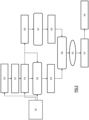
- Figure 2 is a flowchart of the main steps of a method for predicting frailty of a subject according to an embodiment, to be implemented by a processor of a programmable as described above.
- the method comprises a step 50 of obtaining the acceleration signals as provided by the accelerometer which is included in the wearable device, during an observation period.
- the observation period is a predetermined period of time, such as for example 24 hours or less.
- the predicted frailty status is computed on several successive observation periods forming a longer monitoring period (several days, weeks or months).
- the acceleration signals are time varying signals (time series), for example provided by a 3D accelerometer and comprising a three time varying signal ax(t), av(t), az(t) corresponding to three spatial axis of an orthogonal spatial referential.
- the acceleration signals are acquired with a given sampling frequency, typically comprised between 25Hz to 50 Hz, and preferably higher than 40Hz.
- each acceleration signal ax(t), av(t), az(t) is decomposed into overlapping segments.
- barometric signals are also obtained during the observation period (step 56).
- the time series of segments of acceleration signals are processed in processing step 54 to determine active periods vs inactive periods.
- the time series of segments of acceleration signals are processed using a method as described in the article " Exploiting Local Temporal Characteristics via Multinomial Decomposition Algorithm for Real-Time Activity Recognition," by M. Abbas and R. Le Bouquin Jeannes, published in IEEE Transactions on Instrumentation and Measurement, vol. 70, September 2021 , for obtaining labels representing a sequence of physical activities carried out during the observation period, and an associated time period for each physical activity.
- the labels correspond to the following categories of physical activities: 'sitting-down', 'standing-up', 'lying-down', 'rising up', 'walking, jogging', 'staying still' and 'other'.
- the category 'other' indicates that the processing did not classify a given segment of acceleration signals into any of the labelled categories.
- the acceleration signals received during the observation period may be discriminate between walking periods, other active periods and inactive periods.
- the method applied is the method described in the article " Weightlessness feature — a novel feature for single tri-axial accelerometer based activity recognition," by Zhenyu He, Zhibin Liu, Lianwen Jin, Li-Xin Zhen and Jian-Cheng Huang, published in 2008 19th International Conference on Pattern Recognition, 2008 .
- the method further distinguishes between 'walking', 'going upstairs' and 'going downstairs', the activities 'going upstairs' and 'going downstairs' corresponding to sub-categories of walking with changes in altitude.
- the method further comprises a step 58 of computing global features which are characteristic of the subject's physical activity during the observation period, using the acceleration signals captured.
- the method comprises more specifically a step 60 of extracting segments of acceleration signals of periods labelled as walking periods (also referred to as "periods of walking'), and the computation 62 of local features representative of the subject's gait.
- the computed global features are stored, preferably in an array or first feature vector denoted by G , and transmitted to a first frailty assessment module 64.
- the first frailty assessment module 36 applies for example a thresholding process or a machine learning trained process to compute a first estimated status of frailty amongst robust, pre-frail, frail, and the first estimated status of frailty is forwarded to the combination step 68.
- the first frailty assessment module 36 consists of fully connected layers (dense layers) which takes the first feature vector G as an input and models the first feature vector G into a first modified vector G ⁇ that is forwarded to the combination step 68.
- the computed local features are stored, preferably in an array or second feature vector denoted by L transmitted to a second frailty assessment module 66 which applies for example a machine learning trained process to compute a second output.
- the second output is a second estimated status of frailty
- the machine learning process comprises: Random Forests, Gradient Boosting Machine, Neural networks, or another classifier. Implementations of such machine learning processes are known.
- the second frailty assessment module 38 consists of fully connected layers (dense layers) which takes the second feature vector L as an input and models it into a second modified vector L ⁇ that is forwarded to the combination step 68.
- first and the second outputs of respectively the frailty assessment modules 36, 38 are combined during a combination step 68, to obtain a frailty status 65 of the subject.
- the first and the second frailty assessment modules 36 and 38 are composed with the same architecture of connected layers or with the same machine learning classifier.
- each of the modules 36, 38 implements an SVM (support vector machine).
- the first and the second frailty assessment modules 36 and 38 are composed with a different architecture of connected layers or with different machine learning classifiers.
- the fusion module 40 receives the first estimated status of frailty and the second estimated status of frailty and applies a voting method to determine a predicted frailty status. If each of the first frailty assessment module and the second frailty assessment module provide the same predicted status of frailty, then said predicted status of frailty is chosen as the result of the combination by majority voting.
- the combining step applies a voting based on a rule. For example, in a highly sensitive system, the worst prediction is kept.
- the combination step 68 combines both outputs by concatenating the first vector and the second vector to obtain a concatenated vector F ⁇ of dimension N1+N2.
- the concatenated vector F ⁇ is input to an output layer, such as for example a softmax layer, which generates a probability distribution over 3 classes and furthermore the probability of occurrence of each of the classes, to predict the output, i.e. the frailty status.
- an output layer such as for example a softmax layer, which generates a probability distribution over 3 classes and furthermore the probability of occurrence of each of the classes, to predict the output, i.e. the frailty status.
- the predicted frailty status for each observation period is stored at storing step 67 over a plurality of successive observation periods, and an analysis step 69 is applied.
- a frailty trajectory is computed and analysis of the trajectory is applied to determine or to predict the transition over time from robust to pre-frail or from pre-frail to frail.
- an alarm is raised.
- Figure 3 is a flowchart of the main steps of the computation of global features, according to an embodiment.
- the computation of global features comprises a first step 70 of determining active and inactive periods.
- the acceleration signals and the barometric signals are processed to obtain labels representing a sequence of physical activities carried out during the observation period, and associated time periods for each physical activity, the activities labelled as 'standing-up', 'rising up'; 'walking', and, optionally, 'going upstairs' and 'going downstairs'.
- the physical activities 'sitting-down', and 'lying-down' and 'jogging' are categorized as active, while 'staying still' is categorized as inactive.
- a first global feature computed is the activity rate G1, i.e. the percentage of duration of active periods during the observation period.
- the periodicity of movements is the second global feature G2 computed.
- the autocorrelation of the corresponding acceleration data is computed.
- the periodicity cycles constitute this second global feature.
- the number of steps G3 during the observation period is computed as a global feature by identifying the peaks in the acceleration signals when the subject is standing and moving.
- the quantity of burned calories is estimated based on the intensity of physical activities, estimated from the magnitude of the acceleration signals during the active periods, for example by using a predetermined chart.
- the MET values are determined using a predefined table that links these values to the intensity of the movement, for example according to the teachings of the article " Physical activity and public health: updated recommendation for adults from the American College of Sports Medicine and the American Heart Association » by W. Haskell et al, published in Medicine & Science in Sports & Exercise. 2007;39(8):1423-1434
- the method further comprises a step 74 of computing an altitude related global feature.
- This computation 74 comprises computing time series of altitude signals using barometric signals, the temperature and atmospheric pressure.
- An altitude related global feature G5 is then computed from time series representing the altitude of the wearable device, for example a feature relative to the slope of the altitude signals.
- a barometric curve is computed, and the slope of the barometric curve and the difference in altitude indicate whether the subject is going upstairs or downstairs.
- the global feature G5 indicates the number of times the subject takes the stairs (upstairs or downstairs) during the observation period.
- the method comprises a step 76 of computing at least one global feature G6 evaluating the sleep of the subject.
- the segments of acceleration signals corresponding to a night period for example a period between 10 pm and 8 am, when the subject is lying down, are considered.
- sleeping cycles which last at least a minimal period of time, e.g. 5 minutes, are detected.
- a sleeping cycle is a period during which the subject is keeping the same position while sleeping, more precisely when the subject is lying down during the night period, without any rotation of interruption in the sleep pattern.
- the sleep pattern is determined from the shape of the acceleration signals.
- the global feature G6 is for example computed as the average duration of the sleeping cycles, or as the overall duration of the sleeping cycles divided by the duration when the subject lying down during the night period.
- 6 global features G1 to G6 are computed, respectively 4 activity related features, 1 altitude related feature and 1 sleep quality related feature.
- only a subset of these 6 global features may be computed or several other features, for example several features relative to the sleep quality may be computed and further fed to the first frailty assessment module.
- the set of subset of global features computed is stored, preferably in a first feature vector G as described above.
- Figure 4 is a flowchart of the main steps of the computation of local features, according to an embodiment.
- the local features are features that relate to the gait of the subject.
- the local features are computed from segments of acceleration signals during the periods of walking.
- the method comprises a step 80 of computing the magnitude of the acceleration signals captured by the accelerometer.
- the first local feature is computed for each segment of acceleration magnitude, each segment having a given first duration, for example 6 seconds.
- K is the percent and N is the length (i.e. the number of samples) of a segment.
- the method comprises a computation step 84 of a second local feature F2 which is equal to the steps rate or cadence over a given second duration, preferably equal to the first duration (or segment duration), i.e. 6 seconds in the example given above.
- the steps rate is defined as the number of steps per said fixed duration.
- the walking steps are considered to correspond to peaks in the acceleration magnitude signal. Any of the known methods to detect the peaks of a signal may be used.
- the method comprises computing local features representative of the periodicity of the acceleration signals of walking periods.
- the method comprises a step 86 of computing normalized autocorrelation of the acceleration magnitude signals of each walking period.
- the autocorrelation signal provides information related to the periodicity of the gait movements.
- the auto-correlation is denoted R ( ⁇ ), the variable ⁇ being also called a lag.
- the auto-correlation is computed using a Fourier transform according to the following substeps.
- the acceleration magnitude signal is centered, in other words the mean value of the signal is subtracted from each sample, to obtain a signal denoted ⁇ ⁇ ⁇
- a Fourier transform for example a FFT (Fast Fourrier Transform) is applied:
- F R f FFT ⁇ a ⁇ t ⁇
- the auto-correlation is normalized, i.e. each sample is divided by R(0) which is the maximal value.
- Another local feature F3 is then computed at computation step 88 as a statistical moment of the normalized auto-correlation signal, preferably the skewness is representative of the asymmetry of the auto-correlation.
- the local feature F3 is a different parameter computed from the autocorrelation, for example the standard deviation or the entropy of the auto-correlation signal.
- the local feature F3 is representative of the periodicity of the magnitude of the acceleration during the considered period of walking.
- AR autoregressive
- b is the bias which is a constant value
- p is the order of the model, typically an integer between 1 and 8
- ⁇ t is a white noise
- ⁇ i are the parameters of the model.
- the parameters of an autoregressive model for modelling the acceleration magnitude ⁇ a ( t ) ⁇ are determined at determination step 90.
- an optimal order p is computed using the Akaike Information Criterion (AIC) or the Bayesian Information Criterion (BIC).
- Any other known method for computing an optimal order p may be applied.
- step 92 local features are computed from the autoregressive model, preferably by computing one or several statistical features of the coefficients of the model.
- the local feature F4 computed is the distribution entropy of ⁇ i , quantifying the unpredictability or the randomness of this set of parameters.
- the local feature F4 is computed from the standard deviation of the parameters ⁇ i .
- the local feature F5 is the kurtosis of ⁇ i , indicating whether the distribution of the set of parameters is tight or flattened. Alternatively, a different statistical moment of the distribution of the set of parameters may be used.
- X ⁇ is the scaled feature vector
- X is the original feature vector
- ⁇ x is the mean value of X
- ⁇ x is the standard deviation of X.
- All scaled feature values are comprised in a predetermined interval, which is the interval [0,1] when applying the sigmoidal transformation.
- the scaled vector of local features forms the second feature vector L mentioned above, which is provided as an entry to the second frailty assessment module.
- the inventors tested this second frailty assessment module using the cross-validation technique, and found that it provided an accuracy that ranges from 86% to 91%, with an average accuracy exceeding 89%.
- the second frailty assessment module applies other classifiers, such as a multi-layer perceptron (MLP), support vector machines with linear, quadratic or polynomial kernels, a k-Nearest Neighbors (k-NN) classifier, a decision tree with a given depth or a Gradient Boosting Machine (GBM).
- MLP multi-layer perceptron
- k-NN k-Nearest Neighbors
- GBM Gradient Boosting Machine
- the proposed method respects the subject's privacy and is not limited to indoor environments, since it is based on wearable sensors.
- the autonomy of the proposed method, device and system is important, since accelerometers and barometers have a low electrical consumption.
- the combination of frailty assessment results based on both global features and local features increases accuracy of the estimation and prediction or detection of frailty of the subject.
- the proposed method to predict a trend during time, and therefore to predict a transition from robustness to pre-frailty or a transition from pre-frailty to frailty.
Landscapes
- Health & Medical Sciences (AREA)
- Life Sciences & Earth Sciences (AREA)
- Engineering & Computer Science (AREA)
- Medical Informatics (AREA)
- Physics & Mathematics (AREA)
- Veterinary Medicine (AREA)
- Biophysics (AREA)
- Pathology (AREA)
- Public Health (AREA)
- Biomedical Technology (AREA)
- Heart & Thoracic Surgery (AREA)
- General Health & Medical Sciences (AREA)
- Molecular Biology (AREA)
- Surgery (AREA)
- Animal Behavior & Ethology (AREA)
- Oral & Maxillofacial Surgery (AREA)
- Physiology (AREA)
- Dentistry (AREA)
- Measurement Of The Respiration, Hearing Ability, Form, And Blood Characteristics Of Living Organisms (AREA)
Abstract
Description
- The present invention concerns a method and device for predicting frailty of a subject.
- The invention belongs to the domain of healthcare monitoring systems, and more particularly the monitoring of frailty in elderly persons.
- The frailty of elderly persons is becoming increasingly important, since the frailty syndrome is representative of decline in health and physical functions, and increases the vulnerability of the person. Such a frailty syndrome has a prevalence in older persons, and given the generalized aging of the population in industrialized countries, detecting and predicting the frailty of a subject becomes a priority.
- In this context, frailty has been a research topic in the past two decades. The frailty of a subject may be classified into three classes which are: robust (full physical performance), pre-frail (clinically silent), frail (progressive clinical worsening), the class "frail" being previous to the lack of autonomy of a subject, the subject being then considered disabled.
- In the article "Frailty in older adults: Evidence for a phenotype" by L.P. Fried et al, published in the Journal of Gerontology: Medical sciences 56A, 2001, pages 146-156, a phenotype of frailty includes criteria such as unintentional weight loss, exhaustion, low physical activity, slow walking speed and weakness. In particular, the gait speed, which is the ratio of walked distance to the time spent, was considered to be a relevant indicator of frailty.
- It is known to use a wearable device, which is worn by the subject, for example a connected watch, to monitor some physical activities, including walking.
- Most works on frailty assessment include a supervised phase in which the subject is asked to walk a given distance while wearing a wearable device. However, this approach has its limits, since such a supervised frailty assessment can only be carried out once in a while, in a clinical environment, to evaluate the health condition of the subject.
- Patent
US 10,299,736 B2 - There is a need to provide a method and system providing simpler and more accurate parameters to predict a frailty status of a subject, and further to detect the changeover from robust to pre-frail, or from pre-frail to frail, so as to better take into account the frailty of the subject.
- This and other objects are achieved by a method for predicting frailty of a subject, using a wearable device, worn by the subject in unsupervised conditions, the wearable device comprising an accelerometer, the method being implemented by a microcontroller, connected to the accelerometer, the microcontroller being configured to receive acceleration signals from the accelerometer over time. The method being comprises the following steps, implemented by the microcontroller:
- (a) compute a plurality of global features representative of the acceleration signals captured during a predetermined observation period,
- (b) extract segments of acceleration signals within at least one period of walking of the subject within the observation period;
- (c) compute a plurality of local features representative of the subject's gait during said at least one period of walking from the magnitude of the segments of acceleration signals,
- (d) apply a first frailty assessment module on the plurality of global features to obtain a first output representative of the frailty of the subject,
- (e) apply a second frailty assessment module on the plurality of local features to obtain a second output representative of the frailty of the subject,
- (f) combine the first output of the first frailty assessment module and the second output of the second frailty assessment module to predict a status of frailty of the subject amongst the classes {robust, pre-frail, frail} for the predetermined observation period.
- Advantageously, the method achieves frailty prediction using global features and local features obtained from processed segments of acceleration signals.
- In embodiments of the invention, the method for predicting frailty of a subject, considered alone or according to all technically possible combinations.
- The first output is a first modified vector obtained from a first feature vector of global features and the second output is a second modified vector obtained from a second feature vector of local features, the combining comprising concatenating said first modified vector and said second modifier vector into a concatenated vector, the combining comprising providing the concatenated vector to an output layer to obtain the predicted status of frailty of the subject.
- The first output is a first estimated status of frailty of the subject, the second output is a second estimated status of frailty of the subject, and the combining comprises voting to select the predicted status of frailty of the subject between the first estimated status of frailty of the subject and the second estimated status of frailty of the subject.
- The method comprises applying the steps (a) to (f) over a plurality of successive observation periods to obtain a predicted status of frailty of the subject associated to each observation period of the plurality of successive observation periods, the method further comprising an analysis step obtaining a trajectory representative of the frailty of the subject over the plurality of successive observation periods, and determining, by analysing said trajectory, a transition between robust to pre-frail or between pre-frail to frail.
- The method comprises a processing of the acceleration signals during the observation period to obtain a list of labels representing a sequence of daily physical activities performed by the subject wearing the wearable device, and further comprises determining active periods and inactive periods based on said list of labels.
- The method further comprises computing a plurality of global features relative to the determined active periods during the observation period.
- The method further comprises acquiring barometric signals during the observation period and computing at least one altitude related global feature.
- The method further comprises computing at least one sleep quality related global feature by analysing acceleration signals captured during a predetermined night period.
- The computing of a plurality of local features comprises computing a normalized auto-correlation signal of the magnitude of the segments of acceleration signals during at least one period of walking, and computing at least one local feature based on said normalized auto-correlation signal.
- The computing of a plurality of local features further comprises fitting an autoregressive model to the magnitude of the segments of acceleration signals during at least one period of walking, the fitting comprising computing parameters of the autoregressive model, and computing a plurality of local features based on the parameters of the autoregressive model.
- The first frailty assessment module applies a machine learning classifier on the computed global features.
- The second frailty assessment module applies a machine learning classifier on the computed local features.
- The invention relates also to a device for predicting frailty of a subject, the device being a wearable device, worn by the subject in unsupervised conditions, comprising an accelerometer and a microcontroller connected to the accelerometer, the microcontroller being configured to receive acceleration signals from the accelerometer over time. The microcontroller is configured to implement:
- an extracting module configured to extract segments of acceleration signals within at least one period of walking of the subject within an observation period,
- a global features computing module configured to compute a plurality of global features representative of the acceleration signals captured during a predetermined observation period,
- a local features computing module configured to compute a plurality of local features representative of the subject's gait during said at least one period of walking from the magnitude of the segments of acceleration signals,
- a first frailty assessment module applied on the plurality of global features to obtain a first output representative of the frailty of the subject,
- a second frailty assessment module applied on the plurality of local features to obtain a second output representative of the frailty of the subject,
- a fusion module configured to combine the first output of the first frailty assessment module and the second output of the second frailty assessment module to predict a status of frailty of the subject amongst the classes {robust, pre-frail, frail} for the predetermined observation period.
- The device for predicting frailty of a subject is configured for implementing all the features of the method for predicting frailty of a subject as described above.
- The invention relates also to a computer program comprising code instructions which, when they are executed by a programmable device, implement a method for predicting frailty of a subject as briefly described above.
- Further characteristics and advantages of the present invention will become apparent from the following description, provided merely by way of non-limiting examples, with reference to the enclosed drawings, in which:
-
Figure 1 shows a system comprising a device for predicting frailty of a subject according to an embodiment of the present invention; -
Figure 2 is a flowchart of the main steps of a method for predicting frailty of a subject according to an embodiment; -
Figure 3 is a flowchart of the global features computation according to an embodiment; -
Figure 4 is a flowchart of the local features computation according to an embodiment. -
Figure 1 illustrates asystem 2 for predicting frailty of a person according to an embodiment of the invention. - The
monitoring system 2 comprises awearable device 4, which can be worn autonomously by a person in everyday life. - For example, the
wearable device 4 is a smart belt positioned around the waist, or the chest or the hip of a user. Advantageously, such a wearable device is positioned close to the center of body mass of the person. In the following, a person wearing such a device is called a subject. - According to an alternative, the wearable device is worn around the neck, for example in the form of a necklace.
- According to an embodiment, the
wearable device 4 is a smart belt, comprising a built-inaccelerometer 6 adapted to acquire acceleration data. - Preferably, the
accelerometer 6 is a tri-axial accelerometer, providing three acceleration components according to three mutually orthogonal axes of a 3D referential. Such an accelerometer provides three acceleration components, each comprising data representative of the linear acceleration and the gravity acceleration according to one direction, referenced hereafter as Ax, Ay, Az. The accelerometer is a sensor configured to acquire data over time, the outputs of the accelerometer being samples of three raw acceleration signals over time. - According to an embodiment, the
accelerometer 6 uses MEMS (for Micro-Electro Mechanical Systems) technology, and has a sampling frequency up to 100 Hz or 1 KHz, for example equal to 50Hz. - Optionally, the
wearable device 4 further comprises abarometer 8, adapted to acquire pressure data. - The
wearable device 4 further comprises amicrocontroller 10, which is a programmable electronic device, adapted to receive the raw data acquired by theaccelerometer 6, for example via a wired connection, for example on a Printed Circuit Board. - The
microcontroller 10 comprises aprocessor 12, one or moreelectronic memory units 14 and aninterface unit 18, which are all connected via internal communication buses. - The
interface unit 18 is adapted to communicate data, using radio communication technology for example, to anexternal device 20, which comprises a human-machine interface 22. - The
external device 20 is for example a smartphone, a pad, a laptop etc. The human-machine interface 22 comprises adisplay screen 24, and acommand module 26 adapted to receive commands from a user. According to an embodiment, thedisplay 24 is a tactile display, which serves for both displaying and acquiring user commands. - According to an alternative embodiment, the
wearable device 4 also comprises a human-machine interface, for example comprising a display screen (not shown). - Furthermore, according to an embodiment, the
interface unit 18 is also adapted to communicate data to adistant server 28. For example,server 28 is a server of medical data, the data being provided to medical staff for health monitoring of a subject. - The
system 2 for monitoring physical activities of a subject is configured to acquire acceleration signals from theaccelerometer 6 and to process these signals according to a method for predicting frailty of a subject which will be described in detail hereafter. - The
microcontroller 10 is configured to implement several processing modules including : - an
extraction module 30 configured to extract segments of acceleration signals within at least one period of walking of the subject in unsupervised conditions; - a global
features computing module 32 configured to compute a plurality of global features representative the acceleration signals captured during a predetermined observation period; - a local
features computing module 34 configured to compute a plurality of local features representative of the subject's gait during said at least one walking period from the magnitude of extracted segments of acceleration signals; - a first
frailty assessment module 36 configured to process the plurality of global features to obtain a first output representative of the frailty of the subject; - a second
frailty assessment module 38 configured to process the plurality of local features to obtain a second output representative of the frailty of the subject; - a
fusion module 40 configured to combine the first and the second outputs to predict the status of frailty of the subject, as described in detail hereafter. - For example, the observation period is a 24 hours period, and the periods of walking are of variable duration depending on physical activities of the subject during each observation period.
- The so-called global features are features computed using the acceleration signals captured during an observation period, the observation period having a given duration, e.g. 24 hours, the observation period including one or several periods of walking.
- The so-called local features are features representative of the subject's gait, computed from at least one period of walking, using the magnitude of extracted segments of acceleration signals.
- The subject uses the wearable device in unsupervised conditions, i.e. during daily life activities and for an undetermined period of time, as opposed to supervised conditions, in which a subject wears such a wearable device during an test or exercise, for example in a clinical environment, for a given short period of time.
- According to an embodiment,
modules electronic memory 14 of thesystem 2 for monitoring physical activities, and executed by theprocessor 12. - Alternatively, the
modules - In an alternative embodiment, each of the
modules - According to an embodiment, the acceleration signals acquired by the accelerometer are segmented using a sliding window, and the time series of windowed segments of acceleration signals 42 are stored in the
memory 14. A window designates a time period, having a starting time, an ending time and a duration. - The result of the processing by the
modules memory 14. - The predicted frailty status may be computed repetitively over each observation period over a plurality of successive observation periods, e.g. each day over one or two month(s), and stored, forming a frailty status signal, also called trajectory, evolving over time, which may further be analyzed to accurately predict the frailty status of the subject.
- Each of the
modules - The
modules - As is known in the field of machine learning, hyperparameters are used to define a machine learning model or classifier, for example the number of neurons and the activation function of a neural network. The hyperparameters are used to control the learning process.
- For each
module memory unit 14, and are further used to predict the frailty status of a subject when the monitoring begins. - According to one embodiment, each frailty status class is labelled with, for example, a number, the robust class is labelled "3", the pre-frail class is labelled 2 and the frail class is labelled 1. The trajectory is then formed by a series of values.
- According to an embodiment, when a transition from a frailty class to another is predicted or detected, an alarm is sent, for example to medical staff and/or to family members so as to warn them of the physical weakening of the subject.
- Furthermore, the analysis of the predicted frailty status over time helps stabilizing the response of the system in case of misclassification over one observation period, which may appear as an outlier compared to the plotted trajectory.
-
Figure 2 is a flowchart of the main steps of a method for predicting frailty of a subject according to an embodiment, to be implemented by a processor of a programmable as described above. - The method comprises a
step 50 of obtaining the acceleration signals as provided by the accelerometer which is included in the wearable device, during an observation period. - The observation period is a predetermined period of time, such as for example 24 hours or less. As exposed above, the predicted frailty status is computed on several successive observation periods forming a longer monitoring period (several days, weeks or months).
- The acceleration signals are time varying signals (time series), for example provided by a 3D accelerometer and comprising a three time varying signal ax(t), av(t), az(t) corresponding to three spatial axis of an orthogonal spatial referential. The acceleration signals are acquired with a given sampling frequency, typically comprised between 25Hz to 50 Hz, and preferably higher than 40Hz.
- The acceleration signals are then processed in processing
step 52 into time series of segments of acceleration signals. Preferably, each acceleration signal ax(t), av(t), az(t) is decomposed into overlapping segments. - Optionally, barometric signals are also obtained during the observation period (step 56).
- The time series of segments of acceleration signals are processed in processing
step 54 to determine active periods vs inactive periods. - Preferably, the time series of segments of acceleration signals are processed using a method as described in the article "Exploiting Local Temporal Characteristics via Multinomial Decomposition Algorithm for Real-Time Activity Recognition," by M. Abbas and R. Le Bouquin Jeannes, published in IEEE Transactions on Instrumentation and Measurement, vol. 70, September 2021, for obtaining labels representing a sequence of physical activities carried out during the observation period, and an associated time period for each physical activity.
- The labels correspond to the following categories of physical activities: 'sitting-down', 'standing-up', 'lying-down', 'rising up', 'walking, jogging', 'staying still' and 'other'. The category 'other' indicates that the processing did not classify a given segment of acceleration signals into any of the labelled categories.
- Alternatively, other methods known in the prior art may be applied to the acceleration signals received during the observation period to discriminate between walking periods, other active periods and inactive periods. For example, the method applied is the method described in the article "Weightlessness feature — a novel feature for single tri-axial accelerometer based activity recognition," by Zhenyu He, Zhibin Liu, Lianwen Jin, Li-Xin Zhen and Jian-Cheng Huang, published in 2008 19th International Conference on Pattern Recognition, 2008.
- Furthermore, if barometric signals are also obtained in a barometric
signals obtaining step 56, the method further distinguishes between 'walking', 'going upstairs' and 'going downstairs', the activities 'going upstairs' and 'going downstairs' corresponding to sub-categories of walking with changes in altitude. - The method further comprises a
step 58 of computing global features which are characteristic of the subject's physical activity during the observation period, using the acceleration signals captured. - An example of computing global features will be detailed hereafter with respect to
figure 3 . - Further, the method comprises more specifically a
step 60 of extracting segments of acceleration signals of periods labelled as walking periods (also referred to as "periods of walking'), and thecomputation 62 of local features representative of the subject's gait. - An example of computing local features will be detailed hereafter with respect to
figure 4 . - The computed global features are stored, preferably in an array or first feature vector denoted by G, and transmitted to a first
frailty assessment module 64. - According to a first embodiment, the first
frailty assessment module 36 applies for example a thresholding process or a machine learning trained process to compute a first estimated status of frailty amongst robust, pre-frail, frail, and the first estimated status of frailty is forwarded to thecombination step 68. - According to a second embodiment, the first
frailty assessment module 36 consists of fully connected layers (dense layers) which takes the first feature vector G as an input and models the first feature vector G into a first modified vector G̃ that is forwarded to thecombination step 68. - The computed local features are stored, preferably in an array or second feature vector denoted by L transmitted to a second
frailty assessment module 66 which applies for example a machine learning trained process to compute a second output. - According to a first embodiment, the second output is a second estimated status of frailty, and the machine learning process comprises: Random Forests, Gradient Boosting Machine, Neural networks, or another classifier. Implementations of such machine learning processes are known.
- According to a second embodiment, the second
frailty assessment module 38 consists of fully connected layers (dense layers) which takes the second feature vector L as an input and models it into a second modified vector L̃ that is forwarded to thecombination step 68. - Finally, the first and the second outputs of respectively the
frailty assessment modules combination step 68, to obtain afrailty status 65 of the subject. - According to one embodiment, the first and the second
frailty assessment modules modules - According to another embodiment, the first and the second
frailty assessment modules - According to the first embodiment, the
fusion module 40 receives the first estimated status of frailty and the second estimated status of frailty and applies a voting method to determine a predicted frailty status. If each of the first frailty assessment module and the second frailty assessment module provide the same predicted status of frailty, then said predicted status of frailty is chosen as the result of the combination by majority voting. - If there is a discrepancy between the first output and the second output, the combining step applies a voting based on a rule. For example, in a highly sensitive system, the worst prediction is kept.
- According to the second embodiment, when the first output is a first modified vector G̃ of first dimension N1 and the second output is a second modifier vector L̃ of second dimension N2, the
combination step 68 combines both outputs by concatenating the first vector and the second vector to obtain a concatenated vector F̃ of dimension N1+N2. - The concatenated vector F̃ is input to an output layer, such as for example a softmax layer, which generates a probability distribution over 3 classes and furthermore the probability of occurrence of each of the classes, to predict the output, i.e. the frailty status.
- Furthermore, the predicted frailty status for each observation period is stored at storing
step 67 over a plurality of successive observation periods, and ananalysis step 69 is applied. For example, a frailty trajectory is computed and analysis of the trajectory is applied to determine or to predict the transition over time from robust to pre-frail or from pre-frail to frail. Optionally, when a transition towards more frailty is predicted, an alarm is raised. -
Figure 3 is a flowchart of the main steps of the computation of global features, according to an embodiment. - The computation of global features comprises a
first step 70 of determining active and inactive periods. - According to an embodiment, the acceleration signals and the barometric signals are processed to obtain labels representing a sequence of physical activities carried out during the observation period, and associated time periods for each physical activity, the activities labelled as 'standing-up', 'rising up'; 'walking', and, optionally, 'going upstairs' and 'going downstairs'. The physical activities 'sitting-down', and 'lying-down' and 'jogging' are categorized as active, while 'staying still' is categorized as inactive.
- Several global features are computed during the
step 72 of computing activity related global features. - From the respective durations of active periods and inactive periods, a first global feature computed is the activity rate G1, i.e. the percentage of duration of active periods during the observation period.
- The periodicity of movements is the second global feature G2 computed. When the subject is moving, the autocorrelation of the corresponding acceleration data is computed. The periodicity cycles constitute this second global feature.
- Furthermore, the number of steps G3 during the observation period is computed as a global feature by identifying the peaks in the acceleration signals when the subject is standing and moving.
- The global features further include a fourth global feature G4 which is representative of the energy expenditure, computed as the MET (for Metabolic Equivalent) resulting from the relationship between the intensity of the physical activity and the energy expenditure:

- The quantity of burned calories is estimated based on the intensity of physical activities, estimated from the magnitude of the acceleration signals during the active periods, for example by using a predetermined chart. The MET values are determined using a predefined table that links these values to the intensity of the movement, for example according to the teachings of the article "Physical activity and public health: updated recommendation for adults from the American College of Sports Medicine and the American Heart Association » by W. Haskell et al, published in Medicine & Science in Sports & Exercise. 2007;39(8):1423-1434
- When using the barometric signals, the method further comprises a
step 74 of computing an altitude related global feature. - This
computation 74 comprises computing time series of altitude signals using barometric signals, the temperature and atmospheric pressure. - An altitude related global feature G5 is then computed from time series representing the altitude of the wearable device, for example a feature relative to the slope of the altitude signals. According to an embodiment, a barometric curve is computed, and the slope of the barometric curve and the difference in altitude indicate whether the subject is going upstairs or downstairs. For example, the global feature G5 indicates the number of times the subject takes the stairs (upstairs or downstairs) during the observation period.
- Finally, the method comprises a
step 76 of computing at least one global feature G6 evaluating the sleep of the subject. For example, the segments of acceleration signals corresponding to a night period, for example a period between 10 pm and 8 am, when the subject is lying down, are considered. Then sleeping cycles which last at least a minimal period of time, e.g. 5 minutes, are detected. A sleeping cycle is a period during which the subject is keeping the same position while sleeping, more precisely when the subject is lying down during the night period, without any rotation of interruption in the sleep pattern. The sleep pattern is determined from the shape of the acceleration signals. - The global feature G6 is for example computed as the average duration of the sleeping cycles, or as the overall duration of the sleeping cycles divided by the duration when the subject lying down during the night period.
- In the embodiment described above, 6 global features G1 to G6 are computed, respectively 4 activity related features, 1 altitude related feature and 1 sleep quality related feature.
- According to alternatives, only a subset of these 6 global features may be computed or several other features, for example several features relative to the sleep quality may be computed and further fed to the first frailty assessment module.
- The set of subset of global features computed is stored, preferably in a first feature vector G as described above.
-
Figure 4 is a flowchart of the main steps of the computation of local features, according to an embodiment. - As explained above, the local features are features that relate to the gait of the subject.
- The local features are computed from segments of acceleration signals during the periods of walking.
- The method comprises a
step 80 of computing the magnitude of the acceleration signals captured by the accelerometer. - The magnitude is computed for each sampling instant t as:

- It was noted that the range of acceleration magnitude, representative of the intensity of the gait, decreases when the subject becomes frail.
- A first local feature F1 representative of the subjects gait is computed (step 82) as the K percent trimmed range of acceleration magnitude, with K=25% for example. The first local feature is computed for each segment of acceleration magnitude, each segment having a given first duration, for example 6 seconds.
- The trimmed range of acceleration magnitude is computed as the range of the acceleration magnitude after excluding the k highest and lowest values, where:

- Where K is the percent and N is the length (i.e. the number of samples) of a segment. For example, when the segment duration is 6 seconds and the sampling frequency is 25Hz, N=6x25 samples.
- Furthermore, the method comprises a
computation step 84 of a second local feature F2 which is equal to the steps rate or cadence over a given second duration, preferably equal to the first duration (or segment duration), i.e. 6 seconds in the example given above. The steps rate is defined as the number of steps per said fixed duration. - The walking steps are considered to correspond to peaks in the acceleration magnitude signal. Any of the known methods to detect the peaks of a signal may be used.
- Furthermore, the method comprises computing local features representative of the periodicity of the acceleration signals of walking periods.
- To that end, the method comprises a
step 86 of computing normalized autocorrelation of the acceleration magnitude signals of each walking period. - Advantageously, the autocorrelation signal provides information related to the periodicity of the gait movements.
- The auto-correlation is denoted R(τ), the variable τ being also called a lag.
- According to an embodiment, the auto-correlation is computed using a Fourier transform according to the following substeps. The acceleration magnitude signal is centered, in other words the mean value of the signal is subtracted from each sample, to obtain a signal denoted ∥ã∥ Then a Fourier transform, for example a FFT (Fast Fourrier Transform) is applied:

- Next, the result of the Fourier transform is multiplied by its complex conjugate:

- Where

- Finally, the inverse fast Fourier transform, denoted IFFT, is applied to compute the auto-correlation in the time domain:

- The auto-correlation is normalized, i.e. each sample is divided by R(0) which is the maximal value.
- Another local feature F3 is then computed at
computation step 88 as a statistical moment of the normalized auto-correlation signal, preferably the skewness is representative of the asymmetry of the auto-correlation. - Alternatively, the local feature F3 is a different parameter computed from the autocorrelation, for example the standard deviation or the entropy of the auto-correlation signal.
- The local feature F3 is representative of the periodicity of the magnitude of the acceleration during the considered period of walking.
- Furthermore, it is proposed to fit an autoregressive (AR) model of given order to the time series of the acceleration magnitude signal during a walking period.
- An auto-regressive model of time series signal Xt is given by the formula:

- Where b is the bias which is a constant value, p is the order of the model, typically an integer between 1 and 8, εt is a white noise and φi are the parameters of the model.
- The parameters of an autoregressive model for modelling the acceleration magnitude ∥a(t)∥ are determined at
determination step 90. - According to an embodiment, an optimal order p is computed using the Akaike Information Criterion (AIC) or the Bayesian Information Criterion (BIC).
- Any other known method for computing an optimal order p may be applied.
- Next, local features are computed (step 92) from the autoregressive model, preferably by computing one or several statistical features of the coefficients of the model.
- According to an embodiment, the local feature F4 computed is the distribution entropy of φ i,quantifying the unpredictability or the randomness of this set of parameters. Alternatively, the local feature F4 is computed from the standard deviation of the parameters φi.
- The local feature F5 is the kurtosis of Φi , indicating whether the distribution of the set of parameters is tight or flattened. Alternatively, a different statistical moment of the distribution of the set of parameters may be used.
- Finally, all the computed local feature F1 to F5 are scaled (step 94) using the sigmoidal transformation:

- Where X̂ is the scaled feature vector, X is the original feature vector, µx is the mean value of X and σx is the standard deviation of X.
- All scaled feature values are comprised in a predetermined interval, which is the interval [0,1] when applying the sigmoidal transformation.
- The scaled vector of local features forms the second feature vector L mentioned above, which is provided as an entry to the second frailty assessment module.
- In a preferred embodiment, the second frailty assessment module applies random forest machine learning of n estimators and a depth d, for example n=20 and d=10.
- Advantageously, the inventors tested this second frailty assessment module using the cross-validation technique, and found that it provided an accuracy that ranges from 86% to 91%, with an average accuracy exceeding 89%.
- Alternatively, the second frailty assessment module applies other classifiers, such as a multi-layer perceptron (MLP), support vector machines with linear, quadratic or polynomial kernels, a k-Nearest Neighbors (k-NN) classifier, a decision tree with a given depth or a Gradient Boosting Machine (GBM).
- Advantageously, the proposed method respects the subject's privacy and is not limited to indoor environments, since it is based on wearable sensors.
- Advantageously, the autonomy of the proposed method, device and system is important, since accelerometers and barometers have a low electrical consumption.
- Advantageously, the combination of frailty assessment results based on both global features and local features increases accuracy of the estimation and prediction or detection of frailty of the subject.
- Advantageously, the proposed method to predict a trend during time, and therefore to predict a transition from robustness to pre-frailty or a transition from pre-frailty to frailty.
Claims (14)
- Method for predicting frailty of a subject, using a wearable device, worn by the subject in unsupervised conditions, the wearable device comprising an accelerometer, the method being implemented by a microcontroller, connected to the accelerometer, the microcontroller being configured to receive acceleration signals from the accelerometer over time, the method being characterized in that it comprises the following steps, implemented by the microcontroller:a- compute (58) a plurality of global features representative of the acceleration signals captured during a predetermined observation period,b- extract (60) segments of acceleration signals within at least one period of walking of the subject within the observation period;c- compute (62) a plurality of local features representative of the subject's gait during said at least one period of walking from the magnitude of the segments of acceleration signals,d- apply a first frailty assessment module (64) on the plurality of global features to obtain a first output representative of the frailty of the subject,e- apply a second frailty assessment module (66) on the plurality of local features to obtain a second output representative of the frailty of the subject,f- combine (68) the first output of the first frailty assessment module (64) and the second output of the second frailty assessment module (66) to predict a status of frailty of the subject amongst the classes {robust, pre-frail, frail} for the predetermined observation period.
- The method according to claim 1, wherein the first output is a first modified vector obtained from a first feature vector of global features and the second output is a second modified vector obtained from a second feature vector of local features, the combining comprising concatenating said first modified vector and said second modified vector into a concatenated vector, the combining (68) comprising providing the concatenated vector to an output layer to obtain the predicted status of frailty of the subject.
- The method according to claim 1, wherein the first output is a first estimated status of frailty of the subject, the second output is a second estimated status of frailty of the subject, and the combining (68) comprises voting to select the predicted status of frailty of the subject between the first estimated status of frailty of the subject and the second estimated status of frailty of the subject.
- The method according to any of claims 1 to 3, comprising applying the steps a) to f) over a plurality of successive observation periods to obtain a predicted status of frailty of the subject associated to each observation period of the plurality of successive observation periods, further comprising an analysis step (69) obtaining a trajectory representative of the frailty of the subject over the plurality of successive observation periods, and determining by analysing said trajectory a transition between robust to pre-frail or between pre-frail to frail.
- The method according to any of claims 1 to 4 comprising a processing (54) of the acceleration signals during the observation period to obtain a list of labels representing a sequence of daily physical activities performed by the subject wearing the wearable device, and further comprising determining (70) active periods and inactive periods based on said list of labels.
- The method according to claim 5, further comprising computing a plurality of global features (72) relative to the determined active periods during the observation period.
- The method according to any of claims 1 to 6, further comprising acquiring barometric signals (56) during the observation period and computing (74) at least one altitude related global feature.
- The method according to any of claims 1 to 7, further comprising computing (76) at least one sleep quality related global feature by analysing acceleration signals captured during a predetermined night period.
- The method according to any of claims claim 1 to 8, wherein the computing of a plurality of local features comprises computing (86) a normalized auto-correlation signal of the magnitude of the segments of acceleration signals during at least one period of walking, and computing (88) at least one local feature based on said normalized autocorrelation signal.
- The method according to any of claims 1 to 9, wherein the computing of a plurality of local features further comprises fitting an autoregressive model to the magnitude of the segments of acceleration signals during at least one period of walking, the fitting comprising computing (90) parameters of the autoregressive model, and computing (92) a plurality of local features based on the parameters of the autoregressive model.
- The method according to any of claims 1 to 10, wherein the first frailty assessment module applies a machine learning classifier on the computed global features.
- The method according to any of claims 1 to 11, wherein the second frailty assessment module applies a machine learning classifier on the computed local features.
- Computer program comprising code instructions which, when they are executed by a programmable device, implement a method for predicting frailty of a subject according to claims 1 to 12.
- Device for predicting frailty of a subject, the device (4) being a wearable device, worn by the subject in unsupervised conditions, comprising an accelerometer (6), and a microcontroller (10) connected to the accelerometer (6), the microcontroller (10) being configured to receive acceleration signals from the accelerometer (6) over time, the device (4) being characterized in that the microcontroller (10) is configured to implement:• an extracting module (30) configured to extract segments of acceleration signals within at least one period of walking of the subject within an observation period,• a global features computing module (32) configured to compute a plurality of global features representative of the acceleration signals captured during a predetermined observation period,• a local features computing module (34) configured to compute a plurality of local features representative of the subject's gait during said at least one period of walking from the magnitude of the segments of acceleration signals,• a first frailty assessment module (36) applied on the plurality of global features to obtain a first output representative of the frailty of the subject,• a second frailty assessment module (38) applied on the plurality of local features to obtain a second output representative of the frailty of the subject,• a fusion module (40) configured to combine the first output of the first frailty assessment module and the second output of the second frailty assessment module to predict a status of frailty of the subject amongst the classes {robust, pre-frail, frail} for the predetermined observation period.
Priority Applications (2)
| Application Number | Priority Date | Filing Date | Title |
|---|---|---|---|
| EP21306449.6A EP4166076A1 (en) | 2021-10-15 | 2021-10-15 | Method and device for predicting frailty of a subject |
| PCT/EP2022/078484 WO2023062118A1 (en) | 2021-10-15 | 2022-10-13 | Method and device for predicting frailty of a subject |
Applications Claiming Priority (1)
| Application Number | Priority Date | Filing Date | Title |
|---|---|---|---|
| EP21306449.6A EP4166076A1 (en) | 2021-10-15 | 2021-10-15 | Method and device for predicting frailty of a subject |
Publications (1)
| Publication Number | Publication Date |
|---|---|
| EP4166076A1 true EP4166076A1 (en) | 2023-04-19 |
Family
ID=78676534
Family Applications (1)
| Application Number | Title | Priority Date | Filing Date |
|---|---|---|---|
| EP21306449.6A Withdrawn EP4166076A1 (en) | 2021-10-15 | 2021-10-15 | Method and device for predicting frailty of a subject |
Country Status (2)
| Country | Link |
|---|---|
| EP (1) | EP4166076A1 (en) |
| WO (1) | WO2023062118A1 (en) |
Families Citing this family (1)
| Publication number | Priority date | Publication date | Assignee | Title |
|---|---|---|---|---|
| CN118902435B (en) * | 2024-10-09 | 2025-01-17 | 首都医科大学附属北京友谊医院 | Device for recognizing parkinsonism gait disturbance and computer readable storage medium |
Citations (4)
| Publication number | Priority date | Publication date | Assignee | Title |
|---|---|---|---|---|
| US20130110475A1 (en) * | 2011-10-27 | 2013-05-02 | Intel-Ge Care Innovations Llc | System and method for quantative assessment of fraility |
| WO2018117914A1 (en) * | 2016-12-21 | 2018-06-28 | Limited Liability Company "Gero" | Determining wellness using activity data |
| US10299736B2 (en) | 2014-03-27 | 2019-05-28 | The Arizona Board Of Regents On Behalf Of The University Of Arizona | Method, device, and system for diagnosing and monitoring frailty |
| KR20190108016A (en) * | 2018-03-13 | 2019-09-23 | 서울대학교병원 | Method for Prediction Frailty Using Triple Axis Motion Meter, Prediction Frailty System using Triple Axis Motion Meter and Wearable Prediction Frailty Device |
-
2021
- 2021-10-15 EP EP21306449.6A patent/EP4166076A1/en not_active Withdrawn
-
2022
- 2022-10-13 WO PCT/EP2022/078484 patent/WO2023062118A1/en not_active Ceased
Patent Citations (4)
| Publication number | Priority date | Publication date | Assignee | Title |
|---|---|---|---|---|
| US20130110475A1 (en) * | 2011-10-27 | 2013-05-02 | Intel-Ge Care Innovations Llc | System and method for quantative assessment of fraility |
| US10299736B2 (en) | 2014-03-27 | 2019-05-28 | The Arizona Board Of Regents On Behalf Of The University Of Arizona | Method, device, and system for diagnosing and monitoring frailty |
| WO2018117914A1 (en) * | 2016-12-21 | 2018-06-28 | Limited Liability Company "Gero" | Determining wellness using activity data |
| KR20190108016A (en) * | 2018-03-13 | 2019-09-23 | 서울대학교병원 | Method for Prediction Frailty Using Triple Axis Motion Meter, Prediction Frailty System using Triple Axis Motion Meter and Wearable Prediction Frailty Device |
Non-Patent Citations (4)
| Title |
|---|
| L.P. FRIED ET AL.: "Frailty in older adults: Evidence for a phenotype", THE JOURNAL OF GERONTOLOGY: MEDICAL SCIENCES, vol. 56A, 2001, pages 146 - 156 |
| M. ABBASR. LE BOUQUIN JEANNES: "IEEE Transactions on Instrumentation and Measurement", vol. 70, September 2021, article "Exploiting Local Temporal Characteristics via Multinomial Decomposition Algorithm for Real-Time Activity Recognition" |
| W. HASKELL ET AL.: "Medicine & Science in Sports & Exercise", vol. 39, 2007, article "Physical activity and public health: updated recommendation for adults from the American College of Sports Medicine and the American Heart Association", pages: 1423 - 1434 |
| ZHENYU HEZHIBIN LIULIANWEN JINLI-XIN ZHENJIAN-CHENG HUANG: "2008 19th International Conference on Pattern Recognition", 2008, article "Weightlessness feature — a novel feature for single tri-axial accelerometer based activity recognition" |
Also Published As
| Publication number | Publication date |
|---|---|
| WO2023062118A1 (en) | 2023-04-20 |
Similar Documents
| Publication | Publication Date | Title |
|---|---|---|
| Saboor et al. | Latest research trends in gait analysis using wearable sensors and machine learning: A systematic review | |
| CN111194468B (en) | Continuously monitor user health using mobile devices | |
| CN107440680B (en) | Sleep state estimation device | |
| US20180008191A1 (en) | Pain management wearable device | |
| Mesanza et al. | A machine learning approach to perform physical activity classification using a sensorized crutch tip | |
| WO2018117914A1 (en) | Determining wellness using activity data | |
| Soltani et al. | Real-world gait bout detection using a wrist sensor: An unsupervised real-life validation | |
| Abbas et al. | Exploiting local temporal characteristics via multinomial decomposition algorithm for real-time activity recognition | |
| Otamendi et al. | Machine learning-based gait anomaly detection using a sensorized tip: an individualized approach | |
| Patil et al. | Data integration based human activity recognition using deep learning models | |
| Vi et al. | Efficient real-time devices based on accelerometer using machine learning for har on low-performance microcontrollers | |
| Garg et al. | An accelerometer based fall detection system using deep neural network | |
| WO2023062118A1 (en) | Method and device for predicting frailty of a subject | |
| US20250339105A1 (en) | System and method for diagnosis and notification regarding the onset of a stroke | |
| Sinha | IoT-based women's safety monitoring in educational campuses using WSN and deep learning | |
| Thuong et al. | Effective human activity recognition through accelerometer data | |
| Gonçalves et al. | Deep learning models for improving Parkinson's disease management regarding disease stage, motor disability and quality of life | |
| Wang et al. | A Novel Dynamic Latent Variables-Based Framework for Enhancing Freezing of Gait Detection in Parkinson's Disease Patients | |
| US20250378966A1 (en) | System, Method, and Device for Determining Hyperactivity Based on Sensor Data | |
| Ahmed et al. | Predicting physiological developments from human gait using smartphone sensor data | |
| Ianculescu et al. | Mapping the behavioral change evaluation of elderly with mild cognitive impairment in a smart environment | |
| KR20230101464A (en) | Smart Devices Based Multisensory Approach for Complex Human Activity Recognition System and the method thereof | |
| Botros et al. | Supervised learning in human activity recognition based on multimodal body sensing | |
| Luong-Cong et al. | A Compact Dual-IMU Fall Detection Model for TinyML Deployment at Low Sampling Rates | |
| Kumaran et al. | Automated Sleep Apnea Detection from Wearable Sensors Using Random Forest and CNN Fusion |
Legal Events
| Date | Code | Title | Description |
|---|---|---|---|
| PUAI | Public reference made under article 153(3) epc to a published international application that has entered the european phase |
Free format text: ORIGINAL CODE: 0009012 |
|
| STAA | Information on the status of an ep patent application or granted ep patent |
Free format text: STATUS: THE APPLICATION HAS BEEN PUBLISHED |
|
| AK | Designated contracting states |
Kind code of ref document: A1 Designated state(s): AL AT BE BG CH CY CZ DE DK EE ES FI FR GB GR HR HU IE IS IT LI LT LU LV MC MK MT NL NO PL PT RO RS SE SI SK SM TR |
|
| RAP1 | Party data changed (applicant data changed or rights of an application transferred) |
Owner name: INSTITUT NATIONAL DE LA SANTE ET DE LA RECHERCHE MEDICALE (INSERM) Owner name: UNIVERSITE DE RENNES |
|
| STAA | Information on the status of an ep patent application or granted ep patent |
Free format text: STATUS: THE APPLICATION IS DEEMED TO BE WITHDRAWN |
|
| 18D | Application deemed to be withdrawn |
Effective date: 20231020 |