EP4165534B1 - Techniques for detecting atypical events in event logs - Google Patents
Techniques for detecting atypical events in event logs Download PDFInfo
- Publication number
- EP4165534B1 EP4165534B1 EP21724153.8A EP21724153A EP4165534B1 EP 4165534 B1 EP4165534 B1 EP 4165534B1 EP 21724153 A EP21724153 A EP 21724153A EP 4165534 B1 EP4165534 B1 EP 4165534B1
- Authority
- EP
- European Patent Office
- Prior art keywords
- event
- features
- values
- training
- logs
- Prior art date
- Legal status (The legal status is an assumption and is not a legal conclusion. Google has not performed a legal analysis and makes no representation as to the accuracy of the status listed.)
- Active
Links
Images



Classifications
-
- G—PHYSICS
- G06—COMPUTING OR CALCULATING; COUNTING
- G06F—ELECTRIC DIGITAL DATA PROCESSING
- G06F21/00—Security arrangements for protecting computers, components thereof, programs or data against unauthorised activity
- G06F21/50—Monitoring users, programs or devices to maintain the integrity of platforms, e.g. of processors, firmware or operating systems
- G06F21/55—Detecting local intrusion or implementing counter-measures
- G06F21/552—Detecting local intrusion or implementing counter-measures involving long-term monitoring or reporting
-
- G—PHYSICS
- G06—COMPUTING OR CALCULATING; COUNTING
- G06F—ELECTRIC DIGITAL DATA PROCESSING
- G06F11/00—Error detection; Error correction; Monitoring
- G06F11/07—Responding to the occurrence of a fault, e.g. fault tolerance
- G06F11/0703—Error or fault processing not based on redundancy, i.e. by taking additional measures to deal with the error or fault not making use of redundancy in operation, in hardware, or in data representation
- G06F11/0766—Error or fault reporting or storing
-
- G—PHYSICS
- G06—COMPUTING OR CALCULATING; COUNTING
- G06F—ELECTRIC DIGITAL DATA PROCESSING
- G06F11/00—Error detection; Error correction; Monitoring
- G06F11/30—Monitoring
- G06F11/34—Recording or statistical evaluation of computer activity, e.g. of down time, of input/output operation ; Recording or statistical evaluation of user activity, e.g. usability assessment
- G06F11/3466—Performance evaluation by tracing or monitoring
- G06F11/3476—Data logging
-
- G—PHYSICS
- G06—COMPUTING OR CALCULATING; COUNTING
- G06F—ELECTRIC DIGITAL DATA PROCESSING
- G06F18/00—Pattern recognition
- G06F18/20—Analysing
- G06F18/21—Design or setup of recognition systems or techniques; Extraction of features in feature space; Blind source separation
- G06F18/214—Generating training patterns; Bootstrap methods, e.g. bagging or boosting
-
- G—PHYSICS
- G06—COMPUTING OR CALCULATING; COUNTING
- G06F—ELECTRIC DIGITAL DATA PROCESSING
- G06F21/00—Security arrangements for protecting computers, components thereof, programs or data against unauthorised activity
- G06F21/50—Monitoring users, programs or devices to maintain the integrity of platforms, e.g. of processors, firmware or operating systems
- G06F21/57—Certifying or maintaining trusted computer platforms, e.g. secure boots or power-downs, version controls, system software checks, secure updates or assessing vulnerabilities
-
- G—PHYSICS
- G06—COMPUTING OR CALCULATING; COUNTING
- G06F—ELECTRIC DIGITAL DATA PROCESSING
- G06F9/00—Arrangements for program control, e.g. control units
- G06F9/06—Arrangements for program control, e.g. control units using stored programs, i.e. using an internal store of processing equipment to receive or retain programs
- G06F9/46—Multiprogramming arrangements
- G06F9/54—Interprogram communication
- G06F9/542—Event management; Broadcasting; Multicasting; Notifications
-
- G—PHYSICS
- G06—COMPUTING OR CALCULATING; COUNTING
- G06F—ELECTRIC DIGITAL DATA PROCESSING
- G06F2201/00—Indexing scheme relating to error detection, to error correction, and to monitoring
- G06F2201/81—Threshold
-
- G—PHYSICS
- G06—COMPUTING OR CALCULATING; COUNTING
- G06F—ELECTRIC DIGITAL DATA PROCESSING
- G06F2201/00—Indexing scheme relating to error detection, to error correction, and to monitoring
- G06F2201/86—Event-based monitoring
-
- G—PHYSICS
- G06—COMPUTING OR CALCULATING; COUNTING
- G06F—ELECTRIC DIGITAL DATA PROCESSING
- G06F2221/00—Indexing scheme relating to security arrangements for protecting computers, components thereof, programs or data against unauthorised activity
- G06F2221/03—Indexing scheme relating to G06F21/50, monitoring users, programs or devices to maintain the integrity of platforms
- G06F2221/033—Test or assess software
Definitions
- event log processing techniques include identifying events based on deep domain knowledge. Some event log processing techniques may include algorithms crafted by a human with the deep domain knowledge to search for certain events using plain language of event parameters in the event log, certain event parameter values, etc. Other event log processing techniques may associate events based on a temporal correlation, where the desired events or identified correlation can be indicated or verified by the human with the deep domain knowledge. Nguyen Hoang Thi Cam et al: “Autoencoders for improving quality of process event logs", EXPERT SYSTEMS WITH APPLICATIONS, vol.
- pages 132-147 describes a method based on autoencoders, which are a class of neural networks that can reconstruct their own input and are particularly suitable to learn a model of the complex relationships among attribute values in an event log. These methods do not rely on a-priori knowledge about the business process that generated an event log and are evaluated using real world and artificially-generated event logs.
- US2017/279840 A1 describes a system having a processor configured to identify pattern fields comprised of a plurality of event identifiers.
- a method for processing event logs includes obtaining one or more event logs generated by a process executing on one or more computing devices, for each event of multiple events in the one or more event logs: generating a table of logged event instances for the event; training a model for an autoencoder using the logged event instances for the event from multiple event logs, wherein training the model includes determining one or more key value pairs of the logged event instances to be used as features for training the model and training the model based on values of the features, and wherein determining the one or more key value pairs to be used as the features for training the model includes determining that a numeric count of distinct values for each key value pair in the logged event instances is within a threshold numeric range identifying a logged event instance an as anomaly in the process by processing the table using the autoencoder, the identifying being based on a value of the features of the one or more of the logged event instances; and outputting an indication of the anomaly in the process.
- a computing device for processing event logs includes a memory storing one or more parameters or instructions for executing an operating system and one or more processes, and at least one processor coupled to the memory.
- the at least one processor is configured to obtain one or more event logs generated by a process executing on one or more computing devices; for each event of multiple events in the one or more event logs: generate a table of logged event instances for the event; train a model for an autoencoder using the logged event instances for the event from multiple event logs, wherein training the model includes determining one or more key value pairs of the logged event instances to be used as features for training the model and training the model based on values of the features, and wherein determining the one or more key value pairs to be used as the features for training the model includes determining that a numeric count of distinct values for each key value pair in the logged event instances is within a threshold numeric range; identify, based on a value of the features of the one or more of the logged event instances, a logged event
- autoencoder 122 can determine that the value of the feature is not consistent with values trained from event instances in multiple event logs, as described above, where the determination can be based on artificial intelligence or other machine learning algorithms based on the deep neural network formed by training the autoencoder 122.
- an indication of at least a portion of the anomalies in the process can be output.
- output component 128, e.g., in conjunction with processor 104, memory 106, operating system 108, log processing component 120, etc. can output an indication of at least a portion of the anomalies in the process.
- output component 128 can output an indication of anomalies in the target event log and/or in one or more of the multiple logs identified as having an anomaly, where the anomaly can indicate the atypical event value.
- output component 128 can output an indication of the event log having the anomaly and/or an indication of the anomaly.
- output component 128 can display, on an interface on a display device, an indication of the event log, such as an event log name or other identifier, along with the indication of the anomaly as an indicated parameter value, which may be highlighted (e.g., in different color text, bold text, underlined text, highlighted text, etc.) to facilitate simplified identification of the anomaly or atypical event or related feature value.
- an indication of the event log such as an event log name or other identifier
- the indication of the anomaly as an indicated parameter value, which may be highlighted (e.g., in different color text, bold text, underlined text, highlighted text, etc.) to facilitate simplified identification of the anomaly or atypical event or related feature value.
- output component 128 can sort a list of anomalies (e.g., anomaly lists 308, 310, or a combined anomaly list of all anomalies for all events in the target event log) by error value to output the anomalies with the largest error first, as described.
- output component 128 can add the list of anomalies to a bug database or other table or file, log, etc. to allow for human processing of the list to determine a source of the atypical events.
- a signature for the one or more event logs can be generated based on the identified anomalies for the one or more event logs.
- output component 128, e.g., in conjunction with processor 104, memory 106, operating system 108, log processing component 120, etc. can generate, based on the identified anomalies for the one or more event logs, the signature for the one or more event logs.
- output component 128 can generate the signature as an encoded representation of the anomaly list for the event log (e.g., for combined anomaly lists for all events in the event log), such that target event logs having the same anomaly list can have the same signature. This can allow for clustering of the event logs to simplify atypical event identification across multiple event logs.
- the indication in outputting the indication at action 512, optionally at action 516, the indication can be determined as a clustered list of multiple event logs having similar anomalies.
- output component 128 can determine multiple event logs having the same or similar signatures, and can indicate a list of the event logs to allow for simplified atypical event detection across event logs.
- output component 128 can cluster event logs with identical anomaly list first and build the first cluster group.
- output component 128, in an example, can gradually build cluster list for event logs that share some of the anomaly events, and/or finally build the cluster list that only share one anomaly.
- Output component 128 can display the list(s) on an interface (e.g., on a display device, etc.) for human processing.
- FIG. 6 illustrates an example of computing device 100 including additional optional component details as those shown in Figure 1 .
- computing device 100 may include processor 104 for carrying out processing functions associated with one or more of components and functions described herein.
- Processor 104 can include a single or multiple set of processors or multi-core processors.
- processor 104 can be implemented as an integrated processing system and/or a distributed processing system.
- Computing device 100 may further include memory 106, such as for storing local versions of applications being executed by processor 104, related instructions, parameters, etc.
- Memory 106 can include a type of memory usable by a computer, such as random access memory (RAM), read only memory (ROM), tapes, magnetic discs, optical discs, volatile memory, non-volatile memory, and any combination thereof.
- processor 104 and memory 106 may include and execute an operating system executing on processor 104, one or more applications (e.g., application 110), display drivers, services, etc., as described herein, and/or other components of the computing device 100.
- computing device 100 may include a communications component 602 that provides for establishing and maintaining communications with one or more other devices, parties, entities, etc. utilizing hardware, software, and services as described herein.
- Communications component 602 may carry communications between components on computing device 100, as well as between computing device 100 and external devices, such as devices located across a communications network and/or devices serially or locally connected to computing device 100.
- communications component 602 may include one or more buses, and may further include transmit chain components and receive chain components associated with a wireless or wired transmitter and receiver, respectively, operable for interfacing with external devices.
- computing device 100 may include a data store 604, which can be any suitable combination of hardware and/or software, that provides for mass storage of information, databases, and programs employed in connection with examples described herein.
- data store 604 may be or may include a data repository for applications and/or related parameters not currently being executed by processor 104.
- data store 604 may be a data repository for an operating system, application, display driver, etc. executing on the processor 104, and/or one or more other components of the computing device 100.
- Computing device 100 may also include a user interface component 606 operable to receive inputs from a user of computing device 100 and further operable to generate outputs for presentation to the user (e.g., via display interface 116 to a display device).
- User interface component 606 may include one or more input devices, including but not limited to a keyboard, a number pad, a mouse, a touch-sensitive display, a navigation key, a function key, a microphone, a voice recognition component, a gesture recognition component, a depth sensor, a gaze tracking sensor, any other mechanism capable of receiving an input from a user, or any combination thereof.
- user interface component 606 may include one or more output devices, including but not limited to a display interface, a speaker, a haptic feedback mechanism, a printer, any other mechanism capable of presenting an output to a user (e.g., an output of detected atypical events or corresponding logs), or any combination thereof.
- output devices including but not limited to a display interface, a speaker, a haptic feedback mechanism, a printer, any other mechanism capable of presenting an output to a user (e.g., an output of detected atypical events or corresponding logs), or any combination thereof.
- Computing device 100 can also include a log processing component 120 for processing one or more event logs, training autoencoders for processing the event logs to detect atypical events, etc., as described herein.
- a log processing component 120 for processing one or more event logs, training autoencoders for processing the event logs to detect atypical events, etc., as described herein.
- processors include microprocessors, microcontrollers, digital signal processors (DSPs), field programmable gate arrays (FPGAs), programmable logic devices (PLDs), state machines, gated logic, discrete hardware circuits, and other suitable hardware configured to perform the various functionality described throughout this disclosure.
- DSPs digital signal processors
- FPGAs field programmable gate arrays
- PLDs programmable logic devices
- state machines gated logic, discrete hardware circuits, and other suitable hardware configured to perform the various functionality described throughout this disclosure.
- One or more processors in the processing system may execute software.
- Software shall be construed broadly to mean instructions, instruction sets, code, code segments, program code, programs, subprograms, software modules, applications, software applications, software packages, routines, subroutines, objects, executables, threads of execution, procedures, functions, etc., whether referred to as software, firmware, middleware, microcode, hardware description language, or otherwise.
- one or more of the functions described may be implemented in hardware, software, firmware, or any combination thereof. If implemented in software, the functions may be stored on or encoded as one or more instructions or code on a computer-readable medium.
- Computer-readable media includes computer storage media. Storage media may be any available media that can be accessed by a computer. By way of example, and not limitation, such computer-readable media can comprise RAM, ROM, EEPROM, CD-ROM or other optical disk storage, magnetic disk storage or other magnetic storage devices, or any other medium that can be used to carry or store desired program code in the form of instructions or data structures and that can be accessed by a computer.
Landscapes
- Engineering & Computer Science (AREA)
- Theoretical Computer Science (AREA)
- General Engineering & Computer Science (AREA)
- Software Systems (AREA)
- General Physics & Mathematics (AREA)
- Physics & Mathematics (AREA)
- Computer Security & Cryptography (AREA)
- Computer Hardware Design (AREA)
- Quality & Reliability (AREA)
- Data Mining & Analysis (AREA)
- Multimedia (AREA)
- Bioinformatics & Cheminformatics (AREA)
- Evolutionary Computation (AREA)
- Evolutionary Biology (AREA)
- Computer Vision & Pattern Recognition (AREA)
- Bioinformatics & Computational Biology (AREA)
- Artificial Intelligence (AREA)
- Life Sciences & Earth Sciences (AREA)
- Debugging And Monitoring (AREA)
Description
- Use of computing devices is becoming more ubiquitous by the day. Computing devices range from servers to standard desktop computers to gaming consoles to wearable computing technology to system on chip (SoC) devices and beyond. Computing devices execute various processes, including operating system services and applications, to provide desired functionality. The processes can log certain periodic or triggered events in an event log, which can be stored in a file or other construct in memory for subsequent telemetry evaluation, error detection, etc. In general, event logs are composed of series of textual events with coded values and are meant to be consumed by human to understand system activities and diagnose problems. Event logs are generally made of large number of events coming from the processors (e.g., or different components and modules thereof) authored by sometimes different engineers. For this reason, processing event logs can be a very laborious and time-consuming process. Moreover, for systems that are widely deployed, the amount of event log data can be massive and almost impossible to process by human in timely fashion.
- Currently, event log processing techniques include identifying events based on deep domain knowledge. Some event log processing techniques may include algorithms crafted by a human with the deep domain knowledge to search for certain events using plain language of event parameters in the event log, certain event parameter values, etc. Other event log processing techniques may associate events based on a temporal correlation, where the desired events or identified correlation can be indicated or verified by the human with the deep domain knowledge.
Nguyen Hoang Thi Cam et al: "Autoencoders for improving quality of process event logs", EXPERT SYSTEMS WITH APPLICATIONS, vol. 131, pages 132-147 describes a method based on autoencoders, which are a class of neural networks that can reconstruct their own input and are particularly suitable to learn a model of the complex relationships among attribute values in an event log. These methods do not rely on a-priori knowledge about the business process that generated an event log and are evaluated using real world and artificially-generated event logs.
US2017/279840 A1 describes a system having a processor configured to identify pattern fields comprised of a plurality of event identifiers. The processor is further configured to generate an automata model by profiling event behaviors of the plurality of event sequences, the plurality of event sequences grouped in the automata model by combinations of one or more pattern fields and one or more event identifiers from among the plurality of event identifiers, wherein for a given combination, the one or more event identifiers therein must be respectively comprised in a same one of the one or more pattern fields with which it is combined.
US202/076841 A1 describes a technique for contextual embedding of features of operational logs or network traffic for anomaly detection based on sequence prediction. - The following presents a simplified summary of one or more examples in order to provide a basic understanding of such examples. This summary is not an extensive overview of all contemplated examples, and is intended to neither identify key or critical elements of all examples nor delineate the scope of any or all examples. Its sole purpose is to present some concepts of one or more examples in a simplified form as a prelude to the more detailed description that is presented later.
- In an example, a method for processing event logs is provided. The method includes obtaining one or more event logs generated by a process executing on one or more computing devices, for each event of multiple events in the one or more event logs: generating a table of logged event instances for the event; training a model for an autoencoder using the logged event instances for the event from multiple event logs, wherein training the model includes determining one or more key value pairs of the logged event instances to be used as features for training the model and training the model based on values of the features, and wherein determining the one or more key value pairs to be used as the features for training the model includes determining that a numeric count of distinct values for each key value pair in the logged event instances is within a threshold numeric range identifying a logged event instance an as anomaly in the process by processing the table using the autoencoder, the identifying being based on a value of the features of the one or more of the logged event instances; and outputting an indication of the anomaly in the process.
- In another example, a computing device for processing event logs is provided that includes a memory storing one or more parameters or instructions for executing an operating system and one or more processes, and at least one processor coupled to the memory. The at least one processor is configured to obtain one or more event logs generated by a process executing on one or more computing devices; for each event of multiple events in the one or more event logs: generate a table of logged event instances for the event; train a model for an autoencoder using the logged event instances for the event from multiple event logs, wherein training the model includes determining one or more key value pairs of the logged event instances to be used as features for training the model and training the model based on values of the features, and wherein determining the one or more key value pairs to be used as the features for training the model includes determining that a numeric count of distinct values for each key value pair in the logged event instances is within a threshold numeric range; identify, based on a value of the features of the one or more of the logged event instances, a logged event instances as an anomaly in the process by processing the table using the autoencoder; and output an indication of the anomaly in the process.
- In another example, a non-transitory computer-readable medium including comprising code executable by one or more processors for processing event logs is provided. The code includes code for obtaining one or more event logs generated by a process executing on one or more computing devices, for each of multiple events in an event log of the one or more event logs,: generating a table of logged event instances for the event, training a model for an autoencoder using the logged event instances for the event from multiple event logs, wherein training the model includes determining one or more key value pairs of the logged event instances to be used as features for training the model and training the model based on values of the features, and wherein determining the one or more key value pairs to be used as the features for training the model includes determining that a numeric count of distinct values for each key value pair in the logged event instances is within a threshold numeric range; identifying a logged event instance as an anomaly in the process by processing the table using the autoencoder, the identifying being based on a value of the features of the one or more of the logged event instances, and outputting an indication of the anomaly in the process.
- To the accomplishment of the foregoing and related ends, the one or more examples comprise the features hereinafter fully described and particularly pointed out in the claims. The following description and the annexed drawings set forth in detail certain illustrative features of the one or more examples. These features are indicative, however, of but a few of the various ways in which the principles of various examples may be employed.
-
-
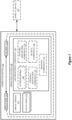
Figure 1 is a schematic diagram of an example of a computing device for processing event logs, in accordance with examples described herein. -
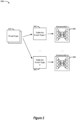
Figure 2 illustrates a schematic diagram of an example of a data flow for generating tables of events for training corresponding autoencoders, in accordance with examples described herein. -
Figure 3 illustrates a schematic diagram of an example of a data flow for processing tables of events of a target event log using corresponding trained autoencoders, in accordance with examples described herein. -
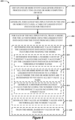
Figure 4 is a flow diagram of an example of a method for training autoencoders for event log processing, in accordance with examples described herein. -
Figure 5 is a flow diagram of an example of a method for event log processing using trained autoencoders, in accordance with examples described herein. -
Figure 6 is a schematic diagram of an example of a computing device for performing functions described herein. - The detailed description set forth below in connection with the appended drawings is intended as a description of various configurations and is not intended to represent the only configurations in which the concepts described herein may be practiced. The detailed description includes specific details for the purpose of providing a thorough understanding of various concepts. However, it will be apparent to those skilled in the art that these concepts may be practiced without these specific details. In some instances, well known components are shown in block diagram form in order to avoid obscuring such concepts.
- Described herein are various examples related to detecting atypical events in event logs. In particular, an unsupervised learning technique is provided for detecting the atypical events, where the learning technique includes the use of autoencoders. An autoencoder can include an artificial neural network that learns a representation for a set of data. The autoencoder can take the same input as its output, and in this regard can include an encoder that encodes input into a code, and a decoder that maps the code to the original input. Using an autoencoder in this regard allows for detecting anomalies in data provided to the autoencoder.
- For example, the unsupervised learning technique is autonomously applied to a collection of multiple event logs to train a model for autoencoders for each type of event in the multiple event logs. The model is trained based on one or more features for the type of event. The features for training the autoencoder are determined using a feature identification process that evaluates key value pairs for the type of event in the multiple event logs to determine a numeric count of distinct values. The feature identification process determines to use, as feature values, key value pairs having a numeric count of distinct values that is within a threshold numeric range. Other key value pairs are discarded from the model. The trained autoencoders are applied to an event log to detect the atypical events having feature values detected as anomalies by the autoencoders.
- In an example, the events that are detected as anomalies can be collected and output to a listing for review. This can provide an efficient issue detection or processing of event logs to determine possible issues based on the unsupervised analysis of the event logs. In another example, the events detects as anomalies can be used as a signature for the event log for clustering of the anomalies. This can allow for automated detection of event logs having similar anomalies, such that an issue causing the anomaly may be solved for one process without necessarily having to correct other processes or instances of the same process to which the event logs relate. This can also provide an efficient issue detection across multiple event logs and corresponding multiple processes or devices. In addition, where some log processing functions may look for patterns, using autoencoders in this regard may not require pattern analysis. The various aspects described herein can identify known and unknown problems in event logs without human intervention, can work with any multi-parameter event logs without the need to be fed with known patterns, and may not require expensive "labeled data" for training and, indeed, "unlabeled" data may be expected as input.
- Turning now to
Figures 1-6 , examples are depicted with reference to one or more components and one or more methods that may perform the actions or operations described herein, where components and/or actions/operations in dashed line may be optional. Although the operations described below inFigures 3-4 are presented in a particular order and/or as being performed by an example component, the ordering of the actions and the components performing the actions may be varied, in some examples, depending on the implementation. Moreover, in some examples, one or more of the following actions, functions, and/or described components may be performed by a specially-programmed processor, a processor executing specially-programmed software or computer-readable media, or by any other combination of a hardware component and/or a software component capable of performing the described actions or functions. -
Figure 1 is a schematic diagram of an example of acomputing device 100 and related components for detecting atypical events in event logs in accordance with aspects described herein. In an example,computing device 100 may be coupled to an internal or remotely locateddisplay device 102 for providing an interface to facilitate operation withcomputing device 100, for selected event logs for processing, for displaying output related to identified atypical events in the event logs, etc. For example,computing device 100 can include or can otherwise be coupled with aprocessor 104 and/ormemory 106, where theprocessor 104 and/ormemory 106 can be configured to execute or store instructions or other parameters related to detecting atypical events in event logs, as described herein.Computing device 100 can execute an operating system 108 (e.g., viaprocessor 104 and/or memory 106) for providing an environment for executing one ormore applications 110, such as one or more applications, services, or other processes that can generate event logs 112. For example, event logs 112 can include a listing of events output by the one ormore applications 110, which can be periodically output events, events output based on a detected trigger, etc. - For example, event logs 112 are typically composed of a series of textual events and coded values. Event logs 112 can be of substantially any format, and the format is typically determined by an author of the
application 110 outputting the event log (or an author of a component of theapplication 110, such that one log may have events whose format is determined by different authors). In an example, the event log can include a collection of key value pairs, where each key can be a parameter of interest. For example, some parameters may include an identification of theapplication 110, an identification of a module within the application outputting the event, various parameters and corresponding values related to the module and the event, a time/date stamp for the event, etc. In addition, for example, theapplication 110 may output events to the event log periodically (e.g., to allow for health status or other telemetric processes for the application 110), based on detecting an error or possible error (e.g., when a parameter value is greater than a maximum threshold or less than a minimum threshold, etc.), and/or the like. Event logs can be voluminous with much of the data being not of interest at least for the purpose of identifying possible issues with theapplication 110. - In this regard, for example,
computing device 100 may include alog processing component 120 that can process one or more event log(s) 112 to determine atypical events existing in the one or more event log(s) 112. As described herein,log processing component 120 can perform unsupervised analysis of the event log(s) 112 based on a learning technique to detect the atypical events and/or to cluster logs having similar atypical events. In an example,log processing component 120 can includemultiple autoencoders 122 that can be instantiated for each event type in the event log(s) 112, a feature identifying component 124 for identifying one or more features of the events to train theautoencoders 122 and/or for applying theautoencoders 122 to detect atypical events, an anomaly identifying component 126 for identifying anomalies in the event log(s) 112 based onautoencoder 122 output, anoutput component 128 for outputting information related to the anomalies, and/or a training component 130 for training theautoencoders 122 based on multiple event logs 112. -
Figure 2 illustrates an example of adata flow 200 for training autoencoders to process event logs 112. Indata flow 200,multiple event logs 112 can be obtained from a process (e.g., application 110) executing on one or more computing devices. The event logs 112 can each include output of multiple events from the process, which can include multiple types of events, which can each have its own format of key value pairs, etc. For example,log processing component 120 can identify different event types in the event logs 112, which can be based on detecting one or more key pair values that indicate the event type (e.g., a module, handler identifier, etc.) and can create a table of event instances for the event type, including table 202 forevent type 1, table 204 for event type n, etc., where each table can include rows corresponding to the logged event instances and each column can include key value pairs for parameters of the event instances. For each event type,log processing component 120 can instantiate or train anautoencoder 122, such asautoencoder 1 206 forevent type 1,autoencoder n 208 for event type n, etc., based on the corresponding event tables. - For example, as described further herein, training component 130 can train the
autoencoders 122 for each event type by determining key value pairs in the event to be used as features, converting features into numeric values, normalizing or standardizing the numeric values, and/or building a deep neural network autoencoder model based on the number of features. In one example, feature identifying component 124 can identify the features for training the model using a feature identification process that can include determining key value pairs as features based on determining that a numeric count of distinct values over all values presented in multiple event logs is within a threshold numeric range. -
Figure 3 illustrates an example of adata flow 300 for using trained autoencoders to process atarget event log 302. Indata flow 300, target event log 302 can be obtained from a process (e.g., application 110) executing on one or more computing devices, and thedata flow 300 can, in one example, be executed for each of multiple event logs 112 (e.g., after or in conjunction with training the autoencoders 122). The target event log 302 can include output of multiple events from the process, which can include multiple types of events, which can each have its own format of key value pairs, etc. For example,log processing component 120 can identify different event types in the target event log 302 (which can be the same as or based on determining the types of events in multiple event logs 112, as described above in conjunction with data flow 200). In this example,log processing component 120 can similarly create a table of event instances for the event type, including table 304 forevent type 1, table 306 for event type n, etc., where each table can include rows corresponding to the logged event instances and each column can include key value pairs for parameters of the event instances. For each event type,log processing component 120 can process the event by applying the corresponding trainedautoencoder 122, such asautoencoder 1 206 forevent type 1,autoencoder n 208 for event type n, etc., to the corresponding event tables. In this regard, theautoencoders 122 can output anomalies in the event data (e.g.,autoencoder 1 206 canoutput anomaly list 308 forevent type 1,autoencoder n 208 canoutput anomaly list 310 for event type n, etc.). -
Figure 4 is a flowchart of an example of amethod 400 for training a model for an autoencoder based on event data from event logs. For example,method 400 can be performed by acomputing device 100 and/or one or more components thereof, such as alog processing component 120, feature identifying component 124, training component 130, etc., and is accordingly described with reference toFigures 1 and2 , for example. - In
method 400, ataction 402, one or more event logs generated by a process executing one or more computing devices can be obtained. In an example,log processing component 120, e.g., in conjunction withprocessor 104,memory 106,operating system 108, etc., can obtain the one or more event logs 112 generated by the process executing on one or more computing devices. For example, the process can be anapplication 110 or other service or process executing oncomputing device 100 and can generate the one or more event logs 112 on thecomputing device 100. In another example, the process can additionally or alternatively execute on one or more other computing devices, such that themultiple event logs 112 can each correspond to an execution of the process on one or more different computing devices. In an example,log processing component 120 can obtain the one or more event logs via an interface provided for indicating event logs to be processed or otherwise to be used to train autoencoders. In another example,log processing component 120 can obtain the one or more event logs based on monitoring a location for new event logs to be processed. Moreover,log processing component 120 can obtain the one or more event logs from a bug database or log files directed obtained from systems.Log processing component 120 may or may not also obtain bug reports associated with the event logs to assist in detecting known errors. - In
method 400, ataction 404, for each of multiple events in the one or more event logs, a table of logged event instances can be generated for the event. In an example,log processing component 120, e.g., in conjunction withprocessor 104,memory 106,operating system 108, etc., can generate, for each of the multiple events in the one or more event logs 112, the table of logged event instances for the event (e.g., tables 202, 204). For example,log processing component 120 can generate the table for each event for which there are multiple event instances. The event is also referred to herein as an event type, and each event can correspond to a line in the event logs 112. In an example,log processing component 120 can determine the event for which to generate the table having the multiple logged event instances based on one or more parameters that identify the event in the one or more event logs. For example, the one or more parameter that identify the event may include an event identifier, which may include a provider name, and an event name (e.g., which may include a function name within a module, a variable name, a notification, etc.), a process or module identifier, an instruction line number, a handler, etc. In one example, the provider name can be specific to the operating system, such that no two components or modules within the operating system have the same provider name. A component or module may include an executable, a dynamic link library process, a service, or substantially any binary of the operating system. This can result in the Event Name being a unique ID value. Moreover, for example,log processing component 120 can generate the table having columns corresponding to key value pairs of the event, and rows corresponding to each event instance, such that the cells in a given row correspond to the values of the key value pairs for a given event instance. - In
method 400, ataction 406, for each of the multiple events, a model for the autoencoder can be trained using the logged event instances for the event from the multiple event logs. In an example, training component 130, e.g., in conjunction withprocessor 104,memory 106,operating system 108,log processing component 120, etc., can, for each of the multiple events, train the model for the autoencoder (e.g., autoencoder(s) 122) using the logged event instances for the event from the multiple event logs 112. The trained autoencoders 122 can be used for applying to a target event log to detect atypical events for one or more of the event types. - In an example, in training the model at
action 406, optionally ataction 408, one or more key value pairs of the logged event instances to be used as features for training the model can be determined. In an example, feature identifying component 124, e.g., in conjunction withprocessor 104,memory 106,operating system 108,log processing component 120, etc., can determine the one or more key value pairs of the logged event instances to be used as features for training the model. As described, each event may have multiple key value pairs in the event logs 112 for providing various information. In an example, without guidance or knowledge of the event log purpose or format, feature identifying component 124 can identify which key value pairs are to be used as features. The features can be the values of the logged event instances that are modeled and then checked in a target event log to detect atypical values for reporting or otherwise outputting. For example, certain key value pairs may not be important for issue detection, such as an identifier (e.g., globally unique identifier (GUID), thread identifier, etc.). One way to assume that a feature may be relevant for determining atypical values is based on the number of distinct values for the key value pair in the various events of the multiple event logs 112. - Thus, in an example, in determining the features at
action 408, optionally ataction 410, it can be determined whether a numeric count of distinct values for each key value pair in the logged event instances is within a threshold numeric range. In an example, feature identifying component 124, e.g., in conjunction withprocessor 104,memory 106,operating system 108,log processing component 120, etc., can determine whether the numeric count of distinct values for each key value pair in the logged event instances is within a threshold numeric range. For example, feature identifying component 124 can parse through the event logs 112 and can increment a count of distinct values for the key value pair each time a new value for the key value pair for the given event type is encountered. Feature identifying component 124 can determine features as the key value pairs within a threshold numeric range (e.g., 16-128 values in a very specific non-limiting example). For example, key value pairs having a number of distinct values below a minimum of the threshold numeric range may not be considered to have enough variation to be important for detecting atypical events, and key value pairs having a number of distinct values above a maximum of the threshold numeric range may be considered too volatile to measure for determining atypical events (and indeed, theautoencoder 122 may not be able to effectively model a feature with too many distinct values). Key value pairs that are not considered as features can be ignored and/or can be removed from the event table used to train theautoencoder 122. - In addition, in an example, in determining the features at
action 408, optionally ataction 412, one or more rows in the table of logged event instances can be filled to a unique value where the one or more rows are determined to not have all key value pairs. In an example, feature identifying component 124, e.g., in conjunction withprocessor 104,memory 106,operating system 108,log processing component 120, etc., can fill the one or more rows in the table of logged event instances to the unique value where the one or more rows are determined to not have all key value pairs. For example, feature identifying component 124 can fill the one or more rows with the unique value, such as "NoData." Feature identifying component 124 can then count the number of distinct values for each key value pair, including the unique value, as described above. - Moreover, in an example, in counting the number of distinct values, optionally at
action 414, a histogram for each key value pair can be generated including the numeric count of the distinct values including the unique value. In an example, feature identifying component 124, e.g., in conjunction withprocessor 104,memory 106,operating system 108,log processing component 120, etc., can generate the histogram for each key value pair including the numeric count of the distinct values including the unique value. If the number of distinct values in the column of the key value pair are within threshold numeric range, as indicated by the histogram, the key value pair can be considered as a feature (and can be kept in the table). Other key value pairs can be removed as columns from the table. - In an example, in training the model at
action 406, optionally ataction 416, the values can be generated as numeric values and/or the numeric values can be normalized. In an example, training component 130, e.g., in conjunction withprocessor 104,memory 106,operating system 108,log processing component 120, etc., can generate the values as numeric values and/or can normalize the numeric values. For example, training component 130 can convert the values using one hot encoding, which can assign a bit to each distinct value for a given feature. In an example, one-hot encoding, also known as 1-of-N encoding, can assign a vector to each distinct item in a set of N items. For example, if N = 3 and the source set is (red, blue, green) then one possible one-hot encoding of the set is red = (1, 0, 0), blue = (0, 1, 0), green = (0, 0, 1). In addition, for example, training component 130 can normalize the numeric values to generate a more simplified or sequential set of values for training the model. In any case, using the numeric and/or normalized values can simplify training the model for theautoencoder 122. In an example, optionally ataction 418, the model can be trained based on values of the features. In an example, training component 130, e.g., in conjunction withprocessor 104,memory 106,operating system 108,log processing component 120, etc., can train the model based on values of the features. This can include training the model based on the numeric values for the features. In any case, training component 130 can build a deep neural network autoencoder model for use in identifying atypical event values in a target event log, as described above and further herein. - For example, referring to
FIG. 2 , training component 130 can trainautoencoder 1 206 based on event table 202 forevent type 1, where event table 202 can include normalized numeric feature values for certain key pairs for logged event instances ofevent type 1 from multiple event logs 112, as described. Similarly, for example, training component 130 can train additional autoencoders (e.g., an autoencoder per event table), up toautoencoder n 208 based on event table 204 for event type n, where event table 204 can include normalized numeric feature values for certain key pairs for logged event instances of event type n from multiple event logs 112, as described. -
Figure 5 is a flowchart of an example of amethod 500 for detecting atypical events in an event log. For example,method 500 can be performed by acomputing device 100 and/or one or more components thereof, such as alog processing component 120, feature identifying component 124, anomaly identifying component 126,output component 128, etc., and is accordingly described with reference toFigures 1 and3 , for example. - In
method 500, ataction 502, one or more event logs generated by a process executing one or more computing devices can be obtained. In an example,log processing component 120, e.g., in conjunction withprocessor 104,memory 106,operating system 108, etc., can obtain the one or more event logs 112 generated by the process executing on one or more computing devices. For example,log processing component 120 can obtain the one or more event logs as described above in reference toaction 402 ofmethod 400. The one or more event logs in this example can include atarget event log 302. In one example, after training the model based on multiple event logs 112,log processing component 120 can attempt to detect atypical events in each of themultiple event logs 112 or in a portion thereof or in a different event log, etc., as thetarget event log 302. - In
method 500, ataction 504, for each of multiple events in the one or more event logs, a table of logged event instances can be generated for the event. In an example,log processing component 120, e.g., in conjunction withprocessor 104,memory 106,operating system 108, etc., can generate, for each of the multiple events in the one or more event logs 112, the table of logged event instances for the event (e.g., tables 304, 306). For example,log processing component 120 can generate the table for each event for which there are multiple event instances in the target event log(s). The event is also referred to herein as an event type, and each event can correspond to a line in the target event log(s), as described above inaction 404 ofmethod 400. In this regard, for example,log processing component 120 can generate the table having columns corresponding to key value pairs of the event, and rows corresponding to each event instance, such that the cells in a given row correspond to the values of the key value pairs for a given event instance. - In
method 500, ataction 506, for each of the multiple events, a table can be processed using an autoencoder to identify one or more of the logged event instances as anomalies in the process. In an example, anomaly identifying component 126, e.g., in conjunction withprocessor 104,memory 106,operating system 108,log processing component 120, etc., can, for each of the multiple events, process the table using the autoencoder to identify one or more of the logged event instances as anomalies in the process. For example, referring toFIG. 3 , anomaly identifying component 126 can process event table 304 forevent type 1 usingautoencoder 1 206, which can be trained as described above, and can similarly use additional autoencoders to process other event types, such asautoencoder n 208 to process event table 306 for event type n. In one example, theautoencoders 122 can be trained using the multiple event logs that can include the target event log or can be trained using random entries from the multiple event logs or other event logs. In this example, asautoencoder 1 206 identifies anomalies, it can output information regarding the event instance having the anomaly to ananomaly list 308 forevent type 1. Similarly, for example, as autoencoder n 208 identifies anomalies, it can output information regarding the event instance having the anomaly to ananomaly list 310 for event type n, etc. - For example, in processing the table at
action 506, optionally ataction 508, the one or more logged event instances can be identified as anomalies based on a value of features of the one or more logged event instances. In an example, anomaly identifying component 126, e.g., in conjunction withprocessor 104,memory 106,operating system 108,log processing component 120, etc., can identify the one or more logged event instances as anomalies based on a value of features of the one or more logged event instances. In an example, feature identifying component 124 can similarly identify the features for the event type, as described above inaction 408 ofFIG. 4 . For example, feature identifying component 124 can identify the features for the event type for a given target event log, or can use the same features determined in previously training theautoencoder 122 for the event type. Moreover, and in this regard, feature identifying component 124 may similarly remove columns from the event table for the target event log that are not determined as features. In any case, for example, anomaly identifying component 126 can identify anomalies in the logged event instances where a feature is determined by theautoencoder 122 as an anomaly. For example,autoencoder 122 can determine that the value of the feature is not consistent with values trained from event instances in multiple event logs, as described above, where the determination can be based on artificial intelligence or other machine learning algorithms based on the deep neural network formed by training theautoencoder 122. - For example, in processing the table at
action 506, optionally ataction 510, output of the autoencoder can be subtracted from the table to determine, for each of the one or more logged event instances identified as anomalies, an error value of one or more of the features. In an example, anomaly identifying component 126, e.g., in conjunction withprocessor 104,memory 106,operating system 108,log processing component 120, etc., can subtract the output of theautoencoder 122 from the table (e.g., the input to the autoencoder 122) to determine, for each of the one or more logged event instances identified as anomalies, an error value of one or more of the features. For example, neural network input and output values can be n-dimensional numeric vectors. Because the input and output vectors of an autoencoder both have the same dimension, it is possible to compute a reconstruction error as the vector difference between input and output using Euclidean distance or other distance metric. Moreover, for example, the error value can represent an amount of the error (e.g., a deviation from expected values). In one example, the error value can be included in the anomaly lists 308, 310 as well. - Moreover, in an example, anomaly identifying component 126 can sort the resulting table, generated by subtracting the autoencoder output from the input table, by error value with the highest error first and the lowest error last. In this example, anomaly identifying component 126 can select a first highest number of entries from the resulting table (e.g., a number N of entries), which can be added to the anomaly lists 308, 310. After finishing all the event tables, each log can have an associated list of anomalies (which may also be used as a log signature, as described further herein). Some of the logs may have an empty list, and may not be processed further as no atypical events were identified.
- In
method 500, ataction 512, an indication of at least a portion of the anomalies in the process can be output. In an example,output component 128, e.g., in conjunction withprocessor 104,memory 106,operating system 108,log processing component 120, etc., can output an indication of at least a portion of the anomalies in the process. For example,output component 128 can output an indication of anomalies in the target event log and/or in one or more of the multiple logs identified as having an anomaly, where the anomaly can indicate the atypical event value. In one example,output component 128 can output an indication of the event log having the anomaly and/or an indication of the anomaly. In this example,output component 128 can display, on an interface on a display device, an indication of the event log, such as an event log name or other identifier, along with the indication of the anomaly as an indicated parameter value, which may be highlighted (e.g., in different color text, bold text, underlined text, highlighted text, etc.) to facilitate simplified identification of the anomaly or atypical event or related feature value. - In one example,
output component 128 can sort a list of anomalies (e.g., anomaly lists 308, 310, or a combined anomaly list of all anomalies for all events in the target event log) by error value to output the anomalies with the largest error first, as described. In an example,output component 128 can add the list of anomalies to a bug database or other table or file, log, etc. to allow for human processing of the list to determine a source of the atypical events. - In another example, in outputting the indication at
action 512, optionally ataction 514, a signature for the one or more event logs can be generated based on the identified anomalies for the one or more event logs. In an example,output component 128, e.g., in conjunction withprocessor 104,memory 106,operating system 108,log processing component 120, etc., can generate, based on the identified anomalies for the one or more event logs, the signature for the one or more event logs. For example,output component 128 can generate the signature as an encoded representation of the anomaly list for the event log (e.g., for combined anomaly lists for all events in the event log), such that target event logs having the same anomaly list can have the same signature. This can allow for clustering of the event logs to simplify atypical event identification across multiple event logs. - For example, in outputting the indication at
action 512, optionally ataction 516, the indication can be determined as a clustered list of multiple event logs having similar anomalies. In an example,output component 128, e.g., in conjunction withprocessor 104,memory 106,operating system 108,log processing component 120, etc., can determine the indication as the clustered list of multiple event logs having similar anomalies. For example,output component 128 can determine multiple event logs having the same or similar signatures, and can indicate a list of the event logs to allow for simplified atypical event detection across event logs. For example,output component 128 can cluster event logs with identical anomaly list first and build the first cluster group. Thenoutput component 128, in an example, can gradually build cluster list for event logs that share some of the anomaly events, and/or finally build the cluster list that only share one anomaly.Output component 128 can display the list(s) on an interface (e.g., on a display device, etc.) for human processing. -
Figure 6 illustrates an example ofcomputing device 100 including additional optional component details as those shown inFigure 1 . In one example,computing device 100 may includeprocessor 104 for carrying out processing functions associated with one or more of components and functions described herein.Processor 104 can include a single or multiple set of processors or multi-core processors. Moreover,processor 104 can be implemented as an integrated processing system and/or a distributed processing system. -
Computing device 100 may further includememory 106, such as for storing local versions of applications being executed byprocessor 104, related instructions, parameters, etc.Memory 106 can include a type of memory usable by a computer, such as random access memory (RAM), read only memory (ROM), tapes, magnetic discs, optical discs, volatile memory, non-volatile memory, and any combination thereof. Additionally,processor 104 andmemory 106 may include and execute an operating system executing onprocessor 104, one or more applications (e.g., application 110), display drivers, services, etc., as described herein, and/or other components of thecomputing device 100. - Further,
computing device 100 may include acommunications component 602 that provides for establishing and maintaining communications with one or more other devices, parties, entities, etc. utilizing hardware, software, and services as described herein.Communications component 602 may carry communications between components oncomputing device 100, as well as betweencomputing device 100 and external devices, such as devices located across a communications network and/or devices serially or locally connected tocomputing device 100. For example,communications component 602 may include one or more buses, and may further include transmit chain components and receive chain components associated with a wireless or wired transmitter and receiver, respectively, operable for interfacing with external devices. - Additionally,
computing device 100 may include adata store 604, which can be any suitable combination of hardware and/or software, that provides for mass storage of information, databases, and programs employed in connection with examples described herein. For example,data store 604 may be or may include a data repository for applications and/or related parameters not currently being executed byprocessor 104. In addition,data store 604 may be a data repository for an operating system, application, display driver, etc. executing on theprocessor 104, and/or one or more other components of thecomputing device 100. -
Computing device 100 may also include a user interface component 606 operable to receive inputs from a user ofcomputing device 100 and further operable to generate outputs for presentation to the user (e.g., via display interface 116 to a display device). User interface component 606 may include one or more input devices, including but not limited to a keyboard, a number pad, a mouse, a touch-sensitive display, a navigation key, a function key, a microphone, a voice recognition component, a gesture recognition component, a depth sensor, a gaze tracking sensor, any other mechanism capable of receiving an input from a user, or any combination thereof. Further, user interface component 606 may include one or more output devices, including but not limited to a display interface, a speaker, a haptic feedback mechanism, a printer, any other mechanism capable of presenting an output to a user (e.g., an output of detected atypical events or corresponding logs), or any combination thereof. -
Computing device 100 can also include alog processing component 120 for processing one or more event logs, training autoencoders for processing the event logs to detect atypical events, etc., as described herein. - By way of example, an element, or any portion of an element, or any combination of elements may be implemented with a "processing system" that includes one or more processors. Examples of processors include microprocessors, microcontrollers, digital signal processors (DSPs), field programmable gate arrays (FPGAs), programmable logic devices (PLDs), state machines, gated logic, discrete hardware circuits, and other suitable hardware configured to perform the various functionality described throughout this disclosure. One or more processors in the processing system may execute software. Software shall be construed broadly to mean instructions, instruction sets, code, code segments, program code, programs, subprograms, software modules, applications, software applications, software packages, routines, subroutines, objects, executables, threads of execution, procedures, functions, etc., whether referred to as software, firmware, middleware, microcode, hardware description language, or otherwise.
- Accordingly, in one or more examples, one or more of the functions described may be implemented in hardware, software, firmware, or any combination thereof. If implemented in software, the functions may be stored on or encoded as one or more instructions or code on a computer-readable medium. Computer-readable media includes computer storage media. Storage media may be any available media that can be accessed by a computer. By way of example, and not limitation, such computer-readable media can comprise RAM, ROM, EEPROM, CD-ROM or other optical disk storage, magnetic disk storage or other magnetic storage devices, or any other medium that can be used to carry or store desired program code in the form of instructions or data structures and that can be accessed by a computer. Disk and disc, as used herein, includes compact disc (CD), laser disc, optical disc, digital versatile disc (DVD), and floppy disk where disks usually reproduce data magnetically, while discs reproduce data optically with lasers. Combinations of the above should also be included within the scope of computer-readable media.
- The previous description is provided to enable any person skilled in the art to practice the various examples described herein.
- The invention is defined by the independent claims. Dependent claims disclose preferred embodiments of the invention.
Claims (9)
- A computer-implemented method for processing event logs (112), comprising:obtaining one or more event logs (112) generated by a process executing on one or more computing devices;for each event of multiple events in the one or more event logs:generating a table (202, 204) of logged event instances for the event;training a model for an autoencoder (122) using the logged event instances for the event from multiple event logs (112), wherein training the model includes determining one or more key value pairs of the logged event instances to be used as features for training the model and training the model based on values of the features, and wherein determining the one or more key value pairs to be used as the features for training the model includes determining that a numeric count of distinct values for each key value pair in the logged event instances is within a threshold numeric range;identifying a logged event instance as an anomaly in the process by processing the table (202, 204) using the autoencoder (122), the identifying being based on a value of the features of the one or more of the logged event instances; andoutputting an indication of the anomaly in the process.
- The computer-implemented method of claim 1, wherein training the model based on the values of the features includes at least one of generating the values as numeric values and normalizing the numeric values.
- The computer-implemented method of claim 1, wherein the autoencoder (122) identifies the logged event instance as the anomaly based on subtracting output of the autoencoder (122) from the table (202, 204) to determine an error value of one or more of the features.
- The computer-implemented method of claim 1, wherein determining the one or more key value pairs to be used as the features for training the model further includes:filling one or more rows in the table (202, 204) of logged event instances to a unique value where the one or more rows are determined to not have all key value pairs for the event;generating a histogram for each key value pair including the numeric count of distinct values for each key value pair including the unique value; andwherein determining that the numeric count of distinct values for each key value pair in the logged event instances is within the threshold numeric range is based on the histogram.
- The computer-implemented method of claim 1, further comprising generating, based on identified anomalies for the one or more event logs, a signature for the one or more event logs (112), wherein the indication includes a clustered list of multiple event logs having similar anomalies.
- A computing device (100) for processing event logs (112), comprising:a memory (106) storing one or more parameters or instructions for executing an operating system and one or more processes; andat least one processor (104) coupled to the memory (106), wherein the at least one processor (104) is configured to:obtain one or more event logs (112) generated by a process executing on one or more computing devices;for each event of multiple events in the one or more event logs:generate a table (202, 204) of logged event instances for the event;train a model for an autoencoder (122) using the logged event instances for the event from multiple event logs, wherein training the model includes determining one or more key value pairs of the logged event instances to be used as features for training the model and training the model based on values of the features, and wherein determining the one or more key value pairs to be used as the features for training the model includes determining that a numeric count of distinct values for each key value pair in the logged event instances is within a threshold numeric range;identify, based on a value of the features of the one or more of the logged event instances, a logged event instance as an anomaly in the process by processing the table (202, 204) using the autoencoder (122); andoutput an indication of the anomaly in the process.
- The computing device (100) of claim 7, wherein the at least one processor (104) is configured to train the model based on the values of the features at least in part by at least one of generating the values as numeric values and normalizing the numeric values.
- The computing device (100 of claim 7, wherein the autoencoder (122) identifies the logged event instance as the anomaly based on subtracting output of the autoencoder (122) from the table (202, 204) to determine an error value of one or more of the features.
- A computer-readable medium, comprising code executable by one or more processors for performing one or more of the computer-implemented methods of claims 1-6.
Applications Claiming Priority (2)
| Application Number | Priority Date | Filing Date | Title |
|---|---|---|---|
| US16/903,069 US11537498B2 (en) | 2020-06-16 | 2020-06-16 | Techniques for detecting atypical events in event logs |
| PCT/US2021/028352 WO2021257174A1 (en) | 2020-06-16 | 2021-04-21 | Techniques for detecting atypical events in event logs |
Publications (2)
| Publication Number | Publication Date |
|---|---|
| EP4165534A1 EP4165534A1 (en) | 2023-04-19 |
| EP4165534B1 true EP4165534B1 (en) | 2024-07-10 |
Family
ID=75850720
Family Applications (1)
| Application Number | Title | Priority Date | Filing Date |
|---|---|---|---|
| EP21724153.8A Active EP4165534B1 (en) | 2020-06-16 | 2021-04-21 | Techniques for detecting atypical events in event logs |
Country Status (3)
| Country | Link |
|---|---|
| US (1) | US11537498B2 (en) |
| EP (1) | EP4165534B1 (en) |
| WO (1) | WO2021257174A1 (en) |
Families Citing this family (8)
| Publication number | Priority date | Publication date | Assignee | Title |
|---|---|---|---|---|
| US20220019914A1 (en) * | 2020-07-17 | 2022-01-20 | Optum, Inc. | Predictive data analysis techniques for cross-temporal anomaly detection |
| US11830081B2 (en) * | 2021-08-04 | 2023-11-28 | Hrb Innovations, Inc. | Automated return evaluation with anomoly detection |
| US11893125B2 (en) * | 2021-10-14 | 2024-02-06 | Cohesity, Inc. | Providing a graphical representation of anomalous events |
| US12495319B2 (en) * | 2022-10-13 | 2025-12-09 | T-Mobile Usa, Inc. | Evaluating operation of a monitoring system associated with a wireless telecommunication network |
| US20250021658A1 (en) * | 2023-07-12 | 2025-01-16 | Capital One Services, Llc | Systems and methods for predicting security communications based on sequences of system activity tokens |
| CN116823452B (en) * | 2023-08-30 | 2023-12-05 | 北京中关村科金技术有限公司 | Abnormal event identification method, device and equipment based on artificial intelligence |
| US12430316B2 (en) * | 2024-01-02 | 2025-09-30 | Google Llc | Artificial intelligence-based automated parser creation |
| US12587548B2 (en) | 2024-01-29 | 2026-03-24 | Google Llc | Artificial intelligence-based automated event log mapping |
Family Cites Families (6)
| Publication number | Priority date | Publication date | Assignee | Title |
|---|---|---|---|---|
| US9760426B2 (en) | 2015-05-28 | 2017-09-12 | Microsoft Technology Licensing, Llc | Detecting anomalous accounts using event logs |
| US10237295B2 (en) | 2016-03-22 | 2019-03-19 | Nec Corporation | Automated event ID field analysis on heterogeneous logs |
| WO2019087987A1 (en) * | 2017-11-02 | 2019-05-09 | 日本電信電話株式会社 | Malfunction sensing device, malfunction sensing method, and program |
| JP7184078B2 (en) * | 2018-04-19 | 2022-12-06 | 日本電気株式会社 | LOG ANALYSIS SYSTEM, LOG ANALYSIS METHOD AND PROGRAM |
| US11218498B2 (en) | 2018-09-05 | 2022-01-04 | Oracle International Corporation | Context-aware feature embedding and anomaly detection of sequential log data using deep recurrent neural networks |
| US11567850B2 (en) * | 2019-10-01 | 2023-01-31 | Salesforce, Inc. | Detecting application events based on encoding application log values |
-
2020
- 2020-06-16 US US16/903,069 patent/US11537498B2/en active Active
-
2021
- 2021-04-21 EP EP21724153.8A patent/EP4165534B1/en active Active
- 2021-04-21 WO PCT/US2021/028352 patent/WO2021257174A1/en not_active Ceased
Also Published As
| Publication number | Publication date |
|---|---|
| WO2021257174A1 (en) | 2021-12-23 |
| US20210389997A1 (en) | 2021-12-16 |
| US11537498B2 (en) | 2022-12-27 |
| EP4165534A1 (en) | 2023-04-19 |
Similar Documents
| Publication | Publication Date | Title |
|---|---|---|
| US11537498B2 (en) | Techniques for detecting atypical events in event logs | |
| US12182227B2 (en) | User interface for visual diagnosis of image misclassification by machine learning | |
| Zhang et al. | Failure diagnosis in microservice systems: A comprehensive survey and analysis | |
| US11537506B1 (en) | System for visually diagnosing machine learning models | |
| US10719301B1 (en) | Development environment for machine learning media models | |
| Tsoukalas et al. | Machine learning for technical debt identification | |
| US20190340518A1 (en) | Systems and methods for enriching modeling tools and infrastructure with semantics | |
| US20150121136A1 (en) | System and method for automatically managing fault events of data center | |
| CN106663003A (en) | Systems and methods for software analysis | |
| Imran et al. | Complex process modeling in process mining: A systematic review | |
| Huo et al. | Evlog: Identifying anomalous logs over software evolution | |
| Nadim et al. | Leveraging structural properties of source code graphs for just-in-time bug prediction | |
| Lüders et al. | Automated detection of typed links in issue trackers | |
| Li et al. | Improving performance of log anomaly detection with semantic and time features based on bilstm-attention | |
| CN116302984B (en) | A root cause analysis method, device and related equipment for test tasks | |
| Yeow et al. | Predicting software reuse using machine learning techniques—a case study on open-source java software systems | |
| Nadim et al. | Utilizing source code syntax patterns to detect bug inducing commits using machine learning models | |
| Abdelfattah et al. | Semantic Dependency in Microservice Architecture: A Framework for Definition and Detection | |
| Dogan et al. | Parallelism-based session creation to identify high-level activities in event log abstraction | |
| Liu et al. | VALAR: Streamlining alarm ranking in static analysis with value-flow assisted active learning | |
| Abdelfattah et al. | Semantic dependency in microservice architecture | |
| Ma | Anomaly detection for linux system log | |
| Teofili et al. | CERTEM: explaining and debugging black-box entity resolution systems with CERTA | |
| He et al. | Telecontext-Enhanced Recursive Interactive Attention Fusion Method for Line-Level Defect Prediction. | |
| He et al. | Python API Misuse Mining and Classification Based on Hybrid Analysis and Attention Mechanism |
Legal Events
| Date | Code | Title | Description |
|---|---|---|---|
| STAA | Information on the status of an ep patent application or granted ep patent |
Free format text: STATUS: UNKNOWN |
|
| STAA | Information on the status of an ep patent application or granted ep patent |
Free format text: STATUS: THE INTERNATIONAL PUBLICATION HAS BEEN MADE |
|
| PUAI | Public reference made under article 153(3) epc to a published international application that has entered the european phase |
Free format text: ORIGINAL CODE: 0009012 |
|
| STAA | Information on the status of an ep patent application or granted ep patent |
Free format text: STATUS: REQUEST FOR EXAMINATION WAS MADE |
|
| 17P | Request for examination filed |
Effective date: 20221216 |
|
| AK | Designated contracting states |
Kind code of ref document: A1 Designated state(s): AL AT BE BG CH CY CZ DE DK EE ES FI FR GB GR HR HU IE IS IT LI LT LU LV MC MK MT NL NO PL PT RO RS SE SI SK SM TR |
|
| DAV | Request for validation of the european patent (deleted) | ||
| DAX | Request for extension of the european patent (deleted) | ||
| GRAP | Despatch of communication of intention to grant a patent |
Free format text: ORIGINAL CODE: EPIDOSNIGR1 |
|
| STAA | Information on the status of an ep patent application or granted ep patent |
Free format text: STATUS: GRANT OF PATENT IS INTENDED |
|
| INTG | Intention to grant announced |
Effective date: 20240209 |
|
| GRAS | Grant fee paid |
Free format text: ORIGINAL CODE: EPIDOSNIGR3 |
|
| P01 | Opt-out of the competence of the unified patent court (upc) registered |
Effective date: 20240430 |
|
| GRAA | (expected) grant |
Free format text: ORIGINAL CODE: 0009210 |
|
| STAA | Information on the status of an ep patent application or granted ep patent |
Free format text: STATUS: THE PATENT HAS BEEN GRANTED |
|
| AK | Designated contracting states |
Kind code of ref document: B1 Designated state(s): AL AT BE BG CH CY CZ DE DK EE ES FI FR GB GR HR HU IE IS IT LI LT LU LV MC MK MT NL NO PL PT RO RS SE SI SK SM TR |
|
| REG | Reference to a national code |
Ref country code: CH Ref legal event code: EP |
|
| REG | Reference to a national code |
Ref country code: DE Ref legal event code: R096 Ref document number: 602021015492 Country of ref document: DE |
|
| REG | Reference to a national code |
Ref country code: LT Ref legal event code: MG9D |
|
| REG | Reference to a national code |
Ref country code: NL Ref legal event code: MP Effective date: 20240710 |
|
| PG25 | Lapsed in a contracting state [announced via postgrant information from national office to epo] |
Ref country code: PT Free format text: LAPSE BECAUSE OF FAILURE TO SUBMIT A TRANSLATION OF THE DESCRIPTION OR TO PAY THE FEE WITHIN THE PRESCRIBED TIME-LIMIT Effective date: 20241111 |
|
| REG | Reference to a national code |
Ref country code: AT Ref legal event code: MK05 Ref document number: 1702666 Country of ref document: AT Kind code of ref document: T Effective date: 20240710 |
|
| PG25 | Lapsed in a contracting state [announced via postgrant information from national office to epo] |
Ref country code: NL Free format text: LAPSE BECAUSE OF FAILURE TO SUBMIT A TRANSLATION OF THE DESCRIPTION OR TO PAY THE FEE WITHIN THE PRESCRIBED TIME-LIMIT Effective date: 20240710 |
|
| PG25 | Lapsed in a contracting state [announced via postgrant information from national office to epo] |
Ref country code: PT Free format text: LAPSE BECAUSE OF FAILURE TO SUBMIT A TRANSLATION OF THE DESCRIPTION OR TO PAY THE FEE WITHIN THE PRESCRIBED TIME-LIMIT Effective date: 20241111 Ref country code: NL Free format text: LAPSE BECAUSE OF FAILURE TO SUBMIT A TRANSLATION OF THE DESCRIPTION OR TO PAY THE FEE WITHIN THE PRESCRIBED TIME-LIMIT Effective date: 20240710 |
|
| PG25 | Lapsed in a contracting state [announced via postgrant information from national office to epo] |
Ref country code: NO Free format text: LAPSE BECAUSE OF FAILURE TO SUBMIT A TRANSLATION OF THE DESCRIPTION OR TO PAY THE FEE WITHIN THE PRESCRIBED TIME-LIMIT Effective date: 20241010 |
|
| PG25 | Lapsed in a contracting state [announced via postgrant information from national office to epo] |
Ref country code: FI Free format text: LAPSE BECAUSE OF FAILURE TO SUBMIT A TRANSLATION OF THE DESCRIPTION OR TO PAY THE FEE WITHIN THE PRESCRIBED TIME-LIMIT Effective date: 20240710 Ref country code: PL Free format text: LAPSE BECAUSE OF FAILURE TO SUBMIT A TRANSLATION OF THE DESCRIPTION OR TO PAY THE FEE WITHIN THE PRESCRIBED TIME-LIMIT Effective date: 20240710 Ref country code: GR Free format text: LAPSE BECAUSE OF FAILURE TO SUBMIT A TRANSLATION OF THE DESCRIPTION OR TO PAY THE FEE WITHIN THE PRESCRIBED TIME-LIMIT Effective date: 20241011 |
|
| PG25 | Lapsed in a contracting state [announced via postgrant information from national office to epo] |
Ref country code: BG Free format text: LAPSE BECAUSE OF FAILURE TO SUBMIT A TRANSLATION OF THE DESCRIPTION OR TO PAY THE FEE WITHIN THE PRESCRIBED TIME-LIMIT Effective date: 20240710 |
|
| PG25 | Lapsed in a contracting state [announced via postgrant information from national office to epo] |
Ref country code: LV Free format text: LAPSE BECAUSE OF FAILURE TO SUBMIT A TRANSLATION OF THE DESCRIPTION OR TO PAY THE FEE WITHIN THE PRESCRIBED TIME-LIMIT Effective date: 20240710 |
|
| PG25 | Lapsed in a contracting state [announced via postgrant information from national office to epo] |
Ref country code: AT Free format text: LAPSE BECAUSE OF FAILURE TO SUBMIT A TRANSLATION OF THE DESCRIPTION OR TO PAY THE FEE WITHIN THE PRESCRIBED TIME-LIMIT Effective date: 20240710 Ref country code: IS Free format text: LAPSE BECAUSE OF FAILURE TO SUBMIT A TRANSLATION OF THE DESCRIPTION OR TO PAY THE FEE WITHIN THE PRESCRIBED TIME-LIMIT Effective date: 20241110 |
|
| PG25 | Lapsed in a contracting state [announced via postgrant information from national office to epo] |
Ref country code: HR Free format text: LAPSE BECAUSE OF FAILURE TO SUBMIT A TRANSLATION OF THE DESCRIPTION OR TO PAY THE FEE WITHIN THE PRESCRIBED TIME-LIMIT Effective date: 20240710 |
|
| PG25 | Lapsed in a contracting state [announced via postgrant information from national office to epo] |
Ref country code: ES Free format text: LAPSE BECAUSE OF FAILURE TO SUBMIT A TRANSLATION OF THE DESCRIPTION OR TO PAY THE FEE WITHIN THE PRESCRIBED TIME-LIMIT Effective date: 20240710 Ref country code: RS Free format text: LAPSE BECAUSE OF FAILURE TO SUBMIT A TRANSLATION OF THE DESCRIPTION OR TO PAY THE FEE WITHIN THE PRESCRIBED TIME-LIMIT Effective date: 20241010 |
|
| PG25 | Lapsed in a contracting state [announced via postgrant information from national office to epo] |
Ref country code: RS Free format text: LAPSE BECAUSE OF FAILURE TO SUBMIT A TRANSLATION OF THE DESCRIPTION OR TO PAY THE FEE WITHIN THE PRESCRIBED TIME-LIMIT Effective date: 20241010 Ref country code: PL Free format text: LAPSE BECAUSE OF FAILURE TO SUBMIT A TRANSLATION OF THE DESCRIPTION OR TO PAY THE FEE WITHIN THE PRESCRIBED TIME-LIMIT Effective date: 20240710 Ref country code: NO Free format text: LAPSE BECAUSE OF FAILURE TO SUBMIT A TRANSLATION OF THE DESCRIPTION OR TO PAY THE FEE WITHIN THE PRESCRIBED TIME-LIMIT Effective date: 20241010 Ref country code: LV Free format text: LAPSE BECAUSE OF FAILURE TO SUBMIT A TRANSLATION OF THE DESCRIPTION OR TO PAY THE FEE WITHIN THE PRESCRIBED TIME-LIMIT Effective date: 20240710 Ref country code: IS Free format text: LAPSE BECAUSE OF FAILURE TO SUBMIT A TRANSLATION OF THE DESCRIPTION OR TO PAY THE FEE WITHIN THE PRESCRIBED TIME-LIMIT Effective date: 20241110 Ref country code: HR Free format text: LAPSE BECAUSE OF FAILURE TO SUBMIT A TRANSLATION OF THE DESCRIPTION OR TO PAY THE FEE WITHIN THE PRESCRIBED TIME-LIMIT Effective date: 20240710 Ref country code: GR Free format text: LAPSE BECAUSE OF FAILURE TO SUBMIT A TRANSLATION OF THE DESCRIPTION OR TO PAY THE FEE WITHIN THE PRESCRIBED TIME-LIMIT Effective date: 20241011 Ref country code: FI Free format text: LAPSE BECAUSE OF FAILURE TO SUBMIT A TRANSLATION OF THE DESCRIPTION OR TO PAY THE FEE WITHIN THE PRESCRIBED TIME-LIMIT Effective date: 20240710 Ref country code: ES Free format text: LAPSE BECAUSE OF FAILURE TO SUBMIT A TRANSLATION OF THE DESCRIPTION OR TO PAY THE FEE WITHIN THE PRESCRIBED TIME-LIMIT Effective date: 20240710 Ref country code: BG Free format text: LAPSE BECAUSE OF FAILURE TO SUBMIT A TRANSLATION OF THE DESCRIPTION OR TO PAY THE FEE WITHIN THE PRESCRIBED TIME-LIMIT Effective date: 20240710 Ref country code: AT Free format text: LAPSE BECAUSE OF FAILURE TO SUBMIT A TRANSLATION OF THE DESCRIPTION OR TO PAY THE FEE WITHIN THE PRESCRIBED TIME-LIMIT Effective date: 20240710 |
|
| REG | Reference to a national code |
Ref country code: DE Ref legal event code: R097 Ref document number: 602021015492 Country of ref document: DE |
|
| PG25 | Lapsed in a contracting state [announced via postgrant information from national office to epo] |
Ref country code: DK Free format text: LAPSE BECAUSE OF FAILURE TO SUBMIT A TRANSLATION OF THE DESCRIPTION OR TO PAY THE FEE WITHIN THE PRESCRIBED TIME-LIMIT Effective date: 20240710 Ref country code: RO Free format text: LAPSE BECAUSE OF FAILURE TO SUBMIT A TRANSLATION OF THE DESCRIPTION OR TO PAY THE FEE WITHIN THE PRESCRIBED TIME-LIMIT Effective date: 20240710 Ref country code: SM Free format text: LAPSE BECAUSE OF FAILURE TO SUBMIT A TRANSLATION OF THE DESCRIPTION OR TO PAY THE FEE WITHIN THE PRESCRIBED TIME-LIMIT Effective date: 20240710 |
|
| PG25 | Lapsed in a contracting state [announced via postgrant information from national office to epo] |
Ref country code: EE Free format text: LAPSE BECAUSE OF FAILURE TO SUBMIT A TRANSLATION OF THE DESCRIPTION OR TO PAY THE FEE WITHIN THE PRESCRIBED TIME-LIMIT Effective date: 20240710 |
|
| PG25 | Lapsed in a contracting state [announced via postgrant information from national office to epo] |
Ref country code: CZ Free format text: LAPSE BECAUSE OF FAILURE TO SUBMIT A TRANSLATION OF THE DESCRIPTION OR TO PAY THE FEE WITHIN THE PRESCRIBED TIME-LIMIT Effective date: 20240710 |
|
| PG25 | Lapsed in a contracting state [announced via postgrant information from national office to epo] |
Ref country code: SK Free format text: LAPSE BECAUSE OF FAILURE TO SUBMIT A TRANSLATION OF THE DESCRIPTION OR TO PAY THE FEE WITHIN THE PRESCRIBED TIME-LIMIT Effective date: 20240710 Ref country code: IT Free format text: LAPSE BECAUSE OF FAILURE TO SUBMIT A TRANSLATION OF THE DESCRIPTION OR TO PAY THE FEE WITHIN THE PRESCRIBED TIME-LIMIT Effective date: 20240710 |
|
| PLBE | No opposition filed within time limit |
Free format text: ORIGINAL CODE: 0009261 |
|
| STAA | Information on the status of an ep patent application or granted ep patent |
Free format text: STATUS: NO OPPOSITION FILED WITHIN TIME LIMIT |
|
| 26N | No opposition filed |
Effective date: 20250411 |
|
| PGFP | Annual fee paid to national office [announced via postgrant information from national office to epo] |
Ref country code: DE Payment date: 20250319 Year of fee payment: 5 |
|
| PG25 | Lapsed in a contracting state [announced via postgrant information from national office to epo] |
Ref country code: SE Free format text: LAPSE BECAUSE OF FAILURE TO SUBMIT A TRANSLATION OF THE DESCRIPTION OR TO PAY THE FEE WITHIN THE PRESCRIBED TIME-LIMIT Effective date: 20240710 |
|
| REG | Reference to a national code |
Ref country code: CH Ref legal event code: H13 Free format text: ST27 STATUS EVENT CODE: U-0-0-H10-H13 (AS PROVIDED BY THE NATIONAL OFFICE) Effective date: 20251125 |
|
| PG25 | Lapsed in a contracting state [announced via postgrant information from national office to epo] |
Ref country code: LU Free format text: LAPSE BECAUSE OF NON-PAYMENT OF DUE FEES Effective date: 20250421 |
|
| PG25 | Lapsed in a contracting state [announced via postgrant information from national office to epo] |
Ref country code: MC Free format text: LAPSE BECAUSE OF FAILURE TO SUBMIT A TRANSLATION OF THE DESCRIPTION OR TO PAY THE FEE WITHIN THE PRESCRIBED TIME-LIMIT Effective date: 20240710 |
|
| REG | Reference to a national code |
Ref country code: BE Ref legal event code: MM Effective date: 20250430 |
|
| PG25 | Lapsed in a contracting state [announced via postgrant information from national office to epo] |
Ref country code: FR Free format text: LAPSE BECAUSE OF NON-PAYMENT OF DUE FEES Effective date: 20250430 |
|
| PG25 | Lapsed in a contracting state [announced via postgrant information from national office to epo] |
Ref country code: BE Free format text: LAPSE BECAUSE OF NON-PAYMENT OF DUE FEES Effective date: 20250430 |
|
| PG25 | Lapsed in a contracting state [announced via postgrant information from national office to epo] |
Ref country code: CH Free format text: LAPSE BECAUSE OF NON-PAYMENT OF DUE FEES Effective date: 20250430 |
|
| PGFP | Annual fee paid to national office [announced via postgrant information from national office to epo] |
Ref country code: GB Payment date: 20260319 Year of fee payment: 6 |
|
| PG25 | Lapsed in a contracting state [announced via postgrant information from national office to epo] |
Ref country code: IE Free format text: LAPSE BECAUSE OF NON-PAYMENT OF DUE FEES Effective date: 20250421 |