EP4164836B1 - Aluminium alloy multi-layered brazing sheet material for flux-free brazing - Google Patents
Aluminium alloy multi-layered brazing sheet material for flux-free brazing Download PDFInfo
- Publication number
- EP4164836B1 EP4164836B1 EP21732580.2A EP21732580A EP4164836B1 EP 4164836 B1 EP4164836 B1 EP 4164836B1 EP 21732580 A EP21732580 A EP 21732580A EP 4164836 B1 EP4164836 B1 EP 4164836B1
- Authority
- EP
- European Patent Office
- Prior art keywords
- brazing
- clad layer
- layer
- layered
- aluminium
- Prior art date
- Legal status (The legal status is an assumption and is not a legal conclusion. Google has not performed a legal analysis and makes no representation as to the accuracy of the status listed.)
- Active
Links
Images

Classifications
-
- B—PERFORMING OPERATIONS; TRANSPORTING
- B23—MACHINE TOOLS; METAL-WORKING NOT OTHERWISE PROVIDED FOR
- B23K—SOLDERING OR UNSOLDERING; WELDING; CLADDING OR PLATING BY SOLDERING OR WELDING; CUTTING BY APPLYING HEAT LOCALLY, e.g. FLAME CUTTING; WORKING BY LASER BEAM
- B23K1/00—Soldering, e.g. brazing, or unsoldering
- B23K1/0008—Soldering, e.g. brazing, or unsoldering specially adapted for particular articles or work
- B23K1/0012—Brazing of heat exchangers
-
- B—PERFORMING OPERATIONS; TRANSPORTING
- B23—MACHINE TOOLS; METAL-WORKING NOT OTHERWISE PROVIDED FOR
- B23K—SOLDERING OR UNSOLDERING; WELDING; CLADDING OR PLATING BY SOLDERING OR WELDING; CUTTING BY APPLYING HEAT LOCALLY, e.g. FLAME CUTTING; WORKING BY LASER BEAM
- B23K35/00—Rods, electrodes, materials, or media, for use in soldering, welding, or cutting
- B23K35/02—Rods, electrodes, materials, or media, for use in soldering, welding, or cutting characterised by mechanical features, e.g. shape
- B23K35/0222—Rods, electrodes, materials, or media, for use in soldering, welding, or cutting characterised by mechanical features, e.g. shape for use in soldering or brazing
- B23K35/0233—Sheets or foils
- B23K35/0238—Sheets or foils layered
-
- B—PERFORMING OPERATIONS; TRANSPORTING
- B23—MACHINE TOOLS; METAL-WORKING NOT OTHERWISE PROVIDED FOR
- B23K—SOLDERING OR UNSOLDERING; WELDING; CLADDING OR PLATING BY SOLDERING OR WELDING; CUTTING BY APPLYING HEAT LOCALLY, e.g. FLAME CUTTING; WORKING BY LASER BEAM
- B23K35/00—Rods, electrodes, materials, or media, for use in soldering, welding, or cutting
- B23K35/22—Rods, electrodes, materials, or media, for use in soldering, welding, or cutting characterised by the composition or nature of the material
- B23K35/24—Selection of soldering or welding materials proper
- B23K35/28—Selection of soldering or welding materials proper with the principal constituent melting at less than 950°C
- B23K35/286—Al as the principal constituent
-
- B—PERFORMING OPERATIONS; TRANSPORTING
- B23—MACHINE TOOLS; METAL-WORKING NOT OTHERWISE PROVIDED FOR
- B23K—SOLDERING OR UNSOLDERING; WELDING; CLADDING OR PLATING BY SOLDERING OR WELDING; CUTTING BY APPLYING HEAT LOCALLY, e.g. FLAME CUTTING; WORKING BY LASER BEAM
- B23K35/00—Rods, electrodes, materials, or media, for use in soldering, welding, or cutting
- B23K35/22—Rods, electrodes, materials, or media, for use in soldering, welding, or cutting characterised by the composition or nature of the material
- B23K35/38—Selection of media, e.g. special atmospheres for surrounding the working area
- B23K35/383—Selection of media, e.g. special atmospheres for surrounding the working area mainly containing noble gases or nitrogen
-
- B—PERFORMING OPERATIONS; TRANSPORTING
- B32—LAYERED PRODUCTS
- B32B—LAYERED PRODUCTS, i.e. PRODUCTS BUILT-UP OF STRATA OF FLAT OR NON-FLAT, e.g. CELLULAR OR HONEYCOMB, FORM
- B32B15/00—Layered products comprising a layer of metal
- B32B15/01—Layered products comprising a layer of metal all layers being exclusively metallic
- B32B15/016—Layered products comprising a layer of metal all layers being exclusively metallic all layers being formed of aluminium or aluminium alloys
-
- B—PERFORMING OPERATIONS; TRANSPORTING
- B32—LAYERED PRODUCTS
- B32B—LAYERED PRODUCTS, i.e. PRODUCTS BUILT-UP OF STRATA OF FLAT OR NON-FLAT, e.g. CELLULAR OR HONEYCOMB, FORM
- B32B15/00—Layered products comprising a layer of metal
- B32B15/04—Layered products comprising a layer of metal comprising metal as the main or only constituent of a layer, which is next to another layer of the same or of a different material
-
- B—PERFORMING OPERATIONS; TRANSPORTING
- B32—LAYERED PRODUCTS
- B32B—LAYERED PRODUCTS, i.e. PRODUCTS BUILT-UP OF STRATA OF FLAT OR NON-FLAT, e.g. CELLULAR OR HONEYCOMB, FORM
- B32B15/00—Layered products comprising a layer of metal
- B32B15/04—Layered products comprising a layer of metal comprising metal as the main or only constituent of a layer, which is next to another layer of the same or of a different material
- B32B15/043—Layered products comprising a layer of metal comprising metal as the main or only constituent of a layer, which is next to another layer of the same or of a different material of metal
-
- B—PERFORMING OPERATIONS; TRANSPORTING
- B32—LAYERED PRODUCTS
- B32B—LAYERED PRODUCTS, i.e. PRODUCTS BUILT-UP OF STRATA OF FLAT OR NON-FLAT, e.g. CELLULAR OR HONEYCOMB, FORM
- B32B15/00—Layered products comprising a layer of metal
- B32B15/20—Layered products comprising a layer of metal comprising aluminium or copper
-
- C—CHEMISTRY; METALLURGY
- C22—METALLURGY; FERROUS OR NON-FERROUS ALLOYS; TREATMENT OF ALLOYS OR NON-FERROUS METALS
- C22C—ALLOYS
- C22C21/00—Alloys based on aluminium
-
- C—CHEMISTRY; METALLURGY
- C22—METALLURGY; FERROUS OR NON-FERROUS ALLOYS; TREATMENT OF ALLOYS OR NON-FERROUS METALS
- C22C—ALLOYS
- C22C21/00—Alloys based on aluminium
- C22C21/02—Alloys based on aluminium with silicon as the next major constituent
-
- C—CHEMISTRY; METALLURGY
- C22—METALLURGY; FERROUS OR NON-FERROUS ALLOYS; TREATMENT OF ALLOYS OR NON-FERROUS METALS
- C22C—ALLOYS
- C22C21/00—Alloys based on aluminium
- C22C21/02—Alloys based on aluminium with silicon as the next major constituent
- C22C21/04—Modified aluminium-silicon alloys
-
- C—CHEMISTRY; METALLURGY
- C22—METALLURGY; FERROUS OR NON-FERROUS ALLOYS; TREATMENT OF ALLOYS OR NON-FERROUS METALS
- C22C—ALLOYS
- C22C21/00—Alloys based on aluminium
- C22C21/12—Alloys based on aluminium with copper as the next major constituent
-
- C—CHEMISTRY; METALLURGY
- C22—METALLURGY; FERROUS OR NON-FERROUS ALLOYS; TREATMENT OF ALLOYS OR NON-FERROUS METALS
- C22C—ALLOYS
- C22C21/00—Alloys based on aluminium
- C22C21/12—Alloys based on aluminium with copper as the next major constituent
- C22C21/14—Alloys based on aluminium with copper as the next major constituent with silicon
-
- C—CHEMISTRY; METALLURGY
- C22—METALLURGY; FERROUS OR NON-FERROUS ALLOYS; TREATMENT OF ALLOYS OR NON-FERROUS METALS
- C22C—ALLOYS
- C22C21/00—Alloys based on aluminium
- C22C21/12—Alloys based on aluminium with copper as the next major constituent
- C22C21/16—Alloys based on aluminium with copper as the next major constituent with magnesium
-
- C—CHEMISTRY; METALLURGY
- C22—METALLURGY; FERROUS OR NON-FERROUS ALLOYS; TREATMENT OF ALLOYS OR NON-FERROUS METALS
- C22C—ALLOYS
- C22C21/00—Alloys based on aluminium
- C22C21/12—Alloys based on aluminium with copper as the next major constituent
- C22C21/18—Alloys based on aluminium with copper as the next major constituent with zinc
-
- B—PERFORMING OPERATIONS; TRANSPORTING
- B23—MACHINE TOOLS; METAL-WORKING NOT OTHERWISE PROVIDED FOR
- B23K—SOLDERING OR UNSOLDERING; WELDING; CLADDING OR PLATING BY SOLDERING OR WELDING; CUTTING BY APPLYING HEAT LOCALLY, e.g. FLAME CUTTING; WORKING BY LASER BEAM
- B23K2101/00—Articles made by soldering, welding or cutting
- B23K2101/04—Tubular or hollow articles
- B23K2101/14—Heat exchangers
-
- B—PERFORMING OPERATIONS; TRANSPORTING
- B23—MACHINE TOOLS; METAL-WORKING NOT OTHERWISE PROVIDED FOR
- B23K—SOLDERING OR UNSOLDERING; WELDING; CLADDING OR PLATING BY SOLDERING OR WELDING; CUTTING BY APPLYING HEAT LOCALLY, e.g. FLAME CUTTING; WORKING BY LASER BEAM
- B23K2103/00—Materials to be soldered, welded or cut
- B23K2103/08—Non-ferrous metals or alloys
- B23K2103/10—Aluminium or alloys thereof
-
- Y—GENERAL TAGGING OF NEW TECHNOLOGICAL DEVELOPMENTS; GENERAL TAGGING OF CROSS-SECTIONAL TECHNOLOGIES SPANNING OVER SEVERAL SECTIONS OF THE IPC; TECHNICAL SUBJECTS COVERED BY FORMER USPC CROSS-REFERENCE ART COLLECTIONS [XRACs] AND DIGESTS
- Y10—TECHNICAL SUBJECTS COVERED BY FORMER USPC
- Y10T—TECHNICAL SUBJECTS COVERED BY FORMER US CLASSIFICATION
- Y10T428/00—Stock material or miscellaneous articles
- Y10T428/12—All metal or with adjacent metals
- Y10T428/12493—Composite; i.e., plural, adjacent, spatially distinct metal components [e.g., layers, joint, etc.]
- Y10T428/12736—Al-base component
-
- Y—GENERAL TAGGING OF NEW TECHNOLOGICAL DEVELOPMENTS; GENERAL TAGGING OF CROSS-SECTIONAL TECHNOLOGIES SPANNING OVER SEVERAL SECTIONS OF THE IPC; TECHNICAL SUBJECTS COVERED BY FORMER USPC CROSS-REFERENCE ART COLLECTIONS [XRACs] AND DIGESTS
- Y10—TECHNICAL SUBJECTS COVERED BY FORMER USPC
- Y10T—TECHNICAL SUBJECTS COVERED BY FORMER US CLASSIFICATION
- Y10T428/00—Stock material or miscellaneous articles
- Y10T428/12—All metal or with adjacent metals
- Y10T428/12493—Composite; i.e., plural, adjacent, spatially distinct metal components [e.g., layers, joint, etc.]
- Y10T428/12736—Al-base component
- Y10T428/12764—Next to Al-base component
-
- Y—GENERAL TAGGING OF NEW TECHNOLOGICAL DEVELOPMENTS; GENERAL TAGGING OF CROSS-SECTIONAL TECHNOLOGIES SPANNING OVER SEVERAL SECTIONS OF THE IPC; TECHNICAL SUBJECTS COVERED BY FORMER USPC CROSS-REFERENCE ART COLLECTIONS [XRACs] AND DIGESTS
- Y10—TECHNICAL SUBJECTS COVERED BY FORMER USPC
- Y10T—TECHNICAL SUBJECTS COVERED BY FORMER US CLASSIFICATION
- Y10T428/00—Stock material or miscellaneous articles
- Y10T428/24—Structurally defined web or sheet [e.g., overall dimension, etc.]
- Y10T428/24942—Structurally defined web or sheet [e.g., overall dimension, etc.] including components having same physical characteristic in differing degree
-
- Y—GENERAL TAGGING OF NEW TECHNOLOGICAL DEVELOPMENTS; GENERAL TAGGING OF CROSS-SECTIONAL TECHNOLOGIES SPANNING OVER SEVERAL SECTIONS OF THE IPC; TECHNICAL SUBJECTS COVERED BY FORMER USPC CROSS-REFERENCE ART COLLECTIONS [XRACs] AND DIGESTS
- Y10—TECHNICAL SUBJECTS COVERED BY FORMER USPC
- Y10T—TECHNICAL SUBJECTS COVERED BY FORMER US CLASSIFICATION
- Y10T428/00—Stock material or miscellaneous articles
- Y10T428/24—Structurally defined web or sheet [e.g., overall dimension, etc.]
- Y10T428/24942—Structurally defined web or sheet [e.g., overall dimension, etc.] including components having same physical characteristic in differing degree
- Y10T428/2495—Thickness [relative or absolute]
-
- Y—GENERAL TAGGING OF NEW TECHNOLOGICAL DEVELOPMENTS; GENERAL TAGGING OF CROSS-SECTIONAL TECHNOLOGIES SPANNING OVER SEVERAL SECTIONS OF THE IPC; TECHNICAL SUBJECTS COVERED BY FORMER USPC CROSS-REFERENCE ART COLLECTIONS [XRACs] AND DIGESTS
- Y10—TECHNICAL SUBJECTS COVERED BY FORMER USPC
- Y10T—TECHNICAL SUBJECTS COVERED BY FORMER US CLASSIFICATION
- Y10T428/00—Stock material or miscellaneous articles
- Y10T428/24—Structurally defined web or sheet [e.g., overall dimension, etc.]
- Y10T428/24942—Structurally defined web or sheet [e.g., overall dimension, etc.] including components having same physical characteristic in differing degree
- Y10T428/2495—Thickness [relative or absolute]
- Y10T428/24959—Thickness [relative or absolute] of adhesive layers
Definitions
- an aluminium alloy multi-layered brazing sheet product or material for brazing in an inert gas atmosphere without a flux comprising a core layer made of a 3xxx alloy and provided with a covering clad layer on one or both sides of the core layer and an Al-Si brazing clad layer comprising 7-13 wt.% Si positioned between the core layer and the covering clad layer.
- a brazed assembly manufactured in a brazing operation, the brazed assembly comprising various components and at least one component being made from the aluminium alloy multi-layered brazing sheet material according to this disclosure.
- Substrates of aluminium or aluminium alloy in the form of sheet or extrusion are used to make shaped or formed products.
- parts of (shaped) aluminium comprising substrates are interconnected.
- One end of a substrate may be interconnected with the other end or one substrate may be assembled with one or more other substrates.
- This is commonly done by brazing.
- a brazing filler metal or brazing alloy or a composition producing a brazing alloy upon heating is applied to at least one portion of the substrate to be brazed.
- the melting point of the brazing material is lower than the melting point of the aluminium substrate or aluminium core sheet.
- Brazing sheet products find wide applications in heat exchangers and other similar equipment.
- Conventional brazing products have a core of rolled sheet, typically, but not exclusively an aluminium alloy of the 3xxx-series, having on at least one surface of the core sheet an aluminium brazing clad layer (also known as an aluminium cladding layer).
- the aluminium brazing clad layer is made of a 4xxx-series alloy comprising silicon as its main alloying constituent in an amount in the range of 4-20 wt.%.
- the aluminium brazing clad layer may be coupled or bonded to the aluminium core alloy in various ways known in the art, for example by means of roll bonding, cladding spray-forming or semi-continuous or continuous casting processes.
- aluminium brazing clad layers have a liquidus temperature typically in the range of about 540-620°C and below the solidus temperature of the aluminium core alloy. Most brazing is done at temperatures between 560°C and 615°C.
- EP 2 477 783 B1 describes a multi layered aluminium brazing sheet comprising a core material covered with a brazing alloy as an intermediate layer and an outer covering layer.
- the present invention relates to an aluminium alloy multi-layered brazing sheet product for brazing in an inert-gas atmosphere without flux as defined in claims 1-12, to a process for the production of a braze heat exchanger as defined in claims 13 and 14 and to the use of an aluminium alloy multi-layered brazing sheet product as defined in claim 15.
- an aluminium alloy multi-layered brazing sheet product for brazing in an inert-gas atmosphere without a flux
- a core layer made of a 3xxx alloy comprising ⁇ 0.20 wt.% Mg, and provided with a covering clad layer comprising 2 wt.% to 6 wt.% Si on one or both sides of said 3xxx alloy core layer and a Al-Si brazing clad layer comprising 7 wt.% to 13 wt.% Si positioned between the 3xxx alloy core layer and the covering clad layer, wherein the covering clad layer has a thickness X 1 and the Al-Si brazing clad layer has a thickness X 2 and wherein X 2 ⁇ 2X 1 .
- the 3xxx alloy core layer comprises up to 0.1% Mg.
- the covering clad layer is Bi-free and Li-free.
- the covering clad layer is Mg-free, Bi-free and Li-free, and comprises, in wt.%: Si 2% to 6%, preferably 2.5% to 5%, more preferably 3.5% to 5.0%; Fe up to 0.5%; Mn up to 0.2%; Cu up to 0.1%; Zn up to 0.4%; Ti up to 0.1%; inevitable impurities, each ⁇ 0.05%, total ⁇ 0.15%, balance aluminium.
- the 3xxx alloy core layer comprises, in wt.%,
- the 3xxx alloy core layer has a Cu content up to 0.15%.
- the 3xxx alloy core layer has a Cu content in the range of 0.15% to 1.1%, and preferably in the range of 0.20% to 0.9%.
- the Al-Si brazing clad layer comprises, in wt.%, Si 7%-13%, and preferably 10%-13%; Mg up to 0.5%, and preferably 0.02% to 0.5%; Fe up to 0.7%; Cu up to 0.3%; Mn up to 0.8%; Zn up to 2%; Bi up to 0.3%, and preferably 0.06% to 0.3%; Ti up to 0.25%; balance aluminium and unavoidable impurities each ⁇ 0.05%, total ⁇ 0.2%.
- the multi-layered brazing sheet is surface treated with an alkaline or acidic etchant before a brazing step.
- the covering clad layer has a thickness X 1 and the Al-Si brazing clad layer has a thickness X 2 and wherein X 2 ⁇ 2.5X 1 , and preferably X 2 ⁇ 3X 1 .
- at least one of the core layer, the Al-Si brazing clad layer, or the covering clad layer comprises at least 0.05 wt. % Ti.
- braze heat exchanger comprising the steps of providing at least one aluminium alloy multi-layered brazing sheet product, such as the above-described multi-layered brazing sheet product, and preferably the multi-layered brazing sheet is surface treated with an alkaline or acidic etchant before a brazing step; and brazing in a flux-free controlled atmosphere brazing (CAB).
- at least one aluminium alloy multi-layered brazing sheet product such as the above-described multi-layered brazing sheet product, and preferably the multi-layered brazing sheet is surface treated with an alkaline or acidic etchant before a brazing step
- CAB flux-free controlled atmosphere brazing
- an aluminium alloy multi-layered brazing sheet product such as the above-described multi-layered brazing sheet product, in a flux-free controlled atmosphere brazing (CAB) operation to produce a heat exchanger apparatus.
- CAB flux-free controlled atmosphere brazing
- aluminium alloy designations and temper designations refer to the Aluminium Association designations in Aluminium Standards and Data and the Registration Records, as published by the Aluminium Association in 2019, and frequently updated, and are well known to the person skilled in the art.
- the temper designations are laid down in European standard EN515.
- up to and “up to about”, as employed herein, explicitly includes, but is not limited to, the possibility of zero weight-percent of the particular alloying element to which it refers.
- up to about 0.3% Cr may include an aluminium alloy having no Cr.
- a plate generally has a thickness of greater than about 15 mm.
- a plate may refer to an aluminium product having a thickness of greater than about 15 mm, greater than about 20 mm, greater than about 25 mm, greater than about 30 mm, greater than about 35 mm, greater than about 40 mm, greater than about 45 mm, greater than about 50 mm, or greater than about 100 mm.
- a shate (also referred to as a sheet plate) generally has a thickness of from about 4 mm to about 15 mm.
- a shate may have a thickness of about 4 mm, about 5 mm, about 6 mm, about 7 mm, about 8 mm, about 9 mm, about 10 mm, about 11 mm, about 12 mm, about 13 mm, about 14 mm, or about 15 mm.
- a sheet generally refers to an aluminium product having a thickness of less than about 4 mm.
- a sheet may have a thickness of less than about 4 mm, less than about 3 mm, less than about 2 mm, less than about 1 mm, less than about 0.5 mm, less than about 0.3 mm, or less than about 0.1 mm.
- an improved brazing sheet product for brazing in an inert gas atmosphere without a flux.
- an aluminium alloy multi-layered brazing sheet product for brazing in an inert-gas atmosphere without a flux, comprising a core layer made of a 3xxx alloy comprising ⁇ 0.20 wt.% Mg, and provided with a covering clad layer comprising 2-6 wt.% Si on one or both sides of said 3xxx alloy core layer and a Al-Si brazing clad layer comprising 7-13 wt.% Si positioned between the 3xxx alloy core layer and the covering clad layer, wherein the covering clad layer has a thickness X 1 and the Al-Si brazing clad layer has a thickness X 2 and wherein X 2 ⁇ 2X 1 .
- At least one of the core layer, Al-Si brazing clad layer, or covering clad layer includes Ti (e.g., at least 0.05 wt. % Ti or greater than 0.05 wt. % Ti).
- Ti is intentionally added to at least one of the core layer, Al-Si brazing clad layer, or covering clad layer.
- the 3xxx alloy core layer comprises ⁇ 0.20% Mg, preferably up to 0.1% Mg, and more preferably up to 0.05% Mg (e.g., from 0% to less than 0.20%, from 0.025% to less than 0.20%, from 0.05% to less than 0.20%, from 0.075% to less than 0.20%, from 0.10% to less than 0.20%, from 0.125% to less than 0.20%, from 0.15% to less than 0.20%, or from 0.175% to less than 0.20%).
- Mg e.g., from 0% to less than 0.20%, from 0.025% to less than 0.20%, from 0.05% to less than 0.20%, from 0.075% to less than 0.20%, from 0.10% to less than 0.20%, from 0.125% to less than 0.20%, from 0.15% to less than 0.20%, or from 0.175% to less than 0.20%).
- the Mg content of the core layer can be about 0.01%, about 0.02%, about 0.03%, about 0.04%, about 0.05%, about 0.06%, about 0.07%, about 0.08%, about 0.09%, about 0.1%, about 0.11%, about 0.12%, about 0.13%, about 0.14%, about 0.15%, about 0.16%, about 0.17%, about 0.18%, or about 0.19%.
- the thin covering layer has a liquidus temperature substantially higher than the liquidus temperature of the Al-Si brazing clad layer so that the molten brazing material during a subsequent brazing operation at a temperature above the liquidus temperature of the Al-Si alloy brazing clad layer and below the liquidus temperature of the thin covering clad layer is to cause said Al-Si alloy brazing clad layer to melt down while keeping said thin covering clad layer partially solid to prevent or at least limit oxidation of the brazing material being melted, and then cause the Al-Si alloy brazing material to seep, due to volumetric expansion, through segregation portions of said thin covering clad layer onto a surface of said thin covering clad layer and spread over the surface of said thin covering clad layer to form an emerging surface resulting in a brazed joint.
- the covering clad layer will eventually dissolve into the molten filler material.
- a high difference in the Si content of the thin covering layer and the Al-Si brazing clad layer is to create a difference in liquidus temperature. If the difference in the Si content is too low the oxidation protection layer effect is too low, and Si will start to diffuse from the Al-Si brazing clad layer to the thin covering layer during the heat-up cycle to brazing temperature.
- the Si content of the covering clad layer can be from about 2% to 6% (e.g., from 2.25% to 6%, from 2.5% to 6%, from 2.75% to 6%, from 3% to 6%, from 3.25% to 6%, from 3.5% to 6%, from 3.75% to 6%, from 4% to 6%, from 4.25% to 6%, from 4.5% to 6%, from 4.75% to 6%, from 5% to 6%, from 5.25% to 6%, from 5.5% to 6%, or from 5.75% to 6%).
- 2% to 6% e.g., from 2.25% to 6%, from 2.5% to 6%, from 2.75% to 6%, from 3% to 6%, from 3.25% to 6%, from 3.5% to 6%, from 3.75% to 6%, from 4% to 6%, from 4.25% to 6%, from 4.5% to 6%, from 4.75% to 6%, from 5% to 6%, from 5.25% to 6%, from 5.5% to
- the Si content of the covering clad layer can be about 2%, about 2.25%, about 2.5%, about 2.75%, about 3%, about 3.25%, about 3.5%, about 3.75%, about 4%, about 4.25%, about 4.5%, about 4.75%, about 5%, about 5.25%, about 5.5%, about 5.75%, or about 6%.
- the Si content of the brazing clad layer can be from about 7% to 13% (e.g., from 7.25% to 13%, from 7.5% to 13%, from 7.75% to 13%, from 8% to 13%, from 8.25% to 13%, from 8.5% to 13%, from 8.75% to 13%, from 9% to 13%, from 9.25% to 13%, from 9.5% to 13%, from 9.75% to 13%, from 10% to 13%, from 10.25% to 13%, from 10.5% to 13%, from 10.75% to 13%, from 11% to 13%, from 11.25% to 13%, from 11.5% to 13%, from 11.75% to 13%, from 12% to 13%, from 12.25% to 13%, from 12.5% to 13%, or from 12.75% to 13%).
- the Si content of the brazing clad layer can be about 7%, about 7.25%, about 7.5%, about 7.75%, about 8%, about 8.25%, about 8.5%, about 8.75%, about 9%, about 9.25%, about 9.5%, about 9.75%, about 10%, about 10.25%, about 10.5%, about 10.75%, about 11%, about 11.25%, about 11.5%, about 11.75%, about 12%, about 12.25%, about 12.5%, about 12.75% or about 13%.
- the Mg content in the aluminium core alloy can be from 0% to 0.2% (e.g., from 0.025% to 0.2%, from 0.05% to 0.2%, from 0.075% to 0.2%, from 0.1% to 0.2%, from 0.125% to 0.2%, from 0.150% to 0.2%, or from 0.175% to 0.2%).
- the Mg content of the aluminium core alloy can be about 0.025%, about 0.05%, about 0.075%, about 0.1%, about 0.125%, about 0.150%, about 0.175%, or about 0.2%.
- the aluminium core alloy layer is made from a 3XXX-series aluminium alloy consisting of, in wt.%:
- the Mn content in the aluminium core alloy layer can be from 0.5% to 1.8% (e.g., from 0.6% to 1.5%, or from 0.8% to 1.3%).
- the Mn content in the aluminium core alloy layer can be about 0.5%, about 0.55%, about 0.6%, about 0.65%, about 0.7%, about 0.75%, about 0.8%, about 0.85%, about 0.9%, about 0.95%, about 1%, about 1.05%, about 1.1%, about 1.15%, about 1.2%, about 1.25%, about 1.3%, about 1.35%, about 1.4%, about 1.45%, about 1.5%, about 1.55%, about 1.6%, about 1.65%, about 1.7%, about 1.75%, or about 1.8%.
- the Mg content of the aluminium core alloy layer can be from 0% to less than 0.20% (e.g., from 0.02% to less than 0.20%, from 0.04% to less than 0.20%, from 0.06% to less than 0.20%, from 0.08% to less than 0.20%, from 0.10% to less than 0.20%, from 0.12% to less than 0.20%, from 0.14% to less than 0.20%, from 0.16% to less than 0.20%, or from 0.18% to less than 0.20%).
- the Mg content of the aluminium core alloy layer can be about 0.01%, about 0.02%, about 0.03%, about 0.04%, about 0.05%, about 0.06%, about 0.07%, about 0.08%, about 0.09%, about 0.10%, about 0.11%, about 0.12%, about 0.13%, about 0.14%, about 0.15%, about 0.16%, about 0.17%, about 0.18%, or about 0.19%.
- the Cu content of the aluminium core alloy layer can be from 0% to 1.10% (e.g., from 0.15% to 1.1%, from 0.20% to 0.95%, or from 0.20% to 0.60%).
- the Cu content of the aluminium core alloy layer can be 0%, about 0.05%, about 0.10%, about 0.15%, about 0.20%, about 0.25%, about 0.30%, about 0.35%, about 0.40%, about 0.45%, about 0.50%, about 0.55%, about 0.60%, about 0.65%, about 0.70%, about 0.75%, about 0.80%, about 0.85%, about 0.90%, about 0.95%, about 1.00%, about 1.05%, or about 1.10%.
- the Si content of the aluminium core alloy layer can be from 0% to 0.7% (e.g., from 0.1% to 0.7%, from 0.2% to 0.7%, from 0.3% to 0.7%, from 0.4% to 0.7%, from 0.5% to 0.7%, from 0.6% to 0.7%, from 0% to 0.3%, or from 0.4% to 0.65%).
- the Si content of the aluminium core alloy layer can be 0%, about 0.025%, about 0.05%, about 0.075%, about 0.10%, about 0.125%, about 0.15%, about 0.175%, about 0.20%, about 0.225%, about 0.25%, about 0.275%, about 0.30%, about 0.325%, about 0.35%, about 0.375%, about 0.40%, about 0.425%, about 0.45%, about 0.475%, about 0.50%, about 0.525%, about 0.55%, about 0.575%, about 0.60%, about 0.625%, about 0.65%, about 0.675%, or about 0.70%.
- the Fe content of the aluminium core alloy layer can be from 0% to 0.7% (e.g., from 0.1% to 0.7%, from 0.2% to 0.7%, from 0.3% to 0.7%, from 0.4% to 0.7%, from 0.5% to 0.7%, from 0.6% to 0.7%, from 0% to 0.50%, or from 0.05% to 0.35%).
- the Fe content of the aluminium core alloy layer can be 0%, about 0.025%, about 0.05%, about 0.075%, about 0.10%, about 0.125%, about 0.15%, about 0.175%, about 0.20%, about 0.225%, about 0.25%, about 0.275%, about 0.30%, about 0.325%, about 0.35%, about 0.375%, about 0.40%, about 0.425%, about 0.45%, about 0.475%, about 0.50%, about 0.525%, about 0.55%, about 0.575%, about 0.60%, about 0.625%, about 0.65%, about 0.675%, or about 0.70%.
- the Cr content of the aluminium core alloy layer can be from 0% to 0.30% (e.g., from 0.05% to 0.30%, from 0.10% to 0.30%, from 0.15% to 0.30%, from 0.20% to 0.30%, from 0.25% to 0.30%, from 0% to 0.20%, from 0% to 0.09%, or from 0% to 0.04%).
- the Cr content of the aluminium core alloy layer can be 0%, about 0.025%, about 0.05%, about 0.075%, about 0.10%, about 0.125%, about 0.15%, about 0.175%, about 0.20%, about 0.225%, about 0.25%, about 0.275%, or about 0.30%.
- the Sc content of the aluminium core alloy layer can be from 0% to 0.30% (e.g., from 0.05% to 0.30%, from 0.10% to 0.30%, from 0.15% to 0.30%, from 0.20% to 0.30%, from 0.25% to 0.30%, or from 0% to 0.25%).
- the Sc content of the aluminium core alloy layer can be 0%, about 0.01%, about 0.02%, about 0.03%, about 0.04%, about 0.05%, about 0.06%, about 0.07%, about 0.08%, about 0.09%, about 0.10%, about 0.11%, about 0.12%, about 0.13%, about 0.14%, about 0.15%, about 0.16%, about 0.17%, about 0.18%, about 0.19%, about 0.20%, about 0.21%, about 0.22%, about 0.23%, about 0.24%, about 0.25%, about 0.26%, about 0.27%, about 0.28%, about 0.29%, or about 0.30%.
- the Zr and/or V content of the aluminium core alloy layer can each be from 0% to 0.30% (e.g., from 0.05% to 0.30%, from 0.10% to 0.30%, from 0.15% to 0.30%, from 0.20% to 0.30%, from 0.25% to 0.30%, from 0% to 0.09%, or from 0% to 0.04%).
- the Zr and/or V content of the aluminium core alloy layer can be 0%, about 0.01%, about 0.02%, about 0.03%, about 0.04%, about 0.05%, about 0.06%, about 0.07%, about 0.08%, about 0.09%, about 0.10%, about 0.11%, about 0.12%, about 0.13%, about 0.14%, about 0.15%, about 0.16%, about 0.17%, about 0.18%, about 0.19%, about 0.20%, about 0.21%, about 0.22%, about 0.23%, about 0.24%, about 0.25%, about 0.26%, about 0.27%, about 0.28%, about 0.29%, or about 0.30%.
- the Ti content of the aluminium core alloy layer can be from 0% to 0.25% (e.g., from 0.05% to 0.25%, from 0.10% to 0.25%, from 0.15% to 0.25%, from 0.20% to 0.25%, from 0.01% to 0.20%, or from 0.01% to 0.12%).
- the Ti content of the aluminium core alloy layer can be 0%, about 0.01%, about 0.02%, about 0.03%, about 0.04%, about 0.05%, about 0.06%, about 0.07%, about 0.08%, about 0.09%, about 0.10%, about 0.11%, about 0.12%, about 0.13%, about 0.14%, about 0.15%, about 0.16%, about 0.17%, about 0.18%, about 0.19%, about 0.20%, about 0.21%, about 0.22%, about 0.23%, about 0.24%, or about 0.25%.
- the Zn content of the aluminium core alloy layer can be from 0% to 1.7% (e.g., from 0.25% to 1.7%, from 0.50% to 1.7%, from 0.75% to 1.7%, from 1.0% to 1.7%, from 1.25% to 1.7%, from 1.5% to 1.7%, from 0% to 1.2%, from 0% to 0.50%, or from 0% to 0.20%).
- the Zn content of the aluminium core alloy layer can be 0%, about 0.05%, about 0.10%, about 0.15%, about 0.20%, about 0.25%, about 0.30%, about 0.35%, about 0.40%, about 0.45%, about 0.50%, about 0.55%, about 0.60%, about 0.65%, about 0.70%, about 0.75%, about 0.80%, about 0.85%, about 0.90%, about 0.95%, about 1.00%, about 1.05%, about 1.10%, about 1.15%, about 1.20%, about 1.25%, about 1.30%, about 1.35%, about 1.40%, about 1.45%, about 1.50%, about 1.55%, about 1.60%, about 1.65%, or about 1.70%.
- the covering clad layer is free of wetting elements or elements modifying the surface tension of a molten Al-Si alloy, selected from the group of Ag, Be, Bi, Ca, Ce, La, Li, Na, Pb, Se, Sb, Sr, Th, and Y.
- free is meant that no purposeful addition of Ag, Be, Bi, Ca, Ce, La, Li, Na, Pb, Se, Sb, Sr, Th, or Y is made to the chemical composition but that due to impurities and/or leaking from contact with manufacturing equipment, trace quantities of may nevertheless find their way into the covering material layer. In practice this means that the amount present of each of these defined elements, if present, is up to about 0.005%, typically less than about 0.001%.
- the sum of these wetting elements does not exceed 0.01%, and preferably does not exceed 0.005%.
- less than 10 ppm Sr, and preferably less than 5 ppm Sr is an example of a trace quantity.
- less than 10 ppm Na, and preferably less than 3 ppm Na is another example of a trace quantity.
- the avoidance of wetting elements for example an element like Bi, is important as it reduces the occurrence of edge cracking during liner production.
- the presence of wetting elements would limit also the positive effect of preventing the surface from re-oxidation during brazing by having a partially melted covering clad or top layer as it might flow too easy should a wetting element be present.
- the covering clad layer is preferably free from Mg, meaning that the level is below about 0.05%, preferably below about 0.03%, and more preferably below 0.01%.
- free is meant that no purposeful addition of Mg is made to the chemical composition but that due to impurities and/or leaking from contact with manufacturing equipment, trace quantities of may nevertheless find their way into the covering material layer.
- the covering clad layer is a Mg-free aluminium alloy and comprising, in wt.%, Si 2% to 6%, preferably 2.5% to 5%, more preferably 3.5% to 5.0%; Fe up to 0.5%, preferably up to 0.3%; Mn up to 0.2%, preferably up to 0.10%; Cu up to 0.1%, preferably up to 0.05%; Zn up to 0.4%, preferably up to 0.2%; Ti up to 0.1%, preferably up to 0.05%; inevitable impurities, each ⁇ 0.05%, total ⁇ 0.15%, and preferably each ⁇ 0.02% and total ⁇ 0.05%, balance aluminium.
- the Si content of the covering clad layer can be from 2% to 6% (e.g., from 2.5% to 6%, from 3% to 6%, from 3.5% to 6%, from 4% to 6%, from 4.5% to 6%, from 5% to 6%, from 5.5% to 6%, from 2.5% to 5%, or from 3.5% to 5%).
- the Si content of the covering clad layer can be about 2%, about 2.25%, about 2.5%, about 2.75%, about 3%, about 3.25%, about 3.5%, about 3.75%, about 4%, about 4.25%, about 4.5%, about 4.75%, about 5%, about 5.25%, about 5.75%, or about 6%.
- the Fe content of the covering clad layer can be from 0% to 0.5% (e.g., from 0.1% to 0.5%, from 0.2% to 0.5%, from 0.3% to 0.5%, from 0.4% to 0.5%, or from 0% to 0.3%).
- the Fe content of the covering clad layer can be 0%, about 0.025%, about 0.05%, about 0.075%, about 0.1%, about 0.125%, about 0.15%, about 0.175%, about 0.2%, about 0.225%, about 0.25%, about 0.275%, about 0.3%, about 0.325%, about 0.35%, about 0.375%, about 0.4%, about 0.425%, about 0.45%, about 0.475%, or about 0.5%.
- the Mn content of the covering clad layer can be from 0% to 0.2% (e.g., from 0.05% to 0.2%, from 0.1% to 0.2%, from 0.15% to 0.2%, or from 0% to 0.1%).
- the Mn content of the covering clad layer can be 0%, about 0.01%, about 0.02%, about 0.03%, about 0.04%, about 0.05%, about 0.06%, about 0.07%, about 0.08%, about 0.09%, about 0.10%, about 0.11%, about 0.12%, about 0.13%, about 0.14%, about 0.15%, about 0.16%, about 0.17%, about 0.18%, about 0.19%, or about 0.20%.
- the Cu content of the covering clad layer can be from 0% to 0.10% (e.g., from 0.025% to 0.10%, from 0.05% to 0.10%, from 0.075% to 0.10%, or from 0% to 0.05%).
- the Cu content of the covering clad layer can be 0%, about 0.01%, about 0.02%, about 0.03%, about 0.04%, about 0.05%, about 0.06%, about 0.07%, about 0.08%, about 0.09%, or about 0.10%.
- the Zn content of the covering clad layer can be from 0% to 0.40% (e.g., from 0.05% to 0.40%, from 0.10% to 0.40%, from 0.15% to 0.40%, from 0.20% to 0.40%, from 0.25% to 0.40%, from 0.30% to 0.40%, from 0.35% to 0.40%, or from 0% to 0.20%).
- the Zn content of the covering clad layer can be 0%, about 0.02%, about 0.04%, about 0.06%, about 0.08%, about 0.10%, about 0.12%, about 0.14%, about 0.16%, about 0.18%, about 0.20%, about 0.22%, about 0.24%, about 0.26%, about 0.28%, about 0.30%, about 0.32%, about 0.34%, about 0.36%, about 0.38%, or about 0.40%.
- the Ti content of the covering clad layer can be from 0% to 0.10% (e.g., from 0.025% to 0.10%, from 0.05% to 0.10%, from 0.075% to 0.10%, or from 0% to 0.05%).
- the Ti content of the covering clad layer can be 0%, about 0.01%, about 0.02%, about 0.03%, about 0.04%, about 0.05%, about 0.06%, about 0.07%, about 0.08%, about 0.09%, or about 0.10%.
- the covering clad layer is a Mg-free aluminium alloy consisting of, in wt.%, Si 2% to 6%, Fe up to 0.5%, Mn up to 0.2%, Cu up to 0.1%, Zn up to 0.4%, Ti up to 0.1%, inevitable impurities, each ⁇ 0.05% and total ⁇ 0.15%, balance aluminium, and with preferred narrower ranges as herein described and claimed.
- the Al-Si brazing clad layer has the following composition, comprising of, in wt.%, Si 7%-13%, preferably 10%-13%, more preferably 11%-13%; Mg up to 0.5%, preferably 0.02% to 0.5%, and more preferably 0.02% to 0.3%, and most preferably 0.10% to 0.20%; Fe up to 0.7%, preferably up to 0.5%; Cu up to 0.3%, preferably up to 0.1%; Mn up to 0.8%, preferably up to 0.2%; Zn up to 2%, preferably up to 0.3%; Ti up to 0.25%, preferably up to 0.15%, and more preferably up to 0.1%; balance aluminium, and unavoidable impurities each ⁇ 0.05%, total ⁇ 0.2%.
- the Si content of the Al-Si brazing clad layer can be from 7% to 13% (e.g., from 8% to 13%, from 9% to 13%, from 10% to 13%, from 11% to 13%, or from 12% to 13%).
- the Si content of the brazing clad layer can be about 7%, about 7.25%, about 7.5%, about 7.75%, about 8%, about 8.25%, about 8.5%, about 8.75%, about 9%, about 9.25%, about 9.5%, about 9.75%, about 10%, about 10.25%, about 10.5%, about 10.75%, about 11%, about 11.25%, about 11.5%, about 11.75%, about 12%, about 12.25%, about 12.5%, about 12.75%, or about 13%.
- the Mg content of the Al-Si brazing clad layer can be from 0% to 0.5% (e.g., from 0.02% to 0.5%, from 0.02% to 0.3%, or from 0.1% to 0.2%).
- the Mg content of the brazing clad layer can be about 0.02%, about 0.04%, about 0.06%, about 0.08%, about 0.1%, about 0.12%, about 0.14%, about 0.16%, about 0.18%, about 0.2%, about 0.22%, about 0.24%, about 0.26%, about 0.28%, about 0.3%, about 0.32%, about 0.34%, about 0.36%, about 0.38%, about 0.4%, about 0.42%, about 0.44%, about 0.46%, about 0.48%, or about 0.5%.
- the Fe content of the Al-Si brazing clad layer can be from 0% to 0.7% (e.g., from 0.1% to 0.7%, from 0.2% to 0.7%, from 0.3% to 0.7%, from 0.4% to 0.7%, from 0.5% to 0.7%, from 0.6% to 0.7%, or from 0% to 0.5%).
- the Fe content of the brazing clad layer can be about 0.025%, about 0.05%, about 0.075%, about 0.1%, about 0.125%, about 0.15%, about 0.175%, about 0.2%, about 0.225%, about 0.25%, about 0.275%, about 0.3%, about 0.325%, about 0.35%, about 0.375%, about 0.4%, about 0.425%, about 0.45%, about 0.475%, about 0.5%, about 0.525%, about 0.55%, about 0.575%, or about 0.6%, about 0.625%, about 0.65%, about 0.675%, or about 0.7%.
- the Cu content of the Al-Si brazing clad layer can be from 0% to 0.30% (e.g., from 0.05% to 0.30%, from 0.10% to 0.30%, from 0.15% to 0.30%, from 0.20% to 0.30%, from 0.25% to 0.30%, or from 0% to 0.10%).
- the Cu content of the brazing clad layer can be 0%, about 0.01%, about 0.02%, about 0.03%, about 0.04%, about 0.05%, about 0.06%, about 0.07%, about 0.08%, about 0.09%, about 0.10%, about 0.11%, about 0.12%, about 0.13%, about 0.14%, about 0.15%, about 0.16%, about 0.17%, about 0.18%, about 0.19%, about 0.20%, about 0.21%, about 0.22%, about 0.23%, about 0.24%, about 0.25%, about 0.26%, about 0.27%, about 0.28%, about 0.29%, or about 0.30%.
- the Mn content of the Al-Si brazing clad layer can be from 0% to 0.80% (e.g., from 0.10% to 0.80%, from 0.20% to 0.80%, from 0.30% to 0.80%, from 0.40% to 0.80%, from 0.50% to 0.80%, from 0.60% to 0.80%, from 0.70% to 0.80%, or from 0% to 0.20%).
- the Mn content of the brazing clad layer can be 0%, about 0.05%, about 0.10%, about 0.15%, about 0.20%, about 0.25%, about 0.30%, about 0.35%, about 0.40%, about 0.45%, about 0.50%, about 0.55%, about 0.60%, about 0.65%, about 0.70%, about 0.75%, or about 0.80%.
- the Zn content of the Al-Si brazing clad layer can be from 0% to 2% (e.g., from 0.25% to 2%, from 0.50% to 2%, from 0.75% to 2%, from 1.25% to 2%, from 1.5% to 2%, from 1.75% to 2%, or from 0% to 0.30%).
- the Zn content of the brazing clad layer can be 0%, about 0.20%, about 0.30%, about 0.40%, about 0.60%, about 0.80%, about 1.0%, about 1.2%, about 1.4%, about 1.6%, about 1.8%, or about 2.0%.
- the Ti content of the Al-Si brazing clad layer can be from 0% to 0.25% (e.g., from 0.05% to 0.25%, from 0.10% to 0.25%, from 0.15% to 0.25%, from 0.20% to 0.25%, from 0% to 0.15%, or from 0% to 0.10%).
- the Ti content of the aluminium core alloy layer can be 0%, about 0.01%, about 0.02%, about 0.03%, about 0.04%, about 0.05%, about 0.06%, about 0.07%, about 0.08%, about 0.09%, about 0.10%, about 0.11%, about 0.12%, about 0.13%, about 0.14%, about 0.15%, about 0.16%, about 0.17%, about 0.18%, about 0.19%, about 0.20%, about 0.21%, about 0.22%, about 0.23%, about 0.24%, or about 0.25%.
- the Al-Si brazing clad layer may further comprise up to 0.3% Bi, preferably 0.06% to 0.3%, more preferably 0.11% to 0.20%, to facilitate the flow of the Al-Si brazing clad layer and to enhance joint formation during brazing.
- the Al-Si brazing clad layer has the following composition, consisting of, in wt.%, Si 7%-13%, preferably 10%-13%, more preferably 11%-13%; Mg up to 0.5%, preferably 0.02% to 0.5%, and more preferably 0.02% to 0.3%, and most preferably 0.10% to 0.20%; Fe up to 0.7%, preferably up to 0.5%; Cu up to 0.3%, preferably up to 0.1%; Mn up to 0.8%, preferably up to 0.2%; Zn up to 2%, preferably up to 0.3%; Bi up to 0.3%, preferably 0.06% to 0.3%, more preferably 0.11% to 0.20%; Ti up to 0.25%, preferably up to 0.15%, and more preferably up to 0.1%; balance aluminium, and unavoidable impurities each ⁇ 0.05%, total ⁇ 0.2%.
- the 3xxx alloy core layer is provided on both sides with the covering clad layer and the Al-Si brazing clad layer.
- the brazing sheet material consists of a five-layer configuration.
- the aluminium alloy multi-layered brazing sheet material is devoid of or free from of an aluminium alloy layer interposed between the 3xxx alloy core layer and the Al-Si brazing clad layer as this would reduce the production yield giving raise the increased product costs.
- the aluminium alloy multi-layered brazing sheet material according to present disclosure can be manufactured via various techniques. For example by means of roll bonding as is well known in the art, and which method is preferred.
- the process may generally comprise the following steps:
- one or more of the covering clad layer and the Al-Si brazing clad layer can be applied onto the 3xxx alloy core layer by means of thermal spraying techniques.
- the core aluminium alloy layer and the Al-Si alloy brazing clad layer can be manufactured by means of casting techniques, for example as disclosed in patent document WO-2004/112992 , where after the covering clad layer can be applied by means of for example roll bonding or thermal spraying techniques.
- the aluminium alloy multi-layered brazing sheet material thus obtained is treated with an alkaline or acidic etchant before the brazing process to remove a surface oxide film to facilitate the fluxless CAB brazing operation.
- the outer-surface of the aluminium alloy multi-layered brazing sheet material is treated with an acidic etchant.
- the acidic etchant preferably comprises 10 g/L to 25 g/L, more preferably 12 g/L to 16 g/L, for example 14 g/L of H 2 SO 4 and 0.5 g/L to 5 g/L, more preferably 1 g/L to 3 g/L, for example 2 g/L of HF (5%).
- the acidic etchant may comprise at least one of the following mineral acids: H 2 SO 4 , H 3 PO 4 , HCl, HF and/or HNO 3 .
- the acidic etchant is a mixture of H 2 SO 4 and HF.
- the acidic etchant is generally in the form of a solution and the mineral acid content is generally from 0.5 to 20 wt.%.
- the etchant may be alkaline.
- the alkaline etchant may comprise at least one of the following: NaOH and/or KOH.
- the alkaline etchant is generally in the form of a solution and the alkaline content is generally from 0.5 to 20 wt.%.
- the alkaline etchant may further comprise surfactants (for example, anionic surfactants such as alkylbenzene sulfonates, alkyl sulfates, alkyl ether sulfates; cationic surfactants such as mono alkyl quaternary systems; non-ionic surfactants such as with ester, ether or amide bonding (for example glycol esters); or amphoteric surfactants such as imidazoline derivatives or polypeptides) or complexing agents (for example sodium gluconate, sorbitol, mucic acid or Arabic gum).
- surfactants for example, anionic surfactants such as alkylbenzene sulfonates, alkyl sulfates, alkyl ether sulfates; cationic surfactants such as mono alkyl quaternary systems; non-ionic surfactants such as with ester, ether or amide bonding (for example glycol esters); or amphoteric surfactants
- the alkaline etchant generally needs to be rinsed with an acid, for example nitric or sulfuric acid.
- the surface treatment with an etchant generally lasts from 1 second to 5 minutes, preferably from 3 seconds to 80 seconds, more preferably from 5 seconds to 50 seconds.
- the temperature during this surface treatment is generally from 20°C to 100°C, preferably from 30°C to 80°C, more preferably 50°C to 80°C.
- the amount of removed aluminium of the clad outer layer side is 1 to 1000 mg/m 2 per side, preferably 5 to 500 mg/m 2 per side, more preferably 5 to 300 mg/m 2 per side.
- the aluminium alloy multi-layered brazing sheet material according to the present disclosure has a typical thickness at final gauge in the range of about 0.05 mm to 4 mm, and preferably about 0.2 mm to 2 mm, and more preferably about 0.2 mm to 1.5 mm.
- each covering clad layer has a thickness which is about 0.5% to 10%, preferably 0.5% to 5%, of the entire thickness of the multi-layered brazing sheet
- each Al-Si brazing clad layer has a thickness which is about 3% to 25%, preferably about 4% to 15%, of the entire thickness of the aluminium alloy multi-layered brazing sheet.
- the covering clad layer has a thickness in the range of 4 ⁇ m to 80 ⁇ m, preferably in a range of 5 ⁇ m to 50 ⁇ m.
- the covering clad layer has a thickness X 1 and the Al-Si brazing clad layer has a thickness X 2 and the thickness ratio (X 2 to X 1 ) of the Al-Si alloy brazing clad layer and the covering clad layer is 2 or more to 1.
- the thickness ratio is 2.5 or more to 1, and preferably X 2 ⁇ 3Xi, for example the thickness ratio is 2.5 to 1, or 3 to 1, or 3.5 to 1.
- the thickness ratio is represented by 2X 1 ⁇ X 2 ⁇ 2.5X 1 .
- the total of the thicknesses of the covering clad layer and the Al-Si brazing clad layer applied on a side of the core alloy layer are in a range of about 5% to 25%, preferably 5% to 15%, of the entire thickness of the multi-layered brazing sheet material.
- the aluminium alloy multi-layered brazing sheet material is provided in an O-temper, and which is fully annealed.
- the aluminium alloy multi-layered brazing sheet material is provided in a H3x-temper, H2x-temper or H1x-temper, and wherein x is 1, 2, 3, 4, 5, 6, 7 or 8, such as for example the H14, H18, H22, H24 and H26 temper.
- the aluminium alloy multi-layered brazing sheet material is provided in an H14, H22, H24, or O-temper.
- the aluminium alloy multi-layered brazing sheet material is suitable for being applied in heat exchangers for powertrain and engine cooling radiators, low temperature radiators, direct air-to-air charge air cooling ("CAC") or intercooling, air-to-water CAC, water-to-air CAC, air-to-refrigerant CAC, refrigerant-to-air CAC, air-to-refrigerant evaporators, air-to-refrigerant condensers, water-to-refrigerant evaporators, water-to-refrigerant condensers, heater cores, exhaust gas cooling, exhaust gas recirculation systems, hybrid cooling system, two-phase cooling systems, oil coolers, fuel coolers, material
- an article comprising at least two formed members, for example formed by means of bending, folding, tube forming or deep drawing, joint to each other in a flux-free controlled atmosphere brazing (CAB) operation, in particular a heat-exchanger of a motor vehicle, incorporating at least the aluminium alloy multi-layered brazing material according to the present disclosure as one of the formed members.
- CAB flux-free controlled atmosphere brazing
- one side of the multi-layered brazing sheet product of the present disclosure having the thin covering clad layer is being kept inside the assembly forming the brazing sheet to constitute a structure. While using the brazing sheet product according to the present disclosure there is no requirement to apply a brazing flux in order to obtain a good joint following the brazing operation.
- the brazing inert gas atmosphere during the brazing operation should be dry, meaning that the dew point is less than minus 40°C, and more preferably of minus 45°C or even lower.
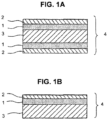
- Exemplary arrangements of the aluminium alloy multi-layered brazing sheet product 4, according to the present disclosure, are illustrated win Figs. 1A and 1B .
- a covering clad layer 2 and an Al-Si alloy brazing clad layer 1 can be applied on both sides or on one side only of a core layer 3 and wherein the covering clad layer 2 forms the outer-layer of the aluminium alloy multi-layered brazing sheet product.
- the multi-layered brazing sheet product has five layers including the core alloy layer as shown in Fig. 1A .
- the multi-layered brazing sheet product has a three-layer configuration as shown in Fig. 1B .
- Fig. 2 is an isometric view of a portion of a brazed heat exchanger assembly.
- a brazed aluminium heat exchanger 12 in accordance with the present disclosure may include a plurality of fluid-carrying tubes 6 made from the multi-layered brazing sheet. The ends of the fluid-carrying tubes 6 are open to a header plate 8 and a tank 10 (one end of the fluid-carrying tubes 6, one header plate 8 and one tank 10 are shown in Fig. 2 ). Coolant is circulated from the tank 10, through the fluid-carrying tubes 6 and into another tank (not shown). As shown, a plurality of cooling fins 7 are disposed between the fluid-carrying tubes 6, in order to transfer heat away therefrom thereby facilitating a heat exchange cooling the fluid therein.
Landscapes
- Engineering & Computer Science (AREA)
- Mechanical Engineering (AREA)
- Chemical & Material Sciences (AREA)
- Materials Engineering (AREA)
- Metallurgy (AREA)
- Organic Chemistry (AREA)
- Laminated Bodies (AREA)
Description
- This application claims the benefit of and priority to
European Patent Application No. 20180172.7, filed June 16, 2020 - Described herein is an aluminium alloy multi-layered brazing sheet product or material for brazing in an inert gas atmosphere without a flux ("CAB"), comprising a core layer made of a 3xxx alloy and provided with a covering clad layer on one or both sides of the core layer and an Al-Si brazing clad layer comprising 7-13 wt.% Si positioned between the core layer and the covering clad layer. Also described herein is a brazed assembly manufactured in a brazing operation, the brazed assembly comprising various components and at least one component being made from the aluminium alloy multi-layered brazing sheet material according to this disclosure.
- Substrates of aluminium or aluminium alloy in the form of sheet or extrusion, are used to make shaped or formed products. In some of these processes, parts of (shaped) aluminium comprising substrates are interconnected. One end of a substrate may be interconnected with the other end or one substrate may be assembled with one or more other substrates. This is commonly done by brazing. In a brazing process, a brazing filler metal or brazing alloy or a composition producing a brazing alloy upon heating is applied to at least one portion of the substrate to be brazed. After the substrate parts are assembled, they are heated until the brazing filler metal or brazing alloy melts. The melting point of the brazing material is lower than the melting point of the aluminium substrate or aluminium core sheet.
- Brazing sheet products find wide applications in heat exchangers and other similar equipment. Conventional brazing products have a core of rolled sheet, typically, but not exclusively an aluminium alloy of the 3xxx-series, having on at least one surface of the core sheet an aluminium brazing clad layer (also known as an aluminium cladding layer). The aluminium brazing clad layer is made of a 4xxx-series alloy comprising silicon as its main alloying constituent in an amount in the range of 4-20 wt.%. The aluminium brazing clad layer may be coupled or bonded to the aluminium core alloy in various ways known in the art, for example by means of roll bonding, cladding spray-forming or semi-continuous or continuous casting processes.
- These aluminium brazing clad layers have a liquidus temperature typically in the range of about 540-620°C and below the solidus temperature of the aluminium core alloy. Most brazing is done at temperatures between 560°C and 615°C.
-
EP 2 477 783 B1 - The present invention relates to an aluminium alloy multi-layered brazing sheet product for brazing in an inert-gas atmosphere without flux as defined in claims 1-12, to a process for the production of a braze heat exchanger as defined in claims 13 and 14 and to the use of an aluminium alloy multi-layered brazing sheet product as defined in claim 15.
- Covered embodiments of the present disclosure are defined by the claims, not this summary. This summary is a high-level overview of various aspects of the present disclosure and introduces some of the concepts that are further described in the Detailed Description section below. This summary is not intended to identify key or essential features of the claimed subject matter, nor is it intended to be used in isolation to determine the scope of the claimed subject matter. The subject matter should be understood by reference to appropriate portions of the entire specification, any or all drawings, and each claim.
- Described herein is an aluminium alloy multi-layered brazing sheet product for brazing in an inert-gas atmosphere without a flux comprising a core layer made of a 3xxx alloy comprising <0.20 wt.% Mg, and provided with a covering clad layer comprising 2 wt.% to 6 wt.% Si on one or both sides of said 3xxx alloy core layer and a Al-Si brazing clad layer comprising 7 wt.% to 13 wt.% Si positioned between the 3xxx alloy core layer and the covering clad layer, wherein the covering clad layer has a thickness X1 and the Al-Si brazing clad layer has a thickness X2 and wherein X2 ≥ 2X1.
- Optionally, the 3xxx alloy core layer comprises up to 0.1% Mg. Optionally, the covering clad layer is Bi-free and Li-free. Optionally, the covering clad layer is Mg-free, Bi-free and Li-free, and comprises, in wt.%:
Si 2% to 6%, preferably 2.5% to 5%, more preferably 3.5% to 5.0%; Fe up to 0.5%; Mn up to 0.2%; Cu up to 0.1%; Zn up to 0.4%; Ti up to 0.1%; - The 3xxx alloy core layer comprises, in wt.%,
- 0.5% to 1.8% Mn;
- <0.20% Mg;
- up to 1.1% Cu;
- up to 0.7% Si;
- up to 0.7% Fe;
- up to 0.3% Cr;
- up to 0.3% Sc;
- up to 0.3% Zr and/or V;
- up to 0.25% Ti;
- up to 1.7% Zn;
- unavoidable impurities each up to 0.05% and total up to 0.2%, and balance aluminium.
- Optionally, the 3xxx alloy core layer has a Cu content up to 0.15%. Optionally, the 3xxx alloy core layer has a Cu content in the range of 0.15% to 1.1%, and preferably in the range of 0.20% to 0.9%. The Al-Si brazing clad layer comprises, in wt.%,
Si 7%-13%, and preferably 10%-13%; Mg up to 0.5%, and preferably 0.02% to 0.5%; Fe up to 0.7%; Cu up to 0.3%; Mn up to 0.8%; Zn up to 2%; Bi up to 0.3%, and preferably 0.06% to 0.3%; Ti up to 0.25%; - Optionally, the multi-layered brazing sheet is surface treated with an alkaline or acidic etchant before a brazing step. Optionally, the covering clad layer has a thickness X1 and the Al-Si brazing clad layer has a thickness X2 and wherein X2 ≥ 2.5X1, and preferably X2 ≥ 3X1. Optionally, at least one of the core layer, the Al-Si brazing clad layer, or the covering clad layer comprises at least 0.05 wt. % Ti.
- Also described herein is a process for the production of a braze heat exchanger, comprising the steps of providing at least one aluminium alloy multi-layered brazing sheet product, such as the above-described multi-layered brazing sheet product, and preferably the multi-layered brazing sheet is surface treated with an alkaline or acidic etchant before a brazing step; and brazing in a flux-free controlled atmosphere brazing (CAB).
- Also described herein is the use of an aluminium alloy multi-layered brazing sheet product, such as the above-described multi-layered brazing sheet product, in a flux-free controlled atmosphere brazing (CAB) operation to produce a heat exchanger apparatus.
- Other objects and advantages of the present disclosure will be apparent from the following detailed description of non-limiting examples and drawings.
-
-
FIG. 1A is a typical arrangement of an aluminium alloy multi-layered brazing sheet product according to the present disclosure. -
FIG. 1B is another typical arrangement of an aluminium alloy multi-layered brazing sheet product according to the present disclosure. -
FIG. 2 is an isometric view of a portion of a brazed heat exchanger assembly according to the present disclosure. - As will be appreciated herein below, except as otherwise indicated, aluminium alloy designations and temper designations refer to the Aluminium Association designations in Aluminium Standards and Data and the Registration Records, as published by the Aluminium Association in 2019, and frequently updated, and are well known to the person skilled in the art. The temper designations are laid down in European standard EN515.
- For any description of alloy compositions or preferred alloy compositions, all references to percentages are by weight percent unless otherwise indicated.
- The term "up to" and "up to about", as employed herein, explicitly includes, but is not limited to, the possibility of zero weight-percent of the particular alloying element to which it refers. For example, up to about 0.3% Cr may include an aluminium alloy having no Cr.
- As used herein, the meaning of "a," "an," or "the" includes singular and plural references unless the context clearly dictates otherwise.
- As used herein, a plate generally has a thickness of greater than about 15 mm. For example, a plate may refer to an aluminium product having a thickness of greater than about 15 mm, greater than about 20 mm, greater than about 25 mm, greater than about 30 mm, greater than about 35 mm, greater than about 40 mm, greater than about 45 mm, greater than about 50 mm, or greater than about 100 mm.
- As used herein, a shate (also referred to as a sheet plate) generally has a thickness of from about 4 mm to about 15 mm. For example, a shate may have a thickness of about 4 mm, about 5 mm, about 6 mm, about 7 mm, about 8 mm, about 9 mm, about 10 mm, about 11 mm, about 12 mm, about 13 mm, about 14 mm, or about 15 mm.
- As used herein, a sheet generally refers to an aluminium product having a thickness of less than about 4 mm. For example, a sheet may have a thickness of less than about 4 mm, less than about 3 mm, less than about 2 mm, less than about 1 mm, less than about 0.5 mm, less than about 0.3 mm, or less than about 0.1 mm.
- All ranges disclosed herein are to be understood to encompass any and all subranges subsumed therein. For example, a stated range of "1 to 10" should be considered to include any and all subranges between (and inclusive of) the minimum value of 1 and the maximum value of 10; that is, all subranges beginning with a minimum value of 1 or more, e.g., 1 to 6.1, and ending with a maximum value of 10 or less, e.g., 5.5 to 10.
- Provided herein is an improved brazing sheet product for brazing in an inert gas atmosphere without a flux.
- Specifically, provided herein is an aluminium alloy multi-layered brazing sheet product for brazing in an inert-gas atmosphere without a flux, comprising a core layer made of a 3xxx alloy comprising <0.20 wt.% Mg, and provided with a covering clad layer comprising 2-6 wt.% Si on one or both sides of said 3xxx alloy core layer and a Al-Si brazing clad layer comprising 7-13 wt.% Si positioned between the 3xxx alloy core layer and the covering clad layer, wherein the covering clad layer has a thickness X1 and the Al-Si brazing clad layer has a thickness X2 and wherein X2 ≥ 2X1.
- Optionally, at least one of the core layer, Al-Si brazing clad layer, or covering clad layer includes Ti (e.g., at least 0.05 wt. % Ti or greater than 0.05 wt. % Ti). In other words, in some examples, Ti is intentionally added to at least one of the core layer, Al-Si brazing clad layer, or covering clad layer.
- The 3xxx alloy core layer comprises <0.20% Mg, preferably up to 0.1% Mg, and more preferably up to 0.05% Mg (e.g., from 0% to less than 0.20%, from 0.025% to less than 0.20%, from 0.05% to less than 0.20%, from 0.075% to less than 0.20%, from 0.10% to less than 0.20%, from 0.125% to less than 0.20%, from 0.15% to less than 0.20%, or from 0.175% to less than 0.20%). Optionally, the Mg content of the core layer can be about 0.01%, about 0.02%, about 0.03%, about 0.04%, about 0.05%, about 0.06%, about 0.07%, about 0.08%, about 0.09%, about 0.1%, about 0.11%, about 0.12%, about 0.13%, about 0.14%, about 0.15%, about 0.16%, about 0.17%, about 0.18%, or about 0.19%.
- In accordance with the present disclosure, it has been found that the thin covering layer has a liquidus temperature substantially higher than the liquidus temperature of the Al-Si brazing clad layer so that the molten brazing material during a subsequent brazing operation at a temperature above the liquidus temperature of the Al-Si alloy brazing clad layer and below the liquidus temperature of the thin covering clad layer is to cause said Al-Si alloy brazing clad layer to melt down while keeping said thin covering clad layer partially solid to prevent or at least limit oxidation of the brazing material being melted, and then cause the Al-Si alloy brazing material to seep, due to volumetric expansion, through segregation portions of said thin covering clad layer onto a surface of said thin covering clad layer and spread over the surface of said thin covering clad layer to form an emerging surface resulting in a brazed joint. The covering clad layer will eventually dissolve into the molten filler material. A high difference in the Si content of the thin covering layer and the Al-Si brazing clad layer is to create a difference in liquidus temperature. If the difference in the Si content is too low the oxidation protection layer effect is too low, and Si will start to diffuse from the Al-Si brazing clad layer to the thin covering layer during the heat-up cycle to brazing temperature.
- The Si content of the covering clad layer can be from about 2% to 6% (e.g., from 2.25% to 6%, from 2.5% to 6%, from 2.75% to 6%, from 3% to 6%, from 3.25% to 6%, from 3.5% to 6%, from 3.75% to 6%, from 4% to 6%, from 4.25% to 6%, from 4.5% to 6%, from 4.75% to 6%, from 5% to 6%, from 5.25% to 6%, from 5.5% to 6%, or from 5.75% to 6%). Optionally, the Si content of the covering clad layer can be about 2%, about 2.25%, about 2.5%, about 2.75%, about 3%, about 3.25%, about 3.5%, about 3.75%, about 4%, about 4.25%, about 4.5%, about 4.75%, about 5%, about 5.25%, about 5.5%, about 5.75%, or about 6%.
- The Si content of the brazing clad layer can be from about 7% to 13% (e.g., from 7.25% to 13%, from 7.5% to 13%, from 7.75% to 13%, from 8% to 13%, from 8.25% to 13%, from 8.5% to 13%, from 8.75% to 13%, from 9% to 13%, from 9.25% to 13%, from 9.5% to 13%, from 9.75% to 13%, from 10% to 13%, from 10.25% to 13%, from 10.5% to 13%, from 10.75% to 13%, from 11% to 13%, from 11.25% to 13%, from 11.5% to 13%, from 11.75% to 13%, from 12% to 13%, from 12.25% to 13%, from 12.5% to 13%, or from 12.75% to 13%). Optionally, the Si content of the brazing clad layer can be about 7%, about 7.25%, about 7.5%, about 7.75%, about 8%, about 8.25%, about 8.5%, about 8.75%, about 9%, about 9.25%, about 9.5%, about 9.75%, about 10%, about 10.25%, about 10.5%, about 10.75%, about 11%, about 11.25%, about 11.5%, about 11.75%, about 12%, about 12.25%, about 12.5%, about 12.75% or about 13%.
- An important advantage of having a low Mg content in the aluminium core alloy layer is the compatibility with this approach in CAB furnaces that are also used with fluxed components in a heat exchanger to be brazed. There is no need for separate equipment for flux-free brazing. The Mg content in the aluminium core alloy can be from 0% to 0.2% (e.g., from 0.025% to 0.2%, from 0.05% to 0.2%, from 0.075% to 0.2%, from 0.1% to 0.2%, from 0.125% to 0.2%, from 0.150% to 0.2%, or from 0.175% to 0.2%). Optionally, the Mg content of the aluminium core alloy can be about 0.025%, about 0.05%, about 0.075%, about 0.1%, about 0.125%, about 0.150%, about 0.175%, or about 0.2%.
- The aluminium core alloy layer is made from a 3XXX-series aluminium alloy consisting of, in wt.%:
- 0.5% to 1.8% Mn, preferably 0.6% to 1.5%, and more preferably 0.8% to 1.3%;
- < 0.20% Mg, preferably up to 0.1%, and more preferably up to 0.05%;
- up to 1.1% Cu, and preferably up to 0.15% or alternatively in a range of 0.15% to 1.1%, and preferably 0.20% to 0.95%, and more preferably 0.20% to 0.60%;
- up to 0.7% Si, and preferably up to 0.3% or alternatively in a range of 0.3% to 0.7% and more preferably of 0.40% to 0.65%;
- up to 0.7% Fe, preferably up to 0.5%, and more preferably in a range of 0.05% to 0.35%;
- up to 0.3% Cr, preferably up to 0.20%, and more preferably up to 0.09%, and most preferably up to 0.04%;
- up to 0.3% Sc, preferably up to 0.25%;
- up to 0.3% Zr and/or V, preferably up to 0.09%, and more preferably up to 0.04%;
- up to 0.25% Ti, preferably 0.01% to 0.20%, more preferably 0.01% to 0.12%;
- up to 1.7% Zn, preferably up to 1.2% Zn, more preferably up to 0.5%, and most preferably up to 0.2%;
- balance aluminium and impurities. Typically impurities are each up to 0.05% maximum and in total 0.2% maximum, and preferably in total not exceeding 0.15%.
- The Mn content in the aluminium core alloy layer can be from 0.5% to 1.8% (e.g., from 0.6% to 1.5%, or from 0.8% to 1.3%). Optionally, the Mn content in the aluminium core alloy layer can be about 0.5%, about 0.55%, about 0.6%, about 0.65%, about 0.7%, about 0.75%, about 0.8%, about 0.85%, about 0.9%, about 0.95%, about 1%, about 1.05%, about 1.1%, about 1.15%, about 1.2%, about 1.25%, about 1.3%, about 1.35%, about 1.4%, about 1.45%, about 1.5%, about 1.55%, about 1.6%, about 1.65%, about 1.7%, about 1.75%, or about 1.8%.
- The Mg content of the aluminium core alloy layer can be from 0% to less than 0.20% (e.g., from 0.02% to less than 0.20%, from 0.04% to less than 0.20%, from 0.06% to less than 0.20%, from 0.08% to less than 0.20%, from 0.10% to less than 0.20%, from 0.12% to less than 0.20%, from 0.14% to less than 0.20%, from 0.16% to less than 0.20%, or from 0.18% to less than 0.20%). Optionally, the Mg content of the aluminium core alloy layer can be about 0.01%, about 0.02%, about 0.03%, about 0.04%, about 0.05%, about 0.06%, about 0.07%, about 0.08%, about 0.09%, about 0.10%, about 0.11%, about 0.12%, about 0.13%, about 0.14%, about 0.15%, about 0.16%, about 0.17%, about 0.18%, or about 0.19%.
- The Cu content of the aluminium core alloy layer can be from 0% to 1.10% (e.g., from 0.15% to 1.1%, from 0.20% to 0.95%, or from 0.20% to 0.60%). Optionally, the Cu content of the aluminium core alloy layer can be 0%, about 0.05%, about 0.10%, about 0.15%, about 0.20%, about 0.25%, about 0.30%, about 0.35%, about 0.40%, about 0.45%, about 0.50%, about 0.55%, about 0.60%, about 0.65%, about 0.70%, about 0.75%, about 0.80%, about 0.85%, about 0.90%, about 0.95%, about 1.00%, about 1.05%, or about 1.10%.
- The Si content of the aluminium core alloy layer can be from 0% to 0.7% (e.g., from 0.1% to 0.7%, from 0.2% to 0.7%, from 0.3% to 0.7%, from 0.4% to 0.7%, from 0.5% to 0.7%, from 0.6% to 0.7%, from 0% to 0.3%, or from 0.4% to 0.65%). Optionally, the Si content of the aluminium core alloy layer can be 0%, about 0.025%, about 0.05%, about 0.075%, about 0.10%, about 0.125%, about 0.15%, about 0.175%, about 0.20%, about 0.225%, about 0.25%, about 0.275%, about 0.30%, about 0.325%, about 0.35%, about 0.375%, about 0.40%, about 0.425%, about 0.45%, about 0.475%, about 0.50%, about 0.525%, about 0.55%, about 0.575%, about 0.60%, about 0.625%, about 0.65%, about 0.675%, or about 0.70%.
- The Fe content of the aluminium core alloy layer can be from 0% to 0.7% (e.g., from 0.1% to 0.7%, from 0.2% to 0.7%, from 0.3% to 0.7%, from 0.4% to 0.7%, from 0.5% to 0.7%, from 0.6% to 0.7%, from 0% to 0.50%, or from 0.05% to 0.35%). Optionally, the Fe content of the aluminium core alloy layer can be 0%, about 0.025%, about 0.05%, about 0.075%, about 0.10%, about 0.125%, about 0.15%, about 0.175%, about 0.20%, about 0.225%, about 0.25%, about 0.275%, about 0.30%, about 0.325%, about 0.35%, about 0.375%, about 0.40%, about 0.425%, about 0.45%, about 0.475%, about 0.50%, about 0.525%, about 0.55%, about 0.575%, about 0.60%, about 0.625%, about 0.65%, about 0.675%, or about 0.70%.
- The Cr content of the aluminium core alloy layer can be from 0% to 0.30% (e.g., from 0.05% to 0.30%, from 0.10% to 0.30%, from 0.15% to 0.30%, from 0.20% to 0.30%, from 0.25% to 0.30%, from 0% to 0.20%, from 0% to 0.09%, or from 0% to 0.04%). The Cr content of the aluminium core alloy layer can be 0%, about 0.025%, about 0.05%, about 0.075%, about 0.10%, about 0.125%, about 0.15%, about 0.175%, about 0.20%, about 0.225%, about 0.25%, about 0.275%, or about 0.30%.
- The Sc content of the aluminium core alloy layer can be from 0% to 0.30% (e.g., from 0.05% to 0.30%, from 0.10% to 0.30%, from 0.15% to 0.30%, from 0.20% to 0.30%, from 0.25% to 0.30%, or from 0% to 0.25%). Optionally, the Sc content of the aluminium core alloy layer can be 0%, about 0.01%, about 0.02%, about 0.03%, about 0.04%, about 0.05%, about 0.06%, about 0.07%, about 0.08%, about 0.09%, about 0.10%, about 0.11%, about 0.12%, about 0.13%, about 0.14%, about 0.15%, about 0.16%, about 0.17%, about 0.18%, about 0.19%, about 0.20%, about 0.21%, about 0.22%, about 0.23%, about 0.24%, about 0.25%, about 0.26%, about 0.27%, about 0.28%, about 0.29%, or about 0.30%.
- The Zr and/or V content of the aluminium core alloy layer can each be from 0% to 0.30% (e.g., from 0.05% to 0.30%, from 0.10% to 0.30%, from 0.15% to 0.30%, from 0.20% to 0.30%, from 0.25% to 0.30%, from 0% to 0.09%, or from 0% to 0.04%). Optionally, the Zr and/or V content of the aluminium core alloy layer can be 0%, about 0.01%, about 0.02%, about 0.03%, about 0.04%, about 0.05%, about 0.06%, about 0.07%, about 0.08%, about 0.09%, about 0.10%, about 0.11%, about 0.12%, about 0.13%, about 0.14%, about 0.15%, about 0.16%, about 0.17%, about 0.18%, about 0.19%, about 0.20%, about 0.21%, about 0.22%, about 0.23%, about 0.24%, about 0.25%, about 0.26%, about 0.27%, about 0.28%, about 0.29%, or about 0.30%.
- The Ti content of the aluminium core alloy layer can be from 0% to 0.25% (e.g., from 0.05% to 0.25%, from 0.10% to 0.25%, from 0.15% to 0.25%, from 0.20% to 0.25%, from 0.01% to 0.20%, or from 0.01% to 0.12%). Optionally, the Ti content of the aluminium core alloy layer can be 0%, about 0.01%, about 0.02%, about 0.03%, about 0.04%, about 0.05%, about 0.06%, about 0.07%, about 0.08%, about 0.09%, about 0.10%, about 0.11%, about 0.12%, about 0.13%, about 0.14%, about 0.15%, about 0.16%, about 0.17%, about 0.18%, about 0.19%, about 0.20%, about 0.21%, about 0.22%, about 0.23%, about 0.24%, or about 0.25%.
- The Zn content of the aluminium core alloy layer can be from 0% to 1.7% (e.g., from 0.25% to 1.7%, from 0.50% to 1.7%, from 0.75% to 1.7%, from 1.0% to 1.7%, from 1.25% to 1.7%, from 1.5% to 1.7%, from 0% to 1.2%, from 0% to 0.50%, or from 0% to 0.20%). Optionally, the Zn content of the aluminium core alloy layer can be 0%, about 0.05%, about 0.10%, about 0.15%, about 0.20%, about 0.25%, about 0.30%, about 0.35%, about 0.40%, about 0.45%, about 0.50%, about 0.55%, about 0.60%, about 0.65%, about 0.70%, about 0.75%, about 0.80%, about 0.85%, about 0.90%, about 0.95%, about 1.00%, about 1.05%, about 1.10%, about 1.15%, about 1.20%, about 1.25%, about 1.30%, about 1.35%, about 1.40%, about 1.45%, about 1.50%, about 1.55%, about 1.60%, about 1.65%, or about 1.70%.
- In an embodiment, the covering clad layer is free of wetting elements or elements modifying the surface tension of a molten Al-Si alloy, selected from the group of Ag, Be, Bi, Ca, Ce, La, Li, Na, Pb, Se, Sb, Sr, Th, and Y. With "free" is meant that no purposeful addition of Ag, Be, Bi, Ca, Ce, La, Li, Na, Pb, Se, Sb, Sr, Th, or Y is made to the chemical composition but that due to impurities and/or leaking from contact with manufacturing equipment, trace quantities of may nevertheless find their way into the covering material layer. In practice this means that the amount present of each of these defined elements, if present, is up to about 0.005%, typically less than about 0.001%. In an embodiment the sum of these wetting elements does not exceed 0.01%, and preferably does not exceed 0.005%. For example, less than 10 ppm Sr, and preferably less than 5 ppm Sr, is an example of a trace quantity. Also, less than 10 ppm Na, and preferably less than 3 ppm Na is another example of a trace quantity. The avoidance of wetting elements, for example an element like Bi, is important as it reduces the occurrence of edge cracking during liner production. The presence of wetting elements would limit also the positive effect of preventing the surface from re-oxidation during brazing by having a partially melted covering clad or top layer as it might flow too easy should a wetting element be present.
- The covering clad layer is preferably free from Mg, meaning that the level is below about 0.05%, preferably below about 0.03%, and more preferably below 0.01%. With "free" is meant that no purposeful addition of Mg is made to the chemical composition but that due to impurities and/or leaking from contact with manufacturing equipment, trace quantities of may nevertheless find their way into the covering material layer.
- The covering clad layer is a Mg-free aluminium alloy and comprising, in wt.%,
Si 2% to 6%, preferably 2.5% to 5%, more preferably 3.5% to 5.0%; Fe up to 0.5%, preferably up to 0.3%; Mn up to 0.2%, preferably up to 0.10%; Cu up to 0.1%, preferably up to 0.05%; Zn up to 0.4%, preferably up to 0.2%; Ti up to 0.1%, preferably up to 0.05%; - The Si content of the covering clad layer can be from 2% to 6% (e.g., from 2.5% to 6%, from 3% to 6%, from 3.5% to 6%, from 4% to 6%, from 4.5% to 6%, from 5% to 6%, from 5.5% to 6%, from 2.5% to 5%, or from 3.5% to 5%). Optionally, the Si content of the covering clad layer can be about 2%, about 2.25%, about 2.5%, about 2.75%, about 3%, about 3.25%, about 3.5%, about 3.75%, about 4%, about 4.25%, about 4.5%, about 4.75%, about 5%, about 5.25%, about 5.75%, or about 6%.
- The Fe content of the covering clad layer can be from 0% to 0.5% (e.g., from 0.1% to 0.5%, from 0.2% to 0.5%, from 0.3% to 0.5%, from 0.4% to 0.5%, or from 0% to 0.3%). Optionally, the Fe content of the covering clad layer can be 0%, about 0.025%, about 0.05%, about 0.075%, about 0.1%, about 0.125%, about 0.15%, about 0.175%, about 0.2%, about 0.225%, about 0.25%, about 0.275%, about 0.3%, about 0.325%, about 0.35%, about 0.375%, about 0.4%, about 0.425%, about 0.45%, about 0.475%, or about 0.5%.
- The Mn content of the covering clad layer can be from 0% to 0.2% (e.g., from 0.05% to 0.2%, from 0.1% to 0.2%, from 0.15% to 0.2%, or from 0% to 0.1%). Optionally, the Mn content of the covering clad layer can be 0%, about 0.01%, about 0.02%, about 0.03%, about 0.04%, about 0.05%, about 0.06%, about 0.07%, about 0.08%, about 0.09%, about 0.10%, about 0.11%, about 0.12%, about 0.13%, about 0.14%, about 0.15%, about 0.16%, about 0.17%, about 0.18%, about 0.19%, or about 0.20%.
- The Cu content of the covering clad layer can be from 0% to 0.10% (e.g., from 0.025% to 0.10%, from 0.05% to 0.10%, from 0.075% to 0.10%, or from 0% to 0.05%). Optionally, the Cu content of the covering clad layer can be 0%, about 0.01%, about 0.02%, about 0.03%, about 0.04%, about 0.05%, about 0.06%, about 0.07%, about 0.08%, about 0.09%, or about 0.10%.
- The Zn content of the covering clad layer can be from 0% to 0.40% (e.g., from 0.05% to 0.40%, from 0.10% to 0.40%, from 0.15% to 0.40%, from 0.20% to 0.40%, from 0.25% to 0.40%, from 0.30% to 0.40%, from 0.35% to 0.40%, or from 0% to 0.20%). Optionally, the Zn content of the covering clad layer can be 0%, about 0.02%, about 0.04%, about 0.06%, about 0.08%, about 0.10%, about 0.12%, about 0.14%, about 0.16%, about 0.18%, about 0.20%, about 0.22%, about 0.24%, about 0.26%, about 0.28%, about 0.30%, about 0.32%, about 0.34%, about 0.36%, about 0.38%, or about 0.40%.
- The Ti content of the covering clad layer can be from 0% to 0.10% (e.g., from 0.025% to 0.10%, from 0.05% to 0.10%, from 0.075% to 0.10%, or from 0% to 0.05%). Optionally, the Ti content of the covering clad layer can be 0%, about 0.01%, about 0.02%, about 0.03%, about 0.04%, about 0.05%, about 0.06%, about 0.07%, about 0.08%, about 0.09%, or about 0.10%.
- The covering clad layer is a Mg-free aluminium alloy consisting of, in wt.%,
Si 2% to 6%, Fe up to 0.5%, Mn up to 0.2%, Cu up to 0.1%, Zn up to 0.4%, Ti up to 0.1%, inevitable impurities, each <0.05% and total <0.15%, balance aluminium, and with preferred narrower ranges as herein described and claimed. - The Al-Si brazing clad layer has the following composition, comprising of, in wt.%,
Si 7%-13%, preferably 10%-13%, more preferably 11%-13%; Mg up to 0.5%, preferably 0.02% to 0.5%, and more preferably 0.02% to 0.3%, and most preferably 0.10% to 0.20%; Fe up to 0.7%, preferably up to 0.5%; Cu up to 0.3%, preferably up to 0.1%; Mn up to 0.8%, preferably up to 0.2%; Zn up to 2%, preferably up to 0.3%; Ti up to 0.25%, preferably up to 0.15%, and more preferably up to 0.1%; - The Si content of the Al-Si brazing clad layer can be from 7% to 13% (e.g., from 8% to 13%, from 9% to 13%, from 10% to 13%, from 11% to 13%, or from 12% to 13%). Optionally, the Si content of the brazing clad layer can be about 7%, about 7.25%, about 7.5%, about 7.75%, about 8%, about 8.25%, about 8.5%, about 8.75%, about 9%, about 9.25%, about 9.5%, about 9.75%, about 10%, about 10.25%, about 10.5%, about 10.75%, about 11%, about 11.25%, about 11.5%, about 11.75%, about 12%, about 12.25%, about 12.5%, about 12.75%, or about 13%.
- The Mg content of the Al-Si brazing clad layer can be from 0% to 0.5% (e.g., from 0.02% to 0.5%, from 0.02% to 0.3%, or from 0.1% to 0.2%). Optionally, the Mg content of the brazing clad layer can be about 0.02%, about 0.04%, about 0.06%, about 0.08%, about 0.1%, about 0.12%, about 0.14%, about 0.16%, about 0.18%, about 0.2%, about 0.22%, about 0.24%, about 0.26%, about 0.28%, about 0.3%, about 0.32%, about 0.34%, about 0.36%, about 0.38%, about 0.4%, about 0.42%, about 0.44%, about 0.46%, about 0.48%, or about 0.5%.
- The Fe content of the Al-Si brazing clad layer can be from 0% to 0.7% (e.g., from 0.1% to 0.7%, from 0.2% to 0.7%, from 0.3% to 0.7%, from 0.4% to 0.7%, from 0.5% to 0.7%, from 0.6% to 0.7%, or from 0% to 0.5%). Optionally, the Fe content of the brazing clad layer can be about 0.025%, about 0.05%, about 0.075%, about 0.1%, about 0.125%, about 0.15%, about 0.175%, about 0.2%, about 0.225%, about 0.25%, about 0.275%, about 0.3%, about 0.325%, about 0.35%, about 0.375%, about 0.4%, about 0.425%, about 0.45%, about 0.475%, about 0.5%, about 0.525%, about 0.55%, about 0.575%, or about 0.6%, about 0.625%, about 0.65%, about 0.675%, or about 0.7%.
- The Cu content of the Al-Si brazing clad layer can be from 0% to 0.30% (e.g., from 0.05% to 0.30%, from 0.10% to 0.30%, from 0.15% to 0.30%, from 0.20% to 0.30%, from 0.25% to 0.30%, or from 0% to 0.10%). Optionally, the Cu content of the brazing clad layer can be 0%, about 0.01%, about 0.02%, about 0.03%, about 0.04%, about 0.05%, about 0.06%, about 0.07%, about 0.08%, about 0.09%, about 0.10%, about 0.11%, about 0.12%, about 0.13%, about 0.14%, about 0.15%, about 0.16%, about 0.17%, about 0.18%, about 0.19%, about 0.20%, about 0.21%, about 0.22%, about 0.23%, about 0.24%, about 0.25%, about 0.26%, about 0.27%, about 0.28%, about 0.29%, or about 0.30%.
- The Mn content of the Al-Si brazing clad layer can be from 0% to 0.80% (e.g., from 0.10% to 0.80%, from 0.20% to 0.80%, from 0.30% to 0.80%, from 0.40% to 0.80%, from 0.50% to 0.80%, from 0.60% to 0.80%, from 0.70% to 0.80%, or from 0% to 0.20%). Optionally, the Mn content of the brazing clad layer can be 0%, about 0.05%, about 0.10%, about 0.15%, about 0.20%, about 0.25%, about 0.30%, about 0.35%, about 0.40%, about 0.45%, about 0.50%, about 0.55%, about 0.60%, about 0.65%, about 0.70%, about 0.75%, or about 0.80%.
- The Zn content of the Al-Si brazing clad layer can be from 0% to 2% (e.g., from 0.25% to 2%, from 0.50% to 2%, from 0.75% to 2%, from 1.25% to 2%, from 1.5% to 2%, from 1.75% to 2%, or from 0% to 0.30%). Optionally, the Zn content of the brazing clad layer can be 0%, about 0.20%, about 0.30%, about 0.40%, about 0.60%, about 0.80%, about 1.0%, about 1.2%, about 1.4%, about 1.6%, about 1.8%, or about 2.0%.
- The Ti content of the Al-Si brazing clad layer can be from 0% to 0.25% (e.g., from 0.05% to 0.25%, from 0.10% to 0.25%, from 0.15% to 0.25%, from 0.20% to 0.25%, from 0% to 0.15%, or from 0% to 0.10%). Optionally, the Ti content of the aluminium core alloy layer can be 0%, about 0.01%, about 0.02%, about 0.03%, about 0.04%, about 0.05%, about 0.06%, about 0.07%, about 0.08%, about 0.09%, about 0.10%, about 0.11%, about 0.12%, about 0.13%, about 0.14%, about 0.15%, about 0.16%, about 0.17%, about 0.18%, about 0.19%, about 0.20%, about 0.21%, about 0.22%, about 0.23%, about 0.24%, or about 0.25%.
- In a particular embodiment the Al-Si brazing clad layer may further comprise up to 0.3% Bi, preferably 0.06% to 0.3%, more preferably 0.11% to 0.20%, to facilitate the flow of the Al-Si brazing clad layer and to enhance joint formation during brazing.
- The Al-Si brazing clad layer has the following composition, consisting of, in wt.%,
Si 7%-13%, preferably 10%-13%, more preferably 11%-13%; Mg up to 0.5%, preferably 0.02% to 0.5%, and more preferably 0.02% to 0.3%, and most preferably 0.10% to 0.20%; Fe up to 0.7%, preferably up to 0.5%; Cu up to 0.3%, preferably up to 0.1%; Mn up to 0.8%, preferably up to 0.2%; Zn up to 2%, preferably up to 0.3%; Bi up to 0.3%, preferably 0.06% to 0.3%, more preferably 0.11% to 0.20%; Ti up to 0.25%, preferably up to 0.15%, and more preferably up to 0.1%; - In an embodiment of the aluminium alloy multi-layered brazing sheet material according to the present disclosure the 3xxx alloy core layer is provided on both sides with the covering clad layer and the Al-Si brazing clad layer. When both sides of the 3xxx alloy core layer are clad in the same manner, the brazing sheet material consists of a five-layer configuration.
- In an embodiment the aluminium alloy multi-layered brazing sheet material is devoid of or free from of an aluminium alloy layer interposed between the 3xxx alloy core layer and the Al-Si brazing clad layer as this would reduce the production yield giving raise the increased product costs.
- The aluminium alloy multi-layered brazing sheet material according to present disclosure can be manufactured via various techniques. For example by means of roll bonding as is well known in the art, and which method is preferred. The process may generally comprise the following steps:
- casting the different aluminium alloys to obtain rolling blocks;
- scalping of the blocks on either side to remove surface segregation zones originating from the casting process and to improve product flatness;
- preheating of the brazing material blocks at 400°C to 550°C;
- hot rolling of the blocks forming the covering layer and the Al-Si brazing clad layer until the desired thickness to provide multiple hot rolled clad liners;
- alternatively hot rolling the blocks of the covering layer and the Al-Si brazing clad layer to intermediate thickness and stacking the two materials at intermediate thickness and further hot rolling the stack to provide a hot rolled clad liner of required thickness composed of the two layers;
- optionally homogenizing the aluminium core alloy block at 500°C to 630°C for at least 1 hour, preferably 1 to 20 hours;
- assembling the core alloy block with at least on one face, optionally on both faces, the rolled clad liner(s) to obtain a sandwich;
- preheating the sandwich at 400°C to 550°C;
- hot rolling the sandwich until an intermediate thickness, for example 2 to 10 mm; cold rolling the hot rolled sandwich until the desired final thickness to obtain a multi-layered brazing sheet product; and
- optionally annealing at 200°C to 480°C to obtain a multi-layered brazing sheet product of the desired temper, for example O-temper, H2x-temper or H3x-temper.
- Alternatively, on a less preferred basis, one or more of the covering clad layer and the Al-Si brazing clad layer can be applied onto the 3xxx alloy core layer by means of thermal spraying techniques. Or alternatively, the core aluminium alloy layer and the Al-Si alloy brazing clad layer can be manufactured by means of casting techniques, for example as disclosed in
patent document WO-2004/112992 , where after the covering clad layer can be applied by means of for example roll bonding or thermal spraying techniques. - In an embodiment the aluminium alloy multi-layered brazing sheet material thus obtained is treated with an alkaline or acidic etchant before the brazing process to remove a surface oxide film to facilitate the fluxless CAB brazing operation.
- Preferably, the outer-surface of the aluminium alloy multi-layered brazing sheet material is treated with an acidic etchant. The acidic etchant preferably comprises 10 g/L to 25 g/L, more preferably 12 g/L to 16 g/L, for example 14 g/L of H2SO4 and 0.5 g/L to 5 g/L, more preferably 1 g/L to 3 g/L, for example 2 g/L of HF (5%). The acidic etchant may comprise at least one of the following mineral acids: H2SO4, H3PO4, HCl, HF and/or HNO3. Preferably, the acidic etchant is a mixture of H2SO4 and HF. The acidic etchant is generally in the form of a solution and the mineral acid content is generally from 0.5 to 20 wt.%.
- According to another embodiment the etchant may be alkaline. The alkaline etchant may comprise at least one of the following: NaOH and/or KOH. The alkaline etchant is generally in the form of a solution and the alkaline content is generally from 0.5 to 20 wt.%. The alkaline etchant may further comprise surfactants (for example, anionic surfactants such as alkylbenzene sulfonates, alkyl sulfates, alkyl ether sulfates; cationic surfactants such as mono alkyl quaternary systems; non-ionic surfactants such as with ester, ether or amide bonding (for example glycol esters); or amphoteric surfactants such as imidazoline derivatives or polypeptides) or complexing agents (for example sodium gluconate, sorbitol, mucic acid or Arabic gum).
- The alkaline etchant generally needs to be rinsed with an acid, for example nitric or sulfuric acid.
- The surface treatment with an etchant generally lasts from 1 second to 5 minutes, preferably from 3 seconds to 80 seconds, more preferably from 5 seconds to 50 seconds.
- The temperature during this surface treatment is generally from 20°C to 100°C, preferably from 30°C to 80°C, more preferably 50°C to 80°C.
- During the surface treatment, the amount of removed aluminium of the clad outer layer side is 1 to 1000 mg/m2 per side, preferably 5 to 500 mg/m2 per side, more preferably 5 to 300 mg/m2 per side.
- The aluminium alloy multi-layered brazing sheet material according to the present disclosure has a typical thickness at final gauge in the range of about 0.05 mm to 4 mm, and preferably about 0.2 mm to 2 mm, and more preferably about 0.2 mm to 1.5 mm.
- In an embodiment, each covering clad layer has a thickness which is about 0.5% to 10%, preferably 0.5% to 5%, of the entire thickness of the multi-layered brazing sheet, and each Al-Si brazing clad layer has a thickness which is about 3% to 25%, preferably about 4% to 15%, of the entire thickness of the aluminium alloy multi-layered brazing sheet.
- In an embodiment, the covering clad layer has a thickness in the range of 4 µm to 80 µm, preferably in a range of 5 µm to 50 µm.
- It is important to keep the thickness of the covering clad layer thin compared to the thickness of the Al-Si brazing clad layer. The covering clad layer has a thickness X1 and the Al-Si brazing clad layer has a thickness X2 and the thickness ratio (X2 to X1) of the Al-Si alloy brazing clad layer and the covering clad layer is 2 or more to 1. In an embodiment the thickness ratio is 2.5 or more to 1, and preferably X2≥ 3Xi, for example the thickness ratio is 2.5 to 1, or 3 to 1, or 3.5 to 1. In some cases, the thickness ratio is represented by 2X1<X2<2.5X1.
- Preferably the total of the thicknesses of the covering clad layer and the Al-Si brazing clad layer applied on a side of the core alloy layer are in a range of about 5% to 25%, preferably 5% to 15%, of the entire thickness of the multi-layered brazing sheet material.
- In an embodiment of the present disclosure, the aluminium alloy multi-layered brazing sheet material is provided in an O-temper, and which is fully annealed.
- In an embodiment of the present disclosure, the aluminium alloy multi-layered brazing sheet material is provided in a H3x-temper, H2x-temper or H1x-temper, and wherein x is 1, 2, 3, 4, 5, 6, 7 or 8, such as for example the H14, H18, H22, H24 and H26 temper.
- As a particular example the aluminium alloy multi-layered brazing sheet material is provided in an H14, H22, H24, or O-temper.
- In a further aspect of the present disclosure, it relates to the use of the aluminium alloy multi-layered brazing sheet material or product for the production by means of a flux-free controlled atmosphere brazing (CAB) operation of a heat exchanger, e.g. of a motor vehicle, and as such, the aluminium alloy multi-layered brazing sheet material is suitable for being applied in heat exchangers for powertrain and engine cooling radiators, low temperature radiators, direct air-to-air charge air cooling ("CAC") or intercooling, air-to-water CAC, water-to-air CAC, air-to-refrigerant CAC, refrigerant-to-air CAC, air-to-refrigerant evaporators, air-to-refrigerant condensers, water-to-refrigerant evaporators, water-to-refrigerant condensers, heater cores, exhaust gas cooling, exhaust gas recirculation systems, hybrid cooling system, two-phase cooling systems, oil coolers, fuel coolers, material for battery cooling systems, chillers, cold plates, heat recovery systems, etc.
- In a further aspect of the present disclosure there is provided an article comprising at least two formed members, for example formed by means of bending, folding, tube forming or deep drawing, joint to each other in a flux-free controlled atmosphere brazing (CAB) operation, in particular a heat-exchanger of a motor vehicle, incorporating at least the aluminium alloy multi-layered brazing material according to the present disclosure as one of the formed members.
- In another aspect of the present disclosure there is provided a method of manufacturing an assembly of brazed components, comprising the steps of, in that order:
- (a) providing or forming the components of which at least one is made from an aluminium alloy multi-layered brazing sheet product as herein set out or claimed; and preferably the multi-layered brazing sheet is treated with an alkaline or acidic etchant;
- (b) assembling the components into an assembly; and preferably one side of the multi-layered brazing sheet of the present disclosure having the covering clad layer is being kept inside the assembly forming the brazing sheet to constitute a structure, preferably a hollow structure;
- (c) brazing the assembly without applying brazing flux in an inert gas atmosphere, e.g. argon or nitrogen, at a brazing temperature, typically at a temperature in a range of about 540°C to 615°C, for example at about 590°C or at about 600°C, for a period long enough for melting and spreading of the Al-Si brazing material, for example a dwell time of about 1 to 10 minutes, preferably 1 to 6 minutes, typically at around about 2 or 4 minutes, to form a fillet between the filler material and at least one other component; and wherein the oxygen content of the dry inert gas atmosphere is controlled to a level as low as possible, preferably below 200 ppm, and more preferably below 100 ppm, and more preferably below 40 ppm; and
- (d) cooling of the brazed assembly, typically to below 100°C; e.g. to ambient temperature.
- Ideally, when assembling the components into an assembly suitable for joining by brazing, one side of the multi-layered brazing sheet product of the present disclosure having the thin covering clad layer is being kept inside the assembly forming the brazing sheet to constitute a structure. While using the brazing sheet product according to the present disclosure there is no requirement to apply a brazing flux in order to obtain a good joint following the brazing operation.
- In a preferred embodiment the brazing inert gas atmosphere during the brazing operation should be dry, meaning that the dew point is less than minus 40°C, and more preferably of minus 45°C or even lower.
- Exemplary arrangements of the aluminium alloy multi-layered
brazing sheet product 4, according to the present disclosure, are illustrated winFigs. 1A and 1B . A covering cladlayer 2 and an Al-Si alloy brazing cladlayer 1 can be applied on both sides or on one side only of acore layer 3 and wherein the covering cladlayer 2 forms the outer-layer of the aluminium alloy multi-layered brazing sheet product. When both sides are clad, the multi-layered brazing sheet product has five layers including the core alloy layer as shown inFig. 1A . When one side is clad with the brazing material, the multi-layered brazing sheet product has a three-layer configuration as shown inFig. 1B . -
Fig. 2 is an isometric view of a portion of a brazed heat exchanger assembly. As shown inFig. 2 , a brazedaluminium heat exchanger 12 in accordance with the present disclosure may include a plurality of fluid-carrying tubes 6 made from the multi-layered brazing sheet. The ends of the fluid-carrying tubes 6 are open to a header plate 8 and a tank 10 (one end of the fluid-carrying tubes 6, one header plate 8 and onetank 10 are shown inFig. 2 ). Coolant is circulated from thetank 10, through the fluid-carrying tubes 6 and into another tank (not shown). As shown, a plurality of cooling fins 7 are disposed between the fluid-carrying tubes 6, in order to transfer heat away therefrom thereby facilitating a heat exchange cooling the fluid therein.
Claims (15)
- An aluminium alloy multi-layered brazing sheet product for brazing in an inert-gas atmosphere without a flux, comprising:a core layer made of a 3xxx alloy comprising in wt.%,0.5% to 1.8% Mn;<0.20% Mg;0.15% to 1.1% Cu;up to 0.7% Si;up to 0.7% Fe;up to 0.3% Cr;up to 0.3% Sc;up to 0.3% Zr and/or V;up to 0.25% Ti;up to 1.7% Zn;unavoidable impurities each up to 0.05% and total up to 0.2%, and balance aluminium,and provided with a covering clad layer on one or both sides of said 3xxx alloy core layer;wherein the covering clad layer is Mg-free, wherein Mg-free means below 0.05% Mg; and comprises, in wt.%,
Si 2% to 6%; Fe up to 0.5%; Mn up to 0.2%; Cu up to 0.1%; Zn up to 0.4%; Ti up to 0.1%; a Al-Si brazing clad layer positioned between the 3xxx alloy core layer and the covering clad layer, wherein the Al-Si brazing clad layer comprises, in wt.%,Si 7%-13%; Mg up to 0.5%; Fe up to 0.7%; Cu up to 0.3%; Mn up to 0.8%; Zn up to 2%; Bi up to 0.3%; Ti up to 0.25%; balance aluminium and unavoidable impurities each <0.05%, total <0.2%;wherein the covering clad layer has a thickness X1 and the Al-Si brazing clad layer has a thickness X2 and wherein X2 ≥ 2X1. - The multi-layered brazing sheet product according to claim 1, wherein the 3xxx alloy core layer comprises up to 0.1% Mg; and/or
wherein the covering clad layer is Bi-free and Li-free, wherein Bi-free means up to 0.005% Bi and Li-free means up to 0.005% Li. - The multi-layered brazing sheet product according to any one of claims 1 to 2, wherein the covering clad layer is Mg-free, Bi-free and Li-free, wherein Mg-free means below 0.05% Mg, Bi-free means up to 0.005% Bi and Li-free means up to 0.005% Li; and comprises, in wt.%,
Si 2% to 6%; Fe up to 0.5%; Mn up to 0.2%; Cu up to 0.1%; Zn up to 0.4%; Ti up to 0.1%; - The multi-layered brazing sheet product according to any one of claims 1-3, wherein
the covering clad layer has a Si content in the range of 2.5% to 5%. - The multi-layered brazing sheet product according to any one of claims 1-4,
wherein the 3xxx alloy core layer has a Cu content in the range of 0.20% to 0.9%. - The multi-layered brazing sheet product according to any one of claims 1-5, wherein
the Al-Si brazing clad layer has a Si content of 10% to 13%. - The multi-layered brazing sheet product according to any one of claims 1-6, wherein
the Al-Si brazing clad layer has a Mg content of 0.02% to 0.5%. - The multi-layered brazing sheet product according to any one of claims 1-7,
wherein the Al-Si brazing clad layer has a Bi content of 0.06% to 0.3%. - The multi-layered brazing sheet product according to any one of claims 1 to 8, wherein
the multi-layered brazing sheet is surface treated with an alkaline or acidic etchant before a brazing step. - The multi-layered brazing sheet product according to any one of claims 1 to 9, wherein
the covering clad layer has a thickness X1 and the Al-Si brazing clad layer has a thickness X2 and wherein X2 ≥ 2.5X1. - The multi-layered brazing sheet product according to any one of claims 1 to 10, wherein
the covering clad layer has a thickness X1 and the Al-Si brazing clad layer has a thickness X2 and wherein X2 ≥ 3X1. - The multi-layered brazing sheet product according to any one of claims 1 to 11, wherein at least one of the core layer, the Al-Si brazing clad layer, or the covering clad layer comprises at least 0.05 wt. % Ti.
- A process for the production of a braze heat exchanger, comprising the steps of:providing at least one aluminium alloy multi-layered brazing sheet product according to any one of claims 1 to 12; andbrazing in a flux-free controlled atmosphere brazing (CAB).
- The process of claim 13, wherein the multi-layered brazing sheet is surface treated with an alkaline or acidic etchant before a brazing step.
- Use of an aluminium alloy multi-layered brazing sheet product according to any one of claims 1 to 12 in a flux-free controlled atmosphere brazing (CAB) operation to produce a heat exchanger apparatus.
Applications Claiming Priority (2)
| Application Number | Priority Date | Filing Date | Title |
|---|---|---|---|
| EP20180172.7A EP3925728A1 (en) | 2020-06-16 | 2020-06-16 | Aluminium alloy multi-layered brazing sheet material for flux-free brazing |
| PCT/IB2021/055264 WO2021255638A1 (en) | 2020-06-16 | 2021-06-15 | Aluminium alloy multi-layered brazing sheet material for flux-free brazing |
Publications (2)
| Publication Number | Publication Date |
|---|---|
| EP4164836A1 EP4164836A1 (en) | 2023-04-19 |
| EP4164836B1 true EP4164836B1 (en) | 2024-12-18 |
Family
ID=71103255
Family Applications (2)
| Application Number | Title | Priority Date | Filing Date |
|---|---|---|---|
| EP20180172.7A Pending EP3925728A1 (en) | 2020-06-16 | 2020-06-16 | Aluminium alloy multi-layered brazing sheet material for flux-free brazing |
| EP21732580.2A Active EP4164836B1 (en) | 2020-06-16 | 2021-06-15 | Aluminium alloy multi-layered brazing sheet material for flux-free brazing |
Family Applications Before (1)
| Application Number | Title | Priority Date | Filing Date |
|---|---|---|---|
| EP20180172.7A Pending EP3925728A1 (en) | 2020-06-16 | 2020-06-16 | Aluminium alloy multi-layered brazing sheet material for flux-free brazing |
Country Status (12)
| Country | Link |
|---|---|
| US (1) | US12533755B2 (en) |
| EP (2) | EP3925728A1 (en) |
| JP (1) | JP2023524113A (en) |
| KR (1) | KR102843749B1 (en) |
| CN (1) | CN115702058A (en) |
| BR (1) | BR112022021683A2 (en) |
| ES (1) | ES3010338T3 (en) |
| HU (1) | HUE069814T2 (en) |
| MX (1) | MX2022015323A (en) |
| PL (1) | PL4164836T3 (en) |
| PT (1) | PT4164836T (en) |
| WO (1) | WO2021255638A1 (en) |
Families Citing this family (3)
| Publication number | Priority date | Publication date | Assignee | Title |
|---|---|---|---|---|
| EP4096862B1 (en) | 2020-01-29 | 2023-10-18 | Novelis Koblenz GmbH | Aluminium alloy multi-layered brazing sheet material for fluxfree brazing |
| JP2023141036A (en) * | 2022-03-23 | 2023-10-05 | 株式会社Uacj | aluminum alloy brazing sheet |
| WO2025114826A1 (en) * | 2023-11-30 | 2025-06-05 | Novelis Koblenz Gmbh | 4xxx series aluminum alloys for brazing applications comprising recycled content |
Citations (11)
| Publication number | Priority date | Publication date | Assignee | Title |
|---|---|---|---|---|
| US20040238605A1 (en) | 2001-09-28 | 2004-12-02 | Shinya Nishimura | Method of brazing aluminum or aluminum alloy materials and aluminum alloy brazing sheet |
| US20070204935A1 (en) | 2004-07-28 | 2007-09-06 | Alcan Rhenalu | Method for forming a conversion layer on an aluminium alloy product prior to fluxless brazing |
| WO2008155067A1 (en) | 2007-06-20 | 2008-12-24 | Aleris Aluminum Koblenz Gmbh | Aluminium alloy brazing sheet product |
| WO2011034496A2 (en) | 2009-09-17 | 2011-03-24 | Sapa Heat Transfer Ab | Aluminium brazing sheet |
| JP2012236201A (en) | 2011-05-10 | 2012-12-06 | Furukawa-Sky Aluminum Corp | Aluminum alloy brazing sheet |
| US20150037607A1 (en) | 2013-07-31 | 2015-02-05 | Yasunaga Itoh | Aluminum alloy brazing sheet and method for producing the same |
| US20150053751A1 (en) | 2012-05-04 | 2015-02-26 | Hydro Aluminium Rolled Products Gmbh | Aluminium Composite Material for Fluxless Brazing |
| US20160325367A1 (en) | 2013-12-13 | 2016-11-10 | Hydro Aluminium Rolled Products Gmbh | Flux-free Joining of Aluminium Composite Materials |
| CN106476359A (en) | 2016-09-23 | 2017-03-08 | 上海华峰新材料研发科技有限公司 | The multilayer of ladder silicone content is nothing the material and its preparation method and application of brazing flux |
| WO2019115422A1 (en) | 2017-12-12 | 2019-06-20 | Constellium Neuf-Brisach | Aluminium multilayer brazing sheet for fluxfree brazing |
| WO2021152455A1 (en) | 2020-01-29 | 2021-08-05 | Aleris Rolled Products Germany Gmbh | Aluminium alloy multi-layered brazing sheet material for fluxfree brazing |
Family Cites Families (12)
| Publication number | Priority date | Publication date | Assignee | Title |
|---|---|---|---|---|
| US4098957A (en) * | 1977-11-25 | 1978-07-04 | Aluminum Company Of America | Aluminum brazing sheet |
| BRPI0411851B1 (en) | 2003-06-24 | 2013-06-25 | method for ingot casting | |
| KR101156918B1 (en) | 2003-08-29 | 2012-06-21 | 코루스 알루미늄 발쯔프로두크테 게엠베하 | High strength aluminium alloy brazing sheet, brazed assembly and method for producing same |
| JP2006176852A (en) | 2004-12-24 | 2006-07-06 | Mitsubishi Alum Co Ltd | High-strength aluminum alloy cladding material for heat exchanger having excellent erosion resistance, heat exchanger and method for producing high-strength aluminum alloy cladding material |
| WO2010000666A1 (en) * | 2008-07-02 | 2010-01-07 | Aleris Aluminum Koblenz Gmbh | Aluminium brazing sheet material |
| DE102008059450A1 (en) * | 2008-11-28 | 2010-06-02 | Behr Gmbh & Co. Kg | Aluminum strip, soldering component, manufacturing method and heat exchanger and use |
| JP6188511B2 (en) | 2013-09-20 | 2017-08-30 | 株式会社Uacj | Aluminum alloy brazing sheet for fluxless brazing and manufacturing method thereof |
| US9993897B2 (en) * | 2014-07-30 | 2018-06-12 | Aleris Rolled Products Germany Gmbh | Multi-layered aluminium brazing sheet material |
| JP6648999B2 (en) * | 2015-07-13 | 2020-02-19 | 株式会社Uacj | Aluminum alloy brazing sheet |
| JP6561081B2 (en) * | 2016-12-27 | 2019-08-14 | 三菱アルミニウム株式会社 | Brazing sheet for flux-free brazing, flux-free brazing method, and heat exchanger manufacturing method |
| AT521441B1 (en) * | 2017-04-04 | 2022-06-15 | Aleris Rolled Prod Germany Gmbh | Aluminum brazing sheet material suitable for flux-free brazing in an inert gas atmosphere |
| CN108568617A (en) * | 2018-03-16 | 2018-09-25 | 江苏常铝铝业股份有限公司 | A kind of brazing material of no brazing flux |
-
2020
- 2020-06-16 EP EP20180172.7A patent/EP3925728A1/en active Pending
-
2021
- 2021-06-15 MX MX2022015323A patent/MX2022015323A/en unknown
- 2021-06-15 CN CN202180043046.XA patent/CN115702058A/en active Pending
- 2021-06-15 US US18/000,000 patent/US12533755B2/en active Active
- 2021-06-15 PL PL21732580.2T patent/PL4164836T3/en unknown
- 2021-06-15 KR KR1020227036908A patent/KR102843749B1/en active Active
- 2021-06-15 ES ES21732580T patent/ES3010338T3/en active Active
- 2021-06-15 BR BR112022021683A patent/BR112022021683A2/en not_active Application Discontinuation
- 2021-06-15 JP JP2022566689A patent/JP2023524113A/en active Pending
- 2021-06-15 EP EP21732580.2A patent/EP4164836B1/en active Active
- 2021-06-15 HU HUE21732580A patent/HUE069814T2/en unknown
- 2021-06-15 PT PT217325802T patent/PT4164836T/en unknown
- 2021-06-15 WO PCT/IB2021/055264 patent/WO2021255638A1/en not_active Ceased
Patent Citations (11)
| Publication number | Priority date | Publication date | Assignee | Title |
|---|---|---|---|---|
| US20040238605A1 (en) | 2001-09-28 | 2004-12-02 | Shinya Nishimura | Method of brazing aluminum or aluminum alloy materials and aluminum alloy brazing sheet |
| US20070204935A1 (en) | 2004-07-28 | 2007-09-06 | Alcan Rhenalu | Method for forming a conversion layer on an aluminium alloy product prior to fluxless brazing |
| WO2008155067A1 (en) | 2007-06-20 | 2008-12-24 | Aleris Aluminum Koblenz Gmbh | Aluminium alloy brazing sheet product |
| WO2011034496A2 (en) | 2009-09-17 | 2011-03-24 | Sapa Heat Transfer Ab | Aluminium brazing sheet |
| JP2012236201A (en) | 2011-05-10 | 2012-12-06 | Furukawa-Sky Aluminum Corp | Aluminum alloy brazing sheet |
| US20150053751A1 (en) | 2012-05-04 | 2015-02-26 | Hydro Aluminium Rolled Products Gmbh | Aluminium Composite Material for Fluxless Brazing |
| US20150037607A1 (en) | 2013-07-31 | 2015-02-05 | Yasunaga Itoh | Aluminum alloy brazing sheet and method for producing the same |
| US20160325367A1 (en) | 2013-12-13 | 2016-11-10 | Hydro Aluminium Rolled Products Gmbh | Flux-free Joining of Aluminium Composite Materials |
| CN106476359A (en) | 2016-09-23 | 2017-03-08 | 上海华峰新材料研发科技有限公司 | The multilayer of ladder silicone content is nothing the material and its preparation method and application of brazing flux |
| WO2019115422A1 (en) | 2017-12-12 | 2019-06-20 | Constellium Neuf-Brisach | Aluminium multilayer brazing sheet for fluxfree brazing |
| WO2021152455A1 (en) | 2020-01-29 | 2021-08-05 | Aleris Rolled Products Germany Gmbh | Aluminium alloy multi-layered brazing sheet material for fluxfree brazing |
Non-Patent Citations (1)
| Title |
|---|
| ANONYMOUS: "Heat Exchanger Aluminum", ALERIS, 1 January 2014 (2014-01-01), pages 1 - 12, XP055559215, [retrieved on 20190220] |
Also Published As
| Publication number | Publication date |
|---|---|
| BR112022021683A2 (en) | 2022-12-20 |
| CA3181199A1 (en) | 2021-12-23 |
| PL4164836T3 (en) | 2025-03-03 |
| HUE069814T2 (en) | 2025-04-28 |
| EP3925728A1 (en) | 2021-12-22 |
| EP4164836A1 (en) | 2023-04-19 |
| CN115702058A (en) | 2023-02-14 |
| WO2021255638A1 (en) | 2021-12-23 |
| KR102843749B1 (en) | 2025-08-07 |
| KR20220156613A (en) | 2022-11-25 |
| PT4164836T (en) | 2025-01-24 |
| JP2023524113A (en) | 2023-06-08 |
| US20230211440A1 (en) | 2023-07-06 |
| US12533755B2 (en) | 2026-01-27 |
| ES3010338T3 (en) | 2025-04-02 |
| MX2022015323A (en) | 2023-01-11 |
Similar Documents
| Publication | Publication Date | Title |
|---|---|---|
| EP2323805B1 (en) | Aluminium brazing sheet material | |
| KR101527982B1 (en) | Aluminum alloy brazing sheet product and its manufacturing method | |
| EP4164836B1 (en) | Aluminium alloy multi-layered brazing sheet material for flux-free brazing | |
| US20190077119A1 (en) | Aluminium multi-layered brazing sheet product and fluxless brazing method | |
| US20070158386A1 (en) | Aluminium alloy strip for brazing | |
| JP2024105370A (en) | Multi-layer aluminum brazing sheet material | |
| WO2018184806A1 (en) | Aluminium brazing sheet material suitable for fluxless brazing in a controlled atmosphere | |
| EP3859023A1 (en) | Aluminium alloy multi-layered brazing sheet material for fluxfree brazing | |
| EP4096862B1 (en) | Aluminium alloy multi-layered brazing sheet material for fluxfree brazing | |
| EP3875211A1 (en) | Aluminium alloy multi-layered brazing sheet material for fluxfree brazing | |
| CA3181199C (en) | Aluminium alloy multi-layered brazing sheet material for flux-free brazing | |
| EP3907036A1 (en) | Multi-layered aluminium brazing sheet material |
Legal Events
| Date | Code | Title | Description |
|---|---|---|---|
| STAA | Information on the status of an ep patent application or granted ep patent |
Free format text: STATUS: UNKNOWN |
|
| STAA | Information on the status of an ep patent application or granted ep patent |
Free format text: STATUS: THE INTERNATIONAL PUBLICATION HAS BEEN MADE |
|
| PUAI | Public reference made under article 153(3) epc to a published international application that has entered the european phase |
Free format text: ORIGINAL CODE: 0009012 |
|
| STAA | Information on the status of an ep patent application or granted ep patent |
Free format text: STATUS: REQUEST FOR EXAMINATION WAS MADE |
|
| 17P | Request for examination filed |
Effective date: 20221108 |
|
| AK | Designated contracting states |
Kind code of ref document: A1 Designated state(s): AL AT BE BG CH CY CZ DE DK EE ES FI FR GB GR HR HU IE IS IT LI LT LU LV MC MK MT NL NO PL PT RO RS SE SI SK SM TR |
|
| DAV | Request for validation of the european patent (deleted) | ||
| DAX | Request for extension of the european patent (deleted) | ||
| STAA | Information on the status of an ep patent application or granted ep patent |
Free format text: STATUS: EXAMINATION IS IN PROGRESS |
|
| 17Q | First examination report despatched |
Effective date: 20231123 |
|
| GRAP | Despatch of communication of intention to grant a patent |
Free format text: ORIGINAL CODE: EPIDOSNIGR1 |
|
| STAA | Information on the status of an ep patent application or granted ep patent |
Free format text: STATUS: GRANT OF PATENT IS INTENDED |
|
| INTG | Intention to grant announced |
Effective date: 20240709 |
|
| GRAS | Grant fee paid |
Free format text: ORIGINAL CODE: EPIDOSNIGR3 |
|
| GRAA | (expected) grant |
Free format text: ORIGINAL CODE: 0009210 |
|
| STAA | Information on the status of an ep patent application or granted ep patent |
Free format text: STATUS: THE PATENT HAS BEEN GRANTED |
|
| AK | Designated contracting states |
Kind code of ref document: B1 Designated state(s): AL AT BE BG CH CY CZ DE DK EE ES FI FR GB GR HR HU IE IS IT LI LT LU LV MC MK MT NL NO PL PT RO RS SE SI SK SM TR |
|
| REG | Reference to a national code |
Ref country code: CH Ref legal event code: EP |
|
| REG | Reference to a national code |
Ref country code: DE Ref legal event code: R096 Ref document number: 602021023576 Country of ref document: DE |
|
| P01 | Opt-out of the competence of the unified patent court (upc) registered |
Free format text: CASE NUMBER: APP_64312/2024 Effective date: 20241204 |
|
| REG | Reference to a national code |
Ref country code: IE Ref legal event code: FG4D |
|
| REG | Reference to a national code |
Ref country code: PT Ref legal event code: SC4A Ref document number: 4164836 Country of ref document: PT Date of ref document: 20250124 Kind code of ref document: T Free format text: AVAILABILITY OF NATIONAL TRANSLATION Effective date: 20250116 Ref country code: NL Ref legal event code: FP |
|
| REG | Reference to a national code |
Ref country code: SE Ref legal event code: TRGR |
|
| REG | Reference to a national code |
Ref country code: GR Ref legal event code: EP Ref document number: 20250400218 Country of ref document: GR Effective date: 20250314 |
|
| REG | Reference to a national code |
Ref country code: ES Ref legal event code: FG2A Ref document number: 3010338 Country of ref document: ES Kind code of ref document: T3 Effective date: 20250402 |
|
| REG | Reference to a national code |
Ref country code: LT Ref legal event code: MG9D |
|
| PG25 | Lapsed in a contracting state [announced via postgrant information from national office to epo] |
Ref country code: HR Free format text: LAPSE BECAUSE OF FAILURE TO SUBMIT A TRANSLATION OF THE DESCRIPTION OR TO PAY THE FEE WITHIN THE PRESCRIBED TIME-LIMIT Effective date: 20241218 |
|
| PG25 | Lapsed in a contracting state [announced via postgrant information from national office to epo] |
Ref country code: FI Free format text: LAPSE BECAUSE OF FAILURE TO SUBMIT A TRANSLATION OF THE DESCRIPTION OR TO PAY THE FEE WITHIN THE PRESCRIBED TIME-LIMIT Effective date: 20241218 |
|
| PG25 | Lapsed in a contracting state [announced via postgrant information from national office to epo] |
Ref country code: BG Free format text: LAPSE BECAUSE OF FAILURE TO SUBMIT A TRANSLATION OF THE DESCRIPTION OR TO PAY THE FEE WITHIN THE PRESCRIBED TIME-LIMIT Effective date: 20241218 |
|
| PG25 | Lapsed in a contracting state [announced via postgrant information from national office to epo] |
Ref country code: LV Free format text: LAPSE BECAUSE OF FAILURE TO SUBMIT A TRANSLATION OF THE DESCRIPTION OR TO PAY THE FEE WITHIN THE PRESCRIBED TIME-LIMIT Effective date: 20241218 |
|
| REG | Reference to a national code |
Ref country code: HU Ref legal event code: AG4A Ref document number: E069814 Country of ref document: HU |
|
| PG25 | Lapsed in a contracting state [announced via postgrant information from national office to epo] |
Ref country code: RS Free format text: LAPSE BECAUSE OF FAILURE TO SUBMIT A TRANSLATION OF THE DESCRIPTION OR TO PAY THE FEE WITHIN THE PRESCRIBED TIME-LIMIT Effective date: 20250318 |
|
| PGFP | Annual fee paid to national office [announced via postgrant information from national office to epo] |
Ref country code: NL Payment date: 20250520 Year of fee payment: 5 |
|
| PG25 | Lapsed in a contracting state [announced via postgrant information from national office to epo] |
Ref country code: SM Free format text: LAPSE BECAUSE OF FAILURE TO SUBMIT A TRANSLATION OF THE DESCRIPTION OR TO PAY THE FEE WITHIN THE PRESCRIBED TIME-LIMIT Effective date: 20241218 |
|
| PGFP | Annual fee paid to national office [announced via postgrant information from national office to epo] |
Ref country code: PL Payment date: 20250527 Year of fee payment: 5 Ref country code: DE Payment date: 20250520 Year of fee payment: 5 |
|
| PGFP | Annual fee paid to national office [announced via postgrant information from national office to epo] |
Ref country code: GB Payment date: 20250520 Year of fee payment: 5 |
|
| PG25 | Lapsed in a contracting state [announced via postgrant information from national office to epo] |
Ref country code: IS Free format text: LAPSE BECAUSE OF FAILURE TO SUBMIT A TRANSLATION OF THE DESCRIPTION OR TO PAY THE FEE WITHIN THE PRESCRIBED TIME-LIMIT Effective date: 20250418 |
|
| PGFP | Annual fee paid to national office [announced via postgrant information from national office to epo] |
Ref country code: NO Payment date: 20250522 Year of fee payment: 5 |
|
| PGFP | Annual fee paid to national office [announced via postgrant information from national office to epo] |
Ref country code: IT Payment date: 20250520 Year of fee payment: 5 Ref country code: BE Payment date: 20250520 Year of fee payment: 5 |
|
| PGFP | Annual fee paid to national office [announced via postgrant information from national office to epo] |
Ref country code: PT Payment date: 20250521 Year of fee payment: 5 |
|
| PG25 | Lapsed in a contracting state [announced via postgrant information from national office to epo] |
Ref country code: EE Free format text: LAPSE BECAUSE OF FAILURE TO SUBMIT A TRANSLATION OF THE DESCRIPTION OR TO PAY THE FEE WITHIN THE PRESCRIBED TIME-LIMIT Effective date: 20241218 |
|
| PGFP | Annual fee paid to national office [announced via postgrant information from national office to epo] |
Ref country code: HU Payment date: 20250613 Year of fee payment: 5 Ref country code: FR Payment date: 20250521 Year of fee payment: 5 |
|
| PGFP | Annual fee paid to national office [announced via postgrant information from national office to epo] |
Ref country code: GR Payment date: 20250522 Year of fee payment: 5 |
|
| PGFP | Annual fee paid to national office [announced via postgrant information from national office to epo] |
Ref country code: AT Payment date: 20250721 Year of fee payment: 5 Ref country code: RO Payment date: 20250603 Year of fee payment: 5 |
|
| PG25 | Lapsed in a contracting state [announced via postgrant information from national office to epo] |
Ref country code: SK Free format text: LAPSE BECAUSE OF FAILURE TO SUBMIT A TRANSLATION OF THE DESCRIPTION OR TO PAY THE FEE WITHIN THE PRESCRIBED TIME-LIMIT Effective date: 20241218 |
|
| PGFP | Annual fee paid to national office [announced via postgrant information from national office to epo] |
Ref country code: TR Payment date: 20250523 Year of fee payment: 5 |
|
| PGFP | Annual fee paid to national office [announced via postgrant information from national office to epo] |
Ref country code: CZ Payment date: 20250529 Year of fee payment: 5 |
|
| PGFP | Annual fee paid to national office [announced via postgrant information from national office to epo] |
Ref country code: SE Payment date: 20250520 Year of fee payment: 5 |
|
| REG | Reference to a national code |
Ref country code: DE Ref legal event code: R026 Ref document number: 602021023576 Country of ref document: DE |
|
| PLBI | Opposition filed |
Free format text: ORIGINAL CODE: 0009260 |
|
| PLAX | Notice of opposition and request to file observation + time limit sent |
Free format text: ORIGINAL CODE: EPIDOSNOBS2 |
|
| PGFP | Annual fee paid to national office [announced via postgrant information from national office to epo] |
Ref country code: ES Payment date: 20250701 Year of fee payment: 5 |
|
| PG25 | Lapsed in a contracting state [announced via postgrant information from national office to epo] |
Ref country code: DK Free format text: LAPSE BECAUSE OF FAILURE TO SUBMIT A TRANSLATION OF THE DESCRIPTION OR TO PAY THE FEE WITHIN THE PRESCRIBED TIME-LIMIT Effective date: 20241218 |
|
| PGFP | Annual fee paid to national office [announced via postgrant information from national office to epo] |
Ref country code: CH Payment date: 20250701 Year of fee payment: 5 |
|
| 26 | Opposition filed |
Opponent name: GRAENGES AB Effective date: 20250912 |
|
| PLAB | Opposition data, opponent's data or that of the opponent's representative modified |
Free format text: ORIGINAL CODE: 0009299OPPO |
|
| REG | Reference to a national code |
Ref country code: CH Ref legal event code: L10 Free format text: ST27 STATUS EVENT CODE: U-0-0-L10-L00 (AS PROVIDED BY THE NATIONAL OFFICE) Effective date: 20251029 |
|
| R26 | Opposition filed (corrected) |
Opponent name: GRAENGES AB Effective date: 20250912 |
|
| PLBB | Reply of patent proprietor to notice(s) of opposition received |
Free format text: ORIGINAL CODE: EPIDOSNOBS3 |
|
| PG25 | Lapsed in a contracting state [announced via postgrant information from national office to epo] |
Ref country code: MC Free format text: LAPSE BECAUSE OF FAILURE TO SUBMIT A TRANSLATION OF THE DESCRIPTION OR TO PAY THE FEE WITHIN THE PRESCRIBED TIME-LIMIT Effective date: 20241218 |
|
| PG25 | Lapsed in a contracting state [announced via postgrant information from national office to epo] |
Ref country code: LU Free format text: LAPSE BECAUSE OF NON-PAYMENT OF DUE FEES Effective date: 20250615 |
|
| PG25 | Lapsed in a contracting state [announced via postgrant information from national office to epo] |
Ref country code: IE Free format text: LAPSE BECAUSE OF NON-PAYMENT OF DUE FEES Effective date: 20250615 |