EP4164157A1 - Hybrid automatic repeat request feedback method, terminal device and network device - Google Patents
Hybrid automatic repeat request feedback method, terminal device and network device Download PDFInfo
- Publication number
- EP4164157A1 EP4164157A1 EP21822737.9A EP21822737A EP4164157A1 EP 4164157 A1 EP4164157 A1 EP 4164157A1 EP 21822737 A EP21822737 A EP 21822737A EP 4164157 A1 EP4164157 A1 EP 4164157A1
- Authority
- EP
- European Patent Office
- Prior art keywords
- multicast
- pucch resource
- pdsch
- terminal device
- target
- Prior art date
- Legal status (The legal status is an assumption and is not a legal conclusion. Google has not performed a legal analysis and makes no representation as to the accuracy of the status listed.)
- Granted
Links
Images

Classifications
-
- H—ELECTRICITY
- H04—ELECTRIC COMMUNICATION TECHNIQUE
- H04L—TRANSMISSION OF DIGITAL INFORMATION, e.g. TELEGRAPHIC COMMUNICATION
- H04L1/00—Arrangements for detecting or preventing errors in the information received
- H04L1/12—Arrangements for detecting or preventing errors in the information received by using return channel
- H04L1/16—Arrangements for detecting or preventing errors in the information received by using return channel in which the return channel carries supervisory signals, e.g. repetition request signals
- H04L1/18—Automatic repetition systems, e.g. Van Duuren systems
- H04L1/1829—Arrangements specially adapted for the receiver end
- H04L1/1864—ARQ related signaling
-
- H—ELECTRICITY
- H04—ELECTRIC COMMUNICATION TECHNIQUE
- H04L—TRANSMISSION OF DIGITAL INFORMATION, e.g. TELEGRAPHIC COMMUNICATION
- H04L1/00—Arrangements for detecting or preventing errors in the information received
- H04L1/12—Arrangements for detecting or preventing errors in the information received by using return channel
- H04L1/16—Arrangements for detecting or preventing errors in the information received by using return channel in which the return channel carries supervisory signals, e.g. repetition request signals
- H04L1/18—Automatic repetition systems, e.g. Van Duuren systems
- H04L1/1812—Hybrid protocols; Hybrid automatic repeat request [HARQ]
-
- H—ELECTRICITY
- H04—ELECTRIC COMMUNICATION TECHNIQUE
- H04L—TRANSMISSION OF DIGITAL INFORMATION, e.g. TELEGRAPHIC COMMUNICATION
- H04L1/00—Arrangements for detecting or preventing errors in the information received
- H04L1/12—Arrangements for detecting or preventing errors in the information received by using return channel
- H04L1/16—Arrangements for detecting or preventing errors in the information received by using return channel in which the return channel carries supervisory signals, e.g. repetition request signals
- H04L1/18—Automatic repetition systems, e.g. Van Duuren systems
- H04L1/1829—Arrangements specially adapted for the receiver end
- H04L1/1854—Scheduling and prioritising arrangements
-
- H—ELECTRICITY
- H04—ELECTRIC COMMUNICATION TECHNIQUE
- H04W—WIRELESS COMMUNICATION NETWORKS
- H04W72/00—Local resource management
- H04W72/12—Wireless traffic scheduling
- H04W72/1263—Mapping of traffic onto schedule, e.g. scheduled allocation or multiplexing of flows
-
- H—ELECTRICITY
- H04—ELECTRIC COMMUNICATION TECHNIQUE
- H04W—WIRELESS COMMUNICATION NETWORKS
- H04W72/00—Local resource management
- H04W72/20—Control channels or signalling for resource management
- H04W72/23—Control channels or signalling for resource management in the downlink direction of a wireless link, i.e. towards a terminal
-
- H—ELECTRICITY
- H04—ELECTRIC COMMUNICATION TECHNIQUE
- H04L—TRANSMISSION OF DIGITAL INFORMATION, e.g. TELEGRAPHIC COMMUNICATION
- H04L1/00—Arrangements for detecting or preventing errors in the information received
- H04L2001/0092—Error control systems characterised by the topology of the transmission link
- H04L2001/0093—Point-to-multipoint
-
- H—ELECTRICITY
- H04—ELECTRIC COMMUNICATION TECHNIQUE
- H04L—TRANSMISSION OF DIGITAL INFORMATION, e.g. TELEGRAPHIC COMMUNICATION
- H04L5/00—Arrangements affording multiple use of the transmission path
- H04L5/003—Arrangements for allocating sub-channels of the transmission path
- H04L5/0044—Allocation of payload; Allocation of data channels, e.g. PDSCH or PUSCH
-
- H—ELECTRICITY
- H04—ELECTRIC COMMUNICATION TECHNIQUE
- H04L—TRANSMISSION OF DIGITAL INFORMATION, e.g. TELEGRAPHIC COMMUNICATION
- H04L5/00—Arrangements affording multiple use of the transmission path
- H04L5/003—Arrangements for allocating sub-channels of the transmission path
- H04L5/0053—Allocation of signalling, i.e. of overhead other than pilot signals
- H04L5/0055—Physical resource allocation for ACK/NACK
-
- H—ELECTRICITY
- H04—ELECTRIC COMMUNICATION TECHNIQUE
- H04L—TRANSMISSION OF DIGITAL INFORMATION, e.g. TELEGRAPHIC COMMUNICATION
- H04L5/00—Arrangements affording multiple use of the transmission path
- H04L5/0091—Signalling for the administration of the divided path, e.g. signalling of configuration information
-
- H—ELECTRICITY
- H04—ELECTRIC COMMUNICATION TECHNIQUE
- H04W—WIRELESS COMMUNICATION NETWORKS
- H04W72/00—Local resource management
- H04W72/20—Control channels or signalling for resource management
- H04W72/23—Control channels or signalling for resource management in the downlink direction of a wireless link, i.e. towards a terminal
- H04W72/232—Control channels or signalling for resource management in the downlink direction of a wireless link, i.e. towards a terminal the control data signalling from the physical layer, e.g. DCI signalling
-
- H—ELECTRICITY
- H04—ELECTRIC COMMUNICATION TECHNIQUE
- H04W—WIRELESS COMMUNICATION NETWORKS
- H04W72/00—Local resource management
- H04W72/30—Resource management for broadcast services
Definitions
- This application relates to the field of communications technologies, and in particular, to a hybrid automatic repeat request (HARQ) feedback method, a terminal device, and a network device.
- HARQ hybrid automatic repeat request
- UE User Equipment
- a terminal device In the mobile communication system, user equipment (User Equipment, UE, also referred to as a terminal device, or the like) needs to perform a hybrid automatic repeat request (Hybrid Automatic Repeat Request, HARQ) feedback on a physical downlink shared channel (Physical Downlink Shared Channel, PDSCH) or some physical downlink control channels (Physical Downlink Control Channel, PDCCH) sent in the downlink.
- the HARQ feedback is transmitted over a physical uplink control channel (Physical Uplink Control Channel, PUCCH) or a physical uplink shared channel (Physical Uplink Shared Channel, PUSCH).
- PUCCH Physical Uplink Control Channel
- PUSCH Physical Uplink Shared Channel
- the multicast PDSCH may be scheduled by using a multicast broadcast single-frequency network mechanism or multicast downlink control information (Downlink Control Information, DCI), but the HARQ feedback is not supported in related technologies, so the transmission reliability of the multicast PDSCH cannot be guaranteed.
- DCI Downlink Control Information
- Embodiments of this application provide a hybrid automatic repeat request (HARQ) feedback method, a terminal device, and a network device, so as to solve the problem that the HARQ feedback is not supported when the multicast PDSCH is used.
- HARQ hybrid automatic repeat request
- an embodiment of this application provides a hybrid automatic repeat request (HARQ) feedback method, applied to a terminal device, and the method includes: determining a target physical uplink control channel (PUCCH) resource, where the target PUCCH resource is a UE-specific PUCCH resource configured by a network device for the terminal device; and performing, on the target PUCCH resource, an HARQ feedback for a multicast physical downlink shared channel (PDSCH).
- HARQ hybrid automatic repeat request
- an embodiment of this application provides a terminal device, and the terminal device includes: a determining module, configured to determine a target physical uplink control channel (PUCCH) resource, where the target PUCCH resource is a UE-specific PUCCH resource configured by a network device for the terminal device; and a feedback module, configured to perform, on the target PUCCH resource, an HARQ feedback for a multicast physical downlink shared channel (PDSCH).
- a determining module configured to determine a target physical uplink control channel (PUCCH) resource, where the target PUCCH resource is a UE-specific PUCCH resource configured by a network device for the terminal device
- a feedback module configured to perform, on the target PUCCH resource, an HARQ feedback for a multicast physical downlink shared channel (PDSCH).
- PDSCH physical downlink shared channel
- an embodiment of this application provides a terminal device, including a memory, a processor, and a program or an instruction stored in the memory and executable on the processor, where when the program or the instruction is executed by the processor, steps of the method according to the first aspect are implemented.
- an embodiment of this application provides a readable storage medium, where the readable storage medium stores a program or an instruction, and when the program or the instruction is executed by a processor, steps of the method according to the first aspect are implemented.
- an embodiment of this application provides a hybrid automatic repeat request (HARQ) feedback method, applied to a network device, and the method includes: receiving an HARQ feedback that is performed by a terminal device on a target physical uplink control channel (PUCCH) resource for a multicast physical downlink shared channel (PDSCH), where the target PUCCH resource is a UE-specific PUCCH resource configured by the network device for the terminal device.
- HARQ hybrid automatic repeat request
- an embodiment of this application provides a network device, and the network device includes: a receiving module, configured to receive an HARQ feedback that is performed by a terminal device on a target physical uplink control channel (PUCCH) resource for a multicast physical downlink shared channel (PDSCH), where the target PUCCH resource is a UE-specific PUCCH resource configured by the network device for the terminal device.
- a receiving module configured to receive an HARQ feedback that is performed by a terminal device on a target physical uplink control channel (PUCCH) resource for a multicast physical downlink shared channel (PDSCH), where the target PUCCH resource is a UE-specific PUCCH resource configured by the network device for the terminal device.
- PUCCH physical uplink control channel
- PDSCH multicast physical downlink shared channel
- an embodiment of this application provides a network device, including a memory, a processor, and a program or an instruction stored in the memory and executable on the processor, where when the program or the instruction is executed by the processor, steps of the method according to the fifth aspect are implemented.
- an embodiment of this application provides a readable storage medium, where the readable storage medium stores a program or an instruction, and when the program or the instruction is executed by a processor, steps of the method according to the fifth aspect are implemented.
- the UE-specific physical uplink control channel (PUCCH) resource configured by the network device for the terminal device may be determined as the target PUCCH resource, so as to further perform the HARQ feedback on the target PUCCH resource for the multicast physical downlink shared channel (PDSCH).
- the HARQ feedback of the multicast PDSCH may be supported, thereby improving the transmission reliability of the multicast PDSCH and the system throughput.
- GSM Global System for Mobile communications
- CDMA code division multiple access
- WCDMA wideband code division multiple access
- GPRS General Packet Radio Service
- LTE-A Long Term Evolution Advanced
- NR NR system
- UE User equipment
- RAN Radio Access Network
- the user equipment may be a terminal device, such as a mobile phone (or referred to as a "cellular" phone) and a computer with the terminal device.
- the user equipment may be a portable, pocket-sized, handheld, computer built-in, or in-vehicle mobile apparatus, which exchanges voice and/or data with the radio access network.
- a network device may also be referred to as a base station, and may be a base transceiver station (Base Transceiver Station, BTS) in GSM or CDMA, or may be a NodeB (NodeB) in WCDMA, or may be an evolved NodeB (evolved NodeB, eNB or e-NodeB) and a 5G base station (gNB) in LTE.
- BTS Base Transceiver Station
- NodeB NodeB
- gNB 5G base station
- an embodiment of this application provides a hybrid automatic repeat request (HARQ) feedback method.
- the method is performed by a terminal device and includes the following process steps.
- Step 101 Determine a target physical uplink control channel (PUCCH) resource, where the target PUCCH resource is a UE-specific PUCCH resource configured by a network device for the terminal device.
- PUCCH physical uplink control channel
- Step 103 Perform an HARQ feedback for a multicast physical downlink shared channel (PDSCH) based on the target PUCCH resource.
- PDSCH physical downlink shared channel
- the UE-specific physical uplink control channel (PUCCH) resource configured by the network device for the terminal device may be determined as the target PUCCH resource, so as to further perform the HARQ feedback on the target PUCCH resource for the multicast physical downlink shared channel (PDSCH).
- the HARQ feedback of the multicast PDSCH may be supported, thereby improving the transmission reliability of the multicast PDSCH and the system throughput.
- the multicast PDSCH is a multicast PDSCH corresponding to a multimedia broadcast and multicast service (Multimedia Broadcast and Multicast Service, MBMS) or a multicast broadcast service (Multicast Broadcast Service, MBS).
- MBMS Multimedia Broadcast and Multicast Service
- MBS Multicast Broadcast Service
- the multicast PDSCH refers to a PDSCH that is sent to a group of terminal devices by using a same physical resource, which may also be referred to as a multi-cast PDSCH, a broadcast PDSCH, or the like.
- step 101 may be implemented in different methods to be applied to different scenarios.
- Step 101 may include, but is not limited to at least one of the following methods for determining the target PUCCH resource:
- the determining mode of the target PUCCH resource is related to an indication field included in the multicast DCI.
- a corresponding determining mode of the target PUCCH resource may be determined based on whether there is an indication field in the multicast DCI, and the difference of indicated content in the indication field, which includes but is not limited to the following embodiments.
- multicast downlink control information (DCI) for scheduling the multicast PDSCH does not include a PUCCH resource indication (PUCCH Resource Indication, PRI) field.
- step 101 may be performed as follows: Determine, based on the size of the HARQ payload corresponding to the multicast PDSCH, the target PUCCH resource from a plurality of UE-specific PUCCH resources configured by the network device for the terminal device, where the size of the HARQ payload corresponding to the multicast PDSCH is within a size range of payloads carried by the target PUCCH resource.
- a target PUCCH resource which can carry the HARQ feedback and occupies the smallest resource is selected based on the size of the HARQ payload corresponding to the multicast PDSCH.
- the plurality of PUCCHs that can be used to carry the HARQ feedback are respectively corresponding to different payload ranges, and based on the size of the HARQ payload corresponding to the multicast PDSCH, a PUCCH resource whose payload range covers the size of the HARQ payload is selected as the target PUCCH resource.
- the target PUCCH resource that is used to achieve the HARQ feedback for the multicast PDSCH may be selected based on the size of the HARQ payload corresponding to the multicast PDSCH from a plurality of UE-specific PUCCH resources configured by the network device.
- the plurality of UE-specific PUCCH resources may be configured by the network device through higher layer signaling, such as configured through radio resource control (Radio Resource Control, RRC) signaling.
- RRC Radio Resource Control
- the network device configures a PUCCH resource for each of a group of UEs.
- the target PUCCH resource determined from the plurality of UE-specific PUCCH resources is corresponding to a payload range that the target PUCCH resource can carry, and the payload range may cover a size of an HARQ payload corresponding to a multicast PDSCH to be subjected to the HARQ feedback.
- Hybrid Automatic Repeat Request Acknowledgement HARQ-ACK
- HARQ-ACK Hybrid Automatic Repeat Request Acknowledgement
- CB HARQ-ACK codebook
- the network device may configure four UE-specific PUCCH resources for the HARQ-ACK of the MBMS PDSCH fed back by the UE: a first PUCCH resource has a payload range of 1 bit - N0 bits, a second PUCCH resource has a payload range of N0+1 bits - N1 bits, a third PUCCH resource has a payload range of N1+1 bits - N2 bits, and a fourth PUCCH resource has a payload range of N2+1 bits - N3 bits.
- the UE may use the second PUCCH resource as the target PUCCH resource to transmit the HARQ-ACK.
- step 101 may be performed as follows: Determine the target PUCCH resource based on a control channel element (CCE) index corresponding to multicast downlink control information (DCI) for scheduling a multicast PDSCH.
- CCE control channel element
- the target PUCCH resource of the HARQ feedback of the multicast PDSCH may be accurately determined based on the control channel element (Control Channel Element, CCE) index corresponding to the multicast DCI, so as to support the HARQ feedback of the multicast PDSCH and improve the transmission reliability of the multicast PDSCH.
- CCE Control Channel Element
- the step of determining the target PUCCH resource based on a CCE index corresponding to multicast DCI for scheduling a multicast PDSCH may be performed as follows: Based on the CCE index corresponding to the multicast DCI for scheduling the multicast PDSCH and the specific PUCCH resource offset configured by the network device for the terminal device, the target PUCCH resource of the HARQ feedback of the multicast PDSCH is accurately determined.
- the step of determining the target PUCCH resource based on the CCE index corresponding to the multicast DCI for scheduling the multicast PDSCH and the specific PUCCH resource offset configured by the network device for the terminal device may be performed as follows: Based on a minimum CCE index corresponding to the multicast DCI for scheduling the multicast PDSCH and the specific PUCCH resource offset configured by the network device for the terminal device, the target PUCCH resource of the HARQ feedback of the multicast PDSCH is accurately determined.
- the target PUCCH resource for feeding back the HARQ-ACK corresponding to the MBMS PDSCH may be determined based on a lowest CCE index for receiving the MBMS PDCCH and a specific PUCCH resource offset configured by the network device for each of a group of UEs.
- group radio network temporary identifier group Radio Network Temporary Identifier
- the multicast DCI for scheduling the multicast PDSCH includes a PRI field. Further, step 101 may be performed as follows: Determine the target PUCCH resource based on resource indication information carried in the PRI field.
- the target PUCCH resource that is used to perform the HARQ feedback on the multicast PDSCH may be directly and explicitly determined based on the resource indication information carried in the PRI field, which is efficient and convenient.
- the multicast DCI for scheduling the multicast PDSCH includes a PRI field, and resource indication information carried in the PRI field is used to indicate a first PUCCH resource.
- step 101 may be performed as follows: Determine the target PUCCH resource based on the first PUCCH resource and a specific PUCCH resource offset configured by the network device for the terminal device.
- the target PUCCH resource of the HARQ feedback of the multicast PDSCH may be determined efficiently and accurately based on the specific PUCCH resource offset configured by the network device for the terminal device and a first PUCCH resource that is used as a baseline and that is explicitly indicated in the resource indication information carried in the PRI field, so as to support the HARQ feedback of the multicast PDSCH and improve the transmission reliability of the multicast PDSCH.
- the PUCCH resource for feeding back the HARQ-ACK of the MBMS PDSCH may be determined based on a concrete PUCCH resource indicated in the PRI field of the PDCCH and the PDCCH resource offset configured by the network device for the UE.
- the multicast DCI for scheduling the multicast PDSCH includes a PRI field. Further, step 101 may further be performed as follows: Determine the target PUCCH resource based on resource indication information carried in the PRI field, a lowest CCE index, and a specific PUCCH resource offset configured by the network device for each of a group of UEs.
- step 103 may be implemented in different methods to be applied to different scenarios. This includes, but is not limited to the following specific embodiments.
- step 103 may be performed as follows: Perform, on the same PUCCH resource, an HARQ feedback for a multicast PDSCH corresponding to a same g-RNTI.
- an HARQ feedback may be perform on the same PUCCH resource for a multicast PDSCH corresponding to the g-RNTI.
- step 103 may be performed as follows:
- the multicast DCI for scheduling the multicast PDSCH is corresponding to a plurality of different g-RNTIs, perform, on the same PUCCH resource, an HARQ feedback for a multicast PDSCH corresponding to a same g-RNTI.
- the UE does not expect to feed back the HARQ-ACK of the multicast PDSCH scheduled by two or more different g-RNTI scrambled PDCCHs, so only the HARQ feedback of the multicast PDSCH corresponding to the same g-RNTI may be performed on a same PUCCH resource.
- the HARQ of multicast PDSCH corresponding to different g-RNTIs may be fed back on PUCCH resources of different slots or sub-slots.
- the scheduled HARQ-ACK of the MBS PDSCH is fed back in a slot 4.
- the scheduled HARQ-ACK of the MBS PDSCH is fed back in a slot 5.
- step 103 may be performed as follows: Cascade, based on the target PUCCH resource, HARQ feedbacks of the multicast PDSCH on the same PUCCH resource based on an index of the multicast PDSCH or the plurality of different g-RNTI values.
- a cascade sequence may be agreed by the protocol or configured by the RRC. It is worth pointing out that the network device may also configure another cascade sequence for the terminal through the RRC, and the terminal cascades HARQ codebooks based on RRC configuration and performs feedback.
- HARQ bits of the multicast PDSCH may be cascaded on the same PUCCH resource based on the index of the multicast PDSCH (such as the index of the MBMS) or the different g-RNTI values, for example, cascading based on an order of g-RNTI values from small to large or another predefined order.
- the PDCCH 1 and the PDCCH 2 are the MBS PDSCH for scheduling the g-RNTI 1
- the PDCCH 3 and the PDCCH 4 are the MBS PDSCH for scheduling the g-RNTI 2. Accordingly, the HARQ-ACK feedback may be fed back in the PUCCH 1 of the slot 4.
- the multicast DCI for scheduling the multicast PDSCH includes a downlink assignment index (Downlink Assignment Index, DAI) field, and DAI field values in physical downlink control channels (Physical Downlink Control Channel, PDCCH) of a same g-RNTI are accumulated.
- DAI Downlink Assignment Index
- the DAI value in a particular PDCCH that is scrambled by the g-RNTI may be cumulatively counted, that is, DAI accumulation is only performed in DCI with the same g-RNTI value.
- an embodiment of this application provides a hybrid automatic repeat request (HARQ) feedback method.
- the method is performed by a network device and includes the following process steps.
- Step 201 Receive an HARQ feedback that is performed by a terminal device on a target physical uplink control channel (PUCCH) resource for a multicast physical downlink shared channel (PDSCH), where the target PUCCH resource is a UE-specific PUCCH resource configured by the network device for the terminal device.
- PUCCH physical uplink control channel
- PDSCH physical downlink shared channel
- an HARQ feedback that is performed by a terminal device on a target physical uplink control channel (PUCCH) resource for a multicast physical downlink shared channel (PDSCH) may be received, where the target PUCCH resource is determined by the terminal device based on a UE-specific PUCCH resource that is configured by the network device for the terminal device.
- the HARQ feedback of the multicast PDSCH may be supported, thereby improving the transmission reliability of the multicast PDSCH and the system throughput.
- the multicast PDSCH is a multicast PDSCH corresponding to a multimedia broadcast and multicast service (Multimedia Broadcast and Multicast Service, MBMS) or a multicast broadcast service (Multicast Broadcast Service, MBS).
- MBMS Multimedia Broadcast and Multicast Service
- MBS Multicast Broadcast Service
- the multicast PDSCH refers to a PDSCH that is sent to a group of terminal devices by using a same physical resource, which may also be referred to as a multi-cast PDSCH, a broadcast PDSCH, or the like.
- the network device may configure the PUCCH for a group of UEs in different ways. This includes, but is not limited to the following specific embodiments.
- multicast downlink control information (DCI) for scheduling the multicast PDSCH does not include a PUCCH resource indication (PRI) field.
- the HARQ feedback method according to this embodiment of this application may further include the following contents: configuring a plurality of UE-specific PUCCH resources for the terminal device through higher layer signaling, where the plurality of UE-specific PUCCH resources are used for the terminal device to determine the target PUCCH resource based on a size of an HARQ payload corresponding to the multicast PDSCH.
- a plurality of UE-specific PUCCH resources may be configured for the UE through higher layer signaling, such as configured through RRC signaling, so that the terminal device may select, based on the size of the HARQ payload corresponding to the multicast PDSCH, the target PUCCH resource that is used to achieve the HARQ feedback for the multicast PDSCH from a plurality of UE-specific PUCCH resources configured by the network device.
- the network device configures a PUCCH resource for each of a group of UEs.
- the target PUCCH resource determined by the terminal device from the plurality of UE-specific PUCCH resources is corresponding to a payload range that the target PUCCH resource can carry, and the payload range may cover a size of an HARQ payload corresponding to a multicast PDSCH to be subjected to the HARQ feedback.
- the terminal device determines the target PUCCH resource based on a size of an HARQ payload corresponding to the multicast PDSCH, reference may be made to the corresponding content in the HARQ feedback method executed by the terminal device, and details are not described herein again.
- multicast downlink control information (DCI) for scheduling the multicast PDSCH does not include a PUCCH resource indication (PRI) field.
- the HARQ feedback method according to this embodiment of this application may further include the following contents: configuring a specific PUCCH resource offset for the terminal device through higher layer signaling, where the specific PUCCH resource offset is used for the terminal device to determine the target PUCCH resource based on a control channel element (CCE) index corresponding to multicast DCI.
- CCE control channel element
- a specific PUCCH resource offset may be configured for the UE through higher layer signaling, such as configured through RRC signaling, so that the terminal device may accurately determine the target PUCCH resource of the HARQ feedback of the multicast PDSCH based on the specific PUCCH resource offset and the CCE corresponding to the multicast DCI, so as to support the HARQ feedback of the multicast PDSCH and improve the transmission reliability of the multicast PDSCH.
- the terminal device determines the target PUCCH resource based on the specific PUCCH resource offset and the CCE corresponding to the multicast DCI, reference may be made to the corresponding content in the HARQ feedback method executed by the terminal device, and details are not described herein again.
- the multicast DCI for scheduling the multicast PDSCH includes a PRI field, and resource indication information carried in the PRI field is used to indicate a PUCCH resource used for an HARQ feedback of a multicast PDSCH in each of a group of terminal devices.
- a PRI field is set in the multicast DCI for scheduling the multicast PDSCH, and the resource indication information carried in the PRI field is used to directly and explicitly indicate the target PUCCH resource that is used to perform the HARQ feedback on the multicast PDSCH to the terminal device, which is efficient and convenient.
- the network device may configure the number of bits in the PRI field for the UE.
- a codepoint in each PRI field may indicate a PUCCH resource used by each of a group of UEs. These resources may be configured through higher layer signaling and then indicated in the DCI.
- the PRI field is 2 bits. This group of UEs includes n UEs. Further, the PRI field may be used to indicate a PUCCH resource used by each of the group of UEs, as shown in the following table: Codepoint in the PRI field UE 1 UE 2 UE 3 UE 4 ... UE n 00 n PRI 1 n PRI 2 n PRI 3 n PRI 4 ...
- n PRI n 01 n PRI 1 a n PRI 2 a n PRI 3 a n PRI 4 a n PRI na 10 n PRI 1 b n PRI 2 b n PRI 3 b n PRI 4 b n PRI nb 11 n PRI 1 c n PRI 2 c n PRI 3 c n PRI 4 c n PRI nc
- the multicast DCI for scheduling the multicast PDSCH includes a PRI field, and resource indication information carried in the PRI field is used to indicate a first PUCCH resource, where the first PUCCH resource is used for the terminal device to determine the target PUCCH resource based on a specific PUCCH resource offset configured by the network device.
- a PRI field is set in the multicast DCI for scheduling the multicast PDSCH, and a first PUCCH resource that is used as a baseline is explicitly indicated to the terminal device through the resource indication information carried in the PRI field, so that the terminal device efficiently and accurately determines the target PUCCH resource of the HARQ feedback of the multicast PDSCH based on the first PUCCH resource and the specific PUCCH resource offset configured for the terminal device, so as to support the HARQ feedback of the multicast PDSCH.
- the target PUCCH resource may also be determined by the terminal device based on resource indication information carried in the PRI field, a lowest CCE index, and a specific PUCCH resource offset configured by the network device for each of a group of UEs.
- the determining mode of the target PUCCH resource is related to an indication field included in the multicast DCI.
- step 201 may be implemented in different methods to be applied to different scenarios. This may include, but is not limited to the following specific embodiments.
- step 201 may be performed as follows: Receive an HARQ feedback that is performed by the terminal device on the same target PUCCH resource for a multicast PDSCH corresponding to a same g-RNTI.
- an HARQ feedback that is performed on a multicast PDSCH corresponding to a same g-RNTI may be received on a same target PUCCH resource determined by the terminal device, such as on one slot or sub-slot.
- the HARQ of multicast PDSCH corresponding to different g-RNTIs may be fed back on a same PUCCH resource of different slots or sub-slots.
- step 201 may be performed as follows: Receive HARQ feedbacks of the multicast PDSCH that are cascaded by the terminal device on the target PUCCH resource based on an index of the multicast PDSCH or the plurality of different g-RNTI values.
- a cascade sequence may be agreed by the protocol or configured by the RRC. It is worth pointing out that the network device may also configure another cascade sequence for the terminal through the RRC, and the terminal cascades HARQ codebooks based on RRC configuration and performs feedback.
- the multicast DCI for scheduling the multicast PDSCH is corresponding to a plurality of different g-RNTIs
- HARQ feedbacks of the multicast PDSCH that are cascaded by the terminal device on the target PUCCH resource of the terminal device based on an index of the multicast PDSCH (such as the index of the MBMS) or the different g-RNTI values for example, the HARQ feedback of cascading based on an order of g-RNTI values from small to large or another predefined order, where the cascade sequence may be configured by RRC signaling.
- the multicast DCI for scheduling the multicast PDSCH includes a downlink assignment index (DAI) field, and DAI field values in physical downlink control channels (PDCCH) of a same g-RNTI are accumulated.
- DAI downlink assignment index
- the DAI value in a particular PDCCH that is scrambled by the g-RNTI may be cumulatively counted, that is, DAI accumulation is only performed in DCI with the same g-RNTI value.
- an embodiment of this application provides a terminal device 300.
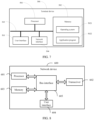
- the terminal device 300 includes: a determining module 301 and a feedback module 303.
- the determining module 301 is configured to determine a target physical uplink control channel (PUCCH) resource, where the target PUCCH resource is a UE-specific PUCCH resource configured by a network device for the terminal device; and the feedback module 303 is configured to perform, on the target PUCCH resource, an HARQ feedback for a multicast physical downlink shared channel (PDSCH).
- PUCCH physical uplink control channel
- the determining module 301 is specifically configured to implement at least one of the following determining modes: determining, based on the size of the HARQ payload corresponding to the multicast PDSCH, the target PUCCH resource from a plurality of UE-specific PUCCH resources configured by the network device for the terminal device; determining the target PUCCH resource based on a control channel element (CCE) index corresponding to multicast downlink control information (DCI) for scheduling a multicast PDSCH; and determining the target PUCCH resource based on resource indication information.
- CCE control channel element
- the determining mode of the target PUCCH resource is related to an indication field included in the multicast DCI.
- the determining module 301 may be specifically configured to: in a case that the multicast downlink control information (DCI) for scheduling the multicast PDSCH does not include a PUCCH resource indication (PRI) field, determine, based on the size of the HARQ payload corresponding to the multicast PDSCH, the target PUCCH resource from a plurality of UE-specific PUCCH resources configured by the network device for the terminal device, where the size of the HARQ payload corresponding to the multicast PDSCH is within a size range of payloads carried by the target PUCCH resource.
- DCI multicast downlink control information
- PRI PUCCH resource indication
- the determining module 301 may be specifically configured to: in a case that the multicast DCI for scheduling the multicast PDSCH does not include a PRI field, determine the target PUCCH resource based on a control channel element (CCE) index corresponding to multicast downlink control information (DCI) for scheduling a multicast PDSCH.
- CCE control channel element
- the determining module 301 may be specifically configured to: in a case that the multicast DCI for scheduling the multicast PDSCH includes a PRI field, determine the target PUCCH resource based on resource indication information carried in the PRI field.
- the determining module 301 may be specifically configured to: in a case that the multicast DCI for scheduling the multicast PDSCH includes a PRI field, and resource indication information carried in the PRI field is used to indicate a first PUCCH resource, determine the target PUCCH resource based on the first PUCCH resource and a specific PUCCH resource offset configured by the network device for the terminal device.
- the feedback module 303 may be specifically configured to: in a case that the multicast DCI for scheduling the multicast PDSCH is corresponding to a plurality of different group radio network temporary identifiers (g-RNTI), perform, on the same target PUCCH resource, an HARQ feedback for a multicast PDSCH corresponding to a same g-RNTI.
- g-RNTI group radio network temporary identifiers
- the feedback module 303 may be specifically configured to: in a case that the multicast DCI for scheduling the multicast PDSCH is corresponding to a plurality of different g-RNTIs, cascade HARQ feedbacks of the multicast PDSCH on the target PUCCH resource based on an index of the multicast PDSCH or the plurality of different g-RNTI values.
- the multicast DCI for scheduling the multicast PDSCH includes a downlink assignment index (DAI) field, and DAI field values in physical downlink control channels (PDCCH) of a same g-RNTI are accumulated.
- DAI downlink assignment index
- the terminal device 300 provided in this embodiment of this application can implement the hybrid automatic repeat request (HARQ) feedback method performed by the terminal device 300, and relevant descriptions of the hybrid automatic repeat request (HARQ) feedback method is applicable to the terminal device 300. Details are not described herein again.
- HARQ hybrid automatic repeat request
- the UE-specific physical uplink control channel (PUCCH) resource configured by the network device for the terminal device may be determined as the target PUCCH resource, so as to further perform the HARQ feedback on the target PUCCH resource for the multicast physical downlink shared channel (PDSCH).
- the HARQ feedback of the multicast PDSCH may be supported, thereby improving the transmission reliability of the multicast PDSCH and the system throughput.
- an embodiment of this application provides a network device 400, and the network device 400 includes: a receiving module 401, configured to receive an HARQ feedback that is performed by a terminal device on a target physical uplink control channel (PUCCH) resource for a multicast physical downlink shared channel (PDSCH), where the target PUCCH resource is a UE-specific PUCCH resource configured by the network device for the terminal device.
- a receiving module 401 configured to receive an HARQ feedback that is performed by a terminal device on a target physical uplink control channel (PUCCH) resource for a multicast physical downlink shared channel (PDSCH), where the target PUCCH resource is a UE-specific PUCCH resource configured by the network device for the terminal device.
- PUCCH physical uplink control channel
- PDSCH multicast physical downlink shared channel
- the network device 400 may further include: a first configuring module, configured to: in a case that the multicast downlink control information (DCI) for scheduling the multicast PDSCH does not include a PUCCH resource indication (PRI) field, before the receiving an HARQ feedback that is performed by a terminal device on a target physical uplink control channel (PUCCH) resource for a multicast physical downlink shared channel (PDSCH), configure a plurality of UE-specific PUCCH resources for the terminal device through higher layer signaling, where the plurality of UE-specific PUCCH resources are used for the terminal device to determine the target PUCCH resource based on a size of an HARQ payload corresponding to the multicast PDSCH.
- DCI multicast downlink control information
- PRI PUCCH resource indication
- the network device 400 may further include: a second configuring module, configured to: in a case that the multicast downlink control information (DCI) for scheduling the multicast PDSCH does not include a PUCCH resource indication (PRI) field, before the receiving an HARQ feedback that is performed by a terminal device on a target physical uplink control channel (PUCCH) resource for a multicast physical downlink shared channel (PDSCH), configure a specific PUCCH resource offset for the terminal device through higher layer signaling, where the specific PUCCH resource offset is used for the terminal device to determine the target PUCCH resource based on a control channel element (CCE) index corresponding to the multicast DCI.
- DCI multicast downlink control information
- PRI PUCCH resource indication
- the multicast DCI for scheduling the multicast PDSCH includes a PRI field, and resource indication information carried in the PRI field is used to indicate a PUCCH resource used for an HARQ feedback of a multicast PDSCH in each of a group of terminal devices.
- the multicast DCI for scheduling the multicast PDSCH includes a PRI field, and resource indication information carried in the PRI field is used to indicate a first PUCCH resource, where the first PUCCH resource is used for the terminal device to determine the target PUCCH resource based on a specific PUCCH resource offset configured by the network device.
- the receiving module 401 may be specifically configured to: in a case that the multicast DCI for scheduling the multicast PDSCH is corresponding to a plurality of different group radio network temporary identifiers (g-RNTI), receive an HARQ feedback that is performed by the terminal device on the same target PUCCH resource for a multicast PDSCH corresponding to a same g-RNTI.
- g-RNTI group radio network temporary identifiers
- the receiving module 401 may be specifically configured to: in a case that the multicast DCI for scheduling the multicast PDSCH is corresponding to a plurality of different g-RNTIs, receive HARQ feedbacks of the multicast PDSCH that are cascaded by the terminal device on the target PUCCH resource based on an index of the multicast PDSCH or the plurality of different g-RNTI values.
- the multicast DCI for scheduling the multicast PDSCH includes a downlink assignment index (DAI) field, and DAI field values in physical downlink control channels (PDCCH) of a same g-RNTI are accumulated.
- DAI downlink assignment index
- the network device 400 provided in this embodiment of this application can implement the hybrid automatic repeat request (HARQ) feedback method performed by the network device 400, and relevant descriptions of the hybrid automatic repeat request (HARQ) feedback method is applicable to the network device 400. Details are not described herein again.
- HARQ hybrid automatic repeat request
- an HARQ feedback that is performed by a terminal device on a target physical uplink control channel (PUCCH) resource for a multicast physical downlink shared channel (PDSCH) may be received, where the target PUCCH resource is determined by the terminal device based on a UE-specific PUCCH resource that is configured by the network device for the terminal device.
- the HARQ feedback of the multicast PDSCH may be supported, thereby improving the transmission reliability of the multicast PDSCH and the system throughput.
- FIG. 7 is a block diagram of a terminal device according to another embodiment of this application.
- a terminal device 500 includes: at least one processor 501, a memory 502, at least one network interface 504, and a user interface 503. All components in the terminal device 500 are coupled together through a bus system 505.
- the bus system 505 is configured to implement connection and communication between these components.
- the bus system 505 further includes a power bus, a control bus, and a status signal bus.
- various buses are marked as the bus system 505 in FIG. 7 .
- the user interface 503 may include a display, a keyboard, a clicking device (for example, a mouse, a trackball (trackball)), a touch panel, a touchscreen, or the like.
- a clicking device for example, a mouse, a trackball (trackball)
- a touch panel for example, a touchscreen, or the like.
- the memory 502 in this embodiment of this application may be a volatile memory or a nonvolatile memory, or may include both a volatile memory and a nonvolatile memory.
- the nonvolatile memory may be a read-only memory (Read-Only Memory, ROM), a programmable ROM (Programmable ROM, PROM), an erasable PROM (Erasable PROM, EPROM), an electrically EPROM (Electrically EPROM, EEPROM), or a flash memory.
- the volatile memory may be a random access memory (Random Access Memory, RAM), which is used as an external cache.
- RAM with a plurality of forms may be used, for example, a static RAM (Static RAM, SRAM), a dynamic RAM (Dynamic RAM, DRAM), a synchronous DRAM (Synchronous DRAM, SDRAM), a double data rate SDRAM (Double Data Rate SDRAM, DDRSDRAM), an enhanced SDRAM (Enhanced SDRAM, ESDRAM), a synchlink DRAM (Synchlink DRAM, SLDRAM) and a direct rambus RAM (Direct Rambus RAM, DRRAM).
- the memory 502 in the system and the method that are described in the embodiments of this application is to include but is not limited to these memories and a memory of any other proper type.
- the memory 502 stores the following elements: an executable module or a data structure, or a subset thereof, or an extension set thereof: an operating system 5021 and an application program 5022.
- the operating system 5021 includes various system programs, for example, a framework layer, a kernel library layer, and a driver layer, and is configured to implement various basic services and process a hardware-based task.
- the application program 5022 includes various application programs, for example, a media player (Media Player) and a browser (Browser), and is used to implement various application services.
- a program for implementing the method according to this embodiment of this application may be included in the application program 5022.
- the terminal device 500 further includes a program or an instruction stored in the memory 502 and executable on the processor 501, and when the program or the instruction is executed by the processor 501, the following steps are implemented: determining a target physical uplink control channel (PUCCH) resource, where the target PUCCH resource is a UE-specific PUCCH resource configured by a network device for the terminal device; and performing, on the target PUCCH resource, an HARQ feedback for a multicast physical downlink shared channel (PDSCH).
- PUCCH physical uplink control channel
- the UE-specific physical uplink control channel (PUCCH) resource configured by the network device for the terminal device may be determined as the target PUCCH resource, so as to further perform the HARQ feedback on the target PUCCH resource for the multicast physical downlink shared channel (PDSCH).
- the HARQ feedback of the multicast PDSCH may be supported, thereby improving the transmission reliability of the multicast PDSCH and the system throughput.
- the method according to the foregoing embodiments of this application may be applied to the processor 501, or may be implemented by the processor 501.
- the processor 501 may be an integrated circuit chip having a signal processing capability. During implementation, each step of the foregoing method may be completed by using an integrated logic circuit of hardware in the processor 501 or an instruction in a form of software.
- the foregoing processor 501 may be a general purpose processor, a digital signal processor (Digital Signal Processor, DSP), an application specific integrated circuit (Application Specific Integrated Circuit, ASIC), a field programmable gate array (Field Programmable Gate Array, FPGA) or another programmable logic device, a discrete gate or transistor logic device, or a discrete hardware component.
- DSP Digital Signal Processor
- ASIC Application Specific Integrated Circuit
- FPGA Field Programmable Gate Array
- the processor may implement or perform the methods, the steps, and logical block diagrams that are disclosed in the embodiments of this application.
- the general-purpose processor may be a microprocessor, or the processor may be any conventional processor or the like. Steps of the methods disclosed with reference to the embodiments of this application may be directly executed and accomplished through a hardware decoding processor, or may be executed and accomplished by using a combination of hardware and software modules in the decoding processor.
- the software module may be located in a computer-readable storage medium that is mature in the art, such as a random access memory, a flash memory, a read-only memory, a programmable read-only memory, an electrically erasable programmable memory, or a register.
- the computer-readable storage medium is located in the memory 502, and the processor 501 reads information from the memory 502 and completes the steps of the foregoing method in combination with hardware of the processor 501.
- the computer-readable storage medium stores a computer program, and when the computer program is executed by the processor 501, steps of the hybrid automatic repeat request (HARQ) feedback method embodiment are implemented.
- HARQ hybrid automatic repeat request
- the embodiments described in the embodiments of this application may be implemented by hardware, software, firmware, middleware, microcode, or a combination thereof.
- the processing unit may be implemented in one or more application specific integrated circuits (Application Specific Integrated Circuits, ASIC), a digital signal processor (Digital Signal Processor, DSP), a DSP device (DSP Device, DSPD), a programmable logic device (Programmable Logic Device, PLD), a field-programmable gate array (Field-Programmable Gate Array, FPGA), a general purpose processor, a controller, a microcontroller, a microprocessor, another electronic unit configured to perform the functions described in this application, or a combination thereof.
- ASIC Application Specific Integrated Circuits
- DSP Digital Signal Processor
- DSP Device DSP Device
- DSPD DSP Device
- PLD programmable logic device
- FPGA field-programmable gate array
- general purpose processor a controller, a microcontroller, a microprocessor, another electronic unit configured to perform the functions
- the technologies in the embodiments of this application may be implemented through modules (for example, procedures or functions) that perform the functions in the embodiments of this application.
- a software code may be stored in the memory and executed by the processor.
- the memory may be implemented in the processor or outside the processor.
- the terminal device 500 can implement processes implemented by the terminal device in the foregoing method embodiments. To avoid repetition, details are not described herein again.
- an embodiment of this application further provides a terminal device, including a processor, a memory, and a program or an instruction stored in the memory and executable on the processor.
- a terminal device including a processor, a memory, and a program or an instruction stored in the memory and executable on the processor.
- the program or the instruction is executed by the processor, the processes of the hybrid automatic repeat request (HARQ) feedback method embodiment are implemented, and a same technical effect can be achieved. To avoid repetition, details are not described herein again.
- HARQ hybrid automatic repeat request
- An embodiment of this application further provides a readable storage medium, where the readable storage medium stores a program or an instruction, and when the program or the instruction is executed by a processor, the processes of the hybrid automatic repeat request (HARQ) feedback method embodiment that is applied to a terminal device are implemented and a same technical effect can be achieved. To avoid repetition, details are not described herein again.
- HARQ hybrid automatic repeat request
- the processor is a processor in the network device in the foregoing embodiments.
- the readable storage medium includes a computer-readable storage medium such as a read-only memory (Read-Only Memory, ROM), a random access memory (Random Access Memory, RAM), a magnetic disk, an optical disc, or the like.
- FIG. 8 is a structural diagram of a network device according to an embodiment of this application, so that details of the foregoing hybrid automatic repeat request (HARQ) feedback method can be implemented, and a same effect can be achieved.
- a network device 600 includes a processor 601, a transceiver 602, a memory 603, a user interface 604, and a bus interface 605.
- the network device 600 further includes a program or an instruction stored in the memory 603 and executable on the processor 601, and when the program or the instruction is executed by the processor 601, the following step is implemented: receiving an HARQ feedback that is performed by a terminal device on a target physical uplink control channel (PUCCH) resource for a multicast physical downlink shared channel (PDSCH), where the target PUCCH resource is a UE-specific PUCCH resource configured by the network device for the terminal device.
- PUCCH physical uplink control channel
- PDSCH physical downlink shared channel
- an HARQ feedback that is performed by a terminal device on a target physical uplink control channel (PUCCH) resource for a multicast physical downlink shared channel (PDSCH) may be received, where the target PUCCH resource is determined by the terminal device based on a UE-specific PUCCH resource that is configured by the network device for the terminal device.
- the HARQ feedback of the multicast PDSCH may be supported, thereby improving the transmission reliability of the multicast PDSCH and the system throughput.
- a bus architecture may include any quantity of interconnected buses and bridges, and is specifically linked by various circuits of one or more processors represented by the processor 601 and a memory represented by the memory 603.
- the bus architecture may further link various other circuits such as a peripheral device, a voltage regulator, and a power management circuit together. These are all well-known in the art, and therefore are not further described in this specification.
- the bus interface 605 provides an interface.
- the transceiver 602 may be a plurality of elements, in other words, includes a transmitter and a receiver, and provides a unit configured to communicate with various other apparatuses on a transmission medium.
- the user interface 604 may be further an interface capable of connecting externally and internally a required device.
- the connected device includes, but is not limited to a keypad, a display, a speaker, a microphone, a joystick, and the like.
- the processor 601 is responsible for managing the bus architecture and common processing, and the memory 603 may store data used when the processor 601 performs an operation.
- an embodiment of this application further provides a network device, including a processor, a memory, and a program or an instruction stored in the memory and executable on the processor.
- a network device including a processor, a memory, and a program or an instruction stored in the memory and executable on the processor.
- the processes of the hybrid automatic repeat request (HARQ) feedback method embodiment are implemented, and a same technical effect can be achieved. To avoid repetition, details are not described herein again.
- An embodiment of this application further provides a readable storage medium, where the readable storage medium stores a program or an instruction, and when the program or the instruction is executed by a processor, the processes of the hybrid automatic repeat request (HARQ) feedback method embodiment that is applied to a network device are implemented and a same technical effect can be achieved. To avoid repetition, details are not described herein again.
- HARQ hybrid automatic repeat request
- the processor is a processor in the network device in the foregoing embodiments.
- the readable storage medium includes a computer-readable storage medium such as a read-only memory (Read-Only Memory, ROM), a random access memory (Random Access Memory, RAM), a magnetic disk, an optical disc, or the like.
- the method in the foregoing embodiment may be implemented by software in addition to a necessary universal hardware platform or by hardware only. In most circumstances, the former is a preferred implementation. Based on such an understanding, the technical solutions of this application essentially, or the part contributing to the prior art may be implemented in a form of a software product.
- the computer software product is stored in a storage medium (for example, a ROM/RAM, a magnetic disk, or a compact disc), and includes a plurality of instructions for instructing a terminal (which may be a mobile phone, a computer, a server, an air conditioner, a network device, or the like) to perform the method described in the embodiments of this application.
Landscapes
- Engineering & Computer Science (AREA)
- Signal Processing (AREA)
- Computer Networks & Wireless Communication (AREA)
- Mobile Radio Communication Systems (AREA)
Abstract
Description
- This application claims priority to
Chinese Patent Application No. 202010515170.9, filed with the China National Intellectual Property Administration on June 8, 2020 - This application relates to the field of communications technologies, and in particular, to a hybrid automatic repeat request (HARQ) feedback method, a terminal device, and a network device.
- In the mobile communication system, user equipment (User Equipment, UE, also referred to as a terminal device, or the like) needs to perform a hybrid automatic repeat request (Hybrid Automatic Repeat Request, HARQ) feedback on a physical downlink shared channel (Physical Downlink Shared Channel, PDSCH) or some physical downlink control channels (Physical Downlink Control Channel, PDCCH) sent in the downlink. The HARQ feedback is transmitted over a physical uplink control channel (Physical Uplink Control Channel, PUCCH) or a physical uplink shared channel (Physical Uplink Shared Channel, PUSCH).
- The multicast PDSCH may be scheduled by using a multicast broadcast single-frequency network mechanism or multicast downlink control information (Downlink Control Information, DCI), but the HARQ feedback is not supported in related technologies, so the transmission reliability of the multicast PDSCH cannot be guaranteed.
- Embodiments of this application provide a hybrid automatic repeat request (HARQ) feedback method, a terminal device, and a network device, so as to solve the problem that the HARQ feedback is not supported when the multicast PDSCH is used.
- According to a first aspect, an embodiment of this application provides a hybrid automatic repeat request (HARQ) feedback method, applied to a terminal device, and the method includes:
determining a target physical uplink control channel (PUCCH) resource, where the target PUCCH resource is a UE-specific PUCCH resource configured by a network device for the terminal device; and performing, on the target PUCCH resource, an HARQ feedback for a multicast physical downlink shared channel (PDSCH). - According to a second aspect, an embodiment of this application provides a terminal device, and the terminal device includes:
a determining module, configured to determine a target physical uplink control channel (PUCCH) resource, where the target PUCCH resource is a UE-specific PUCCH resource configured by a network device for the terminal device; and a feedback module, configured to perform, on the target PUCCH resource, an HARQ feedback for a multicast physical downlink shared channel (PDSCH). - According to a third aspect, an embodiment of this application provides a terminal device, including a memory, a processor, and a program or an instruction stored in the memory and executable on the processor, where when the program or the instruction is executed by the processor, steps of the method according to the first aspect are implemented.
- According to a fourth aspect, an embodiment of this application provides a readable storage medium, where the readable storage medium stores a program or an instruction, and when the program or the instruction is executed by a processor, steps of the method according to the first aspect are implemented.
- According to a fifth aspect, an embodiment of this application provides a hybrid automatic repeat request (HARQ) feedback method, applied to a network device, and the method includes:
receiving an HARQ feedback that is performed by a terminal device on a target physical uplink control channel (PUCCH) resource for a multicast physical downlink shared channel (PDSCH), where the target PUCCH resource is a UE-specific PUCCH resource configured by the network device for the terminal device. - According to a sixth aspect, an embodiment of this application provides a network device, and the network device includes:
a receiving module, configured to receive an HARQ feedback that is performed by a terminal device on a target physical uplink control channel (PUCCH) resource for a multicast physical downlink shared channel (PDSCH), where the target PUCCH resource is a UE-specific PUCCH resource configured by the network device for the terminal device. - According to a seventh aspect, an embodiment of this application provides a network device, including a memory, a processor, and a program or an instruction stored in the memory and executable on the processor, where when the program or the instruction is executed by the processor, steps of the method according to the fifth aspect are implemented.
- According to an eighth aspect, an embodiment of this application provides a readable storage medium, where the readable storage medium stores a program or an instruction, and when the program or the instruction is executed by a processor, steps of the method according to the fifth aspect are implemented.
- In this embodiment of this application, the UE-specific physical uplink control channel (PUCCH) resource configured by the network device for the terminal device may be determined as the target PUCCH resource, so as to further perform the HARQ feedback on the target PUCCH resource for the multicast physical downlink shared channel (PDSCH). In this way, when the multicast PDSCH is used, the HARQ feedback of the multicast PDSCH may be supported, thereby improving the transmission reliability of the multicast PDSCH and the system throughput.
- The accompanying drawings illustrated herein are provided to further understand this application and form a part of this application. The exemplary embodiments of this application and the descriptions thereof are used to explain this application and do not constitute an improper limitation on this application. In the accompanying drawings:
-
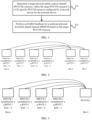
FIG. 1 is a schematic flowchart of a first HARQ feedback method according to an embodiment of this application; -
FIG. 2 is a schematic flowchart of a second HARQ feedback method according to an embodiment of this application; -
FIG. 3 is a schematic diagram of an HARQ feedback mode according to an embodiment of this application; -
FIG. 4 is a schematic diagram of another HARQ feedback mode according to an embodiment of this application; -
FIG. 5 is a schematic structural diagram of a first terminal device according to an embodiment of this application; -
FIG. 6 is a schematic structural diagram of a first network device according to an embodiment of this application; -
FIG. 7 is a schematic structural diagram of a second terminal device according to an embodiment of this application; and -
FIG. 8 is a schematic structural diagram of a second network device according to an embodiment of this application. - The following clearly and completely describes the technical solutions in the embodiments of this application with reference to the accompanying drawings in the embodiments of this application. Apparently, the described embodiments are some but not all of the embodiments of this application. All other embodiments obtained by a person of ordinary skill in the art based on the embodiments of this application without creative efforts shall fall within the protection scope of this application.
- The terms "first", "second", and the like in this specification and claims of this application are used to distinguish between similar objects instead of describing a specific order or sequence. It should be understood that the data used in this way is interchangeable in appropriate circumstances so that the embodiments of this application described can be implemented in other orders than the order illustrated or described herein. In addition, in the specification and claims, "and/or" is used to indicate at least one of connected objects, and the character "/" usually indicates that associated objects are in an "or" relationship.
- Technical solutions of this application may be applied to various communications systems, for example, a global system for mobile communications (Global System for Mobile communications, GSM), a code division multiple access (Code Division Multiple Access, CDMA) system, a wideband code division multiple access (Wideband Code Division Multiple Access, WCDMA) system, a general packet radio service (General Packet Radio Service, GPRS) system, a Long Term Evolution/Long Term Evolution Advanced (Long Term Evolution Advanced, LTE-A) system, and an NR system.
- User equipment (UE), also referred to as a mobile terminal (Mobile Terminal), mobile user equipment, or the like, may communicate with one or more core networks through a radio access network (Radio Access Network, RAN). The user equipment may be a terminal device, such as a mobile phone (or referred to as a "cellular" phone) and a computer with the terminal device. For example, the user equipment may be a portable, pocket-sized, handheld, computer built-in, or in-vehicle mobile apparatus, which exchanges voice and/or data with the radio access network.
- A network device may also be referred to as a base station, and may be a base transceiver station (Base Transceiver Station, BTS) in GSM or CDMA, or may be a NodeB (NodeB) in WCDMA, or may be an evolved NodeB (evolved NodeB, eNB or e-NodeB) and a 5G base station (gNB) in LTE.
- The following describes in detail the technical solutions provided in the embodiments of this application with reference to the accompanying drawings.
- Referring to
FIG. 1 , an embodiment of this application provides a hybrid automatic repeat request (HARQ) feedback method. The method is performed by a terminal device and includes the following process steps. - Step 101: Determine a target physical uplink control channel (PUCCH) resource, where the target PUCCH resource is a UE-specific PUCCH resource configured by a network device for the terminal device.
- Step 103: Perform an HARQ feedback for a multicast physical downlink shared channel (PDSCH) based on the target PUCCH resource.
- In this embodiment of this application, the UE-specific physical uplink control channel (PUCCH) resource configured by the network device for the terminal device may be determined as the target PUCCH resource, so as to further perform the HARQ feedback on the target PUCCH resource for the multicast physical downlink shared channel (PDSCH). In this way, when the multicast PDSCH is used, the HARQ feedback of the multicast PDSCH may be supported, thereby improving the transmission reliability of the multicast PDSCH and the system throughput.
- Optionally, the multicast PDSCH is a multicast PDSCH corresponding to a multimedia broadcast and multicast service (Multimedia Broadcast and Multicast Service, MBMS) or a multicast broadcast service (Multicast Broadcast Service, MBS).
- It should be noted that, in this embodiment of this application, the multicast PDSCH refers to a PDSCH that is sent to a group of terminal devices by using a same physical resource, which may also be referred to as a multi-cast PDSCH, a broadcast PDSCH, or the like.
- Optionally, in the HARQ feedback method according to this embodiment of this application,
step 101 may be implemented in different methods to be applied to different scenarios.Step 101 may include, but is not limited to at least one of the following methods for determining the target PUCCH resource: - (1) Determine, based on a size of an HARQ payload corresponding to the multicast PDSCH, the target PUCCH resource from a plurality of UE-specific PUCCH resources configured by the network device for the terminal device.
- (2) Determine the target PUCCH resource based on a control channel element (CCE) index corresponding to multicast downlink control information (DCI) for scheduling a multicast PDSCH. Optionally, the target PUCCH resource is determined based on a minimum (first) or maximum (last) CCE index corresponding to multicast downlink control information (DCI) for scheduling the multicast PDSCH. Alternatively, the target PUCCH resource is determined based on the control channel element (CCE) index corresponding to the multicast downlink control information (DCI) for scheduling the multicast PDSCH and the specific PUCCH resource offset configured by the network device for the terminal device. Optionally, the target PUCCH resource is determined based on the minimum (first) control channel element (CCE) index corresponding to the multicast downlink control information (DCI) for scheduling the multicast PDSCH and the specific PUCCH resource offset configured by the network device for the terminal device.
- (3) Determine the target PUCCH resource based on resource indication information.
- Optionally, in the HARQ feedback method according to this embodiment of this application, the determining mode of the target PUCCH resource is related to an indication field included in the multicast DCI. In some embodiments, a corresponding determining mode of the target PUCCH resource may be determined based on whether there is an indication field in the multicast DCI, and the difference of indicated content in the indication field, which includes but is not limited to the following embodiments.
- In
Embodiment 1, multicast downlink control information (DCI) for scheduling the multicast PDSCH does not include a PUCCH resource indication (PUCCH Resource Indication, PRI) field. Further,step 101 may be performed as follows:
Determine, based on the size of the HARQ payload corresponding to the multicast PDSCH, the target PUCCH resource from a plurality of UE-specific PUCCH resources configured by the network device for the terminal device, where the size of the HARQ payload corresponding to the multicast PDSCH is within a size range of payloads carried by the target PUCCH resource. This refers to that a target PUCCH resource which can carry the HARQ feedback and occupies the smallest resource is selected based on the size of the HARQ payload corresponding to the multicast PDSCH. Specifically, the plurality of PUCCHs that can be used to carry the HARQ feedback are respectively corresponding to different payload ranges, and based on the size of the HARQ payload corresponding to the multicast PDSCH, a PUCCH resource whose payload range covers the size of the HARQ payload is selected as the target PUCCH resource. - It can be understood that in a case that the multicast DCI for scheduling the multicast PDSCH does not include a PRI field that is used to indicate a concrete PUCCH resource, the target PUCCH resource that is used to achieve the HARQ feedback for the multicast PDSCH may be selected based on the size of the HARQ payload corresponding to the multicast PDSCH from a plurality of UE-specific PUCCH resources configured by the network device. The plurality of UE-specific PUCCH resources may be configured by the network device through higher layer signaling, such as configured through radio resource control (Radio Resource Control, RRC) signaling. In this embodiment, the network device configures a PUCCH resource for each of a group of UEs.
- Specifically, the target PUCCH resource determined from the plurality of UE-specific PUCCH resources is corresponding to a payload range that the target PUCCH resource can carry, and the payload range may cover a size of an HARQ payload corresponding to a multicast PDSCH to be subjected to the HARQ feedback.
- In some examples, only a hybrid automatic repeat request acknowledgement (Hybrid Automatic Repeat Request Acknowledgement, HARQ-ACK) of the MBMS PDSCH is fed back in a specific slot, or the MBMS HARQ-ACK and the unicast HARQ-ACK are not multiplexed on one HARQ-ACK codebook (codebook, CB). In other words, although UE schedules to feed back multicast PDSCH and the unicast PDSCH in the same slot, HARQ-ACK codebooks thereof are separately constructed and PUCCH resources are separately determined. The network device may configure four UE-specific PUCCH resources for the HARQ-ACK of the MBMS PDSCH fed back by the UE: a first PUCCH resource has a payload range of 1 bit - N0 bits, a second PUCCH resource has a payload range of N0+1 bits - N1 bits, a third PUCCH resource has a payload range of N1+1 bits - N2 bits, and a fourth PUCCH resource has a payload range of N2+1 bits - N3 bits. If the number of bits of the HARQ payload corresponding to the multicast PDSCH that the UE needs to feed back in an uplink slot falls within the range of bits carried in the second PUCCH resource, the UE may use the second PUCCH resource as the target PUCCH resource to transmit the HARQ-ACK.
- In
Embodiment 2, the multicast DCI for scheduling the multicast PDSCH does not include a PRI field. Further,step 101 may be performed as follows:
Determine the target PUCCH resource based on a control channel element (CCE) index corresponding to multicast downlink control information (DCI) for scheduling a multicast PDSCH. - It can be understood that in a case that the multicast DCI for scheduling the multicast PDSCH does not include a PRI field that is used to indicate a concrete PUCCH resource, the target PUCCH resource of the HARQ feedback of the multicast PDSCH may be accurately determined based on the control channel element (Control Channel Element, CCE) index corresponding to the multicast DCI, so as to support the HARQ feedback of the multicast PDSCH and improve the transmission reliability of the multicast PDSCH.
- Optionally, the step of determining the target PUCCH resource based on a CCE index corresponding to multicast DCI for scheduling a multicast PDSCH may be performed as follows:
Based on the CCE index corresponding to the multicast DCI for scheduling the multicast PDSCH and the specific PUCCH resource offset configured by the network device for the terminal device, the target PUCCH resource of the HARQ feedback of the multicast PDSCH is accurately determined. - Optionally, the step of determining the target PUCCH resource based on the CCE index corresponding to the multicast DCI for scheduling the multicast PDSCH and the specific PUCCH resource offset configured by the network device for the terminal device may be performed as follows:
Based on a minimum CCE index corresponding to the multicast DCI for scheduling the multicast PDSCH and the specific PUCCH resource offset configured by the network device for the terminal device, the target PUCCH resource of the HARQ feedback of the multicast PDSCH is accurately determined. - In some examples, when the UE receives a piece of DCI for scheduling the MBMS PDSCH, the target PUCCH resource for feeding back the HARQ-ACK corresponding to the MBMS PDSCH may be determined based on a lowest CCE index for receiving the MBMS PDCCH and a specific PUCCH resource offset configured by the network device for each of a group of UEs. For example, a target PUCCH resource corresponding to UE i in a group of UEs is determined through the function nPUCCH, i = function (nCCE, ΔPUCCH, i) of nCCE and ΔPUCCH, where an example of the function of nCCE and ΔPUCCH may be expressed as nPUCCH, i = nCCE + △PUCCH, i, where nPUCCH, i is the target PUCCH resource of the UE i, nCCE is the lowest CCE index of the PDCCH scrambled by a group radio network temporary identifier (group Radio Network Temporary Identifier, g-RNTI), and ΔPUCCH, i is the specific PUCCH resource offset configured by the network device for the UE i.
- In
Embodiment 3, the multicast DCI for scheduling the multicast PDSCH includes a PRI field. Further,step 101 may be performed as follows:
Determine the target PUCCH resource based on resource indication information carried in the PRI field. - It can be understood that in a case that the multicast DCI for scheduling the multicast PDSCH includes a PRI field that is used to indicate a concrete PUCCH resource, the target PUCCH resource that is used to perform the HARQ feedback on the multicast PDSCH may be directly and explicitly determined based on the resource indication information carried in the PRI field, which is efficient and convenient.
- In
Embodiment 4, the multicast DCI for scheduling the multicast PDSCH includes a PRI field, and resource indication information carried in the PRI field is used to indicate a first PUCCH resource. Further,step 101 may be performed as follows:
Determine the target PUCCH resource based on the first PUCCH resource and a specific PUCCH resource offset configured by the network device for the terminal device. - It can be understood that in a case that the multicast DCI for scheduling the multicast PDSCH includes a PRI field that is used to indicate a concrete PUCCH resource, the target PUCCH resource of the HARQ feedback of the multicast PDSCH may be determined efficiently and accurately based on the specific PUCCH resource offset configured by the network device for the terminal device and a first PUCCH resource that is used as a baseline and that is explicitly indicated in the resource indication information carried in the PRI field, so as to support the HARQ feedback of the multicast PDSCH and improve the transmission reliability of the multicast PDSCH.
- In some examples, when the UE receives a piece of DCI for scheduling the MBMS PDSCH, the PUCCH resource for feeding back the HARQ-ACK of the MBMS PDSCH may be determined based on a concrete PUCCH resource indicated in the PRI field of the PDCCH and the PDCCH resource offset configured by the network device for the UE. For example, a target PUCCH resource corresponding to UE i in a group of UEs is determined through the function nPUCCH, i = function (nPRI, ΔPUCCH, i) of nPRI and ΔPUCCH, where an example of the function of nPRI and ΔPUCCH may be expressed as nPUCCH, i = nPRI + △PUCCH, i, where nPUCCH, i is the target PUCCH resource of the UE i, nPRI is a concrete PUCCH resource indicated by scheduling DCI, and ΔPUCCH, i is the specific PUCCH resource offset configured by the network device for the UE i.
- In
Embodiment 5, the multicast DCI for scheduling the multicast PDSCH includes a PRI field. Further,step 101 may further be performed as follows:
Determine the target PUCCH resource based on resource indication information carried in the PRI field, a lowest CCE index, and a specific PUCCH resource offset configured by the network device for each of a group of UEs. - Optionally, in the HARQ feedback method according to this embodiment of this application,
step 103 may be implemented in different methods to be applied to different scenarios. This includes, but is not limited to the following specific embodiments. - In this
specific embodiment 1, step 103 may be performed as follows:
Perform, on the same PUCCH resource, an HARQ feedback for a multicast PDSCH corresponding to a same g-RNTI. - It can be understood that in a case that the multicast DCI for scheduling the multicast PDSCH is corresponding to a same g-RNTI, an HARQ feedback may be perform on the same PUCCH resource for a multicast PDSCH corresponding to the g-RNTI.
- In this
specific embodiment 2, step 103 may be performed as follows: - In a case that the multicast DCI for scheduling the multicast PDSCH is corresponding to a plurality of different g-RNTIs, perform, on the same PUCCH resource, an HARQ feedback for a multicast PDSCH corresponding to a same g-RNTI.
- It can be understood that in a case that the multicast DCI for scheduling the multicast PDSCH is corresponding to a plurality of different g-RNTIs, on a same PUCCH resource, such as on one slot or sub-slot, the UE does not expect to feed back the HARQ-ACK of the multicast PDSCH scheduled by two or more different g-RNTI scrambled PDCCHs, so only the HARQ feedback of the multicast PDSCH corresponding to the same g-RNTI may be performed on a same PUCCH resource. In other words, the HARQ of multicast PDSCH corresponding to different g-RNTIs may be fed back on PUCCH resources of different slots or sub-slots.
- In some examples, as shown in
FIG. 2 , for aPDCCH 1 and aPDCCH 2 scrambled by the g-RNTI 1, the scheduled HARQ-ACK of the MBS PDSCH is fed back in aslot 4. As for aPDCCH 3 and aPDCCH 4 scrambled by the g-RNTI 2, the scheduled HARQ-ACK of the MBS PDSCH is fed back in aslot 5. - In this
specific embodiment 3, in a case that the multicast DCI for scheduling the multicast PDSCH is corresponding to a plurality of different g-RNTIs, step 103 may be performed as follows:
Cascade, based on the target PUCCH resource, HARQ feedbacks of the multicast PDSCH on the same PUCCH resource based on an index of the multicast PDSCH or the plurality of different g-RNTI values. - A cascade sequence may be agreed by the protocol or configured by the RRC. It is worth pointing out that the network device may also configure another cascade sequence for the terminal through the RRC, and the terminal cascades HARQ codebooks based on RRC configuration and performs feedback.
- It can be understood that in a case that the multicast DCI for scheduling the multicast PDSCH is corresponding to a plurality of different g-RNTIs, HARQ bits of the multicast PDSCH may be cascaded on the same PUCCH resource based on the index of the multicast PDSCH (such as the index of the MBMS) or the different g-RNTI values, for example, cascading based on an order of g-RNTI values from small to large or another predefined order.
- In some examples, as shown in
FIG. 3 , thePDCCH 1 and thePDCCH 2 are the MBS PDSCH for scheduling the g-RNTI 1, and thePDCCH 3 and thePDCCH 4 are the MBS PDSCH for scheduling the g-RNTI 2. Accordingly, the HARQ-ACK feedback may be fed back in thePUCCH 1 of theslot 4. Then a bit order of the HARQ-ACK fed back on thePUCCH 1 may be:
- Optionally, in any of the foregoing specific embodiments (such as the
specific embodiment 1 and the specific embodiment 2), the multicast DCI for scheduling the multicast PDSCH includes a downlink assignment index (Downlink Assignment Index, DAI) field, and DAI field values in physical downlink control channels (Physical Downlink Control Channel, PDCCH) of a same g-RNTI are accumulated. - It can be understood that in a case that the multicast DCI for scheduling the multicast PDSCH includes the DAI field, the DAI value in a particular PDCCH that is scrambled by the g-RNTI may be cumulatively counted, that is, DAI accumulation is only performed in DCI with the same g-RNTI value.
- Referring to
FIG. 4 , an embodiment of this application provides a hybrid automatic repeat request (HARQ) feedback method. The method is performed by a network device and includes the following process steps. - Step 201: Receive an HARQ feedback that is performed by a terminal device on a target physical uplink control channel (PUCCH) resource for a multicast physical downlink shared channel (PDSCH), where the target PUCCH resource is a UE-specific PUCCH resource configured by the network device for the terminal device.
- In this embodiment of this application, an HARQ feedback that is performed by a terminal device on a target physical uplink control channel (PUCCH) resource for a multicast physical downlink shared channel (PDSCH) may be received, where the target PUCCH resource is determined by the terminal device based on a UE-specific PUCCH resource that is configured by the network device for the terminal device. In this way, when the multicast PDSCH is used, the HARQ feedback of the multicast PDSCH may be supported, thereby improving the transmission reliability of the multicast PDSCH and the system throughput.
- Optionally, the multicast PDSCH is a multicast PDSCH corresponding to a multimedia broadcast and multicast service (Multimedia Broadcast and Multicast Service, MBMS) or a multicast broadcast service (Multicast Broadcast Service, MBS).
- It should be noted that, in this embodiment of this application, the multicast PDSCH refers to a PDSCH that is sent to a group of terminal devices by using a same physical resource, which may also be referred to as a multi-cast PDSCH, a broadcast PDSCH, or the like.
- Optionally, in the HARQ feedback method according to this embodiment of this application, to ensure the support for the HARQ feedback of the multicast PDSCH, the network device may configure the PUCCH for a group of UEs in different ways. This includes, but is not limited to the following specific embodiments.
- In Embodiment 6, multicast downlink control information (DCI) for scheduling the multicast PDSCH does not include a PUCCH resource indication (PRI) field. Further, before
step 201, the HARQ feedback method according to this embodiment of this application may further include the following contents:
configuring a plurality of UE-specific PUCCH resources for the terminal device through higher layer signaling, where the plurality of UE-specific PUCCH resources are used for the terminal device to determine the target PUCCH resource based on a size of an HARQ payload corresponding to the multicast PDSCH. - It can be understood that in a case that the multicast DCI for scheduling the multicast PDSCH does not include a PRI field that is used to indicate a concrete PUCCH resource, a plurality of UE-specific PUCCH resources may be configured for the UE through higher layer signaling, such as configured through RRC signaling, so that the terminal device may select, based on the size of the HARQ payload corresponding to the multicast PDSCH, the target PUCCH resource that is used to achieve the HARQ feedback for the multicast PDSCH from a plurality of UE-specific PUCCH resources configured by the network device. In this embodiment, the network device configures a PUCCH resource for each of a group of UEs.
- Specifically, the target PUCCH resource determined by the terminal device from the plurality of UE-specific PUCCH resources is corresponding to a payload range that the target PUCCH resource can carry, and the payload range may cover a size of an HARQ payload corresponding to a multicast PDSCH to be subjected to the HARQ feedback.
- It should be noted that for the specific content that the terminal device determines the target PUCCH resource based on a size of an HARQ payload corresponding to the multicast PDSCH, reference may be made to the corresponding content in the HARQ feedback method executed by the terminal device, and details are not described herein again.
- In Embodiment 7, multicast downlink control information (DCI) for scheduling the multicast PDSCH does not include a PUCCH resource indication (PRI) field. Further, before
step 201, the HARQ feedback method according to this embodiment of this application may further include the following contents:
configuring a specific PUCCH resource offset for the terminal device through higher layer signaling, where the specific PUCCH resource offset is used for the terminal device to determine the target PUCCH resource based on a control channel element (CCE) index corresponding to multicast DCI. - It can be understood that in a case that the multicast DCI for scheduling the multicast PDSCH does not include a PRI field that is used to indicate a concrete PUCCH resource, a specific PUCCH resource offset may be configured for the UE through higher layer signaling, such as configured through RRC signaling, so that the terminal device may accurately determine the target PUCCH resource of the HARQ feedback of the multicast PDSCH based on the specific PUCCH resource offset and the CCE corresponding to the multicast DCI, so as to support the HARQ feedback of the multicast PDSCH and improve the transmission reliability of the multicast PDSCH.
- It should be noted that for the specific content that the terminal device determines the target PUCCH resource based on the specific PUCCH resource offset and the CCE corresponding to the multicast DCI, reference may be made to the corresponding content in the HARQ feedback method executed by the terminal device, and details are not described herein again.
- In Embodiment 8, the multicast DCI for scheduling the multicast PDSCH includes a PRI field, and resource indication information carried in the PRI field is used to indicate a PUCCH resource used for an HARQ feedback of a multicast PDSCH in each of a group of terminal devices.
- It can be understood that a PRI field is set in the multicast DCI for scheduling the multicast PDSCH, and the resource indication information carried in the PRI field is used to directly and explicitly indicate the target PUCCH resource that is used to perform the HARQ feedback on the multicast PDSCH to the terminal device, which is efficient and convenient.
- In some examples, the network device may configure the number of bits in the PRI field for the UE. A codepoint in each PRI field may indicate a PUCCH resource used by each of a group of UEs. These resources may be configured through higher layer signaling and then indicated in the DCI. For example, the PRI field is 2 bits. This group of UEs includes n UEs. Further, the PRI field may be used to indicate a PUCCH resource used by each of the group of UEs, as shown in the following table:
Codepoint in the PRI field UE 1 UE 2UE 3UE 4... UE n 00 


... 
01 




10 

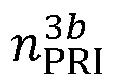


11 


- In Embodiment 9, the multicast DCI for scheduling the multicast PDSCH includes a PRI field, and resource indication information carried in the PRI field is used to indicate a first PUCCH resource, where the first PUCCH resource is used for the terminal device to determine the target PUCCH resource based on a specific PUCCH resource offset configured by the network device.
- It can be understood that a PRI field is set in the multicast DCI for scheduling the multicast PDSCH, and a first PUCCH resource that is used as a baseline is explicitly indicated to the terminal device through the resource indication information carried in the PRI field, so that the terminal device efficiently and accurately determines the target PUCCH resource of the HARQ feedback of the multicast PDSCH based on the first PUCCH resource and the specific PUCCH resource offset configured for the terminal device, so as to support the HARQ feedback of the multicast PDSCH.
- Optionally, in the HARQ feedback method according to this embodiment of this application, the target PUCCH resource may also be determined by the terminal device based on resource indication information carried in the PRI field, a lowest CCE index, and a specific PUCCH resource offset configured by the network device for each of a group of UEs.
- It can be learned from the above that, the determining mode of the target PUCCH resource is related to an indication field included in the multicast DCI.
- Optionally, in the HARQ feedback method according to this embodiment of this application, the multicast DCI for scheduling the multicast PDSCH is corresponding to a plurality of different group radio network temporary identifiers (g-RNTI).
- Optionally,
step 201 may be implemented in different methods to be applied to different scenarios. This may include, but is not limited to the following specific embodiments. - In this specific embodiment a,
step 201 may be performed as follows:
Receive an HARQ feedback that is performed by the terminal device on the same target PUCCH resource for a multicast PDSCH corresponding to a same g-RNTI. - It can be understood that, in a case that the multicast DCI for scheduling the multicast PDSCH is corresponding to a plurality of different g-RNTIs, an HARQ feedback that is performed on a multicast PDSCH corresponding to a same g-RNTI may be received on a same target PUCCH resource determined by the terminal device, such as on one slot or sub-slot. In other words, the HARQ of multicast PDSCH corresponding to different g-RNTIs may be fed back on a same PUCCH resource of different slots or sub-slots.
- In this specific embodiment b,
step 201 may be performed as follows:
Receive HARQ feedbacks of the multicast PDSCH that are cascaded by the terminal device on the target PUCCH resource based on an index of the multicast PDSCH or the plurality of different g-RNTI values. - A cascade sequence may be agreed by the protocol or configured by the RRC. It is worth pointing out that the network device may also configure another cascade sequence for the terminal through the RRC, and the terminal cascades HARQ codebooks based on RRC configuration and performs feedback.
- It can be understood that in a case that the multicast DCI for scheduling the multicast PDSCH is corresponding to a plurality of different g-RNTIs, HARQ feedbacks of the multicast PDSCH that are cascaded by the terminal device on the target PUCCH resource of the terminal device based on an index of the multicast PDSCH (such as the index of the MBMS) or the different g-RNTI values, for example, the HARQ feedback of cascading based on an order of g-RNTI values from small to large or another predefined order, where the cascade sequence may be configured by RRC signaling.
- Optionally, in any of the foregoing specific embodiments, the multicast DCI for scheduling the multicast PDSCH includes a downlink assignment index (DAI) field, and DAI field values in physical downlink control channels (PDCCH) of a same g-RNTI are accumulated.
- It can be understood that in a case that the multicast DCI for scheduling the multicast PDSCH includes the DAI field, the DAI value in a particular PDCCH that is scrambled by the g-RNTI may be cumulatively counted, that is, DAI accumulation is only performed in DCI with the same g-RNTI value.
- Referring to
FIG. 5 , an embodiment of this application provides aterminal device 300. Theterminal device 300 includes: a determiningmodule 301 and afeedback module 303. - The determining
module 301 is configured to determine a target physical uplink control channel (PUCCH) resource, where the target PUCCH resource is a UE-specific PUCCH resource configured by a network device for the terminal device; and thefeedback module 303 is configured to perform, on the target PUCCH resource, an HARQ feedback for a multicast physical downlink shared channel (PDSCH). - Optionally, in the
terminal device 300 according to this embodiment of this application, the determiningmodule 301 is specifically configured to implement at least one of the following determining modes:
determining, based on the size of the HARQ payload corresponding to the multicast PDSCH, the target PUCCH resource from a plurality of UE-specific PUCCH resources configured by the network device for the terminal device; determining the target PUCCH resource based on a control channel element (CCE) index corresponding to multicast downlink control information (DCI) for scheduling a multicast PDSCH; and determining the target PUCCH resource based on resource indication information. - Optionally, in the
terminal device 300 according to this embodiment of this application, the determining mode of the target PUCCH resource is related to an indication field included in the multicast DCI. - Optionally, in the
terminal device 300 according to this embodiment of this application, the determiningmodule 301 may be specifically configured to:
in a case that the multicast downlink control information (DCI) for scheduling the multicast PDSCH does not include a PUCCH resource indication (PRI) field, determine, based on the size of the HARQ payload corresponding to the multicast PDSCH, the target PUCCH resource from a plurality of UE-specific PUCCH resources configured by the network device for the terminal device, where the size of the HARQ payload corresponding to the multicast PDSCH is within a size range of payloads carried by the target PUCCH resource. - Optionally, in the
terminal device 300 according to this embodiment of this application, the determiningmodule 301 may be specifically configured to:
in a case that the multicast DCI for scheduling the multicast PDSCH does not include a PRI field, determine the target PUCCH resource based on a control channel element (CCE) index corresponding to multicast downlink control information (DCI) for scheduling a multicast PDSCH. - Optionally, in the
terminal device 300 according to this embodiment of this application, the determiningmodule 301 may be specifically configured to:
in a case that the multicast DCI for scheduling the multicast PDSCH includes a PRI field, determine the target PUCCH resource based on resource indication information carried in the PRI field. - Optionally, in the
terminal device 300 according to this embodiment of this application, the determiningmodule 301 may be specifically configured to:
in a case that the multicast DCI for scheduling the multicast PDSCH includes a PRI field, and resource indication information carried in the PRI field is used to indicate a first PUCCH resource, determine the target PUCCH resource based on the first PUCCH resource and a specific PUCCH resource offset configured by the network device for the terminal device. - Optionally, in the
terminal device 300 according to this embodiment of this application, thefeedback module 303 may be specifically configured to:
in a case that the multicast DCI for scheduling the multicast PDSCH is corresponding to a plurality of different group radio network temporary identifiers (g-RNTI), perform, on the same target PUCCH resource, an HARQ feedback for a multicast PDSCH corresponding to a same g-RNTI. - Optionally, in the
terminal device 300 according to this embodiment of this application, thefeedback module 303 may be specifically configured to:
in a case that the multicast DCI for scheduling the multicast PDSCH is corresponding to a plurality of different g-RNTIs, cascade HARQ feedbacks of the multicast PDSCH on the target PUCCH resource based on an index of the multicast PDSCH or the plurality of different g-RNTI values. - Optionally, in the
terminal device 300 according to this embodiment of this application, the multicast DCI for scheduling the multicast PDSCH includes a downlink assignment index (DAI) field, and DAI field values in physical downlink control channels (PDCCH) of a same g-RNTI are accumulated. - It can be understood that the
terminal device 300 provided in this embodiment of this application can implement the hybrid automatic repeat request (HARQ) feedback method performed by theterminal device 300, and relevant descriptions of the hybrid automatic repeat request (HARQ) feedback method is applicable to theterminal device 300. Details are not described herein again. - In this embodiment of this application, the UE-specific physical uplink control channel (PUCCH) resource configured by the network device for the terminal device may be determined as the target PUCCH resource, so as to further perform the HARQ feedback on the target PUCCH resource for the multicast physical downlink shared channel (PDSCH). In this way, when the multicast PDSCH is used, the HARQ feedback of the multicast PDSCH may be supported, thereby improving the transmission reliability of the multicast PDSCH and the system throughput.
- Referring to
FIG. 6 , an embodiment of this application provides anetwork device 400, and thenetwork device 400 includes:
areceiving module 401, configured to receive an HARQ feedback that is performed by a terminal device on a target physical uplink control channel (PUCCH) resource for a multicast physical downlink shared channel (PDSCH), where the target PUCCH resource is a UE-specific PUCCH resource configured by the network device for the terminal device. - Optionally, the
network device 400 according to this embodiment of this application may further include:
a first configuring module, configured to: in a case that the multicast downlink control information (DCI) for scheduling the multicast PDSCH does not include a PUCCH resource indication (PRI) field, before the receiving an HARQ feedback that is performed by a terminal device on a target physical uplink control channel (PUCCH) resource for a multicast physical downlink shared channel (PDSCH), configure a plurality of UE-specific PUCCH resources for the terminal device through higher layer signaling, where the plurality of UE-specific PUCCH resources are used for the terminal device to determine the target PUCCH resource based on a size of an HARQ payload corresponding to the multicast PDSCH. - Optionally, the
network device 400 according to this embodiment of this application may further include:
a second configuring module, configured to: in a case that the multicast downlink control information (DCI) for scheduling the multicast PDSCH does not include a PUCCH resource indication (PRI) field, before the receiving an HARQ feedback that is performed by a terminal device on a target physical uplink control channel (PUCCH) resource for a multicast physical downlink shared channel (PDSCH), configure a specific PUCCH resource offset for the terminal device through higher layer signaling, where the specific PUCCH resource offset is used for the terminal device to determine the target PUCCH resource based on a control channel element (CCE) index corresponding to the multicast DCI. - Optionally, in the
network device 400 according to this embodiment of this application, the multicast DCI for scheduling the multicast PDSCH includes a PRI field, and resource indication information carried in the PRI field is used to indicate a PUCCH resource used for an HARQ feedback of a multicast PDSCH in each of a group of terminal devices. - Optionally, in the
network device 400 according to this embodiment of this application, the multicast DCI for scheduling the multicast PDSCH includes a PRI field, and resource indication information carried in the PRI field is used to indicate a first PUCCH resource, where the first PUCCH resource is used for the terminal device to determine the target PUCCH resource based on a specific PUCCH resource offset configured by the network device. - Optionally, in the
network device 400 according to this embodiment of this application, the receivingmodule 401 may be specifically configured to:
in a case that the multicast DCI for scheduling the multicast PDSCH is corresponding to a plurality of different group radio network temporary identifiers (g-RNTI), receive an HARQ feedback that is performed by the terminal device on the same target PUCCH resource for a multicast PDSCH corresponding to a same g-RNTI. - Optionally, in the
network device 400 according to this embodiment of this application, the receivingmodule 401 may be specifically configured to:
in a case that the multicast DCI for scheduling the multicast PDSCH is corresponding to a plurality of different g-RNTIs, receive HARQ feedbacks of the multicast PDSCH that are cascaded by the terminal device on the target PUCCH resource based on an index of the multicast PDSCH or the plurality of different g-RNTI values. - Optionally, in the
network device 400 according to this embodiment of this application, the multicast DCI for scheduling the multicast PDSCH includes a downlink assignment index (DAI) field, and DAI field values in physical downlink control channels (PDCCH) of a same g-RNTI are accumulated. - It can be understood that the
network device 400 provided in this embodiment of this application can implement the hybrid automatic repeat request (HARQ) feedback method performed by thenetwork device 400, and relevant descriptions of the hybrid automatic repeat request (HARQ) feedback method is applicable to thenetwork device 400. Details are not described herein again. - In this embodiment of this application, an HARQ feedback that is performed by a terminal device on a target physical uplink control channel (PUCCH) resource for a multicast physical downlink shared channel (PDSCH) may be received, where the target PUCCH resource is determined by the terminal device based on a UE-specific PUCCH resource that is configured by the network device for the terminal device. In this way, when the multicast PDSCH is used, the HARQ feedback of the multicast PDSCH may be supported, thereby improving the transmission reliability of the multicast PDSCH and the system throughput.
-
FIG. 7 is a block diagram of a terminal device according to another embodiment of this application. As shown inFIG. 7 , aterminal device 500 includes: at least oneprocessor 501, amemory 502, at least onenetwork interface 504, and auser interface 503. All components in theterminal device 500 are coupled together through abus system 505. It can be understood that thebus system 505 is configured to implement connection and communication between these components. In addition to a data bus, thebus system 505 further includes a power bus, a control bus, and a status signal bus. However, for clear description, various buses are marked as thebus system 505 inFIG. 7 . - The
user interface 503 may include a display, a keyboard, a clicking device (for example, a mouse, a trackball (trackball)), a touch panel, a touchscreen, or the like. - It can be understood that the
memory 502 in this embodiment of this application may be a volatile memory or a nonvolatile memory, or may include both a volatile memory and a nonvolatile memory. The nonvolatile memory may be a read-only memory (Read-Only Memory, ROM), a programmable ROM (Programmable ROM, PROM), an erasable PROM (Erasable PROM, EPROM), an electrically EPROM (Electrically EPROM, EEPROM), or a flash memory. The volatile memory may be a random access memory (Random Access Memory, RAM), which is used as an external cache. Through illustrative but not restrictive instructions, RAM with a plurality of forms may be used, for example, a static RAM (Static RAM, SRAM), a dynamic RAM (Dynamic RAM, DRAM), a synchronous DRAM (Synchronous DRAM, SDRAM), a double data rate SDRAM (Double Data Rate SDRAM, DDRSDRAM), an enhanced SDRAM (Enhanced SDRAM, ESDRAM), a synchlink DRAM (Synchlink DRAM, SLDRAM) and a direct rambus RAM (Direct Rambus RAM, DRRAM). Thememory 502 in the system and the method that are described in the embodiments of this application is to include but is not limited to these memories and a memory of any other proper type. - In some implementations, the
memory 502 stores the following elements: an executable module or a data structure, or a subset thereof, or an extension set thereof: anoperating system 5021 and anapplication program 5022. - The
operating system 5021 includes various system programs, for example, a framework layer, a kernel library layer, and a driver layer, and is configured to implement various basic services and process a hardware-based task. Theapplication program 5022 includes various application programs, for example, a media player (Media Player) and a browser (Browser), and is used to implement various application services. A program for implementing the method according to this embodiment of this application may be included in theapplication program 5022. - In this embodiment of this application, the
terminal device 500 further includes a program or an instruction stored in thememory 502 and executable on theprocessor 501, and when the program or the instruction is executed by theprocessor 501, the following steps are implemented:
determining a target physical uplink control channel (PUCCH) resource, where the target PUCCH resource is a UE-specific PUCCH resource configured by a network device for the terminal device; and performing, on the target PUCCH resource, an HARQ feedback for a multicast physical downlink shared channel (PDSCH). - In this embodiment of this application, the UE-specific physical uplink control channel (PUCCH) resource configured by the network device for the terminal device may be determined as the target PUCCH resource, so as to further perform the HARQ feedback on the target PUCCH resource for the multicast physical downlink shared channel (PDSCH). In this way, when the multicast PDSCH is used, the HARQ feedback of the multicast PDSCH may be supported, thereby improving the transmission reliability of the multicast PDSCH and the system throughput.
- The method according to the foregoing embodiments of this application may be applied to the
processor 501, or may be implemented by theprocessor 501. Theprocessor 501 may be an integrated circuit chip having a signal processing capability. During implementation, each step of the foregoing method may be completed by using an integrated logic circuit of hardware in theprocessor 501 or an instruction in a form of software. The foregoingprocessor 501 may be a general purpose processor, a digital signal processor (Digital Signal Processor, DSP), an application specific integrated circuit (Application Specific Integrated Circuit, ASIC), a field programmable gate array (Field Programmable Gate Array, FPGA) or another programmable logic device, a discrete gate or transistor logic device, or a discrete hardware component. The processor may implement or perform the methods, the steps, and logical block diagrams that are disclosed in the embodiments of this application. The general-purpose processor may be a microprocessor, or the processor may be any conventional processor or the like. Steps of the methods disclosed with reference to the embodiments of this application may be directly executed and accomplished through a hardware decoding processor, or may be executed and accomplished by using a combination of hardware and software modules in the decoding processor. The software module may be located in a computer-readable storage medium that is mature in the art, such as a random access memory, a flash memory, a read-only memory, a programmable read-only memory, an electrically erasable programmable memory, or a register. The computer-readable storage medium is located in thememory 502, and theprocessor 501 reads information from thememory 502 and completes the steps of the foregoing method in combination with hardware of theprocessor 501. Specifically, the computer-readable storage medium stores a computer program, and when the computer program is executed by theprocessor 501, steps of the hybrid automatic repeat request (HARQ) feedback method embodiment are implemented. - It can be understood that the embodiments described in the embodiments of this application may be implemented by hardware, software, firmware, middleware, microcode, or a combination thereof. For hardware implementation, the processing unit may be implemented in one or more application specific integrated circuits (Application Specific Integrated Circuits, ASIC), a digital signal processor (Digital Signal Processor, DSP), a DSP device (DSP Device, DSPD), a programmable logic device (Programmable Logic Device, PLD), a field-programmable gate array (Field-Programmable Gate Array, FPGA), a general purpose processor, a controller, a microcontroller, a microprocessor, another electronic unit configured to perform the functions described in this application, or a combination thereof.
- For implementation with software, the technologies in the embodiments of this application may be implemented through modules (for example, procedures or functions) that perform the functions in the embodiments of this application. A software code may be stored in the memory and executed by the processor. The memory may be implemented in the processor or outside the processor.
- The
terminal device 500 can implement processes implemented by the terminal device in the foregoing method embodiments. To avoid repetition, details are not described herein again. - Optionally, an embodiment of this application further provides a terminal device, including a processor, a memory, and a program or an instruction stored in the memory and executable on the processor. When the program or the instruction is executed by the processor, the processes of the hybrid automatic repeat request (HARQ) feedback method embodiment are implemented, and a same technical effect can be achieved. To avoid repetition, details are not described herein again.
- An embodiment of this application further provides a readable storage medium, where the readable storage medium stores a program or an instruction, and when the program or the instruction is executed by a processor, the processes of the hybrid automatic repeat request (HARQ) feedback method embodiment that is applied to a terminal device are implemented and a same technical effect can be achieved. To avoid repetition, details are not described herein again.
- The processor is a processor in the network device in the foregoing embodiments. The readable storage medium includes a computer-readable storage medium such as a read-only memory (Read-Only Memory, ROM), a random access memory (Random Access Memory, RAM), a magnetic disk, an optical disc, or the like.
- Referring to
FIG. 8, FIG. 8 is a structural diagram of a network device according to an embodiment of this application, so that details of the foregoing hybrid automatic repeat request (HARQ) feedback method can be implemented, and a same effect can be achieved. As shown inFIG. 8 , anetwork device 600 includes aprocessor 601, atransceiver 602, amemory 603, auser interface 604, and abus interface 605. - In this embodiment of this application, the
network device 600 further includes a program or an instruction stored in thememory 603 and executable on theprocessor 601, and when the program or the instruction is executed by theprocessor 601, the following step is implemented:
receiving an HARQ feedback that is performed by a terminal device on a target physical uplink control channel (PUCCH) resource for a multicast physical downlink shared channel (PDSCH), where the target PUCCH resource is a UE-specific PUCCH resource configured by the network device for the terminal device. - In this embodiment of this application, an HARQ feedback that is performed by a terminal device on a target physical uplink control channel (PUCCH) resource for a multicast physical downlink shared channel (PDSCH) may be received, where the target PUCCH resource is determined by the terminal device based on a UE-specific PUCCH resource that is configured by the network device for the terminal device. In this way, when the multicast PDSCH is used, the HARQ feedback of the multicast PDSCH may be supported, thereby improving the transmission reliability of the multicast PDSCH and the system throughput.
- In
FIG. 8 , a bus architecture may include any quantity of interconnected buses and bridges, and is specifically linked by various circuits of one or more processors represented by theprocessor 601 and a memory represented by thememory 603. The bus architecture may further link various other circuits such as a peripheral device, a voltage regulator, and a power management circuit together. These are all well-known in the art, and therefore are not further described in this specification. Thebus interface 605 provides an interface. Thetransceiver 602 may be a plurality of elements, in other words, includes a transmitter and a receiver, and provides a unit configured to communicate with various other apparatuses on a transmission medium. For different user equipment, theuser interface 604 may be further an interface capable of connecting externally and internally a required device. The connected device includes, but is not limited to a keypad, a display, a speaker, a microphone, a joystick, and the like. - The
processor 601 is responsible for managing the bus architecture and common processing, and thememory 603 may store data used when theprocessor 601 performs an operation. - Optionally, an embodiment of this application further provides a network device, including a processor, a memory, and a program or an instruction stored in the memory and executable on the processor. When the program or the instruction is executed by the processor, the processes of the hybrid automatic repeat request (HARQ) feedback method embodiment are implemented, and a same technical effect can be achieved. To avoid repetition, details are not described herein again.
- An embodiment of this application further provides a readable storage medium, where the readable storage medium stores a program or an instruction, and when the program or the instruction is executed by a processor, the processes of the hybrid automatic repeat request (HARQ) feedback method embodiment that is applied to a network device are implemented and a same technical effect can be achieved. To avoid repetition, details are not described herein again.
- The processor is a processor in the network device in the foregoing embodiments. The readable storage medium includes a computer-readable storage medium such as a read-only memory (Read-Only Memory, ROM), a random access memory (Random Access Memory, RAM), a magnetic disk, an optical disc, or the like.
- It should be noted that, in this specification, the terms "include", "comprise", or their any other variant is intended to cover a non-exclusive inclusion, so that a process, a method, an article, or an apparatus that includes a list of elements not only includes those elements but also includes other elements which are not expressly listed, or further includes elements inherent to such process, method, article, or apparatus. An element limited by "includes a ..." does not, without more constraints, preclude the presence of additional identical elements in the process, method, article, or apparatus that includes the element. In addition, it should be noted that the scope of the methods and apparatuses in the embodiments of this application is not limited to performing functions in the order shown or discussed, but may also include performing the functions in a basically simultaneous manner or in opposite order based on the functions involved. For example, the described methods may be performed in a different order from the described order, and various steps may be added, omitted, or combined. In addition, features described with reference to some examples may be combined in other examples.
- Based on the descriptions of the foregoing implementations, a person skilled in the art may clearly understand that the method in the foregoing embodiment may be implemented by software in addition to a necessary universal hardware platform or by hardware only. In most circumstances, the former is a preferred implementation. Based on such an understanding, the technical solutions of this application essentially, or the part contributing to the prior art may be implemented in a form of a software product. The computer software product is stored in a storage medium (for example, a ROM/RAM, a magnetic disk, or a compact disc), and includes a plurality of instructions for instructing a terminal (which may be a mobile phone, a computer, a server, an air conditioner, a network device, or the like) to perform the method described in the embodiments of this application.
- The embodiments of this application are described above with reference to the accompanying drawings, but this application is not limited to the foregoing specific implementations. The foregoing specific implementations are merely schematic instead of restrictive. Under enlightenment of this application, a person of ordinary skills in the art may make many forms without departing from aims and the protection scope of claims of this application, all of which fall within the protection scope of this application.
Claims (42)
- A hybrid automatic repeat request (HARQ) feedback method, applied to a terminal device, and the method comprises:determining a target physical uplink control channel (PUCCH) resource, wherein the target PUCCH resource is a UE-specific PUCCH resource configured by a network device for the terminal device; andperforming, on the target PUCCH resource, an HARQ feedback for a multicast physical downlink shared channel (PDSCH).
- The method according to claim 1, wherein the determining a target physical uplink control channel (PUCCH) resource comprises at least one of the following determining modes:determining, based on a size of an HARQ payload corresponding to the multicast PDSCH, the target PUCCH resource from a plurality of UE-specific PUCCH resources configured by the network device for the terminal device;determining the target PUCCH resource based on a control channel element (CCE) index corresponding to multicast downlink control information (DCI) for scheduling a multicast PDSCH; anddetermining the target PUCCH resource based on resource indication information.
- The method according to claim 2, wherein determining mode of the target PUCCH resource is related to an indication field comprised in the multicast DCI.
- The method according to claim 3, wherein in a case that the multicast downlink control information (DCI) for scheduling the multicast PDSCH does not comprise a PUCCH resource indication (PRI) field, the determining a target physical uplink control channel (PUCCH) resource comprises:
determining, based on the size of the HARQ payload corresponding to the multicast PDSCH, the target PUCCH resource from a plurality of UE-specific PUCCH resources configured by the network device for the terminal device, wherein the size of the HARQ payload corresponding to the multicast PDSCH is within a size range of payloads carried by the target PUCCH resource. - The method according to claim 3, wherein in a case that the multicast DCI for scheduling the multicast PDSCH does not comprise a PRI field, the determining a target physical uplink control channel (PUCCH) resource comprises:
determining the target PUCCH resource based on a control channel element (CCE) index corresponding to multicast downlink control information (DCI) for scheduling a multicast PDSCH. - The method according to claim 3, wherein in a case that the multicast DCI for scheduling the multicast PDSCH comprises a PRI field, the determining a target physical uplink control channel (PUCCH) resource comprises:
determining the target PUCCH resource based on resource indication information carried in the PRI field. - The method according to claim 3, wherein in a case that the multicast DCI for scheduling the multicast PDSCH comprises a PRI field, and resource indication information carried in the PRI field is used to indicate a first PUCCH resource, the determining a target physical uplink control channel (PUCCH) resource comprises:
determining the target PUCCH resource based on the first PUCCH resource and a specific PUCCH resource offset configured by the network device for the terminal device. - The method according to claim 1, wherein the multicast DCI for scheduling the multicast PDSCH is corresponding to a plurality of different group radio network temporary identifiers (g-RNTI), wherein
the performing, on the target PUCCH resource, an HARQ feedback on a multicast physical downlink shared channel (PDSCH) comprises:
performing, on the same target PUCCH resource, an HARQ feedback for a multicast PDSCH corresponding to a same g-RNTI. - The method according to claim 1, wherein the multicast DCI for scheduling the multicast PDSCH is corresponding to a plurality of different g-RNTIs, wherein
the performing, on the target PUCCH resource, an HARQ feedback on a multicast physical downlink shared channel (PDSCH) comprises:
cascading HARQ feedbacks of the multicast PDSCH on the target PUCCH resource based on an index of the multicast PDSCH or the plurality of different g-RNTI values. - The method according to claim 8 or 9, wherein the multicast DCI for scheduling the multicast PDSCH comprises a downlink assignment index (DAI) field, and DAI field values in physical downlink control channels (PDCCH) of a same g-RNTI are accumulated.
- A hybrid automatic repeat request (HARQ) feedback method, applied to a network device, and the method comprises:receiving an HARQ feedback that is performed by a terminal device on a target physical uplink control channel (PUCCH) resource for a multicast physical downlink shared channel (PDSCH), whereinthe target PUCCH resource is a UE-specific PUCCH resource configured by the network device for the terminal device.
- The method according to claim 11, wherein multicast downlink control information (DCI) for scheduling the multicast PDSCH does not comprise a PUCCH resource indication (PRI) field, wherein
before the receiving an HARQ feedback that is performed by a terminal device on a target physical uplink control channel (PUCCH) resource for a multicast physical downlink shared channel (PDSCH), the method further comprises:
configuring a plurality of UE-specific PUCCH resources for the terminal device through higher layer signaling, wherein the plurality of UE-specific PUCCH resources are used for the terminal device to determine the target PUCCH resource based on a size of an HARQ payload corresponding to the multicast PDSCH. - The method according to claim 11, wherein the multicast downlink control information (DCI) for scheduling the multicast PDSCH does not comprise a PUCCH resource indication (PRI) field, wherein
before the receiving an HARQ feedback that is performed by a terminal device on a target physical uplink control channel (PUCCH) resource for a multicast physical downlink shared channel (PDSCH), the method further comprises:
configuring a specific PUCCH resource offset for the terminal device through higher layer signaling, wherein the specific PUCCH resource offset is used for the terminal device to determine the target PUCCH resource based on a control channel element (CCE) index corresponding to multicast DCI. - The method according to claim 11, wherein the multicast DCI for scheduling the multicast PDSCH comprises a PRI field, and resource indication information carried in the PRI field is used to indicate a PUCCH resource used for an HARQ feedback of a multicast PDSCH in each of a group of terminal devices.
- The method according to claim 11, wherein the multicast DCI for scheduling the multicast PDSCH comprises a PRI field, and resource indication information carried in the PRI field is used to indicate a first PUCCH resource, wherein the first PUCCH resource is used for the terminal device to determine the target PUCCH resource based on a specific PUCCH resource offset configured by the network device.
- The method according to claim 11, wherein the multicast DCI for scheduling the multicast PDSCH is corresponding to a plurality of different group radio network temporary identifiers (g-RNTI), wherein
the receiving an HARQ feedback that is performed by a terminal device on a target physical uplink control channel (PUCCH) resource for a multicast physical downlink shared channel (PDSCH) comprises:
receiving an HARQ feedback that is performed by the terminal device on the same target PUCCH resource for a multicast PDSCH corresponding to a same g-RNTI. - The method according to claim 11, wherein the multicast DCI for scheduling the multicast PDSCH is corresponding to a plurality of different g-RNTIs, wherein
the receiving an HARQ feedback that is performed by a terminal device on a target physical uplink control channel (PUCCH) resource for a multicast physical downlink shared channel (PDSCH) comprises:
receiving HARQ feedbacks of the multicast PDSCH that are cascaded by the terminal device on the target PUCCH resource based on an index of the multicast PDSCH or the plurality of different g-RNTI values. - The method according to claim 16 or 17, wherein the multicast DCI for scheduling the multicast PDSCH comprises a downlink assignment index (DAI) field, and DAI field values in physical downlink control channels (PDCCH) of a same g-RNTI are accumulated.
- A terminal device, comprising:a determining module, configured to determine a target physical uplink control channel (PUCCH) resource, wherein the target PUCCH resource is a UE-specific PUCCH resource configured by a network device for the terminal device; anda feedback module, configured to perform, on the target PUCCH resource, an HARQ feedback for a multicast physical downlink shared channel (PDSCH).
- The terminal device according to claim 19, wherein the determining module is specifically configured to perform at least one of the following determining modes:determining, based on a size of an HARQ payload corresponding to the multicast PDSCH, the target PUCCH resource from a plurality of UE-specific PUCCH resources configured by the network device for the terminal device;determining the target PUCCH resource based on a control channel element (CCE) index corresponding to multicast downlink control information (DCI) for scheduling a multicast PDSCH; anddetermining the target PUCCH resource based on resource indication information.
- The terminal device according to claim 20, wherein the determining mode of the target PUCCH resource is related to an indication field comprised in the multicast DCI.
- The terminal device according to claim 21, wherein the determining module is specifically configured to:
in a case that the multicast downlink control information (DCI) for scheduling the multicast PDSCH does not comprise a PUCCH resource indication (PRI) field, determine, based on the size of the HARQ payload corresponding to the multicast PDSCH, the target PUCCH resource from a plurality of UE-specific PUCCH resources configured by the network device for the terminal device, wherein the size of the HARQ payload corresponding to the multicast PDSCH is less than or equal to a maximum payload carried by the target PUCCH resource. - The terminal device according to claim 21, wherein the determining module is specifically configured to:
in a case that the multicast DCI for scheduling the multicast PDSCH does not comprise a PRI field, determine the target PUCCH resource based on a control channel element (CCE) index corresponding to multicast downlink control information (DCI) for scheduling a multicast PDSCH. - The terminal device according to claim 21, wherein the determining module is specifically configured to:
in a case that the multicast DCI for scheduling the multicast PDSCH comprises a PRI field, determine the target PUCCH resource based on resource indication information carried in the PRI field. - The terminal device according to claim 21, wherein the determining module is specifically configured to:
in a case that the multicast DCI for scheduling the multicast PDSCH comprises a PRI field, and resource indication information carried in the PRI field is used to indicate a first PUCCH resource, determine the target PUCCH resource based on the first PUCCH resource and a specific PUCCH resource offset configured by the network device for the terminal device. - The terminal device according to claim 19, wherein the feedback module is specifically configured to:
in a case that the multicast DCI for scheduling the multicast PDSCH is corresponding to a plurality of different group radio network temporary identifiers (g-RNTI), perform, on the same target PUCCH resource, an HARQ feedback for a multicast PDSCH corresponding to a same g-RNTI. - The terminal device according to claim 19, wherein the feedback module is specifically configured to:
in a case that the multicast DCI for scheduling the multicast PDSCH is corresponding to a plurality of different g-RNTIs, cascade HARQ feedbacks of the multicast PDSCH on the target PUCCH resource based on an index of the multicast PDSCH or the plurality of different g-RNTI values. - The terminal device according to claim 26 or 27, wherein the multicast DCI for scheduling the multicast PDSCH comprises a downlink assignment index (DAI) field, and DAI field values in physical downlink control channels (PDCCH) of a same g-RNTI are accumulated.
- A network device, comprising:a receiving module, configured to receive an HARQ feedback that is performed by a terminal device on a target physical uplink control channel (PUCCH) resource for a multicast physical downlink shared channel (PDSCH), whereinthe target PUCCH resource is a UE-specific PUCCH resource configured by the network device for the terminal device.
- The network device according to claim 29, further comprising:
a first configuring module, configured to: in a case that the multicast downlink control information (DCI) for scheduling the multicast PDSCH does not comprise a PUCCH resource indication (PRI) field, before the receiving an HARQ feedback that is performed by a terminal device on a target physical uplink control channel (PUCCH) resource for a multicast physical downlink shared channel (PDSCH), configure a plurality of UE-specific PUCCH resources for the terminal device through higher layer signaling, wherein the plurality of UE-specific PUCCH resources are used for the terminal device to determine the target PUCCH resource based on a size of an HARQ payload corresponding to the multicast PDSCH. - The network device according to claim 29, further comprising:
a second configuring module, configured to: in a case that the multicast downlink control information (DCI) for scheduling the multicast PDSCH does not comprise a PUCCH resource indication (PRI) field, before the receiving an HARQ feedback that is performed by a terminal device on a target physical uplink control channel (PUCCH) resource for a multicast physical downlink shared channel (PDSCH), configure a specific PUCCH resource offset for the terminal device through higher layer signaling, wherein the specific PUCCH resource offset is used for the terminal device to determine the target PUCCH resource based on a control channel element (CCE) index corresponding to the multicast DCI. - The network device according to claim 29, wherein the multicast DCI for scheduling the multicast PDSCH comprises a PRI field, and resource indication information carried in the PRI field is used to indicate a PUCCH resource used for an HARQ feedback of a multicast PDSCH in each of a group of terminal devices.
- The network device according to claim 29, wherein the multicast DCI for scheduling the multicast PDSCH comprises a PRI field, and resource indication information carried in the PRI field is used to indicate a first PUCCH resource, wherein the first PUCCH resource is used for the terminal device to determine the target PUCCH resource based on a specific PUCCH resource offset configured by the network device.
- The network device according to claim 29, wherein the receiving module is specifically configured to:
in a case that the multicast DCI for scheduling the multicast PDSCH is corresponding to a plurality of different group radio network temporary identifiers (g-RNTI), receive an HARQ feedback that is performed by the terminal device on the same target PUCCH resource for a multicast PDSCH corresponding to a same g-RNTI. - The network device according to claim 29, wherein the receiving module is specifically configured to:
in a case that the multicast DCI for scheduling the multicast PDSCH is corresponding to a plurality of different g-RNTIs, receive HARQ feedbacks of the multicast PDSCH that are cascaded by the terminal device on the target PUCCH resource based on an index of the multicast PDSCH or the plurality of different g-RNTI values. - The network device according to claim 34 or 35, wherein the multicast DCI for scheduling the multicast PDSCH comprises a downlink assignment index (DAI) field, and DAI field values in physical downlink control channels (PDCCH) of a same g-RNTI are accumulated.
- A terminal device, comprising: a memory, a processor, and a program or an instruction stored in the memory and executable on the processor, wherein when the program or the instruction is executed by the processor, steps of the method according to any one of claims 1 to 10 are implemented.
- A network device, comprising a memory, a processor, and a program or an instruction stored in the memory and executable on the processor, wherein when the program or the instruction is executed by the processor, steps of the method according to any one of claims 11 to 18 are implemented.
- A readable storage medium, wherein the readable storage medium stores a program or an instruction, and when the program or the instruction is executed by a processor, steps of the method according to any one of claims 1 to 10 are implemented, or when the program or the instruction is executed by a processor, steps of the method according to any one of claims 11 to 18 are implemented.
- A computer program product, wherein the program product is stored in a non-volatile storage medium, and the program product is executed by at least one processor to implement steps of the method according to any one of claims 1 to 10, or the program product is executed by at least one processor to implement steps of the method according to any one of claims 11 to 18.
- A terminal device, wherein the terminal device is configured to implement steps of the method according to any one of claims 1 to 10.
- A network device, wherein the network device is configured to implement steps of the method according to any one of claims 11 to 18.
Applications Claiming Priority (2)
| Application Number | Priority Date | Filing Date | Title |
|---|---|---|---|
| CN202010515170.9A CN113839747B (en) | 2020-06-08 | 2020-06-08 | Hybrid automatic repeat request HARQ feedback method, terminal equipment and network equipment |
| PCT/CN2021/098359 WO2021249302A1 (en) | 2020-06-08 | 2021-06-04 | Hybrid automatic repeat request feedback method, terminal device and network device |
Publications (3)
| Publication Number | Publication Date |
|---|---|
| EP4164157A1 true EP4164157A1 (en) | 2023-04-12 |
| EP4164157A4 EP4164157A4 (en) | 2023-12-13 |
| EP4164157B1 EP4164157B1 (en) | 2026-03-11 |
Family
ID=78845315
Family Applications (1)
| Application Number | Title | Priority Date | Filing Date |
|---|---|---|---|
| EP21822737.9A Active EP4164157B1 (en) | 2020-06-08 | 2021-06-04 | Hybrid automatic repeat request feedback method, terminal device and network device |
Country Status (5)
| Country | Link |
|---|---|
| US (1) | US20230095951A1 (en) |
| EP (1) | EP4164157B1 (en) |
| KR (1) | KR102906448B1 (en) |
| CN (1) | CN113839747B (en) |
| WO (1) | WO2021249302A1 (en) |
Cited By (2)
| Publication number | Priority date | Publication date | Assignee | Title |
|---|---|---|---|---|
| WO2022001789A1 (en) | 2020-06-30 | 2022-01-06 | Telefonaktiebolaget Lm Ericsson (Publ) | Method and apparatus for multicast communication |
| WO2022030828A1 (en) | 2020-08-03 | 2022-02-10 | Samsung Electronics Co., Ltd. | Method and device for transmitting and receiving |
Families Citing this family (7)
| Publication number | Priority date | Publication date | Assignee | Title |
|---|---|---|---|---|
| US11877299B2 (en) * | 2020-03-05 | 2024-01-16 | Qualcomm Incorporated | Control channel resources for group-feedback in multi-cast |
| WO2021254344A1 (en) * | 2020-06-19 | 2021-12-23 | FG Innovation Company Limited | Method of performing feedback transmission for multicast or broadcast service and related device |
| WO2022001790A1 (en) * | 2020-06-30 | 2022-01-06 | Telefonaktiebolaget Lm Ericsson (Publ) | Method and apparatus for multicast communication |
| KR102595899B1 (en) * | 2021-05-11 | 2023-10-30 | 엘지전자 주식회사 | Method and device for transmitting and receiving HARQ-ACK information in a wireless communication system |
| CN118120171A (en) * | 2022-01-10 | 2024-05-31 | 联想(北京)有限公司 | Method and device for determining semi-static hybrid automatic repeat request acknowledgement (HARQ-ACK) codebook for multicast |
| WO2024168752A1 (en) * | 2023-02-16 | 2024-08-22 | 北京小米移动软件有限公司 | Multicast communication method and apparatus therefor |
| WO2024181775A1 (en) * | 2023-02-28 | 2024-09-06 | 엘지전자 주식회사 | Method for transmitting and receiving uplink control channel and device thereof in wireless communication system |
Family Cites Families (23)
| Publication number | Priority date | Publication date | Assignee | Title |
|---|---|---|---|---|
| US9055569B2 (en) * | 2012-06-29 | 2015-06-09 | Samsung Electronics Co., Ltd. | Uplink hybrid acknowledgement signaling in wireless communications systems |
| US10009920B2 (en) * | 2015-01-27 | 2018-06-26 | Qualcomm Incorporated | Triggering a group acknowledgement/negative acknowledgement or channel state information |
| EP3319256B1 (en) * | 2015-07-27 | 2020-01-08 | Huawei Technologies Co., Ltd. | Response information sending and receiving method, and receiving device and sending device |
| EP3437230B1 (en) * | 2016-04-01 | 2020-01-08 | Telefonaktiebolaget LM Ericsson (PUBL) | Methods and devices handling multicast feedback |
| EP3461185A4 (en) * | 2016-06-30 | 2019-04-17 | Huawei Technologies Co., Ltd. | Network device, terminal device, multicast service configuration method and receiving method |
| JP6840239B2 (en) * | 2016-11-04 | 2021-03-10 | エルジー エレクトロニクス インコーポレイティド | Methods for sending and receiving data in wireless communication systems and devices for that purpose |
| US20200022144A1 (en) * | 2018-07-09 | 2020-01-16 | Samsung Electronics Co., Ltd. | Overhead reduction and reliability enhancements for dl control signaling |
| WO2020056068A1 (en) * | 2018-09-13 | 2020-03-19 | Intel Corporation | Hybrid automatic repeat request feedback for wireless communication |
| CN113196696B (en) * | 2018-09-28 | 2025-03-07 | 苹果公司 | Physical uplink control channel resource determination and multiplexing of multiple hybrid automatic repeat request acknowledgement feedback and other uplink control information on physical uplink control channel and physical uplink shared channel |
| CN111148061B (en) * | 2018-11-02 | 2021-09-28 | 大唐移动通信设备有限公司 | Resource indication method and communication equipment |
| US11451934B2 (en) * | 2019-07-25 | 2022-09-20 | Qualcomm Incorporated | Transport block size and rate matching for multicast communications |
| US12244421B2 (en) * | 2019-10-10 | 2025-03-04 | Qualcomm Incorporated | Feedback for multicast and broadcast messages |
| WO2021114060A1 (en) * | 2019-12-09 | 2021-06-17 | 华为技术有限公司 | Communication method and related apparatus, and devices |
| JP7416962B2 (en) * | 2020-01-16 | 2024-01-17 | オッポ広東移動通信有限公司 | Information feedback method and related devices |
| WO2021163836A1 (en) * | 2020-02-17 | 2021-08-26 | Mediatek Singapore Pte. Ltd. | Methods and apparatus of resource assignment for harq feedback to support multicast transmission |
| CN115336317B (en) * | 2020-03-27 | 2025-04-22 | 株式会社Ntt都科摩 | Terminal, wireless communication method and base station |
| CN113472488B (en) * | 2020-03-30 | 2022-09-02 | 维沃移动通信有限公司 | HARQ-ACK feedback mode determining method, HARQ-ACK feedback mode configuring method and HARQ-ACK feedback mode configuring equipment |
| CN113473632B (en) * | 2020-03-31 | 2023-04-07 | 维沃移动通信有限公司 | Scheduling method of physical downlink shared channel, network equipment and terminal equipment |
| CN113573256B (en) * | 2020-04-28 | 2022-08-19 | 维沃移动通信有限公司 | Information feedback and resource scheduling method, terminal and network equipment |
| CN113596738B (en) * | 2020-04-30 | 2022-09-27 | 维沃移动通信有限公司 | Information acquisition method, information determination method, information acquisition device, information determination device and related equipment |
| CN115380596B (en) * | 2020-05-07 | 2025-09-12 | 华为技术有限公司 | A method and device for transmitting automatic retransmission request confirmation feedback information supporting multicast services |
| CN113726484B (en) * | 2020-05-26 | 2023-04-14 | 维沃移动通信有限公司 | Hybrid automatic repeat request response HARQ-ACK feedback method, terminal equipment and network equipment |
| US12335982B2 (en) * | 2021-08-05 | 2025-06-17 | Apple Inc. | Radio (NR) multicast broadcast service (MBS) |
-
2020
- 2020-06-08 CN CN202010515170.9A patent/CN113839747B/en active Active
-
2021
- 2021-06-04 EP EP21822737.9A patent/EP4164157B1/en active Active
- 2021-06-04 WO PCT/CN2021/098359 patent/WO2021249302A1/en not_active Ceased
- 2021-06-04 KR KR1020227043911A patent/KR102906448B1/en active Active
-
2022
- 2022-12-07 US US18/077,079 patent/US20230095951A1/en active Pending
Cited By (5)
| Publication number | Priority date | Publication date | Assignee | Title |
|---|---|---|---|---|
| WO2022001789A1 (en) | 2020-06-30 | 2022-01-06 | Telefonaktiebolaget Lm Ericsson (Publ) | Method and apparatus for multicast communication |
| EP4173421A4 (en) * | 2020-06-30 | 2024-07-03 | Telefonaktiebolaget LM Ericsson (publ) | Method and apparatus for multicast communication |
| US12520330B2 (en) | 2020-06-30 | 2026-01-06 | Telefonaktiebolaget Lm Ericsson (Publ) | Method and apparatus for multicast communication |
| WO2022030828A1 (en) | 2020-08-03 | 2022-02-10 | Samsung Electronics Co., Ltd. | Method and device for transmitting and receiving |
| EP4189892A4 (en) * | 2020-08-03 | 2024-07-24 | Samsung Electronics Co., Ltd. | Method and device for transmitting and receiving |
Also Published As
| Publication number | Publication date |
|---|---|
| KR102906448B1 (en) | 2026-01-02 |
| CN113839747A (en) | 2021-12-24 |
| KR20230012017A (en) | 2023-01-25 |
| US20230095951A1 (en) | 2023-03-30 |
| WO2021249302A1 (en) | 2021-12-16 |
| EP4164157A4 (en) | 2023-12-13 |
| CN113839747B (en) | 2023-02-03 |
| EP4164157B1 (en) | 2026-03-11 |
Similar Documents
| Publication | Publication Date | Title |
|---|---|---|
| US20230095951A1 (en) | Harq feedback method, terminal device, and network device | |
| US11509425B2 (en) | Method for determining HARQ-ACK feedback time, method for indicating HARQ-ACK feedback time, terminal device and network device | |
| EP3681070B1 (en) | Feedback information transmission method, device, terminal, base station and storage medium | |
| CN113473632B (en) | Scheduling method of physical downlink shared channel, network equipment and terminal equipment | |
| CN117896042B (en) | Methods and apparatus for transmitting feedback information | |
| US11997686B2 (en) | Transmission apparatus and method of feedback information | |
| EP2785131A1 (en) | Communication method, enb and user equipment | |
| EP3934143B1 (en) | Method and device for determining harq codebook | |
| US12349149B2 (en) | Information receiving method, information sending method, information receiving apparatus, information sending apparatus, and device | |
| US11863493B2 (en) | Method for transmitting feedback information, terminal device, and network device | |
| CN113678558B (en) | Information transmission method and related device | |
| CN110858998A (en) | Uplink signal transmission processing method and terminal equipment | |
| CN112788748B (en) | Uplink control information transmission method and terminal equipment | |
| EP4236515A1 (en) | Information transmission processing method and apparatus, and terminal | |
| CN115379500A (en) | Information feedback method and related equipment | |
| CN113726484B (en) | Hybrid automatic repeat request response HARQ-ACK feedback method, terminal equipment and network equipment | |
| EP3793113A1 (en) | Uplink control information determination method and communication device | |
| EP4021113B1 (en) | Information transmission method and device | |
| EP3952517A1 (en) | Uplink information generation method and device thereof | |
| WO2020042036A1 (en) | Wireless communication method and communication device | |
| WO2021092955A1 (en) | Method for receiving downlink control signaling, network device and terminal device | |
| EP4429335A1 (en) | Power control parameter determination method and apparatus, and terminal device | |
| WO2022152060A1 (en) | Harq-ack enable control method and apparatus, and device and storage medium |
Legal Events
| Date | Code | Title | Description |
|---|---|---|---|
| STAA | Information on the status of an ep patent application or granted ep patent |
Free format text: STATUS: THE INTERNATIONAL PUBLICATION HAS BEEN MADE |
|
| PUAI | Public reference made under article 153(3) epc to a published international application that has entered the european phase |
Free format text: ORIGINAL CODE: 0009012 |
|
| STAA | Information on the status of an ep patent application or granted ep patent |
Free format text: STATUS: REQUEST FOR EXAMINATION WAS MADE |
|
| 17P | Request for examination filed |
Effective date: 20221206 |
|
| AK | Designated contracting states |
Kind code of ref document: A1 Designated state(s): AL AT BE BG CH CY CZ DE DK EE ES FI FR GB GR HR HU IE IS IT LI LT LU LV MC MK MT NL NO PL PT RO RS SE SI SK SM TR |
|
| DAV | Request for validation of the european patent (deleted) | ||
| DAX | Request for extension of the european patent (deleted) | ||
| A4 | Supplementary search report drawn up and despatched |
Effective date: 20231110 |
|
| RIC1 | Information provided on ipc code assigned before grant |
Ipc: H04W 72/12 20230101ALI20231106BHEP Ipc: H04L 1/18 20230101AFI20231106BHEP |
|
| GRAP | Despatch of communication of intention to grant a patent |
Free format text: ORIGINAL CODE: EPIDOSNIGR1 |
|
| STAA | Information on the status of an ep patent application or granted ep patent |
Free format text: STATUS: GRANT OF PATENT IS INTENDED |
|
| INTG | Intention to grant announced |
Effective date: 20250512 |
|
| GRAJ | Information related to disapproval of communication of intention to grant by the applicant or resumption of examination proceedings by the epo deleted |
Free format text: ORIGINAL CODE: EPIDOSDIGR1 |
|
| STAA | Information on the status of an ep patent application or granted ep patent |
Free format text: STATUS: REQUEST FOR EXAMINATION WAS MADE |
|
| INTC | Intention to grant announced (deleted) | ||
| GRAP | Despatch of communication of intention to grant a patent |
Free format text: ORIGINAL CODE: EPIDOSNIGR1 |
|
| STAA | Information on the status of an ep patent application or granted ep patent |
Free format text: STATUS: GRANT OF PATENT IS INTENDED |
|
| INTG | Intention to grant announced |
Effective date: 20251126 |
|
| GRAS | Grant fee paid |
Free format text: ORIGINAL CODE: EPIDOSNIGR3 |
|
| GRAA | (expected) grant |
Free format text: ORIGINAL CODE: 0009210 |
|
| STAA | Information on the status of an ep patent application or granted ep patent |
Free format text: STATUS: THE PATENT HAS BEEN GRANTED |
|
| AK | Designated contracting states |
Kind code of ref document: B1 Designated state(s): AL AT BE BG CH CY CZ DE DK EE ES FI FR GB GR HR HU IE IS IT LI LT LU LV MC MK MT NL NO PL PT RO RS SE SI SK SM TR |
|
| REG | Reference to a national code |
Ref country code: CH Ref legal event code: F10 Free format text: ST27 STATUS EVENT CODE: U-0-0-F10-F00 (AS PROVIDED BY THE NATIONAL OFFICE) Effective date: 20260311 Ref country code: GB Ref legal event code: FG4D |
|
| REG | Reference to a national code |
Ref country code: DE Ref legal event code: R096 Ref document number: 602021049850 Country of ref document: DE |
|
| REG | Reference to a national code |
Ref country code: IE Ref legal event code: FG4D |