EP4162939A1 - Antifungal agent for use in humans - Google Patents
Antifungal agent for use in humans Download PDFInfo
- Publication number
- EP4162939A1 EP4162939A1 EP21817674.1A EP21817674A EP4162939A1 EP 4162939 A1 EP4162939 A1 EP 4162939A1 EP 21817674 A EP21817674 A EP 21817674A EP 4162939 A1 EP4162939 A1 EP 4162939A1
- Authority
- EP
- European Patent Office
- Prior art keywords
- group
- optionally substituted
- genus
- antifungal agent
- chloro
- Prior art date
- Legal status (The legal status is an assumption and is not a legal conclusion. Google has not performed a legal analysis and makes no representation as to the accuracy of the status listed.)
- Pending
Links
- 229940121375 antifungal agent Drugs 0.000 title claims abstract description 43
- 239000003429 antifungal agent Substances 0.000 title claims abstract description 43
- 150000001875 compounds Chemical class 0.000 claims abstract description 120
- 150000003839 salts Chemical class 0.000 claims abstract description 26
- 125000005843 halogen group Chemical group 0.000 claims description 88
- 125000000217 alkyl group Chemical group 0.000 claims description 59
- 125000001997 phenyl group Chemical group [H]C1=C([H])C([H])=C(*)C([H])=C1[H] 0.000 claims description 50
- 125000004435 hydrogen atom Chemical group [H]* 0.000 claims description 37
- -1 phenyloxy group Chemical group 0.000 claims description 32
- 125000000547 substituted alkyl group Chemical group 0.000 claims description 30
- 241000233866 Fungi Species 0.000 claims description 27
- 241000555676 Malassezia Species 0.000 claims description 21
- 201000010099 disease Diseases 0.000 claims description 21
- 208000037265 diseases, disorders, signs and symptoms Diseases 0.000 claims description 21
- 125000002887 hydroxy group Chemical group [H]O* 0.000 claims description 21
- 125000004432 carbon atom Chemical group C* 0.000 claims description 20
- 208000024891 symptom Diseases 0.000 claims description 20
- 241000222120 Candida <Saccharomycetales> Species 0.000 claims description 19
- 125000005017 substituted alkenyl group Chemical group 0.000 claims description 17
- 125000003107 substituted aryl group Chemical group 0.000 claims description 16
- 241000893451 Arthroderma Species 0.000 claims description 15
- 241001337994 Cryptococcus <scale insect> Species 0.000 claims description 15
- 241000223238 Trichophyton Species 0.000 claims description 14
- 125000006615 aromatic heterocyclic group Chemical group 0.000 claims description 14
- 241000228212 Aspergillus Species 0.000 claims description 13
- 125000003302 alkenyloxy group Chemical group 0.000 claims description 13
- 241000222122 Candida albicans Species 0.000 claims description 12
- 201000007336 Cryptococcosis Diseases 0.000 claims description 12
- 241000221204 Cryptococcus neoformans Species 0.000 claims description 12
- 241001480037 Microsporum Species 0.000 claims description 12
- 208000017520 skin disease Diseases 0.000 claims description 12
- 239000003814 drug Substances 0.000 claims description 11
- 125000005133 alkynyloxy group Chemical group 0.000 claims description 10
- 229910052717 sulfur Inorganic materials 0.000 claims description 10
- 125000004104 aryloxy group Chemical group 0.000 claims description 9
- 125000000623 heterocyclic group Chemical group 0.000 claims description 9
- 125000005415 substituted alkoxy group Chemical group 0.000 claims description 9
- 201000002909 Aspergillosis Diseases 0.000 claims description 8
- 208000036641 Aspergillus infections Diseases 0.000 claims description 8
- 206010007134 Candida infections Diseases 0.000 claims description 8
- 206010012504 Dermatophytosis Diseases 0.000 claims description 8
- 241001460074 Microsporum distortum Species 0.000 claims description 8
- 208000002474 Tinea Diseases 0.000 claims description 8
- 201000003984 candidiasis Diseases 0.000 claims description 8
- 229910052757 nitrogen Inorganic materials 0.000 claims description 8
- 125000004430 oxygen atom Chemical group O* 0.000 claims description 8
- 125000004434 sulfur atom Chemical group 0.000 claims description 8
- AHLIZUWPYRQFHY-UHFFFAOYSA-N 5-chloro-4-(4-methylphenyl)-1h-imidazole-2-carbonitrile Chemical compound C1=CC(C)=CC=C1C1=C(Cl)N=C(C#N)N1 AHLIZUWPYRQFHY-UHFFFAOYSA-N 0.000 claims description 6
- 206010012438 Dermatitis atopic Diseases 0.000 claims description 6
- 201000004681 Psoriasis Diseases 0.000 claims description 6
- 208000007712 Tinea Versicolor Diseases 0.000 claims description 6
- 206010056131 Tinea versicolour Diseases 0.000 claims description 6
- 201000008937 atopic dermatitis Diseases 0.000 claims description 6
- 125000004093 cyano group Chemical group *C#N 0.000 claims description 6
- 125000000449 nitro group Chemical group [O-][N+](*)=O 0.000 claims description 6
- 125000004433 nitrogen atom Chemical group N* 0.000 claims description 6
- 125000004426 substituted alkynyl group Chemical group 0.000 claims description 6
- 206010033072 otitis externa Diseases 0.000 claims description 5
- HXGDSTCIQXNYBP-UHFFFAOYSA-N 4-chloro-1-hydroxy-5-(4-methylphenyl)imidazole-2-carbonitrile Chemical compound C1=CC(C)=CC=C1C1=C(Cl)N=C(C#N)N1O HXGDSTCIQXNYBP-UHFFFAOYSA-N 0.000 claims description 4
- INKBBDJOWMOPIS-UHFFFAOYSA-N 5-(2-chloro-4-methylphenyl)-1H-imidazole-2-carbonitrile Chemical compound CC(C=C1)=CC(Cl)=C1C1=CNC(C#N)=N1 INKBBDJOWMOPIS-UHFFFAOYSA-N 0.000 claims description 4
- MPBMEDQTJJCMAP-UHFFFAOYSA-N 5-(4-methylphenyl)-1h-imidazole-2-carbonitrile Chemical compound C1=CC(C)=CC=C1C1=CNC(C#N)=N1 MPBMEDQTJJCMAP-UHFFFAOYSA-N 0.000 claims description 4
- GROABTSWDRJUQW-UHFFFAOYSA-N 5-chloro-1-hydroxy-4-(4-methylphenyl)imidazole-2-carbonitrile Chemical compound CC(C=C1)=CC=C1C(N=C(C#N)N1O)=C1Cl GROABTSWDRJUQW-UHFFFAOYSA-N 0.000 claims description 4
- ITIOHUVJBZBCRF-UHFFFAOYSA-N 5-chloro-4-(2-chloro-4-methylphenyl)-1H-imidazole-2-carbonitrile Chemical compound CC(C=C1)=CC(Cl)=C1C(N=C(C#N)N1)=C1Cl ITIOHUVJBZBCRF-UHFFFAOYSA-N 0.000 claims description 4
- XLAGALVJBBZMKO-UHFFFAOYSA-N 5-chloro-4-(2-methylphenyl)-1H-imidazole-2-carbonitrile Chemical compound CC(C=CC=C1)=C1C(N=C(C#N)N1)=C1Cl XLAGALVJBBZMKO-UHFFFAOYSA-N 0.000 claims description 4
- HIUPGRXMXJDQPM-UHFFFAOYSA-N 5-chloro-4-(3-chloro-4-methylphenyl)-1H-imidazole-2-carbonitrile Chemical compound CC(C=CC(C(N=C(C#N)N1)=C1Cl)=C1)=C1Cl HIUPGRXMXJDQPM-UHFFFAOYSA-N 0.000 claims description 4
- HUTWVYGTQOLAJM-UHFFFAOYSA-N 5-chloro-4-(3-methylphenyl)-1H-imidazole-2-carbonitrile Chemical compound CC1=CC=CC(C(N=C(C#N)N2)=C2Cl)=C1 HUTWVYGTQOLAJM-UHFFFAOYSA-N 0.000 claims description 4
- GXSRPBUGHIGMSB-UHFFFAOYSA-N 5-chloro-4-(4-chloro-3-methylphenyl)-1H-imidazole-2-carbonitrile Chemical compound CC(C=C(C=C1)C(N=C(C#N)N2)=C2Cl)=C1Cl GXSRPBUGHIGMSB-UHFFFAOYSA-N 0.000 claims description 4
- ZMZDMBWJUHKJPS-UHFFFAOYSA-M thiocyanate group Chemical group [S-]C#N ZMZDMBWJUHKJPS-UHFFFAOYSA-M 0.000 claims description 4
- 125000000026 trimethylsilyl group Chemical group [H]C([H])([H])[Si]([*])(C([H])([H])[H])C([H])([H])[H] 0.000 claims description 4
- 238000012360 testing method Methods 0.000 description 60
- 239000002504 physiological saline solution Substances 0.000 description 37
- IAZDPXIOMUYVGZ-UHFFFAOYSA-N Dimethylsulphoxide Chemical compound CS(C)=O IAZDPXIOMUYVGZ-UHFFFAOYSA-N 0.000 description 36
- 230000000813 microbial effect Effects 0.000 description 31
- 125000001424 substituent group Chemical group 0.000 description 31
- 239000000725 suspension Substances 0.000 description 27
- 239000002609 medium Substances 0.000 description 26
- 125000003545 alkoxy group Chemical group 0.000 description 21
- 238000004519 manufacturing process Methods 0.000 description 21
- 239000007788 liquid Substances 0.000 description 20
- 125000004122 cyclic group Chemical group 0.000 description 18
- 238000000034 method Methods 0.000 description 18
- 239000003795 chemical substances by application Substances 0.000 description 16
- 241000893980 Microsporum canis Species 0.000 description 15
- 241000223229 Trichophyton rubrum Species 0.000 description 15
- RAXXELZNTBOGNW-UHFFFAOYSA-N imidazole Natural products C1=CNC=N1 RAXXELZNTBOGNW-UHFFFAOYSA-N 0.000 description 15
- 125000003342 alkenyl group Chemical group 0.000 description 14
- 230000000845 anti-microbial effect Effects 0.000 description 14
- 238000005119 centrifugation Methods 0.000 description 13
- 235000010482 polyoxyethylene sorbitan monooleate Nutrition 0.000 description 12
- 229920000053 polysorbate 80 Polymers 0.000 description 12
- 125000000304 alkynyl group Chemical group 0.000 description 11
- 230000005757 colony formation Effects 0.000 description 11
- 239000000203 mixture Substances 0.000 description 11
- 210000004027 cell Anatomy 0.000 description 10
- 238000012258 culturing Methods 0.000 description 10
- 230000002401 inhibitory effect Effects 0.000 description 10
- 238000009472 formulation Methods 0.000 description 9
- 239000002994 raw material Substances 0.000 description 9
- IAZDPXIOMUYVGZ-WFGJKAKNSA-N Dimethyl sulfoxide Chemical compound [2H]C([2H])([2H])S(=O)C([2H])([2H])[2H] IAZDPXIOMUYVGZ-WFGJKAKNSA-N 0.000 description 8
- FAPWRFPIFSIZLT-UHFFFAOYSA-M Sodium chloride Chemical compound [Na+].[Cl-] FAPWRFPIFSIZLT-UHFFFAOYSA-M 0.000 description 8
- 125000004414 alkyl thio group Chemical group 0.000 description 8
- 230000000694 effects Effects 0.000 description 7
- 230000000843 anti-fungal effect Effects 0.000 description 6
- 230000000855 fungicidal effect Effects 0.000 description 6
- 230000005764 inhibitory process Effects 0.000 description 6
- 239000006210 lotion Substances 0.000 description 6
- 238000011282 treatment Methods 0.000 description 6
- 125000000392 cycloalkenyl group Chemical group 0.000 description 5
- 239000000706 filtrate Substances 0.000 description 5
- 244000005700 microbiome Species 0.000 description 5
- 239000000244 polyoxyethylene sorbitan monooleate Substances 0.000 description 5
- 238000005160 1H NMR spectroscopy Methods 0.000 description 4
- 229920001817 Agar Polymers 0.000 description 4
- 241001225321 Aspergillus fumigatus Species 0.000 description 4
- 241000228245 Aspergillus niger Species 0.000 description 4
- 241000555688 Malassezia furfur Species 0.000 description 4
- 241001291474 Malassezia globosa Species 0.000 description 4
- 241001291477 Malassezia restricta Species 0.000 description 4
- 241001291478 Malassezia sympodialis Species 0.000 description 4
- 241000222126 [Candida] glabrata Species 0.000 description 4
- 239000008272 agar Substances 0.000 description 4
- 125000003118 aryl group Chemical group 0.000 description 4
- 229940091771 aspergillus fumigatus Drugs 0.000 description 4
- 229940095731 candida albicans Drugs 0.000 description 4
- 208000032343 candida glabrata infection Diseases 0.000 description 4
- 239000002537 cosmetic Substances 0.000 description 4
- 239000006071 cream Substances 0.000 description 4
- 125000001495 ethyl group Chemical group [H]C([H])([H])C([H])([H])* 0.000 description 4
- 125000005842 heteroatom Chemical group 0.000 description 4
- 125000002496 methyl group Chemical group [H]C([H])([H])* 0.000 description 4
- 230000002265 prevention Effects 0.000 description 4
- 125000004076 pyridyl group Chemical group 0.000 description 4
- 239000002453 shampoo Substances 0.000 description 4
- 125000005346 substituted cycloalkyl group Chemical group 0.000 description 4
- 239000006228 supernatant Substances 0.000 description 4
- 238000010998 test method Methods 0.000 description 4
- 241001480043 Arthrodermataceae Species 0.000 description 3
- WKBOTKDWSSQWDR-UHFFFAOYSA-N Bromine atom Chemical compound [Br] WKBOTKDWSSQWDR-UHFFFAOYSA-N 0.000 description 3
- 239000005754 Cyazofamid Substances 0.000 description 3
- PEDCQBHIVMGVHV-UHFFFAOYSA-N Glycerine Chemical compound OCC(O)CO PEDCQBHIVMGVHV-UHFFFAOYSA-N 0.000 description 3
- 241001465754 Metazoa Species 0.000 description 3
- 239000001888 Peptone Substances 0.000 description 3
- 108010080698 Peptones Proteins 0.000 description 3
- 230000015572 biosynthetic process Effects 0.000 description 3
- WIIZWVCIJKGZOK-RKDXNWHRSA-N chloramphenicol Chemical compound ClC(Cl)C(=O)N[C@H](CO)[C@H](O)C1=CC=C([N+]([O-])=O)C=C1 WIIZWVCIJKGZOK-RKDXNWHRSA-N 0.000 description 3
- 229960005091 chloramphenicol Drugs 0.000 description 3
- 229910052801 chlorine Inorganic materials 0.000 description 3
- YXKMMRDKEKCERS-UHFFFAOYSA-N cyazofamid Chemical compound CN(C)S(=O)(=O)N1C(C#N)=NC(Cl)=C1C1=CC=C(C)C=C1 YXKMMRDKEKCERS-UHFFFAOYSA-N 0.000 description 3
- 125000004465 cycloalkenyloxy group Chemical group 0.000 description 3
- 125000000000 cycloalkoxy group Chemical group 0.000 description 3
- 125000000753 cycloalkyl group Chemical group 0.000 description 3
- 125000001301 ethoxy group Chemical group [H]C([H])([H])C([H])([H])O* 0.000 description 3
- 125000002541 furyl group Chemical group 0.000 description 3
- 125000001449 isopropyl group Chemical group [H]C([H])([H])C([H])(*)C([H])([H])[H] 0.000 description 3
- 150000002632 lipids Chemical class 0.000 description 3
- 125000000956 methoxy group Chemical group [H]C([H])([H])O* 0.000 description 3
- 125000004123 n-propyl group Chemical group [H]C([H])([H])C([H])([H])C([H])([H])* 0.000 description 3
- 239000004006 olive oil Substances 0.000 description 3
- 235000008390 olive oil Nutrition 0.000 description 3
- 235000019319 peptone Nutrition 0.000 description 3
- 239000013630 prepared media Substances 0.000 description 3
- 230000035755 proliferation Effects 0.000 description 3
- 239000011780 sodium chloride Substances 0.000 description 3
- 229940124597 therapeutic agent Drugs 0.000 description 3
- 125000001544 thienyl group Chemical group 0.000 description 3
- MCCACAIVAXEFAL-UHFFFAOYSA-N 1-[2-(2,4-dichlorophenyl)-2-[(2,4-dichlorophenyl)methoxy]ethyl]imidazole;nitric acid Chemical compound O[N+]([O-])=O.ClC1=CC(Cl)=CC=C1COC(C=1C(=CC(Cl)=CC=1)Cl)CN1C=NC=C1 MCCACAIVAXEFAL-UHFFFAOYSA-N 0.000 description 2
- QMQZIXCNLUPEIN-UHFFFAOYSA-N 1h-imidazole-2-carbonitrile Chemical compound N#CC1=NC=CN1 QMQZIXCNLUPEIN-UHFFFAOYSA-N 0.000 description 2
- VHVPQPYKVGDNFY-DFMJLFEVSA-N 2-[(2r)-butan-2-yl]-4-[4-[4-[4-[[(2r,4s)-2-(2,4-dichlorophenyl)-2-(1,2,4-triazol-1-ylmethyl)-1,3-dioxolan-4-yl]methoxy]phenyl]piperazin-1-yl]phenyl]-1,2,4-triazol-3-one Chemical compound O=C1N([C@H](C)CC)N=CN1C1=CC=C(N2CCN(CC2)C=2C=CC(OC[C@@H]3O[C@](CN4N=CN=C4)(OC3)C=3C(=CC(Cl)=CC=3)Cl)=CC=2)C=C1 VHVPQPYKVGDNFY-DFMJLFEVSA-N 0.000 description 2
- 125000003903 2-propenyl group Chemical group [H]C([*])([H])C([H])=C([H])[H] 0.000 description 2
- ZAMOUSCENKQFHK-UHFFFAOYSA-N Chlorine atom Chemical compound [Cl] ZAMOUSCENKQFHK-UHFFFAOYSA-N 0.000 description 2
- 108090000790 Enzymes Proteins 0.000 description 2
- 102000004190 Enzymes Human genes 0.000 description 2
- PXGOKWXKJXAPGV-UHFFFAOYSA-N Fluorine Chemical compound FF PXGOKWXKJXAPGV-UHFFFAOYSA-N 0.000 description 2
- 241001048957 Malassezia nana Species 0.000 description 2
- 241001299738 Malassezia pachydermatis Species 0.000 description 2
- MKYBYDHXWVHEJW-UHFFFAOYSA-N N-[1-oxo-1-(2,4,6,7-tetrahydrotriazolo[4,5-c]pyridin-5-yl)propan-2-yl]-2-[[3-(trifluoromethoxy)phenyl]methylamino]pyrimidine-5-carboxamide Chemical compound O=C(C(C)NC(=O)C=1C=NC(=NC=1)NCC1=CC(=CC=C1)OC(F)(F)F)N1CC2=C(CC1)NN=N2 MKYBYDHXWVHEJW-UHFFFAOYSA-N 0.000 description 2
- WCUXLLCKKVVCTQ-UHFFFAOYSA-M Potassium chloride Chemical compound [Cl-].[K+] WCUXLLCKKVVCTQ-UHFFFAOYSA-M 0.000 description 2
- NINIDFKCEFEMDL-UHFFFAOYSA-N Sulfur Chemical group [S] NINIDFKCEFEMDL-UHFFFAOYSA-N 0.000 description 2
- 238000002835 absorbance Methods 0.000 description 2
- 150000008043 acidic salts Chemical class 0.000 description 2
- 230000002378 acidificating effect Effects 0.000 description 2
- 150000001447 alkali salts Chemical class 0.000 description 2
- QVGXLLKOCUKJST-UHFFFAOYSA-N atomic oxygen Chemical group [O] QVGXLLKOCUKJST-UHFFFAOYSA-N 0.000 description 2
- 230000004888 barrier function Effects 0.000 description 2
- 230000037396 body weight Effects 0.000 description 2
- GDTBXPJZTBHREO-UHFFFAOYSA-N bromine Substances BrBr GDTBXPJZTBHREO-UHFFFAOYSA-N 0.000 description 2
- 229910052794 bromium Inorganic materials 0.000 description 2
- 239000000460 chlorine Substances 0.000 description 2
- YPHMISFOHDHNIV-FSZOTQKASA-N cycloheximide Chemical compound C1[C@@H](C)C[C@H](C)C(=O)[C@@H]1[C@H](O)CC1CC(=O)NC(=O)C1 YPHMISFOHDHNIV-FSZOTQKASA-N 0.000 description 2
- 239000006185 dispersion Substances 0.000 description 2
- 239000002552 dosage form Substances 0.000 description 2
- 238000001914 filtration Methods 0.000 description 2
- 229910052731 fluorine Inorganic materials 0.000 description 2
- 239000011737 fluorine Substances 0.000 description 2
- 210000003128 head Anatomy 0.000 description 2
- 125000000959 isobutyl group Chemical group [H]C([H])([H])C([H])(C([H])([H])[H])C([H])([H])* 0.000 description 2
- 229960004130 itraconazole Drugs 0.000 description 2
- 230000010534 mechanism of action Effects 0.000 description 2
- 239000012528 membrane Substances 0.000 description 2
- 229960005040 miconazole nitrate Drugs 0.000 description 2
- 230000003020 moisturizing effect Effects 0.000 description 2
- 125000004108 n-butyl group Chemical group [H]C([H])([H])C([H])([H])C([H])([H])C([H])([H])* 0.000 description 2
- 125000000740 n-pentyl group Chemical group [H]C([H])([H])C([H])([H])C([H])([H])C([H])([H])C([H])([H])* 0.000 description 2
- 125000001624 naphthyl group Chemical group 0.000 description 2
- IJGRMHOSHXDMSA-UHFFFAOYSA-N nitrogen Substances N#N IJGRMHOSHXDMSA-UHFFFAOYSA-N 0.000 description 2
- QJGQUHMNIGDVPM-UHFFFAOYSA-N nitrogen group Chemical group [N] QJGQUHMNIGDVPM-UHFFFAOYSA-N 0.000 description 2
- 230000037311 normal skin Effects 0.000 description 2
- 229910052760 oxygen Inorganic materials 0.000 description 2
- 239000001301 oxygen Chemical group 0.000 description 2
- 244000045947 parasite Species 0.000 description 2
- 230000001575 pathological effect Effects 0.000 description 2
- 239000000843 powder Substances 0.000 description 2
- 210000002374 sebum Anatomy 0.000 description 2
- 229910000338 selenium disulfide Inorganic materials 0.000 description 2
- JNMWHTHYDQTDQZ-UHFFFAOYSA-N selenium sulfide Chemical compound S=[Se]=S JNMWHTHYDQTDQZ-UHFFFAOYSA-N 0.000 description 2
- 229960005265 selenium sulfide Drugs 0.000 description 2
- 239000002904 solvent Substances 0.000 description 2
- 239000000758 substrate Substances 0.000 description 2
- 239000011593 sulfur Chemical group 0.000 description 2
- 238000003786 synthesis reaction Methods 0.000 description 2
- 230000001225 therapeutic effect Effects 0.000 description 2
- 238000002560 therapeutic procedure Methods 0.000 description 2
- VZCYOOQTPOCHFL-UHFFFAOYSA-N trans-butenedioic acid Natural products OC(=O)C=CC(O)=O VZCYOOQTPOCHFL-UHFFFAOYSA-N 0.000 description 2
- 238000005406 washing Methods 0.000 description 2
- XLYOFNOQVPJJNP-UHFFFAOYSA-N water Substances O XLYOFNOQVPJJNP-UHFFFAOYSA-N 0.000 description 2
- PICXIOQBANWBIZ-UHFFFAOYSA-N zinc;1-oxidopyridine-2-thione Chemical compound [Zn+2].[O-]N1C=CC=CC1=S.[O-]N1C=CC=CC1=S PICXIOQBANWBIZ-UHFFFAOYSA-N 0.000 description 2
- XMAYWYJOQHXEEK-OZXSUGGESA-N (2R,4S)-ketoconazole Chemical compound C1CN(C(=O)C)CCN1C(C=C1)=CC=C1OC[C@@H]1O[C@@](CN2C=NC=C2)(C=2C(=CC(Cl)=CC=2)Cl)OC1 XMAYWYJOQHXEEK-OZXSUGGESA-N 0.000 description 1
- HMUNWXXNJPVALC-UHFFFAOYSA-N 1-[4-[2-(2,3-dihydro-1H-inden-2-ylamino)pyrimidin-5-yl]piperazin-1-yl]-2-(2,4,6,7-tetrahydrotriazolo[4,5-c]pyridin-5-yl)ethanone Chemical compound C1C(CC2=CC=CC=C12)NC1=NC=C(C=N1)N1CCN(CC1)C(CN1CC2=C(CC1)NN=N2)=O HMUNWXXNJPVALC-UHFFFAOYSA-N 0.000 description 1
- VZSRBBMJRBPUNF-UHFFFAOYSA-N 2-(2,3-dihydro-1H-inden-2-ylamino)-N-[3-oxo-3-(2,4,6,7-tetrahydrotriazolo[4,5-c]pyridin-5-yl)propyl]pyrimidine-5-carboxamide Chemical compound C1C(CC2=CC=CC=C12)NC1=NC=C(C=N1)C(=O)NCCC(N1CC2=C(CC1)NN=N2)=O VZSRBBMJRBPUNF-UHFFFAOYSA-N 0.000 description 1
- LDXJRKWFNNFDSA-UHFFFAOYSA-N 2-(2,4,6,7-tetrahydrotriazolo[4,5-c]pyridin-5-yl)-1-[4-[2-[[3-(trifluoromethoxy)phenyl]methylamino]pyrimidin-5-yl]piperazin-1-yl]ethanone Chemical compound C1CN(CC2=NNN=C21)CC(=O)N3CCN(CC3)C4=CN=C(N=C4)NCC5=CC(=CC=C5)OC(F)(F)F LDXJRKWFNNFDSA-UHFFFAOYSA-N 0.000 description 1
- 125000004182 2-chlorophenyl group Chemical group [H]C1=C([H])C(Cl)=C(*)C([H])=C1[H] 0.000 description 1
- 125000004847 2-fluorobenzyl group Chemical group [H]C1=C([H])C(F)=C(C([H])=C1[H])C([H])([H])* 0.000 description 1
- 125000004198 2-fluorophenyl group Chemical group [H]C1=C([H])C(F)=C(*)C([H])=C1[H] 0.000 description 1
- 125000001494 2-propynyl group Chemical group [H]C#CC([H])([H])* 0.000 description 1
- 125000000590 4-methylphenyl group Chemical group [H]C1=C([H])C(=C([H])C([H])=C1*)C([H])([H])[H] 0.000 description 1
- QTBSBXVTEAMEQO-UHFFFAOYSA-M Acetate Chemical compound CC([O-])=O QTBSBXVTEAMEQO-UHFFFAOYSA-M 0.000 description 1
- 201000004384 Alopecia Diseases 0.000 description 1
- 208000031295 Animal disease Diseases 0.000 description 1
- 241000283690 Bos taurus Species 0.000 description 1
- KRKNYBCHXYNGOX-UHFFFAOYSA-K Citrate Chemical compound [O-]C(=O)CC(O)(CC([O-])=O)C([O-])=O KRKNYBCHXYNGOX-UHFFFAOYSA-K 0.000 description 1
- 201000004624 Dermatitis Diseases 0.000 description 1
- FEWJPZIEWOKRBE-JCYAYHJZSA-N Dextrotartaric acid Chemical compound OC(=O)[C@H](O)[C@@H](O)C(O)=O FEWJPZIEWOKRBE-JCYAYHJZSA-N 0.000 description 1
- 206010016936 Folliculitis Diseases 0.000 description 1
- 208000036119 Frailty Diseases 0.000 description 1
- VZCYOOQTPOCHFL-OWOJBTEDSA-N Fumaric acid Chemical compound OC(=O)\C=C\C(O)=O VZCYOOQTPOCHFL-OWOJBTEDSA-N 0.000 description 1
- WQZGKKKJIJFFOK-GASJEMHNSA-N Glucose Natural products OC[C@H]1OC(O)[C@H](O)[C@@H](O)[C@@H]1O WQZGKKKJIJFFOK-GASJEMHNSA-N 0.000 description 1
- VEXZGXHMUGYJMC-UHFFFAOYSA-N Hydrochloric acid Chemical compound Cl VEXZGXHMUGYJMC-UHFFFAOYSA-N 0.000 description 1
- CPELXLSAUQHCOX-UHFFFAOYSA-N Hydrogen bromide Chemical compound Br CPELXLSAUQHCOX-UHFFFAOYSA-N 0.000 description 1
- 241000428512 Malassezia dermatis Species 0.000 description 1
- 241000271955 Malassezia japonica Species 0.000 description 1
- 241001291472 Malassezia obtusa Species 0.000 description 1
- 241001291475 Malassezia slooffiae Species 0.000 description 1
- 241001350514 Malassezia yamatoensis Species 0.000 description 1
- 241001178059 Malasseziaceae Species 0.000 description 1
- AFVFQIVMOAPDHO-UHFFFAOYSA-N Methanesulfonic acid Chemical compound CS(O)(=O)=O AFVFQIVMOAPDHO-UHFFFAOYSA-N 0.000 description 1
- YNAVUWVOSKDBBP-UHFFFAOYSA-N Morpholine Chemical group C1COCCN1 YNAVUWVOSKDBBP-UHFFFAOYSA-N 0.000 description 1
- NIPNSKYNPDTRPC-UHFFFAOYSA-N N-[2-oxo-2-(2,4,6,7-tetrahydrotriazolo[4,5-c]pyridin-5-yl)ethyl]-2-[[3-(trifluoromethoxy)phenyl]methylamino]pyrimidine-5-carboxamide Chemical compound O=C(CNC(=O)C=1C=NC(=NC=1)NCC1=CC(=CC=C1)OC(F)(F)F)N1CC2=C(CC1)NN=N2 NIPNSKYNPDTRPC-UHFFFAOYSA-N 0.000 description 1
- AFCARXCZXQIEQB-UHFFFAOYSA-N N-[3-oxo-3-(2,4,6,7-tetrahydrotriazolo[4,5-c]pyridin-5-yl)propyl]-2-[[3-(trifluoromethoxy)phenyl]methylamino]pyrimidine-5-carboxamide Chemical compound O=C(CCNC(=O)C=1C=NC(=NC=1)NCC1=CC(=CC=C1)OC(F)(F)F)N1CC2=C(CC1)NN=N2 AFCARXCZXQIEQB-UHFFFAOYSA-N 0.000 description 1
- 229910002651 NO3 Inorganic materials 0.000 description 1
- NHNBFGGVMKEFGY-UHFFFAOYSA-N Nitrate Chemical compound [O-][N+]([O-])=O NHNBFGGVMKEFGY-UHFFFAOYSA-N 0.000 description 1
- 206010058667 Oral toxicity Diseases 0.000 description 1
- 229910019142 PO4 Inorganic materials 0.000 description 1
- 229920001214 Polysorbate 60 Polymers 0.000 description 1
- XBDQKXXYIPTUBI-UHFFFAOYSA-M Propionate Chemical compound CCC([O-])=O XBDQKXXYIPTUBI-UHFFFAOYSA-M 0.000 description 1
- 240000004808 Saccharomyces cerevisiae Species 0.000 description 1
- 241000235344 Saccharomycetaceae Species 0.000 description 1
- 206010039793 Seborrhoeic dermatitis Diseases 0.000 description 1
- 206010040880 Skin irritation Diseases 0.000 description 1
- QAOWNCQODCNURD-UHFFFAOYSA-L Sulfate Chemical compound [O-]S([O-])(=O)=O QAOWNCQODCNURD-UHFFFAOYSA-L 0.000 description 1
- 241000221424 Tremellaceae Species 0.000 description 1
- 241001136486 Trichocomaceae Species 0.000 description 1
- 241001459572 Trichophyton interdigitale Species 0.000 description 1
- 241001045770 Trichophyton mentagrophytes Species 0.000 description 1
- 241000607479 Yersinia pestis Species 0.000 description 1
- 239000006096 absorbing agent Substances 0.000 description 1
- 239000002253 acid Substances 0.000 description 1
- 230000009471 action Effects 0.000 description 1
- 230000003213 activating effect Effects 0.000 description 1
- 125000002252 acyl group Chemical group 0.000 description 1
- 229910052783 alkali metal Inorganic materials 0.000 description 1
- 229910052784 alkaline earth metal Inorganic materials 0.000 description 1
- 125000004183 alkoxy alkyl group Chemical group 0.000 description 1
- 239000002260 anti-inflammatory agent Substances 0.000 description 1
- 229940121363 anti-inflammatory agent Drugs 0.000 description 1
- 230000002421 anti-septic effect Effects 0.000 description 1
- 239000004599 antimicrobial Substances 0.000 description 1
- 239000003963 antioxidant agent Substances 0.000 description 1
- 230000003078 antioxidant effect Effects 0.000 description 1
- 206010003549 asthenia Diseases 0.000 description 1
- 244000052616 bacterial pathogen Species 0.000 description 1
- 239000002585 base Substances 0.000 description 1
- 229940077388 benzenesulfonate Drugs 0.000 description 1
- SRSXLGNVWSONIS-UHFFFAOYSA-M benzenesulfonate Chemical compound [O-]S(=O)(=O)C1=CC=CC=C1 SRSXLGNVWSONIS-UHFFFAOYSA-M 0.000 description 1
- 125000001797 benzyl group Chemical group [H]C1=C([H])C([H])=C(C([H])=C1[H])C([H])([H])* 0.000 description 1
- 210000000941 bile Anatomy 0.000 description 1
- 239000011230 binding agent Substances 0.000 description 1
- 239000004067 bulking agent Substances 0.000 description 1
- 159000000007 calcium salts Chemical class 0.000 description 1
- 229940041514 candida albicans extract Drugs 0.000 description 1
- 239000002775 capsule Substances 0.000 description 1
- 210000000170 cell membrane Anatomy 0.000 description 1
- 125000001309 chloro group Chemical group Cl* 0.000 description 1
- 239000011248 coating agent Substances 0.000 description 1
- 239000003086 colorant Substances 0.000 description 1
- 238000007796 conventional method Methods 0.000 description 1
- 239000013078 crystal Substances 0.000 description 1
- 125000006165 cyclic alkyl group Chemical group 0.000 description 1
- 125000001995 cyclobutyl group Chemical group [H]C1([H])C([H])([H])C([H])(*)C1([H])[H] 0.000 description 1
- 125000001352 cyclobutyloxy group Chemical group C1(CCC1)O* 0.000 description 1
- 125000000596 cyclohexenyl group Chemical group C1(=CCCCC1)* 0.000 description 1
- 125000000113 cyclohexyl group Chemical group [H]C1([H])C([H])([H])C([H])([H])C([H])(*)C([H])([H])C1([H])[H] 0.000 description 1
- 125000002933 cyclohexyloxy group Chemical group C1(CCCCC1)O* 0.000 description 1
- 125000000522 cyclooctenyl group Chemical group C1(=CCCCCCC1)* 0.000 description 1
- 125000002433 cyclopentenyl group Chemical group C1(=CCCC1)* 0.000 description 1
- 125000001511 cyclopentyl group Chemical group [H]C1([H])C([H])([H])C([H])([H])C([H])(*)C1([H])[H] 0.000 description 1
- 125000001887 cyclopentyloxy group Chemical group C1(CCCC1)O* 0.000 description 1
- 125000001559 cyclopropyl group Chemical group [H]C1([H])C([H])([H])C1([H])* 0.000 description 1
- 125000000131 cyclopropyloxy group Chemical group C1(CC1)O* 0.000 description 1
- 125000002704 decyl group Chemical group [H]C([H])([H])C([H])([H])C([H])([H])C([H])([H])C([H])([H])C([H])([H])C([H])([H])C([H])([H])C([H])([H])C([H])([H])* 0.000 description 1
- 125000006612 decyloxy group Chemical group 0.000 description 1
- 230000000593 degrading effect Effects 0.000 description 1
- 238000011161 development Methods 0.000 description 1
- 239000003085 diluting agent Substances 0.000 description 1
- 238000002845 discoloration Methods 0.000 description 1
- BNIILDVGGAEEIG-UHFFFAOYSA-L disodium hydrogen phosphate Chemical compound [Na+].[Na+].OP([O-])([O-])=O BNIILDVGGAEEIG-UHFFFAOYSA-L 0.000 description 1
- 239000002270 dispersing agent Substances 0.000 description 1
- 229940079593 drug Drugs 0.000 description 1
- 239000003995 emulsifying agent Substances 0.000 description 1
- 239000000598 endocrine disruptor Substances 0.000 description 1
- 231100000049 endocrine disruptor Toxicity 0.000 description 1
- 239000003623 enhancer Substances 0.000 description 1
- 125000004705 ethylthio group Chemical group C(C)S* 0.000 description 1
- 239000000796 flavoring agent Substances 0.000 description 1
- RFHAOTPXVQNOHP-UHFFFAOYSA-N fluconazole Chemical compound C1=NC=NN1CC(C=1C(=CC(F)=CC=1)F)(O)CN1C=NC=N1 RFHAOTPXVQNOHP-UHFFFAOYSA-N 0.000 description 1
- 229960004884 fluconazole Drugs 0.000 description 1
- 235000013355 food flavoring agent Nutrition 0.000 description 1
- 239000003205 fragrance Substances 0.000 description 1
- 125000000524 functional group Chemical group 0.000 description 1
- 239000000499 gel Substances 0.000 description 1
- 125000002350 geranyl group Chemical group [H]C([*])([H])/C([H])=C(C([H])([H])[H])/C([H])([H])C([H])([H])C([H])=C(C([H])([H])[H])C([H])([H])[H] 0.000 description 1
- 239000008103 glucose Substances 0.000 description 1
- 235000011187 glycerol Nutrition 0.000 description 1
- 239000008187 granular material Substances 0.000 description 1
- 208000024963 hair loss Diseases 0.000 description 1
- 230000003676 hair loss Effects 0.000 description 1
- 229910052736 halogen Inorganic materials 0.000 description 1
- 150000002367 halogens Chemical class 0.000 description 1
- 230000036541 health Effects 0.000 description 1
- 125000003187 heptyl group Chemical group [H]C([*])([H])C([H])([H])C([H])([H])C([H])([H])C([H])([H])C([H])([H])C([H])([H])[H] 0.000 description 1
- 125000005446 heptyloxy group Chemical group [H]C([H])([H])C([H])([H])C([H])([H])C([H])([H])C([H])([H])C([H])([H])C([H])([H])O* 0.000 description 1
- 150000004677 hydrates Chemical class 0.000 description 1
- 230000006872 improvement Effects 0.000 description 1
- 238000001802 infusion Methods 0.000 description 1
- 239000003112 inhibitor Substances 0.000 description 1
- 239000007924 injection Substances 0.000 description 1
- 238000002347 injection Methods 0.000 description 1
- PNDPGZBMCMUPRI-UHFFFAOYSA-N iodine Chemical compound II PNDPGZBMCMUPRI-UHFFFAOYSA-N 0.000 description 1
- 125000002510 isobutoxy group Chemical group [H]C([H])([H])C([H])(C([H])([H])[H])C([H])([H])O* 0.000 description 1
- 229960004125 ketoconazole Drugs 0.000 description 1
- 239000008297 liquid dosage form Substances 0.000 description 1
- 239000000314 lubricant Substances 0.000 description 1
- 125000000040 m-tolyl group Chemical group [H]C1=C([H])C(*)=C([H])C(=C1[H])C([H])([H])[H] 0.000 description 1
- 159000000003 magnesium salts Chemical class 0.000 description 1
- 206010025482 malaise Diseases 0.000 description 1
- 229940049920 malate Drugs 0.000 description 1
- VZCYOOQTPOCHFL-UPHRSURJSA-N maleic acid Chemical compound OC(=O)\C=C/C(O)=O VZCYOOQTPOCHFL-UPHRSURJSA-N 0.000 description 1
- BJEPYKJPYRNKOW-UHFFFAOYSA-N malic acid Chemical compound OC(=O)C(O)CC(O)=O BJEPYKJPYRNKOW-UHFFFAOYSA-N 0.000 description 1
- 239000002855 microbicide agent Substances 0.000 description 1
- 229910000402 monopotassium phosphate Inorganic materials 0.000 description 1
- 235000019796 monopotassium phosphate Nutrition 0.000 description 1
- 125000001298 n-hexoxy group Chemical group [H]C([H])([H])C([H])([H])C([H])([H])C([H])([H])C([H])([H])C([H])([H])O* 0.000 description 1
- 125000001280 n-hexyl group Chemical group C(CCCCC)* 0.000 description 1
- 125000003935 n-pentoxy group Chemical group [H]C([H])([H])C([H])([H])C([H])([H])C([H])([H])C([H])([H])O* 0.000 description 1
- 125000005186 naphthyloxy group Chemical group C1(=CC=CC2=CC=CC=C12)O* 0.000 description 1
- 125000001400 nonyl group Chemical group [H]C([*])([H])C([H])([H])C([H])([H])C([H])([H])C([H])([H])C([H])([H])C([H])([H])C([H])([H])C([H])([H])[H] 0.000 description 1
- 125000006611 nonyloxy group Chemical group 0.000 description 1
- 235000015097 nutrients Nutrition 0.000 description 1
- 125000003261 o-tolyl group Chemical group [H]C1=C([H])C(*)=C(C([H])=C1[H])C([H])([H])[H] 0.000 description 1
- CKQVRZJOMJRTOY-UHFFFAOYSA-N octadecanoic acid;propane-1,2,3-triol Chemical compound OCC(O)CO.CCCCCCCCCCCCCCCCCC(O)=O CKQVRZJOMJRTOY-UHFFFAOYSA-N 0.000 description 1
- 125000002347 octyl group Chemical group [H]C([*])([H])C([H])([H])C([H])([H])C([H])([H])C([H])([H])C([H])([H])C([H])([H])C([H])([H])[H] 0.000 description 1
- 125000005447 octyloxy group Chemical group [H]C([H])([H])C([H])([H])C([H])([H])C([H])([H])C([H])([H])C([H])([H])C([H])([H])C([H])([H])O* 0.000 description 1
- 239000002674 ointment Substances 0.000 description 1
- 231100000418 oral toxicity Toxicity 0.000 description 1
- 210000000056 organ Anatomy 0.000 description 1
- 230000003204 osmotic effect Effects 0.000 description 1
- 239000003002 pH adjusting agent Substances 0.000 description 1
- 238000007911 parenteral administration Methods 0.000 description 1
- 230000001717 pathogenic effect Effects 0.000 description 1
- 239000000575 pesticide Substances 0.000 description 1
- 239000000546 pharmaceutical excipient Substances 0.000 description 1
- 239000000825 pharmaceutical preparation Substances 0.000 description 1
- 229940127557 pharmaceutical product Drugs 0.000 description 1
- 230000000144 pharmacologic effect Effects 0.000 description 1
- NBIIXXVUZAFLBC-UHFFFAOYSA-K phosphate Chemical compound [O-]P([O-])([O-])=O NBIIXXVUZAFLBC-UHFFFAOYSA-K 0.000 description 1
- 239000010452 phosphate Substances 0.000 description 1
- PJNZPQUBCPKICU-UHFFFAOYSA-N phosphoric acid;potassium Chemical compound [K].OP(O)(O)=O PJNZPQUBCPKICU-UHFFFAOYSA-N 0.000 description 1
- 230000035479 physiological effects, processes and functions Effects 0.000 description 1
- 125000003386 piperidinyl group Chemical group 0.000 description 1
- BTSZTGGZJQFALU-UHFFFAOYSA-N piroctone olamine Chemical compound NCCO.CC(C)(C)CC(C)CC1=CC(C)=CC(=O)N1O BTSZTGGZJQFALU-UHFFFAOYSA-N 0.000 description 1
- 229940081510 piroctone olamine Drugs 0.000 description 1
- XAEFZNCEHLXOMS-UHFFFAOYSA-M potassium benzoate Chemical compound [K+].[O-]C(=O)C1=CC=CC=C1 XAEFZNCEHLXOMS-UHFFFAOYSA-M 0.000 description 1
- 239000001103 potassium chloride Substances 0.000 description 1
- 235000011164 potassium chloride Nutrition 0.000 description 1
- 238000011321 prophylaxis Methods 0.000 description 1
- 239000003223 protective agent Substances 0.000 description 1
- 125000000719 pyrrolidinyl group Chemical group 0.000 description 1
- 230000000241 respiratory effect Effects 0.000 description 1
- 210000004761 scalp Anatomy 0.000 description 1
- 208000008742 seborrheic dermatitis Diseases 0.000 description 1
- 125000002914 sec-butyl group Chemical group [H]C([H])([H])C([H])([H])C([H])(*)C([H])([H])[H] 0.000 description 1
- 230000036556 skin irritation Effects 0.000 description 1
- 231100000475 skin irritation Toxicity 0.000 description 1
- 159000000000 sodium salts Chemical class 0.000 description 1
- 239000007909 solid dosage form Substances 0.000 description 1
- 239000012453 solvate Substances 0.000 description 1
- 239000003381 stabilizer Substances 0.000 description 1
- 230000001954 sterilising effect Effects 0.000 description 1
- 239000000829 suppository Substances 0.000 description 1
- 239000006188 syrup Substances 0.000 description 1
- 235000020357 syrup Nutrition 0.000 description 1
- 229940095064 tartrate Drugs 0.000 description 1
- 125000000999 tert-butyl group Chemical group [H]C([H])([H])C(*)(C([H])([H])[H])C([H])([H])[H] 0.000 description 1
- 125000000335 thiazolyl group Chemical group 0.000 description 1
- 239000002562 thickening agent Substances 0.000 description 1
- BRNULMACUQOKMR-UHFFFAOYSA-N thiomorpholine Chemical group C1CSCCN1 BRNULMACUQOKMR-UHFFFAOYSA-N 0.000 description 1
- JOXIMZWYDAKGHI-UHFFFAOYSA-M toluene-4-sulfonate Chemical compound CC1=CC=C(S([O-])(=O)=O)C=C1 JOXIMZWYDAKGHI-UHFFFAOYSA-M 0.000 description 1
- 230000001256 tonic effect Effects 0.000 description 1
- 230000000699 topical effect Effects 0.000 description 1
- 150000003852 triazoles Chemical class 0.000 description 1
- 230000003442 weekly effect Effects 0.000 description 1
- 238000005303 weighing Methods 0.000 description 1
- 239000012138 yeast extract Substances 0.000 description 1
- 239000007222 ypd medium Substances 0.000 description 1
Classifications
-
- A—HUMAN NECESSITIES
- A61—MEDICAL OR VETERINARY SCIENCE; HYGIENE
- A61K—PREPARATIONS FOR MEDICAL, DENTAL OR TOILETRY PURPOSES
- A61K31/00—Medicinal preparations containing organic active ingredients
- A61K31/33—Heterocyclic compounds
- A61K31/395—Heterocyclic compounds having nitrogen as a ring hetero atom, e.g. guanethidine or rifamycins
- A61K31/41—Heterocyclic compounds having nitrogen as a ring hetero atom, e.g. guanethidine or rifamycins having five-membered rings with two or more ring hetero atoms, at least one of which being nitrogen, e.g. tetrazole
- A61K31/4164—1,3-Diazoles
- A61K31/4168—1,3-Diazoles having a nitrogen attached in position 2, e.g. clonidine
-
- A—HUMAN NECESSITIES
- A61—MEDICAL OR VETERINARY SCIENCE; HYGIENE
- A61K—PREPARATIONS FOR MEDICAL, DENTAL OR TOILETRY PURPOSES
- A61K31/00—Medicinal preparations containing organic active ingredients
- A61K31/33—Heterocyclic compounds
- A61K31/395—Heterocyclic compounds having nitrogen as a ring hetero atom, e.g. guanethidine or rifamycins
- A61K31/41—Heterocyclic compounds having nitrogen as a ring hetero atom, e.g. guanethidine or rifamycins having five-membered rings with two or more ring hetero atoms, at least one of which being nitrogen, e.g. tetrazole
- A61K31/4164—1,3-Diazoles
-
- A—HUMAN NECESSITIES
- A61—MEDICAL OR VETERINARY SCIENCE; HYGIENE
- A61P—SPECIFIC THERAPEUTIC ACTIVITY OF CHEMICAL COMPOUNDS OR MEDICINAL PREPARATIONS
- A61P17/00—Drugs for dermatological disorders
-
- A—HUMAN NECESSITIES
- A61—MEDICAL OR VETERINARY SCIENCE; HYGIENE
- A61P—SPECIFIC THERAPEUTIC ACTIVITY OF CHEMICAL COMPOUNDS OR MEDICINAL PREPARATIONS
- A61P17/00—Drugs for dermatological disorders
- A61P17/06—Antipsoriatics
-
- A—HUMAN NECESSITIES
- A61—MEDICAL OR VETERINARY SCIENCE; HYGIENE
- A61P—SPECIFIC THERAPEUTIC ACTIVITY OF CHEMICAL COMPOUNDS OR MEDICINAL PREPARATIONS
- A61P27/00—Drugs for disorders of the senses
- A61P27/16—Otologicals
-
- A—HUMAN NECESSITIES
- A61—MEDICAL OR VETERINARY SCIENCE; HYGIENE
- A61P—SPECIFIC THERAPEUTIC ACTIVITY OF CHEMICAL COMPOUNDS OR MEDICINAL PREPARATIONS
- A61P31/00—Antiinfectives, i.e. antibiotics, antiseptics, chemotherapeutics
- A61P31/10—Antimycotics
-
- Y—GENERAL TAGGING OF NEW TECHNOLOGICAL DEVELOPMENTS; GENERAL TAGGING OF CROSS-SECTIONAL TECHNOLOGIES SPANNING OVER SEVERAL SECTIONS OF THE IPC; TECHNICAL SUBJECTS COVERED BY FORMER USPC CROSS-REFERENCE ART COLLECTIONS [XRACs] AND DIGESTS
- Y02—TECHNOLOGIES OR APPLICATIONS FOR MITIGATION OR ADAPTATION AGAINST CLIMATE CHANGE
- Y02A—TECHNOLOGIES FOR ADAPTATION TO CLIMATE CHANGE
- Y02A50/00—TECHNOLOGIES FOR ADAPTATION TO CLIMATE CHANGE in human health protection, e.g. against extreme weather
- Y02A50/30—Against vector-borne diseases, e.g. mosquito-borne, fly-borne, tick-borne or waterborne diseases whose impact is exacerbated by climate change
Definitions
- the number of carbon atoms of the linear or branched alkyl group is preferably 1 to 12, more preferably 1 to 6, and even more preferably 1 to 3.
- the linear or branched alkyl group include a methyl group, an ethyl group, a n-propyl group, an isopropyl group, a n-butyl group, a sec-butyl group, an isobutyl group, a tert-butyl group, a n-pentyl group, a n-hexyl group, a heptyl group, an octyl group, a nonyl group, or a decyl group, and a methyl group, an ethyl group, a n-propyl group or an isopropyl group is preferable, and a methyl group or an ethyl group is more preferable.
- the number of carbon atoms of the alkyloxy group is preferably 1 to 12, more preferably 1 to 6, and even more preferably 1 to 3.
- the linear or branched alkyloxy group include a methoxy group, an ethoxy group, a n-propyloxy group, an isopropyloxy group, a n-butyloxy group, a sec-butyloxy group, an isobutyloxy group, a tert-butyloxy group, a n-pentyloxy group, a n-hexyloxy group, a heptyloxy group, an octyloxy group, a nonyloxy group, or a decyloxy group, and a methoxy group, an ethoxy group, a n-propyloxy group, or an isopropyloxy group are preferable, and
- the number of carbon atoms of the linear or branched alkenyloxy group is preferably 2 to 12, more preferably 2 to 6, and even more preferably 2 to 4.
- Examples of the linear or branched alkenyloxy group include a 2-propenyloxy group.
- the number of carbon atoms of the cyclic alkynyl group is preferably 6 to 10.
- the cycloalkynyl group include a cyclooctynyl group.
- the aryl group or the aryloxy group is optionally substituted, and examples of the substituent include a halogen atom; an alkyl group optionally substituted with a halogen atom; an alkyloxy group optionally substituted with a halogen atom; an alkylthio group optionally substituted with a halogen atom; a phenyl group optionally substituted with a halogen atom; a phenyl group substituted with an alkyl group optionally substituted with a halogen atom; and a hydroxyl group.
- the number of such substituents is preferably 0 to 5, and more preferably 1 or 2.
- the 5- or 6-membered aromatic heterocyclic group represented by any of R 1 , R 2 , R 3 , and R 7 is preferably an aromatic heterocycle having one or more heteroatoms selected from the group consisting of nitrogen, oxygen, and sulfur which are the same or different.
- the number of heteroatoms in the 5- or 6-membered aromatic heterocyclic group is preferably 1 to 4, more preferably 1 to 3, and even more preferably 1 or 2.
- Examples of the 5- or 6-membered aromatic heterocyclic group include a thienyl group, a furyl group, a thiazolyl group, and a pyridyl group.
- the 5- to 7-membered saturated heterocycle formed by R 8 and R 9 groups together with a nitrogen atom adjacent to these is preferably a saturated heterocycle having one or more heteroatoms selected from the group consisting of nitrogen, oxygen, and sulfur which are the same or different.
- the number of heteroatoms in the 5- to 7-membered saturated heterocycle is preferably 1 to 4, more preferably 1 to 3, and even more preferably 1 or 2.
- Examples of the 5- to 7-membered saturated heterocycle include a piperidine group, a pyrrolidine group, a morpholine group, a thiomorpholine group.
- R 1 and R 2 are each independently a hydrogen atom, a halogen atom, a hydroxyl group, a nitro group, a cyano group, a thiocyanate group, a trimethylsilyl group, an optionally substituted linear or branched alkyl group, an optionally substituted cycloalkyl group, an optionally substituted linear or branched alkenyl group, an optionally substituted cycloalkenyl group, an optionally substituted linear or branched alkynyl group, an optionally substituted linear or branched alkyloxy group, an optionally substituted phenyloxy group, an optionally substituted phenyl group, an optionally substituted naphthyl group, an optionally substituted 5- or 6-membered aromatic heterocyclic group, -SO m R 3 wherein R 3 is an optionally substituted linear or branched alkyl group, an optionally substituted cycloalkyl group,
- R 1 and R 2 are each independently a hydrogen atom, a halogen atom, a nitro group, a cyano group,
- R 1 and R 2 are each independently a hydrogen atom or a halogen atom, or a phenyl group optionally substituted with at least one group of an alkyl group and a halogen atom.
- R 1 and R 2 are different groups from each other.
- X is a hydrogen atom, a hydroxyl group, or -OY, preferably a hydrogen atom or a hydroxyl group, and more preferably a hydrogen atom.
- the acidic salt examples include an inorganic acid salt such as a hydrochloride, a hydrobromide, a sulfate, a nitrate, or a phosphate, and an organic acid salt such as an acetate, a propionate, a tartrate, a fumarate, a maleate, a malate, a citrate, a methanesulfonate, a benzenesulfonate, or a paratoluenesulfonate.
- the basic salt examples include an alkali metal salt such as a sodium salt or a potassium salt, and an alkaline earth metal salt such as a calcium salt or a magnesium salt.
- the compound of the present disclosure or a salt thereof may absorb water to have adsorbed water attached or become a hydrate when left in the air or recrystallized, and the compound of the present disclosure or a salt thereof also encompasses such various hydrates, solvates, and crystal polymorphic compounds.
- the compound of the present disclosure or a salt thereof may be used as an agent as it is, and if necessary, can be formulated by a conventional method by combining the same with a further additional component such as the above carrier, active component, pharmacological component, or cosmetic component.
- the carrier used in the above formulation is preferably a pharmaceutically or cosmetically acceptable carrier, and examples thereof include a carrier that can be usually used such as an excipient, a coating agent, a binding agent, a bulking agent, a disintegrating agent, a lubricant, a diluent, an osmotic pressure adjusting agent, a pH adjusting agent, a dispersing agent, an emulsifying agent, an antiseptic, a stabilizing agent, an antioxidant, a coloring agent, a UV absorber, a moisturizing agent, a thickening agent, an activity enhancer, a fragrance, a corrigent, and a flavoring agent.
- a carrier that can be usually used such as an excipient, a coating agent, a binding agent, a bulking agent, a disintegrating agent, a lubricant, a diluent, an osmotic pressure adjusting agent, a pH adjusting agent, a dispersing agent, an emuls
- the formulation of the present disclosure may be orally or parenterally administered.
- a dosage form for oral administration include a solid dosage form such as a tablet, a coated tablet, a granule, a powder, a capsule, and a liquid dosage form such as an elixir, a syrup, and a suspension.
- a dosage form for parenteral administration include an injection, an infusion, a topical, an external agent, a transdermal, a transmucosal, a transnasal, an enteral, an inhalation, a suppository, a bolus, and a patch.
- a preferable form of the formulation is a skin external agent.
- the ameliorating in the present disclosure preferably also includes improvement of a symptom or a condition of a skin disease, the prevention or the delay of worsening of a symptom or a condition of a skin disease, and the reversal, the prevention, or the delay of the progression of a symptom or a condition of a skin disease.
- the microbe belonging to the genus Microsporum is a fungus belonging to the family Arthrodermataceae, and examples thereof include Microsporum canis .
- the microbe belonging to the genus Aspergillus is a fungus belonging to the family Trichocomaceae, and examples thereof include Aspergillus fumigatus and Aspergillus niger .
- the symptom or the disease caused by a fungus is a skin disease.
- the skin disease include tinea versicolor, psoriasis vulgaris, dermatophytosis, candidiasis, cutaneous malasseziosis, aspergillosis, cryptococcosis, atopic dermatitis, or otitis externa, and preferable examples thereof include dermatophytosis, candidiasis, aspergillosis, or cryptococcosis.
- the administration target of the compound of the present disclosure or a salt thereof is preferably a human.
- the administration site of the compound of the present disclosure or a salt thereof is not particularly limited, and may be a tissue, an organ, or a cell of skin or the like in which the target fungus is present.
- the compound of the present disclosure or a salt thereof can be administered in an effective amount for producing antifungal activity to a subject in need thereof to suppress the proliferation of, or sterilize, a fungus. Therefore, according to another embodiment of the present disclosure, a method for suppressing the proliferation of, or sterilizing, a fungus, including administering an effective amount of a compound represented by formula (I) or (II) to a subject in need thereof is provided.
- the effective amount of the compound of the present disclosure or a salt thereof varies depending on the animal species, sex, age, body weight, condition, and other factors of the administration target, and is an amount that reduces the proliferation of the target microbe to 50% or less, preferably 40% or less, more preferably 30% or less, further preferably 20% or less, and further more preferably 10% or less of that of the control.
- a compound represented by formula (I) or (II) or a salt thereof in the production of an antifungal agent for a human is provided.
- use of a compound represented by formula (I) or (II) or a salt thereof in the production of a formulation for ameliorating a symptom or a disease caused by a microbe belonging to the genus Malassezia is provided.
- the fungus is a microbe belonging to the genus Candida, a microbe belonging to the genus Malassezia, a microbe belonging to the genus Trichophyton, a microbe belonging to the genus Microsporum, a microbe belonging to the genus Arthroderma, a microbe belonging to the genus Aspergillus, or a microbe belonging to the genus Cryptococcus.
- the above symptom or disease is a skin disease.
- the fungus is a microbe belonging to the genus Candida, a microbe belonging to the genus Malassezia, a microbe belonging to the genus Trichophyton, a microbe belonging to the genus Microsporum, a microbe belonging to the genus Arthroderma, a microbe belonging to the genus Aspergillus, or a microbe belonging to the genus Cryptococcus.
- the above symptom or disease is a skin disease.
- Compound No. 4 was produced according to the same method as described in Japanese Patent Laid-Open No. H8-225539 except that a raw material compound corresponding to the production target was used.
- Compound No. 5 was produced according to the same method as described in Japanese Patent Laid-Open No. H8-225539 except that a raw material compound corresponding to the production target was used ( CAS number: 2167064-69-7 ).
- Compound No. 7 was produced according to the same method as described in Japanese Patent Laid-Open No. H8-225539 except that a raw material compound corresponding to the production target was used.
- Compound No. 8 was produced according to the same method as described in Japanese Patent Laid-Open No. H8-225539 except that a raw material compound corresponding to the production target was used.
- Compound No. 10 was produced according to the same method as described in Japanese Patent Laid-Open No. H8-225539 except that a raw material compound corresponding to the production target was used ( CAS number: 177762-70-8 ).
- Test Example 1-2 Antimicrobial activity test
- Test Example 1-3 Antimicrobial activity test
- Test Example 1-4 Antimicrobial activity test
- the Malassezia microbe cultured at 32°C for 20 hours in a Sabouraud liquid medium containing Tween80 (polyoxyethylene sorbitan monooleate: manufactured by Kanto Chemical Co., Inc.) (0.05% (v/v)) was recovered by centrifugation (3000 rpm, 5 minutes), washed twice with physiological saline, and then suspended in 10 mL of physiological saline, the resulting suspension was allowed to stand for 15 minutes, and then the supernatant was recovered. Using this supernatant and physiological saline, a microbial liquid of McFarland No. 0.5 was prepared, compound No.
- Colony formation inhibition rate (%) [(number of colonies formed in non-agent treated plot - number of colonies formed in inventive plot)/number of colonies formed in non-agent treated plot] ⁇ 100
- the colony formation inhibition rate of compound No. 1 was 98.1% at 100 ppm and 100% at 200 ppm.
- Test Example 1-6 Antimicrobial activity test
- Each microbial strain was cultured in a Sabouraud medium containing 500 ⁇ g/mL of cycloheximide and 50 ⁇ g/mL of chloramphenicol at 28°C for 8 days, then spores were collected in physiological saline containing Tween80 (polyoxyethylene sorbitan monooleate: manufactured by Kanto Chemical Co., Inc.) (0.05% (v/v)), and this was filtered through a cell strainer ( ⁇ 40 ⁇ m). The spores were recovered from the filtrate by centrifugation (3500 rpm, 5 minutes) and washed twice with physiological saline, and then a spore suspension was prepared (1 ⁇ 10 7 spores/mL).
- Tween80 polyoxyethylene sorbitan monooleate: manufactured by Kanto Chemical Co., Inc.
- the minimum inhibitory concentration of compound No. 1 for each of the four microbial strains was 10 ppm.
- the Candida microbes and the Cryptococcus microbe were cultured at 30°C for 72 hours and the other microbes were cultured at 25°C for 120 hours in Sabouraud media, and then suspended in 5 mL of PBS (containing 8 g of sodium chloride, 2.9 g of disodium hydrogen phosphate, 0.2 g of potassium chloride, and 0.2 g of potassium dihydrogen phosphate in 1000 mL) containing Tween80 (polyoxyethylene sorbitan monooleate: Kanto Chemical Co., Inc.) (1% (V/V))), and the resulting suspension was filtered through a cell strainer ( ⁇ 40 ⁇ m).
- PBS containing 8 g of sodium chloride, 2.9 g of disodium hydrogen phosphate, 0.2 g of potassium chloride, and 0.2 g of potassium dihydrogen phosphate in 1000 mL
- Tween80 polyoxyethylene sorbitan monooleate: Kanto Chemical Co., Inc.
- spore suspension was prepared (1 ⁇ 10 6 spores/mL). 50 ⁇ L of the spore suspension was inoculated into a Sabouraud medium to which compound No. 6 dissolved in DMSO was added to have a predetermined concentration.
- the Candida microbes and the Cryptococcus microbe were cultured at 30°C for 72 hours and the other microbes were cultured at 25°C for 120 hours, then the presence or absence of colony growth was investigated, and the minimum inhibitory concentration was determined.
- the Malassezia microbe (Malassezia furfur , Malassezia sympodialis , or Malassezia globosa ) cultured in a CHROMagarTM Malassezia/Candida Prepared medium (peptone, special enzyme substrate mixture, chloramphenicol, olive oil, agar, manufactured by Kanto Chemical Co., Inc.) for 5 to 7 days was suspended in physiological saline, and a suspension thereof was prepared in such a way as to have an absorbance of 0.025 at 600 nm.
- test compound dissolved in DMSO was added in such a way as to provide a final concentration of 200, 100, 50, or 25 ppm, and after 1 minute, 10 ⁇ L of the suspension and 10 mL of physiological saline were placed in a syringe and stirred, and the syringe was connected to a 37 mm Quality Monitor (manufactured by Pall Corporation) followed by filtration and washing twice with 10 mL of physiological saline.
- the membrane filter was removed from the Quality Monitor, placed on a CHROMagarTM Malassezia/Candida Prepared medium, and was subjected to culturing at 32°C for 72 hours, the presence or absence of colony growth was investigated, and the minimum fungicidal concentration (MFC100) was determined. Results thereof are shown in Table 2-1.
- Test Example 3-2 Antifungal activity test
- the membrane filter was removed from the Quality Monitor, placed on a Leeming & Notman agar Modified medium (MLNA medium) (peptone, glucose, yeast extract, dried bovine bile, glycerol, glycerin stearate, Tween60, olive oil, agar), and subjected to culturing at 32°C for 72 hours, the presence or absence of colony growth was investigated, and the minimum fungicidal concentration MFC100) was determined. Results thereof are shown in Table 2-2.
- MLNA medium peptone, glucose, yeast extract, dried bovine bile, glycerol, glycerin stearate, Tween60, olive oil, agar
- Trichophyton rubrum was cultured in a Sabouraud medium and Microsporum canis was cultured in a 1/10 Sabouraud medium, at 32°C for 168 hours to form spores.
- hyphae were peeled off from the surface of the medium and recovered in a tube, physiological saline (Otsuka Normal Saline; containing 9 g of sodium chloride in 1000 mL) was added, these were wholly admixed using a disposable loop (type 1 (1 ⁇ L)) for dispersion, and a spore suspension containing the hyphae was recovered.
- Microbial species Treatment time Minimum fungicidal concentration (MFC100) Trichophyton rubrum 1 Hour 50 ppm 48 Hours 10 ppm 72 Hours 5 ppm Microsporum canis 24 Hours 50 ppm 96 Hours 10 ppm
Landscapes
- Health & Medical Sciences (AREA)
- Pharmacology & Pharmacy (AREA)
- Veterinary Medicine (AREA)
- Public Health (AREA)
- Chemical & Material Sciences (AREA)
- General Health & Medical Sciences (AREA)
- Medicinal Chemistry (AREA)
- Animal Behavior & Ethology (AREA)
- Life Sciences & Earth Sciences (AREA)
- General Chemical & Material Sciences (AREA)
- Organic Chemistry (AREA)
- Nuclear Medicine, Radiotherapy & Molecular Imaging (AREA)
- Chemical Kinetics & Catalysis (AREA)
- Engineering & Computer Science (AREA)
- Bioinformatics & Cheminformatics (AREA)
- Dermatology (AREA)
- Oncology (AREA)
- Communicable Diseases (AREA)
- Epidemiology (AREA)
- Pharmaceuticals Containing Other Organic And Inorganic Compounds (AREA)
- Acyclic And Carbocyclic Compounds In Medicinal Compositions (AREA)
Abstract
Description
- The present patent application claims priority based on
Japanese Patent Application No. 2020-097174 filed on June 3, 2020 - A microbe belonging to the genus Malassezia is a basidiomycetous yeast that resides in the skin of a human or an animal, and the microbe proliferates using a lipid as a nutrient source and thus settles in an area having a lot of sebum and is known to cause a skin disease such as tinea versicolor, seborrheic dermatitis, folliculitis, atopic dermatitis, or psoriasis vulgaris.
- Examples of a conventional therapeutic agent for a skin disease derived from a microbe belonging to the genus Malassezia include selenium disulfide, zinc 2-mercaptopyridine N-oxide, piroctone olamine, an imidazole-based compound such as miconazole nitrate or ketoconazole, and a triazole-based compound such as itraconazole or fluconazole.
- Usually, a normal skin inhabitant has a so-called barrier effect such as the effect of preventing the scalp odor associated with the growth of various germs on the skin or the effect of keeping a weakly acidic state by moderately degrading sebum, but a conventional therapeutic agent kills not only a pathogenic microbe but also a normal skin inhabitant, and thus there is a concern that the barrier effect of the skin may be destroyed. Further, it has been pointed out that selenium disulfide has a side effect such as oral toxicity, hair loss, skin irritation, debility, malaise, or discoloration of hair, and zinc 2-mercaptopyridine N-oxide has a concern about a sulfurous odor or an endocrine disruptor. Further, an imidazole-based compound such as miconazole nitrate and a triazole compound such as itraconazole have the action of inhibiting the lipid synthesis of a microbe, but because of the property of developing antimicrobial activity by inhibiting the biosynthesis of the cell membrane of a microbe, these compounds take time to develop a sufficient effect and need to be administered for a long period of time. It is known that consecutive administration of the same agent over a long period of time greatly increases the risk of developing a resistant microbe.
- As described above, a lipid synthesis inhibitor does not immediately develop antimicrobial activity even when this agent is administered, and thus is not suitable for an administration method that requires immediate onset of antimicrobial activity, for example, the prevention or the treatment of a skin disease using a medical shampoo. Therefore, there has been a demand for the development of a compound which is highly safe, has a mechanism of action different from that of a conventional therapeutic agent, and exerts antimicrobial activity immediately.
- For example, Non-Patent Document 1 discloses that the mechanism of action of cyazofamid, which is a cyanoimidazole-based compound, is respiratory inhibition.
- Patent Document 1 discloses that an imidazole-based compound including cyazofamid is useful as a pest control agent, and Patent Document 2 discloses that a control agent containing an imidazole-based compound including cyazofamid as an active component is useful against an animal disease derived from a parasite, for example a parasite such as a coccidium. However, nothing has been reported about the antimicrobial activity of the imidazole-based compound against a skin fungus involved in a human disease such as cutaneous malasseziosis, a microbe belonging to the genus Candida, a microbe belonging to the genus Malassezia, a microbe belonging to the genus Trichophyton, a microbe belonging to the genus Microsporum, a microbe belonging to the genus Arthroderma, a microbe belonging to the genus Aspergillus, or a microbe belonging to the genus Cryptococcus.
-
- Patent Document 1:
Japanese Patent Laid-Open No. H1-131163 - Patent Document 2:
International Publication No. WO 01/14341 - Non-Patent Document 1: Pesticide Biochemistry and Physiology, 2001, vol.71: 107-115
- The present disclosers have found that a cyanoimidazole-based compound represented by formula (I) or (II) described later (hereinafter, also referred to as a compound of the present disclosure) can be used as a novel antifungal agent for a human that is effective against a skin fungus involved in a human disease.
- Therefore, the present disclosure provides a novel antifungal agent for a human.
- That is, the present disclosure provides an antifungal agent for a human comprising a compound represented by formula (I) or (II) or a salt thereof.

- R1 and R2 are each independently
- a hydrogen atom,
- a halogen atom,
- a hydroxyl group,
- a nitro group,
- a cyano group,
- a thiocyanate group,
- a trimethylsilyl group,
- an optionally substituted alkyl group,
- an optionally substituted alkenyl group,
- an optionally substituted alkynyl group,
- an optionally substituted alkyloxy group,
- an optionally substituted alkenyloxy group,
- an optionally substituted alkynyloxy group,
- an optionally substituted aryl group,
- an optionally substituted aryloxy group,
- an optionally substituted 5- or 6-membered aromatic heterocyclic group,
-SOmR3
- wherein R3 is an optionally substituted alkyl group, an optionally substituted alkenyl group, an optionally substituted alkynyl group, an optionally substituted aryl group, an optionally substituted 5- or 6-membered aromatic heterocyclic group, or a -NR4R5 group wherein R4 and R5 are each an optionally substituted alkyl group, and m is an integer of 0 to 2, or
- a group represented by

- wherein
- W1 is an oxygen atom or a sulfur atom,
- W2 is an oxygen atom, a sulfur atom, or -NH-
- n is an integer of 0 or 1,
- R6 is an optionally substituted alkyl group or an optionally substituted aryl group;
- X is a hydrogen atom, a hydroxyl group, or -OY; and
- Y is a formula:

- wherein
- R7 is an optionally substituted alkyl group,
- an optionally substituted alkyloxy group,
- an optionally substituted alkenyl group,
- an optionally substituted alkenyloxy group,
- an optionally substituted aryl group,
- an optionally substituted aryloxy group,
- an optionally substituted 5- or 6-membered aromatic heterocyclic group,
- a -NR8R9 group wherein R8 and R9 are each independently a hydrogen atom, an optionally substituted alkyl group, or an optionally substituted alkenyl group, or together with a nitrogen atom adjacent to these, form a 5- to 7-membered saturated heterocycle, unless R8 and R9 are hydrogen atoms at the same time, or
- a -CR10R11R12 group wherein R10, R11, and R12 are each independently an optionally substituted alkyl group, an optionally substituted alkenyl group, or an optionally substituted aryl group.
- According to the present disclosure, it is possible to provide a novel antifungal agent for a human by using a compound represented by formula (I) or (II) or a salt thereof. The compound represented by formula (I) or (II) or a salt thereof can be advantageously used for immediately exerting excellent antimicrobial activity against a fungus associated with a human disease.
- As used herein, "halogen" means fluorine, chlorine, bromine, or iodine, and is preferably fluorine, chlorine, or bromine.
- Further, as used herein, the term "alkyl," "alkenyl," or "alkynyl" as a group or a part of a group means alkyl, alkenyl, or alkynyl, respectively, where the group is linear, branched chain, cyclic, or a combination thereof, unless otherwise defined. Further, for example, in the case of "alkyl having 1 to 6 carbon atoms" as a group or a part of a group, "1 to 6 carbon atoms" means that the alkyl group has 1 to 6 carbon atoms.
- Further, as used herein, an alkyl group being "optionally substituted" means that one or more hydrogen atoms on the alkyl group may be replaced with one or more substituents (which may be the same or different). It will be apparent to those skilled in the art that the maximum number of substituents can be determined depending on the number of replaceable hydrogen atoms on the alkyl. The same also applies to a functional group other than an alkyl group.
- When the alkyl group represented by any of R1 to R12 is linear or branched, the number of carbon atoms of the linear or branched alkyl group is preferably 1 to 12, more preferably 1 to 6, and even more preferably 1 to 3. Examples of the linear or branched alkyl group include a methyl group, an ethyl group, a n-propyl group, an isopropyl group, a n-butyl group, a sec-butyl group, an isobutyl group, a tert-butyl group, a n-pentyl group, a n-hexyl group, a heptyl group, an octyl group, a nonyl group, or a decyl group, and a methyl group, an ethyl group, a n-propyl group or an isopropyl group is preferable, and a methyl group or an ethyl group is more preferable.
- When the alkyl group represented by any of R1 to R12 is cyclic, the number of carbon atoms of the cyclic alkyl group (cycloalkyl group) is preferably 3 to 7, and more preferably 3 to 6. Examples of the cycloalkyl group include a cyclopropyl group, a cyclobutyl group, a cyclopentyl group, or a cyclohexyl group.
- The alkyl group is optionally substituted, and examples of the substituent include a halogen atom; an alkyloxy group optionally substituted with a halogen atom; an alkylthio group optionally substituted with a halogen atom; a phenyl group optionally substituted with a halogen atom; a phenyl group substituted with an alkyl group optionally substituted with a halogen atom; and a hydroxyl group. When the alkyl group is cyclic (cycloalkyl group), examples of the substituent include an alkyl group optionally substituted with a halogen atom in addition to the above substituents. The number of such substituents is preferably 0 to 5, and more preferably 1 or 2.
- When the alkyloxy group represented by any of R1, R2, and R7 is linear or branched, the number of carbon atoms of the alkyloxy group is preferably 1 to 12, more preferably 1 to 6, and even more preferably 1 to 3. Examples of the linear or branched alkyloxy group include a methoxy group, an ethoxy group, a n-propyloxy group, an isopropyloxy group, a n-butyloxy group, a sec-butyloxy group, an isobutyloxy group, a tert-butyloxy group, a n-pentyloxy group, a n-hexyloxy group, a heptyloxy group, an octyloxy group, a nonyloxy group, or a decyloxy group, and a methoxy group, an ethoxy group, a n-propyloxy group, or an isopropyloxy group are preferable, and a methoxy group or an ethoxy group is more preferable.
- When the alkyloxy group represented by any of R1, R2, and R7 is cyclic, the number of carbon atoms of the cyclic alkyloxy group (cycloalkyloxy group) is preferably 3 to 7, and more preferably 3 to 6. Examples of the cycloalkyloxy group include a cyclopropyloxy group, a cyclobutyloxy group, a cyclopentyloxy group, or a cyclohexyloxy group.
- The alkyloxy group is optionally substituted, and examples of the substituent include a halogen atom; an alkyloxy group optionally substituted with a halogen atom; an alkylthio group optionally substituted with a halogen atom; a phenyl group optionally substituted with a halogen atom; a phenyl group substituted with an alkyl group optionally substituted with a halogen atom; and a hydroxyl group. When the alkyloxy group is cyclic (cycloalkyloxy group), examples of the substituent include an alkyl group optionally substituted with a halogen atom in addition to the above substituents. The number of such substituents is preferably 0 to 5, and more preferably 1 or 2.
- When the alkenyl group represented by any of R1, R2, R3, R7, R10, R11, and R12 is linear or branched, the number of carbon atoms of the linear or branched alkenyl group is preferably 2 to 12, more preferably 2 to 6, and even more preferably 2 to 4. Examples of the linear or branched alkenyl group include an allyl group and a geranyl group.
- When the alkenyl group represented by any of R1, R2, R3, R7, R10, R11, and R12 is cyclic, the number of carbon atoms of the cyclic alkenyl group (cycloalkenyl group) is preferably 5 to 8, and more preferably 5 or 6. Examples of the cycloalkenyl group include a cyclopentenyl group, a cyclohexenyl group, and a cyclooctenyl group.
- The alkenyl group is optionally substituted, and examples of the substituent include a halogen atom; an alkyloxy group optionally substituted with a halogen atom; an alkylthio group optionally substituted with a halogen atom; a phenyl group substituted with a halogen atom; a phenyl group substituted with an alkyl group optionally substituted with a halogen atom; and a hydroxyl group. When the alkenyl group is cyclic (cycloalkenyl group), examples of the substituent include an alkyl group optionally substituted with a halogen atom in addition to the above substituents. The number of such substituents is preferably 0 to 5, and more preferably 1 or 2.
- When the alkenyloxy group represented by any of R1, R2, and R7 is linear or branched, the number of carbon atoms of the linear or branched alkenyloxy group is preferably 2 to 12, more preferably 2 to 6, and even more preferably 2 to 4. Examples of the linear or branched alkenyloxy group include a 2-propenyloxy group.
- When the alkenyloxy group represented by any of R1, R2, and R7 is cyclic, the number of carbon atoms of the cyclic alkenyloxy group (cycloalkenyloxy group) is preferably 5 to 8, and more preferably 5 or 6. Examples of the cycloalkenyloxy group include a cyclopentenyloxy group, a cyclohexenyloxy group, and a cyclooctenyloxy group.
- The alkenyloxy group is optionally substituted, and examples of the substituent include a halogen atom; an alkyloxy group optionally substituted with a halogen atom; an alkylthio group optionally substituted with a halogen atom; a phenyl group optionally substituted with a halogen atom; a phenyl group substituted with an alkyl group optionally substituted with a halogen atom; and a hydroxyl group. When the alkenyloxy group is cyclic (cycloalkenyloxy group), examples of the substituent include an alkyl group optionally substituted with a halogen atom in addition to the above substituents. The number of such substituents is preferably 0 to 5, and more preferably 1 or 2. The number of such substituents is preferably 0 to 5, and more preferably 1 or 2.
- When the alkynyl group represented by any of R1, R2, and R3 is linear or branched, the number of carbon atoms of the linear or branched alkynyl group is preferably 2 to 12, more preferably 2 to 6, and even more preferably 2 to 4. Examples of the linear or branched alkynyl group include a 2-propynyl group.
- When the alkynyl group represented by any of R1, R2, and R3 is cyclic, the number of carbon atoms of the cyclic alkynyl group (cycloalkynyl group) is preferably 6 to 10. Examples of the cycloalkynyl group include a cyclooctynyl group.
- The alkynyl group is optionally substituted, and examples of the substituent include a halogen atom; an alkyloxy group optionally substituted with a halogen atom; an alkylthio group optionally substituted with a halogen atom; a phenyl group optionally substituted with a halogen atom; a phenyl group substituted with an alkyl group optionally substituted with a halogen atom; and a hydroxyl group. When the alkynyl group is cyclic (cycloalkynyl group), examples of the substituent include an alkyl group optionally substituted with a halogen atom in addition to the above substituents. The number of such substituents is preferably 0 to 5, and more preferably 1 or 2.
- When the alkynyloxy group represented by any of R1 and R2 is linear or branched, the number of carbon atoms of the linear or branched alkynyloxy group is preferably 2 to 12, more preferably 2 to 6, and even more preferably 2 to 4. Examples of the linear or branched alkynyloxy group include a 2-propynyloxy group.
- When the alkynyloxy group represented by any of R1 and R2 is cyclic, the number of carbon atoms of the cyclic alkynyloxy group (cycloalkynyloxy group) is preferably 6 to 10. Examples of the cycloalkynyloxy group include a cyclooctynyloxy group.
- The alkynyloxy group is optionally substituted, and examples of the substituent include a halogen atom; an alkyloxy group optionally substituted with a halogen atom; an alkylthio group optionally substituted with a halogen atom; a phenyl group optionally substituted with a halogen atom; a phenyl group substituted with an alkyl group optionally substituted with a halogen atom; and a hydroxyl group. When the alkynyloxy group is cyclic (cycloalkynyloxy group), examples of the substituent include an alkyl group optionally substituted with a halogen atom in addition to the above substituents. The number of such substituents is preferably 0 to 5, and more preferably 1 or 2.
- The number of carbon atoms of the aryl group represented by any of R1, R2, R3, R6, R7, R10, R11, and R12 is preferably 6 to 14, and more preferably 6 to 10. Examples of the aryl group include a phenyl group and a naphthyl group, and a phenyl group is preferable.
- The number of carbon atoms of the aryl moiety of the aryloxy group represented by any of R1, R2, R3, R6, R7, R10, R11, and R12 is preferably 6 to 14, and more preferably 6 to 10. Examples of the aryloxy group include a phenyloxy group and a naphthyloxy group, and a phenyloxy group is preferable.
- The aryl group or the aryloxy group is optionally substituted, and examples of the substituent include a halogen atom; an alkyl group optionally substituted with a halogen atom; an alkyloxy group optionally substituted with a halogen atom; an alkylthio group optionally substituted with a halogen atom; a phenyl group optionally substituted with a halogen atom; a phenyl group substituted with an alkyl group optionally substituted with a halogen atom; and a hydroxyl group. The number of such substituents is preferably 0 to 5, and more preferably 1 or 2.
- The 5- or 6-membered aromatic heterocyclic group represented by any of R1, R2, R3, and R7 is preferably an aromatic heterocycle having one or more heteroatoms selected from the group consisting of nitrogen, oxygen, and sulfur which are the same or different. The number of heteroatoms in the 5- or 6-membered aromatic heterocyclic group is preferably 1 to 4, more preferably 1 to 3, and even more preferably 1 or 2. Examples of the 5- or 6-membered aromatic heterocyclic group include a thienyl group, a furyl group, a thiazolyl group, and a pyridyl group.
- The 5- or 6-membered aromatic heterocyclic group is optionally substituted, and examples of the substituent include a halogen atom, a nitro group, a cyano group, an alkyl group optionally substituted with a halogen atom, an alkyloxyalkyl group, an alkyloxy group optionally substituted with a halogen atom, a methylenedioxy group optionally substituted with a halogen atom, a -NR13R14 group wherein R13 and R14 are each a hydrogen atom, an alkyl group optionally substituted with a halogen atom, or an alkanoyl group, and a -SOpR15 group wherein R15 is an alkyl group optionally substituted with a halogen atom, and p is an integer of 0 to 2. The number of such substituents is preferably 0 to 5, and more preferably 1 or 2. The alkyl moiety included in any of R13 to R15 may be the same as the alkyl moiety in any of R1 to R12 described above.
- The 5- to 7-membered saturated heterocycle formed by R8 and R9 groups together with a nitrogen atom adjacent to these is preferably a saturated heterocycle having one or more heteroatoms selected from the group consisting of nitrogen, oxygen, and sulfur which are the same or different. The number of heteroatoms in the 5- to 7-membered saturated heterocycle is preferably 1 to 4, more preferably 1 to 3, and even more preferably 1 or 2. Examples of the 5- to 7-membered saturated heterocycle include a piperidine group, a pyrrolidine group, a morpholine group, a thiomorpholine group.
- According to a preferable embodiment of the present disclosure, R1 and R2 are each independently a hydrogen atom, a halogen atom, a hydroxyl group, a nitro group, a cyano group, a thiocyanate group, a trimethylsilyl group, an optionally substituted linear or branched alkyl group, an optionally substituted cycloalkyl group, an optionally substituted linear or branched alkenyl group, an optionally substituted cycloalkenyl group, an optionally substituted linear or branched alkynyl group, an optionally substituted linear or branched alkyloxy group, an optionally substituted phenyloxy group, an optionally substituted phenyl group, an optionally substituted naphthyl group, an optionally substituted 5- or 6-membered aromatic heterocyclic group, -SOmR3 wherein R3 is an optionally substituted linear or branched alkyl group, an optionally substituted cycloalkyl group, an optionally substituted linear or branched alkenyl group, an optionally substituted cycloalkenyl group, an optionally substituted linear or branched alkynyl group, an optionally substituted aryl group, an optionally substituted pyridyl group, a - NR4R5 group wherein R4 and R5 are each a linear or branched alkyl group, and m is an integer of 0 to 2, or a


- Further, according to another preferable embodiment of the present disclosure, R1 and R2 are each independently a hydrogen atom, a halogen atom, a nitro group, a cyano group,
- an alkyl group optionally substituted with a halogen atom,
- an alkyl group substituted with an alkyloxy group optionally substituted with a halogen atom,
- an alkyl group substituted with a phenyl group,
- an alkyl group substituted with a phenyl group substituted with an alkyl group, a halogen atom, or a hydroxyl group,
- an alkenyl group optionally substituted with a halogen atom,
- an alkyloxy group optionally substituted with a halogen atom,
- a phenyl group optionally substituted with a halogen atom,
- a phenyl group substituted with an alkyl group optionally substituted with a halogen atom,
- a phenyl group substituted with an alkyloxy group optionally substituted with a halogen atom,
- a thienyl group optionally substituted with a halogen atom,
- a pyridyl group,
- a furyl group,
- a -S(O)mR3 group wherein R3 is an alkyl group optionally substituted with a phenyl group, a phenyl group optionally substituted with a halogen atom, a pyridyl group optionally substituted an alkyl group substituted with a halogen atom, an alkenyl group, or a -NR4R5 group wherein R4 and R5 are each an alkyl group, and m is an integer of 0 to 2, or
- -C(=O)-(NH)nR6 wherein R6 is an alkyl group optionally substituted with a halogen atom or a phenyl group optionally substituted with a halogen atom, and n is an integer of 0 or 1.
- Further, according to another preferable embodiment of the present disclosure, R1 is an unsubstituted alkyl group, an alkyl group substituted with a halogen atom, an alkyl group substituted with a phenyl group optionally substituted with a halogen atom, an alkenyl group optionally substituted with a halogen atom, an alkylthio group, an unsubstituted phenyl group, a phenyl group substituted with a halogen atom, a phenyl group substituted with an alkyl group optionally substituted with a halogen atom, or a phenyl group substituted with an alkyloxy group optionally substituted with a halogen atom, and R2 is a halogen atom.
- Further, according to another preferable embodiment of the present disclosure, R1 is a methyl group, an ethyl group, a n-propyl group, an isopropyl group, a n-butyl group, an isobutyl group, a n-pentyl group, a 3-chloro-n-propyl group, a 4-chloro-n-butyl group, an allyl group, an ethylthio group, a phenyl group, a 2-chlorophenyl group, a 2-fluorophenyl group, a 2-methylphenyl group, a 3-methylphenyl group, a 4-methylphenyl group, a 2-chloro-4-methylphenyl group, a 3-chloro-4-methylphenyl group, a 4-chloro-3-methylphenyl group, a benzyl group, or a 2-fluorobenzyl group, and R2 is a chlorine atom or a bromine atom.
- Further, according to a more preferable embodiment of the present disclosure, R1 and R2 are each independently a hydrogen atom, a halogen atom, or an optionally substituted phenyl group.
- Further, according to a more preferable embodiment of the present disclosure, R1 and R2 are each independently a hydrogen atom or a halogen atom, or a phenyl group optionally substituted with at least one group of an alkyl group and a halogen atom.
- Further, according to a more preferable embodiment of the present disclosure, R1 and R2 are each independently a hydrogen atom or a halogen atom, or a phenyl group optionally substituted with at least one group of an alkyl group having 1 to 6 carbon atoms and a halogen atom.
- Further, according to an even more preferable embodiment of the present disclosure, R1 and R2 are different groups from each other.
- Further, according to a more preferable embodiment of the present disclosure, X is a hydrogen atom, a hydroxyl group, or -OY, preferably a hydrogen atom or a hydroxyl group, and more preferably a hydrogen atom.
- According to a more preferable embodiment of the present disclosure, Y is a group represented by the formula:

- Further, according to another preferable embodiment of the present disclosure, R7 is an optionally substituted linear or branched alkyl group, an optionally substituted linear or branched alkyloxy group, an optionally substituted cycloalkyl group, an optionally substituted phenyl group, an optionally substituted phenyloxy group, a -NR8R9 group wherein R8 and R9 are each independently a hydrogen atom, an optionally substituted alkyl group, or an optionally substituted alkenyl group, or together with a nitrogen atom adjacent to these, form a 5- to 7-membered saturated heterocycle, unless R8 and R9 are hydrogen atoms at the same time, or a -CR10R11R12 group wherein R10, R11, and R12 are each independently an optionally substituted alkyl group or an optionally substituted phenyl group.
- Further, according to another preferable embodiment of the present disclosure, R7 is an optionally substituted alkyl group, an optionally substituted phenyl group, an optionally substituted alkyloxy group, or an optionally substituted phenyloxy group, or a - CR10R11R12 group wherein R10, R11, and R12 are each independently an optionally substituted alkyl group or an optionally substituted phenyl group.
- Further, according to a particularly preferable embodiment of the present disclosure, the compound represented by formula (I) or (II) is selected from 5-chloro-4-(4-methylphenyl)-1H-imidazole-2-carbonitrile, 4-(4-methylphenyl)-1H-imidazole-2-carbonitrile, 5-chloro-4-(3-methylphenyl)-1H-imidazole-2-carbonitrile, 5-chloro-4-(2-methylphenyl)-1H-imidazole-2-carbonitrile, 5-chloro-4-(2-chloro-4-methylphenyl)-1H-imidazole-2-carbonitrile, 5-chloro-4-(3-chloro-4-methylphenyl)-1H-imidazole-2-carbonitrile, 5-chloro-4-(4-chloro-3-methylphenyl)-1H-imidazole-2-carbonitrile, 4-(2-chloro-4-methylphenyl)-1H-imidazole-2-carbonitrile, 5-chloro-1-hydroxy-4-(4-methylphenyl)-1H-imidazole-2-carbonitrile, and 4-chloro-1-hydroxy-5-(4-methylphenyl)-1H-imidazole-2-carbonitrile.
- The compound represented by formula (I) or (II) or a salt thereof can be produced by the methods described in
Japanese Patent Laid-Open No. H8-283243 Japanese Patent Laid-Open No. 8-225539 - The compounds of the present disclosure may be used singly or in combinations of two or more.
- According to a preferable embodiment, the compound of the present disclosure may be in the form of a salt. The salt is preferably a pharmaceutically or cosmetically acceptable salt. The pharmaceutically or cosmetically acceptable salt refers to a salt that can be used as a medicament. When the compound represented by formula (I) or (II) has an acidic group or a basic group, the compound can be formed into a basic salt or an acidic salt by reacting the compound with a base or an acid.
- Examples of the acidic salt include an inorganic acid salt such as a hydrochloride, a hydrobromide, a sulfate, a nitrate, or a phosphate, and an organic acid salt such as an acetate, a propionate, a tartrate, a fumarate, a maleate, a malate, a citrate, a methanesulfonate, a benzenesulfonate, or a paratoluenesulfonate. Further, examples of the basic salt include an alkali metal salt such as a sodium salt or a potassium salt, and an alkaline earth metal salt such as a calcium salt or a magnesium salt.
- The compound of the present disclosure or a salt thereof may absorb water to have adsorbed water attached or become a hydrate when left in the air or recrystallized, and the compound of the present disclosure or a salt thereof also encompasses such various hydrates, solvates, and crystal polymorphic compounds.
- The compound of the present disclosure or a salt thereof may be used as an agent as it is, and if necessary, can be formulated by a conventional method by combining the same with a further additional component such as the above carrier, active component, pharmacological component, or cosmetic component.
- According to a preferable embodiment of the present disclosure, in the above formulation, the content of the compound of the present disclosure is usually 0.00001 to 30% by mass, preferably 0.0001 to 10% by mass, and more preferably 0.001 to 0.05% by mass.
- According to a preferable embodiment of the present disclosure, the carrier used in the above formulation is preferably a pharmaceutically or cosmetically acceptable carrier, and examples thereof include a carrier that can be usually used such as an excipient, a coating agent, a binding agent, a bulking agent, a disintegrating agent, a lubricant, a diluent, an osmotic pressure adjusting agent, a pH adjusting agent, a dispersing agent, an emulsifying agent, an antiseptic, a stabilizing agent, an antioxidant, a coloring agent, a UV absorber, a moisturizing agent, a thickening agent, an activity enhancer, a fragrance, a corrigent, and a flavoring agent.
- Further, examples the further additional component that may be used include a moisturizing agent, an anti-inflammatory agent, a microbicidal agent, an antimicrobial agent, a UV protective agent, a cell activating agent, and a makeup component.
- The formulation containing a compound of the present disclosure or a salt thereof can be provided as a pharmaceutical product, a quasi drug, or a cosmetic, and is preferably used as a medicament.
- According to a preferable embodiment, the form of the formulation containing a compound of the present disclosure or a salt thereof can be any form such as a cream, a milky lotion, a lotion, a suspension, a gel, a powder, a pack, a sheet, a patch, a stick, or a cake, and is not particularly limited thereto.
- Further, examples of a more specific form of the above formulation include, but are not particularly limited to, from the viewpoint of treatment of dermatitis or the like, an external medicament such as a lotion, a shampoo, a cream, a milky lotion, an ointment, or a patch, as well as a head or body cleanser such as a shampoo or a body shampoo, a rinse, a conditioner, a treatment, a hair pack, a hair tonic, a hair cream, and a head or body lotion, cream, milky lotion or the like.
- The formulation of the present disclosure may be orally or parenterally administered. Examples of a dosage form for oral administration include a solid dosage form such as a tablet, a coated tablet, a granule, a powder, a capsule, and a liquid dosage form such as an elixir, a syrup, and a suspension. Examples of a dosage form for parenteral administration include an injection, an infusion, a topical, an external agent, a transdermal, a transmucosal, a transnasal, an enteral, an inhalation, a suppository, a bolus, and a patch. A preferable form of the formulation is a skin external agent.
- The compound of the present disclosure or a salt thereof can immediately exert excellent antimicrobial activity against a fungus causing a human disease. Therefore, according to one embodiment, the formulation of the present disclosure is used for ameliorating a symptom or a disease caused by a fungus. Here, the "ameliorating" includes not only the treatment of an established pathological condition but also prophylaxis that is the prevention or the delay of a pathological condition that can be established in the future. Further, the ameliorating in the present disclosure preferably also includes improvement of a symptom or a condition of a skin disease, the prevention or the delay of worsening of a symptom or a condition of a skin disease, and the reversal, the prevention, or the delay of the progression of a symptom or a condition of a skin disease.
- The fungus in the present disclosure is preferably a microbe belonging to the genus Candida, a microbe belonging to the genus Malassezia, a microbe belonging to the genus Trichophyton, a microbe belonging to the genus Microsporum, a microbe belonging to the genus Arthroderma, a microbe belonging to the genus Aspergillus, or a microbe belonging to the genus Cryptococcus, and more preferably a microbe belonging to the genus Candida, a microbe belonging to the genus Trichophyton, a microbe belonging to the genus Microsporum, a microbe belonging to the genus Arthroderma, a microbe belonging to the genus Aspergillus, or a microbe belonging to the genus Cryptococcus.
- In the present disclosure, the microbe belonging to the genus Candida is a fungus belonging to the family Saccharomycetaceae, and examples thereof include Candida albicans and Candida glabrata.
- In the present disclosure, the microbe belonging to the genus Malassezia is a fungus belonging to the family Malasseziaceae, and examples thereof include Malassezia furfur, Malassezia pachydermatis, Malassezia globosa, Malassezia obtusa, Malassezia restricta, Malassezia sympodialis, Malassezia slooffiae, Malassezia dermatis, Malassezia yamatoensis, Malassezia japonica, and Malassezia nana.
- In the present disclosure, the microbe belonging to the genus Trichophyton is a fungus belonging to the family Arthrodermataceae, and examples thereof include Trichophyton rubrum and Trichophyton interdigitale.
- In the present disclosure, the microbe belonging to the genus Microsporum is a fungus belonging to the family Arthrodermataceae, and examples thereof include Microsporum canis.
- In the present disclosure, the microbe belonging to the genus Arthroderma is a fungus belonging to the family Arthrodermataceae, and examples thereof include Arthroderma vanbreuseqhemii.
- In the present disclosure, the microbe belonging to the genus Aspergillus is a fungus belonging to the family Trichocomaceae, and examples thereof include Aspergillus fumigatus and Aspergillus niger.
- In the present disclosure, the microbe belonging to the genus Cryptococcus is a fungus belonging to the family Tremellaceae, and examples thereof include Cryptococcus neoformans.
- According to a preferable embodiment, the symptom or the disease caused by a fungus is a skin disease. Examples of the skin disease include tinea versicolor, psoriasis vulgaris, dermatophytosis, candidiasis, cutaneous malasseziosis, aspergillosis, cryptococcosis, atopic dermatitis, or otitis externa, and preferable examples thereof include dermatophytosis, candidiasis, aspergillosis, or cryptococcosis.
- The administration target of the compound of the present disclosure or a salt thereof is preferably a human. The administration site of the compound of the present disclosure or a salt thereof is not particularly limited, and may be a tissue, an organ, or a cell of skin or the like in which the target fungus is present.
- The compound of the present disclosure or a salt thereof can be administered in an effective amount for producing antifungal activity to a subject in need thereof to suppress the proliferation of, or sterilize, a fungus. Therefore, according to another embodiment of the present disclosure, a method for suppressing the proliferation of, or sterilizing, a fungus, including administering an effective amount of a compound represented by formula (I) or (II) to a subject in need thereof is provided. According to another preferable embodiment, the fungus is preferably a microbe belonging to the genus Candida, a microbe belonging to the genus Malassezia, a microbe belonging to the genus Trichophyton, a microbe belonging to the genus Microsporum, a microbe belonging to the genus Arthroderma, a microbe belonging to the genus Aspergillus, or a microbe belonging to the genus Cryptococcus, and more preferably a microbe belonging to the genus Candida, a microbe belonging to the genus Trichophyton, a microbe belonging to the genus Microsporum, a microbe belonging to the genus Arthroderma, a microbe belonging to the genus Aspergillus, or a microbe belonging to the genus Cryptococcus. Further, according to another preferable embodiment of the present disclosure, a method for ameliorating a symptom or a disease caused by a fungus, including administering an effective amount of a compound represented by formula (I) or (II) to a human subject in need thereof is provided.
- The method of the present disclosure is preferably a therapeutic method and may be a non-therapeutic method. Specifically, the method of the present disclosure may be used for a cosmetic purpose or non-therapeutically used for a health promotion purpose. According to one embodiment, in a preferable embodiment of the present disclosure, the method does not include a medical practice, that is, a therapeutic treatment practice to an individual.
- The effective amount of the compound of the present disclosure or a salt thereof varies depending on the animal species, sex, age, body weight, condition, and other factors of the administration target, and is an amount that reduces the proliferation of the target microbe to 50% or less, preferably 40% or less, more preferably 30% or less, further preferably 20% or less, and further more preferably 10% or less of that of the control.
- In the above administration, the dose, administration route, and administration interval of the compound of the present disclosure vary depending on the animal species, sex, age, body weight, condition, and other factors of the administration target and thus cannot be unconditionally specified. For example, for the dosage of the compound of the present disclosure when topically administered to an affected area of a human, the daily dose is usually 0.005 to 350 mg/day, and the preferable weekly dose is 0.01 to 175 mg/week, per adult human weighing 60 kg.
- Further, according to another embodiment of the present disclosure, use of a compound represented by formula (I) or (II) or a salt thereof in the production of an antifungal agent for a human is provided. Further, according to another preferable embodiment of the present disclosure, use of a compound represented by formula (I) or (II) or a salt thereof in the production of a formulation for ameliorating a symptom or a disease caused by a microbe belonging to the genus Malassezia is provided. According to another preferable embodiment, the fungus is a microbe belonging to the genus Candida, a microbe belonging to the genus Malassezia, a microbe belonging to the genus Trichophyton, a microbe belonging to the genus Microsporum, a microbe belonging to the genus Arthroderma, a microbe belonging to the genus Aspergillus, or a microbe belonging to the genus Cryptococcus. Further, according to another preferable embodiment of the present disclosure, the above symptom or disease is a skin disease. Further, according to another preferable embodiment of the present disclosure, the above symptom or disease is tinea versicolor, psoriasis vulgaris, dermatophytosis, candidiasis, cutaneous malasseziosis, aspergillosis, cryptococcosis, atopic dermatitis, or otitis externa. Further, according to another preferable embodiment of the present disclosure, the above antifungal agent is a medicament. Further, according to another preferable embodiment of the present disclosure, the above use is cosmetic or non-therapeutic use.
- Further, according to another embodiment of the present disclosure, a compound represented by formula (I) or (II) or a salt thereof for use as an antifungal agent for a human is provided. Further, according to another preferable embodiment of the present disclosure, a compound represented by formula (I) or (II) or a salt thereof for ameliorating a symptom or a disease caused by a microbe belonging to the genus Malassezia is provided. According to another preferable embodiment, the fungus is a microbe belonging to the genus Candida, a microbe belonging to the genus Malassezia, a microbe belonging to the genus Trichophyton, a microbe belonging to the genus Microsporum, a microbe belonging to the genus Arthroderma, a microbe belonging to the genus Aspergillus, or a microbe belonging to the genus Cryptococcus. Further, according to another preferable embodiment of the present disclosure, the above symptom or disease is a skin disease. Further, according to another preferable embodiment of the present disclosure, the above symptom or disease is tinea versicolor, psoriasis vulgaris, dermatophytosis, candidiasis, cutaneous malasseziosis, aspergillosis, cryptococcosis, atopic dermatitis, or otitis externa. Further, according to another preferable embodiment of the present disclosure, the above antifungal agent is a medicament.
- In addition, according to one embodiment of the present disclosure, the following are provided.
- [1] An antifungal agent for a human comprising a compound represented by formula (I) or (II) or a salt thereof


- R1 and R2 are each independently
- a hydrogen atom,
- a halogen atom,
- a hydroxyl group,
- a nitro group,
- a cyano group,
- a thiocyanate group,
- a trimethylsilyl group,
- an optionally substituted alkyl group,
- an optionally substituted alkenyl group,
- an optionally substituted alkynyl group,
- an optionally substituted alkyloxy group,
- an optionally substituted alkenyloxy group,
- an optionally substituted alkynyloxy group,
- an optionally substituted aryl group,
- an optionally substituted aryloxy group,
- an optionally substituted 5- or 6-membered aromatic heterocyclic group,
-SOmR3
- wherein R3 is an optionally substituted alkyl group, an optionally substituted alkenyl group, an optionally substituted alkynyl group, an optionally substituted aryl group, an optionally substituted 5- or 6-membered aromatic heterocyclic group, or a -NR4R5 group wherein R4 and R5 are each an optionally substituted alkyl group, and m is an integer of 0 to 2, or
- a group represented by

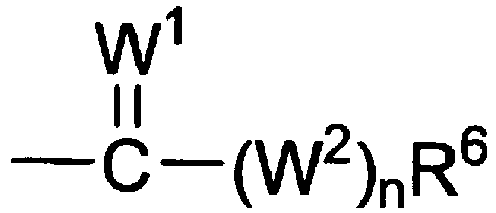
- wherein
- W1 is an oxygen atom or a sulfur atom,
- W2 is an oxygen atom, a sulfur atom, or -NH-
- n is an integer of 0 or 1,
- R6 is an optionally substituted alkyl group or an optionally substituted aryl group;
- X is a hydrogen atom, a hydroxyl group, or -OY; and
- Y is a formula:

- wherein
- R7 is an optionally substituted alkyl group,
- an optionally substituted alkyloxy group,
- an optionally substituted alkenyl group,
- an optionally substituted alkenyloxy group,
- an optionally substituted aryl group,
- an optionally substituted aryloxy group,
- an optionally substituted 5- or 6-membered aromatic heterocyclic group,
- a -NR8R9 group wherein R8 and R9 are each independently a hydrogen atom, an optionally substituted alkyl group, or an optionally substituted alkenyl group, or together with a nitrogen atom adjacent to these, form a 5- to 7-membered saturated heterocycle, unless R8 and R9 are hydrogen atoms at the same time, or
- a -CR10R11R12 group wherein R10, R11, and R12 are each independently an optionally substituted alkyl group, an optionally substituted alkenyl group, or an optionally substituted aryl group.
- [2] The antifungal agent according to [1], wherein R1 and R2 are each independently a hydrogen atom, a halogen atom, or an optionally substituted phenyl group.
- [3] The antifungal agent according to [1] or [2], wherein R1 and R2 are each independently a hydrogen atom or a halogen atom, or a phenyl group optionally substituted with at least one group of an alkyl group and a halogen atom.
- [4] The antifungal agent according to any one of [1] to [3], wherein R1 and R2 are each independently a hydrogen atom or a halogen atom, or a phenyl group optionally substituted with at least one group of an alkyl group having 1 to 6 carbon atoms and a halogen atom.
- [5] The antifungal agent according to any one of [1] to [4], wherein R1 and R2 are different groups from each other.
- [6] The antifungal agent according to any one of [1] to [5], wherein X is a hydrogen atom, a hydroxyl group, or -OY; and Y is a group represented by a formula:

- [7] The antifungal agent according to any one of [1] to [6], wherein X is a hydrogen atom or a hydroxyl group.
- [8] The antifungal agent according to any one of [1] to [7], wherein the compound represented by formula (I) or (II) is selected from 5-chloro-4-(4-methylphenyl)-1H-imidazole-2-carbonitrile, 4-(4-methylphenyl)-1H-imidazole-2-carbonitrile, 5-chloro-4-(3-methylphenyl)-1H-imidazole-2-carbonitrile, 5-chloro-4-(2-methylphenyl)-1H-imidazole-2-carbonitrile, 5-chloro-4-(2-chloro-4-methylphenyl)-1H-imidazole-2-carbonitrile, 5-chloro-4-(3-chloro-4-methylphenyl)-1H-imidazole-2-carbonitrile, 5-chloro-4-(4-chloro-3-methylphenyl)-1H-imidazole-2-carbonitrile, 4-(2-chloro-4-methylphenyl)-1H-imidazole-2-carbonitrile, 5-chloro-1-hydroxy-4-(4-methylphenyl)-1H-imidazole-2-carbonitrile, and 4-chloro-1-hydroxy-5-(4-methylphenyl)-1H-imidazole-2-carbonitrile.
- [9] The antifungal agent according to any one of [1] to [8], wherein the antifungal agent is a medicament.
- [10] The antifungal agent according to any one of [1] to [9], wherein the fungus is at least one selected from a microbe belonging to the genus Candida, a microbe belonging to the genus Malassezia, a microbe belonging to the genus Trichophyton, a microbe belonging to the genus Microsporum, a microbe belonging to the genus Arthroderma, a microbe belonging to the genus Aspergillus, and a microbe belonging to the genus Cryptococcus.
- [11] The antifungal agent according to any one of [1] to [10], wherein the fungus is at least one selected from a microbe belonging to the genus Candida, a microbe belonging to the genus Trichophyton, a microbe belonging to the genus Microsporum, a microbe belonging to the genus Arthroderma, a microbe belonging to the genus Aspergillus, and a microbe belonging to the genus Cryptococcus.
- [12] The antifungal agent according to any one of [1] to [11] for ameliorating a symptom or a disease caused by the fungus.
- [13] The antifungal agent according to [12], wherein the symptom or disease is a skin disease.
- [14] The antifungal agent according to [12] or [13], wherein the symptom or disease is tinea versicolor, psoriasis vulgaris, dermatophytosis, candidiasis, cutaneous malasseziosis, aspergillosis, cryptococcosis, atopic dermatitis, or otitis externa.
- [15] The antifungal agent according to any one of [12] to [14], wherein the symptom or disease is cutaneous malasseziosis, dermatophytosis, candidiasis, aspergillosis, or cryptococcosis.
- Next, test examples according to the present invention will be described, but these do not limit the present invention.
- 5-Chloro-4-(4-methylphenyl)-1H-imidazole-2-carbonitrile (compound No. 1) was produced according to the method described in Examples 1 to 5 of
Japanese Patent Laid-Open No. H8-225539 - Compound No. 2 was produced according to the same method as described in
Japanese Patent Laid-Open No. H8-225539 - MS: 184.2 [M+H]+
- Compound No. 3 was produced according to the same method as described in
Japanese Patent Laid-Open No. H8-225539 - MS: 218.2 [M+H]+
- Compound No. 4 was produced according to the same method as described in
Japanese Patent Laid-Open No. H8-225539 - MS: 218.1 [M+H]+
- Compound No. 5 was produced according to the same method as described in
Japanese Patent Laid-Open No. H8-225539 - MS: 252.2 [M+H]+
- Compound No. 6 was produced according to the same method as described in
Japanese Patent Laid-Open No. H8-225539 - MS: 252.1 [M+H]+
- Compound No. 7 was produced according to the same method as described in
Japanese Patent Laid-Open No. H8-225539 - 1H-NMR (DMSO-d6): δ 7.73 (s, 1H), 7.62-7.58 (m, 2H), 3.80-3.00 (br, 1H), 2.40 (s, 3H)
- MS: 251.0 [M+H]+
- Compound No. 8 was produced according to the same method as described in
Japanese Patent Laid-Open No. H8-225539 - 1H-NMR (DMSO-d6): δ 8.10-7.93 (br, 1H), 7.93-7.77 (br, 1H), 7.38 (s, 1H), 7.24 (d, 1H, J=8.0 Hz), 3.32 (s, 1H), 2.34 (s, 3H)
- MS: 218.1 [M+H]+
- Compound No. 9 was produced according to the same method as described in
Japanese Patent Laid-Open No. H8-225539 - 1H-NMR (DMSO-d6): δ 7.72 (d, 2H, J=8.0 Hz), 7.26 (d, 2H, J=8.0 Hz), 3.45-3.15 (br, 1H), 2.31 (s, 3H)
- MS: 234.1 [M+H]+
- Compound No. 10 was produced according to the same method as described in
Japanese Patent Laid-Open No. H8-225539 - MS: 234.1 [M+H]+
-
- Test compound: Compound No. 1
- Test microbial strain: Candida albicans (TIMM1768 strain)
- Test method: The Candida microbe cultured in an YPD liquid medium at 37°C for 20 hours was recovered by centrifugation (3000 rpm, 5 minutes), washed twice with physiological saline, and then suspended in physiological saline, and a microbial liquid was prepared in such a way as to provide 2 × 10³ cells/mL. 100 µL of the microbial liquid was applied to a Sabouraud medium to which the test compound dissolved in DMSO was added to have a predetermined concentration. After culturing at 37°C for 48 hours, the presence or absence of colony formation was investigated.
- As a result, compound No. 1 completely inhibited colony formation at 50 ppm.
-
- Test compound: Compound No. 1
- Test microbial strain: Candida glabrata (TIMM6054 strain)
- Test method: The Candida microbe cultured in an YPD liquid medium at 37°C for 20 hours was recovered by centrifugation (3000 rpm, 5 minutes), washed twice with physiological saline, and then suspended in physiological saline, and a microbial liquid was prepared in such a way as to provide 2 × 10³ cells/mL. 100 µL of the microbial liquid was applied to an YPD medium to which the test compound dissolved in DMSO was added to have a predetermined concentration. After culturing at 37°C for 48 hours, the presence or absence of colony formation was investigated.
- As a result, compound No. 1 completely suppressed colony formation at 200 ppm.
-
- Test compound: Compound No. 1
- Test microbial strain: Cryptococcus neoformans (TIMM1316 strain) Test method: The Cryptococcus microbe cultured in an YPD liquid medium at 37°C for 20 hours was recovered by centrifugation (3000 rpm, 5 minutes), washed twice with physiological saline, and then suspended in physiological saline, and a microbial liquid was prepared in such a way as to provide 2 × 10³ cells/mL. 100 µL of the microbial liquid was applied to a Sabouraud medium to which the test compound dissolved in DMSO was added to have a predetermined concentration. After culturing at 37°C for 48 hours, the presence or absence of colony formation was investigated.
- As a result, compound No. 1 completely suppressed colony formation at 20 ppm.
-
- Test compound: Compound No. 1
- Test microbial strain: Malassezia nana (CBS95574)
- The Malassezia microbe cultured at 32°C for 20 hours in a Sabouraud liquid medium containing Tween80 (polyoxyethylene sorbitan monooleate: manufactured by Kanto Chemical Co., Inc.) (0.05% (v/v)) was recovered by centrifugation (3000 rpm, 5 minutes), washed twice with physiological saline, and then suspended in 10 mL of physiological saline, the resulting suspension was allowed to stand for 15 minutes, and then the supernatant was recovered. Using this supernatant and physiological saline, a microbial liquid of McFarland No. 0.5 was prepared, compound No. 1 dissolved in DMSO was added in such a way as to provide 100 ppm or 200 ppm, the resulting microbial liquid was stirred and allowed to stand at 30°C for 5 minutes, then 100 µL of the microbial liquid was suspended in 10 mL physiological saline, and the Malassezia microbe was recovered by centrifugation (3,000 rpm, 5 minutes), washed once with physiological saline, and then resuspended in 500 µL of physiological saline. 100 µL of the microbial liquid resulting from the resuspension was applied to a Sabouraud medium containing Tween80 (0.05% (v/v)) and subjected to culturing at 30°C for 5 days, then the number of colonies formed there (number of colonies formed in the inventive plot) and the number of colonies in a solvent to which the test compound was not added (the number of colonies formed in the non-agent treated plot) were measured, and the colony formation inhibition rate (%) was determined according to the following expression.
- Colony formation inhibition rate (%) = [(number of colonies formed in non-agent treated plot - number of colonies formed in inventive plot)/number of colonies formed in non-agent treated plot] × 100
- As a result, the colony formation inhibition rate of compound No. 1 was 98.5% at 100 ppm and 99.9% at 200 ppm.
-
- Test compound: Compound No. 1
- Test microbial strain: Malassezia pachydermatis (TIMM10024)
- The Malassezia microbe cultured at 32°C for 20 hours in a Sabouraud liquid medium containing Tween80 (polyoxyethylene sorbitan monooleate: manufactured by Kanto Chemical Co., Inc.) (0.05% (v/v)) was recovered by centrifugation (3000 rpm, 5 minutes), washed twice with physiological saline, and then suspended in 10 mL of physiological saline, the resulting suspension was allowed to stand for 15 minutes, and then the supernatant was recovered. Using this supernatant and physiological saline, a microbial liquid of McFarland No. 0.5 was prepared, compound No. 1 dissolved in DMSO was added in such a way as to provide 100 ppm or 200 ppm, the resulting microbial liquid was stirred and allowed to stand at 30°C for 5 minutes, then 100 µL of the microbial liquid was suspended in 10 mL physiological saline, and the Malassezia microbe was recovered by centrifugation (3,000 rpm, 5 minutes), washed once with physiological saline, and then resuspended in 500 µL of physiological saline. 100 µL of the microbial liquid resulting from the resuspension was applied to a Sabouraud medium containing Tween80 (0.05% (v/v)) and subjected to culturing at 30°C for 5 days, then the number of colonies formed there (number of colonies formed in the inventive plot) and the number of colonies in a solvent to which the test compound was not added (the number of colonies formed in the non-agent treated plot) were measured, and the colony formation inhibition rate (%) was determined in the same manner as in Test Example 1-4.
- As a result, the colony formation inhibition rate of compound No. 1 was 98.1% at 100 ppm and 100% at 200 ppm.
-
- Test compound: Compound No. 1
- Test microbial strains: Aspergillus fumigatus (TIMM0063 strain), and A. niger (TIMM4968 strain)
- Test method: The Aspergillus microbe was cultured in a PDA medium at 27°C for 3 days, then spores were collected in physiological saline containing Tween80 (polyoxyethylene sorbitan monooleate: manufactured by Kanto Chemical Co., Inc.) (0.05% (v/v)), and this was filtered through a cell strainer (ϕ40 µm). The spores were recovered from the filtrate by centrifugation (3500 rpm, 5 minutes) and washed twice with physiological saline, and then a spore suspension was prepared (1 × 10⁷ spores/mL). 10 µL of the spore suspension was inoculated into a Sabouraud medium to which compound No. 1 dissolved in DMSO was added to have a predetermined concentration. After culturing at 28°C for 48 hours, the presence or absence of microbial growth was investigated, and the minimum inhibitory concentration was determined.
- As a result, the minimum inhibitory concentration of compound No. 1 for each of the two microbial strains was 100 ppm.
-
- Test compound: Compound No. 1
- Test microbial strains: Trichophyton rubrum (CBS118892 strain), T. interdegitale (TIMM20065 strain), Microsporum canis (TIMM20080 strain), and Arthroderma vanbreuseqhemii (TIMM2789)
- Each microbial strain was cultured in a Sabouraud medium containing 500 µg/mL of cycloheximide and 50 µg/mL of chloramphenicol at 28°C for 8 days, then spores were collected in physiological saline containing Tween80 (polyoxyethylene sorbitan monooleate: manufactured by Kanto Chemical Co., Inc.) (0.05% (v/v)), and this was filtered through a cell strainer (ϕ40 µm). The spores were recovered from the filtrate by centrifugation (3500 rpm, 5 minutes) and washed twice with physiological saline, and then a spore suspension was prepared (1 × 10⁷ spores/mL). 10 µL of the spore suspension was inoculated into a Sabouraud medium to which compound No. 1 dissolved in DMSO was added to have a predetermined concentration. After culturing at 28°C for 72 hours, the presence or absence of microbial growth was investigated, and the minimum inhibitory concentration was determined.
- As a result, the minimum inhibitory concentration of compound No. 1 for each of the four microbial strains was 10 ppm.
-
- Test compound: Compound No. 6
- Test microbial strains: Candida albicans (NBRC1594 strain), Candida glabrata (JCM3761 strain), Cryptococcus neoformans (JCM3685 strain), Aspergillus fumigatus (JCM10253), Aspergillus niger (ATCC6725), Trichophyton rubrum (ATCCMYA4607), Trichophyton interdegitale (ATCC9533), Microsporum canis (NBRC7863), and Arthroderma vanbreuseqhemii (JCM1891)
- The Candida microbes and the Cryptococcus microbe were cultured at 30°C for 72 hours and the other microbes were cultured at 25°C for 120 hours in Sabouraud media, and then suspended in 5 mL of PBS (containing 8 g of sodium chloride, 2.9 g of disodium hydrogen phosphate, 0.2 g of potassium chloride, and 0.2 g of potassium dihydrogen phosphate in 1000 mL) containing Tween80 (polyoxyethylene sorbitan monooleate: Kanto Chemical Co., Inc.) (1% (V/V))), and the resulting suspension was filtered through a cell strainer (ϕ40 µm). Spores were recovered from the filtrate by centrifugation (3500 rpm, 5 minutes) and washed twice with physiological saline, and then a spore suspension was prepared (1 × 10⁶ spores/mL). 50 µL of the spore suspension was inoculated into a Sabouraud medium to which compound No. 6 dissolved in DMSO was added to have a predetermined concentration. The Candida microbes and the Cryptococcus microbe were cultured at 30°C for 72 hours and the other microbes were cultured at 25°C for 120 hours, then the presence or absence of colony growth was investigated, and the minimum inhibitory concentration was determined.
- Results thereof are shown in Table 1.
-
Table 1 Microbial species Minimum inhibitory concentration Candida albicans 250 ppm Candida glabrata 250 ppm Cryptococcus neoformans 31.3 ppm Aspergillus fumigatus 62.5 ppm Aspergillus niger 62.5 ppm Trichophyton rubrum 31.3 ppm Trichophyton interdegitale 62.5 ppm Microsporum canis 125 ppm Arthroderma vanbreuseghemii 7.8 ppm -
- Test compound: Compound No. 6
- Test microbial strains: Malassezia furfur (IFM 55951), Malassezia sympodialis (IFM 48588), and Malassezia globosa (IFM 51946)
- The Malassezia microbe (Malassezia furfur, Malassezia sympodialis, or Malassezia globosa) cultured in a CHROMagarTM Malassezia/Candida Prepared medium (peptone, special enzyme substrate mixture, chloramphenicol, olive oil, agar, manufactured by Kanto Chemical Co., Inc.) for 5 to 7 days was suspended in physiological saline, and a suspension thereof was prepared in such a way as to have an absorbance of 0.025 at 600 nm. Thereto, the test compound dissolved in DMSO was added in such a way as to provide a final concentration of 200, 100, 50, or 25 ppm, and after 1 minute, 10 µL of the suspension and 10 mL of physiological saline were placed in a syringe and stirred, and the syringe was connected to a 37 mm Quality Monitor (manufactured by Pall Corporation) followed by filtration and washing twice with 10 mL of physiological saline. The membrane filter was removed from the Quality Monitor, placed on a CHROMagarTM Malassezia/Candida Prepared medium, and was subjected to culturing at 32°C for 72 hours, the presence or absence of colony growth was investigated, and the minimum fungicidal concentration (MFC100) was determined. Results thereof are shown in Table 2-1.
-
Table 2-1 Microbial species Minimum fungicidal concentration (MFC100) Malassezia furfur 50 ppm Malassezia sympodialis 50 ppm Malassezia globosa 50 ppm -
- Test compound: Compound No. 6
- Test microbial strain: Malassezia restricta (IFM55992)
- The Malassezia microbe (Malassezia restricta) cultured in a CHROMagarTM Malassezia/Candida Prepared medium (peptone, special enzyme substrate mixture, chloramphenicol, olive oil, agar, manufactured by Kanto Chemical Co., Inc.) for 5 to 7 days was suspended in physiological saline, and a suspension thereof was prepared in such a way as to have an absorbance of 0.025 at 600 nm. Thereto, the test compound dissolved in DMSO was added in such a way as to provide a final concentration of 200, 100, 50, or 25 ppm, and after 1 minute, 10 µL of the suspension and 10 mL of physiological saline were placed in a syringe and stirred, and the syringe was connected to a 37 mm Quality Monitor (manufactured by Pall Corporation) followed by filtration and washing twice with 10 mL of physiological saline. The membrane filter was removed from the Quality Monitor, placed on a Leeming & Notman agar Modified medium (MLNA medium) (peptone, glucose, yeast extract, dried bovine bile, glycerol, glycerin stearate, Tween60, olive oil, agar), and subjected to culturing at 32°C for 72 hours, the presence or absence of colony growth was investigated, and the minimum fungicidal concentration MFC100) was determined. Results thereof are shown in Table 2-2.
-
Table 2-2 Microbial species Minimum fungicidal concentration (MFC100) Malassezia restricta 200 ppm -
- Test compound: Compound No. 6
- Test microbial strains: Trichophyton rubrum (ATCCMYA4607), and Microsporum canis (IFM63627)
- The antifungal activity was studied by partially modifying the method of Test Example 2. Trichophyton rubrum was cultured in a Sabouraud medium and Microsporum canis was cultured in a 1/10 Sabouraud medium, at 32°C for 168 hours to form spores. For Trichophyton rubrum, hyphae were peeled off from the surface of the medium and recovered in a tube, physiological saline (Otsuka Normal Saline; containing 9 g of sodium chloride in 1000 mL) was added, these were wholly admixed using a disposable loop (type 1 (1 µL)) for dispersion, and a spore suspension containing the hyphae was recovered. For Microsporum canis, 10 mL of physiological saline was added directly onto the medium, and the surface was rubbed using a disposable loop to recover a spore suspension containing hyphae. The spore suspensions containing the hyphae of Trichophyton rubrum and Microsporum canis, respectively, were filtered through a cell strainer (ϕ40 µm). The spores were recovered from the filtrate by centrifugation (3500 rpm, 5 minutes) and washed twice with physiological saline, and then a spore suspension was prepared (1 × 10⁷ spores/mL). 10 µL of the spore suspension was inoculated into a Sabouraud medium to which the test compound dissolved in DMSO was added to have a predetermined concentration. Trichophyton rubrum, Microsporum canis was cultured at 32°C for 72 hours, then the presence or absence of colony growth was investigated, and the minimum inhibitory concentration (MIC100) was determined. Results thereof are shown in Table 3.
-
Table 3 Microbial species Minimum inhibitory concentration (MIC100) Trichophyton rubrum 5 ppm Microsporum canis 5 ppm -
- Test compound: Compound No. 6
- Test microbial strains: Trichophyton rubrum (ATCCMYA4607), and Microsporum canis (IFM63627)
- Trichophyton rubrum was cultured in a Sabouraud medium and Microsporum canis was cultured in a 1/10 Sabouraud medium, at 32°C for 168 hours to form spores. For Trichophyton rubrum, hyphae were peeled off from the surface of the medium and recovered in a tube, physiological saline (Otsuka Normal Saline; containing 9 g of sodium chloride in 1000 mL) was added, these were wholly admixed using a disposable loop (type 1 (1 µL)) for dispersion, and a spore suspension containing the hyphae was recovered. For Microsporum canis, 10 mL of physiological saline was added directly onto the medium, and the surface was rubbed using a disposable loop to recover a spore suspension containing hyphae. The spore suspensions containing the hyphae of Trichophyton rubrum and Microsporum canis, respectively, were filtered through a cell strainer (ϕ40 µm). The spores were recovered from the filtrate by centrifugation (3500 rpm, 5 minutes) and washed twice with physiological saline, and then a spore suspension was prepared (1 × 10⁷ spores/mL). 10 µL of the spore suspension was inoculated into 90 µL of physiological saline to which test compound dissolved in DMSO was added to have a predetermined concentration. Every time a predetermined time elapsed, 10 µL of a test liquid containing the spores was collected, the spores were recovered by centrifugation (3500 rpm, 5 minutes) and washed twice with physiological saline, and then a 10-µL spore suspension was prepared. The 10-µL spore suspension was spotted onto a Sabouraud medium and subjected to culturing at 32°C for 72 hours, the presence or absence of colony growth was investigated, and the minimum fungicidal concentration (MFC100) was determined. Results thereof are shown in Table 4.
-
Table 4 Microbial species Treatment time Minimum fungicidal concentration (MFC100) Trichophyton rubrum 1 Hour 50 ppm 48 Hours 10 ppm 72 Hours 5 ppm Microsporum canis 24 Hours 50 ppm 96 Hours 10 ppm
Claims (15)
- An antifungal agent for a human comprising a compound represented by formula (I) or (II) or a salt thereof
 R1 and R2 are each independentlya hydrogen atom,a halogen atom,a hydroxyl group,a nitro group,a cyano group,a thiocyanate group,a trimethylsilyl group,an optionally substituted alkyl group,an optionally substituted alkenyl group,an optionally substituted alkynyl group,an optionally substituted alkyloxy group,an optionally substituted alkenyloxy group,an optionally substituted alkynyloxy group,an optionally substituted aryl group,an optionally substituted aryloxy group,an optionally substituted 5- or 6-membered aromatic heterocyclic group,
-SOmR3
wherein R3 is an optionally substituted alkyl group, an optionally substituted alkenyl group, an optionally substituted alkynyl group, an optionally substituted aryl group, an optionally substituted 5- or 6-membered aromatic heterocyclic group, or a -NR4R5 group whereinR4 and R5 are each an optionally substituted alkyl group, and m is an integer of 0 to 2, ora group represented by whereinW1 is an oxygen atom or a sulfur atom,W2 is an oxygen atom, a sulfur atom, or -NH-n is an integer of 0 or 1,R6 is an optionally substituted alkyl group or an optionally substituted aryl group;X is a hydrogen atom, a hydroxyl group, or -OY; andY is a formula:
 whereinR7 is an optionally substituted alkyl group,an optionally substituted alkyloxy group,an optionally substituted alkenyl group,an optionally substituted alkenyloxy group,an optionally substituted aryl group,an optionally substituted aryloxy group,an optionally substituted 5- or 6-membered aromatic heterocyclic group,a -NR8R9 group wherein R8 and R9 are each independently a hydrogen atom, an optionally substituted alkyl group, or an optionally substituted alkenyl group, or together with a nitrogen atom adjacent to these, form a 5- to 7-membered saturated heterocycle, unless R8 and R9 are hydrogen atoms at the same time, ora -CR10R11R12 group wherein R10, R11, and R12 are each independently an optionally substituted alkyl group, an optionally substituted alkenyl group, or an optionally substituted aryl group.
 - The antifungal agent according to claim 1, wherein R1 and R2 are each independently a hydrogen atom, a halogen atom, or an optionally substituted phenyl group.
- The antifungal agent according to claim 1 or 2, wherein R1 and R2 are each independently a hydrogen atom or a halogen atom, or a phenyl group optionally substituted with at least one group of an alkyl group and a halogen atom.
- The antifungal agent according to any one of claims 1 to 3, wherein R1 and R2 are each independently a hydrogen atom or a halogen atom, or a phenyl group optionally substituted with at least one group of an alkyl group having 1 to 6 carbon atoms and a halogen atom.
- The antifungal agent according to any one of claims 1 to 4, wherein R1 and R2 are different groups from each other.
- The antifungal agent according to any one of claims 1 to 5, whereinX is a hydrogen atom, a hydroxyl group, or -OY; andY is a group represented by a formula:
 wherein R7 is an optionally substituted alkyl group, an optionally substituted phenyl group, an optionally substituted alkyloxy group, an optionally substituted phenyloxy group, or a -CR10R11R12 group wherein R10, R11, and R12 are each independently an optionally substituted alkyl group or an optionally substituted phenyl group.
 - The antifungal agent according to any one of claims 1 to 6, wherein X is a hydrogen atom or a hydroxyl group.
- The antifungal agent according to any one of claims 1 to 7, wherein the compound represented by formula (I) or (II) is selected from 5-chloro-4-(4-methylphenyl)-1H-imidazole-2-carbonitrile, 4-(4-methylphenyl)-1H-imidazole-2-carbonitrile, 5-chloro-4-(3-methylphenyl)-1H-imidazole-2-carbonitrile, 5-chloro-4-(2-methylphenyl)-1H-imidazole-2-carbonitrile, 5-chloro-4-(2-chloro-4-methylphenyl)-1H-imidazole-2-carbonitrile, 5-chloro-4-(3-chloro-4-methylphenyl)-1H-imidazole-2-carbonitrile, 5-chloro-4-(4-chloro-3-methylphenyl)-1H-imidazole-2-carbonitrile, 4-(2-chloro-4-methylphenyl)-1H-imidazole-2-carbonitrile, 5-chloro-1-hydroxy-4-(4-methylphenyl)-1H-imidazole-2-carbonitrile, and 4-chloro-1-hydroxy-5-(4-methylphenyl)-1H-imidazole-2-carbonitrile.
- The antifungal agent according to any one of claims 1 to 8, wherein the antifungal agent is a medicament.
- The antifungal agent according to any one of claims 1 to 9, wherein the fungus is at least one selected from a microbe belonging to the genus Candida, a microbe belonging to the genus Malassezia, a microbe belonging to the genus Trichophyton, a microbe belonging to the genus Microsporum, a microbe belonging to the genus Arthroderma, a microbe belonging to the genus Aspergillus, and a microbe belonging to the genus Cryptococcus.
- The antifungal agent according to any one of claims 1 to 10, wherein the fungus is at least one selected from a microbe belonging to the genus Candida, a microbe belonging to the genus Trichophyton, a microbe belonging to the genus Microsporum, a microbe belonging to the genus Arthroderma, a microbe belonging to the genus Aspergillus, and a microbe belonging to the genus Cryptococcus.
- The antifungal agent according to any one of claims 1 to 11 for ameliorating a symptom or a disease caused by the fungus.
- The antifungal agent according to claim 12, wherein the symptom or disease is a skin disease.
- The antifungal agent according to claim 12 or 13, wherein the symptom or disease is tinea versicolor, psoriasis vulgaris, dermatophytosis, candidiasis, cutaneous malasseziosis, aspergillosis, cryptococcosis, atopic dermatitis, or otitis externa.
- The antifungal agent according to any one of claims 12 to 14, wherein the symptom or disease is cutaneous malasseziosis, dermatophytosis, candidiasis, aspergillosis, or cryptococcosis.
Applications Claiming Priority (2)
| Application Number | Priority Date | Filing Date | Title |
|---|---|---|---|
| JP2020097174 | 2020-06-03 | ||
| PCT/JP2021/021064 WO2021246455A1 (en) | 2020-06-03 | 2021-06-02 | Antifungal agent for use in humans |
Publications (2)
| Publication Number | Publication Date |
|---|---|
| EP4162939A1 true EP4162939A1 (en) | 2023-04-12 |
| EP4162939A4 EP4162939A4 (en) | 2024-06-26 |
Family
ID=78831184
Family Applications (1)
| Application Number | Title | Priority Date | Filing Date |
|---|---|---|---|
| EP21817674.1A Pending EP4162939A4 (en) | 2020-06-03 | 2021-06-02 | Antifungal agent for use in humans |
Country Status (12)
| Country | Link |
|---|---|
| US (2) | US20230233527A1 (en) |
| EP (1) | EP4162939A4 (en) |
| JP (1) | JP7780095B2 (en) |
| KR (1) | KR20230035028A (en) |
| CN (1) | CN115996714B (en) |
| AU (1) | AU2021284446A1 (en) |
| BR (1) | BR112022024702A2 (en) |
| CA (1) | CA3181160A1 (en) |
| MX (1) | MX2022015292A (en) |
| PH (1) | PH12022553272A1 (en) |
| WO (1) | WO2021246455A1 (en) |
| ZA (1) | ZA202213318B (en) |
Families Citing this family (1)
| Publication number | Priority date | Publication date | Assignee | Title |
|---|---|---|---|---|
| JPWO2025028651A1 (en) | 2023-08-02 | 2025-02-06 |
Family Cites Families (18)
| Publication number | Priority date | Publication date | Assignee | Title |
|---|---|---|---|---|
| US4006160A (en) * | 1973-03-15 | 1977-02-01 | University Of Alabama | Process for the synthesis of N-hydroxypyrroles, N-hydroxyimidazoles, and derivatives thereof |
| DE3644616A1 (en) * | 1986-12-29 | 1988-07-07 | Lentia Gmbh | IMIDAZOLE DERIVATIVES, METHOD FOR THE PRODUCTION AND USE THEREOF |
| PH26182A (en) * | 1987-03-13 | 1992-03-18 | Ishihara Sangyo Kaisha | Intermediate compounds for biocidal imidazole compounds |
| CA1339133C (en) * | 1987-03-13 | 1997-07-29 | Rikuo Nasu | Imidazole compounds and biocidal composition comprising the same for controlling harmful organisms |
| JP2606720B2 (en) | 1987-03-13 | 1997-05-07 | 石原産業株式会社 | Imidazole compounds and pesticides containing them |
| US5045557A (en) * | 1987-03-20 | 1991-09-03 | Schering Agrochemicals Ltd. | Imidazable fungicides and use thereof |
| EP0284277A1 (en) * | 1987-03-21 | 1988-09-28 | AgrEvo UK Limited | Cyanoimidazole fungicides |
| JPH08283243A (en) | 1994-09-08 | 1996-10-29 | Ishihara Sangyo Kaisha Ltd | Production of imidazole-based compound |
| JPH08225539A (en) * | 1994-10-28 | 1996-09-03 | Ishihara Sangyo Kaisha Ltd | Production of 2-cyanoimidazole-based compound |
| US6713500B2 (en) * | 1999-08-19 | 2004-03-30 | Ishihara Sangyo Kaisha Ltd. | Agent for controlling animal diseases caused by parasites |
| JP2001122781A (en) * | 1999-08-19 | 2001-05-08 | Ishihara Sangyo Kaisha Ltd | Controlling agent for animal disease caused by parasite |
| AU6597200A (en) | 1999-08-19 | 2001-03-19 | Ishihara Sangyo Kaisha Ltd. | Agents for controlling animal diseases caused by parasites |
| JP2002193710A (en) * | 2000-12-25 | 2002-07-10 | Kumiai Chem Ind Co Ltd | Pyrimidine or triazine derivatives and agricultural and horticultural fungicides |
| JP5502354B2 (en) * | 2008-03-28 | 2014-05-28 | 石原産業株式会社 | Agricultural / horticultural fungicide composition and method for controlling plant diseases |
| CN102119150B (en) * | 2008-08-01 | 2015-06-03 | 拜尔农科股份公司 | Fungicidal N-(2-phenoxyethyl)carboxamide derivatives and their aza, thia and sila analogues |
| BR112015021575B1 (en) * | 2013-04-16 | 2021-09-08 | Upl Limited | FUNGICIDE COMPOSITION INCLUDING CYAZOFAMIDE AND HEXAMETHYLENETETRAMIN, PROCESS FOR THEIR PREPARATION AND METHOD OF TREATMENT |
| BR102016022579A2 (en) * | 2016-09-28 | 2018-05-02 | Universidade Federal Da Paraiba | SYNTHETIC ORGANIC COMPOUND TO FIGHT FUNGAL DISEASES |
| CN107417622B (en) * | 2017-09-20 | 2020-05-05 | 西安近代化学研究所 | A refining method of 4(5) -chloro-2-cyano-5 (4) - (4' -methylphenyl) imidazole |
-
2021
- 2021-06-02 AU AU2021284446A patent/AU2021284446A1/en active Pending
- 2021-06-02 EP EP21817674.1A patent/EP4162939A4/en active Pending
- 2021-06-02 KR KR1020237000059A patent/KR20230035028A/en active Pending
- 2021-06-02 MX MX2022015292A patent/MX2022015292A/en unknown
- 2021-06-02 PH PH1/2022/553272A patent/PH12022553272A1/en unknown
- 2021-06-02 CA CA3181160A patent/CA3181160A1/en active Pending
- 2021-06-02 WO PCT/JP2021/021064 patent/WO2021246455A1/en not_active Ceased
- 2021-06-02 CN CN202180041539.XA patent/CN115996714B/en active Active
- 2021-06-02 JP JP2022528876A patent/JP7780095B2/en active Active
- 2021-06-02 US US18/000,434 patent/US20230233527A1/en active Pending
- 2021-06-02 BR BR112022024702A patent/BR112022024702A2/en unknown
-
2022
- 2022-12-08 ZA ZA2022/13318A patent/ZA202213318B/en unknown
-
2025
- 2025-12-23 US US19/431,239 patent/US20260115170A1/en active Pending
Also Published As
| Publication number | Publication date |
|---|---|
| US20230233527A1 (en) | 2023-07-27 |
| ZA202213318B (en) | 2024-04-24 |
| WO2021246455A1 (en) | 2021-12-09 |
| EP4162939A4 (en) | 2024-06-26 |
| BR112022024702A2 (en) | 2023-02-28 |
| CN115996714B (en) | 2025-07-11 |
| TW202214234A (en) | 2022-04-16 |
| CA3181160A1 (en) | 2021-12-09 |
| PH12022553272A1 (en) | 2024-02-19 |
| JPWO2021246455A1 (en) | 2021-12-09 |
| US20260115170A1 (en) | 2026-04-30 |
| MX2022015292A (en) | 2023-03-06 |
| KR20230035028A (en) | 2023-03-10 |
| AU2021284446A1 (en) | 2023-01-19 |
| JP7780095B2 (en) | 2025-12-04 |
| CN115996714A (en) | 2023-04-21 |
Similar Documents
| Publication | Publication Date | Title |
|---|---|---|
| EP2861573B1 (en) | Oxathiazine derivatives as antibacterial and anticancer agents. | |
| US12521372B2 (en) | Antimicrobial agent for non-human animal | |
| US20260115170A1 (en) | Method of Ameliorating a Symptom or a Disease in a Human Caused by Fungus | |
| KR20140129030A (en) | Compounds and methods for treating candidiasis and aspergillus infections | |
| EP1313731B1 (en) | Thiazolidine derivatives and its use as antifungal agent | |
| EP3617198B1 (en) | Guanidine derivative | |
| EP4446313A1 (en) | Hydrate crystal of 5-chloro-4-(3-chloro-4-methylphenyl)-1h-imidazole-2-carbonitrile | |
| EP4406962A1 (en) | Macrocyclic peptidomimetic protease inhibitor and use thereof | |
| RU2056416C1 (en) | Derivatives of thiourea, pharmaceutical composition and method of treatment | |
| CN109503510B (en) | Antibacterial thiazole compound for preventing caries and preparation method thereof | |
| RU2859458C2 (en) | Fungicidal agent for humans | |
| TWI920095B (en) | Human antifungal agents | |
| FI105270B (en) | Process for the preparation of therapeutically useful octahydro-1H-1-pyrindine-4,5,6,7-tetrols | |
| RU2846707C1 (en) | Antimicrobial agent for non-human animal | |
| EP3858355A1 (en) | Anti-neurodegenerative disease agent | |
| EP1686990B1 (en) | 2-guanidinylimidazolidinedione compounds and methods of making and using thereof | |
| US8022072B2 (en) | Azolylmethylidenehydrazine derivative and use thereof | |
| JPH0117A (en) | Chemotherapeutic composition | |
| JP6553961B2 (en) | Whitening agent | |
| KR19980071836A (en) | Drug treatment for diseases caused by Helicobacter infection |
Legal Events
| Date | Code | Title | Description |
|---|---|---|---|
| STAA | Information on the status of an ep patent application or granted ep patent |
Free format text: STATUS: THE INTERNATIONAL PUBLICATION HAS BEEN MADE |
|
| PUAI | Public reference made under article 153(3) epc to a published international application that has entered the european phase |
Free format text: ORIGINAL CODE: 0009012 |
|
| STAA | Information on the status of an ep patent application or granted ep patent |
Free format text: STATUS: REQUEST FOR EXAMINATION WAS MADE |
|
| 17P | Request for examination filed |
Effective date: 20221202 |
|
| AK | Designated contracting states |
Kind code of ref document: A1 Designated state(s): AL AT BE BG CH CY CZ DE DK EE ES FI FR GB GR HR HU IE IS IT LI LT LU LV MC MK MT NL NO PL PT RO RS SE SI SK SM TR |
|
| DAV | Request for validation of the european patent (deleted) | ||
| DAX | Request for extension of the european patent (deleted) | ||
| A4 | Supplementary search report drawn up and despatched |
Effective date: 20240527 |
|
| RIC1 | Information provided on ipc code assigned before grant |
Ipc: A61P 31/10 20060101ALI20240521BHEP Ipc: A61P 27/16 20060101ALI20240521BHEP Ipc: A61P 17/06 20060101ALI20240521BHEP Ipc: A61P 17/00 20060101ALI20240521BHEP Ipc: A61K 31/4164 20060101AFI20240521BHEP |