EP4161534B1 - Polymers, compositions and methods for treating hyperuricemia - Google Patents
Polymers, compositions and methods for treating hyperuricemia Download PDFInfo
- Publication number
- EP4161534B1 EP4161534B1 EP21870493.0A EP21870493A EP4161534B1 EP 4161534 B1 EP4161534 B1 EP 4161534B1 EP 21870493 A EP21870493 A EP 21870493A EP 4161534 B1 EP4161534 B1 EP 4161534B1
- Authority
- EP
- European Patent Office
- Prior art keywords
- amine
- salt
- amine polymer
- polyallylamine
- polymer
- Prior art date
- Legal status (The legal status is an assumption and is not a legal conclusion. Google has not performed a legal analysis and makes no representation as to the accuracy of the status listed.)
- Active
Links
Images
Classifications
-
- C—CHEMISTRY; METALLURGY
- C08—ORGANIC MACROMOLECULAR COMPOUNDS; THEIR PREPARATION OR CHEMICAL WORKING-UP; COMPOSITIONS BASED THEREON
- C08F—MACROMOLECULAR COMPOUNDS OBTAINED BY REACTIONS ONLY INVOLVING CARBON-TO-CARBON UNSATURATED BONDS
- C08F8/00—Chemical modification by after-treatment
- C08F8/30—Introducing nitrogen atoms or nitrogen-containing groups
-
- A—HUMAN NECESSITIES
- A61—MEDICAL OR VETERINARY SCIENCE; HYGIENE
- A61K—PREPARATIONS FOR MEDICAL, DENTAL OR TOILETRY PURPOSES
- A61K31/00—Medicinal preparations containing organic active ingredients
- A61K31/74—Synthetic polymeric materials
- A61K31/785—Polymers containing nitrogen
-
- A—HUMAN NECESSITIES
- A61—MEDICAL OR VETERINARY SCIENCE; HYGIENE
- A61K—PREPARATIONS FOR MEDICAL, DENTAL OR TOILETRY PURPOSES
- A61K31/00—Medicinal preparations containing organic active ingredients
- A61K31/74—Synthetic polymeric materials
- A61K31/785—Polymers containing nitrogen
- A61K31/787—Polymers containing nitrogen containing heterocyclic rings having nitrogen as a ring hetero atom
-
- A—HUMAN NECESSITIES
- A61—MEDICAL OR VETERINARY SCIENCE; HYGIENE
- A61P—SPECIFIC THERAPEUTIC ACTIVITY OF CHEMICAL COMPOUNDS OR MEDICINAL PREPARATIONS
- A61P19/00—Drugs for skeletal disorders
- A61P19/06—Antigout agents, e.g. antihyperuricemic or uricosuric agents
-
- C—CHEMISTRY; METALLURGY
- C08—ORGANIC MACROMOLECULAR COMPOUNDS; THEIR PREPARATION OR CHEMICAL WORKING-UP; COMPOSITIONS BASED THEREON
- C08F—MACROMOLECULAR COMPOUNDS OBTAINED BY REACTIONS ONLY INVOLVING CARBON-TO-CARBON UNSATURATED BONDS
- C08F26/00—Homopolymers and copolymers of compounds having one or more unsaturated aliphatic radicals, each having only one carbon-to-carbon double bond, and at least one being terminated by a single or double bond to nitrogen or by a heterocyclic ring containing nitrogen
- C08F26/02—Homopolymers and copolymers of compounds having one or more unsaturated aliphatic radicals, each having only one carbon-to-carbon double bond, and at least one being terminated by a single or double bond to nitrogen or by a heterocyclic ring containing nitrogen by a single or double bond to nitrogen
- C08F26/04—Diallylamine
-
- C—CHEMISTRY; METALLURGY
- C08—ORGANIC MACROMOLECULAR COMPOUNDS; THEIR PREPARATION OR CHEMICAL WORKING-UP; COMPOSITIONS BASED THEREON
- C08F—MACROMOLECULAR COMPOUNDS OBTAINED BY REACTIONS ONLY INVOLVING CARBON-TO-CARBON UNSATURATED BONDS
- C08F8/00—Chemical modification by after-treatment
- C08F8/02—Alkylation
Definitions
- the present invention relates to polymers and compositions containing such polymers, and methods of using such polymers/compositions for binding uric acid and/or for treating hyperuricemia, gout, and/or diseases caused by hyperuricemia.
- gout The prevalence of gout is approximately 1.3 to 3.7 percent of the general population. Individuals suffering from gout excrete approximately 40 percent less uric acid, the final breakdown product of purine degradation, than nongouty individuals for any given plasma urate concentrations. Hyperuricemia is formed when the uric acid metabolism of the human body is disturbed, resulting in excessive uric acid production or reduced excretion.
- the diagnostic index of hyperuricemia is usually that the female blood uric acid level is greater than 6 mg/dl (360 ⁇ M), and the male blood uric acid level is greater than 7 mg/dl (420 ⁇ M).
- gout The main clinical features of gout are hyperuricemia, recurrent acute and chronic attacks of gout caused by hyperuricemia, arthritis, joint deformities, uric acid urinary stones, which cause damage to the kidneys, cause interstitial nephritis, and renal failure.
- the invention relates to a treatment for gout in an individual with a polymer structurally defined in the claims that binds to uric acid or to a precursor thereof, such as purine.
- the invention is effective for both treatment and prevention of gout, hyperuricosuria, uric acid nephropathy.
- Polymers that bind uric acid may also have utility in lowering uric acid levels in a patient at risk of developing coronary heart disease.
- US 2002/0187120A1 discloses a method for treating gout and/or reducing serum uric acid levels in a patient that includes administering to the patient a therapeutically effective amount of an amine polymer; for example, an aliphatic amine polymer.
- the present invention provides an amine polymer or a salt thereof comprising a first amine, wherein the first amine is linked to pyrimidine-2,4-diamine or an analog thereof.
- the first amine is a primary amine, a secondary amine or tertiary amine.
- the amine polymer comprises polyallylamine (PAA), polytriallylamine (TAA), polyvinylamine (PVA), polyethyleneimine (PEI), chitosan or any combination thereof.
- the analog is 4-N-(6-hexyl)pyrimidine-2,4,6-triamine.
- the amine polymer is cross-linked by a crosslinking agent.
- the crosslinking agent is epichlorohydrin.
- the amine polymer or a salt thereof further comprises a second amine, wherein the second amine is linked to a moiety characterized by selective adsorption of uric acid or precursor thereof. It is also contemplated that the moiety is selected from the group consisting of a derivative thereof and any combination thereof.
- an amine polymer or a salt thereof comprises repeat units having at least three formulae selected from the group consisting of and a salt thereof, wherein a, b, c, d, e and f, when applicable, are each independently a positive integer; wherein the at least three formulae comprise only one of
- a pharmaceutical composition comprising an amine polymer or a salt thereof, wherein the amine polymer comprises a first amine linked to pyrimidine-2,4-diamine or an analog thereof, and wherein the amine polymer is produced by (i) linking pyrimidine-2,4-diamine or an analog thereof to the first amine, and (ii) subsequently crosslinking by a crosslinking agent.
- Any composition comprising the polyallylamine-based copolymer produced by the process described herein is contemplated.
- a pharmaceutical composition comprising the amine polymer or a salt thereof (e.g., the polyallylamine-based copolymer) described herein; and a pharmaceutically acceptable excipient, diluent, or carrier.
- amine polymers or salts thereof or the pharmaceutical compositions described herein are, according a further aspect of the present invention, for use in treating a condition associated with an elevated serum uric acid level.
- the present disclosure is based on the inventors' discovery that certain polymers, and compositions thereof are effective at binding uric acid.
- a derivative thereof refers to a salt thereof, an ester thereof, a free acid form thereof, a free base form thereof, a solvate thereof, a deuterated derivative thereof, a hydrate thereof, an N-oxide thereof, a polymorph thereof, a stereoisomer thereof, a geometric isomer thereof, a tautomer thereof, a mixture of tautomers thereof, an enantiomer thereof, a diastereomer thereof, a racemate thereof, a mixture of stereoisomers thereof, an isotope thereof (e.g., tritium, deuterium), or a combination thereof.
- an isotope thereof e.g., tritium, deuterium
- treatment includes an approach for obtaining beneficial or desired results including clinical results.
- beneficial or desired clinical results may include one or more of the following: a) inhibiting the disease or condition (e.g., decreasing one or more symptoms resulting from the disease or condition, and/or diminishing the extent of the disease or condition); b) slowing or arresting the development of one or more clinical symptoms associated with the disease or condition (e.g., stabilizing the disease or condition, preventing or delaying the worsening or progression of the disease or condition, and/or preventing or delaying the spread of the disease or condition); and/or c) relieving the disease, that is, causing the regression of clinical symptoms (e.g., ameliorating the disease state, providing partial or total remission of the disease or condition, enhancing effect of another medication, delaying the progression of the disease, increasing the quality of life, and/or prolonging survival.
- a) inhibiting the disease or condition e.g., decreasing one or more symptoms resulting from the disease or condition, and/or diminishing the extent of the disease
- a "therapeutically effective amount” is at least the minimum concentration required to effect a measurable improvement of a particular disease, disorder, or condition, such as a congenital disorder of glycosylation.
- a therapeutically effective amount herein may vary according to factors such as the disease state, age, sex, and weight of the subject, and the ability of the compositions of the present disclosure to elicit a desired response in the subject.
- a therapeutically effective amount is also one in which any toxic or detrimental effects of the lipid compositions of the present disclosure are outweighed by the therapeutically beneficial effects.
- polymers and compositions thereof which may be useful in binding uric acid.
- Amine polymers and methods of making such amine polymers are described.
- an amine polymer comprises a first amine, wherein the first amine is linked to pyrimidine-2,4-diamine or an analog thereof.
- the first amine can be a primary amine, a secondary amine or tertiary amine.
- the amine polymer may include polyallylamine (PAA), polytriallylamine (TAA), polyvinylamine (PVA), polyethyleneimine (PEI), chitosan or any combination thereof.
- the first amine is linked to pyrimidine-2,4-diamine. In other embodiments, the first amine is linked to an analog, 4-N-(6-hexyl)pyrimidine-2,4,6-triamine.
- the amine polymer can be cross-linked by a crosslinking agent.
- Suitable crosslinking agents include, but are not limited to, epichlorohydrin, 1,4-Butanediol diglycidyl ether, ethylene glycol diglycidyl ether, 1,3-dichloropropane, 1,2-dichloroethane, 1,3-dibromopropane, 1,2-dibromoethane, succinyl chloride and dimethyl succinate.
- the amine polymer further comprises a second amine, wherein the second amine is linked to a moiety characterized by selective adsorption of uric acid or precursor thereof.
- the moiety can be selected from the group consisting of derivative thereof and any combination thereof.
- both are linked to the amine polymer in addition to 4-N-(6-hexyl)pyrimidine-2,4,6-triamine.
- An amine polymer or a salt thereof comprises repeat units having at least two formulae selected from the group consisting of: wherein a, b, c, d, e and f, when applicable, are each independently a positive integer.
- the amine polymer or a salt thereof comprises at least three formulae selected from the group consisting of:
- the amine polymer or a salt thereof comprises three, four or five formulae selected from the group consisting of:
- the amine polymer a salt thereof has repeat units consisting of wherein the ratio of a:b:c is 0.52:0.1:0.28.
- the amine polymer has a general structure of formula (1): wherein a has a mole percentage of 0.52, b has a mole percentage of 0.1, and c has a mole percentage of 0.28.
- the amine polymer a salt thereof has repeat units consisting of and wherein the ratio of a:b:c is 0.45:0.1:0.35.
- the amine polymer has a general structure of formula (2): wherein a has a mole percentage of 0.45, b has a mole percentage of 0.1, and c has a mole percentage of 0.35.
- the amine polymer a salt thereof has repeat units consisting of and wherein the ratio of a:b:c:d:e is 0.22:0.1:0.28:0.15:0.15.
- the amine polymer has a general structure of formula (3): wherein a has a mole percentage of 0.22, b has a mole percentage of 0.1, c has a mole percentage of 0.28, d has a mole percentage of 0.15, and e has a mole percentage of 0.15.
- the amine polymer a salt thereof has repeat units consisting of and wherein the ratio of a:b:c:d:e is 0.15:0.1:0.35:0.15:0.15.
- the amine polymer has a general structure of formula (4): wherein a has a mole percentage of 0.15, b has a mole percentage of 0.1, c has a mole percentage of 0.35, d has a mole percentage of 0.15, and e has a mole percentage of 0.15.
- the method comprises (i) linking pyrimidine-2,4-diamine or an analog thereof to the first amine, and (ii) subsequently crosslinking by a crosslinking agent.
- a crosslinking agent Any compositions comprising an amine polymer produced by the methods described herein are contemplated in the present disclosure.
- the amine polymer is a polyallylamine-based copolymer having a general structure of formula (4) as described herein.
- the method of making the polyallylamine-based copolymer comprises (1) mixing polyallylamine with NaOH in an aqueous solution; (2) crosslinking the polyallylamine in the aqueous solution with epichlorohydrin to obtain a crosslinked polyallylamine; (3) grafting 4-N-(6-bromo-hexyl)-pyrimidine-2,4,6-triamine hydrobromide onto the crosslinked polyallylamine at an elevated temperature; and (4) further reacting 1-bromodecane and (6-bromohexyl) trimethylammonium bromide with the grafted polyallylamine at the elevated temperature to yield a polyallylamine-based copolymer in a mixture.
- the elevated temperature in steps (3) and (4) is between 65°C and 70°C. In some embodiments, the elevated temperature is about 65°C, 66°C, 67°C, 68°C, 69°C, or 70°C.
- the method further comprises (5) filtering the mixture to obtain a solid of the polyallylamine-based copolymer.
- the amine polymer (e.g., polyallylamine-based copolymer) described here exhibits high adsorption of uric acid or precursor thereof.
- the amine polymer is characterized by an average adsorption of uric acid in a range from about 0.1 mmol/g to about 10 mmol/g.
- the average adsorption of uric acid is in a range from about 0.1 mmol/g to about 0.2 mmol/g, from about 0.2 mmol/g to about 0.5 mmol/g, from about 0.5 mmol/g to about 1 mmol/g, from 1 mmol/g to about 5 mmol/g, from about 5 mmol/g to about 10 mmol/g.
- the average adsorption of uric acid is about 0.1 mmol/g, about 0.2 mmol/g, about 0.3 mmol/g, about 0.5 mmol/g, about 1 mmol/g, or about about 2 mmol/g.
- the high adsorption of uric acid or precursor thereof can enable the administration of a low dose of the amine polymer or a composition comprising the amine polymer.
- amine polymer e.g., polyallylamine-based copolymer
- compositions comprising the amine polymer (e.g., polyallylamine-based copolymer) produced by the methods described herein.
- compositions of the present disclosure contain polymers or compositions thereof as described herein, and appropriate carriers including, for example, pharmaceutically acceptable carriers or diluents.
- carriers include pharmaceutically acceptable carriers, excipients, or stabilizers that are nontoxic to the cell or subject being exposed thereto at the dosages and concentrations employed.
- physiologically acceptable carrier is an aqueous pH buffered solution.
- suitable physiologically acceptable carriers include, for example, buffers such as phosphate, citrate, and other organic acids; antioxidants including ascorbic acid; low molecular weight (less than about 10 residues) polypeptide; proteins, such as serum albumin, gelatin, or immunoglobulins; hydrophilic polymers such as polyvinylpyrrolidone; amino acids such as glycine, glutamine, asparagine, arginine or lysine; monosaccharides, disaccharides, and other carbohydrates including glucose, mannose, or dextrins; chelating agents such as EDTA; sugar alcohols such as mannitol or sorbitol; salt-forming counterions such as sodium; and/or nonionic surfactants such as TWEEN TM
- Suitable formulations include, for example, solutions, injections, inhalants, microspheres, aerosols, gels, ointments, creams, lotions, powders, dry vesicular powders, tablets, and capsules.
- Pharmaceutical compositions can include, depending on the formulation desired, pharmaceutically-acceptable, non-toxic carriers of diluents, which are vehicles commonly used to formulate pharmaceutical compositions for animal or human administration.
- the diluent is selected so as not to affect the biological activity of the combination.
- Such diluents include, for example, distilled water, buffered water, physiological saline, PBS, Ringer's solution, dextrose solution, and Hank's solution.
- a pharmaceutical composition or formulation of the present disclosure can further include, for example, other carriers or non-toxic, nontherapeutic, nonimmunogenic stabilizers, and excipients.
- the compositions can also include additional substances to approximate physiological conditions, such as pH adjusting and buffering agents, toxicity adjusting agents, wetting agents and detergents.
- a pharmaceutical composition of the present disclosure can also include any of a variety of stabilizing agents, such as an antioxidant for example.
- compositions of the present disclosure can be suitable for oral or intestinal administration.
- the pharmaceutical compositions of are used (e.g., administered to a subject in need of treatment, such as a human individual) by oral administration.
- the active ingredient can be administered in solid dosage forms, such as capsules, tablets, and powders, or in liquid dosage forms, such as elixirs, syrups, and suspensions.
- Active component(s) can be encapsulated in gelatin capsules together with inactive ingredients and powdered carriers, such as glucose, lactose, sucrose, mannitol, starch, cellulose or cellulose derivatives, magnesium stearate, stearic acid, sodium saccharin, talcum, magnesium carbonate.
- inactive ingredients examples include red iron oxide, silica gel, sodium lauryl sulfate, titanium dioxide, and edible white ink.
- Similar diluents can be used to make compressed tablets. Both tablets and capsules can be manufactured as sustained release products to provide for continuous release of medication over a period of hours. Compressed tablets can be sugar coated or film coated to mask any unpleasant taste and protect the tablet from the atmosphere, or enteric-coated for selective disintegration in the gastrointestinal tract.
- Liquid dosage forms for oral administration can contain coloring and flavoring to increase patient acceptance.
- Dosages and desired concentration of pharmaceutical compositions of the present disclosure may vary depending on the particular use envisioned. The determination of the appropriate dosage or route of administration is well within the skill of an ordinary artisan. Animal experiments provide reliable guidance for the determination of effective doses for human therapy.
- normal dosage amounts may vary from 10 ng/kg up to 100 mg/kg of a subject's body weight per day.
- Administration of a composition of the present disclosure can be continuous or intermittent, depending, for example, on the recipient's physiological condition, whether the purpose of the administration is therapeutic or prophylactic, and other factors known to skilled practitioners. It is within the scope of the present disclosure that dosages may be administered by one or more separate administrations, or by continuous infusion. For repeated administrations over several days or longer, depending on the condition, the treatment is sustained until a desired suppression of disease symptoms occurs. However, other dosage regimens may be useful. The progress of this therapy is easily monitored by conventional techniques and assays.
- compositions provided herein may be chronically or intermittently administered to a subject (including, for example, a human) in need thereof.
- chronic administration is administration of the medicament(s) in a continuous as opposed to acute mode, so as to maintain the initial therapeutic effect (activity) for an extended period of time.
- intermittent administration is treatment that is not consecutively done without interruption, but rather is cyclic in nature.
- the polymers and compositions described herein can bind to uric acid or precursor thereof.
- Uric acid is naturally synthesized by xanthine oxidase-catalyzed oxidation of hypoxanthine and xanthine.
- the polymers or compositions described herein are administered with a uric acid synthesis inhibitor such as a xanthine oxidase inhibitor.
- the xanthine oxidase inhibitor is allopurinol.
- the polymers or compositions described herein are administered with a uricosuric agent, which can act directly on the renal tubules to increase excretion of uric acid.
- additional ingredients for example, nonsteroidal anti-inflammatory drugs such as colchicine, ingredients for treating other related indications can be administered simultaneously or sequentially with the polymers or compositions described herein.
- a blank solution, a standard graph and a sample solution were injected respectively.
- Blank solution has no interference with uric acid impurity peak.
- ruled coordinate paper plot the observed instrument readings as the ordinate, and the concentrations, in ⁇ mol per liter, of uric acid as the abscissa.
- the linear correlation coefficient should not be less than 0.999.
- Uric acid adsorbed on the polymers was calculated by the formula: C 0 ⁇ C1 ⁇ V W in which C 0 is the concentration, in ⁇ mol per lite, of uric acid in 100 mL of uric acid solution (2.1mmol/L) before exchange; Ci is the concentration remaining after adsorption in ⁇ mol per lite, V is 100ml; and W is the weight, in gram, of polymers taken, expressed on the anhydrous basis.
- mice 48 rats were randomly divided into 6 groups with 8 rats in each group.
- the groups were as follows: Blank Group (Vehicle ,ig); Model Group (Vehicle, ig); Positive control group (Allopurinol ,10mg/kg, ig); Compound 1group (Sevelamer carbonate, 250mg/kg, ig); Compound 2 low-dose group ( PAA polymer, 50mg/kg, ig); Compound 2 high-dose group (PAA polymer ,250mg/kg, ig). Except for Blank group, rats in other groups were modeled according to the chronic modeling method.
- the modeling method was as follows: rats were given Adenine(100 mg/kg)+ Ethambutol (250mg/kg) by gavage, once a day, for 21 days. Animals in blank group and model group were given equal volume of normal saline by gavage. Animals in positive control group were given 10mg/kg Alloalcohol by gavage , once in the first week, once in the second week, once a day for 3 days before sampling in the third week. Animals in each group were given intragastric administration once a day for 14 consecutive days from the 8th day of modeling. Blood samples were taken at Day 21 after modeling, and serum samples were separated and stored at -80 ⁇ for biochemical detection. After the end of administration, kidney tissues were taken and fixed with paraformaldehyde for pathological detection.
- Compound 1 is Sevelamer carbonate and Compound 2 is a polyallylamine-based copolymer having a general structure of formula (4) as described herein.
- CREA and UREA in Model group were significantly higher (P ⁇ 0.001; P ⁇ 0.001, respectively).
- the level of CREA and UREA was significantly reduced by treatment with Allopurinol (P ⁇ 0.01; P ⁇ 0.001, respectively).
- the low-dose of Compound 2 could significantly reduce the expression level of CREA.
- Compound 1 and low and high doses of Compound 2 significantly reduced UREA expression level (P ⁇ 0.001; P ⁇ 0.001; P ⁇ 0.001, respectively).
- mice were randomly divided into 4 groups with 8 rats in each group.
- the groups were as follows: Blank Group (Vehicle ,ig); Model Group (Vehicle, ig); Compound 1 group (Sevelamer carbonate, 100mg/kg, ig); Compound 2 group (PAA polymer, 100mg/kg, ig). Except for blank group, rats in other groups were modeled according to the chronic modeling method.
- the modeling method was as follows: 100mg/kg adenine + 250mg/kg ethambutol + 7.5g/kg yeast powder were given to rats by gavage, once a day, for 21 days. Animals in blank group and model group were given equal volume of normal saline by gavage. Animals in each group were given intragastric administration once a day for 14 consecutive days from the 8th day of modeling. Blood samples were taken at Day 21 after modeling, and serum samples were separated and stored at -80 ⁇ for biochemical detection.
Landscapes
- Health & Medical Sciences (AREA)
- Chemical & Material Sciences (AREA)
- Medicinal Chemistry (AREA)
- Animal Behavior & Ethology (AREA)
- Life Sciences & Earth Sciences (AREA)
- Organic Chemistry (AREA)
- Veterinary Medicine (AREA)
- Public Health (AREA)
- General Health & Medical Sciences (AREA)
- Chemical Kinetics & Catalysis (AREA)
- Pharmacology & Pharmacy (AREA)
- General Chemical & Material Sciences (AREA)
- Epidemiology (AREA)
- Polymers & Plastics (AREA)
- Engineering & Computer Science (AREA)
- Nuclear Medicine, Radiotherapy & Molecular Imaging (AREA)
- Physical Education & Sports Medicine (AREA)
- Bioinformatics & Cheminformatics (AREA)
- Rheumatology (AREA)
- Pain & Pain Management (AREA)
- Pharmaceuticals Containing Other Organic And Inorganic Compounds (AREA)
- Medicines That Contain Protein Lipid Enzymes And Other Medicines (AREA)
- Acyclic And Carbocyclic Compounds In Medicinal Compositions (AREA)
Description
- The present invention relates to polymers and compositions containing such polymers, and methods of using such polymers/compositions for binding uric acid and/or for treating hyperuricemia, gout, and/or diseases caused by hyperuricemia.
- The prevalence of gout is approximately 1.3 to 3.7 percent of the general population. Individuals suffering from gout excrete approximately 40 percent less uric acid, the final breakdown product of purine degradation, than nongouty individuals for any given plasma urate concentrations. Hyperuricemia is formed when the uric acid metabolism of the human body is disturbed, resulting in excessive uric acid production or reduced excretion. The diagnostic index of hyperuricemia is usually that the female blood uric acid level is greater than 6 mg/dl (360 µM), and the male blood uric acid level is greater than 7 mg/dl (420 µM). The main clinical features of gout are hyperuricemia, recurrent acute and chronic attacks of gout caused by hyperuricemia, arthritis, joint deformities, uric acid urinary stones, which cause damage to the kidneys, cause interstitial nephritis, and renal failure.
- Current treatments for gouty arthritis include colchicine, anti-inflammatory drugs, and intraarticular glucocorticoids. However, the most effective of these, colchicine administered orally, cannot be tolerated by 80 percent of people because of side effects.
- The invention relates to a treatment for gout in an individual with a polymer structurally defined in the claims that binds to uric acid or to a precursor thereof, such as purine. The invention is effective for both treatment and prevention of gout, hyperuricosuria, uric acid nephropathy. Polymers that bind uric acid may also have utility in lowering uric acid levels in a patient at risk of developing coronary heart disease.
- Therefore, there exists a great deal of interest in developing new drugs for lowering uric acid and /or for treating hyperuricemia, gout, and/or diseases caused by hyperuricemia.
US 2002/0187120A1 discloses a method for treating gout and/or reducing serum uric acid levels in a patient that includes administering to the patient a therapeutically effective amount of an amine polymer; for example, an aliphatic amine polymer. - The present invention is defined in the independent claims. Embodiments are the subject matter of the dependent claims.
- In one aspect, the present invention provides an amine polymer or a salt thereof comprising a first amine, wherein the first amine is linked to pyrimidine-2,4-diamine or an analog thereof. In some embodiments, the first amine is a primary amine, a secondary amine or tertiary amine. In some embodiments, the amine polymer comprises polyallylamine (PAA), polytriallylamine (TAA), polyvinylamine (PVA), polyethyleneimine (PEI), chitosan or any combination thereof. In some embodiments, the analog is 4-N-(6-hexyl)pyrimidine-2,4,6-triamine. In some embodiments, the amine polymer is cross-linked by a crosslinking agent. In some embodiments, the crosslinking agent is epichlorohydrin.
- In some embodiments, the amine polymer or a salt thereof further comprises a second amine, wherein the second amine is linked to a moiety characterized by selective adsorption of uric acid or precursor thereof. It is also contemplated that the moiety is selected from the group consisting of


- In a further aspect, the present invention provides an amine polymer or a salt thereof comprises repeat units having at least three formulae selected from the group consisting of

a salt thereof, wherein a, b, c, d, e and f, when applicable, are each independently a positive integer;
wherein the at least three formulae comprise only one of
- In another aspect, according to the present invention there is provided a pharmaceutical composition comprising an amine polymer or a salt thereof, wherein the amine polymer comprises a first amine linked to pyrimidine-2,4-diamine or an analog thereof, and wherein the amine polymer is produced by (i) linking pyrimidine-2,4-diamine or an analog thereof to the first amine, and (ii) subsequently crosslinking by a crosslinking agent.
- Also, according to the present invention, there is provided a process of making a polyallylamine-based copolymer having a general structure of formula (4),

- Also, according to the present invention, there is provided a pharmaceutical composition comprising the amine polymer or a salt thereof (e.g., the polyallylamine-based copolymer) described herein; and a pharmaceutically acceptable excipient, diluent, or carrier.
- Furthermore, the amine polymers or salts thereof or the pharmaceutical compositions described herein are, according a further aspect of the present invention, for use in treating a condition associated with an elevated serum uric acid level.
- Other features and advantages will be apparent from the following description of the certain embodiments thereof and from the claims.
- The present application can be best understood by reference to the following description taken in conjunction with the accompanying figures included in the specification.
-
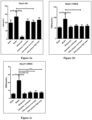
Figures 1a, 1b and 1c illustrate results of the first model, in which rats were given adenine (100 mg/kg)+ ethylambutol (250mg/kg) intragastric administration, once a day for consecutive 21 days.Figure 1a shows the level of UA,figure 1b shows that of CREA andfigure 1c shows that of UREA. -
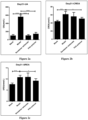
Figures 2a, 2b and 2c illustrates results of the second model, in which rats were given adenine 100mg/kg + ethylambutol 250mg/kg + yeast powder 7.5g/kg, once a day for consecutive 21 days.Figure 2a shows the level of UA,figure 2b shows that of CREA andfigure 2c shows that of UREA. - The present disclosure is based on the inventors' discovery that certain polymers, and compositions thereof are effective at binding uric acid.
- Unless defined otherwise, all scientific and technical terms are understood to have the same meaning as commonly used in the art to which they pertain. For the purpose of the present disclosure, the following terms are defined.
- The term "a derivative thereof' refers to a salt thereof, an ester thereof, a free acid form thereof, a free base form thereof, a solvate thereof, a deuterated derivative thereof, a hydrate thereof, an N-oxide thereof, a polymorph thereof, a stereoisomer thereof, a geometric isomer thereof, a tautomer thereof, a mixture of tautomers thereof, an enantiomer thereof, a diastereomer thereof, a racemate thereof, a mixture of stereoisomers thereof, an isotope thereof (e.g., tritium, deuterium), or a combination thereof.
- In some embodiments, "treatment" or "treating" includes an approach for obtaining beneficial or desired results including clinical results. Beneficial or desired clinical results may include one or more of the following: a) inhibiting the disease or condition (e.g., decreasing one or more symptoms resulting from the disease or condition, and/or diminishing the extent of the disease or condition); b) slowing or arresting the development of one or more clinical symptoms associated with the disease or condition (e.g., stabilizing the disease or condition, preventing or delaying the worsening or progression of the disease or condition, and/or preventing or delaying the spread of the disease or condition); and/or c) relieving the disease, that is, causing the regression of clinical symptoms (e.g., ameliorating the disease state, providing partial or total remission of the disease or condition, enhancing effect of another medication, delaying the progression of the disease, increasing the quality of life, and/or prolonging survival.
- In some variations, a "therapeutically effective amount" is at least the minimum concentration required to effect a measurable improvement of a particular disease, disorder, or condition, such as a congenital disorder of glycosylation. A therapeutically effective amount herein may vary according to factors such as the disease state, age, sex, and weight of the subject, and the ability of the compositions of the present disclosure to elicit a desired response in the subject. A therapeutically effective amount is also one in which any toxic or detrimental effects of the lipid compositions of the present disclosure are outweighed by the therapeutically beneficial effects.
- Provided herein are polymers and compositions thereof, which may be useful in binding uric acid. Amine polymers and methods of making such amine polymers are described.
- In some embodiments, an amine polymer comprises a first amine, wherein the first amine is linked to pyrimidine-2,4-diamine or an analog thereof. The first amine can be a primary amine, a secondary amine or tertiary amine. The amine polymer may include polyallylamine (PAA), polytriallylamine (TAA), polyvinylamine (PVA), polyethyleneimine (PEI), chitosan or any combination thereof.
- In some embodiments, the first amine is linked to pyrimidine-2,4-diamine. In other embodiments, the first amine is linked to an analog, 4-N-(6-hexyl)pyrimidine-2,4,6-triamine.
- The amine polymer can be cross-linked by a crosslinking agent. Suitable crosslinking agents include, but are not limited to, epichlorohydrin, 1,4-Butanediol diglycidyl ether, ethylene glycol diglycidyl ether, 1,3-dichloropropane, 1,2-dichloroethane, 1,3-dibromopropane, 1,2-dibromoethane, succinyl chloride and dimethyl succinate.
- In some embodiments, the amine polymer further comprises a second amine, wherein the second amine is linked to a moiety characterized by selective adsorption of uric acid or precursor thereof. The moiety can be selected from the group consisting of


- An amine polymer or a salt thereof comprises repeat units having at least two formulae selected from the group consisting of:


- In some embodiments, the amine polymer a salt thereof has repeat units consisting of


- In some embodiments, the amine polymer a salt thereof has repeat units consisting of


- In some embodiments, the amine polymer a salt thereof has repeat units consisting of


- In some embodiments, the amine polymer a salt thereof has repeat units consisting of


- Also provided are methods of making such amine polymers. In some embodiments, the method comprises (i) linking pyrimidine-2,4-diamine or an analog thereof to the first amine, and (ii) subsequently crosslinking by a crosslinking agent. Any compositions comprising an amine polymer produced by the methods described herein are contemplated in the present disclosure.
- In some embodiments, the amine polymer is a polyallylamine-based copolymer having a general structure of formula (4) as described herein. The method of making the polyallylamine-based copolymer comprises (1) mixing polyallylamine with NaOH in an aqueous solution; (2) crosslinking the polyallylamine in the aqueous solution with epichlorohydrin to obtain a crosslinked polyallylamine; (3) grafting 4-N-(6-bromo-hexyl)-pyrimidine-2,4,6-triamine hydrobromide onto the crosslinked polyallylamine at an elevated temperature; and (4) further reacting 1-bromodecane and (6-bromohexyl) trimethylammonium bromide with the grafted polyallylamine at the elevated temperature to yield a polyallylamine-based copolymer in a mixture.
- In some embodiments, the elevated temperature in steps (3) and (4) is between 65°C and 70°C. In some embodiments, the elevated temperature is about 65°C, 66°C, 67°C, 68°C, 69°C, or 70°C.
- In some embodiments, the method further comprises (5) filtering the mixture to obtain a solid of the polyallylamine-based copolymer.
- The amine polymer (e.g., polyallylamine-based copolymer) described here exhibits high adsorption of uric acid or precursor thereof. In some embodiments, the amine polymer is characterized by an average adsorption of uric acid in a range from about 0.1 mmol/g to about 10 mmol/g. In some embodiments, the average adsorption of uric acid is in a range from about 0.1 mmol/g to about 0.2 mmol/g, from about 0.2 mmol/g to about 0.5 mmol/g, from about 0.5 mmol/g to about 1 mmol/g, from 1 mmol/g to about 5 mmol/g, from about 5 mmol/g to about 10 mmol/g. In some embodiments, the average adsorption of uric acid is about 0.1 mmol/g, about 0.2 mmol/g, about 0.3 mmol/g, about 0.5 mmol/g, about 1 mmol/g, or about about 2 mmol/g. The high adsorption of uric acid or precursor thereof can enable the administration of a low dose of the amine polymer or a composition comprising the amine polymer.
- In some embodiments, amine polymer (e.g., polyallylamine-based copolymer) described here has an average particle size greater then 3µM, e.g., D(V,0.01): 3µM. It would be appreciated that the polymers described here do not degrade under the physiological conditions and are generally not absorbed from the gastro-intestinal tract.
- Also provided are any compositions comprising the amine polymer (e.g., polyallylamine-based copolymer) produced by the methods described herein.
- Pharmaceutical compositions of the present disclosure contain polymers or compositions thereof as described herein, and appropriate carriers including, for example, pharmaceutically acceptable carriers or diluents.
- In some embodiments, carriers include pharmaceutically acceptable carriers, excipients, or stabilizers that are nontoxic to the cell or subject being exposed thereto at the dosages and concentrations employed. Often the physiologically acceptable carrier is an aqueous pH buffered solution. Suitable physiologically acceptable carriers include, for example, buffers such as phosphate, citrate, and other organic acids; antioxidants including ascorbic acid; low molecular weight (less than about 10 residues) polypeptide; proteins, such as serum albumin, gelatin, or immunoglobulins; hydrophilic polymers such as polyvinylpyrrolidone; amino acids such as glycine, glutamine, asparagine, arginine or lysine; monosaccharides, disaccharides, and other carbohydrates including glucose, mannose, or dextrins; chelating agents such as EDTA; sugar alcohols such as mannitol or sorbitol; salt-forming counterions such as sodium; and/or nonionic surfactants such as TWEEN™, polyethylene glycol (PEG), and PLURONICS™.
- Suitable formulations include, for example, solutions, injections, inhalants, microspheres, aerosols, gels, ointments, creams, lotions, powders, dry vesicular powders, tablets, and capsules. Pharmaceutical compositions can include, depending on the formulation desired, pharmaceutically-acceptable, non-toxic carriers of diluents, which are vehicles commonly used to formulate pharmaceutical compositions for animal or human administration. The diluent is selected so as not to affect the biological activity of the combination. Such diluents include, for example, distilled water, buffered water, physiological saline, PBS, Ringer's solution, dextrose solution, and Hank's solution. A pharmaceutical composition or formulation of the present disclosure can further include, for example, other carriers or non-toxic, nontherapeutic, nonimmunogenic stabilizers, and excipients. The compositions can also include additional substances to approximate physiological conditions, such as pH adjusting and buffering agents, toxicity adjusting agents, wetting agents and detergents. A pharmaceutical composition of the present disclosure can also include any of a variety of stabilizing agents, such as an antioxidant for example.
- Pharmaceutical compositions of the present disclosure can be suitable for oral or intestinal administration. In some embodiments, the pharmaceutical compositions of are used (e.g., administered to a subject in need of treatment, such as a human individual) by oral administration. For oral administration, the active ingredient can be administered in solid dosage forms, such as capsules, tablets, and powders, or in liquid dosage forms, such as elixirs, syrups, and suspensions. Active component(s) can be encapsulated in gelatin capsules together with inactive ingredients and powdered carriers, such as glucose, lactose, sucrose, mannitol, starch, cellulose or cellulose derivatives, magnesium stearate, stearic acid, sodium saccharin, talcum, magnesium carbonate. Examples of additional inactive ingredients that may be added to provide desirable color, taste, stability, buffering capacity, dispersion or other known desirable features are red iron oxide, silica gel, sodium lauryl sulfate, titanium dioxide, and edible white ink. Similar diluents can be used to make compressed tablets. Both tablets and capsules can be manufactured as sustained release products to provide for continuous release of medication over a period of hours. Compressed tablets can be sugar coated or film coated to mask any unpleasant taste and protect the tablet from the atmosphere, or enteric-coated for selective disintegration in the gastrointestinal tract. Liquid dosage forms for oral administration can contain coloring and flavoring to increase patient acceptance.
- Dosages and desired concentration of pharmaceutical compositions of the present disclosure may vary depending on the particular use envisioned. The determination of the appropriate dosage or route of administration is well within the skill of an ordinary artisan. Animal experiments provide reliable guidance for the determination of effective doses for human therapy. For in vivo administration of any of the compositions of the present disclosure, normal dosage amounts may vary from 10 ng/kg up to 100 mg/kg of a subject's body weight per day.
- Administration of a composition of the present disclosure can be continuous or intermittent, depending, for example, on the recipient's physiological condition, whether the purpose of the administration is therapeutic or prophylactic, and other factors known to skilled practitioners. It is within the scope of the present disclosure that dosages may be administered by one or more separate administrations, or by continuous infusion. For repeated administrations over several days or longer, depending on the condition, the treatment is sustained until a desired suppression of disease symptoms occurs. However, other dosage regimens may be useful. The progress of this therapy is easily monitored by conventional techniques and assays.
- Thus, in some variations, the compositions provided herein may be chronically or intermittently administered to a subject (including, for example, a human) in need thereof. In certain variations, chronic administration is administration of the medicament(s) in a continuous as opposed to acute mode, so as to maintain the initial therapeutic effect (activity) for an extended period of time. In certain variations, intermittent administration is treatment that is not consecutively done without interruption, but rather is cyclic in nature.
- The polymers and compositions described herein can bind to uric acid or precursor thereof.
- Uric acid is naturally synthesized by xanthine oxidase-catalyzed oxidation of hypoxanthine and xanthine. Accordingly, in some embodiments, the polymers or compositions described herein are administered with a uric acid synthesis inhibitor such as a xanthine oxidase inhibitor. In one embodiment, the xanthine oxidase inhibitor is allopurinol. In another embodiment, the polymers or compositions described herein are administered with a uricosuric agent, which can act directly on the renal tubules to increase excretion of uric acid. In yet another embodiment, additional ingredients, for example, nonsteroidal anti-inflammatory drugs such as colchicine, ingredients for treating other related indications can be administered simultaneously or sequentially with the polymers or compositions described herein.
- The following Examples are merely illustrative and is not meant to limit any aspects of the present disclosure in any way.
- Below are exemplary reaction schemes for making some polymers described herein. The synthesis is illustrated in Examples 1-4.


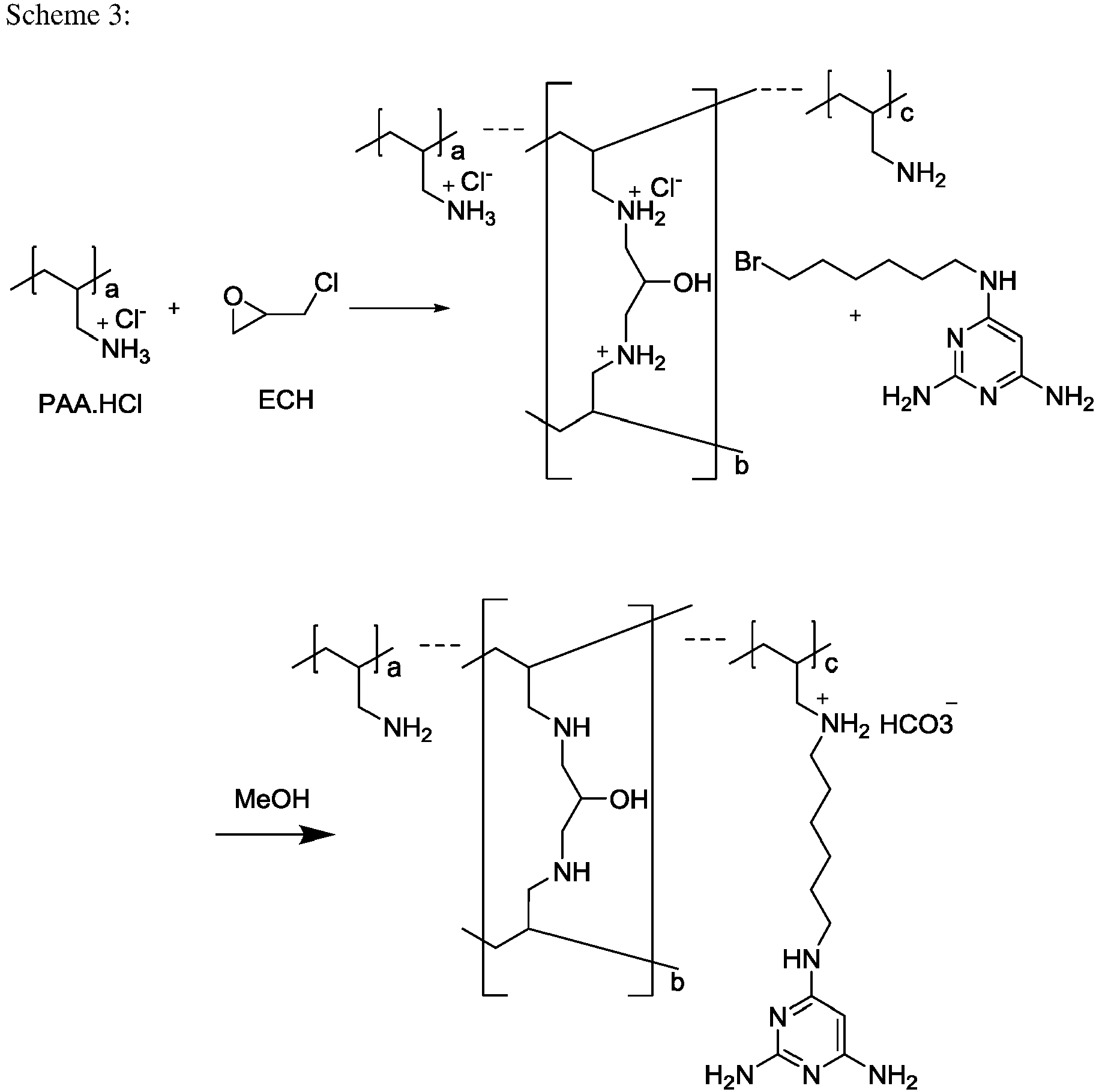

- To a 1L round bottom flask was added 400mL water and NaOH (60.8g), stir to dissolve, add Conc.50% PAA (400.0g), stir for 10min. Concentrate the solution at an external temperature 50-60°C. Add 400mL water during the concentration process, and concentrate the solution to about 560.8g. Add 2,4-diamino-6-chloropyrimidine (108.2g) and 500g water into a 2L round bottom flask, stir and heat to about 100°C, and add the concentrated PAA solution the previous step prepared, then reflux for 72h. Cool the reaction mixture to room temperature, Extract the mixture with 500mL EA, repeat the extraction 3 times. Separate the aqueous layer into a flask, add Epichlorohydrin (19.8g), stir the reaction and dropwise 60.0g Conc.50% NaOH(aq.), heat the reaction to 45-55°C. Stop stirring after the reaction mixture was gelled, keep the temperature at 45-55°C for 12h. Crush the crosslinked polymer, slurry the particles with methanol once, rinse the particles with water and then suspending it in water. Adjust the pH of the mixture to 2-3 with dropwise Conc.HCl, filter the mixture after stir for a moment, rinse the solid until the conductivity of the filter liquor below 200us/cm. Dry the wet product at 55-60°C for 48h, crush the product and a yellow solid was obtained.
- To a 2L round bottom flask was added 1.0L methanol and NaOH (17.5g), stir to dissolve. Add the solid (50.0g) that the product of example 1 prepared, 18.0g 1-bromodecane and 24.5g (6-bromohexyl) trimethylammonium bromide. Heat to 65-70°C and reflux for 48-72h. Filter the reaction, rinse it with 500mL methanol. Slurry the solid in 500mL 2M NaCl (aqueous) for 1h, then filter the mixture, and repeat the operation 2-3 times. Suspending the solid in water, adjust the pH of the mixture to 2-3 with dropwise Conc.HCl, filter the mixture after stir for a moment, rinse the solid until the conductivity of the filter liquor below 200us/cm. Dry the wet product at 55-60°C for 48h, crush the product and a yellow solid was obtained.
- To a 250mL flask was added 20.0g water and 1.0g NaOH, stir to dissolve, then add 25.0g Conc.40% PAA aqueous (Conc.50% PAAH free with NaOH, and dilute to 40% with water). Added Epichlorohydrin (0.9g), stir and heat to 50-60°C, continue keep temperature at 50-60°C for 4-6h after the reaction was gelled. The polymer gel was removed and placed into a homogenizer, stir for 15min, then filter the mixture and the wet solid was standby application. Dissolve N-(6-Bromo-hexyl)-pyrimidine-2,4,6-triamine Hydrobromide (the amount was calculated according to the assay of the wet product of example3) in 10V methanol. Add NaHCOs into the solution slowly, filter the mixture after stir for 1h, the filter liquor was standby application. Charge the filter liquor and the wet solid in a flask, stir and heat to 65-70°C, reflux for 48-72h. Filter the mixture, rinse the wet cake with 200mL methanol. Suspending the solid in 200mL 2M NaCl (aqueous) for 1h, then filter the mixture, and repeat the operation 2-3 times, rinse the solid until the conductivity of the filter liquor below 200us/cm. Suspending the solid in water, adjust the pH of the mixture to about 13.0 with dropwise Conc.20% NaOH(aqueous). Bubble the suspension mixture with CO2 until the pH reached about 10.0. Then stir for 0.5h at room temperature, filter the mixture and rinse the solid until the conductivity of the filter liquor below 200us/cm. Dry the wet product at 55-60°C for 48h, crush the product and a yellow solid was obtained.
- To a 250mL flask was added 20.0g water and 1.0g NaOH, stir to dissolve, then add 25.0g Conc.40% PAA aqueous (Conc.50% PAAH free with NaOH, and dilute to 40% with water). Added Epichlorohydrin (0.9g), stir and heat to 50-60°C, continue keep temperature at 50-60°C for 4-6h after the reaction was gelled. The polymer gel was removed and placed into a homogenizer, stir for 15min, then filter the mixture and the wet solid was standby application. Dissolve N-(6-Bromo-hexyl)-pyrimidine-2,4,6-triamine Hydrobromide (the amount was calculated according to the assay of the wet product of example3) in 10V methanol. Add NaHCOs into the solution slowly, filter the mixture after stir for 1h, the filter liquor was standby application. Charge the filter liquor and the wet solid in a flask, stir and heat to 65-70°C, reflux for 48-72h. Filter the mixture, rinse the wet cake with 200mL methanol. To a 500mL round bottom flask was added 250mL methanol and NaOH (1.0g), stir to dissolve. Add the wet solid, 3.2g 1-bromodecane and 4.3g (6-bromohexyl) trimethylammonium bromide. Heat to 65-70°C and reflux for 48-72h. Filter the reaction, rinse it with 200mL methanol. Slurry the solid in 200mL 2M NaCl (aqueous) for 1h, then filter the mixture, and repeat the operation 2-3 times, rinse the solid until the conductivity of the filter liquor below 200us/cm. Suspending the solid in water, adjust the pH of the mixture to about 13.0 with dropwise Conc.20% NaOH(aqueous). Bubble the suspension mixture with CO2 until the pH reached about 10.0. Then stir for 0.5h at room temperature, filter the mixture and rinse the solid until the conductivity of the filter liquor below 200us/cm. Dry the wet product at 55-60°C for 48h, crush the product and a yellow solid was obtained.
- Solutions were prepared as follows:
- Diluent: water.
- Blank solution: same as diluent.
- Phosphate buffer (pH6.8) was composed of the following: KH2PO4 0.68 g/L, 0.24g/L NaHCO3, 0.32g/L NaOH, and adjust pH to 6.8 with phosphoric acid.
- Uric acid solution (2.1mmol/L): uric acid (353mg) was dissolved into 1 L Phosphate buffer pH6.8.
- Linear stock solution: accurately take 5ml of Uric acid solution (2.1mmol/L) to a 50ml volumetric flask, dilute to volume with sample solution, and mix.
- Standard Linear solution: identify five 10ml volumetric flasks by the numbers 1, 2, 3, 4, and 5. In that order pipet into the flasks 1, 3, 5, 8, and10ml respectively, of Linear stock solution. Dilute with water to volume, and mix.
- Sample solution: Take about 100mg of polymer sample, place it in a 250ml Erlenmeyer flask, add 100ml of uric acid binding solution, water bath at 37°C±2°C, stir with magnet for 2h, shake evenly, measure the solution and filter, precise measurement continued 1ml of filtrate, put in a 10ml measuring flask, and dilute to the mark with water.
- The chromatographic system used is described below.
Chromatographic system HPLC Agilent 1260 or equivalent Column ACE Excel 5 C8, 4.6mm × 150 mm, 5 µm Detection wavelength 293nm, no reference Flow rate 1.0ml/ min Column temperature 30°C Injection volume 10µl Run time 8min Mobile phase A:0.05% phosphoric acid solution (Take 0.5ml phosphoric acid, add 1L purified water, and mix.) B: Methanol Isocratic elution mobile phase A- mobile phase B (95:5) - A blank solution, a standard graph and a sample solution were injected respectively.
- Blank solution has no interference with uric acid impurity peak. On ruled coordinate paper, plot the observed instrument readings as the ordinate, and the concentrations, in µmol per liter, of uric acid as the abscissa. The linear correlation coefficient should not be less than 0.999.
- Uric acid adsorbed on the polymers was calculated by the formula:

- To eight 250mL round bottom flask were added 80mL methanol and (0.35g, 0.7g, 1.05g, 1.4g, 1.75g, 2.1g, 2.45g, 2.7g) NaOH respectively, cool to 0-10°C after the NaOH was dissolved. Add 4-N-(6-Bromo-hexyl)-pyrimidine-2,4,6-triamine hydrobromide (2.69g(0.1eq), 5.38g(0.2eq), 8.07g(0.3eq), 10.76g(0.4eq), 13.45g(0.5eq), 16.14g(0.6eq), 18.83g(0.7eq), and 21.52g(0.8eq)) into the flask respectively, stir at 0-10°C for 0.5-1h. Add the polymers described herein, purge the flask with nitrogen and slight nitrogen protection. Heat to 65-70°C, reflux for 24-48h. Cool the reaction to 30-40°C, filter the mixture and rinse the wet solid with 20mL methanol. Slurry the wet solid in 80mL methanol, stir at 30-40°C for 0.5-1h, filter the mixture and rinse the wet solid with 20mL methanol, repeat the slurry operation once. Suspending the wet solid in 100mL 8% NaHCO3, stir at 35-40°C for 0.5-1h, filter the mixture and rinse the wet solid with 20mL water, repeat the slurry operation 5 times. Suspending the wet solid in 100mL water, stir at 25-35°C for 0.5-1h, filter the mixture and rinse the wet solid with 20mL water, repeat the slurry operation 2 times. Rinse the wet cake with water until the pH of the filter liquor reach about 7, the conductivity of the filter liquor below 100us/cm. Dry the wet solid at 40-50°C for 24-36h under vacuum.
- 48 rats were randomly divided into 6 groups with 8 rats in each group. The groups were as follows: Blank Group (Vehicle ,ig); Model Group (Vehicle, ig); Positive control group (Allopurinol ,10mg/kg, ig); Compound 1group (Sevelamer carbonate, 250mg/kg, ig); Compound 2 low-dose group ( PAA polymer, 50mg/kg, ig); Compound 2 high-dose group (PAA polymer ,250mg/kg, ig). Except for Blank group, rats in other groups were modeled according to the chronic modeling method. The modeling method was as follows: rats were given Adenine(100 mg/kg)+ Ethambutol (250mg/kg) by gavage, once a day, for 21 days. Animals in blank group and model group were given equal volume of normal saline by gavage. Animals in positive control group were given 10mg/kg Alloalcohol by gavage , once in the first week, once in the second week, once a day for 3 days before sampling in the third week. Animals in each group were given intragastric administration once a day for 14 consecutive days from the 8th day of modeling. Blood samples were taken at Day 21 after modeling, and serum samples were separated and stored at -80□ for biochemical detection. After the end of administration, kidney tissues were taken and fixed with paraformaldehyde for pathological detection.
- After 21 days of modeling (14 days of drug treatment), blood samples were taken and serum separation was performed to detect three renal functions (UA, CREA and UREA) (See Table 1 and
Figures 1a-1c ). Compound 1 is Sevelamer carbonate and Compound 2 is a polyallylamine-based copolymer having a general structure of formula (4) as described herein.Table 1: Biochemical results after 21 days of modeling (14 days of administration) Group Test Article Dose(mg/kg) UA (umoJ/L) CREA (umol/L) UREA Cmmol/L) Blank Vehicle - 98.18 ± 18.08 52.01 ± 3.22 5.57 ± 0.75 Model Vehicle - 135.0 ± 28.91** 92.62 ± 24.80*** 22.64 ± 5.77*** Positive Allopurinol 10 12.88 ± 6.01 ### 54.73 ± 4.75## 5.82 ± 1.10### Compound 1 Sevelamer carbonate 250 108.8 ± 12.99 60.41 ± 6.15 7.37 ± 1.39### Compound 2 low- dose PAA polymer 50 103.3 ± 11.38# 57.42±8.01# 7.36 ± 2.36### Compound 2 high-dose PAA polymer 250 115.5 ± 14.65 59.58 ± 7.80 7.23 ± 1.28### Compared with blank group, *P < 0.05, **P < 0.01, ***P < 0.001; compared with model group, #P < 0.05, ##P < 0.01, ###P < 0.001. - It was found that after 21 days of modeling, compared with Blank group, the UA in Model group was significantly higher (P<0.01), and the UA in positive control group was significantly reduced (P<0.001), the UA in Compound 2 low-dose group also significantly reduced (P<0.05).
- In addition, after 21 days of modeling, compared with Blank group, CREA and UREA in Model group were significantly higher (P<0.001; P<0.001, respectively). The level of CREA and UREA was significantly reduced by treatment with Allopurinol (P<0.01; P< 0.001, respectively). The low-dose of Compound 2 could significantly reduce the expression level of CREA. Compound 1 and low and high doses of Compound 2 significantly reduced UREA expression level (P<0.001; P<0.001; P<0.001, respectively).
- In conclusion, this model was successfully established, and kidney damage can occur in the chronic hyperuricemia model rats . The positive drug Allopurinol significantly reduced uric acid. The low dose of the Compound 2 showed significant uric acid lowering effects. In addition, Allopurinol and both two tested compounds can decrease CREA and UREA, indicating that they have a certain protective effect on the kidney.
- 32 rats were randomly divided into 4 groups with 8 rats in each group. The groups were as follows: Blank Group (Vehicle ,ig); Model Group (Vehicle, ig); Compound 1 group (Sevelamer carbonate, 100mg/kg, ig); Compound 2 group (PAA polymer, 100mg/kg, ig). Except for blank group, rats in other groups were modeled according to the chronic modeling method. The modeling method was as follows: 100mg/kg adenine + 250mg/kg ethambutol + 7.5g/kg yeast powder were given to rats by gavage, once a day, for 21 days. Animals in blank group and model group were given equal volume of normal saline by gavage. Animals in each group were given intragastric administration once a day for 14 consecutive days from the 8th day of modeling. Blood samples were taken at Day 21 after modeling, and serum samples were separated and stored at -80□ for biochemical detection.
- After 21 days of modeling (14 days of drug treatment), blood samples were collected and serum samples were separated to detect three renal functions (UA,CREA and UREA). (See Table 2 and
Figures 2a-2c ).Table 2 Biochemical results after 21 days of modeling (14 days of administration) Group Test Article Dose (mg/kg) UA(umol/L) CREA(umol/L ) UREA(mmol/L ) Blank Vehicle - 99.67±30.92 43.89±2.78 7.57±0.63 Model Vehicle - 558.70±48.91** * 61.34±7.54*** 10.73±0.94*** Compound 1 Sevelame r carbonate 100 102.40±26.04## # 55.87±10.34 10.85±1.84 Compound 2 PAA polymer 100 141.70±39.44## # 50.43±3.70# 9.15±1.03# Compared with blank group, *P < 0.05, **P < 0.01, ***P < 0.001; compared with model group, #P < 0.05, ##P < 0.01, ###P < 0.001. - Compared with blank group, UA, UREA and CREA in model group were significantly increased (P <0.0001, P <0.0001, P <0.0001). Compared with model group B, UA was significantly reduced in Compound 1 group and Compound 2 group (P<0.0001, P< 0.0001,respectively). Compared with model group, UREA and CREA in Compound 2 group were significantly reduced (P<0.05).
- In conclusion, the model was successfully established, and the chronic hyperuricemia model would lead to kidney injury. Both two Compounds had obvious effect of lowering UA. In addition, the Compound 2 group could reduce UREA and CREA, while the Compound 1 had no obvious effect of lowering UREA and CREA.
Claims (15)
- An amine polymer or a salt thereof comprising a first amine, wherein the first amine is linked to pyrimidine-2,4-diamine or an analog thereof.
- The amine polymer or a salt thereof of claim 1, wherein the first amine is a primary amine, a secondary amine or tertiary amine.
- The amine polymer or a salt thereof of claim 1, wherein the amine polymer comprises polyallylamine (PAA), polytriallylamine (TAA), polyvinylamine (PVA), polyethyleneimine (PEI), chitosan or any combination thereof.
- The amine polymer or a salt thereof of any one of claims 1-3, wherein the analog is 4-N-(6-hexyl)pyrimidine-2,4,6-triamine.
- The amine polymer or a salt thereof of any one of claims 1-4, wherein the amine polymer is cross-linked by a crosslinking agent, and preferably, the crosslinking agent is epichlorohydrin.
- The amine polymer or a salt thereof of any one of claims 1-5, further comprising a second amine, wherein the second amine is linked to a moiety characterized by selective adsorption of uric acid or precursor thereof.
- The amine polymer or a salt thereof of claim 6, wherein the moiety is selected from the group consisting of


- An amine polymer or a salt thereof comprising repeat units having at least three formulae selected from the group consisting of:


- The amine polymer or a salt thereof of claim 8, wherein the repeat units are


- A pharmaceutical composition comprising an amine polymer or a salt thereof, wherein the amine polymer comprises a first amine linked to pyrimidine-2,4-diamine or an analog thereof, and wherein the amine polymer is produced by(i) linking pyrimidine-2,4-diamine or an analog thereof to the first amine, and(ii) subsequently crosslinking by a crosslinking agent.
- A process of making a polyallylamine-based copolymer having a general structure of formula (4),
 (1) mixing polyallylamine with NaOH in an aqueous solution;(2) crosslinking the polyallylamine in the aqueous solution with epichlorohydrin to obtain a crosslinked polyallylamine;(3) grafting 4-N-(6-bromo-hexyl)-pyrimidine-2,4,6-triamine hydrobromide onto the crosslinked polyallylamine at an elevated temperature; and(4) further reacting 1-bromodecane and (6-bromohexyl) trimethylammonium bromide with the grafted polyallylamine at the elevated temperature to yield a polyallylamine-based copolymer in a mixture.
 - The process of claim 11, wherein the elevated temperature in steps (3) and (4) is between 65°C and 70°C; and/or
the process further comprises: (5) filtering the mixture to obtain a solid of the polyallylamine-based copolymer. - A pharmaceutical composition comprisingthe amine polymer or the salt thereof of any one of claims 1-9, or the polyallylamine-based copolymer produced by the process of claim 11 or 12; andan optional pharmaceutically acceptable excipient, diluent, or carrier.
- The amine polymer or the salt thereof of any one of claims 1 to 9, the pharmaceutical composition of claim 10, or the pharmaceutical composition of claim 13 for use in treating a condition associated with an elevated serum uric acid level.
- The amine polymer or the salt thereof of any one of claims 1 to 9, the pharmaceutical composition of claim 10, or the pharmaceutical composition of claim 13 for the use of claim 14, wherein the amine polymer binds to uric acid or precursor thereof; and/orsaid condition is hyperuricemia or gout, and said gout is severe gout, chronic gout, or acute gout; and/orthe amine polymer or the salt thereof of any one of claims 1 to 9, the pharmaceutical composition of claim 10, or the pharmaceutical composition of claim 13 is administered orally.
Applications Claiming Priority (1)
| Application Number | Priority Date | Filing Date | Title |
|---|---|---|---|
| PCT/CN2021/114309 WO2023023938A1 (en) | 2021-08-24 | 2021-08-24 | Polymers, compositions and methods for treating hyperuricemia |
Publications (3)
| Publication Number | Publication Date |
|---|---|
| EP4161534A1 EP4161534A1 (en) | 2023-04-12 |
| EP4161534A4 EP4161534A4 (en) | 2023-04-12 |
| EP4161534B1 true EP4161534B1 (en) | 2024-11-06 |
Family
ID=85321616
Family Applications (1)
| Application Number | Title | Priority Date | Filing Date |
|---|---|---|---|
| EP21870493.0A Active EP4161534B1 (en) | 2021-08-24 | 2021-08-24 | Polymers, compositions and methods for treating hyperuricemia |
Country Status (5)
| Country | Link |
|---|---|
| US (1) | US12478638B2 (en) |
| EP (1) | EP4161534B1 (en) |
| CN (1) | CN116018146A (en) |
| ES (1) | ES2995007T3 (en) |
| WO (1) | WO2023023938A1 (en) |
Families Citing this family (1)
| Publication number | Priority date | Publication date | Assignee | Title |
|---|---|---|---|---|
| CN116242955A (en) * | 2021-12-08 | 2023-06-09 | 湖北华世通生物医药科技有限公司 | Pretreatment method and determination method of high molecular polymer containing quaternary ammonium salt group |
Family Cites Families (7)
| Publication number | Priority date | Publication date | Assignee | Title |
|---|---|---|---|---|
| ATE293477T1 (en) * | 2000-07-28 | 2005-05-15 | Hoffmann La Roche | NEW USE OF LIPASE INHIBITORS |
| CA2444347A1 (en) * | 2001-04-18 | 2002-10-31 | Genzyme Corporation | Method for treating gout and binding uric acid |
| WO2002085380A1 (en) * | 2001-04-18 | 2002-10-31 | Geltex Pharmaceuticals, Inc. | Method for treating gout and reducing serum uric acid |
| WO2002085377A1 (en) * | 2001-04-18 | 2002-10-31 | Genzyme Corporation | Method for lowering serum glucose |
| BR0209020A (en) * | 2001-04-18 | 2004-08-10 | Genzyme Corp | Polyallylamine Pharmaceutical Composition |
| AU2003263010A1 (en) * | 2003-09-02 | 2005-04-21 | Genzyme Corporation | Method for reducing vascular inflammation |
| US7985418B2 (en) * | 2004-11-01 | 2011-07-26 | Genzyme Corporation | Aliphatic amine polymer salts for tableting |
-
2021
- 2021-08-24 ES ES21870493T patent/ES2995007T3/en active Active
- 2021-08-24 EP EP21870493.0A patent/EP4161534B1/en active Active
- 2021-08-24 WO PCT/CN2021/114309 patent/WO2023023938A1/en not_active Ceased
- 2021-08-24 CN CN202180004673.2A patent/CN116018146A/en active Pending
-
2022
- 2022-05-27 US US17/826,803 patent/US12478638B2/en active Active
Also Published As
| Publication number | Publication date |
|---|---|
| EP4161534A1 (en) | 2023-04-12 |
| US12478638B2 (en) | 2025-11-25 |
| US20230085942A1 (en) | 2023-03-23 |
| ES2995007T3 (en) | 2025-02-05 |
| CN116018146A (en) | 2023-04-25 |
| EP4161534A4 (en) | 2023-04-12 |
| WO2023023938A1 (en) | 2023-03-02 |
Similar Documents
| Publication | Publication Date | Title |
|---|---|---|
| EP2167099B1 (en) | Treatment of pulmonary hypertension with carbonic anhydrase inhibitors in combination with a sympathomimetic amine | |
| EP3236943B1 (en) | Compositions for ileo-jejunal drug delivery | |
| EP2033633A2 (en) | Partial fatty acid oxidation inhibitors in the treatment of congestive heart failure | |
| WO2024129879A1 (en) | Irak4 degraders and uses thereof | |
| US20170020905A1 (en) | Compositions and methods for treating an aggregation disease or disorder | |
| JP2002500665A (en) | Omeprazole preparation | |
| US12478638B2 (en) | Polymers, compositions and methods for treating hyperuricemia | |
| WO1996010405A1 (en) | Antitumor agent | |
| EP4371558A1 (en) | Sacubitril valsartan sodium sustained-release composition, and preparation method therefor and use thereof | |
| EP4164659B1 (en) | Polymers, compositions and methods for treating hyperuricemia | |
| EP4497439A1 (en) | Compounds for the treatment or prevention of gout | |
| CN106511264A (en) | Methylphenidate hydrochloride oral solution and preparation method thereof | |
| CN113456607B (en) | Sacubitril valsartan sodium monolayer osmotic pump controlled release tablet and preparation method thereof | |
| US6268368B1 (en) | Anionic exchange polymer complexes of buspirone | |
| US6423847B1 (en) | Synthesis and clinical uses of D,α-tocopherol nicotinate compounds | |
| AU2012201640B2 (en) | Treatment of pulmonary hypertension with carbonic anhydrase inhibitors in combination with a sympathomimetic amine | |
| AU2022387426A1 (en) | Bet inhibitor for treating glioblastoma | |
| AU2014213552B2 (en) | Treatment of pulmonary hypertension with carbonic anhydrase inhibitors in combination with a sympathomimetic amine | |
| US20080015260A1 (en) | Pharmaceutical compositions having improved stability and methods for preparation and use | |
| HK1245071B (en) | Compositions for ileo-jejunal drug delivery |
Legal Events
| Date | Code | Title | Description |
|---|---|---|---|
| STAA | Information on the status of an ep patent application or granted ep patent |
Free format text: STATUS: UNKNOWN |
|
| STAA | Information on the status of an ep patent application or granted ep patent |
Free format text: STATUS: THE INTERNATIONAL PUBLICATION HAS BEEN MADE |
|
| PUAI | Public reference made under article 153(3) epc to a published international application that has entered the european phase |
Free format text: ORIGINAL CODE: 0009012 |
|
| STAA | Information on the status of an ep patent application or granted ep patent |
Free format text: STATUS: REQUEST FOR EXAMINATION WAS MADE |
|
| 17P | Request for examination filed |
Effective date: 20220329 |
|
| A4 | Supplementary search report drawn up and despatched |
Effective date: 20230102 |
|
| AK | Designated contracting states |
Kind code of ref document: A1 Designated state(s): AL AT BE BG CH CY CZ DE DK EE ES FI FR GB GR HR HU IE IS IT LI LT LU LV MC MK MT NL NO PL PT RO RS SE SI SK SM TR |
|
| STAA | Information on the status of an ep patent application or granted ep patent |
Free format text: STATUS: EXAMINATION IS IN PROGRESS |
|
| 17Q | First examination report despatched |
Effective date: 20231123 |
|
| GRAP | Despatch of communication of intention to grant a patent |
Free format text: ORIGINAL CODE: EPIDOSNIGR1 |
|
| STAA | Information on the status of an ep patent application or granted ep patent |
Free format text: STATUS: GRANT OF PATENT IS INTENDED |
|
| DAV | Request for validation of the european patent (deleted) | ||
| DAX | Request for extension of the european patent (deleted) | ||
| INTG | Intention to grant announced |
Effective date: 20240816 |
|
| GRAS | Grant fee paid |
Free format text: ORIGINAL CODE: EPIDOSNIGR3 |
|
| GRAA | (expected) grant |
Free format text: ORIGINAL CODE: 0009210 |
|
| STAA | Information on the status of an ep patent application or granted ep patent |
Free format text: STATUS: THE PATENT HAS BEEN GRANTED |
|
| AK | Designated contracting states |
Kind code of ref document: B1 Designated state(s): AL AT BE BG CH CY CZ DE DK EE ES FI FR GB GR HR HU IE IS IT LI LT LU LV MC MK MT NL NO PL PT RO RS SE SI SK SM TR |
|
| REG | Reference to a national code |
Ref country code: GB Ref legal event code: FG4D |
|
| REG | Reference to a national code |
Ref country code: CH Ref legal event code: EP |
|
| REG | Reference to a national code |
Ref country code: DE Ref legal event code: R096 Ref document number: 602021021626 Country of ref document: DE |
|
| REG | Reference to a national code |
Ref country code: SE Ref legal event code: TRGR |
|
| REG | Reference to a national code |
Ref country code: IE Ref legal event code: FG4D |
|
| REG | Reference to a national code |
Ref country code: ES Ref legal event code: FG2A Ref document number: 2995007 Country of ref document: ES Kind code of ref document: T3 Effective date: 20250205 |
|
| REG | Reference to a national code |
Ref country code: LT Ref legal event code: MG9D |
|
| REG | Reference to a national code |
Ref country code: NL Ref legal event code: MP Effective date: 20241106 |
|
| PG25 | Lapsed in a contracting state [announced via postgrant information from national office to epo] |
Ref country code: IS Free format text: LAPSE BECAUSE OF FAILURE TO SUBMIT A TRANSLATION OF THE DESCRIPTION OR TO PAY THE FEE WITHIN THE PRESCRIBED TIME-LIMIT Effective date: 20250306 Ref country code: PT Free format text: LAPSE BECAUSE OF FAILURE TO SUBMIT A TRANSLATION OF THE DESCRIPTION OR TO PAY THE FEE WITHIN THE PRESCRIBED TIME-LIMIT Effective date: 20250306 Ref country code: HR Free format text: LAPSE BECAUSE OF FAILURE TO SUBMIT A TRANSLATION OF THE DESCRIPTION OR TO PAY THE FEE WITHIN THE PRESCRIBED TIME-LIMIT Effective date: 20241106 |
|
| PG25 | Lapsed in a contracting state [announced via postgrant information from national office to epo] |
Ref country code: FI Free format text: LAPSE BECAUSE OF FAILURE TO SUBMIT A TRANSLATION OF THE DESCRIPTION OR TO PAY THE FEE WITHIN THE PRESCRIBED TIME-LIMIT Effective date: 20241106 Ref country code: NL Free format text: LAPSE BECAUSE OF FAILURE TO SUBMIT A TRANSLATION OF THE DESCRIPTION OR TO PAY THE FEE WITHIN THE PRESCRIBED TIME-LIMIT Effective date: 20241106 |
|
| REG | Reference to a national code |
Ref country code: AT Ref legal event code: MK05 Ref document number: 1738635 Country of ref document: AT Kind code of ref document: T Effective date: 20241106 |
|
| PG25 | Lapsed in a contracting state [announced via postgrant information from national office to epo] |
Ref country code: BG Free format text: LAPSE BECAUSE OF FAILURE TO SUBMIT A TRANSLATION OF THE DESCRIPTION OR TO PAY THE FEE WITHIN THE PRESCRIBED TIME-LIMIT Effective date: 20241106 |
|
| PG25 | Lapsed in a contracting state [announced via postgrant information from national office to epo] |
Ref country code: NO Free format text: LAPSE BECAUSE OF FAILURE TO SUBMIT A TRANSLATION OF THE DESCRIPTION OR TO PAY THE FEE WITHIN THE PRESCRIBED TIME-LIMIT Effective date: 20250206 |
|
| PG25 | Lapsed in a contracting state [announced via postgrant information from national office to epo] |
Ref country code: LV Free format text: LAPSE BECAUSE OF FAILURE TO SUBMIT A TRANSLATION OF THE DESCRIPTION OR TO PAY THE FEE WITHIN THE PRESCRIBED TIME-LIMIT Effective date: 20241106 Ref country code: AT Free format text: LAPSE BECAUSE OF FAILURE TO SUBMIT A TRANSLATION OF THE DESCRIPTION OR TO PAY THE FEE WITHIN THE PRESCRIBED TIME-LIMIT Effective date: 20241106 Ref country code: GR Free format text: LAPSE BECAUSE OF FAILURE TO SUBMIT A TRANSLATION OF THE DESCRIPTION OR TO PAY THE FEE WITHIN THE PRESCRIBED TIME-LIMIT Effective date: 20250207 |
|
| PG25 | Lapsed in a contracting state [announced via postgrant information from national office to epo] |
Ref country code: PL Free format text: LAPSE BECAUSE OF FAILURE TO SUBMIT A TRANSLATION OF THE DESCRIPTION OR TO PAY THE FEE WITHIN THE PRESCRIBED TIME-LIMIT Effective date: 20241106 |
|
| PG25 | Lapsed in a contracting state [announced via postgrant information from national office to epo] |
Ref country code: RS Free format text: LAPSE BECAUSE OF FAILURE TO SUBMIT A TRANSLATION OF THE DESCRIPTION OR TO PAY THE FEE WITHIN THE PRESCRIBED TIME-LIMIT Effective date: 20250206 |
|
| PG25 | Lapsed in a contracting state [announced via postgrant information from national office to epo] |
Ref country code: SM Free format text: LAPSE BECAUSE OF FAILURE TO SUBMIT A TRANSLATION OF THE DESCRIPTION OR TO PAY THE FEE WITHIN THE PRESCRIBED TIME-LIMIT Effective date: 20241106 |
|
| PG25 | Lapsed in a contracting state [announced via postgrant information from national office to epo] |
Ref country code: DK Free format text: LAPSE BECAUSE OF FAILURE TO SUBMIT A TRANSLATION OF THE DESCRIPTION OR TO PAY THE FEE WITHIN THE PRESCRIBED TIME-LIMIT Effective date: 20241106 |
|
| PG25 | Lapsed in a contracting state [announced via postgrant information from national office to epo] |
Ref country code: EE Free format text: LAPSE BECAUSE OF FAILURE TO SUBMIT A TRANSLATION OF THE DESCRIPTION OR TO PAY THE FEE WITHIN THE PRESCRIBED TIME-LIMIT Effective date: 20241106 |
|
| PG25 | Lapsed in a contracting state [announced via postgrant information from national office to epo] |
Ref country code: RO Free format text: LAPSE BECAUSE OF FAILURE TO SUBMIT A TRANSLATION OF THE DESCRIPTION OR TO PAY THE FEE WITHIN THE PRESCRIBED TIME-LIMIT Effective date: 20241106 |
|
| PG25 | Lapsed in a contracting state [announced via postgrant information from national office to epo] |
Ref country code: SK Free format text: LAPSE BECAUSE OF FAILURE TO SUBMIT A TRANSLATION OF THE DESCRIPTION OR TO PAY THE FEE WITHIN THE PRESCRIBED TIME-LIMIT Effective date: 20241106 |
|
| PG25 | Lapsed in a contracting state [announced via postgrant information from national office to epo] |
Ref country code: CZ Free format text: LAPSE BECAUSE OF FAILURE TO SUBMIT A TRANSLATION OF THE DESCRIPTION OR TO PAY THE FEE WITHIN THE PRESCRIBED TIME-LIMIT Effective date: 20241106 |
|
| REG | Reference to a national code |
Ref country code: DE Ref legal event code: R097 Ref document number: 602021021626 Country of ref document: DE |
|
| PLBE | No opposition filed within time limit |
Free format text: ORIGINAL CODE: 0009261 |
|
| STAA | Information on the status of an ep patent application or granted ep patent |
Free format text: STATUS: NO OPPOSITION FILED WITHIN TIME LIMIT |
|
| PGFP | Annual fee paid to national office [announced via postgrant information from national office to epo] |
Ref country code: ES Payment date: 20250908 Year of fee payment: 5 |
|
| PGFP | Annual fee paid to national office [announced via postgrant information from national office to epo] |
Ref country code: DE Payment date: 20250812 Year of fee payment: 5 |
|
| 26N | No opposition filed |
Effective date: 20250807 |
|
| PGFP | Annual fee paid to national office [announced via postgrant information from national office to epo] |
Ref country code: IT Payment date: 20250808 Year of fee payment: 5 |
|
| PGFP | Annual fee paid to national office [announced via postgrant information from national office to epo] |
Ref country code: BE Payment date: 20250826 Year of fee payment: 5 Ref country code: GB Payment date: 20250826 Year of fee payment: 5 |
|
| PGFP | Annual fee paid to national office [announced via postgrant information from national office to epo] |
Ref country code: FR Payment date: 20250828 Year of fee payment: 5 |
|
| PGFP | Annual fee paid to national office [announced via postgrant information from national office to epo] |
Ref country code: CH Payment date: 20250901 Year of fee payment: 5 Ref country code: SE Payment date: 20250826 Year of fee payment: 5 |
|
| PGFP | Annual fee paid to national office [announced via postgrant information from national office to epo] |
Ref country code: IE Payment date: 20250728 Year of fee payment: 5 |
|
| PG25 | Lapsed in a contracting state [announced via postgrant information from national office to epo] |
Ref country code: MC Free format text: LAPSE BECAUSE OF FAILURE TO SUBMIT A TRANSLATION OF THE DESCRIPTION OR TO PAY THE FEE WITHIN THE PRESCRIBED TIME-LIMIT Effective date: 20241106 |
|
| PG25 | Lapsed in a contracting state [announced via postgrant information from national office to epo] |
Ref country code: LU Free format text: LAPSE BECAUSE OF NON-PAYMENT OF DUE FEES Effective date: 20250824 |
|
| PG25 | Lapsed in a contracting state [announced via postgrant information from national office to epo] |
Ref country code: LT Free format text: LAPSE BECAUSE OF FAILURE TO SUBMIT A TRANSLATION OF THE DESCRIPTION OR TO PAY THE FEE WITHIN THE PRESCRIBED TIME-LIMIT Effective date: 20241106 |