EP4160473A1 - Method and device for capturing information, and method, device, and system for measuring level of attention - Google Patents
Method and device for capturing information, and method, device, and system for measuring level of attention Download PDFInfo
- Publication number
- EP4160473A1 EP4160473A1 EP21813171.2A EP21813171A EP4160473A1 EP 4160473 A1 EP4160473 A1 EP 4160473A1 EP 21813171 A EP21813171 A EP 21813171A EP 4160473 A1 EP4160473 A1 EP 4160473A1
- Authority
- EP
- European Patent Office
- Prior art keywords
- pedestrian
- historical data
- feature information
- information
- video frame
- Prior art date
- Legal status (The legal status is an assumption and is not a legal conclusion. Google has not performed a legal analysis and makes no representation as to the accuracy of the status listed.)
- Pending
Links
Images



Classifications
-
- G—PHYSICS
- G06—COMPUTING OR CALCULATING; COUNTING
- G06V—IMAGE OR VIDEO RECOGNITION OR UNDERSTANDING
- G06V10/00—Arrangements for image or video recognition or understanding
- G06V10/70—Arrangements for image or video recognition or understanding using pattern recognition or machine learning
- G06V10/82—Arrangements for image or video recognition or understanding using pattern recognition or machine learning using neural networks
-
- G—PHYSICS
- G06—COMPUTING OR CALCULATING; COUNTING
- G06F—ELECTRIC DIGITAL DATA PROCESSING
- G06F16/00—Information retrieval; Database structures therefor; File system structures therefor
- G06F16/20—Information retrieval; Database structures therefor; File system structures therefor of structured data, e.g. relational data
- G06F16/21—Design, administration or maintenance of databases
- G06F16/215—Improving data quality; Data cleansing, e.g. de-duplication, removing invalid entries or correcting typographical errors
-
- G—PHYSICS
- G06—COMPUTING OR CALCULATING; COUNTING
- G06F—ELECTRIC DIGITAL DATA PROCESSING
- G06F16/00—Information retrieval; Database structures therefor; File system structures therefor
- G06F16/20—Information retrieval; Database structures therefor; File system structures therefor of structured data, e.g. relational data
- G06F16/28—Databases characterised by their database models, e.g. relational or object models
- G06F16/284—Relational databases
- G06F16/285—Clustering or classification
-
- G—PHYSICS
- G06—COMPUTING OR CALCULATING; COUNTING
- G06N—COMPUTING ARRANGEMENTS BASED ON SPECIFIC COMPUTATIONAL MODELS
- G06N3/00—Computing arrangements based on biological models
- G06N3/02—Neural networks
- G06N3/04—Architecture, e.g. interconnection topology
- G06N3/045—Combinations of networks
-
- G—PHYSICS
- G06—COMPUTING OR CALCULATING; COUNTING
- G06V—IMAGE OR VIDEO RECOGNITION OR UNDERSTANDING
- G06V10/00—Arrangements for image or video recognition or understanding
- G06V10/20—Image preprocessing
- G06V10/25—Determination of region of interest [ROI] or a volume of interest [VOI]
-
- G—PHYSICS
- G06—COMPUTING OR CALCULATING; COUNTING
- G06V—IMAGE OR VIDEO RECOGNITION OR UNDERSTANDING
- G06V10/00—Arrangements for image or video recognition or understanding
- G06V10/40—Extraction of image or video features
- G06V10/44—Local feature extraction by analysis of parts of the pattern, e.g. by detecting edges, contours, loops, corners, strokes or intersections; Connectivity analysis, e.g. of connected components
- G06V10/443—Local feature extraction by analysis of parts of the pattern, e.g. by detecting edges, contours, loops, corners, strokes or intersections; Connectivity analysis, e.g. of connected components by matching or filtering
- G06V10/449—Biologically inspired filters, e.g. difference of Gaussians [DoG] or Gabor filters
- G06V10/451—Biologically inspired filters, e.g. difference of Gaussians [DoG] or Gabor filters with interaction between the filter responses, e.g. cortical complex cells
- G06V10/454—Integrating the filters into a hierarchical structure, e.g. convolutional neural networks [CNN]
-
- G—PHYSICS
- G06—COMPUTING OR CALCULATING; COUNTING
- G06V—IMAGE OR VIDEO RECOGNITION OR UNDERSTANDING
- G06V10/00—Arrangements for image or video recognition or understanding
- G06V10/40—Extraction of image or video features
- G06V10/62—Extraction of image or video features relating to a temporal dimension, e.g. time-based feature extraction; Pattern tracking
-
- G—PHYSICS
- G06—COMPUTING OR CALCULATING; COUNTING
- G06V—IMAGE OR VIDEO RECOGNITION OR UNDERSTANDING
- G06V10/00—Arrangements for image or video recognition or understanding
- G06V10/70—Arrangements for image or video recognition or understanding using pattern recognition or machine learning
-
- G—PHYSICS
- G06—COMPUTING OR CALCULATING; COUNTING
- G06V—IMAGE OR VIDEO RECOGNITION OR UNDERSTANDING
- G06V20/00—Scenes; Scene-specific elements
- G06V20/40—Scenes; Scene-specific elements in video content
- G06V20/46—Extracting features or characteristics from the video content, e.g. video fingerprints, representative shots or key frames
-
- G—PHYSICS
- G06—COMPUTING OR CALCULATING; COUNTING
- G06V—IMAGE OR VIDEO RECOGNITION OR UNDERSTANDING
- G06V20/00—Scenes; Scene-specific elements
- G06V20/50—Context or environment of the image
- G06V20/52—Surveillance or monitoring of activities, e.g. for recognising suspicious objects
-
- G—PHYSICS
- G06—COMPUTING OR CALCULATING; COUNTING
- G06V—IMAGE OR VIDEO RECOGNITION OR UNDERSTANDING
- G06V40/00—Recognition of biometric, human-related or animal-related patterns in image or video data
- G06V40/10—Human or animal bodies, e.g. vehicle occupants or pedestrians; Body parts, e.g. hands
-
- G—PHYSICS
- G06—COMPUTING OR CALCULATING; COUNTING
- G06V—IMAGE OR VIDEO RECOGNITION OR UNDERSTANDING
- G06V40/00—Recognition of biometric, human-related or animal-related patterns in image or video data
- G06V40/10—Human or animal bodies, e.g. vehicle occupants or pedestrians; Body parts, e.g. hands
- G06V40/103—Static body considered as a whole, e.g. static pedestrian or occupant recognition
-
- G—PHYSICS
- G06—COMPUTING OR CALCULATING; COUNTING
- G06V—IMAGE OR VIDEO RECOGNITION OR UNDERSTANDING
- G06V40/00—Recognition of biometric, human-related or animal-related patterns in image or video data
- G06V40/20—Movements or behaviour, e.g. gesture recognition
-
- G—PHYSICS
- G06—COMPUTING OR CALCULATING; COUNTING
- G06V—IMAGE OR VIDEO RECOGNITION OR UNDERSTANDING
- G06V40/00—Recognition of biometric, human-related or animal-related patterns in image or video data
- G06V40/20—Movements or behaviour, e.g. gesture recognition
- G06V40/23—Recognition of whole body movements, e.g. for sport training
-
- G—PHYSICS
- G06—COMPUTING OR CALCULATING; COUNTING
- G06N—COMPUTING ARRANGEMENTS BASED ON SPECIFIC COMPUTATIONAL MODELS
- G06N3/00—Computing arrangements based on biological models
- G06N3/02—Neural networks
- G06N3/04—Architecture, e.g. interconnection topology
- G06N3/0464—Convolutional networks [CNN, ConvNet]
Definitions
- the third deep-learning model is a multi-layered CNN model.
- the pedestrian historical data in the database is grouped by pedestrian identifier. And a first deduplication processing is performed on each group of pedestrian historical data to retain only one piece of pedestrian historical data in a plurality of pieces of pedestrian historical data which have same feature information and have intervals between the timestamps of video frames smaller than a time threshold.
- the pedestrian historical data in the database is grouped by the generation time of the video frames. And a first deduplication processing is performed on each group of pedestrian historical data to retain only one piece of pedestrian historical data in a plurality of pieces of pedestrian historical data which have same feature information and have intervals between the timestamps of video frames smaller than a time threshold.
- the receiving module 51 is configured to receive a query request for querying an attention degree of a predetermined area.
Landscapes
- Engineering & Computer Science (AREA)
- Theoretical Computer Science (AREA)
- Physics & Mathematics (AREA)
- General Physics & Mathematics (AREA)
- Multimedia (AREA)
- Databases & Information Systems (AREA)
- General Health & Medical Sciences (AREA)
- Health & Medical Sciences (AREA)
- Computer Vision & Pattern Recognition (AREA)
- Human Computer Interaction (AREA)
- Evolutionary Computation (AREA)
- Artificial Intelligence (AREA)
- General Engineering & Computer Science (AREA)
- Data Mining & Analysis (AREA)
- Software Systems (AREA)
- Computing Systems (AREA)
- Social Psychology (AREA)
- Psychiatry (AREA)
- Medical Informatics (AREA)
- Biomedical Technology (AREA)
- Molecular Biology (AREA)
- Life Sciences & Earth Sciences (AREA)
- Quality & Reliability (AREA)
- Biophysics (AREA)
- Computational Linguistics (AREA)
- Mathematical Physics (AREA)
- Biodiversity & Conservation Biology (AREA)
- Image Analysis (AREA)
- Information Retrieval, Db Structures And Fs Structures Therefor (AREA)
Abstract
Description
- The present disclosure is based on and claims priority from
CN application No. 202010479278.7, filed on May 29, 2020 - The present disclosure relates to the field of information processing, and in particular, to an method and apparatus for acquiring information, and an method, an apparatus, and a system for detecting an attention degree.
- In offline stores, data and respective statistic results showing whether each shelf is disposed in a proper position, whether it attracts sufficient attention degree from users and what kind of customers are most attracted by it are effective data basis for adjusting the layout of the shelves in the store, optimizing the layout of commodities in the store and guiding the selection of the commodities. If these data can be collected, a merchant can adjust in-store layout and optimize the display of commodities conveniently, and it is also helpful for a brand owner to select a proper shelf to display the goods of the brand.
- At present, the merchant' s knowledge of the level of attention degree paid to a shelf is mainly based on manually observing customers' behavior in front of the shelf, or reversely deducing the level of attention degree paid to the shelf by using the quantity of the goods sold in the shelf area.
- According to a first aspect of an embodiment of the present disclosure, an information acquiring method is provided. The information acquiring method comprising: sequentially acquiring a video frame captured by a video capturing equipment; detecting whether a pedestrian exists in the video frame by using a first deep-learning model; processing the video frame by using a second deep-learning model to generate a pedestrian bounding box of the pedestrian under a condition that the pedestrian exists in the video frame, and assigning a corresponding pedestrian identifier to the pedestrian bounding box; identifying an image in the pedestrian bounding box by using a third deep-learning model to identify feature information of the pedestrian; and writing a pedestrian historical data into a database, wherein the pedestrian historical data comprises a timestamp of the video frame, an identifier of the video frame, coordinate information of the pedestrian bounding box, the pedestrian identifier and the feature information of the pedestrian.
- In some embodiments, grouping all pedestrian historical data in the database according to the pedestrian identifier after writing the pedestrian historical data into the database; performing a first deduplication processing on all pedestrian history data in each group to retain only one piece of pedestrian historical data among a plurality of pieces of pedestrian historical data which have same feature information and have intervals between the timestamps of video frames smaller than a time threshold.
- In some embodiments, grouping all pedestrian historical data in the database according to a generation time of the video frames after writing the pedestrian historical data into the database; performing a second deduplication processing on all pedestrian history data in each group to retain only one piece of pedestrian historical data among a plurality of pieces of pedestrian historical data in which a distance between center positions of the pedestrian bounding boxes is smaller than a distance threshold.
- In some embodiments, the assigning the corresponding pedestrian identifier to the pedestrian bounding box comprises: identifying pedestrian feature information in the pedestrian bounding box by using a second deep-learning model; retrieving whether the pedestrian feature information is comprised in a pedestrian feature library; writing the pedestrian feature information into the pedestrian feature library under a condition that the pedestrian feature information is not comprised in the pedestrian feature library, and assigning a new pedestrian identifier to the pedestrian bounding box.
- In some embodiments, the assigning the corresponding pedestrian identifier to the pedestrian bounding box comprises: assigning a pedestrian feature associated with the pedestrian feature information in the pedestrian feature library to the pedestrian bounding box under a condition that the pedestrian feature information is comprised in the pedestrian feature library.
- In some embodiments, discarding the video frame under a condition that there is no pedestrian in the video frame.
- In some embodiments, the feature information of the pedestrian comprises attribute feature information of the pedestrian and behavior feature information of the pedestrian.
- In some embodiments, the attribute feature information of the pedestrian comprises at least one of a gender of the pedestrian, an age of the pedestrian, a clothing of the pedestrian and an appearance features of the pedestrian; the behavior feature information of the pedestrian comprises at least one of walking, staying, taking, putting back and holding.
- According to a second aspect of the embodiments of the present disclosure, an information acquiring apparatus is provided. The information acquiring apparatus comprising: a first processing module configured to sequentially acquire a video frame captured by a video capturing equipment and detect whether a pedestrian exists in the video frame by using a first deep-learning model; a second processing module configured to process the video frame by using a second deep-learning model to generate a pedestrian bounding box of the pedestrian under a condition that the pedestrian exists in the video frame, and assign a corresponding pedestrian identifier to the pedestrian bounding box; a third processing module configured to identify an image in the pedestrian bounding box by using a third deep-learning model to identify feature information of the pedestrian; and a fourth processing module configured to write a pedestrian historical data into a database, wherein the pedestrian historical data comprises a timestamp of the video frame, an identifier of the video frame, coordinate information of the pedestrian bounding box, the pedestrian identifier and the feature information of the pedestrian.
- According to a third aspect of the embodiments of the present disclosure, an information acquiring apparatus is provided. The information acquiring apparatus comprising: a memory configured to store instructions; a processor coupled to the memory, wherein based on the instructions stored in the memory, the processor is configured to implement the method according to the embodiments described above
- According to a fourth aspect of the embodiments of the present disclosure, an attention degree detecting method is provided. The attention degree detecting method comprising: receiving a query request for querying an attention degree of a predetermined area; extracting a plurality of pedestrian historical data associated with the predetermined area from a predetermined database, wherein the pedestrian historical data comprises a timestamp of a video frame, an identifier of the video frame, coordinate information of a pedestrian bounding box, a pedestrian identifier and the feature information of a pedestrian; determining the attention degree of the predetermined area according to timestamps and feature information of pedestrians in the plurality of pedestrian historical data.
- In some embodiments, wherein the determining the attention degree of the predetermined area according to timestamps and feature information of pedestrians in the plurality of pedestrian historical data comprises: extracting a plurality of pedestrian historical data to be detected from the plurality of pedestrian historical data, wherein timestamps in the plurality of pedestrian historical data to be detected are within a predetermined time range; counting the number of pieces of feature information of the pedestrians in the pedestrian historical data to be detected; determining the attention degree of the predetermined area according to the result of counting.
- In some embodiments, the feature information of the pedestrian comprises attribute feature information of the pedestrian and behavior feature information of the pedestrian.
- In some embodiments, the attribute feature information of the pedestrian comprises at least one of a gender of the pedestrian, an age of the pedestrian, a clothing of the pedestrian and an appearance features of the pedestrian; the behavior feature information of the pedestrian comprises at least one of walking, staying, taking, putting back and holding.
- According to a fifth aspect of the embodiments of the present disclosure, an attention degree detecting apparatus is provided. The attention degree detecting apparatus comprising: a receiving module configured to receive a query request for querying an attention degree of a predetermined area; an attention degree query module configured to extract a plurality of pedestrian historical data associated with the predetermined area from a predetermined database, wherein the pedestrian historical data comprises a timestamp of a video frame, an identifier of the video frame, coordinate information of a pedestrian bounding box, a pedestrian identifier and the feature information of a pedestrian, and determine the attention degree of the predetermined area according to timestamps and feature information of pedestrians in the plurality of pedestrian historical data.
- According to a sixth aspect of the embodiments of the present disclosure, an attention degree detecting apparatus is provided. The attention degree detecting apparatus, comprising: a memory configured to store instructions; a processor coupled to the memory, wherein based on the instructions stored in the memory, the processor is configured to implement the method according to any one of the embodiments described above.
- According to a seventh aspect of the embodiments of the present disclosure, an attention degree detecting system is provided. The attention degree detecting system comprising: a video capturing equipment configured to acquire video information of a predetermined area; an information acquiring apparatus according to the embodiments described above; and an attention degree detecting apparatus according to the embodiments described above .
- According to an eighth aspect of the embodiments of the present disclosure, a non-transitory computer-readable storage medium is provided, wherein the non-transitory computer-readable storage medium stores computer instructions which, when executed by a processor, implement the method according to any one of the embodiments described above.
- Other features of the present disclosure and advantages thereof will become apparent from the following detailed description of exemplary embodiments thereof, which proceeds with reference to the accompanying drawings.
- The accompanying drawings, which are incorporated in and constitute a part of this specification, illustrate embodiments of the disclosure and together with the description, serve to explain the principles of the disclosure.
- The present disclosure may be more clearly understood from the following detailed description with reference to the accompanying drawings, in which:
-
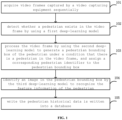
FIG. 1 is a schematic flow diagram of an information acquiring method according to one embodiment of the present disclosure; -
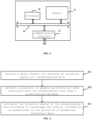
FIG. 2 is a schematic structural diagram of an information acquiring apparatus according to one embodiment of the present disclosure; -
FIG. 3 is a schematic structural diagram of an information acquiring apparatus according to another embodiment of the present disclosure; -
FIG. 4 is a schematic flow diagram of an attention degree detecting method according to one embodiment of the present disclosure; -
FIG. 5 is a schematic structural diagram of an attention degree detecting apparatus according to one embodiment of the present disclosure; -
FIG. 6 is a schematic structural diagram of an attention degree detecting apparatus according to another embodiment of the present disclosure; -
FIG. 7 is a schematic structural diagram of an attention degree detecting system according to one embodiment of the present disclosure. - It should be understood that the dimensions of the various parts shown in the drawings are not drawn to actual scale. Further, the same or similar reference numerals denote the same or similar components.
- Various exemplary embodiments of the present disclosure will now be described in detail with reference to the accompanying drawings. The description of the exemplary embodiments is merely illustrative and is in no way intended to limit the disclosure, its application or uses. The present disclosure may be embodied in many different forms and is not limited to the embodiments described herein. These embodiments are provided to make this disclosure thorough and complete, and will fully convey the scope of the disclosure to those skilled in the art. It should be noted that: the relative arrangement of parts and steps, the composition of materials and values set forth in these embodiments are to be construed as illustrative only and not as limiting unless otherwise specifically stated.
- The use of "including" or "comprising" and the like in this disclosure is intended to mean that the elements preceding the word encompass the elements listed after the word and does not exclude the possibility that other elements may also be encompassed.
- All terms (including technical or scientific terms) used herein have the same meaning as commonly understood by one of ordinary skill in the art to which this disclosure belongs unless specifically defined otherwise. It will be further understood that terms, such as those defined in commonly used dictionaries, should be interpreted as having a meaning that is consistent with their meaning in the context of the relevant art and will not be interpreted in an idealized or overly formal sense unless expressly so defined herein.
- Techniques, methods, and apparatus known to one of ordinary skill in the relevant art may not be discussed in detail but are intended to be part of the specification where appropriate.
- The inventors found through research that manually observing behaviors of customers in front of a shelf is a waste of human resources. Meanwhile, the manual mode is apt to cause missed or false detection, and the recorded data is difficult to meet the standard of large-scale data analysis. In addition, since the degree of attention paid to the shelf is reversely inferred according to the commodity settlement information, it is only possible to derive the attention degree of the shelf where the sold goods are located, while it impossible to obtain accurately users' selecting and attention-paying behavior as well as the degree of attention being paid, let alone obtaining the attributes of the user paying attention to the shelf, and consequently analysis cannot be performed scientifically.
- Accordingly, the present disclosure provides a solution of attention degree detecting, which makes it possible to know quickly and conveniently the attention degree of a pedestrian to a shelf placed in a concerned area by identifying the feature information of the pedestrian.
-
FIG. 1 is a schematic flow diagram of an information acquiring method according to one embodiment of the present disclosure. In some embodiments, the following steps of the information acquiring method are performed by an information acquiring apparatus. - In
step 101, video frames captured by a video capturing equipment are acquired sequentially. - For example, the video capturing equipment is a camera for capturing video information of a concerned area in front of a predetermined shelf.
- In
step 102, it is detected whether a pedestrian exists in the video frame by using a first deep-learning model. - For example, the first deep-learning model is a model such as CNN (Convolutional Neural Network), Faster-RCNN, YOLOv3, or the like.
- In
step 103, the video frame is processed by using the second deep-learning model to generate a pedestrian bounding box of the pedestrian under a condition that there is a pedestrian in the video frame, and a corresponding pedestrian identifier is assigned to the pedestrian bounding box. - For example, the second deep-learning model is a multi-layered CNN model.
- In some embodiments, the pedestrian feature information within the pedestrian bounding box is identified by using a second deep-learning model, and it is retrieved whether the pedestrian feature information is already comprised in the pedestrian feature library. Under a condition that the pedestrian feature information is not comprised in the pedestrian feature library, the pedestrian feature information is written into the pedestrian feature library, and a new pedestrian identifier is assigned to the pedestrian bounding box.
- Furthermore, under a condition that the pedestrian feature information is already comprised in the pedestrian feature library, a pedestrian feature associated with the pedestrian feature information in the pedestrian feature library is assigned to the pedestrian bounding box.
- For example, for a pedestrian P who just enters a mall or supermarket, the pedestrian feature library does not comprise feature information of the pedestrian P, therefore a new pedestrian identifier 005 needs to be assigned to the pedestrian bounding box of the pedestrian P. The pedestrian P takes the goods from shelf A and then walks to shelf B. Since the feature information of the pedestrian P is already comprised in the pedestrian feature library, the pedestrian identifier assigned to the pedestrian bounding box of the pedestrian P is still 005.
- In some embodiments, a video frame is discarded under a condition that there are no pedestrians in the video frame. By discarding video frames without pedestrians, computational burden can be effectively reduced.
- In
step 104, an image in the pedestrian bounding box is identified by the third deep-learning model to recognize the feature information of the pedestrian. - For example, the third deep-learning model is a multi-layered CNN model.
- In some embodiments, the feature information of the pedestrian comprises attribute feature information and behavior feature information of the pedestrian.
- For example, the attribute feature information of the pedestrian comprises at least one of a gender of the pedestrian, an age of the pedestrian, a clothing of the pedestrian and an appearance features of the pedestrian. The behavior feature information of the pedestrian comprises at least one of walking, staying, taking, putting back and holding.
- At
step 105, the pedestrian historical data is written into a database, wherein the pedestrian historical data comprises a timestamp of the video frame, an identifier of the video frame, coordinate information of the pedestrian bounding box, the pedestrian identifier and the feature information of the pedestrian. - For example, the pedestrian historical data may be as shown in TABLE 1.
TABLE 1 Time stamp Video frame number Coordinates of the Pedestrian bounding box Pedestrian ID Pedestrian attributes Pedestrian behavior 32478454 X (x1, y1, x2, y2) 000001 Gender: 1 3 (taking) Age: 3 Long hair: 0 ... 32478454 X (x3, y3, x4, y4) 000005 Gender: 0 2 (staying) Age: 2 Long hair: 1 ... ... ... ... ... ... ... - In the information acquiring method provided by the above embodiment of the present disclosure, the coordinate information of the pedestrian bounding box in the video frame, the pedestrian identifier, and the feature information of the pedestrian are recorded in the database, thereby querying the attention degree of different pedestrians to the predetermined area by using the database.
- In some embodiments, the data is subjected to deduplication processing in a time dimension and a space dimension after the pedestrian historical data is written into the database, thereby reducing a storage space occupied by the database.
- In some embodiments, the pedestrian historical data in the database is grouped by pedestrian identifier . And a first deduplication processing is performed on each group of pedestrian historical data to retain only one piece of pedestrian historical data in a plurality of pieces of pedestrian historical data which have same feature information and have intervals between the timestamps of video frames smaller than a time threshold.
- For example, the pedestrian historical data in the database is grouped by the pedestrian identifier, such that the pedestrian historical data in each group has the same pedestrian identifier. Next, the pedestrian historical data in each group is sorted by the timestamp of the video frame, and pieces of data having a time interval smaller than a predetermined threshold (for example, 500ms) are regarded as corresponding to the same action. In this case, only one of the pieces of data is retained. For example, the last pedestrian historical data collected is retained.
- In some embodiments, the pedestrian historical data in the database is grouped by a generation time of the video frame. A second deduplication processing is performed on each group of pedestrian historical data such that only one piece of pedestrian historical data is retained among a plurality of pieces of pedestrian historical data in which the distance between the center positions of the pedestrian bounding boxes is smaller than a distance threshold.
- For example, the pedestrian historical data in the database are grouped according to the generation time of the video frame such that the pedestrian historical data in each group are generated at the same time. Next, in each group, the center position of the pedestrian bounding box in each pedestrian historical data is calculated, respectively. For a plurality of pieces of pedestrian historical data in which the distance between the center positions of the pedestrian bounding boxes is less than a predetermined threshold, it may be regarded as a repeated pedestrian bounding box. In this case, only one of the pieces of data is retained. For example, the last pedestrian historical data collected is retained.
- Through the above-described deduplication process, the corresponding pedestrian historical data may be as shown in TABLE 2.
TABLE 2 Timestamp Pedestrian ID Coordinates of the Pedestrian bounding box Pedestrian attributes Pedestrian motion 32478454 000001 (x1, y1) Gender: 1 3 (taking) Age: 3 Long hair: 0 ... 32479032 000001 (x3, y3) Gender: 1 4 (putting back) Age: 3 Long hair: 0 ... ... ... ... ... ... -
FIG. 2 is a schematic structural diagram of an information acquiring apparatus according to one embodiment of the present disclosure. As shown inFIG. 2 , the information acquisition apparatus comprises afirst processing module 21, asecond processing module 22, athird processing module 23, and afourth processing module 24. - The
first processing module 21 is configured to sequentially acquire video frames captured by a video capturing equipment, and detect whether a pedestrian exists in the video frame by using the first deep-learning model. - For example, the video capture device is a camera for capturing video information of a concerned area in front of a designated shelf.
- For example, the first deep-learning model is a CNN, Faster-RCNN, YOLOv3 model, and the like.
- The
second processing module 22 is configured to process the video frame by using a second deep-learning model to generate a pedestrian bounding box of the pedestrian under a condition that the pedestrian exists in the video frame, and assign a corresponding pedestrian identifier to the pedestrian bounding box. - For example, the second deep-learning model is a multi-layered CNN model.
- In some embodiments, the
second processing module 22 identifies pedestrian feature information within the pedestrian bounding box by using the second deep-learning model and retrieves whether the pedestrian feature information is already comprised in the pedestrian feature library. And under a condition that the pedestrian feature information is not comprised in the pedestrian feature library, the pedestrian feature information is written into the pedestrian feature library, and a new pedestrian identifier is assigned to the pedestrian bounding box. - In addition, under a condition that the pedestrian feature information is already comprised in the pedestrian feature library, the
second processing module 22 assigns the pedestrian feature associated with the pedestrian feature information in the pedestrian feature library to the pedestrian bounding box. - In some embodiments, under a condition that there is no pedestrian in the video frame, the
first processing module 21 discards the video frame. By discarding video frames without pedestrians, the computational burden can be effectively reduced. - The
third processing module 23 is configured to identify an image in the pedestrian bounding box by using a third deep-learning model to identify feature information of the pedestrian. - For example, the third deep-learning model is a multi-layered CNN model.
- In some embodiments, the feature information of the pedestrian comprises attribute feature information and behavior feature information of the pedestrian.
- For example, the attribute feature information of the pedestrian comprises at least one of a gender of the pedestrian, an age of the pedestrian, a clothing of the pedestrian and an appearance features of the pedestrian. The behavior feature information of the pedestrian comprises at least one of walking, staying, taking, putting back and holding.
- The
fourth processing module 24 is configured to write a pedestrian historical data into a database, wherein the pedestrian historical data comprises a timestamp of the video frame, an identifier of the video frame, coordinate information of the pedestrian bounding box, the pedestrian identifier and the feature information of the pedestrian. - In some embodiments, after the pedestrian historical data is written into the database, the data is subjected to deduplication processing in a time dimension and a space dimension to reduce a storage space occupied by the database.
- In some embodiments, the pedestrian historical data in the database is grouped by pedestrian identifier. And a first deduplication processing is performed on each group of pedestrian historical data to retain only one piece of pedestrian historical data in a plurality of pieces of pedestrian historical data which have same feature information and have intervals between the timestamps of video frames smaller than a time threshold.
- For example, the pedestrian historical data in the database is grouped by the pedestrian identifier, such that the pedestrian historical data in each group has the same pedestrian identifier. Next, the pedestrian historical data in each group is sorted by the timestamp of the video frame, and pieces of data having a time interval smaller than a predetermined threshold (for example, 500ms) are regarded as corresponding to the same action. In this case, only one of the pieces of data is retained. For example, the last pedestrian historical data collected is retained.
- In some embodiments, the pedestrian historical data in the database is grouped by the generation time of the video frames. And a first deduplication processing is performed on each group of pedestrian historical data to retain only one piece of pedestrian historical data in a plurality of pieces of pedestrian historical data which have same feature information and have intervals between the timestamps of video frames smaller than a time threshold.
- For example, the pedestrian historical data in the database are grouped according to the generation time of the video frame such that the pedestrian historical data in each group are generated at the same time. Next, in each group, the center position of the pedestrian bounding box in each pedestrian historical data is calculated, respectively. For a plurality of pieces of pedestrian historical data in which the distance between the center positions of the pedestrian bounding boxes is less than a predetermined threshold, it may be regarded as a repeated pedestrian bounding box. In this case, only one of the pieces of data is retained. For example, the last pedestrian historical data collected is retained.
-
FIG. 3 is a schematic structural diagram of an information acquiring apparatus according to another embodiment of the present disclosure. As shown inFIG. 3 , the information acquiring apparatus comprises amemory 31 and aprocessor 32. - The
memory 31 is used for storing instructions, theprocessor 32 is coupled to thememory 31, and theprocessor 32 is configured to perform the method according to any of the embodiments inFIG. 1 based on the instructions stored in the memory. - As shown in
FIG. 3 , the information acquiring apparatus further comprises acommunication interface 33 for information interaction with other devices. Meanwhile, the information acquiring apparatus further comprises abus 34, and theprocessor 32, thecommunication interface 33, and thememory 31 communicate with each other through thebus 34. - The
memory 31 may comprise high-speed RAM memory, and may also comprise a non-volatile memory, such as at least one disk memory. Thememory 31 may also be a memory array. Thestorage 31 may also be partitioned into blocks, and the blocks may be combined into virtual volumes according to certain rules. - Further, the
processor 32 may be a central processing unit CPU, or may be an application specific integrated circuit ASIC, or one or more integrated circuits configured to implement embodiments of the present disclosure. - The present disclosure also relates to a non-transitory computer-readable storage medium, in which computer instructions are stored, and when executed by a processor, the instructions implement the method according to any one of the embodiments in
FIG. 1 . -
FIG. 4 is a schematic flow diagram of an attention degree detecting method according to one embodiment of the present disclosure. In some embodiments, the following steps of the attention degree detecting method are performed by an attention degree detecting apparatus. - In
step 401, a query request for querying an attention degree of a predetermined area is received. - In
step 402, a plurality of pedestrian historical data associated with the predetermined area from a predetermined database is extracted. The pedestrian historical data comprises a timestamp of a video frame, an identifier of the video frame, coordinate information of a pedestrian bounding box, a pedestrian identifier and the feature information of a pedestrian. - In some embodiments, the feature information of the pedestrian comprises attribute feature information of the pedestrian and behavior feature information of the pedestrian.
- In some embodiments, the attribute feature information of the pedestrian comprises at least one of a gender of the pedestrian, an age of the pedestrian, a clothing of the pedestrian and an appearance features of the pedestrian. The behavior feature information of the pedestrian comprises at least one of walking, staying, taking, putting back and holding.
- It should be noted that the database used herein is obtained by using the method according to any one embodiment in
FIG. 1 . - In
step 403, the attention degree of the predetermined area is determined according to timestamps and feature information of pedestrians in the plurality of pedestrian historical data. - In some embodiments, a plurality of historical data of pedestrians to be detected are extracted from the plurality of historical data of pedestrians, wherein timestamps in the plurality of historical data of pedestrians to be detected are within a predetermined time range, the number of pieces of feature information of the pedestrians in the pedestrian historical data to be detected is counted, and the attention degree of the predetermined area is determined according to the result of counting.
- For example, in the predetermined time range, under a condition that the statistical value of the feature information is larger, it indicates that the attention degree of pedestrians to the predetermined area is higher.
-
FIG. 5 is a schematic structural diagram of an attention degree detecting apparatus according to an embodiment of the present disclosure. As shown inFIG. 5 , the attention degree detecting apparatus comprises a receivingmodule 51 and an attentiondegree querying module 52. - The receiving
module 51 is configured to receive a query request for querying an attention degree of a predetermined area. - The attention
degree querying module 52 is configured to extract a plurality of pedestrian historical data associated with the predetermined area from a predetermined database, wherein the pedestrian historical data comprises a timestamp of a video frame, an identifier of the video frame, coordinate information of a pedestrian bounding box, a pedestrian identifier and the feature information of a pedestrian, and determine the attention degree of the predetermined area according to timestamps and feature information of pedestrians in the plurality of pedestrian historical data. - In some embodiments, the feature information of the pedestrian comprises attribute feature information of the pedestrian and behavior feature information of the pedestrian.
- For example, the attribute feature information of the pedestrian comprises at least one of a gender of the pedestrian, an age of the pedestrian, a clothing of the pedestrian and an appearance features of the pedestrian. The behavior feature information of the pedestrian comprises at least one of walking, staying, taking, putting back and holding.
- In some embodiments, the attention
degree querying module 52 extracts a plurality of historical data of pedestrians to be detected from the plurality of historical data of pedestrians, wherein timestamps in the plurality of historical data of pedestrians to be detected are within a predetermined time range, the number of pieces of feature information of the pedestrians in the pedestrian historical data to be detected is counted, and the attention degree of the predetermined area is determined according to the result of counting. - For example, in the predetermined time range, under a condition that the statistical value of the feature information is larger, it indicates that the attention degree of pedestrians to the predetermined area is higher.
- It should be noted that the database used herein is obtained by using the method according to any embodiment in
FIG. 1 . - In addition, by utilizing the database, the track and the action of a pedestrian can be tracked, such that fine management of the behavior of the pedestrian can be realized.
-
FIG. 6 is a schematic structural diagram of an attention degree detecting apparatus according to another embodiment of the present disclosure. As shown inFIG. 6 , the apparatus comprises amemory 61, aprocessor 62, acommunication interface 63, and abus 64.FIG. 6 differs fromFIG. 3 in that, in the embodiment shown inFIG. 6 , theprocessor 62 is configured to implement the method referred to in any of the embodiments ofFIG. 4 based on instructions stored in the memory. - The present disclosure also relates to a non-transitory computer-readable storage medium for storing instructions which, when executed by a processor, implement the method referred to in any one of the embodiments in
FIG. 4 . -
FIG. 7 is a schematic structural diagram of an attention degree detecting system according to an embodiment of the present disclosure. As shown inFIG. 7 , the attention degree detecting system comprises avideo capturing equipment 71, aninformation acquiring apparatus 72, and an attentiondegree detecting apparatus 73. Theinformation acquiring apparatus 72 is the information acquiring apparatus referred to in any one of the embodiments ofFIG. 2 orFIG. 3 . The attentiondegree detecting apparatus 73 is the attention degree detecting apparatus referred to in any one of the embodiments ofFIG. 5 or FIG. 6 . - The
video capturing equipment 71 is configured to capture video information of a predetermined area. - In some embodiments, the
video capturing equipment 71 is a camera for capturing video information of a concerned area in front of theshelf 74. Accordingly, whenever a pedestrian walks past theshelf 74 or stops in front of theshelf 74 to perform an action of taking goods or the like, thevideo capturing equipment 71 performs video capturing accordingly. Theinformation acquisition apparatus 72 performs information acquisition based on the video frames captured by thevideo capturing equipment 71, and writes the acquired information into the database. The attentiondegree detecting apparatus 73 determines the attention degree of the predetermined area by using the feature information of different pedestrians in the pred area based on the database. - In some embodiments, the functional unit modules described above can be implemented as a general purpose processor, a programmable logic controller (PLC), a digital signal processor (DSP), an application specific integrated circuit (ASIC), a field programmable gate array (FPGA) or other programmable logic devices, discrete gates or transistor logics, discrete hardware components, or any suitable combination thereof for performing the functions described in this disclosure.
- So far, embodiments of the present disclosure have been described in detail. Some details well known in the art have not been described in order to avoid obscuring the concepts of the present disclosure. Those skilled in the art can now fully appreciate how to implement the technical solution disclosed herein, in view of the foregoing description.
- Although some specific embodiments of the present disclosure have been described in detail by way of example, it should be understood by those skilled in the art that the above examples are for illustration only and are not intended to limit the scope of the present disclosure. It will be understood by those skilled in the art that various changes may be made and equivalents may be substituted for part of the technical features without departing from the scope and spirit of the present disclosure. The scope of the present disclosure is defined by the appended claims.
Claims (18)
- An information acquiring method, comprising:sequentially acquiring a video frame captured by a video capturing equipment;detecting whether a pedestrian exists in the video frame by using a first deep-learning model;processing the video frame by using a second deep-learning model to generate a pedestrian bounding box of the pedestrian under a condition that the pedestrian exists in the video frame, and assigning a corresponding pedestrian identifier to the pedestrian bounding box;identifying an image in the pedestrian bounding box by using a third deep-learning model to identify feature information of the pedestrian; andwriting a pedestrian historical data into a database, wherein the pedestrian historical data comprises a timestamp of the video frame, an identifier of the video frame, coordinate information of the pedestrian bounding box, the pedestrian identifier and the feature information of the pedestrian.
- The information acquiring method according to claim 1, further comprising:grouping all pedestrian historical data in the database according to the pedestrian identifier after writing the pedestrian historical data into the database;performing a first deduplication processing on all pedestrian history data in each group to retain only one piece of pedestrian historical data among a plurality of pieces of pedestrian historical data which have same feature information and have intervals between the timestamps of video frames smaller than a time threshold.
- The information acquiring method according to claim 2, further comprises:grouping all pedestrian historical data in the database according to a generation time of the video frames after writing the pedestrian historical data into the database;performing a second deduplication processing on all pedestrian history data in each group to retain only one piece of pedestrian historical data among a plurality of pieces of pedestrian historical data in which a distance between center positions of the pedestrian bounding boxes is smaller than a distance threshold.
- The information acquiring method according to claim 1, wherein the assigning the corresponding pedestrian identifier to the pedestrian bounding box comprises:identifying pedestrian feature information in the pedestrian bounding box by using a second deep-learning model;retrieving whether the pedestrian feature information is comprised in a pedestrian feature library;writing the pedestrian feature information into the pedestrian feature library under a condition that the pedestrian feature information is not comprised in the pedestrian feature library, and assigning a new pedestrian identifier to the pedestrian bounding box.
- The information acquiring method according to claim 4, wherein the assigning the corresponding pedestrian identifier to the pedestrian bounding box comprises:
assigning a pedestrian feature associated with the pedestrian feature information in the pedestrian feature library to the pedestrian bounding box under a condition that the pedestrian feature information is comprised in the pedestrian feature library. - The information acquiring method according to claim 1, further comprising:
discarding the video frame under a condition that there is no pedestrian in the video frame. - The information acquiring method according to any one of claims 1-6, wherein
the feature information of the pedestrian comprises attribute feature information of the pedestrian and behavior feature information of the pedestrian. - The information acquiring method according to claim 7, wherein:the attribute feature information of the pedestrian comprises at least one of a gender of the pedestrian, an age of the pedestrian, a clothing of the pedestrian and an appearance features of the pedestrian;the behavior feature information of the pedestrian comprises at least one of walking, staying, taking, putting back and holding.
- An information acquiring apparatus, comprising:a first processing module configured to sequentially acquire a video frame captured by a video capturing equipment and detect whether a pedestrian exists in the video frame by using a first deep-learning model;a second processing module configured to process the video frame by using a second deep-learning model to generate a pedestrian bounding box of the pedestrian under a condition that the pedestrian exists in the video frame, and assign a corresponding pedestrian identifier to the pedestrian bounding box;a third processing module configured to identify an image in the pedestrian bounding box by using a third deep-learning model to identify feature information of the pedestrian; anda fourth processing module configured to write a pedestrian historical data into a database, wherein the pedestrian historical data comprises a timestamp of the video frame, an identifier of the video frame, coordinate information of the pedestrian bounding box, the pedestrian identifier and the feature information of the pedestrian.
- An information acquiring apparatus, comprising:a memory configured to store instructions;a processor coupled to the memory, wherein based on the instructions stored in the memory, the processor is configured to implement the method according to any of Claims 1 to 8.
- An attention degree detecting method, comprising:receiving a query request for querying an attention degree of a predetermined area;extracting a plurality of pedestrian historical data associated with the predetermined area from a predetermined database, wherein the pedestrian historical data comprises a timestamp of a video frame, an identifier of the video frame, coordinate information of a pedestrian bounding box, a pedestrian identifier and the feature information of a pedestrian;determining the attention degree of the predetermined area according to timestamps and feature information of pedestrians in the plurality of pedestrian historical data.
- The attention degree detecting method according to claim 11, wherein the determining the attention degree of the predetermined area according to timestamps and feature information of pedestrians in the plurality of pedestrian historical data comprises:extracting a plurality of pedestrian historical data to be detected from the plurality of pedestrian historical data, wherein timestamps in the plurality of pedestrian historical data to be detected are within a predetermined time range;counting the number of pieces of feature information of the pedestrians in the pedestrian historical data to be detected;determining the attention degree of the predetermined area according to the result of counting.
- The attention degree detecting method according to claim 11 or 12, wherein
the feature information of the pedestrian comprises attribute feature information of the pedestrian and behavior feature information of the pedestrian. - The attention degree detecting method according to claim 13, whereinthe attribute feature information of the pedestrian comprises at least one of a gender of the pedestrian, an age of the pedestrian, a clothing of the pedestrian and an appearance features of the pedestrian;the behavior feature information of the pedestrian comprises at least one of walking, staying, taking, putting back and holding.
- An attention degree detecting apparatus, comprising:a receiving module configured to receive a query request for querying an attention degree of a predetermined area;an attention degree query module configured to extract a plurality of pedestrian historical data associated with the predetermined area from a predetermined database, wherein the pedestrian historical data comprises a timestamp of a video frame, an identifier of the video frame, coordinate information of a pedestrian bounding box, a pedestrian identifier and the feature information of a pedestrian, and determine the attention degree of the predetermined area according to timestamps and feature information of pedestrians in the plurality of pedestrian historical data.
- An attention degree detecting apparatus, comprising:a memory configured to store instructions;a processor coupled to the memory, wherein based on the instructions stored in the memory, the processor is configured to implement the method according to any of Claims 11 to 14.
- An attention degree detecting system, comprising:
a video capturing equipment configured to acquire video information of a predetermined area;an information acquiring apparatus according to any of Claims 9 or 10; andan attention degree detecting apparatus according to any of Claim 15 or 16. - A non-transitory computer-readable storage medium, which stores computer instructions that, when executed by a processor, implement the method of any one of Claims 1-8, 11-14.
Applications Claiming Priority (2)
| Application Number | Priority Date | Filing Date | Title |
|---|---|---|---|
| CN202010479278.7A CN112307871A (en) | 2020-05-29 | 2020-05-29 | Information acquisition method and device, attention detection method, device and system |
| PCT/CN2021/093517 WO2021238664A1 (en) | 2020-05-29 | 2021-05-13 | Method and device for capturing information, and method, device, and system for measuring level of attention |
Publications (2)
| Publication Number | Publication Date |
|---|---|
| EP4160473A1 true EP4160473A1 (en) | 2023-04-05 |
| EP4160473A4 EP4160473A4 (en) | 2024-07-03 |
Family
ID=74336640
Family Applications (1)
| Application Number | Title | Priority Date | Filing Date |
|---|---|---|---|
| EP21813171.2A Pending EP4160473A4 (en) | 2020-05-29 | 2021-05-13 | METHOD AND DEVICE FOR CAPTURING INFORMATION, AND METHOD, DEVICE AND SYSTEM FOR MEASURING ATTENTION LEVEL |
Country Status (5)
| Country | Link |
|---|---|
| US (1) | US12469295B2 (en) |
| EP (1) | EP4160473A4 (en) |
| JP (1) | JP2023527239A (en) |
| CN (1) | CN112307871A (en) |
| WO (1) | WO2021238664A1 (en) |
Families Citing this family (5)
| Publication number | Priority date | Publication date | Assignee | Title |
|---|---|---|---|---|
| CN112307871A (en) * | 2020-05-29 | 2021-02-02 | 北京沃东天骏信息技术有限公司 | Information acquisition method and device, attention detection method, device and system |
| CN113099260B (en) * | 2021-04-21 | 2022-02-01 | 北京沃东天骏信息技术有限公司 | Live broadcast processing method, live broadcast platform, system, medium and electronic device |
| CN114999021A (en) * | 2022-05-17 | 2022-09-02 | 中联重科股份有限公司 | Method, processor, device and storage medium for determining cause of oil temperature abnormality |
| CN115174982B (en) * | 2022-06-30 | 2024-04-09 | 咪咕文化科技有限公司 | Real-time video association display method, device, computing equipment and storage medium |
| CN116030384B (en) * | 2022-12-27 | 2026-02-24 | 贵州交通职业技术学院 | Dynamic image feature capturing method based on deep learning |
Family Cites Families (35)
| Publication number | Priority date | Publication date | Assignee | Title |
|---|---|---|---|---|
| US8295597B1 (en) * | 2007-03-14 | 2012-10-23 | Videomining Corporation | Method and system for segmenting people in a physical space based on automatic behavior analysis |
| CN104217205B (en) * | 2013-05-29 | 2018-05-18 | 华为技术有限公司 | A kind of method and system for identifying User Activity type |
| CN105320653A (en) | 2014-05-27 | 2016-02-10 | 杭州中瑞思创科技股份有限公司 | Consuming behavior pattern collecting system and method |
| CN106156970A (en) | 2015-04-17 | 2016-11-23 | 上海通路快建网络服务外包有限公司 | Kinds of goods attention rate monitoring system and monitoring method |
| US9779309B1 (en) * | 2015-07-07 | 2017-10-03 | Ambarella, Inc. | Bulk searchable geo-tagging of detected objects in video |
| US10262331B1 (en) | 2016-01-29 | 2019-04-16 | Videomining Corporation | Cross-channel in-store shopper behavior analysis |
| JP2018097412A (en) | 2016-12-08 | 2018-06-21 | キヤノン株式会社 | Information processing device, information processing method and program |
| CN106682637A (en) * | 2016-12-30 | 2017-05-17 | 深圳先进技术研究院 | Display item attraction degree analysis and system |
| CN106845374B (en) | 2017-01-06 | 2020-03-27 | 清华大学 | Pedestrian detection method and detection device based on deep learning |
| US10275683B2 (en) * | 2017-01-19 | 2019-04-30 | Cisco Technology, Inc. | Clustering-based person re-identification |
| JP2018195017A (en) | 2017-05-16 | 2018-12-06 | 富士通株式会社 | Information processing program, information processing method, and information processing device |
| US20190108561A1 (en) * | 2017-10-05 | 2019-04-11 | Mindtree Ltd. | Purchase Intent Determination And Real Time In-store Shopper Assistance |
| CN107909443B (en) | 2017-11-27 | 2020-04-03 | 北京旷视科技有限公司 | Information push method, device and system |
| US11481805B2 (en) * | 2018-01-03 | 2022-10-25 | Grabango Co. | Marketing and couponing in a retail environment using computer vision |
| JP2019133530A (en) | 2018-02-01 | 2019-08-08 | 富士ゼロックス株式会社 | Information processing apparatus |
| CN108175227B (en) * | 2018-02-26 | 2023-08-08 | 北京地平线机器人技术研发有限公司 | Goods shelf control method and device and electronic equipment |
| CN108647242B (en) * | 2018-04-10 | 2022-04-29 | 北京天正聚合科技有限公司 | Generation method and system of thermodynamic diagram |
| JP7336835B2 (en) | 2018-05-09 | 2023-09-01 | コニカミノルタ株式会社 | Attribute determination device, attribute determination system, and attribute determination method |
| CN108898109A (en) * | 2018-06-29 | 2018-11-27 | 北京旷视科技有限公司 | The determination methods, devices and systems of article attention rate |
| US11069070B2 (en) * | 2018-07-16 | 2021-07-20 | Accel Robotics Corporation | Self-cleaning autonomous store |
| US20220230216A1 (en) * | 2018-07-16 | 2022-07-21 | Accel Robotics Corporation | Smart shelf that combines weight sensors and cameras to identify events |
| CN208689391U (en) | 2018-07-23 | 2019-04-02 | 上海沛宇信息科技有限公司 | In conjunction with the commodity attention rate sensing system of electronics price tag |
| CN109146576A (en) | 2018-09-10 | 2019-01-04 | 北京旷视科技有限公司 | Shop cargo puts the determination method, apparatus and electronic equipment of strategy |
| CN109902550A (en) | 2018-11-08 | 2019-06-18 | 阿里巴巴集团控股有限公司 | The recognition methods of pedestrian's attribute and device |
| WO2020148889A1 (en) * | 2019-01-18 | 2020-07-23 | 日本電気株式会社 | Information processing device |
| US11869065B1 (en) * | 2019-02-11 | 2024-01-09 | Amazon Technologies, Inc. | System and method for vision-based event detection |
| CN110956069B (en) * | 2019-05-30 | 2022-06-21 | 魔门塔(苏州)科技有限公司 | Method and device for detecting 3D position of pedestrian, and vehicle-mounted terminal |
| JP7284872B2 (en) * | 2019-10-09 | 2023-05-31 | トヨタ モーター ヨーロッパ | A method for recognizing activity using separate spatial and temporal attentional weights |
| CN110991261A (en) * | 2019-11-12 | 2020-04-10 | 苏宁云计算有限公司 | Interactive behavior recognition method and device, computer equipment and storage medium |
| US12307802B2 (en) * | 2019-12-20 | 2025-05-20 | Intel Corporation | Light weight multi-branch and multi-scale person re-identification |
| CN110942055A (en) * | 2019-12-31 | 2020-03-31 | 北京市商汤科技开发有限公司 | State identification method, device and equipment for display area and storage medium |
| KR102375947B1 (en) * | 2020-03-19 | 2022-03-18 | 주식회사 메이아이 | Method, system and non-transitory computer-readable recording medium for estimatiing interaction information between person and product based on image |
| US11631091B2 (en) * | 2020-05-25 | 2023-04-18 | Shopify Inc. | Systems and methods for measuring traffic density in a region |
| CN112307871A (en) | 2020-05-29 | 2021-02-02 | 北京沃东天骏信息技术有限公司 | Information acquisition method and device, attention detection method, device and system |
| CN112528812B (en) * | 2020-12-04 | 2025-10-28 | 京东方科技集团股份有限公司 | Pedestrian tracking method, pedestrian tracking device and pedestrian tracking system |
-
2020
- 2020-05-29 CN CN202010479278.7A patent/CN112307871A/en active Pending
-
2021
- 2021-05-13 EP EP21813171.2A patent/EP4160473A4/en active Pending
- 2021-05-13 WO PCT/CN2021/093517 patent/WO2021238664A1/en not_active Ceased
- 2021-05-13 US US17/999,971 patent/US12469295B2/en active Active
- 2021-05-13 JP JP2022573607A patent/JP2023527239A/en active Pending
Also Published As
| Publication number | Publication date |
|---|---|
| CN112307871A (en) | 2021-02-02 |
| US12469295B2 (en) | 2025-11-11 |
| EP4160473A4 (en) | 2024-07-03 |
| JP2023527239A (en) | 2023-06-27 |
| US20230206642A1 (en) | 2023-06-29 |
| WO2021238664A1 (en) | 2021-12-02 |
Similar Documents
| Publication | Publication Date | Title |
|---|---|---|
| US12469295B2 (en) | Method and device for acquiring information, and system for detecting attention degree | |
| Shinde et al. | YOLO based human action recognition and localization | |
| CN111597921B (en) | Scene recognition method, device, computer equipment and storage medium | |
| CN111259751A (en) | Video-based human behavior recognition method, device, equipment and storage medium | |
| CN113255682B (en) | Target detection system, method, device, equipment and medium | |
| CN110659588A (en) | Passenger flow volume statistical method and device and computer readable storage medium | |
| CN107943792B (en) | Statement analysis method and device, terminal device and storage medium | |
| CN110889419A (en) | Shelf analysis method, device and system and electronic equipment | |
| WO2021043090A1 (en) | Method and apparatus for compiling statistics on number of customers, and electronic device and readable storage medium | |
| CN110717358A (en) | Visitors counting methods, devices, electronic equipment and storage media | |
| CN114926897A (en) | Target object statistical method, target detection method and neural network training method | |
| CN111178455B (en) | Image clustering method, system, device and medium | |
| CN115545103A (en) | Abnormal data identification method, label identification method and abnormal data identification device | |
| CN109492602B (en) | Process timing method and system based on human body language | |
| CN109462635B (en) | Information pushing method, computer readable storage medium and server | |
| CN111340569A (en) | Store people stream analysis method, device, system, terminal and medium based on cross-border tracking | |
| CN110717092B (en) | Method, system, device and storage medium for matching objects for articles | |
| CN104360934B (en) | A kind of mobile terminal and its application notification processing method | |
| CN115115825B (en) | Method, device, computer equipment and storage medium for detecting object in image | |
| CN115062186B (en) | Video content retrieval method, device, equipment and storage medium | |
| CN114463673B (en) | Material recommendation method, device, equipment and storage medium | |
| CN113298100A (en) | Data cleaning method, self-service equipment and storage medium | |
| EP3828712A1 (en) | Data parsing method and device | |
| CN108255880B (en) | Data processing method and device | |
| CN105488061B (en) | A method and device for verifying the validity of data |
Legal Events
| Date | Code | Title | Description |
|---|---|---|---|
| STAA | Information on the status of an ep patent application or granted ep patent |
Free format text: STATUS: THE INTERNATIONAL PUBLICATION HAS BEEN MADE |
|
| PUAI | Public reference made under article 153(3) epc to a published international application that has entered the european phase |
Free format text: ORIGINAL CODE: 0009012 |
|
| STAA | Information on the status of an ep patent application or granted ep patent |
Free format text: STATUS: REQUEST FOR EXAMINATION WAS MADE |
|
| 17P | Request for examination filed |
Effective date: 20221111 |
|
| AK | Designated contracting states |
Kind code of ref document: A1 Designated state(s): AL AT BE BG CH CY CZ DE DK EE ES FI FR GB GR HR HU IE IS IT LI LT LU LV MC MK MT NL NO PL PT RO RS SE SI SK SM TR |
|
| DAV | Request for validation of the european patent (deleted) | ||
| DAX | Request for extension of the european patent (deleted) | ||
| REG | Reference to a national code |
Ref country code: DE Ref legal event code: R079 Free format text: PREVIOUS MAIN CLASS: G06K0009000000 Ipc: G06N0003040000 |
|
| A4 | Supplementary search report drawn up and despatched |
Effective date: 20240531 |
|
| RIC1 | Information provided on ipc code assigned before grant |
Ipc: G06V 10/62 20220101ALI20240524BHEP Ipc: G06V 10/44 20220101ALI20240524BHEP Ipc: G06V 40/20 20220101ALI20240524BHEP Ipc: G06V 40/10 20220101ALI20240524BHEP Ipc: G06V 20/52 20220101ALI20240524BHEP Ipc: G06V 10/82 20220101ALI20240524BHEP Ipc: G06V 10/25 20220101ALI20240524BHEP Ipc: G06N 3/04 20060101AFI20240524BHEP |
|
| STAA | Information on the status of an ep patent application or granted ep patent |
Free format text: STATUS: EXAMINATION IS IN PROGRESS |
|
| 17Q | First examination report despatched |
Effective date: 20260217 |