EP4160451A1 - Automated content transport security - Google Patents
Automated content transport security Download PDFInfo
- Publication number
- EP4160451A1 EP4160451A1 EP22192308.9A EP22192308A EP4160451A1 EP 4160451 A1 EP4160451 A1 EP 4160451A1 EP 22192308 A EP22192308 A EP 22192308A EP 4160451 A1 EP4160451 A1 EP 4160451A1
- Authority
- EP
- European Patent Office
- Prior art keywords
- content
- software code
- file
- processing hardware
- asset
- Prior art date
- Legal status (The legal status is an assumption and is not a legal conclusion. Google has not performed a legal analysis and makes no representation as to the accuracy of the status listed.)
- Granted
Links
Images


Classifications
-
- H—ELECTRICITY
- H04—ELECTRIC COMMUNICATION TECHNIQUE
- H04L—TRANSMISSION OF DIGITAL INFORMATION, e.g. TELEGRAPHIC COMMUNICATION
- H04L63/00—Network architectures or network communication protocols for network security
- H04L63/02—Network architectures or network communication protocols for network security for separating internal from external traffic, e.g. firewalls
- H04L63/0227—Filtering policies
-
- H—ELECTRICITY
- H04—ELECTRIC COMMUNICATION TECHNIQUE
- H04L—TRANSMISSION OF DIGITAL INFORMATION, e.g. TELEGRAPHIC COMMUNICATION
- H04L63/00—Network architectures or network communication protocols for network security
- H04L63/10—Network architectures or network communication protocols for network security for controlling access to devices or network resources
-
- H—ELECTRICITY
- H04—ELECTRIC COMMUNICATION TECHNIQUE
- H04L—TRANSMISSION OF DIGITAL INFORMATION, e.g. TELEGRAPHIC COMMUNICATION
- H04L63/00—Network architectures or network communication protocols for network security
- H04L63/30—Network architectures or network communication protocols for network security for supporting lawful interception, monitoring or retaining of communications or communication related information
- H04L63/306—Network architectures or network communication protocols for network security for supporting lawful interception, monitoring or retaining of communications or communication related information intercepting packet switched data communications, e.g. Web, Internet or IMS communications
-
- G—PHYSICS
- G06—COMPUTING OR CALCULATING; COUNTING
- G06F—ELECTRIC DIGITAL DATA PROCESSING
- G06F21/00—Security arrangements for protecting computers, components thereof, programs or data against unauthorised activity
- G06F21/10—Protecting distributed programs or content, e.g. vending or licensing of copyrighted material ; Digital rights management [DRM]
-
- G—PHYSICS
- G06—COMPUTING OR CALCULATING; COUNTING
- G06F—ELECTRIC DIGITAL DATA PROCESSING
- G06F21/00—Security arrangements for protecting computers, components thereof, programs or data against unauthorised activity
- G06F21/10—Protecting distributed programs or content, e.g. vending or licensing of copyrighted material ; Digital rights management [DRM]
- G06F21/16—Program or content traceability, e.g. by watermarking
-
- G—PHYSICS
- G06—COMPUTING OR CALCULATING; COUNTING
- G06N—COMPUTING ARRANGEMENTS BASED ON SPECIFIC COMPUTATIONAL MODELS
- G06N20/00—Machine learning
-
- H—ELECTRICITY
- H04—ELECTRIC COMMUNICATION TECHNIQUE
- H04L—TRANSMISSION OF DIGITAL INFORMATION, e.g. TELEGRAPHIC COMMUNICATION
- H04L63/00—Network architectures or network communication protocols for network security
- H04L63/02—Network architectures or network communication protocols for network security for separating internal from external traffic, e.g. firewalls
- H04L63/0227—Filtering policies
- H04L63/0245—Filtering by information in the payload
-
- H—ELECTRICITY
- H04—ELECTRIC COMMUNICATION TECHNIQUE
- H04L—TRANSMISSION OF DIGITAL INFORMATION, e.g. TELEGRAPHIC COMMUNICATION
- H04L63/00—Network architectures or network communication protocols for network security
- H04L63/04—Network architectures or network communication protocols for network security for providing a confidential data exchange among entities communicating through data packet networks
- H04L63/0428—Network architectures or network communication protocols for network security for providing a confidential data exchange among entities communicating through data packet networks wherein the data content is protected, e.g. by encrypting or encapsulating the payload
-
- H—ELECTRICITY
- H04—ELECTRIC COMMUNICATION TECHNIQUE
- H04L—TRANSMISSION OF DIGITAL INFORMATION, e.g. TELEGRAPHIC COMMUNICATION
- H04L63/00—Network architectures or network communication protocols for network security
- H04L63/14—Network architectures or network communication protocols for network security for detecting or protecting against malicious traffic
- H04L63/1408—Network architectures or network communication protocols for network security for detecting or protecting against malicious traffic by monitoring network traffic
-
- H—ELECTRICITY
- H04—ELECTRIC COMMUNICATION TECHNIQUE
- H04L—TRANSMISSION OF DIGITAL INFORMATION, e.g. TELEGRAPHIC COMMUNICATION
- H04L63/00—Network architectures or network communication protocols for network security
- H04L63/16—Implementing security features at a particular protocol layer
-
- H—ELECTRICITY
- H04—ELECTRIC COMMUNICATION TECHNIQUE
- H04L—TRANSMISSION OF DIGITAL INFORMATION, e.g. TELEGRAPHIC COMMUNICATION
- H04L63/00—Network architectures or network communication protocols for network security
- H04L63/20—Network architectures or network communication protocols for network security for managing network security; network security policies in general
Definitions
- the present invention relates to a content transport security system and a method for use by a content transport security system.
- One significant content management challenge in digital content production is tracking the location of a digital asset as it moves through a workflow pipeline having multiple collaborators, some of which may be internal resources of the digital content producer (e.g., a studio), and some of which may be resources or services provided to the digital content producer by external vendors.
- Identifying the location of a digital asset can typically occur once a source of and destination for the digital asset are identified.
- tracking the transfers of a digital asset among the digital content producer and vendors, as well as the transport pathways used for those transfers remains challenging.
- those solutions typically require localized applications in each environment in which the digital asset is processed or resides.
- a content transport security system comprising: a computing platform including a processing hardware and a system memory storing a software code and a database including at least one business rule: the processing hardware configured to execute the software code to:
- the content transport security system further comprising a content history database
- the processing hardware is further configured to execute the content security software code to:
- the processing hardware is further configured to execute the content security software code to:
- the content transport security system further comprising a machine learning (ML) model-based content analyzer, wherein the at least one of the audio analysis, the text analysis, or the visual analysis of the content asset is performed using the ML model-based content analyzer.
- ML machine learning
- the content transport security system wherein the forensic identifier comprises a watermark.
- the content transport security system wherein the forensic identifier comprises a hash value.
- the client device is administered in a first data domain controlled by a domain owner and the destination device is administered in a second data domain controlled by another domain owner.
- a method for use by a content transport security system including a computing platform having a processing hardware and a system memory storing a software code and a database including at least one business rule, the method comprising:
- the content transport security system further comprises a content history database
- the method further comprising:
- the method further comprising:
- the content transport security system further comprises a machine learning (ML) model-based content analyzer, and wherein the at least one of the audio analysis, the text analysis, or the visual analysis of the content asset is performed using the ML model-based content analyzer.
- ML machine learning
- the forensic identifier comprises a watermark.
- the forensic identifier comprises a hash value.
- the client device is administered in a first data domain controlled by a domain owner and the destination device is administered in a second data domain controlled by another domain owner.
- the client device will accept a proxy.
- the client device does not allow proxy configurations.
- the client device is configured to use the content transport security system as a default gateway.
- the invention also comprises: A computer-readable non-transitory storage medium having stored thereon instructions, which when executed by a processing hardware of a content transport security system, instantiate a method comprising:
- the method further comprising:
- the method further comprising:
- the computer-readable non-transitory storage medium wherein the at least one of the audio analysis, the text analysis, or the visual analysis of the content asset is performed using a machine learning (ML) model-based content analyzer of the content transport security system.
- ML machine learning
- the computer-readable non-transitory storage medium wherein the forensic identifier comprises at least one of a watermark or a hash value.
- the client device is administered in a first data domain controlled by a domain owner and the destination device is administered in a second data domain controlled by another domain owner.
- the present application discloses systems and methods for automating digital content transport security (hereinafter “content transport security”) that overcome the drawbacks and deficiencies in the conventional art.
- content transport security digital content transport security
- the automated digital content transport security solution disclosed in the present application intercedes in a file transfer of a content file from a client device, such as a computer, to a destination device, such as another computer, evaluates data contained in the content file, classifies the file transfer as one of allowable, forbidden, or suspicious, and takes action accordingly, as described in greater detail below.
- the digital content secured using the systems and methods disclosed in the present application may include audio-video (AV) content in the form of video games, movies, or episodic television (TV) content that includes episodes of TV shows that are broadcast, streamed, or otherwise available for download or purchase on the Internet or via a user application.
- AV audio-video
- TV episodic television
- that digital content may include one or more of software code, financial or business records, marketing or distribution plans, a graphical image or images, or other digital media content, for example, such as digital audio without video, digital video without audio, or animation.
- the terms “automation,” “automated,” and “automating” refer to systems and processes that do not require the participation of a human user, such as a human system administrator.
- a human system administrator may review the performance of the systems and methods disclosed herein, that human involvement is optional.
- the processes described in the present application may be performed under the control of hardware processing components of the disclosed systems.
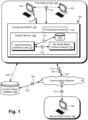
- FIG. 1 shows an exemplary content transport security system 100 automating content transport security, according to one implementation.
- content transport security system 100 includes computing platform 102 having processing hardware 104 and system memory 106 implemented as a computer-readable non-transitory storage medium.
- system memory 106 stores asset monitoring software code 110, machine learning (ML) model-based content analyzer 112, and database 118.
- machine learning model or “ML model” may refer to a mathematical model for making future predictions based on patterns learned from samples of data or “training data.”
- Various learning algorithms can be used to map correlations between input data and output data. These correlations form the mathematical model that can be used to make future predictions on new input data.
- a predictive model may include one or more logistic regression models, Bayesian models, or neural networks (NNs).
- NNs neural networks
- a “deep neural network,” in the context of deep learning may refer to an NN that utilizes multiple hidden layers between input and output layers, which may allow for learning based on features not explicitly defined in raw data.
- a feature identified as an NN refers to a deep neural network.
- NNs may be trained as classifiers and may be utilized to perform image processing, audio processing, or natural-language processing.
- content transport security system 100 is implemented within a use environment including content history database 108, communication network 130, first data domain 120 including content transport security system 100, client device 122, and destination device 126, as well as second data domain including destination device 142.
- Figure 1 shows network communication links 132 communicatively coupling content history database 108 and second data domain 140 with content transport security system 100 via communication network 130.
- content file 114 content asset 116 included in content file 114, one or more business rules 119 (hereinafter "business rule(s) 119"), and log entry 126 generated by asset monitoring software code 110.
- Content transport security system 100 is responsible for recognizing, categorizing, modifying, and directing content traffic using any of the following: content recognition, deep learning-based content recognition, allow/deny lists, and the use of unique forensic identifiers such as hash values, content fingerprints, and watermarks, to name a few examples.
- Content history database 108 stores the unique forensic identifier assigned to content asset 116, along with metadata and a history of where content asset 116 has traveled. The information in content history database 108 is updated by content transport security system 100 in real-time with respect to a file transfer including content asset 116 in order to enable the owner of content asset 116 to know where that asset is at all times.
- content transport security system 100 may be communicatively coupled to content history database 108 via communication network 130 and network communication links 132, as shown in Figure 1 , in some implementations, content history database 108 may be integrated with computing platform 102, or may be in direct communication with content transport security system 100 as shown by dashed communication link 128.
- first and second data domains 120 and 140 may be a distinct computing environment, for example, controlled by different owners and governed by different administrative procedures and security protocols.
- first data domain 120 may be owned and controlled by a digital content production studio
- second data domain 140 may be owned and controlled by a remote third-party vendor providing external resources or services for processing digital content originating from first data domain 120, such as content asset 116 included in content file 114. That is to say, first data domain 120 may be governed by a first security protocol, while second data domain 140 may be governed by a second security protocol different from the first security protocol governing first data domain 120.
- first data domain 120 and second data domain 140 being governed by different security protocols may refer to the implementation of distinct authentication and encryption strategies by each of first and second data domains 120 and 140, that would typically require separate key management solutions for accessing data files stored on those domains.
- content transport security system 100 may be communicatively coupled to more than one external data domain, such as tens or hundreds of data domains for example, each including multiple client devices corresponding to client device 122 and multiple destination devices corresponding to destination devices 126 and 142.
- FIG. 1 corresponds to file transfer of content file 114 between client device 122 and destination device 126 both internal to first data domain 120, as well as to file transfer of content file 114 between client device 122 and external destination device 142
- the present novel and inventive principles also apply to ingestion of content into first data domain 120 from an external source, such as second data domain 140.
- Exemplary specific use cases of content file transfers include, but are not limited to:
- system memory 106 may take the form of any computer-readable non-transitory storage medium.
- computer-readable non-transitory storage medium refers to any medium, excluding a carrier wave or other transitory signal that provides instructions to processing hardware of a computing platform, such as processing hardware 104 of computing platform 102.
- a computer-readable non-transitory storage medium may correspond to various types of media, such as volatile media and non-volatile media, for example.
- Volatile media may include dynamic memory, such as dynamic random access memory (dynamic RAM), while non-volatile memory may include optical, magnetic, or electrostatic storage devices.
- dynamic RAM dynamic random access memory
- non-volatile memory may include optical, magnetic, or electrostatic storage devices.
- Common forms of computer-readable non-transitory storage media include, for example, optical discs, RAM, programmable read-only memory (PROM), erasable PROM (EPROM), and FLASH memory.
- FIG. 1 depicts asset monitoring software code 110, ML model-based content analyzer 112, and database 118 as being mutually co-located in system memory 106, that representation is also merely provided as an aid to conceptual clarity.
- content transport security system 100 may include one or more computing platforms, such as computer servers for example, which may be co-located, or may form an interactively linked but distributed system, such as a cloud-based system, for instance.
- processing hardware 104 and system memory 106 may correspond to distributed processor and memory resources within content transport security system 100.
- asset monitoring software code 110, ML model-based content analyzer 112, and database 118 may be stored remotely from one another within the distributed memory resources of content transport security system 100.
- ML model-based content analyzer 112 may take the form of a software module included in asset monitoring software code 110. However, in other implementations, ML model-based content analyzer 112 may be omitted from content transport security system 100 and the functionality attributed to that feature may be performed by asset monitoring software code 110.
- Processing hardware 104 may include multiple hardware processing units, such as one or more central processing units, one or more graphics processing units, and one or more tensor processing units, one or more field-programmable gate arrays (FPGAs), custom hardware for machine-learning training or inferencing, and an application programming interface (API) server, for example.
- CPU central processing unit
- GPU graphics processing unit
- TPU tensor processing unit
- a CPU includes an Arithmetic Logic Unit (ALU) for carrying out the arithmetic and logical operations of computing platform 102, as well as a Control Unit (CU) for retrieving programs, such as asset monitoring software code 110, from system memory 106, while a GPU may be implemented to reduce the processing overhead of the CPU by performing computationally intensive graphics or other processing tasks.
- a TPU is an application-specific integrated circuit (ASIC) configured specifically for artificial intelligence (AI) applications such as machine learning modeling.
- ASIC application-specific integrated circuit
- computing platform 102 may correspond to one or more web servers, accessible over a packet-switched network such as the Internet, for example.
- computing platform 102 may correspond to one or more computer servers supporting a private wide area network (WAN), local area network (LAN), or included in another type of limited distribution or private network.
- content transport security system 100 may be implemented virtually, such as in a data center.
- content transport security system 100 may be implemented in software, or as virtual machines.
- client device 122 and destination devices 126 and 142 are shown as desktop computers in Figure 1 , those representations are provided merely as examples. More generally, each of client device 122 and destination devices 126 and 142 may be any suitable mobile or stationary computing device or system that implements data processing capabilities sufficient to provide a user interface, support connections to communication network 130, and implement the functionality ascribed to client device 122 and destination devices 126 and 142 herein. For example, in some implementations, one or more of client device 122 and destination devices 126 and 142 may take the form of a laptop computer, tablet computer, or smartphone, for example.
- FIG. 2A shows a diagram of exemplary digital content transport path 201A including content transport security system 200, according to one implementation.
- content transport security system 200 intercedes in the file transfer of content file 214 from client device 222 within first data domain 220 to a destination device outside of first data domain 220 (destination device not shown in Figure 2A ) via router 234 and communication network 230.
- Content transport security system 200, first data domain 220, client device 222, content file 214, and communication network 230 correspond respectively in general to content transport security system 100, first data domain 120, client device 122, content file 114, and communication network 130, in Figure 1 .
- content transport security system 200, first data domain 220, client device 222, content file 214, and communication network 230 may share any of the characteristics attributed to respective content transport security system 100, first data domain 120, client device 122, content file 114, and communication network 130 by the present disclosure, and vice versa. That is to say, although not shown in Figure 1 , like content transport security system 100, content transport security system 200 may include processing hardware 104 and system memory 106 storing asset management software code 110, ML model-based content analyzer 112, and database 118.
- client device 222 is any computing device that will accept a proxy.
- content transport security system 200 is configured to intercept content file 214 at router 234 prior to its transfer out of first data domain 220.
- Content file 214 may be encrypted by client device 222 using an encryption key available to client device 222.
- an encryption key may have been provided to client device 222 by content transport security system 200 prior to the file transfer of content file 214.
- content transport security system 200 After intercepting content file 214 during the file transfer, content transport security system 200 is further configured to determine an authorization status of the destination device for content file 214, decrypt content file 214 using a decryption key corresponding to the encryption key available to client device 222, and search a content asset included in content file 214 for a forensic identifier, such as a hash value or watermark for example. Content transport security system 200 may then assign a classification to the file transfer, based on the authorization status of the destination device and a result of the search for a forensic identifier, where the classification optionally is one of allowable, forbidden, or suspicious, and allow or block the file transfer to the destination device, based on the classification and one or more business rules.
- a classification to the file transfer, based on the authorization status of the destination device and a result of the search for a forensic identifier, where the classification optionally is one of allowable, forbidden, or suspicious, and allow or block the file transfer to the destination device, based on the classification and one
- Figure 2B shows a diagram of exemplary digital content transport path 201B including content transport security system 200, according to another implementation. It is noted that any feature identified by a reference number identical to that shown in Figure 2A corresponds respectively to that previously described feature and may share any of the characteristics attributed to that corresponding feature by the present disclosure.
- the exemplary implementation shown in Figure 2B utilizes a transparent proxy when client device 222 is a device that does not allow proxy configurations.
- one way for content transport security system 200 to intercept content file 214 is with the destination Internet Protocol (IP) address intact is to configure client device 222 to use content transport security system 200 as the default gateway.
- IP Internet Protocol
- content transport security system 200 determines the authorization status of the destination device for content file 214, decrypts content file 214 using a decryption key corresponding to the encryption key used by client device 222 to encrypt content file 214, and searches a content asset included in content file 214 for a forensic identifier.
- Content transport security system 200 may then assign a classification to the file transfer, based on the authorization status of the destination device and a result of the search for a forensic identifier as one of allowable, forbidden, or suspicious, and allows or blocks the file transfer to the destination device, based on the classification and one or more business rules.
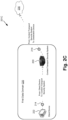
- Figure 2C shows a diagram of exemplary digital content transport path 201C including content transport security system 200, according to yet another implementation.
- Any feature identified by a reference number identical to those shown in Figures 2A or 2B corresponds respectively to that previously described feature and may share any of the characteristics attributed to that corresponding feature by the present disclosure.
- digital content transport path 201C is similar to digital content transport path 201B, in Figure 2B , but omits router 234.
- content transport security system 200 determines the authorization status of the destination device for content file 214, decrypts content file 214 using a decryption key corresponding to the encryption key used by client device 222 to encrypt content file 214, and searches a content asset included in content file 214 for a forensic identifier.
- Content transport security system 200 then assigns a classification to the file transfer, based on the authorization status of the destination device and a result of the search for a forensic identifier as one of allowable, forbidden, or suspicious, and allows or blocks the file transfer to the destination device, based on the classification and one or more business rules.
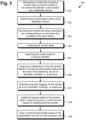
- FIG. 3 shows flowchart 350 presenting an exemplary method for automating content transport security, according to one implementation.
- flowchart 350 presenting an exemplary method for automating content transport security, according to one implementation.
- certain details and features have been left out of flowchart 350 in order not to obscure the discussion of the inventive features in the present application.
- FIG 4 shows an exemplary diagram of asset monitoring software code 410 suitable for execution by content transport security system 100/200, according to one implementation.
- asset monitoring software code 410 is communicatively coupled to ML model-based content analyzer 412 and database 418, and may include content parsing and destination screening module 460, decryption module 462, content analysis module 464, classification module 466, and file transfer control module 468.
- Figure 4 shows content file 414, content asset 416 included in content file 414, authorization data 470, forensic identifier data 472, content analysis data 474, classification 476, and one or more business rules 419 (hereinafter "business rule(s) 419").
- ML model-based content analyzer 412, database 418, content file 414, content asset 416, and business rule(s) 419 correspond respectively in general to ML model-based content analyzer 112, database 118, content file 114, content asset 116, and business rule(s) 119, in Figure 1 . Consequently, ML model-based content analyzer 412, database 418, content file 414, content asset 416, and business rule(s) 419 may share any of the characteristics attributed to respective ML model-based content analyzer 112, database 118, content file 114, content asset 116, and business rule(s) 119 by the present disclosure, and vice versa.
- asset monitoring software code 410 corresponds in general to asset monitoring software code 110, in Figure 1 , and those corresponding features may share any of the characteristics attributed to either feature. That is to say, like asset monitoring software code 410, asset monitoring software code 110 may include modules corresponding respectively to content parsing and destination screening module 460, decryption module 462, content analysis module 464, classification module 466, and file transfer control module 468.
- flowchart 350 begins with intercepting content file 114/414 including content asset 116/416, during a file transfer of content file 114/414 between client device 122 and either of destination devices 126 or 142 (action 351).
- the destination device for file transfer of content file 114/414 is destination device 126 administered by first data domain 120 common to client device 122, serving as the source of the file transfer.
- destination device 142 is administered in second data domain 140 controlled by a domain owner other than the owner of first data domain 120 from which the file transfer originates.
- Content file 114/414 may include any of a wide variety of content as content asset 116/416, including, as noted above, software code, financial or business records, marketing or distribution plans, one or more graphical images, or other digital media content, for example, such as digital audio without video, digital video without audio, animation, or digital AV content, to name a few examples. Interception of content file 114/414 during the file transfer, may be performed using asset monitoring software code 110/410, and executed by processing hardware 104 of content transport security system 100.
- action 351 alludes to transfer of content file 114/414 either within first data domain 120 or from first data domain 120 to second data domain 140, those examples are merely illustrative.
- a file transfer secured using file transport security system 100 may involve ingestion of a content file into first data domain 120 from an external data domain, such as second data domain 140.
- data domain 120 is referred to herein as a "first data domain” and data domain 140 is referred to as a "second data domain” as a matter of convenience, more generally, either of data domains 120 or 140 may serve as the "first data domain” recited by flowchart 350, and the other of data domains 120 and 140 may serve as the "second data domain.”
- Flowchart 350 further includes determining an authorization status of destination device 126 or 142 (action 352).
- processing hardware 104 of content transport security system 100 may execute asset monitoring software code 110/410 to reference a registry of allowable destination devices for content files transferred from client device 122 or first data domain 120, a list of forbidden data domains for transfer of content files from first data domain 120, or may list allowable destination devices as well as forbidden destination devices.
- Determination of the authorization status of destination device 126 or 142 in action 352 may be performed by asset monitoring software code 110/410, executed by processing hardware 104 of content transport security system 100, using content parsing and destination screening module 460 to generate authentication data 470.
- Flowchart 350 further includes decrypting content file 114/414, using a decryption key corresponding to an encryption key available to client device 122 (action 353).
- content transport security system 100 may distribute encryption keys to client devices included in one or more of first data domain 120 and second data domain 140, such as exemplary client device 122.
- content transport security system 100 may retain corresponding decryption keys for decrypting content file 114/414 encrypted using such an encryption key.
- Decryption of content file 114/414 in action 353 may be performed by asset monitoring software code 110/410, executed by processing hardware 104 of content transport security system 100, using decryption module 462.
- flowchart 350 and Figure 4 depict action 352 as preceding action 353, that sequence is merely exemplary.
- action 352 may occur after action 353.
- actions 352 and 353 may be performed in parallel, i.e., substantially concurrently.
- flowchart 350 may include optionally analyzing content asset 116/416 included in content file 114/414 (action 354). That is to say, action 354 is optional, and in some implementations may be omitted from the method outlined by flowchart 350. Nevertheless, in some implementations in which action 354 is performed, processing hardware 104 of content transport security system 100 may execute asset monitoring software code 110/410 to use content analysis module 464 to perform one or more of an audio analysis, a text analysis, or a visual analysis of content asset 116/416. Action 354, when performed, results in generation of content analysis data 474, which may be any data identifying or otherwise describing audio, text, or imagery included in content asset 116/416.
- content transport security system 100 may include ML model-based content analyzer 112/412.
- the one or more of the audio analysis, the text analysis, or the visual analysis of content asset 116/416 of action 354 may be performed by asset monitoring software code 110/410, executed by processing hardware 104, and using ML model-based content analyzer 112/412.
- Flowchart 350 further includes searching content asset 116/416 for a forensic identifier (action 355).
- a forensic identifier may take the form of one or more of a hash value, a content fingerprint, or a forensic watermark, for example.
- the forensic identifier of content asset 116/416 may include a Secure Hashtag Algorithm 2 (SHA-2) sum of content asset 116/416, such as a SHA-256 sum of content asset 116/416 for instance.
- SHA-2 Secure Hashtag Algorithm 2
- the forensic identifier may include a forensic watermark undetectable to the human eye, a content fingerprint such as a Universally Unique Identifier (UUID, also sometimes referred to as Globally Unique Identifier or GUID) of content asset 116/416, or both.
- UUID Universally Unique Identifier
- GUID Globally Unique Identifier
- the search of content asset 116/416 for a forensic identifier in action 355 may be performed by asset monitoring software code 110/410, executed by processing hardware 104 of content transport security system 100, and using content parsing and destination screening module 460 to generate forensic identifier data 472.
- forensic identifier data 472 includes that detected forensic identifier. However, in use cases in which the search performed in action 355 fails to detect a forensic identifier, forensic identifier data 472 reports that failure.
- flowchart 350 and Figure 4 depict action 354 as preceding action 355, that sequence is merely exemplary. In some implementations, action 354 may occur after action 355. Moreover, in some implementations, actions 354 and 355 may be performed in parallel, i.e., substantially concurrently. In still other implementations, action 354 may be omitted, and the method outlined by flowchart 350 may include action 355 following directly from actions 352 and 353.
- Flowchart 350 further includes assigning a classification to the file transfer of content file 114/414 from client device 122 to destination device 126 or 142, based on the authorization status determined in action 352 and the result of the searching performed in action 355, the classification being one of allowable, forbidden, or suspicious (action 356).
- Action 356 may be performed by asset monitoring software code 110/410, executed by processing hardware 104 of content transport security system 100, and using classification module 466.
- classification module 466 receives authorization data 470 and forensic identifier data 472 and assigns classification 476 to the file transfer of content file 114/414 based on authorization data 470 and forensic identifier data 472.
- processing hardware 104 may execute asset monitoring software code 110/410 to compare the detected forensic identifier with a forensic identifier of content asset 116/416 stored in content history database 108.
- classification module 466 receives content analysis data 474 from content analysis module 464, in addition to receiving authorization data 470 and forensic identifier data 472 from content parsing and destination screening module 460. In those implementations, the assignment of classification 466 in action 356 may further be based on content analysis data 474.
- flowchart 350 may further include generating log entry 126 flagging the file transfer of content file 114/414 as being assigned classification 466 of one of allowable, forbidden, or suspicious (action 357). Flagging the file transfer of content file 114/414 based on classification 466 may be performed by content monitoring software code 110/410, executed by processing hardware 104 of content transport security system 100.
- flowchart 350 may further include updating a security status of content asset 116/416 in content history database 108, using log entry 126, in real-time with respect to assigning classification 466 to the file transfer of content file 114/414 in action 356 (action 358).
- Action 358 may be performed by content monitoring software code 110/410, executed by processing hardware 104 of content transport security system 100.
- flowchart 350 shows action 356 as preceding actions 357 and 358, in some implementations, action actions 356 and 357, actions 356 and 358, or actions 356, 357, and 358 may be performed in parallel, i.e., substantially concurrently.
- Updating the security status of content asset 116/416 in content history database 108 in action 358 advantageously enables the performance a variety of different types of data analytics including, but not limited to:
- flowchart 350 also includes allowing or blocking the file transfer of content file 114/414 based on classification 466 and business rule(s) 119/419 (action 359). It is noted that because business rule(s) 119/419 are predetermined and stored in database 118/418, business rule(s) 119/419 may be predetermined so as not to include conflicting business rules. To describe merely two examples: 1) business rule(s) 119/419 may specify that only file transfers classified as allowable in action 356 be allowed, while those classified as forbidden or suspicious be blocked.
- business rule(s) 119/419 may specify that file transfers classified as allowable and suspicious be allowed and that all file transfers classified as forbidden be blocked, but that file transfers classified as suspicious, the file transfers classified as forbidden, or both, be flagged as such and reported to a cyber-security administrator of first data domain 120.
- Action 359 may be performed by content monitoring software code 110/410, executed by processing hardware 104 of content transport security system 100, using file transfer control module 468.
- flowchart 350 shows actions 357 and 358 as preceding action 359, that sequence is merely exemplary. In some implementations, actions 357 and 358 may occur after action 359. Moreover, in some implementations, actions 356, 358 and 359 may be performed in parallel, i.e., substantially concurrently. In other implementation, action 358 may be omitted, while actions 357 and 359 may follow action 356 in any order, or may be performed in parallel with action 356. In still other implementations, actions 357 and 358 may be omitted, and the method outlined by flowchart 350 may include action 359 following directly from action 356 or performed in parallel with action 356.
- the present application discloses systems and methods for automating content transport security that overcome the drawbacks and deficiencies in the conventional art. From the above description it is manifest that various techniques can be used for implementing the concepts described in the present application without departing from the scope of those concepts. Moreover, while the concepts have been described with specific reference to certain implementations, a person of ordinary skill in the art would recognize that changes can be made in form and detail without departing from the scope of those concepts. As such, the described implementations are to be considered in all respects as illustrative and not restrictive. It should also be understood that the present application is not limited to the particular implementations described herein, but many rearrangements, modifications, and substitutions are possible without departing from the scope of the present claims.
Landscapes
- Engineering & Computer Science (AREA)
- Computer Security & Cryptography (AREA)
- General Engineering & Computer Science (AREA)
- Computer Hardware Design (AREA)
- Computing Systems (AREA)
- Theoretical Computer Science (AREA)
- Software Systems (AREA)
- Signal Processing (AREA)
- Computer Networks & Wireless Communication (AREA)
- General Physics & Mathematics (AREA)
- Physics & Mathematics (AREA)
- Technology Law (AREA)
- Multimedia (AREA)
- Mathematical Physics (AREA)
- Medical Informatics (AREA)
- Evolutionary Computation (AREA)
- Data Mining & Analysis (AREA)
- Computer Vision & Pattern Recognition (AREA)
- Artificial Intelligence (AREA)
- Storage Device Security (AREA)
Abstract
Description
- The present invention relates to a content transport security system and a method for use by a content transport security system.
- Due to its popularity as a content medium, ever more digital content is being produced and made available to users. As a result, the efficiency with which such digital content can be managed and secured has become increasingly important to the producers, owners, and distributors of that content. One significant content management challenge in digital content production is tracking the location of a digital asset as it moves through a workflow pipeline having multiple collaborators, some of which may be internal resources of the digital content producer (e.g., a studio), and some of which may be resources or services provided to the digital content producer by external vendors.
- Identifying the location of a digital asset can typically occur once a source of and destination for the digital asset are identified. However, in the case of digital content producers interfacing with many vendors for production and post distribution work, tracking the transfers of a digital asset among the digital content producer and vendors, as well as the transport pathways used for those transfers remains challenging. Although there are existing solutions in the networking and cyber-security fields that attempt to track digital assets, those solutions typically require localized applications in each environment in which the digital asset is processed or resides.
- It is the object of the present invention to omit or reduce these drawbacks.
- The present invention is defined by the features of the independent claims. The dependent claims describe preferred embodiments.
- The invention provides a content transport security system and a method for use by a content transport security system as follow:
A content transport security system comprising:
a computing platform including a processing hardware and a system memory storing a software code and a database including at least one business rule:
the processing hardware configured to execute the software code to: - intercept a content file including a content asset, during a file transfer of the content file between a client device and a destination device;
- determine an authorization status of the destination device;
- decrypt the content file, using a decryption key corresponding to an encryption key available to the client device;
- search the content asset for a forensic identifier;
- assign a classification to the file transfer, based on the authorization status and a result of the searching, the classification being one of allowable, forbidden, or suspicious; and
- allow or block the file transfer to the destination device, based on the classification and the at least one business rule.
- Preferably the content transport security system, further comprising a content history database, wherein the processing hardware is further configured to execute the content security software code to:
- generate a log entry flagging the file transfer as the one of allowable, forbidden, or suspicious; and
- update a security status of the content asset in the content history database, using the log entry, in real-time with respect to assigning the classification to the file transfer.
- Preferably the content transport security system, wherein the processing hardware is further configured to execute the content security software code to:
- perform at least one of an audio analysis, a text analysis, or a visual analysis of the content asset; and
- wherein the classification of the file transfer is further based on the at least one of the audio analysis, the text analysis, or the visual analysis of the content asset.
- Preferably the content transport security system, further comprising a machine learning (ML) model-based content analyzer, wherein the at least one of the audio analysis, the text analysis, or the visual analysis of the content asset is performed using the ML model-based content analyzer.
- Preferably the content transport security system, wherein the forensic identifier comprises a watermark.
- Preferably the content transport security system, wherein the forensic identifier comprises a hash value.
- Preferably the content transport security system, wherein the client device is administered in a first data domain controlled by a domain owner and the destination device is administered in a second data domain controlled by another domain owner.
- A method for use by a content transport security system including a computing platform having a processing hardware and a system memory storing a software code and a database including at least one business rule, the method comprising:
- intercepting a content file including a content asset, by the software code executed by the processing hardware during a file transfer of the content file between a client device and a destination device;
- determining, by the software code executed by the processing hardware, an authorization status of the destination device;
- decrypting the content file, by the software code executed by the processing hardware and using a decryption key corresponding to an encryption key available to the client device;
- searching, by the software code executed by the processing hardware, the content asset for a forensic identifier;
- assigning, by the software code executed by the processing hardware, a classification to the file transfer based on the authorization status and a result of the searching, the classification being one of allowable, forbidden, or suspicious; and
- allowing or blocking the file transfer to the destination device, by the software code executed by the processing hardware, based on the classification and the at least one business rule.
- Preferably the method, wherein the content transport security system further comprises a content history database, the method further comprising:
- generating, by the software code executed by the processing hardware, a log entry flagging the file transfer as the one of allowable, forbidden, or suspicious; and
- updating a security status of the content asset in the content history database, by the software code executed by the processing hardware and using the log entry, in real-time with respect to assigning the classification to the file transfer.
- Preferably the method, further comprising:
- performing, by the software code executed by the processing hardware, at least one of an audio analysis, a text analysis, or a visual analysis of the content asset; and
- wherein the classification of the file transfer is further based on the at least one of the audio analysis, the text analysis, or the visual analysis of the content asset.
- Preferably the method, wherein the content transport security system further comprises a machine learning (ML) model-based content analyzer, and wherein the at least one of the audio analysis, the text analysis, or the visual analysis of the content asset is performed using the ML model-based content analyzer.
- Preferably the method, wherein the forensic identifier comprises a watermark.
- Preferably the method, wherein the forensic identifier comprises a hash value.
- Preferably the method, wherein the client device is administered in a first data domain controlled by a domain owner and the destination device is administered in a second data domain controlled by another domain owner.
- Preferably the method, wherein the client device will accept a proxy.
- Preferably the method, wherein the client device does not allow proxy configurations.
- Preferably the method, wherein the client device is configured to use the content transport security system as a default gateway.
- The invention also comprises:
A computer-readable non-transitory storage medium having stored thereon instructions, which when executed by a processing hardware of a content transport security system, instantiate a method comprising: - intercepting a content file including a content asset, during a file transfer of the content file between a client device and a destination device;
- determining an authorization status of the destination device;
- decrypting the content file using a decryption key corresponding to an encryption key available to the client device;
- searching the content asset for a forensic identifier;
- assigning a classification to the file transfer based on the authorization status and a result of the searching, the classification being one of allowable, forbidden, or suspicious; and
- allowing or blocking the file transfer to the destination device, based on the classification and at least one business rule.
- Preferably the computer-readable non-transitory storage medium, the method further comprising:
- generating a log entry flagging the file transfer as the one of allowable, forbidden, or suspicious; and
- updating a security status of the content asset in a content history database of the content transport security system in real-time with respect to assigning the classification to the file transfer.
- Preferably the computer-readable non-transitory storage medium, the method further comprising:
- performing at least one of an audio analysis, a text analysis, or a visual analysis of the content asset; and
- wherein the classification of the file transfer is further based on the at least one of the audio analysis, the text analysis, or the visual analysis of the content asset.
- Preferably the computer-readable non-transitory storage medium, wherein the at least one of the audio analysis, the text analysis, or the visual analysis of the content asset is performed using a machine learning (ML) model-based content analyzer of the content transport security system.
- Preferably the computer-readable non-transitory storage medium, wherein the forensic identifier comprises at least one of a watermark or a hash value.
- Preferably the computer-readable non-transitory storage medium, wherein the client device is administered in a first data domain controlled by a domain owner and the destination device is administered in a second data domain controlled by another domain owner.
-
-
Figure 1 shows a diagram of an exemplary system for automating content transport security, according to one implementation; -
Figure 2A shows a diagram of an exemplary digital content transport path that includes the system shown inFigure 1 , according to one implementation; -
Figure 2B shows a diagram of an exemplary digital content transport path that includes the system shown inFigure 1 , according to another implementation; -
Figure 2C shows a diagram of an exemplary digital content transport path that includes the system shown inFigure 1 , according to yet another implementation; -
Figure 3 shows a flowchart outlining an exemplary method for automating content transport security, according to one implementation; and -
Figure 4 shows a diagram of an exemplary software code suitable for use by the system shown inFigure 1 , according to one implementation. - The following description contains specific information pertaining to implementations in the present disclosure. One skilled in the art will recognize that the present disclosure may be implemented in a manner different from that specifically discussed herein. The drawings in the present application and their accompanying detailed description are directed to merely exemplary implementations. Unless noted otherwise, like or corresponding elements among the figures may be indicated by like or corresponding reference numerals. Moreover, the drawings and illustrations in the present application are generally not to scale, and are not intended to correspond to actual relative dimensions.
- The present application discloses systems and methods for automating digital content transport security (hereinafter "content transport security") that overcome the drawbacks and deficiencies in the conventional art. By way of brief overview, the automated digital content transport security solution disclosed in the present application intercedes in a file transfer of a content file from a client device, such as a computer, to a destination device, such as another computer, evaluates data contained in the content file, classifies the file transfer as one of allowable, forbidden, or suspicious, and takes action accordingly, as described in greater detail below. In various implementations, the digital content secured using the systems and methods disclosed in the present application may include audio-video (AV) content in the form of video games, movies, or episodic television (TV) content that includes episodes of TV shows that are broadcast, streamed, or otherwise available for download or purchase on the Internet or via a user application. Alternatively, or in addition, that digital content may include one or more of software code, financial or business records, marketing or distribution plans, a graphical image or images, or other digital media content, for example, such as digital audio without video, digital video without audio, or animation.
- It is noted that, as defined in the present application, the terms "automation," "automated," and "automating" refer to systems and processes that do not require the participation of a human user, such as a human system administrator. For example, although in some implementations a human system administrator may review the performance of the systems and methods disclosed herein, that human involvement is optional. Thus, the processes described in the present application may be performed under the control of hardware processing components of the disclosed systems.
-
Figure 1 shows an exemplary contenttransport security system 100 automating content transport security, according to one implementation. As shown inFigure 1 , contenttransport security system 100 includescomputing platform 102 havingprocessing hardware 104 andsystem memory 106 implemented as a computer-readable non-transitory storage medium. According to the present exemplary implementation,system memory 106 stores assetmonitoring software code 110, machine learning (ML) model-basedcontent analyzer 112, anddatabase 118. - It is noted that, as defined in the present application, the expression "machine learning model" or "ML model" may refer to a mathematical model for making future predictions based on patterns learned from samples of data or "training data." Various learning algorithms can be used to map correlations between input data and output data. These correlations form the mathematical model that can be used to make future predictions on new input data. Such a predictive model may include one or more logistic regression models, Bayesian models, or neural networks (NNs). Moreover, a "deep neural network," in the context of deep learning, may refer to an NN that utilizes multiple hidden layers between input and output layers, which may allow for learning based on features not explicitly defined in raw data. As used in the present application, a feature identified as an NN refers to a deep neural network. In various implementations, NNs may be trained as classifiers and may be utilized to perform image processing, audio processing, or natural-language processing.
- As further shown in
Figure 1 , contenttransport security system 100 is implemented within a use environment includingcontent history database 108,communication network 130,first data domain 120 including contenttransport security system 100,client device 122, anddestination device 126, as well as second data domain includingdestination device 142. In addition,Figure 1 showsnetwork communication links 132 communicatively couplingcontent history database 108 andsecond data domain 140 with contenttransport security system 100 viacommunication network 130. Also shown inFigure 1 arecontent file 114,content asset 116 included incontent file 114, one or more business rules 119 (hereinafter "business rule(s) 119"), andlog entry 126 generated by assetmonitoring software code 110. - Content
transport security system 100 is responsible for recognizing, categorizing, modifying, and directing content traffic using any of the following: content recognition, deep learning-based content recognition, allow/deny lists, and the use of unique forensic identifiers such as hash values, content fingerprints, and watermarks, to name a few examples.Content history database 108 stores the unique forensic identifier assigned tocontent asset 116, along with metadata and a history of wherecontent asset 116 has traveled. The information incontent history database 108 is updated by contenttransport security system 100 in real-time with respect to a file transfer includingcontent asset 116 in order to enable the owner ofcontent asset 116 to know where that asset is at all times. It is noted that although contenttransport security system 100 may be communicatively coupled tocontent history database 108 viacommunication network 130 andnetwork communication links 132, as shown inFigure 1 , in some implementations,content history database 108 may be integrated withcomputing platform 102, or may be in direct communication with contenttransport security system 100 as shown by dashedcommunication link 128. - It is further noted that each of first and
second data domains first data domain 120 may be owned and controlled by a digital content production studio, whilesecond data domain 140 may be owned and controlled by a remote third-party vendor providing external resources or services for processing digital content originating fromfirst data domain 120, such ascontent asset 116 included incontent file 114. That is to say,first data domain 120 may be governed by a first security protocol, whilesecond data domain 140 may be governed by a second security protocol different from the first security protocol governingfirst data domain 120. It is further noted that, as used in the present application, the expression "first data domain 120 andsecond data domain 140 being governed by different security protocols," and the like, may refer to the implementation of distinct authentication and encryption strategies by each of first andsecond data domains - It is also noted that although
Figure 1 shows two data domains, one client device, and two destination devices in the interests of conceptual clarity, in other implementations, contenttransport security system 100 may be communicatively coupled to more than one external data domain, such as tens or hundreds of data domains for example, each including multiple client devices corresponding toclient device 122 and multiple destination devices corresponding todestination devices - Moreover, although the exemplary implementation shown in
Figure 1 corresponds to file transfer ofcontent file 114 betweenclient device 122 anddestination device 126 both internal tofirst data domain 120, as well as to file transfer ofcontent file 114 betweenclient device 122 andexternal destination device 142, the present novel and inventive principles also apply to ingestion of content intofirst data domain 120 from an external source, such assecond data domain 140. Exemplary specific use cases of content file transfers include, but are not limited to: - 1. Video reference materials such as visual effects (VFX), editorial, digital intermediate (DI), mastering, localization, and marketing files being sent out to external vendors.
- 2. Final video materials sent out to distribution partners.
- 3. Content such as work in progress or final materials created from the reference materials described in item 1 above being received from vendors.
- 4. Internal tracking of content location within a production studio among different departments including Pre-Production (e.g., concept development, art, scripts, storyboards), Production (e.g., on-set dailies, camera raw files), Post-Production (e.g., work in process (WIP) cuts, audio elements, metadata), Marketing (e.g., video/image reference files to create campaigns), Operations (e.g., localization reference files, censorship files, etc.), and Distribution (e.g., digital and/or non-theatrical distribution of final files).
- With respect to the representation of content
transport security system 100 shown inFigure 1 , it is noted that although assetmonitoring software code 110, ML model-basedcontent analyzer 112, anddatabase 118 are depicted as being stored insystem memory 106 for conceptual clarity, more generally,system memory 106 may take the form of any computer-readable non-transitory storage medium. The expression "computer-readable non-transitory storage medium," as used in the present application, refers to any medium, excluding a carrier wave or other transitory signal that provides instructions to processing hardware of a computing platform, such asprocessing hardware 104 ofcomputing platform 102. Thus, a computer-readable non-transitory storage medium may correspond to various types of media, such as volatile media and non-volatile media, for example. Volatile media may include dynamic memory, such as dynamic random access memory (dynamic RAM), while non-volatile memory may include optical, magnetic, or electrostatic storage devices. Common forms of computer-readable non-transitory storage media include, for example, optical discs, RAM, programmable read-only memory (PROM), erasable PROM (EPROM), and FLASH memory. - It is further noted that although
Figure 1 depicts assetmonitoring software code 110, ML model-basedcontent analyzer 112, anddatabase 118 as being mutually co-located insystem memory 106, that representation is also merely provided as an aid to conceptual clarity. More generally, contenttransport security system 100 may include one or more computing platforms, such as computer servers for example, which may be co-located, or may form an interactively linked but distributed system, such as a cloud-based system, for instance. As a result,processing hardware 104 andsystem memory 106 may correspond to distributed processor and memory resources within contenttransport security system 100. Thus, it is to be understood that assetmonitoring software code 110, ML model-basedcontent analyzer 112, anddatabase 118 may be stored remotely from one another within the distributed memory resources of contenttransport security system 100. - It is also noted that, in some implementations, ML model-based
content analyzer 112 may take the form of a software module included in assetmonitoring software code 110. However, in other implementations, ML model-basedcontent analyzer 112 may be omitted from contenttransport security system 100 and the functionality attributed to that feature may be performed by assetmonitoring software code 110. -
Processing hardware 104 may include multiple hardware processing units, such as one or more central processing units, one or more graphics processing units, and one or more tensor processing units, one or more field-programmable gate arrays (FPGAs), custom hardware for machine-learning training or inferencing, and an application programming interface (API) server, for example. By way of definition, as used in the present application, the terms "central processing unit" (CPU), "graphics processing unit" (GPU), and "tensor processing unit" (TPU) have their customary meaning in the art. That is to say, a CPU includes an Arithmetic Logic Unit (ALU) for carrying out the arithmetic and logical operations ofcomputing platform 102, as well as a Control Unit (CU) for retrieving programs, such as assetmonitoring software code 110, fromsystem memory 106, while a GPU may be implemented to reduce the processing overhead of the CPU by performing computationally intensive graphics or other processing tasks. A TPU is an application-specific integrated circuit (ASIC) configured specifically for artificial intelligence (AI) applications such as machine learning modeling. - In some implementations,
computing platform 102 may correspond to one or more web servers, accessible over a packet-switched network such as the Internet, for example. Alternatively,computing platform 102 may correspond to one or more computer servers supporting a private wide area network (WAN), local area network (LAN), or included in another type of limited distribution or private network. As yet another alternative, in some implementations, contenttransport security system 100 may be implemented virtually, such as in a data center. For example, in some implementations, contenttransport security system 100 may be implemented in software, or as virtual machines. - Although
client device 122 anddestination devices Figure 1 , those representations are provided merely as examples. More generally, each ofclient device 122 anddestination devices communication network 130, and implement the functionality ascribed toclient device 122 anddestination devices client device 122 anddestination devices -
Figure 2A shows a diagram of exemplary digitalcontent transport path 201A including contenttransport security system 200, according to one implementation. As shown inFigure 2A , contenttransport security system 200 intercedes in the file transfer ofcontent file 214 fromclient device 222 withinfirst data domain 220 to a destination device outside of first data domain 220 (destination device not shown inFigure 2A ) viarouter 234 andcommunication network 230. - Content
transport security system 200,first data domain 220,client device 222,content file 214, andcommunication network 230 correspond respectively in general to contenttransport security system 100,first data domain 120,client device 122,content file 114, andcommunication network 130, inFigure 1 . Thus, contenttransport security system 200,first data domain 220,client device 222,content file 214, andcommunication network 230 may share any of the characteristics attributed to respective contenttransport security system 100,first data domain 120,client device 122,content file 114, andcommunication network 130 by the present disclosure, and vice versa. That is to say, although not shown inFigure 1 , like contenttransport security system 100, contenttransport security system 200 may include processinghardware 104 andsystem memory 106 storing assetmanagement software code 110, ML model-basedcontent analyzer 112, anddatabase 118. - According to the exemplary implementation shown in
Figure 2A ,client device 222 is any computing device that will accept a proxy. As further shown inFigure 2A , contenttransport security system 200 is configured to interceptcontent file 214 atrouter 234 prior to its transfer out offirst data domain 220.Content file 214 may be encrypted byclient device 222 using an encryption key available toclient device 222. For example, such an encryption key may have been provided toclient device 222 by contenttransport security system 200 prior to the file transfer ofcontent file 214. After interceptingcontent file 214 during the file transfer, contenttransport security system 200 is further configured to determine an authorization status of the destination device forcontent file 214, decryptcontent file 214 using a decryption key corresponding to the encryption key available toclient device 222, and search a content asset included incontent file 214 for a forensic identifier, such as a hash value or watermark for example. Contenttransport security system 200 may then assign a classification to the file transfer, based on the authorization status of the destination device and a result of the search for a forensic identifier, where the classification optionally is one of allowable, forbidden, or suspicious, and allow or block the file transfer to the destination device, based on the classification and one or more business rules. -
Figure 2B shows a diagram of exemplary digitalcontent transport path 201B including contenttransport security system 200, according to another implementation. It is noted that any feature identified by a reference number identical to that shown inFigure 2A corresponds respectively to that previously described feature and may share any of the characteristics attributed to that corresponding feature by the present disclosure. - The exemplary implementation shown in
Figure 2B utilizes a transparent proxy whenclient device 222 is a device that does not allow proxy configurations. As shown inFigure 2B , one way for contenttransport security system 200 to interceptcontent file 214 is with the destination Internet Protocol (IP) address intact is to configureclient device 222 to use contenttransport security system 200 as the default gateway. As noted above, after interceptingcontent file 214, contenttransport security system 200 determines the authorization status of the destination device forcontent file 214, decryptscontent file 214 using a decryption key corresponding to the encryption key used byclient device 222 to encryptcontent file 214, and searches a content asset included incontent file 214 for a forensic identifier. Contenttransport security system 200 may then assign a classification to the file transfer, based on the authorization status of the destination device and a result of the search for a forensic identifier as one of allowable, forbidden, or suspicious, and allows or blocks the file transfer to the destination device, based on the classification and one or more business rules. -
Figure 2C shows a diagram of exemplary digitalcontent transport path 201C including contenttransport security system 200, according to yet another implementation. Any feature identified by a reference number identical to those shown inFigures 2A or 2B corresponds respectively to that previously described feature and may share any of the characteristics attributed to that corresponding feature by the present disclosure. - As shown in
Figure 2C , digitalcontent transport path 201C is similar to digitalcontent transport path 201B, inFigure 2B , but omitsrouter 234. As described above, after interceptingcontent file 214, contenttransport security system 200 determines the authorization status of the destination device forcontent file 214, decryptscontent file 214 using a decryption key corresponding to the encryption key used byclient device 222 to encryptcontent file 214, and searches a content asset included incontent file 214 for a forensic identifier. Contenttransport security system 200 then assigns a classification to the file transfer, based on the authorization status of the destination device and a result of the search for a forensic identifier as one of allowable, forbidden, or suspicious, and allows or blocks the file transfer to the destination device, based on the classification and one or more business rules. - The functionality of content
transport security system 100/200 and assetmonitoring software code 110 will be further described by reference toFigure 3 in combination withFigures 1 and4 .Figure 3 showsflowchart 350 presenting an exemplary method for automating content transport security, according to one implementation. With respect to the method outlined inFigure 3 , it is noted that certain details and features have been left out offlowchart 350 in order not to obscure the discussion of the inventive features in the present application. -
Figure 4 shows an exemplary diagram of assetmonitoring software code 410 suitable for execution by contenttransport security system 100/200, according to one implementation. As shown inFigure 4 , assetmonitoring software code 410 is communicatively coupled to ML model-basedcontent analyzer 412 anddatabase 418, and may include content parsing anddestination screening module 460,decryption module 462,content analysis module 464,classification module 466, and filetransfer control module 468. In addition,Figure 4 showscontent file 414,content asset 416 included incontent file 414,authorization data 470,forensic identifier data 472,content analysis data 474,classification 476, and one or more business rules 419 (hereinafter "business rule(s) 419"). - ML model-based
content analyzer 412,database 418,content file 414,content asset 416, and business rule(s) 419 correspond respectively in general to ML model-basedcontent analyzer 112,database 118,content file 114,content asset 116, and business rule(s) 119, inFigure 1 . Consequently, ML model-basedcontent analyzer 412,database 418,content file 414,content asset 416, and business rule(s) 419 may share any of the characteristics attributed to respective ML model-basedcontent analyzer 112,database 118,content file 114,content asset 116, and business rule(s) 119 by the present disclosure, and vice versa. In addition, assetmonitoring software code 410 corresponds in general to assetmonitoring software code 110, inFigure 1 , and those corresponding features may share any of the characteristics attributed to either feature. That is to say, like assetmonitoring software code 410, assetmonitoring software code 110 may include modules corresponding respectively to content parsing anddestination screening module 460,decryption module 462,content analysis module 464,classification module 466, and filetransfer control module 468. - Referring to
Figure 3 in combination withFigures 1 and4 ,flowchart 350 begins with interceptingcontent file 114/414 includingcontent asset 116/416, during a file transfer ofcontent file 114/414 betweenclient device 122 and either ofdestination devices 126 or 142 (action 351). As shown inFigure 1 , in some use cases, the destination device for file transfer ofcontent file 114/414 isdestination device 126 administered byfirst data domain 120 common toclient device 122, serving as the source of the file transfer. However, in other use cases in whichdestination device 142 is to receive the file transfer,destination device 142 is administered insecond data domain 140 controlled by a domain owner other than the owner offirst data domain 120 from which the file transfer originates. -
Content file 114/414 may include any of a wide variety of content ascontent asset 116/416, including, as noted above, software code, financial or business records, marketing or distribution plans, one or more graphical images, or other digital media content, for example, such as digital audio without video, digital video without audio, animation, or digital AV content, to name a few examples. Interception ofcontent file 114/414 during the file transfer, may be performed using assetmonitoring software code 110/410, and executed by processinghardware 104 of contenttransport security system 100. - It is noted that although
action 351 alludes to transfer ofcontent file 114/414 either withinfirst data domain 120 or fromfirst data domain 120 tosecond data domain 140, those examples are merely illustrative. As noted above, in some use cases, a file transfer secured using filetransport security system 100 may involve ingestion of a content file intofirst data domain 120 from an external data domain, such assecond data domain 140. Thus, althoughdata domain 120 is referred to herein as a "first data domain" anddata domain 140 is referred to as a "second data domain" as a matter of convenience, more generally, either ofdata domains flowchart 350, and the other ofdata domains -
Flowchart 350 further includes determining an authorization status ofdestination device 126 or 142 (action 352). For example,processing hardware 104 of contenttransport security system 100 may execute assetmonitoring software code 110/410 to reference a registry of allowable destination devices for content files transferred fromclient device 122 orfirst data domain 120, a list of forbidden data domains for transfer of content files fromfirst data domain 120, or may list allowable destination devices as well as forbidden destination devices. Determination of the authorization status ofdestination device action 352 may be performed by assetmonitoring software code 110/410, executed by processinghardware 104 of contenttransport security system 100, using content parsing anddestination screening module 460 to generateauthentication data 470. -
Flowchart 350 further includes decryptingcontent file 114/414, using a decryption key corresponding to an encryption key available to client device 122 (action 353). As noted above, in some implementations, contenttransport security system 100 may distribute encryption keys to client devices included in one or more offirst data domain 120 andsecond data domain 140, such asexemplary client device 122. In those implementations, contenttransport security system 100 may retain corresponding decryption keys for decryptingcontent file 114/414 encrypted using such an encryption key. Decryption ofcontent file 114/414 inaction 353 may be performed by assetmonitoring software code 110/410, executed by processinghardware 104 of contenttransport security system 100, usingdecryption module 462. - It is noted that although
flowchart 350 andFigure 4 depictaction 352 as precedingaction 353, that sequence is merely exemplary. In some implementations,action 352 may occur afteraction 353. Furthermore, in some implementations,actions - In some implementations,
flowchart 350 may include optionally analyzingcontent asset 116/416 included incontent file 114/414 (action 354). That is to say,action 354 is optional, and in some implementations may be omitted from the method outlined byflowchart 350. Nevertheless, in some implementations in whichaction 354 is performed,processing hardware 104 of contenttransport security system 100 may execute assetmonitoring software code 110/410 to usecontent analysis module 464 to perform one or more of an audio analysis, a text analysis, or a visual analysis ofcontent asset 116/416.Action 354, when performed, results in generation ofcontent analysis data 474, which may be any data identifying or otherwise describing audio, text, or imagery included incontent asset 116/416. As noted above, in some implementations, contenttransport security system 100 may include ML model-basedcontent analyzer 112/412. In some of those implementations, the one or more of the audio analysis, the text analysis, or the visual analysis ofcontent asset 116/416 ofaction 354 may be performed by assetmonitoring software code 110/410, executed by processinghardware 104, and using ML model-basedcontent analyzer 112/412. -
Flowchart 350 further includes searchingcontent asset 116/416 for a forensic identifier (action 355). As noted above, such a forensic identifier may take the form of one or more of a hash value, a content fingerprint, or a forensic watermark, for example. As a specific example, the forensic identifier ofcontent asset 116/416 may include a Secure Hashtag Algorithm 2 (SHA-2) sum ofcontent asset 116/416, such as a SHA-256 sum ofcontent asset 116/416 for instance. Alternatively, or in addition, the forensic identifier may include a forensic watermark undetectable to the human eye, a content fingerprint such as a Universally Unique Identifier (UUID, also sometimes referred to as Globally Unique Identifier or GUID) ofcontent asset 116/416, or both. The search ofcontent asset 116/416 for a forensic identifier inaction 355 may be performed by assetmonitoring software code 110/410, executed by processinghardware 104 of contenttransport security system 100, and using content parsing anddestination screening module 460 to generateforensic identifier data 472. - It is noted that in use cases in which the search of
content asset 116/416 performed inaction 355 detects a forensic identifier,forensic identifier data 472 includes that detected forensic identifier. However, in use cases in which the search performed inaction 355 fails to detect a forensic identifier,forensic identifier data 472 reports that failure. - It is noted that although
flowchart 350 andFigure 4 depictaction 354 as precedingaction 355, that sequence is merely exemplary. In some implementations,action 354 may occur afteraction 355. Moreover, in some implementations,actions action 354 may be omitted, and the method outlined byflowchart 350 may includeaction 355 following directly fromactions -
Flowchart 350 further includes assigning a classification to the file transfer ofcontent file 114/414 fromclient device 122 todestination device action 352 and the result of the searching performed inaction 355, the classification being one of allowable, forbidden, or suspicious (action 356).Action 356 may be performed by assetmonitoring software code 110/410, executed by processinghardware 104 of contenttransport security system 100, and usingclassification module 466. In some implementations,classification module 466 receivesauthorization data 470 andforensic identifier data 472 and assignsclassification 476 to the file transfer ofcontent file 114/414 based onauthorization data 470 andforensic identifier data 472. For example, whereforensic identifier data 472 includes a forensic identifier detected by the search performed inaction 355,processing hardware 104 may execute assetmonitoring software code 110/410 to compare the detected forensic identifier with a forensic identifier ofcontent asset 116/416 stored incontent history database 108. - In addition, and as shown in
Figure 4 , in some implementations,classification module 466 receivescontent analysis data 474 fromcontent analysis module 464, in addition to receivingauthorization data 470 andforensic identifier data 472 from content parsing anddestination screening module 460. In those implementations, the assignment ofclassification 466 inaction 356 may further be based oncontent analysis data 474. - In some implementations,
flowchart 350 may further include generatinglog entry 126 flagging the file transfer ofcontent file 114/414 as being assignedclassification 466 of one of allowable, forbidden, or suspicious (action 357). Flagging the file transfer ofcontent file 114/414 based onclassification 466 may be performed by contentmonitoring software code 110/410, executed by processinghardware 104 of contenttransport security system 100. - In some implementations,
flowchart 350 may further include updating a security status ofcontent asset 116/416 incontent history database 108, usinglog entry 126, in real-time with respect to assigningclassification 466 to the file transfer ofcontent file 114/414 in action 356 (action 358).Action 358 may be performed by contentmonitoring software code 110/410, executed by processinghardware 104 of contenttransport security system 100. Thus, althoughflowchart 350 showsaction 356 as precedingactions action actions actions actions - Updating the security status of
content asset 116/416 incontent history database 108 inaction 358 advantageously enables the performance a variety of different types of data analytics including, but not limited to: - 1. Remote granting or revocation of access rights to
content file 114/414 orcontent asset 116/416. - 2. Tracking how often
content file 114/414 is opened. - 3. Identifying a time series of instances in which
content file 114/414 is accessed, to better assist security breach investigations. - 4. Identifying patterns of access to content file 114/414, illustrating workflow bottlenecks or areas of high security risk, particularly identifying patterns of repeated breach, or including ML predictive models to anticipate where a security breach might happen given prior information on asset tracking as contained in
content history database 108. - 5. For
content asset 116/416, for a given time: identifying who had access to it, when they were granted access. - 6. Verifying whether
content asset 116/416 had watermarking or another forensic identifier. - 7. Determining how many different individuals or departments have
content asset 116/416 end-to-end. - 8. For the internal tracking within first data domain 120: identifying duplication of effort in internal workflow (e.g., how many different individuals internal to
first data domain 120 accessedcontent asset 116/416 in order to perform the same or similar function on it), and finding trends in clustering of activities across departments. - Referring once again to flowchart 350 with continued further reference to
Figures 1 and4 ,flowchart 350 also includes allowing or blocking the file transfer ofcontent file 114/414 based onclassification 466 and business rule(s) 119/419 (action 359). It is noted that because business rule(s) 119/419 are predetermined and stored indatabase 118/418, business rule(s) 119/419 may be predetermined so as not to include conflicting business rules. To describe merely two examples: 1) business rule(s) 119/419 may specify that only file transfers classified as allowable inaction 356 be allowed, while those classified as forbidden or suspicious be blocked. Alternatively: 2) business rule(s) 119/419 may specify that file transfers classified as allowable and suspicious be allowed and that all file transfers classified as forbidden be blocked, but that file transfers classified as suspicious, the file transfers classified as forbidden, or both, be flagged as such and reported to a cyber-security administrator offirst data domain 120.Action 359 may be performed by contentmonitoring software code 110/410, executed by processinghardware 104 of contenttransport security system 100, using filetransfer control module 468. - It is noted that although
flowchart 350 showsactions action 359, that sequence is merely exemplary. In some implementations,actions action 359. Moreover, in some implementations,actions action 358 may be omitted, whileactions action 356 in any order, or may be performed in parallel withaction 356. In still other implementations,actions flowchart 350 may includeaction 359 following directly fromaction 356 or performed in parallel withaction 356. - With respect to the method outlined by
flowchart 350, it is noted thatactions actions actions actions actions actions - Thus, the present application discloses systems and methods for automating content transport security that overcome the drawbacks and deficiencies in the conventional art. From the above description it is manifest that various techniques can be used for implementing the concepts described in the present application without departing from the scope of those concepts. Moreover, while the concepts have been described with specific reference to certain implementations, a person of ordinary skill in the art would recognize that changes can be made in form and detail without departing from the scope of those concepts. As such, the described implementations are to be considered in all respects as illustrative and not restrictive. It should also be understood that the present application is not limited to the particular implementations described herein, but many rearrangements, modifications, and substitutions are possible without departing from the scope of the present claims.
Claims (15)
- A content transport security system comprising:
a computing platform including a processing hardware and a system memory storing a software code and a database including at least one business rule:
the processing hardware configured to execute the software code to:intercept a content file including a content asset, during a file transfer of the content file between a client device and a destination device;determine an authorization status of the destination device;decrypt the content file, using a decryption key corresponding to an encryption key available to the client device;search the content asset for a forensic identifier;assign a classification to the file transfer, based on the authorization status and a result of the searching, the classification being one of allowable, forbidden, or suspicious; andallow or block the file transfer to the destination device, based on the classification and the at least one business rule. - The content transport security system of claim 1, further comprising a content history database, wherein the processing hardware is further configured to execute the content security software code to:generate a log entry flagging the file transfer as the one of allowable, forbidden, or suspicious; andupdate a security status of the content asset in the content history database, using the log entry, in real-time with respect to assigning the classification to the file transfer.
- The content transport security system of claim 1 or 2, wherein the processing hardware is further configured to execute the content security software code to:perform at least one of an audio analysis, a text analysis, or a visual analysis of the content asset; andwherein the classification of the file transfer is further based on the at least one of the audio analysis, the text analysis, or the visual analysis of the content asset.
- The content transport security system of claim 3, further comprising a machine learning (ML) model-based content analyzer, wherein the at least one of the audio analysis, the text analysis, or the visual analysis of the content asset is performed using the ML model-based content analyzer.
- The content transport security system of at least one of claims 1 to 4, wherein the forensic identifier comprises a watermark and/or a hash value.
- The content transport security system of at least one of claims 1 to 5, wherein the client device is administered in a first data domain controlled by a domain owner and the destination device is administered in a second data domain controlled by another domain owner.
- A method for use by a content transport security system including a computing platform having a processing hardware and a system memory storing a software code and a database including at least one business rule, the method comprising:intercepting a content file including a content asset, by the software code executed by the processing hardware during a file transfer of the content file between a client device and a destination device;determining, by the software code executed by the processing hardware, an authorization status of the destination device;decrypting the content file, by the software code executed by the processing hardware and using a decryption key corresponding to an encryption key available to the client device;searching, by the software code executed by the processing hardware, the content asset for a forensic identifier;assigning, by the software code executed by the processing hardware, a classification to the file transfer based on the authorization status and a result of the searching, the classification being one of allowable, forbidden, or suspicious; andallowing or blocking the file transfer to the destination device, by the software code executed by the processing hardware, based on the classification and the at least one business rule.
- The method of claim 7, wherein the content transport security system further comprises a content history database, the method further comprising:generating, by the software code executed by the processing hardware, a log entry flagging the file transfer as the one of allowable, forbidden, or suspicious; andupdating a security status of the content asset in the content history database, by the software code executed by the processing hardware and using the log entry, in real-time with respect to assigning the classification to the file transfer.
- The method of claim 7 or 8, further comprising:performing, by the software code executed by the processing hardware, at least one of an audio analysis, a text analysis, or a visual analysis of the content asset; andwherein the classification of the file transfer is further based on the at least one of the audio analysis, the text analysis, or the visual analysis of the content asset.
- The method of claim 9, wherein the content transport security system further comprises a machine learning (ML) model-based content analyzer, and wherein the at least one of the audio analysis, the text analysis, or the visual analysis of the content asset is performed using the ML model-based content analyzer.
- The method of at least one of claims 7 to 10, wherein the forensic identifier comprises a watermark and/or a hash value.
- The method of at least one of claims 7 to 11, wherein the client device is administered in a first data domain controlled by a domain owner and the destination device is administered in a second data domain controlled by another domain owner.
- The method of at least one of claims 7 to 12, wherein the client device will accept a proxy.
- The method of at least one of claims 7 to 12, wherein the client device does not allow proxy configurations.
- The method of at least one of claims 7 to 14, wherein the client device is configured to use the content transport security system as a default gateway.
Applications Claiming Priority (1)
| Application Number | Priority Date | Filing Date | Title |
|---|---|---|---|
| US17/492,334 US12047378B2 (en) | 2021-10-01 | 2021-10-01 | Automated content transport security |
Publications (2)
| Publication Number | Publication Date |
|---|---|
| EP4160451A1 true EP4160451A1 (en) | 2023-04-05 |
| EP4160451B1 EP4160451B1 (en) | 2025-07-02 |
Family
ID=83081632
Family Applications (1)
| Application Number | Title | Priority Date | Filing Date |
|---|---|---|---|
| EP22192308.9A Active EP4160451B1 (en) | 2021-10-01 | 2022-08-26 | Automated content transport security |
Country Status (3)
| Country | Link |
|---|---|
| US (2) | US12047378B2 (en) |
| EP (1) | EP4160451B1 (en) |
| KR (1) | KR102784654B1 (en) |
Citations (3)
| Publication number | Priority date | Publication date | Assignee | Title |
|---|---|---|---|---|
| US9641544B1 (en) * | 2015-09-18 | 2017-05-02 | Palo Alto Networks, Inc. | Automated insider threat prevention |
| US20170310686A1 (en) * | 2016-04-22 | 2017-10-26 | Sophos Limited | Labeling network flows according to source applications |
| US20200159947A1 (en) * | 2018-11-20 | 2020-05-21 | Cisco Technology, Inc. | Unstructured data sensitivity inference for file movement tracking in a network |
Family Cites Families (11)
| Publication number | Priority date | Publication date | Assignee | Title |
|---|---|---|---|---|
| US7287275B2 (en) | 2002-04-17 | 2007-10-23 | Moskowitz Scott A | Methods, systems and devices for packet watermarking and efficient provisioning of bandwidth |
| US8145571B2 (en) | 2005-05-25 | 2012-03-27 | Qualcomm Incorporated | Content transfer control for wireless devices |
| US8627482B2 (en) | 2006-07-24 | 2014-01-07 | Thomson Licensing | Method, apparatus and system for secure distribution of content |
| US8886945B2 (en) | 2010-12-17 | 2014-11-11 | Motorola Mobility Llc | System and method for conveying session information for use in forensic watermarking |
| US20180121610A1 (en) * | 2016-10-28 | 2018-05-03 | Always In Touch, Inc. | Selecting a healthcare data processing approach |
| US10176309B2 (en) | 2016-10-28 | 2019-01-08 | Acronis International Gmbh | Systems and methods for authenticating video using watermarks |
| US10805693B2 (en) | 2017-09-12 | 2020-10-13 | Irdeto B.V. | Device and method for GPU-based watermarking |
| US10721248B2 (en) * | 2017-12-07 | 2020-07-21 | Mcafee, Llc | Methods, systems and apparatus to mitigate steganography-based malware attacks |
| US11924523B2 (en) * | 2017-12-21 | 2024-03-05 | Clearplay, Inc. | Method and system for midstream filtering of audio and video content |
| US10972807B2 (en) * | 2018-04-06 | 2021-04-06 | Deluxe One Llc | Dynamic watermarking of digital media content at point of transmission |
| US11874937B2 (en) * | 2020-12-30 | 2024-01-16 | Atlassian Pty Ltd | Apparatuses, methods, and computer program products for programmatically parsing, classifying, and labeling data objects |
-
2021
- 2021-10-01 US US17/492,334 patent/US12047378B2/en active Active
-
2022
- 2022-08-26 EP EP22192308.9A patent/EP4160451B1/en active Active
- 2022-09-13 KR KR1020220115023A patent/KR102784654B1/en active Active
-
2024
- 2024-06-21 US US18/750,957 patent/US12615258B2/en active Active
Patent Citations (3)
| Publication number | Priority date | Publication date | Assignee | Title |
|---|---|---|---|---|
| US9641544B1 (en) * | 2015-09-18 | 2017-05-02 | Palo Alto Networks, Inc. | Automated insider threat prevention |
| US20170310686A1 (en) * | 2016-04-22 | 2017-10-26 | Sophos Limited | Labeling network flows according to source applications |
| US20200159947A1 (en) * | 2018-11-20 | 2020-05-21 | Cisco Technology, Inc. | Unstructured data sensitivity inference for file movement tracking in a network |
Also Published As
| Publication number | Publication date |
|---|---|
| US12047378B2 (en) | 2024-07-23 |
| US20230108849A1 (en) | 2023-04-06 |
| KR20230047892A (en) | 2023-04-10 |
| US12615258B2 (en) | 2026-04-28 |
| US20240348615A1 (en) | 2024-10-17 |
| KR102784654B1 (en) | 2025-03-21 |
| EP4160451B1 (en) | 2025-07-02 |
Similar Documents
| Publication | Publication Date | Title |
|---|---|---|
| US11936716B2 (en) | System and method for providing a secure network | |
| US12184758B2 (en) | Peer-to-peer (P2P) distributed data management system | |
| US10607027B1 (en) | Secretless secure data distribution and recovery process | |
| US11070575B2 (en) | Verifying accuracy of ML pipelines using third party co-ordination | |
| BR112018015014A2 (en) | artificial intelligence based computer security system | |
| Amerini et al. | Deepfake media forensics: State of the art and challenges ahead | |
| US20240114056A1 (en) | Defining a security perimeter using knowledge of user behavior within a content management system | |
| Atoum et al. | Big data management: Security and privacy concerns | |
| CN118350030B (en) | Metadata asset platform-based application assembly middle platform system | |
| Udoetor et al. | Intelligent system for detection of copyright-protected data for enhanced data security | |
| Singh et al. | A study of implementing a blockchain-based forensic model integration (BBFMI) for IoT devices in digital forensics | |
| US20220188822A1 (en) | System, method and computer readable medium for performing a transaction in relation to an identity centric dataset | |
| US12615258B2 (en) | Automated content transport security | |
| Sotiropoulos | Adversarial AI Attacks, Mitigations, and Defense Strategies: A cybersecurity professional's guide to AI attacks, threat modeling, and securing AI with MLSecOps | |
| WO2022072624A1 (en) | System and method for providing a secure network | |
| Hassan | Real-Time Risk Assessment in SaaS Payment Infrastructures: Examining Deep Learning Models and Deployment Strategies | |
| Talib et al. | Security ontology driven multi agent system architecture for cloud data storage security:: Ontology development | |
| Ahsani et al. | A novel metaverse-as-a-service architecture from an operator view | |
| US20260032144A1 (en) | Hybrid classical-quantum adversarial engine for enhancing security of artificial intelligence models | |
| US20260127306A1 (en) | Systems and methods of facilitating secure inferencing of a machine learning model | |
| US20250173802A1 (en) | Controlling the Use of Source Code for Training Artificial Intelligence (AI) Algorithms | |
| Hawasli | azureLang: a probabilistic modeling and simulation language for cyber attacks in Microsoft Azure cloud infrastructure | |
| Hisseine et al. | BEHSMD: enhanced Handle System through blockchain to secure social media data | |
| US20240346168A1 (en) | Data Center Monitoring and Management Operation for Discovering, Analyzing and Remediating Sensitive Data Center Data | |
| CN121144272A (en) | Methods, devices, equipment, media and products for accessing shared file storage systems |
Legal Events
| Date | Code | Title | Description |
|---|---|---|---|
| PUAI | Public reference made under article 153(3) epc to a published international application that has entered the european phase |
Free format text: ORIGINAL CODE: 0009012 |
|
| STAA | Information on the status of an ep patent application or granted ep patent |
Free format text: STATUS: THE APPLICATION HAS BEEN PUBLISHED |
|
| AK | Designated contracting states |
Kind code of ref document: A1 Designated state(s): AL AT BE BG CH CY CZ DE DK EE ES FI FR GB GR HR HU IE IS IT LI LT LU LV MC MK MT NL NO PL PT RO RS SE SI SK SM TR |
|
| P01 | Opt-out of the competence of the unified patent court (upc) registered |
Effective date: 20230524 |
|
| STAA | Information on the status of an ep patent application or granted ep patent |
Free format text: STATUS: REQUEST FOR EXAMINATION WAS MADE |
|
| 17P | Request for examination filed |
Effective date: 20230929 |
|
| RBV | Designated contracting states (corrected) |
Designated state(s): AL AT BE BG CH CY CZ DE DK EE ES FI FR GB GR HR HU IE IS IT LI LT LU LV MC MK MT NL NO PL PT RO RS SE SI SK SM TR |
|
| STAA | Information on the status of an ep patent application or granted ep patent |
Free format text: STATUS: EXAMINATION IS IN PROGRESS |
|
| 17Q | First examination report despatched |
Effective date: 20241115 |
|
| GRAP | Despatch of communication of intention to grant a patent |
Free format text: ORIGINAL CODE: EPIDOSNIGR1 |
|
| STAA | Information on the status of an ep patent application or granted ep patent |
Free format text: STATUS: GRANT OF PATENT IS INTENDED |
|
| INTG | Intention to grant announced |
Effective date: 20250325 |
|
| GRAS | Grant fee paid |
Free format text: ORIGINAL CODE: EPIDOSNIGR3 |
|
| GRAA | (expected) grant |
Free format text: ORIGINAL CODE: 0009210 |
|
| STAA | Information on the status of an ep patent application or granted ep patent |
Free format text: STATUS: THE PATENT HAS BEEN GRANTED |
|
| AK | Designated contracting states |
Kind code of ref document: B1 Designated state(s): AL AT BE BG CH CY CZ DE DK EE ES FI FR GB GR HR HU IE IS IT LI LT LU LV MC MK MT NL NO PL PT RO RS SE SI SK SM TR |
|
| REG | Reference to a national code |
Ref country code: GB Ref legal event code: FG4D |
|
| REG | Reference to a national code |
Ref country code: CH Ref legal event code: EP |
|
| REG | Reference to a national code |
Ref country code: DE Ref legal event code: R096 Ref document number: 602022016761 Country of ref document: DE |
|
| REG | Reference to a national code |
Ref country code: IE Ref legal event code: FG4D |
|
| PGFP | Annual fee paid to national office [announced via postgrant information from national office to epo] |
Ref country code: DE Payment date: 20250724 Year of fee payment: 4 |
|
| PGFP | Annual fee paid to national office [announced via postgrant information from national office to epo] |
Ref country code: AT Payment date: 20251020 Year of fee payment: 4 Ref country code: FR Payment date: 20250820 Year of fee payment: 4 |
|
| REG | Reference to a national code |
Ref country code: NL Ref legal event code: MP Effective date: 20250702 |
|
| PG25 | Lapsed in a contracting state [announced via postgrant information from national office to epo] |
Ref country code: PT Free format text: LAPSE BECAUSE OF FAILURE TO SUBMIT A TRANSLATION OF THE DESCRIPTION OR TO PAY THE FEE WITHIN THE PRESCRIBED TIME-LIMIT Effective date: 20251103 |
|
| PG25 | Lapsed in a contracting state [announced via postgrant information from national office to epo] |
Ref country code: NL Free format text: LAPSE BECAUSE OF FAILURE TO SUBMIT A TRANSLATION OF THE DESCRIPTION OR TO PAY THE FEE WITHIN THE PRESCRIBED TIME-LIMIT Effective date: 20250702 |
|
| REG | Reference to a national code |
Ref country code: AT Ref legal event code: MK05 Ref document number: 1810047 Country of ref document: AT Kind code of ref document: T Effective date: 20250702 |
|
| PG25 | Lapsed in a contracting state [announced via postgrant information from national office to epo] |
Ref country code: IS Free format text: LAPSE BECAUSE OF FAILURE TO SUBMIT A TRANSLATION OF THE DESCRIPTION OR TO PAY THE FEE WITHIN THE PRESCRIBED TIME-LIMIT Effective date: 20251102 |
|
| PG25 | Lapsed in a contracting state [announced via postgrant information from national office to epo] |
Ref country code: NO Free format text: LAPSE BECAUSE OF FAILURE TO SUBMIT A TRANSLATION OF THE DESCRIPTION OR TO PAY THE FEE WITHIN THE PRESCRIBED TIME-LIMIT Effective date: 20251002 |
|
| REG | Reference to a national code |
Ref country code: LT Ref legal event code: MG9D |
|
| PG25 | Lapsed in a contracting state [announced via postgrant information from national office to epo] |
Ref country code: AT Free format text: LAPSE BECAUSE OF FAILURE TO SUBMIT A TRANSLATION OF THE DESCRIPTION OR TO PAY THE FEE WITHIN THE PRESCRIBED TIME-LIMIT Effective date: 20250702 |
|
| PG25 | Lapsed in a contracting state [announced via postgrant information from national office to epo] |
Ref country code: FI Free format text: LAPSE BECAUSE OF FAILURE TO SUBMIT A TRANSLATION OF THE DESCRIPTION OR TO PAY THE FEE WITHIN THE PRESCRIBED TIME-LIMIT Effective date: 20250702 |
|
| PG25 | Lapsed in a contracting state [announced via postgrant information from national office to epo] |
Ref country code: HR Free format text: LAPSE BECAUSE OF FAILURE TO SUBMIT A TRANSLATION OF THE DESCRIPTION OR TO PAY THE FEE WITHIN THE PRESCRIBED TIME-LIMIT Effective date: 20250702 |
|
| PG25 | Lapsed in a contracting state [announced via postgrant information from national office to epo] |
Ref country code: GR Free format text: LAPSE BECAUSE OF FAILURE TO SUBMIT A TRANSLATION OF THE DESCRIPTION OR TO PAY THE FEE WITHIN THE PRESCRIBED TIME-LIMIT Effective date: 20251003 |
|
| PG25 | Lapsed in a contracting state [announced via postgrant information from national office to epo] |
Ref country code: SE Free format text: LAPSE BECAUSE OF FAILURE TO SUBMIT A TRANSLATION OF THE DESCRIPTION OR TO PAY THE FEE WITHIN THE PRESCRIBED TIME-LIMIT Effective date: 20250702 Ref country code: CZ Free format text: LAPSE BECAUSE OF FAILURE TO SUBMIT A TRANSLATION OF THE DESCRIPTION OR TO PAY THE FEE WITHIN THE PRESCRIBED TIME-LIMIT Effective date: 20250702 |
|
| PG25 | Lapsed in a contracting state [announced via postgrant information from national office to epo] |
Ref country code: LV Free format text: LAPSE BECAUSE OF FAILURE TO SUBMIT A TRANSLATION OF THE DESCRIPTION OR TO PAY THE FEE WITHIN THE PRESCRIBED TIME-LIMIT Effective date: 20250702 |
|
| PG25 | Lapsed in a contracting state [announced via postgrant information from national office to epo] |
Ref country code: BG Free format text: LAPSE BECAUSE OF FAILURE TO SUBMIT A TRANSLATION OF THE DESCRIPTION OR TO PAY THE FEE WITHIN THE PRESCRIBED TIME-LIMIT Effective date: 20250702 Ref country code: PL Free format text: LAPSE BECAUSE OF FAILURE TO SUBMIT A TRANSLATION OF THE DESCRIPTION OR TO PAY THE FEE WITHIN THE PRESCRIBED TIME-LIMIT Effective date: 20250702 |
|
| PG25 | Lapsed in a contracting state [announced via postgrant information from national office to epo] |
Ref country code: RS Free format text: LAPSE BECAUSE OF FAILURE TO SUBMIT A TRANSLATION OF THE DESCRIPTION OR TO PAY THE FEE WITHIN THE PRESCRIBED TIME-LIMIT Effective date: 20251002 |
|
| PG25 | Lapsed in a contracting state [announced via postgrant information from national office to epo] |
Ref country code: ES Free format text: LAPSE BECAUSE OF FAILURE TO SUBMIT A TRANSLATION OF THE DESCRIPTION OR TO PAY THE FEE WITHIN THE PRESCRIBED TIME-LIMIT Effective date: 20250702 |
|
| PG25 | Lapsed in a contracting state [announced via postgrant information from national office to epo] |
Ref country code: RO Free format text: LAPSE BECAUSE OF FAILURE TO SUBMIT A TRANSLATION OF THE DESCRIPTION OR TO PAY THE FEE WITHIN THE PRESCRIBED TIME-LIMIT Effective date: 20250702 |
|
| REG | Reference to a national code |
Ref country code: CH Ref legal event code: H13 Free format text: ST27 STATUS EVENT CODE: U-0-0-H10-H13 (AS PROVIDED BY THE NATIONAL OFFICE) Effective date: 20260324 |
|
| PG25 | Lapsed in a contracting state [announced via postgrant information from national office to epo] |
Ref country code: SM Free format text: LAPSE BECAUSE OF FAILURE TO SUBMIT A TRANSLATION OF THE DESCRIPTION OR TO PAY THE FEE WITHIN THE PRESCRIBED TIME-LIMIT Effective date: 20250702 |
|
| PG25 | Lapsed in a contracting state [announced via postgrant information from national office to epo] |
Ref country code: DK Free format text: LAPSE BECAUSE OF FAILURE TO SUBMIT A TRANSLATION OF THE DESCRIPTION OR TO PAY THE FEE WITHIN THE PRESCRIBED TIME-LIMIT Effective date: 20250702 |
|
| PG25 | Lapsed in a contracting state [announced via postgrant information from national office to epo] |
Ref country code: LU Free format text: LAPSE BECAUSE OF NON-PAYMENT OF DUE FEES Effective date: 20250826 Ref country code: IT Free format text: LAPSE BECAUSE OF FAILURE TO SUBMIT A TRANSLATION OF THE DESCRIPTION OR TO PAY THE FEE WITHIN THE PRESCRIBED TIME-LIMIT Effective date: 20250702 |
|
| PG25 | Lapsed in a contracting state [announced via postgrant information from national office to epo] |
Ref country code: CH Free format text: LAPSE BECAUSE OF NON-PAYMENT OF DUE FEES Effective date: 20250831 |
|
| PG25 | Lapsed in a contracting state [announced via postgrant information from national office to epo] |
Ref country code: SK Free format text: LAPSE BECAUSE OF FAILURE TO SUBMIT A TRANSLATION OF THE DESCRIPTION OR TO PAY THE FEE WITHIN THE PRESCRIBED TIME-LIMIT Effective date: 20250702 Ref country code: EE Free format text: LAPSE BECAUSE OF FAILURE TO SUBMIT A TRANSLATION OF THE DESCRIPTION OR TO PAY THE FEE WITHIN THE PRESCRIBED TIME-LIMIT Effective date: 20250702 |
|
| PLBE | No opposition filed within time limit |
Free format text: ORIGINAL CODE: 0009261 |
|
| STAA | Information on the status of an ep patent application or granted ep patent |
Free format text: STATUS: NO OPPOSITION FILED WITHIN TIME LIMIT |