EP4159794A1 - Curable composition, cured product and covered substrate - Google Patents
Curable composition, cured product and covered substrate Download PDFInfo
- Publication number
- EP4159794A1 EP4159794A1 EP22198569.0A EP22198569A EP4159794A1 EP 4159794 A1 EP4159794 A1 EP 4159794A1 EP 22198569 A EP22198569 A EP 22198569A EP 4159794 A1 EP4159794 A1 EP 4159794A1
- Authority
- EP
- European Patent Office
- Prior art keywords
- compound
- group
- silacyclopentane
- aza
- curable composition
- Prior art date
- Legal status (The legal status is an assumption and is not a legal conclusion. Google has not performed a legal analysis and makes no representation as to the accuracy of the status listed.)
- Granted
Links
Images




Classifications
-
- C—CHEMISTRY; METALLURGY
- C08—ORGANIC MACROMOLECULAR COMPOUNDS; THEIR PREPARATION OR CHEMICAL WORKING-UP; COMPOSITIONS BASED THEREON
- C08K—Use of inorganic or non-macromolecular organic substances as compounding ingredients
- C08K5/00—Use of organic ingredients
- C08K5/54—Silicon-containing compounds
- C08K5/541—Silicon-containing compounds containing oxygen
- C08K5/5415—Silicon-containing compounds containing oxygen containing at least one Si—O bond
-
- C—CHEMISTRY; METALLURGY
- C08—ORGANIC MACROMOLECULAR COMPOUNDS; THEIR PREPARATION OR CHEMICAL WORKING-UP; COMPOSITIONS BASED THEREON
- C08G—MACROMOLECULAR COMPOUNDS OBTAINED OTHERWISE THAN BY REACTIONS ONLY INVOLVING UNSATURATED CARBON-TO-CARBON BONDS
- C08G77/00—Macromolecular compounds obtained by reactions forming a linkage containing silicon with or without sulfur, nitrogen, oxygen or carbon in the main chain of the macromolecule
- C08G77/04—Polysiloxanes
- C08G77/38—Polysiloxanes modified by chemical after-treatment
- C08G77/382—Polysiloxanes modified by chemical after-treatment containing atoms other than carbon, hydrogen, oxygen or silicon
- C08G77/388—Polysiloxanes modified by chemical after-treatment containing atoms other than carbon, hydrogen, oxygen or silicon containing nitrogen
-
- C—CHEMISTRY; METALLURGY
- C09—DYES; PAINTS; POLISHES; NATURAL RESINS; ADHESIVES; COMPOSITIONS NOT OTHERWISE PROVIDED FOR; APPLICATIONS OF MATERIALS NOT OTHERWISE PROVIDED FOR
- C09D—COATING COMPOSITIONS, e.g. PAINTS, VARNISHES OR LACQUERS; FILLING PASTES; CHEMICAL PAINT OR INK REMOVERS; INKS; CORRECTING FLUIDS; WOODSTAINS; PASTES OR SOLIDS FOR COLOURING OR PRINTING; USE OF MATERIALS THEREFOR
- C09D183/00—Coating compositions based on macromolecular compounds obtained by reactions forming in the main chain of the macromolecule a linkage containing silicon, with or without sulfur, nitrogen, oxygen, or carbon only; Coating compositions based on derivatives of such polymers
- C09D183/04—Polysiloxanes
- C09D183/08—Polysiloxanes containing silicon bound to organic groups containing atoms other than carbon, hydrogen, and oxygen
-
- C—CHEMISTRY; METALLURGY
- C08—ORGANIC MACROMOLECULAR COMPOUNDS; THEIR PREPARATION OR CHEMICAL WORKING-UP; COMPOSITIONS BASED THEREON
- C08G—MACROMOLECULAR COMPOUNDS OBTAINED OTHERWISE THAN BY REACTIONS ONLY INVOLVING UNSATURATED CARBON-TO-CARBON BONDS
- C08G77/00—Macromolecular compounds obtained by reactions forming a linkage containing silicon with or without sulfur, nitrogen, oxygen or carbon in the main chain of the macromolecule
- C08G77/04—Polysiloxanes
- C08G77/14—Polysiloxanes containing silicon bound to oxygen-containing groups
- C08G77/18—Polysiloxanes containing silicon bound to oxygen-containing groups to alkoxy or aryloxy groups
-
- C—CHEMISTRY; METALLURGY
- C08—ORGANIC MACROMOLECULAR COMPOUNDS; THEIR PREPARATION OR CHEMICAL WORKING-UP; COMPOSITIONS BASED THEREON
- C08G—MACROMOLECULAR COMPOUNDS OBTAINED OTHERWISE THAN BY REACTIONS ONLY INVOLVING UNSATURATED CARBON-TO-CARBON BONDS
- C08G77/00—Macromolecular compounds obtained by reactions forming a linkage containing silicon with or without sulfur, nitrogen, oxygen or carbon in the main chain of the macromolecule
- C08G77/04—Polysiloxanes
- C08G77/22—Polysiloxanes containing silicon bound to organic groups containing atoms other than carbon, hydrogen and oxygen
- C08G77/26—Polysiloxanes containing silicon bound to organic groups containing atoms other than carbon, hydrogen and oxygen nitrogen-containing groups
-
- C—CHEMISTRY; METALLURGY
- C08—ORGANIC MACROMOLECULAR COMPOUNDS; THEIR PREPARATION OR CHEMICAL WORKING-UP; COMPOSITIONS BASED THEREON
- C08G—MACROMOLECULAR COMPOUNDS OBTAINED OTHERWISE THAN BY REACTIONS ONLY INVOLVING UNSATURATED CARBON-TO-CARBON BONDS
- C08G77/00—Macromolecular compounds obtained by reactions forming a linkage containing silicon with or without sulfur, nitrogen, oxygen or carbon in the main chain of the macromolecule
- C08G77/04—Polysiloxanes
- C08G77/38—Polysiloxanes modified by chemical after-treatment
-
- C—CHEMISTRY; METALLURGY
- C08—ORGANIC MACROMOLECULAR COMPOUNDS; THEIR PREPARATION OR CHEMICAL WORKING-UP; COMPOSITIONS BASED THEREON
- C08G—MACROMOLECULAR COMPOUNDS OBTAINED OTHERWISE THAN BY REACTIONS ONLY INVOLVING UNSATURATED CARBON-TO-CARBON BONDS
- C08G77/00—Macromolecular compounds obtained by reactions forming a linkage containing silicon with or without sulfur, nitrogen, oxygen or carbon in the main chain of the macromolecule
- C08G77/04—Polysiloxanes
- C08G77/38—Polysiloxanes modified by chemical after-treatment
- C08G77/382—Polysiloxanes modified by chemical after-treatment containing atoms other than carbon, hydrogen, oxygen or silicon
- C08G77/398—Polysiloxanes modified by chemical after-treatment containing atoms other than carbon, hydrogen, oxygen or silicon containing boron or metal atoms
-
- C—CHEMISTRY; METALLURGY
- C08—ORGANIC MACROMOLECULAR COMPOUNDS; THEIR PREPARATION OR CHEMICAL WORKING-UP; COMPOSITIONS BASED THEREON
- C08K—Use of inorganic or non-macromolecular organic substances as compounding ingredients
- C08K5/00—Use of organic ingredients
- C08K5/54—Silicon-containing compounds
- C08K5/544—Silicon-containing compounds containing nitrogen
-
- C—CHEMISTRY; METALLURGY
- C08—ORGANIC MACROMOLECULAR COMPOUNDS; THEIR PREPARATION OR CHEMICAL WORKING-UP; COMPOSITIONS BASED THEREON
- C08K—Use of inorganic or non-macromolecular organic substances as compounding ingredients
- C08K5/00—Use of organic ingredients
- C08K5/56—Organo-metallic compounds, i.e. organic compounds containing a metal-to-carbon bond
-
- C—CHEMISTRY; METALLURGY
- C09—DYES; PAINTS; POLISHES; NATURAL RESINS; ADHESIVES; COMPOSITIONS NOT OTHERWISE PROVIDED FOR; APPLICATIONS OF MATERIALS NOT OTHERWISE PROVIDED FOR
- C09D—COATING COMPOSITIONS, e.g. PAINTS, VARNISHES OR LACQUERS; FILLING PASTES; CHEMICAL PAINT OR INK REMOVERS; INKS; CORRECTING FLUIDS; WOODSTAINS; PASTES OR SOLIDS FOR COLOURING OR PRINTING; USE OF MATERIALS THEREFOR
- C09D5/00—Coating compositions, e.g. paints, varnishes or lacquers, characterised by their physical nature or the effects produced; Filling pastes
- C09D5/16—Antifouling paints; Underwater paints
- C09D5/1656—Antifouling paints; Underwater paints characterised by the film-forming substance
- C09D5/1662—Synthetic film-forming substance
- C09D5/1675—Polyorganosiloxane-containing compositions
-
- C—CHEMISTRY; METALLURGY
- C09—DYES; PAINTS; POLISHES; NATURAL RESINS; ADHESIVES; COMPOSITIONS NOT OTHERWISE PROVIDED FOR; APPLICATIONS OF MATERIALS NOT OTHERWISE PROVIDED FOR
- C09D—COATING COMPOSITIONS, e.g. PAINTS, VARNISHES OR LACQUERS; FILLING PASTES; CHEMICAL PAINT OR INK REMOVERS; INKS; CORRECTING FLUIDS; WOODSTAINS; PASTES OR SOLIDS FOR COLOURING OR PRINTING; USE OF MATERIALS THEREFOR
- C09D7/00—Features of coating compositions, not provided for in group C09D5/00; Processes for incorporating ingredients in coating compositions
- C09D7/40—Additives
- C09D7/60—Additives non-macromolecular
- C09D7/61—Additives non-macromolecular inorganic
-
- C—CHEMISTRY; METALLURGY
- C09—DYES; PAINTS; POLISHES; NATURAL RESINS; ADHESIVES; COMPOSITIONS NOT OTHERWISE PROVIDED FOR; APPLICATIONS OF MATERIALS NOT OTHERWISE PROVIDED FOR
- C09D—COATING COMPOSITIONS, e.g. PAINTS, VARNISHES OR LACQUERS; FILLING PASTES; CHEMICAL PAINT OR INK REMOVERS; INKS; CORRECTING FLUIDS; WOODSTAINS; PASTES OR SOLIDS FOR COLOURING OR PRINTING; USE OF MATERIALS THEREFOR
- C09D7/00—Features of coating compositions, not provided for in group C09D5/00; Processes for incorporating ingredients in coating compositions
- C09D7/40—Additives
- C09D7/60—Additives non-macromolecular
- C09D7/63—Additives non-macromolecular organic
Definitions
- the present invention relates to a curable composition, a cured product and a covered substrate, and more particularly to a curable composition containing an alkoxysilylalkylaminopropyl-modified polysiloxane compound and a hydrolyzable group-containing organosilicon compound, a cured product, and a covered substrate.
- amino-modified polysiloxane compound (hereinafter, also referred to as "amino-modified silicone") is used in various applications such as resin modifiers, fiber treatment agents, cosmetic raw materials and additives for coating materials with the utilization of the reactivity of amino groups.
- Amino-modified silicone has a polysiloxane structure, and therefore exhibits a water-repellent property and flexibility.
- a modified resin is obtained by reacting the amino-modified resin with an epoxy resin or an isocyanate resin which is a resin having a functional group capable of reacting with an amino group.
- an epoxy resin or an isocyanate resin which is a resin having a functional group capable of reacting with an amino group.
- a coating agent for vehicles which includes a silicone oligomer, silicone amino-modified at both terminals, a curing catalyst and a solvent.
- This coating agent is capable of imparting a high water-repellent property to a coating target due to the effect of silicone amino-modified at both terminals (Patent Document 1).
- a coating agent including a polysilazane compound, silicone amino-modified at both terminals and a solvent has been developed.
- This coating agent is also capable of imparting a high water-repellent property to a coating target due to the effect of silicone amino-modified at both terminals (Patent Document 2).
- the present invention has been made in view of the above-described circumstances, and an object of the present invention is to provide a curable composition capable of forming a cured film with the obtained film exhibiting a high water-repellent property derived from amino-modified silicone, a cured product obtained by curing the curable composition, and a covered substrate including a covering formed from the curable composition.
- the present inventor has extensively conducted studies for solving the above-described problems, and resultantly found that a curable composition containing an alkoxysilylaminoalkyl-modified polysiloxane compound and a hydrolyzable group-containing organosilicon compound such as a silicone oligomer or a polysilazane compound is capable of forming a cured film in a short time, and the obtained film exhibits good water-repellent property, leading to completion of the present invention.
- the present invention provides:
- the curable composition of the present invention can be subjected to co-hydrolytic condensation with a hydrolyzable group-containing organosilicon compound, so that a cured film can be rapidly formed.
- the obtained cured film exhibits a high water-repellent property derived from a polysiloxane structure.
- the curable composition of the present invention contains an alkoxysilylalkylaminopropyl-modified polysiloxane compound of the following general formula (1) (hereinafter, referred to as a "compound (1)”) and a hydrolyzable group-containing organosilicon compound.
- R 1 s are each independently a substituted or unsubstituted monovalent hydrocarbon group having 1 to 10, preferably 1 to 6, more preferably 1 to 3 carbon atoms.
- the monovalent hydrocarbon groups of R 1 may be linear, branched or cyclic, and specific examples thereof include linear alkyl groups such as methyl, ethyl, n-propyl, n-butyl, n-pentyl, n-hexyl, n-heptyl, n-octyl and decyl groups; branched alkyl groups such as isopropyl, isobutyl, sec-butyl, tert-butyl, neopentyl, thexyl and 2-ethylhexyl groups; cyclic alkyl groups such as cyclopentyl and cyclohexyl groups; alkenyl groups such as vinyl, allyl, propenyl, butenyl and pentenyl groups; aryl groups such as phenyl and tolyl groups; and aralkyl groups such as benzyl and phenethyl groups.
- linear alkyl groups such
- a methyl group, an ethyl group, a propyl group, a vinyl group and a phenyl group are preferable from the viewpoint of availability of raw materials.
- the monovalent hydrocarbon group of R 1 may be substituted with fluorine atoms or chlorine atoms at a part or all of hydrogen atoms.
- Specific examples of the monovalent hydrocarbon group substituted with these atoms include fluoroalkyl groups such as a (3,3,3-trifluoro)propyl group; and chloroalkyl groups such as a chloromethyl group and a chloropropyl group.
- R 2 and R 3 are each independently an unsubstituted monovalent hydrocarbon group having 1 to 6, preferably 1 to 3 carbon atoms.
- the monovalent hydrocarbon groups of R 2 and R 3 may be linear, branched or cyclic, and specific examples thereof include linear alkyl groups such as methyl, ethyl, n-propyl, n-butyl, n-pentyl and n-hexyl groups; branched alkyl groups such as isopropyl, isobutyl, sec-butyl and tert-butyl groups; cyclic alkyl groups such as cyclopentyl and cyclohexyl groups; alkenyl groups such as vinyl, allyl, propenyl, butenyl and pentenyl groups; and aryl groups such as a phenyl group.
- linear alkyl groups such as methyl, ethyl, n-propyl, n-butyl, n-pentyl and n-hexyl groups
- branched alkyl groups such as isopropyl, isobutyl, sec-
- a methyl group and an ethyl group are preferable from the viewpoint of availability of raw materials.
- R 4 is a divalent hydrocarbon group having 1 to 20, preferably 1 to 10, more preferably 1 to 6 carbon atoms, which may contain a sulfur atom, a silicon atom, an ester bond or a urea bond.
- the divalent hydrocarbon group of R 4 may be linear, branched or cyclic, and specific examples thereof include linear alkylene groups such as methylene, ethylene, trimethylene, tetramethylene, hexamethylene, octamethylene and decylene groups; branched alkylene groups such as methylethylene and methyltrimethylene groups; cyclic alkylene groups such as cyclohexylene and methylenecyclohexylenemethylene groups; linear alkenylene groups such as propenylene, butenylene, hexenylene and octenylene groups; branched alkenylene groups such as isopropenylene and isobutenylene groups; arylene groups such as a phenylene group; and aralkylene groups such as methylenephenylene, methylenephenylenemethylene and methylenephenyleneethylene groups.
- linear alkylene groups such as methylene, ethylene, trimethylene, tetramethylene, hex
- linear alkylene groups are preferable and linear alkylene groups having 1 to 6 carbon atoms are more preferable from the viewpoint of availability of raw materials.
- divalent hydrocarbon group where R 4 contains a sulfur atom examples include thioalkylene groups and alkylenethioalkylene groups.
- divalent hydrocarbon group where R 4 contains a silicon atom examples include alkylenedialkylsilylalkylene groups, and groups of the following general formula (3). wherein R 1 represents the same meaning as described above.
- R 4 's are each independently an oxygen atom or a divalent hydrocarbon group having 1 to 20, preferably 1 to 10, more preferably 1 to 6 carbon atoms, and the total number of carbon atoms in two R 4 's is equal to that in R 4 .
- Specific examples of the divalent hydrocarbon group include the same groups as exemplified for R 4 above.
- Examples of the divalent hydrocarbon group where R 4 contains an ester bond include substituents of the following general formula (4), and examples of the divalent hydrocarbon group where R 4 contains a urea bond include substituents of the following general formula (5).
- R 4 "s are each independently a single bond or a divalent hydrocarbon group having 1 to 10, preferably 1 to 6, more preferably 1 to 3 carbon atoms, and the total number of carbon atoms in two R 4 "s is equal to that in R 4 .
- Examples of the divalent hydrocarbon group of R 4 " include groups having 1 to 10 carbon atoms, among exemplified for R 4 above.
- R 5 is a hydrogen atom or an unsubstituted monovalent hydrocarbon group having 1 to 10, preferably 1 to 6, more preferably 1 to 3 carbon atoms.
- Examples of the monovalent hydrocarbon group of R 5 include the same substituents as those of R 1 , and a hydrogen atom is particularly preferable from the viewpoint of availability of raw materials.
- p is an integer of 1 to 1000, preferably 4 to 300, more preferably 12 to 100, from the viewpoint of easy handling and an ability to sufficiently impart a water-repellent property.
- q is 0 or 1
- r is 0, 1, or 2.
- X represents a group of the following general formula (2) or R 1 3 Si. wherein R 2 to R 4 , q and r represent the same meaning as described above.
- the compound (1) is obtained by, for example, reacting a silanol-modified polysiloxane compound of the following general formula (6) (hereinafter, referred to as a "compound (6)”) with a cyclic silazane compound having an alkoxysilyl group, represented by the following general formula (7) (hereinafter, referred to as a "compound (7)").
- the compound (7) can be produced by a known method described in JP-A 2011-102267 or the like. wherein R 1 to R 4 , X, p, q and r represent the same meaning as described above.
- the compound (6) include 1-hydroxypolysiloxane compounds such as 1-hydroxy-1,1,3,3,5,5,7,7,7-nonamethyltetrasiloxane, 1-hydroxy-1,1,3,3,5,5,7,7-octamethyl-7-vinyltetrasiloxane, 1-hydroxy-1,1,3,3,5,5,7,7-octamethyl-7-chloromethyltetrasiloxane, 1-hydroxy-1,1,3,3,5,5,7,7-octamethyl-7-chloropropyltetrasiloxane, 1-hydroxy-1,1,3,3,5,5-hexavinyl-7,7,7-trimethyltetrasiloxane, 1-hydroxy-1,1,3,3,5,5-hexaphenyl-7,7,7-trimethyltetrasiloxane, 1-hydroxy-1,3,5-tris(3,3,3-trifluoropropyl)-1,3,5,7,7,7-hexamethyltetrasiloxane, 1-hydroxy-1,3,
- the compound (7) include cyclic silazane compounds having a trialkoxysilylalkyl group, such as 2,2-dimethoxy-N-(trimethoxysilylpropyl)-1-aza-2-silacyclopentane, 2,2-dimethoxy-N-(trimethoxysilylmethyl)-1-aza-2-silacyclopentane, 2,2-dimethoxy-N-(trimethoxysilylhexyl)-1-aza-2-silacyclopentane, 2,2-dimethoxy-N-(trimethoxysilyloctyl)-1-aza-2-silacyclopentane, 2-methoxy-2-methyl-N-(trimethoxysilylpropyl)-1-aza-2-silacyclopentane, 2-methoxy-2-methyl-N-(trimethoxysilylhexyl)-1-aza-2-silacyclopentane, 2-methoxy-2-methyl-N-(trime
- the compound (1) include 1-(alkoxysilylalkylaminopropyl)polysiloxane compounds where X is R 1 3 Si, such as 1-(3-trimethoxysilylpropylaminopropyl)-1, 1-dimethoxy-3,3,5,5,7,7 ,9,9,9-nonamethylpentasiloxane, 1-(3-triethoxysilylpropylaminopropyl)-1,1-diethoxy-3,3,5,5,7,7,9,9,9-nonamethylpentasiloxane, 1-(8-trimethoxysilylpropylaminooctyl)-1,1-dimethoxy-3,3,5,5,7,7,9,9,9-nonamethylpentasiloxane, 1-(8-triethoxysilylpropylaminopropyl)-1,1-diethoxy-3,3,5,5,7,7,9,9,9-nona
- the hydrolyzable group-containing organosilicon compound for use in the present invention is not particularly limited as long as it has a functional group that can be subjected to hydrolytic condensation, and at least one selected from the group consisting of alkoxysilane, a partial hydrolytic condensate of alkoxysilane, a polysilazane and a polysiloxazane is preferable.
- the alkoxysilane compound is, for example, a compound of the following general formula (8) (hereinafter, referred to as a "compound (8)").
- R 6 s are each independently an unsubstituted monovalent hydrocarbon group having 1 to 10, preferably 1 to 6 carbon atoms, which may contain an oxygen atom
- R 7 is an unsubstituted monovalent hydrocarbon group having 1 to 10, preferably 1 to 6 carbon atoms
- x is an integer of 0 to 2.
- R 6 and R 7 include the same substituents as R 1 .
- R 6 contains an oxygen atom
- alkyloxyalkyl groups such as methoxymethyl, ethoxymethyl and methoxypropyl groups.
- the compound (8) include dialkyldialkoxysilane compounds such as dimethyldimethoxysilane, dimethyldiethoxysilane, diphenyldimethoxysilane, diphenyldiethoxysilane and dicyclopentyldimethoxysilane; alkyltrialkoxysilanes such as methyltrimethoxysilane, methyltriethoxysilane, ethyltrimethoxysilane, ethyltriethoxysilane, propyltrimethoxysilane, propyltriethoxysilane, hexyltrimethoxysilane, hexyltriethoxysilane, octyltrimethoxysilane, octyltriethoxysilane, decyltrimethoxysilane, decyltriethoxysilane, methoxymethyltrimethoxysilane, ethoxymethyltrieth
- the partial hydrolytic condensate of the compound (8) is obtained by adding water to the compound (8) in the presence of a catalyst if necessary, and heating and stirring the mixture if necessary.
- the alkoxysilane compounds may be used alone or used in combination of two or more thereof.
- the polysilazane compound is a polycondensate of a chlorosilane compound and ammonia, and is, for example, a compound having a repeating unit of the following general formula (9) (hereinafter, referred to as a "compound (9)"),
- R 8 s are each independently a substituted or unsubstituted monovalent hydrocarbon group having 1 to 10 carbon atoms, which may contain an organosiloxane group of the following general formula (9A) at a terminal.
- Examples of the monovalent hydrocarbon group of R 8 include the same substituents as R 1 .
- y is 0, 1, 2, or 3.
- R 9 s are each independently a monovalent hydrocarbon group having 1 to 10, preferably 1 to 6 carbon atoms, and a part or all of hydrogen atoms in the monovalent hydrocarbon group may be substituted with a halogen atom such as a chlorine atom, a bromine atom or an iodine atom.
- a is 0, 1, 2 or 3, and when a is 0 or 1, a plurality of OSiR 9 3 groups may be subjected to condensation by siloxane elimination to form a cyclic siloxane.
- b represents an integer of 0 to 30, preferably 0 to 20, more preferably 5 to 15.
- R 9 , a and b are arbitrary and is not limited.
- organosiloxane group of the general formula (9A), which is defined by R 9 , a and b, include trialkylsilyl groups such as trimethylsilyl, triethylsilyl, tertbutyldimethylsilyl, triisopropylsilyl and tert-butyldiphenylsilyl groups; polyalkylpolysiloxanyl groups such as pentamethyldisiloxanyl, heptamethyltrisiloxanyl, nonamethyltetrasiloxanyl, ⁇ -trimethylsilyl-polydimethylsiloxanyl and ⁇ -butyldimethylsilyl-polydimethylsiloxanyl; and polyalkylcyclopolysiloxanyl groups such as pentamethylcyclotrisiloxanyl, heptamethylcyclotetrasiloxanyl and nonamethylcyclopentasiloxanyl groups.
- trialkylsilyl groups such
- the polysilazane compound may include only one constituent unit as shown in the general formula (9), or may include two or more constituent units. However, a case is excluded where the polysilazane compound includes only one unit in which y is 3, i.e. a hexaalkyldisilazane.
- the compound (9) is obtained by reacting the chlorosilane compound with ammonia in the presence of a solvent if necessary, and removing ammonium chloride generated with progression of the reaction.
- the polysiloxazane compound has a siloxane structure and a silazane structure in the molecule, and is, for example, a compound of the following general formula (10) (hereinafter, referred to as a "compound (10)"). wherein R 6 represents the same meaning as described above.
- R 10 s are each independently a substituted or unsubstituted monovalent hydrocarbon group having 1 to 10 carbon atoms, which may contain a sulfur atom or a silicon atom.
- Examples of the monovalent hydrocarbon group of R 10 include the same substituents as R 1 .
- R 10 contains a sulfur atom
- Specific examples of the monovalent hydrocarbon group where R 10 contains a sulfur atom include alkylenethioalkyl groups.
- the monovalent hydrocarbon group where R 10 contains a silicon atom include trialkylsilylalkyl groups, dialkylmonoalkoxysilylalkyl groups, alkyldialkoxysilylalkyl groups and trialkoxysilylalkyl groups, and the monovalent hydrocarbon group may contain an organosiloxane group of the general formula (9A) at a terminal of the monovalent hydrocarbon group.
- R 10 may contain both a sulfur atom and a silicon atom.
- Specific examples of the monovalent hydrocarbon group where the group contains both a sulfur atom and a silicon atom include alkylenethioalkylenedialkylmonoalkoxysilyl groups, alkylenethioalkylenealkyldialkoxysilyl groups and alkylenethioalkylenetrialkoxysilyl groups.
- A's each independently represent R 6 , an oxygen atom or NH-SiA 2 , or an oxygen atom where A's are bonded to each other.
- e and f are each independently 0, 1 or 2, provided that both e and f are not 0.
- n represents an integer of 0 to 300, preferably 2 to 100, more preferably 2 to 40.
- the compound (10) is obtained by reacting a chlorosiloxane compound of the following general formula (12) and a polysiloxane modified at both terminals with silanol, which is represented by the following general formula (13), with ammonia in the presence of a solvent if necessary, and removing ammonium chloride generated with the progression of the reaction.
- a chlorosiloxane compound of the following general formula (12) and a polysiloxane modified at both terminals with silanol, which is represented by the following general formula (13) with ammonia in the presence of a solvent if necessary, and removing ammonium chloride generated with the progression of the reaction.
- R 6 and m represent the same meaning as described above.
- E's each independently represent R 6 , a chlorine atom or an oxygen atom, or an oxygen atom where E's are bonded to each other.
- h satisfies 0 ⁇ h/(2 m + 2) ⁇ 0.5, where h is a number of chlorine atoms.
- the hydrolyzable group-containing organosilicon compound may be used alone, or used as a combination of a plurality of components.
- Examples of the combination of a plurality of components used as the hydrolyzable group-containing organosilicon compound include mixtures of the compound (8) and a partial hydrolytic condensate thereof, mixtures of a partial hydrolytic condensate of the compound (8) and the compound (9), and mixtures of a partial hydrolytic condensate of the compound (8) and the compound (10).
- the compounding ratio of the compound (1) to the hydrolyzable group-containing organosilicon compound in the curable composition is not particularly limited, and the amount of the compound (1) is preferably 0.1 to 90 wt%, more preferably 0.5 to 75 wt%, still more preferably 1 to 60 wt%, per total weight of the compound (1) and the hydrolyzable group-containing organosilicon compound.
- the curable composition can be used without a solvent, and a solvent may be used as long as it does not affect the compound (1) and the hydrolyzable group-containing organosilicon compound.
- the solvent include aliphatic hydrocarbon compounds having 5 to 20 carbon atoms, such as pentane, hexane, cyclohexane, octane, isooctane, nonane, decane, dodecane and isododecane; aromatic hydrocarbon compounds having 6 to 10 carbon atoms, such as benzene, toluene and xylene; ether compounds such as diethyl ether, tetrahydrofuran, 4-methyltetrahydrofuran, cyclopentylmethyl ether and dioxane; ester compounds such as ethyl acetate, isopropyl acetate and butyl acetate; aprotic polar compounds such as acetonitrile, N,N-dimethylformamide; alcohol compounds such as methanol, ethanol, propanol, 2-propanol and butanol; chlorinated hydrocarbon compounds such as dichloromethane and chloride
- aliphatic hydrocarbon compounds having 8 to 12 carbon atoms and siloxane compounds having 2 to 8 silicon atoms are particularly preferable from the viewpoint of safety.
- the amount of the solvent used is not particularly limited, and is preferably an amount which ensures that the concentration of the compound (1) and the hydrolyzable group-containing organosilicon compound is preferably 0.1 to 90 wt%, more preferably 1 to 90 wt%, still more preferably 5 to 80 wt%.
- the curable composition may contain at least one metal compound selected from a titanium compound, an aluminum compound, a zinc compound and a tin compound as a curing catalyst.
- titanium compound examples include tetraalkyl orthotitanate such as tetrabutyl orthotitanate, tetramethyl orthotitanate, tetraethyl orthotitanate, tetrapropyl orthotitanate and tetraisopropyl orthotitanate, partial hydrolytic condensates thereof, and titanium acylates.
- tetraalkyl orthotitanate such as tetrabutyl orthotitanate, tetramethyl orthotitanate, tetraethyl orthotitanate, tetrapropyl orthotitanate and tetraisopropyl orthotitanate, partial hydrolytic condensates thereof, and titanium acylates.
- the aluminum compound examples include aluminum trihydroxide, aluminum alcoholates, aluminum acylates, salts of aluminum acylates, aluminosyloxy compounds and aluminum metal chelate compounds.
- zinc compound examples include zinc octylate and zinc 2-ethylhexanoate.
- tin compound examples include dioctyltin dioctate and dioctyltin dilaurate.
- the amount of the curing catalyst used is not particularly limited, and is preferably 0.01 to 10 wt%, more preferably 0.1 to 5 wt%, per weight of the curable composition, from the viewpoint of exhibiting the effect of the catalyst.
- the curing catalyst may be added to the curable composition later, or added with the curing catalyst dissolved in a hydrolyzable group-containing organosilicon compound or a solvent.
- the curable composition may contain one or more other additives selected from pigments, antifoaming agents, lubricants, preservatives, pH adjusters, film forming agents, antistatic agents, antibacterial agents, dyes and the like as long as the effects of the curable composition are not impaired.
- the curable composition is obtained by mixing the compound (1) and the hydrolyzable group-containing organosilicon compound with a solvent used if necessary, a curing catalyst and other additives while being careful to prevent ingress of moisture, thereby forming a homogeneous solution. Specifically, when the components are handled in an atmosphere of an inert gas such as nitrogen or argon, ingress of moisture can be avoided.
- an inert gas such as nitrogen or argon
- the order of addition of the components is not limited, and it is preferable the curing catalyst is added last from the viewpoint of minimizing progression of hydrolysis.
- the cured product of the present invention is obtained by curing the curable composition. Specifically, the alkoxysilyl group in the compound (1) contained in the curable composition and the hydrolyzable group in the hydrolyzable group-containing organosilicon compound are each subjected to hydrolytic condensation to cure the curable composition.
- the solvent may be volatilized before the composition is cured, or the composition may be cured while the solvent is volatilized.
- Ordinary temperature or a temperature under heating can be employed as a temperature during curing.
- the temperature here is not particularly limited as long as the substrate is not adversely affected, and for maintaining reactivity, the temperature is preferably 0 to 250°C, more preferably 20 to 180°C, still more preferably 20 to 150°C.
- Curing is performed in an atmosphere at a relative humidity of preferably 15 to 100%, more preferably 25 to 80%, because reaction with moisture in the air occurs.
- a covered substrate by covering a surface of a substrate such as an inorganic material or an organic material with the curable composition, and then reacting the curable composition with moisture in the air to cure the curable composition of the present invention.
- the inorganic material include metal, glass, silica, alumina, talc, calcium carbonate and carbon.
- glass fibers may be used.
- the glass fibers may be in the form of an aggregate of the glass fibers, for example, a glass-based (filament) fiber bundle having a fiber diameter of 3 to 30 ⁇ m, a twisted yarn, or a woven fabric.
- the organic material include resin materials such as polyethylene, polypropylene, polystyrene, poly(meth)acryl, polyvinyl chloride, polycarbonate, nylon, polyurethane, polybutylene terephthalate, polyethylene terephthalate, ABS (polymer of acrylonitrile, butadiene and styrene), melamine, phenol, epoxy and polyimide; elastomers such as polybutadiene rubber, polyisopropylene rubber, nitrile rubber, neoprene rubber, polysulfide and urethane rubber; and rubber materials, and poly (meth)acryl is particularly preferable.
- resin materials such as polyethylene, polypropylene, polystyrene, poly(meth)acryl, polyvinyl chloride, polycarbonate, nylon, polyurethane, polybutylene terephthalate, polyethylene terephthalate, ABS (polymer of acrylonitrile, butadiene and styren
- the shape of the substrate is not particularly limited, and may be a plate shape, a sheet shape, a fibrous shape or a powdered shape.
- Examples of the method for applying the curable composition to the substrate include known application methods such as a brush coating method, a sponge coating method, a cloth coating method, a spray coating method, a wire bar method, a blade method, a roll coating method, a dipping method and a spin coating method.
- a mixing method may be employed in which the curable composition is directly mixed together with the substrate by use of a mixer or a mill.
- Me represents a methyl group
- the obtained reaction liquid was distilled to obtain 66 g of a fraction having a boiling point of 170°C/0.5 kPa (yield: 58%).
- IR and 1 H-NMR analyses of the obtained fraction were performed. The results are shown in FIGS. 1 and 2 .
- Et represents an ethyl group
- the obtained reaction liquid was distilled to obtain 110 g of a fraction having a boiling point of 177°C/0.2 kPa (yield: 75%).
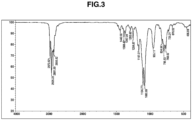
- IR and 1 H-NMR analyses of the obtained fraction were performed. The results are shown in FIGS. 3 and 4 .
- the obtained reaction liquid was distilled to obtain 54 g of a fraction having a boiling point of 140 to 150°C/0.4 kPa (yield: 69%).
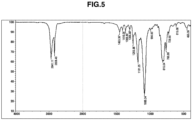
- IR and 1 H-NMR analyses of the obtained fraction were performed. The results are shown in FIGS. 5 and 6 .
- the reaction liquid was subjected to gas chromatography analysis (hereinafter, referred to as "GC analysis") to confirm disappearance of 2,2-dimethoxy-N-trimethoxysilylpropyl-1-aza-2-silacyclopentane and determine that the reaction was completed.
- GC analysis gas chromatography analysis
- IR analysis of the product was performed, and the result showed that the peak derived from silanol disappeared.
- a reaction was carried out in the same manner as in Synthesis Example 1-1 except that the amount of the silanol-modified polydimethylsiloxane used was changed to 15.0 g (0.0100 mol in terms of silanol), and 51.0 g of 2,2-dimethoxy-N-trimethoxysilylpropyl-1-aza-2-silacyclopentane was replaced by 4.1 g (0.011 mol) of 2,2-dimethoxy-N-trimethoxysilyloctyl-1-aza-2-silacyclopentane.
- a reaction was carried out in the same manner as in Synthesis Example 1-1 except that the amount of the silanol-modified polydimethylsiloxane used was changed to 15 g (0.010 mol in terms of silanol), and 51.0 g of 2,2-dimethoxy-N-trimethoxysilylpropyl-1-aza-2-silacyclopentane was replaced by 4.8 g (0.011 mol) of 2-ethoxy-2-methyl-N-triethoxysilyloctyl-1-aza-2-silacyclopentane.
- a reaction was carried out in the same manner as in Synthesis Example 1-1 except that the amount of the silanol-modified polydimethylsiloxane used was changed to 15 g (0.010 mol in terms of silanol), and 51.0 g of 2,2-dimethoxy-N-trimethoxysilylpropyl-1-aza-2-silacyclopentane was replaced by 3.9 g (0.011 mol) of 2-methoxy-2-methyl-N-trimethoxysilylpropylthioethyl-1-aza-2-silacyclopentane.
- the feeding of ammonia was continued for 7 hours while the reaction liquid was cooled so that the temperature of the reaction liquid did not exceed 30°C. Thereafter, the feeding of ammonia was stopped, and nitrogen gas was blown through the feed tube for 2 hours to purge the excess ammonia gas. The reaction liquid was filtered, and ammonium chloride was removed to obtain a polysilazane 2.
- the obtained composition 7 was subjected to IR analysis, and the result showed that a peak derived from a Si-N-Si structure was present at 922 cm -1 and a peak derived from NH was present at 3,370 cm -1 .
- GPC analysis was performed, and the result showed that the weight average molecular weight was 2,700. This indicated that the target polysilazane 2 was produced.
- reaction liquid was cooled to 10°C or lower, and ammonia gas was fed into the reaction liquid through a feed tube. The feeding of ammonia was continued for 6 hours while the reaction liquid was cooled so that the temperature of the reaction liquid did not exceed 30°C. Thereafter, the feeding of ammonia was stopped, and nitrogen gas was blown through the feed tube for 2 hours to purge the excess ammonia gas.
- composition 1 was subjected to IR analysis, and the result showed that peaks derived from a Si-N-Si structure were present at 932 cm -1 and 1,190 cm -1 , a peak derived from Si-O-Si was present at 1,092 cm -1 , and a peak derived from NH was present at 3,391 cm -1 .
- GPC analysis was performed, and the result showed that the weight average molecular weight was 5,300. This indicated that the target polysiloxazane was produced.
- Amino-modified polysiloxane compound having alkoxysilylalkyl alkoxysilylpropylaminopropyl-modified polysiloxane compounds 1 to 5 (referred to as compounds 1 to 5)
- Amino-modified polysiloxane compound having no alkoxysilylalkyl group X-22-161B (manufactured by Shin-Etsu Chemical Co., Ltd.)
- KR-500 a hydrolyzable silicone compound having a methyl group and a methoxy group (manufactured by Shin-Etsu Chemical Co., Ltd.)
- X-40-9227 a hydrolyzable silicone compound having a methyl group, a phenyl group and a methoxy group (manufactured by Shin-Etsu Chemical Co., Ltd.)
- KR-400 a mixture of a hydrolyzable silicone compound having a methyl group and a methoxy group and a curing catalyst (manufactured by Shin-Etsu Chemical Co., Ltd.)
- Ethyl Silicate 40 partial hydrolytic condensate of tetraethoxysilane (manufactured by COLCOAT CO., LTD.)
- Polysilazane 1 a reaction product of a polysilazane compound having a methyl group and a hydrogen atom with aminopropyltriethoxysilane (HTA-1
- IP CLEAN LX an isoparaffin solvent (manufactured by Idemitsu Kosan Co., Ltd.)
- DX-9740 an aluminum compound (manufactured by Shin-Etsu Chemical Co., Ltd.)
- D-25 Titanium compound (manufactured by Shin-Etsu Chemical Co., Ltd.)
- Each curable composition was applied onto a polished steel plate (10 cm ⁇ 15 cm) with a bar coater to a wet thickness of 30 ⁇ m, and then left standing in an environment at 25°C and 50% relative humidity. Thereafter, a finger was pressed against the coated surface of the test piece every 30 minutes, and the time until finger marks were no longer left (drying time by finger touch, tack free time) was measured, and taken as a curing time.
- Each curable composition was applied onto an aluminum plate (10 cm ⁇ 15 cm) with a bar coater to a wet thickness of 30 ⁇ m, and then left standing in an environment at 25°C and 50% relative humidity for 2 hours. After curing, the applied composition was further left standing at room temperature for 24 hours, and for the obtained cured film, the water contact angle at 2 ⁇ L was measured at room temperature using a contact angle meter (manufactured by Kyowa Interface Science Co., Ltd.).
- curable compositions containing the compound 1 according to the present invention which has an alkoxysilylalkyl group on nitrogen were capable of forming a cured film regardless of the presence or absence of a curing catalyst, and had a high contact angle, so that a high water-repellent property was exhibited.
- curable compositions containing an aminopropyl-modified polysiloxane compound having no alkoxysilylalkyl group on nitrogen did not form a cured film.
- curable compositions containing the aminopropyl-modified polysiloxane according to the present invention which has an alkoxysilylalkyl group on nitrogen were capable of forming a cured film, and had a high contact angle, so that a high water-repellent property was exhibited.
Landscapes
- Chemical & Material Sciences (AREA)
- Organic Chemistry (AREA)
- Chemical Kinetics & Catalysis (AREA)
- Polymers & Plastics (AREA)
- Health & Medical Sciences (AREA)
- Medicinal Chemistry (AREA)
- Wood Science & Technology (AREA)
- Materials Engineering (AREA)
- Engineering & Computer Science (AREA)
- Life Sciences & Earth Sciences (AREA)
- General Chemical & Material Sciences (AREA)
- Inorganic Chemistry (AREA)
- Compositions Of Macromolecular Compounds (AREA)
- Paints Or Removers (AREA)
- Silicon Polymers (AREA)
Abstract
Description
- The present invention relates to a curable composition, a cured product and a covered substrate, and more particularly to a curable composition containing an alkoxysilylalkylaminopropyl-modified polysiloxane compound and a hydrolyzable group-containing organosilicon compound, a cured product, and a covered substrate.
- An aminoalkyl-modified polysiloxane compound (hereinafter, also referred to as "amino-modified silicone") is used in various applications such as resin modifiers, fiber treatment agents, cosmetic raw materials and additives for coating materials with the utilization of the reactivity of amino groups.
- Amino-modified silicone has a polysiloxane structure, and therefore exhibits a water-repellent property and flexibility. Thus, for example, when amino-modified silicone is used as a resin modifier or the like, a modified resin is obtained by reacting the amino-modified resin with an epoxy resin or an isocyanate resin which is a resin having a functional group capable of reacting with an amino group. In this way, a water-repellent property and flexibility derived from the polysiloxane structure of amino-modified silicone can be imparted to a resin.
- In addition, a coating agent for vehicles has been developed which includes a silicone oligomer, silicone amino-modified at both terminals, a curing catalyst and a solvent. This coating agent is capable of imparting a high water-repellent property to a coating target due to the effect of silicone amino-modified at both terminals (Patent Document 1).
- Further, a coating agent including a polysilazane compound, silicone amino-modified at both terminals and a solvent has been developed. This coating agent is also capable of imparting a high water-repellent property to a coating target due to the effect of silicone amino-modified at both terminals (Patent Document 2).
-
- Patent Document 1:
JP-A 2008-075021 - Patent Document 2:
JP-A 2014-139301 - In the coating agents described in
Patent Documents 1 and 2, amino-modified silicone that serves to impart a water-repellent property does not have a hydrolyzable silyl group in the molecule. Thus, there is a problem that when an attempt is made to form a cured film by mixing with a hydrolyzable group-containing organosilicon compound such as a silicone oligomer or a polysilazane compound, a film cannot be formed or it takes time to form a film. - The present invention has been made in view of the above-described circumstances, and an object of the present invention is to provide a curable composition capable of forming a cured film with the obtained film exhibiting a high water-repellent property derived from amino-modified silicone, a cured product obtained by curing the curable composition, and a covered substrate including a covering formed from the curable composition.
- The present inventor has extensively conducted studies for solving the above-described problems, and resultantly found that a curable composition containing an alkoxysilylaminoalkyl-modified polysiloxane compound and a hydrolyzable group-containing organosilicon compound such as a silicone oligomer or a polysilazane compound is capable of forming a cured film in a short time, and the obtained film exhibits good water-repellent property, leading to completion of the present invention.
- That is, the present invention provides:
- 1. A curable composition including an alkoxysilylalkylaminopropyl-modified polysiloxane compound of the following general formula (1) and a hydrolyzable group-containing organosilicon compound:


- 2. The curable composition according to 1, wherein the hydrolyzable group-containing organosilicon compound is at least one selected from the group consisting of an alkoxysilane, a partial hydrolytic condensate of an alkoxysilane, a polysilazane and a polysiloxazane;
- 3. The curable composition according to 1 or 2, including a solvent;
- 4. The curable composition according to any one of 1 to 3, including at least one metal compound selected from the group consisting of a titanium compound, an aluminum compound, a zinc compound and a tin compound;
- 5. A cured product of the curable composition according to any one of 1 to 4; and
- 6. A covered substrate including a substrate, and a film formed on the substrate, the film being formed from the curable composition according to any one of 1 to 4.
- The curable composition of the present invention can be subjected to co-hydrolytic condensation with a hydrolyzable group-containing organosilicon compound, so that a cured film can be rapidly formed. The obtained cured film exhibits a high water-repellent property derived from a polysiloxane structure.
-
-
FIG. 1 is a diagram showing an IR spectrum of 2,2-dimethoxy-N-(trimethoxysilyloctyl)-1-aza-2-silacyclopentane obtained in Production Example 1; -
FIG. 2 is a diagram showing a 1H-NMR spectrum of 2,2-dimethoxy-N-(trimethoxysilyloctyl)-1-aza-2-silacyclopentane obtained in Production Example 1; -
FIG. 3 is a diagram showing an IR spectrum of 2-ethoxy-2-methyl-N-(triethoxysilyloctyl)-1-aza-2-silacyclopentane obtained in Production Example 2; -
FIG. 4 is a diagram showing a 1H-NMR spectrum of 2-ethoxy-2-methyl-N-(triethoxysilyloctyl)-1-aza-2-silacyclopentane obtained in Production Example 2; -
FIG. 5 is a diagram showing an IR spectrum of 2-methoxy-2-methyl-N-(trimethoxysilylpropylthioethyl)-1-aza-2-silacyclopentane obtained in Production Example 3; and -
FIG. 6 is a diagram showing a 1H-NMR spectrum of 2-methoxy-2-methyl-N-(trimethoxysilylpropylthioethyl)-1-aza-2-silacyclopentane obtained in Production Example 3. - Hereinafter, the present invention is described in detail.
- The curable composition of the present invention contains an alkoxysilylalkylaminopropyl-modified polysiloxane compound of the following general formula (1) (hereinafter, referred to as a "compound (1)") and a hydrolyzable group-containing organosilicon compound.

- In the general formula (1), R1s are each independently a substituted or unsubstituted monovalent hydrocarbon group having 1 to 10, preferably 1 to 6, more preferably 1 to 3 carbon atoms.
- The monovalent hydrocarbon groups of R1 may be linear, branched or cyclic, and specific examples thereof include linear alkyl groups such as methyl, ethyl, n-propyl, n-butyl, n-pentyl, n-hexyl, n-heptyl, n-octyl and decyl groups; branched alkyl groups such as isopropyl, isobutyl, sec-butyl, tert-butyl, neopentyl, thexyl and 2-ethylhexyl groups; cyclic alkyl groups such as cyclopentyl and cyclohexyl groups; alkenyl groups such as vinyl, allyl, propenyl, butenyl and pentenyl groups; aryl groups such as phenyl and tolyl groups; and aralkyl groups such as benzyl and phenethyl groups.
- Among them, a methyl group, an ethyl group, a propyl group, a vinyl group and a phenyl group are preferable from the viewpoint of availability of raw materials.
- In addition, the monovalent hydrocarbon group of R1 may be substituted with fluorine atoms or chlorine atoms at a part or all of hydrogen atoms. Specific examples of the monovalent hydrocarbon group substituted with these atoms include fluoroalkyl groups such as a (3,3,3-trifluoro)propyl group; and chloroalkyl groups such as a chloromethyl group and a chloropropyl group.
- In the general formula (1), R2 and R3 are each independently an unsubstituted monovalent hydrocarbon group having 1 to 6, preferably 1 to 3 carbon atoms.
- The monovalent hydrocarbon groups of R2 and R3 may be linear, branched or cyclic, and specific examples thereof include linear alkyl groups such as methyl, ethyl, n-propyl, n-butyl, n-pentyl and n-hexyl groups; branched alkyl groups such as isopropyl, isobutyl, sec-butyl and tert-butyl groups; cyclic alkyl groups such as cyclopentyl and cyclohexyl groups; alkenyl groups such as vinyl, allyl, propenyl, butenyl and pentenyl groups; and aryl groups such as a phenyl group.
- Among them, a methyl group and an ethyl group are preferable from the viewpoint of availability of raw materials.
- In the general formula (1), R4 is a divalent hydrocarbon group having 1 to 20, preferably 1 to 10, more preferably 1 to 6 carbon atoms, which may contain a sulfur atom, a silicon atom, an ester bond or a urea bond.
- The divalent hydrocarbon group of R4 may be linear, branched or cyclic, and specific examples thereof include linear alkylene groups such as methylene, ethylene, trimethylene, tetramethylene, hexamethylene, octamethylene and decylene groups; branched alkylene groups such as methylethylene and methyltrimethylene groups; cyclic alkylene groups such as cyclohexylene and methylenecyclohexylenemethylene groups; linear alkenylene groups such as propenylene, butenylene, hexenylene and octenylene groups; branched alkenylene groups such as isopropenylene and isobutenylene groups; arylene groups such as a phenylene group; and aralkylene groups such as methylenephenylene, methylenephenylenemethylene and methylenephenyleneethylene groups.
- Among them, linear alkylene groups are preferable and linear alkylene groups having 1 to 6 carbon atoms are more preferable from the viewpoint of availability of raw materials.
- Specific examples of the divalent hydrocarbon group where R4 contains a sulfur atom include thioalkylene groups and alkylenethioalkylene groups.
- Specific examples of the divalent hydrocarbon group where R4 contains a silicon atom include alkylenedialkylsilylalkylene groups, and groups of the following general formula (3).

- In the general formula (3), R4's are each independently an oxygen atom or a divalent hydrocarbon group having 1 to 20, preferably 1 to 10, more preferably 1 to 6 carbon atoms, and the total number of carbon atoms in two R4's is equal to that in R4. Specific examples of the divalent hydrocarbon group include the same groups as exemplified for R4 above.
- Examples of the divalent hydrocarbon group where R4 contains an ester bond include substituents of the following general formula (4), and examples of the divalent hydrocarbon group where R4 contains a urea bond include substituents of the following general formula (5).

- In the general formulae (4) and (5), R4"s are each independently a single bond or a divalent hydrocarbon group having 1 to 10, preferably 1 to 6, more preferably 1 to 3 carbon atoms, and the total number of carbon atoms in two R4"s is equal to that in R4. Examples of the divalent hydrocarbon group of R4" include groups having 1 to 10 carbon atoms, among exemplified for R4 above.
- In the general formula (5), R5 is a hydrogen atom or an unsubstituted monovalent hydrocarbon group having 1 to 10, preferably 1 to 6, more preferably 1 to 3 carbon atoms. Examples of the monovalent hydrocarbon group of R5 include the same substituents as those of R1, and a hydrogen atom is particularly preferable from the viewpoint of availability of raw materials.
- In the general formula (1), p is an integer of 1 to 1000, preferably 4 to 300, more preferably 12 to 100, from the viewpoint of easy handling and an ability to sufficiently impart a water-repellent property.
- q is 0 or 1, and r is 0, 1, or 2.
- In the general formula (1), X represents a group of the following general formula (2) or R1 3Si.

- The compound (1) is obtained by, for example, reacting a silanol-modified polysiloxane compound of the following general formula (6) (hereinafter, referred to as a "compound (6)") with a cyclic silazane compound having an alkoxysilyl group, represented by the following general formula (7) (hereinafter, referred to as a "compound (7)").
- In addition, the compound (7) can be produced by a known method described in
JP-A 2011-102267 
- Specific examples of the compound (6) include 1-hydroxypolysiloxane compounds such as 1-hydroxy-1,1,3,3,5,5,7,7,7-nonamethyltetrasiloxane, 1-hydroxy-1,1,3,3,5,5,7,7-octamethyl-7-vinyltetrasiloxane, 1-hydroxy-1,1,3,3,5,5,7,7-octamethyl-7-chloromethyltetrasiloxane, 1-hydroxy-1,1,3,3,5,5,7,7-octamethyl-7-chloropropyltetrasiloxane, 1-hydroxy-1,1,3,3,5,5-hexavinyl-7,7,7-trimethyltetrasiloxane, 1-hydroxy-1,1,3,3,5,5-hexaphenyl-7,7,7-trimethyltetrasiloxane, 1-hydroxy-1,3,5-tris(3,3,3-trifluoropropyl)-1,3,5,7,7,7-hexamethyltetrasiloxane, 1-hydroxy-1,1,3,3,5,5,7-heptavinyl-7,7-dimethyltetrasiloxane, 1-hydroxy-1,1,3,3,5,5,7-heptamethyl-7,7-diphenyltetrasiloxane, 1-hydroxy-1,1,3,3,5,5,7,7-octaphenyl-7-methyl-tetrasiloxane, 1-hydroxy-1,1,3,3,5,5,7,7,7-nonaphenyltetrasiloxane, α -hydroxy-ω-methylpolydimethylpolysiloxane, α-hydroxy-ω-vinylpolydimethylpolysiloxane, α -hydroxy-ω-chloromethyldimethylpolysiloxane, α -hydroxy-ω-chloropropyldimethylpolysiloxane and α-hydroxy-ω-phenyldimethylpolysiloxane; dihydroxypolysiloxane compounds such as 1,7-dihydroxy-1,1,3,3,5,5,7,7-octamethyltetrasiloxane, 1,7-dihydroxy-1,1,3,3,5,5,7-heptamethyl-7-vinyltetrasiloxane, 1,7-dihydroxy-1,3,5-tris(3,3,3-trifluoropropyl)-1,3,5,7,7-pentamethyltetrasiloxane and α ,ω-dihydroxydimethylpolysiloxane; and dialkylsilanediols such as dibutylsilanediol, diphenylsilanediol and dicyclopentylsilanediol.
- Specific examples of the compound (7) include cyclic silazane compounds having a trialkoxysilylalkyl group, such as 2,2-dimethoxy-N-(trimethoxysilylpropyl)-1-aza-2-silacyclopentane, 2,2-dimethoxy-N-(trimethoxysilylmethyl)-1-aza-2-silacyclopentane, 2,2-dimethoxy-N-(trimethoxysilylhexyl)-1-aza-2-silacyclopentane, 2,2-dimethoxy-N-(trimethoxysilyloctyl)-1-aza-2-silacyclopentane, 2-methoxy-2-methyl-N-(trimethoxysilylpropyl)-1-aza-2-silacyclopentane, 2-methoxy-2-methyl-N-(trimethoxysilylhexyl)-1-aza-2-silacyclopentane, 2-methoxy-2-methyl-N-(trimethoxysilyloctyl)-1-aza-2-silacyclopentane, 2,2-diethoxy-N-(triethoxysilylpropyl)-1-aza-2-silacyclopentane, 2,2-diethoxy-N-(triethoxysilylmethyl)-1-aza-2-silacyclopentane, 2,2-diethoxy-N-(triethoxysilylhexyl)-1-aza-2-silacyclopentane, 2,2-diethoxy-N-(triethoxysilyloctyl)-1-aza-2-silacyclopentane, 2-ethoxy-2-methyl-N-(triethoxysilylpropyl)-1-aza-2-silacyclopentane, 2-ethoxy-2-methyl-N-(triethoxysilylhexyl)-1-aza-2-silacyclopentane, 2-ethoxy-2-methyl-N-(triethoxysilyloctyl)-1-aza-2-silacyclopentane, 2,2-dimethoxy-N-(trimethoxysilylthioethyl)-1-aza-2-silacyclopentane, 2,2-dimethoxy-N-(trimethoxysilylthioethyl)-1-aza-2-silacyclopentane, 2-methoxy-2-methyl-N-(trimethoxysilylthioethyl)-1-aza-2-silacyclopentane, 2-methoxy-2-methyl-N-(trimethoxysilylthioethyl)-1-aza-2-silacyclopentane, 2,2-dimethoxy-N-(trimethoxysilylthiopropyl)-1-aza-2-silacyclopentane, 2,2-dimethoxy-N-(trimethoxysilylthiopropyl)-1-aza-2-silacyclopentane, 2-methoxy-2-methyl-N-(trimethoxysilylthiopropyl)-1-aza-2-silacyclopentane, 2-methoxy-2-methyl-N-(trimethoxysilylthiopropyl)-1-aza-2-silacyclopentane, 2,2-dimethoxy-N-[(trimethoxysilyl)ethyldimethylsiloxydimethylsilyl(methyl)propyl]-1-aza-2-silacyclopentane, 2-methoxy-2-methyl-N-[(trimethoxysilyl)ethyldimethylsiloxydimethylsilyl(methyl)propyl]-1-aza-2-silacyclopentane, 2,2-dimethoxy-N-(3-trimethoxysilylpropoxycarbonylethyl)-1-aza-2-silacyclopentane, 2,2-diethoxy-N-(3-triethoxysilylpropoxycarbonylethyl)-1-aza-2-silacyclopentane, 2,2-dimethoxy-N-(3-trimethoxysilylpropoxycarbonyl(methyl)ethyl)-1-aza-2-silacyclopentane, 2,2-diethoxy-N-(3-triethoxysilylpropoxycarbonyl(methyl)ethyl)-1-aza-2-silacyclopentane, 2,2-dimethoxy-N-(3-trimethoxysilylpropylureidoethyl)-1-aza-2-silacyclopentane, 2-methoxy-2-methyl-N-(3-trimethoxysilylpropylureidoethyl)-1-aza-2-silacyclopentane, 2,2-diethoxy-N-(3-triethoxysilylpropylureidoethyl)-1-aza-2-silacyclopentane, 2-ethoxy-2-methyl-N-(3-triethoxysilylpropylureidoethyl)-1-aza-2-silacyclopentane, 2,2-dimethoxy-N-(trimethoxysilylethyldimethylsiloxydimethylsilylpropyl(methyl)))-1-aza-2-silacyclopentane and 2,2-dimethoxy-N-(1,1,1-trimethoxy-3,3,5,5,7,7-hexamethyltetrasiloxydimethylsilylpropyl)-1-aza-2-silacyclopentane; cyclic silazane compounds having an alkyldialkoxysilylalkyl group, such as 2,2-dimethoxy-N-(methyldimethoxysilylpropyl)-1-aza-2-silacyclopentane, 2,2-dimethoxy-N-(methyldimethoxysilylmethyl)-1-aza-2-silacyclopentane, 2,2-dimethoxy-N-(methyldimethoxysilylhexyl)-1-aza-2-silacyclopentane, 2,2-dimethoxy-N-(methyldimethoxysilyloctyl)-1-aza-2-silacyclopentane, 2-methoxy-2-methyl-N-(methyldimethoxysilylhexyl)-1-aza-2-silacyclopentane, 2-methoxy-2-methyl-N-(methyldimethoxysilyloctyl)-1-aza-2-silacyclopentane, 2,2-diethoxy-N-(methyldiethoxysilylpropyl)-1-aza-2-silacyclopentane, 2,2-diethoxy-N-(methyldiethoxysilylmethyl)-1-aza-2-silacyclopentane, 2,2-diethoxy-N-(methyldiethoxysilylhexyl)-1-aza-2-silacyclopentane, 2,2-diethoxy-N-(methyldiethoxysilyloctyl)-1-aza-2-silacyclopentane, 2-ethoxy-2-methyl-N-(methyldiethoxysilylhexyl)-1-aza-2-silacyclopentane, 2-ethoxy-2-methyl-N-(methyldiethoxysilyloctyl)-1-aza-2-silacyclopentane, 2,2-dimethoxy-N-(methyldimethoxysilylthioethyl)-1-aza-2-silacyclopentane, 2,2-dimethoxy-N-(methyldimethoxysilylthioethyl)-1-aza-2-silacyclopentane, 2-methoxy-2-methyl-N-(methyldimethoxysilylthioethyl)-1-aza-2-silacyclopentane, 2-methoxy-2-methyl-N-(methyldimethoxysilylthioethyl)-1-aza-2-silacyclopentane, 2,2-dimethoxy-N-(methyldimethoxysilylthiopropyl)-1-aza-2-silacyclopentane, 2,2-dimethoxy-N-(methyldimethoxysilylthiopropyl)-1-aza-2-silacyclopentane, 2-methoxy-2-methyl-N-(methyldimethoxysilylthiopropyl)-1-aza-2-silacyclopentane, 2-methoxy-2-methyl-N-(methyldimethoxysilylthiopropyl)-1-aza-2-silacyclopentane, 2,2-dimethoxy-N-(3-methyldimethoxysilylpropoxycarbonylethyl)-1-aza-2-silacyclopentane, 2,2-diethoxy-N-(3-methyldiethoxysilylpropoxycarbonylethyl)-1-aza-2-silacyclopentane, 2,2-dimethoxy-N-(3-methyldimethoxysilylpropoxycarbonyl(methyl)ethyl)-2-aza-1-silacyclopentane and 2,2-diethoxy-N-(3-methyldiethoxysilylpropoxycarbonyl(methyl)ethyl)-1-aza-2-silacyclopentane; and cyclic silazane compounds having a dialkylalkoxysilylalkyl group, such as 2,2-dimethoxy-N-(dimethylmethoxysilylmethyl)-1-aza-2-silacyclopentane, 2,2-dimethoxy-N-(dimethylmethoxysilylhexyl)-1-aza-2-silacyclopentane, 2,2-dimethoxy-N-(dimethylmethoxysilylocty)-1-aza-2-silacyclopentane, 2-methoxy-2-methyl-N-(dimethylmethoxysilylhexyl)-1-aza-2-silacyclopentane, 2-methoxy-2-methyl-N-(dimethylmethoxysilyloctyl)-1-aza-2-silacyclopentane, 2,2-dimethoxy-N-(diethylmethoxysilylhexyl)-1-aza-2-silacyclopentane, 2,2-dimethoxy-N-(diethylmethoxysilyloctyl)-1-aza-2-silacyclopentane, 2-methoxy-2-methyl-N-(diethylmethoxysilylhexyl)-1-aza-2-silacyclopentane, 2-methoxy-2-methyl-N-(diethylmethoxysilyloctyl)-1-aza-2-silacyclopentane, 2,2-dimethoxy-N-(diphenylmethoxysilylhexyl)-1-aza-2-silacyclopentane, 2,2-dimethoxy-N-(diphenylmethoxysilyloctyl)-1-aza-2-silacyclopentane, 2-methoxy-2-methyl-N-(diphenylmethoxysilylhexyl)-1-aza-2-silacyclopentane, 2-methoxy-2-methyl-N-(diphenylmethoxysilyloctyl)-1-aza-2-silacyclopentane and 2,2-diethoxy-N-(dimethylethoxysilylmethyl)-1-aza-2-silacyclopentane.
- Specific examples of the compound (1) include 1-(alkoxysilylalkylaminopropyl)polysiloxane compounds where X is R1 3Si, such as 1-(3-trimethoxysilylpropylaminopropyl)-1, 1-dimethoxy-3,3,5,5,7,7 ,9,9,9-nonamethylpentasiloxane, 1-(3-triethoxysilylpropylaminopropyl)-1,1-diethoxy-3,3,5,5,7,7,9,9,9-nonamethylpentasiloxane, 1-(8-trimethoxysilylpropylaminooctyl)-1,1-dimethoxy-3,3,5,5,7,7,9,9,9-nonamethylpentasiloxane, 1-(8-triethoxysilylpropylaminopropyl)-1,1-diethoxy-3,3,5,5,7,7,9,9,9-nonamethylpentasiloxane, 1-(8-triethoxysilylpropylaminopropyl)-1-ethoxy-1,3,3,5,5,7,7,9,9,9-decamethylpentasiloxane, 1-(3-trimethoxysilylpropylaminopropyl)-1,1-dimethoxy-3,3,5,5,7,7,9,9,9-nonamethylpentasiloxane, 1-(3-trimethoxysilylpropylaminopropyl)-1,1-dimethoxy-3,3,5,5,7,7,9,9-octamethyl-9-vinylpentasiloxane, 1-(3-trimethoxysilylpropylaminopropyl)-1,1-dimethoxy-3,3,5,5,5,7,7,9,9-octamethy1-9-chloromethylpentaloxane, 1-(3-trimethoxysilylpropylaminopropyl)-1,1-dimethoxy-3,3,5,5,7,7,9,9-octamethyl-9-chloropropylpentasiloxane, 1-(3-trimethoxysilylpropylaminopropyl)-1,1-dimethoxy-3,3,5,5,7,7-hexavinyl-9,9,9-trimethylpentasiloxane, 1-(3-trimethoxysilylpropylaminopropyl)-1,1-dimethoxy-3,3,5,7,7-hexaphenyl-9,9,9-trimethylpentasiloxane, 1-(3-trimethoxysilylpropylaminopropyl)-1,1-dimethoxy-3,5,7-tris(3,3,3-trifluoropropyl)-3,5,7,9,9,9-hexamethylpentasiloxane, 1-(3-trimethoxysilylpropylaminopropyl)-1,1-dimethoxy-3,3,5,5,7,7,9-heptavinyl-9,9-dimethylpentasiloxane, 1-(3-trimethoxysilylpropylaminopropyl)-1,1-dimethoxy-3,3,5,5,7,7,9,-heptamethyl-9,9-diphenylpentasiloxane, 1-(3-trimethoxysilylpropylaminopropyl)-1,1-dimethoxy-3,3,5,5,7,7,9,9-octaphenyl-7-methyl-pentasiloxane, 1-(3-trimethoxysilylpropylaminopropyl)-1,1-dimethoxy-3,3,5,5,7,7,9,9,9-nonaphenylpentasiloxane, α-(3-trimethoxysilylpropylaminopropyl)-α,α-dimethoxy-ω-methylpolydimethylpolysiloxane, α-(3-triethoxysilylpropylaminopropyl)-α,α-diethoxy-ω-methylpolydimethylpolysiloxane, α-(3-trimethoxysilylpropylaminopropyl)-α,α-dimethoxy-ω-vinylpolydimethylpolysiloxane, α-(3-trimethoxysilylpropylaminopropyl)-α,α-dimethoxy-ω-chloromethyldimethylpolysiloxane, α-(3-trimethoxysilylpropylaminopropyl)-α,α-dimethoxy-ω-chloropropyldimethylpolysiloxane and α-(3-trimethoxysilylpropylaminopropyl)-α,α-dimethoxy-ω-phenyldimethylpolysiloxane; and α,ω-bis(alkoxysilylalkylaminopropyl)polysiloxane compounds where X has the general formula (2), 1,11-bis(3-trimethoxysilylpropylaminopropyl)-1,1,11,11-tetramethoxy-3,3,5,5,7,7,9,9-octamethylhexasiloxane, 1,11-bis(3-triethoxysilylpropylaminopropyl)-1,1,11,11-tetraethoxy-3,3,5,5,7,7,9,9-octamethylhexasiloxane, 1,11-bis(3-trimethoxysilylpropylaminopropyl)-1,1,11,11-tetramethoxy-3,3,5,5,7,7,9-heptamethyl-9-vinyl-hexasiloxane, 1,11-bis(3-trimethoxysilylpropylaminopropyl)-1,1,11,11-tetramethoxy-3,5,7-tris(3,3,3-trifluoropropyl)-3,5,7,9,9-pentamethylhexasiloxane, α,ω-bis(3-trimethoxysilylpropylaminopropyl)-α,α,ω,ω-tetramethoxydimethylpolysiloxane, α,ω-bis(3-triethoxysilylpropylaminopropyl)-α, α, ω, ω-tetraethoxydimethylpolysiloxane, α,ω-bis(8-trimethoxysilylpropylaminooctyl)-α,α,ω,ω-tetramethoxydimethylpolysiloxane, α,ω-bis(8-triethoxysilylpropylaminooctyl)-α,α,ω,ω-tetraethoxydimethylpolysiloxane, α,ω-bis(trimethoxysilylpropylaminomethyl)-α,α,ω,ω-tetramethoxydimethylpolysiloxane, α,ω-bis(triethoxysilylpropylaminomethyl)-α,α,ω,ω-tetraethoxydimethylpolysiloxane, α,ω-bis(dimethylmethoxysilylpropylaminomethyl)-α,α,ω,ω-tetramethoxydimethylpolysiloxane and α,ω-bis(dimethylethoxysilylpropylaminomethyl)-α,α,ω,ω-tetramethoxydimethylpolysiloxane.
- Next, the hydrolyzable group-containing organosilicon compound is described.
- The hydrolyzable group-containing organosilicon compound for use in the present invention is not particularly limited as long as it has a functional group that can be subjected to hydrolytic condensation, and at least one selected from the group consisting of alkoxysilane, a partial hydrolytic condensate of alkoxysilane, a polysilazane and a polysiloxazane is preferable.
- The alkoxysilane compound is, for example, a compound of the following general formula (8) (hereinafter, referred to as a "compound (8)").
R6 x-Si(OR7)4-x (8)
- In the general formula (8), R6s are each independently an unsubstituted monovalent hydrocarbon group having 1 to 10, preferably 1 to 6 carbon atoms, which may contain an oxygen atom, R7 is an unsubstituted monovalent hydrocarbon group having 1 to 10, preferably 1 to 6 carbon atoms, and x is an integer of 0 to 2.
- Specific examples of the monovalent hydrocarbon group of R6 and R7 include the same substituents as R1.
- Specific examples of the monovalent hydrocarbon group where R6 contains an oxygen atom include alkyloxyalkyl groups such as methoxymethyl, ethoxymethyl and methoxypropyl groups.
- Specific examples of the compound (8) include dialkyldialkoxysilane compounds such as dimethyldimethoxysilane, dimethyldiethoxysilane, diphenyldimethoxysilane, diphenyldiethoxysilane and dicyclopentyldimethoxysilane; alkyltrialkoxysilanes such as methyltrimethoxysilane, methyltriethoxysilane, ethyltrimethoxysilane, ethyltriethoxysilane, propyltrimethoxysilane, propyltriethoxysilane, hexyltrimethoxysilane, hexyltriethoxysilane, octyltrimethoxysilane, octyltriethoxysilane, decyltrimethoxysilane, decyltriethoxysilane, methoxymethyltrimethoxysilane, ethoxymethyltriethoxysilane, phenyltrimethoxysilane and phenyltriethoxysilane; and tetraalkoxysilane compounds such as tetramethoxysilane and tetraethoxy silane.
- The partial hydrolytic condensate of the compound (8) is obtained by adding water to the compound (8) in the presence of a catalyst if necessary, and heating and stirring the mixture if necessary. Here, the alkoxysilane compounds may be used alone or used in combination of two or more thereof.
- The polysilazane compound is a polycondensate of a chlorosilane compound and ammonia, and is, for example, a compound having a repeating unit of the following general formula (9) (hereinafter, referred to as a "compound (9)"),

- In the general formula (9), R8s are each independently a substituted or unsubstituted monovalent hydrocarbon group having 1 to 10 carbon atoms, which may contain an organosiloxane group of the following general formula (9A) at a terminal. Examples of the monovalent hydrocarbon group of R8 include the same substituents as R1.
y is 0, 1, 2, or 3.
-Si(R9)a[(OSi(R9)2)bOSi(R9)3](3-a) (9A)
- In the formula (9A), R9s are each independently a monovalent hydrocarbon group having 1 to 10, preferably 1 to 6 carbon atoms, and a part or all of hydrogen atoms in the monovalent hydrocarbon group may be substituted with a halogen atom such as a chlorine atom, a bromine atom or an iodine atom.
- In the formula (9A), a is 0, 1, 2 or 3, and when a is 0 or 1, a plurality of OSiR9 3 groups may be subjected to condensation by siloxane elimination to form a cyclic siloxane. b represents an integer of 0 to 30, preferably 0 to 20, more preferably 5 to 15.
- The combination of R9, a and b is arbitrary and is not limited.
- Specific examples of the organosiloxane group of the general formula (9A), which is defined by R9, a and b, include trialkylsilyl groups such as trimethylsilyl, triethylsilyl, tertbutyldimethylsilyl, triisopropylsilyl and tert-butyldiphenylsilyl groups; polyalkylpolysiloxanyl groups such as pentamethyldisiloxanyl, heptamethyltrisiloxanyl, nonamethyltetrasiloxanyl, α-trimethylsilyl-polydimethylsiloxanyl and α-butyldimethylsilyl-polydimethylsiloxanyl; and polyalkylcyclopolysiloxanyl groups such as pentamethylcyclotrisiloxanyl, heptamethylcyclotetrasiloxanyl and nonamethylcyclopentasiloxanyl groups.
- The polysilazane compound may include only one constituent unit as shown in the general formula (9), or may include two or more constituent units. However, a case is excluded where the polysilazane compound includes only one unit in which y is 3, i.e. a hexaalkyldisilazane.
- The compound (9) is obtained by reacting the chlorosilane compound with ammonia in the presence of a solvent if necessary, and removing ammonium chloride generated with progression of the reaction.
- The polysiloxazane compound has a siloxane structure and a silazane structure in the molecule, and is, for example, a compound of the following general formula (10) (hereinafter, referred to as a "compound (10)").

- In the general formula (10), R10s are each independently a substituted or unsubstituted monovalent hydrocarbon group having 1 to 10 carbon atoms, which may contain a sulfur atom or a silicon atom. Examples of the monovalent hydrocarbon group of R10 include the same substituents as R1.
- Specific examples of the monovalent hydrocarbon group where R10 contains a sulfur atom include alkylenethioalkyl groups.
- Specific examples of the monovalent hydrocarbon group where R10 contains a silicon atom include trialkylsilylalkyl groups, dialkylmonoalkoxysilylalkyl groups, alkyldialkoxysilylalkyl groups and trialkoxysilylalkyl groups, and the monovalent hydrocarbon group may contain an organosiloxane group of the general formula (9A) at a terminal of the monovalent hydrocarbon group.
- Further, R10 may contain both a sulfur atom and a silicon atom. Specific examples of the monovalent hydrocarbon group where the group contains both a sulfur atom and a silicon atom include alkylenethioalkylenedialkylmonoalkoxysilyl groups, alkylenethioalkylenealkyldialkoxysilyl groups and alkylenethioalkylenetrialkoxysilyl groups.
- In the general formula (10), A's each independently represent R6, an oxygen atom or NH-SiA2, or an oxygen atom where A's are bonded to each other.
- e and f are each independently 0, 1 or 2, provided that both e and f are not 0.
- m represents an integer of 0 to 300, preferably 2 to 100, more preferably 2 to 40.
- c and d are numbers satisfying 0 < c ≤ 1, 0 ≤ d < 1 and c + d = 1, and when the number of NH-SiA2s is g, c is a number satisfying 0 ≤ g/(2 m + 4) ≤ 0.5.
- Like the polysilazane compound, the compound (10) is obtained by reacting a chlorosiloxane compound of the following general formula (12) and a polysiloxane modified at both terminals with silanol, which is represented by the following general formula (13), with ammonia in the presence of a solvent if necessary, and removing ammonium chloride generated with the progression of the reaction.


- In the general formula (12), E's each independently represent R6, a chlorine atom or an oxygen atom, or an oxygen atom where E's are bonded to each other.
- In the general formula (12), h satisfies 0 ≤ h/(2 m + 2) ≤ 0.5, where h is a number of chlorine atoms.
- In the curable composition of the present invention, the hydrolyzable group-containing organosilicon compound may be used alone, or used as a combination of a plurality of components. Examples of the combination of a plurality of components used as the hydrolyzable group-containing organosilicon compound include mixtures of the compound (8) and a partial hydrolytic condensate thereof, mixtures of a partial hydrolytic condensate of the compound (8) and the compound (9), and mixtures of a partial hydrolytic condensate of the compound (8) and the compound (10).
- The compounding ratio of the compound (1) to the hydrolyzable group-containing organosilicon compound in the curable composition is not particularly limited, and the amount of the compound (1) is preferably 0.1 to 90 wt%, more preferably 0.5 to 75 wt%, still more preferably 1 to 60 wt%, per total weight of the compound (1) and the hydrolyzable group-containing organosilicon compound.
- The curable composition can be used without a solvent, and a solvent may be used as long as it does not affect the compound (1) and the hydrolyzable group-containing organosilicon compound.
- Specific examples of the solvent include aliphatic hydrocarbon compounds having 5 to 20 carbon atoms, such as pentane, hexane, cyclohexane, octane, isooctane, nonane, decane, dodecane and isododecane; aromatic hydrocarbon compounds having 6 to 10 carbon atoms, such as benzene, toluene and xylene; ether compounds such as diethyl ether, tetrahydrofuran, 4-methyltetrahydrofuran, cyclopentylmethyl ether and dioxane; ester compounds such as ethyl acetate, isopropyl acetate and butyl acetate; aprotic polar compounds such as acetonitrile, N,N-dimethylformamide; alcohol compounds such as methanol, ethanol, propanol, 2-propanol and butanol; chlorinated hydrocarbon compounds such as dichloromethane and chloroform; and siloxane compounds having 2 to 10 silicon atoms, such as hexamethyldisiloxane, octamethyltrisiloxane, tris(trimethylsiloxy)methylsilane, octamethylcyclotetrasiloxane, decamethyltetrasiloxane, decamethylcyclopentasiloxane and dodecamethylpentasiloxane. These solvents may be used alone or used in combination of two or more thereof.
- Of these, aliphatic hydrocarbon compounds having 8 to 12 carbon atoms and siloxane compounds having 2 to 8 silicon atoms are particularly preferable from the viewpoint of safety.
- The amount of the solvent used is not particularly limited, and is preferably an amount which ensures that the concentration of the compound (1) and the hydrolyzable group-containing organosilicon compound is preferably 0.1 to 90 wt%, more preferably 1 to 90 wt%, still more preferably 5 to 80 wt%.
- In addition, the curable composition may contain at least one metal compound selected from a titanium compound, an aluminum compound, a zinc compound and a tin compound as a curing catalyst.
- Specific examples of the titanium compound include tetraalkyl orthotitanate such as tetrabutyl orthotitanate, tetramethyl orthotitanate, tetraethyl orthotitanate, tetrapropyl orthotitanate and tetraisopropyl orthotitanate, partial hydrolytic condensates thereof, and titanium acylates.
- Specific examples of the aluminum compound include aluminum trihydroxide, aluminum alcoholates, aluminum acylates, salts of aluminum acylates, aluminosyloxy compounds and aluminum metal chelate compounds.
- Specific examples of the zinc compound include zinc octylate and zinc 2-ethylhexanoate.
- Specific examples of the tin compound include dioctyltin dioctate and dioctyltin dilaurate.
- The amount of the curing catalyst used is not particularly limited, and is preferably 0.01 to 10 wt%, more preferably 0.1 to 5 wt%, per weight of the curable composition, from the viewpoint of exhibiting the effect of the catalyst.
- The curing catalyst may be added to the curable composition later, or added with the curing catalyst dissolved in a hydrolyzable group-containing organosilicon compound or a solvent.
- The curable composition may contain one or more other additives selected from pigments, antifoaming agents, lubricants, preservatives, pH adjusters, film forming agents, antistatic agents, antibacterial agents, dyes and the like as long as the effects of the curable composition are not impaired.
- The curable composition is obtained by mixing the compound (1) and the hydrolyzable group-containing organosilicon compound with a solvent used if necessary, a curing catalyst and other additives while being careful to prevent ingress of moisture, thereby forming a homogeneous solution. Specifically, when the components are handled in an atmosphere of an inert gas such as nitrogen or argon, ingress of moisture can be avoided.
- The order of addition of the components is not limited, and it is preferable the curing catalyst is added last from the viewpoint of minimizing progression of hydrolysis.
- Next, a cured product obtained by curing the curable composition is described.
- The cured product of the present invention is obtained by curing the curable composition. Specifically, the alkoxysilyl group in the compound (1) contained in the curable composition and the hydrolyzable group in the hydrolyzable group-containing organosilicon compound are each subjected to hydrolytic condensation to cure the curable composition.
- When the curable composition contains a solvent, the solvent may be volatilized before the composition is cured, or the composition may be cured while the solvent is volatilized.
- Ordinary temperature or a temperature under heating can be employed as a temperature during curing. The temperature here is not particularly limited as long as the substrate is not adversely affected, and for maintaining reactivity, the temperature is preferably 0 to 250°C, more preferably 20 to 180°C, still more preferably 20 to 150°C.
- Curing is performed in an atmosphere at a relative humidity of preferably 15 to 100%, more preferably 25 to 80%, because reaction with moisture in the air occurs.
- In addition, it is possible to obtain a covered substrate by covering a surface of a substrate such as an inorganic material or an organic material with the curable composition, and then reacting the curable composition with moisture in the air to cure the curable composition of the present invention.
- Specific examples of the inorganic material include metal, glass, silica, alumina, talc, calcium carbonate and carbon.
- As the glass, types of glass which are commonly used, such as E glass, C glass and quartz glass can be used, and glass fibers may be used. The glass fibers may be in the form of an aggregate of the glass fibers, for example, a glass-based (filament) fiber bundle having a fiber diameter of 3 to 30 µm, a twisted yarn, or a woven fabric.
- Specific examples of the organic material include resin materials such as polyethylene, polypropylene, polystyrene, poly(meth)acryl, polyvinyl chloride, polycarbonate, nylon, polyurethane, polybutylene terephthalate, polyethylene terephthalate, ABS (polymer of acrylonitrile, butadiene and styrene), melamine, phenol, epoxy and polyimide; elastomers such as polybutadiene rubber, polyisopropylene rubber, nitrile rubber, neoprene rubber, polysulfide and urethane rubber; and rubber materials, and poly (meth)acryl is particularly preferable.
- The shape of the substrate is not particularly limited, and may be a plate shape, a sheet shape, a fibrous shape or a powdered shape.
- Examples of the method for applying the curable composition to the substrate include known application methods such as a brush coating method, a sponge coating method, a cloth coating method, a spray coating method, a wire bar method, a blade method, a roll coating method, a dipping method and a spin coating method.
- In addition, for powdered materials such as silica, alumina, talc and calcium carbonate, a mixing method may be employed in which the curable composition is directly mixed together with the substrate by use of a mixer or a mill.
- Production Examples, Synthesis Examples, Examples and Comparative Examples are given below to more concretely illustrate the present invention, but the present invention is not limited by these Examples.
-

- The inside of a four-necked glass flask equipped with a stirrer, a thermometer, a distillation tower and a reflux condenser was purged with nitrogen, 122 g (0.296 mol) of (trimethoxysilylpropyl)-(trimethoxysilyloctyl)amine, 132 g of toluene and 0.75 g (0.0050 mol) of trifluoromethanesulfonic acid were added, and the mixture was refluxed. To this mixture was added 58.4 g (0.311 mol) of N-trimethylsilyl-N-methylaniline, the mixture was stirred, and generated trimethylmethoxysilane was taken out together with toluene using a distillation column until the temperature reached a reaction temperature of 150°C.
- The obtained reaction liquid was distilled to obtain 66 g of a fraction having a boiling point of 170°C/0.5 kPa (yield: 58%). IR and 1H-NMR analyses of the obtained fraction were performed. The results are shown in
FIGS. 1 and2 . -

- The inside of a four-necked glass flask equipped with a stirrer, a thermometer, a distillation tower and a reflux condenser was purged with nitrogen, 162 g (0.348 mol) of (methyldiethoxysilylpropyl)-(triethoxysilyloctyl)amine, 114 g of toluene and 1.0 g (0.0067 mol) of trifluoromethanesulfonic acid were added, and the mixture was refluxed. To this mixture was added 68.5 g (0.382 mol) of N-trimethylsilyl-N-methylaniline, the mixture was stirred, and generated triethylmethoxysilane was taken out together with toluene using a distillation column until the temperature reached a reaction temperature of 150°C.
- The obtained reaction liquid was distilled to obtain 110 g of a fraction having a boiling point of 177°C/0.2 kPa (yield: 75%). IR and 1H-NMR analyses of the obtained fraction were performed. The results are shown in
FIGS. 3 and4 . -

- The inside of a four-necked glass flask equipped with a stirrer, a thermometer, a distillation tower and a reflux condenser was purged with nitrogen, 86.0 g (0.221 mol) of (methyldimethoxysilylpropyl)-(trimethoxysilpropylthioethyl)amine, 110 g of toluene and 0.4 g (0.003 mol) of trifluoromethanesulfonic acid were added, and the mixture was refluxed. To this mixture was added 44.0 g (0.245 mol) of N-trimethylsilyl-N-methylaniline, the mixture was stirred, and generated trimethylmethoxysilane was taken out together with toluene using a distillation column until the temperature reached a reaction temperature of 140°C.
- The obtained reaction liquid was distilled to obtain 54 g of a fraction having a boiling point of 140 to 150°C/0.4 kPa (yield: 69%). IR and 1H-NMR analyses of the obtained fraction were performed. The results are shown in
FIGS. 5 and6 . -

- The inside of a four-necked glass flask equipped with a stirrer, a thermometer and a reflux condenser was purged with nitrogen, and charged with 225 g of a silanol-modified polydimethylsiloxane (0.15 mol in terms of silanol) having a numerical average molecular weight of 3000 as determined by gel permeation chromatography (hereinafter, referred to as "GPC"), and the mixture was stirred. To this was added 51.0 g (0.165 mol) of 2,2-dimethoxy-N-trimethoxysilylpropyl-1-aza-2-silacyclopentane was added through a dropping funnel, and the mixture was stirred at room temperature for 1 hour. The reaction liquid was subjected to gas chromatography analysis (hereinafter, referred to as "GC analysis") to confirm disappearance of 2,2-dimethoxy-N-trimethoxysilylpropyl-1-aza-2-silacyclopentane and determine that the reaction was completed. In addition, IR analysis of the product was performed, and the result showed that the peak derived from silanol disappeared.
- In this way, 268.5 g of a polysiloxane compound modified at both terminals with an alkoxysilylpropylaminopropyl 1 was obtained as a colorless transparent liquid.
-

- A reaction was carried out in the same manner as in Synthesis Example 1-1 except that 51.0 g of 2,2-dimethoxy-N-trimethoxysilylpropyl-1-aza-2-silacyclopentane was replaced by 63.0 g (0.165 mol) of 2,2-diethoxy-N-triethoxysilylpropyl-1-aza-2-silacyclopentane.
- IR analysis of the product was performed, and the result showed that the peak derived from silanol disappeared. 286.5 g of a polysiloxane compound modified at both terminals with an
alkoxysilylpropylaminopropyl 2 was obtained as a colorless transparent liquid. -

- A reaction was carried out in the same manner as in Synthesis Example 1-1 except that the amount of the silanol-modified polydimethylsiloxane used was changed to 15.0 g (0.0100 mol in terms of silanol), and 51.0 g of 2,2-dimethoxy-N-trimethoxysilylpropyl-1-aza-2-silacyclopentane was replaced by 4.1 g (0.011 mol) of 2,2-dimethoxy-N-trimethoxysilyloctyl-1-aza-2-silacyclopentane.
- IR analysis of the product was performed, and the result showed that the peak derived from silanol disappeared. 18 g of a polysiloxane compound modified at both terminals with an alkoxysilylalkylaminopropyl 3 was obtained as a colorless transparent liquid.
-

- A reaction was carried out in the same manner as in Synthesis Example 1-1 except that the amount of the silanol-modified polydimethylsiloxane used was changed to 15 g (0.010 mol in terms of silanol), and 51.0 g of 2,2-dimethoxy-N-trimethoxysilylpropyl-1-aza-2-silacyclopentane was replaced by 4.8 g (0.011 mol) of 2-ethoxy-2-methyl-N-triethoxysilyloctyl-1-aza-2-silacyclopentane.
- IR analysis of the product was performed, and the result showed that the peak derived from silanol disappeared. 19 g of a polysiloxane compound modified at both terminals with an alkoxysilylalkylaminopropyl 4 was obtained as a colorless transparent liquid.
-

- A reaction was carried out in the same manner as in Synthesis Example 1-1 except that the amount of the silanol-modified polydimethylsiloxane used was changed to 15 g (0.010 mol in terms of silanol), and 51.0 g of 2,2-dimethoxy-N-trimethoxysilylpropyl-1-aza-2-silacyclopentane was replaced by 3.9 g (0.011 mol) of 2-methoxy-2-methyl-N-trimethoxysilylpropylthioethyl-1-aza-2-silacyclopentane.
- IR analysis of the product was performed, and the result showed that the peak derived from silanol disappeared. 18 g of a polysiloxane compound modified at both terminals with an alkoxysilylpropylaminopropyl 5 was obtained as a colorless transparent liquid.
- While the inside of a four-necked glass flask equipped with a stirrer, a gas feed tube, a thermometer and a reflux condenser was purged with nitrogen, so that nitrogen gas was sent to an open end of the upper part of the reflux condenser to prevent ingress of outside air, 148.3 g (0.675 mol) of hexyltrichlorosilane, 29.2 g (0.225 mol) of dimethyldichlorosilane and 700 g of cyclopentylmethyl ether as a solvent were added to obtain a homogeneous solution. This solution was cooled to 10°C or lower, and ammonia gas was fed into the solution through a feed tube. The feeding of ammonia was continued for 7 hours while the reaction liquid was cooled so that the temperature of the reaction liquid did not exceed 30°C. Thereafter, the feeding of ammonia was stopped, and nitrogen gas was blown through the feed tube for 2 hours to purge the excess ammonia gas. The reaction liquid was filtered, and ammonium chloride was removed to obtain a
polysilazane 2. - 105 g of an isoparaffin solvent (IP CLEAN LX manufactured by Idemitsu Kosan Co., Ltd., the same applies hereinafter) was added to this reaction liquid to obtain 210.0 g of a colorless transparent solution composition 7 (concentration: 50%).
- The obtained composition 7 was subjected to IR analysis, and the result showed that a peak derived from a Si-N-Si structure was present at 922 cm-1 and a peak derived from NH was present at 3,370 cm-1. In addition, GPC analysis was performed, and the result showed that the weight average molecular weight was 2,700. This indicated that the
target polysilazane 2 was produced. - While the inside of a four-necked glass flask equipped with a stirrer, a gas feed tube, a thermometer and a reflux condenser was purged with nitrogen, so that nitrogen gas was sent to an open end of the upper part of the reflux condenser to prevent ingress of outside air, 65.9 g (0.300 mol) of hexyltrichlorosilane, 45.0 g of a polydimethylsiloxane modified at both terminals with silanol, which has a weight average molecular weight of 3,000, and 295.6 g of cyclopentylmethyl ether as a solvent were added, and the mixture was stirred at room temperature for 1 hour. To this were added 42.3 g (0.300 mol) of methylvinyldichlorosilane and 76.8 g of cyclopentyl methyl ether, and the mixture was stirred to obtain a homogeneous reaction liquid. The reaction liquid was cooled to 10°C or lower, and ammonia gas was fed into the reaction liquid through a feed tube. The feeding of ammonia was continued for 6 hours while the reaction liquid was cooled so that the temperature of the reaction liquid did not exceed 30°C. Thereafter, the feeding of ammonia was stopped, and nitrogen gas was blown through the feed tube for 2 hours to purge the excess ammonia gas. To this reaction liquid, 131.5 g of a sodium hydroxide aqueous solution at 48 wt% was slowly added, and 270.6 g of water was further added. The mixture was stirred at room temperature for 1 hour. Thereafter, the mixture was left standing, and the lower layer was removed. The upper layer was concentrated at 100°C/18 kPa, and then further concentrated at 120°C/4 kPa. Subsequently, 110.9 g of toluene was added to 110.9 g of the obtained concentrate, and the mixture was filtered through a 1 µm membrane filter to obtain 219.6 g of a colorless transparent solution.
- Subsequently, the inside of a four-necked glass flask equipped with a stirrer, a thermometer, a reflux condenser and dropping funnel was purged with nitrogen, and charged with 16.9 g (0.086 mol) of mercaptopropyltrimethoxysilane and 16.9 g of toluene, and the mixture was heated to 90°C. To this, a mixture of 80.0 g of the colorless transparent solution obtained as described above and 0.168 g (0.000874 mol) of 2,2'-azobis(2-methylbutyronitrile) was added through a dropping funnel over 2.5 hours, and the mixture was stirred for 1 hour while the same temperature was maintained, thereby obtaining a polysiloxazane.
- To the obtained polysiloxazane 1 was added 60.0 g of an isoparaffin solvent, and the mixture was concentrated at 100°C/15 kPa, and then further concentrated at 100°C/4 kPa. The nonvolatile content of the obtained reaction liquid was measured under the condition of 105°C/3 hours using an infrared moisture meter (FD-720 manufactured by Kett Electric Laboratory.), and the result showed that the nonvolatile content was 53.8%. 7.5 g of an isoparaffin solvent was added to the reaction liquid to adjust the nonvolatile content to 50%, thereby obtaining a composition 1.
- The obtained composition 1 was subjected to IR analysis, and the result showed that peaks derived from a Si-N-Si structure were present at 932 cm-1 and 1,190 cm-1, a peak derived from Si-O-Si was present at 1,092 cm-1, and a peak derived from NH was present at 3,391 cm-1. In addition, GPC analysis was performed, and the result showed that the weight average molecular weight was 5,300. This indicated that the target polysiloxazane was produced.
- The compounds used in Examples and Comparative Examples below are shown below.
- Amino-modified polysiloxane compound having alkoxysilylalkyl:
alkoxysilylpropylaminopropyl-modified polysiloxane compounds 1 to 5 (referred to as compounds 1 to 5) - Amino-modified polysiloxane compound having no alkoxysilylalkyl group:
X-22-161B (manufactured by Shin-Etsu Chemical Co., Ltd.) -
KR-500: a hydrolyzable silicone compound having a methyl group and a methoxy group (manufactured by Shin-Etsu Chemical Co., Ltd.) X-40-9227: a hydrolyzable silicone compound having a methyl group, a phenyl group and a methoxy group (manufactured by Shin-Etsu Chemical Co., Ltd.) KR-400: a mixture of a hydrolyzable silicone compound having a methyl group and a methoxy group and a curing catalyst (manufactured by Shin-Etsu Chemical Co., Ltd.) Ethyl Silicate 40: partial hydrolytic condensate of tetraethoxysilane (manufactured by COLCOAT CO., LTD.) Polysilazane 1: a reaction product of a polysilazane compound having a methyl group and a hydrogen atom with aminopropyltriethoxysilane (HTA-1500 RC manufactured by Sanwa Kagaku Corp.) Polysilazane 2: polysilazane obtained in Synthesis Example 1-6 Polysiloxazane: polysiloxazane obtained in Synthesis Example 1-7 -
IP CLEAN LX: an isoparaffin solvent (manufactured by Idemitsu Kosan Co., Ltd.) -
DX-9740: an aluminum compound (manufactured by Shin-Etsu Chemical Co., Ltd.) D-25: Titanium compound (manufactured by Shin-Etsu Chemical Co., Ltd.) - The polysiloxane compound modified at both terminals with an alkoxysilylalkylamino, which had been obtained in Synthesis Example 1-1, the hydrolyzable group-containing organosilicon compound, the solvent and the curing catalyst were mixed at a ratio as shown in Table 1 below while ingress of moisture was prevented, thereby preparing a curable composition. The curing time and the contact angle were measured by the following method. The results are shown in Table 1.
- Each curable composition was applied onto a polished steel plate (10 cm × 15 cm) with a bar coater to a wet thickness of 30 µm, and then left standing in an environment at 25°C and 50% relative humidity. Thereafter, a finger was pressed against the coated surface of the test piece every 30 minutes, and the time until finger marks were no longer left (drying time by finger touch, tack free time) was measured, and taken as a curing time.
- Each curable composition was applied onto an aluminum plate (10 cm × 15 cm) with a bar coater to a wet thickness of 30 µm, and then left standing in an environment at 25°C and 50% relative humidity for 2 hours. After curing, the applied composition was further left standing at room temperature for 24 hours, and for the obtained cured film, the water contact angle at 2 µL was measured at room temperature using a contact angle meter (manufactured by Kyowa Interface Science Co., Ltd.).

- As shown in Table 1, curable compositions containing the compound 1 according to the present invention which has an alkoxysilylalkyl group on nitrogen were capable of forming a cured film regardless of the presence or absence of a curing catalyst, and had a high contact angle, so that a high water-repellent property was exhibited.
- On the other hand, curable compositions containing an aminopropyl-modified polysiloxane compound having no alkoxysilylalkyl group on nitrogen did not form a cured film.
- The polysiloxane compound modified at both terminals with an alkoxysilylalkylamino, which had been obtained in each of Synthesis Examples, the hydrolyzable group-containing organosilicon compound, the solvent and the curing catalyst were mixed at a ratio as shown in Table 2 below while ingress of moisture was prevented, thereby preparing a curable composition. The curing time and the contact angle were measured in the same manner as described above. The results are shown in Table 2.

- As shown in Table 2, curable compositions containing the aminopropyl-modified polysiloxane according to the present invention which has an alkoxysilylalkyl group on nitrogen were capable of forming a cured film, and had a high contact angle, so that a high water-repellent property was exhibited.
-
Japanese Patent Application No. 2021-158826 - Although some preferred embodiments have been described, many modifications and variations may be made thereto in light of the above teachings. It is therefore to be understood that the invention may be practiced otherwise than as specifically described without departing from the scope of the appended claims.
Claims (6)
- A curable composition comprising an alkoxysilylalkylaminopropyl-modified polysiloxane compound of the following general formula (1) and a hydrolyzable group-containing organosilicon compound:


- The curable composition according to claim 1, wherein the hydrolyzable group-containing organosilicon compound is at least one selected from the group consisting of an alkoxysilane, a partial hydrolytic condensate of an alkoxysilane, a polysilazane and a polysiloxazane.
- The curable composition according to claim 1 or 2, comprising a solvent.
- The curable composition according to any one of claims 1 to 3, comprising at least one metal compound selected from the group consisting of a titanium compound, an aluminum compound, a zinc compound and a tin compound.
- A cured product of the curable composition according to any one of claims 1 to 4.
- A covered substrate comprising a substrate, and a film formed on the substrate, the film being formed from the curable composition according to any one of claims 1 to 4.
Applications Claiming Priority (1)
| Application Number | Priority Date | Filing Date | Title |
|---|---|---|---|
| JP2021158826A JP7797818B2 (en) | 2021-09-29 | 2021-09-29 | Curable composition, cured product, and coated substrate |
Publications (2)
| Publication Number | Publication Date |
|---|---|
| EP4159794A1 true EP4159794A1 (en) | 2023-04-05 |
| EP4159794B1 EP4159794B1 (en) | 2024-03-06 |
Family
ID=83506169
Family Applications (1)
| Application Number | Title | Priority Date | Filing Date |
|---|---|---|---|
| EP22198569.0A Active EP4159794B1 (en) | 2021-09-29 | 2022-09-29 | Curable composition, cured product and covered substrate |
Country Status (5)
| Country | Link |
|---|---|
| US (1) | US12559594B2 (en) |
| EP (1) | EP4159794B1 (en) |
| JP (1) | JP7797818B2 (en) |
| KR (1) | KR20230046232A (en) |
| CN (1) | CN115873504A (en) |
Families Citing this family (4)
| Publication number | Priority date | Publication date | Assignee | Title |
|---|---|---|---|---|
| US12071562B2 (en) * | 2021-09-29 | 2024-08-27 | Shin-Etsu Chemical Co., Ltd. | Cyclic silazane compound having alkoxysilyl group, method for producing same, and composition, cured product and covered substrate containing same |
| CN116535653A (en) * | 2023-04-24 | 2023-08-04 | 中国船舶集团有限公司第七一八研究所 | Organic polysilazane, preparation method thereof and coating material |
| CN117105970B (en) * | 2023-08-25 | 2025-08-15 | 广州白云科技股份有限公司 | Low-temperature-resistant high-humidity-resistant primer for silicone sealant and preparation method thereof |
| DE102024116801A1 (en) * | 2024-06-14 | 2025-12-18 | Nitrochemie Aschau Gmbh | Composition for silicone rubber compounds |
Citations (8)
| Publication number | Priority date | Publication date | Assignee | Title |
|---|---|---|---|---|
| US5238988A (en) * | 1992-01-02 | 1993-08-24 | Dow Corning Corporation | Rapid cure room temperature vulcanizable organosiloxane compositions |
| US5254645A (en) * | 1992-09-02 | 1993-10-19 | Dow Corning Corporation | Cluster azasilacycloalkyl functional polysiloxanes |
| US20040236056A1 (en) * | 2001-07-17 | 2004-11-25 | Wolfram Schindler | Rtv-1 silicone-rubber blends which cross-link by means of alkoxy groups |
| JP2008075021A (en) | 2006-09-22 | 2008-04-03 | Soft99 Corporation | Vehicle coating agent |
| US20080306208A1 (en) * | 2005-11-18 | 2008-12-11 | Henkel Corporation | Rapid Surface Curing Silicone Compositions |
| JP2011102267A (en) | 2009-11-11 | 2011-05-26 | Shin-Etsu Chemical Co Ltd | Organosilicon compound having amino group and method for preparing the same |
| JP2014139301A (en) | 2012-12-20 | 2014-07-31 | Soft99 Corporation | Coating agent |
| JP2021158826A (en) | 2020-03-27 | 2021-10-07 | 株式会社オートネットワーク技術研究所 | Wiring member |
Family Cites Families (17)
| Publication number | Priority date | Publication date | Assignee | Title |
|---|---|---|---|---|
| US3146250A (en) * | 1961-10-11 | 1964-08-25 | Dow Corning | Nitrogen-containing cyclic silanes, their preparation and hydrolysis |
| BE623601A (en) * | 1961-10-16 | 1900-01-01 | ||
| US4111890A (en) * | 1977-12-19 | 1978-09-05 | Sws Silicones Corporation | Curable organopolysiloxane compositions containing titanium esters |
| US5276123A (en) * | 1992-09-03 | 1994-01-04 | Dow Corning Corporation | Alkoxy endblocked polydiorganosiloxane and room temperature vulcanizable silicone elastomers made therefrom |
| JPH09319075A (en) * | 1996-05-28 | 1997-12-12 | Mitsubishi Chem Corp | Laser direct dampening water-free photosensitive lithographic printing plate |
| WO2007061846A2 (en) * | 2005-11-22 | 2007-05-31 | Henkel Corporation | Moisture-curable silylated polymers for fast moisture curing compositions |
| JP5068451B2 (en) * | 2005-11-24 | 2012-11-07 | モメンティブ・パフォーマンス・マテリアルズ・ジャパン合同会社 | Room temperature curable polyorganosiloxane composition |
| JP2007177032A (en) * | 2005-12-27 | 2007-07-12 | Momentive Performance Materials Japan Kk | Room temperature curable polyorganosiloxane composition |
| CN101864173A (en) * | 2010-05-28 | 2010-10-20 | 郑州中原应用技术研究开发有限公司 | Structural silicone sealant for building |
| CN102268234A (en) * | 2011-06-30 | 2011-12-07 | 郑州中原应用技术研究开发有限公司 | Double-component silicone seal glue for solar battery pack and glue-injecting process thereof |
| JP5826624B2 (en) * | 2011-12-22 | 2015-12-02 | モメンティブ・パフォーマンス・マテリアルズ・ジャパン合同会社 | Room temperature curable polyorganosiloxane composition |
| JP2013227560A (en) * | 2012-03-29 | 2013-11-07 | Momentive Performance Materials Inc | Room temperature-curing polyorganosiloxane composition |
| JP2014218558A (en) * | 2013-05-07 | 2014-11-20 | モメンティブ・パフォーマンス・マテリアルズ・ジャパン合同会社 | Room temperature curable polyorganosiloxane composition |
| JP6816681B2 (en) * | 2017-09-11 | 2021-01-20 | 信越化学工業株式会社 | Curing catalyst, moisture-curable room temperature curable organopolysiloxane composition and molded article |
| WO2021133621A1 (en) * | 2019-12-23 | 2021-07-01 | Dow Silicones Corporation | Moisture curable compositions |
| CN115038756B (en) * | 2020-02-03 | 2024-02-27 | Sika技术股份公司 | Fast curing two-component silicone composition with adjustable pot life |
| JP7683444B2 (en) * | 2021-09-29 | 2025-05-27 | 信越化学工業株式会社 | Method for producing alkoxysilylalkylaminopropyl-modified polysiloxane compound |
-
2021
- 2021-09-29 JP JP2021158826A patent/JP7797818B2/en active Active
-
2022
- 2022-09-20 US US17/948,913 patent/US12559594B2/en active Active
- 2022-09-26 KR KR1020220121361A patent/KR20230046232A/en active Pending
- 2022-09-28 CN CN202211188326.2A patent/CN115873504A/en active Pending
- 2022-09-29 EP EP22198569.0A patent/EP4159794B1/en active Active
Patent Citations (8)
| Publication number | Priority date | Publication date | Assignee | Title |
|---|---|---|---|---|
| US5238988A (en) * | 1992-01-02 | 1993-08-24 | Dow Corning Corporation | Rapid cure room temperature vulcanizable organosiloxane compositions |
| US5254645A (en) * | 1992-09-02 | 1993-10-19 | Dow Corning Corporation | Cluster azasilacycloalkyl functional polysiloxanes |
| US20040236056A1 (en) * | 2001-07-17 | 2004-11-25 | Wolfram Schindler | Rtv-1 silicone-rubber blends which cross-link by means of alkoxy groups |
| US20080306208A1 (en) * | 2005-11-18 | 2008-12-11 | Henkel Corporation | Rapid Surface Curing Silicone Compositions |
| JP2008075021A (en) | 2006-09-22 | 2008-04-03 | Soft99 Corporation | Vehicle coating agent |
| JP2011102267A (en) | 2009-11-11 | 2011-05-26 | Shin-Etsu Chemical Co Ltd | Organosilicon compound having amino group and method for preparing the same |
| JP2014139301A (en) | 2012-12-20 | 2014-07-31 | Soft99 Corporation | Coating agent |
| JP2021158826A (en) | 2020-03-27 | 2021-10-07 | 株式会社オートネットワーク技術研究所 | Wiring member |
Also Published As
| Publication number | Publication date |
|---|---|
| TW202323400A (en) | 2023-06-16 |
| US12559594B2 (en) | 2026-02-24 |
| CN115873504A (en) | 2023-03-31 |
| JP2023049215A (en) | 2023-04-10 |
| EP4159794B1 (en) | 2024-03-06 |
| JP7797818B2 (en) | 2026-01-14 |
| US20230105015A1 (en) | 2023-04-06 |
| KR20230046232A (en) | 2023-04-05 |
Similar Documents
| Publication | Publication Date | Title |
|---|---|---|
| EP4159794B1 (en) | Curable composition, cured product and covered substrate | |
| KR102391706B1 (en) | Polysilazane composition, coated substrate, and multilayer construction | |
| EP3730538B1 (en) | Bissilylamino group-containing organic polysilazane compound, method for producing same, and composition containing same and cured product | |
| JP5790480B2 (en) | Acid anhydride group-containing organosiloxane and method for producing the same | |
| EP3798252B1 (en) | Polysiloxazane compound having alkoxysilyl group, process for producing same, and composition and cured product including same | |
| CN103890046A (en) | Multi-component room-temperature-curable silicone elastomer composition | |
| EP3907265B1 (en) | Adhesive composition, covered substrate, and cured product | |
| US11708460B2 (en) | Alkoxysilyl group-containing organic silazane compound, method for producing same, composition containing same and cured product | |
| JP2001501969A (en) | Organosilicon compounds having a urea group, their production and their use | |
| TWI923842B (en) | Curable composition, cured product and covered substrate | |
| EP4159740A1 (en) | Cyclic silazane compound having alkoxysilyl group, method for producing same, and composition, cured product and covered substrate containing same |
Legal Events
| Date | Code | Title | Description |
|---|---|---|---|
| PUAI | Public reference made under article 153(3) epc to a published international application that has entered the european phase |
Free format text: ORIGINAL CODE: 0009012 |
|
| STAA | Information on the status of an ep patent application or granted ep patent |
Free format text: STATUS: THE APPLICATION HAS BEEN PUBLISHED |
|
| AK | Designated contracting states |
Kind code of ref document: A1 Designated state(s): AL AT BE BG CH CY CZ DE DK EE ES FI FR GB GR HR HU IE IS IT LI LT LU LV MC MK MT NL NO PL PT RO RS SE SI SK SM TR |
|
| STAA | Information on the status of an ep patent application or granted ep patent |
Free format text: STATUS: REQUEST FOR EXAMINATION WAS MADE |
|
| 17P | Request for examination filed |
Effective date: 20230418 |
|
| RBV | Designated contracting states (corrected) |
Designated state(s): AL AT BE BG CH CY CZ DE DK EE ES FI FR GB GR HR HU IE IS IT LI LT LU LV MC MK MT NL NO PL PT RO RS SE SI SK SM TR |
|
| GRAP | Despatch of communication of intention to grant a patent |
Free format text: ORIGINAL CODE: EPIDOSNIGR1 |
|
| STAA | Information on the status of an ep patent application or granted ep patent |
Free format text: STATUS: GRANT OF PATENT IS INTENDED |
|
| INTG | Intention to grant announced |
Effective date: 20231012 |
|
| GRAS | Grant fee paid |
Free format text: ORIGINAL CODE: EPIDOSNIGR3 |
|
| GRAA | (expected) grant |
Free format text: ORIGINAL CODE: 0009210 |
|
| STAA | Information on the status of an ep patent application or granted ep patent |
Free format text: STATUS: THE PATENT HAS BEEN GRANTED |
|
| AK | Designated contracting states |
Kind code of ref document: B1 Designated state(s): AL AT BE BG CH CY CZ DE DK EE ES FI FR GB GR HR HU IE IS IT LI LT LU LV MC MK MT NL NO PL PT RO RS SE SI SK SM TR |
|
| REG | Reference to a national code |
Ref country code: CH Ref legal event code: EP |
|
| REG | Reference to a national code |
Ref country code: DE Ref legal event code: R096 Ref document number: 602022002259 Country of ref document: DE |
|
| REG | Reference to a national code |
Ref country code: IE Ref legal event code: FG4D |
|
| REG | Reference to a national code |
Ref country code: LT Ref legal event code: MG9D |
|
| PG25 | Lapsed in a contracting state [announced via postgrant information from national office to epo] |
Ref country code: LT Free format text: LAPSE BECAUSE OF FAILURE TO SUBMIT A TRANSLATION OF THE DESCRIPTION OR TO PAY THE FEE WITHIN THE PRESCRIBED TIME-LIMIT Effective date: 20240306 |
|
| REG | Reference to a national code |
Ref country code: NL Ref legal event code: MP Effective date: 20240306 |
|
| PG25 | Lapsed in a contracting state [announced via postgrant information from national office to epo] |
Ref country code: GR Free format text: LAPSE BECAUSE OF FAILURE TO SUBMIT A TRANSLATION OF THE DESCRIPTION OR TO PAY THE FEE WITHIN THE PRESCRIBED TIME-LIMIT Effective date: 20240607 |
|
| PG25 | Lapsed in a contracting state [announced via postgrant information from national office to epo] |
Ref country code: HR Free format text: LAPSE BECAUSE OF FAILURE TO SUBMIT A TRANSLATION OF THE DESCRIPTION OR TO PAY THE FEE WITHIN THE PRESCRIBED TIME-LIMIT Effective date: 20240306 Ref country code: RS Free format text: LAPSE BECAUSE OF FAILURE TO SUBMIT A TRANSLATION OF THE DESCRIPTION OR TO PAY THE FEE WITHIN THE PRESCRIBED TIME-LIMIT Effective date: 20240606 |
|
| PG25 | Lapsed in a contracting state [announced via postgrant information from national office to epo] |
Ref country code: ES Free format text: LAPSE BECAUSE OF FAILURE TO SUBMIT A TRANSLATION OF THE DESCRIPTION OR TO PAY THE FEE WITHIN THE PRESCRIBED TIME-LIMIT Effective date: 20240306 |
|
| PG25 | Lapsed in a contracting state [announced via postgrant information from national office to epo] |
Ref country code: RS Free format text: LAPSE BECAUSE OF FAILURE TO SUBMIT A TRANSLATION OF THE DESCRIPTION OR TO PAY THE FEE WITHIN THE PRESCRIBED TIME-LIMIT Effective date: 20240606 Ref country code: NO Free format text: LAPSE BECAUSE OF FAILURE TO SUBMIT A TRANSLATION OF THE DESCRIPTION OR TO PAY THE FEE WITHIN THE PRESCRIBED TIME-LIMIT Effective date: 20240606 Ref country code: LT Free format text: LAPSE BECAUSE OF FAILURE TO SUBMIT A TRANSLATION OF THE DESCRIPTION OR TO PAY THE FEE WITHIN THE PRESCRIBED TIME-LIMIT Effective date: 20240306 Ref country code: HR Free format text: LAPSE BECAUSE OF FAILURE TO SUBMIT A TRANSLATION OF THE DESCRIPTION OR TO PAY THE FEE WITHIN THE PRESCRIBED TIME-LIMIT Effective date: 20240306 Ref country code: GR Free format text: LAPSE BECAUSE OF FAILURE TO SUBMIT A TRANSLATION OF THE DESCRIPTION OR TO PAY THE FEE WITHIN THE PRESCRIBED TIME-LIMIT Effective date: 20240607 Ref country code: FI Free format text: LAPSE BECAUSE OF FAILURE TO SUBMIT A TRANSLATION OF THE DESCRIPTION OR TO PAY THE FEE WITHIN THE PRESCRIBED TIME-LIMIT Effective date: 20240306 Ref country code: ES Free format text: LAPSE BECAUSE OF FAILURE TO SUBMIT A TRANSLATION OF THE DESCRIPTION OR TO PAY THE FEE WITHIN THE PRESCRIBED TIME-LIMIT Effective date: 20240306 Ref country code: BG Free format text: LAPSE BECAUSE OF FAILURE TO SUBMIT A TRANSLATION OF THE DESCRIPTION OR TO PAY THE FEE WITHIN THE PRESCRIBED TIME-LIMIT Effective date: 20240306 |
|
| REG | Reference to a national code |
Ref country code: AT Ref legal event code: MK05 Ref document number: 1663470 Country of ref document: AT Kind code of ref document: T Effective date: 20240306 |
|
| PG25 | Lapsed in a contracting state [announced via postgrant information from national office to epo] |
Ref country code: SE Free format text: LAPSE BECAUSE OF FAILURE TO SUBMIT A TRANSLATION OF THE DESCRIPTION OR TO PAY THE FEE WITHIN THE PRESCRIBED TIME-LIMIT Effective date: 20240306 Ref country code: LV Free format text: LAPSE BECAUSE OF FAILURE TO SUBMIT A TRANSLATION OF THE DESCRIPTION OR TO PAY THE FEE WITHIN THE PRESCRIBED TIME-LIMIT Effective date: 20240306 |
|
| PG25 | Lapsed in a contracting state [announced via postgrant information from national office to epo] |
Ref country code: NL Free format text: LAPSE BECAUSE OF FAILURE TO SUBMIT A TRANSLATION OF THE DESCRIPTION OR TO PAY THE FEE WITHIN THE PRESCRIBED TIME-LIMIT Effective date: 20240306 |
|
| PG25 | Lapsed in a contracting state [announced via postgrant information from national office to epo] |
Ref country code: NL Free format text: LAPSE BECAUSE OF FAILURE TO SUBMIT A TRANSLATION OF THE DESCRIPTION OR TO PAY THE FEE WITHIN THE PRESCRIBED TIME-LIMIT Effective date: 20240306 |
|
| PG25 | Lapsed in a contracting state [announced via postgrant information from national office to epo] |
Ref country code: IS Free format text: LAPSE BECAUSE OF FAILURE TO SUBMIT A TRANSLATION OF THE DESCRIPTION OR TO PAY THE FEE WITHIN THE PRESCRIBED TIME-LIMIT Effective date: 20240706 |
|
| PG25 | Lapsed in a contracting state [announced via postgrant information from national office to epo] |
Ref country code: PT Free format text: LAPSE BECAUSE OF FAILURE TO SUBMIT A TRANSLATION OF THE DESCRIPTION OR TO PAY THE FEE WITHIN THE PRESCRIBED TIME-LIMIT Effective date: 20240708 Ref country code: SM Free format text: LAPSE BECAUSE OF FAILURE TO SUBMIT A TRANSLATION OF THE DESCRIPTION OR TO PAY THE FEE WITHIN THE PRESCRIBED TIME-LIMIT Effective date: 20240306 |
|
| PG25 | Lapsed in a contracting state [announced via postgrant information from national office to epo] |
Ref country code: EE Free format text: LAPSE BECAUSE OF FAILURE TO SUBMIT A TRANSLATION OF THE DESCRIPTION OR TO PAY THE FEE WITHIN THE PRESCRIBED TIME-LIMIT Effective date: 20240306 Ref country code: CZ Free format text: LAPSE BECAUSE OF FAILURE TO SUBMIT A TRANSLATION OF THE DESCRIPTION OR TO PAY THE FEE WITHIN THE PRESCRIBED TIME-LIMIT Effective date: 20240306 |
|
| PG25 | Lapsed in a contracting state [announced via postgrant information from national office to epo] |
Ref country code: AT Free format text: LAPSE BECAUSE OF FAILURE TO SUBMIT A TRANSLATION OF THE DESCRIPTION OR TO PAY THE FEE WITHIN THE PRESCRIBED TIME-LIMIT Effective date: 20240306 |
|
| PG25 | Lapsed in a contracting state [announced via postgrant information from national office to epo] |
Ref country code: PL Free format text: LAPSE BECAUSE OF FAILURE TO SUBMIT A TRANSLATION OF THE DESCRIPTION OR TO PAY THE FEE WITHIN THE PRESCRIBED TIME-LIMIT Effective date: 20240306 |
|
| PG25 | Lapsed in a contracting state [announced via postgrant information from national office to epo] |
Ref country code: SK Free format text: LAPSE BECAUSE OF FAILURE TO SUBMIT A TRANSLATION OF THE DESCRIPTION OR TO PAY THE FEE WITHIN THE PRESCRIBED TIME-LIMIT Effective date: 20240306 |
|
| PG25 | Lapsed in a contracting state [announced via postgrant information from national office to epo] |
Ref country code: SM Free format text: LAPSE BECAUSE OF FAILURE TO SUBMIT A TRANSLATION OF THE DESCRIPTION OR TO PAY THE FEE WITHIN THE PRESCRIBED TIME-LIMIT Effective date: 20240306 Ref country code: SK Free format text: LAPSE BECAUSE OF FAILURE TO SUBMIT A TRANSLATION OF THE DESCRIPTION OR TO PAY THE FEE WITHIN THE PRESCRIBED TIME-LIMIT Effective date: 20240306 Ref country code: RO Free format text: LAPSE BECAUSE OF FAILURE TO SUBMIT A TRANSLATION OF THE DESCRIPTION OR TO PAY THE FEE WITHIN THE PRESCRIBED TIME-LIMIT Effective date: 20240306 Ref country code: PT Free format text: LAPSE BECAUSE OF FAILURE TO SUBMIT A TRANSLATION OF THE DESCRIPTION OR TO PAY THE FEE WITHIN THE PRESCRIBED TIME-LIMIT Effective date: 20240708 Ref country code: PL Free format text: LAPSE BECAUSE OF FAILURE TO SUBMIT A TRANSLATION OF THE DESCRIPTION OR TO PAY THE FEE WITHIN THE PRESCRIBED TIME-LIMIT Effective date: 20240306 Ref country code: IS Free format text: LAPSE BECAUSE OF FAILURE TO SUBMIT A TRANSLATION OF THE DESCRIPTION OR TO PAY THE FEE WITHIN THE PRESCRIBED TIME-LIMIT Effective date: 20240706 Ref country code: EE Free format text: LAPSE BECAUSE OF FAILURE TO SUBMIT A TRANSLATION OF THE DESCRIPTION OR TO PAY THE FEE WITHIN THE PRESCRIBED TIME-LIMIT Effective date: 20240306 Ref country code: CZ Free format text: LAPSE BECAUSE OF FAILURE TO SUBMIT A TRANSLATION OF THE DESCRIPTION OR TO PAY THE FEE WITHIN THE PRESCRIBED TIME-LIMIT Effective date: 20240306 Ref country code: AT Free format text: LAPSE BECAUSE OF FAILURE TO SUBMIT A TRANSLATION OF THE DESCRIPTION OR TO PAY THE FEE WITHIN THE PRESCRIBED TIME-LIMIT Effective date: 20240306 |
|
| PG25 | Lapsed in a contracting state [announced via postgrant information from national office to epo] |
Ref country code: IT Free format text: LAPSE BECAUSE OF FAILURE TO SUBMIT A TRANSLATION OF THE DESCRIPTION OR TO PAY THE FEE WITHIN THE PRESCRIBED TIME-LIMIT Effective date: 20240306 |
|
| REG | Reference to a national code |
Ref country code: DE Ref legal event code: R097 Ref document number: 602022002259 Country of ref document: DE |
|
| PG25 | Lapsed in a contracting state [announced via postgrant information from national office to epo] |
Ref country code: IT Free format text: LAPSE BECAUSE OF FAILURE TO SUBMIT A TRANSLATION OF THE DESCRIPTION OR TO PAY THE FEE WITHIN THE PRESCRIBED TIME-LIMIT Effective date: 20240306 |
|
| PLBE | No opposition filed within time limit |
Free format text: ORIGINAL CODE: 0009261 |
|
| STAA | Information on the status of an ep patent application or granted ep patent |
Free format text: STATUS: NO OPPOSITION FILED WITHIN TIME LIMIT |
|
| PG25 | Lapsed in a contracting state [announced via postgrant information from national office to epo] |
Ref country code: DK Free format text: LAPSE BECAUSE OF FAILURE TO SUBMIT A TRANSLATION OF THE DESCRIPTION OR TO PAY THE FEE WITHIN THE PRESCRIBED TIME-LIMIT Effective date: 20240306 |
|
| PG25 | Lapsed in a contracting state [announced via postgrant information from national office to epo] |
Ref country code: DK Free format text: LAPSE BECAUSE OF FAILURE TO SUBMIT A TRANSLATION OF THE DESCRIPTION OR TO PAY THE FEE WITHIN THE PRESCRIBED TIME-LIMIT Effective date: 20240306 |
|
| 26N | No opposition filed |
Effective date: 20241209 |
|
| PG25 | Lapsed in a contracting state [announced via postgrant information from national office to epo] |
Ref country code: SI Free format text: LAPSE BECAUSE OF FAILURE TO SUBMIT A TRANSLATION OF THE DESCRIPTION OR TO PAY THE FEE WITHIN THE PRESCRIBED TIME-LIMIT Effective date: 20240306 Ref country code: MC Free format text: LAPSE BECAUSE OF FAILURE TO SUBMIT A TRANSLATION OF THE DESCRIPTION OR TO PAY THE FEE WITHIN THE PRESCRIBED TIME-LIMIT Effective date: 20240306 |
|
| PG25 | Lapsed in a contracting state [announced via postgrant information from national office to epo] |
Ref country code: LU Free format text: LAPSE BECAUSE OF NON-PAYMENT OF DUE FEES Effective date: 20240929 |
|
| REG | Reference to a national code |
Ref country code: BE Ref legal event code: MM Effective date: 20240930 |
|
| PG25 | Lapsed in a contracting state [announced via postgrant information from national office to epo] |
Ref country code: BE Free format text: LAPSE BECAUSE OF NON-PAYMENT OF DUE FEES Effective date: 20240930 |
|
| PG25 | Lapsed in a contracting state [announced via postgrant information from national office to epo] |
Ref country code: IE Free format text: LAPSE BECAUSE OF NON-PAYMENT OF DUE FEES Effective date: 20240929 |
|
| PGFP | Annual fee paid to national office [announced via postgrant information from national office to epo] |
Ref country code: DE Payment date: 20250805 Year of fee payment: 4 |
|
| PGFP | Annual fee paid to national office [announced via postgrant information from national office to epo] |
Ref country code: FR Payment date: 20250808 Year of fee payment: 4 |
|
| PG25 | Lapsed in a contracting state [announced via postgrant information from national office to epo] |
Ref country code: CY Free format text: LAPSE BECAUSE OF FAILURE TO SUBMIT A TRANSLATION OF THE DESCRIPTION OR TO PAY THE FEE WITHIN THE PRESCRIBED TIME-LIMIT; INVALID AB INITIO Effective date: 20220929 |
|
| PG25 | Lapsed in a contracting state [announced via postgrant information from national office to epo] |
Ref country code: HU Free format text: LAPSE BECAUSE OF FAILURE TO SUBMIT A TRANSLATION OF THE DESCRIPTION OR TO PAY THE FEE WITHIN THE PRESCRIBED TIME-LIMIT; INVALID AB INITIO Effective date: 20220929 |
|
| REG | Reference to a national code |
Ref country code: CH Ref legal event code: H13 Free format text: ST27 STATUS EVENT CODE: U-0-0-H10-H13 (AS PROVIDED BY THE NATIONAL OFFICE) Effective date: 20260504 |