EP4159562B1 - Power distribution management method and device for hybrid vehicle - Google Patents
Power distribution management method and device for hybrid vehicle Download PDFInfo
- Publication number
- EP4159562B1 EP4159562B1 EP21857689.0A EP21857689A EP4159562B1 EP 4159562 B1 EP4159562 B1 EP 4159562B1 EP 21857689 A EP21857689 A EP 21857689A EP 4159562 B1 EP4159562 B1 EP 4159562B1
- Authority
- EP
- European Patent Office
- Prior art keywords
- accelerator pedal
- opening
- change rate
- pedal opening
- hybrid vehicle
- Prior art date
- Legal status (The legal status is an assumption and is not a legal conclusion. Google has not performed a legal analysis and makes no representation as to the accuracy of the status listed.)
- Active
Links
Images


Classifications
-
- F—MECHANICAL ENGINEERING; LIGHTING; HEATING; WEAPONS; BLASTING
- F02—COMBUSTION ENGINES; HOT-GAS OR COMBUSTION-PRODUCT ENGINE PLANTS
- F02N—STARTING OF COMBUSTION ENGINES; STARTING AIDS FOR SUCH ENGINES, NOT OTHERWISE PROVIDED FOR
- F02N11/00—Starting of engines by means of electric motors
- F02N11/08—Circuits specially adapted for starting of engines
- F02N11/0803—Circuits specially adapted for starting of engines characterised by means for initiating engine start or stop
-
- B—PERFORMING OPERATIONS; TRANSPORTING
- B60—VEHICLES IN GENERAL
- B60W—CONJOINT CONTROL OF VEHICLE SUB-UNITS OF DIFFERENT TYPE OR DIFFERENT FUNCTION; CONTROL SYSTEMS SPECIALLY ADAPTED FOR HYBRID VEHICLES; ROAD VEHICLE DRIVE CONTROL SYSTEMS FOR PURPOSES NOT RELATED TO THE CONTROL OF A PARTICULAR SUB-UNIT
- B60W20/00—Control systems specially adapted for hybrid vehicles
- B60W20/10—Controlling the power contribution of each of the prime movers to meet required power demand
-
- B—PERFORMING OPERATIONS; TRANSPORTING
- B60—VEHICLES IN GENERAL
- B60W—CONJOINT CONTROL OF VEHICLE SUB-UNITS OF DIFFERENT TYPE OR DIFFERENT FUNCTION; CONTROL SYSTEMS SPECIALLY ADAPTED FOR HYBRID VEHICLES; ROAD VEHICLE DRIVE CONTROL SYSTEMS FOR PURPOSES NOT RELATED TO THE CONTROL OF A PARTICULAR SUB-UNIT
- B60W10/00—Conjoint control of vehicle sub-units of different type or different function
- B60W10/04—Conjoint control of vehicle sub-units of different type or different function including control of propulsion units
- B60W10/08—Conjoint control of vehicle sub-units of different type or different function including control of propulsion units including control of electric propulsion units, e.g. motors or generators
-
- B—PERFORMING OPERATIONS; TRANSPORTING
- B60—VEHICLES IN GENERAL
- B60W—CONJOINT CONTROL OF VEHICLE SUB-UNITS OF DIFFERENT TYPE OR DIFFERENT FUNCTION; CONTROL SYSTEMS SPECIALLY ADAPTED FOR HYBRID VEHICLES; ROAD VEHICLE DRIVE CONTROL SYSTEMS FOR PURPOSES NOT RELATED TO THE CONTROL OF A PARTICULAR SUB-UNIT
- B60W20/00—Control systems specially adapted for hybrid vehicles
- B60W20/10—Controlling the power contribution of each of the prime movers to meet required power demand
- B60W20/15—Control strategies specially adapted for achieving a particular effect
-
- B—PERFORMING OPERATIONS; TRANSPORTING
- B60—VEHICLES IN GENERAL
- B60W—CONJOINT CONTROL OF VEHICLE SUB-UNITS OF DIFFERENT TYPE OR DIFFERENT FUNCTION; CONTROL SYSTEMS SPECIALLY ADAPTED FOR HYBRID VEHICLES; ROAD VEHICLE DRIVE CONTROL SYSTEMS FOR PURPOSES NOT RELATED TO THE CONTROL OF A PARTICULAR SUB-UNIT
- B60W20/00—Control systems specially adapted for hybrid vehicles
- B60W20/10—Controlling the power contribution of each of the prime movers to meet required power demand
- B60W20/15—Control strategies specially adapted for achieving a particular effect
- B60W20/19—Control strategies specially adapted for achieving a particular effect for achieving enhanced acceleration
-
- B—PERFORMING OPERATIONS; TRANSPORTING
- B60—VEHICLES IN GENERAL
- B60W—CONJOINT CONTROL OF VEHICLE SUB-UNITS OF DIFFERENT TYPE OR DIFFERENT FUNCTION; CONTROL SYSTEMS SPECIALLY ADAPTED FOR HYBRID VEHICLES; ROAD VEHICLE DRIVE CONTROL SYSTEMS FOR PURPOSES NOT RELATED TO THE CONTROL OF A PARTICULAR SUB-UNIT
- B60W50/00—Details of control systems for road vehicle drive control not related to the control of a particular sub-unit, e.g. process diagnostic or vehicle driver interfaces
- B60W50/08—Interaction between the driver and the control system
- B60W50/10—Interpretation of driver requests or demands
-
- B—PERFORMING OPERATIONS; TRANSPORTING
- B60—VEHICLES IN GENERAL
- B60W—CONJOINT CONTROL OF VEHICLE SUB-UNITS OF DIFFERENT TYPE OR DIFFERENT FUNCTION; CONTROL SYSTEMS SPECIALLY ADAPTED FOR HYBRID VEHICLES; ROAD VEHICLE DRIVE CONTROL SYSTEMS FOR PURPOSES NOT RELATED TO THE CONTROL OF A PARTICULAR SUB-UNIT
- B60W10/00—Conjoint control of vehicle sub-units of different type or different function
- B60W10/04—Conjoint control of vehicle sub-units of different type or different function including control of propulsion units
- B60W10/06—Conjoint control of vehicle sub-units of different type or different function including control of propulsion units including control of combustion engines
-
- B—PERFORMING OPERATIONS; TRANSPORTING
- B60—VEHICLES IN GENERAL
- B60W—CONJOINT CONTROL OF VEHICLE SUB-UNITS OF DIFFERENT TYPE OR DIFFERENT FUNCTION; CONTROL SYSTEMS SPECIALLY ADAPTED FOR HYBRID VEHICLES; ROAD VEHICLE DRIVE CONTROL SYSTEMS FOR PURPOSES NOT RELATED TO THE CONTROL OF A PARTICULAR SUB-UNIT
- B60W2510/00—Input parameters relating to a particular sub-units
- B60W2510/08—Electric propulsion units
- B60W2510/081—Speed
-
- B—PERFORMING OPERATIONS; TRANSPORTING
- B60—VEHICLES IN GENERAL
- B60W—CONJOINT CONTROL OF VEHICLE SUB-UNITS OF DIFFERENT TYPE OR DIFFERENT FUNCTION; CONTROL SYSTEMS SPECIALLY ADAPTED FOR HYBRID VEHICLES; ROAD VEHICLE DRIVE CONTROL SYSTEMS FOR PURPOSES NOT RELATED TO THE CONTROL OF A PARTICULAR SUB-UNIT
- B60W2510/00—Input parameters relating to a particular sub-units
- B60W2510/08—Electric propulsion units
- B60W2510/083—Torque
-
- B—PERFORMING OPERATIONS; TRANSPORTING
- B60—VEHICLES IN GENERAL
- B60W—CONJOINT CONTROL OF VEHICLE SUB-UNITS OF DIFFERENT TYPE OR DIFFERENT FUNCTION; CONTROL SYSTEMS SPECIALLY ADAPTED FOR HYBRID VEHICLES; ROAD VEHICLE DRIVE CONTROL SYSTEMS FOR PURPOSES NOT RELATED TO THE CONTROL OF A PARTICULAR SUB-UNIT
- B60W2540/00—Input parameters relating to occupants
- B60W2540/10—Accelerator pedal position
-
- B—PERFORMING OPERATIONS; TRANSPORTING
- B60—VEHICLES IN GENERAL
- B60W—CONJOINT CONTROL OF VEHICLE SUB-UNITS OF DIFFERENT TYPE OR DIFFERENT FUNCTION; CONTROL SYSTEMS SPECIALLY ADAPTED FOR HYBRID VEHICLES; ROAD VEHICLE DRIVE CONTROL SYSTEMS FOR PURPOSES NOT RELATED TO THE CONTROL OF A PARTICULAR SUB-UNIT
- B60W2540/00—Input parameters relating to occupants
- B60W2540/10—Accelerator pedal position
- B60W2540/103—Accelerator thresholds, e.g. kickdown
-
- B—PERFORMING OPERATIONS; TRANSPORTING
- B60—VEHICLES IN GENERAL
- B60W—CONJOINT CONTROL OF VEHICLE SUB-UNITS OF DIFFERENT TYPE OR DIFFERENT FUNCTION; CONTROL SYSTEMS SPECIALLY ADAPTED FOR HYBRID VEHICLES; ROAD VEHICLE DRIVE CONTROL SYSTEMS FOR PURPOSES NOT RELATED TO THE CONTROL OF A PARTICULAR SUB-UNIT
- B60W2540/00—Input parameters relating to occupants
- B60W2540/10—Accelerator pedal position
- B60W2540/106—Rate of change
-
- F—MECHANICAL ENGINEERING; LIGHTING; HEATING; WEAPONS; BLASTING
- F02—COMBUSTION ENGINES; HOT-GAS OR COMBUSTION-PRODUCT ENGINE PLANTS
- F02N—STARTING OF COMBUSTION ENGINES; STARTING AIDS FOR SUCH ENGINES, NOT OTHERWISE PROVIDED FOR
- F02N2200/00—Parameters used for control of starting apparatus
- F02N2200/10—Parameters used for control of starting apparatus said parameters being related to driver demands or status
- F02N2200/101—Accelerator pedal position
-
- Y—GENERAL TAGGING OF NEW TECHNOLOGICAL DEVELOPMENTS; GENERAL TAGGING OF CROSS-SECTIONAL TECHNOLOGIES SPANNING OVER SEVERAL SECTIONS OF THE IPC; TECHNICAL SUBJECTS COVERED BY FORMER USPC CROSS-REFERENCE ART COLLECTIONS [XRACs] AND DIGESTS
- Y02—TECHNOLOGIES OR APPLICATIONS FOR MITIGATION OR ADAPTATION AGAINST CLIMATE CHANGE
- Y02T—CLIMATE CHANGE MITIGATION TECHNOLOGIES RELATED TO TRANSPORTATION
- Y02T10/00—Road transport of goods or passengers
- Y02T10/60—Other road transportation technologies with climate change mitigation effect
- Y02T10/62—Hybrid vehicles
Definitions
- the present invention claims the priority to Chinese Patent Application No. 2020108521549, titled “POWER DISTRIBUTION MANAGEMENT METHOD AND DEVICE FOR HYBRID VEHICLE", filed with the China National Intellectual Property Administration on August 21, 2020 .
- the present invention relates to the technical field of vehicles, and in particular to a power management method and device for a hybrid vehicle.
- Multiple power sources can be used in a hybrid vehicle, so how to well coordinate the working states of the multiple power sources is a problem.
- the current power distribution strategy of the hybrid vehicle is that: the engine is not started and the vehicle is driven by the motor when an accelerator pedal opening is less than an accelerator pedal opening threshold; the engine is started when the accelerator pedal opening is not less than the accelerator pedal opening threshold.
- the engine is used as the main driving source when the engine is started, and the motor is used for auxiliary driving or adjusting an engine load point.
- US 2017/0158188 A1 discloses a start determination routine executed by a hybrid electronic control unit, comprising a step S100 of receiving data such as an accelerator opening degree Acc, a vehicle speed V, an output limit Wout of the battery, and a required torque Tp*, a step S110 of setting a start threshold value Ast of the engine for the accelerator opening degree Acc based on the input vehicle speed V and the input output limit Wout of the battery, a step S120 of comparing the accelerator opening degree Acc and the start threshold value Ast to each other, a step S130 of dividing a value obtained by subtracting a last accelerator opening degree (last Acc) from the accelerator opening degree Acc by an execution interval ⁇ t of this routine, thereby calculating an accelerator operating speed ⁇ Acc as an increase amount per unit time of the accelerator opening degree Acc, a step S140 of setting a quick depression threshold value ⁇ Aref for determining whether or not quick depression of the accelerator pedal takes place based on the vehicle speed V and the output limit Wout of the battery,
- the accelerator pedal opening threshold for starting the engine is a constant value determined mainly based on an engine characteristic curve, a motor characteristic curve and the project experience of the engineer.
- the constant accelerator pedal opening threshold cannot accurately meet the needs of each driver.
- a power distribution management method and device for a hybrid vehicle according to the independent claims are provided, which are configured to solve the technical problem that the constant accelerator pedal opening threshold cannot accurately meet the needs of each driver. Further embodiments are specified in the dependent claims.
- a power distribution management method for a hybrid vehicle includes: receiving an accelerator pedal opening information sent by the hybrid vehicle; respectively counting, based on the accelerator pedal opening information, a first opening change rate when an accelerator pedal opening is in a starting interval and when the accelerator pedal opening is increased, and, a second opening change rate when the accelerator pedal opening is in an overtaking interval and when the accelerator pedal opening is increased, in which the starting interval corresponds to a first preset range of the accelerator pedal opening, and the overtaking interval corresponds to a second preset range of the accelerator pedal opening; calculating a driver feature coefficient based on the first opening change rate and the second opening change rate; and sending the driver feature coefficient to the hybrid vehicle, so that the hybrid vehicle determines an accelerator pedal opening threshold for starting an engine based on the driver feature coefficient.
- the counting a second opening change rate when the accelerator pedal opening is in an overtaking interval and when the accelerator pedal opening is increased includes: removing the second opening change rate which is less than or equal to a maximum opening change rate of the accelerator pedal opening under a normal driving condition from the statistical second opening change rate.
- the power distribution management method for a hybrid vehicle further includes: receiving a driver feature coefficient sent by a server, in which the driver feature coefficient is obtained based on an opening change rate of an accelerator pedal; determining a first accelerator pedal opening threshold based on the driver feature coefficient and a corresponding relationship between the driver feature coefficient and an accelerator pedal opening threshold; determining an accelerator pedal opening upper limit when a motor solely performs driving; determining a smaller one of the first accelerator pedal opening threshold and the accelerator pedal opening upper limit as an accelerator pedal opening threshold for starting an engine; and controlling the starting of the engine based on the accelerator pedal opening threshold for starting the engine.
- the determining an accelerator pedal opening upper limit when a motor solely performs driving includes: determining an output maximum torque when the motor solely performs driving; and determining an accelerator pedal opening corresponding to the maximum torque as the accelerator pedal opening upper limit based on the output maximum torque when the motor solely performs driving, and a corresponding relationship between the accelerator pedal opening and a required torque.
- a power distribution management device for a hybrid vehicle which includes a receiving module, configured to receive an accelerator pedal opening information sent by the hybrid vehicle; a statistics module, configured to respectively count, based on the accelerator pedal opening information, a first opening change rate when an accelerator pedal opening is in a starting interval and when the accelerator pedal opening is increased and a second opening change rate when the accelerator pedal opening is in an overtaking interval and when the accelerator pedal opening is increased, in which the starting interval corresponds to a first preset range of the accelerator pedal opening, and the overtaking interval corresponds to a second preset range of the accelerator pedal opening; a calculation module, configured to calculate a driver feature coefficient based on the first opening change rate and the second opening change rate; and a sending module, configured to send the driver feature coefficient to the hybrid vehicle, so that the hybrid vehicle determines an accelerator pedal opening threshold based on the driver feature coefficient.
- the power distribution management device for a hybrid vehicle further includes a receiving module, configured to receive a driver feature coefficient sent by a server, in which the driver feature coefficient is obtained based on an opening change rate of an accelerator pedal; a first determination module, configured to determine a first accelerator pedal opening threshold based on the driver feature coefficient and a corresponding relationship between the driver feature coefficient and an accelerator pedal opening threshold; a second determination module, configured to determine an accelerator pedal opening upper limit when a motor solely performs driving; a third determination module, configured to determine a smaller one of the first accelerator pedal opening threshold and the accelerator pedal opening upper limit as an accelerator pedal opening threshold for starting an engine; and a control module, configured to control the starting of the engine based on the accelerator pedal opening threshold for starting the engine.
- a receiving module configured to receive a driver feature coefficient sent by a server, in which the driver feature coefficient is obtained based on an opening change rate of an accelerator pedal
- a first determination module configured to determine a first accelerator pedal opening threshold based on the driver feature coefficient and a corresponding relationship between the driver
- a machine-readable storage medium which stores instructions, and the instructions are used to cause a machine to perform the power distribution management method for the hybrid vehicle as described above.
- the power distribution management method and device for the hybrid vehicle have the following advantages.
- the engine is started lately when the accelerator pedal opening threshold is relatively highe, and the power of the motor cannot meet the power demand.
- the engine is started early when the accelerator pedal opening threshold is relatively low, but the fuel consumption of the vehicle may increase after the engine is started, and the low-cost electric energy cannot be fully utilized. Therefore, the control strategy of the constant accelerator pedal opening threshold cannot ensure that the economic performance and power demand of each vehicle meet the target demand.
- a power distribution management method and device for a hybrid vehicle are provided according to the present invention, which are configured to solve the technical problem that the constant accelerator pedal opening threshold cannot accurately fit the driving habits of each driver, while the economic performance and power demand of the vehicle are taken into account.
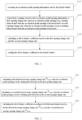
- FIG. 1 is a schematic flowchart showing a power distribution management method for a hybrid vehicle executed by a server according to an embodiment of the present invention.
- a power distribution management method for a hybrid vehicle is provided according to the present invention, and the method is executed by the server.
- the server can communicate with a vehicle networking module of the hybrid vehicle and obtain the data of the hybrid vehicle through the vehicle networking module, or send data to the hybrid vehicle through the vehicle networking module.
- the method includes step S110 to step S140.
- step S110 receiving an accelerator pedal opening information sent by the hybrid vehicle.
- the vehicle controller of the hybrid vehicle can collect the accelerator pedal opening information in real time, and transmit the collected accelerator pedal opening information to the vehicle networking module. Then the vehicle networking module sends the accelerator pedal opening information to the server, and the server receives the accelerator pedal opening information.
- step S120 respectively counting, based on the accelerator pedal opening information, a first opening change rate when an accelerator pedal opening is in a starting interval and when the accelerator pedal opening is increased and a second opening change rate when the accelerator pedal opening is in an overtaking interval and when the accelerator pedal opening is increased.
- the starting interval corresponds to an accelerator pedal opening range when the vehicle starts
- the overtaking interval corresponds to an accelerator pedal opening range when the vehicle overtakes
- the accelerator pedal opening ranges corresponding to the starting interval and the overtaking interval can be obtained through offline statistics.
- a first preset range of the accelerator pedal opening corresponding to the starting interval may range from 10% to 30%.
- the accelerator pedal opening is substantially affected by the road conditions when the vehicle is moved and when the road is congested, which cannot represent the driving habits of users. Therefore, the range from 0% to 10% is not considered in the starting interval.
- a second preset range of the accelerator pedal opening corresponding to the overtaking interval may range from 60% to 80%.
- the ranges corresponding to the starting interval and the overtaking interval can be adjusted according to the states of the vehicle, for example, according to the volume or weight of the vehicle.
- the first opening change rate of G q >0 is counted, the change rate when the accelerator pedal opening is decreased in the starting interval does not take into account, because the power distribution strategy may not be changed when the accelerator pedal opening is decreased.
- the second opening change rate of G c >0 is counted, the change rate when the accelerator pedal opening is decreased in the overtaking interval does not take into account, because the power distribution strategy may not be affected when the accelerator pedal opening is decreased.
- K t + ⁇ t is the accelerator pedal opening at time t + ⁇ t
- K t is the accelerator pedal opening at time t
- ⁇ t is a sampling interval, generally at the ms level, which can be consistent with the sampling interval of the vehicle controller for the accelerator pedal opening information.
- the second opening change rate which is less than or equal to a maximum opening change rate of the accelerator pedal opening under a normal driving condition is removed from the statistical second opening change rate, that is, G c > G T is met, where G T represents the maximum opening change rate under the normal driving condition, so that the case that the accelerator pedal opening meets the range of the overtaking interval, but actually belongs to the normal driving condition can be excluded.
- the opening change rates of the accelerator pedal in the starting interval and the overtaking interval are considered, because the opening change rates of the accelerator pedal in the two intervals can highlight the driving habits of the driver.
- the opening change rates of the accelerator pedal for different drivers are basically the same or are greatly affected by the road condition, which cannot highlight the driving habits of the driver.
- step S130 calculating a driver feature coefficient based on the first opening change rate and the second opening change rate.
- the driver feature coefficient can reflect the habit of stepping on the accelerator pedal of the driver, and further reflect the opening requirements for starting the engine of the driver.
- step S140 sending the driver feature coefficient to the hybrid vehicle.
- the hybrid vehicle can determine an accelerator pedal opening threshold suitable for the driving habits of the driver based on the driver feature coefficient, so that the starting of the engine is more suitable for the needs of different drivers.
- FIG. 2 is a schematic flowchart showing calculating the driver feature coefficient based on the first opening change rate and the second opening change rate. As shown in FIG. 2 , the calculation of the driver feature coefficient includes step S202 to step S206.
- step S202 calculating a first historical average opening change rate G g avg when the accelerator pedal opening is in the starting interval based on the first opening change rate.
- the weighted average method can be used to calculate the first historical average opening change rate.
- the selected number of the first opening change rate can be set to any suitable value according to actual needs.
- the first opening change rates of the last m times are selected in the present invention to represent the recent driving habits of the driver. Moreover, the first opening change rate closer to the current time is more able to represent the recent driving habits of the driver, and the corresponding weighting coefficient (that is, the value of k i ) is larger.
- the arithmetic average method can be used to calculate the first historical average opening change rate, or other arbitrary average methods can be used to calculate the first historical average opening change rate.
- step S204 calculating a second historical average opening change rate G c avg when the accelerator pedal opening is in the overtaking interval based on the second opening change rate.
- the selected number of the second opening change rate can be set to any suitable value according to actual needs.
- the second opening change rates of the last q times are selected in the present invention to represent the recent driving habits of the driver. Moreover, the second opening change rate closer to the current time is more able to represent the recent driving habits of the driver, and the corresponding weighting coefficient (that is, the value of w j ) is larger.
- the arithmetic average method can be used to calculate the second historical average opening change rate, or other arbitrary average methods can be used to calculate the second historical average opening change rate.
- NEDC New European Driving Cycle
- k q > k c can be set.
- the driver feature coefficient calculated according to formula (7) can be sent to the hybrid vehicle.
- the hybrid vehicle can determine an accelerator pedal opening threshold suitable for the driving habits of the driver based on the driver feature coefficient, so that the starting of the engine is more suitable for the needs of different drivers.
- FIG. 3 is a schematic flowchart showing a power distribution management method for a hybrid vehicle executed by a vehicle controller according to an embodiment of the present invention.
- a power distribution management method for a hybrid vehicle is further provided according to the present invention, the method can be executed by the vehicle controller of the hybrid vehicle, and the hybrid vehicle can communicate with the server through the vehicle networking module.
- the method includes step S310 to step S350.
- the driver feature coefficient can be obtained by the server based on an opening change rate of an accelerator pedal.
- the server can specifically calculate the driver feature coefficient according to the power distribution management method for the hybrid electric vehicle executed by the server as described above.
- the driver feature coefficient is sent to the hybrid vehicle after the driver feature coefficient is calculated by the server.
- the vehicle networking module of the hybrid vehicle receives the driver feature coefficient, and sends the driver feature coefficient to the vehicle controller.
- step S320 determining a first accelerator pedal opening threshold based on the driver feature coefficient and a corresponding relationship between the driver feature coefficient and an accelerator pedal opening threshold.
- step S330 determining an accelerator pedal opening upper limit when a motor solely performs driving.
- the accelerator pedal opening upper limit is limited by the current performance of the vehicle.
- an output maximum torque T max when the motor solely performs driving can be first determined.
- 9550 P max n represents the maximum torque output by the motor calculated based on the maximum discharge power of the current battery.
- the motor can predict a current maximum output torque T m based on its own hardware states (such as temperature and a rotational speed), and transmit the predicted current maximum output torque T m to the vehicle controller.
- the vehicle controller selects the smaller one between 9550 P max n and T m as the output maximum torque T max when the motor solely performs driving.
- the vehicle controller can determine an accelerator pedal opening corresponding to the maximum torque T max as the accelerator pedal opening upper limit based on the output maximum torque T max when the motor solely performs driving and a corresponding relationship between the accelerator pedal opening and a required torque.
- the output maximum torque when the motor solely performs driving when the motor solely performs driving is used as the required torque, and the accelerator pedal opening corresponding to the maximum torque is determined as the accelerator pedal opening upper limit.
- the corresponding relationship between the accelerator pedal opening and the required torque can be obtained by pre-testing, and the vehicle controller can pre-store the corresponding relationship.
- the corresponding relationship may be a corresponding curve between the accelerator pedal opening and the required torque, as shown in FIG. 5 .
- the corresponding relationship may be a corresponding table between the driver feature coefficient and the accelerator pedal opening threshold, or a functional relationship between the driver feature coefficient and the accelerator pedal opening threshold.
- step S340 determining a smaller one of the first accelerator pedal opening threshold and the accelerator pedal opening upper limit as an accelerator pedal opening threshold for starting an engine.
- step S350 controlling the starting of the engine based on the accelerator pedal opening threshold for starting the engine.
- the vehicle controller can control the engine to turn off when the accelerator pedal opening is less than the accelerator pedal opening threshold, and the vehicle controller can control the engine to start when the accelerator pedal opening is not less than the accelerator pedal opening threshold.
- the smaller one of the first accelerator pedal opening threshold calculated based on the driver feature coefficient and the accelerator pedal opening upper limit limited by the current performance of the vehicle is determined as the accelerator pedal opening threshold for starting the engine next time, so that the determination of the accelerator pedal opening threshold takes into account the driving habits of the driver and the performance of the vehicle, finally, the process of controlling the starting of the engine based on the accelerator pedal opening threshold not only fits the driving habits of the driver, but also takes into account the economic performance and the power demand of the vehicle.
- FIG. 7 is a structural block diagram of a power distribution management device for a hybrid vehicle applicable to the server according to an embodiment of the present invention. As shown in FIG. 7 , a power distribution management device for a hybrid vehicle is provided according to the present invention, and the device is applicable to a server.
- the device includes: a receiving module 710, configured to receive an accelerator pedal opening information sent by the hybrid vehicle; a statistics module 720, configured to respectively count, based on the accelerator pedal opening information, a first opening change rate when an accelerator pedal opening is in a starting interval and when the accelerator pedal opening is increased and a second opening change rate when the accelerator pedal opening is in an overtaking interval and when the accelerator pedal opening is increased, where the starting interval corresponds to a first preset range of the accelerator pedal opening, and the overtaking interval corresponds to a second preset range of the accelerator pedal opening; a calculation module 730, configured to calculate a driver feature coefficient based on the first opening change rate and the second opening change rate; and a sending module 740, configured to send the driver feature coefficient to the hybrid vehicle, so that the hybrid vehicle determines an accelerator pedal opening threshold based on the driver feature coefficient.
- a receiving module 710 configured to receive an accelerator pedal opening information sent by the hybrid vehicle
- a statistics module 720 configured to respectively count, based on the accelerator pedal opening information, a first opening
- the calculation module 730 includes: a first calculation unit, configured to calculate a first historical average opening change rate G q avg when the accelerator pedal opening is in the starting interval based on the first opening change rate; a second calculation unit, configured to calculate a second historical average opening change rate G q avg when the accelerator pedal opening is in the overtaking interval based on the second opening change rate; and a third calculation unit, configured to calculate the driver feature coefficient according to the formula (7) based on the first historical average opening change rate G q avg and the second historical average opening change rate G q avg .
- the driver feature coefficient calculated by the server can be send to the hybrid vehicle.
- the hybrid vehicle can determine an accelerator pedal opening threshold suitable for the driving habits of the driver based on the driver feature coefficient, so that the starting of the engine is more suitable for the needs of different drivers.
- FIG. 8 is a structural block diagram of a power distribution management device for a hybrid vehicle applicable to the vehicle controller according to an embodiment of the present invention.
- a power distribution management device for a hybrid vehicle is further provided according to an embodiment of the present invention, the device is applicable to a vehicle controller of the hybrid vehicle, and the device includes a receiving module 810, configured to receive a driver feature coefficient sent by a server, where the driver feature coefficient is obtained based on an opening change rate of an accelerator pedal; a first determination module 820, configured to determine a first accelerator pedal opening threshold based on the driver feature coefficient and a corresponding relationship between the driver feature coefficient and an accelerator pedal opening threshold; a second determination module 830, configured to determine an accelerator pedal opening upper limit when a motor solely performs driving; a third determination module 840, configured to determine a smaller one of the first accelerator pedal opening threshold and the accelerator pedal opening upper limit as an accelerator pedal opening threshold for starting an engine; and a control module 850, configured to control the starting of the engine based on the accelerator
- the smaller one of the first accelerator pedal opening threshold calculated based on the driver feature coefficient and the accelerator pedal opening upper limit limited by the current performance of the vehicle is determined as the accelerator pedal opening threshold for starting the engine next time, so that the determination of the accelerator pedal opening threshold takes into account the driving habits of the driver and the performance of the vehicle, finally, the process of controlling the starting of the engine based on the accelerator pedal opening threshold not only fits the driving habits of the driver, but also takes into account the economic performance and the power demand of the vehicle.
- the server according to the present invention can communicate with the hybrid vehicle through the vehicle networking module arranged on the hybrid vehicle.
- the server can specifically perform data analysis, data cleaning, data storage, data operation, and data conversion.
- the data uploaded from the hybrid vehicle to a cloud platform needs to be converted into a form that can be used for calculation, and this process is data analysis.
- the hybrid vehicle continues to upload data to the server when it wakes up.
- actions for non-driving and charging such as opening and closing the vehicle door, remote inquiring the vehicle conditions, may also wake up the vehicle, so that the hybrid vehicle uploads many invalid data. Therefore, it is necessary to clean the data to remove invalid data, for example, only the data related to the analysis of the accelerator pedal opening can be kept when the method described according to the present invention is executed.
- the server can uniformly store the sorted data to the database which is arranged according to time for calling the data in each time period.
- the method according to the present invention can be a specific process of performing data operation.
- the calculation results are converted into CAN messages and sent to the hybrid vehicle before the calculation results are sent to the hybrid vehicle.
- the vehicle networking module is arranged inside the vehicle, and is wirelessly connected with the server through the network connection protocol.
- the vehicle networking module can perform two functions: data routing and data storage. When the data routing is performed, the vehicle networking module can perform the conversion between the in-vehicle communication protocol and the remote communication protocol. The communication between the vehicle and the server may be interrupted because the vehicle is often parked in the underground parking garage and other places with poor signals.
- a storage module is added to the vehicle networking module to store the operation data of the vehicle when the vehicle cannot communicate with the server, and the operation data is packaged and uploaded as a whole after reconnection.
- the battery management system can transmit the current available discharge power to the vehicle controller.
- the engine can be started or stopped according to the control of the vehicle controller.
- the motor can send the predicted current maximum output torque to the vehicle controller.
- the vehicle controller can execute the power distribution management method for the hybrid vehicle executed by the vehicle controller according to the present invention.
- a machine-readable storage medium which stores instructions, and the instructions used to cause a machine to perform the power distribution management method for the hybrid vehicle according to any embodiment of the present invention.
- the machine-readable control medium includes, but is not limited to, various mediums that are capable of storing a program code, such as a phase change memory (PRAM), a static random access memory (SRAM), a dynamic random access memory (DRAM), other random access memory (RAM), a read-only memory (ROM), an electrically erasable programmable read only memory (EEPROM), a flash memory or other memory, a CD-ROM read-only memory (CD-ROM), a digital versatile disc (DVD) or other optical storage, a magnetic cassette tape, a magnetic tape disk storage or other magnetic storage devices.
- PRAM phase change memory
- SRAM static random access memory
- DRAM dynamic random access memory
- RAM random access memory
- ROM read-only memory
- EEPROM electrically erasable programmable read only memory
- flash memory or other memory
Landscapes
- Engineering & Computer Science (AREA)
- Chemical & Material Sciences (AREA)
- Combustion & Propulsion (AREA)
- Mechanical Engineering (AREA)
- Transportation (AREA)
- Automation & Control Theory (AREA)
- General Engineering & Computer Science (AREA)
- Human Computer Interaction (AREA)
- Electric Propulsion And Braking For Vehicles (AREA)
- Hybrid Electric Vehicles (AREA)
Description
- The present invention claims the priority to
Chinese Patent Application No. 2020108521549, titled "POWER DISTRIBUTION MANAGEMENT METHOD AND DEVICE FOR HYBRID VEHICLE", filed with the China National Intellectual Property Administration on August 21, 2020 - The present invention relates to the technical field of vehicles, and in particular to a power management method and device for a hybrid vehicle.
- Multiple power sources can be used in a hybrid vehicle, so how to well coordinate the working states of the multiple power sources is a problem.
- There are mainly two power sources in the hybrid vehicle: engine and motor. The torque response of the engine is slow at a low speed with a low efficiency, and the efficiency is high at a medium speed and a high speed. The motor has a fast torque response at a low speed, but the torque and efficiency drop sharply at a high speed. Therefore, the current power distribution strategy of the hybrid vehicle is that: the engine is not started and the vehicle is driven by the motor when an accelerator pedal opening is less than an accelerator pedal opening threshold; the engine is started when the accelerator pedal opening is not less than the accelerator pedal opening threshold. The engine is used as the main driving source when the engine is started, and the motor is used for auxiliary driving or adjusting an engine load point.
US 2017/0158188 A1 discloses a start determination routine executed by a hybrid electronic control unit, comprising a step S100 of receiving data such as an accelerator opening degree Acc, a vehicle speed V, an output limit Wout of the battery, and a required torque Tp*, a step S110 of setting a start threshold value Ast of the engine for the accelerator opening degree Acc based on the input vehicle speed V and the input output limit Wout of the battery, a step S120 of comparing the accelerator opening degree Acc and the start threshold value Ast to each other, a step S130 of dividing a value obtained by subtracting a last accelerator opening degree (last Acc) from the accelerator opening degree Acc by an execution interval Δt of this routine, thereby calculating an accelerator operating speed ΔAcc as an increase amount per unit time of the accelerator opening degree Acc, a step S140 of setting a quick depression threshold value ΔAref for determining whether or not quick depression of the accelerator pedal takes place based on the vehicle speed V and the output limit Wout of the battery, a step S150 of comparing the accelerator operating speed ΔAcc and the quick depression threshold value ΔAref to each other, a step S160 of determining that quick depression of the accelerator pedal does not take place when the accelerator operating speed ΔAcc is less than or equal to the quick depression threshold value ΔAref, and setting a start threshold value Tst of the engine for the required torque Tp* to a value Tst1, a step S170 of determining that quick depression of the accelerator pedal takes place when the accelerator operating speed ΔAcc is greater than the quick depression threshold value ΔAref at step S150, and setting the start threshold value Tst to a value Tst2, a step S180 of comparing whether the required torque Tp* is greater than the start threshold value Tst (=Tst2) in the single-drive mode, and a step S190 of determining that the engine 22 is started so that the drive mode is shifted to the HV drive mode when Tp* is greater Tst. - At present, the accelerator pedal opening threshold for starting the engine is a constant value determined mainly based on an engine characteristic curve, a motor characteristic curve and the project experience of the engineer. However, due to the differences in the use habits of drivers, the constant accelerator pedal opening threshold cannot accurately meet the needs of each driver.
- In view of this, a power distribution management method and device for a hybrid vehicle according to the independent claims are provided, which are configured to solve the technical problem that the constant accelerator pedal opening threshold cannot accurately meet the needs of each driver. Further embodiments are specified in the dependent claims.
- In order to achieve the above object, the technical solution of the present invention is provided as follows.
- A power distribution management method for a hybrid vehicle includes: receiving an accelerator pedal opening information sent by the hybrid vehicle; respectively counting, based on the accelerator pedal opening information, a first opening change rate when an accelerator pedal opening is in a starting interval and when the accelerator pedal opening is increased, and, a second opening change rate when the accelerator pedal opening is in an overtaking interval and when the accelerator pedal opening is increased, in which the starting interval corresponds to a first preset range of the accelerator pedal opening, and the overtaking interval corresponds to a second preset range of the accelerator pedal opening; calculating a driver feature coefficient based on the first opening change rate and the second opening change rate; and sending the driver feature coefficient to the hybrid vehicle, so that the hybrid vehicle determines an accelerator pedal opening threshold for starting an engine based on the driver feature coefficient.
- Further, the first opening change rate Gq when the accelerator pedal opening is in the starting interval and when the accelerator pedal opening is increased is calculated according to the following formula:

where, K t+△t is the accelerator pedal opening at time t+△t, Kt is the accelerator pedal opening at time t, and △t is a sampling interval, 30%>Kt >10%. - Further, the second opening change rate Gc when the accelerator pedal opening is in the overtaking interval and when the accelerator pedal opening is increased is calculated according to the following formula:

- Further, the calculating a driver feature coefficient based on the first opening change rate and the second opening change rate includes: calculating a first historical average opening change rate Gq
avg when the accelerator pedal opening is in the starting interval based on the first opening change rate; calculating a second historical average opening change rate Gqavg when the accelerator pedal opening is in the overtaking interval based on the second opening change rate; and calculating the driver feature coefficient according to the following formula based on the first historical average opening change rate Gqavg and the second historical average opening change rate Gqavg :

avg , kc is a weighting coefficient corresponding to the second historical average opening change rate Gqavg , and Gn is a preset opening change rate. - Further, kq >kc.
- Further, the calculating a first historical average opening change rate Gq
avg when the accelerator pedal opening is in the starting interval based on the first opening change rate includes: calculating the first historical average opening change rate Gqavg by using the following formula:

- where m is the selected number of the first opening change rate, i is a serial number, G q
i is an i-th first opening change rate in a statistical time, ki is a weighting coefficient corresponding to Gq,i a value of ki decreases sequentially from i=1 to i=m; and/or - the calculating a second historical average opening change rate Gc
avg when the accelerator pedal opening is in the overtaking interval based on the second opening change rate includes: calculating the second historical average opening change rate Gcavg by using the following formula:
- Where,

- where, q is the selected number of the second opening change rate, j is a serial number, Gc
j is a j-th second opening change rate in a statistical time, wj is a weighting coefficient corresponding to Gcj , a value of wj decreases sequentially from j=1 toj=m. - Further, the counting a second opening change rate when the accelerator pedal opening is in an overtaking interval and when the accelerator pedal opening is increased includes: removing the second opening change rate which is less than or equal to a maximum opening change rate of the accelerator pedal opening under a normal driving condition from the statistical second opening change rate.
- The power distribution management method for a hybrid vehicle further includes: receiving a driver feature coefficient sent by a server, in which the driver feature coefficient is obtained based on an opening change rate of an accelerator pedal; determining a first accelerator pedal opening threshold based on the driver feature coefficient and a corresponding relationship between the driver feature coefficient and an accelerator pedal opening threshold; determining an accelerator pedal opening upper limit when a motor solely performs driving; determining a smaller one of the first accelerator pedal opening threshold and the accelerator pedal opening upper limit as an accelerator pedal opening threshold for starting an engine; and controlling the starting of the engine based on the accelerator pedal opening threshold for starting the engine.
- Further, the determining an accelerator pedal opening upper limit when a motor solely performs driving includes: determining an output maximum torque when the motor solely performs driving; and determining an accelerator pedal opening corresponding to the maximum torque as the accelerator pedal opening upper limit based on the output maximum torque when the motor solely performs driving, and a corresponding relationship between the accelerator pedal opening and a required torque.
- Further, the determining an output maximum torque when the motor solely performs driving includes: determining the maximum torque according to the following formula:

- Correspondingly, a power distribution management device for a hybrid vehicle is further provided according to the present invention, which includes a receiving module, configured to receive an accelerator pedal opening information sent by the hybrid vehicle; a statistics module, configured to respectively count, based on the accelerator pedal opening information, a first opening change rate when an accelerator pedal opening is in a starting interval and when the accelerator pedal opening is increased and a second opening change rate when the accelerator pedal opening is in an overtaking interval and when the accelerator pedal opening is increased, in which the starting interval corresponds to a first preset range of the accelerator pedal opening, and the overtaking interval corresponds to a second preset range of the accelerator pedal opening; a calculation module, configured to calculate a driver feature coefficient based on the first opening change rate and the second opening change rate; and a sending module, configured to send the driver feature coefficient to the hybrid vehicle, so that the hybrid vehicle determines an accelerator pedal opening threshold based on the driver feature coefficient.
- The power distribution management device for a hybrid vehicle s further includes a receiving module, configured to receive a driver feature coefficient sent by a server, in which the driver feature coefficient is obtained based on an opening change rate of an accelerator pedal; a first determination module, configured to determine a first accelerator pedal opening threshold based on the driver feature coefficient and a corresponding relationship between the driver feature coefficient and an accelerator pedal opening threshold; a second determination module, configured to determine an accelerator pedal opening upper limit when a motor solely performs driving; a third determination module, configured to determine a smaller one of the first accelerator pedal opening threshold and the accelerator pedal opening upper limit as an accelerator pedal opening threshold for starting an engine; and a control module, configured to control the starting of the engine based on the accelerator pedal opening threshold for starting the engine.
- Correspondingly, a machine-readable storage medium is provided according to the present invention, which stores instructions, and the instructions are used to cause a machine to perform the power distribution management method for the hybrid vehicle as described above.
- Compared with the conventional technology, the power distribution management method and device for the hybrid vehicle have the following advantages.
- (1) In calculating the driver feature coefficient based on the opening change rate of the accelerator pedal stepped on by the driver, the opening change rates of the accelerator pedal in the starting interval and in the overtaking interval are considered because the opening change rates of the accelerator pedal in the two intervals can highlight the driving habits of the driver. Therefore, the calculated feature coefficient can better reflect the habit of stepping on the accelerator pedal of the driver, and further reflect the opening requirements for starting the engine of the driver. Therefore, the accelerator pedal opening threshold determined based on the driver feature coefficient by the hybrid vehicle can satisfy the habit of stepping on the accelerator pedal of the driver.
- (2) The hybrid vehicle determines the first accelerator pedal opening threshold based on the driver feature coefficient, determines the accelerator pedal opening upper limit when the motor solely performs driving, determines the smaller one of the first accelerator pedal opening threshold and the accelerator pedal opening upper limit as the second accelerator pedal opening threshold for starting the engine, and controls the starting of the engine based on the second accelerator pedal opening threshold. In this way, the accelerator pedal opening threshold can change with the habit of stepping on the accelerator pedal of the driver, so that the starting of the engine can better meet the needs of different drivers.
- Other features and advantages of the present invention are described in detail in the following specific embodiments.
- The drawings constituting a part of the present invention are used to provide a further understanding of the present invention, and the exemplary embodiments and descriptions of the present invention are used to explain the technical solutions of the present invention, and do not constitute an improper limitation to the present invention. In the drawings:
-
FIG. 1 is a schematic flowchart showing a power distribution management method for a hybrid vehicle executed by a server according to an embodiment of the present invention; -
FIG. 2 is a schematic flowchart showing calculating a driver feature coefficient based on a first opening change rate and a second opening change rate; -
FIG. 3 is a schematic flowchart showing a power distribution management method for a hybrid vehicle executed by a vehicle controller according to an embodiment of the present invention; -
FIG. 4 is a corresponding curve diagram between the driver feature coefficient and an accelerator pedal opening threshold; -
FIG. 5 is a corresponding curve diagram between an accelerator pedal opening and a required torque; -
FIG. 6 is a schematic view showing controlling the starting of an engine based on the accelerator pedal opening threshold; -
FIG. 7 is a structural block diagram of a power distribution management device for a hybrid vehicle applicable to the server according to an embodiment of the present invention; and -
FIG. 8 is a structural block diagram of a power distribution management device for a hybrid vehicle applicable to the vehicle controller according to an embodiment of the present invention. - It should be noted that embodiments of the present invention and features in the embodiments may be in combination with each other as long as there is no conflict.
- The present invention is described in detail below in conjunction with the embodiments and with reference to the drawings.
- At present, in the power distribution strategy of the hybrid vehicle, the accelerator pedal opening threshold for starting the engine is a constant value determined mainly based on an engine characteristic curve, a motor characteristic curve and the project experience of the engineer. However, due to the differences in the use habits, for example, aggressive drivers may expect the engine to start early, and gentle drivers may expect the engine to start lately. Therefore, the constant accelerator pedal opening threshold cannot accurately meet the needs of each driver.
- In addition, the engine is started lately when the accelerator pedal opening threshold is relatively highe, and the power of the motor cannot meet the power demand. The engine is started early when the accelerator pedal opening threshold is relatively low, but the fuel consumption of the vehicle may increase after the engine is started, and the low-cost electric energy cannot be fully utilized. Therefore, the control strategy of the constant accelerator pedal opening threshold cannot ensure that the economic performance and power demand of each vehicle meet the target demand.
- Based on the above reasons, a power distribution management method and device for a hybrid vehicle are provided according to the present invention, which are configured to solve the technical problem that the constant accelerator pedal opening threshold cannot accurately fit the driving habits of each driver, while the economic performance and power demand of the vehicle are taken into account.
-
FIG. 1 is a schematic flowchart showing a power distribution management method for a hybrid vehicle executed by a server according to an embodiment of the present invention. As shown inFIG. 1 , a power distribution management method for a hybrid vehicle is provided according to the present invention, and the method is executed by the server. The server can communicate with a vehicle networking module of the hybrid vehicle and obtain the data of the hybrid vehicle through the vehicle networking module, or send data to the hybrid vehicle through the vehicle networking module. The method includes step S110 to step S140. - In step S110, receiving an accelerator pedal opening information sent by the hybrid vehicle.
- The vehicle controller of the hybrid vehicle can collect the accelerator pedal opening information in real time, and transmit the collected accelerator pedal opening information to the vehicle networking module. Then the vehicle networking module sends the accelerator pedal opening information to the server, and the server receives the accelerator pedal opening information.
- In step S120, respectively counting, based on the accelerator pedal opening information, a first opening change rate when an accelerator pedal opening is in a starting interval and when the accelerator pedal opening is increased and a second opening change rate when the accelerator pedal opening is in an overtaking interval and when the accelerator pedal opening is increased.
- In the present invention, the starting interval corresponds to an accelerator pedal opening range when the vehicle starts, the overtaking interval corresponds to an accelerator pedal opening range when the vehicle overtakes, and the accelerator pedal opening ranges corresponding to the starting interval and the overtaking interval can be obtained through offline statistics. A first preset range of the accelerator pedal opening corresponding to the starting interval may range from 10% to 30%. The accelerator pedal opening is substantially affected by the road conditions when the vehicle is moved and when the road is congested, which cannot represent the driving habits of users. Therefore, the range from 0% to 10% is not considered in the starting interval. A second preset range of the accelerator pedal opening corresponding to the overtaking interval may range from 60% to 80%. The ranges corresponding to the starting interval and the overtaking interval can be adjusted according to the states of the vehicle, for example, according to the volume or weight of the vehicle.
- The first opening change rate Gq when the accelerator pedal opening is in the starting interval and when the accelerator pedal opening is increased is calculated according to the following formula:

- In the present invention, the first opening change rate of Gq >0 is counted, the change rate when the accelerator pedal opening is decreased in the starting interval does not take into account, because the power distribution strategy may not be changed when the accelerator pedal opening is decreased.
- The second opening change rate Gc when the accelerator pedal opening is in the overtaking interval and when the accelerator pedal opening is increased is calculated according to the following formula:

- In the present invention, the second opening change rate of Gc >0 is counted, the change rate when the accelerator pedal opening is decreased in the overtaking interval does not take into account, because the power distribution strategy may not be affected when the accelerator pedal opening is decreased.
- In formula (1) and formula (2), K t+△t is the accelerator pedal opening at time t+△t, Kt is the accelerator pedal opening at time t, and △t is a sampling interval, generally at the ms level, which can be consistent with the sampling interval of the vehicle controller for the accelerator pedal opening information.
- In an embodiment, the second opening change rate which is less than or equal to a maximum opening change rate of the accelerator pedal opening under a normal driving condition is removed from the statistical second opening change rate, that is, Gc >GT is met, where GT represents the maximum opening change rate under the normal driving condition, so that the case that the accelerator pedal opening meets the range of the overtaking interval, but actually belongs to the normal driving condition can be excluded.
- In the present invention, the opening change rates of the accelerator pedal in the starting interval and the overtaking interval are considered, because the opening change rates of the accelerator pedal in the two intervals can highlight the driving habits of the driver. In other conditions, the opening change rates of the accelerator pedal for different drivers are basically the same or are greatly affected by the road condition, which cannot highlight the driving habits of the driver.
- In step S130, calculating a driver feature coefficient based on the first opening change rate and the second opening change rate.
- The driver feature coefficient can reflect the habit of stepping on the accelerator pedal of the driver, and further reflect the opening requirements for starting the engine of the driver.
- In step S140, sending the driver feature coefficient to the hybrid vehicle.
- The hybrid vehicle can determine an accelerator pedal opening threshold suitable for the driving habits of the driver based on the driver feature coefficient, so that the starting of the engine is more suitable for the needs of different drivers.
- Next, how to calculate the driver feature coefficient based on the first opening change rate and the second opening change rate is specifically described in detail.
FIG. 2 is a schematic flowchart showing calculating the driver feature coefficient based on the first opening change rate and the second opening change rate. As shown inFIG. 2 , the calculation of the driver feature coefficient includes step S202 to step S206. - In step S202, calculating a first historical average opening change rate Gg
avg when the accelerator pedal opening is in the starting interval based on the first opening change rate. - In an optional embodiment, the weighted average method can be used to calculate the first historical average opening change rate.
- The first historical average opening change rate Gq
avg can be calculated according to the following formula:

i is an i-th first opening change rate in a statistical time, ki is a weighting coefficient corresponding to Gqi , and a value of ki decreases sequentially from i=1 to i=m. - The selected number of the first opening change rate can be set to any suitable value according to actual needs. Taking m=30 as an example, the first historical average opening change rate Gq
avg is:
- In another optional embodiment, the arithmetic average method can be used to calculate the first historical average opening change rate, or other arbitrary average methods can be used to calculate the first historical average opening change rate.
- In step S204, calculating a second historical average opening change rate Gc
avg when the accelerator pedal opening is in the overtaking interval based on the second opening change rate. - The second historical average opening change rate Gc
avg can be calculated according to the following formula:
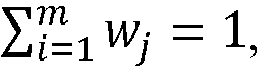
j is a j-th second opening change rate in a statistical time, wj is a weighting coefficient corresponding to Gcj ,and a value of wj decreases sequentially from j=1 toj=m. - The selected number of the second opening change rate can be set to any suitable value according to actual needs. Taking q=30 as an example, the first historical average opening change rate Gc
avg is:
- In another optional embodiment, the arithmetic average method can be used to calculate the second historical average opening change rate, or other arbitrary average methods can be used to calculate the second historical average opening change rate.
- In step S206, calculating the driver feature coefficient according to the following formula based on the first historical average opening change rate Gq
avg and the second historical average opening change rate Gqavg :

avg , kc is a weighting coefficient corresponding to a second historical average opening change rate Gqavg , and Gn is a preset opening change rate, and Gn can be a standard opening change rate determined based on the New European Driving Cycle (NEDC) test standard. - Since the change rate of the accelerator pedal opening in starting interval is easier to show the features of the driver, preferably, kq >kc can be set.
- The driver feature coefficient calculated according to formula (7) can be sent to the hybrid vehicle. The hybrid vehicle can determine an accelerator pedal opening threshold suitable for the driving habits of the driver based on the driver feature coefficient, so that the starting of the engine is more suitable for the needs of different drivers.
-
FIG. 3 is a schematic flowchart showing a power distribution management method for a hybrid vehicle executed by a vehicle controller according to an embodiment of the present invention. As shown inFIG. 3 , a power distribution management method for a hybrid vehicle is further provided according to the present invention, the method can be executed by the vehicle controller of the hybrid vehicle, and the hybrid vehicle can communicate with the server through the vehicle networking module. The method includes step S310 to step S350. - In step S310, receiving a driver feature coefficient sent by a server.
- The driver feature coefficient can be obtained by the server based on an opening change rate of an accelerator pedal. The server can specifically calculate the driver feature coefficient according to the power distribution management method for the hybrid electric vehicle executed by the server as described above.
- The driver feature coefficient is sent to the hybrid vehicle after the driver feature coefficient is calculated by the server. The vehicle networking module of the hybrid vehicle receives the driver feature coefficient, and sends the driver feature coefficient to the vehicle controller.
- In step S320, determining a first accelerator pedal opening threshold based on the driver feature coefficient and a corresponding relationship between the driver feature coefficient and an accelerator pedal opening threshold.
- The corresponding relationship between the driver feature coefficient and the accelerator pedal opening threshold can be obtained by pre-testing, and the vehicle controller can pre-store the corresponding relationship between the driver feature coefficient and the accelerator pedal opening threshold. The corresponding relationship is, for example, a corresponding curve between the driver feature coefficient and the accelerator pedal opening threshold. As shown in
FIG. 4 , in a case that the value of K is less than a first value, it corresponds to a constant larger accelerator pedal opening threshold; in a case that the value of K is greater than a second value (the second value is larger than the first value), it corresponds to a constant smaller accelerator pedal opening threshold; in a case that the value of K is between the first value and the second value, the accelerator pedal opening threshold decreases with the increase of the value of K. K=1 corresponds to an initial setting value of the accelerator pedal opening threshold. Alternatively, the corresponding relationship may be a corresponding table between the driver feature coefficient and the accelerator pedal opening threshold, or a functional relationship between the driver feature coefficient and the accelerator pedal opening threshold. - In step S330, determining an accelerator pedal opening upper limit when a motor solely performs driving.
- The accelerator pedal opening upper limit is limited by the current performance of the vehicle. Specifically, an output maximum torque T max when the motor solely performs driving can be first determined. The maximum torque T max can be determined according to the following formula:


- After the vehicle controller determines the output maximum torque T max when the motor solely performs driving, the vehicle controller can determine an accelerator pedal opening corresponding to the maximum torque T max as the accelerator pedal opening upper limit based on the output maximum torque T max when the motor solely performs driving and a corresponding relationship between the accelerator pedal opening and a required torque.
- The output maximum torque when the motor solely performs driving when the motor solely performs driving is used as the required torque, and the accelerator pedal opening corresponding to the maximum torque is determined as the accelerator pedal opening upper limit.
- The corresponding relationship between the accelerator pedal opening and the required torque can be obtained by pre-testing, and the vehicle controller can pre-store the corresponding relationship. The corresponding relationship may be a corresponding curve between the accelerator pedal opening and the required torque, as shown in
FIG. 5 . Alternatively, the corresponding relationship may be a corresponding table between the driver feature coefficient and the accelerator pedal opening threshold, or a functional relationship between the driver feature coefficient and the accelerator pedal opening threshold. - In step S340, determining a smaller one of the first accelerator pedal opening threshold and the accelerator pedal opening upper limit as an accelerator pedal opening threshold for starting an engine.
- In step S350, controlling the starting of the engine based on the accelerator pedal opening threshold for starting the engine.
- Specifically, as shown in
FIG. 6 , the vehicle controller can control the engine to turn off when the accelerator pedal opening is less than the accelerator pedal opening threshold, and the vehicle controller can control the engine to start when the accelerator pedal opening is not less than the accelerator pedal opening threshold. - In the present invention, the smaller one of the first accelerator pedal opening threshold calculated based on the driver feature coefficient and the accelerator pedal opening upper limit limited by the current performance of the vehicle is determined as the accelerator pedal opening threshold for starting the engine next time, so that the determination of the accelerator pedal opening threshold takes into account the driving habits of the driver and the performance of the vehicle, finally, the process of controlling the starting of the engine based on the accelerator pedal opening threshold not only fits the driving habits of the driver, but also takes into account the economic performance and the power demand of the vehicle.
-
FIG. 7 is a structural block diagram of a power distribution management device for a hybrid vehicle applicable to the server according to an embodiment of the present invention. As shown inFIG. 7 , a power distribution management device for a hybrid vehicle is provided according to the present invention, and the device is applicable to a server. The device includes: a receivingmodule 710, configured to receive an accelerator pedal opening information sent by the hybrid vehicle; astatistics module 720, configured to respectively count, based on the accelerator pedal opening information, a first opening change rate when an accelerator pedal opening is in a starting interval and when the accelerator pedal opening is increased and a second opening change rate when the accelerator pedal opening is in an overtaking interval and when the accelerator pedal opening is increased, where the starting interval corresponds to a first preset range of the accelerator pedal opening, and the overtaking interval corresponds to a second preset range of the accelerator pedal opening; acalculation module 730, configured to calculate a driver feature coefficient based on the first opening change rate and the second opening change rate; and a sendingmodule 740, configured to send the driver feature coefficient to the hybrid vehicle, so that the hybrid vehicle determines an accelerator pedal opening threshold based on the driver feature coefficient. - In some optional embodiments, the
calculation module 730 includes: a first calculation unit, configured to calculate a first historical average opening change rate Gqavg when the accelerator pedal opening is in the starting interval based on the first opening change rate; a second calculation unit, configured to calculate a second historical average opening change rate Gqavg when the accelerator pedal opening is in the overtaking interval based on the second opening change rate; and a third calculation unit, configured to calculate the driver feature coefficient according to the formula (7) based on the first historical average opening change rate Gqavg and the second historical average opening change rate Gqavg . - The driver feature coefficient calculated by the server can be send to the hybrid vehicle. The hybrid vehicle can determine an accelerator pedal opening threshold suitable for the driving habits of the driver based on the driver feature coefficient, so that the starting of the engine is more suitable for the needs of different drivers.
- The specific working principles and benefits of the power distribution management device for the hybrid vehicle applicable to the server according to the present invention are the same as those of the power distribution management method for the hybrid vehicle executed by the server according to the present invention, and are not described here.
-
FIG. 8 is a structural block diagram of a power distribution management device for a hybrid vehicle applicable to the vehicle controller according to an embodiment of the present invention. As shown inFIG. 8 , a power distribution management device for a hybrid vehicle is further provided according to an embodiment of the present invention, the device is applicable to a vehicle controller of the hybrid vehicle, and the device includes a receivingmodule 810, configured to receive a driver feature coefficient sent by a server, where the driver feature coefficient is obtained based on an opening change rate of an accelerator pedal; afirst determination module 820, configured to determine a first accelerator pedal opening threshold based on the driver feature coefficient and a corresponding relationship between the driver feature coefficient and an accelerator pedal opening threshold; asecond determination module 830, configured to determine an accelerator pedal opening upper limit when a motor solely performs driving; athird determination module 840, configured to determine a smaller one of the first accelerator pedal opening threshold and the accelerator pedal opening upper limit as an accelerator pedal opening threshold for starting an engine; and acontrol module 850, configured to control the starting of the engine based on the accelerator pedal opening threshold for starting the engine. - The smaller one of the first accelerator pedal opening threshold calculated based on the driver feature coefficient and the accelerator pedal opening upper limit limited by the current performance of the vehicle is determined as the accelerator pedal opening threshold for starting the engine next time, so that the determination of the accelerator pedal opening threshold takes into account the driving habits of the driver and the performance of the vehicle, finally, the process of controlling the starting of the engine based on the accelerator pedal opening threshold not only fits the driving habits of the driver, but also takes into account the economic performance and the power demand of the vehicle.
- The specific working principles and benefits of the power distribution management device for the hybrid vehicle applicable to the vehicle controller according to the present invention are the same as those of the power distribution management method for the hybrid vehicle executed by the server according to the present invention, and are not described here.
- The server according to the present invention can communicate with the hybrid vehicle through the vehicle networking module arranged on the hybrid vehicle.
- The server can specifically perform data analysis, data cleaning, data storage, data operation, and data conversion. The data uploaded from the hybrid vehicle to a cloud platform needs to be converted into a form that can be used for calculation, and this process is data analysis. The hybrid vehicle continues to upload data to the server when it wakes up. When the vehicle is in normal use, actions for non-driving and charging, such as opening and closing the vehicle door, remote inquiring the vehicle conditions, may also wake up the vehicle, so that the hybrid vehicle uploads many invalid data. Therefore, it is necessary to clean the data to remove invalid data, for example, only the data related to the analysis of the accelerator pedal opening can be kept when the method described according to the present invention is executed. The server can uniformly store the sorted data to the database which is arranged according to time for calling the data in each time period. The method according to the present invention can be a specific process of performing data operation. The calculation results are converted into CAN messages and sent to the hybrid vehicle before the calculation results are sent to the hybrid vehicle.
- The vehicle networking module is arranged inside the vehicle, and is wirelessly connected with the server through the network connection protocol. The vehicle networking module can perform two functions: data routing and data storage. When the data routing is performed, the vehicle networking module can perform the conversion between the in-vehicle communication protocol and the remote communication protocol. The communication between the vehicle and the server may be interrupted because the vehicle is often parked in the underground parking garage and other places with poor signals. A storage module is added to the vehicle networking module to store the operation data of the vehicle when the vehicle cannot communicate with the server, and the operation data is packaged and uploaded as a whole after reconnection.
- The battery management system can transmit the current available discharge power to the vehicle controller. The engine can be started or stopped according to the control of the vehicle controller. The motor can send the predicted current maximum output torque to the vehicle controller. The vehicle controller can execute the power distribution management method for the hybrid vehicle executed by the vehicle controller according to the present invention.
- Correspondingly, a machine-readable storage medium is provided according to the present invention, which stores instructions, and the instructions used to cause a machine to perform the power distribution management method for the hybrid vehicle according to any embodiment of the present invention. The machine-readable control medium includes, but is not limited to, various mediums that are capable of storing a program code, such as a phase change memory (PRAM), a static random access memory (SRAM), a dynamic random access memory (DRAM), other random access memory (RAM), a read-only memory (ROM), an electrically erasable programmable read only memory (EEPROM), a flash memory or other memory, a CD-ROM read-only memory (CD-ROM), a digital versatile disc (DVD) or other optical storage, a magnetic cassette tape, a magnetic tape disk storage or other magnetic storage devices.
Claims (13)
- A power distribution management method for a hybrid vehicle, comprising:receiving (S110) an accelerator pedal opening information sent by the hybrid vehicle;respectively counting (S120), based on the accelerator pedal opening information, a first opening change rate when an accelerator pedal opening is in a starting interval and when the accelerator pedal opening is increased and a second opening change rate when the accelerator pedal opening is in an overtaking interval and when the accelerator pedal opening is increased, wherein the starting interval corresponds to a first preset range of the accelerator pedal opening when the vehicle starts, and the overtaking interval corresponds to a second preset range of the accelerator pedal opening when the vehicle overtakes;calculating (S130) a driver feature coefficient based on the first opening change rate and the second opening change rate; andsending (S140) the driver feature coefficient to the hybrid vehicle, so that the hybrid vehicle determines an accelerator pedal opening threshold for starting an engine based on the driver feature coefficient.
- The power distribution management method for the hybrid vehicle according to claim 1, wherein the first opening change rate Gq when the accelerator pedal opening is in the starting interval and when the accelerator pedal opening is increased is calculated according to the following formula:

- The power distribution management method for a hybrid vehicle according to claim 1, wherein the second opening change rate Gc when the accelerator pedal opening is in the overtaking interval and when the accelerator pedal opening is increased is calculated according to the following formula:

- The power distribution management method for the hybrid vehicle according to claim 1, wherein the calculating (S130) a driver feature coefficient based on the first opening change rate and the second opening change rate comprises:calculating (S202) a first historical average opening change rate Gq
avg when the accelerator pedal opening is in the starting interval based on the first opening change rate;calculating (S204) a second historical average opening change rate Gcavg when the accelerator pedal opening is in the overtaking interval based on the second opening change rate; andcalculating (S206) the driver feature coefficient according to the following formula based on the first historical average opening change rate Gqavg and the second historical average opening change rate Gcavg : wherein,
 wherein, K is the driver feature coefficient, kq is a weighting coefficient corresponding to the first historical average opening change rate Gq
avg , kc is a weighting coefficient corresponding to the second historical average opening change rate Gcavg , and Gn is a preset opening change rate. - The power distribution management method for the hybrid vehicle according to claim 4, wherein kq >kc.
- The power distribution management method for the hybrid vehicle according to claim 4, wherein the calculating a first historical average opening change rate Gq
avg when the accelerator pedal opening is in the starting interval based on the first opening change rate comprises: calculating the first historical average opening change rate Gqavg by using the following formula:
 wherein m is the selected number of the first opening change rate, i is a serial number, Gq
i is an i-th first opening change rate in a statistical time, ki is a weighting coefficient corresponding to Gqi , and a value of ki decreases sequentially from i=1 to i=m; and/orthe calculating a second historical average opening change rate Gcavg when the accelerator pedal opening is in the overtaking interval based on the second opening change rate comprises: calculating the second historical average opening change rate Gcavg by using the following formula: wherein,
 wherein, q is the selected number of the second opening change rate, j is a serial number, Gcj is a j-th second opening change rate in a statistical time, wj is a weighting coefficient corresponding to Gc
j , and a value of wj decreases sequentially from j=1 toj=m. - The power distribution management method for the hybrid vehicle according to any one of claims 1 to 6, wherein the counting a second opening change rate when the accelerator pedal opening is in an overtaking interval and when the accelerator pedal opening is increased comprises:
removing the second opening change rate which is less than or equal to a maximum opening change rate of the accelerator pedal opening under a normal driving condition from the statistical second opening change rate. - The power distribution management method for the hybrid vehicle according to any one of claims 1 to 7, further comprising:receiving (S310) the driver feature coefficient calculated according to any one of claims 1 to 7, wherein the driver feature coefficient is obtained based on an opening change rate of an accelerator pedal;determining (S320) a first accelerator pedal opening threshold based on the driver feature coefficient and a corresponding relationship between the driver feature coefficient and an accelerator pedal opening threshold;determining (S330) an accelerator pedal opening upper limit when a motor solely performs driving;determining (S340) a smaller one of the first accelerator pedal opening threshold and the accelerator pedal opening upper limit as an accelerator pedal opening threshold for starting an engine; andcontrolling (S350) the starting of the engine based on the accelerator pedal opening threshold for starting the engine.
- The power distribution management method for the hybrid vehicle according to claim 8, wherein the determining an accelerator pedal opening upper limit when a motor solely performs driving comprises:determining an output maximum torque when the motor solely performs driving; anddetermining an accelerator pedal opening corresponding to the maximum torque as the accelerator pedal opening upper limit based on the output maximum torque when the motor solely performs driving and a corresponding relationship between the accelerator pedal opening and a required torque.
- The power distribution management method for the hybrid vehicle according to claim 9, wherein the determining an output maximum torque when the motor solely performs driving comprises:determining the maximum torque according to the following formula;
 wherein, T max is the maximum torque, P max is a maximum discharge power of a current battery, n is a current rotational speed of the motor, and T m is a current maximum output torque predicted by the motor.
 - A power distribution management device for a hybrid vehicle, comprising:a receiving module (710), configured to receive an accelerator pedal opening information sent by the hybrid vehicle;a statistics module (720), configured to respectively count, based on the accelerator pedal opening information, a first opening change rate when an accelerator pedal opening is in a starting interval and when the accelerator pedal opening is increased and a second opening change rate when the accelerator pedal opening is in an overtaking interval and when the accelerator pedal opening is increased, wherein the starting interval corresponds to a first preset range of the accelerator pedal opening when the vehicle starts, and the overtaking interval corresponds to a second preset range of the accelerator pedal opening when the vehicle overtakes;a calculation module (730), configured to calculate a driver feature coefficient based on the first opening change rate and the second opening change rate; anda sending module (740), configured to send the driver feature coefficient to the hybrid vehicle, so that the hybrid vehicle determines an accelerator pedal opening threshold for starting an engine based on the driver feature coefficient.
- The power distribution management device for a hybrid vehicle according to claim 11, comprising:a receiving module (810), configured to receive the driver feature coefficient calculated by the calculation module (730), wherein the driver feature coefficient is obtained based on an opening change rate of an accelerator pedal;a first determination module (820), configured to determine a first accelerator pedal opening threshold based on the driver feature coefficient and a corresponding relationship between the driver feature coefficient and an accelerator pedal opening threshold;a second determination module (830), configured to determine an accelerator pedal opening upper limit when a motor solely performs driving;a third determination module (840), configured to determine a smaller one of the first accelerator pedal opening threshold and the accelerator pedal opening upper limit as an accelerator pedal opening threshold for starting an engine; anda control module (850), configured to control the starting of the engine based on the accelerator pedal opening threshold for starting the engine.
- A machine-readable storage medium, wherein the machine-readable storage medium stores instructions, and the instructions are used to cause a machine to perform the power distribution management method for the hybrid vehicle according to any one of claims 1 to 10.
Applications Claiming Priority (2)
| Application Number | Priority Date | Filing Date | Title |
|---|---|---|---|
| CN202010852154.9A CN113173154B (en) | 2020-08-21 | 2020-08-21 | Power distribution management method and device for hybrid vehicle |
| PCT/CN2021/113152 WO2022037597A1 (en) | 2020-08-21 | 2021-08-18 | Power distribution management method and device for hybrid vehicle |
Publications (3)
| Publication Number | Publication Date |
|---|---|
| EP4159562A1 EP4159562A1 (en) | 2023-04-05 |
| EP4159562A4 EP4159562A4 (en) | 2023-12-06 |
| EP4159562B1 true EP4159562B1 (en) | 2025-03-26 |
Family
ID=76921443
Family Applications (1)
| Application Number | Title | Priority Date | Filing Date |
|---|---|---|---|
| EP21857689.0A Active EP4159562B1 (en) | 2020-08-21 | 2021-08-18 | Power distribution management method and device for hybrid vehicle |
Country Status (4)
| Country | Link |
|---|---|
| US (1) | US12234796B2 (en) |
| EP (1) | EP4159562B1 (en) |
| CN (1) | CN113173154B (en) |
| WO (1) | WO2022037597A1 (en) |
Families Citing this family (2)
| Publication number | Priority date | Publication date | Assignee | Title |
|---|---|---|---|---|
| CN113173154B (en) * | 2020-08-21 | 2022-04-22 | 长城汽车股份有限公司 | Power distribution management method and device for hybrid vehicle |
| CN113500922B (en) * | 2021-09-13 | 2021-11-19 | 睿控智行汽车技术(南通)有限公司 | Electric vehicle starting control method and system based on power demand prejudgment |
Family Cites Families (12)
| Publication number | Priority date | Publication date | Assignee | Title |
|---|---|---|---|---|
| JP4055781B2 (en) * | 2004-05-06 | 2008-03-05 | トヨタ自動車株式会社 | Hybrid vehicle and control method thereof |
| JP2007261442A (en) * | 2006-03-29 | 2007-10-11 | Nissan Motor Co Ltd | Hybrid vehicle operation mode transition control device |
| GB201201221D0 (en) * | 2012-01-25 | 2012-03-07 | Jaguar Cars | Hybrid electric vehicle and method of control thereof |
| GB2508665B (en) * | 2012-12-10 | 2015-11-25 | Jaguar Land Rover Ltd | Hybrid electric vehicle control system and method |
| US8731762B1 (en) * | 2013-04-24 | 2014-05-20 | GM Global Technology Operations LLC | Method and system of controlling a powertrain system to reduce turbo lag in a hybrid vehicle |
| JP6387947B2 (en) * | 2015-12-07 | 2018-09-12 | トヨタ自動車株式会社 | Hybrid car |
| KR101911293B1 (en) * | 2016-05-12 | 2018-10-24 | 엘지전자 주식회사 | Control device for a vehhicle |
| US10858004B2 (en) * | 2018-04-23 | 2020-12-08 | Ford Global Technologies, Llc | Methods and systems for improving automatic engine stopping and starting |
| CN111516688B (en) * | 2019-01-16 | 2021-11-26 | 北京新能源汽车股份有限公司 | Vehicle torque control method and device and electric automobile |
| CN110667588A (en) * | 2019-10-12 | 2020-01-10 | 江铃汽车股份有限公司 | Driver intention-based accelerator pedal opening correction control method for electric automobile |
| CN111038485B (en) * | 2019-12-30 | 2021-02-19 | 山东大学 | Hybrid electric vehicle control method and system based on driving style recognition |
| CN113173154B (en) | 2020-08-21 | 2022-04-22 | 长城汽车股份有限公司 | Power distribution management method and device for hybrid vehicle |
-
2020
- 2020-08-21 CN CN202010852154.9A patent/CN113173154B/en active Active
-
2021
- 2021-08-18 EP EP21857689.0A patent/EP4159562B1/en active Active
- 2021-08-18 WO PCT/CN2021/113152 patent/WO2022037597A1/en not_active Ceased
- 2021-08-18 US US18/013,367 patent/US12234796B2/en active Active
Also Published As
| Publication number | Publication date |
|---|---|
| US12234796B2 (en) | 2025-02-25 |
| CN113173154A (en) | 2021-07-27 |
| US20230235719A1 (en) | 2023-07-27 |
| EP4159562A1 (en) | 2023-04-05 |
| EP4159562A4 (en) | 2023-12-06 |
| WO2022037597A1 (en) | 2022-02-24 |
| CN113173154B (en) | 2022-04-22 |
Similar Documents
| Publication | Publication Date | Title |
|---|---|---|
| EP4155144B1 (en) | Battery energy management method and device for hybrid vehicle, and machine-readable storage medium | |
| CN113147506B (en) | Big data-based vehicle-to-vehicle mutual learning charging remaining time prediction method and device | |
| CN110606076A (en) | Method and device for energy distribution of a hybrid electric vehicle | |
| CN114572058A (en) | Method and device for controlling temperature of battery system and electronic equipment | |
| EP4159562B1 (en) | Power distribution management method and device for hybrid vehicle | |
| CN115027447A (en) | A kind of vehicle energy management method, device, vehicle and storage medium | |
| US20210370907A1 (en) | Stabilized real time trajectory optimization for hybrid energy management utilizing connected information technologies | |
| CN113809795B (en) | Battery charge and discharge depth control method, control system, vehicle and storage medium | |
| KR20230083458A (en) | Method for battery conditioning of vehicle | |
| US20240413424A1 (en) | Thermal management system and method for dc fast charge | |
| CN114537212A (en) | Method for determining the maximum value of a parameter range of a driving operating parameter of a vehicle and vehicle | |
| CN110962691A (en) | Power battery thermal management control system | |
| CN114379534B (en) | Start-stop control method and device for engine of hybrid electric vehicle | |
| CN119370084B (en) | Battery energy management method of hybrid vehicle, storage medium and electronic device | |
| CN121019369A (en) | Vehicle battery energy management methods and related equipment | |
| CN116923360A (en) | Real-time energy distribution method and device for hybrid electric vehicle | |
| CN118457352B (en) | A method, apparatus, device, and storage medium for controlling the charging and discharging of an electric vehicle. | |
| CN114035064B (en) | Battery charge state correction method, device, vehicle and storage medium | |
| CN116552336A (en) | A battery heating method, device and network equipment | |
| CN119975096B (en) | Methods, devices, electronic equipment, and storage media for adjusting the vehicle's State of Charge (SOC) balance point | |
| CN116011634B (en) | Method, device and equipment for determining energy saving rate based on big data | |
| JP7721456B2 (en) | Secondary battery management method, management device, management system and management program, and battery-equipped device | |
| CN120019988B (en) | Methods, equipment and media for calculating the driving range of new energy vehicles | |
| CN113548053B (en) | Vehicle control methods and devices, media, equipment, vehicles | |
| CN118457546A (en) | Energy storage control method, device, equipment, medium and program product for hybrid vehicle |
Legal Events
| Date | Code | Title | Description |
|---|---|---|---|
| STAA | Information on the status of an ep patent application or granted ep patent |
Free format text: STATUS: THE INTERNATIONAL PUBLICATION HAS BEEN MADE |
|
| PUAI | Public reference made under article 153(3) epc to a published international application that has entered the european phase |
Free format text: ORIGINAL CODE: 0009012 |
|
| STAA | Information on the status of an ep patent application or granted ep patent |
Free format text: STATUS: REQUEST FOR EXAMINATION WAS MADE |
|
| 17P | Request for examination filed |
Effective date: 20221228 |
|
| AK | Designated contracting states |
Kind code of ref document: A1 Designated state(s): AL AT BE BG CH CY CZ DE DK EE ES FI FR GB GR HR HU IE IS IT LI LT LU LV MC MK MT NL NO PL PT RO RS SE SI SK SM TR |
|
| DAV | Request for validation of the european patent (deleted) | ||
| DAX | Request for extension of the european patent (deleted) | ||
| A4 | Supplementary search report drawn up and despatched |
Effective date: 20231106 |
|
| RIC1 | Information provided on ipc code assigned before grant |
Ipc: B60W 10/08 20060101ALI20231030BHEP Ipc: B60W 10/06 20060101ALI20231030BHEP Ipc: B60W 20/10 20160101AFI20231030BHEP |
|
| STAA | Information on the status of an ep patent application or granted ep patent |
Free format text: STATUS: EXAMINATION IS IN PROGRESS |
|
| 17Q | First examination report despatched |
Effective date: 20240307 |
|
| GRAP | Despatch of communication of intention to grant a patent |
Free format text: ORIGINAL CODE: EPIDOSNIGR1 |
|
| STAA | Information on the status of an ep patent application or granted ep patent |
Free format text: STATUS: GRANT OF PATENT IS INTENDED |
|
| INTG | Intention to grant announced |
Effective date: 20240916 |
|
| GRAJ | Information related to disapproval of communication of intention to grant by the applicant or resumption of examination proceedings by the epo deleted |
Free format text: ORIGINAL CODE: EPIDOSDIGR1 |
|
| STAA | Information on the status of an ep patent application or granted ep patent |
Free format text: STATUS: EXAMINATION IS IN PROGRESS |
|
| GRAP | Despatch of communication of intention to grant a patent |
Free format text: ORIGINAL CODE: EPIDOSNIGR1 |
|
| STAA | Information on the status of an ep patent application or granted ep patent |
Free format text: STATUS: GRANT OF PATENT IS INTENDED |
|
| GRAS | Grant fee paid |
Free format text: ORIGINAL CODE: EPIDOSNIGR3 |
|
| INTC | Intention to grant announced (deleted) | ||
| GRAA | (expected) grant |
Free format text: ORIGINAL CODE: 0009210 |
|
| STAA | Information on the status of an ep patent application or granted ep patent |
Free format text: STATUS: THE PATENT HAS BEEN GRANTED |
|
| INTG | Intention to grant announced |
Effective date: 20250206 |
|
| AK | Designated contracting states |
Kind code of ref document: B1 Designated state(s): AL AT BE BG CH CY CZ DE DK EE ES FI FR GB GR HR HU IE IS IT LI LT LU LV MC MK MT NL NO PL PT RO RS SE SI SK SM TR |
|
| REG | Reference to a national code |
Ref country code: GB Ref legal event code: FG4D |
|
| REG | Reference to a national code |
Ref country code: CH Ref legal event code: EP |
|
| REG | Reference to a national code |
Ref country code: DE Ref legal event code: R096 Ref document number: 602021028284 Country of ref document: DE |
|
| REG | Reference to a national code |
Ref country code: IE Ref legal event code: FG4D |
|
| P01 | Opt-out of the competence of the unified patent court (upc) registered |
Free format text: CASE NUMBER: APP_19817/2025 Effective date: 20250424 |
|
| PG25 | Lapsed in a contracting state [announced via postgrant information from national office to epo] |
Ref country code: RS Free format text: LAPSE BECAUSE OF FAILURE TO SUBMIT A TRANSLATION OF THE DESCRIPTION OR TO PAY THE FEE WITHIN THE PRESCRIBED TIME-LIMIT Effective date: 20250626 |
|
| PG25 | Lapsed in a contracting state [announced via postgrant information from national office to epo] |
Ref country code: FI Free format text: LAPSE BECAUSE OF FAILURE TO SUBMIT A TRANSLATION OF THE DESCRIPTION OR TO PAY THE FEE WITHIN THE PRESCRIBED TIME-LIMIT Effective date: 20250326 |
|
| REG | Reference to a national code |
Ref country code: LT Ref legal event code: MG9D |
|
| PG25 | Lapsed in a contracting state [announced via postgrant information from national office to epo] |
Ref country code: NO Free format text: LAPSE BECAUSE OF FAILURE TO SUBMIT A TRANSLATION OF THE DESCRIPTION OR TO PAY THE FEE WITHIN THE PRESCRIBED TIME-LIMIT Effective date: 20250626 |
|
| PG25 | Lapsed in a contracting state [announced via postgrant information from national office to epo] |
Ref country code: HR Free format text: LAPSE BECAUSE OF FAILURE TO SUBMIT A TRANSLATION OF THE DESCRIPTION OR TO PAY THE FEE WITHIN THE PRESCRIBED TIME-LIMIT Effective date: 20250326 |
|
| PG25 | Lapsed in a contracting state [announced via postgrant information from national office to epo] |
Ref country code: LV Free format text: LAPSE BECAUSE OF FAILURE TO SUBMIT A TRANSLATION OF THE DESCRIPTION OR TO PAY THE FEE WITHIN THE PRESCRIBED TIME-LIMIT Effective date: 20250326 |
|
| PG25 | Lapsed in a contracting state [announced via postgrant information from national office to epo] |
Ref country code: GR Free format text: LAPSE BECAUSE OF FAILURE TO SUBMIT A TRANSLATION OF THE DESCRIPTION OR TO PAY THE FEE WITHIN THE PRESCRIBED TIME-LIMIT Effective date: 20250627 Ref country code: BG Free format text: LAPSE BECAUSE OF FAILURE TO SUBMIT A TRANSLATION OF THE DESCRIPTION OR TO PAY THE FEE WITHIN THE PRESCRIBED TIME-LIMIT Effective date: 20250326 |
|
| REG | Reference to a national code |
Ref country code: NL Ref legal event code: MP Effective date: 20250326 |
|
| PG25 | Lapsed in a contracting state [announced via postgrant information from national office to epo] |
Ref country code: NL Free format text: LAPSE BECAUSE OF FAILURE TO SUBMIT A TRANSLATION OF THE DESCRIPTION OR TO PAY THE FEE WITHIN THE PRESCRIBED TIME-LIMIT Effective date: 20250326 |
|
| PG25 | Lapsed in a contracting state [announced via postgrant information from national office to epo] |
Ref country code: SE Free format text: LAPSE BECAUSE OF FAILURE TO SUBMIT A TRANSLATION OF THE DESCRIPTION OR TO PAY THE FEE WITHIN THE PRESCRIBED TIME-LIMIT Effective date: 20250326 |
|
| REG | Reference to a national code |
Ref country code: AT Ref legal event code: MK05 Ref document number: 1778786 Country of ref document: AT Kind code of ref document: T Effective date: 20250326 |
|
| PG25 | Lapsed in a contracting state [announced via postgrant information from national office to epo] |
Ref country code: SM Free format text: LAPSE BECAUSE OF FAILURE TO SUBMIT A TRANSLATION OF THE DESCRIPTION OR TO PAY THE FEE WITHIN THE PRESCRIBED TIME-LIMIT Effective date: 20250326 |
|
| PG25 | Lapsed in a contracting state [announced via postgrant information from national office to epo] |
Ref country code: ES Free format text: LAPSE BECAUSE OF FAILURE TO SUBMIT A TRANSLATION OF THE DESCRIPTION OR TO PAY THE FEE WITHIN THE PRESCRIBED TIME-LIMIT Effective date: 20250326 Ref country code: PT Free format text: LAPSE BECAUSE OF FAILURE TO SUBMIT A TRANSLATION OF THE DESCRIPTION OR TO PAY THE FEE WITHIN THE PRESCRIBED TIME-LIMIT Effective date: 20250728 |
|
| PGFP | Annual fee paid to national office [announced via postgrant information from national office to epo] |
Ref country code: DE Payment date: 20250812 Year of fee payment: 5 |
|
| PG25 | Lapsed in a contracting state [announced via postgrant information from national office to epo] |
Ref country code: IT Free format text: LAPSE BECAUSE OF FAILURE TO SUBMIT A TRANSLATION OF THE DESCRIPTION OR TO PAY THE FEE WITHIN THE PRESCRIBED TIME-LIMIT Effective date: 20250326 Ref country code: PL Free format text: LAPSE BECAUSE OF FAILURE TO SUBMIT A TRANSLATION OF THE DESCRIPTION OR TO PAY THE FEE WITHIN THE PRESCRIBED TIME-LIMIT Effective date: 20250326 |
|
| PGFP | Annual fee paid to national office [announced via postgrant information from national office to epo] |
Ref country code: GB Payment date: 20250826 Year of fee payment: 5 |
|
| PG25 | Lapsed in a contracting state [announced via postgrant information from national office to epo] |
Ref country code: AT Free format text: LAPSE BECAUSE OF FAILURE TO SUBMIT A TRANSLATION OF THE DESCRIPTION OR TO PAY THE FEE WITHIN THE PRESCRIBED TIME-LIMIT Effective date: 20250326 |
|
| PGFP | Annual fee paid to national office [announced via postgrant information from national office to epo] |
Ref country code: FR Payment date: 20250828 Year of fee payment: 5 |
|
| PG25 | Lapsed in a contracting state [announced via postgrant information from national office to epo] |
Ref country code: EE Free format text: LAPSE BECAUSE OF FAILURE TO SUBMIT A TRANSLATION OF THE DESCRIPTION OR TO PAY THE FEE WITHIN THE PRESCRIBED TIME-LIMIT Effective date: 20250326 |
|
| PG25 | Lapsed in a contracting state [announced via postgrant information from national office to epo] |
Ref country code: RO Free format text: LAPSE BECAUSE OF FAILURE TO SUBMIT A TRANSLATION OF THE DESCRIPTION OR TO PAY THE FEE WITHIN THE PRESCRIBED TIME-LIMIT Effective date: 20250326 |
|
| PG25 | Lapsed in a contracting state [announced via postgrant information from national office to epo] |
Ref country code: SK Free format text: LAPSE BECAUSE OF FAILURE TO SUBMIT A TRANSLATION OF THE DESCRIPTION OR TO PAY THE FEE WITHIN THE PRESCRIBED TIME-LIMIT Effective date: 20250326 |
|
| PG25 | Lapsed in a contracting state [announced via postgrant information from national office to epo] |
Ref country code: IS Free format text: LAPSE BECAUSE OF FAILURE TO SUBMIT A TRANSLATION OF THE DESCRIPTION OR TO PAY THE FEE WITHIN THE PRESCRIBED TIME-LIMIT Effective date: 20250726 |
|
| REG | Reference to a national code |
Ref country code: DE Ref legal event code: R097 Ref document number: 602021028284 Country of ref document: DE |
|
| PG25 | Lapsed in a contracting state [announced via postgrant information from national office to epo] |
Ref country code: DK Free format text: LAPSE BECAUSE OF FAILURE TO SUBMIT A TRANSLATION OF THE DESCRIPTION OR TO PAY THE FEE WITHIN THE PRESCRIBED TIME-LIMIT Effective date: 20250326 |
|
| PG25 | Lapsed in a contracting state [announced via postgrant information from national office to epo] |
Ref country code: CZ Free format text: LAPSE BECAUSE OF FAILURE TO SUBMIT A TRANSLATION OF THE DESCRIPTION OR TO PAY THE FEE WITHIN THE PRESCRIBED TIME-LIMIT Effective date: 20250326 |
|
| PLBE | No opposition filed within time limit |
Free format text: ORIGINAL CODE: 0009261 |
|
| STAA | Information on the status of an ep patent application or granted ep patent |
Free format text: STATUS: NO OPPOSITION FILED WITHIN TIME LIMIT |
|
| REG | Reference to a national code |
Ref country code: CH Ref legal event code: L10 Free format text: ST27 STATUS EVENT CODE: U-0-0-L10-L00 (AS PROVIDED BY THE NATIONAL OFFICE) Effective date: 20260211 |
|
| 26N | No opposition filed |
Effective date: 20260105 |
|
| REG | Reference to a national code |
Ref country code: CH Ref legal event code: H13 Free format text: ST27 STATUS EVENT CODE: U-0-0-H10-H13 (AS PROVIDED BY THE NATIONAL OFFICE) Effective date: 20260324 |
|
| PG25 | Lapsed in a contracting state [announced via postgrant information from national office to epo] |
Ref country code: MC Free format text: LAPSE BECAUSE OF FAILURE TO SUBMIT A TRANSLATION OF THE DESCRIPTION OR TO PAY THE FEE WITHIN THE PRESCRIBED TIME-LIMIT Effective date: 20250326 |
|
| PG25 | Lapsed in a contracting state [announced via postgrant information from national office to epo] |
Ref country code: LU Free format text: LAPSE BECAUSE OF NON-PAYMENT OF DUE FEES Effective date: 20250818 |
|
| PG25 | Lapsed in a contracting state [announced via postgrant information from national office to epo] |
Ref country code: CH Free format text: LAPSE BECAUSE OF NON-PAYMENT OF DUE FEES Effective date: 20250831 |