EP4156769A1 - Load adjustment method, server and storage medium - Google Patents
Load adjustment method, server and storage medium Download PDFInfo
- Publication number
- EP4156769A1 EP4156769A1 EP21809371.4A EP21809371A EP4156769A1 EP 4156769 A1 EP4156769 A1 EP 4156769A1 EP 21809371 A EP21809371 A EP 21809371A EP 4156769 A1 EP4156769 A1 EP 4156769A1
- Authority
- EP
- European Patent Office
- Prior art keywords
- cell
- massive mimo
- load
- mimo cell
- load adjustment
- Prior art date
- Legal status (The legal status is an assumption and is not a legal conclusion. Google has not performed a legal analysis and makes no representation as to the accuracy of the status listed.)
- Granted
Links
Images


Classifications
-
- H—ELECTRICITY
- H04—ELECTRIC COMMUNICATION TECHNIQUE
- H04B—TRANSMISSION
- H04B7/00—Radio transmission systems, i.e. using radiation field
- H04B7/02—Diversity systems; Multi-antenna system, i.e. transmission or reception using multiple antennas
- H04B7/04—Diversity systems; Multi-antenna system, i.e. transmission or reception using multiple antennas using two or more spaced independent antennas
- H04B7/0413—MIMO systems
-
- H—ELECTRICITY
- H04—ELECTRIC COMMUNICATION TECHNIQUE
- H04W—WIRELESS COMMUNICATION NETWORKS
- H04W28/00—Network traffic management; Network resource management
- H04W28/02—Traffic management, e.g. flow control or congestion control
- H04W28/0289—Congestion control
-
- H—ELECTRICITY
- H04—ELECTRIC COMMUNICATION TECHNIQUE
- H04W—WIRELESS COMMUNICATION NETWORKS
- H04W28/00—Network traffic management; Network resource management
- H04W28/02—Traffic management, e.g. flow control or congestion control
- H04W28/10—Flow control between communication endpoints
-
- H—ELECTRICITY
- H04—ELECTRIC COMMUNICATION TECHNIQUE
- H04W—WIRELESS COMMUNICATION NETWORKS
- H04W36/00—Hand-off or reselection arrangements
- H04W36/0005—Control or signalling for completing the hand-off
- H04W36/0055—Transmission or use of information for re-establishing the radio link
- H04W36/0069—Transmission or use of information for re-establishing the radio link in case of dual connectivity, e.g. decoupled uplink/downlink
- H04W36/00692—Transmission or use of information for re-establishing the radio link in case of dual connectivity, e.g. decoupled uplink/downlink using simultaneous multiple data streams, e.g. cooperative multipoint [CoMP], carrier aggregation [CA] or multiple input multiple output [MIMO]
-
- H—ELECTRICITY
- H04—ELECTRIC COMMUNICATION TECHNIQUE
- H04W—WIRELESS COMMUNICATION NETWORKS
- H04W72/00—Local resource management
- H04W72/12—Wireless traffic scheduling
-
- H—ELECTRICITY
- H04—ELECTRIC COMMUNICATION TECHNIQUE
- H04W—WIRELESS COMMUNICATION NETWORKS
- H04W36/00—Hand-off or reselection arrangements
- H04W36/16—Performing reselection for specific purposes
- H04W36/22—Performing reselection for specific purposes for handling the traffic
Definitions
- the present application relates to the field of communications, for example, a load adjustment method, a server and a storage medium.
- Massive Multiple-Input-Multiple-Output (which is also referred to as large scale MIMO) may simultaneously communicate with multiple users on the same time-frequency resource by configuring hundreds or thousands of antenna arrays at a base station side, thus greatly improving the spectrum efficiency, and the massive MIMO is a key technology for improving system capacity and Spectrum Efficiency (SE) in the 5th Generation Mobile Networks (5G).
- SE Spectrum Efficiency
- massive MIMO cells cannot well perform the beamforming and multi-user spatial division pairing capabilities of the massive MIMO, resulting in a limited improvement in traffic of the massive MIMO cells.
- Embodiments of the present application provide a load adjustment method, a server and a storage medium, providing a possibility to improve the traffic of a massive MIMO cell.
- the present application provides a load adjustment method including steps described below.
- An indicator value of a first performance indicator of a massive MIMO cell is acquired; a load state of the massive MIMO cell is determined according to the indicator value of the first performance indicator; and a load adjustment strategy matching the load state of the massive MIMO cell is determined and performed, where the load adjustment strategy includes one of the following: migrating a first user of a neighboring cell of the massive MIMO cell into the massive MIMO cell, migrating a second user in the massive MIMO cell into a neighboring cell of the massive MIMO cell, migrating a first user of a neighboring cell into the massive MIMO cell and migrating a second user in the massive MIMO cell into the neighboring cell, or maintaining the status quo.
- the present application further provides a server.
- the server includes at least one processor and a memory communicatively connected to the at least one processor.
- the memory is configured to store an instruction executable by the at least one processor to enable the at least one processor to perform the preceding load adjustment method.
- the present application further provides a computer-readable storage medium configured to store a computer program which, when performed by a processor, performs the preceding load adjustment method.
- First embodiment of the present application relates to a load adjustment method.
- the load adjustment method may be applied to a device, for example, a base station.
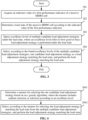
- the flow is shown in FIG. 1 and includes steps described below.
- step 101 an indicator value of a first performance indicator of a massive MIMO cell is acquired.
- the device may automatically acquire the indicator value of the first performance indicator of the massive MIMO cell within the latest preset time period, and the preset time period may be set according to actual requirements. For example, the preset time period is 15 minutes.
- a triggering event may also be preset in the device. When the triggering event occurs, the indicator value of the first performance indicator of the massive MIMO cell is acquired.
- the first performance indicator may be one type of performance indicator.
- the first performance indicator is a Physical Resource Block (PRB) utilization.
- PRB Physical Resource Block
- the first performance indicator may also be multiple types of performance indicators, and then indicator values of the multiple types of performance indicators are acquired, respectively.
- the first performance indicator includes the PRB utilization, Control Channel Element (CCE) power and a CCE position utilization, and then the indicator value of the PRB utilization, the indicator value of the CCE power and the indicator value of the CCE position utilization are acquired, respectively.
- CCE Control Channel Element
- step 102 a load state of the massive MIMO cell is determined according to the indicator value of the first performance indicator.
- different load states of the massive MIMO cell may be represented as a relatively idle state, a relatively busy state and a congestion state. In both the relatively idle state and the relatively busy state, no congestion situation occurs, and in the congestion state, a congestion situation occurs.
- different load states of the massive MIMO cell may also be represented numerically, different numerical values characterize different load states. It may be predefined that the larger the numerical value is, the busier the massive MIMO cell is. The largest numerical value characterizes that the congestion situation occurs, the smallest numerical value characterizes that no congestion situation occurs and the massive MIMO cell is relatively idle, and other numerical values characterize that no congestion situation occurs and the massive MIMO cell is relatively busy.
- the device may preset a rule for determining the load state of the massive MIMO cell according to the indicator value of the first performance indicator.
- a correspondence between load states of the massive MIMO cell and ranges where the indicator value of the first performance indicator is located may be set.
- the load states are represented by the relatively idle state, the relatively busy state, and the congestion state. When 0% ⁇ the PRB utilization ⁇ 60%, the massive MIMO cell is in the relatively idle state; when 60% ⁇ the PRB utilization ⁇ 80%, the massive MIMO cell is in the relatively busy state; and when 80% ⁇ the PRB utilization ⁇ 100%, the massive MIMO cell is in the congestion state.
- the load states are represented numerically.
- the load state of the massive MIMO cell is determined according to the load state within the previous preset time period and a switching rule of the load state.
- the load states are represented by the relatively idle state, the relatively busy state and the congestion state, and the switching rule of the load state is described below.
- the load state within the previous preset time period is the relatively idle state
- the load state is switched to the relatively busy state.
- the load state within the previous preset time period is the relatively busy state
- the load state when the current PRB utilization is greater than 95%, and the current CCE power is greater than 70% or the current CCE position utilization is greater than 70%, the load state is switched to the congestion state; and when the current PRB utilization is less than 70%, the load state is switched to the relatively idle state.
- the load state within the previous preset time period is the congestion state
- the load state when the current PRB utilization is less than 90%, or the current CCE power is less than 60% and the current CCE position utilization is less than 60%, the load state is switched to the relatively busy state.
- a load adjustment strategy matching the load state of the massive MIMO cell is determined and performed, where the load adjustment strategy includes one of the following: migrating a first user of a neighboring cell of the massive MIMO cell into the massive MIMO cell, migrating a second user in the massive MIMO cell into a neighboring cell, migrating a first user of a neighboring cell into the massive MIMO cell and migrating a second user in the massive MIMO cell into the neighboring cell, or maintaining the status quo.
- the first user and the second user are different users.
- the first user of the neighboring cell may be migrated into the massive MIMO cell first, and then the second user in the massive MIMO cell is migrated into the neighboring cell; or the second user in the massive MIMO cell may be migrated into the neighboring cell first, and then the first user of the neighboring cell is migrated into the massive MIMO cell; or the first user of the neighboring cell may be migrated into the massive MIMO cell at the same time when the second user in the massive MIMO cell is migrated into the neighboring cell.
- the embodiment is not intended to be limiting.
- the first user or the second user refers to any user.
- the neighboring cell is denoted as a present cell and the massive MIMO cell is denoted as a target cell;
- migrating the second user in the massive MIMO cell into the neighboring cell the massive MIMO cell is denoted as a present cell and the neighboring cell is denoted as a target cell.
- the first user or the second user is determined in the manner described below. The flowchart of determining the first user or the second user is shown in FIG. 2 .
- step 1001 N users are selected from the present cell, where N ⁇ 1 and N is preset.
- N may be preset according to actual situations, which is not limited in the embodiment. If the number of users in the present cell is less than N, all users in the present cell are selected. For example, N is preset to be 5; if there are 10 users in the present cell, any 5 users are selected; if there are 4 users in the present cell, the 4 users are selected.
- the step in which the N users are selected from the present cell when migrating the first user of the neighboring cell into the massive MIMO cell, includes that N users are selected from users, in the present cell, having a downlink data volume greater than a preset data volume; when migrating the second user in the massive MIMO cell into the neighboring cell, the step in which the N users are selected from the present cell includes that users having the number of spatial division scheduling times greater than a preset number of times and a spatial division scheduling proportion greater than a first preset threshold in the present cell are ranked according to Spectrum Efficiency (SE) values from small to large, and the first N users are selected.
- SE Spectrum Efficiency
- a user having a downlink data volume greater than the preset data volume is referred to as a large Buffer Status Report (BSR) user.
- BSR Buffer Status Report
- N the number of large BSR users is less than N.
- N the number of large BSR users is selected.
- a user having the downlink data volume greater than 1 Kbits within 1 second is counted as a large BSR user.
- N is preset to be 5, and if there are 10 large BSR users in the present cell, any 5 large BSR users are selected; and if there are 4 large BSR users in the present cell, the 4 large BSR users are selected.
- the preset number of times and the first preset threshold may be set according to actual requirements, which are not limited in the embodiment.
- the spatial division scheduling proportion is equal to dividing the number of times that the user performs spatial division scheduling by the number of times that the user performs total scheduling.
- N is preset to be 5, the preset number of times is 5, and the first present threshold is 20%; if there are 10 users in the present cell, users having the number of spatial division scheduling times greater than 5 and the spatial division scheduling proportion greater than 20% are selected first, then the users having the number of spatial division scheduling times greater than 5 and the spatial division scheduling proportion greater than 20% are ranked according to the SE values from small to large, and the first 5 users are selected; if 4 users satisfy the condition, the 4 users are selected.
- a condition is set for the selection process, that is, the selected N users are users having the downlink data volume greater than the preset data volume, so that the user quality of the first user migrated into the massive MIMO cell is improved, and thereby the possibility of improving the traffic of the neighboring cell is increased;
- a condition is set for the selection process, that is, the selected N users are selected from users having the number of spatial division scheduling times greater than the preset number of times and the spatial division scheduling proportion greater than the first preset threshold are ranked according to the SE values from small to large, so that the user quality of the second user migrated into the neighboring cell is improved, and thereby the possibility of improving the traffic of the neighboring cell is increased. Therefore, the possibility of an improvement in the total traffic of all cells in the area where the massive MIMO cell is located is increased.
- step 1002 a second performance indicator of each selected user in the target cell is measured so that an indicator value of the second performance indicator is obtained.
- the device measures the second performance indicator of the selected user in the target cell to obtain the indicator value of the second performance indicator of the selected user in the target cell.
- the second performance indicator is preset.
- the second performance indicator may be one type of performance indicator or multiple types of performance indicators.
- the second performance indicator is Reference Signal Receiving Power (RSRP).
- RSRP Reference Signal Receiving Power
- the second performance indicator is described as the RSRP in the embodiment and following embodiments, but is not limited thereto.
- step 1003 if the indicator value of the second performance indicator is greater than a preset indicator value of the target cell, the selected user is used as the first user or the second user.
- the preset indicator value of the target cell may be set according to actual situations, which is not limited in the embodiment. For example, if the preset indicator value of the RSRP of the target cell is -90 dBm, RSRP values of selected users a, b, c, d, and e in the target cell are measured, and the RSRP values of -88 dBm, -85 dBm, -95 dBm, -100 dBm and -80 dBm are obtained, respectively, so that users a, b, and e are the first user or the second user, and users a, b, and e of the present cell are migrated into the target cell.
- the second performance indicator of a selected user in the target cell and the second performance indicator of the selected user in the present cell are measured respectively so that the indicator value of the second performance indicator of the user in the target cell and the indicator value of the second performance indicator of the user in the present cell are obtained. If the indicator value of the second performance indicator of the user in the target cell is greater than the preset indicator value of the target cell, and the difference between the indicator value of the second performance indicator of the user in the target cell and the indicator value of the second performance indicator of the user in the present cell is greater than or equal to a second preset threshold, the selected user is used as the first user or the second user.
- the preset indicator value of the RSRP of the target cell is -90 dBm
- the second preset threshold is -5 dBm
- the RSRP values of the selected users a, b, c, d and e in the target cell and the RSRP values of the selected users a, b, c, d and e in the present cell are measured, respectively, and the RSRP value of each selected user in the target cell and the RSRP value of the selected user in the present cell are -88 dBm and -85 dBm, -85 dBm and -100 dBm, -95 dBm and -88 dBm, -100 dBm and - 90 dBm, and -80 dBm and -83 dBm, respectively, so that users a and e are the first user or the second user, and a and e of the present cell are migrated into the target cell.
- the user quality of the first user migrated into the massive MIMO cell is improved, thereby the possibility of the improvement in the traffic of the massive MIMO cell is increased, or the user quality of the second user migrated into the neighboring cell is improved, thereby the possibility of the improvement in the traffic of the neighboring cell is increased. Therefore, the possibility of the improvement in the total traffic of all cells in the area where the massive MIMO cell is located is increased.
- the method further includes the following: an indicator value of a third performance indicator is acquired; and the preset indicator value of the target cell is updated according to the load state of the massive MIMO cell and the indicator value of the third performance indicator.
- the device acquires the indicator value of the third performance indicator within a preset period time before the load adjustment strategy is performed and the indicator value of the third performance indicator within a preset period time after the load adjustment strategy is performed.
- the third performance indicator may be one type of performance indicator or multiple types of performance indicators. Updating the preset indicator value of the target cell refers to that for any load adjustment strategy, after the load adjustment strategy is performed, according to the load state and the indicator value of the third performance indicator, an adjustment amplitude is obtained according to a preset rule, and then the preset indicator value of the target cell is subjected to one of the following: kept unchanged, increased, or decreased.
- the third performance indicator includes the traffic of the massive MIMO cell, the total traffic of the area where the massive MIMO cell is located and the number of Radio Resource Control (RRC) connection users of the massive MIMO cell, where the traffic of the massive MIMO cell within a preset time period before the load adjustment strategy is performed and the traffic of the massive MIMO cell within a preset time period after the load adjustment strategy is performed are denoted as MM traffic before the adjustment and MM traffic after the adjustment, respectively; the total traffic of the area within a preset time period before the load adjustment strategy is performed and the total traffic of the area within a preset time period after the load adjustment strategy is performed are denoted as area traffic before the adjustment and area traffic after the adjustment, respectively; and the number of RRC connection users of the massive MIMO cell within a preset time period before the load adjustment strategy is performed and the number of RRC connection users of the massive MIMO cell, where the traffic of the massive MIMO cell within a preset time period before the load adjustment strategy is performed and the traffic of the massive MIMO cell within a prese
- the load adjustment strategy is migrating the first user of the neighboring cell into the massive MIMO cell
- the state before the adjustment is the same as the state after the adjustment, the RRC after the adjustment minus the RRC before the adjustment is less than or equal to 5
- the MM traffic before the adjustment is less than or equal to the MM traffic after the adjustment
- the area traffic before the adjustment is less than or equal to the area traffic after the adjustment
- the preset indicator value that is, Reference Signal Receiving Power (RSRP), of the massive MIMO cell is greater than -105 dBm
- the preset indicator value of the RSRP of the massive MIMO cell is decreased by 5 dB
- the state before the adjustment is the same as the state after the adjustment, the RRC after the adjustment minus the RRC before the adjustment is greater than or equal to 20
- the preset indicator value of the RSRP of the massive MIMO cell is less than -90 dBm
- the preset indicator value of the RSRP of the massive MIMO cell is increased by 5 dB
- the preset indicator value of the target cell is updated, so that the preset indicator value of the target cell is more reasonable, and when a user is subsequently determined and selected according to the updated preset indicator value of the target cell as the first user or the second user, the determined first user or the determined second user is more reasonable.
- the step in which the load adjustment strategy matching the load state of the massive MIMO cell is determined and performed includes the step described below.
- a load adjustment strategy corresponding to the load state of the massive MIMO cell is used as the load adjustment strategy matching the load state of the massive MIMO cell, and the load adjustment strategy matching the load state of the massive MIMO cell is performed.
- the correspondence between the load states and the load adjustment strategies is preset in the device, and the number of types of the load states is the same as the number of the load adjustment strategies.
- the load adjustment strategy corresponding to the load state is used as the load adjustment strategy matching the load state, and the load adjustment strategy is performed.
- the correspondence between the load states and the load adjustment strategies is preset, so that after the load state is determined, the load adjustment strategy matching the load state can be determined relatively quickly and then performed, which is simple and feasible.
- the corresponding load adjustment strategy when the load state is that no congestion situation occurs in the massive MIMO cell, the corresponding load adjustment strategy is migrating the first user of the neighboring cell into the massive MIMO cell; and when the load state is that a congestion situation occurs in the massive MIMO cell, the corresponding load adjustment strategy is migrating the second user in the massive MIMO cell into the neighboring cell.
- the load state includes that no congestion situation occurs and the massive MIMO cell is relatively idle, no congestion situation occurs and the massive MIMO cell is relatively busy, and the congestion situation occurs.
- the corresponding load adjustment strategy is migrating the first user of the neighboring cell into the massive MIMO cell; and when the congestion situation occurs, the corresponding load adjustment strategy is migrating the second user in the massive MIMO cell into the neighboring cell.
- the correspondence between the load states and the load adjustment strategies is shown in the table below.
- the step in which N users are selected from users, in the present cell, having the downlink data volume greater than the preset data volume includes the step described below.
- the load state is that no congestion situation occurs in the massive MIMO cell and the massive MIMO cell is relatively busy
- the N users are selected from the users having the downlink data volume greater than the preset data volume in the present cell.
- the N users selected from the present cell are not limited; the N users may be any N users, or may be N users having the downlink data volume greater than the preset data volume.
- the load state is that no congestion situation occurs in the massive MIMO cell and the massive MIMO cell is relatively busy
- N users are selected from users having the downlink data volume greater than the preset data volume in the present cell.
- the load state is that a congestion situation occurs in the massive MIMO cell
- users having the number of spatial division scheduling times greater than the preset number of times and the spatial division scheduling proportion greater than the first preset threshold in the present cell are ranked according to SE values from small to large, and the first N users are selected.
- the selected users are N users having the downlink data volume greater than the preset data volume, so that the user quality of the first user migrated into the massive MIMO cell is improved, and thus the possibility of improving the traffic of the massive MIMO cell is increased.
- the indicator value of the first performance indicator of the massive MIMO cell is acquired first, and then the load state of the massive MIMO cell may be accurately determined according to the indicator value of the first performance indicator.
- the load state can reflect the busyness degree of the massive MIMO cell, and the load adjustment strategy includes one of the following: migrating the first user of the neighboring cell of the massive MIMO cell into the massive MIMO cell, migrating the second user in the massive MIMO cell into the neighboring cell, migrating the first user of the neighboring cell into the massive MIMO cell and migrating the second user in the massive MIMO cell into the neighboring cell, or maintaining the status quo.
- the busyness degree of the massive MIMO cell can be adjusted through the load adjustment strategy, and the determined load adjustment strategy matching the load state matches the current busyness degree. Therefore, performing the load adjustment strategy matching the load state is conducive to adjusting the busyness degree of the massive MIMO cell to a better state, so that it is beneficial to exerting the advantages of the massive MIMO cell and it is possible to improve the traffic of the massive MIMO cell; further, it is possible to improve the total traffic of all cells in the area where the massive MIMO cell is located.
- the correspondence between the load states and the load adjustment strategies is preset so that after the load state is determined, the load adjustment strategy matching the load state can be determined relatively quickly and then performed, which is simple and feasible.
- Second embodiment of the present application relates to a load adjustment method.
- the second embodiment is substantially the same as the first embodiment, and the main difference between the second embodiment and the first embodiment is that excellence levels of multiple candidate load adjustment strategies under the load state are preset, and the load adjustment strategy matching the load state for performing is determined according to the excellence levels.
- the flowchart is shown in FIG. 3 and includes steps described below.
- step 201 an indicator value of a first performance indicator of a massive MIMO cell is acquired.
- step 202 a load state of the massive MIMO cell is determined according to the indicator value of the first performance indicator.
- Steps 201 to 202 are similar to steps 101 to 102 and are not repeated here.
- step 203 excellence levels of multiple candidate load adjustment strategies under the load state of the Massive MIMO cell are queried, where an excellence level refers to how good and bad a load adjustment strategy is performed under the load state.
- the load adjustment strategy here is similar to the load adjustment strategy in the first embodiment and is not repeated here.
- the excellence level may be expressed by numerical values, or may be expressed by various grades such as good and bad. In the present embodiment and the following embodiments, the excellence level is expressed by a numerical value; the larger the numerical value is, the more excellent the load adjustment strategy is, but not limited thereto.
- initial values of the excellence levels of the multiple candidate load adjustment strategies under different load states may all be 0, or may be allocated different values according to practical experience; therefore, multiple candidate load adjustment strategies corresponding different load states may have different excellence levels, and it is necessary to query the excellence levels of the multiple candidate load adjustment strategies under a load state.
- one candidate load adjustment strategy is selected according to the found excellence levels of the multiple candidate load adjustment strategies as the load adjustment strategy matching the load state of the massive MIMO cell, and the load adjustment strategy matching the load state of the massive MIMO cell is performed.
- the step in which one candidate load adjustment strategy is selected according to the found excellence levels of the multiple candidate load adjustment strategies includes the step described below.
- a load adjustment strategy having the highest excellence level is directly selected from the found excellence levels of the multiple candidate load adjustment strategies, or the found excellence levels of the multiple candidate load adjustment strategies are ranked from high to low, and one load adjustment strategy is randomly selected from two load adjustment strategies having the top two excellence levels, etc.
- the flowchart for the step in which the one candidate load adjustment strategy is selected according to the found excellence levels of the multiple candidate load adjustment strategies as the load adjustment strategy matching the load state of the massive MIMO cell and the load adjustment strategy matching the load state of the massive MIMO cell is performed is shown in FIG. 4 and includes steps described below.
- a manner for selecting the one candidate load adjustment strategy is determined based on an ⁇ greedy algorithm, where the manner includes random selection or selection according to an excellence level.
- step 2042 according to the manner for selecting, the load adjustment strategy matching the load state of the massive MIMO cell is selected from the multiple candidate load adjustment strategies, and the load adjustment strategy matching the load state of the massive MIMO cell is performed.
- the manner for selecting the one candidate load adjustment strategy can be accurately determined through the ⁇ greedy algorithm, and the load adjustment strategy matching the load state is selected according to different selection manners. In this manner, the appropriate load adjustment strategy matching the load state can be selected accurately.
- the determined load adjustment strategy matching the load state of the massive MIMO cell is an optimal load adjustment strategy under the load state, that is, a degree of matching between the load adjustment strategy selected in this manner and the current busyness degree of the massive MIMO cell is higher, so that the possibility of improving the traffic of the massive MIMO cell is increased.
- Third embodiment of the present application relates to a load adjustment method.
- the third embodiment is substantially the same as the second embodiment, and the main difference between the third embodiment and the second embodiment is that an excellence level of the load adjustment strategy matching the load state, which is determined under the load state, is updated.
- the flowchart is shown in FIG. 5 and includes steps described below.
- step 301 an indicator value of a first performance indicator of a massive MIMO cell is acquired.
- step 302 a load state of the massive MIMO cell is determined according to the indicator value of the first performance indicator.
- step 303 excellence levels of multiple candidate load adjustment strategies under the load state are found, where an excellence level refers to how good or bad a load adjustment strategy is performed under the load state.
- one candidate load adjustment strategy is selected according to the found excellence levels of the multiple candidate load adjustment strategies as the load adjustment strategy matching the load state of the massive MIMO cell, and the load adjustment strategy matching the load state of the massive MIMO cell is performed.
- Steps 301 to 304 are similar to steps 201 to 204 and are not repeated here.
- step 305 an excellence level, determined under the load state of the massive MIMO cell, of the load adjustment strategy matching the load state of the massive MIMO cell is updated.
- an adjustment value of the excellence level may be preset.
- the adjustment value of the excellence level plus an original excellence level is a new excellence level, and the new excellence level is updated as the excellence level, determined under the load state, of the load adjustment strategy matching the load state.
- the preset adjustment value of the excellence level is 2, the original excellence level is 3, and thus the new excellence level is 5; the new excellence level 5 is updated as the excellence level of the load adjustment strategy matching the load state, which is determined under the load state.
- a new excellence level may be preset, and the new excellence level is directly updated as the excellence level of the load adjustment strategy matching the load state, which is determined under the load state.
- the new excellence level is preset to be 5, and the new excellence level 5 is directly updated as the excellence level, which is determined under the load state, of the load adjustment strategy matching the load state.
- FIG. 6 the flowchart for the step in which the excellence level, determined under the load state, of the load adjustment strategy matching the load state is updated is shown in FIG. 6 and includes steps described below.
- step 3051 an indicator value of a fourth performance indicator is acquired, where the fourth performance indicator includes a fourth performance indicator of the massive MIMO cell and a fourth performance indicator of a neighboring cell.
- step 3052 the excellence level, determined under the load state of the massive MIMO cell, of the load adjustment strategy matching the load state of the massive MIMO cell is updated according to the indicator value of the fourth performance indicator.
- the fourth performance indicator may be one type of performance indicator or multiple types of performance indicators. According to the indicator value of the fourth performance indicator, the value of the fourth performance indicator is substituted into a preset formula to obtain an adjustment value of the excellence level through calculation, and the excellence level, determined under the load state, of the load adjustment strategy matching the load state is updated according to the adjustment value. When the excellence level of the load adjustment strategy matching the load state which is determined under the load state is updated, not only the fourth performance indicator of the massive MIMO cell but also the fourth performance indicator of the neighboring cell are taken into account, so that the accuracy of the updated excellence level is improved.
- the fourth performance indicator includes the traffic Payload present of the massive MIMO cell and the traffic Payload neighb of the neighboring cell.
- the fourth indicator value is substituted into formula one and formula two.
- Q T s , a ′ Q T s , a + a R + ⁇ maxQ T + 1 s ′ , a ′ ⁇ Q T s , a .
- Q T s , a represents the excellence level before updating
- Q T s , a ′ represents the updated excellence level
- Payload T present represents the traffic of the massive MIMO cell acquired within the latest preset time period
- Payload T + 1 present represents the traffic of the massive MIMO cell acquired within the next preset time period
- Payload T neighb , n represents the traffic, acquired within the latest preset time period, of a neighboring cell having an index value of n
- Payload T + 1 neighb , n represents the traffic, acquired with the next preset time period, of the neighboring cell having the index value of n.
- An evaluation weight ⁇ MM of the massive MIMO cell is equal to 0.5
- an evaluation weight ⁇ cluster of the area where the massive MIMO cell is located is equal to 0.5
- a ′ represents the maximum value of excellence levels of multiple candidate values (that is, multiple candidate load adjustment strategies) of a target operation parameter of the device under the current state within the next preset time period
- an initial learning rate a is equal to 0.1
- a discount rate ⁇ is equal to 0.9.
- the excellence level of the load adjustment strategy matching the load state which is determined under different load states is continuously updated, so that the excellence level is more accurate; moreover, the load adjustment strategy matching the load state is determined every time according to the latest updated excellence level, so that the rationality of the determined load adjustment strategy matching the load state is improved.
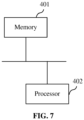
- the server includes at least one processor 402 and a memory 401 communicatively connected to the at least one processor 402.
- the memory 401 is configured to store an instruction executable by the at least one processor 402 to enable the at least one processor 402 to perform the preceding embodiments of the load adjustment method.
- the memory 401 and the at least one processor 402 are connected through a bus.
- the bus may include any number of interconnected buses and bridges.
- the bus connects together various circuits of one or more processors 402 and the memory 401.
- the bus may also connect together various other circuits such as peripheral devices, voltage regulators, power management circuits, etc., which is well known in the art and therefore is not described here.
- a bus interface provides an interface between the bus and a transceiver.
- the transceiver may be one or more elements, for example, may be multiple senders and receivers, and provides a unit configured to communicate with various other devices over a transmission medium.
- Data processed by the at least one processor 402 is transmitted over a wireless medium through an antenna.
- the antenna also receives data and transmits the data to the at least one processor 402.
- the at least one processor 402 is responsible for managing the bus and general processing and may also provide various functions including timing, peripheral interfaces, voltage regulation, power management and other control functions.
- the memory 401 is configured to store data used by the at least one processor 402 in performing operations.
- Fifth embodiment of the present application relates to a computer-readable storage medium configured to store a computer program.
- the computer program when executed by a processor, implements the preceding method embodiments.
- the program is stored in a storage medium and includes instructions for causing a device (which may be a single-chip microcomputer, a chip, etc.) or a processor to perform all or part of the steps of the method described in various embodiments of the present application.
- the preceding storage medium may include a USB flash drive, a mobile hard disk, a read-only memory (ROM), a random-access memory (RAM), a magnetic disk, an optical disc or another medium that can store program codes.
Landscapes
- Engineering & Computer Science (AREA)
- Computer Networks & Wireless Communication (AREA)
- Signal Processing (AREA)
- Mobile Radio Communication Systems (AREA)
Abstract
Description
- The present application relates to the field of communications, for example, a load adjustment method, a server and a storage medium.
- Massive Multiple-Input-Multiple-Output (MIMO) (which is also referred to as large scale MIMO) may simultaneously communicate with multiple users on the same time-frequency resource by configuring hundreds or thousands of antenna arrays at a base station side, thus greatly improving the spectrum efficiency, and the massive MIMO is a key technology for improving system capacity and Spectrum Efficiency (SE) in the 5th Generation Mobile Networks (5G). Without an increase in system bandwidth, base stations or cells, massive MIMO cells can exhibit a traffic gain several times higher than that of conventional macro stations by virtue of beamforming and multi-user spatial division pairing capabilities of the massive MIMO.
- However, some massive MIMO cells cannot well perform the beamforming and multi-user spatial division pairing capabilities of the massive MIMO, resulting in a limited improvement in traffic of the massive MIMO cells.
- Embodiments of the present application provide a load adjustment method, a server and a storage medium, providing a possibility to improve the traffic of a massive MIMO cell.
- The present application provides a load adjustment method including steps described below. An indicator value of a first performance indicator of a massive MIMO cell is acquired; a load state of the massive MIMO cell is determined according to the indicator value of the first performance indicator; and a load adjustment strategy matching the load state of the massive MIMO cell is determined and performed, where the load adjustment strategy includes one of the following: migrating a first user of a neighboring cell of the massive MIMO cell into the massive MIMO cell, migrating a second user in the massive MIMO cell into a neighboring cell of the massive MIMO cell, migrating a first user of a neighboring cell into the massive MIMO cell and migrating a second user in the massive MIMO cell into the neighboring cell, or maintaining the status quo. The present application further provides a server. The server includes at least one processor and a memory communicatively connected to the at least one processor. The memory is configured to store an instruction executable by the at least one processor to enable the at least one processor to perform the preceding load adjustment method.
- The present application further provides a computer-readable storage medium configured to store a computer program which, when performed by a processor, performs the preceding load adjustment method.
-
-
FIG. 1 is a flowchart of a load adjustment method according to first embodiment of the present application; -
FIG. 2 is a flowchart of determining a first user or a second user in the first embodiment of the present application; -
FIG. 3 is a flowchart of a load adjustment method according to second embodiment of the present application; -
FIG. 4 is a flowchart of an implementation ofstep 204 in the second embodiment of the present application; -
FIG. 5 is a flowchart of a load adjustment method according to third embodiment of the present application; -
FIG. 6 is a flowchart of an implementation ofstep 305 in the third embodiment of the present application; and -
FIG. 7 is a structural diagram of a server according to fourth embodiment of the present application. - Embodiments of the present application are described in detail in conjunction with the drawings.
- First embodiment of the present application relates to a load adjustment method. The load adjustment method may be applied to a device, for example, a base station. The flow is shown in
FIG. 1 and includes steps described below. - In
step 101, an indicator value of a first performance indicator of a massive MIMO cell is acquired. - The device may automatically acquire the indicator value of the first performance indicator of the massive MIMO cell within the latest preset time period, and the preset time period may be set according to actual requirements. For example, the preset time period is 15 minutes. A triggering event may also be preset in the device. When the triggering event occurs, the indicator value of the first performance indicator of the massive MIMO cell is acquired. The first performance indicator may be one type of performance indicator. For example, the first performance indicator is a Physical Resource Block (PRB) utilization. The first performance indicator may also be multiple types of performance indicators, and then indicator values of the multiple types of performance indicators are acquired, respectively. For example, the first performance indicator includes the PRB utilization, Control Channel Element (CCE) power and a CCE position utilization, and then the indicator value of the PRB utilization, the indicator value of the CCE power and the indicator value of the CCE position utilization are acquired, respectively.
- In
step 102, a load state of the massive MIMO cell is determined according to the indicator value of the first performance indicator. - In an example, different load states of the massive MIMO cell may be represented as a relatively idle state, a relatively busy state and a congestion state. In both the relatively idle state and the relatively busy state, no congestion situation occurs, and in the congestion state, a congestion situation occurs. In an example, different load states of the massive MIMO cell may also be represented numerically, different numerical values characterize different load states. It may be predefined that the larger the numerical value is, the busier the massive MIMO cell is. The largest numerical value characterizes that the congestion situation occurs, the smallest numerical value characterizes that no congestion situation occurs and the massive MIMO cell is relatively idle, and other numerical values characterize that no congestion situation occurs and the massive MIMO cell is relatively busy. For example, cases where S = 0, 1, 2, and 3 refer to different load states, respectively, when S = 0, no congestion situation occurs and the massive MIMO cell is relatively idle; when S = 1 or 2, no congestion situation occurs and the massive MIMO cell is relatively busy; and when S = 3, the congestion situation occurs.
- The device may preset a rule for determining the load state of the massive MIMO cell according to the indicator value of the first performance indicator. In an example, a correspondence between load states of the massive MIMO cell and ranges where the indicator value of the first performance indicator is located may be set. For example, the load states are represented by the relatively idle state, the relatively busy state, and the congestion state. When 0% ≤ the PRB utilization ≤ 60%, the massive MIMO cell is in the relatively idle state; when 60% < the PRB utilization ≤ 80%, the massive MIMO cell is in the relatively busy state; and when 80% < the PRB utilization ≤ 100%, the massive MIMO cell is in the congestion state. For another example, the load states are represented numerically. When 0% ≤ the PRB utilization ≤ 80%, and 0% ≤ the CCE power ≤ 60% or 0% ≤ the CCE position utilization ≤ 60%, S = 0; when 80% < the PRB utilization ≤ 100%, and 0% ≤ the CCE power ≤ 60% or 0% ≤ the CCE position utilization ≤ 60%, S = 1; when 0% < the PRB utilization ≤ 80%, and 60% < the CCE power ≤ 100% or 60% < the CCE position utilization ≤ 100%, S = 2; and when 80% < the PRB utilization ≤ 100%, and 60% < the CCE power ≤ 100% or 60% < the CCE position utilization ≤ 100%, S = 3.
- In an example, it may be set that the load state of the massive MIMO cell is determined according to the load state within the previous preset time period and a switching rule of the load state. For example, the load states are represented by the relatively idle state, the relatively busy state and the congestion state, and the switching rule of the load state is described below. In a case where the load state within the previous preset time period is the relatively idle state, when the current PRB utilization is greater than 80%, the load state is switched to the relatively busy state. In a case where the load state within the previous preset time period is the relatively busy state, when the current PRB utilization is greater than 95%, and the current CCE power is greater than 70% or the current CCE position utilization is greater than 70%, the load state is switched to the congestion state; and when the current PRB utilization is less than 70%, the load state is switched to the relatively idle state. In a case where the load state within the previous preset time period is the congestion state, when the current PRB utilization is less than 90%, or the current CCE power is less than 60% and the current CCE position utilization is less than 60%, the load state is switched to the relatively busy state.
- In
step 103, a load adjustment strategy matching the load state of the massive MIMO cell is determined and performed, where the load adjustment strategy includes one of the following: migrating a first user of a neighboring cell of the massive MIMO cell into the massive MIMO cell, migrating a second user in the massive MIMO cell into a neighboring cell, migrating a first user of a neighboring cell into the massive MIMO cell and migrating a second user in the massive MIMO cell into the neighboring cell, or maintaining the status quo. - The first user and the second user are different users. When the load adjustment strategy is migrating the first user of the neighboring cell into the massive MIMO cell and migrating the second user in the massive MIMO cell into the neighboring cell, the first user of the neighboring cell may be migrated into the massive MIMO cell first, and then the second user in the massive MIMO cell is migrated into the neighboring cell; or the second user in the massive MIMO cell may be migrated into the neighboring cell first, and then the first user of the neighboring cell is migrated into the massive MIMO cell; or the first user of the neighboring cell may be migrated into the massive MIMO cell at the same time when the second user in the massive MIMO cell is migrated into the neighboring cell. The embodiment is not intended to be limiting.
- In an example, the first user or the second user refers to any user. In an example, when migrating the first user of the neighboring cell into the massive MIMO cell, the neighboring cell is denoted as a present cell and the massive MIMO cell is denoted as a target cell; when migrating the second user in the massive MIMO cell into the neighboring cell, the massive MIMO cell is denoted as a present cell and the neighboring cell is denoted as a target cell. The first user or the second user is determined in the manner described below. The flowchart of determining the first user or the second user is shown in
FIG. 2 . - In
step 1001, N users are selected from the present cell, where N ≥ 1 and N is preset. - The value of N may be preset according to actual situations, which is not limited in the embodiment. If the number of users in the present cell is less than N, all users in the present cell are selected. For example, N is preset to be 5; if there are 10 users in the present cell, any 5 users are selected; if there are 4 users in the present cell, the 4 users are selected.
- In an example, when migrating the first user of the neighboring cell into the massive MIMO cell, the step in which the N users are selected from the present cell includes that N users are selected from users, in the present cell, having a downlink data volume greater than a preset data volume; when migrating the second user in the massive MIMO cell into the neighboring cell, the step in which the N users are selected from the present cell includes that users having the number of spatial division scheduling times greater than a preset number of times and a spatial division scheduling proportion greater than a first preset threshold in the present cell are ranked according to Spectrum Efficiency (SE) values from small to large, and the first N users are selected.
- A user having a downlink data volume greater than the preset data volume is referred to as a large Buffer Status Report (BSR) user. If the number of large BSR users is less than N, all large BSR users are selected. For example, a user having the downlink data volume greater than 1 Kbits within 1 second is counted as a large BSR user. In a case where N is preset to be 5, and if there are 10 large BSR users in the present cell, any 5 large BSR users are selected; and if there are 4 large BSR users in the present cell, the 4 large BSR users are selected. Users, in the present cell, having the number of spatial division scheduling times greater than the preset number of times and the spatial division scheduling proportion greater than the first preset threshold are ranked according to the SE values from small to large, and the first N users are selected. If the number of users satisfying the condition is less than N, all users are selected. The preset number of times and the first preset threshold may be set according to actual requirements, which are not limited in the embodiment. The spatial division scheduling proportion is equal to dividing the number of times that the user performs spatial division scheduling by the number of times that the user performs total scheduling. For example, N is preset to be 5, the preset number of times is 5, and the first present threshold is 20%; if there are 10 users in the present cell, users having the number of spatial division scheduling times greater than 5 and the spatial division scheduling proportion greater than 20% are selected first, then the users having the number of spatial division scheduling times greater than 5 and the spatial division scheduling proportion greater than 20% are ranked according to the SE values from small to large, and the first 5 users are selected; if 4 users satisfy the condition, the 4 users are selected. In this manner, when migrating the first user of the neighboring cell into the massive MIMO cell, a condition is set for the selection process, that is, the selected N users are users having the downlink data volume greater than the preset data volume, so that the user quality of the first user migrated into the massive MIMO cell is improved, and thereby the possibility of improving the traffic of the neighboring cell is increased; when migrating the second user in the massive MIMO cell into the neighboring cell, a condition is set for the selection process, that is, the selected N users are selected from users having the number of spatial division scheduling times greater than the preset number of times and the spatial division scheduling proportion greater than the first preset threshold are ranked according to the SE values from small to large, so that the user quality of the second user migrated into the neighboring cell is improved, and thereby the possibility of improving the traffic of the neighboring cell is increased. Therefore, the possibility of an improvement in the total traffic of all cells in the area where the massive MIMO cell is located is increased.
- In
step 1002, a second performance indicator of each selected user in the target cell is measured so that an indicator value of the second performance indicator is obtained. - The device measures the second performance indicator of the selected user in the target cell to obtain the indicator value of the second performance indicator of the selected user in the target cell. The second performance indicator is preset. The second performance indicator may be one type of performance indicator or multiple types of performance indicators. In an example, the second performance indicator is Reference Signal Receiving Power (RSRP). The second performance indicator is described as the RSRP in the embodiment and following embodiments, but is not limited thereto.
- In
step 1003, if the indicator value of the second performance indicator is greater than a preset indicator value of the target cell, the selected user is used as the first user or the second user. - The preset indicator value of the target cell may be set according to actual situations, which is not limited in the embodiment. For example, if the preset indicator value of the RSRP of the target cell is -90 dBm, RSRP values of selected users a, b, c, d, and e in the target cell are measured, and the RSRP values of -88 dBm, -85 dBm, -95 dBm, -100 dBm and -80 dBm are obtained, respectively, so that users a, b, and e are the first user or the second user, and users a, b, and e of the present cell are migrated into the target cell.
- In an example, the second performance indicator of a selected user in the target cell and the second performance indicator of the selected user in the present cell are measured respectively so that the indicator value of the second performance indicator of the user in the target cell and the indicator value of the second performance indicator of the user in the present cell are obtained. If the indicator value of the second performance indicator of the user in the target cell is greater than the preset indicator value of the target cell, and the difference between the indicator value of the second performance indicator of the user in the target cell and the indicator value of the second performance indicator of the user in the present cell is greater than or equal to a second preset threshold, the selected user is used as the first user or the second user. For example, if the preset indicator value of the RSRP of the target cell is -90 dBm, the second preset threshold is -5 dBm, the RSRP values of the selected users a, b, c, d and e in the target cell and the RSRP values of the selected users a, b, c, d and e in the present cell are measured, respectively, and the RSRP value of each selected user in the target cell and the RSRP value of the selected user in the present cell are -88 dBm and -85 dBm, -85 dBm and -100 dBm, -95 dBm and -88 dBm, -100 dBm and - 90 dBm, and -80 dBm and -83 dBm, respectively, so that users a and e are the first user or the second user, and a and e of the present cell are migrated into the target cell.
- In this manner, the user quality of the first user migrated into the massive MIMO cell is improved, thereby the possibility of the improvement in the traffic of the massive MIMO cell is increased, or the user quality of the second user migrated into the neighboring cell is improved, thereby the possibility of the improvement in the traffic of the neighboring cell is increased. Therefore, the possibility of the improvement in the total traffic of all cells in the area where the massive MIMO cell is located is increased.
- In an example, after the load adjustment strategy matching the load state of the massive MIMO cell is determined and performed, the method further includes the following: an indicator value of a third performance indicator is acquired; and the preset indicator value of the target cell is updated according to the load state of the massive MIMO cell and the indicator value of the third performance indicator.
- The device acquires the indicator value of the third performance indicator within a preset period time before the load adjustment strategy is performed and the indicator value of the third performance indicator within a preset period time after the load adjustment strategy is performed. The third performance indicator may be one type of performance indicator or multiple types of performance indicators. Updating the preset indicator value of the target cell refers to that for any load adjustment strategy, after the load adjustment strategy is performed, according to the load state and the indicator value of the third performance indicator, an adjustment amplitude is obtained according to a preset rule, and then the preset indicator value of the target cell is subjected to one of the following: kept unchanged, increased, or decreased. For example, the load state before the load adjustment strategy is performed and the load state after the load adjustment strategy is performed are a state before the adjustment and a state after the adjustment, respectively. The third performance indicator includes the traffic of the massive MIMO cell, the total traffic of the area where the massive MIMO cell is located and the number of Radio Resource Control (RRC) connection users of the massive MIMO cell, where the traffic of the massive MIMO cell within a preset time period before the load adjustment strategy is performed and the traffic of the massive MIMO cell within a preset time period after the load adjustment strategy is performed are denoted as MM traffic before the adjustment and MM traffic after the adjustment, respectively; the total traffic of the area within a preset time period before the load adjustment strategy is performed and the total traffic of the area within a preset time period after the load adjustment strategy is performed are denoted as area traffic before the adjustment and area traffic after the adjustment, respectively; and the number of RRC connection users of the massive MIMO cell within a preset time period before the load adjustment strategy is performed and the number of RRC connection users of the massive MIMO cell within a preset time period after the load adjustment strategy is performed are denoted as RRC before the adjustment and RRC after the adjustment, respectively. When the load adjustment strategy is migrating the first user of the neighboring cell into the massive MIMO cell, if the state before the adjustment is the same as the state after the adjustment, the RRC after the adjustment minus the RRC before the adjustment is less than or equal to 5, the MM traffic before the adjustment is less than or equal to the MM traffic after the adjustment, the area traffic before the adjustment is less than or equal to the area traffic after the adjustment, and the preset indicator value, that is, Reference Signal Receiving Power (RSRP), of the massive MIMO cell is greater than -105 dBm, the preset indicator value of the RSRP of the massive MIMO cell is decreased by 5 dB; if the state before the adjustment is the same as the state after the adjustment, the RRC after the adjustment minus the RRC before the adjustment is greater than or equal to 20, and the preset indicator value of the RSRP of the massive MIMO cell is less than -90 dBm, the preset indicator value of the RSRP of the massive MIMO cell is increased by 5 dB; if the state before the adjustment is the same as the state after the adjustment, the RRC after the adjustment minus the RRC before the adjustment is greater than 5, the MM traffic before the adjustment is greater than the MM traffic after the adjustment or the area traffic before the adjustment is greater than the area traffic after the adjustment, and the preset indicator value of the RSRP of the massive MIMO cell is less than -90 dBm, the preset indicator value of the RSRP of the massive MIMO cell is increased by 5 dB; and if the state before the adjustment is not same as the state after the adjustment, and the preset indicator value of the RSRP of the neighboring cell is not equal to -90 dBm, the preset indicator value of the RSRP of the neighboring cell is adjusted to be -90 dBm. The preset indicator value of the target cell is updated, so that the preset indicator value of the target cell is more reasonable, and when a user is subsequently determined and selected according to the updated preset indicator value of the target cell as the first user or the second user, the determined first user or the determined second user is more reasonable.
- In the embodiment, the step in which the load adjustment strategy matching the load state of the massive MIMO cell is determined and performed includes the step described below. According to a preset correspondence between load states and load adjustment strategies, a load adjustment strategy corresponding to the load state of the massive MIMO cell is used as the load adjustment strategy matching the load state of the massive MIMO cell, and the load adjustment strategy matching the load state of the massive MIMO cell is performed. The correspondence between the load states and the load adjustment strategies is preset in the device, and the number of types of the load states is the same as the number of the load adjustment strategies. When the load state of the massive MIMO cell is determined, the correspondence is queried, the load adjustment strategy corresponding to the load state is used as the load adjustment strategy matching the load state, and the load adjustment strategy is performed. The correspondence between the load states and the load adjustment strategies is preset, so that after the load state is determined, the load adjustment strategy matching the load state can be determined relatively quickly and then performed, which is simple and feasible.
- In an example, when the load state is that no congestion situation occurs in the massive MIMO cell, the corresponding load adjustment strategy is migrating the first user of the neighboring cell into the massive MIMO cell; and when the load state is that a congestion situation occurs in the massive MIMO cell, the corresponding load adjustment strategy is migrating the second user in the massive MIMO cell into the neighboring cell. For example, it is preset that the load state includes that no congestion situation occurs and the massive MIMO cell is relatively idle, no congestion situation occurs and the massive MIMO cell is relatively busy, and the congestion situation occurs. When no congestion situation occurs and the massive MIMO cell is relatively idle or no congestion situation occurs and the massive MIMO cell is relatively busy, the corresponding load adjustment strategy is migrating the first user of the neighboring cell into the massive MIMO cell; and when the congestion situation occurs, the corresponding load adjustment strategy is migrating the second user in the massive MIMO cell into the neighboring cell. The correspondence between the load states and the load adjustment strategies is shown in the table below.
Load state Load adjustment strategy No congestion situation occurs and the massive MIMO cell is relatively idle Migrate the first user of the neighboring cell into the massive MIMO cell No congestion situation occurs and the massive MIMO cell is relatively busy Migrate the first user of the neighboring cell into the massive MIMO cell A congestion situation occurs Migrate the second user in the massive MIMO cell into the neighboring cell - When no congestion situation occurs in the massive MIMO cell, it represents that more users may access the massive MIMO cell, and then a user of the neighboring cell is migrated into the massive MIMO cell, so that it is possible to improve the traffic of the massive MIMO cell; when a congestion situation occurs in the massive MIMO cell, it represents that the massive MIMO cell cannot satisfy the requirements of users, and the second user in the massive MIMO cell is migrated into the neighboring cell, so that it is possible to improve the traffic of the neighboring cell. Therefore, it is possible to improve the total traffic of all cells in the area where the massive MIMO cell is located.
- In an example, the step in which N users are selected from users, in the present cell, having the downlink data volume greater than the preset data volume includes the step described below. In a case where the load state is that no congestion situation occurs in the massive MIMO cell and the massive MIMO cell is relatively busy, the N users are selected from the users having the downlink data volume greater than the preset data volume in the present cell.
- When the load state is that no congestion situation occurs in the massive MIMO cell and the massive MIMO cell is relatively idle, the N users selected from the present cell are not limited; the N users may be any N users, or may be N users having the downlink data volume greater than the preset data volume. When the load state is that no congestion situation occurs in the massive MIMO cell and the massive MIMO cell is relatively busy, N users are selected from users having the downlink data volume greater than the preset data volume in the present cell. When the load state is that a congestion situation occurs in the massive MIMO cell, users having the number of spatial division scheduling times greater than the preset number of times and the spatial division scheduling proportion greater than the first preset threshold in the present cell are ranked according to SE values from small to large, and the first N users are selected. In this manner, in a case where no congestion situation occurs in the massive MIMO cell and the massive MIMO cell is relatively busy, the selected users are N users having the downlink data volume greater than the preset data volume, so that the user quality of the first user migrated into the massive MIMO cell is improved, and thus the possibility of improving the traffic of the massive MIMO cell is increased.
- In the embodiment, the indicator value of the first performance indicator of the massive MIMO cell is acquired first, and then the load state of the massive MIMO cell may be accurately determined according to the indicator value of the first performance indicator. The load state can reflect the busyness degree of the massive MIMO cell, and the load adjustment strategy includes one of the following: migrating the first user of the neighboring cell of the massive MIMO cell into the massive MIMO cell, migrating the second user in the massive MIMO cell into the neighboring cell, migrating the first user of the neighboring cell into the massive MIMO cell and migrating the second user in the massive MIMO cell into the neighboring cell, or maintaining the status quo. That is, the busyness degree of the massive MIMO cell can be adjusted through the load adjustment strategy, and the determined load adjustment strategy matching the load state matches the current busyness degree. Therefore, performing the load adjustment strategy matching the load state is conducive to adjusting the busyness degree of the massive MIMO cell to a better state, so that it is beneficial to exerting the advantages of the massive MIMO cell and it is possible to improve the traffic of the massive MIMO cell; further, it is possible to improve the total traffic of all cells in the area where the massive MIMO cell is located. Moreover, the correspondence between the load states and the load adjustment strategies is preset so that after the load state is determined, the load adjustment strategy matching the load state can be determined relatively quickly and then performed, which is simple and feasible.
- Second embodiment of the present application relates to a load adjustment method. The second embodiment is substantially the same as the first embodiment, and the main difference between the second embodiment and the first embodiment is that excellence levels of multiple candidate load adjustment strategies under the load state are preset, and the load adjustment strategy matching the load state for performing is determined according to the excellence levels. The flowchart is shown in
FIG. 3 and includes steps described below. - In
step 201, an indicator value of a first performance indicator of a massive MIMO cell is acquired. - In
step 202, a load state of the massive MIMO cell is determined according to the indicator value of the first performance indicator. -
Steps 201 to 202 are similar tosteps 101 to 102 and are not repeated here. - In
step 203, excellence levels of multiple candidate load adjustment strategies under the load state of the Massive MIMO cell are queried, where an excellence level refers to how good and bad a load adjustment strategy is performed under the load state. - The load adjustment strategy here is similar to the load adjustment strategy in the first embodiment and is not repeated here. The excellence level may be expressed by numerical values, or may be expressed by various grades such as good and bad. In the present embodiment and the following embodiments, the excellence level is expressed by a numerical value; the larger the numerical value is, the more excellent the load adjustment strategy is, but not limited thereto. In an initial operation of the device, initial values of the excellence levels of the multiple candidate load adjustment strategies under different load states may all be 0, or may be allocated different values according to practical experience; therefore, multiple candidate load adjustment strategies corresponding different load states may have different excellence levels, and it is necessary to query the excellence levels of the multiple candidate load adjustment strategies under a load state. For example, cases where S = 0, S = 1, S = 2, and S = 3 refer to different load states, respectively, and cases where a = 0, a = 1, a = 2 and a = 3 refers to different load adjustment strategies, respectively. That is, the case where a = 0 refers to migrating the first user of the neighboring cell of the massive MIMO cell into the massive MIMO cell; the case where a = 1 refers to migrating the second user in the massive MIMO cell into the neighboring cell; the case where a = 2 refers to migrating the first user of the neighboring cell into the massive MIMO cell and migrating the second user in the massive MIMO cell into the neighboring cell; and the case where a = 3 refers to maintaining the status quo. Under different load states, the excellence levels of the multiple candidate load adjustment strategies are shown in the table below.
a = 0 a = 1 a = 2 a = 3 s = 0 1 2 5 3 s = 1 4 0 3 6 s = 2 3 2 5 1 s = 3 2 4 3 1 - In
step 204, one candidate load adjustment strategy is selected according to the found excellence levels of the multiple candidate load adjustment strategies as the load adjustment strategy matching the load state of the massive MIMO cell, and the load adjustment strategy matching the load state of the massive MIMO cell is performed. - In an example, the step in which one candidate load adjustment strategy is selected according to the found excellence levels of the multiple candidate load adjustment strategies includes the step described below. A load adjustment strategy having the highest excellence level is directly selected from the found excellence levels of the multiple candidate load adjustment strategies, or the found excellence levels of the multiple candidate load adjustment strategies are ranked from high to low, and one load adjustment strategy is randomly selected from two load adjustment strategies having the top two excellence levels, etc. As described in the preceding examples, when the load state satisfies that s = 2, the excellence levels of the multiple candidate load adjustment strategies are 3, 2, 5, and 1, respectively, and the load adjustment strategy a having the highest excellence level, that is, a = 2, is directly selected.
- In an example, the flowchart for the step in which the one candidate load adjustment strategy is selected according to the found excellence levels of the multiple candidate load adjustment strategies as the load adjustment strategy matching the load state of the massive MIMO cell and the load adjustment strategy matching the load state of the massive MIMO cell is performed is shown in
FIG. 4 and includes steps described below. - In
step 2041, a manner for selecting the one candidate load adjustment strategy is determined based on an ε greedy algorithm, where the manner includes random selection or selection according to an excellence level. - A random number x is generated first, where 0 ≤ x ≤ 1. If x is less than ε, the manner for selecting the one candidate load adjustment strategy is determined as the random selection; if x is greater than or equal to ε, the manner for selecting the one candidate load adjustment strategy is determined as the selection according to the excellence level, where

- In
step 2042, according to the manner for selecting, the load adjustment strategy matching the load state of the massive MIMO cell is selected from the multiple candidate load adjustment strategies, and the load adjustment strategy matching the load state of the massive MIMO cell is performed. - If the manner for selecting is the selection according to the excellence level, a candidate value having the highest excellence level is selected from the candidate load adjustment strategies. For example, when the load state satisfies that s = 2, the excellence levels of the multiple candidate load adjustment strategies are 3, 2, 5, and 1, respectively, and the load adjustment strategy a having the highest excellence level, that is, a = 2, is selected. If the manner for selecting is the random selection, any candidate load adjustment strategy is selected.
- The manner for selecting the one candidate load adjustment strategy can be accurately determined through the ε greedy algorithm, and the load adjustment strategy matching the load state is selected according to different selection manners. In this manner, the appropriate load adjustment strategy matching the load state can be selected accurately.
- In the embodiment, in this manner, the determined load adjustment strategy matching the load state of the massive MIMO cell is an optimal load adjustment strategy under the load state, that is, a degree of matching between the load adjustment strategy selected in this manner and the current busyness degree of the massive MIMO cell is higher, so that the possibility of improving the traffic of the massive MIMO cell is increased.
- Third embodiment of the present application relates to a load adjustment method. The third embodiment is substantially the same as the second embodiment, and the main difference between the third embodiment and the second embodiment is that an excellence level of the load adjustment strategy matching the load state, which is determined under the load state, is updated. The flowchart is shown in
FIG. 5 and includes steps described below. - In
step 301, an indicator value of a first performance indicator of a massive MIMO cell is acquired. - In
step 302, a load state of the massive MIMO cell is determined according to the indicator value of the first performance indicator. - In
step 303, excellence levels of multiple candidate load adjustment strategies under the load state are found, where an excellence level refers to how good or bad a load adjustment strategy is performed under the load state. - In
step 304, one candidate load adjustment strategy is selected according to the found excellence levels of the multiple candidate load adjustment strategies as the load adjustment strategy matching the load state of the massive MIMO cell, and the load adjustment strategy matching the load state of the massive MIMO cell is performed. -
Steps 301 to 304 are similar tosteps 201 to 204 and are not repeated here. - In
step 305, an excellence level, determined under the load state of the massive MIMO cell, of the load adjustment strategy matching the load state of the massive MIMO cell is updated. - In an example, an adjustment value of the excellence level may be preset. The adjustment value of the excellence level plus an original excellence level is a new excellence level, and the new excellence level is updated as the excellence level, determined under the load state, of the load adjustment strategy matching the load state. For example, the preset adjustment value of the excellence level is 2, the original excellence level is 3, and thus the new excellence level is 5; the new excellence level 5 is updated as the excellence level of the load adjustment strategy matching the load state, which is determined under the load state.
- In an example, a new excellence level may be preset, and the new excellence level is directly updated as the excellence level of the load adjustment strategy matching the load state, which is determined under the load state. For example, the new excellence level is preset to be 5, and the new excellence level 5 is directly updated as the excellence level, which is determined under the load state, of the load adjustment strategy matching the load state.
- In an example, the flowchart for the step in which the excellence level, determined under the load state, of the load adjustment strategy matching the load state is updated is shown in
FIG. 6 and includes steps described below. - In
step 3051, an indicator value of a fourth performance indicator is acquired, where the fourth performance indicator includes a fourth performance indicator of the massive MIMO cell and a fourth performance indicator of a neighboring cell. - In
step 3052, the excellence level, determined under the load state of the massive MIMO cell, of the load adjustment strategy matching the load state of the massive MIMO cell is updated according to the indicator value of the fourth performance indicator. - The fourth performance indicator may be one type of performance indicator or multiple types of performance indicators. According to the indicator value of the fourth performance indicator, the value of the fourth performance indicator is substituted into a preset formula to obtain an adjustment value of the excellence level through calculation, and the excellence level, determined under the load state, of the load adjustment strategy matching the load state is updated according to the adjustment value. When the excellence level of the load adjustment strategy matching the load state which is determined under the load state is updated, not only the fourth performance indicator of the massive MIMO cell but also the fourth performance indicator of the neighboring cell are taken into account, so that the accuracy of the updated excellence level is improved.
- In an example, the fourth performance indicator includes the traffic Payload present of the massive MIMO cell and the traffic Payload neighb of the neighboring cell. The fourth indicator value is substituted into formula one and formula two.


- In the embodiment, the excellence level of the load adjustment strategy matching the load state which is determined under different load states is continuously updated, so that the excellence level is more accurate; moreover, the load adjustment strategy matching the load state is determined every time according to the latest updated excellence level, so that the rationality of the determined load adjustment strategy matching the load state is improved.
- Fourth embodiment of the present application relates to a server. As shown in
FIG. 7 , the server includes at least oneprocessor 402 and amemory 401 communicatively connected to the at least oneprocessor 402. Thememory 401 is configured to store an instruction executable by the at least oneprocessor 402 to enable the at least oneprocessor 402 to perform the preceding embodiments of the load adjustment method. - The
memory 401 and the at least oneprocessor 402 are connected through a bus. The bus may include any number of interconnected buses and bridges. The bus connects together various circuits of one ormore processors 402 and thememory 401. The bus may also connect together various other circuits such as peripheral devices, voltage regulators, power management circuits, etc., which is well known in the art and therefore is not described here. A bus interface provides an interface between the bus and a transceiver. The transceiver may be one or more elements, for example, may be multiple senders and receivers, and provides a unit configured to communicate with various other devices over a transmission medium. Data processed by the at least oneprocessor 402 is transmitted over a wireless medium through an antenna. The antenna also receives data and transmits the data to the at least oneprocessor 402. - The at least one
processor 402 is responsible for managing the bus and general processing and may also provide various functions including timing, peripheral interfaces, voltage regulation, power management and other control functions. Thememory 401 is configured to store data used by the at least oneprocessor 402 in performing operations. - Fifth embodiment of the present application relates to a computer-readable storage medium configured to store a computer program. The computer program, when executed by a processor, implements the preceding method embodiments.
- That is, it may be understood by those of skill in the art that all or part of the steps in the method of the preceding embodiments may be implemented by related hardware instructed by a program. The program is stored in a storage medium and includes instructions for causing a device (which may be a single-chip microcomputer, a chip, etc.) or a processor to perform all or part of the steps of the method described in various embodiments of the present application. The preceding storage medium may include a USB flash drive, a mobile hard disk, a read-only memory (ROM), a random-access memory (RAM), a magnetic disk, an optical disc or another medium that can store program codes.
Claims (13)
- A load adjustment method, comprising:acquiring an indicator value of a first performance indicator of a massive Multiple-Input-Multiple-Output, MIMO, cell;determining a load state of the massive MIMO cell according to the indicator value of the first performance indicator; anddetermining and performing a load adjustment strategy matching the load state of the massive MIMO cell, wherein the load adjustment strategy comprises one of the following: migrating a first user of a neighboring cell of the massive MIMO cell into the massive MIMO cell, migrating a second user in the massive MIMO cell into a neighboring cell of the massive MIMO cell, migrating a first user of a neighboring cell of the massive MIMO cell into the massive MIMO cell and migrating a second user in the massive MIMO cell into the neighboring cell, or maintaining a status quo.
- The method according to claim 1, wherein in migrating the first user of the neighboring cell into the massive MIMO cell, the neighboring cell is denoted as a present cell and the massive MIMO cell is denoted as a target cell; and in migrating the second user in the massive MIMO cell into the neighboring cell, the massive MIMO cell is denoted as a present cell and the neighboring cell is denoted as a target cell; and
the first user or the second user is determined in the following manner:selecting N users from the present cell, wherein N ≥ 1 and N is preset;measuring a second performance indicator of each of the selected N users in the target cell to obtain an indicator value of the second performance indicator; andin response to the indicator value of the second performance indicator being greater than a preset indicator value of the target cell, using a selected user having the indicator value of the second performance indicator greater than the preset indicator value as the first user or the second user. - The method according to claim 2, wherein in migrating the first user of the neighboring cell into the massive MIMO cell, selecting the N users from the present cell comprises:selecting N users from users having a downlink data volume greater than a preset data volume in the present cell; andwherein in migrating the second user in the massive MIMO cell into the neighboring cell,selecting the N users from the present cell comprises:
ranking, according to spectrum efficiency, SE, values from small to large, users having a number of spatial division scheduling times greater than a preset number of times and a spatial division scheduling proportion greater than a first preset threshold in the present cell, and selecting first N users from ranking. - The method according to claim 2, after determining and performing the load adjustment strategy matching the load state of the massive MIMO cell, further comprising:acquiring an indicator value of a third performance indicator; andupdating the preset indicator value of the target cell according to the load state and the indicator value of the third performance indicator.
- The method according to any one of claims 1 to 4, wherein determining and performing the load adjustment strategy matching the load state of the massive MIMO cell comprises:querying excellence levels of multiple candidate load adjustment strategies under the load state of the massive MIMO cell, wherein an excellence level refers to how good or bad a load adjustment strategy is performed under the load state of the massive MIMO cell; andselecting, according to the found excellence levels of the multiple candidate load adjustment strategies, one of the multiple candidate load adjustment strategies as the load adjustment strategy matching the load state of the massive MIMO cell and performing the load adjustment strategy matching the load state of the massive MIMO cell.
- The method according to any one of claims 1 to 4, wherein determining and performing the load adjustment strategy matching the load state of the massive MIMO cell comprises:
using, according to a preset correspondence between load states and load adjustment strategies, a load adjustment strategy corresponding to the load state of the massive MIMO cell as the load adjustment strategy matching the load state of the massive MIMO cell and performing the load adjustment strategy matching the load state of the massive MIMO cell. - The method according to claim 6, wherein the preset correspondence between the load states and the load adjustment strategies comprises:in a case where the load state of the massive MIMO cell is that no congestion situation occurs in the massive MIMO cell, the load adjustment strategy corresponding to the load state of the massive MIMO cell is migrating the first user of the neighboring cell into the massive MIMO cell; andin a case where the load state of the massive MIMO cell is that a congestion situation occurs in the massive MIMO cell, the load adjustment strategy corresponding to the load state of the massive MIMO cell is migrating the second user in the massive MIMO cell into the neighboring cell.
- The method according to claim 3, wherein selecting the N users from the users having the downlink data volume greater than the preset data volume in the present cell comprises:
in a case where the load state of the massive MIMO cell is that no congestion situation occurs in the massive MIMO cell and the load state of the massive MIMO cell is in a relatively busy state, selecting the N users from the users having the downlink data volume greater than the preset data volume in the present cell. - The method according to claim 5, after selecting, according to the found excellence levels of the multiple candidate load adjustment strategies, the one of the multiple candidate load adjustment strategies as the load adjustment strategy matching the load state of the massive MIMO cell and performing the load adjustment strategy matching the load state of the massive MIMO cell, further comprising:
updating an excellence level, determined under the load state of the massive MIMO cell, of the load adjustment strategy matching the load state of the massive MIMO cell. - The method according to claim 9, wherein updating the excellence level, determined under the load state of the massive MIMO cell, of the load adjustment strategy matching the load state of the massive MIMO cell comprises:acquiring an indicator value of a fourth performance indicator, wherein the fourth performance indicator comprises a fourth performance indicator of the massive MIMO cell and a fourth performance indicator of the neighboring cell; andupdating, according to the indicator value of the fourth performance indicator, the excellence level, determined under the load state of the massive MIMO cell, of the load adjustment strategy matching the load state of the massive MIMO cell.
- The method according to claim 5, wherein selecting, according to the found excellence levels of the multiple candidate load adjustment strategies, the one of the multiple candidate load adjustment strategies as the load adjustment strategy matching the load state of the massive MIMO cell and performing the load adjustment strategy matching the load state of the massive MIMO cell comprises:determining a manner for selecting the one of the multiple candidate load adjustment strategies based on an ε greedy algorithm, wherein the manner comprises random selection or selection according to an excellence level; andselecting, according to the manner for selecting, the load adjustment strategy matching the load state of the massive MIMO cell from the multiple candidate load adjustment strategies and performing the load adjustment strategy matching the load state of the massive MIMO cell.
- A server, comprising:at least one processor; anda memory communicatively connected to the at least one processor;wherein the memory is configured to store an instruction executable by the at least one processor to enable the at least one processor to perform the load adjustment method according to any one of claims 1 to 11.
- A computer-readable storage medium, storing a computer program which, when performed by a processor, implements the load adjustment method according to any one of claims 1 to 11.
Applications Claiming Priority (2)
| Application Number | Priority Date | Filing Date | Title |
|---|---|---|---|
| CN202010444412.XA CN113709815B (en) | 2020-05-22 | 2020-05-22 | Load adjustment method, server and storage medium |
| PCT/CN2021/095240 WO2021233435A1 (en) | 2020-05-22 | 2021-05-21 | Load adjustment method, server and storage medium |
Publications (3)
| Publication Number | Publication Date |
|---|---|
| EP4156769A1 true EP4156769A1 (en) | 2023-03-29 |
| EP4156769A4 EP4156769A4 (en) | 2024-05-08 |
| EP4156769B1 EP4156769B1 (en) | 2025-07-16 |
Family
ID=78646519
Family Applications (1)
| Application Number | Title | Priority Date | Filing Date |
|---|---|---|---|
| EP21809371.4A Active EP4156769B1 (en) | 2020-05-22 | 2021-05-21 | Load adjustment method, server and storage medium |
Country Status (3)
| Country | Link |
|---|---|
| EP (1) | EP4156769B1 (en) |
| CN (1) | CN113709815B (en) |
| WO (1) | WO2021233435A1 (en) |
Family Cites Families (8)
| Publication number | Priority date | Publication date | Assignee | Title |
|---|---|---|---|---|
| CN101388753B (en) * | 2007-09-13 | 2012-04-18 | 中兴通讯股份有限公司 | A kind of adjustment method of multi-input multi-output mode |
| WO2014101243A1 (en) * | 2012-12-31 | 2014-07-03 | 华为技术有限公司 | Load balancing method and network control node |
| US9491678B2 (en) * | 2013-09-04 | 2016-11-08 | At&T Mobility Ii Llc | Cell broadcast for smart traffic steering across radio technologies with improved radio efficiency |
| CN104301948B (en) * | 2014-09-05 | 2017-12-22 | 中国联合网络通信集团有限公司 | Cell switching method and device in a kind of carrier aggregation network |
| CN105873132A (en) * | 2015-01-22 | 2016-08-17 | 电信科学技术研究院 | Method and apparatus for carrying out load balancing |
| CN107333300B (en) * | 2016-04-29 | 2020-06-09 | 大唐移动通信设备有限公司 | Cell load adjusting method and device |
| CN111225417B (en) * | 2018-11-23 | 2023-04-11 | 中兴通讯股份有限公司 | Method, device and storage medium for realizing load balance |
| CN111093229B (en) * | 2019-12-25 | 2022-09-13 | 中国移动通信集团内蒙古有限公司 | Method, device, equipment and medium for determining load balancing parameters |
-
2020
- 2020-05-22 CN CN202010444412.XA patent/CN113709815B/en active Active
-
2021
- 2021-05-21 WO PCT/CN2021/095240 patent/WO2021233435A1/en not_active Ceased
- 2021-05-21 EP EP21809371.4A patent/EP4156769B1/en active Active
Also Published As
| Publication number | Publication date |
|---|---|
| CN113709815B (en) | 2025-01-03 |
| CN113709815A (en) | 2021-11-26 |
| EP4156769B1 (en) | 2025-07-16 |
| WO2021233435A1 (en) | 2021-11-25 |
| EP4156769A4 (en) | 2024-05-08 |
Similar Documents
| Publication | Publication Date | Title |
|---|---|---|
| RU2486708C2 (en) | Channel adaptation method, base station and terminal in lte system | |
| DE112013002509B4 (en) | Outer loop link adaptation for device resumption | |
| CN111836306B (en) | Power coordination method and device | |
| US11792669B2 (en) | Measurement method, device, and system | |
| US20240064631A1 (en) | Communication processing method, communication apparatus, and communication system | |
| EP2941044A1 (en) | Load balancing method and network control node | |
| EP3010290A1 (en) | Uplink power control method and device thereof | |
| WO2021083230A1 (en) | Power adjusting method and access network device | |
| US20230337252A1 (en) | Downlink scheduling across a cellular carrier aggregation | |
| EP3089532A1 (en) | Method and device for controlling access of terminal for efficient use of resources in mobile communication system | |
| EP4072225A1 (en) | Method for determining initial mcs value, electronic device, and storage medium | |
| CN110366217B (en) | Carrier switching method, device and medium based on asymmetric uplink carrier aggregation | |
| US9888483B2 (en) | Method and apparatus for converting communication modes | |
| US20050105492A1 (en) | Method and arrangement for allocation the quantity of a channel to a mobile station as a function of the measured quality | |
| CN103118396B (en) | A kind of method and base station managing small-cell network | |
| EP4156769B1 (en) | Load adjustment method, server and storage medium | |
| CN112399481A (en) | Flow distribution management method, device, base station and storage medium | |
| US12532224B2 (en) | Parameter adjustment method, server, and storage medium | |
| US11864158B2 (en) | Distributed method for allocating transmission resources to D2D terminals in a cellular access network | |
| CN115190458A (en) | Method and device for calculating busy rate of channel and terminal | |
| WO2025066151A1 (en) | Channel state information sending method, channel state information receiving method, apparatuses and storage medium | |
| CN115442865B (en) | Network load balancing method and device, electronic equipment and storage medium | |
| CN113824543A (en) | Method, base station and storage medium for adaptively adjusting PDCCH polymerization degree | |
| EP3076705B1 (en) | Method and apparatus for determining performance indicator of communications network | |
| WO2025175545A1 (en) | Method for shutting down a cell of one or more cells of a base station for wireless communication, a method for activating such cell and system comprising the base station and a second base station |
Legal Events
| Date | Code | Title | Description |
|---|---|---|---|
| STAA | Information on the status of an ep patent application or granted ep patent |
Free format text: STATUS: THE INTERNATIONAL PUBLICATION HAS BEEN MADE |
|
| PUAI | Public reference made under article 153(3) epc to a published international application that has entered the european phase |
Free format text: ORIGINAL CODE: 0009012 |
|
| STAA | Information on the status of an ep patent application or granted ep patent |
Free format text: STATUS: REQUEST FOR EXAMINATION WAS MADE |
|
| 17P | Request for examination filed |
Effective date: 20221220 |
|
| AK | Designated contracting states |
Kind code of ref document: A1 Designated state(s): AL AT BE BG CH CY CZ DE DK EE ES FI FR GB GR HR HU IE IS IT LI LT LU LV MC MK MT NL NO PL PT RO RS SE SI SK SM TR |
|
| DAV | Request for validation of the european patent (deleted) | ||
| DAX | Request for extension of the european patent (deleted) | ||
| REG | Reference to a national code |
Ref country code: DE Ref legal event code: R079 Free format text: PREVIOUS MAIN CLASS: H04W0028080000 Ipc: H04W0028020000 Ref country code: DE Ref legal event code: R079 Ref document number: 602021034310 Country of ref document: DE Free format text: PREVIOUS MAIN CLASS: H04W0028080000 Ipc: H04W0028020000 |
|
| A4 | Supplementary search report drawn up and despatched |
Effective date: 20240408 |
|
| RIC1 | Information provided on ipc code assigned before grant |
Ipc: H04W 72/12 20090101ALI20240402BHEP Ipc: H04W 36/00 20090101ALI20240402BHEP Ipc: H04W 36/22 20090101ALI20240402BHEP Ipc: H04W 28/02 20090101AFI20240402BHEP |
|
| GRAP | Despatch of communication of intention to grant a patent |
Free format text: ORIGINAL CODE: EPIDOSNIGR1 |
|
| STAA | Information on the status of an ep patent application or granted ep patent |
Free format text: STATUS: GRANT OF PATENT IS INTENDED |
|
| INTG | Intention to grant announced |
Effective date: 20250102 |
|
| RIC1 | Information provided on ipc code assigned before grant |
Ipc: H04W 72/12 20230101ALI20241217BHEP Ipc: H04W 36/00 20090101ALI20241217BHEP Ipc: H04W 36/22 20090101ALI20241217BHEP Ipc: H04W 28/02 20090101AFI20241217BHEP |
|
| GRAJ | Information related to disapproval of communication of intention to grant by the applicant or resumption of examination proceedings by the epo deleted |
Free format text: ORIGINAL CODE: EPIDOSDIGR1 |
|
| STAA | Information on the status of an ep patent application or granted ep patent |
Free format text: STATUS: REQUEST FOR EXAMINATION WAS MADE |
|
| INTC | Intention to grant announced (deleted) | ||
| GRAP | Despatch of communication of intention to grant a patent |
Free format text: ORIGINAL CODE: EPIDOSNIGR1 |
|
| STAA | Information on the status of an ep patent application or granted ep patent |
Free format text: STATUS: GRANT OF PATENT IS INTENDED |
|
| INTG | Intention to grant announced |
Effective date: 20250416 |
|
| GRAS | Grant fee paid |
Free format text: ORIGINAL CODE: EPIDOSNIGR3 |
|
| GRAA | (expected) grant |
Free format text: ORIGINAL CODE: 0009210 |
|
| STAA | Information on the status of an ep patent application or granted ep patent |
Free format text: STATUS: THE PATENT HAS BEEN GRANTED |
|
| AK | Designated contracting states |
Kind code of ref document: B1 Designated state(s): AL AT BE BG CH CY CZ DE DK EE ES FI FR GB GR HR HU IE IS IT LI LT LU LV MC MK MT NL NO PL PT RO RS SE SI SK SM TR |
|
| REG | Reference to a national code |
Ref country code: GB Ref legal event code: FG4D |
|
| REG | Reference to a national code |
Ref country code: CH Ref legal event code: EP |
|
| REG | Reference to a national code |
Ref country code: DE Ref legal event code: R096 Ref document number: 602021034310 Country of ref document: DE |
|
| REG | Reference to a national code |
Ref country code: IE Ref legal event code: FG4D |
|
| REG | Reference to a national code |
Ref country code: NL Ref legal event code: MP Effective date: 20250716 |
|
| PG25 | Lapsed in a contracting state [announced via postgrant information from national office to epo] |
Ref country code: PT Free format text: LAPSE BECAUSE OF FAILURE TO SUBMIT A TRANSLATION OF THE DESCRIPTION OR TO PAY THE FEE WITHIN THE PRESCRIBED TIME-LIMIT Effective date: 20251117 |
|
| PG25 | Lapsed in a contracting state [announced via postgrant information from national office to epo] |
Ref country code: NL Free format text: LAPSE BECAUSE OF FAILURE TO SUBMIT A TRANSLATION OF THE DESCRIPTION OR TO PAY THE FEE WITHIN THE PRESCRIBED TIME-LIMIT Effective date: 20250716 |
|
| REG | Reference to a national code |
Ref country code: AT Ref legal event code: MK05 Ref document number: 1815257 Country of ref document: AT Kind code of ref document: T Effective date: 20250716 |
|
| PG25 | Lapsed in a contracting state [announced via postgrant information from national office to epo] |
Ref country code: IS Free format text: LAPSE BECAUSE OF FAILURE TO SUBMIT A TRANSLATION OF THE DESCRIPTION OR TO PAY THE FEE WITHIN THE PRESCRIBED TIME-LIMIT Effective date: 20251116 |
|
| PG25 | Lapsed in a contracting state [announced via postgrant information from national office to epo] |
Ref country code: NO Free format text: LAPSE BECAUSE OF FAILURE TO SUBMIT A TRANSLATION OF THE DESCRIPTION OR TO PAY THE FEE WITHIN THE PRESCRIBED TIME-LIMIT Effective date: 20251016 |
|
| REG | Reference to a national code |
Ref country code: LT Ref legal event code: MG9D |
|
| PG25 | Lapsed in a contracting state [announced via postgrant information from national office to epo] |
Ref country code: AT Free format text: LAPSE BECAUSE OF FAILURE TO SUBMIT A TRANSLATION OF THE DESCRIPTION OR TO PAY THE FEE WITHIN THE PRESCRIBED TIME-LIMIT Effective date: 20250716 |
|
| PG25 | Lapsed in a contracting state [announced via postgrant information from national office to epo] |
Ref country code: FI Free format text: LAPSE BECAUSE OF FAILURE TO SUBMIT A TRANSLATION OF THE DESCRIPTION OR TO PAY THE FEE WITHIN THE PRESCRIBED TIME-LIMIT Effective date: 20250716 |
|
| PG25 | Lapsed in a contracting state [announced via postgrant information from national office to epo] |
Ref country code: HR Free format text: LAPSE BECAUSE OF FAILURE TO SUBMIT A TRANSLATION OF THE DESCRIPTION OR TO PAY THE FEE WITHIN THE PRESCRIBED TIME-LIMIT Effective date: 20250716 |
|
| PG25 | Lapsed in a contracting state [announced via postgrant information from national office to epo] |
Ref country code: GR Free format text: LAPSE BECAUSE OF FAILURE TO SUBMIT A TRANSLATION OF THE DESCRIPTION OR TO PAY THE FEE WITHIN THE PRESCRIBED TIME-LIMIT Effective date: 20251017 |
|
| PG25 | Lapsed in a contracting state [announced via postgrant information from national office to epo] |
Ref country code: SE Free format text: LAPSE BECAUSE OF FAILURE TO SUBMIT A TRANSLATION OF THE DESCRIPTION OR TO PAY THE FEE WITHIN THE PRESCRIBED TIME-LIMIT Effective date: 20250716 |
|
| PG25 | Lapsed in a contracting state [announced via postgrant information from national office to epo] |
Ref country code: LV Free format text: LAPSE BECAUSE OF FAILURE TO SUBMIT A TRANSLATION OF THE DESCRIPTION OR TO PAY THE FEE WITHIN THE PRESCRIBED TIME-LIMIT Effective date: 20250716 |
|
| PG25 | Lapsed in a contracting state [announced via postgrant information from national office to epo] |
Ref country code: BG Free format text: LAPSE BECAUSE OF FAILURE TO SUBMIT A TRANSLATION OF THE DESCRIPTION OR TO PAY THE FEE WITHIN THE PRESCRIBED TIME-LIMIT Effective date: 20250716 Ref country code: PL Free format text: LAPSE BECAUSE OF FAILURE TO SUBMIT A TRANSLATION OF THE DESCRIPTION OR TO PAY THE FEE WITHIN THE PRESCRIBED TIME-LIMIT Effective date: 20250716 |
|
| PG25 | Lapsed in a contracting state [announced via postgrant information from national office to epo] |
Ref country code: RS Free format text: LAPSE BECAUSE OF FAILURE TO SUBMIT A TRANSLATION OF THE DESCRIPTION OR TO PAY THE FEE WITHIN THE PRESCRIBED TIME-LIMIT Effective date: 20251016 |
|
| PG25 | Lapsed in a contracting state [announced via postgrant information from national office to epo] |
Ref country code: ES Free format text: LAPSE BECAUSE OF FAILURE TO SUBMIT A TRANSLATION OF THE DESCRIPTION OR TO PAY THE FEE WITHIN THE PRESCRIBED TIME-LIMIT Effective date: 20250716 |
|
| PG25 | Lapsed in a contracting state [announced via postgrant information from national office to epo] |
Ref country code: SM Free format text: LAPSE BECAUSE OF FAILURE TO SUBMIT A TRANSLATION OF THE DESCRIPTION OR TO PAY THE FEE WITHIN THE PRESCRIBED TIME-LIMIT Effective date: 20250716 |
|
| PGFP | Annual fee paid to national office [announced via postgrant information from national office to epo] |
Ref country code: GB Payment date: 20260306 Year of fee payment: 6 |
|
| PG25 | Lapsed in a contracting state [announced via postgrant information from national office to epo] |
Ref country code: DK Free format text: LAPSE BECAUSE OF FAILURE TO SUBMIT A TRANSLATION OF THE DESCRIPTION OR TO PAY THE FEE WITHIN THE PRESCRIBED TIME-LIMIT Effective date: 20250716 |
|
| PG25 | Lapsed in a contracting state [announced via postgrant information from national office to epo] |
Ref country code: IT Free format text: LAPSE BECAUSE OF FAILURE TO SUBMIT A TRANSLATION OF THE DESCRIPTION OR TO PAY THE FEE WITHIN THE PRESCRIBED TIME-LIMIT Effective date: 20250716 |
|
| PG25 | Lapsed in a contracting state [announced via postgrant information from national office to epo] |
Ref country code: CZ Free format text: LAPSE BECAUSE OF FAILURE TO SUBMIT A TRANSLATION OF THE DESCRIPTION OR TO PAY THE FEE WITHIN THE PRESCRIBED TIME-LIMIT Effective date: 20250716 |
|
| PG25 | Lapsed in a contracting state [announced via postgrant information from national office to epo] |
Ref country code: SK Free format text: LAPSE BECAUSE OF FAILURE TO SUBMIT A TRANSLATION OF THE DESCRIPTION OR TO PAY THE FEE WITHIN THE PRESCRIBED TIME-LIMIT Effective date: 20250716 Ref country code: EE Free format text: LAPSE BECAUSE OF FAILURE TO SUBMIT A TRANSLATION OF THE DESCRIPTION OR TO PAY THE FEE WITHIN THE PRESCRIBED TIME-LIMIT Effective date: 20250716 |