EP4156175B1 - Test method and apparatus for full-duplex voice interaction system - Google Patents
Test method and apparatus for full-duplex voice interaction system Download PDFInfo
- Publication number
- EP4156175B1 EP4156175B1 EP20936925.5A EP20936925A EP4156175B1 EP 4156175 B1 EP4156175 B1 EP 4156175B1 EP 20936925 A EP20936925 A EP 20936925A EP 4156175 B1 EP4156175 B1 EP 4156175B1
- Authority
- EP
- European Patent Office
- Prior art keywords
- corpus
- log
- audio
- speech interaction
- result
- Prior art date
- Legal status (The legal status is an assumption and is not a legal conclusion. Google has not performed a legal analysis and makes no representation as to the accuracy of the status listed.)
- Active
Links
Images
Classifications
-
- G—PHYSICS
- G10—MUSICAL INSTRUMENTS; ACOUSTICS
- G10L—SPEECH ANALYSIS TECHNIQUES OR SPEECH SYNTHESIS; SPEECH RECOGNITION; SPEECH OR VOICE PROCESSING TECHNIQUES; SPEECH OR AUDIO CODING OR DECODING
- G10L15/00—Speech recognition
- G10L15/01—Assessment or evaluation of speech recognition systems
-
- G—PHYSICS
- G06—COMPUTING OR CALCULATING; COUNTING
- G06F—ELECTRIC DIGITAL DATA PROCESSING
- G06F11/00—Error detection; Error correction; Monitoring
- G06F11/36—Prevention of errors by analysis, debugging or testing of software
-
- H—ELECTRICITY
- H04—ELECTRIC COMMUNICATION TECHNIQUE
- H04L—TRANSMISSION OF DIGITAL INFORMATION, e.g. TELEGRAPHIC COMMUNICATION
- H04L5/00—Arrangements affording multiple use of the transmission path
- H04L5/14—Two-way operation using the same type of signal, i.e. duplex
-
- H—ELECTRICITY
- H04—ELECTRIC COMMUNICATION TECHNIQUE
- H04M—TELEPHONIC COMMUNICATION
- H04M3/00—Automatic or semi-automatic exchanges
- H04M3/22—Arrangements for supervision, monitoring or testing
- H04M3/24—Arrangements for supervision, monitoring or testing with provision for checking the normal operation
- H04M3/241—Arrangements for supervision, monitoring or testing with provision for checking the normal operation for stored program controlled exchanges
- H04M3/242—Software testing
-
- H—ELECTRICITY
- H04—ELECTRIC COMMUNICATION TECHNIQUE
- H04L—TRANSMISSION OF DIGITAL INFORMATION, e.g. TELEGRAPHIC COMMUNICATION
- H04L5/00—Arrangements affording multiple use of the transmission path
- H04L5/0001—Arrangements for dividing the transmission path
- H04L5/0014—Three-dimensional division
-
- H—ELECTRICITY
- H04—ELECTRIC COMMUNICATION TECHNIQUE
- H04M—TELEPHONIC COMMUNICATION
- H04M3/00—Automatic or semi-automatic exchanges
- H04M3/42—Systems providing special services or facilities to subscribers
- H04M3/487—Arrangements for providing information services, e.g. recorded voice services or time announcements
- H04M3/493—Interactive information services, e.g. directory enquiries ; Arrangements therefor, e.g. interactive voice response [IVR] systems or voice portals
-
- H—ELECTRICITY
- H04—ELECTRIC COMMUNICATION TECHNIQUE
- H04M—TELEPHONIC COMMUNICATION
- H04M3/00—Automatic or semi-automatic exchanges
- H04M3/42—Systems providing special services or facilities to subscribers
- H04M3/50—Centralised arrangements for answering calls; Centralised arrangements for recording messages for absent or busy subscribers ; Centralised arrangements for recording messages
- H04M3/527—Centralised call answering arrangements not requiring operator intervention
-
- Y—GENERAL TAGGING OF NEW TECHNOLOGICAL DEVELOPMENTS; GENERAL TAGGING OF CROSS-SECTIONAL TECHNOLOGIES SPANNING OVER SEVERAL SECTIONS OF THE IPC; TECHNICAL SUBJECTS COVERED BY FORMER USPC CROSS-REFERENCE ART COLLECTIONS [XRACs] AND DIGESTS
- Y02—TECHNOLOGIES OR APPLICATIONS FOR MITIGATION OR ADAPTATION AGAINST CLIMATE CHANGE
- Y02D—CLIMATE CHANGE MITIGATION TECHNOLOGIES IN INFORMATION AND COMMUNICATION TECHNOLOGIES [ICT], I.E. INFORMATION AND COMMUNICATION TECHNOLOGIES AIMING AT THE REDUCTION OF THEIR OWN ENERGY USE
- Y02D10/00—Energy efficient computing, e.g. low power processors, power management or thermal management
Definitions
- the present invention relates to the field of intelligent speech, in particular to a method and apparatus for testing a full-duplex speech interaction system.
- various modules on a speech interaction link may be independently tested.
- the awakening rate, the awakening time, the power consumption, etc. are tested through an awakening/signal processing module.
- the sentence error rate and the character error rate are tested through a speech recognition module.
- the accuracy rate, the recall rate, and the parsing accuracy rate are tested through a semantic understanding module.
- a speech synthesis module is scored based on multiple subjective evaluations. Most of existing speech interaction systems use half-duplex interaction, an absolutely ordered dependency relationship exists among various modules, and the entire system can complete interaction by calling various module in series. In this case, independent testing module by module can meet the requirements.
- modules are tested independently and the test indicators are different, there are not testing methods and evaluation indicators for testing the speech interaction system as a whole.
- the indicators of each module can no longer meet the needs of evaluation. For example, for a half-duplex dialogue, a half-duplex speech interaction system responds every time a user speaks a sentence, while a full-duplex speech interaction system only responds to valid requests.
- CN 111 179 907 A discloses a voice recognition test method, which comprises acquiring a target voice set, and determining target noises according to the target voice set; sequentially playing target voices in the target voice set, and acquiring a recognition result of each target voice; and generating and outputting the identification data.
- An objective of the present invention is to at least solve the problem of lack of testing methods and evaluation indicators for a speech interaction system as a whole in the prior art such that proper and effective testing cannot be realized for a full-duplex speech interaction system.
- an embodiment of the present invention provides a method for testing a full-duplex speech interaction system.
- the method includes:
- an embodiment of the present invention provides an apparatus for testing a full-duplex speech interaction system.
- the apparatus includes:
- an embodiment of the present invention provides a storage medium having a computer program stored therein, which, when being executed by a processor, performs the steps of the method for testing a full-duplex speech interaction system according to any embodiment of the present invention.
- end-to-end testing of a full-duplex speech interaction system is realized, and indicators for the unique characteristics of full duplex are accurately obtained.
- the characteristics of the full-duplex interaction system were fully covered, improving online interaction effects.
- Necessary data reproduction and indicator support are also provided, while automated testing reduces labor costs and improves testing efficiency.
- the optimization period of the speech interaction system is improved, and the trial and error cost is reduced.
- interaction effects such as the interaction success rate and other indicators could be obtained by collecting user feedback through product sales. Now, estimated values in various scenarios can be obtained through testing before product sales.
- An embodiment of the present invention provides a method for testing a full-duplex speech interaction system, which is applied to a test device.
- the test device may be an electronic device such as a computer, which is not limited in the present invention.
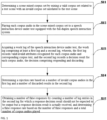
- FIG. 1 shows a flowchart of a method for testing a full-duplex speech interaction system according to an embodiment of the present invention.
- the method includes the following steps.
- S11 a scene mixed corpus set is determined by mixing a valid corpus set related to a test scene with an invalid corpus set which is unrelated to the test scene.
- each corpus audio in the scene mixed corpus set is played to a speech interaction device under test equipped with the full-duplex speech interaction system.
- a work log of the speech interaction device under test is acquired, the work log including at least a first log and a second log, wherein,
- a rejection rate is determined based on number of invalid corpus audios in the first log and number of discarding results in the second log.
- number of false responses is obtained according to a counted number of log entries in the second log which have unexpected response decision result, and a false response rate is determined based on the number of false responses and a total number of the played corpus audios.
- test preparation which includes:
- “Corpus” is a text containing one or more sentences and a recording audio corresponding to each sentence.
- “System decision result” is a decision result such as an operation instruction output by the system according to the input audio/information and other data.
- System interaction result is a result output by the system according to the input audio/information and other data in response to the current state, including a recognition result (text) of the response, text to be broadcast, action description on the device side, etc.
- step S11 a certain amount of valid corpora prepared in the above steps covering a designated scene are acquired, such as "I want to listen to Andy Lau's song” in a smart home scene, and a certain amount of invalid corpora which is unrelated to the designated scene are acquired, such as "This is Speech Dialogue Workshop providing speech recognition capabilities” then the valid corpus set and the invalid corpus set are merged and randomly sorted to determine a scene mixed corpus set.
- each corpus audio in the scene mixed corpus set is played one by one to the speech interaction device under test equipped with the full-duplex speech interaction system through a playback device, such as a stereo.
- the method further includes:
- Each corpus audio in the scene mixed corpus set is played to the speech interaction device under test equipped with the full-duplex speech interaction system through a first playback device.
- the preset background noise is played to the speech interaction device under test equipped with the full-duplex speech interaction system through a second playback device.
- the character accuracy rate and the sentence accuracy rate can be further tested by adding noise to the played speech.
- Whether the state of the device under test is as expected is determined as follows.
- step S13 since the device under test is connected to a computer which can read a log of the device in real time, corresponding log information can be obtained by acquiring a work log of the device under test.
- logs 2, 3, 4, 6, 7, and 9 i.e., the sequence numbers 2, 3, 4, 6, 7, and 9 in the log examples above.
- the numbers of the logs can be classified, which is convenient for operation. For example: log 1. 2020-05-11 09:01:00 Start playing invalid corpus 1.
- the corpus text is "This is Speech Dialogue Workshop providing speech recognition capabilities", and log 1. 2020-05-11 09:01:00 Start playing invalid corpus 1.
- the corpus text is "This is Speech Dialogue Workshop providing speech recognition capabilities", they are classified into a first log that records the valid/invalid attributes recognized for each corpus audio and the corresponding corpus text.
- Decision results can also be received, such as "decision results" in log 5 and log 10, which are classified into a second log.
- Decision results include responding, interrupting, and discarding.
- step S14 taking the log of the invalid corpus as an example, the finally obtained interaction decision is [discard], that is, no interaction response is made to the input of this sentence. That is to say, because invalid corpora should be discarded, but in practice, a speech that should not be responded may be responded by mistake. As such, a rejection rate is proposed.
- Rejection rate the number of all [discarded] log entries/the number of played corpora having invalid attribute.
- step S15 however, not all decision results are as expected. For example, log 5 in the invalid corpus should not have a decision result of [interrupt]. Similarly, for log 10 in the invalid corpus, if it is not [discard] but an interaction result, it is not as expected either.
- False response rate the number of false responses/the number of corpora played.
- False response rate and "rejection rate” do not exist in half duplex. Taking the false response rate as an example, all requests will be responded in case of half duplex, but only valid requests will be responded in case of full duplex, and as such, a false response rate exists. Similarly, there is no interruption in case of half duplex, in which when the synthesized sound output by the device is being played, the pickup means of the device is not turned on and therefore cannot be interrupted.
- end-to-end testing of a full-duplex speech interaction system is realized, and accurate indicators for the unique characteristics of full duplex are obtained.
- the characteristics of the full-duplex interaction system were fully covered, thereby improving online interaction effects.
- Necessary data reproduction and indicator support are also provided, while automated testing reduces labor costs and improves testing efficiency.
- the optimization period of the speech interaction system is improved, and the trial and error cost is reduced.
- interaction effects such as the interaction success rate and other indicators should be obtained by collecting user feedback through product sales. Now, estimated values in various scenarios can be obtained through testing before product sales.
- the work log includes at least a third log.
- the third log records an interaction result for each corpus audio, the interaction result including text of the corpus audio to be broadcasted and a device action instruction of the corpus audio. Corresponding expected text to be broadcasted and an expected device action instruction are determined based on the corpus text of each corpus audio in the first log.
- the interaction result is as expected when the text to be broadcast in the interaction result of each corpus audio matches the corresponding expected text to be broadcast and the device action instruction matches the corresponding expected device action instruction.
- Number of successful interactions is then obtained according to a counted number of log entries of the interaction result as expected in the third log, and a success rate of interaction is determined based on the number of successful interactions and the total number of corpus audios played.
- log 10 of "received interaction result” is determined as the third log, which is used to record the interaction result for each corpus audio, including ⁇ recognition result, text to be broadcast, action instruction ⁇ .
- the corresponding expected text to be broadcasts and the expected device action instruction can be determined.
- the expected text to be broadcast of "I want to listen to Andy Lau's song” is: “Play “Forgetting Love Water” for you)”
- the action instruction is to call the music skill to play "Forgetting Love Water”.
- the interaction success rate does not depend on the recognition result, because even if the recognition result is incorrect, a correct interaction can be obtained. For example, if "ou-xiang-ting-liu-de-hua-de-ge (Chinese speech, means “Idol listens to Andy Lau's song, wherein ou-xiang may correspond to Chinese for "I want” or "Idol”)” is misrecognized, it is very likely that the actual text to be broadcast is still "Play “Forgetting Love Water” for you", and the actual action instruction is to call the music skill to play "Forgetting Love Water”.
- interaction success rate the number of all corpora as expected/the number of all corpora as played.
- the third log records an interaction result for each corpus audio, the interaction result further including a recognition result of the corpus audio.
- a recognized character accuracy rate and a recognized sentence accuracy rate are determined based on the corpus text of each corpus audio in the first log and the recognition result of the corpus audio.
- the "recognized sentence accuracy rate” and “recognized character accuracy rate” can be obtained, which are in the same way as the calculation method in case of half duplex, except that log 1 is compared with log 9 in case of half duplex, but compared with log 10 in case of full duplex.
- the recognition result of the whole sentence is "How to write yun (cloud) of yun-do(cloud))", while the response content in case of full duplex may be "yun(cloud) of yun-do(piece of cloud))”.
- the difference between full duplex and half duplex lies in interaction instead of playback.
- the interaction in case of half duplex is one-to-one, in which one request is accompanied with one response.
- the interaction is many-to-many, in which one request may have a plurality of responses, and a plurality of requests may also have only one response.
- the recognized character accuracy rate and the recognized sentence accuracy rate are affected.
- the work log includes at least a fourth log, a fifth log, and a sixth log.
- the fourth log records a first time stamp at which each corpus audio ends playing
- the fifth log records a second time stamp for determining a recognition result after each corpus audio ends playing
- the sixth log records a third time stamp for determining an interaction result moment of each corpus audio.
- a recognition response time of the speech interaction device under test is determined based on a time difference between the second time stamp and the first time stamp.
- An interaction response time of the speech interaction device under test is determined based on a time difference between the third time stamp and the second time stamp.
- the timestamp "2020-05-11 09:00:03" in log 8 is determined as the fourth log.
- the timestamp "2020-05-11 09:00:04" in log 9 is determined as the fifth log.
- the timestamp "2020-05-11 09:00:05" with the interaction result in log 10 is determined as the sixth log.
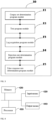
- FIG. 3 is a schematic structural diagram of an apparatus for testing a full-duplex speech interaction system according to an embodiment of the present invention.
- the device can perform the method for testing a full-duplex speech interaction system according to any of the above-mentioned embodiments and configured in a test device.
- the apparatus for testing a full-duplex speech interaction system includes a corpus set determination program module 11, a test program module 12, a log acquisition program module 13, a rejection rate determination program module 14, and a false response rate determination program module 15.
- the corpus set determination program module 11 is configured to determine a scene mixed corpus set by mixing a valid corpus set related to a test scene with an invalid corpus set which is unrelated to the test scene.
- the test program module 12 is configured to play each corpus audio in the scene mixed corpus set to a speech interaction device under test equipped with the full-duplex speech interaction system.
- the log acquisition program module 13 is configured to acquire a work log of the speech interaction device under test, the work log including at least a first log and a second log, wherein the first log records valid/invalid attributes recognized for each corpus audio and corresponding corpus text, and the second log records a decision result for each corpus audio, the decision including responding and discarding.
- the rejection rate determination program module 14 is configured to determine a rejection rate based on number of corpus audios having invalid attribute in the first log and number of discarding results in the second log.
- the false response rate determination program module 15 is configured to obtain number of false response results according to a counted number of log entries which have false response result in the second log, and to determine a false response rate based on the number of false responses and a total number of the played corpus audios in the scene mixed corpus set.
- the false response result refers to the response result that is expected not to be output but is actually output from the speech interaction device under test.
- An embodiment of the present invention further provides a non-volatile computer storage medium storing computer-executable instructions.
- the computer-executable instructions can perform the method for testing a full-duplex speech interaction system in any of the above method embodiments.
- non-volatile computer storage medium storing computer-executable instructions configured to:
- non-volatile software programs can be stored therein, such as the program instruction/module corresponding to the method for determining a skill field of a dialogue text in the embodiments of the present invention.
- One or more program instructions can be stored in the non-volatile computer-readable storage medium, and perform the method for testing a full-duplex speech interaction system, applied to a test device according to any of the above method embodiments when being executed by the processors.
- the non-volatile computer storage medium may include a storage program area and a storage data area.
- the storage program area may store an operating system and application programs required by at least one function.
- the storage data area may store data generated according to the use of a full-duplex voice dialogue systems and the like.
- the non-volatile computer storage medium may include a high-speed random access memory, and may also include a non-volatile memory, such as at least one magnetic disk storage device, a flash memory device, or other non-volatile solid-state storage devices.
- the non-volatile computer storage medium may optionally include memories remotely disposed with respect to the processor, and these remote memories may be connected to a full-duplex voice dialogue through a network. Examples of the above network include but are not limited to the Internet, intranet, local area network, mobile communication network, and combinations thereof.
- An embodiment of the present invention further provides an electronic device, including: at least one processor, and a memory communicatively coupled to the at least one processor.
- the memory stores instructions executable by the at least one processor.
- the instructions are executed by the at least one processor to enable the at least one processor to perform the method containing the following steps:
- the work log comprises at least a third log
- a recognized character accuracy rate and a recognized sentence accuracy rate are determined based on the corpus text of each corpus audio in the first log and the recognition result of the corpus audio.
- the work log comprises at least a fourth log and a fifth log.
- the fourth log records a first time stamp at which each corpus audio ends playing.
- the fifth log records a second time stamp for determining a recognition result after each corpus audio ends playing.
- a recognition response time of the speech interaction device under test is determined based on a time difference between the second time stamp and the first time stamp.
- the work log comprises at least a sixth log.
- the sixth log records a third time stamp for determining an interaction result moment of each corpus audio.
- An interaction response time of the speech interaction device under test is determined based on a time difference between the third time stamp and the second time stamp.
- the processor is further configured to play a preset background noise to the speech interaction device under test equipped with the full-duplex speech interaction system while playing each corpus audio in the scene mixed corpus set to the speech interaction device under test equipped with the full-duplex speech interaction system; and test the speech interaction device under test based on the corpus audio containing the background noise.
- FIG. 4 is a schematic diagram of a hardware structure of an electronic device for carrying out a method for testing a full-duplex speech interaction system according to another embodiment of the present invention.
- the device includes: one or more processors 410 and a memory 420, in which one processor 410 is taken as an example in FIG. 4 .
- the device for carrying out the method for testing a full-duplex speech interaction system may further include an input means 430 and an output means 440.
- the processor 410, the memory 420, the input means 430, and the output means 440 may be connected through a bus or in other ways, in which the connection through a bus is taken as an example in FIG. 4 .
- the memory 420 may store non-volatile software programs, non-volatile computer-executable programs and modules, such as the program instruction/module corresponding to the method for testing a full-duplex speech interaction system in the embodiments of the present invention.
- the processor 410 executes various functional applications and data processing of a server by running the non-volatile software programs, instructions and modules stored in the memory 420, that is, to realize the method for testing a full-duplex speech interaction system in the above embodiments.
- the memory 420 may include a stored program area and a stored data area.
- the stored program area may store an operating system, an application program required for at least one function.
- the stored data area may store data created according to the use of the apparatus for testing a full-duplex speech interaction system, and the like.
- the memory 420 may include high speed random access memory and nonvolatile memory, such as at least one magnetic disk storage device, flash memory device, or other nonvolatile solid state storage device.
- the memory 420 may include a memory located remotely relative to the processor 410 and connected to the apparatus for testing a full-duplex speech interaction system through a network. Examples of such networks include, but are not limited to, the Internet, an intranet, a local area network, a mobile communication network, and combinations thereof.
- the input means 430 may receive input numerical or character information, and generate signals related to user settings and function control of the apparatus for testing a full-duplex speech interaction system.
- the output means 440 may include a display device such as a display screen.
- the memory 420 stores one or more modules, which, when being executed by the one or more processors 410, perform the method for testing a full-duplex speech interaction system in any of the above method embodiments.
- the above product can execute the method provided by the embodiments of the present application and has functional modules and beneficial effects corresponding to the execution of the method.
- the above product can execute the method provided by the embodiments of the present application and has functional modules and beneficial effects corresponding to the execution of the method.
- the electronic devices in the embodiments of the present application may be in various forms, including but not limited to:
- the embodiments of devices described above are only exemplary.
- the units described as separate components may or may not be physically separated, and the components displayed as units may or may not be physical units, that is, may be located in one place, or it can be distributed to multiple network elements. Some or all of the modules may be selected according to actual needs to achieve the object of the solution of this embodiment.
- each embodiment can be implemented by means of software plus a common hardware platform, and of course, it can also be implemented by hardware.
- the above technical solutions can essentially be embodied in the form of software products that contribute to related technologies, and the computer software products can be stored in computer-readable storage media, such as ROM/RAM, magnetic disks, CD-ROM, etc., including several instructions to enable a computer device (which may be a personal computer, server, or network device, etc.) to perform the method described in each embodiment or some parts of the embodiment.
Landscapes
- Engineering & Computer Science (AREA)
- Physics & Mathematics (AREA)
- Signal Processing (AREA)
- Human Computer Interaction (AREA)
- Health & Medical Sciences (AREA)
- Acoustics & Sound (AREA)
- Multimedia (AREA)
- Computational Linguistics (AREA)
- Audiology, Speech & Language Pathology (AREA)
- Theoretical Computer Science (AREA)
- Computer Networks & Wireless Communication (AREA)
- Computer Hardware Design (AREA)
- General Engineering & Computer Science (AREA)
- General Physics & Mathematics (AREA)
- Quality & Reliability (AREA)
- Debugging And Monitoring (AREA)
- Telephonic Communication Services (AREA)
- Monitoring And Testing Of Exchanges (AREA)
- Electrically Operated Instructional Devices (AREA)
Description
- The present invention relates to the field of intelligent speech, in particular to a method and apparatus for testing a full-duplex speech interaction system.
- In order to test the performance of a speech interaction system, various modules on a speech interaction link may be independently tested. For example, the awakening rate, the awakening time, the power consumption, etc. are tested through an awakening/signal processing module. The sentence error rate and the character error rate are tested through a speech recognition module. The accuracy rate, the recall rate, and the parsing accuracy rate are tested through a semantic understanding module. A speech synthesis module is scored based on multiple subjective evaluations. Most of existing speech interaction systems use half-duplex interaction, an absolutely ordered dependency relationship exists among various modules, and the entire system can complete interaction by calling various module in series. In this case, independent testing module by module can meet the requirements.
- In the process of realizing the present invention, the inventors found that at least the following problems exist in the related art.
- Since modules are tested independently and the test indicators are different, there are not testing methods and evaluation indicators for testing the speech interaction system as a whole. In complex systems where a plurality of modules make decisions by fusion, such as full-duplex systems, the indicators of each module can no longer meet the needs of evaluation. For example, for a half-duplex dialogue, a half-duplex speech interaction system responds every time a user speaks a sentence, while a full-duplex speech interaction system only responds to valid requests.
-
CN 111 179 907 A discloses a voice recognition test method, which comprises acquiring a target voice set, and determining target noises according to the target voice set; sequentially playing target voices in the target voice set, and acquiring a recognition result of each target voice; and generating and outputting the identification data. - An objective of the present invention is to at least solve the problem of lack of testing methods and evaluation indicators for a speech interaction system as a whole in the prior art such that proper and effective testing cannot be realized for a full-duplex speech interaction system.
- In a first aspect, an embodiment of the present invention provides a method for testing a full-duplex speech interaction system. The method includes:
- determining a scene mixed corpus set by mixing a valid corpus set related to a test scene with an invalid corpus set which is unrelated to the test scene;
- playing each corpus audio in the scene mixed corpus set to a speech interaction device under test equipped with the full-duplex speech interaction system;
- acquiring a work log of the speech interaction device under test, the work log including at least a first log and a second log, wherein,
- the first log records valid/invalid attributes recognized for each corpus audio and corresponding corpus text, and
- the second log records a decision result for each corpus audio, the decision result including response result and discarding result;
- determining a rejection rate based on a counted number of the corpus audios having the invalid attributes in the first log and a counted number of the discarding results in the second log; and obtaining number of false responses results according to a counted number of log entries in the second log which have unexpected response decision result, and determining a false response rate based on the number of false responses and a total number of the played corpus audios in the scene mixed corpus set.
- In a second aspect, an embodiment of the present invention provides an apparatus for testing a full-duplex speech interaction system. The apparatus includes:
- a corpus set determination program module configured to determine a scene mixed corpus set by mixing a valid corpus set related to a test scene with an invalid corpus set unrelated to the test scene;
- a test program module configured to play each corpus audio in the scene mixed corpus set to a speech interaction device under test equipped with the full-duplex speech interaction system; a log acquisition program module configured to acquire a work log of the speech interaction device under test, the work log including at least a first log and a second log, wherein,
- the first log records valid/invalid attributes recognized for each corpus audio and corresponding corpus text, and
- the second log records a decision result for each corpus audio, the decision including responding and discarding;
- a rejection rate determination program module configured to determine a rejection rate based on number of invalid corpus audios in the first log and number of discarding results in the second log; and
- a false response rate determination program module configured to obtain number of false response results according to a counted number of log entries which have false response result in the second log, the false response result referring to the response result that is expected not to be output but is actually output from the speech interaction device under test, and to determine a false response rate based on the number of false responses and a total number of the played corpus audios in the scene mixed corpus set.
- In a third aspect, an embodiment of the present invention provides a storage medium having a computer program stored therein, which, when being executed by a processor, performs the steps of the method for testing a full-duplex speech interaction system according to any embodiment of the present invention.
- According to the embodiments of the present invention, end-to-end testing of a full-duplex speech interaction system is realized, and indicators for the unique characteristics of full duplex are accurately obtained. During testing, the characteristics of the full-duplex interaction system were fully covered, improving online interaction effects. Necessary data reproduction and indicator support are also provided, while automated testing reduces labor costs and improves testing efficiency. Moreover, the optimization period of the speech interaction system is improved, and the trial and error cost is reduced. Before such a testing of the system interaction success rate is proposed, interaction effects such as the interaction success rate and other indicators could be obtained by collecting user feedback through product sales. Now, estimated values in various scenarios can be obtained through testing before product sales.
- In order to illustrate the technical solutions of the embodiments of the present disclosure more clearly, a brief description of the accompanying drawings used in the description of the embodiments will be given as follows. Obviously, the accompanying drawings are some embodiments of the present disclosure, and those skilled in the art can also obtain other drawings based on these drawings without any creative effort.
-
FIG. 1 is a flowchart of a method for testing a full-duplex speech interaction system according to an embodiment of the present invention; -
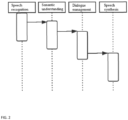
FIG. 2 is a schematic diagram of a parallel module of a method for testing a full-duplex speech interaction system according to an embodiment of the present invention; -
FIG. 3 is a schematic structural diagram of an apparatus for testing a full-duplex speech interaction system according to an embodiment of the present invention; and -
FIG. 4 is a schematic structural diagram of an embodiment of an electronic device of the present invention. - To make the objectives, technical solutions, and advantages of the embodiments of the present invention clearer, the technical solutions in the embodiments of the present invention will be described below with reference to the accompanying drawings in the embodiments of the present invention. Obviously, these embodiments are only some but not all of the embodiments of the present invention. All other embodiments that can be obtained by those skilled in the art without creative efforts based on the disclosed embodiments fall within the protection scope of the present invention.
- An embodiment of the present invention provides a method for testing a full-duplex speech interaction system, which is applied to a test device. The test device may be an electronic device such as a computer, which is not limited in the present invention.
-
FIG. 1 shows a flowchart of a method for testing a full-duplex speech interaction system according to an embodiment of the present invention. The method includes the following steps. In S11, a scene mixed corpus set is determined by mixing a valid corpus set related to a test scene with an invalid corpus set which is unrelated to the test scene. - In S12, each corpus audio in the scene mixed corpus set is played to a speech interaction device under test equipped with the full-duplex speech interaction system.
- In S13, a work log of the speech interaction device under test is acquired, the work log including at least a first log and a second log, wherein,
- the first log records valid/invalid attributes recognized for each corpus audio and corresponding corpus text, and
- the second log records a decision result for each corpus audio, the decision result including response result and discarding result.
- In S14, a rejection rate is determined based on number of invalid corpus audios in the first log and number of discarding results in the second log.
- In S15, number of false responses is obtained according to a counted number of log entries in the second log which have unexpected response decision result, and a false response rate is determined based on the number of false responses and a total number of the played corpus audios.
- In this embodiment, test preparation is required, which includes:
- 1. Valid corpus, which should cover at least one specific scene, such as smart home, TV, vehicle, education, etc., as well as the vocabulary, service sentence patterns, and high-frequency fields of the scene.
- 2. Invalid corpus, which is a copy of unrelated corpus outside the designated scene prepared.
- 3. Background noise audio: a corresponding background noise is selected according to the scene, such as fan/air conditioner, stove/kitchenware, music/TV program, car engine/horn, thunderstorm/strong wind, noisy store, etc.
- 4. Test device, including
- Computer, which is used to read a corpus audio, control the playback thereof, read a log of a device under test, and perform statistical analysis to obtain a test result, all devices under test being connected to the computer;
- Two audio playback devices, such as a stereo/artificial mouth, which are used to play audios; and
- Device under test, which is connected to a computer being capable of reading a log of the device in real time.
- "Corpus" is a text containing one or more sentences and a recording audio corresponding to each sentence. "System decision result" is a decision result such as an operation instruction output by the system according to the input audio/information and other data. "System interaction result" is a result output by the system according to the input audio/information and other data in response to the current state, including a recognition result (text) of the response, text to be broadcast, action description on the device side, etc.
- In the full-duplex speech interaction system, a serial relationship no longer exists among modules, but parallel computations are performed on data from a plurality of modules, as particularly shown in
FIG. 2 . Therefore, the success rate of the entire system cannot be obtained after a simple multiplication of the "success rate" of each module. - In step S11, a certain amount of valid corpora prepared in the above steps covering a designated scene are acquired, such as "I want to listen to Andy Lau's song" in a smart home scene, and a certain amount of invalid corpora which is unrelated to the designated scene are acquired, such as "This is Speech Dialogue Workshop providing speech recognition capabilities" then the valid corpus set and the invalid corpus set are merged and randomly sorted to determine a scene mixed corpus set.
- In step S12, each corpus audio in the scene mixed corpus set is played one by one to the speech interaction device under test equipped with the full-duplex speech interaction system through a playback device, such as a stereo.
- As an embodiment, the method further includes:
- playing a preset background noise to the speech interaction device under test equipped with the full-duplex speech interaction system while playing each corpus audio in the scene mixed corpus set to the speech interaction device under test equipped with the full-duplex speech interaction system; and
- testing the speech interaction device under test based on the corpus audio containing the background noise.
- Each corpus audio in the scene mixed corpus set is played to the speech interaction device under test equipped with the full-duplex speech interaction system through a first playback device. The preset background noise is played to the speech interaction device under test equipped with the full-duplex speech interaction system through a second playback device.
- In this embodiment, since two playback devices are prepared in advance and the stereo equipment for playing the corpus audio and the stereo equipment for playing the background noise are played at the same time, the character accuracy rate and the sentence accuracy rate can be further tested by adding noise to the played speech.
- Whether the state of the device under test is as expected is determined as follows.
- 1. Whether the device has been in a pickup state.
- 2. Whether the system makes a decision of responding when playing a valid corpus audio.
- 3. Whether the system makes a decision of discarding after playing an invalid corpus audio.
- 4. Whether the system makes an interaction response after playing a valid corpus audio, and whether the response result is as expected.
- 5. Whether the system closes the pickup after playing an exit of the relevant corpus audio.
- In step S13, since the device under test is connected to a computer which can read a log of the device in real time, corresponding log information can be obtained by acquiring a work log of the device under test.
- As an example,
- 1. A piece of corpus audio is played and whether it is a valid corpus and the text of the sentence are recorded.
- 2. Whether the system gives a decision result when playing the corpus audio and whether the decision result is as expected.
- 3. Whether the system gives an interaction result after the playing of the corpus audio:
- a) whether the recognition result (text) of the response is as expected;
- b) whether the text to be broadcast is as expected; and
- c) whether the action description on the device side is as expected.
- 4. A time interval from the start of playback to the system returning a first character of the recognition result.
- 5. A time interval from the completion of playback to the system returning the recognition result of the entire sentence.
- 6. A time interval from the completion of playback to the system returning the complete interaction result.
- More specifically:
- 1. 2020-05-11 09:00:00 Start playing valid corpus set 1, the corpus text is " I want to listen to Andy Lau's song"
- 2. 2020-05-11 09:00:01 Received real-time recognition result: "I"
- 3. 2020-05-11 09:00:01 Received real-time recognition result: "I want to"
- 4. 2020-05-11 09:00:02 Received real-time recognition result: " I want to listen to"
- 5. 2020-05-11 09:00:02 Received decision result: interrupt
- 6. 2020-05-11 09:00:03 Received real-time recognition result: "I want to listen to Andy"
- 7. 2020-05-11 09:00:03 Received the real-time recognition result: "I want to listen to Andy Lau"
- 8. 2020-05-11 09:00:03 End playing valid corpus 1
- 9. 2020-05-11 09:00:04 Received real-time recognition result: "I want to listen to Andy Lau's song"
- 10. 2020-05-11 09:00:05 Received interaction result, including the recognition result (text) of the response, the text to be broadcast, the action instruction on the device side.
- 1. 2020-05-11 09:01:00 Start playing invalid corpus 1. The corpus text is "This is Speech Dialogue Workshop providing speech recognition capabilities"
- 2. 2020-05-11 09:01:01 Received real-time recognition result: "Speech"
- 3. 2020-05-11 09:01:01 Received real-time recognition result: "Speech Dialogue"
- 4. 2020-05-11 09:01:02 Received real-time recognition result: Speech Dialogue Workshop"
- 5. 2020-05-11 09:01:02 Received decision result: interrupt
- 6. 2020-05-11 09:01:03 Received real-time recognition result: "This is Speech Dialogue Workshop providing"
- 7. 2020-05-11 09:01:03 Received real-time recognition result: "This is Speech Dialogue Workshop providing speech recognition"
- 8. 2020-05-11 09:01:03 End playing invalid corpus 1
- 9. 2020-05-11 09:01:04 Received real-time recognition result: "This is Speech Dialogue Workshop providing speech recognition capabilities"
- 10. 2020-05-11 09:01:05 Received decision result: Discard
- In the test, real-time recognition results can be received during playback, such as logs 2, 3, 4, 6, 7, and 9 (i.e., the sequence numbers 2, 3, 4, 6, 7, and 9 in the log examples above). However, for special detection, when testing a certain test item, only part of the information in the log is required. Further, the numbers of the logs can be classified, which is convenient for operation. For example: log 1. 2020-05-11 09:01:00 Start playing invalid corpus 1. The corpus text is "This is Speech Dialogue Workshop providing speech recognition capabilities", and log 1. 2020-05-11 09:01:00 Start playing invalid corpus 1. The corpus text is "This is Speech Dialogue Workshop providing speech recognition capabilities", they are classified into a first log that records the valid/invalid attributes recognized for each corpus audio and the corresponding corpus text. Decision results can also be received, such as "decision results" in log 5 and log 10, which are classified into a second log. Decision results include responding, interrupting, and discarding. In step S14, taking the log of the invalid corpus as an example, the finally obtained interaction decision is [discard], that is, no interaction response is made to the input of this sentence. That is to say, because invalid corpora should be discarded, but in practice, a speech that should not be responded may be responded by mistake. As such, a rejection rate is proposed. Rejection rate = the number of all [discarded] log entries/the number of played corpora having invalid attribute.
- For step S15, however, not all decision results are as expected. For example, log 5 in the invalid corpus should not have a decision result of [interrupt]. Similarly, for
log 10 in the invalid corpus, if it is not [discard] but an interaction result, it is not as expected either. - Since the corresponding corpus text, such as "I want to listen to Andy Lau's song" and "This is Speech Dialogue Workshop providing speech recognition capabilities" have been recorded in the first log, based on which expected decision results can be determined.
- Number of false responses is obtained by counting number of log entries in the second log which have unexpected response decision result. False response rate = the number of false responses/the number of corpora played.
- "False response rate" and "rejection rate" do not exist in half duplex. Taking the false response rate as an example, all requests will be responded in case of half duplex, but only valid requests will be responded in case of full duplex, and as such, a false response rate exists. Similarly, there is no interruption in case of half duplex, in which when the synthesized sound output by the device is being played, the pickup means of the device is not turned on and therefore cannot be interrupted.
- It can be seen from this embodiment that end-to-end testing of a full-duplex speech interaction system is realized, and accurate indicators for the unique characteristics of full duplex are obtained. During testing, the characteristics of the full-duplex interaction system were fully covered, thereby improving online interaction effects. Necessary data reproduction and indicator support are also provided, while automated testing reduces labor costs and improves testing efficiency. Moreover, the optimization period of the speech interaction system is improved, and the trial and error cost is reduced. Before appearance of the system interaction success rate test, interaction effects such as the interaction success rate and other indicators should be obtained by collecting user feedback through product sales. Now, estimated values in various scenarios can be obtained through testing before product sales.
- As an embodiment, the work log includes at least a third log.
- The third log records an interaction result for each corpus audio, the interaction result including text of the corpus audio to be broadcasted and a device action instruction of the corpus audio. Corresponding expected text to be broadcasted and an expected device action instruction are determined based on the corpus text of each corpus audio in the first log.
- It is determined that the interaction result is as expected when the text to be broadcast in the interaction result of each corpus audio matches the corresponding expected text to be broadcast and the device action instruction matches the corresponding expected device action instruction.
- Number of successful interactions is then obtained according to a counted number of log entries of the interaction result as expected in the third log, and a success rate of interaction is determined based on the number of successful interactions and the total number of corpus audios played.
- In this embodiment, log 10 of "received interaction result" is determined as the third log, which is used to record the interaction result for each corpus audio, including {recognition result, text to be broadcast, action instruction}.
- Likewise, since the first log contains the corpus text of each corpus audio, the corresponding expected text to be broadcasts and the expected device action instruction can be determined. For example, the expected text to be broadcast of "I want to listen to Andy Lau's song" is: "Play "Forgetting Love Water" for you)", and the action instruction is to call the music skill to play "Forgetting Love Water".
- The interaction success rate does not depend on the recognition result, because even if the recognition result is incorrect, a correct interaction can be obtained. For example, if "ou-xiang-ting-liu-de-hua-de-ge (Chinese speech, means "Idol listens to Andy Lau's song, wherein ou-xiang may correspond to Chinese for "I want" or "Idol")" is misrecognized, it is very likely that the actual text to be broadcast is still "Play "Forgetting Love Water" for you", and the actual action instruction is to call the music skill to play "Forgetting Love Water".
- If being as expected is set as 1 and being not as expected is set as 0, then, when {recognition result, text to be broadcast, action instruction} is 011 or 111 upon comparison with the expectations, the interaction result is as expected.
- Finally, the interaction success rate of the full-duplex speech interaction system is obtained as "interaction success rate" = the number of all corpora as expected/the number of all corpora as played.
- It can be seen from this embodiment that since serial execution is performed in case of half-duplex, each module is tested separately to finally obtain the result of the interaction success rate. However, since parallel execution is performed in case of full duplex, the result of the interaction success rate can only be obtained through the end-to-end test of this method.
- As an embodiment, the third log records an interaction result for each corpus audio, the interaction result further including a recognition result of the corpus audio.
- A recognized character accuracy rate and a recognized sentence accuracy rate are determined based on the corpus text of each corpus audio in the first log and the recognition result of the corpus audio.
- By comparing the recognition results (text) of the responses in the first log and the third log (log 10), the "recognized sentence accuracy rate" and "recognized character accuracy rate" can be obtained, which are in the same way as the calculation method in case of half duplex, except that log 1 is compared with log 9 in case of half duplex, but compared with
log 10 in case of full duplex. For example, the recognition result of the whole sentence is "How to write yun (cloud) of yun-do(cloud))", while the response content in case of full duplex may be "yun(cloud) of yun-do(piece of cloud))". - The difference between full duplex and half duplex lies in interaction instead of playback. The interaction in case of half duplex is one-to-one, in which one request is accompanied with one response. In the case of full duplex, the interaction is many-to-many, in which one request may have a plurality of responses, and a plurality of requests may also have only one response. Thus, the recognized character accuracy rate and the recognized sentence accuracy rate are affected. As an embodiment, the work log includes at least a fourth log, a fifth log, and a sixth log.
- the fourth log records a first time stamp at which each corpus audio ends playing;
- the fifth log records a second time stamp for determining a recognition result after each corpus audio ends playing; and
- the sixth log records a third time stamp for determining an interaction result moment of each corpus audio.
- A recognition response time of the speech interaction device under test is determined based on a time difference between the second time stamp and the first time stamp.
- An interaction response time of the speech interaction device under test is determined based on a time difference between the third time stamp and the second time stamp.
- The timestamp "2020-05-11 09:00:03" in log 8 is determined as the fourth log. The timestamp "2020-05-11 09:00:04" in log 9 is determined as the fifth log. The timestamp "2020-05-11 09:00:05" with the interaction result in
log 10 is determined as the sixth log. - As "2020-05-11 09:00:04" - "2020-05-11 09:00:03" = 1 second, it can be obtained that the response time of the system responding to recognition is 1 second.
- As "2020-05-11 09:00:05" - "2020-05-11 09:00:04" = 1 second, it can be obtained that the response time of the system responding to interaction is 1 second.
-
FIG. 3 is a schematic structural diagram of an apparatus for testing a full-duplex speech interaction system according to an embodiment of the present invention. The device can perform the method for testing a full-duplex speech interaction system according to any of the above-mentioned embodiments and configured in a test device. - The apparatus for testing a full-duplex speech interaction system according to this embodiment includes a corpus set
determination program module 11, atest program module 12, a logacquisition program module 13, a rejection ratedetermination program module 14, and a false response ratedetermination program module 15. - The corpus set
determination program module 11 is configured to determine a scene mixed corpus set by mixing a valid corpus set related to a test scene with an invalid corpus set which is unrelated to the test scene. Thetest program module 12 is configured to play each corpus audio in the scene mixed corpus set to a speech interaction device under test equipped with the full-duplex speech interaction system. The logacquisition program module 13 is configured to acquire a work log of the speech interaction device under test, the work log including at least a first log and a second log, wherein the first log records valid/invalid attributes recognized for each corpus audio and corresponding corpus text, and the second log records a decision result for each corpus audio, the decision including responding and discarding. The rejection ratedetermination program module 14 is configured to determine a rejection rate based on number of corpus audios having invalid attribute in the first log and number of discarding results in the second log. The false response ratedetermination program module 15 is configured to obtain number of false response results according to a counted number of log entries which have false response result in the second log, and to determine a false response rate based on the number of false responses and a total number of the played corpus audios in the scene mixed corpus set. The false response result refers to the response result that is expected not to be output but is actually output from the speech interaction device under test. - An embodiment of the present invention further provides a non-volatile computer storage medium storing computer-executable instructions. The computer-executable instructions can perform the method for testing a full-duplex speech interaction system in any of the above method embodiments.
- In an embodiment, the non-volatile computer storage medium storing computer-executable instructions configured to:
- determine a scene mixed corpus set by mixing a valid corpus set related to a test scene with an invalid corpus set which is unrelated to the test scene;
- play each corpus audio in the scene mixed corpus set to a speech interaction device under test equipped with the full-duplex speech interaction system;
- acquire a work log of the speech interaction device under test, the work log comprising at least a first log and a second log, wherein the first log records valid/invalid attributes recognized for each corpus audio and corresponding corpus text, and the second log records a decision result for each corpus audio, the decision results comprising response result and discarding result; determine a rejection rate based on a counted number of corpus audios having invalid attribute in the first log and a counted number of discarding results in the second log; and
- obtain number of false responses results according to a counted number of log entries which have false response result in the second log, the false response result referring to the response result that is expected not to be output but is actually output from the speech interaction device under test, and determine a false response rate based on the number of false responses and a total number of the played corpus audios in the scene mixed corpus set.
- As a non-volatile computer-readable storage medium, non-volatile software programs, non-volatile computer-executable programs and modules can be stored therein, such as the program instruction/module corresponding to the method for determining a skill field of a dialogue text in the embodiments of the present invention. One or more program instructions can be stored in the non-volatile computer-readable storage medium, and perform the method for testing a full-duplex speech interaction system, applied to a test device according to any of the above method embodiments when being executed by the processors.
- The non-volatile computer storage medium may include a storage program area and a storage data area. The storage program area may store an operating system and application programs required by at least one function. The storage data area may store data generated according to the use of a full-duplex voice dialogue systems and the like. In addition, the non-volatile computer storage medium may include a high-speed random access memory, and may also include a non-volatile memory, such as at least one magnetic disk storage device, a flash memory device, or other non-volatile solid-state storage devices. In some embodiments, the non-volatile computer storage medium may optionally include memories remotely disposed with respect to the processor, and these remote memories may be connected to a full-duplex voice dialogue through a network. Examples of the above network include but are not limited to the Internet, intranet, local area network, mobile communication network, and combinations thereof.
- An embodiment of the present invention further provides an electronic device, including: at least one processor, and a memory communicatively coupled to the at least one processor. The memory stores instructions executable by the at least one processor. The instructions are executed by the at least one processor to enable the at least one processor to perform the method containing the following steps:
- determining a scene mixed corpus set by mixing a valid corpus set related to a test scene with an invalid corpus set which is unrelated to the test scene;
- playing each corpus audio in the scene mixed corpus set to a speech interaction device under test equipped with the full-duplex speech interaction system;
- acquiring a work log of the speech interaction device under test, the work log comprising at least a first log and a second log, wherein the first log records valid/invalid attributes recognized for each corpus audio and corresponding corpus text, and the second log records a decision result for each corpus audio, the decision results comprising response result and discarding result;
- determining a rejection rate based on a counted number of corpus audios having invalid attribute in the first log and a counted number of discarding results in the second log; and
- obtaining number of false responses results according to a counted number of log entries which have false response result in the second log, the false response result referring to the response result that is expected not to be output but is actually output from the speech interaction device under test, and determining a false response rate based on the number of false responses and a total number of the played corpus audios in the scene mixed corpus set.
- In some embodiments, the work log comprises at least a third log;
- the third log records an interaction result for each corpus audio, the interaction result comprising text of the corpus audio to be broadcasted and a device action instruction for the corpus audio;
- determining corresponding expected text to be broadcast and an expected device action instruction based on the corpus text of each corpus audio in the first log;
- determining that the interaction result is as expected when the text to be broadcast in the interaction result of each corpus audio matches the corresponding expected text to be broadcast and the device action instruction matches the corresponding expected device action instruction; and
- obtaining number of successful interactions according to a counted number of log entries of the interaction result as expected in the third log, and determining a success rate of interaction based on the number of successful interactions and the total number of corpus audios played. In some embodiments, the third log records an interaction result for each corpus audio, the interaction result further comprising a recognition result of the corpus audio.
- A recognized character accuracy rate and a recognized sentence accuracy rate are determined based on the corpus text of each corpus audio in the first log and the recognition result of the corpus audio.
- In some embodiments, the work log comprises at least a fourth log and a fifth log.
- The fourth log records a first time stamp at which each corpus audio ends playing.
- The fifth log records a second time stamp for determining a recognition result after each corpus audio ends playing.
- A recognition response time of the speech interaction device under test is determined based on a time difference between the second time stamp and the first time stamp.
- In some embodiments, the work log comprises at least a sixth log.
- The sixth log records a third time stamp for determining an interaction result moment of each corpus audio.
- An interaction response time of the speech interaction device under test is determined based on a time difference between the third time stamp and the second time stamp.
- In some embodiments, the processor is further configured to play a preset background noise to the speech interaction device under test equipped with the full-duplex speech interaction system while playing each corpus audio in the scene mixed corpus set to the speech interaction device under test equipped with the full-duplex speech interaction system; and test the speech interaction device under test based on the corpus audio containing the background noise.
- In some embodiments, when playing the preset background noise to the speech interaction device under test equipped with the full-duplex speech interaction system while playing each corpus audio in the scene mixed corpus set to the speech interaction device under test equipped with the full-duplex speech interaction system, the following steps are included:
- playing each corpus audio in the scene mixed corpus set to the speech interaction device under test equipped with the full-duplex speech interaction system through a first playback device; and
- playing the preset background noise to the speech interaction device under test equipped with the full-duplex speech interaction system through a second playback device.
-
FIG. 4 is a schematic diagram of a hardware structure of an electronic device for carrying out a method for testing a full-duplex speech interaction system according to another embodiment of the present invention. As shown inFIG. 4 , the device includes:
one ormore processors 410 and amemory 420, in which oneprocessor 410 is taken as an example inFIG. 4 . - The device for carrying out the method for testing a full-duplex speech interaction system may further include an input means 430 and an output means 440.
- The
processor 410, thememory 420, the input means 430, and the output means 440 may be connected through a bus or in other ways, in which the connection through a bus is taken as an example inFIG. 4 . - As a non-volatile computer-readable storage medium, the
memory 420 may store non-volatile software programs, non-volatile computer-executable programs and modules, such as the program instruction/module corresponding to the method for testing a full-duplex speech interaction system in the embodiments of the present invention. Theprocessor 410 executes various functional applications and data processing of a server by running the non-volatile software programs, instructions and modules stored in thememory 420, that is, to realize the method for testing a full-duplex speech interaction system in the above embodiments. - The
memory 420 may include a stored program area and a stored data area. The stored program area may store an operating system, an application program required for at least one function. The stored data area may store data created according to the use of the apparatus for testing a full-duplex speech interaction system, and the like. Additionally, thememory 420 may include high speed random access memory and nonvolatile memory, such as at least one magnetic disk storage device, flash memory device, or other nonvolatile solid state storage device. In some embodiments, thememory 420 may include a memory located remotely relative to theprocessor 410 and connected to the apparatus for testing a full-duplex speech interaction system through a network. Examples of such networks include, but are not limited to, the Internet, an intranet, a local area network, a mobile communication network, and combinations thereof. - The input means 430 may receive input numerical or character information, and generate signals related to user settings and function control of the apparatus for testing a full-duplex speech interaction system. The output means 440 may include a display device such as a display screen.
- The
memory 420 stores one or more modules, which, when being executed by the one ormore processors 410, perform the method for testing a full-duplex speech interaction system in any of the above method embodiments. - The above product can execute the method provided by the embodiments of the present application and has functional modules and beneficial effects corresponding to the execution of the method. For technical details not described specifically in the embodiments, reference may be made to the methods provided in the embodiments of the present application.
- The electronic devices in the embodiments of the present application may be in various forms, including but not limited to:
- (1) Mobile communication device which features in its mobile communication function and the main goal thereof is to provide voice and data communication, such as smart phones (such as iPhone), multimedia phones, functional phones, and low-end phones;
- (2) Ultra-mobile personal computer device which belongs to the category of personal computers and has computing and processing functions and generally mobile Internet access capability, such as PDA, MID and UMPC devices, e.g., iPad;
- (3) Portable entertainment devices which can display and play multimedia content, such as audio and video players (such as iPod), handheld game consoles, e-books, and smart toys and portable car navigation devices; and
- (4) Other electronic devices with data interaction function.
- The embodiments of devices described above are only exemplary. The units described as separate components may or may not be physically separated, and the components displayed as units may or may not be physical units, that is, may be located in one place, or it can be distributed to multiple network elements. Some or all of the modules may be selected according to actual needs to achieve the object of the solution of this embodiment.
- Through the description of the above embodiments, those skilled in the art can clearly understand that each embodiment can be implemented by means of software plus a common hardware platform, and of course, it can also be implemented by hardware. Based on this understanding, the above technical solutions can essentially be embodied in the form of software products that contribute to related technologies, and the computer software products can be stored in computer-readable storage media, such as ROM/RAM, magnetic disks, CD-ROM, etc., including several instructions to enable a computer device (which may be a personal computer, server, or network device, etc.) to perform the method described in each embodiment or some parts of the embodiment.
- The above embodiments are merely intended to illustrate the technical solutions of the present invention, rather than limiting them. Those skilled in the art may modify the technical solutions described in the above embodiments or replace some of the technical features therein. These modifications or substitutions do not make the essence of the corresponding technical solutions depart from the scope of the technical solutions of the embodiments of the present invention.
Claims (9)
- A method for testing a full-duplex speech interaction system, applied to a test device, the method comprising:determining (S11) a scene mixed corpus set by mixing a valid corpus set related to a test scene with an invalid corpus set which is unrelated to the test scene;playing (S12) each corpus audio in the scene mixed corpus set to a speech interaction device under test equipped with the full-duplex speech interaction system;acquiring (S13) a work log of the speech interaction device under test, the work log comprising at least a first log and a second log, wherein,the first log records valid/invalid attributes recognized for each corpus audio and corresponding corpus text, andthe second log records a decision result for each corpus audio, the decision results comprising response result and discarding result;determining (S14) a rejection rate based on a counted number of corpus audios having invalid attribute in the first log and a counted number of discarding results in the second log; andobtaining (S15) number of false responses results according to a counted number of log entries in the second log which have unexpected response decision result, and determining a false response rate based on the number of false responses and a total number of the played corpus audios.
- The method according to claim 1, wherein the work log comprises at least a third log;the third log records an interaction result for each corpus audio, the interaction result comprising text of the corpus audio to be broadcasted and a device action instruction for the corpus audio;determining corresponding expected text to be broadcast and an expected device action instruction based on the corpus text of each corpus audio in the first log;determining that the interaction result is as expected when the text to be broadcast in the interaction result of each corpus audio matches the corresponding expected text to be broadcast and the device action instruction matches the corresponding expected device action instruction; andobtaining number of successful interactions according to a counted number of log entries of the interaction result as expected in the third log, and determining a success rate of interaction based on the number of successful interactions and the total number of corpus audios played.
- The method according to claim 2, wherein the third log records an interaction result for each corpus audio, the interaction result further comprising a recognition result of the corpus audio; determining a recognized character accuracy rate and a recognized sentence accuracy rate based on the corpus text of each corpus audio in the first log and the recognition result of the corpus audio.
- The method according to claim 1, wherein the work log comprises at least a fourth log and a fifth log;the fourth log records a first time stamp at which each corpus audio ends playing; andthe fifth log records a second time stamp for determining a recognition result after each corpus audio ends playing;determining a recognition response time of the speech interaction device under test based on a time difference between the second time stamp and the first time stamp.
- The method according to claim 4, wherein the work log comprises at least a sixth log;the sixth log records a third time stamp for determining an interaction result moment of each corpus audio;determining an interaction response time of the speech interaction device under test based on a time difference between the third time stamp and the second time stamp.
- The method according to claim 1, further comprising:playing a preset background noise to the speech interaction device under test equipped with the full-duplex speech interaction system while playing each corpus audio in the scene mixed corpus set to the speech interaction device under test equipped with the full-duplex speech interaction system; andtesting the speech interaction device under test based on the corpus audio containing the background noise.
- The method according to claim 6, wherein playing the preset background noise to the speech interaction device under test equipped with the full-duplex speech interaction system while playing each corpus audio in the scene mixed corpus set to the speech interaction device under test equipped with the full-duplex speech interaction system comprises:playing each corpus audio in the scene mixed corpus set to the speech interaction device under test equipped with the full-duplex speech interaction system through a first playback device; andplaying the preset background noise to the speech interaction device under test equipped with the full-duplex speech interaction system through a second playback device.
- An apparatus for testing a full-duplex speech interaction system, the apparatus comprising:a corpus set determination program module (11) configured to determine a scene mixed corpus set by mixing a valid corpus set related to a test scene with an invalid corpus set unrelated to the test scene;a test program module (12) configured to play each corpus audio in the scene mixed corpus set to a speech interaction device under test equipped with the full-duplex speech interaction system;a log acquisition program module (13) configured to acquire a work log of the speech interaction device under test, the work log comprising at least a first log and a second log, wherein,the first log records valid/invalid attributes recognized for each corpus audio and corresponding corpus text, andthe second log records a decision result for each corpus audio, the decision comprising responding and discarding;a rejection rate determination program module (14) configured to determine a rejection rate based on a number of invalid corpus audios in the first log and a number of discarding results in the second log; anda false response rate determination program module (15) configured to obtain a number of false responses by counting number of log entries in the second log which have unexpected response decision result, and determine a false response rate based on the number of false responses and a total number of corpus audios played
- A storage medium having a computer program stored therein, wherein the program, when being executed by a processor, performs the steps of the method according to any of claims 1 to 7.
Applications Claiming Priority (2)
| Application Number | Priority Date | Filing Date | Title |
|---|---|---|---|
| CN202010432769.6A CN113707128B (en) | 2020-05-20 | 2020-05-20 | Testing method and system for full-duplex voice interaction system |
| PCT/CN2020/129352 WO2021232710A1 (en) | 2020-05-20 | 2020-11-17 | Test method and apparatus for full-duplex voice interaction system |
Publications (3)
| Publication Number | Publication Date |
|---|---|
| EP4156175A1 EP4156175A1 (en) | 2023-03-29 |
| EP4156175A4 EP4156175A4 (en) | 2023-10-18 |
| EP4156175B1 true EP4156175B1 (en) | 2025-04-09 |
Family
ID=78645351
Family Applications (1)
| Application Number | Title | Priority Date | Filing Date |
|---|---|---|---|
| EP20936925.5A Active EP4156175B1 (en) | 2020-05-20 | 2020-11-17 | Test method and apparatus for full-duplex voice interaction system |
Country Status (5)
| Country | Link |
|---|---|
| US (1) | US12327545B2 (en) |
| EP (1) | EP4156175B1 (en) |
| JP (1) | JP7532552B2 (en) |
| CN (1) | CN113707128B (en) |
| WO (1) | WO2021232710A1 (en) |
Families Citing this family (8)
| Publication number | Priority date | Publication date | Assignee | Title |
|---|---|---|---|---|
| CN114420092A (en) * | 2022-01-21 | 2022-04-29 | 中国第一汽车股份有限公司 | Voice test method, system, device, electronic equipment and storage medium |
| CN114840398B (en) * | 2022-03-30 | 2026-01-23 | 青岛海尔科技有限公司 | Method and device for determining processing duration, storage medium and electronic device |
| CN115565531A (en) * | 2022-08-15 | 2023-01-03 | 深圳市酷开网络科技股份有限公司 | Voice interaction method, device, electronic device and storage medium |
| CN115794073A (en) * | 2022-12-26 | 2023-03-14 | 斑马网络技术有限公司 | Implementation method and device of semantic understanding technology and server |
| CN116013365B (en) * | 2023-03-21 | 2023-06-02 | 深圳联友科技有限公司 | Voice full-automatic test method |
| CN116721650B (en) * | 2023-04-28 | 2026-03-20 | 博泰车联网(南京)有限公司 | Script generation method, apparatus and system |
| CN116504224A (en) * | 2023-05-19 | 2023-07-28 | 阿波罗智联(北京)科技有限公司 | Testing method, device, electronic equipment and storage medium of voice interaction equipment |
| CN118629396B (en) * | 2024-08-09 | 2024-11-22 | 智马达(浙江)软件科技有限公司 | A new energy vehicle voice function testing method, system and device |
Family Cites Families (30)
| Publication number | Priority date | Publication date | Assignee | Title |
|---|---|---|---|---|
| US6477492B1 (en) * | 1999-06-15 | 2002-11-05 | Cisco Technology, Inc. | System for automated testing of perceptual distortion of prompts from voice response systems |
| JP2002328696A (en) * | 2001-04-26 | 2002-11-15 | Canon Inc | Speech recognition apparatus and processing condition setting method in speech recognition apparatus |
| JP2004029215A (en) * | 2002-06-24 | 2004-01-29 | Auto Network Gijutsu Kenkyusho:Kk | Speech recognition accuracy evaluation method for speech recognition device |
| EP1751741A4 (en) * | 2004-01-08 | 2008-08-13 | Voice Signal Technologies Inc | Automated testing of voice regognition software |
| JP2008233305A (en) * | 2007-03-19 | 2008-10-02 | Toyota Central R&D Labs Inc | Voice dialogue apparatus, voice dialogue method and program |
| JP5703491B2 (en) * | 2010-01-26 | 2015-04-22 | 国立大学法人山梨大学 | Language model / speech recognition dictionary creation device and information processing device using language model / speech recognition dictionary created thereby |
| CN103680519A (en) * | 2012-09-07 | 2014-03-26 | 成都林海电子有限责任公司 | Method for testing full duplex voice output function of voice coder-decoder of satellite mobile terminal |
| JP6066471B2 (en) * | 2012-10-12 | 2017-01-25 | 本田技研工業株式会社 | Dialog system and utterance discrimination method for dialog system |
| JP2015045689A (en) * | 2013-08-27 | 2015-03-12 | インターナショナル・ビジネス・マシーンズ・コーポレーションInternational Business Machines Corporation | Method for evaluating voice recognition result about voice recognition system, computer and computer program for the same |
| WO2015198309A1 (en) * | 2014-06-23 | 2015-12-30 | Hochman Eldad Izhak | Detection of human-machine interaction errors |
| JP6546077B2 (en) * | 2015-11-26 | 2019-07-17 | 日本電信電話株式会社 | Abnormal sound detection device, method and program |
| CN106548772A (en) * | 2017-01-16 | 2017-03-29 | 上海智臻智能网络科技股份有限公司 | Speech recognition test system and method |
| DE102017211447B4 (en) * | 2017-07-05 | 2021-10-28 | Audi Ag | Method for selecting a list entry from a selection list of an operating device by means of voice control and operating device |
| US10574597B2 (en) * | 2017-09-18 | 2020-02-25 | Microsoft Technology Licensing, Llc | Conversational log replay with voice and debugging information |
| WO2019098038A1 (en) * | 2017-11-15 | 2019-05-23 | ソニー株式会社 | Information processing device and information processing method |
| CN109994108B (en) * | 2017-12-29 | 2023-08-29 | 微软技术许可有限责任公司 | Full-duplex communication technology for conversational conversations between chatbots and humans |
| CN108228468A (en) * | 2018-02-12 | 2018-06-29 | 腾讯科技(深圳)有限公司 | A kind of test method, device, test equipment and storage medium |
| CN108877770B (en) * | 2018-05-31 | 2020-01-07 | 北京百度网讯科技有限公司 | Method, apparatus and system for testing intelligent voice devices |
| CN108962260A (en) * | 2018-06-25 | 2018-12-07 | 福来宝电子(深圳)有限公司 | A kind of more human lives enable audio recognition method, system and storage medium |
| CN108899012B (en) * | 2018-07-27 | 2021-04-20 | 中国电子产品可靠性与环境试验研究所((工业和信息化部电子第五研究所)(中国赛宝实验室)) | Voice interaction equipment evaluation method and system, computer equipment and storage medium |
| CN109032870A (en) * | 2018-08-03 | 2018-12-18 | 百度在线网络技术(北京)有限公司 | Method and apparatus for test equipment |
| CN109408264A (en) * | 2018-09-28 | 2019-03-01 | 北京小米移动软件有限公司 | Modification method, device, equipment and the storage medium of voice assistant errored response |
| CN109256115A (en) * | 2018-10-22 | 2019-01-22 | 四川虹美智能科技有限公司 | A kind of speech detection system and method for intelligent appliance |
| CN109360550B (en) * | 2018-12-07 | 2022-01-04 | 上海智臻智能网络科技股份有限公司 | Testing method, device, equipment and storage medium of voice interaction system |
| CN110010121B (en) * | 2019-03-08 | 2023-12-26 | 平安科技(深圳)有限公司 | Method, device, computer equipment and storage medium for verifying answering technique |
| CN110198256B (en) * | 2019-06-28 | 2020-11-27 | 上海智臻智能网络科技股份有限公司 | Client terminal core number determining method and device, storage medium and terminal |
| CN110379410A (en) * | 2019-07-22 | 2019-10-25 | 苏州思必驰信息科技有限公司 | Voice response speed automatic analysis method and system |
| CN110415681B (en) * | 2019-09-11 | 2022-02-18 | 北京声智科技有限公司 | Voice recognition effect testing method and system |
| CN110807333B (en) * | 2019-10-30 | 2024-02-06 | 腾讯科技(深圳)有限公司 | Semantic processing method, device and storage medium of semantic understanding model |
| CN111179907B (en) * | 2019-12-31 | 2024-08-20 | 深圳Tcl新技术有限公司 | Speech recognition test method, device, equipment and computer-readable storage medium |
-
2020
- 2020-05-20 CN CN202010432769.6A patent/CN113707128B/en active Active
- 2020-11-17 EP EP20936925.5A patent/EP4156175B1/en active Active
- 2020-11-17 WO PCT/CN2020/129352 patent/WO2021232710A1/en not_active Ceased
- 2020-11-17 JP JP2022569085A patent/JP7532552B2/en active Active
-
2022
- 2022-11-18 US US17/990,149 patent/US12327545B2/en active Active
Also Published As
| Publication number | Publication date |
|---|---|
| CN113707128B (en) | 2023-06-20 |
| JP2023526285A (en) | 2023-06-21 |
| US12327545B2 (en) | 2025-06-10 |
| WO2021232710A1 (en) | 2021-11-25 |
| US20230077478A1 (en) | 2023-03-16 |
| CN113707128A (en) | 2021-11-26 |
| EP4156175A1 (en) | 2023-03-29 |
| JP7532552B2 (en) | 2024-08-13 |
| EP4156175A4 (en) | 2023-10-18 |
Similar Documents
| Publication | Publication Date | Title |
|---|---|---|
| US12327545B2 (en) | Method and apparatus for testing full-duplex speech interaction system | |
| US10950234B2 (en) | Method and apparatus for determining speech interaction satisfaction | |
| EP3611895B1 (en) | Method and device for user registration, and electronic device | |
| US20200151212A1 (en) | Music recommending method, device, terminal, and storage medium | |
| US12347432B2 (en) | Speech skill jumping method for man machine dialogue, electronic device and storage medium | |
| US11721328B2 (en) | Method and apparatus for awakening skills by speech | |
| CN110335625A (en) | The prompt and recognition methods of background music, device, equipment and medium | |
| US20170262537A1 (en) | Audio scripts for various content | |
| CN109712608B (en) | Multi-tone zone wake-up test method, device and storage medium | |
| CN113628611B (en) | Voice service testing system, method, device and equipment | |
| CN110379410A (en) | Voice response speed automatic analysis method and system | |
| CN107967280B (en) | Method and system for recommending songs by tag | |
| CN109493869A (en) | The acquisition method and system of audio data | |
| US20220293100A1 (en) | Full-duplex voice dialogue method | |
| CN116010230B (en) | Test methods, apparatus, equipment, storage media and products | |
| CN112261435A (en) | Social interaction method, device, system, equipment and storage medium | |
| CN108899011B (en) | Voice function testing method, device and system of air conditioner | |
| US11114079B2 (en) | Interactive music audition method, apparatus and terminal | |
| CN105225664B (en) | Information verification method and device and sound sample generation method and device | |
| CN109712443A (en) | A kind of content is with reading method, apparatus, storage medium and electronic equipment | |
| CN113282784A (en) | Audio recommendation method, computing device and computer storage medium for dialog novel | |
| US20250041725A1 (en) | System and methods for electronic gaming control and performance based sound generation | |
| CN111091008A (en) | Method for determining dictation prompt content and electronic equipment | |
| CN108418788A (en) | A kind of method of speech verification, server and system | |
| CN115731925A (en) | A method and device for determining a target language model |
Legal Events
| Date | Code | Title | Description |
|---|---|---|---|
| STAA | Information on the status of an ep patent application or granted ep patent |
Free format text: STATUS: THE INTERNATIONAL PUBLICATION HAS BEEN MADE |
|
| PUAI | Public reference made under article 153(3) epc to a published international application that has entered the european phase |
Free format text: ORIGINAL CODE: 0009012 |
|
| STAA | Information on the status of an ep patent application or granted ep patent |
Free format text: STATUS: REQUEST FOR EXAMINATION WAS MADE |
|
| 17P | Request for examination filed |
Effective date: 20221209 |
|
| AK | Designated contracting states |
Kind code of ref document: A1 Designated state(s): AL AT BE BG CH CY CZ DE DK EE ES FI FR GB GR HR HU IE IS IT LI LT LU LV MC MK MT NL NO PL PT RO RS SE SI SK SM TR |
|
| DAV | Request for validation of the european patent (deleted) | ||
| DAX | Request for extension of the european patent (deleted) | ||
| A4 | Supplementary search report drawn up and despatched |
Effective date: 20230915 |
|
| RIC1 | Information provided on ipc code assigned before grant |
Ipc: H04M 3/527 20060101ALN20230911BHEP Ipc: H04M 3/493 20060101ALN20230911BHEP Ipc: H04M 3/24 20060101ALI20230911BHEP Ipc: G06F 11/36 20060101ALI20230911BHEP Ipc: G10L 17/24 20130101ALI20230911BHEP Ipc: G10L 15/22 20060101ALI20230911BHEP Ipc: G10L 15/01 20130101AFI20230911BHEP |
|
| GRAP | Despatch of communication of intention to grant a patent |
Free format text: ORIGINAL CODE: EPIDOSNIGR1 |
|
| STAA | Information on the status of an ep patent application or granted ep patent |
Free format text: STATUS: GRANT OF PATENT IS INTENDED |
|
| RIC1 | Information provided on ipc code assigned before grant |
Ipc: H04M 3/527 20060101ALN20241024BHEP Ipc: H04M 3/493 20060101ALN20241024BHEP Ipc: H04M 3/24 20060101ALI20241024BHEP Ipc: G06F 11/36 20060101ALI20241024BHEP Ipc: G10L 17/24 20130101ALI20241024BHEP Ipc: G10L 15/22 20060101ALI20241024BHEP Ipc: G10L 15/01 20130101AFI20241024BHEP |
|
| INTG | Intention to grant announced |
Effective date: 20241104 |
|
| GRAS | Grant fee paid |
Free format text: ORIGINAL CODE: EPIDOSNIGR3 |
|
| GRAA | (expected) grant |
Free format text: ORIGINAL CODE: 0009210 |
|
| STAA | Information on the status of an ep patent application or granted ep patent |
Free format text: STATUS: THE PATENT HAS BEEN GRANTED |
|
| AK | Designated contracting states |
Kind code of ref document: B1 Designated state(s): AL AT BE BG CH CY CZ DE DK EE ES FI FR GB GR HR HU IE IS IT LI LT LU LV MC MK MT NL NO PL PT RO RS SE SI SK SM TR |
|
| REG | Reference to a national code |
Ref country code: GB Ref legal event code: FG4D |
|
| REG | Reference to a national code |
Ref country code: CH Ref legal event code: EP |
|
| REG | Reference to a national code |
Ref country code: DE Ref legal event code: R096 Ref document number: 602020049361 Country of ref document: DE |
|
| REG | Reference to a national code |
Ref country code: IE Ref legal event code: FG4D |
|
| P01 | Opt-out of the competence of the unified patent court (upc) registered |
Free format text: CASE NUMBER: APP_29868/2025 Effective date: 20250623 |
|
| REG | Reference to a national code |
Ref country code: NL Ref legal event code: MP Effective date: 20250409 |
|
| PG25 | Lapsed in a contracting state [announced via postgrant information from national office to epo] |
Ref country code: NL Free format text: LAPSE BECAUSE OF FAILURE TO SUBMIT A TRANSLATION OF THE DESCRIPTION OR TO PAY THE FEE WITHIN THE PRESCRIBED TIME-LIMIT Effective date: 20250409 |
|
| REG | Reference to a national code |
Ref country code: AT Ref legal event code: MK05 Ref document number: 1784288 Country of ref document: AT Kind code of ref document: T Effective date: 20250409 |
|
| PG25 | Lapsed in a contracting state [announced via postgrant information from national office to epo] |
Ref country code: PT Free format text: LAPSE BECAUSE OF FAILURE TO SUBMIT A TRANSLATION OF THE DESCRIPTION OR TO PAY THE FEE WITHIN THE PRESCRIBED TIME-LIMIT Effective date: 20250811 Ref country code: FI Free format text: LAPSE BECAUSE OF FAILURE TO SUBMIT A TRANSLATION OF THE DESCRIPTION OR TO PAY THE FEE WITHIN THE PRESCRIBED TIME-LIMIT Effective date: 20250409 Ref country code: ES Free format text: LAPSE BECAUSE OF FAILURE TO SUBMIT A TRANSLATION OF THE DESCRIPTION OR TO PAY THE FEE WITHIN THE PRESCRIBED TIME-LIMIT Effective date: 20250409 |
|
| REG | Reference to a national code |
Ref country code: LT Ref legal event code: MG9D |
|
| PG25 | Lapsed in a contracting state [announced via postgrant information from national office to epo] |
Ref country code: GR Free format text: LAPSE BECAUSE OF FAILURE TO SUBMIT A TRANSLATION OF THE DESCRIPTION OR TO PAY THE FEE WITHIN THE PRESCRIBED TIME-LIMIT Effective date: 20250710 Ref country code: NO Free format text: LAPSE BECAUSE OF FAILURE TO SUBMIT A TRANSLATION OF THE DESCRIPTION OR TO PAY THE FEE WITHIN THE PRESCRIBED TIME-LIMIT Effective date: 20250709 |
|
| PG25 | Lapsed in a contracting state [announced via postgrant information from national office to epo] |
Ref country code: PL Free format text: LAPSE BECAUSE OF FAILURE TO SUBMIT A TRANSLATION OF THE DESCRIPTION OR TO PAY THE FEE WITHIN THE PRESCRIBED TIME-LIMIT Effective date: 20250409 |
|
| PG25 | Lapsed in a contracting state [announced via postgrant information from national office to epo] |
Ref country code: BG Free format text: LAPSE BECAUSE OF FAILURE TO SUBMIT A TRANSLATION OF THE DESCRIPTION OR TO PAY THE FEE WITHIN THE PRESCRIBED TIME-LIMIT Effective date: 20250409 |
|
| PG25 | Lapsed in a contracting state [announced via postgrant information from national office to epo] |
Ref country code: HR Free format text: LAPSE BECAUSE OF FAILURE TO SUBMIT A TRANSLATION OF THE DESCRIPTION OR TO PAY THE FEE WITHIN THE PRESCRIBED TIME-LIMIT Effective date: 20250409 |
|
| PG25 | Lapsed in a contracting state [announced via postgrant information from national office to epo] |
Ref country code: AT Free format text: LAPSE BECAUSE OF FAILURE TO SUBMIT A TRANSLATION OF THE DESCRIPTION OR TO PAY THE FEE WITHIN THE PRESCRIBED TIME-LIMIT Effective date: 20250409 |
|
| PG25 | Lapsed in a contracting state [announced via postgrant information from national office to epo] |
Ref country code: RS Free format text: LAPSE BECAUSE OF FAILURE TO SUBMIT A TRANSLATION OF THE DESCRIPTION OR TO PAY THE FEE WITHIN THE PRESCRIBED TIME-LIMIT Effective date: 20250709 |
|
| PG25 | Lapsed in a contracting state [announced via postgrant information from national office to epo] |
Ref country code: IS Free format text: LAPSE BECAUSE OF FAILURE TO SUBMIT A TRANSLATION OF THE DESCRIPTION OR TO PAY THE FEE WITHIN THE PRESCRIBED TIME-LIMIT Effective date: 20250809 |
|
| PG25 | Lapsed in a contracting state [announced via postgrant information from national office to epo] |
Ref country code: LV Free format text: LAPSE BECAUSE OF FAILURE TO SUBMIT A TRANSLATION OF THE DESCRIPTION OR TO PAY THE FEE WITHIN THE PRESCRIBED TIME-LIMIT Effective date: 20250409 |
|
| PGFP | Annual fee paid to national office [announced via postgrant information from national office to epo] |
Ref country code: GB Payment date: 20251226 Year of fee payment: 6 |
|
| REG | Reference to a national code |
Ref country code: DE Ref legal event code: R097 Ref document number: 602020049361 Country of ref document: DE |
|
| PG25 | Lapsed in a contracting state [announced via postgrant information from national office to epo] |
Ref country code: SM Free format text: LAPSE BECAUSE OF FAILURE TO SUBMIT A TRANSLATION OF THE DESCRIPTION OR TO PAY THE FEE WITHIN THE PRESCRIBED TIME-LIMIT Effective date: 20250409 Ref country code: DK Free format text: LAPSE BECAUSE OF FAILURE TO SUBMIT A TRANSLATION OF THE DESCRIPTION OR TO PAY THE FEE WITHIN THE PRESCRIBED TIME-LIMIT Effective date: 20250409 |
|
| PGFP | Annual fee paid to national office [announced via postgrant information from national office to epo] |
Ref country code: FR Payment date: 20251128 Year of fee payment: 6 |
|
| PG25 | Lapsed in a contracting state [announced via postgrant information from national office to epo] |
Ref country code: CZ Free format text: LAPSE BECAUSE OF FAILURE TO SUBMIT A TRANSLATION OF THE DESCRIPTION OR TO PAY THE FEE WITHIN THE PRESCRIBED TIME-LIMIT Effective date: 20250409 |
|
| PG25 | Lapsed in a contracting state [announced via postgrant information from national office to epo] |
Ref country code: EE Free format text: LAPSE BECAUSE OF FAILURE TO SUBMIT A TRANSLATION OF THE DESCRIPTION OR TO PAY THE FEE WITHIN THE PRESCRIBED TIME-LIMIT Effective date: 20250409 |
|
| PG25 | Lapsed in a contracting state [announced via postgrant information from national office to epo] |
Ref country code: SK Free format text: LAPSE BECAUSE OF FAILURE TO SUBMIT A TRANSLATION OF THE DESCRIPTION OR TO PAY THE FEE WITHIN THE PRESCRIBED TIME-LIMIT Effective date: 20250409 |
|
| PG25 | Lapsed in a contracting state [announced via postgrant information from national office to epo] |
Ref country code: IT Free format text: LAPSE BECAUSE OF FAILURE TO SUBMIT A TRANSLATION OF THE DESCRIPTION OR TO PAY THE FEE WITHIN THE PRESCRIBED TIME-LIMIT Effective date: 20250409 |
|
| PG25 | Lapsed in a contracting state [announced via postgrant information from national office to epo] |
Ref country code: RO Free format text: LAPSE BECAUSE OF FAILURE TO SUBMIT A TRANSLATION OF THE DESCRIPTION OR TO PAY THE FEE WITHIN THE PRESCRIBED TIME-LIMIT Effective date: 20250409 |
|
| PLBE | No opposition filed within time limit |
Free format text: ORIGINAL CODE: 0009261 |
|
| STAA | Information on the status of an ep patent application or granted ep patent |
Free format text: STATUS: NO OPPOSITION FILED WITHIN TIME LIMIT |
|
| REG | Reference to a national code |
Ref country code: CH Ref legal event code: L10 Free format text: ST27 STATUS EVENT CODE: U-0-0-L10-L00 (AS PROVIDED BY THE NATIONAL OFFICE) Effective date: 20260218 |
|
| 26N | No opposition filed |
Effective date: 20260112 |
|
| PGFP | Annual fee paid to national office [announced via postgrant information from national office to epo] |
Ref country code: DE Payment date: 20251231 Year of fee payment: 6 |