EP4156045A1 - Multimodal transportation system, multimodal transportation method, and program - Google Patents
Multimodal transportation system, multimodal transportation method, and program Download PDFInfo
- Publication number
- EP4156045A1 EP4156045A1 EP22196747.4A EP22196747A EP4156045A1 EP 4156045 A1 EP4156045 A1 EP 4156045A1 EP 22196747 A EP22196747 A EP 22196747A EP 4156045 A1 EP4156045 A1 EP 4156045A1
- Authority
- EP
- European Patent Office
- Prior art keywords
- itinerary
- user
- moving body
- movement
- moving
- Prior art date
- Legal status (The legal status is an assumption and is not a legal conclusion. Google has not performed a legal analysis and makes no representation as to the accuracy of the status listed.)
- Withdrawn
Links
Images






Classifications
-
- G—PHYSICS
- G06—COMPUTING OR CALCULATING; COUNTING
- G06Q—INFORMATION AND COMMUNICATION TECHNOLOGY [ICT] SPECIALLY ADAPTED FOR ADMINISTRATIVE, COMMERCIAL, FINANCIAL, MANAGERIAL OR SUPERVISORY PURPOSES; SYSTEMS OR METHODS SPECIALLY ADAPTED FOR ADMINISTRATIVE, COMMERCIAL, FINANCIAL, MANAGERIAL OR SUPERVISORY PURPOSES, NOT OTHERWISE PROVIDED FOR
- G06Q10/00—Administration; Management
- G06Q10/02—Reservations, e.g. for tickets, services or events
- G06Q10/025—Coordination of plural reservations, e.g. plural trip segments, transportation combined with accommodation
-
- G—PHYSICS
- G01—MEASURING; TESTING
- G01C—MEASURING DISTANCES, LEVELS OR BEARINGS; SURVEYING; NAVIGATION; GYROSCOPIC INSTRUMENTS; PHOTOGRAMMETRY OR VIDEOGRAMMETRY
- G01C21/00—Navigation; Navigational instruments not provided for in groups G01C1/00 - G01C19/00
- G01C21/26—Navigation; Navigational instruments not provided for in groups G01C1/00 - G01C19/00 specially adapted for navigation in a road network
- G01C21/34—Route searching; Route guidance
- G01C21/3407—Route searching; Route guidance specially adapted for specific applications
- G01C21/3423—Multimodal routing
-
- G—PHYSICS
- G01—MEASURING; TESTING
- G01C—MEASURING DISTANCES, LEVELS OR BEARINGS; SURVEYING; NAVIGATION; GYROSCOPIC INSTRUMENTS; PHOTOGRAMMETRY OR VIDEOGRAMMETRY
- G01C21/00—Navigation; Navigational instruments not provided for in groups G01C1/00 - G01C19/00
- G01C21/26—Navigation; Navigational instruments not provided for in groups G01C1/00 - G01C19/00 specially adapted for navigation in a road network
- G01C21/34—Route searching; Route guidance
- G01C21/3407—Route searching; Route guidance specially adapted for specific applications
- G01C21/343—Calculating itineraries
-
- G—PHYSICS
- G06—COMPUTING OR CALCULATING; COUNTING
- G06Q—INFORMATION AND COMMUNICATION TECHNOLOGY [ICT] SPECIALLY ADAPTED FOR ADMINISTRATIVE, COMMERCIAL, FINANCIAL, MANAGERIAL OR SUPERVISORY PURPOSES; SYSTEMS OR METHODS SPECIALLY ADAPTED FOR ADMINISTRATIVE, COMMERCIAL, FINANCIAL, MANAGERIAL OR SUPERVISORY PURPOSES, NOT OTHERWISE PROVIDED FOR
- G06Q50/00—Information and communication technology [ICT] specially adapted for implementation of business processes of specific business sectors, e.g. utilities or tourism
- G06Q50/40—Business processes related to the transportation industry
Definitions
- the present invention relates to a multimodal transportation system, a multimodal transportation method, and a program.
- US 2021/0241234 A1 discloses a system for transporting a user using a combination of land transportation means and air transportation means, wherein during transportation of the user, the state of progress of transportation by the current transportation means is used for the state of transportation by the subsequent transportation means to adjust the subsequent transportation.
- An object of the present invention is to solve the aforementioned problem.
- a multimodal transportation system that provides a user with a service for moving from a departure place to a destination using a plurality of types of moving bodies
- the multimodal transportation system including: a creation unit configured to create, based on the departure place and the destination, an itinerary including a movement route from the departure place to the destination, and the plurality of types of moving bodies configured to move along the movement route; a determination unit configured to determine whether the plurality of types of moving bodies based on the itinerary are available; a proposal unit configured to output, to an external terminal, the itinerary including the plurality of types of moving bodies determined to be available, in order to propose the itinerary to the user; and a monitoring unit configured to monitor a movement situation of the user who moves based on the itinerary, and acquire traffic information related to movement of the user by the plurality of types of moving bodies, wherein based on the movement situation of the user that is based on the itinerary designated by the user and the traffic information that is related to the movement of the user by a first moving body among
- a multimodal transportation method for providing a user with a service for moving from a departure place to a destination using a plurality of types of moving bodies, the multimodal transportation method including the steps of: creating, based on the departure place and the destination, an itinerary including a movement route from the departure place to the destination, and the plurality of types of moving bodies configured to move along the movement route; determining whether the plurality of types of moving bodies based on the itinerary are available; outputting, to an external terminal, the itinerary including the plurality of types of moving bodies determined to be available, in order to propose the itinerary to the user; monitoring a movement situation of the user who moves based on the itinerary and acquiring traffic information that is related to movement of the user by the plurality of types of moving bodies; based on the movement situation of the user that is based on the itinerary designated by the user and the traffic information that is related to the movement of the user by a first moving body among the plurality of types of moving bodies, changing a part of the itinerary that is related to
- a program for causing a processor to execute the multimodal transportation method according to the second aspect.
- the possibility of avoiding a situation in which the movement of the user by the transportation subsequent to the started transportation does not proceed according to the itinerary is increased.
- FIG. 1 is a diagram showing a configuration of a multimodal transportation system 10 according to an embodiment of the present invention.
- the multimodal transportation system 10 provides a user with a service for moving from a departure place to a destination using a plurality of types of moving bodies.
- the multimodal transportation system 10 of the present embodiment includes an itinerary server 30, a user terminal 40, a plurality of information providing servers 50, and a plurality of moving body management servers 60. These devices are connected to each other via a communication network 20.
- Various moving bodies such as an automobile, an airplane, a train, a bus, and a ship are applied as the moving bodies used in the present embodiment.
- Each information providing server 50 provides traffic information related to the movement of the above-described moving body, or position information of the user terminal 40.
- Each moving body management server 60 is a server for a provider of a moving body participating in the utilization service of a plurality of types of moving bodies to manage the moving body owned by the provider.
- Each moving body management server 60 determines whether the moving body owned by the provider is available, processes reservation (for use) of the moving body, and provides information about the current location of the moving body if the moving body is moving.
- the itinerary server 30 Upon receiving an itinerary creation request from the user via the user terminal 40, the itinerary server 30 inquires of the moving body management server 60 about availability of the moving body, and creates an itinerary based on an inquiry result.
- the itinerary server 30 proposes an itinerary using a plurality of types of moving bodies to the user via the user terminal 40.
- the itinerary server 30 applies for the reservation to the moving body management server 60.
- the itinerary server 30 confirms the itinerary and notifies the user of the confirmed itinerary via the user terminal 40.
- the itinerary server 30 proposes to the user via the user terminal 40 to change a part of the itinerary based on the traffic information acquired from the information providing server 50 while the user is moving along the confirmed itinerary.
- the itinerary server 30 applies to the moving body management server 60 for a change of the reservation of the moving body.
- the user terminal 40 is used to input and transmit itinerary creation conditions when the user requests the itinerary server 30 to create an itinerary.
- the user terminal 40 not only displays the itinerary proposed by the itinerary server 30 and a reservation inquiry about the reservation of the moving body, but also displays a change proposal and a change inquiry about the itinerary and the reservation.
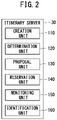
- FIG. 2 is a diagram showing a configuration of the itinerary server 30.
- the itinerary server 30 includes processing circuitry, and a memory storing a program and the like.
- the memory storing the program is, for example, a non-transitory computer readable storage medium.
- the program includes a plurality of instructions that cause the processing circuitry to execute a multimodal transportation method.
- the itinerary server 30 according to the present embodiment functions as a result of the processing circuitry of the itinerary server 30 executing the program.
- the itinerary server 30 creates an itinerary including a movement route from a departure place to a destination of the user and a plurality of types of moving bodies moving along the movement route, and outputs the itinerary to the user terminal 40 in order to propose the itinerary to the user.
- the processing circuitry includes a processor such as a CPU.
- the itinerary server 30 functions as a creation unit 110, a determination unit 120, a proposal unit 130, a reservation unit 140, a monitoring unit 150, and an identification unit 160. At least part of these units may be realized by an ASIC, an FPGA, or other integrated circuits.
- the memory of the itinerary server 30 includes a volatile memory such as a RAM, and a nonvolatile memory such as a ROM and a flash memory.
- the creation unit 110 Based on the departure place and the destination of the user, the creation unit 110 creates an itinerary including a movement route from the departure place to the destination and a plurality of types of moving bodies moving along the movement route. Based on the movement situation of the user who is moving based on the itinerary designated by the user and the traffic information related to movement by a first moving body, the creation unit 110 changes a part of the itinerary that is related to movement by a second moving body. Both the first moving body and the second moving body are moving bodies scheduled to be used later by the user based on the itinerary. The user is scheduled to use the second moving body before the first moving body.
- the determination unit 120 determines whether a plurality of types of moving bodies based on the itinerary are available, based on a result of an inquiry to the moving body management server 60. When a part of the itinerary is changed, the determination unit 120 determines whether the reservation of the moving body can be changed, based on a result of an inquiry to the moving body management server 60.
- the proposal unit 130 In order to propose, to the user, the itinerary for which the moving bodies are determined to be available, the proposal unit 130 outputs the itinerary to the user terminal 40.
- the proposal unit 130 outputs, to the user terminal 40, the itinerary and a reservation inquiry for proposing reservation of the plurality of types of moving bodies included in the itinerary.
- the proposal unit 130 In order to propose a change of a part of the itinerary to the user, the proposal unit 130 outputs the modified itinerary to the user terminal 40.
- the proposal unit 130 When a part of the itinerary is changed, the proposal unit 130 outputs, to the user terminal 40, the modified itinerary and a reservation change inquiry for proposing a change of the reservation of the moving body.
- the reservation unit 140 Upon receiving a request to apply for reservation of the moving body or a request to apply for a change of the reservation of the moving body from the user terminal 40, the reservation unit 140 applies for reservation of the moving body or a change of the reservation to the moving body management server 60.
- the monitoring unit 150 monitors a movement situation of the user who moves based on the itinerary.
- the movement situation of the user is obtained based on the information about the current location of the moving body provided from the moving body management server 60 and the position information about the user terminal 40 provided from the information providing server 50.
- the identification unit 160 acquires information for identifying a seating position, in the moving body, of the user who moves based on the itinerary, from a sensor mounted on the moving body.
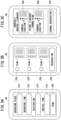
- FIG. 3A, FIG. 3B, and FIG. 3C are diagrams showing screen display examples of the user terminal 40. These screens are displayed when application software is executed in the user terminal 40 such as a smartphone.
- the screen illustrated in FIG. 3A is displayed in order for the user to input itinerary creation conditions when requesting the itinerary server 30 to create an itinerary.
- the user operates the user terminal 40 to input a departure place, a departure time, a destination, and an arrival time as the itinerary creation conditions in input fields 210.
- the itinerary creation conditions are transmitted from the user terminal 40 to the itinerary server 30 via the communication network 20.
- FIG. 3B illustrates an example of a screen displayed as a result of the proposal unit 130 of the itinerary server 30 outputting a plurality of itinerary plans to the user terminal 40 in order to propose the itinerary plans to the user.
- This screen also serves as a reservation inquiry for proposing reservation of the plurality of types of moving bodies included in the itinerary proposed by the proposal unit 130.
- the user operates the user terminal 40 to select a radio button 230 corresponding to one of the plurality of itinerary plans displayed on the screen, thereby designating an itinerary.
- the user presses a reservation button 240 displayed on the screen in order to request the itinerary server 30 to apply for reservation of the plurality of types of moving bodies included in the itinerary.
- the request for the reservation application for the moving bodies is transmitted from the user terminal 40 to the itinerary server 30 via the communication network 20.
- FIG. 3C illustrates an example of a screen displayed as a result of the proposal unit 130 of the itinerary server 30 outputting a modified itinerary to the user terminal 40 in order to propose a change of a part of the itinerary to the user who is moving based on the originally designated itinerary.
- This screen also serves as a reservation change inquiry for proposing a change of the reservation of the moving body necessary for the change of a part of the itinerary.
- the user confirms, on the screen of the user terminal 40, content 250 in which the currently ongoing itinerary, the current location of the user, and a predicted arrival time at the destination are displayed, and content 260 in which the change plan for the future itinerary, the current location of the user, and a predicted arrival time at the destination are displayed.
- the user presses a reservation change button 270 displayed on the screen.
- a request for an application for changing the reservation of the moving body is transmitted from the user terminal 40 to the itinerary server 30 via the communication network 20.
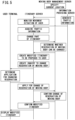
- FIG. 4 is a diagram showing a sequence of creating an itinerary and reserving the moving body.
- the user inputs itinerary creation conditions using the screen display shown in FIG. 3A , and an itinerary creation request is transmitted to the itinerary server 30.
- the creation unit 110 creates a plurality of itineraries based on the acquired itinerary creation conditions.
- the determination unit 120 inquires of the moving body management servers 60 respectively corresponding to a plurality of types of moving bodies based on the created itinerary, whether the moving bodies are available.
- the determination unit 120 inquires of the moving body management servers 60 respectively operated by the plurality of providers about availability of each of the plurality of types of moving bodies.
- the moving body management server 60 operated by each provider determines whether the moving body owned by each provider is available, and replies to the itinerary server 30.
- the determination unit 120 of the itinerary server 30 acquires the response from the moving body management server 60, and determines an available moving body based on the acquired response.
- the moving body In a case where the moving body is an automobile, the moving body is available if allocation for use only by the user is possible. In a case where the moving body is a scheduled flight airplane, a train, or the like for transporting a large number of users, if there is an empty seat and a seat reservation is possible, the moving body is available.
- the creation unit 110 creates an itinerary to be proposed to the user by including, in an itinerary for which the moving body is determined to be available among the plurality of created itineraries, information about the available moving body.
- the proposal unit 130 creates a reservation inquiry for proposing reservation of the available moving body to the user, correspondingly to the itinerary to be proposed to the user.
- the proposal unit 130 outputs, to the user terminal 40, the itinerary created by the creation unit 110 and the reservation inquiry for the moving body to be proposed to the user.
- a plurality of itinerary plans are displayed using the screen display shown in FIG. 3B .
- One itinerary plan is designated and a reservation application for the moving body is input by the user, and a request for the reservation application is transmitted to the itinerary server 30.
- the reservation unit 140 of the itinerary server 30 Upon receiving the request for the reservation application for the moving body from the user terminal 40, the reservation unit 140 of the itinerary server 30 applies for the reservation of the moving body to the moving body management server 60.
- the moving body management server 60 receives the reservation application for the moving body, and confirms the reservation of the moving body if the moving body is available.
- the moving body management server 60 notifies the itinerary server 30 that the reservation of the moving body has been confirmed.
- the reservation unit 140 of the itinerary server 30 Upon receiving the notification about confirmation of the reservation of the moving body from the moving body management server 60, the reservation unit 140 of the itinerary server 30 confirms the itinerary including the moving body for which the reservation has been confirmed, and outputs the confirmed itinerary to the user terminal 40.
- the user terminal 40 displays the confirmed itinerary on the screen.
- FIG. 5 is a diagram showing a sequence of a change of a part of the itinerary and a change of the reservation of the moving body.
- the moving body management server 60 specifies the current location of the user who moves using the moving body. The information about the current location of the user is obtained based on the position information of the moving body, the position information of the user terminal 40, procedure information obtained when the user starts or ends the use of the moving body, and the like. Examples of the procedure information include a completion notification by the driver of the moving body about receiving the start of a passenger transportation service, a completion notification about the check-in procedure at the check-in counter, and the like.
- the moving body management server 60 notifies the monitoring unit 150 of the itinerary server 30, of the specified current location of the user, in response to a request from the monitoring unit 150.
- the monitoring unit 150 of the itinerary server 30 monitors the movement situation of the user based on the information about the current location of the user acquired from the moving body management server 60.
- the monitoring unit 150 may acquire the position information of the user terminal 40 from the information providing server 50 and monitor the movement situation of the user based on the position information.
- the monitoring unit 150 may acquire the position information of the moving body from another external server operated by the manufacturer of the moving body used by the user who is currently moving, and monitor the movement situation of the user based on the position information.
- the monitoring unit 150 specifies, as the movement situation of the user, the current location of the user and the moving body currently used by the user.
- the moving body currently used by the user is defined as a third moving body.
- the information providing server 50 In response to a request from the monitoring unit 150 of the itinerary server 30, the information providing server 50 generates traffic information related to the movement of the user by the plurality of types of moving bodies included in the itinerary, and provides the traffic information to the monitoring unit 150.
- One of the moving bodies scheduled to be used later by this user is defined as the first moving body.
- the traffic information provided by the information providing server 50 to the monitoring unit 150 includes traffic information related to the movement of the user by the first moving body.
- the traffic information is, for example, traffic congestion information.
- the monitoring unit 150 of the itinerary server 30 acquires, from the information providing server 50, traffic information related to the movement of the user by a plurality of types of moving bodies including the first moving body.
- the monitoring unit 150 may acquire the traffic information from the moving body management server 60.
- the monitoring unit 150 determines whether the first moving body can arrive at an end point for which the first moving body is bound, by a predetermined time that is based on the itinerary.
- the end point for which the first moving body is bound is defined as a second point.
- the predetermined time may coincide with a scheduled arrival time of the first moving body at the second point determined in the itinerary, or may be later than the scheduled arrival time.
- the creation unit 110 of the itinerary server 30 determines whether to change a part of the itinerary based on the movement situation of the user and the traffic information that are acquired by the monitoring unit 150. For example, in a case where the monitoring unit 150 specifies that the user is still moving by the third moving body and determines that the first moving body cannot arrive at the second point by the predetermined time, the creation unit 110 changes a part of the itinerary. For example, in a case where the user plans to use the second moving body after using the third moving body and before using the first moving body, a part of the itinerary that is related to the movement of the user by the second moving body is changed. However, in a case where the first moving body cannot arrive at the second point by the predetermined time even if a part of the itinerary is changed, the creation unit 110 may not change the part of the itinerary.
- the determination unit 120 of the itinerary server 30 inquires of the moving body management servers 60 respectively corresponding to the first moving body and the second moving body whose reservation is to be changed, whether the reservation of the first moving body and the second moving body can be changed in accordance with the itinerary to be changed.
- a point at which the user transfers from the second moving body to the first moving body is changed from a first point to a fourth point.
- Each moving body management server 60 determines whether the reservation of each of the first moving body and the second moving body can be changed, and replies to the itinerary server 30.
- the determination unit 120 of the itinerary server 30 acquires the response from each moving body management server 60, and determines whether the reservation of each moving body can be changed based on the acquired response.
- the creation unit 110 creates an itinerary to be proposed to the user by including, in the modified itinerary, information related to the change of the reservation of the first moving body and the second moving body.
- the proposal unit 130 creates a reservation change inquiry for proposing a change of the reservation of the first moving body and the second moving body to the user, correspondingly to the modified itinerary to be proposed to the user.
- the proposal unit 130 outputs, to the user terminal 40, the modified itinerary created by the creation unit 110, and the reservation change inquiry for proposing the change of the reservation of the moving body to the user.
- the plan of the modified itinerary is displayed using the screen display shown in FIG. 3C , an application for changing the reservation of the moving body is determined by the user, and a request for the change application is transmitted to the itinerary servers 30.
- the reservation unit 140 of the itinerary server 30 Upon receiving the request for the change application for the reservation of the moving body from the user terminal 40, the reservation unit 140 of the itinerary server 30 applies for the change of the reservation of the moving body to the moving body management server 60.
- the moving body management server 60 receives the change application for the reservation of the moving body, and if the change of the reservation is possible, the moving body management server 60 confirms the change of the reservation. The moving body management server 60 notifies the itinerary server 30 that the change of the reservation of the moving body has been confirmed.
- the reservation unit 140 of the itinerary server 30 Upon receiving the notification about the confirmation of the change of the reservation of the moving body from the moving body management server 60, the reservation unit 140 of the itinerary server 30 confirms the modified itinerary including the first moving body and the second moving body for which the change of the reservation has been confirmed, and outputs the confirmed modified itinerary to the user terminal 40.
- the user terminal 40 displays the confirmed modified itinerary on the screen.
- FIG. 6 is a diagram illustrating an itinerary 310 that has been created and confirmed.
- the itinerary 310 is created according to the sequence shown in FIG. 4 .
- the itinerary 310 includes a movement route from a departure place OP to a destination DP, and a plurality of moving bodies that move along the movement route.
- the plurality of types of moving bodies included in the itinerary 310 are an automobile MA, a vertical takeoff and landing (VTOL) aircraft MB, and an automobile MC provided by providers PA, PB, and PC, respectively.
- the automobile MA corresponds to the first moving body
- the vertical takeoff and landing aircraft MB corresponds to the second moving body
- the automobile MC corresponds to the third moving body.
- the type of the second moving body is air transportation means
- the type of the first moving body and the type of the third moving body are both land transportation means.
- the type of the first moving body, the type of the second moving body, and the type of the third moving body are not limited to the combination of the land transportation means and the air transportation means.
- the user moves in a section from the departure place OP to a transit point TB by riding in the automobile MC provided by the provider PC.
- the automobile MC departs from the departure place OP at 7:00 and arrives at the transit point TB at 8:00.
- the user moves in a section from the transit point TB to a transit point TA by boarding on the vertical takeoff and landing aircraft MB provided by the provider PB.
- the vertical takeoff and landing aircraft MB departs from the transit point TB at 9:00 and arrives at the transit point TA at 10:20.
- the transit point TA corresponds to the first point.
- the user moves in a section from the transit point TA to the destination DP by riding in the automobile MA provided by the provider PA.
- the automobile MA departs from the transit point TA at 10:40 and arrives at the destination DP at 11:30.
- the destination DP corresponds to the second point.
- FIG. 7 is a diagram illustrating a modified itinerary 320.
- the modified itinerary 320 is obtained according to the sequence shown in FIG. 5 .
- traffic information for a section from the transit point TA to the destination DP over which the user is scheduled to move later by riding in the automobile MA is obtained.
- the predetermined time is a time X minutes after the scheduled arrival time 11:30 of the automobile MA at the destination DP determined in the itinerary 310 illustrated in FIG.
- the monitoring unit 150 determines that the automobile MA cannot arrive at the destination DP by the predetermined time.
- the creation unit 110 changes a part of the itinerary by changing a point at which the user transfers from the vertical takeoff and landing aircraft MB to the automobile MA to be used later, from the transit point TA shown in FIG. 6 to a transit point TC shown in FIG. 7 .
- the transit point TC corresponds to the above-described fourth point. It is more preferable that the transit point TC is a take-off and landing site of the aircraft by which the predicted arrival time at the destination DP is the earliest among take-off and landing sites that are positioned second closest to the destination DP after the transit point TA.
- the vertical takeoff and landing aircraft MB is scheduled to arrive at the transit point TC at 10:40, and the predicted arrival time at the destination DP of the automobile MA scheduled to depart from the transit point TC at 11:00 is 11:45. Therefore, as a result of changing a part of the itinerary, the automobile MA is expected to arrive at the destination DP by the predetermined time 12:00.
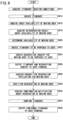
- FIG. 8 is a flowchart showing a process of creating the itinerary 310 and a process of reserving the moving body, which are performed by the itinerary server 30. These processes are performed by, for example, the processing circuitry of the itinerary server 30 executing a program.
- the creation unit 110 acquires itinerary creation conditions.
- the creation unit 110 creates an itinerary.
- the determination unit 120 inquires of the moving body management servers 60 corresponding to the respective moving bodies, whether the plurality of types of moving bodies based on the itinerary are available.
- the determination unit 120 acquires a determination result of the availability of the moving bodies from the moving body management servers 60.
- the determination unit 120 determines availability of the plurality of types of moving bodies based on the responses from the moving body management servers 60.
- step S822 the creation unit 110 creates an itinerary to be proposed to the user.
- the proposal unit 130 creates a reservation inquiry for a plurality of types of moving bodies to be proposed to the user.
- step S826 the itinerary created in step S822 and the reservation inquiry for the plurality of types of moving bodies that is created in step S824 are output to the user terminal 40.
- step S828 the reservation unit 140 acquires, from the user terminal 40, a request for a reservation application for the plurality of types of moving bodies.
- step S830 the reservation unit 140 applies for reservation of the plurality of types of moving bodies to the moving body management servers 60.
- step S832 the reservation unit 140 acquires, from the moving body management servers 60, notifications about the confirmation of the reservation of the plurality of types of moving bodies.
- step S834 the reservation unit 140 confirms the itinerary 310 including the moving bodies for which the reservation has been confirmed.
- step S836 the reservation unit 140 outputs the confirmed itinerary 310 to the user terminal 40. When step S836 is completed, these processes end.
- FIG. 9 is a flowchart showing a process of changing a part of the itinerary 310 and a process of changing the reservation of the moving body, which are performed by the itinerary server 30. These processes are performed by, for example, the processing circuitry of the itinerary server 30 executing a program. These processes are repeatedly executed, for example, periodically after the user starts moving based on the itinerary 310.
- the monitoring unit 150 acquires, from the moving body management server 60, information about the current location of the user who is moving based on the itinerary 310.
- the monitoring unit 150 monitors the movement situation of the user based on the acquired information about the current location of the user.
- the monitoring unit 150 acquires traffic information from the information providing server 50.
- step S918 the monitoring unit 150 calculates a predicted time at which the user arrives at the destination, based on the acquired traffic information.
- step S920 the monitoring unit 150 determines whether the user can arrive at the destination by a predetermined time. If the determination in step S920 is YES, these processes end. If the determination in step S920 is NO, the procedure proceeds to step S922.
- step S922 the creation unit 110 changes a part of the itinerary.
- the determination unit 120 inquires of the moving body management server 60 whether the reservation of the moving body can be changed, correspondingly to the itinerary to be changed.
- the determination unit 120 acquires, from the moving body management server 60, a determination result as to whether the reservation of the moving body can be changed.
- the determination unit 120 determines whether the reservation of the moving body can be changed.
- the creation unit 110 creates a modified itinerary to be proposed to the user.
- the proposal unit 130 creates an inquiry to change the reservation of the moving body to be proposed to the user.
- the proposal unit 130 outputs the modified itinerary and the inquiry to change the reservation of the moving body to the user terminal 40.
- step S936 the reservation unit 140 acquires a request to apply for a change of the reservation of the moving body from the user terminal 40.
- step S938 the reservation unit 140 applies for the change of the reservation of the moving body to the moving body management server 60.
- step S940 the reservation unit 140 acquires, from the moving body management server 60, a notification about the confirmation of the change of the reservation of the moving body.
- step S942 the reservation unit 140 confirms the modified itinerary 320 for which the change of the reservation of the moving body has been confirmed.
- step S944 the reservation unit 140 outputs the confirmed modified itinerary 320 to the user terminal 40.
- the transit point TA at the first point which is the end point of the movement by the vertical takeoff and landing aircraft MB that is the second moving body, is changed to the transit point TC that is the fourth point. Further, the starting point of the movement by the vertical takeoff and landing aircraft MB may also be changed.
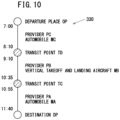
- FIG. 10 is a diagram illustrating an itinerary 330 modified by a multimodal transportation system 10 according to the first modification.
- the modified itinerary 330 is also obtained according to the sequence shown in FIG. 5 , similarly to the itinerary 320 described above.
- the end point of the movement by the second moving body is changed from the first point to the fourth point
- the starting point of the movement by the vertical takeoff and landing aircraft MB is changed from the third point to a sixth point.
- the end point of the movement by the third moving body that has departed from the fifth point is changed from the third point to the sixth point.
- the end point of the movement by the vertical takeoff and landing aircraft MB is changed from the transit point TA shown in FIG. 6 to the transit point TC shown in FIG.
- the starting point of the movement by the vertical takeoff and landing aircraft MB is changed from the transit point TB shown in FIG. 6 to a transit point TD shown in FIG. 10 .
- the end point of the movement by the automobile MC that has departed from the departure place OP is changed from the transit point TB shown in FIG. 6 to the transit point TD shown in FIG. 10 .
- the automobile MC that has departed from the departure place OP at 7:00 is scheduled to arrive at the transit point TD at 8:10, and the vertical takeoff and landing aircraft MB scheduled to depart from the transit point TD at 9:10 is scheduled to arrive at the transit point TC at 10:35.
- the predicted arrival time at the destination DP of the automobile MA scheduled to depart from the transit point TC at 10:55 is 11:40. Therefore, as a result of changing a part of the itinerary, the automobile MA is expected to arrive at the destination DP by the predetermined time 12:00.
- the modified itinerary 320 is output to the user terminal 40.
- the itinerary 320 may be output to a terminal mounted on the third moving body.
- FIG. 11 is a diagram showing an example in which a sensor for identifying a seating position of a user is mounted on a moving body 400 in a multimodal transportation system according to the second modification.
- the moving body 400 includes a front row seat 410 and a rear row seat 420.
- the front row seat 410 and the rear row seat 420 include seating sensors 430 and 440, respectively, for detecting whether an occupant is seated.
- the moving body 400 further includes an in-vehicle device 450, a camera 460, and a wireless communication device 470.
- the in-vehicle device 450 includes a touch panel, a speaker, and a microphone.
- the touch panel and the camera 460 of the in-vehicle device 450 are attached to the front part of the interior of the moving body 400.
- the display surface of the touch panel of the in-vehicle device 450 and the lens of the camera 460 are directed toward the interior.
- the moving body 400 illustrated in FIG. 11 is the third moving body used by the user who has started moving based on the itinerary 310.
- a sensor signal is transmitted from the seating sensor 430 to the itinerary server 30 via the wireless communication device 470.
- a sensor signal is transmitted from the seating sensor 440 to the itinerary server 30 via the wireless communication device 470.
- the identification unit 160 of the itinerary server 30 illustrated in FIG. 2 acquires information for identifying the seating position of the user in the moving body 400 based on the sensor signal from the seating sensor 430 or 440.
- the camera 460 may be used as a sensor for identifying the seating position of the user.
- the front row seat 410 and the rear row seat 420 of the moving body 400, and the user seated on the front row seat 410 or the rear row seat 420, are included in the in-vehicle video captured by the camera 460.
- the in-vehicle video is transmitted to the itinerary server 30 via the wireless communication device 470.
- the identification unit 160 acquires information for identifying the seating position of the user in the moving body 400 based on the in-vehicle video transmitted from the camera 460.
- the modified itinerary 320 is displayed on the touch panel of the in-vehicle device 450 attached to the front part of the interior of the moving body 400, instead of the user terminal 40.
- the identification unit 160 identifies that the seating position of the user is the rear row seat 420, the modified itinerary 320 is displayed on the user terminal 40.
- the third moving body which is the moving body 400
- the automobile MC provided by the provider PC of the ride sharing service described above
- the seating position of the user is the rear row seat 420 in many cases, and therefore, the modified itinerary 320 is displayed on the user terminal 40.
- the third moving body, which is the moving body 400 is a moving body whose operation is managed by a business operator and a touch panel of the in-vehicle device 450 is attached to each seat on which a passenger is seated
- the modified itinerary 320 is displayed on the touch panel.
- the business operator in this case is not a provider of the ride sharing service.
- the modified itinerary 320 is displayed on the user terminal 40.
- voice guidance and voice input using the speaker and the microphone may be used.
- the seating position of the user may be identified as the front row seat 410.
- the modified itinerary 320 is displayed on the touch panel on the front side of the interior of the moving body 400. In this case, voice guidance and voice input using the speaker and the microphone may be used.
- the modified itinerary 320 is displayed on the touch panel on the front side of the interior of the moving body 400, and at the same time, voice guidance and voice input using the speaker and the microphone are used.
- voice guidance and voice input related to the modified itinerary 320 may be performed on the user terminal 40 using the speaker and the microphone.
- the point at which the user transfers from the second moving body to the first moving body is changed from the first point to the fourth point. That is, the end point of the movement by the second moving body is changed from the first point to the fourth point.
- the second moving body is provided by a provider of the ride sharing service, there is a possibility that a fellow passenger other than the user uses the second moving body. Therefore, the arrival point of the second moving body may be changed from the first point to the fourth point only when such a fellow passenger is not present.
- the arrival point of the second moving body is changed from the first point to the fourth point.
- the point at which the user transfers from the third moving body to the second moving body is changed from the third point to the sixth point. That is, the end point of the movement by the third moving body is changed from the third point to the sixth point.
- the sixth point is also a changed starting point of the movement by the second moving body.
- the second moving body is a vertical takeoff and landing aircraft MB
- the sixth point is a takeoff and landing site of the aircraft.
- the third moving body is an automobile owned by the user, a space for parking the automobile until the user who transfers from the third moving body to the second moving body goes back is required at the sixth point.
- the reservation unit 140 of the itinerary server 30 may apply for reservation of a space for parking the automobile of the user at the sixth location to a predetermined server that manages a parking lot.
- the movement by the vertical takeoff and landing aircraft MB may be changed to movement by a train or a bus whose operation is managed by a railway company or a bus company.
- a multimodal transportation system (10) includes a creation unit (110) that creates an itinerary (310) including a movement route and a plurality of types of moving bodies moving along the movement route, and a proposal unit (130) that outputs the itinerary to an external terminal (40). Based on the movement situation of the user and traffic information related to the movement by a first moving body (MA), the creation unit changes a part of the itinerary that is related to the movement by a second moving body (MB) scheduled to be used by the user before the first moving body, and the proposal unit outputs the itinerary that has been modified to the external terminal.
- a creation unit that creates an itinerary (310) including a movement route and a plurality of types of moving bodies moving along the movement route
- a proposal unit (130) that outputs the itinerary to an external terminal (40). Based on the movement situation of the user and traffic information related to the movement by a first moving body (MA), the creation unit changes a part of the itinerary that is related to the movement by a second moving body (MB) scheduled to be used by the user before the first
Landscapes
- Engineering & Computer Science (AREA)
- Radar, Positioning & Navigation (AREA)
- Remote Sensing (AREA)
- Business, Economics & Management (AREA)
- Physics & Mathematics (AREA)
- General Physics & Mathematics (AREA)
- Tourism & Hospitality (AREA)
- Automation & Control Theory (AREA)
- Marketing (AREA)
- Strategic Management (AREA)
- Theoretical Computer Science (AREA)
- Human Resources & Organizations (AREA)
- Economics (AREA)
- General Business, Economics & Management (AREA)
- Development Economics (AREA)
- Quality & Reliability (AREA)
- Operations Research (AREA)
- Entrepreneurship & Innovation (AREA)
- Health & Medical Sciences (AREA)
- General Health & Medical Sciences (AREA)
- Primary Health Care (AREA)
- Traffic Control Systems (AREA)
- Navigation (AREA)
- Management, Administration, Business Operations System, And Electronic Commerce (AREA)
Abstract
Description
- The present invention relates to a multimodal transportation system, a multimodal transportation method, and a program.
-
US 2021/0241234 A1 discloses a system for transporting a user using a combination of land transportation means and air transportation means, wherein during transportation of the user, the state of progress of transportation by the current transportation means is used for the state of transportation by the subsequent transportation means to adjust the subsequent transportation. - In the multimodal transportation system disclosed in
US 2021/0241234 A1 , there is a problem that, even when it is predicted that the movement of the user by the subsequent transportation will not proceed according to the itinerary, it is difficult to avoid the situation. - An object of the present invention is to solve the aforementioned problem.
- According to a first aspect of the present invention, provided is a multimodal transportation system that provides a user with a service for moving from a departure place to a destination using a plurality of types of moving bodies, the multimodal transportation system including: a creation unit configured to create, based on the departure place and the destination, an itinerary including a movement route from the departure place to the destination, and the plurality of types of moving bodies configured to move along the movement route; a determination unit configured to determine whether the plurality of types of moving bodies based on the itinerary are available; a proposal unit configured to output, to an external terminal, the itinerary including the plurality of types of moving bodies determined to be available, in order to propose the itinerary to the user; and a monitoring unit configured to monitor a movement situation of the user who moves based on the itinerary, and acquire traffic information related to movement of the user by the plurality of types of moving bodies, wherein based on the movement situation of the user that is based on the itinerary designated by the user and the traffic information that is related to the movement of the user by a first moving body among the plurality of types of moving bodies, the creation unit changes a part of the itinerary that is related to the movement of the user by a second moving body among the plurality of types of moving bodies, the second moving body being scheduled to be used by the user before the first moving body, and in order to propose a change of the part of the itinerary to the user, the proposal unit outputs the itinerary that has been modified to include the change to the external terminal.
- According to a second aspect of the present invention, provided is a multimodal transportation method for providing a user with a service for moving from a departure place to a destination using a plurality of types of moving bodies, the multimodal transportation method including the steps of: creating, based on the departure place and the destination, an itinerary including a movement route from the departure place to the destination, and the plurality of types of moving bodies configured to move along the movement route; determining whether the plurality of types of moving bodies based on the itinerary are available; outputting, to an external terminal, the itinerary including the plurality of types of moving bodies determined to be available, in order to propose the itinerary to the user; monitoring a movement situation of the user who moves based on the itinerary and acquiring traffic information that is related to movement of the user by the plurality of types of moving bodies; based on the movement situation of the user that is based on the itinerary designated by the user and the traffic information that is related to the movement of the user by a first moving body among the plurality of types of moving bodies, changing a part of the itinerary that is related to the movement of the user by a second moving body among the plurality of types of moving bodies, the second moving body being scheduled to be used by the user before the first moving body; and in order to propose a change of the part of the itinerary to the user, outputting the itinerary that has been modified to include the change to the external terminal.
- According to a third aspect of the present invention, provided is a program for causing a processor to execute the multimodal transportation method according to the second aspect.
- According to the present invention, the possibility of avoiding a situation in which the movement of the user by the transportation subsequent to the started transportation does not proceed according to the itinerary is increased.
- The above and other objects features and advantages of the present invention will become more apparent from the following description when taken in conjunction with the accompanying drawings in which a preferred embodiment of the present invention is shown by way of illustrative example.
-
-
FIG. 1 is a diagram showing a configuration of a multimodal transportation system according to an embodiment of the present invention; -
FIG. 2 is a diagram showing a configuration of an itinerary server; -
FIG. 3A is a diagram showing a screen display example of a user terminal; -
FIG. 3B is a diagram showing a screen display example of the user terminal; -
FIG. 3C is a diagram showing a screen display example of the user terminal; -
FIG. 4 is a diagram showing a sequence of creating an itinerary and reserving (use of) a moving body; -
FIG. 5 is a diagram showing a sequence of a change of a part of the itinerary and a change of reservation of the moving body; -
FIG. 6 is a diagram illustrating an itinerary that has been created and confirmed; -
FIG. 7 is a diagram illustrating a modified itinerary; -
FIG. 8 is a flowchart showing a process of creating an itinerary and a process of reserving the moving body performed by the itinerary server; -
FIG. 9 is a flowchart showing a process of changing a part of the itinerary and a process of changing the reservation of the moving body performed by the itinerary server; -
FIG. 10 is a diagram illustrating an itinerary modified in a multimodal transportation system according to a first modification; and -
FIG. 11 is a diagram illustrating an example in which a sensor for identifying a seating position of a user is mounted on a moving body in a multimodal transportation system according to a second modification. -
FIG. 1 is a diagram showing a configuration of amultimodal transportation system 10 according to an embodiment of the present invention. Themultimodal transportation system 10 provides a user with a service for moving from a departure place to a destination using a plurality of types of moving bodies. Themultimodal transportation system 10 of the present embodiment includes anitinerary server 30, auser terminal 40, a plurality ofinformation providing servers 50, and a plurality of movingbody management servers 60. These devices are connected to each other via acommunication network 20. Various moving bodies such as an automobile, an airplane, a train, a bus, and a ship are applied as the moving bodies used in the present embodiment. - Each
information providing server 50 provides traffic information related to the movement of the above-described moving body, or position information of theuser terminal 40. Each movingbody management server 60 is a server for a provider of a moving body participating in the utilization service of a plurality of types of moving bodies to manage the moving body owned by the provider. Each movingbody management server 60 determines whether the moving body owned by the provider is available, processes reservation (for use) of the moving body, and provides information about the current location of the moving body if the moving body is moving. - Upon receiving an itinerary creation request from the user via the
user terminal 40, theitinerary server 30 inquires of the movingbody management server 60 about availability of the moving body, and creates an itinerary based on an inquiry result. Theitinerary server 30 proposes an itinerary using a plurality of types of moving bodies to the user via theuser terminal 40. When the itinerary is designated by the user and an application for reservation of a moving body included in the itinerary is requested, theitinerary server 30 applies for the reservation to the movingbody management server 60. When the reservation of the moving body is confirmed, theitinerary server 30 confirms the itinerary and notifies the user of the confirmed itinerary via theuser terminal 40. - The
itinerary server 30 proposes to the user via theuser terminal 40 to change a part of the itinerary based on the traffic information acquired from theinformation providing server 50 while the user is moving along the confirmed itinerary. When a part of the itinerary is changed, theitinerary server 30 applies to the movingbody management server 60 for a change of the reservation of the moving body. - The
user terminal 40 is used to input and transmit itinerary creation conditions when the user requests theitinerary server 30 to create an itinerary. Theuser terminal 40 not only displays the itinerary proposed by theitinerary server 30 and a reservation inquiry about the reservation of the moving body, but also displays a change proposal and a change inquiry about the itinerary and the reservation. -
FIG. 2 is a diagram showing a configuration of theitinerary server 30. Theitinerary server 30 includes processing circuitry, and a memory storing a program and the like. The memory storing the program is, for example, a non-transitory computer readable storage medium. The program includes a plurality of instructions that cause the processing circuitry to execute a multimodal transportation method. Theitinerary server 30 according to the present embodiment functions as a result of the processing circuitry of theitinerary server 30 executing the program. Theitinerary server 30 creates an itinerary including a movement route from a departure place to a destination of the user and a plurality of types of moving bodies moving along the movement route, and outputs the itinerary to theuser terminal 40 in order to propose the itinerary to the user. The processing circuitry includes a processor such as a CPU. By the processing circuitry of theitinerary server 30 executing the program, theitinerary server 30 functions as acreation unit 110, adetermination unit 120, aproposal unit 130, areservation unit 140, amonitoring unit 150, and anidentification unit 160. At least part of these units may be realized by an ASIC, an FPGA, or other integrated circuits. The memory of theitinerary server 30 includes a volatile memory such as a RAM, and a nonvolatile memory such as a ROM and a flash memory. - Based on the departure place and the destination of the user, the
creation unit 110 creates an itinerary including a movement route from the departure place to the destination and a plurality of types of moving bodies moving along the movement route. Based on the movement situation of the user who is moving based on the itinerary designated by the user and the traffic information related to movement by a first moving body, thecreation unit 110 changes a part of the itinerary that is related to movement by a second moving body. Both the first moving body and the second moving body are moving bodies scheduled to be used later by the user based on the itinerary. The user is scheduled to use the second moving body before the first moving body. - The
determination unit 120 determines whether a plurality of types of moving bodies based on the itinerary are available, based on a result of an inquiry to the movingbody management server 60. When a part of the itinerary is changed, thedetermination unit 120 determines whether the reservation of the moving body can be changed, based on a result of an inquiry to the movingbody management server 60. - In order to propose, to the user, the itinerary for which the moving bodies are determined to be available, the
proposal unit 130 outputs the itinerary to theuser terminal 40. The proposal unit 130 outputs, to theuser terminal 40, the itinerary and a reservation inquiry for proposing reservation of the plurality of types of moving bodies included in the itinerary. In order to propose a change of a part of the itinerary to the user, theproposal unit 130 outputs the modified itinerary to theuser terminal 40. When a part of the itinerary is changed, theproposal unit 130 outputs, to theuser terminal 40, the modified itinerary and a reservation change inquiry for proposing a change of the reservation of the moving body. - Upon receiving a request to apply for reservation of the moving body or a request to apply for a change of the reservation of the moving body from the
user terminal 40, thereservation unit 140 applies for reservation of the moving body or a change of the reservation to the movingbody management server 60. - The
monitoring unit 150 monitors a movement situation of the user who moves based on the itinerary. The movement situation of the user is obtained based on the information about the current location of the moving body provided from the movingbody management server 60 and the position information about theuser terminal 40 provided from theinformation providing server 50. - The
identification unit 160 acquires information for identifying a seating position, in the moving body, of the user who moves based on the itinerary, from a sensor mounted on the moving body. -
FIG. 3A, FIG. 3B, and FIG. 3C are diagrams showing screen display examples of theuser terminal 40. These screens are displayed when application software is executed in theuser terminal 40 such as a smartphone. The screen illustrated inFIG. 3A is displayed in order for the user to input itinerary creation conditions when requesting theitinerary server 30 to create an itinerary. The user operates theuser terminal 40 to input a departure place, a departure time, a destination, and an arrival time as the itinerary creation conditions in input fields 210. After completing the input of the itinerary creation conditions, the user presses asend button 220 displayed on the screen. The itinerary creation conditions are transmitted from theuser terminal 40 to theitinerary server 30 via thecommunication network 20. -
FIG. 3B illustrates an example of a screen displayed as a result of theproposal unit 130 of theitinerary server 30 outputting a plurality of itinerary plans to theuser terminal 40 in order to propose the itinerary plans to the user. This screen also serves as a reservation inquiry for proposing reservation of the plurality of types of moving bodies included in the itinerary proposed by theproposal unit 130. The user operates theuser terminal 40 to select aradio button 230 corresponding to one of the plurality of itinerary plans displayed on the screen, thereby designating an itinerary. After designating the itinerary, the user presses areservation button 240 displayed on the screen in order to request theitinerary server 30 to apply for reservation of the plurality of types of moving bodies included in the itinerary. The request for the reservation application for the moving bodies is transmitted from theuser terminal 40 to theitinerary server 30 via thecommunication network 20. -
FIG. 3C illustrates an example of a screen displayed as a result of theproposal unit 130 of theitinerary server 30 outputting a modified itinerary to theuser terminal 40 in order to propose a change of a part of the itinerary to the user who is moving based on the originally designated itinerary. This screen also serves as a reservation change inquiry for proposing a change of the reservation of the moving body necessary for the change of a part of the itinerary. The user confirms, on the screen of theuser terminal 40,content 250 in which the currently ongoing itinerary, the current location of the user, and a predicted arrival time at the destination are displayed, andcontent 260 in which the change plan for the future itinerary, the current location of the user, and a predicted arrival time at the destination are displayed. When requesting theitinerary server 30 to apply for a reservation change, the user presses areservation change button 270 displayed on the screen. A request for an application for changing the reservation of the moving body is transmitted from theuser terminal 40 to theitinerary server 30 via thecommunication network 20. -
FIG. 4 is a diagram showing a sequence of creating an itinerary and reserving the moving body. In theuser terminal 40, the user inputs itinerary creation conditions using the screen display shown inFIG. 3A , and an itinerary creation request is transmitted to theitinerary server 30. In theitinerary server 30, thecreation unit 110 creates a plurality of itineraries based on the acquired itinerary creation conditions. Thedetermination unit 120 inquires of the movingbody management servers 60 respectively corresponding to a plurality of types of moving bodies based on the created itinerary, whether the moving bodies are available. For example, in a case where the plurality of types of moving bodies included in the itinerary are respectively provided by a plurality of providers of a ride sharing service, thedetermination unit 120 inquires of the movingbody management servers 60 respectively operated by the plurality of providers about availability of each of the plurality of types of moving bodies. - The moving
body management server 60 operated by each provider determines whether the moving body owned by each provider is available, and replies to theitinerary server 30. - The
determination unit 120 of theitinerary server 30 acquires the response from the movingbody management server 60, and determines an available moving body based on the acquired response. In a case where the moving body is an automobile, the moving body is available if allocation for use only by the user is possible. In a case where the moving body is a scheduled flight airplane, a train, or the like for transporting a large number of users, if there is an empty seat and a seat reservation is possible, the moving body is available. Thecreation unit 110 creates an itinerary to be proposed to the user by including, in an itinerary for which the moving body is determined to be available among the plurality of created itineraries, information about the available moving body. Theproposal unit 130 creates a reservation inquiry for proposing reservation of the available moving body to the user, correspondingly to the itinerary to be proposed to the user. Theproposal unit 130 outputs, to theuser terminal 40, the itinerary created by thecreation unit 110 and the reservation inquiry for the moving body to be proposed to the user. - In the
user terminal 40, a plurality of itinerary plans are displayed using the screen display shown inFIG. 3B . One itinerary plan is designated and a reservation application for the moving body is input by the user, and a request for the reservation application is transmitted to theitinerary server 30. - Upon receiving the request for the reservation application for the moving body from the
user terminal 40, thereservation unit 140 of theitinerary server 30 applies for the reservation of the moving body to the movingbody management server 60. - The moving
body management server 60 receives the reservation application for the moving body, and confirms the reservation of the moving body if the moving body is available. The movingbody management server 60 notifies theitinerary server 30 that the reservation of the moving body has been confirmed. - Upon receiving the notification about confirmation of the reservation of the moving body from the moving
body management server 60, thereservation unit 140 of theitinerary server 30 confirms the itinerary including the moving body for which the reservation has been confirmed, and outputs the confirmed itinerary to theuser terminal 40. - The
user terminal 40 displays the confirmed itinerary on the screen. -
FIG. 5 is a diagram showing a sequence of a change of a part of the itinerary and a change of the reservation of the moving body. The movingbody management server 60 specifies the current location of the user who moves using the moving body. The information about the current location of the user is obtained based on the position information of the moving body, the position information of theuser terminal 40, procedure information obtained when the user starts or ends the use of the moving body, and the like. Examples of the procedure information include a completion notification by the driver of the moving body about receiving the start of a passenger transportation service, a completion notification about the check-in procedure at the check-in counter, and the like. When the user uses the moving body, the movingbody management server 60 notifies themonitoring unit 150 of theitinerary server 30, of the specified current location of the user, in response to a request from themonitoring unit 150. - The
monitoring unit 150 of theitinerary server 30 monitors the movement situation of the user based on the information about the current location of the user acquired from the movingbody management server 60. Themonitoring unit 150 may acquire the position information of theuser terminal 40 from theinformation providing server 50 and monitor the movement situation of the user based on the position information. Themonitoring unit 150 may acquire the position information of the moving body from another external server operated by the manufacturer of the moving body used by the user who is currently moving, and monitor the movement situation of the user based on the position information. Themonitoring unit 150 specifies, as the movement situation of the user, the current location of the user and the moving body currently used by the user. The moving body currently used by the user is defined as a third moving body. - In response to a request from the
monitoring unit 150 of theitinerary server 30, theinformation providing server 50 generates traffic information related to the movement of the user by the plurality of types of moving bodies included in the itinerary, and provides the traffic information to themonitoring unit 150. One of the moving bodies scheduled to be used later by this user is defined as the first moving body. The traffic information provided by theinformation providing server 50 to themonitoring unit 150 includes traffic information related to the movement of the user by the first moving body. The traffic information is, for example, traffic congestion information. - The
monitoring unit 150 of theitinerary server 30 acquires, from theinformation providing server 50, traffic information related to the movement of the user by a plurality of types of moving bodies including the first moving body. When the movingbody management server 60 can provide the traffic information to themonitoring unit 150, themonitoring unit 150 may acquire the traffic information from the movingbody management server 60. Based on the acquired traffic information, themonitoring unit 150 determines whether the first moving body can arrive at an end point for which the first moving body is bound, by a predetermined time that is based on the itinerary. The end point for which the first moving body is bound is defined as a second point. The predetermined time may coincide with a scheduled arrival time of the first moving body at the second point determined in the itinerary, or may be later than the scheduled arrival time. - The
creation unit 110 of theitinerary server 30 determines whether to change a part of the itinerary based on the movement situation of the user and the traffic information that are acquired by themonitoring unit 150. For example, in a case where themonitoring unit 150 specifies that the user is still moving by the third moving body and determines that the first moving body cannot arrive at the second point by the predetermined time, thecreation unit 110 changes a part of the itinerary. For example, in a case where the user plans to use the second moving body after using the third moving body and before using the first moving body, a part of the itinerary that is related to the movement of the user by the second moving body is changed. However, in a case where the first moving body cannot arrive at the second point by the predetermined time even if a part of the itinerary is changed, thecreation unit 110 may not change the part of the itinerary. - The
determination unit 120 of theitinerary server 30 inquires of the movingbody management servers 60 respectively corresponding to the first moving body and the second moving body whose reservation is to be changed, whether the reservation of the first moving body and the second moving body can be changed in accordance with the itinerary to be changed. In the changing of the reservation of the moving body, for example, a point at which the user transfers from the second moving body to the first moving body is changed from a first point to a fourth point. - Each moving
body management server 60 determines whether the reservation of each of the first moving body and the second moving body can be changed, and replies to theitinerary server 30. - The
determination unit 120 of theitinerary server 30 acquires the response from each movingbody management server 60, and determines whether the reservation of each moving body can be changed based on the acquired response. Thecreation unit 110 creates an itinerary to be proposed to the user by including, in the modified itinerary, information related to the change of the reservation of the first moving body and the second moving body. Theproposal unit 130 creates a reservation change inquiry for proposing a change of the reservation of the first moving body and the second moving body to the user, correspondingly to the modified itinerary to be proposed to the user. Theproposal unit 130 outputs, to theuser terminal 40, the modified itinerary created by thecreation unit 110, and the reservation change inquiry for proposing the change of the reservation of the moving body to the user. - In the
user terminal 40, the plan of the modified itinerary is displayed using the screen display shown inFIG. 3C , an application for changing the reservation of the moving body is determined by the user, and a request for the change application is transmitted to theitinerary servers 30. - Upon receiving the request for the change application for the reservation of the moving body from the
user terminal 40, thereservation unit 140 of theitinerary server 30 applies for the change of the reservation of the moving body to the movingbody management server 60. - The moving
body management server 60 receives the change application for the reservation of the moving body, and if the change of the reservation is possible, the movingbody management server 60 confirms the change of the reservation. The movingbody management server 60 notifies theitinerary server 30 that the change of the reservation of the moving body has been confirmed. - Upon receiving the notification about the confirmation of the change of the reservation of the moving body from the moving
body management server 60, thereservation unit 140 of theitinerary server 30 confirms the modified itinerary including the first moving body and the second moving body for which the change of the reservation has been confirmed, and outputs the confirmed modified itinerary to theuser terminal 40. - The
user terminal 40 displays the confirmed modified itinerary on the screen. -
FIG. 6 is a diagram illustrating anitinerary 310 that has been created and confirmed. Theitinerary 310 is created according to the sequence shown inFIG. 4 . Theitinerary 310 includes a movement route from a departure place OP to a destination DP, and a plurality of moving bodies that move along the movement route. In the example illustrated inFIG. 6 , the plurality of types of moving bodies included in theitinerary 310 are an automobile MA, a vertical takeoff and landing (VTOL) aircraft MB, and an automobile MC provided by providers PA, PB, and PC, respectively. The automobile MA corresponds to the first moving body, the vertical takeoff and landing aircraft MB corresponds to the second moving body, and the automobile MC corresponds to the third moving body. That is, the type of the second moving body is air transportation means, and the type of the first moving body and the type of the third moving body are both land transportation means. However, the type of the first moving body, the type of the second moving body, and the type of the third moving body are not limited to the combination of the land transportation means and the air transportation means. - The user moves in a section from the departure place OP to a transit point TB by riding in the automobile MC provided by the provider PC. The automobile MC departs from the departure place OP at 7:00 and arrives at the transit point TB at 8:00. The user moves in a section from the transit point TB to a transit point TA by boarding on the vertical takeoff and landing aircraft MB provided by the provider PB. The vertical takeoff and landing aircraft MB departs from the transit point TB at 9:00 and arrives at the transit point TA at 10:20. The transit point TA corresponds to the first point. The user moves in a section from the transit point TA to the destination DP by riding in the automobile MA provided by the provider PA. The automobile MA departs from the transit point TA at 10:40 and arrives at the destination DP at 11:30. The destination DP corresponds to the second point.
-
FIG. 7 is a diagram illustrating a modifieditinerary 320. The modifieditinerary 320 is obtained according to the sequence shown inFIG. 5 . For example, it is assumed that, while the user is currently moving by the automobile MC from the departure place OP to the transit point TB based on theitinerary 310 illustrated inFIG. 6 , traffic information for a section from the transit point TA to the destination DP over which the user is scheduled to move later by riding in the automobile MA is obtained. Suppose that, according to the traffic information, it is determined that the automobile MA cannot arrive at the destination DP by a predetermined time due to traffic congestion. The predetermined time is a time X minutes after the scheduled arrival time 11:30 of the automobile MA at the destination DP determined in theitinerary 310 illustrated inFIG. 6 , and is a time that can be changed by setting. For example, when X = 30, the predetermined time is 12:00, which is 30 minutes after the scheduled arrival time 11:30. When the predicted arrival time of the automobile MA at the destination DP is estimated to be later than the predetermined time 12:00, themonitoring unit 150 determines that the automobile MA cannot arrive at the destination DP by the predetermined time. - The
creation unit 110 changes a part of the itinerary by changing a point at which the user transfers from the vertical takeoff and landing aircraft MB to the automobile MA to be used later, from the transit point TA shown inFIG. 6 to a transit point TC shown inFIG. 7 . The transit point TC corresponds to the above-described fourth point. It is more preferable that the transit point TC is a take-off and landing site of the aircraft by which the predicted arrival time at the destination DP is the earliest among take-off and landing sites that are positioned second closest to the destination DP after the transit point TA. In the modifieditinerary 320 illustrated inFIG. 7 , the vertical takeoff and landing aircraft MB is scheduled to arrive at the transit point TC at 10:40, and the predicted arrival time at the destination DP of the automobile MA scheduled to depart from the transit point TC at 11:00 is 11:45. Therefore, as a result of changing a part of the itinerary, the automobile MA is expected to arrive at the destination DP by the predetermined time 12:00. - When the change of the reservation of each of the automobile MA and the vertical takeoff and landing aircraft MB is confirmed, the modified
itinerary 320 is confirmed. -
FIG. 8 is a flowchart showing a process of creating theitinerary 310 and a process of reserving the moving body, which are performed by theitinerary server 30. These processes are performed by, for example, the processing circuitry of theitinerary server 30 executing a program. When these processes are started, in step S812, thecreation unit 110 acquires itinerary creation conditions. In step S814, thecreation unit 110 creates an itinerary. In step S816, thedetermination unit 120 inquires of the movingbody management servers 60 corresponding to the respective moving bodies, whether the plurality of types of moving bodies based on the itinerary are available. In step S818, thedetermination unit 120 acquires a determination result of the availability of the moving bodies from the movingbody management servers 60. In step S820, thedetermination unit 120 determines availability of the plurality of types of moving bodies based on the responses from the movingbody management servers 60. - In step S822, the
creation unit 110 creates an itinerary to be proposed to the user. In step S824, theproposal unit 130 creates a reservation inquiry for a plurality of types of moving bodies to be proposed to the user. In step S826, the itinerary created in step S822 and the reservation inquiry for the plurality of types of moving bodies that is created in step S824 are output to theuser terminal 40. - In step S828, the
reservation unit 140 acquires, from theuser terminal 40, a request for a reservation application for the plurality of types of moving bodies. In step S830, thereservation unit 140 applies for reservation of the plurality of types of moving bodies to the movingbody management servers 60. In step S832, thereservation unit 140 acquires, from the movingbody management servers 60, notifications about the confirmation of the reservation of the plurality of types of moving bodies. In step S834, thereservation unit 140 confirms theitinerary 310 including the moving bodies for which the reservation has been confirmed. In step S836, thereservation unit 140 outputs the confirmeditinerary 310 to theuser terminal 40. When step S836 is completed, these processes end. -
FIG. 9 is a flowchart showing a process of changing a part of theitinerary 310 and a process of changing the reservation of the moving body, which are performed by theitinerary server 30. These processes are performed by, for example, the processing circuitry of theitinerary server 30 executing a program. These processes are repeatedly executed, for example, periodically after the user starts moving based on theitinerary 310. When these processes are started, in step S912, themonitoring unit 150 acquires, from the movingbody management server 60, information about the current location of the user who is moving based on theitinerary 310. In step S914, themonitoring unit 150 monitors the movement situation of the user based on the acquired information about the current location of the user. In step S916, themonitoring unit 150 acquires traffic information from theinformation providing server 50. In step S918, themonitoring unit 150 calculates a predicted time at which the user arrives at the destination, based on the acquired traffic information. In step S920, themonitoring unit 150 determines whether the user can arrive at the destination by a predetermined time. If the determination in step S920 is YES, these processes end. If the determination in step S920 is NO, the procedure proceeds to step S922. - In step S922, the
creation unit 110 changes a part of the itinerary. In step S924, thedetermination unit 120 inquires of the movingbody management server 60 whether the reservation of the moving body can be changed, correspondingly to the itinerary to be changed. In step S926, thedetermination unit 120 acquires, from the movingbody management server 60, a determination result as to whether the reservation of the moving body can be changed. In step S928, thedetermination unit 120 determines whether the reservation of the moving body can be changed. In step S930, thecreation unit 110 creates a modified itinerary to be proposed to the user. In step S932, theproposal unit 130 creates an inquiry to change the reservation of the moving body to be proposed to the user. In step S934, theproposal unit 130 outputs the modified itinerary and the inquiry to change the reservation of the moving body to theuser terminal 40. - In step S936, the
reservation unit 140 acquires a request to apply for a change of the reservation of the moving body from theuser terminal 40. In step S938, thereservation unit 140 applies for the change of the reservation of the moving body to the movingbody management server 60. In step S940, thereservation unit 140 acquires, from the movingbody management server 60, a notification about the confirmation of the change of the reservation of the moving body. In step S942, thereservation unit 140 confirms the modifieditinerary 320 for which the change of the reservation of the moving body has been confirmed. In step S944, thereservation unit 140 outputs the confirmed modifieditinerary 320 to theuser terminal 40. When step S944 is completed, the present processes end. - The above-described embodiment may be modified as follows.
- In the above-described embodiment, when changing the
itinerary 310 to theitinerary 320, the transit point TA at the first point, which is the end point of the movement by the vertical takeoff and landing aircraft MB that is the second moving body, is changed to the transit point TC that is the fourth point. Further, the starting point of the movement by the vertical takeoff and landing aircraft MB may also be changed. -
FIG. 10 is a diagram illustrating anitinerary 330 modified by amultimodal transportation system 10 according to the first modification. The modifieditinerary 330 is also obtained according to the sequence shown inFIG. 5 , similarly to theitinerary 320 described above. In the present modification, when the end point of the movement by the second moving body is changed from the first point to the fourth point, the starting point of the movement by the vertical takeoff and landing aircraft MB is changed from the third point to a sixth point. Accordingly, the end point of the movement by the third moving body that has departed from the fifth point is changed from the third point to the sixth point. In the modifieditinerary 330, the end point of the movement by the vertical takeoff and landing aircraft MB is changed from the transit point TA shown inFIG. 6 to the transit point TC shown inFIG. 10 , and the starting point of the movement by the vertical takeoff and landing aircraft MB is changed from the transit point TB shown inFIG. 6 to a transit point TD shown inFIG. 10 . In addition, the end point of the movement by the automobile MC that has departed from the departure place OP is changed from the transit point TB shown inFIG. 6 to the transit point TD shown inFIG. 10 . - In the modified
itinerary 330 illustrated inFIG. 10 , the automobile MC that has departed from the departure place OP at 7:00 is scheduled to arrive at the transit point TD at 8:10, and the vertical takeoff and landing aircraft MB scheduled to depart from the transit point TD at 9:10 is scheduled to arrive at the transit point TC at 10:35. The predicted arrival time at the destination DP of the automobile MA scheduled to depart from the transit point TC at 10:55 is 11:40. Therefore, as a result of changing a part of the itinerary, the automobile MA is expected to arrive at the destination DP by the predetermined time 12:00. - In the above-described embodiment, the modified
itinerary 320 is output to theuser terminal 40. However, instead of theuser terminal 40, theitinerary 320 may be output to a terminal mounted on the third moving body. -
FIG. 11 is a diagram showing an example in which a sensor for identifying a seating position of a user is mounted on a movingbody 400 in a multimodal transportation system according to the second modification. The movingbody 400 includes afront row seat 410 and arear row seat 420. Thefront row seat 410 and therear row seat 420 includeseating sensors body 400 further includes an in-vehicle device 450, acamera 460, and awireless communication device 470. The in-vehicle device 450 includes a touch panel, a speaker, and a microphone. The touch panel and thecamera 460 of the in-vehicle device 450 are attached to the front part of the interior of the movingbody 400. The display surface of the touch panel of the in-vehicle device 450 and the lens of thecamera 460 are directed toward the interior. - In the present modification, the moving
body 400 illustrated inFIG. 11 is the third moving body used by the user who has started moving based on theitinerary 310. When the user is seated on thefront row seat 410, a sensor signal is transmitted from theseating sensor 430 to theitinerary server 30 via thewireless communication device 470. When the user is seated on therear row seat 420, a sensor signal is transmitted from theseating sensor 440 to theitinerary server 30 via thewireless communication device 470. Theidentification unit 160 of theitinerary server 30 illustrated inFIG. 2 acquires information for identifying the seating position of the user in the movingbody 400 based on the sensor signal from theseating sensor - Instead of the
seating sensor camera 460 may be used as a sensor for identifying the seating position of the user. Thefront row seat 410 and therear row seat 420 of the movingbody 400, and the user seated on thefront row seat 410 or therear row seat 420, are included in the in-vehicle video captured by thecamera 460. The in-vehicle video is transmitted to theitinerary server 30 via thewireless communication device 470. Theidentification unit 160 acquires information for identifying the seating position of the user in the movingbody 400 based on the in-vehicle video transmitted from thecamera 460. - When the
identification unit 160 identifies that the seating position of the user is thefront row seat 410, the modifieditinerary 320 is displayed on the touch panel of the in-vehicle device 450 attached to the front part of the interior of the movingbody 400, instead of theuser terminal 40. When theidentification unit 160 identifies that the seating position of the user is therear row seat 420, the modifieditinerary 320 is displayed on theuser terminal 40. - In a case where the third moving body, which is the moving
body 400, is the automobile MC provided by the provider PC of the ride sharing service described above, it is considered that the seating position of the user is therear row seat 420 in many cases, and therefore, the modifieditinerary 320 is displayed on theuser terminal 40. In a case where the third moving body, which is the movingbody 400, is a moving body whose operation is managed by a business operator and a touch panel of the in-vehicle device 450 is attached to each seat on which a passenger is seated, the modifieditinerary 320 is displayed on the touch panel. However, the business operator in this case is not a provider of the ride sharing service. When the touch panel of the in-vehicle device 450 is not attached to each seat on which a passenger is seated, the modifieditinerary 320 is displayed on theuser terminal 40. When the modifieditinerary 320 is displayed on the touch panel of the in-vehicle device 450 or theuser terminal 40, voice guidance and voice input using the speaker and the microphone may be used. - In a case where the third moving body, which is the moving
body 400, is an automobile owned by the user or an automobile lent to the user from another person, the seating position of the user may be identified as thefront row seat 410. In a case where it is identified that the user does not drive the movingbody 400 themselves because the seating position is not the driver's seat or the movingbody 400 is in automated driving mode, the modifieditinerary 320 is displayed on the touch panel on the front side of the interior of the movingbody 400. In this case, voice guidance and voice input using the speaker and the microphone may be used. When it is identified that the seating position of the user is the driver's seat that is thefront row seat 410 and the user drives the movingbody 400 themselves, the modifieditinerary 320 is displayed on the touch panel on the front side of the interior of the movingbody 400, and at the same time, voice guidance and voice input using the speaker and the microphone are used. Alternatively, voice guidance and voice input related to the modifieditinerary 320 may be performed on theuser terminal 40 using the speaker and the microphone. - In the above-described embodiment and modifications, the point at which the user transfers from the second moving body to the first moving body is changed from the first point to the fourth point. That is, the end point of the movement by the second moving body is changed from the first point to the fourth point. However, in a case where the second moving body is provided by a provider of the ride sharing service, there is a possibility that a fellow passenger other than the user uses the second moving body. Therefore, the arrival point of the second moving body may be changed from the first point to the fourth point only when such a fellow passenger is not present.
- Even in a case where a fellow passenger is present, it may be determined whether changing the arrival point is advantageous for the fellow passenger such as the predicted arrival time of the fellow passenger at the final destination being earlier than the scheduled arrival time in a case where the arrival point of the second moving body is not changed. Whether changing the arrival point is advantageous for the fellow passenger is determined by the moving
body management server 60 of the provider that provides the second moving body. When it is determined that changing the arrival point is advantageous also for the fellow passenger and the fellow passenger's agreement is obtained, the arrival point of the second moving body is changed from the first point to the fourth point. - In the first modification described above, the point at which the user transfers from the third moving body to the second moving body is changed from the third point to the sixth point. That is, the end point of the movement by the third moving body is changed from the third point to the sixth point. The sixth point is also a changed starting point of the movement by the second moving body. When the second moving body is a vertical takeoff and landing aircraft MB, the sixth point is a takeoff and landing site of the aircraft. When the third moving body is an automobile owned by the user, a space for parking the automobile until the user who transfers from the third moving body to the second moving body goes back is required at the sixth point. Therefore, when the
reservation unit 140 of theitinerary server 30 applies to the movingbody management server 60 for the change of the reservation of the moving body, thereservation unit 140 may apply for reservation of a space for parking the automobile of the user at the sixth location to a predetermined server that manages a parking lot. - In the above-described embodiment and modifications, when the movement of the user by the second moving body included in the
itinerary 310 is changed, at least the end point of the movement by the vertical takeoff and landing aircraft MB provided by the provider PB of the ride sharing service is changed. However, the movement by the vertical takeoff and landing aircraft MB may be changed to movement by a train or a bus whose operation is managed by a railway company or a bus company. - The above-described embodiment and modifications may be combined as appropriate.
- The invention that can be grasped from the above-described embodiment and modifications will be described below.
- (1) The multimodal transportation system (10), which provides the user with a service for moving from the departure place (OP) to the destination (DP) using the plurality of types of moving bodies, includes the creation unit (110) configured to create, based on the departure place and the destination, the itinerary (310) including the movement route from the departure place to the destination, and the plurality of types of moving bodies configured to move along the movement route; the determination unit (120) configured to determine whether the plurality of types of moving bodies based on the itinerary are available; the proposal unit (130) configured to output, to the external terminal (40), the itinerary including the plurality of types of moving bodies determined to be available, in order to propose the itinerary to the user; and the monitoring unit (150) configured to monitor the movement situation of the user who moves based on the itinerary, and acquire the traffic information related to the movement of the user by the plurality of types of moving bodies. Based on the movement situation of the user that is based on the itinerary designated by the user and the traffic information that is related to the movement of the user by the first moving body (MA) among the plurality of types of moving bodies, the creation unit changes a part of the itinerary that is related to the movement of the user by the second moving body (MB) among the plurality of types of moving bodies, the second moving body being scheduled to be used by the user before the first moving body, and in order to propose the change of the part of the itinerary to the user, the proposal unit outputs the itinerary (320) that has been modified to include the change to the external terminal. This increases the possibility of avoiding a situation in which the movement of the user by the first moving body subsequent to the movement by the second moving body does not proceed according to the itinerary.
- (2) The itinerary includes movement of the user from the first point (TA) to the second point (DP) on the movement route using the first moving body, and movement of the user from the third point (TB) to the first point on the movement route using the second moving body; based on the traffic information that is related to the movement of the user by the first moving body, the monitoring unit determines whether it is possible for the first moving body to arrive at the second point by the predetermined time that is based on the itinerary; and when the monitoring unit determines that it is not possible for the first moving body to arrive at the second point by the predetermined time, the creation unit changes the first point to the fourth point (TC) that is different from the first point, thereby changing a part of the itinerary that is related to the movement of the user by the first moving body and the second moving body. This increases the possibility of avoiding a situation in which the movement of the user by the first moving body subsequent to the movement by the second moving body does not proceed according to the itinerary, without affecting the movement of the user before the second moving body.
- (3) The itinerary further includes movement of the user from the fifth point (OP) to the third point on the movement route using the third moving body (MC) among the plurality of types of moving bodies, and when the monitoring unit determines that it is not possible for the first moving body to arrive at the second point by the predetermined time while the user is moving using the third moving body, the creation unit changes the first point to the fourth point and changes the third point to the sixth point (TD) that is different from the third point, thereby changing a part of the itinerary that is related to the movement of the user by the first moving body, the second moving body, and the third moving body. In a case where the third moving body is an automobile owned and driven by the user, it is relatively easy to change the point for which the third moving body is bound, from the third point to the sixth point. As a result, the possibility of avoiding a situation in which the movement of the user by the first moving body subsequent to the movement by the second moving body does not proceed according to the itinerary is further increased.
- (4) The type of the second moving body is air transportation means, and the type of the first moving body is transportation means that is different from the air transportation means. This increases the possibility of avoiding a situation in which the movement of the user by the first moving body subsequent to the movement by the second moving body does not proceed according to the itinerary including the air transportation means.
- (5) The multimodal transportation system further includes the identification unit (160) configured to acquire the information for identifying the seating position (410, 420) of the user who moves based on the itinerary, and the proposal unit determines the external terminal (40, 450) according to the seating position and outputs the itinerary (320, 330) that has been modified to the determined external terminal. Accordingly, convenience when the user visually recognizes the modified itinerary is increased.
- (6) The proposal unit outputs, to the external terminal, the itinerary and the reservation inquiry for proposing reservation of the plurality of types of moving bodies, and when the part of the itinerary is changed, the proposal unit outputs, to the external terminal, the itinerary that has been modified to include the change, and the reservation change inquiry for proposing a change of the reservation. As a result, a flexible and quick itinerary modification can be provided to the user who has started moving based on the itinerary.
- (7) The multimodal transportation method for providing the user with a service for moving from the departure place to the destination using a plurality of types of moving bodies includes: creating, based on the departure place and the destination, the itinerary including the movement route from the departure place to the destination, and the plurality of types of moving bodies configured to move along the movement route; determining whether the plurality of types of moving bodies based on the itinerary are available; outputting, to the external terminal, the itinerary including the plurality of types of moving bodies determined to be available, in order to propose the itinerary to the user; monitoring the movement situation of the user who moves based on the itinerary and acquiring the traffic information that is related to the movement of the user by the plurality of types of moving bodies; based on the movement situation of the user that is based on the itinerary designated by the user and the traffic information that is related to the movement of the user by the first moving body among the plurality of types of moving bodies, changing a part of the itinerary that is related to the movement of the user by the second moving body among the plurality of types of moving bodies, the second moving body being scheduled to be used by the user before the first moving body; and in order to propose the change of the part of the itinerary to the user, outputting the itinerary that has been modified to include the change to the external terminal. This increases the possibility of avoiding a situation in which the movement of the user by the first moving body subsequent to the movement by the second moving body does not proceed according to the itinerary.
- (8) The program of the present invention is a program for causing the processor to execute the above-described multimodal transportation method. This makes it possible to easily change a part of the itinerary.
- A multimodal transportation system (10) includes a creation unit (110) that creates an itinerary (310) including a movement route and a plurality of types of moving bodies moving along the movement route, and a proposal unit (130) that outputs the itinerary to an external terminal (40). Based on the movement situation of the user and traffic information related to the movement by a first moving body (MA), the creation unit changes a part of the itinerary that is related to the movement by a second moving body (MB) scheduled to be used by the user before the first moving body, and the proposal unit outputs the itinerary that has been modified to the external terminal.
Claims (9)
- A multimodal transportation system (10) that provides a user with a service for moving from a departure place (OP) to a destination (DP) using a plurality of types of moving bodies, the multimodal transportation system comprising:a creation unit (110) configured to create, based on the departure place and the destination, an itinerary (310, 320, 330) including a movement route from the departure place to the destination, and the plurality of types of moving bodies configured to move along the movement route;a determination unit (120) configured to determine whether the plurality of types of moving bodies based on the itinerary are available;a proposal unit (130) configured to output, to an external terminal (40, 450), the itinerary including the plurality of types of moving bodies determined to be available, in order to propose the itinerary to the user; anda monitoring unit (150) configured to monitor a movement situation of the user who moves based on the itinerary, and acquire traffic information related to movement of the user by the plurality of types of moving bodies, whereinbased on the movement situation of the user that is based on the itinerary designated by the user and the traffic information that is related to the movement of the user by a first moving body (MA) among the plurality of types of moving bodies, the creation unit changes a part of the itinerary that is related to the movement of the user by a second moving body (MB) among the plurality of types of moving bodies, the second moving body being scheduled to be used by the user before the first moving body, andin order to propose a change of the part of the itinerary to the user, the proposal unit outputs the itinerary (320) that has been modified to include the change to the external terminal.
- The multimodal transportation system according to claim 1, whereinthe itinerary includes movement of the user from a first point (TA) to a second point (DP) on the movement route using the first moving body, and movement of the user from a third point (TB) to the first point on the movement route using the second moving body,based on the traffic information that is related to the movement of the user by the first moving body, the monitoring unit determines whether it is possible for the first moving body to arrive at the second point by a predetermined time that is based on the itinerary, andwhen the monitoring unit determines that it is not possible for the first moving body to arrive at the second point by the predetermined time, the creation unit changes the first point to a fourth point (TC) that is different from the first point, thereby changing a part of the itinerary that is related to the movement of the user by the first moving body and the second moving body.
- The multimodal transportation system according to claim 2, whereinthe itinerary further includes movement of the user from a fifth point (OP) to the third point on the movement route using a third moving body (MC) among the plurality of types of moving bodies, andwhen the monitoring unit determines that it is not possible for the first moving body to arrive at the second point by the predetermined time while the user is moving using the third moving body, the creation unit changes the first point to the fourth point and changes the third point to a sixth point (TD) that is different from the third point, thereby changing a part of the itinerary that is related to the movement of the user by the first moving body, the second moving body, and the third moving body.
- The multimodal transportation system according to claim 2 or 3, wherein
a type of the second moving body is air transportation means, and a type of the first moving body is transportation means different from the air transportation means. - The multimodal transportation system according to any one of claims 1 to 4, further comprisinga reservation unit (140) configured to, when the user designates the itinerary, apply to an external server (60) for reservation of at least one type of moving body among the plurality of types of moving bodies included in the designated itinerary, whereinupon receiving a notification about confirmation of the reservation from the external server, the reservation unit confirms the itinerary and outputs the confirmed itinerary to the external terminal.
- The multimodal transportation system according to any one of claims 1 to 5, further comprisingan identification unit (160) configured to acquire information for identifying a seating position (410, 420) of the user who moves based on the itinerary, whereinthe proposal unit determines the external terminal according to the seating position, and outputs the itinerary (320, 330) that has been modified to the determined external terminal.
- The multimodal transportation system according to any one of claims 1 to 6, whereinthe proposal unit outputs, to the external terminal, the itinerary and a reservation inquiry for proposing reservation of the plurality of types of moving bodies, andwhen the part of the itinerary is changed, the proposal unit outputs, to the external terminal, the itinerary that has been modified to include the change, and a reservation change inquiry for proposing a change of the reservation.
- A multimodal transportation method for providing a user with a service for moving from a departure place to a destination using a plurality of types of moving bodies, the multimodal transportation method comprising the steps of:creating, based on the departure place and the destination, an itinerary including a movement route from the departure place to the destination, and the plurality of types of moving bodies configured to move along the movement route;determining whether the plurality of types of moving bodies based on the itinerary are available;outputting, to an external terminal, the itinerary including the plurality of types of moving bodies determined to be available, in order to propose the itinerary to the user;monitoring a movement situation of the user who moves based on the itinerary and acquiring traffic information that is related to movement of the user by the plurality of types of moving bodies;based on the movement situation of the user that is based on the itinerary designated by the user and the traffic information that is related to the movement of the user by a first moving body among the plurality of types of moving bodies, changing a part of the itinerary that is related to the movement of the user by a second moving body among the plurality of types of moving bodies, the second moving body being scheduled to be used by the user before the first moving body; andin order to propose a change of the part of the itinerary to the user, outputting the itinerary that has been modified to include the change to the external terminal.
- A program comprising instructions for causing a processor to execute the multimodal transportation method according to claim 8.
Applications Claiming Priority (1)
| Application Number | Priority Date | Filing Date | Title |
|---|---|---|---|
| JP2021156842A JP7618526B2 (en) | 2021-09-27 | 2021-09-27 | Multimodal transportation system, multimodal transportation method and program |
Publications (1)
| Publication Number | Publication Date |
|---|---|
| EP4156045A1 true EP4156045A1 (en) | 2023-03-29 |
Family
ID=83400803
Family Applications (1)
| Application Number | Title | Priority Date | Filing Date |
|---|---|---|---|
| EP22196747.4A Withdrawn EP4156045A1 (en) | 2021-09-27 | 2022-09-21 | Multimodal transportation system, multimodal transportation method, and program |
Country Status (4)
| Country | Link |
|---|---|
| US (1) | US20230096604A1 (en) |
| EP (1) | EP4156045A1 (en) |
| JP (1) | JP7618526B2 (en) |
| CN (1) | CN115879576A (en) |
Families Citing this family (1)
| Publication number | Priority date | Publication date | Assignee | Title |
|---|---|---|---|---|
| JP7544169B1 (en) | 2023-03-24 | 2024-09-03 | トヨタ自動車株式会社 | Remotely controlled automated driving system |
Citations (3)
| Publication number | Priority date | Publication date | Assignee | Title |
|---|---|---|---|---|
| WO2018009914A2 (en) * | 2016-07-07 | 2018-01-11 | Zunum Aero, Inc. | Systems and methods for implementing multi-modal transport |
| US20200167702A1 (en) * | 2018-11-28 | 2020-05-28 | Here Global B.V. | Method and apparatus for managing a vehicle reservation used in an intermodal route |
| US20210241234A1 (en) | 2020-02-04 | 2021-08-05 | Uber Technologies, Inc. | Systems and Methods for Facilitating a Multi-Modal Transportation Service |
Family Cites Families (6)
| Publication number | Priority date | Publication date | Assignee | Title |
|---|---|---|---|---|
| US9594772B2 (en) * | 2011-07-27 | 2017-03-14 | International Business Machines Corporation | Multi-modal journey planner |
| JP6828409B2 (en) * | 2016-12-13 | 2021-02-10 | 住友電気工業株式会社 | Route search system, route search device, route search method and computer program |
| KR102479072B1 (en) * | 2017-12-22 | 2022-12-19 | 삼성전자주식회사 | Method for Outputting Contents via Checking Passenger Terminal and Distraction |
| JP2019207118A (en) * | 2018-05-28 | 2019-12-05 | トヨタ自動車株式会社 | Information processor, information processing method and information processing system |
| JP7014070B2 (en) * | 2018-07-12 | 2022-02-01 | トヨタ自動車株式会社 | Information processing equipment, information processing method, and information processing system |
| JP7397713B2 (en) * | 2019-07-01 | 2023-12-13 | 株式会社ゼンリン | computer systems and programs |
-
2021
- 2021-09-27 JP JP2021156842A patent/JP7618526B2/en active Active
-
2022
- 2022-09-20 US US17/948,270 patent/US20230096604A1/en not_active Abandoned
- 2022-09-21 EP EP22196747.4A patent/EP4156045A1/en not_active Withdrawn
- 2022-09-23 CN CN202211164052.3A patent/CN115879576A/en active Pending
Patent Citations (3)
| Publication number | Priority date | Publication date | Assignee | Title |
|---|---|---|---|---|
| WO2018009914A2 (en) * | 2016-07-07 | 2018-01-11 | Zunum Aero, Inc. | Systems and methods for implementing multi-modal transport |
| US20200167702A1 (en) * | 2018-11-28 | 2020-05-28 | Here Global B.V. | Method and apparatus for managing a vehicle reservation used in an intermodal route |
| US20210241234A1 (en) | 2020-02-04 | 2021-08-05 | Uber Technologies, Inc. | Systems and Methods for Facilitating a Multi-Modal Transportation Service |
Also Published As
| Publication number | Publication date |
|---|---|
| CN115879576A (en) | 2023-03-31 |
| US20230096604A1 (en) | 2023-03-30 |
| JP7618526B2 (en) | 2025-01-21 |
| JP2023047745A (en) | 2023-04-06 |
Similar Documents
| Publication | Publication Date | Title |
|---|---|---|
| US11514545B2 (en) | Rideshare management system, rideshare management method, and program | |
| JP2019074990A (en) | Vehicle sharing support system | |
| CN111684506B (en) | Vehicle operation management device, vehicle operation management method, and vehicle operation management system | |
| WO2015038147A1 (en) | Context-aware distributive taxi cab dispatching | |
| JP7013292B2 (en) | Driving support system | |
| US20190258270A1 (en) | Traveling control system for autonomous traveling vehicles, server apparatus, and autonomous traveling vehicle | |
| EP4156045A1 (en) | Multimodal transportation system, multimodal transportation method, and program | |
| JP2019082877A (en) | Pedestrian terminal device, on-vehicle terminal device, communication system between pedestrian and vehicle, and boarding support system | |
| CN111159529B (en) | Information processing systems, servers, non-transitory computer-readable storage media, and methods for processing information | |
| WO2023071618A1 (en) | Reservation system and method for autonomous vehicle, and medium | |
| WO2022201255A1 (en) | Boarding assistance system, boarding assistance method, and program recording medium | |
| JP2020021307A (en) | Distribution center management system | |
| US20240085200A1 (en) | Information processing device, information processing system, and information processing method | |
| JP7642061B2 (en) | Boarding location setting device, vehicle dispatch service system, boarding location setting method, and boarding location display device | |
| US20240161024A1 (en) | Dynamic Tracking and Coordination of Multi-leg Transportation | |
| US11523251B2 (en) | Information processing system, information processing device, and information processing method | |
| JP2021071745A (en) | Vehicle dispatch control system, control device, and vehicle presentation method | |
| EP4138055B1 (en) | Vehicle control method, vehicle control device, and vehicle control system | |
| JP7558289B2 (en) | Vehicle allocation device, vehicle allocation system, vehicle-mounted device, vehicle allocation method, and vehicle allocation program | |
| JP7739188B2 (en) | Ride assistance device, ride assistance system, and ride assistance method | |
| JP7344444B2 (en) | Cargo handling support system, cargo handling support program, and cargo handling support terminal | |
| KR20220118309A (en) | Method, information processing device, and system | |
| WO2022064684A1 (en) | Information transmission device, information transmission method, and program | |
| JP7845474B2 (en) | Shared terminal control device, dispatch vehicle traffic system, and shared terminal control method | |
| JP7800736B2 (en) | Vehicle allocation management device and vehicle allocation management method |
Legal Events
| Date | Code | Title | Description |
|---|---|---|---|
| PUAI | Public reference made under article 153(3) epc to a published international application that has entered the european phase |
Free format text: ORIGINAL CODE: 0009012 |
|
| STAA | Information on the status of an ep patent application or granted ep patent |
Free format text: STATUS: REQUEST FOR EXAMINATION WAS MADE |
|
| 17P | Request for examination filed |
Effective date: 20220921 |
|
| AK | Designated contracting states |
Kind code of ref document: A1 Designated state(s): AL AT BE BG CH CY CZ DE DK EE ES FI FR GB GR HR HU IE IS IT LI LT LU LV MC MK MT NL NO PL PT RO RS SE SI SK SM TR |
|
| STAA | Information on the status of an ep patent application or granted ep patent |
Free format text: STATUS: EXAMINATION IS IN PROGRESS |
|
| 17Q | First examination report despatched |
Effective date: 20231127 |
|
| RAP3 | Party data changed (applicant data changed or rights of an application transferred) |
Owner name: HONDA MOTOR CO., LTD. |
|
| STAA | Information on the status of an ep patent application or granted ep patent |
Free format text: STATUS: THE APPLICATION IS DEEMED TO BE WITHDRAWN |
|
| 18D | Application deemed to be withdrawn |
Effective date: 20250523 |