EP4153932B1 - Wheel arm for a howitzer system - Google Patents
Wheel arm for a howitzer system Download PDFInfo
- Publication number
- EP4153932B1 EP4153932B1 EP21728274.8A EP21728274A EP4153932B1 EP 4153932 B1 EP4153932 B1 EP 4153932B1 EP 21728274 A EP21728274 A EP 21728274A EP 4153932 B1 EP4153932 B1 EP 4153932B1
- Authority
- EP
- European Patent Office
- Prior art keywords
- lever
- wheel arm
- wheel
- arm
- feature
- Prior art date
- Legal status (The legal status is an assumption and is not a legal conclusion. Google has not performed a legal analysis and makes no representation as to the accuracy of the status listed.)
- Active
Links
Images





Classifications
-
- F—MECHANICAL ENGINEERING; LIGHTING; HEATING; WEAPONS; BLASTING
- F41—WEAPONS
- F41A—FUNCTIONAL FEATURES OR DETAILS COMMON TO BOTH SMALLARMS AND ORDNANCE, e.g. CANNONS; MOUNTINGS FOR SMALLARMS OR ORDNANCE
- F41A23/00—Gun mountings, e.g. on vehicles; Disposition of guns on vehicles
- F41A23/28—Wheeled-gun mountings; Endless-track gun mountings
- F41A23/30—Wheeled-gun mountings; Endless-track gun mountings the wheels being liftable from the ground for firing
-
- B—PERFORMING OPERATIONS; TRANSPORTING
- B60—VEHICLES IN GENERAL
- B60B—VEHICLE WHEELS; CASTORS; AXLES FOR WHEELS OR CASTORS; INCREASING WHEEL ADHESION
- B60B35/00—Axle units; Parts thereof ; Arrangements for lubrication of axles
- B60B35/009—Axle units; Parts thereof ; Arrangements for lubrication of axles adapted for tiltable wheels
Definitions
- the present disclosure relates to a wheel arm for a towed howitzer system.
- the disclosure is concerned with a towed howitzer system comprising a wheel arm of the present disclosure.
- US833636A is directed to a towed field gun with a moveable wheel arm.
- GB191314212 is directed to a towed wheel gun.
- a howitzer is a type of artillery weapon characterized by a cannon which can fire from low to high angle of elevation and traverse, and the use of propellant charges to propel projectiles. Commonly it is provided on wheels so it may be towed by a vehicle and thus transported to where required.
- An example of this equipment is illustrated in Figures 1 to 3 .
- the suspension system is "leading arm suspension system".
- Each wheel 10 is held in front of a suspension pivot point 12 by a wheel arm 14.
- pressure is added to suspension struts which force wheel arms 14 to rotate downwards, thereby lifting the chassis of the gun off the ground into a towing configuration (as shown in Figure 1 ).
- the pressure can be added to the suspension strut by way of a manual pump to pump fluid into a suspension strut fluid chamber.
- the manual pump uses a long bar (known as a pump handle) as a lever arm to manually drive the pump. When the pump is not being used the bar is stored on the howitzer chassis.
- the lever engagement feature (122) is provided as a protrusion (130) which extends away from the wheel arm (114) along an engagement feature axis (136).
- a line (A-A) may extend between the arm pivoting axis (160) and wheel rotation axis (162) to define a longitudinal axis (128) of the wheel arm (114).
- the engagement feature axis (136) may be aligned with, parallel to, or at an angle "B" to the longitudinal axis (128).
- the protrusion (130) comprises a wall (132) which defines a cavity (134), with an opening (138) centred on the engagement feature axis (136) and the drain aperture (142) extends through the wall (132).
- a plurality of drain apertures (142) may extend through the wall (132).
- the lever engagement feature (122) may be provided as a cavity (234) which extends into the wheel arm (114).
- the cavity (234) may extend along an engagement feature axis (136).
- a towed howitzer system comprising a wheel arm (114) according to the present disclosure, a chassis (112), wherein the wheel arm (114) is pivotably coupled to the chassis (112) via the chassis coupling feature (116); and a lever (300) provided with a coupling feature (302) at a coupling end (310) configured to engage with the lever engagement feature (122).
- the lever (300) may comprise a handle region (312) at a free end (314) opposite to the coupling end (310).
- the coupling feature (302) of the lever (300) and the lever engagement feature (122) may be configured so that the coupling feature (302) of the lever (300) is a passage (306) defined by a wall of the lever (300), the passage (306) configured to receive the lever engagement feature (122) of the wheel arm (114).
- the lever engagement feature (122) may be the cavity (134, 234), and the coupling feature (302) of the lever (300) may be configured to extend into the cavity (134, 234).
- a towed howitzer system pivoting from a towing configuration to a firing configuration
- the howitzer system comprising: a wheel arm (114) pivotably coupled to a chassis (112) of the howitzer; the wheel arm (114) comprising a chassis coupling feature (116) centred on an arm pivoting axis (160) and a wheel coupling feature (118) centred on a wheel rotation axis (162).
- the chassis coupling feature (116) may be spaced apart from the wheel coupling feature (118).
- a lever (300) may extend from the wheel arm (114) to a handle region (312) at a free end (314).
- the lever (300), the wheel coupling feature (118) and chassis coupling feature (116) may be provided in series along the length of the wheel arm (114).
- the method may comprise the steps of : a user (400) grasping the handle region (314) of the lever (300) and applying a force to the lever (300) so that the wheel arm (114) pivots relative to the chassis (112) about the arm pivoting axis (160).
- the method of operation may further comprise the step of coupling the lever (300) to the wheel arm (114).
- the method of operation may further comprise the step of the step of coupling the lever (300) to the wheel arm (114) so that the handle region (314) of the lever (300) is positioned just below shoulder height of the user when the user is kneeling.
- the howitzer system may further comprise a suspension system.
- the method may further comprise the step of operating the suspension system with the lever (300) when the lever (300) is disconnected from the wheel arm (114).
- a method of manufacture of a wheel arm (114) comprising the steps of : providing a wheel arm precursor; attaching a lever engagement feature (122) to the wheel arm (114).
- the method of manufacture may further comprise the step of : preparing the region of the wheel arm precursor to which the lever engagement feature (122) is to be attached before attaching the lever engagement feature (122) to the wheel arm precursor.
- a wheel arm and a towed howitzer system reduce risk to the user, and increases the chances of a successful weapon deployment regardless of the conditions.
- the provision of a lever engagement feature on the wheel arm enables a lever to be attached to the wheel arm so the wheels of the towed howitzer may be moved between a towing configuration and a firing configuration, and back again, in an operation that is less strenuous than possible with arrangements of the related art, such that the operation may comply with Health and Safety Guidelines.
- the present disclosure relates to a wheel arm and a towed howitzer system including a wheel arm of the present disclosure.
- the howitzer system 100 of the present disclosure comprises a weapon unit 102 carried on a chassis 112.
- a wheel arm 114 extends from either side of the chassis 112.
- Each wheel arm 114 extends from the chassis 112 to support a wheel 110 which supports the chassis 112 when it is being transported (i.e. towed).
- a suspension system (not shown, but may be of a conventional kind) is provided to further support the wheel arms 114.
- a first example of a wheel arm 114 according to the present disclosure is shown in figures 6, 7 .
- a second example of a wheel arm according to the present disclosure is shown in figure 8 .
- Figure 9 shows a side view of a wheel arm 114 on which a wheel 110 of the howitzer system is rotatably mounted.
- the wheel arm 114 is pivotably coupled/mounted to the chassis 112.
- the wheel arm 114 may comprise a chassis coupling feature 116 (for example a bearing unit or part thereof) which centred on an arm pivoting axis 160, and is configured to allow the wheel arm 114 to pivot relative to the chassis 112 about the arm pivoting axis 160.
- the wheel arm 114 may also comprise a wheel coupling feature 118 (for example a bearing unit or part thereof) centred on a wheel rotation axis 162, for rotatably mounting a wheel 110 to the wheel arm 114, and configured to allow the wheel 110 to rotate relative to the wheel arm 114 around the wheel rotation axis 162.
- the wheel arm 114 is configured to be coupled to a suspension system, either directly or indirectly, so that the wheel coupling feature 118 is spaced apart from the chassis 112 by the suspension system.
- the suspension system may be of a conventional kind, and configured to damp vibrations and shock loads when the howitzer is being transported on its wheels 110.
- the chassis coupling feature 116 is spaced apart from the wheel coupling feature 118. Hence the arm pivoting axis 160 is spaced apart from the wheel rotation axis 162.
- a line (shown as line “A-A" in Figures 6, 7 , 8 ) which extends between the arm pivoting axis 160 and wheel rotation axis 162 defines a longitudinal axis 128 of the wheel arm 114.
- the nominal length of the wheel arm 114 extends along the line A-A. That is to say, the line A-A defines the longitudinal axis 128 (e.g. directional "length") of the wheel arm 114. This is the case even where, as shown in the example of Figure 10 , the wheel arm 114 may have a "dog leg" shape (i.e. not straight).
- a lever 300 which is operable to extend from the wheel arm 114 to a handle region 312 at a free end 314 of the lever 300.
- the lever 300, the wheel coupling feature 118 and chassis coupling feature 116 may be provided in series along the length (i.e. longitudinal axis 128) of the wheel arm 114.
- the lever 300, the wheel rotation axis 162 and the arm pivoting axis 160 and may be arranged in series along the length (i.e. longitudinal axis 128) of the wheel arm 114.
- the lever 300 may be provided separately to the wheel arm 114.
- the wheel arm 114 may comprise a lever engagement feature 122, as shown in Figures 6, 7 , 8 , to couple/engage the lever 300 and the wheel arm 114.
- the lever 300 may comprise a coupling feature 302 at a coupling end 310 configured to engage with the lever engagement feature 122, with the handle region 312 and free end 314 being opposite to the coupling end 310.
- the wheel coupling feature 118 is located between the lever engagement feature 122 (and/or lever 300) and the chassis coupling feature 116.
- the wheel rotation axis 162 may be located between the lever engagement feature 122 (and/or lever 300) and the wheel arm pivoting axis 160 along the length (i.e. longitudinal axis 128) of the wheel arm 114.
- Figure 10 shows how the wheel arm 114 may be pivoted from one configuration to another about the arm pivoting axis 160.
- Figures 11 to 13 show how the wheel arms 114 of a howitzer system according to the present disclosure may be pivoted from a towing configuration ( Figure 11 ) to an initial deployed configuration ( Figure 12 ) and then to a firing configuration ( Figure 13 ).
- the wheel arm 114 may be disconnected from the suspension system (e.g. from supporting struts of the suspension system) between the initial deployed configuration ( Figure 12 ) and firing configuration ( Figure 13 ), although remains coupled to the chassis 112 by the chassis coupling feature 116.
- Figures 14 to 16 show how the wheel arms 114 of a howitzer system according to the present disclosure may be pivoted from a firing configuration ( Figure 14 ) to an initial "wheels on ground” configuration ( Figure 15 ) and then a towing configuration ( Figure 16 ).
- the wheel arm 114 may be connected to the suspension system between the initial deployed configuration ( Figure 12 ) and firing configuration ( Figure 13 ).
- the lever engagement feature 122 may be provided as a protrusion 130 which extends away from the wheel arm 114 along an engagement feature axis 136.
- the protrusion 130 may be in the form of a spigot or other extension.
- the protrusion 130 may be provided at or towards the end of the wheel arm 114 distal to the arm pivoting axis 160/chassis coupling feature 116.
- the protrusion 130 may extend from the nominal top, bottom and/or sides of the wheel arm 114.
- the protrusion 130 comprises a wall 132 which defines a cavity 134.
- the protrusion 130 may be hollow, for example a hollow tube, as shown in figures 6, 7 .
- the wall 132 defines an opening 138 centred on the engagement feature axis 136.
- the cavity 134 is centred on, and extends along, the engagement feature axis 136.
- a drain aperture 142 extends through the wall 132 at an angle (e.g. at right angles) to the engagement feature axis 136.
- there may be provided a plurality of drain apertures 142 which each extend through the wall 132 at an angle to the engagement feature axis 136.
- the apertures 142 may be provided around the circumference of the wall 132 and/or in lines along the length of the wall 132 (for example along the nominal top and bottom surfaces of the wall 132).
- the drain apertures 142 are provided so that any water, dirt and foreign objects may be expelled from the cavity 134.
- the lever engagement feature 122 is provided as a cavity 234 which extends into the wheel arm 114.
- the cavity 234 has at least one opening 138 to the outside of the wheel arm 144.
- drain apertures as described in relation to the examples of Figures 6, 7 may also be provided in this example.
- the opening 138 is centred on the engagement feature axis 136.
- the cavity 234 is centred on, and extends along, the engagement feature axis 136.
- the lever engagement feature 122 may be formed integrally with the wheel arm 114, welded to the wheel arm, and/or attached by some mechanical means, for example a bracket or adapter using a fixing means such as a bolt, screw and/or rivet.
- the engagement feature axis 136 is provided at an angle "B" to the longitudinal axis 128 (line A-A).
- the angle B may be at least 10 degrees but not more than 80 degrees.
- the angle B may be at least 10 degrees but not more than 60 degrees.
- the angle B may be at least 10 degrees but not more than 50 degrees.
- the angle B may be at least 10 degrees but not more than 30 degrees.
- the engagement feature axis 136 is aligned with the longitudinal axis 128 (line A-A). In further alternative example the engagement feature axis 136 is parallel to the longitudinal axis 128 (line A-A).
- the lever engagement feature 122, the wheel coupling feature 118 and chassis coupling feature 116 are provided in series along the length of the wheel arm 114.
- the arm pivoting axis 160, wheel rotation axis 162 and lever engagement feature 122 are provided in series along the length of the wheel arm 114.
- the coupling feature 302 of the lever 300 is configured to extend into the cavity 134, 234 of the lever engagement feature 122.
- the external diameter of the coupling feature 302 of the lever 300 is slightly smaller than the internal diameter of the cavity 134, 234. The lever 300 is thus located and engaged with the wheel arm 114 via the lever engagement feature 122. Any foreign matter in the cavity 134, 234 may be expelled through the drain apertures 142 by the insertion of the lever 300 into the cavity 134, 234.
- the coupling feature 302 of the lever 300 and the lever engagement feature 122 are configured so that the coupling feature 302 of the lever 300 is a passage 306 defined by a wall of the lever 300.
- the lever engagement feature 122 e.g. the protruding spigot
- the internal diameter of the passage 306 of the lever coupling feature 302 is greater than the external diameter of the protrusion 130.
- lever 300 is attached to the lever engagement feature 122 spigot/protrusion at the end, or towards one end, of the wheel arm 114.
- the lever 300 and lever engagement feature 122 may be engaged/disengaged by sliding one relative to the other.
- the distance from the coupling end 310 of the lever 300 to the handle region 312 may be the same or greater than the distance from the arm pivoting axis 160 to where the lever engagement feature 122 extends from the wheel arm 114.
- the distance from the coupling end 310 of the lever 300 to the handle region 312 may be twice, but no more than three times, the distance from the arm pivoting axis 160 to where the lever engagement feature 122 extends from the wheel arm 114.
- the length of the lever 300, and the angle B, are configured, determined and/or set such that with the lever 300 coupled to the wheel arm 114, and/or the lever 300 extending from the wheel arm 114, with the wheel 110 supported on the ground, a user kneeling on the same ground, at the same level, may have the handle region 314 of the lever 300 positioned at about shoulder height.
- the lever 300 may also be configured for other operations.
- the lever 300 may be operable to engage with the chassis suspension, and used to pump up (e.g. pressurise) the suspension (i.e. to change the configuration from an initial "wheels on ground” configuration ( Figure 15 ) to the towing configuration ( Figure 16 ).
- the lever 300 may be configured to be disconnected from the wheel arm 114 once the wheels are in the "wheels on ground” configuration ( Figure 15 ) so that the lever may be used to pressurise the suspension.
- lever 300 When not in use, the lever 300 may be stored on or in the chassis 112.
- a method of operation of the apparatus may comprise the steps of the user 400 grasping the handle region 314 of the lever 300 extending from the wheel arm 114, and applying a force to the lever 300 so that the wheel arm 114 pivots relative to the chassis 112 about the wheel arm pivoting axis 160.
- the wheel arm 114 may be pivoted so that the wheels 110 are pivoted from an initial "wheels on ground” or “initial deployed configuration” (i.e. when the chassis 112 has been lowered to the ground, as shown in Figure 12 ) to a configuration in which the weapon can be fired (the "firing configuration", as shown in Figures 13 , 14 ).
- the wheel arms 114 may be pivoted using the lever 300 so that the wheels 110 are pivoted from the "firing position” as shown in Figure 14 to a configuration in which the howitzer may be prepared for being towed (an "initial deployed configuration", as shown in Figure 15 ).
- the wheel arms 114 are pivoted using the lever 300 so the wheels are in a ground supporting position (the "initial deployed position” in Figure 15 ) and the suspension system of the howitzer is then connected and/or pumped up to bring the howitzer to a "towing configuration", as shown in Figure 16 , in which the chassis 112 has been lifted clear of the ground.
- the method of operation may further comprise the step of coupling the lever 300 to the wheel arm 114. This may be done in the "initial deployed configuration" ( Figure 12 ) or the firing configuration ( Figure 14 ).
- the method of operation may further comprise the step of de-coupling the lever 300 from the wheel arm 114. This may be done in the firing configuration ( Figure 13 ) or in the "wheels on ground” configuration ( figure 15 ).
- the method of operation may further comprise the step of coupling the lever 300 to the suspension system, and then using the lever 300 to configure the suspension system (for example to pump/pressurise the suspension system in preparation for towing of the howitzer, figure 16 ).
- the method may comprise the step of operating the suspension system with the lever 300 when the lever 300 is disconnected from the wheel arm 114.
- the method of operation may further comprise the step of deploying the lever 300.
- the method may also comprise the steps of attaching the lever 300 to the lever engagement feature 122 on the wheel arm such that, when the wheels arms 114 and wheels 110 are in the "wheels on ground” or "initial deployed configuration" (i.e. when the chassis 112 is in contact with the ground, as shown in Figures 12 , 15 ) the end 314 of the lever 300 is approximately the height of a user's shoulder when the user is kneeling down (for example on one knee). That is to say the method of operation may comprise the step of coupling the lever 300 to the wheel arm 114 when the wheels are supported on the ground so that the handle region 314 of the lever 300 is positioned just below shoulder height of a user when the user is kneeling on the same level (i.e.
- the method of operation may comprise the step of coupling the lever 300 to the wheel arm 114, and/or extending the lever 300 from the wheel arm 114, when the wheels are supported on the ground so a user kneeling on the same ground, at the same level, may have the handle region 314 of the lever 300 positioned at about shoulder height.
- a user may deploy most of the force required using his/her leg muscles, moving from a kneeling position to a standing position, with one arm close to his/her body, and his/her other arm used to steady the lever to thus move the wheel arms 114 from the "initial deployed configuration" (as shown in Figure 12 ) to the "firing configuration” (as shown in Figure 13 ). Also a user may deploy most of the force required using his/her leg muscles, with one arm close to his/her body, and his/her other arm used to steady the lever to thus move the wheel arms 114 from the "firing configuration" (as shown in Figures 13 , 14 ) to the "wheels on ground” configuration shown in Figure 15 .
- the process by which the design of the apparatus of the present disclosure are determined and set is based on criteria 1 to 4 below.
- the angle B at which the lever 300 extends from the wheel arm 114, and length of the lever 300 is a function of the criteria 1 to 4 below.
- the method of operation may also include one of more of the following features of criteria 1 to 4 below.
- the method may include the steps of : removing a wheel arm from a howitzer system and fitting a wheel arm according to the present disclosure to the howitzer system (i.e. replacing a wheel arm of a howitzer system with a wheel arm according to the present disclosure).
- wheel arm precursor is intended to mean an article that forms the basis for, but does not have all of the features of, the wheel arm of the present disclosure.
- a method of manufacture of a wheel arm 114 comprising the steps of integrally forming a wheel arm 114 and lever engagement feature 122 as hereinbefore described, for example in a casting or 3D printing process.
- a method of retro fitting a lever engagement feature 122 to a wheel arm of a howitzer system may comprise the steps of attaching/fixing a lever engagement feature 122 of the present disclosure to a wheel arm, for example by welding, bonding, bolting or clamping, or some other appropriate method.
- a method of replacing a lever engagement feature 122 of a wheel arm may comprise the step of preparing the region of the wheel arm 114 to which the lever engagement feature 122 of the present disclosure is to be attached before attaching the lever engagement feature 122 to the wheel arm 114.
- a damaged and/or worn lever engagement feature 122 may need to be removed and the surface to which the replacement lever engagement feature 122 is to be fixed may need to be configured so that the replacement lever engagement feature 122 can be fitted in place.
- kit of parts comprising wheel arm according to the present disclosure and a lever for use with the wheel arm. Additionally or alternatively the kit of parts may comprise a wheel arm precursor and a lever engagement feature configured to be fitted to the wheel arm precursor.
- the kit of parts may comprise a howitzer chassis 112, a lever 300 and a wheel arm 114 comprising a lever engagement feature 122.
- lever 300 may be configured to be retained in the wheel arm 114, and slid out of the wheel arm 114 when required.
- a wheel arm 114 for a towed howitzer i.e. a wheel arm 114 for fitting to a chassis 140 of a towed howitzer system
- a towed howitzer system including a wheel arm of the present disclosure
- a method of operation of a towed howitzer system including a wheel arm and a method of manufacture of a wheel arm.
- Providing a lever engagement feature 122 so that they lever may be fixed to the wheel arm 114 means that a lever may be used to move the wheel arm 114, and the attached wheel, into a desired position. Additionally or alternatively, configuring the wheel arm to include a lever (that is to say, providing the wheel arm with a lever) provides a technical advantage over examples of the prior art.
- the use of a lever provides mechanical advantage for "throwing the wheel over".
- the lever provides a location for the user to apply a force to the wheel arm which is further from the wheel arm pivoting axis 160 than the wheel. That is to say, the lever increases (for example doubles) the available distance to the wheel arm pivoting axis 160 for a user to act on, and thereby reduces (for example halves) the required force to pivot the wheel arm.
- the apparatus of the present disclosure results in the same effect being achieved by a single user who can complete the wheel pivot with a reduced risk of injury.
- the apparatus of the present disclosure also provides the user with a comfortable gripping point (i.e. handle and/or handle region) to move the wheel.
- the wheels of the howitzer must be braked to allow users to pivot their wheels. If the wheels are free to rotate about their respective wheel rotation axes it is harder to hold the wheel while it is being pivoted about the wheel arm pivoting axis. If the brake has failed, or a user omits to apply the brake, then the rotation of the wheel can cause serious injury, for example because rotation of the wheel can cause a user to lose their grip and/or balance and suffer injury, for example if they fall or twist a body part.
- the equipment of the present disclosure does not require the brakes to be applied because the user does not need to hold the wheel in order to pivot the wheel arm to the desired position, and hence a further problem of the related art is avoided.
Landscapes
- Engineering & Computer Science (AREA)
- General Engineering & Computer Science (AREA)
- Mechanical Engineering (AREA)
- Handcart (AREA)
Description
- The present disclosure relates to a wheel arm for a towed howitzer system.
- In particular the disclosure is concerned with a towed howitzer system comprising a wheel arm of the present disclosure.
-
US833636A is directed to a towed field gun with a moveable wheel arm.GB191314212 - A howitzer is a type of artillery weapon characterized by a cannon which can fire from low to high angle of elevation and traverse, and the use of propellant charges to propel projectiles. Commonly it is provided on wheels so it may be towed by a vehicle and thus transported to where required. An example of this equipment is illustrated in
Figures 1 to 3 . - In such a towed artillery system the suspension system is "leading arm suspension system". Each
wheel 10 is held in front of asuspension pivot point 12 by awheel arm 14. To tow the platform, pressure is added to suspension struts which forcewheel arms 14 to rotate downwards, thereby lifting the chassis of the gun off the ground into a towing configuration (as shown inFigure 1 ). The pressure can be added to the suspension strut by way of a manual pump to pump fluid into a suspension strut fluid chamber. The manual pump uses a long bar (known as a pump handle) as a lever arm to manually drive the pump. When the pump is not being used the bar is stored on the howitzer chassis. - To deploy the weapon, fluid is released from the suspension struts which allows the wheel arms to rotate upwards, lowering the platform onto the ground (i.e. moving the arrangement from that shown in
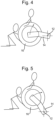
Figure 1 to Figure 2 ). To achieve full operability the wheels must be "thrown-over", which involves disconnecting the suspension strut and lifting the wheel up out of the way. By passing the balance point the wheel is retained in the elevated position by gravity. This position is shown inFigure 3 , which is a firing configuration (i.e. the configuration in which the weapon is fully operational). It is also necessary to throw-over the wheels before some maintenance tasks on the brake system to allow access. With the wheels pivoted free of the ground, support legs 16 (if present) may be folded from their storage position (inFigure 2 ) to their deployed position (inFigure 3 ). - However, a problem with this arrangement is that because the wheel and associated components (e.g. brakes and axels) are heavy, Health and Safety Guidelines require that the operation is a two person lift, the act of which is illustrated in
Figures 4, 5 . The wheel is a large, round, awkward object which is frequently wet/muddy. Therefore throwing-over the wheel can be dangerous for the users and in muddy conditions can be very difficult to achieve, and may result in injury and/or the weapon not being able to be operated to its full capability if the wheel cannot be pivoted to the correct position in time. - Hence a solution which enables the wheels to be moved between the towing configuration and firing configuration, and back again, which reduces risk to the user and increases the chances of a successful deployment regardless of the conditions, is highly desirable.
- According to the present disclosure there is provided a wheel arm and a towed howitzer system as set forth in the appended claims. Other features of the invention will be apparent from the dependent claims, and the description which follows.
- Accordingly there may be provided a wheel arm (114) for a chassis (140) of a towed howitzer system (100), as defined in claim 1.
- The lever engagement feature (122) is provided as a protrusion (130) which extends away from the wheel arm (114) along an engagement feature axis (136).
- A line (A-A) may extend between the arm pivoting axis (160) and wheel rotation axis (162) to define a longitudinal axis (128) of the wheel arm (114). The engagement feature axis (136) may be aligned with, parallel to, or at an angle "B" to the longitudinal axis (128).
- The protrusion (130) comprises a wall (132) which defines a cavity (134), with an opening (138) centred on the engagement feature axis (136) and the drain aperture (142) extends through the wall (132).
- A plurality of drain apertures (142) may extend through the wall (132).
- The lever engagement feature (122) may be provided as a cavity (234) which extends into the wheel arm (114). The cavity (234) may extend along an engagement feature axis (136).
- There may also be provided a towed howitzer system (100) comprising a wheel arm (114) according to the present disclosure, a chassis (112), wherein the wheel arm (114) is pivotably coupled to the chassis (112) via the chassis coupling feature (116); and a lever (300) provided with a coupling feature (302) at a coupling end (310) configured to engage with the lever engagement feature (122). The lever (300) may comprise a handle region (312) at a free end (314) opposite to the coupling end (310).
- The coupling feature (302) of the lever (300) and the lever engagement feature (122) may be configured so that the coupling feature (302) of the lever (300) is a passage (306) defined by a wall of the lever (300), the passage (306) configured to receive the lever engagement feature (122) of the wheel arm (114).
- The lever engagement feature (122) may be the cavity (134, 234), and the coupling feature (302) of the lever (300) may be configured to extend into the cavity (134, 234).
- There may also be provided a method of operation of a towed howitzer system (100), pivoting from a towing configuration to a firing configuration, the howitzer system comprising: a wheel arm (114) pivotably coupled to a chassis (112) of the howitzer; the wheel arm (114) comprising a chassis coupling feature (116) centred on an arm pivoting axis (160) and a wheel coupling feature (118) centred on a wheel rotation axis (162). The chassis coupling feature (116) may be spaced apart from the wheel coupling feature (118). A lever (300) may extend from the wheel arm (114) to a handle region (312) at a free end (314). The lever (300), the wheel coupling feature (118) and chassis coupling feature (116) may be provided in series along the length of the wheel arm (114). The method may comprise the steps of : a user (400) grasping the handle region (314) of the lever (300) and applying a force to the lever (300) so that the wheel arm (114) pivots relative to the chassis (112) about the arm pivoting axis (160).
- The method of operation may further comprise the step of coupling the lever (300) to the wheel arm (114).
- The method of operation may further comprise the step of the step of coupling the lever (300) to the wheel arm (114) so that the handle region (314) of the lever (300) is positioned just below shoulder height of the user when the user is kneeling.
- The howitzer system may further comprise a suspension system. The method may further comprise the step of operating the suspension system with the lever (300) when the lever (300) is disconnected from the wheel arm (114).
- There may also be provided a method of manufacture of a wheel arm (114) according to the present disclosure, comprising the steps of : providing a wheel arm precursor; attaching a lever engagement feature (122) to the wheel arm (114).
- The method of manufacture may further comprise the step of : preparing the region of the wheel arm precursor to which the lever engagement feature (122) is to be attached before attaching the lever engagement feature (122) to the wheel arm precursor.
- Hence there is provided a wheel arm and a towed howitzer system. These reduce risk to the user, and increases the chances of a successful weapon deployment regardless of the conditions. The provision of a lever engagement feature on the wheel arm enables a lever to be attached to the wheel arm so the wheels of the towed howitzer may be moved between a towing configuration and a firing configuration, and back again, in an operation that is less strenuous than possible with arrangements of the related art, such that the operation may comply with Health and Safety Guidelines.
- Examples of the present disclosure will now be described with reference to the accompanying drawings, in which:
-
Figures 1 to 5 show a conventional towed artillery system and method of use; -
Figures 6, 7 show an example wheel arm according to the present disclosure; -
Figure 8 shows an alternative example of a wheel arm according to the present disclosure; -
Figure 9 shows part of a howitzer system according to the present disclosure; -
Figure 10 shows how the system ofFigure 9 may be operated; -
Figures 11, 12, 13 show the howitzer system according to the present disclosure in a first mode of operation, switching it from the towed configuration to a firing configuration; and -
Figures 14, 15, 16 show the howitzer system according to the present disclosure in a second mode of operation, switching it from the firing configuration to the towed configuration. - The present disclosure relates to a wheel arm and a towed howitzer system including a wheel arm of the present disclosure.
- The howitzer system 100 of the present disclosure comprises a
weapon unit 102 carried on achassis 112. Awheel arm 114 extends from either side of thechassis 112. Eachwheel arm 114 extends from thechassis 112 to support awheel 110 which supports thechassis 112 when it is being transported (i.e. towed). A suspension system (not shown, but may be of a conventional kind) is provided to further support thewheel arms 114. - A first example of a
wheel arm 114 according to the present disclosure is shown infigures 6, 7 . A second example of a wheel arm according to the present disclosure is shown infigure 8 . -
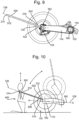
Figure 9 shows a side view of awheel arm 114 on which awheel 110 of the howitzer system is rotatably mounted. - The
wheel arm 114 is pivotably coupled/mounted to thechassis 112. As shown inFigures 6, 7 , thewheel arm 114 may comprise a chassis coupling feature 116 (for example a bearing unit or part thereof) which centred on anarm pivoting axis 160, and is configured to allow thewheel arm 114 to pivot relative to thechassis 112 about thearm pivoting axis 160. Thewheel arm 114 may also comprise a wheel coupling feature 118 (for example a bearing unit or part thereof) centred on awheel rotation axis 162, for rotatably mounting awheel 110 to thewheel arm 114, and configured to allow thewheel 110 to rotate relative to thewheel arm 114 around thewheel rotation axis 162. - The
wheel arm 114 is configured to be coupled to a suspension system, either directly or indirectly, so that thewheel coupling feature 118 is spaced apart from thechassis 112 by the suspension system. The suspension system may be of a conventional kind, and configured to damp vibrations and shock loads when the howitzer is being transported on itswheels 110. - The
chassis coupling feature 116 is spaced apart from thewheel coupling feature 118. Hence thearm pivoting axis 160 is spaced apart from thewheel rotation axis 162. - A line (shown as line "A-A" in
Figures 6, 7 ,8 ) which extends between thearm pivoting axis 160 andwheel rotation axis 162 defines alongitudinal axis 128 of thewheel arm 114. Hence the nominal length of thewheel arm 114 extends along the line A-A. That is to say, the line A-A defines the longitudinal axis 128 (e.g. directional "length") of thewheel arm 114. This is the case even where, as shown in the example ofFigure 10 , thewheel arm 114 may have a "dog leg" shape (i.e. not straight). - As shown in
Figures 9, 10 there may also be provided alever 300 which is operable to extend from thewheel arm 114 to ahandle region 312 at afree end 314 of thelever 300. Thelever 300, thewheel coupling feature 118 andchassis coupling feature 116 may be provided in series along the length (i.e. longitudinal axis 128) of thewheel arm 114. Hence thelever 300, thewheel rotation axis 162 and thearm pivoting axis 160 and may be arranged in series along the length (i.e. longitudinal axis 128) of thewheel arm 114. Thelever 300 may be provided separately to thewheel arm 114. - The
wheel arm 114 may comprise alever engagement feature 122, as shown inFigures 6, 7 ,8 , to couple/engage thelever 300 and thewheel arm 114. - The
lever 300 may comprise acoupling feature 302 at acoupling end 310 configured to engage with thelever engagement feature 122, with thehandle region 312 andfree end 314 being opposite to thecoupling end 310. - The
wheel coupling feature 118 is located between the lever engagement feature 122 (and/or lever 300) and thechassis coupling feature 116. Thewheel rotation axis 162 may be located between the lever engagement feature 122 (and/or lever 300) and the wheelarm pivoting axis 160 along the length (i.e. longitudinal axis 128) of thewheel arm 114. -
Figure 10 shows how thewheel arm 114 may be pivoted from one configuration to another about thearm pivoting axis 160.Figures 11 to 13 show how thewheel arms 114 of a howitzer system according to the present disclosure may be pivoted from a towing configuration (Figure 11 ) to an initial deployed configuration (Figure 12 ) and then to a firing configuration (Figure 13 ). Thewheel arm 114 may be disconnected from the suspension system (e.g. from supporting struts of the suspension system) between the initial deployed configuration (Figure 12 ) and firing configuration (Figure 13 ), although remains coupled to thechassis 112 by thechassis coupling feature 116. -
Figures 14 to 16 show how thewheel arms 114 of a howitzer system according to the present disclosure may be pivoted from a firing configuration (Figure 14 ) to an initial "wheels on ground" configuration (Figure 15 ) and then a towing configuration (Figure 16 ). Thewheel arm 114 may be connected to the suspension system between the initial deployed configuration (Figure 12 ) and firing configuration (Figure 13 ). - In the example shown in
Figure 6, 7 , thelever engagement feature 122 may be provided as aprotrusion 130 which extends away from thewheel arm 114 along anengagement feature axis 136. Theprotrusion 130 may be in the form of a spigot or other extension. Theprotrusion 130 may be provided at or towards the end of thewheel arm 114 distal to thearm pivoting axis 160/chassis coupling feature 116. Theprotrusion 130 may extend from the nominal top, bottom and/or sides of thewheel arm 114. - The
protrusion 130 comprises awall 132 which defines acavity 134. Hence theprotrusion 130 may be hollow, for example a hollow tube, as shown infigures 6, 7 . Thewall 132 defines anopening 138 centred on theengagement feature axis 136. Thecavity 134 is centred on, and extends along, theengagement feature axis 136. Adrain aperture 142 extends through thewall 132 at an angle (e.g. at right angles) to theengagement feature axis 136. As shown in the examples ofFigure 6, 7 , there may be provided a plurality ofdrain apertures 142 which each extend through thewall 132 at an angle to theengagement feature axis 136. Theapertures 142 may be provided around the circumference of thewall 132 and/or in lines along the length of the wall 132 (for example along the nominal top and bottom surfaces of the wall 132). Thedrain apertures 142 are provided so that any water, dirt and foreign objects may be expelled from thecavity 134. - In the alternative example of
Figure 8 , thelever engagement feature 122 is provided as a cavity 234 which extends into thewheel arm 114. The cavity 234 has at least oneopening 138 to the outside of the wheel arm 144. As in the preceding examples, drain apertures as described in relation to the examples ofFigures 6, 7 may also be provided in this example. Theopening 138 is centred on theengagement feature axis 136. The cavity 234 is centred on, and extends along, theengagement feature axis 136. - In both examples, the
lever engagement feature 122 may be formed integrally with thewheel arm 114, welded to the wheel arm, and/or attached by some mechanical means, for example a bracket or adapter using a fixing means such as a bolt, screw and/or rivet. - In the examples shown the
engagement feature axis 136 is provided at an angle "B" to the longitudinal axis 128 (line A-A). The angle B may be at least 10 degrees but not more than 80 degrees. The angle B may be at least 10 degrees but not more than 60 degrees. The angle B may be at least 10 degrees but not more than 50 degrees. The angle B may be at least 10 degrees but not more than 30 degrees. - In an alternative example the
engagement feature axis 136 is aligned with the longitudinal axis 128 (line A-A). In further alternative example theengagement feature axis 136 is parallel to the longitudinal axis 128 (line A-A). - The
lever engagement feature 122, thewheel coupling feature 118 andchassis coupling feature 116 are provided in series along the length of thewheel arm 114. Hence thearm pivoting axis 160,wheel rotation axis 162 andlever engagement feature 122 are provided in series along the length of thewheel arm 114. - In the examples shown, the
coupling feature 302 of thelever 300 is configured to extend into thecavity 134, 234 of thelever engagement feature 122. Hence in this example the external diameter of thecoupling feature 302 of thelever 300 is slightly smaller than the internal diameter of thecavity 134, 234. Thelever 300 is thus located and engaged with thewheel arm 114 via thelever engagement feature 122. Any foreign matter in thecavity 134, 234 may be expelled through thedrain apertures 142 by the insertion of thelever 300 into thecavity 134, 234. - In an alternative example, the
coupling feature 302 of thelever 300 and thelever engagement feature 122 are configured so that thecoupling feature 302 of thelever 300 is apassage 306 defined by a wall of thelever 300. In such an example the lever engagement feature 122 (e.g. the protruding spigot) is configured to be received by thepassage 306 of thelever 300. Hence in this example the internal diameter of thepassage 306 of thelever coupling feature 302 is greater than the external diameter of theprotrusion 130. - Hence the
lever 300 is attached to thelever engagement feature 122 spigot/protrusion at the end, or towards one end, of thewheel arm 114. Thelever 300 andlever engagement feature 122 may be engaged/disengaged by sliding one relative to the other. - The distance from the
coupling end 310 of thelever 300 to thehandle region 312 may be the same or greater than the distance from thearm pivoting axis 160 to where thelever engagement feature 122 extends from thewheel arm 114. The distance from thecoupling end 310 of thelever 300 to thehandle region 312 may be twice, but no more than three times, the distance from thearm pivoting axis 160 to where thelever engagement feature 122 extends from thewheel arm 114. - The length of the
lever 300, and the angle B, are configured, determined and/or set such that with thelever 300 coupled to thewheel arm 114, and/or thelever 300 extending from thewheel arm 114, with thewheel 110 supported on the ground, a user kneeling on the same ground, at the same level, may have thehandle region 314 of thelever 300 positioned at about shoulder height. - The
lever 300 may also be configured for other operations. For example thelever 300 may be operable to engage with the chassis suspension, and used to pump up (e.g. pressurise) the suspension (i.e. to change the configuration from an initial "wheels on ground" configuration (Figure 15 ) to the towing configuration (Figure 16 ). Hence thelever 300 may be configured to be disconnected from thewheel arm 114 once the wheels are in the "wheels on ground" configuration (Figure 15 ) so that the lever may be used to pressurise the suspension. - When not in use, the
lever 300 may be stored on or in thechassis 112. - A method of operation of the apparatus may comprise the steps of the
user 400 grasping thehandle region 314 of thelever 300 extending from thewheel arm 114, and applying a force to thelever 300 so that thewheel arm 114 pivots relative to thechassis 112 about the wheelarm pivoting axis 160. Hence by using thelever 300 thewheel arm 114 may be pivoted so that thewheels 110 are pivoted from an initial "wheels on ground" or "initial deployed configuration" (i.e. when thechassis 112 has been lowered to the ground, as shown inFigure 12 ) to a configuration in which the weapon can be fired (the "firing configuration", as shown inFigures 13 ,14 ). Thewheel arms 114 may be pivoted using thelever 300 so that thewheels 110 are pivoted from the "firing position" as shown inFigure 14 to a configuration in which the howitzer may be prepared for being towed (an "initial deployed configuration", as shown inFigure 15 ). For example, when the gun needs to be moved, thewheel arms 114 are pivoted using thelever 300 so the wheels are in a ground supporting position (the "initial deployed position" inFigure 15 ) and the suspension system of the howitzer is then connected and/or pumped up to bring the howitzer to a "towing configuration", as shown inFigure 16 , in which thechassis 112 has been lifted clear of the ground. - The method of operation may further comprise the step of coupling the
lever 300 to thewheel arm 114. This may be done in the "initial deployed configuration" (Figure 12 ) or the firing configuration (Figure 14 ). The method of operation may further comprise the step of de-coupling thelever 300 from thewheel arm 114. This may be done in the firing configuration (Figure 13 ) or in the "wheels on ground" configuration (figure 15 ). The method of operation may further comprise the step of coupling thelever 300 to the suspension system, and then using thelever 300 to configure the suspension system (for example to pump/pressurise the suspension system in preparation for towing of the howitzer,figure 16 ). - Hence the method may comprise the step of operating the suspension system with the
lever 300 when thelever 300 is disconnected from thewheel arm 114. - The method of operation may further comprise the step of deploying the
lever 300. - The method may also comprise the steps of attaching the
lever 300 to thelever engagement feature 122 on the wheel arm such that, when thewheels arms 114 andwheels 110 are in the "wheels on ground" or "initial deployed configuration" (i.e. when thechassis 112 is in contact with the ground, as shown inFigures 12 ,15 ) theend 314 of thelever 300 is approximately the height of a user's shoulder when the user is kneeling down (for example on one knee). That is to say the method of operation may comprise the step of coupling thelever 300 to thewheel arm 114 when the wheels are supported on the ground so that thehandle region 314 of thelever 300 is positioned just below shoulder height of a user when the user is kneeling on the same level (i.e. on the same ground) as the wheel 100. Hence for example, with reference toFigures 9, 10 , the method of operation may comprise the step of coupling thelever 300 to thewheel arm 114, and/or extending thelever 300 from thewheel arm 114, when the wheels are supported on the ground so a user kneeling on the same ground, at the same level, may have thehandle region 314 of thelever 300 positioned at about shoulder height. - In this configuration a user may deploy most of the force required using his/her leg muscles, moving from a kneeling position to a standing position, with one arm close to his/her body, and his/her other arm used to steady the lever to thus move the
wheel arms 114 from the "initial deployed configuration" (as shown inFigure 12 ) to the "firing configuration" (as shown inFigure 13 ). Also a user may deploy most of the force required using his/her leg muscles, with one arm close to his/her body, and his/her other arm used to steady the lever to thus move thewheel arms 114 from the "firing configuration" (as shown inFigures 13 ,14 ) to the "wheels on ground" configuration shown inFigure 15 . - The process by which the design of the apparatus of the present disclosure are determined and set is based on criteria 1 to 4 below. In particular the angle B at which the
lever 300 extends from thewheel arm 114, and length of thelever 300, is a function of the criteria 1 to 4 below. The method of operation may also include one of more of the following features of criteria 1 to 4 below. - 1) Compliance with MIL-STD-1472 (Human Design for Engineering Criteria Standards);
- 2) Providing hand interfaces which enable:
- a. Strongest grip;
- b. An arm position which gives the strongest upper body strength;
- c. Safe grip which has a low probability of damaging the hand;
- d. Two handed grip for best stability; and/or
- e. Produces the least twist to the body.
- 3) Lifting requirements, enabling user to :
- a. Use their thigh muscles to do the work;
- b. Remove bending of the spine and keep the back as straight as possible to avoid overload;
- c. Avoid twisting of their back/spine;
- d. Not use their arms or shoulders for the most strenuous part of the lift;
- e. Position the handle of the lever as close to the user's shoulder as possible as this is the strongest interface on the upper body.
- 4) If the lift fails, the riskiest part of the lift is at the beginning - thus the user should be as far away from the wheel as possible, and the user's hands and feet should be clear of the area where hardware may drop to the ground.
- There may also be provided a method of retro fitting a wheel arm of the present disclosure to an existing howitzer system. The method may include the steps of : removing a wheel arm from a howitzer system and fitting a wheel arm according to the present disclosure to the howitzer system (i.e. replacing a wheel arm of a howitzer system with a wheel arm according to the present disclosure).
- There may also be provided a method of manufacture of a
wheel arm 114, the method comprising the steps of: providing a wheel arm precursor and attaching alever engagement feature 122 as hereinbefore described to the wheel arm precursor. In this context, the word "wheel arm precursor" is intended to mean an article that forms the basis for, but does not have all of the features of, the wheel arm of the present disclosure. - There may also be provided a method of manufacture of a
wheel arm 114, the method comprising the steps of integrally forming awheel arm 114 andlever engagement feature 122 as hereinbefore described, for example in a casting or 3D printing process. - There may also be provided a method of retro fitting a
lever engagement feature 122 to a wheel arm of a howitzer system. This may comprise the steps of attaching/fixing alever engagement feature 122 of the present disclosure to a wheel arm, for example by welding, bonding, bolting or clamping, or some other appropriate method. - There may also be provided a method of replacing a
lever engagement feature 122 of a wheel arm. This may comprise the step of preparing the region of thewheel arm 114 to which thelever engagement feature 122 of the present disclosure is to be attached before attaching thelever engagement feature 122 to thewheel arm 114. For example, a damaged and/or wornlever engagement feature 122 may need to be removed and the surface to which the replacementlever engagement feature 122 is to be fixed may need to be configured so that the replacementlever engagement feature 122 can be fitted in place. - There may also be provided a kit of parts comprising wheel arm according to the present disclosure and a lever for use with the wheel arm. Additionally or alternatively the kit of parts may comprise a wheel arm precursor and a lever engagement feature configured to be fitted to the wheel arm precursor. The kit of parts may comprise a
howitzer chassis 112, alever 300 and awheel arm 114 comprising alever engagement feature 122. - In an alternative example the
lever 300 may be configured to be retained in thewheel arm 114, and slid out of thewheel arm 114 when required. - There is thus provided a
wheel arm 114 for a towed howitzer (i.e. awheel arm 114 for fitting to a chassis 140 of a towed howitzer system), a towed howitzer system including a wheel arm of the present disclosure, a method of operation of a towed howitzer system including a wheel arm and a method of manufacture of a wheel arm. - Providing a
lever engagement feature 122 so that they lever may be fixed to thewheel arm 114 means that a lever may be used to move thewheel arm 114, and the attached wheel, into a desired position. Additionally or alternatively, configuring the wheel arm to include a lever (that is to say, providing the wheel arm with a lever) provides a technical advantage over examples of the prior art. - The use of a lever provides mechanical advantage for "throwing the wheel over". The lever provides a location for the user to apply a force to the wheel arm which is further from the wheel
arm pivoting axis 160 than the wheel. That is to say, the lever increases (for example doubles) the available distance to the wheelarm pivoting axis 160 for a user to act on, and thereby reduces (for example halves) the required force to pivot the wheel arm. Hence compared to examples of the related art, in which the procedure may require two users to pivot the wheel arm, and put them both risk of injury, the apparatus of the present disclosure results in the same effect being achieved by a single user who can complete the wheel pivot with a reduced risk of injury. The apparatus of the present disclosure also provides the user with a comfortable gripping point (i.e. handle and/or handle region) to move the wheel. - Consequently not only are fewer people required to move the wheels of the howitzer to the desired position, with lower risk of injury, but also other members of the crew are free to conduct other necessary operations, thereby reducing the time to deploy the howitzer, or to configure the howitzer ready to be towed. Hence the provision of a lever for moving the wheel arm has a considerable effect on operational success of the howitzer system.
- In examples of the related art, the wheels of the howitzer must be braked to allow users to pivot their wheels. If the wheels are free to rotate about their respective wheel rotation axes it is harder to hold the wheel while it is being pivoted about the wheel arm pivoting axis. If the brake has failed, or a user omits to apply the brake, then the rotation of the wheel can cause serious injury, for example because rotation of the wheel can cause a user to lose their grip and/or balance and suffer injury, for example if they fall or twist a body part. However, the equipment of the present disclosure does not require the brakes to be applied because the user does not need to hold the wheel in order to pivot the wheel arm to the desired position, and hence a further problem of the related art is avoided.
- All of the features disclosed in this specification (including any accompanying claims, abstract and drawings), and/or all of the steps of any method or process so disclosed, may be combined in any combination, except combinations where at least some of such features and/or steps are mutually exclusive.
- Each feature disclosed in this specification (including any accompanying claims, abstract and drawings) may be replaced by alternative features serving the same, equivalent or similar purpose, unless expressly stated otherwise. Thus, unless expressly stated otherwise, each feature disclosed is one example only of a generic series of equivalent or similar features.
Claims (7)
- A wheel arm (114) for a chassis (140) of a towed howitzer system (100), the wheel arm (114) comprising :a chassis coupling feature (116) centred on a wheel arm pivoting axis (160), and a wheel coupling feature (118) centred on a wheel rotation axis (162), wherein the chassis coupling feature (116) is spaced apart from the wheel coupling feature (118);the wheel arm (114) comprises a lever engagement feature (122),wherein the lever engagement feature (122), the wheel coupling feature (118) and the chassis coupling feature (116) are provided in series along the length of the wheel arm (114)the lever engagement feature (122) is provided as a protrusion (130) which extends away from the wheel arm (114) along an engagement feature axis (13);the protrusion (130) comprises a wall (132) which defines a cavity (134),with an opening (138) centred on the engagement feature axis (136); the wheel arm being characterised in that a drain aperture (142) extends through the wall (132).
- A wheel arm (114) as claimed in claim 1 whereina line (A-A) extending between the arm pivoting axis (160) and wheel rotation axis (162) defines a longitudinal axis (128) of the wheel arm (114); andthe engagement feature axis (136) is aligned with, parallel to, or at an angle "B" to the longitudinal axis (128).
- A wheel arm (114) as claimed in claim 1 wherein
a plurality of drain apertures (142) extend through the wall (132). - A wheel arm (114) as claimed in claim 1 wherein
the lever engagement feature (122) is provided as a cavity (234) which extends into the wheel arm (114); and the cavity (234) extends along an engagement feature axis (136). - A towed howitzer system (100) comprising :a wheel arm (114) as claimed in any one of claims 1 to 4;a chassis (112), wherein the wheel arm (114) is pivotably coupled to the chassis (112) via the chassis coupling feature (116); anda lever (300) provided with a coupling feature (302) at a coupling end (310) configured to engage with the lever engagement feature (122), and a handle region (312) at a free end (314) opposite to the coupling end (310).
- A towed howitzer system (100) as claimed in claim 5 when dependent on any one of claims 1 to 5 wherein
the coupling feature (302) of the lever (300) and the lever engagement feature (122) are configured so that the coupling feature (302) of the lever (300) is a passage (306) defined by a wall of the lever (300), the passage (306) configured to receive the lever engagement feature (122) of the wheel arm (114). - A towed howitzer system (100) as claimed in claim 6 when dependent on claim 4 or dependent on claim 6 whereinthe lever engagement feature (122) is the cavity (134, 234), andthe coupling feature (302) of the lever (300) is configured to extend into the cavity (134, 234).
Priority Applications (1)
| Application Number | Priority Date | Filing Date | Title |
|---|---|---|---|
| HRP20250360TT HRP20250360T1 (en) | 2020-05-21 | 2021-05-17 | WHEEL ARM FOR HOWITCH SYSTEM |
Applications Claiming Priority (2)
| Application Number | Priority Date | Filing Date | Title |
|---|---|---|---|
| GB2007581.8A GB2595288B (en) | 2020-05-21 | 2020-05-21 | Wheel arm for a howitzer system |
| PCT/GB2021/051177 WO2021234352A1 (en) | 2020-05-21 | 2021-05-17 | Wheel arm for a howitzer system |
Publications (3)
| Publication Number | Publication Date |
|---|---|
| EP4153932A1 EP4153932A1 (en) | 2023-03-29 |
| EP4153932C0 EP4153932C0 (en) | 2025-03-12 |
| EP4153932B1 true EP4153932B1 (en) | 2025-03-12 |
Family
ID=71406383
Family Applications (1)
| Application Number | Title | Priority Date | Filing Date |
|---|---|---|---|
| EP21728274.8A Active EP4153932B1 (en) | 2020-05-21 | 2021-05-17 | Wheel arm for a howitzer system |
Country Status (5)
| Country | Link |
|---|---|
| US (1) | US11971237B2 (en) |
| EP (1) | EP4153932B1 (en) |
| GB (1) | GB2595288B (en) |
| HR (1) | HRP20250360T1 (en) |
| WO (1) | WO2021234352A1 (en) |
Families Citing this family (1)
| Publication number | Priority date | Publication date | Assignee | Title |
|---|---|---|---|---|
| GB2595288B (en) | 2020-05-21 | 2024-04-24 | Bae Systems Plc | Wheel arm for a howitzer system |
Family Cites Families (17)
| Publication number | Priority date | Publication date | Assignee | Title |
|---|---|---|---|---|
| US862502A (en) * | 1905-08-03 | 1907-08-06 | Samuel N Mcclean | Gun-carriage. |
| US833636A (en) * | 1906-01-03 | 1906-10-16 | Charles P Eugene Schneider | Trail for the carriages of guns mounted on wheels. |
| US962032A (en) * | 1907-09-03 | 1910-06-21 | Fried Krupp Actiengesellschaft | Spade for portable recoil-guns. |
| DE272414C (en) * | 1912-08-10 | 1914-03-31 | Krupp Ag | Wheel mount with adjustable cranked wheel axle |
| FR694514A (en) * | 1930-03-31 | 1930-12-04 | Vehicle for the transport of specially anti-aircraft artillery | |
| US1956557A (en) * | 1933-04-29 | 1934-05-01 | Orie L Beardsley | Gun carriage |
| US2116526A (en) * | 1936-03-20 | 1938-05-10 | Victor F Lucht | Gun carriage |
| US2376849A (en) * | 1939-06-07 | 1945-05-22 | Rossmanith Wolfgang | Gun carriage |
| US2370639A (en) * | 1941-09-09 | 1945-03-06 | Dabrasky August | Vehicle |
| DE1279509B (en) * | 1964-07-28 | 1968-10-03 | Rheinmetall Gmbh | Driving carriage for guns |
| SG101963A1 (en) * | 2001-03-14 | 2004-02-27 | Ordnance Dev And Engineering C | Mobile artillery system |
| GB0724686D0 (en) * | 2007-12-18 | 2009-04-08 | Bae Systems Plc | Field Gun Aim |
| GB0724687D0 (en) * | 2007-12-18 | 2009-04-08 | Bae Systems Plc | Field Gun Tow |
| ATE547683T1 (en) * | 2008-06-26 | 2012-03-15 | Bae Systems Plc | FIELD GUN CARRIAGE |
| GB2506872B (en) * | 2012-10-10 | 2018-12-12 | Bae Systems Plc | Field gun aim |
| JP6017696B2 (en) * | 2012-10-10 | 2016-11-02 | ビ−エイイ− システムズ パブリック リミテッド カンパニ−BAE SYSTEMS plc | Field Gun (FIELDGUN) |
| GB2595288B (en) | 2020-05-21 | 2024-04-24 | Bae Systems Plc | Wheel arm for a howitzer system |
-
2020
- 2020-05-21 GB GB2007581.8A patent/GB2595288B/en active Active
-
2021
- 2021-05-17 WO PCT/GB2021/051177 patent/WO2021234352A1/en not_active Ceased
- 2021-05-17 US US17/999,458 patent/US11971237B2/en active Active
- 2021-05-17 EP EP21728274.8A patent/EP4153932B1/en active Active
- 2021-05-17 HR HRP20250360TT patent/HRP20250360T1/en unknown
Also Published As
| Publication number | Publication date |
|---|---|
| HRP20250360T1 (en) | 2025-06-20 |
| EP4153932C0 (en) | 2025-03-12 |
| US11971237B2 (en) | 2024-04-30 |
| GB202007581D0 (en) | 2020-07-08 |
| WO2021234352A1 (en) | 2021-11-25 |
| GB2595288B (en) | 2024-04-24 |
| US20230235984A1 (en) | 2023-07-27 |
| EP4153932A1 (en) | 2023-03-29 |
| GB2595288A (en) | 2021-11-24 |
Similar Documents
| Publication | Publication Date | Title |
|---|---|---|
| US5460340A (en) | Auxiliary control of aircraft landing gear movement | |
| US5810373A (en) | Removable stepwise adjustable dolly support adjustable to fit various dollies | |
| US9714585B2 (en) | Aircraft engine stand | |
| EP4153932B1 (en) | Wheel arm for a howitzer system | |
| EP3023380B1 (en) | A davit | |
| EP3437990B1 (en) | Upper torque link central latch mechanism | |
| RU2488523C2 (en) | Device to decrease aircraft undercarriage length | |
| CN104773302B (en) | Emergency rescue device for airplane | |
| EP0703871A1 (en) | Self-loading vehicle having articulated boom | |
| US4491229A (en) | Boom extension stowage system | |
| CA3015692A1 (en) | Mid-wheel tilt-in-space manual wheelchair with constant shoulder position | |
| CA1193577A (en) | Boom extension stowage system | |
| US5209431A (en) | Device for increasing the stability of helicopters placed on board and set down, having a tricycle landing gear, and helicopter equipped with such a device | |
| US4995574A (en) | Device for increasing the stability of helicopters placed on board and set down, having a tricycle landing gear, and helicopter equipped with such a device | |
| CZ20021951A3 (en) | Traversing gear with a working device arranged thereon | |
| US1339410A (en) | Mount or stand for machine-guns | |
| EP0236584B1 (en) | On-board tail jack assembly | |
| US5568956A (en) | Truck hub carrier | |
| US7493684B1 (en) | Method of loading an article to an exterior of an aircraft | |
| US1504504A (en) | Ordnance | |
| US8381634B2 (en) | Field gun carriage | |
| CN111547262B (en) | Airplane tail stay rod assembly | |
| CN218010748U (en) | Multifunctional fire-fighting lance for fire fighting | |
| CN214260448U (en) | Induction type fire hydrant | |
| CA1309082C (en) | Portable hoist |
Legal Events
| Date | Code | Title | Description |
|---|---|---|---|
| REG | Reference to a national code |
Ref country code: HR Ref legal event code: TUEP Ref document number: P20250360T Country of ref document: HR |
|
| STAA | Information on the status of an ep patent application or granted ep patent |
Free format text: STATUS: UNKNOWN |
|
| STAA | Information on the status of an ep patent application or granted ep patent |
Free format text: STATUS: THE INTERNATIONAL PUBLICATION HAS BEEN MADE |
|
| PUAI | Public reference made under article 153(3) epc to a published international application that has entered the european phase |
Free format text: ORIGINAL CODE: 0009012 |
|
| STAA | Information on the status of an ep patent application or granted ep patent |
Free format text: STATUS: REQUEST FOR EXAMINATION WAS MADE |
|
| 17P | Request for examination filed |
Effective date: 20221212 |
|
| AK | Designated contracting states |
Kind code of ref document: A1 Designated state(s): AL AT BE BG CH CY CZ DE DK EE ES FI FR GB GR HR HU IE IS IT LI LT LU LV MC MK MT NL NO PL PT RO RS SE SI SK SM TR |
|
| DAV | Request for validation of the european patent (deleted) | ||
| DAX | Request for extension of the european patent (deleted) | ||
| STAA | Information on the status of an ep patent application or granted ep patent |
Free format text: STATUS: EXAMINATION IS IN PROGRESS |
|
| 17Q | First examination report despatched |
Effective date: 20240124 |
|
| GRAP | Despatch of communication of intention to grant a patent |
Free format text: ORIGINAL CODE: EPIDOSNIGR1 |
|
| STAA | Information on the status of an ep patent application or granted ep patent |
Free format text: STATUS: GRANT OF PATENT IS INTENDED |
|
| INTG | Intention to grant announced |
Effective date: 20241014 |
|
| GRAS | Grant fee paid |
Free format text: ORIGINAL CODE: EPIDOSNIGR3 |
|
| GRAA | (expected) grant |
Free format text: ORIGINAL CODE: 0009210 |
|
| STAA | Information on the status of an ep patent application or granted ep patent |
Free format text: STATUS: THE PATENT HAS BEEN GRANTED |
|
| AK | Designated contracting states |
Kind code of ref document: B1 Designated state(s): AL AT BE BG CH CY CZ DE DK EE ES FI FR GB GR HR HU IE IS IT LI LT LU LV MC MK MT NL NO PL PT RO RS SE SI SK SM TR |
|
| REG | Reference to a national code |
Ref country code: GB Ref legal event code: FG4D |
|
| REG | Reference to a national code |
Ref country code: CH Ref legal event code: EP |
|
| REG | Reference to a national code |
Ref country code: DE Ref legal event code: R096 Ref document number: 602021027509 Country of ref document: DE |
|
| REG | Reference to a national code |
Ref country code: IE Ref legal event code: FG4D |
|
| U01 | Request for unitary effect filed |
Effective date: 20250326 |
|
| U07 | Unitary effect registered |
Designated state(s): AT BE BG DE DK EE FI FR IT LT LU LV MT NL PT RO SE SI Effective date: 20250401 |
|
| U20 | Renewal fee for the european patent with unitary effect paid |
Year of fee payment: 5 Effective date: 20250423 |
|
| REG | Reference to a national code |
Ref country code: HR Ref legal event code: ODRP Ref document number: P20250360T Country of ref document: HR Payment date: 20250507 Year of fee payment: 5 |
|
| REG | Reference to a national code |
Ref country code: HR Ref legal event code: T1PR Ref document number: P20250360 Country of ref document: HR |
|
| PG25 | Lapsed in a contracting state [announced via postgrant information from national office to epo] |
Ref country code: RS Free format text: LAPSE BECAUSE OF FAILURE TO SUBMIT A TRANSLATION OF THE DESCRIPTION OR TO PAY THE FEE WITHIN THE PRESCRIBED TIME-LIMIT Effective date: 20250612 |
|
| PG25 | Lapsed in a contracting state [announced via postgrant information from national office to epo] |
Ref country code: ES Free format text: LAPSE BECAUSE OF FAILURE TO SUBMIT A TRANSLATION OF THE DESCRIPTION OR TO PAY THE FEE WITHIN THE PRESCRIBED TIME-LIMIT Effective date: 20250312 |
|
| PG25 | Lapsed in a contracting state [announced via postgrant information from national office to epo] |
Ref country code: NO Free format text: LAPSE BECAUSE OF FAILURE TO SUBMIT A TRANSLATION OF THE DESCRIPTION OR TO PAY THE FEE WITHIN THE PRESCRIBED TIME-LIMIT Effective date: 20250612 |
|
| PGFP | Annual fee paid to national office [announced via postgrant information from national office to epo] |
Ref country code: HR Payment date: 20250507 Year of fee payment: 5 |
|
| PG25 | Lapsed in a contracting state [announced via postgrant information from national office to epo] |
Ref country code: GR Free format text: LAPSE BECAUSE OF FAILURE TO SUBMIT A TRANSLATION OF THE DESCRIPTION OR TO PAY THE FEE WITHIN THE PRESCRIBED TIME-LIMIT Effective date: 20250613 |
|
| PG25 | Lapsed in a contracting state [announced via postgrant information from national office to epo] |
Ref country code: SM Free format text: LAPSE BECAUSE OF FAILURE TO SUBMIT A TRANSLATION OF THE DESCRIPTION OR TO PAY THE FEE WITHIN THE PRESCRIBED TIME-LIMIT Effective date: 20250312 |
|
| PG25 | Lapsed in a contracting state [announced via postgrant information from national office to epo] |
Ref country code: PL Free format text: LAPSE BECAUSE OF FAILURE TO SUBMIT A TRANSLATION OF THE DESCRIPTION OR TO PAY THE FEE WITHIN THE PRESCRIBED TIME-LIMIT Effective date: 20250312 |
|
| PG25 | Lapsed in a contracting state [announced via postgrant information from national office to epo] |
Ref country code: CZ Free format text: LAPSE BECAUSE OF FAILURE TO SUBMIT A TRANSLATION OF THE DESCRIPTION OR TO PAY THE FEE WITHIN THE PRESCRIBED TIME-LIMIT Effective date: 20250312 |
|
| PG25 | Lapsed in a contracting state [announced via postgrant information from national office to epo] |
Ref country code: SK Free format text: LAPSE BECAUSE OF FAILURE TO SUBMIT A TRANSLATION OF THE DESCRIPTION OR TO PAY THE FEE WITHIN THE PRESCRIBED TIME-LIMIT Effective date: 20250312 |
|
| PG25 | Lapsed in a contracting state [announced via postgrant information from national office to epo] |
Ref country code: IS Free format text: LAPSE BECAUSE OF FAILURE TO SUBMIT A TRANSLATION OF THE DESCRIPTION OR TO PAY THE FEE WITHIN THE PRESCRIBED TIME-LIMIT Effective date: 20250712 |
|
| REG | Reference to a national code |
Ref country code: CH Ref legal event code: H13 Free format text: ST27 STATUS EVENT CODE: U-0-0-H10-H13 (AS PROVIDED BY THE NATIONAL OFFICE) Effective date: 20251223 |
|
| PLBE | No opposition filed within time limit |
Free format text: ORIGINAL CODE: 0009261 |
|
| STAA | Information on the status of an ep patent application or granted ep patent |
Free format text: STATUS: NO OPPOSITION FILED WITHIN TIME LIMIT |
|
| PG25 | Lapsed in a contracting state [announced via postgrant information from national office to epo] |
Ref country code: CH Free format text: LAPSE BECAUSE OF NON-PAYMENT OF DUE FEES Effective date: 20250531 |
|
| REG | Reference to a national code |
Ref country code: CH Ref legal event code: L10 Free format text: ST27 STATUS EVENT CODE: U-0-0-L10-L00 (AS PROVIDED BY THE NATIONAL OFFICE) Effective date: 20260121 |
|
| PG25 | Lapsed in a contracting state [announced via postgrant information from national office to epo] |
Ref country code: MC Free format text: LAPSE BECAUSE OF FAILURE TO SUBMIT A TRANSLATION OF THE DESCRIPTION OR TO PAY THE FEE WITHIN THE PRESCRIBED TIME-LIMIT Effective date: 20250312 |
|
| 26N | No opposition filed |
Effective date: 20251215 |
|
| PGFP | Annual fee paid to national office [announced via postgrant information from national office to epo] |
Ref country code: GB Payment date: 20260302 Year of fee payment: 6 |
|
| PG25 | Lapsed in a contracting state [announced via postgrant information from national office to epo] |
Ref country code: IE Free format text: LAPSE BECAUSE OF NON-PAYMENT OF DUE FEES Effective date: 20250517 |