EP4152214A1 - Fusion of physics and ai based models for end-to-end data synthesization and validation - Google Patents
Fusion of physics and ai based models for end-to-end data synthesization and validation Download PDFInfo
- Publication number
- EP4152214A1 EP4152214A1 EP22184699.1A EP22184699A EP4152214A1 EP 4152214 A1 EP4152214 A1 EP 4152214A1 EP 22184699 A EP22184699 A EP 22184699A EP 4152214 A1 EP4152214 A1 EP 4152214A1
- Authority
- EP
- European Patent Office
- Prior art keywords
- data
- synthesized
- fault
- simulated
- entities
- Prior art date
- Legal status (The legal status is an assumption and is not a legal conclusion. Google has not performed a legal analysis and makes no representation as to the accuracy of the status listed.)
- Granted
Links
Images



Classifications
-
- G—PHYSICS
- G06—COMPUTING OR CALCULATING; COUNTING
- G06N—COMPUTING ARRANGEMENTS BASED ON SPECIFIC COMPUTATIONAL MODELS
- G06N3/00—Computing arrangements based on biological models
- G06N3/02—Neural networks
- G06N3/04—Architecture, e.g. interconnection topology
- G06N3/0475—Generative networks
-
- G—PHYSICS
- G06—COMPUTING OR CALCULATING; COUNTING
- G06F—ELECTRIC DIGITAL DATA PROCESSING
- G06F30/00—Computer-aided design [CAD]
- G06F30/20—Design optimisation, verification or simulation
- G06F30/23—Design optimisation, verification or simulation using finite element methods [FEM] or finite difference methods [FDM]
-
- G—PHYSICS
- G05—CONTROLLING; REGULATING
- G05B—CONTROL OR REGULATING SYSTEMS IN GENERAL; FUNCTIONAL ELEMENTS OF SUCH SYSTEMS; MONITORING OR TESTING ARRANGEMENTS FOR SUCH SYSTEMS OR ELEMENTS
- G05B23/00—Testing or monitoring of control systems or parts thereof
- G05B23/02—Electric testing or monitoring
- G05B23/0205—Electric testing or monitoring by means of a monitoring system capable of detecting and responding to faults
- G05B23/0218—Electric testing or monitoring by means of a monitoring system capable of detecting and responding to faults characterised by the fault detection method dealing with either existing or incipient faults
- G05B23/0221—Preprocessing measurements, e.g. data collection rate adjustment; Standardization of measurements; Time series or signal analysis, e.g. frequency analysis or wavelets; Trustworthiness of measurements; Indexes therefor; Measurements using easily measured parameters to estimate parameters difficult to measure; Virtual sensor creation; De-noising; Sensor fusion; Unconventional preprocessing inherently present in specific fault detection methods like PCA-based methods
-
- G—PHYSICS
- G05—CONTROLLING; REGULATING
- G05B—CONTROL OR REGULATING SYSTEMS IN GENERAL; FUNCTIONAL ELEMENTS OF SUCH SYSTEMS; MONITORING OR TESTING ARRANGEMENTS FOR SUCH SYSTEMS OR ELEMENTS
- G05B23/00—Testing or monitoring of control systems or parts thereof
- G05B23/02—Electric testing or monitoring
- G05B23/0205—Electric testing or monitoring by means of a monitoring system capable of detecting and responding to faults
- G05B23/0218—Electric testing or monitoring by means of a monitoring system capable of detecting and responding to faults characterised by the fault detection method dealing with either existing or incipient faults
- G05B23/0224—Process history based detection method, e.g. whereby history implies the availability of large amounts of data
- G05B23/024—Quantitative history assessment, e.g. mathematical relationships between available data; Functions therefor; Principal component analysis [PCA]; Partial least square [PLS]; Statistical classifiers, e.g. Bayesian networks, linear regression or correlation analysis; Neural networks
-
- G—PHYSICS
- G06—COMPUTING OR CALCULATING; COUNTING
- G06F—ELECTRIC DIGITAL DATA PROCESSING
- G06F30/00—Computer-aided design [CAD]
- G06F30/20—Design optimisation, verification or simulation
- G06F30/27—Design optimisation, verification or simulation using machine learning, e.g. artificial intelligence, neural networks, support vector machines [SVM] or training a model
-
- G—PHYSICS
- G06—COMPUTING OR CALCULATING; COUNTING
- G06N—COMPUTING ARRANGEMENTS BASED ON SPECIFIC COMPUTATIONAL MODELS
- G06N3/00—Computing arrangements based on biological models
- G06N3/02—Neural networks
- G06N3/04—Architecture, e.g. interconnection topology
- G06N3/045—Combinations of networks
- G06N3/0455—Auto-encoder networks; Encoder-decoder networks
-
- G—PHYSICS
- G06—COMPUTING OR CALCULATING; COUNTING
- G06N—COMPUTING ARRANGEMENTS BASED ON SPECIFIC COMPUTATIONAL MODELS
- G06N3/00—Computing arrangements based on biological models
- G06N3/02—Neural networks
- G06N3/04—Architecture, e.g. interconnection topology
- G06N3/047—Probabilistic or stochastic networks
-
- G—PHYSICS
- G06—COMPUTING OR CALCULATING; COUNTING
- G06N—COMPUTING ARRANGEMENTS BASED ON SPECIFIC COMPUTATIONAL MODELS
- G06N3/00—Computing arrangements based on biological models
- G06N3/02—Neural networks
- G06N3/08—Learning methods
-
- G—PHYSICS
- G06—COMPUTING OR CALCULATING; COUNTING
- G06F—ELECTRIC DIGITAL DATA PROCESSING
- G06F2119/00—Details relating to the type or aim of the analysis or the optimisation
- G06F2119/02—Reliability analysis or reliability optimisation; Failure analysis, e.g. worst case scenario performance, failure mode and effects analysis [FMEA]
Definitions
- the disclosure herein generally relates to sensor data synthetization and validation thereof, and, more particularly, to fusion of physics and AI based model for end-to-end data synthesization and validation.
- Embodiments of the present disclosure present technological improvements as solutions to one or more of the above-mentioned technical problems recognized by the inventors in conventional systems. For example, in one aspect, there is provided a processor implemented method for fusion of physics and AI based model for end-to-end data synthesization and validation.
- the method comprises obtaining, via one or more hardware processors, a plurality of sensor data corresponding to one or more entities, wherein the one or more entities correspond to at least one of one or more (IoT) machines, and one or more components of the one or more (IoT) machines; simulating, via a Finite Element Analysis (FEA) technique executed by the one or more hardware processors, the plurality of sensor data corresponding to the one or more entities to obtain a set of simulated data; synthesizing, via a variational autoencoder based generative model executed by the one or more hardware processors, the set of simulated data to obtain a set of synthesized data, wherein the step of synthesizing by the variational autoencoder based generative model comprises: generating a latent representation of the set of simulated data; and embedding one or more physical characteristics corresponding to the one or more entities into the generated latent representation and an associated loss function; and validating the set of synthesized data to obtain a set of validated synthe
- the plurality of sensor data corresponds to a type of fault, nature of fault, location of fault, and geometrical data of the fault.
- the step of synthesizing the set of simulated data comprises synthesizing healthy and faulty sensor data comprised in the set of simulated data.
- the step of simulating the plurality of sensor data corresponding to the one or more entities to obtain a set of simulated data is further based on a real sensor dataset of a pre-defined quantity.
- the one or more physical characteristics comprise at least one of elasticity, Young's modulus, Poisson's ratio, Addendum coefficient, pressure angle, a hub bore radius, a face width, and a tip clearance coefficient.
- a system for fusion of physics and AI based model for end-to-end data synthesization and validation comprises a memory storing instructions; one or more communication interfaces; and one or more hardware processors coupled to the memory via the one or more communication interfaces, wherein the one or more hardware processors are configured by the instructions to: obtain a plurality of sensor data corresponding to one or more entities, wherein the one or more entities correspond to at least one of one or more (IoT) machines, and one or more components of the one or more (IoT) machines; simulate, via a Finite Element Analysis (FEA) technique, the plurality of sensor data corresponding to the one or more entities to obtain a set of simulated data; synthesize, via a variational autoencoder based generative model, the set of simulated data to obtain a set of synthesized data, wherein the set of synthesized data is obtained by: generating a latent representation of the set of simulated data; and embedding one or more
- FFA Finite Element Analysis
- the plurality of sensor data corresponds to a type of fault, nature of fault, location of fault, and geometrical data of the fault.
- the set of simulated data is obtained by synthesizing healthy and faulty sensor data comprised in the set of simulated data.
- the set of simulated data obtained is further based on a real sensor dataset of a pre-defined quantity.
- the one or more physical characteristics comprise at least one of elasticity, Young's modulus, Poisson's ratio, Addendum coefficient, pressure angle, a hub bore radius, a face width, and a tip clearance coefficient.
- one or more non-transitory machine-readable information storage mediums comprising one or more instructions which when executed by one or more hardware processors cause a method for fusion of physics and AI based model for end-to-end data synthesization and validation.
- the method comprises obtaining, via one or more hardware processors, a plurality of sensor data corresponding to one or more entities, wherein the one or more entities correspond to at least one of one or more (IoT) machines, and one or more components of the one or more (IoT) machines; simulating, via a Finite Element Analysis (FEA) technique executed by the one or more hardware processors, the plurality of sensor data corresponding to the one or more entities to obtain a set of simulated data; synthesizing, via a variational autoencoder based generative model executed by the one or more hardware processors, the set of simulated data to obtain a set of synthesized data, wherein the step of synthesizing by the variational autoencoder based generative model comprises: generating a latent representation of the set of simulated data; and embedding one or more physical characteristics corresponding to the one or more entities into the generated latent representation and an associated loss function; and validating the set of synthesized data to obtain a set of validated synthe
- the plurality of sensor data corresponds to a type of fault, nature of fault, location of fault, and geometrical data of the fault.
- the step of synthesizing the set of simulated data comprises synthesizing healthy and faulty sensor data comprised in the set of simulated data.
- the step of simulating the plurality of sensor data corresponding to the one or more entities to obtain a set of simulated data is further based on a real sensor dataset of a pre-defined quantity.
- the one or more physical characteristics comprise at least one of elasticity, Young's modulus, Poisson's ratio, Addendum coefficient, pressure angle, a hub bore radius, a face width, and a tip clearance coefficient.
- Embodiments of the present disclosure provide system and method for generation of synthetic machine data for healthy and abnormal condition using hybrid of physics based and generative model-based approach. More specifically, Finite Element Analysis (FEA) is used for simulation of data for healthy and faulty parts in machinery. FEA based simulations is used to generate data for a certain set of configurations involving normal and fault conditions with a unique set of parameters and pre-condition.
- FEA Finite Element Analysis
- the method of the present disclosure further involves a robust dual validation framework wherein a rule engine is built using statistical features wherein their realistic bounds act as indicators of faulty data. The generated data which do not satisfies the bounds of features in the rule engine are discarded. Further, AI-based validation framework is used to analyze the quality of the generated data.
- FIG. 1 through 5 where similar reference characters denote corresponding features consistently throughout the figures, there are shown preferred embodiments and these embodiments are described in the context of the following exemplary system and/or method.
- FIG. 1 depicts an exemplary system 100 for fusion of physics and AI based model for end-to-end data synthesization and validation, in accordance with an embodiment of the present disclosure.
- the system 100 includes one or more hardware processors 104, communication interface device(s) or input/output (I/O) interface(s) 106 (also referred as interface(s)), and one or more data storage devices or memory 102 operatively coupled to the one or more hardware processors 104.
- the one or more processors 104 may be one or more software processing components and/or hardware processors.
- the hardware processors can be implemented as one or more microprocessors, microcomputers, microcontrollers, digital signal processors, central processing units, state machines, logic circuitries, and/or any devices that manipulate signals based on operational instructions.
- the processor(s) is/are configured to fetch and execute computer-readable instructions stored in the memory.
- the system 100 can be implemented in a variety of computing systems, such as laptop computers, notebooks, hand-held devices (e.g., smartphones, tablet phones, mobile communication devices, and the like), workstations, mainframe computers, servers, a network cloud, and the like.
- the I/O interface device(s) 106 can include a variety of software and hardware interfaces, for example, a web interface, a graphical user interface, and the like and can facilitate multiple communications within a wide variety of networks N/W and protocol types, including wired networks, for example, LAN, cable, etc., and wireless networks, such as WLAN, cellular, or satellite.
- the I/O interface device(s) can include one or more ports for connecting a number of devices to one another or to another server.
- the memory 102 may include any computer-readable medium known in the art including, for example, volatile memory, such as static random-access memory (SRAM) and dynamic-random access memory (DRAM), and/or non-volatile memory, such as read only memory (ROM), erasable programmable ROM, flash memories, hard disks, optical disks, and magnetic tapes.
- volatile memory such as static random-access memory (SRAM) and dynamic-random access memory (DRAM)
- non-volatile memory such as read only memory (ROM), erasable programmable ROM, flash memories, hard disks, optical disks, and magnetic tapes.
- ROM read only memory
- erasable programmable ROM erasable programmable ROM
- flash memories such as compact flash drives, digital versatile disks, and the like
- hard disks such as hard disks, optical disks, and magnetic tapes.
- magnetic tapes such as magnetic tapes.
- a database 108 is comprised in the memory 102, wherein the database
- the database 108 further comprises simulated sensor data, synthesized sensor data, latent representation of the set of simulated data, one or more physical characteristics corresponding to the one or more entities, validated data, and the like. Furthermore, the database 108 stores (i) one or more statistical features comprised in the set of synthesized data and (ii) one or more corresponding statistical features obtained from experimental data.
- the memory 102 further stores one or more techniques such as Finite Element Analysis (FEA) technique(s), Variational Auto-Encoder (VAE) based generative model, and the like which when executed by the system 100 perform the method described herein.
- the memory 102 further comprises (or may further comprise) information pertaining to input(s)/output(s) of each step performed by the systems and methods of the present disclosure. In other words, input(s) fed at each step and output(s) generated at each step are comprised in the memory 102 and can be utilized in further processing and analysis.
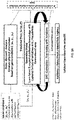
- FIGS. 2A and 2B depict an exemplary high level block diagram of the system 100 for fusion of physics and AI based model for end-to-end data synthesization and validation, in accordance with an embodiment of the present disclosure.
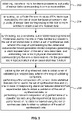
- FIG. 3 depicts an exemplary flow chart illustrating a method for fusion of physics and AI based models for end-to-end data synthesization and validation, using the system 100 of FIG. 1 , in accordance with an embodiment of the present disclosure.
- the system(s) 100 comprises one or more data storage devices or the memory 102 operatively coupled to the one or more hardware processors 104 and is configured to store instructions for execution of steps of the method by the one or more processors 104.
- the steps of the method of the present disclosure will now be explained with reference to components of the system 100 of FIG. 1 , FIGS. 2A-2B , the flow diagram as depicted in FIGS. 3 , FIG. 4 , and FIG.
- the one or more hardware processors 104 obtain, via the one or more hardware processors, a plurality of sensor data corresponding to one or more entities.
- the plurality of sensor data corresponds to Gear Fault Diagnosis Dataset, wherein the entity may be one or more gears of a machine.
- the plurality of sensor data includes a type of fault, nature of fault, location of fault, geometrical data of the fault, and the like. For instance, type of fault: Localized, distributed, nature of fault: Low cycle, High cycle, location of fault: Bearing, Gear, Shaft, etc., geometrical details of fault: Length, width, radius, etc., and sensor: Accelerometer, and the like.
- the plurality of sensor data further includes three types of gear condition occur in the dataset - healthy, One chipped tooth, and three worn teeth, in one embodiment of the present disclosure.
- vibrations were recorded using an accelerometer with 10 kHz sampling frequency. Further, each gear condition had 10 seconds of recordings.
- the continuous recordings were segmented into windows of 100 timesteps (10 ms).
- the plurality of sensor data values is not shown herein.
- the source to the plurality of sensor data can be referred to a publicly available dataset at https://drive.google.com/file/d/0B4vlQFEs8N-cT3djQmwtV2NWSjg . It is to be understood by a person having ordinary skill in the art or person skilled in the art that the above examples of sensor data shall not be construed as limiting the scope of the present disclosure.
- the one or more hardware processors 104 simulate, via a Finite Element Analysis (FEA) technique, the plurality of sensor data corresponding to the one or more entities to obtain a set of simulated data.
- FEA Finite Element Analysis
- FEA is the simulation of a physical scenario using mathematical technique known as the Finite Element Method.
- the FEA technique is used for simulation of working of machinery parts such as gear, shafts etc.
- the type of data to be simulated by FEA initially for our experimentation is mentioned below: Type of fault: Localized, distributed, Nature of fault: Low cycle, High cycle, Location of fault: Bearing, Gear, Shaft, etc., Geometrical Details of fault: Length, width, radius, etc., and Sensor: Accelerometer.
- the step of simulating the plurality of sensor data corresponding to the one or more entities to obtain the set of simulated data is further based on a real sensor dataset of a pre-defined quantity (e.g., 10-15% of input data - of 10-15% of the plurality of sensor data).
- Table 1 depicts simulated data for a specific sensor (acceleration sensor/accelerator) in X, Y, Z axis by way of examples: Table 1 Acceleration sensor values - X axis 0 -312915 7463325 -2131745 -1305917 ... 2635.632 2671.568 2630.274 5479.227 -345.202 -1113.39 ... -3525.232 -3219.72 -2705.04 -425.566 -3506.96 -4880.92 ... 2629.043 2531.106 -27823.6 -67421.6 -1906.88 12093.71 ...
- the above simulated data is obtained by collecting information on design of the machine, wherein geometry of solid of interest is specified via finite element mesh. Further, a constitutive law for the solid (e.g., material properties) is specified. Boundary conditions are also specified, for instance, nature of loading, contact, friction, and the like. Initial conditions are set, for example, for dynamic analysis (e.g., equations of motion of solid as a function of time), conditions may include, time, step size, number of modes, and the like. Upon providing and setting the above information, simulation is carried out by solving simulation equations (as known in the art) to obtain simulated data. More specifically, in the present disclosure, simulation was performed using FEA for gear-pair: Normal data and Faulty data (with subtle variations in fault locations).
- the FEA Simulated Data consisted of small amount of Acceleration data (3-axis), total simulated data duration from FEA: Normal data: 1 second (about 11,000 time-steps), Faulty data: 4 seconds (1 second for each subtle variation) (44,000 time-steps); segmented in windows of 128 timesteps. Normal instances: 69; Faulty instances: 349 each having 128-time steps.
- the one or more hardware processors 104 synthesize, via a variational autoencoder based generative model, the set of simulated data to obtain a set of synthesized data.
- the step of synthesizing the set of simulated data comprises synthesizing healthy and faulty sensor data comprised in the set of simulated data.
- the step of synthesizing by the variant of variational autoencoder based generative model further comprises generating a latent representation of the set of simulated data; and embedding one or more physical characteristics corresponding to the one or more entities into the generated latent representation and an associated loss function. Factorized latent representation is used to modify the Z along with mean and standard deviation.
- the specific characteristics / features used in FEA and optimization function or loss function to be constructed include, Young's modulus, Poisson's ratio etc. which have been embedded to addresses the variation with respect to the characteristics of the fault design.
- Some of the one or more physical characteristics pertaining to the entities are illustrated by way of examples in below Table 2 and Table 3.
- generative model is used to capture the data distribution knowledge - Variants of Variational Auto-Encoder based generative model is used for synthesis of both healthy and Faulty data using a small portion of real experimental data / data generated using the FEA.
- the simulated data shown in Table 1 is min-max normalized and fed in the AI-based generative model (e.g., the variational autoencoder based generative model), in one embodiment of the present disclosure for synthesizing. More specifically, small amount of FEA generated data - [80 Instances: 35 Normal + 45 faulty) was passed through generative model, in one embodiment of the present disclosure to generate synthetic data.
- a variant of Variational Auto-Encoder based generative model with latent dimension 12 is used for synthesis of both healthy and Faulty data using a small portion of real experimental data / data generated using the FEA.
- LSTM Long-Short-term-memory
- Table 4 depicts synthetic data generated for the specific sensor (acceleration sensor/accelerator) in X, Y, Z axis by way of examples: Table 4 Acceleration sensor values - X axis 0.609996 0.600116 0.59525 0.605107 0.609512 ... 0.613522 0.608046 0.605143 0.614341 0.596634 0.611557 ... 0.6108 0.603284 0.604432 0.62207 0.610487 0.609457 ... 0.612913 0.592731 0.591278 0.637608 0.589696 0.599883 ...
- the synthetically generated data from AI-based generative model has both normal and faulty sensor value data.
- the one or more hardware processors 104 validate the set of synthesized data to obtain a set of validated synthesized data.
- the validation may include validation of synthesized data using at least one of the two approaches.
- the step of validating the set of synthesized data to obtain the set of validated synthesized data includes/comprises performing a first comparison of (i) one or more statistical features comprised in the set of synthesized data and (ii) one or more corresponding statistical features obtained from experimental data to obtain a validation of the set of synthesized data.
- the first approach of validation is also referred as rule engine-based validation approach.
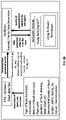
- FIG. 4 with reference to FIGS.
- FIG. 1 through 3 depicts a block-diagram illustrating the rule engine-based validation approach for validation of the set of synthesized data, in accordance with an embodiment of the present disclosure.
- statistical Features are used to validate the quality of the generated synthesized data. Realistic bounds of the statistical features are to be computed from small real experimental dataset or from theory and prior works. The generated synthesized data whose features are outside this bound are discarded. For rule engine, relevant statistical features and their bounds have been used to validate the quality of the generated synthesized data.
- the bounds are also very important aspect, and these bounds vary based on real data as well as the FEA generated simulated data - therefore, deriving the appropriate bound is also an important factor that is implemented by the system and method of the present disclosure.
- the values of the statistical features (which acts as fault condition indicators) from the generated synthesized data are computed and compared with the same feature values of the original FEA data.
- the output of the rule engine defines whether a generated instance is good enough i.e., matches the quality of original data.
- Average ( ⁇ Std) of the features computed across windows (of 10 ms) for original and generated synthesized data in rule engine is shown below in Table 6 by way of examples.
- Table 6 depicts a comparison of (i) one or more statistical features comprised in the set of synthesized data and (ii) one or more corresponding statistical features obtained from experimental/original data to obtain a validation of the set of synthesized data
- Table 6 Statistical Feature Healthy data Chipped tooth data Three worn teeth data Original Generated Original Generated Original Generated Skewness 0.124 ( ⁇ 0.146) 0.126 ( ⁇ 0.153) 0.297 ( ⁇ 0.255) 0.431 ( ⁇ 0.264) -0.050 ( ⁇ 0.235) 0.117 ( ⁇ 0.335) Crest Factor 2.348 ( ⁇ 0.259) 1.988 ( ⁇ 0.232) 2.678 ( ⁇ 0.316) 2.437 ( ⁇ 0.341) 2.657 ( ⁇ 0.274) 2.683 ( ⁇ 0.310) Shannon Entropy 10.865 ( ⁇ 0.607) 11.561 ( ⁇ 1.272) 11.566 ( ⁇ 0.734) 13.370 ( ⁇ 1.918) 11.735 ( ⁇ 0.761) 12.144 ( ⁇ 1.012) Peak to Peak 2.679 ( ⁇ 0.301) 1.866 ( ⁇ 0.093) 2.8
- the second approach of validation of the synthesized data is referred as AI-based validation technique wherein a comparison of (i) performance of a classifier trained using the experimental data and (ii) performance of the classifier trained is performed using the set of synthesized data to obtain the validation of the set of synthesized data.
- FIG. 5 depicts a block-diagram illustrating the AI-based validation technique for validation of the set of synthesized data, in accordance with an embodiment of the present disclosure. More specifically, in the AI-based validation technique, a small portion of real experimental dataset is considered, and this small portion of real experimental dataset is split into a small train set and a hidden test set.
- a machine learning or a deep learning model C as known in the art is trained using the small train set and the performance on the test set is inferred.
- the generated synthesized data is added in increasing amounts stepwise to this small train set and train the same model C. Infer the performance on the same test set. If the performance keeps on increasing with added generated data, then generated synthesized data is considered to be of good quality.
- Classifier As known in the art ML model 1-NN using Euclidean distance was implemented by the present disclosure and its system 100 and method of FIG. 2 . Also, comparison has been performed with model trained using same number of original instances without taking generated samples. The results for 1-NN using Euclidean distance with varying amount of generated train data are shown in below Tables 8 and 9, respectively by way of examples: Table 8 Data Generative model - VAE Generative model - variant of VAE Beta -VAE Origi nal Genera ted Tot al Accura cy Sensitiv ity Specific ity Accura cy Sensitiv ity Specific 0 50 0.806 0.92 0.692 0.806 0.92 0.692 50 50 100 0.872 0.948 0.796 0.896 0.956 0.836 50 100 150 0.912 0.976 0.848 0.904 0.948 0.86 50 150 200 0.92 0.988 0.852 0.91 0.956 0.864 50 200 250 0.922 0.922 0.852 0.924 0.9
- Table 13 Training data Performance of Test data Original Generated Total Accuracy Sensitivity Specificity 80 0 80 0.331 1 0.069 80 60 140 0.479 1 0.276 80 120 200 0.553 1 0.379 80 217 297 0.736 0.971 0.643 80 400 480 0.81 0.971 0.747 80 800 880 0.834 0.971 0.782
- Table 14 Training Data Performance Original Accuracy Sensitivity Specificity 80 0.331 1 0.069 140 0.372 1 0.126 200 0.521 1 0.333 297 0.678 0.971 0.563
- FEA based simulations are used to generate data for a certain set of configurations involving normal and fault conditions with a unique set of parameters and pre-condition.
- a generative model e.g., variational autoencoder based generative model also referred as VAE or generative model and interchangeably used herein
- VAE variational autoencoder based generative model
- the Variational Auto-Encoder based generative model is used for synthesis of both healthy and Faulty data using the small amount of data generated using the FEA.
- the combination of these two help the system 100 to obtain large amount data for training robust deep learning models for synthetic machine signal analysis while keeping the quality of data high as the data generated by FEA is very close to real scenario.
- VAE generates the latent the specific characteristics / features used in FEA are embedded and optimization function or loss function are constructed - example Young's modulus, Poisson's ratio, etc.
- This functionality of the method and system of the present disclosure address the technical problem in terms of characteristics of the fault design. More specifically, it varies with respect to the characteristics of the fault design (e.g., refer Table 2 for fault parameter).
- the present disclosure enables the system and method for self-correction wherein a small amount of real data / a small fraction of labelled data can be applied, with this small amount of real data it improves further its representation.
- similarity with respect to the given representation would be measured - for getting the recommended similarity the present disclosure implements a technique referred in India patent application 202021015292 titled 'METHOD AND SYSTEM FOR HIERARCHICAL TIME-SERIES CLUSTERING WITH AUTO ENCODED COMPACT SEQUENCE (AECS)' filed on 7-April-2020 .
- Such computer-readable storage means contain program-code means for implementation of one or more steps of the method, when the program runs on a server or mobile device or any suitable programmable device.
- the hardware device can be any kind of device which can be programmed including e.g., any kind of computer like a server or a personal computer, or the like, or any combination thereof.
- the device may also include means which could be e.g., hardware means like e.g., an application-specific integrated circuit (ASIC), a field-programmable gate array (FPGA), or a combination of hardware and software means, e.g., an ASIC and an FPGA, or at least one microprocessor and at least one memory with software processing components located therein.
- the means can include both hardware means and software means.
- the method embodiments described herein could be implemented in hardware and software.
- the device may also include software means. Alternatively, the embodiments may be implemented on different hardware devices, e.g., using a plurality of CPUs.
- the embodiments herein can comprise hardware and software elements.
- the embodiments that are implemented in software include but are not limited to, firmware, resident software, microcode, etc.
- the functions performed by various components described herein may be implemented in other components or combinations of other components.
- a computer-usable or computer readable medium can be any apparatus that can comprise, store, communicate, propagate, or transport the program for use by or in connection with the instruction execution system, apparatus, or device.
- a computer-readable storage medium refers to any type of physical memory on which information or data readable by a processor may be stored.
- a computer-readable storage medium may store instructions for execution by one or more processors, including instructions for causing the processor(s) to perform steps or stages consistent with the embodiments described herein.
- the term "computer-readable medium” should be understood to include tangible items and exclude carrier waves and transient signals, i.e., be non-transitory. Examples include random access memory (RAM), read-only memory (ROM), volatile memory, nonvolatile memory, hard drives, CD ROMs, DVDs, flash drives, disks, and any other known physical storage media.
Landscapes
- Engineering & Computer Science (AREA)
- Physics & Mathematics (AREA)
- Theoretical Computer Science (AREA)
- Evolutionary Computation (AREA)
- General Physics & Mathematics (AREA)
- General Engineering & Computer Science (AREA)
- Artificial Intelligence (AREA)
- Software Systems (AREA)
- Mathematical Physics (AREA)
- Health & Medical Sciences (AREA)
- Computational Linguistics (AREA)
- Computing Systems (AREA)
- Molecular Biology (AREA)
- Life Sciences & Earth Sciences (AREA)
- Biomedical Technology (AREA)
- Biophysics (AREA)
- General Health & Medical Sciences (AREA)
- Data Mining & Analysis (AREA)
- Geometry (AREA)
- Computer Hardware Design (AREA)
- Automation & Control Theory (AREA)
- Medical Informatics (AREA)
- Computer Vision & Pattern Recognition (AREA)
- Probability & Statistics with Applications (AREA)
- Testing Of Devices, Machine Parts, Or Other Structures Thereof (AREA)
Abstract
Description
- The present application claims priority to
Indian application no. 202121040563, filed on September 7, 2021 - The disclosure herein generally relates to sensor data synthetization and validation thereof, and, more particularly, to fusion of physics and AI based model for end-to-end data synthesization and validation.
- In sensor data analytics, physics-based models generate high quality data close to real world. However, these models consume a lot of time in terms of processing the sensor data as they rely on physical simulations. On the other hand, generative learning takes much less time to generate data, however learning to generate the data of near real time is a challenge.
- Embodiments of the present disclosure present technological improvements as solutions to one or more of the above-mentioned technical problems recognized by the inventors in conventional systems. For example, in one aspect, there is provided a processor implemented method for fusion of physics and AI based model for end-to-end data synthesization and validation. The method comprises obtaining, via one or more hardware processors, a plurality of sensor data corresponding to one or more entities, wherein the one or more entities correspond to at least one of one or more (IoT) machines, and one or more components of the one or more (IoT) machines; simulating, via a Finite Element Analysis (FEA) technique executed by the one or more hardware processors, the plurality of sensor data corresponding to the one or more entities to obtain a set of simulated data; synthesizing, via a variational autoencoder based generative model executed by the one or more hardware processors, the set of simulated data to obtain a set of synthesized data, wherein the step of synthesizing by the variational autoencoder based generative model comprises: generating a latent representation of the set of simulated data; and embedding one or more physical characteristics corresponding to the one or more entities into the generated latent representation and an associated loss function; and validating the set of synthesized data to obtain a set of validated synthesized data, wherein the step of validating comprises: performing a first comparison of (i) one or more statistical features comprised in the set of synthesized data and (ii) one or more corresponding statistical features obtained from experimental data to obtain a validation of the set of synthesized data; or performing a second comparison of (a) performance of a classifier trained using the experimental data and (b) performance of the classifier trained using the set of synthesized data to obtain a validation of the set of synthesized data.
- In an embodiment, the plurality of sensor data corresponds to a type of fault, nature of fault, location of fault, and geometrical data of the fault.
- In an embodiment, the step of synthesizing the set of simulated data comprises synthesizing healthy and faulty sensor data comprised in the set of simulated data.
- In an embodiment, the step of simulating the plurality of sensor data corresponding to the one or more entities to obtain a set of simulated data is further based on a real sensor dataset of a pre-defined quantity.
- In an embodiment, the one or more physical characteristics comprise at least one of elasticity, Young's modulus, Poisson's ratio, Addendum coefficient, pressure angle, a hub bore radius, a face width, and a tip clearance coefficient.
- In another aspect, there is provided a system for fusion of physics and AI based model for end-to-end data synthesization and validation. The system comprises a memory storing instructions; one or more communication interfaces; and one or more hardware processors coupled to the memory via the one or more communication interfaces, wherein the one or more hardware processors are configured by the instructions to: obtain a plurality of sensor data corresponding to one or more entities, wherein the one or more entities correspond to at least one of one or more (IoT) machines, and one or more components of the one or more (IoT) machines; simulate, via a Finite Element Analysis (FEA) technique, the plurality of sensor data corresponding to the one or more entities to obtain a set of simulated data; synthesize, via a variational autoencoder based generative model, the set of simulated data to obtain a set of synthesized data, wherein the set of synthesized data is obtained by: generating a latent representation of the set of simulated data; and embedding one or more physical characteristics corresponding to the one or more entities into the generated latent representation and an associated loss function; and validate the set of synthesized data to obtain a set of validated synthesized data, wherein the set of validated synthesized data is obtained by: performing a first comparison of (i) one or more statistical features comprised in the set of synthesized data and (ii) one or more corresponding statistical features obtained from experimental data to obtain a validation of the set of synthesized data; or performing a second comparison of (i) performance of a classifier trained using the experimental data and (ii) performance of the classifier trained using the set of synthesized data to obtain a validation of the set of synthesized data.
- In an embodiment, the plurality of sensor data corresponds to a type of fault, nature of fault, location of fault, and geometrical data of the fault.
- In an embodiment, the set of simulated data is obtained by synthesizing healthy and faulty sensor data comprised in the set of simulated data.
- In an embodiment, the set of simulated data obtained is further based on a real sensor dataset of a pre-defined quantity.
- In an embodiment, the one or more physical characteristics comprise at least one of elasticity, Young's modulus, Poisson's ratio, Addendum coefficient, pressure angle, a hub bore radius, a face width, and a tip clearance coefficient.
- In yet another aspect, there are provided one or more non-transitory machine-readable information storage mediums comprising one or more instructions which when executed by one or more hardware processors cause a method for fusion of physics and AI based model for end-to-end data synthesization and validation. The method comprises obtaining, via one or more hardware processors, a plurality of sensor data corresponding to one or more entities, wherein the one or more entities correspond to at least one of one or more (IoT) machines, and one or more components of the one or more (IoT) machines; simulating, via a Finite Element Analysis (FEA) technique executed by the one or more hardware processors, the plurality of sensor data corresponding to the one or more entities to obtain a set of simulated data; synthesizing, via a variational autoencoder based generative model executed by the one or more hardware processors, the set of simulated data to obtain a set of synthesized data, wherein the step of synthesizing by the variational autoencoder based generative model comprises: generating a latent representation of the set of simulated data; and embedding one or more physical characteristics corresponding to the one or more entities into the generated latent representation and an associated loss function; and validating the set of synthesized data to obtain a set of validated synthesized data, wherein the step of validating comprises: performing a first comparison of (i) one or more statistical features comprised in the set of synthesized data and (ii) one or more corresponding statistical features obtained from experimental data to obtain a validation of the set of synthesized data; or performing a second comparison of (i) performance of a classifier trained using the experimental data and (ii) performance of the classifier trained using the set of synthesized data to obtain a validation of the set of synthesized data.
- In an embodiment, the plurality of sensor data corresponds to a type of fault, nature of fault, location of fault, and geometrical data of the fault.
- In an embodiment, the step of synthesizing the set of simulated data comprises synthesizing healthy and faulty sensor data comprised in the set of simulated data.
- In an embodiment, the step of simulating the plurality of sensor data corresponding to the one or more entities to obtain a set of simulated data is further based on a real sensor dataset of a pre-defined quantity.
- In an embodiment, the one or more physical characteristics comprise at least one of elasticity, Young's modulus, Poisson's ratio, Addendum coefficient, pressure angle, a hub bore radius, a face width, and a tip clearance coefficient.
- It is to be understood that both the foregoing general description and the following detailed description are exemplary and explanatory only and are not restrictive of the invention, as claimed.
- The accompanying drawings, which are incorporated in and constitute a part of this disclosure, illustrate exemplary embodiments and, together with the description, serve to explain the disclosed principles:
-
FIG. 1 depicts an exemplary system for fusion of physics and AI based models for end-to-end data synthesization and validation, in accordance with an embodiment of the present disclosure. -
FIGS. 2A and2B depict an exemplary high level block diagram of the system for fusion of physics and AI based models for end-to-end data synthesization and validation, in accordance with an embodiment of the present disclosure. -
FIG. 3 depicts an exemplary flow chart illustrating a method for fusion of physics and AI based models for end-to-end data synthesization and validation, using the system ofFIG. 1 , in accordance with an embodiment of the present disclosure. -
FIG. 4 depicts a block-diagram illustrating the rule engine-based validation approach for validation of the set of synthesized data, in accordance with an embodiment of the present disclosure. -
FIG. 5 depicts a block-diagram illustrating the AI-based validation technique for validation of the set of synthesized data, in accordance with an embodiment of the present disclosure. - Exemplary embodiments are described with reference to the accompanying drawings. In the figures, the left-most digit(s) of a reference number identifies the figure in which the reference number first appears. Wherever convenient, the same reference numbers are used throughout the drawings to refer to the same or like parts. While examples and features of disclosed principles are described herein, modifications, adaptations, and other implementations are possible without departing from the scope of the disclosed embodiments.
- In sensor data analytics, physics-based models generate high quality data. However, these models consume a lot of time in terms of processing the sensor data as they rely on physical simulations. On the other hand, generative learning takes much less time to generate data, however, this model may be prone to error. Embodiments of the present disclosure provide system and method for generation of synthetic machine data for healthy and abnormal condition using hybrid of physics based and generative model-based approach. More specifically, Finite Element Analysis (FEA) is used for simulation of data for healthy and faulty parts in machinery. FEA based simulations is used to generate data for a certain set of configurations involving normal and fault conditions with a unique set of parameters and pre-condition. As FEA takes a huge amount of time to generate data, a small output data from FEA is fed into a generative model which explodes the amount of data generated. Using this huge amount of generated data, much robust deep learning models can be trained for better fault diagnosis. The method of the present disclosure further involves a robust dual validation framework wherein a rule engine is built using statistical features wherein their realistic bounds act as indicators of faulty data. The generated data which do not satisfies the bounds of features in the rule engine are discarded. Further, AI-based validation framework is used to analyze the quality of the generated data.
- Referring now to the drawings, and more particularly to
FIG. 1 through 5 , where similar reference characters denote corresponding features consistently throughout the figures, there are shown preferred embodiments and these embodiments are described in the context of the following exemplary system and/or method. -
FIG. 1 depicts anexemplary system 100 for fusion of physics and AI based model for end-to-end data synthesization and validation, in accordance with an embodiment of the present disclosure. In an embodiment, thesystem 100 includes one ormore hardware processors 104, communication interface device(s) or input/output (I/O) interface(s) 106 (also referred as interface(s)), and one or more data storage devices ormemory 102 operatively coupled to the one ormore hardware processors 104. The one ormore processors 104 may be one or more software processing components and/or hardware processors. In an embodiment, the hardware processors can be implemented as one or more microprocessors, microcomputers, microcontrollers, digital signal processors, central processing units, state machines, logic circuitries, and/or any devices that manipulate signals based on operational instructions. Among other capabilities, the processor(s) is/are configured to fetch and execute computer-readable instructions stored in the memory. In an embodiment, thesystem 100 can be implemented in a variety of computing systems, such as laptop computers, notebooks, hand-held devices (e.g., smartphones, tablet phones, mobile communication devices, and the like), workstations, mainframe computers, servers, a network cloud, and the like. - The I/O interface device(s) 106 can include a variety of software and hardware interfaces, for example, a web interface, a graphical user interface, and the like and can facilitate multiple communications within a wide variety of networks N/W and protocol types, including wired networks, for example, LAN, cable, etc., and wireless networks, such as WLAN, cellular, or satellite. In an embodiment, the I/O interface device(s) can include one or more ports for connecting a number of devices to one another or to another server.
- The
memory 102 may include any computer-readable medium known in the art including, for example, volatile memory, such as static random-access memory (SRAM) and dynamic-random access memory (DRAM), and/or non-volatile memory, such as read only memory (ROM), erasable programmable ROM, flash memories, hard disks, optical disks, and magnetic tapes. In an embodiment, adatabase 108 is comprised in thememory 102, wherein thedatabase 108 comprises sensor data obtained from various entities (e.g., machines, or components of the machines, Internet of Things (IoT) devices, IoT components, and the like. Thedatabase 108 further comprises simulated sensor data, synthesized sensor data, latent representation of the set of simulated data, one or more physical characteristics corresponding to the one or more entities, validated data, and the like. Furthermore, thedatabase 108 stores (i) one or more statistical features comprised in the set of synthesized data and (ii) one or more corresponding statistical features obtained from experimental data. Thememory 102 further stores one or more techniques such as Finite Element Analysis (FEA) technique(s), Variational Auto-Encoder (VAE) based generative model, and the like which when executed by thesystem 100 perform the method described herein. Thememory 102 further comprises (or may further comprise) information pertaining to input(s)/output(s) of each step performed by the systems and methods of the present disclosure. In other words, input(s) fed at each step and output(s) generated at each step are comprised in thememory 102 and can be utilized in further processing and analysis. -
FIGS. 2A and2B , with reference toFIG. 1 , depict an exemplary high level block diagram of thesystem 100 for fusion of physics and AI based model for end-to-end data synthesization and validation, in accordance with an embodiment of the present disclosure. -
FIG. 3 , with reference toFIGS. 1-2B , depicts an exemplary flow chart illustrating a method for fusion of physics and AI based models for end-to-end data synthesization and validation, using thesystem 100 ofFIG. 1 , in accordance with an embodiment of the present disclosure. In an embodiment, the system(s) 100 comprises one or more data storage devices or thememory 102 operatively coupled to the one ormore hardware processors 104 and is configured to store instructions for execution of steps of the method by the one ormore processors 104. The steps of the method of the present disclosure will now be explained with reference to components of thesystem 100 ofFIG. 1 ,FIGS. 2A-2B , the flow diagram as depicted inFIGS. 3 ,FIG. 4 , andFIG. 5 . In an embodiment, atstep 202 of the present disclosure, the one ormore hardware processors 104 obtain, via the one or more hardware processors, a plurality of sensor data corresponding to one or more entities. The plurality of sensor data corresponds to Gear Fault Diagnosis Dataset, wherein the entity may be one or more gears of a machine. The plurality of sensor data includes a type of fault, nature of fault, location of fault, geometrical data of the fault, and the like. For instance, type of fault: Localized, distributed, nature of fault: Low cycle, High cycle, location of fault: Bearing, Gear, Shaft, etc., geometrical details of fault: Length, width, radius, etc., and sensor: Accelerometer, and the like. The plurality of sensor data further includes three types of gear condition occur in the dataset - healthy, One chipped tooth, and three worn teeth, in one embodiment of the present disclosure. In the experiments conducted by the present disclosure, vibrations were recorded using an accelerometer with 10 kHz sampling frequency. Further, each gear condition had 10 seconds of recordings. The continuous recordings were segmented into windows of 100 timesteps (10 ms). For the sake of brevity, the plurality of sensor data values is not shown herein. However, the source to the plurality of sensor data can be referred to a publicly available dataset at https://drive.google.com/file/d/0B4vlQFEs8N-cT3djQmwtV2NWSjg. It is to be understood by a person having ordinary skill in the art or person skilled in the art that the above examples of sensor data shall not be construed as limiting the scope of the present disclosure. - In an embodiment of the present disclosure, at
step 204, the one ormore hardware processors 104 simulate, via a Finite Element Analysis (FEA) technique, the plurality of sensor data corresponding to the one or more entities to obtain a set of simulated data. FEA is the simulation of a physical scenario using mathematical technique known as the Finite Element Method. Here, in the present disclosure, the FEA technique is used for simulation of working of machinery parts such as gear, shafts etc. The type of data to be simulated by FEA initially for our experimentation is mentioned below: Type of fault: Localized, distributed, Nature of fault: Low cycle, High cycle, Location of fault: Bearing, Gear, Shaft, etc., Geometrical Details of fault: Length, width, radius, etc., and Sensor: Accelerometer. The step of simulating the plurality of sensor data corresponding to the one or more entities to obtain the set of simulated data is further based on a real sensor dataset of a pre-defined quantity (e.g., 10-15% of input data - of 10-15% of the plurality of sensor data). Below Table 1 depicts simulated data for a specific sensor (acceleration sensor/accelerator) in X, Y, Z axis by way of examples:Table 1 Acceleration sensor values - X axis 0 -312915 7463325 -2131745 -1305917 ... 2635.632 2671.568 2630.274 5479.227 -345.202 -1113.39 ... -3525.232 -3219.72 -2705.04 -425.566 -3506.96 -4880.92 ... 2629.043 2531.106 -27823.6 -67421.6 -1906.88 12093.71 ... 9629.916 -1679.03 1562.73 -5071.26 -2535.98 -2675.82 ... -1450.204 ... ... ... ... ... ... ... 5489.932 6075.422 3191.523 2027.039 2027.039 ... 10653.83 Acceleration sensor values - Y axis 0 571449.1 13682270 38320060 -10445130 ... 582.3979 -41.1559 243.9261 -41932.9 8799.02 2596.619 ... -9590.93 -9891.16 -30714.2 38023.1 -622.706 -46234.52 ... 1425.305 -14172.5 72830.27 915650.7 54806.08 12282.52 ... -15543.1 541.3217 -8911.62 -9152.29 13671.49 -4328.38 ... 11364.64 ... ... ... ... ... ... ... 57681.16 -95328.8 -37966.7 -66283.7 -66283.7 -37602.8 Acceleration sensor values - Z axis 0 7405.549 -178961 -205334 228022.2 ... -9.26781 15.26294 86.78393 -385.295 167.8126 -48.523 ... 1.392992 -30.3076 -110.893 272.6506 116.4256 -216.174 ... 42.10135 -103.816 1688.729 10979.89 -26.9093 -0.32643 ... 0.28311 -11.5391 4.509108 -79.1338 98.77162 -34.1862 ... 21.71576 ... ... ... ... ... ... ... 289.5697 -540.126 26.71588 202.0783 202.0783 ... 8.151572 - The above simulated data is obtained by collecting information on design of the machine, wherein geometry of solid of interest is specified via finite element mesh. Further, a constitutive law for the solid (e.g., material properties) is specified. Boundary conditions are also specified, for instance, nature of loading, contact, friction, and the like. Initial conditions are set, for example, for dynamic analysis (e.g., equations of motion of solid as a function of time), conditions may include, time, step size, number of modes, and the like. Upon providing and setting the above information, simulation is carried out by solving simulation equations (as known in the art) to obtain simulated data. More specifically, in the present disclosure, simulation was performed using FEA for gear-pair: Normal data and Faulty data (with subtle variations in fault locations). The FEA Simulated Data consisted of small amount of Acceleration data (3-axis), total simulated data duration from FEA: Normal data: 1 second (about 11,000 time-steps), Faulty data: 4 seconds (1 second for each subtle variation) (44,000 time-steps); segmented in windows of 128 timesteps. Normal instances: 69; Faulty instances: 349 each having 128-time steps.
- In an embodiment of the present disclosure, at
step 206, the one ormore hardware processors 104 synthesize, via a variational autoencoder based generative model, the set of simulated data to obtain a set of synthesized data. The step of synthesizing the set of simulated data comprises synthesizing healthy and faulty sensor data comprised in the set of simulated data. The step of synthesizing by the variant of variational autoencoder based generative model further comprises generating a latent representation of the set of simulated data; and embedding one or more physical characteristics corresponding to the one or more entities into the generated latent representation and an associated loss function. Factorized latent representation is used to modify the Z along with mean and standard deviation. More specifically, the specific characteristics / features used in FEA and optimization function or loss function to be constructed include, Young's modulus, Poisson's ratio etc. which have been embedded to addresses the variation with respect to the characteristics of the fault design. Some of the one or more physical characteristics pertaining to the entities are illustrated by way of examples in below Table 2 and Table 3.Table 2 Spur Gear data Sl. No. Gear Configuration No. of Teeth Pitch Radius (mm) Diameter (mm) Face Width (mm) 1 Pinion 64 40.6 81.28 25.4 2 Gear 116 73.7 147.3 25.4 Table 3 Tolerance for tooth errors Sl. No. Gear Configuration Tolerance for tooth errors (mm) Tolerance for tooth profile (mm) 1 Pinion 0.0254 0.0178 2 Gear 0.0229 0.0165 - In the present disclosure, generative model is used to capture the data distribution knowledge - Variants of Variational Auto-Encoder based generative model is used for synthesis of both healthy and Faulty data using a small portion of real experimental data / data generated using the FEA. A beta-VAE (beta value=1.5) which is a variant of Variational Auto-Encoder based generative model was used by the present disclosure for synthesizing the data and further consider the specific feature used in physical model (like young modulus) to simulate the faults was used as conditional prior and optimizing the loss function. The simulated data shown in Table 1 is min-max normalized and fed in the AI-based generative model (e.g., the variational autoencoder based generative model), in one embodiment of the present disclosure for synthesizing. More specifically, small amount of FEA generated data - [80 Instances: 35 Normal + 45 faulty) was passed through generative model, in one embodiment of the present disclosure to generate synthetic data. A variant of Variational Auto-Encoder based generative model with latent dimension 12 is used for synthesis of both healthy and Faulty data using a small portion of real experimental data / data generated using the FEA. Long-Short-term-memory (LSTM) based architecture (as known in the art - not shown in FIGS.) is used for implementation of the VAE. Below Table 4 depicts synthetic data generated for the specific sensor (acceleration sensor/accelerator) in X, Y, Z axis by way of examples:
Table 4 Acceleration sensor values - X axis 0.609996 0.600116 0.59525 0.605107 0.609512 ... 0.613522 0.608046 0.605143 0.614341 0.596634 0.611557 ... 0.6108 0.603284 0.604432 0.62207 0.610487 0.609457 ... 0.612913 0.592731 0.591278 0.637608 0.589696 0.599883 ... 0.61687 0.588899 0.575727 0.651241 0.565023 0.59752 ... 0.61541 ... ... ... ... ... ... ... 0.358929 0.385122 0.430157 0.388547 0.433572 ... 0.409521 Acceleration sensor values - Y axis 0.348141 0.348134 0.350278 0.352047 0.352523 ... 0.351644 0.353501 0.354036 0.356459 0.357757 0.349234 ... 0.351772 0.353039 0.354252 0.356049 0.357127 0.34612 ... 0.351817 0.354184 0.35901 0.37363 0.39862 0.358178 ... 0.354777 0.355393 0.354972 0.391059 0.404494 0.327742 ... 0.356749 ... ... ... ... ... ... ... 0.630434 0.625888 0.656932 0.596665 0.542251 ... 0.51154 Acceleration sensor values - Z axis 0.608396 0.59816 0.615845 0.614153 0.603396 ... 0.603012 0.564682 0.557402 0.549313 0.566917 0.577994 ... 0.564071 0.570703 0.567903 0.567308 0.562643 0.57736 ... 0.581324 0.533438 0.53271 0.523822 0.502846 0.547566 ... 0.542095 0.494481 0.483082 0.465497 0.478844 0.541367 ... 0.499828 ... ... ... ... ... ... . ... 734170 403820 088330 124750 06885. 0 52573 - In an embodiment of the present disclosure, the synthetically generated data from AI-based generative model has both normal and faulty sensor value data.
- Referring to steps of
FIG. 2 , in an embodiment of the present disclosure, atstep 208, the one ormore hardware processors 104 validate the set of synthesized data to obtain a set of validated synthesized data. The validation may include validation of synthesized data using at least one of the two approaches. For instance, in a first approach, the step of validating the set of synthesized data to obtain the set of validated synthesized data includes/comprises performing a first comparison of (i) one or more statistical features comprised in the set of synthesized data and (ii) one or more corresponding statistical features obtained from experimental data to obtain a validation of the set of synthesized data. The first approach of validation is also referred as rule engine-based validation approach.FIG. 4 , with reference toFIGS. 1 through 3 , depicts a block-diagram illustrating the rule engine-based validation approach for validation of the set of synthesized data, in accordance with an embodiment of the present disclosure. In an embodiment of the present disclosure, statistical Features are used to validate the quality of the generated synthesized data. Realistic bounds of the statistical features are to be computed from small real experimental dataset or from theory and prior works. The generated synthesized data whose features are outside this bound are discarded. For rule engine, relevant statistical features and their bounds have been used to validate the quality of the generated synthesized data. The bounds are also very important aspect, and these bounds vary based on real data as well as the FEA generated simulated data - therefore, deriving the appropriate bound is also an important factor that is implemented by the system and method of the present disclosure. Some of the statistical features used and their corresponding formulas have been given in the below Table 5.Table 5 Statistical Feature Equation Crest Factor 
RMSx = root mean square of dataset x xi = ith number of point in dataset x CF = Crest Factor pk = sample for maximum positive peak of the signal X 0-pk = value of x at pk Skewness 
µ̃ 3 = skewness N = number of variables in the distribution Xi = random variable X = mean of the distributionσ = standard deviation Shannon Entropy 
x = is an event p(x) = is probability of event x Peak to Peak PP(x) = MAX(X) - MIN(X) - It is to be understood by a person having ordinary skill in the art or person skilled in the art that the above examples of physical characteristics shall not be construed as limiting the scope of the present disclosure.
- In the rule engine the values of the statistical features (which acts as fault condition indicators) from the generated synthesized data are computed and compared with the same feature values of the original FEA data. The output of the rule engine defines whether a generated instance is good enough i.e., matches the quality of original data. Average (± Std) of the features computed across windows (of 10 ms) for original and generated synthesized data in rule engine is shown below in Table 6 by way of examples. More specifically, Table 6 depicts a comparison of (i) one or more statistical features comprised in the set of synthesized data and (ii) one or more corresponding statistical features obtained from experimental/original data to obtain a validation of the set of synthesized data
Table 6 Statistical Feature Healthy data Chipped tooth data Three worn teeth data Original Generated Original Generated Original Generated Skewness 0.124 (±0.146) 0.126 (±0.153) 0.297 (±0.255) 0.431 (±0.264) -0.050 (±0.235) 0.117 (±0.335) Crest Factor 2.348 (±0.259) 1.988 (±0.232) 2.678 (±0.316) 2.437 (±0.341) 2.657 (±0.274) 2.683 (±0.310) Shannon Entropy 10.865 (±0.607) 11.561 (±1.272) 11.566 (±0.734) 13.370 (±1.918) 11.735 (±0.761) 12.144 (±1.012) Peak to Peak 2.679 (±0.301) 1.866 (±0.093) 2.899 (±0.420) 1.831 (±0.112) 2.308 (±0.332) 1.333 (±0.287) RMS 0.624 (±0.085) 0.491 (±0.062) 0.616 (±0.100) 0.407 (±0.063) 0.470 (±0.067) 0.274 (±0.058) - Here a real experimental dataset was used in place of the FEA data. It is to be understood by a person having ordinary skill in the art that the above statistical features shall not be construed as limiting the scope of the present disclosure.
- Referring to step 208, the second approach of validation of the synthesized data is referred as AI-based validation technique wherein a comparison of (i) performance of a classifier trained using the experimental data and (ii) performance of the classifier trained is performed using the set of synthesized data to obtain the validation of the set of synthesized data.
FIG. 5 , with reference toFIGS. 1 through 4 , depicts a block-diagram illustrating the AI-based validation technique for validation of the set of synthesized data, in accordance with an embodiment of the present disclosure. More specifically, in the AI-based validation technique, a small portion of real experimental dataset is considered, and this small portion of real experimental dataset is split into a small train set and a hidden test set. A machine learning or a deep learning model C as known in the art is trained using the small train set and the performance on the test set is inferred. The generated synthesized data is added in increasing amounts stepwise to this small train set and train the same model C. Infer the performance on the same test set. If the performance keeps on increasing with added generated data, then generated synthesized data is considered to be of good quality. Below description and tables provide details on validation using the AI-based validation technique: - Using 1- Nearest Neighbor (1-NN) classifier with Euclidean distance - Chipped Tooth:
Table 7 Train size Test size Timesteps Classes Dimensions Original data(5 0)+generated synthesized data - added (in equal class distribution) in multiples of 50 (50, 100, 150, and so on.) 500 (Hidden - taken from real dataset) 100 2 (healthy, Chipped tooth) 1 - Classifier: As known in the art ML model 1-NN using Euclidean distance was implemented by the present disclosure and its
system 100 and method ofFIG. 2 . Also, comparison has been performed with model trained using same number of original instances without taking generated samples. The results for 1-NN using Euclidean distance with varying amount of generated train data are shown in below Tables 8 and 9, respectively by way of examples:Table 8 Data Generative model - VAE Generative model - variant of VAE Beta -VAE Origi nal Genera ted Tot al Accura cy Sensitiv ity Specific ity Accura cy Sensitiv ity Specific ity 50 0 50 0.806 0.92 0.692 0.806 0.92 0.692 50 50 100 0.872 0.948 0.796 0.896 0.956 0.836 50 100 150 0.912 0.976 0.848 0.904 0.948 0.86 50 150 200 0.92 0.988 0.852 0.91 0.956 0.864 50 200 250 0.922 0.922 0.852 0.924 0.964 0.884 Table 9 Data Performance Original Accuracy Sensitivity Specificity 50 0.806 0.92 0.692 100 0.858 0.928 0.788 150 0.872 0.952 0.792 200 0.886 0.952 0.82 250 0.892 0.948 0.836 - It can be observed from above tables 8 and 9 that, in each case, the model trained using generated synthesized data (in addition to small portion of original data) always gave better performance than the model trained using only original data (same amount).
- Using 1-NN with Euclidean Distance - 3 worn Tooth:
Table 10 Train size Test size Timesteps Classes Dimensions Original data - to+generated synthesized data - added (in equal class distribution) in multiples of 50 (50, 100, 150, and so on.) 500 (Hidden - taken from real dataset) 100 2 (healthy, 3 worn teeth) 1 - Classifier: Traditional ML model 1-NN using Euclidean distance was implemented by the present disclosure and its
system 100 and method ofFIG. 2 . Also, comparison has been performed with model trained using same number of original instances without taking generated samples. The results for 1-NN using Euclidean distance with varying amount of generated train data are shown in below tables 11 and 12:Table 11 Data Generative model - VAE Generative model - Beta- VAE Origi nal Genera ted Tot al Accura cy Sensitiv ity Specific ity Accura cy Sensitiv ity Specific ity 50 0 50 0.798 0.936 0.66 0.798 0.936 0.66 50 50 100 0.812 0.952 0.672 0.844 0.956 0.732 50 100 150 0.838 0.984 0.692 0.848 0.948 0.748 50 150 200 0.866 0.992 0.74 0.844 0.924 0.764 50 200 250 0.86 0.988 0.732 0.872 0.948 0.796 50 250 300 0.878 0.922 0.764 0.882 0.96 0.804 Table 12 Data Performance Original Accuracy Sensitivity Specificity 50 0.798 0.936 0.66 100 0.828 0.964 0.692 150 0.844 0.968 0.72 200 0.85 0.968 0.732 250 0.862 0.976 0.748 300 0.866 0.972 0.76 - It can be observed from above tables 11 and 12, in each case, the model trained using generated synthesized data (in addition to small portion of original data) always gave better performance than the model trained using only original data (same amount).
- Simulation was performed using FEA for gear-pair as mentioned above: Normal data and Faulty data (with subtle variations in fault locations)
-
- 1. Small amount of Acceleration data (3-axis) has been simulated from FEA
- 2. Total simulated data duration from FEA: Normal data: 1 second (about 11,000 time-steps), Faulty data: 4 seconds (1 second for each subtle variation) (44,000 time-steps); segmented in windows of 128 timesteps. Normal instances: 69; Faulty instances: 349 each having 128 time-steps.
-
- 1. As an exemplary scenario a small amount of FEA generated data - [80 Instances: 35 Normal + 45 faulty) passed through generative model]
- 2. Variant of VAE (β-VAE)
-
- a. Train set:
- Normal class and Faulty class data simulated from FEA. (80 Instances: 35 Normal + 45 faulty)
- Generated synthesized data added stepwise (60 in each iteration) with the original 80 instances classification model is trained
- b. Test set:
- Hidden data simulated from FEA where fault class has subtle variation from train set (121 instances: 34 Normal + 87 faulty)
- Classifier used: 1-NN with Euclidean distance. Evaluated on hidden test set. (Also used MLSTM-FCN shows same trend)
- Below tables 13 and 14 depict performance of the system:
Table 13 Training data Performance of Test data Original Generated Total Accuracy Sensitivity Specificity 80 0 80 0.331 1 0.069 80 60 140 0.479 1 0.276 80 120 200 0.553 1 0.379 80 217 297 0.736 0.971 0.643 80 400 480 0.81 0.971 0.747 80 800 880 0.834 0.971 0.782 Table 14 Training Data Performance Original Accuracy Sensitivity Specificity 80 0.331 1 0.069 140 0.372 1 0.126 200 0.521 1 0.333 297 0.678 0.971 0.563 - In the present disclosure, FEA based simulations are used to generate data for a certain set of configurations involving normal and fault conditions with a unique set of parameters and pre-condition. As FEA takes a huge amount of time to generate data, small output data from FEA is fed into a generative model (e.g., variational autoencoder based generative model also referred as VAE or generative model and interchangeably used herein) which explodes the amount of data generated. The Variational Auto-Encoder based generative model is used for synthesis of both healthy and Faulty data using the small amount of data generated using the FEA. Hence, the combination of these two help the
system 100 to obtain large amount data for training robust deep learning models for synthetic machine signal analysis while keeping the quality of data high as the data generated by FEA is very close to real scenario. Most importantly when VAE generates the latent the specific characteristics / features used in FEA are embedded and optimization function or loss function are constructed - example Young's modulus, Poisson's ratio, etc. This functionality of the method and system of the present disclosure address the technical problem in terms of characteristics of the fault design. More specifically, it varies with respect to the characteristics of the fault design (e.g., refer Table 2 for fault parameter). Further, the present disclosure enables the system and method for self-correction wherein a small amount of real data / a small fraction of labelled data can be applied, with this small amount of real data it improves further its representation. Here similarity with respect to the given representation would be measured - for getting the recommended similarity the present disclosure implements a technique referred inIndia patent application 202021015292 titled 'METHOD AND SYSTEM FOR HIERARCHICAL TIME-SERIES CLUSTERING WITH AUTO ENCODED COMPACT SEQUENCE (AECS)' filed on 7-April-2020 - The written description describes the subject matter herein to enable any person skilled in the art to make and use the embodiments. The scope of the subject matter embodiments is defined by the claims and may include other modifications that occur to those skilled in the art. Such other modifications are intended to be within the scope of the claims if they have similar elements that do not differ from the literal language of the claims or if they include equivalent elements with insubstantial differences from the literal language of the claims.
- It is to be understood that the scope of the protection is extended to such a program and in addition to a computer-readable means having a message therein; such computer-readable storage means contain program-code means for implementation of one or more steps of the method, when the program runs on a server or mobile device or any suitable programmable device. The hardware device can be any kind of device which can be programmed including e.g., any kind of computer like a server or a personal computer, or the like, or any combination thereof. The device may also include means which could be e.g., hardware means like e.g., an application-specific integrated circuit (ASIC), a field-programmable gate array (FPGA), or a combination of hardware and software means, e.g., an ASIC and an FPGA, or at least one microprocessor and at least one memory with software processing components located therein. Thus, the means can include both hardware means and software means. The method embodiments described herein could be implemented in hardware and software. The device may also include software means. Alternatively, the embodiments may be implemented on different hardware devices, e.g., using a plurality of CPUs.
- The embodiments herein can comprise hardware and software elements. The embodiments that are implemented in software include but are not limited to, firmware, resident software, microcode, etc. The functions performed by various components described herein may be implemented in other components or combinations of other components. For the purposes of this description, a computer-usable or computer readable medium can be any apparatus that can comprise, store, communicate, propagate, or transport the program for use by or in connection with the instruction execution system, apparatus, or device.
- The illustrated steps are set out to explain the exemplary embodiments shown, and it should be anticipated that ongoing technological development will change the manner in which particular functions are performed. These examples are presented herein for purposes of illustration, and not limitation. Further, the boundaries of the functional building blocks have been arbitrarily defined herein for the convenience of the description. Alternative boundaries can be defined so long as the specified functions and relationships thereof are appropriately performed. Alternatives (including equivalents, extensions, variations, deviations, etc., of those described herein) will be apparent to persons skilled in the relevant art(s) based on the teachings contained herein. Such alternatives fall within the scope of the disclosed embodiments. Also, the words "comprising," "having," "containing," and "including," and other similar forms are intended to be equivalent in meaning and be open ended in that an item or items following any one of these words is not meant to be an exhaustive listing of such item or items, or meant to be limited to only the listed item or items. It must also be noted that as used herein and in the appended claims, the singular forms "a," "an," and "the" include plural references unless the context clearly dictates otherwise.
- Furthermore, one or more computer-readable storage media may be utilized in implementing embodiments consistent with the present disclosure. A computer-readable storage medium refers to any type of physical memory on which information or data readable by a processor may be stored. Thus, a computer-readable storage medium may store instructions for execution by one or more processors, including instructions for causing the processor(s) to perform steps or stages consistent with the embodiments described herein. The term "computer-readable medium" should be understood to include tangible items and exclude carrier waves and transient signals, i.e., be non-transitory. Examples include random access memory (RAM), read-only memory (ROM), volatile memory, nonvolatile memory, hard drives, CD ROMs, DVDs, flash drives, disks, and any other known physical storage media.
- It is intended that the disclosure and examples be considered as exemplary only, with a true scope of disclosed embodiments being indicated by the following claims.
Claims (15)
- A processor implemented method, comprising:obtaining, via one or more hardware processors, a plurality of sensor data corresponding to one or more entities (202);simulating, via a Finite Element Analysis (FEA) technique executed by the one or more hardware processors, the plurality of sensor data corresponding to the one or more entities to obtain a set of simulated data (204);synthesizing, via a variational autoencoder based generative model executed by the one or more hardware processors, the set of simulated data to obtain a set of synthesized data (206), wherein the step of synthesizing by the variational autoencoder based generative model comprises:generating a latent representation of the set of simulated data; andembedding one or more physical characteristics corresponding to the one or more entities into the generated latent representation and an associated loss function; andvalidating the set of synthesized data to obtain a set of validated synthesized data (208), wherein the step of validating comprises at least one of:performing a first comparison of (i) one or more statistical features comprised in the set of synthesized data and (ii) one or more corresponding statistical features obtained from experimental data to obtain a validation of the set of synthesized data; andperforming a second comparison of (i) performance of a classifier trained using the experimental data and (ii) performance of the classifier trained using the set of synthesized data to obtain a validation of the set of synthesized data.
- The processor implemented method of claim 1, wherein the plurality of sensor data corresponds to a type of fault, nature of fault, location of fault, and geometrical data of the fault.
- The processor implemented method of claim 1, wherein the step of synthesizing the set of simulated data comprises synthesizing healthy and faulty sensor data comprised in the set of simulated data.
- The processor implemented method of claim 1, wherein the step of simulating the plurality of sensor data corresponding to the one or more entities to obtain the set of simulated data is further based on a real sensor dataset of a pre-defined quantity.
- The processor implemented method of claim 1, wherein the one or more physical characteristics comprise at least one of an Elasticity, a Young's modulus, a Poisson's ratio, an Addendum coefficient, a Tip clearance coefficient, a face width, a pressure angle, and a hub bore radius.
- A system (100), comprising:a memory (102) storing instructions;one or more communication interfaces (106); andone or more hardware processors (104) coupled to the memory (102) via the one or more communication interfaces (106), wherein the one or more hardware processors (104) are configured by the instructions to:obtain a plurality of sensor data corresponding to one or more entities;simulate, via a Finite Element Analysis (FEA) technique, the plurality of sensor data corresponding to the one or more entities to obtain a set of simulated data;synthesize, via a variational autoencoder based generative model, the set of simulated data to obtain a set of synthesized data, wherein the set of simulated data is synthesized by:generating a latent representation of the set of simulated data; andembedding one or more physical characteristics corresponding to the one or more entities into the generated latent representation and an associated loss function; andvalidate the set of synthesized data to obtain a set of validated synthesized data, wherein the set of synthesized data is validated by at least one of:
performing a first comparison of (i) one or more statistical features comprised in the set of synthesized data and (ii) one or more corresponding statistical features obtained from experimental data to obtain a validation of the set of synthesized data; andperforming a second comparison of (i) performance of a classifier trained using the experimental data and (ii) performance of the classifier trained using the set of synthesized data to obtain a validation of the set of synthesized data. - The system of claim 6, wherein the plurality of sensor data corresponds to a type of fault, nature of fault, location of fault, and geometrical data of the fault.
- The system of claim 6, wherein the set of simulated data is synthesized by synthesizing healthy and faulty sensor data comprised in the set of simulated data.
- The system of claim 6, wherein the set of simulated data is further based on a real sensor dataset of a pre-defined quantity.
- The system of claim 6, wherein the one or more physical characteristics comprise at least one of an Elasticity, a Young's modulus, a Poisson's ratio, an Addendum coefficient, a Tip clearance coefficient, a face width, a pressure angle, and a hub bore radius.
- One or more non-transitory machine-readable information storage mediums comprising one or more instructions which when executed by one or more hardware processors cause:obtaining, a plurality of sensor data corresponding to one or more entities;simulating, via a Finite Element Analysis (FEA) technique executed by the one or more hardware processors, the plurality of sensor data corresponding to the one or more entities to obtain a set of simulated data;synthesizing, via a variational autoencoder based generative model executed by the one or more hardware processors, the set of simulated data to obtain a set of synthesized data, wherein the step of synthesizing by the variational autoencoder based generative model comprises:generating a latent representation of the set of simulated data; andembedding one or more physical characteristics corresponding to the one or more entities into the generated latent representation and an associated loss function; andvalidating the set of synthesized data to obtain a set of validated synthesized data, wherein the step of validating comprises at least one of:performing a first comparison of (i) one or more statistical features comprised in the set of synthesized data and (ii) one or more corresponding statistical features obtained from experimental data to obtain a validation of the set of synthesized data; andperforming a second comparison of (i) performance of a classifier trained using the experimental data and (ii) performance of the classifier trained using the set of synthesized data to obtain a validation of the set of synthesized data.
- The one or more non-transitory machine-readable information storage mediums of claim 11, wherein the plurality of sensor data corresponds to a type of fault, nature of fault, location of fault, and geometrical data of the fault.
- The one or more non-transitory machine-readable information storage mediums of claim 11, wherein the step of synthesizing the set of simulated data comprises synthesizing healthy and faulty sensor data comprised in the set of simulated data.
- The one or more non-transitory machine-readable information storage mediums of claim 11, wherein the step of simulating the plurality of sensor data corresponding to the one or more entities to obtain the set of simulated data is further based on a real sensor dataset of a pre-defined quantity.
- The one or more non-transitory machine-readable information storage mediums of claim 11, wherein the one or more physical characteristics comprise at least one of an Elasticity, a Young's modulus, a Poisson's ratio, an Addendum coefficient, a Tip clearance coefficient, a face width, a pressure angle, and a hub bore radius.
Applications Claiming Priority (1)
| Application Number | Priority Date | Filing Date | Title |
|---|---|---|---|
| IN202121040563 | 2021-09-07 |
Publications (3)
| Publication Number | Publication Date |
|---|---|
| EP4152214A1 true EP4152214A1 (en) | 2023-03-22 |
| EP4152214B1 EP4152214B1 (en) | 2025-09-03 |
| EP4152214C0 EP4152214C0 (en) | 2025-09-03 |
Family
ID=82594775
Family Applications (1)
| Application Number | Title | Priority Date | Filing Date |
|---|---|---|---|
| EP22184699.1A Active EP4152214B1 (en) | 2021-09-07 | 2022-07-13 | Fusion of physics and ai based models for end-to-end data synthesization and validation |
Country Status (2)
| Country | Link |
|---|---|
| US (1) | US12585845B2 (en) |
| EP (1) | EP4152214B1 (en) |
Cited By (1)
| Publication number | Priority date | Publication date | Assignee | Title |
|---|---|---|---|---|
| GB2625166A (en) * | 2023-03-02 | 2024-06-12 | Solution Seeker As | A method of modelling a production system |
Families Citing this family (2)
| Publication number | Priority date | Publication date | Assignee | Title |
|---|---|---|---|---|
| US12399912B1 (en) * | 2024-07-02 | 2025-08-26 | International Business Machines Corporation | Boundary detection for synthetic data generation |
| CN120846677B (en) * | 2025-09-23 | 2026-02-03 | 华东交通大学 | Multi-source characteristic self-adaptive bearing fault diagnosis method and system |
Citations (1)
| Publication number | Priority date | Publication date | Assignee | Title |
|---|---|---|---|---|
| US20210125061A1 (en) * | 2019-10-28 | 2021-04-29 | Robert Bosch Gmbh | Device and method for the generation of synthetic data in generative networks |
Family Cites Families (6)
| Publication number | Priority date | Publication date | Assignee | Title |
|---|---|---|---|---|
| CN108460152A (en) | 2018-03-26 | 2018-08-28 | 王智华 | A kind of the space-filling curve method, apparatus and computer readable storage medium of data |
| EP3611588A1 (en) | 2018-08-14 | 2020-02-19 | Siemens Aktiengesellschaft | Assembly and method for forecasting a remaining useful life of a machine |
| WO2020222879A1 (en) | 2019-04-29 | 2020-11-05 | Landmark Graphics Corporation | Hybrid neural network and autoencoder |
| CN111209695A (en) | 2019-12-30 | 2020-05-29 | 浙江大学 | LSTM-based structural dynamic response prediction method |
| CN111475987B (en) | 2020-04-02 | 2024-05-24 | 重庆大学 | A prediction method for remaining life of gears based on SAE and ON-LSTM |
| CN112560300B (en) | 2020-11-26 | 2024-11-29 | 东南大学 | LSTM-based rotor system supporting rigidity and damping identification method |
-
2022
- 2022-07-13 EP EP22184699.1A patent/EP4152214B1/en active Active
- 2022-07-18 US US17/813,061 patent/US12585845B2/en active Active
Patent Citations (1)
| Publication number | Priority date | Publication date | Assignee | Title |
|---|---|---|---|---|
| US20210125061A1 (en) * | 2019-10-28 | 2021-04-29 | Robert Bosch Gmbh | Device and method for the generation of synthetic data in generative networks |
Non-Patent Citations (2)
| Title |
|---|
| GAO YUN ET AL: "FEM Simulation-Based Generative Adversarial Networks to Detect Bearing Faults", IEEE TRANSACTIONS ON INDUSTRIAL INFORMATICS, IEEE SERVICE CENTER, NEW YORK, NY, US, vol. 16, no. 7, 20 January 2020 (2020-01-20), pages 4961 - 4971, XP011780707, ISSN: 1551-3203, [retrieved on 20200323], DOI: 10.1109/TII.2020.2968370 * |
| GOUBEAUD MAXIME ET AL: "Using Variational Autoencoder to augment Sparse Time series Datasets", 2021 7TH INTERNATIONAL CONFERENCE ON OPTIMIZATION AND APPLICATIONS (ICOA), IEEE, 19 May 2021 (2021-05-19), pages 1 - 6, XP033920549, DOI: 10.1109/ICOA51614.2021.9442619 * |
Cited By (1)
| Publication number | Priority date | Publication date | Assignee | Title |
|---|---|---|---|---|
| GB2625166A (en) * | 2023-03-02 | 2024-06-12 | Solution Seeker As | A method of modelling a production system |
Also Published As
| Publication number | Publication date |
|---|---|
| EP4152214B1 (en) | 2025-09-03 |
| US12585845B2 (en) | 2026-03-24 |
| EP4152214C0 (en) | 2025-09-03 |
| US20230130703A1 (en) | 2023-04-27 |
Similar Documents
| Publication | Publication Date | Title |
|---|---|---|
| EP4152214B1 (en) | Fusion of physics and ai based models for end-to-end data synthesization and validation | |
| US11816442B2 (en) | Multi-turn dialogue response generation with autoregressive transformer models | |
| US10643131B1 (en) | Training variational autoencoders to generate disentangled latent factors | |
| CN115641834A (en) | Voice synthesis method and device, electronic equipment and storage medium | |
| US10963645B2 (en) | Bi-directional contextualized text description | |
| US20180081978A1 (en) | Method and Apparatus for Processing Information | |
| US11269760B2 (en) | Systems and methods for automated testing using artificial intelligence techniques | |
| US11841892B2 (en) | Generating test scenarios by detecting failure patterns and themes in customer experiences | |
| Götschel et al. | Twelve ways to fool the masses when giving parallel-in-time results | |
| US20240169267A1 (en) | Composite training techniques for machine learning models | |
| US12547899B2 (en) | Artificial content identification using subset scanning over generative model activations | |
| US20260057310A1 (en) | Accelerated training of a machine learning model | |
| Velho | Stellar subdivision grammars | |
| CN115564481A (en) | Customer comment information analysis method and device | |
| CN119415437A (en) | Test case generation method, device, computer equipment and storage medium | |
| CN108763799A (en) | Spline reliability calculation method, device and electronic equipment | |
| CN118277271A (en) | Abnormality positioning method, device, computer equipment and storage medium | |
| US9606906B1 (en) | Method for generating test data from expected product output | |
| US20170270480A1 (en) | Enhancement of product or service by optimizing success factors | |
| US20250307921A1 (en) | System and Methods for Automated Data Validation and Risk Bias Prediction | |
| CN111475319A (en) | A method and device for hard disk screening based on machine learning | |
| CN119272203B (en) | A processing method for intelligent data analysis based on time series analysis model | |
| CN119991219B (en) | A customer screening and advertisement recommendation method and system based on data analysis | |
| CN117252194B (en) | A bidding document detection method and system based on natural semantic model | |
| EP4283543B1 (en) | Method and system for blockchain monitoring |
Legal Events
| Date | Code | Title | Description |
|---|---|---|---|
| PUAI | Public reference made under article 153(3) epc to a published international application that has entered the european phase |
Free format text: ORIGINAL CODE: 0009012 |
|
| STAA | Information on the status of an ep patent application or granted ep patent |
Free format text: STATUS: THE APPLICATION HAS BEEN PUBLISHED |
|
| AK | Designated contracting states |
Kind code of ref document: A1 Designated state(s): AL AT BE BG CH CY CZ DE DK EE ES FI FR GB GR HR HU IE IS IT LI LT LU LV MC MK MT NL NO PL PT RO RS SE SI SK SM TR |
|
| STAA | Information on the status of an ep patent application or granted ep patent |
Free format text: STATUS: REQUEST FOR EXAMINATION WAS MADE |
|
| 17P | Request for examination filed |
Effective date: 20230706 |
|
| RBV | Designated contracting states (corrected) |
Designated state(s): AL AT BE BG CH CY CZ DE DK EE ES FI FR GB GR HR HU IE IS IT LI LT LU LV MC MK MT NL NO PL PT RO RS SE SI SK SM TR |
|
| STAA | Information on the status of an ep patent application or granted ep patent |
Free format text: STATUS: EXAMINATION IS IN PROGRESS |
|
| 17Q | First examination report despatched |
Effective date: 20231129 |
|
| GRAP | Despatch of communication of intention to grant a patent |
Free format text: ORIGINAL CODE: EPIDOSNIGR1 |
|
| STAA | Information on the status of an ep patent application or granted ep patent |
Free format text: STATUS: GRANT OF PATENT IS INTENDED |
|
| INTG | Intention to grant announced |
Effective date: 20250409 |
|
| GRAS | Grant fee paid |
Free format text: ORIGINAL CODE: EPIDOSNIGR3 |
|
| GRAA | (expected) grant |
Free format text: ORIGINAL CODE: 0009210 |
|
| STAA | Information on the status of an ep patent application or granted ep patent |
Free format text: STATUS: THE PATENT HAS BEEN GRANTED |
|
| AK | Designated contracting states |
Kind code of ref document: B1 Designated state(s): AL AT BE BG CH CY CZ DE DK EE ES FI FR GB GR HR HU IE IS IT LI LT LU LV MC MK MT NL NO PL PT RO RS SE SI SK SM TR |
|
| REG | Reference to a national code |
Ref country code: CH Ref legal event code: EP |
|
| REG | Reference to a national code |
Ref country code: DE Ref legal event code: R096 Ref document number: 602022020598 Country of ref document: DE |
|
| REG | Reference to a national code |
Ref country code: IE Ref legal event code: FG4D |
|
| U01 | Request for unitary effect filed |
Effective date: 20250903 |
|
| U07 | Unitary effect registered |
Designated state(s): AT BE BG DE DK EE FI FR IT LT LU LV MT NL PT RO SE SI Effective date: 20250910 |
|
| PG25 | Lapsed in a contracting state [announced via postgrant information from national office to epo] |
Ref country code: NO Free format text: LAPSE BECAUSE OF FAILURE TO SUBMIT A TRANSLATION OF THE DESCRIPTION OR TO PAY THE FEE WITHIN THE PRESCRIBED TIME-LIMIT Effective date: 20251203 |
|
| PG25 | Lapsed in a contracting state [announced via postgrant information from national office to epo] |
Ref country code: HR Free format text: LAPSE BECAUSE OF FAILURE TO SUBMIT A TRANSLATION OF THE DESCRIPTION OR TO PAY THE FEE WITHIN THE PRESCRIBED TIME-LIMIT Effective date: 20250903 |
|
| PG25 | Lapsed in a contracting state [announced via postgrant information from national office to epo] |
Ref country code: GR Free format text: LAPSE BECAUSE OF FAILURE TO SUBMIT A TRANSLATION OF THE DESCRIPTION OR TO PAY THE FEE WITHIN THE PRESCRIBED TIME-LIMIT Effective date: 20251204 |
|
| PG25 | Lapsed in a contracting state [announced via postgrant information from national office to epo] |
Ref country code: PL Free format text: LAPSE BECAUSE OF FAILURE TO SUBMIT A TRANSLATION OF THE DESCRIPTION OR TO PAY THE FEE WITHIN THE PRESCRIBED TIME-LIMIT Effective date: 20250903 |
|
| PG25 | Lapsed in a contracting state [announced via postgrant information from national office to epo] |
Ref country code: RS Free format text: LAPSE BECAUSE OF FAILURE TO SUBMIT A TRANSLATION OF THE DESCRIPTION OR TO PAY THE FEE WITHIN THE PRESCRIBED TIME-LIMIT Effective date: 20251203 |
|
| PG25 | Lapsed in a contracting state [announced via postgrant information from national office to epo] |
Ref country code: ES Free format text: LAPSE BECAUSE OF FAILURE TO SUBMIT A TRANSLATION OF THE DESCRIPTION OR TO PAY THE FEE WITHIN THE PRESCRIBED TIME-LIMIT Effective date: 20250903 |
|
| PG25 | Lapsed in a contracting state [announced via postgrant information from national office to epo] |
Ref country code: SM Free format text: LAPSE BECAUSE OF FAILURE TO SUBMIT A TRANSLATION OF THE DESCRIPTION OR TO PAY THE FEE WITHIN THE PRESCRIBED TIME-LIMIT Effective date: 20250903 |
|
| PG25 | Lapsed in a contracting state [announced via postgrant information from national office to epo] |
Ref country code: IS Free format text: LAPSE BECAUSE OF FAILURE TO SUBMIT A TRANSLATION OF THE DESCRIPTION OR TO PAY THE FEE WITHIN THE PRESCRIBED TIME-LIMIT Effective date: 20260103 |
|
| PG25 | Lapsed in a contracting state [announced via postgrant information from national office to epo] |
Ref country code: CZ Free format text: LAPSE BECAUSE OF FAILURE TO SUBMIT A TRANSLATION OF THE DESCRIPTION OR TO PAY THE FEE WITHIN THE PRESCRIBED TIME-LIMIT Effective date: 20250903 |
|
| PG25 | Lapsed in a contracting state [announced via postgrant information from national office to epo] |
Ref country code: SK Free format text: LAPSE BECAUSE OF FAILURE TO SUBMIT A TRANSLATION OF THE DESCRIPTION OR TO PAY THE FEE WITHIN THE PRESCRIBED TIME-LIMIT Effective date: 20250903 |