EP4152196A1 - Kernel protection system - Google Patents
Kernel protection system Download PDFInfo
- Publication number
- EP4152196A1 EP4152196A1 EP22186802.9A EP22186802A EP4152196A1 EP 4152196 A1 EP4152196 A1 EP 4152196A1 EP 22186802 A EP22186802 A EP 22186802A EP 4152196 A1 EP4152196 A1 EP 4152196A1
- Authority
- EP
- European Patent Office
- Prior art keywords
- primary
- command
- protection
- guest
- safety
- Prior art date
- Legal status (The legal status is an assumption and is not a legal conclusion. Google has not performed a legal analysis and makes no representation as to the accuracy of the status listed.)
- Granted
Links
Images




Classifications
-
- G—PHYSICS
- G06—COMPUTING OR CALCULATING; COUNTING
- G06F—ELECTRIC DIGITAL DATA PROCESSING
- G06F21/00—Security arrangements for protecting computers, components thereof, programs or data against unauthorised activity
- G06F21/60—Protecting data
- G06F21/62—Protecting access to data via a platform, e.g. using keys or access control rules
- G06F21/6218—Protecting access to data via a platform, e.g. using keys or access control rules to a system of files or objects, e.g. local or distributed file system or database
- G06F21/6281—Protecting access to data via a platform, e.g. using keys or access control rules to a system of files or objects, e.g. local or distributed file system or database at program execution time, where the protection is within the operating system
-
- G—PHYSICS
- G06—COMPUTING OR CALCULATING; COUNTING
- G06F—ELECTRIC DIGITAL DATA PROCESSING
- G06F9/00—Arrangements for program control, e.g. control units
- G06F9/06—Arrangements for program control, e.g. control units using stored programs, i.e. using an internal store of processing equipment to receive or retain programs
- G06F9/44—Arrangements for executing specific programs
- G06F9/455—Emulation; Interpretation; Software simulation, e.g. virtualisation or emulation of application or operating system execution engines
- G06F9/45533—Hypervisors; Virtual machine monitors
- G06F9/45558—Hypervisor-specific management and integration aspects
-
- G—PHYSICS
- G06—COMPUTING OR CALCULATING; COUNTING
- G06F—ELECTRIC DIGITAL DATA PROCESSING
- G06F21/00—Security arrangements for protecting computers, components thereof, programs or data against unauthorised activity
- G06F21/50—Monitoring users, programs or devices to maintain the integrity of platforms, e.g. of processors, firmware or operating systems
- G06F21/52—Monitoring users, programs or devices to maintain the integrity of platforms, e.g. of processors, firmware or operating systems during program execution, e.g. stack integrity ; Preventing unwanted data erasure; Buffer overflow
- G06F21/53—Monitoring users, programs or devices to maintain the integrity of platforms, e.g. of processors, firmware or operating systems during program execution, e.g. stack integrity ; Preventing unwanted data erasure; Buffer overflow by executing in a restricted environment, e.g. sandbox or secure virtual machine
-
- G—PHYSICS
- G06—COMPUTING OR CALCULATING; COUNTING
- G06F—ELECTRIC DIGITAL DATA PROCESSING
- G06F21/00—Security arrangements for protecting computers, components thereof, programs or data against unauthorised activity
- G06F21/50—Monitoring users, programs or devices to maintain the integrity of platforms, e.g. of processors, firmware or operating systems
- G06F21/57—Certifying or maintaining trusted computer platforms, e.g. secure boots or power-downs, version controls, system software checks, secure updates or assessing vulnerabilities
-
- G—PHYSICS
- G06—COMPUTING OR CALCULATING; COUNTING
- G06F—ELECTRIC DIGITAL DATA PROCESSING
- G06F9/00—Arrangements for program control, e.g. control units
- G06F9/06—Arrangements for program control, e.g. control units using stored programs, i.e. using an internal store of processing equipment to receive or retain programs
- G06F9/44—Arrangements for executing specific programs
- G06F9/455—Emulation; Interpretation; Software simulation, e.g. virtualisation or emulation of application or operating system execution engines
- G06F9/45533—Hypervisors; Virtual machine monitors
- G06F9/45558—Hypervisor-specific management and integration aspects
- G06F2009/4557—Distribution of virtual machine instances; Migration and load balancing
-
- G—PHYSICS
- G06—COMPUTING OR CALCULATING; COUNTING
- G06F—ELECTRIC DIGITAL DATA PROCESSING
- G06F9/00—Arrangements for program control, e.g. control units
- G06F9/06—Arrangements for program control, e.g. control units using stored programs, i.e. using an internal store of processing equipment to receive or retain programs
- G06F9/44—Arrangements for executing specific programs
- G06F9/455—Emulation; Interpretation; Software simulation, e.g. virtualisation or emulation of application or operating system execution engines
- G06F9/45533—Hypervisors; Virtual machine monitors
- G06F9/45558—Hypervisor-specific management and integration aspects
- G06F2009/45583—Memory management, e.g. access or allocation
-
- G—PHYSICS
- G06—COMPUTING OR CALCULATING; COUNTING
- G06F—ELECTRIC DIGITAL DATA PROCESSING
- G06F9/00—Arrangements for program control, e.g. control units
- G06F9/06—Arrangements for program control, e.g. control units using stored programs, i.e. using an internal store of processing equipment to receive or retain programs
- G06F9/44—Arrangements for executing specific programs
- G06F9/455—Emulation; Interpretation; Software simulation, e.g. virtualisation or emulation of application or operating system execution engines
- G06F9/45533—Hypervisors; Virtual machine monitors
- G06F9/45558—Hypervisor-specific management and integration aspects
- G06F2009/45587—Isolation or security of virtual machine instances
Definitions
- kernel protection products are usually made through the hypervisor for devices with network applications, wherein the kernel protection mechanism ensures the perception and blocking of vulnerabilities and leaks by monitoring, filtering, and protection.
- a thinner and lighter hypervisor is usually used for kernel protection.
- the management ability of the hypervisor may be insufficient (e.g. the complexity of the software that the hypervisor can run may be limited, and the hypervisor may be difficult to effectively perform security analysis), and the system may have security concerns (e.g. the kernel protection mechanism inside the hypervisor itself will be harmful to the hypervisor) .
- security concerns e.g. the kernel protection mechanism inside the hypervisor itself will be harmful to the hypervisor
- VM virtual machine
- a system for kernel protection may include a processor and a transmission interface.
- the processor may be arranged to execute at least one guest virtual machine (VM), at least one primary VM, and a hypervisor.
- the at least one guest VM may be arranged to send at least one command to a command hub.
- the at least one primary VM may be arranged to: receive the at least one command sent from the command hub, receive at least one policy, and manage and configure a safety setting according to the at least one command and the at least one policy, wherein the at least one policy corresponds to the at least one guest VM.
- the hypervisor may be arranged to receive a ground rule and at least one safety setting command sent by the at least one primary VM, and manage and configure at least one safety protection component according to the ground rule and the at least one safety setting command.
- the transmission interface may be arranged to bind the at least one primary VM to the hypervisor, and perform communications between the at least one primary VM and the hypervisor.
- a command hub that runs on a processor or is implemented by pure hardware.
- the command hub may be arranged to receive at least one command sent from at least one guest virtual machine (VM), and send the at least one command to at least one primary VM, wherein the at least one command sent from the command hub together with at least one policy corresponding to the at least one guest VM are utilized to manage and configure a safety setting for the at least one guest VM, and the safety setting is utilized to manage and configure a safety protection component.
- VM guest virtual machine
- a primary virtual machine (VM) that runs on a processor
- the primary VM may include an agent, a kernel protection manager, and a protection manager.
- the agent may be arranged to receive at least one command sent from at least one guest VM.
- the kernel protection manager may be arranged to receive the at least one command sent from the agent and at least one policy, and manage and configure a safety setting for the at least one guest VM according to the at least one command and the at least one policy, wherein the at least one policy corresponds to the at least one guest VM.
- the protection manager may be arranged to manage and configure a safety protection component according to the safety setting provided by the kernel protection manager.
- One of the benefits of the present invention is that, by sharing management for the hypervisor through primary VMs (i.e. offloading at least a portion of a management task of the hypervisor to the primary VMs), the complexity of the hypervisor may be released, and the guest VMs may be allowed to run more complex software.
- the vendors of the guest VMs instead of integrating the policies into the hypervisor, the vendors of the guest VMs only need to provide the policies to the primary VMs. As a result, the cost, the convenience, and the safety in the mass production stage of the products that include the system for kernel protection may be improved.
- the hypervisor only needs to execute a ground rule (i.e. the policies that correspond to the guest VMs, respectively, may be executed by the primary VMs), which makes the hypervisor more secure. Since the execution loss of the policies is not the main loss, the performance of the products that include the system for kernel protection will not be degraded.
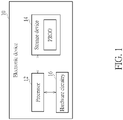
- FIG. 1 is a diagram illustrating an electronic device 10 according to an embodiment of the present invention.
- the electronic device 10 may be a portable device such as a smartphone or a tablet.
- the electronic device 10 may include a processor 12, a storage device 14, and a hardware circuitry 16.
- the processor 12 may be a single-core processor or a multi-core processor.
- the storage device 14 is a computer-readable medium, and is arranged to store computer program code PROG.
- the processor 12 is equipped with software execution capability.
- the computer program code PROG may include a plurality of software modules. Hence, when loaded and executed by the processor 12, the computer program code PROG instructs the processor 12 to perform designated functions of the software modules.
- the electronic device 10 may be regarded as a computer system using a computer program product that includes a computer-readable medium containing the computer program code.
- the hardware circuitry 16 is pure hardware that may consist of logic gates only, and performs designated functions without software execution.
- a system for kernel protection as proposed by the present invention, it may be embodied on the electronic device 10.
- the system for kernel protection may include software-based functions implemented by computer program code PROG running on the processor 12 and hardware-based functions implemented by the hardware circuitry 16.
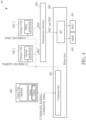
- FIG. 2 is a diagram illustrating a system 20 for kernel protection according to an embodiment of the present invention.
- the system 20 may include a processor (e.g. the processor 12 shown in FIG. 1 ) and a transmission interface 260.
- the processor may be arranged to execute software modules, including one or more guest virtual machines (VMs) 200_1, 200_2, ..., 200_N (N ⁇ 1), one or more primary VMs 240_1, 240_2, ..., 240_M (M ⁇ 1), and a hypervisor 280.
- the guest VMs 200_1, 200_2, ..., 200_N may be provided by different vendors, and "N" and "M" are positive integers that may be equal to or different from each other.
- the processor may be further arranged to execute a command hub 220 that is a software module integrated in the hypervisor 280, but the present invention is not limited thereto.
- the command hub 220 may be a hardware component external to the hypervisor 280 executed on the processor.
- the transmission interface 260 can be implemented by either software or hardware.
- each of the guest VMs 200_1, 200_2, ..., 200_N may be arranged to send at least one command VM_COMMAND to the command hub 220.
- the guest VM 200_1 may be an Android VM with a Linux kernel, wherein at least one client in the Android VM may send the at least one command VM_COMMAND to the command hub 220.
- at least one application in the Android VM may also be capable of sending the at least one command VM_COMMAND to the command hub 220.
- Each of the primary VMs 240_1, 240_2, ..., 240_M may include an agent 241, a kernel protection manager 242 (for brevity, labeled as "KP manager” in FIG. 2 ), and a protection manager 243.
- the command hub 220 may be arranged to broadcast the at least one command VM_COMMAND to each agent 241 in the primary VMs 240_1, 240_2, ..., 240_M, or may send the at least one command VM_COMMAND to a specific agent of a primary VM selected from the primary VMs 240_1, 240_2, ..., 240_M according to the type of the at least one command VM_COMMAND.
- the command hub 220 may be arranged to perform communications between the guest VMs 200_1, 200_2, ..., 200_N and the primary VMs 240_1, 240_2, ..., 240_M.
- the agent 241 may be arranged to receive the at least one command VM_COMMAND sent from the command hub 220.
- the kernel protection manager 242 may be arranged to receive the at least one command VM_COMMAND from the agent 241 and at least one policy, and manage and configure a safety setting for the guest VMs 200_1, 200_2, ..., 200_N according to the at least one command VM_COMMAND and the at least one policy, wherein the safety setting may include kernel protection, direct memory access (DMA) protection, isolated execution environment protection, application protection, or any other types of protection for kernel, and the at least one policy corresponds to the guest VMs 200_1, 200_2, ..., 200_N.
- DMA direct memory access
- the at least one policy corresponds to the guest VMs 200_1, 200_2, ..., 200_N.
- safety settings of the primary VMs 240_1, 240_2, ..., 240_M are independent of each other.
- Each of the primary VMs 240_1, 240_2, ..., 240_M may have the same or similar architecture. Take the primary VM 240_1 as an example.
- the primary VM 240_1 may include an agent 241, a kernel protection manager 242, and a protection manager 243.
- the agent 241 may be arranged to receive the at least one command VM_COMMAND sent from the command hub 220.
- the kernel protection manager 242 may be arranged to receive the at least one command VM_COMMAND sent from the agent 241 and a policy corresponding to the guest VM 200_1, and manage and configure the safety setting for the guest VM 200_1 according to the at least one command VM_COMMAND and the policy.
- the present invention is not limited thereto, however.
- the protection manager 243 may be arranged to manage and configure a safety protection component according to the safety setting provided by the kernel protection manager 242, wherein the safety protection component may include a Memory Management Unit (MMU) 290 and/or a Memory Protection Unit (MPU) 291.
- the safety protection component may include a Memory Management Unit (MMU) 290 and/or a Memory Protection Unit (MPU) 291.
- the guest VM 200_1 sends a command for kernel protection to the primary VM 240_1 through the command hub 220
- the agent 241 may be arranged to receive the command from the command hub 220
- the kernel protection manager 242 may be arranged to receive the command from the agent 241 and the policy corresponding to the guest VM 200_1, and manage and configure the safety setting (i.e. the kernel protection) for the guest VM 200_1 according to the command and the policy.
- the protection manager 243 may be arranged to manage and configure the safety protection component (e.g. the MMU 290 and/or the MPU 291) according to
- the transmission interface 260 may be arranged to bind the primary VMs 240_1, 240_2, ..., 240_M to the hypervisor 280, and perform communications between the primary VMs 240_1, 240_2, ..., 240_M and the hypervisor 280. In this way, only the primary VM that is bound to the hypervisor 280 by the transmission interface 260 is capable of communicating with the hypervisor 280 (e.g. sending a safety setting command to the hypervisor 280 for subsequent operations), which prevents other illegal users from utilizing the system 20.
- the hypervisor 280 may include a protection engine 281, wherein the protection engine 281 may be arranged to receive a ground rule and at least one safety setting command SAFETY_COMMAND that is sent by the primary VMs 240_1, 240_2, ..., 240_M through the transmission interface 260, and manage and configure the safety protection component (e.g. the MMU 290 and/or the MPU 291) according to the ground rule and the at least one safety setting command SAFETY_COMMAND.
- the ground rule is executed by the hypervisor 280, and is followed by both of the primary VMs 240_1, 240_2, ..., 240_M and the hypervisor 280.
- the complexity of the hypervisor 280 may be released (i.e. the hypervisor 280 may only need to execute the operations of protection mechanism), and the guest VMs 200_1, 200_2, ..., 200_N may be allowed to run more complex software.
- the vendors of the guest VMs 200_1, 200_2, ..., 200_N only need to provide the policies to the primary VMs 240_1, 240_2, ..., 240_M.
- the hypervisor 280 only needs to execute the ground rule (where the policies that correspond to the guest VMs 200_1, 200_2, ..., 200_N, respectively, may be executed by the primary VMs 240_1, 240_2, ..., 240_M), which makes the hypervisor 280 more secure. Since the execution loss of the policies is not the main loss, the performance of the products that include the system 20 will not be degraded.
- FIG. 3 is a diagram illustrating a system 30 for kernel protection according to another embodiment of the present invention.
- the system 30 may include a processor (e.g. the processor 12 shown in FIG. 1 ), a command hub 320, and a transmission interface 360.
- the processor may be arranged to execute software modules, including one or more guest VMs 300_1, 300_2, ..., 300_N (N ⁇ 1), one or more primary VMs 340_1, 340_2, ..., 340_M (M ⁇ 1), and a hypervisor 380.
- the guest VMs 300_1, 300_2, ..., 300_N may be provided by different vendors, and "N" or "M" are positive integers that may be equal to or different from each other.
- the command hub 320 of the system 30 is a hardware component external to the hypervisor 380 executed on the processor.
- the command hub 320 may be a part of the hardware circuitry 16 shown in FIG. 1 .
- the transmission interface 360 can be implemented by either software or hardware. For brevity, similar descriptions for this embodiment are not repeated in detail here.
- FIG. 4 is a diagram illustrating a system 40 with one guest VM and two primary VMs for kernel protection and DMA protection according to an embodiment of the present invention.
- the system 40 shown in FIG. 4 may be implemented by the system 20 shown in FIG. 2 .
- the system 30 shown in FIG. 3 may also be employed to realize a system with one guest VM and two primary VMs for kernel protection and DMA protection.
- the system 40 may include a processor (e.g. the processor 12 shown in FIG. 1 ) and a transmission interface 460.
- the processor may be arranged to execute a guest VM 400, a command hub 420, two primary VMs 440_1 and 440_2, and a hypervisor 480.
- the command hub 420 is a software module integrated in the hypervisor 480, but the present invention is not limited thereto.
- the command hub 420 may be implemented outside the hypervisor 480 as well.
- the guest VM 400 may be an Android VM with a Linux kernel, and there are two clients in the guest VM 400.
- one client is a phone maker, and the other client is a chip vendor, wherein the phone maker may send a command COMMAND_KERNEL for the kernel protection of the Linux that runs on the guest VM 400 to the command hub 420, and the chip vendor may send a command COMMAND_DMA for the DMA protection of the Linux that runs on the guest VM 400 to the command hub 420.
- the primary VM 440_1 may be arranged to: receive the command COMMAND_KERNEL from the command hub 420 and a policy that corresponds to the guest VM 400; manage and configure the safety setting (e.g. the kernel protection) for the guest VM 400 according to the command COMMAND_KERNEL and the policy; and manage and configure the safety protection component (e.g. an MMU 490 and/or an MPU 491) according to the safety setting.
- the primary VM 440_1 may be arranged to send a safety setting command SAFETY_KERNEL_COMMAND (labeled as "SKC" in FIG. 4 ) to the hypervisor 480 through the transmission interface 460.
- SAFETY_KERNEL_COMMAND labeled as "SKC” in FIG. 4
- "Kernel protection” that is labeled in FIG. 4 may include the agent, the kernel protection manager, the protection manager, and the above-mentioned operations of the primary VM 440_1.
- the primary VM 440_2 may be arranged to: receive the command COMMAND_DMA from the command hub 420 and the policy that corresponds to the guest VM 400; manage and configure the safety setting (e.g. the DMA protection) for the guest VM 400 according to the command COMMAND_DMA and the policy; and manage and configure the safety protection component (e.g. the MMU 490 and/or the MPU 491) according to the safety setting.
- the primary VM 440_2 may be arranged to send a safety setting command SAFETY_DMA_COMMAND (labeled as "SDC" in FIG. 4 ) to the hypervisor 480 through the transmission interface 460.
- SAFETY_DMA_COMMAND labeled as "SDC" in FIG. 4
- "DMA protection” that is labeled in FIG. 4 may include the agent, the kernel protection manager, the protection manager, and the above-mentioned operations of the primary VM 440_2.
- the hypervisor 480 may be arranged to receive the ground rule and the two safety setting commands SAFETY_KERNEL_COMMAND and SAFETY_DMA_COMMAND, and manage and configure the safety protection component (e.g. the MMU 490 and/or the MPU 491) according to the ground rule and the two safety setting commands SAFETY_KERNEL_COMMAND and SAFETY_DMA_COMMAND.
- "KP" that is labeled in FIG. 4 may include the protection engine and the above-mentioned operations of the hypervisor 480.
- the safety setting (i.e. the kernel protection) of the primary VM 440_1 and the safety setting (i.e. the DMA protection) of the primary VM 440_2 are independent of each other.
- the phone maker and the chip vendor may independently perform the kernel protection and the DMA protection, respectively, without software integration in the hypervisor 480.
- the kernel protection and the DMA protection may be performed through a same primary VM according to design requirements.
- the processor may be arranged to execute only one primary VM (e.g. the primary VM 440_1).
- the primary VM 440_1 may be arranged to: receive the commands COMMAND_KERNEL and COMMAND_DMA from the command hub 420 and the policy that corresponds to the guest VM 400; manage and configure the safety setting (e.g. the kernel protection and the DMA protection) for the guest VM 400 according to the command COMMAND_KERNEL, the command COMMAND_DMA, and the policy; and manage and configure the safety protection component (e.g.
- the primary VM 440_1 may be arranged to send the safety setting commands SAFETY_KERNEL_COMMAND and SAFETY_DMA_COMMAND to the hypervisor 480 through the transmission interface 460.
- FIG. 5 is a diagram illustrating a system 50 with two guest VMs and three primary VMs for kernel protection, DMA protection, and isolated execution environment protection according to an embodiment of the present invention.
- the system 50 shown in FIG. 5 may be implemented by the system 20 shown in FIG. 2 .
- the system 30 shown in FIG. 3 may also be employed to realize a system with two guest VMs and three primary VMs for kernel protection, DMA protection, and isolated execution environment protection.
- the system 50 may include a processor (e.g. the processor 12 shown in FIG. 1 ) and a transmission interface 560.
- the processor may be arranged to execute two guest VMs 500_1 and 500_2, a command hub 520, three primary VMs 540_1, 540_2, and 540_3, and a hypervisor 580.
- the command hub 520 is a software module integrated in the hypervisor 580 in this embodiment, but the present invention is not limited thereto.
- the guest VM 500_1 may be an Android VM with a Linux kernel, and there are two clients in the guest VM 500_1.
- one client is a phone maker, and the other client is a chip vendor, wherein the phone maker may send a command COMMAND_KERNEL for the kernel protection of the Linux that runs on the guest VM 500_1 to the command hub 520, and the chip vendor may send a command COMMAND_DMA for the DMA protection of the Linux that runs on the guest VM 500_1 to the command hub 520.
- the guest VM 500_2 may be a VM for an isolated execution environment (labeled as "IEE" in FIG. 5 ), wherein a client in the guest VM 500_2 may send a command COMMAND_IEE for isolated execution environment protection to the command hub 520.
- the primary VM 540_1 may be arranged to: receive the command COMMAND_KERNEL from the command hub 520 and a policy that corresponds to the guest VM 500_1; manage and configure the safety setting (e.g. the kernel protection) for the guest VM 500_1 according to the command COMMAND_KERNEL and the policy; and manage and configure the safety protection component (e.g. an MMU 590 and/or an MPU 591) according to the safety setting.
- the primary VM 540_1 may be arranged to send a safety setting command SAFETY_KERNEL_COMMAND (labeled as "SKC" in FIG. 5 ) to the hypervisor 580 through the transmission interface 560.
- SAFETY_KERNEL_COMMAND labeled as "SKC” in FIG. 5
- "Kernel protection” that is labeled in FIG. 5 may include the agent, the kernel protection manager, the protection manager, and the above-mentioned operations of the primary VM 540_1.
- the primary VM 540_2 may be arranged to: receive the command COMMAND_DMA from the command hub 520 and the policy that corresponds to the guest VM 500_1; manage and configure the safety setting (e.g. the DMA protection) for the guest VM 500_1 according to the command COMMAND_DMA and the policy; and manage and configure the safety protection component (e.g. the MMU 590 and/or the MPU 591) according to the safety setting.
- the primary VM 540_2 may be arranged to send a safety setting command SAFETY_DMA_COMMAND (labeled as "SDC" in FIG. 5 ) to the hypervisor 580 through the transmission interface 560.
- SAFETY_DMA_COMMAND labeled as "SDC" in FIG. 5
- "DMA protection” that is labeled in FIG. 5 may include the agent, the kernel protection manager, the protection manager, and the above-mentioned operations of the primary VM 540_2.
- the primary VM 540_3 may be arranged to: receive the command COMMAND_IEE from the command hub 520 and a policy that corresponds to the guest VM 500_2; manage and configure the safety setting (e.g. the isolated execution environment protection) for the guest VM 500_2 according to the command COMMAND_IEE and the policy; and manage and configure the safety protection component (e.g. the MMU 590 and/or the MPU 591) according to the safety setting.
- the primary VM 540_3 may be arranged to send a safety setting command SAFETY_IEE_COMMAND (labeled as "SIC" in FIG. 5 ) to the hypervisor 580 through the transmission interface 560.
- SAFETY_IEE_COMMAND labeled as "SIC" in FIG. 5
- "IEE protection” that is labeled in FIG. 5 may include the agent, the kernel protection manager, the protection manager, and the above-mentioned operations of the primary VM 540_3.
- the hypervisor 580 may be arranged to receive the ground rule and the three safety setting commands SAFETY_KERNEL_COMMAND, SAFETY_DMA_COMMAND, and SAFETY_IEE_COMMAND, and manage and configure the safety protection component (e.g. the MMU 590 and/or the MPU 591) according to the ground rule and the three safety setting commands SAFETY_KERNEL_COMMAND, SAFETY_DMA_COMMAND, and SAFETY_IEE_COMMAND.
- “KP" that is labeled in FIG. 5 may include the protection engine and the above-mentioned operations of the hypervisor 580. It should be noted that, the safety setting (i.e.
- the kernel protection of the primary VM 540_1 the safety setting (i.e. the DMA protection) of the primary VM 540_2, and the safety setting (i.e. the isolated execution environment protection) of the primary VM 540_3 are independent of each other.
- the processor may be arranged to execute only one primary VM (e.g. the primary VM 540_1).
- the primary VM 540_1 may be arranged to: receive the commands COMMAND_KERNEL, COMMAND_DMA , and COMMAND_IEE from the command hub 520 and the policies that correspond to the guest VMs 500_1 and 500_2, respectively; manage and configure the safety setting (e.g.
- the primary VM 500_1 may be arranged to send the safety setting commands SAFETY_KERNEL_COMMAND, SAFETY_DMA_COMMAND, and SAFETY_IEE_COMMAND to the hypervisor 580 through the transmission interface 560.
- the processor may be arranged to execute two primary VMs (e.g.
- the primary VM 540_1 may be arranged to receive the commands COMMAND_KERNEL and COMMAND_DMA from the command hub 520 and the policy that corresponds to the guest VM 500_1.
- the primary VM 540_2 may be arranged to receive the command COMMAND_IEE from the command hub 520 and the policy that corresponds to the guest VM 500_2. For brevity, similar descriptions for those embodiments are not repeated in detail here.
- FIG. 6 is a diagram illustrating a system 60 with one guest VM and two primary VMs for two application (APP) protections according to an embodiment of the present invention.
- the system 60 shown in FIG. 6 may be implemented by the system 20 shown in FIG. 2 .
- the system 30 shown in FIG. 3 may also be employed to realize a system with one guest VM and two primary VMs for two APP protections.
- the system 60 may include a processor (e.g. the processor 12 shown in FIG. 1 ) and a transmission interface 660.
- the processor may be arranged to execute a guest VM 600, a command hub 620, two primary VMs 640_1 and 640_2, and a hypervisor 680.
- the command hub 620 is a software module integrated in the hypervisor 680 in this embodiment, but the present invention is not limited thereto.
- the guest VM 600 may be an Android VM with a Linux kernel, and there are two APPs (e.g. an APP A and an APP B) running on the guest VM 600, wherein the APP A may send a command COMMAND_APPA for the APP protection of the APP A to the command hub 620, and the APP B may send another command COMMAND_APPB for the APP protection of the APP B to the command hub 620.
- APP A may send a command COMMAND_APPA for the APP protection of the APP A to the command hub 620
- the APP B may send another command COMMAND_APPB for the APP protection of the APP B to the command hub 620.
- the primary VM 640_1 may be arranged to: receive the command COMMAND_APPA from the command hub 620 and a policy that corresponds to the guest VM 600; manage and configure the safety setting (e.g. the APP protection of the APP A) for the guest VM 600 according to the command COMMAND_ APPA and the policy; and manage and configure the safety protection component (e.g. an MMU 690 and/or an MPU 691) according to the safety setting.
- the primary VM 640_1 may be arranged to send a safety setting command SAFETY_APPA_COMMAND (labeled as "SAC" in FIG. 6 ) to the hypervisor 680 through the transmission interface 660.
- SAFETY_APPA_COMMAND labeled as "SAC" in FIG. 6
- "APP A protection” that is labeled in FIG. 6 may include the agent, the kernel protection manager, the protection manager, and the above-mentioned operations of the primary VM 640_1.
- the primary VM 640_2 may be arranged to: receive the command COMMAND_APPB from the command hub 620 and the policy that corresponds to the guest VM 600; manage and configure the safety setting (e.g. the APP protection of the APP B) for the guest VM 600 according to the command COMMAND_APPB and the policy; and manage and configure the safety protection component (e.g. the MMU 690 and/or the MPU 691) according to the safety setting.
- the primary VM 640_2 may be arranged to send a safety setting command SAFETY_APPB_COMMAND (labeled as "SBC" in FIG. 6 ) to the hypervisor 680 through the transmission interface 660.
- SAFETY_APPB_COMMAND labeled as "SBC” in FIG. 6
- "APP B protection” that is labeled in FIG. 6 may include the agent, the kernel protection manager, the protection manager, and the above-mentioned operations of the primary VM 640_2.
- the hypervisor 680 may be arranged to receive the ground rule and the two safety setting commands SAFETY_APPA_COMMAND and SAFETY_APPB_COMMAND, and manage and configure the safety protection component (e.g. the MMU 690 and/or the MPU 691) according to the ground rule and the two safety setting commands SAFETY_APPA_COMMAND and SAFETY_APPB_COMMAND.
- the safety protection component e.g. the MMU 690 and/or the MPU 691
- KP that is labeled in FIG. 6 may include the protection engine and the above-mentioned operations of the hypervisor 680.
- the safety setting (e.g. the APP protection of the APP A) of the primary VM 640_1 and the safety setting (e.g. the APP protection of the APP B) of the primary VM 640_2 are independent of each other.
- the APP A and the APP B may be provided by different vendors.
- the present invention may also be defined by means of the following numbered clauses.
Landscapes
- Engineering & Computer Science (AREA)
- Software Systems (AREA)
- Theoretical Computer Science (AREA)
- Computer Security & Cryptography (AREA)
- General Engineering & Computer Science (AREA)
- General Physics & Mathematics (AREA)
- Physics & Mathematics (AREA)
- Computer Hardware Design (AREA)
- Databases & Information Systems (AREA)
- Health & Medical Sciences (AREA)
- Bioethics (AREA)
- General Health & Medical Sciences (AREA)
- Storage Device Security (AREA)
Abstract
Description
- This application claims the benefit of
U.S. provisional application No. 63/245,235, filed on 09/17/2021 - For Android's high-level operating system (OS) that uses a monolithic OS (e.g. a Linux) as a kernel, if the kernel runs too many drivers or software, security vulnerabilities will occur in the kernel. To address this issue, kernel protection products are usually made through the hypervisor for devices with network applications, wherein the kernel protection mechanism ensures the perception and blocking of vulnerabilities and leaks by monitoring, filtering, and protection.
- In addition, based on performance and cost considerations, a thinner and lighter hypervisor is usually used for kernel protection. Under the situation that the system with the hypervisor supports too many guest virtual machines (VMs), the management ability of the hypervisor may be insufficient (e.g. the complexity of the software that the hypervisor can run may be limited, and the hypervisor may be difficult to effectively perform security analysis), and the system may have security concerns (e.g. the kernel protection mechanism inside the hypervisor itself will be harmful to the hypervisor) . As a result, a novel system that may share management for the hypervisor to release the complexity of the hypervisor is urgently needed.
- It is therefore one of the objectives of the present invention to provide a system for kernel protection, a command hub that runs on a processor or implemented by pure hardware, and a primary virtual machine (VM) that runs on a processor, to address above-mentioned issues.
- According to at least one embodiment of the present invention, a system for kernel protection is provided. The system may include a processor and a transmission interface. The processor may be arranged to execute at least one guest virtual machine (VM), at least one primary VM, and a hypervisor. The at least one guest VM may be arranged to send at least one command to a command hub. The at least one primary VM may be arranged to: receive the at least one command sent from the command hub, receive at least one policy, and manage and configure a safety setting according to the at least one command and the at least one policy, wherein the at least one policy corresponds to the at least one guest VM. The hypervisor may be arranged to receive a ground rule and at least one safety setting command sent by the at least one primary VM, and manage and configure at least one safety protection component according to the ground rule and the at least one safety setting command. The transmission interface may be arranged to bind the at least one primary VM to the hypervisor, and perform communications between the at least one primary VM and the hypervisor.
- According to at least one embodiment of the present invention, a command hub that runs on a processor or is implemented by pure hardware is provided. The command hub may be arranged to receive at least one command sent from at least one guest virtual machine (VM), and send the at least one command to at least one primary VM, wherein the at least one command sent from the command hub together with at least one policy corresponding to the at least one guest VM are utilized to manage and configure a safety setting for the at least one guest VM, and the safety setting is utilized to manage and configure a safety protection component.
- According to at least one embodiment of the present invention, a primary virtual machine (VM) that runs on a processor is provided. The primary VM may include an agent, a kernel protection manager, and a protection manager. The agent may be arranged to receive at least one command sent from at least one guest VM. The kernel protection manager may be arranged to receive the at least one command sent from the agent and at least one policy, and manage and configure a safety setting for the at least one guest VM according to the at least one command and the at least one policy, wherein the at least one policy corresponds to the at least one guest VM. The protection manager may be arranged to manage and configure a safety protection component according to the safety setting provided by the kernel protection manager.
- One of the benefits of the present invention is that, by sharing management for the hypervisor through primary VMs (i.e. offloading at least a portion of a management task of the hypervisor to the primary VMs), the complexity of the hypervisor may be released, and the guest VMs may be allowed to run more complex software. In addition, instead of integrating the policies into the hypervisor, the vendors of the guest VMs only need to provide the policies to the primary VMs. As a result, the cost, the convenience, and the safety in the mass production stage of the products that include the system for kernel protection may be improved. In other words, the hypervisor only needs to execute a ground rule (i.e. the policies that correspond to the guest VMs, respectively, may be executed by the primary VMs), which makes the hypervisor more secure. Since the execution loss of the policies is not the main loss, the performance of the products that include the system for kernel protection will not be degraded.
- These and other objectives of the present invention will no doubt become obvious to those of ordinary skill in the art after reading the following detailed description of the preferred embodiment that is illustrated in the various figures and drawings.
-
-
FIG. 1 is a diagram illustrating an electronic device according to an embodiment of the present invention. -
FIG. 2 is a diagram illustrating a system for kernel protection according to an embodiment of the present invention. -
FIG. 3 is a diagram illustrating a system for kernel protection according to another embodiment of the present invention. -
FIG. 4 is a diagram illustrating a system with one guest virtual machine (VM) and two primary VMs for kernel protection and direct memory access (DMA) protection according to an embodiment of the present invention. -
FIG. 5 is a diagram illustrating a system with two guest VMs and three primary VMs for kernel protection, DMA protection, and isolated execution environment protection according to an embodiment of the present invention. -
FIG. 6 is a diagram illustrating a system with one guest VM and two primary VMs for two application protections according to an embodiment of the present invention. - Certain terms are used throughout the following description and claims, which refer to particular components. As one skilled in the art will appreciate, electronic equipment manufacturers may refer to a component by different names. This document does not intend to distinguish between components that differ in name but not in function. In the following description and in the claims, the terms "include" and "comprise" are used in an open-ended fashion, and thus should be interpreted to mean "include, but not limited to ...".
-
FIG. 1 is a diagram illustrating anelectronic device 10 according to an embodiment of the present invention. By way of example, but not limitation, theelectronic device 10 may be a portable device such as a smartphone or a tablet. Theelectronic device 10 may include aprocessor 12, astorage device 14, and ahardware circuitry 16. Theprocessor 12 may be a single-core processor or a multi-core processor. Thestorage device 14 is a computer-readable medium, and is arranged to store computer program code PROG. Theprocessor 12 is equipped with software execution capability. The computer program code PROG may include a plurality of software modules. Hence, when loaded and executed by theprocessor 12, the computer program code PROG instructs theprocessor 12 to perform designated functions of the software modules. Theelectronic device 10 may be regarded as a computer system using a computer program product that includes a computer-readable medium containing the computer program code. Thehardware circuitry 16 is pure hardware that may consist of logic gates only, and performs designated functions without software execution. Regarding a system for kernel protection as proposed by the present invention, it may be embodied on theelectronic device 10. For example, the system for kernel protection may include software-based functions implemented by computer program code PROG running on theprocessor 12 and hardware-based functions implemented by thehardware circuitry 16. -
FIG. 2 is a diagram illustrating asystem 20 for kernel protection according to an embodiment of the present invention. Thesystem 20 may include a processor (e.g. theprocessor 12 shown inFIG. 1 ) and atransmission interface 260. The processor may be arranged to execute software modules, including one or more guest virtual machines (VMs) 200_1, 200_2, ..., 200_N (N ≥ 1), one or more primary VMs 240_1, 240_2, ..., 240_M (M ≥ 1), and ahypervisor 280. The guest VMs 200_1, 200_2, ..., 200_N may be provided by different vendors, and "N" and "M" are positive integers that may be equal to or different from each other. In addition, the processor may be further arranged to execute acommand hub 220 that is a software module integrated in thehypervisor 280, but the present invention is not limited thereto. In some embodiments, thecommand hub 220 may be a hardware component external to thehypervisor 280 executed on the processor. In some embodiments, thetransmission interface 260 can be implemented by either software or hardware. - As shown in
FIG. 2 , each of the guest VMs 200_1, 200_2, ..., 200_N may be arranged to send at least one command VM_COMMAND to thecommand hub 220. For example, the guest VM 200_1 may be an Android VM with a Linux kernel, wherein at least one client in the Android VM may send the at least one command VM_COMMAND to thecommand hub 220. In some embodiments, at least one application in the Android VM may also be capable of sending the at least one command VM_COMMAND to thecommand hub 220. Each of the primary VMs 240_1, 240_2, ..., 240_M may include anagent 241, a kernel protection manager 242 (for brevity, labeled as "KP manager" inFIG. 2 ), and aprotection manager 243. Thecommand hub 220 may be arranged to broadcast the at least one command VM_COMMAND to eachagent 241 in the primary VMs 240_1, 240_2, ..., 240_M, or may send the at least one command VM_COMMAND to a specific agent of a primary VM selected from the primary VMs 240_1, 240_2, ..., 240_M according to the type of the at least one command VM_COMMAND. As a result, thecommand hub 220 may be arranged to perform communications between the guest VMs 200_1, 200_2, ..., 200_N and the primary VMs 240_1, 240_2, ..., 240_M. - The
agent 241 may be arranged to receive the at least one command VM_COMMAND sent from thecommand hub 220. Thekernel protection manager 242 may be arranged to receive the at least one command VM_COMMAND from theagent 241 and at least one policy, and manage and configure a safety setting for the guest VMs 200_1, 200_2, ..., 200_N according to the at least one command VM_COMMAND and the at least one policy, wherein the safety setting may include kernel protection, direct memory access (DMA) protection, isolated execution environment protection, application protection, or any other types of protection for kernel, and the at least one policy corresponds to the guest VMs 200_1, 200_2, ..., 200_N. It should be noted that, safety settings of the primary VMs 240_1, 240_2, ..., 240_M are independent of each other. - Each of the primary VMs 240_1, 240_2, ..., 240_M may have the same or similar architecture. Take the primary VM 240_1 as an example. The primary VM 240_1 may include an
agent 241, akernel protection manager 242, and aprotection manager 243. Theagent 241 may be arranged to receive the at least one command VM_COMMAND sent from thecommand hub 220. Thekernel protection manager 242 may be arranged to receive the at least one command VM_COMMAND sent from theagent 241 and a policy corresponding to the guest VM 200_1, and manage and configure the safety setting for the guest VM 200_1 according to the at least one command VM_COMMAND and the policy. - In this embodiment, a policy corresponding to the guest VM 200_1 is received by the
kernel protection manager 242 of the primary VM 240_1; a policy corresponding to the guest VM 200_2 is received by a kernel protection manager (not shown) of the primary VM 240_2; and a policy corresponding to the guest VM 200_N is received by a kernel protection manager (not shown) of the primary VM 240_M (i.e. N = M and the guest VMs 200_1, 200_2, ..., 200_N correspond to the primary VMs 240_1, 240_2, ..., 240_M, respectively) . The present invention is not limited thereto, however. In some embodiments, the primary VMs 240_1, 240_2, ..., 240_M may only include one primary VM 240_1 (i.e. M = 1), and a plurality of policies that correspond to the guest VMs 200_1, 200_2, ..., 200_N, respectively, may be received by thekernel protection manager 242 of the primary VM 240_1. In some embodiments, the guest VMs 200_1, 200_2, ..., 200_N may only include one guest VM 200_1 (i.e. N = 1), and the policy that corresponds to the guest VM 200_1 may be received by kernel protection managers of the primary VMs 240_1, 240_2, ..., 240_M. - The
protection manager 243 may be arranged to manage and configure a safety protection component according to the safety setting provided by thekernel protection manager 242, wherein the safety protection component may include a Memory Management Unit (MMU) 290 and/or a Memory Protection Unit (MPU) 291. For example, the guest VM 200_1 sends a command for kernel protection to the primary VM 240_1 through thecommand hub 220, theagent 241 may be arranged to receive the command from thecommand hub 220, and thekernel protection manager 242 may be arranged to receive the command from theagent 241 and the policy corresponding to the guest VM 200_1, and manage and configure the safety setting (i.e. the kernel protection) for the guest VM 200_1 according to the command and the policy. Afterwards, theprotection manager 243 may be arranged to manage and configure the safety protection component (e.g. theMMU 290 and/or the MPU 291) according to the safety setting provided by thekernel protection manager 242. - The
transmission interface 260 may be arranged to bind the primary VMs 240_1, 240_2, ..., 240_M to thehypervisor 280, and perform communications between the primary VMs 240_1, 240_2, ..., 240_M and thehypervisor 280. In this way, only the primary VM that is bound to thehypervisor 280 by thetransmission interface 260 is capable of communicating with the hypervisor 280 (e.g. sending a safety setting command to thehypervisor 280 for subsequent operations), which prevents other illegal users from utilizing thesystem 20. Thehypervisor 280 may include aprotection engine 281, wherein theprotection engine 281 may be arranged to receive a ground rule and at least one safety setting command SAFETY_COMMAND that is sent by the primary VMs 240_1, 240_2, ..., 240_M through thetransmission interface 260, and manage and configure the safety protection component (e.g. theMMU 290 and/or the MPU 291) according to the ground rule and the at least one safety setting command SAFETY_COMMAND. It should be noted that, the ground rule is executed by thehypervisor 280, and is followed by both of the primary VMs 240_1, 240_2, ..., 240_M and thehypervisor 280. - By sharing management for the
hypervisor 280 through the primary VMs 240_1, 240_2, ..., 240_M, that is, offloading at least a portion of a management task of thehypervisor 280 to the primary VMs 240_1, 240_2, ..., 240_M, the complexity of thehypervisor 280 may be released (i.e. thehypervisor 280 may only need to execute the operations of protection mechanism), and the guest VMs 200_1, 200_2, ..., 200_N may be allowed to run more complex software. In addition, instead of integrating the policies into thehypervisor 280, the vendors of the guest VMs 200_1, 200_2, ..., 200_N only need to provide the policies to the primary VMs 240_1, 240_2, ..., 240_M. As a result, the cost, the convenience, and the safety in the mass production stage of the products that include thesystem 20 may be improved. In other words, thehypervisor 280 only needs to execute the ground rule (where the policies that correspond to the guest VMs 200_1, 200_2, ..., 200_N, respectively, may be executed by the primary VMs 240_1, 240_2, ..., 240_M), which makes the hypervisor 280 more secure. Since the execution loss of the policies is not the main loss, the performance of the products that include thesystem 20 will not be degraded. -
FIG. 3 is a diagram illustrating asystem 30 for kernel protection according to another embodiment of the present invention. Thesystem 30 may include a processor (e.g. theprocessor 12 shown inFIG. 1 ), acommand hub 320, and atransmission interface 360. The processor may be arranged to execute software modules, including one or more guest VMs 300_1, 300_2, ..., 300_N (N ≥ 1), one or more primary VMs 340_1, 340_2, ..., 340_M (M ≥ 1), and ahypervisor 380. The guest VMs 300_1, 300_2, ..., 300_N may be provided by different vendors, and "N" or "M" are positive integers that may be equal to or different from each other. The difference between thesystem 30 shown inFIG. 3 and thesystem 20 shown inFIG. 2 is that thecommand hub 320 of thesystem 30 is a hardware component external to thehypervisor 380 executed on the processor. For example, thecommand hub 320 may be a part of thehardware circuitry 16 shown inFIG. 1 . In some embodiments, thetransmission interface 360 can be implemented by either software or hardware. For brevity, similar descriptions for this embodiment are not repeated in detail here. -
FIG. 4 is a diagram illustrating asystem 40 with one guest VM and two primary VMs for kernel protection and DMA protection according to an embodiment of the present invention. Thesystem 40 shown inFIG. 4 may be implemented by thesystem 20 shown inFIG. 2 . A skilled person should readily appreciate that thesystem 30 shown inFIG. 3 may also be employed to realize a system with one guest VM and two primary VMs for kernel protection and DMA protection. Thesystem 40 may include a processor (e.g. theprocessor 12 shown inFIG. 1 ) and atransmission interface 460. The processor may be arranged to execute aguest VM 400, acommand hub 420, two primary VMs 440_1 and 440_2, and ahypervisor 480. In this embodiment, thecommand hub 420 is a software module integrated in thehypervisor 480, but the present invention is not limited thereto. Thecommand hub 420 may be implemented outside thehypervisor 480 as well. As shown inFIG. 4 , theguest VM 400 may be an Android VM with a Linux kernel, and there are two clients in theguest VM 400. For example, one client is a phone maker, and the other client is a chip vendor, wherein the phone maker may send a command COMMAND_KERNEL for the kernel protection of the Linux that runs on theguest VM 400 to thecommand hub 420, and the chip vendor may send a command COMMAND_DMA for the DMA protection of the Linux that runs on theguest VM 400 to thecommand hub 420. - The primary VM 440_1 may be arranged to: receive the command COMMAND_KERNEL from the
command hub 420 and a policy that corresponds to theguest VM 400; manage and configure the safety setting (e.g. the kernel protection) for theguest VM 400 according to the command COMMAND_KERNEL and the policy; and manage and configure the safety protection component (e.g. anMMU 490 and/or an MPU 491) according to the safety setting. In addition, the primary VM 440_1 may be arranged to send a safety setting command SAFETY_KERNEL_COMMAND (labeled as "SKC" inFIG. 4 ) to thehypervisor 480 through thetransmission interface 460. For brevity, "Kernel protection" that is labeled inFIG. 4 may include the agent, the kernel protection manager, the protection manager, and the above-mentioned operations of the primary VM 440_1. - The primary VM 440_2 may be arranged to: receive the command COMMAND_DMA from the
command hub 420 and the policy that corresponds to theguest VM 400; manage and configure the safety setting (e.g. the DMA protection) for theguest VM 400 according to the command COMMAND_DMA and the policy; and manage and configure the safety protection component (e.g. theMMU 490 and/or the MPU 491) according to the safety setting. In addition, the primary VM 440_2 may be arranged to send a safety setting command SAFETY_DMA_COMMAND (labeled as "SDC" inFIG. 4 ) to thehypervisor 480 through thetransmission interface 460. For brevity, "DMA protection" that is labeled inFIG. 4 may include the agent, the kernel protection manager, the protection manager, and the above-mentioned operations of the primary VM 440_2. - The
hypervisor 480 may be arranged to receive the ground rule and the two safety setting commands SAFETY_KERNEL_COMMAND and SAFETY_DMA_COMMAND, and manage and configure the safety protection component (e.g. theMMU 490 and/or the MPU 491) according to the ground rule and the two safety setting commands SAFETY_KERNEL_COMMAND and SAFETY_DMA_COMMAND. For brevity, "KP" that is labeled inFIG. 4 may include the protection engine and the above-mentioned operations of thehypervisor 480. In this embodiment, the safety setting (i.e. the kernel protection) of the primary VM 440_1 and the safety setting (i.e. the DMA protection) of the primary VM 440_2 are independent of each other. As a result, the phone maker and the chip vendor may independently perform the kernel protection and the DMA protection, respectively, without software integration in thehypervisor 480. - It should be noted that, in some embodiments, the kernel protection and the DMA protection may be performed through a same primary VM according to design requirements. For example, the processor may be arranged to execute only one primary VM (e.g. the primary VM 440_1). The primary VM 440_1 may be arranged to: receive the commands COMMAND_KERNEL and COMMAND_DMA from the
command hub 420 and the policy that corresponds to theguest VM 400; manage and configure the safety setting (e.g. the kernel protection and the DMA protection) for theguest VM 400 according to the command COMMAND_KERNEL, the command COMMAND_DMA, and the policy; and manage and configure the safety protection component (e.g. theMMU 490 and/or the MPU 491) according to the safety setting. In addition, the primary VM 440_1 may be arranged to send the safety setting commands SAFETY_KERNEL_COMMAND and SAFETY_DMA_COMMAND to thehypervisor 480 through thetransmission interface 460. For brevity, similar descriptions for those embodiments are not repeated in detail here. -
FIG. 5 is a diagram illustrating asystem 50 with two guest VMs and three primary VMs for kernel protection, DMA protection, and isolated execution environment protection according to an embodiment of the present invention. Thesystem 50 shown inFIG. 5 may be implemented by thesystem 20 shown inFIG. 2 . A skilled person should readily appreciate that thesystem 30 shown inFIG. 3 may also be employed to realize a system with two guest VMs and three primary VMs for kernel protection, DMA protection, and isolated execution environment protection. Thesystem 50 may include a processor (e.g. theprocessor 12 shown inFIG. 1 ) and atransmission interface 560. The processor may be arranged to execute two guest VMs 500_1 and 500_2, acommand hub 520, three primary VMs 540_1, 540_2, and 540_3, and ahypervisor 580. Thecommand hub 520 is a software module integrated in thehypervisor 580 in this embodiment, but the present invention is not limited thereto. As shown inFIG. 5 , the guest VM 500_1 may be an Android VM with a Linux kernel, and there are two clients in the guest VM 500_1. For example, one client is a phone maker, and the other client is a chip vendor, wherein the phone maker may send a command COMMAND_KERNEL for the kernel protection of the Linux that runs on the guest VM 500_1 to thecommand hub 520, and the chip vendor may send a command COMMAND_DMA for the DMA protection of the Linux that runs on the guest VM 500_1 to thecommand hub 520. The guest VM 500_2 may be a VM for an isolated execution environment (labeled as "IEE" inFIG. 5 ), wherein a client in the guest VM 500_2 may send a command COMMAND_IEE for isolated execution environment protection to thecommand hub 520. - The primary VM 540_1 may be arranged to: receive the command COMMAND_KERNEL from the
command hub 520 and a policy that corresponds to the guest VM 500_1; manage and configure the safety setting (e.g. the kernel protection) for the guest VM 500_1 according to the command COMMAND_KERNEL and the policy; and manage and configure the safety protection component (e.g. anMMU 590 and/or an MPU 591) according to the safety setting. In addition, the primary VM 540_1 may be arranged to send a safety setting command SAFETY_KERNEL_COMMAND (labeled as "SKC" inFIG. 5 ) to thehypervisor 580 through thetransmission interface 560. For brevity, "Kernel protection" that is labeled inFIG. 5 may include the agent, the kernel protection manager, the protection manager, and the above-mentioned operations of the primary VM 540_1. - The primary VM 540_2 may be arranged to: receive the command COMMAND_DMA from the
command hub 520 and the policy that corresponds to the guest VM 500_1; manage and configure the safety setting (e.g. the DMA protection) for the guest VM 500_1 according to the command COMMAND_DMA and the policy; and manage and configure the safety protection component (e.g. theMMU 590 and/or the MPU 591) according to the safety setting. In addition, the primary VM 540_2 may be arranged to send a safety setting command SAFETY_DMA_COMMAND (labeled as "SDC" inFIG. 5 ) to thehypervisor 580 through thetransmission interface 560. For brevity, "DMA protection" that is labeled inFIG. 5 may include the agent, the kernel protection manager, the protection manager, and the above-mentioned operations of the primary VM 540_2. - The primary VM 540_3 may be arranged to: receive the command COMMAND_IEE from the
command hub 520 and a policy that corresponds to the guest VM 500_2; manage and configure the safety setting (e.g. the isolated execution environment protection) for the guest VM 500_2 according to the command COMMAND_IEE and the policy; and manage and configure the safety protection component (e.g. theMMU 590 and/or the MPU 591) according to the safety setting. In addition, the primary VM 540_3 may be arranged to send a safety setting command SAFETY_IEE_COMMAND (labeled as "SIC" inFIG. 5 ) to thehypervisor 580 through thetransmission interface 560. For brevity, "IEE protection" that is labeled inFIG. 5 may include the agent, the kernel protection manager, the protection manager, and the above-mentioned operations of the primary VM 540_3. - The
hypervisor 580 may be arranged to receive the ground rule and the three safety setting commands SAFETY_KERNEL_COMMAND, SAFETY_DMA_COMMAND, and SAFETY_IEE_COMMAND, and manage and configure the safety protection component (e.g. theMMU 590 and/or the MPU 591) according to the ground rule and the three safety setting commands SAFETY_KERNEL_COMMAND, SAFETY_DMA_COMMAND, and SAFETY_IEE_COMMAND. For brevity, "KP" that is labeled inFIG. 5 may include the protection engine and the above-mentioned operations of thehypervisor 580. It should be noted that, the safety setting (i.e. the kernel protection) of the primary VM 540_1, the safety setting (i.e. the DMA protection) of the primary VM 540_2, and the safety setting (i.e. the isolated execution environment protection) of the primary VM 540_3 are independent of each other. - It should be noted that, in some embodiments, at least two of the kernel protection, the DMA protection, and the isolated execution environment protection may be performed through a same primary VM according to design requirements. For example, the processor may be arranged to execute only one primary VM (e.g. the primary VM 540_1). The primary VM 540_1 may be arranged to: receive the commands COMMAND_KERNEL, COMMAND_DMA , and COMMAND_IEE from the
command hub 520 and the policies that correspond to the guest VMs 500_1 and 500_2, respectively; manage and configure the safety setting (e.g. the kernel protection, the DMA protection, and the isolated execution environment protection) for the guest VMs 500_1 and 500_2 according to the commands COMMAND_KERNEL, COMMAND_DMA, COMMAND_IEE, and the policies; and manage and configure the safety protection component (e.g. theMMU 590 and/or the MPU 591) according to the safety setting. In addition, the primary VM 500_1 may be arranged to send the safety setting commands SAFETY_KERNEL_COMMAND, SAFETY_DMA_COMMAND, and SAFETY_IEE_COMMAND to thehypervisor 580 through thetransmission interface 560. For another example, the processor may be arranged to execute two primary VMs (e.g. the primary VMs 540_1 and 540_2). The primary VM 540_1 may be arranged to receive the commands COMMAND_KERNEL and COMMAND_DMA from thecommand hub 520 and the policy that corresponds to the guest VM 500_1. The primary VM 540_2 may be arranged to receive the command COMMAND_IEE from thecommand hub 520 and the policy that corresponds to the guest VM 500_2. For brevity, similar descriptions for those embodiments are not repeated in detail here. -
FIG. 6 is a diagram illustrating asystem 60 with one guest VM and two primary VMs for two application (APP) protections according to an embodiment of the present invention. Thesystem 60 shown inFIG. 6 may be implemented by thesystem 20 shown inFIG. 2 . A skilled person should readily appreciate that thesystem 30 shown inFIG. 3 may also be employed to realize a system with one guest VM and two primary VMs for two APP protections. Thesystem 60 may include a processor (e.g. theprocessor 12 shown inFIG. 1 ) and atransmission interface 660. The processor may be arranged to execute aguest VM 600, acommand hub 620, two primary VMs 640_1 and 640_2, and ahypervisor 680. Thecommand hub 620 is a software module integrated in thehypervisor 680 in this embodiment, but the present invention is not limited thereto. As shown inFIG. 6 , theguest VM 600 may be an Android VM with a Linux kernel, and there are two APPs (e.g. an APP A and an APP B) running on theguest VM 600, wherein the APP A may send a command COMMAND_APPA for the APP protection of the APP A to thecommand hub 620, and the APP B may send another command COMMAND_APPB for the APP protection of the APP B to thecommand hub 620. - The primary VM 640_1 may be arranged to: receive the command COMMAND_APPA from the
command hub 620 and a policy that corresponds to theguest VM 600; manage and configure the safety setting (e.g. the APP protection of the APP A) for theguest VM 600 according to the command COMMAND_ APPA and the policy; and manage and configure the safety protection component (e.g. anMMU 690 and/or an MPU 691) according to the safety setting. In addition, the primary VM 640_1 may be arranged to send a safety setting command SAFETY_APPA_COMMAND (labeled as "SAC" inFIG. 6 ) to thehypervisor 680 through thetransmission interface 660. For brevity, "APP A protection" that is labeled inFIG. 6 may include the agent, the kernel protection manager, the protection manager, and the above-mentioned operations of the primary VM 640_1. - The primary VM 640_2 may be arranged to: receive the command COMMAND_APPB from the
command hub 620 and the policy that corresponds to theguest VM 600; manage and configure the safety setting (e.g. the APP protection of the APP B) for theguest VM 600 according to the command COMMAND_APPB and the policy; and manage and configure the safety protection component (e.g. theMMU 690 and/or the MPU 691) according to the safety setting. In addition, the primary VM 640_2 may be arranged to send a safety setting command SAFETY_APPB_COMMAND (labeled as "SBC" inFIG. 6 ) to thehypervisor 680 through thetransmission interface 660. For brevity, "APP B protection" that is labeled inFIG. 6 may include the agent, the kernel protection manager, the protection manager, and the above-mentioned operations of the primary VM 640_2. - The
hypervisor 680 may be arranged to receive the ground rule and the two safety setting commands SAFETY_APPA_COMMAND and SAFETY_APPB_COMMAND, and manage and configure the safety protection component (e.g. theMMU 690 and/or the MPU 691) according to the ground rule and the two safety setting commands SAFETY_APPA_COMMAND and SAFETY_APPB_COMMAND. For brevity, "KP" that is labeled inFIG. 6 may include the protection engine and the above-mentioned operations of thehypervisor 680. In this embodiment, the safety setting (e.g. the APP protection of the APP A) of the primary VM 640_1 and the safety setting (e.g. the APP protection of the APP B) of the primary VM 640_2 are independent of each other. As a result, the APP A and the APP B may be provided by different vendors. - Those skilled in the art will readily observe that numerous modifications and alterations of the device and method may be made while retaining the teachings of the invention. Accordingly, the above disclosure should be construed as limited only by the metes and bounds of the appended claims.
- The present invention may also be defined by means of the following numbered clauses.
- 1. A system for kernel protection, comprising:
- a processor, arranged to execute:
- at least one guest virtual machine (VM), wherein the at least one guest VM is arranged to send at least one command to a command hub;
- at least one primary VM, wherein the at least one primary VM is arranged to receive the at least one command sent from the command hub, receive at least one policy, and manage and configure a safety setting according to the at least one command and the at least one policy, where the at least one policy corresponds to the at least one guest VM; and
- a hypervisor, arranged to receive a ground rule and at least one safety setting command sent by the at least one primary VM, and manage and configure at least one safety protection component according to the ground rule and the at least one safety setting command; and
- a transmission interface, arranged to bind the at least one primary VM to the hypervisor, and perform communications between the at least one primary VM and the hypervisor.
- a processor, arranged to execute:
- 2. The system of
clause 1, wherein the at least one primary VM comprises a plurality of primary VMs, and safety settings of the plurality of primary VMs are independent of each other. - 3. The system of
clause 1, wherein the processor is further arranged to execute the command hub that is a software module integrated in the hypervisor. - 4. The system of
clause 1, further comprising:- the command hub;
- wherein the command hub is a hardware component external to the hypervisor executed on the processor.
- 5. The system of
clause 1, wherein the safety protection component comprises a memory management unit (MMU) or a memory protection unit (MPU). - 6. The system of
clause 1, wherein the safety setting comprises at least one of kernel protection, direct memory access (DMA) protection, isolated execution environment protection, and application protection. - 7. The system of
clause 1, wherein the ground rule is executed by the hypervisor, and is followed by the at least one primary VM and the hypervisor. - 8. The system of
clause 1, wherein the at least one primary VM comprises a first primary VM and a second primary VM, the safety setting configured by the first primary VM comprises kernel protection of an operating system (OS) running on the at least one guest VM, and the safety setting configured by the second primary VM comprises direct memory access (DMA) protection of the OS running on the at least one guest VM. - 9. The system of
clause 1, wherein the at least one primary VM comprises a first primary VM, a second primary VM, and a third primary VM; the at least one guest VM comprises a first guest VM and a second guest VM; the safety setting configured by the first primary VM comprises kernel protection of an operating system (OS) running on the first guest VM, the safety setting configured by the second primary VM comprises direct memory access (DMA) protection of the OS running on the first guest VM, and the safety setting configured by the third primary VM comprises protection of an isolated execution environment on the second guest VM. - 10. The system of
clause 1, wherein the at least one primary VM comprises a first primary VM and a second primary VM, the safety setting configured by the first primary VM comprises protection of a first application running on the at least one guest VM, and the safety setting configured by the second primary VM comprises protection of a second application running on the at least one guest VM. - 11. A command hub, running on a processor or implemented by pure hardware, and arranged to:
- receive at least one command sent from at least one guest virtual machine (VM); and
- send the at least one command to at least one primary VM,
- 12. The command hub of clause 11, wherein the safety protection component comprises a memory management unit (MMU).
- 13. The command hub of clause 11, wherein the safety protection component comprises a memory protection unit (MPU).
- 14. A primary virtual machine (VM) running on a processor, comprising:
- an agent, arranged to receive at least one command sent from at least one guest VM;
- a kernel protection manager, arranged to receive the at least one command sent from the agent and at least one policy, and manage and configure a safety setting for the at least one guest VM according to the at least one command and the at least one policy, wherein the at least one policy corresponds to the at least one guest VM; and
- a protection manager, arranged to manage and configure a safety protection component according to the safety setting provided by the kernel protection manager.
- 15. The primary VM of
clause 14, wherein the at least one command sent from the at least one guest VM is first received by a command hub, and is sent to the agent of the primary VM by the command hub. - 16. The primary VM of
clause 14, wherein the primary VM is bound to a hypervisor by a transmission interface, and the transmission interface is arranged to perform communications between the primary VM and the hypervisor. - 17. The primary VM of
clause 14, wherein the safety protection component comprises a memory management unit (MMU). - 18. The primary VM of
clause 14, wherein the safety protection component comprises a memory protection unit (MPU). - 19. The primary VM of
clause 14, wherein the safety setting configured by the kernel protection manager of the primary VM comprises direct memory access (DMA) protection. - 20. The primary VM of
clause 14, wherein the safety setting configured by the kernel protection manager of the primary VM comprises kernel protection.
Claims (15)
- A system (20, 30, 40, 50, 60) for kernel protection, comprising:a processor (12), arranged to execute:at least one guest virtual machine, VM, wherein the at least one guest VM (200_1, 200_2,..., 200_N, 400, 500_1, 500_2, 600) is arranged to send at least one command to a command hub (220, 320, 420, 520, 620);at least one primary VM (240_1, 240_2,..., 240_M, 440_1, 440_2, 540_1, 540_2, 540_3, 640_1, 640_2), wherein the at least one primary VM (240_1, 240_2,..., 240_M, 440_1, 440_2, 540_1, 540_2, 540_3, 640_1, 640_2) is arranged to receive the at least one command sent from the command hub (220, 320, 420, 520, 620), receive at least one policy, and manage and configure a safety setting according to the at least one command and the at least one policy, where the at least one policy corresponds to the at least one guest VM (200_1, 200_2,..., 200_N, 400, 500_1, 500_2, 600); anda hypervisor (280, 380, 480, 580, 680), arranged to receive a ground rule and at least one safety setting command sent by the at least one primary VM (240_1, 240_2,..., 240_M, 440_1, 440_2, 540_1, 540_2, 540_3, 640_1, 640_2), and manage and configure at least one safety protection component according to the ground rule and the at least one safety setting command; anda transmission interface (260, 360, 460, 560, 660), arranged to bind the at least one primary VM (240_1, 240_2,..., 240_M, 440_1, 440_2, 540_1, 540_2, 540_3, 640_1, 640_2) to the hypervisor (280, 380, 480, 580, 680), and perform communications between the at least one primary VM (240_1, 240_2,..., 240_M, 440_1, 440_2, 540_1, 540_2, 540_3, 640_1, 640_2) and the hypervisor (280, 380, 480, 580, 680).
- The system (20, 30, 40, 50, 60) of claim 1, wherein the at least one primary VM (240_1, 240_2,..., 240_M, 440_1, 440_2, 540_1, 540_2, 540_3, 640_1, 640_2) comprises a plurality of primary VMs (240_1, 240_2,..., 240_M, 440_1, 440_2, 540_1, 540_2, 540_3, 640_1, 640_2), and safety settings of the plurality of primary VMs (240_1, 240_2,..., 240_M, 440_1, 440_2, 540_1, 540_2, 540_3, 640_1, 640_2) are independent of each other.
- The system (20, 30, 40, 50, 60) of claim 1 or claim 2, wherein the processor (12) is further arranged to execute the command hub (220, 320, 420, 520, 620) that is a software module integrated in the hypervisor (280, 380, 480, 580, 680).
- The system (20, 30, 40, 50, 60) of claim 1 or claim 2, further comprising:the command hub (220, 320, 420, 520, 620);wherein the command hub (220, 320, 420, 520, 620) is a hardware component external to the hypervisor (280, 380, 480, 580, 680) executed on the processor (12).
- The system (20, 30, 40, 50, 60) of any one of claims 1 to 4, wherein the safety protection component comprises a memory management unit(290, 490, 590, 690), MMU, or a memory protection unit (291, 491, 591, 691), MPU.
- The system (20, 30, 40, 50, 60) of any one of claims 1 to 5, wherein the safety setting comprises at least one of kernel protection, direct memory access, DMA, protection, isolated execution environment protection, and application protection.
- The system (20, 30, 40, 50, 60) of any one of claims 1 to 6, wherein the ground rule is executed by the hypervisor (280, 380, 480, 580, 680), and is followed by the at least one primary VM (240_1, 240_2,..., 240_M, 440_1, 440_2, 540_1, 540_2, 540_3, 640_1, 640_2) and the hypervisor (280, 380, 480, 580, 680).
- The system (20, 30, 40, 50, 60) of claim 1, wherein the at least one primary VM (240_1, 240_2,..., 240_M, 440_1, 440_2, 540_1, 540_2, 540_3, 640_1, 640_2) comprises a first primary VM (240_1, 240_2,..., 240_M, 440_1, 440_2, 540_1, 540_2, 540_3, 640_1, 640_2) and a second primary VM (240_1, 240_2,..., 240_M, 440_1, 440_2, 540_1, 540_2, 540_3, 640_1, 640_2), the safety setting configured by the first primary VM (240_1, 240_2,..., 240_M, 440_1, 440_2, 540_1, 540_2, 540_3, 640_1, 640_2) comprises kernel protection of an operating system (20, 30, 40, 50, 60), OS, running on the at least one guest VM (200_1, 200_2,..., 200_N, 400, 500_1, 500_2, 600), and the safety setting configured by the second primary VM (240_1, 240_2,..., 240_M, 440_1, 440_2, 540_1, 540_2, 540_3, 640_1, 640_2) comprises direct memory access, DMA, protection of the OS running on the at least one guest VM (200_1, 200_2,..., 200_N, 400, 500_1, 500_2, 600).
- The system (20, 30, 40, 50, 60) of claim 1, wherein the at least one primary VM (240_1, 240_2,..., 240_M, 440_1, 440_2, 540_1, 540_2, 540_3, 640_1, 640_2) comprises a first primary VM (240_1, 240_2,..., 240_M, 440_1, 440_2, 540_1, 540_2, 540_3, 640_1, 640_2), a second primary VM (240_1, 240_2,..., 240_M, 440_1, 440_2, 540_1, 540_2, 540_3, 640_1, 640_2), and a third primary VM (240_1, 240_2,..., 240_M, 440_1, 440_2, 540_1, 540_2, 540_3, 640_1, 640_2); the at least one guest VM (200_1, 200_2,..., 200_N, 400, 500_1, 500_2, 600) comprises a first guest VM (200_1, 200_2,..., 200_N, 400, 500_1, 500_2, 600) and a second guest VM (200_1, 200_2,..., 200_N, 400, 500_1, 500_2, 600); the safety setting configured by the first primary VM (240_1, 240_2,..., 240_M, 440_1, 440_2, 540_1, 540_2, 540_3, 640_1, 640_2) comprises kernel protection of an operating system (20, 30, 40, 50, 60), OS, running on the first guest VM (200_1, 200_2,..., 200_N, 400, 500_1, 500_2, 600), the safety setting configured by the second primary VM (240_1, 240_2,..., 240_M, 440_1, 440_2, 540_1, 540_2, 540_3, 640_1, 640_2) comprises direct memory access, DMA, protection of the OS running on the first guest VM (200_1, 200_2,..., 200_N, 400, 500_1, 500_2, 600), and the safety setting configured by the third primary VM (240_1, 240_2,..., 240_M, 440_1, 440_2, 540_1, 540_2, 540_3, 640_1, 640_2) comprises protection of an isolated execution environment on the second guest VM (200-1, 200_2,..., 200_N, 400, 500_1, 500_2, 600).
- The system (20, 30, 40, 50, 60) of claim 1, wherein the at least one primary VM (240_1, 240_2,..., 240_M, 440_1, 440_2, 540_1, 540_2, 540_3, 640_1, 640_2) comprises a first primary VM (240_1, 240_2,..., 240_M, 440_1, 440_2, 540_1, 540_2, 540_3, 640_1, 640_2) and a second primary VM (240_1, 240_2,..., 240_M, 440_1, 440_2, 540_1, 540_2, 540_3, 640_1, 640_2), the safety setting configured by the first primary VM (240_1, 240_2,..., 240_M, 440_1, 440_2, 540_1, 540_2, 540_3, 640_1, 640_2) comprises protection of a first application running on the at least one guest VM (200_1, 200_2,..., 200_N, 400, 500_1, 500_2, 600), and the safety setting configured by the second primary VM (240_1, 240_2,..., 240_M, 440_1, 440_2, 540_1, 540_2, 540_3, 640_1, 640_2) comprises protection of a second application running on the at least one guest VM (200_1, 200_2,..., 200_N, 400, 500_1, 500_2, 600).
- A command hub (220, 320, 420, 520, 620), running on a processor (12) or implemented by pure hardware, and arranged to:receive at least one command sent from at least one guest virtual machine, VM; andsend the at least one command to at least one primary VM (240_1, 240_2,..., 240_M, 440_1, 440_2, 540_1, 540_2, 540_3, 640_1, 640_2),wherein the at least one command sent from the command hub (220, 320, 420, 520, 620) together with at least one policy corresponding to the at least one guest VM (200_1, 200_2,..., 200_N, 400, 500_1, 500_2, 600)are utilized to manage and configure a safety setting for the at least one guest VM (200_1, 200_2,..., 200_N, 400, 500_1, 500_2, 600), and the safety setting is utilized to manage and configure a safety protection component.
- The command hub (220, 320, 420, 520, 620) of claim 11, wherein the safety protection component comprises a memory management unit (290, 490, 590, 690), MMU, or a memory protection unit (291, 491, 591, 691), MPU.
- A primary virtual machine, VM, running on a processor (12), comprising:an agent (241), arranged to receive at least one command sent from at least one guest VM (200_1, 200_2,..., 200_N, 400, 500_1, 500_2, 600);a kernel protection manager (242), arranged to receive the at least one command sent from the agent (241) and at least one policy, and manage and configure a safety setting for the at least one guest VM (200_1, 200_2,..., 200_N, 400, 500_1, 500_2, 600) according to the at least one command and the at least one policy, wherein the at least one policy corresponds to the at least one guest VM (200_1, 200_2,..., 200_N, 400, 500_1, 500_2, 600); anda protection manager (243), arranged to manage and configure a safety protection component according to the safety setting provided by the kernel protection manager (242).
- The primary VM (240_1, 240_2,..., 240_M, 440_1, 440_2, 540_1, 540_2, 540_3, 640_1, 640_2) of claim 13, wherein the at least one command sent from the at least one guest VM (200_1, 200_2,..., 200_N, 400, 500_1, 500_2, 600) is first received by a command hub (220, 320, 420, 520, 620), and is sent to the agent (241) of the primary VM (240_1, 240_2,..., 240_M, 440_1, 440_2, 540_1, 540_2, 540_3, 640_1, 640_2)by the command hub (220, 320, 420, 520, 620); or
wherein the primary VM (240_1, 240_2,..., 240_M, 440_1, 440_2, 540_1, 540_2, 540_3, 640_1, 640_2) is bound to a hypervisor (280, 380, 480, 580, 680) by a transmission interface (260, 360, 460, 560, 660), and the transmission interface (260, 360, 460, 560, 660) is arranged to perform communications between the primary VM (240_1, 240_2,..., 240_M, 440_1, 440_2, 540_1, 540_2, 540_3, 640_1, 640_2) and the hypervisor (280, 380, 480, 580, 680). - The primary VM (240_1, 240_2,..., 240_M, 440_1, 440_2, 540_1, 540_2, 540_3, 640_1, 640_2) of claim 13, wherein the safety protection component comprises a memory management unit (290, 490, 590, 690), MMU; orwherein the safety protection component comprises a memory protection unit (291, 491, 591, 691), MPU; orwherein the safety setting configured by the kernel protection manager (242) of the primary VM (240_1, 240_2,..., 240_M, 440_1, 440_2, 540_1, 540_2, 540_3, 640_1, 640_2) comprises direct memory access, DMA, protection; orwherein the safety setting configured by the kernel protection manager (242) of the primary VM (240_1, 240_2,..., 240_M, 440_1, 440_2, 540_1, 540_2, 540_3, 640_1, 640_2)comprises kernel protection.
Applications Claiming Priority (2)
| Application Number | Priority Date | Filing Date | Title |
|---|---|---|---|
| US202163245235P | 2021-09-17 | 2021-09-17 | |
| US17/853,950 US12541388B2 (en) | 2021-09-17 | 2022-06-30 | Kernel protection system |
Publications (2)
| Publication Number | Publication Date |
|---|---|
| EP4152196A1 true EP4152196A1 (en) | 2023-03-22 |
| EP4152196B1 EP4152196B1 (en) | 2026-04-01 |
Family
ID=82932650
Family Applications (1)
| Application Number | Title | Priority Date | Filing Date |
|---|---|---|---|
| EP22186802.9A Active EP4152196B1 (en) | 2021-09-17 | 2022-07-25 | Kernel protection system |
Country Status (4)
| Country | Link |
|---|---|
| US (1) | US12541388B2 (en) |
| EP (1) | EP4152196B1 (en) |
| CN (1) | CN115828230A (en) |
| TW (1) | TWI844082B (en) |
Citations (5)
| Publication number | Priority date | Publication date | Assignee | Title |
|---|---|---|---|---|
| EP2606450A2 (en) * | 2010-08-18 | 2013-06-26 | Intel Corporation | Method and apparatus for enforcing a mandatory security policy on an operating system (os) independent anti-virus (av) scanner |
| US20130347131A1 (en) * | 2012-06-26 | 2013-12-26 | Lynuxworks, Inc. | Systems and Methods Involving Features of Hardware Virtualization Such as Separation Kernel Hypervisors, Hypervisors, Hypervisor Guest Context, Hypervisor Contest, Rootkit Detection/Prevention, and/or Other Features |
| US10395029B1 (en) * | 2015-06-30 | 2019-08-27 | Fireeye, Inc. | Virtual system and method with threat protection |
| US20210026950A1 (en) * | 2016-03-07 | 2021-01-28 | Crowdstrike, Inc. | Hypervisor-based redirection of system calls and interrupt-based task offloading |
| US20210149741A1 (en) * | 2014-05-15 | 2021-05-20 | Lynx Software Technologies, Inc. | SYSTEMS AND METHODS INVOLVING FEATURES OF HARDWARE VIRTUALIZATION, HYPERVISOR, APIs OF INTEREST, AND/OR OTHER FEATURES |
Family Cites Families (53)
| Publication number | Priority date | Publication date | Assignee | Title |
|---|---|---|---|---|
| US7613898B2 (en) * | 2006-01-17 | 2009-11-03 | Globalfoundries Inc. | Virtualizing an IOMMU |
| US7765374B2 (en) | 2007-01-25 | 2010-07-27 | Microsoft Corporation | Protecting operating-system resources |
| US8370559B2 (en) | 2007-09-28 | 2013-02-05 | Intel Corporation | Executing a protected device model in a virtual machine |
| CN102971706B (en) * | 2010-05-10 | 2016-08-10 | 思杰系统有限公司 | Redirect information from a secure virtual machine to an unsecure virtual machine |
| US8984478B2 (en) * | 2011-10-03 | 2015-03-17 | Cisco Technology, Inc. | Reorganization of virtualized computer programs |
| US20130275966A1 (en) * | 2012-04-12 | 2013-10-17 | International Business Machines Corporation | Providing application based monitoring and recovery for a hypervisor of an ha cluster |
| US9317689B2 (en) | 2012-06-15 | 2016-04-19 | Visa International Service Association | Method and apparatus for secure application execution |
| US9483361B2 (en) | 2013-05-08 | 2016-11-01 | Commvault Systems, Inc. | Information management cell with failover management capability |
| CN103258150B (en) | 2013-06-24 | 2016-02-10 | 北京深思数盾科技有限公司 | A kind of system of local and remote software protecting equipment collaborative work |
| CA2925016C (en) * | 2013-09-23 | 2024-01-02 | Gopc Pty Ltd | Virtual computing systems and methods |
| US9520994B2 (en) | 2014-03-20 | 2016-12-13 | Oracle International Corporation | System and method for deriving secrets from a master key bound to an application on a device |
| US9223966B1 (en) | 2014-05-04 | 2015-12-29 | Symantec Corporation | Systems and methods for replicating computing system environments |
| US9565189B1 (en) | 2014-12-01 | 2017-02-07 | Nutanix, Inc. | Method and system for providing access to administrative functionality a virtualization environment |
| US9619401B2 (en) | 2015-02-20 | 2017-04-11 | Wisconsin Alumni Research Foundation | Efficient memory management system for computers supporting virtual machines |
| US9807117B2 (en) * | 2015-03-17 | 2017-10-31 | Solarflare Communications, Inc. | System and apparatus for providing network security |
| FR3038404B1 (en) | 2015-07-02 | 2019-04-26 | Viaccess | METHOD AND SYSTEM FOR SECURE EXECUTION OF VIRTUAL MACHINES THROUGH A SET OF INTERCONNECTED PROGRAMMABLE DEVICES |
| EP3343419A1 (en) | 2015-08-25 | 2018-07-04 | Seltech Corporation | System with hypervisor |
| US9965313B2 (en) * | 2016-01-05 | 2018-05-08 | Bitdefender IPR Management Ltd. | Systems and methods for auditing a virtual machine |
| US10437523B2 (en) | 2016-02-25 | 2019-10-08 | Red Hat Israel, Ltd. | Secure receive packet processing for network function virtualization applications |
| US11989332B2 (en) | 2016-08-11 | 2024-05-21 | Intel Corporation | Secure public cloud with protected guest-verified host control |
| WO2018119774A1 (en) | 2016-12-28 | 2018-07-05 | Intel Corporation | Virtualized remote direct memory access |
| CN107220189A (en) | 2017-03-14 | 2017-09-29 | 晨星半导体股份有限公司 | Memory space management and memory access control method and device |
| US20180278498A1 (en) * | 2017-03-23 | 2018-09-27 | Cisco Technology, Inc. | Process representation for process-level network segmentation |
| WO2019056380A1 (en) | 2017-09-25 | 2019-03-28 | 华为技术有限公司 | Data access method and device |
| US10601837B1 (en) | 2017-10-02 | 2020-03-24 | EMC IP Holding Company LLC | Systems and methods for performing data protection operations with a proxy register |
| US10579410B2 (en) | 2018-02-28 | 2020-03-03 | Red Hat, Inc. | Guest intermediate address tagging for guest applications |
| US11157635B2 (en) | 2018-04-08 | 2021-10-26 | Qualcomm Incorporated | Secure interface disablement |
| US10705976B2 (en) | 2018-06-29 | 2020-07-07 | Intel Corporation | Scalable processor-assisted guest physical address translation |
| US10839069B2 (en) | 2018-07-10 | 2020-11-17 | Microsoft Technology Licensing, Llc | Protecting artificial intelligence models using virtual secure mode |
| CN109086100B (en) | 2018-07-26 | 2020-03-31 | 中国科学院信息工程研究所 | A high-security and trusted mobile terminal security architecture and security service method |
| CN112513821B (en) * | 2018-08-01 | 2024-11-15 | 华为技术有限公司 | Multi-instance 2LM architecture for SCM applications |
| US10713081B2 (en) | 2018-08-30 | 2020-07-14 | Red Hat, Inc. | Secure and efficient memory sharing for guests |
| US10754637B1 (en) | 2019-01-28 | 2020-08-25 | International Business Machines Corporation | Patch management in a hybrid computing environment |
| US11593168B2 (en) | 2019-06-26 | 2023-02-28 | Red Hat, Inc. | Zero copy message reception for devices via page tables used to access receiving buffers |
| US11163584B2 (en) * | 2019-07-26 | 2021-11-02 | Vmware Inc. | User device compliance-profile-based access to virtual sessions and select virtual session capabilities |
| WO2021030903A1 (en) | 2019-08-16 | 2021-02-25 | Zao John Kar Kin | System and method for performing trusted computing with remote attestation and information isolation on heterogeneous processors over open interconnect |
| CN112631961B (en) | 2019-09-24 | 2024-06-11 | 阿里巴巴集团控股有限公司 | A memory management unit, an address translation method and a processor |
| GB2588206B (en) | 2019-10-15 | 2022-03-16 | Advanced Risc Mach Ltd | Co-scheduled loads in a data processing apparatus |
| EP3819775A1 (en) * | 2019-11-06 | 2021-05-12 | Microsoft Technology Licensing, LLC | Confidential computing mechanism |
| US11556654B2 (en) | 2019-12-23 | 2023-01-17 | Mediatek Inc. | Security schemes for multiple trusted-execution-environments (TEEs) and multiple rich-execution-environments (REEs) |
| US11620411B2 (en) | 2020-03-24 | 2023-04-04 | Red Hat, Inc. | Elastic launch for trusted execution environments |
| US11698806B2 (en) | 2020-05-04 | 2023-07-11 | Red Hat, Inc. | Hypercall acceleration for nested virtual machines |
| US11588623B2 (en) | 2020-06-24 | 2023-02-21 | Red Hat, Inc. | Secure reliable trusted execution environments |
| US11196548B1 (en) | 2020-07-02 | 2021-12-07 | International Business Machines Corporation | Hypervisor protected key |
| WO2022011722A1 (en) | 2020-07-17 | 2022-01-20 | 华为技术有限公司 | Data processing method and apparatus, and intelligent vehicle |
| US11595426B2 (en) * | 2020-07-24 | 2023-02-28 | Vmware, Inc. | Risk based virtual workspace delivery |
| EP3945439A1 (en) | 2020-07-27 | 2022-02-02 | Siemens Aktiengesellschaft | Extended integrity monitoring of a container image |
| US11354233B2 (en) | 2020-07-27 | 2022-06-07 | Alibaba Group Holding Limited | Method and system for facilitating fast crash recovery in a storage device |
| US11748135B2 (en) * | 2020-07-30 | 2023-09-05 | Red Hat, Inc. | Utilizing virtual input/output memory management units (IOMMU) for tracking encryption status of memory pages |
| US11711201B2 (en) | 2020-08-14 | 2023-07-25 | Intel Corporation | Encoded stack pointers |
| US12118377B2 (en) | 2021-04-30 | 2024-10-15 | Omnissa, Llc | Transition to modern management using managed virtual machines |
| US20220413909A1 (en) * | 2021-06-25 | 2022-12-29 | Intel Corporation | Techniques to enable quality of service control for an accelerator device |
| US12265838B2 (en) | 2021-09-17 | 2025-04-01 | Mediatek Inc. | Model protection system |
-
2022
- 2022-06-30 US US17/853,950 patent/US12541388B2/en active Active
- 2022-07-25 EP EP22186802.9A patent/EP4152196B1/en active Active
- 2022-08-29 CN CN202211057467.0A patent/CN115828230A/en active Pending
- 2022-08-29 TW TW111132505A patent/TWI844082B/en active
Patent Citations (5)
| Publication number | Priority date | Publication date | Assignee | Title |
|---|---|---|---|---|
| EP2606450A2 (en) * | 2010-08-18 | 2013-06-26 | Intel Corporation | Method and apparatus for enforcing a mandatory security policy on an operating system (os) independent anti-virus (av) scanner |
| US20130347131A1 (en) * | 2012-06-26 | 2013-12-26 | Lynuxworks, Inc. | Systems and Methods Involving Features of Hardware Virtualization Such as Separation Kernel Hypervisors, Hypervisors, Hypervisor Guest Context, Hypervisor Contest, Rootkit Detection/Prevention, and/or Other Features |
| US20210149741A1 (en) * | 2014-05-15 | 2021-05-20 | Lynx Software Technologies, Inc. | SYSTEMS AND METHODS INVOLVING FEATURES OF HARDWARE VIRTUALIZATION, HYPERVISOR, APIs OF INTEREST, AND/OR OTHER FEATURES |
| US10395029B1 (en) * | 2015-06-30 | 2019-08-27 | Fireeye, Inc. | Virtual system and method with threat protection |
| US20210026950A1 (en) * | 2016-03-07 | 2021-01-28 | Crowdstrike, Inc. | Hypervisor-based redirection of system calls and interrupt-based task offloading |
Also Published As
| Publication number | Publication date |
|---|---|
| TWI844082B (en) | 2024-06-01 |
| US12541388B2 (en) | 2026-02-03 |
| TW202314494A (en) | 2023-04-01 |
| CN115828230A (en) | 2023-03-21 |
| US20230087520A1 (en) | 2023-03-23 |
| EP4152196B1 (en) | 2026-04-01 |
Similar Documents
| Publication | Publication Date | Title |
|---|---|---|
| US7840763B2 (en) | Methods and systems for achieving high assurance computing using low assurance operating systems and processes | |
| US8806481B2 (en) | Providing temporary exclusive hardware access to virtual machine while performing user authentication | |
| US9081911B2 (en) | Mediating communication of a universal serial bus device | |
| US20210349750A1 (en) | Enforcing compliance rules using guest management components | |
| US8495750B2 (en) | Filesystem management and security system | |
| CN103080871B (en) | System and method for addressing resource management and security in computer systems | |
| US20100031325A1 (en) | System for enabling multiple execution environments to share a device | |
| US8627069B2 (en) | System and method for securing a computer comprising a microkernel | |
| CN107533615B (en) | Techniques for Hardening Data Encryption with Secure Enclaves | |
| MXPA06002447A (en) | Personal computer internet security system. | |
| US20220004623A1 (en) | Managed isolated workspace on a user device | |
| US9331988B2 (en) | System and method for provisioning secrets to an application (TA) on a device | |
| US20150270960A1 (en) | System and method for deriving secrets from a master key bound to an application on a device | |
| CN108885572B (en) | Secure Driver Platform | |
| US10102377B2 (en) | Protection of secured boot secrets for operating system reboot | |
| US10250595B2 (en) | Embedded trusted network security perimeter in computing systems based on ARM processors | |
| US12265838B2 (en) | Model protection system | |
| EP3785149B1 (en) | Memory assignment for guest operating systems | |
| US12541388B2 (en) | Kernel protection system | |
| EP2959417B1 (en) | Method, apparatus, system, and machine readable storage medium for providing software security | |
| CN117034330B (en) | macOS-based safety protection method, macOS-based safety protection equipment and storage medium | |
| US12549515B2 (en) | Computing system with dynamic firewall mechanism and associated method |
Legal Events
| Date | Code | Title | Description |
|---|---|---|---|
| PUAI | Public reference made under article 153(3) epc to a published international application that has entered the european phase |
Free format text: ORIGINAL CODE: 0009012 |
|
| STAA | Information on the status of an ep patent application or granted ep patent |
Free format text: STATUS: THE APPLICATION HAS BEEN PUBLISHED |
|
| AK | Designated contracting states |
Kind code of ref document: A1 Designated state(s): AL AT BE BG CH CY CZ DE DK EE ES FI FR GB GR HR HU IE IS IT LI LT LU LV MC MK MT NL NO PL PT RO RS SE SI SK SM TR |
|
| P01 | Opt-out of the competence of the unified patent court (upc) registered |
Effective date: 20230607 |
|
| STAA | Information on the status of an ep patent application or granted ep patent |
Free format text: STATUS: REQUEST FOR EXAMINATION WAS MADE |
|
| 17P | Request for examination filed |
Effective date: 20230914 |
|
| RBV | Designated contracting states (corrected) |
Designated state(s): AL AT BE BG CH CY CZ DE DK EE ES FI FR GB GR HR HU IE IS IT LI LT LU LV MC MK MT NL NO PL PT RO RS SE SI SK SM TR |
|
| RAP3 | Party data changed (applicant data changed or rights of an application transferred) |
Owner name: MEDIATEK INC. |
|
| GRAP | Despatch of communication of intention to grant a patent |
Free format text: ORIGINAL CODE: EPIDOSNIGR1 |
|
| STAA | Information on the status of an ep patent application or granted ep patent |
Free format text: STATUS: GRANT OF PATENT IS INTENDED |
|
| RIC1 | Information provided on ipc code assigned before grant |
Ipc: G06F 21/62 20130101AFI20250923BHEP Ipc: G06F 21/53 20130101ALI20250923BHEP Ipc: G06F 21/57 20130101ALI20250923BHEP |
|
| INTG | Intention to grant announced |
Effective date: 20251028 |
|
| GRAS | Grant fee paid |
Free format text: ORIGINAL CODE: EPIDOSNIGR3 |
|
| GRAA | (expected) grant |
Free format text: ORIGINAL CODE: 0009210 |
|
| STAA | Information on the status of an ep patent application or granted ep patent |
Free format text: STATUS: THE PATENT HAS BEEN GRANTED |
|
| AK | Designated contracting states |
Kind code of ref document: B1 Designated state(s): AL AT BE BG CH CY CZ DE DK EE ES FI FR GB GR HR HU IE IS IT LI LT LU LV MC MK MT NL NO PL PT RO RS SE SI SK SM TR |
|
| REG | Reference to a national code |
Ref country code: CH Ref legal event code: F10 Free format text: ST27 STATUS EVENT CODE: U-0-0-F10-F00 (AS PROVIDED BY THE NATIONAL OFFICE) Effective date: 20260401 Ref country code: GB Ref legal event code: FG4D |
|
| PGFP | Annual fee paid to national office [announced via postgrant information from national office to epo] |
Ref country code: FR Payment date: 20260331 Year of fee payment: 5 |
|
| REG | Reference to a national code |
Ref country code: IE Ref legal event code: FG4D |
|
| REG | Reference to a national code |
Ref country code: DE Ref legal event code: R096 Ref document number: 602022033328 Country of ref document: DE |