EP4151745A1 - Novel enzyme activity measurement method - Google Patents
Novel enzyme activity measurement method Download PDFInfo
- Publication number
- EP4151745A1 EP4151745A1 EP21882957.0A EP21882957A EP4151745A1 EP 4151745 A1 EP4151745 A1 EP 4151745A1 EP 21882957 A EP21882957 A EP 21882957A EP 4151745 A1 EP4151745 A1 EP 4151745A1
- Authority
- EP
- European Patent Office
- Prior art keywords
- glucose
- amount
- dextransucrase
- sugar
- activity
- Prior art date
- Legal status (The legal status is an assumption and is not a legal conclusion. Google has not performed a legal analysis and makes no representation as to the accuracy of the status listed.)
- Pending
Links
- 238000003028 enzyme activity measurement method Methods 0.000 title 1
- WQZGKKKJIJFFOK-GASJEMHNSA-N Glucose Natural products OC[C@H]1OC(O)[C@H](O)[C@@H](O)[C@@H]1O WQZGKKKJIJFFOK-GASJEMHNSA-N 0.000 claims abstract description 143
- 239000008103 glucose Substances 0.000 claims abstract description 143
- 108010042194 dextransucrase Proteins 0.000 claims abstract description 83
- 230000000694 effects Effects 0.000 claims abstract description 73
- 238000005918 transglycosylation reaction Methods 0.000 claims abstract description 66
- 230000006098 transglycosylation Effects 0.000 claims abstract description 51
- 239000000370 acceptor Substances 0.000 claims abstract description 39
- 238000000034 method Methods 0.000 claims abstract description 31
- HELXLJCILKEWJH-NCGAPWICSA-N rebaudioside A Chemical compound O([C@H]1[C@H](O)[C@@H](CO)O[C@H]([C@@H]1O[C@H]1[C@@H]([C@@H](O)[C@H](O)[C@@H](CO)O1)O)O[C@]12C(=C)C[C@@]3(C1)CC[C@@H]1[C@@](C)(CCC[C@]1([C@@H]3CC2)C)C(=O)O[C@H]1[C@@H]([C@@H](O)[C@H](O)[C@@H](CO)O1)O)[C@@H]1O[C@H](CO)[C@@H](O)[C@H](O)[C@H]1O HELXLJCILKEWJH-NCGAPWICSA-N 0.000 claims description 26
- 239000000203 mixture Substances 0.000 claims description 9
- 244000228451 Stevia rebaudiana Species 0.000 claims description 2
- 102000004190 Enzymes Human genes 0.000 abstract description 29
- 108090000790 Enzymes Proteins 0.000 abstract description 29
- 238000006460 hydrolysis reaction Methods 0.000 description 53
- 230000007062 hydrolysis Effects 0.000 description 37
- 229940088598 enzyme Drugs 0.000 description 28
- 241000544066 Stevia Species 0.000 description 24
- 239000000758 substrate Substances 0.000 description 15
- 230000035484 reaction time Effects 0.000 description 14
- 150000008442 polyphenolic compounds Chemical class 0.000 description 11
- 235000013824 polyphenols Nutrition 0.000 description 11
- 108010015776 Glucose oxidase Proteins 0.000 description 10
- 239000004366 Glucose oxidase Substances 0.000 description 10
- 229940116332 glucose oxidase Drugs 0.000 description 10
- 235000019420 glucose oxidase Nutrition 0.000 description 10
- 150000004676 glycans Chemical class 0.000 description 10
- 239000007788 liquid Substances 0.000 description 10
- 229920001282 polysaccharide Polymers 0.000 description 10
- 239000005017 polysaccharide Substances 0.000 description 10
- 102000003992 Peroxidases Human genes 0.000 description 8
- 238000003556 assay Methods 0.000 description 8
- 108040007629 peroxidase activity proteins Proteins 0.000 description 8
- 230000037048 polymerization activity Effects 0.000 description 7
- 150000002303 glucose derivatives Chemical class 0.000 description 5
- 238000006911 enzymatic reaction Methods 0.000 description 4
- 238000006116 polymerization reaction Methods 0.000 description 4
- 229920002307 Dextran Polymers 0.000 description 3
- 239000004383 Steviol glycoside Substances 0.000 description 3
- 238000006243 chemical reaction Methods 0.000 description 3
- 239000011541 reaction mixture Substances 0.000 description 3
- 235000019411 steviol glycoside Nutrition 0.000 description 3
- 229930182488 steviol glycoside Natural products 0.000 description 3
- 150000008144 steviol glycosides Chemical class 0.000 description 3
- 235000019202 steviosides Nutrition 0.000 description 3
- 229930091371 Fructose Natural products 0.000 description 2
- RFSUNEUAIZKAJO-ARQDHWQXSA-N Fructose Chemical compound OC[C@H]1O[C@](O)(CO)[C@@H](O)[C@@H]1O RFSUNEUAIZKAJO-ARQDHWQXSA-N 0.000 description 2
- 239000005715 Fructose Substances 0.000 description 2
- 108700023372 Glycosyltransferases Proteins 0.000 description 2
- 102000051366 Glycosyltransferases Human genes 0.000 description 2
- 241001373050 Lactobacillus mali KCTC 3596 = DSM 20444 Species 0.000 description 2
- 241000192130 Leuconostoc mesenteroides Species 0.000 description 2
- 238000011156 evaluation Methods 0.000 description 2
- 238000004811 liquid chromatography Methods 0.000 description 2
- 239000000463 material Substances 0.000 description 2
- 229930014626 natural product Natural products 0.000 description 2
- 229920001542 oligosaccharide Polymers 0.000 description 2
- 150000002482 oligosaccharides Chemical class 0.000 description 2
- 229920000642 polymer Polymers 0.000 description 2
- 239000003765 sweetening agent Substances 0.000 description 2
- 241000208838 Asteraceae Species 0.000 description 1
- 241000196324 Embryophyta Species 0.000 description 1
- 235000006092 Stevia rebaudiana Nutrition 0.000 description 1
- 238000013459 approach Methods 0.000 description 1
- WQZGKKKJIJFFOK-VFUOTHLCSA-N beta-D-glucose Chemical compound OC[C@H]1O[C@@H](O)[C@H](O)[C@@H](O)[C@@H]1O WQZGKKKJIJFFOK-VFUOTHLCSA-N 0.000 description 1
- 239000008280 blood Substances 0.000 description 1
- 210000004369 blood Anatomy 0.000 description 1
- 150000001875 compounds Chemical class 0.000 description 1
- 238000002474 experimental method Methods 0.000 description 1
- 235000003599 food sweetener Nutrition 0.000 description 1
- 230000013595 glycosylation Effects 0.000 description 1
- 238000006206 glycosylation reaction Methods 0.000 description 1
- 244000005700 microbiome Species 0.000 description 1
- 230000004048 modification Effects 0.000 description 1
- 238000012986 modification Methods 0.000 description 1
- 239000013642 negative control Substances 0.000 description 1
- 238000010187 selection method Methods 0.000 description 1
- 239000000126 substance Substances 0.000 description 1
- 235000021092 sugar substitutes Nutrition 0.000 description 1
- 239000013076 target substance Substances 0.000 description 1
Images

Classifications
-
- C—CHEMISTRY; METALLURGY
- C12—BIOCHEMISTRY; BEER; SPIRITS; WINE; VINEGAR; MICROBIOLOGY; ENZYMOLOGY; MUTATION OR GENETIC ENGINEERING
- C12Q—MEASURING OR TESTING PROCESSES INVOLVING ENZYMES, NUCLEIC ACIDS OR MICROORGANISMS; COMPOSITIONS OR TEST PAPERS THEREFOR; PROCESSES OF PREPARING SUCH COMPOSITIONS; CONDITION-RESPONSIVE CONTROL IN MICROBIOLOGICAL OR ENZYMOLOGICAL PROCESSES
- C12Q1/00—Measuring or testing processes involving enzymes, nucleic acids or microorganisms; Compositions therefor; Processes of preparing such compositions
- C12Q1/48—Measuring or testing processes involving enzymes, nucleic acids or microorganisms; Compositions therefor; Processes of preparing such compositions involving transferase
-
- C—CHEMISTRY; METALLURGY
- C12—BIOCHEMISTRY; BEER; SPIRITS; WINE; VINEGAR; MICROBIOLOGY; ENZYMOLOGY; MUTATION OR GENETIC ENGINEERING
- C12N—MICROORGANISMS OR ENZYMES; COMPOSITIONS THEREOF; PROPAGATING, PRESERVING, OR MAINTAINING MICROORGANISMS; MUTATION OR GENETIC ENGINEERING; CULTURE MEDIA
- C12N9/00—Enzymes; Proenzymes; Compositions thereof; Processes for preparing, activating, inhibiting, separating or purifying enzymes
- C12N9/10—Transferases (2.)
- C12N9/1048—Glycosyltransferases (2.4)
- C12N9/1051—Hexosyltransferases (2.4.1)
-
- C—CHEMISTRY; METALLURGY
- C12—BIOCHEMISTRY; BEER; SPIRITS; WINE; VINEGAR; MICROBIOLOGY; ENZYMOLOGY; MUTATION OR GENETIC ENGINEERING
- C12Q—MEASURING OR TESTING PROCESSES INVOLVING ENZYMES, NUCLEIC ACIDS OR MICROORGANISMS; COMPOSITIONS OR TEST PAPERS THEREFOR; PROCESSES OF PREPARING SUCH COMPOSITIONS; CONDITION-RESPONSIVE CONTROL IN MICROBIOLOGICAL OR ENZYMOLOGICAL PROCESSES
- C12Q1/00—Measuring or testing processes involving enzymes, nucleic acids or microorganisms; Compositions therefor; Processes of preparing such compositions
- C12Q1/54—Measuring or testing processes involving enzymes, nucleic acids or microorganisms; Compositions therefor; Processes of preparing such compositions involving glucose or galactose
-
- C—CHEMISTRY; METALLURGY
- C12—BIOCHEMISTRY; BEER; SPIRITS; WINE; VINEGAR; MICROBIOLOGY; ENZYMOLOGY; MUTATION OR GENETIC ENGINEERING
- C12Y—ENZYMES
- C12Y204/00—Glycosyltransferases (2.4)
- C12Y204/01—Hexosyltransferases (2.4.1)
- C12Y204/01005—Dextransucrase (2.4.1.5)
-
- C—CHEMISTRY; METALLURGY
- C12—BIOCHEMISTRY; BEER; SPIRITS; WINE; VINEGAR; MICROBIOLOGY; ENZYMOLOGY; MUTATION OR GENETIC ENGINEERING
- C12R—INDEXING SCHEME ASSOCIATED WITH SUBCLASSES C12C - C12Q, RELATING TO MICROORGANISMS
- C12R2001/00—Microorganisms ; Processes using microorganisms
- C12R2001/01—Bacteria or Actinomycetales ; using bacteria or Actinomycetales
-
- C—CHEMISTRY; METALLURGY
- C12—BIOCHEMISTRY; BEER; SPIRITS; WINE; VINEGAR; MICROBIOLOGY; ENZYMOLOGY; MUTATION OR GENETIC ENGINEERING
- C12R—INDEXING SCHEME ASSOCIATED WITH SUBCLASSES C12C - C12Q, RELATING TO MICROORGANISMS
- C12R2001/00—Microorganisms ; Processes using microorganisms
- C12R2001/01—Bacteria or Actinomycetales ; using bacteria or Actinomycetales
- C12R2001/225—Lactobacillus
Definitions
- the present disclosure relates to a method of selecting dextransucrase having transglycosylation activity for glucose acceptors among enzymes, particularly dextransucrases, and a method of measuring activity thereof.
- Dextransucrase releases glucose from sugar, and at the same time, catalyzes a polymer polymerization reaction of glucose, thereby producing polysaccharides such as dextrans or oligosaccharides, which are polymeric materials. Otherwise, when substances such as stevia (steviol glycoside), polyphenol, etc. are present in a substrate, dextransucrase releases glucose from sugar due to its broad substrate specificity, and then exhibits transglycosylation activity capable of transferring glucose to the stevia, polyphenol, etc. In this regard, the transglycosylated stevia, polyphenol, etc. may have improved industrial value such as improved solubility, improved taste, etc.
- the above-described activity of dextransucrase is generally measured by determination of reducing sugar (DNS), which analyzes how much sugar is hydrolyzed into fructose and glucose by measuring free fructose.
- DNS reducing sugar
- the above method may measure only the degree of hydrolysis of sugar by dextransucrase, and has a problem in that it does not reflect transglycosylation activity.
- improved dextransucrase is selected using DNS, it is highly likely to select only dextransucrase having excellent sugar hydrolysis or dextran polymerization activity, not dextransucrase having excellent transglycosylation activity.
- the present inventors have developed a high-speed selection method of quickly and efficiently selecting or improving dextransucrase having transglycosylation activity for glucose acceptors by measuring a difference between the amount of free glucose after a sugar hydrolysis reaction by dextransucrase and the amount of free glucose after a sugar hydrolysis reaction and a transglycosylation reaction, thereby completing the present disclosure.
- the present disclosure provides a method of selecting dextransucrase having transglycosylation activity for glucose acceptors, the method including the steps of (i) determining the amount of free glucose by reacting sugar with dextransucrase; (ii) determining the amount of free glucose by reacting a mixture of sugar and glucose acceptor with dextransucrase; and (iii) comparing the amount of the free glucose of (i) with the amount of the free glucose of (ii).
- a method of the present disclosure may be used to analyze activity of dextransucrase having transglycosylation activity for glucose acceptors by measuring a difference between the amount of free glucose after a sugar hydrolysis reaction by dextransucrase and the amount of free glucose after a sugar hydrolysis reaction and a transglycosylation reaction, thereby quickly and efficiently selecting or improving an enzyme having excellent dextransucrase activity having transglycosylation activity for glucose acceptors.
- An aspect of the present disclosure provides a method of selecting dextransucrase having transglycosylation activity for glucose acceptors, the method including the steps of (i) determining the amount of free glucose by reacting sugar with dextransucrase; (ii) determining the amount of free glucose by reacting a mixture of sugar and a glucose acceptor with dextransucrase; and (iii) comparing the amount of the free glucose of (i) with the amount of the free glucose of (ii).
- the existing determination of reducing sugar (DNS) is effective in confirming the degree of hydrolysis of sugar by dextransucrase, but there is a limitation in measuring transglycosylation activity. Specifically, there is also a limitation in directly confirming whether or not glucose acceptors have been glycosylated, and therefore, the present disclosure is characterized by developing a method of indirectly confirming glycosylation of glucose acceptors by comparing the amounts of free glucose.
- glucose acceptors such as stevia (steviol glycoside), polyphenol, etc.
- the term "dextransucrase having transglycosylation activity for glucose acceptors” refers to dextransucrase that exhibits transglycosylation activity capable of transferring glucose to stevia, polyphenol, etc. after releasing glucose from sugar, when glucose acceptors, such as stevia, polyphenol, etc., exist in a substrate, among the above-described dextransucrases.
- the "dextransucrase having transglycosylation activity for glucose acceptors” may be dextransucrase having sugar hydrolysis activity and transglycosylation activity for glucose acceptors.
- glucose acceptor refers to a target substance to which glucose is transferred, and in the present disclosure, the glucose acceptor may be a natural product excluding glucose, specifically stevia or polyphenol, and more specifically stevia. However, the glucose acceptor is not limited as long as it is a natural product to which glucose is transferred.
- stevia refers to a sweet-tasting compound found in the leaves of stevia ( Stevia rebaudiana ), which is a plant belonging to the family Asteraceae, native to South America. Stevia is often used as a sweetener as a sugar substitute because it is not metabolized in the human body and does not induce a blood sugar response.
- the stevia is also called steviol glycoside.
- step (i) may be determining the amount of free glucose by reacting sugar with dextransucrase.
- the dextransucrase may be reacted by adding the dextransucrase at various concentrations, but is not limited thereto.
- step (i) sugar as a substrate and a dextransucrase enzyme liquid are mixed and allowed to react, and then the amount of free glucose resulting from hydrolysis may be determined according to reaction times.
- any method known in the art may be used without limitation.
- a method such as glucose oxidase (GOD)-peroxidase (POD) assay, determination of reducing sugar (DNS), liquid chromatography (LC) using a refractive index detector (RID), etc. may be used.
- the method of determining the amount of free glucose may be GOD-POD assay.
- step (ii) may be determining the amount of free glucose by reacting a mixture of sugar and glucose acceptor as a substrate with dextransucrase.
- the dextransucrase may be reacted by adding the dextransucrase at the same concentrations as in step (i), but is not limited thereto.
- step (ii) the mixture of sugar and a glucose acceptor and a dextransucrase enzyme liquid are mixed and allowed to react, and then the amount of free glucose resulting from hydrolysis may be determined according to reaction times.
- the method of determining the amount of free glucose is the same as described above.
- steps (i) and (ii) may be performed sequentially or simultaneously, but are not limited thereto.
- step (iii) may be comparing the amount of free glucose of step (i) with the amount of free glucose of step (ii).
- the comparing may be comparing by subtracting the amount of free glucose of step (ii) from the amount of free glucose of step (i).
- the selecting may be selecting dextransucrase having transglycosylation activity for glucose acceptors among dextransucrases, but is not limited thereto.
- step (iii) the amount of free glucose of step (i) is compared with the amount of free glucose of step (ii), and as a result, when the amount of free glucose of step (ii) is reduced, as compared with the amount of free glucose of step (i), the dextransucrase is determined as dextransucrase having transglycosylation activity for glucose acceptors, and thus the dextransucrase may be selected as dextransucrase having transglycosylation activity for glucose acceptors.
- step (iii) the amount of free glucose of step (i) is compared with the amount of free glucose of step (ii), and as a result, when the amount of free glucose of step (i) is similar to the amount of free glucose of step (ii), the dextransucrase may be determined as dextransucrase having no transglycosylation activity for glucose acceptors.
- the selecting may be selecting dextransucrase having transglycosylation activity for glucose acceptors, but is not limited thereto.
- the selecting may also include measuring the activity thereof, but is not limited thereto.
- step (iii) the amount of free glucose of step (i) is compared with the amount of free glucose of step (ii), and as a result, when the amount of free glucose of step (ii) is reduced, as compared with the amount of free glucose of step (i), the dextransucrase may be determined as dextransucrase having transglycosylation activity for glucose acceptors. Accordingly, it is possible to select dextransucrase having transglycosylation activity for glucose acceptors.
- step (iii) the amount of free glucose of step (i) is compared with the amount of free glucose of step (ii), and as a result, when the amount of free glucose of step (ii) is reduced, as compared with the amount of free glucose of step (i), and the reduction level of the amount increases with increasing concentrations of dextransucrase or is higher than those of other dextransucrases, the transglycosylation activity of the dextransucrase may be measured through the reduction level of the amount.
- the hydrolysis reaction of step (i) and the hydrolysis reaction and the transglycosylation reaction of step (ii) may be performed within 1 hour, but are not limited thereto. However, depending on the enzyme, when the hydrolysis reaction and the transglycosylation reaction continue even after 1 hour, the reactions may be performed without specific limitation in the time.
- dextransucrase having high sugar hydrolysis activity and low transglycosylation activity while having high polysaccharide polymerization activity increases the amount of free glucose by releasing glucose after hydrolysis of sugar (a).
- a glucose acceptor stevia, polyphenol
- the glucose remains similar to (a) in a reactor, because the amount of glucose used in transglycosylation is very small, and thus the value of (a)-(b) approaches 0 ( FIG. 3 , left).
- dextransucrase having high sugar hydrolysis activity and high transglycosylation activity while having low polysaccharide polymerization activity increases the amount of free glucose by releasing glucose after hydrolysis of sugar (a), and when a glucose acceptor (stevia, polyphenol) is added (b), the free glucose is transferred to the glucose acceptor, and thus the value of (a)-(b) may be suggested as the amount of transglycosylated glucose.
- the transglycosylation activity for the glucose acceptor (stevia, polyphenol) increased, the value of (a)-(b) also increased ( FIG. 3 , right).
- an enzyme having the dextransucrase activity may be distinguished and selected by examining a difference in the amounts of free glucose after completing (a) sugar hydrolysis and (b) the polysaccharide polymerization or transglycosylation reaction of dextransucrase, as described above.
- Example 1 Evaluation of glycosyltransferase activity using difference between amount of free glucose after sugar hydrolysis and amount of free glucose after sugar hydrolysis and transglycosylation
- Enzyme liquids with different dextransucrase activities were each added to a 200 mM sugar solution and subjected to hydrolysis, and then the amount of free glucose was first determined, and the enzyme liquids with different dextransucrase activities were added to a sugar solution of the same concentration (200 mM) containing 200 mM stevia, respectively, and subjected to hydrolysis and transglycosylation, and the amount of free glucose was then determined. Assuming that a difference between the two determined amounts is the amount of pure transglycosylated glucose, it was examined whether the transglycosylation activity of the enzyme could be evaluated.
- a sugar substrate alone and each control or experimental dextransucrase enzyme liquid (0.5 U/mL to 3.0 U/mL) were mixed and allowed to react, and then the amount of free glucose resulting from hydrolysis was first determined by way of a GOD (glucose oxidase)-POD (peroxidase) assay according to each reaction time (1).
- a substrate mixture of sugar and stevia and each control or experimental dextransucrase enzyme liquid 0.5 U/mL to 3.0 U/mL were mixed and allowed to react, and the amount of free glucose resulting from hydrolysis and transglycosylation was then determined by way of the GOD-POD assay according to each reaction time (2).
- Example 2 Difference between amount of free glucose after sugar hydrolysis and amount of free glucose after sugar hydrolysis and transglycosylation by control enzyme
- the amount of free glucose was first determined by way of the GOD (glucose oxidase)-POD (peroxidase) assay (1). After hydrolysis/transglycosylation reactions using a substrate mixture of sugar and stevia, the amount of free glucose in the reaction mixture was then determined (2). A value of (1)-(2) was expected to be the amount of glucose used in the transglycosylation reaction, and the values of (1) and (2) were similar to each other, indicating that the value of (1)-(2) approached 0 (Table 1).
- control dextransucrase having sugar hydrolysis activity while having low transglycosylation activity and high polysaccharide polymerization activity showed no difference between the amount of free glucose after sugar hydrolysis and the amount of free glucose after sugar hydrolysis and transglycosylation (Table 1), indicating no patterns according to activities and reaction times (Table 2 and FIG. 1 ).
- the free glucose resulting from the sugar hydrolysis was immediately used as a substrate for the polysaccharide polymerization reaction, and thus the amount of free glucose in the reaction mixture was detected as being low.
- Example 3 Difference between amount of free glucose after sugar hydrolysis and amount of free glucose after sugar hydrolysis and transglycosylation by experimental enzyme
- the amount of free glucose was first determined by way of the GOD (glucose oxidase)-POD (peroxidase) assay (1). After hydrolysis/transglycosylation reactions using a substrate mixture of sugar and stevia, the amount of free glucose in the reaction mixture was then determined (2). A value of (1)-(2) was expected to be the amount of glucose used in the transglycosylation reaction, and it was observed that the value of (1)-(2) increased, as the transglycosylation activity was high (Table 3).
- Example 4 Evaluation of reproducibility of glycosyltransferase activity using difference between amount of free glucose after sugar hydrolysis and amount of free glucose after sugar hydrolysis and transglycosylation
- Example 1 To evaluate the reproducibility of Example 1, experiments were performed by varying the stevia concentration and the enzyme concentration. Enzyme liquids with different dextransucrase activities (0.5 U/mL, 1.0 U/mL, 3.0 U/mL, 5.0 U/mL, based on determination of reducing sugar (DNS)) were each added to a 200 mM sugar solution and subjected to a hydrolysis reaction, and then the amount of free glucose was first determined, and the enzyme liquids with different dextransucrase activities were added to a sugar solution of the same concentration (200 mM) containing 100 mM stevia, respectively, and subjected to hydrolysis and transglycosylation reactions, and the amount of free glucose was then determined. Assuming that a difference between the two determined amounts is the amount of pure transglycosylated glucose, it was examined whether the transglycosylation activity of the enzyme could be evaluated.
- DMS reducing sugar
- a sugar substrate alone and each control or experimental dextransucrase enzyme liquid (0.5 U/mL to 5.0 U/mL) were mixed and allowed to react, and then the amount of free glucose resulting from hydrolysis was first determined by way of a GOD (glucose oxidase)-POD (peroxidase) assay according to each reaction time (1).
- a substrate mixture of sugar and stevia and each control or experimental dextransucrase enzyme liquid 0.5 U/mL to 3 U/mL were mixed and allowed to react, and the amount of free glucose resulting from hydrolysis and transglycosylation reactions was then determined by way of the GOD-POD assay according to each reaction time (2).
- the transglycosylation patterns were observed according to the enzyme concentration within 1 hour after the beginning of the reaction, which is the initial stage of the reaction, and it was confirmed that it is possible to select dextransucrase having transglycosylation activity for glucose acceptors ( FIG. 3 ).
Landscapes
- Chemical & Material Sciences (AREA)
- Organic Chemistry (AREA)
- Life Sciences & Earth Sciences (AREA)
- Health & Medical Sciences (AREA)
- Engineering & Computer Science (AREA)
- Zoology (AREA)
- Wood Science & Technology (AREA)
- Bioinformatics & Cheminformatics (AREA)
- Genetics & Genomics (AREA)
- Biochemistry (AREA)
- General Health & Medical Sciences (AREA)
- General Engineering & Computer Science (AREA)
- Proteomics, Peptides & Aminoacids (AREA)
- Molecular Biology (AREA)
- Microbiology (AREA)
- Biotechnology (AREA)
- Physics & Mathematics (AREA)
- Analytical Chemistry (AREA)
- Biophysics (AREA)
- Immunology (AREA)
- Emergency Medicine (AREA)
- Biomedical Technology (AREA)
- Medicinal Chemistry (AREA)
- Measuring Or Testing Involving Enzymes Or Micro-Organisms (AREA)
- Preparation Of Compounds By Using Micro-Organisms (AREA)
Abstract
Description
- The present disclosure relates to a method of selecting dextransucrase having transglycosylation activity for glucose acceptors among enzymes, particularly dextransucrases, and a method of measuring activity thereof.
- Dextransucrase releases glucose from sugar, and at the same time, catalyzes a polymer polymerization reaction of glucose, thereby producing polysaccharides such as dextrans or oligosaccharides, which are polymeric materials. Otherwise, when substances such as stevia (steviol glycoside), polyphenol, etc. are present in a substrate, dextransucrase releases glucose from sugar due to its broad substrate specificity, and then exhibits transglycosylation activity capable of transferring glucose to the stevia, polyphenol, etc. In this regard, the transglycosylated stevia, polyphenol, etc. may have improved industrial value such as improved solubility, improved taste, etc.
- The above-described activity of dextransucrase is generally measured by determination of reducing sugar (DNS), which analyzes how much sugar is hydrolyzed into fructose and glucose by measuring free fructose. However, the above method may measure only the degree of hydrolysis of sugar by dextransucrase, and has a problem in that it does not reflect transglycosylation activity. In other words, when improved dextransucrase is selected using DNS, it is highly likely to select only dextransucrase having excellent sugar hydrolysis or dextran polymerization activity, not dextransucrase having excellent transglycosylation activity.
- However, despite the above problems, there has been no method other than DNS in measuring the dextransucrase activity, and there has been a need to develop a novel method of measuring the dextransucrase activity.
- The present inventors have developed a high-speed selection method of quickly and efficiently selecting or improving dextransucrase having transglycosylation activity for glucose acceptors by measuring a difference between the amount of free glucose after a sugar hydrolysis reaction by dextransucrase and the amount of free glucose after a sugar hydrolysis reaction and a transglycosylation reaction, thereby completing the present disclosure.
- The present disclosure provides a method of selecting dextransucrase having transglycosylation activity for glucose acceptors, the method including the steps of (i) determining the amount of free glucose by reacting sugar with dextransucrase; (ii) determining the amount of free glucose by reacting a mixture of sugar and glucose acceptor with dextransucrase; and (iii) comparing the amount of the free glucose of (i) with the amount of the free glucose of (ii).
- A method of the present disclosure may be used to analyze activity of dextransucrase having transglycosylation activity for glucose acceptors by measuring a difference between the amount of free glucose after a sugar hydrolysis reaction by dextransucrase and the amount of free glucose after a sugar hydrolysis reaction and a transglycosylation reaction, thereby quickly and efficiently selecting or improving an enzyme having excellent dextransucrase activity having transglycosylation activity for glucose acceptors.
-
-
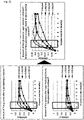
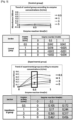
FIG. 1 shows the amount of free glucose after a sugar hydrolysis reaction, the amount of free glucose after a sugar hydrolysis reaction and a transglycosylation reaction, and a difference therebetween, as measured with respect to a control enzyme; -
FIG. 2 shows the amount of free glucose after a sugar hydrolysis reaction, the amount of free glucose after a sugar hydrolysis reaction and a transglycosylation reaction, and a difference therebetween, as measured with respect to an experimental enzyme; and -
FIG. 3 shows transglycosylation patterns according to concentrations of control and experimental enzymes. - The present disclosure will be described in detail as follows. Meanwhile, each description and embodiment disclosed in this disclosure may also be applied to other descriptions and embodiments. That is, all combinations of various elements disclosed in this disclosure fall within the scope of the present disclosure. Further, the scope of the present disclosure is not limited by the specific description described below.
- An aspect of the present disclosure provides a method of selecting dextransucrase having transglycosylation activity for glucose acceptors, the method including the steps of (i) determining the amount of free glucose by reacting sugar with dextransucrase; (ii) determining the amount of free glucose by reacting a mixture of sugar and a glucose acceptor with dextransucrase; and (iii) comparing the amount of the free glucose of (i) with the amount of the free glucose of (ii).
- The existing determination of reducing sugar (DNS) is effective in confirming the degree of hydrolysis of sugar by dextransucrase, but there is a limitation in measuring transglycosylation activity. Specifically, there is also a limitation in directly confirming whether or not glucose acceptors have been glycosylated, and therefore, the present disclosure is characterized by developing a method of indirectly confirming glycosylation of glucose acceptors by comparing the amounts of free glucose.
- As used herein, the term "dextransucrase", which is a kind of enzyme secreted from microorganisms, refers to an enzyme that produces polysaccharides, such as dextrans or oligosaccharides which are polymeric materials, by releasing glucose from sugar, and at the same time, by catalyzing a polymer polymerization reaction of glucose, or that exhibits transglycosylation activity capable of transferring glucose to stevia, polyphenol, etc. after releasing glucose from sugar, when glucose acceptors, such as stevia (steviol glycoside), polyphenol, etc., exist in a substrate.
- As used herein, the term "dextransucrase having transglycosylation activity for glucose acceptors" refers to dextransucrase that exhibits transglycosylation activity capable of transferring glucose to stevia, polyphenol, etc. after releasing glucose from sugar, when glucose acceptors, such as stevia, polyphenol, etc., exist in a substrate, among the above-described dextransucrases. In other words, as used herein, the "dextransucrase having transglycosylation activity for glucose acceptors" may be dextransucrase having sugar hydrolysis activity and transglycosylation activity for glucose acceptors.
- The "glucose acceptor" refers to a target substance to which glucose is transferred, and in the present disclosure, the glucose acceptor may be a natural product excluding glucose, specifically stevia or polyphenol, and more specifically stevia. However, the glucose acceptor is not limited as long as it is a natural product to which glucose is transferred.
- As used herein, the term "stevia" refers to a sweet-tasting compound found in the leaves of stevia (Stevia rebaudiana), which is a plant belonging to the family Asteraceae, native to South America. Stevia is often used as a sweetener as a sugar substitute because it is not metabolized in the human body and does not induce a blood sugar response. The stevia is also called steviol glycoside.
- With regard to the method of the present disclosure, step (i) may be determining the amount of free glucose by reacting sugar with dextransucrase.
- The dextransucrase may be reacted by adding the dextransucrase at various concentrations, but is not limited thereto.
- Specifically, in step (i), sugar as a substrate and a dextransucrase enzyme liquid are mixed and allowed to react, and then the amount of free glucose resulting from hydrolysis may be determined according to reaction times.
- As the method of determining the amount of free glucose, any method known in the art may be used without limitation. For example, a method such as glucose oxidase (GOD)-peroxidase (POD) assay, determination of reducing sugar (DNS), liquid chromatography (LC) using a refractive index detector (RID), etc. may be used. In the present disclosure, the method of determining the amount of free glucose may be GOD-POD assay.
- With regard to the present disclosure, step (ii) may be determining the amount of free glucose by reacting a mixture of sugar and glucose acceptor as a substrate with dextransucrase.
- The dextransucrase may be reacted by adding the dextransucrase at the same concentrations as in step (i), but is not limited thereto.
- Specifically, in step (ii), the mixture of sugar and a glucose acceptor and a dextransucrase enzyme liquid are mixed and allowed to react, and then the amount of free glucose resulting from hydrolysis may be determined according to reaction times.
- The method of determining the amount of free glucose is the same as described above.
- In the present disclosure, steps (i) and (ii) may be performed sequentially or simultaneously, but are not limited thereto.
- With regard to the method of the present disclosure, step (iii) may be comparing the amount of free glucose of step (i) with the amount of free glucose of step (ii).
- Specifically, the comparing may be comparing by subtracting the amount of free glucose of step (ii) from the amount of free glucose of step (i).
- In the present disclosure, the selecting may be selecting dextransucrase having transglycosylation activity for glucose acceptors among dextransucrases, but is not limited thereto.
- Specifically, with regard to the method of the present disclosure, in step (iii), the amount of free glucose of step (i) is compared with the amount of free glucose of step (ii), and as a result, when the amount of free glucose of step (ii) is reduced, as compared with the amount of free glucose of step (i), the dextransucrase is determined as dextransucrase having transglycosylation activity for glucose acceptors, and thus the dextransucrase may be selected as dextransucrase having transglycosylation activity for glucose acceptors.
- Further, with regard to the method of the present disclosure, in step (iii), the amount of free glucose of step (i) is compared with the amount of free glucose of step (ii), and as a result, when the amount of free glucose of step (i) is similar to the amount of free glucose of step (ii), the dextransucrase may be determined as dextransucrase having no transglycosylation activity for glucose acceptors.
- In the present disclosure, the selecting may be selecting dextransucrase having transglycosylation activity for glucose acceptors, but is not limited thereto. The selecting may also include measuring the activity thereof, but is not limited thereto.
- Specifically, with regard to the method of the present disclosure, in step (iii), the amount of free glucose of step (i) is compared with the amount of free glucose of step (ii), and as a result, when the amount of free glucose of step (ii) is reduced, as compared with the amount of free glucose of step (i), the dextransucrase may be determined as dextransucrase having transglycosylation activity for glucose acceptors. Accordingly, it is possible to select dextransucrase having transglycosylation activity for glucose acceptors.
- Further, with regard to the method of the present disclosure, in step (iii), the amount of free glucose of step (i) is compared with the amount of free glucose of step (ii), and as a result, when the amount of free glucose of step (ii) is reduced, as compared with the amount of free glucose of step (i), and the reduction level of the amount increases with increasing concentrations of dextransucrase or is higher than those of other dextransucrases, the transglycosylation activity of the dextransucrase may be measured through the reduction level of the amount.
- In other words, when the reduction level in the amount of the free glucose of step (ii) is higher than that of the amount of free glucose of step (i), it is determined that the transglycosylation activity of dextransucrase is high, and thus it is possible to compare and/or measure the transglycosylation activities of dextransucrases which are different from each other.
- The hydrolysis reaction of step (i) and the hydrolysis reaction and the transglycosylation reaction of step (ii) may be performed within 1 hour, but are not limited thereto. However, depending on the enzyme, when the hydrolysis reaction and the transglycosylation reaction continue even after 1 hour, the reactions may be performed without specific limitation in the time.
- In the present disclosure, dextransucrase having high sugar hydrolysis activity and low transglycosylation activity while having high polysaccharide polymerization activity increases the amount of free glucose by releasing glucose after hydrolysis of sugar (a). However, when a glucose acceptor (stevia, polyphenol) is added (b), the glucose remains similar to (a) in a reactor, because the amount of glucose used in transglycosylation is very small, and thus the value of (a)-(b) approaches 0 (
FIG. 3 , left). However, dextransucrase having high sugar hydrolysis activity and high transglycosylation activity while having low polysaccharide polymerization activity increases the amount of free glucose by releasing glucose after hydrolysis of sugar (a), and when a glucose acceptor (stevia, polyphenol) is added (b), the free glucose is transferred to the glucose acceptor, and thus the value of (a)-(b) may be suggested as the amount of transglycosylated glucose. In this regard, it was observed that as the transglycosylation activity for the glucose acceptor (stevia, polyphenol) increased, the value of (a)-(b) also increased (FIG. 3 , right). - Accordingly, an enzyme having the dextransucrase activity may be distinguished and selected by examining a difference in the amounts of free glucose after completing (a) sugar hydrolysis and (b) the polysaccharide polymerization or transglycosylation reaction of dextransucrase, as described above.
- Hereinafter, the present disclosure will be described in more detail with reference to Examples. However, these Examples are for illustrative purposes only, and it is apparent to those skilled in the art that the scope of the present disclosure is not intended to be limited by these Examples.
- Enzyme liquids with different dextransucrase activities (0.5 U/mL, 1.0 U/mL, 2.0 U/mL, 3.0 U/mL, based on determination of reducing sugar (DNS)) were each added to a 200 mM sugar solution and subjected to hydrolysis, and then the amount of free glucose was first determined, and the enzyme liquids with different dextransucrase activities were added to a sugar solution of the same concentration (200 mM) containing 200 mM stevia, respectively, and subjected to hydrolysis and transglycosylation, and the amount of free glucose was then determined. Assuming that a difference between the two determined amounts is the amount of pure transglycosylated glucose, it was examined whether the transglycosylation activity of the enzyme could be evaluated.
- In detail, a sugar substrate alone and each control or experimental dextransucrase enzyme liquid (0.5 U/mL to 3.0 U/mL) were mixed and allowed to react, and then the amount of free glucose resulting from hydrolysis was first determined by way of a GOD (glucose oxidase)-POD (peroxidase) assay according to each reaction time (1). Further, a substrate mixture of sugar and stevia and each control or experimental dextransucrase enzyme liquid (0.5 U/mL to 3.0 U/mL) were mixed and allowed to react, and the amount of free glucose resulting from hydrolysis and transglycosylation was then determined by way of the GOD-POD assay according to each reaction time (2). Thereafter, the determined value of (2) was subtracted from the determined value of (1), and it was examined whether the amount of transglycosylated glucose had patterns according to the enzyme concentrations. At this time, Leuconostoc mesenteroides ATCC 13146-derived dextransucrase having sugar hydrolysis activity while having low transglycosylation activity and high polysaccharide polymerization activity was used as a negative control group, and Lactobacillus mali DSM20444-derived dextransucrase having sugar hydrolysis activity while having high transglycosylation activity and low polysaccharide polymerization activity was used as an experimental group.
- After a sugar hydrolysis reaction using Leuconostoc mesenteroides ATCC 13146-derived dextransucrase, the amount of free glucose was first determined by way of the GOD (glucose oxidase)-POD (peroxidase) assay (1). After hydrolysis/transglycosylation reactions using a substrate mixture of sugar and stevia, the amount of free glucose in the reaction mixture was then determined (2). A value of (1)-(2) was expected to be the amount of glucose used in the transglycosylation reaction, and the values of (1) and (2) were similar to each other, indicating that the value of (1)-(2) approached 0 (Table 1).
- In detail, the control dextransucrase having sugar hydrolysis activity while having low transglycosylation activity and high polysaccharide polymerization activity showed no difference between the amount of free glucose after sugar hydrolysis and the amount of free glucose after sugar hydrolysis and transglycosylation (Table 1), indicating no patterns according to activities and reaction times (Table 2 and
FIG. 1 ). The free glucose resulting from the sugar hydrolysis was immediately used as a substrate for the polysaccharide polymerization reaction, and thus the amount of free glucose in the reaction mixture was detected as being low.[Table 1] Substrate Enzyme activity (U/mL) Enzyme reaction time (hr) 0 0.5 1 2 4 6 Amount of free glucose after sugar hydrolysis reaction (1) 0.5 0.000 0.042 0.058 0.091 0.123 0.119 1 0.000 0.064 0.091 0.110 0.105 0.105 2 0.000 0.091 0.102 0.103 0.102 0.099 3 0.000 0.096 0.092 0.087 0.090 0.099 Amount of free glucose after sugar hydrolysis/stevia transglycosylation reactions (2) 0.5 0.000 0.023 0.036 0.065 0.095 0.120 1 0.000 0.044 0.077 0.112 0.139 0.145 2 0.000 0.081 0.121 0.149 0.149 0.142 3 0.000 0.115 0.130 0.146 0.132 0.125 [Table 2] Enzyme activity (U/mL) Reaction time (hr) 0 0.5 1 2 4 6 0.5 0 0.019 0.022 0.026 0.028 -0.001 1.0 0 0.02 0.014 -0.002 -0.034 -0.04 2.0 0 0.01 -0.019 -0.046 -0.047 -0.043 3.0 0 -0.019 -0.038 -0.059 -0.042 -0.026 - After a sugar hydrolysis reaction using Lactobacillus mali DSM20444-derived dextransucrase, the amount of free glucose was first determined by way of the GOD (glucose oxidase)-POD (peroxidase) assay (1). After hydrolysis/transglycosylation reactions using a substrate mixture of sugar and stevia, the amount of free glucose in the reaction mixture was then determined (2). A value of (1)-(2) was expected to be the amount of glucose used in the transglycosylation reaction, and it was observed that the value of (1)-(2) increased, as the transglycosylation activity was high (Table 3).
- In detail, the dextransucrase having high sugar hydrolysis activity and high transglycosylation activity while having low polysaccharide polymerization activity showed a clear pattern according to each enzyme activity for the reaction time of 1 hour (Table 4 and
FIG. 2 ).[Table 3] Substrate Enzyme activity (U/mL) Enzyme reaction time (hr) 0 0.5 1 2 4 6 8 Amount of free glucose after sugar hydrolysis reaction (1) 0.5 0 0.058 0.112 0.224 0.369 0.467 0.508 1 0 0.129 0.217 0.358 0.536 0.557 0.56 2 0 0.232 0.369 0.511 0.592 0.573 0.575 3 0 0.289 0.472 0.62 0.548 0.57 0.533 Amount of free glucose after sugar hydrolysis/stevia transglycosylation reactions (2) 0.5 0 0.02 0.046 0.096 0.189 0.231 0.244 1 0 0.05 0.097 0.168 0.258 0.263 0.256 2 0 0.099 0.177 0.226 0.26 0.269 0.261 3 0 0.153 0.23 0.295 0.273 0.273 0.252 [Table 4] Enzyme activity (U/mL) Reaction time (hr) 0 0.5 1 2 4 6 8 0.5 0 0.038 0.066 0.128 0.18 0.236 0.264 1 0 0.079 0.12 0.19 0.278 0.294 0.304 2 0 0.133 0.192 0.285 0.332 0.304 0.314 3 0 0.136 0.242 0.325 0.275 0.297 0.281 - To evaluate the reproducibility of Example 1, experiments were performed by varying the stevia concentration and the enzyme concentration. Enzyme liquids with different dextransucrase activities (0.5 U/mL, 1.0 U/mL, 3.0 U/mL, 5.0 U/mL, based on determination of reducing sugar (DNS)) were each added to a 200 mM sugar solution and subjected to a hydrolysis reaction, and then the amount of free glucose was first determined, and the enzyme liquids with different dextransucrase activities were added to a sugar solution of the same concentration (200 mM) containing 100 mM stevia, respectively, and subjected to hydrolysis and transglycosylation reactions, and the amount of free glucose was then determined. Assuming that a difference between the two determined amounts is the amount of pure transglycosylated glucose, it was examined whether the transglycosylation activity of the enzyme could be evaluated.
- In detail, a sugar substrate alone and each control or experimental dextransucrase enzyme liquid (0.5 U/mL to 5.0 U/mL) were mixed and allowed to react, and then the amount of free glucose resulting from hydrolysis was first determined by way of a GOD (glucose oxidase)-POD (peroxidase) assay according to each reaction time (1). Further, a substrate mixture of sugar and stevia and each control or experimental dextransucrase enzyme liquid (0.5 U/mL to 3 U/mL) were mixed and allowed to react, and the amount of free glucose resulting from hydrolysis and transglycosylation reactions was then determined by way of the GOD-POD assay according to each reaction time (2). Thereafter, the determined value of (2) was subtracted from the determined value of (1), and it was examined whether the amount of transglycosylated glucose had a pattern according to the enzyme concentrations (Tables 5 and 6).
[Table 5] Section Enzyme activity (U/mL) Enzyme reaction time (hr) 0 0.5 1 Control group 0.5 0 0.042 0.042 1 0 0.018 -0.025 3 0 -0.012 -0.031 5 0 -0.032 -0.034 [Table 6] Section Enzyme activity (U/mL) Enzyme reaction time (hr) 0 0.5 1 Experimental group 0.5 0 0.105 0.172 1 0 0.17 0.244 3 0 0.365 0.317 5 0 0.467 0.456 - As a result, the transglycosylation patterns were observed according to the enzyme concentration within 1 hour after the beginning of the reaction, which is the initial stage of the reaction, and it was confirmed that it is possible to select dextransucrase having transglycosylation activity for glucose acceptors (
FIG. 3 ). - Based on the above description, it will be understood by those skilled in the art that the present disclosure may be implemented in a different specific form without changing the technical spirit or essential characteristics thereof. In this regard, it should be understood that the above embodiment is not limitative, but illustrative in all aspects. The scope of the disclosure is defined by the appended claims rather than by the description preceding them, and all changes and modifications that fall within metes and bounds of the claims or equivalents of such metes and bounds are therefore intended to be embraced by the claims.
Claims (6)
- A method of selecting dextransucrase having transglycosylation activity for glucose acceptors, the method comprising steps of:(i) determining the amount of free glucose by reacting sugar with dextransucrase;(ii) determining the amount of free glucose by reacting a mixture of sugar and glucose acceptor with dextransucrase; and(iii) comparing the amount of the free glucose of (i) with the amount of the free glucose of (ii).
- The method of claim 1, wherein steps (i) and (ii) are performed sequentially or simultaneously.
- The method of claim 1, wherein as a result of the comparison, when the amount of free glucose of (ii) is reduced, as compared with the amount of free glucose of (i), the dextransucrase is determined as dextransucrase having transglycosylation activity for glucose acceptors.
- The method of claim 1, wherein the selecting is selecting dextransucrase having transglycosylation activity for glucose acceptors among dextransucrases.
- The method of claim 1, wherein the selecting is selecting dextransucrase having transglycosylation activity for glucose acceptors or measuring the activity thereof.
- The method of claim 1, wherein the glucose acceptor of step (ii) is stevia.
Applications Claiming Priority (2)
| Application Number | Priority Date | Filing Date | Title |
|---|---|---|---|
| KR1020200135340A KR102440204B1 (en) | 2020-10-19 | 2020-10-19 | Novel enzyme activity measurement method |
| PCT/KR2021/005035 WO2022085882A1 (en) | 2020-10-19 | 2021-04-21 | Novel enzyme activity measurement method |
Publications (2)
| Publication Number | Publication Date |
|---|---|
| EP4151745A1 true EP4151745A1 (en) | 2023-03-22 |
| EP4151745A4 EP4151745A4 (en) | 2024-02-14 |
Family
ID=81290643
Family Applications (1)
| Application Number | Title | Priority Date | Filing Date |
|---|---|---|---|
| EP21882957.0A Pending EP4151745A4 (en) | 2020-10-19 | 2021-04-21 | Novel enzyme activity measurement method |
Country Status (7)
| Country | Link |
|---|---|
| US (1) | US20230257796A1 (en) |
| EP (1) | EP4151745A4 (en) |
| JP (1) | JP7480367B2 (en) |
| KR (1) | KR102440204B1 (en) |
| CN (1) | CN115867666B (en) |
| PY (1) | PY2150987A (en) |
| WO (1) | WO2022085882A1 (en) |
Families Citing this family (1)
| Publication number | Priority date | Publication date | Assignee | Title |
|---|---|---|---|---|
| CN117106854A (en) * | 2023-08-31 | 2023-11-24 | 四川大学 | A rapid detection method and kit for glucosyltransferase activity |
Family Cites Families (7)
| Publication number | Priority date | Publication date | Assignee | Title |
|---|---|---|---|---|
| KR100560161B1 (en) * | 2003-11-04 | 2006-03-13 | 충북대학교 산학협력단 | Low-temperature leuconoxoxytrium to produce highly active dextran sucralase |
| KR101375627B1 (en) * | 2007-01-12 | 2014-03-19 | 전남대학교산학협력단 | Dextransucrase having modified transglycosylating property, Mutant Gene of the Dextransucrase, Recombinant Vector comprising the Mutant Gene, and Microorganism Transformed by the Recombinant Vector |
| EP2635135A1 (en) | 2010-11-03 | 2013-09-11 | Nestec S.A. | Intrinsic sugar reduction of juices and ready to drink products |
| JP6976173B2 (en) * | 2015-03-10 | 2021-12-08 | レイクスユニフェルシテイト フローニンゲン | Enzymatic modification methods of steviol glycosides, the resulting modified steviol glycosides, and their use as sweeteners. |
| WO2016173929A1 (en) * | 2015-04-29 | 2016-11-03 | Nestec S.A. | Sugar reduction of food products |
| KR101997597B1 (en) * | 2016-11-17 | 2019-07-08 | 서울대학교산학협력단 | Synthesis method of stevioside glucosides using modified Leuconostoc and Novel stevioside glucosides made by the same |
| WO2018112189A1 (en) * | 2016-12-14 | 2018-06-21 | The Coca-Cola Company | Preparing novel steviol glycosides by bioconversion |
-
2020
- 2020-10-19 KR KR1020200135340A patent/KR102440204B1/en active Active
-
2021
- 2021-04-21 US US18/012,916 patent/US20230257796A1/en active Pending
- 2021-04-21 EP EP21882957.0A patent/EP4151745A4/en active Pending
- 2021-04-21 JP JP2022579789A patent/JP7480367B2/en active Active
- 2021-04-21 WO PCT/KR2021/005035 patent/WO2022085882A1/en not_active Ceased
- 2021-04-21 CN CN202180046937.0A patent/CN115867666B/en active Active
- 2021-06-23 PY PY202102150987A patent/PY2150987A/en unknown
Also Published As
| Publication number | Publication date |
|---|---|
| JP7480367B2 (en) | 2024-05-09 |
| CN115867666B (en) | 2025-05-30 |
| JP2023531527A (en) | 2023-07-24 |
| US20230257796A1 (en) | 2023-08-17 |
| KR102440204B1 (en) | 2022-09-05 |
| CN115867666A (en) | 2023-03-28 |
| PY2150987A (en) | 2022-06-20 |
| WO2022085882A1 (en) | 2022-04-28 |
| EP4151745A4 (en) | 2024-02-14 |
| KR20220051665A (en) | 2022-04-26 |
Similar Documents
| Publication | Publication Date | Title |
|---|---|---|
| JP3107358B2 (en) | Glucan having cyclic structure and method for producing the same | |
| Abdullah et al. | Substrate specificity of pullulanase | |
| JP6280962B2 (en) | New uses of maltotriosyltransferase | |
| Steeneken et al. | Substitution patterns in methylated starch as studied by enzymic degradation | |
| JP3150266B2 (en) | Glucan having cyclic structure and method for producing the same | |
| EP3462888B1 (en) | Alpha glucans | |
| Kamasaka et al. | The structures of phosphoryl oligosaccharides prepared from potato starch | |
| US20250101478A1 (en) | Use of maltotriosyl transferase | |
| JPWO2019017312A1 (en) | Method for producing bakery food and physical property modifier for bakery food | |
| Houben et al. | Determination of the pentosan content of wheat products by hydrolysis, glucose oxidase treatment and analysis by HPAEC/PAD | |
| US20230257796A1 (en) | Novel method of measuring enzyme activity | |
| EP3564269B1 (en) | Polymer glucan having low digestion rate | |
| Liu | A study of enzymatic hydrolysis of starch in potato pulp | |
| DE69521450T2 (en) | Cyclic structured glucans and process for their preparation | |
| NL1018426C2 (en) | Prevention of retrogradation of starch. | |
| Kang et al. | Bioengineering of Leuconostoc mesenteroides glucansucrases that gives selected bond formation for glucan synthesis and/or acceptor-product synthesis | |
| Kawabata et al. | Preparation of highly branched starch by glycogen branching enzyme from Neurospora crassa N2-44 and its characterization | |
| Bender | A photometric assay for the initial rate of the cyclization reaction catalyzed by the cyclodextrin glycosyltransferase | |
| Shibuya et al. | Transglycosylation of glycosyl residues to cyclic tetrasaccharide by Bacillus stearothermophilus cyclomaltodextrin glucanotransferase using cyclomaltodextrin as the glycosyl donor | |
| Ayoub et al. | Enzymatic degradation of hydroxypropyltrimethylammonium wheat starches | |
| Okada et al. | Intermolecular transglycosylating reaction of cyclodextrin glucanotransferase immobilized on capillary membrane | |
| JPS5931699A (en) | Measurement of activity of alpha-amylase | |
| Yang et al. | Insights into the catalytic properties of 4, 3-α-glucanotransferase to guide the biofabrication of α-glucans with low digestibility | |
| Nilsson et al. | Oligosaccharide dehydrogenase-catalyzed assay for the determination of polysaccharides | |
| KR20220087746A (en) | Manufacturing method of oxidized saccharide with antioxidant activity |
Legal Events
| Date | Code | Title | Description |
|---|---|---|---|
| STAA | Information on the status of an ep patent application or granted ep patent |
Free format text: STATUS: THE INTERNATIONAL PUBLICATION HAS BEEN MADE |
|
| PUAI | Public reference made under article 153(3) epc to a published international application that has entered the european phase |
Free format text: ORIGINAL CODE: 0009012 |
|
| STAA | Information on the status of an ep patent application or granted ep patent |
Free format text: STATUS: REQUEST FOR EXAMINATION WAS MADE |
|
| 17P | Request for examination filed |
Effective date: 20221213 |
|
| AK | Designated contracting states |
Kind code of ref document: A1 Designated state(s): AL AT BE BG CH CY CZ DE DK EE ES FI FR GB GR HR HU IE IS IT LI LT LU LV MC MK MT NL NO PL PT RO RS SE SI SK SM TR |
|
| P01 | Opt-out of the competence of the unified patent court (upc) registered |
Effective date: 20230606 |
|
| DAV | Request for validation of the european patent (deleted) | ||
| DAX | Request for extension of the european patent (deleted) | ||
| A4 | Supplementary search report drawn up and despatched |
Effective date: 20240112 |
|
| RIC1 | Information provided on ipc code assigned before grant |
Ipc: C12N 9/10 20060101ALI20240108BHEP Ipc: C12Q 1/54 20060101ALI20240108BHEP Ipc: C12Q 1/48 20060101AFI20240108BHEP |