EP4151598A1 - Scm-33 molecular sieve, and preparation method therefor and application thereof - Google Patents
Scm-33 molecular sieve, and preparation method therefor and application thereof Download PDFInfo
- Publication number
- EP4151598A1 EP4151598A1 EP20935270.7A EP20935270A EP4151598A1 EP 4151598 A1 EP4151598 A1 EP 4151598A1 EP 20935270 A EP20935270 A EP 20935270A EP 4151598 A1 EP4151598 A1 EP 4151598A1
- Authority
- EP
- European Patent Office
- Prior art keywords
- source
- cation
- molecular sieve
- sodium
- potassium
- Prior art date
- Legal status (The legal status is an assumption and is not a legal conclusion. Google has not performed a legal analysis and makes no representation as to the accuracy of the status listed.)
- Pending
Links
Images
Classifications
-
- C—CHEMISTRY; METALLURGY
- C01—INORGANIC CHEMISTRY
- C01B—NON-METALLIC ELEMENTS; COMPOUNDS THEREOF; METALLOIDS OR COMPOUNDS THEREOF NOT COVERED BY SUBCLASS C01C
- C01B39/00—Compounds having molecular sieve and base-exchange properties, e.g. crystalline zeolites; Their preparation; After-treatment, e.g. ion-exchange or dealumination
- C01B39/02—Crystalline aluminosilicate zeolites; Isomorphous compounds thereof; Direct preparation thereof; Preparation thereof starting from a reaction mixture containing a crystalline zeolite of another type, or from preformed reactants; After-treatment thereof
- C01B39/46—Other types characterised by their X-ray diffraction pattern and their defined composition
- C01B39/48—Other types characterised by their X-ray diffraction pattern and their defined composition using at least one organic template directing agent
-
- B—PERFORMING OPERATIONS; TRANSPORTING
- B01—PHYSICAL OR CHEMICAL PROCESSES OR APPARATUS IN GENERAL
- B01J—CHEMICAL OR PHYSICAL PROCESSES, e.g. CATALYSIS OR COLLOID CHEMISTRY; THEIR RELEVANT APPARATUS
- B01J20/00—Solid sorbent compositions or filter aid compositions; Sorbents for chromatography; Processes for preparing, regenerating or reactivating thereof
- B01J20/02—Solid sorbent compositions or filter aid compositions; Sorbents for chromatography; Processes for preparing, regenerating or reactivating thereof comprising inorganic material
- B01J20/10—Solid sorbent compositions or filter aid compositions; Sorbents for chromatography; Processes for preparing, regenerating or reactivating thereof comprising inorganic material comprising silica or silicate
- B01J20/16—Alumino-silicates
- B01J20/18—Synthetic zeolitic molecular sieves
-
- B—PERFORMING OPERATIONS; TRANSPORTING
- B01—PHYSICAL OR CHEMICAL PROCESSES OR APPARATUS IN GENERAL
- B01J—CHEMICAL OR PHYSICAL PROCESSES, e.g. CATALYSIS OR COLLOID CHEMISTRY; THEIR RELEVANT APPARATUS
- B01J20/00—Solid sorbent compositions or filter aid compositions; Sorbents for chromatography; Processes for preparing, regenerating or reactivating thereof
- B01J20/30—Processes for preparing, regenerating, or reactivating
-
- B—PERFORMING OPERATIONS; TRANSPORTING
- B01—PHYSICAL OR CHEMICAL PROCESSES OR APPARATUS IN GENERAL
- B01J—CHEMICAL OR PHYSICAL PROCESSES, e.g. CATALYSIS OR COLLOID CHEMISTRY; THEIR RELEVANT APPARATUS
- B01J20/00—Solid sorbent compositions or filter aid compositions; Sorbents for chromatography; Processes for preparing, regenerating or reactivating thereof
- B01J20/30—Processes for preparing, regenerating, or reactivating
- B01J20/3042—Use of binding agents; addition of materials ameliorating the mechanical properties of the produced sorbent
-
- B—PERFORMING OPERATIONS; TRANSPORTING
- B01—PHYSICAL OR CHEMICAL PROCESSES OR APPARATUS IN GENERAL
- B01J—CHEMICAL OR PHYSICAL PROCESSES, e.g. CATALYSIS OR COLLOID CHEMISTRY; THEIR RELEVANT APPARATUS
- B01J20/00—Solid sorbent compositions or filter aid compositions; Sorbents for chromatography; Processes for preparing, regenerating or reactivating thereof
- B01J20/30—Processes for preparing, regenerating, or reactivating
- B01J20/305—Addition of material, later completely removed, e.g. as result of heat treatment, leaching or washing, e.g. for forming pores
- B01J20/3057—Use of a templating or imprinting material ; filling pores of a substrate or matrix followed by the removal of the substrate or matrix
-
- B—PERFORMING OPERATIONS; TRANSPORTING
- B01—PHYSICAL OR CHEMICAL PROCESSES OR APPARATUS IN GENERAL
- B01J—CHEMICAL OR PHYSICAL PROCESSES, e.g. CATALYSIS OR COLLOID CHEMISTRY; THEIR RELEVANT APPARATUS
- B01J20/00—Solid sorbent compositions or filter aid compositions; Sorbents for chromatography; Processes for preparing, regenerating or reactivating thereof
- B01J20/30—Processes for preparing, regenerating, or reactivating
- B01J20/3085—Chemical treatments not covered by groups B01J20/3007 - B01J20/3078
-
- B—PERFORMING OPERATIONS; TRANSPORTING
- B01—PHYSICAL OR CHEMICAL PROCESSES OR APPARATUS IN GENERAL
- B01J—CHEMICAL OR PHYSICAL PROCESSES, e.g. CATALYSIS OR COLLOID CHEMISTRY; THEIR RELEVANT APPARATUS
- B01J29/00—Catalysts comprising molecular sieves
- B01J29/04—Catalysts comprising molecular sieves having base-exchange properties, e.g. crystalline zeolites
- B01J29/06—Crystalline aluminosilicate zeolites; Isomorphous compounds thereof
- B01J29/70—Crystalline aluminosilicate zeolites; Isomorphous compounds thereof of types characterised by their specific structure not provided for in groups B01J29/08 - B01J29/65
-
- B—PERFORMING OPERATIONS; TRANSPORTING
- B01—PHYSICAL OR CHEMICAL PROCESSES OR APPARATUS IN GENERAL
- B01J—CHEMICAL OR PHYSICAL PROCESSES, e.g. CATALYSIS OR COLLOID CHEMISTRY; THEIR RELEVANT APPARATUS
- B01J29/00—Catalysts comprising molecular sieves
- B01J29/04—Catalysts comprising molecular sieves having base-exchange properties, e.g. crystalline zeolites
- B01J29/06—Crystalline aluminosilicate zeolites; Isomorphous compounds thereof
- B01J29/70—Crystalline aluminosilicate zeolites; Isomorphous compounds thereof of types characterised by their specific structure not provided for in groups B01J29/08 - B01J29/65
- B01J29/7049—Crystalline aluminosilicate zeolites; Isomorphous compounds thereof of types characterised by their specific structure not provided for in groups B01J29/08 - B01J29/65 containing rare earth elements, titanium, zirconium, hafnium, zinc, cadmium, mercury, gallium, indium, thallium, tin or lead
-
- B—PERFORMING OPERATIONS; TRANSPORTING
- B01—PHYSICAL OR CHEMICAL PROCESSES OR APPARATUS IN GENERAL
- B01J—CHEMICAL OR PHYSICAL PROCESSES, e.g. CATALYSIS OR COLLOID CHEMISTRY; THEIR RELEVANT APPARATUS
- B01J29/00—Catalysts comprising molecular sieves
- B01J29/04—Catalysts comprising molecular sieves having base-exchange properties, e.g. crystalline zeolites
- B01J29/06—Crystalline aluminosilicate zeolites; Isomorphous compounds thereof
- B01J29/70—Crystalline aluminosilicate zeolites; Isomorphous compounds thereof of types characterised by their specific structure not provided for in groups B01J29/08 - B01J29/65
- B01J29/72—Crystalline aluminosilicate zeolites; Isomorphous compounds thereof of types characterised by their specific structure not provided for in groups B01J29/08 - B01J29/65 containing iron group metals, noble metals or copper
-
- B—PERFORMING OPERATIONS; TRANSPORTING
- B01—PHYSICAL OR CHEMICAL PROCESSES OR APPARATUS IN GENERAL
- B01J—CHEMICAL OR PHYSICAL PROCESSES, e.g. CATALYSIS OR COLLOID CHEMISTRY; THEIR RELEVANT APPARATUS
- B01J37/00—Processes, in general, for preparing catalysts; Processes, in general, for activation of catalysts
- B01J37/0009—Use of binding agents; Moulding; Pressing; Powdering; Granulating; Addition of materials ameliorating the mechanical properties of the product catalyst
- B01J37/0018—Addition of a binding agent or of material, later completely removed among others as result of heat treatment, leaching or washing,(e.g. forming of pores; protective layer, desintegrating by heat)
-
- B—PERFORMING OPERATIONS; TRANSPORTING
- B01—PHYSICAL OR CHEMICAL PROCESSES OR APPARATUS IN GENERAL
- B01J—CHEMICAL OR PHYSICAL PROCESSES, e.g. CATALYSIS OR COLLOID CHEMISTRY; THEIR RELEVANT APPARATUS
- B01J37/00—Processes, in general, for preparing catalysts; Processes, in general, for activation of catalysts
- B01J37/02—Impregnation, coating or precipitation
- B01J37/03—Precipitation; Co-precipitation
- B01J37/031—Precipitation
-
- B—PERFORMING OPERATIONS; TRANSPORTING
- B01—PHYSICAL OR CHEMICAL PROCESSES OR APPARATUS IN GENERAL
- B01J—CHEMICAL OR PHYSICAL PROCESSES, e.g. CATALYSIS OR COLLOID CHEMISTRY; THEIR RELEVANT APPARATUS
- B01J37/00—Processes, in general, for preparing catalysts; Processes, in general, for activation of catalysts
- B01J37/04—Mixing
-
- C—CHEMISTRY; METALLURGY
- C01—INORGANIC CHEMISTRY
- C01B—NON-METALLIC ELEMENTS; COMPOUNDS THEREOF; METALLOIDS OR COMPOUNDS THEREOF NOT COVERED BY SUBCLASS C01C
- C01B39/00—Compounds having molecular sieve and base-exchange properties, e.g. crystalline zeolites; Their preparation; After-treatment, e.g. ion-exchange or dealumination
- C01B39/02—Crystalline aluminosilicate zeolites; Isomorphous compounds thereof; Direct preparation thereof; Preparation thereof starting from a reaction mixture containing a crystalline zeolite of another type, or from preformed reactants; After-treatment thereof
- C01B39/06—Preparation of isomorphous zeolites characterised by measures to replace the aluminium or silicon atoms in the lattice framework by atoms of other elements, i.e. by direct or secondary synthesis
-
- C—CHEMISTRY; METALLURGY
- C01—INORGANIC CHEMISTRY
- C01B—NON-METALLIC ELEMENTS; COMPOUNDS THEREOF; METALLOIDS OR COMPOUNDS THEREOF NOT COVERED BY SUBCLASS C01C
- C01B39/00—Compounds having molecular sieve and base-exchange properties, e.g. crystalline zeolites; Their preparation; After-treatment, e.g. ion-exchange or dealumination
- C01B39/02—Crystalline aluminosilicate zeolites; Isomorphous compounds thereof; Direct preparation thereof; Preparation thereof starting from a reaction mixture containing a crystalline zeolite of another type, or from preformed reactants; After-treatment thereof
- C01B39/06—Preparation of isomorphous zeolites characterised by measures to replace the aluminium or silicon atoms in the lattice framework by atoms of other elements, i.e. by direct or secondary synthesis
- C01B39/065—Galloaluminosilicates; Group IVB- metalloaluminosilicates; Ferroaluminosilicates
-
- C—CHEMISTRY; METALLURGY
- C01—INORGANIC CHEMISTRY
- C01B—NON-METALLIC ELEMENTS; COMPOUNDS THEREOF; METALLOIDS OR COMPOUNDS THEREOF NOT COVERED BY SUBCLASS C01C
- C01B39/00—Compounds having molecular sieve and base-exchange properties, e.g. crystalline zeolites; Their preparation; After-treatment, e.g. ion-exchange or dealumination
- C01B39/02—Crystalline aluminosilicate zeolites; Isomorphous compounds thereof; Direct preparation thereof; Preparation thereof starting from a reaction mixture containing a crystalline zeolite of another type, or from preformed reactants; After-treatment thereof
- C01B39/06—Preparation of isomorphous zeolites characterised by measures to replace the aluminium or silicon atoms in the lattice framework by atoms of other elements, i.e. by direct or secondary synthesis
- C01B39/08—Preparation of isomorphous zeolites characterised by measures to replace the aluminium or silicon atoms in the lattice framework by atoms of other elements, i.e. by direct or secondary synthesis the aluminium atoms being wholly replaced
-
- C—CHEMISTRY; METALLURGY
- C01—INORGANIC CHEMISTRY
- C01B—NON-METALLIC ELEMENTS; COMPOUNDS THEREOF; METALLOIDS OR COMPOUNDS THEREOF NOT COVERED BY SUBCLASS C01C
- C01B39/00—Compounds having molecular sieve and base-exchange properties, e.g. crystalline zeolites; Their preparation; After-treatment, e.g. ion-exchange or dealumination
- C01B39/02—Crystalline aluminosilicate zeolites; Isomorphous compounds thereof; Direct preparation thereof; Preparation thereof starting from a reaction mixture containing a crystalline zeolite of another type, or from preformed reactants; After-treatment thereof
- C01B39/06—Preparation of isomorphous zeolites characterised by measures to replace the aluminium or silicon atoms in the lattice framework by atoms of other elements, i.e. by direct or secondary synthesis
- C01B39/08—Preparation of isomorphous zeolites characterised by measures to replace the aluminium or silicon atoms in the lattice framework by atoms of other elements, i.e. by direct or secondary synthesis the aluminium atoms being wholly replaced
- C01B39/087—Ferrosilicates
-
- C—CHEMISTRY; METALLURGY
- C01—INORGANIC CHEMISTRY
- C01B—NON-METALLIC ELEMENTS; COMPOUNDS THEREOF; METALLOIDS OR COMPOUNDS THEREOF NOT COVERED BY SUBCLASS C01C
- C01B39/00—Compounds having molecular sieve and base-exchange properties, e.g. crystalline zeolites; Their preparation; After-treatment, e.g. ion-exchange or dealumination
- C01B39/02—Crystalline aluminosilicate zeolites; Isomorphous compounds thereof; Direct preparation thereof; Preparation thereof starting from a reaction mixture containing a crystalline zeolite of another type, or from preformed reactants; After-treatment thereof
- C01B39/06—Preparation of isomorphous zeolites characterised by measures to replace the aluminium or silicon atoms in the lattice framework by atoms of other elements, i.e. by direct or secondary synthesis
- C01B39/12—Preparation of isomorphous zeolites characterised by measures to replace the aluminium or silicon atoms in the lattice framework by atoms of other elements, i.e. by direct or secondary synthesis the replacing atoms being at least boron atoms
-
- C—CHEMISTRY; METALLURGY
- C01—INORGANIC CHEMISTRY
- C01P—INDEXING SCHEME RELATING TO STRUCTURAL AND PHYSICAL ASPECTS OF SOLID INORGANIC COMPOUNDS
- C01P2002/00—Crystal-structural characteristics
- C01P2002/70—Crystal-structural characteristics defined by measured X-ray, neutron or electron diffraction data
- C01P2002/72—Crystal-structural characteristics defined by measured X-ray, neutron or electron diffraction data by d-values or two theta-values, e.g. as X-ray diagram
-
- C—CHEMISTRY; METALLURGY
- C01—INORGANIC CHEMISTRY
- C01P—INDEXING SCHEME RELATING TO STRUCTURAL AND PHYSICAL ASPECTS OF SOLID INORGANIC COMPOUNDS
- C01P2002/00—Crystal-structural characteristics
- C01P2002/70—Crystal-structural characteristics defined by measured X-ray, neutron or electron diffraction data
- C01P2002/74—Crystal-structural characteristics defined by measured X-ray, neutron or electron diffraction data by peak-intensities or a ratio thereof only
-
- C—CHEMISTRY; METALLURGY
- C01—INORGANIC CHEMISTRY
- C01P—INDEXING SCHEME RELATING TO STRUCTURAL AND PHYSICAL ASPECTS OF SOLID INORGANIC COMPOUNDS
- C01P2002/00—Crystal-structural characteristics
- C01P2002/70—Crystal-structural characteristics defined by measured X-ray, neutron or electron diffraction data
- C01P2002/76—Crystal-structural characteristics defined by measured X-ray, neutron or electron diffraction data by a space-group or by other symmetry indications
-
- C—CHEMISTRY; METALLURGY
- C01—INORGANIC CHEMISTRY
- C01P—INDEXING SCHEME RELATING TO STRUCTURAL AND PHYSICAL ASPECTS OF SOLID INORGANIC COMPOUNDS
- C01P2004/00—Particle morphology
- C01P2004/01—Particle morphology depicted by an image
- C01P2004/03—Particle morphology depicted by an image obtained by SEM
-
- C—CHEMISTRY; METALLURGY
- C01—INORGANIC CHEMISTRY
- C01P—INDEXING SCHEME RELATING TO STRUCTURAL AND PHYSICAL ASPECTS OF SOLID INORGANIC COMPOUNDS
- C01P2004/00—Particle morphology
- C01P2004/60—Particles characterised by their size
- C01P2004/62—Submicrometer sized, i.e. from 0.1-1 micrometer
Definitions
- the present invention pertains to the field of molecular sieve, in particular to a SCM-33 molecular sieve, and the preparation method therefor and the application thereof.
- Zeolites or the so-called molecular sieves are a kind of porous crystalline materials, and have regular molecular sizes, pore structures, a relatively strong acidity and a high hydrothermal stability. They are widely used in catalysis, adsorption, ion exchange and other fields, and play an irreplaceable role. At present, there are up to 248 molecular sieve topologies that have been approved by the International Zeolite Association.
- the RTE molecular sieve has a pore diameter of 3.6 ⁇ 4.3 ⁇ , which is equivalent to the diameter of many small gas molecules, as allows a greater application potential of the molecular sieve in terms of gas adsorption and separation; on the other hand, the unique pore-cage structure also imparts a possibility of the RTE molecular sieve for the application in the field of catalysis.
- RUB-3 is currently the only molecular sieve with RTE topology, but it faces the following problems in its synthesis: 1) the organic template exo-2-aminobicyclo [2.2.1] heptane is expensive and is used in a large amount such that the cost for the molecular sieve synthesis is high; 2) the crystal growth rate is low and the synthesis period is 90 days or more, even up to 1 year; 3) the crystal is of a column shape with a size of 50 ⁇ 50 ⁇ 150 ⁇ m, which is too large; 4) the framework is a siliceous framework and catalytic active centers can hardly be introduced.
- the present invention provides a SCM-33 molecular sieve and the preparation method therefor and the application thereof.
- the SCM-33 molecular sieve is a novel molecular sieve with RTE topology and the molecular sieve requires short preparation time, involves a low synthesis cost and has a smaller crystal size and elements other than Si can be introduced as catalytic active centers to the framework thereof.
- a SCM-33 molecular sieve has a schematic chemical composition as shown in the formula "SiO 2 ⁇ 1/x XO 1.5 ⁇ m MO 0.5 ", wherein X is a framework trivalent element, the Si/X molar ratio x is ⁇ 5, M is a framework equilibrium cation, and the M/Si molar ratio is 0 ⁇ m ⁇ 1; the SCM-33 molecular sieve has an X-ray diffraction pattern shown in the following table: 2 ⁇ (°) d -spacing ( ⁇ ) relative intensity, (I/I 0 ) ⁇ 100 9.20 ⁇ 0.3 9.61 ⁇ 0.40 s-vs 14.17 ⁇ 0.3 6.24 ⁇ 0.30 s-vs 17.88 ⁇ 0.3 4.96 ⁇ 0.20 m-s 19.63 ⁇ 0.3 4.52 ⁇ 0.15 m-s 20.65 ⁇ 0.1 4.30 ⁇ 0.10 vs
- the X-ray diffraction pattern of the SCM-33 molecular sieve has X-ray diffraction peaks shown in the following table: 2 ⁇ (°) d -spacing ( ⁇ ) relative intensity, (I/I 0 ) ⁇ 100 9.20 ⁇ 0.3 9.61 ⁇ 0.40 s-vs 12.22 ⁇ 0.3 7.24 ⁇ 0.30 w-m 13.00 ⁇ 0.05 6.80 ⁇ 0.05 m-s 14.17 ⁇ 0.3 6.24 ⁇ 0.30 s-vs 17.88 ⁇ 0.3 4.96 ⁇ 0.20 m-s 19.63 ⁇ 0.3 4.52 ⁇ 0.15 m-s 20.65 ⁇ 0.1 4.30 ⁇ 0.10 vs 21.72 ⁇ 0.3 4.09 ⁇ 0.10 m-s
- the X-ray diffraction pattern of the SCM-33 molecular sieve also includes X-ray diffraction peaks shown in the following table: 2 ⁇ (°) d -spacing ( ⁇ ) relative intensity, (I/I 0 ) ⁇ 100 15.77 ⁇ 0.3 5.61 ⁇ 0.25 vw 16.32 ⁇ 0.3 5.43 ⁇ 0.25 vw 18.39 ⁇ 0.3 4.82 ⁇ 0.20 w 23.60 ⁇ 0.3 3.77 ⁇ 0.10 vw-w 24.57 ⁇ 0.3 3.62 ⁇ 0.05 w-m 26.04 ⁇ 0.3 3.42 ⁇ 0.05 m-s 27.54 ⁇ 0.3 3.24 ⁇ 0.05 m-s
- the X-ray diffraction pattern of the SCM-33 molecular sieve further includes X-ray diffraction peaks shown in the following table: 2 ⁇ (°) d -spacing ( ⁇ ) relative intensity, (I/I 0 ) ⁇ 100 12.89 ⁇ 0.05 6.86 ⁇ 0.05 w-m 20.44 ⁇ 0.1 4.34 ⁇ 0.10 s-vs 25.24 ⁇ 0.3 3.53 ⁇ 0.05 w-m 28.49 ⁇ 0.3 3.13 ⁇ 0.05 w-m 29.22 ⁇ 0.3 3.05 ⁇ 0.05 m-s
- the molar ratio of Si/X is preferably 10 ⁇ x ⁇ 200, more preferably 15 ⁇ x ⁇ 150, even more preferably 20 ⁇ x ⁇ 120, and/or the molar ratio of M/Si is preferably 0.01 ⁇ m ⁇ 0.85, more preferably 0.015 ⁇ m ⁇ 0.8, even more preferably 0.02 ⁇ m ⁇ 0.75.
- the process for synthesizing the SCM-33 molecular sieve involves the form of the as-made state thereof which has a schematic chemical composition as shown in the formula "qQ ⁇ SiO 2 ⁇ 1/x XO 1.5 ⁇ m MO 0.5 ⁇ z H 2 O", wherein the Si/X molar ratio x is ⁇ 5, preferably 10 ⁇ x ⁇ 200, more preferably 15 ⁇ x ⁇ 150, and even more preferably 20 ⁇ x ⁇ 120; the molar ratio of M/Si is 0 ⁇ m ⁇ 1, preferably 0.01 ⁇ m ⁇ 0.85, more preferably 0.015 ⁇ m ⁇ 0.8, even more preferably 0.02 ⁇ m ⁇ 0.75; the molar ratio of H 2 O/Si is as follows: 0.005 ⁇ z ⁇ 2, preferably 0.01 ⁇ z ⁇ 1.5, more preferably 0.015 ⁇ z ⁇ 1, even more preferably 0.02 ⁇ z ⁇ 0.5; Q is an organic
- the organic template Q is preferably selected from a substance containing isopropyl trimethylammonium cation whose structural formula is as follows:
- the organic template Q is more preferably a hydroxide containing isopropyl trimethylammonium cation, such as isopropyl trimethylammonium hydroxide.
- the framework trivalent element X is selected from at least one of aluminum, boron, iron, gallium, indium and chromium.
- the framework equilibrium cation M is selected from at least one of proton, ammonium cation, sodium cation, potassium cation, lithium cation, rubidium cation, cesium cation, magnesium cation, calcium cation, strontium cation and barium cation, preferably M at least includes potassium cation or M at least includes potassium cation and sodium cation.
- M when including potassium cation and sodium cation, preferably includes more potassium cations than sodium cations.
- Si atoms in the SCM-33 molecular sieve are replaced by at least one non-silicon tetravalent framework element Y which is preferably selected from at least one of germanium, tin, titanium, zirconium and hafnium.
- the crystalline average particle size of the SCM-33 molecular sieve is about 100 ⁇ 200 nm.
- a method for preparing the aforementioned SCM-33 molecular sieve comprises the step of mixing a silicon source, a framework trivalent element X source, a framework equilibrium cation M source, an organic template Q and water for a crystallization reaction to obtain the SCM-33 molecular sieve.
- the method for preparing the SCM-33 molecular sieve can also include the step of mixing a non-silicon tetravalent framework element Y source, a silicon source, a framework trivalent element X source, a framework equilibrium cation M source, an organic template Q and water for a crystallization reaction to obtain the SCM-33 molecular sieve.
- organic template Q is selected from a substance containing isopropyl trimethylammonium cation whose structural formula is as follows:
- the organic template Q is preferably a hydroxide containing isopropyl trimethylammonium cation, such as isopropyl trimethylammonium hydroxide.
- the silicon source is selected from at least one of water glass, silica-sol, solid silica gel, fumed silica, amorphous silica, diatomite, zeolite molecular sieve and tetraalkoxysilane.
- the framework trivalent element X source is selected from at least one of aluminum source, boron source, iron source, gallium source, indium source and chromium source;
- the aluminum source is preferably selected from at least one of aluminum sulfate, sodium aluminate, aluminum nitrate, aluminum chloride, pseudo boehmite, aluminum oxide, aluminum hydroxide, aluminosilicate zeolite, aluminum carbonate, aluminum, aluminum isopropoxide and aluminum acetate;
- the boron source is preferably selected from at least one of boric acid, sodium tetraborate, amorphous boron oxide, potassium borate, sodium metaborate, ammonium tetraborate and organic boron ester;
- the iron source is preferably selected from at least one of ferric sulfate, ferric nitrate, ferric halide (such as iron trichloride), ferrocene and ferric citrate;
- the framework equilibrium cation M source is selected from at least one of proton source, ammonium cation source, sodium cation source, potassium cation source, lithium cation source, rubidium cation source, cesium cation source, magnesium cation source, calcium cation source, strontium cation source and barium cation source, preferably, the M source at least includes a potassium cation source or the M source at least includes a potassium cation source and a sodium cation source.
- the potassium cation source and the sodium cation source it is preferable to use more potassium cations than sodium cations, for example, the molar ratio of potassium/sodium is 1.1 or more.
- the potassium cation source is preferably selected from at least one of potassium oxide, potassium hydroxide, potassium carbonate, potassium bicarbonate, potassium chloride, potassium nitrate, potassium sulfate and potassium fluoride;
- the sodium cation source is preferably selected from at least one of sodium oxide, sodium hydroxide, sodium carbonate, sodium bicarbonate, sodium chloride, sodium nitrate, sodium sulfate and sodium fluoride.
- non-silicon tetravalent framework element Y source is preferably selected from at least one of germanium source, tin source, titanium source, zirconium source and hafnium source, more preferably selected from at least one of germanium oxide source, tin oxide source, titanium oxide source, zirconium oxide source and hafnium oxide source.
- the molar ratio of the non-silicon tetravalent framework element Y source (based on the corresponding oxide YO 2 ) to the silicon source (based on SiO 2 ) YO 2 /SiO 2 greater than 0-0.1, preferably 0.01-0.1, more preferably 0.01-0.08.
- the conditions of the crystallization reaction include: crystallization at 100-200 °C for 30-400 hours, preferably crystallization at 110-190 °C for 48-300 hours, more preferably crystallization at 120-180 °C for 72-200 hours.
- a molecular sieve composite including the SCM-33 molecular sieve according to the aforementioned first aspect or the SCM-33 molecular sieve prepared according to the method in the aforementioned second aspect, and a binder, is provided.
- the use of the SCM-33 molecular sieve according to the aforementioned first aspect, the SCM-33 molecular sieve prepared according to the method in the aforementioned second aspect or the SCM-33 molecular sieve composite according to the aforementioned third aspect as adsorbent or catalyst is provided.
- the SCM-33 molecular sieve of the present invention whose framework topology is RTE, is a novel non-pure silicon molecular sieve different from RUB-3, and enriches the types of RTE molecular sieve.
- the SCM-33 molecular sieve of the present invention has a regular molecular size, a pore structure, a strong acidity, an ion exchange performance and a high thermal and hydrothermal stability.
- the crystalline size of the obtained SCM-33 zeolite molecular sieve is about 100-200 nm, which circumvents the limited mass transfer and diffusion within the pores due to the bulky crystal.
- the method for preparing the SCM-33 molecular sieve provided by the present invention utilizes a lower-priced organic template, saves the synthesis cost compared with the prior art; the molecular sieve requires a short crystallization time, which greatly shortens the synthesis period; the method allows the introduction of various elements such as Al, Ti, Zr and Fe into the framework to generate different catalytic active centers, which meets the needs of different catalytic reactions and has a wider application.
- the method of the present invention is simple to operate, highly efficient, and beneficial to the industrial popularization.
- vw, w, m, s, vs indicate the intensity of diffraction peaks, with vw referring to very weak, w referring to weak, m to medium, s to strong, vs to very strong, which has been well known to those skilled in the art.
- vw is less than 5; w is 5-20; m is 20-40; s is 40-70; vs is greater than 70.
- an X' Pert PRO X-ray powder diffractometer (XRD) manufactured from PANalytical B.V. is used, with a working voltage of 40kV, a current of 40mA and a scanning range of 5-40 °.
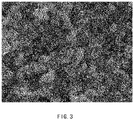
- the product morphology is measured with S-4800 Field Emission Scanning Electron Microscope (Fe-SEM) manufactured from HITACHI.
- the solid was filtered, washed with distilled water and dried at 100 °C to obtain an as-made powder of SCM-33 molecular sieve.
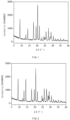
- the XRD pattern is shown in Figure 1 .
- the as-made powder solid was placed in a muffle furnace and calcined at 550 °C for 5 hours to obtain the final product.
- the XRD pattern is shown in Figure 2 .
- the SEM photograph of the SCM-33 molecular sieve is shown in Figure 3 .
- Table 1 2 ⁇ (°) d -spacing ( ⁇ ) relative intensity, (I/I 0 ) ⁇ 100 9.20 9.61 65.4 12.22 7.24 7.7 12.91 6.85 15.9 13.00 6.80 32.4 14.17 6.24 67.2 15.82 5.60 1.2 16.35 5.42 0.1 17.88 4.96 38.4 18.39 4.82 5.2 19.63 4.52 35.8 20.53 4.32 65 20.60 4.31 100 21.72 4.09 30.4 23.24 3.82 1.5 23.60 3.77 1.6 24.57 3.62 17.9 24.94 3.57 6.3 25.24 3.53 10.7 26.04 3.42 39.5 27.54 3.24 37.6 28.49 3.13 14.8 28.92 3.08 17 29.22 3.05 31.2 30.66 2.91 19.5
- Table 2 2 ⁇ (°) d -spacing ( ⁇ ) relative intensity, (I/I 0 ) ⁇ 100 9.20 9.60 76.1 12.26 7.21 8.7 12.94 6.84 23.5 13.00 6.80 38 14.18 6.24 74 15.75 5.62 0.3 16.35 5.42 0.1 17.91 4.95 37.1 18.40 4.82 5.3 19.63 4.52 37.6 20.49 4.33 61.2 20.56 4.32 100 21.70 4.09 28.3 23.27 3.82 2.5 23.60 3.77 1.8 24.57 3.62 17.4 24.88 3.58 6.5 25.27 3.52 9.7 26.04 3.42 41.1 27.55 3.24 36 28.51 3.13 13.4 28.95 3.08 15.6 29.22 3.05 28.3 30.69 2.91 18.6
- the solid was filtered, washed, dried and calcined (the post-treatment reaction conditions are the same as in Example 1) to obtain a SCM-33 zeolite molecular sieve, and the XRD pattern is similar to Figure 2 .
- Table 3 2 ⁇ (°) d -spacing ( ⁇ ) relative intensity, (I/I 0 ) ⁇ 100 9.27 9.53 94 12.34 7.17 9 12.91 6.85 20.1 13.07 6.77 38.5 14.25 6.21 59.3 15.78 5.61 0.6 16.32 5.43 0.6 17.93 4.94 27.7 18.48 4.80 7 19.69 4.50 25.7 20.54 4.32 57.6 20.66 4.30 100 21.83 4.07 22.4 23.07 3.85 0.2 23.54 3.78 2.1 24.67 3.61 15.1 25.34 3.51 7.3 26.15 3.41 38.5 27.65 3.22 29 28.61 3.12 13.9 29.31 3.04 30.8 30.79 2.90 12.8
- the solid was filtered, washed, dried and calcined (the post-treatment reaction conditions are the same as in Example 1) to obtain a SCM-33 zeolite molecular sieve, and the XRD pattern is similar to Figure 2 .
- the solid was filtered, washed, dried and calcined (the post-treatment reaction conditions are the same as in Example 1) to obtain a SCM-33 zeolite molecular sieve, and the XRD pattern is similar to Figure 2 .
- the solid was filtered, washed, dried and calcined (the post-treatment reaction conditions are the same as in Example 1) to obtain a SCM-33 zeolite molecular sieve, and the XRD pattern is similar to Figure 2 .
- the solid was filtered, washed, dried and calcined (the post-treatment reaction conditions are the same as in Example 1) to obtain a SCM-33 zeolite molecular sieve, and the XRD pattern is similar to Figure 2 .
- boric acid 9 g of sodium hydroxide solution (30 wt%) and 14 g of potassium hydroxide solution (30 wt%) were dissolved in 41 g of water, 49.3 g of isopropyl trimethylammonium hydroxide solution (20 wt%) was added and stirred evenly, 75 g of Ludox AS-40 silica sol was added slowly under stirring; after stirring for 1 hour, the above mixture was charged into a crystallization kettle with a polytetrafluoroethylene lining, and placed in an oven at 160 °C for crystallization for 192 hours.
- the solid was filtered, washed, dried and calcined (the post-treatment reaction conditions are the same as in Example 1) to obtain a SCM-33 zeolite molecular sieve, and the XRD pattern is similar to Figure 2 .
- Table 4 2 ⁇ (°) d -spacing ( ⁇ ) relative intensity, (I/I 0 ) ⁇ 100 9.26 9.55 100 12.28 7.20 11.2 12.91 6.85 16 13.04 6.78 40.3 14.21 6.23 68.2 15.78 5.61 0.1 16.36 5.41 1.5 17.92 4.94 32.5 18.47 4.80 5.5 19.72 4.50 34.5 20.53 4.32 51.8 20.63 4.30 98.8 21.77 4.08 28.9 23.27 3.82 2.1 23.64 3.76 1 24.66 3.61 14.3 25.03 3.56 3.4 25.33 3.51 7.7 26.11 3.41 39.2 27.62 3.23 28.3 28.61 3.12 12.3 28.99 3.08 14.7 29.26 3.05 28.2 30.76 2.90 15.5
- the solid was filtered, washed, dried and calcined (the post-treatment reaction conditions are the same as in Example 1) to obtain a SCM-33 zeolite molecular sieve, and the XRD pattern is similar to Figure 2 .
- the solid was filtered, washed, dried and calcined (the post-treatment reaction conditions are the same as in Example 1) to obtain a SCM-33 zeolite molecular sieve, and the XRD pattern is similar to Figure 2 .
- Table 5 2 ⁇ (°) d -spacing ( ⁇ ) relative intensity, (I/I 0 ) ⁇ 100 9.23 9.57 96.9 12.30 7.19 11.9 12.92 6.85 19.8 13.04 6.78 40 14.21 6.23 84.5 15.75 5.62 0.8 16.36 5.41 1.5 17.92 4.95 39 18.48 4.80 5.1 19.69 4.50 37.3 20.52 4.33 51.4 20.63 4.30 100 21.77 4.08 37.7 23.23 3.83 1.9 23.67 3.76 1.2 24.63 3.61 16.5 25.31 3.52 8 26.14 3.41 37.3 27.61 3.23 30.2 28.58 3.12 13 29.32 3.04 28.4 30.73 2.91 16.6
- Table 6 2 ⁇ (°) d -spacing ( ⁇ ) relative intensity, (I/I 0 ) ⁇ 100 7.80 11.32 5 10.09 8.76 16.3 10.82 8.17 89.1 13.68 6.47 28.3 14.43 6.13 85.8 15.82 5.60 4.6 15.82 5.60 4.6 16.65 5.32 7.7 19.32 4.59 8.7 20.07 4.42 53.1 20.64 4.30 53.7 21.57 4.12 3.2 21.78 4.08 28.6 22.09 4.02 94 22.49 3.95 100 23.09 3.85 97 23.23 3.83 44.9 23.51 3.78 6.1 24.08 3.69 16.7 25.19 3.53 38.3 25.99 3.43 4 26.99 3.30 4.5 27.38 3.26 37.7
- the solid was filtered, washed, dried and calcined (the post-treatment reaction conditions are the same as in Example 1) to obtain a molecular sieve, which, after XRD analysis, is a BEA molecular sieve. Its XRD pattern is obviously different from Figure 2 .
- Table 7 2 ⁇ (°) d -spacing ( ⁇ ) relative intensity, (I/I 0 ) ⁇ 100 7.23 12.22 16.7 7.59 11.65 18.4 9.66 9.15 3.5 11.61 7.62 1.5 13.29 6.66 1.2 16.51 5.36 4.3 21.43 4.14 11.2 22.46 3.95 100 25.30 3.52 6.7 26.78 3.33 15.5 28.82 3.10 3.7 29.48 3.03 15.9 30.46 2.93 3.7
Landscapes
- Chemical & Material Sciences (AREA)
- Organic Chemistry (AREA)
- Life Sciences & Earth Sciences (AREA)
- General Life Sciences & Earth Sciences (AREA)
- Geology (AREA)
- Chemical Kinetics & Catalysis (AREA)
- Materials Engineering (AREA)
- Engineering & Computer Science (AREA)
- Inorganic Chemistry (AREA)
- Analytical Chemistry (AREA)
- Crystallography & Structural Chemistry (AREA)
- Physics & Mathematics (AREA)
- Thermal Sciences (AREA)
- Silicates, Zeolites, And Molecular Sieves (AREA)
- Catalysts (AREA)
Abstract
Description
- The present invention pertains to the field of molecular sieve, in particular to a SCM-33 molecular sieve, and the preparation method therefor and the application thereof.
- Zeolites or the so-called molecular sieves are a kind of porous crystalline materials, and have regular molecular sizes, pore structures, a relatively strong acidity and a high hydrothermal stability. They are widely used in catalysis, adsorption, ion exchange and other fields, and play an irreplaceable role. At present, there are up to 248 molecular sieve topologies that have been approved by the International Zeolite Association.
- In 1995, Marler et al. firstly reported the synthesis of a pure silicon molecular sieve RUB-3 and elucidated its structure (Zeolites, 1995, No. 15, pp. 388-399), after which this molecular sieve was given a framework type code RTE by the International Zeolite Association. Molecular sieves having a RTE structure consist of rte ([445462]) units and [46546682] cage structures and the interconnected cages form a one-dimensional pore structure with 8-membered ring openings (Microporous and Mesoporous Materials, 1998, No. 26, pp.49-59). The RTE molecular sieve has a pore diameter of 3.6 × 4.3 Å, which is equivalent to the diameter of many small gas molecules, as allows a greater application potential of the molecular sieve in terms of gas adsorption and separation; on the other hand, the unique pore-cage structure also imparts a possibility of the RTE molecular sieve for the application in the field of catalysis.
- RUB-3 is currently the only molecular sieve with RTE topology, but it faces the following problems in its synthesis: 1) the organic template exo-2-aminobicyclo [2.2.1] heptane is expensive and is used in a large amount such that the cost for the molecular sieve synthesis is high; 2) the crystal growth rate is low and the synthesis period is 90 days or more, even up to 1 year; 3) the crystal is of a column shape with a size of 50×50×150µm, which is too large; 4) the framework is a siliceous framework and catalytic active centers can hardly be introduced.
- Therefore, it is of great practical significance to develop a novel molecular sieve with RTE topology and the preparation method therefor.
- The present invention provides a SCM-33 molecular sieve and the preparation method therefor and the application thereof. The SCM-33 molecular sieve is a novel molecular sieve with RTE topology and the molecular sieve requires short preparation time, involves a low synthesis cost and has a smaller crystal size and elements other than Si can be introduced as catalytic active centers to the framework thereof.
- According to the first aspect of the present invention, a SCM-33 molecular sieve is provided. The SCM-33 molecular sieve has a schematic chemical composition as shown in the formula "SiO2·1/x XO1.5·m MO0.5", wherein X is a framework trivalent element, the Si/X molar ratio x is ≥ 5, M is a framework equilibrium cation, and the M/Si molar ratio is 0 < m ≤ 1; the SCM-33 molecular sieve has an X-ray diffraction pattern shown in the following table:
2θ (°) d-spacing (Å) relative intensity, (I/I0)×100 9.20 ±0.3 9.61 ±0.40 s-vs 14.17 ±0.3 6.24 ±0.30 s-vs 17.88 ±0.3 4.96 ±0.20 m-s 19.63 ±0.3 4.52 ±0.15 m-s 20.65 ±0.1 4.30 ±0.10 vs 21.72 ±0.3 4.09 ±0.10 m-s - Furthermore, the X-ray diffraction pattern of the SCM-33 molecular sieve has X-ray diffraction peaks shown in the following table:
2θ (°) d-spacing (Å) relative intensity, (I/I0)×100 9.20 ±0.3 9.61 ±0.40 s-vs 12.22 ±0.3 7.24 ±0.30 w-m 13.00 ±0.05 6.80 ±0.05 m-s 14.17 ±0.3 6.24 ±0.30 s-vs 17.88 ±0.3 4.96 ±0.20 m-s 19.63 ±0.3 4.52 ±0.15 m-s 20.65 ±0.1 4.30 ±0.10 vs 21.72 ±0.3 4.09 ±0.10 m-s - Furthermore, the X-ray diffraction pattern of the SCM-33 molecular sieve also includes X-ray diffraction peaks shown in the following table:
2θ (°) d-spacing (Å) relative intensity, (I/I0)×100 15.77 ±0.3 5.61 ±0.25 vw 16.32 ±0.3 5.43 ±0.25 vw 18.39 ±0.3 4.82 ±0.20 w 23.60 ±0.3 3.77 ±0.10 vw-w 24.57 ±0.3 3.62 ±0.05 w-m 26.04 ±0.3 3.42 ±0.05 m-s 27.54 ±0.3 3.24 ±0.05 m-s - Furthermore, the X-ray diffraction pattern of the SCM-33 molecular sieve further includes X-ray diffraction peaks shown in the following table:
2θ (°) d-spacing (Å) relative intensity, (I/I0)×100 12.89 ±0.05 6.86 ±0.05 w-m 20.44 ±0.1 4.34 ±0.10 s-vs 25.24 ±0.3 3.53 ±0.05 w-m 28.49 ±0.3 3.13 ±0.05 w-m 29.22 ±0.3 3.05 ±0.05 m-s - Furthermore, in the schematic chemical composition formula of the SCM-33 molecular sieve, the molar ratio of Si/X is preferably 10 ≤ x ≤ 200, more preferably 15 ≤ x ≤ 150, even more preferably 20 ≤ x ≤ 120, and/or the molar ratio of M/Si is preferably 0.01 ≤ m ≤ 0.85, more preferably 0.015 ≤ m ≤ 0.8, even more preferably 0.02 ≤ m ≤ 0.75.
- The process for synthesizing the SCM-33 molecular sieve involves the form of the as-made state thereof which has a schematic chemical composition as shown in the formula "qQ·SiO2·1/x XO1.5·m MO0.5·z H2O", wherein the Si/X molar ratio x is ≥ 5, preferably 10 ≤ x ≤ 200, more preferably 15 ≤ x ≤ 150, and even more preferably 20 ≤ x ≤ 120; the molar ratio of M/Si is 0 < m ≤ 1, preferably 0.01 ≤ m ≤ 0.85, more preferably 0.015 ≤ m ≤ 0.8, even more preferably 0.02 ≤ m ≤ 0.75; the molar ratio of H2O/Si is as follows: 0.005 ≤ z ≤ 2, preferably 0.01 ≤ z ≤ 1.5, more preferably 0.015 ≤ z ≤ 1, even more preferably 0.02 ≤ z ≤ 0.5; Q is an organic template, and the molar ratio of Q/Si is as follows: 0.01 ≤ q ≤ 1.0, preferably 0.02 ≤ q ≤ 0.5, more preferably 0.05 ≤ q ≤ 0.5, even more preferably 0.05 ≤ q ≤ 0.3.
- The organic template Q is preferably selected from a substance containing isopropyl trimethylammonium cation whose structural formula is as follows:

- Furthermore, the organic template Q is more preferably a hydroxide containing isopropyl trimethylammonium cation, such as isopropyl trimethylammonium hydroxide.
- Furthermore, the framework trivalent element X is selected from at least one of aluminum, boron, iron, gallium, indium and chromium. Furthermore, the framework equilibrium cation M is selected from at least one of proton, ammonium cation, sodium cation, potassium cation, lithium cation, rubidium cation, cesium cation, magnesium cation, calcium cation, strontium cation and barium cation, preferably M at least includes potassium cation or M at least includes potassium cation and sodium cation. M, when including potassium cation and sodium cation, preferably includes more potassium cations than sodium cations.
- Furthermore, no more than 10wt% of Si atoms in the SCM-33 molecular sieve are replaced by at least one non-silicon tetravalent framework element Y which is preferably selected from at least one of germanium, tin, titanium, zirconium and hafnium.
- Furthermore, the crystalline average particle size of the SCM-33 molecular sieve is about 100 ~ 200 nm.
- According to the second aspect of the invention, a method for preparing the aforementioned SCM-33 molecular sieve is provided, which comprises the step of mixing a silicon source, a framework trivalent element X source, a framework equilibrium cation M source, an organic template Q and water for a crystallization reaction to obtain the SCM-33 molecular sieve.
- Furthermore, the method for preparing the SCM-33 molecular sieve can also include the step of mixing a non-silicon tetravalent framework element Y source, a silicon source, a framework trivalent element X source, a framework equilibrium cation M source, an organic template Q and water for a crystallization reaction to obtain the SCM-33 molecular sieve.
- Furthermore, the organic template Q is selected from a substance containing isopropyl trimethylammonium cation whose structural formula is as follows:

- Furthermore, the organic template Q is preferably a hydroxide containing isopropyl trimethylammonium cation, such as isopropyl trimethylammonium hydroxide.
- Furthermore, the silicon source is selected from at least one of water glass, silica-sol, solid silica gel, fumed silica, amorphous silica, diatomite, zeolite molecular sieve and tetraalkoxysilane.
- Furthermore, the framework trivalent element X source is selected from at least one of aluminum source, boron source, iron source, gallium source, indium source and chromium source; the aluminum source is preferably selected from at least one of aluminum sulfate, sodium aluminate, aluminum nitrate, aluminum chloride, pseudo boehmite, aluminum oxide, aluminum hydroxide, aluminosilicate zeolite, aluminum carbonate, aluminum, aluminum isopropoxide and aluminum acetate; the boron source is preferably selected from at least one of boric acid, sodium tetraborate, amorphous boron oxide, potassium borate, sodium metaborate, ammonium tetraborate and organic boron ester; the iron source is preferably selected from at least one of ferric sulfate, ferric nitrate, ferric halide (such as iron trichloride), ferrocene and ferric citrate; the gallium source, indium source and chromium source can be selected from at least one of the conventional substances in the art, such as gallium oxide, gallium nitrate, indium oxide, indium nitrate, chromium chloride and chromium nitrate, etc..
- Furthermore, the framework equilibrium cation M source is selected from at least one of proton source, ammonium cation source, sodium cation source, potassium cation source, lithium cation source, rubidium cation source, cesium cation source, magnesium cation source, calcium cation source, strontium cation source and barium cation source, preferably, the M source at least includes a potassium cation source or the M source at least includes a potassium cation source and a sodium cation source. When using the potassium cation source and the sodium cation source, it is preferable to use more potassium cations than sodium cations, for example, the molar ratio of potassium/sodium is 1.1 or more. The potassium cation source is preferably selected from at least one of potassium oxide, potassium hydroxide, potassium carbonate, potassium bicarbonate, potassium chloride, potassium nitrate, potassium sulfate and potassium fluoride; the sodium cation source is preferably selected from at least one of sodium oxide, sodium hydroxide, sodium carbonate, sodium bicarbonate, sodium chloride, sodium nitrate, sodium sulfate and sodium fluoride.
- Furthermore, the non-silicon tetravalent framework element Y source is preferably selected from at least one of germanium source, tin source, titanium source, zirconium source and hafnium source, more preferably selected from at least one of germanium oxide source, tin oxide source, titanium oxide source, zirconium oxide source and hafnium oxide source.
- Furthermore, the molar ratio of the organic template Q, the silicon source (based on SiO2), the X source (based on X2O3), the M source (based on M2O or MO) and water is Q: SiO2: X2O3: M2O (or MO): H2O=0.05~1: 1: 0~0.1: 0~0.5: 10~100, wherein the amounts of X source and M source are not 0, preferably Q: SiO2: X2O3: M2O (or MO): H2O=0.15~0.55: 1: 0.0042∼0.033: 0.01∼0.375: 14-55.
- Furthermore, the molar ratio of the non-silicon tetravalent framework element Y source (based on the corresponding oxide YO2) to the silicon source (based on SiO2) YO2/SiO2= greater than 0-0.1, preferably 0.01-0.1, more preferably 0.01-0.08.
- Furthermore, the conditions of the crystallization reaction include: crystallization at 100-200 °C for 30-400 hours, preferably crystallization at 110-190 °C for 48-300 hours, more preferably crystallization at 120-180 °C for 72-200 hours.
- After the crystallization reaction, conventional post-treatments such as filtering, washing and drying are carried out to prepare an as-made powder of the molecular sieve, and then the as-made powder is calcined to obtain a molecular sieve.
- According to the third aspect of the present invention, a molecular sieve composite, including the SCM-33 molecular sieve according to the aforementioned first aspect or the SCM-33 molecular sieve prepared according to the method in the aforementioned second aspect, and a binder, is provided.
- According to the fourth aspect of the present invention, the use of the SCM-33 molecular sieve according to the aforementioned first aspect, the SCM-33 molecular sieve prepared according to the method in the aforementioned second aspect or the SCM-33 molecular sieve composite according to the aforementioned third aspect as adsorbent or catalyst is provided.
- The SCM-33 molecular sieve of the present invention, whose framework topology is RTE, is a novel non-pure silicon molecular sieve different from RUB-3, and enriches the types of RTE molecular sieve.
- The SCM-33 molecular sieve of the present invention has a regular molecular size, a pore structure, a strong acidity, an ion exchange performance and a high thermal and hydrothermal stability. The crystalline size of the obtained SCM-33 zeolite molecular sieve is about 100-200 nm, which circumvents the limited mass transfer and diffusion within the pores due to the bulky crystal.
- The method for preparing the SCM-33 molecular sieve provided by the present invention utilizes a lower-priced organic template, saves the synthesis cost compared with the prior art; the molecular sieve requires a short crystallization time, which greatly shortens the synthesis period; the method allows the introduction of various elements such as Al, Ti, Zr and Fe into the framework to generate different catalytic active centers, which meets the needs of different catalytic reactions and has a wider application. The method of the present invention is simple to operate, highly efficient, and beneficial to the industrial popularization.
-
-
Figure 1 is the X-ray diffraction (XRD) pattern of the sample obtained in Example 1 before calcination; -
Figure 2 is the X-ray diffraction (XRD) pattern of the sample obtained in Example 1 after calcination; -
Figure 3 is a scanning electron microscope (SEM) photograph of the sample obtained in Example 1. - In order to facilitate the understanding of the present invention, the following examples are listed in the present invention. However, those skilled in the art should understand that the examples only serve to assist the understanding of the present invention, and should not be regarded as a specific limitation to the present invention.
- In the context of the present specification, among the XRD data of the molecular sieve, vw, w, m, s, vs indicate the intensity of diffraction peaks, with vw referring to very weak, w referring to weak, m to medium, s to strong, vs to very strong, which has been well known to those skilled in the art. In general, vw is less than 5; w is 5-20; m is 20-40; s is 40-70; vs is greater than 70.
- In the context of the present specification, the structure of the molecular sieve is confirmed by the X-ray diffraction (XRD) pattern, while the X-ray diffraction (XRD) pattern of the molecular sieve is determined by X-ray powder diffractometer equipped with a Cu-Kα ray source and a Ni filter , where the Kα1 wavelength λ= 1.5405980 Å.
- In the present invention, an X' Pert PRO X-ray powder diffractometer (XRD) manufactured from PANalytical B.V. is used, with a working voltage of 40kV, a current of 40mA and a scanning range of 5-40 °. The product morphology is measured with S-4800 Field Emission Scanning Electron Microscope (Fe-SEM) manufactured from HITACHI.
- It should be noted particularly that the two or more aspects (or embodiments) disclosed in the context of the present specification can be arbitrarily combined with each other, and the technical solutions (such as methods or systems) thus formed are a part of the original disclosure in the present specification, and also fall within the scope of protection in the present specification.
- Unless otherwise specified, all percentages, parts, ratios, etc. mentioned in the present specification are based on weight, unless taking weight as a basis is not in accordance with the conventional understanding of those skilled in the art.
- 2.5g of sodium metaaluminate (Al2O3 41 wt%, Na2O 58 wt%) and 17.5g of potassium hydroxide solution (30 wt%) were dissolved in 28g of water, 39.4g of isopropyl trimethylammonium hydroxide solution (20 wt%) was added and stirred evenly, finally 60g of Ludox AS-40 silica sol was added slowly under stirring; after stirring for 1 hour, the above mixture was charged into a crystallization kettle with a polytetrafluoroethylene lining, and placed in an oven at 155 °C for crystallization for 144 hours. After the reaction, the solid was filtered, washed with distilled water and dried at 100 °C to obtain an as-made powder of SCM-33 molecular sieve. The XRD pattern is shown in
Figure 1 . The as-made powder solid was placed in a muffle furnace and calcined at 550 °C for 5 hours to obtain the final product. The XRD pattern is shown inFigure 2 . The SEM photograph of the SCM-33 molecular sieve is shown inFigure 3 . - Therein, the XRD pattern data of the final product obtained in Example 1 are shown in Table 1:
Table 1 2θ (°) d-spacing (Å) relative intensity, (I/I0)×100 9.20 9.61 65.4 12.22 7.24 7.7 12.91 6.85 15.9 13.00 6.80 32.4 14.17 6.24 67.2 15.82 5.60 1.2 16.35 5.42 0.1 17.88 4.96 38.4 18.39 4.82 5.2 19.63 4.52 35.8 20.53 4.32 65 20.60 4.31 100 21.72 4.09 30.4 23.24 3.82 1.5 23.60 3.77 1.6 24.57 3.62 17.9 24.94 3.57 6.3 25.24 3.53 10.7 26.04 3.42 39.5 27.54 3.24 37.6 28.49 3.13 14.8 28.92 3.08 17 29.22 3.05 31.2 30.66 2.91 19.5 - 2.5g of sodium metaaluminate (Al2O3 41 wt%, Na2O 58 wt%) and 13.7g of potassium hydroxide solution (30 wt%) were dissolved in 64g of water, 39.4g of isopropyl trimethylammonium hydroxide solution (20 wt%) was added and stirred evenly, finally 60g of Ludox AS-40 silica sol was added slowly under stirring; after stirring for 1 hour, the above mixture was charged into a crystallization kettle with a polytetrafluoroethylene lining, and placed in an oven at 160 °C for crystallization for 120 hours. After the reaction, the solid was filtered, washed, dried and calcined (the post-treatment conditions are the same as those in Example 1) to obtain a SCM-33 zeolite molecular sieve. The XRD pattern is similar to
Figure 2 . Therein, the XRD pattern data of the final product obtained in Example 2 are shown in Table 2:Table 2 2θ (°) d-spacing (Å) relative intensity, (I/I0)×100 9.20 9.60 76.1 12.26 7.21 8.7 12.94 6.84 23.5 13.00 6.80 38 14.18 6.24 74 15.75 5.62 0.3 16.35 5.42 0.1 17.91 4.95 37.1 18.40 4.82 5.3 19.63 4.52 37.6 20.49 4.33 61.2 20.56 4.32 100 21.70 4.09 28.3 23.27 3.82 2.5 23.60 3.77 1.8 24.57 3.62 17.4 24.88 3.58 6.5 25.27 3.52 9.7 26.04 3.42 41.1 27.55 3.24 36 28.51 3.13 13.4 28.95 3.08 15.6 29.22 3.05 28.3 30.69 2.91 18.6 - 7.5 g of sodium hydroxide solution (30 wt%), 15 g of potassium hydroxide solution (30 wt%), 40 g of H2O and 47.3 g of isopropyl trimethylammonium hydroxide solution (20 wt%) were stirred evenly, 45 g of Ludox AS-40 silica sol was added slowly under stirring; after stirring for 1 hour, 6.6 g of USY molecular sieve (SiO2/Al2O3=12) was added; after stirring for 1.5 hours, the above mixture was charged into a crystallization kettle with a polytetrafluoroethylene lining, and placed in an oven at 165 ° C for crystallization for 96 hours. After the reaction, the solid was filtered, washed, dried and calcined (the post-treatment reaction conditions are the same as in Example 1) to obtain a SCM-33 zeolite molecular sieve, and the XRD pattern is similar to
Figure 2 . Therein, the XRD pattern data of the final product obtained in Example 3 are shown in Table 3:Table 3 2θ (°) d-spacing (Å) relative intensity, (I/I0)×100 9.27 9.53 94 12.34 7.17 9 12.91 6.85 20.1 13.07 6.77 38.5 14.25 6.21 59.3 15.78 5.61 0.6 16.32 5.43 0.6 17.93 4.94 27.7 18.48 4.80 7 19.69 4.50 25.7 20.54 4.32 57.6 20.66 4.30 100 21.83 4.07 22.4 23.07 3.85 0.2 23.54 3.78 2.1 24.67 3.61 15.1 25.34 3.51 7.3 26.15 3.41 38.5 27.65 3.22 29 28.61 3.12 13.9 29.31 3.04 30.8 30.79 2.90 12.8 - 4.2 g of aluminum sulfate octadecahydrate, 6.2 g of sodium hydroxide solution (30 wt%) and 13.7 g of potassium hydroxide solution (30 wt%) were dissolved in 21.1 g of water, 110 g of isopropyl trimethylammonium hydroxide solution (20 wt%) was added and stirred evenly, finally, 54 g of Ludox AS-40 silica gel was added slowly under stirring; after stirring for 1 hour, the above mixture was charged into a crystallization kettle with a polytetrafluoroethylene lining, and placed in an oven at 150 °C for crystallization for 180 hours. After the reaction, the solid was filtered, washed, dried and calcined (the post-treatment reaction conditions are the same as in Example 1) to obtain a SCM-33 zeolite molecular sieve, and the XRD pattern is similar to
Figure 2 . - 2g of aluminum isopropoxide was added into 40g of isopropyl trimethylammonium hydroxide solution (20 wt%) and 12g of potassium hydroxide solution (30 wt%); after dissolution, 75g of water was added, 52g of tetraethyl orthosilicate was added slowly; after a complete hydrolysis, the above mixture was charged into a crystallization kettle with a polytetrafluoroethylene lining, and placed in an oven at 175 °C for crystallization for 144 hours. After the reaction, the solid was filtered, washed, dried and calcined (the post-treatment reaction conditions are the same as in Example 1) to obtain a SCM-33 zeolite molecular sieve, and the XRD pattern is similar to
Figure 2 . - 9.7 g of rubidium chloride and 26 g of potassium hydroxide solution (30 wt%) were dissolved in 68.5 g of water, 39.4 g of isopropyl trimethylammonium hydroxide solution (20 wt%) was added and stirred evenly, 54.6 g of Ludox AS-40 silica sol was slowly added under stirring; after stirring for 1 hour, 5 g of USY molecular sieve (SiO2/Al2O3=12) was added; after stirring for 1.5 hours, the above mixture was charged into a crystallization kettle with a polytetrafluoroethylene lining, and placed in an oven at 145 °C for crystallization for 192 hours. After the reaction, the solid was filtered, washed, dried and calcined (the post-treatment reaction conditions are the same as in Example 1) to obtain a SCM-33 zeolite molecular sieve, and the XRD pattern is similar to
Figure 2 . - 0.6 g of pseudo boehmite (Al2O3 70 wt%) and 17 g of potassium hydroxide solution (30 wt%) were dissolved in 30 g of water, 49.3 g of isopropyl trimethylammonium hydroxide solution (20 wt%) was added and stirred evenly, 15 g of water glass (SiO2 27 wt%, Na2O 8.4 wt%) and 45 g of Ludox AS-40 silica sol were added slowly under stirring; after stirring for 1 hour, the above mixture was charged into a crystallization kettle with a polytetrafluoroethylene lining, and placed in an oven at 160 ° C for crystallization for 168 hours. After the reaction, the solid was filtered, washed, dried and calcined (the post-treatment reaction conditions are the same as in Example 1) to obtain a SCM-33 zeolite molecular sieve, and the XRD pattern is similar to
Figure 2 . - 1.3 g of boric acid, 9 g of sodium hydroxide solution (30 wt%) and 14 g of potassium hydroxide solution (30 wt%) were dissolved in 41 g of water, 49.3 g of isopropyl trimethylammonium hydroxide solution (20 wt%) was added and stirred evenly, 75 g of Ludox AS-40 silica sol was added slowly under stirring; after stirring for 1 hour, the above mixture was charged into a crystallization kettle with a polytetrafluoroethylene lining, and placed in an oven at 160 °C for crystallization for 192 hours. After the reaction, the solid was filtered, washed, dried and calcined (the post-treatment reaction conditions are the same as in Example 1) to obtain a SCM-33 zeolite molecular sieve, and the XRD pattern is similar to
Figure 2 . Therein, the XRD pattern data of the final product obtained in Example 8 are shown in Table 4:Table 4 2θ (°) d-spacing (Å) relative intensity, (I/I0)×100 9.26 9.55 100 12.28 7.20 11.2 12.91 6.85 16 13.04 6.78 40.3 14.21 6.23 68.2 15.78 5.61 0.1 16.36 5.41 1.5 17.92 4.94 32.5 18.47 4.80 5.5 19.72 4.50 34.5 20.53 4.32 51.8 20.63 4.30 98.8 21.77 4.08 28.9 23.27 3.82 2.1 23.64 3.76 1 24.66 3.61 14.3 25.03 3.56 3.4 25.33 3.51 7.7 26.11 3.41 39.2 27.62 3.23 28.3 28.61 3.12 12.3 28.99 3.08 14.7 29.26 3.05 28.2 30.76 2.90 15.5 - 4.8 g of ferric nitrate nonahydrate, 9 g of sodium hydroxide solution (30 wt%) and 14 g of potassium hydroxide solution (30 wt%) were dissolved in 150 g of water, 49.3 g of isopropyl trimethylammonium hydroxide solution (20 wt%) was added and stirred evenly, 75 g of Ludox AS-40 silica sol was added slowly under stirring; after stirring for 1 hour, the above mixture was charged into a crystallization kettle with a polytetrafluoroethylene lining, and placed in an oven at 150 °C for crystallization for 216 hours. After the reaction, the solid was filtered, washed, dried and calcined (the post-treatment reaction conditions are the same as in Example 1) to obtain a SCM-33 zeolite molecular sieve, and the XRD pattern is similar to
Figure 2 . - 4 g of titanium sulfate, 0.4 g of boric acid, 8 g of sodium hydroxide solution (30 wt%), 15 g of potassium hydroxide solution (30 wt%) were dissolved in 50 g of water, 49.3 g of isopropyl trimethylammonium hydroxide solution (20 wt%) was added and stirred evenly, 60 g of Ludox AS-40 silica sol was added slowly under stirring; after stirring for 1 hour, the above mixture was charged into a crystallization kettle with a polytetrafluoroethylene lining, and placed in an oven at 170 °C for crystallization for 120 hours. After the reaction, the solid was filtered, washed, dried and calcined (the post-treatment reaction conditions are the same as in Example 1) to obtain a SCM-33 zeolite molecular sieve, and the XRD pattern is similar to
Figure 2 . Therein, the XRD pattern data of the final product obtained in Example 10 are shown in Table 5:Table 5 2θ (°) d-spacing (Å) relative intensity, (I/I0)×100 9.23 9.57 96.9 12.30 7.19 11.9 12.92 6.85 19.8 13.04 6.78 40 14.21 6.23 84.5 15.75 5.62 0.8 16.36 5.41 1.5 17.92 4.95 39 18.48 4.80 5.1 19.69 4.50 37.3 20.52 4.33 51.4 20.63 4.30 100 21.77 4.08 37.7 23.23 3.83 1.9 23.67 3.76 1.2 24.63 3.61 16.5 25.31 3.52 8 26.14 3.41 37.3 27.61 3.23 30.2 28.58 3.12 13 29.32 3.04 28.4 30.73 2.91 16.6 - 2.5 g of sodium metaaluminate (Al2O3 41 wt%, Na2O 58 wt%) and 17.5 g of potassium hydroxide solution (30 wt%) were dissolved in 28 g of water, 30 g of tetramethyl ammonium hydroxide solution (20 wt%) was added and stirred evenly, finally 60 g of Ludox AS-40 silica sol was slowly added under stirring; after stirring for 1 hour, the above mixture was charged into a crystallization kettle with a polytetrafluoroethylene lining, and placed in an oven at 155 °C for crystallization for 144 hours. After the reaction, the solid was filtered, washed, dried and calcined (the post-treatment reaction conditions are the same as in Example 1) to obtain a molecular sieve, which, after XRD analysis, is a RUT molecular sieve. Its XRD pattern is obviously different from
Figure 2 . The XRD pattern data are shown in Table 6:Table 6 2θ (°) d-spacing (Å) relative intensity, (I/I0)×100 7.80 11.32 5 10.09 8.76 16.3 10.82 8.17 89.1 13.68 6.47 28.3 14.43 6.13 85.8 15.82 5.60 4.6 15.82 5.60 4.6 16.65 5.32 7.7 19.32 4.59 8.7 20.07 4.42 53.1 20.64 4.30 53.7 21.57 4.12 3.2 21.78 4.08 28.6 22.09 4.02 94 22.49 3.95 100 23.09 3.85 97 23.23 3.83 44.9 23.51 3.78 6.1 24.08 3.69 16.7 25.19 3.53 38.3 25.99 3.43 4 26.99 3.30 4.5 27.38 3.26 37.7 - 2.5 g of sodium metaaluminate (Al2O3 41 wt%, Na2O 58 wt%) and 17.5 g of potassium hydroxide solution (30 wt%) were dissolved in 28 g of water, 48.7 g of tetraethyl ammonium hydroxide solution (20 wt%) was added and stirred evenly, finally 60 g of Ludox AS-40 silica sol was slowly added under stirring; after stirring for 1 hour, the above mixture was charged into a crystallization kettle with a polytetrafluoroethylene lining, and placed in an oven at 155 °C for crystallization for 144 hours. After the reaction, the solid was filtered, washed, dried and calcined (the post-treatment reaction conditions are the same as in Example 1) to obtain a molecular sieve, which, after XRD analysis, is a BEA molecular sieve. Its XRD pattern is obviously different from
Figure 2 . The XRD pattern data are shown in Table 7:Table 7 2θ (°) d-spacing (Å) relative intensity, (I/I0)×100 7.23 12.22 16.7 7.59 11.65 18.4 9.66 9.15 3.5 11.61 7.62 1.5 13.29 6.66 1.2 16.51 5.36 4.3 21.43 4.14 11.2 22.46 3.95 100 25.30 3.52 6.7 26.78 3.33 15.5 28.82 3.10 3.7 29.48 3.03 15.9 30.46 2.93 3.7
Claims (17)
- A SCM-33 molecular sieve, characterized in that the SCM-33 molecular sieve has a schematic chemical composition as shown in the formula "SiCO2·1/x XO1.5·m MO0.5", wherein X is a framework trivalent element, the Si/X molar ratio x is ≥ 5, M is a framework equilibrium cation, and the M/Si molar ratio is 0 < m ≤ 1; the SCM-33 molecular sieve has an X-ray diffraction pattern shown in the following table:
2θ (°) d-spacing (Å) relative intensity, (I/I0)×100 9.20 ±0.3 9.61 ±0.40 s-vs 14.17 ±0.3 6.24 ±0.30 s-vs 17.88 ±0.3 4.96 ±0.20 m-s 19.63 ±0.3 4.52 ±0.15 m-s 20.65 ±0.1 4.30 ±0.10 vs 21.72 ±0.3 4.09 ±0.10 m-s - The molecular sieve according to claim 1, characterized in that the X-ray diffraction pattern of the SCM-33 molecular sieve has X-ray diffraction peaks shown in the following table:
2θ (°) d-spacing (Å) relative intensity, (I/I0)×100 9.20 ±0.3 9.61 ±0.40 s-vs 12.22 ±0.3 7.24 ±0.30 w-m 13.00 ±0.05 6.80 ±0.05 m-s 14.17 ±0.3 6.24 ±0.30 s-vs 17.88 ±0.3 4.96 ±0.20 m-s 19.63 ±0.3 4.52 ±0.15 m-s 20.65 ±0.1 4.30 ±0.10 vs 21.72 ±0.3 4.09 ±0.10 m-s - The molecular sieve according to claim 2, characterized in that the X-ray diffraction pattern of the SCM-33 molecular sieve also includes X-ray diffraction peaks shown in the following table:
2θ (°) d-spacing (Å) relative intensity, (I/I0)×100 15.77 ±0.3 5.61 ±0.25 vw 16.32 ±0.3 5.43 ±0.25 vw 18.39 ±0.3 4.82 ±0.20 w 23.60 ±0.3 3.77 ±0.10 vw-w 24.57 ±0.3 3.62 ±0.05 w-m 26.04 ±0.3 3.42 ±0.05 m-s 27.54 ±0.3 3.24 ±0.05 m-s - The molecular sieve according to claim 3, characterized in that the X-ray diffraction pattern of the SCM-33 molecular sieve also includes X-ray diffraction peaks shown in the following table:
2θ (°) d-spacing (Å) relative intensity, (I/I0)×100 12.90 ±0.05 6.86 ±0.05 w-m 20.44 ±0.1 4.34 ±0.10 s-vs 25.24 ±0.3 3.53 ±0.05 w-m 28.49 ±0.3 3.13 ±0.05 w-m 29.22 ±0.3 3.05 ±0.05 m-s - The molecular sieve according to any one of claims 1-4, characterized in that, in the formula, the molar ratio of Si/X is 10 ≤ x ≤ 200, preferably 15 ≤ x ≤ 150, more preferably 20 ≤ x ≤ 120, and/or the molar ratio of M/Si is 0.01 ≤ m ≤ 0.85, preferably 0.015 ≤ m ≤ 0.8, more preferably 0.02 ≤ m ≤ 0.75.
- The molecular sieve according to any one of claims 1-5, characterized in that a form of an as-made state of the SCM-33 molecular sieve has a schematic chemical composition as shown in the formula "qQ·SiO2·1/x XO1.5·m MO0.5·z H2O", wherein the Si/X molar ratio x is ≥ 5, preferably 10 ≤ x ≤ 200, more preferably 15 ≤ x ≤ 150, even more preferably 20 ≤ x ≤ 120, the M/Si molar ratio is 0 < m ≤ 1, preferably 0.01 ≤ m ≤ 0.85, more preferably 0.015 ≤ m ≤ 0.8, even more preferably 0.02 ≤ m ≤ 0.75, the H2O/Si molar ratio is as follows: 0.005 ≤ z ≤ 2, preferably 0.01 ≤ z ≤ 1.5, more preferably 0.015 ≤ z ≤ 1, even more preferably 0.02 ≤ z ≤ 0.5, Q is an organic template, the Q/Si molar ratio is as follows: 0.01 ≤ q ≤ 1.0, preferably 0.02 ≤ q ≤ 0.5, more preferably 0.05 ≤ q ≤ 0.5, even more preferably 0.05 ≤ q ≤ 0.3.
- The molecular sieve according to any one of claims 1-6, characterized in that the framework trivalent element X is selected from at least one of aluminum, boron, iron, gallium, indium and chromium; the framework equilibrium cation M is selected from at least one of proton, ammonium cation, sodium cation, potassium cation, lithium cation, rubidium cation, cesium cation, magnesium cation, calcium cation, strontium cation and barium cation, preferably M at least includes potassium cation or M at least includes potassium cation and sodium cation; M, when including potassium cation and sodium cation, preferably includes more potassium cations than sodium cations.
- The molecular sieve according to any one of claims 6-7, characterized in that the Q is an organic template, preferably selected from a substance containing isopropyl trimethylammonium cation, and the structural formula of the isopropyl trimethylammonium cation is as follows:

- The molecular sieve according to any one of claims 1-8, characterized in that no more than 10wt% of Si atoms in the SCM-33 molecular sieve are replaced by at least one non-silicon tetravalent framework element Y which is preferably selected from at least one of germanium, tin, titanium, zirconium and hafnium.
- A method for preparing the molecular sieve according to any one of claims 1-8, comprising a step of mixing a silicon source, a framework trivalent element X source, a framework equilibrium cation M source, an organic template Q and water for a crystallization reaction to obtain a SCM-33 molecular sieve.
- A method for preparing the molecular sieve according to claim 9, comprising a step of mixing a non-silicon tetravalent framework element Y source, a silicon source, a framework trivalent element X source, a framework equilibrium cation M source, an organic template Q and water for a crystallization reaction to obtain a SCM-33 molecular sieve.
- The method according to claim 10 or 11, characterized in that the molar ratio of the organic template Q, the silicon source based on SiO2, the X source based on X2O3, the M source based on M2O or MO and water is Q: SiO2: X2O3: M2O or MO: H2O=0.05~1: 1: 0~0.1: 0~0.5: 10~100, wherein the amounts of X source and M source are not 0, preferably Q: SiO2: X2O3: M2O: H2O=0.15~0.55: 1: 0.0042~0.033: 0.01~0.375: 14~55.
- The method according to claim 11, characterized in that the molar ratio of the non-silicon tetravalent framework element Y source based on a corresponding oxide YO2 and the silicon source based on SiO2, i.e. YO2/SiO2, is greater than 0-0.1, preferably 0.01-0.1, more preferably 0.01-0.08.
- The method according to any one of claims 10-13, characterized in that the crystallization conditions include: crystallization at 100-200 °C for 30-400 hours, preferably at 110-190 ° C for 48-300 hours, more preferably at 120-180 °C for 72-200 hours.
- The method according to any one of claims 10-14, characterized in that:the organic template Q is selected from a substance containing isopropyl trimethylammonium cation, and the structural formula of the isopropyl trimethylammonium cation is as follows:
 the silicon source is selected from at least one of water glass, silica sol, solid silica gel, fumed silica, amorphous silica, diatomite, zeolitemolecular sieve and tetraalkoxysilane;the framework trivalent element X source is selected from at least one of aluminum source, boron source, iron source, gallium source, indium source and chromium source; the aluminum source is preferably selected from at least one of aluminum sulfate, sodium aluminate, aluminum nitrate, aluminum chloride, pseudo boehmite, aluminum oxide, aluminum hydroxide, aluminosilicate molecular sieve, aluminum carbonate, aluminum, aluminum isopropoxide and aluminum acetate; the boron source is preferably selected from at least one of boric acid, sodium tetraborate, amorphous boron oxide, potassium borate, sodium metaborate, ammonium tetraborate and organic boron ester; the iron source is preferably selected from at least one of ferric sulfate, ferric nitrate, ferric halide (such as ferric trichloride), ferrocene and ferric citrate; the gallium source, indium source and chromium source can be selected from at least one of the conventional substances in the art, such as gallium oxide, gallium nitrate, indium oxide, indium nitrate, chromium chloride and chromium nitrate;the framework equilibrium cation M source is selected from at least one of proton source, ammonium cation source, sodium cation source, potassium cation source, lithium cation source, rubidium cation source, cesium cation source, magnesium cation source, calcium cation source, strontium cation source and barium cation source, preferably, the M source at least includes a potassium cation source or the M source at least includes a potassium cation source and a sodium cation source; when using the potassium cation source and the sodium cation source, it is preferable to use more potassium cations than sodium cations, for example, the molar ratio of potassium/sodium is 1.1 or more, wherein the potassium cation source is preferably selected from at least one of potassium oxide, potassium hydroxide, potassium carbonate, potassium bicarbonate, potassium chloride, potassium nitrate, potassium sulfate and potassium fluoride; the sodium cation source is preferably selected from at least one of sodium oxide, sodium hydroxide, sodium carbonate, sodium bicarbonate, sodium chloride, sodium nitrate, sodium sulfate and sodium fluoride; and/orthe non-silicon tetravalent framework element Y source is preferably selected from at least one of germanium source, tin source, titanium source, zirconium source and hafnium source, more preferably from at least one of germanium oxide source, tin oxide source, titanium oxide source, zirconium oxide source and hafnium oxide source.
 - A molecular sieve composite, including the SCM-33 molecular sieve according to any one of claims 1-9 or the SCM-33 molecular sieve prepared by the method according to any one of claims 10-15, and a binder.
- Use of the SCM-33 molecular sieve according to any one of claims 1-9, the SCM-33 molecular sieve prepared by the method according to any one of claims 10-15, or the composite according to claim 16 as an adsorbent or catalyst.
Applications Claiming Priority (2)
| Application Number | Priority Date | Filing Date | Title |
|---|---|---|---|
| CN202010393382.4A CN113636571B (en) | 2020-05-11 | 2020-05-11 | SCM-33 molecular sieve and preparation method and application thereof |
| PCT/CN2020/124331 WO2021227381A1 (en) | 2020-05-11 | 2020-10-28 | Scm-33 molecular sieve, and preparation method therefor and application thereof |
Publications (2)
| Publication Number | Publication Date |
|---|---|
| EP4151598A1 true EP4151598A1 (en) | 2023-03-22 |
| EP4151598A4 EP4151598A4 (en) | 2024-06-26 |
Family
ID=78415450
Family Applications (1)
| Application Number | Title | Priority Date | Filing Date |
|---|---|---|---|
| EP20935270.7A Pending EP4151598A4 (en) | 2020-05-11 | 2020-10-28 | Scm-33 molecular sieve, and preparation method therefor and application thereof |
Country Status (8)
| Country | Link |
|---|---|
| US (1) | US12384688B2 (en) |
| EP (1) | EP4151598A4 (en) |
| JP (1) | JP7641296B2 (en) |
| KR (1) | KR102972664B1 (en) |
| CN (1) | CN113636571B (en) |
| BR (1) | BR112022022715A2 (en) |
| TW (1) | TWI857177B (en) |
| WO (1) | WO2021227381A1 (en) |
Families Citing this family (6)
| Publication number | Priority date | Publication date | Assignee | Title |
|---|---|---|---|---|
| WO2024244118A1 (en) * | 2023-05-31 | 2024-12-05 | 中国科学院青岛生物能源与过程研究所 | New silicate zeolite molecular sieve zmq-1 and use |
| CN119461407B (en) | 2023-08-09 | 2025-10-31 | 中国石油化工股份有限公司 | SCM-41 molecular sieve and preparation method and application thereof |
| CN118084010B (en) * | 2024-01-24 | 2026-05-29 | 中国石油化工股份有限公司 | SCM-53 molecular sieve, preparation method and application thereof |
| CN120793956A (en) * | 2024-04-03 | 2025-10-17 | 中国石油化工股份有限公司 | Preparation method of SCM-52 molecular sieve precursor, SCM-52 molecular sieve precursor and application thereof |
| CN119240731B (en) * | 2024-09-26 | 2025-12-19 | 郑州大学 | A method for preparing hydrogen-form RUT molecular sieves |
| CN121849997A (en) * | 2024-10-14 | 2026-04-14 | 中国石油化工股份有限公司 | SCM-47 molecular sieve and preparation method and application thereof |
Family Cites Families (24)
| Publication number | Priority date | Publication date | Assignee | Title |
|---|---|---|---|---|
| RU2058815C1 (en) | 1990-05-28 | 1996-04-27 | Мобил Ойл Корпорейшн | Synthetic porous crystalline material and a method of its producing |
| WO2002030943A1 (en) | 2000-10-12 | 2002-04-18 | Chugai Seiyaku Kabushiki Kaisha | Erythromycin derivative having novel crystal structures and processes for their production |
| US6713041B1 (en) | 2002-02-12 | 2004-03-30 | Uop Llc | Crystalline aluminosilicate zeolitic composition: UZM-9 |
| US6890511B2 (en) | 2003-03-21 | 2005-05-10 | Uop Llc | Crystalline aluminosilicate zeolitic composition: UZM-15 |
| ES2228271B1 (en) * | 2003-09-18 | 2006-06-01 | Universidad Rey Juan Carlos | METHOD FOR THE PREPARATION OF NANOZEOLITE ZSM-5 OF ELEVADA EXTERNAL SURFACE BY CRYSTALLIZATION OF SILKED NUCLEES. |
| US7344694B2 (en) | 2004-10-06 | 2008-03-18 | Uop Llc | UZM-12 and UZM-12HS: crystalline aluminosilicate zeolitic compositions and processes for preparing and using the compositions |
| US7744850B2 (en) | 2006-08-03 | 2010-06-29 | Uop Llc | UZM-22 aluminosilicate zeolite, method of preparation and processes using UZM-22 |
| US20080159950A1 (en) | 2006-12-27 | 2008-07-03 | Miller Stephen J | Preparation of molecular sieve ssz-13 |
| EP2552834A4 (en) | 2010-03-31 | 2015-12-23 | Uop Llc | Uzm-37 aluminosilicate zeolite |
| US7982084B1 (en) | 2010-03-31 | 2011-07-19 | Uop Llc | Processes using UZM-37 aluminosilicate zeolite |
| US7985886B1 (en) * | 2010-03-31 | 2011-07-26 | Uop Llc | Aromatic alkylation process using UZM-37 aluminosilicate zeolite |
| CN104445246B (en) | 2013-09-24 | 2017-01-04 | 中国石油化工股份有限公司 | SCM-5 molecular sieve and preparation method thereof |
| US9192924B1 (en) * | 2014-06-04 | 2015-11-24 | Chevron U.S.A. Inc. | Molecular sieve SSZ-99 |
| WO2017026484A1 (en) * | 2015-08-13 | 2017-02-16 | 東ソー株式会社 | Method for producing aei zeolite |
| BR102016026121B1 (en) | 2015-11-09 | 2021-09-14 | China Petroleum & Chemical Corporation | SCM-10 MOLECULAR SIEVE, PROCESS FOR ITS PRODUCTION, COMPOSITION AND USE |
| BR102016026128B1 (en) | 2015-11-09 | 2022-10-04 | Shanghai Research Institute Of Petrochemical Technology, Sinopec | SCM-11 MOLECULAR SIEVES, PROCESS FOR THE PRODUCTION OF THE SAME, THEIR USES AND COMPOSITION OF THE MOLECULAR SIEVE |
| US10737945B2 (en) | 2016-04-27 | 2020-08-11 | China Petroleum & Chemical Corporation | Molecular sieve, its preparation and application thereof |
| CN107774297B (en) * | 2016-08-30 | 2020-05-01 | 中国石油化工股份有限公司 | SCM-12 molecular sieve catalyst, preparation method and application thereof |
| KR102491726B1 (en) * | 2017-01-11 | 2023-01-26 | 셰브런 유.에스.에이.인크. | Synthesis of zeolite SSZ-31 |
| CN108928830B (en) * | 2017-05-26 | 2020-06-09 | 中国石油化工股份有限公司 | Molecular sieve SCM-17, its synthesis method and use |
| WO2018227850A1 (en) * | 2017-06-13 | 2018-12-20 | 中国石油化工股份有限公司 | Molecular sieve scm-15, synthesis method therefor and use thereof |
| CN109694090B (en) * | 2017-10-20 | 2021-03-30 | 中国石油化工股份有限公司 | SCM-13 molecular sieve and preparation method thereof |
| CN110217804B (en) * | 2018-03-01 | 2021-01-22 | 国家能源投资集团有限责任公司 | ZSM-5 molecular sieve and preparation method thereof, hydrogen type ZSM-5 molecular sieve and application thereof, and methanol conversion method |
| WO2019171167A1 (en) | 2018-03-09 | 2019-09-12 | Chevron U.S.A. Inc. | Synthesis of *mre framework type molecular sieves |
-
2020
- 2020-05-11 CN CN202010393382.4A patent/CN113636571B/en active Active
- 2020-10-28 JP JP2022568572A patent/JP7641296B2/en active Active
- 2020-10-28 KR KR1020227043303A patent/KR102972664B1/en active Active
- 2020-10-28 US US17/997,960 patent/US12384688B2/en active Active
- 2020-10-28 EP EP20935270.7A patent/EP4151598A4/en active Pending
- 2020-10-28 BR BR112022022715A patent/BR112022022715A2/en unknown
- 2020-10-28 WO PCT/CN2020/124331 patent/WO2021227381A1/en not_active Ceased
- 2020-11-12 TW TW109139536A patent/TWI857177B/en active
Also Published As
| Publication number | Publication date |
|---|---|
| BR112022022715A2 (en) | 2023-02-28 |
| CN113636571A (en) | 2021-11-12 |
| EP4151598A4 (en) | 2024-06-26 |
| JP2023533110A (en) | 2023-08-02 |
| KR20230009479A (en) | 2023-01-17 |
| TW202142489A (en) | 2021-11-16 |
| TWI857177B (en) | 2024-10-01 |
| CN113636571B (en) | 2022-11-01 |
| KR102972664B1 (en) | 2026-06-02 |
| WO2021227381A1 (en) | 2021-11-18 |
| US20230174384A1 (en) | 2023-06-08 |
| US12384688B2 (en) | 2025-08-12 |
| JP7641296B2 (en) | 2025-03-06 |
Similar Documents
| Publication | Publication Date | Title |
|---|---|---|
| US12384688B2 (en) | SCM-33 molecular sieve, preparation method therefor and application thereof | |
| KR102159632B1 (en) | Scm-11 molecular sieve, a process for producing same and use thereof | |
| CN106673011A (en) | Production method of SFE-structured molecular sieve, SFE-structured molecular sieve and application of SFE-structured molecular sieve | |
| CN112239215B (en) | SCM-27 molecular sieves, methods of making, and uses thereof | |
| JP2016166124A (en) | AEI zeolite containing titanium and method for producing the same | |
| US11952283B2 (en) | Silicon-and germanium-based SCM-25 molecular sieve, preparation process and use thereof | |
| CN113636570B (en) | Preparation method of nano LEV molecular sieve | |
| CN115231588B (en) | B-EUO molecular sieve and preparation method and application thereof | |
| CN112209403B (en) | SCM-25/MFI co-crystallization molecular sieve, preparation method and application thereof | |
| CN116282062B (en) | Adjustable FAU/LTA (CuI) zeolite nanocrystalline, preparation method and application thereof | |
| RU2815006C1 (en) | Scm-33 molecular sieve, method for its preparation and use thereof | |
| CN116262622B (en) | A nano-scale high-silicon Y molecular sieve, and its preparation method and application | |
| CN119461407B (en) | SCM-41 molecular sieve and preparation method and application thereof | |
| CN113636568B (en) | RTE/LEV cocrystallization molecular sieve, and preparation method and application thereof | |
| CN111099610B (en) | Preparation method of STF zeolite molecular sieve | |
| CN115231590B (en) | B-EUO/MTW co-crystallized molecular sieve and preparation method and application thereof | |
| CN112239214B (en) | Silicon germanic acid salts and preparation method thereof | |
| US5370858A (en) | Process for the synthesis of zeolites having an aluminosilicate framework belonging to the faujasite structural family, products obtained and their use in adsorption and catalysis | |
| CN120157148A (en) | Aluminosilicate molecular sieve with ultra-large pore structure, and synthesis method and use thereof | |
| WO2025156531A1 (en) | Scm-53 molecular sieve, preparation method therefor, and use thereof | |
| CN120423568A (en) | AHNU-3 molecular sieve, preparation method and application thereof | |
| JP2551060B2 (en) | Crystalline metallosilicate and method for producing the same | |
| CN119236875A (en) | IWV/MFI co-crystallized molecular sieve and its preparation method and application | |
| CN116002703A (en) | UOS molecular sieve and its preparation method and application and UOS molecular sieve composition and its application | |
| JP2016060665A (en) | Method for producing MEI zeolite and MEI zeolite containing phosphorus |
Legal Events
| Date | Code | Title | Description |
|---|---|---|---|
| STAA | Information on the status of an ep patent application or granted ep patent |
Free format text: STATUS: THE INTERNATIONAL PUBLICATION HAS BEEN MADE |
|
| PUAI | Public reference made under article 153(3) epc to a published international application that has entered the european phase |
Free format text: ORIGINAL CODE: 0009012 |
|
| STAA | Information on the status of an ep patent application or granted ep patent |
Free format text: STATUS: REQUEST FOR EXAMINATION WAS MADE |
|
| 17P | Request for examination filed |
Effective date: 20221117 |
|
| AK | Designated contracting states |
Kind code of ref document: A1 Designated state(s): AL AT BE BG CH CY CZ DE DK EE ES FI FR GB GR HR HU IE IS IT LI LT LU LV MC MK MT NL NO PL PT RO RS SE SI SK SM TR |
|
| DAV | Request for validation of the european patent (deleted) | ||
| DAX | Request for extension of the european patent (deleted) | ||
| A4 | Supplementary search report drawn up and despatched |
Effective date: 20240528 |
|
| RIC1 | Information provided on ipc code assigned before grant |
Ipc: B01J 29/70 20060101ALI20240522BHEP Ipc: C01B 39/06 20060101ALI20240522BHEP Ipc: C01B 39/48 20060101AFI20240522BHEP |
|
| STAA | Information on the status of an ep patent application or granted ep patent |
Free format text: STATUS: EXAMINATION IS IN PROGRESS |
|
| 17Q | First examination report despatched |
Effective date: 20260708 |