EP4151445A1 - Power supply device for electric work vehicle - Google Patents
Power supply device for electric work vehicle Download PDFInfo
- Publication number
- EP4151445A1 EP4151445A1 EP22179236.9A EP22179236A EP4151445A1 EP 4151445 A1 EP4151445 A1 EP 4151445A1 EP 22179236 A EP22179236 A EP 22179236A EP 4151445 A1 EP4151445 A1 EP 4151445A1
- Authority
- EP
- European Patent Office
- Prior art keywords
- battery
- power
- power supply
- external
- inverter
- Prior art date
- Legal status (The legal status is an assumption and is not a legal conclusion. Google has not performed a legal analysis and makes no representation as to the accuracy of the status listed.)
- Pending
Links
Images


Classifications
-
- B—PERFORMING OPERATIONS; TRANSPORTING
- B60—VEHICLES IN GENERAL
- B60L—PROPULSION OF ELECTRICALLY-PROPELLED VEHICLES; SUPPLYING ELECTRIC POWER FOR AUXILIARY EQUIPMENT OF ELECTRICALLY-PROPELLED VEHICLES; ELECTRODYNAMIC BRAKE SYSTEMS FOR VEHICLES IN GENERAL; MAGNETIC SUSPENSION OR LEVITATION FOR VEHICLES; MONITORING OPERATING VARIABLES OF ELECTRICALLY-PROPELLED VEHICLES; ELECTRIC SAFETY DEVICES FOR ELECTRICALLY-PROPELLED VEHICLES
- B60L1/00—Supplying electric power to auxiliary equipment of vehicles
- B60L1/006—Supplying electric power to auxiliary equipment of vehicles to power outlets
-
- B—PERFORMING OPERATIONS; TRANSPORTING
- B60—VEHICLES IN GENERAL
- B60L—PROPULSION OF ELECTRICALLY-PROPELLED VEHICLES; SUPPLYING ELECTRIC POWER FOR AUXILIARY EQUIPMENT OF ELECTRICALLY-PROPELLED VEHICLES; ELECTRODYNAMIC BRAKE SYSTEMS FOR VEHICLES IN GENERAL; MAGNETIC SUSPENSION OR LEVITATION FOR VEHICLES; MONITORING OPERATING VARIABLES OF ELECTRICALLY-PROPELLED VEHICLES; ELECTRIC SAFETY DEVICES FOR ELECTRICALLY-PROPELLED VEHICLES
- B60L1/00—Supplying electric power to auxiliary equipment of vehicles
-
- B—PERFORMING OPERATIONS; TRANSPORTING
- B60—VEHICLES IN GENERAL
- B60L—PROPULSION OF ELECTRICALLY-PROPELLED VEHICLES; SUPPLYING ELECTRIC POWER FOR AUXILIARY EQUIPMENT OF ELECTRICALLY-PROPELLED VEHICLES; ELECTRODYNAMIC BRAKE SYSTEMS FOR VEHICLES IN GENERAL; MAGNETIC SUSPENSION OR LEVITATION FOR VEHICLES; MONITORING OPERATING VARIABLES OF ELECTRICALLY-PROPELLED VEHICLES; ELECTRIC SAFETY DEVICES FOR ELECTRICALLY-PROPELLED VEHICLES
- B60L50/00—Electric propulsion with power supplied within the vehicle
- B60L50/50—Electric propulsion with power supplied within the vehicle using propulsion power supplied by batteries or fuel cells
- B60L50/60—Electric propulsion with power supplied within the vehicle using propulsion power supplied by batteries or fuel cells using power supplied by batteries
-
- B—PERFORMING OPERATIONS; TRANSPORTING
- B60—VEHICLES IN GENERAL
- B60L—PROPULSION OF ELECTRICALLY-PROPELLED VEHICLES; SUPPLYING ELECTRIC POWER FOR AUXILIARY EQUIPMENT OF ELECTRICALLY-PROPELLED VEHICLES; ELECTRODYNAMIC BRAKE SYSTEMS FOR VEHICLES IN GENERAL; MAGNETIC SUSPENSION OR LEVITATION FOR VEHICLES; MONITORING OPERATING VARIABLES OF ELECTRICALLY-PROPELLED VEHICLES; ELECTRIC SAFETY DEVICES FOR ELECTRICALLY-PROPELLED VEHICLES
- B60L50/00—Electric propulsion with power supplied within the vehicle
- B60L50/50—Electric propulsion with power supplied within the vehicle using propulsion power supplied by batteries or fuel cells
- B60L50/60—Electric propulsion with power supplied within the vehicle using propulsion power supplied by batteries or fuel cells using power supplied by batteries
- B60L50/66—Arrangements of batteries
-
- B—PERFORMING OPERATIONS; TRANSPORTING
- B60—VEHICLES IN GENERAL
- B60L—PROPULSION OF ELECTRICALLY-PROPELLED VEHICLES; SUPPLYING ELECTRIC POWER FOR AUXILIARY EQUIPMENT OF ELECTRICALLY-PROPELLED VEHICLES; ELECTRODYNAMIC BRAKE SYSTEMS FOR VEHICLES IN GENERAL; MAGNETIC SUSPENSION OR LEVITATION FOR VEHICLES; MONITORING OPERATING VARIABLES OF ELECTRICALLY-PROPELLED VEHICLES; ELECTRIC SAFETY DEVICES FOR ELECTRICALLY-PROPELLED VEHICLES
- B60L53/00—Methods of charging batteries, specially adapted for electric vehicles; Charging stations or on-board charging equipment therefor; Exchange of energy storage elements in electric vehicles
-
- B—PERFORMING OPERATIONS; TRANSPORTING
- B60—VEHICLES IN GENERAL
- B60L—PROPULSION OF ELECTRICALLY-PROPELLED VEHICLES; SUPPLYING ELECTRIC POWER FOR AUXILIARY EQUIPMENT OF ELECTRICALLY-PROPELLED VEHICLES; ELECTRODYNAMIC BRAKE SYSTEMS FOR VEHICLES IN GENERAL; MAGNETIC SUSPENSION OR LEVITATION FOR VEHICLES; MONITORING OPERATING VARIABLES OF ELECTRICALLY-PROPELLED VEHICLES; ELECTRIC SAFETY DEVICES FOR ELECTRICALLY-PROPELLED VEHICLES
- B60L53/00—Methods of charging batteries, specially adapted for electric vehicles; Charging stations or on-board charging equipment therefor; Exchange of energy storage elements in electric vehicles
- B60L53/80—Exchanging energy storage elements, e.g. removable batteries
-
- H—ELECTRICITY
- H02—GENERATION; CONVERSION OR DISTRIBUTION OF ELECTRIC POWER
- H02J—ELECTRIC POWER NETWORKS; CIRCUIT ARRANGEMENTS OR SYSTEMS FOR SUPPLYING OR DISTRIBUTING ELECTRIC POWER; SYSTEMS FOR STORING ELECTRIC ENERGY
- H02J7/00—Circuit arrangements for charging or discharging batteries or for supplying loads from batteries
- H02J7/40—Circuit arrangements for charging or discharging batteries or for supplying loads from batteries characterised by the exchange of charge or discharge related data
- H02J7/47—Arrangements for checking compatibility or authentication between one component, e.g. a battery or a battery charger, and another component, e.g. a power source
-
- H—ELECTRICITY
- H02—GENERATION; CONVERSION OR DISTRIBUTION OF ELECTRIC POWER
- H02J—ELECTRIC POWER NETWORKS; CIRCUIT ARRANGEMENTS OR SYSTEMS FOR SUPPLYING OR DISTRIBUTING ELECTRIC POWER; SYSTEMS FOR STORING ELECTRIC ENERGY
- H02J7/00—Circuit arrangements for charging or discharging batteries or for supplying loads from batteries
- H02J7/855—Circuit arrangements for charging or discharging batteries or for supplying loads from batteries with circuits adapted for supplying loads from the battery
-
- H—ELECTRICITY
- H02—GENERATION; CONVERSION OR DISTRIBUTION OF ELECTRIC POWER
- H02J—ELECTRIC POWER NETWORKS; CIRCUIT ARRANGEMENTS OR SYSTEMS FOR SUPPLYING OR DISTRIBUTING ELECTRIC POWER; SYSTEMS FOR STORING ELECTRIC ENERGY
- H02J7/00—Circuit arrangements for charging or discharging batteries or for supplying loads from batteries
- H02J7/865—Battery or charger load switching, e.g. concurrent charging and load supply
-
- H—ELECTRICITY
- H02—GENERATION; CONVERSION OR DISTRIBUTION OF ELECTRIC POWER
- H02J—ELECTRIC POWER NETWORKS; CIRCUIT ARRANGEMENTS OR SYSTEMS FOR SUPPLYING OR DISTRIBUTING ELECTRIC POWER; SYSTEMS FOR STORING ELECTRIC ENERGY
- H02J7/00—Circuit arrangements for charging or discharging batteries or for supplying loads from batteries
- H02J7/90—Regulation of charging or discharging current or voltage
-
- B—PERFORMING OPERATIONS; TRANSPORTING
- B60—VEHICLES IN GENERAL
- B60L—PROPULSION OF ELECTRICALLY-PROPELLED VEHICLES; SUPPLYING ELECTRIC POWER FOR AUXILIARY EQUIPMENT OF ELECTRICALLY-PROPELLED VEHICLES; ELECTRODYNAMIC BRAKE SYSTEMS FOR VEHICLES IN GENERAL; MAGNETIC SUSPENSION OR LEVITATION FOR VEHICLES; MONITORING OPERATING VARIABLES OF ELECTRICALLY-PROPELLED VEHICLES; ELECTRIC SAFETY DEVICES FOR ELECTRICALLY-PROPELLED VEHICLES
- B60L2200/00—Type of vehicles
- B60L2200/40—Working vehicles
-
- B—PERFORMING OPERATIONS; TRANSPORTING
- B60—VEHICLES IN GENERAL
- B60L—PROPULSION OF ELECTRICALLY-PROPELLED VEHICLES; SUPPLYING ELECTRIC POWER FOR AUXILIARY EQUIPMENT OF ELECTRICALLY-PROPELLED VEHICLES; ELECTRODYNAMIC BRAKE SYSTEMS FOR VEHICLES IN GENERAL; MAGNETIC SUSPENSION OR LEVITATION FOR VEHICLES; MONITORING OPERATING VARIABLES OF ELECTRICALLY-PROPELLED VEHICLES; ELECTRIC SAFETY DEVICES FOR ELECTRICALLY-PROPELLED VEHICLES
- B60L2210/00—Converter types
- B60L2210/40—DC to AC converters
-
- B—PERFORMING OPERATIONS; TRANSPORTING
- B60—VEHICLES IN GENERAL
- B60L—PROPULSION OF ELECTRICALLY-PROPELLED VEHICLES; SUPPLYING ELECTRIC POWER FOR AUXILIARY EQUIPMENT OF ELECTRICALLY-PROPELLED VEHICLES; ELECTRODYNAMIC BRAKE SYSTEMS FOR VEHICLES IN GENERAL; MAGNETIC SUSPENSION OR LEVITATION FOR VEHICLES; MONITORING OPERATING VARIABLES OF ELECTRICALLY-PROPELLED VEHICLES; ELECTRIC SAFETY DEVICES FOR ELECTRICALLY-PROPELLED VEHICLES
- B60L2270/00—Problem solutions or means not otherwise provided for
- B60L2270/30—Preventing theft during charging
- B60L2270/32—Preventing theft during charging of electricity
-
- H—ELECTRICITY
- H02—GENERATION; CONVERSION OR DISTRIBUTION OF ELECTRIC POWER
- H02J—ELECTRIC POWER NETWORKS; CIRCUIT ARRANGEMENTS OR SYSTEMS FOR SUPPLYING OR DISTRIBUTING ELECTRIC POWER; SYSTEMS FOR STORING ELECTRIC ENERGY
- H02J2207/00—Details of circuit arrangements for charging or discharging batteries or supplying loads from batteries
- H02J2207/20—Charging or discharging characterised by the power electronics converter
-
- Y—GENERAL TAGGING OF NEW TECHNOLOGICAL DEVELOPMENTS; GENERAL TAGGING OF CROSS-SECTIONAL TECHNOLOGIES SPANNING OVER SEVERAL SECTIONS OF THE IPC; TECHNICAL SUBJECTS COVERED BY FORMER USPC CROSS-REFERENCE ART COLLECTIONS [XRACs] AND DIGESTS
- Y02—TECHNOLOGIES OR APPLICATIONS FOR MITIGATION OR ADAPTATION AGAINST CLIMATE CHANGE
- Y02T—CLIMATE CHANGE MITIGATION TECHNOLOGIES RELATED TO TRANSPORTATION
- Y02T10/00—Road transport of goods or passengers
- Y02T10/60—Other road transportation technologies with climate change mitigation effect
- Y02T10/70—Energy storage systems for electromobility, e.g. batteries
-
- Y—GENERAL TAGGING OF NEW TECHNOLOGICAL DEVELOPMENTS; GENERAL TAGGING OF CROSS-SECTIONAL TECHNOLOGIES SPANNING OVER SEVERAL SECTIONS OF THE IPC; TECHNICAL SUBJECTS COVERED BY FORMER USPC CROSS-REFERENCE ART COLLECTIONS [XRACs] AND DIGESTS
- Y02—TECHNOLOGIES OR APPLICATIONS FOR MITIGATION OR ADAPTATION AGAINST CLIMATE CHANGE
- Y02T—CLIMATE CHANGE MITIGATION TECHNOLOGIES RELATED TO TRANSPORTATION
- Y02T10/00—Road transport of goods or passengers
- Y02T10/60—Other road transportation technologies with climate change mitigation effect
- Y02T10/7072—Electromobility specific charging systems or methods for batteries, ultracapacitors, supercapacitors or double-layer capacitors
-
- Y—GENERAL TAGGING OF NEW TECHNOLOGICAL DEVELOPMENTS; GENERAL TAGGING OF CROSS-SECTIONAL TECHNOLOGIES SPANNING OVER SEVERAL SECTIONS OF THE IPC; TECHNICAL SUBJECTS COVERED BY FORMER USPC CROSS-REFERENCE ART COLLECTIONS [XRACs] AND DIGESTS
- Y02—TECHNOLOGIES OR APPLICATIONS FOR MITIGATION OR ADAPTATION AGAINST CLIMATE CHANGE
- Y02T—CLIMATE CHANGE MITIGATION TECHNOLOGIES RELATED TO TRANSPORTATION
- Y02T90/00—Enabling technologies or technologies with a potential or indirect contribution to GHG emissions mitigation
- Y02T90/10—Technologies relating to charging of electric vehicles
- Y02T90/12—Electric charging stations
-
- Y—GENERAL TAGGING OF NEW TECHNOLOGICAL DEVELOPMENTS; GENERAL TAGGING OF CROSS-SECTIONAL TECHNOLOGIES SPANNING OVER SEVERAL SECTIONS OF THE IPC; TECHNICAL SUBJECTS COVERED BY FORMER USPC CROSS-REFERENCE ART COLLECTIONS [XRACs] AND DIGESTS
- Y02—TECHNOLOGIES OR APPLICATIONS FOR MITIGATION OR ADAPTATION AGAINST CLIMATE CHANGE
- Y02T—CLIMATE CHANGE MITIGATION TECHNOLOGIES RELATED TO TRANSPORTATION
- Y02T90/00—Enabling technologies or technologies with a potential or indirect contribution to GHG emissions mitigation
- Y02T90/10—Technologies relating to charging of electric vehicles
- Y02T90/14—Plug-in electric vehicles
-
- Y—GENERAL TAGGING OF NEW TECHNOLOGICAL DEVELOPMENTS; GENERAL TAGGING OF CROSS-SECTIONAL TECHNOLOGIES SPANNING OVER SEVERAL SECTIONS OF THE IPC; TECHNICAL SUBJECTS COVERED BY FORMER USPC CROSS-REFERENCE ART COLLECTIONS [XRACs] AND DIGESTS
- Y02—TECHNOLOGIES OR APPLICATIONS FOR MITIGATION OR ADAPTATION AGAINST CLIMATE CHANGE
- Y02T—CLIMATE CHANGE MITIGATION TECHNOLOGIES RELATED TO TRANSPORTATION
- Y02T90/00—Enabling technologies or technologies with a potential or indirect contribution to GHG emissions mitigation
- Y02T90/10—Technologies relating to charging of electric vehicles
- Y02T90/16—Information or communication technologies improving the operation of electric vehicles
Definitions
- the present invention relates to a power supply device that is to be installed in an electric work vehicle that is driven by power supplied from a battery.
- Patent Document 1 discloses a tractor to which a work machine driven by an electric actuator is to be attached.
- a harness of the working machine is connected to a connection unit of an external power supply harness extending from a battery, and thus electric power is supplied to the electric actuator from a battery of the tractor.
- Only DC power from the battery is supplied to the connection unit of the external power supply harness, and in order to drive an external electric device that requires AC power, an inverter that converts DC power to AC power is required.
- Patent Document 2 discloses a power supply device that, in an electromotive vehicle such as an electric vehicle or a hybrid vehicle, converts the DC power of a high-voltage drive battery into AC power, and supplies electric power to an external electric device via an accessory outlet installed in the vehicle.
- This power supply device further includes an external outlet with a relay exposed to the outside of the vehicle and a control means, and when a power cable of an external electric device is connected to the outlet outside the vehicle, the control means detects the connection therebetween and turns on the relay to supply AC power to the external electric device.
- an object of the present invention is to provide a power supply device for an electric work vehicle, which allows an external inverter to be removed therefrom when it is not needed, and prevents improper/unauthorized? connection of the external inverter.
- a power supply device for electric work vehicle includes: a battery by which the electric work vehicle is drivable; a first connection unit for an internal inverter configured to convert DC power from the battery into AC power, and output the AC power to an internal electric device installed in the electric work vehicle; a second connection unit for an external inverter configured to convert DC power from the battery into AC power, and output the AC power to an external electric device; and a battery control unit connected to the first connection unit and the second connection unit, and configured to control charging of, and power supply from, the battery.
- the battery control unit is configured to communicate with the external inverter side via the second connection unit to perform authentication regarding whether or not power supply to the external inverter is permitted.
- a second connection portion for an external inverter is provided in addition to the first connection unit for the internal inverter that outputs power to an internal electric device (for example, a travel motor and a work motor).
- the external inverter coverts DC power from the battery, to be supplied to the second connection unit, into AC power, and outputs the AC power to an external electric device.
- the battery control unit communicates with the external inverter side via the second connection unit to perform authentication regarding whether or not power supply to the external inverter is permitted. Therefore, it is possible to prevent DC power from the battery from being supplied to an inappropriate external inverter.
- the external inverter can be removed from the electric work vehicle when the external inverter is no longer required.
- the external inverter can be permanently installed at any location in the electric work vehicle.
- the battery control unit in response to the external inverter being connected to the second connection unit and power supply permission being output from a control system of the electric work vehicle, supplies the DC power to the external inverter.
- the battery control unit determines whether or not power supply to the external inverter is permitted, based on an identification code or specification data regarding the external inverter acquired from the external inverter.
- the battery, the battery control unit, the first connection unit, and the second connection unit are built into a battery device that is removably installed in a vehicle body of the electric work vehicle.
- the battery device including the battery can be removed from the vehicle body of the electric work vehicle, and taken out of the vehicle. If the external inverter is attached to the battery device in the state of being connected to the second connection unit, the battery device, together with the external inverter, can be moved to a place where an external power source is required, especially in a narrow place where the electric work vehicle cannot enter.
- a power source is urgently needed, such as in the event of a disaster.
- Such a configuration is also desirable for a power source for outdoor camping.
- the battery device is provided with the external inverter and a transport wheel.
- the external inverter is also attached to the battery device, even a combination of a large and heavy battery and the external inverter can be smoothly moved to a place where an external power supply is needed.
- the second connection unit is connectable to a charging device configured to supply charging power to the battery.
- the second connection unit 22 can supply charging power to the battery 2 when connected to a power supply line of a charging device (not shown). That is to say, the second connection unit 22 is also used as a charging port for the battery 2.
Landscapes
- Engineering & Computer Science (AREA)
- Power Engineering (AREA)
- Transportation (AREA)
- Mechanical Engineering (AREA)
- Life Sciences & Earth Sciences (AREA)
- Sustainable Development (AREA)
- Sustainable Energy (AREA)
- Electric Propulsion And Braking For Vehicles (AREA)
- Arrangement Or Mounting Of Propulsion Units For Vehicles (AREA)
Abstract
A power supply device for an electric work vehicle, including: a battery 2 by which an electric work vehicle is drivable; a first connection unit 21 for an internal inverter 7 configured to convert DC power from the battery 2 into AC power, and output the AC power to an internal electric device 15, 32 installed in the electric work vehicle; a second connection unit 22 for an external inverter 8 configured to convert DC power from the battery 2 into AC power, and output the AC power to an external electric device 9; and a battery control unit 23 connected to the first connection unit 21 and the second connection unit 22, and configured to control charging of, and power supply from, the battery 2, wherein the battery control unit 23 is configured to communicate with the external inverter 8 side via the second connection unit 22 to perform authentication regarding whether or not power supply to the external inverter 8 is permitted.
Description
- The present invention relates to a power supply device that is to be installed in an electric work vehicle that is driven by power supplied from a battery.
-
Patent Document 1 discloses a tractor to which a work machine driven by an electric actuator is to be attached. A harness of the working machine is connected to a connection unit of an external power supply harness extending from a battery, and thus electric power is supplied to the electric actuator from a battery of the tractor. Only DC power from the battery is supplied to the connection unit of the external power supply harness, and in order to drive an external electric device that requires AC power, an inverter that converts DC power to AC power is required. -
Patent Document 2 discloses a power supply device that, in an electromotive vehicle such as an electric vehicle or a hybrid vehicle, converts the DC power of a high-voltage drive battery into AC power, and supplies electric power to an external electric device via an accessory outlet installed in the vehicle. This power supply device further includes an external outlet with a relay exposed to the outside of the vehicle and a control means, and when a power cable of an external electric device is connected to the outlet outside the vehicle, the control means detects the connection therebetween and turns on the relay to supply AC power to the external electric device. -
- Patent Document 1:
JP 2011-153962A - Patent Document 2:
JP 2014-030283A - In the tractor according to
Patent Document 1, only DC power from a battery is supplied to the connection unit of the external power supply harness, and in order to drive an external electric device that requires AC power, an inverter that converts DC power to AC power is required. In this regard, if a high-output inverter or a non-standard inverter is connected, the battery or the external power supply harness may be damaged. In addition, work vehicles such as tractors are often left outside, and in such situations, there is a problem in which electricity may be stolen through the connection unit of the external power supply harness. - In the case of the power supply device according to
Patent Document 2 for supplying power to an external device, AC power is directly taken out from an external outlet connected to an output unit of the inverter, and therefore the AC-driven external electric device can be driven when connected to the external outlet. However, the inverter for driving the external electric device is installed in the vehicle, and therefore it is difficult to remove the inverter when the external electric device is no longer required, or select an appropriate inverter depending on the external electric device. - In view of the above-described circumstances, an object of the present invention is to provide a power supply device for an electric work vehicle, which allows an external inverter to be removed therefrom when it is not needed, and prevents improper/unauthorized? connection of the external inverter.
- A power supply device for electric work vehicle according to the present invention includes: a battery by which the electric work vehicle is drivable; a first connection unit for an internal inverter configured to convert DC power from the battery into AC power, and output the AC power to an internal electric device installed in the electric work vehicle; a second connection unit for an external inverter configured to convert DC power from the battery into AC power, and output the AC power to an external electric device; and a battery control unit connected to the first connection unit and the second connection unit, and configured to control charging of, and power supply from, the battery. The battery control unit is configured to communicate with the external inverter side via the second connection unit to perform authentication regarding whether or not power supply to the external inverter is permitted.
- According to this configuration, in addition to the first connection unit for the internal inverter that outputs power to an internal electric device (for example, a travel motor and a work motor), a second connection portion for an external inverter is provided. In response to the external inverter being connected to the second connection unit, the external inverter coverts DC power from the battery, to be supplied to the second connection unit, into AC power, and outputs the AC power to an external electric device. At this time, the battery control unit communicates with the external inverter side via the second connection unit to perform authentication regarding whether or not power supply to the external inverter is permitted. Therefore, it is possible to prevent DC power from the battery from being supplied to an inappropriate external inverter. Furthermore, with this configuration, the external inverter can be removed from the electric work vehicle when the external inverter is no longer required. Alternatively, the external inverter can be permanently installed at any location in the electric work vehicle.
- In one preferable embodiment of the present invention, in response to the external inverter being connected to the second connection unit and power supply permission being output from a control system of the electric work vehicle, the battery control unit supplies the DC power to the external inverter. With this configuration, even if the external inverter connected to the second connection unit is determined as an external inverter that is authorized to be supplied with power, the external inverter is not supplied with power from the battery unless power supply permission is provided from the control system of the electric work vehicle. As a result, power supply can be stopped in a situation where power supplied from the battery to the external inverter is inappropriate, such as when an internal electric device is driven with a high load or when the battery capacity is insufficient. It is possible to employ a configuration with which power supply permission from the control system can be output in response to the driver operating a specific operation tool.
- In one preferable embodiment of the present invention, in response to the external inverter being connected to the second connection unit, the battery control unit determines whether or not power supply to the external inverter is permitted, based on an identification code or specification data regarding the external inverter acquired from the external inverter.
- In one preferable embodiment of the present invention, the battery, the battery control unit, the first connection unit, and the second connection unit are built into a battery device that is removably installed in a vehicle body of the electric work vehicle. With this configuration, the battery device including the battery can be removed from the vehicle body of the electric work vehicle, and taken out of the vehicle. If the external inverter is attached to the battery device in the state of being connected to the second connection unit, the battery device, together with the external inverter, can be moved to a place where an external power source is required, especially in a narrow place where the electric work vehicle cannot enter. Such a configuration is desirable when a power source is urgently needed, such as in the event of a disaster. Such a configuration is also desirable for a power source for outdoor camping.
- In order to make it easier to take out a battery device when the battery device including a battery is heavy, in one preferable embodiment of the present invention, the battery device is provided with the external inverter and a transport wheel. In this regard, if the external inverter is also attached to the battery device, even a combination of a large and heavy battery and the external inverter can be smoothly moved to a place where an external power supply is needed.
- In one preferable embodiment of the present invention, the second connection unit is connectable to a charging device configured to supply charging power to the battery.
-
-
FIG. 1 is an overall side view of an electric mower, which is an example of an electric work vehicle. -
FIG. 2 is an overall plan view of the electric mower. -
FIG. 3 is a perspective view of a battery device taken out from a vehicle body. -
FIG. 4 is a perspective view of the electric mower, showing the vicinity of a battery housing section after the battery device has been taken out. -
FIG. 5 is a perspective view showing a cable harness, a free connector, and a fixed connector. -
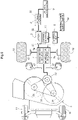
FIG. 6 is a schematic diagram showing a power system and a control system of the electric mower. - In the present specification, "front" means a forward direction in a front-rear direction (a travel direction) with respect to the vehicle body, and "rear" means a rearward direction in the front-rear direction (the travel direction) with respect to the vehicle body, unless otherwise specified. A left-right direction or a lateral direction means a lateral vehicle body direction (a vehicle body width direction) orthogonal to the front-rear direction with respect to the vehicle body. "Top" and "bottom" indicate a positional relationship in a vertical direction (a perpendicular direction) with respect to the vehicle body, and indicate a relationship in terms of the height from the ground.
- Next, one embodiment of the electric work vehicle according to the present invention will be described. In this embodiment, the electric work vehicle is an electric mower. As shown in
FIGS. 1 and2 , the electric mower includes: a pair of left and rightfront wheels 11 supported by a front portion of avehicle body 1; a pair of left and rightrear wheels 12 supported by a rear portion of thevehicle body 1; and amower unit 3 supported between thefront wheels 11 and therear wheels 12 in a lower portion of thevehicle body 1. Abattery housing section 4 for housing abattery device 6 is provided between the left and rightrear wheels 12. Furthermore, thevehicle body 1 is provided with a driver'sseat 13, aROPS frame 14, and so on. - The
vehicle body 1 includes aframe 10 that is constituted by right and left longitudinal beams extending in the front-rear direction, and a cross beam connecting the longitudinal beams. The lower end of theROPS frame 14 is coupled to theframe 10. - The
front wheels 11 are caster type wheels, and therear wheels 12 are drive wheels. A pair of left andright travel motors 15, which are internal electric devices, are respectively provided inward of therear wheels 12. Power from thetravel motors 15 is transmitted to therear wheels 12 via adeceleration mechanism 16. Therear wheels 12 are driven individually. - Shift levers 17 are respectively arranged on two sides of the driver's
seat 13. When theright shift lever 17 is operated to the neutral position, theright travel motor 15 is stopped. When theright shift lever 17 is operated to the forward position, theright travel motor 15 rotates forward, and when theright shift lever 17 is operated to the rearward position, theright travel motor 15 rotates rearward. Similarly, when theleft shift lever 17 is operated to a neutral position, a forward position, and a rearward position, theleft travel motor 15 performs the same operations as theright travel motor 15 described above. That is to say, in response to the right andleft shift levers 17 being operated, the right and leftrear wheels 12 are driven forward or rearward independently of each other, and thevehicle body 1 moves forward or rearward, or turns right or left. - The
mower unit 3 includes amower deck 30 and acutting blade 31 rotatably supported inside themower deck 30 so as to be rotatable about a vertical axis. Thecutting blade 31 is rotationally driven by acutting blade motor 32, which is an internal electric device. Themower deck 30 is suspended from theframe 10 so as to be able to move up and down, using alink mechanism 33. - The
battery device 6 that supplies electric power to thetravel motors 15 and thecutting blade motor 32 is housed in thebattery housing section 4 so as to be removable. As shown inFIG. 3 , thebattery device 6 is provided with a substantiallycubic housing 60, androllers 61 that serve as transport wheels are provided on the bottom surface of thehousing 60. Abattery 2 is built into thehousing 60. Abattery guide rail 62 and abattery guide roller 63 are provided on each of the left and right side surfaces of thehousing 60. Apower supply unit 20 for charging and power supply is provided on a central upper surface of thehousing 60. Anexternal inverter box 80 is provided next to thepower supply unit 20. Anexternal inverter 8 is housed in theexternal inverter box 80. Theexternal inverter 8 converts DC power from thebattery 2 into AC power, and outputs AC power. A 100 V or 200V AC socket 82 that is connected to theexternal inverter 8 is provided on an outer surface of theexternal inverter box 80. The plug of an externalelectric device 9 such as a hand mower, a blower, or a chainsaw is inserted into theAC socket 82. - As shown in
FIG. 2 , aninternal inverter 7 that converts the DC power from thebattery 2 into AC power and outputs the AC power to internal electric devices such as thetravel motors 15 and thecutting blade motor 32, and acontrol unit 5 that controls theinternal inverter 7 are provided below the driver'sseat 13. - Although not shown in
FIG. 5 , thepower supply unit 20 houses abattery control unit 23. As shown inFIG. 5 , afirst connection unit 21 and asecond connection unit 22 to which power supply lines from thebattery 2 are connected are provided on side surfaces of thepower supply unit 20. Aninternal harness 71, which is a power supply line for supplying power to theinternal inverter 7, is connected to thefirst connection unit 21. Anexternal harness 81, which is a power supply line for supplying power to theexternal inverter 8, is connected to thesecond connection unit 22. Thebattery control unit 23 has the function of controlling charging of, and power supply from, thebattery 2. Thebattery control unit 23 is connected to thefirst connection unit 21 and thesecond connection unit 22, and controls (turns ON/OFF) the power flowing through the switching units of thefirst connection unit 21 and thesecond connection unit 22. Furthermore, thebattery control unit 23 is connected to thefirst connection unit 21 and thesecond connection unit 22 via data communication lines. Thebattery control unit 23 can exchange data with theinternal inverter 7 via the data communication line of thefirst connection unit 21, and can exchange data with theexternal inverter 8 via the data communication line of thesecond connection unit 22. As will be described in detail later, thebattery control unit 23 can perform authentication regarding whether or not power supply to theexternal inverter 8 via thesecond connection unit 22 is permitted. - The
second connection unit 22 can supply charging power to thebattery 2 when connected to a power supply line of a charging device (not shown). That is to say, thesecond connection unit 22 is also used as a charging port for thebattery 2. - As shown in
FIG. 4 , thebattery housing section 4 is formed between rear end portions of the left and right frames 10. Across member 41 that couples the left andright frames 10 is configured to be used as a placement platform for thebattery housing section 4. Furthermore, vehicle body guide rails 42 and vehiclebody guide rollers 43 are respectively provided on the inner surfaces of rear end portions of the left and right frames 10. Aninternal harness 71 extends from theinternal inverter 7 provided below the driver'sseat 13, and afirst connector 71a is attached to the leading end of theinternal harness 71. - When the
battery device 6 is loaded into thebattery housing section 4, thebattery guide rollers 63 are guided by the vehicle body guide rails 42, and thebattery guide rails 62 abut against the vehiclebody guide rollers 43. As a result, thebattery device 6 smoothly moves to a housing position in thebattery housing section 4. - When the
external inverter 8 is not required, it is possible to disconnect thesecond connection unit 22 and aconnector 81a from each other and store theexternal harness 81 together with theexternal inverter 8 somewhere else outside or inside the vehicle. -
FIG. 6 schematically shows a power system and a control system of the electric mower. Theinternal inverter 7 includes atravel motor inverter 7a and amower motor inverter 7b. Thetravel motor inverter 7a supplies electric power to each of the pair of left andright travel motors 15 individually. Themower motor inverter 7b supplies electric power to thecutting blade motor 32. The rotational force of thecutting blade motor 32 is transmitted to thecutting blade 31 via abelt transmission mechanism 34. - The
control unit 5 has a calculation function, which is the function of calculating the speed of each of the pair of left and rightrear wheels 12, and a control function, which is the function of controlling theinternal inverter 7. Thecontrol unit 5 separately calculates the rotational speeds of theleft travel motor 15 and theright travel motor 15 based on the amount of operation of the left and right shift levers 17 that function as control levers. Furthermore, thecontrol unit 5 generates a control signal for supplying thetravel motors 15 with the electric power required for realizing the rotation speeds of thetravel motors 15 based on the calculation results, and provides the control signal to thetravel motor inverter 7a. Thetravel motor inverter 7a supplies the electric power that is based on the control signal to thetravel motors 15. As a result, the electric lawnmower can travel straight, turn left, and turn right. - The
battery control unit 23 is connected to thefirst connection unit 21 and thesecond connection unit 22 via data communication lines, and, in particular, thebattery control unit 23 can perform authentication regarding whether or not power supply to theexternal inverter 8 via thesecond connection unit 22 is permitted. Through this authentication processing, thebattery control unit 23 acquires an identification code or specification data regarding theexternal inverter 8 from theexternal inverter 8 connected to thesecond connection unit 22, and compares the acquired identification code or specification data with the identification code or specification data of anexternal inverter 8 registered in advance. In the comparison, if the identification codes or the pieces of specification data match, thebattery control unit 23 permits power supply to theexternal inverter 8 connected to thesecond connection unit 22. The above authentication method is an example, and whether or not power supply is permitted may be determined using IC tags or the like provided on thesecond connection unit 22 and theconnector 81a of theexternal harness 81. In addition, various authentication methods may be employed. - The
battery control unit 23 is also connected to thecontrol unit 5 so that data can be exchanged therebetween. In this embodiment, an externalpower supply switch 18 that can be operated by the driver is connected to thecontrol unit 5. The externalpower supply switch 18 is a switch used to select whether or not to permit power supply from an external device, and thecontrol unit 5 outputs power supply permission to thebattery control unit 23 based on a signal received from the externalpower supply switch 18. Thebattery control unit 23 does not supply power to theexternal inverter 8 via thesecond connection unit 22 unless power supply permission is provided. That is to say, in this embodiment, in response to theexternal inverter 8 being connected to thesecond connection unit 22, and power supply permission being output from the control system of the electric work vehicle, thebattery control unit 23 supplies DC power to theexternal inverter 8. -
- (1) In the electric work vehicle according to the above embodiment, only the
battery 2 is the power source of the electric device. However, a hybrid type power source that includes an internal combustion engine and thebattery 2 may be employed. - (2) In the above embodiment, the
battery device 6 that houses thebattery 2 can be removed from thevehicle body 1 and used. However, thebattery device 6 may be fixed to thevehicle body 1 as in an electric passenger car. - (3) In the above embodiment, an electric lawnmower is described as an electric work vehicle. However, other electric work machines, electric tractors, electric harvesters, electric construction machines, and so on may also be equipped with the above-described power supply device.
- It should be noted that the configuration disclosed in the above embodiments (including the other embodiments, the same applies hereinafter) can be applied in combination with the configurations disclosed in the other embodiments as long as no contradiction arises. Also, the embodiments disclosed in the present specification are examples. Embodiments of the present invention are not limited to those above, and can be appropriately modified without departing from the object of the present invention.
- The present invention is applicable to battery-driven electric work vehicles.
-
- 1:
- Vehicle Body
- 15:
- Travel Motor (Internal Electric Device)
- 18:
- External Power Supply Switch
- 2:
- Battery
- 20:
- Power Supply Unit
- 21:
- First Connection Unit
- 22:
- Second Connection Unit
- 23:
- Battery Control Unit
- 3:
- Mower Unit
- 32:
- Cutting Blade Motor (Internal Electric Device)
- 4:
- Battery housing section
- 5:
- Control Unit
- 6:
- Battery Device
- 61:
- Roller (Transport Wheel)
- 7:
- Internal Inverter
- 7a:
- Travel Motor Inverter
- 7b:
- Mower Motor Inverter
- 71:
- Internal Harness
- 71a:
- First Connector
- 8:
- External Inverter
- 80:
- External Inverter Box
- 81:
- External Harness
- 81a:
- Connector
- 82:
- AC Socket
- 9:
- External Electric Device
Claims (6)
- A power supply device for an electric work vehicle, comprising:a battery (2) by which the electric work vehicle is drivable;a first connection unit (21) for an internal inverter (7) configured to convert DC power from the battery (2) into AC power, and output the AC power to an internal electric device (15, 32) installed in the electric work vehicle;a second connection unit (22) for an external inverter (8) configured to convert DC power from the battery (2) into AC power, and output the AC power to an external electric device (9); anda battery control unit (23) connected to the first connection unit (21) and the second connection unit (22), and configured to control charging of, and power supply from, the battery (2),wherein the battery control unit (23) is configured to communicate with the external inverter (8) side via the second connection unit (22) to perform authentication regarding whether or not power supply to the external inverter (8) is permitted.
- The power supply device for an electric work vehicle according to claim 1,
wherein, in response to the external inverter (8) being connected to the second connection unit (22) and power supply permission being output from a control system of the electric work vehicle, the battery control unit (23) supplies the DC power to the external inverter (8). - The power supply device for an electric work vehicle according to claim 1,
wherein, in response to the external inverter (8) being connected to the second connection unit (22), the battery control unit (23) determines whether or not power supply to the external inverter (8) is permitted, based on an identification code or specification data regarding the external inverter (8) acquired from the external inverter (8). - The power supply device for an electric work vehicle according to any one of claims 1 to 3,
wherein the battery (2), the battery control unit (23), the first connection unit (21), and the second connection unit (22) are built into a battery device (6) that is removably installed in a vehicle body (1) of the electric work vehicle. - The power supply device for an electric work vehicle according to claim 4,
wherein the battery device (6) is provided with the external inverter (8) and a transport wheel (61). - The power supply device for an electric work vehicle according to any one of claims 1 to 5,
wherein the second connection unit (22) is connectable to a charging device configured to supply charging power to the battery (2).
Applications Claiming Priority (1)
| Application Number | Priority Date | Filing Date | Title |
|---|---|---|---|
| JP2021152495A JP7603561B2 (en) | 2021-09-17 | 2021-09-17 | Power supply device for electric work vehicles |
Publications (1)
| Publication Number | Publication Date |
|---|---|
| EP4151445A1 true EP4151445A1 (en) | 2023-03-22 |
Family
ID=82067589
Family Applications (1)
| Application Number | Title | Priority Date | Filing Date |
|---|---|---|---|
| EP22179236.9A Pending EP4151445A1 (en) | 2021-09-17 | 2022-06-15 | Power supply device for electric work vehicle |
Country Status (3)
| Country | Link |
|---|---|
| US (1) | US11850945B2 (en) |
| EP (1) | EP4151445A1 (en) |
| JP (1) | JP7603561B2 (en) |
Families Citing this family (2)
| Publication number | Priority date | Publication date | Assignee | Title |
|---|---|---|---|---|
| JP7390998B2 (en) * | 2020-09-16 | 2023-12-04 | 株式会社クボタ | grass cutting equipment |
| US20240423128A1 (en) * | 2023-06-22 | 2024-12-26 | Greenworks (Jiangsu) Co., Ltd | Outdoor power machine with mixed flow blower |
Citations (5)
| Publication number | Priority date | Publication date | Assignee | Title |
|---|---|---|---|---|
| JP2011153962A (en) | 2010-01-28 | 2011-08-11 | Matsuyama Plow Mfg Co Ltd | Battery monitoring system for agricultural machine |
| JP2014030283A (en) | 2012-07-31 | 2014-02-13 | Mitsubishi Motors Corp | External feeder for electric vehicle |
| DE102015201151A1 (en) * | 2014-01-31 | 2015-08-06 | Ford Global Technologies, Llc | Portable EV power transmission device and method |
| EP3805039A1 (en) * | 2019-10-08 | 2021-04-14 | Kubota Corporation | Electric work vehicle |
| DE102021102148A1 (en) * | 2020-02-04 | 2021-08-05 | Ford Global Technologies, Llc | VEHICLE-TO-BUILDING PERFORMANCE SYSTEM |
Family Cites Families (4)
| Publication number | Priority date | Publication date | Assignee | Title |
|---|---|---|---|---|
| JP5752532B2 (en) * | 2011-09-02 | 2015-07-22 | ヤンマー株式会社 | Electric work vehicle |
| JP2013081323A (en) * | 2011-10-05 | 2013-05-02 | Mitsubishi Motors Corp | Power supply controller of power supply apparatus |
| US10259443B2 (en) * | 2013-10-18 | 2019-04-16 | Ford Global Technologies, Llc | Hybrid-electric vehicle plug-out mode energy management |
| JP2017169305A (en) * | 2016-03-15 | 2017-09-21 | 株式会社鈴宏商店 | Emergency power supply device |
-
2021
- 2021-09-17 JP JP2021152495A patent/JP7603561B2/en active Active
-
2022
- 2022-06-15 US US17/840,834 patent/US11850945B2/en active Active
- 2022-06-15 EP EP22179236.9A patent/EP4151445A1/en active Pending
Patent Citations (5)
| Publication number | Priority date | Publication date | Assignee | Title |
|---|---|---|---|---|
| JP2011153962A (en) | 2010-01-28 | 2011-08-11 | Matsuyama Plow Mfg Co Ltd | Battery monitoring system for agricultural machine |
| JP2014030283A (en) | 2012-07-31 | 2014-02-13 | Mitsubishi Motors Corp | External feeder for electric vehicle |
| DE102015201151A1 (en) * | 2014-01-31 | 2015-08-06 | Ford Global Technologies, Llc | Portable EV power transmission device and method |
| EP3805039A1 (en) * | 2019-10-08 | 2021-04-14 | Kubota Corporation | Electric work vehicle |
| DE102021102148A1 (en) * | 2020-02-04 | 2021-08-05 | Ford Global Technologies, Llc | VEHICLE-TO-BUILDING PERFORMANCE SYSTEM |
Also Published As
| Publication number | Publication date |
|---|---|
| US11850945B2 (en) | 2023-12-26 |
| JP2023044454A (en) | 2023-03-30 |
| JP7603561B2 (en) | 2024-12-20 |
| US20230090301A1 (en) | 2023-03-23 |
Similar Documents
| Publication | Publication Date | Title |
|---|---|---|
| US11485212B2 (en) | Electric work vehicle | |
| EP4151445A1 (en) | Power supply device for electric work vehicle | |
| US20210351465A1 (en) | Electric Work Vehicle | |
| EP3708399B1 (en) | Electric work vehicle | |
| EP3739658B1 (en) | Battery pack for electric work vehicle | |
| JP5684768B2 (en) | Work vehicle | |
| US10639983B2 (en) | Work vehicle | |
| EP4039516B1 (en) | Electric work vehicle | |
| US20250282235A1 (en) | Electric work vehicle | |
| JP7825667B2 (en) | electric work vehicle | |
| JP2020150631A (en) | Electric work vehicle | |
| JP2024120921A5 (en) | ||
| JP2018196355A (en) | Mower unit | |
| EP2221271B1 (en) | Work platform | |
| JP2019073147A (en) | Electric work machine | |
| US20250289333A1 (en) | Electric work vehicle | |
| US20250286321A1 (en) | Electric work vehicle | |
| JP2020150630A (en) | Electric work vehicle | |
| WO2018135260A1 (en) | Automated guided vehicle | |
| US20250289334A1 (en) | Electric work vehicle | |
| JP7519984B2 (en) | Electric work vehicle | |
| US12600251B2 (en) | Electric work vehicle | |
| JP7817145B2 (en) | Work vehicle | |
| JP7849277B2 (en) | Work vehicle | |
| US20250303867A1 (en) | Utility Vehicle |
Legal Events
| Date | Code | Title | Description |
|---|---|---|---|
| PUAI | Public reference made under article 153(3) epc to a published international application that has entered the european phase |
Free format text: ORIGINAL CODE: 0009012 |
|
| STAA | Information on the status of an ep patent application or granted ep patent |
Free format text: STATUS: REQUEST FOR EXAMINATION WAS MADE |
|
| 17P | Request for examination filed |
Effective date: 20220615 |
|
| AK | Designated contracting states |
Kind code of ref document: A1 Designated state(s): AL AT BE BG CH CY CZ DE DK EE ES FI FR GB GR HR HU IE IS IT LI LT LU LV MC MK MT NL NO PL PT RO RS SE SI SK SM TR |