EP4149173A1 - Service obtaining method and apparatus, and communication device and readable storage medium - Google Patents
Service obtaining method and apparatus, and communication device and readable storage medium Download PDFInfo
- Publication number
- EP4149173A1 EP4149173A1 EP21813736.2A EP21813736A EP4149173A1 EP 4149173 A1 EP4149173 A1 EP 4149173A1 EP 21813736 A EP21813736 A EP 21813736A EP 4149173 A1 EP4149173 A1 EP 4149173A1
- Authority
- EP
- European Patent Office
- Prior art keywords
- network
- service
- terminal
- subscription
- subscription data
- Prior art date
- Legal status (The legal status is an assumption and is not a legal conclusion. Google has not performed a legal analysis and makes no representation as to the accuracy of the status listed.)
- Granted
Links
Images


Classifications
-
- H—ELECTRICITY
- H04—ELECTRIC COMMUNICATION TECHNIQUE
- H04W—WIRELESS COMMUNICATION NETWORKS
- H04W48/00—Access restriction; Network selection; Access point selection
- H04W48/18—Selecting a network or a communication service
-
- H—ELECTRICITY
- H04—ELECTRIC COMMUNICATION TECHNIQUE
- H04W—WIRELESS COMMUNICATION NETWORKS
- H04W12/00—Security arrangements; Authentication; Protecting privacy or anonymity
- H04W12/03—Protecting confidentiality, e.g. by encryption
-
- H—ELECTRICITY
- H04—ELECTRIC COMMUNICATION TECHNIQUE
- H04W—WIRELESS COMMUNICATION NETWORKS
- H04W12/00—Security arrangements; Authentication; Protecting privacy or anonymity
- H04W12/06—Authentication
- H04W12/069—Authentication using certificates or pre-shared keys
-
- H—ELECTRICITY
- H04—ELECTRIC COMMUNICATION TECHNIQUE
- H04W—WIRELESS COMMUNICATION NETWORKS
- H04W48/00—Access restriction; Network selection; Access point selection
- H04W48/08—Access restriction or access information delivery, e.g. discovery data delivery
- H04W48/10—Access restriction or access information delivery, e.g. discovery data delivery using broadcasted information
-
- H—ELECTRICITY
- H04—ELECTRIC COMMUNICATION TECHNIQUE
- H04W—WIRELESS COMMUNICATION NETWORKS
- H04W48/00—Access restriction; Network selection; Access point selection
- H04W48/16—Discovering, processing access restriction or access information
-
- H—ELECTRICITY
- H04—ELECTRIC COMMUNICATION TECHNIQUE
- H04W—WIRELESS COMMUNICATION NETWORKS
- H04W8/00—Network data management
- H04W8/18—Processing of user or subscriber data, e.g. subscribed services, user preferences or user profiles; Transfer of user or subscriber data
- H04W8/20—Transfer of user or subscriber data
- H04W8/205—Transfer to or from user equipment or user record carrier
-
- H—ELECTRICITY
- H04—ELECTRIC COMMUNICATION TECHNIQUE
- H04W—WIRELESS COMMUNICATION NETWORKS
- H04W60/00—Affiliation to network, e.g. registration; Terminating affiliation with the network, e.g. de-registration
- H04W60/04—Affiliation to network, e.g. registration; Terminating affiliation with the network, e.g. de-registration using triggered events
-
- H—ELECTRICITY
- H04—ELECTRIC COMMUNICATION TECHNIQUE
- H04W—WIRELESS COMMUNICATION NETWORKS
- H04W8/00—Network data management
- H04W8/18—Processing of user or subscriber data, e.g. subscribed services, user preferences or user profiles; Transfer of user or subscriber data
Definitions
- the present application belongs to the field of communications technologies, and in particular, to a service obtaining method and apparatus, a communications device, and a readable storage medium.
- Embodiments of the present application are intended to provide a service obtaining method and apparatus, a communications device, and a readable storage medium, to resolve the problem that an existing service obtaining method is relatively simple.
- a service obtaining method is provided, where the method is applied to a terminal and includes:
- a service obtaining method is provided, where the method is applied to a network side device in a first network and includes:
- a service obtaining method is provided, where the method is applied to a network side device in a second network and includes: sending subscription data to a terminal; where the subscription data is used to select, by the terminal, a first network according to the subscription data, access the first network, and obtain a subscription service corresponding to the subscription data from the first network.
- a service obtaining apparatus where the apparatus is applied to a terminal and includes:
- a service obtaining apparatus is provided, where the apparatus is applied to a network side device in a first network and includes:
- a service obtaining apparatus is provided, where the apparatus is applied to a network side device in a second network and includes: a sending module, configured to send subscription data to a terminal; where the subscription data is used to select, by the terminal, a first network according to the subscription data, access the first network, and obtain a subscription service corresponding to the subscription data from the first network.
- a communications device includes a processor, a memory, and a program or an instruction stored in the memory and executable on the processor.
- the program or the instruction is executed by the processor, the steps of the method according to the first aspect, or the steps of the method according to the second aspect, or the steps of the method according to the third aspect are implemented.
- a readable storage medium stores a program or an instruction, and when the program or the instruction is executed by a processor, the steps of the method according to the first aspect, or the steps of the method according to the second aspect, or the steps of the method according to the third aspect are implemented.
- a chip is provided, where the chip includes a processor and a communications interface, the communications interface is coupled to the processor, and the processor is configured to run a program or an instruction of a network side device, to implement the steps of the method according to the first aspect, or the steps of the method according to the second aspect, or the steps of the method according to the third aspect.
- a computer software product is provided, where the computer software product is stored in a nonvolatile storage medium, and the software product is configured to be executed by at least one processor to implement the steps of the method according to the first aspect, or the steps of the method according to the second aspect, or the steps of the method according to the third aspect.
- a communications device configured to implement the method according to the first aspect, or the method according to the second aspect, or the method according to the third aspect.
- a terminal may obtain subscription data from a second network; select a first network by using the subscription data, and access the first network; and obtain a subscription service corresponding to the subscription data from the first network. Therefore, it is possible to support the terminal to dynamically obtain subscription data through a third-party entity, and to obtain a subscription service in a current network (previously not associated with the terminal) based on the subscription data, thereby enriching the service obtaining method.
- first, second, and the like in this specification and claims of the present application are used to distinguish between similar objects instead of describing a specific order or sequence. It should be understood that the data used in this way may be interchangeable in appropriate circumstances so that the embodiments of the present application described can be implemented in other orders than the order illustrated or described herein, and objects distinguished by "first” and “second” are usually of one type, which does not limit a quantity of the objects, for example, a first object may be one or more than one.
- “and/or” is used to indicate at least one of connected objects, and the character “/" usually indicates that associated objects are in an "or” relationship.
- LTE Long Term Evolution
- LTE-A Long Term Evolution-Advanced
- SC-FDMA single-carrier Frequency-Division Multiple Access
- system and “network” in the embodiments of the present application are often used interchangeably, and the technologies described may be used in the systems and radio technologies mentioned above, and may also be used in another system and radio technology.
- a new radio (New Radio, NR) system is described below as an example, and the term NR is used in most of the descriptions, although these technologies can also be used in an application other than an application of the NR system, for example, a 6th generation (6th Generation, 6G) communications system.
- 6th Generation, 6G 6th generation
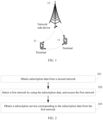
- FIG. 1 is a block diagram of a wireless communications system to which an embodiment of the present application may be applied.
- the wireless communications system includes a terminal 11 and a network side device 12.
- the terminal 11 may be also referred to as a terminal device or a user terminal (User Equipment, UE).
- UE User Equipment
- the terminal 11 may be a terminal side device such as a mobile phone, a tablet personal computer (Tablet Personal Computer), a laptop computer (Laptop Computer) or referred to as a notebook computer, a personal digital assistant (Personal Digital Assistant, PDA), a palmtop computer, a netbook, an ultra-mobile personal computer (ultra-mobile personal computer, UMPC), a mobile Internet device (Mobile Internet Device, MID), a wearable device (Wearable Device) or vehicle user equipment (vehicle user equipment, VUE), pedestrian user equipment (pedestrian user equipment, PUE).
- the wearable device includes bracelets, earphones, glasses, or the like. It should be noted that a specific type of the terminal 11 is not limited in the embodiments of the present application.
- the network side device 12 may be a base station or a core network.
- the base station may be referred to as a NodeB, an evolved NodeB, an access point, a base transceiver station (Base Transceiver Station, BTS), a radio base station, a radio transceiver, a basic service set (Basic Service Set, BSS), an extended service set (Extended Service Set, ESS), a NodeB, an evolved NodeB (eNB), a home NodeB, a home evolved NodeB, a wireless local area network (Wireless Local Area Network, WLAN) access point, a wireless fidelity (Wireless Fidelity, WiFi) node, a transmitting receiving point (Transmitting Receiving Point, TRP) or another appropriate term in the art.
- the base station is not limited to specific technical vocabulary. It should be noted that in some embodiments of the present application, the base station in the NR system is merely used as an example, but does not limit a specific type of the base station.
- An entity in the core network includes but is not limited to an access management function (Access Management Function, AMF), an authentication server function (Authentication Server Function, AUSF), a policy control function (Policy Control Function, PCF), a session management function (Session Management Function, SMF), a user plane function (User Plane Function, UPF), a charging function (Charging Function, CHF), unified data management (Unified Data Management, UDM), a network exposure function (Network Exposure Function, NEF), and the like.
- Access Management Function Access Management Function
- AMF Access Management Function
- AUSF Authentication Server Function
- PCF Policy Control Function
- SMF Session Management Function
- UPF User Plane Function
- Charging Function Charging Function
- CHF Charging Function
- UDM Network Exposure Function
- NEF Network Exposure Function
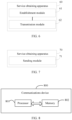
- FIG. 2 is a flowchart of a service obtaining method according to an embodiment of the present application. The method is applied to a terminal. As shown in FIG. 2 , the method includes the following steps.
- Step 201 obtain subscription data from a second network.
- Step 202 select a first network by using the subscription data, and access the first network.
- Step 203 obtain a subscription service corresponding to the subscription data from the first network.
- the first network and the second network may belong to a same network, or may belong to different networks.
- the first network may be a 5th generation (5th Generation, 5G) public land mobile network (Public Land Mobile Network, PLMN), a non-public network (Non-Public Network, NPN), or another mobile communication network.
- the second network may be a 5G PLMN, an NPN, a third-party service provider network, a handset manufacturer's network, or another mobile communication network.
- a terminal may obtain the subscription service in a form of multicast or broadcast in the first network. Before obtaining the subscription service in the form of multicast or broadcast, the terminal may receive access information for obtaining a multicast or broadcast service that is provided by the first network.
- the above-mentioned obtaining the subscription data from the second network essentially is that: the terminal obtains the subscription data from a network side device and/or an application layer in the second network.
- the above-mentioned accessing the first network essentially is that: the terminal establishes a connection to a network side device in the first network.
- the above-mentioned obtaining the subscription service from the first network essentially is that: the terminal obtains a subscription service from the network side device in the second network.
- a terminal may obtain subscription data from a second network; select a first network by using the subscription data, and access the first network; and obtain a subscription service corresponding to the subscription data from the first network. Therefore, it is possible to support the terminal to dynamically obtain subscription data through a third-party entity, and to obtain a subscription service in a current network (previously not associated with the terminal) based on the subscription data, thereby enriching the service obtaining method.
- the foregoing subscription data may also be referred to as specific subscription data.
- the foregoing subscription data may be any one of permanent subscription data and temporary subscription data, that is, the subscription data may be temporary subscription data, or may be permanent subscription data.
- the permanent subscription data may be 5G PLMN subscription data, NPN subscription data, or other mobile network subscription data.
- the temporary subscription data may be: 1) 5G PLMN subscription data, NPN subscription data, or other mobile network subscription data for a certain period of time, where the subscription data is only valid for this period of time, such as several days after accessing the network; 2) subscription data of a certain service, such as subscription data of audio/video of concerts, video of competition events, and Augmented Reality (Augmented Reality, AR)/Virtual Reality (Virtual Reality, VR) services of games, where the subscription data may specify a quality of service (Quality of Service, QoS) level for providing a service; and 3) subscription data of specific locations, such as subscription data of wireless data services in specific locations such as shopping malls, conference venues, and campuses.
- the types of the temporary subscription data are not limited in this embodiment of the present application.
- the second network provides a subscription method for the terminal, that is, the terminal obtains subscription data from the second network in a manner that may include any one of the following:
- the second network may also provide the subscription data to a first network that has a cooperative relationship.
- the first network may store the subscription data in a subscription database such as unified data management (Unified Data Management, UDM).
- UDM Unified Data Management
- the subscription data provided by the second network for the terminal may include an access security token that is provided for the terminal and is used for authenticating a legitimate base station in the first network.
- the second network may also provide a same access security token for the first network.
- an express form of the foregoing subscription data may be any one of the following:
- the foregoing subscription data may further include at least one of the following:
- the terminal before the terminal obtains a service through the first network, it needs to access the first network, and complete the authentication and identification process through the subscription data.
- the terminal before the terminal obtains the subscription data from the second network, the terminal also needs to complete a user real-name authentication process.
- the user real-name authentication process includes but is not limited to a user input personal identifier (Identifier, ID), a user input facial ID, or the like.
- the terminal may also use the subscription data and/or an indication identifier in broadcast information of the first network to determine that the first network is able to provide the subscription service, that is, determining that the first network can provide the required service.
- the indication identifier in the broadcast information of the first network may be, but not limited to, any one of the following:
- the first network may add an indicating bit in existing system broadcast information (system information block (System Information Block, SIB)), or add new system broadcast information (SIB), which is used for broadcasting the indication identifier.
- SIB System Information Block
- SIB new system broadcast information
- the process of determining that the first network is able to provide the subscription service may include but is not limited to any one of the following:
- the terminal when the terminal detects the first network, authentication on the first network is performed by the terminal through a certain security mechanism.
- the security mechanism may be that:
- the process of determining that the first network is able to provide the subscription service may include: obtaining the broadcast information of the first network, where the broadcast information includes a first ciphertext; decrypting the first ciphertext by using a token obtained from the second network; in a case of decrypting to obtain a plaintext indication identifier, determining that the first network is a legitimate network authorized by the second network; and if the plaintext indication identifier is included in the obtained subscription data, determining that the first network is able to provide the subscription service.
- the process of the terminal accessing the first network may be: sending a registration request message to the first network by using the subscription data obtained from the second network, completing an authentication and identification process in a registration process initiated according to the registration request message, and accessing the first network.
- the registration request message may include: a slice identifier that provides a service for the terminal. Namely, the terminal needs to include a slice identifier that provides a service for the terminal in request slice information provided in the registration request message.
- the foregoing authentication and identification process may include a real-name authentication process, that is, completing the real-name authentication process in a registration process.
- a real-name authentication process that is, completing the real-name authentication process in a registration process.
- the real-name authentication process may include any one of the following:
- the terminal may further skip the authentication and identification process in the registration process initiated according to the registration request message, and access the first network.
- the relevant authentication and identification conditions may include:
- the process that a terminal obtains a subscription service corresponding to the subscription data from the first network may include: sending, by the terminal, a PDU session (session) establishment request to the first network, establishing a PDU session data connection according to the PDU session establishment request, and obtaining the subscription service corresponding to the subscription data through the PDU session data connection.
- the terminal may obtain service-related policy (policy) information from the first network, including but not limited to a user equipment routing selection policy (User equipment Routing Selection Policy, URSP), an access and mobility management policy, and the like.
- policy policy
- the URSP may include information such as a slice identifier of the PDU session established by the terminal for obtaining the data service, a data network name DNN, and the like.
- the terminal may carry other information such as a DNN and a slice identifier in the PDU session establishment request message.
- the information such as the DNN and the slice identifier may come from the subscription data obtained from the second network, or from URSP information provided by the first network.
- the terminal may perform the real-name authentication process in the secondary authorization or authentication process (Secondary authentication/authorization) initiated by the first network.
- the terminal may further perform and complete a network slice-specific authorization and authentication process that is for a slice requested by a terminal and is initiated by the first network.
- NSSAA network slice-specific authorization and authentication
- the network slice-specific authorization and authentication process includes: a real-name authentication process completed through a real-name authentication interaction process, including but not limited to a user input personal ID, a user input facial ID, or the like.
- the UE establishes a PDU session data connection in the first network, and obtains subscription data.
- the relevant content may include:
- the first network and the second network complete a charging function.
- the terminal may perform charging data statistics and reporting according to indications of the first network.
- the first network and the second network agree that a charging execution body is the first network, and agree on a charging division method.
- the first network completes the charging data statistics and generates a bill.
- a charging method agreed between the second network and the UE is: charging according to the flow rate.
- the first network and the second network agree that a charging execution body is the second network, and agree on a charging division method.
- a charging method agreed between the second network and the UE is: charging according to the flow rate, charging according to service events (competition events, concerts, or the like), or charging according to duration (such as charging by month, or the like).
- the first network completes the charging data statistics and provides it to the second network, the second network charges the UE, and divides the charging according to the agreement with the first network.
- FIG. 3 is a flowchart of a service obtaining method according to an embodiment of the present application.
- the method is applied to a network side device in a first network, including but not limited to a base station, an AMF, an AUSF, an SMF, a CHF, an NEF, and the like.
- the method includes the following steps.
- Step 301 establish a connection to a terminal, where the connection is requested to be established by the terminal using subscription data, and the subscription data is obtained by the terminal from a second network.
- the first network and the second network may belong to a same network, or may belong to different networks.
- the first network may be a 5G PLMN, an NPN, or another mobile communication network.
- the second network may be a 5G PLMN, an NPN, a third-party service provider network, a handset manufacturer's network, or another mobile communication network.
- the above connection may be a PDU session connection, which is established by a PDU session establishment request of the terminal.
- Step 302 transmit a subscription service corresponding to the subscription data to the terminal.
- a terminal may obtain the subscription service in a form of multicast or broadcast in the first network. Before obtaining the subscription service in the form of multicast or broadcast, the terminal may receive access information for obtaining a multicast or broadcast service that is provided by the first network.
- the service obtaining method of the embodiment of the present application it is possible to support the terminal to dynamically obtain subscription data through a third-party entity, and to obtain a subscription service in a current network (previously not associated with the terminal) based on the subscription data, thereby enriching the service obtaining method.
- the first network may negotiate agreement content for providing a service for the terminal with the second network.
- the agreement content includes at least one of the following: a subscription service name, location information for providing a subscription service, time information for providing a subscription service, a token, and a service security certificate.
- the first network may send at least one of the following to the second network: a slice identifier, service QoS information, data network information DNN, and the like.
- the first network may obtain subscription data of the terminal from the second network.
- the agreement content may further include at least one of the following: whether a slice requested by a terminal needs to perform a network slice-specific authorization and authentication (NSSAA) process, whether the terminal needs to perform a secondary authorization or authentication (Secondary authentication/authorization) process, a charging mechanism of the first network and the second network, and a real-name authentication mechanism.
- NSSAA network slice-specific authorization and authentication
- Secondary authentication/authorization Secondary authentication/authorization
- the first network may further send broadcast information to the terminal.
- the broadcast information may include an indication identifier or an indication identifier encrypted with a token; and the indication identifier is used to determine, by the terminal, that the first network is able to provide the subscription service.
- the indication identifier refer to the descriptions in the embodiment in FIG. 2 .
- the base station in the first network sends broadcast information to the terminal.
- the first network (for example, a base station in the first network) may provide the terminal with configuration information for obtaining the service in a form of broadcast or multicast.
- the process of establishing a connection to a terminal may include: receiving a registration request message sent by the terminal, completing an authentication and identification process in a registration process initiated according to the registration request message, and establishing the connection to the terminal.
- the AMF entity in the first network may complete the registration process, the AUSF entity in the first network completes the authentication and identification process, and the SMF in the first network establishes a connection to the terminal.
- the foregoing authentication and identification process includes a real-name authentication process.
- the first network may obtain subscription data of the terminal from the second network.
- the real-name authentication process may include any one of the following:
- the process of establishing a connection to a terminal may include: receiving the registration request message sent by the terminal, skipping the authentication and identification process in the registration process initiated according to the registration request message, and establishing the connection to the terminal.
- the first network may also perform the network slice-specific authorization and authentication process on the slice requested by the terminal.
- NSSAA network slice-specific authorization and authentication
- the network slice-specific authorization and authentication process includes: a real-name authentication process completed through a real-name authentication interaction process.
- the first network interacts with the network, and the second network completes an network slice-specific authorization and authentication service (Network Slice-Specific authentication, authorization, and accounting (AAA) server) function.
- AAA Network Slice-Specific authentication, authorization, and accounting
- the first network may send policy information for obtaining a service to the terminal.
- the policy information for obtaining a service includes but is not limited to a URSP, an access and mobility management policy, and the like.
- the URSP may include information such as a slice identifier of the PDU session established by the terminal for obtaining the data service, a data network name DNN, and the like.
- the second network dynamically updates the service requirement information to the first network (directly through a PCF or an NEF) entity, which is used for the first network to dynamically generate service policy information.
- a real-name authentication process in a secondary authorization or authentication (Secondary authentication/authorization) process with the terminal may be performed and completed.
- the first network interacts with the second network, and the second network completes a data network (Data Network, DN)-AAA server function.
- the first network and the second network complete a charging function.
- the first network (such as a CHF entity in the first network) may perform the following operations: performing statistics on charging data, generating charging information, and sending the charging information to the terminal; or performing statistics on charging data, and sending the charging data obtained through statistics to the second network, so that the second network generates charging information and sends the charging information to the terminal.
- FIG. 4 is a flowchart of a service obtaining method according to an embodiment of the present application.
- the method is applied to a network side device in a second network, including but not limited to a base station, an AMF, an AUSF, an SMF, a CHF, and the like.
- the method includes the following steps.
- Step 401 send subscription data to a terminal; where the subscription data is used to select, by the terminal, a first network according to the subscription data, access the first network, and obtain a subscription service corresponding to the subscription data from the first network.
- the first network and the second network may belong to a same network, or may belong to different networks.
- the first network may be a 5G PLMN, an NPN, or another mobile communication network.
- the second network may be a 5G PLMN, an NPN, a third-party service provider network, a handset manufacturer's network, or another mobile communication network.
- the service obtaining method of the embodiment of the present application it is possible to support the terminal to dynamically obtain subscription data through a third-party entity, and to obtain a subscription service in a current network (previously not associated with the terminal) based on the subscription data, thereby enriching the service obtaining method.
- the second network may negotiate agreement content for providing a service for the terminal with the first network.
- the agreement content includes at least one of the following: a subscription service name, location information for providing a subscription service, time information for providing a subscription service, a token, and a service security certificate.
- the second network may receive at least one of the following from the first network: a slice identifier, service QoS information, data network information DNN, and the like.
- the second network may send subscription data of the terminal to the first network.
- the agreement content may further include at least one of the following: whether a slice requested by a terminal needs to perform a network slice-specific authorization and authentication (NSSAA) process, whether the terminal needs to perform a secondary authorization or authentication process, a charging mechanism of the first network and the second network, and a real-name authentication mechanism.
- NSSAA network slice-specific authorization and authentication
- the second network may also perform any one of the following: sending subscription data of the terminal to the first network by interacting with the first network; or performing and completing a network slice-specific authorization and authentication process by interacting with the first network; or performing and completing a data network authorization and authentication process by interacting with the first network.
- the second network dynamically provides a service QoS requirement, so that the first network can generate policy information.
- the second network may also dynamically request a service provision requirement to the first network, so that the first network generates policy information for obtaining a service and sends the policy information for obtaining a service to the terminal.
- the policy information for obtaining a service includes but is not limited to a user equipment routing selection policy URSP, an access and mobility management policy, and the like.
- the URSP may include information such as a slice identifier of the PDU session established by the terminal for obtaining the data service, a data network name DNN, and the like.
- the first network and the second network complete a charging function.
- the second network may perform the following operations: receiving charging information generated by the first network, and performing charging division with the first network; or receiving charging data generated by the first network, generating charging information according to the charging data, sending the charging information to the terminal, and performing charging division with the first network.
- Application scenario 1 a roaming scenario
- Application scenario 2 a competition event scenario, a concert hall scenario, or a movie theater scenario
- the first network may be a VPLMN or a Visited NPN
- the second network may be a network or entity corresponding to a competition event/concert hall/movie provider.
- Application scenario 3 a shopping mall scenario
- the first network may be a VPLMN or a Visited NPN
- the second network may be a network or entity corresponding to a shopping mall.
- an execution subject of the service obtaining method provided in this embodiment of the present application may be a service obtaining apparatus or a control module in the service obtaining apparatus for executing the service obtaining method.
- that the service obtaining apparatus executes the service obtaining method is taken as an example to describe the service obtaining apparatus provided in this embodiment of the present application.
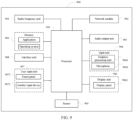
- FIG. 5 is a schematic structural diagram of a service obtaining apparatus according to an embodiment of the present application.
- the service obtaining apparatus 50 may include:
- the subscription data is any one of permanent subscription data and temporary subscription data.
- the obtaining subscription data from a second network includes any one of the following:
- the subscription data may be any one of the following:
- the subscription data includes at least one of the following:
- the service obtaining apparatus 50 further includes: a first execution module, configured to perform and complete a user real-name authentication process.
- the service obtaining apparatus 50 further includes: a determining module, configured to determine that the first network is able to provide the subscription service through the subscription data and/or an indication identifier in broadcast information of the first network.
- a determining module configured to determine that the first network is able to provide the subscription service through the subscription data and/or an indication identifier in broadcast information of the first network.
- the determining module is specifically configured for any one of the following:
- the determining module includes:
- the access module 53 is specifically configured to: send a registration request message to the first network by using the subscription data, complete an authentication and identification process in a registration process initiated according to the registration request message, and access the first network.
- the registration request message includes: a slice identifier that provides a service for the terminal.
- the authentication and identification process includes a real-name authentication process; and the real-name authentication process includes any one of the following:
- the access module 53 is further configured to: send a registration request message to the first network by using the subscription data, skip the authentication and identification process in the registration process initiated according to the registration request message, and access the first network.
- the service obtaining apparatus 50 further includes: a second execution module, configured to perform and complete, before establishing the PDU session data connection, a network slice-specific authorization and authentication process that is for a slice requested by a terminal and is initiated by the first network.
- the network slice-specific authorization and authentication process includes: a real-name authentication process completed through a real-name authentication interaction process.
- the second obtaining module 54 is specifically configured to: send a PDU session establishment request to the first network, establish a PDU session data connection according to the PDU session establishment request, and obtain the subscription service corresponding to the subscription data through the PDU session data connection.
- the service obtaining apparatus 50 further includes: a third execution module, configured to perform and complete a real-name authentication process in a secondary authorization or authentication process initiated by the first network.
- a third execution module configured to perform and complete a real-name authentication process in a secondary authorization or authentication process initiated by the first network.
- the service obtaining apparatus 50 further includes: a fourth execution module, configured to perform, while or after obtaining the subscription service corresponding to the subscription data from the first network, charging data statistics and reporting according to indications of the first network.
- a fourth execution module configured to perform, while or after obtaining the subscription service corresponding to the subscription data from the first network, charging data statistics and reporting according to indications of the first network.
- the service obtaining apparatus 50 provided in this embodiment of the present application can implement various processes implemented in the method embodiment in FIG. 2 , and achieve a same technical effect. To avoid repetition, details are not described herein again.
- FIG. 6 is a schematic structural diagram of a service obtaining apparatus according to an embodiment of the present application, and the apparatus is applied to a network side device in a first network.
- the service obtaining apparatus 60 may include:
- the service obtaining apparatus 60 further includes: a first negotiation module, configured to negotiate, with the second network, agreement content for providing a service for the terminal; where the agreement content includes at least one of the following: a subscription service name, location information for providing a subscription service, time information for providing a subscription service, a token, and a service security certificate.
- a first negotiation module configured to negotiate, with the second network, agreement content for providing a service for the terminal; where the agreement content includes at least one of the following: a subscription service name, location information for providing a subscription service, time information for providing a subscription service, a token, and a service security certificate.
- the service obtaining apparatus 60 further includes: a first transceiver module, configured to: based on the agreement content, send at least one of the following to the second network: a slice identifier, service QoS information, and data network information; and/or based on the agreement content, obtain subscription data of the terminal from the second network.
- a first transceiver module configured to: based on the agreement content, send at least one of the following to the second network: a slice identifier, service QoS information, and data network information; and/or based on the agreement content, obtain subscription data of the terminal from the second network.
- the agreement content further includes at least one of the following: whether a slice requested by a terminal needs to perform a network slice-specific authorization and authentication process, whether the terminal needs to perform a secondary authorization or authentication process, a charging mechanism of the first network and the second network, and a real-name authentication mechanism.
- the first transceiver module is further configured to: based on the agreement content, send broadcast information to the terminal; where the broadcast information includes an indication identifier or an indication identifier encrypted with a token; and the indication identifier is used to determine, by the terminal, that the first network is able to provide the subscription service.
- the establishment module 61 is specifically configured to: receive a registration request message sent by the terminal, complete an authentication and identification process in a registration process initiated according to the registration request message, and establish the connection to the terminal.
- the authentication and identification process includes a real-name authentication process; and the real-name authentication process includes any one of the following:
- the establishment module 61 is specifically configured to: receive the registration request message sent by the terminal, skip the authentication and identification process in the registration process initiated according to the registration request message, and establish the connection to the terminal.
- the service obtaining apparatus 60 further includes: a fifth execution module, configured to perform, before the establishing a connection to the terminal, the network slice-specific authorization and authentication process on the slice requested by the terminal.
- a fifth execution module configured to perform, before the establishing a connection to the terminal, the network slice-specific authorization and authentication process on the slice requested by the terminal.
- the network slice-specific authorization and authentication process includes: a real-name authentication process completed through a real-name authentication interaction process.
- the first transceiver module is further configured to: based on the agreement content, send policy information for obtaining a service to the terminal.
- the service obtaining apparatus 60 further includes: a sixth execution module, configured to perform and complete a real-name authentication process in a secondary authorization or authentication process with the terminal.
- a sixth execution module configured to perform and complete a real-name authentication process in a secondary authorization or authentication process with the terminal.
- the service obtaining apparatus 60 further includes: a first charging module, configured to perform statistics on charging data, generate charging information, and send the charging information to the terminal; or perform statistics on charging data, and send the charging data obtained through statistics to the second network, so that the second network generates charging information and sends the charging information to the terminal.
- a first charging module configured to perform statistics on charging data, generate charging information, and send the charging information to the terminal; or perform statistics on charging data, and send the charging data obtained through statistics to the second network, so that the second network generates charging information and sends the charging information to the terminal.
- the service obtaining apparatus 60 provided in this embodiment of the present application can implement various processes implemented in the method embodiment in FIG. 3 , and achieve a same technical effect. To avoid repetition, details are not described herein again.
- FIG. 7 is a schematic structural diagram of a service obtaining apparatus according to an embodiment of the present application, and the apparatus is applied to a network side device in a second network.
- the service obtaining apparatus 70 may include: a sending module 71, configured to send subscription data to a terminal; where the subscription data is used to select, by the terminal, a first network according to the subscription data, access the first network, and obtain a subscription service corresponding to the subscription data from the first network.
- the service obtaining apparatus 70 further includes: a second negotiation module, configured to negotiate, with the first network, agreement content for providing a service for the terminal; where the agreement content includes at least one of the following: a subscription service name, location information for providing a subscription service, time information for providing a subscription service, a token, and a service security certificate.
- a second negotiation module configured to negotiate, with the first network, agreement content for providing a service for the terminal; where the agreement content includes at least one of the following: a subscription service name, location information for providing a subscription service, time information for providing a subscription service, a token, and a service security certificate.
- the service obtaining apparatus 70 further includes:
- the agreement content further includes at least one of the following: whether a slice requested by a terminal needs to perform a network slice-specific authorization and authentication process, whether the terminal needs to perform a secondary authorization or authentication process, a charging mechanism of the first network and the second network, and a real-name authentication mechanism.
- the service obtaining apparatus 70 further includes:
- the service obtaining apparatus 70 further includes: a second charging module, configured to receive charging information generated by the first network, and perform charging division with the first network; or receive charging data generated by the first network, generate charging information according to the charging data, send the charging information to the terminal, and perform charging division with the first network.
- a second charging module configured to receive charging information generated by the first network, and perform charging division with the first network.
- the service obtaining apparatus 70 provided in this embodiment of the present application can implement various processes implemented in the method embodiment in FIG. 4 , and achieve a same technical effect. To avoid repetition, details are not described herein again.
- the service obtaining apparatus in this embodiment of the present application may be an apparatus, or a component, an integrated circuit, or a chip in a terminal.
- the apparatus may be a mobile terminal or a non-mobile terminal.
- the mobile terminal may include, but is not limited to, the types of terminals 11 listed above, and the non-mobile terminal may be a server, a network attached storage (Network Attached Storage, NAS), a personal computer (personal computer, PC), a television (television, TV), an automated teller machine, a self-service machine, or the like. This is not specifically limited in the embodiments of the present application.
- Network Attached Storage Network Attached Storage
- the service obtaining apparatus in this embodiment of the present application may be an apparatus with an operating system.
- the operating system may be an Android (Android) operating system, may be an iOS operating system, or may be another possible operating system, which is not specifically limited in the embodiments of the present application.
- an embodiment of the present application further provides a communications device 800, including a processor 801, a memory 802, and a program or an instruction stored in the memory 802 and executable on the processor 801.
- a communications device 800 including a processor 801, a memory 802, and a program or an instruction stored in the memory 802 and executable on the processor 801.
- the communications device 800 is a terminal, and when the program or the instruction is executed by the processor 801, each process of the foregoing method embodiment in FIG. 2 can be implemented, and a same technical effect can be achieved.
- the communications device 800 is a network side device in a first network, and when the program or the instruction is executed by the processor 801, each process of the foregoing method embodiment in FIG. 3 can be implemented, and a same technical effect can be achieved. To avoid repetition, details are not described herein again.
- each process of the foregoing method embodiment in FIG. 4 can be implemented, and a same technical effect can be achieved. To avoid repetition, details are not described herein again.
- FIG. 9 is a schematic diagram of a hardware structure of a terminal according to an embodiment of the present application.
- the terminal 900 includes but is not limited to components such as a radio frequency unit 901, a network module 902, an audio output unit 903, an input unit 904, a sensor 905, a display unit 906, a user input unit 907, an interface unit 908, a memory 909, and a processor 910.
- the terminal 900 may further include a power supply (for example, a battery) that supplies power to the components.
- the power supply may be logically connected to the processor 910 by using a power management system, so as to implement functions such as charging management, discharging management, and power consumption management by using the power management system.
- a structure of the terminal shown in FIG. 9 does not constitute a limitation on the terminal, and the terminal may include more or fewer components than those shown in the figure, or combine some components, or have different component arrangements, and details are not further described herein.
- the input unit 904 may include a graphics processing unit (Graphics Processing Unit, GPU) 9049 and a microphone 9042.
- the graphics processing unit 9049 processes image data of a static picture or a video obtained by an image capture apparatus (such as a camera) in a video capture mode or an image capture mode.
- the display unit 906 may include a display panel 9069, and the display panel 9069 may be configured in a form of a liquid crystal display, an organic light-emitting diode, or the like.
- the user input unit 907 includes a touch panel 9079 and another input device 9072.
- the touch panel 9079 is also referred to as a touchscreen.
- the touch panel 9079 may include two parts: a touch detection apparatus and a touch controller.
- the another input device 9072 may include but is not limited to a physical keyboard, a function key (such as a volume control key or an on/off key), a trackball, a mouse, a joystick, and the like. Details are not described herein.
- the radio frequency unit 901 receives downlink data from a network side device, and transmits the downlink data to the processor 910 for processing; and in addition, transmits uplink data to the network side device.
- the radio frequency unit 901 includes but is not limited to an antenna, at least one amplifier, a transceiver, a coupler, a low noise amplifier, a duplexer, and the like.
- the memory 909 may be configured to store a software program or instruction and various data.
- the memory 909 may mainly include a program storage area or an instruction area and a data storage area.
- the program storage area or the instruction area may store an operating system, an application program or instruction required by at least one function (such as a sound play function or an picture play function), and the like.
- the memory 909 may include a high-speed random access memory, and may further include a nonvolatile memory.
- the non-volatile memory may be a read-only memory (Read-Only Memory, ROM), a programmable read-only memory (Programmable ROM, PROM), an erasable programmable read-only memory (Erasable PROM, EPROM), an electrically erasable programmable read-only memory (Electrically EPROM, EEPROM), or a flash memory.
- ROM Read-Only Memory
- PROM programmable read-only memory
- Erasable PROM Erasable PROM
- EPROM electrically erasable programmable read-only memory
- EEPROM electrically erasable programmable read-only memory
- flash memory for example, at least one magnetic disk storage component, a flash memory component, or another volatile solid-state storage component.
- the processor 910 may include one or more processing units.
- the processor 910 may integrate an application processor with a modem processor.
- the application processor mainly processes the operating system, a user interface, the application program or instruction, and the like, and the modem processor mainly processes wireless communication such as a baseband processor. It can be understood that, alternatively, the modem processor may not be integrated into the processor 910.
- the processor 910 is configured to obtain subscription data from a second network, select a first network by using the subscription data, access the first network, and obtain a subscription service corresponding to the subscription data from the first network.
- terminal 900 provided in this embodiment of the present application can implement various processes implemented in the method embodiment in FIG. 2 , and achieve a same technical effect. To avoid repetition, details are not described herein again.
- the network side device 100 includes an antenna 101, a radio frequency apparatus 102, and a baseband apparatus 103.
- the antenna 101 is connected to the radio frequency apparatus 102.
- the radio frequency apparatus 102 receives information by using the antenna 101, and sends the received information to the baseband apparatus 103 for processing.
- the baseband apparatus 103 processes to-be-sent information, and sends the to-be-sent information to the radio frequency apparatus 102.
- the radio frequency apparatus 102 sends the information by using the antenna 101.
- the foregoing band processing apparatus may be located in the baseband apparatus 103, and the method performed by the network side device in the foregoing embodiment may be implemented in the baseband apparatus 103.
- the baseband apparatus 103 includes a processor 104 and a memory 105.
- the baseband apparatus 103 may include at least one baseband board. Multiple chips are disposed on the baseband board. As shown in FIG. 10 , one chip is, for example, the processor 104, and is connected to the memory 105, to invoke a program in the memory 105 to perform an operation of the network side device shown in the foregoing method embodiment.
- the baseband apparatus 103 may further include a network interface 106, configured to exchange information with the radio frequency apparatus 102, where the interface is, for example, a common public radio interface (common public radio interface, CPRI).
- a network interface 106 configured to exchange information with the radio frequency apparatus 102, where the interface is, for example, a common public radio interface (common public radio interface, CPRI).
- CPRI common public radio interface
- the network side device in this embodiment of the present application further includes: an instruction or a program stored in the memory 105 and capable of running on the processor 104, and the processor 104 invokes the instruction or program in the memory 105 to perform the method performed by the modules show in FIG. 6 or FIG. 7 , and achieve a same technical effect. To avoid repetition, details are not described herein again.
- An embodiment of the present application further provides a readable storage medium.
- the readable storage medium stores a program or an instruction, and when the program or the instruction is executed by a processor, the processes of the foregoing method embodiment shown in FIG. 2 , or the processes of the foregoing method embodiment shown in FIG. 3 , or the processes of the foregoing method embodiment shown in FIG. 4 are implemented, and a same technical effect is achieved. To avoid repetition, details are not described herein again.
- the processor is a processor in the terminal in the foregoing embodiments.
- the readable storage medium includes a computer-readable storage medium such as a computer read-only memory (Read-Only Memory, ROM), a random access memory (Random Access Memory, RAM), a magnetic disk, or an optical disc.
- An embodiment of this application further provides a chip, where the chip includes a processor and a communication interface, the communication interface is coupled to the processor, and the processor is configured to run a program or an instruction to implement the processes of the foregoing method embodiment shown in FIG. 2 , or the processes of the foregoing method embodiment shown in FIG. 3 , or the processes of the foregoing method embodiment shown in FIG. 4 , and achieve a same technical effect. To avoid repetition, details are not described herein again.
- the chip mentioned in this embodiment of the present application may also be referred to as a system-level chip, a system chip, a chip system, an on-chip system chip, and the like.
- the disclosed apparatus and method may be implemented in another manner.
- the described apparatus embodiment is merely an example.
- the unit division is merely logical function division.
- multiple units or components may be combined or integrated into another system, or some features may be ignored or not performed.
- the displayed or discussed mutual couplings or direct couplings or communication connections may be implemented through some interfaces.
- the indirect couplings or communication connections between the apparatuses or units may be implemented in electronic, mechanical, or other forms.
- the units described as separate parts may or may not be physically separate, and parts displayed as units may or may not be physical units, may be located in one place, or may be distributed on multiple network units. Some or all of the units may be selected based on an actual requirement to implement the objectives of the solutions in the embodiments.
- functional units in the embodiments of the present disclosure may be integrated into one processing unit, or each of the units may exist alone physically, or two or more units are integrated into one unit.
- the method in the foregoing embodiment may be implemented by software in addition to a necessary universal hardware platform or by hardware only. In most circumstances, the former is a preferred implementation. Based on such an understanding, the technical solutions of the present application essentially, or the part contributing to the prior art may be implemented in a form of a software product.
- the computer software product is stored in a storage medium (for example, a ROM/RAM, a magnetic disk, or a compact disc), and includes a plurality of instructions for instructing a terminal (which may be a mobile phone, a computer, a server, an air conditioner, a network device, or the like) to perform the method described in the embodiments of the present application.
- the program may be stored in a computer readable storage medium.
- the storage medium includes a magnetic disk, a compact disc, a read-only memory (Read-Only Memory, ROM), a random access memory (Random Access Memory, RAM), or the like.
- a module, a unit, or a subunit may be implemented in one or more application specific integrated circuits (Application Specific Integrated Circuits, ASIC), digital signal processors (Digital Signal Processor, DSP), digital signal processing devices (DSP Device, DSPD), programmable logic devices (Programmable Logic Device, PLD), field-programmable gate arrays (Field-Programmable Gate Array, FPGA), general purpose processors, controllers, microcontrollers, microprocessors, or other electronic units or a combination thereof used to perform the functions in the present disclosure.
- ASIC Application Specific Integrated Circuits
- DSP Digital Signal Processor
- DSP Device digital signal processing devices
- PLD programmable logic devices
- FPGA field-programmable gate array
- general purpose processors controllers, microcontrollers, microprocessors, or other electronic units or a combination thereof used to perform the functions in the present disclosure.
- the techniques described in the embodiments of the present disclosure may be implemented by modules (for example, processes and functions) that perform the functions described in the embodiments of the present disclosure.
- a software code may be stored in the memory and executed by the processor.
- the memory may be implemented in the processor or outside the processor.
Landscapes
- Engineering & Computer Science (AREA)
- Computer Networks & Wireless Communication (AREA)
- Signal Processing (AREA)
- Computer Security & Cryptography (AREA)
- Databases & Information Systems (AREA)
- Mobile Radio Communication Systems (AREA)
- Communication Control (AREA)
Abstract
Description
- The present application claims priority to
Chinese Patent Application No. 202010471085.7 filed in China on May 28, 2020 - The present application belongs to the field of communications technologies, and in particular, to a service obtaining method and apparatus, a communications device, and a readable storage medium.
- Currently, when a terminal obtains a business service from a certain network, it needs to sign a contract with an operator of the network in advance, and obtain a service provided by the operator based on subscription data. It can be learned from that the existing service obtaining method is relatively simple.
- Embodiments of the present application are intended to provide a service obtaining method and apparatus, a communications device, and a readable storage medium, to resolve the problem that an existing service obtaining method is relatively simple.
- To resolve the foregoing technical problem, the present application is implemented as follows:
- According to a first aspect, a service obtaining method is provided, where the method is applied to a terminal and includes:
- obtaining subscription data from a second network;
- selecting a first network by using the subscription data, and accessing the first network; and
- obtaining a subscription service corresponding to the subscription data from the first network.
- According to a second aspect, a service obtaining method is provided, where the method is applied to a network side device in a first network and includes:
- establishing a connection to a terminal, where the connection is requested to be established by the terminal using subscription data, and the subscription data is obtained by the terminal from a second network; and
- transmitting a subscription service corresponding to the subscription data to the terminal.
- According to a third aspect, a service obtaining method is provided, where the method is applied to a network side device in a second network and includes:
sending subscription data to a terminal; where the subscription data is used to select, by the terminal, a first network according to the subscription data, access the first network, and obtain a subscription service corresponding to the subscription data from the first network. - According to a fourth aspect, a service obtaining apparatus is provided, where the apparatus is applied to a terminal and includes:
- a first obtaining module, configured to obtain subscription data from a second network;
- a selecting module, configured to select a first network by using the subscription data;
- an access module, configured to access the first network; and
- a second obtaining module, configured to obtain a subscription service corresponding to the subscription data from the first network.
- According to a fifth aspect, a service obtaining apparatus is provided, where the apparatus is applied to a network side device in a first network and includes:
- an establishment module, configured to establish a connection to a terminal, where the connection is requested to be established by the terminal using subscription data, and the subscription data is obtained by the terminal from a second network; and
- a transmission module, configured to transmit a subscription service corresponding to the subscription data to the terminal.
- According to a sixth aspect, a service obtaining apparatus is provided, where the apparatus is applied to a network side device in a second network and includes:
a sending module, configured to send subscription data to a terminal; where the subscription data is used to select, by the terminal, a first network according to the subscription data, access the first network, and obtain a subscription service corresponding to the subscription data from the first network. - According to a seventh aspect, a communications device is provided, where the communications device includes a processor, a memory, and a program or an instruction stored in the memory and executable on the processor. When the program or the instruction is executed by the processor, the steps of the method according to the first aspect, or the steps of the method according to the second aspect, or the steps of the method according to the third aspect are implemented.
- According to an eighth aspect, a readable storage medium is provided, where the readable storage medium stores a program or an instruction, and when the program or the instruction is executed by a processor, the steps of the method according to the first aspect, or the steps of the method according to the second aspect, or the steps of the method according to the third aspect are implemented.
- According to a ninth aspect, a chip is provided, where the chip includes a processor and a communications interface, the communications interface is coupled to the processor, and the processor is configured to run a program or an instruction of a network side device, to implement the steps of the method according to the first aspect, or the steps of the method according to the second aspect, or the steps of the method according to the third aspect.
- According to a tenth aspect, a computer software product is provided, where the computer software product is stored in a nonvolatile storage medium, and the software product is configured to be executed by at least one processor to implement the steps of the method according to the first aspect, or the steps of the method according to the second aspect, or the steps of the method according to the third aspect.
- According to an eleventh aspect, a communications device is provided, where the communications device is configured to implement the method according to the first aspect, or the method according to the second aspect, or the method according to the third aspect.
- In the embodiments of the present application, a terminal may obtain subscription data from a second network; select a first network by using the subscription data, and access the first network; and obtain a subscription service corresponding to the subscription data from the first network. Therefore, it is possible to support the terminal to dynamically obtain subscription data through a third-party entity, and to obtain a subscription service in a current network (previously not associated with the terminal) based on the subscription data, thereby enriching the service obtaining method.
-
-
FIG. 1 is a schematic structural diagram of a wireless communications system according to an embodiment of the present application; -
FIG. 2 is a flowchart of a service obtaining method according to an embodiment of the present application; -
FIG. 3 is a flowchart of another service obtaining method according to an embodiment of the present application; -
FIG. 4 is a flowchart of another service obtaining method according to an embodiment of the present application; -
FIG. 5 is a schematic structural diagram of a service obtaining apparatus according to an embodiment of the present application; -
FIG. 6 is a schematic structural diagram of another service obtaining apparatus according to an embodiment of the present application; -
FIG. 7 is a schematic structural diagram of another service obtaining apparatus according to an embodiment of the present application; -
FIG. 8 is a schematic structural diagram of a communications device according to an embodiment of the present application. -
FIG. 9 is a schematic structural diagram of a terminal according to an embodiment of the present application; and -
FIG. 10 is a schematic structural diagram of a network side device according to an embodiment of the present application. - The following clearly and completely describes the technical solutions in the embodiments of the present application with reference to the accompanying drawings in the embodiments of the present application. Apparently, the described embodiments are some but not all of the embodiments of the present application. All other embodiments obtained by a person of ordinary skill in the art based on the embodiments of the present application without creative efforts shall fall within the protection scope of the present application.
- The terms "first", "second", and the like in this specification and claims of the present application are used to distinguish between similar objects instead of describing a specific order or sequence. It should be understood that the data used in this way may be interchangeable in appropriate circumstances so that the embodiments of the present application described can be implemented in other orders than the order illustrated or described herein, and objects distinguished by "first" and "second" are usually of one type, which does not limit a quantity of the objects, for example, a first object may be one or more than one. In addition, in the specification and claims, "and/or" is used to indicate at least one of connected objects, and the character "/" usually indicates that associated objects are in an "or" relationship.
- It is worth noting that the technology described in this specification is not limited to a long term evolution (Long Term Evolution, LTE)/LTE-advanced (LTE-Advanced, LTE-A) system, can also be applied to other wireless communications systems, such as code division multiple access (Code Division Multiple Access, CDMA), time division multiple access (Time Division Multiple Access, TDMA), frequency division multiple access (Frequency Division Multiple Access, FDMA), orthogonal frequency division multiple access (Orthogonal Frequency Division Multiple Access, OFDMA), single-carrier frequency-division multiple access (Single-carrier Frequency-Division Multiple Access, SC-FDMA) and other systems. The terms "system" and "network" in the embodiments of the present application are often used interchangeably, and the technologies described may be used in the systems and radio technologies mentioned above, and may also be used in another system and radio technology. However, a new radio (New Radio, NR) system is described below as an example, and the term NR is used in most of the descriptions, although these technologies can also be used in an application other than an application of the NR system, for example, a 6th generation (6th Generation, 6G) communications system.
-
FIG. 1 is a block diagram of a wireless communications system to which an embodiment of the present application may be applied. The wireless communications system includes aterminal 11 and anetwork side device 12. Theterminal 11 may be also referred to as a terminal device or a user terminal (User Equipment, UE). Theterminal 11 may be a terminal side device such as a mobile phone, a tablet personal computer (Tablet Personal Computer), a laptop computer (Laptop Computer) or referred to as a notebook computer, a personal digital assistant (Personal Digital Assistant, PDA), a palmtop computer, a netbook, an ultra-mobile personal computer (ultra-mobile personal computer, UMPC), a mobile Internet device (Mobile Internet Device, MID), a wearable device (Wearable Device) or vehicle user equipment (vehicle user equipment, VUE), pedestrian user equipment (pedestrian user equipment, PUE). The wearable device includes bracelets, earphones, glasses, or the like. It should be noted that a specific type of theterminal 11 is not limited in the embodiments of the present application. Thenetwork side device 12 may be a base station or a core network. The base station may be referred to as a NodeB, an evolved NodeB, an access point, a base transceiver station (Base Transceiver Station, BTS), a radio base station, a radio transceiver, a basic service set (Basic Service Set, BSS), an extended service set (Extended Service Set, ESS), a NodeB, an evolved NodeB (eNB), a home NodeB, a home evolved NodeB, a wireless local area network (Wireless Local Area Network, WLAN) access point, a wireless fidelity (Wireless Fidelity, WiFi) node, a transmitting receiving point (Transmitting Receiving Point, TRP) or another appropriate term in the art. Provided that the same technical effects are achieved, the base station is not limited to specific technical vocabulary. It should be noted that in some embodiments of the present application, the base station in the NR system is merely used as an example, but does not limit a specific type of the base station. - An entity in the core network includes but is not limited to an access management function (Access Management Function, AMF), an authentication server function (Authentication Server Function, AUSF), a policy control function (Policy Control Function, PCF), a session management function (Session Management Function, SMF), a user plane function (User Plane Function, UPF), a charging function (Charging Function, CHF), unified data management (Unified Data Management, UDM), a network exposure function (Network Exposure Function, NEF), and the like.
- With reference to the accompanying drawings, the following describes the service obtaining method in the embodiments of the present application in detail based on specific embodiments and application scenarios thereof.
- Referring to
FIG. 2. FIG. 2 is a flowchart of a service obtaining method according to an embodiment of the present application. The method is applied to a terminal. As shown inFIG. 2 , the method includes the following steps. - Step 201: obtain subscription data from a second network.
- Step 202: select a first network by using the subscription data, and access the first network.
- Step 203: obtain a subscription service corresponding to the subscription data from the first network.
- In this embodiment of the present application, the first network and the second network may belong to a same network, or may belong to different networks. Optionally, the first network may be a 5th generation (5th Generation, 5G) public land mobile network (Public Land Mobile Network, PLMN), a non-public network (Non-Public Network, NPN), or another mobile communication network. The second network may be a 5G PLMN, an NPN, a third-party service provider network, a handset manufacturer's network, or another mobile communication network.
- In an implementation, a terminal may obtain the subscription service in a form of multicast or broadcast in the first network. Before obtaining the subscription service in the form of multicast or broadcast, the terminal may receive access information for obtaining a multicast or broadcast service that is provided by the first network.
- It may be understood that the above-mentioned obtaining the subscription data from the second network essentially is that: the terminal obtains the subscription data from a network side device and/or an application layer in the second network. The above-mentioned accessing the first network essentially is that: the terminal establishes a connection to a network side device in the first network. The above-mentioned obtaining the subscription service from the first network essentially is that: the terminal obtains a subscription service from the network side device in the second network.
- In the service obtaining method of this embodiment of the present application, a terminal may obtain subscription data from a second network; select a first network by using the subscription data, and access the first network; and obtain a subscription service corresponding to the subscription data from the first network. Therefore, it is possible to support the terminal to dynamically obtain subscription data through a third-party entity, and to obtain a subscription service in a current network (previously not associated with the terminal) based on the subscription data, thereby enriching the service obtaining method.
- In this embodiment of the present application, the foregoing subscription data (credentials) may also be referred to as specific subscription data. The foregoing subscription data may be any one of permanent subscription data and temporary subscription data, that is, the subscription data may be temporary subscription data, or may be permanent subscription data.
- The permanent subscription data may be 5G PLMN subscription data, NPN subscription data, or other mobile network subscription data.
- The temporary subscription data may be: 1) 5G PLMN subscription data, NPN subscription data, or other mobile network subscription data for a certain period of time, where the subscription data is only valid for this period of time, such as several days after accessing the network; 2) subscription data of a certain service, such as subscription data of audio/video of concerts, video of competition events, and Augmented Reality (Augmented Reality, AR)/Virtual Reality (Virtual Reality, VR) services of games, where the subscription data may specify a quality of service (Quality of Service, QoS) level for providing a service; and 3) subscription data of specific locations, such as subscription data of wireless data services in specific locations such as shopping malls, conference venues, and campuses. The types of the temporary subscription data are not limited in this embodiment of the present application.
- Optionally, the second network provides a subscription method for the terminal, that is, the terminal obtains subscription data from the second network in a manner that may include any one of the following:
- a, the terminal obtains the subscription data through the application layer of the second network; for example, the terminal obtains the subscription data through an application layer form such as a direct connection to the second network and logging in a web page or an application (Application, APP) of the second network;
- b, the terminal obtains the subscription data through a physical entity of the second network; where the physical entity includes but is not limited to a subscriber identification module (Subscriber Identification Module, SIM) of the second network; and
- c, the terminal obtains the subscription data through the application layer and the physical entity of the second network. For example, the second network provides subscription data for the terminal in a form of an embedded SIM card (eSIM card) or a soft SIM card (soft SIM).
- Optionally, while providing subscription data for the terminal, the second network may also provide the subscription data to a first network that has a cooperative relationship. The first network may store the subscription data in a subscription database such as unified data management (Unified Data Management, UDM).
- Optionally, the subscription data provided by the second network for the terminal may include an access security token that is provided for the terminal and is used for authenticating a legitimate base station in the first network. Further, the second network may also provide a same access security token for the first network.
- Optionally, an express form of the foregoing subscription data may be any one of the following:
- 1) subscription data including a terminal identifier; where the terminal identifier may be a permanent terminal identifier, such as an international mobile subscriber identity (International Mobile Subscriber Identity, IMSI), a subscription permanent identifier (Subscription Permanent Identifier, SUPI), or a terminal permanent identifier in other forms;
- 2) a service access identifier including at least one of a user name and a password; in this case, the first network and the second network may agree on a form of authenticating the terminal, such as a secondary authorization or authentication process during the establishment of a packet data unit (PDU) session (Secondary authentication/authorization by a DN-AAA server during the establishment of a PDU Session);
- 3) a service access identifier including at least one of a user name and a password; in this case, the first network and the second network may agree on a form of authenticating the terminal, such as a network slice-specific authorization and authentication (network slice-specific authorization and authentication, NSSAA) process.
- Optionally, the foregoing subscription data may further include at least one of the following:
- a subscription service name;
- location information for providing a subscription service;
- time information for providing a subscription service;
- one or more first network identifiers;
- a second network identifier;
- an access security token;
- a service security certificate;
- a slice identifier for providing a subscription service;
- quality of service QoS information for providing a subscription service; and
- a data network name for providing a subscription service; for example, the data network name may be an access point name (Access Point Name, APN), a data network name (Data Network Name, DNN), or a data network name in other forms.
- Optionally, before the terminal obtains a service through the first network, it needs to access the first network, and complete the authentication and identification process through the subscription data.
- In an implementation, before the terminal obtains the subscription data from the second network, the terminal also needs to complete a user real-name authentication process. The user real-name authentication process includes but is not limited to a user input personal identifier (Identifier, ID), a user input facial ID, or the like.
- Optionally, before using the subscription data to select the first network, the terminal may also use the subscription data and/or an indication identifier in broadcast information of the first network to determine that the first network is able to provide the subscription service, that is, determining that the first network can provide the required service.
- The indication identifier in the broadcast information of the first network may be, but not limited to, any one of the following:
- 1) an identifier of providing a service for a second network user, such as an "operator name", a "service provider name", and a "location (shopping mall, school, gymnasium) name", or the like;
- 2) a service content identifier, such as an identifier of a "concert", a "competition event", a "game", or the like.
- In an implementation, the first network may add an indicating bit in existing system broadcast information (system information block (System Information Block, SIB)), or add new system broadcast information (SIB), which is used for broadcasting the indication identifier.
- Optionally, the process of determining that the first network is able to provide the subscription service may include but is not limited to any one of the following:
- in a case that the indication identifier is a service name, if the service name is included in a subscription service name provided by the subscription data, determining that the first network is able to provide the subscription service;
- in a case that the indication identifier is service location information, if the service location information is included in location information that is for providing a subscription service and is provided by the subscription data, determining that the first network is able to provide the subscription service;
- in a case that the indication identifier is a second network identifier, if the second network identifier is a second network identifier provided by the subscription data, determining that the first network is able to provide the subscription service; and
- in a case that the indication identifier is a first network identifier, if one or more first network identifiers included in the subscription data include the first network identifier, determining that the first network is able to provide the subscription service.
- In this embodiment of the present application, when the terminal detects the first network, authentication on the first network is performed by the terminal through a certain security mechanism. The security mechanism may be that:
- 1) the second network and the terminal complete an interaction process through a subscription process, and the second network provides the token while providing the subscription data for the terminal;
- 2) the second network may also provide a same token for the first network;
- 3) the indication identifier in the broadcast information of the first network, that is, a specific indication broadcast by the first network, such as the service name, the first network identifier, the second network identifier, or the like, which is a ciphertext encrypted by the token; or
- 4) the terminal decrypts the ciphertext field in the broadcast information (SIB) of the first network by using the token provided by the second network, obtains a plaintext indication identifier, and compares it with the indication identifier provided by the second network to determine whether the current network has a legitimate first network base station authorized by the second network.
- Optionally, the process of determining that the first network is able to provide the subscription service may include: obtaining the broadcast information of the first network, where the broadcast information includes a first ciphertext; decrypting the first ciphertext by using a token obtained from the second network; in a case of decrypting to obtain a plaintext indication identifier, determining that the first network is a legitimate network authorized by the second network; and if the plaintext indication identifier is included in the obtained subscription data, determining that the first network is able to provide the subscription service.
- In this embodiment of the present application, the process of the terminal accessing the first network may be: sending a registration request message to the first network by using the subscription data obtained from the second network, completing an authentication and identification process in a registration process initiated according to the registration request message, and accessing the first network. Optionally, the registration request message may include: a slice identifier that provides a service for the terminal. Namely, the terminal needs to include a slice identifier that provides a service for the terminal in request slice information provided in the registration request message.
- Optionally, the foregoing authentication and identification process may include a real-name authentication process, that is, completing the real-name authentication process in a registration process. For example, according to the requirements of a specific country or region, if real-name authentication is required for the service accessing the first network, the real-name authentication process is completed in the authentication and identification process of the registration process. The real-name authentication process may include any one of the following:
- in a case that the terminal and the second network have been authenticated by real names, completing, by the terminal, the real-name authentication process (including but not limited to a user input personal ID, a user input facial ID, or the like) while obtaining the subscription data from the second network, and completing, by the first network, the real-name authentication process by interacting with the second network; and
- in a case that the terminal and the second network have not been authenticated by real names, completing, by the terminal and the first network, the real-name authentication process (including but not limited to a user input personal ID, a user input facial ID, or the like) through a real-name authentication interaction process.
- Optionally, in a case that the subscription data does not include a terminal identifier, after the sending a registration request message to the first network, the terminal may further skip the authentication and identification process in the registration process initiated according to the registration request message, and access the first network.
- In an implementation, when UE initiates the registration process in the first network, the relevant authentication and identification conditions may include:
- a, in the registration process, completing the authentication and identification process by using the subscription data obtained from the second network;
- a.l, if the subscription data provided by the second network is subscription data including UE identifiers such as IMSI or SUPI, and the authentication and identification process may be selected as an authentication and identification process in the existing registration process of the 5G network:
- a. 1. 1, if subscription of the UE may be found in the subscription database of the first network, the first network performs the existing authentication and identification process; optionally, the real-name authentication process is completed in the authentication and identification process, for example, referring to the above-mentioned real-name authentication process;
- a. 1.2, if there is no subscription of the UE in the subscription database of the first network, the first network needs to determine the second network that provides subscription for the UE according to the UE's instruction (newly added in the registration request message, the second network identifier, or the like) or the UE's identifier and other information, obtains subscription corresponding to the UE identifier from the second network, and performs the existing authentication and identification process; optionally, the real-name authentication process is completed in the authentication and identification process, for example, referring to the above-mentioned real-name authentication process;
- a.2, if the subscription data provided by the second network is not subscription data including UE identifiers such as IMSI or SUPI, the UE needs to provide a special indication (for example, it is indicated by a requested slice identifier) during the registration process, and the first network skips the authentication and identification process in the existing registration process and marks the UE as a special user. Further, if the first network and the second network agree to authenticate the UE in a form of network slice-specific authorization and authentication (NSAAA), the first network may perform the slice authentication process for the UE based on the slice provided by the UE; optionally, the real-name authentication process is completed during the slice authentication process, for example, referring to the above-mentioned real-name authentication process;
- b, after the registration process, the subscription data obtained from the second network or locally stored in the first network is used to complete the authentication and identification process; optionally, the real-name authentication process is completed in the authentication and identification process, for example, referring to the above-mentioned real-name authentication process.
- In this embodiment of the present application, the process that a terminal obtains a subscription service corresponding to the subscription data from the first network may include: sending, by the terminal, a PDU session (session) establishment request to the first network, establishing a PDU session data connection according to the PDU session establishment request, and obtaining the subscription service corresponding to the subscription data through the PDU session data connection.
- Optionally, before obtaining the subscription service from the first network, the terminal may obtain service-related policy (policy) information from the first network, including but not limited to a user equipment routing selection policy (User equipment Routing Selection Policy, URSP), an access and mobility management policy, and the like. The URSP may include information such as a slice identifier of the PDU session established by the terminal for obtaining the data service, a data network name DNN, and the like.
- Optionally, the terminal may carry other information such as a DNN and a slice identifier in the PDU session establishment request message. The information such as the DNN and the slice identifier may come from the subscription data obtained from the second network, or from URSP information provided by the first network.
- Optionally, in the process of establishing the PDU session data connection according to the PDU session establishment request, the terminal may perform the real-name authentication process in the secondary authorization or authentication process (Secondary authentication/authorization) initiated by the first network.
- Further, when the first network and the second network agree to authenticate the terminal in a form of performing a network slice-specific authorization and authentication (NSSAA) process, before establishing the PDU session data connection, the terminal may further perform and complete a network slice-specific authorization and authentication process that is for a slice requested by a terminal and is initiated by the first network.
- Optionally, the network slice-specific authorization and authentication process includes: a real-name authentication process completed through a real-name authentication interaction process, including but not limited to a user input personal ID, a user input facial ID, or the like.
- In an implementation, the UE establishes a PDU session data connection in the first network, and obtains subscription data. The relevant content may include:
- 1) if the first network and the second network agree to authenticate the UE in a form of a secondary authorization or authentication process in the PDU session establishment process (Secondary authentication/authorization by a DN-AAA server during the establishment of a PDU Session), the first network acts as a proxy for the second network to initiate a secondary authorization or authentication process; optionally, the real-name authentication process is completed in the authentication and identification process, for example, referring to the above-mentioned real-name authentication process;
- 2) the PDU session data connection may be associated with information such as the DNN and the slice identifier given in the subscription data; and
- 3) the UE may establish a QoS flow with a QoS level required by the subscription service, where the QoS level is a QoS level allowed in the subscription data or a policy provided by the first network.
- In this embodiment of the present application, while or after the terminal obtains the subscription service, the first network and the second network complete a charging function. The terminal may perform charging data statistics and reporting according to indications of the first network.
- In an implementation, the first network and the second network agree that a charging execution body is the first network, and agree on a charging division method. The first network completes the charging data statistics and generates a bill. A charging method agreed between the second network and the UE is: charging according to the flow rate.
- In another implementation, the first network and the second network agree that a charging execution body is the second network, and agree on a charging division method. A charging method agreed between the second network and the UE is: charging according to the flow rate, charging according to service events (competition events, concerts, or the like), or charging according to duration (such as charging by month, or the like). The first network completes the charging data statistics and provides it to the second network, the second network charges the UE, and divides the charging according to the agreement with the first network.
- Referring to
FIG. 3, FIG. 3 is a flowchart of a service obtaining method according to an embodiment of the present application. The method is applied to a network side device in a first network, including but not limited to a base station, an AMF, an AUSF, an SMF, a CHF, an NEF, and the like. As shown inFIG. 3 , the method includes the following steps. - Step 301: establish a connection to a terminal, where the connection is requested to be established by the terminal using subscription data, and the subscription data is obtained by the terminal from a second network.
- In this embodiment, the first network and the second network may belong to a same network, or may belong to different networks. The first network may be a 5G PLMN, an NPN, or another mobile communication network. The second network may be a 5G PLMN, an NPN, a third-party service provider network, a handset manufacturer's network, or another mobile communication network.
- For specific content of the subscription data, reference may be made to the description of the foregoing method embodiment in
FIG. 2 , and details are not further described herein. - In an implementation, the above connection may be a PDU session connection, which is established by a PDU session establishment request of the terminal.
- Step 302: transmit a subscription service corresponding to the subscription data to the terminal.
- In an implementation, a terminal may obtain the subscription service in a form of multicast or broadcast in the first network. Before obtaining the subscription service in the form of multicast or broadcast, the terminal may receive access information for obtaining a multicast or broadcast service that is provided by the first network.
- In the service obtaining method of the embodiment of the present application, it is possible to support the terminal to dynamically obtain subscription data through a third-party entity, and to obtain a subscription service in a current network (previously not associated with the terminal) based on the subscription data, thereby enriching the service obtaining method.
- In this embodiment of the present application, the first network may negotiate agreement content for providing a service for the terminal with the second network. The agreement content includes at least one of the following: a subscription service name, location information for providing a subscription service, time information for providing a subscription service, a token, and a service security certificate.
- Optionally, based on the agreement content, the first network may send at least one of the following to the second network: a slice identifier, service QoS information, data network information DNN, and the like.
- Optionally, based on the agreement content, the first network may obtain subscription data of the terminal from the second network.
- Optionally, the agreement content may further include at least one of the following: whether a slice requested by a terminal needs to perform a network slice-specific authorization and authentication (NSSAA) process, whether the terminal needs to perform a secondary authorization or authentication (Secondary authentication/authorization) process, a charging mechanism of the first network and the second network, and a real-name authentication mechanism.
- Optionally, based on the agreement content, the first network may further send broadcast information to the terminal. The broadcast information may include an indication identifier or an indication identifier encrypted with a token; and the indication identifier is used to determine, by the terminal, that the first network is able to provide the subscription service. For the indication identifier, refer to the descriptions in the embodiment in
FIG. 2 . - In an implementation, the base station in the first network sends broadcast information to the terminal.
- Optionally, based on the agreement content, the first network (for example, a base station in the first network) may provide the terminal with configuration information for obtaining the service in a form of broadcast or multicast.
- Optionally, the process of establishing a connection to a terminal may include: receiving a registration request message sent by the terminal, completing an authentication and identification process in a registration process initiated according to the registration request message, and establishing the connection to the terminal.
- As an optional implementation, the AMF entity in the first network may complete the registration process, the AUSF entity in the first network completes the authentication and identification process, and the SMF in the first network establishes a connection to the terminal.
- Optionally, the foregoing authentication and identification process includes a real-name authentication process. Optionally, the first network may obtain subscription data of the terminal from the second network. The real-name authentication process may include any one of the following:
- in a case that the terminal and the second network have been authenticated by real names, completing, by the first network, the real-name authentication process by interacting with the second network; and
- in a case that the terminal and the second network have not been authenticated by real names, completing, by the first network and the terminal, the real-name authentication process through a real-name authentication interaction process.
- Optionally, in a case that the subscription data does not include a terminal identifier, the process of establishing a connection to a terminal may include: receiving the registration request message sent by the terminal, skipping the authentication and identification process in the registration process initiated according to the registration request message, and establishing the connection to the terminal.
- Further, when a slice requested by the terminal needs to perform a network slice-specific authorization and authentication (NSSAA) process, before establishing the connection (such as a PDU session connection) to the terminal, the first network may also perform the network slice-specific authorization and authentication process on the slice requested by the terminal.
- Optionally, the network slice-specific authorization and authentication process includes: a real-name authentication process completed through a real-name authentication interaction process. Optionally, the first network interacts with the network, and the second network completes an network slice-specific authorization and authentication service (Network Slice-Specific authentication, authorization, and accounting (AAA) server) function.
- Optionally, based on the service agreement content negotiated with the second network, the first network may send policy information for obtaining a service to the terminal. The policy information for obtaining a service includes but is not limited to a URSP, an access and mobility management policy, and the like. The URSP may include information such as a slice identifier of the PDU session established by the terminal for obtaining the data service, a data network name DNN, and the like. However, the second network dynamically updates the service requirement information to the first network (directly through a PCF or an NEF) entity, which is used for the first network to dynamically generate service policy information.
- Optionally, before the first network establishes a connection to the terminal, a real-name authentication process in a secondary authorization or authentication (Secondary authentication/authorization) process with the terminal may be performed and completed. Optionally, the first network interacts with the second network, and the second network completes a data network (Data Network, DN)-AAA server function.
- In this embodiment of the present application, while or after the terminal obtains the subscription service, the first network and the second network complete a charging function. The first network (such as a CHF entity in the first network) may perform the following operations: performing statistics on charging data, generating charging information, and sending the charging information to the terminal; or performing statistics on charging data, and sending the charging data obtained through statistics to the second network, so that the second network generates charging information and sends the charging information to the terminal.
- Referring to
FIG. 4, FIG. 4 is a flowchart of a service obtaining method according to an embodiment of the present application. The method is applied to a network side device in a second network, including but not limited to a base station, an AMF, an AUSF, an SMF, a CHF, and the like. As shown inFIG. 4 , the method includes the following steps. - Step 401: send subscription data to a terminal; where the subscription data is used to select, by the terminal, a first network according to the subscription data, access the first network, and obtain a subscription service corresponding to the subscription data from the first network.
- In this embodiment, the first network and the second network may belong to a same network, or may belong to different networks. The first network may be a 5G PLMN, an NPN, or another mobile communication network. The second network may be a 5G PLMN, an NPN, a third-party service provider network, a handset manufacturer's network, or another mobile communication network.
- For specific content of the subscription data, reference may be made to the description of the foregoing method embodiment in
FIG. 2 , and details are not further described herein. - In the service obtaining method of the embodiment of the present application, it is possible to support the terminal to dynamically obtain subscription data through a third-party entity, and to obtain a subscription service in a current network (previously not associated with the terminal) based on the subscription data, thereby enriching the service obtaining method.
- In this embodiment of the present application, the second network may negotiate agreement content for providing a service for the terminal with the first network. The agreement content includes at least one of the following: a subscription service name, location information for providing a subscription service, time information for providing a subscription service, a token, and a service security certificate.
- Optionally, based on the agreement content, the second network may receive at least one of the following from the first network: a slice identifier, service QoS information, data network information DNN, and the like.
- Optionally, based on the agreement content, the second network may send subscription data of the terminal to the first network.
- Optionally, the agreement content may further include at least one of the following: whether a slice requested by a terminal needs to perform a network slice-specific authorization and authentication (NSSAA) process, whether the terminal needs to perform a secondary authorization or authentication process, a charging mechanism of the first network and the second network, and a real-name authentication mechanism.
- Optionally, the second network may also perform any one of the following: sending subscription data of the terminal to the first network by interacting with the first network; or performing and completing a network slice-specific authorization and authentication process by interacting with the first network; or performing and completing a data network authorization and authentication process by interacting with the first network. The second network dynamically provides a service QoS requirement, so that the first network can generate policy information.
- Optionally, the second network may also dynamically request a service provision requirement to the first network, so that the first network generates policy information for obtaining a service and sends the policy information for obtaining a service to the terminal. The policy information for obtaining a service includes but is not limited to a user equipment routing selection policy URSP, an access and mobility management policy, and the like. The URSP may include information such as a slice identifier of the PDU session established by the terminal for obtaining the data service, a data network name DNN, and the like.
- In this embodiment of the present application, while or after the terminal obtains the subscription service, the first network and the second network complete a charging function. The second network may perform the following operations: receiving charging information generated by the first network, and performing charging division with the first network; or receiving charging data generated by the first network, generating charging information according to the charging data, sending the charging information to the terminal, and performing charging division with the first network.
- The following describes the service obtaining process in the present application with reference to a specific application scenario.
- Application scenario 1: a roaming scenario
- Sub-scenario 1: The first network is a VPLMN (Visited PLMN, visited PLMN) or a Visited NPN (visited NPN), and the second network is an HPLMN (Home PLMN, home PLMN) or a Home NPN (home NPN);
- Sub-scenario 2: The first network is a VPLMN (visited PLMN) or a Visited NPN (visited NPN), and the second network is a handset manufacturer's network or entity.
- For this roaming scenario, all the solutions described in the above embodiments of
FIG. 2 to FIG. 4 are applicable. The special description is as follows (the solutions not described herein are applicable to this scenario): - (1) if the subscription data obtained from the second network is temporary subscription data, the subscription data for a certain period of time is applicable to this scenario, the subscription data for a certain service is not used in this scenario, and the subscription data for a specific location does not apply to this scenario;
- (2) in this scenario, the manner in which the second network provides a subscription for the terminal may be provided in a form of an application layer and/or a physical entity;
- (3) this scenario applies when the subscription data is embodied in a form of subscription data including the terminal identifier; other forms such as a service access identifier including at least one of a user name and a password are not applicable to this scenario, and the corresponding terminal authentication process in this case is not applicable to this scenario;
- (4) in this scenario, the terminal may determine that the first network is able to provide the subscription service by using an identifier including the first network in a network identifier for providing the service given in the subscription data of the second network. However, it is not applicable to determine that the first network is able to provide the subscription service by means of the indication identifier in the broadcast information of the first network;
- (5) when the second network is an HPLMN or a Home NPN, the content of a. 1.2 in the above-mentioned embodiment of
FIG. 2 is applicable to this scenario, the content of a. 1.1 is not applicable to this scenario, and the content of a.2 is not applicable to this scenario; when the second network is a handset manufacturer's network, the content of a. 1.1 in the above-mentioned embodiment ofFIG. 2 is applicable to this scenario, the content of a. 1.2 is not applicable to this scenario, and the content of a.2 is not applicable to this scenario; - (6) when the second network is an HPLMN or a Home NPN, the applicable real-name authentication process is as follows: the terminal and the second network have been authenticated by real names, the terminal completes the real-name authentication process while obtaining the subscription data from the second network, and the first network completes the real-name authentication process by interacting with the second network; and when the second network is a handset manufacturer's network, the applicable real-name authentication process is as follows: the terminal and the second network have not been authenticated by real names, the first network and the terminal complete the real-name authentication process through a real-name authentication interaction process; and
- (7) in this scenario, the applicable charging method is as follows: the first network and the second network agree that a charging execution body is the second network, and agree on a charging division method; the first network completes the charging data statistics and provides it to the second network, the second network charges the terminal, and divides the charging according to the agreement with the first network.
- Application scenario 2: a competition event scenario, a concert hall scenario, or a movie theater scenario
- In this scenario, the first network may be a VPLMN or a Visited NPN, and the second network may be a network or entity corresponding to a competition event/concert hall/movie provider.
- For this scenario, all the solutions described in the above embodiments of
FIG. 2 to FIG. 4 are applicable. The special description is as follows (the solutions not described herein are applicable to this scenario): - (1) the permanent subscription data is not applicable to this scenario;
- (2) if the subscription data obtained from the second network is temporary subscription data, the subscription data for a certain period of time, the subscription data for a certain service, and the subscription data for a specific location are all applicable to this scenario;
- (3) in this scenario, the manner in which the second network provides a subscription for the terminal may be provided in a form of an application layer or in a form of an application layer and a physical entity; and a form of a separate physical entity is not applicable to this scenario;
- (4) the embodiments of the subscription data described in the above-mentioned embodiment of
FIG. 2 are all applicable to this scenario; - (5) the methods of determining that the first network is able to provide the subscription service described in the above-mentioned embodiment of
FIG. 2 are all applicable to this scenario; - (6) the content of a. 1.1 in the above-mentioned embodiment of
FIG. 2 is not applicable to this scenario, the content of a. 1.2 is applicable to this scenario, and the content of a.2 is applicable to this scenario; - (7) the real-name authentication processes described in the above-mentioned embodiment of
FIG. 2 are all applicable to this scenario; and - (8) the charging solutions described in the above-mentioned embodiment of
FIG. 2 are all applicable to this scenario. - In this scenario, the first network may be a VPLMN or a Visited NPN, and the second network may be a network or entity corresponding to a shopping mall.
- For this scenario, all the solutions described in the above embodiments of
FIG. 2 to FIG. 4 are applicable. The special description is as follows (the solutions not described herein are applicable to this scenario): - (1) the permanent subscription data is not applicable to this scenario;
- (2) if the subscription data obtained from the second network is temporary subscription data, the subscription data for a specific location is applicable to this scenario, and the subscription data for a certain period of time and the subscription data for a certain service are not applicable to this scenario;
- (3) in this scenario, the manner in which the second network provides a subscription for the terminal may be provided in a form of an application layer or in a form of an application layer and a physical entity; and a form of a separate physical entity is not applicable to this scenario;
- (4) the embodiments of the subscription data described in the above-mentioned embodiment of
FIG. 2 are all applicable to this scenario; - (5) the methods (except based on a service content identifier) of determining that the first network is able to provide the subscription service described in the above-mentioned embodiment of
FIG. 2 are all applicable to this scenario; - (6) the content of a. 1.1 in the above-mentioned embodiment of
FIG. 2 is not applicable to this scenario, the content of a. 1.2 is applicable to this scenario, and the content of a.2 is applicable to this scenario; - (7) the real-name authentication processes described in the above-mentioned embodiment of
FIG. 2 are all applicable to this scenario; and - (8) the charging solutions described in the above-mentioned embodiment of
FIG. 2 are all applicable to this scenario. - It should be noted that an execution subject of the service obtaining method provided in this embodiment of the present application may be a service obtaining apparatus or a control module in the service obtaining apparatus for executing the service obtaining method. In an embodiment of the present application, that the service obtaining apparatus executes the service obtaining method is taken as an example to describe the service obtaining apparatus provided in this embodiment of the present application.
- Referring to
FIG. 5, FIG. 5 is a schematic structural diagram of a service obtaining apparatus according to an embodiment of the present application. As shown inFIG. 5 , theservice obtaining apparatus 50 may include: - a first obtaining
module 51, configured to obtain subscription data from a second network; - a selecting
module 52, configured to select a first network by using the subscription data; - an
access module 53, configured to access the first network; and - a second obtaining
module 54, configured to obtain a subscription service corresponding to the subscription data from the first network. - Optionally, the subscription data is any one of permanent subscription data and temporary subscription data.
- Optionally, the obtaining subscription data from a second network includes any one of the following:
- obtaining the subscription data through an application layer of the second network;
- obtaining the subscription data through a physical entity of the second network; and
- obtaining the subscription data through the application layer and the physical entity of the second network.
- Optionally, the subscription data may be any one of the following:
- subscription data including a terminal identifier; and
- a service access identifier including at least one of a user name and a password.
- Optionally, the subscription data includes at least one of the following:
- a subscription service name;
- location information for providing a subscription service;
- time information for providing a subscription service;
- one or more first network identifiers;
- a second network identifier;
- an access security token;
- a service security certificate;
- a slice identifier for providing a subscription service;
- quality of service QoS information for providing a subscription service; and
- a data network name for providing a subscription service.
- Optionally, the
service obtaining apparatus 50 further includes:
a first execution module, configured to perform and complete a user real-name authentication process. - Optionally, the
service obtaining apparatus 50 further includes:
a determining module, configured to determine that the first network is able to provide the subscription service through the subscription data and/or an indication identifier in broadcast information of the first network. - Optionally, the determining module is specifically configured for any one of the following:
- in a case that the indication identifier is a service name, if the service name is included in a subscription service name provided by the subscription data, determining that the first network is able to provide the subscription service;
- in a case that the indication identifier is service location information, if the service location information is included in location information that is for providing a subscription service and is provided by the subscription data, determining that the first network is able to provide the subscription service;
- in a case that the indication identifier is a second network identifier, if the second network identifier is a second network identifier provided by the subscription data, determining that the first network is able to provide the subscription service; and
- in a case that the indication identifier is a first network identifier, if one or more first network identifiers included in the subscription data include the first network identifier, determining that the first network is able to provide the subscription service.
- Optionally, the determining module includes:
- an obtaining unit, configured to obtain the broadcast information of the first network, where the broadcast information includes a first ciphertext;
- a decrypting unit, configured to decrypt the first ciphertext by using a token obtained from the second network;
- a first determining unit, configured to determine, in a case of decrypting to obtain a plaintext indication identifier, that the first network is a legitimate network authorized by the second network; and
- a second determining unit, configured to determine, if the plaintext indication identifier is included in the subscription data, that the first network is able to provide the subscription service.
- Optionally, the
access module 53 is specifically configured to:
send a registration request message to the first network by using the subscription data, complete an authentication and identification process in a registration process initiated according to the registration request message, and access the first network. - Optionally, the registration request message includes: a slice identifier that provides a service for the terminal.
- Optionally, the authentication and identification process includes a real-name authentication process; and the real-name authentication process includes any one of the following:
- in a case that the terminal and the second network have been authenticated by real names, completing, by the terminal, the real-name authentication process while obtaining the subscription data from the second network, and completing, by the first network, the real-name authentication process by interacting with the second network; and
- in a case that the terminal and the second network have not been authenticated by real names, completing, by the terminal and the first network, the real-name authentication process through a real-name authentication interaction process.
- Optionally, in a case that the subscription data does not include a terminal identifier, the
access module 53 is further configured to: send a registration request message to the first network by using the subscription data, skip the authentication and identification process in the registration process initiated according to the registration request message, and access the first network. - Optionally, when the first network and the second network agree to authenticate the terminal in a form of performing a network slice-specific authorization and authentication process, the
service obtaining apparatus 50 further includes:
a second execution module, configured to perform and complete, before establishing the PDU session data connection, a network slice-specific authorization and authentication process that is for a slice requested by a terminal and is initiated by the first network. - Optionally, the network slice-specific authorization and authentication process includes: a real-name authentication process completed through a real-name authentication interaction process.
- Optionally, the second obtaining
module 54 is specifically configured to: send a PDU session establishment request to the first network, establish a PDU session data connection according to the PDU session establishment request, and obtain the subscription service corresponding to the subscription data through the PDU session data connection. - Optionally, the
service obtaining apparatus 50 further includes:
a third execution module, configured to perform and complete a real-name authentication process in a secondary authorization or authentication process initiated by the first network. - Optionally, the
service obtaining apparatus 50 further includes:
a fourth execution module, configured to perform, while or after obtaining the subscription service corresponding to the subscription data from the first network, charging data statistics and reporting according to indications of the first network. - It may be understood that the
service obtaining apparatus 50 provided in this embodiment of the present application can implement various processes implemented in the method embodiment inFIG. 2 , and achieve a same technical effect. To avoid repetition, details are not described herein again. - Referring to
FIG. 6, FIG. 6 is a schematic structural diagram of a service obtaining apparatus according to an embodiment of the present application, and the apparatus is applied to a network side device in a first network. As shown inFIG. 6 , theservice obtaining apparatus 60 may include: - an
establishment module 61, configured to establish a connection to a terminal, where the connection is requested to be established by the terminal using subscription data, and the subscription data is obtained by the terminal from a second network; and - a
transmission module 62, configured to transmit a subscription service corresponding to the subscription data to the terminal. - Optionally, the
service obtaining apparatus 60 further includes:
a first negotiation module, configured to negotiate, with the second network, agreement content for providing a service for the terminal; where the agreement content includes at least one of the following: a subscription service name, location information for providing a subscription service, time information for providing a subscription service, a token, and a service security certificate. - Optionally, the
service obtaining apparatus 60 further includes:
a first transceiver module, configured to: based on the agreement content, send at least one of the following to the second network: a slice identifier, service QoS information, and data network information; and/or based on the agreement content, obtain subscription data of the terminal from the second network. - Optionally, the agreement content further includes at least one of the following:
whether a slice requested by a terminal needs to perform a network slice-specific authorization and authentication process, whether the terminal needs to perform a secondary authorization or authentication process, a charging mechanism of the first network and the second network, and a real-name authentication mechanism. - Optionally, the first transceiver module is further configured to: based on the agreement content, send broadcast information to the terminal;
where the broadcast information includes an indication identifier or an indication identifier encrypted with a token; and the indication identifier is used to determine, by the terminal, that the first network is able to provide the subscription service. - Optionally, the
establishment module 61 is specifically configured to:
receive a registration request message sent by the terminal, complete an authentication and identification process in a registration process initiated according to the registration request message, and establish the connection to the terminal. - Optionally, the authentication and identification process includes a real-name authentication process; and the real-name authentication process includes any one of the following:
- in a case that the terminal and the second network have been authenticated by real names, completing, by the first network, the real-name authentication process by interacting with the second network; and
- in a case that the terminal and the second network have not been authenticated by real names, completing, by the first network and the terminal, the real-name authentication process through a real-name authentication interaction process.
- Optionally, in a case that the subscription data does not include a terminal identifier, the
establishment module 61 is specifically configured to:
receive the registration request message sent by the terminal, skip the authentication and identification process in the registration process initiated according to the registration request message, and establish the connection to the terminal. - Optionally, the
service obtaining apparatus 60 further includes:
a fifth execution module, configured to perform, before the establishing a connection to the terminal, the network slice-specific authorization and authentication process on the slice requested by the terminal. - Optionally, the network slice-specific authorization and authentication process includes: a real-name authentication process completed through a real-name authentication interaction process.
- Optionally, the first transceiver module is further configured to: based on the agreement content, send policy information for obtaining a service to the terminal.
- Optionally, the
service obtaining apparatus 60 further includes:
a sixth execution module, configured to perform and complete a real-name authentication process in a secondary authorization or authentication process with the terminal. - Optionally, the
service obtaining apparatus 60 further includes:
a first charging module, configured to perform statistics on charging data, generate charging information, and send the charging information to the terminal; or perform statistics on charging data, and send the charging data obtained through statistics to the second network, so that the second network generates charging information and sends the charging information to the terminal. - It may be understood that the
service obtaining apparatus 60 provided in this embodiment of the present application can implement various processes implemented in the method embodiment inFIG. 3 , and achieve a same technical effect. To avoid repetition, details are not described herein again. - Referring to
FIG. 7, FIG. 7 is a schematic structural diagram of a service obtaining apparatus according to an embodiment of the present application, and the apparatus is applied to a network side device in a second network. As shown inFIG. 7 , theservice obtaining apparatus 70 may include:
a sendingmodule 71, configured to send subscription data to a terminal; where the subscription data is used to select, by the terminal, a first network according to the subscription data, access the first network, and obtain a subscription service corresponding to the subscription data from the first network. - Optionally, the
service obtaining apparatus 70 further includes:
a second negotiation module, configured to negotiate, with the first network, agreement content for providing a service for the terminal; where the agreement content includes at least one of the following: a subscription service name, location information for providing a subscription service, time information for providing a subscription service, a token, and a service security certificate. - Optionally, the
service obtaining apparatus 70 further includes: - a second transceiver module, configured to: based on the agreement content, receive at least one of the following from the first network: a slice identifier, service QoS information, and data network information;
- and/or based on the agreement content, send subscription data of the terminal to the first network.
- Optionally, the agreement content further includes at least one of the following:
whether a slice requested by a terminal needs to perform a network slice-specific authorization and authentication process, whether the terminal needs to perform a secondary authorization or authentication process, a charging mechanism of the first network and the second network, and a real-name authentication mechanism. - Optionally, the
service obtaining apparatus 70 further includes: - a sixth execution module, configured for any one of the following:
sending subscription data of the terminal to the first network by interacting with the first network; - or performing and completing a network slice-specific authorization and authentication process by interacting with the first network;
- or performing and completing a data network authorization and authentication process by interacting with the first network;
- or dynamically requesting a service provision requirement to the first network, so that the first network generates policy information for obtaining a service, and sends the policy information for obtaining a service to the terminal.
- Optionally, the
service obtaining apparatus 70 further includes:
a second charging module, configured to receive charging information generated by the first network, and perform charging division with the first network; or receive charging data generated by the first network, generate charging information according to the charging data, send the charging information to the terminal, and perform charging division with the first network. - It may be understood that the
service obtaining apparatus 70 provided in this embodiment of the present application can implement various processes implemented in the method embodiment inFIG. 4 , and achieve a same technical effect. To avoid repetition, details are not described herein again. - The service obtaining apparatus in this embodiment of the present application may be an apparatus, or a component, an integrated circuit, or a chip in a terminal. The apparatus may be a mobile terminal or a non-mobile terminal. For example, the mobile terminal may include, but is not limited to, the types of
terminals 11 listed above, and the non-mobile terminal may be a server, a network attached storage (Network Attached Storage, NAS), a personal computer (personal computer, PC), a television (television, TV), an automated teller machine, a self-service machine, or the like. This is not specifically limited in the embodiments of the present application. - The service obtaining apparatus in this embodiment of the present application may be an apparatus with an operating system. The operating system may be an Android (Android) operating system, may be an iOS operating system, or may be another possible operating system, which is not specifically limited in the embodiments of the present application.
- Optionally, as shown in
FIG. 8 , an embodiment of the present application further provides acommunications device 800, including aprocessor 801, amemory 802, and a program or an instruction stored in thememory 802 and executable on theprocessor 801. For example, when thecommunications device 800 is a terminal, and when the program or the instruction is executed by theprocessor 801, each process of the foregoing method embodiment inFIG. 2 can be implemented, and a same technical effect can be achieved. When thecommunications device 800 is a network side device in a first network, and when the program or the instruction is executed by theprocessor 801, each process of the foregoing method embodiment inFIG. 3 can be implemented, and a same technical effect can be achieved. To avoid repetition, details are not described herein again. When thecommunications device 800 is a network side device in a second network, and when the program or the instruction is executed by theprocessor 801, each process of the foregoing method embodiment inFIG. 4 can be implemented, and a same technical effect can be achieved. To avoid repetition, details are not described herein again. -
FIG. 9 is a schematic diagram of a hardware structure of a terminal according to an embodiment of the present application. - The terminal 900 includes but is not limited to components such as a
radio frequency unit 901, anetwork module 902, anaudio output unit 903, aninput unit 904, asensor 905, adisplay unit 906, auser input unit 907, aninterface unit 908, amemory 909, and aprocessor 910. - A person skilled in the art can understand that the terminal 900 may further include a power supply (for example, a battery) that supplies power to the components. The power supply may be logically connected to the
processor 910 by using a power management system, so as to implement functions such as charging management, discharging management, and power consumption management by using the power management system. A structure of the terminal shown inFIG. 9 does not constitute a limitation on the terminal, and the terminal may include more or fewer components than those shown in the figure, or combine some components, or have different component arrangements, and details are not further described herein. - It should be understood that, in this embodiment of the present application, the
input unit 904 may include a graphics processing unit (Graphics Processing Unit, GPU) 9049 and amicrophone 9042. The graphics processing unit 9049 processes image data of a static picture or a video obtained by an image capture apparatus (such as a camera) in a video capture mode or an image capture mode. Thedisplay unit 906 may include a display panel 9069, and the display panel 9069 may be configured in a form of a liquid crystal display, an organic light-emitting diode, or the like. Theuser input unit 907 includes a touch panel 9079 and anotherinput device 9072. The touch panel 9079 is also referred to as a touchscreen. The touch panel 9079 may include two parts: a touch detection apparatus and a touch controller. The anotherinput device 9072 may include but is not limited to a physical keyboard, a function key (such as a volume control key or an on/off key), a trackball, a mouse, a joystick, and the like. Details are not described herein. - In this embodiment of the present application, the
radio frequency unit 901 receives downlink data from a network side device, and transmits the downlink data to theprocessor 910 for processing; and in addition, transmits uplink data to the network side device. Usually, theradio frequency unit 901 includes but is not limited to an antenna, at least one amplifier, a transceiver, a coupler, a low noise amplifier, a duplexer, and the like. - The
memory 909 may be configured to store a software program or instruction and various data. Thememory 909 may mainly include a program storage area or an instruction area and a data storage area. The program storage area or the instruction area may store an operating system, an application program or instruction required by at least one function (such as a sound play function or an picture play function), and the like. In addition, thememory 909 may include a high-speed random access memory, and may further include a nonvolatile memory. The non-volatile memory may be a read-only memory (Read-Only Memory, ROM), a programmable read-only memory (Programmable ROM, PROM), an erasable programmable read-only memory (Erasable PROM, EPROM), an electrically erasable programmable read-only memory (Electrically EPROM, EEPROM), or a flash memory. For example, at least one magnetic disk storage component, a flash memory component, or another volatile solid-state storage component. - The
processor 910 may include one or more processing units. Optionally, theprocessor 910 may integrate an application processor with a modem processor. The application processor mainly processes the operating system, a user interface, the application program or instruction, and the like, and the modem processor mainly processes wireless communication such as a baseband processor. It can be understood that, alternatively, the modem processor may not be integrated into theprocessor 910. - The
processor 910 is configured to obtain subscription data from a second network, select a first network by using the subscription data, access the first network, and obtain a subscription service corresponding to the subscription data from the first network. - It may be understood that the terminal 900 provided in this embodiment of the present application can implement various processes implemented in the method embodiment in
FIG. 2 , and achieve a same technical effect. To avoid repetition, details are not described herein again. - Specifically, an embodiment of the present application further provides a network side device. As shown in
FIG. 10 , thenetwork side device 100 includes anantenna 101, aradio frequency apparatus 102, and abaseband apparatus 103. Theantenna 101 is connected to theradio frequency apparatus 102. In an uplink direction, theradio frequency apparatus 102 receives information by using theantenna 101, and sends the received information to thebaseband apparatus 103 for processing. In a downlink direction, thebaseband apparatus 103 processes to-be-sent information, and sends the to-be-sent information to theradio frequency apparatus 102. After processing the received information, theradio frequency apparatus 102 sends the information by using theantenna 101. - The foregoing band processing apparatus may be located in the
baseband apparatus 103, and the method performed by the network side device in the foregoing embodiment may be implemented in thebaseband apparatus 103. Thebaseband apparatus 103 includes aprocessor 104 and amemory 105. - For example, the
baseband apparatus 103 may include at least one baseband board. Multiple chips are disposed on the baseband board. As shown inFIG. 10 , one chip is, for example, theprocessor 104, and is connected to thememory 105, to invoke a program in thememory 105 to perform an operation of the network side device shown in the foregoing method embodiment. - The
baseband apparatus 103 may further include anetwork interface 106, configured to exchange information with theradio frequency apparatus 102, where the interface is, for example, a common public radio interface (common public radio interface, CPRI). - Specifically, the network side device in this embodiment of the present application further includes: an instruction or a program stored in the
memory 105 and capable of running on theprocessor 104, and theprocessor 104 invokes the instruction or program in thememory 105 to perform the method performed by the modules show inFIG. 6 or FIG. 7 , and achieve a same technical effect. To avoid repetition, details are not described herein again. - An embodiment of the present application further provides a readable storage medium. The readable storage medium stores a program or an instruction, and when the program or the instruction is executed by a processor, the processes of the foregoing method embodiment shown in
FIG. 2 , or the processes of the foregoing method embodiment shown inFIG. 3 , or the processes of the foregoing method embodiment shown inFIG. 4 are implemented, and a same technical effect is achieved. To avoid repetition, details are not described herein again. - The processor is a processor in the terminal in the foregoing embodiments. The readable storage medium includes a computer-readable storage medium such as a computer read-only memory (Read-Only Memory, ROM), a random access memory (Random Access Memory, RAM), a magnetic disk, or an optical disc.
- An embodiment of this application further provides a chip, where the chip includes a processor and a communication interface, the communication interface is coupled to the processor, and the processor is configured to run a program or an instruction to implement the processes of the foregoing method embodiment shown in
FIG. 2 , or the processes of the foregoing method embodiment shown inFIG. 3 , or the processes of the foregoing method embodiment shown inFIG. 4 , and achieve a same technical effect. To avoid repetition, details are not described herein again. - It should be understood that the chip mentioned in this embodiment of the present application may also be referred to as a system-level chip, a system chip, a chip system, an on-chip system chip, and the like..
- It should be noted that, in this specification, the terms "include", "comprise", or their any other variant is intended to cover a non-exclusive inclusion, so that a process, a method, an article, or an apparatus that includes a list of elements not only includes those elements but also includes other elements which are not expressly listed, or further includes elements inherent to such process, method, article, or apparatus. In the absence of more restrictions, an element defined by the statement "including a..." does not preclude the presence of other identical elements in the process, method, article, or apparatus that includes the element. In addition, it should be noted that the scope of the methods and apparatuses in the embodiments of the present application is not limited to performing functions in the order shown or discussed, but may also include performing the functions in a basically simultaneous manner or in opposite order based on the functions involved. For example, the described methods may be performed in a different order from the described order, and various steps may be added, omitted, or combined. In addition, features described with reference to some examples may be combined in other examples.
- A person of ordinary skill in the art may recognize that, with reference to the examples described in the embodiments disclosed herein, units and algorithm steps may be implemented by electronic hardware or a combination of computer software and electronic hardware. Whether these functions are implemented by using hardware or software depends on the specific application and design constraints of the technical solution. A person skilled in the art may use different methods to implement the described functions for each particular application, but it should not be considered that the implementation goes beyond the scope of the present disclosure.
- It may be clearly understood by a person skilled in the art that, for convenience and brevity of description, for a specific working process of the foregoing described system, apparatus, and unit, reference may be made to a corresponding process in the foregoing method embodiments, and details are not described herein again.
- In the embodiments provided in the present application, it should be understood that the disclosed apparatus and method may be implemented in another manner. For example, the described apparatus embodiment is merely an example. For example, the unit division is merely logical function division. In actual implementation, there may be another division manner. For example, multiple units or components may be combined or integrated into another system, or some features may be ignored or not performed. In addition, the displayed or discussed mutual couplings or direct couplings or communication connections may be implemented through some interfaces. The indirect couplings or communication connections between the apparatuses or units may be implemented in electronic, mechanical, or other forms.
- The units described as separate parts may or may not be physically separate, and parts displayed as units may or may not be physical units, may be located in one place, or may be distributed on multiple network units. Some or all of the units may be selected based on an actual requirement to implement the objectives of the solutions in the embodiments.
- In addition, functional units in the embodiments of the present disclosure may be integrated into one processing unit, or each of the units may exist alone physically, or two or more units are integrated into one unit.
- Based on the descriptions of the foregoing implementations, a person skilled in the art may clearly understand that the method in the foregoing embodiment may be implemented by software in addition to a necessary universal hardware platform or by hardware only. In most circumstances, the former is a preferred implementation. Based on such an understanding, the technical solutions of the present application essentially, or the part contributing to the prior art may be implemented in a form of a software product. The computer software product is stored in a storage medium (for example, a ROM/RAM, a magnetic disk, or a compact disc), and includes a plurality of instructions for instructing a terminal (which may be a mobile phone, a computer, a server, an air conditioner, a network device, or the like) to perform the method described in the embodiments of the present application.
- A person of ordinary skill in the art may understand that all or some of the processes in the foregoing method embodiments may be implemented by using a computer program to control related hardware. The program may be stored in a computer readable storage medium. When the program is executed, the processes in the foregoing method embodiments may be performed. The storage medium includes a magnetic disk, a compact disc, a read-only memory (Read-Only Memory, ROM), a random access memory (Random Access Memory, RAM), or the like.
- It can be understood that the embodiments described in the present disclosure may be implemented by hardware, software, firmware, middleware, microcode, or a combination thereof. For hardware implementation, a module, a unit, or a subunit may be implemented in one or more application specific integrated circuits (Application Specific Integrated Circuits, ASIC), digital signal processors (Digital Signal Processor, DSP), digital signal processing devices (DSP Device, DSPD), programmable logic devices (Programmable Logic Device, PLD), field-programmable gate arrays (Field-Programmable Gate Array, FPGA), general purpose processors, controllers, microcontrollers, microprocessors, or other electronic units or a combination thereof used to perform the functions in the present disclosure.
- For software implementations, the techniques described in the embodiments of the present disclosure may be implemented by modules (for example, processes and functions) that perform the functions described in the embodiments of the present disclosure. A software code may be stored in the memory and executed by the processor. The memory may be implemented in the processor or outside the processor.
- The embodiments of the present application are described above with reference to the accompanying drawings, but the present application is not limited to the foregoing specific implementations. The foregoing specific implementations are merely schematic instead of restrictive. Under enlightenment of the present application, a person of ordinary skills in the art may make many forms without departing from aims and the protection scope of claims of the present application, all of which fall within the protection scope of the present application.
Claims (46)
- A service obtaining method, applied to a terminal and comprising:obtaining subscription data from a second network;selecting a first network by using the subscription data, and accessing the first network; andobtaining a subscription service corresponding to the subscription data from the first network.
- The method according to claim 1, wherein the subscription data is any one of permanent subscription data and temporary subscription data.
- The method according to claim 1, wherein the obtaining subscription data from a second network comprises any one of following:obtaining the subscription data through an application layer of the second network;obtaining the subscription data through a physical entity of the second network; andobtaining the subscription data through the application layer and the physical entity of the second network.
- The method according to claim 1, wherein the subscription data is any one of following:subscription data comprising a terminal identifier; anda service access identifier comprising at least one of a user name and a password.
- The method according to claim 1, wherein the subscription data comprises at least one of following:a subscription service name;location information for providing a subscription service;time information for providing a subscription service;one or more first network identifiers;a second network identifier;an access security token;a service security certificate;a slice identifier for providing a subscription service;quality of service QoS information for providing a subscription service; anda data network name for providing a subscription service.
- The method according to claim 1, wherein before the obtaining subscription data from a second network, the method further comprises:
performing and completing a user real-name authentication process. - The method according to claim 1, wherein before the selecting a first network by using the subscription data, the method further comprises:
determining that the first network is able to provide the subscription service through the subscription data and/or an indication identifier in broadcast information of the first network. - The method according to claim 7, wherein the determining that the first network is able to provide the subscription service through the subscription data and/or an indication identifier in broadcast information of the first network comprises any one of following:in a case that the indication identifier is a service name, if the service name is comprised in a subscription service name provided by the subscription data, determining that the first network is able to provide the subscription service;in a case that the indication identifier is service location information, if the service location information is comprised in location information that is for providing a subscription service and is provided by the subscription data, determining that the first network is able to provide the subscription service;in a case that the indication identifier is a second network identifier, if the second network identifier is a second network identifier provided by the subscription data, determining that the first network is able to provide the subscription service; andin a case that the indication identifier is a first network identifier, if one or more first network identifiers comprised in the subscription data comprise the first network identifier, determining that the first network is able to provide the subscription service.
- The method according to claim 7 or 8, wherein the determining that the first network is able to provide the subscription service through the subscription data and/or an indication identifier in broadcast information of the first network comprises:obtaining the broadcast information of the first network, wherein the broadcast information comprises a first ciphertext;decrypting the first ciphertext by using a token obtained from the second network;in a case of decrypting to obtain a plaintext indication identifier, determining that the first network is a legitimate network authorized by the second network; andif the plaintext indication identifier is comprised in the subscription data, determining that the first network is able to provide the subscription service.
- The method according to claim 1, wherein the accessing the first network comprises:
sending a registration request message to the first network by using the subscription data, completing an authentication and identification process in a registration process initiated according to the registration request message, and accessing the first network. - The method according to claim 10, wherein the registration request message comprises: a slice identifier that provides a service for the terminal.
- The method according to claim 10, wherein the authentication and identification process comprises a real-name authentication process; and the real-name authentication process comprises any one of following:in a case that the terminal and the second network have been authenticated by real names, completing, by the terminal, the real-name authentication process while obtaining the subscription data from the second network, and completing, by the first network, the real-name authentication process by interacting with the second network; andin a case that the terminal and the second network have not been authenticated by real names, completing, by the terminal and the first network, the real-name authentication process through a real-name authentication interaction process.
- The method according to claim 10, wherein in a case that the subscription data does not comprise a terminal identifier, after the sending a registration request message to the first network, the method further comprises:
skipping the authentication and identification process in the registration process initiated according to the registration request message, and accessing the first network. - The method according to claim 1, wherein the obtaining a subscription service corresponding to the subscription data from the first network comprises:
sending a packet data unit PDU session establishment request to the first network, establishing a PDU session data connection according to the PDU session establishment request, and obtaining the subscription service corresponding to the subscription data through the PDU session data connection. - The method according to claim 14, wherein when the first network and the second network agree to authenticate the terminal in a form of performing a network slice-specific authorization and authentication process, before the establishing a PDU session data connection, the method further comprises:
performing and completing a network slice-specific authorization and authentication process that is for a slice requested by a terminal and is initiated by the first network. - The method according to claim 15, wherein the network slice-specific authorization and authentication process comprises: a real-name authentication process completed through a real-name authentication interaction process.
- The method according to claim 14, wherein in the process of establishing a PDU session data connection according to the PDU session establishment request, the method further comprises:
performing and completing a real-name authentication process in a secondary authorization or authentication process initiated by the first network. - The method according to claim 1, wherein while or after the obtaining a subscription service corresponding to the subscription data from the first network, the method further comprises:
performing charging data statistics and reporting according to indications of the first network. - A service obtaining method, applied to a network side device in a first network and comprising:establishing a connection to a terminal, wherein the connection is requested to be established by the terminal using subscription data, and the subscription data is obtained by the terminal from a second network; andtransmitting a subscription service corresponding to the subscription data to the terminal.
- The method according to claim 19, further comprising:negotiating, with the second network, agreement content for providing a service for the terminal;wherein the agreement content comprises at least one of following: a subscription service name, location information for providing a subscription service, time information for providing a subscription service, a token, and a service security certificate.
- The method according to claim 20, further comprising:based on the agreement content, sending at least one of following to the second network: a slice identifier, service QoS information, and data network information;
and/orbased on the agreement content, obtaining subscription data of the terminal from the second network. - The method according to claim 20, wherein the agreement content further comprises at least one of following:
whether a slice requested by a terminal needs to perform a network slice-specific authorization and authentication process, whether the terminal needs to perform a secondary authorization or authentication process, a charging mechanism of the first network and the second network, and a real-name authentication mechanism. - The method according to claim 20, further comprising:based on the agreement content, sending broadcast information to the terminal;wherein the broadcast information comprises an indication identifier or an indication identifier encrypted with a token; and the indication identifier is used to determine, by the terminal, that the first network is able to provide the subscription service.
- The method according to claim 19, wherein the establishing a connection to a terminal comprises:
receiving a registration request message sent by the terminal, completing an authentication and identification process in a registration process initiated according to the registration request message, and establishing the connection to the terminal. - The method according to claim 24, wherein the authentication and identification process comprises a real-name authentication process; and the real-name authentication process comprises any one of following:in a case that the terminal and the second network have been authenticated by real names, completing, by the first network, the real-name authentication process by interacting with the second network; andin a case that the terminal and the second network have not been authenticated by real names, completing, by the first network and the terminal, the real-name authentication process through a real-name authentication interaction process.
- The method according to claim 24, wherein in a case that the subscription data does not comprise a terminal identifier, the establishing a connection to a terminal comprises:
receiving the registration request message sent by the terminal, skipping the authentication and identification process in the registration process initiated according to the registration request message, and establishing the connection to the terminal. - The method according to claim 19, wherein when a slice requested by the terminal needs to perform a network slice-specific authorization and authentication process, before the establishing a connection to the terminal, the method further comprises:
performing the network slice-specific authorization and authentication process on the slice requested by the terminal. - The method according to claim 27, wherein the network slice-specific authorization and authentication process comprises: a real-name authentication process completed through a real-name authentication interaction process.
- The method according to claim 20, further comprising:
based on the agreement content, sending policy information for obtaining a service to the terminal. - The method according to claim 19, wherein before the establishing a connection to a terminal, the method further comprises:
performing and completing a real-name authentication process in a secondary authorization or authentication process with the terminal. - The method according to claim 19, further comprising:performing statistics on charging data, generating charging information, and sending the charging information to the terminal;
orperforming statistics on charging data, and sending the charging data obtained through the statistics to the second network, so that the second network generates charging information and sends the charging information to the terminal. - A service obtaining method, applied to a network side device in a second network and comprising:
sending subscription data to a terminal; wherein the subscription data is used to select, by the terminal, a first network according to the subscription data, access the first network, and obtain a subscription service corresponding to the subscription data from the first network. - The method according to claim 32, further comprising:negotiating, with the first network, agreement content for providing a service for the terminal;wherein the agreement content comprises at least one of following: a subscription service name, location information for providing a subscription service, time information for providing a subscription service, a token, and a service security certificate.
- The method according to claim 33, further comprising:based on the agreement content, receiving at least one of following from the first network: a slice identifier, service QoS information, and data network information;
and/orbased on the agreement content, sending subscription data of the terminal to the first network. - The method according to claim 33, wherein the agreement content further comprises at least one of following:
whether a slice requested by a terminal needs to perform a network slice-specific authorization and authentication process, whether the terminal needs to perform a secondary authorization or authentication process, a charging mechanism of the first network and the second network, and a real-name authentication mechanism. - The method according to claim 32, further comprising:
dynamically requesting a service provision requirement to the first network, so that the first network generates policy information for obtaining a service, and sends the policy information for obtaining a service to the terminal. - The method according to claim 32, further comprising any one of following:sending subscription data of the terminal to the first network by interacting with the first network;
orperforming and completing a network slice-specific authorization and authentication process by interacting with the first network;
orperforming and completing a data network authorization and authentication process by interacting with the first network. - The method according to claim 32, further comprising:receiving charging information generated by the first network, and performing charging division with the first network;
orreceiving charging data generated by the first network, generating charging information according to the charging data, sending the charging information to the terminal, and performing charging division with the first network. - A service obtaining apparatus, applied to a terminal, comprising:a first obtaining module, configured to obtain subscription data from a second network;a selecting module, configured to select a first network by using the subscription data;an access module, configured to access the first network; anda second obtaining module, configured to obtain a subscription service corresponding to the subscription data from the first network.
- A service obtaining apparatus, applied to a network side device in a first network and comprising:an establishment module, configured to establish a connection to a terminal, wherein the connection is requested to be established by the terminal using subscription data, and the subscription data is obtained by the terminal from a second network; anda transmission module, configured to transmit a subscription service corresponding to the subscription data to the terminal.
- A service obtaining apparatus, applied to a network side device in a second network and comprising:
a sending module, configured to send subscription data to a terminal; wherein the subscription data is used to select, by the terminal, a first network according to the subscription data, access the first network, and obtain a subscription service corresponding to the subscription data from the first network. - A communications device, comprising a processor, a memory, and a program or an instruction stored in the memory and executable on the processor, wherein when the program or the instruction is executed by the processor, steps of the service obtaining method according to any one of claims 1 to 18, or steps of the service obtaining method according to any one of claims 19 to 31, or steps of the service obtaining method according to any one of claims 32 to 38 are implemented.
- A readable storage medium, wherein the readable storage medium stores a program or an instruction, and when the program or the instruction is executed by a processor, steps of the service obtaining method according to any one of claims 1 to 18, or steps of the service obtaining method according to any one of claims 19 to 31, or steps of the service obtaining method according to any one of claims 32 to 38 are implemented.
- A chip, wherein the chip comprises a processor and a communications interface, the communications interface is coupled to the processor, and the processor is configured to run a program or an instruction of a network side device, to implement steps of the service obtaining method according to any one of claims 1 to 18, or steps of the service obtaining method according to any one of claims 19 to 31, or steps of the service obtaining method according to any one of claims 32 to 38.
- A computer software product, wherein the computer software product is stored in a nonvolatile storage medium, and the software product is configured to be executed by at least one processor to implement steps of the service obtaining method according to any one of claims 1 to 18, or steps of the service obtaining method according to any one of claims 19 to 31, or steps of the service obtaining method according to any one of claims 32 to 38.
- A communications device, configured to perform the service obtaining method according to any one of claims 1 to 18, or the service obtaining method according to any one of claims 19 to 31, or the service obtaining method according to any one of claims 32 to 38.
Applications Claiming Priority (2)
| Application Number | Priority Date | Filing Date | Title |
|---|---|---|---|
| CN202010471085.7A CN113747547B (en) | 2020-05-28 | 2020-05-28 | Service acquisition method, device, communication equipment and readable storage medium |
| PCT/CN2021/096692 WO2021239098A1 (en) | 2020-05-28 | 2021-05-28 | Service obtaining method and apparatus, and communication device and readable storage medium |
Publications (3)
| Publication Number | Publication Date |
|---|---|
| EP4149173A1 true EP4149173A1 (en) | 2023-03-15 |
| EP4149173A4 EP4149173A4 (en) | 2023-10-18 |
| EP4149173B1 EP4149173B1 (en) | 2026-01-28 |
Family
ID=78724431
Family Applications (1)
| Application Number | Title | Priority Date | Filing Date |
|---|---|---|---|
| EP21813736.2A Active EP4149173B1 (en) | 2020-05-28 | 2021-05-28 | Service obtaining methods and communications device |
Country Status (6)
| Country | Link |
|---|---|
| US (1) | US12439360B2 (en) |
| EP (1) | EP4149173B1 (en) |
| JP (1) | JP7416984B2 (en) |
| CN (1) | CN113747547B (en) |
| ES (1) | ES3063370T3 (en) |
| WO (1) | WO2021239098A1 (en) |
Families Citing this family (4)
| Publication number | Priority date | Publication date | Assignee | Title |
|---|---|---|---|---|
| EP3826340A1 (en) * | 2019-11-21 | 2021-05-26 | Thales Dis France Sa | Method for authenticating a user on a network slice |
| CN116456353A (en) * | 2022-01-06 | 2023-07-18 | 维沃移动通信有限公司 | Managed network access processing method and device, terminal and network side equipment |
| CN116528349A (en) * | 2022-01-24 | 2023-08-01 | 华为技术有限公司 | Method and device for acquiring subscription information |
| US12389281B2 (en) * | 2022-08-24 | 2025-08-12 | Verizon Patent And Licensing Inc. | Systems and methods for network-based slice access authorization |
Family Cites Families (22)
| Publication number | Priority date | Publication date | Assignee | Title |
|---|---|---|---|---|
| DE10233606A1 (en) | 2002-07-24 | 2004-02-12 | Siemens Ag | WLAN to UMTS terminal connection procedure uses a Universal Chip Card to monitor activity and exchange set up data |
| US9055040B2 (en) | 2006-02-03 | 2015-06-09 | Qualcomm Incorporated | Method and apparatus for content protection in wireless communications |
| WO2014000265A1 (en) * | 2012-06-29 | 2014-01-03 | 华为技术有限公司 | Online subscription data configuration method, device, and system |
| CN102984686B (en) * | 2012-12-26 | 2016-08-03 | 华为技术有限公司 | Communication service method and dynamic signature server |
| CN103475512A (en) * | 2013-09-02 | 2013-12-25 | 中国联合网络通信集团有限公司 | Internet of Things remote management platform migration method, device and Internet of Things terminal |
| WO2018058680A1 (en) * | 2016-09-30 | 2018-04-05 | 华为技术有限公司 | Local service authorization method and related device |
| CN114143848B (en) | 2017-01-05 | 2024-12-24 | 日本电气株式会社 | User equipment and method thereof |
| KR102432103B1 (en) * | 2017-03-20 | 2022-08-11 | 후아웨이 테크놀러지 컴퍼니 리미티드 | Method, apparatus, communication system, and computer readable storage medium for allocating a bearer identifier |
| CN108632945B (en) * | 2017-03-20 | 2020-11-06 | 华为技术有限公司 | Network slice selection method, user equipment and network equipment |
| CN109327883B (en) | 2017-07-31 | 2023-07-14 | 华为技术有限公司 | Method and device for transmitting information |
| CN113543233B (en) * | 2017-11-03 | 2025-01-10 | 华为技术有限公司 | Communication method, network element, terminal device and system |
| CN110049072B (en) * | 2018-01-15 | 2021-09-21 | 华为技术有限公司 | Session establishment method and device |
| WO2019194536A1 (en) * | 2018-04-05 | 2019-10-10 | Samsung Electronics Co., Ltd. | Method and apparatus for providing local area data network service based on non-subscription model in wireless communication system |
| CN118678398A (en) * | 2018-05-08 | 2024-09-20 | 华为技术有限公司 | Network element selection method and device |
| CN110650500B (en) * | 2018-06-26 | 2021-07-30 | 大唐移动通信设备有限公司 | A method for selecting AMF, network slice and AMF |
| CN110661753B (en) * | 2018-06-30 | 2021-10-22 | 华为技术有限公司 | A network registration method, device and system |
| CN109151804B (en) * | 2018-09-03 | 2021-04-13 | 中国联合网络通信集团有限公司 | Network switching method and system of dual-mode system |
| CN109168171B (en) * | 2018-09-14 | 2020-09-25 | 腾讯科技(深圳)有限公司 | Configuration information acquisition method, device, device and system |
| US10531305B1 (en) * | 2018-09-27 | 2020-01-07 | Palo Alto Networks, Inc. | Service-based security per subscription and/or equipment identifiers in mobile networks |
| KR102858210B1 (en) * | 2018-10-05 | 2025-09-11 | 삼성전자주식회사 | Devices and methods for supporting access to private mobile communication networks and operator mobile communication networks |
| CN111182543B (en) * | 2018-11-12 | 2021-10-19 | 华为技术有限公司 | Method and device for switching networks |
| CN111132123B (en) * | 2019-12-31 | 2023-04-07 | 中国联合网络通信集团有限公司 | Routing method, device and system for policy control |
-
2020
- 2020-05-28 CN CN202010471085.7A patent/CN113747547B/en active Active
-
2021
- 2021-05-28 ES ES21813736T patent/ES3063370T3/en active Active
- 2021-05-28 WO PCT/CN2021/096692 patent/WO2021239098A1/en not_active Ceased
- 2021-05-28 JP JP2022572363A patent/JP7416984B2/en active Active
- 2021-05-28 EP EP21813736.2A patent/EP4149173B1/en active Active
-
2022
- 2022-11-23 US US17/993,864 patent/US12439360B2/en active Active
Also Published As
| Publication number | Publication date |
|---|---|
| WO2021239098A1 (en) | 2021-12-02 |
| US12439360B2 (en) | 2025-10-07 |
| EP4149173A4 (en) | 2023-10-18 |
| CN113747547B (en) | 2023-05-05 |
| ES3063370T3 (en) | 2026-04-16 |
| CN113747547A (en) | 2021-12-03 |
| JP7416984B2 (en) | 2024-01-17 |
| EP4149173B1 (en) | 2026-01-28 |
| JP2023527193A (en) | 2023-06-27 |
| US20230096402A1 (en) | 2023-03-30 |
Similar Documents
| Publication | Publication Date | Title |
|---|---|---|
| KR102601585B1 (en) | Systems and method for security protection of nas messages | |
| US11089480B2 (en) | Provisioning electronic subscriber identity modules to mobile wireless devices | |
| US12439360B2 (en) | Service obtaining method and apparatus, and communication device and readable storage medium | |
| US9979710B2 (en) | Single SSID and dual-SSID enhancements | |
| US12483472B2 (en) | Slice authentication method and apparatus | |
| US20220225095A1 (en) | External Authentication Method, Communication Apparatus, and Communication System | |
| US12231900B2 (en) | Communication method and apparatus | |
| TW201340752A (en) | Method and apparatus for seamless delivery of services through a virtualized network | |
| US10959097B1 (en) | Method and system for accessing private network services | |
| US10531345B2 (en) | Method and device for sharing user equipment context | |
| US20220110050A1 (en) | Apparatus, method and computer program | |
| WO2021212497A1 (en) | Security authentication method and apparatus, and device and storage medium | |
| US20240380730A1 (en) | Enabling distributed non-access stratum terminations | |
| US9807819B1 (en) | Cross-technology session continuity | |
| WO2024067619A1 (en) | Communication method and communication apparatus | |
| CN108243631B (en) | Network access method and equipment | |
| US20240187856A1 (en) | Registration authentication based on a capability | |
| US20250126476A1 (en) | Security decision negotiation method and network element | |
| CN116074821A (en) | A communication method and device | |
| JP2025536296A (en) | Determining credentials for device-to-device services | |
| CN117835239A (en) | Terminal authentication method, terminal and network side equipment | |
| WO2022100640A1 (en) | Communication transfer method, terminal, and network side device | |
| WO2025160727A1 (en) | A method for registering dual-terminal to dual-access network | |
| WO2025160728A1 (en) | A method for registering dual-terminal to dual-access network | |
| WO2025059958A1 (en) | A method for registration through dual radio network |
Legal Events
| Date | Code | Title | Description |
|---|---|---|---|
| STAA | Information on the status of an ep patent application or granted ep patent |
Free format text: STATUS: THE INTERNATIONAL PUBLICATION HAS BEEN MADE |
|
| PUAI | Public reference made under article 153(3) epc to a published international application that has entered the european phase |
Free format text: ORIGINAL CODE: 0009012 |
|
| STAA | Information on the status of an ep patent application or granted ep patent |
Free format text: STATUS: REQUEST FOR EXAMINATION WAS MADE |
|
| 17P | Request for examination filed |
Effective date: 20221206 |
|
| AK | Designated contracting states |
Kind code of ref document: A1 Designated state(s): AL AT BE BG CH CY CZ DE DK EE ES FI FR GB GR HR HU IE IS IT LI LT LU LV MC MK MT NL NO PL PT RO RS SE SI SK SM TR |
|
| DAV | Request for validation of the european patent (deleted) | ||
| DAX | Request for extension of the european patent (deleted) | ||
| A4 | Supplementary search report drawn up and despatched |
Effective date: 20230919 |
|
| RIC1 | Information provided on ipc code assigned before grant |
Ipc: H04W 12/03 20210101ALI20230913BHEP Ipc: H04W 12/069 20210101ALI20230913BHEP Ipc: H04W 8/20 20090101ALI20230913BHEP Ipc: H04W 48/10 20090101ALI20230913BHEP Ipc: H04W 48/18 20090101AFI20230913BHEP |
|
| GRAP | Despatch of communication of intention to grant a patent |
Free format text: ORIGINAL CODE: EPIDOSNIGR1 |
|
| STAA | Information on the status of an ep patent application or granted ep patent |
Free format text: STATUS: GRANT OF PATENT IS INTENDED |
|
| RIC1 | Information provided on ipc code assigned before grant |
Ipc: H04W 48/18 20090101AFI20250902BHEP Ipc: H04W 8/20 20090101ALI20250902BHEP Ipc: H04W 12/03 20210101ALI20250902BHEP Ipc: H04W 12/069 20210101ALI20250902BHEP Ipc: H04W 8/18 20090101ALN20250902BHEP Ipc: H04W 60/04 20090101ALN20250902BHEP |
|
| INTG | Intention to grant announced |
Effective date: 20250917 |
|
| GRAS | Grant fee paid |
Free format text: ORIGINAL CODE: EPIDOSNIGR3 |
|
| GRAA | (expected) grant |
Free format text: ORIGINAL CODE: 0009210 |
|
| STAA | Information on the status of an ep patent application or granted ep patent |
Free format text: STATUS: THE PATENT HAS BEEN GRANTED |
|
| AK | Designated contracting states |
Kind code of ref document: B1 Designated state(s): AL AT BE BG CH CY CZ DE DK EE ES FI FR GB GR HR HU IE IS IT LI LT LU LV MC MK MT NL NO PL PT RO RS SE SI SK SM TR |
|
| REG | Reference to a national code |
Ref country code: CH Ref legal event code: F10 Free format text: ST27 STATUS EVENT CODE: U-0-0-F10-F00 (AS PROVIDED BY THE NATIONAL OFFICE) Effective date: 20260128 Ref country code: GB Ref legal event code: FG4D |
|
| REG | Reference to a national code |
Ref country code: DE Ref legal event code: R096 Ref document number: 602021047078 Country of ref document: DE |
|
| REG | Reference to a national code |
Ref country code: IE Ref legal event code: FG4D |
|
| REG | Reference to a national code |
Ref country code: NL Ref legal event code: FP |
|
| PGFP | Annual fee paid to national office [announced via postgrant information from national office to epo] |
Ref country code: GB Payment date: 20260324 Year of fee payment: 6 |
|
| REG | Reference to a national code |
Ref country code: ES Ref legal event code: FG2A Ref document number: 3063370 Country of ref document: ES Kind code of ref document: T3 Effective date: 20260416 |