EP4149133A1 - Method and apparatus for processing downlink data, and terminal - Google Patents
Method and apparatus for processing downlink data, and terminal Download PDFInfo
- Publication number
- EP4149133A1 EP4149133A1 EP21814352.7A EP21814352A EP4149133A1 EP 4149133 A1 EP4149133 A1 EP 4149133A1 EP 21814352 A EP21814352 A EP 21814352A EP 4149133 A1 EP4149133 A1 EP 4149133A1
- Authority
- EP
- European Patent Office
- Prior art keywords
- data
- downlink data
- processing
- verification
- downlink
- Prior art date
- Legal status (The legal status is an assumption and is not a legal conclusion. Google has not performed a legal analysis and makes no representation as to the accuracy of the status listed.)
- Granted
Links
Images


Classifications
-
- H—ELECTRICITY
- H04—ELECTRIC COMMUNICATION TECHNIQUE
- H04W—WIRELESS COMMUNICATION NETWORKS
- H04W12/00—Security arrangements; Authentication; Protecting privacy or anonymity
- H04W12/10—Integrity
- H04W12/106—Packet or message integrity
-
- H—ELECTRICITY
- H04—ELECTRIC COMMUNICATION TECHNIQUE
- H04W—WIRELESS COMMUNICATION NETWORKS
- H04W12/00—Security arrangements; Authentication; Protecting privacy or anonymity
- H04W12/03—Protecting confidentiality, e.g. by encryption
-
- H—ELECTRICITY
- H04—ELECTRIC COMMUNICATION TECHNIQUE
- H04W—WIRELESS COMMUNICATION NETWORKS
- H04W12/00—Security arrangements; Authentication; Protecting privacy or anonymity
- H04W12/03—Protecting confidentiality, e.g. by encryption
- H04W12/033—Protecting confidentiality, e.g. by encryption of the user plane, e.g. user's traffic
-
- H—ELECTRICITY
- H04—ELECTRIC COMMUNICATION TECHNIQUE
- H04W—WIRELESS COMMUNICATION NETWORKS
- H04W74/00—Wireless channel access
- H04W74/002—Transmission of channel access control information
- H04W74/006—Transmission of channel access control information in the downlink, i.e. towards the terminal
-
- H—ELECTRICITY
- H04—ELECTRIC COMMUNICATION TECHNIQUE
- H04W—WIRELESS COMMUNICATION NETWORKS
- H04W74/00—Wireless channel access
- H04W74/08—Non-scheduled access, e.g. ALOHA
- H04W74/0833—Random access procedures, e.g. with 4-step access
- H04W74/0841—Random access procedures, e.g. with 4-step access with collision treatment
-
- H—ELECTRICITY
- H04—ELECTRIC COMMUNICATION TECHNIQUE
- H04W—WIRELESS COMMUNICATION NETWORKS
- H04W76/00—Connection management
- H04W76/10—Connection setup
- H04W76/19—Connection re-establishment
-
- H—ELECTRICITY
- H04—ELECTRIC COMMUNICATION TECHNIQUE
- H04W—WIRELESS COMMUNICATION NETWORKS
- H04W74/00—Wireless channel access
- H04W74/08—Non-scheduled access, e.g. ALOHA
- H04W74/0833—Random access procedures, e.g. with 4-step access
-
- H—ELECTRICITY
- H04—ELECTRIC COMMUNICATION TECHNIQUE
- H04W—WIRELESS COMMUNICATION NETWORKS
- H04W74/00—Wireless channel access
- H04W74/08—Non-scheduled access, e.g. ALOHA
- H04W74/0833—Random access procedures, e.g. with 4-step access
- H04W74/0836—Random access procedures, e.g. with 4-step access with 2-step access
Definitions
- the present invention relates to the field of communications more particularly to a downlink data processing method and apparatus, and a terminal.
- a user equipment in a case that a user equipment (UE) is in an idle (IDLE) state or an inactive (INACTIVE) state, the UE may directly send small data (Small Data Transmission, SDT) to the network side.
- SDT Small Data Transmission
- small data is sent to the network side through a message 3 (Msg3) of a 4-step random access process of initial access, or small data is sent to the network side through a message A (MsgA) of a 2-step random access process of initial access, or a dedicated uplink physical uplink shared information (PUSCH) resource (for example, pre-configured PUSCH; or, a PUR (Preallocated Uplink Resource)) configured in a network.
- Msg3 message 3
- MsgA message A
- PUSCH dedicated uplink physical uplink shared information
- PUR Preallocated Uplink Resource
- the network side may directly send small data to the UE in a corresponding method.
- the network side directly sends small data to the UE through a message 4 (Msg4) of a 4-step random access process of initial access, or the network side directly sends small data to the UE through a message B (MsgB) of a 2-step random access process of initial access, or the network side directly sends small data to the UE through a downlink feedback resource corresponding to a dedicated uplink resource configured by a network.
- Msg4 message 4
- MsgB message B
- the network side directly sends small data to the UE through a downlink feedback resource corresponding to a dedicated uplink resource configured by a network.
- An objective of embodiments of this application is to provide a downlink data processing method, apparatus, and terminal, so as to ensure the security of data.
- a downlink data processing method applied to a terminal.
- the method includes: receiving predetermined downlink data; and verifying the downlink data and processing the downlink data based on a verification result.
- a downlink data processing apparatus including: a receiving module, configured to receive predetermined downlink data; and a processing module, configured to verify the downlink data and process the downlink data based on a verification result.
- a terminal including a memory, a processor, and a program or an instruction stored in the memory and executable on the processor, where when the program or instruction is executed by the processor, the steps of the method according to the first aspect are implemented.
- a readable storage medium storing a program or an instruction, where when the program or the instruction is executed by a processor, the steps of the methods according to the first aspect are implemented.
- a chip includes a processor and a communication interface.
- the communication interface is coupled to the processor, and the processor is configured to run a program or instructions of a terminal to implement the method according to the first aspect.
- the terminal in a case that the terminal receives predetermined downlink data, the terminal verifies the downlink data and processes the downlink data based on a verification result, so that the security of the data can be ensured.
- LTE Long Term Evolution
- LTE-A Long Term Evolution-advanced
- LTE-A Long Term Evolution-Advanced
- technologies described in the embodiments of this application are not limited to the Long Term Evolution (Long Term Evolution, LTE)/LTE-advanced (LTE-Advanced, LTE-A) systems, and may also be used in other radio communication systems, such as code division multiple access (Code Division Multiple Access, CDMA), time division multiple access (Time Division Multiple Access, TDMA), and frequency division multiple access (Frequency Division Multiple Access, FDMA), orthogonal frequency division multiple access (Orthogonal Frequency Division Multiple Access, OFDMA), single-carrier frequency-division multiple access (Single-carrier Frequency-Division Multiple Access, SC-FDMA), and other systems.
- code division multiple access Code Division Multiple Access, CDMA
- time division multiple access Time Division Multiple Access, TDMA
- frequency division multiple access Frequency Division Multiple Access, FDMA
- system and “network” in the embodiments of this application are often used interchangeably, and the technologies described can be used for both the foregoing systems and radio technologies, as well as other systems and radio technologies.
- NR New Radio
- the following description describes a new radio (New Radio, NR) system for example purposes, and uses NR terminology in most of the following description, although these technologies can also be applied to applications other than NR system applications, such as a 6 th generation (6 th Generation, 6G) communication system.
- 6G 6 th generation
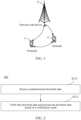
- FIG. 1 is a block diagram of an applicable radio communication system according to an embodiment of this application.
- the radio communication system includes a terminal 11 and a network side device 12.
- the terminal 11 may also be referred to as a terminal device or a user terminal (User Equipment, UE).
- UE User Equipment
- the terminal 11 may be terminal side devices such as a mobile phone, a tablet computer (Tablet Personal Computer), a laptop computer (Laptop Computer) or referred to as a notebook computer, a personal digital assistant (Personal Digital Assistant, PDA), a palm computer, a netbook, an ultra-mobile personal computer (ultra-mobile personal computer, UMPC), a mobile Internet device (Mobile Internet Device, MID), a wearable device (Wearable Device), or in-vehicle equipment (VUE), and a pedestrian terminal (PUE).
- the wearable device includes: a bracelet, a headphone, glasses, and the like. It should be noted that the embodiments of this application are not limited to the specific type of the terminal 11.
- the network side device 12 may be a base station or a core network, where the base station may be referred to as a node B, an evolved node B, an access point, a base transceiver station (Base Transceiver Station, BTS), a radio base station, a radio transceiver, a basic service set (Basic Service Set, BSS), an extended service set (Extended Service Set, ESS), a B node, an evolved B node (eNB), a home B node, a home evolved B node, a WLAN access point, a WiFi node, a transmitting receiving point (Transmitting Receiving Point, TRP) or other suitable term in the field, as long as the same technical effect is achieved, the base station is not limited to specific technical vocabularies, and it should be noted that, in the embodiments of this application, a base station in the NR system is used as an example only and the specific type of the base station is not limited.
- FIG. 2 is a schematic flowchart of a downlink data processing method according to an embodiment of this application.
- a method 200 may be performed by a terminal.
- the method may be performed by software or hardware installed on the terminal.
- the method may include the following steps.
- S210 Receive predetermined downlink data.
- the terminal in a case that the terminal receives predetermined downlink data, the terminal verifies the downlink data and processes the downlink data based on a verification result, so that the security of the data can be ensured.
- the predetermined downlink data may include any of the following:
- the security of receiving (or transmitting) data sent by the network side to the UE through the "Msg4 in a 4-step random access process of initial access", the "MsgB in a 2-step random access process of initial access”, or the "downlink feedback resource corresponding to a dedicated uplink resource configured by a network” can be ensured.
- current status of the terminal may include the following: an idle (IDLE) state and an inactive (INACTIVE, may also be referred to as inactivated) state.
- IDLLE idle
- IACTIVE inactive
- inactivated inactivated
- a type of predetermined downlink data may include at least one of the following:
- the predetermined downlink data may include DRB data and/or SRB data.
- S212 may include at least one of the following:
- the contention resolution verification may be performed using contention resolution data included in the downlink data.
- MsgB contention resolution verification thereof may include: downlink transmission scheduled by cell-radio network temporary identifier (Cell-Radio Network Temporary Identifier, C-RNTI) physical downlink control channel (PDCCH) includes an absolute timing advance command (Absolute Timing Advance Command) media access control layer control element (MAC CE).
- C-RNTI Cell-Radio Network Temporary Identifier
- PDCCH physical downlink control channel
- MAC CE media access control layer control element
- MsgB contention resolution verification may include: UE contention resolution identity (Contention Resolution Identity) information in a decoding success response (successRAR) of the MsgB matches first 48 bits of an uplink common control channel (UL CCCH) service data unit (SDU) sent thereby.
- UL CCCH uplink common control channel
- SDU service data unit
- Msg4 contention resolution verification may include: uplink transmission scheduled by C-RNTI PDCCH is a new transmission.
- Msg4 contention resolution verification may include: UE contention resolution identity information in received UE contention resolution identity MAC CE matches first 48 bits of a UL CCCH SDU sent by the terminal.
- the data content of the downlink data is sent to the high-level protocol entity; and the high-level protocol entity processes the data content in the downlink data.
- the Msg4 or the MsgB includes data of contention resolution MAC CE and DRB-1 (or LCH-1).
- the terminal first verifies the contention resolution MAC CE. After verification of the contention resolution MAC CE succeeds, the terminal transfers DRB-1 data (for example MAC SDU-1) corresponding to the contention resolution MAC CE to a high-level protocol entity for processing, where the high-level protocol entity may be a radio link control (Radio Link Control, RLC) layer entity and/or a packet data convergence protocol (Packet Data Convergence Protocol, PDCP) layer entity.
- RLC Radio Link Control
- PDCP Packet Data Convergence Protocol
- the data content of the downlink data may be sent to the high-level protocol entity before the contention resolution verification is performed on the downlink data, and the high-level protocol entity does not immediately process the data content of the downlink data after receiving the downlink data, but instead, the high-level protocol entity processes the data content of the downlink data after the contention resolution verification performed on the downlink data succeeds.
- the Msg4 or the MsgB includes data of contention resolution MAC CE and DRB-1 (or LCH-1).
- the UE allows the DRB-1 data to be sent to a high-level protocol entity (for example, an RLC and/or a PDCP), but the high-level protocol entity does not process the data packet.
- the high-level protocol entity for example, the RLC and/or the PDCP
- the high-level protocol entity processes the received data content.
- the high-level protocol entity processing the received data content may include at least one of the following:
- the performing contention resolution verification on the downlink data and processing the downlink data based on a contention resolution verification result may include: sending data content of the downlink data to a high-level protocol entity for processing and performing the contention resolution verification on the downlink data; and in a case that the high-level protocol entity of the terminal fails to process the data content of the downlink data and the contention resolution verification performed on the downlink data also fails, ignoring a current failure result.
- the UE allows the received data to be processed before the contention resolution.
- the high-level protocol entity may process the data content after receiving the data content of the downlink data. In a case that processing of the received data fails and the contention resolution verification also fails, the UE ignores a current failure result.
- the high-level protocol entity processing the received data content may include at least one of the following:
- the failing to process the data content of the downlink data may include at least one of the following:
- the ignoring a current failure result may include at least one of the following:
- the processing the SRB data or the DRB data in the downlink data and processing the downlink data based on a verification processing result includes: processing the DRB data in the downlink data in a case that the verification processing on the SRB data or the DRB data in the downlink data succeeds.
- first verification processing is performed on the SRB data, and after the verification processing on the SRB data succeeds, verification processing is performed on the DRB data.
- first verification is performed on the DRB data first, and after the verification processing on the DRB data succeeds, verification is performed on the DRB data. Therefore, in the possible implementation, the processing the DRB data in the downlink data in a case that the verification processing on the SRB data or the DRB data in the downlink data succeeds includes:
- a failure recovery process is performed. That is, in the possible implementations, in a case that the verification processing on the SRB data or the verification on the DRB data fails, the failure recovery process is performed without performing verification processing on data of another data type.
- the verification processing performed on the first data type data includes at least one of the following:
- the failing to perform verification processing on the first data type data includes at least one of the following:
- performing a failure recovery process may include at least one of the following:
- the UE may receive the data only after performing security verification on the network, so that the security of data reception is ensured.
- an execution body may be a downlink data processing apparatus, or a control module configured to perform a downlink data processing method in the downlink data processing apparatus.
- the downlink data processing apparatus performs the downlink data processing method, to describe the downlink data processing apparatus provided in this embodiment of this application.
- FIG. 3 is a schematic structural diagram of a downlink data processing apparatus according to an embodiment of this application.
- a downlink data processing apparatus 300 may include: a receiving module 301, configured to receive predetermined downlink data; and a processing module 302, configured to verify the downlink data and process the downlink data based on a verification result.
- the downlink data includes any of the following: a message 4 Msg4 in a 4-step random access process; a message B MsgB in a 2-step random access process; and downlink data transmitted on a predetermined downlink feedback resource, where the predetermined downlink feedback resource corresponds to a dedicated uplink resource configured by a network.
- a data type of the downlink data includes at least one of the following: data radio bearer DRB data; and signaling radio bearer SRB data.
- status of the terminal includes any of the following: an idle IDLE state; and an inactive INACTIVE state.
- the processing module 302 performs verification on the downlink data, and processing the downlink data based on a verification result, including at least one of the following: performing contention resolution verification on the downlink data, and processing the downlink data based on the contention resolution verification result; in a case that the downlink data includes both SRB data and DRB data, verification processing is performed on the SRB data or DRB data in the downlink data, and the downlink data is processed based on the verification processing result.
- the processing module 302 performing contention resolution verification on the downlink data and processing the downlink data based on a contention resolution verification result includes: in a case that the contention resolution verification on the downlink data succeeds, processing data content of the downlink data by a high-level protocol entity of the terminal; and in a case that the contention resolution verification on the downlink data fails, ignoring current failure.
- the apparatus further includes: a transmission module, configured to send the data content of the downlink data to the high-level protocol entity after the contention resolution verification performed on the downlink data succeeds; or send the data content of the downlink data to the high-level protocol entity before the contention resolution verification is performed on the downlink data.
- a transmission module configured to send the data content of the downlink data to the high-level protocol entity after the contention resolution verification performed on the downlink data succeeds; or send the data content of the downlink data to the high-level protocol entity before the contention resolution verification is performed on the downlink data.
- the processing module performing contention resolution verification on the downlink data and processing the downlink data based on a contention resolution verification result includes: sending data content of the downlink data to a high-level protocol entity for processing and performing the contention resolution verification on the downlink data; and in a case that the high-level protocol entity of the terminal fails to process the data content of the downlink data and the contention resolution verification performed on the downlink data also fails, ignoring a current failure result.
- the processing module 302 ignoring a current failure result includes at least one of the following:
- the processing module 302 processing the data content of the downlink data includes at least one of the following:
- the processing module 302 failing to process the data content of the downlink data includes at least one of the following:
- the processing module 302 performing the contention resolution verification on the downlink data includes: performing the contention resolution verification by using contention resolution data included in the downlink data.
- the processing module 302 performing verification processing on the SRB data or the DRB data in the downlink data and performing verification processing on the downlink data based on a verification processing result includes: in a case that verification processing on a first data type data in the downlink data succeeds, performing verification processing on a second data type data in the downlink data, where the first data type data is the SRB data and the second data type data is the DRB data; or, the first data type data is the DRB data and the second data type data is the SRB data.
- the processing module 302 is further configured to perform a failure recovery process in a case that the verification processing on the first data type data in the downlink data fails.
- the processing module 302 performing verification processing on the first data type data includes at least one of the following: performing integrity protection verification on the first data type data; and decrypting the first data type data.
- the processing module 302 failing to process the first data type data includes at least one of the following: failing to perform integrity protection verification on the first data type data; and failing to decrypt the first data type data.
- the processing module 302 performing a failure recovery process includes at least one of the following:
- the downlink data processing apparatus in this embodiment of this application may be an apparatus, or may be a component, an integrated circuit, or a chip in a terminal.
- the apparatus may be a mobile terminal or a non-mobile terminal.
- the mobile terminal may include, but is not limited to, the types of the terminal 11 listed above, and the non-mobile terminal may be a server, a network attached storage (Network Attached Storage, NAS), a personal computer (personal computer, PC), a television (television, TV), an automatic teller machine, a self-service machine, and the like, which are not specifically limited in this embodiment of this application.
- Network Attached Storage Network Attached Storage
- the downlink data processing apparatus in this embodiment of this application may be an apparatus having an operating system.
- the operating system may be an Android (Android) operating system, may be an ios operating system, or may be another possible operating system, which is not specifically limited in this embodiment of this application.
- the downlink data processing apparatus provided in this embodiment of this application can implement the processes implemented in the method embodiment of FIG. 2 , and achieve the same technical effect, which are not repeated herein.
- an embodiment of this application further provides a communication device 400, including a processor 401, a memory 402, a program or instructions stored on the memory 402 and capable of being run on the processor 401.
- the communication device 400 is a terminal
- the program or the instructions when executed by the processor 401, implement the processes of the foregoing downlink data processing method embodiment, and in addition, the same technical effect can be achieved, which are not repeated herein in order to avoid duplication.
- FIG. 5 is a schematic diagram of a hardware structure of a terminal for implementing an embodiment of this application.
- the terminal 500 includes, but is not limited to, components such as a radio frequency unit 501, a network module 502, an audio output unit 503, an input unit 504, a sensor 505, a display unit 506, a user input unit 507, an interface unit 508, a memory 509, and a processor 510.
- components such as a radio frequency unit 501, a network module 502, an audio output unit 503, an input unit 504, a sensor 505, a display unit 506, a user input unit 507, an interface unit 508, a memory 509, and a processor 510.
- the terminal 500 may further include the power supply (such as a battery) for supplying power to the components.
- the power supply may be logically connected to the processor 510 by a power management system, thereby implementing functions such as charging, discharging, and power consumption management by using the power management system.
- the terminal structure shown in FIG. 5 does not constitute a limitation on the terminal, and the terminal may include more or fewer components than shown, or combine some components, or have different component arrangements. Details are not described herein again.
- the input unit 504 may include a graphics processing unit (Graphics a Processing Unit, GPU) 5041 and a microphone 5042.
- the graphics processing unit 5041 processes image data of a still picture or a video obtained by an image capture apparatus (such as a camera) in a video capture mode or an image capture mode.
- the display unit 506 may include a display panel 5061.
- the display panel 5061 may be configured in a form of a liquid crystal display, an organic light emitting diode, or the like.
- the user input unit 507 includes a touch panel 5071 and another input device 5072.
- the touch panel 5071 is also referred to as a touch screen.
- the touch panel 5071 may include a touch detection apparatus and a touch controller.
- the another input device 5072 may include, but is not limited to, a physical keyboard, a function key (such as a volume control key, a switch key, or the like), a trackball, a mouse, and an operating lever, which is not described in detail herein.
- the radio frequency unit 501 receives downlink data from a network side device to then send the downlink data to the processor 510 for processing; and in addition, sends uplink data to the network side device.
- the radio frequency unit 501 includes, but is not limited to, an antenna, at least one amplifier, a transceiver, a coupler, a low noise amplifier, a duplexer, or the like.
- the memory 509 may be configured to store a software program or instruction and various data.
- the memory 509 may mainly include a program or instruction storage area and a data storage area.
- the program or instruction storage area may store an operating system, an application program or an instruction required by at least one function (for example, a sound playback function and an image display function), and the like.
- the memory 509 may include a high speed random access memory, and may also include a non-volatile memory.
- the non-volatile memory may be a read-only memory (Read-Only Memory, ROM), a programmable ROM (Programmable ROM, PROM), an erasable programmable read-only memory (Erasable PROM, EPROM), an electrically EPROM (Electrically EPROM, EEPROM), or a flash memory.
- ROM Read-Only Memory
- PROM programmable ROM
- Erasable PROM Erasable PROM
- EPROM erasable programmable read-only memory
- EEPROM Electrically EPROM
- flash memory for example, at least one magnetic disk storage device, a flash memory, or another volatile solid-state storage device.
- the processor 510 may include one or more processing units.
- the processor 510 may integrate an application processor and a modem processor.
- the application processor mainly processes an operating system, a user interface, an application program or an instruction, and the like.
- the modem processor such as a baseband processor mainly processes wireless communication. It may be understood that, the modem processor may alternatively not be integrated in the processor 510.
- the radio frequency unit 501 (write if any) is configured to receive predetermined downlink data; and the processor 510 is configured to verify the downlink data and process the downlink data based on a verification result.
- the downlink data includes any of the following:
- a data type of the downlink data includes at least one of the following:
- status of the terminal includes any of the following:
- the processor 510 performing verification processing on the downlink data and processing the downlink data based on a verification result includes at least one of the following:
- the processor 510 performing contention resolution verification on the downlink data and processing the downlink data based on a contention resolution verification result includes: in a case that the contention resolution verification of the downlink data succeeds, processing data content of the downlink data by a high-level protocol entity of the terminal; or in a case that the contention resolution verification of the downlink data fails, ignoring a current failure.
- the method further includes:
- the processor 510 performing contention resolution verification on the downlink data and processing the downlink data based on a contention resolution verification result includes: sending data content of the downlink data to a high-level protocol entity for processing and performing the contention resolution verification on the downlink data; and in a case that the high-level protocol entity of the terminal fails to process the data content of the downlink data and the contention resolution verification performed on the downlink data also fails, ignoring a current failure result.
- the processor 510 ignoring a current failure result includes at least one of the following:
- the processor 510 processing the data content of the downlink data includes at least one of the following:
- the processor 510 failing to process the data content of the downlink data includes at least one of the following:
- the processor 510 performing contention resolution verification on the downlink data includes: performing the contention resolution verification by using contention resolution data included in the downlink data.
- the processor 510 performing verification processing on the SRB data or DRB data in the downlink data and processing the downlink data based on a verification processing result includes: in a case that verification processing on a first data type data in the downlink data succeeds, performing verification processing on a second data type data in the downlink data, where the first data type data is the SRB data and the second data type data is the DRB data; or, the first data type data is the DRB data and the second data type data is the SRB data.
- the processor 510 is further configured to perform a failure recovery process in a case that the verification processing on the first data type data in the downlink data fails.
- the processor 510 performing verification processing on the first data type data includes at least one of the following:
- the processor 510 failing to perform verification processing on the first data type data includes at least one of the following:
- the processor 510 performing a failure recovery process includes at least one of the following:
- the terminal may receive the data only after performing security verification on the network, so that the security of data reception is ensured.
- An embodiment of this application further provides a readable storage medium.
- the readable storage medium stores a program or instructions.
- the program or instructions when executed by a processor, cause the processor to perform the processes of the foregoing downlink data processing method embodiment, and in addition, the same technical effect can be achieved, which are not repeated herein in order to avoid duplication.
- the processor is the processor in the terminal described in the foregoing embodiment.
- the readable storage medium includes a computer-readable storage medium, such as computer read-only memory (Read-Only Memory, ROM), a random access memory (Random Access Memory, RAM), a disk, an optical disk, or the like.
- An embodiment of this application further provides a chip.
- the chip includes a processor and a communication interface.
- the communication interface is coupled to the processor.
- the processor is configured to run a terminal program or instructions to implement the processes of the foregoing downlink data processing method embodiments, and in addition, the same technical effect can be achieved, which are not repeated herein in order to avoid duplication.
- chip mentioned in this embodiment of this application may also be referred to as a system-grade chip, a system chip, a chip system, or a system-on-a-chip. It may be understood that the embodiments described in the embodiments of this application may be implemented by hardware, software, firmware, middleware, microcode, or a combination thereof.
- the processing unit may be implemented in one or more application specific integrated circuits (Application Specific Integrated Circuits, ASICs), a digital signal processing (Digital Signal Processing, DSP) unit, a digital signal processing device (DSP Device, DSPD), a programmable logic device (Programmable Logic Device, PLD), a field-programmable gate array(Field-Programmable Gate Array, FPGA), a universal processor, a controller, a microcontroller, a microprocessor, other electronic units configured to perform the functions described in the present invention, or a combination thereof.
- ASICs Application Specific Integrated Circuits
- DSP Digital Signal Processing
- DSP Device digital signal processing device
- PLD programmable logic device
- FPGA field-programmable gate array
- universal processor a controller, a microcontroller, a microprocessor, other electronic units configured to perform the functions described in the present invention, or a combination thereof.
- the technologies described in the embodiments of this application may be implemented by a module (for example, a process, a function, or the like) that performs the function described in the embodiments of this application.
- the software code may be stored in the memory and executed by the processor.
- the memory may be implemented in the processor or outside the processor.
- the methods in the foregoing embodiments may be implemented through software and a necessary general hardware platform, and certainly, may also be implemented by hardware, but in many cases, the former manner is a better implementation.
- the technical solutions of the present invention essentially, or the part contributing to the prior art, may be presented in the form of a software product.
- the computer software product is stored in a storage medium (for example, a ROM/RAM, a magnetic disk, or an optical disc) including several instructions to enable a terminal (which may be a mobile phone, a computer, a server, an air conditioner, a network device, or the like) to perform the methods described in the embodiments of the present invention.
Landscapes
- Engineering & Computer Science (AREA)
- Computer Security & Cryptography (AREA)
- Computer Networks & Wireless Communication (AREA)
- Signal Processing (AREA)
- Mobile Radio Communication Systems (AREA)
Abstract
Description
- This application claims the priority of the
Chinese patent application No. 202010479263.0 filed in China on May 29, 2020 - The present invention relates to the field of communications more particularly to a downlink data processing method and apparatus, and a terminal.
- In the related art, based on a resource configured by a network side, in a case that a user equipment (UE) is in an idle (IDLE) state or an inactive (INACTIVE) state, the UE may directly send small data (Small Data Transmission, SDT) to the network side.
- For example, small data is sent to the network side through a message 3 (Msg3) of a 4-step random access process of initial access, or small data is sent to the network side through a message A (MsgA) of a 2-step random access process of initial access, or a dedicated uplink physical uplink shared information (PUSCH) resource (for example, pre-configured PUSCH; or, a PUR (Preallocated Uplink Resource)) configured in a network.
- Correspondingly, the network side may directly send small data to the UE in a corresponding method. For example, the network side directly sends small data to the UE through a message 4 (Msg4) of a 4-step random access process of initial access, or the network side directly sends small data to the UE through a message B (MsgB) of a 2-step random access process of initial access, or the network side directly sends small data to the UE through a downlink feedback resource corresponding to a dedicated uplink resource configured by a network.
- In a case that the network side sends data to the UE in the foregoing scenarios, no effective solution has been provided for how to ensure the security of the data.
- An objective of embodiments of this application is to provide a downlink data processing method, apparatus, and terminal, so as to ensure the security of data.
- According to a first aspect, a downlink data processing method is provided, applied to a terminal. The method includes: receiving predetermined downlink data; and verifying the downlink data and processing the downlink data based on a verification result.
- According to a second aspect, a downlink data processing apparatus is provided, including: a receiving module, configured to receive predetermined downlink data; and a processing module, configured to verify the downlink data and process the downlink data based on a verification result.
- According to a third aspect, a terminal is provided, including a memory, a processor, and a program or an instruction stored in the memory and executable on the processor, where when the program or instruction is executed by the processor, the steps of the method according to the first aspect are implemented.
- According to a fourth aspect, a readable storage medium is provided, storing a program or an instruction, where when the program or the instruction is executed by a processor, the steps of the methods according to the first aspect are implemented.
- According to a fifth aspect, a chip is provided. The chip includes a processor and a communication interface. The communication interface is coupled to the processor, and the processor is configured to run a program or instructions of a terminal to implement the method according to the first aspect.
- In the embodiments of this application, in a case that the terminal receives predetermined downlink data, the terminal verifies the downlink data and processes the downlink data based on a verification result, so that the security of the data can be ensured.
- Accompanying drawings described herein are used for providing further understanding about the present disclosure, and constitute one portion of the present disclosure. Exemplary embodiments of the present disclosure and descriptions thereof are used for explaining the present disclosure, and do not constitute an inappropriate limitation on the present disclosure. In the drawings:
-
FIG. 1 is a block diagram of an applicable radio communication system according to an embodiment of this application; -
FIG. 2 is a schematic flowchart of a downlink data processing method according to an embodiment of this application; -
FIG. 3 is another schematic structural diagram of a downlink data processing apparatus according to an embodiment of this application; -
FIG. 4 is a schematic structural diagram of a communication device according to an embodiment of this application; and -
FIG. 5 is a schematic diagram of a hardware structure of a terminal according to an embodiment of this application. - The following clearly and completely describes the technical solutions in the embodiments of this application with reference to the accompanying drawings in the embodiments of this application. Apparently, the described embodiments are some rather than all of the embodiments of the present invention. All other embodiments obtained by a person of ordinary skill in the art based on the embodiments of the present invention without creative efforts shall fall within the protection scope of the present invention.
- It is worth pointing out that the technologies described in the embodiments of this application are not limited to the Long Term Evolution (Long Term Evolution, LTE)/LTE-advanced (LTE-Advanced, LTE-A) systems, and may also be used in other radio communication systems, such as code division multiple access (Code Division Multiple Access, CDMA), time division multiple access (Time Division Multiple Access, TDMA), and frequency division multiple access (Frequency Division Multiple Access, FDMA), orthogonal frequency division multiple access (Orthogonal Frequency Division Multiple Access, OFDMA), single-carrier frequency-division multiple access (Single-carrier Frequency-Division Multiple Access, SC-FDMA), and other systems. The terms "system" and "network" in the embodiments of this application are often used interchangeably, and the technologies described can be used for both the foregoing systems and radio technologies, as well as other systems and radio technologies. However, the following description describes a new radio (New Radio, NR) system for example purposes, and uses NR terminology in most of the following description, although these technologies can also be applied to applications other than NR system applications, such as a 6th generation (6th Generation, 6G) communication system.
-
FIG. 1 is a block diagram of an applicable radio communication system according to an embodiment of this application. The radio communication system includes aterminal 11 and anetwork side device 12. Theterminal 11 may also be referred to as a terminal device or a user terminal (User Equipment, UE). Theterminal 11 may be terminal side devices such as a mobile phone, a tablet computer (Tablet Personal Computer), a laptop computer (Laptop Computer) or referred to as a notebook computer, a personal digital assistant (Personal Digital Assistant, PDA), a palm computer, a netbook, an ultra-mobile personal computer (ultra-mobile personal computer, UMPC), a mobile Internet device (Mobile Internet Device, MID), a wearable device (Wearable Device), or in-vehicle equipment (VUE), and a pedestrian terminal (PUE). The wearable device includes: a bracelet, a headphone, glasses, and the like. It should be noted that the embodiments of this application are not limited to the specific type of theterminal 11. Thenetwork side device 12 may be a base station or a core network, where the base station may be referred to as a node B, an evolved node B, an access point, a base transceiver station (Base Transceiver Station, BTS), a radio base station, a radio transceiver, a basic service set (Basic Service Set, BSS), an extended service set (Extended Service Set, ESS), a B node, an evolved B node (eNB), a home B node, a home evolved B node, a WLAN access point, a WiFi node, a transmitting receiving point (Transmitting Receiving Point, TRP) or other suitable term in the field, as long as the same technical effect is achieved, the base station is not limited to specific technical vocabularies, and it should be noted that, in the embodiments of this application, a base station in the NR system is used as an example only and the specific type of the base station is not limited. - The downlink data processing method provided in the embodiments of this application is described in detail below by using specific embodiments and application scenarios with reference to the accompanying drawings.
-
FIG. 2 is a schematic flowchart of a downlink data processing method according to an embodiment of this application. Amethod 200 may be performed by a terminal. In other words, the method may be performed by software or hardware installed on the terminal. As shown inFIG. 2 , the method may include the following steps. - S210: Receive predetermined downlink data.
- S212: Verify the downlink data and process the downlink data based on a verification result.
- In this embodiment of this application, in a case that the terminal receives predetermined downlink data, the terminal verifies the downlink data and processes the downlink data based on a verification result, so that the security of the data can be ensured.
- In a possible implementation, the predetermined downlink data may include any of the following:
- (1) a Msg4 in a 4-step random access process; for example, data carried in a Msg4 sent by a network side in a 4-step random access process of initial access;
- (2) a message B MsgB in a 2-step random access process; for example, data carried in a MsgB sent by a network side in a 2-step random access process of initial access; and
- (3) downlink data transmitted on a predetermined downlink feedback resource, where the predetermined downlink feedback resource corresponds to a dedicated uplink resource configured by a network.
- In the foregoing possible implementations, the security of receiving (or transmitting) data sent by the network side to the UE through the "Msg4 in a 4-step random access process of initial access", the "MsgB in a 2-step random access process of initial access", or the "downlink feedback resource corresponding to a dedicated uplink resource configured by a network" can be ensured.
- In a possible implementation, current status of the terminal may include the following: an idle (IDLE) state and an inactive (INACTIVE, may also be referred to as inactivated) state. In the possible implementation, in a case that the terminal in the idle state or the inactive state receives data directly sent by the network side, the data is verified and the data is processed based on a verification result, so that the security of the data is ensured.
- In a possible implementation, a type of predetermined downlink data may include at least one of the following:
- (1) data radio bearer (Data Radio Bearer, DRB) data; and
- (2) signaling radio bearer (signaling radio bearer, SRB) data.
- In other words, in the possible implementation, the predetermined downlink data may include DRB data and/or SRB data.
- In a possible implementation, S212 may include at least one of the following:
- (1) performing contention resolution verification on the downlink data and processing the downlink data based on a contention resolution verification result; and
- (2) in a case that the downlink data includes both SRB data and DRB data, performing verification processing on the SRB data or the DRB data in the downlink data and processing the downlink data based on a verification processing result.
- In a possible implementation, during the contention resolution verification on the downlink data, the contention resolution verification may be performed using contention resolution data included in the downlink data.
- For example, in a 2-step random access process, for a terminal in a connected (CONNECTED) state, MsgB contention resolution verification thereof may include: downlink transmission scheduled by cell-radio network temporary identifier (Cell-Radio Network Temporary Identifier, C-RNTI) physical downlink control channel (PDCCH) includes an absolute timing advance command (Absolute Timing Advance Command) media access control layer control element (MAC CE). For a terminal in an idle or inactive state, MsgB contention resolution verification may include: UE contention resolution identity (Contention Resolution Identity) information in a decoding success response (successRAR) of the MsgB matches first 48 bits of an uplink common control channel (UL CCCH) service data unit (SDU) sent thereby.
- In a 4-step random access process, for CONNECTED UE, Msg4 contention resolution verification may include: uplink transmission scheduled by C-RNTI PDCCH is a new transmission. For IDLE UE or INACTIVE UE, Msg4 contention resolution verification may include: UE contention resolution identity information in received UE contention resolution identity MAC CE matches first 48 bits of a UL CCCH SDU sent by the terminal.
- In the foregoing possible implementation, optionally, after the contention resolution verification of the downlink data succeeds, data content in the downlink data is processed by a high-level protocol entity of the terminal; in a case that the contention resolution verification of the downlink data fails, current failure is ignored. Through the possible implementation, the security of receiving of the downlink data can be ensured.
- For example, in a possible implementation, after the contention resolution verification of the downlink data succeeds, the data content of the downlink data is sent to the high-level protocol entity; and the high-level protocol entity processes the data content in the downlink data.
- For example, the Msg4 or the MsgB includes data of contention resolution MAC CE and DRB-1 (or LCH-1). The terminal first verifies the contention resolution MAC CE. After verification of the contention resolution MAC CE succeeds, the terminal transfers DRB-1 data (for example MAC SDU-1) corresponding to the contention resolution MAC CE to a high-level protocol entity for processing, where the high-level protocol entity may be a radio link control (Radio Link Control, RLC) layer entity and/or a packet data convergence protocol (Packet Data Convergence Protocol, PDCP) layer entity.
- Alternatively, in another possible implementation, the data content of the downlink data may be sent to the high-level protocol entity before the contention resolution verification is performed on the downlink data, and the high-level protocol entity does not immediately process the data content of the downlink data after receiving the downlink data, but instead, the high-level protocol entity processes the data content of the downlink data after the contention resolution verification performed on the downlink data succeeds.
- For example, the Msg4 or the MsgB includes data of contention resolution MAC CE and DRB-1 (or LCH-1). Before the contention resolution verification is completed, the UE allows the DRB-1 data to be sent to a high-level protocol entity (for example, an RLC and/or a PDCP), but the high-level protocol entity does not process the data packet. In a case that the contention resolution verification succeeds, the high-level protocol entity (for example, the RLC and/or the PDCP) processes the received data content.
- Optionally, the high-level protocol entity processing the received data content may include at least one of the following:
- (1) performing integrity protection verification on the data content of the downlink data; for example, verifying a MAC-I at a tail of a PDCP protocol data unit (Protocol Data Unit, PDU for short) packet;
- (2) decrypting the data content of the downlink data; for example, decrypting content in the PDCP PDU; and
- (3) decompressing the data content of the downlink data; for example, performing a robust header compression (Robust Header Compression, ROHC) decompression operation on the content in the PDCP PDU.
- In a possible implementation, the performing contention resolution verification on the downlink data and processing the downlink data based on a contention resolution verification result may include: sending data content of the downlink data to a high-level protocol entity for processing and performing the contention resolution verification on the downlink data; and in a case that the high-level protocol entity of the terminal fails to process the data content of the downlink data and the contention resolution verification performed on the downlink data also fails, ignoring a current failure result. In the possible implementation, the UE allows the received data to be processed before the contention resolution. For example, the high-level protocol entity may process the data content after receiving the data content of the downlink data. In a case that processing of the received data fails and the contention resolution verification also fails, the UE ignores a current failure result.
- In a possible implementation, the high-level protocol entity processing the received data content may include at least one of the following:
- (1) performing integrity protection verification on the data content of the downlink data; for example, verifying a MAC-I at a tail of a PDCP protocol data unit (Protocol Data Unit, PDU for short) packet;
- (2) decrypting the data content of the downlink data; for example, decrypting content in the PDCP PDU; and
- (3) decompressing the data content of the downlink data; for example, performing a robust header compression (Robust Header Compression, ROHC) decompression operation on the content in the PDCP PDU.
- Correspondingly, in a possible implementation, the failing to process the data content of the downlink data may include at least one of the following:
- (1) failing to perform integrity protection verification on the data content of the downlink data;
- (2) failing to decrypt the data content of the downlink data; and
- (3) failing to decompress the data content of the downlink data.
- In a possible implementation, the ignoring a current failure result may include at least one of the following:
- (1) discarding a data packet of the downlink data; and
- (2) skipping performing a failure recovery process. For example, in the related art, for a terminal on which the integrity protection verification fails, the failure recovery process is to enter the IDLE state, and in the possible implementation, the UE in the INACTIVE state does not enter the IDLE state.
- In a possible implementation, in a case that the downlink data includes both SRB data and DRB data, the processing the SRB data or the DRB data in the downlink data and processing the downlink data based on a verification processing result includes: processing the DRB data in the downlink data in a case that the verification processing on the SRB data or the DRB data in the downlink data succeeds.
- In a possible implementation, first verification processing is performed on the SRB data, and after the verification processing on the SRB data succeeds, verification processing is performed on the DRB data. Alternatively, first verification is performed on the DRB data first, and after the verification processing on the DRB data succeeds, verification is performed on the DRB data. Therefore, in the possible implementation, the processing the DRB data in the downlink data in a case that the verification processing on the SRB data or the DRB data in the downlink data succeeds includes:
- in a case that verification processing on a first data type data in the downlink data succeeds, performing verification processing on a second data type data in the downlink data, where
- the first data type data is the SRB data and the second data type data is the DRB data;
- In the possible implementations, optionally, in a case that the verification processing on the SRB data or the DRB data in the downlink data fails, a failure recovery process is performed. That is, in the possible implementations, in a case that the verification processing on the SRB data or the verification on the DRB data fails, the failure recovery process is performed without performing verification processing on data of another data type.
- Optionally, the verification processing performed on the first data type data includes at least one of the following:
- (1) performing integrity protection verification on the first data type data; and
- (2) decrypting the first data type data.
- Correspondingly, in a possible implementation, the failing to perform verification processing on the first data type data includes at least one of the following:
- (1) failing to perform integrity protection verification on the first data type data; and
- (2) failing to decrypt the first data type data.
- In the possible implementations, performing a failure recovery process may include at least one of the following:
- (1) the terminal enters to the IDLE state; for example, the terminal in the INACTIVE state enters to the IDLE state;
- (2) discarding a data packet of the first data type data on which the discarding processing fails;
- (3) discarding a data packet of the downlink data;
- (4) triggering a cell selection or reselection process;
- (5) triggering a connection re-establishment process or a connection establishment process; and
- (6) falling back context information or configuration information saved by the terminal to a preset state, where the preset state is a state before uplink data corresponding to the downlink data is sent. For example, a terminal in the INACTIVE state generates a new security secret key based on configuration information (for example, an NCC) and uses the security secret key to send data in a Msg3 or a MsgA. In a case that processing of the SRB data fails, the terminal rolls back the security configuration (for example, the NCC) thereof to a state before the Msg3 or the MsgA data is sent. Then, during sending of data next time, the terminal still uses the configuration information (for example, the NCC) to generate a security secret key and send the data.
- In the foregoing method provided in this application, in a case that the network side sends data to the UE through the "Msg4 in a 4-step random access process of initial access" or the "MsgB in a 2-step random access process of initial access", or the "downlink feedback resource corresponding to a dedicated uplink resource configured by a network", the UE may receive the data only after performing security verification on the network, so that the security of data reception is ensured.
- It should be noted that in the downlink data processing method provided in this embodiment of this application, an execution body may be a downlink data processing apparatus, or a control module configured to perform a downlink data processing method in the downlink data processing apparatus. In an embodiment of this application, for example, the downlink data processing apparatus performs the downlink data processing method, to describe the downlink data processing apparatus provided in this embodiment of this application.
-
FIG. 3 is a schematic structural diagram of a downlink data processing apparatus according to an embodiment of this application. As shown inFIG. 3 , a downlinkdata processing apparatus 300 may include: a receivingmodule 301, configured to receive predetermined downlink data; and aprocessing module 302, configured to verify the downlink data and process the downlink data based on a verification result. - In a possible implementation, the downlink data includes any of the following: a message 4 Msg4 in a 4-step random access process; a message B MsgB in a 2-step random access process; and downlink data transmitted on a predetermined downlink feedback resource, where the predetermined downlink feedback resource corresponds to a dedicated uplink resource configured by a network.
- In a possible implementation, a data type of the downlink data includes at least one of the following: data radio bearer DRB data; and signaling radio bearer SRB data.
- In a possible implementation, status of the terminal includes any of the following: an idle IDLE state; and an inactive INACTIVE state.
- In a possible implementation, the
processing module 302 performs verification on the downlink data, and processing the downlink data based on a verification result, including at least one of the following: performing contention resolution verification on the downlink data, and processing the downlink data based on the contention resolution verification result; in a case that the downlink data includes both SRB data and DRB data, verification processing is performed on the SRB data or DRB data in the downlink data, and the downlink data is processed based on the verification processing result. - In a possible implementation, the
processing module 302 performing contention resolution verification on the downlink data and processing the downlink data based on a contention resolution verification result includes: in a case that the contention resolution verification on the downlink data succeeds, processing data content of the downlink data by a high-level protocol entity of the terminal; and in a case that the contention resolution verification on the downlink data fails, ignoring current failure. - In a possible implementation, the apparatus further includes: a transmission module, configured to send the data content of the downlink data to the high-level protocol entity after the contention resolution verification performed on the downlink data succeeds; or send the data content of the downlink data to the high-level protocol entity before the contention resolution verification is performed on the downlink data.
- In a possible implementation, the processing module performing contention resolution verification on the downlink data and processing the downlink data based on a contention resolution verification result includes: sending data content of the downlink data to a high-level protocol entity for processing and performing the contention resolution verification on the downlink data; and in a case that the high-level protocol entity of the terminal fails to process the data content of the downlink data and the contention resolution verification performed on the downlink data also fails, ignoring a current failure result.
- In a possible implementation, the
processing module 302 ignoring a current failure result includes at least one of the following: - discarding a data packet of the downlink data on which the discarding processing fails; and
- skipping performing a failure recovery process.
- In a possible implementation, the
processing module 302 processing the data content of the downlink data includes at least one of the following: - performing integrity protection verification on the data content of the downlink data;
- decrypting the data content of the downlink data; and
- decompressing the data content of the downlink data.
- In a possible implementation, the
processing module 302 failing to process the data content of the downlink data includes at least one of the following: - failing to perform integrity protection verification on the data content of the downlink data;
- failing to decrypt the data content of the downlink data; and
- failing to decompress the data content of the downlink data.
- In a possible implementation, the
processing module 302 performing the contention resolution verification on the downlink data includes: performing the contention resolution verification by using contention resolution data included in the downlink data. - In a possible implementation, the
processing module 302 performing verification processing on the SRB data or the DRB data in the downlink data and performing verification processing on the downlink data based on a verification processing result includes: in a case that verification processing on a first data type data in the downlink data succeeds, performing verification processing on a second data type data in the downlink data, where the first data type data is the SRB data and the second data type data is the DRB data; or, the first data type data is the DRB data and the second data type data is the SRB data. - In a possible implementation, the
processing module 302 is further configured to perform a failure recovery process in a case that the verification processing on the first data type data in the downlink data fails. - In a possible implementation, the
processing module 302 performing verification processing on the first data type data includes at least one of the following: performing integrity protection verification on the first data type data; and decrypting the first data type data. - In a possible implementation, the
processing module 302 failing to process the first data type data includes at least one of the following: failing to perform integrity protection verification on the first data type data; and failing to decrypt the first data type data. - In a possible implementation, the
processing module 302 performing a failure recovery process includes at least one of the following: - setting the terminal to the IDLE state;
- discarding a data packet of the first data type data on which the discarding processing fails;
- discarding a data packet of the downlink data;
- triggering a cell selection or reselection process;
- triggering a connection re-establishment process or a connection establishment process; and
- falling back context information or configuration information saved by the terminal to a preset state, where the preset state is a state before uplink data corresponding to the downlink data is sent.
- The downlink data processing apparatus in this embodiment of this application may be an apparatus, or may be a component, an integrated circuit, or a chip in a terminal. The apparatus may be a mobile terminal or a non-mobile terminal. Exemplarily, the mobile terminal may include, but is not limited to, the types of the terminal 11 listed above, and the non-mobile terminal may be a server, a network attached storage (Network Attached Storage, NAS), a personal computer (personal computer, PC), a television (television, TV), an automatic teller machine, a self-service machine, and the like, which are not specifically limited in this embodiment of this application.
- The downlink data processing apparatus in this embodiment of this application may be an apparatus having an operating system. The operating system may be an Android (Android) operating system, may be an ios operating system, or may be another possible operating system, which is not specifically limited in this embodiment of this application.
- The downlink data processing apparatus provided in this embodiment of this application can implement the processes implemented in the method embodiment of
FIG. 2 , and achieve the same technical effect, which are not repeated herein. - Optionally, as shown in
FIG. 4 , an embodiment of this application further provides acommunication device 400, including aprocessor 401, amemory 402, a program or instructions stored on thememory 402 and capable of being run on theprocessor 401. For example, in a case that thecommunication device 400 is a terminal, the program or the instructions, when executed by theprocessor 401, implement the processes of the foregoing downlink data processing method embodiment, and in addition, the same technical effect can be achieved, which are not repeated herein in order to avoid duplication. -
FIG. 5 is a schematic diagram of a hardware structure of a terminal for implementing an embodiment of this application. - The terminal 500 includes, but is not limited to, components such as a
radio frequency unit 501, anetwork module 502, anaudio output unit 503, aninput unit 504, asensor 505, adisplay unit 506, a user input unit 507, aninterface unit 508, amemory 509, and aprocessor 510. - A person skilled in the art may understand that the terminal 500 may further include the power supply (such as a battery) for supplying power to the components. The power supply may be logically connected to the
processor 510 by a power management system, thereby implementing functions such as charging, discharging, and power consumption management by using the power management system. The terminal structure shown inFIG. 5 does not constitute a limitation on the terminal, and the terminal may include more or fewer components than shown, or combine some components, or have different component arrangements. Details are not described herein again. - It should be understood that, in this embodiment of this application, the
input unit 504 may include a graphics processing unit (Graphics a Processing Unit, GPU) 5041 and amicrophone 5042. Thegraphics processing unit 5041 processes image data of a still picture or a video obtained by an image capture apparatus (such as a camera) in a video capture mode or an image capture mode. Thedisplay unit 506 may include adisplay panel 5061. Thedisplay panel 5061 may be configured in a form of a liquid crystal display, an organic light emitting diode, or the like. The user input unit 507 includes atouch panel 5071 and anotherinput device 5072. Thetouch panel 5071 is also referred to as a touch screen. Thetouch panel 5071 may include a touch detection apparatus and a touch controller. The anotherinput device 5072 may include, but is not limited to, a physical keyboard, a function key (such as a volume control key, a switch key, or the like), a trackball, a mouse, and an operating lever, which is not described in detail herein. - In this embodiment of this application, the
radio frequency unit 501 receives downlink data from a network side device to then send the downlink data to theprocessor 510 for processing; and in addition, sends uplink data to the network side device. Generally, theradio frequency unit 501 includes, but is not limited to, an antenna, at least one amplifier, a transceiver, a coupler, a low noise amplifier, a duplexer, or the like. - The
memory 509 may be configured to store a software program or instruction and various data. Thememory 509 may mainly include a program or instruction storage area and a data storage area. The program or instruction storage area may store an operating system, an application program or an instruction required by at least one function (for example, a sound playback function and an image display function), and the like. In addition, thememory 509 may include a high speed random access memory, and may also include a non-volatile memory. The non-volatile memory may be a read-only memory (Read-Only Memory, ROM), a programmable ROM (Programmable ROM, PROM), an erasable programmable read-only memory (Erasable PROM, EPROM), an electrically EPROM (Electrically EPROM, EEPROM), or a flash memory. For example, at least one magnetic disk storage device, a flash memory, or another volatile solid-state storage device. - The
processor 510 may include one or more processing units. Optionally, theprocessor 510 may integrate an application processor and a modem processor. The application processor mainly processes an operating system, a user interface, an application program or an instruction, and the like. The modem processor such as a baseband processor mainly processes wireless communication. It may be understood that, the modem processor may alternatively not be integrated in theprocessor 510. - The radio frequency unit 501 (write if any) is configured to receive predetermined downlink data; and the
processor 510 is configured to verify the downlink data and process the downlink data based on a verification result. - Optionally, the downlink data includes any of the following:
- a message 4 Msg4 in a 4-step random access process;
- a message B MsgB in a 2-step random access process; and
- downlink data transmitted on a predetermined downlink feedback resource, where the predetermined downlink feedback resource corresponds to a dedicated uplink resource configured by a network.
- Optionally, a data type of the downlink data includes at least one of the following:
- data radio bearer DRB data; and
- signaling radio bearer SRB data.
- Optionally, status of the terminal includes any of the following:
- an idle IDLE state; and
- an inactive INACTIVE state.
- Optionally, the
processor 510 performing verification processing on the downlink data and processing the downlink data based on a verification result includes at least one of the following: - performing contention resolution verification on the downlink data and processing the downlink data based on a contention resolution verification result; and
- in a case that the downlink data includes both SRB data and DRB data, performing verification processing on the SRB data or the DRB data in the downlink data and processing the downlink data based on a verification processing result.
- Optionally, the
processor 510 performing contention resolution verification on the downlink data and processing the downlink data based on a contention resolution verification result includes:
in a case that the contention resolution verification of the downlink data succeeds, processing data content of the downlink data by a high-level protocol entity of the terminal; or in a case that the contention resolution verification of the downlink data fails, ignoring a current failure. - Optionally, before the
processor 510 processes the data content of the downlink data by the high-level protocol entity of the terminal, the method further includes: - after the contention resolution verification of the downlink data succeeds, sending the data content of the downlink data to the high-level protocol entity; or
- before the performing the contention resolution verification on the downlink data, sending the data content of the downlink data to the high-level protocol entity.
- Optionally, the
processor 510 performing contention resolution verification on the downlink data and processing the downlink data based on a contention resolution verification result includes: sending data content of the downlink data to a high-level protocol entity for processing and performing the contention resolution verification on the downlink data; and in a case that the high-level protocol entity of the terminal fails to process the data content of the downlink data and the contention resolution verification performed on the downlink data also fails, ignoring a current failure result. - Optionally, the
processor 510 ignoring a current failure result includes at least one of the following: - discarding a data packet of the downlink data on which the discarding processing fails; and
- skipping performing a failure recovery process.
- Optionally, the
processor 510 processing the data content of the downlink data includes at least one of the following: - performing integrity protection verification on the data content of the downlink data;
- decrypting the data content of the downlink data; and
- decompressing the data content of the downlink data.
- Optionally, the
processor 510 failing to process the data content of the downlink data includes at least one of the following: - failing to perform integrity protection verification on the data content of the downlink data;
- failing to decrypt the data content of the downlink data; and
- failing to decompress the data content of the downlink data.
- Optionally, the
processor 510 performing contention resolution verification on the downlink data includes:
performing the contention resolution verification by using contention resolution data included in the downlink data. - Optionally, the
processor 510 performing verification processing on the SRB data or DRB data in the downlink data and processing the downlink data based on a verification processing result includes:
in a case that verification processing on a first data type data in the downlink data succeeds, performing verification processing on a second data type data in the downlink data, where the first data type data is the SRB data and the second data type data is the DRB data; or, the first data type data is the DRB data and the second data type data is the SRB data. - Optionally, the
processor 510 is further configured to perform a failure recovery process in a case that the verification processing on the first data type data in the downlink data fails. - Optionally, the
processor 510 performing verification processing on the first data type data includes at least one of the following: - performing integrity protection verification on the first data type data; and
- decrypting the first data type data.
- Optionally, the
processor 510 failing to perform verification processing on the first data type data includes at least one of the following: - failing to perform integrity protection verification on the first data type data; and
- failing to decrypt the first data type data.
- Optionally, the
processor 510 performing a failure recovery process includes at least one of the following: - the terminal enters to the IDLE state;
- discarding a data packet of the first data type data on which the discarding processing fails;
- discarding a data packet of the downlink data;
- triggering a cell selection or reselection process;
- triggering a connection re-establishment process or a connection establishment process; and
- falling back context information or configuration information saved by the terminal to a preset state, where the preset state is a state before uplink data corresponding to the downlink data is sent.
- In the foregoing terminal provided in this application, in a case that the network side sends data to the terminal through the "Msg4 in a 4-step random access process of initial access" or the "MsgB in a 2-step random access process of initial access", or the "downlink feedback resource corresponding to a dedicated uplink resource configured by a network", the terminal may receive the data only after performing security verification on the network, so that the security of data reception is ensured.
- An embodiment of this application further provides a readable storage medium. The readable storage medium stores a program or instructions. The program or instructions, when executed by a processor, cause the processor to perform the processes of the foregoing downlink data processing method embodiment, and in addition, the same technical effect can be achieved, which are not repeated herein in order to avoid duplication.
- The processor is the processor in the terminal described in the foregoing embodiment. The readable storage medium includes a computer-readable storage medium, such as computer read-only memory (Read-Only Memory, ROM), a random access memory (Random Access Memory, RAM), a disk, an optical disk, or the like.
- An embodiment of this application further provides a chip. The chip includes a processor and a communication interface. The communication interface is coupled to the processor. The processor is configured to run a terminal program or instructions to implement the processes of the foregoing downlink data processing method embodiments, and in addition, the same technical effect can be achieved, which are not repeated herein in order to avoid duplication.
- It should be understood that the chip mentioned in this embodiment of this application may also be referred to as a system-grade chip, a system chip, a chip system, or a system-on-a-chip. It may be understood that the embodiments described in the embodiments of this application may be implemented by hardware, software, firmware, middleware, microcode, or a combination thereof. For hardware implementation, the processing unit may be implemented in one or more application specific integrated circuits (Application Specific Integrated Circuits, ASICs), a digital signal processing (Digital Signal Processing, DSP) unit, a digital signal processing device (DSP Device, DSPD), a programmable logic device (Programmable Logic Device, PLD), a field-programmable gate array(Field-Programmable Gate Array, FPGA), a universal processor, a controller, a microcontroller, a microprocessor, other electronic units configured to perform the functions described in the present invention, or a combination thereof.
- For software implementation, the technologies described in the embodiments of this application may be implemented by a module (for example, a process, a function, or the like) that performs the function described in the embodiments of this application. The software code may be stored in the memory and executed by the processor. The memory may be implemented in the processor or outside the processor.
- It should be noted that the term " include", "comprise" or any other variation thereof in this specification is intended to cover a non-exclusive inclusion, which specifies the presence of stated processes, methods, objects, or apparatuses, but does not preclude the presence or addition of one or more other processes, methods, objects, or apparatuses. Without more limitations, elements defined by the sentence "including one" does not exclude that there are still other same elements in the processes, methods, objects, or apparatuses.
- Through the descriptions of the foregoing implementations, a person skilled in the art may clearly understand that the methods in the foregoing embodiments may be implemented through software and a necessary general hardware platform, and certainly, may also be implemented by hardware, but in many cases, the former manner is a better implementation. Based on such an understanding, the technical solutions of the present invention essentially, or the part contributing to the prior art, may be presented in the form of a software product. The computer software product is stored in a storage medium (for example, a ROM/RAM, a magnetic disk, or an optical disc) including several instructions to enable a terminal (which may be a mobile phone, a computer, a server, an air conditioner, a network device, or the like) to perform the methods described in the embodiments of the present invention.
- The embodiments of the present invention are described above with reference to the accompanying drawings. However, the present invention is not limited to the foregoing specific implementations. The foregoing specific implementations are illustrative instead of limitative. Enlightened by the present invention, a person of ordinary skill in the art can make many forms without departing from the idea of the present invention and the scope of protection of the claims. All of the forms fall within the protection of the present invention.
Claims (32)
- A downlink data processing method, applied to a terminal, the method comprising:receiving predetermined downlink data; andverifying the downlink data and processing the downlink data based on a verification result.
- The method according to claim 1, wherein the downlink data comprises any of following:a message 4 Msg4 in a 4-step random access process;a message B MsgB in a 2-step random access process; anddownlink data transmitted on a predetermined downlink feedback resource, wherein the predetermined downlink feedback resource corresponds to a dedicated uplink resource configured by a network.
- The method according to claim 1, wherein a data type of the downlink data comprises at least one of following:data radio bearer DRB data; andsignaling radio bearer SRB data.
- The method according to claim 1, wherein status of the terminal comprises any of following:an idle state; andan inactive state.
- The method according to any one of claims 1 to 4, wherein the verifying the downlink data and processing the downlink data based on a verification result comprises at least one of following:performing contention resolution verification on the downlink data and processing the downlink data based on a contention resolution verification result; andin a case that the downlink data comprises both SRB data and DRB data, performing verification processing on the SRB data or the DRB data in the downlink data and processing the downlink data based on a verification processing result.
- The method according to claim 5, wherein the performing contention resolution verification on the downlink data and processing the downlink data based on a contention resolution verification result comprises:in a case that the contention resolution verification of the downlink data succeeds, processing data content of the downlink data by a high-level protocol entity of the terminal; orin a case that the contention resolution verification of the downlink data fails, ignoring a current failure.
- The method according to claim 6, wherein before the processing data content of the downlink data by a high-level protocol entity of the terminal, the method further comprises:after the contention resolution verification of the downlink data succeeds, sending the data content of the downlink data to the high-level protocol entity; orbefore the performing the contention resolution verification on the downlink data, sending the data content of the downlink data to the high-level protocol entity.
- The method according to claim 5, wherein the performing contention resolution verification on the downlink data and processing the downlink data based on a contention resolution verification result comprises:
sending data content of the downlink data to a high-level protocol entity for processing, and performing the contention resolution verification on the downlink data; and in a case that the high-level protocol entity of the terminal fails to process the data content of the downlink data and the contention resolution verification performed on the downlink data also fails, ignoring a current failure result. - The method according to claim 6 or 8, wherein the ignoring a current failure result comprises at least one of following:discarding a data packet of the downlink data; andskipping performing a failure recovery process.
- The method according to any one of claims 6 to 8, wherein the processing the data content of the downlink data comprises at least one of following:performing integrity protection verification on the data content of the downlink data;decrypting the data content of the downlink data; anddecompressing the data content of the downlink data.
- The method according to claim 5, wherein the performing verification processing on the SRB data or the DRB data in the downlink data and processing the downlink data based on a verification processing result comprises:in a case that verification processing on a first data type data in the downlink data succeeds, performing verification processing on a second data type data in the downlink data, whereinthe first data type data is the SRB data and the second data type data is the DRB data; or, the first data type data is the DRB data and the second data type data is the SRB data.
- The method according to claim 11, wherein in a case that the verification processing on the first data type data in the downlink data fails, a failure recovery process is performed.
- The method according to claim 12, wherein the verification processing performed on the first data type data comprises at least one of following:performing integrity protection verification on the first data type data; anddecrypting the first data type data.
- The method according to claim 12, wherein performing a failure recovery process comprises at least one of following:the terminal entering the idle state;discarding a data packet of the first data type data on which the discarding processing fails;discarding a data packet of the downlink data;triggering a cell selection or reselection process;triggering a connection re-establishment process or a connection establishment process; andfalling back context information or configuration information saved by the terminal to a preset state, wherein the preset state is a state before uplink data corresponding to the downlink data is sent.
- A downlink data processing apparatus, comprising:a receiving module, configured to receive predetermined downlink data; anda processing module, configured to verify the downlink data and process the downlink data based on a verification result.
- The apparatus according to claim 15, wherein the downlink data comprises any of following:a message 4 Msg4 in a 4-step random access process;a message B MsgB in a 2-step random access process; anddownlink data transmitted on a predetermined downlink feedback resource, wherein the predetermined downlink feedback resource corresponds to a dedicated uplink resource configured by a network.
- The apparatus according to claim 15, wherein a data type of the downlink data comprises at least one of following:data radio bearer DRB data; andsignaling radio bearer SRB data.
- The apparatus according to claim 15, wherein status of the terminal comprises any of following:an idle state; andan inactive state.
- The apparatus according to any one of claims 15 to 18, wherein the processing module verifying the downlink data and processing the downlink data based on a verification result comprises at least one of following:performing contention resolution verification on the downlink data and processing the downlink data based on a contention resolution verification result; andin a case that the downlink data comprises both SRB data and DRB data, performing verification processing on the SRB data or the DRB data in the downlink data and processing the downlink data based on a verification processing result.
- The apparatus according to claim 19, wherein the processing module performing contention resolution verification on the downlink data and processing the downlink data based on a contention resolution verification result comprises:in a case that the contention resolution verification of the downlink data succeeds, processing data content of the downlink data by a high-level protocol entity of the terminal; orin a case that the contention resolution verification of the downlink data fails, ignoring a current failure.
- The apparatus according to claim 20, further comprising: a transmission module, configured to send the data content of the downlink data to the high-level protocol entity after the contention resolution verification performed on the downlink data succeeds; or send the data content of the downlink data to the high-level protocol entity before the contention resolution verification is performed on the downlink data.
- The apparatus according to claim 19, wherein the processing module performing contention resolution verification on the downlink data and processing the downlink data based on a contention resolution verification result comprises: sending data content of the downlink data to a high-level protocol entity for processing, and performing the contention resolution verification on the downlink data; and in a case that the high-level protocol entity of the terminal fails to process the data content of the downlink data and the contention resolution verification performed on the downlink data also fails, ignoring a current failure result.
- The apparatus according to claim 20 or 22, wherein the processing module ignoring a current failure result comprises at least one of following:discarding a data packet of the downlink data on which the discarding processing fails; andskipping performing a failure recovery process.
- The apparatus according to any one of claims 20 to 22, wherein the processing module processing the data content of the downlink data comprises at least one of following:performing integrity protection verification on the data content of the downlink data;decrypting the data content of the downlink data; anddecompressing the data content of the downlink data.
- The apparatus according to claim 19, wherein the processing module performing verification processing on the SRB data or the DRB data in the downlink data and processing the downlink data based on a verification processing result comprises:in a case that verification processing on a first data type data in the downlink data succeeds, performing verification processing on a second data type data in the downlink data, whereinthe first data type data is the SRB data and the second data type data is the DRB data; or, the first data type data is the DRB data and the second data type data is the SRB data.
- The apparatus according to claim 25, wherein the processing module is further configured to perform a failure recovery process in a case that the verification processing on the SRB data or the DRB data in the downlink data fails.
- The apparatus according to claim 26, wherein the processing module performing verification processing on the first data type data comprises at least one of following:performing integrity protection verification on the first data type data; anddecrypting the first data type data.
- The apparatus according to claim 26, wherein the processing module performing a failure recovery process comprising at least one of following:setting the terminal to the idle state;discarding a data packet of the first data type data on which the discarding processing fails;discarding a data packet of the downlink data;triggering a cell selection or reselection process;triggering a connection re-establishment process or a connection establishment process; andfalling back context information or configuration information saved by the terminal to a preset state, wherein the preset state is a state before uplink data corresponding to the downlink data is sent.
- A terminal, comprising a memory, a processor, and a program or instructions stored in the memory and executable on the processor, wherein when the program or instructions is executed by the processor, steps of the method according to any one of claims 1 to 14 are implemented.
- A terminal, configured to perform the downlink data processing method according to any one of claims 1 to 14.
- A downlink data processing apparatus, configured to perform the downlink data processing method according to any one of claims 1 to 14.
- A readable storage medium, storing a program or instructions, wherein when the program or instructions is executed by a processor, steps of the method according to any one of claims 1 to 14 are implemented.
Applications Claiming Priority (2)
| Application Number | Priority Date | Filing Date | Title |
|---|---|---|---|
| CN202010479263.0A CN113747427B (en) | 2020-05-29 | 2020-05-29 | Downlink data processing method, device, terminal and storage medium |
| PCT/CN2021/096531 WO2021239075A1 (en) | 2020-05-29 | 2021-05-27 | Method and apparatus for processing downlink data, and terminal |
Publications (3)
| Publication Number | Publication Date |
|---|---|
| EP4149133A1 true EP4149133A1 (en) | 2023-03-15 |
| EP4149133A4 EP4149133A4 (en) | 2023-10-04 |
| EP4149133B1 EP4149133B1 (en) | 2026-05-13 |
Family
ID=78725033
Family Applications (1)
| Application Number | Title | Priority Date | Filing Date |
|---|---|---|---|
| EP21814352.7A Active EP4149133B1 (en) | 2020-05-29 | 2021-05-27 | Method and apparatus for processing downlink data, and terminal |
Country Status (5)
| Country | Link |
|---|---|
| US (1) | US20230095930A1 (en) |
| EP (1) | EP4149133B1 (en) |
| KR (1) | KR102822156B1 (en) |
| CN (1) | CN113747427B (en) |
| WO (1) | WO2021239075A1 (en) |
Families Citing this family (1)
| Publication number | Priority date | Publication date | Assignee | Title |
|---|---|---|---|---|
| CN110234112B (en) * | 2018-03-05 | 2020-12-04 | 华为技术有限公司 | Message processing method, system and user plane functional device |
Family Cites Families (10)
| Publication number | Priority date | Publication date | Assignee | Title |
|---|---|---|---|---|
| CN101765214A (en) * | 2009-12-28 | 2010-06-30 | 上海华为技术有限公司 | Random access method as well as terminal and communication system thereof |
| CN102857920A (en) * | 2011-06-30 | 2013-01-02 | 重庆重邮信科通信技术有限公司 | Processing method and device for downlink signal messages by terminal side of LTE (long term evolution) system |
| CN103686702A (en) * | 2012-08-31 | 2014-03-26 | 华为技术有限公司 | Data transmission method, access point and site |
| KR102088857B1 (en) * | 2016-04-06 | 2020-03-13 | 삼성전자 주식회사 | System and method for verifying authenticity of information received from base station and / or base station |
| US10531388B2 (en) * | 2017-02-06 | 2020-01-07 | Qualcomm Incorporated | Data transmission in inactive state |
| CN108633003B (en) * | 2017-03-16 | 2021-10-01 | 华为技术有限公司 | A resource allocation method and apparatus and terminal equipment |
| CN110312296B (en) * | 2018-03-27 | 2023-09-08 | 夏普株式会社 | Method performed by user equipment, method performed by base station, user equipment and base station |
| WO2019183852A1 (en) * | 2018-03-28 | 2019-10-03 | 北京小米移动软件有限公司 | Information reporting method and apparatus, user equipment and computer-readable storage medium |
| CN110839301B (en) * | 2018-08-16 | 2021-09-10 | 维沃移动通信有限公司 | Information processing method, terminal and network equipment for radio link failure |
| CN111417214B (en) * | 2019-06-14 | 2022-02-22 | 维沃移动通信有限公司 | Random access method, response method, terminal and network equipment |
-
2020
- 2020-05-29 CN CN202010479263.0A patent/CN113747427B/en active Active
-
2021
- 2021-05-27 KR KR1020227040853A patent/KR102822156B1/en active Active
- 2021-05-27 WO PCT/CN2021/096531 patent/WO2021239075A1/en not_active Ceased
- 2021-05-27 EP EP21814352.7A patent/EP4149133B1/en active Active
-
2022
- 2022-11-27 US US18/058,868 patent/US20230095930A1/en active Pending
Also Published As
| Publication number | Publication date |
|---|---|
| EP4149133B1 (en) | 2026-05-13 |
| WO2021239075A1 (en) | 2021-12-02 |
| CN113747427B (en) | 2023-12-12 |
| CN113747427A (en) | 2021-12-03 |
| EP4149133A4 (en) | 2023-10-04 |
| KR102822156B1 (en) | 2025-06-17 |
| KR20230004756A (en) | 2023-01-06 |
| US20230095930A1 (en) | 2023-03-30 |
Similar Documents
| Publication | Publication Date | Title |
|---|---|---|
| US20230189356A1 (en) | System message transmission method, terminal device, and network device | |
| CN115150904B (en) | Communication path switching method, device and terminal | |
| CN115022984B (en) | RRC connection control method, device and communication equipment | |
| US12513770B2 (en) | Access procedure processing method based on matching between transmission data and first condition, apparatus and communication device | |
| US20240260093A1 (en) | Random access processing method and apparatus, terminal, network-side device, and storage medium | |
| EP4216625A1 (en) | Paging method and apparatus, terminal, network device and readable storage medium | |
| CN115174009A (en) | Method and device for determining HARQ (hybrid automatic repeat request) feedback, terminal and readable storage medium | |
| US20230095930A1 (en) | Method and apparatus for processing downlink data, and terminal | |
| US20230171034A1 (en) | Data transmission method and apparatus, and communication device | |
| US12532363B2 (en) | Service collision handling method and apparatus, and terminal | |
| CN115567172B (en) | Application method, device, terminal and network side equipment of gap configuration | |
| US12425849B2 (en) | Method and apparatus for obtaining key, user equipment, and network side device | |
| CN113905452B (en) | Message sending method, receiving method, device and communication device | |
| CN113905457B (en) | Message sending method, receiving method, device and communication device | |
| CN116647313B (en) | Data transmission method, data receiving method and related equipment | |
| US20230232388A1 (en) | Communication resource activation method, terminal, and network side device | |
| CN115085880B (en) | Data transmission processing method, device and equipment | |
| EP4354922A1 (en) | Key material sending method, key material obtaining method, and information transmission method and device | |
| CN114765508B (en) | Transmission methods and equipment for aperiodic SRS | |
| EP4319230A1 (en) | Key material processing method, acquisition method, information transmission method, and device | |
| WO2025148993A1 (en) | Communication method and apparatus, user equipment, base station, and storage medium |
Legal Events
| Date | Code | Title | Description |
|---|---|---|---|
| STAA | Information on the status of an ep patent application or granted ep patent |
Free format text: STATUS: THE INTERNATIONAL PUBLICATION HAS BEEN MADE |
|
| PUAI | Public reference made under article 153(3) epc to a published international application that has entered the european phase |
Free format text: ORIGINAL CODE: 0009012 |
|
| STAA | Information on the status of an ep patent application or granted ep patent |
Free format text: STATUS: REQUEST FOR EXAMINATION WAS MADE |
|
| 17P | Request for examination filed |
Effective date: 20221205 |
|
| AK | Designated contracting states |
Kind code of ref document: A1 Designated state(s): AL AT BE BG CH CY CZ DE DK EE ES FI FR GB GR HR HU IE IS IT LI LT LU LV MC MK MT NL NO PL PT RO RS SE SI SK SM TR |
|
| DAV | Request for validation of the european patent (deleted) | ||
| DAX | Request for extension of the european patent (deleted) | ||
| A4 | Supplementary search report drawn up and despatched |
Effective date: 20230901 |
|
| RIC1 | Information provided on ipc code assigned before grant |
Ipc: H04W 74/00 20090101ALI20230828BHEP Ipc: H04W 12/106 20210101ALI20230828BHEP Ipc: H04W 12/033 20210101ALI20230828BHEP Ipc: H04W 74/08 20090101ALI20230828BHEP Ipc: H04W 12/10 20210101ALI20230828BHEP Ipc: H04W 12/00 20210101AFI20230828BHEP |
|
| STAA | Information on the status of an ep patent application or granted ep patent |
Free format text: STATUS: EXAMINATION IS IN PROGRESS |
|
| 17Q | First examination report despatched |
Effective date: 20241219 |
|
| REG | Reference to a national code |
Ref country code: DE Ipc: H04W0074083300 Ref country code: DE Ref legal event code: R079 Ref document number: 602021054334 Country of ref document: DE Free format text: PREVIOUS MAIN CLASS: H04W0012000000 Ipc: H04W0074083300 |
|
| GRAP | Despatch of communication of intention to grant a patent |
Free format text: ORIGINAL CODE: EPIDOSNIGR1 |
|
| STAA | Information on the status of an ep patent application or granted ep patent |
Free format text: STATUS: GRANT OF PATENT IS INTENDED |
|
| RIC1 | Information provided on ipc code assigned before grant |
Ipc: H04W 74/0833 20240101AFI20251126BHEP Ipc: H04W 12/00 20210101ALI20251126BHEP Ipc: H04W 12/10 20210101ALI20251126BHEP Ipc: H04W 74/08 20090101ALI20251126BHEP Ipc: H04W 12/033 20210101ALI20251126BHEP Ipc: H04W 12/106 20210101ALI20251126BHEP Ipc: H04W 74/00 20090101ALI20251126BHEP |
|
| INTG | Intention to grant announced |
Effective date: 20251219 |
|
| GRAS | Grant fee paid |
Free format text: ORIGINAL CODE: EPIDOSNIGR3 |
|
| GRAA | (expected) grant |
Free format text: ORIGINAL CODE: 0009210 |
|
| STAA | Information on the status of an ep patent application or granted ep patent |
Free format text: STATUS: THE PATENT HAS BEEN GRANTED |
|
| AK | Designated contracting states |
Kind code of ref document: B1 Designated state(s): AL AT BE BG CH CY CZ DE DK EE ES FI FR GB GR HR HU IE IS IT LI LT LU LV MC MK MT NL NO PL PT RO RS SE SI SK SM TR |
|
| REG | Reference to a national code |
Ref country code: CH Ref legal event code: F10 Free format text: ST27 STATUS EVENT CODE: U-0-0-F10-F00 (AS PROVIDED BY THE NATIONAL OFFICE) Effective date: 20260513 |