EP4149098A1 - Method and system for establishing optimized data streams in a network - Google Patents
Method and system for establishing optimized data streams in a network Download PDFInfo
- Publication number
- EP4149098A1 EP4149098A1 EP21195810.3A EP21195810A EP4149098A1 EP 4149098 A1 EP4149098 A1 EP 4149098A1 EP 21195810 A EP21195810 A EP 21195810A EP 4149098 A1 EP4149098 A1 EP 4149098A1
- Authority
- EP
- European Patent Office
- Prior art keywords
- sdp
- esrp
- calls
- psap
- codec
- Prior art date
- Legal status (The legal status is an assumption and is not a legal conclusion. Google has not performed a legal analysis and makes no representation as to the accuracy of the status listed.)
- Granted
Links
Images


Classifications
-
- H—ELECTRICITY
- H04—ELECTRIC COMMUNICATION TECHNIQUE
- H04M—TELEPHONIC COMMUNICATION
- H04M3/00—Automatic or semi-automatic exchanges
- H04M3/42—Systems providing special services or facilities to subscribers
- H04M3/50—Centralised arrangements for answering calls; Centralised arrangements for recording messages for absent or busy subscribers ; Centralised arrangements for recording messages
- H04M3/51—Centralised call answering arrangements requiring operator intervention, e.g. call or contact centers for telemarketing
- H04M3/5116—Centralised call answering arrangements requiring operator intervention, e.g. call or contact centers for telemarketing for emergency applications
-
- H—ELECTRICITY
- H04—ELECTRIC COMMUNICATION TECHNIQUE
- H04L—TRANSMISSION OF DIGITAL INFORMATION, e.g. TELEGRAPHIC COMMUNICATION
- H04L65/00—Network arrangements, protocols or services for supporting real-time applications in data packet communication
- H04L65/1066—Session management
- H04L65/1069—Session establishment or de-establishment
-
- H—ELECTRICITY
- H04—ELECTRIC COMMUNICATION TECHNIQUE
- H04L—TRANSMISSION OF DIGITAL INFORMATION, e.g. TELEGRAPHIC COMMUNICATION
- H04L65/00—Network arrangements, protocols or services for supporting real-time applications in data packet communication
- H04L65/1066—Session management
- H04L65/1101—Session protocols
- H04L65/1104—Session initiation protocol [SIP]
-
- H—ELECTRICITY
- H04—ELECTRIC COMMUNICATION TECHNIQUE
- H04L—TRANSMISSION OF DIGITAL INFORMATION, e.g. TELEGRAPHIC COMMUNICATION
- H04L65/00—Network arrangements, protocols or services for supporting real-time applications in data packet communication
- H04L65/60—Network streaming of media packets
- H04L65/65—Network streaming protocols, e.g. real-time transport protocol [RTP] or real-time control protocol [RTCP]
-
- H—ELECTRICITY
- H04—ELECTRIC COMMUNICATION TECHNIQUE
- H04L—TRANSMISSION OF DIGITAL INFORMATION, e.g. TELEGRAPHIC COMMUNICATION
- H04L65/00—Network arrangements, protocols or services for supporting real-time applications in data packet communication
- H04L65/60—Network streaming of media packets
- H04L65/70—Media network packetisation
-
- H—ELECTRICITY
- H04—ELECTRIC COMMUNICATION TECHNIQUE
- H04L—TRANSMISSION OF DIGITAL INFORMATION, e.g. TELEGRAPHIC COMMUNICATION
- H04L65/00—Network arrangements, protocols or services for supporting real-time applications in data packet communication
- H04L65/80—Responding to QoS
-
- H—ELECTRICITY
- H04—ELECTRIC COMMUNICATION TECHNIQUE
- H04M—TELEPHONIC COMMUNICATION
- H04M7/00—Arrangements for interconnection between switching centres
- H04M7/006—Networks other than PSTN/ISDN providing telephone service, e.g. Voice over Internet Protocol (VoIP), including next generation networks with a packet-switched transport layer
- H04M7/0072—Speech codec negotiation
-
- H—ELECTRICITY
- H04—ELECTRIC COMMUNICATION TECHNIQUE
- H04M—TELEPHONIC COMMUNICATION
- H04M2201/00—Electronic components, circuits, software, systems or apparatus used in telephone systems
- H04M2201/18—Comparators
Definitions
- the present invention relates to a method and system for establishing optimized data streams in a network.
- the present invention relates to a method and system for establishing optimized data streams in a network by crafting resource-draining Session Description Protocol (SDP) bodies on a call queue.
- SDP Session Description Protocol
- the invention finds use in the optimization of Real Time Protocol (RTP) data streams in an Emergency Services IP Network (ESInet) by crafting resource-draining Session Description Protocol (SDP) bodies on the Public Safety Answering Point (PSAP) call queue.
- RTP Real Time Protocol
- SDP Session Description Protocol
- PSAP Public Safety Answering Point
- New challenges appear, for example, when services like services of an emergency call network are transferred to data technology in order to benefit from the possibility to exchange all types of data.
- the conditions of an incident are not known and thus the callTaker or callee needs to obtain the best overview of the emergency scene. It therefore may be desired by the callTaker to use a service such as a video with a high resolution in order to get a good impression from the actual incident.
- videos of high resolution may consume a huge amount of bandwidth which may not be available in particular in cases where mobile networks and/or mobile network devices are used by the caller.
- the document US 9,281,964 B2 relates to a method of establishing optimized media path and signaling gateway for implementing this method.
- the document US 7,760,744 B1 relates to media path optimization for multimedia over the Internet protocol.
- the present invention is based on the object to provide a method and system for establishing optimized data streams in a network.
- the present invention is based on the object to provide a method and system for establishing optimized data streams in a network.
- to overcome the disadvantages of the prior art e. g. to keep the time for re-negotiations as short as possible.
- a method for establishing optimized data streams in a network comprising the steps of:
- a Public Safety Answering Point (PSAP) element is understood as an entity responsible for receiving emergency calls and processing those calls according to a specific operational policy.
- a Session Description Protocol (SDP) is understood as a standard syntax contained in a signaling message to negotiate a real time media session.
- a codec is understood as a device or computer program which encodes or decodes a data stream or signal. This can be an audio codec, video codec, or other media codec.
- a data stream is also understood to be a media stream or signal that can transmit all media and data formats.
- a network is understood as any type of computer network. This can be a local network as well as a cloud-based or decentralized network.
- a network is understood to be an emergency call network such as the ESInet.
- An Emergency Services IP Network (ESInet) is a managed IP network that is used for emergency services communications, and which can be shared by all public safety agencies. It provides the IP transport infrastructure upon which independent application platforms and core services can be deployed, including, but not restricted to, those necessary for providing emergency services.
- ESInets may be constructed from a mix of dedicated and shared facilities. ESInets may be interconnected at local, regional, state, federal, national and international levels to form an IP-based inter-network (network of networks). The term ESInet designates the network, not the services that ride on the network.
- An Emergency Services Routing Proxy (ESRP) element can be understood as a SIP (Session Initiation Protocol) proxy server that selects the next hop routing within the ESInet based on location and policy.
- SIP Session Initiation Protocol
- NG New Generation
- the level of optimization is understood to mean that a codec is selected which, in terms of establishing a suitable data stream, provides both the caller and the called party with an intelligible and fluid, i. e., which is almost complete interruption-free or interference-free, audio, visual or media communication in terms of the technical aspects.
- both the device or the controlling/transmitting element of the device such as a caller's device or a PSAP, must be able to process or use the selected codec according to their technical (pre-)configuration. In the present method this is expressed by the acceptance of the codec which means that the elements can use the codec according to their technical specifications.
- first optimization level means the lowest level of optimization that can be performed.
- the list of SDP codecs can be arranged in such a way that the codec with the lowest optimization level is placed at the top and then the other codecs are listed in order of their optimization level, from low to high.
- the method further comprising: S4 identifying, by the ESPR element, if there are calls with a same geolocation among the compared calls.
- steps S3 and/or S4 no match was identified and/or wherein in step S8 no re-negotiation was identified among the compared calls, the method further comprising:
- the machine learning engine resides in the ESRP element.
- step S11 if in step S11 the first optimization level for establishing a data stream is not acceptable by the ESRP for one or more PSAP elements, the method further comprising, repeating step S10 with another SDP codec having a second or any further optimization level until an acceptable optimization level is found.
- the method further comprising, repeating steps S10, S11, S12 and S13 with another SDP codec having a second or any further optimization level until an acceptable optimization level is found.
- a second or any further optimization level means the next higher optimization levels in ascending order after the first optimization level.
- the first, second or any further optimization levels are based on bandwidth requirements that have been predetermined for the one or more PSAP elements and/or the one or more caller devices.
- Another aim for the optimization process is to deliver appropriate codecs for specific devices.
- optimization levels are based on the fact that the Sip Server crafts SDP's with the criterion of specific codecs supported by devices and creates lists that have on top the codecs that are the most preferred for each device.
- step S14 the method further comprising: S14a re-routing, by the ESRP element, the one or more calls of the one or more queues to an alternate PSAP whereby the re-routing is performed with the optimized SDP codec.
- the additional indication header is defined as SDP OPTIMIZED: YES.
- a HashMap is used to identify optimized SDP.
- a HashMap also called hash table
- a hash table uses a hash function to compute an index, also called a hash code, into an array of buckets or slots, from which the desired value can be found.
- the key is hashed, and the resulting hash indicates where the corresponding value is stored.
- the key of the map may be the CalllD which ensures uniqueness.
- a Real Time Protocol (RTP) IP protocol is understood to be a protocol used to transport media (voice, video, text) that has a real-time constraint.
- the Real Time Streaming Protocol (RTSP) is understood as a network control protocol designed for use in entertainment and communications systems to control streaming media servers. The protocol is used for establishing and controlling media sessions between endpoints.
- Session Announcement Protocol is understood as a protocol for advertising multicast session information.
- SAP typically uses Session Description Protocol (SDP) as the format for Real-time Transport Protocol (RTP) session descriptions.
- SDP Session Description Protocol
- RTP Real-time Transport Protocol
- UDP User Datagram Protocol
- a system for establishing optimized data streams in a network is provided, the system is configured to perform the method according to any of the claims 1 to 12.
- Fig 1 shows in a schematic illustration the general structure of the method according to an embodiment of the invention.
- SDP Session Description Protocol
- a Caller initiates a SIP INVITE request carrying an SDP A body towards the SIP Server.
- the latter determines the routing destination and forwards the SIP INVITE request to the Callee.
- the SIP Server can alter the SDP A body to an SDP B body, using custom rules.
- the SIP INVITE request is conveyed to the callee by carrying an SDP B body.
- Fig. 2 shows in a block diagram steps of the method according to an embodiment of the invention.
- step S1 of this block diagram an ESRP element is notified from a PSAP or a plurality of PSAPs that queued calls exist in it/them. It is considered that this takes place at timepoint t0.
- the ESRP compares incidentIDs (S3) and/or geolocation information (S4) for queued calls from the PSAPs about which it was previously notified, with active calls that are already being served on the PSAPs which are under observation of the ESRP. In case it is not possible to identify similar incidentIDs or geolocation data for active calls compared with the the queued calls, the ESRP gathers media streams from the queued calls, in step S5.
- incidentIDs S3
- S4 geolocation information
- a machine learning engine which can be reside in an ESRP element, compares these gathered media streams with the media streams of active calls being served on the PSAPs which are under observation of the ESRP.
- the ML engine identifies optimized media streams from active calls, regardless of the PSAP they come from.
- the ML engine comparison can be performed e. g. using frameworks described in Karpathy, A. et al., 2014, Large-scale video classification with convolutional neural networks. In Proceedings of the IEEE conference on Computer Vision and Pattern Recognition (pp.
- step S8 the ESRP queries the PSAPs to find out if a re-negotiation of codecs has been triggered.
- step S9 the ESRP receives the responses of all the PSAPs in which a re-negotiation has been performed.
- the responses each are compiled in a single list with optimized SDP codecs wherein the optimized SDP codecs are labeled or arranged in the list according to their level of optimization.
- step S10 the optimized SDP codec in the list that has the lowest optimization level is selected.
- step S11 a check takes place to verify if the level of stream optimization is considered satisfying enough for the PSAPs who should answer the call. If the ESRP at this stage identifies that the current level of optimization of the media stream is fair enough for the current needs of each one of the PSAP that it monitors, the ESRP will terminate the process. More precise, it will terminate the process, when it identifies that the current SDP body e. g. the SDP codec in the list is fair enough for the requirements that have been set for the specific PSAP. Such requirements can be, for example, required bandwidth which assumes a stable and smooth transfer of stream data.
- the ESRP picks the current SDP from the list, and it will instruct the PSAP to inject the specific SDP body in the corresponding SIP INVITE request that waits on the call queue.
- the ESRP monitors a number of different PSAPs.
- the SDP body of a queued call can be altered, e. g. in the PSAP1, while the active call that gives the information of the SDP history of this incident is served on PSAP2.
- step S12 a message, e. g. a re-INVITE message is sent to each of the callers in queue, whose streams were found similar before compared with the active calls.
- This step will reassure that each caller's device can support the updated optimized SDP codec. If a caller's device cannot support this updated optimized SDP, then the steps S10 - S12 are repeated with another SDP codec which has the next higher optimization level compared to the previous optimized SDP codec as described in step S9 using the list of SDP codecs created in S9 which have already been optimized. If the caller's device supports the optimized SDP codec, then in step S14 the queued call(s) are updated with the optimized SDP codec.
- step S15 when call is answered, no SDP codecs re-negotiations are needed, and the callTaker may serve the call and retrieve all available media information.
- the proposed method requires a mechanism in order to identify if the optimization process has already been triggered and completed for an active call running in the PSAP element. It is an option of the invention to ping the monitored PSAPs in order to retrieve this piece of info, rather than deploy such a solution in the ESRP.
- the ESRP pings the PSAP to get the necessary information.
- the returned information can be computed on the PSAP by using a very simple algorithm. For example, for each active call, the PSAP may monitor the exchanged signaling messages that carry an SDP body, as a result of the process of re-negotiations on top of the active call. In case a difference in the SDPs is detected between the different re-negotiations, then the algorithm will mark the SDP details in a HashMap. Thereby, the key of the map may be the CalllD which ensures uniqueness.
- the PSAP After the process is finished, the PSAP has a map with all the negotiations that have been performed for a specific call. According to the history of the process the PSAP may create a list with all the codecs that have been negotiated between the caller and the callee for each session. In this list, the codecs may be placed in a reverse order. The worst codec may be on the top, while the best one will be on the bottom, following a resource-efficient logic. The ESRP is then able to pick the most resource-efficient codec on the top of the list returned by the PSAP. The purpose of this is that the 'worst' codecs provide the least bandwidth consumption, along with a low sound/video quality, which - however - may result in a low user experience. At this point, ESRP can decide if it has enough bandwidth available to ask for the next - and more efficient - SDP from the list.
- Fig. 3 shows a flowchart of the method according to another embodiment of the invention.
- several calls call1, call2 and call3, referring to the same incident, Inc1, come into the ESRP, and they are routed to PSAP1 and PSAP3. Some of them are inserted in call queues (Call1 and Call2 are in the queue of PSAP1 while Call3 is in the queue of PSAP3).
- the ESRP Since the ESRP has subscribed to PSAPs for queued calls via a subscribe/notify mechanism, it receives NOTIFY messages for queued calls existence in S1. Subsequently, in S2, S3, S4, the ESRP compares the active and queued calls of the PSAPs that sent a notification, to identify those with common incidentID and/or geolocation.
- the ESRP asks the PSAPs for their optimized SDP in S8, e. g. in form of a list. If optimization has already been executed for the asked incident, the PSAPs already have available optimized SDPs and provide them to the ESRP in S9. The ESRP traverses the codec till the optimization criterion is satisfied, S10 - S11, taking as well into account the configuration parameters that have been provided by the ESRP. After the SDP codec selection, a re-negotiation with the selected SDP codec takes place towards the caller's device. In case it is not successfully completed, in S13, next available optimized SDP codec are retrieved.
- the ESRP informs the PSAP which has the call in its queue, to realize the SDP codec update on the signaling event, S14.
- optimization was performed for the SDP with CodecA. For example, one could assume that an optimization was performed with SDP CodecC but in step S13 it turned out that the calling device does not support this CodecC (not shown in Figure 3 ) and then the optimization was performed with SDP CodecD.
- a call stays too long in a queue (here Call1 in PSAP1 and Call3 in PSAP3), it may be decided that it should be re-routed to an alternate PSAPN, for load balancing reasons.
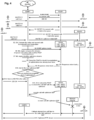
- Fig. 4 shows another flowchart of the method according to another embodiment of the invention.
- the proposed method will request media content from the emergency caller(s) in S5, while the call has been stuck on the call queue.
- the method will compare the media content of the queued calls to the content of the active calls using machine learning (ML) techniques.
- ML machine learning
- the ML engine also named ML classifier
- the media content refers to the same geolocation and incident.
- the ESRP element sends a ping query to the PSAPs with the aim to retrieve information regarding the optimization history of the specific calls. That is, in case the signaling messages have already been exchanged for the active call which matched the queued call, then the ESRP queries the PSAP in order to identify which is the list of the codecs that have been exchanged in the PSAPs for this active call. In S9, the ESRP obtains the responses regarding the optimization of the active call. In S10, the ESRP starts traversing the list of the codecs from the lowest to the highest optimization level. In S11, the ESRP checks if an acceptable level of optimization has been reached based on the current conditions and the configuration that has been performed in the ESRP.
- the proposed method should stop on the best selection taking also into account, if an acceptable optimization level has been reached.
- the proposed method sends a re-INVITE to the emergency caller in order to identify if this codec is supported by the user. This re-negotiation is sent over the channel that is already open with an Interactive Voice Response (IVR) as the caller waits on the call queue. If the caller device sends a 200 OK message, then the ESRP sends a message to the PSAP in order to amend the SDP info for this call in the queue.
- IVR Interactive Voice Response
- the queued call will be already optimized in the signaling level. This will always result in a stream optimization without triggering such a process after the call establishment between the caller and the callTaker.
- this proposed method also crafts the SDP data but while the signaling message for initiating the emergency call sits on the call queue and further with the aim to avoid future re-negotiations for stream optimization after the call establishment, and mostly for optimizations that have already been done for the same geolocation/incidentID.
- the process of re-negotiating and optimizing the media streams will be executed only for the first call. The next calls referring to the same geolocation/incidentlD will use the SDP historical data of the first call.
Landscapes
- Engineering & Computer Science (AREA)
- Multimedia (AREA)
- Signal Processing (AREA)
- Computer Networks & Wireless Communication (AREA)
- Business, Economics & Management (AREA)
- General Business, Economics & Management (AREA)
- Emergency Management (AREA)
- Marketing (AREA)
- Telephonic Communication Services (AREA)
- Data Exchanges In Wide-Area Networks (AREA)
Abstract
Description
- The present invention relates to a method and system for establishing optimized data streams in a network. In particular, the present invention relates to a method and system for establishing optimized data streams in a network by crafting resource-draining Session Description Protocol (SDP) bodies on a call queue.
- In particular, the invention finds use in the optimization of Real Time Protocol (RTP) data streams in an Emergency Services IP Network (ESInet) by crafting resource-draining Session Description Protocol (SDP) bodies on the Public Safety Answering Point (PSAP) call queue.
- After a long time of using switched communication networks the actual development in the field of network communication employed more and more packet-based data networks. Following this trend in communication networks, fixed networks as well as mobile networks move to packet-based data networks.
- Recently, an increasing number of services are built on this integrated data-oriented network technology. However, one major issue within such integrated data networks may be call management when the quality of the information that is exchanged between the calling parties is important.
- New challenges appear, for example, when services like services of an emergency call network are transferred to data technology in order to benefit from the possibility to exchange all types of data. In the scenario of an emergency call, the conditions of an incident are not known and thus the callTaker or callee needs to obtain the best overview of the emergency scene. It therefore may be desired by the callTaker to use a service such as a video with a high resolution in order to get a good impression from the actual incident. However, videos of high resolution may consume a huge amount of bandwidth which may not be available in particular in cases where mobile networks and/or mobile network devices are used by the caller.
- The state of the art already describes some solutions for optimizing a data stream.
- The document Large-scale Video Classification with Convolutional Neural Networks, by Andrej Karpathy et al., published in CVPR '14: Proceedings of the 2014 IEEE Conference on Computer Vision and Pattern Recognition, June 2014 Pages 1725 - 1732; https://doi.org/10.1109/CVPR.2014.223 discloses multiple approaches for extending the connectivity of a CNN (Convolutional Neural Network) in time domain to take advantage of local spatio-temporal information and suggests a multiresolution, foveated architecture as a promising way of speeding up the training.
- The document
US 9,281,964 B2 - The document
US 8,346,945 B2 describes dynamic SDP update in IPDC (Internet Protocol Datacasting) over DVB-H (Digital Video Broadcasting-Handheld). - The document
US 7,760,744 B1 relates to media path optimization for multimedia over the Internet protocol. - However, it may be likely that media re-negotiations are used to find a compromise between the desired capabilities of a data stream and the capabilities of the available resources. In order to achieve such a good compromise a negotiation between caller and callTaker and in particular of their devices is necessary which may result in upgrading or downgrading the data stream.
- In particular, in an emergency network, it may happen that the available resources of the callTaker are limited and not all calls can be handled simultaneously. This may be the case in scenarios of mass accidents, where a plurality of callers may try to reach an emergency responder. Consequently, some of the calls and/or data streams may need to be queued in order to be handled by the callTaker.
- A lot of time may be lost, if the media re-negotiations are only made after the next data stream waiting in the queue is served by the callTaker.
- Therefore, the present invention is based on the object to provide a method and system for establishing optimized data streams in a network. In particular, to overcome the disadvantages of the prior art e. g. to keep the time for re-negotiations as short as possible.
- This object is solved by a method having the features according to
claim 1 and a system having the features ofclaim 13. Preferred embodiments of the invention are defined in the respective dependent claims. - According to the invention, a method for establishing optimized data streams in a network is provided, the method comprising the steps of:
- S1 notifying, by one or more PSAP elements, an ESRP element about one or more calls with corresponding indicentlDs of one or more callers in one or more queues,
- S2 comparing, by the ESRP element, the one or more calls in the one or more queues with all active and queued calls monitored by the ESRP element,
- S3 Identifying, by the ESRP element, if there are calls with a same incidentID among the compared calls,
- S8 querying, by the ESRP element, all PSAP elements having identified compared calls with same incidentID, to identify if a re-negotiation for optimization of stream conditions has been performed, if yes,
- S9 receiving, by the ESRP element, a list of Session Description Protocol-, SDP-, codecs that have been exchanged during the re-negotiation from the identified PSAP elements,
- S10 selecting, by the ESRP element, a SDP-codec having a first optimization level for establishing a data stream among the list of SDP-codecs;
- S11 evaluating, by the one or more PSAP elements, if the first optimization level for establishing a data stream is acceptable,
- S12 sending, by the one or more PSAP elements, a re-invite message to one or more caller devices in the one or more queues in case, the first optimization level was acceptable,
- S13 querying, by the ESRP, the one or more caller devices in the one or more queues if the SDP-codec having the first optimization level is supported,
- S14 instructing, by the ESRP, the one or more PSAP elements to exchange the SDP-codecs of the one or more calls in the one or more queues with the SDP-codec having the first optimization level,
- S15 establishing, by the one or more PSAP elements, a data stream with the SDP-codec having the first optimization level.
- According to the invention, a Public Safety Answering Point (PSAP) element is understood as an entity responsible for receiving emergency calls and processing those calls according to a specific operational policy. A Session Description Protocol (SDP) is understood as a standard syntax contained in a signaling message to negotiate a real time media session. A codec is understood as a device or computer program which encodes or decodes a data stream or signal. This can be an audio codec, video codec, or other media codec. In the sense of the invention, a data stream is also understood to be a media stream or signal that can transmit all media and data formats. A network is understood as any type of computer network. This can be a local network as well as a cloud-based or decentralized network. In particular, a network is understood to be an emergency call network such as the ESInet. An Emergency Services IP Network (ESInet) is a managed IP network that is used for emergency services communications, and which can be shared by all public safety agencies. It provides the IP transport infrastructure upon which independent application platforms and core services can be deployed, including, but not restricted to, those necessary for providing emergency services. ESInets may be constructed from a mix of dedicated and shared facilities. ESInets may be interconnected at local, regional, state, federal, national and international levels to form an IP-based inter-network (network of networks). The term ESInet designates the network, not the services that ride on the network. An Emergency Services Routing Proxy (ESRP) element can be understood as a SIP (Session Initiation Protocol) proxy server that selects the next hop routing within the ESInet based on location and policy. There is an ESRP on the edge of the ESInet. There is usually an ESRP at the entrance to a New Generation (NG) PSAP. There may be one or more intermediate ESRPs between them.
- In the sense of the invention, the level of optimization is understood to mean that a codec is selected which, in terms of establishing a suitable data stream, provides both the caller and the called party with an intelligible and fluid, i. e., which is almost complete interruption-free or interference-free, audio, visual or media communication in terms of the technical aspects. However, according to the method of the invention, both the device or the controlling/transmitting element of the device, such as a caller's device or a PSAP, must be able to process or use the selected codec according to their technical (pre-)configuration. In the present method this is expressed by the acceptance of the codec which means that the elements can use the codec according to their technical specifications. Further, for the purposes of the invention, first optimization level means the lowest level of optimization that can be performed. For example, the list of SDP codecs can be arranged in such a way that the codec with the lowest optimization level is placed at the top and then the other codecs are listed in order of their optimization level, from low to high.
- According to a preferred embodiment of the method after step S3, in the case that no match in the incidentlDs were found among the compared calls, the method further comprising:
S4 identifying, by the ESPR element, if there are calls with a same geolocation among the compared calls. - According to another preferred embodiment of the method, wherein in steps S3 and/or S4 no match was identified and/or wherein in step S8 no re-negotiation was identified among the compared calls, the method further comprising:
- S5 gathering, by the ESRP element, media streams of the one or more calls of the one or more queues of the one or more PSAP elements, and media streams of all active calls of all the PSAPs monitored by the ESRP element,
- S6 comparing, by the ESRP element, using a machine learning, ML, engine the content of the media streams of the one or more calls of the one or more queues of the one or more PSAP elements, with content of media streams of all active calls of all the PSAPs monitored by the ESRP element,
- S7 identifying, by the ESRP element, whether a re-negotiation of media streams has occurred on active calls wherein the comparison of the content of the media streams between active and queued calls was similar.
- According to still another preferred embodiment of the method, the machine learning engine resides in the ESRP element.
- Further, according to another preferred embodiment of the method wherein, if in step S11 the first optimization level for establishing a data stream is not acceptable by the ESRP for one or more PSAP elements, the method further comprising, repeating step S10 with another SDP codec having a second or any further optimization level until an acceptable optimization level is found.
- According to yet another preferred embodiment of the method wherein, if the SDP-codec having the first optimization level is not supported by the one or more caller devices of the one or more queues, the method further comprising, repeating steps S10, S11, S12 and S13 with another SDP codec having a second or any further optimization level until an acceptable optimization level is found.
- For the purposes of the invention, a second or any further optimization level means the next higher optimization levels in ascending order after the first optimization level.
- According to yet another preferred embodiment of the method, wherein the first, second or any further optimization levels are based on bandwidth requirements that have been predetermined for the one or more PSAP elements and/or the one or more caller devices. Another aim for the optimization process is to deliver appropriate codecs for specific devices. In this sense, optimization levels are based on the fact that the Sip Server crafts SDP's with the criterion of specific codecs supported by devices and creates lists that have on top the codecs that are the most preferred for each device.
- According to yet another preferred embodiment of the method wherein after step S14 the method further comprising:
S14a re-routing, by the ESRP element, the one or more calls of the one or more queues to an alternate PSAP whereby the re-routing is performed with the optimized SDP codec. - According to yet another preferred embodiment of the method, wherein an extra indication header indicating the optimized SDP codec is added in the optimized SDP.
- According to yet another preferred embodiment of the method, wherein the additional indication header is defined as SDP OPTIMIZED: YES.
- According to yet another preferred embodiment of the method a HashMap is used to identify optimized SDP. According to the invention, a HashMap (also called hash table) is understood as a data structure that implements an associative array abstract data type, a structure that can map keys to values. A hash table uses a hash function to compute an index, also called a hash code, into an array of buckets or slots, from which the desired value can be found. During lookup, the key is hashed, and the resulting hash indicates where the corresponding value is stored. For example, the key of the map may be the CalllD which ensures uniqueness.
- According to yet another preferred embodiment of the method wherein using the SDP-codec in conjunction with one of the Real-Time Transport Protocol, RTP, the Real-Time Streaming Protocol, the Session Initiation Protocol, SIP and/or the Session Announcement Protocol, SAP. For the purposes of the invention, a Real Time Protocol (RTP) IP protocol is understood to be a protocol used to transport media (voice, video, text) that has a real-time constraint. The Real Time Streaming Protocol (RTSP) is understood as a network control protocol designed for use in entertainment and communications systems to control streaming media servers. The protocol is used for establishing and controlling media sessions between endpoints. Clients of media servers issue commands such as play, record and pause, to facilitate real-time control of the media streaming from the server to a client (Video On Demand) or from a client to the server (Voice Recording). The Session Announcement Protocol (SAP) is understood as a protocol for advertising multicast session information. SAP typically uses Session Description Protocol (SDP) as the format for Real-time Transport Protocol (RTP) session descriptions. Announcement data is sent using IP multicast and the User Datagram Protocol (UDP).
- According to the invention, a system for establishing optimized data streams in a network is provided, the system is configured to perform the method according to any of the
claims 1 to 12. - It has also to be noted that aspects of the invention have been described with reference to different subject-matters. In particular, some aspects or embodiments have been described with reference to apparatus type claims whereas other aspects have been described with reference to method type claims. However, a person skilled in the art will gather from the above and the following description that, unless otherwise notified, in addition to any combination between features belonging to one type of subject-matter also any combination between features relating to different types of subject-matters is considered to be disclosed with this text. In particular, combinations between features relating to the apparatus type claims and features relating to the method type claims are considered to be disclosed. The invention and embodiments thereof will be described below in further detail in connection with the drawing(s).
- Fig .1
- shows a schematic illustration of a flowchart of the general structure of the method according to another embodiment of the invention;
- Fig. 2
- shows a block diagram of the method for establishing optimized data streams in a network according to an embodiment of the invention;
- Fig. 3
- shows a schematic illustration of a flowchart of the method according to another embodiment of the invention;
- Fig. 4
- shows another schematic illustration of a flowchart of the method according to another embodiment of the invention.
-
Fig 1 . shows in a schematic illustration the general structure of the method according to an embodiment of the invention. By crafting resource-draining Session Description Protocol (SDP) bodies on the SIP server queue. A Caller initiates a SIP INVITE request carrying an SDP A body towards the SIP Server. The latter determines the routing destination and forwards the SIP INVITE request to the Callee. The SIP Server can alter the SDP A body to an SDP B body, using custom rules. After the crafting of the SDP body, the SIP INVITE request is conveyed to the callee by carrying an SDP B body. -
Fig. 2 shows in a block diagram steps of the method according to an embodiment of the invention. In step S1 of this block diagram an ESRP element is notified from a PSAP or a plurality of PSAPs that queued calls exist in it/them. It is considered that this takes place at timepoint t0. As a next step, the ESRP compares incidentIDs (S3) and/or geolocation information (S4) for queued calls from the PSAPs about which it was previously notified, with active calls that are already being served on the PSAPs which are under observation of the ESRP. In case it is not possible to identify similar incidentIDs or geolocation data for active calls compared with the the queued calls, the ESRP gathers media streams from the queued calls, in step S5. In step S6, a machine learning engine (ML engine) which can be reside in an ESRP element, compares these gathered media streams with the media streams of active calls being served on the PSAPs which are under observation of the ESRP. In step S7 the ML engine identifies optimized media streams from active calls, regardless of the PSAP they come from. The ML engine comparison can be performed e. g. using frameworks described in Karpathy, A. et al., 2014, Large-scale video classification with convolutional neural networks. In Proceedings of the IEEE conference on Computer Vision and Pattern Recognition (pp. 1725-1732), https://www.youtube.com/watch?v=LAV56E-mWoo, https://www.youtube.com/watch?v=qrzQ_AB1DZk or https://www.pyimagesearch.com/2019/07/15/video-classification-with-keras-and-deeplearning/. This is based on the fact that a callTaker may trigger few media re-negotiations with the caller, in order to gather all information needed from the available stream. However, this is considered an additional load on each PSAP's bandwidth, thus if optimized media streams are found, these were promoted to other PSAPs with queued calls as well. However, the steps S5 - S7 may not be necessary, in case similar calls i. e. calls with the same incidentID or geolocation data are already identified either in step S3 or in step S4. Subsequently, in step S8, the ESRP queries the PSAPs to find out if a re-negotiation of codecs has been triggered. In case this is true, in step S9, the ESRP receives the responses of all the PSAPs in which a re-negotiation has been performed. The responses each are compiled in a single list with optimized SDP codecs wherein the optimized SDP codecs are labeled or arranged in the list according to their level of optimization. Then, in step S10, the optimized SDP codec in the list that has the lowest optimization level is selected. In step S11, a check takes place to verify if the level of stream optimization is considered satisfying enough for the PSAPs who should answer the call. If the ESRP at this stage identifies that the current level of optimization of the media stream is fair enough for the current needs of each one of the PSAP that it monitors, the ESRP will terminate the process. More precise, it will terminate the process, when it identifies that the current SDP body e. g. the SDP codec in the list is fair enough for the requirements that have been set for the specific PSAP. Such requirements can be, for example, required bandwidth which assumes a stable and smooth transfer of stream data. In case the current SDP codec is fair enough, the ESRP picks the current SDP from the list, and it will instruct the PSAP to inject the specific SDP body in the corresponding SIP INVITE request that waits on the call queue. In this step, it is assumed that the ESRP monitors a number of different PSAPs. Thus, it is easy to ping them and identify calls which have been routed in different PSAPs and refer to the same incident (i. e., they have the same incidentID/geolocation). Under this context, using the proposed method the SDP body of a queued call can be altered, e. g. in the PSAP1, while the active call that gives the information of the SDP history of this incident is served on PSAP2. In step S12, a message, e. g. a re-INVITE message is sent to each of the callers in queue, whose streams were found similar before compared with the active calls. This step will reassure that each caller's device can support the updated optimized SDP codec. If a caller's device cannot support this updated optimized SDP, then the steps S10 - S12 are repeated with another SDP codec which has the next higher optimization level compared to the previous optimized SDP codec as described in step S9 using the list of SDP codecs created in S9 which have already been optimized. If the caller's device supports the optimized SDP codec, then in step S14 the queued call(s) are updated with the optimized SDP codec. Moreover, an extra indication header, SDP OPTIMIZED: YES, may be added to declare that the caller's media streams are now optimized. This ensures that this process will not be repeated in case the queued call(s) is/are re-routed to some other PSAP. Finally, in step S15, when call is answered, no SDP codecs re-negotiations are needed, and the callTaker may serve the call and retrieve all available media information. The proposed method requires a mechanism in order to identify if the optimization process has already been triggered and completed for an active call running in the PSAP element. It is an option of the invention to ping the monitored PSAPs in order to retrieve this piece of info, rather than deploy such a solution in the ESRP. This is done because even if the ESRP monitors a number of PSAPs, it cannot be sure that the signaling messages will be exchanged from the same ESRP element. Thus, the ESRP pings the PSAP to get the necessary information. The returned information can be computed on the PSAP by using a very simple algorithm. For example, for each active call, the PSAP may monitor the exchanged signaling messages that carry an SDP body, as a result of the process of re-negotiations on top of the active call. In case a difference in the SDPs is detected between the different re-negotiations, then the algorithm will mark the SDP details in a HashMap. Thereby, the key of the map may be the CalllD which ensures uniqueness. After the process is finished, the PSAP has a map with all the negotiations that have been performed for a specific call. According to the history of the process the PSAP may create a list with all the codecs that have been negotiated between the caller and the callee for each session. In this list, the codecs may be placed in a reverse order. The worst codec may be on the top, while the best one will be on the bottom, following a resource-efficient logic. The ESRP is then able to pick the most resource-efficient codec on the top of the list returned by the PSAP. The purpose of this is that the 'worst' codecs provide the least bandwidth consumption, along with a low sound/video quality, which - however - may result in a low user experience. At this point, ESRP can decide if it has enough bandwidth available to ask for the next - and more efficient - SDP from the list. -
Fig. 3 shows a flowchart of the method according to another embodiment of the invention. According to this example, several calls, call1, call2 and call3, referring to the same incident, Inc1, come into the ESRP, and they are routed to PSAP1 and PSAP3. Some of them are inserted in call queues (Call1 and Call2 are in the queue of PSAP1 while Call3 is in the queue of PSAP3). Since the ESRP has subscribed to PSAPs for queued calls via a subscribe/notify mechanism, it receives NOTIFY messages for queued calls existence in S1. Subsequently, in S2, S3, S4, the ESRP compares the active and queued calls of the PSAPs that sent a notification, to identify those with common incidentID and/or geolocation. If such queued calls are found, the ESRP asks the PSAPs for their optimized SDP in S8, e. g. in form of a list. If optimization has already been executed for the asked incident, the PSAPs already have available optimized SDPs and provide them to the ESRP in S9. The ESRP traverses the codec till the optimization criterion is satisfied, S10 - S11, taking as well into account the configuration parameters that have been provided by the ESRP. After the SDP codec selection, a re-negotiation with the selected SDP codec takes place towards the caller's device. In case it is not successfully completed, in S13, next available optimized SDP codec are retrieved. When re-negotiation is complete with the optimized codec, the ESRP informs the PSAP which has the call in its queue, to realize the SDP codec update on the signaling event, S14. In the example shown inFigure 3 , optimization was performed for the SDP with CodecA. For example, one could assume that an optimization was performed with SDP CodecC but in step S13 it turned out that the calling device does not support this CodecC (not shown inFigure 3 ) and then the optimization was performed with SDP CodecD. In case a call stays too long in a queue (here Call1 in PSAP1 and Call3 in PSAP3), it may be decided that it should be re-routed to an alternate PSAPN, for load balancing reasons. When the call(s) is/are answered by a callTakerN of the latest PSAPN, the updated SDP will be used. There is no need for the previously described process to be re-executed. CallTakerN serves the call without redundant re-negotiations, having at the same time efficient stream available. -
Fig. 4 shows another flowchart of the method according to another embodiment of the invention. In this embodiment the problem in which neither a geolocation nor an incidentID match has been found between the active and the queued calls is addressed. In this case, the proposed method will request media content from the emergency caller(s) in S5, while the call has been stuck on the call queue. In S6 the method will compare the media content of the queued calls to the content of the active calls using machine learning (ML) techniques. In S7 the ML engine (also named ML classifier) will present the comparison results. In case there is a match in the media streams content, this entails that the media content refers to the same geolocation and incident. Thus, in S8 the ESRP element sends a ping query to the PSAPs with the aim to retrieve information regarding the optimization history of the specific calls. That is, in case the signaling messages have already been exchanged for the active call which matched the queued call, then the ESRP queries the PSAP in order to identify which is the list of the codecs that have been exchanged in the PSAPs for this active call. In S9, the ESRP obtains the responses regarding the optimization of the active call. In S10, the ESRP starts traversing the list of the codecs from the lowest to the highest optimization level. In S11, the ESRP checks if an acceptable level of optimization has been reached based on the current conditions and the configuration that has been performed in the ESRP. This means that as traversing the list with the codecs, the SDP information found is more and more efficient in terms of communication quality, but it gets even more resource-constraint. In this sense, the proposed method should stop on the best selection taking also into account, if an acceptable optimization level has been reached. After selecting the codec, in S12 the proposed method sends a re-INVITE to the emergency caller in order to identify if this codec is supported by the user. This re-negotiation is sent over the channel that is already open with an Interactive Voice Response (IVR) as the caller waits on the call queue. If the caller device sends a 200 OK message, then the ESRP sends a message to the PSAP in order to amend the SDP info for this call in the queue. In a different case (depicted inFig. 3 ), if the caller device sends a 488 not acceptable message, then the proposed method will continue to the next available codec (here SDP with codecD aka SDPD forcalls 1 and 3 in the queue was acceptable). In this direction, as the current embodiment instructs, after the call re-routing to an alternate PSAPN, it is assumed that the call is dropped. Thus, after the callTakerN tries to perform a callback, it initiates the call with the optimized SDP. - The benefit from the proposed method is that in all cases, the queued call will be already optimized in the signaling level. This will always result in a stream optimization without triggering such a process after the call establishment between the caller and the callTaker. Compared to the prior art, this proposed method also crafts the SDP data but while the signaling message for initiating the emergency call sits on the call queue and further with the aim to avoid future re-negotiations for stream optimization after the call establishment, and mostly for optimizations that have already been done for the same geolocation/incidentID. Furthermore, using the proposed method, the process of re-negotiating and optimizing the media streams will be executed only for the first call. The next calls referring to the same geolocation/incidentlD will use the SDP historical data of the first call.
- It should be noted that the term "comprising" does not exclude other elements or steps and the "a" or "an" does not exclude a plurality. Further, elements described in association with different embodiments may be combined. It should also be noted that reference signs in the claims shall not be construed as limiting the scope of the claims.
-
- S1
- Method step S1
- S2
- Method step S2
- S3
- Method step S3
- S4
- Method step S4
- S5
- Method step S5
- S6
- Method step S6
- S7
- Method step S7
- S8
- Method step S8
- S9
- Method step S9
- S10
- Method step S10
- S11
- Method step S11
- S12
- Method step S12
- S13
- Method step S13
- S14
- Method step S14
- S14a
- Method step S14a
- S15
- Method step S15
- Inc1
- Incident with
ID 1 - call1
- call with
call ID 1 - call2
- call with
call ID 2 - call3
- call with call ID 3
- PSAP1
- Public Safety Answering Point with
ID 1 - PSAP3
- Public Safety Answering Point with ID 3
- PSAPN
- alternate Public Safety Answering Point with ID N
- ESRP
- Emergency Services Routing Proxy
- SDP
- Session Description Protocol
- RTP
- Real Time Protocol
- ML classifier
- machine learning engine
- Caller1
- caller with
ID 1 - CallerN
- caller with ID N
-
CallerN+ 1 - caller with ID N+1
- CallTaker1
- callTaker with
ID 1 - CallTakerN
- callTaker with ID N
Claims (13)
- A method for establishing optimized data streams in a network, comprising:S1 notifying, by one or more Public Safety Answering Point, PSAP, elements, an Emergency Services Routing Proxy, ESRP, element about one or more calls with corresponding incidentIDs of one or more callers in one or more queues,S2 comparing, by the ESRP element, the one or more calls in the one or more queues with all active and queued calls monitored by the ESRP element,S3 Identifying, by the ESPR element, if there are calls with a same incidentID among the compared calls,S8 querying, by the ESRP element, all PSAP elements having identified compared calls with same incidentID, to identify if a re-negotiation for optimization of stream conditions has been performed, if yes,S9 receiving, by the ESRP element, a list of Session Description Protocol-, SDP-, codecs that have been exchanged during the re-negotiation from the identified PSAP elements,S10 selecting, by the ESRP element, a SDP-codec having a first optimization level for establishing a data stream among the list of SDP-codecs;S11 evaluating, by the ESRP for the one or more PSAP elements, if the first optimization level for establishing a data stream is acceptable,S12 sending, by the one or more PSAP elements, a re-invite message to one or more caller devices in the one or more queues in case, the first optimization level was acceptable,S13 querying, by the ESRP, the one or more caller devices in the one or more queues if the SDP-codec having the first optimization level is supported,S14 instructing, by the ESRP, the one or more PSAP elements to exchange the SDP-codecs of the one or more calls in the one or more queues with the SDP-codec having the first optimization level,S15 establishing, by the one or more PSAP elements, a data stream with the SDP-codec having the first optimization level.
- The method according to claim 1, wherein after step S3, in the case that no match in the incidentIDs were found among the compared calls, the method further comprising:
S4 identifying, by the ESRP element, if there are calls with a same geolocation among the compared calls. - The method according to any of the preceding claims, wherein in steps S3 and/or S4 no match was identified and/or wherein in step S8 no re-negotiation was identified among the compared calls, the method further comprising:S5 gathering, by the ESRP element, media streams of the one or more calls of the one or more queues of the one or more PSAP elements, and media streams of all active calls of all the PSAPs monitored by the ESRP element,S6 comparing, by the ESRP element, using a machine learning, ML, engine the content of the media streams of the one or more calls of the one or more queues of the one or more PSAP elements, with content of media streams of all active calls of all the PSAPs monitored by the ESRP element,S7 identifying, by the ESRP element, whether a re-negotiation of media streams has occurred on active calls wherein the comparison of the content of the media streams between active and queued calls was similar.
- The method according to claim 3, wherein the machine learning engine resides in the ESRP element.
- The method according to any one of the preceding claims, wherein, if in step S11 the first optimization level for establishing a data stream is not acceptable by the one or more PSAP elements, the method further comprising, repeating step S10 with another SDP codec having a second or any further optimization level until an acceptable optimization level is found.
- The method according to any of the preceding claims, wherein, if the SDP-codec having the first optimization level is not supported by the one or more caller devices of the one or more queues, the method further comprising, repeating steps S10, S11, S12 and S13 with another SDP codec having a second or any further optimization level until an acceptable optimization level is found.
- The method according to any of the preceding claims, wherein the first, second or further optimalisation levels are based on bandwidth requirements that have been predetermined for the one or more PSAP elements and/or for the one or more caller devices.
- The method according to any of the preceding claims, wherein after step S14 the method further comprising:
S14a re-routing, by the ESRP element, the one or more calls of the one or more queues to an alternate PSAP whereby the re-routing is performed with the optimized SDP codec. - The method according to any of the preceding claims, wherein an extra indication header indicating the optimized SDP codec is added in the optimized SDP.
- The method according to claim 9, wherein the additional indication header is defined as SDP OPTIMIZED: YES.
- The method according to any of the preceding claims, wherein using a HashMap to identify optimized SDP.
- The method according to any of the preceding claims, wherein using the SDP-codec in conjunction with one of the Real-Time Transport Protocol, RTP, the Real-Time Streaming Protocol, the Session Initiation Protocol, SIP, and/or the Session Announcement Protocol, SAP.
- A system for establishing optimized data streams in a network, configured to perform the method according to any of the claims 1 to 12.
Priority Applications (2)
| Application Number | Priority Date | Filing Date | Title |
|---|---|---|---|
| EP21195810.3A EP4149098B1 (en) | 2021-09-09 | 2021-09-09 | Method and system for establishing optimized data streams in a network |
| US17/887,541 US11729224B2 (en) | 2021-09-09 | 2022-08-15 | Method and system for establishing optimized data streams in a network |
Applications Claiming Priority (1)
| Application Number | Priority Date | Filing Date | Title |
|---|---|---|---|
| EP21195810.3A EP4149098B1 (en) | 2021-09-09 | 2021-09-09 | Method and system for establishing optimized data streams in a network |
Publications (2)
| Publication Number | Publication Date |
|---|---|
| EP4149098A1 true EP4149098A1 (en) | 2023-03-15 |
| EP4149098B1 EP4149098B1 (en) | 2024-06-05 |
Family
ID=77710551
Family Applications (1)
| Application Number | Title | Priority Date | Filing Date |
|---|---|---|---|
| EP21195810.3A Active EP4149098B1 (en) | 2021-09-09 | 2021-09-09 | Method and system for establishing optimized data streams in a network |
Country Status (2)
| Country | Link |
|---|---|
| US (1) | US11729224B2 (en) |
| EP (1) | EP4149098B1 (en) |
Families Citing this family (1)
| Publication number | Priority date | Publication date | Assignee | Title |
|---|---|---|---|---|
| US20240129693A1 (en) * | 2022-10-18 | 2024-04-18 | At&T Intellectual Property I, L.P. | Public safety answering point (psap) access from a private core network |
Citations (4)
| Publication number | Priority date | Publication date | Assignee | Title |
|---|---|---|---|---|
| US7760744B1 (en) | 2003-11-20 | 2010-07-20 | Juniper Networks, Inc. | Media path optimization for multimedia over internet protocol |
| US20120320912A1 (en) * | 2011-06-17 | 2012-12-20 | Cassidian Communications, Inc. | Systems, apparatus, and methods for collaborative and distributed emergency multimedia data management |
| US8346945B2 (en) | 2006-09-14 | 2013-01-01 | Nokia Corporation | Dynamic SDP update in IPDC over DVB-H |
| US9281964B2 (en) | 2009-11-06 | 2016-03-08 | Zte Corporation | Method of establishing optimized media path and signaling gateway for implementing this method |
Family Cites Families (1)
| Publication number | Priority date | Publication date | Assignee | Title |
|---|---|---|---|---|
| EP4016951B1 (en) * | 2020-12-18 | 2025-02-12 | Atos Public Safety LLC | Computer-implemented method of optimizing bandwidth in a psap environment and communication network |
-
2021
- 2021-09-09 EP EP21195810.3A patent/EP4149098B1/en active Active
-
2022
- 2022-08-15 US US17/887,541 patent/US11729224B2/en active Active
Patent Citations (4)
| Publication number | Priority date | Publication date | Assignee | Title |
|---|---|---|---|---|
| US7760744B1 (en) | 2003-11-20 | 2010-07-20 | Juniper Networks, Inc. | Media path optimization for multimedia over internet protocol |
| US8346945B2 (en) | 2006-09-14 | 2013-01-01 | Nokia Corporation | Dynamic SDP update in IPDC over DVB-H |
| US9281964B2 (en) | 2009-11-06 | 2016-03-08 | Zte Corporation | Method of establishing optimized media path and signaling gateway for implementing this method |
| US20120320912A1 (en) * | 2011-06-17 | 2012-12-20 | Cassidian Communications, Inc. | Systems, apparatus, and methods for collaborative and distributed emergency multimedia data management |
Non-Patent Citations (3)
| Title |
|---|
| ANDREJ KARPATHY ET AL., CVPR'1 4: PROCEEDINGS OF THE 2014 IEEE CONFERENCE ON COMPUTER VISION AND PATTERN RECOGNITION, June 2014 (2014-06-01), pages 1725 - 1732, Retrieved from the Internet <URL:https://doi.orq/10.1109/CVPR.2014.223> |
| KARPATHY, A ET AL., LARGE-SCALE VIDEO CLASSIFICATION WITH CONVOLUTIONAL NEURAL NETWORKS. IN PROCEEDINGS OF THE IEEE CONFERENCE ON COMPUTER VISION AND PATTERN RECOGNITION, 2014, pages 1725 - 1732 |
| NENA: "NENA Detailed Functional and Interface Standards for the NENA i3 Solution NENA Detailed Functional and Interface Standards for the NENA i3 Solution", 10 September 2016 (2016-09-10), USA, pages 1 - 363, XP055649625, Retrieved from the Internet <URL:https://www.nena.org/resource/resmgr/standards/NENA-STA-010.2_i3_Architectu.pdf> [retrieved on 20191205] * |
Also Published As
| Publication number | Publication date |
|---|---|
| US11729224B2 (en) | 2023-08-15 |
| EP4149098B1 (en) | 2024-06-05 |
| US20230084100A1 (en) | 2023-03-16 |
Similar Documents
| Publication | Publication Date | Title |
|---|---|---|
| CN103634490B (en) | The gateway that a kind of enterprise network being provided for use SIP can be survived | |
| US8239554B2 (en) | Systems and methods for termination of session initiation protocol | |
| US7656866B2 (en) | Controlling media server resources in a VoIP network | |
| KR101248568B1 (en) | Method for providing early-media service based on session initiation protocol | |
| US7088814B1 (en) | Method and system for automatic call distribution based on network resource availability and agent skills | |
| CN101895569B (en) | Implementation method of video browsing, IMS video monitoring system and front monitoring front-end | |
| EP2415275B1 (en) | Method and system for handling a multi-media call setup request | |
| US20180176510A1 (en) | Data handling method and apparatus | |
| US7738638B1 (en) | Voice over internet protocol call recording | |
| US20060239249A1 (en) | Managing media server resources in a VoIP network | |
| US20170171258A1 (en) | Conducting a conference call over a computer network | |
| CN108881149B (en) | Access method and system of video telephone equipment | |
| US8687624B2 (en) | Apparatus and method to handle dynamic payloads in a heterogeneous network | |
| US11729224B2 (en) | Method and system for establishing optimized data streams in a network | |
| US8908684B2 (en) | Method and communication system for selecting a transmission mode for transmitting payload data | |
| WO2020132033A1 (en) | Management of live media connections | |
| KR100950872B1 (en) | Management of Media Server Resources in the BIP Network | |
| KR20050067913A (en) | System and its method for multimedia ring back service using session initiation protocol | |
| US9042541B2 (en) | Multi-node predictive dialing for scalability | |
| US8169949B1 (en) | Audio/video/media handoff split and re-providing | |
| EP3055984B1 (en) | Configurable call recording policy | |
| CN106302363A (en) | The management method of media cascade and device | |
| CN121547449A (en) | Processing methods for audio playback services, satellite voice access gateways and home network equipment | |
| TW202527535A (en) | Communication format adjustment method | |
| EP1664980A2 (en) | Method and system for utilizing proxy designation in a call system |
Legal Events
| Date | Code | Title | Description |
|---|---|---|---|
| PUAI | Public reference made under article 153(3) epc to a published international application that has entered the european phase |
Free format text: ORIGINAL CODE: 0009012 |
|
| STAA | Information on the status of an ep patent application or granted ep patent |
Free format text: STATUS: THE APPLICATION HAS BEEN PUBLISHED |
|
| AK | Designated contracting states |
Kind code of ref document: A1 Designated state(s): AL AT BE BG CH CY CZ DE DK EE ES FI FR GB GR HR HU IE IS IT LI LT LU LV MC MK MT NL NO PL PT RO RS SE SI SK SM TR |
|
| STAA | Information on the status of an ep patent application or granted ep patent |
Free format text: STATUS: REQUEST FOR EXAMINATION WAS MADE |
|
| 17P | Request for examination filed |
Effective date: 20230623 |
|
| RBV | Designated contracting states (corrected) |
Designated state(s): AL AT BE BG CH CY CZ DE DK EE ES FI FR GB GR HR HU IE IS IT LI LT LU LV MC MK MT NL NO PL PT RO RS SE SI SK SM TR |
|
| RAP1 | Party data changed (applicant data changed or rights of an application transferred) |
Owner name: ATOS PUBLIC SAFETY LLC |
|
| GRAP | Despatch of communication of intention to grant a patent |
Free format text: ORIGINAL CODE: EPIDOSNIGR1 |
|
| STAA | Information on the status of an ep patent application or granted ep patent |
Free format text: STATUS: GRANT OF PATENT IS INTENDED |
|
| P01 | Opt-out of the competence of the unified patent court (upc) registered |
Effective date: 20240301 |
|
| INTG | Intention to grant announced |
Effective date: 20240327 |
|
| GRAS | Grant fee paid |
Free format text: ORIGINAL CODE: EPIDOSNIGR3 |
|
| GRAA | (expected) grant |
Free format text: ORIGINAL CODE: 0009210 |
|
| STAA | Information on the status of an ep patent application or granted ep patent |
Free format text: STATUS: THE PATENT HAS BEEN GRANTED |
|
| AK | Designated contracting states |
Kind code of ref document: B1 Designated state(s): AL AT BE BG CH CY CZ DE DK EE ES FI FR GB GR HR HU IE IS IT LI LT LU LV MC MK MT NL NO PL PT RO RS SE SI SK SM TR |
|
| REG | Reference to a national code |
Ref country code: CH Ref legal event code: EP |
|
| REG | Reference to a national code |
Ref country code: DE Ref legal event code: R096 Ref document number: 602021014023 Country of ref document: DE |
|
| REG | Reference to a national code |
Ref country code: IE Ref legal event code: FG4D |
|
| REG | Reference to a national code |
Ref country code: LT Ref legal event code: MG9D |
|
| PG25 | Lapsed in a contracting state [announced via postgrant information from national office to epo] |
Ref country code: BG Free format text: LAPSE BECAUSE OF FAILURE TO SUBMIT A TRANSLATION OF THE DESCRIPTION OR TO PAY THE FEE WITHIN THE PRESCRIBED TIME-LIMIT Effective date: 20240605 |
|
| REG | Reference to a national code |
Ref country code: NL Ref legal event code: MP Effective date: 20240605 |
|
| PG25 | Lapsed in a contracting state [announced via postgrant information from national office to epo] |
Ref country code: FI Free format text: LAPSE BECAUSE OF FAILURE TO SUBMIT A TRANSLATION OF THE DESCRIPTION OR TO PAY THE FEE WITHIN THE PRESCRIBED TIME-LIMIT Effective date: 20240605 Ref country code: HR Free format text: LAPSE BECAUSE OF FAILURE TO SUBMIT A TRANSLATION OF THE DESCRIPTION OR TO PAY THE FEE WITHIN THE PRESCRIBED TIME-LIMIT Effective date: 20240605 |
|
| PG25 | Lapsed in a contracting state [announced via postgrant information from national office to epo] |
Ref country code: GR Free format text: LAPSE BECAUSE OF FAILURE TO SUBMIT A TRANSLATION OF THE DESCRIPTION OR TO PAY THE FEE WITHIN THE PRESCRIBED TIME-LIMIT Effective date: 20240906 |
|
| PG25 | Lapsed in a contracting state [announced via postgrant information from national office to epo] |
Ref country code: ES Free format text: LAPSE BECAUSE OF FAILURE TO SUBMIT A TRANSLATION OF THE DESCRIPTION OR TO PAY THE FEE WITHIN THE PRESCRIBED TIME-LIMIT Effective date: 20240605 |
|
| PG25 | Lapsed in a contracting state [announced via postgrant information from national office to epo] |
Ref country code: LV Free format text: LAPSE BECAUSE OF FAILURE TO SUBMIT A TRANSLATION OF THE DESCRIPTION OR TO PAY THE FEE WITHIN THE PRESCRIBED TIME-LIMIT Effective date: 20240605 |
|
| PG25 | Lapsed in a contracting state [announced via postgrant information from national office to epo] |
Ref country code: NO Free format text: LAPSE BECAUSE OF FAILURE TO SUBMIT A TRANSLATION OF THE DESCRIPTION OR TO PAY THE FEE WITHIN THE PRESCRIBED TIME-LIMIT Effective date: 20240905 Ref country code: LV Free format text: LAPSE BECAUSE OF FAILURE TO SUBMIT A TRANSLATION OF THE DESCRIPTION OR TO PAY THE FEE WITHIN THE PRESCRIBED TIME-LIMIT Effective date: 20240605 Ref country code: HR Free format text: LAPSE BECAUSE OF FAILURE TO SUBMIT A TRANSLATION OF THE DESCRIPTION OR TO PAY THE FEE WITHIN THE PRESCRIBED TIME-LIMIT Effective date: 20240605 Ref country code: GR Free format text: LAPSE BECAUSE OF FAILURE TO SUBMIT A TRANSLATION OF THE DESCRIPTION OR TO PAY THE FEE WITHIN THE PRESCRIBED TIME-LIMIT Effective date: 20240906 Ref country code: FI Free format text: LAPSE BECAUSE OF FAILURE TO SUBMIT A TRANSLATION OF THE DESCRIPTION OR TO PAY THE FEE WITHIN THE PRESCRIBED TIME-LIMIT Effective date: 20240605 Ref country code: ES Free format text: LAPSE BECAUSE OF FAILURE TO SUBMIT A TRANSLATION OF THE DESCRIPTION OR TO PAY THE FEE WITHIN THE PRESCRIBED TIME-LIMIT Effective date: 20240605 Ref country code: BG Free format text: LAPSE BECAUSE OF FAILURE TO SUBMIT A TRANSLATION OF THE DESCRIPTION OR TO PAY THE FEE WITHIN THE PRESCRIBED TIME-LIMIT Effective date: 20240605 Ref country code: RS Free format text: LAPSE BECAUSE OF FAILURE TO SUBMIT A TRANSLATION OF THE DESCRIPTION OR TO PAY THE FEE WITHIN THE PRESCRIBED TIME-LIMIT Effective date: 20240905 |
|
| PG25 | Lapsed in a contracting state [announced via postgrant information from national office to epo] |
Ref country code: NL Free format text: LAPSE BECAUSE OF FAILURE TO SUBMIT A TRANSLATION OF THE DESCRIPTION OR TO PAY THE FEE WITHIN THE PRESCRIBED TIME-LIMIT Effective date: 20240605 |
|
| REG | Reference to a national code |
Ref country code: AT Ref legal event code: MK05 Ref document number: 1693284 Country of ref document: AT Kind code of ref document: T Effective date: 20240605 |
|
| PG25 | Lapsed in a contracting state [announced via postgrant information from national office to epo] |
Ref country code: NL Free format text: LAPSE BECAUSE OF FAILURE TO SUBMIT A TRANSLATION OF THE DESCRIPTION OR TO PAY THE FEE WITHIN THE PRESCRIBED TIME-LIMIT Effective date: 20240605 |
|
| PG25 | Lapsed in a contracting state [announced via postgrant information from national office to epo] |
Ref country code: PT Free format text: LAPSE BECAUSE OF FAILURE TO SUBMIT A TRANSLATION OF THE DESCRIPTION OR TO PAY THE FEE WITHIN THE PRESCRIBED TIME-LIMIT Effective date: 20241007 |
|
| PG25 | Lapsed in a contracting state [announced via postgrant information from national office to epo] |
Ref country code: PT Free format text: LAPSE BECAUSE OF FAILURE TO SUBMIT A TRANSLATION OF THE DESCRIPTION OR TO PAY THE FEE WITHIN THE PRESCRIBED TIME-LIMIT Effective date: 20241007 |
|
| PG25 | Lapsed in a contracting state [announced via postgrant information from national office to epo] |
Ref country code: PL Free format text: LAPSE BECAUSE OF FAILURE TO SUBMIT A TRANSLATION OF THE DESCRIPTION OR TO PAY THE FEE WITHIN THE PRESCRIBED TIME-LIMIT Effective date: 20240605 |
|
| PG25 | Lapsed in a contracting state [announced via postgrant information from national office to epo] |
Ref country code: EE Free format text: LAPSE BECAUSE OF FAILURE TO SUBMIT A TRANSLATION OF THE DESCRIPTION OR TO PAY THE FEE WITHIN THE PRESCRIBED TIME-LIMIT Effective date: 20240605 |
|
| PG25 | Lapsed in a contracting state [announced via postgrant information from national office to epo] |
Ref country code: AT Free format text: LAPSE BECAUSE OF FAILURE TO SUBMIT A TRANSLATION OF THE DESCRIPTION OR TO PAY THE FEE WITHIN THE PRESCRIBED TIME-LIMIT Effective date: 20240605 Ref country code: IS Free format text: LAPSE BECAUSE OF FAILURE TO SUBMIT A TRANSLATION OF THE DESCRIPTION OR TO PAY THE FEE WITHIN THE PRESCRIBED TIME-LIMIT Effective date: 20241005 |
|
| PG25 | Lapsed in a contracting state [announced via postgrant information from national office to epo] |
Ref country code: CZ Free format text: LAPSE BECAUSE OF FAILURE TO SUBMIT A TRANSLATION OF THE DESCRIPTION OR TO PAY THE FEE WITHIN THE PRESCRIBED TIME-LIMIT Effective date: 20240605 |
|
| PG25 | Lapsed in a contracting state [announced via postgrant information from national office to epo] |
Ref country code: RO Free format text: LAPSE BECAUSE OF FAILURE TO SUBMIT A TRANSLATION OF THE DESCRIPTION OR TO PAY THE FEE WITHIN THE PRESCRIBED TIME-LIMIT Effective date: 20240605 Ref country code: SK Free format text: LAPSE BECAUSE OF FAILURE TO SUBMIT A TRANSLATION OF THE DESCRIPTION OR TO PAY THE FEE WITHIN THE PRESCRIBED TIME-LIMIT Effective date: 20240605 |
|
| PG25 | Lapsed in a contracting state [announced via postgrant information from national office to epo] |
Ref country code: SM Free format text: LAPSE BECAUSE OF FAILURE TO SUBMIT A TRANSLATION OF THE DESCRIPTION OR TO PAY THE FEE WITHIN THE PRESCRIBED TIME-LIMIT Effective date: 20240605 |
|
| PG25 | Lapsed in a contracting state [announced via postgrant information from national office to epo] |
Ref country code: SM Free format text: LAPSE BECAUSE OF FAILURE TO SUBMIT A TRANSLATION OF THE DESCRIPTION OR TO PAY THE FEE WITHIN THE PRESCRIBED TIME-LIMIT Effective date: 20240605 Ref country code: SK Free format text: LAPSE BECAUSE OF FAILURE TO SUBMIT A TRANSLATION OF THE DESCRIPTION OR TO PAY THE FEE WITHIN THE PRESCRIBED TIME-LIMIT Effective date: 20240605 Ref country code: RO Free format text: LAPSE BECAUSE OF FAILURE TO SUBMIT A TRANSLATION OF THE DESCRIPTION OR TO PAY THE FEE WITHIN THE PRESCRIBED TIME-LIMIT Effective date: 20240605 Ref country code: PL Free format text: LAPSE BECAUSE OF FAILURE TO SUBMIT A TRANSLATION OF THE DESCRIPTION OR TO PAY THE FEE WITHIN THE PRESCRIBED TIME-LIMIT Effective date: 20240605 Ref country code: IS Free format text: LAPSE BECAUSE OF FAILURE TO SUBMIT A TRANSLATION OF THE DESCRIPTION OR TO PAY THE FEE WITHIN THE PRESCRIBED TIME-LIMIT Effective date: 20241005 Ref country code: EE Free format text: LAPSE BECAUSE OF FAILURE TO SUBMIT A TRANSLATION OF THE DESCRIPTION OR TO PAY THE FEE WITHIN THE PRESCRIBED TIME-LIMIT Effective date: 20240605 Ref country code: CZ Free format text: LAPSE BECAUSE OF FAILURE TO SUBMIT A TRANSLATION OF THE DESCRIPTION OR TO PAY THE FEE WITHIN THE PRESCRIBED TIME-LIMIT Effective date: 20240605 Ref country code: AT Free format text: LAPSE BECAUSE OF FAILURE TO SUBMIT A TRANSLATION OF THE DESCRIPTION OR TO PAY THE FEE WITHIN THE PRESCRIBED TIME-LIMIT Effective date: 20240605 |
|
| PG25 | Lapsed in a contracting state [announced via postgrant information from national office to epo] |
Ref country code: IT Free format text: LAPSE BECAUSE OF FAILURE TO SUBMIT A TRANSLATION OF THE DESCRIPTION OR TO PAY THE FEE WITHIN THE PRESCRIBED TIME-LIMIT Effective date: 20240605 |
|
| REG | Reference to a national code |
Ref country code: DE Ref legal event code: R097 Ref document number: 602021014023 Country of ref document: DE |
|
| PLBE | No opposition filed within time limit |
Free format text: ORIGINAL CODE: 0009261 |
|
| STAA | Information on the status of an ep patent application or granted ep patent |
Free format text: STATUS: NO OPPOSITION FILED WITHIN TIME LIMIT |
|
| PG25 | Lapsed in a contracting state [announced via postgrant information from national office to epo] |
Ref country code: DK Free format text: LAPSE BECAUSE OF FAILURE TO SUBMIT A TRANSLATION OF THE DESCRIPTION OR TO PAY THE FEE WITHIN THE PRESCRIBED TIME-LIMIT Effective date: 20240605 |
|
| PG25 | Lapsed in a contracting state [announced via postgrant information from national office to epo] |
Ref country code: MC Free format text: LAPSE BECAUSE OF FAILURE TO SUBMIT A TRANSLATION OF THE DESCRIPTION OR TO PAY THE FEE WITHIN THE PRESCRIBED TIME-LIMIT Effective date: 20240605 |
|
| REG | Reference to a national code |
Ref country code: CH Ref legal event code: PL |
|
| 26N | No opposition filed |
Effective date: 20250306 |
|
| PG25 | Lapsed in a contracting state [announced via postgrant information from national office to epo] |
Ref country code: LU Free format text: LAPSE BECAUSE OF NON-PAYMENT OF DUE FEES Effective date: 20240909 |
|
| REG | Reference to a national code |
Ref country code: BE Ref legal event code: MM Effective date: 20240930 |
|
| PG25 | Lapsed in a contracting state [announced via postgrant information from national office to epo] |
Ref country code: BE Free format text: LAPSE BECAUSE OF NON-PAYMENT OF DUE FEES Effective date: 20240930 |
|
| PG25 | Lapsed in a contracting state [announced via postgrant information from national office to epo] |
Ref country code: CH Free format text: LAPSE BECAUSE OF NON-PAYMENT OF DUE FEES Effective date: 20240930 |
|
| PG25 | Lapsed in a contracting state [announced via postgrant information from national office to epo] |
Ref country code: IE Free format text: LAPSE BECAUSE OF NON-PAYMENT OF DUE FEES Effective date: 20240909 |
|
| PG25 | Lapsed in a contracting state [announced via postgrant information from national office to epo] |
Ref country code: SE Free format text: LAPSE BECAUSE OF FAILURE TO SUBMIT A TRANSLATION OF THE DESCRIPTION OR TO PAY THE FEE WITHIN THE PRESCRIBED TIME-LIMIT Effective date: 20240605 |
|
| PGFP | Annual fee paid to national office [announced via postgrant information from national office to epo] |
Ref country code: DE Payment date: 20250919 Year of fee payment: 5 |
|
| PGFP | Annual fee paid to national office [announced via postgrant information from national office to epo] |
Ref country code: GB Payment date: 20250923 Year of fee payment: 5 |
|
| PGFP | Annual fee paid to national office [announced via postgrant information from national office to epo] |
Ref country code: FR Payment date: 20250925 Year of fee payment: 5 |
|
| PG25 | Lapsed in a contracting state [announced via postgrant information from national office to epo] |
Ref country code: CY Free format text: LAPSE BECAUSE OF FAILURE TO SUBMIT A TRANSLATION OF THE DESCRIPTION OR TO PAY THE FEE WITHIN THE PRESCRIBED TIME-LIMIT; INVALID AB INITIO Effective date: 20210909 |
|
| PG25 | Lapsed in a contracting state [announced via postgrant information from national office to epo] |
Ref country code: HU Free format text: LAPSE BECAUSE OF FAILURE TO SUBMIT A TRANSLATION OF THE DESCRIPTION OR TO PAY THE FEE WITHIN THE PRESCRIBED TIME-LIMIT; INVALID AB INITIO Effective date: 20210909 |