EP4148232B1 - Thermally isolating, magnetically preloaded and coupled thrust bearing and radial support and shaft assembly - Google Patents
Thermally isolating, magnetically preloaded and coupled thrust bearing and radial support and shaft assembly Download PDFInfo
- Publication number
- EP4148232B1 EP4148232B1 EP22189653.3A EP22189653A EP4148232B1 EP 4148232 B1 EP4148232 B1 EP 4148232B1 EP 22189653 A EP22189653 A EP 22189653A EP 4148232 B1 EP4148232 B1 EP 4148232B1
- Authority
- EP
- European Patent Office
- Prior art keywords
- turbine
- coupler
- generator
- compressor
- stage compressor
- Prior art date
- Legal status (The legal status is an assumption and is not a legal conclusion. Google has not performed a legal analysis and makes no representation as to the accuracy of the status listed.)
- Active
Links
Images




Classifications
-
- F—MECHANICAL ENGINEERING; LIGHTING; HEATING; WEAPONS; BLASTING
- F01—MACHINES OR ENGINES IN GENERAL; ENGINE PLANTS IN GENERAL; STEAM ENGINES
- F01D—NON-POSITIVE DISPLACEMENT MACHINES OR ENGINES, e.g. STEAM TURBINES
- F01D15/00—Adaptations of machines or engines for special use; Combinations of engines with devices driven thereby
- F01D15/10—Adaptations for driving, or combinations with, electric generators
-
- F—MECHANICAL ENGINEERING; LIGHTING; HEATING; WEAPONS; BLASTING
- F01—MACHINES OR ENGINES IN GENERAL; ENGINE PLANTS IN GENERAL; STEAM ENGINES
- F01D—NON-POSITIVE DISPLACEMENT MACHINES OR ENGINES, e.g. STEAM TURBINES
- F01D5/00—Blades; Blade-carrying members; Heating, heat-insulating, cooling or antivibration means on the blades or the members
- F01D5/02—Blade-carrying members, e.g. rotors
- F01D5/026—Shaft to shaft connections
-
- F—MECHANICAL ENGINEERING; LIGHTING; HEATING; WEAPONS; BLASTING
- F02—COMBUSTION ENGINES; HOT-GAS OR COMBUSTION-PRODUCT ENGINE PLANTS
- F02C—GAS-TURBINE PLANTS; AIR INTAKES FOR JET-PROPULSION PLANTS; CONTROLLING FUEL SUPPLY IN AIR-BREATHING JET-PROPULSION PLANTS
- F02C7/00—Features, components parts, details or accessories, not provided for in, or of interest apart form groups F02C1/00 - F02C6/00; Air intakes for jet-propulsion plants
- F02C7/36—Power transmission arrangements between the different shafts of the gas turbine plant, or between the gas-turbine plant and the power user
-
- F—MECHANICAL ENGINEERING; LIGHTING; HEATING; WEAPONS; BLASTING
- F05—INDEXING SCHEMES RELATING TO ENGINES OR PUMPS IN VARIOUS SUBCLASSES OF CLASSES F01-F04
- F05D—INDEXING SCHEME FOR ASPECTS RELATING TO NON-POSITIVE-DISPLACEMENT MACHINES OR ENGINES, GAS-TURBINES OR JET-PROPULSION PLANTS
- F05D2220/00—Application
- F05D2220/70—Application in combination with
- F05D2220/76—Application in combination with an electrical generator
-
- F—MECHANICAL ENGINEERING; LIGHTING; HEATING; WEAPONS; BLASTING
- F05—INDEXING SCHEMES RELATING TO ENGINES OR PUMPS IN VARIOUS SUBCLASSES OF CLASSES F01-F04
- F05D—INDEXING SCHEME FOR ASPECTS RELATING TO NON-POSITIVE-DISPLACEMENT MACHINES OR ENGINES, GAS-TURBINES OR JET-PROPULSION PLANTS
- F05D2260/00—Function
- F05D2260/40—Transmission of power
- F05D2260/404—Transmission of power through magnetic drive coupling
Definitions
- the embodiments herein generally relate to electrical power generation systems and more specifically, a magnetically coupled drive system for use in the electrical power generation system.
- UAV unmanned aerial vehicles
- Some systems such as unmanned aerial vehicles (UAV's) or the like often utilize electrical power for propulsion and operation of onboard systems.
- Some such systems such as medium-sized UAV's that require power levels in the range of about 1 KW to 30 KW, have relatively short mission times because the energy density of batteries is far too low to effectively work in this power range, and conventional internal combustion engines and jet engines are very inefficient at these low power levels.
- One option that has been developed is a tethered UAV system in which the UAV is connected to a power source on the ground by a tether.
- Use of a tethered UAV allows for an increase in mission duration time, but reduces an operating height and distance in which the UAV may operate, due to the constraint of the tether.
- An untethered efficient power source that is lightweight with a high power density is greatly desired
- an electrical power generation system including a micro-turbine alternator.
- the micro-turbine alternator including: a combustion chamber, at least one turbine driven by combustion gases from the combustion chamber, a first stage compressor, and a second stage compressor located aft of the first stage compressor. The first stage compressor and the second stage compressor being operably connected to the combustion chamber to provide a compressed airflow thereto.
- the micro-turbine alternator including one or more shafts connecting the at least one turbine to the first stage compressor and the second stage compressor such that rotation of the at least one turbine drives rotation of the first stage compressor and second stage compressor.
- the one or more shafts include a turbine shaft attached to the at least one turbine a compressor shaft attached to the first stage compressor, and a coupling assembly configured to operably connect the turbine shaft to the compressor shaft via a magnetic coupling force.
- the coupling assembly further includes a generator coupler secured to the compressor shaft.
- the generator coupler includes a first plurality of magnets having a first magnetic polarity.
- the coupling assembly includes a turbine coupler secured to the turbine shaft.
- the turbine coupler includes a second plurality of magnets having a second magnetic polarity opposite the first magnetic polarity. The magnetic coupling force between the first plurality of magnets and the second plurality of magnets provides an axial clamping force that pulls the turbine coupler toward the generator coupler.
- further embodiments may include that the coupling assembly further includes a spherical bearing located between the generator coupler and the turbine coupler.
- the generator coupler further includes a first generator coupler end, a second generator coupler end located opposite the first generator coupler end, and a generator coupler passage extending from the first generator coupler end to the second generator coupler end.
- further embodiments may include that the turbine coupler further includes a first turbine coupler end, a second turbine coupler end located opposite the first turbine coupler end, and a turbine coupler passage extending from the first turbine coupler end to the second turbine coupler end.
- further embodiments may include that the second plurality of magnets are attached to or embedded in the generator coupler facing surface.
- further embodiments may include an electric generator disposed along the one or more shafts such that electrical power is generated via rotation of the one or more shafts.
- the electric generator is disposed along the one or more shafts between the first stage compressor and the second stage compressor.
- an untethered, lightweight, high power density power source would allow systems like UAVs to have longer mission times without the height and distance limits of a tether.
- a prior approach to power generation involves micro-turbine alternator designs that places the electric generator at a forward end of a rotating shaft upstream of the compressor and turbine, which are then both located at an aft end of a rotating shaft. With this type of arrangement, the rotational speed of the compressor is limited by the compressor inlet relative velocity as the inlet diameter of the compress hub is increased to accommodate the rotating shaft that connects the compressor hub to the electric generator. Further, with this type of arrangement the compressor and turbine are overhung on the aft end of the rotating shaft, thus reducing the critical speed of the overall assembly.
- the micro-turbine alternator system 100 includes a first stage compressor 142, a second stage compressor 144, a third stage compressor 146, a first stage turbine 152, and a second stage turbine 154.
- the first stage compressor 142, the second stage compressor 144, the third stage compressor 146, the first stage turbine 152, and the second stage turbine 154 are oriented along a central longitudinal axis A of the micro-turbine alternator system 100.
- the micro-turbine alternator system 100 also includes an electric generator 130 located between the first stage compressor 142 and the second stage compressor 144 as measured along the central longitudinal axis A.
- the micro-turbine alternator system 100 may be used in a UAV 10, an electrically-powered suit 34, or another system that benefits from untethered, lightweight power generation.
- the rotor element 132 includes an annular base member 135, an annular array of permanent magnets 136 that are respectively coupled to an outer diameter of the annular base member 135.
- the rotor element 132 may include a magnet retention band that fits over an outer diameter of the permanent magnet 136, and keeps the permanent magnet 136 on the rotating annular base member 135.
- the stator element 134 includes a hub 137, a plurality of spokes 139 extending radially inward from the hub 137 and conductive elements 138 that are wound around the spokes 139 to form windings.
- the micro-turbine alternator system 100 includes a combustion chamber 162, in which a fuel-air mixture is combusted, with the combustion products utilized to drive an electric generator 130.
- the fuel utilized in the combustion chamber 162 is JP-8.
- the micro-turbine alternator system 100 converts the energy of the combustion products into electrical power by urging the combustion products through the first stage turbine 152 and the second stage turbine 154, which are operably connected to and configured to rotate the rotor element 132 of the electric generator 130.
- the electrical energy generated by the electric generator 130 may then be rectified via a generator rectifier (not shown) and utilized by the propulsion/lift system 12 of FIG. 1 or the electrically-powered suit 34 of FIG. 2 .
- the compressed air from the compressed air tank 26 of FIG. 1 may be utilized to provide the motive pressure required to drive the liquid fuel through a turbine speed control valve (not shown) and into the combustion chamber 162.
- the embodiments disclosed herein may be applicable to micro-turbine alternator system 100 having one or more shafts.
- the electric generator 130 is disposed along the one or more shafts between the first stage compressor 142 and the second stage compressor 144.
- the electric generator 130 is disposed along the compressor shaft 148 between the first stage compressor 142 and the second stage compressor 144.
- the electric generator 130 is located aft of the first stage compressor 142 and forward of the second stage compressor 144.
- at least one of the one or more drive shafts passes through the electric generator 130.
- the compressor shaft 148 passes through the electric generator 130.
- the alternator stator cooling heat exchanger 128 helps reduce the operating temperature of the electric generator 130, while the airflow through the alternator stator cooling heat exchanger 128 also experiences a pressure drop.
- This pressure drop through the alternator stator cooling heat exchanger 128 forces some of the airflow from the first stage compressor 142 through the rotor element 132 and to a stator gap between the rotor element 132 and the stator element 134, which provides cooling air to the rotor element 132, the first journal bearing 192, and the second journal bearing 194.
- the compressor transfer tube 149 extends from the first stage compressor 142 to the second stage compressor 144 through the electric generator 130.
- the compressor transfer tube 149 is co-axial with the electric generator 130.
- the rotor element 132 with the annular base member 135 and the annular array of permanent magnets 136 are located radially inward of the compressor transfer tube 149 measured relative to the central longitudinal axis A.
- the stator element 134 with the hub 137, the conductive elements 138, and the spokes 139 are located radially outward of the compressor transfer tube 149 measured relative to the central longitudinal axis A.
- the first stage compressor 142, the second stage compressor 144, and the third stage compressor 146 drive air along a core flow path C for compression and communication in the combustion chamber 162.
- the airflow in the core flow path C is compressed by the first stage compressor 142, the second stage compressor 144, and the third stage compressor 146, is mixed with fuel and burned in the combustion chamber 162, and is then expanded over the first stage turbine 152 and the second stage turbine 154.
- the first stage turbine 152 and the second stage turbine 154 rotationally drive the turbine shaft 158 in response to the expansion.
- the combustion products are exhausted from the second stage turbine 154 through a turbine exit 156.
- Each of the first stage compressor 142, the second stage compressor 144, the third stage compressor 146, the first stage turbine 152, and the second stage turbine 154 may include rows of rotor assemblies (shown schematically) that carry airfoils that extend into the core flow path C.
- the rotor assemblies can carry a plurality of rotating blades 125.
- the blades 125 of the rotor assemblies create or extract energy (in the form of pressure) from the core airflow that is communicated through the micro-turbine alternator system 100 along the core flow path C.
- the micro-turbine alternator system 100 may include an auxiliary turbo charger 110 to pre-compress the airflow 108 prior to entering the core flow path C.
- the auxiliary turbo charger 110 includes a turbo compressor 114 and a turbine 112 operably connected to the turbo compressor 114 through a turbo compressor drive shaft 116.
- the turbo compressor 114 is configured to rotate when the turbine 112 rotates.
- Each of the turbine 112 and the turbo compressor 114 may include rows of rotor assemblies (shown schematically) that carry airfoils that extend into the compressor flow path C1.
- the rotor assemblies can carry a plurality of rotating blades 115.
- the blades 115 of the rotor assemblies for the turbine 112 extract energy (in the form of pressure and temperature) from the exhaust 102 that is communicated through the micro-turbine alternator system 100 along the core flow path C.
- the blades 115 of the rotor assemblies for the turbo compressor 114 create energy (in the form of pressure and temperature) from the airflow 108 that is communicated through the micro-turbine alternator system 100 along the compressor flow path C1.
- FIGS. 4 and 5 an isometric view of the second stage compressor 144 is illustrated in FIG. 4 and an isometric cutaway view of the second stage compressor 144 is illustrated in FIG. 5 , in accordance with an embodiment of the present disclosure. It is understood that while FIGS. 4 and 5 and the associated description discuss the embodiments disclosed in relation with the second stage compressor 144, the embodiments disclosed herein are not limited to the second stage compressor 144 and may be applicable to other compressors within the micro-turbine alternator system 100 or any other system where compressors or pumps are required.
- the compression ring 400 is configured to allow the transfer of the centrifugal load from the shroud 220 to the compression ring 400.
- the first stage turbine 152, the second stage turbine 154, and the turbine shaft 158 are formed together as a monolithic structure rather than being assembled from separate individually formed components that are then assembled.
- the term monolithic may be defined as an object that is cast or formed as single piece without joints or seams.
- the first stage turbine 152, the second stage turbine 154, and the turbine shaft 158 are formed together as a single piece comprising a unitary structure.
- the first stage turbine 152, the second stage turbine 154, and the turbine shaft 158 have no joints or seams.
- the first stage turbine 152, the second stage turbine 154, and the turbine shaft 158 may be manufactured or formed via additive manufacturing. Additive manufacturing may include, but is not limited to 3D printing, laser powder bed fusion (L-PBF) additive manufacturing, investment casting (using the rapid prototype method) or any other additive manufacturing technique known to one of skill in the art.
- L-PBF laser powder bed fusion
- This magnetic coupling force between the first plurality of magnets 726 and the second plurality of magnets 766 provides an axial clamping force that pulls the turbine coupler 750 toward the generator coupler 710.
- the spherical bearing 790 is clamped between the generator coupler 710 and the turbine coupler 750 by the magnetic coupling force.
- the spherical bearing 790 provides radial support to the second turbine coupler end 754 of the turbine coupler 750, when the magnetic coupling force clamps the spherical bearing 790 between the turbine coupler 750 and the generator coupler 710.
- FIG. 10 an isometric cut-away view of the micro-turbine alternator system 100 is illustrated, in accordance with one or more embodiments of the present disclosure.
Landscapes
- Engineering & Computer Science (AREA)
- Chemical & Material Sciences (AREA)
- Combustion & Propulsion (AREA)
- Mechanical Engineering (AREA)
- General Engineering & Computer Science (AREA)
- Structures Of Non-Positive Displacement Pumps (AREA)
Description
- The embodiments herein generally relate to electrical power generation systems and more specifically, a magnetically coupled drive system for use in the electrical power generation system.
- Some systems, such as unmanned aerial vehicles (UAV's) or the like often utilize electrical power for propulsion and operation of onboard systems. Some such systems, such as medium-sized UAV's that require power levels in the range of about 1 KW to 30 KW, have relatively short mission times because the energy density of batteries is far too low to effectively work in this power range, and conventional internal combustion engines and jet engines are very inefficient at these low power levels. One option that has been developed is a tethered UAV system in which the UAV is connected to a power source on the ground by a tether. Use of a tethered UAV allows for an increase in mission duration time, but reduces an operating height and distance in which the UAV may operate, due to the constraint of the tether. An untethered efficient power source that is lightweight with a high power density is greatly desired
- Document
US 5,074,115 discloses a prior art electrical power generation system. - According to an aspect of the invention, an electrical power generation system according to claim 1 is provided. The electrical power generation system including a micro-turbine alternator. The micro-turbine alternator including: a combustion chamber, at least one turbine driven by combustion gases from the combustion chamber, a first stage compressor, and a second stage compressor located aft of the first stage compressor. The first stage compressor and the second stage compressor being operably connected to the combustion chamber to provide a compressed airflow thereto. The micro-turbine alternator including one or more shafts connecting the at least one turbine to the first stage compressor and the second stage compressor such that rotation of the at least one turbine drives rotation of the first stage compressor and second stage compressor. The one or more shafts include a turbine shaft attached to the at least one turbine a compressor shaft attached to the first stage compressor, and a coupling assembly configured to operably connect the turbine shaft to the compressor shaft via a magnetic coupling force.
- In addition to one or more of the features described above, or as an alternative, further embodiments may include that the coupling assembly further includes a generator coupler secured to the compressor shaft. The generator coupler includes a first plurality of magnets having a first magnetic polarity. The coupling assembly includes a turbine coupler secured to the turbine shaft. The turbine coupler includes a second plurality of magnets having a second magnetic polarity opposite the first magnetic polarity. The magnetic coupling force between the first plurality of magnets and the second plurality of magnets provides an axial clamping force that pulls the turbine coupler toward the generator coupler.
- In addition to one or more of the features described above, or as an alternative, further embodiments may include that the coupling assembly further includes a spherical bearing located between the generator coupler and the turbine coupler.
- In addition to one or more of the features described above, or as an alternative, further embodiments may include that the generator coupler further includes a first conical opening configured to cradle a first portion of the spherical bearing. The turbine coupler further includes a second conical opening configured to cradle a second portion of the spherical bearing.
- In addition to one or more of the features described above, or as an alternative, further embodiments may include that the generator coupler further includes a first spherical opening configured to cradle a first portion of the spherical bearing. The turbine coupler includes a second spherical opening configured to cradle a second portion of the spherical bearing.
- In addition to one or more of the features described above, or as an alternative, further embodiments may include that the generator coupler further includes a first generator coupler end, a second generator coupler end located opposite the first generator coupler end, and a generator coupler passage extending from the first generator coupler end to the second generator coupler end.
- In addition to one or more of the features described above, or as an alternative, further embodiments may include that the generator coupler further includes an inner generator coupler surface defining the generator coupler passage. The inner generator coupler surface includes a first conical opening located at the second generator coupler end and extending to a first conical base located a first distance away from the second generator coupler end. The first conical opening configured to cradle a first portion of the spherical bearing. The generator coupler surface includes a generator coupler seat located between the first conical base and the first generator coupler end. The inner generator coupler surface at the generator coupler seat is about perpendicular to the inner generator coupler surface from the generator coupler seat to the first generator coupler end.
- In addition to one or more of the features described above, or as an alternative, further embodiments may include that the generator coupler further includes a first nut threaded onto and secured to the compressor shaft within the generator coupler passage and a first washer interposed between the first nut and the generator coupler seat. The generator coupler is secured to the compressor shaft via the first nut and the generator coupler seat.
- In addition to one or more of the features described above, or as an alternative, further embodiments may include that the generator coupler further includes a generator coupling disc located at the second generator coupler end. The generator coupling disc includes a generator facing surface and a turbine coupler facing surface located opposite the generator facing surface. The first plurality of magnets are attached to or embedded in the generator coupling disc.
- In addition to one or more of the features described above, or as an alternative, further embodiments may include that the first plurality of magnets are attached to or embedded in the turbine coupler facing surface.
- In addition to one or more of the features described above, or as an alternative, further embodiments may include that the first plurality of magnets are arrayed in a ring shape around at least one of the turbine coupler facing surface or a central longitudinal axis A of the electrical power generation system.
- In addition to one or more of the features described above, or as an alternative, further embodiments may include that the turbine coupler further includes a first turbine coupler end, a second turbine coupler end located opposite the first turbine coupler end, and a turbine coupler passage extending from the first turbine coupler end to the second turbine coupler end.
- In addition to one or more of the features described above, or as an alternative, further embodiments may include that the turbine coupler further includes an inner turbine coupler surface defining the turbine coupler passage. The inner turbine coupler surface includes a second conical opening located at the second turbine coupler end and extending to a second conical base located a first distance away from the second turbine coupler end. The second conical opening configured to cradle a second portion of the spherical bearing. The inner turbine coupler surface includes a turbine coupler seat located between the second conical base and the first turbine coupler end. The inner turbine coupler surface at the turbine coupler seat is about perpendicular to the inner turbine coupler surface from the turbine coupler seat to the first turbine coupler end.
- In addition to one or more of the features described above, or as an alternative, further embodiments may include that the turbine coupler further includes a second nut threaded onto and secured to the turbine shaft within the turbine coupler passage and a second washer interposed between the second nut and the turbine coupler seat. The turbine coupler is secured to the turbine shaft via the second nut and the turbine coupler seat.
- In addition to one or more of the features described above, or as an alternative, further embodiments may include that the turbine coupler further includes a turbine coupling disc located at the second turbine coupler end. The turbine coupling disc includes a turbine facing surface and a generator coupler facing surface located opposite the turbine facing surface. The second plurality of magnets are attached to or embedded in the turbine coupling disc.
- In addition to one or more of the features described above, or as an alternative, further embodiments may include that the second plurality of magnets are attached to or embedded in the generator coupler facing surface.
- In addition to one or more of the features described above, or as an alternative, further embodiments may include that the second plurality of magnets are arrayed in a ring shape around at least one of the generator coupler facing surface or a central longitudinal axis A of the electrical power generation system.
- In addition to one or more of the features described above, or as an alternative, further embodiments may include an electric generator disposed along the one or more shafts such that electrical power is generated via rotation of the one or more shafts. The electric generator is disposed along the one or more shafts between the first stage compressor and the second stage compressor.
- In addition to one or more of the features described above, or as an alternative, further embodiments may include that at least one of the one or more shafts passes through the electric generator.
- According to another embodiment, a vehicle is provided. The vehicle including a propulsion system and an electrical power generation system operably connected to the propulsion system. The electrical power generation system includes a micro-turbine alternator. The micro-turbine alternator including: a combustion chamber, at least one turbine driven by combustion gases from the combustion chamber, a first stage compressor, and a second stage compressor located aft of the first stage compressor. The first stage compressor and the second stage compressor being operably connected to the combustion chamber to provide a compressed airflow thereto. The micro-turbine alternator including one or more shafts connecting the at least one turbine to the first stage compressor and the second stage compressor such that rotation of the at least one turbine drives rotation of the first stage compressor and second stage compressor. The one or more shafts include a turbine shaft attached to the at least one turbine a compressor shaft attached to the first stage compressor, and a coupling assembly configured to operably connect the turbine shaft to the compressor shaft via a magnetic coupling force.
- The foregoing features and elements as well as the operation thereof will become more apparent in light of the following description and the accompanying drawings. It should be understood, however, that the following description and drawings are intended to be illustrative and explanatory in nature and non-limiting.
- The following descriptions should not be considered limiting in any way. With reference to the accompanying drawings, like elements are numbered alike:
-
FIG. 1 is an isometric view of an unmanned aerial vehicle including a power generation system, according to an embodiment of the present disclosure; -
FIG. 2 is an isometric view of a powered suit including a power generation system, according to an embodiment of the present disclosure; and -
FIG. 3 is an isometric cut-away view of a micro-turbine alternator for use in the power generation system ofFIGS. 1 and2 , according to an embodiment of the present disclosure; -
FIG. 4 is an isometric view of a second stage compressor of the micro-turbine alternator, according to an embodiment of the present disclosure; -
FIG. 5 is an isometric cutaway view of the second stage compressor of the micro-turbine alternator, according to an embodiment of the present disclosure; -
FIG. 6 is an isometric view of a compressor assembly of the micro-turbine alternator, according to an embodiment of the present disclosure; -
FIG. 7 is an isometric cutaway view of the compressor assembly of the micro-turbine alternator, according to an embodiment of the present disclosure; and -
FIG. 8 is an enlarged isometric view of the drive line assembly of the micro-turbine alternator, according to an embodiment of the present disclosure; -
FIG. 9 is an enlarged isometric cut-away view of the drive line assembly of the micro-turbine alternator, according to an embodiment of the present disclosure; and -
FIG. 10 is an enlarged isometric view of the micro-turbine alternator system, according to an embodiment of the present disclosure. - A detailed description of one or more embodiments of the disclosed apparatus and method are presented herein by way of exemplification and not limitation with reference to the Figures.
- As previously noted, an untethered, lightweight, high power density power source would allow systems like UAVs to have longer mission times without the height and distance limits of a tether. A prior approach to power generation involves micro-turbine alternator designs that places the electric generator at a forward end of a rotating shaft upstream of the compressor and turbine, which are then both located at an aft end of a rotating shaft. With this type of arrangement, the rotational speed of the compressor is limited by the compressor inlet relative velocity as the inlet diameter of the compress hub is increased to accommodate the rotating shaft that connects the compressor hub to the electric generator. Further, with this type of arrangement the compressor and turbine are overhung on the aft end of the rotating shaft, thus reducing the critical speed of the overall assembly. Embodiments disclosed herein relate to an interstage electric alternator for micro-turbine alternator applications. The micro-turbine alternator according to one or more embodiments may be used in a UAV or electrically-powered suit, as discussed for explanatory purposes, or any electrically-powered system. The design places an electric generator between two stages of the compressor to reduce the inlet diameter of the first stage compressor hub to as close to zero as possible so that the micro-turbine alternator may provide more power and operate with a lower inlet pressure.
- Placing the electric generator in the compressor section creates some complications regarding heat transfer between the turbine section and the electric generator located in the compressor section. To avoid demagnetization of the permanent magnets of the electric generator, the electric generator should be kept cooler and thermally separated as best as possible from the turbine section, which runs hotter than the compressor section. The embodiments disclosed herein relate to a coupling assembly configured to thermally separate the turbine section from the compressor section while simultaneously transferring torque from the turbine section to the compressor section.
- Referring to
FIG. 1 , an isometric view of an unmanned aerial vehicle (UAV) 10 is illustrated in accordance with an embodiment of the present disclosure. TheUAV 10 includes a propulsion/lift system 12, for example a plurality oflift rotors 14, operably connected to an electricalpower generation system 50, which includes amicro-turbine alternator system 100. In an embodiment, themicro-turbine alternator system 100 is a high efficiency Brayton cycle micro-turbine alternator. TheUAV 10 includes a propulsion system havingelectric motors 15 and liftrotors 14 associated with eachelectric motor 15. Eachlift rotor 14 is operably connected to theelectric motor 15 that is configured to rotate thelift rotor 14 using electrical power generated by themicro-turbine alternator system 100 of the electricalpower generation system 50. Themicro-turbine alternator system 100 is configured to convert fuel to electrical power to power at least theelectric motors 15 of thelift rotors 14. The fuel is provided from one or morefuel storage tanks 24 operably connected to themicro-turbine alternator system 100. In some embodiments, the fuel utilized is JP-8. Themicro-turbine alternator system 100 may utilize compressed air provided from acompressed air tank 26 at 4500 psig and regulated to about 750 psig. The compressed air from thecompressed air tank 26 ofFIG. 1 may be utilized to provide the motive pressure required to drive the liquid fuel through a turbine speed control valve (not shown) and into a combustion chamber. Alternatively, an electric driven pump may be used in place of the compressed air. - Referring now to
FIG. 2 , with continued reference toFIG. 1 , an isometric view of an electrically-poweredsuit 34 is illustrated in accordance with an embodiment of the present disclosure. While inFIG. 1 , themicro-turbine alternator system 100 is described as utilized in aUAV 10, themicro-turbine alternator system 100 disclosed herein may be readily applied to other systems, and may be utilized in, for example, an electrically-poweredsuit 34, as shown inFIG. 2 . - The electrically-powered
suit 34 is operably connected to an electricalpower generation system 50, which includes amicro-turbine alternator system 100. Themicro-turbine alternator system 100 is configured to convert fuel to electrical power to power the electrically-poweredsuit 34. The fuel is provided from one or morefuel storage tanks 24 operably connected to themicro-turbine alternator system 100. In some embodiments, the fuel utilized is JP-8. Thefuel storage tanks 24 may be located on legs of the electrically-poweredsuit 34, as illustrated inFIG. 2 . - It is understood that the
micro-turbine alternator system 100 is not limited to aUAV 10 and an electrically-poweredsuit 34 application, and themicro-turbine alternator system 100 may be applied to other systems not disclosed herein. - Referring now to
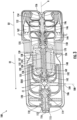
FIG. 3 , an isometric cut-away view of themicro-turbine alternator system 100 is illustrated, in accordance with an embodiment of the present disclosure. Themicro-turbine alternator system 100 includes afirst stage compressor 142, asecond stage compressor 144, athird stage compressor 146, afirst stage turbine 152, and asecond stage turbine 154. Thefirst stage compressor 142, thesecond stage compressor 144, thethird stage compressor 146, thefirst stage turbine 152, and thesecond stage turbine 154 are oriented along a central longitudinal axis A of themicro-turbine alternator system 100. Themicro-turbine alternator system 100 also includes anelectric generator 130 located between thefirst stage compressor 142 and thesecond stage compressor 144 as measured along the central longitudinal axis A. - Advantageously, by locating the
electric generator 130 between thefirst stage compressor 142 and thesecond stage compressor 144, the overall physical size of themicro-turbine alternator system 100 is reduced. As a result, themicro-turbine alternator system 100 according to one or more embodiments may be used in aUAV 10, an electrically-poweredsuit 34, or another system that benefits from untethered, lightweight power generation. - The
micro-turbine alternator system 100 also includes an alternator statorcooling heat exchanger 128 configured to utilize airflow from thefirst stage compressor 142 to cool theelectric generator 130. The alternator statorcooling heat exchanger 128 may encircle or enclose theelectric generator 130 and may be configured to pass airflow from thefirst stage compressor 142 through or around theelectric generator 130. Advantageously, by locating theelectric generator 130 between thefirst stage compressor 142 and thesecond stage compressor 144, moderately cool air in the core flow path C from thefirst stage compressor 142 is forced through the alternator statorcooling heat exchanger 128 and heat may be drawn out of theelectric generator 130 and to the airflow within the alternator statorcooling heat exchanger 128. - The
electric generator 130 may be a permanent magnet alternator, an induction generator, a switched reluctance generator, a wound field generator, a hybrid generator, or any other type of alternator known to one of skill in the art. As illustrated inFIG. 3 , theelectric generator 130 may be a permanent magnet alternator that includes arotor element 132 and astator element 134 radially outward from the rotor element. In other words, therotor element 132 is located radially inward from thestator element 134 as measured relative to the central longitudinal axis A. It is understood that the embodiments disclosed herein may be applicable to arotor element 132 that is located radially outward from thestator element 134. Therotor element 132 may be rotated around the central longitudinal axis A to generate electricity. - The
rotor element 132 includes anannular base member 135, an annular array ofpermanent magnets 136 that are respectively coupled to an outer diameter of theannular base member 135. Therotor element 132 may include a magnet retention band that fits over an outer diameter of thepermanent magnet 136, and keeps thepermanent magnet 136 on the rotatingannular base member 135. In accordance with further embodiments, thestator element 134 includes ahub 137, a plurality ofspokes 139 extending radially inward from thehub 137 andconductive elements 138 that are wound around thespokes 139 to form windings. When therotor element 132 is rotated around the central longitudinal axis A a rotating flux field is generated by thepermanent magnets 136 and this rotating flux field generates an alternating current in theconductive elements 138 to generate electricity for use by theUAV 10 ofFIG. 1 or the electrically-poweredsuit 34 ofFIG. 2 . - The
micro-turbine alternator system 100 includes acombustion chamber 162, in which a fuel-air mixture is combusted, with the combustion products utilized to drive anelectric generator 130. In some embodiments, the fuel utilized in thecombustion chamber 162 is JP-8. Themicro-turbine alternator system 100 converts the energy of the combustion products into electrical power by urging the combustion products through thefirst stage turbine 152 and thesecond stage turbine 154, which are operably connected to and configured to rotate therotor element 132 of theelectric generator 130. The electrical energy generated by theelectric generator 130 may then be rectified via a generator rectifier (not shown) and utilized by the propulsion/lift system 12 ofFIG. 1 or the electrically-poweredsuit 34 ofFIG. 2 . The compressed air from thecompressed air tank 26 ofFIG. 1 may be utilized to provide the motive pressure required to drive the liquid fuel through a turbine speed control valve (not shown) and into thecombustion chamber 162. - The
first stage compressor 142 is located forward of thesecond stage compressor 144 and thethird stage compressor 146 as measured along the central longitudinal axis A, and thesecond stage compressor 144 is located forward of thethird stage compressor 146 as measured along the central longitudinal axis A. In other words, thesecond stage compressor 144 is located aft of thefirst stage compressor 142 and thethird stage compressor 146 is located aft of thesecond stage compressor 144 as measured along the central longitudinal axis A. The forward direction D1 and the aft direction D2 are illustrated inFIG. 3 . Thefirst stage turbine 152 is located forward of thesecond stage turbine 154 as measured along the central longitudinal axis A. In other words, thesecond stage turbine 154 is located aft of thefirst stage turbine 152 as measured along the central longitudinal axis A. Thefirst stage compressor 142, thesecond stage compressor 144, and thethird stage compressor 146 are located forward offirst stage turbine 152 and thesecond stage turbine 154 as measured along the central longitudinal axis A. - The
micro-turbine alternator system 100 includes acompressor shaft 148 oriented along and co-axial to the central longitudinal axis A. In an embodiment, thecompressor shaft 148 is a tie bolt and is used to compress a rotating group of components including thefirst stage compressor 142,compressor transfer tube 149, thecompressor shaft 148, and a second journal bearing 194 in the axial direction, causing the multi-segment shaft to act as a single stiff shaft. Thecompressor shaft 148 may be attached or operably connected to thefirst stage compressor 142. Themicro-turbine alternator system 100 includes aturbine shaft 158 oriented along and co-axial to the central longitudinal axis A. Theturbine shaft 158 may be attached or operably connected to thefirst stage turbine 152 and thesecond stage turbine 154. - The
micro-turbine alternator system 100 includes acoupling assembly 170 configured to operably connect theturbine shaft 158 to thecompressor shaft 148. Thecoupling assembly 170 may be attached or operably connected to thesecond stage compressor 144. Thecompressor shaft 148 extends in the aft direction D2 away from thefirst stage compressor 142 and through theelectric generator 130 to operably connect to thecoupling assembly 170. In an embodiment, thecompressor shaft 148 is located radially inward of therotor element 132. - Advantageously, locating the
electric generator 130 between thefirst stage compressor 142 and thesecond stage compressor 144 allows thefirst stage compressor 142 to have a reduced inlet hub diameter that is smaller than a diameter of therotor element 132. Having a reduced inlet hub diameter DIA1 reduces the inlet flow relative velocity, increasing the aerodynamic performance of thefirst stage compressor 142 and increasing the swallowing capacity of thefirst stage compressor 142. If theelectric generator 130 was located forward of thefirst stage compressor 142, then thecompressor shaft 148 would have to extend forward of thefirst stage compressor 142 and thus the inlet hub diameter DIA1 would have to be increased to a diameter of thecompressor shaft 148, thus decreasing the aerodynamic performance of thefirst stage compressor 142 and decreasing the swallowing capacity of thefirst stage compressor 142. - The
turbine shaft 158 extends in the forward direction D1 away from thefirst stage turbine 152 to operably connect to thecoupling assembly 170. Theturbine shaft 158, thecoupling assembly 170, and thecompressor shaft 148 are configured to rotate in unison. Thus, when exhaust 102 from thecombustion chamber 162 drives rotation of thefirst stage turbine 152 and thesecond stage turbine 154, the rotation of thefirst stage turbine 152 and thesecond stage turbine 154 drives rotation of theturbine shaft 158, which drives rotation of thecoupling assembly 170 and thecompressor shaft 148. The rotation of thecompressor shaft 148 drives rotation of thefirst stage compressor 142. The rotation of thecoupling assembly 170 drives rotation of thesecond stage compressor 144. Thethird stage compressor 146 is operably connected to thesecond stage compressor 144 and theturbine shaft 158, and thus rotation of thesecond stage compressor 144 and theturbine shaft 158 drives rotation of thethird stage compressor 146. - It is understood that while the
compressor shaft 148, theturbine shaft 158, and thecoupling assembly 170 are described as three different shafts, the embodiments disclosed herein may be applicable tomicro-turbine alternator system 100 having one or more shafts. In an embodiment, theelectric generator 130 is disposed along the one or more shafts between thefirst stage compressor 142 and thesecond stage compressor 144. In another embodiment, theelectric generator 130 is disposed along thecompressor shaft 148 between thefirst stage compressor 142 and thesecond stage compressor 144. Theelectric generator 130 is located aft of thefirst stage compressor 142 and forward of thesecond stage compressor 144. In another embodiment, at least one of the one or more drive shafts passes through theelectric generator 130. In another embodiment, thecompressor shaft 148 passes through theelectric generator 130. - The
compressor shaft 148, theturbine shaft 158, and thecoupling assembly 170 are coaxial and rotate via the bearing systems about the central longitudinal axis A, which is colinear with their longitudinal axes. The bearing system includes a first journal bearing 192 located between thecompressor transfer tube 149 and theframe 106 of themicro-turbine alternator system 100. The bearing system includes a second journal bearing 194 located between thecoupling assembly 170 and theframe 106 of themicro-turbine alternator system 100. The bearing system includes a third journal bearing 196 located between theturbine shaft 158 and theframe 106 of themicro-turbine alternator system 100. - Advantageously, locating the
electric generator 130 between thefirst stage compressor 142 and thesecond stage compressor 144 provides for very effective bearing placement around thecompressor shaft 148, which increases the stiffness of thecompressor shaft 148. The increased stiffness of thecompressor shaft 148 allows for an increase in the critical speed of thecompressor shaft 148. - Also, advantageously, by locating the
electric generator 130 between thefirst stage compressor 142 and thesecond stage compressor 144, the alternator statorcooling heat exchanger 128 helps reduce the operating temperature of theelectric generator 130, while the airflow through the alternator statorcooling heat exchanger 128 also experiences a pressure drop. This pressure drop through the alternator statorcooling heat exchanger 128 forces some of the airflow from thefirst stage compressor 142 through therotor element 132 and to a stator gap between therotor element 132 and thestator element 134, which provides cooling air to therotor element 132, the first journal bearing 192, and the second journal bearing 194. - The
compressor transfer tube 149 extends from thefirst stage compressor 142 to thesecond stage compressor 144 through theelectric generator 130. Thecompressor transfer tube 149 is co-axial with theelectric generator 130. Therotor element 132 with theannular base member 135 and the annular array ofpermanent magnets 136 are located radially inward of thecompressor transfer tube 149 measured relative to the central longitudinal axis A. Thestator element 134 with thehub 137, theconductive elements 138, and thespokes 139 are located radially outward of thecompressor transfer tube 149 measured relative to the central longitudinal axis A. - The
first stage compressor 142, thesecond stage compressor 144, and thethird stage compressor 146 drive air along a core flow path C for compression and communication in thecombustion chamber 162. The airflow in the core flow path C is compressed by thefirst stage compressor 142, thesecond stage compressor 144, and thethird stage compressor 146, is mixed with fuel and burned in thecombustion chamber 162, and is then expanded over thefirst stage turbine 152 and thesecond stage turbine 154. Thefirst stage turbine 152 and thesecond stage turbine 154 rotationally drive theturbine shaft 158 in response to the expansion. The combustion products are exhausted from thesecond stage turbine 154 through aturbine exit 156. - Each of the
first stage compressor 142, thesecond stage compressor 144, thethird stage compressor 146, thefirst stage turbine 152, and thesecond stage turbine 154 may include rows of rotor assemblies (shown schematically) that carry airfoils that extend into the core flow path C. For example, the rotor assemblies can carry a plurality ofrotating blades 125. Theblades 125 of the rotor assemblies create or extract energy (in the form of pressure) from the core airflow that is communicated through themicro-turbine alternator system 100 along the core flow path C. - The
micro-turbine alternator system 100 may include anauxiliary turbo charger 110 to pre-compress theairflow 108 prior to entering the core flow path C. Theauxiliary turbo charger 110 includes aturbo compressor 114 and aturbine 112 operably connected to theturbo compressor 114 through a turbocompressor drive shaft 116. Theturbo compressor 114 is configured to rotate when theturbine 112 rotates. - The
turbo compressor 114 is configured to pullexternal airflow 108 through one ormore air inlets 104 in theframe 106 into a compressor flow path C1. Theturbo compressor 114 is configured to compress theexternal airflow 108 in the compressor flow path C1 and deliver theairflow 108 to thefirst stage compressor 142 in the core airflow path C. - Each of the
turbine 112 and theturbo compressor 114 may include rows of rotor assemblies (shown schematically) that carry airfoils that extend into the compressor flow path C1. For example, the rotor assemblies can carry a plurality ofrotating blades 115. Theblades 115 of the rotor assemblies for theturbine 112 extract energy (in the form of pressure and temperature) from the exhaust 102 that is communicated through themicro-turbine alternator system 100 along the core flow path C. Theblades 115 of the rotor assemblies for theturbo compressor 114 create energy (in the form of pressure and temperature) from theairflow 108 that is communicated through themicro-turbine alternator system 100 along the compressor flow path C1. - Combustor exhaust 102 exiting the
turbine exit 156 is directed to theturbine 112 of theauxiliary turbo charger 110. The exhaust 102 is then expanded over theturbine 112 of theauxiliary turbo charger 110. Theturbine 112 rotationally drives the turbocompressor drive shaft 116 in response to the expansion. Rotation of the turbocompressor drive shaft 116 causes theturbo compressor 114 to rotate and compress theairflow 108 within the compressor flow path C1. - Some embodiments further include a thermal electric
energy recovery system 120, configured to recover additional energy from exhaust 102 of themicro-turbine alternator system 100 before the exhaust 102 has flowed through theturbine 112 of theauxiliary turbo charger 110. - Referring now to
FIGS. 4 and 5 , with continued reference toFIGS. 1-3 , an isometric view of thesecond stage compressor 144 is illustrated inFIG. 4 and an isometric cutaway view of thesecond stage compressor 144 is illustrated inFIG. 5 , in accordance with an embodiment of the present disclosure. It is understood that whileFIGS. 4 and 5 and the associated description discuss the embodiments disclosed in relation with thesecond stage compressor 144, the embodiments disclosed herein are not limited to thesecond stage compressor 144 and may be applicable to other compressors within themicro-turbine alternator system 100 or any other system where compressors or pumps are required. - The
second stage compressor 144 includescentral shaft 210. Thecentral shaft 210 is coaxial to a compressor longitudinal axis B. Thecentral shaft 210 rotates about the compressor longitudinal axis B. When thesecond stage compressor 144 is installed within themicro-turbine alternator system 100 ofFIG. 3 , the compressor longitudinal axis B is colinear with the central longitudinal axis A. In other words, the compressor longitudinal axis B and the central longitudinal axis A are the same axis when thesecond stage compressor 144 is installed within themicro-turbine alternator system 100 ofFIG. 3 . - The
central shaft 210 includes anexternal surface 214 and aninternal surface 216. Thecentral shaft 210 includes apassageway 212 formed therein. Theinternal surface 216 defines thepassageway 212. Thepassageway 212 is coaxial with the compressor longitudinal axis B. Thepassageway 212 may be tubular in shape and configured to fit the turbine shaft 158 (SeeFIG. 3 ). In other words, theturbine shaft 158 is configured to fit within thepassageway 212. - The
second stage compressor 144 includes ashroud 220 extending circumferentially around thecentral shaft 210. Theshroud 220 is separated from thecentral shaft 210 by a gap G1. The gap G1 extends circumferentially around the compressor longitudinal axis B and may vary in size moving from aforward end 240 of theshroud 220 to anaft end 242 of theshroud 220. Theshroud 220 encircles thecentral shaft 210. Theshroud 220 includes a radiallyoutward surface 222 and a radiallyinward surface 224 located opposite the radiallyoutward surface 222. The core flow path C is defined between theexternal surface 214 of thecentral shaft 210 and the radiallyinward surface 224 of theshroud 220. In other words, theexternal surface 214 of thecentral shaft 210 and the radiallyinward surface 224 of theshroud 220 are in a facing spaced relationship forming the core flow path C therebetween. - The radially
outward surface 222 of theshroud 220 may have a first outer diameter OD1 along afirst portion 230 of theshroud 220. Alternatively, the first outer diameter OD1 may be slightly raised in thefirst portion 230 with an undercut aft of thefirst portion 230 in the radially outward surface 22. The undercut may facilitate grinding operations. Thefirst portion 230 may be located at theforward end 240 of theshroud 220. The radiallyoutward surface 222 of theshroud 220 may have a second outer diameter OD2 along asecond portion 232 of theshroud 220. The second outer diameter OD2 is greater than the first outer diameter OD1. Thesecond portion 232 of theshroud 220 is located at a first distance DIS1 away from thefirst portion 230 as measured along the compressor longitudinal axis B. Thesecond portion 232 may be closer to theaft end 242 of theshroud 220 than to theforward end 240. - The
second stage compressor 144 includes a plurality ofblades 125 circumferentially encircling thecentral shaft 210. Each of the plurality ofblades 125 extend from theexternal surface 214 of thecentral shaft 210 to the radiallyinward surface 224 of theshroud 220. Theblades 125 of thesecond stage compressor 144 transfer the mechanical energy of the rotating shaft into pneumatic energy in the fluid stream (in the form of dynamic pressure) by compressing and accelerating the airflow in the core airflow path C. Theblades 125 may be contoured between theexternal surface 214 of thecentral shaft 210 and the radiallyinward surface 224 of theshroud 220 to appropriately compress and accelerate the airflow in the core airflow path C as required. - The
second stage compressor 144 is a monolithic structure rather than being assembled from separate individually formed components that are then assembled. The term monolithic may be defined as an object that is cast or formed as single piece without joints or seams. In other words, thesecond stage compressor 144 is formed as a single piece comprising a unitary structure. In an embodiment, thesecond stage compressor 144 has no joints or seams. Thesecond stage compressor 144 may be manufactured or formed via additive manufacturing. Additive manufacturing may include, but is not limited to 3D printing, laser powder bed fusion (L-PBF) additive manufacturing, investment casting (using the rapid prototype method) or any other additive manufacturing technique known to one of skill in the art. - Referring now to
FIGS. 6 and 7 , with continued reference toFIGS. 1-5 , an isometric view of acompressor assembly 300 is illustrated inFIG. 6 and an isometric cutaway view of thecompressor assembly 300 is illustrated inFIG. 7 , in accordance with an embodiment of the present disclosure. - The
compressor assembly 300 includes thesecond stage compressor 144 and thecompression ring 400 extending circumferentially around theshroud 220 of thesecond stage compressor 144. It is understood that whileFIGS. 6 and 7 and the associated description discuss the embodiments disclosed in relation with thesecond stage compressor 144, the embodiments disclosed herein are not limited to thesecond stage compressor 144 and may be applicable to other compressors within themicro-turbine alternator system 100 or any other system where compressors are required. - The
compression ring 400 is a stress relieving compressor shroud compression ring and is configured to relieve stress on thesecond stage compressor 144 during operation by compressing thesecond stage compressor 144. Thecompression ring 400 is configured to relieve stress on thesecond stage compressor 144 by compressing theshroud 220. Thecompression ring 400 is configured to apply an approximately equal pressure circumferentially around the radiallyoutward surface 222 of theshroud 220 towardscentral shaft 210 and the compressor longitudinal axis B. - As previously noted, since the
second stage compressor 144 is manufactured utilizing additive manufacturing techniques it may have a reduces tensile strength in comparison to a subtractive manufactured impeller. In an embodiment, thesecond stage compressor 144 may be composed of titanium. The material strength capability or tensile strength for additive manufactured titanium may be about 120 ksi. However, due to the high rotational operating speed of thesecond stage compressor 144, thesecond stage compressor 144 may experience a tensile stress of about 150 ksi. Embodiments disclosed herein seek to utilize acompression ring 400 that is installed via an interference fit around theshroud 220 of thesecond stage compressor 144. Thecompression ring 400 bridges the gap between the material strength capability of the additively manufacturedsecond stage compressor 144 and the operational tensile stress experienced during operation by compressing theshroud 220 and theblades 125 into thecentral shaft 210. - The
compression ring 400 includes a radiallyinner surface 424 and a radiallyouter surface 422 opposite the radiallyinner surface 424. The radiallyinner surface 424 of thecompression ring 400 is configured to mate flush with one ormore portions outward surface 222 of theshroud 220. The radiallyinner surface 424 of thecompression ring 400 is configured to apply a radially inward compressive force F1 along the one ormore portions outward surface 222 of theshroud 220. The radially inward compressive force F1 is configured to compress theshroud 220 and theblades 125 into thecentral shaft 210, which helps relieve operational tensile stress on theshroud 220 and theblades 125 when rotating at operational speeds. As shown inFIG. 7 , the radially inward compressive force F1 is directed towards the compressor longitudinal axis B. - The
compression ring 400 utilizes an interference fit with theshroud 220 to place theshroud 220 in compression when thesecond stage compressor 144 is at rest. More specifically, the radiallyinner surface 424 of thecompression ring 400 utilizes an interference fit with the radiallyoutward surface 222 of theshroud 220 to place theshroud 220 in compression when thesecond stage compressor 144 is at rest. The radiallyinner surface 424 of thecompression ring 400 utilizes an interference fit with one ormore portions outward surface 222 of theshroud 220 to place theshroud 220 in compression when thesecond stage compressor 144 is at rest. - As the rotational speed of the
compressor assembly 300 increases, the compression stress from thecompression ring 400 decreases, until themicro-turbine alternator system 100 reaches about 50% speed. At this speed, theblades 125 of thesecond stage compressor 144 may not be subject to any stress. As the speed continues to increase, theblade 125 stress starts to increase in the tensile direction. By full speed, the tensile stress in theblades 125 may be about 50% of the tensile stress that would be present without thecompression ring 400 helping to support the mass of theshroud 220. - An inner diameter ID1, ID2 of the radially
inner surface 424 of thecompression ring 400 may vary in size to mate properly with thefirst portion 230 and thesecond portion 232 of the radiallyoutward surface 222 of theshroud 220. The radiallyinner surface 424 of thecompression ring 400 includes afirst area 430 and asecond area 432. - The
second area 432 is located at a first distance DIS 1 away from thefirst area 430 as measured along the compressor longitudinal axis B. Thesecond area 432 may be closer to anaft end 442 of thecompression ring 400 than to a forward end 440. - The
first area 430 of the radiallyinner surface 424 of thecompression ring 400 is configured to mate flush with thefirst portion 230 of the radiallyoutward surface 222 of theshroud 220. Thesecond area 432 of the radiallyinner surface 424 of thecompression ring 400 is configured to mate flush with thesecond portion 232 of the radiallyoutward surface 222 of theshroud 220. - The radially
inner surface 424 of thecompression ring 400 has a first inner diameter ID1 along thefirst area 430 of the radiallyinner surface 424 of thecompression ring 400. The radiallyinner surface 424 of thecompression ring 400 has a second inner diameter ID2 along thesecond area 432 of the radiallyinner surface 424 of thecompression ring 400. The second inner diameter ID2 is greater than the first inner diameter ID2. - In order to accomplish the interference fit, when disassembled, the first inner diameter ID1 of the radially
inner surface 424 of thecompression ring 400 is less than the first outer diameter OD1 of the radiallyoutward surface 222 of theshroud 220 and the second inner diameter ID2 of the radiallyinner surface 424 of thecompression ring 400 is less than the second outer diameter OD2 of the radiallyoutward surface 222 of theshroud 220. To assemble, thecompression ring 400 is expanded by a heat source, thesecond stage compressor 144 is shrunk by a cold source, and then thecompression ring 400 is slid onto theshroud 220. Once assembled and the temperature ofcompression ring 400 and thesecond stage compressor 144 reach equilibrium, the first inner diameter ID1 of the radiallyinner surface 424 of thecompression ring 400 is about equal to the first outer diameter OD1 of the radiallyoutward surface 222 of theshroud 220 and the second inner diameter ID2 of the radiallyinner surface 424 of thecompression ring 400 is about equal to the second outer diameter OD2 of the radiallyoutward surface 222 of theshroud 220. - Once the
second stage compressor 144 starts to spin, the pre-loaded blades 125 (in compression while at rest) relax as centrifugal force causes theshroud 220 and thecompression ring 400 to expand. Advantageously, thecompression ring 400 is configured to allow the transfer of the centrifugal load from theshroud 220 to thecompression ring 400. - In an embodiment, the
compression ring 400 is formed via subtractive machining and thus has an increased tensile strength in comparison to thesecond stage compressor 144 that was additively manufactured. In an embodiment, thecompression ring 400 may be machined from a titanium allow billet with a tensile strength of about 170 ksi. In another embodiment, thesecond stage compressor 144 has a first tensile strength and thecompression ring 400 has a second tensile strength that is greater than the first tensile strength. - In an embodiment, the
second stage compressor 144 may be composed of additive manufactured titanium with a tensile strength of about 120 ksi and thecompression ring 400 may be machined from a titanium alloy billet with a tensile strength of about 170 ksi, which would advantageously reduce the maximum tensile stresses experienced in the additively manufacturedsecond stage compressor 144 andshroud 220 to less than 115 ksi during rotational operation. - Referring now to
FIGS. 8 and 9 , with continued reference toFIGS. 1-7 , an enlarged isometric view of thedrive line assembly 500 is illustrated inFIG. 8 and an enlarged isometric cut-away view of thedrive line assembly 500 is illustrated inFIG. 9 , in accordance with an embodiment of the present disclosure. Thedrive line assembly 500 includes at least thefirst stage compressor 142, thesecond stage compressor 144, thethird stage compressor 146, thefirst stage turbine 152, thesecond stage turbine 154, thecoupling assembly 170, thecompressor transfer tube 149, thecompressor shaft 148, and theturbine shaft 158. - In an embodiment, the
first stage compressor 142 and thecompressor shaft 148 are formed together as a monolithic structure rather than being assembled from separate individually formed components that are then assembled. The term monolithic may be defined as an object that is cast or formed as single piece without joints or seams. In other words, thefirst stage compressor 142 and thecompressor shaft 148 are formed together as a single piece comprising a unitary structure. In an embodiment, thefirst stage compressor 142 and thecompressor shaft 148 have no joints or seams. Thefirst stage compressor 142 and thecompressor shaft 148 may be manufactured or formed via additive manufacturing. Additive manufacturing may include, but is not limited to 3D printing, laser powder bed fusion (L-PBF) additive manufacturing, investment casting (using the rapid prototype method) or any other additive manufacturing technique known to one of skill in the art. - In an embodiment, the
first stage turbine 152, thesecond stage turbine 154, and theturbine shaft 158 are formed together as a monolithic structure rather than being assembled from separate individually formed components that are then assembled. The term monolithic may be defined as an object that is cast or formed as single piece without joints or seams. In other words, thefirst stage turbine 152, thesecond stage turbine 154, and theturbine shaft 158 are formed together as a single piece comprising a unitary structure. In an embodiment, thefirst stage turbine 152, thesecond stage turbine 154, and theturbine shaft 158 have no joints or seams. Thefirst stage turbine 152, thesecond stage turbine 154, and theturbine shaft 158 may be manufactured or formed via additive manufacturing. Additive manufacturing may include, but is not limited to 3D printing, laser powder bed fusion (L-PBF) additive manufacturing, investment casting (using the rapid prototype method) or any other additive manufacturing technique known to one of skill in the art. - The
coupling assembly 170 is configured to operably connect theturbine shaft 158 to thecompressor shaft 148 via a magnetic coupling force. Thecoupling assembly 170 is composed of agenerator coupler 710, aturbine coupler 750, and aspherical bearing 790. Thespherical bearing 790 is spherical in shape. Thespherical bearing 790 may be composed of a ceramic material, stainless steel, steel, or any similar material known to one of skill in the art. - In an embodiment, the
second stage compressor 144 and theturbine coupler 750 are formed together as a monolithic structure rather than being assembled from separate individually formed components that are then assembled. The term monolithic may be defined as an object that is cast or formed as single piece without joints or seams. In other words, thesecond stage compressor 144 and theturbine coupler 750 are formed together as a single piece comprising a unitary structure. In an embodiment, thesecond stage compressor 144 and theturbine coupler 750 have no joints or seams. Thesecond stage compressor 144 and theturbine coupler 750 may be manufactured or formed via additive manufacturing. Additive manufacturing may include, but is not limited to 3D printing, laser powder bed fusion (L-PBF) additive manufacturing, investment casting (using the rapid prototype method) or any other additive manufacturing technique known to one of skill in the art. - The
generator coupler 710 includes a firstgenerator coupler end 712 and a secondgenerator coupler end 714 located opposite the firstgenerator coupler end 712. Thegenerator coupler 710 includes an innergenerator coupler surface 716 and an outergenerator coupler surface 718 located opposite the innergenerator coupler surface 716. The innergenerator coupler surface 716 extends from the firstgenerator coupler end 712 to the secondgenerator coupler end 714 and the outergenerator coupler surface 718 extends from the firstgenerator coupler end 712 to the secondgenerator coupler end 714. Agenerator coupling disc 720 is located at the secondgenerator coupler end 714. Thegenerator coupling disc 720 may include agenerator facing surface 722 and a turbinecoupler facing surface 724 located opposite thegenerator facing surface 722. The turbinecoupler facing surface 724 is located at the secondgenerator coupler end 714. Thegenerator coupling disc 720 includes a first plurality ofmagnets 726. The first plurality ofmagnets 726 may be embedded in thegenerator coupling disc 720 or attached to thegenerator coupling disc 720. More specifically, the first plurality ofmagnets 726 may be embedded in the turbinecoupler facing surface 724 or attached to the turbinecoupler facing surface 724. The first plurality ofmagnets 726 may be arranged or arrayed in a ring shape around the turbinecoupler facing surface 724 and/or the central longitudinal axis A. The first plurality ofmagnets 726 may have a first magnetic polarity. - The
generator coupler 710 includes agenerator coupler passage 730 formed therein. The innergenerator coupler surface 716 defines thegenerator coupler passage 730. Thegenerator coupler passage 730 extends from the firstgenerator coupler end 712 to the secondgenerator coupler end 714. - The
generator coupler passage 730 may have aconical opening 732 at the secondgenerator coupler end 714, as illustrated inFIG. 9 . The firstconical opening 732 may be operably shaped to cradle a first portion of thespherical bearing 790 in the firstconical opening 732. In alternate embodiments, thegenerator coupler passage 730 may have a first spherical opening at the secondgenerator coupler end 714. The first spherical opening may be configured to cradle the first portion of thespherical bearing 790. - The inner
generator coupler surface 716 may have three different inner diameter ID3, ID4, ID5. The innergenerator coupler surface 716 may have a first inner diameter ID3 at the secondgenerator coupler end 714. The firstconical opening 732 is located at the secondgenerator coupler end 714 and extending to a firstconical base 734 located a first distance DL1 away from the secondgenerator coupler end 714. The innergenerator coupler surface 716 may have a second inner diameter ID4 at the firstconical base 734. The second inner diameter ID4 is less than the first inner diameter ID3. In an embodiment, the inner diameter of the innergenerator coupler surface 716 decreases linearly from the first inner diameter ID3 to the second inner diameter ID4. In an alternate embodiment, the inner diameter of the innergenerator coupler surface 716 decreases exponentially from the first inner diameter ID3 to the second inner diameter ID4. The innergenerator coupler surface 716 has the second inner diameter ID4 from the firstconical base 734 to agenerator coupler seat 738. Thegenerator coupler seat 738 being located between the firstconical base 734 and the firstgenerator coupler end 712. - At the
generator coupler seat 738, the inner diameter of the innergenerator coupler surface 716 is reduced from the second inner diameter ID4 to a third inner diameter ID5. The third inner diameter ID5 is less than the second inner diameter ID4. The reduction of the inner diameter of the innergenerator coupler surface 716 from the second inner diameter ID4 to a third inner diameter ID5 creates thegenerator coupler seat 738 at thegenerator coupler seat 738. The innergenerator coupler surface 716 at thegenerator coupler seat 738 is about perpendicular to the innergenerator coupler surface 716 from the firstconical base 734 to thegenerator coupler seat 738. Further, the innergenerator coupler surface 716 at thegenerator coupler seat 738 is about perpendicular to the innergenerator coupler surface 716 from thegenerator coupler seat 738 to the firstgenerator coupler end 712. The perpendicular orientation of the innergenerator coupler surface 716 at thegenerator coupler seat 738 creates an attachment point for thecompressor shaft 148 to secure to thegenerator coupler 710, as discussed further herein. The innergenerator coupler surface 716 has the third inner diameter ID5 from thegenerator coupler seat 738 to the firstgenerator coupler end 712. Thegenerator coupler seat 738 is located a second distance DL2 away from the firstconical base 734. Thegenerator coupler seat 738 is located a third distance DL3 away from the firstgenerator coupler end 712. - As aforementioned, the
compressor shaft 148 is configured to secure to thegenerator coupler 710. Thecompressor shaft 148 may be removably secured to thegenerator coupler 710. In an embodiment, thecompressor shaft 148 may be a tie bolt, and afirst nut 744 and afirst washer 742 may be used to secure thecompressor shaft 148 to thegenerator coupler 710. Thefirst nut 744 is configured to thread onto and secure to thecompressor shaft 148 within thegenerator coupler passage 730. Thefirst washer 742 is interposed between thefirst nut 744 and thegenerator coupler seat 738. Thegenerator coupler 710 is secured to thecompressor shaft 148 via thefirst nut 744 and thegenerator coupler seat 738. - The
turbine coupler 750 includes a firstturbine coupler end 752 and a secondturbine coupler end 754 located opposite the firstturbine coupler end 752. Theturbine coupler 750 includes an innerturbine coupler surface 756 and an outer turbine coupler surface 758 located opposite the innerturbine coupler surface 756. The innerturbine coupler surface 756 extends from the firstturbine coupler end 752 to the secondturbine coupler end 754 and the outer turbine coupler surface 758 extends from the firstturbine coupler end 752 to the secondturbine coupler end 754. Aturbine coupling disc 760 is located at the secondturbine coupler end 754. Theturbine coupling disc 760 may include aturbine facing surface 762 and a generatorcoupler facing surface 764 located opposite theturbine facing surface 762. The generatorcoupler facing surface 764 is located at the secondturbine coupler end 754. Theturbine coupling disc 760 includes a second plurality ofmagnets 766. The second plurality ofmagnets 766 may be embedded in theturbine coupling disc 760 or attached to theturbine coupling disc 760. More specifically, the second plurality ofmagnets 766 may be embedded in the generatorcoupler facing surface 764 or attached to the generatorcoupler facing surface 764. The second plurality ofmagnets 766 may be arranged or arrayed in a ring shape around the generatorcoupler facing surface 764 and/or the central longitudinal axis A. The second plurality ofmagnets 766 may have a second magnetic polarity. The second magnetic polarity may be opposite the first magnetic polarity of the first plurality ofmagnets 726. Advantageously, since the first plurality ofmagnets 726 and the second plurality ofmagnets 766 have opposite polarities theturbine coupler 750, thegenerator coupler 710 will be pulled together to compete thedrive line assembly 500 via a magnetic coupling force. - In another embodiment, all of the first plurality of
magnets 726 may not have the same polarity but may be oriented in a ring of magnets with alternating polarities. In other words, the first plurality ofmagnets 726 have a first group of magnets with a first polarity (e.g., north) and a second group of magnets with a second polarity (e.g., south), and the first plurality ofmagnets 726 may be arranged or arrayed in an alternating polarity ring shape around the generatorcoupler facing surface 764 and/or the central longitudinal axis A, such that no two magnets of the same polarity are circumferentially adjacent to each other. In this same embodiment, the second plurality ofmagnets 726 are replaced by a first plurality of raised metallic structures (e.g., castellations) that are configured to align with each of the first plurality ofmagnets 726. The first plurality of raised metallic structures are configured to accept the magnetic flux from a north magnet of the first plurality ofmagnets 726, pass the magnetic flux through theturbine coupling 750, and back to the neighboring south magnet of the first plurality ofmagnets 726 back on thegenerator coupling 710. - This magnetic coupling force between the first plurality of
magnets 726 and the second plurality ofmagnets 766 provides an axial clamping force that pulls theturbine coupler 750 toward thegenerator coupler 710. Thespherical bearing 790 is clamped between thegenerator coupler 710 and theturbine coupler 750 by the magnetic coupling force. Thespherical bearing 790 provides radial support to the secondturbine coupler end 754 of theturbine coupler 750, when the magnetic coupling force clamps thespherical bearing 790 between theturbine coupler 750 and thegenerator coupler 710. - The
turbine coupler 750 includes a turbine coupler passage 770 formed therein. The innerturbine coupler surface 756 defines the turbine coupler passage 770. The turbine coupler passage 770 extends from the firstturbine coupler end 752 to the secondturbine coupler end 754. It is understood that, if theturbine coupler 750 and thesecond stage compressor 144 are formed from a single piece comprising a unitary structure or integrally connected, then the turbine coupler passage 770 ofFIG. 9 is equivalent to thepassageway 212 ofFIG. 5 and the innerturbine coupler surface 756 is equivalent tointernal surface 216 ofFIG. 5 . - The turbine coupler passage 770 may have a second
conical opening 772 at the secondturbine coupler end 754, as illustrated inFIG. 9 . The secondconical opening 772 may be operably shaped to cradle a second portion of thespherical bearing 790 in the secondconical opening 772. In alternate embodiment, the turbine coupler passage 770 may have a second spherical opening at the secondturbine coupler end 754. The second spherical opening being configured to cradle the second portion of thespherical bearing 790. - A spherical shaped pocket to cradle the
spherical bearing 790 would be defined by a first spherical opening and a second spherical opening opposite the first spherical opening, whereas a conical shaped pocket to cradle thespherical bearing 790 would be defined by the firstconical opening 732 and the secondconical opening 772 opposite the firstconical opening 732. A spherical shaped pocket would cradle the spherical ball exactly, while a conical shaped pocket for thespherical bearing 790 may cause a larger or smaller axial separation between thegenerator coupler 710 and theturbine coupler 710, based on the size of thespherical bearing 790 being used. Thus, advantageously, a conical shaped pocket would allow the axial separation between thegenerator coupler 710 and theturbine coupler 710 to be adjustable based on the size of thespherical bearing 790 being used. A larger ball would drive the firstconical opening 732 and the secondconical opening 772 further apart, while still aligning the two halves in the radial direction. Whereas, a smaller ball would move the firstconical opening 732 and the secondconical opening 772 closer together, while still aligning the two halves in the radial direction. - The inner
turbine coupler surface 756 may have three different inner diameter ID6, ID7, ID8. The innerturbine coupler surface 756 may have a fourth inner diameter ID6 at the secondturbine coupler end 754. The secondconical opening 772 extends into the turbine coupler 750 a first distance to a secondconical base 774. The secondconical opening 772 is located at the secondturbine coupler end 754 and extending to a secondconical base 774 located a fourth distance DL4 away from the secondturbine coupler end 754. The innerturbine coupler surface 756 may have a fifth inner diameter ID7 at the secondconical base 774. The fifth inner diameter ID7 is less than the fourth inner diameter ID6. In an embodiment, the inner diameter of the innerturbine coupler surface 756 decreases linearly from the fourth inner diameter ID6 to the fifth inner diameter ID7. In an alternate embodiment, the inner diameter of the innerturbine coupler surface 756 decreases exponentially from the fourth inner diameter ID6 to the fifth inner diameter ID7. The innerturbine coupler surface 756 has the fifth inner diameter ID7 from the secondconical base 774 to a turbine coupler seat 778. The turbine coupler seat 778 being located between the secondconical base 774 and the firstturbine coupler end 752. - At the turbine coupler seat 778, the inner diameter of the inner
turbine coupler surface 756 is reduced from the fifth inner diameter ID7 to a sixth inner diameter ID8. The sixth inner diameter ID8 is less than the fifth inner diameter ID7. The reduction of the inner diameter of the innerturbine coupler surface 756 from the fifth inner diameter ID7 to a sixth inner diameter ID8 creates the turbine coupler seat 778 at the turbine coupler seat 778. The innerturbine coupler surface 756 at the turbine coupler seat 778 is about perpendicular to the innerturbine coupler surface 756 from the secondconical base 774 to the turbine coupler seat 778. Further, the innerturbine coupler surface 756 at the turbine coupler seat 778 is about perpendicular to the innerturbine coupler surface 756 from the turbine coupler seat 778 to the firstturbine coupler end 752. The perpendicular orientation of the innerturbine coupler surface 756 at the turbine coupler seat 778 creates an attachment point for theturbine shaft 158 to secure to theturbine coupler 750, as discussed further herein. The innerturbine coupler surface 756 has the sixth inner diameter ID8 from the turbine coupler seat 778 to the firstturbine coupler end 752. The turbine coupler seat 778 is located a fifth distance DL5 away from the secondconical base 774. The turbine coupler seat 778 is located a sixth distance DL6 away from the firstturbine coupler end 752. - As aforementioned, the
turbine shaft 158 is configured to secure to theturbine coupler 750. Theturbine shaft 158 may be removably secured to theturbine coupler 750. In an embodiment, theturbine shaft 158 may be a tie bolt, and asecond nut 784 and asecond washer 782 may be used to secure theturbine shaft 158 to theturbine coupler 750. Thesecond nut 784 is configured to thread onto and secure to theturbine shaft 158 within the turbine coupler passage 770. Thesecond washer 782 is interposed between thesecond nut 784 and the turbine coupler seat 778. Theturbine coupler 750 is secured to theturbine shaft 158 via thesecond nut 784 and the turbine coupler seat 778. - Referring now to
FIG. 10 , with continued reference toFIGS. 1-8 , an isometric cut-away view of themicro-turbine alternator system 100 is illustrated, in accordance with one or more embodiments of the present disclosure. - As aforementioned, the bearing system includes a first journal bearing 192 located between the
compressor transfer tube 149 and theframe 106 of themicro-turbine alternator system 100. The bearing system includes a second journal bearing 194 located between thegenerator coupler 710 of thecoupling assembly 170 and theframe 106 of themicro-turbine alternator system 100. The bearing system includes a third journal bearing 196 located between theturbine shaft 158 and theframe 106 of themicro-turbine alternator system 100. - Advantageously, magnetically coupling the
turbine coupler 750 to thegenerator coupler 710 eliminates the need for a fourth journal bearing that would typically help directly support theturbine shaft 158. Typically, rotating shafts requires two journal bearings proximate each end of the rotating shaft for rotational stability of the rotating shaft. Thecompressor shaft 148 exemplifies this by being directly supported by the first journal bearing 192 and the second journal bearing 194, whereas theturbine shaft 158 is only directly supported by the third journal bearing 196. However, theturbine shaft 158 is indirectly supported by the second journal bearing 194 as the load is transferred from theturbine shafts 158 through theturbine coupler 750 then through thespherical bearing 790, and then through thegenerator coupler 710 to the second journal bearing 194. Advantageously, this configuration eliminates the need for a second journal bearing specifically for theturbine shaft 158 and a fourth journal bearing overall, which to reduce the bearing drag on theturbine shaft 158 by 50%, which increases the efficiency of themicro-turbine alternator system 100. Theturbine shaft 158 arrangement would be very unstable without a second radial support on theturbine shaft 158 but with this configuration the second radial support is provided by thespherical bearing 790, which is clamped between the firstconical opening 732 and the secondconical opening 772, by the magnetic coupling. - The
micro-turbine alternator system 100 further includes afirst thrust bearing 810 and a second thrust bearing 820. The first thrust bearing 810 is located between theframe 106 and thegenerator facing surface 722 of thegenerator coupling disc 720. The second thrust bearing 810 is located between theframe 106 and theturbine facing surface 762 of theturbine coupling disc 760. - The
spherical bearing 790 is sized to provide the correct thrust bearing pre-load, without requiring any additional shims. If thethrust bearings spherical bearing 790 may be used, which pushes thegenerator coupler 710 and theturbine coupler 750 further apart and provides additional pre-load to thethrust bearings thrust bearings spherical bearing 790 may be used, allowing thegenerator coupler 710 and theturbine coupler 750 to move closer together, reducing the preload on thethrust bearings - Also advantageously,
spherical bearing 790 in combination with the magnetic coupling provides an extremely efficient thermal barrier between the relativelyhot turbine shaft 158 and the relativelycool compressor shaft 148. It is important to provide this thermal barrier to ensure that thepermanent magnets 136 ofelectric generator 130 do not become overheated, which could cause demagnetization. - Technical effects and benefits of the features described herein include coupling a drive shaft for a turbine to a drive shaft of a compressor via magnetic coupling assembly of two magnetized shafts and radially supporting the coupling of the two magnetized shafts through a spherical bearing.
- The term "about" is intended to include the degree of error associated with measurement of the particular quantity based upon the equipment available at the time of filing the application.
- The terminology used herein is for the purpose of describing particular embodiments only and is not intended to be limiting of the present disclosure. As used herein, the singular forms "a", "an" and "the" are intended to include the plural forms as well, unless the context clearly indicates otherwise. It will be further understood that the terms "comprises" and/or "comprising," when used in this specification, specify the presence of stated features, integers, steps, operations, elements, and/or components, but do not preclude the presence or addition of one or more other features, integers, steps, operations, element components, and/or groups thereof.
- While the present disclosure has been described with reference to an exemplary embodiment or embodiments, it will be understood by those skilled in the art that various changes may be made without departing from the scope of the present disclosure. In addition, many modifications may be made to adapt a particular situation or material to the teachings of the present disclosure without departing from the essential scope thereof. Therefore, it is intended that the present disclosure not be limited to the particular embodiment disclosed as the best mode contemplated for carrying out this present disclosure, but that the present disclosure will include all embodiments falling within the scope of the claims.
Claims (15)
- An electrical power generation system, comprising:
a micro-turbine alternator, comprising:a combustion chamber (162);at least one turbine (152, 154) driven by combustion gases from the combustion chamber;a first stage compressor (142);a second stage compressor (144) located aft of the first stage compressor, the first stage compressor and the second stage compressor being operably connected to the combustion chamber to provide a compressed airflow thereto; andone or more shafts connecting the at least one turbine to the first stage compressor and the second stage compressor such that rotation of the at least one turbine drives rotation of the first stage compressor (142) and second stage compressor (144),wherein the one or more shafts comprise:a turbine shaft (158) attached to the at least one turbine;a compressor shaft (148) attached to the first stage compressor; anda coupling assembly (170) configured to operably connect the turbine shaft to the compressor shaft via a magnetic coupling force. - The electrical power generation system of claim 1, wherein the coupling assembly (170) further comprises:a generator coupler (710) secured to the compressor shaft, the generator coupler comprises a first plurality of magnets having a first magnetic polarity; anda turbine coupler (750) secured to the turbine shaft, the turbine coupler comprises a second plurality of magnets having a second magnetic polarity opposite the first magnetic polarity,wherein the magnetic coupling force between the first plurality of magnets and the second plurality of magnets provides an axial clamping force that pulls the turbine coupler toward the generator coupler.
- The electrical power generation system of claim 2, wherein the coupling assembly (170) further comprises:
a spherical bearing (790) located between the generator coupler and the turbine coupler. - The electrical power generation system of claim 3, wherein the generator coupler (710) further comprises a first conical opening (732) configured to cradle a first portion of the spherical bearing (790), and wherein the turbine coupler further comprises a second conical opening (772) configured to cradle a second portion of the spherical bearing (790).
- The electrical power generation system of claim 3, wherein the generator coupler (710) further comprises a first spherical opening configured to cradle a first portion of the spherical bearing, and wherein the turbine coupler comprises a second spherical opening configured to cradle a second portion of the spherical bearing.
- The electrical power generation system of claim 3, wherein the generator coupler further comprises:a first generator coupler end (712);a second generator coupler end (714) located opposite the first generator coupler end; anda generator coupler passage (730) extending from the first generator coupler end to the second generator coupler end.
- The electrical power generation system of claim 6, wherein the generator coupler further comprises:
an inner generator coupler surface (716) defining the generator coupler passage, wherein the inner generator coupler surface comprises:a first conical opening located at the second generator coupler end and extending to a first conical base (734) located a first distance away from the second generator coupler end, the first conical opening configured to cradle a first portion of the spherical bearing; anda generator coupler seat (738) located between the first conical base and the first generator coupler end,wherein the inner generator coupler surface (716) at the generator coupler seat is about perpendicular to the inner generator coupler surface from the generator coupler seat to the first generator coupler end. - The electrical power generation system of claim 7, wherein the generator coupler further comprises:a first nut (744) threaded onto and secured to the compressor shaft within the generator coupler passage; anda first washer (742) interposed between the first nut and the generator coupler seat,wherein the generator coupler is secured to the compressor shaft via the first nut and the generator coupler seat.
- The electrical power generation system of claim 6, wherein the generator coupler further comprises:
a generator coupling disc (720) located at the second generator coupler end, the generator coupling disc comprises:a generator facing surface (722); anda turbine coupler facing surface (724) located opposite the generator facing surface,wherein the first plurality of magnets (726) are attached to or embedded in the generator coupling disc. - The electrical power generation system of claim 9, wherein the first plurality of magnets (726) are attached to or embedded in the turbine coupler facing surface (724), and preferably wherein the first plurality of magnets are arrayed in a ring shape around at least one of the turbine coupler facing surface (724) or a central longitudinal axis A of the electrical power generation system.
- The electrical power generation system of claim 3, wherein the turbine coupler further comprises:a first turbine coupler end (752);a second turbine coupler end (754) located opposite the first turbine coupler end; anda turbine coupler passage (770) extending from the first turbine coupler end to the second turbine coupler end.
- The electrical power generation system of claim 11, wherein the turbine coupler further comprises:an inner turbine coupler surface (756) defining the turbine coupler passage, wherein the inner turbine coupler surface comprises:a second conical opening (772) located at the second turbine coupler end and extending to a second conical base (774) located a first distance away from the second turbine coupler end, the second conical opening configured to cradle a second portion of the spherical bearing; anda turbine coupler seat (778) located between the second conical base and the first turbine coupler end,wherein the inner turbine coupler surface (756) at the turbine coupler seat is about perpendicular to the inner turbine coupler surface from the turbine coupler seat to the first turbine coupler end, and preferably wherein the turbine coupler further comprises:a second nut (784) threaded onto and secured to the turbine shaft within the turbine coupler passage; anda second washer (782) interposed between the second nut and the turbine coupler seat,wherein the turbine coupler is secured to the turbine shaft via the second nut and the turbine coupler seat.
- The electrical power generation system of claim 11, wherein the turbine coupler further comprises:
a turbine coupling disc (760) located at the second turbine coupler end, the turbine coupling disc comprises:a turbine facing surface (762); anda generator coupler facing surface (764) located opposite the turbine facing surface,wherein the second plurality of magnets (766) are attached to or embedded in the turbine coupling disc, and preferably wherein the second plurality of magnets are attached to or embedded in the generator coupler facing surface, and more preferably wherein the second plurality of magnets are arrayed in a ring shape around at least one of the generator coupler facing surface or a central longitudinal axis A of the electrical power generation system. - The electrical power generation system of claim 1, further comprising:
an electric generator (130) disposed along the one or more shafts such that electrical power is generated via rotation of the one or more shafts, wherein the electric generator (130) is disposed along the one or more shafts between the first stage compressor (142) and the second stage compressor (144), and preferably wherein at least one of the one or more shafts passes through the electric generator (130). - A vehicle, comprising:a propulsion system; andan electrical power generation system, as claimed in claim 1, operably connected to the propulsion system.
Applications Claiming Priority (1)
| Application Number | Priority Date | Filing Date | Title |
|---|---|---|---|
| US17/472,194 US11668204B2 (en) | 2021-09-10 | 2021-09-10 | Thermally isolating, magnetically preloaded and coupled thrust bearing and radial support and shaft assembly |
Publications (2)
| Publication Number | Publication Date |
|---|---|
| EP4148232A1 EP4148232A1 (en) | 2023-03-15 |
| EP4148232B1 true EP4148232B1 (en) | 2024-07-10 |
Family
ID=83355425
Family Applications (1)
| Application Number | Title | Priority Date | Filing Date |
|---|---|---|---|
| EP22189653.3A Active EP4148232B1 (en) | 2021-09-10 | 2022-08-10 | Thermally isolating, magnetically preloaded and coupled thrust bearing and radial support and shaft assembly |
Country Status (2)
| Country | Link |
|---|---|
| US (1) | US11668204B2 (en) |
| EP (1) | EP4148232B1 (en) |
Family Cites Families (18)
| Publication number | Priority date | Publication date | Assignee | Title |
|---|---|---|---|---|
| US3666064A (en) * | 1971-02-25 | 1972-05-30 | Avco Corp | Permanent magnet speed responsive clutch |
| US4874300A (en) | 1987-12-21 | 1989-10-17 | Laing Karsten A | Ceramic step bearing in a centrifugal pump |
| JPH03115739A (en) | 1989-09-28 | 1991-05-16 | Isuzu Motors Ltd | Turbocharger with rotary electric machine |
| DE4321260C1 (en) | 1993-06-25 | 1995-03-09 | Westphal Dieter Dipl Ing Dipl | Blood pump as a centrifugal pump |
| US5497615A (en) * | 1994-03-21 | 1996-03-12 | Noe; James C. | Gas turbine generator set |
| DE19857999A1 (en) | 1998-12-16 | 2000-06-21 | Schaefertoens Joern Heinrich | A rotary pump has an electronically commutated two-pole, three-phase synchronous motor drive to a disc-shaped turbine wheel carrying a pair of permanent magnets. |
| US7574867B2 (en) | 2003-04-02 | 2009-08-18 | Tma Power, Llc | Hybrid microturbine for generating electricity |
| US20060017339A1 (en) | 2004-06-03 | 2006-01-26 | Lalit Chordia | Brushless canned motor |
| WO2008141710A1 (en) | 2007-05-24 | 2008-11-27 | Lindenmaier Ag | Electric motor |
| US8191571B2 (en) | 2008-07-30 | 2012-06-05 | Hamilton Sundstrand Corporation | Fluid circuit breaker quick disconnect coupling |
| US9074609B2 (en) * | 2011-02-15 | 2015-07-07 | Siemens Energy, Inc. | Gas turbine engine |
| CN104279225A (en) | 2013-07-10 | 2015-01-14 | 上海佰诺泵阀有限公司 | Plane thrust bearing |
| US10641123B1 (en) * | 2018-03-22 | 2020-05-05 | Florida Turbine Technologies, Inc. | Generator cooling impeller and bearing/rotor cooling |
| CN108488078B (en) | 2018-05-04 | 2024-07-05 | 辽宁营耐氟泵制造有限公司 | Ceramic bearing fluoroplastic magnetic drive pump |
| US11073091B2 (en) * | 2018-06-14 | 2021-07-27 | General Electric Company | Gas turbine engine with integrated air cycle machine |
| US11788464B2 (en) * | 2019-05-30 | 2023-10-17 | Joseph Michael Teets | Advanced 2-spool turboprop engine |
| US11618580B2 (en) * | 2020-08-31 | 2023-04-04 | General Electric Company | Hybrid electric aircraft engine |
| US11585235B2 (en) * | 2020-11-18 | 2023-02-21 | Rolls-Royce North American Technologies Inc. | Magnetic shaft mode control |
-
2021
- 2021-09-10 US US17/472,194 patent/US11668204B2/en active Active
-
2022
- 2022-08-10 EP EP22189653.3A patent/EP4148232B1/en active Active
Also Published As
| Publication number | Publication date |
|---|---|
| US20230080255A1 (en) | 2023-03-16 |
| US11668204B2 (en) | 2023-06-06 |
| EP4148232A1 (en) | 2023-03-15 |
Similar Documents
| Publication | Publication Date | Title |
|---|---|---|
| JP7123274B2 (en) | Aircraft electric propulsion system and aircraft | |
| US6914344B2 (en) | Integrated starter/generator for a turbomachine | |
| EP4253729B1 (en) | THERMAL INSULATION SYSTEM FOR A MICROTURBINE GENERATOR | |
| US7980812B2 (en) | Low pressure turbine rotor disk | |
| US11655043B2 (en) | Electric aircraft propulsion system | |
| US5828137A (en) | Turboalternator for hybrid motor vehicle | |
| EP4159990B1 (en) | Combined integrated waste heat recovery and inlet pressure boost system | |
| US5893423A (en) | Integration of turboalternator for hybrid motor vehicle | |
| EP4148281A1 (en) | Stress relieving compressor shroud compression rings | |
| EP3726025B1 (en) | Power modules with regenerative compressor wheels | |
| EP4148282B1 (en) | Dynamic sealing labyrinth seals | |
| EP4253761B1 (en) | High speed turbo-alternator with integrated cooling fan | |
| EP4148232B1 (en) | Thermally isolating, magnetically preloaded and coupled thrust bearing and radial support and shaft assembly | |
| US5789824A (en) | Cooling of turboalternator for hybrid motor vehicle | |
| US5789825A (en) | Compressor of turboalternator for hybrid motor vehicle | |
| EP4148235B1 (en) | Interstage electric alternator for micro-turbine alternator applications | |
| US11459945B1 (en) | Micro-turbine generator multi-stage turbine with integrated reheat cycle | |
| US11512606B1 (en) | Micro-turbine generator multi-stage turbine with interstage catalytic converter | |
| EP3904655A2 (en) | Turbo-generator with integral cooling | |
| US5796173A (en) | Hydraulic fit of turboalternator for hybrid motor vehicle | |
| RU2821119C1 (en) | Turbine generator |
Legal Events
| Date | Code | Title | Description |
|---|---|---|---|
| PUAI | Public reference made under article 153(3) epc to a published international application that has entered the european phase |
Free format text: ORIGINAL CODE: 0009012 |
|
| STAA | Information on the status of an ep patent application or granted ep patent |
Free format text: STATUS: THE APPLICATION HAS BEEN PUBLISHED |
|
| AK | Designated contracting states |
Kind code of ref document: A1 Designated state(s): AL AT BE BG CH CY CZ DE DK EE ES FI FR GB GR HR HU IE IS IT LI LT LU LV MC MK MT NL NO PL PT RO RS SE SI SK SM TR |
|
| STAA | Information on the status of an ep patent application or granted ep patent |
Free format text: STATUS: REQUEST FOR EXAMINATION WAS MADE |
|
| 17P | Request for examination filed |
Effective date: 20230915 |
|
| RBV | Designated contracting states (corrected) |
Designated state(s): AL AT BE BG CH CY CZ DE DK EE ES FI FR GB GR HR HU IE IS IT LI LT LU LV MC MK MT NL NO PL PT RO RS SE SI SK SM TR |
|
| GRAP | Despatch of communication of intention to grant a patent |
Free format text: ORIGINAL CODE: EPIDOSNIGR1 |
|
| STAA | Information on the status of an ep patent application or granted ep patent |
Free format text: STATUS: GRANT OF PATENT IS INTENDED |
|
| RIC1 | Information provided on ipc code assigned before grant |
Ipc: F02C 7/36 20060101ALI20240117BHEP Ipc: F01D 5/02 20060101AFI20240117BHEP |
|
| INTG | Intention to grant announced |
Effective date: 20240202 |
|
| GRAS | Grant fee paid |
Free format text: ORIGINAL CODE: EPIDOSNIGR3 |
|
| GRAA | (expected) grant |
Free format text: ORIGINAL CODE: 0009210 |
|
| STAA | Information on the status of an ep patent application or granted ep patent |
Free format text: STATUS: THE PATENT HAS BEEN GRANTED |
|
| AK | Designated contracting states |
Kind code of ref document: B1 Designated state(s): AL AT BE BG CH CY CZ DE DK EE ES FI FR GB GR HR HU IE IS IT LI LT LU LV MC MK MT NL NO PL PT RO RS SE SI SK SM TR |
|
| REG | Reference to a national code |
Ref country code: CH Ref legal event code: EP |
|
| REG | Reference to a national code |
Ref country code: DE Ref legal event code: R096 Ref document number: 602022004433 Country of ref document: DE |
|
| REG | Reference to a national code |
Ref country code: LT Ref legal event code: MG9D |
|
| REG | Reference to a national code |
Ref country code: NL Ref legal event code: MP Effective date: 20240710 |
|
| PG25 | Lapsed in a contracting state [announced via postgrant information from national office to epo] |
Ref country code: PT Free format text: LAPSE BECAUSE OF FAILURE TO SUBMIT A TRANSLATION OF THE DESCRIPTION OR TO PAY THE FEE WITHIN THE PRESCRIBED TIME-LIMIT Effective date: 20241111 |
|
| REG | Reference to a national code |
Ref country code: AT Ref legal event code: MK05 Ref document number: 1702188 Country of ref document: AT Kind code of ref document: T Effective date: 20240710 |
|
| PG25 | Lapsed in a contracting state [announced via postgrant information from national office to epo] |
Ref country code: NL Free format text: LAPSE BECAUSE OF FAILURE TO SUBMIT A TRANSLATION OF THE DESCRIPTION OR TO PAY THE FEE WITHIN THE PRESCRIBED TIME-LIMIT Effective date: 20240710 |
|
| PG25 | Lapsed in a contracting state [announced via postgrant information from national office to epo] |
Ref country code: PT Free format text: LAPSE BECAUSE OF FAILURE TO SUBMIT A TRANSLATION OF THE DESCRIPTION OR TO PAY THE FEE WITHIN THE PRESCRIBED TIME-LIMIT Effective date: 20241111 Ref country code: NL Free format text: LAPSE BECAUSE OF FAILURE TO SUBMIT A TRANSLATION OF THE DESCRIPTION OR TO PAY THE FEE WITHIN THE PRESCRIBED TIME-LIMIT Effective date: 20240710 |
|
| PG25 | Lapsed in a contracting state [announced via postgrant information from national office to epo] |
Ref country code: NO Free format text: LAPSE BECAUSE OF FAILURE TO SUBMIT A TRANSLATION OF THE DESCRIPTION OR TO PAY THE FEE WITHIN THE PRESCRIBED TIME-LIMIT Effective date: 20241010 |
|
| PG25 | Lapsed in a contracting state [announced via postgrant information from national office to epo] |
Ref country code: GR Free format text: LAPSE BECAUSE OF FAILURE TO SUBMIT A TRANSLATION OF THE DESCRIPTION OR TO PAY THE FEE WITHIN THE PRESCRIBED TIME-LIMIT Effective date: 20241011 Ref country code: PL Free format text: LAPSE BECAUSE OF FAILURE TO SUBMIT A TRANSLATION OF THE DESCRIPTION OR TO PAY THE FEE WITHIN THE PRESCRIBED TIME-LIMIT Effective date: 20240710 Ref country code: FI Free format text: LAPSE BECAUSE OF FAILURE TO SUBMIT A TRANSLATION OF THE DESCRIPTION OR TO PAY THE FEE WITHIN THE PRESCRIBED TIME-LIMIT Effective date: 20240710 |
|
| PG25 | Lapsed in a contracting state [announced via postgrant information from national office to epo] |
Ref country code: BG Free format text: LAPSE BECAUSE OF FAILURE TO SUBMIT A TRANSLATION OF THE DESCRIPTION OR TO PAY THE FEE WITHIN THE PRESCRIBED TIME-LIMIT Effective date: 20240710 |
|
| PG25 | Lapsed in a contracting state [announced via postgrant information from national office to epo] |
Ref country code: LV Free format text: LAPSE BECAUSE OF FAILURE TO SUBMIT A TRANSLATION OF THE DESCRIPTION OR TO PAY THE FEE WITHIN THE PRESCRIBED TIME-LIMIT Effective date: 20240710 |
|
| PG25 | Lapsed in a contracting state [announced via postgrant information from national office to epo] |
Ref country code: IS Free format text: LAPSE BECAUSE OF FAILURE TO SUBMIT A TRANSLATION OF THE DESCRIPTION OR TO PAY THE FEE WITHIN THE PRESCRIBED TIME-LIMIT Effective date: 20241110 Ref country code: AT Free format text: LAPSE BECAUSE OF FAILURE TO SUBMIT A TRANSLATION OF THE DESCRIPTION OR TO PAY THE FEE WITHIN THE PRESCRIBED TIME-LIMIT Effective date: 20240710 |
|
| PG25 | Lapsed in a contracting state [announced via postgrant information from national office to epo] |
Ref country code: HR Free format text: LAPSE BECAUSE OF FAILURE TO SUBMIT A TRANSLATION OF THE DESCRIPTION OR TO PAY THE FEE WITHIN THE PRESCRIBED TIME-LIMIT Effective date: 20240710 |
|
| PG25 | Lapsed in a contracting state [announced via postgrant information from national office to epo] |
Ref country code: RS Free format text: LAPSE BECAUSE OF FAILURE TO SUBMIT A TRANSLATION OF THE DESCRIPTION OR TO PAY THE FEE WITHIN THE PRESCRIBED TIME-LIMIT Effective date: 20241010 Ref country code: ES Free format text: LAPSE BECAUSE OF FAILURE TO SUBMIT A TRANSLATION OF THE DESCRIPTION OR TO PAY THE FEE WITHIN THE PRESCRIBED TIME-LIMIT Effective date: 20240710 |
|
| PG25 | Lapsed in a contracting state [announced via postgrant information from national office to epo] |
Ref country code: RS Free format text: LAPSE BECAUSE OF FAILURE TO SUBMIT A TRANSLATION OF THE DESCRIPTION OR TO PAY THE FEE WITHIN THE PRESCRIBED TIME-LIMIT Effective date: 20241010 Ref country code: PL Free format text: LAPSE BECAUSE OF FAILURE TO SUBMIT A TRANSLATION OF THE DESCRIPTION OR TO PAY THE FEE WITHIN THE PRESCRIBED TIME-LIMIT Effective date: 20240710 Ref country code: NO Free format text: LAPSE BECAUSE OF FAILURE TO SUBMIT A TRANSLATION OF THE DESCRIPTION OR TO PAY THE FEE WITHIN THE PRESCRIBED TIME-LIMIT Effective date: 20241010 Ref country code: LV Free format text: LAPSE BECAUSE OF FAILURE TO SUBMIT A TRANSLATION OF THE DESCRIPTION OR TO PAY THE FEE WITHIN THE PRESCRIBED TIME-LIMIT Effective date: 20240710 Ref country code: IS Free format text: LAPSE BECAUSE OF FAILURE TO SUBMIT A TRANSLATION OF THE DESCRIPTION OR TO PAY THE FEE WITHIN THE PRESCRIBED TIME-LIMIT Effective date: 20241110 Ref country code: HR Free format text: LAPSE BECAUSE OF FAILURE TO SUBMIT A TRANSLATION OF THE DESCRIPTION OR TO PAY THE FEE WITHIN THE PRESCRIBED TIME-LIMIT Effective date: 20240710 Ref country code: GR Free format text: LAPSE BECAUSE OF FAILURE TO SUBMIT A TRANSLATION OF THE DESCRIPTION OR TO PAY THE FEE WITHIN THE PRESCRIBED TIME-LIMIT Effective date: 20241011 Ref country code: FI Free format text: LAPSE BECAUSE OF FAILURE TO SUBMIT A TRANSLATION OF THE DESCRIPTION OR TO PAY THE FEE WITHIN THE PRESCRIBED TIME-LIMIT Effective date: 20240710 Ref country code: ES Free format text: LAPSE BECAUSE OF FAILURE TO SUBMIT A TRANSLATION OF THE DESCRIPTION OR TO PAY THE FEE WITHIN THE PRESCRIBED TIME-LIMIT Effective date: 20240710 Ref country code: BG Free format text: LAPSE BECAUSE OF FAILURE TO SUBMIT A TRANSLATION OF THE DESCRIPTION OR TO PAY THE FEE WITHIN THE PRESCRIBED TIME-LIMIT Effective date: 20240710 Ref country code: AT Free format text: LAPSE BECAUSE OF FAILURE TO SUBMIT A TRANSLATION OF THE DESCRIPTION OR TO PAY THE FEE WITHIN THE PRESCRIBED TIME-LIMIT Effective date: 20240710 |
|
| REG | Reference to a national code |
Ref country code: DE Ref legal event code: R097 Ref document number: 602022004433 Country of ref document: DE |
|
| PG25 | Lapsed in a contracting state [announced via postgrant information from national office to epo] |
Ref country code: RO Free format text: LAPSE BECAUSE OF FAILURE TO SUBMIT A TRANSLATION OF THE DESCRIPTION OR TO PAY THE FEE WITHIN THE PRESCRIBED TIME-LIMIT Effective date: 20240710 Ref country code: DK Free format text: LAPSE BECAUSE OF FAILURE TO SUBMIT A TRANSLATION OF THE DESCRIPTION OR TO PAY THE FEE WITHIN THE PRESCRIBED TIME-LIMIT Effective date: 20240710 Ref country code: SM Free format text: LAPSE BECAUSE OF FAILURE TO SUBMIT A TRANSLATION OF THE DESCRIPTION OR TO PAY THE FEE WITHIN THE PRESCRIBED TIME-LIMIT Effective date: 20240710 |
|
| PG25 | Lapsed in a contracting state [announced via postgrant information from national office to epo] |
Ref country code: LU Free format text: LAPSE BECAUSE OF NON-PAYMENT OF DUE FEES Effective date: 20240810 |
|
| PG25 | Lapsed in a contracting state [announced via postgrant information from national office to epo] |
Ref country code: MC Free format text: LAPSE BECAUSE OF FAILURE TO SUBMIT A TRANSLATION OF THE DESCRIPTION OR TO PAY THE FEE WITHIN THE PRESCRIBED TIME-LIMIT Effective date: 20240710 Ref country code: EE Free format text: LAPSE BECAUSE OF FAILURE TO SUBMIT A TRANSLATION OF THE DESCRIPTION OR TO PAY THE FEE WITHIN THE PRESCRIBED TIME-LIMIT Effective date: 20240710 |
|
| PG25 | Lapsed in a contracting state [announced via postgrant information from national office to epo] |
Ref country code: CZ Free format text: LAPSE BECAUSE OF FAILURE TO SUBMIT A TRANSLATION OF THE DESCRIPTION OR TO PAY THE FEE WITHIN THE PRESCRIBED TIME-LIMIT Effective date: 20240710 |
|
| PG25 | Lapsed in a contracting state [announced via postgrant information from national office to epo] |
Ref country code: SK Free format text: LAPSE BECAUSE OF FAILURE TO SUBMIT A TRANSLATION OF THE DESCRIPTION OR TO PAY THE FEE WITHIN THE PRESCRIBED TIME-LIMIT Effective date: 20240710 Ref country code: IT Free format text: LAPSE BECAUSE OF FAILURE TO SUBMIT A TRANSLATION OF THE DESCRIPTION OR TO PAY THE FEE WITHIN THE PRESCRIBED TIME-LIMIT Effective date: 20240710 |
|
| PLBE | No opposition filed within time limit |
Free format text: ORIGINAL CODE: 0009261 |
|
| STAA | Information on the status of an ep patent application or granted ep patent |
Free format text: STATUS: NO OPPOSITION FILED WITHIN TIME LIMIT |
|
| 26N | No opposition filed |
Effective date: 20250411 |
|
| REG | Reference to a national code |
Ref country code: BE Ref legal event code: MM Effective date: 20240831 |
|
| PG25 | Lapsed in a contracting state [announced via postgrant information from national office to epo] |
Ref country code: BE Free format text: LAPSE BECAUSE OF NON-PAYMENT OF DUE FEES Effective date: 20240831 |
|
| PG25 | Lapsed in a contracting state [announced via postgrant information from national office to epo] |
Ref country code: IE Free format text: LAPSE BECAUSE OF NON-PAYMENT OF DUE FEES Effective date: 20240810 |
|
| PG25 | Lapsed in a contracting state [announced via postgrant information from national office to epo] |
Ref country code: SE Free format text: LAPSE BECAUSE OF FAILURE TO SUBMIT A TRANSLATION OF THE DESCRIPTION OR TO PAY THE FEE WITHIN THE PRESCRIBED TIME-LIMIT Effective date: 20240710 |
|
| PGFP | Annual fee paid to national office [announced via postgrant information from national office to epo] |
Ref country code: DE Payment date: 20250724 Year of fee payment: 4 |
|
| PGFP | Annual fee paid to national office [announced via postgrant information from national office to epo] |
Ref country code: FR Payment date: 20250725 Year of fee payment: 4 |
|
| PG25 | Lapsed in a contracting state [announced via postgrant information from national office to epo] |
Ref country code: CY Free format text: LAPSE BECAUSE OF FAILURE TO SUBMIT A TRANSLATION OF THE DESCRIPTION OR TO PAY THE FEE WITHIN THE PRESCRIBED TIME-LIMIT; INVALID AB INITIO Effective date: 20220810 |
|
| PG25 | Lapsed in a contracting state [announced via postgrant information from national office to epo] |
Ref country code: HU Free format text: LAPSE BECAUSE OF FAILURE TO SUBMIT A TRANSLATION OF THE DESCRIPTION OR TO PAY THE FEE WITHIN THE PRESCRIBED TIME-LIMIT; INVALID AB INITIO Effective date: 20220810 |
|
| REG | Reference to a national code |
Ref country code: CH Ref legal event code: H13 Free format text: ST27 STATUS EVENT CODE: U-0-0-H10-H13 (AS PROVIDED BY THE NATIONAL OFFICE) Effective date: 20260324 |
|
| PG25 | Lapsed in a contracting state [announced via postgrant information from national office to epo] |
Ref country code: CH Free format text: LAPSE BECAUSE OF NON-PAYMENT OF DUE FEES Effective date: 20250831 |