EP4147795A1 - Monitoring low ice adhesion coatings - Google Patents
Monitoring low ice adhesion coatings Download PDFInfo
- Publication number
- EP4147795A1 EP4147795A1 EP22191290.0A EP22191290A EP4147795A1 EP 4147795 A1 EP4147795 A1 EP 4147795A1 EP 22191290 A EP22191290 A EP 22191290A EP 4147795 A1 EP4147795 A1 EP 4147795A1
- Authority
- EP
- European Patent Office
- Prior art keywords
- indicator
- substrate
- exterior coating
- coating
- exterior
- Prior art date
- Legal status (The legal status is an assumption and is not a legal conclusion. Google has not performed a legal analysis and makes no representation as to the accuracy of the status listed.)
- Pending
Links
- 238000000576 coating method Methods 0.000 title claims abstract description 141
- 238000012544 monitoring process Methods 0.000 title 1
- 239000011248 coating agent Substances 0.000 claims abstract description 126
- 239000000758 substrate Substances 0.000 claims abstract description 106
- 239000000654 additive Substances 0.000 claims abstract description 38
- 230000000996 additive effect Effects 0.000 claims abstract description 38
- 239000000203 mixture Substances 0.000 claims abstract description 23
- 238000000034 method Methods 0.000 claims abstract description 20
- 239000011247 coating layer Substances 0.000 claims description 41
- 239000010410 layer Substances 0.000 claims description 32
- 239000000463 material Substances 0.000 claims description 28
- 238000012423 maintenance Methods 0.000 claims description 12
- 230000008439 repair process Effects 0.000 claims description 4
- 239000002987 primer (paints) Substances 0.000 description 20
- 230000036541 health Effects 0.000 description 4
- 230000006910 ice nucleation Effects 0.000 description 4
- 230000008901 benefit Effects 0.000 description 3
- 230000003628 erosive effect Effects 0.000 description 3
- 238000012986 modification Methods 0.000 description 3
- 230000004048 modification Effects 0.000 description 3
- 239000000956 alloy Substances 0.000 description 2
- 229910045601 alloy Inorganic materials 0.000 description 2
- 230000008859 change Effects 0.000 description 2
- 239000004205 dimethyl polysiloxane Substances 0.000 description 2
- 239000002184 metal Substances 0.000 description 2
- 229920000435 poly(dimethylsiloxane) Polymers 0.000 description 2
- 230000008569 process Effects 0.000 description 2
- 239000007787 solid Substances 0.000 description 2
- XLYOFNOQVPJJNP-UHFFFAOYSA-N water Substances O XLYOFNOQVPJJNP-UHFFFAOYSA-N 0.000 description 2
- KRHYYFGTRYWZRS-UHFFFAOYSA-M Fluoride anion Chemical compound [F-] KRHYYFGTRYWZRS-UHFFFAOYSA-M 0.000 description 1
- VYPSYNLAJGMNEJ-UHFFFAOYSA-N Silicium dioxide Chemical compound O=[Si]=O VYPSYNLAJGMNEJ-UHFFFAOYSA-N 0.000 description 1
- 238000009825 accumulation Methods 0.000 description 1
- 239000002253 acid Substances 0.000 description 1
- 150000007513 acids Chemical class 0.000 description 1
- 238000013459 approach Methods 0.000 description 1
- 230000015572 biosynthetic process Effects 0.000 description 1
- 230000015556 catabolic process Effects 0.000 description 1
- 239000000919 ceramic Substances 0.000 description 1
- 238000004140 cleaning Methods 0.000 description 1
- 239000000084 colloidal system Substances 0.000 description 1
- 230000000052 comparative effect Effects 0.000 description 1
- 150000001875 compounds Chemical class 0.000 description 1
- 238000005260 corrosion Methods 0.000 description 1
- 230000007797 corrosion Effects 0.000 description 1
- 230000003247 decreasing effect Effects 0.000 description 1
- 230000007547 defect Effects 0.000 description 1
- 238000006731 degradation reaction Methods 0.000 description 1
- 230000003467 diminishing effect Effects 0.000 description 1
- 238000005516 engineering process Methods 0.000 description 1
- 230000007613 environmental effect Effects 0.000 description 1
- 230000010006 flight Effects 0.000 description 1
- 230000014509 gene expression Effects 0.000 description 1
- 230000002209 hydrophobic effect Effects 0.000 description 1
- 239000003999 initiator Substances 0.000 description 1
- 238000007689 inspection Methods 0.000 description 1
- 230000007774 longterm Effects 0.000 description 1
- 238000005259 measurement Methods 0.000 description 1
- 150000001247 metal acetylides Chemical class 0.000 description 1
- 239000002105 nanoparticle Substances 0.000 description 1
- 150000004767 nitrides Chemical class 0.000 description 1
- -1 polydimethylsiloxane Polymers 0.000 description 1
- 239000000126 substance Substances 0.000 description 1
- 230000003075 superhydrophobic effect Effects 0.000 description 1
- 238000010998 test method Methods 0.000 description 1
- 238000012360 testing method Methods 0.000 description 1
- 238000010200 validation analysis Methods 0.000 description 1
Images

Classifications
-
- C—CHEMISTRY; METALLURGY
- C09—DYES; PAINTS; POLISHES; NATURAL RESINS; ADHESIVES; COMPOSITIONS NOT OTHERWISE PROVIDED FOR; APPLICATIONS OF MATERIALS NOT OTHERWISE PROVIDED FOR
- C09K—MATERIALS FOR MISCELLANEOUS APPLICATIONS, NOT PROVIDED FOR ELSEWHERE
- C09K3/00—Materials not provided for elsewhere
- C09K3/18—Materials not provided for elsewhere for application to surfaces to minimize adherence of ice, mist or water thereto; Thawing or antifreeze materials for application to surfaces
-
- C—CHEMISTRY; METALLURGY
- C09—DYES; PAINTS; POLISHES; NATURAL RESINS; ADHESIVES; COMPOSITIONS NOT OTHERWISE PROVIDED FOR; APPLICATIONS OF MATERIALS NOT OTHERWISE PROVIDED FOR
- C09D—COATING COMPOSITIONS, e.g. PAINTS, VARNISHES OR LACQUERS; FILLING PASTES; CHEMICAL PAINT OR INK REMOVERS; INKS; CORRECTING FLUIDS; WOODSTAINS; PASTES OR SOLIDS FOR COLOURING OR PRINTING; USE OF MATERIALS THEREFOR
- C09D5/00—Coating compositions, e.g. paints, varnishes or lacquers, characterised by their physical nature or the effects produced; Filling pastes
-
- B—PERFORMING OPERATIONS; TRANSPORTING
- B05—SPRAYING OR ATOMISING IN GENERAL; APPLYING FLUENT MATERIALS TO SURFACES, IN GENERAL
- B05D—PROCESSES FOR APPLYING FLUENT MATERIALS TO SURFACES, IN GENERAL
- B05D5/00—Processes for applying liquids or other fluent materials to surfaces to obtain special surface effects, finishes or structures
- B05D5/08—Processes for applying liquids or other fluent materials to surfaces to obtain special surface effects, finishes or structures to obtain an anti-friction or anti-adhesive surface
-
- B—PERFORMING OPERATIONS; TRANSPORTING
- B64—AIRCRAFT; AVIATION; COSMONAUTICS
- B64F—GROUND OR AIRCRAFT-CARRIER-DECK INSTALLATIONS SPECIALLY ADAPTED FOR USE IN CONNECTION WITH AIRCRAFT; DESIGNING, MANUFACTURING, ASSEMBLING, CLEANING, MAINTAINING OR REPAIRING AIRCRAFT, NOT OTHERWISE PROVIDED FOR; HANDLING, TRANSPORTING, TESTING OR INSPECTING AIRCRAFT COMPONENTS, NOT OTHERWISE PROVIDED FOR
- B64F5/00—Designing, manufacturing, assembling, cleaning, maintaining or repairing aircraft, not otherwise provided for; Handling, transporting, testing or inspecting aircraft components, not otherwise provided for
- B64F5/60—Testing or inspecting aircraft components or systems
-
- C—CHEMISTRY; METALLURGY
- C09—DYES; PAINTS; POLISHES; NATURAL RESINS; ADHESIVES; COMPOSITIONS NOT OTHERWISE PROVIDED FOR; APPLICATIONS OF MATERIALS NOT OTHERWISE PROVIDED FOR
- C09D—COATING COMPOSITIONS, e.g. PAINTS, VARNISHES OR LACQUERS; FILLING PASTES; CHEMICAL PAINT OR INK REMOVERS; INKS; CORRECTING FLUIDS; WOODSTAINS; PASTES OR SOLIDS FOR COLOURING OR PRINTING; USE OF MATERIALS THEREFOR
- C09D5/00—Coating compositions, e.g. paints, varnishes or lacquers, characterised by their physical nature or the effects produced; Filling pastes
- C09D5/16—Antifouling paints; Underwater paints
- C09D5/1681—Antifouling coatings characterised by surface structure, e.g. for roughness effect giving superhydrophobic coatings or Lotus effect
-
- C—CHEMISTRY; METALLURGY
- C09—DYES; PAINTS; POLISHES; NATURAL RESINS; ADHESIVES; COMPOSITIONS NOT OTHERWISE PROVIDED FOR; APPLICATIONS OF MATERIALS NOT OTHERWISE PROVIDED FOR
- C09D—COATING COMPOSITIONS, e.g. PAINTS, VARNISHES OR LACQUERS; FILLING PASTES; CHEMICAL PAINT OR INK REMOVERS; INKS; CORRECTING FLUIDS; WOODSTAINS; PASTES OR SOLIDS FOR COLOURING OR PRINTING; USE OF MATERIALS THEREFOR
- C09D5/00—Coating compositions, e.g. paints, varnishes or lacquers, characterised by their physical nature or the effects produced; Filling pastes
- C09D5/16—Antifouling paints; Underwater paints
- C09D5/1693—Antifouling paints; Underwater paints as part of a multilayer system
-
- C—CHEMISTRY; METALLURGY
- C09—DYES; PAINTS; POLISHES; NATURAL RESINS; ADHESIVES; COMPOSITIONS NOT OTHERWISE PROVIDED FOR; APPLICATIONS OF MATERIALS NOT OTHERWISE PROVIDED FOR
- C09D—COATING COMPOSITIONS, e.g. PAINTS, VARNISHES OR LACQUERS; FILLING PASTES; CHEMICAL PAINT OR INK REMOVERS; INKS; CORRECTING FLUIDS; WOODSTAINS; PASTES OR SOLIDS FOR COLOURING OR PRINTING; USE OF MATERIALS THEREFOR
- C09D7/00—Features of coating compositions, not provided for in group C09D5/00; Processes for incorporating ingredients in coating compositions
- C09D7/40—Additives
- C09D7/41—Organic pigments; Organic dyes
-
- F—MECHANICAL ENGINEERING; LIGHTING; HEATING; WEAPONS; BLASTING
- F03—MACHINES OR ENGINES FOR LIQUIDS; WIND, SPRING, OR WEIGHT MOTORS; PRODUCING MECHANICAL POWER OR A REACTIVE PROPULSIVE THRUST, NOT OTHERWISE PROVIDED FOR
- F03D—WIND MOTORS
- F03D80/00—Details, components or accessories not provided for in groups F03D1/00 - F03D17/00
- F03D80/40—Ice detection; De-icing means
-
- G—PHYSICS
- G01—MEASURING; TESTING
- G01N—INVESTIGATING OR ANALYSING MATERIALS BY DETERMINING THEIR CHEMICAL OR PHYSICAL PROPERTIES
- G01N21/00—Investigating or analysing materials by the use of optical means, i.e. using sub-millimetre waves, infrared, visible or ultraviolet light
- G01N21/84—Systems specially adapted for particular applications
- G01N21/8422—Investigating thin films, e.g. matrix isolation method
-
- B—PERFORMING OPERATIONS; TRANSPORTING
- B05—SPRAYING OR ATOMISING IN GENERAL; APPLYING FLUENT MATERIALS TO SURFACES, IN GENERAL
- B05D—PROCESSES FOR APPLYING FLUENT MATERIALS TO SURFACES, IN GENERAL
- B05D5/00—Processes for applying liquids or other fluent materials to surfaces to obtain special surface effects, finishes or structures
-
- B—PERFORMING OPERATIONS; TRANSPORTING
- B05—SPRAYING OR ATOMISING IN GENERAL; APPLYING FLUENT MATERIALS TO SURFACES, IN GENERAL
- B05D—PROCESSES FOR APPLYING FLUENT MATERIALS TO SURFACES, IN GENERAL
- B05D5/00—Processes for applying liquids or other fluent materials to surfaces to obtain special surface effects, finishes or structures
- B05D5/005—Repairing damaged coatings
-
- B—PERFORMING OPERATIONS; TRANSPORTING
- B64—AIRCRAFT; AVIATION; COSMONAUTICS
- B64D—EQUIPMENT FOR FITTING IN OR TO AIRCRAFT; FLIGHT SUITS; PARACHUTES; ARRANGEMENT OR MOUNTING OF POWER PLANTS OR PROPULSION TRANSMISSIONS IN AIRCRAFT
- B64D15/00—De-icing or preventing icing on exterior surfaces of aircraft
-
- G—PHYSICS
- G01—MEASURING; TESTING
- G01N—INVESTIGATING OR ANALYSING MATERIALS BY DETERMINING THEIR CHEMICAL OR PHYSICAL PROPERTIES
- G01N21/00—Investigating or analysing materials by the use of optical means, i.e. using sub-millimetre waves, infrared, visible or ultraviolet light
- G01N21/84—Systems specially adapted for particular applications
- G01N21/8422—Investigating thin films, e.g. matrix isolation method
- G01N2021/8427—Coatings
-
- G—PHYSICS
- G01—MEASURING; TESTING
- G01N—INVESTIGATING OR ANALYSING MATERIALS BY DETERMINING THEIR CHEMICAL OR PHYSICAL PROPERTIES
- G01N21/00—Investigating or analysing materials by the use of optical means, i.e. using sub-millimetre waves, infrared, visible or ultraviolet light
- G01N21/17—Systems in which incident light is modified in accordance with the properties of the material investigated
- G01N21/25—Colour; Spectral properties, i.e. comparison of effect of material on the light at two or more different wavelengths or wavelength bands
- G01N21/29—Colour; Spectral properties, i.e. comparison of effect of material on the light at two or more different wavelengths or wavelength bands using visual detection
-
- Y—GENERAL TAGGING OF NEW TECHNOLOGICAL DEVELOPMENTS; GENERAL TAGGING OF CROSS-SECTIONAL TECHNOLOGIES SPANNING OVER SEVERAL SECTIONS OF THE IPC; TECHNICAL SUBJECTS COVERED BY FORMER USPC CROSS-REFERENCE ART COLLECTIONS [XRACs] AND DIGESTS
- Y10—TECHNICAL SUBJECTS COVERED BY FORMER USPC
- Y10S—TECHNICAL SUBJECTS COVERED BY FORMER USPC CROSS-REFERENCE ART COLLECTIONS [XRACs] AND DIGESTS
- Y10S116/00—Signals and indicators
- Y10S116/41—Color comparison
Definitions
- a coated substrate including an exterior coating that provides indicia of wear, more particularly, the coated substrate with an exterior coating that is a part of an aerospace, a marine structure, or a wind turbine, wherein the exterior coating includes an indicator that provides indicia of wear of the exterior coating.
- Icing is a common phenomenon in subzero climate conditions where water and/or moisture are present. Ice build-up on aerospace, wind turbines, or marine structures affects performance and can be a major safety hazard. For example, ice build-up on aircrafts results in increased drag and may lead to loss of lift force, increased drag, and potentially catastrophic events. It is therefore desirable to limit the amount of ice that is allowed to accumulate on these structures to maintain their efficiency and safety. Icephobic exterior coatings on exterior surfaces of aerospace, wind turbines, and marine structures play an important role in preventing ice accumulation to an unacceptable level.
- the exterior coatings should exhibit suitable adhesion to the substrate, suitable wear resistance, minimal ultraviolet light-induced degradation, adequate elongation/flexibility, and resistance to crazing when exposed to acids and other chemicals used in aircraft cleaning and maintenance. Also, the coatings should be reliable and have some means to warn the flight or maintenance crews when they are degraded and no longer effective.
- a coated substrate including a substrate that is part of an aerospace, a marine structure, or a wind turbine; and an exterior coating on the substrate, the exterior coating including an icephobic or a low ice adhesion composition including an indicator that is an additive that is detectable or measurable as the exterior coating wears; wherein the indicator provides indicia of wear of the exterior coating.
- the indicator is an indicator integrated into the exterior coating, an indicator applied as a part of the exterior coating, an indicator inherent to the exterior coating, or a combination thereof.
- the indicator is a base layer of a different property than that of a top layer that becomes visually distinguishable on exposure to light, air, heat, moisture, or a combination thereof.
- the aerospace or marine structure is an aircraft, a submarine, a spacecraft, or a missile.
- the exterior coating includes a first applied coating layer and a second applied coating layer.
- the first applied coating layer includes a primer, a low ice adhesion material, the indicator, or a combination thereof.
- the second applied coating layer includes a low ice adhesion material.
- the additive includes a chromophore that reflects a wavelength of visible light.
- a coated substrate including a substrate that is part of an aerospace, a wind turbine, or a marine structure; and an exterior coating on the substrate, the substrate or the exterior coating including an indicator that is detectable or measurable as the exterior coating wears; wherein the indicator provides indicia of wear of the exterior coating.
- the indicator is an indicator integrated into the exterior coating or the substrate, an indicator applied as a part of the exterior coating, an indicator inherent to the exterior coating, an indicator applied as a part of the substrate, an indicator inherent to the substrate, or a combination thereof.
- the indicator is a base layer of a different property than that of a top layer that becomes visually distinguishable on exposure to light, air, heat, moisture, or a combination thereof.
- the aerospace or marine structure is an aircraft, a submarine, a spacecraft, or a missile.
- the exterior coating includes a first applied coating layer and a second applied coating layer.
- the first applied coating layer includes a primer, a low ice adhesion material, the indicator, or a combination thereof.
- the second applied coating layer includes a low ice adhesion material.
- Also disclosed is a method of inspecting an exterior coating on a substrate including visually examining the exterior coating, the exterior coating including an icephobic composition including an indicator that is an additive that is detectable or measurable as the exterior coating wears; and determining, based on the indicator, weather the substrate requires maintenance, replacement, or repair for the exterior coating.
- the substrate is part of an aerospace, a wind turbine, or a marine structure.
- the indicator is an indicator integrated into the exterior coating, an indicator applied as a part of the exterior coating, an indicator inherent to the exterior coating, or a combination thereof.
- the exterior coating includes a first applied coating layer and a second applied coating layer.
- the first applied coating layer includes a primer, a low ice adhesion material, the indicator, or a combination thereof
- the second applied coating layer includes a low ice adhesion material
- Coatings on exterior surfaces of aerospace, marine, and wind turbine structures and surfaces are susceptible to harsh environmental conditions, and due to this exposure, their performance can diminish over time.
- low ice adhesion or icephobic coatings intended to reduce ice accretion, runback ice, and/or provide any other performance benefit for the aircraft or its ice protection system are important for the safety and operation of the aircraft. Having the ability to monitor and diagnose the health of these types of coatings as they wear overtime is critical to ensure the effectiveness of the coated surface.
- Current available technologies focus on the ice adhesion and icephobicity properties of the coatings, but do not provide a solution to indicate or monitor the health of exterior coatings.
- Indicators are used in many other industries to provide users with feedback on properties such as curing, corrosion, temperature, etc. Accordingly, disclosed herein are embodiments of a coated substrate including a substrate that is part of an aerospace or marine structure; and an exterior coating on the substrate, the exterior coating includes an icephobic composition including an indicator that is an additive that is detectable or measurable as the exterior coating wears; wherein the indicator provides indicia of wear of the exterior coating. Also disclosed is a method to inspect and monitor the health of these coatings to more accurately predict maintenance and repair as well as drastically improve the safety, all-in-all decreasing the total operating cost and increasing safety of these materials
- the term “including” is used to indicate that other components may be added or/and interposed, rather than excluding other components, unless specifically stated to the contrary. It will be further understood that the terms “comprises” and/or “comprising,” or “includes” and/or “including” when used in this specification, specify the presence of stated features, regions, integers, steps, operations, elements, and/or components, but do not preclude the presence or addition of one or more other features, regions, integers, steps, operations, elements, components, and/or groups thereof.
- first, second, or the like do not indicate order, quantity, or importance, and are used to distinguish one element from another. It will be understood that, although the terms first, second, third etc. may be used herein to describe various elements, components, regions, layers, and/or sections, these elements, components, regions, layers, and/or sections should not be limited by these terms. These terms are only used to distinguish one element, component, region, layer, or section from another element, component, region, layer, or section. Thus, a first element, component, region, layer, or section discussed below could be termed a second element, component, region, layer, or section without departing from the teachings of the present embodiments.
- the present disclosure is directed to a coated substrate including a substrate that is part of an aerospace, a marine structure, or a wind turbine; and an exterior coating on the substrate, wherein the exterior coating includes an ice phobic or a low ice adhesion composition including an indicator that is an additive that is detectable or measurable as the exterior coating wears; and wherein the indicator provides indicia of wear of the exterior coating.
- Icephobicity generally refers to the ability of a solid surface to repel ice or prevent ice formation. Icephobic surfaces are characterized with four main figures of merit: (1) median ice nucleation temperature, T N defined as ice nucleation temperature of a sessile water droplet placed on a surface when the system of droplet, surface and surrounding is cooled in a slow and quasi-equilibrium approach or average ice nucleation delay time, ⁇ av , defined as the average time required for ice nucleation of a super-cooled droplet on a surface in thermal equilibrium with its surrounding, (2) ice accretion rate on a surface, (3) adhesion strength at the ice-solid interface, and (4) long-term icephobicity of a surface ( Irajizad, P., et al., Icephobic surfaces: Definition and figures of merit, Adv. Colloid Interface Sci., 269 (2019), pp. 203-218 ).
- Low ice adhesion generally refers to an ice adhesion strength less than about 130 kilopascals (kPa).
- the low ice adhesion composition has the ice adhesion strength of about or in any range between, 129.9, 125, 120, 115, 110, 105, 100, 95, 90, 85, 80, 75, 70, 65, 60, 55, 50, 45, 40, 35, 30, 25, 20, 15, 10, and 5 kPa.
- the low ice adhesion composition has the ice adhesion strength in any range of about 5 kPa to about 129 kPa, about 5 kPa to about 125 kPa, about 5 kPa to about 120 kPa, about 5 kPa to about 110 kPa, about 5 kPa to about 100 kPa, about 5 kPa to about 90 kPa, about 5 kPa to about 80 kPa, about 5 kPa to about 70 kPa, about 5 kPa to about 60 kPa, about 5 kPa to about 50 kPa, about 5 kPa to about 40 kPa, about 5 kPa to about 30 kPa, about 5 kPa to about 20 kPa, about 5 kPa to about 10 kPa, about 10 kPa to about 129 kPa, about 20 kPa to about 129 kPa, about 30 kPa
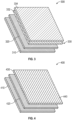
- FIG. 1 shows an exploded view of a coated substrate 100 according to some embodiments of the present disclosure.
- the coated substrate 100 includes a substrate 110 with a high contrast indicator 112 is a part of an aerospace or marine structure.
- the substrate 110 with a high contrast indicator 112 is optionally coated with a primer 120.
- the substrate 110 (without the primer), or the substrate 110 with the primer coating 120 is coated with an icephobic coating 130 (also referred as an icephobic composition). As the icephobic coating 130 wears, it exposes the primer 120 and the underlying substrate 110 with the high contrast indicator 112, or the substrate 110 with the high contrast indicator 112 (if primer 120 is absent) indicating wear of the icephobic coating 130 and that a maintenance is due.
- FIG. 2 shows an exploded view of a coated substrate 200 according to some other embodiments of the present disclosure.
- the coated substrate 200 includes a substrate 210 that is a part of an aerospace or marine structure.
- the substrate 210 is coated with a high contrast indicator primer 220.
- the substrate 210 with the high contrast indicator primer 220 is coated with an icephobic coating 230 (also referred as an icephobic composition or a low ice adhesion composition). As the icephobic coating 230 wears it exposes the high contrast indicator primer 220 indicating wear of the icephobic coating 230 and that a maintenance is due.
- FIG. 3 shows an exploded view of a coated substrate 300 according to some embodiments of the present disclosure.
- the coated substrate includes a substrate 310 that is a part of an aerospace or marine structure.
- the substrate 310 is optionally coated with a primer 320.
- the substrate 310, or the substrate 310 with the optionally coated primer 320 layer is then coated with a bi-layer icephobic coating 330 including two layers (also referred as an icephobic composition), including a top standard icephobic layer 334, and a bottom high contrast icephobic layer 332.
- a top standard icephobic layer 334 wears it exposes the bottom high contrast icephobic layer 332 indicating wear of the top standard icephobic coating 334 and that a maintenance is due.
- FIG. 4 shows an exploded view a coated substrate 400 according to some embodiments of the present disclosure.
- the coated substrate includes a substrate 410 is a part of an aerospace or marine structure.
- the substrate 410 is optionally coated with a primer 420.
- the substrate 410 (without the primer), or the substrate 410 with the primer coating 420 is coated with an icephobic coating 430 with a wear indicating additive 440 (together also referred as an icephobic composition).
- a wear indicating additive 440 (together also referred as an icephobic composition).
- exposing of the wear indicating additive or the high contrast indicator is one way of detecting the wear of the icephobic coating.
- the health of the icephobic coating can be measured/monitored via the presence or remains of the wear of the additive.
- Any suitable instrumentation can be used to measure/monitor a designed characteristic of the wear additive that would diminish as the coating erodes.
- eddy current could be used to measure the conductance of the material, and as more additive was removed the conductance would change indicating the status of the wear additive.
- Other suitable properties could be utilized as long as a strong enough correlation with wear/life could be established.
- the process would be non-evasive and as easy as possible to conduct for operators.
- the wear additive used is any suitable wear additive not significantly diminishing the base properties of the coating.
- a coated substrate including a substrate that is part of an aerospace, a marine structure, or a wind turbine; and an exterior coating on the substrate, the exterior coating including an icephobic or a low ice adhesion composition including an indicator that is an additive that is detectable or measurable as the exterior coating wears; wherein the indicator provides indicia of wear of the exterior coating.
- the substrate is a metal, an alloy, or a combination thereof.
- the exterior coating has a thickness of at least 1 micron.
- the exterior coating has a thickness of about 1 micron to about 100 microns, 1 micron to about 90 microns, 1 micron to about 80 microns, 1 micron to about 70 microns, 1 micron to about 60 microns, 1 micron to about 50 microns, 1 micron to about 40 microns, 1 micron to about 30 microns, 1 micron to about 20 microns, 1 micron to about 10 microns, or 1 micron to about 5 microns.
- the exterior coating is in the above mentioned range it provides an improved icephobicity and way of detecting wear of the exterior coating.
- the indicator is a color indicator having a different color than a top layer, or it can be any suitable compound or composition with a different property than that of the top layer that becomes visually distinguishable on exposure to light, air, heat, moisture, or a combination thereof.
- the indicator is any suitable high contrast indicator, any suitable wear indicating additive, or a combination thereof.
- the icephobic or a low ice adhesion composition or the icephobic coating includes any suitable low ice adhesion (herein also referred as icephobic) material, nonlimiting examples of low ice adhesion materials include multiscale crack initiator promoted super-low ice adhesion surfaces, Slippery Liquid-Infused Nanostructured Surfaces (SLIPS), HygraTek ® , HybridShield ® by NanoSonic ice phobic coatings, PPG IcePhobic Coating, NANOMYTE ® SuperAi by NEI Corporation, ceramic nitrides and carbides, or other suitable materials/coatings with the low ice adhesion material.
- SLIPS Slippery Liquid-Infused Nanostructured Surfaces
- HygraTek ® HybridShield ® by NanoSonic ice phobic coatings
- PPG IcePhobic Coating NANOMYTE ® SuperAi by NEI Corporation, ceramic nitrides and carb
- the icephobic coating may include polydimethylsiloxane (PDMS), at least one of nanoscale amorphous silica and super hydrophobic nanoparticles, and at least one of a non-reactive hydrophobic additive and a non-reactive hydrophilic additive.
- the coating may further include fluoride.
- the icephobic composition layer has a thickness of at least 1 microns.
- the icephobic composition layer has a thickness of about 1 micron to about 100 microns, 1 micron to about 90 microns, 1 micron to about 80 microns, 1 micron to about 70 microns, 1 micron to about 60 microns, 1 micron to about 50 microns, 1 micron to about 40 microns, 1 micron to about 30 microns, 1 micron to about 20 microns, 1 micron to about 10 microns, or 1 micron to about 5 microns.
- the indicator is an indicator integrated into the exterior coating, an indicator applied as a part of the exterior coating, an indicator inherent to the exterior coating, or a combination thereof.
- the indicator is a base layer of a different property than that of a top layer that becomes visually distinguishable on exposure to light, air, heat, moisture, or a combination thereof.
- the aerospace or marine structure (part of the substrate) is an aircraft, a submarine, a spacecraft, a wind turbine, or a missile.
- the exterior coating includes a first applied coating layer and a second applied coating layer.
- the first applied coating layer includes a primer, a low ice adhesion material, the indicator, or a combination thereof.
- the first applied coating layer comprises a primer whose composition is intended to promote adhesion between the second layer and the substrate.
- the first layer is the low ice adhesion material as described herein.
- the first applied coating layer includes the indicator, distinguishing it from the second applied layer.
- the second applied coating layer comprises the low ice adhesion material as described herein.
- the additive includes a chromophore that reflects a wavelength of visible light.
- the additive is any suitable material that has a distinct measurable or quantifiable characteristic or property, that changes as the coating wears/erodes in such a way to identify the operator. Preferably, the additive does not diminish the base properties of the coatings.
- the wear additive is electrically conductive, and eddy current could be used to measure the conductance of the material, and as the more additive is removed the conductance would change providing the indication for the wear.
- Other suitable examples for the additive include a light reflecting additive, a magnetic additive, a fluoresces additive, a color indicating additive, or a combination thereof.
- a coated substrate includes a substrate that is part of an aerospace, a marine structure, or a wind turbine; and an exterior coating on the substrate, the substrate or the exterior coating including an indicator that is detectable or measurable as the exterior coating wears; wherein the indicator provides indicia of wear of the exterior coating.
- the indicator is an indicator integrated into the exterior coating or the substrate, an indicator applied as a part of the exterior coating, an indicator inherent to the exterior coating, an indicator applied as a part of the substrate, an indicator inherent to the substrate, or a combination thereof.
- the indicator is a base layer of a different property than that of a top layer that becomes visually distinguishable on exposure to light, air, heat, moisture, or a combination thereof.
- the aerospace or marine structure is an aircraft, a submarine, a spacecraft, or a missile.
- the exterior coating comprises a first applied coating layer and a second applied coating layer.
- the first applied coating layer includes a primer, a low ice adhesion material, the indicator, or a combination thereof.
- the second applied coating layer includes a low ice adhesion material.
- a method of inspecting an exterior coating on a substrate includes visually examining the exterior coating, the exterior coating comprising an icephobic composition comprising an indicator that is an additive that is detectable or measurable as the exterior coating wears; and determining, based on the indicator, weather the substrate requires maintenance, replacement, or repair for the exterior coating.
- the inspection can be performed by a walk around the substrate with the exterior coating, during a routine maintenance, or by using any suitable test method.
- the method of inspecting an exterior coating on a substrate includes a distinct color contrast between the coating layers and/or the substrate, and the coating is inspected during the pilot walk around the aircraft prior to flights.
- a predetermined wear specification/ requirement would be defined to assist in the process. For example, no wear/ defects larger than a US quarter are permitted for a flight that is expected to experience icing.
- the additive has a different property than the substrate or the icephobic coating as described herein, for example, an additive with electrical conductance, and routine schedule maintenance intervals are scheduled to detect the wear.
- instrumentation implacable to the additive's distinct property could be used to measure/quantify the life based on predetermined testing and validation.
- the substrate to be inspected can be a part of an aerospace, a wind turbine, or a marine structure, for example, an aircraft, a space shuttle, a missile, a wind turbine, or a submarine.
- the method of inspecting an exterior coating on the substrate includes the substrate that is part of an aerospace or marine structure, or a wind turbine.
- the method of inspecting an exterior coating on the substrate includes the indicator that is an indicator integrated into the exterior coating, an indicator applied as a part of the exterior coating, an indicator inherent to the exterior coating, or a combination thereof.
- the method of inspecting an exterior coating on the substrate includes inspecting the exterior coating with a first applied coating layer and a second applied coating layer. In some embodiments, the method of inspecting an exterior coating on the substrate includes inspecting the exterior coating with the first applied coating layer and the second applied coating layer, wherein the first applied coating layer includes a primer, a low ice adhesion material, the indicator, or a combination thereof, and the second applied coating layer includes a low ice adhesion material.
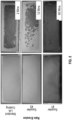
- FIG. 5 shows a rain erosion study of coatings on a metal substrate without indicators (left) and corresponding rain exposed coatings (right) at 2, 12, and 60 minute time points. As shown, without significant contrast from an indicator as described herein, wear is difficult to identify.
Landscapes
- Chemical & Material Sciences (AREA)
- Engineering & Computer Science (AREA)
- Life Sciences & Earth Sciences (AREA)
- Organic Chemistry (AREA)
- Materials Engineering (AREA)
- Physics & Mathematics (AREA)
- Wood Science & Technology (AREA)
- Combustion & Propulsion (AREA)
- Analytical Chemistry (AREA)
- General Physics & Mathematics (AREA)
- Pathology (AREA)
- Immunology (AREA)
- General Health & Medical Sciences (AREA)
- Biochemistry (AREA)
- Health & Medical Sciences (AREA)
- Mathematical Physics (AREA)
- Sustainable Development (AREA)
- Mechanical Engineering (AREA)
- Sustainable Energy (AREA)
- General Engineering & Computer Science (AREA)
- Transportation (AREA)
- Aviation & Aerospace Engineering (AREA)
- Manufacturing & Machinery (AREA)
- Crystallography & Structural Chemistry (AREA)
- Investigating Materials By The Use Of Optical Means Adapted For Particular Applications (AREA)
- Laminated Bodies (AREA)
Abstract
Description
- Described herein is a coated substrate including an exterior coating that provides indicia of wear, more particularly, the coated substrate with an exterior coating that is a part of an aerospace, a marine structure, or a wind turbine, wherein the exterior coating includes an indicator that provides indicia of wear of the exterior coating.
- Icing is a common phenomenon in subzero climate conditions where water and/or moisture are present. Ice build-up on aerospace, wind turbines, or marine structures affects performance and can be a major safety hazard. For example, ice build-up on aircrafts results in increased drag and may lead to loss of lift force, increased drag, and potentially catastrophic events. It is therefore desirable to limit the amount of ice that is allowed to accumulate on these structures to maintain their efficiency and safety. Icephobic exterior coatings on exterior surfaces of aerospace, wind turbines, and marine structures play an important role in preventing ice accumulation to an unacceptable level. The exterior coatings should exhibit suitable adhesion to the substrate, suitable wear resistance, minimal ultraviolet light-induced degradation, adequate elongation/flexibility, and resistance to crazing when exposed to acids and other chemicals used in aircraft cleaning and maintenance. Also, the coatings should be reliable and have some means to warn the flight or maintenance crews when they are degraded and no longer effective.
- Disclosed is a coated substrate including a substrate that is part of an aerospace, a marine structure, or a wind turbine; and an exterior coating on the substrate, the exterior coating including an icephobic or a low ice adhesion composition including an indicator that is an additive that is detectable or measurable as the exterior coating wears; wherein the indicator provides indicia of wear of the exterior coating.
- In some aspects, the indicator is an indicator integrated into the exterior coating, an indicator applied as a part of the exterior coating, an indicator inherent to the exterior coating, or a combination thereof.
- In any one or combination of the foregoing aspects, the indicator is a base layer of a different property than that of a top layer that becomes visually distinguishable on exposure to light, air, heat, moisture, or a combination thereof.
- In any one or combination of the foregoing aspects, the aerospace or marine structure is an aircraft, a submarine, a spacecraft, or a missile.
- In any one or combination of the foregoing aspects, the exterior coating includes a first applied coating layer and a second applied coating layer.
- In any one or combination of the foregoing aspects, the first applied coating layer includes a primer, a low ice adhesion material, the indicator, or a combination thereof.
- In any one or combination of the foregoing aspects, the second applied coating layer includes a low ice adhesion material.
- In any one or combination of the foregoing aspects, the additive includes a chromophore that reflects a wavelength of visible light.
- Also disclosed is a coated substrate including a substrate that is part of an aerospace, a wind turbine, or a marine structure; and an exterior coating on the substrate, the substrate or the exterior coating including an indicator that is detectable or measurable as the exterior coating wears; wherein the indicator provides indicia of wear of the exterior coating.
- In any one or combination of the foregoing aspects, the indicator is an indicator integrated into the exterior coating or the substrate, an indicator applied as a part of the exterior coating, an indicator inherent to the exterior coating, an indicator applied as a part of the substrate, an indicator inherent to the substrate, or a combination thereof.
- In any one or combination of the foregoing aspects, the indicator is a base layer of a different property than that of a top layer that becomes visually distinguishable on exposure to light, air, heat, moisture, or a combination thereof.
- In any one or combination of the foregoing aspects, the aerospace or marine structure is an aircraft, a submarine, a spacecraft, or a missile.
- In any one or combination of the foregoing aspects, the exterior coating includes a first applied coating layer and a second applied coating layer.
- In any one or combination of the foregoing aspects, the first applied coating layer includes a primer, a low ice adhesion material, the indicator, or a combination thereof.
- In any one or combination of the foregoing aspects, the second applied coating layer includes a low ice adhesion material.
- Also disclosed is a method of inspecting an exterior coating on a substrate, the method including visually examining the exterior coating, the exterior coating including an icephobic composition including an indicator that is an additive that is detectable or measurable as the exterior coating wears; and determining, based on the indicator, weather the substrate requires maintenance, replacement, or repair for the exterior coating.
- In any one or combination of the foregoing aspects, the substrate is part of an aerospace, a wind turbine, or a marine structure.
- In any one or combination of the foregoing aspects, the indicator is an indicator integrated into the exterior coating, an indicator applied as a part of the exterior coating, an indicator inherent to the exterior coating, or a combination thereof.
- In any one or combination of the foregoing aspects, the exterior coating includes a first applied coating layer and a second applied coating layer.
- In any one or combination of the foregoing aspects, the first applied coating layer includes a primer, a low ice adhesion material, the indicator, or a combination thereof, and the second applied coating layer includes a low ice adhesion material.
- Additional features and advantages are realized through the techniques of the present disclosure. Other embodiments and aspects of the disclosure are described in detail herein and are considered a part of the claimed disclosure. For a better understanding of the disclosure with the advantages and the features, refer to the description and to the drawings.
- The following descriptions should not be considered limiting in any way. With reference to the accompanying drawings, like elements are numbered alike:
-
FIG. 1 is an exploded view a coated substrate according to embodiments of the present disclosure; -
FIG. 2 is an exploded view a coated substrate according to some other embodiments of the present disclosure; -
FIG. 3 is an exploded view a coated substrate according to embodiments of the present disclosure; -
FIG. 4 is an exploded view a coated substrate according to embodiments of the present disclosure; and -
FIG. 5 shows pictures of actual samples of rain erosion of coated substrates according to embodiments of the present disclosure. - Coatings on exterior surfaces of aerospace, marine, and wind turbine structures and surfaces are susceptible to harsh environmental conditions, and due to this exposure, their performance can diminish over time. In particular, low ice adhesion or icephobic coatings intended to reduce ice accretion, runback ice, and/or provide any other performance benefit for the aircraft or its ice protection system are important for the safety and operation of the aircraft. Having the ability to monitor and diagnose the health of these types of coatings as they wear overtime is critical to ensure the effectiveness of the coated surface. Current available technologies focus on the ice adhesion and icephobicity properties of the coatings, but do not provide a solution to indicate or monitor the health of exterior coatings.
- Indicators are used in many other industries to provide users with feedback on properties such as curing, corrosion, temperature, etc. Accordingly, disclosed herein are embodiments of a coated substrate including a substrate that is part of an aerospace or marine structure; and an exterior coating on the substrate, the exterior coating includes an icephobic composition including an indicator that is an additive that is detectable or measurable as the exterior coating wears; wherein the indicator provides indicia of wear of the exterior coating. Also disclosed is a method to inspect and monitor the health of these coatings to more accurately predict maintenance and repair as well as drastically improve the safety, all-in-all decreasing the total operating cost and increasing safety of these materials
- A detailed description of one or more embodiments of the disclosed apparatus and method are presented herein by way of exemplification and not limitation with reference to the Figures. In this regard, the present embodiments may have different forms and should not be construed as being limited to the descriptions set forth herein. Accordingly, the embodiments are merely described below, by referring to the figures, to explain aspects. As used herein, the term "and/or" includes any and all combinations of one or more of the associated listed items.
- It will be understood that when an element is referred to as being "on" another element, it can be directly in contact with the other element or intervening elements may be present therebetween. In contrast, when an element is referred to as being "directly on" another element, there are no intervening elements present. Expressions such as "at least one", "at least one kind", "one or more kinds", or "one or more" when preceding a list of elements, modify the entire list of elements and do not modify the individual elements of the list. As used herein, the term "combination thereof" is used to refer to a mixture or alloy of two or more components described above.
- As used herein, the term "including" is used to indicate that other components may be added or/and interposed, rather than excluding other components, unless specifically stated to the contrary. It will be further understood that the terms "comprises" and/or "comprising," or "includes" and/or "including" when used in this specification, specify the presence of stated features, regions, integers, steps, operations, elements, and/or components, but do not preclude the presence or addition of one or more other features, regions, integers, steps, operations, elements, components, and/or groups thereof.
- As used herein, the term "first", "second", or the like do not indicate order, quantity, or importance, and are used to distinguish one element from another. It will be understood that, although the terms first, second, third etc. may be used herein to describe various elements, components, regions, layers, and/or sections, these elements, components, regions, layers, and/or sections should not be limited by these terms. These terms are only used to distinguish one element, component, region, layer, or section from another element, component, region, layer, or section. Thus, a first element, component, region, layer, or section discussed below could be termed a second element, component, region, layer, or section without departing from the teachings of the present embodiments.
- The term "about" is intended to include the degree of error associated with measurement of the particular quantity based upon the equipment available at the time of filing the application.
- The terminology used herein is for the purpose of describing particular embodiments only and is not intended to be limiting of the present disclosure. As used herein, the singular forms "a", "an" and "the" are intended to include the plural forms as well, unless the context clearly indicates otherwise. It will be further understood that the terms "comprises" and/or "comprising," when used in this specification, specify the presence of stated features, integers, steps, operations, elements, and/or components, but do not preclude the presence or addition of one or more other features, integers, steps, operations, element components, and/or groups thereof.
- Throughout the present specification, "an embodiment", "example embodiment", "exemplary embodiment", etc. are included in at least one embodiment in which specific elements described in connection with the embodiment are included in this specification, which means that these elements may or may not exist in another embodiment. Further, it should be understood that the described elements may be combined in any suitable manner in various embodiments.
- Unless otherwise defined, all terms including technical and scientific terms used herein have the same meaning as commonly understood by one of ordinary skill in the art to which this disclosure belongs. All cited patents, patent applications and other references are incorporated herein by reference in their entirety. It will be further understood that terms, such as those defined in commonly used dictionaries, should be interpreted as having a meaning that is consistent with their meaning in the context of the relevant art and the present disclosure, and will not be interpreted in an idealized or overly formal sense unless expressly so defined herein. However, if the terms in this specification contradict or conflict with the terms of the incorporated references, the terms from this specification take precedence over the conflicting terms in the incorporated reference.
- While specific embodiments and implementations have been described, alternatives, modifications, variations, improvements, and substantive equivalents that are currently unexpected or unforeseeable may occur to applicants or those skilled in the art. Accordingly, the appended claims and amendments are intended to include all such alternatives, modifications, improvements and substantial equivalents.
- The present disclosure is directed to a coated substrate including a substrate that is part of an aerospace, a marine structure, or a wind turbine; and an exterior coating on the substrate, wherein the exterior coating includes an ice phobic or a low ice adhesion composition including an indicator that is an additive that is detectable or measurable as the exterior coating wears; and wherein the indicator provides indicia of wear of the exterior coating.
- Icephobicity generally refers to the ability of a solid surface to repel ice or prevent ice formation. Icephobic surfaces are characterized with four main figures of merit: (1) median ice nucleation temperature, TN defined as ice nucleation temperature of a sessile water droplet placed on a surface when the system of droplet, surface and surrounding is cooled in a slow and quasi-equilibrium approach or average ice nucleation delay time, τav, defined as the average time required for ice nucleation of a super-cooled droplet on a surface in thermal equilibrium with its surrounding, (2) ice accretion rate on a surface, (3) adhesion strength at the ice-solid interface, and (4) long-term icephobicity of a surface (Irajizad, P., et al., Icephobic surfaces: Definition and figures of merit, Adv. Colloid Interface Sci., 269 (2019), pp. 203-218).
- Low ice adhesion generally refers to an ice adhesion strength less than about 130 kilopascals (kPa). For example, the low ice adhesion composition has the ice adhesion strength of about or in any range between, 129.9, 125, 120, 115, 110, 105, 100, 95, 90, 85, 80, 75, 70, 65, 60, 55, 50, 45, 40, 35, 30, 25, 20, 15, 10, and 5 kPa. For example, the low ice adhesion composition has the ice adhesion strength in any range of about 5 kPa to about 129 kPa, about 5 kPa to about 125 kPa, about 5 kPa to about 120 kPa, about 5 kPa to about 110 kPa, about 5 kPa to about 100 kPa, about 5 kPa to about 90 kPa, about 5 kPa to about 80 kPa, about 5 kPa to about 70 kPa, about 5 kPa to about 60 kPa, about 5 kPa to about 50 kPa, about 5 kPa to about 40 kPa, about 5 kPa to about 30 kPa, about 5 kPa to about 20 kPa, about 5 kPa to about 10 kPa, about 10 kPa to about 129 kPa, about 20 kPa to about 129 kPa, about 30 kPa to about 129 kPa, about 40 kPa to about 129 kPa, about 50 kPa to about 129 kPa, about 60 kPa to about 129 kPa, about 70 kPa to about 129 kPa, about 80 kPa to about 129 kPa, about 90 kPa to about 129 kPa, about 100 kPa to about 129 kPa, about 110 kPa to about 129 kPa, or about 120 kPa to about 129 kPa.
-
FIG. 1 shows an exploded view of acoated substrate 100 according to some embodiments of the present disclosure. Thecoated substrate 100 includes asubstrate 110 with ahigh contrast indicator 112 is a part of an aerospace or marine structure. Thesubstrate 110 with ahigh contrast indicator 112 is optionally coated with aprimer 120. The substrate 110 (without the primer), or thesubstrate 110 with theprimer coating 120 is coated with an icephobic coating 130 (also referred as an icephobic composition). As theicephobic coating 130 wears, it exposes theprimer 120 and theunderlying substrate 110 with thehigh contrast indicator 112, or thesubstrate 110 with the high contrast indicator 112 (ifprimer 120 is absent) indicating wear of theicephobic coating 130 and that a maintenance is due. -
FIG. 2 shows an exploded view of acoated substrate 200 according to some other embodiments of the present disclosure. Thecoated substrate 200 includes asubstrate 210 that is a part of an aerospace or marine structure. Thesubstrate 210 is coated with a highcontrast indicator primer 220. Thesubstrate 210 with the highcontrast indicator primer 220 is coated with an icephobic coating 230 (also referred as an icephobic composition or a low ice adhesion composition). As theicephobic coating 230 wears it exposes the highcontrast indicator primer 220 indicating wear of theicephobic coating 230 and that a maintenance is due. -
FIG. 3 shows an exploded view of acoated substrate 300 according to some embodiments of the present disclosure. The coated substrate includes asubstrate 310 that is a part of an aerospace or marine structure. Thesubstrate 310 is optionally coated with aprimer 320. Thesubstrate 310, or thesubstrate 310 with the optionallycoated primer 320 layer is then coated with abi-layer icephobic coating 330 including two layers (also referred as an icephobic composition), including a topstandard icephobic layer 334, and a bottom highcontrast icephobic layer 332. As the topstandard icephobic layer 334 wears it exposes the bottom highcontrast icephobic layer 332 indicating wear of the topstandard icephobic coating 334 and that a maintenance is due. -
FIG. 4 shows an exploded view acoated substrate 400 according to some embodiments of the present disclosure. The coated substrate includes asubstrate 410 is a part of an aerospace or marine structure. Thesubstrate 410 is optionally coated with aprimer 420. The substrate 410 (without the primer), or thesubstrate 410 with theprimer coating 420 is coated with anicephobic coating 430 with a wear indicating additive 440 (together also referred as an icephobic composition). As theicephobic coating 430 with the wear indicating additive 440 wears it exposes thewear indicating additive 440 indicating wear of theicephobic coating 430 and that a maintenance is due. - As shown in
FIG. 1 to FIG. 4 , exposing of the wear indicating additive or the high contrast indicator is one way of detecting the wear of the icephobic coating. In one or more embodiments, the health of the icephobic coating can be measured/monitored via the presence or remains of the wear of the additive. Any suitable instrumentation can be used to measure/monitor a designed characteristic of the wear additive that would diminish as the coating erodes. For example, if the wear additive was electrically conductive, eddy current could be used to measure the conductance of the material, and as more additive was removed the conductance would change indicating the status of the wear additive. Other suitable properties could be utilized as long as a strong enough correlation with wear/life could be established. Preferably, the process would be non-evasive and as easy as possible to conduct for operators. The wear additive used is any suitable wear additive not significantly diminishing the base properties of the coating. - In one or more embodiments, a coated substrate including a substrate that is part of an aerospace, a marine structure, or a wind turbine; and an exterior coating on the substrate, the exterior coating including an icephobic or a low ice adhesion composition including an indicator that is an additive that is detectable or measurable as the exterior coating wears; wherein the indicator provides indicia of wear of the exterior coating. In some embodiments, the substrate is a metal, an alloy, or a combination thereof. The exterior coating has a thickness of at least 1 micron. For example, the exterior coating has a thickness of about 1 micron to about 100 microns, 1 micron to about 90 microns, 1 micron to about 80 microns, 1 micron to about 70 microns, 1 micron to about 60 microns, 1 micron to about 50 microns, 1 micron to about 40 microns, 1 micron to about 30 microns, 1 micron to about 20 microns, 1 micron to about 10 microns, or 1 micron to about 5 microns. When the exterior coating is in the above mentioned range it provides an improved icephobicity and way of detecting wear of the exterior coating.
- The indicator is a color indicator having a different color than a top layer, or it can be any suitable compound or composition with a different property than that of the top layer that becomes visually distinguishable on exposure to light, air, heat, moisture, or a combination thereof. For example, the indicator is any suitable high contrast indicator, any suitable wear indicating additive, or a combination thereof. The icephobic or a low ice adhesion composition or the icephobic coating includes any suitable low ice adhesion (herein also referred as icephobic) material, nonlimiting examples of low ice adhesion materials include multiscale crack initiator promoted super-low ice adhesion surfaces, Slippery Liquid-Infused Nanostructured Surfaces (SLIPS), HygraTek®, HybridShield® by NanoSonic ice phobic coatings, PPG IcePhobic Coating, NANOMYTE® SuperAi by NEI Corporation, ceramic nitrides and carbides, or other suitable materials/coatings with the low ice adhesion material. In one or more embodiments, the icephobic coating may include polydimethylsiloxane (PDMS), at least one of nanoscale amorphous silica and super hydrophobic nanoparticles, and at least one of a non-reactive hydrophobic additive and a non-reactive hydrophilic additive. In some embodiments, the coating may further include fluoride. The icephobic composition layer has a thickness of at least 1 microns. For example, the icephobic composition layer has a thickness of about 1 micron to about 100 microns, 1 micron to about 90 microns, 1 micron to about 80 microns, 1 micron to about 70 microns, 1 micron to about 60 microns, 1 micron to about 50 microns, 1 micron to about 40 microns, 1 micron to about 30 microns, 1 micron to about 20 microns, 1 micron to about 10 microns, or 1 micron to about 5 microns.
- In some other embodiments, the indicator is an indicator integrated into the exterior coating, an indicator applied as a part of the exterior coating, an indicator inherent to the exterior coating, or a combination thereof. In yet some other embodiments, the indicator is a base layer of a different property than that of a top layer that becomes visually distinguishable on exposure to light, air, heat, moisture, or a combination thereof.
- In one or more embodiments, the aerospace or marine structure (part of the substrate) is an aircraft, a submarine, a spacecraft, a wind turbine, or a missile. In some embodiments, the exterior coating includes a first applied coating layer and a second applied coating layer. In some embodiments, the first applied coating layer includes a primer, a low ice adhesion material, the indicator, or a combination thereof. In some other embodiments, the first applied coating layer comprises a primer whose composition is intended to promote adhesion between the second layer and the substrate. In some other embodiments, the first layer is the low ice adhesion material as described herein. In yet some other embodiments, the first applied coating layer includes the indicator, distinguishing it from the second applied layer. In some embodiments, the second applied coating layer comprises the low ice adhesion material as described herein.
- In one or more embodiments, the additive includes a chromophore that reflects a wavelength of visible light. In some embodiments, the additive is any suitable material that has a distinct measurable or quantifiable characteristic or property, that changes as the coating wears/erodes in such a way to identify the operator. Preferably, the additive does not diminish the base properties of the coatings. In some other embodiments, the wear additive is electrically conductive, and eddy current could be used to measure the conductance of the material, and as the more additive is removed the conductance would change providing the indication for the wear. Other suitable examples for the additive include a light reflecting additive, a magnetic additive, a fluoresces additive, a color indicating additive, or a combination thereof.
- In one or more embodiments, a coated substrate includes a substrate that is part of an aerospace, a marine structure, or a wind turbine; and an exterior coating on the substrate, the substrate or the exterior coating including an indicator that is detectable or measurable as the exterior coating wears; wherein the indicator provides indicia of wear of the exterior coating. In some embodiments, the indicator is an indicator integrated into the exterior coating or the substrate, an indicator applied as a part of the exterior coating, an indicator inherent to the exterior coating, an indicator applied as a part of the substrate, an indicator inherent to the substrate, or a combination thereof. In some other embodiments, the indicator is a base layer of a different property than that of a top layer that becomes visually distinguishable on exposure to light, air, heat, moisture, or a combination thereof.
- In one or more embodiments, the aerospace or marine structure is an aircraft, a submarine, a spacecraft, or a missile. In some embodiments, the exterior coating comprises a first applied coating layer and a second applied coating layer. In some other embodiments, the first applied coating layer includes a primer, a low ice adhesion material, the indicator, or a combination thereof. In yet some other embodiments, the second applied coating layer includes a low ice adhesion material.
- In one or more embodiments, a method of inspecting an exterior coating on a substrate, the method includes visually examining the exterior coating, the exterior coating comprising an icephobic composition comprising an indicator that is an additive that is detectable or measurable as the exterior coating wears; and determining, based on the indicator, weather the substrate requires maintenance, replacement, or repair for the exterior coating. Depending on an indication method, the inspection can be performed by a walk around the substrate with the exterior coating, during a routine maintenance, or by using any suitable test method. In some embodiments, the method of inspecting an exterior coating on a substrate includes a distinct color contrast between the coating layers and/or the substrate, and the coating is inspected during the pilot walk around the aircraft prior to flights. Depending on the type and composition of the exterior coating on the substrate, a predetermined wear specification/ requirement would be defined to assist in the process. For example, no wear/ defects larger than a US quarter are permitted for a flight that is expected to experience icing. In some other embodiments, the additive has a different property than the substrate or the icephobic coating as described herein, for example, an additive with electrical conductance, and routine schedule maintenance intervals are scheduled to detect the wear. Yet, in some other embodiments, instrumentation implacable to the additive's distinct property (for example, electrical conductance or eddy current) could be used to measure/quantify the life based on predetermined testing and validation.
- The substrate to be inspected can be a part of an aerospace, a wind turbine, or a marine structure, for example, an aircraft, a space shuttle, a missile, a wind turbine, or a submarine. In some embodiments, the method of inspecting an exterior coating on the substrate includes the substrate that is part of an aerospace or marine structure, or a wind turbine. In some other embodiments, the method of inspecting an exterior coating on the substrate includes the indicator that is an indicator integrated into the exterior coating, an indicator applied as a part of the exterior coating, an indicator inherent to the exterior coating, or a combination thereof.
- In one or more embodiments, the method of inspecting an exterior coating on the substrate includes inspecting the exterior coating with a first applied coating layer and a second applied coating layer. In some embodiments, the method of inspecting an exterior coating on the substrate includes inspecting the exterior coating with the first applied coating layer and the second applied coating layer, wherein the first applied coating layer includes a primer, a low ice adhesion material, the indicator, or a combination thereof, and the second applied coating layer includes a low ice adhesion material.
-
FIG. 5 shows a rain erosion study of coatings on a metal substrate without indicators (left) and corresponding rain exposed coatings (right) at 2, 12, and 60 minute time points. As shown, without significant contrast from an indicator as described herein, wear is difficult to identify. - While the present disclosure has been described with reference to an exemplary embodiment or embodiments, it will be understood by those skilled in the art that various changes may be made and equivalents may be substituted for elements thereof without departing from the scope of the present disclosure. In addition, many modifications may be made to adapt a particular situation or material to the teachings of the present disclosure without departing from the essential scope thereof. Therefore, it is intended that the present disclosure not be limited to the particular embodiment disclosed as the best mode contemplated for carrying out this present disclosure, but that the present disclosure will include all embodiments falling within the scope of the claims.
Claims (15)
- A coated substrate (100) comprising:a substrate (110) that is part of an aerospace, or a marine structure, or a wind turbine; andan exterior coating (130) on the substrate, the exterior coating comprising an icephobic or a low ice adhesion composition comprising an indicator (112) that is an additive that is detectable or measurable as the exterior coating wears;wherein the indicator (112) provides indicia of wear of the exterior coating.
- The coated substrate of claim 1, wherein the indicator (112) is an indicator integrated into the exterior coating, an indicator applied as a part of the exterior coating, an indicator inherent to the exterior coating, or a combination thereof.
- The coated substrate of claim 1 or 2, wherein the indicator (112) is a base layer of a different property than that of a top layer that becomes visually distinguishable on exposure to light, air, heat, moisture, or a combination thereof.
- The coated substrate of any preceding claim, wherein the aerospace or marine structure is an aircraft, a submarine, a spacecraft, or a missile.
- The coated substrate of any preceding claim, wherein the exterior coating (130) comprises a first applied coating layer and a second applied coating layer.
- The coated substrate of claim 5, wherein the first applied coating layer comprises a primer, a low ice adhesion material, the indicator, or a combination thereof; and/or wherein the second applied coating layer comprises a low ice adhesion material.
- The coated substrate of any preceding claim, wherein the additive comprises a chromophore that reflects a wavelength of visible light.
- A coated substrate (100) comprising:a substrate (110) that is part of an aerospace, a wind turbine, or marine structure; andan exterior coating (130) on the substrate, the substrate or the exterior coating comprising an indicator (112) that is detectable or measurable as the exterior coating wears;wherein the indicator (112) provides indicia of wear of the exterior coating.
- The coated substrate of claim 8, wherein the indicator (112) is an indicator integrated into the exterior coating or the substrate, an indicator applied as a part of the exterior coating, an indicator inherent to the exterior coating, an indicator applied as a part of the substrate, an indicator inherent to the substrate, or a combination thereof; and/or wherein the indicator (112) is a base layer of a different property than that of a top layer that becomes visually distinguishable on exposure to light, air, heat, moisture, or a combination thereof.
- The coated substrate of claim 8 or 9, wherein the aerospace or marine structure is an aircraft, a submarine, a spacecraft, or a missile.
- The coated substrate of any of claims 8-10, wherein the exterior coating (130) comprises a first applied coating layer and a second applied coating layer.
- The coated substrate of claim 11, wherein the first applied coating layer comprises a primer, a low ice adhesion material, the indicator, or a combination thereof; and/or wherein the second applied coating layer comprises a low ice adhesion material.
- A method of inspecting an exterior coating on a substrate, the method comprising:visually examining the exterior coating, the exterior coating comprising an icephobic composition comprising an indicator that is an additive that is detectable or measurable as the exterior coating wears; anddetermining, based on the indicator, weather the substrate requires maintenance, replacement, or repair for the exterior coating.
- The method of claim 13, wherein the substrate is part of an aerospace, a wind turbine, or a marine structure; and/or wherein the indicator is an indicator integrated into the exterior coating, an indicator applied as a part of the exterior coating, an indicator inherent to the exterior coating, or a combination thereof.
- The method of claim 13 or 14, wherein the exterior coating comprises a first applied coating layer and a second applied coating layer, and preferably wherein the first applied coating layer comprises a primer, a low ice adhesion material, the indicator, or a combination thereof, and the second applied coating layer comprises a low ice adhesion material.
Applications Claiming Priority (1)
| Application Number | Priority Date | Filing Date | Title |
|---|---|---|---|
| US17/473,493 US20230085454A1 (en) | 2021-09-13 | 2021-09-13 | Monitoring low ice adhesion coatings |
Publications (1)
| Publication Number | Publication Date |
|---|---|
| EP4147795A1 true EP4147795A1 (en) | 2023-03-15 |
Family
ID=83319315
Family Applications (1)
| Application Number | Title | Priority Date | Filing Date |
|---|---|---|---|
| EP22191290.0A Pending EP4147795A1 (en) | 2021-09-13 | 2022-08-19 | Monitoring low ice adhesion coatings |
Country Status (3)
| Country | Link |
|---|---|
| US (1) | US20230085454A1 (en) |
| EP (1) | EP4147795A1 (en) |
| CN (1) | CN115785815A (en) |
Cited By (1)
| Publication number | Priority date | Publication date | Assignee | Title |
|---|---|---|---|---|
| EP4571298A1 (en) * | 2023-12-11 | 2025-06-18 | Rolls-Royce plc | Imaging |
Citations (3)
| Publication number | Priority date | Publication date | Assignee | Title |
|---|---|---|---|---|
| US6864489B2 (en) * | 2001-10-30 | 2005-03-08 | 3M Innovative Properties Company | Method of detecting wear on a substrate using a fluorescent indicator |
| EP3199452A2 (en) * | 2016-01-29 | 2017-08-02 | GE Aviation Systems Limited | Propeller blades having icephobic coating |
| GB2576722A (en) * | 2018-08-28 | 2020-03-04 | Luminous Tech Ltd | Phosphorescent coating and inspection method |
Family Cites Families (14)
| Publication number | Priority date | Publication date | Assignee | Title |
|---|---|---|---|---|
| US5571312A (en) * | 1992-07-28 | 1996-11-05 | Cresco Inc., Sa. | Environmentally safe epoxy adhesive-copper hull coating and method |
| GB2367826B (en) * | 2000-10-03 | 2003-07-16 | Luminous Technologies Ltd | Luminescent paint |
| EP1645538A1 (en) * | 2004-10-05 | 2006-04-12 | Siemens Aktiengesellschaft | Material composition for the production of a coating of a metallic component and coated metallic component |
| US7878054B2 (en) * | 2007-02-28 | 2011-02-01 | The Boeing Company | Barrier coatings for polymeric substrates |
| DE102007030602A1 (en) * | 2007-06-28 | 2009-01-02 | Siemens Ag | Component with a ceramic layer in which particles are incorporated, and method for its production |
| US7883737B2 (en) * | 2008-03-18 | 2011-02-08 | General Electric Company | Methods allowing for visual inspection of coated components for erosion damage |
| EP2431412A1 (en) * | 2010-09-20 | 2012-03-21 | BAE Systems PLC | Structural health monitoring using sprayable paint formulations |
| US20120163981A1 (en) * | 2010-12-22 | 2012-06-28 | Hong Shek C | Method and coating for protecting and repairing an airfoil surface |
| US8834126B2 (en) * | 2011-06-30 | 2014-09-16 | United Technologies Corporation | Fan blade protection system |
| US8851858B2 (en) * | 2011-08-26 | 2014-10-07 | Ge Aviation Systems Limited | Propeller blades having icephobic coating |
| US8540936B2 (en) * | 2011-10-05 | 2013-09-24 | General Electric Company | Turbine blade erosion sensor |
| US20140072797A1 (en) * | 2012-09-13 | 2014-03-13 | Ppg Industries Ohio, Inc. | Coating compositions and methods for mitigating ice build-up |
| US9970303B2 (en) * | 2014-05-13 | 2018-05-15 | Entrotech, Inc. | Erosion protection sleeve |
| US11319450B2 (en) * | 2019-07-18 | 2022-05-03 | Integran Technologies Inc. | Articles comprising durable icephobic coatings |
-
2021
- 2021-09-13 US US17/473,493 patent/US20230085454A1/en not_active Abandoned
-
2022
- 2022-08-19 EP EP22191290.0A patent/EP4147795A1/en active Pending
- 2022-09-13 CN CN202211110645.1A patent/CN115785815A/en active Pending
Patent Citations (3)
| Publication number | Priority date | Publication date | Assignee | Title |
|---|---|---|---|---|
| US6864489B2 (en) * | 2001-10-30 | 2005-03-08 | 3M Innovative Properties Company | Method of detecting wear on a substrate using a fluorescent indicator |
| EP3199452A2 (en) * | 2016-01-29 | 2017-08-02 | GE Aviation Systems Limited | Propeller blades having icephobic coating |
| GB2576722A (en) * | 2018-08-28 | 2020-03-04 | Luminous Tech Ltd | Phosphorescent coating and inspection method |
Non-Patent Citations (1)
| Title |
|---|
| IRAJIZAD, P. ET AL.: "Icephobic surfaces: Definition and figures of merit", ADV. COLLOID INTERFACE SCI., vol. 269, 2019, pages 203 - 218, XP085705637, DOI: 10.1016/j.cis.2019.04.005 |
Cited By (1)
| Publication number | Priority date | Publication date | Assignee | Title |
|---|---|---|---|---|
| EP4571298A1 (en) * | 2023-12-11 | 2025-06-18 | Rolls-Royce plc | Imaging |
Also Published As
| Publication number | Publication date |
|---|---|
| US20230085454A1 (en) | 2023-03-16 |
| CN115785815A (en) | 2023-03-14 |
Similar Documents
| Publication | Publication Date | Title |
|---|---|---|
| Laforte et al. | Icephobic material centrifuge adhesion test | |
| CA2758435C (en) | Method for monitoring the oil system of a turbomachine | |
| EP3567369B1 (en) | Method of making a magnetostrictive oscillator ice rate sensor probe | |
| US9897586B2 (en) | Multi point method and apparatus for monitoring the aging and changes in corresponding tensile performance properties of a polymer | |
| US10486795B2 (en) | Propeller blades having icephobic coating | |
| KR20060048782A (en) | Material soundness nondestructive monitoring | |
| Laforte et al. | A review of icephobic coating performances over the last decade | |
| US20230085454A1 (en) | Monitoring low ice adhesion coatings | |
| Brassard et al. | Icephobicity: Definition and measurement regarding atmospheric icing | |
| Fortin et al. | Centrifuge adhesion test to evaluate icephobic coatings | |
| Bottone et al. | Coral-like silicone nanofilament coatings with extremely low ice adhesion | |
| US5237875A (en) | Metal fatigue detector | |
| EP2370806A1 (en) | Quantum dot-based environmental indicators | |
| EP3299287B1 (en) | Oil filter with impending and full-bypass indicators | |
| US20080022757A1 (en) | Oxidation stability measurement for oil condition management | |
| RU2395786C1 (en) | Diagnostics method of construction state | |
| Pfeiffer et al. | Leakage monitoring using percolation sensors for revealing structural damage in engineering structures | |
| CN101093203A (en) | Measurement of oxidizing stabilization for oil-condition managing | |
| US11029224B2 (en) | Method for thermally correcting data obtained through strain gauges mounted to a surface | |
| Koivuluoto et al. | COMPARISON OF ICE ADHESION MEASURED WITH CENTRIFUGAL AND PUSHING TESTS | |
| Tang et al. | Ice release coatings of high durability for aerospace applications | |
| Clark | Aluminum Sample Characterization on the NRC AIWT Ice Adhesion Spin Rig | |
| Rehfeld et al. | Development and Testing of Icephobic Materials: Lessons Learned from Fraunhofer IFAM | |
| KR101392258B1 (en) | Method of testing the epoxy composite materials for aircraft by measuring the in-plane shear strength of the epoxy composite materials for aircraft exposed to aircraft fluid | |
| Pfeiffer et al. | Sigmoidal Sensing Devices for Monitoring to improve Maintenance Operations in Aeronautics |
Legal Events
| Date | Code | Title | Description |
|---|---|---|---|
| PUAI | Public reference made under article 153(3) epc to a published international application that has entered the european phase |
Free format text: ORIGINAL CODE: 0009012 |
|
| STAA | Information on the status of an ep patent application or granted ep patent |
Free format text: STATUS: THE APPLICATION HAS BEEN PUBLISHED |
|
| AK | Designated contracting states |
Kind code of ref document: A1 Designated state(s): AL AT BE BG CH CY CZ DE DK EE ES FI FR GB GR HR HU IE IS IT LI LT LU LV MC MK MT NL NO PL PT RO RS SE SI SK SM TR |
|
| STAA | Information on the status of an ep patent application or granted ep patent |
Free format text: STATUS: REQUEST FOR EXAMINATION WAS MADE |
|
| 17P | Request for examination filed |
Effective date: 20230913 |
|
| RBV | Designated contracting states (corrected) |
Designated state(s): AL AT BE BG CH CY CZ DE DK EE ES FI FR GB GR HR HU IE IS IT LI LT LU LV MC MK MT NL NO PL PT RO RS SE SI SK SM TR |
|
| P01 | Opt-out of the competence of the unified patent court (upc) registered |
Effective date: 20230922 |