EP4142697B1 - Liquisolid pharmaceutical formulation and process for manufacturing - Google Patents
Liquisolid pharmaceutical formulation and process for manufacturing Download PDFInfo
- Publication number
- EP4142697B1 EP4142697B1 EP21722220.7A EP21722220A EP4142697B1 EP 4142697 B1 EP4142697 B1 EP 4142697B1 EP 21722220 A EP21722220 A EP 21722220A EP 4142697 B1 EP4142697 B1 EP 4142697B1
- Authority
- EP
- European Patent Office
- Prior art keywords
- liquisolid
- propylene carbonate
- weight
- formulation
- porous carrier
- Prior art date
- Legal status (The legal status is an assumption and is not a legal conclusion. Google has not performed a legal analysis and makes no representation as to the accuracy of the status listed.)
- Active
Links
Images


Classifications
-
- A—HUMAN NECESSITIES
- A61—MEDICAL OR VETERINARY SCIENCE; HYGIENE
- A61K—PREPARATIONS FOR MEDICAL, DENTAL OR TOILETRY PURPOSES
- A61K31/00—Medicinal preparations containing organic active ingredients
- A61K31/63—Compounds containing para-N-benzenesulfonyl-N-groups, e.g. sulfanilamide, p-nitrobenzenesulfonyl hydrazide
- A61K31/635—Compounds containing para-N-benzenesulfonyl-N-groups, e.g. sulfanilamide, p-nitrobenzenesulfonyl hydrazide having a heterocyclic ring, e.g. sulfadiazine
-
- A—HUMAN NECESSITIES
- A61—MEDICAL OR VETERINARY SCIENCE; HYGIENE
- A61K—PREPARATIONS FOR MEDICAL, DENTAL OR TOILETRY PURPOSES
- A61K9/00—Medicinal preparations characterised by special physical form
- A61K9/14—Particulate form, e.g. powders, Processes for size reducing of pure drugs or the resulting products, Pure drug nanoparticles
- A61K9/16—Agglomerates; Granulates; Microbeadlets ; Microspheres; Pellets; Solid products obtained by spray drying, spray freeze drying, spray congealing,(multiple) emulsion solvent evaporation or extraction
- A61K9/1605—Excipients; Inactive ingredients
- A61K9/1611—Inorganic compounds
-
- A—HUMAN NECESSITIES
- A61—MEDICAL OR VETERINARY SCIENCE; HYGIENE
- A61K—PREPARATIONS FOR MEDICAL, DENTAL OR TOILETRY PURPOSES
- A61K31/00—Medicinal preparations containing organic active ingredients
- A61K31/185—Acids; Anhydrides, halides or salts thereof, e.g. sulfur acids, imidic, hydrazonic or hydroximic acids
- A61K31/19—Carboxylic acids, e.g. valproic acid
- A61K31/192—Carboxylic acids, e.g. valproic acid having aromatic groups, e.g. sulindac, 2-aryl-propionic acids, ethacrynic acid
-
- A—HUMAN NECESSITIES
- A61—MEDICAL OR VETERINARY SCIENCE; HYGIENE
- A61K—PREPARATIONS FOR MEDICAL, DENTAL OR TOILETRY PURPOSES
- A61K31/00—Medicinal preparations containing organic active ingredients
- A61K31/21—Esters, e.g. nitroglycerine, selenocyanates
- A61K31/215—Esters, e.g. nitroglycerine, selenocyanates of carboxylic acids
- A61K31/216—Esters, e.g. nitroglycerine, selenocyanates of carboxylic acids of acids having aromatic rings, e.g. benactizyne, clofibrate
-
- A—HUMAN NECESSITIES
- A61—MEDICAL OR VETERINARY SCIENCE; HYGIENE
- A61K—PREPARATIONS FOR MEDICAL, DENTAL OR TOILETRY PURPOSES
- A61K31/00—Medicinal preparations containing organic active ingredients
- A61K31/33—Heterocyclic compounds
- A61K31/395—Heterocyclic compounds having nitrogen as a ring hetero atom, e.g. guanethidine or rifamycins
- A61K31/41—Heterocyclic compounds having nitrogen as a ring hetero atom, e.g. guanethidine or rifamycins having five-membered rings with two or more ring hetero atoms, at least one of which being nitrogen, e.g. tetrazole
- A61K31/415—1,2-Diazoles
-
- A—HUMAN NECESSITIES
- A61—MEDICAL OR VETERINARY SCIENCE; HYGIENE
- A61K—PREPARATIONS FOR MEDICAL, DENTAL OR TOILETRY PURPOSES
- A61K31/00—Medicinal preparations containing organic active ingredients
- A61K31/33—Heterocyclic compounds
- A61K31/395—Heterocyclic compounds having nitrogen as a ring hetero atom, e.g. guanethidine or rifamycins
- A61K31/435—Heterocyclic compounds having nitrogen as a ring hetero atom, e.g. guanethidine or rifamycins having six-membered rings with one nitrogen as the only ring hetero atom
- A61K31/44—Non condensed pyridines; Hydrogenated derivatives thereof
- A61K31/4422—1,4-Dihydropyridines, e.g. nifedipine, nicardipine
-
- A—HUMAN NECESSITIES
- A61—MEDICAL OR VETERINARY SCIENCE; HYGIENE
- A61K—PREPARATIONS FOR MEDICAL, DENTAL OR TOILETRY PURPOSES
- A61K31/00—Medicinal preparations containing organic active ingredients
- A61K31/33—Heterocyclic compounds
- A61K31/395—Heterocyclic compounds having nitrogen as a ring hetero atom, e.g. guanethidine or rifamycins
- A61K31/435—Heterocyclic compounds having nitrogen as a ring hetero atom, e.g. guanethidine or rifamycins having six-membered rings with one nitrogen as the only ring hetero atom
- A61K31/44—Non condensed pyridines; Hydrogenated derivatives thereof
- A61K31/445—Non condensed piperidines, e.g. piperocaine
- A61K31/4523—Non condensed piperidines, e.g. piperocaine containing further heterocyclic ring systems
- A61K31/4545—Non condensed piperidines, e.g. piperocaine containing further heterocyclic ring systems containing a six-membered ring with nitrogen as a ring hetero atom, e.g. pipamperone, anabasine
-
- A—HUMAN NECESSITIES
- A61—MEDICAL OR VETERINARY SCIENCE; HYGIENE
- A61K—PREPARATIONS FOR MEDICAL, DENTAL OR TOILETRY PURPOSES
- A61K47/00—Medicinal preparations characterised by the non-active ingredients used, e.g. carriers or inert additives; Targeting or modifying agents chemically bound to the active ingredient
- A61K47/06—Organic compounds, e.g. natural or synthetic hydrocarbons, polyolefins, mineral oil, petrolatum or ozokerite
- A61K47/08—Organic compounds, e.g. natural or synthetic hydrocarbons, polyolefins, mineral oil, petrolatum or ozokerite containing oxygen, e.g. ethers, acetals, ketones, quinones, aldehydes, peroxides
- A61K47/10—Alcohols; Phenols; Salts thereof, e.g. glycerol; Polyethylene glycols [PEG]; Poloxamers; PEG/POE alkyl ethers
-
- A—HUMAN NECESSITIES
- A61—MEDICAL OR VETERINARY SCIENCE; HYGIENE
- A61K—PREPARATIONS FOR MEDICAL, DENTAL OR TOILETRY PURPOSES
- A61K47/00—Medicinal preparations characterised by the non-active ingredients used, e.g. carriers or inert additives; Targeting or modifying agents chemically bound to the active ingredient
- A61K47/06—Organic compounds, e.g. natural or synthetic hydrocarbons, polyolefins, mineral oil, petrolatum or ozokerite
- A61K47/22—Heterocyclic compounds, e.g. ascorbic acid, tocopherol or pyrrolidones
-
- A—HUMAN NECESSITIES
- A61—MEDICAL OR VETERINARY SCIENCE; HYGIENE
- A61K—PREPARATIONS FOR MEDICAL, DENTAL OR TOILETRY PURPOSES
- A61K9/00—Medicinal preparations characterised by special physical form
- A61K9/14—Particulate form, e.g. powders, Processes for size reducing of pure drugs or the resulting products, Pure drug nanoparticles
- A61K9/16—Agglomerates; Granulates; Microbeadlets ; Microspheres; Pellets; Solid products obtained by spray drying, spray freeze drying, spray congealing,(multiple) emulsion solvent evaporation or extraction
- A61K9/1605—Excipients; Inactive ingredients
- A61K9/1617—Organic compounds, e.g. phospholipids, fats
-
- A—HUMAN NECESSITIES
- A61—MEDICAL OR VETERINARY SCIENCE; HYGIENE
- A61K—PREPARATIONS FOR MEDICAL, DENTAL OR TOILETRY PURPOSES
- A61K9/00—Medicinal preparations characterised by special physical form
- A61K9/14—Particulate form, e.g. powders, Processes for size reducing of pure drugs or the resulting products, Pure drug nanoparticles
- A61K9/16—Agglomerates; Granulates; Microbeadlets ; Microspheres; Pellets; Solid products obtained by spray drying, spray freeze drying, spray congealing,(multiple) emulsion solvent evaporation or extraction
- A61K9/167—Agglomerates; Granulates; Microbeadlets ; Microspheres; Pellets; Solid products obtained by spray drying, spray freeze drying, spray congealing,(multiple) emulsion solvent evaporation or extraction with an outer layer or coating comprising drug; with chemically bound drugs or non-active substances on their surface
- A61K9/1676—Agglomerates; Granulates; Microbeadlets ; Microspheres; Pellets; Solid products obtained by spray drying, spray freeze drying, spray congealing,(multiple) emulsion solvent evaporation or extraction with an outer layer or coating comprising drug; with chemically bound drugs or non-active substances on their surface having a drug-free core with discrete complete coating layer containing drug
-
- A—HUMAN NECESSITIES
- A61—MEDICAL OR VETERINARY SCIENCE; HYGIENE
- A61K—PREPARATIONS FOR MEDICAL, DENTAL OR TOILETRY PURPOSES
- A61K9/00—Medicinal preparations characterised by special physical form
- A61K9/20—Pills, tablets, discs, rods
- A61K9/2004—Excipients; Inactive ingredients
- A61K9/2009—Inorganic compounds
-
- A—HUMAN NECESSITIES
- A61—MEDICAL OR VETERINARY SCIENCE; HYGIENE
- A61K—PREPARATIONS FOR MEDICAL, DENTAL OR TOILETRY PURPOSES
- A61K9/00—Medicinal preparations characterised by special physical form
- A61K9/20—Pills, tablets, discs, rods
- A61K9/2004—Excipients; Inactive ingredients
- A61K9/2013—Organic compounds, e.g. phospholipids, fats
-
- A—HUMAN NECESSITIES
- A61—MEDICAL OR VETERINARY SCIENCE; HYGIENE
- A61K—PREPARATIONS FOR MEDICAL, DENTAL OR TOILETRY PURPOSES
- A61K9/00—Medicinal preparations characterised by special physical form
- A61K9/48—Preparations in capsules, e.g. of gelatin, of chocolate
- A61K9/4841—Filling excipients; Inactive ingredients
- A61K9/485—Inorganic compounds
-
- A—HUMAN NECESSITIES
- A61—MEDICAL OR VETERINARY SCIENCE; HYGIENE
- A61K—PREPARATIONS FOR MEDICAL, DENTAL OR TOILETRY PURPOSES
- A61K9/00—Medicinal preparations characterised by special physical form
- A61K9/48—Preparations in capsules, e.g. of gelatin, of chocolate
- A61K9/4841—Filling excipients; Inactive ingredients
- A61K9/4858—Organic compounds
Definitions
- the present invention relates to a liquisolid pharmaceutical formulation.
- Solubility is one of the important parameters for the oral bioavailability of pharmaceutical ingredients.
- the oral route is preferred for administration because of patient compliance, convenience, and low cost factor.
- the active pharmaceutical ingredient API
- the active pharmaceutical ingredient should be sufficiently dissolved in gastric fluids for its proper absorption. Since only dissolved substances are diffused or transported into the blood via the gastrointestinal tract, an improvement in oral bioavailability can be achieved by improving the solubility of poorly water-soluble active ingredients.
- one of the challenges is producing formulations with adequate oral bioavailability and therapeutic effectiveness, particularly for active pharmaceutical ingredients that exhibit low aqueous solubility.
- Bukara K et al. describe in the European Journal of Pharmaceutics and Biopharmaceutics, 2016; 108, 220-225 an improvement in the bioavailability of the active ingredient fenofibrate by adsorption on an inorganic carrier material in the form of mesoporous silicate in humans. Also, Carol A. McCarthy et al. describe in J Control Release, 2017, 250, 86-95 an oral mesoporous silica formulation of fenofibrate. Supported by a solvent, the active ingredient can penetrate into the pores of the mesoporous silicate, creating a liquid-solid system (liquisolid).
- the non-volatile solvents such as polyethylene glycol, polysorbate, propylene glycol or glycerine used in the liquisolid system mainly act as a binding agent.
- the choice of solvent for the production of the liquid-solid system is limited, since the solvent needs to provide low toxicity, low viscosity and a sufficient solubility.
- the objective underlying the present invention was to provide a formulation with improved solubility for poorly soluble active ingredients.
- a liquisolid pharmaceutical formulation comprising a porous carrier and an active pharmaceutical ingredient loaded onto a surface of the porous carrier, wherein the active pharmaceutical ingredient is dispersed in propylene carbonate or a mixture of propylene carbonate and a further solvent and the dispersion of the active pharmaceutical ingredient and propylene carbonate or a mixture of propylene carbonate and a further solvent is loaded onto the external surface and the internal surface located inside the pores of the porous carrier thereby forming a liquisolid system.
- the liquisolid pharmaceutical formulation based on propylene carbonate and a porous carrier such as mesoporous silica provides a fast availability of the active pharmaceutical ingredient from the formulation. This provides a faster pharmaceutical effect of the ingredient and further can provide for better bioavailability. Better bioavailability reduces the amount of the ingredient needed to achieve the pharmaceutical effect, which results in lesser local side effects in the gastrointestinal tract, a better safety due to lesser individual variations of efficacy, and a cost-effective manufacture due to fewer amounts of the ingredient.
- liquid drugs refers to formulations formed by conversion of liquid drugs, drug suspensions or drug solutions in non-volatile solvents, into dry, non-adherent, free flowing or particulate and compressible powder mixtures by blending the suspension or solution with selected carriers.
- the concept of liquisolid technique relies on that when a drug dissolved in the liquid vehicle is incorporated into a carrier material which has a porous surface, loading such as adsorption of the liquid onto the internal and external surfaces of the porous carrier particles occur.
- the carrier material having high adsorptive properties and large specific surface area gives the liquisolid system the desirable flow characteristics.
- the porous carrier is selected from porous silica, polyorganosiloxanes, pharmaceutical clays, silicon dioxide nanotubes, silica gel, magnesium aluminosilicate, anhydrous calcium phosphate, and calcium carbonate. These carriers provide for adsorptive properties and large specific surface area useful for the manufacture of a liquisolid system.
- the active pharmaceutical ingredient needs to be loaded onto a surface of the porous carrier, and preferably, is adsorbed onto the surface of the porous carrier.
- Particularly porous silica allows for good adsorptive properties.
- the porous carrier is selected from mesoporous, microporous silica and macroporous silica.
- the porous carrier is mesoporous silica. Mesoporous silica advantageously allows for the active pharmaceutical ingredient to be adsorbed onto the silica surface.
- Propylene carbonate provides low toxicity and low viscosity, which features allow for a use in the manufacture of the liquisolid pharmaceutical formulation.
- Propylene carbonate may be used as the only matrix for the ingredient or may be used in the form of a mixture together with a further solvent.
- the further solvent is selected from dimethyl sulfoxide (DMSO), ethanol, methanol, isopropanol, dichloromethane, acetone, tert-butanol, or a polymer which is liquid at ambient temperature (20 ⁇ 2°C) such as a polyethylene glycol (PEG) preferably selected from PEG 400, PEG 300 and PEG 200.
- DMSO dimethyl sulfoxide
- PEG polyethylene glycol
- solvents are usable for a multitude of active pharmacological ingredients, particularly for poorly water-soluble or water-insoluble compounds.
- Preferred further solvents are selected from dimethyl sulfoxide (DMSO) and ethanol.
- the further solvent is tetraethylene glycol (tetraglycol).
- the active pharmaceutical ingredient is a poorly water-soluble or water-insoluble compound, preferably selected from the group comprising nimodipine, celecoxib, fenofibrate, naproxen, loratadine, imipramine, bisacodyl, gliclazide, furosemide, clozapine, and mixtures thereof.
- the term "poor water-solubility" is understood as meaning that the highest dose strength of a compound cannot be dissolved in 250 mL water in the pH range between 1 and 6.8 at 37 ⁇ 1°C according to the Biopharmaceutics Classification System (BCS).
- Poorly water-soluble or water-insoluble active pharmaceutical ingredients may be dispersed and advantageously dissolved in propylene carbonate and further solvents, particularly such as dimethyl sulfoxide (DMSO) and ethanol.
- the active pharmaceutical ingredient is dissolvable or is dissolved in propylene carbonate.
- the active pharmaceutical ingredient is loaded to the porous carrier in an amount in a range of ⁇ 5 weight% to ⁇ 70 weight%, preferably in an amount in a range of ⁇ 20 weight% to ⁇ 50 weight%, based on a weight of 100 weight% of the liquisolid pharmaceutical formulation comprising the porous carrier, the active pharmaceutical ingredient and propylene carbonate.
- propylene carbonate is comprised in an amount in a range of ⁇ 10 weight% to ⁇ 60 weight%, preferably in an amount in a range of ⁇ 30 weight% to ⁇ 50 weight%, based on a weight of 100 weight% of the porous carrier and propylene carbonate. In these ranges, stable semisolid systems can be provided, which show good flow properties.
- propylene carbonate may be comprised in an amount of 45 weight% to 50 weight%, based on a weight of 100 weight% of mesoporous silica and propylene carbonate.
- a further aspect of the present invention relates to a pharmaceutical solid dosage form, comprising the liquisolid pharmaceutical formulation according to the invention.
- the solid dosage form is selected from a capsule, a tablet, granules, pills, pellets or micro-tablets.
- a further aspect of the present invention relates to a process for manufacturing a liquisolid pharmaceutical formulation, the process comprising the steps of:
- the formulation can be manufactured with little effort and standard equipment and thus is useful for preclinical and clinical development of pharmaceutical ingredients. Also, industrial processing is possible in energy and cost-effective, particularly compared to the manufacture of amorphous solid dispersions.
- excess propylene carbonate or a mixture of propylene carbonate and a further solvent from the mixture obtained in step c) may be removed. It is however, preferred to add only as much liquid mixture to the porous carrier, which can be adsorbed. Excess propylene carbonate or solvent mixture may, for example, be removed by evaporating, such as by using vacuum drying, at e.g. elevated temperatures.
- the liquisolid pharmaceutical formulation may be orally administered. It is however, preferred to further formulate the liquisolid pharmaceutical formulation into a usual pharmaceutical solid dosage form, such as a capsule, granules, or a tablet.
- the liquisolid formulation in a further step d) is formed into capsules, tablets, granules, pills, pellets, or micro-tablets, preferably into capsules, granules or tablets.
- the process thus is a process for manufacturing capsules, tablets, granules, pills, pellets, or micro-tablets, preferably capsules, granules, or tablets comprising the liquisolid pharmaceutical formulation.
- the liquisolid formulation can be filled into capsules; mixed with tableting additives and compressed to tablets; or granules can be formed by wet or dry granulation, respectively.
- These methods are standard procedures known to a person skilled in the art and, for example, may be performed using standard equipment such as usual tableting machines.
- the admixing in step c) is performed at a temperature in a range from ⁇ 10 °C to ⁇ 50 °C, preferably in a range from ⁇ 15 °C to ⁇ 30 °C. In these temperature ranges, good results were achieved.
- step a) the dispersing, dissolving or otherwise introducing an active pharmaceutical ingredient into propylene carbonate or a mixture of propylene carbonate and a further solvent is performed by ultrasonic dissolving, vortexing, or mixing using magnetic mixers or blade agitators.
- the porous carrier may be selected from mesoporous, microporous silica, macroporous silica, polyorganosiloxanes, pharmaceutical clays, silicon dioxide nanotubes, silica gel, magnesium aluminosilicate, anhydrous calcium phosphate, and calcium carbonate.
- the porous carrier is selected from mesoporous, microporous silica, and macroporous silica.
- the porous carrier is mesoporous silica.
- the further solvent may be selected from dimethyl sulfoxide (DMSO), ethanol, methanol, isopropanol, dichloromethane, acetone, tert-butanol, or a polymer which is liquid at ambient temperature (20 ⁇ 2°C) such as a polyethylene glycol (PEG) preferably selected from PEG 400, PEG 300 and PEG 200.
- PEG polyethylene glycol
- the further solvent is tetraethylene glycol (tetraglycol).
- Preferred further solvents are dimethyl sulfoxide (DMSO) and ethanol.
- the active pharmaceutical ingredient may be a poorly water-soluble or water-insoluble compound, such as an active pharmaceutical ingredient having a logP value of from 2 to 6, preferably selected from the group comprising nimodipine, celecoxib, fenofibrate, naproxen, loratadine, imipramine, bisacodyl, gliclazide, furosemide, clozapine and mixtures thereof.
- the active pharmaceutical ingredients, further solvents and porous carrier, used in the method reference is made to the description above.
- a further aspect of the present invention relates to a liquisolid pharmaceutical formulation or a pharmaceutical solid dosage form obtained by the process according to the invention.
- a liquisolid pharmaceutical formulation or a pharmaceutical solid dosage form obtained by the process according to the invention.
- Preferred pharmaceutical solid dosage forms are selected from a capsule, a tablet, granules, pills, pellets, or micro-tablets.
- Figure 1 shows the maximum deliverable dose of the active pharmaceutical ingredients (table 1) in propylene carbonate (PC) which can be administered in a single capsule (Size 0).
- PC propylene carbonate
- Nimodipine, celecoxib, fenofibrate, naproxen and loratadine were elected for the manufacture of liquisolid pharmaceutical formulations and further testing.
- Example 2 Manufacture of liquisolid pharmaceutical formulations by adsorption to mesoporous silica
- the respective active pharmaceutical ingredient and propylene carbonate ( ⁇ 99.7%, Carl Roth GmbH + Co. KG, Düsseldorf, Germany) in the amounts as given in the following table were mixed in a 5 mL glass vial and solved by using an ultrasonic bath for 20 min at a temperature of 25 °C.
- the mesoporous silica Silsol ® (Grace GmbH, Worms, Germany) was added and mixed with a metal spatula until the solution was adsorbed by the silica.
- the liquisolid pharmaceutical formulations were used immediately for biphasic dissolutions tests.
- Biphasic release is a process in which, in addition to solubility in an aqueous medium, adsorption into the intestinal wall is demonstrated using an organic phase.
- the transition to the organic phase can be understood as absorption of active substances into the blood.
- the biphasic release experiments were investigated using a fully automated biphasic dissolution apparatus (BiPHa+) as described in A. Denninger et al., Pharmaceutics 2020, 12, 237 .
- FaSSIF-V2 medium which represents the bile salts concentration of a fasted human was used.
- FaSSIF-V2 medium is a mixture of a phosphate and a citrate buffer system, which facilitates comparable in vivo buffer capacities.
- both phases 1-decanol and the acidic aqueous phase, were saturated with each other.
- the respective formulation was added (Table 2) to 50 mL HCl (0.1 M), simulating the stomach. During the first 30 min the formulation disintegrated / dispersed in 50 ml of 0.1 M HCl. After 30 min FaSSIF-V2 concentrate (sodium-taurocholate and lecithin) was added simultaneously to the addition of citrate-phosphate buffer (tri-potassium phosphate and potassium citrate) resulting in a first pH-shift from pH 1 to pH 5.5, simulating the duodenum. Thereafter, 50 mL 1-decanol was added.
- the last pH-shift from 5.5 to 6.8 after 90 minutes was gradually adjusted by adding more citrate-phosphate buffer, representing the jejunum and ileum (final concentrations: 3 mM sodium-taurocholate, 0.2 mM lecithin, 525 mM tri-potassium phosphate and 225 M potassium citrate).
- the adjusted buffers were titrated by 0.1 M NaOH and 0.1 M HCl (pH 5.5-6.8). The whole dissolution took 4.5 hours.
- concentration profiles of the aqueous and organic phase were measured online continuously with an Agilent 8454 UV-Vis spectrometer (Waldbronn, Germany) and quantified on the compound-specific wavelength.
- each compound was compared to a respective commercially available formulation.
- nimodipine as described in example 2, was compared to the commercially available market formulation Nimotop ® (Bayer Vital GmbH, Leverkusen, Germany).
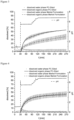
- the figure 2 illustrates the pH profile and the biphasic dissolution profiles of the liquisolid formulation of nimodipine in propylene carbonate on Silsol ® (PC-Silsol) and the nimodipine market formulation (Market Formulation) during the 270 min dissolution test.
- the nimodipine market formulation Nimotop ® provided 38% predicted absorption
- the liquisolid formulation of nimodipine provided 46% predicted absorption.
- the liquisolid formulation of nimodipine showed a different kinetic profile, providing a faster onset of action.
- Figure 3 illustrates the biphasic dissolution profiles of the liquisolid formulation of celecoxib in propylene carbonate on Silsol ® (PC-Silsol) and the celecoxib market formulation (Market Formulation) during the 270 min dissolution test.
- the celecoxib market formulation Celebrex ® provided 41% predicted absorption
- the liquisolid formulation of celecoxib provided 54% predicted absorption.
- the liquisolid formulation of celecoxib showed a different kinetic profile, providing a faster onset of action.
- Figure 4 illustrates the biphasic dissolution profiles of the liquisolid formulation of fenofibrate in propylene carbonate on Silsol ® (PC-Silsol) and the fenofibrate market formulation (Market Formulation) during the 270 min dissolution test.
- the fenofibrate market formulation Lipidil ® and the liquisolid formulation of fenofibrate provided 45% predicted absorption. Further, both formulations of fenofibrate showed a kinetic profile, providing a fast onset of action.
- Figure 5 illustrates the biphasic dissolution profiles of the liquisolid formulation of naproxen in propylene carbonate on Silsol ® (PC-Silsol) and the naproxen market formulation (Market Formulation) during the 270 min dissolution test.
- the naproxen market formulation Dolormin GSO provided 89% predicted absorption
- the liquisolid formulation of naproxen provided 94% predicted absorption.
- the liquisolid formulation of naproxen showed a kinetic profile, providing a fast onset of action.
- Figure 6 illustrates the biphasic dissolution profiles of the liquisolid formulation of loratadine in propylene carbonate on Silsol ® (PC-Silsol) and the loratadine market formulation (Market Formulation) during the 270 min dissolution test.
- the loratadine market formulation Lorano ® provided 34% predicted absorption
- the liquisolid formulation of loratadine provided 42% predicted absorption.
- the liquisolid formulation of loratadine showed a steeper curve in the second half of the biphasic dissolution.
- the liquisolid pharmaceutical formulations of poorly water-soluble drugs in propylene carbonate adsorbed onto mesoporous silica provided improved absorption of the active ingredient compared to the available market formulations.
- Example for comparison 4 Testing of liquisolid formulation manufactured using various non-volatile solvents
- the solubility of the poorly water-soluble APIs celecoxib, fenofibrate, naproxen, loratadine, and nimodipine in tetraglycole (TEG), polyethylene glycol 400 (PEG 400) propylene glycol (PG) and glycerol was evaluated as described in Example 1. Therefore, 1 mg of each compound was weighted in an Eppendorf tube and 1 ml of solvent was added. The mixture was mixed with a metal spatula for 10 min each. The solubility of compounds, which were fully dissolved in the preliminary tests where than further analyzed. About 20 mg of each compound were used and under stirring with a metal spatula the solvent was added in 10 ⁇ l steps. The used APIs are listed in table 3.
- Table 3 Active pharmaceutical ingredients (API) API Supplier Celecoxib Kekule Pharma Limited, India Fenofibrate Sigma-Aldrich Chemie GmbH, Steinheim, Germany Naproxen Sigma-Aldrich Chemie GmbH, Steinheim, Germany Loratadine Sris Pharmaceuticals, Hvderabad, India Nimodipine Tokyo Chemical Industrie, Zwijndrecht, Belgium
- Table 4 Non-volatile solvents non-volatile solvent Supplier tetraglycole (TEG) Sigma-Aldrich Chemie GmbH (Taufmün, Germany) polyethylene glycol 400 (PEG 400) Carl Roth GmbH + Co. KG propylene glycol (PG) Carl Roth GmbH + Co. KG glycerol Caesar & Loretz GmbH (Hilden, Germany)
- Table 5 Solubility of poorly water-soluble active pharmaceutical ingredients (API) in non-volatile solvents. Solubility (mg/mL) API TEG PEG 400 PG Glycerol Celecoxib 244.31 230.12 60.29 ⁇ 1 Fenofibrate 212.34 150.14 12.13 ⁇ 1 Naproxen 285.21 102.34 31.24 ⁇ 1 Loratadine 105.29 60.98 59.14 ⁇ 1 Nimodipine 140.13 96.31 25.45 ⁇ 1
- TEG tetraglycole
- PEG 400 polyethylene glycol 400
- PG propylene glycol
- Glycerol was found to be not suitable due a solubility of less than 1 mg/mL.
- the active pharmaceutical ingredient and the respective amount of non-volatile solvent in the amounts as given in the following Tables 6, 7, 8, 9 and 10 were mixed in a 10 mL screw lid glass vial and solved by using an ultrasonic bath for 20 min at a temperature of 25 °C.
- the mesoporous silica Silsol ® (Lot. 1000306729; W. R. Grace & Co.-Conn. Europe, Worms, Germany) was added and mixed with a metal spatula until the solution was adsorbed by the silica.
- the liquisolid pharmaceutical formulations were used immediately for biphasic dissolutions tests. Table 6: Composition of liquisolid celecoxib formulations.
- Dissolution 1 Amounts Dissolution 2 Amounts Dissolution 3 Amounts Celecoxib 10.6 mg 10.0 mg 10.1 mg TEG 50 ⁇ L 50 ⁇ L 50 ⁇ L Silsol ® 75.2 mg 75.1 mg 76.1 mg Celecoxib 10.1 mg 10.4 mg 10.1 mg PEG 400 50 ⁇ L 50 ⁇ L 50 ⁇ L Silsol ® 74.3 mg 76.1 mg 75.9 mg Table 7: Composition of liquisolid fenofibrate formulations.
- Dissolution 1 Amounts Dissolution 2 Amounts Dissolution 3 Amounts Fenofibrate 10.6 mg 9.4 mg 9.9 mg TEG 75 ⁇ L 75 ⁇ L 75 ⁇ L Silsol ® 111.4 mg 115.0 mg 113.8 mg Fenofibrate 10.3 mg 10.3 mg 10.6 mg PEG 400 75 ⁇ L 75 ⁇ L 75 ⁇ L Silsol ® 114.3 mg 114.0 mg 113.9 mg Table 8: Composition of liquisolid naproxen formulations.
- Dissolution 1 Amounts Dissolution 2 Amounts Dissolution 3 Amounts Naproxen 10.5 mg 10.6 mg 11.0 mg TEG 325 ⁇ L 325 ⁇ L 325 ⁇ L Silsol ® 486.6 mg 484.0 mg 486.8 mg Naproxen 10.2 mg 10.2 mg 10.6 mg PEG 400 325 ⁇ L 325 ⁇ L 325 ⁇ L Silsol ® 489.3 mg 487.9 mg 487.1 mg Table 9: Composition of liquisolid loratadine formulations.
- Dissolution 1 Amounts Dissolution 2 Amounts Dissolution 3 Amounts Loratadine 9.8 mg 10.7 mg 10.6 mg TEG 175 ⁇ L 175 ⁇ L 175 ⁇ L Silsol ® 264.4 mg 260.2 mg 263.9 mg Loratadine 9.6 mg 10.0 mg 10.0 mg PEG 400 175 ⁇ L 175 ⁇ L 175 ⁇ L Silsol ® 266.8 mg 261.2 mg 263.9 mg Loratadine 9.9 mg 10.0 mg 10.0 mg PG 175 ⁇ L 175 ⁇ L 175 ⁇ L Silsol ® 286.2 mg 261.4 mg 265.2 mg Table 10: Composition of liquisolid nimodipine formulations.
- Dissolution 1 Amounts Dissolution 2 Amounts Dissolution 3 Amounts Nimodipine 10.4 mg 10.2 mg 10.3 mg TEG 125 ⁇ L 125 ⁇ L 125 ⁇ L Silsol ® 187.0 mg 190.5mg 191.2 mg Nimodipine 10.9 mg 9.4 mg 9.3 mg PEG 400 125 ⁇ L 125 ⁇ L 125 ⁇ L Silsol ® 186.6 mg 190.5 mg 186.3mg
- Table 11 Used market formulations of the active pharmaceutical ingredients (APIs) API Market Formulation Supplier Celecoxib Celebrex ® Pfizer Pharma GmbH (Berlin, Germany) Fenofibrate Lipidil ® Mylan Healthcare GmbH (Bad Homburg, Germany Naproxen Dolormin GS ® Johnson & Johnson GmbH (Neuss, Germany) Loratadine Lorano ® akut Hexal AG (Holzmün, Germany) Nimodipine Nimotop ® Bayer Vital GmbH (Leverkusen, Germany)
Landscapes
- Health & Medical Sciences (AREA)
- Chemical & Material Sciences (AREA)
- Life Sciences & Earth Sciences (AREA)
- Animal Behavior & Ethology (AREA)
- Epidemiology (AREA)
- Pharmacology & Pharmacy (AREA)
- General Health & Medical Sciences (AREA)
- Public Health (AREA)
- Veterinary Medicine (AREA)
- Medicinal Chemistry (AREA)
- Engineering & Computer Science (AREA)
- Bioinformatics & Cheminformatics (AREA)
- Inorganic Chemistry (AREA)
- Biophysics (AREA)
- Molecular Biology (AREA)
- Emergency Medicine (AREA)
- Chemical Kinetics & Catalysis (AREA)
- General Chemical & Material Sciences (AREA)
- Oil, Petroleum & Natural Gas (AREA)
- Pharmaceuticals Containing Other Organic And Inorganic Compounds (AREA)
- Medicinal Preparation (AREA)
Description
- The present invention relates to a liquisolid pharmaceutical formulation.
- Solubility is one of the important parameters for the oral bioavailability of pharmaceutical ingredients. The oral route is preferred for administration because of patient compliance, convenience, and low cost factor. When administered via the oral route, the active pharmaceutical ingredient (API) should be sufficiently dissolved in gastric fluids for its proper absorption. Since only dissolved substances are diffused or transported into the blood via the gastrointestinal tract, an improvement in oral bioavailability can be achieved by improving the solubility of poorly water-soluble active ingredients. Thus, one of the challenges is producing formulations with adequate oral bioavailability and therapeutic effectiveness, particularly for active pharmaceutical ingredients that exhibit low aqueous solubility.
- Bukara K et al. describe in the European Journal of Pharmaceutics and Biopharmaceutics, 2016; 108, 220-225 an improvement in the bioavailability of the active ingredient fenofibrate by adsorption on an inorganic carrier material in the form of mesoporous silicate in humans. Also, Carol A. McCarthy et al. describe in J Control Release, 2017, 250, 86-95 an oral mesoporous silica formulation of fenofibrate. Supported by a solvent, the active ingredient can penetrate into the pores of the mesoporous silicate, creating a liquid-solid system (liquisolid). The non-volatile solvents such as polyethylene glycol, polysorbate, propylene glycol or glycerine used in the liquisolid system mainly act as a binding agent. However, the choice of solvent for the production of the liquid-solid system is limited, since the solvent needs to provide low toxicity, low viscosity and a sufficient solubility.
- A C. N. Patra et al. give an overview of liquisolid technology in Pharmaceutical Drug Delivery Systems and Vehicles, India, Woodhead Publishing India PVT. LTD, 2015, pages 146 - 160.
-
DE 10 2015 008 534 A1 describes pharmaceutical formulations using propylene carbonate together with polyesters for micro-particle formulations. However, the polyester is solved in the propylene carbonate, which in part reacts to propylene glycol. - Therefore, the objective underlying the present invention was to provide a formulation with improved solubility for poorly soluble active ingredients.
- The problem is solved by a liquisolid pharmaceutical formulation comprising a porous carrier and an active pharmaceutical ingredient loaded onto a surface of the porous carrier, wherein the active pharmaceutical ingredient is dispersed in propylene carbonate or a mixture of propylene carbonate and a further solvent and the dispersion of the active pharmaceutical ingredient and propylene carbonate or a mixture of propylene carbonate and a further solvent is loaded onto the external surface and the internal surface located inside the pores of the porous carrier thereby forming a liquisolid system.
- The liquisolid pharmaceutical formulation based on propylene carbonate and a porous carrier such as mesoporous silica provides a fast availability of the active pharmaceutical ingredient from the formulation. This provides a faster pharmaceutical effect of the ingredient and further can provide for better bioavailability. Better bioavailability reduces the amount of the ingredient needed to achieve the pharmaceutical effect, which results in lesser local side effects in the gastrointestinal tract, a better safety due to lesser individual variations of efficacy, and a cost-effective manufacture due to fewer amounts of the ingredient.
- The term "liquisolid system" refers to formulations formed by conversion of liquid drugs, drug suspensions or drug solutions in non-volatile solvents, into dry, non-adherent, free flowing or particulate and compressible powder mixtures by blending the suspension or solution with selected carriers. The concept of liquisolid technique relies on that when a drug dissolved in the liquid vehicle is incorporated into a carrier material which has a porous surface, loading such as adsorption of the liquid onto the internal and external surfaces of the porous carrier particles occur. The carrier material having high adsorptive properties and large specific surface area gives the liquisolid system the desirable flow characteristics.
- In embodiments, the porous carrier is selected from porous silica, polyorganosiloxanes, pharmaceutical clays, silicon dioxide nanotubes, silica gel, magnesium aluminosilicate, anhydrous calcium phosphate, and calcium carbonate. These carriers provide for adsorptive properties and large specific surface area useful for the manufacture of a liquisolid system. The active pharmaceutical ingredient needs to be loaded onto a surface of the porous carrier, and preferably, is adsorbed onto the surface of the porous carrier. Particularly porous silica allows for good adsorptive properties. Preferably, the porous carrier is selected from mesoporous, microporous silica and macroporous silica. In preferred embodiments, the porous carrier is mesoporous silica. Mesoporous silica advantageously allows for the active pharmaceutical ingredient to be adsorbed onto the silica surface.
- Propylene carbonate provides low toxicity and low viscosity, which features allow for a use in the manufacture of the liquisolid pharmaceutical formulation. Propylene carbonate may be used as the only matrix for the ingredient or may be used in the form of a mixture together with a further solvent. In embodiments, the further solvent is selected from dimethyl sulfoxide (DMSO), ethanol, methanol, isopropanol, dichloromethane, acetone, tert-butanol, or a polymer which is liquid at ambient temperature (20±2°C) such as a polyethylene glycol (PEG) preferably selected from PEG 400, PEG 300 and PEG 200. These solvents are usable for a multitude of active pharmacological ingredients, particularly for poorly water-soluble or water-insoluble compounds. Preferred further solvents are selected from dimethyl sulfoxide (DMSO) and ethanol. In other embodiments, the further solvent is tetraethylene glycol (tetraglycol).
- In embodiments, the active pharmaceutical ingredient is a poorly water-soluble or water-insoluble compound, preferably selected from the group comprising nimodipine, celecoxib, fenofibrate, naproxen, loratadine, imipramine, bisacodyl, gliclazide, furosemide, clozapine, and mixtures thereof. In a pharmaceutical context the term "poor water-solubility" is understood as meaning that the highest dose strength of a compound cannot be dissolved in 250 mL water in the pH range between 1 and 6.8 at 37 ±1°C according to the Biopharmaceutics Classification System (BCS). Poorly water-soluble or water-insoluble active pharmaceutical ingredients, however, may be dispersed and advantageously dissolved in propylene carbonate and further solvents, particularly such as dimethyl sulfoxide (DMSO) and ethanol. Preferably, the active pharmaceutical ingredient is dissolvable or is dissolved in propylene carbonate.
- In embodiments, the active pharmaceutical ingredient is loaded to the porous carrier in an amount in a range of ≥ 5 weight% to ≤ 70 weight%, preferably in an amount in a range of ≥ 20 weight% to ≤ 50 weight%, based on a weight of 100 weight% of the liquisolid pharmaceutical formulation comprising the porous carrier, the active pharmaceutical ingredient and propylene carbonate. These high amounts of the active ingredient in the formulation provide a considerable advantage of the liquisolid pharmaceutical formulation.
- In embodiments, propylene carbonate is comprised in an amount in a range of ≥ 10 weight% to ≤ 60 weight%, preferably in an amount in a range of ≥ 30 weight% to ≤ 50 weight%, based on a weight of 100 weight% of the porous carrier and propylene carbonate. In these ranges, stable semisolid systems can be provided, which show good flow properties. In preferred embodiments, propylene carbonate may be comprised in an amount of 45 weight% to 50 weight%, based on a weight of 100 weight% of mesoporous silica and propylene carbonate.
- A further aspect of the present invention relates to a pharmaceutical solid dosage form, comprising the liquisolid pharmaceutical formulation according to the invention. In embodiments, the solid dosage form is selected from a capsule, a tablet, granules, pills, pellets or micro-tablets.
- A further aspect of the present invention relates to a process for manufacturing a liquisolid pharmaceutical formulation, the process comprising the steps of:
- a) dispersing, dissolving or otherwise introducing an active pharmaceutical ingredient into propylene carbonate or a mixture of propylene carbonate and a further solvent to form a liquid mixture,
- b) selecting a porous carrier, and
- c) admixing the liquid mixture of step a) and the porous carrier of step b) to form a liquisolid formulation
- The formulation can be manufactured with little effort and standard equipment and thus is useful for preclinical and clinical development of pharmaceutical ingredients. Also, industrial processing is possible in energy and cost-effective, particularly compared to the manufacture of amorphous solid dispersions.
- Optionally, excess propylene carbonate or a mixture of propylene carbonate and a further solvent from the mixture obtained in step c) may be removed. It is however, preferred to add only as much liquid mixture to the porous carrier, which can be adsorbed. Excess propylene carbonate or solvent mixture may, for example, be removed by evaporating, such as by using vacuum drying, at e.g. elevated temperatures.
- The liquisolid pharmaceutical formulation may be orally administered. It is however, preferred to further formulate the liquisolid pharmaceutical formulation into a usual pharmaceutical solid dosage form, such as a capsule, granules, or a tablet. In embodiments of the process, in a further step d) the liquisolid formulation is formed into capsules, tablets, granules, pills, pellets, or micro-tablets, preferably into capsules, granules or tablets. In embodiments, the process thus is a process for manufacturing capsules, tablets, granules, pills, pellets, or micro-tablets, preferably capsules, granules, or tablets comprising the liquisolid pharmaceutical formulation.
- For manufacturing capsules, tablets or granules, the liquisolid formulation can be filled into capsules; mixed with tableting additives and compressed to tablets; or granules can be formed by wet or dry granulation, respectively. These methods are standard procedures known to a person skilled in the art and, for example, may be performed using standard equipment such as usual tableting machines.
- In embodiments, the admixing in step c) is performed at a temperature in a range from ≥ 10 °C to ≤ 50 °C, preferably in a range from ≥ 15 °C to ≤ 30 °C. In these temperature ranges, good results were achieved.
- In embodiments of the process, in step a) the dispersing, dissolving or otherwise introducing an active pharmaceutical ingredient into propylene carbonate or a mixture of propylene carbonate and a further solvent is performed by ultrasonic dissolving, vortexing, or mixing using magnetic mixers or blade agitators.
- The porous carrier may be selected from mesoporous, microporous silica, macroporous silica, polyorganosiloxanes, pharmaceutical clays, silicon dioxide nanotubes, silica gel, magnesium aluminosilicate, anhydrous calcium phosphate, and calcium carbonate. Preferably, the porous carrier is selected from mesoporous, microporous silica, and macroporous silica. In preferred embodiments, the porous carrier is mesoporous silica. The further solvent may be selected from dimethyl sulfoxide (DMSO), ethanol, methanol, isopropanol, dichloromethane, acetone, tert-butanol, or a polymer which is liquid at ambient temperature (20±2°C) such as a polyethylene glycol (PEG) preferably selected from PEG 400,
PEG 300 andPEG 200. In other embodiments, the further solvent is tetraethylene glycol (tetraglycol). - Preferred further solvents are dimethyl sulfoxide (DMSO) and ethanol. The active pharmaceutical ingredient may be a poorly water-soluble or water-insoluble compound, such as an active pharmaceutical ingredient having a logP value of from 2 to 6, preferably selected from the group comprising nimodipine, celecoxib, fenofibrate, naproxen, loratadine, imipramine, bisacodyl, gliclazide, furosemide, clozapine and mixtures thereof. For the further description of the liquisolid pharmaceutical formulation, the active pharmaceutical ingredients, further solvents and porous carrier, used in the method, reference is made to the description above.
- A further aspect of the present invention relates to a liquisolid pharmaceutical formulation or a pharmaceutical solid dosage form obtained by the process according to the invention. For the description of the liquisolid pharmaceutical formulation and the pharmaceutical solid dosage forms, reference is made to the description above. Preferred pharmaceutical solid dosage forms are selected from a capsule, a tablet, granules, pills, pellets, or micro-tablets.
- Unless otherwise defined, the technical and scientific terms used herein have the same meaning as commonly understood by one of ordinary skill in the art to which this invention belongs.
- The Examples, which follow serve to illustrate the invention in more detail but do not constitute a limitation thereof.
- The figures show:
- Figure 1
- The maximum deliverable dose of various poorly water-soluble active pharmaceutical ingredients in propylene carbonate (PC).
- Figure 2
- The biphasic dissolution profiles of a liquisolid pharmaceutical formulation of Nimodipine compared to a Nimodipine market formulation.
- Figure 3
- The biphasic dissolution profiles of a liquisolid pharmaceutical formulation of Celecoxib compared to a Celecoxib market formulation.
- Figure 4
- The biphasic dissolution profiles of a liquisolid pharmaceutical formulation of Fenofibrate compared to a Fenofibrate market formulation.
- Figure 5
- The biphasic dissolution profiles of a liquisolid pharmaceutical formulation of Naproxen compared to a Naproxen market formulation.
- Figure 6
- The biphasic dissolution profiles of a liquisolid pharmaceutical formulation of Loratadine compared to a Loratadine market formulation.
- To determine suitable drug candidates, the solubility of various poorly water-soluble active pharmaceutical ingredients (API) in propylene carbonate was tested. For a preliminary analysis, 1-2 mg of each compound was weighted in an Eppendorf tube and 1 ml propylene carbonate was added. The mixture was mixed with a metal spatula for 10 min each. The solubility of compounds, which were fully dissolved in the preliminary tests were then further analyzed. About 20 mg of each compound were used and under stirring with a metal spatula propylene carbonate was added in 10 µl steps. The following table 1 shows the results of the solubility tests.
Table 1: Solubility of poorly water-soluble active pharmaceutical ingredients (API) in propylene carbonate Active Pharmaceutical Ingredient Sample [mg] Solvent [mL] Mean Solubility [mg/mL] Bisacodyl (Sigma- 22.40 0.25 91.55 Aldrich Chemie GmbH, 22.30 0.24 Steinheim, Germany) 20.30 0.22 Celecoxib (Kekule 21.90 0.10 266.67 Pharma Limited, Hyderabad, India) 21.20 0.07 20.90 0.07 Clozapine (Swapnroop Drugs and Pharmaceuticals, Aurangabad, India) 20.60 4.30 4.79 20.50 4.30 21.20 4.40 Fenofibrate (≥ 99%, Sigma-Aldrich Chemie GmbH, Steinheim, Germany) 21.20 0.12 222.86 20.30 0.08 20.90 0.08 Furosemide (Sigma-Aldrich Chemie GmbH, Traufstein, Germany) 20.30 1.04 19.55 20.00 1.07 20.50 1.00 Gliclazide (≥ 98%, Sigma-Aldrich Chemie GmbH, Steinheim, Germany) 23.60 0.74 32.27 24.30 0.76 23.10 0.70 Griseofulvin (97%, Alfa Aesar GmbH & Co KG, Karlsruhe, Germany) 20.10 1.20 16.81 22.40 1.32 20.70 1.24 Imipramine hydrochloride (≥ 99%, Sigma-Aldrich Chemie GmbH, Steinheim, Germany) 9.70 0.06 167.00 19.90 0.11 20.50 0.13 Indomethacin (98%, Alfa Aesar GmbH & Co KG, Karlsruhe, Germany) 11.40 0.70 17.22 10.50 0.60 10.30 0.57 Loratadine (Sris Pharmaceuticals, Hyderabad, India) 20.20 0.35 60.19 21.80 0.35 20.60 0.35 Naproxen (Sigma-Aldrich Chemie GmbH, Steinheim, Germany) 19.80 0.46 41.52 23.50 0.58 22.30 0.54 Nimodipine (≥ 98%, 23.10 0.16 144.40 Tokyo Chemical Industrie, Zwijndrecht, Belgium) 25.70 0.18 23.40 0.16 (+)-Verapamil hydrochloride (≥ 99%, Sigma-Aldrich Chemie GmbH, Steinheim, Germany) 19.40 0.34 56.34 22.30 0.40 21.40 0.38 -
Figure 1 shows the maximum deliverable dose of the active pharmaceutical ingredients (table 1) in propylene carbonate (PC) which can be administered in a single capsule (Size 0). Nimodipine, celecoxib, fenofibrate, naproxen and loratadine were elected for the manufacture of liquisolid pharmaceutical formulations and further testing. - The respective active pharmaceutical ingredient and propylene carbonate (≥ 99.7%, Carl Roth GmbH + Co. KG, Karlsruhe, Germany) in the amounts as given in the following table were mixed in a 5 mL glass vial and solved by using an ultrasonic bath for 20 min at a temperature of 25 °C. The mesoporous silica Silsol® (Grace GmbH, Worms, Germany) was added and mixed with a metal spatula until the solution was adsorbed by the silica. The liquisolid pharmaceutical formulations were used immediately for biphasic dissolutions tests.
Table 2: Compositions of liquisolid formulations Compounds Dissolution 1 Amounts Dissolution 2 Amounts Dissolution 3 Amounts Nimodipine 10.9 mg 10.0 mg 11.0 mg Propylene Carbonate 125 µL 125 µL 125 µL Silsol@ 187.3 mg 188.2 mg 189.4 mg Celecoxib 10.9 mg 10.3 mg 10.9 mg Propylene Carbonate 50 µL 50 µL 50 µL Silsol@ 74.0 mg 75.1 mg 75.0 mg Fenofibrate 10.1 mg 10.0 mg 10.5 mg Propylene Carbonate 75 µL 75 µL 75 µL Silsol® 113.9 mg 113.2 mg 113.8 mg Naproxen 10.4 mg 10.1 mg 10.0 mg Propylene Carbonate 325 µL 325 µL 325 µL Silsol@ 488.2 mg 488.5 mg 489.2 mg Loratadine 10.0 mg 10.3 mg 11.0 mg Propylene Parbonate 175 µL 175 µL 175 µL Silsol@ 263.2 mg 263.9 mg 263.4 mg - The in vivo performance of the liquisolid formulations of poorly water-soluble drugs as prepared in example 2 were investigated by the biphasic dissolution apparatus (BiPHa+) and setup. This approach was chosen to simulate the gastrointestinal properties to obtain in vivo predictive results.
- Biphasic release is a process in which, in addition to solubility in an aqueous medium, adsorption into the intestinal wall is demonstrated using an organic phase. The transition to the organic phase can be understood as absorption of active substances into the blood. The biphasic release experiments were investigated using a fully automated biphasic dissolution apparatus (BiPHa+) as described in A. Denninger et al., Pharmaceutics 2020, 12, 237.
- To simulate the gastrointestinal properties to obtain in vivo predictive results, the pH-profile, bile salt concentration and gastrointestinal passage time were adjusted in the aqueous phase to mimic human gut conditions. An organic phase of 1-decanol above the aqueous phase imitated the fraction absorbed from the gut. As a test model, the profile of a person without prior food intake was chosen. Therefore, FaSSIF-V2 medium, which represents the bile salts concentration of a fasted human was used. FaSSIF-V2 medium is a mixture of a phosphate and a citrate buffer system, which facilitates comparable in vivo buffer capacities. To generate an in-situ biorelevant aqueous medium for the fasted state, biorelevant surfactants, namely sodium-taurocholate (3 mM) and lecithin (0.2 mM), were added.
- Prior to the start of the experiments, both phases, 1-decanol and the acidic aqueous phase, were saturated with each other. First, the respective formulation was added (Table 2) to 50 mL HCl (0.1 M), simulating the stomach. During the first 30 min the formulation disintegrated / dispersed in 50 ml of 0.1 M HCl. After 30 min FaSSIF-V2 concentrate (sodium-taurocholate and lecithin) was added simultaneously to the addition of citrate-phosphate buffer (tri-potassium phosphate and potassium citrate) resulting in a first pH-shift from pH 1 to pH 5.5, simulating the duodenum. Thereafter, 50 mL 1-decanol was added. The last pH-shift from 5.5 to 6.8 after 90 minutes was gradually adjusted by adding more citrate-phosphate buffer, representing the jejunum and ileum (final concentrations: 3 mM sodium-taurocholate, 0.2 mM lecithin, 525 mM tri-potassium phosphate and 225 M potassium citrate). The adjusted buffers were titrated by 0.1 M NaOH and 0.1 M HCl (pH 5.5-6.8). The whole dissolution took 4.5 hours.
- The concentration profiles of the aqueous and organic phase were measured online continuously with an Agilent 8454 UV-Vis spectrometer (Waldbronn, Germany) and quantified on the compound-specific wavelength.
- For each compound, the biphasic dissolution test was performed in triplicate. In order to evaluate the liquisolid formulations in terms of their performance, each liquisolid formulation was compared to a respective commercially available formulation.
- The liquisolid formulation of nimodipine, as described in example 2, was compared to the commercially available market formulation Nimotop® (Bayer Vital GmbH, Leverkusen, Germany).
- The
figure 2 illustrates the pH profile and the biphasic dissolution profiles of the liquisolid formulation of nimodipine in propylene carbonate on Silsol® (PC-Silsol) and the nimodipine market formulation (Market Formulation) during the 270 min dissolution test. As can be taken fromfigure 2 , the nimodipine market formulation Nimotop® provided 38% predicted absorption, while the liquisolid formulation of nimodipine provided 46% predicted absorption. Further, the liquisolid formulation of nimodipine showed a different kinetic profile, providing a faster onset of action. - The liquisolid formulation of celecoxib, as described in example 2, was compared to the commercially available market formulation Celebrex® (Pfizer Pharma GmbH, Berlin, Germany).
-
Figure 3 illustrates the biphasic dissolution profiles of the liquisolid formulation of celecoxib in propylene carbonate on Silsol® (PC-Silsol) and the celecoxib market formulation (Market Formulation) during the 270 min dissolution test. As can be taken fromfigure 3 , the celecoxib market formulation Celebrex® provided 41% predicted absorption, while the liquisolid formulation of celecoxib provided 54% predicted absorption. Further, the liquisolid formulation of celecoxib showed a different kinetic profile, providing a faster onset of action. - The liquisolid formulation of fenofibrate, as described in example 2, was compared to the commercially available market formulation Lipidil® (Mylan Healthcare GmbH, Bad Homburg, Germany).
-
Figure 4 illustrates the biphasic dissolution profiles of the liquisolid formulation of fenofibrate in propylene carbonate on Silsol® (PC-Silsol) and the fenofibrate market formulation (Market Formulation) during the 270 min dissolution test. As can be taken fromfigure 3 , both, the fenofibrate market formulation Lipidil® and the liquisolid formulation of fenofibrate provided 45% predicted absorption. Further, both formulations of fenofibrate showed a kinetic profile, providing a fast onset of action. - The liquisolid formulation of naproxen, as described in example 2, was compared to the commercially available market formulation Dolormin GS® (Johnson & Johnson GmbH, Neuss, Germany).
-
Figure 5 illustrates the biphasic dissolution profiles of the liquisolid formulation of naproxen in propylene carbonate on Silsol® (PC-Silsol) and the naproxen market formulation (Market Formulation) during the 270 min dissolution test. As can be taken fromfigure 5 , the naproxen market formulation Dolormin GSO provided 89% predicted absorption, while the liquisolid formulation of naproxen provided 94% predicted absorption. Further, the liquisolid formulation of naproxen showed a kinetic profile, providing a fast onset of action. - The liquisolid formulation of loratadine, as described in example 2, was compared to the commercially available market formulation Lorano® akut (Hexal AG, Holzkirchen, Germany).
-
Figure 6 illustrates the biphasic dissolution profiles of the liquisolid formulation of loratadine in propylene carbonate on Silsol® (PC-Silsol) and the loratadine market formulation (Market Formulation) during the 270 min dissolution test. As can be taken fromfigure 6 , the loratadine market formulation Lorano® provided 34% predicted absorption, while the liquisolid formulation of loratadine provided 42% predicted absorption. Further, the liquisolid formulation of loratadine showed a steeper curve in the second half of the biphasic dissolution. - As can be seen from
figures 2 to 6 , the liquisolid pharmaceutical formulations of poorly water-soluble drugs in propylene carbonate adsorbed onto mesoporous silica provided improved absorption of the active ingredient compared to the available market formulations. - The solubility of the poorly water-soluble APIs celecoxib, fenofibrate, naproxen, loratadine, and nimodipine in tetraglycole (TEG), polyethylene glycol 400 (PEG 400) propylene glycol (PG) and glycerol was evaluated as described in Example 1. Therefore, 1 mg of each compound was weighted in an Eppendorf tube and 1 ml of solvent was added. The mixture was mixed with a metal spatula for 10 min each. The solubility of compounds, which were fully dissolved in the preliminary tests where than further analyzed. About 20 mg of each compound were used and under stirring with a metal spatula the solvent was added in 10 µl steps. The used APIs are listed in table 3. The used solvents are summarised in Table 4.
Table 3: Active pharmaceutical ingredients (API) API Supplier Celecoxib Kekule Pharma Limited, Hyderabad, India Fenofibrate Sigma-Aldrich Chemie GmbH, Steinheim, Germany Naproxen Sigma-Aldrich Chemie GmbH, Steinheim, Germany Loratadine Sris Pharmaceuticals, Hvderabad, India Nimodipine Tokyo Chemical Industrie, Zwijndrecht, Belgium Table 4: Non-volatile solvents non-volatile solvent Supplier tetraglycole (TEG) Sigma-Aldrich Chemie GmbH (Taufkirchen, Germany) polyethylene glycol 400 (PEG 400) Carl Roth GmbH + Co. KG propylene glycol (PG) Carl Roth GmbH + Co. KG glycerol Caesar & Loretz GmbH (Hilden, Germany) - The following table 5 shows the results of the solubility tests.
Table 5: Solubility of poorly water-soluble active pharmaceutical ingredients (API) in non-volatile solvents. Solubility (mg/mL) API TEG PEG 400 PG Glycerol Celecoxib 244.31 230.12 60.29 < 1 Fenofibrate 212.34 150.14 12.13 < 1 Naproxen 285.21 102.34 31.24 < 1 Loratadine 105.29 60.98 59.14 < 1 Nimodipine 140.13 96.31 25.45 < 1 - As can be taken from Table 5, also tetraglycole (TEG) has been found to dissolve the APIs sufficiently to prepare liquisolid formulations. Furthermore, polyethylene glycol 400 (PEG 400) dissolved the APIs sufficiently. Propylene glycol (PG) dissolved only loratadine sufficiently to prepare a comparable liquisolid formulation. Glycerol was found to be not suitable due a solubility of less than 1 mg/mL.
- Mesoporous silica based formulations with poorly aqueous soluble APIs as summarised in Table 3 and the non-volatile solvents tetraethylene glycol (TEG), polyethylene glycol 400 (PEG 400) and propylene glycol (PG) were prepared as described in Example 2.
- The active pharmaceutical ingredient and the respective amount of non-volatile solvent in the amounts as given in the following Tables 6, 7, 8, 9 and 10 were mixed in a 10 mL screw lid glass vial and solved by using an ultrasonic bath for 20 min at a temperature of 25 °C. The mesoporous silica Silsol® (Lot. 1000306729; W. R. Grace & Co.-Conn. Europe, Worms, Germany) was added and mixed with a metal spatula until the solution was adsorbed by the silica. The liquisolid pharmaceutical formulations were used immediately for biphasic dissolutions tests.
Table 6: Composition of liquisolid celecoxib formulations. Compounds Dissolution 1 Amounts Dissolution 2 Amounts Dissolution 3 Amounts Celecoxib 10.6 mg 10.0 mg 10.1 mg TEG 50 µL 50 µL 50 µL Silsol® 75.2 mg 75.1 mg 76.1 mg Celecoxib 10.1 mg 10.4 mg 10.1 mg PEG 400 50 µL 50 µL 50 µL Silsol® 74.3 mg 76.1 mg 75.9 mg Table 7: Composition of liquisolid fenofibrate formulations. Compounds Dissolution 1 Amounts Dissolution 2 Amounts Dissolution 3 Amounts Fenofibrate 10.6 mg 9.4 mg 9.9 mg TEG 75 µL 75 µL 75 µL Silsol® 111.4 mg 115.0 mg 113.8 mg Fenofibrate 10.3 mg 10.3 mg 10.6 mg PEG 400 75 µL 75 µL 75 µL Silsol® 114.3 mg 114.0 mg 113.9 mg Table 8: Composition of liquisolid naproxen formulations. Compounds Dissolution 1 Amounts Dissolution 2 Amounts Dissolution 3 Amounts Naproxen 10.5 mg 10.6 mg 11.0 mg TEG 325 µL 325 µL 325 µL Silsol® 486.6 mg 484.0 mg 486.8 mg Naproxen 10.2 mg 10.2 mg 10.6 mg PEG 400 325 µL 325 µL 325 µL Silsol® 489.3 mg 487.9 mg 487.1 mg Table 9: Composition of liquisolid loratadine formulations. Compounds Dissolution 1 Amounts Dissolution 2 Amounts Dissolution 3 Amounts Loratadine 9.8 mg 10.7 mg 10.6 mg TEG 175 µL 175 µL 175 µL Silsol® 264.4 mg 260.2 mg 263.9 mg Loratadine 9.6 mg 10.0 mg 10.0 mg PEG 400 175 µL 175 µL 175 µL Silsol® 266.8 mg 261.2 mg 263.9 mg Loratadine 9.9 mg 10.0 mg 10.0 mg PG 175 µL 175 µL 175 µL Silsol® 286.2 mg 261.4 mg 265.2 mg Table 10: Composition of liquisolid nimodipine formulations. Compounds Dissolution 1 Amounts Dissolution 2 Amounts Dissolution 3 Amounts Nimodipine 10.4 mg 10.2 mg 10.3 mg TEG 125 µL 125 µL 125 µL Silsol® 187.0 mg 190.5mg 191.2 mg Nimodipine 10.9 mg 9.4 mg 9.3 mg PEG 400 125 µL 125 µL 125 µL Silsol® 186.6 mg 190.5 mg 186.3mg - To evaluate the performance of the prepared formulations in vitro biphasic dissolution tests were performed via the BiPHa+ as described in Example 3. The maximum partitioned drug in the organic phase in vitro has the ability to estimate the fraction absorbed in vivo, due to the selected biorelevant method setup simulating human GIT conditions. The market formulations (Originator) of the selected APIs were tested additionally to compare the performance against established marked products. The market formulations (Originator) as summarised in the following table 11 were used:
Table 11: Used market formulations of the active pharmaceutical ingredients (APIs) API Market Formulation Supplier Celecoxib Celebrex® Pfizer Pharma GmbH (Berlin, Germany) Fenofibrate Lipidil® Mylan Healthcare GmbH (Bad Homburg, Germany Naproxen Dolormin GS® Johnson & Johnson GmbH (Neuss, Germany) Loratadine Lorano® akut Hexal AG (Holzkirchen, Germany) Nimodipine Nimotop® Bayer Vital GmbH (Leverkusen, Germany) - The results of the biphasic dissolutions represented by the maximum partitioned drug (%) in the organic phase are summarised in the following table 12 and compared to the results for propylene carbonate (PC) as determined in examples 3.2 to 3.6.
Table 12: Biphasic dissolution results: maximum partitioned drug in the organic phase. Maximum Partitioned Drug in the Organic Phase (%) API PC Silsol® Formulation TEG Silsol® Formulation PEG 400 Silsol® Formulation PG Silsol@ Formulation Market Formulation Celecoxib 54 53 46 * 41 Fenofibrate 45 28 32 * 45 Naproxen 94 86 69 * 89 Loratadine 42 38 23 38 34 Nimodipine 46 38 32 * 38 *Poor solubility of the API in the solvent, therefore, not feasible for formulation. - As can be taken from the table 12, the formulations where the API was dissolved in propylene carbonate demonstrated the best performance regarding the dissolution and solubility properties for all tested APIs.
- The corresponding marked formulations were also analyzed under the same in vitro conditions and revealed that the formulations using propylene carbonate were comparable for fenofibrate, and for the further APIs celecoxib, naproxen, loratadine, and nimodipine showed even better results than the commercially available formulations.
Claims (14)
- A liquisolid pharmaceutical formulation comprising a porous carrier and an active pharmaceutical ingredient loaded onto a surface of the porous carrier, wherein the active pharmaceutical ingredient is dispersed in propylene carbonate or a mixture of propylene carbonate and a further solvent and the dispersion of the active pharmaceutical ingredient and propylene carbonate or a mixture of propylene carbonate and a further solvent is loaded onto the external surface and the internal surface located inside the pores of the porous carrier thereby forming a liquisolid system.
- The liquisolid pharmaceutical formulation according to claim 1, wherein the porous carrier is selected from porous silica, polyorganosiloxanes, pharmaceutical clays, silicon dioxide nanotubes, silica gel, magnesium aluminosilicate, anhydrous calcium phosphate, and calcium carbonate.
- The liquisolid pharmaceutical formulation according to claim 2, wherein the porous carrier is mesoporous silica.
- The liquisolid pharmaceutical formulation according to any one of the preceding claims, wherein the further solvent is selected from dimethyl sulfoxide, ethanol, methanol, isopropanol, dichloromethane, acetone, tert-butanol, or a polymer which is liquid at ambient temperature such as a polyethylene glycol.
- The liquisolid pharmaceutical formulation according to any one of the preceding claims, wherein the active pharmaceutical ingredient is a poorly water-soluble or water-insoluble compound, preferably selected from the group comprising nimodipine, celecoxib, fenofibrate, naproxen, loratadine, imipramine, bisacodyl, gliclazide, furosemide, clozapine and mixtures thereof.
- The liquisolid pharmaceutical formulation according to any one of the preceding claims, wherein the active pharmaceutical ingredient is loaded to the porous carrier in an amount in a range of ≥ 5 weight% to ≤ 70 weight%, preferably in an amount in a range of ≥ 20 weight% to ≤ 50 weight%, based on a weight of 100 weight% of the liquisolid pharmaceutical formulation comprising the porous carrier, the active pharmaceutical ingredient and propylene carbonate.
- The liquisolid pharmaceutical formulation according to any one of the preceding claims, wherein propylene carbonate is comprised in an amount in a range of ≥ 10 weight% to ≤ 60 weight%, preferably in an amount in a range of ≥ 30 weight% to ≤ 50 weight%, based on a weight of 100 weight% of the porous carrier and propylene carbonate.
- A pharmaceutical solid dosage form, comprising the liquisolid pharmaceutical formulation according to claims 1 to 7.
- The pharmaceutical solid dosage form according to claim 8, wherein the solid dosage form is selected from a capsule, a tablet, granules, pills, pellets or micro-tablets.
- A process for manufacturing a liquisolid pharmaceutical formulation, the process comprising the steps of:a) dispersing, dissolving or otherwise introducing an active pharmaceutical ingredient into propylene carbonate or a mixture of propylene carbonate and a further solvent to form a liquid mixture,b) selecting a porous carrier, andc) admixing the liquid mixture of step a) and the porous carrier of step b) to form a liquisolid formulation
- The process according to claim 10, wherein in a further step d) the liquisolid formulation is formed into capsules, tablets, granules, pills, pellets or micro-tablets.
- The process according to any one of claims 10 or 11, wherein the admixing in step c) is performed at a temperature in a range from ≥ 10 °C to ≤ 50 °C, preferably in a range from ≥ 15 °C to ≤ 30 °C.
- The process according to any one of claims 10 to 12, wherein in step a) the dispersing, dissolving or otherwise introducing an active pharmaceutical ingredient into propylene carbonate or a mixture of propylene carbonate and a further solvent is performed by ultrasonic dissolving, vortexing, or mixing using magnetic mixers or blade agitators.
- A liquisolid pharmaceutical formulation or a pharmaceutical solid dosage form obtained by the process according to any one of claims 10 to 13.
Applications Claiming Priority (2)
| Application Number | Priority Date | Filing Date | Title |
|---|---|---|---|
| EP20172440.8A EP3903770A1 (en) | 2020-04-30 | 2020-04-30 | Liquisolid pharmaceutical formulation and process for manufacturing |
| PCT/EP2021/061328 WO2021219817A1 (en) | 2020-04-30 | 2021-04-29 | Liquisolid pharmaceutical formulation and process for manufacturing |
Publications (3)
| Publication Number | Publication Date |
|---|---|
| EP4142697A1 EP4142697A1 (en) | 2023-03-08 |
| EP4142697C0 EP4142697C0 (en) | 2024-05-01 |
| EP4142697B1 true EP4142697B1 (en) | 2024-05-01 |
Family
ID=70482407
Family Applications (2)
| Application Number | Title | Priority Date | Filing Date |
|---|---|---|---|
| EP20172440.8A Withdrawn EP3903770A1 (en) | 2020-04-30 | 2020-04-30 | Liquisolid pharmaceutical formulation and process for manufacturing |
| EP21722220.7A Active EP4142697B1 (en) | 2020-04-30 | 2021-04-29 | Liquisolid pharmaceutical formulation and process for manufacturing |
Family Applications Before (1)
| Application Number | Title | Priority Date | Filing Date |
|---|---|---|---|
| EP20172440.8A Withdrawn EP3903770A1 (en) | 2020-04-30 | 2020-04-30 | Liquisolid pharmaceutical formulation and process for manufacturing |
Country Status (3)
| Country | Link |
|---|---|
| US (1) | US20230165879A1 (en) |
| EP (2) | EP3903770A1 (en) |
| WO (1) | WO2021219817A1 (en) |
Family Cites Families (2)
| Publication number | Priority date | Publication date | Assignee | Title |
|---|---|---|---|---|
| AU2009224418B2 (en) * | 2008-03-11 | 2014-12-11 | Aska Pharmaceutical Co., Ltd. | Solid dispersion, pharmaceutical compositions containing the same, and processes for the production of both |
| DE102015008534A1 (en) | 2015-07-02 | 2017-01-05 | Daris Grizic | Pharmaceutical formulations using propylene carbonate |
-
2020
- 2020-04-30 EP EP20172440.8A patent/EP3903770A1/en not_active Withdrawn
-
2021
- 2021-04-29 WO PCT/EP2021/061328 patent/WO2021219817A1/en not_active Ceased
- 2021-04-29 EP EP21722220.7A patent/EP4142697B1/en active Active
- 2021-04-29 US US17/922,053 patent/US20230165879A1/en active Pending
Also Published As
| Publication number | Publication date |
|---|---|
| EP4142697C0 (en) | 2024-05-01 |
| WO2021219817A1 (en) | 2021-11-04 |
| US20230165879A1 (en) | 2023-06-01 |
| EP4142697A1 (en) | 2023-03-08 |
| EP3903770A1 (en) | 2021-11-03 |
Similar Documents
| Publication | Publication Date | Title |
|---|---|---|
| JP7627302B2 (en) | Palbociclib solid dosage forms | |
| EP3309179B1 (en) | Hydroxyalkyl alkyl cellulose, method for producing the same, and solid preparation | |
| CN105581984A (en) | Drug delivery composition | |
| ES2627531T5 (en) | Pharmaceutical composition with improved bioavailability for a high-melting hydrophobic compound | |
| WO2011077451A2 (en) | Controlled release pharmaceutical composition | |
| JP6454640B2 (en) | Formulation for use in promoting colonic drainage and method for producing the formulation | |
| US10258562B2 (en) | Effervescent tablet containing high level of aspirin | |
| EP3174527B1 (en) | Dosage form of sodium ibuprofen dihydrate on mesoporous silica | |
| Abbas et al. | Preparation and characterization of bilastine solid self-nanoemulsion using liquisolid technique | |
| Li et al. | Preparation and evaluation of nano-hydroxyapatite/poly (styrene-divinylbenzene) porous microsphere for aspirin carrier | |
| WO2011079764A1 (en) | Solid formulation of eszopiclone and the preparation method thereof | |
| US20230165879A1 (en) | Liquisolid pharmaceutical formulation and process for manufacturing | |
| KR20110025946A (en) | Solid Reproduction | |
| WO2024218722A2 (en) | Compositions and methods for the treatment of coenzyme q10 deficiency | |
| Ramarao et al. | Design of tinidazole Matrix tablets of for colon specific drug delivery employing Eudragit S 100, PEG 6000 and lactose | |
| CN103860492A (en) | Nebivolol hydrochloride oral solid drug composition and preparation method thereof | |
| JP5895349B2 (en) | Method for producing ibuprofen-containing solid preparation | |
| HB et al. | LIQUISOLID TECHNIQUE: A NOVEL APPROCH TO ENHANCE SOLUBILITY | |
| TR2023006078T2 (en) | IMMEDIATE RELEASE COMPOSITION OF FAVIPIRAVIR | |
| Sachan et al. | FORMULATION AND EVALUATION OF α-TOCOPHEROL ACETATE TABLET BY LIQUID-SOLID TECHNOLOGY | |
| WO2022122904A1 (en) | A delayed-release capsule of cannabidiol | |
| Assefa et al. | Formulation, Optimization and | |
| CN106913545A (en) | A kind of determination of glimepiride in tablet and preparation method thereof | |
| HK1237664A1 (en) | Dosage form of sodium ibuprofen dihydrate on mesoporous silica | |
| WO2014187344A1 (en) | Surfactant-free solid preparation and preparation method therefor |
Legal Events
| Date | Code | Title | Description |
|---|---|---|---|
| STAA | Information on the status of an ep patent application or granted ep patent |
Free format text: STATUS: UNKNOWN |
|
| STAA | Information on the status of an ep patent application or granted ep patent |
Free format text: STATUS: THE INTERNATIONAL PUBLICATION HAS BEEN MADE |
|
| PUAI | Public reference made under article 153(3) epc to a published international application that has entered the european phase |
Free format text: ORIGINAL CODE: 0009012 |
|
| STAA | Information on the status of an ep patent application or granted ep patent |
Free format text: STATUS: REQUEST FOR EXAMINATION WAS MADE |
|
| 17P | Request for examination filed |
Effective date: 20221109 |
|
| AK | Designated contracting states |
Kind code of ref document: A1 Designated state(s): AL AT BE BG CH CY CZ DE DK EE ES FI FR GB GR HR HU IE IS IT LI LT LU LV MC MK MT NL NO PL PT RO RS SE SI SK SM TR |
|
| DAV | Request for validation of the european patent (deleted) | ||
| DAX | Request for extension of the european patent (deleted) | ||
| GRAP | Despatch of communication of intention to grant a patent |
Free format text: ORIGINAL CODE: EPIDOSNIGR1 |
|
| STAA | Information on the status of an ep patent application or granted ep patent |
Free format text: STATUS: GRANT OF PATENT IS INTENDED |
|
| INTG | Intention to grant announced |
Effective date: 20231127 |
|
| GRAS | Grant fee paid |
Free format text: ORIGINAL CODE: EPIDOSNIGR3 |
|
| GRAA | (expected) grant |
Free format text: ORIGINAL CODE: 0009210 |
|
| STAA | Information on the status of an ep patent application or granted ep patent |
Free format text: STATUS: THE PATENT HAS BEEN GRANTED |
|
| AK | Designated contracting states |
Kind code of ref document: B1 Designated state(s): AL AT BE BG CH CY CZ DE DK EE ES FI FR GB GR HR HU IE IS IT LI LT LU LV MC MK MT NL NO PL PT RO RS SE SI SK SM TR |
|
| REG | Reference to a national code |
Ref country code: GB Ref legal event code: FG4D |
|
| REG | Reference to a national code |
Ref country code: CH Ref legal event code: EP |
|
| REG | Reference to a national code |
Ref country code: IE Ref legal event code: FG4D |
|
| REG | Reference to a national code |
Ref country code: DE Ref legal event code: R096 Ref document number: 602021012738 Country of ref document: DE |
|
| U01 | Request for unitary effect filed |
Effective date: 20240529 |
|
| U07 | Unitary effect registered |
Designated state(s): AT BE BG DE DK EE FI FR IT LT LU LV MT NL PT SE SI Effective date: 20240607 |
|
| PG25 | Lapsed in a contracting state [announced via postgrant information from national office to epo] |
Ref country code: IS Free format text: LAPSE BECAUSE OF FAILURE TO SUBMIT A TRANSLATION OF THE DESCRIPTION OR TO PAY THE FEE WITHIN THE PRESCRIBED TIME-LIMIT Effective date: 20240901 |
|
| PG25 | Lapsed in a contracting state [announced via postgrant information from national office to epo] |
Ref country code: HR Free format text: LAPSE BECAUSE OF FAILURE TO SUBMIT A TRANSLATION OF THE DESCRIPTION OR TO PAY THE FEE WITHIN THE PRESCRIBED TIME-LIMIT Effective date: 20240501 |
|
| PG25 | Lapsed in a contracting state [announced via postgrant information from national office to epo] |
Ref country code: GR Free format text: LAPSE BECAUSE OF FAILURE TO SUBMIT A TRANSLATION OF THE DESCRIPTION OR TO PAY THE FEE WITHIN THE PRESCRIBED TIME-LIMIT Effective date: 20240802 |
|
| PG25 | Lapsed in a contracting state [announced via postgrant information from national office to epo] |
Ref country code: ES Free format text: LAPSE BECAUSE OF FAILURE TO SUBMIT A TRANSLATION OF THE DESCRIPTION OR TO PAY THE FEE WITHIN THE PRESCRIBED TIME-LIMIT Effective date: 20240501 |
|
| PG25 | Lapsed in a contracting state [announced via postgrant information from national office to epo] |
Ref country code: PL Free format text: LAPSE BECAUSE OF FAILURE TO SUBMIT A TRANSLATION OF THE DESCRIPTION OR TO PAY THE FEE WITHIN THE PRESCRIBED TIME-LIMIT Effective date: 20240501 |
|
| PG25 | Lapsed in a contracting state [announced via postgrant information from national office to epo] |
Ref country code: PL Free format text: LAPSE BECAUSE OF FAILURE TO SUBMIT A TRANSLATION OF THE DESCRIPTION OR TO PAY THE FEE WITHIN THE PRESCRIBED TIME-LIMIT Effective date: 20240501 Ref country code: NO Free format text: LAPSE BECAUSE OF FAILURE TO SUBMIT A TRANSLATION OF THE DESCRIPTION OR TO PAY THE FEE WITHIN THE PRESCRIBED TIME-LIMIT Effective date: 20240801 Ref country code: IS Free format text: LAPSE BECAUSE OF FAILURE TO SUBMIT A TRANSLATION OF THE DESCRIPTION OR TO PAY THE FEE WITHIN THE PRESCRIBED TIME-LIMIT Effective date: 20240901 Ref country code: HR Free format text: LAPSE BECAUSE OF FAILURE TO SUBMIT A TRANSLATION OF THE DESCRIPTION OR TO PAY THE FEE WITHIN THE PRESCRIBED TIME-LIMIT Effective date: 20240501 Ref country code: GR Free format text: LAPSE BECAUSE OF FAILURE TO SUBMIT A TRANSLATION OF THE DESCRIPTION OR TO PAY THE FEE WITHIN THE PRESCRIBED TIME-LIMIT Effective date: 20240802 Ref country code: ES Free format text: LAPSE BECAUSE OF FAILURE TO SUBMIT A TRANSLATION OF THE DESCRIPTION OR TO PAY THE FEE WITHIN THE PRESCRIBED TIME-LIMIT Effective date: 20240501 Ref country code: RS Free format text: LAPSE BECAUSE OF FAILURE TO SUBMIT A TRANSLATION OF THE DESCRIPTION OR TO PAY THE FEE WITHIN THE PRESCRIBED TIME-LIMIT Effective date: 20240801 |
|
| PG25 | Lapsed in a contracting state [announced via postgrant information from national office to epo] |
Ref country code: CZ Free format text: LAPSE BECAUSE OF FAILURE TO SUBMIT A TRANSLATION OF THE DESCRIPTION OR TO PAY THE FEE WITHIN THE PRESCRIBED TIME-LIMIT Effective date: 20240501 |
|
| PG25 | Lapsed in a contracting state [announced via postgrant information from national office to epo] |
Ref country code: RO Free format text: LAPSE BECAUSE OF FAILURE TO SUBMIT A TRANSLATION OF THE DESCRIPTION OR TO PAY THE FEE WITHIN THE PRESCRIBED TIME-LIMIT Effective date: 20240501 Ref country code: SK Free format text: LAPSE BECAUSE OF FAILURE TO SUBMIT A TRANSLATION OF THE DESCRIPTION OR TO PAY THE FEE WITHIN THE PRESCRIBED TIME-LIMIT Effective date: 20240501 |
|
| PG25 | Lapsed in a contracting state [announced via postgrant information from national office to epo] |
Ref country code: SM Free format text: LAPSE BECAUSE OF FAILURE TO SUBMIT A TRANSLATION OF THE DESCRIPTION OR TO PAY THE FEE WITHIN THE PRESCRIBED TIME-LIMIT Effective date: 20240501 |
|
| PG25 | Lapsed in a contracting state [announced via postgrant information from national office to epo] |
Ref country code: SM Free format text: LAPSE BECAUSE OF FAILURE TO SUBMIT A TRANSLATION OF THE DESCRIPTION OR TO PAY THE FEE WITHIN THE PRESCRIBED TIME-LIMIT Effective date: 20240501 Ref country code: SK Free format text: LAPSE BECAUSE OF FAILURE TO SUBMIT A TRANSLATION OF THE DESCRIPTION OR TO PAY THE FEE WITHIN THE PRESCRIBED TIME-LIMIT Effective date: 20240501 Ref country code: RO Free format text: LAPSE BECAUSE OF FAILURE TO SUBMIT A TRANSLATION OF THE DESCRIPTION OR TO PAY THE FEE WITHIN THE PRESCRIBED TIME-LIMIT Effective date: 20240501 Ref country code: CZ Free format text: LAPSE BECAUSE OF FAILURE TO SUBMIT A TRANSLATION OF THE DESCRIPTION OR TO PAY THE FEE WITHIN THE PRESCRIBED TIME-LIMIT Effective date: 20240501 |
|
| REG | Reference to a national code |
Ref country code: DE Ref legal event code: R097 Ref document number: 602021012738 Country of ref document: DE |
|
| PLBE | No opposition filed within time limit |
Free format text: ORIGINAL CODE: 0009261 |
|
| STAA | Information on the status of an ep patent application or granted ep patent |
Free format text: STATUS: NO OPPOSITION FILED WITHIN TIME LIMIT |
|
| 26N | No opposition filed |
Effective date: 20250204 |
|
| U20 | Renewal fee for the european patent with unitary effect paid |
Year of fee payment: 5 Effective date: 20250429 |
|
| PGFP | Annual fee paid to national office [announced via postgrant information from national office to epo] |
Ref country code: GB Payment date: 20250429 Year of fee payment: 5 |
|
| REG | Reference to a national code |
Ref country code: CH Ref legal event code: H13 Free format text: ST27 STATUS EVENT CODE: U-0-0-H10-H13 (AS PROVIDED BY THE NATIONAL OFFICE) Effective date: 20251125 |
|
| PG25 | Lapsed in a contracting state [announced via postgrant information from national office to epo] |
Ref country code: MC Free format text: LAPSE BECAUSE OF FAILURE TO SUBMIT A TRANSLATION OF THE DESCRIPTION OR TO PAY THE FEE WITHIN THE PRESCRIBED TIME-LIMIT Effective date: 20240501 |
|
| PG25 | Lapsed in a contracting state [announced via postgrant information from national office to epo] |
Ref country code: CH Free format text: LAPSE BECAUSE OF NON-PAYMENT OF DUE FEES Effective date: 20250430 |
|
| PG25 | Lapsed in a contracting state [announced via postgrant information from national office to epo] |
Ref country code: IE Free format text: LAPSE BECAUSE OF NON-PAYMENT OF DUE FEES Effective date: 20250429 |