EP4141651A1 - Operating system data updating method and device, storage medium, and program product - Google Patents
Operating system data updating method and device, storage medium, and program product Download PDFInfo
- Publication number
- EP4141651A1 EP4141651A1 EP22801946.9A EP22801946A EP4141651A1 EP 4141651 A1 EP4141651 A1 EP 4141651A1 EP 22801946 A EP22801946 A EP 22801946A EP 4141651 A1 EP4141651 A1 EP 4141651A1
- Authority
- EP
- European Patent Office
- Prior art keywords
- partition
- data
- static
- file
- operating system
- Prior art date
- Legal status (The legal status is an assumption and is not a legal conclusion. Google has not performed a legal analysis and makes no representation as to the accuracy of the status listed.)
- Granted
Links
Images










Classifications
-
- G—PHYSICS
- G06—COMPUTING OR CALCULATING; COUNTING
- G06F—ELECTRIC DIGITAL DATA PROCESSING
- G06F8/00—Arrangements for software engineering
- G06F8/60—Software deployment
- G06F8/65—Updates
- G06F8/658—Incremental updates; Differential updates
-
- G—PHYSICS
- G06—COMPUTING OR CALCULATING; COUNTING
- G06F—ELECTRIC DIGITAL DATA PROCESSING
- G06F8/00—Arrangements for software engineering
- G06F8/60—Software deployment
- G06F8/65—Updates
-
- G—PHYSICS
- G06—COMPUTING OR CALCULATING; COUNTING
- G06F—ELECTRIC DIGITAL DATA PROCESSING
- G06F11/00—Error detection; Error correction; Monitoring
- G06F11/07—Responding to the occurrence of a fault, e.g. fault tolerance
- G06F11/14—Error detection or correction of the data by redundancy in operations
- G06F11/1402—Saving, restoring, recovering or retrying
- G06F11/1415—Saving, restoring, recovering or retrying at system level
- G06F11/1417—Boot up procedures
-
- G—PHYSICS
- G06—COMPUTING OR CALCULATING; COUNTING
- G06F—ELECTRIC DIGITAL DATA PROCESSING
- G06F11/00—Error detection; Error correction; Monitoring
- G06F11/07—Responding to the occurrence of a fault, e.g. fault tolerance
- G06F11/14—Error detection or correction of the data by redundancy in operations
- G06F11/1402—Saving, restoring, recovering or retrying
- G06F11/1415—Saving, restoring, recovering or retrying at system level
- G06F11/1433—Saving, restoring, recovering or retrying at system level during software upgrading
-
- G—PHYSICS
- G06—COMPUTING OR CALCULATING; COUNTING
- G06F—ELECTRIC DIGITAL DATA PROCESSING
- G06F8/00—Arrangements for software engineering
- G06F8/60—Software deployment
- G06F8/65—Updates
- G06F8/656—Updates while running
-
- G—PHYSICS
- G06—COMPUTING OR CALCULATING; COUNTING
- G06F—ELECTRIC DIGITAL DATA PROCESSING
- G06F9/00—Arrangements for program control, e.g. control units
- G06F9/06—Arrangements for program control, e.g. control units using stored programs, i.e. using an internal store of processing equipment to receive or retain programs
- G06F9/44—Arrangements for executing specific programs
- G06F9/4401—Bootstrapping
- G06F9/4406—Loading of operating system
-
- G—PHYSICS
- G06—COMPUTING OR CALCULATING; COUNTING
- G06F—ELECTRIC DIGITAL DATA PROCESSING
- G06F9/00—Arrangements for program control, e.g. control units
- G06F9/06—Arrangements for program control, e.g. control units using stored programs, i.e. using an internal store of processing equipment to receive or retain programs
- G06F9/44—Arrangements for executing specific programs
- G06F9/445—Program loading or initiating
- G06F9/44505—Configuring for program initiating, e.g. using registry, configuration files
-
- G—PHYSICS
- G06—COMPUTING OR CALCULATING; COUNTING
- G06F—ELECTRIC DIGITAL DATA PROCESSING
- G06F9/00—Arrangements for program control, e.g. control units
- G06F9/06—Arrangements for program control, e.g. control units using stored programs, i.e. using an internal store of processing equipment to receive or retain programs
- G06F9/44—Arrangements for executing specific programs
- G06F9/445—Program loading or initiating
- G06F9/44521—Dynamic linking or loading; Link editing at or after load time, e.g. Java class loading
-
- G—PHYSICS
- G06—COMPUTING OR CALCULATING; COUNTING
- G06F—ELECTRIC DIGITAL DATA PROCESSING
- G06F8/00—Arrangements for software engineering
- G06F8/70—Software maintenance or management
- G06F8/71—Version control; Configuration management
-
- G—PHYSICS
- G06—COMPUTING OR CALCULATING; COUNTING
- G06F—ELECTRIC DIGITAL DATA PROCESSING
- G06F9/00—Arrangements for program control, e.g. control units
- G06F9/06—Arrangements for program control, e.g. control units using stored programs, i.e. using an internal store of processing equipment to receive or retain programs
- G06F9/44—Arrangements for executing specific programs
- G06F9/445—Program loading or initiating
- G06F9/44536—Selecting among different versions
-
- Y—GENERAL TAGGING OF NEW TECHNOLOGICAL DEVELOPMENTS; GENERAL TAGGING OF CROSS-SECTIONAL TECHNOLOGIES SPANNING OVER SEVERAL SECTIONS OF THE IPC; TECHNICAL SUBJECTS COVERED BY FORMER USPC CROSS-REFERENCE ART COLLECTIONS [XRACs] AND DIGESTS
- Y02—TECHNOLOGIES OR APPLICATIONS FOR MITIGATION OR ADAPTATION AGAINST CLIMATE CHANGE
- Y02D—CLIMATE CHANGE MITIGATION TECHNOLOGIES IN INFORMATION AND COMMUNICATION TECHNOLOGIES [ICT], I.E. INFORMATION AND COMMUNICATION TECHNOLOGIES AIMING AT THE REDUCTION OF THEIR OWN ENERGY USE
- Y02D10/00—Energy efficient computing, e.g. low power processors, power management or thermal management
Definitions
- This application relates to the field of computer technologies, and in particular, to an operating system data update method, a device, a storage medium, and a computer program product.
- an operating system needs to be installed on a user terminal to be used by a user.
- a mobile phone operating system (such as an iOS system or an Android system) needs to be installed on a mobile phone to be used by the user.
- system data in the released operating system sometimes needs to be updated.
- an application environment of the operating system changes, and some parameters in the operating system need to be correspondingly updated.
- a bug may exist in operating system data due to human error or insufficient consideration of a programmer.
- a vendor of the operating system is not aware of a bug that exists in the operating system.
- the operating system with the bug is installed on a user terminal.
- the vendor of the operating system detects the bug.
- system bug repair needs to be performed on the user terminal on which the operating system with the bug is installed.
- an operating system data update method is required to update operating system data when there is a requirement for updating operating system data.
- this application provides an operating system data update method, a device, a storage medium, and a computer program product, so as to satisfy the requirement for updating operating system data in the conventional technology.
- an embodiment of this application provides an operating system data update method, applied to an electronic device, where the electronic device includes a processor and a memory, the memory includes a basic partition, a first static partition, a second static partition, a dynamic partition, and a user data partition, the electronic device loads data from the basic partition, the first static partition, and the dynamic partition after starting, to run a first operating system, and after the first operating system runs, the method includes:
- the synchronizing data in the first static partition to the second static partition includes:
- the synchronizing data in the first static partition to the second static partition includes:
- the method before the obtaining a patch package, the method further includes:
- synchronizing data in the first static partition to the second static partition is performed after verification of a to-be-loaded dynamic partition file succeeds.
- the upgrade installation package further includes dynamic partition upgrade data
- the updating data in the second static partition based on the update positioning description and the update data in the patch package includes: adding a path correction for the second static partition to the update positioning description.
- the update positioning description is a first path pointing to a first file
- the update data is a second file
- the second file is a file with a same name as the first file
- the second file is an update file of the first file
- the updating data in the second static partition based on the update positioning description and the update data in the patch package includes:
- the update positioning description is a third path
- the update data is a third file
- the updating data in the second static partition based on the update positioning description and the update data in the patch package includes:
- the update positioning description is a fifth path pointing to a first code segment of a fourth file
- the update data is a second code segment
- the updating data in the second static partition based on the update positioning description and the update data in the patch package includes:
- this application further provides an electronic device, where the electronic device includes a processor and a memory, the memory includes a basic partition, a first static partition, a second static partition, a dynamic partition, and a user data partition, and the processor is configured to execute software code stored in the memory, so that
- this application further provides a computer-readable storage medium, where the computer-readable storage medium stores a computer program, and when the computer program is run on a computer, the computer is enabled to perform the method according to the first aspect.
- this application further provides a computer program product, where the computer program product includes a computer program, and when the computer program product runs on a computer, the computer is enabled to perform the method according to the first aspect.
- the data in the static partition can be corrected by using patches without the need to upgrade the entire operating system, thereby greatly reducing difficulty in repairing an operating system, improving efficiency in repairing the operating system, and improving running stability of the operating system.
- a user device periodically initiates a packet search request to a packet search server, where the packet search request includes a version number (for example, version 1.1, and a bug exists in an operating system of version 1.1) of the operating system currently running on the device.
- the packet search server checks, based on the version number of the operating system in the packet search request, whether an operating system installation package with an updated version number (for example, version 1.2, and the bug in the operating system of version 1.2 is repaired) currently exists.
- the packet search server feeds back a download address of the operating system upgrade installation package (for example, an operating system upgrade package used for upgrading from version 1.1 to version 1.2) to the device.
- the device downloads the operating system upgrade installation package based on the download address of the operating system upgrade installation package. After the system upgrade installation package is downloaded, the operating system is upgraded.
- operating system data on the user device can be updated.
- a relatively large amount of data needs to be consumed for downloading the operating system installation package, and system resource and operation time occupied by an operating system upgrade also greatly affect normal use of the device by a user.
- a patch file for data update is only used to update specified operating system data.
- the patch file includes positioning information of the parameter A and a correct assignment of the parameter A.
- the patch file only the assignment of the parameter A is updated, and the entire operating system does not need to be upgraded. Because a data volume of a patch file is far less than a data volume of an operating system upgrade installation package, traffic consumption of a user is greatly reduced.
- system resource and operation time occupied by an update operation for specified data are also far less than system resource and operation time occupied when an entire operating system is upgraded. Therefore, impact of a data update operation for the operating system on normal use of a device by the user can be effectively reduced.
- the device starts to load the operating system data, and in a running process of the operating system, the loaded operating system data is read-only, for example, when the device runs the operating system normally, a static partition of the operating system is read-only. If data that needs to be updated exists in the static partition, operating system data in the static partition cannot be updated when the device runs the operating system.
- this application provides an operating system data update method.
- the data in the static partition is updated based on A/B partition configuration of the static partition when the device runs normally.
- FIG. 1 is a schematic diagram of a data storage structure of an Android system in a virtual A/B upgrade manner on a terminal device.
- an Android system data storage area includes a basic partition (Common), a static partition (A), a static partition (B), a dynamic partition (Super), and a user data partition (Userdata).
- Common basic partition
- A static partition
- B static partition
- Super dynamic partition
- Userdata user data partition
- the user data partition (Userdata) is used to store personal data of a user.
- personal data such as an APP installed by the user personally, and a picture, a document, and a video stored by the user personally.
- Data stored in the basic partition is system data that is not used for updating the operating system.
- a structure of the static partition (A) and a structure of the static partition (B) correspond to each other, and sub-partition names are distinguished from each other by using suffixes _a and _b.
- the static partition (A) includes bootloader_a, boot_a, vendor_ boot_a, dtbo_a, and vbmeta a; and the static partition (B) includes bootloader_b, boot_b, vendor_boot_b, dtbo_b, and vbmeta_b.
- the dynamic partition (Super) includes a plurality of sub-partitions.
- the device starts from a static partition. For example, when the device starts from the static partition (A), the basic partition (Common), the static partition (A), and the dynamic partition (Super) are sequentially loaded; or when the device starts from the static partition (B), the basic partition (Common), the static partition (B), and the dynamic partition (Super) are sequentially loaded.
- a partition structure of the static partition (A) is consistent with a partition structure of the static partition (B).
- data programmed in the static partition (A) is consistent with data programmed in the static partition (B)
- the static partition (A) and the static partition (B) may be replaced with each other.
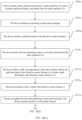
- FIG. 2 is a flowchart of updating operating system data for the system storage structure shown in FIG. 1 according to an embodiment of this application.
- the device starts from the static partition (A), and data in the static partition (A) is consistent with data in the static partition (B).
- the device updates the data in the static partition of the operating system according to the procedure shown in FIG. 2 .
- S200 A device sequentially loads a basic partition (Common), a static partition (A), and a dynamic partition (Super), and starts from the static partition (A).
- Common basic partition
- A static partition
- Super dynamic partition
- S210 The device obtains an operating system patch package.
- the device periodically initiates a packet search request to a packet search server, where the packet search request includes a version number (for example, version 1.1) of an operating system currently running on the device.
- the packet search server checks, based on the version number of the operating system in the packet search request, whether an operating system patch package for the version number exists.
- the packet search server feeds back a download address of the operating system patch package to the device.
- the device downloads the operating system patch package based on the download address of the operating system patch package, and stores the operating system patch package to the user data partition (Userdata).
- S220 The device reads the operating system patch package from a user data partition (Userdata), and updates a static partition (B) based on the operating system patch package.
- Userdata user data partition
- B static partition
- S230 Change a startup sequence of the device from starting from the static partition (A) to starting from the static partition (B). For example, a startup sequence identifier of a master boot record (Master Boot Record, MBR) is rewritten, and the startup sequence identifier is rewritten from A to B.
- MBR Master Boot Record
- S240 The device restarts. Exit the current operating system, power off the device, and power on the device again.
- the device does not need to restart immediately, and the user can select a restart time.
- S250 The device sequentially loads the basic partition (Common), the static partition (B), and the dynamic partition (Super), and starts from the static partition (B).
- S260 The device starts successfully and displays a user interaction interface.
- static partition data loaded when the operating system runs is updated data.
- the data in the static partition can be corrected by using patches without the need to upgrade the entire operating system, thereby greatly reducing difficulty in repairing an operating system, improving efficiency in repairing the operating system, and improving running stability of the operating system.
- a data structure of the operating system patch package and a manner of updating data in a static partition based on the operating system patch package are not specifically limited.
- a person skilled in the art may update data in a static partition based on an actual requirement by using operating system patch packages of a plurality of data structures and using a plurality of data update solutions.
- FIG. 3a(1)-FIG. 3a(2) are a flowchart of updating operating system data for the system storage structure shown in FIG. 1 according to an embodiment of this application.
- the device starts from the static partition (A), and data in the static partition (A) is consistent with data in the static partition (B).
- the operating system patch package includes positioning data used to locate an update object and update data. For example, an update target is to update a file A in a vbmeta sub-partition.
- the operating system patch package includes a save path description /dev/block/by-name/vbmeta/A of the file A on the device, the file A of the latest version, and a hash value of the vbmeta sub-partition of the latest version.
- the device updates the data in the static partition of the operating system according to the procedure shown in FIG. 3a(1)-FIG. 3a(2) .
- S309a Extract a path description from an operating system patch package.
- the device obtains a path description /dev/block/by-name/vbmeta/A.
- S310a Identify a current startup sequence of an operating system.
- the device learns that the operating system currently starts from a static partition (A). For example, refer to S230 to read MBR.
- S311a Correct a path of a to-be-updated file based on the current startup sequence of the operating system. Because the operating system is currently started from the static partition (A), the device adds a suffix corresponding a static partition (B) to the path description /dev/block/by-name/vbmeta/A to obtain a path description /dev/block/by-name/vbmeta_b/A.
- S312a Delete a to-be-updated file.
- the device deletes a file A under /dev/block/by-name/vbmeta_b.
- S313a Extract an update file from the operating system patch package.
- the device obtains the file A of the latest version.
- S314a Write the update file.
- the device writes the file A of the latest version into /dev/block/by-name/vbmeta_b.
- S320a Verify an update result.
- the device calculates a hash value of a vbmeta_b sub-partition, and compares the calculated hash value with the hash value of the vbmeta sub-partition of the latest version in the operating system patch package.
- S330a is performed to obtain the operating system patch package again, and S220 to S226 are performed repeatedly; or the device prompts a user that the patching fails, and the user manually detects the failure cause.
- S340a is performed to change a startup sequence of the device from starting from the static partition (A) to starting from the static partition (B). Specifically, a start identifier in the common partition is rewritten, and the start identifier is rewritten from A to B.
- S350a The device restarts. Exit the current operating system, power off the device, and power on the device again.
- the device does not need to restart immediately, and the user can select a restart time.
- S360a The device sequentially loads the basic partition (Common), the static partition (B), and the dynamic partition (Super).
- S370a The device starts successfully and displays a user interaction interface.
- data in the static partition loaded by the device is updated data of the latest version.
- FIG. 3a(1)-FIG. 3a(2) are a flowchart of updating operating system data for the system storage structure shown in FIG. 1 according to an embodiment of this application.
- the device starts from the static partition (A), and data in the static partition (A) is consistent with data in the static partition (B).
- the operating system patch package includes positioning data used to locate an update object and update data.
- the update target is to add a file B to the vbmeta sub-partition.
- the operating system patch package includes a save path description /dev/block/by-name/vbmeta of the file B on the device, the file B, and the hash value of the vbmeta sub-partition of the latest version.
- the device updates the data in the static partition of the operating system according to the procedure shown in FIG. 3b(1)-FIG. 3b(2) .
- S309b Extract a path description from an operating system patch package.
- the device obtains a path description /dev/block/by-name/vbmeta.
- S310b Identify a current startup sequence of an operating system. The device learns that the operating system is currently started from a static partition (A).
- S311b Correct a path of a to-be-updated file according to a current start sequence of an operating system. Because the operating system is currently started from a static partition (A), the device adds a suffix of a corresponding static partition (B) to a path description/dev/block/by-name/vbmeta to obtain a path description/dev/block/by-name/vbmeta_b. Since the path description/dev/block/by-name/vbmeta does not point to a specific file, the device does not need to delete a file in a static partition (B).
- S313b Extract an update file from the operating system patch package. The device obtains the file B.
- S314b Write the update file.
- the device writes the file B into /dev/block/by-name/vbmeta_b.
- FIG. 3c(1)-FIG. 3c(2) are a flowchart of updating operating system data for the system storage structure shown in FIG. 1 according to an embodiment of this application.
- the device starts from the static partition (A), and data in the static partition (A) is consistent with data in the static partition (B).
- the operating system patch package includes positioning data used to locate an update object and update data.
- the update target is to replace a code segment S in a file C in the vbmeta sub-partition with S1.
- the operating system patch package includes a saving path description /dev/block/by-name/vbmeta/C:S of the file C on the device, a code segment S1, and a hash value of the vbmeta sub-partition of the latest version.
- the device updates the data in the static partition in the operating system according to the procedure shown in FIG. 3c(1)-FIG. 3c(2) .
- S309c Extract a path description from an operating system patch package.
- the device obtains a path description /dev/block/by-name/vbmeta/C:S.
- S310c Identify a current startup sequence of an operating system. The device learns that the operating system is currently started from a static partition (A).
- S311c Correct a path of a to-be-updated file based on a current start sequence of the operating system. Because the operating system is currently started from the static partition (A), the device adds a suffix corresponding to the static partition (B) to a path description /dev/block/by-name/vbmeta/C:S to obtain a path description /dev/block/by-name/vbmeta_b/C:S. Because the path description /dev/block/by-name/vbmeta/C:S points to a code segment in a specific file, the device performs S312c.
- S312c Open a file C in a vbmeta_b sub-partition based on /dev/block/by-name/vbmeta_b/C.
- S313c Locate a code segment S in the file C based on /dev/block/by-name/vbmeta_b/C:S. For example, the S in /dev/block/by-name/vbmeta_b/C:S is matched with code in the file C, and a code segment consistent with the S in the code in the file C is searched.
- S314c Extract a code segment S1 from the operating system patch package, and replace the code segment S in the file C in the vbmeta_b sub-partition b with the code segment S1.
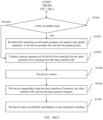
- FIG. 4 is a flowchart of an operating system upgrade for the system data storage structure shown in FIG. 1 .
- the device When the device currently starts from the static partition (A), the device implements an operating system upgrade according to a procedure shown in FIG. 4 .
- S400 A device sequentially loads a basic partition (Common), a static partition (A), and a dynamic partition (Super), and starts from the static partition (A).
- Common basic partition
- A static partition
- Super dynamic partition
- S410 The device obtains an operating system upgrade installation package.
- the device periodically initiates a packet search request to a packet search server, where the packet search request includes a version number (for example, version 1.1) of an operating system that is currently running on the device.
- the packet search server checks, based on the operating system version number in the packet search request, whether an operating system installation package with an updated version number (for example, version 1.2) currently exists.
- the packet search server feeds back a download address of the operating system upgrade installation package (for example, a system incremental upgrade installation package used for upgrading from version 1.1 to version 1.2) to the device.
- the device downloads the operating system upgrade installation package based on the download address of the operating system upgrade installation package, and saves the operating system upgrade installation package to the user data partition (Userdata).
- S420 The device performs a data writing operation on a static partition (B) based on the operating system upgrade installation package to upgrade the static partition.
- the system incremental upgrade installation package used for upgrading from version 1.1 to version 1.2 includes full data in the static partition of version 1.2, and the device rewrites the data in the static partition of version 1.2 into the static partition (B).
- the device creates a virtual dynamic partition in a user data partition (Userdata) based on the operating system upgrade installation package, and writes upgrade data in the dynamic partition (Super) into the virtual dynamic partition.
- the operating system upgrade installation package includes data in the dynamic partition of version 1.2, and the device writes the data in the dynamic partition (Super) of version 1.2 into the virtual dynamic partition.
- an incremental upgrade manner is used for the dynamic partition (Super).
- the virtual dynamic partition of the user data partition (Userdata) stores not all files of the dynamic partition (Super) of a new version after upgrade, but an upgrade result of the data that needs to be upgraded in the dynamic partition (Super) of the old version after upgrade. That is, update data in the dynamic partition is stored in the virtual dynamic partition of the user data partition (Userdata).
- a "system” sub-partition is used as an example. It is assumed that in version 1.1, data in the "system” sub-partition may be divided into two parts: system1 and system2. In case of upgrade from version 1.1 to version 1.2, the data system2 does not change, and the data system 1 is upgraded to system3. Therefore, in S430, the device creates a virtual dynamic partition in the user data partition (Userdata), and writes the data system3 into the virtual dynamic partition.
- Userdata user data partition
- the system incremental upgrade installation package used for upgrading from version 1.1 to version 1.2 includes dynamic partition (Super) update data used for upgrading from version 1.1 to version 1.2, and the dynamic partition (Super) update data includes the data system3.
- dynamic partition (Super) update data used for upgrading from version 1.1 to version 1.2
- dynamic partition (Super) update data includes the data system3.
- the upgrade data in the dynamic partition (Super) stored in the user data partition (Userdata) includes a plurality of COW files, each COW file is corresponding to a sub-partition of a dynamic partition (Super), and a name of the COW file is corresponding to a sub-partition of the dynamic partition (Super) specific to the COW file.
- the COW file of the upgrade data in the dynamic partition (Super) is compressed and stored in the form of binary code.
- each COW file is named based on a dynamic partition (Super) sub-partition specific to the COW file.
- a COW file specific to the "system" sub-partition is named system-cow-img.img.0000.
- the device unpacks the operating system upgrade installation package to obtain all COW files, and appends an A/B partition tag to each COW file.
- a dynamic partition Super
- the virtual dynamic partition created in the user data partition Userdata
- a name mark _b corresponding to the dynamic partition (B) is appended to the COW file.
- _b is appended to system-cow-img.img.0000 to generate system_b-cow-img.img.0000.
- an Update folder is created in the user data partition (Userdata), and the renamed COW file is stored in the Update folder.
- the Update folder in the user data partition (Userdata) includes the following files:
- the COW file includes a COW file map (snapshot map) of the COW file and upgrade data.
- COW file map snapshot map
- the COW file map corresponds to a file map of the sub-partition of the dynamic partition (Super) specific to the COW file.
- the file map of the sub-partition of the dynamic partition (Super) is used to describe all files in the sub-partition of the dynamic partition (Super) of a current version of the operating system (version prior to the upgrade, for example, version 1.1) and a storage address of each file.
- the upgrade data in the COW file is an updated file in the sub-partition data of a new version compared with the sub-partition data of a current version.
- the COW file map of the COW file is used to describe a correspondence between the updated file and the file in the sub-partition of the current version and a storage address of the updated file.
- upgrade data in the COW file may be used to replace the corresponding file in the sub-partition of the dynamic partition (Super), thereby implementing an upgrade of the dynamic partition (Super) data.
- a snapshot operation may be performed on the data in the sub-partition of the dynamic partition (Super) based on the snapshot, so as to generate the file map of the sub-partition of the dynamic partition (Super).
- the file map of the sub-partition of the dynamic partition (Super) may also be generated in advance when creating the operating system upgrade installation package, and the file map is added to the COW file.
- the "system” sub-partition is used as an example. It is assumed that the "system” sub-partition stores data in the following paths:
- a file map of the "system" sub-partition may be as follows:
- Numbers following the file name indicate a physical storage address (block address) of the file in the "system” sub-partition of the dynamic partition (Super).
- the COW file (system_b-cow-img.img.0000) specific to the "system" sub-partition includes the latest version of /system/app/A2.XXX and /system/user/C2.XXX.
- the COW file map of the COW file (system_b-cow-img.img.0000) may be:
- the COW file map of the COW file (system_b-cow-img.img.0000) may be:
- the address segments (045033-045035 and 045036 ⁇ 045040) are respectively /system/app/A2.XXX in the COW file (system_b-cow-img.img.0000) and the physical storage address (block address) of the/system/user/C2.XXX in the user data partition (Userdata) of the latest version.
- the dynamic partition (Super) and the COW file need to be verified as a whole to verify validity of the dynamic partition (Super) and the COW file, and verify whether a result of merging the dynamic partition (Super) data of a current version and the COW file is dynamic partition (Super) data of a new version.
- upgrading from version 1.1 to version 1.2 is used as an example.
- a hash value of a result merging data that does not need to be upgraded (data that does not change from version 1.1 to version 1.2) in the dynamic partition (Super) and data that needs to be upgraded (data that needs to be upgraded from version 1.1 to version 1.2) in the COW file is calculated to determine whether the hash value is the same as a hash value of complete data in the dynamic partition (Super) of version 1.2. If the two are the same, it indicates that the COW file is valid. If the two are different, it indicates that the COW file is invalid, the upgrade fails, the upgrade process is interrupted, and an error is reported.
- the hash value of the complete data in the dynamic partition (Super) of version 1.2 is stored in the operating system upgrade installation package.
- the dynamic partition (Super) and the COW file are merged based on the snapshot.
- merging of the dynamic partition (Super) and the COW file is not physical merging, but merging of a whole file map of the "system" sub-partition and the COW file map of the COW file to generate a file map of sub-partition data of a new version.
- a storage address of /system/app/A2.XXX does not point to /system/app/A2.XXX in the dynamic partition (Super) in the memory, but to A2.XXX in system_b-cow-img.img.0000 in the user data partition (Userdata) in the memory.
- the storage address of /system/user/C2.XXX does not point to /system/user/C2.XXX in the dynamic partition (Super) in the memory, but to C2.XXX in the system_b-cow-img.img.0000 in the user data partition (Userdata) in the memory.
- file maps of a new version of all sub-partitions of the dynamic partition (Super) are obtained in the foregoing merging manner (if a corresponding COW file of a sub-partition is not written into the user data partition (Userdata), a file map of the sub-partition is directly used as the file map of a new version).
- File maps of a new version of all sub-partitions are merged to generate a file system of a new version of the dynamic partition (Super).
- the file system of a new version based on the dynamic partition (Super) reads data, reads all files included in the file system of a new version of the dynamic partition (Super), and calculates a hash value.
- merging status information in metadata partition (/metadata) of the basic partition (Common) is changed from “merged (merged)" to "wait for merge (wait for merge)".
- the merging status information is used to indicate whether there is a COW file that needs to be merged to the dynamic partition (Super).
- the merging status information includes an overall identifier specific to the dynamic partition (Super) and a sub-partition identifier specific to each sub-partition. When the overall identifier is "merged (merged)", a merging operation needs to be performed on all sub-partitions representing the dynamic partition (Super) do not need a merging operation.
- S431 Change a startup sequence of the device from starting from the static partition (A) to starting from the static partition (B).
- a start sequence identifier of a master boot record (Master Boot Record, MBR) is rewritten, and the start sequence identifier is rewritten from A to B.
- MBR Master Boot Record
- the device After the device is powered on, when the device reads that the startup sequence identifier is A, the device starts from the static partition (A), and loads the static partition (A) during startup; or when the device reads that the start sequence identifier is B, the device starts from the static partition (B), and loads the static partition (B) during startup.
- S432 The device restarts. Exit the current operating system, power off the device, and power on the device again.
- S441 The device loads the dynamic partition (Super) and the virtual dynamic partition of the user data partition (Userdata).
- the device reads the merging status information in the metadata (/metadata), determines, based on the merging status information, whether to retrieve the COW file from a specified path of the user data partition (Userdata), and merges and loads the dynamic partition (Super) and the COW file by using the snapshot.
- the device does not load all COW files in the dynamic partition (Super) and the user data partition (Userdata), but loads a corresponding file based on the operating system running requirement. Specifically, in S441, the device determines, based on the operating system running requirement, a file that needs to be loaded, and extracts, based on the snapshot, a corresponding file from the COW file in the dynamic partition (Super) or the virtual dynamic partition for loading.
- a file map of a new version of each sub-partition of the dynamic partition (Super) is first generated based on the snapshot.
- the device determines a to-be-loaded file based on the operating system running requirement, and loads the file based on the file map of a new version of the sub-partition of the dynamic partition (Super).
- the device reads the merging status information in the metadata (/metadata), and the sub-partition identifier of the "system" sub-partition in the merging status information is "wait for merge (wait for merge)". Therefore, the device searches for the COW file in /Update of the user data partition (Userdata), and after detecting the COW file system_b-cow-img.img.0000 in the Update, generates the file map of the new version of the "system” sub-partition based on the snapshot and the file map of the COW file in the system_b-cow-img.img.0000.
- the data is loaded based on storage addresses of all files under /system/user in the file map of the new version of the "system” sub-partition. For example, based on the file map of the new version of the "system” sub-partition:
- the device does not search for the COW file in the /Update in the user data partition (Userdata), but directly loads all data in the directory "user (/system/user)" under the "system” sub-partition.
- the device before loading a file, the device further needs to verify the to-be-loaded file.
- the dynamic partition (Super) and the COW file are not verified as a whole, but only the file that needs to be loaded is verified. For example, verification is performed based on dmverity (dm-verity is a target (target) of dm (device mapper), is a virtual block device, and is specifically used for verification of a file system). If the verification succeeds, the file is loaded. If the verification fails, the device is restarted, and the system is rolled back or the device attempts to reload the file.
- dm-verity is a target (target) of dm (device mapper)
- S450 The device starts successfully and displays a user interaction interface.
- S451 The device merges data in the virtual dynamic partition to the dynamic partition (Super).
- a merging operation means that in an operating system upgrade process, a dynamic partition (Super) upgrade file (COW file) stored in a virtual dynamic partition of the user data partition (Userdata) is written into the dynamic partition (Super), to upgrade data in the file in the dynamic partition (Super), so that the device does not need to load the dynamic partition (Super) and the virtual dynamic partition at a next startup, and device startup may be completed only by loading the dynamic partition (Super).
- a dynamic partition (Super) upgrade file COW file
- Userdata user data partition
- the device performs a power-on broadcast after a successful startup, and starts an upgrade process after the power-on broadcast.
- the upgrade process reads the merging status information in the metadata (/metadata) of the basic partition (Common). If the merging status information is "merged (merged)", the device enters a normal running mode.
- the upgrade process merges the COW file in the user data partition (Userdata) to the dynamic partition (Super).
- the upgrade data in the COW file in the user data partition (Userdata) is written into a corresponding address in the dynamic partition (Super), so that all data in the dynamic partition (Super) is data of a new version after upgrade.
- data under address 045033 ⁇ 045035 is written into address 024014-024017 based on /system/app/A2.XXX: 024018-024020 in the file map of the "system" sub-partition and /system/app/A2.XXX: 045033 ⁇ 045035 in the COW file map
- data under address 045036-045040 is written into address 024036-024040 based on /system/user/C2.XX: 024036-024040 in the file map of the "system" sub-partition and /system/user/C2.XXX: 045036 ⁇ 045040 in the COW file map.
- the COW file in the user data partition (Userdata) is deleted, and storage space is returned to the user data partition (Userdata).
- the merging status information in the metadata (/metadata) of the basic partition (Common) is changed from "wait for merge (wait for merge)” to "merged (merged)”.
- a data operation of a static partition upgrade is specific to operating system data in the static partition (B), which does not affect operating system data in a currently started static partition (A).
- a data operation of a dynamic partition upgrade is completed on the virtual dynamic partition created in the user data partition (Userdata), which does not affect the currently mounted dynamic partition (Super). Therefore, in an entire operating system upgrade process, the user may normally use the device.
- the device does not need to restart immediately, and the user may select a restart time. In this way, an upgrade process of the operating system does not affect a normal mobile phone operation of the user, thereby greatly improving user experience.
- the dynamic partition (Super) a virtual dynamic partition is created in the user data partition (Userdata) only when an upgrade needs to be performed. Therefore, utilization of data storage space is effectively improved.
- a version difference exists between a static partition (B) and a static partition (A), and data in the static partition (A) and data in the static partition (B) may be inconsistent.
- the device starts from the static partition (B) currently, when data in a current operating system of a device needs to be updated, a patching operation cannot be directly performed on the data in the static partition (A).
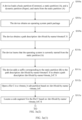
- FIG. 5 is a flowchart of updating operating system data for the system storage structure shown in FIG. 1 according to an embodiment of this application.
- the device After the device starts from the static partition (A), the device performs an operating system upgrade based on the procedure shown in FIG. 4 , and starts from the static partition (B) to complete the operating system upgrade.
- the device After that, in a state in which the device starts from the static partition (B), the device updates data in the static partition of the operating system according to a procedure shown in FIG. 5 .
- S510 Obtain an operating system patch package. Refer to S210.
- S511 Synchronize data in the static partition (B) to a static partition (A).
- S520 A device reads the operating system patch package from a user data partition (Userdata), and updates the static partition (A) based on the operating system patch package. Refer to S220.
- Userdata user data partition
- A static partition
- S530 Change a startup sequence of the device from starting from the static partition (B) to starting from the static partition (A). Refer to S230.
- S550 The device sequentially loads a basic partition (Common), a static partition (A), and a dynamic partition (Super), and starts from the static partition (A).
- Common basic partition
- A static partition
- Super dynamic partition
- S560 The device starts successfully and displays a user interaction interface.
- static partition data loaded when the operating system runs is updated data.
- S511 is not specifically limited in this application, and a person skilled in the art may implement S511 in a plurality of feasible implementations.
- the following uses a specific embodiment as an example to describe a specific implementation procedure of S511.
- the device writes the data in the static partition in the operating system upgrade installation package into the static partition (B). Therefore, if a same operating system upgrade installation package is used, data in the static partition in the operating system upgrade installation package is written into the static partition (A), so that data in the static partition (A) is consistent with data in the static partition (B).
- S511 includes: obtaining an operating system upgrade installation package stored in S410 in the user data partition (Userdata), and writing data in a static partition in the operating system upgrade installation package into the static partition (A).
- the static partition (A) and the static partition (B) are completely consistent in terms of partition structure and partition size. Therefore, the data in the static partition (A) may be directly mirrored to the static partition (B), or the data in the static partition (B) may be mirrored to the static partition (A).
- FIG. 6 is a flowchart of an implementation of S511.
- a terminal device performs the following procedure shown in FIG. 6 to implement S511.
- S600 Read all data in a static partition (B), and pack and compress the data to make an image file B.
- the static partition (A) and the static partition (B) are consistent in terms of partition structure, and include the same sub-partitions. Therefore, it is possible to synchronize the data in the static partition (B) to the static partition (A) by rewriting the files of each sub-partition in the static partition (B) into the corresponding sub-partition in the static partition (A).
- FIG. 7 is a flowchart of an implementation of S511.
- a terminal device performs the following procedure shown in FIG. 7 to implement S511.
- S700 Read a parameter (the parameter is pre-stored in the device before the device leaves the factory) related to partition tables in a memory of the device, and synthesize a total partition table of the memory.
- address mapping descriptions of all partitions under /dev/block/by-name/ are read, and address mappings of all partitions are integrated into the total partition table.
- a partition table stored in the MBR is read.
- S710 Read all static sub-partitions with suffix _b from the total partition table, and generate a list 1 for describing each sub-partition of a static partition (B), where the list 1 includes a name and an address of each sub-partition of the static partition (B).
- Table 1 Number Sub-partition name Sub-partition address (file path) Selected status 1 bootloader_b /dev/block/by-name/bootloader_b 0 2 boot_b /dev/block/by-name/boot_b 0 3 vendor_boot_b /dev/block/by-name/vendor_boot_b 0 4 dtbo_b /dev/block/by-name/dtbo_b 0 5 vbmeta_b /dev/block/by-name/vbmeta_b 0
- S720 Read all static sub-partitions with suffix _a from the total partition table, and generate a list 2 for describing each sub-partition of the static partition (A), where the list 2 includes a name and an address of each sub-partition of the static partition (A).
- Table 2 Number Sub-partition name Sub-partition address (file path) 1 bootloader_a /dev/block/by-name/bootloader_a 2 boot_a /dev/block/by-name/boot_a 3 vendor_boot_a /dev/block/by-name/vendor_boot_a 4 dtbo_a /dev/block/by-name/dtbo_a 5 vbmeta_a /dev/block/by-name/vbmeta_a
- addresses of the sub-partitions are represented in a file path manner.
- a person skilled in the art may describe the addresses of the sub-partitions in a plurality of manners. For example, a linear address description is used.
- S730 Select an unselected sub-partition (the first sub-partition) from the list 1 to obtain a name (name of the first sub-partition) and an address (the first file path) of the sub-partition.
- sub-partitions may be sequentially selected based on a sequence (number sequence) of sub-partitions in list 1, or may be randomly selected from all sub-partitions that are not selected.
- the sub-partition is marked for subsequently determining whether the sub-partition has been selected. For example, as shown in Table 1, a selected status column is added to Table 1, and an initial value of a selected state is 0. If a sub-partition is selected, the selected state is changed to 1.
- S740 Perform suffix-removal matching on the selected sub-partitions in S730 and each sub-partition in the list 2; and determine a sub-partition name (name of the second sub-partition) in the list 2 that is the same as a name of the selected sub-partition in S730 after suffixes are removed, and a sub-partition address (the second file path) corresponding to the second sub-partition name in the list 2.
- Table 1 and Table 2 are used as examples.
- the device performs the following procedure:
- Table 1 and Table 2 are transitional data, and Table 1 and Table 2 are deleted after synchronization of the static partition is completed.
- FIG. 8A-FIG. 8B are a flowchart of an implementation of S511.
- a terminal device performs the following procedure shown in FIG. 8A-FIG. 8B to implement S511.
- S841 Perform hash calculation on data under a first path to obtain a first hash value.
- S842 Perform hash calculation on data under a second subpath to obtain a second hash value.
- S843 Verify whether the first hash value is the same as the second hash value.
- S845 is performed to read the data in the first path.
- an execution node for data synchronization between the static partition (A) and the static partition (B) is any one of the static partition (A) and the static partition (B) that is written into the upgrade data
- an execution time node of S511 is not limited to after S510.
- the static partition (B) is written into the upgrade data.
- the operating system runs to load the static partition (A), and the data in the static partition (B) cannot be synchronized to the static partition (A).
- the device loads the static partition (B) to run the operating system, and running of the operating system does not require loading of the static partition (A).
- the data in the static partition (B) may be synchronized to the static partition (A). Therefore, in this embodiment of this application, S511 may be performed at any moment after S431. This application imposes no specific limitation on an execution time sequence of S511.
- a person skilled in the art may set, according to an actual requirement, a synchronization moment of the static partition or a trigger condition for triggering synchronization of the static partition synchronization.
- the following describes another execution time sequence of S511 by using a specific embodiment as an example.
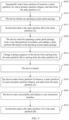
- FIG. 9A-FIG. 9B are a flowchart of an operating system upgrade according to an embodiment of this application.
- the device When the device currently starts from the static partition (A), the device implements an operating system upgrade and static partition synchronization according to a procedure shown in FIG. 9A-FIG. 9B are.
- S950 The device loads a static partition (B).
- S953 is performed to synchronize data in the static partition (B) to the static partition (A).
- S953 refer to S511.
- S960 Load a dynamic partition (Super) and a virtual dynamic partition. Refer to S541.
- S970 The device starts successfully and displays a user interaction interface. Refer to S450.
- S971 The device merges data in the virtual dynamic partition to the dynamic partition (Super). Refer to S451.
- the device verifies files that need to be loaded for current system running from the dynamic partition and the virtual dynamic partition.
- the device will verify the files that need to be loaded for the current system running from the dynamic partition and the virtual dynamic partition only after the verification succeeds. If the verification fails, the device is restarted, and the system is rolled back or the device attempts to reload the file.
- the static partition synchronization is performed only after files that need to be loaded from the dynamic partition and the virtual dynamic partition are successfully verified, or files that need to be loaded from the dynamic partition and the virtual dynamic partition is successfully loaded.
- FIG. 10A-FIG. 10B are a flowchart of an operating system upgrade according to an embodiment of this application.
- the device When the device currently starts from the static partition (A), the device implements an operating system upgrade and static partition synchronization according to a procedure shown in FIG. 10A-FIG. 10B .
- S1053 is performed to verify files that need to be loaded from the dynamic partition and the virtual dynamic partition. For example, dmverity is used.
- S1060 is performed, the device is restarted and the system is rolled back, for example, starting from the static partition (A).
- S1055 Synchronize data in the static partition (B) to the static partition (A). For performing of S1055, refer to S511.
- the device further performs S570 to synchronize the data in the static partition (A) to the static partition (B). For performing of S570, refer to S511.
- improvements on a technology can be clearly distinguished as improvements on hardware (for example, improvements on circuit structures such as a diode, a transistor, or a switch) or improvements on software (improvements on methods or processes).
- improvements on methods or processes may be considered as direct improvements on a hardware circuit structure. Almost all designers obtain a corresponding hardware circuit structure by programming an improved method or process into a hardware circuit. Therefore, it cannot be said that the improvement of a method or a process cannot be realized by a hardware entity module.
- a programmable logic device for example, a field programmable gate array (Field Programmable Gate Array, FPGA)
- PLD Programmable Logic Device
- FPGA Field Programmable Gate Array
- a logical function of the programmable logic device is determined by programming a component by an accessor.
- Designers program a digital device to be "integrated" on a PLD, and there is no need for a chip manufacturer to design and manufacture an application-specific integrated circuit chip.
- this programming is mostly implemented by using "logic compiler (logic compiler)” software, which is similar to the software compiler used in program development and writing.
- HDL Hardware Description Language
- ABEL Advanced Boolean Expression Language
- AHDL Altera Hardware Description Language
- HDCal JHDL
- Lava Lava
- Lola MyHDL
- PALASM PALASM
- RHDL Rule Hardware Description Language
- VHDL Very-High-Speed Integrated Circuit Hardware Description Language
- Verilog Verilog
- the method procedure provided in this embodiment of this application may be implemented in a hardware manner.
- a controller is used to control a touchscreen to implement the method procedure provided in this embodiment of this application.
- the controller may be implemented in any suitable manner.
- the controller may use a microprocessor or a processor and a computer-readable medium storing computer readable program code (for example, software or firmware) executable by the microprocessor or the processor, a logic gate, a switch, an application specific integrated circuit (Application Specific Integrated Circuit, ASIC), a programmable logic controller, and an embedded microcontroller.
- Examples of the controller include but are not limited to the following microcontrollers: ARC 625D, Atmel AT91SAM, Microchip PIC18F26K20, and Silicone Labs C8051F320.
- a memory controller may further be implemented as a part of control logic of the memory.
- a method step may be logically programmed, so that the controller implements a same function in a form of a logic gate, a switch, an application-specific integrated circuit, a programmable logic controller, an embedded microcontroller, or the like. Therefore, the controller may be considered as a hardware component, and an apparatus included in the controller for implementing various functions may also be considered as a structure in the hardware component. Alternatively, an apparatus for implementing various functions may be considered as a software module implementing a method or a structure in a hardware component.
- this application further provides an electronic device.
- the electronic device includes a memory configured to store a computer program instruction and a processor configured to execute the program instruction.
- the computer program instruction is executed by the processor, the electronic device is triggered to perform the method steps described in the embodiments of this application.
- the computer program product includes a computer program.
- the computer program product runs on a computer, the computer is enabled to perform some or all steps provided in the embodiments of this application.
- the technology in the embodiments of the present invention may be implemented by using software and a required universal hardware platform. Based on such an understanding, the technical solutions in the embodiments of the present invention essentially or the part contributing to a conventional technology may be implemented in a form of a software product.
- the computer software product may be stored in a storage medium, such as a ROM/RAM, a magnetic disk, or an optical disc, and the computer software product may include several instructions for instructing a computer device (which may be a personal computer, a server, or a network device) to perform the methods described in the embodiments or some parts of the embodiments of the present invention.
Landscapes
- Engineering & Computer Science (AREA)
- Software Systems (AREA)
- Theoretical Computer Science (AREA)
- General Engineering & Computer Science (AREA)
- Physics & Mathematics (AREA)
- General Physics & Mathematics (AREA)
- Computer Security & Cryptography (AREA)
- Quality & Reliability (AREA)
- Stored Programmes (AREA)
- Information Retrieval, Db Structures And Fs Structures Therefor (AREA)
Abstract
Description
- This application relates to the field of computer technologies, and in particular, to an operating system data update method, a device, a storage medium, and a computer program product.
- In an application scenario of a conventional technology, an operating system needs to be installed on a user terminal to be used by a user. For example, a mobile phone operating system (such as an iOS system or an Android system) needs to be installed on a mobile phone to be used by the user.
- In an application scenario of the conventional technology, after the operating system is released, system data in the released operating system sometimes needs to be updated. For example, after the operating system is released, an application environment of the operating system changes, and some parameters in the operating system need to be correspondingly updated. For another example, when writing operating system code, a bug (bug) may exist in operating system data due to human error or insufficient consideration of a programmer. Generally, when the operating system is just released, a vendor of the operating system is not aware of a bug that exists in the operating system. In this case, the operating system with the bug is installed on a user terminal. As running data and detection data of an operating system accumulate, the vendor of the operating system detects the bug. In this case, system bug repair needs to be performed on the user terminal on which the operating system with the bug is installed.
- Therefore, an operating system data update method is required to update operating system data when there is a requirement for updating operating system data.
- In view of this, this application provides an operating system data update method, a device, a storage medium, and a computer program product, so as to satisfy the requirement for updating operating system data in the conventional technology.
- According to a first aspect, an embodiment of this application provides an operating system data update method, applied to an electronic device, where the electronic device includes a processor and a memory, the memory includes a basic partition, a first static partition, a second static partition, a dynamic partition, and a user data partition, the electronic device loads data from the basic partition, the first static partition, and the dynamic partition after starting, to run a first operating system, and after the first operating system runs, the method includes:
- obtaining a patch package, where the patch package includes an update positioning description and update data, the update positioning description is used to specify an update target that needs to be updated in a static partition, and the update data is used to describe a data update result of the static partition;
- updating data in the second static partition based on the update positioning description and the update data in the patch package;
- modifying a startup sequence of the electronic device from starting from the first static partition to starting from the second static partition;
- restarting the electronic device, and determining that a current startup sequence is starting from the second static partition;
- loading data from the basic partition, the second static partition, and the dynamic partition to run the first operating system with updated static partition data; and
- before the updating data from the second static partition based on the update positioning description and the update data in the patch package, the method further includes: synchronizing data in the first static partition to the second static partition.
- In an implementation of the first aspect, the synchronizing data in the first static partition to the second static partition includes:
- reading data in each sub-partition of the first static partition; and
- rewriting the data in each sub-partition of the first static partition into a corresponding sub-partition of the second static partition.
- In an implementation of the first aspect, the synchronizing data in the first static partition to the second static partition includes:
- calculating a hash value of data in a third sub-partition, where the third sub-partition is a sub-partition of the first static partition;
- calculating a hash value of data in a fourth sub-partition, where the fourth sub-partition is a sub-partition of the second static partition, and the fourth sub-partition corresponds to the third sub-partition; and
- rewriting the data in the third sub-partition into the fourth sub-partition when the hash value of the data in the third sub-partition is different from the hash value of the data in the fourth sub-partition.
- In an implementation of the first aspect, after the obtaining a patch package, synchronizing data in the first static partition to the second static partition is performed.
- In an implementation of the first aspect, before the obtaining a patch package, the method further includes:
- loading data from the basic partition, the second static partition, and the dynamic partition to run a second operating system;
- obtaining an upgrade installation package, where the upgrade installation package includes a static partition upgrade file;
- upgrading the data in the first static partition based on the static partition upgrade file;
- modifying a startup sequence of the electronic device from starting from the second static partition to starting from the first static partition;
- restarting the electronic device, and determining that the current startup sequence is starting from the first static partition;
- loading data from the basic partition, the first static partition, and the dynamic partition to run the first operating system; and
- after the restarting the electronic device, and determining that the current startup sequence is starting from the first static partition, performing , synchronizing data in the first static partition to the second static partition.
- In an implementation of the first aspect, in a process of loading the data from the first static partition, after verification of data in the static partition succeeds, synchronizing data in the first static partition to the second static partition is performed.
- In an implementation of the first aspect, in a process of loading the data from the dynamic partition, synchronizing data in the first static partition to the second static partition is performed after verification of a to-be-loaded dynamic partition file succeeds.
- In an implementation of the first aspect, the upgrade installation package further includes dynamic partition upgrade data;
- before the restarting the electronic device, and determining that the current startup sequence is starting from the first static partition, the method further includes: creating a virtual dynamic partition in the user data partition, and storing the dynamic partition upgrade data in the virtual dynamic partition;
- the loading data from the basic partition, the first static partition, and the dynamic partition to run the first operating system includes loading the data from the dynamic partition and the dynamic partition upgrade data;
- after the loading data from the basic partition, the first static partition, and the dynamic partition to run the first operating system, the method further includes merging the dynamic partition upgrade data to the dynamic partition; and
- after the merging the dynamic partition upgrade data to the dynamic partition, performing , synchronizing data in the first static partition to the second static partition.
- In an implementation of the first aspect, the updating data in the second static partition based on the update positioning description and the update data in the patch package includes:
adding a path correction for the second static partition to the update positioning description. - In an implementation of the first aspect, the update positioning description is a first path pointing to a first file, the update data is a second file, the second file is a file with a same name as the first file, the second file is an update file of the first file, and the updating data in the second static partition based on the update positioning description and the update data in the patch package includes:
- adding a directory name suffix corresponding to the second static partition to the first path, to generate a second path;
- locating the first file in the second static partition based on the second path;
- deleting the first file in the second static partition; and
- writing the second file into the second path.
- In an implementation of the first aspect, the update positioning description is a third path, the update data is a third file, and the updating data in the second static partition based on the update positioning description and the update data in the patch package includes:
- adding a directory name suffix corresponding to the second static partition to the third path, to generate a fourth path; and
- writing the third file into the fourth path.
- In an implementation of the first aspect, the update positioning description is a fifth path pointing to a first code segment of a fourth file, the update data is a second code segment, and the updating data in the second static partition based on the update positioning description and the update data in the patch package includes:
- adding a directory name suffix corresponding to the second static partition to the fifth path, to generate a sixth path;
- locating the fourth file in the second static partition based on the sixth path;
- opening the fourth file to locate the first code segment; and
- rewriting the second code segment into the first code segment.
- According to a second aspect, this application further provides an electronic device, where the electronic device includes a processor and a memory, the memory includes a basic partition, a first static partition, a second static partition, a dynamic partition, and a user data partition, and the processor is configured to execute software code stored in the memory, so that
- the electronic device loads data from the basic partition, the first static partition, and the dynamic partition to run a first operating system after starting, and
- after the first operating system runs, the electronic device performs the method procedure according to the first aspect.
- According to a third aspect, this application further provides a computer-readable storage medium, where the computer-readable storage medium stores a computer program, and when the computer program is run on a computer, the computer is enabled to perform the method according to the first aspect.
- According to a fourth aspect, this application further provides a computer program product, where the computer program product includes a computer program, and when the computer program product runs on a computer, the computer is enabled to perform the method according to the first aspect.
- According to the foregoing technical solutions provided in the embodiments of this application, at least the following technical effects may be implemented:
- According to the method in the embodiments of this application, the data in the static partition can be corrected by using patches without the need to upgrade the entire operating system, thereby greatly reducing difficulty in repairing an operating system, improving efficiency in repairing the operating system, and improving running stability of the operating system.
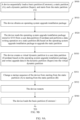
- To describe technical solutions in embodiments of this application more clearly, the following briefly describes accompanying drawings required for describing the embodiments. Apparently, the accompanying drawings in the following description show only some embodiments of this application, and a person of ordinary skill in the art may still derive other drawings from these accompanying drawings without creative efforts.
-
FIG. 1 is a schematic diagram of a data storage structure of an Android system in a virtual A/B upgrade manner on a terminal device; -
FIG. 2 is a flowchart of updating operating system data according to an embodiment of this application; -
FIG. 3a(1)-FIG. 3a(2) are a flowchart of updating operating system data according to an embodiment of this application; -
FIG. 3b(1)-FIG. 3b(2) are a flowchart of updating operating system data according to an embodiment of this application; -
FIG. 3c(1)-FIG. 3c(2) are a flowchart of updating operating system data according to an embodiment of this application; -
FIG. 4 is a flowchart of an operating system upgrade according to an embodiment of this application; -
FIG. 5 is a flowchart of updating operating system data according to an embodiment of this application; -
FIG. 6 is a flowchart of static partition synchronization according to an embodiment of this application; -
FIG. 7 is a flowchart of static partition synchronization according to an embodiment of this application; -
FIG. 8A-FIG. 8B are a flowchart of static partition synchronization according to an embodiment of this application; -
FIG. 9A-FIG. 9B are a flowchart of an operating system upgrade according to an embodiment of this application; and -
FIG. 10A-FIG. 9B are a flowchart of an operating system upgrade according to an embodiment of this application. - To better understand the technical solutions of this application, the following describes embodiments of this application in detail with reference to the accompanying drawings.
- It should be noted that the described embodiments are merely some rather than all of embodiments of this application. Based on embodiments of this application, all other embodiments obtained by a person of ordinary skill in the art without creative efforts shall fall within the protection scope of this application.
- Terms used in embodiments of this application are merely intended to describe specific embodiments, but are not intended to limit this application. The terms "one", "a", "the", "the foregoing", "this", and "the one" of singular forms used in this specification and the appended claims of this application are also intended to include plural forms, unless otherwise specified in the context clearly.
- It should be understood that the term "and/or" used in the text merely describes an association relationship between associated objects, and indicates that three relationships may exist. For example, A and/or B may indicate the following cases: Only A exists, both A and B exist, and only B exists. In addition, the character "/" in this specification usually indicates an "or" relationship between the associated objects.
- When there is a requirement for updating data of an operating system, a feasible solution is to release a new version of the operating system. A user device periodically initiates a packet search request to a packet search server, where the packet search request includes a version number (for example, version 1.1, and a bug exists in an operating system of version 1.1) of the operating system currently running on the device. The packet search server checks, based on the version number of the operating system in the packet search request, whether an operating system installation package with an updated version number (for example, version 1.2, and the bug in the operating system of version 1.2 is repaired) currently exists. When the operating system installation package of an updated version exists, the packet search server feeds back a download address of the operating system upgrade installation package (for example, an operating system upgrade package used for upgrading from version 1.1 to version 1.2) to the device. The device downloads the operating system upgrade installation package based on the download address of the operating system upgrade installation package. After the system upgrade installation package is downloaded, the operating system is upgraded.
- In the foregoing solution, operating system data on the user device can be updated. However, a relatively large amount of data needs to be consumed for downloading the operating system installation package, and system resource and operation time occupied by an operating system upgrade also greatly affect normal use of the device by a user.
- Where there is a requirement for updating data of an operating system, another feasible solution is to release a patch file for data update. The patch file is only used to update specified operating system data. For example, an incorrect assignment of a parameter A causes a bug in an operating system, and the patch file includes positioning information of the parameter A and a correct assignment of the parameter A. According to the patch file, only the assignment of the parameter A is updated, and the entire operating system does not need to be upgraded. Because a data volume of a patch file is far less than a data volume of an operating system upgrade installation package, traffic consumption of a user is greatly reduced. In addition, system resource and operation time occupied by an update operation for specified data only are also far less than system resource and operation time occupied when an entire operating system is upgraded. Therefore, impact of a data update operation for the operating system on normal use of a device by the user can be effectively reduced.
- However, although updating only the specified data by using the patch file can effectively control download traffic consumption, system resource occupation, and repair time consumption, in a normal condition, the device starts to load the operating system data, and in a running process of the operating system, the loaded operating system data is read-only, for example, when the device runs the operating system normally, a static partition of the operating system is read-only. If data that needs to be updated exists in the static partition, operating system data in the static partition cannot be updated when the device runs the operating system.
- To resolve the foregoing problem, this application provides an operating system data update method. The data in the static partition is updated based on A/B partition configuration of the static partition when the device runs normally.
- Specifically,
FIG. 1 is a schematic diagram of a data storage structure of an Android system in a virtual A/B upgrade manner on a terminal device. As shown inFIG. 1 , an Android system data storage area includes a basic partition (Common), a static partition (A), a static partition (B), a dynamic partition (Super), and a user data partition (Userdata). - The user data partition (Userdata) is used to store personal data of a user. For example, personal data such as an APP installed by the user personally, and a picture, a document, and a video stored by the user personally. Data stored in the basic partition is system data that is not used for updating the operating system. A structure of the static partition (A) and a structure of the static partition (B) correspond to each other, and sub-partition names are distinguished from each other by using suffixes _a and _b. The static partition (A) includes bootloader_a, boot_a, vendor_ boot_a, dtbo_a, and vbmeta a; and the static partition (B) includes bootloader_b, boot_b, vendor_boot_b, dtbo_b, and vbmeta_b. The dynamic partition (Super) includes a plurality of sub-partitions.
- When the device starts, the device starts from a static partition. For example, when the device starts from the static partition (A), the basic partition (Common), the static partition (A), and the dynamic partition (Super) are sequentially loaded; or when the device starts from the static partition (B), the basic partition (Common), the static partition (B), and the dynamic partition (Super) are sequentially loaded.
- In the system storage structure shown in
FIG. 1 , a partition structure of the static partition (A) is consistent with a partition structure of the static partition (B). When data programmed in the static partition (A) is consistent with data programmed in the static partition (B) (for example, in some application scenarios, after a device performs system installation before the device leaves a factory, data programmed in the static partition (A) is consistent with data programmed in the static partition (B)), the static partition (A) and the static partition (B) may be replaced with each other. -
FIG. 2 is a flowchart of updating operating system data for the system storage structure shown inFIG. 1 according to an embodiment of this application. The device starts from the static partition (A), and data in the static partition (A) is consistent with data in the static partition (B). The device updates the data in the static partition of the operating system according to the procedure shown inFIG. 2 . - S200: A device sequentially loads a basic partition (Common), a static partition (A), and a dynamic partition (Super), and starts from the static partition (A).
- S210: The device obtains an operating system patch package.
- For example, in a feasible implementation, the device periodically initiates a packet search request to a packet search server, where the packet search request includes a version number (for example, version 1.1) of an operating system currently running on the device. The packet search server checks, based on the version number of the operating system in the packet search request, whether an operating system patch package for the version number exists. When there is an operating system patch package for the version number, the packet search server feeds back a download address of the operating system patch package to the device. The device downloads the operating system patch package based on the download address of the operating system patch package, and stores the operating system patch package to the user data partition (Userdata).
- S220: The device reads the operating system patch package from a user data partition (Userdata), and updates a static partition (B) based on the operating system patch package.
- S230: Change a startup sequence of the device from starting from the static partition (A) to starting from the static partition (B). For example, a startup sequence identifier of a master boot record (Master Boot Record, MBR) is rewritten, and the startup sequence identifier is rewritten from A to B. After the device is powered on, when the device reads that the startup sequence identifier is A, the device starts from the static partition (A), and loads the static partition (A) during startup; or when the device reads that the start sequence identifier is B, the device starts from the static partition (B), and loads the static partition (B) during startup.
- S240: The device restarts. Exit the current operating system, power off the device, and power on the device again.
- After S230, the device does not need to restart immediately, and the user can select a restart time.
- S250: The device sequentially loads the basic partition (Common), the static partition (B), and the dynamic partition (Super), and starts from the static partition (B).
- S260: The device starts successfully and displays a user interaction interface. In this case, static partition data loaded when the operating system runs is updated data.
- According to the method in the embodiments of this application, the data in the static partition can be corrected by using patches without the need to upgrade the entire operating system, thereby greatly reducing difficulty in repairing an operating system, improving efficiency in repairing the operating system, and improving running stability of the operating system.
- Specifically, in this embodiment of this application, a data structure of the operating system patch package and a manner of updating data in a static partition based on the operating system patch package are not specifically limited. A person skilled in the art may update data in a static partition based on an actual requirement by using operating system patch packages of a plurality of data structures and using a plurality of data update solutions.
-
FIG. 3a(1)-FIG. 3a(2) are a flowchart of updating operating system data for the system storage structure shown inFIG. 1 according to an embodiment of this application. The device starts from the static partition (A), and data in the static partition (A) is consistent with data in the static partition (B). The operating system patch package includes positioning data used to locate an update object and update data. For example, an update target is to update a file A in a vbmeta sub-partition. The operating system patch package includes a save path description /dev/block/by-name/vbmeta/A of the file A on the device, the file A of the latest version, and a hash value of the vbmeta sub-partition of the latest version. - The device updates the data in the static partition of the operating system according to the procedure shown in
FIG. 3a(1)-FIG. 3a(2) . - For S300a and S301a, refer to S200 and S210.
- S309a: Extract a path description from an operating system patch package. The device obtains a path description /dev/block/by-name/vbmeta/A.
- S310a: Identify a current startup sequence of an operating system. The device learns that the operating system currently starts from a static partition (A). For example, refer to S230 to read MBR.
- S311a: Correct a path of a to-be-updated file based on the current startup sequence of the operating system. Because the operating system is currently started from the static partition (A), the device adds a suffix corresponding a static partition (B) to the path description /dev/block/by-name/vbmeta/A to obtain a path description /dev/block/by-name/vbmeta_b/A.
- S312a: Delete a to-be-updated file. The device deletes a file A under /dev/block/by-name/vbmeta_b.
- S313a: Extract an update file from the operating system patch package. The device obtains the file A of the latest version.
- S314a: Write the update file. The device writes the file A of the latest version into /dev/block/by-name/vbmeta_b.
- S320a: Verify an update result. The device calculates a hash value of a vbmeta_b sub-partition, and compares the calculated hash value with the hash value of the vbmeta sub-partition of the latest version in the operating system patch package.
- If the verification fails and the hash values are different, S330a is performed to obtain the operating system patch package again, and S220 to S226 are performed repeatedly; or the device prompts a user that the patching fails, and the user manually detects the failure cause.
- If the verification succeeds and the hash values are the same, S340a is performed to change a startup sequence of the device from starting from the static partition (A) to starting from the static partition (B). Specifically, a start identifier in the common partition is rewritten, and the start identifier is rewritten from A to B.
- S350a: The device restarts. Exit the current operating system, power off the device, and power on the device again.
- After S340a is completed, the device does not need to restart immediately, and the user can select a restart time.
- S360a: The device sequentially loads the basic partition (Common), the static partition (B), and the dynamic partition (Super).
- S370a: The device starts successfully and displays a user interaction interface. In this case, data in the static partition loaded by the device is updated data of the latest version.
- For another example,
FIG. 3a(1)-FIG. 3a(2) are a flowchart of updating operating system data for the system storage structure shown inFIG. 1 according to an embodiment of this application. The device starts from the static partition (A), and data in the static partition (A) is consistent with data in the static partition (B). The operating system patch package includes positioning data used to locate an update object and update data. For example, the update target is to add a file B to the vbmeta sub-partition. The operating system patch package includes a save path description /dev/block/by-name/vbmeta of the file B on the device, the file B, and the hash value of the vbmeta sub-partition of the latest version. - The device updates the data in the static partition of the operating system according to the procedure shown in
FIG. 3b(1)-FIG. 3b(2) . - For S300b and S301b, refer to S200 and S210.
- S309b: Extract a path description from an operating system patch package. The device obtains a path description /dev/block/by-name/vbmeta.
- S310b: Identify a current startup sequence of an operating system. The device learns that the operating system is currently started from a static partition (A).
- S311b: Correct a path of a to-be-updated file according to a current start sequence of an operating system. Because the operating system is currently started from a static partition (A), the device adds a suffix of a corresponding static partition (B) to a path description/dev/block/by-name/vbmeta to obtain a path description/dev/block/by-name/vbmeta_b. Since the path description/dev/block/by-name/vbmeta does not point to a specific file, the device does not need to delete a file in a static partition (B).
- S313b: Extract an update file from the operating system patch package. The device obtains the file B.
- S314b: Write the update file. The device writes the file B into /dev/block/by-name/vbmeta_b.
- For S320b to S370b, refer to S320a to S361a.
- For another example,
FIG. 3c(1)-FIG. 3c(2) are a flowchart of updating operating system data for the system storage structure shown inFIG. 1 according to an embodiment of this application. The device starts from the static partition (A), and data in the static partition (A) is consistent with data in the static partition (B). The operating system patch package includes positioning data used to locate an update object and update data. For example, the update target is to replace a code segment S in a file C in the vbmeta sub-partition with S1. The operating system patch package includes a saving path description /dev/block/by-name/vbmeta/C:S of the file C on the device, a code segment S1, and a hash value of the vbmeta sub-partition of the latest version. - The device updates the data in the static partition in the operating system according to the procedure shown in
FIG. 3c(1)-FIG. 3c(2) . - For S300c and S301c, refer to S200 and S210.
- S309c: Extract a path description from an operating system patch package. The device obtains a path description /dev/block/by-name/vbmeta/C:S.
- S310c: Identify a current startup sequence of an operating system. The device learns that the operating system is currently started from a static partition (A).
- S311c: Correct a path of a to-be-updated file based on a current start sequence of the operating system. Because the operating system is currently started from the static partition (A), the device adds a suffix corresponding to the static partition (B) to a path description /dev/block/by-name/vbmeta/C:S to obtain a path description /dev/block/by-name/vbmeta_b/C:S. Because the path description /dev/block/by-name/vbmeta/C:S points to a code segment in a specific file, the device performs S312c.
- S312c: Open a file C in a vbmeta_b sub-partition based on /dev/block/by-name/vbmeta_b/C.
- S313c: Locate a code segment S in the file C based on /dev/block/by-name/vbmeta_b/C:S. For example, the S in /dev/block/by-name/vbmeta_b/C:S is matched with code in the file C, and a code segment consistent with the S in the code in the file C is searched.
- S314c: Extract a code segment S1 from the operating system patch package, and replace the code segment S in the file C in the vbmeta_b sub-partition b with the code segment S1.
- For S320c to S370c, refer to S320a to S361a.
- Further, after the device leaves the factory, in an actual application scenario, the device still has upgrade requirements.
FIG. 4 is a flowchart of an operating system upgrade for the system data storage structure shown inFIG. 1 . When the device currently starts from the static partition (A), the device implements an operating system upgrade according to a procedure shown inFIG. 4 . - S400: A device sequentially loads a basic partition (Common), a static partition (A), and a dynamic partition (Super), and starts from the static partition (A).
- S410: The device obtains an operating system upgrade installation package.
- For example, in a feasible implementation, the device periodically initiates a packet search request to a packet search server, where the packet search request includes a version number (for example, version 1.1) of an operating system that is currently running on the device. The packet search server checks, based on the operating system version number in the packet search request, whether an operating system installation package with an updated version number (for example, version 1.2) currently exists. When the operating system installation package with an updated version exists, the packet search server feeds back a download address of the operating system upgrade installation package (for example, a system incremental upgrade installation package used for upgrading from version 1.1 to version 1.2) to the device. The device downloads the operating system upgrade installation package based on the download address of the operating system upgrade installation package, and saves the operating system upgrade installation package to the user data partition (Userdata).
- S420: The device performs a data writing operation on a static partition (B) based on the operating system upgrade installation package to upgrade the static partition.
- For example, the system incremental upgrade installation package used for upgrading from version 1.1 to version 1.2 includes full data in the static partition of version 1.2, and the device rewrites the data in the static partition of version 1.2 into the static partition (B).
- S430: The device creates a virtual dynamic partition in a user data partition (Userdata) based on the operating system upgrade installation package, and writes upgrade data in the dynamic partition (Super) into the virtual dynamic partition. For example, the operating system upgrade installation package includes data in the dynamic partition of version 1.2, and the device writes the data in the dynamic partition (Super) of version 1.2 into the virtual dynamic partition.
- Further, in a virtual A/B upgrade solution, an incremental upgrade manner is used for the dynamic partition (Super). During the upgrade process, the virtual dynamic partition of the user data partition (Userdata) stores not all files of the dynamic partition (Super) of a new version after upgrade, but an upgrade result of the data that needs to be upgraded in the dynamic partition (Super) of the old version after upgrade. That is, update data in the dynamic partition is stored in the virtual dynamic partition of the user data partition (Userdata).
- A "system" sub-partition is used as an example. It is assumed that in version 1.1, data in the "system" sub-partition may be divided into two parts: system1 and system2. In case of upgrade from version 1.1 to version 1.2, the data system2 does not change, and the
data system 1 is upgraded to system3. Therefore, in S430, the device creates a virtual dynamic partition in the user data partition (Userdata), and writes the data system3 into the virtual dynamic partition. - For example, the system incremental upgrade installation package used for upgrading from version 1.1 to version 1.2 includes dynamic partition (Super) update data used for upgrading from version 1.1 to version 1.2, and the dynamic partition (Super) update data includes the data system3.
- Further, in the virtual A/B upgrade solution, incremental upgrade of the dynamic partition (Super) is implemented based on a snapshot (snapshot) technology. Specifically, in the virtual dynamic partition of the user data partition (Userdata), the upgrade data in the dynamic partition (Super) is stored by using a Copy-On-Write (Copy-On-Write, COW) file.
- Specifically, the upgrade data in the dynamic partition (Super) stored in the user data partition (Userdata) includes a plurality of COW files, each COW file is corresponding to a sub-partition of a dynamic partition (Super), and a name of the COW file is corresponding to a sub-partition of the dynamic partition (Super) specific to the COW file.
- In the operating system upgrade installation package obtained in S410, the COW file of the upgrade data in the dynamic partition (Super) is compressed and stored in the form of binary code. In the operating system upgrade installation package, each COW file is named based on a dynamic partition (Super) sub-partition specific to the COW file. For example, a COW file specific to the "system" sub-partition is named system-cow-img.img.0000.
- In S430, the device unpacks the operating system upgrade installation package to obtain all COW files, and appends an A/B partition tag to each COW file. Specifically, when the device currently starts from the static partition (A), it may be understood that a dynamic partition (Super) loaded by the device currently when running the operating system is the dynamic partition (A). When the operating system is being upgraded, the virtual dynamic partition created in the user data partition (Userdata) specific to the dynamic partition (B). Therefore, a name mark _b corresponding to the dynamic partition (B) is appended to the COW file. For example, _b is appended to system-cow-img.img.0000 to generate system_b-cow-img.img.0000.
- Further, in S430, an Update folder is created in the user data partition (Userdata), and the renamed COW file is stored in the Update folder. For example, in an application scenario, after the COW file is written into the user data partition (Userdata), the Update folder in the user data partition (Userdata) includes the following files:
           system_b-cow-img.img.0000;
           system_ext_b-cow-img.img.0000;
           vendor_b-cow-img.img.0000;
           product_b-cow-img.img.0000;
           cust_b-cow-img.img.0000;
           odm_b-cow-img.img.0000.
           / system/app/ A0. XXX;
           /system/app/A1.XXX;
           /system/app/A2. XXX;
           /system/B0.XXX;
           /system/B1.XXX;
           /system/user/C0.XXX;
           /system/user/C1.XXX;
           /system/user/C2.XXX;
           /system/user/C3.XXX.
           /system/app/A0.XXX: 024010~024013;
           /system/app/A1.XXX: 024014~024017;
           /system/app/A2.XXX: 024018~024020;
           /systemB0.XXX: 024021~024026;
           /systemB1.XXX: 024027~024028;
           /system/user/C0.XXX: 024029~024032;
           /system/user/C1.XXX: 024033~024035;
           /system/user/C2.XXX: 024036~024040;
           /system/user/C3.XXX: 024041~024044.
           /system/app/A2.XXX and /system/user/C2.XXX are system1 in the data of the
 "system" sub-partition; and
           /system/app/A0.XXX, /system/app/A1.XXX, /systemB0.XXX, /system/B1.XXX,
           /system/user/C0.XXX, /system/user/C1.XXX
and /system/user/C3.XXX are system2 in the data
 of the "system" sub-partition.
           / system/app/ A2. XXX:
           Map1 (address of data to be updated in an original super partition): start address
 address start: 024018 (offset relative to a system start address);
offset size size: 2 (that is, data of
 the 024018-024020 address segment)
           Map2 (address of the update data stored in the cow file): start address address start:
 045033 (offset relative to the start address stored in the cow file);
offset size size: 2 (that is, data
 of the 045033~045035 address segment);
           /system/user/C2.XXX:
           Map1 (address of data to be updated in an original super partition): start address
 address start: 024036 (offset relative to a system start address);
offset size size: 4 (that is, data of
 the 024036-024040 address segment)
           Map2 (address of the update data stored in the cow file): start address address start:
 045036 (offset relative to the start address stored in the cow file);
offset size size: 4 (that is, data
 of the 045036-045040 address segment).
           / system/app/ A2. XXX:
           Map1.1 (address of the to-be-updated data in the original super partition): Start
 address address start: 024018 (offset relative to a system start address);
offset size size: 2 (that is,
 data of the 024018-024020 address segment)
           Map2.1 (address of the update data that needs to be rewritten with the Map1.1
 address stored in the cow file): start address address start:
045033 (offset relative to the start
 address stored in the cow file); offset size size:
2 (that is, data of the 045033~045035 address
 segment);
           Map1.2 (the to-be-written address of the part of the cow file whose update data
 exceeds the size of the to-be-updated data in the original super partition):
start address address
 start: 025018 (offset relative to a system start address); offset size size:
1 (that is, data of the
 025018-025020 address segment)
           Map2.2 (address in the updated data
that is stored in the cow file and that needs to be
           used to rewrite Map1.2): start address address start:
 046033 (offset relative to the start address
 stored in the cow file); offset size size: 2
(that is, data of the 046033~046035 address segment).
           /system/app/A0.XXX: 024010~024013;
           /system/app/A1.XXX: 024014~024017;
           /system/app/A2.XXX: 024018~024020;
           /systemB0.XXX: 024021~024026;
           /systemB 1.XXX: 024027~024028;
           /system/user/C0.XXX: 024029~024032;
           /system/user/C1.XXX: 024033~024035;
           /system/user/C2.XXX: 024036~024040;
           /system/user/C3.XXX: 024041~024044.
           is merged with the COW file map:
           / system/app/ A2. XXX:
           Map1: address start: 024018; size: 2 (that is, data of the 024018~024020 address
 segment)
           Map2: address start: 045033; size: 2 (that is, data of the 045033~045035 address
 segment);
           /system/user/C2.XXX:
           Map1: address start: 024036; size: 4 (that is, data of the 024036~024040 address
 segment)
           Map2: address start: 045036; size: 4 (that is, data of the 045036-045040 address
 segment).
to obtain a file map of a new version of the "system" sub-partition:
/system/app/A0.XXX: 024010~024013;
           (Point to A0.XXX under /system/app in the dynamic partition (Super))
           /system/app/A1.XXX: 024014~024017;
           (Point to A1.XXX under /system/app in the dynamic partition (Super))
           /system/app/A2.XXX: 045033~045035;
           (Point to A2.XXX in /Update/system_b-cow-img.img.0000 in the user data partition
 (Userdata))
           /systemB0.XXX: 024021~024026;
           (Point to B0.XXX under /system in the dynamic partition (Super))
           /systemB1.XXX: 024027~024028;
           (Point to B1.XXX under /system in the dynamic partition (Super))
           /system/user/C0.XXX: 024029~024032;
           (Point to C0.XXX under /system/user in the dynamic partition (Super))
           /system/user/C1.XXX: 024033~024035;
           (Point to C1.XXX under /system/user in the dynamic partition (Super))
           /system/user/C2.XXX: 045036~045040;
           (Point to C2.XXX in /Update/system_b-cow-img.img.0000 in the user data partition
 (Userdata))
           /system/user/C3.XXX: 024041~024044.
           (Point to C3.XXX under /system/user in the dynamic partition (Super))
           /system/user/C0.XXX: 024029~024032;
           /system/user/C1.XXX: 024033~024035;
           /system/user/C2.XXX: 045036~045040;
           /system/user/C3.XXX: 024041~024044.
| Number | Sub-partition name | Sub-partition address (file path) | |
| 1 | bootloader_b | /dev/block/by-name/bootloader_b | 0 |
| 2 | boot_b | /dev/block/by-name/boot_b | 0 |
| 3 | vendor_boot_b | /dev/block/by-name/vendor_boot_b | 0 |
| 4 | dtbo_b | /dev/block/by-name/dtbo_b | 0 |
| 5 | vbmeta_b | /dev/block/by-name/vbmeta_b | 0 |
| Number | Sub-partition name | Sub-partition address (file path) |
| 1 | bootloader_a | /dev/block/by-name/ |
| 2 | boot_a | /dev/block/by-name/boot_a |
| 3 | vendor_boot_a | /dev/block/by-name/vendor_boot_a |
| 4 | dtbo_a | /dev/block/by-name/dtbo_a |
| 5 | vbmeta_a | /dev/block/by-name/vbmeta_a |
- if yes, return to step S730 and reselect the first sub-partition; or
- if no, synchronization of the static partition is completed.
- selecting the first sub-partition (bootloader_b sub-partition of number 1) whose selected state is 0 in Table 1, and modifying the selected state of the
number 1 to 1; - performing, by using bootloader_b, suffix-removal matching on all sub-partition names in Table 2; because bootloader_a is the same as bootloader_b after _a and _b are removed respectively, bootloader a (the second sub-partition) is matched according to bootloader_b;
- reading a file path /dev/block/by-name/bootloader_b (the first file path) corresponding to bootloader _b from Table 1;
- reading a file path /dev/block/by-name/bootloader_a (the second file path) corresponding to bootloader _a from Table 2;
- reading data under /dev/block/by-name/bootloader_b and rewriting the read data into /dev/block/by-name/bootloader _a;
- because a sub-partition whose selected state is 0 still exists in Table 1, selecting a first sub-partition whose selected state is 0 in Table 1 (boot b sub-partition of number 2), and changing the selected state of
number 2 to 1; - performing, by using boot_b, suffix-removal matching on all sub-partition names in Table 2; because boot_a is the same as boot_b are after _a and _b are removed respectively, boot_a is matched according to boot_b;
- reading a file path /dev/block/by-name/boot_b corresponding to boot_b from Table 1;
- reading a file path /dev/block/by-name/boot_a corresponding to boot_a from Table 2;
- reading data under /dev/block/by-name/boot_b and rewriting the read data into /dev/block/by-name/boot_a;
- because a sub-partition whose selected state is 0 still exists in Table 1, selecting a first sub-partition whose selected state is 0 in Table 1 (vendor_boot_b sub-partition of number 3), and changing the selected state of number 3 to 1;
- performing, by using vendor_boot_b, suffix-removal matching on all sub-partition names in Table 2; because vendor_boot_a is the same as vendor_boot_b after _a and _b are removed respectively, vendor_boot_a is matched according to vendor_boot_b;
- reading a file path /dev/block/by-name/vendor_boot_b corresponding to vendor_boot_b from Table 1;
- reading a file path /dev/block/by-name/vendor_boot_a corresponding to vendor_boot_a from Table 2;
- reading data under /dev/block/by-name/vendor_boot_b and rewriting the read data into /dev/block/by-name/vendor_boot _a;
- because a sub-partition whose selected state is 0 still exists in Table 1, selecting a first sub-partition whose selected state is 0 in Table 1 (dtbo _b sub-partition of number 4), and changing the selected state of number 4 to 1;
- performing, by using dtbo_b, suffix-removal matching on all sub-partition names in Table 2. Because dtbo_a is the same as dtbo_b after _a and _b are removed respectively, dtbo_a is matched according to dtbo_b;
- reading a file path /dev/block/by-name/dtbo_b corresponding to dtbo_b from Table 1;
- reading a file path /dev/block/by-name/dtbo_a corresponding to vendor_boot_a from Table 2;
- reading data under /dev/block/by-name/dtbo_b and rewriting the read data into /dev/block/by-name/dtbo_a;
- because a sub-partition whose selected state is 0 still exists in Table 1, selecting a first sub-partition whose selected state is 0 in Table 1 (vbmeta b sub-partition of number 5), and changing the selected state of number 5 to 1;
- performing, by using vbmeta _b, suffix-removal matching on all sub-partition names in Table 2; because vbmeta_a is the same as vbmeta _b after _a and _b are removed respectively, vbmeta_a is matched according to vbmeta_b;
- reading a file path /dev/block/by-name/vbmeta_b corresponding to vbmeta_b from Table 1;
- reading a file path /dev/block/by-name/vbmeta_a corresponding to vendor _boot_ a from Table 2;
- reading data under /dev/block/by-name/vbmeta_b and rewriting the read data into /dev/block/by-name/vbmeta_a; and
- because a sub-partition whose selected state is 0 does not exist in Table 1, synchronization of the static partition is completed.
- if yes, return to step S830 and reselect the first sub-partition; or
- if no, synchronization of the static partition is completed.
Claims (15)
- An operating system data update method, applied to an electronic device, wherein the electronic device comprises a processor and a memory; the memory comprises a basic partition, a first static partition, a second static partition, a dynamic partition, and a user data partition; after the electronic device starts, data in the basic partition, the first static partition, and the dynamic partition is loaded to run a first operating system; and after the first operating system runs, the method comprises:obtaining a patch package, wherein the patch package comprises an update positioning description and update data, the update positioning description is used to specify an update target that needs to be updated in a static partition, and the update data is used to describe a data update result of the static partition;updating data in the second static partition based on the update positioning description and the update data in the patch package;modifying a startup sequence of the electronic device from starting from the first static partition to starting from the second static partition;restarting the electronic device, and determining that a current startup sequence is starting from the second static partition;loading data from the basic partition, the second static partition, and the dynamic partition to run the first operating system with updated static partition data; andbefore the updating data from the second static partition based on the update positioning description and the update data in the patch package, the method further comprises:
synchronizing data in the first static partition to the second static partition. - The method according to claim 1, wherein the synchronizing data in the first static partition to the second static partition comprises:reading data in each sub-partition of the first static partition; andrewriting the data in each sub-partition of the first static partition into a corresponding sub-partition of the second static partition.
- The method according to claim 1, wherein the synchronizing data in the first static partition to the second static partition comprises:calculating a hash value of data in a third sub-partition, wherein the third sub-partition is a sub-partition of the first static partition;calculating a hash value of data in a fourth sub-partition, wherein the fourth sub-partition is a sub-partition of the second static partition, and the fourth sub-partition corresponds to the third sub-partition; andrewriting the data in the third sub-partition into the fourth sub-partition when the hash value of the data in the third sub-partition is different from the hash value of the data in the fourth sub-partition.
- The method according to any one of claims 1 to 3, wherein after the obtaining a patch package, synchronizing data in the first static partition to the second static partition is performed.
- The method according to any one of claims 1 to 4, wherein before the obtaining a patch package, the method further comprises:loading data from the basic partition, the second static partition, and the dynamic partition to run a second operating system;obtaining an upgrade installation package, wherein the upgrade installation package comprises a static partition upgrade file;upgrading the data in the first static partition based on the static partition upgrade file;modifying a startup sequence of the electronic device from starting from the second static partition to starting from the first static partition;restarting the electronic device, and determining that the current startup sequence is starting from the first static partition;loading data from the basic partition, the first static partition, and the dynamic partition to run the first operating system; andafter the restarting the electronic device, and determining that the current startup sequence is starting from the first static partition, performing , synchronizing data in the first static partition to the second static partition.
- The method according to claim 5, wherein in a process of loading the data from the first static partition, after verification of data in the static partition succeeds, synchronizing data in the first static partition to the second static partition is performed.
- The method according to claim 5, wherein in a process of loading the data from the dynamic partition, synchronizing data in the first static partition to the second static partition is performed after verification of a to-be-loaded dynamic partition file succeeds.
- The method according to claim 5, wherein the upgrade installation package further comprises dynamic partition upgrade data; andbefore the restarting the electronic device, and determining that the current startup sequence is starting from the first static partition, the method further comprises: creating a virtual dynamic partition in the user data partition, and storing the dynamic partition upgrade data in the virtual dynamic partition;the loading data from the basic partition, the first static partition, and the dynamic partition to run the first operating system comprises loading the data from the dynamic partition and the dynamic partition upgrade data;after the loading data from the basic partition, the first static partition, and the dynamic partition to run the first operating system, the method further comprises merging the dynamic partition upgrade data to the dynamic partition; andafter the merging the dynamic partition upgrade data to the dynamic partition, performing , synchronizing data in the first static partition to the second static partition.
- The method according to any one of claims 1 to 8, wherein the updating data in the second static partition based on the update positioning description and the update data in the patch package comprises:
adding a path correction for the second static partition to the update positioning description. - The method according to claim 9, wherein the update positioning description is a first path pointing to a first file, the update data is a second file, the second file is a file with a same name as the first file, the second file is an update file of the first file, and the updating data in the second static partition based on the update positioning description and the update data in the patch package comprises:adding a directory name suffix corresponding to the second static partition to the first path, to generate a second path;locating the first file in the second static partition based on the second path;deleting the first file in the second static partition; andwriting the second file into the second path.
- The method according to claim 9, wherein the update positioning description is a third path, the update data is a third file, and the updating data in the second static partition based on the update positioning description and the update data in the patch package comprises:adding a directory name suffix corresponding to the second static partition to the third path, to generate a fourth path; andwriting the third file into the fourth path.
- The method according to claim 9, wherein the update positioning description is a fifth path pointing to a first code segment of a fourth file, the update data is a second code segment, and the updating data in the second static partition based on the update positioning description and the update data in the patch package comprises:adding a directory name suffix corresponding to the second static partition to the fifth path, to generate a sixth path;locating the fourth file in the second static partition based on the sixth path;opening the fourth file to locate the first code segment; andrewriting the second code segment into the first code segment.
- An electronic device, wherein the electronic device comprises a processor and a memory, the memory comprises a basic partition, a first static partition, a second static partition, a dynamic partition, and a user data partition, and the processor is configured to execute software code stored in the memory, so thatthe electronic device loads data from the basic partition, the first static partition, and the dynamic partition to run a first operating system after starting, andperforms the method procedure according to any one of claims 1 to 12 after the first operating system runs.
- A computer-readable storage medium, wherein a computer program is stored in the computer-readable storage medium, and when the computer program is run on a computer, the computer is enabled to perform the method according to any one of claims 1 to 12.
- A computer program product, wherein the computer program product comprises a computer program, and when the computer program product runs on a computer, the computer is enabled to perform the method according to any one of claims 1 to 12.
Applications Claiming Priority (2)
| Application Number | Priority Date | Filing Date | Title |
|---|---|---|---|
| CN202110662973.1A CN113821235B (en) | 2021-06-15 | 2021-06-15 | Operating system data update method, equipment, storage medium and program product |
| PCT/CN2022/098863 WO2022262754A1 (en) | 2021-06-15 | 2022-06-15 | Operating system data updating method and device, storage medium, and program product |
Publications (3)
| Publication Number | Publication Date |
|---|---|
| EP4141651A1 true EP4141651A1 (en) | 2023-03-01 |
| EP4141651A4 EP4141651A4 (en) | 2024-01-24 |
| EP4141651B1 EP4141651B1 (en) | 2025-01-29 |
Family
ID=78923883
Family Applications (1)
| Application Number | Title | Priority Date | Filing Date |
|---|---|---|---|
| EP22801946.9A Active EP4141651B1 (en) | 2021-06-15 | 2022-06-15 | Operating system data updating method and device, storage medium, and program product |
Country Status (4)
| Country | Link |
|---|---|
| US (1) | US12131144B2 (en) |
| EP (1) | EP4141651B1 (en) |
| CN (2) | CN113821235B (en) |
| WO (1) | WO2022262754A1 (en) |
Cited By (1)
| Publication number | Priority date | Publication date | Assignee | Title |
|---|---|---|---|---|
| WO2025153558A1 (en) * | 2024-01-20 | 2025-07-24 | Mercedes-Benz Group AG | Method for updating a software component on a microcontroller, update system, and vehicle |
Families Citing this family (14)
| Publication number | Priority date | Publication date | Assignee | Title |
|---|---|---|---|---|
| CN112416359A (en) * | 2020-11-23 | 2021-02-26 | 捷开通讯(深圳)有限公司 | Dynamic partition customizing method, device, equipment and computer readable storage medium |
| CN113821235B (en) | 2021-06-15 | 2023-10-20 | 荣耀终端有限公司 | Operating system data update method, equipment, storage medium and program product |
| US11922158B2 (en) * | 2021-06-25 | 2024-03-05 | Intigua, Inc. | Unified local patch repository |
| CN116610339A (en) * | 2022-01-10 | 2023-08-18 | 荣耀终端有限公司 | Operating system upgrading method and electronic equipment |
| CN116737214A (en) * | 2022-03-02 | 2023-09-12 | 荣耀终端有限公司 | Operating system upgrade methods, electronic equipment and storage media |
| CN116737195A (en) | 2022-03-11 | 2023-09-12 | 荣耀终端有限公司 | Operating system upgrade methods, electronic equipment and storage media |
| CN117950685A (en) * | 2022-10-18 | 2024-04-30 | 手持产品公司 | Method and system for deploying software updates |
| US12314135B2 (en) * | 2022-10-26 | 2025-05-27 | Dell Products L.P. | Error handling for runtime operations of operating system boot files for UEFI secure boot systems |
| CN118113318A (en) * | 2022-11-30 | 2024-05-31 | 荣耀终端有限公司 | Operating system upgrade method and electronic device |
| US20250199800A1 (en) * | 2023-12-18 | 2025-06-19 | Ebay Inc. | Incremental Configuration Updates for Data Stream Processing Applications |
| CN120276743A (en) * | 2023-12-29 | 2025-07-08 | 荣耀终端股份有限公司 | Patch installation method, patch installation equipment and storage medium |
| CN118092973A (en) * | 2024-03-14 | 2024-05-28 | 维沃移动通信有限公司 | Operating system update method, device, electronic device and readable storage medium |
| CN119718385B (en) * | 2025-02-27 | 2025-08-01 | 苏州元脑智能科技有限公司 | Operating system updating method, electronic device, storage medium and program product |
| CN119806603B (en) * | 2025-03-14 | 2025-06-27 | 国网江苏省电力有限公司信息通信分公司 | Method, device, equipment and product for updating adapter of IoT operating system |
Family Cites Families (34)
| Publication number | Priority date | Publication date | Assignee | Title |
|---|---|---|---|---|
| US8286883B2 (en) * | 2007-11-12 | 2012-10-16 | Micron Technology, Inc. | System and method for updating read-only memory in smart card memory modules |
| CN101477471B (en) * | 2009-01-07 | 2014-04-30 | 杭州海康威视数字技术股份有限公司 | Embedded system firmware on-line upgrading method |
| TW201102924A (en) | 2009-07-03 | 2011-01-16 | Inventec Appliances Corp | Embedded electronic device and method for updating firmware thereof |
| CN102622280B (en) * | 2011-01-06 | 2014-10-15 | 苏州科达科技股份有限公司 | Control method and control device used for software version upgrade and based on dual file system |
| US8745614B2 (en) * | 2011-05-13 | 2014-06-03 | Lsi Corporation | Method and system for firmware upgrade of a storage subsystem hosted in a storage virtualization environment |
| US8635425B1 (en) * | 2011-08-31 | 2014-01-21 | Amazon Technologies, Inc. | Upgrading computing devices |
| US9069468B2 (en) * | 2011-09-11 | 2015-06-30 | Microsoft Technology Licensing, Llc | Pooled partition layout and representation |
| CN103092662A (en) * | 2013-02-04 | 2013-05-08 | 烽火通信科技股份有限公司 | Software module upgrading method for terminal device based on embedded operating system |
| US9361122B2 (en) * | 2013-02-08 | 2016-06-07 | Htc Corporation | Method and electronic device of file system prefetching and boot-up method |
| US8725995B1 (en) * | 2013-11-04 | 2014-05-13 | Symantec Corporation | Systems and methods for updating system-level services within read-only system images |
| US9626180B2 (en) * | 2013-12-16 | 2017-04-18 | International Business Machines Corporation | Live operating system update mechanisms |
| CN104182255B (en) * | 2014-08-20 | 2017-11-21 | 青岛海信宽带多媒体技术有限公司 | A kind of the library file upgrade method and terminal of system application |
| US9430223B2 (en) | 2014-09-25 | 2016-08-30 | International Business Machines Corporation | Live operating system update mechanisms |
| US9569622B2 (en) * | 2014-11-20 | 2017-02-14 | Micron Technology, Inc. | Self-measuring nonvolatile memory device systems and methods |
| CN106055430A (en) * | 2016-05-27 | 2016-10-26 | 北京奇虎科技有限公司 | System backup updating method and device for PTZ camera |
| CN106802813B (en) * | 2016-12-06 | 2020-04-17 | 智车优行科技(北京)有限公司 | Method and device for upgrading aerial firmware and vehicle |
| CN107168731B (en) * | 2017-04-20 | 2020-06-02 | 北京小米移动软件有限公司 | System update control method and device |
| CN107273160A (en) * | 2017-06-09 | 2017-10-20 | 青岛海信电器股份有限公司 | A kind of method and device of edition upgrading |
| CN107967141B (en) * | 2017-11-27 | 2021-04-13 | 北京小米移动软件有限公司 | Operating system upgrade method, device and terminal |
| CN109032846A (en) | 2018-08-08 | 2018-12-18 | 京信通信系统(中国)有限公司 | Equipment remote backup upgrade method, device, computer storage medium and equipment |
| US10678705B2 (en) * | 2018-09-13 | 2020-06-09 | Qualcomm Incorporated | External paging and swapping for dynamic modules |
| CN109408153B (en) * | 2018-11-01 | 2022-03-01 | 百度在线网络技术(北京)有限公司 | Software starting method and software upgrading method |
| US11507175B2 (en) * | 2018-11-02 | 2022-11-22 | Micron Technology, Inc. | Data link between volatile memory and non-volatile memory |
| CN109885325B (en) | 2019-02-26 | 2023-05-16 | 深圳市华晨旭悦科技有限公司 | Terminal system upgrading method, terminal and computer readable storage medium |
| CN110175039A (en) * | 2019-04-26 | 2019-08-27 | 潍坊歌尔电子有限公司 | Online upgrading method, equipment, readable storage medium storing program for executing and electronic equipment |
| CN110543321A (en) * | 2019-09-06 | 2019-12-06 | 深圳市英博超算科技有限公司 | OTA (over the air) upgrading method, device, terminal and computer readable storage medium |
| CN110737453A (en) * | 2019-10-17 | 2020-01-31 | 北京智芯微电子科技有限公司 | Security chip upgrade method, device and security chip |
| CN110780890B (en) * | 2019-10-24 | 2023-06-06 | 百度在线网络技术(北京)有限公司 | System upgrading method, device, electronic equipment and medium |
| CN111104148B (en) * | 2019-12-26 | 2023-06-16 | 红石阳光(北京)科技股份有限公司 | Upgrading method and system for chip platform integrated with Linux and android systems and readable storage medium |
| CN111522569B (en) | 2020-05-09 | 2023-08-18 | 中瓴智行(成都)科技有限公司 | Hypervisor-based embedded multi-system upgrading method and computer readable storage medium |
| CN111694585A (en) * | 2020-06-02 | 2020-09-22 | 深圳Tcl数字技术有限公司 | Method, system, terminal and storage medium for replacing system partition file |
| CN112783537B (en) * | 2020-12-31 | 2023-03-03 | 浙江万胜智能科技股份有限公司 | Embedded linux operating system upgrading method and system based on MTD storage device |
| CN112764627B (en) * | 2021-01-28 | 2022-08-26 | 青岛海信传媒网络技术有限公司 | Upgrade package installation progress display method and display device |
| CN113821235B (en) | 2021-06-15 | 2023-10-20 | 荣耀终端有限公司 | Operating system data update method, equipment, storage medium and program product |
-
2021
- 2021-06-15 CN CN202110662973.1A patent/CN113821235B/en active Active
- 2021-06-15 CN CN202211524404.1A patent/CN116069375A/en active Pending
-
2022
- 2022-06-15 US US17/928,743 patent/US12131144B2/en active Active
- 2022-06-15 WO PCT/CN2022/098863 patent/WO2022262754A1/en not_active Ceased
- 2022-06-15 EP EP22801946.9A patent/EP4141651B1/en active Active
Cited By (1)
| Publication number | Priority date | Publication date | Assignee | Title |
|---|---|---|---|---|
| WO2025153558A1 (en) * | 2024-01-20 | 2025-07-24 | Mercedes-Benz Group AG | Method for updating a software component on a microcontroller, update system, and vehicle |
Also Published As
| Publication number | Publication date |
|---|---|
| US12131144B2 (en) | 2024-10-29 |
| CN116069375A (en) | 2023-05-05 |
| WO2022262754A1 (en) | 2022-12-22 |
| CN113821235A (en) | 2021-12-21 |
| CN113821235B (en) | 2023-10-20 |
| EP4141651B1 (en) | 2025-01-29 |
| US20240220226A1 (en) | 2024-07-04 |
| EP4141651A4 (en) | 2024-01-24 |
Similar Documents
| Publication | Publication Date | Title |
|---|---|---|
| EP4141651B1 (en) | Operating system data updating method and device, storage medium, and program product | |
| US12367027B2 (en) | Operating system upgrade method, device, storage medium, and computer program product | |
| US12182582B2 (en) | Operating system upgrade method, device, storage medium, and computer program product | |
| US12399702B2 (en) | Operating system upgrade method and device, storage medium, and computer program product | |
| CN114461257B (en) | Operating system data configuration method, operating system data configuration device, storage medium and program product | |
| CN113821221B (en) | Method, apparatus and storage medium for installing operating system | |
| CN114116023B (en) | Operating system startup method, device, storage medium and computer program product | |
| CN113805956B (en) | Configuration method and device of operating system and storage medium | |
| US12093678B2 (en) | Operating system management method, device, storage medium, and computer program product | |
| US20240296035A1 (en) | Method for Configuring Operating System Vendor Country, Device, and Storage Medium | |
| CN116594639A (en) | System installation package management method, device, storage medium and program product | |
| CN113821234B (en) | Operating system upgrade method, apparatus, storage medium, and computer program product | |
| HK40068155B (en) | Operating system starting method and device, storage medium and computer program product | |
| HK40068155A (en) | Operating system starting method and device, storage medium and computer program product |
Legal Events
| Date | Code | Title | Description |
|---|---|---|---|
| STAA | Information on the status of an ep patent application or granted ep patent |
Free format text: STATUS: UNKNOWN |
|
| STAA | Information on the status of an ep patent application or granted ep patent |
Free format text: STATUS: THE INTERNATIONAL PUBLICATION HAS BEEN MADE |
|
| PUAI | Public reference made under article 153(3) epc to a published international application that has entered the european phase |
Free format text: ORIGINAL CODE: 0009012 |
|
| STAA | Information on the status of an ep patent application or granted ep patent |
Free format text: STATUS: REQUEST FOR EXAMINATION WAS MADE |
|
| 17P | Request for examination filed |
Effective date: 20221122 |
|
| AK | Designated contracting states |
Kind code of ref document: A1 Designated state(s): AL AT BE BG CH CY CZ DE DK EE ES FI FR GB GR HR HU IE IS IT LI LT LU LV MC MK MT NL NO PL PT RO RS SE SI SK SM TR |
|
| REG | Reference to a national code |
Ref country code: DE Ref legal event code: R079 Free format text: PREVIOUS MAIN CLASS: G06F0008650000 Ipc: G06F0008658000 Ref country code: DE Ref legal event code: R079 Ref document number: 602022010293 Country of ref document: DE Free format text: PREVIOUS MAIN CLASS: G06F0008650000 Ipc: G06F0008658000 |
|
| A4 | Supplementary search report drawn up and despatched |
Effective date: 20240103 |
|
| RIC1 | Information provided on ipc code assigned before grant |
Ipc: G06F 8/71 20180101ALI20231220BHEP Ipc: G06F 9/4401 20180101ALI20231220BHEP Ipc: G06F 9/445 20180101ALI20231220BHEP Ipc: G06F 11/14 20060101ALI20231220BHEP Ipc: G06F 8/658 20180101AFI20231220BHEP |
|
| STAA | Information on the status of an ep patent application or granted ep patent |
Free format text: STATUS: EXAMINATION IS IN PROGRESS |
|
| 17Q | First examination report despatched |
Effective date: 20240516 |
|
| GRAP | Despatch of communication of intention to grant a patent |
Free format text: ORIGINAL CODE: EPIDOSNIGR1 |
|
| STAA | Information on the status of an ep patent application or granted ep patent |
Free format text: STATUS: GRANT OF PATENT IS INTENDED |
|
| DAV | Request for validation of the european patent (deleted) | ||
| DAX | Request for extension of the european patent (deleted) | ||
| INTG | Intention to grant announced |
Effective date: 20240823 |
|
| GRAS | Grant fee paid |
Free format text: ORIGINAL CODE: EPIDOSNIGR3 |
|
| GRAA | (expected) grant |
Free format text: ORIGINAL CODE: 0009210 |
|
| STAA | Information on the status of an ep patent application or granted ep patent |
Free format text: STATUS: THE PATENT HAS BEEN GRANTED |
|
| AK | Designated contracting states |
Kind code of ref document: B1 Designated state(s): AL AT BE BG CH CY CZ DE DK EE ES FI FR GB GR HR HU IE IS IT LI LT LU LV MC MK MT NL NO PL PT RO RS SE SI SK SM TR |
|
| REG | Reference to a national code |
Ref country code: GB Ref legal event code: FG4D |
|
| REG | Reference to a national code |
Ref country code: CH Ref legal event code: EP |
|
| REG | Reference to a national code |
Ref country code: DE Ref legal event code: R096 Ref document number: 602022010293 Country of ref document: DE |
|
| REG | Reference to a national code |
Ref country code: IE Ref legal event code: FG4D |
|
| REG | Reference to a national code |
Ref country code: NL Ref legal event code: FP |
|
| PGFP | Annual fee paid to national office [announced via postgrant information from national office to epo] |
Ref country code: NL Payment date: 20250516 Year of fee payment: 4 |
|
| PG25 | Lapsed in a contracting state [announced via postgrant information from national office to epo] |
Ref country code: RS Free format text: LAPSE BECAUSE OF FAILURE TO SUBMIT A TRANSLATION OF THE DESCRIPTION OR TO PAY THE FEE WITHIN THE PRESCRIBED TIME-LIMIT Effective date: 20250429 |
|
| PG25 | Lapsed in a contracting state [announced via postgrant information from national office to epo] |
Ref country code: FI Free format text: LAPSE BECAUSE OF FAILURE TO SUBMIT A TRANSLATION OF THE DESCRIPTION OR TO PAY THE FEE WITHIN THE PRESCRIBED TIME-LIMIT Effective date: 20250129 |
|
| PG25 | Lapsed in a contracting state [announced via postgrant information from national office to epo] |
Ref country code: PL Free format text: LAPSE BECAUSE OF FAILURE TO SUBMIT A TRANSLATION OF THE DESCRIPTION OR TO PAY THE FEE WITHIN THE PRESCRIBED TIME-LIMIT Effective date: 20250129 |
|
| PGFP | Annual fee paid to national office [announced via postgrant information from national office to epo] |
Ref country code: DE Payment date: 20250429 Year of fee payment: 4 |
|
| PG25 | Lapsed in a contracting state [announced via postgrant information from national office to epo] |
Ref country code: ES Free format text: LAPSE BECAUSE OF FAILURE TO SUBMIT A TRANSLATION OF THE DESCRIPTION OR TO PAY THE FEE WITHIN THE PRESCRIBED TIME-LIMIT Effective date: 20250129 |
|
| REG | Reference to a national code |
Ref country code: LT Ref legal event code: MG9D |
|
| PG25 | Lapsed in a contracting state [announced via postgrant information from national office to epo] |
Ref country code: NO Free format text: LAPSE BECAUSE OF FAILURE TO SUBMIT A TRANSLATION OF THE DESCRIPTION OR TO PAY THE FEE WITHIN THE PRESCRIBED TIME-LIMIT Effective date: 20250429 Ref country code: IS Free format text: LAPSE BECAUSE OF FAILURE TO SUBMIT A TRANSLATION OF THE DESCRIPTION OR TO PAY THE FEE WITHIN THE PRESCRIBED TIME-LIMIT Effective date: 20250529 |
|
| REG | Reference to a national code |
Ref country code: AT Ref legal event code: MK05 Ref document number: 1764108 Country of ref document: AT Kind code of ref document: T Effective date: 20250129 |
|
| PG25 | Lapsed in a contracting state [announced via postgrant information from national office to epo] |
Ref country code: HR Free format text: LAPSE BECAUSE OF FAILURE TO SUBMIT A TRANSLATION OF THE DESCRIPTION OR TO PAY THE FEE WITHIN THE PRESCRIBED TIME-LIMIT Effective date: 20250129 |
|
| PG25 | Lapsed in a contracting state [announced via postgrant information from national office to epo] |
Ref country code: LV Free format text: LAPSE BECAUSE OF FAILURE TO SUBMIT A TRANSLATION OF THE DESCRIPTION OR TO PAY THE FEE WITHIN THE PRESCRIBED TIME-LIMIT Effective date: 20250129 Ref country code: PT Free format text: LAPSE BECAUSE OF FAILURE TO SUBMIT A TRANSLATION OF THE DESCRIPTION OR TO PAY THE FEE WITHIN THE PRESCRIBED TIME-LIMIT Effective date: 20250529 |
|
| PG25 | Lapsed in a contracting state [announced via postgrant information from national office to epo] |
Ref country code: GR Free format text: LAPSE BECAUSE OF FAILURE TO SUBMIT A TRANSLATION OF THE DESCRIPTION OR TO PAY THE FEE WITHIN THE PRESCRIBED TIME-LIMIT Effective date: 20250430 Ref country code: BG Free format text: LAPSE BECAUSE OF FAILURE TO SUBMIT A TRANSLATION OF THE DESCRIPTION OR TO PAY THE FEE WITHIN THE PRESCRIBED TIME-LIMIT Effective date: 20250129 |
|
| PG25 | Lapsed in a contracting state [announced via postgrant information from national office to epo] |
Ref country code: AT Free format text: LAPSE BECAUSE OF FAILURE TO SUBMIT A TRANSLATION OF THE DESCRIPTION OR TO PAY THE FEE WITHIN THE PRESCRIBED TIME-LIMIT Effective date: 20250129 |
|
| PG25 | Lapsed in a contracting state [announced via postgrant information from national office to epo] |
Ref country code: SE Free format text: LAPSE BECAUSE OF FAILURE TO SUBMIT A TRANSLATION OF THE DESCRIPTION OR TO PAY THE FEE WITHIN THE PRESCRIBED TIME-LIMIT Effective date: 20250129 |
|
| PG25 | Lapsed in a contracting state [announced via postgrant information from national office to epo] |
Ref country code: SM Free format text: LAPSE BECAUSE OF FAILURE TO SUBMIT A TRANSLATION OF THE DESCRIPTION OR TO PAY THE FEE WITHIN THE PRESCRIBED TIME-LIMIT Effective date: 20250129 |
|
| PG25 | Lapsed in a contracting state [announced via postgrant information from national office to epo] |
Ref country code: DK Free format text: LAPSE BECAUSE OF FAILURE TO SUBMIT A TRANSLATION OF THE DESCRIPTION OR TO PAY THE FEE WITHIN THE PRESCRIBED TIME-LIMIT Effective date: 20250129 |
|
| PG25 | Lapsed in a contracting state [announced via postgrant information from national office to epo] |
Ref country code: IT Free format text: LAPSE BECAUSE OF FAILURE TO SUBMIT A TRANSLATION OF THE DESCRIPTION OR TO PAY THE FEE WITHIN THE PRESCRIBED TIME-LIMIT Effective date: 20250129 |
|
| PG25 | Lapsed in a contracting state [announced via postgrant information from national office to epo] |
Ref country code: EE Free format text: LAPSE BECAUSE OF FAILURE TO SUBMIT A TRANSLATION OF THE DESCRIPTION OR TO PAY THE FEE WITHIN THE PRESCRIBED TIME-LIMIT Effective date: 20250129 Ref country code: CZ Free format text: LAPSE BECAUSE OF FAILURE TO SUBMIT A TRANSLATION OF THE DESCRIPTION OR TO PAY THE FEE WITHIN THE PRESCRIBED TIME-LIMIT Effective date: 20250129 |
|
| PG25 | Lapsed in a contracting state [announced via postgrant information from national office to epo] |
Ref country code: RO Free format text: LAPSE BECAUSE OF FAILURE TO SUBMIT A TRANSLATION OF THE DESCRIPTION OR TO PAY THE FEE WITHIN THE PRESCRIBED TIME-LIMIT Effective date: 20250129 |
|
| PG25 | Lapsed in a contracting state [announced via postgrant information from national office to epo] |
Ref country code: SK Free format text: LAPSE BECAUSE OF FAILURE TO SUBMIT A TRANSLATION OF THE DESCRIPTION OR TO PAY THE FEE WITHIN THE PRESCRIBED TIME-LIMIT Effective date: 20250129 |
|
| REG | Reference to a national code |
Ref country code: DE Ref legal event code: R097 Ref document number: 602022010293 Country of ref document: DE |
|
| PLBE | No opposition filed within time limit |
Free format text: ORIGINAL CODE: 0009261 |
|
| STAA | Information on the status of an ep patent application or granted ep patent |
Free format text: STATUS: NO OPPOSITION FILED WITHIN TIME LIMIT |
|
| REG | Reference to a national code |
Ref country code: CH Ref legal event code: L10 Free format text: ST27 STATUS EVENT CODE: U-0-0-L10-L00 (AS PROVIDED BY THE NATIONAL OFFICE) Effective date: 20251210 |
|
| 26N | No opposition filed |
Effective date: 20251030 |
|
| REG | Reference to a national code |
Ref country code: CH Ref legal event code: H13 Free format text: ST27 STATUS EVENT CODE: U-0-0-H10-H13 (AS PROVIDED BY THE NATIONAL OFFICE) Effective date: 20260127 |
|
| PG25 | Lapsed in a contracting state [announced via postgrant information from national office to epo] |
Ref country code: MC Free format text: LAPSE BECAUSE OF FAILURE TO SUBMIT A TRANSLATION OF THE DESCRIPTION OR TO PAY THE FEE WITHIN THE PRESCRIBED TIME-LIMIT Effective date: 20250129 |
|
| PG25 | Lapsed in a contracting state [announced via postgrant information from national office to epo] |
Ref country code: LU Free format text: LAPSE BECAUSE OF NON-PAYMENT OF DUE FEES Effective date: 20250615 |
|
| REG | Reference to a national code |
Ref country code: BE Ref legal event code: MM Effective date: 20250630 |
|
| PG25 | Lapsed in a contracting state [announced via postgrant information from national office to epo] |
Ref country code: IE Free format text: LAPSE BECAUSE OF NON-PAYMENT OF DUE FEES Effective date: 20250615 |
|
| PG25 | Lapsed in a contracting state [announced via postgrant information from national office to epo] |
Ref country code: BE Free format text: LAPSE BECAUSE OF NON-PAYMENT OF DUE FEES Effective date: 20250630 |
|
| PG25 | Lapsed in a contracting state [announced via postgrant information from national office to epo] |
Ref country code: FR Free format text: LAPSE BECAUSE OF NON-PAYMENT OF DUE FEES Effective date: 20250630 |
|
| PG25 | Lapsed in a contracting state [announced via postgrant information from national office to epo] |
Ref country code: CH Free format text: LAPSE BECAUSE OF NON-PAYMENT OF DUE FEES Effective date: 20250630 |