EP4141404B1 - Engine test method, engine test program, and engine test apparatus - Google Patents
Engine test method, engine test program, and engine test apparatus Download PDFInfo
- Publication number
- EP4141404B1 EP4141404B1 EP22191675.2A EP22191675A EP4141404B1 EP 4141404 B1 EP4141404 B1 EP 4141404B1 EP 22191675 A EP22191675 A EP 22191675A EP 4141404 B1 EP4141404 B1 EP 4141404B1
- Authority
- EP
- European Patent Office
- Prior art keywords
- engine
- operation variable
- monitoring parameter
- test
- monitoring
- Prior art date
- Legal status (The legal status is an assumption and is not a legal conclusion. Google has not performed a legal analysis and makes no representation as to the accuracy of the status listed.)
- Active
Links
Images




Classifications
-
- G—PHYSICS
- G01—MEASURING; TESTING
- G01M—TESTING STATIC OR DYNAMIC BALANCE OF MACHINES OR STRUCTURES; TESTING OF STRUCTURES OR APPARATUS, NOT OTHERWISE PROVIDED FOR
- G01M15/00—Testing of engines
- G01M15/04—Testing internal-combustion engines
- G01M15/05—Testing internal-combustion engines by combined monitoring of two or more different engine parameters
-
- F—MECHANICAL ENGINEERING; LIGHTING; HEATING; WEAPONS; BLASTING
- F02—COMBUSTION ENGINES; HOT-GAS OR COMBUSTION-PRODUCT ENGINE PLANTS
- F02D—CONTROLLING COMBUSTION ENGINES
- F02D41/00—Electrical control of supply of combustible mixture or its constituents
- F02D41/22—Safety or indicating devices for abnormal conditions
-
- F—MECHANICAL ENGINEERING; LIGHTING; HEATING; WEAPONS; BLASTING
- F02—COMBUSTION ENGINES; HOT-GAS OR COMBUSTION-PRODUCT ENGINE PLANTS
- F02D—CONTROLLING COMBUSTION ENGINES
- F02D41/00—Electrical control of supply of combustible mixture or its constituents
- F02D41/24—Electrical control of supply of combustible mixture or its constituents characterised by the use of digital means
- F02D41/2406—Electrical control of supply of combustible mixture or its constituents characterised by the use of digital means using essentially read only memories
- F02D41/2425—Particular ways of programming the data
- F02D41/2429—Methods of calibrating or learning
-
- F—MECHANICAL ENGINEERING; LIGHTING; HEATING; WEAPONS; BLASTING
- F02—COMBUSTION ENGINES; HOT-GAS OR COMBUSTION-PRODUCT ENGINE PLANTS
- F02D—CONTROLLING COMBUSTION ENGINES
- F02D41/00—Electrical control of supply of combustible mixture or its constituents
- F02D41/24—Electrical control of supply of combustible mixture or its constituents characterised by the use of digital means
- F02D41/2406—Electrical control of supply of combustible mixture or its constituents characterised by the use of digital means using essentially read only memories
- F02D41/2425—Particular ways of programming the data
- F02D41/2429—Methods of calibrating or learning
- F02D41/2477—Methods of calibrating or learning characterised by the method used for learning
- F02D41/248—Methods of calibrating or learning characterised by the method used for learning using a plurality of learned values
-
- G—PHYSICS
- G01—MEASURING; TESTING
- G01M—TESTING STATIC OR DYNAMIC BALANCE OF MACHINES OR STRUCTURES; TESTING OF STRUCTURES OR APPARATUS, NOT OTHERWISE PROVIDED FOR
- G01M15/00—Testing of engines
- G01M15/04—Testing internal-combustion engines
- G01M15/08—Testing internal-combustion engines by monitoring pressure in cylinders
-
- G—PHYSICS
- G01—MEASURING; TESTING
- G01M—TESTING STATIC OR DYNAMIC BALANCE OF MACHINES OR STRUCTURES; TESTING OF STRUCTURES OR APPARATUS, NOT OTHERWISE PROVIDED FOR
- G01M15/00—Testing of engines
- G01M15/04—Testing internal-combustion engines
- G01M15/10—Testing internal-combustion engines by monitoring exhaust gases or combustion flame
- G01M15/102—Testing internal-combustion engines by monitoring exhaust gases or combustion flame by monitoring exhaust gases
-
- F—MECHANICAL ENGINEERING; LIGHTING; HEATING; WEAPONS; BLASTING
- F02—COMBUSTION ENGINES; HOT-GAS OR COMBUSTION-PRODUCT ENGINE PLANTS
- F02D—CONTROLLING COMBUSTION ENGINES
- F02D41/00—Electrical control of supply of combustible mixture or its constituents
- F02D41/02—Circuit arrangements for generating control signals
- F02D41/14—Introducing closed-loop corrections
- F02D41/1401—Introducing closed-loop corrections characterised by the control or regulation method
- F02D2041/1433—Introducing closed-loop corrections characterised by the control or regulation method using a model or simulation of the system
-
- F—MECHANICAL ENGINEERING; LIGHTING; HEATING; WEAPONS; BLASTING
- F02—COMBUSTION ENGINES; HOT-GAS OR COMBUSTION-PRODUCT ENGINE PLANTS
- F02D—CONTROLLING COMBUSTION ENGINES
- F02D2200/00—Input parameters for engine control
- F02D2200/02—Input parameters for engine control the parameters being related to the engine
- F02D2200/04—Engine intake system parameters
- F02D2200/0406—Intake manifold pressure
-
- F—MECHANICAL ENGINEERING; LIGHTING; HEATING; WEAPONS; BLASTING
- F02—COMBUSTION ENGINES; HOT-GAS OR COMBUSTION-PRODUCT ENGINE PLANTS
- F02D—CONTROLLING COMBUSTION ENGINES
- F02D2200/00—Input parameters for engine control
- F02D2200/02—Input parameters for engine control the parameters being related to the engine
- F02D2200/04—Engine intake system parameters
- F02D2200/0414—Air temperature
-
- F—MECHANICAL ENGINEERING; LIGHTING; HEATING; WEAPONS; BLASTING
- F02—COMBUSTION ENGINES; HOT-GAS OR COMBUSTION-PRODUCT ENGINE PLANTS
- F02D—CONTROLLING COMBUSTION ENGINES
- F02D41/00—Electrical control of supply of combustible mixture or its constituents
- F02D41/02—Circuit arrangements for generating control signals
- F02D41/14—Introducing closed-loop corrections
- F02D41/1438—Introducing closed-loop corrections using means for determining characteristics of the combustion gases; Sensors therefor
- F02D41/1444—Introducing closed-loop corrections using means for determining characteristics of the combustion gases; Sensors therefor characterised by the characteristics of the combustion gases
- F02D41/1446—Introducing closed-loop corrections using means for determining characteristics of the combustion gases; Sensors therefor characterised by the characteristics of the combustion gases the characteristics being exhaust temperatures
-
- F—MECHANICAL ENGINEERING; LIGHTING; HEATING; WEAPONS; BLASTING
- F02—COMBUSTION ENGINES; HOT-GAS OR COMBUSTION-PRODUCT ENGINE PLANTS
- F02D—CONTROLLING COMBUSTION ENGINES
- F02D41/00—Electrical control of supply of combustible mixture or its constituents
- F02D41/02—Circuit arrangements for generating control signals
- F02D41/14—Introducing closed-loop corrections
- F02D41/1438—Introducing closed-loop corrections using means for determining characteristics of the combustion gases; Sensors therefor
- F02D41/1444—Introducing closed-loop corrections using means for determining characteristics of the combustion gases; Sensors therefor characterised by the characteristics of the combustion gases
- F02D41/1448—Introducing closed-loop corrections using means for determining characteristics of the combustion gases; Sensors therefor characterised by the characteristics of the combustion gases the characteristics being an exhaust gas pressure
Definitions
- the embodiment discussed herein is related to an engine test method, an engine test program, and an engine test apparatus.
- US 2021/017923 A1 relates to an engine control device including an engine model having a neural network that inputs a manipulated variable of the engine and computes a controlled variable and a controller that computes the manipulated variable so as to reduce a deviation between the controlled variable and a target con-trolled variable.
- US 2009/192774 A1 relates to a transition test on an engine conducted by simulation using a simulation model of the engine, and a transition test on an actual engine conducted using the control value.
- an engine test method that causes a computer to execute a process including, acquiring, a first test pattern in which an operation variable that is used for an engine test is changed in time series, inputting, based on the first test pattern, a first operation variable to a mathematical model that represents a time series response of an engine obtained by inputting a test pattern as a simulation of the engine test, monitoring, as a first monitoring parameter of engine abnormality, at least one of an air excess ratio, pressure and temperature of an intake manifold, pressure and temperature of an exhaust manifold, and a maximum cylinder pressure rise rate that are obtained by inputting the first operation variable to the mathematical model, holding, when the first monitoring parameter exceeds a first threshold value, the first operation variable until the first monitoring parameter is less than the first threshold value, creating, a history of the first operation variable in the simulation as a second test pattern,
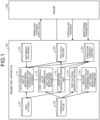
- FIG. 1 is a diagram illustrating the configuration example of the engine test system according to the present embodiment.
- the engine test system includes the engine test apparatus 100 and an engine 300.
- the engine test apparatus 100 and the engine 300 are connected so as to be able to communicate with each other
- FIG. 2 is a diagram illustrating an example of the chirp signal.
- the horizontal axis of the graph indicates time, whereas the vertical axis indicates a value of an operation variable.
- the chirp signal allows for implementation of a highly comprehensive test with respect to the test pattern due to the characteristics of the trigonometric functions.
- examples of the operation variable include a rotation speed of the engine, an amount of fuel injection, the opening degree of a turbine, the opening degree of an exhaust gas recirculation (EGR) valve, the opening degree of an intake throttle (ITH) valve, and the like. Accordingly, the test pattern, such as the chirp signal, is created for each operation variable.
- the test pattern is pattern data indicating the time series change in the operation variable, so that the engine test apparatus 100 inputs, on the basis of the test pattern, an operation variable to the engine 300 by changing the operation variable, such as the rotation speed of the engine, the amount of fuel injection, or the like, and controls the engine 300.
- the engine test apparatus 100 performs a simulation of the engine test by inputting, on the basis of the test pattern, a first operation variable to a mathematical model that is obtained by inputting the test pattern and that represents a time series response of an engine.
- a test pattern modification unit 114 included in the engine test apparatus 100 modifies the test pattern on the basis of the results of the simulation.
- the modified test pattern is stored in the test pattern 121.
- the modified test pattern is used for the engine test of the engine 300, so that it is possible to perform more accurately monitoring or controlling of the engine 300, and it is thus possible to conduct an engine test with less man hour.
- the mathematical model is stored in a mathematical model 122.
- FIG. 3 is a diagram illustrating an example of the mathematical model according to the present embodiment.
- the mathematical model illustrated in FIG. 3 is a Hammerstein-Wiener model.
- the Hammerstein-Wiener model represents the system by resolving the relationship between an input and an output into a linear element and a nonlinear element.
- the Hammerstein-Wiener model is constituted by three blocks, represents dynamics by a linear transfer function, and gives an input and an output of the linear system by a nonlinear function.
- FIG. 4 is a diagram illustrating another example of the mathematical model according to the present embodiment.
- the mathematical model illustrated in FIG. 4 is a machine training model obtained by using a long short term memory (LSTM).
- the LSTM model has a structure in which each unit in a hidden layer included in a recurrent neural network (RNN) is replaced with a memory called LSTM blocks and three gates.
- RNN recurrent neural network
- Equation (2) to (7) Each of the parameters in the LSTM model illustrated in FIG. 4 is calculated by using Equations (2) to (7) below.
- c t i t ⁇ a t + f t ⁇ c t ⁇ 1
- s denotes a sigmoid function
- the engine test apparatus 100 inputs operation variables on the basis of the test pattern to the mathematical model illustrated in FIG. 3 or FIG. 4 , performs a simulation of the engine test, and creates, as a new test pattern, a history of the operation variables that are input at the time of the simulation. As a result, the test pattern is modified. Furthermore, in the simulation of the engine test, the engine test apparatus 100 controls the operation variables on the basis of the monitoring parameters of the engine indicated by the simulation obtained by inputting the operation variable to the mathematical model. The monitoring parameter will be more specifically described.
- a data acquisition unit 111 included in the engine test apparatus 100 acquires a monitoring parameter of an engine indicated by a simulation or the engine 300 obtained by inputting the operation variable to the mathematical model or the engine 300 or acquired a controlled variable with respect to an operation variable.
- the monitoring parameter is a parameter for monitoring a state of the engine in order to prevent engine abnormality from occurring.
- the monitoring parameter is, for example, an air excess ratio, pressure and temperature of an intake manifold, pressure and temperature of an exhaust manifold, the maximum cylinder pressure rise rate, or the like.
- the data acquisition unit 111 is able to store the operation variables that are input to the mathematical model in an operation variable history 124.
- the data acquisition unit 111 is able to store, as the history data of the engine test in a test data history 125, the operation variables that have been input to the engine 300 or the controlled variables that are acquired from the engine 300.
- FIG. 5 is a diagram illustrating an example of a measurement position of the monitoring parameter according to the present embodiment.
- the pressure and the temperature of the intake manifold that are the monitoring parameters are measured in an intake air channel located at an entrance portion of the intake manifold included in the internal combustion engine.
- the maximum cylinder pressure rise rate that corresponds to the monitoring parameter is measured inside the cylinder of the engine 300.
- the pressure and the temperature of the exhaust manifold and the air excess ratio that correspond to the monitoring parameter are collected by the exhaust manifold included in the internal combustion engine and measured in an exhaust air channel.
- the monitoring parameter is obtained, as the monitoring parameter for the engine indicated by the simulation, as output data by inputting the operation variable to the mathematical model.
- a first threshold value determination unit 112 included in the engine test apparatus 100 determines, in the simulation of the engine test, whether or not the monitoring parameter is within the range of a first threshold value.
- the first threshold value is the upper limit or the lower limit that is previously set to a threshold value 123 for each monitoring parameter such that the engine indicated by the simulation does not enter an abnormal state. Accordingly, it can be said that the first threshold value is not a threshold value at which the engine indicated by the simulation enters an abnormal state, but is a threshold value for warning that an abnormal state may possibly occur in the case where the operation variable is continuously changed on the basis of the test pattern.
- a second threshold value determination unit 115 included in the engine test apparatus 100 determines, in the engine test of the engine 300, whether or not the monitoring parameter is within the range of a second threshold value.
- the second threshold value is the upper limit or the lower limit that is previously set to the threshold value 123 for each monitoring parameter such that the engine 300 does not enter an abnormal state. Accordingly, it can be said that the second threshold value is not a threshold value at which the engine 300 enters an abnormal state, but is a threshold value for warning that an abnormal state may possibly occur in the case where the operation variable is continuously changed on the basis of the test pattern without changing anything.
- FIG. 6 is a diagram illustrating an example of a combination of the monitoring parameter and the operation variable according to the present embodiment.
- the combination illustrated in FIG. 6 is an example; however, for example, the air excess ratio included in the monitoring parameter is monitored when one of the amount of fuel injection, the opening degree of the turbine, the opening degree of the EGR valve, and the opening degree of the ITH valve is operated.
- the maximum cylinder pressure rise rate included in the monitoring parameter is monitored when the amount of fuel injection is operated.
- an amount of operation of each of the operation variables possibly affects all of the monitoring parameters, so that the engine test apparatus 100 is also able to monitor all of the monitoring parameters at the time of an input and an operation of each of the operation variables to the mathematical model or the engine 300.
- the engine test apparatus 100 is also able to monitor all of the monitoring parameters at the time of an input and an operation of each of the operation variables to the mathematical model or the engine 300.
- FIG. 6 by previously setting the combination of the monitoring parameters that generate a great influence on the operation variables and classifying the monitoring parameter into each operation variable, it is possible to perform more accurately monitoring or controlling of the mathematical model or the engine 300.
- FIG. 7 is a diagram illustrating an example of determination of the monitoring parameter according to the present embodiment.
- FIG. 7 indicates a temporal transition of the operation variable that is input to the mathematical model or the engine 300 and the monitoring parameter that is obtained from the mathematical model or the engine 300.
- FIG. 7 illustrates the first threshold value and the second threshold value as the threshold value of the monitoring parameter.
- the first threshold value is a threshold value that is associated with the first monitoring parameter and that is obtained from the mathematical model
- the second threshold value is a threshold value that is associated with the second monitoring parameter and that is obtained from the engine 300. Accordingly, the first threshold value and the second threshold value may be different values.
- FIG. 7 illustrates a case in which a single operation variable is held with respect to the monitoring parameter; however, a plurality of operation variables may be held with respect to a single monitoring parameter.
- the engine test apparatus 100 is able to monitor a plurality of monitoring parameters and hold one or a plurality of operation variables associated with the monitoring parameters; however, the operation variables to be held may be determined on the basis of the priority that is previously set to the plurality of monitoring parameters.
- the lower limit of the monitoring parameter is set as the first threshold value and the second threshold value; however, the upper limit may be set, or both of the upper limit and the lower limit may be set.
- the setting of the upper limit and the lower limit of this type of the monitoring parameters may be set for each monitoring parameter.
- an operation variable decision unit 113 included in the engine test apparatus 100 decides a subsequent operation variable within the range in which the monitoring parameter does not enter an abnormal state with respect to the engine indicated by the simulation performed by using the mathematical model or the engine 300, and then, controls the operation variable. Then, the engine test apparatus 100 inputs the decided operation variable to the mathematical model or the engine 300, and controls the engine indicated by the simulation or the engine 300. Furthermore, the operation variable that is decided with respect to the monitoring parameter may be performed on the basis of the combination illustrated in, for example, FIG. 6 . Furthermore, the operation variable decision unit 113 is able to store, in the operation variable history 124 and the test data history 125, each of the operation variables that are input to the mathematical model and the engine 300 as the history data.
- the engine 300 is a real engine of an automobile.
- the engine 300 is operated by the operation variable that is input by the engine test apparatus 100.
- the operation variable that is input to the engine 300 is a history of the operation variable that is input at the time of simulation performed on the engine test using the mathematical model, that is, the operation variable based on the modified test pattern. Accordingly, in FIG. 1 , the operation variable that is input to the engine 300 is defined as the final value.
- the engine 300 returns, to the engine test apparatus 100, the controlled variable or the monitoring parameter with respect to the operation variable obtained by inputting the operation variable.
- each of the pieces of data is acquired by the engine test apparatus 100, rather than being returned to the engine test apparatus 100.
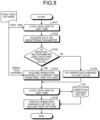
- FIG. 8 is a flowchart illustrating an example of the flow of the simulation process performed by the engine test apparatus 100 according to the present embodiment.
- the simulation process illustrated in FIG. 8 is started at an arbitrary timing.
- the engine test apparatus 100 acquires a first test pattern stored in the test pattern 121 and inputs an operation variable to the mathematical model on the basis of the first test pattern, so that the simulation is started (Step S101). A loop of the process is started by the process performed at Step S101.
- the engine test apparatus 100 acquires each of the monitoring parameters as a response received from the mathematical model in which the operation variable is input at Step S101 (Step S102).
- the engine test apparatus 100 determines, for each monitoring parameter, whether or not the acquired monitoring parameter is less than the first threshold value (Step S103). In addition, the determination performed at Step S103 may be performed to determine whether or not the monitoring parameter is less than or equal to the first threshold value.
- the engine test apparatus 100 acquires the operation variable that is associated with the current test time from the first test pattern (Step S104). The acquired operation variable is input to the mathematical model as the subsequent operation variable. Then, if it is within the test time, the process returns to Step S102 and is repeated until the end of the test time. Furthermore, the engine test apparatus 100 stores, as the history data of the operation variable in the operation variable history 124 for each loop, the operation variable that is input to the mathematical model.
- the engine test apparatus 100 creates the history data of the operation variable stored in the operation variable history 124 as the modified test pattern, that is, a second test pattern (Step S106). After the process at Step S106 has been performed, the simulation process of the engine test illustrated in FIG. 8 ends.
- the engine test apparatus 100 fixes (holds) the operation variable to a last time value (Step S105).
- the last time value of the operation variable is, for example, the latest operation variable that is input to the mathematical model.
- the operation variable that is held may be the operation variable that is associated with the monitoring parameter and that exceeds the first threshold value indicated by the combination illustrated in FIG. 6 , or may be all of the operation variables.
- Step S105 After the process at Step S105 has been performed, if it is within the test time, the process returns to Step S102 and is repeated until the test time ends after the hold of the operation variable is released. In contrast, in the case of the end of the test time, the engine test apparatus 100 performs the process at Step S106 and ends the simulation process of the engine test illustrated in FIG. 8 after having performed the process at Step S106.
- FIG. 9 is a flowchart illustrating an example of the flow of the engine test process performed by the engine test apparatus 100 according to the present embodiment.
- the engine test process illustrated in FIG. 9 is started at an arbitrary timing after the engine 300 is started.
- the engine test apparatus 100 acquires, from the engine 300, the current operation variable, that is, the initial value of each of the operation variables, that has been input to the engine 300 and acquires the controlled variable that is obtained by inputting the operation variable (Step S201).
- the test pattern that has been modified by the information processing apparatus 200 that is, the second test pattern, is obtained on the basis of the simulation result of the engine test, and then, an engine test and a loop of the process are started.
- the engine test apparatus 100 acquires, from the engine 300, each of the monitoring parameters and the controlled variable that are obtained by inputting the operation variable (Step S202).
- the controlled variable has already been acquired at Step S201, so that the controlled variable need not be acquired again.
- the engine test apparatus 100 stores, in the test data history 125, the controlled variable acquired at Step S201 or Step S202 as the history data of the engine test.
- the engine test apparatus 100 determines, for each monitoring parameter, whether or not the acquired monitoring parameter is less than the second threshold value (Step S203). Furthermore, the determination performed at Step S203 may be performed to determine whether or not the monitoring parameter is less than or equal to the second threshold value.
- the engine test apparatus 100 acquires the operation variable that is associated with the current test time from the second test pattern (Step S204). The acquired operation variable is input to the engine 300 as the subsequent operation variable. Then, if it is within the test time, the process returns to Step S202 and is repeated until the end of the test time. In contrast, in the case of the end of the test time, the engine test process illustrated in FIG. 9 ends. Furthermore, the engine test apparatus 100 stores, for each loop in the test data history 125, the operation variable that is input to the engine 300 as the history data of the engine test.
- the engine test apparatus 100 fixes (holds) the operation variable to a last time value (Step S205).
- the last time value of the operation variable is, for example, the latest operation variable that is input to the engine 300.
- the operation variable that is held may be the operation variable that is associated with the monitoring parameter and that exceeds the second threshold value indicated by the combination illustrated in FIG. 6 , or may be all of the operation variables.
- Step S205 After the process at Step S205 has been performed, if it is within the test time, the process returns to Step S202 and is repeated until the test time ends after the hold of the operation variable is released. In contrast, in the case of the end of the test time, the engine test process illustrated in FIG. 9 ends.
- the engine test apparatus 100 acquires the first test pattern in which the operation variable that is used for the engine test is changed in time series; inputs, on the basis of the first test pattern, the first operation variable to the mathematical model that represents a time series response of an engine obtained by inputting a test pattern as a simulation of the engine test; monitors, as the first monitoring parameter of engine abnormality, at least one of the air excess ratio, the pressure and the temperature of the intake manifold, the pressure and the temperature of the exhaust manifold, and the maximum cylinder pressure rise rate that are obtained by inputting the first operation variable to the mathematical model; holds, when the first monitoring parameter exceeds the first threshold value, the first operation variable until the first monitoring parameter is less than the first threshold value; creating a history of the first operation variable in the simulation as the second test pattern; monitoring, as the second monitoring parameter, at least one of the air excess ratio, the pressure and the temperature of the intake manifold, the pressure and the temperature of the exhaust manifold, and the maximum cylinder pressure rise rate that are obtained by inputting the second test pattern;
- the engine test apparatus 100 controls the operation variable on the basis of the monitoring parameter that is obtained by inputting, to the engine 300, the operation variable that is based on the test pattern modified by the simulation of the engine test conducted by using the mathematical model. As a result of this, it is possible to eliminate trial and error at the time of creation of the test pattern, and it is thus possible to conduct the engine test with less man hour.
- the process of acquiring the first test pattern performed by the engine test apparatus 100 includes a process of acquiring, as the first test pattern, a chirp signal or an APRBS signal that indicates a time series change in the first operation variable; and the process of creating the second test pattern performed by the engine test apparatus 100 includes a process of generating, as the second test pattern, the chirp signal or the APRBS signal that indicates a time series change of the second operation variable.
- the engine test apparatus 100 is able to conduct a highly comprehensive engine test.
- the engine test apparatus 100 sets the upper limit or the lower limit of the first monitoring parameter as the first threshold value, and sets the upper limit or the lower limit of the second monitoring parameter as the second threshold value.
- the engine test apparatus 100 is able to perform control, with higher accuracy, such that the engine 300 does not enter an abnormal state.
- the engine test apparatus 100 sets both of the upper limit and the lower limit of the first monitoring parameter as the first threshold value, and sets both of the upper limit and the lower limit of the second monitoring parameter as the second threshold value.
- the engine test apparatus 100 is able to perform control, with higher accuracy, such that the engine 300 does not enter an abnormal state.
- the process of holding the first operation variable performed by the engine test apparatus 100 includes a process of holding a single piece of the first operation variable with respect to a single piece of the first monitoring parameter; and the process of holding the second operation variable performed by the engine test apparatus 100 includes a process of holding a single piece of the second operation variable with respect to a single piece of the second monitoring parameter.
- the engine test apparatus 100 is able to perform monitoring or controlling of the engine 300 with higher accuracy.
- the process of holding the first operation variable performed by the engine test apparatus 100 includes a process of holding a plurality of pieces of the first operation variables with respect to a single piece of the first monitoring parameter; and the process of holding the second operation variable performed by the engine test apparatus 100 includes a process of holding a plurality of pieces of the second operation variables with respect to a single piece of the second monitoring parameter.
- the engine test apparatus 100 is able to perform monitoring or controlling of the engine 300 with higher accuracy.
- the process of holding the first operation variable performed by the engine test apparatus 100 includes a process of holding the first operation variable on the basis of a first priority with respect to the first monitoring parameter; and the process of holding the second operation variable performed by the engine test apparatus 100 includes a process of holding the second operation variable on the basis of a second priority with respect to the second monitoring parameter.
- the engine test apparatus 100 is able to perform monitoring or controlling of the engine 300 with higher accuracy.
- the process of inputting the first operation variable to the mathematical model performed by the engine test apparatus 100 includes a process of inputting the first operation variable to a Hammerstein-Wiener model as the mathematical model.
- the engine test apparatus 100 is able to perform the simulation of the engine test with higher accuracy.
- the process of inputting the first operation variable to the mathematical model performed by the engine test apparatus 100 includes a process of inputting the first operation variable to the mathematical model that is constructed by one of a DNN, a RNN, and a LSTM.
- the engine test apparatus 100 is able to perform the simulation of the engine test with higher accuracy.
- the specific shape of a separate or integrated device is not limited to the drawings.
- the operation variable decision unit 113 included in the engine test apparatus 100 may be separated into a plurality of processing units, or the first threshold value determination unit 112 and the second threshold value determination unit 115 included in the engine test apparatus 100 may be integrated as a single processing unit.
- all or part of the device can be configured by functionally or physically separating or integrating any of the units in accordance with various loads or use conditions.
- all or any part of each of the processing functions performed by the each of the devices can be implemented by a CPU and by programs analyzed and executed by the CPU or implemented as hardware by wired logic.
- FIG. 10 is a diagram illustrating a hardware configuration example of the engine test apparatus 100 according to the present embodiment.
- the engine test apparatus 100 includes a communication unit 100a, a storage device 100b, a memory 100c, and a processor 100d. Furthermore, each of the units illustrated in FIG. 10 is connected each other via a bus or the like.
- the communication unit 100a is a network interface card or the like, and communicates with another information processing apparatus or the like.
- the storage device 100b stores therein the programs and data that operate each of the functions of the engine test apparatus 100 illustrated in FIG. 1 .
- the processor 100d reads the program that operates each of the functions or the like of the engine test apparatus 100 illustrated in FIG. 1 from the storage device 100b or the like. Then, the processor 100d executes the process that implements each of the functions of the engine test apparatus 100 illustrated in FIG. 1 by loading the read program into the memory 100c.
- the engine test apparatus 100 is able to implement each of the functions by reading the programs that operates each of the functions of the engine test apparatus 100 illustrated in FIG. 1 from a recording medium by a medium recording device and executing the read programs.
- the programs described in another embodiment are not limited to be executed by the engine test apparatus 100.
- the present invention may also be similarly used in a case in which another information processing apparatus executes a program or a case in which the engine test apparatus 100 and the other information processing apparatus execute cooperatively execute the program with each other.
- the programs that executes each of the functions of the engine test apparatus 100 illustrated in FIG. 1 may be distributed via a network, such as the Internet. Furthermore, the programs may be executed by storing the programs in recording medium that can be read by a computer readable medium, such as a hard disk (HDD), a solid state drive (SSD), a flexible disk (FD), a CD-ROM, a magneto-optical disk (MO), a digital versatile disk (DVD), or the like, and read the programs from the recording medium by the computer.
- a computer readable medium such as a hard disk (HDD), a solid state drive (SSD), a flexible disk (FD), a CD-ROM, a magneto-optical disk (MO), a digital versatile disk (DVD), or the like, and read the programs from the recording medium by the computer.
Landscapes
- Engineering & Computer Science (AREA)
- Chemical & Material Sciences (AREA)
- Combustion & Propulsion (AREA)
- Physics & Mathematics (AREA)
- General Physics & Mathematics (AREA)
- Mechanical Engineering (AREA)
- General Engineering & Computer Science (AREA)
- Testing Of Engines (AREA)
Description
- The embodiment discussed herein is related to an engine test method, an engine test program, and an engine test apparatus.
- It is known that, in a technology for constructing engine models, it is possible to construct engine models with high accuracy by using transient operation data on automobile engines. Engine tests conducted using transient operations are conducted under various conditions by comprehensively changing operation variables with time that are input to an engine. Accordingly, before the test, a range of the operation variable in which the engine does not enter an abnormal state is searched.
- However, searching for the range of the operation variable is performed in a steady operation, so that, in some cases, a difference may occur in an operation boundary affected by the dead time or the time constant of a system during a transient operation. Accordingly, a test pattern is repeatedly created by manually adjusting the operation boundary through trial and error while detecting engine abnormality, such as degradation of exhaust gas or an accidental fire. However, if it takes a long time for trial and error adjustment, there is a problem in that man-hours of the entire of the engine test including preparations needed before the test increases.
-
US 2021/017923 A1 relates to an engine control device including an engine model having a neural network that inputs a manipulated variable of the engine and computes a controlled variable and a controller that computes the manipulated variable so as to reduce a deviation between the controlled variable and a target con-trolled variable. -
US 2009/192774 A1 relates to a transition test on an engine conducted by simulation using a simulation model of the engine, and a transition test on an actual engine conducted using the control value. - It is an object in one aspect of an embodiment of the invention to provide an engine test method, an engine test program, and an engine test apparatus capable of conducting an engine test with less man hour.
- The object of the invention is achieved by the subject-matter of the independent claims. Advantageous embodiments are defined in the dependent claims. Further examples are provided for facilitating the understanding of the invention. According to an aspect, an engine test method that causes a computer to execute a process including, acquiring, a first test pattern in which an operation variable that is used for an engine test is changed in time series, inputting, based on the first test pattern, a first operation variable to a mathematical model that represents a time series response of an engine obtained by inputting a test pattern as a simulation of the engine test, monitoring, as a first monitoring parameter of engine abnormality, at least one of an air excess ratio, pressure and temperature of an intake manifold, pressure and temperature of an exhaust manifold, and a maximum cylinder pressure rise rate that are obtained by inputting the first operation variable to the mathematical model, holding, when the first monitoring parameter exceeds a first threshold value, the first operation variable until the first monitoring parameter is less than the first threshold value, creating, a history of the first operation variable in the simulation as a second test pattern, monitoring, as a second monitoring parameter, at least one of the air excess ratio, the pressure and the temperature of the intake manifold, the pressure and the temperature of the exhaust manifold, and the maximum cylinder pressure rise rate that are obtained by inputting a second operation variable to a real engine based on the second test pattern, holding, when the second monitoring parameter exceeds a second threshold value, the second operation variable until the second monitoring parameter is less than the second threshold value, and acquiring, time series data of the second operation variable and a controlled variable.
-
-
FIG. 1 is a diagram illustrating a configuration example of an engine test system according to a present embodiment; -
FIG. 2 is a diagram illustrating an example of a chirp signal; -
FIG. 3 is a diagram illustrating an example of a mathematical model according to the present embodiment; -
FIG. 4 is a diagram illustrating another example of the mathematical model according to the present embodiment; -
FIG. 5 is a diagram illustrating an example of measurement positions of monitoring parameters according to the present embodiment; -
FIG. 6 is a diagram illustrating an example of a combination of a monitoring parameter and an operation variable according to the present embodiment; -
FIG. 7 is a diagram illustrating an example of determination of a monitoring parameter according to the present embodiment; -
FIG. 8 is a flowchart illustrating an example of the flow of a simulation process performed by anengine test apparatus 100 according to the present embodiment; -
FIG. 9 is a flowchart illustrating an example of the flow of an engine test process performed by an information processing apparatus 200 according to the present embodiment; and -
FIG. 10 is a diagram illustrating a hardware configuration example of theengine test apparatus 100 according to the present embodiment. - Preferred embodiments of the present invention will be explained with reference to accompanying drawings. Furthermore, the present invention is not limited by the embodiments but by the scope of protection defined by the claims.
- A configuration of an engine test system according to the present embodiment will be described with reference to
FIG. 1. FIG. 1 is a diagram illustrating the configuration example of the engine test system according to the present embodiment. As illustrated inFIG. 1 , the engine test system includes theengine test apparatus 100 and anengine 300. Theengine test apparatus 100 and theengine 300 are connected so as to be able to communicate with each other - The
engine test apparatus 100 may be an engine controller that controls theengine 300. Theengine test apparatus 100 conducts an engine test by inputting, to theengine 300 on the basis of a test pattern, an operation variable for controlling theengine 300. The test pattern is, for example, a chirp signal or an amplitude-modulated pseudo random binary sequence (APRBS) signal that indicates a time series change in the operation variable. The test pattern is stored in atest pattern 121. -
FIG. 2 is a diagram illustrating an example of the chirp signal. InFIG. 2 , the horizontal axis of the graph indicates time, whereas the vertical axis indicates a value of an operation variable. As illustrated inFIG. 2 , by continuously changing the frequency component with time, the chirp signal allows for implementation of a highly comprehensive test with respect to the test pattern due to the characteristics of the trigonometric functions. Furthermore, the chirp signal is calculated by using, for example, Equation (1) below.
- In addition, examples of the operation variable include a rotation speed of the engine, an amount of fuel injection, the opening degree of a turbine, the opening degree of an exhaust gas recirculation (EGR) valve, the opening degree of an intake throttle (ITH) valve, and the like. Accordingly, the test pattern, such as the chirp signal, is created for each operation variable.
- In addition, as illustrated in
FIG. 2 , the test pattern is pattern data indicating the time series change in the operation variable, so that theengine test apparatus 100 inputs, on the basis of the test pattern, an operation variable to theengine 300 by changing the operation variable, such as the rotation speed of the engine, the amount of fuel injection, or the like, and controls theengine 300. - In addition, the
engine test apparatus 100 performs a simulation of the engine test by inputting, on the basis of the test pattern, a first operation variable to a mathematical model that is obtained by inputting the test pattern and that represents a time series response of an engine. Furthermore, a testpattern modification unit 114 included in theengine test apparatus 100 modifies the test pattern on the basis of the results of the simulation. The modified test pattern is stored in thetest pattern 121. The modified test pattern is used for the engine test of theengine 300, so that it is possible to perform more accurately monitoring or controlling of theengine 300, and it is thus possible to conduct an engine test with less man hour. Furthermore, the mathematical model is stored in amathematical model 122. - The mathematical model according to the present embodiment is exemplified.
FIG. 3 is a diagram illustrating an example of the mathematical model according to the present embodiment. The mathematical model illustrated inFIG. 3 is a Hammerstein-Wiener model. The Hammerstein-Wiener model represents the system by resolving the relationship between an input and an output into a linear element and a nonlinear element. Furthermore, the Hammerstein-Wiener model is constituted by three blocks, represents dynamics by a linear transfer function, and gives an input and an output of the linear system by a nonlinear function. -
FIG. 4 is a diagram illustrating another example of the mathematical model according to the present embodiment. The mathematical model illustrated inFIG. 4 is a machine training model obtained by using a long short term memory (LSTM). The LSTM model has a structure in which each unit in a hidden layer included in a recurrent neural network (RNN) is replaced with a memory called LSTM blocks and three gates. As a result, it is possible to train long term dependence in addition to short term dependence, and it is thus possible to control the engine, with higher accuracy, indicated by the simulation of the engine test. - Each of the parameters in the LSTM model illustrated in
FIG. 4 is calculated by using Equations (2) to (7) below.


where, s denotes a sigmoid function, b denotes a bias, W denotes an input weight, U denotes a regression weight, and f and g denote a hyperbolic tangent function (tanh). - The
engine test apparatus 100 inputs operation variables on the basis of the test pattern to the mathematical model illustrated inFIG. 3 orFIG. 4 , performs a simulation of the engine test, and creates, as a new test pattern, a history of the operation variables that are input at the time of the simulation. As a result, the test pattern is modified. Furthermore, in the simulation of the engine test, theengine test apparatus 100 controls the operation variables on the basis of the monitoring parameters of the engine indicated by the simulation obtained by inputting the operation variable to the mathematical model. The monitoring parameter will be more specifically described. - A
data acquisition unit 111 included in theengine test apparatus 100 acquires a monitoring parameter of an engine indicated by a simulation or theengine 300 obtained by inputting the operation variable to the mathematical model or theengine 300 or acquired a controlled variable with respect to an operation variable. The monitoring parameter is a parameter for monitoring a state of the engine in order to prevent engine abnormality from occurring. Specifically, the monitoring parameter is, for example, an air excess ratio, pressure and temperature of an intake manifold, pressure and temperature of an exhaust manifold, the maximum cylinder pressure rise rate, or the like. Furthermore, thedata acquisition unit 111 is able to store the operation variables that are input to the mathematical model in an operationvariable history 124. In addition, thedata acquisition unit 111 is able to store, as the history data of the engine test in atest data history 125, the operation variables that have been input to theengine 300 or the controlled variables that are acquired from theengine 300. -
FIG. 5 is a diagram illustrating an example of a measurement position of the monitoring parameter according to the present embodiment. For example, as illustrated inFIG. 5 , the pressure and the temperature of the intake manifold that are the monitoring parameters are measured in an intake air channel located at an entrance portion of the intake manifold included in the internal combustion engine. Furthermore, the maximum cylinder pressure rise rate that corresponds to the monitoring parameter is measured inside the cylinder of theengine 300. In addition, the pressure and the temperature of the exhaust manifold and the air excess ratio that correspond to the monitoring parameter are collected by the exhaust manifold included in the internal combustion engine and measured in an exhaust air channel. Furthermore, in a case of the simulation of the engine test performed by using the mathematical model, the monitoring parameter is obtained, as the monitoring parameter for the engine indicated by the simulation, as output data by inputting the operation variable to the mathematical model. - Furthermore, a first threshold
value determination unit 112 included in theengine test apparatus 100 determines, in the simulation of the engine test, whether or not the monitoring parameter is within the range of a first threshold value. The first threshold value is the upper limit or the lower limit that is previously set to athreshold value 123 for each monitoring parameter such that the engine indicated by the simulation does not enter an abnormal state. Accordingly, it can be said that the first threshold value is not a threshold value at which the engine indicated by the simulation enters an abnormal state, but is a threshold value for warning that an abnormal state may possibly occur in the case where the operation variable is continuously changed on the basis of the test pattern. - Furthermore, a second threshold
value determination unit 115 included in theengine test apparatus 100 determines, in the engine test of theengine 300, whether or not the monitoring parameter is within the range of a second threshold value. The second threshold value is the upper limit or the lower limit that is previously set to thethreshold value 123 for each monitoring parameter such that theengine 300 does not enter an abnormal state. Accordingly, it can be said that the second threshold value is not a threshold value at which theengine 300 enters an abnormal state, but is a threshold value for warning that an abnormal state may possibly occur in the case where the operation variable is continuously changed on the basis of the test pattern without changing anything. - The monitoring parameter is defined and monitored for each operation variable.
FIG. 6 is a diagram illustrating an example of a combination of the monitoring parameter and the operation variable according to the present embodiment. The combination illustrated inFIG. 6 is an example; however, for example, the air excess ratio included in the monitoring parameter is monitored when one of the amount of fuel injection, the opening degree of the turbine, the opening degree of the EGR valve, and the opening degree of the ITH valve is operated. In contrast, the maximum cylinder pressure rise rate included in the monitoring parameter is monitored when the amount of fuel injection is operated. Furthermore, in a precise sense, an amount of operation of each of the operation variables possibly affects all of the monitoring parameters, so that theengine test apparatus 100 is also able to monitor all of the monitoring parameters at the time of an input and an operation of each of the operation variables to the mathematical model or theengine 300. However, as illustrated inFIG. 6 , by previously setting the combination of the monitoring parameters that generate a great influence on the operation variables and classifying the monitoring parameter into each operation variable, it is possible to perform more accurately monitoring or controlling of the mathematical model or theengine 300. -
FIG. 7 is a diagram illustrating an example of determination of the monitoring parameter according to the present embodiment.FIG. 7 indicates a temporal transition of the operation variable that is input to the mathematical model or theengine 300 and the monitoring parameter that is obtained from the mathematical model or theengine 300. Furthermore, in order to collectively explain the monitoring parameters obtained from the mathematical model and theengine 300,FIG. 7 illustrates the first threshold value and the second threshold value as the threshold value of the monitoring parameter. In the example illustrated inFIG. 7 , the first threshold value is a threshold value that is associated with the first monitoring parameter and that is obtained from the mathematical model, whereas the second threshold value is a threshold value that is associated with the second monitoring parameter and that is obtained from theengine 300. Accordingly, the first threshold value and the second threshold value may be different values. - As illustrated in
FIG. 7 , if the monitoring parameter exceeds the first threshold value or the second threshold value (at t1), theengine test apparatus 100 holds the operation variable until the monitoring parameter is less than the first threshold value (at t2). As a result of this, theengine test apparatus 100 performs control such that the engine indicated by the simulation performed by using the mathematical model or theengine 300 does not enter an abnormal state. Furthermore,FIG. 7 illustrates a case in which a single operation variable is held with respect to the monitoring parameter; however, a plurality of operation variables may be held with respect to a single monitoring parameter. In addition, theengine test apparatus 100 is able to monitor a plurality of monitoring parameters and hold one or a plurality of operation variables associated with the monitoring parameters; however, the operation variables to be held may be determined on the basis of the priority that is previously set to the plurality of monitoring parameters. - Furthermore, in the example illustrated in
FIG. 7 , the lower limit of the monitoring parameter is set as the first threshold value and the second threshold value; however, the upper limit may be set, or both of the upper limit and the lower limit may be set. In addition, the setting of the upper limit and the lower limit of this type of the monitoring parameters may be set for each monitoring parameter. - As described above, an operation
variable decision unit 113 included in theengine test apparatus 100 decides a subsequent operation variable within the range in which the monitoring parameter does not enter an abnormal state with respect to the engine indicated by the simulation performed by using the mathematical model or theengine 300, and then, controls the operation variable. Then, theengine test apparatus 100 inputs the decided operation variable to the mathematical model or theengine 300, and controls the engine indicated by the simulation or theengine 300. Furthermore, the operation variable that is decided with respect to the monitoring parameter may be performed on the basis of the combination illustrated in, for example,FIG. 6 . Furthermore, the operationvariable decision unit 113 is able to store, in the operationvariable history 124 and thetest data history 125, each of the operation variables that are input to the mathematical model and theengine 300 as the history data. - The
engine 300 is a real engine of an automobile. Theengine 300 is operated by the operation variable that is input by theengine test apparatus 100. Furthermore, the operation variable that is input to theengine 300 is a history of the operation variable that is input at the time of simulation performed on the engine test using the mathematical model, that is, the operation variable based on the modified test pattern. Accordingly, inFIG. 1 , the operation variable that is input to theengine 300 is defined as the final value. - In addition, the
engine 300 returns, to theengine test apparatus 100, the controlled variable or the monitoring parameter with respect to the operation variable obtained by inputting the operation variable. In a precise sense, each of the pieces of data is acquired by theengine test apparatus 100, rather than being returned to theengine test apparatus 100. - In the following, the flow of a simulation process of the engine test performed by the
engine test apparatus 100 will be described with reference toFIG. 8. FIG. 8 is a flowchart illustrating an example of the flow of the simulation process performed by theengine test apparatus 100 according to the present embodiment. The simulation process illustrated inFIG. 8 is started at an arbitrary timing. - First, the
engine test apparatus 100 acquires a first test pattern stored in thetest pattern 121 and inputs an operation variable to the mathematical model on the basis of the first test pattern, so that the simulation is started (Step S101). A loop of the process is started by the process performed at Step S101. - Then, the
engine test apparatus 100 acquires each of the monitoring parameters as a response received from the mathematical model in which the operation variable is input at Step S101 (Step S102). - Then, the
engine test apparatus 100 determines, for each monitoring parameter, whether or not the acquired monitoring parameter is less than the first threshold value (Step S103). In addition, the determination performed at Step S103 may be performed to determine whether or not the monitoring parameter is less than or equal to the first threshold value. - If all of the monitoring parameters are less than the first threshold value (Yes at Step S103), the
engine test apparatus 100 acquires the operation variable that is associated with the current test time from the first test pattern (Step S104). The acquired operation variable is input to the mathematical model as the subsequent operation variable. Then, if it is within the test time, the process returns to Step S102 and is repeated until the end of the test time. Furthermore, theengine test apparatus 100 stores, as the history data of the operation variable in the operationvariable history 124 for each loop, the operation variable that is input to the mathematical model. - Then, after the end of the test time, the
engine test apparatus 100 creates the history data of the operation variable stored in the operationvariable history 124 as the modified test pattern, that is, a second test pattern (Step S106). After the process at Step S106 has been performed, the simulation process of the engine test illustrated inFIG. 8 ends. - In contrast, if one of the monitoring parameters exceeds the first threshold value (No at Step S103), the
engine test apparatus 100 fixes (holds) the operation variable to a last time value (Step S105). Here, the last time value of the operation variable is, for example, the latest operation variable that is input to the mathematical model. Furthermore, the operation variable that is held may be the operation variable that is associated with the monitoring parameter and that exceeds the first threshold value indicated by the combination illustrated inFIG. 6 , or may be all of the operation variables. - After the process at Step S105 has been performed, if it is within the test time, the process returns to Step S102 and is repeated until the test time ends after the hold of the operation variable is released. In contrast, in the case of the end of the test time, the
engine test apparatus 100 performs the process at Step S106 and ends the simulation process of the engine test illustrated inFIG. 8 after having performed the process at Step S106. - In the following, the flow of an engine test process performed by the
engine test apparatus 100 will be described with reference toFIG. 9. FIG. 9 is a flowchart illustrating an example of the flow of the engine test process performed by theengine test apparatus 100 according to the present embodiment. The engine test process illustrated inFIG. 9 is started at an arbitrary timing after theengine 300 is started. - First, the
engine test apparatus 100 acquires, from theengine 300, the current operation variable, that is, the initial value of each of the operation variables, that has been input to theengine 300 and acquires the controlled variable that is obtained by inputting the operation variable (Step S201). As illustrated inFIG. 9 , after the process at Step S201 has been performed, the test pattern that has been modified by the information processing apparatus 200, that is, the second test pattern, is obtained on the basis of the simulation result of the engine test, and then, an engine test and a loop of the process are started. - Then, the
engine test apparatus 100 acquires, from theengine 300, each of the monitoring parameters and the controlled variable that are obtained by inputting the operation variable (Step S202). In addition, at Step S202 that is performed at the first time immediately after the start of the loop, the controlled variable has already been acquired at Step S201, so that the controlled variable need not be acquired again. Furthermore, theengine test apparatus 100 stores, in thetest data history 125, the controlled variable acquired at Step S201 or Step S202 as the history data of the engine test. - Then, the
engine test apparatus 100 determines, for each monitoring parameter, whether or not the acquired monitoring parameter is less than the second threshold value (Step S203). Furthermore, the determination performed at Step S203 may be performed to determine whether or not the monitoring parameter is less than or equal to the second threshold value. - If all of the monitoring parameters are less than the second threshold value (Yes at Step S203), the
engine test apparatus 100 acquires the operation variable that is associated with the current test time from the second test pattern (Step S204). The acquired operation variable is input to theengine 300 as the subsequent operation variable. Then, if it is within the test time, the process returns to Step S202 and is repeated until the end of the test time. In contrast, in the case of the end of the test time, the engine test process illustrated inFIG. 9 ends. Furthermore, theengine test apparatus 100 stores, for each loop in thetest data history 125, the operation variable that is input to theengine 300 as the history data of the engine test. - In contrast, if one of the monitoring parameters exceeds the second threshold value (No at Step S203), the
engine test apparatus 100 fixes (holds) the operation variable to a last time value (Step S205). Here, the last time value of the operation variable is, for example, the latest operation variable that is input to theengine 300. Furthermore, the operation variable that is held may be the operation variable that is associated with the monitoring parameter and that exceeds the second threshold value indicated by the combination illustrated inFIG. 6 , or may be all of the operation variables. - After the process at Step S205 has been performed, if it is within the test time, the process returns to Step S202 and is repeated until the test time ends after the hold of the operation variable is released. In contrast, in the case of the end of the test time, the engine test process illustrated in
FIG. 9 ends. - As described above, the engine test apparatus 100 acquires the first test pattern in which the operation variable that is used for the engine test is changed in time series; inputs, on the basis of the first test pattern, the first operation variable to the mathematical model that represents a time series response of an engine obtained by inputting a test pattern as a simulation of the engine test; monitors, as the first monitoring parameter of engine abnormality, at least one of the air excess ratio, the pressure and the temperature of the intake manifold, the pressure and the temperature of the exhaust manifold, and the maximum cylinder pressure rise rate that are obtained by inputting the first operation variable to the mathematical model; holds, when the first monitoring parameter exceeds the first threshold value, the first operation variable until the first monitoring parameter is less than the first threshold value; creating a history of the first operation variable in the simulation as the second test pattern; monitoring, as the second monitoring parameter, at least one of the air excess ratio, the pressure and the temperature of the intake manifold, the pressure and the temperature of the exhaust manifold, and the maximum cylinder pressure rise rate that are obtained by inputting the second operation variable to the engine 300 on the basis of the second test pattern; holding, when the second monitoring parameter exceeds the second threshold value, the second operation variable until the second monitoring parameter is less than the second threshold value; and acquiring time series data of the second operation variable and a controlled variable.
- As described above, the
engine test apparatus 100 controls the operation variable on the basis of the monitoring parameter that is obtained by inputting, to theengine 300, the operation variable that is based on the test pattern modified by the simulation of the engine test conducted by using the mathematical model. As a result of this, it is possible to eliminate trial and error at the time of creation of the test pattern, and it is thus possible to conduct the engine test with less man hour. - Furthermore, the process of acquiring the first test pattern performed by the
engine test apparatus 100 includes a process of acquiring, as the first test pattern, a chirp signal or an APRBS signal that indicates a time series change in the first operation variable; and the process of creating the second test pattern performed by theengine test apparatus 100 includes a process of generating, as the second test pattern, the chirp signal or the APRBS signal that indicates a time series change of the second operation variable. - As a result of this, the
engine test apparatus 100 is able to conduct a highly comprehensive engine test. - Furthermore, the
engine test apparatus 100 sets the upper limit or the lower limit of the first monitoring parameter as the first threshold value, and sets the upper limit or the lower limit of the second monitoring parameter as the second threshold value. - As a result of this, the
engine test apparatus 100 is able to perform control, with higher accuracy, such that theengine 300 does not enter an abnormal state. - Furthermore, the
engine test apparatus 100 sets both of the upper limit and the lower limit of the first monitoring parameter as the first threshold value, and sets both of the upper limit and the lower limit of the second monitoring parameter as the second threshold value. - As a result of this, the
engine test apparatus 100 is able to perform control, with higher accuracy, such that theengine 300 does not enter an abnormal state. - Furthermore, the process of holding the first operation variable performed by the
engine test apparatus 100 includes a process of holding a single piece of the first operation variable with respect to a single piece of the first monitoring parameter; and the process of holding the second operation variable performed by theengine test apparatus 100 includes a process of holding a single piece of the second operation variable with respect to a single piece of the second monitoring parameter. - As a result of this, the
engine test apparatus 100 is able to perform monitoring or controlling of theengine 300 with higher accuracy. - Furthermore, the process of holding the first operation variable performed by the
engine test apparatus 100 includes a process of holding a plurality of pieces of the first operation variables with respect to a single piece of the first monitoring parameter; and the process of holding the second operation variable performed by theengine test apparatus 100 includes a process of holding a plurality of pieces of the second operation variables with respect to a single piece of the second monitoring parameter. - As a result of this, the
engine test apparatus 100 is able to perform monitoring or controlling of theengine 300 with higher accuracy. - Furthermore, the process of holding the first operation variable performed by the
engine test apparatus 100 includes a process of holding the first operation variable on the basis of a first priority with respect to the first monitoring parameter; and the process of holding the second operation variable performed by theengine test apparatus 100 includes a process of holding the second operation variable on the basis of a second priority with respect to the second monitoring parameter. - As a result of this, the
engine test apparatus 100 is able to perform monitoring or controlling of theengine 300 with higher accuracy. - Furthermore, the process of inputting the first operation variable to the mathematical model performed by the
engine test apparatus 100 includes a process of inputting the first operation variable to a Hammerstein-Wiener model as the mathematical model. - As a result of this, the
engine test apparatus 100 is able to perform the simulation of the engine test with higher accuracy. - Furthermore, the process of inputting the first operation variable to the mathematical model performed by the
engine test apparatus 100 includes a process of inputting the first operation variable to the mathematical model that is constructed by one of a DNN, a RNN, and a LSTM. - As a result of this, the
engine test apparatus 100 is able to perform the simulation of the engine test with higher accuracy. - The flow of the processes, the control procedures, the specific names, and the information containing various kinds of data or parameters indicated in the above specification and drawings can be arbitrarily changed unless otherwise stated. Furthermore, specific examples, distributions, numerical values, and the like described in the embodiment are only examples and can be arbitrarily changed.
- Furthermore, the specific shape of a separate or integrated device is not limited to the drawings. For example, the operation
variable decision unit 113 included in theengine test apparatus 100 may be separated into a plurality of processing units, or the first thresholdvalue determination unit 112 and the second thresholdvalue determination unit 115 included in theengine test apparatus 100 may be integrated as a single processing unit. In other words, all or part of the device can be configured by functionally or physically separating or integrating any of the units in accordance with various loads or use conditions. In addition, all or any part of each of the processing functions performed by the each of the devices can be implemented by a CPU and by programs analyzed and executed by the CPU or implemented as hardware by wired logic. -
FIG. 10 is a diagram illustrating a hardware configuration example of theengine test apparatus 100 according to the present embodiment. As illustrated inFIG. 10 , theengine test apparatus 100 includes acommunication unit 100a, astorage device 100b, amemory 100c, and aprocessor 100d. Furthermore, each of the units illustrated inFIG. 10 is connected each other via a bus or the like. - The
communication unit 100a is a network interface card or the like, and communicates with another information processing apparatus or the like. Thestorage device 100b stores therein the programs and data that operate each of the functions of theengine test apparatus 100 illustrated inFIG. 1 . - The
processor 100d reads the program that operates each of the functions or the like of theengine test apparatus 100 illustrated inFIG. 1 from thestorage device 100b or the like. Then, theprocessor 100d executes the process that implements each of the functions of theengine test apparatus 100 illustrated inFIG. 1 by loading the read program into thememory 100c. - Furthermore, the
engine test apparatus 100 is able to implement each of the functions by reading the programs that operates each of the functions of theengine test apparatus 100 illustrated inFIG. 1 from a recording medium by a medium recording device and executing the read programs. Furthermore, the programs described in another embodiment are not limited to be executed by theengine test apparatus 100. For example, the present invention may also be similarly used in a case in which another information processing apparatus executes a program or a case in which theengine test apparatus 100 and the other information processing apparatus execute cooperatively execute the program with each other. - Furthermore, the programs that executes each of the functions of the
engine test apparatus 100 illustrated inFIG. 1 may be distributed via a network, such as the Internet. Furthermore, the programs may be executed by storing the programs in recording medium that can be read by a computer readable medium, such as a hard disk (HDD), a solid state drive (SSD), a flexible disk (FD), a CD-ROM, a magneto-optical disk (MO), a digital versatile disk (DVD), or the like, and read the programs from the recording medium by the computer. - According to an aspect of an embodiment, it is possible to conduct an engine test with less man hour.
Claims (11)
- An engine test method that causes a computer (100) to execute a process comprising:acquiring (S101), a first test pattern in which each of first operation variables that are used for an engine test is changed in time series;inputting (S101), based on the first test pattern, a first operation variable among the first operation variables to a mathematical model that represents a time series response of an engine obtained by inputting the first test pattern as a simulation of the engine test;monitoring (S102, S103), as a first monitoring parameter of engine abnormality, at least one of an air excess ratio, pressure and temperature of an intake manifold, pressure and temperature of an exhaust manifold, and a maximum cylinder pressure rise rate that are obtained by inputting the first operation variable to the mathematical model;holding (S105), when the first monitoring parameter exceeds a first threshold value that is previously set for the first monitoring parameter obtained from the mathematical model, the first operation variable to a last time value that is input to the mathematical model until the first monitoring parameter is less than the first threshold value;repeating the acquiring, the inputting, the monitoring and the holding during a test time;creating (S106), after the test time ends, a history of the first operation variable that is input to the mathematical model in the simulation as a second test pattern;monitoring (S202, S203), as a second monitoring parameter, at least one of the air excess ratio, the pressure and the temperature of the intake manifold, the pressure and the temperature of the exhaust manifold, and the maximum cylinder pressure rise rate that are obtained by inputting a second operation variable to a real engine (300) based on the second test pattern;holding (S205), when the second monitoring parameter exceeds a second threshold value that is previously set for the second monitoring parameter obtained from the real engine, the second operation variable to a last time value that is input to the real engine until the second monitoring parameter is less than the second threshold value; andacquiring, time series data of the second operation variable and, from the real engine a controlled variable that is obtained by inputting the time series data of the second operation variable to the real engine; andrepeating the monitoring, the holding and the acquiring during a test time, whereinthe repeating includes storing, during the test time, the input second operation variable and the acquired controlled variable.
- The engine test method according to claim 1, whereinthe acquiring the first test pattern includes acquiring, as the first test pattern, a chirp signal or an amplitude-modulated pseudo random binary sequence (APRBS) signal indicating a time series change in the first operation variable, andthe creating the second test pattern includes generating, as the second test pattern, a chirp signal or an APRBS signal indicating a time series change of the second operation variable.
- The engine test method according to claim 1, wherein the process further comprises:setting, an upper limit or a lower limit of the first monitoring parameter as the first threshold value; andsetting, an upper limit or a lower limit of the second monitoring parameter as the second threshold value.
- The engine test method according to claim 1, wherein the process further comprises:setting, both of an upper limit and a lower limit of the first monitoring parameter as the first threshold value; andsetting, both of an upper limit and a lower limit of the second monitoring parameter as the second threshold value.
- The engine test method according to claim 1, whereinthe holding the first operation variable includes holding, a single piece of the first operation variable with respect to a single piece of the first monitoring parameter, andthe holding the second operation variable includes holding, a single piece of the second operation variable with respect to a single piece of the second monitoring parameter.
- The engine test method according to claim 1, whereinthe holding the first operation variable includes holding, a plurality of pieces of the first operation variables with respect to a single piece of the first monitoring parameter, andthe holding the second operation variable includes holding, a plurality of pieces of second operation variables with respect to a single piece of the second monitoring parameter.
- The engine test method according to claim 1, whereinthe holding the first operation variable includes holding, the first operation variable based on a first priority with respect to the first monitoring parameter, andthe holding the second operation variable includes holding, the second operation variable based on a second priority with respect to the second monitoring parameter.
- The engine test method according to claim 1, wherein the inputting the first operation variable to the mathematical model includes inputting, the first operation variable to a Hammerstein-Wiener model as the mathematical model.
- The engine test method according to claim 1, wherein the inputting the first operation variable to the mathematical model includes inputting, the first operation variable to the mathematical model that is constructed one of a deep neural network (DNN), a recurrent neural network (RNN), and a long short term memory (LSTM).
- An engine test program that is stored in a storage device (100b) and that causes a computer (100) to execute a process comprising:acquiring (S101), a first test pattern in which each of first operation variables that are used for an engine test is changed in time series;inputting (S101), based on the first test pattern, a first operation variable among the first operation variables to a mathematical model that represents a time series response of an engine obtained by inputting the first test pattern as a simulation of the engine test;monitoring (S102, S103), as a first monitoring parameter of engine abnormality, at least one of an air excess ratio, pressure and temperature of an intake manifold, pressure and temperature of an exhaust manifold, and a maximum cylinder pressure rise rate that are obtained by inputting the first operation variable to the mathematical model;holding (S105), when the first monitoring parameter exceeds a first threshold value that is previously set for the first monitoring parameter obtained from the mathematical model, the first operation variable to a last time value that is input to the mathematical model until the first monitoring parameter is less than the first threshold value;repeating the acquiring, the inputting, the monitoring and the holding during a test time;creating (S106), after the test time ends, a history of the first operation variable that is input to the mathematical model in the simulation as a second test pattern;monitoring (S202, S203), as a second monitoring parameter, at least one of the air excess ratio, the pressure and the temperature of the intake manifold, the pressure and the temperature of the exhaust manifold, and the maximum cylinder pressure rise rate that are obtained by inputting a second operation variable to a real engine (300) based on the second test pattern;holding (S205), when the second monitoring parameter exceeds a second threshold value that is previously set for the second monitoring parameter obtained from the real engine, the second operation variable to a last time value that is input to the real engine until the second monitoring parameter is less than the second threshold value; andacquiring, time series data of the second operation variable and, from the real engine a controlled variable that is obtained by inputting the time series data of the second operation variable to the real engine; andrepeating the monitoring, the holding and the acquiring during a test time, whereinthe repeating includes storing, during the test time, the input second operation variable and the acquired controlled variable.
- An engine test apparatus (100) comprising a controller (100d) configured to execute a process comprising:acquiring (S101), a first test pattern in which each of first operation variables that are used for an engine test is changed in time series;inputting (S101), based on the first test pattern, a first operation variable among the first operation variables to a mathematical model that represents a time series response of an engine obtained by inputting the first test pattern as a simulation of the engine test;monitoring (S102, S103), as a first monitoring parameter of engine abnormality, at least one of an air excess ratio, pressure and temperature of an intake manifold, pressure and temperature of an exhaust manifold, and a maximum cylinder pressure rise rate that are obtained by inputting the first operation variable to the mathematical model;holding (S105), when the first monitoring parameter exceeds a first threshold value that is previously set for the first monitoring parameter obtained from the mathematical model, the first operation variable to a last time value that is input to the mathematical model until the first monitoring parameter is less than the first threshold value;repeating the acquiring, the inputting, the monitoring and the holding during a test time;creating (S106), after the test time ends, a history of the first operation variable that is input to the mathematical model in the simulation as a second test pattern;monitoring (S202, S203), as a second monitoring parameter, at least one of the air excess ratio, the pressure and the temperature of the intake manifold, the pressure and the temperature of the exhaust manifold, and the maximum cylinder pressure rise rate that are obtained by inputting a second operation variable to a real engine (300) based on the second test pattern;holding (S205), when the second monitoring parameter exceeds a second threshold value that is previously set for the second monitoring parameter obtained from the real engine, the second operation variable to a last time value that is input to the real engine until the second monitoring parameter is less than the second threshold value; andacquiring, time series data of the second operation variable and, from the real engine a controlled variable that is obtained by inputting the time series data of the second operation variable to the real engine; andrepeating the monitoring, the holding and the acquiring during a test time, whereinthe repeating includes storing, during the test time, the input second operation variable and the acquired controlled variable.
Applications Claiming Priority (1)
| Application Number | Priority Date | Filing Date | Title |
|---|---|---|---|
| JP2021138026A JP7628066B2 (en) | 2021-08-26 | 2021-08-26 | ENGINE TESTING METHOD, ENGINE TESTING PROGRAM, AND ENGINE TESTING APPARATUS |
Publications (2)
| Publication Number | Publication Date |
|---|---|
| EP4141404A1 EP4141404A1 (en) | 2023-03-01 |
| EP4141404B1 true EP4141404B1 (en) | 2025-04-23 |
Family
ID=83050038
Family Applications (1)
| Application Number | Title | Priority Date | Filing Date |
|---|---|---|---|
| EP22191675.2A Active EP4141404B1 (en) | 2021-08-26 | 2022-08-23 | Engine test method, engine test program, and engine test apparatus |
Country Status (3)
| Country | Link |
|---|---|
| US (1) | US11885709B2 (en) |
| EP (1) | EP4141404B1 (en) |
| JP (1) | JP7628066B2 (en) |
Family Cites Families (10)
| Publication number | Priority date | Publication date | Assignee | Title |
|---|---|---|---|---|
| JP4198605B2 (en) | 2004-01-09 | 2008-12-17 | 日野自動車株式会社 | Transient engine test apparatus and method |
| JP6139896B2 (en) * | 2013-02-05 | 2017-05-31 | 株式会社エー・アンド・デイ | Engine test apparatus and method |
| DE102013206297A1 (en) | 2013-04-10 | 2014-10-16 | Robert Bosch Gmbh | Method for providing input signals for a test bench and device for this purpose |
| JP2017220043A (en) * | 2016-06-08 | 2017-12-14 | 富士通株式会社 | Input data generator, method and program |
| JP6881175B2 (en) | 2017-09-13 | 2021-06-02 | トヨタ自動車株式会社 | Driving support device and control method of driving support device |
| JP7238422B2 (en) | 2019-01-22 | 2023-03-14 | 株式会社リコー | distance measuring method, distance measuring device, in-vehicle device, moving body, distance measuring system |
| EP3951429A4 (en) | 2019-03-28 | 2022-06-01 | Sony Semiconductor Solutions Corporation | SIGNAL PROCESSING DEVICE, SIGNAL PROCESSING METHOD, PROGRAM AND INFORMATION PROCESSING DEVICE |
| JP7231144B2 (en) * | 2019-07-17 | 2023-03-01 | 株式会社トランストロン | Engine control device and neural network program it has |
| JP7444731B2 (en) * | 2020-08-14 | 2024-03-06 | 株式会社トランストロン | Engine test methods, programs, and equipment |
| JP7444732B2 (en) * | 2020-08-14 | 2024-03-06 | 株式会社トランストロン | Engine model construction methods, programs, and devices |
-
2021
- 2021-08-26 JP JP2021138026A patent/JP7628066B2/en active Active
-
2022
- 2022-08-19 US US17/891,624 patent/US11885709B2/en active Active
- 2022-08-23 EP EP22191675.2A patent/EP4141404B1/en active Active
Also Published As
| Publication number | Publication date |
|---|---|
| US11885709B2 (en) | 2024-01-30 |
| EP4141404A1 (en) | 2023-03-01 |
| JP7628066B2 (en) | 2025-02-07 |
| US20230063634A1 (en) | 2023-03-02 |
| JP2023032108A (en) | 2023-03-09 |
Similar Documents
| Publication | Publication Date | Title |
|---|---|---|
| JP5026433B2 (en) | Process model based virtual sensor system and method | |
| US7542879B2 (en) | Virtual sensor based control system and method | |
| US7505949B2 (en) | Process model error correction method and system | |
| US7787969B2 (en) | Virtual sensor system and method | |
| US8793004B2 (en) | Virtual sensor system and method for generating output parameters | |
| Matinnejad et al. | Search-based automated testing of continuous controllers: Framework, tool support, and case studies | |
| US20080154811A1 (en) | Method and system for verifying virtual sensors | |
| JP2008536221A (en) | Control system and method | |
| Gutjahr et al. | Advanced modeling and optimization for virtual calibration of internal combustion engines | |
| US12014581B2 (en) | Method and device for creating an emissions model of an internal combustion engine | |
| US20090204376A1 (en) | Method for measuring a nonlinear dynamic real system | |
| EP4141404B1 (en) | Engine test method, engine test program, and engine test apparatus | |
| Rainer et al. | Iterative DoE-improved emission models and better optimisation results within a shortened measurement time | |
| CN113486553A (en) | Complex equipment reliability analysis method based on Thiessen polygon area division | |
| KR20250116553A (en) | Engine Control Unit Calibration | |
| Azmin et al. | Using a statistical machine learning tool for diesel engine air path calibration | |
| JP4235116B2 (en) | Apparatus and method for testing transient characteristics of internal combustion engine | |
| CN114729608B (en) | Method and system for calibrating machine controller | |
| US11537507B2 (en) | Engine model construction method, engine model constructing apparatus, and computer-readable recording medium | |
| US20210357787A1 (en) | Device and method for operating a test stand | |
| Smits et al. | Excitation signal design and modeling benchmark of nox emissions of a diesel engine | |
| El Mandouh et al. | Accelerating the debugging of fv traces using k-means clustering techniques | |
| CN117892192A (en) | A data-driven method for predicting flow rate of airborne hydraulic systems | |
| Frey et al. | Development of Ultra-Fast AI-Driven Diesel Engine Model for Real-Time Optimization | |
| Joo et al. | Gasoline Engine Misfire Detection with Machine Learning |
Legal Events
| Date | Code | Title | Description |
|---|---|---|---|
| PUAI | Public reference made under article 153(3) epc to a published international application that has entered the european phase |
Free format text: ORIGINAL CODE: 0009012 |
|
| STAA | Information on the status of an ep patent application or granted ep patent |
Free format text: STATUS: THE APPLICATION HAS BEEN PUBLISHED |
|
| AK | Designated contracting states |
Kind code of ref document: A1 Designated state(s): AL AT BE BG CH CY CZ DE DK EE ES FI FR GB GR HR HU IE IS IT LI LT LU LV MC MK MT NL NO PL PT RO RS SE SI SK SM TR |
|
| STAA | Information on the status of an ep patent application or granted ep patent |
Free format text: STATUS: REQUEST FOR EXAMINATION WAS MADE |
|
| 17P | Request for examination filed |
Effective date: 20230316 |
|
| RBV | Designated contracting states (corrected) |
Designated state(s): AL AT BE BG CH CY CZ DE DK EE ES FI FR GB GR HR HU IE IS IT LI LT LU LV MC MK MT NL NO PL PT RO RS SE SI SK SM TR |
|
| GRAP | Despatch of communication of intention to grant a patent |
Free format text: ORIGINAL CODE: EPIDOSNIGR1 |
|
| STAA | Information on the status of an ep patent application or granted ep patent |
Free format text: STATUS: GRANT OF PATENT IS INTENDED |
|
| INTG | Intention to grant announced |
Effective date: 20241205 |
|
| GRAS | Grant fee paid |
Free format text: ORIGINAL CODE: EPIDOSNIGR3 |
|
| GRAA | (expected) grant |
Free format text: ORIGINAL CODE: 0009210 |
|
| STAA | Information on the status of an ep patent application or granted ep patent |
Free format text: STATUS: THE PATENT HAS BEEN GRANTED |
|
| AK | Designated contracting states |
Kind code of ref document: B1 Designated state(s): AL AT BE BG CH CY CZ DE DK EE ES FI FR GB GR HR HU IE IS IT LI LT LU LV MC MK MT NL NO PL PT RO RS SE SI SK SM TR |
|
| REG | Reference to a national code |
Ref country code: GB Ref legal event code: FG4D |
|
| REG | Reference to a national code |
Ref country code: CH Ref legal event code: EP |
|
| REG | Reference to a national code |
Ref country code: DE Ref legal event code: R096 Ref document number: 602022013456 Country of ref document: DE |
|
| REG | Reference to a national code |
Ref country code: IE Ref legal event code: FG4D |
|
| REG | Reference to a national code |
Ref country code: NL Ref legal event code: MP Effective date: 20250423 |
|
| PG25 | Lapsed in a contracting state [announced via postgrant information from national office to epo] |
Ref country code: NL Free format text: LAPSE BECAUSE OF FAILURE TO SUBMIT A TRANSLATION OF THE DESCRIPTION OR TO PAY THE FEE WITHIN THE PRESCRIBED TIME-LIMIT Effective date: 20250423 |
|
| REG | Reference to a national code |
Ref country code: AT Ref legal event code: MK05 Ref document number: 1788165 Country of ref document: AT Kind code of ref document: T Effective date: 20250423 |
|
| PG25 | Lapsed in a contracting state [announced via postgrant information from national office to epo] |
Ref country code: FI Free format text: LAPSE BECAUSE OF FAILURE TO SUBMIT A TRANSLATION OF THE DESCRIPTION OR TO PAY THE FEE WITHIN THE PRESCRIBED TIME-LIMIT Effective date: 20250423 Ref country code: PT Free format text: LAPSE BECAUSE OF FAILURE TO SUBMIT A TRANSLATION OF THE DESCRIPTION OR TO PAY THE FEE WITHIN THE PRESCRIBED TIME-LIMIT Effective date: 20250825 Ref country code: ES Free format text: LAPSE BECAUSE OF FAILURE TO SUBMIT A TRANSLATION OF THE DESCRIPTION OR TO PAY THE FEE WITHIN THE PRESCRIBED TIME-LIMIT Effective date: 20250423 |
|
| PGFP | Annual fee paid to national office [announced via postgrant information from national office to epo] |
Ref country code: DE Payment date: 20250821 Year of fee payment: 4 |
|
| REG | Reference to a national code |
Ref country code: LT Ref legal event code: MG9D |
|
| PG25 | Lapsed in a contracting state [announced via postgrant information from national office to epo] |
Ref country code: GR Free format text: LAPSE BECAUSE OF FAILURE TO SUBMIT A TRANSLATION OF THE DESCRIPTION OR TO PAY THE FEE WITHIN THE PRESCRIBED TIME-LIMIT Effective date: 20250724 Ref country code: NO Free format text: LAPSE BECAUSE OF FAILURE TO SUBMIT A TRANSLATION OF THE DESCRIPTION OR TO PAY THE FEE WITHIN THE PRESCRIBED TIME-LIMIT Effective date: 20250723 |
|
| PG25 | Lapsed in a contracting state [announced via postgrant information from national office to epo] |
Ref country code: PL Free format text: LAPSE BECAUSE OF FAILURE TO SUBMIT A TRANSLATION OF THE DESCRIPTION OR TO PAY THE FEE WITHIN THE PRESCRIBED TIME-LIMIT Effective date: 20250423 |
|
| PG25 | Lapsed in a contracting state [announced via postgrant information from national office to epo] |
Ref country code: BG Free format text: LAPSE BECAUSE OF FAILURE TO SUBMIT A TRANSLATION OF THE DESCRIPTION OR TO PAY THE FEE WITHIN THE PRESCRIBED TIME-LIMIT Effective date: 20250423 |
|
| PG25 | Lapsed in a contracting state [announced via postgrant information from national office to epo] |
Ref country code: HR Free format text: LAPSE BECAUSE OF FAILURE TO SUBMIT A TRANSLATION OF THE DESCRIPTION OR TO PAY THE FEE WITHIN THE PRESCRIBED TIME-LIMIT Effective date: 20250423 |
|
| PG25 | Lapsed in a contracting state [announced via postgrant information from national office to epo] |
Ref country code: AT Free format text: LAPSE BECAUSE OF FAILURE TO SUBMIT A TRANSLATION OF THE DESCRIPTION OR TO PAY THE FEE WITHIN THE PRESCRIBED TIME-LIMIT Effective date: 20250423 |
|
| PGFP | Annual fee paid to national office [announced via postgrant information from national office to epo] |
Ref country code: FR Payment date: 20250821 Year of fee payment: 4 |
|
| PG25 | Lapsed in a contracting state [announced via postgrant information from national office to epo] |
Ref country code: RS Free format text: LAPSE BECAUSE OF FAILURE TO SUBMIT A TRANSLATION OF THE DESCRIPTION OR TO PAY THE FEE WITHIN THE PRESCRIBED TIME-LIMIT Effective date: 20250723 |
|
| PG25 | Lapsed in a contracting state [announced via postgrant information from national office to epo] |
Ref country code: IS Free format text: LAPSE BECAUSE OF FAILURE TO SUBMIT A TRANSLATION OF THE DESCRIPTION OR TO PAY THE FEE WITHIN THE PRESCRIBED TIME-LIMIT Effective date: 20250823 |
|
| PG25 | Lapsed in a contracting state [announced via postgrant information from national office to epo] |
Ref country code: LV Free format text: LAPSE BECAUSE OF FAILURE TO SUBMIT A TRANSLATION OF THE DESCRIPTION OR TO PAY THE FEE WITHIN THE PRESCRIBED TIME-LIMIT Effective date: 20250423 |
|
| PG25 | Lapsed in a contracting state [announced via postgrant information from national office to epo] |
Ref country code: DK Free format text: LAPSE BECAUSE OF FAILURE TO SUBMIT A TRANSLATION OF THE DESCRIPTION OR TO PAY THE FEE WITHIN THE PRESCRIBED TIME-LIMIT Effective date: 20250423 Ref country code: SM Free format text: LAPSE BECAUSE OF FAILURE TO SUBMIT A TRANSLATION OF THE DESCRIPTION OR TO PAY THE FEE WITHIN THE PRESCRIBED TIME-LIMIT Effective date: 20250423 |
|
| PG25 | Lapsed in a contracting state [announced via postgrant information from national office to epo] |
Ref country code: CZ Free format text: LAPSE BECAUSE OF FAILURE TO SUBMIT A TRANSLATION OF THE DESCRIPTION OR TO PAY THE FEE WITHIN THE PRESCRIBED TIME-LIMIT Effective date: 20250423 |
|
| PG25 | Lapsed in a contracting state [announced via postgrant information from national office to epo] |
Ref country code: EE Free format text: LAPSE BECAUSE OF FAILURE TO SUBMIT A TRANSLATION OF THE DESCRIPTION OR TO PAY THE FEE WITHIN THE PRESCRIBED TIME-LIMIT Effective date: 20250423 |
|
| REG | Reference to a national code |
Ref country code: DE Ref legal event code: R097 Ref document number: 602022013456 Country of ref document: DE |
|
| PG25 | Lapsed in a contracting state [announced via postgrant information from national office to epo] |
Ref country code: SK Free format text: LAPSE BECAUSE OF FAILURE TO SUBMIT A TRANSLATION OF THE DESCRIPTION OR TO PAY THE FEE WITHIN THE PRESCRIBED TIME-LIMIT Effective date: 20250423 |
|
| PG25 | Lapsed in a contracting state [announced via postgrant information from national office to epo] |
Ref country code: IT Free format text: LAPSE BECAUSE OF FAILURE TO SUBMIT A TRANSLATION OF THE DESCRIPTION OR TO PAY THE FEE WITHIN THE PRESCRIBED TIME-LIMIT Effective date: 20250423 |
|
| PG25 | Lapsed in a contracting state [announced via postgrant information from national office to epo] |
Ref country code: RO Free format text: LAPSE BECAUSE OF FAILURE TO SUBMIT A TRANSLATION OF THE DESCRIPTION OR TO PAY THE FEE WITHIN THE PRESCRIBED TIME-LIMIT Effective date: 20250423 |
|
| PLBE | No opposition filed within time limit |
Free format text: ORIGINAL CODE: 0009261 |
|
| STAA | Information on the status of an ep patent application or granted ep patent |
Free format text: STATUS: NO OPPOSITION FILED WITHIN TIME LIMIT |
|
| REG | Reference to a national code |
Ref country code: CH Ref legal event code: L10 Free format text: ST27 STATUS EVENT CODE: U-0-0-L10-L00 (AS PROVIDED BY THE NATIONAL OFFICE) Effective date: 20260304 |
|
| REG | Reference to a national code |
Ref country code: CH Ref legal event code: H13 Free format text: ST27 STATUS EVENT CODE: U-0-0-H10-H13 (AS PROVIDED BY THE NATIONAL OFFICE) Effective date: 20260324 |
|
| PG25 | Lapsed in a contracting state [announced via postgrant information from national office to epo] |
Ref country code: MC Free format text: LAPSE BECAUSE OF FAILURE TO SUBMIT A TRANSLATION OF THE DESCRIPTION OR TO PAY THE FEE WITHIN THE PRESCRIBED TIME-LIMIT Effective date: 20250423 |
|
| 26N | No opposition filed |
Effective date: 20260126 |
|
| PG25 | Lapsed in a contracting state [announced via postgrant information from national office to epo] |
Ref country code: LU Free format text: LAPSE BECAUSE OF NON-PAYMENT OF DUE FEES Effective date: 20250823 |
|
| PG25 | Lapsed in a contracting state [announced via postgrant information from national office to epo] |
Ref country code: CH Free format text: LAPSE BECAUSE OF NON-PAYMENT OF DUE FEES Effective date: 20250831 |