EP4138456A1 - Method and device for unmanned aerial vehicle handover and base station - Google Patents
Method and device for unmanned aerial vehicle handover and base station Download PDFInfo
- Publication number
- EP4138456A1 EP4138456A1 EP22200616.5A EP22200616A EP4138456A1 EP 4138456 A1 EP4138456 A1 EP 4138456A1 EP 22200616 A EP22200616 A EP 22200616A EP 4138456 A1 EP4138456 A1 EP 4138456A1
- Authority
- EP
- European Patent Office
- Prior art keywords
- handover
- base station
- handover preparation
- base stations
- unmanned aerial
- Prior art date
- Legal status (The legal status is an assumption and is not a legal conclusion. Google has not performed a legal analysis and makes no representation as to the accuracy of the status listed.)
- Granted
Links
Images


Classifications
-
- H—ELECTRICITY
- H04—ELECTRIC COMMUNICATION TECHNIQUE
- H04W—WIRELESS COMMUNICATION NETWORKS
- H04W36/00—Hand-off or reselection arrangements
- H04W36/0005—Control or signalling for completing the hand-off
- H04W36/0083—Determination of parameters used for hand-off, e.g. generation or modification of neighbour cell lists
- H04W36/00835—Determination of neighbour cell lists
- H04W36/008355—Determination of target cell based on user equipment [UE] properties, e.g. UE service capabilities
-
- B—PERFORMING OPERATIONS; TRANSPORTING
- B64—AIRCRAFT; AVIATION; COSMONAUTICS
- B64C—AEROPLANES; HELICOPTERS
- B64C39/00—Aircraft not otherwise provided for
- B64C39/02—Aircraft not otherwise provided for characterised by special use
- B64C39/024—Aircraft not otherwise provided for characterised by special use of the remote controlled vehicle type, i.e. RPV
-
- H—ELECTRICITY
- H04—ELECTRIC COMMUNICATION TECHNIQUE
- H04W—WIRELESS COMMUNICATION NETWORKS
- H04W36/00—Hand-off or reselection arrangements
- H04W36/0005—Control or signalling for completing the hand-off
-
- H—ELECTRICITY
- H04—ELECTRIC COMMUNICATION TECHNIQUE
- H04W—WIRELESS COMMUNICATION NETWORKS
- H04W36/00—Hand-off or reselection arrangements
- H04W36/08—Reselecting an access point
-
- H—ELECTRICITY
- H04—ELECTRIC COMMUNICATION TECHNIQUE
- H04W—WIRELESS COMMUNICATION NETWORKS
- H04W36/00—Hand-off or reselection arrangements
- H04W36/24—Reselection being triggered by specific parameters
- H04W36/32—Reselection being triggered by specific parameters by location or mobility data, e.g. speed data
-
- B—PERFORMING OPERATIONS; TRANSPORTING
- B64—AIRCRAFT; AVIATION; COSMONAUTICS
- B64U—UNMANNED AERIAL VEHICLES [UAV]; EQUIPMENT THEREFOR
- B64U10/00—Type of UAV
- B64U10/10—Rotorcrafts
- B64U10/13—Flying platforms
-
- H—ELECTRICITY
- H04—ELECTRIC COMMUNICATION TECHNIQUE
- H04B—TRANSMISSION
- H04B7/00—Radio transmission systems, i.e. using radiation field
- H04B7/14—Relay systems
- H04B7/15—Active relay systems
- H04B7/185—Space-based or airborne stations; Stations for satellite systems
- H04B7/18502—Airborne stations
- H04B7/18506—Communications with or from aircraft, i.e. aeronautical mobile service
-
- H—ELECTRICITY
- H04—ELECTRIC COMMUNICATION TECHNIQUE
- H04W—WIRELESS COMMUNICATION NETWORKS
- H04W36/00—Hand-off or reselection arrangements
- H04W36/0005—Control or signalling for completing the hand-off
- H04W36/0083—Determination of parameters used for hand-off, e.g. generation or modification of neighbour cell lists
-
- H—ELECTRICITY
- H04—ELECTRIC COMMUNICATION TECHNIQUE
- H04W—WIRELESS COMMUNICATION NETWORKS
- H04W36/00—Hand-off or reselection arrangements
- H04W36/24—Reselection being triggered by specific parameters
- H04W36/30—Reselection being triggered by specific parameters by measured or perceived connection quality data
- H04W36/302—Reselection being triggered by specific parameters by measured or perceived connection quality data due to low signal strength
-
- H—ELECTRICITY
- H04—ELECTRIC COMMUNICATION TECHNIQUE
- H04W—WIRELESS COMMUNICATION NETWORKS
- H04W36/00—Hand-off or reselection arrangements
- H04W36/24—Reselection being triggered by specific parameters
- H04W36/32—Reselection being triggered by specific parameters by location or mobility data, e.g. speed data
- H04W36/322—Reselection being triggered by specific parameters by location or mobility data, e.g. speed data by location data
-
- H—ELECTRICITY
- H04—ELECTRIC COMMUNICATION TECHNIQUE
- H04W—WIRELESS COMMUNICATION NETWORKS
- H04W92/00—Interfaces specially adapted for wireless communication networks
- H04W92/16—Interfaces between hierarchically similar devices
- H04W92/20—Interfaces between hierarchically similar devices between access points
Definitions
- the present disclosure relates to the technical field of wireless communication, and in particular, to a method and a device for unmanned aerial vehicle handover, and a base station.
- Unmanned Aerial Vehicles have been applied to some specific scenes to perform tasks such as aerial photography, unmanned detection and reconnaissance, measurement and surveying, highway surveying, city planning, ecological environmental monitoring, scientific investigation, oil exploration, aerial remote sensing, frontier patrol, forest fire prevention, disaster assessment, and the like.
- the 3rd Generation Partnership Project proposes a study that services meeting the requirements for the unmanned aerial vehicle provided by the cellular network become more standardized in a discussion of the Project of "enhanced support of unmanned aerial vehicles", and the cellular network is considered to determine a flight path of the unmanned aerial vehicle in advance, so that it is helpful to improve mobility of the unmanned aerial vehicle, for example, improving success rate and speed rate of handover.
- the related art does not provide a fast handover solution for the cellular network unmanned aerial vehicle. A new solution is required to implement fast handover of the unmanned aerial vehicle.
- embodiments of the present disclosure provide a method and a device for unmanned aerial vehicle handover, and a base station, so that the base station can determine a handover candidate base station based on a flight path of the unmanned aerial vehicle, and perform a handover preparation operation with the handover candidate base station in advance, thereby implementing fast handover to the handover candidate base station meeting conditions when the unmanned aerial vehicle needs to be handed over.
- a method for unmanned aerial vehicle handover applied to a source base station includes:
- determining whether a candidate base station that has completed the handover preparation exists among the base stations meeting the handover conditions includes:
- the method further includes:
- the method further includes: determining the accessible base stations based on the flight path of the unmanned aerial vehicle and geographical location information of the base station.
- the method further includes:
- performing the handover preparation operation for handing over to the base station in which the handover preparation operation is to be performed, and determining the base station that has successfully performed the handover preparation as the candidate base station that has completed the handover preparation includes:
- performing the handover preparation operation for handing over to the base station in which the handover preparation operation is to be performed, and determining the base station that has successfully performed the handover preparation as a candidate base station that has completed the handover preparation includes:
- the method further includes: if the handover preparation failure signal is monitored, determining that the handover preparation fails.
- selecting a base station in which a handover preparation operation is to be performed from accessible base stations based on a flight speed and/or a flight altitude of the unmanned aerial vehicle includes:
- the method further includes: when there is no candidate base station that has completed the handover preparation existing among the base stations meeting the handover conditions, sending a handover request signal to one of the base stations meeting the handover conditions.
- a device for unmanned aerial vehicle handover applied to a source base station includes:
- the first determination module includes:
- the device further includes:
- the device further includes: a second determination module configured to determine the accessible base stations based on the flight path of the unmanned aerial vehicle and the geographical location information of the base station.
- the device further includes: a first acquisition module configured to interact the geographical location information of the base station with adjacent base stations, based on interfaces between the base stations; or acquire the geographical location information of each of the adjacent base stations from a core network equipment; or inquire the geographical location information of each of the adjacent base stations through a network management system of an operator.
- a first acquisition module configured to interact the geographical location information of the base station with adjacent base stations, based on interfaces between the base stations; or acquire the geographical location information of each of the adjacent base stations from a core network equipment; or inquire the geographical location information of each of the adjacent base stations through a network management system of an operator.
- the handover preparation module includes:
- the handover preparation module includes:
- the device further includes: a third determination module configured to determine that the handover preparation fails if the handover preparation failure signaling is monitored.
- the base station selection module includes:
- the device further includes: a second handover module configured to send a handover request signaling to one of the base stations meeting the handover conditions when no candidate base station that has completed the handover preparation exists in the base stations meeting the handover conditions.
- a second handover module configured to send a handover request signaling to one of the base stations meeting the handover conditions when no candidate base station that has completed the handover preparation exists in the base stations meeting the handover conditions.
- a base station includes:
- a non-transitory computer readable storage medium having computer instructions stored thereon is provided.
- the instructions are executed by a processor to perform the following steps of:
- the source base station may determine whether a candidate base station that has completed handover preparation exists in the base stations meeting handover conditions while receiving a measurement report sent by the unmanned aerial vehicle, and if so, the unmanned aerial vehicle may be directly handed over to the candidate base station meeting the handover conditions, that is, a RRC connection reconfiguration signal may be directly sent to the unmanned aerial vehicle, to realize fast handover of the unmanned aerial vehicle to the candidate base station that has completed the handover preparation, and facilitate the base station for improving mobility of the unmanned aerial vehicle based on the flight path.
- the unmanned aerial vehicle is a cellular network unmanned aerial vehicle accessed into a cellular network.
- Fig. 1A is a flow chart showing a method for unmanned aerial vehicle handover according to an exemplary embodiment
- Fig. 1B is a scene diagram showing a method for unmanned aerial vehicle handover according to an exemplary embodiment, and the method for unmanned aerial vehicle handover can be applied to a source base station.
- the method for unmanned aerial vehicle handover includes the following steps 101-102.
- step 101 when base stations meeting handover conditions are determined based on a measurement report sent by an unmanned aerial vehicle, whether a candidate base station that has completed a handover preparation exists in the base stations meeting the handover conditions is determined.
- the base station meeting the handover conditions may be determined based on the signal quality of each of the base stations, and if a signal received power is greater than -65dB, it shows that the base station has a very high coverage strength level at a position where the unmanned aerial vehicle is located, and is a base station meeting the handover conditions.
- the candidate base station that has completed handover preparation refers to a base station that has accepted a handover request initiated by the source base station. For example, if the source base station sends a HANDOVER REQUEST signal to the base station through an X2 interface connection and receives a HANDOVER REQUEST ACKNOWLEDGE signal from the base station, the base station may be determined as a candidate base station that has completed the handover preparation; or, the source base station sends HANDOVER REQUIRED signal to a Mobility Management Entity (MME) through an S 1 interface, and monitors a HANDOVER COMMAND signal returned by the MME, so that the source base station may be determined as a candidate base station that has completed the handover preparation.
- MME Mobility Management Entity
- the candidate base station may be recorded in a handover candidate base station set, and whether a candidate base station that has completed the handover preparation exists in the base stations meeting the handover conditions is determined by determining whether any of the base stations meeting the handover conditions exists in the handover candidate base station set. If any of the base stations meeting the handover conditions is located in the handover candidate base station set, the candidate base station that has completed handover preparation exists in the base stations meeting the handover conditions will be determined. For example, if the candidate base stations include a base station 1, a base station 2, and a base station 3, and the base stations meeting the handover conditions include the base station 1, it means that the base station 1 meeting the handover conditions is the candidate base station that has completed handover preparation.
- step 102 when the candidate base station that has completed the handover preparation exists in the base stations meeting the handover conditions, the unmanned aerial vehicle is handed over to the candidate base station meeting the handover conditions.
- a Radio Resource Control (RRC) connection reconfiguration signal (i.e., RRCConnectionReconfiguration) signal may be directly sent to the unmanned aerial vehicle, indicating the unmanned aerial vehicle to be handed over to the candidate base station.
- RRC Radio Resource Control
- an unmanned aerial vehicle 10 in the scene shown in Fig. 1B , an unmanned aerial vehicle 10, a source base station 20, at least one candidate base station 30, and the like are included, wherein after the source base station 20 acquires a flight path of the unmanned aerial vehicle 10, it is possible to acquire geographical location information of each of the adjacent base stations, further to determine an accessible base station when the unmanned aerial vehicle 10 flies according to the flight path, and then to determine the base stations in which the handover preparation operation is to be performed based on a flight information of the unmanned aerial vehicle 10, such as a flight speed and a flight altitude, to initiate a handover request to each of the base stations in which the handover preparation operation is to be performed to perform the handover preparation operation, and to determine the base station that has successfully performed the handover preparation as a candidate base station 30 that has completed the handover preparation, so that when the unmanned aerial vehicle reports the measurement report, if it is determined based on the measurement report that the candidate base station 30 that has completed the handover preparation
- the source base station may determine whether the candidate base station that has completed handover preparation exists in the base stations meeting the handover conditions while receiving the measurement report sent by the unmanned aerial vehicle, and if so, the unmanned aerial vehicle may be directly handed over to the candidate base station meeting the handover conditions, that is, a RRC connection reconfiguration signal may be directly sent to the unmanned aerial vehicle, so as to realize fast handover of the unmanned aerial vehicle to the candidate base station that has completed the handover preparation, and facilitate the base station for improving mobility of the unmanned aerial vehicle based on the flight path.
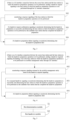
- Fig. 2 is a flow chart showing another method for unmanned aerial vehicle handover according to an exemplary embodiment.
- exemplary description is provided as an example of how the source base station determining the candidate base station, as shown in Fig. 2 , the method includes the following steps.
- an accessible base station is determined based on the flight path of the unmanned aerial vehicle and the geographical location information of the base station.
- the base station may acquire a flight path of the unmanned aerial vehicle from the core network equipment, and the flight path may be composed of a plurality of coordinate points or may also be indicated by a two-dimensional grid map.
- the base station may determine which one of the adjacent base stations of the source base station is an accessible base station that may possibly serve for the unmanned aerial vehicle, based on the flight path of the unmanned aerial vehicle and the geographical location information of each of the base stations, for example, a position identified by the geographical location information of the base station through which the flight path of the unmanned aerial vehicle passes, or it may be determined that its coverage area includes a part of the flight path of the unmanned aerial vehicle based on the geographical location information of the adjacent base stations, or the like, that is, it may be determined which adjacent base stations are accessible base stations of the unmanned aerial vehicle, wherein next accessible base station of the unmanned aerial vehicle is not limited to one.
- the source base station of the adjacent base stations may acquire the geographical location information of each of the base stations in the following three manners.
- a first manner interacting the geographical location information of the base station with the adjacent base stations, based on interfaces between the base stations.
- the source base station may interact with the adjacent base stations through the interfaces between the base stations, such as an X2 interface, to determine the geographical location information with respect to each other.
- a second manner acquiring geographical location information of each of the adjacent base stations from a core network equipment.
- the source base station may send a request for acquiring the geographical location information of each of the adjacent base stations to the core network equipment through an S 1 interface, thereby acquiring the geographical location information of each of the adjacent base station from the core network equipment.
- a third manner querying the geographical location information of each of the adjacent base stations through a network management system of an operator.
- the source base station may inquire as to the geographical location information of each of the adjacent base stations through an Operation, Administration and Maintenance (hereinafter referred as "OAM") system of an operator.
- OAM Operation, Administration and Maintenance
- a base station in which the handover preparation operation is to be performed is selected from the accessible base stations, and the accessible base station is a base station that is accessible when the unmanned aerial vehicle flies according to the flight path.
- the flight speed and/or the flight altitude of the unmanned aerial vehicle may be reported to the source base station by the unmanned aerial vehicle after accessing to the source base station.
- the source base station may select a first number of base stations in which the handover preparation operation is to be performed to perform the handover preparation operation in a forward direction of the unmanned aerial vehicle from the accessible base stations based on the flight speed of the unmanned aerial vehicle.
- a specific numerical value of the first number is associated with the flight speed.
- the flight speed of the unmanned aerial vehicle is faster, three base stations in the forward direction of the unmanned aerial vehicle may be selected as the base stations in which the handover preparation operation is to be performed; if the flight speed of the unmanned aerial vehicle is medium, two base stations in the forward direction of the unmanned aerial vehicle may be selected as the base stations in which the handover preparation operation is to be performed; and if the flight speed of the unmanned aerial vehicle is slower, one base station in the forward direction of the unmanned aerial vehicle may be selected as the base station in which the handover preparation operation is to be performed.
- a corresponding relationship of the flight speed to the number of base stations in which the handover preparation operation is to be performed may be set in advance, or may be calculated by the source base station.
- the source base station may select a second number of base stations in which the handover preparation operation is to be performed to perform the handover preparation operation in a forward direction of the unmanned aerial vehicle from the accessible base stations based on the flight altitude of the unmanned aerial vehicle.
- a specific numerical value of the second number is associated with the flight altitude.
- the flight altitude of the unmanned aerial vehicle is lower, one base station in the forward direction of the unmanned aerial vehicle may be selected as the base station in which the handover preparation operation is to be performed; if the flight altitude of the unmanned aerial vehicle is medium, two base stations in the forward direction of the unmanned aerial vehicle may be selected as base stations in which the handover preparation operation is to be performed; and if the flight altitude of the unmanned aerial vehicle is higher, two base stations in the forward direction of the unmanned aerial vehicle may be selected as the base stations in which the handover preparation operation is to be performed.
- the corresponding relationship of the flight altitude to the number of base stations in which the handover preparation operation is to be performed may be set in advance, or may be calculated by the source base station.
- the source base station may select a third number of base stations in which the handover preparation operation is to be performed to perform the handover preparation operation in the forward direction of the unmanned aerial vehicle from the accessible base stations based on the flight speed and the flight altitude of the unmanned aerial vehicle.
- a specific numerical value of the third number is associated with the flight altitude and the flight speed.
- the flight altitude of the unmanned aerial vehicle is higher and the flight speed thereof is faster, two base stations in the forward direction of the unmanned aerial vehicle may be selected as the base stations in which the handover preparation operation is to be performed, and if the flight altitude of the unmanned aerial vehicle is medium but the flight speed thereof is slower, one base station in the forward direction of the unmanned aerial vehicle may be selected as the base station in which the handover preparation operation is to be performed.
- the system may predetermine a criterion or algorithm to determine the number of base stations in which the handover preparation operation is to be performed based on the flight speed and/or flight altitude of the unmanned aerial vehicle.
- step 203 the handover preparation operation for handing over to the base station in which the handover preparation operation is to be performed is performed, and the base station that has successfully performed the handover preparation is determined as a candidate base station that has completed the handover preparation.
- the method for performing the handover preparation operation can refer to the embodiments shown in Fig. 3 and Fig. 4 , which will not be described in detail herein.
- step 204 when the base stations meeting the handover conditions are determined based on the measurement report sent by the unmanned aerial vehicle, whether the candidate base station that has completed the handover preparation exists in the base stations meeting the handover condition is determined.
- Step 205 is performed when the candidate base station that has completed the handover preparation exists in the base stations meeting the handover conditions
- step 206 is performed when no candidate base station that has completed the handover preparation exists in the base stations meeting the handover conditions.
- step 205 the unmanned aerial vehicle is handed over to the candidate base station meeting the handover conditions.
- step 204 and step 205 can refer to the descriptions of step 101 and step 102 of the embodiment shown in Fig. 1A , which will not be described in detail herein.
- step 206 a handover request signal is sent to one of the base stations meeting the handover condition.
- a handover request signal may be sent to one base station with the highest signal quality in the base stations meeting the handover conditions, that is, when there is an X2 interface connection between the source base station and the base station with the highest signal quality, a HANDOVER REQUEST signal may be sent to the base station with the highest signal quality through the X2 interface connection; and when there is no X2 interface between the source base station and the base station with the highest signal quality, a HANDOVER REQUIRED signal is send to the MME through an S1 interface.
- three implementing manners in which the source base station acquires the geographical location information of other base stations are disclosed to facilitate the base station to flexibly determine the accessible base station when the unmanned aerial vehicle flies according to the flight path, and determine the number of base stations in which the handover preparation operation is to be performed based on the flight speed and/or the flight altitude of the unmanned aerial vehicle, so that it is helpful for the source base station to determine which base station to which the unmanned aerial vehicle may be handed over and thereby performing the handover preparation based on the actual flight information of the unmanned aerial vehicle, and the mobility of the unmanned aerial vehicle can be improved.
- Fig. 3 is a flow chart showing still another method for unmanned aerial vehicle handover according to an exemplary embodiment.
- an exemplary description is provided as an example of how the source base station performs the handover preparation on the base station in which the handover preparation operation is to be performed, having an interface between the base stations.
- the method includes the following steps.
- step 301 if there is an X2 interface connection between the source base station and the base station in which the handover preparation operation is to be performed, a handover request signal is sent to the base station in which the handover preparation operation is to be performed through the X2 interface connection.
- step 302 a response signal of the base station in which the handover preparation operation is to be performed is monitored, and step 303 or step 304 is performed.
- step 303 if a handover request confirmation signal is monitored, it is determined that the handover preparation is successful, and the base station in which the handover preparation operation is to be performed is determined as the candidate base station that has completed the handover preparation.
- step 304 if the handover preparation failure signal is monitored, it is determined that the handover preparation fails.
- the source base station may directly send the HANDOVER REQUEST signal to the base station in which the handover preparation operation is to be performed through the X2 interface connection, and when a HANDOVER REQUEST ACKNOWLEDGE signal returned by the base station based on the handover request is monitored, it is determined that the handover preparation is successful, the base station that has successfully performed the handover preparation is determined as the candidate base station that has completed the handover preparation, and added to the handover candidate base station set. If a HANDOVER PREPARATION FAILURE is monitored, it is determined that the handover preparation fails.
- this embodiment discloses a method for implementing handover preparation and determining the candidate base station when there is an interface between the source base station and the base station in which the handover preparation operation is to be performed.
- Fig. 4 is a flow chart showing yet another method for unmanned aerial vehicle handover according to an exemplary embodiment.
- an exemplary description will be provided as an example of how the source base station performs the handover preparation on the base station in which the handover preparation operation is to be performed, having an interface between base stations.
- the method includes the following steps.
- step 401 if there is no X2 interface connection between the source base station and the base station in which the handover preparation operation is to be performed, a handover required signal for handing over to the base station in which the handover preparation operation is to be performed is sent to a mobility management entity through an S1 interface.
- step 402 a response signal returned by the mobility management entity based on the handover required signal is monitored, and step 403 or step 404 is performed.
- step 403 if a command handover signaling is monitored, it is determined that the handover preparation is successful, and the base station in which the handover preparation operation is to be performed is determined as the candidate base station that has completed the handover preparation.
- step 404 if the handover preparation failure signal is monitored, it is determined that the handover preparation fails.
- the source base station sends the HANDOVER REQUIRED signal to the MME through the S1 interface
- the MME sends HANDOVER REQUEST signal to the base station in which the handover preparation operation is to be performed.
- the base station in which the handover preparation operation is to be performed sends a handover request response signal (HANDOVER REQUEST ACKNOWLEDGE signal) to the MME after the base station in which the handover preparation operation is to be performed allocates all necessary carrying resources for the unmanned aerial vehicle based on the HANDOVER REQUEST signal, and then the MME sends a HANDOVER COMMAND signal to the source base station, so that the source base station may determine that handover is successful, and determine the base station that has successfully performed the handover preparation as a candidate base station that has completed handover preparation, and add the candidate base station to the handover candidate base station set, and if the HANDOVER PREPARATION FAILURE signal is monitored, the handover preparation failure is determined.
- HANDOVER REQUEST ACKNOWLEDGE signal a handover request response signal
- a method for implementing handover preparation and determining the candidate base station when there is no interface between the source base station and the base station in which the handover preparation operation is to be performed.
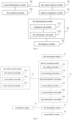
- Fig. 5 is a block diagram showing a device for unmanned aerial vehicle handover, which is applied to a source base station, according to an exemplary embodiment.
- the device for unmanned aerial vehicle handover includes:
- Fig. 6 is a block diagram showing another device for unmanned aerial vehicle handover according to an exemplary embodiment.
- the first determination module 51 includes:
- the device further includes:
- the device further includes: a second determination module 55, which is configured to determine the accessible base stations based on the flight path of the unmanned aerial vehicle and geographical location information of the base station.
- the device further includes: a first acquisition 56 module, which is configured to interact the geographical location information of the base station with adjacent base stations, based on interfaces between the base stations; or acquire the geographical location information of each of the adjacent base stations from a core network equipment; or inquire the geographical location information of each of the adjacent base stations through a network management system of an operator.
- a first acquisition 56 module which is configured to interact the geographical location information of the base station with adjacent base stations, based on interfaces between the base stations; or acquire the geographical location information of each of the adjacent base stations from a core network equipment; or inquire the geographical location information of each of the adjacent base stations through a network management system of an operator.
- Fig. 7 is a block diagram of still another device for unmanned aerial vehicle handover according to an exemplary embodiment.
- the handover preparation module 54 includes:
- the handover preparation module 54 includes:
- the device further includes: a third determination module 57, which is configured to determine that the handover preparation fails if the handover preparation failure signal is monitored.
- the base station selection module 53 includes:
- the device further includes: a second handover module 58, which is configured to send a handover request signal to one of the base stations meeting the handover conditions when no candidate base station that has completed the handover preparation exists in the base stations meeting the handover conditions.
- a second handover module 58 which is configured to send a handover request signal to one of the base stations meeting the handover conditions when no candidate base station that has completed the handover preparation exists in the base stations meeting the handover conditions.
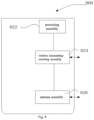
- Fig. 8 is a block diagram showing a device applied to an unmanned aerial vehicle handover according to an exemplary embodiment.
- the device 800 may be provided as a base station or a core network equipment.
- the device 800 includes a processing assembly 822, a wireless transmitting/receiving assembly 824, an antenna assembly 826, and a signal processing portion specific to a wireless interface, and the processing assembly 822 may further include one or more processors.
- One of processors in the processing assembly 822 may be configured to perform the method for unmanned aerial vehicle handover described in the first aspect mentioned above.
- the non-transitory computer readable storage medium may be a ROM, a Random Access Memory (RAM), a CD-ROM, a magnetic tape, a soft disk, an optical data storage device, and the like.
Landscapes
- Engineering & Computer Science (AREA)
- Computer Networks & Wireless Communication (AREA)
- Signal Processing (AREA)
- Aviation & Aerospace Engineering (AREA)
- Mobile Radio Communication Systems (AREA)
- Mechanical Engineering (AREA)
Abstract
Description
- This application is a divisional application of
European Patent Application No. 17931304.4 PCT/ CN2017/110538, filed on November 10, 2017 - The present disclosure relates to the technical field of wireless communication, and in particular, to a method and a device for unmanned aerial vehicle handover, and a base station.
- Unmanned Aerial Vehicles (UAVs) have been applied to some specific scenes to perform tasks such as aerial photography, unmanned detection and reconnaissance, measurement and surveying, highway surveying, city planning, ecological environmental monitoring, scientific investigation, oil exploration, aerial remote sensing, frontier patrol, forest fire prevention, disaster assessment, and the like.
- In order to further expand the application range of the unmanned aerial vehicle, the 3rd Generation Partnership Project (3GPP) proposes a study that services meeting the requirements for the unmanned aerial vehicle provided by the cellular network become more standardized in a discussion of the Project of "enhanced support of unmanned aerial vehicles", and the cellular network is considered to determine a flight path of the unmanned aerial vehicle in advance, so that it is helpful to improve mobility of the unmanned aerial vehicle, for example, improving success rate and speed rate of handover. The related art does not provide a fast handover solution for the cellular network unmanned aerial vehicle. A new solution is required to implement fast handover of the unmanned aerial vehicle.
- In order to solve the problems in the related art, embodiments of the present disclosure provide a method and a device for unmanned aerial vehicle handover, and a base station, so that the base station can determine a handover candidate base station based on a flight path of the unmanned aerial vehicle, and perform a handover preparation operation with the handover candidate base station in advance, thereby implementing fast handover to the handover candidate base station meeting conditions when the unmanned aerial vehicle needs to be handed over.
- According to a first aspect of an embodiment of the present disclosure, a method for unmanned aerial vehicle handover applied to a source base station is provided. The method includes:
- in response to base stations meeting handover conditions being determined based on a measurement report sent by an unmanned aerial vehicle, determining whether a candidate base station that has completed a handover preparation exists among the base stations meeting the handover conditions; and
- in response to a candidate base station that has completed the handover preparation existing among the base stations meeting the handover conditions, handing over the unmanned aerial vehicle to the candidate base station meeting the handover conditions.
- In one embodiment, determining whether a candidate base station that has completed the handover preparation exists among the base stations meeting the handover conditions, includes:
- determining whether any of the base stations meeting the handover conditions is in a handover candidate base station set, wherein base stations in the handover candidate base station set are base stations that have completed the handover preparation; and
- if any of the base stations meeting the handover conditions is in the handover candidate base station set, determining that there is a candidate base station that has completed handover preparation among the base stations meeting the handover conditions.
- In one embodiment, the method further includes:
- selecting a base station in which a handover preparation operation is to be performed from accessible base stations based on a flight speed and/or a flight altitude of the unmanned aerial vehicle, wherein the accessible base station is a base station that the unmanned aerial vehicle is able to access when flying according to a flight path; and
- performing the handover preparation operation for handing over to the base station in which the handover preparation operation is to be performed, and determining the base station that has successfully performed the handover preparation as a candidate base station that has completed the handover preparation.
- In one embodiment, the method further includes:
determining the accessible base stations based on the flight path of the unmanned aerial vehicle and geographical location information of the base station. - In one embodiment, the method further includes:
- interacting the geographical location information of the base station with adjacent base stations, based on interfaces between the base stations; or
- acquiring the geographical location information of each of the adjacent base stations from a core network equipment; or
- querying the geographical location information of each of the adjacent base stations through a network management system of an operator.
- In one embodiment, performing the handover preparation operation for handing over to the base station in which the handover preparation operation is to be performed, and determining the base station that has successfully performed the handover preparation as the candidate base station that has completed the handover preparation, includes:
- if there is an X2 interface connection between the source base station and the base station in which the handover preparation operation is to be performed, sending a handover request signal to the base station in which the handover preparation operation is to be performed through the X2 interface connection;
- monitoring a response signal of the base station in which the handover preparation operation is to be performed;
- if a handover request confirmation signal is monitored, determining that the handover preparation is successful, and determining the base station in which the handover preparation operation is to be performed as the candidate base station that has completed the handover preparation.
- In one embodiment, performing the handover preparation operation for handing over to the base station in which the handover preparation operation is to be performed, and determining the base station that has successfully performed the handover preparation as a candidate base station that has completed the handover preparation, includes:
- if there is no X2 interface connection between the source base station and the base station in which the handover preparation operation is to be performed, a handover required signal for handing over to the base station in which the handover preparation operation is to be performed is sent to a mobility management entity through an S1 interface;
- monitoring a response signal returned by the mobility management entity based on the handover required signal;
- if a command handover signal is monitored, determining that the handover preparation is successful, and determining the base station in which the handover preparation operation is to be performed as the candidate base station that has completed the handover preparation.
- In one embodiment, the method further includes:
if the handover preparation failure signal is monitored, determining that the handover preparation fails. - In one embodiment, selecting a base station in which a handover preparation operation is to be performed from accessible base stations based on a flight speed and/or a flight altitude of the unmanned aerial vehicle, includes:
- determining a number of base stations in which the handover preparation operation is to be performed as a first number based on the flight speed of the unmanned aerial vehicle, and selecting the first number of base stations in which the handover preparation operation is to be performed as the base stations in which the handover preparation operation is to be performed from the accessible base stations; or
- determining a number of base stations in which the handover preparation operation is to be performed as a second number based on the flight altitude of the unmanned aerial vehicle, and selecting the second number of base stations in which the handover preparation operation is to be performed as the base stations in which the handover preparation operation is to be performed from the accessible base stations; or
- determining a number of base stations in which the handover preparation operation is to be performed as a third number based on the flight speed and the flight altitude of the unmanned aerial vehicle, and selecting the third number of base stations in which the handover preparation operation is to be performed as the base stations in which the handover preparation operation is to be performed from the accessible base stations.
- In one embodiment, the method further includes:
when there is no candidate base station that has completed the handover preparation existing among the base stations meeting the handover conditions, sending a handover request signal to one of the base stations meeting the handover conditions. - According to a second aspect of an embodiment of the present disclosure, a device for unmanned aerial vehicle handover applied to a source base station is provided. The device includes:
- a first determination module configured to determine whether there is a candidate base station that has completed a handover preparation existing among the base stations meeting the handover conditions, in response to base stations meeting handover conditions being determined based on a measurement report sent by an unmanned aerial vehicle; and
- a first handover module configured to hand over the unmanned aerial vehicle to the candidate base station meeting the handover conditions, when the first determination module determines that the candidate base station that has completed the handover preparation exists in the base stations meeting the handover conditions.
- In one embodiment, the first determination module includes:
- a comparison sub-module configured to determine whether any of the base stations meeting the handover conditions is in a handover candidate base station set, wherein base stations in the handover candidate base station set have completed the handover preparation; and
- a first determination sub-module configured to determine that there is a candidate base station that has completed handover preparation existing among the base stations meeting the handover conditions, if any of the base stations meeting the handover conditions is in the handover candidate base station set.
- In one embodiment, the device further includes:
- a base station selection module configured to select a base station in which a handover preparation operation is to be performed from accessible base stations based on a flight speed and/or a flight altitude of the unmanned aerial vehicle, wherein the accessible base station is a base station that the unmanned aerial vehicle is able to access when flying according to a flight path; and
- a handover preparation module configured to perform the handover preparation operation for handing over to the base station in which the handover preparation operation is to be performed, and determine the base station that has successfully performed the handover preparation as a candidate base station that has completed the handover preparation.
- In one embodiment, the device further includes:
a second determination module configured to determine the accessible base stations based on the flight path of the unmanned aerial vehicle and the geographical location information of the base station. - In one embodiment, the device further includes:
a first acquisition module configured to interact the geographical location information of the base station with adjacent base stations, based on interfaces between the base stations; or acquire the geographical location information of each of the adjacent base stations from a core network equipment; or inquire the geographical location information of each of the adjacent base stations through a network management system of an operator. - In one embodiment, the handover preparation module includes:
- a first sending sub-module configured to send a handover request signal to the base station in which the handover preparation operation is to be performed through an X2 interface connection, if there is the X2 interface connection between the source base station and the base station in which the handover preparation operation is to be performed;
- a first monitoring sub-module configured to monitor a response signal of the base station in which the handover preparation operation is to be performed; and
- a second determination sub-module configured to determine that the handover preparation is successful, and determine the base station in which the handover preparation operation is to be performed as the candidate base station that has completed the handover preparation, if a handover request confirmation signal is monitored.
- In one embodiment, the handover preparation module includes:
- a second sending sub-module configured to send a handover required signal for handing over to the base station in which the handover preparation operation is to be performed to a mobility management entity through an S1 interface, if there is no X2 interface connection between the source base station and the base station in which the handover preparation operation is to be performed;
- a second monitoring sub-module configured to monitor a response signal returned by the mobility management entity based on the handover required signal; and
- a third determination sub-module configured to determine that the handover preparation is successful, and determine the base station in which the handover preparation operation is to be performed as the candidate base station that has completed the handover preparation, if a command handover signal is monitored.
- In one embodiment, the device further includes:
a third determination module configured to determine that the handover preparation fails if the handover preparation failure signaling is monitored. - In one embodiment, the base station selection module includes:
- a first selection sub-module configured to determine a number of base stations in which the handover preparation operation is to be performed as a first number based on the flight speed of the unmanned aerial vehicle, and select the first number of base stations in which the handover preparation operation is to be performed as the base stations in which the handover preparation operation is to be performed from the accessible base stations; or
- a second selection sub-module configured to determine a number of base stations in which the handover preparation operation is to be performed as a second number based on the flight altitude of the unmanned aerial vehicle, and select the second number of base stations in which the handover preparation operation is to be performed as the base stations in which the handover preparation operation is to be performed from the accessible base stations; or
- a third selection sub-module configured to determine a number of base stations in which the handover preparation operation is to be performed as a third number based on the flight speed and the flight altitude of the unmanned aerial vehicle, and select the third number of base stations in which the handover preparation operation is to be performed as the base stations in which the handover preparation operation is to be performed from the accessible base stations.
- In one embodiment, the device further includes:
a second handover module configured to send a handover request signaling to one of the base stations meeting the handover conditions when no candidate base station that has completed the handover preparation exists in the base stations meeting the handover conditions. - According to a third aspect of an embodiment of the present disclosure, a base station is provided. The base station includes:
- a processor;
- a memory for storing processor-executable instructions;
- wherein the processor is configured to:
- determine whether there is a candidate base station that has completed a handover preparation existing among the base stations meeting the handover conditions, when base stations meeting handover conditions are determined based on a measurement report sent by an unmanned aerial vehicle; and
- hand over the unmanned aerial vehicle to the candidate base station meeting the handover conditions, when there is a candidate base station that has completed the handover preparation existing among the base stations meeting the handover conditions.
- According to a fourth aspect of embodiments of the present disclosure, a non-transitory computer readable storage medium having computer instructions stored thereon is provided. The instructions are executed by a processor to perform the following steps of:
- determining whether there is a candidate base station that has completed a handover preparation existing among the base stations meeting the handover conditions, when base stations meeting handover conditions are determined based on a measurement report sent by an unmanned aerial vehicle; and
- handing over the unmanned aerial vehicle to the candidate base station meeting the handover conditions, when there is a candidate base station that has completed the handover preparation existing among the base stations meeting the handover conditions.
- The technical solutions provided by the embodiments of the present disclosure may include beneficial effects below.
- The source base station may determine whether a candidate base station that has completed handover preparation exists in the base stations meeting handover conditions while receiving a measurement report sent by the unmanned aerial vehicle, and if so, the unmanned aerial vehicle may be directly handed over to the candidate base station meeting the handover conditions, that is, a RRC connection reconfiguration signal may be directly sent to the unmanned aerial vehicle, to realize fast handover of the unmanned aerial vehicle to the candidate base station that has completed the handover preparation, and facilitate the base station for improving mobility of the unmanned aerial vehicle based on the flight path.
- It should be understood that the foregoing general description and the following detailed description are merely exemplary and explanatory, and are not restrictive of the present disclosure.
- The accompanying drawings, which are incorporated in and constitute part of this specification, illustrate embodiments consistent with the present disclosure and together with the description, serve to explain the principles of the present disclosure.
-
Fig. 1A is a flow chart showing a method for unmanned aerial vehicle handover according to an exemplary embodiment. -
Fig. 1B is a scene diagram showing a method for unmanned aerial vehicle handover according to an exemplary embodiment. -
Fig. 2 is a flow chart showing another method for unmanned aerial vehicle handover according to an exemplary embodiment. -
Fig. 3 is a flow chart showing still another method for unmanned aerial vehicle handover according to an exemplary embodiment. -
Fig. 4 is a flow chart showing yet another method for unmanned aerial vehicle handover according to an exemplary embodiment. -
Fig. 5 is a block diagram showing a device for unmanned aerial vehicle handover according to an exemplary embodiment. -
Fig. 6 is a block diagram showing another device for unmanned aerial vehicle handover according to an exemplary embodiment. -
Fig. 7 is a block diagram showing still another device for unmanned aerial vehicle handover according to an exemplary embodiment. -
Fig. 8 is a block diagram showing a device applied to an unmanned aerial vehicle handover according to an exemplary embodiment. - Exemplary embodiments will be described in detail herein, examples of which are illustrated in the drawings. When the following description refers to the drawings, the same numbers in different drawings represent the same or similar elements, unless otherwise indicated. The implementations described in the following exemplary embodiments do not represent all implementations consistent with the present disclosure. Instead, the embodiments are merely examples of devices and methods consistent with aspects of the present disclosure as described in detail in the appended claims.
- In this disclosure, the unmanned aerial vehicle is a cellular network unmanned aerial vehicle accessed into a cellular network.
-
Fig. 1A is a flow chart showing a method for unmanned aerial vehicle handover according to an exemplary embodiment, andFig. 1B is a scene diagram showing a method for unmanned aerial vehicle handover according to an exemplary embodiment, and the method for unmanned aerial vehicle handover can be applied to a source base station. As shown inFig. 1A , the method for unmanned aerial vehicle handover includes the following steps 101-102. - In
step 101, when base stations meeting handover conditions are determined based on a measurement report sent by an unmanned aerial vehicle, whether a candidate base station that has completed a handover preparation exists in the base stations meeting the handover conditions is determined. - In one embodiment, when the source base station receives the measurement report, the base station meeting the handover conditions may be determined based on the signal quality of each of the base stations, and if a signal received power is greater than -65dB, it shows that the base station has a very high coverage strength level at a position where the unmanned aerial vehicle is located, and is a base station meeting the handover conditions.
- In one embodiment, the candidate base station that has completed handover preparation refers to a base station that has accepted a handover request initiated by the source base station. For example, if the source base station sends a HANDOVER REQUEST signal to the base station through an X2 interface connection and receives a HANDOVER REQUEST ACKNOWLEDGE signal from the base station, the base station may be determined as a candidate base station that has completed the handover preparation; or, the source base station sends HANDOVER REQUIRED signal to a Mobility Management Entity (MME) through an
S 1 interface, and monitors a HANDOVER COMMAND signal returned by the MME, so that the source base station may be determined as a candidate base station that has completed the handover preparation. - In one embodiment, the candidate base station may be recorded in a handover candidate base station set, and whether a candidate base station that has completed the handover preparation exists in the base stations meeting the handover conditions is determined by determining whether any of the base stations meeting the handover conditions exists in the handover candidate base station set. If any of the base stations meeting the handover conditions is located in the handover candidate base station set, the candidate base station that has completed handover preparation exists in the base stations meeting the handover conditions will be determined. For example, if the candidate base stations include a
base station 1, a base station 2, and a base station 3, and the base stations meeting the handover conditions include thebase station 1, it means that thebase station 1 meeting the handover conditions is the candidate base station that has completed handover preparation. - In
step 102, when the candidate base station that has completed the handover preparation exists in the base stations meeting the handover conditions, the unmanned aerial vehicle is handed over to the candidate base station meeting the handover conditions. - In one embodiment, since the source base station has already sent a handover request to the candidate base station and monitored a signal for indicating that the handover preparation is successful, a Radio Resource Control (RRC) connection reconfiguration signal (i.e., RRCConnectionReconfiguration) signal may be directly sent to the unmanned aerial vehicle, indicating the unmanned aerial vehicle to be handed over to the candidate base station.
- In an exemplary scene, as shown in
Fig. 1B , in the scene shown inFig. 1B , an unmanned aerial vehicle 10, a source base station 20, at least one candidate base station 30, and the like are included, wherein after the source base station 20 acquires a flight path of the unmanned aerial vehicle 10, it is possible to acquire geographical location information of each of the adjacent base stations, further to determine an accessible base station when the unmanned aerial vehicle 10 flies according to the flight path, and then to determine the base stations in which the handover preparation operation is to be performed based on a flight information of the unmanned aerial vehicle 10, such as a flight speed and a flight altitude, to initiate a handover request to each of the base stations in which the handover preparation operation is to be performed to perform the handover preparation operation, and to determine the base station that has successfully performed the handover preparation as a candidate base station 30 that has completed the handover preparation, so that when the unmanned aerial vehicle reports the measurement report, if it is determined based on the measurement report that the candidate base station 30 that has completed the handover preparation exists in the base stations meeting the handover conditions, the unmanned aerial vehicle may be directly instructed to be quickly handed over to the candidate base station 30 meeting the handover conditions, and the mobility performance of the unmanned aerial vehicle 10 can be improved. - According to the
above steps 101 to 102 of this embodiment, the source base station may determine whether the candidate base station that has completed handover preparation exists in the base stations meeting the handover conditions while receiving the measurement report sent by the unmanned aerial vehicle, and if so, the unmanned aerial vehicle may be directly handed over to the candidate base station meeting the handover conditions, that is, a RRC connection reconfiguration signal may be directly sent to the unmanned aerial vehicle, so as to realize fast handover of the unmanned aerial vehicle to the candidate base station that has completed the handover preparation, and facilitate the base station for improving mobility of the unmanned aerial vehicle based on the flight path. - Following embodiments are referred to, to specifically describe how to perform the unmanned aerial vehicle handover.
- The technical solutions provided by the embodiments of the present disclosure will be described below with reference to the specific embodiments.
-
Fig. 2 is a flow chart showing another method for unmanned aerial vehicle handover according to an exemplary embodiment. In this embodiment, by using the above method provided by the embodiment of the present disclosure, exemplary description is provided as an example of how the source base station determining the candidate base station, as shown inFig. 2 , the method includes the following steps. - In
step 201, an accessible base station is determined based on the flight path of the unmanned aerial vehicle and the geographical location information of the base station. - In one embodiment, the base station may acquire a flight path of the unmanned aerial vehicle from the core network equipment, and the flight path may be composed of a plurality of coordinate points or may also be indicated by a two-dimensional grid map.
- In one embodiment, after the base station acquires the flight path of the unmanned aerial vehicle, it may determine which one of the adjacent base stations of the source base station is an accessible base station that may possibly serve for the unmanned aerial vehicle, based on the flight path of the unmanned aerial vehicle and the geographical location information of each of the base stations, for example, a position identified by the geographical location information of the base station through which the flight path of the unmanned aerial vehicle passes, or it may be determined that its coverage area includes a part of the flight path of the unmanned aerial vehicle based on the geographical location information of the adjacent base stations, or the like, that is, it may be determined which adjacent base stations are accessible base stations of the unmanned aerial vehicle, wherein next accessible base station of the unmanned aerial vehicle is not limited to one.
- In one embodiment, the source base station of the adjacent base stations may acquire the geographical location information of each of the base stations in the following three manners.
- A first manner: interacting the geographical location information of the base station with the adjacent base stations, based on interfaces between the base stations.
- In one embodiment, the source base station may interact with the adjacent base stations through the interfaces between the base stations, such as an X2 interface, to determine the geographical location information with respect to each other.
- A second manner: acquiring geographical location information of each of the adjacent base stations from a core network equipment.
- In one embodiment, the source base station may send a request for acquiring the geographical location information of each of the adjacent base stations to the core network equipment through an
S 1 interface, thereby acquiring the geographical location information of each of the adjacent base station from the core network equipment. - A third manner: querying the geographical location information of each of the adjacent base stations through a network management system of an operator.
- In one embodiment, the source base station may inquire as to the geographical location information of each of the adjacent base stations through an Operation, Administration and Maintenance (hereinafter referred as "OAM") system of an operator.
- In
step 202, based on the flight speed and/or the flight altitude of the unmanned aerial vehicle, a base station in which the handover preparation operation is to be performed is selected from the accessible base stations, and the accessible base station is a base station that is accessible when the unmanned aerial vehicle flies according to the flight path. - In one embodiment, the flight speed and/or the flight altitude of the unmanned aerial vehicle may be reported to the source base station by the unmanned aerial vehicle after accessing to the source base station.
- In one embodiment, the source base station may select a first number of base stations in which the handover preparation operation is to be performed to perform the handover preparation operation in a forward direction of the unmanned aerial vehicle from the accessible base stations based on the flight speed of the unmanned aerial vehicle. A specific numerical value of the first number is associated with the flight speed. For example, if the flight speed of the unmanned aerial vehicle is faster, three base stations in the forward direction of the unmanned aerial vehicle may be selected as the base stations in which the handover preparation operation is to be performed; if the flight speed of the unmanned aerial vehicle is medium, two base stations in the forward direction of the unmanned aerial vehicle may be selected as the base stations in which the handover preparation operation is to be performed; and if the flight speed of the unmanned aerial vehicle is slower, one base station in the forward direction of the unmanned aerial vehicle may be selected as the base station in which the handover preparation operation is to be performed. A corresponding relationship of the flight speed to the number of base stations in which the handover preparation operation is to be performed may be set in advance, or may be calculated by the source base station.
- In one embodiment, the source base station may select a second number of base stations in which the handover preparation operation is to be performed to perform the handover preparation operation in a forward direction of the unmanned aerial vehicle from the accessible base stations based on the flight altitude of the unmanned aerial vehicle. A specific numerical value of the second number is associated with the flight altitude. For example, if the flight altitude of the unmanned aerial vehicle is lower, one base station in the forward direction of the unmanned aerial vehicle may be selected as the base station in which the handover preparation operation is to be performed; if the flight altitude of the unmanned aerial vehicle is medium, two base stations in the forward direction of the unmanned aerial vehicle may be selected as base stations in which the handover preparation operation is to be performed; and if the flight altitude of the unmanned aerial vehicle is higher, two base stations in the forward direction of the unmanned aerial vehicle may be selected as the base stations in which the handover preparation operation is to be performed. The corresponding relationship of the flight altitude to the number of base stations in which the handover preparation operation is to be performed may be set in advance, or may be calculated by the source base station.
- In one embodiment, the source base station may select a third number of base stations in which the handover preparation operation is to be performed to perform the handover preparation operation in the forward direction of the unmanned aerial vehicle from the accessible base stations based on the flight speed and the flight altitude of the unmanned aerial vehicle. A specific numerical value of the third number is associated with the flight altitude and the flight speed. For example, if the flight altitude of the unmanned aerial vehicle is higher and the flight speed thereof is faster, two base stations in the forward direction of the unmanned aerial vehicle may be selected as the base stations in which the handover preparation operation is to be performed, and if the flight altitude of the unmanned aerial vehicle is medium but the flight speed thereof is slower, one base station in the forward direction of the unmanned aerial vehicle may be selected as the base station in which the handover preparation operation is to be performed.
- In one embodiment, the system may predetermine a criterion or algorithm to determine the number of base stations in which the handover preparation operation is to be performed based on the flight speed and/or flight altitude of the unmanned aerial vehicle.
- In
step 203, the handover preparation operation for handing over to the base station in which the handover preparation operation is to be performed is performed, and the base station that has successfully performed the handover preparation is determined as a candidate base station that has completed the handover preparation. - In one embodiment, the method for performing the handover preparation operation can refer to the embodiments shown in
Fig. 3 and Fig. 4 , which will not be described in detail herein. - In
step 204, when the base stations meeting the handover conditions are determined based on the measurement report sent by the unmanned aerial vehicle, whether the candidate base station that has completed the handover preparation exists in the base stations meeting the handover condition is determined. Step 205 is performed when the candidate base station that has completed the handover preparation exists in the base stations meeting the handover conditions, and step 206 is performed when no candidate base station that has completed the handover preparation exists in the base stations meeting the handover conditions. - In
step 205, the unmanned aerial vehicle is handed over to the candidate base station meeting the handover conditions. - In one embodiment, the descriptions of
step 204 and step 205 can refer to the descriptions ofstep 101 and step 102 of the embodiment shown inFig. 1A , which will not be described in detail herein. - In
step 206, a handover request signal is sent to one of the base stations meeting the handover condition. - In one embodiment, if no candidate base station that has completed handover preparation exists in the base stations meeting the handover conditions, a handover request signal may be sent to one base station with the highest signal quality in the base stations meeting the handover conditions, that is, when there is an X2 interface connection between the source base station and the base station with the highest signal quality, a HANDOVER REQUEST signal may be sent to the base station with the highest signal quality through the X2 interface connection; and when there is no X2 interface between the source base station and the base station with the highest signal quality, a HANDOVER REQUIRED signal is send to the MME through an S1 interface.
- In this embodiment, three implementing manners in which the source base station acquires the geographical location information of other base stations are disclosed to facilitate the base station to flexibly determine the accessible base station when the unmanned aerial vehicle flies according to the flight path, and determine the number of base stations in which the handover preparation operation is to be performed based on the flight speed and/or the flight altitude of the unmanned aerial vehicle, so that it is helpful for the source base station to determine which base station to which the unmanned aerial vehicle may be handed over and thereby performing the handover preparation based on the actual flight information of the unmanned aerial vehicle, and the mobility of the unmanned aerial vehicle can be improved.
-
Fig. 3 is a flow chart showing still another method for unmanned aerial vehicle handover according to an exemplary embodiment. In this embodiment, by using the above method provided by the embodiment of the present disclosure, an exemplary description is provided as an example of how the source base station performs the handover preparation on the base station in which the handover preparation operation is to be performed, having an interface between the base stations. As shown inFig. 3 , the method includes the following steps. - In
step 301, if there is an X2 interface connection between the source base station and the base station in which the handover preparation operation is to be performed, a handover request signal is sent to the base station in which the handover preparation operation is to be performed through the X2 interface connection. - In
step 302, a response signal of the base station in which the handover preparation operation is to be performed is monitored, and step 303 or step 304 is performed. - In
step 303, if a handover request confirmation signal is monitored, it is determined that the handover preparation is successful, and the base station in which the handover preparation operation is to be performed is determined as the candidate base station that has completed the handover preparation. - In
step 304, if the handover preparation failure signal is monitored, it is determined that the handover preparation fails. - In one embodiment, in
step 301 to step 304, the source base station may directly send the HANDOVER REQUEST signal to the base station in which the handover preparation operation is to be performed through the X2 interface connection, and when a HANDOVER REQUEST ACKNOWLEDGE signal returned by the base station based on the handover request is monitored, it is determined that the handover preparation is successful, the base station that has successfully performed the handover preparation is determined as the candidate base station that has completed the handover preparation, and added to the handover candidate base station set. If a HANDOVER PREPARATION FAILURE is monitored, it is determined that the handover preparation fails. - In this embodiment, it discloses a method for implementing handover preparation and determining the candidate base station when there is an interface between the source base station and the base station in which the handover preparation operation is to be performed.
-
Fig. 4 is a flow chart showing yet another method for unmanned aerial vehicle handover according to an exemplary embodiment. In this embodiment, by using the above method provided by the embodiment of the present disclosure, an exemplary description will be provided as an example of how the source base station performs the handover preparation on the base station in which the handover preparation operation is to be performed, having an interface between base stations. As shown inFig. 4 , the method includes the following steps. - In
step 401, if there is no X2 interface connection between the source base station and the base station in which the handover preparation operation is to be performed, a handover required signal for handing over to the base station in which the handover preparation operation is to be performed is sent to a mobility management entity through an S1 interface. - In
step 402, a response signal returned by the mobility management entity based on the handover required signal is monitored, and step 403 or step 404 is performed. - In
step 403, if a command handover signaling is monitored, it is determined that the handover preparation is successful, and the base station in which the handover preparation operation is to be performed is determined as the candidate base station that has completed the handover preparation. - In
step 404, if the handover preparation failure signal is monitored, it is determined that the handover preparation fails. - In one embodiment, in
steps 401 to 404, the source base station sends the HANDOVER REQUIRED signal to the MME through the S1 interface, the MME sends HANDOVER REQUEST signal to the base station in which the handover preparation operation is to be performed. the base station in which the handover preparation operation is to be performed sends a handover request response signal (HANDOVER REQUEST ACKNOWLEDGE signal) to the MME after the base station in which the handover preparation operation is to be performed allocates all necessary carrying resources for the unmanned aerial vehicle based on the HANDOVER REQUEST signal, and then the MME sends a HANDOVER COMMAND signal to the source base station, so that the source base station may determine that handover is successful, and determine the base station that has successfully performed the handover preparation as a candidate base station that has completed handover preparation, and add the candidate base station to the handover candidate base station set, and if the HANDOVER PREPARATION FAILURE signal is monitored, the handover preparation failure is determined. - In this embodiment, a method is disclosed for implementing handover preparation and determining the candidate base station when there is no interface between the source base station and the base station in which the handover preparation operation is to be performed.
-
Fig. 5 is a block diagram showing a device for unmanned aerial vehicle handover, which is applied to a source base station, according to an exemplary embodiment. As shown infig. 5 , the device for unmanned aerial vehicle handover includes: - a
first determination module 51 configured to determine whether a candidate base station that has completed a handover preparation exists in the base stations meeting the handover conditions, when base stations meeting handover conditions are determined based on a measurement report sent by an unmanned aerial vehicle; and - a
first handover module 52 configured to hand over the unmanned aerial vehicle to the candidate base station meeting the handover conditions, thefirst determination module 51 determines that when the candidate base station that has completed the handover preparation exists in the base stations meeting the handover conditions. -
Fig. 6 is a block diagram showing another device for unmanned aerial vehicle handover according to an exemplary embodiment. As shown inFig. 6 , and based on the embodiment shown inFig. 5 , in an embodiment, thefirst determination module 51 includes: - a
comparison sub-module 511, which is configured to determine whether any of the base stations meeting the handover conditions is located in a handover candidate base station set, wherein base stations in the handover candidate base station set are the base stations that have completed the handover preparation; and - a
first determination sub-module 512, which is configured to determine that the candidate base station that has completed handover preparation exists in the base stations meeting the handover conditions if any of the base stations meeting the handover conditions is located in the handover candidate base station set. - In one embodiment, the device further includes:
- a base
station selection module 53, which is configured to select a base station in which a handover preparation operation is to be performed from accessible base stations based on a flight speed and/or a flight altitude of the unmanned aerial vehicle, wherein the accessible base station is a base station that is able to be accessed when the unmanned aerial vehicle flies according to a flight path; and - a
handover preparation module 54, which is configured to perform the handover preparation operation for handing over to the base station in which the handover preparation operation is to be performed, and determine the base station that has successfully performed the handover preparation as a candidate base station that has completed the handover preparation. - In one embodiment, the device further includes:
asecond determination module 55, which is configured to determine the accessible base stations based on the flight path of the unmanned aerial vehicle and geographical location information of the base station. - In one embodiment, the device further includes:
afirst acquisition 56 module, which is configured to interact the geographical location information of the base station with adjacent base stations, based on interfaces between the base stations; or acquire the geographical location information of each of the adjacent base stations from a core network equipment; or inquire the geographical location information of each of the adjacent base stations through a network management system of an operator. -
Fig. 7 is a block diagram of still another device for unmanned aerial vehicle handover according to an exemplary embodiment. As shown inFig. 7 , and based on the above embodiments shown inFig. 5 and/orFig. 6 , in an embodiment, thehandover preparation module 54 includes: - a first sending sub-module 541, which is configured to send a handover request signal to the base station in which the handover preparation operation is to be performed through an X2 interface connection if there is the X2 interface connection between the source base station and the base station in which the handover preparation operation is to be performed;
- a
first monitoring sub-module 542, which is configured to monitor a response signal of the base station in which the handover preparation operation is to be performed; and - a
second determination sub-module 543, which is configured to determine that the handover preparation is successful, and determine the base station in which the handover preparation operation is to be performed as the candidate base station that has completed the handover preparation, if a handover request confirmation signal is monitored. - In one embodiment, the
handover preparation module 54 includes: - a second sending sub-module 544, which is configured to send a handover request signal for handing over to the base station in which the handover preparation operation is to be performed to a mobility management entity through an S1 interface if there is no X2 interface connection between the source base station and the base station in which the handover preparation operation is to be performed;
- a
second monitoring sub-module 545, which is configured to monitor a response signal returned by the mobility management entity based on the handover required signal; and - a
third determination sub-module 546, which is configured to determine that the handover preparation is successful, and determine the base station in which the handover preparation operation is to be performed as the candidate base station that has completed the handover preparation, if a command handover signal is monitored. - In one embodiment, the device further includes:
athird determination module 57, which is configured to determine that the handover preparation fails if the handover preparation failure signal is monitored. - In one embodiment, the base
station selection module 53 includes: - a
first selection sub-module 531, which is configured to determine a number of base stations in which the handover preparation operation is to be performed as a first number based on the flight speed of the unmanned aerial vehicle, and select the first number of base stations in which the handover preparation operation is to be performed as the base stations in which the handover preparation operation is to be performed from the accessible base stations; or - a
second selection sub-module 532, which is configured to determine a number of base stations in which the handover preparation operation is to be performed as a second number based on the flight altitude of the unmanned aerial vehicle, and select the second number of base stations in which the handover preparation operation is to be performed as the base stations in which the handover preparation operation is to be performed from the accessible base stations; or - a
third selection sub-module 533, which is configured to determine a number of base stations in which the handover preparation operation is to be performed as a third number based on the flight speed and the flight altitude of the unmanned aerial vehicle, and select the third number of base stations in which the handover preparation operation is to be performed as the base stations in which the handover preparation operation is to be performed from the accessible base stations. - In one embodiment, the device further includes:
asecond handover module 58, which is configured to send a handover request signal to one of the base stations meeting the handover conditions when no candidate base station that has completed the handover preparation exists in the base stations meeting the handover conditions. - With regard to the device in above embodiments, the specific manners in which each module performs operation have been described in detail in the embodiments related to the method, and will not be described in detail herein.
-
Fig. 8 is a block diagram showing a device applied to an unmanned aerial vehicle handover according to an exemplary embodiment. Thedevice 800 may be provided as a base station or a core network equipment. Referring toFig. 8 , thedevice 800 includes aprocessing assembly 822, a wireless transmitting/receivingassembly 824, anantenna assembly 826, and a signal processing portion specific to a wireless interface, and theprocessing assembly 822 may further include one or more processors. - One of processors in the
processing assembly 822 may be configured to perform the method for unmanned aerial vehicle handover described in the first aspect mentioned above. - In an exemplary embodiment, it further provides a non-transitory computer readable storage medium including instructions. The instructions are executable by the
processing assembly 822 of thedevice 800 to perform the method described in the first or third aspect mentioned above. For example, the non-transitory computer readable storage medium may be a ROM, a Random Access Memory (RAM), a CD-ROM, a magnetic tape, a soft disk, an optical data storage device, and the like.
Claims (15)
- A method for unmanned aerial vehicle handover, wherein the method is applied to a source base station (20) and characterized in that the method comprises:in response to base stations meeting handover conditions being determined based on a measurement report sent by an unmanned aerial vehicle (10), determining whether there is a candidate base station (30) that has completed a handover preparation existing among the base stations meeting the handover conditions; andin response to a candidate base station (30) that has completed the handover preparation existing among the base stations meeting the handover conditions, handing over the unmanned aerial vehicle (10) to the candidate base station (30) meeting the handover conditions.
- The method of claim 1, wherein determining whether there is a candidate base station (30) that has completed the handover preparation existed among the base stations meeting the handover conditions comprises:determining whether any of the base stations meeting the handover conditions is in a handover candidate base station set, wherein base stations in the handover candidate base station set are base stations that has completed the handover preparation; andif any of the base stations meeting the handover conditions is in the handover candidate base station set, determining that there is a candidate base station (30) that has completed handover preparation existing among the base stations meeting the handover conditions.
- The method of claim 1 or 2, wherein the method further comprises:selecting a base station in which a handover preparation operation is to be performed from accessible base stations based on a flight speed and/or a flight altitude of the unmanned aerial vehicle (10), wherein the accessible base station is a base station that the unmanned aerial vehicle (10) is able to access when flying according to a flight path; andperforming the handover preparation operation for handing over to the base station in which the handover preparation operation is to be performed, and determining the base station that has successfully performed the handover preparation as a candidate base station (30) that has completed the handover preparation.
- The method of claim 3, wherein the method further comprises:
determining the accessible base stations based on the flight path of the unmanned aerial vehicle (10) and geographical location information of the base station. - The method of claim 4, wherein the method further comprises:interacting the geographical location information of the base station with adjacent base stations, based on an interface between the base stations; oracquiring the geographical location information of each of the adjacent base stations from a core network equipment; orquerying the geographical location information of each of the adjacent base stations through a network management system of an operator.
- The method of claim 3, wherein performing the handover preparation operation for handing over to the base station in which the handover preparation operation is to be performed, and determining the base station that has successfully performed the handover preparation as the candidate base station (30) that has completed the handover preparation comprises:if there is an X2 interface connection between the source base station (20) and the base station in which the handover preparation operation is to be performed, sending a handover request signal to the base station in which the handover preparation operation is to be performed through the X2 interface connection;monitoring a response signal of the base station in which the handover preparation operation is to be performed;if a handover request confirmation signal is monitored, determining that the handover preparation is successful, and determining the base station in which the handover preparation operation is to be performed as the candidate base station (30) that has completed the handover preparation.
- The method of claim 3, wherein performing the handover preparation operation for handing over to the base station in which the handover preparation operation is to be performed, and determining the base station that has successfully performed the handover preparation as a candidate base station (30) that has completed the handover preparation, comprises:if there is no X2 interface connection between the source base station (20) and the base station in which the handover preparation operation is to be performed, sending a handover required signal for handing over to the base station in which the handover preparation operation is to be performed to a mobility management entity through a S1 interface;monitoring a response signal returned by the mobility management entity based on the handover required signaling;if a command handover signal is monitored, determining that the handover preparation is successful, and determining the base station in which the handover preparation operation is to be performed as the candidate base station (30) that has completed the handover preparation.
- The method of claim 6 or claim 7, wherein the method further comprises:
if a handover preparation failure signal is monitored, determining that the handover preparation fails. - The method of claim 3, wherein selecting a base station in which a handover preparation operation is to be performed from accessible base stations based on a flight speed and/or a flight altitude of the unmanned aerial vehicle (10), comprises:determining a number of base stations in which the handover preparation operation is to be performed as a first number based on the flight speed of the unmanned aerial vehicle (10), and selecting the first number of base stations in which the handover preparation operation is to be performed as the base stations in which the handover preparation operation is to be performed from the accessible base stations; ordetermining a number of base stations in which the handover preparation operation is to be performed as a second number based on the flight altitude of the unmanned aerial vehicle (10), and selecting the second number of base stations in which the handover preparation operation is to be performed as the base stations in which the handover preparation operation is to be performed from the accessible base stations; ordetermining a number of base stations in which the handover preparation operation is to be performed as a third number based on the flight speed and the flight altitude of the unmanned aerial vehicle (10), and selecting the third number of base stations in which the handover preparation operation is to be performed as the base stations in which the handover preparation operation is to be performed from the accessible base stations.
- The method of claim 1, wherein the method further comprises:
when there is no candidate base station (30) that has completed the handover preparation existing among the base stations meeting the handover conditions, sending a handover request signal to one of the base stations meeting the handover conditions. - A device for unmanned aerial vehicle handover, characterized in that the device comprises:a first determination module (51) configured to determine whether there is a candidate base station (30) that has completed a handover preparation existing among the base stations meeting the handover conditions, in response to base stations meeting handover conditions being determined based on a measurement report sent by an unmanned aerial vehicle (10); anda first handover module (52) configured to hand over the unmanned aerial vehicle (10) to the candidate base station (30) meeting the handover conditions, when the first determination module (51) determines that the candidate base station (30) that has completed the handover preparation exists in the base stations meeting the handover conditions.
- The device of claim 11, wherein the first determination module (51) comprises:a comparison sub-module (511) configured to determine whether any of the base stations meeting the handover conditions is in a handover candidate base station set, wherein base stations in the handover candidate base station set are base stations that have completed the handover preparation; anda first determination sub-module (512) configured to determine that there is a candidate base station (30) that has completed handover preparation existing among the base stations meeting the handover conditions, if any of the base stations meeting the handover conditions is in the handover candidate base station set.
- The device of claim 11, wherein the device further comprises:a base station selection module (53) configured to select a base station in which a handover preparation operation is to be performed from accessible base stations based on a flight speed and/or a flight altitude of the unmanned aerial vehicle (10), wherein the accessible base station is a base station that the unmanned aerial vehicle (10) is able to access when flying according to a flight path; anda handover preparation module (54) configured to perform the handover preparation operation for handing over to the base station in which the handover preparation operation is to be performed, and determine the base station that has successfully performed the handover preparation as a candidate base station (30) that has completed the handover preparation.
- The device of claim 13, wherein the device further comprises:
a second determination module (55) configured to determine the accessible base stations based on the flight path of the unmanned aerial vehicle (10) and geographical location information of the base station. - The device of claim 14, characterized in that, the device further comprises:
a first acquisition module (56) configured to interact the geographical location information of the base station with adjacent base stations, based on interfaces between the base stations; or acquire the geographical location information of each of the adjacent base stations from a core network equipment; or inquire the geographical location information of each of the adjacent base stations through a network management system of an operator.
Priority Applications (2)
| Application Number | Priority Date | Filing Date | Title |
|---|---|---|---|
| EP22200616.5A EP4138456B1 (en) | 2017-11-10 | 2017-11-10 | Method and device for unmanned aerial vehicle handover and base station |
| ES22200616T ES3039316T3 (en) | 2017-11-10 | 2017-11-10 | Method and device for unmanned aerial vehicle handover and base station |
Applications Claiming Priority (3)
| Application Number | Priority Date | Filing Date | Title |
|---|---|---|---|
| EP22200616.5A EP4138456B1 (en) | 2017-11-10 | 2017-11-10 | Method and device for unmanned aerial vehicle handover and base station |
| PCT/CN2017/110538 WO2019090724A1 (en) | 2017-11-10 | 2017-11-10 | Method and device for unmanned aerial vehicle handover and base station |
| EP17931304.4A EP3709709B1 (en) | 2017-11-10 | 2017-11-10 | Method and device for unmanned aerial vehicle handover and base station |
Related Parent Applications (2)
| Application Number | Title | Priority Date | Filing Date |
|---|---|---|---|
| EP17931304.4A Division EP3709709B1 (en) | 2017-11-10 | 2017-11-10 | Method and device for unmanned aerial vehicle handover and base station |
| EP17931304.4A Division-Into EP3709709B1 (en) | 2017-11-10 | 2017-11-10 | Method and device for unmanned aerial vehicle handover and base station |
Publications (2)
| Publication Number | Publication Date |
|---|---|
| EP4138456A1 true EP4138456A1 (en) | 2023-02-22 |
| EP4138456B1 EP4138456B1 (en) | 2025-07-30 |
Family
ID=65533042
Family Applications (2)
| Application Number | Title | Priority Date | Filing Date |
|---|---|---|---|
| EP22200616.5A Active EP4138456B1 (en) | 2017-11-10 | 2017-11-10 | Method and device for unmanned aerial vehicle handover and base station |
| EP17931304.4A Active EP3709709B1 (en) | 2017-11-10 | 2017-11-10 | Method and device for unmanned aerial vehicle handover and base station |
Family Applications After (1)
| Application Number | Title | Priority Date | Filing Date |
|---|---|---|---|
| EP17931304.4A Active EP3709709B1 (en) | 2017-11-10 | 2017-11-10 | Method and device for unmanned aerial vehicle handover and base station |
Country Status (5)
| Country | Link |
|---|---|
| US (2) | US11665611B2 (en) |
| EP (2) | EP4138456B1 (en) |
| CN (1) | CN109451833B (en) |
| ES (2) | ES2935799T3 (en) |
| WO (1) | WO2019090724A1 (en) |
Families Citing this family (19)
| Publication number | Priority date | Publication date | Assignee | Title |
|---|---|---|---|---|
| WO2018198540A1 (en) * | 2017-04-28 | 2018-11-01 | Kddi株式会社 | Wireless communication device, communication control method, and computer program |
| US11279481B2 (en) | 2017-05-12 | 2022-03-22 | Phirst Technologies, Llc | Systems and methods for tracking, evaluating and determining a response to emergency situations using unmanned airborne vehicles |
| EP3792725B1 (en) * | 2018-05-10 | 2023-04-19 | Beijing Xiaomi Mobile Software Co., Ltd. | Method and apparatus for reporting flight route information, and method and apparatus for determining information |
| CN111600916B (en) * | 2019-02-02 | 2022-03-25 | 华为技术有限公司 | Unmanned aerial vehicle control method, device and system |
| CN113873590B (en) * | 2019-04-30 | 2023-10-20 | 北京小米移动软件有限公司 | Cell reconfiguration method and device |
| CN112055309B (en) * | 2019-06-05 | 2021-12-03 | 上海华为技术有限公司 | Communication method and related equipment |
| WO2021016894A1 (en) * | 2019-07-30 | 2021-02-04 | Oppo广东移动通信有限公司 | Cell reselection method and unmanned aerial vehicle terminal |
| CN112119648A (en) * | 2019-08-29 | 2020-12-22 | 深圳市大疆创新科技有限公司 | Control method, remote server, control station and storage medium |
| JP7609072B2 (en) | 2019-09-06 | 2025-01-07 | 日本電気株式会社 | First radio station, second radio station, core network node, mobile terminal, system, method, and non-transitory computer-readable recording medium |
| CN110768711B (en) * | 2019-10-30 | 2021-12-24 | 重庆市亿飞智联科技有限公司 | Unmanned aerial vehicle communication method, dispatching station, base station and system |
| WO2021134632A1 (en) * | 2019-12-31 | 2021-07-08 | 华为技术有限公司 | Communication method and apparatus |
| CN114846844B (en) * | 2019-12-31 | 2025-07-25 | 华为技术有限公司 | Method and apparatus for handover |
| FR3116406B1 (en) * | 2020-11-18 | 2023-11-24 | Airbus Ds Slc | Method for optimizing handover in a mobile network and associated system |
| US12543099B2 (en) * | 2021-01-14 | 2026-02-03 | Telefonaktiebolaget Lm Ericsson (Publ) | Radio network node, user equipment, and methods performed therein |
| WO2023122950A1 (en) * | 2021-12-28 | 2023-07-06 | Lenovo (Beijing) Limited | Methods and apparatuses for mobility enhancements for uav |
| US20250310805A1 (en) * | 2022-05-09 | 2025-10-02 | Samsung Electronics Co., Ltd. | Method and device for supporting aerial ue communication through cellular network |
| US20250056362A1 (en) * | 2023-08-07 | 2025-02-13 | Honeywell Aerospace Sas | Apparatuses, computer-implemented methods, and computer program products for vehicle handover and roaming using ground control stations |
| CN120111598A (en) * | 2024-10-18 | 2025-06-06 | 中兴通讯股份有限公司 | Communication method, device and storage medium |
| CN119835716A (en) * | 2025-01-06 | 2025-04-15 | 西安电子科技大学 | Unmanned aerial vehicle handover method and system based on track prediction |
Citations (2)
| Publication number | Priority date | Publication date | Assignee | Title |
|---|---|---|---|---|
| US20100330999A1 (en) * | 2009-06-25 | 2010-12-30 | Telefonaktiebolaget L M Ericssson (Publ) | Handover Support in Radio Communications |
| WO2014089051A1 (en) * | 2012-12-03 | 2014-06-12 | Interdigital Patent Holdings, Inc. | Enhanced connection mobility control for small cell networks |
Family Cites Families (29)
| Publication number | Priority date | Publication date | Assignee | Title |
|---|---|---|---|---|
| EP1903820B1 (en) * | 2006-09-20 | 2019-12-18 | Samsung Electronics Co., Ltd. | Handover method and apparatus in a mobile communication system |
| US9137675B2 (en) * | 2012-06-13 | 2015-09-15 | All Purpose Networks LLC | Operational constraints in LTE TDD systems using RF agile beam forming techniques |
| CN104349409B (en) | 2013-07-30 | 2019-11-05 | 中兴通讯股份有限公司 | A kind of cell switching method and base station |
| US9859972B2 (en) * | 2014-02-17 | 2018-01-02 | Ubiqomm Llc | Broadband access to mobile platforms using drone/UAV background |
| US9752878B2 (en) * | 2014-12-09 | 2017-09-05 | Sikorsky Aircraft Corporation | Unmanned aerial vehicle control handover planning |
| EP3316625B1 (en) * | 2015-08-04 | 2020-10-07 | Huawei Technologies Co., Ltd. | Method, network device, and user equipment for secondary base station handover |
| CN105228200B (en) | 2015-10-08 | 2019-04-16 | 西南交通大学 | A kind of the fast cell switching method and device of network assistance UE control |
| US20170142766A1 (en) * | 2015-11-17 | 2017-05-18 | Electronics And Telecommunications Research Institute | Method and apparatus for controlling access of terminal equipment in wireless communication system |
| CN105682158A (en) | 2016-01-05 | 2016-06-15 | 陈昊 | Communication control method and apparatus for unmanned aerial vehicle |
| US20170215121A1 (en) * | 2016-01-21 | 2017-07-27 | Veniam, Inc. | Systems and methods for managing and triggering handovers of mobile access points in a network of moving things, for example including a network of autonomous vehicles |
| EP3488646B1 (en) * | 2016-07-20 | 2021-04-21 | Convida Wireless, LLC | Mobility for radio devices using beamforming and selection |
| EP3522573B1 (en) * | 2016-09-27 | 2021-07-28 | Sony Group Corporation | Drone measurement reporting controlled by a combination of altitude and speed |
| US11765637B2 (en) * | 2017-02-01 | 2023-09-19 | Interdigital Patent Holdings, Inc. | Assurance driven mobility management |
| US11589273B2 (en) * | 2017-02-24 | 2023-02-21 | Telefonaktiebolaget Lm Ericsson (Publ) | Context placement in the mobile communications network |
| KR102799664B1 (en) * | 2017-03-23 | 2025-04-23 | 프라운호퍼 게젤샤프트 쭈르 푀르데룽 데어 안겐반텐 포르슝 에. 베. | Preemptive handover preparation and tracking/paging area handling and intelligent route selection in a cellular network |
| JP7012752B2 (en) * | 2017-06-30 | 2022-01-28 | 京セラ株式会社 | How to establish a connection using a common random access preamble |
| US11218934B2 (en) * | 2017-08-03 | 2022-01-04 | Beijing Xiaomi Mobile Software Co., Ltd. | Base station switching method and apparatus |
| US11871291B2 (en) * | 2017-08-04 | 2024-01-09 | Apple Inc. | Data forwarding tunnel establishment between two user plane functions in fifth generation |
| US20200192348A1 (en) * | 2017-08-11 | 2020-06-18 | Nokia Technologies Oy | Information exchange for an unmanned aerial vehicle |
| US20200059989A1 (en) * | 2017-08-16 | 2020-02-20 | Lenovo (Singapore) Pte. Ltd. | Indicating a packet data unit session as unavailable |
| CN109547971A (en) * | 2017-09-21 | 2019-03-29 | 索尼公司 | Device and method, computer readable storage medium in wireless communication system |
| CN109548071A (en) * | 2017-09-21 | 2019-03-29 | 索尼公司 | Device and method, computer readable storage medium in wireless communication system |
| CN111328463B (en) * | 2017-11-17 | 2023-03-31 | 华为技术有限公司 | Communication method and device |
| EP3721654A1 (en) * | 2017-12-07 | 2020-10-14 | Sony Corporation | Electronic device, infrastructure equipment and methods |
| US10827019B2 (en) * | 2018-01-08 | 2020-11-03 | All Purpose Networks, Inc. | Publish-subscribe broker network overlay system |
| US10772018B2 (en) * | 2018-02-15 | 2020-09-08 | Intel Corporation | Signaling design of enhanced handover support for drones in a cellular network |
| WO2019193469A1 (en) * | 2018-04-05 | 2019-10-10 | Telefonaktiebolaget Lm Ericsson (Publ) | Methods for controlling unauthorized aerial ues |
| CN108885468B (en) * | 2018-06-14 | 2022-11-11 | 北京小米移动软件有限公司 | Information transmission method, device, system and storage medium |
| ES2998357T3 (en) * | 2018-06-14 | 2025-02-20 | Beijing Xiaomi Mobile Software Co Ltd | Information transmission method and device |
-
2017
- 2017-11-10 ES ES17931304T patent/ES2935799T3/en active Active
- 2017-11-10 US US16/761,214 patent/US11665611B2/en active Active
- 2017-11-10 EP EP22200616.5A patent/EP4138456B1/en active Active
- 2017-11-10 ES ES22200616T patent/ES3039316T3/en active Active
- 2017-11-10 CN CN201780001843.5A patent/CN109451833B/en active Active
- 2017-11-10 WO PCT/CN2017/110538 patent/WO2019090724A1/en not_active Ceased
- 2017-11-10 EP EP17931304.4A patent/EP3709709B1/en active Active
-
2023
- 2023-04-20 US US18/137,377 patent/US12075306B2/en active Active
Patent Citations (2)
| Publication number | Priority date | Publication date | Assignee | Title |
|---|---|---|---|---|
| US20100330999A1 (en) * | 2009-06-25 | 2010-12-30 | Telefonaktiebolaget L M Ericssson (Publ) | Handover Support in Radio Communications |
| WO2014089051A1 (en) * | 2012-12-03 | 2014-06-12 | Interdigital Patent Holdings, Inc. | Enhanced connection mobility control for small cell networks |
Non-Patent Citations (2)
| Title |
|---|
| NOKIA ET AL: "Potential mobility enhancements for UAVs", vol. RAN WG2, no. Prague, Czech Republic; 20171009 - 20171013, 8 October 2017 (2017-10-08), XP051343430, Retrieved from the Internet <URL:http://www.3gpp.org/ftp/Meetings_3GPP_SYNC/RAN2/Docs/> [retrieved on 20171008] * |
| SONY: "Discussion on measurement for Aerial Vehicles handover", vol. RAN WG2, no. Prague, Czech Republic; 20171009 - 20171013, 28 September 2017 (2017-09-28), XP051354425, Retrieved from the Internet <URL:http://www.3gpp.org/ftp/tsg_ran/WG2_RL2/TSGR2_99bis/Docs/> [retrieved on 20170928] * |
Also Published As
| Publication number | Publication date |
|---|---|
| WO2019090724A1 (en) | 2019-05-16 |
| CN109451833A (en) | 2019-03-08 |
| CN109451833B (en) | 2021-04-02 |
| EP4138456B1 (en) | 2025-07-30 |
| US12075306B2 (en) | 2024-08-27 |
| US20240040464A1 (en) | 2024-02-01 |
| US20210195495A1 (en) | 2021-06-24 |
| US11665611B2 (en) | 2023-05-30 |
| EP3709709A1 (en) | 2020-09-16 |
| EP3709709B1 (en) | 2023-01-04 |
| EP3709709A4 (en) | 2020-11-25 |
| ES3039316T3 (en) | 2025-10-21 |
| ES2935799T3 (en) | 2023-03-10 |
Similar Documents
| Publication | Publication Date | Title |
|---|---|---|
| US12075306B2 (en) | Method and device for unmanned aerial vehicle handover and base station | |
| EP3731056B1 (en) | Method and device for determining flight path of unmanned aerial vehicle | |
| US20200258397A1 (en) | Method and device for transmitting flight information of unmanned aerial vehicle, base station, and core network device | |
| US11432221B2 (en) | Cell reselection for an aerial UE | |
| JP5839622B2 (en) | Method and apparatus for determining cause of radio link failure | |
| EP3809730A1 (en) | Information transmission method and device | |
| US11632698B2 (en) | Method and apparatus for recognizing unmanned aerial vehicle, and mobility management entity and base station | |
| US11039388B2 (en) | Cellular telecommunications network | |
| CN112119648A (en) | Control method, remote server, control station and storage medium | |
| EP4362547A1 (en) | Ue reporting uplink measurements with mpe event indication | |
| US11812320B2 (en) | Initiation of transfer of user equipment to base station according to visual data | |
| WO2022078574A1 (en) | Apparatus, methods and computer programs | |
| US20250253939A1 (en) | System and methods for regulatory-aware access to network resources over satellites | |
| WO2025086292A1 (en) | Devices and methods for communication | |
| JP7768395B2 (en) | User Equipment, Radio Access Network Node, and Methods Thereof |
Legal Events
| Date | Code | Title | Description |
|---|---|---|---|
| PUAI | Public reference made under article 153(3) epc to a published international application that has entered the european phase |
Free format text: ORIGINAL CODE: 0009012 |
|
| STAA | Information on the status of an ep patent application or granted ep patent |
Free format text: STATUS: THE APPLICATION HAS BEEN PUBLISHED |
|
| AC | Divisional application: reference to earlier application |
Ref document number: 3709709 Country of ref document: EP Kind code of ref document: P |
|
| AK | Designated contracting states |
Kind code of ref document: A1 Designated state(s): AL AT BE BG CH CY CZ DE DK EE ES FI FR GB GR HR HU IE IS IT LI LT LU LV MC MK MT NL NO PL PT RO RS SE SI SK SM TR |
|
| STAA | Information on the status of an ep patent application or granted ep patent |
Free format text: STATUS: REQUEST FOR EXAMINATION WAS MADE |
|
| 17P | Request for examination filed |
Effective date: 20230822 |
|
| RBV | Designated contracting states (corrected) |
Designated state(s): AL AT BE BG CH CY CZ DE DK EE ES FI FR GB GR HR HU IE IS IT LI LT LU LV MC MK MT NL NO PL PT RO RS SE SI SK SM TR |
|
| GRAP | Despatch of communication of intention to grant a patent |
Free format text: ORIGINAL CODE: EPIDOSNIGR1 |
|
| STAA | Information on the status of an ep patent application or granted ep patent |
Free format text: STATUS: GRANT OF PATENT IS INTENDED |
|
| RIC1 | Information provided on ipc code assigned before grant |
Ipc: H04W 36/08 20090101ALI20250225BHEP Ipc: H04W 36/32 20090101ALI20250225BHEP Ipc: H04W 36/00 20090101AFI20250225BHEP |
|
| INTG | Intention to grant announced |
Effective date: 20250312 |
|
| GRAJ | Information related to disapproval of communication of intention to grant by the applicant or resumption of examination proceedings by the epo deleted |
Free format text: ORIGINAL CODE: EPIDOSDIGR1 |
|
| STAA | Information on the status of an ep patent application or granted ep patent |
Free format text: STATUS: REQUEST FOR EXAMINATION WAS MADE |
|
| INTC | Intention to grant announced (deleted) | ||
| GRAP | Despatch of communication of intention to grant a patent |
Free format text: ORIGINAL CODE: EPIDOSNIGR1 |
|
| STAA | Information on the status of an ep patent application or granted ep patent |
Free format text: STATUS: GRANT OF PATENT IS INTENDED |
|
| P01 | Opt-out of the competence of the unified patent court (upc) registered |
Free format text: CASE NUMBER: APP_21155/2025 Effective date: 20250505 |
|
| GRAS | Grant fee paid |
Free format text: ORIGINAL CODE: EPIDOSNIGR3 |
|
| GRAA | (expected) grant |
Free format text: ORIGINAL CODE: 0009210 |
|
| STAA | Information on the status of an ep patent application or granted ep patent |
Free format text: STATUS: THE PATENT HAS BEEN GRANTED |
|
| INTG | Intention to grant announced |
Effective date: 20250603 |
|
| AC | Divisional application: reference to earlier application |
Ref document number: 3709709 Country of ref document: EP Kind code of ref document: P |
|
| AK | Designated contracting states |
Kind code of ref document: B1 Designated state(s): AL AT BE BG CH CY CZ DE DK EE ES FI FR GB GR HR HU IE IS IT LI LT LU LV MC MK MT NL NO PL PT RO RS SE SI SK SM TR |
|
| REG | Reference to a national code |
Ref country code: GB Ref legal event code: FG4D |
|
| REG | Reference to a national code |
Ref country code: CH Ref legal event code: EP |
|
| REG | Reference to a national code |
Ref country code: DE Ref legal event code: R096 Ref document number: 602017090978 Country of ref document: DE |
|
| REG | Reference to a national code |
Ref country code: IE Ref legal event code: FG4D |
|
| REG | Reference to a national code |
Ref country code: NL Ref legal event code: FP |
|
| REG | Reference to a national code |
Ref country code: ES Ref legal event code: FG2A Ref document number: 3039316 Country of ref document: ES Kind code of ref document: T3 Effective date: 20251021 |
|
| PGFP | Annual fee paid to national office [announced via postgrant information from national office to epo] |
Ref country code: NL Payment date: 20251119 Year of fee payment: 9 |
|
| REG | Reference to a national code |
Ref country code: AT Ref legal event code: MK05 Ref document number: 1820466 Country of ref document: AT Kind code of ref document: T Effective date: 20250730 |
|
| PG25 | Lapsed in a contracting state [announced via postgrant information from national office to epo] |
Ref country code: PT Free format text: LAPSE BECAUSE OF FAILURE TO SUBMIT A TRANSLATION OF THE DESCRIPTION OR TO PAY THE FEE WITHIN THE PRESCRIBED TIME-LIMIT Effective date: 20251202 |
|
| PG25 | Lapsed in a contracting state [announced via postgrant information from national office to epo] |
Ref country code: IS Free format text: LAPSE BECAUSE OF FAILURE TO SUBMIT A TRANSLATION OF THE DESCRIPTION OR TO PAY THE FEE WITHIN THE PRESCRIBED TIME-LIMIT Effective date: 20251130 |
|
| PGFP | Annual fee paid to national office [announced via postgrant information from national office to epo] |
Ref country code: DE Payment date: 20251119 Year of fee payment: 9 |
|
| PGFP | Annual fee paid to national office [announced via postgrant information from national office to epo] |
Ref country code: GB Payment date: 20251121 Year of fee payment: 9 |
|
| PG25 | Lapsed in a contracting state [announced via postgrant information from national office to epo] |
Ref country code: NO Free format text: LAPSE BECAUSE OF FAILURE TO SUBMIT A TRANSLATION OF THE DESCRIPTION OR TO PAY THE FEE WITHIN THE PRESCRIBED TIME-LIMIT Effective date: 20251030 |
|
| REG | Reference to a national code |
Ref country code: LT Ref legal event code: MG9D |
|
| PG25 | Lapsed in a contracting state [announced via postgrant information from national office to epo] |
Ref country code: AT Free format text: LAPSE BECAUSE OF FAILURE TO SUBMIT A TRANSLATION OF THE DESCRIPTION OR TO PAY THE FEE WITHIN THE PRESCRIBED TIME-LIMIT Effective date: 20250730 |
|
| PG25 | Lapsed in a contracting state [announced via postgrant information from national office to epo] |
Ref country code: FI Free format text: LAPSE BECAUSE OF FAILURE TO SUBMIT A TRANSLATION OF THE DESCRIPTION OR TO PAY THE FEE WITHIN THE PRESCRIBED TIME-LIMIT Effective date: 20250730 |
|
| PGFP | Annual fee paid to national office [announced via postgrant information from national office to epo] |
Ref country code: IT Payment date: 20251125 Year of fee payment: 9 |
|
| PG25 | Lapsed in a contracting state [announced via postgrant information from national office to epo] |
Ref country code: HR Free format text: LAPSE BECAUSE OF FAILURE TO SUBMIT A TRANSLATION OF THE DESCRIPTION OR TO PAY THE FEE WITHIN THE PRESCRIBED TIME-LIMIT Effective date: 20250730 |
|
| PGFP | Annual fee paid to national office [announced via postgrant information from national office to epo] |
Ref country code: FR Payment date: 20251126 Year of fee payment: 9 |
|
| PG25 | Lapsed in a contracting state [announced via postgrant information from national office to epo] |
Ref country code: GR Free format text: LAPSE BECAUSE OF FAILURE TO SUBMIT A TRANSLATION OF THE DESCRIPTION OR TO PAY THE FEE WITHIN THE PRESCRIBED TIME-LIMIT Effective date: 20251031 |
|
| PG25 | Lapsed in a contracting state [announced via postgrant information from national office to epo] |
Ref country code: SE Free format text: LAPSE BECAUSE OF FAILURE TO SUBMIT A TRANSLATION OF THE DESCRIPTION OR TO PAY THE FEE WITHIN THE PRESCRIBED TIME-LIMIT Effective date: 20250730 |
|
| PG25 | Lapsed in a contracting state [announced via postgrant information from national office to epo] |
Ref country code: LV Free format text: LAPSE BECAUSE OF FAILURE TO SUBMIT A TRANSLATION OF THE DESCRIPTION OR TO PAY THE FEE WITHIN THE PRESCRIBED TIME-LIMIT Effective date: 20250730 |
|
| PG25 | Lapsed in a contracting state [announced via postgrant information from national office to epo] |
Ref country code: PL Free format text: LAPSE BECAUSE OF FAILURE TO SUBMIT A TRANSLATION OF THE DESCRIPTION OR TO PAY THE FEE WITHIN THE PRESCRIBED TIME-LIMIT Effective date: 20250730 Ref country code: BG Free format text: LAPSE BECAUSE OF FAILURE TO SUBMIT A TRANSLATION OF THE DESCRIPTION OR TO PAY THE FEE WITHIN THE PRESCRIBED TIME-LIMIT Effective date: 20250730 |
|
| PG25 | Lapsed in a contracting state [announced via postgrant information from national office to epo] |
Ref country code: RS Free format text: LAPSE BECAUSE OF FAILURE TO SUBMIT A TRANSLATION OF THE DESCRIPTION OR TO PAY THE FEE WITHIN THE PRESCRIBED TIME-LIMIT Effective date: 20251030 |
|
| PGFP | Annual fee paid to national office [announced via postgrant information from national office to epo] |
Ref country code: ES Payment date: 20251229 Year of fee payment: 9 |
|
| PG25 | Lapsed in a contracting state [announced via postgrant information from national office to epo] |
Ref country code: RO Free format text: LAPSE BECAUSE OF FAILURE TO SUBMIT A TRANSLATION OF THE DESCRIPTION OR TO PAY THE FEE WITHIN THE PRESCRIBED TIME-LIMIT Effective date: 20250730 |
|
| PG25 | Lapsed in a contracting state [announced via postgrant information from national office to epo] |
Ref country code: SM Free format text: LAPSE BECAUSE OF FAILURE TO SUBMIT A TRANSLATION OF THE DESCRIPTION OR TO PAY THE FEE WITHIN THE PRESCRIBED TIME-LIMIT Effective date: 20250730 |
|
| PG25 | Lapsed in a contracting state [announced via postgrant information from national office to epo] |
Ref country code: DK Free format text: LAPSE BECAUSE OF FAILURE TO SUBMIT A TRANSLATION OF THE DESCRIPTION OR TO PAY THE FEE WITHIN THE PRESCRIBED TIME-LIMIT Effective date: 20250730 |
|
| PG25 | Lapsed in a contracting state [announced via postgrant information from national office to epo] |
Ref country code: CZ Free format text: LAPSE BECAUSE OF FAILURE TO SUBMIT A TRANSLATION OF THE DESCRIPTION OR TO PAY THE FEE WITHIN THE PRESCRIBED TIME-LIMIT Effective date: 20250730 |
|
| PG25 | Lapsed in a contracting state [announced via postgrant information from national office to epo] |
Ref country code: SK Free format text: LAPSE BECAUSE OF FAILURE TO SUBMIT A TRANSLATION OF THE DESCRIPTION OR TO PAY THE FEE WITHIN THE PRESCRIBED TIME-LIMIT Effective date: 20250730 Ref country code: EE Free format text: LAPSE BECAUSE OF FAILURE TO SUBMIT A TRANSLATION OF THE DESCRIPTION OR TO PAY THE FEE WITHIN THE PRESCRIBED TIME-LIMIT Effective date: 20250730 |