EP4138326A1 - Carrier determining and indicating method and device, apparatus and medium - Google Patents
Carrier determining and indicating method and device, apparatus and medium Download PDFInfo
- Publication number
- EP4138326A1 EP4138326A1 EP21788950.0A EP21788950A EP4138326A1 EP 4138326 A1 EP4138326 A1 EP 4138326A1 EP 21788950 A EP21788950 A EP 21788950A EP 4138326 A1 EP4138326 A1 EP 4138326A1
- Authority
- EP
- European Patent Office
- Prior art keywords
- dci
- ccs
- carrier
- scheduled
- scheduling
- Prior art date
- Legal status (The legal status is an assumption and is not a legal conclusion. Google has not performed a legal analysis and makes no representation as to the accuracy of the status listed.)
- Pending
Links
- 238000000034 method Methods 0.000 title claims abstract description 89
- 239000000969 carrier Substances 0.000 claims abstract description 93
- 230000011664 signaling Effects 0.000 claims description 91
- 238000004590 computer program Methods 0.000 claims description 10
- 230000005540 biological transmission Effects 0.000 description 43
- 238000010586 diagram Methods 0.000 description 10
- 230000006870 function Effects 0.000 description 9
- 238000004891 communication Methods 0.000 description 3
- 238000005516 engineering process Methods 0.000 description 2
- 238000012986 modification Methods 0.000 description 2
- 230000004048 modification Effects 0.000 description 2
- 230000002093 peripheral effect Effects 0.000 description 2
- 230000009286 beneficial effect Effects 0.000 description 1
- 238000004519 manufacturing process Methods 0.000 description 1
- 230000003287 optical effect Effects 0.000 description 1
Images
Classifications
-
- H—ELECTRICITY
- H04—ELECTRIC COMMUNICATION TECHNIQUE
- H04W—WIRELESS COMMUNICATION NETWORKS
- H04W72/00—Local resource management
- H04W72/20—Control channels or signalling for resource management
- H04W72/23—Control channels or signalling for resource management in the downlink direction of a wireless link, i.e. towards a terminal
-
- H—ELECTRICITY
- H04—ELECTRIC COMMUNICATION TECHNIQUE
- H04W—WIRELESS COMMUNICATION NETWORKS
- H04W72/00—Local resource management
- H04W72/20—Control channels or signalling for resource management
- H04W72/23—Control channels or signalling for resource management in the downlink direction of a wireless link, i.e. towards a terminal
- H04W72/232—Control channels or signalling for resource management in the downlink direction of a wireless link, i.e. towards a terminal the control data signalling from the physical layer, e.g. DCI signalling
-
- H—ELECTRICITY
- H04—ELECTRIC COMMUNICATION TECHNIQUE
- H04L—TRANSMISSION OF DIGITAL INFORMATION, e.g. TELEGRAPHIC COMMUNICATION
- H04L5/00—Arrangements affording multiple use of the transmission path
- H04L5/003—Arrangements for allocating sub-channels of the transmission path
- H04L5/0053—Allocation of signalling, i.e. of overhead other than pilot signals
-
- H—ELECTRICITY
- H04—ELECTRIC COMMUNICATION TECHNIQUE
- H04L—TRANSMISSION OF DIGITAL INFORMATION, e.g. TELEGRAPHIC COMMUNICATION
- H04L5/00—Arrangements affording multiple use of the transmission path
- H04L5/0091—Signalling for the administration of the divided path, e.g. signalling of configuration information
- H04L5/0094—Indication of how sub-channels of the path are allocated
-
- H—ELECTRICITY
- H04—ELECTRIC COMMUNICATION TECHNIQUE
- H04L—TRANSMISSION OF DIGITAL INFORMATION, e.g. TELEGRAPHIC COMMUNICATION
- H04L5/00—Arrangements affording multiple use of the transmission path
- H04L5/0091—Signalling for the administration of the divided path, e.g. signalling of configuration information
- H04L5/0096—Indication of changes in allocation
- H04L5/0098—Signalling of the activation or deactivation of component carriers, subcarriers or frequency bands
-
- H—ELECTRICITY
- H04—ELECTRIC COMMUNICATION TECHNIQUE
- H04W—WIRELESS COMMUNICATION NETWORKS
- H04W72/00—Local resource management
- H04W72/12—Wireless traffic scheduling
- H04W72/1263—Mapping of traffic onto schedule, e.g. scheduled allocation or multiplexing of flows
- H04W72/1273—Mapping of traffic onto schedule, e.g. scheduled allocation or multiplexing of flows of downlink data flows
-
- H—ELECTRICITY
- H04—ELECTRIC COMMUNICATION TECHNIQUE
- H04W—WIRELESS COMMUNICATION NETWORKS
- H04W72/00—Local resource management
- H04W72/20—Control channels or signalling for resource management
- H04W72/23—Control channels or signalling for resource management in the downlink direction of a wireless link, i.e. towards a terminal
- H04W72/231—Control channels or signalling for resource management in the downlink direction of a wireless link, i.e. towards a terminal the control data signalling from the layers above the physical layer, e.g. RRC or MAC-CE signalling
-
- H—ELECTRICITY
- H04—ELECTRIC COMMUNICATION TECHNIQUE
- H04W—WIRELESS COMMUNICATION NETWORKS
- H04W72/00—Local resource management
- H04W72/50—Allocation or scheduling criteria for wireless resources
-
- H—ELECTRICITY
- H04—ELECTRIC COMMUNICATION TECHNIQUE
- H04L—TRANSMISSION OF DIGITAL INFORMATION, e.g. TELEGRAPHIC COMMUNICATION
- H04L5/00—Arrangements affording multiple use of the transmission path
- H04L5/0001—Arrangements for dividing the transmission path
- H04L5/0003—Two-dimensional division
- H04L5/0005—Time-frequency
- H04L5/0007—Time-frequency the frequencies being orthogonal, e.g. OFDM(A) or DMT
- H04L5/001—Time-frequency the frequencies being orthogonal, e.g. OFDM(A) or DMT the frequencies being arranged in component carriers
-
- H—ELECTRICITY
- H04—ELECTRIC COMMUNICATION TECHNIQUE
- H04W—WIRELESS COMMUNICATION NETWORKS
- H04W72/00—Local resource management
- H04W72/04—Wireless resource allocation
- H04W72/044—Wireless resource allocation based on the type of the allocated resource
- H04W72/0453—Resources in frequency domain, e.g. a carrier in FDMA
Definitions
- the present disclosure relates to the field of wireless communication technology, in particular to a carrier determination and indication method, a device, an apparatus and a medium.
- the terminal In the current wireless communication system, if the base station is configured with cross-carrier scheduling, the terminal only detects and receives the corresponding downlink control channel on the scheduling carrier, and uses the CIF (Carrier Indicator Field) included in the DCI (Downlink Control Information) to determine the target carrier scheduled by the received DCI. Data on different scheduling carriers is scheduled through different DCI.
- CIF Carrier Indicator Field
- DCI Downlink Control Information
- the disadvantage of the related art is that in the current system, a single DCI can only schedule data transmission on one carrier, and cannot schedule data transmission on multiple carriers through a single DCI.
- An The present disclosure provides a carrier determination and indication method, a device, an apparatus, and a medium to solve the problem that data transmission on multiple carriers cannot be scheduled through a single DCI.
- An embodiment of the present disclosure provides a carrier determination method, including:
- the terminal determines the N CCs scheduled by the base station through the DCI in one of the following ways or a combination thereof:
- the CIF field when determining the N CCs scheduled by the DCI according to the CIF field in the DCI, includes information used for indicating N CCs including a scheduling carrier; or the CIF field includes information used for indicating a combination of N CCs other than the scheduling carrier, wherein the scheduling carrier is a carrier that transmits the DCI.
- the N CCs scheduled by the base station are determined in one of the following ways or a combination thereof:
- the method further includes: indicating, when the CIF field indicates the scheduling carrier, that the DCI does not support simultaneous scheduling of multiple CCs.
- the method before determining, by the terminal, the N CCs scheduled by a base station through the DCI, the method further includes: determining, when the DCI coincides with a physical downlink control channel (PDCCH) candidate of other DCI on the scheduling carrier, and a DCI format is the same, that the DCI transmitted on the PDCCH candidate is the DCI for scheduling the N CCs.
- PDCCH physical downlink control channel
- the N CCs scheduled by the base station are determined in one of the following ways or a combination thereof:
- N is indicated in one of the following ways or a combination thereof:
- the method further includes: newly introducing a second information field, the second information field being used for indicating whether the DCI is used for multi-carrier scheduling.
- N is configured through higher layer signaling.
- the CIF field indicates a scheduling carrier, it indicates that the DCI does not support simultaneous scheduling of multiple CCs, wherein the scheduling carrier is a carrier that transmits the DCI.
- the method when determining the N CCs scheduled by the DCI according to the indication of higher layer signaling, before determining, by the terminal, the N CCs scheduled by the base station through the DCI, the method further includes: determining, by the terminal, that the DCI configured by higher layer configuration per search space or per CORESET is the DCI for scheduling N CCs.
- the method further includes: updating a combination of the N CCs according to medium access control control element (MAC CE).
- MAC CE medium access control control element
- An embodiment of the present disclosure provides a carrier indication method, including:
- the base station indicates the terminal the N CCs scheduled by the base station through the DCI in one of the following ways or a combination thereof:
- the CIF field when indicating the N CCs scheduled by the DCI through a CIF field in the DCI, includes information used for indicating N CCs including a scheduling carrier; or the CIF field includes information used for indicating a combination of N CCs other than the scheduling carrier, wherein the scheduling carrier is a carrier that transmits the DCI.
- the N CCs scheduled by the base station are indicated in one of the following ways or a combination thereof:
- the method further includes: indicating, when the CIF field indicates the scheduling carrier, that the DCI does not support simultaneous scheduling of multiple CCs.
- the method further includes: configuring that the DCI coincides with a physical downlink control channel (PDCCH) candidate of other DCI on the scheduling carrier, and a DCI format is the same, to indicate that the DCI transmitted on the PDCCH candidate is the DCI for scheduling the N CCs.
- PDCCH physical downlink control channel
- the N CCs scheduled by the base station are indicated in one of the following ways or a combination thereof:
- N is indicated in one of the following ways or a combination thereof:
- the method when the CIF indicates the starting carrier number of the N carriers scheduled by the DCI, and N consecutive CCs starting from the starting carrier number, the method further includes: newly introducing a second information field, the second information field being used for indicating whether the DCI is used for multi-carrier scheduling.
- N is configured through higher layer signaling.
- the CIF field is configured to indicate the scheduling carrier, in order to indicates that the DCI does not support simultaneous scheduling of multiple CCs, wherein the scheduling carrier is a carrier that transmits the DCI.
- the higher layer configuration is configured per search space or per CORESET to indicate that the DCI is the DCI for scheduling N CCs.
- the method further includes: updating a combination of the N CCs through MAC CE.
- An embodiment of the present provides a user terminal, including: a processor, configured to read a program in a memory, and execute the following processes:
- the N CCs scheduled by the base station are determined through DCI in one of the following ways or a combination thereof:
- the CIF field when determining the N CCs scheduled by the DCI according to the CIF field in the DCI, includes information used for indicating N CCs including a scheduling carrier; or the CIF field includes information used for indicating a combination of N CCs other than the scheduling carrier, wherein the scheduling carrier is a carrier that transmits the DCI.
- the N CCs scheduled by the base station are determined in one of the following ways or a combination thereof:
- the terminal further includes: indicating, when the CIF field indicates the scheduling carrier, that the DCI does not support simultaneous scheduling of multiple CCs.
- the terminal before determining N CCs scheduled by a base station through the DCI, the terminal further includes: determining, when the DCI coincides with a PDCCH candidate of other DCI on the scheduling carrier and a DCI format is the same, that the DCI transmitted on the PDCCH candidate is the DCI for scheduling the N CCs.
- the N CCs scheduled by the base station are determined in one of the following ways or a combination thereof:
- N is indicated in one of the following ways or a combination thereof:
- the terminal when the CIF indicates the starting carrier number of the N carriers scheduled by the DCI, and N consecutive CCs starting from the starting carrier number, the terminal further includes: newly introducing a second information field, the second information field being used for indicating whether the DCI is used for multi-carrier scheduling.
- N is configured through higher layer signaling.
- the CIF field indicates a scheduling carrier, it indicates that the DCI does not support simultaneous scheduling of multiple CCs, wherein the scheduling carrier is a carrier that transmits the DCI.
- the terminal when determining the N CCs scheduled by the DCI according to an indication of higher layer signaling, before determining, by the terminal, the N CCs scheduled by the base station through the DCI, the terminal further includes: determining that the DCI configured by higher layer configuration per search space or per CORESET is the DCI for scheduling N CCs.
- the terminal further includes: updating a combination of the N CCs according to MAC CE.
- An embodiment of the present disclosure provides a base station, including: a processor, configured to read a program in a memory, and execute the following processes:
- indicating the terminal the N CCs scheduled by the base station through the DCI in one of the following ways or a combination thereof:
- the CIF field when indicating the N CCs scheduled by the DCI through a CIF field in the DCI, includes information used for indicating N CCs including a scheduling carrier; or the CIF field includes information used for indicating a combination of N CCs other than the scheduling carrier, wherein the scheduling carrier is a carrier that transmits the DCI.
- the N CCs scheduled by the base station are indicated in one of the following ways or a combination thereof:
- the base station further includes: indicating, when the CIF field indicates the scheduling carrier, that the DCI does not support simultaneous scheduling of multiple CCs.
- the base station further includes: configuring that the DCI coincides with a physical downlink control channel (PDCCH) candidate of other DCI on the scheduling carrier, and a DCI format is the same, to indicate that the DCI transmitted on the PDCCH candidate is the DCI for scheduling the N CCs.
- PDCCH physical downlink control channel
- the N CCs scheduled by the base station are indicated in one of the following ways or a combination thereof:
- N is indicated in one of the following ways or a combination thereof:
- the CIF indicates the starting carrier number of the N carriers scheduled by the DCI and N consecutive CCs starting from the starting carrier number, further comprising: newly introducing a second information field, the second information field being used for indicating whether the DCI is used for multi-carrier scheduling.
- N is configured through higher layer signaling.
- the CIF field is configured to indicate the scheduling carrier, in order to indicates that the DCI does not support simultaneous scheduling of multiple CCs, wherein the scheduling carrier is a carrier that transmits the DCI.
- the higher layer configuration is configured per search space or per CORESET to indicate that the DCI is the DCI for scheduling N CCs.
- the base station further includes: updating a combination of the N CCs through MAC CE.
- An embodiment of the present disclosure provides a carrier determination device, including:
- An embodiment of the present disclosure provides a carrier indication device, including:
- An embodiment of the present disclosure provides a computer-readable storage medium, wherein the computer-readable storage medium stores a computer program configured to execute the carrier determination method and / or the carrier indication method mentioned above.
- the base station since the base station schedules data transmission on multiple CCs through a DCI, and indicates multiple CCs scheduled through the DCI, correspondingly, after receiving a DCI that schedules data transmission of multiple CCs, the terminal can determine multiple CCs scheduled by the one DCI. Therefore, the flexibility of data scheduling can be improved, and at the same time, excessive DCI overhead can be avoided.
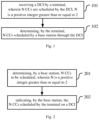
- Fig. 1 is a schematic implementation flowchart of a carrier determination method on the terminal side. As shown in the figure, it may include the following steps.
- Step 101 receiving a DCI by a terminal, wherein N CCs are scheduled by the DCI, N is a positive integer greater than or equal to 2.
- Step 102 determining, by the terminal, N CCs scheduled by the base station through the DCI.
- an indication method on the base station side is also provided.
- Fig. 2 is a schematic flowchart of the implementation of the carrier indication method on the network side. As shown in the figure, it may include the following steps.
- Step 201 determining, by a base station, N CCs to be scheduled, wherein N is a positive integer greater than or equal to 2;
- Step 202 indicating, by the base station, the N CCs scheduled by the terminal on a DCI.
- the base station indicates multiple CCs scheduled by a DCI through the information field already included in the current DCI, or through introducing a new information field, or through higher layer signaling, and terminal determines the multiple CCs for data transmissions through analyzing the information field already included in the current DCI, or the newly introduced information field, or higher layer signaling.
- the terminal determines the N CCs scheduled by the base station through the DCI in one of the following ways or a combination thereof:
- the base station indicates the terminal the N CCs scheduled by the base station through the DCI in one of the following ways or a combination thereof:
- the CIF field when indicating the N CCs scheduled by the DCI through a CIF field in the DCI, includes information used for indicating N CCs including a scheduling carrier; or the CIF field includes information used for indicating a combination of N CCs other than the scheduling carrier, wherein the scheduling carrier is a carrier that transmits the DCI.
- the CIF field when the base station indicates the N CCs scheduled by the DCI through the CIF field in the DCI, the CIF field includes information for indicating the N CCs including the scheduled carrier; or, the CIF field includes information for indicating a combination of N CCs other than the scheduling carrier, wherein the scheduling carrier is the carrier that transmits the DCI.
- the CIF information field included in the scheduling DCI is used for indicating data transmission on N carriers including the scheduling carrier; or, the CIF information field included in the scheduling DCI is used for indicating a combination of N carriers other than the scheduling carrier.
- the N CCs scheduled by the base station are determined in one of the following ways or a combination thereof:
- the base station when the CIF field includes information for indicating N CCs including the scheduling carrier, the base station indicates the N CCs scheduled by the base station in one of the following ways or a combination thereof:
- the terminal may further include: indicating, when the CIF field indicates the scheduling carrier, that the DCI does not support simultaneous scheduling of multiple CCs.
- the base station may further include: indicating, when the CIF field indicates the scheduling carrier, that the DCI does not support simultaneous scheduling of multiple CCs.
- the CIF field indicates the CC where the DCI transmission is located, it means that the simultaneous scheduling of multiple CCs is not supported at this time.
- the method before the terminal determines the N CCs scheduled by the base station through the DCI, the method further includes: determining, when the DCI coincides with the PDCCH candidate of other DCI on the scheduling carrier and the DCI formats are the same, that the DCI transmitted on the PDCCH candidate is the DCI for scheduling N CCs.
- the base station may further include: configuring that the DCI coincides with the PDCCH candidate of other DCI on the scheduling carrier and the DCI format is the same, in order to indicate that the DCI transmitted on the PDCCH candidate is the DCI for scheduling N CCs.
- the terminal considers that the DCI transmitted on the PDCCH candidate is the DCI for scheduling multiple CCs.
- the terminal determines the N CCs scheduled by the base station in one of the following ways or a combination thereof:
- the base station when the CIF field includes information for indicating the combination of N CCs other than the scheduling carrier, the base station indicates the N CCs scheduled by the base station in one of the following ways or a combination thereof:
- the CIF information field included in the scheduling DCI is used for indicating the combination of N carriers other than the scheduling carrie.
- N is indicated in one of the following ways or a combination thereof:
- the base station when the CIF indicates the starting carrier number of the N carriers scheduled by the DCI, and N consecutive CCs starting from the starting carrier number, the base station indicates the N in one of the following ways or a combination thereof:
- the combination of N scheduled carriers is pre-configured through higher layer signaling, and does not include the scheduling carrier; or the CIF indicates the starting carrier number of the multiple carriers scheduled by the one DCI, the DCI scheduling data transmission on consecutive N CCs starting from the CC indicated by the CIF, N is determined as follows:
- the terminal when the CIF indicates the starting carrier number of the N carriers scheduled by the DCI, and N consecutive CCs starting from the starting carrier number, the terminal further includes: newly introducing a second information field, the second information field is used for indicating whether the DCI is used for multi-carrier scheduling.
- the base station when the CIF indicates the starting carrier number of the N carriers scheduled by the DCI, and N consecutive CCs starting from the starting carrier number, the base station further includes: newly introducing a second information field, the second information field is used for indicating whether the DCI is used for multi-carrier scheduling.
- a second information field may be introduced to indicate whether the DCI is used for multi-carrier scheduling.
- the base station may further include: updating a combination of N CCs through a MAC CE.
- the combination of the N scheduled carriers may be updated through a MAC CE (Media Access Control Control Element).
- MAC CE Media Access Control Control Element
- N is configured through higher layer signaling.
- the base station when indicating the N CCs scheduled by the DCI according to the bit field in the DCI used for indicating the N CCs scheduled by the DCI, the base station configures the N through higher layer signaling.
- a new bit field is defined in the scheduling DCI to indicate N CCs scheduled by the DCI, and the N CCs are pre-configured through higher layer signaling.
- the implementation may further include: updating a combination of N CCs through a MAC CE.
- the combination of the N scheduled carriers may be updated through the MAC CE.
- the terminal determines the N CCs scheduled by the DCI according to the bit field in the DCI used for indicating the N CCs scheduled by the DCI, if the CIF field indicates the scheduling carrier, it means that the DCI does not support simultaneous scheduling of multiple CCs, wherein the scheduling carrier is the carrier that transmits the DCI.
- the base station when indicating the N CCs scheduled by the DCI according to the bit field in the DCI used for indicating the N CCs scheduled by the DCI, the base station configures the CIF field to indicate the scheduling carrier, to indicate that the DCI does not support simultaneous scheduling of multiple CCs, wherein the scheduling carrier is the carrier that transmits the DCI.
- the indication field indicates the CC where the DCI transmission is located, it indicates that the simultaneous scheduling of multiple CCs is not supported at this time.
- the method when the terminal determines the N CCs scheduled by the DCI according to the indication of the higher layer signaling, before the terminal determines the N CCs scheduled by the base station through the DCI, the method further includes: terminal determines that the DCI configured by higher layer configuration per search space or per CORESET is the DCI for scheduling N CCs.
- the higher layer configuration is configured per search space or per CORESET to indicate that the DCI is the DCI for scheduling the N CCs.
- the N CCs scheduled by the DCI are indicated through higher layer signaling, and further, the higher layer configuration is configured per search space or per CORESET (control resource set), that is, indicating that a DCI transmitted in a specific search space or CORESET is used to schedule data transmission on N CCs.
- the higher layer configuration is configured per search space or per CORESET (control resource set), that is, indicating that a DCI transmitted in a specific search space or CORESET is used to schedule data transmission on N CCs.
- it may further include: updating a combination of N CCs through a MAC CE.
- the combination of the N scheduled carriers may be updated through the MAC CE.
- the network side device schedules data transmission on multiple CCs through a DCI.
- the base station indicates data transmission on the N carriers scheduled by the DCI through the CIF field carried in the DCI.
- the CIF field contains 3 bits of information
- the cross-carrier scheduling CCs configured by the base station for the terminal are ⁇ CC#0, CC#5, CC#6, CC#13, CC#15, CC#19, CC#23, CC# 26 ⁇ , and CC#0 is the scheduling carrier.
- the set of scheduled carriers indicated by the CIF field at this time is shown in the following table. That is, the current RRC configuration signaling can be reused at this time, and there is no need to introduce new RRC parameters to configure scheduled carriers other than the scheduled carrier.
- CIF CC combination scheduled by the DCI 000 Indicates the carrier of the DCI, which is single-carrier scheduling at this time 001 CC#0&CC#5 010 CC#0&CC#6 011 CC#0&CC#13 100 CC#0&CC#15 101 CC#0&CC#19 110 CC#0&CC#23 111 CC#0&CC#26
- the terminal When the scheduling DCI used for scheduling multiple CCs completely coincides with the PDCCH candidate other scheduling DCI on the scheduling carrier, and the DCI formats are the same, the terminal considers that the DCI transmitted on the PDCCH candidate is the DCI for scheduling multiple CCs.
- the base station may update the combination of the N scheduled carriers through the MAC CE.
- the network side device schedules data transmission on multiple CCs through a DCI.
- the base station indicates data transmission on the N carriers scheduled by the DCI through the CIF field carried in the DCI.
- the CIF field in the DCI contains 3 bits.
- the CIF field is used for indicating that the DCI schedules data transmission on the current carrier and other two carriers simultaneously scheduled by the DCI.
- the combination of the two carriers is configured in advance through higher layer signaling (RRC signaling), for example, the following correspondence is configured through higher layer signaling.
- RRC signaling higher layer signaling
- the following table is only a specific example, and this embodiment does not make any limitation on the carrier group.
- the DCI-scheduled CC combination 000 Indicates the carrier of the DCI, which is single-carrier scheduling at this time 001 CC#0& ⁇ CC#5, CC#6 ⁇ 010 CC#0& ⁇ CC#6,CC#7 ⁇ 011 CC#0& ⁇ CC#13,CC#14 ⁇ 100 CC#0& ⁇ CC#15,CC#5 ⁇ 101 CC#0& ⁇ CC#19,CC#6 ⁇ 110 CC#0& ⁇ CC#23,CC#7 ⁇ 111 CC#0& ⁇ CC#26,CC#1 ⁇
- the terminal When a scheduling DCI used for scheduling multiple CCs completely coincides with the PDCCH candidates scheduling other scheduling DCI on the scheduling carrier, and the DCI formats are the same, the terminal considers that the DCI transmitted on the PDCCH candidate is the DCI used for scheduling multiple CCs.
- the base station may update the combination of the N scheduled carriers through the MAC CE.
- the network side device schedules data transmission on multiple CCs through a DCI.
- the base station indicates the data transmission on the N carriers scheduled by the DCI through the CIF field carried in the DCI.
- the terminal After receiving the DCI, the terminal determines the starting carrier number of the N carriers through the CIF field carried in the DCI.
- the DCI schedules data transmission on consecutive N CCs starting from the CC indicated by the CIF. Wherein N can be determined as follows:
- the scheduling DCI indicates data transmission on N scheduled carriers other than the scheduling carrier through the CIF field.
- the combination of the N scheduled carriers is pre-configured through higher layer signaling, and does not include the scheduling carrier.
- the network side device schedules data transmission on multiple CCs through a DCI.
- a new carrier group indication field is introduced into the DCI to indicate the combination of N CCs scheduled by the DCI.
- the specific manner is similar to that of Embodiments 1-4, which are not repeated here.
- the network side device schedules data transmission on multiple CCs through a DCI.
- the base station indicates the combination of multiple CCs scheduled by the DCI through higher layer signaling.
- the combination of the multiple CCs may be:
- the higher layer configuration is configured per search space or a per CORESET, that is, a DCI transmitted in a specific search space or CORESET is indicated to be used for scheduling data transmission on the multiple CCs.
- the combination of the multiple scheduled carriers can be updated through MAC CE.
- an embodiment of the present disclosure further provides a base station, a user terminal, a carrier determination device, a carrier indication device, and a computer-readable storage medium. Since the principles of these devices for solving problems are similar to the carrier determination method and the carrier indication method, the implementation of these devices can refer to the implementation of the method, which will not be repeated herein.
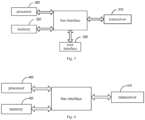
- Fig. 3 is a schematic structural diagram of a user terminal. As shown in the figure, the user terminal includes: a processor 300, configured to read a program in a memory 320, and execute the following processes:
- the N CCs scheduled by the base station are determined through DCI in one of the following ways or a combination thereof :
- the CIF field comprises information used for indicating N CCs comprising a scheduling carrier; or the CIF field comprises information used for indicating a combination of N CCs other than the scheduling carrier, wherein the scheduling carrier is a carrier that transmits the DCI.
- the N CCs scheduled by the base station are determined in one of the following ways or a combination thereof:
- the implementation further includes: indicating, when the CIF field indicates the scheduling carrier, that the DCI does not support simultaneous scheduling of multiple CCs.
- the method before the N CCs scheduled by the base station are determined by the DCI, the method further includes: determining, when the DCI coincides with a physical downlink control channel (PDCCH) candidate of other DCI on the scheduling carrier, and a DCI format is the same, that the DCI transmitted on the PDCCH candidate is the DCI for scheduling the N CCs.
- PDCCH physical downlink control channel
- the N CCs scheduled by the base station are determined in one of the following ways or a combination thereof:
- N is indicated in one of the following ways or a combination thereof:
- the method further includes: newly introducing a second information field, the second information field being used for indicating whether the DCI is used for multi-carrier scheduling.
- N is configured through higher layer signaling.
- the CIF field indicates a scheduling carrier, it indicates that the DCI does not support simultaneous scheduling of multiple CCs, wherein the scheduling carrier is a carrier that transmits the DCI.
- the method when determining the N CCs scheduled by the DCI according to an indication of higher layer signaling, before determining, by the terminal, the N CCs scheduled by the base station through the DCI, the method further includes: determining that the DCI configured by higher layer configuration per search space or per CORESET is the DCI for scheduling N CCs.
- the method further includes: updating a combination of the N CCs according to MAC CE.
- the bus architecture may include any number of interconnected buses and bridges, specifically various circuits such as one or more processors represented by the processor 300 and the memory represented by the memory 320 are connected together.
- the bus architecture can also connect various other circuits such as peripheral devices, voltage regulators, power management circuits, etc., which are all known in the field, and therefore, will not be further described herein.
- the bus interface provides the interface.
- the transceiver 310 may be a plurality of elements, that is, including a transmitter and a receiver, and provide a unit for communicating with various other devices on the transmission medium.
- the user interface 330 may also be an interface capable of connecting externally or internally to required equipment.
- the connected equipment includes, but is not limited to, a keypad, a display, a speaker, a microphone, a joystick, etc.
- the processor 300 is responsible for managing the bus architecture and general processing, and the memory 320 can store data used by the processor 300 when performing operations.
- An embodiment of the present disclosure provides a carrier determination device, including:
- For specific implementation may refer to the implementation of the carrier determination method.
- each part of the device described above is divided into various modules or units by function and described respectively.
- the functions of each module or unit may be implemented in one or more software or hardware.
- Fig. 4 is a schematic structural diagram of the base station. As shown in the figure, the base station includes: a processor 400, configured to read a program in a memory 420, and execute the following processes:
- indicating the terminal the N CCs scheduled by the base station through the DCI in one of the following ways or a combination thereof:
- the CIF field when indicating the N CCs scheduled by the DCI through a CIF field in the DCI, includes information used for indicating N CCs including a scheduling carrier; or the CIF field includes information used for indicating a combination of N CCs other than the scheduling carrier, wherein the scheduling carrier is a carrier that transmits the DCI.
- the N CCs scheduled by the base station are indicated in one of the following ways or a combination thereof:
- the base station further includes: when the CIF field indicates the scheduling carrier, it indicates that the DCI does not support simultaneous scheduling of multiple CCs.
- the base station further includes: configuring that the DCI coincides with a physical downlink control channel (PDCCH) candidate of other DCI on the scheduling carrier, and a DCI format is the same, to indicate that the DCI transmitted on the PDCCH candidate is the DCI for scheduling the N CCs.
- PDCCH physical downlink control channel
- the N CCs scheduled by the base station are indicated in one of the following ways or a combination thereof:
- N is indicated in one of the following ways or a combination thereof:
- the CIF indicates the starting carrier number of the N carriers scheduled by the DCI and N consecutive CCs starting from the starting carrier number, further comprising: newly introducing a second information field, the second information field being used for indicating whether the DCI is used for multi-carrier scheduling.
- N is configured through higher layer signaling.
- the CIF field is configured to indicate the scheduling carrier, in order to indicates that the DCI does not support simultaneous scheduling of multiple CCs, wherein the scheduling carrier is a carrier that transmits the DCI.
- the higher layer configuration is configured per search space or per CORESET to indicate the DCI is the DCI for scheduling N CCs.
- the base station further includes: updating a combination of the N CCs through MAC CE.
- the bus architecture may include any number of interconnected buses and bridges, specifically various circuits such as one or more processors represented by the processor 400 and the memory represented by the memory 420 are connected together.
- the bus architecture can also connect various other circuits such as peripheral devices, voltage regulators, power management circuits, etc., which are all known in the field, and therefore, will not be further described herein.
- the bus interface provides the interface.
- the transceiver 410 may be a plurality of elements, that is, including a transmitter and a receiver, and provide a unit for communicating with various other devices on the transmission medium.
- the processor 400 is responsible for managing the bus architecture and general processing, and the memory 420 can store data used by the processor 400 when performing operations.
- An embodiment of the present disclosure provides a carrier indication device, including:
- each part of the above apparatus is divided into various modules or units by function and described respectively.
- the functions of each module or unit may be implemented in one or more software or hardware.
- An embodiment of the present disclosure provides a computer-readable storage medium, wherein the computer-readable storage medium stores a computer program configured to execute the carrier determination method and / or the carrier indication method mentioned above.
- For specific implementation may refer to the implementation of the carrier determination method and/or the carrier indication method.
- the base station schedules data transmission on multiple CCs through a DCI, and indicates the multiple CCs scheduled by the DCI through the CIF field or the newly defined information field or the RRC parameter.
- the terminal receives the DCI that schedules data transmission of multiple CCs, and determines the multiple CCs scheduled by the DCI through the CIF field or the newly defined information field or the RRC parameter.
- the solution for indicating multiple scheduled carriers provided in the embodiments of the present disclosure can improve the flexibility of data scheduling while avoiding excessive DCI overhead.
- embodiments of the present disclosure may be provided as a method, system, or computer program product. Accordingly, the present disclosure may take the form of an entirely hardware embodiment, an entirely software embodiment, or an embodiment combining software and hardware aspects. Furthermore, the present disclosure may take the form of a computer program product configured to be executed on one or more computer-usable storage mediums storing computer-usable program code therein (including but not limited to disk storage, optical storage, etc.).
- These computer program instructions may also be stored in a computer readable memory capable of directing a computer or other programmable data processing device to operate in a particular manner, such that the instructions stored in the computer readable memory produce an article of manufacture including an instruction device that implements the functions specified in one or more processes in a flowchart and/or one or more blocks in a block diagram.
- These computer program instructions may also be loaded onto a computer or other programmable data processing device such that a series of operational steps are executed on the computer or other programmable device to produce computer-implemented processing, so that the instructions executed on the computer or other programmable device provide steps for implementing the functions specified in in one or more processes in a flowchart and/or one or more blocks in a block diagram.
- modules can be implemented in the form of software calls through processing elements, or in the form of hardware calls, or in the form of software calls through processing elements for some modules and hardware calls for some modules.
- the determination module can be a separate processing element or can be integrated in one of the chips of the above-mentioned device, or it can be stored in the memory of the above-mentioned device in the form of program code, which is called by one of the processing elements of the above-mentioned device and performs the functions of the above-mentioned determination module.
- Other modules can be implemented similarly.
- modules can be integrated in whole or in part or can be implemented independently.
- the processing element described here can be an integrated circuit with signal processing capabilities.
- the steps of the method described above, or the individual modules above can be accomplished by integrated logic circuits in the hardware of the processor element or by instructions in the form of software.
- each module, unit, subunit, or submodule may be one or more integrated circuits configured to implement the above method, such as: one or more Application Specific Integrated Circuits (ASICs), or one or more digital signal processors (DSPs), or one or more Field Programmable Gate Array (FPGA), etc.
- ASICs Application Specific Integrated Circuits
- DSPs digital signal processors
- FPGA Field Programmable Gate Array
- the processing element may be a general-purpose processor, such as a Central Processing Unit (CPU) or other processor that can call program code.
- CPU Central Processing Unit
- these modules may be integrated together and implemented in the form of a system-on-a-chip (SOC).
- SOC system-on-a-chip
Landscapes
- Engineering & Computer Science (AREA)
- Signal Processing (AREA)
- Computer Networks & Wireless Communication (AREA)
- Mobile Radio Communication Systems (AREA)
Abstract
Description
- The present application claims a priority to the
Chinese patent application No. 202010293799.3 filed in China on April 15, 2020 - The present disclosure relates to the field of wireless communication technology, in particular to a carrier determination and indication method, a device, an apparatus and a medium.
- In the current wireless communication system, if the base station is configured with cross-carrier scheduling, the terminal only detects and receives the corresponding downlink control channel on the scheduling carrier, and uses the CIF (Carrier Indicator Field) included in the DCI (Downlink Control Information) to determine the target carrier scheduled by the received DCI. Data on different scheduling carriers is scheduled through different DCI.
- The disadvantage of the related art is that in the current system, a single DCI can only schedule data transmission on one carrier, and cannot schedule data transmission on multiple carriers through a single DCI.
- An The present disclosure provides a carrier determination and indication method, a device, an apparatus, and a medium to solve the problem that data transmission on multiple carriers cannot be scheduled through a single DCI.
- An embodiment of the present disclosure provides a carrier determination method, including:
- receiving a DCI by a terminal, wherein N CCs are scheduled by the DCI, N is a positive integer greater than or equal to 2;
- determining, by the terminal, N CCs scheduled by a base station through the DCI.
- In the implementation, the terminal determines the N CCs scheduled by the base station through the DCI in one of the following ways or a combination thereof:
- determining the N CCs scheduled by the DCI according to a CIF field in the DCI; or,
- determining the N CCs scheduled by the DCI according to a bit field in the DCI used for indicating the N CCs scheduled by the DCI; or,
- determining the N CCs scheduled by the DCI according to an indication of higher layer signaling.
- In the implementation, when determining the N CCs scheduled by the DCI according to the CIF field in the DCI, the CIF field includes information used for indicating N CCs including a scheduling carrier; or the CIF field includes information used for indicating a combination of N CCs other than the scheduling carrier, wherein the scheduling carrier is a carrier that transmits the DCI.
- In the implementation, when the CIF field includes the information used for indicating the N CCs including the scheduling carrier, the N CCs scheduled by the base station are determined in one of the following ways or a combination thereof:
- one of multiple carrier groups is indicated in the CIF field, wherein the multiple carrier groups are pre-configured through higher layer signaling, and each carrier group includes the scheduling carrier; or,
- when N=2, the CIF is used for indicating a scheduled carrier other than the scheduling carrier; or,
- the CIF indicates a starting carrier number of the N carriers scheduled by the DCI, and N consecutive CCs starting from the starting carrier number.
- In the implementation, the method further includes:
indicating, when the CIF field indicates the scheduling carrier, that the DCI does not support simultaneous scheduling of multiple CCs. - In the implementation, before determining, by the terminal, the N CCs scheduled by a base station through the DCI, the method further includes:
determining, when the DCI coincides with a physical downlink control channel (PDCCH) candidate of other DCI on the scheduling carrier, and a DCI format is the same, that the DCI transmitted on the PDCCH candidate is the DCI for scheduling the N CCs. - In the implementation, when the CIF field includes information used for indicating a combination of N CCs other than the scheduling carrier, the N CCs scheduled by the base station are determined in one of the following ways or a combination thereof:
- one of multiple carrier groups is indicated in the CIF field, wherein the multiple carrier groups are pre-configured through higher layer signaling, and each carrier group does not include a scheduling carrier; or,
- the CIF indicates a starting carrier number of the N carriers scheduled by the DCI, and N consecutive CCs starting from the starting carrier number.
- In the implementation, when the CIF indicates the starting carrier number of the N carriers scheduled by the DCI and the N consecutive CCs starting from the starting carrier number, N is indicated in one of the following ways or a combination thereof:
- N is configured through higher layer signaling; or,
- N is determined in a way predefined by a protocol; or,
- N is indicated by a newly introduced first information field in the DCI.
- In the implementation, when the CIF indicates the starting carrier number of the N carriers scheduled by the DCI and the N consecutive CCs starting from the starting carrier number, the method further includes:
newly introducing a second information field, the second information field being used for indicating whether the DCI is used for multi-carrier scheduling. - In the implementation, when determining the N CCs scheduled by the DCI according to the bit field in the DCI used for indicating the N CCs scheduled by the DCI, N is configured through higher layer signaling.
- In the implementation, when determining the N CCs scheduled by the DCI according to the bit field in the DCI used for indicating the N CCs scheduled by the DCI, if the CIF field indicates a scheduling carrier, it indicates that the DCI does not support simultaneous scheduling of multiple CCs, wherein the scheduling carrier is a carrier that transmits the DCI.
- In the implementation, when determining the N CCs scheduled by the DCI according to the indication of higher layer signaling, before determining, by the terminal, the N CCs scheduled by the base station through the DCI, the method further includes:
determining, by the terminal, that the DCI configured by higher layer configuration per search space or per CORESET is the DCI for scheduling N CCs. - In the implementation, the method further includes:
updating a combination of the N CCs according to medium access control control element (MAC CE). - An embodiment of the present disclosure provides a carrier indication method, including:
- determining, by a base station, N CCs to be scheduled, wherein N is a positive integer greater than or equal to 2;
- indicating, by the base station, the N CCs scheduled by the terminal on a DCI.
- In the implementation, the base station indicates the terminal the N CCs scheduled by the base station through the DCI in one of the following ways or a combination thereof:
- indicating the N CCs scheduled by the DCI through a CIF field in the DCI; or,
- indicating the N CCs scheduled by the DCI through a bit field in the DCI used for indicating the N CCs scheduled by the DCI; or,
- indicating the N CCs scheduled by the DCI through higher layer signaling.
- In the implementation, when indicating the N CCs scheduled by the DCI through a CIF field in the DCI, the CIF field includes information used for indicating N CCs including a scheduling carrier; or the CIF field includes information used for indicating a combination of N CCs other than the scheduling carrier, wherein the scheduling carrier is a carrier that transmits the DCI.
- In the implementation, when the CIF field includes information used for indicating the N CCs including the scheduling carrier, the N CCs scheduled by the base station are indicated in one of the following ways or a combination thereof:
- one of multiple carrier groups is indicated in the CIF field, wherein the multiple carrier groups are pre-configured through higher layer signaling, and each carrier group comprises the scheduling carrier; or,
- when N=2, the CIF is used for indicating a scheduled carrier other than the scheduling carrier; or,
- the CIF indicates a starting carrier number of the N carriers scheduled by the DCI, and N consecutive CCs starting from the starting carrier number.
- In the implementation, the method further includes:
indicating, when the CIF field indicates the scheduling carrier, that the DCI does not support simultaneous scheduling of multiple CCs. - In the implementation, the method further includes:
configuring that the DCI coincides with a physical downlink control channel (PDCCH) candidate of other DCI on the scheduling carrier, and a DCI format is the same, to indicate that the DCI transmitted on the PDCCH candidate is the DCI for scheduling the N CCs. - In the implementation, when the CIF field includes information used for indicating a combination of N CCs other than the scheduling carrier, the N CCs scheduled by the base station are indicated in one of the following ways or a combination thereof:
- one of multiple carrier groups is indicated in the CIF field, wherein the multiple carrier groups are pre-configured through higher layer signaling, and each carrier group does not include a scheduling carrier; or,
- the CIF indicates a starting carrier number of the N carriers scheduled by the DCI, and N consecutive CCs starting from the starting carrier number.
- In the implementation, when the CIF indicates the starting carrier number of the N carriers scheduled by the DCI, and N consecutive CCs starting from the starting carrier number, N is indicated in one of the following ways or a combination thereof:
- N is configured through higher layer signaling; or,
- N is determined in a way predefined by a protocol; or,
- N is indicated by a newly introduced first information field in the DCI.
- In the implementation, when the CIF indicates the starting carrier number of the N carriers scheduled by the DCI, and N consecutive CCs starting from the starting carrier number, the method further includes:
newly introducing a second information field, the second information field being used for indicating whether the DCI is used for multi-carrier scheduling. - In the implementation, when indicating the N CCs scheduled by the DCI according to a bit field in the DCI used for indicating the N CCs scheduled by the DCI, N is configured through higher layer signaling.
- In the implementation, when indicating the N CCs scheduled by the DCI according to a bit field in the DCI used for indicating the N CCs scheduled by the DCI, the CIF field is configured to indicate the scheduling carrier, in order to indicates that the DCI does not support simultaneous scheduling of multiple CCs, wherein the scheduling carrier is a carrier that transmits the DCI.
- In the implementation, when indicating the N CCs scheduled by the DCI through higher layer signaling, the higher layer configuration is configured per search space or per CORESET to indicate that the DCI is the DCI for scheduling N CCs.
- In the implementation, the method further includes:
updating a combination of the N CCs through MAC CE. - An embodiment of the present provides a user terminal, including:
a processor, configured to read a program in a memory, and execute the following processes: - receiving DCI, wherein N CCs are scheduled by the DCI, N is a positive integer greater than or equal to 2;
- determining N CCs scheduled by a base station through the DCI.
- a transceiver, configured to receive and transmit data under the control of the processor.
- In the implementation, the N CCs scheduled by the base station are determined through DCI in one of the following ways or a combination thereof:
- determining the N CCs scheduled by the DCI according to a CIF field in the DCI; or,
- determining the N CCs scheduled by the DCI according to a bit field in the DCI used for indicating the N CCs scheduled by the DCI; or,
- determining the N CCs scheduled by the DCI according to an indication of higher layer signaling.
- In the implementation, when determining the N CCs scheduled by the DCI according to the CIF field in the DCI, the CIF field includes information used for indicating N CCs including a scheduling carrier; or the CIF field includes information used for indicating a combination of N CCs other than the scheduling carrier, wherein the scheduling carrier is a carrier that transmits the DCI.
- In the implementation, when the CIF field includes the information used for indicating the N CCs including the scheduling carrier, the N CCs scheduled by the base station are determined in one of the following ways or a combination thereof:
- one of multiple carrier groups is indicated in the CIF field, wherein the multiple carrier groups are pre-configured through higher layer signaling, and each carrier group comprises the scheduling carrier; or,
- when N=2, the CIF is used for indicating a scheduled carrier other than the scheduling carrier; or,
- the CIF indicates a starting carrier number of the N carriers scheduled by the DCI, and N consecutive CCs starting from the starting carrier number.
- In the implementation, the terminal further includes:
indicating, when the CIF field indicates the scheduling carrier, that the DCI does not support simultaneous scheduling of multiple CCs. - In the implementation, before determining N CCs scheduled by a base station through the DCI, the terminal further includes:
determining, when the DCI coincides with a PDCCH candidate of other DCI on the scheduling carrier and a DCI format is the same, that the DCI transmitted on the PDCCH candidate is the DCI for scheduling the N CCs. - In the implementation, when the CIF field includes information used for indicating a combination of N CCs other than the scheduling carrier, the N CCs scheduled by the base station are determined in one of the following ways or a combination thereof:
- one of multiple carrier groups is indicated in the CIF field, wherein the multiple carrier groups are pre-configured through higher layer signaling, and each carrier group does not include a scheduling carrier; or,
- the CIF indicates a starting carrier number of the N carriers scheduled by the DCI, and N consecutive CCs starting from the starting carrier number.
- In the implementation, when the CIF indicates the starting carrier number of the N carriers scheduled by the DCI and N consecutive CCs starting from the starting carrier number, N is indicated in one of the following ways or a combination thereof:
- N is configured through higher layer signaling; or,
- N is determined in a way predefined by a protocol; or,
- N is indicated by a newly introduced first information field in the DCI.
- In the implementation, when the CIF indicates the starting carrier number of the N carriers scheduled by the DCI, and N consecutive CCs starting from the starting carrier number, the terminal further includes:
newly introducing a second information field, the second information field being used for indicating whether the DCI is used for multi-carrier scheduling. - In the implementation, when determining the N CCs scheduled by the DCI according to a bit field in the DCI used for indicating the N CCs scheduled by the DCI, N is configured through higher layer signaling.
- In the implementation, when determining the N CCs scheduled by the DCI according to a bit field in the DCI used for indicating the N CCs scheduled by the DCI, if the CIF field indicates a scheduling carrier, it indicates that the DCI does not support simultaneous scheduling of multiple CCs, wherein the scheduling carrier is a carrier that transmits the DCI.
- In the implementation, when determining the N CCs scheduled by the DCI according to an indication of higher layer signaling, before determining, by the terminal, the N CCs scheduled by the base station through the DCI, the terminal further includes:
determining that the DCI configured by higher layer configuration per search space or per CORESET is the DCI for scheduling N CCs. - In the implementation, the terminal further includes:
updating a combination of the N CCs according to MAC CE. - An embodiment of the present disclosure provides a base station, including:
a processor, configured to read a program in a memory, and execute the following processes: - determining N CCs to be scheduled, wherein N is a positive integer greater than or equal to 2;
- indicating the N CCs scheduled by the terminal on a DCI;
- a transceiver, configured to receive and transmit data under the control of the processor.
- In the implementation, indicating the terminal the N CCs scheduled by the base station through the DCI in one of the following ways or a combination thereof:
- indicating the N CCs scheduled by the DCI through a CIF field in the DCI; or,
- indicating the N CCs scheduled by the DCI through a bit field in the DCI used for indicating the N CCs scheduled by the DCI; or,
- indicating the N CCs scheduled by the DCI through higher layer signaling.
- In the implementation, when indicating the N CCs scheduled by the DCI through a CIF field in the DCI, the CIF field includes information used for indicating N CCs including a scheduling carrier; or the CIF field includes information used for indicating a combination of N CCs other than the scheduling carrier, wherein the scheduling carrier is a carrier that transmits the DCI.
- In the implementation, when the CIF field includes information used for indicating the N CCs including the scheduling carrier, the N CCs scheduled by the base station are indicated in one of the following ways or a combination thereof:
- one of multiple carrier groups is indicated in the CIF field, wherein the multiple carrier groups are pre-configured through higher layer signaling, and each carrier group comprises the scheduling carrier; or,
- when N=2, the CIF is used for indicating a scheduled carrier other than the scheduling carrier; or,
- the CIF indicates a starting carrier number of the N carriers scheduled by the DCI, and N consecutive CCs starting from the starting carrier number.
- In the implementation, the base station further includes:
indicating, when the CIF field indicates the scheduling carrier, that the DCI does not support simultaneous scheduling of multiple CCs. - In the implementation, the base station further includes:
configuring that the DCI coincides with a physical downlink control channel (PDCCH) candidate of other DCI on the scheduling carrier, and a DCI format is the same, to indicate that the DCI transmitted on the PDCCH candidate is the DCI for scheduling the N CCs. - In the implementation, when the CIF field includes information used for indicating a combination of N CCs other than the scheduling carrier, the N CCs scheduled by the base station are indicated in one of the following ways or a combination thereof:
- one of multiple carrier groups is indicated in the CIF field, wherein the multiple carrier groups are pre-configured through higher layer signaling, and each carrier group does not include a scheduling carrier; or,
- the CIF indicates a starting carrier number of the N carriers scheduled by the DCI, and N consecutive CCs starting from the starting carrier number.
- In the implementation, when the CIF indicates the starting carrier number of the N carriers scheduled by the DCI, and N consecutive CCs starting from the starting carrier number, N is indicated in one of the following ways or a combination thereof:
- N is configured through higher layer signaling; or,
- N is determined in a way predefined by a protocol; or,
- N is indicated by a newly introduced first information field in the DCI.
- In the implementation, when the CIF indicates the starting carrier number of the N carriers scheduled by the DCI and N consecutive CCs starting from the starting carrier number, further comprising:
newly introducing a second information field, the second information field being used for indicating whether the DCI is used for multi-carrier scheduling. - In the implementation, when indicating the N CCs scheduled by the DCI according to a bit field in the DCI used for indicating the N CCs scheduled by the DCI, N is configured through higher layer signaling.
- In the implementation, when indicating the N CCs scheduled by the DCI according to a bit field in the DCI used for indicating the N CCs scheduled by the DCI, the CIF field is configured to indicate the scheduling carrier, in order to indicates that the DCI does not support simultaneous scheduling of multiple CCs, wherein the scheduling carrier is a carrier that transmits the DCI.
- In the implementation, when indicating the N CCs scheduled by the DCI through higher layer signaling, the higher layer configuration is configured per search space or per CORESET to indicate that the DCI is the DCI for scheduling N CCs.
- In the implementation, the base station further includes:
updating a combination of the N CCs through MAC CE. - An embodiment of the present disclosure provides a carrier determination device, including:
- a receiving module, configured to receive DCI, wherein N CCs are scheduled by the DCI, N is a positive integer greater than or equal to 2;
- a determination module, configured to determine N CCs scheduled by a base station through the DCI.
- An embodiment of the present disclosure provides a carrier indication device, including:
- a scheduling module, configured to determine N CCs to be scheduled, wherein N is a positive integer greater than or equal to 2;
- an indication module, configured to indicate the N CCs scheduled by the terminal on a DCI.
- An embodiment of the present disclosure provides a computer-readable storage medium, wherein the computer-readable storage medium stores a computer program configured to execute the carrier determination method and / or the carrier indication method mentioned above.
- The beneficial effects of the present disclosure are as follows:
- In the technical solutions provided by the embodiments of the present disclosure, since the base station schedules data transmission on multiple CCs through a DCI, and indicates multiple CCs scheduled through the DCI, correspondingly, after receiving a DCI that schedules data transmission of multiple CCs, the terminal can determine multiple CCs scheduled by the one DCI. Therefore, the flexibility of data scheduling can be improved, and at the same time, excessive DCI overhead can be avoided.
- The accompanying drawings described herein are used to provide further understanding of the present disclosure and constitute a part of the present disclosure. The exemplary embodiments of the present disclosure and their descriptions are used to explain the present disclosure and do not constitute an improper limitation of the present disclosure. The accompanying drawings are described as below.
-
Fig. 1 is a schematic implementation flowchart of a carrier determination method on a terminal side according to an embodiment of the present disclosure; -
Fig. 2 is a schematic implementation flowchart of a carrier indication method on a network side according to an embodiment of the present disclosure; -
Fig. 3 is a schematic structural diagram of a user terminal according to an embodiment of the present disclosure; -
Fig. 4 is a schematic structural diagram of a base station according to an embodiment of the present disclosure. - In order to increase scheduling efficiency and save DCI overhead, it may be necessary to consider adopting a DCI transmitted on a scheduling cell to schedule data transmission on multiple scheduled carriers in future communication technologies. The combination of multiple carriers scheduled through a DCI needs to be dynamically changed according to traffic conditions. However, when a DCI is used to schedule data transmission on multiple CCs (Component Carriers), there is currently no clear solution on how to determine the multiple CCs scheduled by the DCI.
- Based on this, a carrier indication method is also provided in the embodiments of the present disclosure, and the specific embodiments of the present disclosure will be described below with reference to the accompanying drawings.
- In the description process, the implementation of the UE and the base station side will be described respectively, and then an example of the coordinated implementation of the two will be given to better understand the implementation of the solutions given in the embodiments of the present disclosure. This description method does not mean that the two must be implemented together or must be implemented separately. In fact, when the UE and the base station are implemented separately, they also solve the problems on the UE side and the base station side respectively, and when the two are used in combination, better technical results are obtained.
-
Fig. 1 is a schematic implementation flowchart of a carrier determination method on the terminal side. As shown in the figure, it may include the following steps. -
Step 101, receiving a DCI by a terminal, wherein N CCs are scheduled by the DCI, N is a positive integer greater than or equal to 2. -
Step 102, determining, by the terminal, N CCs scheduled by the base station through the DCI. - Correspondingly, an indication method on the base station side is also provided.
-
Fig. 2 is a schematic flowchart of the implementation of the carrier indication method on the network side. As shown in the figure, it may include the following steps. -
Step 201, determining, by a base station, N CCs to be scheduled, wherein N is a positive integer greater than or equal to 2; -
Step 202, indicating, by the base station, the N CCs scheduled by the terminal on a DCI. - Specifically, the base station indicates multiple CCs scheduled by a DCI through the information field already included in the current DCI, or through introducing a new information field, or through higher layer signaling, and terminal determines the multiple CCs for data transmissions through analyzing the information field already included in the current DCI, or the newly introduced information field, or higher layer signaling.
- A specific description will be given below.
- In the implementation, the terminal determines the N CCs scheduled by the base station through the DCI in one of the following ways or a combination thereof:
- determining the N CCs scheduled by the DCI according to a CIF field in the DCI; or,
- determining the N CCs scheduled by the DCI according to a bit field in the DCI used for indicating the N CCs scheduled by the DCI; or,
- determining the N CCs scheduled by the DCI according to an indication of higher layer signaling.
- Correspondingly, in the implementation, the base station indicates the terminal the N CCs scheduled by the base station through the DCI in one of the following ways or a combination thereof:
- indicating the N CCs scheduled by the DCI through a CIF field in the DCI; or,
- indicating the N CCs scheduled by the DCI through a bit field in the DCI used for indicating the N CCs scheduled by the DCI; or,
- indicating the N CCs scheduled by the DCI through higher layer signaling.
- First, the implementation of indicating the N CCs scheduled by the DCI through a CIF field in the DCI.
- In the implementation, when indicating the N CCs scheduled by the DCI through a CIF field in the DCI, the CIF field includes information used for indicating N CCs including a scheduling carrier; or the CIF field includes information used for indicating a combination of N CCs other than the scheduling carrier, wherein the scheduling carrier is a carrier that transmits the DCI.
- Correspondingly, in the implementation, when the base station indicates the N CCs scheduled by the DCI through the CIF field in the DCI, the CIF field includes information for indicating the N CCs including the scheduled carrier; or, the CIF field includes information for indicating a combination of N CCs other than the scheduling carrier, wherein the scheduling carrier is the carrier that transmits the DCI.
- Specifically, the CIF information field included in the scheduling DCI is used for indicating data transmission on N carriers including the scheduling carrier; or, the CIF information field included in the scheduling DCI is used for indicating a combination of N carriers other than the scheduling carrier.
- 1. Implementation of the information used for indicating N CCs including the scheduling carrier.
- In an implementation, when the CIF field contains information for indicating N CCs including scheduling carriers, the N CCs scheduled by the base station are determined in one of the following ways or a combination thereof:
- one of multiple carrier groups is indicated in the CIF field, wherein the multiple carrier groups are pre-configured through higher layer signaling, and each carrier group comprises the scheduling carrier; or,
- when N=2, the CIF is used for indicating a scheduled carrier other than the scheduling carrier; or,
- the CIF indicates a starting carrier number of the N carriers scheduled by the DCI, and N consecutive CCs starting from the starting carrier number.
- Correspondingly, in the implementation, when the CIF field includes information for indicating N CCs including the scheduling carrier, the base station indicates the N CCs scheduled by the base station in one of the following ways or a combination thereof:
- one of multiple carrier groups is indicated in the CIF field, wherein the multiple carrier groups are pre-configured through higher layer signaling, and each carrier group comprises the scheduling carrier; or,
- when N=2, the CIF is used for indicating a scheduled carrier other than the scheduling carrier; or,
- the CIF indicates a starting carrier number of the N carriers scheduled by the DCI, and N consecutive CCs starting from the starting carrier number.
- Specifically, it can be as follows.
- 1) The combination of the N scheduled carriers is pre-configured through higher layer signaling (for example: RRC signaling; RRC: Radio Resource Control), and the CIF is used for indicating the data transmission on a group of carriers including the scheduling carrier scheduled by the DCI, the scheduling carrier specifically referring to the carrier where the DCI transmission is scheduled.
- 2) When N=2, the CIF is used for indicating a scheduled carrier other than the scheduling carrier scheduled by the DCI, that is, the DCI indicates the data transmission on the two carriers including the scheduling carrier and a scheduled carrier. For example, when CC#0 is the scheduling carrier, and the scheduled carrier number indicated by the CIF is CC#5, then the DCI schedules data transmission on CC#0 and CC#5.
- 3) The CIF indicates the starting carrier number of the multiple carriers scheduled by the DCI, and the DCI schedules data transmission on consecutive N CCs starting from the CC indicated by the CIF.
- In the implementation, the terminal may further include:
indicating, when the CIF field indicates the scheduling carrier, that the DCI does not support simultaneous scheduling of multiple CCs. - Correspondingly, in the implementation, the base station may further include:
indicating, when the CIF field indicates the scheduling carrier, that the DCI does not support simultaneous scheduling of multiple CCs. - Specifically, when the CIF field indicates the CC where the DCI transmission is located, it means that the simultaneous scheduling of multiple CCs is not supported at this time.
- In the implementation, before the terminal determines the N CCs scheduled by the base station through the DCI, the method further includes:
determining, when the DCI coincides with the PDCCH candidate of other DCI on the scheduling carrier and the DCI formats are the same, that the DCI transmitted on the PDCCH candidate is the DCI for scheduling N CCs. - Correspondingly, in the implementation, the base station may further include:
configuring that the DCI coincides with the PDCCH candidate of other DCI on the scheduling carrier and the DCI format is the same, in order to indicate that the DCI transmitted on the PDCCH candidate is the DCI for scheduling N CCs. - Specifically, when the scheduling DCI for scheduling multiple CCs is completely coincident with the PDCCH candidate of other DCI and the DCI format is the same, the terminal considers that the DCI transmitted on the PDCCH candidate is the DCI for scheduling multiple CCs.
- In the implementation, when the CIF field includes information for indicating the combination of N CCs other than the scheduling carrier, the terminal determines the N CCs scheduled by the base station in one of the following ways or a combination thereof:
- one of multiple carrier groups is indicated in the CIF field, wherein the multiple carrier groups are pre-configured through higher layer signaling, and each carrier group does not include a scheduling carrier; or,
- the CIF indicates a starting carrier number of the N carriers scheduled by the DCI, and N consecutive CCs starting from the starting carrier number.
- Correspondingly, in the implementation, when the CIF field includes information for indicating the combination of N CCs other than the scheduling carrier, the base station indicates the N CCs scheduled by the base station in one of the following ways or a combination thereof:
- one of multiple carrier groups is indicated in the CIF field, wherein the multiple carrier groups are pre-configured through higher layer signaling, and each carrier group does not include a scheduling carrier; or,
- the CIF indicates a starting carrier number of the N carriers scheduled by the DCI, and N consecutive CCs starting from the starting carrier number.
- Specifically, the CIF information field included in the scheduling DCI is used for indicating the combination of N carriers other than the scheduling carrie.
- 1) The scheduling DCI is used for indicating data transmission on N scheduled carriers other than the scheduling carrier.
- 2) The combination of the N scheduled carriers is pre-configured by higher layer signaling, and does not include the scheduling carrier; or the CIF indicates the starting carrier numbers of the multiple carriers scheduled by the DCI, the DCI scheduling data transmission on consecutive N CCs starting from the CC indicated by the CIF.
- In the implementation, when the CIF indicates the starting carrier number of the N carriers scheduled by the DCI, and N consecutive CCs starting from the starting carrier number, N is indicated in one of the following ways or a combination thereof:
- N is configured through higher layer signaling; or,
- N is determined in a way predefined by the protocol; or,
- N is indicated by the newly introduced first information field in the DCI.
- Correspondingly, in the implementation, when the CIF indicates the starting carrier number of the N carriers scheduled by the DCI, and N consecutive CCs starting from the starting carrier number, the base station indicates the N in one of the following ways or a combination thereof:
- N is configured through higher layer signaling; or,
- N is indicated in a way predefined by the protocol; or,
- N is indicated by the newly introduced first information field in the DCI.
- Specifically, the combination of N scheduled carriers is pre-configured through higher layer signaling, and does not include the scheduling carrier; or the CIF indicates the starting carrier number of the multiple carriers scheduled by the one DCI, the DCI scheduling data transmission on consecutive N CCs starting from the CC indicated by the CIF, N is determined as follows:
- A. N is configured through higher layer signaling; or,
- B. N is determined in a way predefined by the protocol; or,
- C. N is indicated by the newly introduced first information field in the DCI.
- In the implementation, when the CIF indicates the starting carrier number of the N carriers scheduled by the DCI, and N consecutive CCs starting from the starting carrier number, the terminal further includes:
newly introducing a second information field, the second information field is used for indicating whether the DCI is used for multi-carrier scheduling. - Correspondingly, in the implementation, when the CIF indicates the starting carrier number of the N carriers scheduled by the DCI, and N consecutive CCs starting from the starting carrier number, the base station further includes:
newly introducing a second information field, the second information field is used for indicating whether the DCI is used for multi-carrier scheduling. - Specifically, a second information field may be introduced to indicate whether the DCI is used for multi-carrier scheduling.
- Correspondingly, in the implementation, the base station may further include:
updating a combination of N CCs through a MAC CE. - Specifically, the combination of the N scheduled carriers may be updated through a MAC CE (Media Access Control Control Element).
- Second, the implementation of indicating the N CCs scheduled by the DCI through the bit field in the DCI used for indicating the N CCs scheduled by the DCI.
- In the implementation, when the terminal determines the N CCs scheduled by the DCI according to the bit field in the DCI used for indicating the N CCs scheduled by the DCI, N is configured through higher layer signaling.
- Correspondingly, in the implementation, when indicating the N CCs scheduled by the DCI according to the bit field in the DCI used for indicating the N CCs scheduled by the DCI, the base station configures the N through higher layer signaling.
- Specifically, a new bit field is defined in the scheduling DCI to indicate N CCs scheduled by the DCI, and the N CCs are pre-configured through higher layer signaling.
- The implementation may further include:
updating a combination of N CCs through a MAC CE. - Specifically, the combination of the N scheduled carriers may be updated through the MAC CE.
- In the implementation, when the terminal determines the N CCs scheduled by the DCI according to the bit field in the DCI used for indicating the N CCs scheduled by the DCI, if the CIF field indicates the scheduling carrier, it means that the DCI does not support simultaneous scheduling of multiple CCs, wherein the scheduling carrier is the carrier that transmits the DCI.
- Correspondingly, in the implementation, when indicating the N CCs scheduled by the DCI according to the bit field in the DCI used for indicating the N CCs scheduled by the DCI, the base station configures the CIF field to indicate the scheduling carrier, to indicate that the DCI does not support simultaneous scheduling of multiple CCs, wherein the scheduling carrier is the carrier that transmits the DCI.
- Specifically, when the indication field indicates the CC where the DCI transmission is located, it indicates that the simultaneous scheduling of multiple CCs is not supported at this time.
- Third, the implementation of indicating the N CCs scheduled by the DCI through higher layer signaling.
- In the implementation, when the terminal determines the N CCs scheduled by the DCI according to the indication of the higher layer signaling, before the terminal determines the N CCs scheduled by the base station through the DCI, the method further includes:
terminal determines that the DCI configured by higher layer configuration per search space or per CORESET is the DCI for scheduling N CCs. - Correspondingly, in the implementation, when the base station indicates the N CCs scheduled by the DCI through higher layer signaling, the higher layer configuration is configured per search space or per CORESET to indicate that the DCI is the DCI for scheduling the N CCs.
- Specifically, the N CCs scheduled by the DCI are indicated through higher layer signaling, and further, the higher layer configuration is configured per search space or per CORESET (control resource set), that is, indicating that a DCI transmitted in a specific search space or CORESET is used to schedule data transmission on N CCs.
- In the implementation, it may further include:
updating a combination of N CCs through a MAC CE. - Specifically, the combination of the N scheduled carriers may be updated through the MAC CE.
- The following is illustrated by examples.
- The network side device schedules data transmission on multiple CCs through a DCI. The base station indicates data transmission on the N carriers scheduled by the DCI through the CIF field carried in the DCI. After receiving the DCI, the terminal determines to perform data transmission on the N carriers through the CIF field carried in the DCI. In this embodiment. It is assumed that N=2 in this embodiment.
- It is assumed that the CIF field in the DCI contains 3 bits. Then the CIF field is used for indicating other carriers that are simultaneously scheduled by the DCI in addition to scheduling data transmissions on this carrier. For example, a DCI used for scheduling data transmission on multiple CCs is transmitted in the search space determined by nCI. At this time, nCI=0, then the CIF field is a non-zero value, which is used for indicating a carrier in the carrier set configured by the base station for cross-carrier scheduling.
- For example, the CIF field contains 3 bits of information, and the cross-carrier scheduling CCs configured by the base station for the terminal are {CC#0, CC#5, CC#6, CC#13, CC#15, CC#19, CC#23, CC# 26}, and CC#0 is the scheduling carrier. The set of scheduled carriers indicated by the CIF field at this time is shown in the following table. That is, the current RRC configuration signaling can be reused at this time, and there is no need to introduce new RRC parameters to configure scheduled carriers other than the scheduled carrier.
CIF CC combination scheduled by the DCI 000 Indicates the carrier of the DCI, which is single-carrier scheduling at this time 001 CC#0&CC#5 010 CC#0&CC#6 011 CC#0&CC#13 100 CC#0&CC#15 101 CC#0&CC#19 110 CC#0&CC#23 111 CC#0&CC#26 - When the scheduling DCI used for scheduling multiple CCs completely coincides with the PDCCH candidate other scheduling DCI on the scheduling carrier, and the DCI formats are the same, the terminal considers that the DCI transmitted on the PDCCH candidate is the DCI for scheduling multiple CCs.
- Further, the base station may update the combination of the N scheduled carriers through the MAC CE.
- The network side device schedules data transmission on multiple CCs through a DCI. The base station indicates data transmission on the N carriers scheduled by the DCI through the CIF field carried in the DCI. After receiving the DCI, the terminal determines to perform data transmission on the N carriers through the CIF field carried in the DCI. In this embodiment, it is assumed that N=3, that is, the DCI schedules data transmission on the other two carriers other than the scheduling carrier.
- It is assumed that the CIF field in the DCI contains 3 bits. Then, the CIF field is used for indicating that the DCI schedules data transmission on the current carrier and other two carriers simultaneously scheduled by the DCI. The combination of the two carriers is configured in advance through higher layer signaling (RRC signaling), for example, the following correspondence is configured through higher layer signaling. Of course, the following table is only a specific example, and this embodiment does not make any limitation on the carrier group.
CIF The DCI-scheduled CC combination 000 Indicates the carrier of the DCI, which is single-carrier scheduling at this time 001 CC#0&{CC#5, CC#6} 010 CC#0&{CC#6,CC#7} 011 CC#0&{CC#13,CC#14} 100 CC#0&{CC#15,CC#5} 101 CC#0&{CC#19,CC#6} 110 CC#0&{CC#23,CC#7} 111 CC#0&{CC#26,CC#1} - When a scheduling DCI used for scheduling multiple CCs completely coincides with the PDCCH candidates scheduling other scheduling DCI on the scheduling carrier, and the DCI formats are the same, the terminal considers that the DCI transmitted on the PDCCH candidate is the DCI used for scheduling multiple CCs.
- Further, the base station may update the combination of the N scheduled carriers through the MAC CE.
- The network side device schedules data transmission on multiple CCs through a DCI. The base station indicates the data transmission on the N carriers scheduled by the DCI through the CIF field carried in the DCI. After receiving the DCI, the terminal determines the starting carrier number of the N carriers through the CIF field carried in the DCI. The DCI schedules data transmission on consecutive N CCs starting from the CC indicated by the CIF. Wherein N can be determined as follows:
- N is configured through higher layer signaling, and when the higher layer configuration is default, it means that the DCI can only schedule data transmission on a single carrier;
- or, N is determined in a way predefined by the protocol, for example, N=2;
- or, N is indicated by a newly introduced information bit in the DCI, for example, the number of 2M types of consecutive carriers preconfigured by higher layer signaling is indicated by the information field of M bits, or the number of consecutive carriers is any number between 1 and 2M.
- As in Embodiments 2-3, the scheduling DCI indicates data transmission on N scheduled carriers other than the scheduling carrier through the CIF field. The combination of the N scheduled carriers is pre-configured through higher layer signaling, and does not include the scheduling carrier.
- The network side device schedules data transmission on multiple CCs through a DCI. A new carrier group indication field is introduced into the DCI to indicate the combination of N CCs scheduled by the DCI. The specific manner is similar to that of Embodiments 1-4, which are not repeated here.
- The network side device schedules data transmission on multiple CCs through a DCI. The base station indicates the combination of multiple CCs scheduled by the DCI through higher layer signaling. The combination of the multiple CCs may be:
- CC combinations including the scheduling carrier;
- or, a CC combination that does not include the scheduling carrier.
- There are no restrictions on specific combinations in the implementation. Specifically, it is assumed that the combination of multiple CCs configured by higher layer signaling is {CC#0, CC#1} or {CC#1}, and if CC#0 is the scheduling carrier, it means that the DCI simultaneously schedules data transmission on CC#0 and CC#1. Of course, there is no limitation on the specific number of CCs in the implementation.
- Further, the higher layer configuration is configured per search space or a per CORESET, that is, a DCI transmitted in a specific search space or CORESET is indicated to be used for scheduling data transmission on the multiple CCs.
- Further, the combination of the multiple scheduled carriers can be updated through MAC CE.
- Based on the same inventive concept, an embodiment of the present disclosure further provides a base station, a user terminal, a carrier determination device, a carrier indication device, and a computer-readable storage medium. Since the principles of these devices for solving problems are similar to the carrier determination method and the carrier indication method, the implementation of these devices can refer to the implementation of the method, which will not be repeated herein.
- When implementing the technical solutions provided by the embodiments of the present disclosure, it can be implemented as follows.
-
Fig. 3 is a schematic structural diagram of a user terminal. As shown in the figure, the user terminal includes:
aprocessor 300, configured to read a program in amemory 320, and execute the following processes: - receiving DCI, wherein N CCs are scheduled by the DCI, N is a positive integer greater than or equal to 2;
- determining the N CCs scheduled by the base station through the DCI;
- a
transceiver 310, configured to receive and transmit data under the control of theprocessor 300. - In the implementation, the N CCs scheduled by the base station are determined through DCI in one of the following ways or a combination thereof :
- determining the N CCs scheduled by the DCI according to the CIF field in the DCI; or,
- determining the N CCs scheduled by the DCI according to the bit field in the DCI used for indicating the N CCs scheduled by the DCI; or,
- determining the N CCs scheduled by the DCI according to the indication of the higher layer signaling.
- In the implementation, when determining the N CCs scheduled by the DCI according to the CIF field in the DCI, the CIF field comprises information used for indicating N CCs comprising a scheduling carrier; or the CIF field comprises information used for indicating a combination of N CCs other than the scheduling carrier, wherein the scheduling carrier is a carrier that transmits the DCI.
- In the implementation, when the CIF field includes the information used for indicating the N CCs comprising the scheduling carrier, the N CCs scheduled by the base station are determined in one of the following ways or a combination thereof:
- one of multiple carrier groups is indicated in the CIF field, wherein the multiple carrier groups are pre-configured through higher layer signaling, and each carrier group comprises the scheduling carrier; or,
- when N=2, the CIF is used for indicating a scheduled carrier other than the scheduling carrier; or,
- the CIF indicates a starting carrier number of the N carriers scheduled by the DCI, and N consecutive CCs starting from the starting carrier number.
- The implementation further includes:
indicating, when the CIF field indicates the scheduling carrier, that the DCI does not support simultaneous scheduling of multiple CCs. - In the implementation, before the N CCs scheduled by the base station are determined by the DCI, the method further includes:
determining, when the DCI coincides with a physical downlink control channel (PDCCH) candidate of other DCI on the scheduling carrier, and a DCI format is the same, that the DCI transmitted on the PDCCH candidate is the DCI for scheduling the N CCs. - In the implementation, when the CIF field includes information used for indicating a combination of N CCs other than the scheduling carrier, the N CCs scheduled by the base station are determined in one of the following ways or a combination thereof:
- one of multiple carrier groups is indicated in the CIF field, wherein the multiple carrier groups are pre-configured through higher layer signaling, and each carrier group does not include a scheduling carrier; or,
- the CIF indicates a starting carrier number of the N carriers scheduled by the DCI, and N consecutive CCs starting from the starting carrier number.
- In the implementation, when the CIF indicates the starting carrier number of the N carriers scheduled by the DCI, and N consecutive CCs starting from the starting carrier number, N is indicated in one of the following ways or a combination thereof:
- N is configured through higher layer signaling; or,
- N is determined in a way predefined by a protocol; or,
- N is indicated by a newly introduced first information field in the DCI.
- In the implementation, when the CIF indicates the starting carrier number of the N carriers scheduled by the DCI and N consecutive CCs starting from the starting carrier number, the method further includes:
newly introducing a second information field, the second information field being used for indicating whether the DCI is used for multi-carrier scheduling. - In the implementation, when determining the N CCs scheduled by the DCI according to a bit field in the DCI used for indicating the N CCs scheduled by the DCI, N is configured through higher layer signaling.
- In the implementation, when determining the N CCs scheduled by the DCI according to a bit field in the DCI used for indicating the N CCs scheduled by the DCI, if the CIF field indicates a scheduling carrier, it indicates that the DCI does not support simultaneous scheduling of multiple CCs, wherein the scheduling carrier is a carrier that transmits the DCI.
- In the implementation, when determining the N CCs scheduled by the DCI according to an indication of higher layer signaling, before determining, by the terminal, the N CCs scheduled by the base station through the DCI, the method further includes:
determining that the DCI configured by higher layer configuration per search space or per CORESET is the DCI for scheduling N CCs. - In the implementation, the method further includes:
updating a combination of the N CCs according to MAC CE. - Among them, in
Fig. 3 , the bus architecture may include any number of interconnected buses and bridges, specifically various circuits such as one or more processors represented by theprocessor 300 and the memory represented by thememory 320 are connected together. The bus architecture can also connect various other circuits such as peripheral devices, voltage regulators, power management circuits, etc., which are all known in the field, and therefore, will not be further described herein. The bus interface provides the interface. Thetransceiver 310 may be a plurality of elements, that is, including a transmitter and a receiver, and provide a unit for communicating with various other devices on the transmission medium. For different terminals, theuser interface 330 may also be an interface capable of connecting externally or internally to required equipment. The connected equipment includes, but is not limited to, a keypad, a display, a speaker, a microphone, a joystick, etc. - The
processor 300 is responsible for managing the bus architecture and general processing, and thememory 320 can store data used by theprocessor 300 when performing operations. - An embodiment of the present disclosure provides a carrier determination device, including:
- a receiving module, configured to receive DCI, wherein N CCs are scheduled by the DCI, N is a positive integer greater than or equal to 2;
- a determining module, configured to determine the N CCs scheduled by the base station through the DCI.
- For specific implementation, may refer to the implementation of the carrier determination method.
- For the convenience of description, each part of the device described above is divided into various modules or units by function and described respectively. Of course, when implementing the present disclosure, the functions of each module or unit may be implemented in one or more software or hardware.
-
Fig. 4 is a schematic structural diagram of the base station. As shown in the figure, the base station includes:
aprocessor 400, configured to read a program in amemory 420, and execute the following processes: - determining N CCs to be scheduled, wherein N is a positive integer greater than or equal to 2;
- indicating the N CCs scheduled by the terminal on a DCI;
- a
transceiver 410, configured to receive and transmit data under the control of the processor. - In the implementation, indicating the terminal the N CCs scheduled by the base station through the DCI in one of the following ways or a combination thereof:
- indicating the N CCs scheduled by the DCI through a CIF field in the DCI; or,
- indicating the N CCs scheduled by the DCI through a bit field in the DCI used for indicating the N CCs scheduled by the DCI; or,
- indicating the N CCs scheduled by the DCI through higher layer signaling.
- In the implementation, when indicating the N CCs scheduled by the DCI through a CIF field in the DCI, the CIF field includes information used for indicating N CCs including a scheduling carrier; or the CIF field includes information used for indicating a combination of N CCs other than the scheduling carrier, wherein the scheduling carrier is a carrier that transmits the DCI.
- In the implementation, when the CIF field includes information used for indicating the N CCs including the scheduling carrier, the N CCs scheduled by the base station are indicated in one of the following ways or a combination thereof:
- one of multiple carrier groups is indicated in the CIF field, wherein the multiple carrier groups are pre-configured through higher layer signaling, and each carrier group comprises the scheduling carrier; or,
- when N=2, the CIF is used for indicating a scheduled carrier other than the scheduling carrier; or,
- the CIF indicates a starting carrier number of the N carriers scheduled by the DCI, and N consecutive CCs starting from the starting carrier number.
- In the implementation, the base station further includes:
when the CIF field indicates the scheduling carrier, it indicates that the DCI does not support simultaneous scheduling of multiple CCs. - In the implementation, the base station further includes:
configuring that the DCI coincides with a physical downlink control channel (PDCCH) candidate of other DCI on the scheduling carrier, and a DCI format is the same, to indicate that the DCI transmitted on the PDCCH candidate is the DCI for scheduling the N CCs. - In the implementation, when the CIF field includes information used for indicating a combination of N CCs other than the scheduling carrier, the N CCs scheduled by the base station are indicated in one of the following ways or a combination thereof:
- one of multiple carrier groups is indicated in the CIF field, wherein the multiple carrier groups are pre-configured through higher layer signaling, and each carrier group does not include a scheduling carrier; or,
- the CIF indicates a starting carrier number of the N carriers scheduled by the DCI, and N consecutive CCs starting from the starting carrier number.
- In the implementation, when the CIF indicates the starting carrier number of the N carriers scheduled by the DCI, and N consecutive CCs starting from the starting carrier number, N is indicated in one of the following ways or a combination thereof:
- N is configured through higher layer signaling; or,
- N is determined in a way predefined by a protocol; or,
- N is indicated by a newly introduced first information field in the DCI.
- In the implementation, when the CIF indicates the starting carrier number of the N carriers scheduled by the DCI and N consecutive CCs starting from the starting carrier number, further comprising:
newly introducing a second information field, the second information field being used for indicating whether the DCI is used for multi-carrier scheduling. - In the implementation, when indicating the N CCs scheduled by the DCI according to a bit field in the DCI used for indicating the N CCs scheduled by the DCI, N is configured through higher layer signaling.
- In the implementation, when indicating the N CCs scheduled by the DCI according to a bit field in the DCI used for indicating the N CCs scheduled by the DCI, the CIF field is configured to indicate the scheduling carrier, in order to indicates that the DCI does not support simultaneous scheduling of multiple CCs, wherein the scheduling carrier is a carrier that transmits the DCI.
- In the implementation, when indicating the N CCs scheduled by the DCI through higher layer signaling, the higher layer configuration is configured per search space or per CORESET to indicate the DCI is the DCI for scheduling N CCs.
- In the implementation, the base station further includes:
updating a combination of the N CCs through MAC CE. - Among them, in
Fig. 4 , the bus architecture may include any number of interconnected buses and bridges, specifically various circuits such as one or more processors represented by theprocessor 400 and the memory represented by thememory 420 are connected together. The bus architecture can also connect various other circuits such as peripheral devices, voltage regulators, power management circuits, etc., which are all known in the field, and therefore, will not be further described herein. The bus interface provides the interface. Thetransceiver 410 may be a plurality of elements, that is, including a transmitter and a receiver, and provide a unit for communicating with various other devices on the transmission medium. Theprocessor 400 is responsible for managing the bus architecture and general processing, and thememory 420 can store data used by theprocessor 400 when performing operations. - An embodiment of the present disclosure provides a carrier indication device, including:
- a scheduling module, configured to determine N CCs to be scheduled, wherein N is a positive integer greater than or equal to 2;
- an indication module, configured to indicate the N CCs scheduled by the terminal on a DCI.
- For specific implementation, may refer to the implementation of the carrier indication method.
- For the convenience of description, each part of the above apparatus is divided into various modules or units by function and described respectively. Of course, when implementing the present disclosure, the functions of each module or unit may be implemented in one or more software or hardware.
- An embodiment of the present disclosure provides a computer-readable storage medium, wherein the computer-readable storage medium stores a computer program configured to execute the carrier determination method and / or the carrier indication method mentioned above.
- For specific implementation, may refer to the implementation of the carrier determination method and/or the carrier indication method.
- To sum up, in the technical solutions provided by the embodiments of the present disclosure, the base station schedules data transmission on multiple CCs through a DCI, and indicates the multiple CCs scheduled by the DCI through the CIF field or the newly defined information field or the RRC parameter.
- The terminal receives the DCI that schedules data transmission of multiple CCs, and determines the multiple CCs scheduled by the DCI through the CIF field or the newly defined information field or the RRC parameter.
- The solution for indicating multiple scheduled carriers provided in the embodiments of the present disclosure can improve the flexibility of data scheduling while avoiding excessive DCI overhead.
- A person skilled in the art can understand that embodiments of the present disclosure may be provided as a method, system, or computer program product. Accordingly, the present disclosure may take the form of an entirely hardware embodiment, an entirely software embodiment, or an embodiment combining software and hardware aspects. Furthermore, the present disclosure may take the form of a computer program product configured to be executed on one or more computer-usable storage mediums storing computer-usable program code therein (including but not limited to disk storage, optical storage, etc.).
- The present disclosure is described with reference to flowcharts and/or block diagrams of methods, apparatus (systems), and computer program products according to the embodiments of the disclosure. It will be understood that each process and/or block in the flowcharts and/or block diagrams, and combinations of processes and/or blocks in the flowcharts and/or block diagrams, can be implemented by computer program instructions. These computer program instructions may be provided to the processor of a general-purpose computer, special purpose computer, embedded processor or other programmable data processing device to produce a machine such that the instructions executed by the processor of the computer or other programmable data processing device produce an apparatus for implementing the functions specified in one or more processes in the flowcharts and/or one or more blocks in the block diagrams.
- These computer program instructions may also be stored in a computer readable memory capable of directing a computer or other programmable data processing device to operate in a particular manner, such that the instructions stored in the computer readable memory produce an article of manufacture including an instruction device that implements the functions specified in one or more processes in a flowchart and/or one or more blocks in a block diagram.
- These computer program instructions may also be loaded onto a computer or other programmable data processing device such that a series of operational steps are executed on the computer or other programmable device to produce computer-implemented processing, so that the instructions executed on the computer or other programmable device provide steps for implementing the functions specified in in one or more processes in a flowchart and/or one or more blocks in a block diagram.
- It should be noted that the above division of various modules of network devices and terminals is only a logical division of functions, which can be fully or partially integrated into a physical entity or physically separated when implemented in practice. These modules can be implemented in the form of software calls through processing elements, or in the form of hardware calls, or in the form of software calls through processing elements for some modules and hardware calls for some modules. For example, the determination module can be a separate processing element or can be integrated in one of the chips of the above-mentioned device, or it can be stored in the memory of the above-mentioned device in the form of program code, which is called by one of the processing elements of the above-mentioned device and performs the functions of the above-mentioned determination module. Other modules can be implemented similarly. In addition, these modules can be integrated in whole or in part or can be implemented independently. The processing element described here can be an integrated circuit with signal processing capabilities. In the implementation, the steps of the method described above, or the individual modules above can be accomplished by integrated logic circuits in the hardware of the processor element or by instructions in the form of software.
- For example, each module, unit, subunit, or submodule may be one or more integrated circuits configured to implement the above method, such as: one or more Application Specific Integrated Circuits (ASICs), or one or more digital signal processors (DSPs), or one or more Field Programmable Gate Array (FPGA), etc. Further, when one of the above modules is implemented in the form of a processing element that dispatches program code, the processing element may be a general-purpose processor, such as a Central Processing Unit (CPU) or other processor that can call program code. Alternatively, these modules may be integrated together and implemented in the form of a system-on-a-chip (SOC).
- The terms "first," "second," etc. in the description and claims of the present disclosure are used to distinguish similar objects and are not necessarily used to describe a specific order or sequence. It should be understood that the data so used may be interchanged under appropriate circumstances so that the embodiments of the application described herein, such as those illustrated or described herein, are implemented in sequences other than those illustrated or described herein. Furthermore, the terms "comprising" and "having", and any variations thereof, are intended to cover non-exclusive inclusion, for example, a process, method, system, product or device comprising a series of steps or units is not necessarily limited to those steps or units clearly listed, but may include those not clearly listed. The terms may include other steps or units not clearly listed or inherent to those processes, methods, products, or devices. In addition, the specification and claims use "and/or" to denote at least one of the connected objects, e.g., A and/or B and/or C, to indicate the seven cases comprising A alone, B alone, C alone, and A and B both, B and C both, A and C both, and A, B, and C all. Similarly, the use of "at least one of A and B" in this specification and in the claims is to be understood as "A alone, B alone, or A and B both".
- The above are optional implementations of the present disclosure. It should be pointed out that for a person skilled in the art, several improvements and modifications can be made without departing from the principles of the present disclosure. These improvements and modifications should also fall within the protection scope of the present disclosure.
Claims (55)
- A carrier determination method, comprising:receiving, by a terminal, a downlink control information (DCI), wherein N CCs are scheduled by the DCI, N is a positive integer greater than or equal to 2;determining, by the terminal, N CCs scheduled by a base station through the DCI.
- The method according to claim 1, wherein the terminal determines the N CCs scheduled by the base station through the DCI as follows:determining the N CCs scheduled by the DCI according to a carrier indicator field (CIF) in the DCI; or,determining the N CCs scheduled by the DCI according to a bit field in the DCI used for indicating the N CCs scheduled by the DCI; or,determining the N CCs scheduled by the DCI according to an indication of higher layer signaling.
- The method according to claim 2, wherein when determining the N CCs scheduled by the DCI according to the CIF field in the DCI, the CIF field comprises information used for indicating N CCs comprising a scheduling carrier, or the CIF field comprises information used for indicating a combination of N CCs other than the scheduling carrier, the scheduling carrier is a carrier that transmits the DCI.
- The method according to claim 3, wherein when the CIF field comprises the information used for indicating the N CCs comprising the scheduling carrier, the N CCs scheduled by the base station are determined as follows:one of multiple carrier groups is indicated in the CIF field, wherein the multiple carrier groups are pre-configured through higher layer signaling, and each carrier group comprises the scheduling carrier; or,when N=2, the CIF is used for indicating a scheduled carrier other than the scheduling carrier; or,the CIF indicates a starting carrier number of the N carriers scheduled by the DCI, and N consecutive CCs starting from the starting carrier number.
- The method according to claim 4, further comprising:
indicating, when the CIF field indicates the scheduling carrier, that the DCI does not support simultaneous scheduling of multiple CCs. - The method according to claim 4, prior to the determining, by the terminal, N CCs scheduled by a base station through the DCI, further comprising:
determining, when the DCI coincides with a physical downlink control channel (PDCCH) candidate of other DCI on the scheduling carrier, and the DCI format is the same, that the DCI transmitted on the PDCCH candidate is the DCI for scheduling the N CCs. - The method according to claim 3, wherein when the CIF field comprises information used for indicating a combination of N CCs other than the scheduling carrier, the N CCs scheduled by the base station are determined as follows:one of multiple carrier groups is indicated in the CIF field, wherein the multiple carrier groups are pre-configured through higher layer signaling, and each carrier group does not comprise a scheduling carrier; or,the CIF indicates a starting carrier number of the N carriers scheduled by the DCI, and N consecutive CCs starting from the starting carrier number.
- The method according to claim 7, wherein when the CIF indicates the starting carrier number of the N carriers scheduled by the DCI, and N consecutive CCs starting from the starting carrier number, N is indicated as follows:N is configured through higher layer signaling; or,N is determined in a way predefined by a protocol; or,N is indicated by a newly introduced first information field in the DCI.
- The method according to claim 7, wherein when the CIF indicates the starting carrier number of the N carriers scheduled by the DCI, and N consecutive CCs starting from the starting carrier number, further comprising:
newly introducing a second information field, the second information field being used for indicating whether the DCI is used for multi-carrier scheduling. - The method according to claim 2, wherein when determining the N CCs scheduled by the DCI according to a bit field in the DCI used for indicating the N CCs scheduled by the DCI, N is configured through higher layer signaling.
- The method according to claim 10, wherein, when determining the N CCs scheduled by the DCI according to a bit field in the DCI used for indicating the N CCs scheduled by the DCI, if the CIF field indicates a scheduling carrier, it indicates that the DCI does not support simultaneous scheduling of multiple CCs, wherein the scheduling carrier is a carrier that transmits the DCI.
- The method according to claim 2, wherein, when determining the N CCs scheduled by the DCI according to an indication of higher layer signaling, before determining, by the terminal, the N CCs scheduled by the base station through the DCI, the method further comprises:
determining, by the terminal, that the DCI configured by higher layer configuration per search space or per CORESET is the DCI for scheduling N CCs. - The method according to any one of claims 7, 10 and 12, further comprising:
updating a combination of the N CCs according to medium access control control element (MAC CE). - A carrier indication method, comprising:determining, by a base station, N CCs to be scheduled, wherein N is a positive integer greater than or equal to 2;indicating, by the base station, the N CCs scheduled by the terminal on a DCI.
- The method according to claim 14, wherein the base station indicates the terminal the N CCs scheduled by the base station through the DCI as follows:indicating the N CCs scheduled by the DCI through a CIF field in the DCI; or,indicating the N CCs scheduled by the DCI through a bit field in the DCI used for indicating the N CCs scheduled by the DCI; or,indicating the N CCs scheduled by the DCI through higher layer signaling.
- The method according to claim 15, wherein, when indicating the N CCs scheduled by the DCI through a CIF field in the DCI, the CIF field comprises information used for indicating N CCs comprising a scheduling carrier; or the CIF field comprises information used for indicating a combination of N CCs other than the scheduling carrier, wherein the scheduling carrier is a carrier that transmits the DCI.
- The method according to claim 16, wherein, when the CIF field comprises information used for indicating the N CCs comprising the scheduling carrier, the N CCs scheduled by the base station are indicated as follows:one of multiple carrier groups is indicated in the CIF field, wherein the multiple carrier groups are pre-configured through higher layer signaling, and each carrier group comprises the scheduling carrier; or,when N=2, the CIF is used for indicating a scheduled carrier other than the scheduling carrier; or,the CIF indicates a starting carrier number of the N carriers scheduled by the DCI, and N consecutive CCs starting from the starting carrier number.
- The method according to claim 17, further comprising:
indicating, when the CIF field indicates the scheduling carrier, that the DCI does not support simultaneous scheduling of multiple CCs. - The method according to claim 17, further comprising:
configuring that the DCI coincides with a physical downlink control channel (PDCCH) candidate of other DCI on the scheduling carrier, and a DCI format is the same, to indicate that the DCI transmitted on the PDCCH candidate is the DCI for scheduling the N CCs. - The method according to claim 16, wherein, when the CIF field comprises information used for indicating a combination of N CCs other than the scheduling carrier, the N CCs scheduled by the base station are indicated as follows:one of multiple carrier groups is indicated in the CIF field, wherein the multiple carrier groups are pre-configured through higher layer signaling, and each carrier group does not comprise a scheduling carrier; or,the CIF indicates a starting carrier number of the N carriers scheduled by the DCI, and N consecutive CCs starting from the starting carrier number.
- The method according to claim 20, wherein when the CIF indicates the starting carrier number of the N carriers scheduled by the DCI, and N consecutive CCs starting from the starting carrier number, N is indicated as follows:N is configured through higher layer signaling; or,N is determined in a way predefined by a protocol; or,N is indicated by a newly introduced first information field in the DCI.
- The method according to claim 20, wherein when the CIF indicates the starting carrier number of the N carriers scheduled by the DCI, and N consecutive CCs starting from the starting carrier number, further comprising:
newly introducing a second information field, the second information field being used for indicating whether the DCI is used for multi-carrier scheduling. - The method according to claim 15, wherein, when indicating the N CCs scheduled by the DCI according to a bit field in the DCI used for indicating the N CCs scheduled by the DCI, N is configured through higher layer signaling.
- The method according to claim 23, wherein, when indicating the N CCs scheduled by the DCI according to a bit field in the DCI used for indicating the N CCs scheduled by the DCI, the CIF field is configured to indicate the scheduling carrier, in order to indicates that the DCI does not support simultaneous scheduling of multiple CCs, wherein the scheduling carrier is a carrier that transmits the DCI.
- The method according to claim 15, wherein, when indicating the N CCs scheduled by the DCI through higher layer signaling, the higher layer configuration is configured per search space or per CORESET to indicate that the DCI is the DCI for scheduling N CCs.
- The method according to claim 20, 23, or 25, further comprising:
updating a combination of the N CCs through MAC CE. - A user terminal, comprising:
a processor, configured to read a program in a memory, and execute the following processes:receiving DCI, wherein N CCs are scheduled by the DCI, N is a positive integer greater than or equal to 2;determining N CCs scheduled by a base station through the DCI.a transceiver, configured to receive and transmit data under the control of the processor. - The terminal according to claim 27, wherein, the N CCs scheduled by the base station are determined through DCI as follows:determining the N CCs scheduled by the DCI according to a CIF field in the DCI; or,determining the N CCs scheduled by the DCI according to a bit field in the DCI used for indicating the N CCs scheduled by the DCI; or,determining the N CCs scheduled by the DCI according to an indication of higher layer signaling.
- The terminal according to claim 28, wherein, when determining the N CCs scheduled by the DCI according to the CIF field in the DCI, the CIF field comprises information used for indicating N CCs comprising a scheduling carrier; or the CIF field comprises information used for indicating a combination of N CCs other than the scheduling carrier, wherein the scheduling carrier is a carrier that transmits the DCI.
- The terminal according to claim 29, wherein when the CIF field comprises the information used for indicating the N CCs comprising the scheduling carrier, the N CCs scheduled by the base station are determined as follows:one of multiple carrier groups is indicated in the CIF field, wherein the multiple carrier groups are pre-configured through higher layer signaling, and each carrier group comprises the scheduling carrier; or,when N=2, the CIF is used for indicating a scheduled carrier other than the scheduling carrier; or,the CIF indicates a starting carrier number of the N carriers scheduled by the DCI, and N consecutive CCs starting from the starting carrier number.
- The terminal according to claim 30, further comprising:
indicating, when the CIF field indicates the scheduling carrier, that the DCI does not support simultaneous scheduling of multiple CCs. - The terminal according to claim 30, prior to determining N CCs scheduled by a base station through the DCI, further comprising:
determining, when the DCI coincides with a PDCCH candidate of other DCI on the scheduling carrier and a DCI format is the same, that the DCI transmitted on the PDCCH candidate is the DCI for scheduling the N CCs. - The terminal according to claim 29, wherein when the CIF field comprises information used for indicating a combination of N CCs other than the scheduling carrier, the N CCs scheduled by the base station are determined as follows:one of multiple carrier groups is indicated in the CIF field, wherein the multiple carrier groups are pre-configured through higher layer signaling, and each carrier group does not comprise a scheduling carrier; or,the CIF indicates a starting carrier number of the N carriers scheduled by the DCI, and N consecutive CCs starting from the starting carrier number.
- The terminal according to claim 33, wherein when the CIF indicates the starting carrier number of the N carriers scheduled by the DCI, and N consecutive CCs starting from the starting carrier number, N is indicated as follows:N is configured through higher layer signaling; or,N is determined in a way predefined by a protocol; or,N is indicated by a newly introduced first information field in the DCI.
- The terminal according to claim 33, wherein when the CIF indicates the starting carrier number of the N carriers scheduled by the DCI, and N consecutive CCs starting from the starting carrier number, further comprising:
newly introducing a second information field, the second information field being used for indicating whether the DCI is used for multi-carrier scheduling. - The terminal according to claim 28, wherein when determining the N CCs scheduled by the DCI according to a bit field in the DCI used for indicating the N CCs scheduled by the DCI, N is configured through higher layer signaling.
- The terminal according to claim 36, wherein, when determining the N CCs scheduled by the DCI according to a bit field in the DCI used for indicating the N CCs scheduled by the DCI, if the CIF field indicates a scheduling carrier, it indicates that the DCI does not support simultaneous scheduling of multiple CCs, wherein the scheduling carrier is a carrier that transmits the DCI.
- The terminal according to claim 28, wherein, when determining the N CCs scheduled by the DCI according to an indication of higher layer signaling, before determining, by the terminal, the N CCs scheduled by the base station through the DCI, further comprising:
determining that the DCI configured by higher layer configuration per search space or per CORESET is the DCI for scheduling N CCs. - The terminal according to claim 33, 36, or 38, further comprising:
updating a combination of the N CCs according to MAC CE. - A base station, comprising:
a processor, configured to read a program in a memory, and execute the following processes:determining N CCs to be scheduled, wherein N is a positive integer greater than or equal to 2;indicating the N CCs scheduled by the terminal on a DCI;a transceiver, configured to receive and transmit data under the control of the processor. - The base station according to claim 40, wherein the base station indicates the terminal the N CCs scheduled by the base station through the DCI as follows:indicating the N CCs scheduled by the DCI through a CIF field in the DCI; or,indicating the N CCs scheduled by the DCI through a bit field in the DCI used for indicating the N CCs scheduled by the DCI; or,indicating the N CCs scheduled by the DCI through higher layer signaling.
- The base station according to claim 41, wherein, when indicating the N CCs scheduled by the DCI through a CIF field in the DCI, the CIF field comprises information used for indicating N CCs comprising a scheduling carrier; or the CIF field comprises information used for indicating a combination of N CCs other than the scheduling carrier, wherein the scheduling carrier is a carrier that transmits the DCI.
- The base station according to claim 42, wherein, when the CIF field comprises information used for indicating the N CCs comprising the scheduling carrier, the N CCs scheduled by the base station are indicated as follows:one of multiple carrier groups is indicated in the CIF field, wherein the multiple carrier groups are pre-configured through higher layer signaling, and each carrier group comprises the scheduling carrier; or,when N=2, the CIF is used for indicating a scheduled carrier other than the scheduling carrier; or,the CIF indicates a starting carrier number of the N carriers scheduled by the DCI, and N consecutive CCs starting from the starting carrier number.
- The base station according to claim 43, further comprising:
indicating, when the CIF field indicates the scheduling carrier, that the DCI does not support simultaneous scheduling of multiple CCs. - The base station according to claim 43, further comprising:
configuring that the DCI coincides with a physical downlink control channel (PDCCH) candidate of other DCI on the scheduling carrier, and a DCI format is the same, to indicate that the DCI transmitted on the PDCCH candidate is the DCI for scheduling the N CCs. - The base station according to claim 42, wherein, when the CIF field comprises information used for indicating a combination of N CCs other than the scheduling carrier, the N CCs scheduled by the base station are indicated as follows:one of multiple carrier groups is indicated in the CIF field, wherein the multiple carrier groups are pre-configured through higher layer signaling, and each carrier group does not comprise a scheduling carrier; or,the CIF indicates a starting carrier number of the N carriers scheduled by the DCI, and N consecutive CCs starting from the starting carrier number.
- The base station according to claim 46, wherein when the CIF indicates the starting carrier number of the N carriers scheduled by the DCI, and N consecutive CCs starting from the starting carrier number, N is indicated as follows:N is configured through higher layer signaling; or,N is determined in a way predefined by a protocol; or,N is indicated by a newly introduced first information field in the DCI.
- The base station according to claim 46, wherein when the CIF indicates the starting carrier number of the N carriers scheduled by the DCI, and N consecutive CCs starting from the starting carrier number, further comprising:
newly introducing a second information field, the second information field being used for indicating whether the DCI is used for multi-carrier scheduling. - The base station according to claim 41, wherein, when indicating the N CCs scheduled by the DCI according to a bit field in the DCI used for indicating the N CCs scheduled by the DCI, N is configured through higher layer signaling.
- The base station according to claim 49, wherein, when indicating the N CCs scheduled by the DCI according to a bit field in the DCI used for indicating the N CCs scheduled by the DCI, the CIF field is configured to indicate the scheduling carrier, in order to indicates that the DCI does not support simultaneous scheduling of multiple CCs, wherein the scheduling carrier is a carrier that transmits the DCI.
- The base station according to claim 41, wherein, when indicating the N CCs scheduled by the DCI through higher layer signaling, the higher layer configuration is configured per search space or per CORESET to indicate that the DCI is the DCI for scheduling N CCs.
- The base station according to claim 46, 49, or 51, further comprising:
updating a combination of the N CCs through MAC CE. - A carrier determination device, comprising:a receiving module, configured to receive DCI, wherein N CCs are scheduled by the DCI, N is a positive integer greater than or equal to 2;a determination module, configured to determine N CCs scheduled by a base station through the DCI.
- A carrier indication device, comprising:a scheduling module, configured to determine N CCs to be scheduled, wherein N is a positive integer greater than or equal to 2;an indication module, configured to indicate the N CCs scheduled by the terminal on a DCI.
- A computer-readable storage medium, wherein a computer program configured to execute the carrier determination method according to any one of claims 1 to 13 or the carrier indication method according to any one of claims 14-26 is stored thereon.
Applications Claiming Priority (2)
| Application Number | Priority Date | Filing Date | Title |
|---|---|---|---|
| CN202010293799.3A CN113543318B (en) | 2020-04-15 | 2020-04-15 | Carrier wave determining and indicating method, device, apparatus and medium |
| PCT/CN2021/086612 WO2021208853A1 (en) | 2020-04-15 | 2021-04-12 | Carrier determining and indicating method and device, apparatus and medium |
Publications (2)
| Publication Number | Publication Date |
|---|---|
| EP4138326A1 true EP4138326A1 (en) | 2023-02-22 |
| EP4138326A4 EP4138326A4 (en) | 2023-09-06 |
Family
ID=78083651
Family Applications (1)
| Application Number | Title | Priority Date | Filing Date |
|---|---|---|---|
| EP21788950.0A Pending EP4138326A4 (en) | 2020-04-15 | 2021-04-12 | METHOD AND DEVICE FOR DETERMINING AND DISPLAYING A CARRIER, DEVICE AND MEDIUM |
Country Status (5)
| Country | Link |
|---|---|
| US (1) | US20230156725A1 (en) |
| EP (1) | EP4138326A4 (en) |
| CN (2) | CN113543318B (en) |
| TW (1) | TWI777486B (en) |
| WO (1) | WO2021208853A1 (en) |
Families Citing this family (7)
| Publication number | Priority date | Publication date | Assignee | Title |
|---|---|---|---|---|
| WO2022193247A1 (en) * | 2021-03-18 | 2022-09-22 | 北京小米移动软件有限公司 | Carrier wave scheduling method and apparatus thereof, and scheduling mode switching method and apparatus thereof |
| CN113825192B (en) * | 2021-11-22 | 2022-03-08 | 深圳传音控股股份有限公司 | Processing method, communication device, communication system, and storage medium |
| WO2023123318A1 (en) * | 2021-12-31 | 2023-07-06 | Oppo广东移动通信有限公司 | Control information transmission method, apparatus, device, and storage medium |
| WO2023133706A1 (en) * | 2022-01-11 | 2023-07-20 | Oppo广东移动通信有限公司 | Data transmission method and apparatus, terminal device and network terminal |
| WO2023211357A1 (en) * | 2022-04-29 | 2023-11-02 | Telefonaktiebolaget Lm Ericsson (Publ) | Carrier selection for single downlink control information scheduling multiple cells |
| WO2024000543A1 (en) * | 2022-06-30 | 2024-01-04 | 北京小米移动软件有限公司 | Downlink control information identification method and apparatus, as well as downlink control information configuration method and apparatus |
| CN117956596A (en) * | 2023-11-29 | 2024-04-30 | 中兴通讯股份有限公司 | Carrier configuration method, device and storage medium |
Family Cites Families (37)
| Publication number | Priority date | Publication date | Assignee | Title |
|---|---|---|---|---|
| WO2010131927A2 (en) * | 2009-05-14 | 2010-11-18 | 엘지전자 주식회사 | Apparatus and method for monitoring control channel in multi-carrier system |
| US8565180B2 (en) * | 2009-08-14 | 2013-10-22 | Nec Corporation | Method for detecting a downlink control structure for carrier aggregation |
| WO2011041623A1 (en) * | 2009-10-01 | 2011-04-07 | Interdigital Patent Holdings, Inc. | Uplink control data transmission |
| EP3855673B1 (en) * | 2009-10-30 | 2022-09-07 | BlackBerry Limited | Downlink control information set switching when using carrier aggregation |
| CN104901778B (en) * | 2009-12-17 | 2018-07-24 | Lg电子株式会社 | Method and apparatus is sended and received in wireless communication system |
| KR101763596B1 (en) * | 2010-01-06 | 2017-08-01 | 엘지전자 주식회사 | apparatus and method for transmitting data burst using cross-carrier scheduling in wireless communication system supporting multiple component carrier |
| CN101790190B (en) * | 2010-01-08 | 2014-12-10 | 中兴通讯股份有限公司 | Method and device for detecting downlink control information |
| EP2547017B1 (en) * | 2010-03-11 | 2018-08-29 | LG Electronics Inc. | Control channel allocation method, and apparatus for same |
| CN102201885B (en) * | 2010-03-25 | 2014-02-05 | 电信科学技术研究院 | Transmission method of carrier wave scheduling information and apparatus thereof |
| CN102835174B (en) * | 2010-04-06 | 2015-05-13 | 联想创新有限公司(香港) | Method for configuring cross-carrier CFI |
| US8792370B2 (en) * | 2010-05-05 | 2014-07-29 | Qualcomm Incorporated | Carrier preconfiguration for PDCCH monitoring in multi-carrier systems |
| WO2011145460A1 (en) * | 2010-05-21 | 2011-11-24 | シャープ株式会社 | Mobile communication system, base station apparatus, mobile station apparatus and communication method |
| JP2014096777A (en) * | 2012-11-12 | 2014-05-22 | Ntt Docomo Inc | Wireless communication method, wireless communication system, wireless base station, and user terminal |
| WO2015040807A1 (en) * | 2013-09-18 | 2015-03-26 | Canon Kabushiki Kaisha | Optical unit, optical element and method for manufacturing the same |
| US9603164B2 (en) * | 2014-07-01 | 2017-03-21 | Intel Corporation | Group carrier scheduling for unlicensed long term evolution network |
| US9955465B2 (en) * | 2014-10-03 | 2018-04-24 | Intel IP Corporation | Downlink control information (DCI) design for LTE devices |
| US9955501B2 (en) * | 2014-12-22 | 2018-04-24 | Microsoft Technology Licensing, Llc | Scheduling enhancement in wireless communication |
| EP3247061B1 (en) * | 2015-01-12 | 2023-03-01 | LG Electronics Inc. | Method for operating user equipment in wireless communication system, and device therefor |
| US10849125B2 (en) * | 2015-01-30 | 2020-11-24 | Qualcomm Incorporated | Joint control for enhanced carrier aggregation |
| CN109041246B (en) * | 2015-02-10 | 2020-01-17 | 华为技术有限公司 | A base station, user terminal and carrier scheduling indication method |
| US20160242153A1 (en) * | 2015-02-13 | 2016-08-18 | Qualcomm Incorporated | Eimta in enhanced carrier aggregation |
| US20180115965A1 (en) * | 2015-04-09 | 2018-04-26 | Ntt Docomo, Inc. | User terminal, radio base station, radio communication system and radio communication method |
| EP3304990B1 (en) * | 2015-05-28 | 2020-02-19 | Nec Corporation | Method for realizing eca supporting up to 32 ccs and enhancing dynamic pucch resource allocation for associated use |
| EP3896893B1 (en) * | 2015-08-07 | 2023-10-25 | Panasonic Intellectual Property Corporation of America | Self- and cross-carrier scheduling |
| US20170135127A1 (en) * | 2015-11-05 | 2017-05-11 | Sharp Laboratories Of America, Inc. | User equipments, base stations and methods |
| CN106714320B (en) * | 2015-11-16 | 2019-07-05 | 电信科学技术研究院 | A kind of Downlink Control Information DCI transmission method and device |
| CN114364047B (en) * | 2017-06-16 | 2024-10-18 | Lg电子株式会社 | Method for performing communication by user equipment and base station and apparatus for wireless communication |
| EP3668170B1 (en) * | 2017-08-10 | 2025-12-17 | Ntt Docomo, Inc. | User terminal and radio communication method |
| CN110149183B (en) * | 2018-02-13 | 2021-01-29 | 华为技术有限公司 | communication device |
| US20190313385A1 (en) * | 2018-04-05 | 2019-10-10 | Qualcomm Incorporated | Compact dci for urllc |
| US10887904B2 (en) * | 2018-08-10 | 2021-01-05 | Qualcomm Incorporated | Cross-carrier scheduling enhancements in new radio (NR) |
| US11452107B2 (en) * | 2019-07-22 | 2022-09-20 | Qualcomm Incorporated | Low overhead component carrier selection for multi-component carrier communication |
| US11582776B2 (en) * | 2019-08-01 | 2023-02-14 | Qualcomm Incorporated | Managing cross-carrier scheduling by a wireless device |
| WO2021130941A1 (en) * | 2019-12-25 | 2021-07-01 | 株式会社Nttドコモ | Terminal and wireless communication method |
| EP4094514A4 (en) * | 2020-01-20 | 2023-11-08 | Qualcomm Incorporated | MULTI-COMPONENT CARRIER SCHEDULING PARAMETER FOR DCI SCHEDULING OF MULTI-COMPONENT CARRIER |
| WO2021206422A1 (en) * | 2020-04-06 | 2021-10-14 | 엘지전자 주식회사 | Method and apparatus for transmitting and receiving wireless signal in wireless communication system |
| US11606808B2 (en) * | 2020-05-15 | 2023-03-14 | Qualcomm Incorporated | Cross-carrier scheduling in the presence of multi-downlink control information (DCI)(multi-DCI) based multi-transmit-receive point (MTRP) |
-
2020
- 2020-04-15 CN CN202010293799.3A patent/CN113543318B/en active Active
- 2020-04-15 CN CN202411146302.XA patent/CN119233423A/en active Pending
-
2021
- 2021-04-12 TW TW110113034A patent/TWI777486B/en active
- 2021-04-12 EP EP21788950.0A patent/EP4138326A4/en active Pending
- 2021-04-12 US US17/919,236 patent/US20230156725A1/en active Pending
- 2021-04-12 WO PCT/CN2021/086612 patent/WO2021208853A1/en not_active Ceased
Also Published As
| Publication number | Publication date |
|---|---|
| US20230156725A1 (en) | 2023-05-18 |
| CN113543318B (en) | 2024-09-10 |
| CN113543318A (en) | 2021-10-22 |
| TWI777486B (en) | 2022-09-11 |
| EP4138326A4 (en) | 2023-09-06 |
| CN119233423A (en) | 2024-12-31 |
| TW202142028A (en) | 2021-11-01 |
| WO2021208853A1 (en) | 2021-10-21 |
Similar Documents
| Publication | Publication Date | Title |
|---|---|---|
| EP4138326A1 (en) | Carrier determining and indicating method and device, apparatus and medium | |
| WO2021015596A1 (en) | Method and apparatus of control signaling for improved resource utilization | |
| US20220086816A1 (en) | Resource Configuration Method And Communication Apparatus | |
| EP3817480A1 (en) | Signal transmission method and apparatus | |
| CN115039488A (en) | Method and apparatus for scheduling multiple cells by single downlink control information | |
| WO2019192501A1 (en) | Method and device for acquiring resource indicator value | |
| CN111726877B (en) | Data transmission method, terminal and base station | |
| US10973031B2 (en) | Resource configuration method and device, and computer storage medium | |
| CN111356213B (en) | Information transmission method, base station and terminal | |
| EP4195735A1 (en) | Method for monitoring control channels and determining transmission configuration indication, and terminal | |
| EP3553990B1 (en) | Communication method, device, and system | |
| US12245216B2 (en) | Communication method and apparatus | |
| CN102625359A (en) | Method and equipment for determining synchronized cells | |
| CN117730608A (en) | Efficient multi-cell scheduling mechanism | |
| US20230362948A1 (en) | Physical downlink control channel transmission method and related apparatus | |
| EP4546687A1 (en) | Method and apparatus for determining location information of control resource | |
| WO2018228496A1 (en) | Indication method, processing method, and apparatus | |
| US12082017B2 (en) | Physical downlink control channel monitoring in collocation scenarios | |
| US20260012933A1 (en) | Methods and apparatuses for determining control resource set (coreset) #0 | |
| US10880866B2 (en) | User apparatus and cell control method | |
| JP2026501512A (en) | Method, device, and system for a scheduling mechanism | |
| US11979760B2 (en) | Physical downlink control channel monitoring scaling | |
| CN112055985A (en) | Single-Phase Downlink Control Information Design for Scheduling Multiple Active Bandwidth Parts | |
| WO2021218719A1 (en) | Physical downlink shared channel receiving method and device, physical downlink shared channel sending method and device, apparatus, and medium | |
| US20260122632A1 (en) | Method for indicating scheduling information and communication device |
Legal Events
| Date | Code | Title | Description |
|---|---|---|---|
| STAA | Information on the status of an ep patent application or granted ep patent |
Free format text: STATUS: THE INTERNATIONAL PUBLICATION HAS BEEN MADE |
|
| PUAI | Public reference made under article 153(3) epc to a published international application that has entered the european phase |
Free format text: ORIGINAL CODE: 0009012 |
|
| STAA | Information on the status of an ep patent application or granted ep patent |
Free format text: STATUS: REQUEST FOR EXAMINATION WAS MADE |
|
| 17P | Request for examination filed |
Effective date: 20221018 |
|
| AK | Designated contracting states |
Kind code of ref document: A1 Designated state(s): AL AT BE BG CH CY CZ DE DK EE ES FI FR GB GR HR HU IE IS IT LI LT LU LV MC MK MT NL NO PL PT RO RS SE SI SK SM TR |
|
| DAV | Request for validation of the european patent (deleted) | ||
| DAX | Request for extension of the european patent (deleted) | ||
| A4 | Supplementary search report drawn up and despatched |
Effective date: 20230807 |
|
| RIC1 | Information provided on ipc code assigned before grant |
Ipc: H04L 5/00 20060101AFI20230801BHEP |
|
| STAA | Information on the status of an ep patent application or granted ep patent |
Free format text: STATUS: EXAMINATION IS IN PROGRESS |
|
| 17Q | First examination report despatched |
Effective date: 20250221 |