EP4137141A1 - Agent for increasing cd25-positive regulatory t cells in kidney - Google Patents
Agent for increasing cd25-positive regulatory t cells in kidney Download PDFInfo
- Publication number
- EP4137141A1 EP4137141A1 EP21788756.1A EP21788756A EP4137141A1 EP 4137141 A1 EP4137141 A1 EP 4137141A1 EP 21788756 A EP21788756 A EP 21788756A EP 4137141 A1 EP4137141 A1 EP 4137141A1
- Authority
- EP
- European Patent Office
- Prior art keywords
- cells
- agent
- mesenchymal stem
- increasing
- stem cells
- Prior art date
- Legal status (The legal status is an assumption and is not a legal conclusion. Google has not performed a legal analysis and makes no representation as to the accuracy of the status listed.)
- Pending
Links
- 210000003289 regulatory T cell Anatomy 0.000 title claims abstract description 67
- 210000003734 kidney Anatomy 0.000 title claims abstract description 35
- 210000002901 mesenchymal stem cell Anatomy 0.000 claims abstract description 69
- 101001057504 Homo sapiens Interferon-stimulated gene 20 kDa protein Proteins 0.000 claims abstract description 37
- 101001055144 Homo sapiens Interleukin-2 receptor subunit alpha Proteins 0.000 claims abstract description 37
- 102100026878 Interleukin-2 receptor subunit alpha Human genes 0.000 claims abstract description 37
- 238000005138 cryopreservation Methods 0.000 claims abstract description 31
- 208000017169 kidney disease Diseases 0.000 claims abstract description 16
- 206010018364 Glomerulonephritis Diseases 0.000 claims abstract description 14
- 239000003795 chemical substances by application Substances 0.000 claims description 40
- IAZDPXIOMUYVGZ-UHFFFAOYSA-N Dimethylsulphoxide Chemical compound CS(C)=O IAZDPXIOMUYVGZ-UHFFFAOYSA-N 0.000 claims description 21
- 208000010159 IgA glomerulonephritis Diseases 0.000 abstract description 7
- 206010021263 IgA nephropathy Diseases 0.000 abstract description 7
- 238000002560 therapeutic procedure Methods 0.000 abstract description 7
- 230000001225 therapeutic effect Effects 0.000 abstract description 3
- 239000007788 liquid Substances 0.000 abstract 1
- 230000001105 regulatory effect Effects 0.000 abstract 1
- 239000000243 solution Substances 0.000 description 60
- 210000004027 cell Anatomy 0.000 description 49
- DDRJAANPRJIHGJ-UHFFFAOYSA-N creatinine Chemical compound CN1CC(=O)NC1=N DDRJAANPRJIHGJ-UHFFFAOYSA-N 0.000 description 30
- 210000004271 bone marrow stromal cell Anatomy 0.000 description 19
- 201000008383 nephritis Diseases 0.000 description 17
- 210000001185 bone marrow Anatomy 0.000 description 15
- 229940109239 creatinine Drugs 0.000 description 15
- 238000000034 method Methods 0.000 description 15
- 241000700159 Rattus Species 0.000 description 14
- 210000004369 blood Anatomy 0.000 description 13
- 239000008280 blood Substances 0.000 description 13
- PNNCWTXUWKENPE-UHFFFAOYSA-N [N].NC(N)=O Chemical compound [N].NC(N)=O PNNCWTXUWKENPE-UHFFFAOYSA-N 0.000 description 12
- 210000002966 serum Anatomy 0.000 description 11
- 210000000577 adipose tissue Anatomy 0.000 description 10
- 230000000694 effects Effects 0.000 description 10
- 201000010099 disease Diseases 0.000 description 8
- 208000037265 diseases, disorders, signs and symptoms Diseases 0.000 description 8
- 239000003814 drug Substances 0.000 description 8
- 206010065673 Nephritic syndrome Diseases 0.000 description 6
- 229940079593 drug Drugs 0.000 description 6
- 101000738771 Homo sapiens Receptor-type tyrosine-protein phosphatase C Proteins 0.000 description 5
- 102100037422 Receptor-type tyrosine-protein phosphatase C Human genes 0.000 description 5
- 230000000735 allogeneic effect Effects 0.000 description 5
- 238000001802 infusion Methods 0.000 description 5
- WQZGKKKJIJFFOK-GASJEMHNSA-N Glucose Natural products OC[C@H]1OC(O)[C@H](O)[C@@H](O)[C@@H]1O WQZGKKKJIJFFOK-GASJEMHNSA-N 0.000 description 4
- 210000001744 T-lymphocyte Anatomy 0.000 description 4
- 238000005259 measurement Methods 0.000 description 4
- 210000002536 stromal cell Anatomy 0.000 description 4
- 210000003954 umbilical cord Anatomy 0.000 description 4
- 206010018366 Glomerulonephritis acute Diseases 0.000 description 3
- 206010018367 Glomerulonephritis chronic Diseases 0.000 description 3
- 231100000851 acute glomerulonephritis Toxicity 0.000 description 3
- 238000004458 analytical method Methods 0.000 description 3
- 239000000427 antigen Substances 0.000 description 3
- 102000036639 antigens Human genes 0.000 description 3
- 108091007433 antigens Proteins 0.000 description 3
- 230000001684 chronic effect Effects 0.000 description 3
- 108090000623 proteins and genes Proteins 0.000 description 3
- QTBSBXVTEAMEQO-UHFFFAOYSA-M Acetate Chemical compound CC([O-])=O QTBSBXVTEAMEQO-UHFFFAOYSA-M 0.000 description 2
- 210000001239 CD8-positive, alpha-beta cytotoxic T lymphocyte Anatomy 0.000 description 2
- 102000004127 Cytokines Human genes 0.000 description 2
- 108090000695 Cytokines Proteins 0.000 description 2
- 239000012981 Hank's balanced salt solution Substances 0.000 description 2
- 208000005777 Lupus Nephritis Diseases 0.000 description 2
- 206010029164 Nephrotic syndrome Diseases 0.000 description 2
- 239000008156 Ringer's lactate solution Substances 0.000 description 2
- FAPWRFPIFSIZLT-UHFFFAOYSA-M Sodium chloride Chemical compound [Na+].[Cl-] FAPWRFPIFSIZLT-UHFFFAOYSA-M 0.000 description 2
- 230000001154 acute effect Effects 0.000 description 2
- 239000003470 adrenal cortex hormone Substances 0.000 description 2
- 210000003719 b-lymphocyte Anatomy 0.000 description 2
- 230000037396 body weight Effects 0.000 description 2
- 210000003074 dental pulp Anatomy 0.000 description 2
- 230000014509 gene expression Effects 0.000 description 2
- 210000000585 glomerular basement membrane Anatomy 0.000 description 2
- 239000008103 glucose Substances 0.000 description 2
- 229940093181 glucose injection Drugs 0.000 description 2
- 210000002443 helper t lymphocyte Anatomy 0.000 description 2
- 208000006750 hematuria Diseases 0.000 description 2
- 230000028993 immune response Effects 0.000 description 2
- 239000003018 immunosuppressive agent Substances 0.000 description 2
- 229940124589 immunosuppressive drug Drugs 0.000 description 2
- 201000006334 interstitial nephritis Diseases 0.000 description 2
- 210000002540 macrophage Anatomy 0.000 description 2
- 238000004519 manufacturing process Methods 0.000 description 2
- 229940127554 medical product Drugs 0.000 description 2
- 239000002609 medium Substances 0.000 description 2
- 230000002085 persistent effect Effects 0.000 description 2
- 239000002504 physiological saline solution Substances 0.000 description 2
- 210000002826 placenta Anatomy 0.000 description 2
- 230000002980 postoperative effect Effects 0.000 description 2
- 230000000750 progressive effect Effects 0.000 description 2
- 102000004169 proteins and genes Human genes 0.000 description 2
- 238000011084 recovery Methods 0.000 description 2
- 230000000306 recurrent effect Effects 0.000 description 2
- 230000001172 regenerating effect Effects 0.000 description 2
- 229940124597 therapeutic agent Drugs 0.000 description 2
- KJDHWPSHIIFNAK-UHFFFAOYSA-N 3-[4-[3-(3,4,5-trimethoxybenzoyl)oxypropyl]-1,4-diazepan-1-yl]propyl 3,4,5-trimethoxybenzoate;hydrate;dihydrochloride Chemical compound O.Cl.Cl.COC1=C(OC)C(OC)=CC(C(=O)OCCCN2CCN(CCCOC(=O)C=3C=C(OC)C(OC)=C(OC)C=3)CCC2)=C1 KJDHWPSHIIFNAK-UHFFFAOYSA-N 0.000 description 1
- 102000009027 Albumins Human genes 0.000 description 1
- 108010088751 Albumins Proteins 0.000 description 1
- 102000008873 Angiotensin II receptor Human genes 0.000 description 1
- 108050000824 Angiotensin II receptor Proteins 0.000 description 1
- 208000023275 Autoimmune disease Diseases 0.000 description 1
- BVKZGUZCCUSVTD-UHFFFAOYSA-M Bicarbonate Chemical compound OC([O-])=O BVKZGUZCCUSVTD-UHFFFAOYSA-M 0.000 description 1
- 229940127291 Calcium channel antagonist Drugs 0.000 description 1
- 235000005956 Cosmos caudatus Nutrition 0.000 description 1
- 208000011231 Crohn disease Diseases 0.000 description 1
- CMSMOCZEIVJLDB-UHFFFAOYSA-N Cyclophosphamide Chemical compound ClCCN(CCCl)P1(=O)NCCCO1 CMSMOCZEIVJLDB-UHFFFAOYSA-N 0.000 description 1
- PMATZTZNYRCHOR-CGLBZJNRSA-N Cyclosporin A Chemical compound CC[C@@H]1NC(=O)[C@H]([C@H](O)[C@H](C)C\C=C\C)N(C)C(=O)[C@H](C(C)C)N(C)C(=O)[C@H](CC(C)C)N(C)C(=O)[C@H](CC(C)C)N(C)C(=O)[C@@H](C)NC(=O)[C@H](C)NC(=O)[C@H](CC(C)C)N(C)C(=O)[C@H](C(C)C)NC(=O)[C@H](CC(C)C)N(C)C(=O)CN(C)C1=O PMATZTZNYRCHOR-CGLBZJNRSA-N 0.000 description 1
- 229930105110 Cyclosporin A Natural products 0.000 description 1
- 108010036949 Cyclosporine Proteins 0.000 description 1
- 239000006144 Dulbecco’s modified Eagle's medium Substances 0.000 description 1
- 208000032928 Dyslipidaemia Diseases 0.000 description 1
- 238000002965 ELISA Methods 0.000 description 1
- 238000012413 Fluorescence activated cell sorting analysis Methods 0.000 description 1
- 208000024869 Goodpasture syndrome Diseases 0.000 description 1
- 208000009329 Graft vs Host Disease Diseases 0.000 description 1
- HTTJABKRGRZYRN-UHFFFAOYSA-N Heparin Chemical compound OC1C(NC(=O)C)C(O)OC(COS(O)(=O)=O)C1OC1C(OS(O)(=O)=O)C(O)C(OC2C(C(OS(O)(=O)=O)C(OC3C(C(O)C(O)C(O3)C(O)=O)OS(O)(=O)=O)C(CO)O2)NS(O)(=O)=O)C(C(O)=O)O1 HTTJABKRGRZYRN-UHFFFAOYSA-N 0.000 description 1
- 208000001953 Hypotension Diseases 0.000 description 1
- 208000022559 Inflammatory bowel disease Diseases 0.000 description 1
- 208000017170 Lipid metabolism disease Diseases 0.000 description 1
- HZQDCMWJEBCWBR-UUOKFMHZSA-N Mizoribine Chemical compound OC1=C(C(=O)N)N=CN1[C@H]1[C@H](O)[C@H](O)[C@@H](CO)O1 HZQDCMWJEBCWBR-UUOKFMHZSA-N 0.000 description 1
- 206010028980 Neoplasm Diseases 0.000 description 1
- 108091008874 T cell receptors Proteins 0.000 description 1
- 102000016266 T-Cell Antigen Receptors Human genes 0.000 description 1
- QJJXYPPXXYFBGM-LFZNUXCKSA-N Tacrolimus Chemical compound C1C[C@@H](O)[C@H](OC)C[C@@H]1\C=C(/C)[C@@H]1[C@H](C)[C@@H](O)CC(=O)[C@H](CC=C)/C=C(C)/C[C@H](C)C[C@H](OC)[C@H]([C@H](C[C@H]2C)OC)O[C@@]2(O)C(=O)C(=O)N2CCCC[C@H]2C(=O)O1 QJJXYPPXXYFBGM-LFZNUXCKSA-N 0.000 description 1
- 102000004142 Trypsin Human genes 0.000 description 1
- 108090000631 Trypsin Proteins 0.000 description 1
- 230000004913 activation Effects 0.000 description 1
- 208000024340 acute graft versus host disease Diseases 0.000 description 1
- 239000000654 additive Substances 0.000 description 1
- 210000001789 adipocyte Anatomy 0.000 description 1
- 230000032683 aging Effects 0.000 description 1
- 208000026935 allergic disease Diseases 0.000 description 1
- 229940044094 angiotensin-converting-enzyme inhibitor Drugs 0.000 description 1
- 239000003146 anticoagulant agent Substances 0.000 description 1
- 229940127218 antiplatelet drug Drugs 0.000 description 1
- IIOPLILENRZKRV-UHFFFAOYSA-N azosemide Chemical compound C=1C=CSC=1CNC=1C=C(Cl)C(S(=O)(=O)N)=CC=1C1=NN=N[N]1 IIOPLILENRZKRV-UHFFFAOYSA-N 0.000 description 1
- 229960004988 azosemide Drugs 0.000 description 1
- 210000002469 basement membrane Anatomy 0.000 description 1
- 210000000988 bone and bone Anatomy 0.000 description 1
- 239000000480 calcium channel blocker Substances 0.000 description 1
- 201000011510 cancer Diseases 0.000 description 1
- 210000004413 cardiac myocyte Anatomy 0.000 description 1
- 210000000845 cartilage Anatomy 0.000 description 1
- 239000006143 cell culture medium Substances 0.000 description 1
- 238000002659 cell therapy Methods 0.000 description 1
- 238000005119 centrifugation Methods 0.000 description 1
- 206010008118 cerebral infarction Diseases 0.000 description 1
- 208000026106 cerebrovascular disease Diseases 0.000 description 1
- 210000001612 chondrocyte Anatomy 0.000 description 1
- 229960001265 ciclosporin Drugs 0.000 description 1
- 230000015271 coagulation Effects 0.000 description 1
- 238000005345 coagulation Methods 0.000 description 1
- 238000001816 cooling Methods 0.000 description 1
- 239000002577 cryoprotective agent Substances 0.000 description 1
- 229960004397 cyclophosphamide Drugs 0.000 description 1
- 229930182912 cyclosporin Natural products 0.000 description 1
- 210000002986 dental sac Anatomy 0.000 description 1
- 210000004207 dermis Anatomy 0.000 description 1
- 238000001514 detection method Methods 0.000 description 1
- 238000011161 development Methods 0.000 description 1
- 230000018109 developmental process Effects 0.000 description 1
- 229960002768 dipyridamole Drugs 0.000 description 1
- IZEKFCXSFNUWAM-UHFFFAOYSA-N dipyridamole Chemical compound C=12N=C(N(CCO)CCO)N=C(N3CCCCC3)C2=NC(N(CCO)CCO)=NC=1N1CCCCC1 IZEKFCXSFNUWAM-UHFFFAOYSA-N 0.000 description 1
- 239000002552 dosage form Substances 0.000 description 1
- 239000003937 drug carrier Substances 0.000 description 1
- 210000004696 endometrium Anatomy 0.000 description 1
- 238000010195 expression analysis Methods 0.000 description 1
- 230000001605 fetal effect Effects 0.000 description 1
- 238000000684 flow cytometry Methods 0.000 description 1
- ZZUFCTLCJUWOSV-UHFFFAOYSA-N furosemide Chemical compound C1=C(Cl)C(S(=O)(=O)N)=CC(C(O)=O)=C1NCC1=CC=CO1 ZZUFCTLCJUWOSV-UHFFFAOYSA-N 0.000 description 1
- 229960003883 furosemide Drugs 0.000 description 1
- 238000011223 gene expression profiling Methods 0.000 description 1
- 208000024908 graft versus host disease Diseases 0.000 description 1
- 238000011134 hematopoietic stem cell transplantation Methods 0.000 description 1
- 229960002897 heparin Drugs 0.000 description 1
- 229920000669 heparin Polymers 0.000 description 1
- 208000021822 hypotensive Diseases 0.000 description 1
- 230000001077 hypotensive effect Effects 0.000 description 1
- 238000003365 immunocytochemistry Methods 0.000 description 1
- 238000003364 immunohistochemistry Methods 0.000 description 1
- 208000027866 inflammatory disease Diseases 0.000 description 1
- 239000003112 inhibitor Substances 0.000 description 1
- 229940090044 injection Drugs 0.000 description 1
- 239000007924 injection Substances 0.000 description 1
- 238000002347 injection Methods 0.000 description 1
- 239000002171 loop diuretic Substances 0.000 description 1
- 239000003550 marker Substances 0.000 description 1
- 230000008774 maternal effect Effects 0.000 description 1
- 210000004379 membrane Anatomy 0.000 description 1
- 239000012528 membrane Substances 0.000 description 1
- 239000002207 metabolite Substances 0.000 description 1
- 108091070501 miRNA Proteins 0.000 description 1
- 239000002679 microRNA Substances 0.000 description 1
- 229950000844 mizoribine Drugs 0.000 description 1
- 210000004409 osteocyte Anatomy 0.000 description 1
- 230000003239 periodontal effect Effects 0.000 description 1
- 210000001539 phagocyte Anatomy 0.000 description 1
- 239000000106 platelet aggregation inhibitor Substances 0.000 description 1
- 238000003752 polymerase chain reaction Methods 0.000 description 1
- WSHYKIAQCMIPTB-UHFFFAOYSA-M potassium;2-oxo-3-(3-oxo-1-phenylbutyl)chromen-4-olate Chemical compound [K+].[O-]C=1C2=CC=CC=C2OC(=O)C=1C(CC(=O)C)C1=CC=CC=C1 WSHYKIAQCMIPTB-UHFFFAOYSA-M 0.000 description 1
- 238000002360 preparation method Methods 0.000 description 1
- 230000002062 proliferating effect Effects 0.000 description 1
- 238000003498 protein array Methods 0.000 description 1
- 238000003753 real-time PCR Methods 0.000 description 1
- 239000003087 receptor blocking agent Substances 0.000 description 1
- 108020003175 receptors Proteins 0.000 description 1
- 102000005962 receptors Human genes 0.000 description 1
- 230000036454 renin-angiotensin system Effects 0.000 description 1
- 238000003757 reverse transcription PCR Methods 0.000 description 1
- 230000028327 secretion Effects 0.000 description 1
- 210000002027 skeletal muscle Anatomy 0.000 description 1
- 239000000126 substance Substances 0.000 description 1
- 239000000725 suspension Substances 0.000 description 1
- 208000024891 symptom Diseases 0.000 description 1
- 229960001967 tacrolimus Drugs 0.000 description 1
- QJJXYPPXXYFBGM-SHYZHZOCSA-N tacrolimus Natural products CO[C@H]1C[C@H](CC[C@@H]1O)C=C(C)[C@H]2OC(=O)[C@H]3CCCCN3C(=O)C(=O)[C@@]4(O)O[C@@H]([C@H](C[C@H]4C)OC)[C@@H](C[C@H](C)CC(=C[C@@H](CC=C)C(=O)C[C@H](O)[C@H]2C)C)OC QJJXYPPXXYFBGM-SHYZHZOCSA-N 0.000 description 1
- 210000002435 tendon Anatomy 0.000 description 1
- 238000010257 thawing Methods 0.000 description 1
- 210000001519 tissue Anatomy 0.000 description 1
- 238000007483 tonsillectomy Methods 0.000 description 1
- 210000000246 tooth germ Anatomy 0.000 description 1
- 239000012588 trypsin Substances 0.000 description 1
- 229960000883 warfarin potassium Drugs 0.000 description 1
- XLYOFNOQVPJJNP-UHFFFAOYSA-N water Substances O XLYOFNOQVPJJNP-UHFFFAOYSA-N 0.000 description 1
Images



Classifications
-
- A—HUMAN NECESSITIES
- A61—MEDICAL OR VETERINARY SCIENCE; HYGIENE
- A61K—PREPARATIONS FOR MEDICAL, DENTAL OR TOILETRY PURPOSES
- A61K35/00—Medicinal preparations containing materials or reaction products thereof with undetermined constitution
- A61K35/12—Materials from mammals; Compositions comprising non-specified tissues or cells; Compositions comprising non-embryonic stem cells; Genetically modified cells
- A61K35/28—Bone marrow; Haematopoietic stem cells; Mesenchymal stem cells of any origin, e.g. adipose-derived stem cells
-
- A—HUMAN NECESSITIES
- A61—MEDICAL OR VETERINARY SCIENCE; HYGIENE
- A61K—PREPARATIONS FOR MEDICAL, DENTAL OR TOILETRY PURPOSES
- A61K47/00—Medicinal preparations characterised by the non-active ingredients used, e.g. carriers or inert additives; Targeting or modifying agents chemically bound to the active ingredient
- A61K47/06—Organic compounds, e.g. natural or synthetic hydrocarbons, polyolefins, mineral oil, petrolatum or ozokerite
- A61K47/20—Organic compounds, e.g. natural or synthetic hydrocarbons, polyolefins, mineral oil, petrolatum or ozokerite containing sulfur, e.g. dimethyl sulfoxide [DMSO], docusate, sodium lauryl sulfate or aminosulfonic acids
-
- A—HUMAN NECESSITIES
- A61—MEDICAL OR VETERINARY SCIENCE; HYGIENE
- A61P—SPECIFIC THERAPEUTIC ACTIVITY OF CHEMICAL COMPOUNDS OR MEDICINAL PREPARATIONS
- A61P13/00—Drugs for disorders of the urinary system
- A61P13/12—Drugs for disorders of the urinary system of the kidneys
-
- A—HUMAN NECESSITIES
- A61—MEDICAL OR VETERINARY SCIENCE; HYGIENE
- A61P—SPECIFIC THERAPEUTIC ACTIVITY OF CHEMICAL COMPOUNDS OR MEDICINAL PREPARATIONS
- A61P37/00—Drugs for immunological or allergic disorders
- A61P37/02—Immunomodulators
-
- C—CHEMISTRY; METALLURGY
- C12—BIOCHEMISTRY; BEER; SPIRITS; WINE; VINEGAR; MICROBIOLOGY; ENZYMOLOGY; MUTATION OR GENETIC ENGINEERING
- C12N—MICROORGANISMS OR ENZYMES; COMPOSITIONS THEREOF; PROPAGATING, PRESERVING, OR MAINTAINING MICROORGANISMS; MUTATION OR GENETIC ENGINEERING; CULTURE MEDIA
- C12N5/00—Undifferentiated human, animal or plant cells, e.g. cell lines; Tissues; Cultivation or maintenance thereof; Culture media therefor
- C12N5/06—Animal cells or tissues; Human cells or tissues
- C12N5/0602—Vertebrate cells
- C12N5/0634—Cells from the blood or the immune system
- C12N5/0636—T lymphocytes
- C12N5/0637—Immunosuppressive T lymphocytes, e.g. regulatory T cells or Treg
-
- C—CHEMISTRY; METALLURGY
- C12—BIOCHEMISTRY; BEER; SPIRITS; WINE; VINEGAR; MICROBIOLOGY; ENZYMOLOGY; MUTATION OR GENETIC ENGINEERING
- C12N—MICROORGANISMS OR ENZYMES; COMPOSITIONS THEREOF; PROPAGATING, PRESERVING, OR MAINTAINING MICROORGANISMS; MUTATION OR GENETIC ENGINEERING; CULTURE MEDIA
- C12N5/00—Undifferentiated human, animal or plant cells, e.g. cell lines; Tissues; Cultivation or maintenance thereof; Culture media therefor
- C12N5/06—Animal cells or tissues; Human cells or tissues
- C12N5/0602—Vertebrate cells
- C12N5/0652—Cells of skeletal and connective tissues; Mesenchyme
- C12N5/0662—Stem cells
-
- C—CHEMISTRY; METALLURGY
- C12—BIOCHEMISTRY; BEER; SPIRITS; WINE; VINEGAR; MICROBIOLOGY; ENZYMOLOGY; MUTATION OR GENETIC ENGINEERING
- C12N—MICROORGANISMS OR ENZYMES; COMPOSITIONS THEREOF; PROPAGATING, PRESERVING, OR MAINTAINING MICROORGANISMS; MUTATION OR GENETIC ENGINEERING; CULTURE MEDIA
- C12N2501/00—Active agents used in cell culture processes, e.g. differentation
- C12N2501/50—Cell markers; Cell surface determinants
- C12N2501/599—Cell markers; Cell surface determinants with CD designations not provided for elsewhere
Definitions
- the present invention relates to an agent for increasing CD25-positive regulatory T cells in kidneys.
- IgA nephropathy is a chronic primary glomerulonephritis in which a deposit mainly containing IgAis observed in mesangial regions of glomeruli. It is surmised that some antigen promotes the production of an IgA antibody, an immune complex (IC) in which the antigen and the antibody are bound deposits on glomeruli, and glomerulonephritis is caused. Since, as to treatment for this disease, fundamental therapy has not been obtained, symptomatic therapies such as renin-angiotensin system inhibitors, adrenocortical steroid drugs (pulse therapies), immunosuppressive drugs, and tonsillectomy are performed, and the development of a therapy therefor has been desired.
- IC immune complex
- Mesenchymal stem cells are cells having pluripotency and first isolated from bone marrow by Friedenstein (refer to Non Patent Document 1). Since mesenchymal stem cells have the ability to differentiate to bones, cartilage, and adipose, mesenchymal stem cells attract attention as a promising cell source in cell therapies. It is known recently that cells having equivalent function are present among mesenchymal stromal cells that are an adipose tissue and fetal appendages such as a placenta, an umbilical cord, and a vitelline coat. Therefore, mesenchymal stem cells may be referred to as mesenchymal stromal cells.
- mesenchymal stem cells are used for treatment for diseases including treatment for acute graft-versus-host disease (GVHD) in hematopoietic stem cell transplantation (refer to Non Patent Document 2), treatment for Crohn disease, which is inflammatory bowel disease, and treatment for cerebral infarction (refer to Non Patent Document 3).
- GVHD acute graft-versus-host disease
- Non Patent Document 3 treatment for cerebral infarction
- An object of the present invention is to provide fundamental therapy for renal diseases including glomerulonephritis such as IgA nephropathy in the above-mentioned situation.
- the present inventors have earnestly examined to achieve the above-mentioned object and consequently found that it is effective for glomerulonephritis to increase CD25-positive regulatory T cells in kidneys.
- the present invention has been completed based on this knowledge.
- the invention completed to achieve the above-mentioned object relates to an agent for increasing CD25-positive regulatory T cells in kidneys.
- CD25-positive regulatory T cells in kidneys can be increased according to an agent for increasing regulatory T cells of the present invention, the function, structure, and the like of disease sites of the kidney or the like can be improved remarkably.
- An excellent therapeutic effect is expected to be produced on renal diseases including glomerulonephritis such as IgA nephropathy thereby.
- mesenchymal stem cells contained in an agent for increasing regulatory T cells of the present invention are hardly rejected by an allogeneic subject, cells obtained by subjecting donor cells prepared in advance to expansion culture and cryopreservation can be used. Therefore, it is also advantageous that the mesenchymal stem cells of the present invention are also easily commercialized compared to when autologous mesenchymal stem cells are prepared and used, and a certain stable effect can be easily obtained.
- the agent for increasing regulatory T cells of the present invention is characterized by containing mesenchymal stem cells.
- T cells are cells that has proteins called T cell receptors on the cell surface, recognizes foreign substances through these receptors specifically, and are activated. T cells are roughly classified by the function thereof into killer T cells that kill virus-infected cells, cancer cells, and the like specifically and helper T cells that work on other immunocytes such as B cells and macrophages (phagocytes), and activate the functions thereof.
- Regulatory T cells are one type of T cells, and are cells having the function of working on immunocytes such as killer T cells, helper T cells, B cells, and macrophages and suppressing the activation thereof. Regulatory T cells have the function of suppressing an immune response, and suppresses excessive immune response that causes autoimmune diseases, inflammatory diseases, allergic diseases, or the like. In the present invention, it is determined that T cells in which the surface antigen expression is CD45 + CD3 + CD4 + CD8 - CD25 + Foxp3 + are regulatory T cells (Treg cells).
- mesenchymal stem cells mean cells that have the ability to differentiate to cells belonging to mesenchymal cells (osteocytes, cardiomyocytes, chondrocytes, tendon cells, adipocytes, and the like), and are capable of proliferating while maintaining the ability.
- mesenchymal stem cells used in the present invention means the same cells as mesenchymal stromal cells, and both are not particularly distinguished.
- tissue containing mesenchymal stem cells examples include adipose tissue, umbilical cords, bone marrow, umbilical blood, endometria, placentae, dermis, skeletal muscle, periostea, dental follicles, periodontal membrane, dental pulp, and tooth germs.
- mesenchymal stem cells derived from an adipose tissue therefore mean mesenchymal stem cells contained in an adipose tissue, and may be called an adipose tissue-derived mesenchymal stromal cells.
- adipose tissue-derived mesenchymal stem cells adipose tissue-derived mesenchymal stem cells, umbilical cord-derived mesenchymal stem cells, bone marrow-derived mesenchymal stem cells, placenta-derived mesenchymal stem cells, and dental pulp-derived mesenchymal stem cells are preferable, adipose tissue-derived mesenchymal stem cells, bone marrow-derived mesenchymal stem cells, and umbilical cord-derived mesenchymal stem cells are more preferable, adipose tissue-derived mesenchymal stem cells and bone marrow-derived mesenchymal stem cells are further preferable, and adipose tissue-derived mesenchymal stem cells are particularly preferable.
- the mesenchymal stem cells in the present invention be autologous or allogeneic to a subject. Since the mesenchymal stem cells are hardly rejected by an allogeneic subject, cells obtained by subjecting donor cells prepared in advance to expansion culture and cryopreservation can be used as mesenchymal stem cells in the therapeutic agent of the present invention. It is therefore more preferable from the viewpoints that the mesenchymal stem cells of the present invention are also easily commercialized compared to when autologous mesenchymal stem cells are prepared and used, and a certain effect can be easily and stably obtained that the mesenchymal stem cells in the present invention be allogeneic.
- the mesenchymal stem cells in the present invention may be characterized by, for example, growth characteristics (for example, population doubling ability and doubling time from subculture to aging), karyotype analysis (for example, normal karyotype, maternal lineage or newborn lineage), surface marker expression analyzed by flow cytometry (for example, FACS analysis), immunohistochemistry and/or immunocytochemistry (for example, epitope detection), gene expression profiling (for example, gene chip array; polymerase chain reaction such as reverse transcription PCR, real time PCR, conventional PCR), miRNA expression profiling, protein array, the secretion of a protein such as a cytokine (for example, plasma coagulation analysis, ELISA, cytokine array), metabolites (metabolome analysis), other methods known in this field, or the like.
- growth characteristics for example, population doubling ability and doubling time from subculture to aging
- karyotype analysis for example, normal karyotype, maternal lineage or newborn lineage
- the mesenchymal stem cells can be prepared in accordance with a method known to a person skilled in the art.
- adipose tissue-derived mesenchymal stem cells can be prepared in accordance with a production method described, for example, in US Patent No. 6,777,231 .
- the mesenchymal stem cells in the present invention have the effect of increasing CD25-positive regulatory T cells and the effect of treating disease
- the mesenchymal stem cells may be cells appropriately cryopreserved and thawed repeatedly.
- cryopreservation can be carried out by suspending the mesenchymal stem cells in a cryopreservation solution known to a person skilled in the art and cooling the cells.
- Suspension can be carried out by peeling cells with a peeling agent such as trypsin, pouring the cells into a cryopreservation container, appropriately treating the cells, and then adding a cryopreservation solution.
- a cryopreservation solution containing DMSO (dimethyl sulfoxide) as a cryoprotective agent is exemplified as the cryopreservation solution.
- DMSO dimethyl sulfoxide
- the concentration of DMSO is 5% to 20%, preferably 5% to 10%, and more preferably 10%.
- cryopreservation solutions provided from BioVerde Corporation, NIPPON Genetics Co, Ltd., REPROCELL Inc., NIPPON ZENYAKU KOGYO CO., LTD., Cosmo Bio Co., Ltd., Kohjin Bio Co., Ltd., Thermo Fisher Scientific K.K., and the like may be used.
- the cryopreserved mesenchymal stem cells are thawed just before use, and can be directly mixed in a solution such as an infusion or a medium with the thawed cells suspended in a cryopreservation solution to prepare an agent for increasing regulatory T cells for use.
- the cryopreservation solution is removed by centrifugation or the like, and the resultant cells can also be then suspended in a solution such as an infusion or a medium to prepare an agent for increasing regulatory T cells for use.
- the concentration of the cryopreservation solution in the agent for increasing regulatory T cells is less than 5% (v/v), preferably less than 2% (v/v), and further preferably 1.65% (v/v) or less.
- the "infusion" in the present invention refers to a solution to be used at the time of treating humans.
- the infusion include, but are not particularly limited to, physiological saline, Japanese Pharmacopoeia isotonic sodium chloride solution, a 5% glucose solution, Japanese Pharmacopoeia glucose injection solution, Ringer's solution, Japanese Pharmacopoeia Ringer's solution, Ringer's lactate solution, Ringer's acetate solution, No. 1 solution (starting solution), No. 2 solution (dehydrated replenisher), No. 3 solution (maintaining solution), and No. 4 solution (postoperative recovery solution).
- the cryopreserved cells can be thawed by a method known to a person skilled in the art.
- a method for thawing the cryopreserved cells for example, by leaving the cells to stand or shaking the cells in a constant temperature bath or in a hot water bath at 37°C is exemplified.
- the agent for increasing regulatory T cells of the present invention may contain a pharmaceutically acceptable carrier and additives in accordance with a usual method depending on the use or form thereof as long as the effect of the present invention is not deteriorated.
- the agent for increasing regulatory T cells of the present invention can be suspended or diluted using an infusion such as physiological saline, Japanese Pharmacopoeia isotonic sodium chloride solution, a 5% glucose solution, Japanese Pharmacopoeia glucose injection solution, Ringer's solution, Japanese Pharmacopoeia Ringer's solution, Ringer's lactate solution, Ringer's acetate solution, Ringer's bicarbonate solution, No. 1 solution (starting solution), No. 2 solution (dehydrated replenisher), No. 3 solution (maintaining solution), or No. 4 solution (postoperative recovery solution) or a cell culture medium such as DMEM and used.
- an infusion such as physiological saline, Japanese Pharmacopoeia isotonic sodium chloride solution, a 5% glucose solution, Japanese Pharmacopoeia glucose injection solution, Ringer's solution, Japanese Pharmacopoeia Ringer's solution, Ringer's lactate solution, Ringer's acetate solution, Ringer's bicarbonate
- the agent for increasing regulatory T cells of the present invention can be preferably used for treatment for diseases of kidneys (for a renal disease treatment). Especially, it can be more preferably used for treating glomerulonephritis such as acute glomerulonephritis and chronic glomerulonephritis; interstitial nephritis; an acute nephritic syndrome; recurrent and persistent hematuria; a chronic nephritic syndrome; a nephrotic syndrome; IgA nephropathy; a lupus nephritis; or an acute progressive nephritic syndrome.
- glomerulonephritis such as acute glomerulonephritis and chronic glomerulonephritis; interstitial nephritis; an acute nephritic syndrome; recurrent and persistent hematuria; a chronic nephritic syndrome; a nephrotic syndrome; IgA n
- the content of mesenchymal stem cells in the agent for increasing regulatory T cells of the present invention can be adjusted depending on the state (body weight, age, symptom, physical condition, or the like) of the patient and the dosage form of the agent for increasing regulatory T cells of the present invention, it tends to be preferable that the amount thereof be larger from the viewpoint of producing enough effect of increasing regulatory T cells in kidneys and enough effect of treating diseases. Meanwhile, it tends to be preferable that the amount thereof be smaller from the viewpoint of suppressing side effects.
- the dose in the case of administration to an adult is usually 1 ⁇ 10 3 to 1 ⁇ 10 12 cells/time, preferably 1 ⁇ 10 4 to 1 ⁇ 10 11 cells/time, more preferably 1 ⁇ 10 5 to 1 ⁇ 10 10 cells/time, and further preferably 5 ⁇ 10 6 to 1 ⁇ 10 9 cells/time in terms of the number of cells.
- the dose per body weight of a patient is 1 ⁇ 10 to 5 ⁇ 10 10 cells/kg, preferably 1 ⁇ 10 2 to 5 ⁇ 10 9 cells/kg, more preferably 1 ⁇ 10 3 to 5 ⁇ 10 8 cells/kg, and further preferably 1 ⁇ 10 4 to 5 ⁇ 10 7 cells/kg. Note that when this dose is defined as the amount per administration, the cells may be administered a plurality of times, or this dose may be divided into a plurality of portions, and the divided portions may be administered.
- the agent for increasing regulatory T cells of the present invention may be administered with one or more additional drugs.
- additional drugs include any drug that can be used as a therapeutic agent for the kidney, and specifically include immunosuppressive drugs such as adrenocortical steroid, mizoribine, cyclosporin, tacrolimus, and cyclophosphamide; antiplatelet drugs such as dipyridamole and dilazep hydrochloride hydrate; anticoagulant drugs such as heparin and warfarin potassium; hypotensive drugs such as an angiotensin converting enzyme (ACE) inhibitor, an angiotensin II receptor blocker (ARB) and a calcium antagonist; loop diuretics such as furosemide and azosemide; a concentrated albumin preparation; and a drug for improving dyslipidemia.
- immunosuppressive drugs such as adrenocortical steroid, mizoribine, cyclosporin, tacrolimus, and cyclophosphamide
- the present inventors have found out that it is effective in glomerulonephritis to increase CD25-positive regulatory T cells in kidneys, and further found that mesenchymal stem cells can increase CD25-positive regulatory T cells in kidneys.
- the present invention also includes a method for increasing CD25-positive regulatory T cells in kidneys, characterized by comprising administering mesenchymal stem cells.
- This method can also be referred to as a method for increase CD25-positive regulatory T cells in kidneys, characterized by comprising administering the above-mentioned agent for increasing regulatory T cells in other words.
- the description in the section of the agent for increasing regulatory T cells is applicable.
- the present invention includes a method for treating renal diseases, characterized by comprising administering the agent for increasing CD25-positive regulatory T cells to increase CD25-positive regulatory T cells in kidneys.
- the agent for increasing CD25-positive regulatory T cells preferably contains mesenchymal stem cells. As specific description of the mesenchymal stem cells, CD25-positive regulatory T cells, and the agent for increasing regulatory T cells, the description in the section of the agent for increasing regulatory T cells is applicable.
- renal disease examples include glomerulonephritis such as acute glomerulonephritis and chronic glomerulonephritis; interstitial nephritis; an acute nephritic syndrome; recurrent and persistent hematuria; a chronic nephritic syndrome; a nephrotic syndrome; IgA nephropathy; a lupus nephritis; or an acute progressive nephritic syndrome.
- the therapeutic method of the present invention is effective in glomerulonephritis such as acute glomerulonephritis and chronic glomerulonephritis among these diseases.
- Anti-GBM mouse IgG (TF78), which was specifically bound to ⁇ 4(IV)NC1 of rat glomerular basement membranes (GBMs), was administered to each rat (WKY/NCrj, female) to induce anti-glomerular basement membrane nephritis (Goodpasture syndrome, anti-GBM nephritis). Then, 2 ⁇ 10 6 bone marrow-derived mesenchymal stem cells (produced by LONZA K.
- adipose-derived mesenchymal stem cells produced by ROHTO Pharmaceutical Co., Ltd., adipose-derived MSC group
- the cells were suspended in 2 mL of HBSS and used for administration, and only HBSS was administered to a control group (control group).
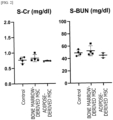
- the serum creatinine concentration (S-Cr), the blood urea nitrogen (S-BUN) and the crescent score were measured on the seventh day.
- the administration of the bone marrow-derived MSCs and the adipose-derived MSCs suppressed creatinine concentration increase, blood urea nitrogen increase, and crescent score caused by anti-GBM nephritis; and those were remarkably suppressed by administering especially adipose-derived MSCs ( Fig. 1 ).
- Anti-GBM nephritis was induced in rats (WKY/NCrj, female) in the same way as in Example 1. Then, 2 ⁇ 10 6 bone marrow-derived mesenchymal stem cells (bone marrow-derived MSC group) or 2 ⁇ 10 6 adipose-derived mesenchymal stem cells (adipose-derived MSCs) were administered immediately after the anti-GBM mouse IgG administration, on the second day and the fourth day.
- the cells were suspended in 2 mL of a starting solution (produced by Otsuka Pharmaceutical Factory, Inc.) including 5% (v/v) cryopreservation solution (STEM-CELLBANKER (R), GMP grade, containing 10% DMSO) and used for administration.
- the starting solution including 5% (v/v) cryopreservation solution was administered to a control group (control group).
- the serum creatinine concentration (S-Cr) and the blood urea nitrogen (S- BUN) were measured on the seventh day.
- Creatinine concentration increase, blood urea nitrogen increase, and crescent score increase due to anti-GBM nephritis were not suppressed by administering bone marrow-derived or adipose-derived MSCs in 5% (v/v) cryopreservation solution ( Fig. 2 ).
- Anti--GBM nephritis was induced in rats (WKY/NCrj, female) in the same way as in Example 1. Then, 2 ⁇ 10 6 adipose-derived mesenchymal stem cells (adipose-derived MSC group); 2 ⁇ 10 6 adipose-derived mesenchymal stem cells with 5% (v/v) cryopreservation solution (STEM-CELLBANKER (R) GMP grade, containing 10% DMSO, adipose-derived MSC + S group); or 5% (v/v) cryopreservation solution (control + S group) was administered immediately after the anti-GBM mouse IgG administration, on the second day and the fourth day.
- STEM-CELLBANKER (R) GMP grade containing 10% DMSO, adipose-derived MSC + S group
- control + S group was administered immediately after the anti-GBM mouse IgG administration, on the second day and the fourth day.
- the cells and the cryopreservation solution were suspended in 2 mL of a starting solution (produced by Otsuka Pharmaceutical Factory, Inc.) and used for administration, and only the starting solution was administered to a control group (control group).
- the serum creatinine concentration (S-Cr) and the blood urea nitrogen (S- BUN) were measured on the seventh day. Creatinine concentration increase, blood urea nitrogen increase, and crescent score increase due to anti-GBM nephritis were suppressed by administering the adipose-derived MSCs but slightly suppressed by administering the adipose-derived MSCs with 5% (v/v) cryopreservation solution ( Fig. 3 ).
- Anti-GBM nephritis was induced in rats (WKY/NCrj, female) in the same way as in Example 1. Then, 2 ⁇ 10 6 bone marrow-derived mesenchymal stem cells (bone marrow-derived MSC group) or 2 ⁇ 10 6 adipose-derived mesenchymal stem cells (adipose-derived MSCs) were administered immediately after the anti-GBM mouse IgG administration, on the second day and the fourth day.
- the cells were suspended in 2 mL of a starting solution (produced by Otsuka Pharmaceutical Factory, Inc.) including 1.65% (v/v) cryopreservation solution (STEM-CELLBANKER (R) GMP grade, containing 10% DMSO) and used for administration, and the starting solution including 1.65% (v/v) cryopreservation solution was administered to a control group (control group).
- a starting solution produced by Otsuka Pharmaceutical Factory, Inc.
- R cryopreservation solution
- the serum creatinine concentration (S-Cr) and the blood urea nitrogen (S- BUN) were measured on the seventh day.
- Creatinine concentration increase, blood urea nitrogen increase, and crescent score increase due to anti-GBM nephritis were suppressed by administering the adipose-derived MSCs in the 1.65% (v/v) cryopreservation solution ( Fig. 4 ).
- Anti-GBM nephritis was induced in rats (WKY/NCrj, female) in the same way as in Example 1. Then, 2 ⁇ 10 6 bone marrow-derived mesenchymal stem cells (bone marrow-derived MSC group) or 2 ⁇ 10 6 adipose-derived mesenchymal stem cells (adipose-derived MSCs) were administered immediately after the anti-GBM mouse IgG administration, on the second day and the fourth day.
- the cells were suspended in 2 mL of a starting solution (produced by Otsuka Pharmaceutical Factory, Inc.) including 1.65% (v/v) cryopreservation solution (STEM-CELLBANKER (R) GMP grade, containing 10% DMSO) and used for administration. And only the starting solution was administered to a control group (control group).
- a starting solution produced by Otsuka Pharmaceutical Factory, Inc.
- v/v cryopreservation solution STEM-CELLBANKER (R) GMP grade, containing 10% DMSO
- control group The rate of CD25-positive Treg cells among CD45-positive cells in kidneys was measured, and the rate of CD25-positive Treg cells significantly increased in the adipose-derived MSC group ( Fig. 5 ).
- CD25-positive regulatory T cells in kidneys can be increased by an agent for increasing regulatory T cells of the present invention, the function, structure, and the like of disease sites of the kidney or the like can be improved remarkably.
- An excellent therapeutic effect is expected to be produced on renal diseases including glomerulonephritis such as IgA nephropathy thereby.
- the mesenchymal stem cells that the agent for increasing regulatory T cells of the present invention contains are hardly rejected by an allogeneic subject, cells obtained by subjecting donor cells prepared in advance to expansion culture and cryopreservation can be used. Therefore, it is also advantageous that the mesenchymal stem cells of the present invention are also easily commercialized compared to when autologous mesenchymal stem cells are prepared and used, and a certain stable effect can be easily obtained.
Landscapes
- Health & Medical Sciences (AREA)
- Life Sciences & Earth Sciences (AREA)
- Engineering & Computer Science (AREA)
- Chemical & Material Sciences (AREA)
- Biomedical Technology (AREA)
- General Health & Medical Sciences (AREA)
- Organic Chemistry (AREA)
- Bioinformatics & Cheminformatics (AREA)
- Immunology (AREA)
- Biotechnology (AREA)
- Zoology (AREA)
- Cell Biology (AREA)
- Veterinary Medicine (AREA)
- Pharmacology & Pharmacy (AREA)
- Developmental Biology & Embryology (AREA)
- Public Health (AREA)
- Animal Behavior & Ethology (AREA)
- Medicinal Chemistry (AREA)
- Wood Science & Technology (AREA)
- Genetics & Genomics (AREA)
- Chemical Kinetics & Catalysis (AREA)
- General Chemical & Material Sciences (AREA)
- Epidemiology (AREA)
- Microbiology (AREA)
- Biochemistry (AREA)
- General Engineering & Computer Science (AREA)
- Nuclear Medicine, Radiotherapy & Molecular Imaging (AREA)
- Hematology (AREA)
- Rheumatology (AREA)
- Urology & Nephrology (AREA)
- Virology (AREA)
- Oil, Petroleum & Natural Gas (AREA)
- Medicines Containing Material From Animals Or Micro-Organisms (AREA)
Abstract
Description
- The present invention relates to an agent for increasing CD25-positive regulatory T cells in kidneys.
- IgA nephropathy is a chronic primary glomerulonephritis in which a deposit mainly containing IgAis observed in mesangial regions of glomeruli. It is surmised that some antigen promotes the production of an IgA antibody, an immune complex (IC) in which the antigen and the antibody are bound deposits on glomeruli, and glomerulonephritis is caused. Since, as to treatment for this disease, fundamental therapy has not been obtained, symptomatic therapies such as renin-angiotensin system inhibitors, adrenocortical steroid drugs (pulse therapies), immunosuppressive drugs, and tonsillectomy are performed, and the development of a therapy therefor has been desired.
- Mesenchymal stem cells are cells having pluripotency and first isolated from bone marrow by Friedenstein (refer to Non Patent Document 1). Since mesenchymal stem cells have the ability to differentiate to bones, cartilage, and adipose, mesenchymal stem cells attract attention as a promising cell source in cell therapies. It is known recently that cells having equivalent function are present among mesenchymal stromal cells that are an adipose tissue and fetal appendages such as a placenta, an umbilical cord, and a vitelline coat. Therefore, mesenchymal stem cells may be referred to as mesenchymal stromal cells. Examples in which mesenchymal stem cells are used for treatment for diseases including treatment for acute graft-versus-host disease (GVHD) in hematopoietic stem cell transplantation (refer to Non Patent Document 2), treatment for Crohn disease, which is inflammatory bowel disease, and treatment for cerebral infarction (refer to Non Patent Document 3).
-
- Non Patent Document 1: Pittenger F. M.et al. Science, (1999), 284, pp.143-147
- Non Patent Document 2: Designated regenerative medical product Temcell (R) HS Inj. attached document, January, 2017
- Non Patent Document 3: Regenerative medical product Stemirac (R) for Injection attached document, December, 2018
- An object of the present invention is to provide fundamental therapy for renal diseases including glomerulonephritis such as IgA nephropathy in the above-mentioned situation.
- The present inventors have earnestly examined to achieve the above-mentioned object and consequently found that it is effective for glomerulonephritis to increase CD25-positive regulatory T cells in kidneys. The present invention has been completed based on this knowledge.
- That is, the invention completed to achieve the above-mentioned object relates to an agent for increasing CD25-positive regulatory T cells in kidneys.
- [1] An agent for increasing CD25-positive regulatory T cells in kidneys, comprising mesenchymal stem cells.
- [2] The agent for increasing CD25-positive regulatory T cells in kidneys according to [1], further comprising a cryopreservation solution at a concentration of less than 5% (v/v).
- [3] The agent for increasing CD25-positive regulatory T cells in kidneys according to [2], wherein the cryopreservation solution is a cryopreservation solution comprising DMSO (dimethyl sulfoxide).
- [4] The agent for increasing CD25-positive regulatory T cells in kidneys according to any one of [1] to [3], wherein the agent is for treating a renal disease.
- [5] The agent for increasing CD25-positive regulatory T cells in kidneys according to [4], wherein the renal disease is glomerulonephritis.
- [6] A method for increasing CD25-positive regulatory T cells in kidneys, comprising administering mesenchymal stem cells.
- [7] A method for treating a renal disease, comprising administering an agent for increasing CD25-positive regulatory T cells to increase CD25-positive regulatory T cells in kidneys.
- [8] The method for treating a renal disease according to [7], wherein the agent for increasing CD25-positive regulatory T cells comprises mesenchymal stem cells.
- [9] The method for treating a renal disease according to [7] or [8], wherein the renal disease is glomerulonephritis.
- Since CD25-positive regulatory T cells in kidneys can be increased according to an agent for increasing regulatory T cells of the present invention, the function, structure, and the like of disease sites of the kidney or the like can be improved remarkably. An excellent therapeutic effect is expected to be produced on renal diseases including glomerulonephritis such as IgA nephropathy thereby. Since mesenchymal stem cells contained in an agent for increasing regulatory T cells of the present invention are hardly rejected by an allogeneic subject, cells obtained by subjecting donor cells prepared in advance to expansion culture and cryopreservation can be used. Therefore, it is also advantageous that the mesenchymal stem cells of the present invention are also easily commercialized compared to when autologous mesenchymal stem cells are prepared and used, and a certain stable effect can be easily obtained.
-
- [
Fig. 1] Fig. 1 shows the measurement results of the serum creatinine concentration (left figure), the blood urea nitrogen (central figure), and the crescent score (right figure) of rats in which nephritis develops 3 days after the final administration of mesenchymal stem cells to anti-GBM nephritis rats. - [
Fig. 2] Fig. 2 shows the measurement results of the serum creatinine concentration (left figure) and the blood urea nitrogen (right figure) ofanti-GBM nephritis rats 3 days after the final administration of mesenchymal stem cells. - [
Fig. 3] Fig. 3 shows the measurement result of the serum creatinine concentration (left figure) and the blood urea nitrogen (right figure) ofanti-GBM nephritis rats 3 days after the final administration of mesenchymal stem cells. - [
Fig. 4] Fig. 4 shows the measurement result of the serum creatinine concentration (left figure) and the blood urea nitrogen (right figure) ofanti-GBM nephritis rats 3 days after the final administration of mesenchymal stem cells. - [
Fig. 5] Fig. 5 shows the rate of CD25-positive Treg cells among CD45-positive cells in kidneys ofanti-GBM nephritis rats 3 days after the final administration of mesenchymal stem cells. - [
Fig. 6] Fig. 6 shows the results obtained by comparing the rate of CD25-positive Treg cells among CD45-positive cells in kidneys of anti-GBM nephritis rats and theserum creatinine concentration 3 days after the final administration of mesenchymal stem cells. - Hereinafter, an agent for increasing regulatory T cells of the present invention will be described in detail.
- The agent for increasing regulatory T cells of the present invention is characterized by containing mesenchymal stem cells.
- T cells are cells that has proteins called T cell receptors on the cell surface, recognizes foreign substances through these receptors specifically, and are activated. T cells are roughly classified by the function thereof into killer T cells that kill virus-infected cells, cancer cells, and the like specifically and helper T cells that work on other immunocytes such as B cells and macrophages (phagocytes), and activate the functions thereof. Regulatory T cells (Treg cell) are one type of T cells, and are cells having the function of working on immunocytes such as killer T cells, helper T cells, B cells, and macrophages and suppressing the activation thereof. Regulatory T cells have the function of suppressing an immune response, and suppresses excessive immune response that causes autoimmune diseases, inflammatory diseases, allergic diseases, or the like. In the present invention, it is determined that T cells in which the surface antigen expression is CD45+CD3+CD4+CD8-CD25+Foxp3+ are regulatory T cells (Treg cells).
- In the present invention, mesenchymal stem cells mean cells that have the ability to differentiate to cells belonging to mesenchymal cells (osteocytes, cardiomyocytes, chondrocytes, tendon cells, adipocytes, and the like), and are capable of proliferating while maintaining the ability. The term mesenchymal stem cells used in the present invention means the same cells as mesenchymal stromal cells, and both are not particularly distinguished. Examples of a tissue containing mesenchymal stem cells include adipose tissue, umbilical cords, bone marrow, umbilical blood, endometria, placentae, dermis, skeletal muscle, periostea, dental follicles, periodontal membrane, dental pulp, and tooth germs. For example, mesenchymal stem cells derived from an adipose tissue therefore mean mesenchymal stem cells contained in an adipose tissue, and may be called an adipose tissue-derived mesenchymal stromal cells. Of these, adipose tissue-derived mesenchymal stem cells, umbilical cord-derived mesenchymal stem cells, bone marrow-derived mesenchymal stem cells, placenta-derived mesenchymal stem cells, and dental pulp-derived mesenchymal stem cells are preferable, adipose tissue-derived mesenchymal stem cells, bone marrow-derived mesenchymal stem cells, and umbilical cord-derived mesenchymal stem cells are more preferable, adipose tissue-derived mesenchymal stem cells and bone marrow-derived mesenchymal stem cells are further preferable, and adipose tissue-derived mesenchymal stem cells are particularly preferable.
- It is preferable that the mesenchymal stem cells in the present invention be autologous or allogeneic to a subject. Since the mesenchymal stem cells are hardly rejected by an allogeneic subject, cells obtained by subjecting donor cells prepared in advance to expansion culture and cryopreservation can be used as mesenchymal stem cells in the therapeutic agent of the present invention. It is therefore more preferable from the viewpoints that the mesenchymal stem cells of the present invention are also easily commercialized compared to when autologous mesenchymal stem cells are prepared and used, and a certain effect can be easily and stably obtained that the mesenchymal stem cells in the present invention be allogeneic.
- The mesenchymal stem cells in the present invention may be characterized by, for example, growth characteristics (for example, population doubling ability and doubling time from subculture to aging), karyotype analysis (for example, normal karyotype, maternal lineage or newborn lineage), surface marker expression analyzed by flow cytometry (for example, FACS analysis), immunohistochemistry and/or immunocytochemistry (for example, epitope detection), gene expression profiling (for example, gene chip array; polymerase chain reaction such as reverse transcription PCR, real time PCR, conventional PCR), miRNA expression profiling, protein array, the secretion of a protein such as a cytokine (for example, plasma coagulation analysis, ELISA, cytokine array), metabolites (metabolome analysis), other methods known in this field, or the like.
- The mesenchymal stem cells can be prepared in accordance with a method known to a person skilled in the art. As an example, adipose tissue-derived mesenchymal stem cells can be prepared in accordance with a production method described, for example, in
US Patent No. 6,777,231 . - As long as the mesenchymal stem cells in the present invention have the effect of increasing CD25-positive regulatory T cells and the effect of treating disease, the mesenchymal stem cells may be cells appropriately cryopreserved and thawed repeatedly. In the present invention, cryopreservation can be carried out by suspending the mesenchymal stem cells in a cryopreservation solution known to a person skilled in the art and cooling the cells. Suspension can be carried out by peeling cells with a peeling agent such as trypsin, pouring the cells into a cryopreservation container, appropriately treating the cells, and then adding a cryopreservation solution.
- A cryopreservation solution containing DMSO (dimethyl sulfoxide) as a cryoprotective agent is exemplified as the cryopreservation solution. When DMSO is used, the concentration of DMSO is 5% to 20%, preferably 5% to 10%, and more preferably 10%. As such a cryopreservation solution, for example, cryopreservation solutions provided from BioVerde Corporation, NIPPON Genetics Co, Ltd., REPROCELL Inc., NIPPON ZENYAKU KOGYO CO., LTD., Cosmo Bio Co., Ltd., Kohjin Bio Co., Ltd., Thermo Fisher Scientific K.K., and the like may be used.
- The cryopreserved mesenchymal stem cells are thawed just before use, and can be directly mixed in a solution such as an infusion or a medium with the thawed cells suspended in a cryopreservation solution to prepare an agent for increasing regulatory T cells for use. The cryopreservation solution is removed by centrifugation or the like, and the resultant cells can also be then suspended in a solution such as an infusion or a medium to prepare an agent for increasing regulatory T cells for use. The concentration of the cryopreservation solution in the agent for increasing regulatory T cells is less than 5% (v/v), preferably less than 2% (v/v), and further preferably 1.65% (v/v) or less. Here, the "infusion" in the present invention refers to a solution to be used at the time of treating humans. Examples of the infusion include, but are not particularly limited to, physiological saline, Japanese Pharmacopoeia isotonic sodium chloride solution, a 5% glucose solution, Japanese Pharmacopoeia glucose injection solution, Ringer's solution, Japanese Pharmacopoeia Ringer's solution, Ringer's lactate solution, Ringer's acetate solution, No. 1 solution (starting solution), No. 2 solution (dehydrated replenisher), No. 3 solution (maintaining solution), and No. 4 solution (postoperative recovery solution).
- The cryopreserved cells can be thawed by a method known to a person skilled in the art. A method for thawing the cryopreserved cells, for example, by leaving the cells to stand or shaking the cells in a constant temperature bath or in a hot water bath at 37°C is exemplified.
- The agent for increasing regulatory T cells of the present invention may contain a pharmaceutically acceptable carrier and additives in accordance with a usual method depending on the use or form thereof as long as the effect of the present invention is not deteriorated.
- The agent for increasing regulatory T cells of the present invention can be suspended or diluted using an infusion such as physiological saline, Japanese Pharmacopoeia isotonic sodium chloride solution, a 5% glucose solution, Japanese Pharmacopoeia glucose injection solution, Ringer's solution, Japanese Pharmacopoeia Ringer's solution, Ringer's lactate solution, Ringer's acetate solution, Ringer's bicarbonate solution, No. 1 solution (starting solution), No. 2 solution (dehydrated replenisher), No. 3 solution (maintaining solution), or No. 4 solution (postoperative recovery solution) or a cell culture medium such as DMEM and used.
- The agent for increasing regulatory T cells of the present invention can be preferably used for treatment for diseases of kidneys (for a renal disease treatment). Especially, it can be more preferably used for treating glomerulonephritis such as acute glomerulonephritis and chronic glomerulonephritis; interstitial nephritis; an acute nephritic syndrome; recurrent and persistent hematuria; a chronic nephritic syndrome; a nephrotic syndrome; IgA nephropathy; a lupus nephritis; or an acute progressive nephritic syndrome.
- Although the content of mesenchymal stem cells in the agent for increasing regulatory T cells of the present invention can be adjusted depending on the state (body weight, age, symptom, physical condition, or the like) of the patient and the dosage form of the agent for increasing regulatory T cells of the present invention, it tends to be preferable that the amount thereof be larger from the viewpoint of producing enough effect of increasing regulatory T cells in kidneys and enough effect of treating diseases. Meanwhile, it tends to be preferable that the amount thereof be smaller from the viewpoint of suppressing side effects. The dose in the case of administration to an adult is usually 1 × 10³ to 1 × 10¹² cells/time, preferably 1 × 10⁴ to 1 × 10¹¹ cells/time, more preferably 1 × 10⁵ to 1 × 10¹⁰ cells/time, and further preferably 5 × 10⁶ to 1 × 10⁹ cells/time in terms of the number of cells. The dose per body weight of a patient is 1 × 10 to 5 × 10¹⁰ cells/kg, preferably 1 × 10² to 5 × 10⁹ cells/kg, more preferably 1 × 10³ to 5 × 10⁸ cells/kg, and further preferably 1 × 10⁴ to 5 × 10⁷ cells/kg. Note that when this dose is defined as the amount per administration, the cells may be administered a plurality of times, or this dose may be divided into a plurality of portions, and the divided portions may be administered.
- The agent for increasing regulatory T cells of the present invention may be administered with one or more additional drugs. Examples of the additional drugs include any drug that can be used as a therapeutic agent for the kidney, and specifically include immunosuppressive drugs such as adrenocortical steroid, mizoribine, cyclosporin, tacrolimus, and cyclophosphamide; antiplatelet drugs such as dipyridamole and dilazep hydrochloride hydrate; anticoagulant drugs such as heparin and warfarin potassium; hypotensive drugs such as an angiotensin converting enzyme (ACE) inhibitor, an angiotensin II receptor blocker (ARB) and a calcium antagonist; loop diuretics such as furosemide and azosemide; a concentrated albumin preparation; and a drug for improving dyslipidemia.
- The present inventors have found out that it is effective in glomerulonephritis to increase CD25-positive regulatory T cells in kidneys, and further found that mesenchymal stem cells can increase CD25-positive regulatory T cells in kidneys. The present invention also includes a method for increasing CD25-positive regulatory T cells in kidneys, characterized by comprising administering mesenchymal stem cells. This method can also be referred to as a method for increase CD25-positive regulatory T cells in kidneys, characterized by comprising administering the above-mentioned agent for increasing regulatory T cells in other words. As specific description of the mesenchymal stem cells, CD25-positive regulatory T cells, and the agent for increasing regulatory T cells, the description in the section of the agent for increasing regulatory T cells is applicable.
- The present invention includes a method for treating renal diseases, characterized by comprising administering the agent for increasing CD25-positive regulatory T cells to increase CD25-positive regulatory T cells in kidneys. The agent for increasing CD25-positive regulatory T cells preferably contains mesenchymal stem cells. As specific description of the mesenchymal stem cells, CD25-positive regulatory T cells, and the agent for increasing regulatory T cells, the description in the section of the agent for increasing regulatory T cells is applicable. Examples of the renal disease include glomerulonephritis such as acute glomerulonephritis and chronic glomerulonephritis; interstitial nephritis; an acute nephritic syndrome; recurrent and persistent hematuria; a chronic nephritic syndrome; a nephrotic syndrome; IgA nephropathy; a lupus nephritis; or an acute progressive nephritic syndrome. The therapeutic method of the present invention is effective in glomerulonephritis such as acute glomerulonephritis and chronic glomerulonephritis among these diseases.
- Although the present invention will be described in the following Examples specifically, the present invention is not limited by the Examples.
- Anti-GBM mouse IgG (TF78), which was specifically bound to α4(IV)NC1 of rat glomerular basement membranes (GBMs), was administered to each rat (WKY/NCrj, female) to induce anti-glomerular basement membrane nephritis (Goodpasture syndrome, anti-GBM nephritis). Then, 2 × 10⁶ bone marrow-derived mesenchymal stem cells (produced by LONZA K. K., bone marrow-derived MSC group) or 2 × 10⁶ adipose-derived mesenchymal stem cells (produced by ROHTO Pharmaceutical Co., Ltd., adipose-derived MSC group) were intravenously administered to the rat on the second day and the fourth day immediately after the anti-GBM mouse IgG administration. The cells were suspended in 2 mL of HBSS and used for administration, and only HBSS was administered to a control group (control group). The serum creatinine concentration (S-Cr), the blood urea nitrogen (S-BUN) and the crescent score were measured on the seventh day. The administration of the bone marrow-derived MSCs and the adipose-derived MSCs suppressed creatinine concentration increase, blood urea nitrogen increase, and crescent score caused by anti-GBM nephritis; and those were remarkably suppressed by administering especially adipose-derived MSCs (
Fig. 1 ). - Anti-GBM nephritis was induced in rats (WKY/NCrj, female) in the same way as in Example 1. Then, 2 × 10⁶ bone marrow-derived mesenchymal stem cells (bone marrow-derived MSC group) or 2 × 10⁶ adipose-derived mesenchymal stem cells (adipose-derived MSCs) were administered immediately after the anti-GBM mouse IgG administration, on the second day and the fourth day. The cells were suspended in 2 mL of a starting solution (produced by Otsuka Pharmaceutical Factory, Inc.) including 5% (v/v) cryopreservation solution (STEM-CELLBANKER (R), GMP grade, containing 10% DMSO) and used for administration. The starting solution including 5% (v/v) cryopreservation solution was administered to a control group (control group). The serum creatinine concentration (S-Cr) and the blood urea nitrogen (S- BUN) were measured on the seventh day. Creatinine concentration increase, blood urea nitrogen increase, and crescent score increase due to anti-GBM nephritis were not suppressed by administering bone marrow-derived or adipose-derived MSCs in 5% (v/v) cryopreservation solution (
Fig. 2 ). - Anti--GBM nephritis was induced in rats (WKY/NCrj, female) in the same way as in Example 1. Then, 2 × 10⁶ adipose-derived mesenchymal stem cells (adipose-derived MSC group); 2 × 10⁶ adipose-derived mesenchymal stem cells with 5% (v/v) cryopreservation solution (STEM-CELLBANKER (R) GMP grade, containing 10% DMSO, adipose-derived MSC + S group); or 5% (v/v) cryopreservation solution (control + S group) was administered immediately after the anti-GBM mouse IgG administration, on the second day and the fourth day. The cells and the cryopreservation solution were suspended in 2 mL of a starting solution (produced by Otsuka Pharmaceutical Factory, Inc.) and used for administration, and only the starting solution was administered to a control group (control group). The serum creatinine concentration (S-Cr) and the blood urea nitrogen (S- BUN) were measured on the seventh day. Creatinine concentration increase, blood urea nitrogen increase, and crescent score increase due to anti-GBM nephritis were suppressed by administering the adipose-derived MSCs but slightly suppressed by administering the adipose-derived MSCs with 5% (v/v) cryopreservation solution (
Fig. 3 ). - Anti-GBM nephritis was induced in rats (WKY/NCrj, female) in the same way as in Example 1. Then, 2 × 10⁶ bone marrow-derived mesenchymal stem cells (bone marrow-derived MSC group) or 2 × 10⁶ adipose-derived mesenchymal stem cells (adipose-derived MSCs) were administered immediately after the anti-GBM mouse IgG administration, on the second day and the fourth day. The cells were suspended in 2 mL of a starting solution (produced by Otsuka Pharmaceutical Factory, Inc.) including 1.65% (v/v) cryopreservation solution (STEM-CELLBANKER (R) GMP grade, containing 10% DMSO) and used for administration, and the starting solution including 1.65% (v/v) cryopreservation solution was administered to a control group (control group). The serum creatinine concentration (S-Cr) and the blood urea nitrogen (S- BUN) were measured on the seventh day. Creatinine concentration increase, blood urea nitrogen increase, and crescent score increase due to anti-GBM nephritis were suppressed by administering the adipose-derived MSCs in the 1.65% (v/v) cryopreservation solution (
Fig. 4 ). - Anti-GBM nephritis was induced in rats (WKY/NCrj, female) in the same way as in Example 1. Then, 2 × 10⁶ bone marrow-derived mesenchymal stem cells (bone marrow-derived MSC group) or 2 × 10⁶ adipose-derived mesenchymal stem cells (adipose-derived MSCs) were administered immediately after the anti-GBM mouse IgG administration, on the second day and the fourth day. The cells were suspended in 2 mL of a starting solution (produced by Otsuka Pharmaceutical Factory, Inc.) including 1.65% (v/v) cryopreservation solution (STEM-CELLBANKER (R) GMP grade, containing 10% DMSO) and used for administration. And only the starting solution was administered to a control group (control group). The rate of CD25-positive Treg cells among CD45-positive cells in kidneys was measured, and the rate of CD25-positive Treg cells significantly increased in the adipose-derived MSC group (
Fig. 5 ). The rate of CD25-positive Treg cells among CD45-positive cells in kidneys in the control group and the adipose-derived MSC group were measured, the serum creatinine concentration was compared and the negative correlation was confirmed. These results confirm that increasing the number of CD25-positive Treg cells in the kidney can reduce serum creatinine concentrations (Fig. 6 ). - Since CD25-positive regulatory T cells in kidneys can be increased by an agent for increasing regulatory T cells of the present invention, the function, structure, and the like of disease sites of the kidney or the like can be improved remarkably. An excellent therapeutic effect is expected to be produced on renal diseases including glomerulonephritis such as IgA nephropathy thereby. Since the mesenchymal stem cells that the agent for increasing regulatory T cells of the present invention contains are hardly rejected by an allogeneic subject, cells obtained by subjecting donor cells prepared in advance to expansion culture and cryopreservation can be used. Therefore, it is also advantageous that the mesenchymal stem cells of the present invention are also easily commercialized compared to when autologous mesenchymal stem cells are prepared and used, and a certain stable effect can be easily obtained.
Claims (5)
- An agent for increasing CD25-positive regulatory T cells in kidneys, comprising mesenchymal stem cells.
- The agent for increasing CD25-positive regulatory T cells in kidneys according to claim 1, further comprising a cryopreservation solution at a concentration of less than 5% (v/v).
- The agent for increasing CD25-positive regulatory T cells in kidneys according to claim 2, wherein the cryopreservation solution comprises DMSO (dimethyl sulfoxide).
- The agent for increasing CD25-positive regulatory T cells in kidneys according to any one of claims 1 to 3, wherein the agent is for treating a renal disease.
- The agent for increasing CD25-positive regulatory T cells in kidneys according to claim 4, wherein the renal disease is glomerulonephritis.
Applications Claiming Priority (2)
| Application Number | Priority Date | Filing Date | Title |
|---|---|---|---|
| JP2020071737 | 2020-04-13 | ||
| PCT/JP2021/015093 WO2021210515A1 (en) | 2020-04-13 | 2021-04-09 | Agent for increasing cd25-positive regulatory t cells in kidney |
Publications (2)
| Publication Number | Publication Date |
|---|---|
| EP4137141A1 true EP4137141A1 (en) | 2023-02-22 |
| EP4137141A4 EP4137141A4 (en) | 2024-04-24 |
Family
ID=78084239
Family Applications (1)
| Application Number | Title | Priority Date | Filing Date |
|---|---|---|---|
| EP21788756.1A Pending EP4137141A4 (en) | 2020-04-13 | 2021-04-09 | Agent for increasing cd25-positive regulatory t cells in kidney |
Country Status (5)
| Country | Link |
|---|---|
| US (1) | US20230158076A1 (en) |
| EP (1) | EP4137141A4 (en) |
| JP (1) | JPWO2021210515A1 (en) |
| CN (1) | CN115297877A (en) |
| WO (1) | WO2021210515A1 (en) |
Family Cites Families (10)
| Publication number | Priority date | Publication date | Assignee | Title |
|---|---|---|---|---|
| WO1997039104A1 (en) * | 1996-04-17 | 1997-10-23 | Osiris Therapeutics, Inc. | Cryopreservation and extensive subculturing of human mesenchymal stem cells |
| US6777231B1 (en) | 1999-03-10 | 2004-08-17 | The Regents Of The University Of California | Adipose-derived stem cells and lattices |
| EP2298863B1 (en) * | 2004-03-22 | 2015-07-22 | Mesoblast International Sàrl | Mesenchymal stem cells and uses therefor |
| BRPI0717150B1 (en) * | 2006-10-02 | 2022-04-19 | Mesoblast International Sàrl | Uses of mesenchymal stem cells |
| JP5633859B2 (en) * | 2009-10-08 | 2014-12-03 | 国立大学法人名古屋大学 | Immunosuppressant containing adipose tissue-derived mesenchymal stem cells and use thereof |
| RS57886B1 (en) * | 2011-11-30 | 2019-01-31 | Astellas Inst For Regenerative Medicine | Mesenchymal stromal cells and uses related thereto |
| WO2017144552A1 (en) * | 2016-02-22 | 2017-08-31 | Centauri Biotech. S.L. | Pharmaceutical or veterinary cell compositions comprising mesenchymal stromal cells (mscs) and dimethyl sulfoxide (dmso) |
| RU2727900C2 (en) * | 2016-02-26 | 2020-07-24 | ЭсСиЭм ЛАЙФСАЙЕНС КО., ЛТД. | Pharmaceutical composition for preventing or treating diseases mediated by regulatory t-cells |
| JP2019510042A (en) * | 2016-03-28 | 2019-04-11 | クック・ジェネラル・バイオテクノロジー・エルエルシー | Live cell compositions and methods related to live cell compositions |
| EP3591038A4 (en) * | 2017-03-03 | 2020-11-25 | Rohto Pharmaceutical Co., Ltd. | MESENCHYMAL STEM CELLS AND PHARMACEUTICAL COMPOSITION |
-
2021
- 2021-04-09 CN CN202180021798.6A patent/CN115297877A/en active Pending
- 2021-04-09 EP EP21788756.1A patent/EP4137141A4/en active Pending
- 2021-04-09 US US17/918,390 patent/US20230158076A1/en active Pending
- 2021-04-09 JP JP2022515358A patent/JPWO2021210515A1/ja active Pending
- 2021-04-09 WO PCT/JP2021/015093 patent/WO2021210515A1/en not_active Ceased
Also Published As
| Publication number | Publication date |
|---|---|
| US20230158076A1 (en) | 2023-05-25 |
| EP4137141A4 (en) | 2024-04-24 |
| CN115297877A (en) | 2022-11-04 |
| JPWO2021210515A1 (en) | 2021-10-21 |
| WO2021210515A1 (en) | 2021-10-21 |
Similar Documents
| Publication | Publication Date | Title |
|---|---|---|
| ES2769778T3 (en) | Immunomodulatory compositions | |
| JP5431146B2 (en) | Immunological tolerance and regulatory progenitor cells | |
| EP3591038A1 (en) | Mesenchymal stem cells and pharmaceutical composition | |
| JP2023103416A (en) | Dilated cardiomyopathy therapeutic agent | |
| US20170106021A1 (en) | Compositions enriched for hox11+ stem cells and methods of preparing the same | |
| US20170224736A1 (en) | Method and apparatus for recovery of umbilical cord tissue derived regenerative cells and uses thereof | |
| Buza-Vidas et al. | Crucial role of FLT3 ligand in immune reconstitution after bone marrow transplantation and high-dose chemotherapy | |
| EP3381458B1 (en) | Therapeutic agent for liver disease containing stromal cells derived from adipose tissue and method for producing the same | |
| JP2017520582A (en) | Mesenchymal stromal cells for the treatment of rheumatoid arthritis | |
| US20230158076A1 (en) | Agent for increasing cd25-positive regulatory t cells in kidneys | |
| JP7117704B1 (en) | Preventive and/or therapeutic agent for diabetes | |
| CN110882276B (en) | Cell therapy compositions and methods for treating vascular disorders | |
| HK40078040A (en) | Agent for increasing cd25-positive regulatory t cells in kidney | |
| US20220401481A1 (en) | Dosing regimens for the mobilization of hematopoietic stem and progenitor cells | |
| WO2022176735A1 (en) | Prophylactic and/or therapeutic agent for diabetes | |
| JP7495075B2 (en) | Hypertensive heart disease treatment | |
| WO2019136159A1 (en) | Compositions and methods for the expansion of hematopoietic stem and progenitor cells and treatment of inherited metabolic disorders | |
| CN110840914B (en) | Method for alleviating or improving vascular disorders using cell therapeutic agent | |
| HK40082460A (en) | Prophylactic and/or therapeutic agent for diabetes | |
| WO2018123628A1 (en) | Cell pharmaceutical composition, disease treatment kit, and cell suspension solution | |
| Clark | Investigation into the action of mesenchymal stromal cells in renal ischaemia reperfusion injury | |
| WO2025225578A1 (en) | Therapeutic agent for cancer | |
| Delgado et al. | Uses of mesenchymal stem cells | |
| Suh et al. | SPLENIC SYNTHESIS OF FACTOR VIII: BASIS FOR CELL-BASED TRANSPLANT THERAPY OF HEMOPHILIA A. |
Legal Events
| Date | Code | Title | Description |
|---|---|---|---|
| STAA | Information on the status of an ep patent application or granted ep patent |
Free format text: STATUS: THE INTERNATIONAL PUBLICATION HAS BEEN MADE |
|
| PUAI | Public reference made under article 153(3) epc to a published international application that has entered the european phase |
Free format text: ORIGINAL CODE: 0009012 |
|
| STAA | Information on the status of an ep patent application or granted ep patent |
Free format text: STATUS: REQUEST FOR EXAMINATION WAS MADE |
|
| 17P | Request for examination filed |
Effective date: 20221111 |
|
| AK | Designated contracting states |
Kind code of ref document: A1 Designated state(s): AL AT BE BG CH CY CZ DE DK EE ES FI FR GB GR HR HU IE IS IT LI LT LU LV MC MK MT NL NO PL PT RO RS SE SI SK SM TR |
|
| DAV | Request for validation of the european patent (deleted) | ||
| DAX | Request for extension of the european patent (deleted) | ||
| A4 | Supplementary search report drawn up and despatched |
Effective date: 20240325 |
|
| RIC1 | Information provided on ipc code assigned before grant |
Ipc: C12N 5/0775 20100101ALI20240319BHEP Ipc: A61P 37/02 20060101ALI20240319BHEP Ipc: A61P 13/12 20060101ALI20240319BHEP Ipc: A61K 47/20 20060101ALI20240319BHEP Ipc: A61K 35/28 20150101AFI20240319BHEP |