EP4135392A1 - File upload management - Google Patents
File upload management Download PDFInfo
- Publication number
- EP4135392A1 EP4135392A1 EP21191172.2A EP21191172A EP4135392A1 EP 4135392 A1 EP4135392 A1 EP 4135392A1 EP 21191172 A EP21191172 A EP 21191172A EP 4135392 A1 EP4135392 A1 EP 4135392A1
- Authority
- EP
- European Patent Office
- Prior art keywords
- file
- job
- collection job
- data collection
- information
- Prior art date
- Legal status (The legal status is an assumption and is not a legal conclusion. Google has not performed a legal analysis and makes no representation as to the accuracy of the status listed.)
- Granted
Links
Images






Classifications
-
- H—ELECTRICITY
- H04—ELECTRIC COMMUNICATION TECHNIQUE
- H04L—TRANSMISSION OF DIGITAL INFORMATION, e.g. TELEGRAPHIC COMMUNICATION
- H04L67/00—Network arrangements or protocols for supporting network services or applications
- H04L67/01—Protocols
- H04L67/06—Protocols specially adapted for file transfer, e.g. file transfer protocol [FTP]
-
- H—ELECTRICITY
- H04—ELECTRIC COMMUNICATION TECHNIQUE
- H04L—TRANSMISSION OF DIGITAL INFORMATION, e.g. TELEGRAPHIC COMMUNICATION
- H04L41/00—Arrangements for maintenance, administration or management of data switching networks, e.g. of packet switching networks
- H04L41/08—Configuration management of networks or network elements
- H04L41/085—Retrieval of network configuration; Tracking network configuration history
- H04L41/0853—Retrieval of network configuration; Tracking network configuration history by actively collecting configuration information or by backing up configuration information
-
- H—ELECTRICITY
- H04—ELECTRIC COMMUNICATION TECHNIQUE
- H04L—TRANSMISSION OF DIGITAL INFORMATION, e.g. TELEGRAPHIC COMMUNICATION
- H04L41/00—Arrangements for maintenance, administration or management of data switching networks, e.g. of packet switching networks
- H04L41/02—Standardisation; Integration
- H04L41/0233—Object-oriented techniques, for representation of network management data, e.g. common object request broker architecture [CORBA]
-
- H—ELECTRICITY
- H04—ELECTRIC COMMUNICATION TECHNIQUE
- H04L—TRANSMISSION OF DIGITAL INFORMATION, e.g. TELEGRAPHIC COMMUNICATION
- H04L41/00—Arrangements for maintenance, administration or management of data switching networks, e.g. of packet switching networks
- H04L41/14—Network analysis or design
-
- H—ELECTRICITY
- H04—ELECTRIC COMMUNICATION TECHNIQUE
- H04L—TRANSMISSION OF DIGITAL INFORMATION, e.g. TELEGRAPHIC COMMUNICATION
- H04L43/00—Arrangements for monitoring or testing data switching networks
- H04L43/06—Generation of reports
-
- H—ELECTRICITY
- H04—ELECTRIC COMMUNICATION TECHNIQUE
- H04W—WIRELESS COMMUNICATION NETWORKS
- H04W24/00—Supervisory, monitoring or testing arrangements
- H04W24/10—Scheduling measurement reports ; Arrangements for measurement reports
Definitions
- Various example embodiments relate to file upload management. More specifically, various example embodiments exemplarily relate to measures (including methods, apparatuses and computer program products) for realizing file upload management.
- the present specification generally relates to file based communication between two entities in a network.
- MnS management service
- NF network function
- KPI key performance indicators
- trace and minimization of drive tests (MDT) data produced by a MnS producer associated to a network are written into files that are made available to data consumers.
- Further examples include analytics that are reported using files.
- the files generated by the MnS producer need to be uploaded to a MnS consumer that is using the data in the files for some purpose.
- the upload of a file from a MnS producer to a MnS consumer is initiated either by the MnS producer or by the MnS consumer.
- the MnS producer When initiated by the MnS producer, the MnS producer needs to know only the address of the MnS consumer where to upload the files. Whilst this method is rather simple, it suffers from a serious drawback. Namely, the MnS consumer has no control over what is uploaded to him or pushed onto him. The MnS consumer can only indirectly control the uploads by managing the related jobs controlling the data production and reporting activities on the MnS producer.
- the upload is initiated by the MnS consumer.
- 3GPP Technical Specification (TS) 28.532, clause 11.6, describes a dedicated MnS for managing file uploads from MnS producers to MnS consumers.
- This dedicated MnS features a special operation named “listAvailableFiles” allowing MnS consumers to get a list of all files available for upload on a MnS producer, and a special notification named “notifyFileReady” allowing MnS producers to inform MnS consumers about the availability and location of new files.
- FTP file transfer protocol
- SFTP secure file transfer protocol
- the MnS consumer To receive the "notifyFileReady" notification, the MnS consumer needs to create a subscription for this notification on the MnS producer. The MnS consumer needs to know how to create such subscription.
- a method comprising transmitting a collection job request requesting a data collection job, and receiving a collection job response, wherein said collection job response includes information on file uploading related to said data collection job.
- a method comprising receiving a collection job request requesting a data collection job, creating a job instance representing said data collection job, and transmitting a collection job response, wherein said collection job response includes information on file uploading related to said data collection job.
- an apparatus comprising transmitting circuitry configured to transmit a collection job request requesting a data collection job, and receiving circuitry configured to receive a collection job response, wherein said collection job response includes information on file uploading related to said data collection job.
- an apparatus comprising receiving circuitry configured to receive a collection job request requesting a data collection job, creating circuitry configured to create a job instance representing said data collection job, and transmitting circuitry configured to transmit a collection job response, wherein said collection job response includes information on file uploading related to said data collection job.
- an apparatus comprising at least one processor, at least one memory including computer program code, and at least one interface configured for communication with at least another apparatus, the at least one processor, with the at least one memory and the computer program code, being configured to cause the apparatus to perform transmitting a collection job request requesting a data collection job, and receiving a collection job response, wherein said collection job response includes information on file uploading related to said data collection job.
- an apparatus comprising at least one processor, at least one memory including computer program code, and at least one interface configured for communication with at least another apparatus, the at least one processor, with the at least one memory and the computer program code, being configured to cause the apparatus to perform receiving a collection job request requesting a data collection job, creating a job instance representing said data collection job, and transmitting a collection job response, wherein said collection job response includes information on file uploading related to said data collection job.
- a computer program product comprising computer-executable computer program code which, when the program is run on a computer (e.g. a computer of an apparatus according to any one of the aforementioned apparatus-related exemplary aspects of the present disclosure), is configured to cause the computer to carry out the method according to any one of the aforementioned method-related exemplary aspects of the present disclosure.
- Such computer program product may comprise (or be embodied) a (tangible) computer-readable (storage) medium or the like on which the computer-executable computer program code is stored, and/or the program may be directly loadable into an internal memory of the computer or a processor thereof.
- Any one of the above aspects enables an efficient implementation of file based communication, in particular of file uploads, between two entities in a network, to thereby solve at least part of the problems and drawbacks identified in relation to the prior art.
- file upload management More specifically, by way of example embodiments, there are provided measures and mechanisms for realizing file upload management.
- HTTP hypertext transfer protocol
- HTTPS hypertext transfer protocol secure
- a dedicated MnS is used for managing file uploads.
- This approach does not integrate well with the new model-driven approach followed by 3GPP SA5, where one holistic information model and generic create, read, update, delete (CRUD) operations only are used for specifying management services.
- Example embodiments do.
- the MnS producer cannot provide any information to the MnS consumer on where to create a subscription for the "notifyFileReady" notification.
- the MnS consumer (however) needs to know where to create subscriptions on the MnS producer. According to example embodiments, such necessity is removed.
- the MnS consumer may use only the operation "listAvailableFiles" to find out if new files are available for him and where to get them.
- listAvailableFiles A disadvantage of this approach is that the MnS consumer gets always a list with all files on the MnS producer available for upload and needs to scan through a potentially large number of file meta data for identifying the file the MnS consumer is interested in and retrieve it based on that information.
- the capability to receive (and send) notifications always comes with additional implementation effort, since the MnS consumer and MnS producer must support both an HTTP server and HTTP client protocol stack. When no notifications need to be sent and received, according to example embodiments, the MnS producer just needs to have a HTTP server protocol stack and the MnS consumer a HTTP client protocol stack.
- files are often used to store and report management data produced on a MnS producer. This data is produced as a result of a request by MnS consumers.
- MnS consumers request data production by instantiating so called (data production) jobs on the MnS producer.
- SBMA service based management architecture
- many different MnS consumers can create jobs on a MnS producer.
- the file information in the "listAvailableFiles" response or the “notifyFileReady” notification does not contain any information allowing a MnS consumer to associate a job on a MnS producer to the files generated by this job and stored on the producer.
- the MnS consumer cannot really find out if a file was produced based on the MnS consumer's request or based on another MnS consumer's request.
- the current functionality thus only works in deployment scenarios where a single MnS consumer interacts with a MnS producer. This is due to historical reasons.
- the current file upload MnS as outlined above was originally designed for a single client architecture.
- SA5 migrated to SBMA, the old functionality was not improved.
- a job identifier (ID) might be included in a file name.
- the file name is part of the file information conveyed to the MnS consumer.
- the MnS consumer could hence parse the file name to check whether job IDs of interest are contained in the file name.
- This approach is not really straight forward, clean and easy to implement. According to example embodiments, thus straight forward, clean and easy to implement measurements are provided, which enable that only files of interest for the MnS consumer are adverted and uploaded.
- the current approach as outlined above relies on implementing an operation and/or a notification. It does not allow for very simple implementations, where, e.g., the MnS consumer just polls a location on the MnS producer where only the MnS consumer's files are stored, as example embodiments do.
- MnS consumers cannot delete files on MnS producers or indicate to the MnS producers that they are not interested any more in files, e.g. after retrieval of the file. Such functionality is provided according to example embodiments.
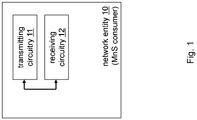
- FIG 1 is a block diagram illustrating an apparatus according to example embodiments.
- the apparatus may be a network entity 10 such as a management service consumer (entity) comprising a transmitting circuitry 11 and a receiving circuitry 12.
- the transmitting circuitry 11 transmits a collection job request requesting a data collection job.
- the receiving circuitry 12 receives a collection job response.
- the collection job response includes information on file uploading related to said data collection job.
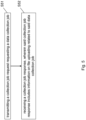
- Figure 5 is a schematic diagram of a procedure according to example embodiments.
- the apparatus according to Figure 1 may perform the method of Figure 5 but is not limited to this method.
- the method of Figure 5 may be performed by the apparatus of Figure 1 but is not limited to being performed by this apparatus.
- a procedure comprises an operation of transmitting (S51) a collection job request requesting a data collection job, and an operation of receiving (S52) a collection job response.
- the collection job response includes information on file uploading related to said data collection job.
- Figure 2 is a block diagram illustrating an apparatus according to example embodiments.
- Figure 2 illustrates a variation of the apparatus shown in Figure 1 .
- the apparatus according to Figure 2 may thus further comprise a creating circuitry 21, a retrieving circuitry 22, and/or a querying circuitry 23.
- At least some of the functionalities of the apparatus shown in Figure 1 may be shared between two physically separate devices forming one operational entity. Therefore, the apparatus may be seen to depict the operational entity comprising one or more physically separate devices for executing at least some of the described processes.
- said collection job response includes an identifier of a job instance representing said data collection job.
- said information on file uploading related to said data collection job includes information on a file availability notification subscription address.
- an exemplary method may comprise an operation of creating a file availability notification subscription for said data collection job based on said file availability notification subscription address, and an operation of transmitting said file availability notification subscription.
- said file availability notification subscription includes an identifier of a job instance representing said data collection job.
- exemplary details of the creating operation are given, which are inherently independent from each other as such.
- Such exemplary creating operation may comprise an operation of creating a subscription instance name-contained by said job instance, or an operation of creating a subscription instance name-contained by a predetermined realm instance.
- an exemplary method may comprise an operation of receiving a file availability notification subscription acknowledgement including an identifier of said file availability notification subscription.
- said collection job request is indicative of a notification recipient address.
- said collection job response includes an identifier of a file availability notification subscription created in response to said notification recipient address.
- an exemplary method may comprise an operation of transmitting a request for deletion of said file availability notification subscription, said request for deletion of said file availability notification subscription includes said identifier of said file availability notification subscription.
- an exemplary method may comprise an operation of receiving a file availability notification.
- the file availability notification includes information on a file location of a file object instance representing a file generated based on data collected for said data collection job.
- said file availability notification includes an identifier of a job instance representing said data collection job.
- an exemplary method may comprise an operation of retrieving file content of said file and/or file meta data of said file from said file location.
- said collection job request is indicative of a requested file-based reporting with notifications.
- said information on file uploading related to said data collection job includes information on a file retrieval address.
- an exemplary method may comprise an operation of querying information on available files from said file retrieval address, and an operation of receiving said information on said available files.
- said information on said available files includes information on a file location of a file object instance representing a file generated based on data collected for said data collection job, and an exemplary method according to example embodiments may comprise an operation of retrieving file content of said file and/or file meta data of said file from said file location.
- said information on said available files includes an identifier of a job instance representing said data collection job associated with said file object instance representing said file generated based on data collected for said data collection job.
- said information on said available files includes file content of said available files and/or file meta data of said available files.
- said collection job request is indicative of a requested file-based reporting with polling.
- an exemplary method may comprise an operation of transmitting a request for deletion of a file object instance representing a file generated based on data collected for said data collection job.
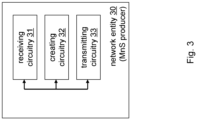
- FIG 3 is a block diagram illustrating an apparatus according to example embodiments.
- the apparatus may be a network entity 30 such as a management service producer (entity) comprising a receiving circuitry 31, a creating circuitry 32, and a transmitting circuitry 33.
- the receiving circuitry 31 receives a collection job request requesting a data collection job.
- the creating circuitry 32 creates a job instance representing said data collection job.
- the transmitting circuitry 33 transmits a collection job response.
- the collection job response includes information on file uploading related to said data collection job.
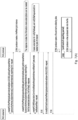
- Figure 6 is a schematic diagram of a procedure according to example embodiments.
- the apparatus according to Figure 3 may perform the method of Figure 6 but is not limited to this method.
- the method of Figure 6 may be performed by the apparatus of Figure 3 but is not limited to being performed by this apparatus.
- a procedure comprises an operation of receiving (S61) a collection job request requesting a data collection job, an operation of creating (S62) a job instance representing said data collection job, and an operation of transmitting (S63) a collection job response.
- the collection job response includes information on file uploading related to said data collection job.
- Figure 4 is a block diagram illustrating an apparatus according to example embodiments.
- Figure 4 illustrates a variation of the apparatus shown in Figure 3 .
- the apparatus according to Figure 4 may thus further comprise a collecting circuitry 41, a generating circuitry 42, a providing circuitry 43, and/or a deleting circuitry 44.
- At least some of the functionalities of the apparatus shown in Figure 3 may be shared between two physically separate devices forming one operational entity. Therefore, the apparatus may be seen to depict the operational entity comprising one or more physically separate devices for executing at least some of the described processes.
- said collection job response includes said identifier of said job instance.
- said information on file uploading related to said data collection job includes information on a file availability notification subscription address.
- an exemplary method may comprise an operation of receiving a file availability notification subscription for said data collection job created based on said file availability notification subscription address.
- an exemplary method may comprise an operation of transmitting a file availability notification subscription acknowledgement including an identifier of said file availability notification subscription.
- exemplary additional operations are given, which are inherently independent from each other as such.
- said collection job request is indicative of a notification recipient address
- an exemplary method according to example embodiments may comprise an operation of creating a file availability notification subscription for said data collection job for said notification recipient address.
- said collection job response includes an identifier of said file availability notification subscription.
- said file availability notification subscription includes an identifier of a job instance representing said data collection job.
- said file availability notification subscription is implemented as a subscription instance created name-contained by said job instance, or a subscription instance created name-contained by a predetermined realm instance.
- an exemplary method may comprise an operation of receiving a request for deletion of said file availability notification subscription, said request for deletion of said file availability notification subscription includes said identifier of said file availability notification subscription, and an operation of deleting said file availability notification subscription.
- an exemplary method may comprise an operation of collecting data corresponding to said data collection job, an operation of generating a file to be uploaded based on said data, an operation of creating a file object instance representing said file, and an operation of transmitting a file availability notification based on said file availability notification subscription.
- the file availability notification includes information on a file location of said file object instance.
- said file availability notification includes an identifier of a job instance representing said data collection job.
- an exemplary method according to example embodiments may comprise an operation of providing file content of said file and/or file meta data of said file at said file location.
- said collection job request is indicative of a requested file-based reporting with notifications.
- said information on file uploading related to said data collection job includes information on a file retrieval address.
- an exemplary method may comprise an operation of collecting data corresponding to said data collection job, an operation of generating a file to be uploaded based on said data, an operation of creating a file object instance representing said file, an operation of receiving a query for information on available files from said file retrieval address, and an operation of transmitting said information on said available files including said file.
- said information on said available files includes information on a file location of a file object instance, and an exemplary method according to example embodiments may comprise an operation of providing file content of said file and/or file meta data of said file at said file location.
- said information on said available files includes an identifier of a job instance representing said data collection job associated with said file object instance representing said file generated based on data collected for said data collection job.
- said information on said available files includes file content of said available files and/or file meta data of said available files.
- said collection job request is indicative of a requested file-based reporting with polling.
- an exemplary method may comprise an operation of receiving a request for deletion of a file object instance representing a file generated based on data collected for said data collection job, and an operation of deleting said file object instance.
- object instances are created, maintained and referenced, where the object instances represent files (potentially to be uploaded), and where the object instances are instances of an object following an information model as follows.
- files that are available for upload on a MnS producer by a MnS consumer are modeled with instances of dedicated managed object classes (MOC).
- MOC managed object classes
- a class name of the dedicated managed object classes is for example "File”.
- these objects can be name-contained by any other managed object such as those already specified in TS 28.622 and TS 28.541.
- the "File” class definition includes attributes for meta-data describing the content of the file and an attribute indicating which data production job produced this file.
- the file content shall be retrieved using a normal Read operation on a "File" object.
- the object may have an attribute representing the content.
- reading this attribute returns the file content. It is noted in this regard that this attribute just represents the file content.
- the actual file may be stored elsewhere in a file system.
- a special collection class is introduced.
- a class name of the collection class is for example "Files” (plural used to align with 3GPP naming conventions).
- the "Files" class can be name-contained by any managed object and the "File" instances pertaining to the group are name-contained by "Files”.
- the "Files" class definition includes meta-data describing the collection of contained "File” instances such as the total number of files, the total size of all files, date and time of the last file removal or addition.
- "Files” and “File” objects support the normal notifications for notifying object creation, object deletion and attribute value change.
- "File” objects may support the existing dedicated file ready notification reporting availability of the new file and all files, that became available before.
- the "File” class defines meta-data describing the file.
- the following data, already defined in TS 28.532, may be included as meta-data of a "File” class according to example embodiments:
- Such processes related to the generation of files include, for example,
- the "Files" or "File" objects are name-contained by the related job object.
- the "Files" or "File” objects include a pointer attribute carrying the identifier of the related job or the identifiers of the related jobs.
- file objects can exist only when the parent job object exists. This ensures that files are deleted (assuming that files are deleted when the objects representing the files are deleted) when the job is deleted, thus preventing files that are of no use any more from piling up on MnS producers.
- file objects can relate to one job only, which might be a limiting factor.
- the MnS producer When a file becomes available for upload on the MnS producer, according to example embodiments, the MnS producer creates a "File" object instance representing the new file, and notifies interested MnS consumers about the availability of the new file, assuming the MnS consumer has requested to be notified about new files.
- a "notifyMOICreation" notification as defined in TS 28.532 serves the purpose.
- dedicated notification types can be specified for this event, with the same triggering event.
- the dedicated notification type the "notifyFileReady” notification defined in TS 28.532 is used, where the dedicated notification type the "notifyFileReady” notification is extended with parameters allowing identifying the related jobs, i.e. a pointer attribute holding the distinguished names (DN) of the related jobs.
- 3GPP defined notifications contain always the same notification header, whose objectClass and objectInstance parameters shall be set to identify the new "File" object.
- MnS consumers need to create an appropriate subscription as usual. Based on the information model according to example embodiments illustrated above, subscriptions can be created that notify MnS consumers only about files that are related to jobs they created or they are interested in.
- the "NtfSubscriptionControl" object can be name-contained as well below job objects. This shall have the implicit semantics that the subscription is only related to objects of the subtree whose base object is the job object; hence to all "File” objects contained by the job object. This approach may work only for the case when "File" objects are contained by job objects.
- the following provisions are taken in the subscription:
- MnS consumers need to know the exact location of a file, or the parent object (folder) where files are stored as children.
- the current approach in SA5 allows reporting the exact location in the "notifyFileRead” notification announcing a file is available for upload.
- the exact location is also contained in the "listAvailableFiles” operation response.
- the MnS consumer has no way to find out in a standardized manner the location of the parent object below which files are stored and where he can poll for available files.
- the job class definition it is also included an attribute allowing the MnS consumer to request, when selecting the file based reporting method, to be notified about new files with notifications (file-based reporting method with notifications) or not. Further, according to example embodiments, if the MnS consumer does not request to be notified about new files with notifications (file-based reporting method with notifications), the MnS consumer will poll the MnS producer instead for new files (file-based reporting method with polling).
- a mechanism is provided for implicit subscription creation by the MnS producer.
- the sent request message may include as well an indication to the MnS producer to create the required subscription on behalf of the MnS consumer (implicit subscription).
- MnS consumer includes the notification recipient address in the request message. The presence of the notification recipient address may be used as implicit indication to create the subscription.
- the subscription is only related to notifications reporting the availability of files related to the job that the MnS consumer requests to be created.
- Implicit subscriptions are especially beneficial for simple MnS consumers that support only requests for the creation of single objects (and hence cannot combine the request for creating a job and a subscription into a single request) and that shall be shielded from the complexities of how to create a subscription (i.e., including complexities regarding knowledge of the parent objects, below which it is possible to create a subscription, knowledge about properly forming of a request for creating a subscription, and knowledge about proper population of all attributes in the request with values).
- a mechanism to decouple the address of the "File” object representing a file and the address where the file can be retrieved if provided by including a file location attribute in the "File” object Typically, these addresses are identical, especially when the same protocol is used for file transfer and object manipulations. However, there are also deployments where the addresses might not be identical, for example when different protocols are used for file transfer and object manipulation or when the files are stored on a dedicated file server. To deal with this situation, according to example embodiments, the "File" class contains a "fileLocation" attribute with the complete address of the file location.
- the URI of the "File" object might be
- the URI of the "File" might be
- Figure 7 shows a schematic diagram of signaling sequences according to example embodiments, and in particular illustrates an example procedure for requesting and retrieving data using notifications (without implicit subscription) based on the above explained information model according to example embodiments.
- the MnS consumer sends a job creation request to the MnS producer.
- the administrative state attribute of the job is set to "locked” and the reporting method to "file-based reporting with notifications”.
- the MnS producer creates the job instance and generates an identifier (DN) for the new resource.
- the MnS producer sends the job creation response to the MnS consumer that includes the identifier of the new resource, and information about where the MnS consumer can create the subscription for notifications on the availability of new files.
- the MnS consumer creates a subscription for notifications reporting the availability of files with "his" data.
- this subscription is only for notifications relating to jobs created by, or of interest to, the MnS consumer
- the MnS consumer has three possibilities, whose selection is governed by where subscriptions can be created by MnS consumers and where the MnS producer creates "File" objects:
- the MnS producer acknowledges the creation of the subscription by sending a creation request response to the MnS consumer.
- the MnS consumer sets the administrative state of the job on the MnS producer to "unlocked".
- the MnS producer sends a response to the MnS consumer to acknowledge the attribute value change.
- the MnS producer opens a file and starts collecting data.
- the MnS producer writes the produced data into the file until the end of the reporting period is reached.
- the MnS producer closes the file.
- the MnS producer creates a "File" object representing the new file.
- the MnS producer emits a notification to report availability of the file.
- the MnS consumer upon reception of the notification, extracts the file location from the "objectInstance" parameters in the notification header.
- the notification contains a dedicated file location parameter in the notification body specifying a location potentially different from the location defined by the "objectInstance” parameters in the notification header.
- the MnS consumer sends a read request to the extracted location whilst specifying the file content shall be returned, or the meta data and the file content.
- the MnS producer responds with the file content or the file content and the file meta data.
- the MnS consumer may ask the MnS producer to delete the file by deleting the corresponding "File" object.
- the MnS producer acknowledges that the "File" object was deleted (after deletion).
- a corresponding notification is sent to the MnS consumer.
- the MnS consumer sends a job creation request to the MnS producer.
- the administrative state attribute of the job is set to "locked” and the reporting method to "file-based reporting with notifications”.
- the request includes an indication to create a subscription on behalf of the MnS consumer by the MnS producer (referred to herein as implicit subscription). This indication may be embodied by an included notification recipient address.
- the MnS producer creates not only the job instance and generates not only an identifier (DN) for the new resource, but, based on the indication to create a subscription (implicit subscription), also creates a subscription for notifications reporting the availability of files with the MnS consumers data (following the principles explained for step 4 of Figure 7 ) on its own, and generates an identifier for the (implicit) subscription.
- the MnS producer sends the job creation response to the MnS consumer that includes the identifier of the new resource (job).
- the job creation response does not include information about where the MnS consumer can create the subscription for notifications on the availability of new files. Instead, the job creation response may include the generated identifier of the (implicit) subscription.
- step 6 of Figure 7 is performed while omitting steps 4 and 5 shown in Figure 7 , i.e., according to example embodiments, subsequently to receipt of the job creation response (step 3 of Figure 7 ), the MnS consumer sets the administrative state of the job on the MnS producer to "unlocked", and the procedure of this alternative follows the further steps of Figure 7 .
- the MnS consumer may ask the MnS producer to delete a subscription (by stating the identifier of the subscription) Further, according to example embodiments, the MnS producer may delete the identified subscription accordingly.
- Figure 8 shows a schematic diagram of signaling sequences according to example embodiments, and in particular illustrates an example procedure for requesting and retrieving data using polling based on the above explained information model according to example embodiments.
- the MnS consumer sends a job creation request to the MnS producer.
- the administrative state attribute of the job is set to "locked” and the reporting method to "file-based reporting with polling".
- the MnS consumer has specified the reporting period in the request and the MnS consumer can determine from that information when files should become available on the MnS producer.
- the MnS producer creates the job instance and generates an identifier (DN) for the new resource.
- the MnS producer sends a response to the MnS consumer that includes the DN of the new resource, and information about where the MnS producer will create the files (e.g. a pointer to the parent resource where "File" objects will be created as children).
- the MnS consumer extracts the address where "File" objects will be created.
- the MnS consumer sets the administrative state of the job on the MnS producer to "unlocked".
- the MnS producer sends a response to the MnS consumer to acknowledge the attribute value change.
- the MnS producer opens a file and starts collecting data.
- the MnS producer writes the produced data into the file until the end of the reporting period is reached.
- the MnS consumer has specified the reporting period in the request indicating when files should become available on the MnS producer.
- the MnS producer closes the file.
- the MnS producer creates a "File" object representing the new file.
- the MnS consumer reads information about available files from the MnS producer using the address returned in the job creation request. Namely, according to example embodiments, the MnS consumer has specified the reporting period in the request and the MnS consumer can determine from that information when files should become available on the MnS producer. With the above explained information model according to example embodiments, this procedure becomes a straightforward normal read operation with query parameters to limit the set of returned file meta data to information about files the MnS consumer is interested in.
- the MnS producer sends a response with requested file meta data to the MnS consumer. It includes the exact location of the files.
- the MnS consumer extracts the exact location from the response.
- the MnS consumer sends a read request to the extracted location whilst specifying the file content shall be returned, or the file meta data and the file content.
- the MnS producer responds with the file content or the file content and the file meta data.
- the MnS consumer may specify that the MnS producer shall not only include file meta data but also the file content. With that, one read request is sufficient.
- the MnS producer responds with the file content or the file content and the file meta data.
- the MnS consumer may ask the MnS producer to delete the file by deleting the corresponding "File" object. Further, according to example embodiments, the MnS producer acknowledges that the "File" object was deleted (after deletion).
- the network entity may comprise further units that are necessary for its respective operation. However, a description of these units is omitted in this specification.
- the arrangement of the functional blocks of the devices is not construed to limit the disclosure, and the functions may be performed by one block or further split into sub-blocks.
- the apparatus i.e. network entity (or some other means) is configured to perform some function
- this is to be construed to be equivalent to a description stating that a (i.e. at least one) processor or corresponding circuitry, potentially in cooperation with computer program code stored in the memory of the respective apparatus, is configured to cause the apparatus to perform at least the thus mentioned function.
- a (i.e. at least one) processor or corresponding circuitry potentially in cooperation with computer program code stored in the memory of the respective apparatus, is configured to cause the apparatus to perform at least the thus mentioned function.
- function is to be construed to be equivalently implementable by specifically configured circuitry or means for performing the respective function (i.e. the expression "unit configured to” is construed to be equivalent to an expression such as "means for").
- the apparatus (network entity) 10' (corresponding to the network entity 10) comprises a processor 91, a memory 92 and an interface 93, which are connected by a bus 94 or the like.
- the apparatus (network entity) 30' (corresponding to the network entity 30) comprises a processor 95, a memory 96 and an interface 97, which are connected by a bus 98 or the like, and the apparatuses may be connected via link 99, respectively.
- the processor 91/95 and/or the interface 93/97 may also include a modem or the like to facilitate communication over a (hardwire or wireless) link, respectively.
- the interface 93/97 may include a suitable transceiver coupled to one or more antennas or communication means for (hardwire or wireless) communications with the linked or connected device(s), respectively.
- the interface 93/97 is generally configured to communicate with at least one other apparatus, i.e. the interface thereof.
- the memory 92/96 may store respective programs assumed to include program instructions or computer program code that, when executed by the respective processor, enables the respective electronic device or apparatus to operate in accordance with the example embodiments.
- the respective devices/apparatuses may represent means for performing respective operations and/or exhibiting respective functionalities, and/or the respective devices (and/or parts thereof) may have functions for performing respective operations and/or exhibiting respective functionalities.
- processor or some other means
- the processor is configured to perform some function
- this is to be construed to be equivalent to a description stating that at least one processor, potentially in cooperation with computer program code stored in the memory of the respective apparatus, is configured to cause the apparatus to perform at least the thus mentioned function.
- function is to be construed to be equivalently implementable by specifically configured means for performing the respective function (i.e. the expression "processor configured to [cause the apparatus to] perform xxx-ing” is construed to be equivalent to an expression such as "means for xxx-ing").
- an apparatus representing the network entity 10 comprises at least one processor 91, at least one memory 92 including computer program code, and at least one interface 93 configured for communication with at least another apparatus.
- the processor i.e. the at least one processor 91, with the at least one memory 92 and the computer program code
- the processor is configured to perform transmitting a collection job request requesting a data collection job (thus the apparatus comprising corresponding means for transmitting), and to perform receiving a collection job response (thus the apparatus comprising corresponding means for receiving).
- the collection job response includes information on file uploading related to said data collection job.
- an apparatus representing the network entity 30 comprises at least one processor 95, at least one memory 96 including computer program code, and at least one interface 97 configured for communication with at least another apparatus.
- the processor i.e. the at least one processor 95, with the at least one memory 96 and the computer program code
- the processor is configured to perform receiving a collection job request requesting a data collection job (thus the apparatus comprising corresponding means for receiving), to perform creating a job instance representing said data collection job (thus the apparatus comprising corresponding means for creating), and to perform transmitting a collection job response (thus the apparatus comprising corresponding means for transmitting).
- the collection job response includes information on file uploading related to said data collection job.
- respective functional blocks or elements according to above-described aspects can be implemented by any known means, either in hardware and/or software, respectively, if it is only adapted to perform the described functions of the respective parts.
- the mentioned method steps can be realized in individual functional blocks or by individual devices, or one or more of the method steps can be realized in a single functional block or by a single device.
- any method step is suitable to be implemented as software or by hardware without changing the idea of the present disclosure.
- Devices and means can be implemented as individual devices, but this does not exclude that they are implemented in a distributed fashion throughout the system, as long as the functionality of the device is preserved. Such and similar principles are to be considered as known to a skilled person.
- Software in the sense of the present description comprises software code as such comprising code means or portions or a computer program or a computer program product for performing the respective functions, as well as software (or a computer program or a computer program product) embodied on a tangible medium such as a computer-readable (storage) medium having stored thereon a respective data structure or code means/portions or embodied in a signal or in a chip, potentially during processing thereof.
- the present disclosure also covers any conceivable combination of method steps and operations described above, and any conceivable combination of nodes, apparatuses, modules or elements described above, as long as the above-described concepts of methodology and structural arrangement are applicable.
- Such measures exemplarily comprise transmitting a collection job request requesting a data collection job, and receiving a collection job response, wherein said collection job response includes information on file uploading related to said data collection job.
Landscapes
- Engineering & Computer Science (AREA)
- Computer Networks & Wireless Communication (AREA)
- Signal Processing (AREA)
- Information Retrieval, Db Structures And Fs Structures Therefor (AREA)
Abstract
Description
- Various example embodiments relate to file upload management. More specifically, various example embodiments exemplarily relate to measures (including methods, apparatuses and computer program products) for realizing file upload management.
- The present specification generally relates to file based communication between two entities in a network.
- Files are used in - e.g. - Third Generation Partnership Project (3GPP) management for many purposes.
- For example, measurements produced by a management service (MnS) producer associated to a network function (NF) are written into files that are made available to MnS consumers.
- As a further example, key performance indicators (KPI) computed by a MnS producer associated to a management function (MnF) (based on received measurements) are written into files that are made available to MnS consumers.
- As a still further example, trace and minimization of drive tests (MDT) data produced by a MnS producer associated to a network are written into files that are made available to data consumers.
- Further examples include analytics that are reported using files.
- In each of these cases, the files generated by the MnS producer need to be uploaded to a MnS consumer that is using the data in the files for some purpose.
- The upload of a file from a MnS producer to a MnS consumer is initiated either by the MnS producer or by the MnS consumer.
- When initiated by the MnS producer, the MnS producer needs to know only the address of the MnS consumer where to upload the files. Whilst this method is rather simple, it suffers from a serious drawback. Namely, the MnS consumer has no control over what is uploaded to him or pushed onto him. The MnS consumer can only indirectly control the uploads by managing the related jobs controlling the data production and reporting activities on the MnS producer.
- For that reason, it is typically preferred that the upload is initiated by the MnS consumer.
- As an example, 3GPP Technical Specification (TS) 28.532, clause 11.6, describes a dedicated MnS for managing file uploads from MnS producers to MnS consumers. This dedicated MnS features a special operation named "listAvailableFiles" allowing MnS consumers to get a list of all files available for upload on a MnS producer, and a special notification named "notifyFileReady" allowing MnS producers to inform MnS consumers about the availability and location of new files.
- To transfer files, file transfer protocol (FTP) (or secure file transfer protocol (SFTP)) is used.
- To receive the "notifyFileReady" notification, the MnS consumer needs to create a subscription for this notification on the MnS producer. The MnS consumer needs to know how to create such subscription.
- The thus provided dedicated MnS featuring the above-outlined special operation ("listAvailableFiles") and special notification ("notifyFileReady") lacks flexibility and requires overly abilities on both the MnS consumer and the MnS producer sides.
- Hence, the problem arises that overly abilities are required on both the MnS consumer and the MnS producer sides to enable file uploading with little flexibility.
- Hence, there is a need to provide for file upload management.
- Various example embodiments aim at addressing at least part of the above issues and/or problems and drawbacks.
- Various aspects of example embodiments are set out in the appended claims.
- According to an exemplary aspect, there is provided a method comprising transmitting a collection job request requesting a data collection job, and receiving a collection job response, wherein said collection job response includes information on file uploading related to said data collection job.
- According to an exemplary aspect, there is provided a method comprising receiving a collection job request requesting a data collection job, creating a job instance representing said data collection job, and transmitting a collection job response, wherein said collection job response includes information on file uploading related to said data collection job.
- According to an exemplary aspect, there is provided an apparatus comprising transmitting circuitry configured to transmit a collection job request requesting a data collection job, and receiving circuitry configured to receive a collection job response, wherein said collection job response includes information on file uploading related to said data collection job.
- According to an exemplary aspect, there is provided an apparatus comprising receiving circuitry configured to receive a collection job request requesting a data collection job, creating circuitry configured to create a job instance representing said data collection job, and transmitting circuitry configured to transmit a collection job response, wherein said collection job response includes information on file uploading related to said data collection job.
- According to an exemplary aspect, there is provided an apparatus comprising at least one processor, at least one memory including computer program code, and at least one interface configured for communication with at least another apparatus, the at least one processor, with the at least one memory and the computer program code, being configured to cause the apparatus to perform transmitting a collection job request requesting a data collection job, and receiving a collection job response, wherein said collection job response includes information on file uploading related to said data collection job.
- According to an exemplary aspect, there is provided an apparatus comprising at least one processor, at least one memory including computer program code, and at least one interface configured for communication with at least another apparatus, the at least one processor, with the at least one memory and the computer program code, being configured to cause the apparatus to perform receiving a collection job request requesting a data collection job, creating a job instance representing said data collection job, and transmitting a collection job response, wherein said collection job response includes information on file uploading related to said data collection job.
- According to an exemplary aspect, there is provided a computer program product comprising computer-executable computer program code which, when the program is run on a computer (e.g. a computer of an apparatus according to any one of the aforementioned apparatus-related exemplary aspects of the present disclosure), is configured to cause the computer to carry out the method according to any one of the aforementioned method-related exemplary aspects of the present disclosure.
- Such computer program product may comprise (or be embodied) a (tangible) computer-readable (storage) medium or the like on which the computer-executable computer program code is stored, and/or the program may be directly loadable into an internal memory of the computer or a processor thereof.
- Any one of the above aspects enables an efficient implementation of file based communication, in particular of file uploads, between two entities in a network, to thereby solve at least part of the problems and drawbacks identified in relation to the prior art.
- By way of example embodiments, there is provided file upload management. More specifically, by way of example embodiments, there are provided measures and mechanisms for realizing file upload management.
- Thus, improvement is achieved by methods, apparatuses and computer program products enabling/realizing file upload management.
- In the following, the present disclosure will be described in greater detail by way of non-limiting examples with reference to the accompanying drawings, in which
-
Figure 1 is a block diagram illustrating an apparatus according to example embodiments, -
Figure 2 is a block diagram illustrating an apparatus according to example embodiments, -
Figure 3 is a block diagram illustrating an apparatus according to example embodiments, -
Figure 4 is a block diagram illustrating an apparatus according to example embodiments, -
Figure 5 is a schematic diagram of a procedure according to example embodiments, -
Figure 6 is a schematic diagram of a procedure according to example embodiments, -
Figure 7 (Figures 7(A) and7(B) ) shows a schematic diagram of signaling sequences according to example embodiments, -
Figure 8 (Figures 8(A) and8(B) ) shows a schematic diagram of signaling sequences according to example embodiments, and -
Figure 9 is a block diagram alternatively illustrating apparatuses according to example embodiments. - The present disclosure is described herein with reference to particular non-limiting examples and to what are presently considered to be conceivable embodiments. A person skilled in the art will appreciate that the disclosure is by no means limited to these examples, and may be more broadly applied.
- It is to be noted that the following description of the present disclosure and its embodiments mainly refers to specifications being used as non-limiting examples for certain exemplary network configurations and deployments. Namely, the present disclosure and its embodiments are mainly described in relation to 3GPP specifications being used as non-limiting examples for certain exemplary network configurations and deployments. As such, the description of example embodiments given herein specifically refers to terminology which is directly related thereto. Such terminology is only used in the context of the presented non-limiting examples, and does naturally not limit the disclosure in any way. Rather, any other communication or communication related system deployment, etc. may also be utilized as long as compliant with the features described herein.
- Hereinafter, various embodiments and implementations of the present disclosure and its aspects or embodiments are described using several variants and/or alternatives. It is generally noted that, according to certain needs and constraints, all of the described variants and/or alternatives may be provided alone or in any conceivable combination (also including combinations of individual features of the various variants and/or alternatives).
- According to example embodiments, in general terms, there are provided measures and mechanisms for (enabling/realizing) file upload management.
- As mentioned above, a dedicated MnS featuring the above-outlined special operation ("listAvailableFiles") and special notification ("notifyFileReady") lacks flexibility and requires overly abilities on both the MnS consumer and the MnS producer sides.
- The following improvements over current implementations/approaches can be identified when starting from example embodiments described below in more detail.
- Unlike with example embodiments, to transfer files utilizing the above-outlined special operation and special notification, FTP (or SFTP) is used, whereas hypertext transfer protocol (HTTP) (or hypertext transfer protocol secure (HTTPS)) is used for the request and response messages of the operations and notifications of the MnS. This requires the MnS producer and MnS consumer to support two protocol stacks, one for FTP/SFTP, and one for HTTP/HTTPS. However, it is desirable (and achieved according to example embodiments) to have just one protocol stack to minimize implementation cost. Utilizing HTTP (or HTTPS) for communication of request and response messages as well as for file transfer is not possible today in the 3GPP solution. Further, unlike with example embodiments, according to the current approach outlined above, a dedicated MnS is used for managing file uploads. This approach does not integrate well with the new model-driven approach followed by 3GPP SA5, where one holistic information model and generic create, read, update, delete (CRUD) operations only are used for specifying management services. Example embodiments do.
- Still further, unlike with example embodiments, in the current approach as outlined above, the MnS producer cannot provide any information to the MnS consumer on where to create a subscription for the "notifyFileReady" notification. The MnS consumer (however) needs to know where to create subscriptions on the MnS producer. According to example embodiments, such necessity is removed.
- Still further, unlike with example embodiments, in the current approach as outlined above, when a MnS consumer cannot receive notifications or a MnS producer cannot send notifications, the MnS consumer may use only the operation "listAvailableFiles" to find out if new files are available for him and where to get them. A disadvantage of this approach is that the MnS consumer gets always a list with all files on the MnS producer available for upload and needs to scan through a potentially large number of file meta data for identifying the file the MnS consumer is interested in and retrieve it based on that information. Here, it is noted that the capability to receive (and send) notifications always comes with additional implementation effort, since the MnS consumer and MnS producer must support both an HTTP server and HTTP client protocol stack. When no notifications need to be sent and received, according to example embodiments, the MnS producer just needs to have a HTTP server protocol stack and the MnS consumer a HTTP client protocol stack.
- Still further, as described above, files are often used to store and report management data produced on a MnS producer. This data is produced as a result of a request by MnS consumers. MnS consumers request data production by instantiating so called (data production) jobs on the MnS producer. In the service based management architecture (SBMA), many different MnS consumers can create jobs on a MnS producer. However, unlike with example embodiments, in the current approach as outlined above, the file information in the "listAvailableFiles" response or the "notifyFileReady" notification does not contain any information allowing a MnS consumer to associate a job on a MnS producer to the files generated by this job and stored on the producer. In other words, the MnS consumer cannot really find out if a file was produced based on the MnS consumer's request or based on another MnS consumer's request. The current functionality thus only works in deployment scenarios where a single MnS consumer interacts with a MnS producer. This is due to historical reasons. The current file upload MnS as outlined above was originally designed for a single client architecture. When SA5 migrated to SBMA, the old functionality was not improved. Here, it is noted that a job identifier (ID) might be included in a file name. The file name is part of the file information conveyed to the MnS consumer. The MnS consumer could hence parse the file name to check whether job IDs of interest are contained in the file name. This approach, however, is not really straight forward, clean and easy to implement. According to example embodiments, thus straight forward, clean and easy to implement measurements are provided, which enable that only files of interest for the MnS consumer are adverted and uploaded.
- Still further, unlike with example embodiments, in the current approach as outlined above, is not possible to send to the MnS consumer in the "listAvailableFiles" response or the "notifyFileReady" notification only file information for files associated to jobs the MnS consumer created or is interested in. Here, it is noted that the job ID might be included in the file name. A subscription filter could be set that filters out all "notifyFileReady" notifications whose file names do not contain certain job IDs. However, this does not ensure that the MnS consumer gets only file information of interest. Only if the set of file information in a notification does not contain the job ID, the complete notification is filtered out. Leave alone that filtering on substrings in complex data types is not easy to implement or can run on nodes with limited processing power. According to example embodiments, thus, it is enabled that only files of interest for the MnS consumer are adverted and uploaded.
- Still further, unlike with example embodiments, the current approach as outlined above relies on implementing an operation and/or a notification. It does not allow for very simple implementations, where, e.g., the MnS consumer just polls a location on the MnS producer where only the MnS consumer's files are stored, as example embodiments do.
- Still further, unlike with example embodiments, in the current approach as outlined above, when a MnS consumer creates a data production job with file based reporting, the MnS consumer needs to create the subscription for the "notifyFileReady" notification in a second step using a new create operation. It is not possible with the current approach to ask the MnS producer in the job creation request to create an implicit subscription. Such a capability is desirable for efficient operational processes. Accordingly, according to example embodiments, a possibility to ask the MnS producer in the job creation request to create an implicit subscription is provided.
- Still further, unlike with example embodiments, in the current approach as outlined above, MnS consumers cannot delete files on MnS producers or indicate to the MnS producers that they are not interested any more in files, e.g. after retrieval of the file. Such functionality is provided according to example embodiments.
- Hence, in brief, according to example embodiments, a fully model-driven approach using normal CRUD operations only to manage file uploads is provided.
- Example embodiments are specified below in more detail.
-
Figure 1 is a block diagram illustrating an apparatus according to example embodiments. The apparatus may be anetwork entity 10 such as a management service consumer (entity) comprising a transmittingcircuitry 11 and a receivingcircuitry 12. The transmittingcircuitry 11 transmits a collection job request requesting a data collection job. The receivingcircuitry 12 receives a collection job response. Here, the collection job response includes information on file uploading related to said data collection job.Figure 5 is a schematic diagram of a procedure according to example embodiments. The apparatus according toFigure 1 may perform the method ofFigure 5 but is not limited to this method. The method ofFigure 5 may be performed by the apparatus ofFigure 1 but is not limited to being performed by this apparatus. - As shown in
Figure 5 , a procedure according to example embodiments comprises an operation of transmitting (S51) a collection job request requesting a data collection job, and an operation of receiving (S52) a collection job response. Here, the collection job response includes information on file uploading related to said data collection job. -
Figure 2 is a block diagram illustrating an apparatus according to example embodiments. In particular,Figure 2 illustrates a variation of the apparatus shown inFigure 1 . The apparatus according toFigure 2 may thus further comprise a creatingcircuitry 21, a retrievingcircuitry 22, and/or a queryingcircuitry 23. - In an embodiment at least some of the functionalities of the apparatus shown in
Figure 1 (or2 ) may be shared between two physically separate devices forming one operational entity. Therefore, the apparatus may be seen to depict the operational entity comprising one or more physically separate devices for executing at least some of the described processes. - According to further example embodiments, said collection job response includes an identifier of a job instance representing said data collection job.
- According to further example embodiments, said information on file uploading related to said data collection job includes information on a file availability notification subscription address.
- According to a variation of the procedure shown in
Figure 5 , exemplary additional operations are given, which are inherently independent from each other as such. According to such variation, an exemplary method according to example embodiments may comprise an operation of creating a file availability notification subscription for said data collection job based on said file availability notification subscription address, and an operation of transmitting said file availability notification subscription. - According to further example embodiments, said file availability notification subscription includes an identifier of a job instance representing said data collection job.
- According to a variation of the procedure shown in
Figure 5 , exemplary details of the creating operation are given, which are inherently independent from each other as such. Such exemplary creating operation according to example embodiments may comprise an operation of creating a subscription instance name-contained by said job instance, or an operation of creating a subscription instance name-contained by a predetermined realm instance. - According to a variation of the procedure shown in
Figure 5 , exemplary additional operations are given, which are inherently independent from each other as such. According to such variation, an exemplary method according to example embodiments may comprise an operation of receiving a file availability notification subscription acknowledgement including an identifier of said file availability notification subscription. - According to further example embodiments, said collection job request is indicative of a notification recipient address.
- According to further example embodiments, said collection job response includes an identifier of a file availability notification subscription created in response to said notification recipient address.
- According to a variation of the procedure shown in
Figure 5 , exemplary additional operations are given, which are inherently independent from each other as such. According to such variation, an exemplary method according to example embodiments may comprise an operation of transmitting a request for deletion of said file availability notification subscription, said request for deletion of said file availability notification subscription includes said identifier of said file availability notification subscription. - According to a variation of the procedure shown in
Figure 5 , exemplary additional operations are given, which are inherently independent from each other as such. According to such variation, an exemplary method according to example embodiments may comprise an operation of receiving a file availability notification. Here, the file availability notification includes information on a file location of a file object instance representing a file generated based on data collected for said data collection job. - According to further example embodiments, said file availability notification includes an identifier of a job instance representing said data collection job.
- According to a variation of the procedure shown in
Figure 5 , exemplary additional operations are given, which are inherently independent from each other as such. According to such variation, an exemplary method according to example embodiments may comprise an operation of retrieving file content of said file and/or file meta data of said file from said file location. According to further example embodiments, said collection job request is indicative of a requested file-based reporting with notifications. - According to further example embodiments, said information on file uploading related to said data collection job includes information on a file retrieval address.
- According to a variation of the procedure shown in
Figure 5 , exemplary additional operations are given, which are inherently independent from each other as such. According to such variation, an exemplary method according to example embodiments may comprise an operation of querying information on available files from said file retrieval address, and an operation of receiving said information on said available files. - According to a variation of the procedure shown in
Figure 5 , exemplary additional operations are given, which are inherently independent from each other as such. According to such variation, said information on said available files includes information on a file location of a file object instance representing a file generated based on data collected for said data collection job, and an exemplary method according to example embodiments may comprise an operation of retrieving file content of said file and/or file meta data of said file from said file location. - According to further example embodiments, said information on said available files includes an identifier of a job instance representing said data collection job associated with said file object instance representing said file generated based on data collected for said data collection job.
- According to further example embodiments, said information on said available files includes file content of said available files and/or file meta data of said available files.
- According to further example embodiments, said collection job request is indicative of a requested file-based reporting with polling.
- According to a variation of the procedure shown in
Figure 5 , exemplary additional operations are given, which are inherently independent from each other as such. According to such variation, an exemplary method according to example embodiments may comprise an operation of transmitting a request for deletion of a file object instance representing a file generated based on data collected for said data collection job. -
Figure 3 is a block diagram illustrating an apparatus according to example embodiments. The apparatus may be anetwork entity 30 such as a management service producer (entity) comprising a receivingcircuitry 31, a creatingcircuitry 32, and a transmittingcircuitry 33. The receivingcircuitry 31 receives a collection job request requesting a data collection job. The creatingcircuitry 32 creates a job instance representing said data collection job. The transmittingcircuitry 33 transmits a collection job response. Here, the collection job response includes information on file uploading related to said data collection job.Figure 6 is a schematic diagram of a procedure according to example embodiments. The apparatus according toFigure 3 may perform the method ofFigure 6 but is not limited to this method. The method ofFigure 6 may be performed by the apparatus ofFigure 3 but is not limited to being performed by this apparatus. - As shown in
Figure 6 , a procedure according to example embodiments comprises an operation of receiving (S61) a collection job request requesting a data collection job, an operation of creating (S62) a job instance representing said data collection job, and an operation of transmitting (S63) a collection job response. Here, the collection job response includes information on file uploading related to said data collection job. -
Figure 4 is a block diagram illustrating an apparatus according to example embodiments. In particular,Figure 4 illustrates a variation of the apparatus shown inFigure 3 . The apparatus according toFigure 4 may thus further comprise a collectingcircuitry 41, a generatingcircuitry 42, a providingcircuitry 43, and/or a deletingcircuitry 44. - In an embodiment at least some of the functionalities of the apparatus shown in
Figure 3 (or4 ) may be shared between two physically separate devices forming one operational entity. Therefore, the apparatus may be seen to depict the operational entity comprising one or more physically separate devices for executing at least some of the described processes. - According to further example embodiments, said collection job response includes said identifier of said job instance.
- According to further example embodiments, said information on file uploading related to said data collection job includes information on a file availability notification subscription address.
- According to a variation of the procedure shown in
Figure 6 , exemplary additional operations are given, which are inherently independent from each other as such. According to such variation, an exemplary method according to example embodiments may comprise an operation of receiving a file availability notification subscription for said data collection job created based on said file availability notification subscription address. - According to a variation of the procedure shown in
Figure 6 , exemplary additional operations are given, which are inherently independent from each other as such. According to such variation, an exemplary method according to example embodiments may comprise an operation of transmitting a file availability notification subscription acknowledgement including an identifier of said file availability notification subscription. - According to a variation of the procedure shown in
Figure 6 , exemplary additional operations are given, which are inherently independent from each other as such. According to such variation, said collection job request is indicative of a notification recipient address, and an exemplary method according to example embodiments may comprise an operation of creating a file availability notification subscription for said data collection job for said notification recipient address. - According to further example embodiments, said collection job response includes an identifier of said file availability notification subscription.
- According to further example embodiments, said file availability notification subscription includes an identifier of a job instance representing said data collection job.
- According to further example embodiments, said file availability notification subscription is implemented as a subscription instance created name-contained by said job instance, or a subscription instance created name-contained by a predetermined realm instance.
- According to a variation of the procedure shown in
Figure 6 , exemplary additional operations are given, which are inherently independent from each other as such. According to such variation, an exemplary method according to example embodiments may comprise an operation of receiving a request for deletion of said file availability notification subscription, said request for deletion of said file availability notification subscription includes said identifier of said file availability notification subscription, and an operation of deleting said file availability notification subscription. - According to a variation of the procedure shown in
Figure 6 , exemplary additional operations are given, which are inherently independent from each other as such. According to such variation, an exemplary method according to example embodiments may comprise an operation of collecting data corresponding to said data collection job, an operation of generating a file to be uploaded based on said data, an operation of creating a file object instance representing said file, and an operation of transmitting a file availability notification based on said file availability notification subscription. Here, the file availability notification includes information on a file location of said file object instance. - According to further example embodiments, said file availability notification includes an identifier of a job instance representing said data collection job.
- According to a variation of the procedure shown in
Figure 6 , exemplary additional operations are given, which are inherently independent from each other as such. According to such variation, an exemplary method according to example embodiments may comprise an operation of providing file content of said file and/or file meta data of said file at said file location. - According to further example embodiments, said collection job request is indicative of a requested file-based reporting with notifications.
- According to further example embodiments, said information on file uploading related to said data collection job includes information on a file retrieval address.
- According to a variation of the procedure shown in
Figure 6 , exemplary additional operations are given, which are inherently independent from each other as such. According to such variation, an exemplary method according to example embodiments may comprise an operation of collecting data corresponding to said data collection job, an operation of generating a file to be uploaded based on said data, an operation of creating a file object instance representing said file, an operation of receiving a query for information on available files from said file retrieval address, and an operation of transmitting said information on said available files including said file. - According to a variation of the procedure shown in
Figure 6 , exemplary additional operations are given, which are inherently independent from each other as such. According to such variation, said information on said available files includes information on a file location of a file object instance, and an exemplary method according to example embodiments may comprise an operation of providing file content of said file and/or file meta data of said file at said file location. - According to further example embodiments, said information on said available files includes an identifier of a job instance representing said data collection job associated with said file object instance representing said file generated based on data collected for said data collection job.
- According to further example embodiments, said information on said available files includes file content of said available files and/or file meta data of said available files.
- According to further example embodiments, said collection job request is indicative of a requested file-based reporting with polling.
- According to a variation of the procedure shown in
Figure 6 , exemplary additional operations are given, which are inherently independent from each other as such. According to such variation, an exemplary method according to example embodiments may comprise an operation of receiving a request for deletion of a file object instance representing a file generated based on data collected for said data collection job, and an operation of deleting said file object instance. - Example embodiments outlined and specified above are explained below in more specific terms.
- According to example embodiments, object instances are created, maintained and referenced, where the object instances represent files (potentially to be uploaded), and where the object instances are instances of an object following an information model as follows.
- Namely, in particular, according to example embodiments, files that are available for upload on a MnS producer by a MnS consumer are modeled with instances of dedicated managed object classes (MOC).
- A class name of the dedicated managed object classes is for example "File".
- According to example embodiments, these objects can be name-contained by any other managed object such as those already specified in TS 28.622 and TS 28.541.
- The "File" class definition includes attributes for meta-data describing the content of the file and an attribute indicating which data production job produced this file. According to example embodiments, the file content shall be retrieved using a normal Read operation on a "File" object. To this end, the object may have an attribute representing the content. According to example embodiments, reading this attribute returns the file content. It is noted in this regard that this attribute just represents the file content. The actual file may be stored elsewhere in a file system.
- For grouping files sharing some common properties (for example, all files are related to a single job), according to example embodiments, a special collection class is introduced.
- A class name of the collection class is for example "Files" (plural used to align with 3GPP naming conventions).
- According to example embodiments, the "Files" class can be name-contained by any managed object and the "File" instances pertaining to the group are name-contained by "Files".
- According to example embodiments, the "Files" class definition includes meta-data describing the collection of contained "File" instances such as the total number of files, the total size of all files, date and time of the last file removal or addition.
- The name-containment relationship between the parent object of "File" or "Files" and the "File" or "Files" object itself shall have special semantics in the sense that it identifies the parent object as related to the files. The exact semantics depends on the parent object.
- According to example embodiments, "Files" and "File" objects support the normal notifications for notifying object creation, object deletion and attribute value change. In addition or as alternative to an object creation notification, "File" objects may support the existing dedicated file ready notification reporting availability of the new file and all files, that became available before.
- As mentioned above, according to example embodiments, the "File" class defines meta-data describing the file. The following data, already defined in TS 28.532, may be included as meta-data of a "File" class according to example embodiments:
- fileSize: Size of the uncompressed file.
- fileFormat: Reference to some file format definition.
- fileDataType: Indicating if the file contains measurements, KPIs, Trace data, etc.
- fileReadyTime Time at which the file became ready for retrieval, a special value indicates the file is not ready yet.
- fileExpirationTime: Time after which the MnS producer may delete the file.
- fileLocation: Location of the file. While such information is defined in TS 28.532, according to example embodiments it is preferred to not include such information as meta-data of a "File" class, as, if the file is presented by an object and the file can be retrieved using that object, it is not necessary anymore.
- fileCompression: Compression algorithm used for compressing the file.
- While such information is defined in TS 28.532, according to example embodiments it is preferred to not include such information as meta-data of a "File" class, as, when the compression algorithm can be negotiated using the file transfer protocol, which is the case with HTTP and HTTPS, it is not necessary anymore.
- According to current known implementations/approaches as outlined above, information about which process is related to the generation of a file is not provided.
- Such processes related to the generation of files include, for example,
- a process for producing performance metrics as defined by "PerfMetricJob" (TS 28.622), where the produced performance metrics are stored in a file that is made available for upload by MnS consumers,
- a process for producing trace data as defined by "TraceJob" (TS 28.622), where the produced trace data is stored in a file that is made available for upload by MnS consumers,
- a process for producing MDT data as defined by "TraceJob" (TS 28.622), where the produced MDT data is stored in a file that is made available for upload by MnS consumers, and
- a process for producing analytics data, where the produced analytics data is stored in a file that is made available for upload by MnS consumers (currently being standardized in 3GPP for Rel-17).
- To include the information about the process related to files in the information model, thereby allowing a MnS consumer to get this information and especially to get only the information related to processes the MnS consumer is interested in, according to example embodiments, the "Files" or "File" objects are name-contained by the related job object.
- Alternatively, to include the information about the process related to files in the information model, thereby allowing a MnS consumer to get this information and especially to get only the information related to processes the MnS consumer is interested in, according to example embodiments, the "Files" or "File" objects include a pointer attribute carrying the identifier of the related job or the identifiers of the related jobs.
- Two properties are inherent to the first alternative according to example embodiments ("Files" or "File" objects are name-contained by the related job object). Namely, firstly, file objects can exist only when the parent job object exists. This ensures that files are deleted (assuming that files are deleted when the objects representing the files are deleted) when the job is deleted, thus preventing files that are of no use any more from piling up on MnS producers. Secondly, the file can relate to one job only, which might be a limiting factor.
- When a file becomes available for upload on the MnS producer, according to example embodiments, the MnS producer creates a "File" object instance representing the new file, and notifies interested MnS consumers about the availability of the new file, assuming the MnS consumer has requested to be notified about new files. With the information model according to example embodiments illustrated above, a "notifyMOICreation" notification as defined in TS 28.532 serves the purpose. Alternatively, dedicated notification types can be specified for this event, with the same triggering event. According to example embodiments, as dedicated notification type the "notifyFileReady" notification defined in TS 28.532 is used, where the dedicated notification type the "notifyFileReady" notification is extended with parameters allowing identifying the related jobs, i.e. a pointer attribute holding the distinguished names (DN) of the related jobs.
- No matter the notification type, 3GPP defined notifications contain always the same notification header, whose objectClass and objectInstance parameters shall be set to identify the new "File" object.
- To receive notifications, MnS consumers need to create an appropriate subscription as usual. Based on the information model according to example embodiments illustrated above, subscriptions can be created that notify MnS consumers only about files that are related to jobs they created or they are interested in.
- Depending on where the "File" objects are contained, the subscription looks different (assuming the "NtfSubscriptionControl" object defined in TS 28.622 is used for subscription, which is allowed to be contained only under "ManagedElement" and "SubNetwork"; and assuming, as well, the scope attribute is set in a way to encompass "File" objects):
- For the case where the "File" objects are contained below the job object, a filter needs to be specified that checks if the identifier (e.g. DN or Uniform Resource Identifier (URI)) of the related job instance is contained in the identifier of the "File" instance whose identifier is carried by the objectClass and objectInstance parameters of the notification header. If this filter construct evaluates to true, according to example embodiments, the notification is forwarded to the MnS consumer.
- For the case where the "File" object is not contained by the job object but by the "ManagedElement" or the "SubNetwork", the filter needs to be specified in a way to filter on the value of the notification parameter pointing to the related job. If this filter construct evaluates to true, according to example embodiments, the notification is forwarded to the MnS consumer.
- According to example embodiments, the "NtfSubscriptionControl" object can be name-contained as well below job objects. This shall have the implicit semantics that the subscription is only related to objects of the subtree whose base object is the job object; hence to all "File" objects contained by the job object. This approach may work only for the case when "File" objects are contained by job objects. In this case, according to example embodiments, the following provisions are taken in the subscription:
- The filter attribute can be absent. The scope attribute settings need to encompass the "File" objects name-contained under the job object.
- To create a subscription for notifications informing about the availability of files, the MnS consumer needs to know where these subscriptions need to be name-contained. Two known methods are imaginable for providing this information to the MnS consumer:
- The MnS consumer is configured with this information (not standardized in SA5), and
- The MnS consumer discovers this information (not standardized yet in SA5)
- However, according to example embodiments, a much simpler and efficient approach is provided as follows:
- In detail, according thereto, the MnS producer includes this information in the response to a job creation request. This can be realized, for example, by adding a new attribute to each job class whose value is the address where the subscription creation request shall be sent. This attribute is absent in the job creation request and present (with value) in the response. In a Representational State Transfer (REST) application programming interface (API), this would map to a link object with two components: the URI and the information that this URI shall be used for creating subscriptions.
- To retrieve files from MnS producers, MnS consumers need to know the exact location of a file, or the parent object (folder) where files are stored as children. The current approach in SA5 allows reporting the exact location in the "notifyFileRead" notification announcing a file is available for upload. The exact location is also contained in the "listAvailableFiles" operation response. When neither the "notifyFileRead" notification nor the "listAvailableFiles" operation are implemented, the MnS consumer has no way to find out in a standardized manner the location of the parent object below which files are stored and where he can poll for available files.
- Two proprietary workarounds are imaginable such as:
- The MnS consumer is configured with this information, and
- The MnS consumer discovers this information.
- According to example embodiments, a much simpler and efficient approach is provided as follows:
- In detail, according thereto, the MnS producer includes this information in the response to a job creation request. This can be realized for example by adding a new attribute to each job class whose value is the address of the parent object of the files (e.g. the URI of the "Files" object, or the URI of a job object). This attribute is absent in the job creation request and present (with value) in the response. In a REST API, this would map to a link object with two components: the URI and the information that this URI shall be used for retrieving files that are child objects.
- According to example embodiments, in the job class definition it is also included an attribute allowing the MnS consumer to request, when selecting the file based reporting method, to be notified about new files with notifications (file-based reporting method with notifications) or not. Further, according to example embodiments, if the MnS consumer does not request to be notified about new files with notifications (file-based reporting method with notifications), the MnS consumer will poll the MnS producer instead for new files (file-based reporting method with polling).
- According to example embodiments, further, a mechanism is provided for implicit subscription creation by the MnS producer. Namely, according thereto, when the MnS consumer requests the MnS to create a job and selects file based reporting with notifications, the sent request message may include as well an indication to the MnS producer to create the required subscription on behalf of the MnS consumer (implicit subscription). In this case, according to example embodiments, MnS consumer includes the notification recipient address in the request message. The presence of the notification recipient address may be used as implicit indication to create the subscription. The subscription is only related to notifications reporting the availability of files related to the job that the MnS consumer requests to be created.
- Implicit subscriptions are especially beneficial for simple MnS consumers that support only requests for the creation of single objects (and hence cannot combine the request for creating a job and a subscription into a single request) and that shall be shielded from the complexities of how to create a subscription (i.e., including complexities regarding knowledge of the parent objects, below which it is possible to create a subscription, knowledge about properly forming of a request for creating a subscription, and knowledge about proper population of all attributes in the request with values).
- According to example embodiments, further, a mechanism to decouple the address of the "File" object representing a file and the address where the file can be retrieved if provided by including a file location attribute in the "File" object. Typically, these addresses are identical, especially when the same protocol is used for file transfer and object manipulations. However, there are also deployments where the addresses might not be identical, for example when different protocols are used for file transfer and object manipulation or when the files are stored on a dedicated file server. To deal with this situation, according to example embodiments, the "File" class contains a "fileLocation" attribute with the complete address of the file location.
- For example, the URI of the "File" object might be
- "https://example.com/3gppManagement/Files=1/File=1"
and the value of the file location might be - "sftp://example.com/3gppManagement/Files=1/File=1"
- In another example, the URI of the "File" might be
- https://example.com/5GNB=125/PerfMetricJob=5/File=1
and the file location might be - https://192.10.2.3:8000/fileRepository/perfFiles/A20210421.2315+0 200-2330+0200 job25_gnb125
or the file location might be - sftp://192.10.2.3:8000/fileRepository/perfFiles/A20210421.2315+02 00-2330+0200_job25_gnb125
-
Figure 7 (Figures 7(A) and7(B) , whereFigure 7(B) is a continuation ofFigure 7(A) ) shows a schematic diagram of signaling sequences according to example embodiments, and in particular illustrates an example procedure for requesting and retrieving data using notifications (without implicit subscription) based on the above explained information model according to example embodiments. - In a
step 1 ofFigure 7 , according to example embodiments, the MnS consumer sends a job creation request to the MnS producer. In the request, the administrative state attribute of the job is set to "locked" and the reporting method to "file-based reporting with notifications". - In a
step 2 ofFigure 7 , according to example embodiments, the MnS producer creates the job instance and generates an identifier (DN) for the new resource. - In a
step 3 ofFigure 7 , according to example embodiments, the MnS producer sends the job creation response to the MnS consumer that includes the identifier of the new resource, and information about where the MnS consumer can create the subscription for notifications on the availability of new files. - In a step 4 of
Figure 7 , according to example embodiments, the MnS consumer creates a subscription for notifications reporting the availability of files with "his" data. To make sure this subscription is only for notifications relating to jobs created by, or of interest to, the MnS consumer, according to example embodiments, the MnS consumer has three possibilities, whose selection is governed by where subscriptions can be created by MnS consumers and where the MnS producer creates "File" objects: - a. ["File" objects are created below job objects, subscription objects are created below job objects]:
The MnS consumer creates a subscription object name-contained by the job object. The scope attribute shall be set in a way to encompass all "File" objects below the job object. The notification filter attribute of the subscription can be absent. - b. ["File" objects are created below job objects, subscription objects are created below "ManagedElement" or "SubNetwork"]:
The MnS consumer creates a subscription object name-contained by "ManagedElement" or "SubNetwork". The scope attribute shall be set in a way to encompass all "File" objects. The notification filter attribute of the subscription shall filter on the objectInstance attribute of the notification header (that carries the objectInstance of the new "File" object) and evaluate to true if this objectInstance (DN) contains the objectInstance (DN) of the job of interest. Alternatively, the notification filter attribute of the subscription can filter on the jobs parameter in the notification body. - c. ["File" objects are not created below job objects, subscription objects are created below "ManagedElement" or "SubNetwork"]:
The MnS consumer creates a subscription object name-contained by "ManagedElement" or "SubNetwork". The scope attribute shall be set in a way to encompass all "File" objects. The notification filter attribute of the subscription shall filter on the jobs parameter in the notification body. - In a
step 5 ofFigure 7 , according to example embodiments, the MnS producer acknowledges the creation of the subscription by sending a creation request response to the MnS consumer. - In a
step 6 ofFigure 7 , according to example embodiments, the MnS consumer sets the administrative state of the job on the MnS producer to "unlocked". - In a
step 7 ofFigure 7 , according to example embodiments, the MnS producer sends a response to the MnS consumer to acknowledge the attribute value change. - In a
step 8 ofFigure 7 , according to example embodiments, the MnS producer opens a file and starts collecting data. - In a step 9 of
Figure 7 , according to example embodiments, the MnS producer writes the produced data into the file until the end of the reporting period is reached. - In a
step 10 ofFigure 7 , according to example embodiments, the MnS producer closes the file. - In a
step 11 ofFigure 7 , according to example embodiments, the MnS producer creates a "File" object representing the new file. - In a
step 12 ofFigure 7 , according to example embodiments, the MnS producer emits a notification to report availability of the file. - In a
step 13 ofFigure 7 , upon reception of the notification, according to example embodiments, the MnS consumer extracts the file location from the "objectInstance" parameters in the notification header. According to example embodiments, it is also possible that the notification contains a dedicated file location parameter in the notification body specifying a location potentially different from the location defined by the "objectInstance" parameters in the notification header. - In a
step 14 ofFigure 7 , according to example embodiments, the MnS consumer sends a read request to the extracted location whilst specifying the file content shall be returned, or the meta data and the file content. - In a step 15 of
Figure 7 , according to example embodiments, the MnS producer responds with the file content or the file content and the file meta data. - In a
step 16 ofFigure 7 , after retrieval of the file, according to example embodiments, the MnS consumer may ask the MnS producer to delete the file by deleting the corresponding "File" object. - In a
step 17 ofFigure 7 , according to example embodiments, the MnS producer acknowledges that the "File" object was deleted (after deletion). - In a step 18 of
Figure 7 , according to example embodiments, if file preparation has failed, a corresponding notification is sent to the MnS consumer. - Alternatively, in
step 1 ofFigure 7 , according to example embodiments, the MnS consumer sends a job creation request to the MnS producer. In the request, the administrative state attribute of the job is set to "locked" and the reporting method to "file-based reporting with notifications". Besides that, the request includes an indication to create a subscription on behalf of the MnS consumer by the MnS producer (referred to herein as implicit subscription). This indication may be embodied by an included notification recipient address. According to this alternative, instep 2 ofFigure 7 , according to example embodiments, the MnS producer creates not only the job instance and generates not only an identifier (DN) for the new resource, but, based on the indication to create a subscription (implicit subscription), also creates a subscription for notifications reporting the availability of files with the MnS consumers data (following the principles explained for step 4 ofFigure 7 ) on its own, and generates an identifier for the (implicit) subscription. According to this alternative, instep 3 ofFigure 7 , according to example embodiments, the MnS producer sends the job creation response to the MnS consumer that includes the identifier of the new resource (job). The job creation response does not include information about where the MnS consumer can create the subscription for notifications on the availability of new files. Instead, the job creation response may include the generated identifier of the (implicit) subscription. According to this alternative,step 6 ofFigure 7 is performed while omittingsteps 4 and 5 shown inFigure 7 , i.e., according to example embodiments, subsequently to receipt of the job creation response (step 3 ofFigure 7 ), the MnS consumer sets the administrative state of the job on the MnS producer to "unlocked", and the procedure of this alternative follows the further steps ofFigure 7 . - According to example embodiments, the MnS consumer may ask the MnS producer to delete a subscription (by stating the identifier of the subscription) Further, according to example embodiments, the MnS producer may delete the identified subscription accordingly.
-
Figure 8 (Figures 8(A) and8(B) , whereFigure 8(B) is a continuation ofFigure 8(A) ) shows a schematic diagram of signaling sequences according to example embodiments, and in particular illustrates an example procedure for requesting and retrieving data using polling based on the above explained information model according to example embodiments. - In a
step 1 ofFigure 8 , according to example embodiments, the MnS consumer sends a job creation request to the MnS producer. In the request, the administrative state attribute of the job is set to "locked" and the reporting method to "file-based reporting with polling". According to example embodiments, the MnS consumer has specified the reporting period in the request and the MnS consumer can determine from that information when files should become available on the MnS producer. - In a
step 2 ofFigure 8 , according to example embodiments, the MnS producer creates the job instance and generates an identifier (DN) for the new resource. - In a
step 3 ofFigure 8 , according to example embodiments, the MnS producer sends a response to the MnS consumer that includes the DN of the new resource, and information about where the MnS producer will create the files (e.g. a pointer to the parent resource where "File" objects will be created as children). - In a step 4 of
Figure 8 , according to example embodiments, the MnS consumer extracts the address where "File" objects will be created. - In a
step 5 ofFigure 8 , according to example embodiments, the MnS consumer sets the administrative state of the job on the MnS producer to "unlocked". - In a
step 6 ofFigure 8 , according to example embodiments, the MnS producer sends a response to the MnS consumer to acknowledge the attribute value change. - In a
step 7 ofFigure 8 , according to example embodiments, the MnS producer opens a file and starts collecting data. - In a
step 8 ofFigure 8 , according to example embodiments, the MnS producer writes the produced data into the file until the end of the reporting period is reached. Namely, according to example embodiments, the MnS consumer has specified the reporting period in the request indicating when files should become available on the MnS producer. - In a step 9 of
Figure 8 , according to example embodiments, the MnS producer closes the file. - In a
step 10 ofFigure 8 , according to example embodiments, the MnS producer creates a "File" object representing the new file. - In a
step 11 ofFigure 8 , the MnS consumer reads information about available files from the MnS producer using the address returned in the job creation request. Namely, according to example embodiments, the MnS consumer has specified the reporting period in the request and the MnS consumer can determine from that information when files should become available on the MnS producer. With the above explained information model according to example embodiments, this procedure becomes a straightforward normal read operation with query parameters to limit the set of returned file meta data to information about files the MnS consumer is interested in. - In a
step 12 ofFigure 8 , according to example embodiments, the MnS producer sends a response with requested file meta data to the MnS consumer. It includes the exact location of the files. - In a
step 13 ofFigure 8 , according to example embodiments, the MnS consumer extracts the exact location from the response. - In a
step 14 ofFigure 8 , according to example embodiments, the MnS consumer sends a read request to the extracted location whilst specifying the file content shall be returned, or the file meta data and the file content. - In a step 15 of
Figure 8 , according to example embodiments, the MnS producer responds with the file content or the file content and the file meta data. - Alternatively, in
step 11 ofFigure 8 , according to example embodiments, the MnS consumer may specify that the MnS producer shall not only include file meta data but also the file content. With that, one read request is sufficient. In other words, according to this alternative, without performingsteps 12 to 14 ofFigure 8 , in step 15 ofFigure 8 , the MnS producer responds with the file content or the file content and the file meta data. - In the same way as in the processing illustrated in
Figure 7 , although not shown inFigure 8 , also in the processing illustrated inFigure 8 , after retrieval of the file, according to example embodiments, the MnS consumer may ask the MnS producer to delete the file by deleting the corresponding "File" object. Further, according to example embodiments, the MnS producer acknowledges that the "File" object was deleted (after deletion). - The above-described procedures and functions may be implemented by respective functional elements, processors, or the like, as described below.
- In the foregoing exemplary description of the network entity, only the units that are relevant for understanding the principles of the disclosure have been described using functional blocks. The network entity may comprise further units that are necessary for its respective operation. However, a description of these units is omitted in this specification. The arrangement of the functional blocks of the devices is not construed to limit the disclosure, and the functions may be performed by one block or further split into sub-blocks.
- When in the foregoing description it is stated that the apparatus, i.e. network entity (or some other means) is configured to perform some function, this is to be construed to be equivalent to a description stating that a (i.e. at least one) processor or corresponding circuitry, potentially in cooperation with computer program code stored in the memory of the respective apparatus, is configured to cause the apparatus to perform at least the thus mentioned function. Also, such function is to be construed to be equivalently implementable by specifically configured circuitry or means for performing the respective function (i.e. the expression "unit configured to" is construed to be equivalent to an expression such as "means for").
- In
Figure 9 , an alternative illustration of apparatuses according to example embodiments is depicted. As indicated inFigure 9 , according to example embodiments, the apparatus (network entity) 10' (corresponding to the network entity 10) comprises aprocessor 91, amemory 92 and aninterface 93, which are connected by abus 94 or the like. Further, according to example embodiments, the apparatus (network entity) 30' (corresponding to the network entity 30) comprises aprocessor 95, amemory 96 and aninterface 97, which are connected by abus 98 or the like, and the apparatuses may be connected vialink 99, respectively. - The
processor 91/95 and/or theinterface 93/97 may also include a modem or the like to facilitate communication over a (hardwire or wireless) link, respectively. Theinterface 93/97 may include a suitable transceiver coupled to one or more antennas or communication means for (hardwire or wireless) communications with the linked or connected device(s), respectively. Theinterface 93/97 is generally configured to communicate with at least one other apparatus, i.e. the interface thereof. - The
memory 92/96 may store respective programs assumed to include program instructions or computer program code that, when executed by the respective processor, enables the respective electronic device or apparatus to operate in accordance with the example embodiments. - In general terms, the respective devices/apparatuses (and/or parts thereof) may represent means for performing respective operations and/or exhibiting respective functionalities, and/or the respective devices (and/or parts thereof) may have functions for performing respective operations and/or exhibiting respective functionalities.
- When in the subsequent description it is stated that the processor (or some other means) is configured to perform some function, this is to be construed to be equivalent to a description stating that at least one processor, potentially in cooperation with computer program code stored in the memory of the respective apparatus, is configured to cause the apparatus to perform at least the thus mentioned function. Also, such function is to be construed to be equivalently implementable by specifically configured means for performing the respective function (i.e. the expression "processor configured to [cause the apparatus to] perform xxx-ing" is construed to be equivalent to an expression such as "means for xxx-ing").
- According to example embodiments, an apparatus representing the
network entity 10 comprises at least oneprocessor 91, at least onememory 92 including computer program code, and at least oneinterface 93 configured for communication with at least another apparatus. The processor (i.e. the at least oneprocessor 91, with the at least onememory 92 and the computer program code) is configured to perform transmitting a collection job request requesting a data collection job (thus the apparatus comprising corresponding means for transmitting), and to perform receiving a collection job response (thus the apparatus comprising corresponding means for receiving). Here, the collection job response includes information on file uploading related to said data collection job. - According to example embodiments, an apparatus representing the
network entity 30 comprises at least oneprocessor 95, at least onememory 96 including computer program code, and at least oneinterface 97 configured for communication with at least another apparatus. The processor (i.e. the at least oneprocessor 95, with the at least onememory 96 and the computer program code) is configured to perform receiving a collection job request requesting a data collection job (thus the apparatus comprising corresponding means for receiving), to perform creating a job instance representing said data collection job (thus the apparatus comprising corresponding means for creating), and to perform transmitting a collection job response (thus the apparatus comprising corresponding means for transmitting). Here, the collection job response includes information on file uploading related to said data collection job. - For further details regarding the operability/functionality of the individual apparatuses, reference is made to the above description in connection with any one of
Figures 1 to 8 , respectively. - Based on the above disclosure, the following aspects can be summarized.
-
Aspect 1. A method comprising- transmitting a collection job request requesting a data collection job, and
- receiving a collection job response, wherein
- said collection job response includes information on file uploading related to said data collection job.
-
Aspect 2. The method according toaspect 1, wherein
said collection job response includes an identifier of a job instance representing said data collection job. - Aspect The method according to
aspect
said information on file uploading related to said data collection job includes information on a file availability notification subscription address. - Aspect 4. The method according to
aspect 3, further comprising- creating a file availability notification subscription for said data collection job based on said file availability notification subscription address, and
- transmitting said file availability notification subscription.
-
Aspect 5. The method according to aspect 4, wherein
said file availability notification subscription includes an identifier of a job instance representing said data collection job. -
Aspect 6. The method according toaspect 4 or 5, wherein
in relation to said creating said file availability notification subscription, the method further comprises- creating a subscription instance name-contained by said job instance, or
- creating a subscription instance name-contained by a predetermined realm instance.
-
Aspect 7. The method according to any of aspects 4 to 6, further comprising
receiving a file availability notification subscription acknowledgement including an identifier of said file availability notification subscription. -
Aspect 8. The method according toaspect
said collection job request is indicative of a notification recipient address. - Aspect 9. The method according to
aspect 8, wherein
said collection job response includes an identifier of a file availability notification subscription created in response to said notification recipient address. -
Aspect 10. The method according toaspect 7 or 9, further comprising
transmitting a request for deletion of said file availability notification subscription, said request for deletion of said file availability notification subscription includes said identifier of said file availability notification subscription. -
Aspect 11. The method according to any of aspects 4 to 10, further comprising- receiving a file availability notification, wherein
- said file availability notification includes information on a file location of a file object instance representing a file generated based on data collected for said data collection job.
-
Aspect 12. The method according toaspect 11, wherein
said file availability notification includes an identifier of a job instance representing said data collection job. -
Aspect 13. The method according toaspect
retrieving file content of said file and/or file meta data of said file from said file location. -
Aspect 14. The method according to any ofaspects 3 to 13, wherein
said collection job request is indicative of a requested file-based reporting with notifications. - Aspect 15. The method according to
aspect
said information on file uploading related to said data collection job includes information on a file retrieval address. -
Aspect 16. The method according to aspect 15, further comprising- querying information on available files from said file retrieval address, and
- receiving said information on said available files.
-
Aspect 17. The method according toaspect 16, wherein- said information on said available files includes information on a file location of a file object instance representing a file generated based on data collected for said data collection job, and the method further comprises
- retrieving file content of said file and/or file meta data of said file from said file location.
- Aspect 18. The method according to
aspect 17, wherein
said information on said available files includes an identifier of a job instance representing said data collection job associated with said file object instance representing said file generated based on data collected for said data collection job. -
Aspect 19. The method according toaspect 16, wherein
said information on said available files includes file content of said available files and/or file meta data of said available files. - Aspect 20. The method according to any of aspects 15 to 19, wherein
said collection job request is indicative of a requested file-based reporting with polling. -
Aspect 21. The method according to any ofaspects 1 to 20, further comprising
transmitting a request for deletion of a file object instance representing a file generated based on data collected for said data collection job. -
Aspect 22. A method comprising- receiving a collection job request requesting a data collection job, creating a job instance representing said data collection job, and transmitting a collection job response, wherein
- said collection job response includes information on file uploading related to said data collection job.
-
Aspect 23. The method according toaspect 22, wherein
said collection job response includes said identifier of said job instance. - Aspect 24. The method according to
aspect
said information on file uploading related to said data collection job includes information on a file availability notification subscription address. - Aspect 25. The method according to aspect 24, further comprising
receiving a file availability notification subscription for said data collection job created based on said file availability notification subscription address. - Aspect 26. The method according to aspect 25, further comprising
transmitting a file availability notification subscription acknowledgement including an identifier of said file availability notification subscription. - Aspect 27. The method according to
aspect - said collection job request is indicative of a notification recipient address, and the method further comprises
- creating a file availability notification subscription for said data collection job for said notification recipient address.
- Aspect 28. The method according to aspect 27, wherein
said collection job response includes an identifier of said file availability notification subscription. - Aspect 29. The method according to any of aspects 25 to 28, wherein
said file availability notification subscription includes an identifier of a job instance representing said data collection job. -
Aspect 30. The method according to any of aspects 25 to 29, wherein
said file availability notification subscription is implemented as- a subscription instance created name-contained by said job instance, or
- a subscription instance created name-contained by a predetermined realm instance.
-
Aspect 31. The method according to aspect 26 or 28, further comprising- receiving a request for deletion of said file availability notification subscription, said request for deletion of said file availability notification subscription includes said identifier of said file availability notification subscription, and
- deleting said file availability notification subscription.
-
Aspect 32. The method according to any of aspects 24 to 31, further comprising- collecting data corresponding to said data collection job,
- generating a file to be uploaded based on said data,
- creating a file object instance representing said file, and
- transmitting a file availability notification based on said file availability notification subscription, wherein
- said file availability notification includes information on a file location of said file object instance.
-
Aspect 33. The method according toaspect 32, wherein
said file availability notification includes an identifier of a job instance representing said data collection job. - Aspect 34. The method according to
aspect
providing file content of said file and/or file meta data of said file at said file location. - Aspect 35. The method according to any of aspects 24 to 34, wherein
said collection job request is indicative of a requested file-based reporting with notifications. - Aspect 36. The method according to
aspect
said information on file uploading related to said data collection job includes information on a file retrieval address. - Aspect 37. The method according to aspect 36, further comprising
- collecting data corresponding to said data collection job,
- generating a file to be uploaded based on said data,
- creating a file object instance representing said file,
- receiving a query for information on available files from said file retrieval address, and
- transmitting said information on said available files including said file.
- Aspect 38. The method according to aspect 37, wherein
- said information on said available files includes information on a file location of a file object instance, and the method further comprises
- providing file content of said file and/or file meta data of said file at said file location.
- Aspect 39. The method according to aspect 38, wherein
said information on said available files includes an identifier of a job instance representing said data collection job associated with said file object instance representing said file generated based on data collected for said data collection job. - Aspect 40. The method according to aspect 37, wherein
said information on said available files includes file content of said available files and/or file meta data of said available files. -
Aspect 41. The method according to any of aspects 36 to 40, wherein
said collection job request is indicative of a requested file-based reporting with polling. -
Aspect 42. The method according to any ofaspects 22 to 41, further comprising- receiving a request for deletion of a file object instance representing a file generated based on data collected for said data collection job, and
- deleting said file object instance.
-
Aspect 43. An apparatus comprising- transmitting circuitry configured to transmit a collection job request requesting a data collection job, and
- receiving circuitry configured to receive a collection job response, wherein
- said collection job response includes information on file uploading related to said data collection job.
-
Aspect 44. The apparatus according toaspect 43, wherein
said collection job response includes an identifier of a job instance representing said data collection job. - Aspect The apparatus according to
aspect
said information on file uploading related to said data collection job includes information on a file availability notification subscription address. - Aspect 46. The apparatus according to aspect 45, further comprising
- creating circuitry configured to create a file availability notification subscription for said data collection job based on said file availability notification subscription address, and
- transmitting circuitry configured to transmit said file availability notification subscription.
- Aspect 47. The apparatus according to aspect 46, wherein
said file availability notification subscription includes an identifier of a job instance representing said data collection job. - Aspect 48. The apparatus according to aspect 46 or 47, further comprising
- creating circuitry configured to create a subscription instance name-contained by said job instance, or
- creating circuitry configured to create a subscription instance name-contained by a predetermined realm instance.
- Aspect 49. The apparatus according to any of aspects 46 to 48, further comprising
receiving circuitry configured to receive a file availability notification subscription acknowledgement including an identifier of said file availability notification subscription. - Aspect 50. The apparatus according to
aspect
said collection job request is indicative of a notification recipient address. -
Aspect 51. The apparatus according to aspect 50, wherein
said collection job response includes an identifier of a file availability notification subscription created in response to said notification recipient address. - Aspect 52. The apparatus according to
aspect 49 or 51, further comprising
transmitting circuitry configured to transmit a request for deletion of said file availability notification subscription, said request for deletion of said file availability notification subscription includes said identifier of said file availability notification subscription. - Aspect 53. The apparatus according to any of aspects 46 to 52, further comprising
- receiving circuitry configured to receive a file availability notification, wherein
- said file availability notification includes information on a file location of a file object instance representing a file generated based on data collected for said data collection job.
- Aspect 54. The apparatus according to aspect 53, wherein
said file availability notification includes an identifier of a job instance representing said data collection job. - Aspect 55. The apparatus according to aspect 53 or 54, further comprising
retrieving circuitry configured to retrieve file content of said file and/or file meta data of said file from said file location. - Aspect 56. The apparatus according to any of aspects 45 to 55, wherein
said collection job request is indicative of a requested file-based reporting with notifications. - Aspect 57. The apparatus according to
aspect
said information on file uploading related to said data collection job includes information on a file retrieval address. - Aspect 58. The apparatus according to aspect 57, further comprising
- querying circuitry configured to query information on available files from said file retrieval address, and
- receiving circuitry configured to receive said information on said available files.
- Aspect 59. The apparatus according to aspect 58, wherein
- said information on said available files includes information on a file location of a file object instance representing a file generated based on data collected for said data collection job, and the apparatus further comprises
- retrieving circuitry configured to retrieve file content of said file and/or file meta data of said file from said file location.
- Aspect 60. The apparatus according to aspect 59, wherein
said information on said available files includes an identifier of a job instance representing said data collection job associated with said file object instance representing said file generated based on data collected for said data collection job. - Aspect 61. The apparatus according to aspect 58, wherein
said information on said available files includes file content of said available files and/or file meta data of said available files. - Aspect 62. The apparatus according to any of aspects 57 to 61, wherein
said collection job request is indicative of a requested file-based reporting with polling. - Aspect 63. The apparatus according to any of
aspects 43 to 62, further comprising
transmitting circuitry configured to transmit a request for deletion of a file object instance representing a file generated based on data collected for said data collection job. - Aspect 64. An apparatus comprising
- receiving circuitry configured to receive a collection job request requesting a data collection job,
- creating circuitry configured to create a job instance representing said data collection job, and
- transmitting circuitry configured to transmit a collection job response, wherein
- said collection job response includes information on file uploading related to said data collection job.
- Aspect 65. The apparatus according to aspect 64, wherein
said collection job response includes said identifier of said job instance. - Aspect 66. The apparatus according to aspect 64 or 65, wherein
said information on file uploading related to said data collection job includes information on a file availability notification subscription address. - Aspect 67. The apparatus according to aspect 66, further comprising
receiving circuitry configured to receive a file availability notification subscription for said data collection job created based on said file availability notification subscription address. - Aspect 68. The apparatus according to aspect 67, further comprising
transmitting circuitry configured to transmit a file availability notification subscription acknowledgement including an identifier of said file availability notification subscription. - Aspect 69. The apparatus according to aspect 64 or 65, wherein
- said collection job request is indicative of a notification recipient address, and the apparatus further comprises
- creating circuitry configured to create a file availability notification subscription for said data collection job for said notification recipient address.
- Aspect 70. The apparatus according to aspect 69, wherein
said collection job response includes an identifier of said file availability notification subscription. - Aspect 71. The apparatus according to any of aspects 67 to 70, wherein
said file availability notification subscription includes an identifier of a job instance representing said data collection job. Aspect 72. The apparatus according to any of aspects 67 to 71, wherein
said file availability notification subscription is implemented as- a subscription instance created name-contained by said job instance, or
- a subscription instance created name-contained by a predetermined realm instance.
- Aspect 73. The apparatus according to aspect 68 or 70, further comprising
- receiving circuitry configured to receive a request for deletion of said file availability notification subscription, said request for deletion of said file availability notification subscription includes said identifier of said file availability notification subscription, and
- deleting circuitry configured to delete said file availability notification subscription.
- Aspect 74. The apparatus according to any of aspects 66 to 73, further comprising
- collecting circuitry configured to collect data corresponding to said data collection job,
- generating circuitry configured to generate a file to be uploaded based on said data,
- creating circuitry configured to create a file object instance representing said file, and
- transmitting circuitry configured to transmit a file availability notification based on said file availability notification subscription, wherein
- said file availability notification includes information on a file location of said file object instance.
- Aspect 75. The apparatus according to aspect 74, wherein
said file availability notification includes an identifier of a job instance representing said data collection job. - Aspect 76. The apparatus according to aspect 74 or 75, further comprising
providing circuitry configured to provide file content of said file and/or file meta data of said file at said file location. - Aspect 77. The apparatus according to any of aspects 66 to 76, wherein
said collection job request is indicative of a requested file-based reporting with notifications. - Aspect 78. The apparatus according to
aspect 64 or 23, wherein
said information on file uploading related to said data collection job includes information on a file retrieval address. - Aspect 79. The apparatus according to aspect 78, further comprising
- collecting circuitry configured to collect data corresponding to said data collection job,
- generating circuitry configured to generate a file to be uploaded based on said data,
- creating circuitry configured to create a file object instance representing said file,
- receiving circuitry configured to receive a query for information on available files from said file retrieval address, and
- transmitting circuitry configured to transmit said information on said available files including said file.
- Aspect 80. The apparatus according to aspect 79, wherein
- said information on said available files includes information on a file location of a file object instance, and the apparatus further comprises
- providing circuitry configured to provide file content of said file and/or file meta data of said file at said file location.
- Aspect 81. The apparatus according to aspect 80, wherein
said information on said available files includes an identifier of a job instance representing said data collection job associated with said file object instance representing said file generated based on data collected for said data collection job. - Aspect 82. The apparatus according to aspect 79, wherein
said information on said available files includes file content of said available files and/or file meta data of said available files. - Aspect 83. The apparatus according to any of aspects 78 to 82, wherein
said collection job request is indicative of a requested file-based reporting with polling. - Aspect 84. The apparatus according to any of aspects 64 to 83, further comprising
- receiving circuitry configured to receive a request for deletion of a file object instance representing a file generated based on data collected for said data collection job, and
- deleting circuitry configured to delete said file object instance.
- Aspect 85. An apparatus comprising
- at least one processor,
- at least one memory including computer program code, and
- at least one interface configured for communication with at least another apparatus,
- the at least one processor, with the at least one memory and the computer program code, being configured to cause the apparatus to perform:
- transmitting a collection job request requesting a data collection job, and
- receiving a collection job response, wherein
- said collection job response includes information on file uploading related to said data collection job.
- Aspect 86. The apparatus according to aspect 85, wherein
said collection job response includes an identifier of a job instance representing said data collection job. - Aspect 87. The apparatus according to aspect 85 or 86, wherein
said information on file uploading related to said data collection job includes information on a file availability notification subscription address. - Aspect 88. The apparatus according to aspect 87, wherein
the at least one processor, with the at least one memory and the computer program code, being configured to cause the apparatus to perform:- creating a file availability notification subscription for said data collection job based on said file availability notification subscription address, and
- transmitting said file availability notification subscription.
- Aspect 89. The apparatus according to aspect 88, wherein
said file availability notification subscription includes an identifier of a job instance representing said data collection job. - Aspect 90. The apparatus according to aspect 88 or 89, wherein
in relation to said creating said file availability notification subscription, the at least one processor, with the at least one memory and the computer program code, being configured to cause the apparatus to perform:- creating a subscription instance name-contained by said job instance, or
- creating a subscription instance name-contained by a predetermined realm instance.
-
Aspect 91. The apparatus according to any of aspects 88 to 90, wherein- the at least one processor, with the at least one memory and the computer program code, being configured to cause the apparatus to perform:
- receiving a file availability notification subscription acknowledgement including an identifier of said file availability notification subscription.
-
Aspect 92. The apparatus according to aspect 85 or 86, wherein
said collection job request is indicative of a notification recipient address. -
Aspect 93. The apparatus according toaspect 92, wherein
said collection job response includes an identifier of a file availability notification subscription created in response to said notification recipient address. -
Aspect 94. The apparatus according toaspect
the at least one processor, with the at least one memory and the computer program code, being configured to cause the apparatus to perform:
transmitting a request for deletion of said file availability notification subscription, said request for deletion of said file availability notification subscription includes said identifier of said file availability notification subscription. -
Aspect 95. The apparatus according to any of aspects 88 to 94, wherein
the at least one processor, with the at least one memory and the computer program code, being configured to cause the apparatus to perform:- receiving a file availability notification, wherein
- said file availability notification includes information on a file location of a file object instance representing a file generated based on data collected for said data collection job.
-
Aspect 96. The apparatus according toaspect 95, wherein
said file availability notification includes an identifier of a job instance representing said data collection job. -
Aspect 97. The apparatus according toaspect
the at least one processor, with the at least one memory and the computer program code, being configured to cause the apparatus to perform:
retrieving file content of said file and/or file meta data of said file from said file location. -
Aspect 98. The apparatus according to any of aspects 87 to 97, wherein
said collection job request is indicative of a requested file-based reporting with notifications. -
Aspect 99. The apparatus according to aspect 85 or 86, wherein
said information on file uploading related to said data collection job includes information on a file retrieval address. - Aspect 100. The apparatus according to
aspect 99, wherein
the at least one processor, with the at least one memory and the computer program code, being configured to cause the apparatus to perform:- querying information on available files from said file retrieval address, and
- receiving said information on said available files.
- Aspect 101. The apparatus according to aspect 100, wherein
said information on said available files includes information on a file location of a file object instance representing a file generated based on data collected for said data collection job, and the at least one processor, with the at least one memory and the computer program code, being configured to cause the apparatus to perform:
retrieving file content of said file and/or file meta data of said file from said file location. - Aspect 102. The apparatus according to aspect 101, wherein
said information on said available files includes an identifier of a job instance representing said data collection job associated with said file object instance representing said file generated based on data collected for said data collection job. - Aspect 103. The apparatus according to aspect 100, wherein
said information on said available files includes file content of said available files and/or file meta data of said available files. - Aspect 104. The apparatus according to any of
aspects 99 to 103, wherein
said collection job request is indicative of a requested file-based reporting with polling. - Aspect 105. The apparatus according to any of aspects 85 to 104, wherein
the at least one processor, with the at least one memory and the computer program code, being configured to cause the apparatus to perform:
transmitting a request for deletion of a file object instance representing a file generated based on data collected for said data collection job. - Aspect 106. An apparatus comprising
- at least one processor,
- at least one memory including computer program code, and
- at least one interface configured for communication with at least another apparatus,
- the at least one processor, with the at least one memory and the computer program code, being configured to cause the apparatus to perform:
- receiving a collection job request requesting a data collection job,
- creating a job instance representing said data collection job, and
- transmitting a collection job response, wherein
- said collection job response includes information on file uploading related to said data collection job.
- Aspect 107. The apparatus according to aspect 106, wherein
said collection job response includes said identifier of said job instance. - Aspect 108. The apparatus according to aspect 106 or 107, wherein
said information on file uploading related to said data collection job includes information on a file availability notification subscription address. - Aspect 109. The apparatus according to aspect 108, wherein
the at least one processor, with the at least one memory and the computer program code, being configured to cause the apparatus to perform:
receiving a file availability notification subscription for said data collection job created based on said file availability notification subscription address. - Aspect 110. The apparatus according to aspect 109, wherein
the at least one processor, with the at least one memory and the computer program code, being configured to cause the apparatus to perform:
transmitting a file availability notification subscription acknowledgement including an identifier of said file availability notification subscription. - Aspect 111. The apparatus according to aspect 106 or 107, wherein
said collection job request is indicative of a notification recipient address, and the at least one processor, with the at least one memory and the computer program code, being configured to cause the apparatus to perform:
creating a file availability notification subscription for said data collection job for said notification recipient address. - Aspect 112. The apparatus according to aspect 111, wherein
said collection job response includes an identifier of said file availability notification subscription. - Aspect 113. The apparatus according to any of aspects 109 to 112, wherein
said file availability notification subscription includes an identifier of a job instance representing said data collection job. - Aspect 114. The apparatus according to any of aspects 109 to 113, wherein
said file availability notification subscription is implemented as- a subscription instance created name-contained by said job instance, or
- a subscription instance created name-contained by a predetermined realm instance.
- Aspect 115. The apparatus according to aspect 110 or 112, wherein
the at least one processor, with the at least one memory and the computer program code, being configured to cause the apparatus to perform:- receiving a request for deletion of said file availability notification subscription, said request for deletion of said file availability notification subscription includes said identifier of said file availability notification subscription, and
- deleting said file availability notification subscription.
- Aspect 116. The apparatus according to any of aspects 108 to 115, wherein
the at least one processor, with the at least one memory and the computer program code, being configured to cause the apparatus to perform:- collecting data corresponding to said data collection job,
- generating a file to be uploaded based on said data,
- creating a file object instance representing said file, and
- transmitting a file availability notification based on said file availability notification subscription, wherein
- said file availability notification includes information on a file location of said file object instance.
- Aspect 117. The apparatus according to aspect 116, wherein
said file availability notification includes an identifier of a job instance representing said data collection job. - Aspect 118. The apparatus according to aspect 116 or 117, wherein
the at least one processor, with the at least one memory and the computer program code, being configured to cause the apparatus to perform:
providing file content of said file and/or file meta data of said file at said file location. - Aspect 119. The apparatus according to any of aspects 108 to 118, wherein
said collection job request is indicative of a requested file-based reporting with notifications. - Aspect 120. The apparatus according to aspect 106 or 107, wherein
said information on file uploading related to said data collection job includes information on a file retrieval address. - Aspect 121. The apparatus according to aspect 120, wherein
the at least one processor, with the at least one memory and the computer program code, being configured to cause the apparatus to perform:- collecting data corresponding to said data collection job,
- generating a file to be uploaded based on said data,
- creating a file object instance representing said file,
- receiving a query for information on available files from said file retrieval address, and
- transmitting said information on said available files including said file.
- Aspect 122. The apparatus according to aspect 121, wherein
said information on said available files includes information on a file location of a file object instance, and the at least one processor, with the at least one memory and the computer program code, being configured to cause the apparatus to perform:
providing file content of said file and/or file meta data of said file at said file location. - Aspect 123. The apparatus according to aspect 122, wherein
said information on said available files includes an identifier of a job instance representing said data collection job associated with said file object instance representing said file generated based on data collected for said data collection job. - Aspect 124. The apparatus according to aspect 121, wherein
said information on said available files includes file content of said available files and/or file meta data of said available files. - Aspect 125. The apparatus according to any of aspects 120 to 124, wherein
said collection job request is indicative of a requested file-based reporting with polling. - Aspect 126. The apparatus according to any of aspects 106 to 125, wherein
the at least one processor, with the at least one memory and the computer program code, being configured to cause the apparatus to perform:- receiving a request for deletion of a file object instance representing a file generated based on data collected for said data collection job, and
- deleting said file object instance.
- Aspect 127. A computer program product comprising computer-executable computer program code which, when the program is run on a computer, is configured to cause the computer to carry out the method according to any one of
aspects 1 to 21 or 22 to 42. - Aspect 128. The computer program product according to aspect 127, wherein the computer program product comprises a computer-readable medium on which the computer-executable computer program code is stored, and/or wherein the program is directly loadable into an internal memory of the computer or a processor thereof.
- For the purpose of the present disclosure as described herein above, it should be noted that
- method steps likely to be implemented as software code portions and being run using a processor at a network server or network entity (as examples of devices, apparatuses and/or modules thereof, or as examples of entities including apparatuses and/or modules therefore), are software code independent and can be specified using any known or future developed programming language as long as the functionality defined by the method steps is preserved;
- generally, any method step is suitable to be implemented as software or by hardware without changing the idea of the embodiments and its modification in terms of the functionality implemented;
- method steps and/or devices, units or means likely to be implemented as hardware components at the above-defined apparatuses, or any module(s) thereof, (e.g., devices carrying out the functions of the apparatuses according to the embodiments as described above) are hardware independent and can be implemented using any known or future developed hardware technology or any hybrids of these, such as MOS (Metal Oxide Semiconductor), CMOS (Complementary MOS), BiMOS (Bipolar MOS), BiCMOS (Bipolar CMOS), ECL (Emitter Coupled Logic), TTL (Transistor-Transistor Logic), etc., using for example ASIC (Application Specific IC (Integrated Circuit)) components, FPGA (Field-programmable Gate Arrays) components, CPLD (Complex Programmable Logic Device) components or DSP (Digital Signal Processor) components;
- devices, units or means (e.g. the above-defined network entity or network register, or any one of their respective units/means) can be implemented as individual devices, units or means, but this does not exclude that they are implemented in a distributed fashion throughout the system, as long as the functionality of the device, unit or means is preserved;
- an apparatus like the user equipment and the network entity /network register may be represented by a semiconductor chip, a chipset, or a (hardware) module comprising such chip or chipset; this, however, does not exclude the possibility that a functionality of an apparatus or module, instead of being hardware implemented, be implemented as software in a (software) module such as a computer program or a computer program product comprising executable software code portions for execution/being run on a processor;
- a device may be regarded as an apparatus or as an assembly of more than one apparatus, whether functionally in cooperation with each other or functionally independently of each other but in a same device housing, for example.
- In general, it is to be noted that respective functional blocks or elements according to above-described aspects can be implemented by any known means, either in hardware and/or software, respectively, if it is only adapted to perform the described functions of the respective parts. The mentioned method steps can be realized in individual functional blocks or by individual devices, or one or more of the method steps can be realized in a single functional block or by a single device.
- Generally, any method step is suitable to be implemented as software or by hardware without changing the idea of the present disclosure. Devices and means can be implemented as individual devices, but this does not exclude that they are implemented in a distributed fashion throughout the system, as long as the functionality of the device is preserved. Such and similar principles are to be considered as known to a skilled person.
- Software in the sense of the present description comprises software code as such comprising code means or portions or a computer program or a computer program product for performing the respective functions, as well as software (or a computer program or a computer program product) embodied on a tangible medium such as a computer-readable (storage) medium having stored thereon a respective data structure or code means/portions or embodied in a signal or in a chip, potentially during processing thereof.
- The present disclosure also covers any conceivable combination of method steps and operations described above, and any conceivable combination of nodes, apparatuses, modules or elements described above, as long as the above-described concepts of methodology and structural arrangement are applicable.
- In view of the above, there are provided measures for file upload management. Such measures exemplarily comprise transmitting a collection job request requesting a data collection job, and receiving a collection job response, wherein said collection job response includes information on file uploading related to said data collection job.
- Even though the disclosure is described above with reference to the examples according to the accompanying drawings, it is to be understood that the disclosure is not restricted thereto. Rather, it is apparent to those skilled in the art that the present disclosure can be modified in many ways without departing from the scope of the inventive idea as disclosed herein.
-
- CRUD
- create, read, update, delete
- DN
- distinguished name
- FTP
- file transfer protocol
- HTTP
- hypertext transfer protocol
- HTTPS
- hypertext transfer protocol secure
- ID
- identifier
- KPI
- key performance indicator
- MDT
- minimization of drive tests
- MnF
- management function
- MnS
- management service
- MOC
- managed object classes
- NF
- network function
- SBMA
- service based management architecture
- SFTP
- secure file transfer protocol
- TS
- Technical Specification
- URI
- Uniform Resource Identifier
Claims (15)
- An apparatus comprisingtransmitting circuitry configured to transmit a collection job request requesting a data collection job, andreceiving circuitry configured to receive a collection job response, whereinsaid collection job response includes information on file uploading related to said data collection job.
- The apparatus according to claim 1, wherein
said collection job response includes an identifier of a job instance representing said data collection job. - The apparatus according to claim 1 or 2, whereinsaid information on file uploading related to said data collection job includes information on a file availability notification subscription address,and optionally further comprisingcreating circuitry configured to create a file availability notification subscription for said data collection job based on said file availability notification subscription address, andtransmitting circuitry configured to transmit said file availability notification subscription,and optionally whereinsaid file availability notification subscription includes an identifier of a job instance representing said data collection job,and optionally further comprisingcreating circuitry configured to create a subscription instance name-contained by said job instance, orcreating circuitry configured to create a subscription instance name-contained by a predetermined realm instance,and optionally further comprisingreceiving circuitry configured to receive a file availability notification subscription acknowledgement including an identifier of said file availability notification subscription.
- The apparatus according to claim 1 or 2, whereinsaid collection job request is indicative of a notification recipient address.and optionally whereinsaid collection job response includes an identifier of a file availability notification subscription created in response to said notification recipient address.
- The apparatus according to any of claims 3 to 4, wherein
said collection job request is indicative of a requested file-based reporting with notifications. - The apparatus according to claim 1 or 2, whereinsaid information on file uploading related to said data collection job includes information on a file retrieval address,and optionally further comprisingquerying circuitry configured to query information on available files from said file retrieval address, andreceiving circuitry configured to receive said information on said available files,and optionally whereinsaid information on said available files includes information on a file location of a file object instance representing a file generated based on data collected for said data collection job, and the apparatus further comprisesretrieving circuitry configured to retrieve file content of said file and/or file meta data of said file from said file location,and optionally whereinsaid information on said available files includes an identifier of a job instance representing said data collection job associated with said file object instance representing said file generated based on data collected for said data collection job,and optionally whereinsaid information on said available files includes file content of said available files and/or file meta data of said available files.
- The apparatus according to claim 6, wherein
said collection job request is indicative of a requested file-based reporting with polling. - An apparatus comprisingreceiving circuitry configured to receive a collection job request requesting a data collection job,creating circuitry configured to create a job instance representing said data collection job, andtransmitting circuitry configured to transmit a collection job response, whereinsaid collection job response includes information on file uploading related to said data collection job.
- The apparatus according to claim 8, wherein
said collection job response includes said identifier of said job instance. - The apparatus according to claim 8 or 9, whereinsaid information on file uploading related to said data collection job includes information on a file availability notification subscription address,and optionally further comprisingreceiving circuitry configured to receive a file availability notification subscription for said data collection job created based on said file availability notification subscription address,and optionally further comprisingtransmitting circuitry configured to transmit a file availability notification subscription acknowledgement including an identifier of said file availability notification subscription.
- The apparatus according to claim 8 or 9, whereinsaid collection job request is indicative of a notification recipient address, and the apparatus further comprisescreating circuitry configured to create a file availability notification subscription for said data collection job for said notification recipient address,and optionally whereinsaid collection job response includes an identifier of said file availability notification subscription.
- The apparatus according to any of claims 10 to 11, wherein
said collection job request is indicative of a requested file-based reporting with notifications. - The apparatus according to claim 8 or 9, whereinsaid information on file uploading related to said data collection job includes information on a file retrieval address,and optionally further comprisingcollecting circuitry configured to collect data corresponding to said data collection job,generating circuitry configured to generate a file to be uploaded based on said data,creating circuitry configured to create a file object instance representing said file,receiving circuitry configured to receive a query for information on available files from said file retrieval address, andtransmitting circuitry configured to transmit said information on said available files including said file,and optionally whereinsaid information on said available files includes information on a file location of a file object instance, and the apparatus further comprisesproviding circuitry configured to provide file content of said file and/or file meta data of said file at said file location,and optionally whereinsaid information on said available files includes an identifier of a job instance representing said data collection job associated with said file object instance representing said file generated based on data collected for said data collection job,and optionally whereinsaid information on said available files includes file content of said available files and/or file meta data of said available files.
- The apparatus according to claim 13, wherein
said collection job request is indicative of a requested file-based reporting with polling. - A method comprisingtransmitting a collection job request requesting a data collection job, andreceiving a collection job response, whereinsaid collection job response includes information on file uploading related to said data collection job,or comprisingreceiving a collection job request requesting a data collection job,creating a job instance representing said data collection job, andtransmitting a collection job response, whereinsaid collection job response includes information on file uploading related to said data collection job.
Priority Applications (1)
| Application Number | Priority Date | Filing Date | Title |
|---|---|---|---|
| EP21191172.2A EP4135392B1 (en) | 2021-08-13 | 2021-08-13 | File upload management |
Applications Claiming Priority (1)
| Application Number | Priority Date | Filing Date | Title |
|---|---|---|---|
| EP21191172.2A EP4135392B1 (en) | 2021-08-13 | 2021-08-13 | File upload management |
Publications (2)
| Publication Number | Publication Date |
|---|---|
| EP4135392A1 true EP4135392A1 (en) | 2023-02-15 |
| EP4135392B1 EP4135392B1 (en) | 2025-08-06 |
Family
ID=77465801
Family Applications (1)
| Application Number | Title | Priority Date | Filing Date |
|---|---|---|---|
| EP21191172.2A Active EP4135392B1 (en) | 2021-08-13 | 2021-08-13 | File upload management |
Country Status (1)
| Country | Link |
|---|---|
| EP (1) | EP4135392B1 (en) |
Citations (2)
| Publication number | Priority date | Publication date | Assignee | Title |
|---|---|---|---|---|
| WO2017222609A1 (en) * | 2016-06-20 | 2017-12-28 | Intel IP Corporation | End-to-end techniques to collect pm (performance measurement) data from a nvf (network function virtualization) infrastructure |
| US20190253912A1 (en) * | 2018-05-02 | 2019-08-15 | Intel Corporation | Operations and notifications for performance management of 5g networks and network slicing |
Family Cites Families (1)
| Publication number | Priority date | Publication date | Assignee | Title |
|---|---|---|---|---|
| KR100926121B1 (en) * | 2005-07-05 | 2009-11-11 | 캐리어 아이큐 인코포레이티드 | Rule based data collection and management in a wireless communications network |
-
2021
- 2021-08-13 EP EP21191172.2A patent/EP4135392B1/en active Active
Patent Citations (2)
| Publication number | Priority date | Publication date | Assignee | Title |
|---|---|---|---|---|
| WO2017222609A1 (en) * | 2016-06-20 | 2017-12-28 | Intel IP Corporation | End-to-end techniques to collect pm (performance measurement) data from a nvf (network function virtualization) infrastructure |
| US20190253912A1 (en) * | 2018-05-02 | 2019-08-15 | Intel Corporation | Operations and notifications for performance management of 5g networks and network slicing |
Non-Patent Citations (1)
| Title |
|---|
| 3GPP TECHNICAL SPECIFICATION (TS) 28.532 |
Also Published As
| Publication number | Publication date |
|---|---|
| EP4135392B1 (en) | 2025-08-06 |
Similar Documents
| Publication | Publication Date | Title |
|---|---|---|
| US7017071B2 (en) | Apparatus for managing a device, program for managing a device, storage medium on which a program for managing a device is stored, and method of managing a device | |
| JP6050812B2 (en) | Device management method, apparatus, and system | |
| EP3526994B1 (en) | Network management interface | |
| KR100878900B1 (en) | Method and apparatus for indicating a size limit of a message | |
| EP3954091B1 (en) | Data handler | |
| JP7402321B2 (en) | Data processing method and device | |
| US6980102B2 (en) | Alert processing | |
| US20070276935A1 (en) | Method for Processing Asynchronous Communication Mechanism Based on Simple Network Management Protocol | |
| US20220261383A1 (en) | Mechanism for registration, discovery and retrieval of data in a communication network | |
| US20070250545A1 (en) | Computer implemented method for transforming an event notification within a database notification infrastructure | |
| EP1792466B1 (en) | Integrated method and apparatus to manage mobile devices and services | |
| EP4135392B1 (en) | File upload management | |
| US20060251114A1 (en) | Approach for collecting and reporting status data from network devices | |
| EP1929705B1 (en) | Device management method using nodes having additional attribute and device management client thereof | |
| JP2003233417A (en) | Data communication device and method, data communication program and recording medium recording the program | |
| EP3002910B1 (en) | Connecting computer management systems via cellular digital telecommunication networks | |
| CN113015203A (en) | Information acquisition method, device, terminal, system and storage medium | |
| CN112269337B (en) | Method, system and storage medium for operating SCADA system | |
| CN112118140B (en) | CDN configuration method, CDN configuration device, computer equipment and storage medium | |
| WO2022243046A1 (en) | Dealing with abnormal situations | |
| EP4429307A1 (en) | Network slice state information reporting method and apparatus | |
| CN121664681A (en) | Data query method and device based on network management protocol and electronic equipment | |
| CN119906622A (en) | A method and device for generating an alarm | |
| CN116261159A (en) | Method for realizing performance management based on NETCONF protocol in 5G open access network |
Legal Events
| Date | Code | Title | Description |
|---|---|---|---|
| PUAI | Public reference made under article 153(3) epc to a published international application that has entered the european phase |
Free format text: ORIGINAL CODE: 0009012 |
|
| STAA | Information on the status of an ep patent application or granted ep patent |
Free format text: STATUS: THE APPLICATION HAS BEEN PUBLISHED |
|
| AK | Designated contracting states |
Kind code of ref document: A1 Designated state(s): AL AT BE BG CH CY CZ DE DK EE ES FI FR GB GR HR HU IE IS IT LI LT LU LV MC MK MT NL NO PL PT RO RS SE SI SK SM TR |
|
| STAA | Information on the status of an ep patent application or granted ep patent |
Free format text: STATUS: REQUEST FOR EXAMINATION WAS MADE |
|
| 17P | Request for examination filed |
Effective date: 20230811 |
|
| RBV | Designated contracting states (corrected) |
Designated state(s): AL AT BE BG CH CY CZ DE DK EE ES FI FR GB GR HR HU IE IS IT LI LT LU LV MC MK MT NL NO PL PT RO RS SE SI SK SM TR |
|
| STAA | Information on the status of an ep patent application or granted ep patent |
Free format text: STATUS: EXAMINATION IS IN PROGRESS |
|
| 17Q | First examination report despatched |
Effective date: 20240201 |
|
| REG | Reference to a national code |
Ref country code: DE Ref legal event code: R079 Free format text: PREVIOUS MAIN CLASS: H04W0024100000 Ipc: H04L0067060000 Ref country code: DE Ref legal event code: R079 Ref document number: 602021035477 Country of ref document: DE Free format text: PREVIOUS MAIN CLASS: H04W0024100000 Ipc: H04L0067060000 |
|
| RIC1 | Information provided on ipc code assigned before grant |
Ipc: H04W 24/10 20090101ALI20241220BHEP Ipc: H04L 43/06 20220101ALI20241220BHEP Ipc: H04L 41/14 20220101ALI20241220BHEP Ipc: H04L 41/0853 20220101ALI20241220BHEP Ipc: H04L 41/0233 20220101ALI20241220BHEP Ipc: H04L 67/06 20220101AFI20241220BHEP |
|
| GRAP | Despatch of communication of intention to grant a patent |
Free format text: ORIGINAL CODE: EPIDOSNIGR1 |
|
| STAA | Information on the status of an ep patent application or granted ep patent |
Free format text: STATUS: GRANT OF PATENT IS INTENDED |
|
| INTG | Intention to grant announced |
Effective date: 20250303 |
|
| GRAS | Grant fee paid |
Free format text: ORIGINAL CODE: EPIDOSNIGR3 |
|
| GRAA | (expected) grant |
Free format text: ORIGINAL CODE: 0009210 |
|
| STAA | Information on the status of an ep patent application or granted ep patent |
Free format text: STATUS: THE PATENT HAS BEEN GRANTED |
|
| AK | Designated contracting states |
Kind code of ref document: B1 Designated state(s): AL AT BE BG CH CY CZ DE DK EE ES FI FR GB GR HR HU IE IS IT LI LT LU LV MC MK MT NL NO PL PT RO RS SE SI SK SM TR |
|
| REG | Reference to a national code |
Ref country code: GB Ref legal event code: FG4D |
|
| REG | Reference to a national code |
Ref country code: CH Ref legal event code: EP |
|
| REG | Reference to a national code |
Ref country code: IE Ref legal event code: FG4D |
|
| REG | Reference to a national code |
Ref country code: DE Ref legal event code: R096 Ref document number: 602021035477 Country of ref document: DE |
|
| PGFP | Annual fee paid to national office [announced via postgrant information from national office to epo] |
Ref country code: GB Payment date: 20250814 Year of fee payment: 5 |
|
| PGFP | Annual fee paid to national office [announced via postgrant information from national office to epo] |
Ref country code: AT Payment date: 20251020 Year of fee payment: 5 |
|
| REG | Reference to a national code |
Ref country code: NL Ref legal event code: MP Effective date: 20250806 |
|
| PG25 | Lapsed in a contracting state [announced via postgrant information from national office to epo] |
Ref country code: IS Free format text: LAPSE BECAUSE OF FAILURE TO SUBMIT A TRANSLATION OF THE DESCRIPTION OR TO PAY THE FEE WITHIN THE PRESCRIBED TIME-LIMIT Effective date: 20251206 |
|
| PG25 | Lapsed in a contracting state [announced via postgrant information from national office to epo] |
Ref country code: NO Free format text: LAPSE BECAUSE OF FAILURE TO SUBMIT A TRANSLATION OF THE DESCRIPTION OR TO PAY THE FEE WITHIN THE PRESCRIBED TIME-LIMIT Effective date: 20251106 |
|
| REG | Reference to a national code |
Ref country code: LT Ref legal event code: MG9D |
|
| PG25 | Lapsed in a contracting state [announced via postgrant information from national office to epo] |
Ref country code: PT Free format text: LAPSE BECAUSE OF FAILURE TO SUBMIT A TRANSLATION OF THE DESCRIPTION OR TO PAY THE FEE WITHIN THE PRESCRIBED TIME-LIMIT Effective date: 20251209 |
|
| PG25 | Lapsed in a contracting state [announced via postgrant information from national office to epo] |
Ref country code: FI Free format text: LAPSE BECAUSE OF FAILURE TO SUBMIT A TRANSLATION OF THE DESCRIPTION OR TO PAY THE FEE WITHIN THE PRESCRIBED TIME-LIMIT Effective date: 20250806 |
|
| PG25 | Lapsed in a contracting state [announced via postgrant information from national office to epo] |
Ref country code: NL Free format text: LAPSE BECAUSE OF FAILURE TO SUBMIT A TRANSLATION OF THE DESCRIPTION OR TO PAY THE FEE WITHIN THE PRESCRIBED TIME-LIMIT Effective date: 20250806 Ref country code: HR Free format text: LAPSE BECAUSE OF FAILURE TO SUBMIT A TRANSLATION OF THE DESCRIPTION OR TO PAY THE FEE WITHIN THE PRESCRIBED TIME-LIMIT Effective date: 20250806 |
|
| PG25 | Lapsed in a contracting state [announced via postgrant information from national office to epo] |
Ref country code: GR Free format text: LAPSE BECAUSE OF FAILURE TO SUBMIT A TRANSLATION OF THE DESCRIPTION OR TO PAY THE FEE WITHIN THE PRESCRIBED TIME-LIMIT Effective date: 20251107 |
|
| PG25 | Lapsed in a contracting state [announced via postgrant information from national office to epo] |
Ref country code: SE Free format text: LAPSE BECAUSE OF FAILURE TO SUBMIT A TRANSLATION OF THE DESCRIPTION OR TO PAY THE FEE WITHIN THE PRESCRIBED TIME-LIMIT Effective date: 20250806 |
|
| PG25 | Lapsed in a contracting state [announced via postgrant information from national office to epo] |
Ref country code: LV Free format text: LAPSE BECAUSE OF FAILURE TO SUBMIT A TRANSLATION OF THE DESCRIPTION OR TO PAY THE FEE WITHIN THE PRESCRIBED TIME-LIMIT Effective date: 20250806 |
|
| PG25 | Lapsed in a contracting state [announced via postgrant information from national office to epo] |
Ref country code: BG Free format text: LAPSE BECAUSE OF FAILURE TO SUBMIT A TRANSLATION OF THE DESCRIPTION OR TO PAY THE FEE WITHIN THE PRESCRIBED TIME-LIMIT Effective date: 20250806 Ref country code: PL Free format text: LAPSE BECAUSE OF FAILURE TO SUBMIT A TRANSLATION OF THE DESCRIPTION OR TO PAY THE FEE WITHIN THE PRESCRIBED TIME-LIMIT Effective date: 20250806 |
|
| PG25 | Lapsed in a contracting state [announced via postgrant information from national office to epo] |
Ref country code: RS Free format text: LAPSE BECAUSE OF FAILURE TO SUBMIT A TRANSLATION OF THE DESCRIPTION OR TO PAY THE FEE WITHIN THE PRESCRIBED TIME-LIMIT Effective date: 20251106 |
|
| PG25 | Lapsed in a contracting state [announced via postgrant information from national office to epo] |
Ref country code: ES Free format text: LAPSE BECAUSE OF FAILURE TO SUBMIT A TRANSLATION OF THE DESCRIPTION OR TO PAY THE FEE WITHIN THE PRESCRIBED TIME-LIMIT Effective date: 20250806 |
|
| REG | Reference to a national code |
Ref country code: AT Ref legal event code: MK05 Ref document number: 1823308 Country of ref document: AT Kind code of ref document: T Effective date: 20250806 |
|
| REG | Reference to a national code |
Ref country code: DE Ref legal event code: R119 Ref document number: 602021035477 Country of ref document: DE |
|
| PG25 | Lapsed in a contracting state [announced via postgrant information from national office to epo] |
Ref country code: RO Free format text: LAPSE BECAUSE OF FAILURE TO SUBMIT A TRANSLATION OF THE DESCRIPTION OR TO PAY THE FEE WITHIN THE PRESCRIBED TIME-LIMIT Effective date: 20250806 |
|
| REG | Reference to a national code |
Ref country code: CH Ref legal event code: H13 Free format text: ST27 STATUS EVENT CODE: U-0-0-H10-H13 (AS PROVIDED BY THE NATIONAL OFFICE) Effective date: 20260324 |
|
| PG25 | Lapsed in a contracting state [announced via postgrant information from national office to epo] |
Ref country code: SM Free format text: LAPSE BECAUSE OF FAILURE TO SUBMIT A TRANSLATION OF THE DESCRIPTION OR TO PAY THE FEE WITHIN THE PRESCRIBED TIME-LIMIT Effective date: 20250806 |
|
| PG25 | Lapsed in a contracting state [announced via postgrant information from national office to epo] |
Ref country code: DK Free format text: LAPSE BECAUSE OF FAILURE TO SUBMIT A TRANSLATION OF THE DESCRIPTION OR TO PAY THE FEE WITHIN THE PRESCRIBED TIME-LIMIT Effective date: 20250806 |
|
| PG25 | Lapsed in a contracting state [announced via postgrant information from national office to epo] |
Ref country code: AT Free format text: LAPSE BECAUSE OF FAILURE TO SUBMIT A TRANSLATION OF THE DESCRIPTION OR TO PAY THE FEE WITHIN THE PRESCRIBED TIME-LIMIT Effective date: 20250806 |
|
| PG25 | Lapsed in a contracting state [announced via postgrant information from national office to epo] |
Ref country code: LU Free format text: LAPSE BECAUSE OF NON-PAYMENT OF DUE FEES Effective date: 20250813 Ref country code: IT Free format text: LAPSE BECAUSE OF FAILURE TO SUBMIT A TRANSLATION OF THE DESCRIPTION OR TO PAY THE FEE WITHIN THE PRESCRIBED TIME-LIMIT Effective date: 20250806 |
|
| PG25 | Lapsed in a contracting state [announced via postgrant information from national office to epo] |
Ref country code: CZ Free format text: LAPSE BECAUSE OF FAILURE TO SUBMIT A TRANSLATION OF THE DESCRIPTION OR TO PAY THE FEE WITHIN THE PRESCRIBED TIME-LIMIT Effective date: 20250806 Ref country code: CH Free format text: LAPSE BECAUSE OF NON-PAYMENT OF DUE FEES Effective date: 20250831 |
|
| PG25 | Lapsed in a contracting state [announced via postgrant information from national office to epo] |
Ref country code: EE Free format text: LAPSE BECAUSE OF FAILURE TO SUBMIT A TRANSLATION OF THE DESCRIPTION OR TO PAY THE FEE WITHIN THE PRESCRIBED TIME-LIMIT Effective date: 20250806 Ref country code: SK Free format text: LAPSE BECAUSE OF FAILURE TO SUBMIT A TRANSLATION OF THE DESCRIPTION OR TO PAY THE FEE WITHIN THE PRESCRIBED TIME-LIMIT Effective date: 20250806 |