EP4134840A1 - Data compatibility computation for text-enhanced visual retrieval using a text-image pair vector representation - Google Patents
Data compatibility computation for text-enhanced visual retrieval using a text-image pair vector representation Download PDFInfo
- Publication number
- EP4134840A1 EP4134840A1 EP21306114.6A EP21306114A EP4134840A1 EP 4134840 A1 EP4134840 A1 EP 4134840A1 EP 21306114 A EP21306114 A EP 21306114A EP 4134840 A1 EP4134840 A1 EP 4134840A1
- Authority
- EP
- European Patent Office
- Prior art keywords
- image
- text
- vector representation
- modifier
- representation
- Prior art date
- Legal status (The legal status is an assumption and is not a legal conclusion. Google has not performed a legal analysis and makes no representation as to the accuracy of the status listed.)
- Granted
Links
Images




Classifications
-
- G—PHYSICS
- G06—COMPUTING OR CALCULATING; COUNTING
- G06V—IMAGE OR VIDEO RECOGNITION OR UNDERSTANDING
- G06V10/00—Arrangements for image or video recognition or understanding
- G06V10/70—Arrangements for image or video recognition or understanding using pattern recognition or machine learning
- G06V10/82—Arrangements for image or video recognition or understanding using pattern recognition or machine learning using neural networks
-
- G—PHYSICS
- G06—COMPUTING OR CALCULATING; COUNTING
- G06F—ELECTRIC DIGITAL DATA PROCESSING
- G06F16/00—Information retrieval; Database structures therefor; File system structures therefor
- G06F16/50—Information retrieval; Database structures therefor; File system structures therefor of still image data
- G06F16/58—Retrieval characterised by using metadata, e.g. metadata not derived from the content or metadata generated manually
- G06F16/5866—Retrieval characterised by using metadata, e.g. metadata not derived from the content or metadata generated manually using information manually generated, e.g. tags, keywords, comments, manually generated location and time information
-
- G—PHYSICS
- G06—COMPUTING OR CALCULATING; COUNTING
- G06F—ELECTRIC DIGITAL DATA PROCESSING
- G06F16/00—Information retrieval; Database structures therefor; File system structures therefor
- G06F16/50—Information retrieval; Database structures therefor; File system structures therefor of still image data
- G06F16/53—Querying
- G06F16/532—Query formulation, e.g. graphical querying
-
- G—PHYSICS
- G06—COMPUTING OR CALCULATING; COUNTING
- G06F—ELECTRIC DIGITAL DATA PROCESSING
- G06F16/00—Information retrieval; Database structures therefor; File system structures therefor
- G06F16/50—Information retrieval; Database structures therefor; File system structures therefor of still image data
- G06F16/56—Information retrieval; Database structures therefor; File system structures therefor of still image data having vectorial format
-
- G—PHYSICS
- G06—COMPUTING OR CALCULATING; COUNTING
- G06F—ELECTRIC DIGITAL DATA PROCESSING
- G06F40/00—Handling natural language data
- G06F40/30—Semantic analysis
-
- G—PHYSICS
- G06—COMPUTING OR CALCULATING; COUNTING
- G06V—IMAGE OR VIDEO RECOGNITION OR UNDERSTANDING
- G06V10/00—Arrangements for image or video recognition or understanding
- G06V10/70—Arrangements for image or video recognition or understanding using pattern recognition or machine learning
- G06V10/77—Processing image or video features in feature spaces; using data integration or data reduction, e.g. principal component analysis [PCA] or independent component analysis [ICA] or self-organising maps [SOM]; Blind source separation
- G06V10/774—Generating sets of training patterns; Bootstrap methods, e.g. bagging or boosting
Definitions
- the present disclosure relates to image retrieval in response to a query comprising both a textual description and an example image.
- the present disclosure relates to the use of neural networks to rank stored images according to their degree of relevance to the query (comprising both a textual description and an example image).
- search engines enable to retrieve images based on a textual query describing what the user is looking for. This is known as "cross-modal search”. Some search engines also aim to return images that are similar to an image query, known as “image search” or “visual search”. However, limiting queries to a single modality is quite restrictive. On the one hand, the textual query proposes an accurate but only partial description of the desired results: it is impossible to provide an exhaustive textual description. On the other hand, visual queries are much richer but a lot more ambiguous: it may be difficult to find a query image that corresponds to what a user is looking for, how should the system guess which characteristics the user wants to maintain for the target image, and which are left for the system to choose?
- the task of image search with free-form text feedbacks proposes to reduce the ambiguity of visual search by allowing a dual query composed of an example image (the reference image) and a textual description (the text modifier) which explains how the reference image should be modified to obtain the desired results (the target image should be ranked first).
- a user provides an image of a striped dress (the reference image) and a text description of what the user is looking for relative to the image, such as "a shorter red dress with no pattern" (the text modifier).
- the goal is then to retrieve an image of a dress similar to the striped dress but red in color with no pattern and shorter in length. This task is referred to as "text-enhanced visual retrieval”.
- Relationship Santoro A. et al., "A simple neural network for relational reasoning", Proc NeurIPS, 2017 ) uses a sequence of two MLPs (multi-layer perceptrons) and proposes a plug-and-play module to do relational reasoning, by computing relations within a set of input objects, with for main advantages the use of a single function for any possible pair, and the superfluity of knowing which relations actually exist and their meaning.
- encoders generally do not have the capacity to do reasoning, and should simply focus on building good representations.
- relationship input objects can be CNN (convolutional neural network) and LSTM (long-short term memory network) features. Liu et al.
- TIRG Text Image Residual Gating
- TIRG Text Image Residual Gating
- ComposeAE Anwaar M. U. et al., "Compositional learning of text-image query for image retrieval", Proc. WACV, pages 1140-1149, 2021
- the reference image and the relative captions are fused through a gating-residual mechanism, and the text feature acts as a bridge between the two images in the visual representation space.
- ComposeAE uses an autoencoder-based model to map reference and target images into the same complex space and learns the text modifier representation as a transformation in this space.
- TIRG also compares to the "Show and Tell” architecture ( Vinyals O. et al., “Show and tell: A neural image caption generator", Proc. CVPR, pages 3156-3164, 2015 ), where the image feature is fed into a LSTM, followed by words in the text. In this context, the final state of the LSTM represents the query feature that can therefore be used to retrieve the target image.
- TIRG outperforms FiLM and "Show and Tell” in different settings very similar to Fashion IQ ( Guo X. et al., “The Fashion IQ Dataset: Retrieving images by combining side information and relative natural language feedback", arXix: 1905.12794, 2019 ). Vo et al. suggest this is because they use the text to modify the image space instead of forcing the two modalities to live in the same space.
- JVSM ( Chen Y. et al., "Learning join visual semantic matching embeddings for language-guided retrieval", Proc. ECCV, 2020 ) resorts to products' descriptive texts as side information to train a joint visual-semantic space, and then trains a TIRG model on top.
- the alignment of visual and textual features for regularization is reused in the VAL method ( Chen Y. et al., "Image search with text feedback and visiolinguistic attention learning", Proc. CVPR, pages 3001-3011, 2020 ) which, in addition, proposes to insert a composite transformer at different levels of the visual encoder to preserve and transform the visual content depending on the text modifier, at different depths of the network (to capture details of different granularities).
- a visiolinguistic feature is formed from the image and text features (through concatenation and MLP).
- Self-attention is then used to learn what should be transformed, while joint-attention with the image feature informs about what should be preserved.
- an auxiliary loss using descriptive texts as side information acts as regularization by aligning visual and text features in a visual-semantic space.
- the Fashion IQ Challenge ( Gao Y. et a/., "Fashion IQ Challenge”, Third Workshop on Computer Vision for Fashion, Art and Design, CVPRW, 2020 ) is an image retrieval task, where the input query is specified in the form of a candidate image and two natural language expressions which describe the visual differences of the search target.
- Most prior art methods for the challenge rely on TIRG or on a modified version of TIRG ( Zhao Y. et al., "RUC-AIM3: Improved TIRG Model for Fashion-IQ Challenge 2020, Technical report from the Fashion IQ Challenge, 2020 ), where the text only appears in the residual feature and is absent from the gating computation.
- the present disclosure addresses the task of text-enhanced image retrieval: a user wishes to find an image using a multi-modal query, composed of a reference image and a text modifier.
- the query image serves as a starting point
- the text modifier describes the target image relative to the reference image.
- the text modifier provides additional information about the modifications to be made to the reference image to obtain the desired target image.
- the goal of the systems and method described herein is to search a database of images for the target image that corresponds to the reference image modified according to the text modifier. This may be thought of as a ranking problem in which a neural network is trained to rank many candidate triplets consisting of the query, the text modifier and a candidate target image according to their compatibility.
- the complexity of the text-enhanced visual retrieval task derives from being multi-modal and multi-instance. Indeed, for a given query composed of a reference image and a text modifier, and a given target image, the retrieval pipeline must not only model interactions between visual and textual information, but also model the interactions between three sources of information. Most existing systems propose to learn a composition of the query components that can be directly compared to the candidate images. This leaves out two pieces of interaction information: between the target image and the reference image, and between the target image and the text modifier.
- the text modifier is a very strong cue, as it explicitly mentions crucial aspects of the target image.
- the reference image provides more subtle but equally crucial information about the article context: some characteristics of the reference image strongly influence the choice of wording from the annotator, even if they are not explicitly mentioned in the text.
- a first embodiment is based on the idea that there is a relation between all elements of the triplet (consisting of the reference image, the text modifier and the target image).
- the aim is to leverage all pairwise interactions within the triplet in order to better measure the "relationship compatibility" of its elements.
- a compatibility model consisting of interaction modules that measure pairwise relationships, and a compatibility module, that outputs a compatibility score of these pairwise relationships is described.
- Pairwise relationships of a triplet are used to measure the triplet's compatibility.
- a novel metric learning problem is solved by maximizing a legitimate (i.e. correct) triplet's compatibility with respect to dissenting triplets, where a dissenting triplet is a triplet in which one of the elements belongs to a different correct triplet. This is achieved by first computing the interaction between the two elements of the query, then the interactions between the text modifier and all possible candidate target images (as well as the interactions between the reference image and all possible candidate target images, if image-image interaction is also taken into account). Next, a compatibility score is calculated from these interactions for every candidate target image. The candidate target images are ranked in order according to the compatibility score.
- a second embodiment builds on simple attention mechanisms, and decomposes the problem into two complementary views.
- An explicit matching model measures the acceptability of a target image regarding the properties mentioned in the textual part of the query.
- An implicit similarity model considers the affinity between the reference and the target images through the lens of the textual modifier. The two models are learnt jointly. Specifically, querying for items with the combination of a reference image and a textual modifier can be viewed as the combination of two types of queries: an explicit one about precise properties unambiguously required by the text modifier, and an implicit one which comes from the visual context provided by the reference image.
- a system for image retrieval employing a neural network architecture.
- the system comprises an interaction module and a compatibility module.
- the interaction module comprises a first text-image interaction neural network trained to generate a vector representation of a first text-image pair based on an encoder representation of a reference image and an encoder representation of a text modifier wherein the text modifier describes at least one visual difference between the target image and the reference image.
- the interaction module further comprises a second text-image interaction neural network trained to generate, for each candidate target image of a set of candidate target images, a vector representation of a second text-image pair based on the encoder representation of the text modifier and an encoder representation of a respective candidate target image.
- the compatibility module is configured to compute, based on the vector representation of the first text-image pair and the vector representation of the second text-image pair, a compatibility score for each triplet of a set of triplets, each triplet comprising the reference image, a candidate target image of the set of candidate target images and the text modifier.
- the compatibility score for each triplet is proportional to a degree to which the respective candidate target image corresponds to the target image.
- the compatibility score is used to rank the candidate target images in order of similarity to the target image.
- the neural network architecture provides for reliable image search, which is computationally efficient (i.e. which has reduced computational cost) because the neural network architecture has fewer parameters and has lighter computation complexity at inference time than prior art solutions.
- computing the compatibility score based on the vector representation of the first text-image pair and the vector representation of the second text-image pair may comprise computing a cosine similarity between the vector representation of the first text-image pair and the vector representation of the second text-image pair.
- Computing the compatibility score based on the vector representation of the first text-image pair and the vector representation of the second text-image pair further may further comprise computing a cosine similarity between the vector representation of the second text-image pair and the encoder representation of the text modifier.
- the compatibility score may be based on a sum of the cosine similarity between the vector representation of the first text-image pair and the vector representation of the second text-image pair and the cosine similarity between the vector representation of the second text-image pair and the encoder representation of the text modifier.
- the first text-image interaction neural network may use a first attention mechanism on the text modifier and applied to the reference image to generate the vector representation of the first text-image pair
- the second text-image interaction neural network uses a second attention mechanism on the text modifier and applied to a respective candidate target image to generate the vector representation of the second text-image pair.
- the neural network model has fewer parameters to learn and lighter computation complexity at inference time on the query side. This results in a more scalable solution for retrieving images.
- the compatibility module comprises a compatibility neural network trained to compute the compatibility score for each triplet of the set of triplets.
- the neural network By leveraging the interactions between at least two elements of the triplets, the neural network provides for more reliable image search.
- the interaction module may further comprise an image-image interaction neural network trained to generate, for each candidate target image of the set of candidate target images, a vector representation of an image-image pair based on the encoder representation of the reference image and the encoder representation of a respective candidate target image.
- the compatibility score may be further based on the vector representation of the image-image pair.
- the image-image interaction neural network may be a multi-layer perceptron, MLP, neural network.
- the first text-image interaction neural network may be a first text-enhanced image retrieval, TIRG, neural network and the second text-image interaction neural network is a second text-enhanced image retrieval, TIRG, neural network.
- the first text-image interaction neural network may be a first multi-layer perceptron, MLP, neural network and wherein the second text-image interaction neural network may be a second multi-layer perceptron, MLP, neural network.
- the neural networks may be trained using a training data set that comprises compatible triplets and incompatible triplets.
- Each compatible triplet comprises a candidate target image that corresponds to a reference image of the respective compatible triplet modified according to a text modifier of the respective compatible triplet.
- An incompatible triplet comprises a candidate target image that does not correspond to a reference image of the respective incompatible triplet modified according to a text modifier of the respective incompatible triplets.
- Each incompatible triplet may be generated from a pair of compatible triplets.
- Training the neural networks using both positive and negative examples improves the reliability of the trained neural network for image retrieval. Further, generating the incompatible triplets from the set of compatible triplets increases the amount of training data available, thereby improving reliability after training.
- the system may further comprise at least one visual encoder neural network trained to generate the encoder representation of the reference image and the candidate target images, and a textual encoder neural network trained to generate the encoder representation of the text modifier.
- the at least one visual encoder neural network and the textual encoder neural network may be trained using cross-modal retrieval prior to training the neural networks of the first interaction module, the second interaction module and the compatibility module.
- Pre-training the encoder modules before separately training the neural networks of the interaction module and the compatibility module reduces the computational cost at training time.
- the system may further comprise a query input module configured to display, on a user interface, a list of the candidate target images ranked in according to the compatibility score.
- the query input module may be configured to receive, via the user interface, a query comprising the reference image and the text modifier.
- the system may further comprise a pre-ranking module configured to, in response to receiving the query, rank candidate target images stored in a database of candidate target images using a cross-modal model or query-composition retrieval model.
- Pre-ranking reduces the computational cost of performing the image retrieval and therefore improvise scalability.
- a computer-implemented method for image retrieval comprises receiving a query for obtaining a target image, the query comprising a reference image and a text modifier, wherein the text modifier describes at least one visual difference between the target image and the reference image.
- the method further comprises generating a vector representation of a first text-image pair based on an encoder representation of the reference image and an encoder representation of the text modifier, and generating, for each candidate target image of a set of candidate target images, a vector representation of a second text-image pair based on the encoder representation of the text modifier and an encoder representation of a respective candidate target image.
- the method further comprises computing, based on the vector representation of a first text-image pair and the vector representation of a second text-image pair, a compatibility score for each triplet of a set of triplets, each triplet comprising the reference image, a candidate target image of a set of candidate target images and the text modifier.
- the compatibility score for each triplet is proportional to a degree to which the respective candidate target image corresponds to the target image.
- the compatibility score is used to rank the candidate target images in order of similarity to the target image.
- computing the compatibility score may comprise computing a cosine similarity between the vector representation of the first text-image pair and the vector representation of the second text-image pair.
- Computing the compatibility score may further comprise computing a cosine similarity between the vector representation of the second text-image pair and the encoder representation of the text modifier.
- the compatibility score may be based on a sum of the cosine similarity between the vector representation of the first text-image pair and the vector representation of the second text-image pair and the cosine similarity between the vector representation of the second text-image pair and the encoder representation of the text modifier.
- the vector representation of the first text-image pair may be generated using a first attention mechanism on the text modifier and applied to the reference image to generate the vector representation of the first text-image pair.
- the vector representation of the second text-image pair may be generated using a second attention mechanism on the text modifier and applied to a respective candidate target image to generate the vector representation of the second text-image pair.
- computing the compatibility score may comprise inputting the vector representation of the first text-image pair and the vector representation of the second text-image pair into a compatibility neural network.
- the compatibility neural network may be trained to output the compatibility score based on the input.
- the first trained text-image interaction neural network may be a first text-enhanced image retrieval, TIRG, neural network and the second trained text-image interaction neural network may be a second text-enhanced image retrieval, TIRG, neural network.
- the first trained text-image interaction neural network may be a first multi-layer perceptron, MLP, neural network.
- the second trained text-image interaction neural network may be a second multi-layer perceptron, MLP, neural network.
- the compatibility score may be further based on third embedding of an image-image pair, wherein the image-image pair comprises the reference image and the respective target image.
- the vector representation of the image-image pair may be generated using a multi-layer perceptron, MLP, neural network.
- the method may further comprise obtaining the set of candidate target images by inputting the query into a cross-modal model or query-composition retrieval model to rank candidate target images stored in a database of candidate target images.
- the method may further comprise ranking, based on the compatibility score, the candidate target images with respect to the target image.
- a list of candidate target images may be displayed, the images ranked, based on the compatibility score, with respect to the target image.
- a method of training a neural network architecture to search images comprises generating a training batch.
- Generating the training batch comprises obtaining a first set of triplets, each triplet, of the first set of triplets comprising a reference image, a text modifier and a target image.
- the target image corresponds to the reference image, modified according to the modifier.
- Generating the training batch further comprises generating, from the first set of triplets, a second set of triplets, each triplet of the second set of triplets comprising the reference image, a text modifier, and a target image that does not correspond to the reference image modified according to the modifier.
- the method further comprises processing all the triplets of the training batch by: randomly selecting a triplet of the training batch; inputting an encoder representation of the reference image of the selected triplet and an encoder representation of the text modifier of the selected triplet into a first text-image interaction neural network to generate a vector representation of a first text-image pair; inputting an encoder representation of the target image of the selected triplet and the encoder representation of the text modifier of the selected triplet into a second text-image interaction neural network to generate a vector representation of a second text-image pair; generating, based on the first vector representation of the first text-image pair and the vector representation of the second text-image pair, a prediction whether the triplet is obtained from the first set of triplets or the second set of triplets; and calculating, based on the prediction a loss value through a loss function.
- generating, from the first set of triplets, a second set of triplets may comprise at least one of: randomly pairing the triplets within the first set of triplets and, for each pair of triplets, swapping the respective target images; randomly pairing the triplets within the first set of triplets and, for each pair of triplets, swapping the respective reference images; randomly pairing the triplets within the first set of triplets and, for each pair of triplets, swapping the respective text modifiers; for a randomly selected triplet within the first set of triplets, swapping respective target images with each other triplet within the first set of triplets; for a randomly selected triplet within the first set of triplets, swapping respective reference images with each other triplet within the first set of triplets; and for a randomly selected triplet within the first set of triplets, swapping respective text modifiers with each other triplet within the first set of triplets.
- generating the prediction may comprise computing a cosine similarity between the vector representation of the first text-image pair and the vector representation of the second text-image pair.
- Generating the prediction may further comprise computing a cosine similarity between the vector representation of the second text-image pair and the encoder representation of the text modifier.
- the prediction may be based on a sum of the cosine similarity between the vector representation of the first text-image pair and the vector representation of the second text-image pair and the cosine similarity between the vector representation of the second text-image pair and the encoder representation of the text modifier.
- the first text-image interaction neural network may uses a first attention mechanism on the text modifier and applied to the reference image to generate the vector representation of the first text-image pair.
- the second text-image interaction neural network may use a second attention mechanism on the text modifier and applied to a respective candidate target image to generate the vector representation of the second text-image pair.
- generating the prediction may comprise inputting, into a compatibility neural network, the vector representation of the first text-image pair and the vector representation of the second text-image pair.
- the training method may further comprise inputting an encoder representation of the reference image of the selected triplet and an encoder representation of the target image of the selected triplet into an image-image interaction neural network neural network to generate a vector representation of an image-image pair.
- generating the prediction may further comprise inputting, into the image-image representation neural network, the embedding of the image-image pair.
- a computing system comprising a processor and a computer-readable storage medium having computer-implemented instructions stored thereon, which when executed by the processor, cause the processor to perform the training method described above.
- a computer-readable storage medium having computer-executable instructions stored thereon is provided. When executed by one or more processors, the computer-executable instructions perform the methods described above.
- an apparatus comprising processing circuitry.
- the processing circuitry is configured to perform the methods described above.
- Described herein are systems and methods for text-enhanced image retrieval using a neural network.
- numerous examples and specific details are set forth in order to provide a thorough understanding of the described embodiments.
- Embodiments as defined by the claims may include some or all of the features in these examples alone or in combination with other features described below, and may further include modifications and equivalents of the features and concepts described herein.
- the illustrative embodiments will be described with reference to the drawings wherein like elements and structures are indicated by like reference numbers. Further, where an embodiment is a method, steps and elements of the method may be combinable in parallel or sequential execution. As far as they are not contradictory, all embodiments described below can be combined with each other.
- the techniques described herein look at text-enhanced image retrieval in the framework of search problems in general: given a query q and an image dataset, G , the aim is to retrieve the subset G q ⁇ G of images that are relevant to q. Solving a retrieval problem requires to learn a distance function d such that, for any g ⁇ G q and g' ⁇ G / G q , d(q,g) ⁇ d(q,g'). In practice, when given a query, all items of G are sorted in increasing order of distance to q.
- the query is multi-instance and multi-modal.
- q ( r, m)
- r is a reference image
- m is a text modifier (for example, a sentence) specifying modifications to be made on r.
- ground-truth annotations consist of matching triplet ( r,m,t), where t ⁇ G ( r, m ) is the target image of the query ( r , m ).
- Function d must then handle both images, for the image dataset, and fusions of image and text, for the queries.
- both reference and target images are in the same domain, which influences the distribution of image dataset images and the semantics of the text modifiers.
- the word "short” has different semantic meanings whether it refers to a person or to a dress.
- the embodiments herein are described in relation to the fashion domain. However, it is to be understood, that the embodiments may be applied to any domain.
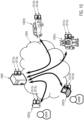
- FIG. 1 illustrates a system 100 for retrieving images in response to a user query, q.
- Query, q is a multimodal pair comprising a reference image, I r , and a text modifier, T m .
- system 100 is configured to search a set of candidate target images, I t i to retrieve the candidate target image that corresponds to a target image, I t , where the target image, I t , corresponds to the reference image, I r , modified according to the text modifier, T m .
- System 100 comprises an input device 110, a data store 120 that stores the candidate target images, I t , and a neural network architecture 130.
- the input device 110 may comprise a user interface module (not shown) configured to receive the query, q, and to transmit the query to the neural network architecture.
- the input device 110 may be, for example, a user device such as a computer or a smartphone.
- Neural network architecture 130 comprises one or more trained encoder modules 140, a trained interaction module 150, a trained compatibility module 160, a ranking module 170 and, optionally, a pre-ranking module 180.
- the training of the one or more encoder modules 140, the interaction module 150 and the compatibility module 160 is described in detail in relation to FIG. 9 below.
- the neural network architecture 130 is configured to receive the query, q, from the user interface module and retrieve a set of candidate target images, I t i .
- the set of candidate target images, I t i may comprise all the images stored in the data storage 120. Alternatively, the set of candidate target images, I t i , may comprise a subset of the images stored in the data storage 120.
- the pre-ranking module 180 may rank the images stored in the data storage 120 based on the query, q, using any suitable standard algorithm, such as a cross-modal retrieval model or a query-composition retrieval model.
- a predetermined number of the highest-ranking images may be output to the one or more encoder modules 140 as the set of candidate target images, I t i .
- the reference image, I r , the text modifier, T m , and each of the candidate target images, I t i , are input into a respective one of the one or more encoder modules 140.
- Each of the one or more encoder modules 140 comprise at least one neural network for encoding the input.
- the encoded reference image, text modifier and candidate target images are output to the one or more interaction modules 150.
- the encoded reference image is denoted r
- the encoded text modifier is denoted m
- the encoded candidate target images are denoted t i , where the notation (r, t i ,m) is used to denote a triplet consisting of the reference image, r, a candidate target image, t i , and a text modifier, m.
- the interaction module 150 comprises at least a first text-image interaction neural network and a second text image interaction neural network.
- the first text-image interaction neural network is trained to generate a vector representation of a first text-image pair based on the encoder representation of the reference image, r, and the encoder representation of the text modifier, m.
- the second text-image interaction neural network is trained to generate, for each candidate target image, t i , a vector representation of a second text-image pair based on the encoder representation of the text modifier, m, and the encoder representation of a respective candidate target image, t i .
- the interaction module 130 may further comprise an image-image interaction neural network that is trained to generate, for each candidate target image, t i , a vector representation of an image-image pair based on the encoder representation of the reference image, r, and the encoder representation of a respective candidate target image, t i .
- the interaction module 130 may further comprise a third text-image interaction neural network that is trained to generate, for each candidate target image, t i , a vector representation of a second text-image pair based on the encoder representation of the text modifier, m, and the encoder representation of a respective candidate target image, t i .
- the interaction module 150 is configured to output the vector representations to the compatibility module 160.
- the compatibility module 160 is trained to compute a compatibility score for each triplet, ⁇ r , t i , m > based on the vector representations, as will be described in more detail below.
- the compatibility score for each triplet represents a degree to which the respective candidate target image corresponds to the target image. In other words, triplets ⁇ r,t i ,m > are scored according to the output of the compatibility module applied to the respective triplet.
- the compatibility module 160 is configured to output the compatibility score for each triplet to a ranking module 170.
- the ranking module 170 is configured to rank each candidate target image of the retrieved set of candidate target images according to the compatibility score for the respective triplet.
- the ranking module 170 outputs at least one candidate target image to the user device 110.
- the candidate target image corresponding to the target image may be output to the user device 110 for display to a user.
- the compatibility module may be configured to rank the candidate target images with respect to the target image and output a list of the ranked candidate target images for display to the user.
- the user may select one of the at least one candidate target images as a new reference image and the user may input a text modifier corresponding to the new reference image.
- a query may be input into the neural network architecture 130, where the query is based on an output of the neural network architecture.
- a first reference image I r input by the user may be an image obtained by the user in any suitable manner, for example uploaded by the user, selected by the user on a website or other application.
- the user may input an image of the at least one candidate target image as a second reference image.
- the user may optionally input a second text modifier that corresponds to the second reference image.
- the user may want to update the text modifier with respect to the output of the neural network architecture 130 for the initial query.
- the neural network architecture analyzes this second query and outputs a further at least one candidate target image. This process may be repeated until the user has obtained the target image that is required by the user.
- FIG. 2 illustrates the neural network architecture 200 in accordance with an embodiment.
- the neural network architecture 200 corresponds to the neural network architecture 130 described above with respect to FIG. 1 and comprises encoder modules 210A and 210B (corresponding to encoder modules 140A and 140B), interaction module 240 (corresponding to interaction module 150) and compatibility module 270 (corresponding to compatibility module 160).
- the first encoder module 210A is configured to receive the reference image, I r , and the text modifier, T m .
- the first encoder module 210A comprises a first visual encoder neural network 220A trained for encoding the reference image, I r , and a first textual encoder neural network 230A trained for encoding the text modifier, T m .
- the first encoder module 210A outputs an encoder representation of the reference image, r , and an encoder representation of the text modifier, m, to the interaction module 240.
- the second encoder module 210B comprises a second visual encoder neural network 220B trained for encoding the candidate target images, I t i , and a second textual encoder neural network 230B trained for encoding the text modifier, T m .
- the second encoder module 210B outputs an encoder representation of the candidate target images, t i , and an encoder representation of the text modifier, m, to the interaction module 240.
- the first textual encoder neural network 230A and the second textual encoder neural network 230B may receive an encoder representation of the text modifier, m, from the same intermediary textual encoder.
- the first textual encoder neural network 230A and the second textual encoder neural network 230B may be different neural networks, as illustrated. Alternatively, the first textual encoder neural network 230A and the second textual encoder neural network 230B may be the same neural network.
- the visual base encoder function of the visual encoder neural networks 220A and 220B is denoted by ⁇ .
- the textual base encoder function of the textual encoder neural networks 230A and 230B is denoted by ⁇ .
- I r ⁇ ( r )
- I t ⁇ ( t )
- any suitable encoder may be used.
- the output from the last layer of a ResNet50 He K. et a/., "Deep residual learning for image recognition", Proc. CVPR, pages 770-778, 2016 ) (before sigmoid) may be used for the visual encoder function ⁇ .
- each word may be embedded to its GloVe embedding ( Pennington J. et a/., "Glove: Global vectors for word representation", Proc EMNLP, pages 1532-1543, 2014 ) and fed to a bidirectional GRU (Bi-GRU) ( Cho K. et a/., "Learning phrase representations using run encoder-decoder for statistical machine translation", arXiv: 1406.1078, 2014 ).
- the visual encoders 220A and 220B and the textual encoders 230A and 230B are pre-trained for cross-modal retrieval on a dataset of the same domain as the query, q. This enables to learn textual and visual correspondences about domain semantics. For example, if the query is in the fashion domain, the encoders may be pre-trained using the fashion dataset DeepFashion.
- the interaction module 240 comprises a first text-image interaction neural network 250A that receives as input the encoder representation of the reference image, r, and the encoder representation of the text modifier, m, respectively generated by the neural networks 220A and 230A of the first encoder module 210A. Based on the input (referred to as the first text-image pair), the first text-image interaction neural network 250A generates a vector representation (embedding) of the first text-image pair.
- the interaction module 240 further comprises a second text-image interaction neural network 250B that receives as input the encoder representations of the candidate target images, t i , and the text modifier, m, generated by the neural networks 220B and 230B of the second encoder module 210B. Based on the input (referred to as the second text-image pair), the second text-image interaction neural network 250B generates a vector representation (embedding) of the second text-image pair.
- the interaction module 240 may optionally further comprise an image-image interaction neural network 260 that receives as input the encoder representation, r, of the reference image generated by the first visual encoder neural network 210A and the encoder representations of the candidate target images, t i , generated by the second visual encoder neural network 210B. Based on the input (referred to as the image-image pair), the image-image interaction neural network 260 generates a vector representation (embedding) of the image-image pair.
- i r,m ,i t,m , i r,t ⁇ R D denote the interaction vectors and I r,m : I r , T m ⁇ i r,m , the interaction module between r and m.
- I t,m and I r,t are defined symmetrically.
- the text-image interaction neural networks 250A and 250B may be text-enhanced image retrieval neural networks (TIRGs).
- TIRGs text-enhanced image retrieval neural networks
- the symbol * represents a 2D convolution with batch normalization, and W g 1 , W g 2 , W r 1 , W r 2 are 3 ⁇ 3 convolution filters.
- TIRG In contrast to previous applications of TIRG for text-enhanced retrieval, the composition of the reference image and the text encodings is not learned. Instead, TIRG is used to model a pair's intrinsic relation.
- the image-image interaction neural network 260 may be a multilayer perceptron (MLP).
- MLP multilayer perceptron
- the image-image interaction neural network 240 is optional and in some embodiments, the reference-target relation may be dropped for a more streamlined compatibility network that only depends on two interactions (i.e. the text-image pairs).
- the vector representations generated by the interaction modules 250A and 250B are input into the compatibility module 270.
- the compatibility module 270 comprises a compatibility neural network 280 trained to compute and output a compatibility score for each candidate target image, I t i .
- the compatibility score used to measure whether a given candidate target image is a match for the target image or not.
- the compatibility neural network 270 may be an MLP: the different inputs (embeddings) received from the interaction modules are concatenated, then the issued vector is L2-normalized before being used as input of two fully connected layers, followed by ReLU activations. A last fully connected layer then outputs a single digit, forced to lie between 0 and 1 by a sigmoid function. Dropout may be applied on the compatibility module 270.
- C i r,m 1 , i t,m 2 , i r,t ⁇ c r,m 1 ,t,m 2 ⁇ [0,1] be the function computing the compatibility score from the interactions i r,m 1 ,i t,m 2 , i r,t .
- c r , m 1, t , m 2 is noted c r,t,m and, by extension, stands for the compatibility score of the triplet elements r , t, m, computed through the interactions i r,m , i t , m , i r,t between the elements.
- a compatibility score of 1 means that the elements of the triplet are compatible, whereas a compatibility score of 0 means that they are not. Somewhat, it represents the probability for the considered elements to be compatible. As will be described below, for training, incorrect combinations of elements are built from elements belonging to different annotation triplets. Hence the distinction between m 1 and m 2 in the above formalization.
- the most natural loss to learn to label a triplet as compatible (1) or incompatible (0) is the binary cross-entropy loss.
- different kinds of loss can be designed depending on the mining of incorrect combinations within each mini-batch:
- multipleBCE-TDC BCE using several target-dissident combinations arising from different pairings between triplet k and other triplets from the batch.
- K ⁇ k ⁇ k ⁇ ⁇ [1, B - 1], k ⁇ ⁇ k, all k ⁇ being distincts ⁇ be issued from different index shifts, and representing the different triplet pairings that are considered.
- reweightedBCE for multipleBCE or multipleBCE-TDC, reweight the positive term (corresponding to the correct combination) such that it is given as much credentials as the negative term (where contributions from multiple incorrect combinations are added up).
- the encoder neural networks 220A-B and 230A-B may be pre-trained using using cross-modal retrieval prior to training the neural networks of the first interaction module, the second interaction module and the compatibility module.
- the pre-trained weights of the encoder neural networks 220A-B and 230A-B may be initially kept frozen, so the training essentially affects the neural networks of the interaction module 240 and the compatibility module 270.
- Fashion IQ links in-shop images of fashion clothing items through relative captions in natural language. Images are classified in three fashion categories: women's tops ("toptee”), women's dresses ("dress”) and men's shirts ("shirt”).
- Annotations consist of lists of triplets and lists of images for each split and fashion category, where a triplet is composed of a reference image, I r , a text modifier (or "relative caption"), m, and a target image, I t .
- the text modifier, m consists of two short sentences (coming from two different human annotators), describing the visual difference between a reference image, I r , and a target image, I t .
- the query, q is then formed of both the reference image, I r , and the text, m, specifying the modifications.
- the challenge metric The challenge metric.
- submissions to the Fashion IQ challenge are ranked according to their performance on the "Challenge Metric" (CM), which is evaluated with recall metrics.
- CM Challenge Metric
- the mean between Recall@10 and Recall@50 is computed for each element, within its corresponding fashion category.
- Recall@K consists in looking at the top K candidate target images that issued the higher compatibility scores with the query.
- the overall performance is measured by taking the average over the fashion categories, of the mean over all the queries for each fashion category independently.
- CM 1 3 ⁇ fc ⁇ FC ⁇ q ⁇ Q fc R q @ 10 + R q @ 50 2 with FC being the set of fashion categories, Q fc the set of queries within the fashion category f c , and R q @10 (resp. R q @50) the Recall@10 (resp. Recall@50) for the query q. Since the labels are not yet publicly released for the test set, evaluations are carried out on the validation set.
- Images are encoded in the RGB space, and resized to fit the network input requirements, before being normalized.
- Image data are augmented throughout batches using random horizontal flip (human clothes being generally symmetrical with regard to the vertical axis) and random crop, with a size scale lying between 70% and 100% of the original image size. It was found that a more severe cropping impacted performance, probably because it implied leaving out important information often mentioned in the caption (about sleeves, neck and so forth).
- Text modifiers are converted to lower case, and pre-processed to remove any special characters (such as "/").
- Other usual natural language processing techniques are used to improve training. This includes spelling correction and lemmatization (to reduce both the out-of-vocabulary word rate and the word variability).
- Each text modifier is composed of two sentences. Textual augmentation is performed by randomly inverting the two sentences, separated by a " ⁇ and>" special token, or by randomly choosing only one of them.
- the vocabulary is built from the training text modifiers, and enriched by the fashion attributes and categories used in DeepFashion, to provide a more exhaustive fashion knowledge for further training and inference.
- the configuration in which the interaction module 150 comprises the first text-image interaction neural network 230A and the second text-image interaction neural network 230B (without the image-image interaction neural network 240) is the baseline configuration.
- a declination of the model consists in using the same interaction network for I r , m and I t,m with a slight modification: whereas the TIRG residual is added up to the gated feature in I r,m , it is subtracted in I t,m .
- the motivation behind this operation is multiple:
- the interaction between the reference image and the target image can also be directly taken into account.
- the training is performed with a batch size of 32 and a learning rate of 0.0002.
- Each configuration is trained for 10 epochs, but since improvement is shown until the last epoch, a longer training should allow to achieve even better results.
- Table 1 below shows quantitative results for the different configurations of the model, different weight initializations and different training losses, on a subset of the validation set, consisting in the 500 first annotations of each fashion category.
- Results per fashion category R @ 10 + R @ 50 2 are shown on a subset of 1500 triplets extracted from the validation set of Fashion IQ, for different configurations of the model. The configurations used are specified for each comparison block.
- Initializing encoders weights from the MMFashion model Liu X. et al., "MMFashion: An open source toolbox for visual fashion analysis, ArXiv 2005.08847, 2020 ) pretrained on the attribution prediction task with DeepFashion ( Liu Z.
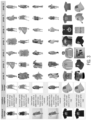
- the relationship compatibility method manages to dynamically leverage the interaction vectors depending on available interaction information. More precisely, the first couple of rows in FIG. 3 suggest that the relationship compatibility method knows better how to attend the reference image, since the proposed items globally share the ethereal aspect of the reference dress, as well as its shape (short in the front, long in the back). Similarly in the next couple of rows, while being asked a dress of different color, the query-composition model output clothes of similar tint whereas the relationship compatibility system shows a more exploratory spirit.
- the compatibility module has direct access to the interactions of each element with the others, and may therefore resort to information coming from one or the other interaction vector, depending on the strength of the other interactions. For instance, if the reference image is really useless, the compatibility module might recourse more importantly to the text in order to decide of the compatibility score. This is illustrated by the last two rows of FIG. 3 .
- FIG. 4 illustrates neural network architecture 400 in accordance with another embodiment.
- the neural network architecture 400 corresponds to the neural network architecture 130 described above with respect to FIG. 1 and comprises encoder module 410 (corresponding to encoder module 140), interaction module 420 (corresponding to interaction module 150) and a compatibility module 430 (corresponding to compatibility module 160).
- the encoder module 410 comprises a first visual encoder neural network for encoding the reference image, I r , and a second visual encoder neural network for encoding each of the candidate target images, I t i .
- the reference image, I r , and the candidate target images, I t i , input into the encoder module 410 are processed in a similar manner. It is to be understood, however, that the first and the second visual encoder neural networks may be the same neural network.
- the neural networks of the encoder module 410 may be any suitable type of encoder.
- the reference image, I r , and the candidate target images, I t i may be encoded using a CNN followed by a PIE-Net neural network ( Song and Soleymani, "Polysemous Visual-Semantic Embedding for Cross-Modal Retrieval", CVPR 2019 ). More precisely, for a given input image, local visual features may be extracted from the last convolutional layer of the CNN, as well as global visual features based on the output of the same CNN, where local features have been average-pooled and fed to a fully connected layer.
- the encoder module 410 further comprises a textual encoder neural network for encoding the text modifier, T m .
- the text modifier may be first tokenized into words and the word embeddings are concatenated to produce local textual features.
- a Bi-GRU learned from scratch on top of these word embeddings may produce the global textual feature.
- the interaction module 420 is configured to receive the encoded representations of the reference image, r, the text modifier, m, and the candidate target images, t i . More specifically, the interaction module 420 comprises a trained first text-image interaction neural network that receives as input the encoder representation of the reference image, r, and the text modifier, m. The first text-image interaction neural network uses a first attention mechanism on the text modifier and applied to the reference image to generate the vector representation of the first text-image pair based on the input. The interaction module 420 further comprises a trained second text-image interaction neural network that receives as input the encoder representation of each of the candidate target images, t i , and the text modifier, m. The second text-image interaction neural network uses a second attention mechanism on the text modifier and applied to the respective candidate target image to generate the vector representation of the second text-image pair based on the input.
- the compatibility module 430 is configured to receive, as input, the vector representation of the first text-image pair and the vector representation of the second text-image pair from the interaction module 420. Based on the input, the compatibility module 430 computes an implicit similarity (IS) score. In embodiments where the interaction module comprises only the first text-image interaction neural network and the second text-image interaction neural network, the implicit similarity score is the compatibility score.
- the implicit similarity score focuses on the similarities between the reference image and the target image. This is reminiscent of a visual search setting, which compares two image representations together.
- the key difference lies in the crucial role played by the text modifier.
- the two images (the reference image and the respective candidate target image) are wanted to be similar according to the concepts that are not mentioned in the text modifier, since the text modifier describes the differences between them, and hence takes their common points into account.
- the text modifier comes in to soften the visual search, since it holds part of the information about the target image. This is done thanks to a second attention mechanism which uses the textual modifier to reweigh the visual representations.
- the textual features of the text modifier, m is used as a guide to compare the target image to the reference image.
- An attention mechanism A IS . : R H T ⁇ 0,1 H I taking m as input, predicts the importance of the dimensions in the target and the reference descriptors, for their comparison.
- the interaction module may optionally further comprise a third trained text-image interaction neural network that receives as input the encoder representation of each of the candidate target images, t i , and the text modifier, m.
- the third text-image interaction neural network uses a third attention mechanism on the text modifier and applied to the respective candidate target image to generate the vector representation of the third text-image pair based on the input.
- the compatibility module 430 may be further configured to receive, as input, the vector representation of the third text-image pair from the interaction module 420. Based on the input, the compatibility module 430 computes an explicit matching (EM) score.
- the compatibility score is the sum of the implicit similarity score and the explicit matching score.
- the explicit matching score measures how well the candidate target image and the text modifier match.
- a priori removing the reference image from the query should not yield satisfactory retrieval results.
- most text modifiers should be contextualized by the reference image, and act as a comparison or relative caption between the two images. This is, for example, the rationale behind composition learning for this studied task.
- the candidate target image should share characteristics with the reference image that are not present in the modifier, so the textual part of the query is only a partial caption for the candidate target image.
- the neural network architecture 130 may compute the explicit matching score only such that the compatibility score is the explicit matching score. Note that this bears resemblance to, but still differs from, caption-to-image cross-modal retrieval.
- explicit matching is trained jointly with the implicit similarity score described above, and, more importantly, the text modifier also takes part in an attention mechanism applied to both the reference and the candidate target image.
- the representation of the candidate target image t i is altered to be matched with the representation of the text modifier, m, based on m itself.
- the dimensions of t i describing concepts that are not mentioned in m are "filtered out", to avoid considering non-related visual information for matching. This is done using an attention mechanism, A EM . : R H T ⁇ 0,1 H I , which reweights the dimensions of the image embedding based on m.
- m is first projected into the visual space using a learned transformation Tr . : R H T ⁇ R H I . This relieves A EM from the conversion task and allows it to focus on using m for filtering only.
- Tr (. ) consists in a fully connected layer, and A EM (. ) is a two-layer MLP separated by a ReLU activation, and followed by a softmax operation.
- a EM (. ) and A IS (. ) may have the same architecture but different weights because their use of the text modifier, m, is different. Indeed, A EM ( . ) guides according to its input while A IS (. ) guides according to the complementary of its input.
- the neural network architecture 400 relies on efficient attention mechanisms and decomposes the problem in two complementary views.
- the first view considers the similarities between the reference and candidate target images.
- the properties that should be shared between the two images are implicit to their visual information. Indeed, as similarities, they are not differences, and thus, are not explicitly mentioned by the textual modifier. Consequently, in the implicit similarity score, the text modifier is only used as a way to select the visual cues that should be similar between the reference image and the candidate target images.
- the first view accounts for the importance of the textual cue.
- the explicit matching score poses the text modifier as a relative caption to perform retrieval, and ignores the reference image.
- the explicit matching score specifically looks for details in the candidate target image that are explicitly mentioned in the text modifier using an attention mechanism.
- these two complimentary views may be unified into a single score for joint training.
- the text modifier plays multiple roles in the model. On the one hand, it is used as a simple yet efficient attention mechanism, where the textual embedding is transformed into sets of weighing score which can be applied to the visual representations of the reference image and the target image, in both parts of the model. Simultaneously, it is used as a query in its own right for explicit matching.
- the neural networks of the neural architecture 400 may be trained using the bidirectional triplet loss.
- the model is trained using a bidirectional triplet loss ( From A. et al., "Devise: A deep visual-semantic embedding model", Proc.
- Negatives mining is performed within each batch for the sake of computational costs, and is organized in two parts.
- the maximum-violation step uses the hardest negative of each query in the mini-batch. The reason behind the two-stage negative mining is threefold.
- the model needs to learn the semantic correspondences between the visual and the textual descriptors.
- progressively dropping the easiest negatives in the course of this first training stage would account for the improvement of the model and enables to focus the training signal on the most informative negative examples.
- half the number of available negatives for the whole step are used, that is called "relative violation step".
- both the visual base encoder and the word level text encoder are pre-trained on the general domain, so they are already able to properly encode some relevant information. Yet, the rest of the multi-modal model is initialized randomly. Hence, a warm-up is applied only to the PIE-Nets, the EM, and the IS modules. However, because of the large domain gap between the general domain and the fashion domain, the representations of the visual and textual elements may not be adapted to encode subtle domain-specific details and discriminate two very similar items. Consequently, the hardest negatives which may constitute noisy information in the first training stage are removed. While the warm up phase does not need to be aligned with the relative-violation step, they are fused in one to avoid the multiplication of training stages.
- the base encoders are fined-tuned on the fashion domain to produce more meaningful and discriminative features. From then on, the hardest negatives can be taken advantage of. This is the "maximum-violation training step".
- this two-stage optimization strategy acts as a form of curriculum learning to guide the model through a more stable training. Similar to Farghri ( Faghri, F. et al., "VSE++: Improving visual-semantic embeddings with hard negatives", Proc. BMVC, 2018 ), better results are observed when leveraging negatives in this order.
- the Fashion IQ dataset is composed of 46.6k training images and around 15.5k images for both the test and validation splits. There are 18k training queries, and 6k queries per evaluation split.
- the text modifier T m is composed of two relative captions produced by two different human annotators, exposed to the same reference-target pair I r , I t . Three article categories are considered, women's tops (toptee), women's dresses (dress) and men's shirts (shirt).
- the Shoes dataset is extracted from the Attribute Discovery Dataset ( Berg. T. L. et al., "Automatic attribute discovery and characterization from noisy web data", Proc ECCV, pages 663-676, 2010 ). It consists in 10k training images for 9k training triplets, and 4.7k test images for 1.7k test queries.
- T m represents only one sentence.
- the standard evaluation metric is the one used for the companion challenge ( Gao Y. et al., "FashionIQ Challenge", Proc. CVPR Workshops, 2020 ). It computes the R@10 and R@50 for each of the 3 fashion categories and averages these six results.
- test split annotations of FashionIQ became available only very recently, previous works only report results on the validation set, and resort to ad hoc strategies to set their hyperparameters and early-stop criteria. Moving forward, most state-of-the-art comparisons should be performed on the test split. However, in order to compare the method described herein to previously published approaches, results are provided on both the test and validation subsets. Equipped with both split annotations, a bidirectional cross-validation is performed between them: experiments were run for a fixed number of 24 epochs and, at the end of each epoch, the model was evaluated on both sets. The best performing model at validation was selected to report results on the test set and vice-versa.
- images are first padded with white pixels to obtain a square. They are then resized to 256x256 pixels and augmented using random horizontal flip and a random crop of size of 224x224 pixels. Captions are preprocessed to replace special characters by spaces and to remove all other characters than letters. It is observed that using spelling correction and lemmatization does not improve the results.
- the training batches are constructed to be category-specific when dealing with the FashionIQ dataset: batches are populated with samples from a single category at a time, and categories are alternated between as new batches are built. The effectiveness of this decision is demonstrated in the ablation studies shown in Table 3.
- the maximum number of epochs is set to 24.
- Song and Soleymani Song Y. and Soleymani M, “Polysemous visual semantic embedding for cross-modal retrieval", Proc. CVPR, pages 1979-1988, 2019
- the base encoders are frozen during the first 8 epochs to pretrain the PIENets, and the explicit matching and implicit similarity modules. These epochs correspond to the relative-violation stage.
- the network is trained end-to-end with maximum violation.
- the network is trained using Adam ( Kingma D.P. and Ba J., "Adam: A method for stochastic optimization", Proc.
- Table 2 shows the results of an ablative study of the different components of the method described herein with a ResNet50 backbone on the validation and the test split of FashionlQ. When not specified, results are provided using the two-stage negative mining with the presented triplet loss, batch specification, and the two scores explicit matching (EM) and implicit similarity (IS). The R@50 and the median rank (m. rank) of the correct target are reported. Table 2 Type of modules Validation split Test split R@50 m. rank R@50 m.
- TIRG ( Vo N. et al., "Composing text and image for image retrieval - an empirical odyssey", Proc CVPR, pages 6439-6448, 2019 ) is also implemented as a baseline module, since it is the most standard composition module amongst FashionIQ challenge participants. While it can be trained with the same triplet loss we use in our approach, it is noted that the most successful TIRG-based models are trained with a batch-based classification (BBC) loss.
- BBC batch-based classification
- ⁇ is a trainable weight empirically initialized to 10, which was shown to improve convergence in previous implementations ( Zhao Y. et al., "RUC-AIM3: Improved TIRG Model for Fashion-IQ Challenge 2020", Technical report, Fashion IQ Challenge ).
- Table 2 presents results for TIRG modules trained either with the triplet or the BBC loss, as well as results with the configuration of explicit matching and implicit similarity trained with the BBC loss. While the BBC loss improves the results of the TIRG module, it does not improve the training of the model disclosed herein. Despite performing better than each module separately, TIRG is outperformed by the full pipeline, which combines the explicit matching module and implicit similarity module. Notice that explicit matching and implicit similarity are much simpler modules that are supposed to work in tandem, and have a similar complexity to the full TIRG module when combined. This study also highlights the synergy between explicit matching and implicit similarity, supporting the motivations extensively discussed above.
- Cross-modal baseline The embedding of the textual modifier is used to retrieve the target image.
- t > is used for training and scoring instead of s ( r,m,t ) s EM ( m,t ) + s IS ( r,m,t ) .
- the study of this baseline is motivated by the fact that in 49% of the cases, the (not so relative) caption describes exclusively the target according to a semantic analysis carried out by the authors of the FashionIQ dataset ( Guo X. et al., "The Fashion IQ Dataset: Retrieving images by combining side information and relative natural language feedback", arXiv: 1905.12794, 2019 ). This is equally observed for the Shoes dataset.
- TIRG is a well-spread composition network baseline. Results are reported using a re-implementation of the code of Vo with the hyperparameters proposed by Zhao.
- Results are reported in Tables 3A and 3B for the validation split of FashionIQ and Tables 4A and 4B for the test split.
- Challenge metric and individual R@K scores are provided for the 3 categories.
- ⁇ means an implementation of the TIRG model described by Vo N. et al and ⁇ means that the model uses image attributes during training. * denotes the use of additional information (e.g. extra-captions) at training time. The average of 3 runs is reported.
- the neural network architecture disclosed herein outperforms the state of the art by an average 3% margin on R@50 and by 1.2 % in the challenge metric. Furthermore, when trained on top of ResNet18 the approach described herein also outperforms VAL on R@50, despite a smaller backbone and lighter attention mechanisms. As the test split annotations were not available until very recently, the only published results are for dialog-based retrieval models from the FashionIQ paper itself. The model is compared to their turn 1 dialog results as the model is not adapted for sequential user feedback.
- EfficientNet-b7 Tan M et al., "Efficientnet: Rethinking model scaling for convolutional neural networks", Proc ICML, pages 6105-6114, PMLR, 2019 ) as backbone.
- the neural network architecture of FIG. 4 outperforms all other methods and baselines with either a ResNet18 or ResNet50 as backbone. The best model improves upon the best baseline by an average of 1.7% over all metrics.
- Table 5 reports results on the Shoes dataset.
- ⁇ means an implementation of the TIRG model described by Vo N. et al. and ⁇ means that the model uses image attributes during training. * denotes the use of additional information (e.g. extra-captions) at training time.
- resNet50 is used as a backbone- The average of 3 runs is reported. The exact same training setting are used as for FashionlQ, as the Shoes dataset is not provided with a validation set and its size deters cutting one from the training set. Hence, reported results for the model of FIG. 4 are likely to be suboptimal, since the hyperparameters validated for FashionIQ are reused.
- FIG. 5 illustrates the model's ability to properly encode fashion concepts such as color, the sleeve length or the form of the neck, but also more complex information, such as dolphins in a logo or shiny shoe straps. Queries are shown in the two leftmost columns and the qualitative results from the three fashion categories of FashionIQ and for two examples from shoes are shown in the remaining columns. The expected targets are indicated with a border. While the model relies on the relative captions to propose coherent images, it also resorts to the reference image when important information is missing, such as the dress length, the shirt style, or the presence of transparent heels. This confirms the importance of using the text modifier to attend the two images and to study their similarity.
- fashion concepts such as color, the sleeve length or the form of the neck, but also more complex information, such as dolphins in a logo or shiny shoe straps. Queries are shown in the two leftmost columns and the qualitative results from the three fashion categories of FashionIQ and for two examples from shoes are shown in the remaining columns. The expected targets are indicated with a border. While
- FIG. 6 illustrates visualization of image parts contributing the most to the explicit matching (EM) and implicit similarity (IS) scores, for three queries where the correct target is ranked first.
- An explicit matching component is presented on the target image.
- the bottom two rows show two relevant components for implicit similarity, applied to both the source and the target images.
- the heatmaps presented in FIG. 6 are obtained with the Grad-CAM ( Selvaraju R.R. et al., "Grad-cam: Visual explanations from deep networks via gradient-based localization", Proc ICCV, pages 618-626, 2017 ) algorithm.
- the image activations at the last convolutional layer of the CNN are reweighed with the pooled gradients of the same layer, after back-propagation of the coefficients contributing the most to the explicit matching and implicit similarity scores.
- the implicit similarity module attends to the visual cues that are similar between the reference and the target images, such as the form of the collar, the length of the sleeves or of the dress, or a similar animal logo.
- the explicit matching module addresses the image parts that are the most related to the caption: for example, it focuses on the pattern or the color.
- FIG. 7 is a flow diagram illustrating a method of searching for and retrieving images using the neural network architectures described in FIG. 2 or FIG. 4 above.
- the method begins at step 710, where a query is received from a user.
- the query comprises a reference image and a text modifier.
- the user may input the query through a user interface, such as the user interface 800 shown in FIG. 8A .
- the query may be input by the user in any suitable manner.
- the reference image 810 may be uploaded by the user or may be selected from at least one image displayed on the user interface 800.
- a website or application may display one or more images to the user for selection by the user.
- the one or more images may comprise at least one image that has been output by the neural network architecture in response to that (initial) query.
- the text modifier may be entered manually by the user into a text field 820 provided by the user interface 800 for this purpose. Additionally or alternatively, a menu may be provided for the user to select one or more elements (descriptions of visual differences) of the text modifier.
- the network architecture obtains a set of target candidate images.
- the target candidate images may be obtained from the data storage 120, such as a database, that stores images.
- the target candidate images may comprise all the images stored in the data storage.
- the candidate target images may be a subset of the images stored in the data storage.
- the query may be input into a standard search algorithm that uses a cross-modal model or a query-composition retrieval model. Based on the query, the standard search algorithm may rank the images stored in the data storage in order of similarity to the query. A subset of the images comprising a predetermined number of the highest-ranking images may then be output by the standard search algorithm as the candidate target images.
- the compatibility score for each triplet is computed by the neural network architecture as described above with respect to FIG. 2 or FIG. 4 . Then, at step 750, based on the compatibility score obtained, at least one candidate target image is output.
- One candidate target image corresponding to the target image resulting from the query may be output and displayed by the user interface 800. Additionally or alternatively, a list of candidate target images having a compatibility score above a predetermined threshold value may be output and displayed. The candidate target images in the list may be ranked in order according to the compatibility score of their respective triplet.
- the user may select one of the at least one candidate target images as a reference image.
- the user may input a second text modifier corresponding to the candidate target image (i.e. the new reference image).
- a query may be input into the neural network architecture 130, where the query is based at least in part on an output of the neural network architecture.
- Steps 710 to 760 may then be repeated to obtain a second at least one target image. This process may be repeated until the user is satisfied with the at least one candidate target image output by the neural network architecture and displayed on the user interface.
- FIG. 9 is a flow diagram illustrating a method 900 of training the neural network architecture of FIG. 2 or FIG. 4 to rank images.
- the method begins at step 910, where a batch of training data is generated.
- Generating the batch of training data first comprises the step 920 of obtaining a first set of triplets by randomly selecting a sample of triplets from a training dataset.
- Each triplet of the training dataset comprises a reference image, a text modifier and a target image, where the target image corresponds to the reference image modified according to the text modifier.
- the reference image may be an image of a black dress with long sleeves
- the text modifier may be "is red with no sleeves”
- the target image may be an image of a sleeveless red dress.
- the triplets of the first set of triplets may be referred to as "correct triplets" or "compatible triplets”.
- Generating the batch of training data then comprises a further step 930 of generating, from the first set of triplets, a second set of triplets.
- Each triplet of the second set of triplets comprises a reference image, a text modifier and a target image.
- the target image does not correspond to the reference image modified according to the text modifier.
- the reference image may be an image of a black dress with long sleeves
- the text modifier may be "is red with no sleeves”
- the target image may be an image of a blue dress with sleeves.
- the triplets of the second set of triplets may be referred to as "incorrect triplets" or "incompatible triplets".
- the goal of the training is to determine as compatible the elements from a compatible triplet, and to determine as incompatible the elements that are not related through an incompatible triplet.
- target-dissident combination Such an incorrect combination can be referred to as a "target-dissident combination" (TDC) in the sense that all the elements of the combination are part of the same annotation triplet, but for the target (which is then in the minority, and disagrees with the query elements).
- TDC target-dissident combination
- target-dissident combinations are built by randomly pairing annotation triplets within each batch, and swapping the target images.
- the reference image or even the modifying text
- each triplet of the batch of training data is processed by the neural network architecture in order to compute a loss function, as described above.
- a loss function is computed based on the neural network output.
- the computed loss function is used to update at least some of the learnable parameters of the neural networks of at least the interaction modules and the compatibility module.
- a backpropagation method may be used to determine or update the parameters of one or more layers of the neural networks based on the difference between the ground truth label and the output estimated label. The backpropagation method may optimize the parameters by minimizing the loss function with respect to all the parameters in the neural networks, for example.
- Some or all of the method steps may be implemented by a computer in that they are executed by (or using) a processor, a microprocessor, an electronic circuit or processing circuitry.
- the embodiments described above may be implemented in hardware or in software.
- the implementation can be performed using a non-transitory storage medium such as a computer-readable storage medium, for example a floppy disc, a DVD, a Blu-Ray, a CD, a ROM, a PROM, and EPROM, an EEPROM or a FLASH memory.
- a computer-readable storage medium for example a floppy disc, a DVD, a Blu-Ray, a CD, a ROM, a PROM, and EPROM, an EEPROM or a FLASH memory.
- Such computer-readable media can be any available media that can be accessed by a general-purpose or special-purpose computer system.
- embodiments can be implemented as a computer program product with a program code or computer-executable instructions, the program code or computer-executable instructions being operative for performing one of the methods when the computer program product runs on a computer.
- the program code or the computer-executable instructions may, for example, be stored on a computer-readable storage medium.
- a storage medium (or a data carrier, or a computer-readable medium) comprises, stored thereon, the computer program or the computer-executable instructions for performing one of the methods described herein when it is performed by a processor.
- an apparatus comprises one or more processors and the storage medium mentioned above.
- an apparatus comprises means, for example processing circuitry like e.g. a processor communicating with a memory, the means being configured to, or adapted to, perform one of the methods described herein.
- processing circuitry like e.g. a processor communicating with a memory, the means being configured to, or adapted to, perform one of the methods described herein.
- a further embodiment comprises a computer having installed thereon the computer program or instructions for performing one of the methods described herein.
- FIG. 10 which comprises server 1000 and one or more client devices 1002 that communicate over a network 1004 (which may be wireless and/or wired) such as the Internet for data exchange.
- Server 1000 and the client devices 1002 include a data processor 1012 and memory 1013 such as a hard disk.
- the client devices 1002 may be any device that communicates with server 1000, including autonomous vehicle 1002b, robot 1002c, computer 1002d, or cell phone 1002e.
- the techniques according to the embodiments above may be performed at server 1000. In other embodiments, the techniques according to the embodiments above may be performed at client device 1002. In yet other embodiments, the techniques described in said embodiments may be performed at a different server or on a plurality of servers in a distributed manner.
- Example Ex1 A system for image retrieval with neural networks, the system comprising: an interaction module comprising: a first text-image interaction neural network trained to generate a vector representation of a first text-image pair based on an encoder representation of a reference image, r , and an encoder representation of a text modifier, m, wherein the text modifier, m, describes at least one visual difference between a target image, t, and the reference image, r, and a second text-image interaction neural network trained to generate, for each candidate target image, t i , of a set of candidate target images, a vector representation of a second text-image pair based on the encoder representation of the text modifier, m , and an encoder representation of a respective candidate target image, t; and a compatibility module configured to compute, based on the vector representation of the first text-image pair and the vector representation of the second text-image pair, a compatibility score for each triplet of a set of triplets ⁇ r,t i ,m
- Example Ex2 The system according to example Ex1, wherein computing the compatibility score based on the vector representation of the first text-image pair and the vector representation of the second text-image pair comprises computing a cosine similarity between the vector representation of the first text-image pair and the vector representation of the second text-image pair.
- Example Ex3 The system according to example Ex2, wherein computing the compatibility score based on the vector representation of the first text-image pair and the vector representation of the second text-image pair further comprises computing a cosine similarity between the vector representation of the second text-image pair and the encoder representation of the text modifier, and wherein the compatibility score is based on a sum of the cosine similarity between the vector representation of the first text-image pair and the vector representation of the second text-image pair and the cosine similarity between the vector representation of the second text-image pair and the encoder representation of the text modifier.
- Example Ex4 The system according to any of examples Ex1 to Ex3, wherein the first text-image interaction neural network uses a first attention mechanism on the text modifier and applied to the reference image to generate the vector representation of the first text-image pair, and the second text-image interaction neural network uses a second attention mechanism on the text modifier and applied to a respective candidate target image to generate the vector representation of the second text-image pair.
- Example Ex5 The system according to example Ex1, wherein the compatibility module comprises a compatibility neural network trained to compute the compatibility score for each triplet of the set of triplets.
- Example Ex6 The system according to example Ex1 or Ex5 wherein the interaction module further comprises an image-image interaction neural network trained to generate, for each candidate target image, t i , of the set of candidate target images, a vector representation of an image-image pair based on the encoder representation of the reference image, r, and the encoder representation of a respective candidate target image, t i , wherein the compatibility score is further based on the vector representation of the image-image pair.
- the interaction module further comprises an image-image interaction neural network trained to generate, for each candidate target image, t i , of the set of candidate target images, a vector representation of an image-image pair based on the encoder representation of the reference image, r, and the encoder representation of a respective candidate target image, t i , wherein the compatibility score is further based on the vector representation of the image-image pair.
- Example Ex7 The system according to example Ex6, wherein the image-image interaction neural network is a multi-layer perceptron, MLP, neural network.
- MLP multi-layer perceptron
- Example Ex8 The system according to any of examples Ex1 or Ex5 to Ex7 wherein the first text-image interaction neural network is a first text-enhanced image retrieval, TIRG, neural network and the second text-image interaction neural network is a second text-enhanced image retrieval, TIRG, neural network.
- Example Ex9 The system according to any of examples Ex1 or Ex5 to Ex7, wherein the first text-image interaction neural network is a first multi-layer perceptron, MLP, neural network and wherein the second text-image interaction neural network is a second multi-layer perceptron, MLP, neural network.
- Example Ex10 The system according to any of examples Ex1 to Ex9, wherein the neural networks are trained using a training data set that comprises compatible triplets and incompatible triplets, wherein each compatible triplet comprises a candidate target image that corresponds to a reference image of the respective compatible triplet modified according to a text modifier of the respective compatible triplet, and wherein an incompatible triplet comprises a candidate target image that does not correspond to a reference image of the respective incompatible triplet modified according to a text modifier of the respective incompatible triplet.
- Example Ex11 The system according to example Ex10, wherein each incompatible triplet is generated from a pair of compatible triplets.
- Example Ex12 The system according to any of examples Ex1 to Ex11, further comprising: at least one visual encoder neural network trained to generate the encoder representation of the reference image, rand the encoder representation of the candidate target images, t i .; and a textual encoder neural network trained to generate the encoder representation of the text modifier, m.
- Example Ex13 The system according to example Ex12, wherein the at least one visual encoder neural network and the textual encoder neural network are trained using cross-modal retrieval prior to training the neural networks of the first interaction module, the second interaction module and the compatibility module.
- Example Ex14 The system according to any of examples Ex1 to Ex13, further comprising a query input module configured to display, on a user interface, a list of the candidate target images ranked in according to the compatibility score.
- Example Ex15 The system according to example Ex14, wherein the query input module is configured to receive, via the user interface, a query comprising the reference image, r, and the text modifier, m.
- Example Ex16 The system according to any of examples Ex1 to Ex15, further comprising a pre-ranking module configured to, in response to receiving the query, rank candidate target images stored in a database of candidate target images using a cross-modal model or query-composition retrieval model.
- Example Ex17 A computer-implemented method for image retrieval, comprising: receiving a query for obtaining a target image, t, the query comprising a reference image, r, and a text modifier, m, wherein the text modifier describes at least one visual difference between the target image, t, and the reference image, r, generating a vector representation of a first text-image pair based on an encoder representation of the reference image, r , and an encoder representation of the text modifier, m; generating, for each candidate target image, t i , of a set of candidate target images, a vector representation of a second text-image pair based on the encoder representation of the text modifier, m , and an encoder representation of a respective candidate target image, t i ; and computing, based on the vector representation of a first text-image pair and the vector representation of a second text-image pair, a compatibility score for each triplet of a set of triplets ⁇ r, t i ,
- Example Ex18 The method according to example Ex17, wherein computing the compatibility score comprises computing a cosine similarity between the vector representation of the first text-image pair and the vector representation of the second text-image pair.
- Example Ex19 The method according to example Ex18, wherein computing the compatibility score further comprises computing a cosine similarity between the vector representation of the second text-image pair and the encoder representation of the text modifier, and wherein the compatibility score is based on a sum of the cosine similarity between the vector representation of the first text-image pair and the vector representation of the second text-image pair and the cosine similarity between the vector representation of the second text-image pair and the encoder representation of the text modifier.
- Example Ex20 The method according to any of examples Ex17 to Ex19, wherein the vector representation of the first text-image pair is generated using a first attention mechanism on the text modifier and applied to the reference image to generate the vector representation of the first text-image pair, and wherein the vector representation of the second text-image pair is generated using a second attention mechanism on the text modifier and applied to a respective candidate target image to generate the vector representation of the second text-image pair.
- Example Ex21 The method according to example Ex17, wherein computing the compatibility score comprises inputting the vector representation of the first text-image pair and the vector representation of the second text-image pair into a compatibility neural network, wherein the compatibility neural network is trained to output the compatibility score based on the input.
- Example Ex22 The method according to example Ex17 or Ex21, wherein the first trained text-image interaction neural network is a first text-enhanced image retrieval, TIRG, neural network and the second trained text-image interaction neural network is a second text-enhanced image retrieval, TIRG, neural network.
- the first trained text-image interaction neural network is a first text-enhanced image retrieval, TIRG, neural network
- the second trained text-image interaction neural network is a second text-enhanced image retrieval, TIRG, neural network.
- Example Ex23 The method according to example Ex17 or Ex21, wherein the first trained text-image interaction neural network is a first multi-layer perceptron, MLP, neural network, and wherein the second trained text-image interaction neural network is a second multi-layer perceptron, MLP, neural network.
- Example Ex24 The method according to any of examples Ex17 or Ex21 to Ex23, wherein the compatibility score is further based on third embedding of an image-image pair, wherein the image-image pair comprises the reference image, r, and the respective target image, t i .
- Example Ex25 The method according to any of examples Ex17 or Ex21 to Ex24, further comprising generating the vector representation of the image-image pair using a multi-layer perceptron, MLP, neural network.
- Example Ex26 The method according to any of examples Ex17 to Ex25, further comprising obtaining the set of candidate target images by inputting the query into a cross-modal model or query-composition retrieval model to rank candidate target images stored in a database of candidate target images.
- Example Ex27 The method according to any of examples Ex17 to Ex26, further comprising ranking, based on the compatibility score, the candidate target images, t i , with respect to the target image, t.
- Example Ex28 The method according to any of examples Ex17 to Ex27, further comprising, displaying a list of candidate target images ranked, based on the compatibility score, with respect to the target image.
- Example Ex29 A method of training a neural network architecture to retrieve images, comprising: generating a training batch, comprising: obtaining a first set of triplets, each triplet, ⁇ r a ,t a ,m a ⁇ , of the first set of triplets comprising a reference image, r, a text modifier, m, and a target image, t, corresponding to the reference image, r, modified according to the modifier, m; and generating, from the first set of triplets, a second set of triplets, ⁇ r b , t b ,m b ⁇ , each triplet of the second set of triplets comprising the reference image, r, a text modifier, m, and a target image, t, that does not correspond to the reference image, r, modified according to the modifier, m; processing all the triplets of the training batch by: randomly selecting a triplet of the training batch; inputting an encoder representation of the reference image, r
- Example Ex30 The method according to example Ex29, wherein generating, from the first set of triplets, a second set of triplets, ⁇ r b , t b ,m b ⁇ , comprises at least one of: randomly pairing the triplets within the first set of triplets and, for each pair of triplets, swapping the respective target images; randomly pairing the triplets within the first set of triplets and, for each pair of triplets, swapping the respective reference images; randomly pairing the triplets within the first set of triplets and, for each pair of triplets, swapping the respective text modifiers; for a randomly selected triplet within the first set of triplets, swapping respective target images with each other triplet within the first set of triplets; for a randomly selected triplet within the first set of triplets, swapping respective reference images with each other triplet within the first set of triplets; for a randomly selected triplet within the first set of triplets, swapping respective text modifiers with each other triplet within the first
- Example Ex31 The method according to example Ex29 or Ex30, wherein generating the prediction comprises computing a cosine similarity between the vector representation of the first text-image pair and the vector representation of the second text-image pair.
- Example Ex32 The method according to example Ex31, wherein generating the prediction further comprises computing a cosine similarity between the vector representation of the second text-image pair and the encoder representation of the text modifier, and wherein the prediction is based on a sum of the cosine similarity between the vector representation of the first text-image pair and the vector representation of the second text-image pair and the cosine similarity between the vector representation of the second text-image pair and the encoder representation of the text modifier.
- Example Ex33 The method according to any of examples Ex29 to Ex32, wherein the first text-image interaction neural network uses a first attention mechanism on the text modifier and applied to the reference image to generate the vector representation of the first text-image pair, and the second text-image interaction neural network uses a second attention mechanism on the text modifier and applied to a respective candidate target image to generate the vector representation of the second text-image pair.
- Example Ex34 The method according to any of examples Ex29 to Ex31, wherein generating the prediction comprises inputting, into a compatibility neural network, the vector representation of the first text-image pair and the vector representation of the second text-image pair.
- Example Ex35 The method according to example Ex33, further comprising: inputting an encoder representation of the reference image, r, of the selected triplet and an encoder representation of the target image, t, of the selected triplet into an image-image interaction neural network neural network to generate a vector representation of an image-image pair, wherein generating the prediction further comprises inputting, into the image-image representation neural network, the embedding of the image-image pair.
- Example Ex36 A computing system comprising: a processor; and a computer-readable storage medium having computer-implemented instructions stored thereon, which when executed by the processor, cause the processor to perform the method according to one of examples Ex29 to Ex35.
Landscapes
- Engineering & Computer Science (AREA)
- Theoretical Computer Science (AREA)
- Physics & Mathematics (AREA)
- General Physics & Mathematics (AREA)
- Databases & Information Systems (AREA)
- General Engineering & Computer Science (AREA)
- Evolutionary Computation (AREA)
- Data Mining & Analysis (AREA)
- Artificial Intelligence (AREA)
- General Health & Medical Sciences (AREA)
- Health & Medical Sciences (AREA)
- Software Systems (AREA)
- Computer Vision & Pattern Recognition (AREA)
- Computing Systems (AREA)
- Medical Informatics (AREA)
- Multimedia (AREA)
- Mathematical Physics (AREA)
- Computational Linguistics (AREA)
- Audiology, Speech & Language Pathology (AREA)
- Library & Information Science (AREA)
- Information Retrieval, Db Structures And Fs Structures Therefor (AREA)
- Image Analysis (AREA)
Abstract
Description
- The present disclosure relates to image retrieval in response to a query comprising both a textual description and an example image. In particular, the present disclosure relates to the use of neural networks to rank stored images according to their degree of relevance to the query (comprising both a textual description and an example image).
- Most search engines enable to retrieve images based on a textual query describing what the user is looking for. This is known as "cross-modal search". Some search engines also aim to return images that are similar to an image query, known as "image search" or "visual search". However, limiting queries to a single modality is quite restrictive. On the one hand, the textual query proposes an accurate but only partial description of the desired results: it is impossible to provide an exhaustive textual description. On the other hand, visual queries are much richer but a lot more ambiguous: it may be difficult to find a query image that corresponds to what a user is looking for, how should the system guess which characteristics the user wants to maintain for the target image, and which are left for the system to choose?
- The task of image search with free-form text feedbacks proposes to reduce the ambiguity of visual search by allowing a dual query composed of an example image (the reference image) and a textual description (the text modifier) which explains how the reference image should be modified to obtain the desired results (the target image should be ranked first). For example, a user provides an image of a striped dress (the reference image) and a text description of what the user is looking for relative to the image, such as "a shorter red dress with no pattern" (the text modifier). The goal is then to retrieve an image of a dress similar to the striped dress but red in color with no pattern and shorter in length. This task is referred to as "text-enhanced visual retrieval".
- Despite being a very intuitive way to interact with a visual collection, the task has so far received limited attention. First, for a long time, the task has been restricted to simple attribute modifiers with attributes being part of a predefined vocabulary. Modifiers in natural language have only recently been considered, in part thanks to the introduction of the dialog-based image retrieval task and the release of two suitable datasets for this task (Guo X. et al., "Dialog-based interactive image retrieval", Proc NeurIPS, 2018).
- In this scenario, one needs to combine information coming from two different modalities to properly rank candidate images. The standard approach to tackle this additional challenge is to explicitly learn to compose the representations of the reference image and of the textual modifier, in order to produce a final "visual" representation which can be directly compared with those of the potential target images.
- While purely visual queries have been extensively studied for the task of instance-level image retrieval, it has quickly become apparent that vision and language models also have a significant potential for visual search tasks. The most standard visual search scenario involving the text modality is cross-modal retrieval, where a textual description of the image of interest is provided as query. Much research in this task is concerned with learning a joint embedding space for matching images and text with a simple Euclidean distance. The problem of learning this visual-semantic metric space is generally addressed with multi-modal and bidirectional triplet ranking. In particular, successful methods employ a hardest-negative mining strategy in their training pipelines.
- In order to improve expressivity of the query, some works extend visual queries with simple text feedbacks for visual search. In particular, previous works on interactive image retrieval incorporate fixed-form user feedbacks, such as (binary) relative relevance of several propositions with regard to the wanted item (e.g. "similar" vs "dissimilar"), or, in a less restrictive and more natural way, relative attributes (e.g. "more formal than", "more bright in color than"). Based on the idea that modifiers have similar effects over different basic elements, previous approaches learn linear transformations for each modifier (e.g. attributes, adverbs) that can be applied to reference visual features. However, feedback in such a constrained form limit the user who cannot fully express its search intent. Natural language provides a more natural alternative and allows to precisely describe how to modify the reference image to get to the target image.
- Most prior works address this task of image search with free-form text feedbacks by composing the features of the two query elements into a single joint representation that is then compared to any potential target image feature. Some of the first baseline composition modules were directly adapted from the visual question answering task.
- To reason about features from different modalities, Relationship (Santoro A. et al., "A simple neural network for relational reasoning", Proc NeurIPS, 2017) uses a sequence of two MLPs (multi-layer perceptrons) and proposes a plug-and-play module to do relational reasoning, by computing relations within a set of input objects, with for main advantages the use of a single function for any possible pair, and the superfluity of knowing which relations actually exist and their meaning. One motivation for this work is that encoders generally do not have the capacity to do reasoning, and should simply focus on building good representations. In particular, relationship input objects can be CNN (convolutional neural network) and LSTM (long-short term memory network) features. Liu et al. (Liu Y. et al., "Use what you have: Video retrieval using representations from collaborative experts", Proc. BMVC, 2019) combine several experts (corresponding to modality-specific representations) within a collaborative gating module. The FiLM approach (Perez, E. et al., "Film: Visual reasoning with a general conditioning layer", arXiv: 1709.07871, 2017) injects text features into the image convolutional neural network at different layers, altering its behavior to perform complex modification operations, based on the idea that feature-wise affine conditioning is effective for multi-step reasoning.
- Conversely, Text Image Residual Gating (TIRG) (Vo N. et al., "Composing text and image for image retrieval - an empirical odyssey", Proc. CVPR, 2019 ) and ComposeAE (Anwaar M. U. et al., "Compositional learning of text-image query for image retrieval", Proc. WACV, pages 1140-1149, 2021) are applied to a single layer of the CNN. In TIRG, the reference image and the relative captions are fused through a gating-residual mechanism, and the text feature acts as a bridge between the two images in the visual representation space. The motivation behind balancing features that come from gating-residual connections is that one wants to modify the image feature based on the text feature (and only retain the reference image, when the text modification is insignificant). The gated identity somewhat preserves the reference image while the residual connection brings in the text modification. ComposeAE uses an autoencoder-based model to map reference and target images into the same complex space and learns the text modifier representation as a transformation in this space.
- TIRG also compares to the "Show and Tell" architecture (Vinyals O. et al., "Show and tell: A neural image caption generator", Proc. CVPR, pages 3156-3164, 2015), where the image feature is fed into a LSTM, followed by words in the text. In this context, the final state of the LSTM represents the query feature that can therefore be used to retrieve the target image. TIRG outperforms FiLM and "Show and Tell" in different settings very similar to Fashion IQ (Guo X. et al., "The Fashion IQ Dataset: Retrieving images by combining side information and relative natural language feedback", arXix: 1905.12794, 2019). Vo et al. suggest this is because they use the text to modify the image space instead of forcing the two modalities to live in the same space.
- JVSM (Chen Y. et al., "Learning join visual semantic matching embeddings for language-guided retrieval", Proc. ECCV, 2020) resorts to products' descriptive texts as side information to train a joint visual-semantic space, and then trains a TIRG model on top. The alignment of visual and textual features for regularization is reused in the VAL method (Chen Y. et al., "Image search with text feedback and visiolinguistic attention learning", Proc. CVPR, pages 3001-3011, 2020) which, in addition, proposes to insert a composite transformer at different levels of the visual encoder to preserve and transform the visual content depending on the text modifier, at different depths of the network (to capture details of different granularities). Specifically, at a given level, a visiolinguistic feature is formed from the image and text features (through concatenation and MLP). Self-attention is then used to learn what should be transformed, while joint-attention with the image feature informs about what should be preserved. Besides a triplet loss to align the modified feature with the target image feature, an auxiliary loss using descriptive texts as side information acts as regularization by aligning visual and text features in a visual-semantic space.
- The Fashion IQ Challenge (Gao Y. et a/., "Fashion IQ Challenge", Third Workshop on Computer Vision for Fashion, Art and Design, CVPRW, 2020) is an image retrieval task, where the input query is specified in the form of a candidate image and two natural language expressions which describe the visual differences of the search target. Most prior art methods for the challenge rely on TIRG or on a modified version of TIRG (Zhao Y. et al., "RUC-AIM3: Improved TIRG Model for Fashion-IQ Challenge 2020, Technical report from the Fashion IQ Challenge, 2020), where the text only appears in the residual feature and is absent from the gating computation. Prior art methods also resort to pretraining, be it simply on ImageNet (Russakovsky O. et a/., "Imagenet large scale visual recognition challenge", International Journal of Computer Vision, 115(3): 211-252, 2015) or on fashion datasets such as Fashion200k (Han X. et al., "Automatic spatially-aware fashion concept discovery", Proceedings of the IEEE International Conference on Computer Vision, pages 1463-1471, 2017), Fashion-Gen (Rostamzadeh, N. et a/., "Fashion-gen: The generative fashion dataset and challenge, arXiv: 1806.08317, 2018) or DeepFashion (Liu Z. et al., "Deep Fashion: Powering robust clothes recognition and retrieval with rich annotations", Proc. CVPR, 2016), for instance retrieval, attribute prediction and (in-shop) image retrieval tasks. In some cases, prior art methods use fashion attributes as complementary information.
- Accordingly, there is a need in the art to address the problem of image search using cross-modal queries. Specifically, it is desirable to provide a method of retrieving that addresses the above disadvantages of the prior art.
- The present disclosure addresses the task of text-enhanced image retrieval: a user wishes to find an image using a multi-modal query, composed of a reference image and a text modifier. In general, the query image serves as a starting point, while the text modifier describes the target image relative to the reference image. In other words, the text modifier provides additional information about the modifications to be made to the reference image to obtain the desired target image. Thus, the goal of the systems and method described herein is to search a database of images for the target image that corresponds to the reference image modified according to the text modifier. This may be thought of as a ranking problem in which a neural network is trained to rank many candidate triplets consisting of the query, the text modifier and a candidate target image according to their compatibility.
- The complexity of the text-enhanced visual retrieval task derives from being multi-modal and multi-instance. Indeed, for a given query composed of a reference image and a text modifier, and a given target image, the retrieval pipeline must not only model interactions between visual and textual information, but also model the interactions between three sources of information. Most existing systems propose to learn a composition of the query components that can be directly compared to the candidate images. This leaves out two pieces of interaction information: between the target image and the reference image, and between the target image and the text modifier.
- The text modifier is a very strong cue, as it explicitly mentions crucial aspects of the target image. Moreover, the reference image provides more subtle but equally crucial information about the article context: some characteristics of the reference image strongly influence the choice of wording from the annotator, even if they are not explicitly mentioned in the text.
- A first embodiment is based on the idea that there is a relation between all elements of the triplet (consisting of the reference image, the text modifier and the target image). The aim is to leverage all pairwise interactions within the triplet in order to better measure the "relationship compatibility" of its elements. A compatibility model, consisting of interaction modules that measure pairwise relationships, and a compatibility module, that outputs a compatibility score of these pairwise relationships is described.
- Pairwise relationships of a triplet are used to measure the triplet's compatibility. A novel metric learning problem is solved by maximizing a legitimate (i.e. correct) triplet's compatibility with respect to dissenting triplets, where a dissenting triplet is a triplet in which one of the elements belongs to a different correct triplet. This is achieved by first computing the interaction between the two elements of the query, then the interactions between the text modifier and all possible candidate target images (as well as the interactions between the reference image and all possible candidate target images, if image-image interaction is also taken into account). Next, a compatibility score is calculated from these interactions for every candidate target image. The candidate target images are ranked in order according to the compatibility score.
- A second embodiment builds on simple attention mechanisms, and decomposes the problem into two complementary views. An explicit matching model measures the acceptability of a target image regarding the properties mentioned in the textual part of the query. An implicit similarity model considers the affinity between the reference and the target images through the lens of the textual modifier. The two models are learnt jointly. Specifically, querying for items with the combination of a reference image and a textual modifier can be viewed as the combination of two types of queries: an explicit one about precise properties unambiguously required by the text modifier, and an implicit one which comes from the visual context provided by the reference image.
- In an embodiment, there is provided a system for image retrieval employing a neural network architecture. The system comprises an interaction module and a compatibility module. The interaction module comprises a first text-image interaction neural network trained to generate a vector representation of a first text-image pair based on an encoder representation of a reference image and an encoder representation of a text modifier wherein the text modifier describes at least one visual difference between the target image and the reference image. The interaction module further comprises a second text-image interaction neural network trained to generate, for each candidate target image of a set of candidate target images, a vector representation of a second text-image pair based on the encoder representation of the text modifier and an encoder representation of a respective candidate target image. The compatibility module is configured to compute, based on the vector representation of the first text-image pair and the vector representation of the second text-image pair, a compatibility score for each triplet of a set of triplets, each triplet comprising the reference image, a candidate target image of the set of candidate target images and the text modifier. The compatibility score for each triplet is proportional to a degree to which the respective candidate target image corresponds to the target image. The compatibility score is used to rank the candidate target images in order of similarity to the target image.
- The neural network architecture provides for reliable image search, which is computationally efficient (i.e. which has reduced computational cost) because the neural network architecture has fewer parameters and has lighter computation complexity at inference time than prior art solutions.
- According to an aspect, computing the compatibility score based on the vector representation of the first text-image pair and the vector representation of the second text-image pair may comprise computing a cosine similarity between the vector representation of the first text-image pair and the vector representation of the second text-image pair. Computing the compatibility score based on the vector representation of the first text-image pair and the vector representation of the second text-image pair further may further comprise computing a cosine similarity between the vector representation of the second text-image pair and the encoder representation of the text modifier. The compatibility score may be based on a sum of the cosine similarity between the vector representation of the first text-image pair and the vector representation of the second text-image pair and the cosine similarity between the vector representation of the second text-image pair and the encoder representation of the text modifier.
- According to an aspect, the first text-image interaction neural network may use a first attention mechanism on the text modifier and applied to the reference image to generate the vector representation of the first text-image pair, and the second text-image interaction neural network uses a second attention mechanism on the text modifier and applied to a respective candidate target image to generate the vector representation of the second text-image pair.
- Because the textual modifier is used as a simple attention mechanism to weigh the dimensions of the visual features, the neural network model has fewer parameters to learn and lighter computation complexity at inference time on the query side. This results in a more scalable solution for retrieving images.
- According to another aspect, the compatibility module comprises a compatibility neural network trained to compute the compatibility score for each triplet of the set of triplets.
- By leveraging the interactions between at least two elements of the triplets, the neural network provides for more reliable image search.
- According to an aspect, the interaction module may further comprise an image-image interaction neural network trained to generate, for each candidate target image of the set of candidate target images, a vector representation of an image-image pair based on the encoder representation of the reference image and the encoder representation of a respective candidate target image. The compatibility score may be further based on the vector representation of the image-image pair.
- Leveraging all relationships between the elements of the triplets provides for further improvements in the reliability of the image search.
- According to an aspect, the image-image interaction neural network may be a multi-layer perceptron, MLP, neural network. The first text-image interaction neural network may be a first text-enhanced image retrieval, TIRG, neural network and the second text-image interaction neural network is a second text-enhanced image retrieval, TIRG, neural network. Alternatively, the first text-image interaction neural network may be a first multi-layer perceptron, MLP, neural network and wherein the second text-image interaction neural network may be a second multi-layer perceptron, MLP, neural network.
- According to an aspect, the neural networks may be trained using a training data set that comprises compatible triplets and incompatible triplets. Each compatible triplet comprises a candidate target image that corresponds to a reference image of the respective compatible triplet modified according to a text modifier of the respective compatible triplet. An incompatible triplet comprises a candidate target image that does not correspond to a reference image of the respective incompatible triplet modified according to a text modifier of the respective incompatible triplets. Each incompatible triplet may be generated from a pair of compatible triplets.
- Training the neural networks using both positive and negative examples improves the reliability of the trained neural network for image retrieval. Further, generating the incompatible triplets from the set of compatible triplets increases the amount of training data available, thereby improving reliability after training.
- According to an aspect, the system may further comprise at least one visual encoder neural network trained to generate the encoder representation of the reference image and the candidate target images, and a textual encoder neural network trained to generate the encoder representation of the text modifier.
- The at least one visual encoder neural network and the textual encoder neural network may be trained using cross-modal retrieval prior to training the neural networks of the first interaction module, the second interaction module and the compatibility module.
- Pre-training the encoder modules before separately training the neural networks of the interaction module and the compatibility module reduces the computational cost at training time.
- According to an aspect, the system may further comprise a query input module configured to display, on a user interface, a list of the candidate target images ranked in according to the compatibility score. The query input module may be configured to receive, via the user interface, a query comprising the reference image and the text modifier.
- According to an aspect, the system may further comprise a pre-ranking module configured to, in response to receiving the query, rank candidate target images stored in a database of candidate target images using a cross-modal model or query-composition retrieval model.
- Pre-ranking reduces the computational cost of performing the image retrieval and therefore improvise scalability.
- In an embodiment, there is provided a computer-implemented method for image retrieval. The method comprises receiving a query for obtaining a target image, the query comprising a reference image and a text modifier, wherein the text modifier describes at least one visual difference between the target image and the reference image. The method further comprises generating a vector representation of a first text-image pair based on an encoder representation of the reference image and an encoder representation of the text modifier, and generating, for each candidate target image of a set of candidate target images, a vector representation of a second text-image pair based on the encoder representation of the text modifier and an encoder representation of a respective candidate target image. The method further comprises computing, based on the vector representation of a first text-image pair and the vector representation of a second text-image pair, a compatibility score for each triplet of a set of triplets, each triplet comprising the reference image, a candidate target image of a set of candidate target images and the text modifier. The compatibility score for each triplet is proportional to a degree to which the respective candidate target image corresponds to the target image. The compatibility score is used to rank the candidate target images in order of similarity to the target image.
- According to an aspect, computing the compatibility score may comprise computing a cosine similarity between the vector representation of the first text-image pair and the vector representation of the second text-image pair. Computing the compatibility score may further comprise computing a cosine similarity between the vector representation of the second text-image pair and the encoder representation of the text modifier. The compatibility score may be based on a sum of the cosine similarity between the vector representation of the first text-image pair and the vector representation of the second text-image pair and the cosine similarity between the vector representation of the second text-image pair and the encoder representation of the text modifier.
- According to an aspect, the vector representation of the first text-image pair may be generated using a first attention mechanism on the text modifier and applied to the reference image to generate the vector representation of the first text-image pair. The vector representation of the second text-image pair may be generated using a second attention mechanism on the text modifier and applied to a respective candidate target image to generate the vector representation of the second text-image pair.
- According to an aspect, computing the compatibility score may comprise inputting the vector representation of the first text-image pair and the vector representation of the second text-image pair into a compatibility neural network. The compatibility neural network may be trained to output the compatibility score based on the input.
- According to an aspect, the first trained text-image interaction neural network may be a first text-enhanced image retrieval, TIRG, neural network and the second trained text-image interaction neural network may be a second text-enhanced image retrieval, TIRG, neural network.
- According to another aspect, the first trained text-image interaction neural network may be a first multi-layer perceptron, MLP, neural network. The second trained text-image interaction neural network may be a second multi-layer perceptron, MLP, neural network.
- According to an aspect, the compatibility score may be further based on third embedding of an image-image pair, wherein the image-image pair comprises the reference image and the respective target image. The vector representation of the image-image pair may be generated using a multi-layer perceptron, MLP, neural network.
- According to an aspect, the method may further comprise obtaining the set of candidate target images by inputting the query into a cross-modal model or query-composition retrieval model to rank candidate target images stored in a database of candidate target images.
- According to an aspect, the method may further comprise ranking, based on the compatibility score, the candidate target images with respect to the target image. A list of candidate target images may be displayed, the images ranked, based on the compatibility score, with respect to the target image.
- In another embodiment, there is provided a method of training a neural network architecture to search images. The method comprises generating a training batch. Generating the training batch comprises obtaining a first set of triplets, each triplet, of the first set of triplets comprising a reference image, a text modifier and a target image. The target image corresponds to the reference image, modified according to the modifier. Generating the training batch further comprises generating, from the first set of triplets, a second set of triplets, each triplet of the second set of triplets comprising the reference image, a text modifier, and a target image that does not correspond to the reference image modified according to the modifier. The method further comprises processing all the triplets of the training batch by: randomly selecting a triplet of the training batch; inputting an encoder representation of the reference image of the selected triplet and an encoder representation of the text modifier of the selected triplet into a first text-image interaction neural network to generate a vector representation of a first text-image pair; inputting an encoder representation of the target image of the selected triplet and the encoder representation of the text modifier of the selected triplet into a second text-image interaction neural network to generate a vector representation of a second text-image pair; generating, based on the first vector representation of the first text-image pair and the vector representation of the second text-image pair, a prediction whether the triplet is obtained from the first set of triplets or the second set of triplets; and calculating, based on the prediction a loss value through a loss function. Once it is determined that there are no remaining unselected triplets in the training batch, the learnable parameters of the neural network architecture are modified according to the loss value.
- According to an aspect, generating, from the first set of triplets, a second set of triplets, may comprise at least one of: randomly pairing the triplets within the first set of triplets and, for each pair of triplets, swapping the respective target images; randomly pairing the triplets within the first set of triplets and, for each pair of triplets, swapping the respective reference images; randomly pairing the triplets within the first set of triplets and, for each pair of triplets, swapping the respective text modifiers; for a randomly selected triplet within the first set of triplets, swapping respective target images with each other triplet within the first set of triplets; for a randomly selected triplet within the first set of triplets, swapping respective reference images with each other triplet within the first set of triplets; and for a randomly selected triplet within the first set of triplets, swapping respective text modifiers with each other triplet within the first set of triplets.
- According to an aspect, generating the prediction may comprise computing a cosine similarity between the vector representation of the first text-image pair and the vector representation of the second text-image pair. Generating the prediction may further comprise computing a cosine similarity between the vector representation of the second text-image pair and the encoder representation of the text modifier. The prediction may be based on a sum of the cosine similarity between the vector representation of the first text-image pair and the vector representation of the second text-image pair and the cosine similarity between the vector representation of the second text-image pair and the encoder representation of the text modifier.
- According to an aspect, the first text-image interaction neural network may uses a first attention mechanism on the text modifier and applied to the reference image to generate the vector representation of the first text-image pair. The second text-image interaction neural network may use a second attention mechanism on the text modifier and applied to a respective candidate target image to generate the vector representation of the second text-image pair.
- According to an aspect, generating the prediction may comprise inputting, into a compatibility neural network, the vector representation of the first text-image pair and the vector representation of the second text-image pair.
- According to an aspect, the training method may further comprise inputting an encoder representation of the reference image of the selected triplet and an encoder representation of the target image of the selected triplet into an image-image interaction neural network neural network to generate a vector representation of an image-image pair.
- According to an aspect, generating the prediction may further comprise inputting, into the image-image representation neural network, the embedding of the image-image pair.
- In a further embodiment, there is provided a computing system comprising a processor and a computer-readable storage medium having computer-implemented instructions stored thereon, which when executed by the processor, cause the processor to perform the training method described above.
- In a further embodiment, a computer-readable storage medium having computer-executable instructions stored thereon is provided. When executed by one or more processors, the computer-executable instructions perform the methods described above.
- In a further embodiment, an apparatus comprising processing circuitry is provided. The processing circuitry is configured to perform the methods described above.
- The accompanying drawings are incorporated into and form a part of the specification for the purpose of explaining the principles of the embodiments. The drawings are not to be construed as limiting the embodiments to only the illustrated and described embodiments of how they can be made and used. Further features and advantages will become apparent from the following and more particularly from the description of the embodiments, as illustrated in the accompanying drawings, wherein:
-
FIG. 1 illustrates a block diagram of a system for retrieving images in accordance with an embodiment. -
FIG. 2 illustrates a block diagram of a neural network architecture for raking images in accordance with an embodiment. -
FIG. 3 illustrates images retrieved for a given query by the neural network architecture ofFIG. 2 . -
FIG. 4 illustrates a block diagram of a neural network architecture for ranking images in accordance with another embodiment. -
FIG. 5 illustrates images retrieved for a given query by the neural network architecture ofFIG. 4 . -
FIG. 6 illustrates a visualization of image parts contributing to compatibility scores obtained by the neural network architecture ofFIG. 4 . -
FIG. 7 is a flow diagram illustrating a method of retrieving images using the neural network architecture ofFIG. 2 or the neural network architecture ofFIG. 4 . -
FIGS. 8A and 8B illustrate a user interface for retrieving images in accordance with an embodiment. -
FIG. 9 is a flow diagram illustrating a method of training the neural network architecture ofFIG. 2 or the neural network architecture ofFIG. 4 to retrieve images. -
FIG. 10 illustrates an example of architecture in which the disclosed methods may be performed. - Described herein are systems and methods for text-enhanced image retrieval using a neural network. For purposes of explanation, numerous examples and specific details are set forth in order to provide a thorough understanding of the described embodiments. Embodiments as defined by the claims may include some or all of the features in these examples alone or in combination with other features described below, and may further include modifications and equivalents of the features and concepts described herein. The illustrative embodiments will be described with reference to the drawings wherein like elements and structures are indicated by like reference numbers. Further, where an embodiment is a method, steps and elements of the method may be combinable in parallel or sequential execution. As far as they are not contradictory, all embodiments described below can be combined with each other.
- The techniques described herein look at text-enhanced image retrieval in the framework of search problems in general: given a query q and an image dataset, G, the aim is to retrieve the subset Gq ⊂ G of images that are relevant to q. Solving a retrieval problem requires to learn a distance function d such that, for any g ∈ Gq and g' ∈ G/Gq, d(q,g) < d(q,g'). In practice, when given a query, all items of G are sorted in increasing order of distance to q.
- The problem addressed herein adds two caveats to the retrieval framework. First, the query is multi-instance and multi-modal. Indeed, q = (r,m), where r is a reference image and m is a text modifier (for example, a sentence) specifying modifications to be made on r. While many retrieval problems rely on object classes or categories to define relevant gallery items or matching pairs of queries and images, here ground-truth annotations consist of matching triplet (r,m,t), where t ∈ G( r,m) is the target image of the query (r,m). Function d must then handle both images, for the image dataset, and fusions of image and text, for the queries. Second, both reference and target images are in the same domain, which influences the distribution of image dataset images and the semantics of the text modifiers. For example, the word "short" has different semantic meanings whether it refers to a person or to a dress. It should be noted that the embodiments herein are described in relation to the fashion domain. However, it is to be understood, that the embodiments may be applied to any domain.
-
FIG. 1 illustrates asystem 100 for retrieving images in response to a user query, q. Query, q, is a multimodal pair comprising a reference image, I r, and a text modifier, Tm. Specifically,system 100 is configured to search a set of candidate target images, Iti to retrieve the candidate target image that corresponds to a target image, It , where the target image, It , corresponds to the reference image, Ir , modified according to the text modifier, Tm. -
System 100 comprises aninput device 110, adata store 120 that stores the candidate target images, It , and aneural network architecture 130. Theinput device 110 may comprise a user interface module (not shown) configured to receive the query, q, and to transmit the query to the neural network architecture. Theinput device 110 may be, for example, a user device such as a computer or a smartphone. -
Neural network architecture 130 comprises one or more trainedencoder modules 140, a trainedinteraction module 150, a trainedcompatibility module 160, aranking module 170 and, optionally, apre-ranking module 180. The training of the one ormore encoder modules 140, theinteraction module 150 and thecompatibility module 160 is described in detail in relation toFIG. 9 below. Theneural network architecture 130 is configured to receive the query, q, from the user interface module and retrieve a set of candidate target images, Iti . The set of candidate target images, Iti , may comprise all the images stored in thedata storage 120. Alternatively, the set of candidate target images, Iti , may comprise a subset of the images stored in thedata storage 120. For example, thepre-ranking module 180 may rank the images stored in thedata storage 120 based on the query, q, using any suitable standard algorithm, such as a cross-modal retrieval model or a query-composition retrieval model. A predetermined number of the highest-ranking images may be output to the one ormore encoder modules 140 as the set of candidate target images, Iti . - The reference image, Ir , the text modifier, Tm, and each of the candidate target images, It
i , are input into a respective one of the one ormore encoder modules 140. Each of the one ormore encoder modules 140 comprise at least one neural network for encoding the input. The encoded reference image, text modifier and candidate target images are output to the one ormore interaction modules 150. The encoded reference image is denoted r, the encoded text modifier, is denoted m, and the encoded candidate target images are denoted ti , where the notation (r, ti ,m) is used to denote a triplet consisting of the reference image, r, a candidate target image, ti , and a text modifier, m. - The
interaction module 150 comprises at least a first text-image interaction neural network and a second text image interaction neural network. The first text-image interaction neural network is trained to generate a vector representation of a first text-image pair based on the encoder representation of the reference image, r, and the encoder representation of the text modifier, m. The second text-image interaction neural network is trained to generate, for each candidate target image, ti , a vector representation of a second text-image pair based on the encoder representation of the text modifier, m, and the encoder representation of a respective candidate target image, ti . - Optionally, according to one embodiment, the
interaction module 130 may further comprise an image-image interaction neural network that is trained to generate, for each candidate target image, ti , a vector representation of an image-image pair based on the encoder representation of the reference image, r, and the encoder representation of a respective candidate target image, ti . - Optionally, according to another embodiment, the
interaction module 130 may further comprise a third text-image interaction neural network that is trained to generate, for each candidate target image,ti , a vector representation of a second text-image pair based on the encoder representation of the text modifier, m, and the encoder representation of a respective candidate target image, ti . - The
interaction module 150 is configured to output the vector representations to thecompatibility module 160. Thecompatibility module 160 is trained to compute a compatibility score for each triplet, < r,ti, m > based on the vector representations, as will be described in more detail below. The compatibility score for each triplet represents a degree to which the respective candidate target image corresponds to the target image. In other words, triplets < r,ti,m > are scored according to the output of the compatibility module applied to the respective triplet. - The
compatibility module 160 is configured to output the compatibility score for each triplet to aranking module 170. Theranking module 170 is configured to rank each candidate target image of the retrieved set of candidate target images according to the compatibility score for the respective triplet. Theranking module 170 outputs at least one candidate target image to theuser device 110. For example, the candidate target image corresponding to the target image may be output to theuser device 110 for display to a user. Additionally or alternatively, the compatibility module may be configured to rank the candidate target images with respect to the target image and output a list of the ranked candidate target images for display to the user. - In response to the display of at least one candidate target image on the user interface of the
user device 110, the user may select one of the at least one candidate target images as a new reference image and the user may input a text modifier corresponding to the new reference image. Thus, a query may be input into theneural network architecture 130, where the query is based on an output of the neural network architecture. - For example, a first reference image Ir input by the user may be an image obtained by the user in any suitable manner, for example uploaded by the user, selected by the user on a website or other application. Subsequent to the
neural network architecture 130 outputting at least one candidate target image, the user may input an image of the at least one candidate target image as a second reference image. The user may optionally input a second text modifier that corresponds to the second reference image. For example, the user may want to update the text modifier with respect to the output of theneural network architecture 130 for the initial query. The neural network architecture then analyzes this second query and outputs a further at least one candidate target image. This process may be repeated until the user has obtained the target image that is required by the user. -
FIG. 2 illustrates theneural network architecture 200 in accordance with an embodiment. Theneural network architecture 200 corresponds to theneural network architecture 130 described above with respect toFIG. 1 and comprisesencoder modules - The
first encoder module 210A is configured to receive the reference image, Ir , and the text modifier, Tm. Thefirst encoder module 210A comprises a first visual encoderneural network 220A trained for encoding the reference image, Ir , and a first textual encoderneural network 230A trained for encoding the text modifier, Tm. Thefirst encoder module 210A outputs an encoder representation of the reference image, r, and an encoder representation of the text modifier, m, to theinteraction module 240. - The
second encoder module 210B comprises a second visual encoderneural network 220B trained for encoding the candidate target images, Iti , and a second textual encoderneural network 230B trained for encoding the text modifier, Tm. Thesecond encoder module 210B outputs an encoder representation of the candidate target images, ti , and an encoder representation of the text modifier, m, to theinteraction module 240. It is to be understood that the first textual encoderneural network 230A and the second textual encoderneural network 230B may receive an encoder representation of the text modifier, m, from the same intermediary textual encoder. The first textual encoderneural network 230A and the second textual encoderneural network 230B may be different neural networks, as illustrated. Alternatively, the first textual encoderneural network 230A and the second textual encoderneural network 230B may be the same neural network. - The visual base encoder function of the visual encoder
neural networks neural networks - Any suitable encoder may be used. For example, the output from the last layer of a ResNet50 (He K. et a/., "Deep residual learning for image recognition", Proc. CVPR, pages 770-778, 2016) (before sigmoid) may be used for the visual encoder function φ. In an example, for the textual encoder function θ, each word may be embedded to its GloVe embedding (Pennington J. et a/., "Glove: Global vectors for word representation", Proc EMNLP, pages 1532-1543, 2014) and fed to a bidirectional GRU (Bi-GRU) (Cho K. et a/., "Learning phrase representations using run encoder-decoder for statistical machine translation", arXiv: 1406.1078, 2014).
- While the visual and textual encoders do not need to share the same output embedding space, in some embodiments, the
visual encoders textual encoders - The
interaction module 240 comprises a first text-image interactionneural network 250A that receives as input the encoder representation of the reference image, r, and the encoder representation of the text modifier, m, respectively generated by theneural networks first encoder module 210A. Based on the input (referred to as the first text-image pair), the first text-image interactionneural network 250A generates a vector representation (embedding) of the first text-image pair. - The
interaction module 240 further comprises a second text-image interactionneural network 250B that receives as input the encoder representations of the candidate target images, ti , and the text modifier, m, generated by theneural networks second encoder module 210B. Based on the input (referred to as the second text-image pair), the second text-image interactionneural network 250B generates a vector representation (embedding) of the second text-image pair. - The
interaction module 240 may optionally further comprise an image-image interactionneural network 260 that receives as input the encoder representation, r, of the reference image generated by the first visual encoderneural network 210A and the encoder representations of the candidate target images,ti , generated by the second visual encoderneural network 210B. Based on the input (referred to as the image-image pair), the image-image interactionneural network 260 generates a vector representation (embedding) of the image-image pair. - In more detail, given pairs of items from the triplet < r,t, m >, at least two (optionally three) vectors are built standing for the different pairwise interactions. Let ir,m,it,m, ir,t ∈ RD denote the interaction vectors and Ir,m : Ir ,Tm → ir,m, the interaction module between r and m. It,m and Ir,t are defined symmetrically.
- The text-image interaction
neural networks 
- fgate is the gating feature, designed to retain the query image feature (in particular when the text modification is insignificant). It is computed by:

- fres is the residual feature, representing the modification, and calculated as:

- In contrast to previous applications of TIRG for text-enhanced retrieval, the composition of the reference image and the text encodings is not learned. Instead, TIRG is used to model a pair's intrinsic relation.
- The image-image interaction
neural network 260 may be a multilayer perceptron (MLP). In other words, for the image-image pair, the interaction ir,t may be modeled with a simple MLP over the concatenation of the base representation of each image:
neural network 240 is optional and in some embodiments, the reference-target relation may be dropped for a more streamlined compatibility network that only depends on two interactions (i.e. the text-image pairs). - The vector representations generated by the
interaction modules compatibility module 270. Thecompatibility module 270 comprises a compatibilityneural network 280 trained to compute and output a compatibility score for each candidate target image, Iti . The compatibility score used to measure whether a given candidate target image is a match for the target image or not. - In some embodiments, the compatibility
neural network 270 may be an MLP: the different inputs (embeddings) received from the interaction modules are concatenated, then the issued vector is L2-normalized before being used as input of two fully connected layers, followed by ReLU activations. A last fully connected layer then outputs a single digit, forced to lie between 0 and 1 by a sigmoid function. Dropout may be applied on thecompatibility module 270. - More formally, let C: i r,m1,i t,m2, ir,t → c r,m1,t,m2 ∈ [0,1] be the function computing the compatibility score from the interactions i r,m1 ,i t,m2, ir,t. In the case where m 1 = m 2 = m, c r,m1,t,m2 is noted cr,t,m and, by extension, stands for the compatibility score of the triplet elements r, t, m, computed through the interactions ir,m, i t,m ,ir,t between the elements. A compatibility score of 1 means that the elements of the triplet are compatible, whereas a compatibility score of 0 means that they are not. Somewhat, it represents the probability for the considered elements to be compatible. As will be described below, for training, incorrect combinations of elements are built from elements belonging to different annotation triplets. Hence the distinction between m 1 and m 2 in the above formalization.
- For training the neural networks of the
interaction module 240 and thecompatibility module 270, the most natural loss to learn to label a triplet as compatible (1) or incompatible (0) is the binary cross-entropy loss. However, different kinds of loss can be designed depending on the mining of incorrect combinations within each mini-batch: - BCE-TDC: binary cross-entropy loss on target-dissident combinations, with mean reduction.
- B is the batch size. k ∈ [0, B ― 1] indexes a triplet. k̂ ∈ [1, B - 1], k̂ ≠ k comes from an index shift performed within the batch to pair two annotation triplets and therefore create target-dissident combinations.
- The usual expression of the BCE is:

- For each element k of the batch, a single triplet pairing is considered (i.e., the triplet k is paired only once to another triplet k̂), and only target-dissident combinations are resorted to. Hence, there is one term (xn,yn ) for cr
k ,tk ,mk , and another term (x'n,y'n ) for crk ,tk̂ ,mk . Since the expected value for c rk ,tk ,mk (resp. c rk ,tk̂ ,mk ) is 1 (resp. 0), the expression of the loss becomes:
k tk mk = crk mk tk mk . Therefore:
- For a given triplet pairing, there can be up to 14 incorrect combinations, including two target-dissident combinations because of the symmetry in k and k̂ (since k̂ simply represents another triplet). Note that only a few triplets contribute to the loss here.
- multipleBCE-TDC: BCE using several target-dissident combinations arising from different pairings between triplet k and other triplets from the batch. Let K̂k = {k̂ ∈ [1, B - 1], k̂ ≠ k, all k̂ being distincts} be issued from different index shifts, and representing the different triplet pairings that are considered. Hence:

- reweightedBCE: for multipleBCE or multipleBCE-TDC, reweight the positive term (corresponding to the correct combination) such that it is given as much credentials as the negative term (where contributions from multiple incorrect combinations are added up).
- Hence the reweighted version of multipleBCE-TDC, for example:

- The encoder
neural networks 220A-B and 230A-B may be pre-trained using using cross-modal retrieval prior to training the neural networks of the first interaction module, the second interaction module and the compatibility module. The pre-trained weights of the encoderneural networks 220A-B and 230A-B may be initially kept frozen, so the training essentially affects the neural networks of theinteraction module 240 and thecompatibility module 270. - The Fashion IQ dataset. Fashion IQ links in-shop images of fashion clothing items through relative captions in natural language. Images are classified in three fashion categories: women's tops ("toptee"), women's dresses ("dress") and men's shirts ("shirt"). Annotations consist of lists of triplets and lists of images for each split and fashion category, where a triplet is composed of a reference image, Ir , a text modifier (or "relative caption"), m, and a target image, It . Specifically, the text modifier, m, consists of two short sentences (coming from two different human annotators), describing the visual difference between a reference image, Ir , and a target image, It . The query, q, is then formed of both the reference image, Ir , and the text, m, specifying the modifications.
- The challenge metric. Submissions to the Fashion IQ challenge are ranked according to their performance on the "Challenge Metric" (CM), which is evaluated with recall metrics. The mean between Recall@10 and Recall@50 is computed for each element, within its corresponding fashion category. Recall@K consists in looking at the top K candidate target images that issued the higher compatibility scores with the query. The overall performance is measured by taking the average over the fashion categories, of the mean over all the queries for each fashion category independently. Formally:

- Data pre-processing. Images are encoded in the RGB space, and resized to fit the network input requirements, before being normalized. Image data are augmented throughout batches using random horizontal flip (human clothes being generally symmetrical with regard to the vertical axis) and random crop, with a size scale lying between 70% and 100% of the original image size. It was found that a more severe cropping impacted performance, probably because it implied leaving out important information often mentioned in the caption (about sleeves, neck and so forth).
- Text modifiers are converted to lower case, and pre-processed to remove any special characters (such as "/"). Other usual natural language processing techniques are used to improve training. This includes spelling correction and lemmatization (to reduce both the out-of-vocabulary word rate and the word variability).
- Each text modifier is composed of two sentences. Textual augmentation is performed by randomly inverting the two sentences, separated by a "<and>" special token, or by randomly choosing only one of them.
- The vocabulary is built from the training text modifiers, and enriched by the fashion attributes and categories used in DeepFashion, to provide a more exhaustive fashion knowledge for further training and inference.
- Testing different configurations. Several experiments are carried out for different model configurations, different weight initialization and different losses. The configuration in which the
interaction module 150 comprises the first text-image interactionneural network 230A and the second text-image interactionneural network 230B (without the image-image interaction neural network 240) is the baseline configuration. - A declination of the model consists in using the same interaction network for I r,m and It,m with a slight modification: whereas the TIRG residual is added up to the gated feature in Ir,m , it is subtracted in It,m . The motivation behind this operation is multiple:
- Since the weights are shared between the two text-image interaction neural networks, the loss would have a stronger effect when being backpropagated. Indeed, there is twice more information output that is relevant for the loss computation. Therefore, the loss carries back twice more information to the same weights.
- Using a single network to compute the two textual-related interactions (either with the reference image or with the target image) would enable the compatibility module to focus solely on computing the compatibility of these interactions instead of having to convert them both into the same space beforehand. In other words, it avoids having two different text-image interaction neural networks that diverge.
- The use of a single network induces a kind of correlation between the two interaction vectors, roughly making up for the image-image interaction that is missing in this configuration.
- As described above, the interaction between the reference image and the target image can also be directly taken into account.
- In addition, experiments were carried out with the image encoders having the same architecture and weights as the modified ResNet50 from the MMFashion toolbox (Liu X. et al., "MMFashion: An open source toolbox for visual fashion analysis", arXiv 2005.08847, 2020), pretrained for attribute prediction. Eventually, the image and text feature extractors are initialized with the weights of a query-composition model finetuned on FashionIQ (Song Y. et al., "Polysemous visual-semantic embedding for cross-modal retrieval", Proc. CVPR, pages 1979-1988, 2019).
- The training is performed with a batch size of 32 and a learning rate of 0.0002. Each configuration is trained for 10 epochs, but since improvement is shown until the last epoch, a longer training should allow to achieve even better results.
- Table 1 below shows quantitative results for the different configurations of the model, different weight initializations and different training losses, on a subset of the validation set, consisting in the 500 first annotations of each fashion category. Results per fashion category
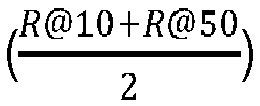
Table 1 Model Shirt Toptee Dress Average Config: AttrPred-net enc. pretraining no training 6.30 5.90 5.30 5.83 BCE-TDC 17.00 22.80 17.70 19.17 multipleBCE 14.40 19.60 15.80 16.60 multiple BCE-TDC 22.90 26.20 20.40 23.17 multipleBCE-TDC reweighted 20.40 24.70 18.40 21.17 Config: Attrpred-net enc. pretraining, BCE-TDC w/o shared TIRG 17.00 22.80 17.70 19.17 w/ shared TIRG 15.50 21.70 15.50 17.57 Config: multipleBCE-TDC AttrPred-net enc. pretraining 22.90 26.20 20.40 23.17 Query-Comp-Retr. enc. pretraining 58.10 67.90 56.80 60.93 Config: Query-comp-Retr. enc. pretraining, multiple BCE-TDC w/o image interaction 58.10 67.90 56.80 60.93 w/ image interaction 64.40 74.00 59.40 65.93 Config: Query-Comp-Retr. enc. pretraining, multiple BCE-TDC, w/ image interaction w/ encoder finetuning 68.00 76.80 65.10 69.97 - From these results, a few observations emerge:
- Using the BCE-TDC loss is better than using multipleBCE, which considers other incorrect combinations for a given triplet pairing. BCE-TDC being better than multipleBCE could come from the fact that the additional incorrect combinations (e.g., when swapping the modifying text in the interactions) are less meaningful and straightforward than target-dissident combinations (when swapping only the target image in the interactions). After all, the problem is to find the right corresponding target image.
- The multipleBCE-TDC loss leads to the most efficient training, making it clear that using several target-dissident combinations during training improve the network ability to discriminate between compatible and incompatible triplets.
- The model benefits from the image-image interaction module, especially for shirt and toptees.
- Qualitative results, obtained with the best model configuration, are presented in
FIG. 3 and compared to some results produced by a query-composition model, trained to retrieve the target image from the fusion of the query elements (using TIRG). Retrieved images for a given query within the validation set of Fashion IQ, using the query-composition model are illustrated in the odd rows and the relationship compatibility method in the even rows. - In particular, it seems like the relationship compatibility method manages to dynamically leverage the interaction vectors depending on available interaction information. More precisely, the first couple of rows in
FIG. 3 suggest that the relationship compatibility method knows better how to attend the reference image, since the proposed items globally share the ethereal aspect of the reference dress, as well as its shape (short in the front, long in the back). Similarly in the next couple of rows, while being asked a dress of different color, the query-composition model output clothes of similar tint whereas the relationship compatibility system shows a more exploratory spirit. - The compatibility module has direct access to the interactions of each element with the others, and may therefore resort to information coming from one or the other interaction vector, depending on the strength of the other interactions. For instance, if the reference image is really useless, the compatibility module might recourse more importantly to the text in order to decide of the compatibility score. This is illustrated by the last two rows of
FIG. 3 . -
FIG. 4 illustratesneural network architecture 400 in accordance with another embodiment. Theneural network architecture 400 corresponds to theneural network architecture 130 described above with respect toFIG. 1 and comprises encoder module 410 (corresponding to encoder module 140), interaction module 420 (corresponding to interaction module 150) and a compatibility module 430 (corresponding to compatibility module 160). - The
encoder module 410 comprises a first visual encoder neural network for encoding the reference image, Ir , and a second visual encoder neural network for encoding each of the candidate target images, Iti . The reference image, Ir , and the candidate target images, Iti , input into theencoder module 410 are processed in a similar manner. It is to be understood, however, that the first and the second visual encoder neural networks may be the same neural network. The neural networks of theencoder module 410 may be any suitable type of encoder. For example, the reference image, I r, and the candidate target images, Iti , may be encoded using a CNN followed by a PIE-Net neural network (Song and Soleymani, "Polysemous Visual-Semantic Embedding for Cross-Modal Retrieval", CVPR 2019). More precisely, for a given input image, local visual features may be extracted from the last convolutional layer of the CNN, as well as global visual features based on the output of the same CNN, where local features have been average-pooled and fed to a fully connected layer. The PIE-Net module applies self-attention to the local features and fuses them with the global features via a residual connection. More specifically, letting φ(. ) be the visual encoders, the resulting L2-normalized features of the reference image and the candidate target images may be respectively denoted as

- The
encoder module 410 further comprises a textual encoder neural network for encoding the text modifier, Tm. The text modifier may be first tokenized into words and the word embeddings are concatenated to produce local textual features. In some embodiments, a Bi-GRU learned from scratch on top of these word embeddings may produce the global textual feature. Another PIE-Net, taking the local and the global features as input, may return the final text embedding. Letting θ(. ) textual encoder, the resulting L2-normalized features of the text modifier m may be denoted as
- The
interaction module 420 is configured to receive the encoded representations of the reference image, r, the text modifier, m, and the candidate target images, ti . More specifically, theinteraction module 420 comprises a trained first text-image interaction neural network that receives as input the encoder representation of the reference image, r, and the text modifier, m. The first text-image interaction neural network uses a first attention mechanism on the text modifier and applied to the reference image to generate the vector representation of the first text-image pair based on the input. Theinteraction module 420 further comprises a trained second text-image interaction neural network that receives as input the encoder representation of each of the candidate target images, ti , and the text modifier, m. The second text-image interaction neural network uses a second attention mechanism on the text modifier and applied to the respective candidate target image to generate the vector representation of the second text-image pair based on the input. - The
compatibility module 430 is configured to receive, as input, the vector representation of the first text-image pair and the vector representation of the second text-image pair from theinteraction module 420. Based on the input, thecompatibility module 430 computes an implicit similarity (IS) score. In embodiments where the interaction module comprises only the first text-image interaction neural network and the second text-image interaction neural network, the implicit similarity score is the compatibility score. - The implicit similarity score focuses on the similarities between the reference image and the target image. This is reminiscent of a visual search setting, which compares two image representations together. The key difference lies in the crucial role played by the text modifier. Here, the two images (the reference image and the respective candidate target image) are wanted to be similar according to the concepts that are not mentioned in the text modifier, since the text modifier describes the differences between them, and hence takes their common points into account. The text modifier comes in to soften the visual search, since it holds part of the information about the target image. This is done thanks to a second attention mechanism which uses the textual modifier to reweigh the visual representations.
- The textual features of the text modifier, m, is used as a guide to compare the target image to the reference image. An attention mechanism


- In an embodiment, the interaction module may optionally further comprise a third trained text-image interaction neural network that receives as input the encoder representation of each of the candidate target images, ti , and the text modifier, m. The third text-image interaction neural network uses a third attention mechanism on the text modifier and applied to the respective candidate target image to generate the vector representation of the third text-image pair based on the input.
- The
compatibility module 430 may be further configured to receive, as input, the vector representation of the third text-image pair from theinteraction module 420. Based on the input, thecompatibility module 430 computes an explicit matching (EM) score. The compatibility score is the sum of the implicit similarity score and the explicit matching score. - Intuitively, the explicit matching score measures how well the candidate target image and the text modifier match. A priori, removing the reference image from the query should not yield satisfactory retrieval results. First, most text modifiers should be contextualized by the reference image, and act as a comparison or relative caption between the two images. This is, for example, the rationale behind composition learning for this studied task. Second, the candidate target image should share characteristics with the reference image that are not present in the modifier, so the textual part of the query is only a partial caption for the candidate target image.
- However, a semantic analysis on the FashionIQ dataset shows that, for about half of the queries, when the paired images are visually distinct, the text modifier does not relate to the reference image and instead directly describes the target image. This observation still holds for the Shoes dataset (G. Xioaxiao et al., "Dialog-based interactive image retrieval" in S. Bengio et al., editors, Proc. Neur IPS, pages 676-686, Curran Associates Inc., 2018). Thus, the reference image is ignored for this first aspect of the problem and explicit matching only focuses on finding a target image that meets the requirements of the relative caption.
- Thus, according to another embodiment, the
neural network architecture 130 may compute the explicit matching score only such that the compatibility score is the explicit matching score. Note that this bears resemblance to, but still differs from, caption-to-image cross-modal retrieval. On top of producing better results, as will be presented below, explicit matching is trained jointly with the implicit similarity score described above, and, more importantly, the text modifier also takes part in an attention mechanism applied to both the reference and the candidate target image. - The representation of the candidate target image ti is altered to be matched with the representation of the text modifier, m, based on m itself. Intuitively, the dimensions of ti describing concepts that are not mentioned in m are "filtered out", to avoid considering non-related visual information for matching. This is done using an attention mechanism,

- In order to compare the attended representation of the target image with the embedding of the relative caption, which belongs to a different modality, m is first projected into the visual space using a learned transformation

- Hence, the explicit matching score is computed as:

- AEM (. ) and AIS (. ) may have the same architecture but different weights because their use of the text modifier, m, is different. Indeed, AEM (. ) guides according to its input while AIS (. ) guides according to the complementary of its input.
- Thus, the
neural network architecture 400 relies on efficient attention mechanisms and decomposes the problem in two complementary views. The first view considers the similarities between the reference and candidate target images. The properties that should be shared between the two images are implicit to their visual information. Indeed, as similarities, they are not differences, and thus, are not explicitly mentioned by the textual modifier. Consequently, in the implicit similarity score, the text modifier is only used as a way to select the visual cues that should be similar between the reference image and the candidate target images. The first view accounts for the importance of the textual cue. The explicit matching score poses the text modifier as a relative caption to perform retrieval, and ignores the reference image. The explicit matching score specifically looks for details in the candidate target image that are explicitly mentioned in the text modifier using an attention mechanism. Finally, these two complimentary views may be unified into a single score for joint training. - It is important to note that the text modifier plays multiple roles in the model. On the one hand, it is used as a simple yet efficient attention mechanism, where the textual embedding is transformed into sets of weighing score which can be applied to the visual representations of the reference image and the target image, in both parts of the model. Simultaneously, it is used as a query in its own right for explicit matching.
- The neural networks of the
neural architecture 400 may be trained using the bidirectional triplet loss. Given a batch of training data
i corresponds to the unique annotated correct target for the query ((Iri , Tmi )), the model is trained using a bidirectional triplet loss (From A. et al., "Devise: A deep visual-semantic embedding model", Proc. NeurIPS, 2013):


- This makes the query and the target two pivots of the training. At the same time, the bidirectional loss tries to push the target closer to its corresponding query, and away from non-matching queries, while proceeding likewise from the query perspective. Next, the choice of the set of negatives

- Negatives mining is performed within each batch for the sake of computational costs, and is organized in two parts. First, the relative violation step consists in ignoring the hardest negative in order to learn from hard-moderate negatives (empirically chosen as the B=2 most difficult negatives after the B=10 hardest). Second, the maximum-violation step uses the hardest negative of each query in the mini-batch. The reason behind the two-stage negative mining is threefold.
- Primarily, the model needs to learn the semantic correspondences between the visual and the textual descriptors. Thus, at this stage, it is important to feed enough negatives to the model for it to learn diverse visual-semantic correspondences: using only the hardest negative would not be enough. At the same time, progressively dropping the easiest negatives in the course of this first training stage would account for the improvement of the model and enables to focus the training signal on the most informative negative examples. As a trade-off, half the number of available negatives for the whole step are used, that is called "relative violation step".
- Secondarily, both the visual base encoder and the word level text encoder are pre-trained on the general domain, so they are already able to properly encode some relevant information. Yet, the rest of the multi-modal model is initialized randomly. Hence, a warm-up is applied only to the PIE-Nets, the EM, and the IS modules. However, because of the large domain gap between the general domain and the fashion domain, the representations of the visual and textual elements may not be adapted to encode subtle domain-specific details and discriminate two very similar items. Consequently, the hardest negatives which may constitute noisy information in the first training stage are removed. While the warm up phase does not need to be aligned with the relative-violation step, they are fused in one to avoid the multiplication of training stages.
- Eventually, once the model is able to deal with basic semantic correspondences between the visual and the textual descriptors, the base encoders are fined-tuned on the fashion domain to produce more meaningful and discriminative features. From then on, the hardest negatives can be taken advantage of. This is the "maximum-violation training step".
- In a nutshell, this two-stage optimization strategy acts as a form of curriculum learning to guide the model through a more stable training. Similar to Farghri (Faghri, F. et al., "VSE++: Improving visual-semantic embeddings with hard negatives", Proc. BMVC, 2018), better results are observed when leveraging negatives in this order.
- Datasets. Two datasets linking pairs of in-shop images using relative captions in natural language are considered: Fashion IQ and the Shoes dataset.
- The Fashion IQ dataset is composed of 46.6k training images and around 15.5k images for both the test and validation splits. There are 18k training queries, and 6k queries per evaluation split. The text modifier Tm is composed of two relative captions produced by two different human annotators, exposed to the same reference-target pairIr ,It . Three article categories are considered, women's tops (toptee), women's dresses (dress) and men's shirts (shirt).
- The Shoes dataset is extracted from the Attribute Discovery Dataset (Berg. T. L. et al., "Automatic attribute discovery and characterization from noisy web data", Proc ECCV, pages 663-676, 2010). It consists in 10k training images for 9k training triplets, and 4.7k test images for 1.7k test queries. Here, Tm represents only one sentence.
- Evaluation. The Recall@K (R@K) is reported, which is the percentage of queries for which the correct ground truth item is ranked among the top K retrieved items. All reported numbers are obtained as an average of 3 runs.
- For FashionlQ, the standard evaluation metric is the one used for the companion challenge (Gao Y. et al., "FashionIQ Challenge", Proc. CVPR Workshops, 2020). It computes the R@10 and R@50 for each of the 3 fashion categories and averages these six results.
- Since the test split annotations of FashionIQ became available only very recently, previous works only report results on the validation set, and resort to ad hoc strategies to set their hyperparameters and early-stop criteria. Moving forward, most state-of-the-art comparisons should be performed on the test split. However, in order to compare the method described herein to previously published approaches, results are provided on both the test and validation subsets. Equipped with both split annotations, a bidirectional cross-validation is performed between them: experiments were run for a fixed number of 24 epochs and, at the end of each epoch, the model was evaluated on both sets. The best performing model at validation was selected to report results on the test set and vice-versa.
- For the Shoes dataset, VAL/Chen Y. et al., "Image search with text feedback by visiolinguistic attention learning", Proc CVPR, pages 3001-3011, 2020) is followed, a method addressing the task on this dataset: R@1, R@10 and R@50 are reported for all experiments.
- 300-dimensional GloVe word embeddings (Pennington J. et al., "GLOVE: Global vectors or word representation", Proc EMNLP, pages 1532-1543) are used as local textual features. Unless explicitly stated, all the experiments described below employ a ResNet50 architecture (He K. et I., "Deep residual learning for image recognition", Proc CVPR, pages 770-778, 2016) pretrained on ImageNet (Russakovsky O. et al, "Imagenet large scale vision recognition challenge", IJCV, 115(3):211-252, 2015).
- To maintain the aspect ratio and avoid losing information about the top and the bottom of the clothing items, images are first padded with white pixels to obtain a square. They are then resized to 256x256 pixels and augmented using random horizontal flip and a random crop of size of 224x224 pixels. Captions are preprocessed to replace special characters by spaces and to remove all other characters than letters. It is observed that using spelling correction and lemmatization does not improve the results.
- In order to train the model with more relevant negative samples, the training batches are constructed to be category-specific when dealing with the FashionIQ dataset: batches are populated with samples from a single category at a time, and categories are alternated between as new batches are built. The effectiveness of this decision is demonstrated in the ablation studies shown in Table 3.
- During training, the maximum number of epochs is set to 24. Following Song and Soleymani (Song Y. and Soleymani M, "Polysemous visual semantic embedding for cross-modal retrieval", Proc. CVPR, pages 1979-1988, 2019), the base encoders are frozen during the first 8 epochs to pretrain the PIENets, and the explicit matching and implicit similarity modules. These epochs correspond to the relative-violation stage. In the last 16 epochs, the network is trained end-to-end with maximum violation. The network is trained using Adam (Kingma D.P. and Ba J., "Adam: A method for stochastic optimization", Proc. ICLR, 2014), a batch size of 32 and an initial learning rate of 5×10⁻⁴ with a decay of 0.5 every 5 epochs, then every 3 epochs after the first 16 epochs. The margin is set to α=0.1, and the dimension of both the image and textual embeddings to HT = HI = 512.
- An ablative study was conducted on the FashionIQ dataset, to evaluate the influence of several design choices in the neural network architecture 500. In this study, for simplicity, the average R@50 over fashion categories and the median rank is reported. All results discussed in this section are presented in Table 3. The ablation studies are separated into two parts: first different choices of the modules, and then several options for the optimization.
- Table 2 shows the results of an ablative study of the different components of the method described herein with a ResNet50 backbone on the validation and the test split of FashionlQ. When not specified, results are provided using the two-stage negative mining with the presented triplet loss, batch specification, and the two scores explicit matching (EM) and implicit similarity (IS). The R@50 and the median rank (m. rank) of the correct target are reported.
Table 2 Type of modules Validation split Test split R@50 m. rank R@50 m. rank Independent modules IS module only 11.27 705 10.64 677 EM module only 31.54 138 31.69 143 TIRG Module Trained with triplet loss 37.48 103 37.17 102 Trained with BBC loss 41.85 82 41.84 82 EM+IS Modules Trained with BBC loss 46.62 62 47.47 61 max. violation only 3.81 1646 3.53 1653 rel. violation only 42.45 76 42.13 78 without batch specif. 48.26 58 47.55 59 Full neural network model 49.85 54 48.59 55 - Modules. The approach when using either explicit matching or implicit similarity as the only scoring module is compared. It is observed that the explicit-matching-only model performs well, despite not including the reference image in the query. Indeed, what is to be preserved from the reference image (implicit similarity) remains ambiguous whereas the relative caption often describes directly the target image (explicit matching). These results outline the reliability of the text modifier. The performance of the explicit-matching-only model shows the effectiveness of the pseudocross-modal retrieval strategy as a proxy to the fashion article retrieval problem.
- As an alternative, TIRG (Vo N. et al., "Composing text and image for image retrieval - an empirical odyssey", Proc CVPR, pages 6439-6448, 2019) is also implemented as a baseline module, since it is the most standard composition module amongst FashionIQ challenge participants. While it can be trained with the same triplet loss we use in our approach, it is noted that the most successful TIRG-based models are trained with a batch-based classification (BBC) loss. Using the same notations as before, the BBC loss can be computed as:

- Table 2 presents results for TIRG modules trained either with the triplet or the BBC loss, as well as results with the configuration of explicit matching and implicit similarity trained with the BBC loss. While the BBC loss improves the results of the TIRG module, it does not improve the training of the model disclosed herein. Despite performing better than each module separately, TIRG is outperformed by the full pipeline, which combines the explicit matching module and implicit similarity module. Notice that explicit matching and implicit similarity are much simpler modules that are supposed to work in tandem, and have a similar complexity to the full TIRG module when combined. This study also highlights the synergy between explicit matching and implicit similarity, supporting the motivations extensively discussed above.
- Optimization. Here the effect of the optimization options presented above are investigated. Three experiments were performed: training only with maximum violation, training only with relative violation and training without batch specification.
- The experiment with only maximum-violating triplets fails to deliver satisfactory results. Faghri (Faghri, F. et al., "VSE++: Improving visual-semantic embeddings with hard negatives", Proc BMVC, 2018) observed a similar behavior about hardest negative mining (i.e. maximum-violation): the use of hardest negatives is not effective immediately, and the network first needs to warm up. It is also suspected that the network is not able to robustly learn visual-linguistic correspondences with such a low amount of triplet interactions.
- The experiment with relative-violation gives good results, outperforming TIRG models, but is still 8% points behind the proposed training scheme. Indeed, the hardest negatives carry important information to discriminate ambiguous fashion items once the network works on average training examples. This enables to go beyond the performance plateau reached by the first training stage.
- Finally, the experiment without batch specification shows that this strategy has a small but visible impact on the results for both FashionIQ splits.
- The approach is compared with simple baselines and state-of-the-art approaches on the two datasets.
- Cross-modal baseline. The embedding of the textual modifier is used to retrieve the target image. The training pipeline is the same as the neural network of
FIG. 4 , however s(r,m,t) =< m|t > is used for training and scoring instead of s(r,m,t) = sEM (m,t) + sIS (r,m,t). The study of this baseline is motivated by the fact that in 49% of the cases, the (not so relative) caption describes exclusively the target according to a semantic analysis carried out by the authors of the FashionIQ dataset (Guo X. et al., "The Fashion IQ Dataset: Retrieving images by combining side information and relative natural language feedback", arXiv: 1905.12794, 2019). This is equally observed for the Shoes dataset. - Arithmetic baseline. It is based on the intuition that the text modifier adds and/or removes information from the reference image to get to the target image. Similarly, the explicit matching score plus the implicit similarity score is replaced by s(r, m, t) =< r + m|t >.
- TIRG is a well-spread composition network baseline. Results are reported using a re-implementation of the code of Vo with the hyperparameters proposed by Zhao.
- Results are reported in Tables 3A and 3B for the validation split of FashionIQ and Tables 4A and 4B for the test split. Challenge metric and individual R@K scores are provided for the 3 categories. † means an implementation of the TIRG model described by Vo N. et al and ‡ means that the model uses image attributes during training. * denotes the use of additional information (e.g. extra-captions) at training time. The average of 3 runs is reported.
Table 3A Method Backbone Challenge Metric R@10 Dress Shirt Toptee Mean JVSM* mobilenet-v1 19.27 10.70 12.00 13.00 11.90 ComposeAE ResNet17 20.60 - - - 11.80 TIRG† ResNet50 30.31 19.44 16.44 20.60 18.80 VAL* ResNet50 35.38 22.53 22.38 27.53 24.15 Cross-modal 〈m ∨ t〉 ResNet50 26.37 14.96 12.77 17.90 15.18 Arithmetic〈m + r ∨ t〉 ResNet50 34.18 21.93 18.41 25.55 21.92 Model of FIG. 2 ResNet50 31.24 18.34 16.88 20.45 18.56 Model of FIG. 4 ResNet 18 34.99 22.81 19.55 24.97 22.41 ResNet50 36.62 22.72 20.99 26.25 23.28 Table 3B Method Backbone Challenge Metric R@10 Dress Shirt Toptee Mean JVSM* mobilenet-v1 19.27 25.90 27.10 26.90 26.63 ComposeAE ResNet17 20.60 - - - 29.40 TIRG† ResNet50 30.31 43.05 37.18 45.15 41.75 VAL* ResNet50 35.38 44.00 44.15 51.68 46.61 Cross-modal 〈m ∨t〉 ResNet50 26.37 35.90 32.38 44.31 37.45 Arithmetic〈m + r ∨ t〉 ResNet50 34.18 46.62 40.74 51.81 46.32 Model of FIG. 2 ResNet50 31.24 42.79 39.25 49.72 43.92 Model of FIG. 4 ResNet 18 34.99 47.50 43.47 51.68 47.49 ResNet50 36.62 48.93 44.86 55.96 49.85 Table 4A Method Backbone Challenge Metric R@10 Dress Shirt Toptee Mean RNN Dialog EfficientNet 9.95 6.25 3.86 3.03 4.38 Transf. Dialog EfficientNet 21.57 12.45 11.05 11.24 11.58 TIRG† ResNet50 30.23 20.32 16.10 20.15 18.86 Cross-modal 〈m ∨t〉 ResNet50 25.97 14.93 13.37 18.01 15.45 Arithmetic〈m + r ∨ t〉 ResNet50 34.26 23.46 19.11 24.00 22.20 Model of FIG. 4 ResNet 18 34.80 24.31 19.20 24.43 22.66 ResNet50 35.99 24.64 20.00 25.59 23.42 Table 4B Method Backbone Challenge Metric R@50 Dress Shirt Toptee Mean RNN Dialog EfficientNet 9.95 20.26 13.95 12.34 15.52 Transf. Dialog EfficientNet 21.57 35.21 28.99 30.45 31.55 TIRG† ResNet50 30.23 43.41 38.25 43.13 41.60 Cross-modal 〈m∨ t〉 ResNet50 25.97 36.88 32.52 40.09 36.52 Arithmetic〈m + r ∨ t〉 ResNet50 34.26 48.24 42.90 47.88 46.35 Model of FIG. 4 ResNet 18 34.80 48.99 42.73 49.14 46.97 ResNet50 35.99 50.50 44.42 50.80 48.59 - On the validation split, where most published results are available, the neural network architecture disclosed herein outperforms the state of the art by an average 3% margin on R@50 and by 1.2 % in the challenge metric. Furthermore, when trained on top of ResNet18 the approach described herein also outperforms VAL on R@50, despite a smaller backbone and lighter attention mechanisms. As the test split annotations were not available until very recently, the only published results are for dialog-based retrieval models from the FashionIQ paper itself. The model is compared to their
turn 1 dialog results as the model is not adapted for sequential user feedback. They use an EfficientNet-b7 (Tan M et al., "Efficientnet: Rethinking model scaling for convolutional neural networks", Proc ICML, pages 6105-6114, PMLR, 2019) as backbone. The neural network architecture ofFIG. 4 outperforms all other methods and baselines with either a ResNet18 or ResNet50 as backbone. The best model improves upon the best baseline by an average of 1.7% over all metrics. - Table 5 reports results on the Shoes dataset. † means an implementation of the TIRG model described by Vo N. et al. and ‡ means that the model uses image attributes during training. * denotes the use of additional information (e.g. extra-captions) at training time. resNet50 is used as a backbone- The average of 3 runs is reported. The exact same training setting are used as for FashionlQ, as the Shoes dataset is not provided with a validation set and its size deters cutting one from the training set. Hence, reported results for the model of
FIG. 4 are likely to be suboptimal, since the hyperparameters validated for FashionIQ are reused. The neural network architecture ofFIG. 4 outperforms TIRG and performs almost on par with state-of-the-art model VAL, despite not leveraging side information.Table 5 Method R@1 R@10 R@50 TIRG† 12.59 44.65 72.00 VAL* 17.18 51.52 75.83 Cross-modal 〈m ∨ t〉 2.29 13.80 32.03 Arithmetic〈m + r ∨ t〉 14.01 46.23 72.93 Model of FIG. 4 16.15 49.44 75.92 -
FIG. 5 illustrates the model's ability to properly encode fashion concepts such as color, the sleeve length or the form of the neck, but also more complex information, such as dolphins in a logo or shiny shoe straps. Queries are shown in the two leftmost columns and the qualitative results from the three fashion categories of FashionIQ and for two examples from shoes are shown in the remaining columns. The expected targets are indicated with a border. While the model relies on the relative captions to propose coherent images, it also resorts to the reference image when important information is missing, such as the dress length, the shirt style, or the presence of transparent heels. This confirms the importance of using the text modifier to attend the two images and to study their similarity. - One limitation inherent to the task is well illustrated by the dress example: very often, many candidate target images would be totally acceptable answers to a given query, beyond the one annotated as ground-truth. Hence R@50 is a more reliable metric. Other works (Chun S. et al., "Probabilistic embeddings for cross-modal retrieval, arXix: 2101.05068, 2021 and Musgrave K. et al., "A metric learning reality check", Proc ECCV, pages 681-699, 2020) have pointed out the limitations of relying on R@K for retrieval tasks when K is too small.
-
FIG. 6 illustrates visualization of image parts contributing the most to the explicit matching (EM) and implicit similarity (IS) scores, for three queries where the correct target is ranked first. An explicit matching component is presented on the target image. The bottom two rows show two relevant components for implicit similarity, applied to both the source and the target images. The heatmaps presented inFIG. 6 are obtained with the Grad-CAM (Selvaraju R.R. et al., "Grad-cam: Visual explanations from deep networks via gradient-based localization", Proc ICCV, pages 618-626, 2017) algorithm. Specifically, the image activations at the last convolutional layer of the CNN are reweighed with the pooled gradients of the same layer, after back-propagation of the coefficients contributing the most to the explicit matching and implicit similarity scores. It appears clearly that the implicit similarity module attends to the visual cues that are similar between the reference and the target images, such as the form of the collar, the length of the sleeves or of the dress, or a similar animal logo. In a complementary way, the explicit matching module addresses the image parts that are the most related to the caption: for example, it focuses on the pattern or the color. -
FIG. 7 is a flow diagram illustrating a method of searching for and retrieving images using the neural network architectures described inFIG. 2 orFIG. 4 above. The method begins atstep 710, where a query is received from a user. The query comprises a reference image and a text modifier. The user may input the query through a user interface, such as theuser interface 800 shown inFIG. 8A . The query may be input by the user in any suitable manner. For example, thereference image 810 may be uploaded by the user or may be selected from at least one image displayed on theuser interface 800. For example, a website or application may display one or more images to the user for selection by the user. If the user has already entered a query into the user interface, the one or more images may comprise at least one image that has been output by the neural network architecture in response to that (initial) query. The text modifier may be entered manually by the user into atext field 820 provided by theuser interface 800 for this purpose. Additionally or alternatively, a menu may be provided for the user to select one or more elements (descriptions of visual differences) of the text modifier. - At
step 720, the network architecture obtains a set of target candidate images. The target candidate images may be obtained from thedata storage 120, such as a database, that stores images. The target candidate images may comprise all the images stored in the data storage. Alternatively, the candidate target images may be a subset of the images stored in the data storage. For example, atoptional step 730, the query may be input into a standard search algorithm that uses a cross-modal model or a query-composition retrieval model. Based on the query, the standard search algorithm may rank the images stored in the data storage in order of similarity to the query. A subset of the images comprising a predetermined number of the highest-ranking images may then be output by the standard search algorithm as the candidate target images. - At
step 740, the compatibility score for each triplet is computed by the neural network architecture as described above with respect toFIG. 2 orFIG. 4 . Then, atstep 750, based on the compatibility score obtained, at least one candidate target image is output. - At
step 760, at least onecandidate target image 830 is displayed to the user through theuser interface 800, as shown inFIG. 8B . One candidate target image corresponding to the target image resulting from the query may be output and displayed by theuser interface 800. Additionally or alternatively, a list of candidate target images having a compatibility score above a predetermined threshold value may be output and displayed. The candidate target images in the list may be ranked in order according to the compatibility score of their respective triplet. - In response to the display of at least one candidate target image on the
user interface 800 of the user device, the user may select one of the at least one candidate target images as a reference image. The user may input a second text modifier corresponding to the candidate target image (i.e. the new reference image). Thus, a query may be input into theneural network architecture 130, where the query is based at least in part on an output of the neural network architecture.Steps 710 to 760 may then be repeated to obtain a second at least one target image. This process may be repeated until the user is satisfied with the at least one candidate target image output by the neural network architecture and displayed on the user interface. -
FIG. 9 is a flow diagram illustrating amethod 900 of training the neural network architecture ofFIG. 2 orFIG. 4 to rank images. The method begins atstep 910, where a batch of training data is generated. Generating the batch of training data first comprises thestep 920 of obtaining a first set of triplets by randomly selecting a sample of triplets from a training dataset. Each triplet of the training dataset comprises a reference image, a text modifier and a target image, where the target image corresponds to the reference image modified according to the text modifier. For example, the reference image may be an image of a black dress with long sleeves, the text modifier may be "is red with no sleeves" and the target image may be an image of a sleeveless red dress. Thus, the triplets of the first set of triplets may be referred to as "correct triplets" or "compatible triplets". - Generating the batch of training data then comprises a
further step 930 of generating, from the first set of triplets, a second set of triplets. Each triplet of the second set of triplets comprises a reference image, a text modifier and a target image. However, in the second set of triplets the target image does not correspond to the reference image modified according to the text modifier. For example, the reference image may be an image of a black dress with long sleeves, the text modifier may be "is red with no sleeves" and the target image may be an image of a blue dress with sleeves. Thus, the triplets of the second set of triplets may be referred to as "incorrect triplets" or "incompatible triplets". The goal of the training is to determine as compatible the elements from a compatible triplet, and to determine as incompatible the elements that are not related through an incompatible triplet. - There are several ways to create incorrect combinations of triplet elements to generate the incompatible triplets. Starting from a given triplet of the first set of triplets, the ground truth target image may be replaced by another target image coming from another triplet. The incorrect combination that is the most natural with regard to the problem is obtained by sampling a target image from a different triplet than the one from which are extracted the reference image and the modifying text. In other words, given two tripletstripleta = {ra,ta,ma } and tripletb = {rb,tb,mb }:
- [ra,ma,ta,ma ] is a correct combination. The network should output S(ra,ma,ta,ma ) = cr
a ,ta ,ma = 1. - [ra,ma,tb,ma ] is an incorrect combination. The network should output (ra,ma,tb,ma ) = cr
a ,tb ,ma = 0. - Such an incorrect combination can be referred to as a "target-dissident combination" (TDC) in the sense that all the elements of the combination are part of the same annotation triplet, but for the target (which is then in the minority, and disagrees with the query elements). This is a particular incorrect combination since assigning it a compatibility score of 1 is the very thing that one wants to avoid: it would mean retrieving an incorrect target image for a given query. Thus, in an embodiment, target-dissident combinations are built by randomly pairing annotation triplets within each batch, and swapping the target images. However, in some embodiments, additionally or alternatively, the reference image (or even the modifying text) may be replaced with a reference image (or modifying text) from another triplet.
- At
step 940 each triplet of the batch of training data is processed by the neural network architecture in order to compute a loss function, as described above. - In response to determining that there are no remaining unprocessed samples in the batch, at step 950 a loss function is computed based on the neural network output. The computed loss function is used to update at least some of the learnable parameters of the neural networks of at least the interaction modules and the compatibility module. For example, a backpropagation method may be used to determine or update the parameters of one or more layers of the neural networks based on the difference between the ground truth label and the output estimated label. The backpropagation method may optimize the parameters by minimizing the loss function with respect to all the parameters in the neural networks, for example.
- While some specific embodiments have been described in detail above, it will be apparent to those skilled in the art that various modifications, variations and improvements of the embodiments may be made in the light of the above teachings and within the content of the appended claims without departing from the intended scope of the embodiments. In addition, those areas in which it is believed that those of ordinary skill in the art are familiar have not been described herein in order not to unnecessarily obscure the embodiments described herein. Accordingly, it is to be understood that the embodiments are not to be limited by the specific illustrative embodiments, but only by the scope of the appended claims.
- Although the above embodiments have been described in the context of method steps, they also represent a description of a corresponding component, module or feature of a corresponding apparatus or system.
- Some or all of the method steps may be implemented by a computer in that they are executed by (or using) a processor, a microprocessor, an electronic circuit or processing circuitry.
- The embodiments described above may be implemented in hardware or in software. The implementation can be performed using a non-transitory storage medium such as a computer-readable storage medium, for example a floppy disc, a DVD, a Blu-Ray, a CD, a ROM, a PROM, and EPROM, an EEPROM or a FLASH memory. Such computer-readable media can be any available media that can be accessed by a general-purpose or special-purpose computer system.
- Generally, embodiments can be implemented as a computer program product with a program code or computer-executable instructions, the program code or computer-executable instructions being operative for performing one of the methods when the computer program product runs on a computer. The program code or the computer-executable instructions may, for example, be stored on a computer-readable storage medium.
- In an embodiment, a storage medium (or a data carrier, or a computer-readable medium) comprises, stored thereon, the computer program or the computer-executable instructions for performing one of the methods described herein when it is performed by a processor. In a further embodiment, an apparatus comprises one or more processors and the storage medium mentioned above.
- In a further embodiment, an apparatus comprises means, for example processing circuitry like e.g. a processor communicating with a memory, the means being configured to, or adapted to, perform one of the methods described herein.
- A further embodiment comprises a computer having installed thereon the computer program or instructions for performing one of the methods described herein.
- The above-mentioned methods and embodiments may be implemented within an architecture such as illustrated in
FIG. 10 , which comprisesserver 1000 and one or more client devices 1002 that communicate over a network 1004 (which may be wireless and/or wired) such as the Internet for data exchange.Server 1000 and the client devices 1002 include a data processor 1012 and memory 1013 such as a hard disk. The client devices 1002 may be any device that communicates withserver 1000, includingautonomous vehicle 1002b,robot 1002c,computer 1002d, orcell phone 1002e. - More precisely in an embodiment, the techniques according to the embodiments above may be performed at
server 1000. In other embodiments, the techniques according to the embodiments above may be performed at client device 1002. In yet other embodiments, the techniques described in said embodiments may be performed at a different server or on a plurality of servers in a distributed manner. - The invention is defined in the claims. However, below there is provided a non-exhaustive list of non-limiting examples. Any one or more features of these examples may be combined with any one or more features of another example, embodiment, or aspect described herein.
- Example Ex1: A system for image retrieval with neural networks, the system comprising: an interaction module comprising: a first text-image interaction neural network trained to generate a vector representation of a first text-image pair based on an encoder representation of a reference image, r, and an encoder representation of a text modifier, m, wherein the text modifier, m, describes at least one visual difference between a target image, t, and the reference image, r, and a second text-image interaction neural network trained to generate, for each candidate target image, ti , of a set of candidate target images, a vector representation of a second text-image pair based on the encoder representation of the text modifier, m, and an encoder representation of a respective candidate target image, t; and a compatibility module configured to compute, based on the vector representation of the first text-image pair and the vector representation of the second text-image pair, a compatibility score for each triplet of a set of triplets 〈r,ti,m〉, each triplet comprising the reference image, r, a candidate target image, ti , of the set of candidate target images and the text modifier, m, wherein the compatibility score for each triplet is proportional to a degree to which the respective candidate target image corresponds to the target image such that the compatibility score is used to rank the candidate target images, ti , in order of similarity to the target image, t.
- Example Ex2:The system according to example Ex1, wherein computing the compatibility score based on the vector representation of the first text-image pair and the vector representation of the second text-image pair comprises computing a cosine similarity between the vector representation of the first text-image pair and the vector representation of the second text-image pair.
- Example Ex3:The system according to example Ex2, wherein computing the compatibility score based on the vector representation of the first text-image pair and the vector representation of the second text-image pair further comprises computing a cosine similarity between the vector representation of the second text-image pair and the encoder representation of the text modifier, and wherein the compatibility score is based on a sum of the cosine similarity between the vector representation of the first text-image pair and the vector representation of the second text-image pair and the cosine similarity between the vector representation of the second text-image pair and the encoder representation of the text modifier.
- Example Ex4:The system according to any of examples Ex1 to Ex3, wherein the first text-image interaction neural network uses a first attention mechanism on the text modifier and applied to the reference image to generate the vector representation of the first text-image pair, and the second text-image interaction neural network uses a second attention mechanism on the text modifier and applied to a respective candidate target image to generate the vector representation of the second text-image pair.
- Example Ex5:The system according to example Ex1, wherein the compatibility module comprises a compatibility neural network trained to compute the compatibility score for each triplet of the set of triplets.
- Example Ex6:The system according to example Ex1 or Ex5 wherein the interaction module further comprises an image-image interaction neural network trained to generate, for each candidate target image, ti , of the set of candidate target images, a vector representation of an image-image pair based on the encoder representation of the reference image, r, and the encoder representation of a respective candidate target image, ti , wherein the compatibility score is further based on the vector representation of the image-image pair.
- Example Ex7.The system according to example Ex6, wherein the image-image interaction neural network is a multi-layer perceptron, MLP, neural network.
- Example Ex8.The system according to any of examples Ex1 or Ex5 to Ex7 wherein the first text-image interaction neural network is a first text-enhanced image retrieval, TIRG, neural network and the second text-image interaction neural network is a second text-enhanced image retrieval, TIRG, neural network.
- Example Ex9:The system according to any of examples Ex1 or Ex5 to Ex7, wherein the first text-image interaction neural network is a first multi-layer perceptron, MLP, neural network and wherein the second text-image interaction neural network is a second multi-layer perceptron, MLP, neural network.
- Example Ex10: The system according to any of examples Ex1 to Ex9, wherein the neural networks are trained using a training data set that comprises compatible triplets and incompatible triplets, wherein each compatible triplet comprises a candidate target image that corresponds to a reference image of the respective compatible triplet modified according to a text modifier of the respective compatible triplet, and wherein an incompatible triplet comprises a candidate target image that does not correspond to a reference image of the respective incompatible triplet modified according to a text modifier of the respective incompatible triplet.
- Example Ex11: The system according to example Ex10, wherein each incompatible triplet is generated from a pair of compatible triplets.
- Example Ex12: The system according to any of examples Ex1 to Ex11, further comprising: at least one visual encoder neural network trained to generate the encoder representation of the reference image, rand the encoder representation of the candidate target images, ti .; and a textual encoder neural network trained to generate the encoder representation of the text modifier, m.
- Example Ex13: The system according to example Ex12, wherein the at least one visual encoder neural network and the textual encoder neural network are trained using cross-modal retrieval prior to training the neural networks of the first interaction module, the second interaction module and the compatibility module.
- Example Ex14: The system according to any of examples Ex1 to Ex13, further comprising a query input module configured to display, on a user interface, a list of the candidate target images ranked in according to the compatibility score.
- Example Ex15: The system according to example Ex14, wherein the query input module is configured to receive, via the user interface, a query comprising the reference image, r, and the text modifier, m.
- Example Ex16: The system according to any of examples Ex1 to Ex15, further comprising a pre-ranking module configured to, in response to receiving the query, rank candidate target images stored in a database of candidate target images using a cross-modal model or query-composition retrieval model.
- Example Ex17: A computer-implemented method for image retrieval, comprising: receiving a query for obtaining a target image, t, the query comprising a reference image, r, and a text modifier, m, wherein the text modifier describes at least one visual difference between the target image, t, and the reference image, r, generating a vector representation of a first text-image pair based on an encoder representation of the reference image, r, and an encoder representation of the text modifier, m; generating, for each candidate target image, ti , of a set of candidate target images, a vector representation of a second text-image pair based on the encoder representation of the text modifier, m, and an encoder representation of a respective candidate target image, ti ; and computing, based on the vector representation of a first text-image pair and the vector representation of a second text-image pair, a compatibility score for each triplet of a set of triplets 〈r, ti, m〉, each triplet comprising the reference image, r, a candidate target image, ti , of a set of candidate target images and the text modifier, m, wherein the compatibility score for each triplet is proportional to a degree to which the respective candidate target image corresponds to the target image such that the compatibility score is used to rank the candidate target images, ti , in order of similarity to the target image, t.
- Example Ex18: The method according to example Ex17, wherein computing the compatibility score comprises computing a cosine similarity between the vector representation of the first text-image pair and the vector representation of the second text-image pair.
- Example Ex19: The method according to example Ex18, wherein computing the compatibility score further comprises computing a cosine similarity between the vector representation of the second text-image pair and the encoder representation of the text modifier, and wherein the compatibility score is based on a sum of the cosine similarity between the vector representation of the first text-image pair and the vector representation of the second text-image pair and the cosine similarity between the vector representation of the second text-image pair and the encoder representation of the text modifier.
- Example Ex20: The method according to any of examples Ex17 to Ex19, wherein the vector representation of the first text-image pair is generated using a first attention mechanism on the text modifier and applied to the reference image to generate the vector representation of the first text-image pair, and wherein the vector representation of the second text-image pair is generated using a second attention mechanism on the text modifier and applied to a respective candidate target image to generate the vector representation of the second text-image pair.
- Example Ex21: The method according to example Ex17, wherein computing the compatibility score comprises inputting the vector representation of the first text-image pair and the vector representation of the second text-image pair into a compatibility neural network, wherein the compatibility neural network is trained to output the compatibility score based on the input.
- Example Ex22: The method according to example Ex17 or Ex21, wherein the first trained text-image interaction neural network is a first text-enhanced image retrieval, TIRG, neural network and the second trained text-image interaction neural network is a second text-enhanced image retrieval, TIRG, neural network.
- Example Ex23: The method according to example Ex17 or Ex21, wherein the first trained text-image interaction neural network is a first multi-layer perceptron, MLP, neural network, and wherein the second trained text-image interaction neural network is a second multi-layer perceptron, MLP, neural network.
- Example Ex24: The method according to any of examples Ex17 or Ex21 to Ex23, wherein the compatibility score is further based on third embedding of an image-image pair, wherein the image-image pair comprises the reference image, r, and the respective target image, ti .
- Example Ex25: The method according to any of examples Ex17 or Ex21 to Ex24, further comprising generating the vector representation of the image-image pair using a multi-layer perceptron, MLP, neural network.
- Example Ex26: The method according to any of examples Ex17 to Ex25, further comprising obtaining the set of candidate target images by inputting the query into a cross-modal model or query-composition retrieval model to rank candidate target images stored in a database of candidate target images.
- Example Ex27: The method according to any of examples Ex17 to Ex26, further comprising ranking, based on the compatibility score, the candidate target images, ti , with respect to the target image, t.
- Example Ex28: The method according to any of examples Ex17 to Ex27, further comprising, displaying a list of candidate target images ranked, based on the compatibility score, with respect to the target image.
- Example Ex29: A method of training a neural network architecture to retrieve images, comprising: generating a training batch, comprising: obtaining a first set of triplets, each triplet, 〈ra,ta,ma 〉, of the first set of triplets comprising a reference image, r, a text modifier, m, and a target image, t, corresponding to the reference image, r, modified according to the modifier, m; and generating, from the first set of triplets, a second set of triplets,〈rb ,tb,mb 〉, each triplet of the second set of triplets comprising the reference image, r, a text modifier, m, and a target image, t, that does not correspond to the reference image, r, modified according to the modifier, m; processing all the triplets of the training batch by: randomly selecting a triplet of the training batch; inputting an encoder representation of the reference image, r, of the selected triplet and an encoder representation of the text modifier, m, of the selected triplet into a first text-image interaction neural network to generate a vector representation of a first text-image pair; inputting an encoder representation of the target image, t, of the selected triplet and the encoder representation of the text modifier, m, of the selected triplet into a second text-image interaction neural network to generate a vector representation of a second text-image pair; generating, based on the first vector representation of the first text-image pair and the vector representation of the second text-image pair, a prediction whether the triplet is obtained from the first set of triplets or the second set of triplets; and calculating, based on the prediction a loss value through a loss function; and once it is determined that there are no remaining unselected triplets in the training batch, modifying the learnable parameters of the neural network architecture according to the loss value.
- Example Ex30: The method according to example Ex29, wherein generating, from the first set of triplets, a second set of triplets,〈rb ,tb,mb 〉, comprises at least one of: randomly pairing the triplets within the first set of triplets and, for each pair of triplets, swapping the respective target images; randomly pairing the triplets within the first set of triplets and, for each pair of triplets, swapping the respective reference images; randomly pairing the triplets within the first set of triplets and, for each pair of triplets, swapping the respective text modifiers; for a randomly selected triplet within the first set of triplets, swapping respective target images with each other triplet within the first set of triplets; for a randomly selected triplet within the first set of triplets, swapping respective reference images with each other triplet within the first set of triplets; for a randomly selected triplet within the first set of triplets, swapping respective text modifiers with each other triplet within the first set of triplets.
- Example Ex31: The method according to example Ex29 or Ex30, wherein generating the prediction comprises computing a cosine similarity between the vector representation of the first text-image pair and the vector representation of the second text-image pair.
- Example Ex32: The method according to example Ex31, wherein generating the prediction further comprises computing a cosine similarity between the vector representation of the second text-image pair and the encoder representation of the text modifier, and wherein the prediction is based on a sum of the cosine similarity between the vector representation of the first text-image pair and the vector representation of the second text-image pair and the cosine similarity between the vector representation of the second text-image pair and the encoder representation of the text modifier.
- Example Ex33: The method according to any of examples Ex29 to Ex32, wherein the first text-image interaction neural network uses a first attention mechanism on the text modifier and applied to the reference image to generate the vector representation of the first text-image pair, and the second text-image interaction neural network uses a second attention mechanism on the text modifier and applied to a respective candidate target image to generate the vector representation of the second text-image pair.
- Example Ex34: The method according to any of examples Ex29 to Ex31, wherein generating the prediction comprises inputting, into a compatibility neural network, the vector representation of the first text-image pair and the vector representation of the second text-image pair.
- Example Ex35: The method according to example Ex33, further comprising: inputting an encoder representation of the reference image, r, of the selected triplet and an encoder representation of the target image, t, of the selected triplet into an image-image interaction neural network neural network to generate a vector representation of an image-image pair, wherein generating the prediction further comprises inputting, into the image-image representation neural network, the embedding of the image-image pair.
- Example Ex36: A computing system comprising: a processor; and a computer-readable storage medium having computer-implemented instructions stored thereon, which when executed by the processor, cause the processor to perform the method according to one of examples Ex29 to Ex35.
Claims (15)
- A system for image retrieval with neural networks, the system comprising:an interaction module comprising:a first text-image interaction neural network trained to generate a vector representation of a first text-image pair based on an encoder representation of a reference image, r, and an encoder representation of a text modifier, m, wherein the text modifier, m, describes at least one visual difference between a target image, t, and the reference image, r, anda second text-image interaction neural network trained to generate, for each candidate target image, ti , of a set of candidate target images, a vector representation of a second text-image pair based on the encoder representation of the text modifier, m, and an encoder representation of a respective candidate target image, t; anda compatibility module configured to compute, based on the vector representation of the first text-image pair and the vector representation of the second text-image pair, a compatibility score for each triplet of a set of triplets 〈r, ti, m〉, each triplet comprising the reference image, r, a candidate target image, ti , of the set of candidate target images and the text modifier, m, wherein the compatibility score for each triplet is proportional to a degree to which the respective candidate target image corresponds to the target image such that the compatibility score is used to rank the candidate target images, ti , in order of similarity to the target image, t.
- The system according to claim 1, wherein computing the compatibility score based on the vector representation of the first text-image pair and the vector representation of the second text-image pair comprises computing a cosine similarity between the vector representation of the first text-image pair and the vector representation of the second text-image pair.
- The system according to claim 2, wherein computing the compatibility score based on the vector representation of the first text-image pair and the vector representation of the second text-image pair further comprises computing a cosine similarity between the vector representation of the second text-image pair and the encoder representation of the text modifier, and
wherein the compatibility score is based on a sum of the cosine similarity between the vector representation of the first text-image pair and the vector representation of the second text-image pair and the cosine similarity between the vector representation of the second text-image pair and the encoder representation of the text modifier. - The system according to any of claims 1 to 3, wherein the first text-image interaction neural network uses a first attention mechanism on the text modifier and applied to the reference image to generate the vector representation of the first text-image pair, and the second text-image interaction neural network uses a second attention mechanism on the text modifier and applied to a respective candidate target image to generate the vector representation of the second text-image pair.
- The system according to claim 1, wherein the compatibility module comprises a compatibility neural network trained to compute the compatibility score for each triplet of the set of triplets.
- The system according to claim 1 or 5 wherein the interaction module further comprises an image-image interaction neural network trained to generate, for each candidate target image, ti , of the set of candidate target images, a vector representation of an image-image pair based on the encoder representation of the reference image, r, and the encoder representation of a respective candidate target image, ti ,
wherein the compatibility score is further based on the vector representation of the image-image pair. - The system according to any of claims 1 to 6, wherein the neural networks are trained using a training data set that comprises compatible triplets and incompatible triplets, wherein each compatible triplet comprises a candidate target image that corresponds to a reference image of the respective compatible triplet modified according to a text modifier of the respective compatible triplet, and wherein an incompatible triplet comprises a candidate target image that does not correspond to a reference image of the respective incompatible triplet modified according to a text modifier of the respective incompatible triplet.
- A computer-implemented method for image retrieval, comprising:receiving a query for obtaining a target image, t, the query comprising a reference image, r, and a text modifier, m, wherein the text modifier describes at least one visual difference between the target image, t, and the reference image, r, generating a vector representation of a first text-image pair based on an encoder representation of the reference image, r, and an encoder representation of the text modifier, m;generating, for each candidate target image, ti , of a set of candidate target images, a vector representation of a second text-image pair based on the encoder representation of the text modifier, m, and an encoder representation of a respective candidate target image, ti ; andcomputing, based on the vector representation of a first text-image pair and the vector representation of a second text-image pair, a compatibility score for each triplet of a set of triplets 〈r,ti, m〉, each triplet comprising the reference image, r, a candidate target image, ti , of a set of candidate target images and the text modifier, m, wherein the compatibility score for each triplet is proportional to a degree to which the respective candidate target image corresponds to the target image such that the compatibility score is used to rank the candidate target images, ti , in order of similarity to the target image, t.
- The method according to claim 8, wherein computing the compatibility score comprises computing a cosine similarity between the vector representation of the first text-image pair and the vector representation of the second text-image pair.
- The method according to claim 9, wherein computing the compatibility score further comprises computing a cosine similarity between the vector representation of the second text-image pair and the encoder representation of the text modifier, and
wherein the compatibility score is based on a sum of the cosine similarity between the vector representation of the first text-image pair and the vector representation of the second text-image pair and the cosine similarity between the vector representation of the second text-image pair and the encoder representation of the text modifier. - The method according to claim 8, wherein computing the compatibility score comprises inputting the vector representation of the first text-image pair and the vector representation of the second text-image pair into a compatibility neural network, wherein the compatibility neural network is trained to output the compatibility score based on the input.
- The method according to any of claims 8 to 11, further comprising ranking, based on the compatibility score, the candidate target images, ti , with respect to the target image, t.
- The method according to any of claims 8 to 12, further comprising, displaying a list of candidate target images ranked, based on the compatibility score, with respect to the target image.
- A method of training a neural network architecture to retrieve images, comprising:generating a training batch, comprising:obtaining a first set of triplets, each triplet, 〈ra,ta,ma 〉, of the first set of triplets comprising a reference image, r, a text modifier, m, and a target image, t, corresponding to the reference image, r, modified according to the modifier, m; andgenerating, from the first set of triplets, a second set of triplets,〈rb ,tb,mb 〉, each triplet of the second set of triplets comprising the reference image, r, a text modifier, m, and a target image, t, that does not correspond to the reference image, r, modified according to the modifier, m;processing all the triplets of the training batch by:randomly selecting a triplet of the training batch;inputting an encoder representation of the reference image, r, of the selected triplet and an encoder representation of the text modifier, m, of the selected triplet into a first text-image interaction neural network to generate a vector representation of a first text-image pair;inputting an encoder representation of the target image, t, of the selected triplet and the encoder representation of the text modifier, m, of the selected triplet into a second text-image interaction neural network to generate a vector representation of a second text-image pair;generating, based on the first vector representation of the first text-image pair and the vector representation of the second text-image pair, a prediction whether the triplet is obtained from the first set of triplets or the second set of triplets; andcalculating, based on the prediction a loss value through a loss function; and once it is determined that there are no remaining unselected triplets in the training batch, modifying the learnable parameters of the neural network architecture according to the loss value.
- A computing system comprising:a processor; anda computer-readable storage medium having computer-implemented instructions stored thereon, which when executed by the processor, cause the processor to perform the method according to claim 14.
Priority Applications (2)
| Application Number | Priority Date | Filing Date | Title |
|---|---|---|---|
| EP21306114.6A EP4134840B1 (en) | 2021-08-12 | 2021-08-12 | Data compatibility computation for text-enhanced visual retrieval using a text-image pair vector representation |
| US17/847,848 US12488042B2 (en) | 2021-08-12 | 2022-06-23 | Data compatibility for text-enhanced visual retrieval |
Applications Claiming Priority (1)
| Application Number | Priority Date | Filing Date | Title |
|---|---|---|---|
| EP21306114.6A EP4134840B1 (en) | 2021-08-12 | 2021-08-12 | Data compatibility computation for text-enhanced visual retrieval using a text-image pair vector representation |
Publications (2)
| Publication Number | Publication Date |
|---|---|
| EP4134840A1 true EP4134840A1 (en) | 2023-02-15 |
| EP4134840B1 EP4134840B1 (en) | 2025-10-08 |
Family
ID=78232310
Family Applications (1)
| Application Number | Title | Priority Date | Filing Date |
|---|---|---|---|
| EP21306114.6A Active EP4134840B1 (en) | 2021-08-12 | 2021-08-12 | Data compatibility computation for text-enhanced visual retrieval using a text-image pair vector representation |
Country Status (2)
| Country | Link |
|---|---|
| US (1) | US12488042B2 (en) |
| EP (1) | EP4134840B1 (en) |
Cited By (4)
| Publication number | Priority date | Publication date | Assignee | Title |
|---|---|---|---|---|
| CN116434028A (en) * | 2023-06-15 | 2023-07-14 | 上海蜜度信息技术有限公司 | Image processing method, system, model training method, medium and equipment |
| CN117744797A (en) * | 2023-12-15 | 2024-03-22 | 中国科学院空天信息创新研究院 | Mind map reasoning methods, devices, equipment and media based on basic models |
| CN118193768A (en) * | 2024-03-29 | 2024-06-14 | 山东大学 | Multimodal combined image retrieval method and system based on fine-grained text inversion |
| CN120219049A (en) * | 2025-05-28 | 2025-06-27 | 湘潭大学 | An e-commerce virtual fitting method and system based on multimodal query |
Families Citing this family (19)
| Publication number | Priority date | Publication date | Assignee | Title |
|---|---|---|---|---|
| JP2023056798A (en) * | 2021-10-08 | 2023-04-20 | 富士通株式会社 | Machine learning program, search program, machine learning device, and method |
| US11977852B2 (en) * | 2022-01-12 | 2024-05-07 | Bank Of America Corporation | Anaphoric reference resolution using natural language processing and machine learning |
| US12169520B2 (en) | 2023-01-30 | 2024-12-17 | Intuit Inc. | Machine learning selection of images |
| WO2024191004A1 (en) * | 2023-03-15 | 2024-09-19 | 엘지전자 주식회사 | Item inspection device and method therefor |
| CN116975341A (en) * | 2023-05-12 | 2023-10-31 | 腾讯科技(深圳)有限公司 | Image retrieval methods, devices, electronic equipment, storage media and program products |
| CN116758094B (en) * | 2023-06-07 | 2025-12-23 | 广州大学 | Medical image segmentation method, system and device based on high-efficiency focus attention |
| CN116680652B (en) * | 2023-06-07 | 2025-05-02 | 国网福建省电力有限公司 | A multi-modal data processing method and terminal |
| US20250022263A1 (en) * | 2023-07-12 | 2025-01-16 | Adobe Inc. | Text-conditioned visual attention for multimodal machine learning models |
| CN117033684A (en) * | 2023-08-01 | 2023-11-10 | 成都考拉悠然科技有限公司 | A picture and text retrieval method, system, equipment and medium |
| CN117315094B (en) * | 2023-11-02 | 2025-02-11 | 北京百度网讯科技有限公司 | Image generation method, modification relationship model generation method, device and equipment |
| CN117521013B (en) * | 2023-11-24 | 2025-08-01 | 山东交通学院 | Graph-text matching method and system based on attention and similarity fusion under graph reasoning |
| US20250200297A1 (en) * | 2023-12-18 | 2025-06-19 | Google Llc | Automatic generation of suggested edits for paste events |
| US12567222B2 (en) * | 2024-02-13 | 2026-03-03 | Boom Interactive, Inc. | Generative multi-layered image rendering based on data prompts |
| US20250292095A1 (en) * | 2024-03-12 | 2025-09-18 | Shopsense, Inc. | Feed enrichment using self-supervised multimodal large language models |
| CN117932099B (en) * | 2024-03-21 | 2024-07-23 | 大连海事大学 | Multi-mode image retrieval method based on modified text feedback |
| US20260064761A1 (en) * | 2024-08-30 | 2026-03-05 | Ebay Inc. | Visual Search Pivot Generation |
| CN118918516B (en) * | 2024-10-09 | 2024-12-27 | 山东大学 | A method, system and product for locating target video segments based on semantic alignment |
| CN120144817B (en) * | 2025-05-16 | 2025-07-15 | 鲁东大学 | Dynamic robust fusion combined image retrieval method |
| CN120407839B (en) * | 2025-07-03 | 2025-09-19 | 中国电子科技集团公司第十研究所 | Multi-mode unstructured content association retrieval method |
Citations (3)
| Publication number | Priority date | Publication date | Assignee | Title |
|---|---|---|---|---|
| WO2019011936A1 (en) * | 2017-07-10 | 2019-01-17 | Katholieke Universiteit Leuven | Method for evaluating an image |
| EP3754548A1 (en) * | 2019-06-17 | 2020-12-23 | Sap Se | A method for recognizing an object in an image using features vectors of an encoding neural network |
| US20210073252A1 (en) * | 2019-09-11 | 2021-03-11 | International Business Machines Corporation | Dialog-based image retrieval with contextual information |
Family Cites Families (5)
| Publication number | Priority date | Publication date | Assignee | Title |
|---|---|---|---|---|
| US10678846B2 (en) | 2017-03-10 | 2020-06-09 | Xerox Corporation | Instance-level image retrieval with a region proposal network |
| US20180373955A1 (en) | 2017-06-27 | 2018-12-27 | Xerox Corporation | Leveraging captions to learn a global visual representation for semantic retrieval |
| US11138469B2 (en) | 2019-01-15 | 2021-10-05 | Naver Corporation | Training and using a convolutional neural network for person re-identification |
| CN110222560B (en) * | 2019-04-25 | 2022-12-23 | 西北大学 | Text person searching method embedded with similarity loss function |
| CN112818140B (en) * | 2021-01-27 | 2024-03-01 | 中国科学技术大学 | Image retrieval method based on multi-modal data augmentation |
-
2021
- 2021-08-12 EP EP21306114.6A patent/EP4134840B1/en active Active
-
2022
- 2022-06-23 US US17/847,848 patent/US12488042B2/en active Active
Patent Citations (3)
| Publication number | Priority date | Publication date | Assignee | Title |
|---|---|---|---|---|
| WO2019011936A1 (en) * | 2017-07-10 | 2019-01-17 | Katholieke Universiteit Leuven | Method for evaluating an image |
| EP3754548A1 (en) * | 2019-06-17 | 2020-12-23 | Sap Se | A method for recognizing an object in an image using features vectors of an encoding neural network |
| US20210073252A1 (en) * | 2019-09-11 | 2021-03-11 | International Business Machines Corporation | Dialog-based image retrieval with contextual information |
Non-Patent Citations (43)
| Title |
|---|
| ANWAAR M. U. ET AL.: "Compositional learning of text-image query for image retrieval", PROC. WACV, 2021, pages 1140 - 1149 |
| BERG. T. L. ET AL.: "Automatic attribute discovery and characterization from noisy web data", PROC ECCV, 2010, pages 663 - 676, XP019150544, DOI: 10.1007/978-3-642-15549-9_48 |
| CHEN Y ET AL.: "Image search with text feedback and visiolinguistic attention learning", PROC. CVPR, 2020, pages 3001 - 3011 |
| CHEN Y ET AL.: "Image search with text feedback by visiolinguistic attention learning", PROC CVPR, 2020, pages 3001 - 3011 |
| CHEN Y ET AL.: "Learning join visual semantic matching embeddings for language-guided retrieval", PROC. ECCV, 2020 |
| CHO K: "Learning phrase representations using run encoder-decoder for statistical machine translation", ARXIV: 1406.1078, 2014 |
| CHUN S ET AL.: "Probabilistic embeddings for cross-modal retrieval", ARXIX: 2101.05068, 2021 |
| FAGHRI, F ET AL.: "VSE++: Improving visual-semantic embeddings with hard negatives", PROC BMVC, 2018 |
| FAGHRI, F ET AL.: "VSE++: Improving visual-semantic embeddings with hard negatives", PROC. BMVC, 2018 |
| FROM A ET AL.: "Devise: A deep visual-semantic embedding model", PROC. NEURLPS, 2013 |
| G. XIOAXIAO ET AL.: "Proc. Neur IPS", 2018, CURRAN ASSOCIATES INC., article "Dialog-based interactive image retrieval", pages: 676 - 686 |
| GAO Y ET AL.: "FashionlQ Challenge", PROC. CVPR WORKSHOPS, 2020 |
| GAO Y: "Fashion IQ Challenge", THIRD WORKSHOP ON COMPUTER VISION FOR FASHION, ART AND DESIGN, CVPRW, 2020 |
| GUO X ET AL.: "Dialog-based interactive image retrieval", PROC NEURLPS, 2018 |
| GUO X ET AL.: "The Fashion IQ Dataset: Retrieving images by combining side information and relative natural language feedback", ARXIV: 1905.12794, 2019 |
| GUO X ET AL.: "The Fashion IQ Dataset: Retrieving images by combining side information and relative natural language feedback", ARXIX: 1905.12794, 2019 |
| HAN X ET AL.: "Automatic spatially-aware fashion concept discovery", PROCEEDINGS OF THE IEEE INTERNATIONAL CONFERENCE ON COMPUTER VISION, 2017, pages 1463 - 1471 |
| HE K: "Deep residual learning for image recognition", PROC CVPR, 2016, pages 770 - 778, XP055536240, DOI: 10.1109/CVPR.2016.90 |
| HE K: "Deep residual learning for image recognition", PROC. CVPR, 2016, pages 770 - 778, XP055536240, DOI: 10.1109/CVPR.2016.90 |
| KATRIEN LAENEN ET AL: "Cross-modal search for fashion attributes", PROCEEDINGS OF THE KDD 2017 WORKSHOP ON MACHINE LEARNING MEETS FASHION, 14 August 2017 (2017-08-14), XP055502261 * |
| KINGMA D.P.BA J.: "Adam: A method for stochastic optimization", PROC. ICLR, 2014 |
| LIU X ET AL.: "MMFashion: An open source toolbox for visual fashion analysis", ARXIV 2005.08847, 2020 |
| LIU Y ET AL.: "Use what you have: Video retrieval using representations from collaborative experts", PROC. BMVC, 2019 |
| LIU Z ET AL.: "Deep Fashion: Powering robust clothes recognition and retrieval with rich annotations", PROC. CVPR, 2016 |
| LIU Z ET AL.: "Deep fashion: Powering robust clothes recognition and retrieval with rich annotations", PROC. CVPR, June 2016 (2016-06-01) |
| MUSGRAVE K ET AL.: "A metric learning reality check", PROC ECCV, 2020, pages 681 - 699 |
| PENNINGTON J ET AL.: "GLOVE: Global vectors or word representation", PROC EMNLP, pages 1532 - 1543 |
| PENNINGTON J.: "Glove: Global vectors for word representation", PROC EMNLP, 2014, pages 1532 - 1543, XP055368288, DOI: 10.3115/v1/D14-1162 |
| PEREZ, E ET AL.: "Film: Visual reasoning with a general conditioning layer", ARXIV: 1709.07871, 2017 |
| ROSTAMZADEH, N: "Fashion-gen: The generative fashion dataset and challenge", ARXIV: 1806.08317, 2018 |
| RUSSAKOVSKY O ET AL.: "Imagenet large scale vision recognition challenge", IJCV, vol. 115, no. 3, 2015, pages 211 - 252 |
| RUSSAKOVSKY O: "Imagenet large scale visual recognition challenge", INTERNATIONAL JOURNAL OF COMPUTER VISION, vol. 115, no. 3, 2015, pages 211 - 252, XP035934552, DOI: 10.1007/s11263-015-0816-y |
| SANTORO A ET AL.: "A simple neural network for relational reasoning", PROC NEURLPS, 2017 |
| SELVARAJU R.R.: "Grad-cam:Visual explanations from deep networks via gradient-based localization", PROC ICCV, 2017, pages 618 - 626, XP033282917, DOI: 10.1109/ICCV.2017.74 |
| SONG Y ET AL.: "Polysemous visual-semantic embedding for cross-modal retrieval", PROC. CVPR, 2019, pages 1979 - 1988, XP033686395, DOI: 10.1109/CVPR.2019.00208 |
| SONG Y.SOLEYMANI M: "Polysemous visual semantic embedding for cross-modal retrieval", PROC. CVPR, 2019, pages 1979 - 1988, XP033686395, DOI: 10.1109/CVPR.2019.00208 |
| TAN M ET AL.: "Efficientnet: Rethinking model scaling for convolutional neural networks", PROC ICML, 2019, pages 6105 - 6114 |
| VINYALS O ET AL.: "Show and tell: A neural image caption generato", PROC. CVPR, 2015, pages 3156 - 3164, XP032793764, DOI: 10.1109/CVPR.2015.7298935 |
| VO N ET AL.: "Composing text and image for image retrieval - an empirical odyssey", PROC CVPR, 2019, pages 6439 - 6448 |
| VO N ET AL.: "Composing text and image for image retrieval - an empirical odyssey", PROC. CVPR, 2019 |
| VO NAM ET AL: "Composing Text and Image for Image Retrieval - an Empirical Odyssey", 2019 IEEE/CVF CONFERENCE ON COMPUTER VISION AND PATTERN RECOGNITION (CVPR), IEEE, 15 June 2019 (2019-06-15), pages 6432 - 6441, XP033686476, DOI: 10.1109/CVPR.2019.00660 * |
| ZHAO Y ET AL.: "RUC-AIM3: Improved TIRG Model for Fashion-IQ Challenge 2020", TECHNICAL REPORT, FASHION IQ CHALLENGE |
| ZHAO Y: "RUC-AIM3: Improved TIRG Model for Fashion-IQ Challenge 2020", TECHNICAL REPORT FROM THE FASHION IQ CHALLENGE, 2020 |
Cited By (4)
| Publication number | Priority date | Publication date | Assignee | Title |
|---|---|---|---|---|
| CN116434028A (en) * | 2023-06-15 | 2023-07-14 | 上海蜜度信息技术有限公司 | Image processing method, system, model training method, medium and equipment |
| CN117744797A (en) * | 2023-12-15 | 2024-03-22 | 中国科学院空天信息创新研究院 | Mind map reasoning methods, devices, equipment and media based on basic models |
| CN118193768A (en) * | 2024-03-29 | 2024-06-14 | 山东大学 | Multimodal combined image retrieval method and system based on fine-grained text inversion |
| CN120219049A (en) * | 2025-05-28 | 2025-06-27 | 湘潭大学 | An e-commerce virtual fitting method and system based on multimodal query |
Also Published As
| Publication number | Publication date |
|---|---|
| US20230073843A1 (en) | 2023-03-09 |
| US12488042B2 (en) | 2025-12-02 |
| EP4134840B1 (en) | 2025-10-08 |
Similar Documents
| Publication | Publication Date | Title |
|---|---|---|
| EP4134840B1 (en) | Data compatibility computation for text-enhanced visual retrieval using a text-image pair vector representation | |
| Ji et al. | Step-wise hierarchical alignment network for image-text matching | |
| Wu et al. | Cycle-consistent deep generative hashing for cross-modal retrieval | |
| Yang et al. | Co-attention network with question type for visual question answering | |
| Nie et al. | Beyond text QA: multimedia answer generation by harvesting web information | |
| Rafi et al. | SCT: summary caption technique for retrieving relevant images in alignment with multimodal abstractive summary | |
| Gao et al. | Logically at Factify 2022: Multimodal fact verification | |
| Bucher et al. | Semantic bottleneck for computer vision tasks | |
| Ji et al. | Fusion-attention network for person search with free-form natural language | |
| Aafaq et al. | Cross-domain modality fusion for dense video captioning | |
| Wang et al. | Distilling interaction knowledge for semi-supervised egocentric action recognition | |
| Tian et al. | Image captioning with compositional neural module networks | |
| Zeng et al. | Relation-aware aggregation network with auxiliary guidance for text-based person search | |
| Bachrach et al. | An attention mechanism for neural answer selection using a combined global and local view | |
| Mokari et al. | Enhancing temporal action localization in an end-to-end network through estimation error incorporation | |
| Bachrach et al. | An attention mechanism for answer selection using a combined global and local view | |
| Yu et al. | Character grounding and re-identification in story of videos and text descriptions | |
| Cheng et al. | Learning shared features from specific and ambiguous descriptions for text-based person search | |
| Chang et al. | Webqa: A multimodal multihop neurips challenge | |
| Hummel et al. | Video-adverb retrieval with compositional adverb-action embeddings | |
| Wang et al. | Sentiment analysis model based on adaptive multi-modal feature fusion | |
| Chaudhari et al. | Designing practical end-to-end system for soft biometric-based person retrieval from surveillance videos | |
| Liang et al. | Visual concept conjunction learning with recurrent neural networks | |
| Aggrawal et al. | Multimodal sentiment analysis: Perceived vs induced sentiments | |
| Kartheeban et al. | An Optimized Multimodal Deep Learning Framework for Sentiment Classification using CNN-BiLSTM with FastText and GloVe Embeddings |
Legal Events
| Date | Code | Title | Description |
|---|---|---|---|
| PUAI | Public reference made under article 153(3) epc to a published international application that has entered the european phase |
Free format text: ORIGINAL CODE: 0009012 |
|
| STAA | Information on the status of an ep patent application or granted ep patent |
Free format text: STATUS: THE APPLICATION HAS BEEN PUBLISHED |
|
| AK | Designated contracting states |
Kind code of ref document: A1 Designated state(s): AL AT BE BG CH CY CZ DE DK EE ES FI FR GB GR HR HU IE IS IT LI LT LU LV MC MK MT NL NO PL PT RO RS SE SI SK SM TR |
|
| STAA | Information on the status of an ep patent application or granted ep patent |
Free format text: STATUS: REQUEST FOR EXAMINATION WAS MADE |
|
| 17P | Request for examination filed |
Effective date: 20230814 |
|
| RBV | Designated contracting states (corrected) |
Designated state(s): AL AT BE BG CH CY CZ DE DK EE ES FI FR GB GR HR HU IE IS IT LI LT LU LV MC MK MT NL NO PL PT RO RS SE SI SK SM TR |
|
| GRAP | Despatch of communication of intention to grant a patent |
Free format text: ORIGINAL CODE: EPIDOSNIGR1 |
|
| STAA | Information on the status of an ep patent application or granted ep patent |
Free format text: STATUS: GRANT OF PATENT IS INTENDED |
|
| INTG | Intention to grant announced |
Effective date: 20250414 |
|
| RAP3 | Party data changed (applicant data changed or rights of an application transferred) |
Owner name: NAVER CORPORATION |
|
| GRAS | Grant fee paid |
Free format text: ORIGINAL CODE: EPIDOSNIGR3 |
|
| GRAA | (expected) grant |
Free format text: ORIGINAL CODE: 0009210 |
|
| STAA | Information on the status of an ep patent application or granted ep patent |
Free format text: STATUS: THE PATENT HAS BEEN GRANTED |
|
| AK | Designated contracting states |
Kind code of ref document: B1 Designated state(s): AL AT BE BG CH CY CZ DE DK EE ES FI FR GB GR HR HU IE IS IT LI LT LU LV MC MK MT NL NO PL PT RO RS SE SI SK SM TR |
|
| REG | Reference to a national code |
Ref country code: GB Ref legal event code: FG4D Ref country code: CH Ref legal event code: F10 Free format text: ST27 STATUS EVENT CODE: U-0-0-F10-F00 (AS PROVIDED BY THE NATIONAL OFFICE) Effective date: 20251008 |
|
| REG | Reference to a national code |
Ref country code: DE Ref legal event code: R096 Ref document number: 602021039996 Country of ref document: DE |
|
| REG | Reference to a national code |
Ref country code: IE Ref legal event code: FG4D |
|
| REG | Reference to a national code |
Ref country code: NL Ref legal event code: MP Effective date: 20251008 |
|
| REG | Reference to a national code |
Ref country code: AT Ref legal event code: MK05 Ref document number: 1845408 Country of ref document: AT Kind code of ref document: T Effective date: 20251008 |
|
| PG25 | Lapsed in a contracting state [announced via postgrant information from national office to epo] |
Ref country code: NL Free format text: LAPSE BECAUSE OF FAILURE TO SUBMIT A TRANSLATION OF THE DESCRIPTION OR TO PAY THE FEE WITHIN THE PRESCRIBED TIME-LIMIT Effective date: 20251008 |
|
| PG25 | Lapsed in a contracting state [announced via postgrant information from national office to epo] |
Ref country code: ES Free format text: LAPSE BECAUSE OF FAILURE TO SUBMIT A TRANSLATION OF THE DESCRIPTION OR TO PAY THE FEE WITHIN THE PRESCRIBED TIME-LIMIT Effective date: 20251008 |
|
| REG | Reference to a national code |
Ref country code: LT Ref legal event code: MG9D |
|
| PG25 | Lapsed in a contracting state [announced via postgrant information from national office to epo] |
Ref country code: NO Free format text: LAPSE BECAUSE OF FAILURE TO SUBMIT A TRANSLATION OF THE DESCRIPTION OR TO PAY THE FEE WITHIN THE PRESCRIBED TIME-LIMIT Effective date: 20260108 |
|
| PG25 | Lapsed in a contracting state [announced via postgrant information from national office to epo] |
Ref country code: HR Free format text: LAPSE BECAUSE OF FAILURE TO SUBMIT A TRANSLATION OF THE DESCRIPTION OR TO PAY THE FEE WITHIN THE PRESCRIBED TIME-LIMIT Effective date: 20251008 Ref country code: AT Free format text: LAPSE BECAUSE OF FAILURE TO SUBMIT A TRANSLATION OF THE DESCRIPTION OR TO PAY THE FEE WITHIN THE PRESCRIBED TIME-LIMIT Effective date: 20251008 Ref country code: FI Free format text: LAPSE BECAUSE OF FAILURE TO SUBMIT A TRANSLATION OF THE DESCRIPTION OR TO PAY THE FEE WITHIN THE PRESCRIBED TIME-LIMIT Effective date: 20251008 |
|
| PG25 | Lapsed in a contracting state [announced via postgrant information from national office to epo] |
Ref country code: RS Free format text: LAPSE BECAUSE OF FAILURE TO SUBMIT A TRANSLATION OF THE DESCRIPTION OR TO PAY THE FEE WITHIN THE PRESCRIBED TIME-LIMIT Effective date: 20260108 |
|
| PG25 | Lapsed in a contracting state [announced via postgrant information from national office to epo] |
Ref country code: IS Free format text: LAPSE BECAUSE OF FAILURE TO SUBMIT A TRANSLATION OF THE DESCRIPTION OR TO PAY THE FEE WITHIN THE PRESCRIBED TIME-LIMIT Effective date: 20260208 |
|
| PG25 | Lapsed in a contracting state [announced via postgrant information from national office to epo] |
Ref country code: PT Free format text: LAPSE BECAUSE OF FAILURE TO SUBMIT A TRANSLATION OF THE DESCRIPTION OR TO PAY THE FEE WITHIN THE PRESCRIBED TIME-LIMIT Effective date: 20260209 |
|
| PG25 | Lapsed in a contracting state [announced via postgrant information from national office to epo] |
Ref country code: PL Free format text: LAPSE BECAUSE OF FAILURE TO SUBMIT A TRANSLATION OF THE DESCRIPTION OR TO PAY THE FEE WITHIN THE PRESCRIBED TIME-LIMIT Effective date: 20251008 |
|
| PG25 | Lapsed in a contracting state [announced via postgrant information from national office to epo] |
Ref country code: LV Free format text: LAPSE BECAUSE OF FAILURE TO SUBMIT A TRANSLATION OF THE DESCRIPTION OR TO PAY THE FEE WITHIN THE PRESCRIBED TIME-LIMIT Effective date: 20251008 |
|
| PG25 | Lapsed in a contracting state [announced via postgrant information from national office to epo] |
Ref country code: BG Free format text: LAPSE BECAUSE OF FAILURE TO SUBMIT A TRANSLATION OF THE DESCRIPTION OR TO PAY THE FEE WITHIN THE PRESCRIBED TIME-LIMIT Effective date: 20251008 |