EP4134534B1 - Control for electrically assisted turbines - Google Patents
Control for electrically assisted turbines Download PDFInfo
- Publication number
- EP4134534B1 EP4134534B1 EP22190413.9A EP22190413A EP4134534B1 EP 4134534 B1 EP4134534 B1 EP 4134534B1 EP 22190413 A EP22190413 A EP 22190413A EP 4134534 B1 EP4134534 B1 EP 4134534B1
- Authority
- EP
- European Patent Office
- Prior art keywords
- core
- electric machine
- engine
- fuel flow
- feedback
- Prior art date
- Legal status (The legal status is an assumption and is not a legal conclusion. Google has not performed a legal analysis and makes no representation as to the accuracy of the status listed.)
- Active
Links
Images
Classifications
-
- F—MECHANICAL ENGINEERING; LIGHTING; HEATING; WEAPONS; BLASTING
- F02—COMBUSTION ENGINES; HOT-GAS OR COMBUSTION-PRODUCT ENGINE PLANTS
- F02K—JET-PROPULSION PLANTS
- F02K5/00—Plants including an engine, other than a gas turbine, driving a compressor or a ducted fan
-
- B—PERFORMING OPERATIONS; TRANSPORTING
- B64—AIRCRAFT; AVIATION; COSMONAUTICS
- B64D—EQUIPMENT FOR FITTING IN OR TO AIRCRAFT; FLIGHT SUITS; PARACHUTES; ARRANGEMENT OR MOUNTING OF POWER PLANTS OR PROPULSION TRANSMISSIONS IN AIRCRAFT
- B64D27/00—Arrangement or mounting of power plants in aircraft; Aircraft characterised by the type or position of power plants
- B64D27/02—Aircraft characterised by the type or position of power plants
- B64D27/30—Aircraft characterised by electric power plants
- B64D27/33—Hybrid electric aircraft
-
- B—PERFORMING OPERATIONS; TRANSPORTING
- B64—AIRCRAFT; AVIATION; COSMONAUTICS
- B64D—EQUIPMENT FOR FITTING IN OR TO AIRCRAFT; FLIGHT SUITS; PARACHUTES; ARRANGEMENT OR MOUNTING OF POWER PLANTS OR PROPULSION TRANSMISSIONS IN AIRCRAFT
- B64D31/00—Power plant control systems; Arrangement of power plant control systems in aircraft
- B64D31/16—Power plant control systems; Arrangement of power plant control systems in aircraft for electric power plants
- B64D31/18—Power plant control systems; Arrangement of power plant control systems in aircraft for electric power plants for hybrid-electric power plants
-
- F—MECHANICAL ENGINEERING; LIGHTING; HEATING; WEAPONS; BLASTING
- F01—MACHINES OR ENGINES IN GENERAL; ENGINE PLANTS IN GENERAL; STEAM ENGINES
- F01D—NON-POSITIVE DISPLACEMENT MACHINES OR ENGINES, e.g. STEAM TURBINES
- F01D15/00—Adaptations of machines or engines for special use; Combinations of engines with devices driven thereby
- F01D15/10—Adaptations for driving, or combinations with, electric generators
-
- F—MECHANICAL ENGINEERING; LIGHTING; HEATING; WEAPONS; BLASTING
- F02—COMBUSTION ENGINES; HOT-GAS OR COMBUSTION-PRODUCT ENGINE PLANTS
- F02C—GAS-TURBINE PLANTS; AIR INTAKES FOR JET-PROPULSION PLANTS; CONTROLLING FUEL SUPPLY IN AIR-BREATHING JET-PROPULSION PLANTS
- F02C7/00—Features, components parts, details or accessories, not provided for in, or of interest apart form groups F02C1/00 - F02C6/00; Air intakes for jet-propulsion plants
- F02C7/22—Fuel supply systems
-
- F—MECHANICAL ENGINEERING; LIGHTING; HEATING; WEAPONS; BLASTING
- F02—COMBUSTION ENGINES; HOT-GAS OR COMBUSTION-PRODUCT ENGINE PLANTS
- F02C—GAS-TURBINE PLANTS; AIR INTAKES FOR JET-PROPULSION PLANTS; CONTROLLING FUEL SUPPLY IN AIR-BREATHING JET-PROPULSION PLANTS
- F02C9/00—Controlling gas-turbine plants; Controlling fuel supply in air- breathing jet-propulsion plants
- F02C9/26—Control of fuel supply
- F02C9/28—Regulating systems responsive to plant or ambient parameters, e.g. temperature, pressure, rotor speed
-
- F—MECHANICAL ENGINEERING; LIGHTING; HEATING; WEAPONS; BLASTING
- F02—COMBUSTION ENGINES; HOT-GAS OR COMBUSTION-PRODUCT ENGINE PLANTS
- F02C—GAS-TURBINE PLANTS; AIR INTAKES FOR JET-PROPULSION PLANTS; CONTROLLING FUEL SUPPLY IN AIR-BREATHING JET-PROPULSION PLANTS
- F02C9/00—Controlling gas-turbine plants; Controlling fuel supply in air- breathing jet-propulsion plants
- F02C9/48—Control of fuel supply conjointly with another control of the plant
-
- F—MECHANICAL ENGINEERING; LIGHTING; HEATING; WEAPONS; BLASTING
- F05—INDEXING SCHEMES RELATING TO ENGINES OR PUMPS IN VARIOUS SUBCLASSES OF CLASSES F01-F04
- F05D—INDEXING SCHEME FOR ASPECTS RELATING TO NON-POSITIVE-DISPLACEMENT MACHINES OR ENGINES, GAS-TURBINES OR JET-PROPULSION PLANTS
- F05D2220/00—Application
- F05D2220/30—Application in turbines
- F05D2220/32—Application in turbines in gas turbines
- F05D2220/323—Application in turbines in gas turbines for aircraft propulsion, e.g. jet engines
-
- F—MECHANICAL ENGINEERING; LIGHTING; HEATING; WEAPONS; BLASTING
- F05—INDEXING SCHEMES RELATING TO ENGINES OR PUMPS IN VARIOUS SUBCLASSES OF CLASSES F01-F04
- F05D—INDEXING SCHEME FOR ASPECTS RELATING TO NON-POSITIVE-DISPLACEMENT MACHINES OR ENGINES, GAS-TURBINES OR JET-PROPULSION PLANTS
- F05D2220/00—Application
- F05D2220/70—Application in combination with
- F05D2220/76—Application in combination with an electrical generator
-
- F—MECHANICAL ENGINEERING; LIGHTING; HEATING; WEAPONS; BLASTING
- F05—INDEXING SCHEMES RELATING TO ENGINES OR PUMPS IN VARIOUS SUBCLASSES OF CLASSES F01-F04
- F05D—INDEXING SCHEME FOR ASPECTS RELATING TO NON-POSITIVE-DISPLACEMENT MACHINES OR ENGINES, GAS-TURBINES OR JET-PROPULSION PLANTS
- F05D2270/00—Control
- F05D2270/01—Purpose of the control system
- F05D2270/05—Purpose of the control system to affect the output of the engine
- F05D2270/052—Torque
-
- F—MECHANICAL ENGINEERING; LIGHTING; HEATING; WEAPONS; BLASTING
- F05—INDEXING SCHEMES RELATING TO ENGINES OR PUMPS IN VARIOUS SUBCLASSES OF CLASSES F01-F04
- F05D—INDEXING SCHEME FOR ASPECTS RELATING TO NON-POSITIVE-DISPLACEMENT MACHINES OR ENGINES, GAS-TURBINES OR JET-PROPULSION PLANTS
- F05D2270/00—Control
- F05D2270/30—Control parameters, e.g. input parameters
- F05D2270/301—Pressure
- F05D2270/3013—Outlet pressure
-
- F—MECHANICAL ENGINEERING; LIGHTING; HEATING; WEAPONS; BLASTING
- F05—INDEXING SCHEMES RELATING TO ENGINES OR PUMPS IN VARIOUS SUBCLASSES OF CLASSES F01-F04
- F05D—INDEXING SCHEME FOR ASPECTS RELATING TO NON-POSITIVE-DISPLACEMENT MACHINES OR ENGINES, GAS-TURBINES OR JET-PROPULSION PLANTS
- F05D2270/00—Control
- F05D2270/30—Control parameters, e.g. input parameters
- F05D2270/304—Spool rotational speed
-
- Y—GENERAL TAGGING OF NEW TECHNOLOGICAL DEVELOPMENTS; GENERAL TAGGING OF CROSS-SECTIONAL TECHNOLOGIES SPANNING OVER SEVERAL SECTIONS OF THE IPC; TECHNICAL SUBJECTS COVERED BY FORMER USPC CROSS-REFERENCE ART COLLECTIONS [XRACs] AND DIGESTS
- Y02—TECHNOLOGIES OR APPLICATIONS FOR MITIGATION OR ADAPTATION AGAINST CLIMATE CHANGE
- Y02T—CLIMATE CHANGE MITIGATION TECHNOLOGIES RELATED TO TRANSPORTATION
- Y02T50/00—Aeronautics or air transport
- Y02T50/60—Efficient propulsion technologies, e.g. for aircraft
Definitions
- the present disclosure relates to electrically-assisted acceleration of aircraft.
- controlling fuel flow to the plurality of fuel injectors includes maintaining engine core acceleration below a predetermined limit for compressor acceleration for a compressor section of the gas turbine engine.
- controlling fuel flow to the plurality of fuel injectors includes maintaining an acceleration of the core below a predetermined limit for P3/P1 ratio, where P3 is compressor discharge pressure for the gas turbine engine and P1 is ambient pressure for the gas turbine engine.
- controlling fuel flow to the plurality of fuel injectors includes maintaining an engine core acceleration below a predetermined limit for compressor acceleration for the compressor section. In certain embodiments, controlling fuel flow to the plurality of fuel injectors includes maintaining an acceleration of the engine core below a predetermined limit for a P3/P1 ratio, where P3 is compressor discharge pressure for the gas turbine engine and P1 is ambient pressure for the gas turbine engine.
- the engine core further includes a high pressure core operatively connecting a high pressure turbine of the turbine section to drive a high pressure compressor of the compressor section.
- a low pressure core connects a low pressure turbine of the turbine section to drive a low pressure compressor of the compressor section.
- the electric machine can be operatively connected to at least one of the high pressure core and/or the low pressure core.
- the electric machine includes a plurality of electric machines and the plurality of electric machines can be operatively connected to both the high pressure core and the low pressure core.
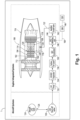
- FIG. 1 an illustrative view of an embodiment of a system in accordance with the disclosure is shown in Fig. 1 and is designated generally by reference character 100.
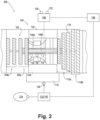
- FIG. 2 Other embodiments and/or aspects of this disclosure are shown in Fig. 2 .
- Certain embodiments described herein can be used to provide electric assist for turbine engines.
- This disclosure relates generally to gas turbine engines, and more particularly to gas turbine engines with electrical motor assistance.
- a gas turbine engine core can accelerate by just increasing fuel flow to the fuel injectors. This limit can be increased by adding power to the engine core from an electrical motor.
- certain control algorithms are required.
- This disclosure provides a solution for this need for example, by including both an electric motor control loop and an engine core fuel flow control loop to achieve the target engine speed.
- an aircraft 1 can include an engine 100, where the engine 100 can be a propulsive energy engine (e.g. creating thrust for the aircraft 1), or a non-propulsive energy engine, and a fuel system.
- the engine 100 is a turbofan engine, although the present disclosure may likewise be used with other engine types.
- the engine 100 includes a compressor section 102 having a compressor 104 in a primary gas path 106 to supply compressed air to a combustor 108 of the aircraft engine 100.
- the primary gas path 106 includes a nozzle manifold 110 for issuing fluid to the combustor 108.
- the primary gas path 106 includes, in fluid communication in a series: the compressor 104 having an inlet 112, the combustor 108 fluidly connected to an outlet 114 of the compressor 104, and a turbine section 116 fluidly connected to an outlet 118 of the combustor 108.
- the turbine section 116 is operatively connected to the compressor 104 to drive the compressor 104.
- the combustor 108 includes a plurality of fuel nozzles 120 each fluidly connected via a fuel feed conduit 122, which feeds the nozzle manifold 110, which feeds the plurality of fuel nozzles 120 of the combustor 108 with a gaseous fuel supply 124.
- the feed conduit 122 includes an inlet end 126 and an outlet end 128 to fluidly connect a fuel supply 124 to the combustor 108 through the plurality of fuel nozzles 120.
- the fuel supply 124 can be any suitable fuel, such as a gaseous pressure and/or temperature regulated fuel supply, which may be or include hydrogen gas.
- Certain additional components may also be included in fluid communication between the combustor and the gaseous fuel supply in any suitable order or combination, such as a fuel shut off valve 130, a fuel pump 132, a liquid/gaseous fuel evaporator 134, a turbine air cooling heat exchanger 136, a gaseous fuel accumulator 138, a gaseous fuel metering unit 140, and/or a fuel manifold shut off valve 142.
- a fuel shut off valve 130 a fuel pump 132, a liquid/gaseous fuel evaporator 134, a turbine air cooling heat exchanger 136, a gaseous fuel accumulator 138, a gaseous fuel metering unit 140, and/or a fuel manifold shut off valve 142.
- an electrical assist system 200 for an aircraft gas turbine engine (e.g. engine 100).
- An engine core 144 extends through and operatively connects the compressor section 102 and the turbine section 116 so the turbine section 116 can drive the compressor section 102.
- the engine 100 is a dual-spool engine, and the engine core includes a high pressure core 144a operatively connecting a high pressure turbine 116a of the turbine section to drive a high pressure compressor 104a of the compressor section 102.
- a low pressure core 144b connects a low pressure turbine 116b of the turbine section 116 to drive a low pressure compressor 104b of the compressor section 102.
- An electric machine 146 e.g. an electric motor
- the engine core 144 is operatively connected to the engine core 144, for example to at least one of the high pressure core 144a, and/or the low pressure core 144b.
- a fuel control mechanism 147 is disposed in the fuel feed conduit 122 to selectively control fuel flow from the fuel source 124 to the plurality of fuel nozzles 120.
- the fuel control mechanism 147 can be any suitable controllable fuel flow valve, or in certain embodiments, the fuel control mechanism 147 can be the fuel pump 132 itself where the control module 148 is operatively connected to control the fuel pump 132.
- the control module 148 is operatively connected the electric machine 146 and the fuel control mechanism 147 to control fuel flow to the plurality of fuel injectors 120 and to control the electric machine 146 based on feedback from a plurality of inputs using a feedback control loop.
- the fuel flow mechanism 147 can be controlled based on feedback from at least a power sensor 150 electrically connected to the electric machine 146 to sense voltage and current of power supplied to the electric machine 146 (e.g. via a generator) so that the control module 148 is operable to control fuel flow based on feedback from the power sensor 150.
- a speed sensor 152 is operatively connected to a rotatable component (e.g. a shaft or a rotor) of the electric machine 146 to sense the rotational speed of the electric machine 146 so that the control module 148 is operable to control fuel flow based on feedback from the speed sensor 152.
- the electric machine 146 can have an individual electric machine controller, separate from the control module 148.
- the fuel flow mechanism 147 can be controlled based on feedback from a torque estimate (derived from a torque sensor on the shaft of the electric machine) that is calculated by the electric machine controller and shared with the control module 148 through a data bus (e.g. a CANbus).
- the electric machine 146 can be controlled based on feedback from at least one of a rotational speed sensor 154 that is operatively connected to the engine core 144 (e.g. either the high pressure core 144a or low pressure core 144b in a dual-spool engine, or the single core in a single spool engine), an ambient pressure sensor 156, and/or a compressor discharge pressure sensor 158.
- the sensors 154, 156, 158 can be operatively connected to the engine 100 and to the control module 148 so that the control module 148 is operable to control fuel flow based on feedback from the rotational speed sensor 154, the ambient pressure sensor 156, and/or the compressor discharge pressure sensor 158.
- control module 148 includes machine readable instructions operative to accelerate the engine core 144 based on the sensor inputs described above. According to the invention the control module 148 is operative to perform a method of accelerating the engine core 144, including adding torque to the engine core 144 to accelerate rotation of the engine core 144 by controlling fuel flow to the fuel injectors 120 based on feedback from the electric machine 146, and simultaneously adding torque to the engine core 144 by powering the electric machine 146.
- Controlling fuel flow based on feedback from the electric machine 146 includes controlling fuel flow to achieve a target torque from the electric machine 146.
- a target torque can be any suitable torque for a given application, for example, a target value such as zero torque, or a target value that can be a positive value or a negative value.
- a slightly negative target torque can be a constant extract of a small amount of electrical power, and a slightly positive value can be a constant add of a small amount of electrical power.
- constant addition or extraction of power could be useful to tune engine performance for peak efficiency (e.g. transferring power between high spool and low spool), or in certain embodiments, the steady extraction of power could be used to recharge batteries gradually and/or provide electrical power to other power consuming electric devices.
- the method includes maintaining an engine core acceleration below a predetermined limit for compressor acceleration for the compressor section 102, and/or maintaining an acceleration of the engine core 144 below a predetermined limit for a P3/P1 ratio (where P3 is compressor discharge pressure for the gas turbine engine and P1 is ambient pressure for the gas turbine engine as sensed by sensors 156 and 158 respectively).
- controlling fuel flow can include controlling the fuel flow mechanism 147 to allow fuel flow to continue to be added to the plurality of fuel nozzles 120 until the electric machine 146 reaches a torque target, whereby power to the electric machine 146 can be reduced or stopped all together.
- Powering the electric machine 146 includes controlling the electric machine 146 based on the engine core speed feedback from the engine core 144 to reach a target core speed. Once the increased target speed is reached, the electric motor torque will be positive until the fuel flow is increased so that the turbine takes more of the compressor load and reduces the load on the electric machine 146. At that time, power to the electric machine 146 can be reduced or stopped all together and fuel flow to the plurality of fuel injectors 120 can be maintained.
- the electric motor can be used to accelerate the engine core without being limited by surge limits because the motor does not rely on over-fueling to accelerate. In certain instances, this can allow the compressor run line to be set closer to the surge limit where its performance is better. Knowing the condition of the electric motor thus allows the control module to know if fuel flow should increase or decrease to off-load the electric motor. However, in embodiments, it is possible that the control module does not need to change fuel flow rapidly, though rapid fuel flow change may occur because the electric motor acceleration would have put the core into an under-fueled state temporarily. Accordingly, as long as electric motor torque is positive, the fuel flow can be increased more rapidly than may otherwise be the case. The rate of change in fuel flow will therefore depend on how quickly the electric motor can accelerate the core and knowing the torque can indicate whether the fuel flow can be further increased without surge.
- aspects of the present disclosure may be embodied as a system, method or computer program product. Accordingly, aspects of this disclosure may take the form of an entirely hardware embodiment, an entirely software embodiment (including firmware, resident software, micro-code, etc.), or an embodiment combining software and hardware aspects, all possibilities of which can be referred to herein as a "circuit,” “module,” or “system.”
- a “circuit,” “module,” or “system” can include one or more portions of one or more separate physical hardware and/or software components that can together perform the disclosed function of the "circuit,” “module,” or “system”, or a “circuit,” “module,” or “system” can be a single self-contained unit (e.g., of hardware and/or software).
- aspects of this disclosure may take the form of a computer program product embodied in one or more computer readable medium(s) having computer readable program code embodied thereon.
- the computer readable medium may be a computer readable signal medium or a computer readable storage medium.
- a computer readable storage medium may be, for example, but not limited to, an electronic, magnetic, optical, electromagnetic, infrared, or semiconductor system, apparatus, or device, or any suitable combination of the foregoing.
- a computer readable storage medium may be any tangible medium that can contain, or store a program for use by or in connection with an instruction execution system, apparatus, or device.
- a computer readable signal medium may include a propagated data signal with computer readable program code embodied therein, for example, in baseband or as part of a carrier wave. Such a propagated signal may take any of a variety of forms, including, but not limited to, electro-magnetic, optical, or any suitable combination thereof.
- a computer readable signal medium may be any computer readable medium that is not a computer readable storage medium and that can communicate, propagate, or transport a program for use by or in connection with an instruction execution system, apparatus, or device.
- Program code embodied on a computer readable medium may be transmitted using any appropriate medium, including but not limited to wireless, wireline, optical fiber cable, RF, etc., or any suitable combination of the foregoing.
- Computer program code for carrying out operations for aspects of this disclosure may be written in any combination of one or more programming languages, including an object oriented programming language such as Java, Smalltalk, C++ or the like and conventional procedural programming languages, such as the "C" programming language or similar programming languages.
- the program code may execute entirely on the user's computer, partly on the user's computer, as a stand-alone software package, partly on the user's computer and partly on a remote computer or entirely on the remote computer or server.
- the remote computer may be connected to the user's computer through any type of network, including a local area network (LAN) or a wide area network (WAN), or the connection may be made to an external computer (for example, through the Internet using an Internet Service Provider).
- LAN local area network
- WAN wide area network
- Internet Service Provider for example, AT&T, MCI, Sprint, EarthLink, MSN, GTE, etc.
- These computer program instructions may also be stored in a computer readable medium that can direct a computer, other programmable data processing apparatus, or other devices to function in a particular manner, such that the instructions stored in the computer readable medium produce an article of manufacture including instructions which implement the function/act specified in the flowchart and/or block diagram block or blocks.
- the computer program instructions may also be loaded onto a computer, other programmable data processing apparatus, or other devices to cause a series of operational steps to be performed on the computer, other programmable apparatus or other devices to produce a computer implemented process such that the instructions which execute on the computer or other programmable apparatus provide processes for implementing the functions/acts specified herein.
- any numerical values disclosed herein can be exact values or can be values within a range. Further, any terms of approximation (e.g., “about”, “approximately”, “around”) used in this disclosure can mean the stated value within a range. For example, in certain embodiments, the range can be within (plus or minus) 20%, or within 10%, or within 5%, or within 2%, or within any other suitable percentage or number as appreciated by those having ordinary skill in the art (e.g., for known tolerance limits or error ranges).
- a reference to "A and/or B", when used in conjunction with open-ended language such as “comprising” can refer, in one embodiment, to A only (optionally including elements other than B); in another embodiment, to B only (optionally including elements other than A); in yet another embodiment, to both A and B (optionally including other elements); etc.
Landscapes
- Engineering & Computer Science (AREA)
- Chemical & Material Sciences (AREA)
- Combustion & Propulsion (AREA)
- Mechanical Engineering (AREA)
- General Engineering & Computer Science (AREA)
- Aviation & Aerospace Engineering (AREA)
- Supercharger (AREA)
- Control Of Eletrric Generators (AREA)
Description
- The present disclosure relates to electrically-assisted acceleration of aircraft.
- There is always a need in the art for improvements to electric propulsion in the aerospace industry.
- A prior art method having the features of the preamble of
claim 1 is disclosed inUS 2021/172384 A1 . - In accordance with an aspect of the present invention, there is provided a method of accelerating a gas turbine engine in accordance with
claim 1. - In certain embodiments, controlling fuel flow to the plurality of fuel injectors includes maintaining engine core acceleration below a predetermined limit for compressor acceleration for a compressor section of the gas turbine engine.
- In certain embodiments, controlling fuel flow to the plurality of fuel injectors includes maintaining an acceleration of the core below a predetermined limit for P3/P1 ratio, where P3 is compressor discharge pressure for the gas turbine engine and P1 is ambient pressure for the gas turbine engine.
- In accordance with yet another aspect of the present invention, there is provided an electrical assist system for an aircraft gas turbine engine in accordance with claim 4.
- In certain embodiments, controlling fuel flow to the plurality of fuel injectors includes maintaining an engine core acceleration below a predetermined limit for compressor acceleration for the compressor section. In certain embodiments, controlling fuel flow to the plurality of fuel injectors includes maintaining an acceleration of the engine core below a predetermined limit for a P3/P1 ratio, where P3 is compressor discharge pressure for the gas turbine engine and P1 is ambient pressure for the gas turbine engine.
- In embodiments, the engine core further includes a high pressure core operatively connecting a high pressure turbine of the turbine section to drive a high pressure compressor of the compressor section. A low pressure core connects a low pressure turbine of the turbine section to drive a low pressure compressor of the compressor section. In certain such embodiments, the electric machine can be operatively connected to at least one of the high pressure core and/or the low pressure core. In certain embodiments, the electric machine includes a plurality of electric machines and the plurality of electric machines can be operatively connected to both the high pressure core and the low pressure core.
- According to the invention, a feedback control loop is used to control fuel flow to the plurality of fuel injectors based on torque feedback and rotational speed feedback from the electric machine. In certain embodiments, the feedback control loop includes a power sensor electrically connected to the electric machine to sense voltage and current of power supplied to the electric machine so that the control module is operable to control fuel flow based on feedback from the power sensor.
- In certain embodiments, the feedback control loop includes a speed sensor operatively connected to a rotatable component of the electric machine to sense rotation speed of the electric machine so that the control module is operable to control fuel flow based on feedback from the speed sensor. In certain embodiments, the feedback control loop includes, at least one of: a rotational speed sensor operatively connected to the engine core, an ambient pressure sensor, and/or a compressor discharge pressure sensor so that the control module is operable to control fuel flow based on feedback from the at least one of the rotational speed sensor, the ambient pressure sensor, and/or the compressor discharge pressure sensor.
- In embodiments, a fuel pump connects a fuel source in fluid communication with the plurality of fuel injectors, and the control module is operatively connected to control the fuel pump to control fuel flow to the plurality of fuel injectors. In certain embodiments, controlling fuel flow includes adding fuel flow until the electric machine reaches a torque target.
- These and other features of the embodiments of the subject disclosure will become more readily apparent to those skilled in the art from the following detailed description taken in conjunction with the drawings.
- So that those skilled in the art to which the subject disclosure appertains will readily understand how to make and use the devices and methods of the subject disclosure without undue experimentation, embodiments thereof will be described in detail herein below with reference to certain figures, wherein:
-
Fig. 1 is schematic cross-sectional side elevation view an aircraft engine in accordance with this disclosure, showing a plurality of fuel components connecting a fuel source to a combustor; and -
Fig. 2 is an schematic view of the engine ofFig. 1 , showing an electric assist system. - Reference will now be made to the drawings wherein like reference numerals identify similar structural features or aspects of the subject disclosure. For purposes of explanation and illustration, and not limitation, an illustrative view of an embodiment of a system in accordance with the disclosure is shown in
Fig. 1 and is designated generally byreference character 100. Other embodiments and/or aspects of this disclosure are shown inFig. 2 . Certain embodiments described herein can be used to provide electric assist for turbine engines. - This disclosure relates generally to gas turbine engines, and more particularly to gas turbine engines with electrical motor assistance. In general, there is a limit to how fast a gas turbine engine core can accelerate by just increasing fuel flow to the fuel injectors. This limit can be increased by adding power to the engine core from an electrical motor. In order to control correctly control the electric motor assist, certain control algorithms are required. However, there is a need in the art for more reliable and robust control methods for electrically-assisted acceleration in the aerospace industry. For example, previous systems did not consider adjusting fuel supplied to the engine based on a known condition of the electric motor. This disclosure provides a solution for this need for example, by including both an electric motor control loop and an engine core fuel flow control loop to achieve the target engine speed.
- In certain embodiments, referring to
Fig. 1 , anaircraft 1 can include anengine 100, where theengine 100 can be a propulsive energy engine (e.g. creating thrust for the aircraft 1), or a non-propulsive energy engine, and a fuel system. As described herein, theengine 100 is a turbofan engine, although the present disclosure may likewise be used with other engine types. Theengine 100 includes acompressor section 102 having acompressor 104 in aprimary gas path 106 to supply compressed air to acombustor 108 of theaircraft engine 100. Theprimary gas path 106 includes anozzle manifold 110 for issuing fluid to thecombustor 108. - The
primary gas path 106 includes, in fluid communication in a series: thecompressor 104 having aninlet 112, thecombustor 108 fluidly connected to anoutlet 114 of thecompressor 104, and aturbine section 116 fluidly connected to anoutlet 118 of thecombustor 108. Theturbine section 116 is operatively connected to thecompressor 104 to drive thecompressor 104. - The
combustor 108 includes a plurality offuel nozzles 120 each fluidly connected via afuel feed conduit 122, which feeds thenozzle manifold 110, which feeds the plurality offuel nozzles 120 of thecombustor 108 with agaseous fuel supply 124. Thefeed conduit 122 includes aninlet end 126 and anoutlet end 128 to fluidly connect afuel supply 124 to thecombustor 108 through the plurality offuel nozzles 120. In embodiments, thefuel supply 124 can be any suitable fuel, such as a gaseous pressure and/or temperature regulated fuel supply, which may be or include hydrogen gas. - Certain additional components may also be included in fluid communication between the combustor and the gaseous fuel supply in any suitable order or combination, such as a fuel shut off
valve 130, afuel pump 132, a liquid/gaseous fuel evaporator 134, a turbine aircooling heat exchanger 136, agaseous fuel accumulator 138, a gaseousfuel metering unit 140, and/or a fuel manifold shut offvalve 142. - Referring now to
Fig. 2 , in accordance with at least one aspect of this disclosure, there is provided anelectrical assist system 200 for an aircraft gas turbine engine (e.g. engine 100). Anengine core 144 extends through and operatively connects thecompressor section 102 and theturbine section 116 so theturbine section 116 can drive thecompressor section 102. In embodiments, theengine 100 is a dual-spool engine, and the engine core includes ahigh pressure core 144a operatively connecting ahigh pressure turbine 116a of the turbine section to drive ahigh pressure compressor 104a of thecompressor section 102. Alow pressure core 144b connects alow pressure turbine 116b of theturbine section 116 to drive alow pressure compressor 104b of thecompressor section 102. It is contemplated theengine 100 can have any number of spools and engine cores for a given application, without departing from the scope of this disclosure. An electric machine 146 (e.g. an electric motor) is operatively connected to theengine core 144, for example to at least one of thehigh pressure core 144a, and/or thelow pressure core 144b. - A fuel control mechanism 147 is disposed in the
fuel feed conduit 122 to selectively control fuel flow from thefuel source 124 to the plurality offuel nozzles 120. The fuel control mechanism 147 can be any suitable controllable fuel flow valve, or in certain embodiments, the fuel control mechanism 147 can be thefuel pump 132 itself where thecontrol module 148 is operatively connected to control thefuel pump 132. Thecontrol module 148 is operatively connected theelectric machine 146 and the fuel control mechanism 147 to control fuel flow to the plurality offuel injectors 120 and to control theelectric machine 146 based on feedback from a plurality of inputs using a feedback control loop. - For example, the fuel flow mechanism 147 can be controlled based on feedback from at least a
power sensor 150 electrically connected to theelectric machine 146 to sense voltage and current of power supplied to the electric machine 146 (e.g. via a generator) so that thecontrol module 148 is operable to control fuel flow based on feedback from thepower sensor 150. In certain embodiments, aspeed sensor 152 is operatively connected to a rotatable component (e.g. a shaft or a rotor) of theelectric machine 146 to sense the rotational speed of theelectric machine 146 so that thecontrol module 148 is operable to control fuel flow based on feedback from thespeed sensor 152. - In certain embodiments, the
electric machine 146 can have an individual electric machine controller, separate from thecontrol module 148. In such embodiments, the fuel flow mechanism 147 can be controlled based on feedback from a torque estimate (derived from a torque sensor on the shaft of the electric machine) that is calculated by the electric machine controller and shared with thecontrol module 148 through a data bus (e.g. a CANbus). - With continued reference to
Fig. 2 , in certain embodiments theelectric machine 146 can be controlled based on feedback from at least one of arotational speed sensor 154 that is operatively connected to the engine core 144 (e.g. either thehigh pressure core 144a orlow pressure core 144b in a dual-spool engine, or the single core in a single spool engine), anambient pressure sensor 156, and/or a compressordischarge pressure sensor 158. Thesensors engine 100 and to thecontrol module 148 so that thecontrol module 148 is operable to control fuel flow based on feedback from therotational speed sensor 154, theambient pressure sensor 156, and/or the compressordischarge pressure sensor 158. - In certain embodiments, the
control module 148 includes machine readable instructions operative to accelerate theengine core 144 based on the sensor inputs described above. According to the invention thecontrol module 148 is operative to perform a method of accelerating theengine core 144, including adding torque to theengine core 144 to accelerate rotation of theengine core 144 by controlling fuel flow to thefuel injectors 120 based on feedback from theelectric machine 146, and simultaneously adding torque to theengine core 144 by powering theelectric machine 146. - Controlling fuel flow based on feedback from the
electric machine 146 includes controlling fuel flow to achieve a target torque from theelectric machine 146. As used herein a target torque can be any suitable torque for a given application, for example, a target value such as zero torque, or a target value that can be a positive value or a negative value. A slightly negative target torque can be a constant extract of a small amount of electrical power, and a slightly positive value can be a constant add of a small amount of electrical power. In certain embodiments, constant addition or extraction of power could be useful to tune engine performance for peak efficiency (e.g. transferring power between high spool and low spool), or in certain embodiments, the steady extraction of power could be used to recharge batteries gradually and/or provide electrical power to other power consuming electric devices. - In embodiments, the method includes maintaining an engine core acceleration below a predetermined limit for compressor acceleration for the
compressor section 102, and/or maintaining an acceleration of theengine core 144 below a predetermined limit for a P3/P1 ratio (where P3 is compressor discharge pressure for the gas turbine engine and P1 is ambient pressure for the gas turbine engine as sensed bysensors fuel nozzles 120 until theelectric machine 146 reaches a torque target, whereby power to theelectric machine 146 can be reduced or stopped all together. - Powering the
electric machine 146 includes controlling theelectric machine 146 based on the engine core speed feedback from theengine core 144 to reach a target core speed. Once the increased target speed is reached, the electric motor torque will be positive until the fuel flow is increased so that the turbine takes more of the compressor load and reduces the load on theelectric machine 146. At that time, power to theelectric machine 146 can be reduced or stopped all together and fuel flow to the plurality offuel injectors 120 can be maintained. - In embodiments, the electric motor can be used to accelerate the engine core without being limited by surge limits because the motor does not rely on over-fueling to accelerate. In certain instances, this can allow the compressor run line to be set closer to the surge limit where its performance is better. Knowing the condition of the electric motor thus allows the control module to know if fuel flow should increase or decrease to off-load the electric motor. However, in embodiments, it is possible that the control module does not need to change fuel flow rapidly, though rapid fuel flow change may occur because the electric motor acceleration would have put the core into an under-fueled state temporarily. Accordingly, as long as electric motor torque is positive, the fuel flow can be increased more rapidly than may otherwise be the case. The rate of change in fuel flow will therefore depend on how quickly the electric motor can accelerate the core and knowing the torque can indicate whether the fuel flow can be further increased without surge.
- As will be appreciated by those skilled in the art, aspects of the present disclosure may be embodied as a system, method or computer program product. Accordingly, aspects of this disclosure may take the form of an entirely hardware embodiment, an entirely software embodiment (including firmware, resident software, micro-code, etc.), or an embodiment combining software and hardware aspects, all possibilities of which can be referred to herein as a "circuit," "module," or "system." A "circuit," "module," or "system" can include one or more portions of one or more separate physical hardware and/or software components that can together perform the disclosed function of the "circuit," "module," or "system", or a "circuit," "module," or "system" can be a single self-contained unit (e.g., of hardware and/or software). Furthermore, aspects of this disclosure may take the form of a computer program product embodied in one or more computer readable medium(s) having computer readable program code embodied thereon.
- Any combination of one or more computer readable medium(s) may be utilized. The computer readable medium may be a computer readable signal medium or a computer readable storage medium. A computer readable storage medium may be, for example, but not limited to, an electronic, magnetic, optical, electromagnetic, infrared, or semiconductor system, apparatus, or device, or any suitable combination of the foregoing. More specific examples (a non-exhaustive list) of the computer readable storage medium would include the following: an electrical connection having one or more wires, a portable computer diskette, a hard disk, a random access memory (RAM), a read-only memory (ROM), an erasable programmable read-only memory (EPROM or Flash memory), an optical fiber, a portable compact disc read-only memory (CD-ROM), an optical storage device, a magnetic storage device, or any suitable combination of the foregoing. In the context of this document, a computer readable storage medium may be any tangible medium that can contain, or store a program for use by or in connection with an instruction execution system, apparatus, or device.
- A computer readable signal medium may include a propagated data signal with computer readable program code embodied therein, for example, in baseband or as part of a carrier wave. Such a propagated signal may take any of a variety of forms, including, but not limited to, electro-magnetic, optical, or any suitable combination thereof. A computer readable signal medium may be any computer readable medium that is not a computer readable storage medium and that can communicate, propagate, or transport a program for use by or in connection with an instruction execution system, apparatus, or device.
- Program code embodied on a computer readable medium may be transmitted using any appropriate medium, including but not limited to wireless, wireline, optical fiber cable, RF, etc., or any suitable combination of the foregoing.
- Computer program code for carrying out operations for aspects of this disclosure may be written in any combination of one or more programming languages, including an object oriented programming language such as Java, Smalltalk, C++ or the like and conventional procedural programming languages, such as the "C" programming language or similar programming languages. The program code may execute entirely on the user's computer, partly on the user's computer, as a stand-alone software package, partly on the user's computer and partly on a remote computer or entirely on the remote computer or server. In the latter scenario, the remote computer may be connected to the user's computer through any type of network, including a local area network (LAN) or a wide area network (WAN), or the connection may be made to an external computer (for example, through the Internet using an Internet Service Provider).
- Aspects of this disclosure may be described above with reference to flowchart illustrations and/or block diagrams of methods, apparatus (systems) and computer program products according to embodiments of this disclosure. It will be understood that each block of any flowchart illustrations and/or block diagrams, and combinations of blocks in any flowchart illustrations and/or block diagrams, can be implemented by computer program instructions. These computer program instructions may be provided to a processor of a general purpose computer, special purpose computer, or other programmable data processing apparatus to produce a machine, such that the instructions, which execute via the processor of the computer or other programmable data processing apparatus, create means for implementing the functions/acts specified in any flowchart and/or block diagram block or blocks.
- These computer program instructions may also be stored in a computer readable medium that can direct a computer, other programmable data processing apparatus, or other devices to function in a particular manner, such that the instructions stored in the computer readable medium produce an article of manufacture including instructions which implement the function/act specified in the flowchart and/or block diagram block or blocks.
- The computer program instructions may also be loaded onto a computer, other programmable data processing apparatus, or other devices to cause a series of operational steps to be performed on the computer, other programmable apparatus or other devices to produce a computer implemented process such that the instructions which execute on the computer or other programmable apparatus provide processes for implementing the functions/acts specified herein.
- Those having ordinary skill in the art understand that any numerical values disclosed herein can be exact values or can be values within a range. Further, any terms of approximation (e.g., "about", "approximately", "around") used in this disclosure can mean the stated value within a range. For example, in certain embodiments, the range can be within (plus or minus) 20%, or within 10%, or within 5%, or within 2%, or within any other suitable percentage or number as appreciated by those having ordinary skill in the art (e.g., for known tolerance limits or error ranges).
- The articles "a", "an", and "the" as used herein and in the appended claims are used herein to refer to one or to more than one (i.e., to at least one) of the grammatical object of the article unless the context clearly indicates otherwise. By way of example, "an element" means one element or more than one element.
- The phrase "and/or," as used herein in the specification and in the claims, should be understood to mean "either or both" of the elements so conjoined, i.e., elements that are conjunctively present in some cases and disjunctively present in other cases. Multiple elements listed with "and/or" should be construed in the same fashion, i.e., "one or more" of the elements so conjoined. Other elements may optionally be present other than the elements specifically identified by the "and/or" clause, whether related or unrelated to those elements specifically identified. Thus, as a non-limiting example, a reference to "A and/or B", when used in conjunction with open-ended language such as "comprising" can refer, in one embodiment, to A only (optionally including elements other than B); in another embodiment, to B only (optionally including elements other than A); in yet another embodiment, to both A and B (optionally including other elements); etc.
- As used herein in the specification and in the claims, "or" should be understood to have the same meaning as "and/or" as defined above. For example, when separating items in a list, "or" or "and/or" shall be interpreted as being inclusive, i.e., the inclusion of at least one, but also including more than one, of a number or list of elements, and, optionally, additional unlisted items. Only terms clearly indicated to the contrary, such as "only one of" or "exactly one of," or, when used in the claims, "consisting of," will refer to the inclusion of exactly one element of a number or list of elements. In general, the term "or" as used herein shall only be interpreted as indicating exclusive alternatives (i.e., "one or the other but not both") when preceded by terms of exclusivity, such as "either," "one of," "only one of," or "exactly one of."
- The embodiments of the present disclosure, as described above and shown in the drawings, provide for improvement in the art to which they pertain. While the subject disclosure includes reference to certain embodiments, those skilled in the art will readily appreciate that changes and/or modifications may be made thereto without departing from the scope of the appended claims.
Claims (13)
- A method of accelerating a gas turbine engine (100) of an aircraft (1), comprising:adding torque to a core (144) of the gas turbine engine (100) to accelerate rotation of the core (144) by controlling fuel flow to a plurality of fuel injectors (120) of the gas turbine engine (100); andadding torque to the core (144) by powering an electric machine (146) that is operatively connected to the core (144) to drive the core (144),characterized in that:the controlling fuel flow to the plurality of fuel injectors is based on feedback from the electric machine (146) including a torque feedback and a rotational speed feedback;powering the electric machine (146) includes controlling the electric machine (146) based on an engine core speed feedback from the core (144) to reach a target core speed of the core (144); andthe controlling fuel flow based on feedback from the electric machine (146) includes controlling fuel flow to achieve a target torque generated by the electric machine (146).
- The method as recited in claim 1, wherein the controlling fuel flow to the plurality of fuel injectors (120) includes maintaining engine core acceleration below a predetermined limit for compressor acceleration for a compressor section (102) of the gas turbine engine (100).
- The method as recited in claim 1 or 2, wherein the controlling fuel flow to the plurality of fuel injectors (120) includes maintaining an acceleration of the core (144) below a predetermined limit for P3/P1 ratio, wherein P3 is compressor discharge pressure for the gas turbine engine (100), and wherein P1 is ambient pressure for the gas turbine engine (100).
- An electrical assist system (200) for an aircraft (1), comprising:a gas turbine engine (100) including:a compressor section (102) having an inlet (112) and an outlet (114);a combustor (108) having an inlet and an outlet (118), wherein the inlet of the combustor (108) is in fluid communication with the outlet (114) of the compressor section (102);a turbine section (116) having an inlet and an outlet, wherein the inlet of the turbine section (116) is in fluid communication with the outlet (118) of the combustor (108);an engine core (144) extending through and operatively connecting the compressor section (102) and the turbine section (116); anda plurality of fuel injectors (120) fluidly connected to issue fuel into the combustor (108) for combustion;an electric machine (146) operatively connected to the engine core (144); anda control module (148) operatively connected to control fuel flow to the plurality of fuel injectors (120) and to control the electric machine (146) based on feedback from at least one of: the compressor section (102), the engine core (144), the turbine section (116), and/or the combustor (108),wherein the control module (148) includes machine readable instructions operative to:perform acceleration of the engine core (144);add torque to the engine core (144) to accelerate rotation of the engine core (144) by controlling fuel flow to the plurality of fuel injectors (120) of the gas turbine engine (100); andadd torque to the engine core (144) by powering the electric machine (146), characterized in that:the system comprises a feedback control loop wherein the torque feedback and rotational speed feedback from the electric machine (146) are used to control fuel flow to the plurality of fuel injectors (120);powering the electric machine (146) includes controlling the electric machine (146) based on an engine core speed feedback from the core (144) to reach a target core speed of the core (144); andthe controlling fuel flow based on feedback from the electric machine (146) includes controlling fuel flow to achieve a target torque generated by the electric machine (146).
- The system as recited in claim 4, wherein the controlling fuel flow to the plurality of fuel injectors (120) includes maintaining an engine core acceleration below a predetermined limit for compressor acceleration for the compressor section (102).
- The system as recited in claim 4 or 5, wherein the controlling fuel flow to the plurality of fuel injectors (120) includes maintaining an acceleration of the engine core (144) below a predetermined limit for a P3/P1 ratio, wherein P3 is compressor discharge pressure for the gas turbine engine (100), and wherein P1 is ambient pressure for the gas turbine engine (100).
- The system as recited in claim 4, 5 or 6, wherein the engine core (144) further includes:a high pressure core (144a) operatively connecting a high pressure turbine (116a) of the turbine section (116) to drive a high pressure compressor (104a) of the compressor section (102); anda low pressure core (144b) operatively connecting a low pressure turbine (116b) of the turbine section (116) to drive a low pressure compressor (104b) of the compressor section (102), wherein the electric machine (146) is operatively connected to at least one of the high pressure core (144a) and/or the low pressure core (144b).
- The system as recited in claim 7, wherein the electric machine (146) includes a plurality of electric machines (146) operatively connected to both the high pressure core (144a) and the low pressure core (144b).
- The system as recited in any of claims 4 to 8, wherein the feedback control loop includes a power sensor (150) electrically connected to the electric machine (146) to sense voltage and current of power supplied to the electric machine (146), wherein the control module (148) is operable to control fuel flow based on feedback from the power sensor (150).
- The system as recited in any of claims 4 to 9, wherein the feedback control loop includes a speed sensor (152) operatively connected to a rotatable component of the electric machine (146) to sense rotation speed of the electric machine (146), wherein the control module (148) is operable to control fuel flow based on feedback from the speed sensor (152).
- The system as recited in any of claims 4 to 10, wherein the feedback control loop further includes, at least one: of a rotational speed sensor (154) operatively connected to the engine core (144), an ambient pressure sensor (156), and/or a compressor discharge pressure sensor (158), wherein the control module (148) is operable to control fuel flow based on feedback from the at least one of the rotational speed sensor (154), the ambient pressure sensor (156), and/or the compressor discharge pressure sensor (158).
- The system as recited in any of claims 4 to 11, further comprising a fuel pump (132) connecting a fuel source (124) in fluid communication with the plurality of fuel injectors (120), wherein the control module (148) is operatively connected to control the fuel pump (132) to control fuel flow to the plurality of fuel injectors (120).
- The system as recited in any of claims 4 to 12, wherein the controlling fuel flow includes adding fuel flow until the electric machine (146) reaches the target torque.
Applications Claiming Priority (1)
| Application Number | Priority Date | Filing Date | Title |
|---|---|---|---|
| US17/402,483 US20230047326A1 (en) | 2021-08-13 | 2021-08-13 | Control for electrically assisted turbines |
Publications (2)
| Publication Number | Publication Date |
|---|---|
| EP4134534A1 EP4134534A1 (en) | 2023-02-15 |
| EP4134534B1 true EP4134534B1 (en) | 2025-04-30 |
Family
ID=82939851
Family Applications (1)
| Application Number | Title | Priority Date | Filing Date |
|---|---|---|---|
| EP22190413.9A Active EP4134534B1 (en) | 2021-08-13 | 2022-08-15 | Control for electrically assisted turbines |
Country Status (4)
| Country | Link |
|---|---|
| US (1) | US20230047326A1 (en) |
| EP (1) | EP4134534B1 (en) |
| BR (1) | BR102022016018A2 (en) |
| CA (1) | CA3170222A1 (en) |
Families Citing this family (2)
| Publication number | Priority date | Publication date | Assignee | Title |
|---|---|---|---|---|
| US12263953B2 (en) | 2023-05-02 | 2025-04-01 | Pratt & Whitney Canada Corp. | System and method for operating a hybrid aircraft power plant |
| US12503243B2 (en) * | 2024-04-12 | 2025-12-23 | Pratt & Whitney Canada Corp. | Method and system for operating a hybrid aircraft engine |
Family Cites Families (7)
| Publication number | Priority date | Publication date | Assignee | Title |
|---|---|---|---|---|
| US9903278B2 (en) * | 2015-04-17 | 2018-02-27 | Honda Motor Co., Ltd. | Control apparatus for estimating operating parameter of a gas-turbine aeroengine |
| US11230385B2 (en) * | 2017-06-08 | 2022-01-25 | General Electric Company | Hybrid-electric propulsion system for an aircraft |
| US10934972B2 (en) * | 2018-07-19 | 2021-03-02 | Raytheon Technologies Corporation | Stability margin and clearance control using power extraction and assist of a gas turbine engine |
| US11332256B2 (en) * | 2018-08-21 | 2022-05-17 | General Electric Company | Fault tolerant hybrid electric propulsion system for an aerial vehicle |
| US11015480B2 (en) * | 2018-08-21 | 2021-05-25 | General Electric Company | Feed forward load sensing for hybrid electric systems |
| GB2588073A (en) * | 2019-06-12 | 2021-04-21 | Rolls Royce Plc | Limiting spool speeds in a gas turbine engine |
| US11428171B2 (en) * | 2019-12-06 | 2022-08-30 | General Electric Company | Electric machine assistance for multi-spool turbomachine operation and control |
-
2021
- 2021-08-13 US US17/402,483 patent/US20230047326A1/en active Pending
-
2022
- 2022-08-11 CA CA3170222A patent/CA3170222A1/en active Pending
- 2022-08-12 BR BR102022016018-0A patent/BR102022016018A2/en unknown
- 2022-08-15 EP EP22190413.9A patent/EP4134534B1/en active Active
Also Published As
| Publication number | Publication date |
|---|---|
| US20230047326A1 (en) | 2023-02-16 |
| CA3170222A1 (en) | 2023-02-13 |
| BR102022016018A2 (en) | 2023-03-07 |
| EP4134534A1 (en) | 2023-02-15 |
Similar Documents
| Publication | Publication Date | Title |
|---|---|---|
| EP3667047B1 (en) | Fuel systems having reduced bypass flow | |
| EP4134534B1 (en) | Control for electrically assisted turbines | |
| US11014513B2 (en) | Control of low pressure generator for gas turbine engine | |
| EP3130783B1 (en) | Gas turbine engine stall margin management | |
| CA2902461C (en) | Hybrid turbo electric aero-propulsion system control | |
| EP3960996B1 (en) | Hybrid electric engine speed regulation | |
| EP3530909B1 (en) | Fuel pump systems for turbomachines | |
| US9964073B1 (en) | Liquid rocket engine with hybrid electric motor driven pump | |
| US10233768B1 (en) | Apparatus and process for optimizing turbine engine performance via load control through a power control module | |
| EP3862553B1 (en) | Metering pump system | |
| EP4209680B1 (en) | Fuel pump systems | |
| CN106574574A (en) | Hybrid compressors for turbojet engines | |
| US20250223048A1 (en) | Method and unit for controlling a motor assembly | |
| US20230116724A1 (en) | Aircraft fuel cell system without the use of a buffer battery | |
| EP2964931B1 (en) | Vehicle recuperator | |
| EP4130450A2 (en) | Transient gaseous fuel flow scheduling | |
| EP4124735A1 (en) | Controlling gaseous fuel flow in an aircraft engine | |
| US11946378B2 (en) | Transient control of a thermal transport bus | |
| EP4191039B1 (en) | Fuel pump systems | |
| US12209537B1 (en) | Hydraulic motoring of engine | |
| US12546259B2 (en) | Systems and methods for integrating use of starter on the low pressure spool of a turbine engine | |
| CN121382426A (en) | Fuel regulation and control and state protection control device and method for gas turbine |
Legal Events
| Date | Code | Title | Description |
|---|---|---|---|
| PUAI | Public reference made under article 153(3) epc to a published international application that has entered the european phase |
Free format text: ORIGINAL CODE: 0009012 |
|
| STAA | Information on the status of an ep patent application or granted ep patent |
Free format text: STATUS: THE APPLICATION HAS BEEN PUBLISHED |
|
| AK | Designated contracting states |
Kind code of ref document: A1 Designated state(s): AL AT BE BG CH CY CZ DE DK EE ES FI FR GB GR HR HU IE IS IT LI LT LU LV MC MK MT NL NO PL PT RO RS SE SI SK SM TR |
|
| STAA | Information on the status of an ep patent application or granted ep patent |
Free format text: STATUS: REQUEST FOR EXAMINATION WAS MADE |
|
| 17P | Request for examination filed |
Effective date: 20230815 |
|
| RBV | Designated contracting states (corrected) |
Designated state(s): AL AT BE BG CH CY CZ DE DK EE ES FI FR GB GR HR HU IE IS IT LI LT LU LV MC MK MT NL NO PL PT RO RS SE SI SK SM TR |
|
| GRAP | Despatch of communication of intention to grant a patent |
Free format text: ORIGINAL CODE: EPIDOSNIGR1 |
|
| STAA | Information on the status of an ep patent application or granted ep patent |
Free format text: STATUS: GRANT OF PATENT IS INTENDED |
|
| RIC1 | Information provided on ipc code assigned before grant |
Ipc: F02K 5/00 20060101ALI20240610BHEP Ipc: B64D 27/24 20060101ALI20240610BHEP Ipc: F02C 9/48 20060101AFI20240610BHEP |
|
| INTG | Intention to grant announced |
Effective date: 20240703 |
|
| GRAJ | Information related to disapproval of communication of intention to grant by the applicant or resumption of examination proceedings by the epo deleted |
Free format text: ORIGINAL CODE: EPIDOSDIGR1 |
|
| STAA | Information on the status of an ep patent application or granted ep patent |
Free format text: STATUS: REQUEST FOR EXAMINATION WAS MADE |
|
| GRAP | Despatch of communication of intention to grant a patent |
Free format text: ORIGINAL CODE: EPIDOSNIGR1 |
|
| STAA | Information on the status of an ep patent application or granted ep patent |
Free format text: STATUS: GRANT OF PATENT IS INTENDED |
|
| INTC | Intention to grant announced (deleted) | ||
| INTG | Intention to grant announced |
Effective date: 20241119 |
|
| GRAS | Grant fee paid |
Free format text: ORIGINAL CODE: EPIDOSNIGR3 |
|
| GRAA | (expected) grant |
Free format text: ORIGINAL CODE: 0009210 |
|
| STAA | Information on the status of an ep patent application or granted ep patent |
Free format text: STATUS: THE PATENT HAS BEEN GRANTED |
|
| AK | Designated contracting states |
Kind code of ref document: B1 Designated state(s): AL AT BE BG CH CY CZ DE DK EE ES FI FR GB GR HR HU IE IS IT LI LT LU LV MC MK MT NL NO PL PT RO RS SE SI SK SM TR |
|
| REG | Reference to a national code |
Ref country code: CH Ref legal event code: EP Ref country code: GB Ref legal event code: FG4D |
|
| REG | Reference to a national code |
Ref country code: DE Ref legal event code: R096 Ref document number: 602022013813 Country of ref document: DE |
|
| REG | Reference to a national code |
Ref country code: IE Ref legal event code: FG4D |
|
| REG | Reference to a national code |
Ref country code: NL Ref legal event code: MP Effective date: 20250430 |
|
| REG | Reference to a national code |
Ref country code: AT Ref legal event code: MK05 Ref document number: 1790214 Country of ref document: AT Kind code of ref document: T Effective date: 20250430 |
|
| PG25 | Lapsed in a contracting state [announced via postgrant information from national office to epo] |
Ref country code: ES Free format text: LAPSE BECAUSE OF FAILURE TO SUBMIT A TRANSLATION OF THE DESCRIPTION OR TO PAY THE FEE WITHIN THE PRESCRIBED TIME-LIMIT Effective date: 20250430 Ref country code: PT Free format text: LAPSE BECAUSE OF FAILURE TO SUBMIT A TRANSLATION OF THE DESCRIPTION OR TO PAY THE FEE WITHIN THE PRESCRIBED TIME-LIMIT Effective date: 20250901 Ref country code: FI Free format text: LAPSE BECAUSE OF FAILURE TO SUBMIT A TRANSLATION OF THE DESCRIPTION OR TO PAY THE FEE WITHIN THE PRESCRIBED TIME-LIMIT Effective date: 20250430 |
|
| PGFP | Annual fee paid to national office [announced via postgrant information from national office to epo] |
Ref country code: DE Payment date: 20250724 Year of fee payment: 4 |
|
| REG | Reference to a national code |
Ref country code: LT Ref legal event code: MG9D |
|
| PG25 | Lapsed in a contracting state [announced via postgrant information from national office to epo] |
Ref country code: NO Free format text: LAPSE BECAUSE OF FAILURE TO SUBMIT A TRANSLATION OF THE DESCRIPTION OR TO PAY THE FEE WITHIN THE PRESCRIBED TIME-LIMIT Effective date: 20250730 Ref country code: GR Free format text: LAPSE BECAUSE OF FAILURE TO SUBMIT A TRANSLATION OF THE DESCRIPTION OR TO PAY THE FEE WITHIN THE PRESCRIBED TIME-LIMIT Effective date: 20250731 |
|
| PG25 | Lapsed in a contracting state [announced via postgrant information from national office to epo] |
Ref country code: NL Free format text: LAPSE BECAUSE OF FAILURE TO SUBMIT A TRANSLATION OF THE DESCRIPTION OR TO PAY THE FEE WITHIN THE PRESCRIBED TIME-LIMIT Effective date: 20250430 Ref country code: PL Free format text: LAPSE BECAUSE OF FAILURE TO SUBMIT A TRANSLATION OF THE DESCRIPTION OR TO PAY THE FEE WITHIN THE PRESCRIBED TIME-LIMIT Effective date: 20250430 |
|
| PGFP | Annual fee paid to national office [announced via postgrant information from national office to epo] |
Ref country code: IT Payment date: 20250901 Year of fee payment: 4 |
|
| PG25 | Lapsed in a contracting state [announced via postgrant information from national office to epo] |
Ref country code: BG Free format text: LAPSE BECAUSE OF FAILURE TO SUBMIT A TRANSLATION OF THE DESCRIPTION OR TO PAY THE FEE WITHIN THE PRESCRIBED TIME-LIMIT Effective date: 20250430 |
|
| PG25 | Lapsed in a contracting state [announced via postgrant information from national office to epo] |
Ref country code: HR Free format text: LAPSE BECAUSE OF FAILURE TO SUBMIT A TRANSLATION OF THE DESCRIPTION OR TO PAY THE FEE WITHIN THE PRESCRIBED TIME-LIMIT Effective date: 20250430 |
|
| PG25 | Lapsed in a contracting state [announced via postgrant information from national office to epo] |
Ref country code: AT Free format text: LAPSE BECAUSE OF FAILURE TO SUBMIT A TRANSLATION OF THE DESCRIPTION OR TO PAY THE FEE WITHIN THE PRESCRIBED TIME-LIMIT Effective date: 20250430 |
|
| PGFP | Annual fee paid to national office [announced via postgrant information from national office to epo] |
Ref country code: FR Payment date: 20250725 Year of fee payment: 4 |
|
| PG25 | Lapsed in a contracting state [announced via postgrant information from national office to epo] |
Ref country code: RS Free format text: LAPSE BECAUSE OF FAILURE TO SUBMIT A TRANSLATION OF THE DESCRIPTION OR TO PAY THE FEE WITHIN THE PRESCRIBED TIME-LIMIT Effective date: 20250731 |
|
| PG25 | Lapsed in a contracting state [announced via postgrant information from national office to epo] |
Ref country code: IS Free format text: LAPSE BECAUSE OF FAILURE TO SUBMIT A TRANSLATION OF THE DESCRIPTION OR TO PAY THE FEE WITHIN THE PRESCRIBED TIME-LIMIT Effective date: 20250830 |
|
| PG25 | Lapsed in a contracting state [announced via postgrant information from national office to epo] |
Ref country code: LV Free format text: LAPSE BECAUSE OF FAILURE TO SUBMIT A TRANSLATION OF THE DESCRIPTION OR TO PAY THE FEE WITHIN THE PRESCRIBED TIME-LIMIT Effective date: 20250430 |
|
| PG25 | Lapsed in a contracting state [announced via postgrant information from national office to epo] |
Ref country code: DK Free format text: LAPSE BECAUSE OF FAILURE TO SUBMIT A TRANSLATION OF THE DESCRIPTION OR TO PAY THE FEE WITHIN THE PRESCRIBED TIME-LIMIT Effective date: 20250430 Ref country code: SM Free format text: LAPSE BECAUSE OF FAILURE TO SUBMIT A TRANSLATION OF THE DESCRIPTION OR TO PAY THE FEE WITHIN THE PRESCRIBED TIME-LIMIT Effective date: 20250430 |
|
| PG25 | Lapsed in a contracting state [announced via postgrant information from national office to epo] |
Ref country code: CZ Free format text: LAPSE BECAUSE OF FAILURE TO SUBMIT A TRANSLATION OF THE DESCRIPTION OR TO PAY THE FEE WITHIN THE PRESCRIBED TIME-LIMIT Effective date: 20250430 |
|
| PG25 | Lapsed in a contracting state [announced via postgrant information from national office to epo] |
Ref country code: EE Free format text: LAPSE BECAUSE OF FAILURE TO SUBMIT A TRANSLATION OF THE DESCRIPTION OR TO PAY THE FEE WITHIN THE PRESCRIBED TIME-LIMIT Effective date: 20250430 |
|
| PG25 | Lapsed in a contracting state [announced via postgrant information from national office to epo] |
Ref country code: SK Free format text: LAPSE BECAUSE OF FAILURE TO SUBMIT A TRANSLATION OF THE DESCRIPTION OR TO PAY THE FEE WITHIN THE PRESCRIBED TIME-LIMIT Effective date: 20250430 |
|
| REG | Reference to a national code |
Ref country code: DE Ref legal event code: R097 Ref document number: 602022013813 Country of ref document: DE |
|
| PG25 | Lapsed in a contracting state [announced via postgrant information from national office to epo] |
Ref country code: RO Free format text: LAPSE BECAUSE OF FAILURE TO SUBMIT A TRANSLATION OF THE DESCRIPTION OR TO PAY THE FEE WITHIN THE PRESCRIBED TIME-LIMIT Effective date: 20250430 |
|
| PLBE | No opposition filed within time limit |
Free format text: ORIGINAL CODE: 0009261 |
|
| STAA | Information on the status of an ep patent application or granted ep patent |
Free format text: STATUS: NO OPPOSITION FILED WITHIN TIME LIMIT |
|
| REG | Reference to a national code |
Ref country code: CH Ref legal event code: L10 Free format text: ST27 STATUS EVENT CODE: U-0-0-L10-L00 (AS PROVIDED BY THE NATIONAL OFFICE) Effective date: 20260311 |
|
| REG | Reference to a national code |
Ref country code: CH Ref legal event code: H13 Free format text: ST27 STATUS EVENT CODE: U-0-0-H10-H13 (AS PROVIDED BY THE NATIONAL OFFICE) Effective date: 20260324 |
|
| PG25 | Lapsed in a contracting state [announced via postgrant information from national office to epo] |
Ref country code: MC Free format text: LAPSE BECAUSE OF FAILURE TO SUBMIT A TRANSLATION OF THE DESCRIPTION OR TO PAY THE FEE WITHIN THE PRESCRIBED TIME-LIMIT Effective date: 20250430 |
|
| 26N | No opposition filed |
Effective date: 20260202 |
|
| PG25 | Lapsed in a contracting state [announced via postgrant information from national office to epo] |
Ref country code: LU Free format text: LAPSE BECAUSE OF NON-PAYMENT OF DUE FEES Effective date: 20250815 |
|
| PG25 | Lapsed in a contracting state [announced via postgrant information from national office to epo] |
Ref country code: CH Free format text: LAPSE BECAUSE OF NON-PAYMENT OF DUE FEES Effective date: 20250831 |