EP4134533B1 - Mechanical drive shaft arrangements for tail cone generators - Google Patents
Mechanical drive shaft arrangements for tail cone generators Download PDFInfo
- Publication number
- EP4134533B1 EP4134533B1 EP22190388.3A EP22190388A EP4134533B1 EP 4134533 B1 EP4134533 B1 EP 4134533B1 EP 22190388 A EP22190388 A EP 22190388A EP 4134533 B1 EP4134533 B1 EP 4134533B1
- Authority
- EP
- European Patent Office
- Prior art keywords
- shaft
- generator
- thru
- coupling
- coupler mount
- Prior art date
- Legal status (The legal status is an assumption and is not a legal conclusion. Google has not performed a legal analysis and makes no representation as to the accuracy of the status listed.)
- Active
Links
Images


Classifications
-
- B—PERFORMING OPERATIONS; TRANSPORTING
- B64—AIRCRAFT; AVIATION; COSMONAUTICS
- B64D—EQUIPMENT FOR FITTING IN OR TO AIRCRAFT; FLIGHT SUITS; PARACHUTES; ARRANGEMENT OR MOUNTING OF POWER PLANTS OR PROPULSION TRANSMISSIONS IN AIRCRAFT
- B64D35/00—Transmitting power from power plants to propellers or rotors; Arrangements of transmissions
-
- B—PERFORMING OPERATIONS; TRANSPORTING
- B64—AIRCRAFT; AVIATION; COSMONAUTICS
- B64D—EQUIPMENT FOR FITTING IN OR TO AIRCRAFT; FLIGHT SUITS; PARACHUTES; ARRANGEMENT OR MOUNTING OF POWER PLANTS OR PROPULSION TRANSMISSIONS IN AIRCRAFT
- B64D41/00—Power installations for auxiliary purposes
-
- F—MECHANICAL ENGINEERING; LIGHTING; HEATING; WEAPONS; BLASTING
- F01—MACHINES OR ENGINES IN GENERAL; ENGINE PLANTS IN GENERAL; STEAM ENGINES
- F01D—NON-POSITIVE DISPLACEMENT MACHINES OR ENGINES, e.g. STEAM TURBINES
- F01D15/00—Adaptations of machines or engines for special use; Combinations of engines with devices driven thereby
- F01D15/10—Adaptations for driving, or combinations with, electric generators
-
- F—MECHANICAL ENGINEERING; LIGHTING; HEATING; WEAPONS; BLASTING
- F01—MACHINES OR ENGINES IN GENERAL; ENGINE PLANTS IN GENERAL; STEAM ENGINES
- F01D—NON-POSITIVE DISPLACEMENT MACHINES OR ENGINES, e.g. STEAM TURBINES
- F01D5/00—Blades; Blade-carrying members; Heating, heat-insulating, cooling or antivibration means on the blades or the members
- F01D5/02—Blade-carrying members, e.g. rotors
- F01D5/026—Shaft to shaft connections
-
- F—MECHANICAL ENGINEERING; LIGHTING; HEATING; WEAPONS; BLASTING
- F02—COMBUSTION ENGINES; HOT-GAS OR COMBUSTION-PRODUCT ENGINE PLANTS
- F02C—GAS-TURBINE PLANTS; AIR INTAKES FOR JET-PROPULSION PLANTS; CONTROLLING FUEL SUPPLY IN AIR-BREATHING JET-PROPULSION PLANTS
- F02C7/00—Features, components parts, details or accessories, not provided for in, or of interest apart form groups F02C1/00 - F02C6/00; Air intakes for jet-propulsion plants
- F02C7/36—Power transmission arrangements between the different shafts of the gas turbine plant, or between the gas-turbine plant and the power user
-
- F—MECHANICAL ENGINEERING; LIGHTING; HEATING; WEAPONS; BLASTING
- F02—COMBUSTION ENGINES; HOT-GAS OR COMBUSTION-PRODUCT ENGINE PLANTS
- F02C—GAS-TURBINE PLANTS; AIR INTAKES FOR JET-PROPULSION PLANTS; CONTROLLING FUEL SUPPLY IN AIR-BREATHING JET-PROPULSION PLANTS
- F02C7/00—Features, components parts, details or accessories, not provided for in, or of interest apart form groups F02C1/00 - F02C6/00; Air intakes for jet-propulsion plants
- F02C7/32—Arrangement, mounting, or driving, of auxiliaries
-
- F—MECHANICAL ENGINEERING; LIGHTING; HEATING; WEAPONS; BLASTING
- F05—INDEXING SCHEMES RELATING TO ENGINES OR PUMPS IN VARIOUS SUBCLASSES OF CLASSES F01-F04
- F05D—INDEXING SCHEME FOR ASPECTS RELATING TO NON-POSITIVE-DISPLACEMENT MACHINES OR ENGINES, GAS-TURBINES OR JET-PROPULSION PLANTS
- F05D2220/00—Application
- F05D2220/30—Application in turbines
- F05D2220/32—Application in turbines in gas turbines
- F05D2220/323—Application in turbines in gas turbines for aircraft propulsion, e.g. jet engines
-
- F—MECHANICAL ENGINEERING; LIGHTING; HEATING; WEAPONS; BLASTING
- F05—INDEXING SCHEMES RELATING TO ENGINES OR PUMPS IN VARIOUS SUBCLASSES OF CLASSES F01-F04
- F05D—INDEXING SCHEME FOR ASPECTS RELATING TO NON-POSITIVE-DISPLACEMENT MACHINES OR ENGINES, GAS-TURBINES OR JET-PROPULSION PLANTS
- F05D2220/00—Application
- F05D2220/70—Application in combination with
- F05D2220/76—Application in combination with an electrical generator
-
- F—MECHANICAL ENGINEERING; LIGHTING; HEATING; WEAPONS; BLASTING
- F05—INDEXING SCHEMES RELATING TO ENGINES OR PUMPS IN VARIOUS SUBCLASSES OF CLASSES F01-F04
- F05D—INDEXING SCHEME FOR ASPECTS RELATING TO NON-POSITIVE-DISPLACEMENT MACHINES OR ENGINES, GAS-TURBINES OR JET-PROPULSION PLANTS
- F05D2240/00—Components
- F05D2240/60—Shafts
-
- F—MECHANICAL ENGINEERING; LIGHTING; HEATING; WEAPONS; BLASTING
- F05—INDEXING SCHEMES RELATING TO ENGINES OR PUMPS IN VARIOUS SUBCLASSES OF CLASSES F01-F04
- F05D—INDEXING SCHEME FOR ASPECTS RELATING TO NON-POSITIVE-DISPLACEMENT MACHINES OR ENGINES, GAS-TURBINES OR JET-PROPULSION PLANTS
- F05D2240/00—Components
- F05D2240/60—Shafts
- F05D2240/61—Hollow
-
- F—MECHANICAL ENGINEERING; LIGHTING; HEATING; WEAPONS; BLASTING
- F05—INDEXING SCHEMES RELATING TO ENGINES OR PUMPS IN VARIOUS SUBCLASSES OF CLASSES F01-F04
- F05D—INDEXING SCHEME FOR ASPECTS RELATING TO NON-POSITIVE-DISPLACEMENT MACHINES OR ENGINES, GAS-TURBINES OR JET-PROPULSION PLANTS
- F05D2250/00—Geometry
- F05D2250/10—Two-dimensional
- F05D2250/11—Two-dimensional triangular
-
- F—MECHANICAL ENGINEERING; LIGHTING; HEATING; WEAPONS; BLASTING
- F05—INDEXING SCHEMES RELATING TO ENGINES OR PUMPS IN VARIOUS SUBCLASSES OF CLASSES F01-F04
- F05D—INDEXING SCHEME FOR ASPECTS RELATING TO NON-POSITIVE-DISPLACEMENT MACHINES OR ENGINES, GAS-TURBINES OR JET-PROPULSION PLANTS
- F05D2250/00—Geometry
- F05D2250/10—Two-dimensional
- F05D2250/13—Two-dimensional trapezoidal
- F05D2250/132—Two-dimensional trapezoidal hexagonal
-
- F—MECHANICAL ENGINEERING; LIGHTING; HEATING; WEAPONS; BLASTING
- F05—INDEXING SCHEMES RELATING TO ENGINES OR PUMPS IN VARIOUS SUBCLASSES OF CLASSES F01-F04
- F05D—INDEXING SCHEME FOR ASPECTS RELATING TO NON-POSITIVE-DISPLACEMENT MACHINES OR ENGINES, GAS-TURBINES OR JET-PROPULSION PLANTS
- F05D2260/00—Function
- F05D2260/30—Retaining components in desired mutual position
- F05D2260/31—Retaining bolts or nuts
-
- F—MECHANICAL ENGINEERING; LIGHTING; HEATING; WEAPONS; BLASTING
- F05—INDEXING SCHEMES RELATING TO ENGINES OR PUMPS IN VARIOUS SUBCLASSES OF CLASSES F01-F04
- F05D—INDEXING SCHEME FOR ASPECTS RELATING TO NON-POSITIVE-DISPLACEMENT MACHINES OR ENGINES, GAS-TURBINES OR JET-PROPULSION PLANTS
- F05D2260/00—Function
- F05D2260/40—Transmission of power
Definitions
- This disclosure is generally directed to drive shafts.
- US 2021/119511 discloses a generator having a disconnect mechanism.
- US 2010/156113 discloses a generator coupling for use with a gas turbine engine.
- US 2013/014513 discloses a connection for a generator in a gas turbine engine.
- the coupling includes 2n vertices corresponding to each vertex of each respective coupler mount.
- Each vertex of the coupling includes a bore operative to receive a fastener, such that the fastener extends through each respective bore of the coupling and corresponding coupler mount to fasten the respective coupler mount of the respective shaft to the coupling.
- the aircraft drive system includes a shaft drive having a front coupler mount at a second end of the shaft drive operative to fasten to the front coupler mount of the thru shaft operative to transmit torque from the shaft drive to the generator shaft through the thru shaft.
- a front coupling is included, where the front coupler mount of the shaft drive is fastened directly to the front coupling, and wherein the front coupler mount of the thru shaft is directly fastened to the front coupling.
- the shaft drive includes a splined section.
- a rotor is operatively connected to the generator shaft to rotate within a generator housing to generate electrical energy.
- a tail cone is included at an outlet of the turbine section, where the rotor and stator are mounted in the tail cone.
- the gas turbine engine can be selected from the group consisting of a turbojet, a turbofan, a turboprop, or a turboshaft.
- the spool shaft includes a front coupler mount at a second end of the spool shaft operative to fasten to the front coupler mount of the thru shaft operative to transmit torque from the spool shaft to the generator shaft through the thru shaft.
- the aircraft system further includes a front coupling, where the front coupler mount of the spool shaft is fastened directly to the front coupling, and the front coupler mount of the thru shaft is directly fastened to the front coupling.
- an aircraft generator system in accordance with claim 11.
- the generator system is integrally mounted in a tail cone of the gas turbine engine.
- the spool shaft is a low pressure turbine shaft of a dual spool gas turbine engine.
- FIG. 1 an illustrative view of an embodiment of a system in accordance with the disclosure is shown in Fig. 1 and is designated generally by reference character 100.
- FIGs. 2-3 Other embodiments and/or aspects of this disclosure are shown in Figs. 2-3 .
- Embodiments of the systems and methods provided herein can provide improved accommodation of misalignment of generator shafts for ease of installation and operation.
- a generator can coupled to the engine to be driven by a spool shaft of the engine. Deflections between the fan shaft and generator shaft may arise due to tolerances and thermal defections which can result in excessive seal wear and coupler failure.
- One solution is to use a plastic coupler to isolate and allow angular mismatch between the shafts as well as axial deflections, but this can result in shaft shear based on deflection.
- the systems and methods provided herein provide improvements to drive systems for aircraft engine generators.
- the drive shaft system 100 includes a generator shaft 102 extending along a longitudinal axis A with a longitudinal bore 104 defined through the generator shaft 102.
- a thru shaft 106 extends through the longitudinal bore 104 of the generator shaft 102.
- the thru shaft 106 includes, a front coupler mount 108 at a first end 110 operative to receive torque input, and a rear coupler mount 112 at a second end 114 opposite the first end 108.
- the generator shaft 102 includes a rear coupler mount 116 at a second end 118 of the generator shaft configured to be coupled to the rear coupler mount 112 of the thru shaft 106 to transmit torque from the front coupler mount 108 of the thru shaft 106, through the thru shaft 16, and into the generator shaft 102.
- a shaft drive 120 is operatively coupled to the thru shaft 106 on the first end 110 of the thru shaft 106 via a front coupler mount 122 at a second end 124 of the shaft drive 120 to transmit torque from the shaft drive 120 to the generator shaft 102 through the thru shaft 106.
- the shaft drive 120 can be any suitable shaft drive, for example, the shaft drive 120 can be splined or include at least a splined section 120a.
- a front end coupling 126 operatively connects the front coupler mount 122 of the shaft drive 120 to the front coupler mount 108 of the thru shaft 106.
- a rear end coupling 128 operatively connects the rear coupler mount 112 of the thru shaft 106 to the rear coupler mount 116 of the generator shaft 102.
- Each of the front coupler mounts 108, 122 and the rear coupler mounts 112, 116 are fastened directly to the respective coupling 126, 128 such that there is no direct connection between the shaft drive 120 and the thru shaft 106 or between the thru shaft 106 and the generator shaft 102.
- Each of the front coupler mounts 108, 122 and the rear coupler mounts 112, 116 has n vertices (labeled V in Fig. 1 ), wherein each vertex V includes a bore 130 operative to receive a fastener 132.
- each coupling 126, 128 thus can include 2n vertices corresponding to each vertex V of each respective coupler mount 108, 122, 112, 116 (e.g. as shown, each coupling 126, 128 therefore includes six vertices).
- Each vertex of the couplings 126, 128 also includes a corresponding bore 130 operative to receive the fastener 132 to mount the respective coupler mounts 108, 122, 112, 116 to the respective coupling 126, 128.
- the fastener 132 extends through each respective bore 130 of the coupling 126, 128 and corresponding coupler mount 108, 122, 112, 116 to fasten the respective coupler mount 108, 122, 112, 116 of the respective shaft 102, 106, 120 to the couplings 126, 128.
- the drive system 100 as presented herein can be included in an aircraft 234 implementing the aircraft system 200.
- the aircraft 234 can include an engine 236, where the engine 236 can be a propulsive energy engine (e.g. creating thrust for the aircraft 234), or a non-propulsive energy engine.
- the engine 236 is a turbofan engine, although the present disclosure may likewise be used with other engine types, for example turbojet, turboprop, or turboshaft.
- the gas turbine engine 236 includes a compressor section 238, a turbine section 240, and a spool shaft 220 operatively connecting the compressor section 238 to be driven by the turbine section 240 and the drive shaft system 100.
- the shaft drive 120 is the spool shaft 220 of the gas turbine engine 236, such that the thru shaft 106 is operatively connected to the spool shaft 220 in any suitable manner as described herein (e.g. via coupler mounts 108, 122).
- the spool shaft 220 can be a low pressure turbine shaft of a dual spool gas turbine engine.
- a rotor 242 is operatively connected to the generator shaft 102 to rotate within a generator housing 244 to generate electrical energy
- a stator 246 is operatively connected to the generator housing 244 radially outward of the rotor 242.
- a tail cone 248 is included at an outlet 250 of the turbine section 240, where the generator housing 244 and elements included therein (e.g. generator shaft 106, rotor 242, and stator 246) are mounted in the tail cone 248.
- a generator system 300 for example for use in an aircraft engine 236.
- the description of common elements with respect to the drive system 100 and aircraft system 200 that have been described above are not repeated.
- the drive system 100 as shown and described herein can be included in the aircraft generator system 300 (e.g. as a tail cone generator).
- the thru shaft 106 is operatively connected to the spool shaft 220 of a gas turbine engine 236 on a first end 110, and the thru shaft 106 is operatively connected to the generator shaft 104 on a second end 114, so that the generator shaft 102 is driven by the spool shaft 220 through the thru shaft 106.
- the rotor 242 and stator 246 are omitted from Fig. 3 .
- a generator end cap 352 can be fastened to the generator housing 244 for covering the rear end coupling 128 during operation.
- a method of assembling the generator system 300 into an aircraft engine includes mounting the front coupling 126 to the spool shaft 220 (e.g. via front coupler mount 122), mounting the first end 110 of the thru shaft 106 to the front coupling 126 (e.g. via front coupler mount 108), and assembling the generator housing 244 around the thru shaft 106 and spool shaft 220.
- the method can next include mounting the rear coupling 128 to the second end 114 of the thru shaft 106 (e.g. via rear coupler mount 112), mounting the rear coupling 128 to the second end 118 of the generator shaft 102 (e.g. via rear coupler mount 116), and mounting the rear cover 352 to the generator housing 244.
- Assembly of the generator system 300 to the engine 236 in such a manner allows for improved assembly over previous systems and methods in that there is no blind assembly of a long shaft into its mating feature, for example how a typical low pressure spool shaft may be done. Without blind assembly, assembly can be made easier, assembly mistakes can be avoided, as well as damage to parts during assembly may be prevented.
- the pivot point of the thru shaft can be moved away from the spool shaft coupler (e.g. front end coupling).
- the spool shaft coupler e.g. front end coupling
- Increasing the distance between the spool shaft coupler and the thru shaft pivot point can therefore reduce the influence of shaft offset and thermal deflections on the angularity between the two shafts and the amount of misalignment the coupler has to compensate for.
- the front and rear end couplings can also compensate for any axial movement due to thermal influence.
- Embodiments can be advantageous over typical generator shafts by reducing the risk of spool shaft/generator dynamic instability, which in some instances may impact engine vibrations level and/or durability degradation of engine seals/coupling and/or the generator over time.
- the thru shaft can also allow the generator to be moved forward (e.g. closer to the turbine section in a tail cone generator) which can reduce the overhung mass and subsequently the loading on the engine mounts and overall engine structure.
- any numerical values disclosed herein can be exact values or can be values within a range. Further, any terms of approximation (e.g., “about”, “approximately”, “around”) used in this disclosure can mean the stated value within a range. For example, in certain embodiments, the range can be within (plus or minus) 20%, or within 10%, or within 5%, or within 2%, or within any other suitable percentage or number as appreciated by those having ordinary skill in the art (e.g., for known tolerance limits or error ranges).
- a reference to "A and/or B", when used in conjunction with open-ended language such as “comprising” can refer, in one embodiment, to A only (optionally including elements other than B); in another embodiment, to B only (optionally including elements other than A); in yet another embodiment, to both A and B (optionally including other elements); etc.
Landscapes
- Engineering & Computer Science (AREA)
- Mechanical Engineering (AREA)
- General Engineering & Computer Science (AREA)
- Chemical & Material Sciences (AREA)
- Combustion & Propulsion (AREA)
- Aviation & Aerospace Engineering (AREA)
- Connection Of Motors, Electrical Generators, Mechanical Devices, And The Like (AREA)
Description
- This disclosure (invention) is generally directed to drive shafts.
- In aircraft engines a generator can coupled to the engine to be driven by a spool shaft of the engine. There is always a need in the aerospace industry for improvements to drive shaft systems.
-
US 2021/119511 discloses a generator having a disconnect mechanism. -
US 2010/156113 discloses a generator coupling for use with a gas turbine engine. -
US 2013/014513 discloses a connection for a generator in a gas turbine engine. - According to an aspect of the present invention, there is provided an aircraft drive shaft systemin accordance with claim 1.
- Optionally, the coupling includes 2n vertices corresponding to each vertex of each respective coupler mount. Each vertex of the coupling includes a bore operative to receive a fastener, such that the fastener extends through each respective bore of the coupling and corresponding coupler mount to fasten the respective coupler mount of the respective shaft to the coupling.
- Optionally, the aircraft drive system includes a shaft drive having a front coupler mount at a second end of the shaft drive operative to fasten to the front coupler mount of the thru shaft operative to transmit torque from the shaft drive to the generator shaft through the thru shaft.
- Optionally, a front coupling is included, where the front coupler mount of the shaft drive is fastened directly to the front coupling, and wherein the front coupler mount of the thru shaft is directly fastened to the front coupling.
- Optionally, the shaft drive includes a splined section. In embodiments, a rotor is operatively connected to the generator shaft to rotate within a generator housing to generate electrical energy.
- According to another aspect of the present invention, there is provided an aircraft system in accordance with claim 6.
- Optionally, a tail cone is included at an outlet of the turbine section, where the rotor and stator are mounted in the tail cone. In embodiments, the gas turbine engine can be selected from the group consisting of a turbojet, a turbofan, a turboprop, or a turboshaft.
- Optionally, the spool shaft includes a front coupler mount at a second end of the spool shaft operative to fasten to the front coupler mount of the thru shaft operative to transmit torque from the spool shaft to the generator shaft through the thru shaft.
- Optionally, the aircraft system further includes a front coupling, where the front coupler mount of the spool shaft is fastened directly to the front coupling, and the front coupler mount of the thru shaft is directly fastened to the front coupling.
- According to another aspect of the present invention, there is provided an aircraft generator system in accordance with claim 11.
- Optionally, the generator system is integrally mounted in a tail cone of the gas turbine engine.
- Optionally, the spool shaft is a low pressure turbine shaft of a dual spool gas turbine engine.
- These and other features of the embodiments of the subject disclosure will become more readily apparent to those skilled in the art from the following detailed description taken in conjunction with the drawings.
- So that those skilled in the art to which the subject disclosure appertains will readily understand how to make and use the devices and methods of the subject disclosure without undue experimentation, embodiments thereof will be described in detail herein below with reference to certain figures, wherein:
-
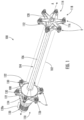
Fig. 1 is a perspective view of drive shaft system in accordance with this disclosure, showing an attachment of a thru shaft to surrounding components; -
Fig. 2 is schematic cross-sectional view of an aircraft engine in accordance with this disclosure, showing the drive shaft system ofFig. 1 included in an aircraft engine; -
Fig. 3 is cross-sectional perspective view of an aircraft generator system in accordance with this disclosure, showing the drive shaft system ofFig. 1 included in an aircraft generator system in the aircraft engine ofFig. 2 . - Reference will now be made to the drawings wherein like reference numerals identify similar structural features or aspects of the subject disclosure. For purposes of explanation and illustration, and not limitation, an illustrative view of an embodiment of a system in accordance with the disclosure is shown in
Fig. 1 and is designated generally by reference character 100. Other embodiments and/or aspects of this disclosure are shown inFigs. 2-3 . Embodiments of the systems and methods provided herein can provide improved accommodation of misalignment of generator shafts for ease of installation and operation. - In aircraft engines, a generator can coupled to the engine to be driven by a spool shaft of the engine. Deflections between the fan shaft and generator shaft may arise due to tolerances and thermal defections which can result in excessive seal wear and coupler failure. One solution is to use a plastic coupler to isolate and allow angular mismatch between the shafts as well as axial deflections, but this can result in shaft shear based on deflection. The systems and methods provided herein provide improvements to drive systems for aircraft engine generators.
- Referring to
Fig. 1 , in accordance with at least one aspect of this disclosure, there is provided a drive shaft system 100. In embodiments, the drive shaft system 100 includes agenerator shaft 102 extending along a longitudinal axis A with alongitudinal bore 104 defined through thegenerator shaft 102. Athru shaft 106 extends through thelongitudinal bore 104 of thegenerator shaft 102. In embodiments, thethru shaft 106 includes, afront coupler mount 108 at afirst end 110 operative to receive torque input, and arear coupler mount 112 at asecond end 114 opposite thefirst end 108. - The
generator shaft 102 includes arear coupler mount 116 at a second end 118 of the generator shaft configured to be coupled to therear coupler mount 112 of thethru shaft 106 to transmit torque from thefront coupler mount 108 of thethru shaft 106, through the thru shaft 16, and into thegenerator shaft 102. A shaft drive 120 is operatively coupled to thethru shaft 106 on thefirst end 110 of thethru shaft 106 via afront coupler mount 122 at a second end 124 of the shaft drive 120 to transmit torque from the shaft drive 120 to thegenerator shaft 102 through thethru shaft 106. The shaft drive 120 can be any suitable shaft drive, for example, the shaft drive 120 can be splined or include at least a splinedsection 120a. - A
front end coupling 126 operatively connects thefront coupler mount 122 of the shaft drive 120 to thefront coupler mount 108 of thethru shaft 106. Arear end coupling 128 operatively connects therear coupler mount 112 of thethru shaft 106 to therear coupler mount 116 of thegenerator shaft 102. Each of thefront coupler mounts rear coupler mounts respective coupling thru shaft 106 or between thethru shaft 106 and thegenerator shaft 102. - Each of the
front coupler mounts rear coupler mounts Fig. 1 ), wherein each vertex V includes a bore 130 operative to receive afastener 132. Each coupler mount can have any suitable shape and number n of vertices V, such as a triangular shape having three vertices (e.g. as shown n=3), or multiples thereof. In certain such embodiments, eachcoupling respective coupler mount coupling couplings fastener 132 to mount therespective coupler mounts respective coupling fastener 132 extends through each respective bore 130 of thecoupling corresponding coupler mount respective coupler mount respective shaft couplings - Referring now to
Fig. 2 , in accordance with another aspect of this disclosure, there is provided anaircraft system 200. For brevity, the description of common elements with respect to the drive system 100 that have been described above are not repeated. In certain embodiments, the drive system 100 as presented herein can be included in anaircraft 234 implementing theaircraft system 200. In certain embodiments, theaircraft 234 can include anengine 236, where theengine 236 can be a propulsive energy engine (e.g. creating thrust for the aircraft 234), or a non-propulsive energy engine. As described herein, theengine 236 is a turbofan engine, although the present disclosure may likewise be used with other engine types, for example turbojet, turboprop, or turboshaft. - In embodiments, the
gas turbine engine 236 includes acompressor section 238, aturbine section 240, and aspool shaft 220 operatively connecting thecompressor section 238 to be driven by theturbine section 240 and the drive shaft system 100. In theaircraft system 200, the shaft drive 120 is thespool shaft 220 of thegas turbine engine 236, such that thethru shaft 106 is operatively connected to thespool shaft 220 in any suitable manner as described herein (e.g. viacoupler mounts 108, 122). In certain embodiments, thespool shaft 220 can be a low pressure turbine shaft of a dual spool gas turbine engine. - A
rotor 242 is operatively connected to thegenerator shaft 102 to rotate within agenerator housing 244 to generate electrical energy, and astator 246 is operatively connected to thegenerator housing 244 radially outward of therotor 242. In certain embodiments, atail cone 248 is included at anoutlet 250 of theturbine section 240, where thegenerator housing 244 and elements included therein (e.g. generator shaft 106,rotor 242, and stator 246) are mounted in thetail cone 248. - Turning now to
Fig. 3 , in accordance with yet another aspect of this disclosure, there is provided agenerator system 300, for example for use in anaircraft engine 236. For brevity, the description of common elements with respect to the drive system 100 andaircraft system 200 that have been described above are not repeated. In certain embodiments, the drive system 100 as shown and described herein can be included in the aircraft generator system 300 (e.g. as a tail cone generator). In certain embodiments of thegenerator system 300, the thrushaft 106 is operatively connected to thespool shaft 220 of agas turbine engine 236 on afirst end 110, and the thrushaft 106 is operatively connected to thegenerator shaft 104 on asecond end 114, so that thegenerator shaft 102 is driven by thespool shaft 220 through the thrushaft 106. It is noted that for clarity purposes, therotor 242 andstator 246 are omitted fromFig. 3 . Agenerator end cap 352 can be fastened to thegenerator housing 244 for covering therear end coupling 128 during operation. - In accordance with another aspect of this disclosure, there is provided a method of assembling the
generator system 300 into an aircraft engine (e.g. engine 236). The method includes mounting thefront coupling 126 to the spool shaft 220 (e.g. via front coupler mount 122), mounting thefirst end 110 of the thrushaft 106 to the front coupling 126 (e.g. via front coupler mount 108), and assembling thegenerator housing 244 around the thrushaft 106 andspool shaft 220. The method can next include mounting therear coupling 128 to thesecond end 114 of the thru shaft 106 (e.g. via rear coupler mount 112), mounting therear coupling 128 to the second end 118 of the generator shaft 102 (e.g. via rear coupler mount 116), and mounting therear cover 352 to thegenerator housing 244. - Assembly of the
generator system 300 to theengine 236 in such a manner allows for improved assembly over previous systems and methods in that there is no blind assembly of a long shaft into its mating feature, for example how a typical low pressure spool shaft may be done. Without blind assembly, assembly can be made easier, assembly mistakes can be avoided, as well as damage to parts during assembly may be prevented. - In embodiments (e.g. as shown in
Figs. 1-3 ), by driving the generator with a thru shaft, the pivot point of the thru shaft can be moved away from the spool shaft coupler (e.g. front end coupling). Increasing the distance between the spool shaft coupler and the thru shaft pivot point can therefore reduce the influence of shaft offset and thermal deflections on the angularity between the two shafts and the amount of misalignment the coupler has to compensate for. The front and rear end couplings can also compensate for any axial movement due to thermal influence. - Embodiments can be advantageous over typical generator shafts by reducing the risk of spool shaft/generator dynamic instability, which in some instances may impact engine vibrations level and/or durability degradation of engine seals/coupling and/or the generator over time. Moreover, in embodiments, the thru shaft can also allow the generator to be moved forward (e.g. closer to the turbine section in a tail cone generator) which can reduce the overhung mass and subsequently the loading on the engine mounts and overall engine structure.
- Those having ordinary skill in the art understand that any numerical values disclosed herein can be exact values or can be values within a range. Further, any terms of approximation (e.g., "about", "approximately", "around") used in this disclosure can mean the stated value within a range. For example, in certain embodiments, the range can be within (plus or minus) 20%, or within 10%, or within 5%, or within 2%, or within any other suitable percentage or number as appreciated by those having ordinary skill in the art (e.g., for known tolerance limits or error ranges).
- The articles "a", "an", and "the" as used herein and in the appended claims are used herein to refer to one or to more than one (i.e., to at least one) of the grammatical object of the article unless the context clearly indicates otherwise. By way of example, "an element" means one element or more than one element.
- The phrase "and/or," as used herein in the specification and in the claims, should be understood to mean "either or both" of the elements so conjoined, i.e., elements that are conjunctively present in some cases and disjunctively present in other cases. Multiple elements listed with "and/or" should be construed in the same fashion, i.e., "one or more" of the elements so conjoined. Other elements may optionally be present other than the elements specifically identified by the "and/or" clause, whether related or unrelated to those elements specifically identified. Thus, as a non-limiting example, a reference to "A and/or B", when used in conjunction with open-ended language such as "comprising" can refer, in one embodiment, to A only (optionally including elements other than B); in another embodiment, to B only (optionally including elements other than A); in yet another embodiment, to both A and B (optionally including other elements); etc.
- As used herein in the specification and in the claims, "or" should be understood to have the same meaning as "and/or" as defined above. For example, when separating items in a list, "or" or "and/or" shall be interpreted as being inclusive, i.e., the inclusion of at least one, but also including more than one, of a number or list of elements, and, optionally, additional unlisted items. Only terms clearly indicated to the contrary, such as "only one of" or "exactly one of," or, when used in the claims, "consisting of," will refer to the inclusion of exactly one element of a number or list of elements. In general, the term "or" as used herein shall only be interpreted as indicating exclusive alternatives (i.e., "one or the other but not both") when preceded by terms of exclusivity, such as "either," "one of," "only one of," or "exactly one of."
- The embodiments of the present disclosure, as described above and shown in the drawings, provide for improvement in the art to which they pertain. While the apparatus and methods of the subject disclosure have been shown and described, those skilled in the art will readily appreciate that changes and/or modifications may be made thereto without departing from the scope of the appended claims.
Claims (14)
- An aircraft drive shaft system (100) comprising:a generator shaft (102) extending along a longitudinal axis (A) with a longitudinal bore (104) defined through the generator shaft (102);a thru shaft (106) extending through the longitudinal bore (104) of the generator shaft (102), the thru shaft (106) having:a front coupler mount (108) at a first end (110) of the thru shaft (106) operative to receive torque input; anda rear coupler mount (112) at a second end (114) of the thru shaft (106) opposite the first end (110), wherein the generator shaft (102) includes a rear coupler mount (116) at a second end (118) of the generator shaft (102) that is coupled to the rear coupler mount (112) of the thru shaft (106) operative to transmit torque from the front coupler mount (108) of the thru shaft (106), through the thru shaft (106), and into the generator shaft (102); anda coupling (128), wherein the rear coupler mount (112) of the thru shaft (106) is fastened directly to the coupling (128), and wherein the rear coupler mount (116) of the generator shaft (102) is fastened directly to the coupling (128),characterised in that:each of the front coupler mount (108) of the thru shaft (106) and the rear coupler mount (112, 116) of each of the thru shaft (106) and the generator shaft (102) has n vertices (V),wherein each vertex (V) includes a bore (130) operative to receive a fastener (132).
- The system (100) as recited in claim 1, wherein the coupling (128) includes 2n vertices (V) corresponding to each vertex (V) of each respective coupler mount (112, 116), wherein each vertex (V) of the coupling (128) includes a bore (130) operative to receive a fastener (132), wherein the fastener (132) extends through each respective bore (130) of the coupling (128) and corresponding coupler mount (112, 116) to fasten the respective coupler mount (112, 116) of the respective shaft (106, 102) to the coupling (128).
- The system (100) as recited in claim 1 or 2, further comprising a shaft drive (120) having a front coupler mount (122) at a second end (124) of the shaft drive (120) operative to fasten to the front coupler mount (108) of the thru shaft (106) operative to transmit torque from the shaft drive (120) to the generator shaft (102) through the thru shaft (106).
- The system (100) as recited in claim 3, wherein the shaft drive (120) includes a splined section (120a).
- The system (100) as recited in claim 3 or 4, wherein the coupling (128) is a rear coupling (128), and the system further comprises a front coupling (126), wherein the front coupler mount (122) of the shaft drive (120) is fastened directly to the front coupling (126), and wherein the front coupler mount (108) of the thru shaft (106) is directly fastened to the front coupling (126).
- The system (100) as recited in any preceding claim, further comprising a rotor (242) operatively connected to the generator shaft (102) to rotate within a generator housing (244) to generate electrical energy.
- An aircraft system (200) comprising:a gas turbine engine (236) having a compressor section (238), a turbine section (240), and a spool shaft (220) operatively connecting the compressor section (238) to be driven by the turbine section (240);the drive shaft system (100) of any of claims 1 to 5, wherein the thru shaft (106) is operatively connected to the spool shaft (220);a rotor (242) operatively connected to the generator shaft (102) to rotate within a generator housing (244) to generate electrical energy; anda stator (246) operatively connected to the generator housing (244) radially outward of the rotor (242).
- The aircraft system (200) as recited in claim 7, further comprising a tail cone (248) at an outlet (250) of the turbine section (240), wherein the rotor (242) and stator (246) are mounted in the tail cone (248).
- The aircraft system (200) as recited in claim 7 or 8, wherein the gas turbine engine (236) is selected from the group consisting of: turbojet, turbofan, turboprop, or turboshaft.
- The aircraft system (200) as recited in any of claims 7 to 9, wherein the spool shaft (220) includes a front coupler mount (122) at a second end (124) of the spool shaft (220) operative to fasten to the front coupler mount (108) of the thru shaft (106) operative to transmit torque from the spool shaft (220) to the generator shaft (102) through the thru shaft (106).
- The aircraft system (200) as recited in claim 10, wherein the coupling (128) is a rear coupling (128), and further comprising a front coupling (126), wherein the front coupler mount (122) of the spool shaft (220) is fastened directly to the front coupling (126), and wherein the front coupler mount (108) of the thru shaft (106) is directly fastened to the front coupling (126).
- An aircraft generator system (300), comprising:a generator housing (244);a stator (246) operatively connected to the generator housing (244);the drive shaft system (100) of any of claims 1 to 5; anda rotor (244) operatively connected to the generator shaft (102),wherein the thru shaft (106) is configured to be in use operatively connected to a spool shaft (220) of a gas turbine engine (236) on the first end (110), and the generator shaft (102) is driven in use by the spool shaft (220) through the thru shaft (106).
- The aircraft generator system (300) of claim 12, wherein the generator system (300) is integrally mounted in a tail cone (248) of the gas turbine engine (236).
- The aircraft generator system (300) of claim 12 or 13, wherein the spool shaft (220) is a low pressure turbine shaft of a dual spool gas turbine engine.
Applications Claiming Priority (1)
| Application Number | Priority Date | Filing Date | Title |
|---|---|---|---|
| US17/402,503 US11719101B2 (en) | 2021-08-14 | 2021-08-14 | Mechanical drive shaft arrangements for tail cone generators |
Publications (2)
| Publication Number | Publication Date |
|---|---|
| EP4134533A1 EP4134533A1 (en) | 2023-02-15 |
| EP4134533B1 true EP4134533B1 (en) | 2025-05-21 |
Family
ID=82939697
Family Applications (1)
| Application Number | Title | Priority Date | Filing Date |
|---|---|---|---|
| EP22190388.3A Active EP4134533B1 (en) | 2021-08-14 | 2022-08-15 | Mechanical drive shaft arrangements for tail cone generators |
Country Status (4)
| Country | Link |
|---|---|
| US (1) | US11719101B2 (en) |
| EP (1) | EP4134533B1 (en) |
| BR (1) | BR102022016050A2 (en) |
| CA (1) | CA3170495A1 (en) |
Families Citing this family (3)
| Publication number | Priority date | Publication date | Assignee | Title |
|---|---|---|---|---|
| EP4414268A1 (en) * | 2023-02-13 | 2024-08-14 | Hamilton Sundstrand Corporation | Power system |
| EP4723963A1 (en) | 2023-05-05 | 2026-04-15 | Dendro Technologies, Inc. | Determining exhaled breath temperature |
| US12140152B1 (en) * | 2023-08-30 | 2024-11-12 | Rtx Corporation | Nose cone/spinner power takeoff |
Family Cites Families (7)
| Publication number | Priority date | Publication date | Assignee | Title |
|---|---|---|---|---|
| US8237298B2 (en) | 2008-12-22 | 2012-08-07 | Hamilton Sundstrand Corporation | Generator coupling for use with gas turbine engine |
| US9169780B2 (en) | 2011-07-15 | 2015-10-27 | Pratt & Whitney Canada Corp. | Connection for generator in a gas turbine engine |
| JP6511265B2 (en) | 2014-12-24 | 2019-05-15 | 川崎重工業株式会社 | Aircraft engine unit |
| US10883424B2 (en) | 2016-07-19 | 2021-01-05 | Pratt & Whitney Canada Corp. | Multi-spool gas turbine engine architecture |
| GB2572427B (en) | 2018-03-29 | 2023-01-11 | Safran Electrical & Power | A generator having a disconnect mechanism |
| US11319895B2 (en) | 2019-03-15 | 2022-05-03 | Hamilton Sundstrand Corporation | Integrated tail cone and mounted generator |
| US11661856B2 (en) * | 2021-03-19 | 2023-05-30 | Rolls-Royce North American Technologies Inc. | Gas turbine engine with embedded generator |
-
2021
- 2021-08-14 US US17/402,503 patent/US11719101B2/en active Active
-
2022
- 2022-08-12 CA CA3170495A patent/CA3170495A1/en active Pending
- 2022-08-12 BR BR102022016050-3A patent/BR102022016050A2/en unknown
- 2022-08-15 EP EP22190388.3A patent/EP4134533B1/en active Active
Also Published As
| Publication number | Publication date |
|---|---|
| BR102022016050A2 (en) | 2024-01-02 |
| CA3170495A1 (en) | 2023-02-14 |
| US20230052410A1 (en) | 2023-02-16 |
| EP4134533A1 (en) | 2023-02-15 |
| US11719101B2 (en) | 2023-08-08 |
Similar Documents
| Publication | Publication Date | Title |
|---|---|---|
| EP4134533B1 (en) | Mechanical drive shaft arrangements for tail cone generators | |
| EP3361073B1 (en) | Multi-spool gas turbine engine | |
| EP3361057B1 (en) | Turbine with low over-speed requirements and method | |
| US11181046B1 (en) | High speed shaft flexible coupling | |
| EP2597269B1 (en) | Support for electric machine in a turbine engine | |
| EP3722575B1 (en) | Reverse flow engine architecture | |
| US8376700B2 (en) | Compressed air starter for turbomachine | |
| EP3321488A1 (en) | Gas turbine engine accessories arrangement | |
| US4249859A (en) | Preloaded engine inlet shroud | |
| US5419112A (en) | Gas turbine powerplant | |
| EP4163475A1 (en) | Rotor assembly for a gas turbine engine and method for assembling same | |
| US9297312B2 (en) | Circumferentially retained fairing | |
| EP3222857B1 (en) | Mechanical joint with a flanged retainer | |
| CA3053012A1 (en) | Propulsion system for a single-engine helicopter | |
| US11118705B2 (en) | Quick connect firewall seal for firewall | |
| EP3524776B1 (en) | Fan disc assembly | |
| US2622789A (en) | Turbine expansion section construction | |
| EP4471395A2 (en) | Drive assembly and method of assembly | |
| US20230021361A1 (en) | Auxiliary power unit comprising a gas generator in direct-drive connection with an electric generator and an accessory gearbox | |
| EP3730738A1 (en) | Turbine assembly for a gas turbine engine with ceramic matrix composite vane | |
| EP4279712A2 (en) | Aperture pattern for gas turbine engine component with integral alignment feature | |
| EP2938838B1 (en) | Inter-module flow discourager | |
| CN114379795B (en) | Propulsion engines and fairings | |
| EP4390100A1 (en) | Flex coupler for hybrid gas turbine engine powerplant | |
| EP4682349A1 (en) | Tie shaft for an engine rotor assembly |
Legal Events
| Date | Code | Title | Description |
|---|---|---|---|
| PUAI | Public reference made under article 153(3) epc to a published international application that has entered the european phase |
Free format text: ORIGINAL CODE: 0009012 |
|
| STAA | Information on the status of an ep patent application or granted ep patent |
Free format text: STATUS: THE APPLICATION HAS BEEN PUBLISHED |
|
| AK | Designated contracting states |
Kind code of ref document: A1 Designated state(s): AL AT BE BG CH CY CZ DE DK EE ES FI FR GB GR HR HU IE IS IT LI LT LU LV MC MK MT NL NO PL PT RO RS SE SI SK SM TR |
|
| STAA | Information on the status of an ep patent application or granted ep patent |
Free format text: STATUS: REQUEST FOR EXAMINATION WAS MADE |
|
| 17P | Request for examination filed |
Effective date: 20230814 |
|
| RBV | Designated contracting states (corrected) |
Designated state(s): AL AT BE BG CH CY CZ DE DK EE ES FI FR GB GR HR HU IE IS IT LI LT LU LV MC MK MT NL NO PL PT RO RS SE SI SK SM TR |
|
| GRAP | Despatch of communication of intention to grant a patent |
Free format text: ORIGINAL CODE: EPIDOSNIGR1 |
|
| STAA | Information on the status of an ep patent application or granted ep patent |
Free format text: STATUS: GRANT OF PATENT IS INTENDED |
|
| RIC1 | Information provided on ipc code assigned before grant |
Ipc: B64D 35/00 20060101ALI20241220BHEP Ipc: F02C 7/32 20060101ALI20241220BHEP Ipc: B64D 41/00 20060101ALI20241220BHEP Ipc: F01D 15/10 20060101ALI20241220BHEP Ipc: F02C 7/36 20060101AFI20241220BHEP |
|
| INTG | Intention to grant announced |
Effective date: 20250117 |
|
| GRAS | Grant fee paid |
Free format text: ORIGINAL CODE: EPIDOSNIGR3 |
|
| GRAA | (expected) grant |
Free format text: ORIGINAL CODE: 0009210 |
|
| STAA | Information on the status of an ep patent application or granted ep patent |
Free format text: STATUS: THE PATENT HAS BEEN GRANTED |
|
| AK | Designated contracting states |
Kind code of ref document: B1 Designated state(s): AL AT BE BG CH CY CZ DE DK EE ES FI FR GB GR HR HU IE IS IT LI LT LU LV MC MK MT NL NO PL PT RO RS SE SI SK SM TR |
|
| REG | Reference to a national code |
Ref country code: GB Ref legal event code: FG4D |
|
| REG | Reference to a national code |
Ref country code: CH Ref legal event code: EP |
|
| REG | Reference to a national code |
Ref country code: DE Ref legal event code: R096 Ref document number: 602022014872 Country of ref document: DE |
|
| REG | Reference to a national code |
Ref country code: IE Ref legal event code: FG4D |
|
| REG | Reference to a national code |
Ref country code: NL Ref legal event code: MP Effective date: 20250521 |
|
| PG25 | Lapsed in a contracting state [announced via postgrant information from national office to epo] |
Ref country code: PT Free format text: LAPSE BECAUSE OF FAILURE TO SUBMIT A TRANSLATION OF THE DESCRIPTION OR TO PAY THE FEE WITHIN THE PRESCRIBED TIME-LIMIT Effective date: 20250922 Ref country code: ES Free format text: LAPSE BECAUSE OF FAILURE TO SUBMIT A TRANSLATION OF THE DESCRIPTION OR TO PAY THE FEE WITHIN THE PRESCRIBED TIME-LIMIT Effective date: 20250521 Ref country code: FI Free format text: LAPSE BECAUSE OF FAILURE TO SUBMIT A TRANSLATION OF THE DESCRIPTION OR TO PAY THE FEE WITHIN THE PRESCRIBED TIME-LIMIT Effective date: 20250521 |
|
| PGFP | Annual fee paid to national office [announced via postgrant information from national office to epo] |
Ref country code: DE Payment date: 20250724 Year of fee payment: 4 |
|
| REG | Reference to a national code |
Ref country code: LT Ref legal event code: MG9D |
|
| PG25 | Lapsed in a contracting state [announced via postgrant information from national office to epo] |
Ref country code: NO Free format text: LAPSE BECAUSE OF FAILURE TO SUBMIT A TRANSLATION OF THE DESCRIPTION OR TO PAY THE FEE WITHIN THE PRESCRIBED TIME-LIMIT Effective date: 20250821 Ref country code: GR Free format text: LAPSE BECAUSE OF FAILURE TO SUBMIT A TRANSLATION OF THE DESCRIPTION OR TO PAY THE FEE WITHIN THE PRESCRIBED TIME-LIMIT Effective date: 20250822 |
|
| PG25 | Lapsed in a contracting state [announced via postgrant information from national office to epo] |
Ref country code: NL Free format text: LAPSE BECAUSE OF FAILURE TO SUBMIT A TRANSLATION OF THE DESCRIPTION OR TO PAY THE FEE WITHIN THE PRESCRIBED TIME-LIMIT Effective date: 20250521 Ref country code: PL Free format text: LAPSE BECAUSE OF FAILURE TO SUBMIT A TRANSLATION OF THE DESCRIPTION OR TO PAY THE FEE WITHIN THE PRESCRIBED TIME-LIMIT Effective date: 20250521 |
|
| PGFP | Annual fee paid to national office [announced via postgrant information from national office to epo] |
Ref country code: IT Payment date: 20250901 Year of fee payment: 4 |
|
| PG25 | Lapsed in a contracting state [announced via postgrant information from national office to epo] |
Ref country code: BG Free format text: LAPSE BECAUSE OF FAILURE TO SUBMIT A TRANSLATION OF THE DESCRIPTION OR TO PAY THE FEE WITHIN THE PRESCRIBED TIME-LIMIT Effective date: 20250521 |
|
| PG25 | Lapsed in a contracting state [announced via postgrant information from national office to epo] |
Ref country code: HR Free format text: LAPSE BECAUSE OF FAILURE TO SUBMIT A TRANSLATION OF THE DESCRIPTION OR TO PAY THE FEE WITHIN THE PRESCRIBED TIME-LIMIT Effective date: 20250521 |
|
| PGFP | Annual fee paid to national office [announced via postgrant information from national office to epo] |
Ref country code: FR Payment date: 20250725 Year of fee payment: 4 |
|
| PG25 | Lapsed in a contracting state [announced via postgrant information from national office to epo] |
Ref country code: RS Free format text: LAPSE BECAUSE OF FAILURE TO SUBMIT A TRANSLATION OF THE DESCRIPTION OR TO PAY THE FEE WITHIN THE PRESCRIBED TIME-LIMIT Effective date: 20250821 |
|
| PG25 | Lapsed in a contracting state [announced via postgrant information from national office to epo] |
Ref country code: IS Free format text: LAPSE BECAUSE OF FAILURE TO SUBMIT A TRANSLATION OF THE DESCRIPTION OR TO PAY THE FEE WITHIN THE PRESCRIBED TIME-LIMIT Effective date: 20250921 |
|
| PG25 | Lapsed in a contracting state [announced via postgrant information from national office to epo] |
Ref country code: LV Free format text: LAPSE BECAUSE OF FAILURE TO SUBMIT A TRANSLATION OF THE DESCRIPTION OR TO PAY THE FEE WITHIN THE PRESCRIBED TIME-LIMIT Effective date: 20250521 |
|
| REG | Reference to a national code |
Ref country code: AT Ref legal event code: MK05 Ref document number: 1796933 Country of ref document: AT Kind code of ref document: T Effective date: 20250521 |
|
| PG25 | Lapsed in a contracting state [announced via postgrant information from national office to epo] |
Ref country code: SM Free format text: LAPSE BECAUSE OF FAILURE TO SUBMIT A TRANSLATION OF THE DESCRIPTION OR TO PAY THE FEE WITHIN THE PRESCRIBED TIME-LIMIT Effective date: 20250521 Ref country code: AT Free format text: LAPSE BECAUSE OF FAILURE TO SUBMIT A TRANSLATION OF THE DESCRIPTION OR TO PAY THE FEE WITHIN THE PRESCRIBED TIME-LIMIT Effective date: 20250521 Ref country code: DK Free format text: LAPSE BECAUSE OF FAILURE TO SUBMIT A TRANSLATION OF THE DESCRIPTION OR TO PAY THE FEE WITHIN THE PRESCRIBED TIME-LIMIT Effective date: 20250521 |
|
| PG25 | Lapsed in a contracting state [announced via postgrant information from national office to epo] |
Ref country code: CZ Free format text: LAPSE BECAUSE OF FAILURE TO SUBMIT A TRANSLATION OF THE DESCRIPTION OR TO PAY THE FEE WITHIN THE PRESCRIBED TIME-LIMIT Effective date: 20250521 |
|
| PG25 | Lapsed in a contracting state [announced via postgrant information from national office to epo] |
Ref country code: EE Free format text: LAPSE BECAUSE OF FAILURE TO SUBMIT A TRANSLATION OF THE DESCRIPTION OR TO PAY THE FEE WITHIN THE PRESCRIBED TIME-LIMIT Effective date: 20250521 |
|
| PG25 | Lapsed in a contracting state [announced via postgrant information from national office to epo] |
Ref country code: SK Free format text: LAPSE BECAUSE OF FAILURE TO SUBMIT A TRANSLATION OF THE DESCRIPTION OR TO PAY THE FEE WITHIN THE PRESCRIBED TIME-LIMIT Effective date: 20250521 |
|
| PG25 | Lapsed in a contracting state [announced via postgrant information from national office to epo] |
Ref country code: RO Free format text: LAPSE BECAUSE OF FAILURE TO SUBMIT A TRANSLATION OF THE DESCRIPTION OR TO PAY THE FEE WITHIN THE PRESCRIBED TIME-LIMIT Effective date: 20250521 |
|
| REG | Reference to a national code |
Ref country code: DE Ref legal event code: R097 Ref document number: 602022014872 Country of ref document: DE |
|
| REG | Reference to a national code |
Ref country code: CH Ref legal event code: H13 Free format text: ST27 STATUS EVENT CODE: U-0-0-H10-H13 (AS PROVIDED BY THE NATIONAL OFFICE) Effective date: 20260324 |
|
| PLBE | No opposition filed within time limit |
Free format text: ORIGINAL CODE: 0009261 |
|
| STAA | Information on the status of an ep patent application or granted ep patent |
Free format text: STATUS: NO OPPOSITION FILED WITHIN TIME LIMIT |
|
| PG25 | Lapsed in a contracting state [announced via postgrant information from national office to epo] |
Ref country code: MC Free format text: LAPSE BECAUSE OF FAILURE TO SUBMIT A TRANSLATION OF THE DESCRIPTION OR TO PAY THE FEE WITHIN THE PRESCRIBED TIME-LIMIT Effective date: 20250521 |
|
| REG | Reference to a national code |
Ref country code: CH Ref legal event code: L10 Free format text: ST27 STATUS EVENT CODE: U-0-0-L10-L00 (AS PROVIDED BY THE NATIONAL OFFICE) Effective date: 20260402 |
|
| PG25 | Lapsed in a contracting state [announced via postgrant information from national office to epo] |
Ref country code: LU Free format text: LAPSE BECAUSE OF NON-PAYMENT OF DUE FEES Effective date: 20250815 |
|
| PG25 | Lapsed in a contracting state [announced via postgrant information from national office to epo] |
Ref country code: CH Free format text: LAPSE BECAUSE OF NON-PAYMENT OF DUE FEES Effective date: 20250831 |
|
| 26N | No opposition filed |
Effective date: 20260224 |