EP4133426B1 - Machine learning driven chemical compound replacement technology - Google Patents
Machine learning driven chemical compound replacement technology Download PDFInfo
- Publication number
- EP4133426B1 EP4133426B1 EP22741686.4A EP22741686A EP4133426B1 EP 4133426 B1 EP4133426 B1 EP 4133426B1 EP 22741686 A EP22741686 A EP 22741686A EP 4133426 B1 EP4133426 B1 EP 4133426B1
- Authority
- EP
- European Patent Office
- Prior art keywords
- compound
- chemical compounds
- source
- graph
- target
- Prior art date
- Legal status (The legal status is an assumption and is not a legal conclusion. Google has not performed a legal analysis and makes no representation as to the accuracy of the status listed.)
- Active
Links
Images

Classifications
-
- G—PHYSICS
- G06—COMPUTING OR CALCULATING; COUNTING
- G06N—COMPUTING ARRANGEMENTS BASED ON SPECIFIC COMPUTATIONAL MODELS
- G06N3/00—Computing arrangements based on biological models
- G06N3/02—Neural networks
- G06N3/04—Architecture, e.g. interconnection topology
-
- G—PHYSICS
- G06—COMPUTING OR CALCULATING; COUNTING
- G06N—COMPUTING ARRANGEMENTS BASED ON SPECIFIC COMPUTATIONAL MODELS
- G06N3/00—Computing arrangements based on biological models
- G06N3/02—Neural networks
- G06N3/04—Architecture, e.g. interconnection topology
- G06N3/042—Knowledge-based neural networks; Logical representations of neural networks
-
- G—PHYSICS
- G06—COMPUTING OR CALCULATING; COUNTING
- G06N—COMPUTING ARRANGEMENTS BASED ON SPECIFIC COMPUTATIONAL MODELS
- G06N3/00—Computing arrangements based on biological models
- G06N3/02—Neural networks
- G06N3/04—Architecture, e.g. interconnection topology
- G06N3/045—Combinations of networks
-
- G—PHYSICS
- G06—COMPUTING OR CALCULATING; COUNTING
- G06N—COMPUTING ARRANGEMENTS BASED ON SPECIFIC COMPUTATIONAL MODELS
- G06N3/00—Computing arrangements based on biological models
- G06N3/02—Neural networks
- G06N3/04—Architecture, e.g. interconnection topology
- G06N3/0499—Feedforward networks
-
- G—PHYSICS
- G06—COMPUTING OR CALCULATING; COUNTING
- G06N—COMPUTING ARRANGEMENTS BASED ON SPECIFIC COMPUTATIONAL MODELS
- G06N3/00—Computing arrangements based on biological models
- G06N3/02—Neural networks
- G06N3/08—Learning methods
-
- G—PHYSICS
- G06—COMPUTING OR CALCULATING; COUNTING
- G06N—COMPUTING ARRANGEMENTS BASED ON SPECIFIC COMPUTATIONAL MODELS
- G06N3/00—Computing arrangements based on biological models
- G06N3/02—Neural networks
- G06N3/08—Learning methods
- G06N3/084—Backpropagation, e.g. using gradient descent
-
- G—PHYSICS
- G06—COMPUTING OR CALCULATING; COUNTING
- G06N—COMPUTING ARRANGEMENTS BASED ON SPECIFIC COMPUTATIONAL MODELS
- G06N3/00—Computing arrangements based on biological models
- G06N3/02—Neural networks
- G06N3/08—Learning methods
- G06N3/09—Supervised learning
-
- G—PHYSICS
- G06—COMPUTING OR CALCULATING; COUNTING
- G06N—COMPUTING ARRANGEMENTS BASED ON SPECIFIC COMPUTATIONAL MODELS
- G06N5/00—Computing arrangements using knowledge-based models
- G06N5/02—Knowledge representation; Symbolic representation
- G06N5/022—Knowledge engineering; Knowledge acquisition
-
- G—PHYSICS
- G16—INFORMATION AND COMMUNICATION TECHNOLOGY [ICT] SPECIALLY ADAPTED FOR SPECIFIC APPLICATION FIELDS
- G16B—BIOINFORMATICS, i.e. INFORMATION AND COMMUNICATION TECHNOLOGY [ICT] SPECIALLY ADAPTED FOR GENETIC OR PROTEIN-RELATED DATA PROCESSING IN COMPUTATIONAL MOLECULAR BIOLOGY
- G16B40/00—ICT specially adapted for biostatistics; ICT specially adapted for bioinformatics-related machine learning or data mining, e.g. knowledge discovery or pattern finding
-
- G—PHYSICS
- G16—INFORMATION AND COMMUNICATION TECHNOLOGY [ICT] SPECIALLY ADAPTED FOR SPECIFIC APPLICATION FIELDS
- G16B—BIOINFORMATICS, i.e. INFORMATION AND COMMUNICATION TECHNOLOGY [ICT] SPECIALLY ADAPTED FOR GENETIC OR PROTEIN-RELATED DATA PROCESSING IN COMPUTATIONAL MOLECULAR BIOLOGY
- G16B99/00—Subject matter not provided for in other groups of this subclass
-
- G—PHYSICS
- G16—INFORMATION AND COMMUNICATION TECHNOLOGY [ICT] SPECIALLY ADAPTED FOR SPECIFIC APPLICATION FIELDS
- G16C—COMPUTATIONAL CHEMISTRY; CHEMOINFORMATICS; COMPUTATIONAL MATERIALS SCIENCE
- G16C20/00—Chemoinformatics, i.e. ICT specially adapted for the handling of physicochemical or structural data of chemical particles, elements, compounds or mixtures
- G16C20/20—Identification of molecular entities, parts thereof or of chemical compositions
-
- G—PHYSICS
- G16—INFORMATION AND COMMUNICATION TECHNOLOGY [ICT] SPECIALLY ADAPTED FOR SPECIFIC APPLICATION FIELDS
- G16C—COMPUTATIONAL CHEMISTRY; CHEMOINFORMATICS; COMPUTATIONAL MATERIALS SCIENCE
- G16C20/00—Chemoinformatics, i.e. ICT specially adapted for the handling of physicochemical or structural data of chemical particles, elements, compounds or mixtures
- G16C20/40—Searching chemical structures or physicochemical data
-
- G—PHYSICS
- G16—INFORMATION AND COMMUNICATION TECHNOLOGY [ICT] SPECIALLY ADAPTED FOR SPECIFIC APPLICATION FIELDS
- G16C—COMPUTATIONAL CHEMISTRY; CHEMOINFORMATICS; COMPUTATIONAL MATERIALS SCIENCE
- G16C20/00—Chemoinformatics, i.e. ICT specially adapted for the handling of physicochemical or structural data of chemical particles, elements, compounds or mixtures
- G16C20/50—Molecular design, e.g. of drugs
-
- G—PHYSICS
- G16—INFORMATION AND COMMUNICATION TECHNOLOGY [ICT] SPECIALLY ADAPTED FOR SPECIFIC APPLICATION FIELDS
- G16C—COMPUTATIONAL CHEMISTRY; CHEMOINFORMATICS; COMPUTATIONAL MATERIALS SCIENCE
- G16C20/00—Chemoinformatics, i.e. ICT specially adapted for the handling of physicochemical or structural data of chemical particles, elements, compounds or mixtures
- G16C20/30—Prediction of properties of chemical compounds, compositions or mixtures
-
- G—PHYSICS
- G16—INFORMATION AND COMMUNICATION TECHNOLOGY [ICT] SPECIALLY ADAPTED FOR SPECIFIC APPLICATION FIELDS
- G16C—COMPUTATIONAL CHEMISTRY; CHEMOINFORMATICS; COMPUTATIONAL MATERIALS SCIENCE
- G16C20/00—Chemoinformatics, i.e. ICT specially adapted for the handling of physicochemical or structural data of chemical particles, elements, compounds or mixtures
- G16C20/70—Machine learning, data mining or chemometrics
Definitions
- the disclosure relates, in particular, to use of machine learning to suggest alternative chemical compounds that can be used to recreate functional properties of chemical compounds that are present in products, such as food items.
- plant-based diet is associated with improved health and well-being and reduces risk of diseases. Not only is a plant-based diet only good for human health but it is also good for the Earth's health. Research has shown that production of plant-based food items generates less greenhouse emissions and require less energy, water, and land than production of animal-based food items.
- plant alternatives to animal-based food items For example, plant alternatives to meat include cardboard burgers and other vegan meat food items. However, these alternatives do not match the taste and texture of meat.
- US10957424B1 in an abstract states that "Techniques to mimic a target food item using artificial intelligence are disclosed.
- a formula generator is trained using combinations of ingredients.
- a training set may include, for each combination of ingredients, proportions, and features of the ingredients in a respective combination of ingredients.
- Given a target food item the formula generator determines a predicted formula that matches the given target food item.
- the predicted formula includes a set ingredients and a respective proportion of each ingredient in the set of ingredient.”
- US2017/220558A1 in an abstract states that "A first food ingredient may be received.
- the first food ingredient may comprise a first plurality of chemical constituents.
- a plurality of candidate food ingredient substitutes may be received.
- Each candidate food ingredient substitute may comprise a second plurality of chemical constituents.
- a quantity of the second plurality of chemical constituents that match the first plurality of chemical constituents may be determined.
- One or more food ingredient substitutes may be identified based on at least the quantity of the second plurality of chemical constituents that match the first plurality of chemical constituents.”
- US2020/365053A1 in an abstract states that "Systems and methods to mimic a target food item using artificial intelligence are disclosed.
- the system can learn from open source and proprietary databases.
- a prediction model can be trained using features of the source ingredients to match those of the given target food item.
- a formula comprising a combination of most relevant source ingredients and their proportions can be determined using the trained prediction model.
- a set of existing recipes can be used as a dataset to train a recurrent neural network (RNN) and/or other suitable models.
- the RNN can be used to determine a recipe to mimic the target food item.
- the recipe may comprise a cooking process for the set of ingredients in the formula and can be cooked by a chef.
- the recipe may be further modified as necessary based on human feedback on sensorial descriptors.”
- the recipe modification system receives a request to modify an existing recipe from a requestor.
- the request identifies the existing recipe and an ingredient to be added to the existing recipe.
- the recipe modification system identifies a cluster of recipe elements associated with the ingredient to be added to the existing recipe and selects a representative member recipe element of the cluster.
- the recipe modification system modifies the existing recipe based on the selected representative member recipe element and generates a natural language text for the modified recipe based on the existing recipe and the selected representative member recipe element.
- the recipe modification system outputs the natural language text for the modified recipe to the requestor.
- Computer-implemented techniques for generating alternative chemical compounds that can be used to recreate or mimic flavors of target chemical compounds using artificial intelligence are disclosed.
- a neural network based model is trained on source chemical compounds and their corresponding flavors and odors.
- the trained neural network based model generates source compound embeddings of the source chemical compounds.
- the trained neural network based model generates a target compound embedding of a target chemical compound that is present in a food item. From the source compound embeddings, one or more alternative chemical compounds of the source chemical compounds that are closest to the target chemical compound, based on a distance metric, may be determined. Each alternative chemical compound may be used to recreate the flavor of the target chemical compound.
- a computer-implemented method of suggesting chemical compounds as substitutes for a chemical compound that is present in a food item comprising: training an artificial intelligence model based on first digital data representing plurality of source chemical compounds and second digital data representing flavors and odors of the plurality of source chemical compounds; applying the trained artificial intelligence model to the plurality of source chemical compounds to generate a plurality of source compound embeddings for the plurality of source chemical compounds; applying the trained artificial intelligence model to a target chemical compound to generate a target compound embedding for the target chemical compound, the target chemical compound is a chemical compound that is present in a particular food item; determining, from the plurality of source chemical compounds, one or more alternative chemical compounds for which corresponding source compounding embeddings are closest to the target compound embedding for the target chemical compound.
- All embodiments disclosed and claimed herein are directed to a computer-implemented programmed processes that interact with digital data to provide a practical application of computing technology to the problem of generating alternative chemical compounds that can be used to recreate functional (e.g., sensorial) properties, such as flavor, texture, etc., of target chemical compounds that may be expensive or can only be found from an animal source.
- the disclosure is not intended to encompass techniques for organizing human activity, for performing mental processes, or for performing a mathematical concept, and any interpretation of the claims to encompass such techniques would be unreasonable based upon the disclosure as a whole.
- FIG. 1 illustrates an example networked computer system 100 with which various embodiments may be practiced.
- FIG. 1 is shown in simplified, schematic format for purposes of illustrating a clear example and other embodiments may include more, fewer, or different elements.
- FIG. 1 and the other drawing figures and all of the description and claims in this disclosure, are intended to present, disclose, and claim a technical system and technical methods comprising specially programmed computers, using a special-purpose distributed computer system design and instructions that are programmed to execute the functions that are described. These elements execute functions that have not been available before to provide a practical application of computing technology to the problem of generating alternative chemical compounds that can be used to recreate functional (e.g., sensorial) properties, such as flavor, texture, etc., of target chemical compounds in food items.
- functional e.g., sensorial
- the disclosure presents a technical solution to a technical problem, and any interpretation of the disclosure or claims to cover any judicial exception to patent eligibility, such as an abstract idea, mental process, method of organizing human activity or mathematical algorithm, has no support in this disclosure and is erroneous.
- the networked computer system 100 comprises a client computer(s) 104, a server computer 106, a data repository(ies) 120, which are communicatively coupled directly or indirectly via one or more networks 102.
- the server computer 106 broadly represents one or more computers, such as one or more desktop computers, server computers, a server farm, a cloud computing platform (like AMAZON EC2 ® cloud computing platform, GOOGLE CLOUD ® cloud computing platform, container orchestration (KUBERNETES ® container orchestration, DOCKER ® container orchestration, etc.)), or a parallel computer, virtual computing instances in public or private datacenters, and/or instances of a server-based application.
- the server computer 106 includes one or more computer programs or sequences of program instructions that is organized to implement compound embedding generating functions and compound searching functions. Programs or sequences of instructions organized to implement the compound embedding generating functions may be referred to herein as a compound embedding generator 108. Programs or sequences of instructions organized to implement the compound generating functions may be referred to herein as a compound searcher 110.
- the compound embedding generator 108 is programmed to generate a compound embedding for a chemical compound.
- a compound embedding is an encoded representation of a chemical compound and provides information regarding similarities between the structure of the chemical compound and odors and flavors of the chemical compound.
- the compound embedding generator 108 may be applied to each source chemical compound from a source compound database and to any of the chemical compounds present in a food item.
- the compound searcher 110 is programmed to suggest (determine, generate, predict) one or more alternative chemical compounds for a food item based on a particular chemical compound present in the food item that has been selected for replacement.
- Each alternative chemical compound recreates functional properties, such as flavor, smell, texture, etc., of that particular chemical compound.
- the compound embedding generator 108 and the compound searcher 110 are implemented as a logically separate program, process or library.
- the server computer 106 also includes receiving instructions (not illustrated) and displaying instructions (not illustrated).
- the receiving instructions are programmed to receive data from a client computer 104 and/or a data repository 120 for further processing.
- the receiving instructions may be programmed for receiving user input, such as user input specifying food items, chemical compounds, a number of suggested alternative compounds to be generated, etc.
- the displaying instructions are programmed to cause one or more computing devices, such as a client computer 104 to display a graphical user interface (GUI) including content, such as content from data repository 120 and/or generated by the compound embedding generator 108 and the compound searcher 110.
- GUI graphical user interface
- Other sets of instructions may be included to form a complete system such as an operating system, utility libraries, a presentation layer, database interface layer and so forth.
- Computer executable instructions described herein may be in machine executable code in the instruction set of a CPU and may have been compiled based upon source code written in Python, JAVA, C, C++, OBJECTIVE-C, or any other human-readable programming language or environment, alone or in combination with scripts in JAVASCRIPT, other scripting languages and other programming source text.
- the programmed instructions also may represent one or more files or projects of source code that are digitally stored in a mass storage device such as non-volatile RAM or disk storage, in the systems of FIG. 1 or a separate repository system, which when compiled or interpreted cause generating executable instructions which when executed cause the computer to perform the functions or operations that are described herein with reference to those instructions.
- the figure may represent the manner in which programmers or software developers organize and arrange source code for later compilation into an executable, or interpretation into bytecode or the equivalent, for execution by the server computer 106.
- the server computer 106 may be coupled to the data repository 120 that includes a food item database 122, a source compound database 124, and an embedding database 126.
- database refers to a corpus of data, organized or unorganized, in any format, with or without a particular interface for accessing the corpus of data.
- Each database 122, 124, 126 may be implemented using memory, e.g., RAM, EEPROM, flash memory, hard disk drives, optical disc drives, solid state memory, or any type of memory suitable for database storage.
- the food item database 122 includes a plurality of food items and information about the plurality of food item.
- a food item in the food item database 122 may be plant-based or animal-based.
- An example plant-based food item is tofu.
- An example animal-based food item is pulled pork.
- Each food item in the food item database 122 is associated with gas chromatography mass spectrometry (GCMS) data obtained using GCMS techniques.
- GCMS techniques may be used to perform a GCMS analysis on a food item to determine the molecular composition of a food item.
- GCMS data may include one or more readouts, with each of the one or more readouts including a list of chemical compounds of the food item.
- a first readout may include a human-verified list of chemical compounds
- a second readout may include a software-produced list of chemical compounds.
- the human-verified list of chemical compounds for the food item may include compound data, odor threshold data, and concentration data.
- the human-verified list of chemical compounds may stem from a predetermined list of chemical compounds with known odor thresholds.
- An odor threshold represents the lowest concentration of a chemical compound required for a human to be able to detect it within a solution, such as water with parts per billion as the unit. (It is noted that odors are relevant when creating a flavor.
- a lab technician may check the existence of each chemical compound from the predetermined list by analyzing the retention time of the compound and the presence of its ions within the corresponding GCMS spectrum, and may determine the concentration of each of those chemical compounds in the food item by comparing it with the spectrum of an added baseline sample.
- the software-produced list of chemical compounds for the food item may include compound data, concentration data, and confidence data.
- the compound data and concentration data in the software-produced list are similarly configured as the compound data and concentration data in the human-verified list, in that the compound data includes chemical compounds that are present in the food item and the concentration data includes the concentration of each of those chemical compounds that are present in the food item.
- the confidence data in the software-produced list includes a score for each chemical compound indicating the likelihood of that chemical compound being present in the food item.
- the chemical compounds are automatically found by a GCMS software.
- the readouts from the GCMS analysis are combined into a compound list for the food item, with chemical compounds from the first readout (e.g., human-verified list of compounds) weighted higher than chemical compounds from the second readout (e.g., software produced list of compounds) as odor thresholds of the chemical compounds from the second readout may be unknown and/or the confidence may be lower.
- the compound list also includes the concentration of each of the chemical compounds in the list.
- the compound list is presented, for example, in a GUI, to a user to select therefrom a target chemical compound for replacement.
- each chemical compound in the list may be ranked by its ratio between odor threshold and concentration of that chemical compound. As such, since the second readout is not associated with odor thresholds, and as such the importance of each chemical compound from the second readout is unknown, chemical compounds from the second readout are ranked lower than chemical compounds from the first readout and are at the end of the combined compound list.
- Each chemical compound in the combined compound list may be associated with a simplified molecular-input line-entry system (SMILES) based notation describing its corresponding structure, although other suitable notations that allow for chemical information processing are also contemplated.
- SILES molecular-input line-entry system
- the combined compound list associated with each food item is stored in the food item database 122.
- the source compound database 124 includes a plurality of source chemical compounds and information about the plurality of source chemical compounds, including structural and organoleptic information.
- the source compound database 124 also includes associations between the plurality of source chemical compounds and ingredients that contain them.
- the ingredients associated with the plurality of source chemical compounds are natural ingredients. Associations with natural ingredients are useful for multiple reasons. First, using natural ingredients rather than flavorings are preferable for consumer transparency and provides potential for novel ingredient combinations. Secondly, compounds used in flavorings must be able to be extracted from natural ingredients to be considered a "Natural Flavor.” Therefore, associations with natural ingredients can help flavorists select potential natural sources from which to extract flavorings.
- the ingredients associated with the plurality of source chemical compounds are plant-based ingredients.
- data in the source compound database 124 may be obtained from different sources of knowledge, including open source databases such as the FlavorDB database, the FooDB database, the Good Scents Company database, or the like.
- Table 1 shows example information associated with each source chemical compound stored in the source compound database 124.
- Table 1 Compound Information Description Properties Structural information, class, category Databases Database identifier in various databases (web sources) Synonyms Set of synonyms Flavors Tags, descriptions, type Odors Tags, descriptions, type, strength, substantivitv Ingredients Natural ingredients the compound is found in
- the source chemical compound may be compounds certified by the Flavor & Extract Manufacturers Association (FEMA) and, as such, may be used by flavor houses to recreate flavors, as these source chemical compounds are certified GRAS (generally regarded as safe).
- FEMA Flavor & Extract Manufacturers Association
- Each source chemical compound in the source compound database 124 may be associated with a SMILES based notation describing its corresponding structure, although other suitable notations that allow for chemical information processing are also contemplated.
- a training dataset, for training the compound embedding generator 108 includes compound structures and corresponding flavor tags and/or odor tags of at least a subset of the source chemical compounds from the source compound database 124.
- the embedding database 126 includes compound embeddings generated by the compound embedding generator 108.
- the compound embeddings include source compound embeddings that correspond with source chemical compounds in the training dataset.
- the source compound embeddings that correspond with the source chemical compounds in the training dataset are used by the compound searcher 110 to suggest (determine, generate, predict) one or more alternative chemical compounds for a food item, where each of the alternative chemical compounds can be a substitute or replacement of a particular chemical compound that is present in the food item.
- the network 102 broadly represents a combination of one or more local area networks (LANs), wide area networks (WANs), metropolitan area networks (MANs), global interconnected internetworks, such as the public internet, or a combination thereof.
- Each such network may use or execute stored programs that implement internetworking protocols according to standards such as the Open Systems Interconnect (OSI) multi-layer networking model, including but not limited to Transmission Control Protocol (TCP) or User Datagram Protocol (UDP), Internet Protocol (IP), Hypertext Transfer Protocol (HTTP), and so forth.
- OSI Open Systems Interconnect
- All computers described herein may be configured to connect to the network 102 and the disclosure presumes that all elements of FIG. 1 are communicatively coupled via the network 102.
- the various elements depicted in FIG. 1 may also communicate with each other via direct communications links that are not depicted in FIG. 1 for purposes of explanation.
- the server computer 106 is accessible over the network 102 by a client computer 104 to request alternative chemical compounds for a particular chemical compound that is present a food item to recreate functional properties of that particular chemical compound.
- the client computer 104 may comprise a desktop computer, laptop computer, tablet computer, smartphone, or any other type of computing device that allows access to the server computer 106.
- the elements in FIG. 1 are intended to represent one workable embodiment but are not intended to constrain or limit the number of elements that could be used in other embodiments.
- the server computer 106 including the compound embedding generator 108 and the compound searcher 110, and the data repository 120 interoperate programmatically in an unconventional manner to generate alternative chemical compounds for a particular chemical compound that is present a food item to recreate functional properties of that particular chemical compound.
- the compound embedding generator 108 includes an artificial intelligence model that is trained to learn representations of chemical compounds (compound embeddings) in a continuous space where distances between chemical compounds can be determined.
- An example artificial intelligence model is a neural network based model.
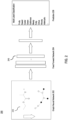
- FIG. 2 illustrates the architecture of artificial intelligence model 200 in accordance with some embodiments.
- the training dataset for training the artificial intelligence model 200 includes compound structures and corresponding flavor tags and/or odor tags of at least a subset of source chemical compounds from the source compound database 124.
- the artificial intelligence model 200 includes two parts: a graph neural network 202 and a feed forward network 204.
- the feed forward network 204 includes dense layers of varying sizes.
- a graph is a data structure comprising nodes and edges connected together to represent information.
- Each node in the graph represents an atom in the molecule.
- Each of the nodes in the graph is initialized with a set of one or more features defining an atom, such as atomic weight, valence, and hybridization type, that corresponds with the node.
- the features may be obtained from an open source cheminformatics software package, such as RDKit, that contains basic information about atoms and chemical compounds.
- An edge between two nodes in the graph represent a bond between the atoms corresponding with the nodes.
- the graph neural network 202 operates on the graph after the nodes in the graph are initialized.
- the graph neural network 202 performs message passing (neighborhood aggregation) between the nodes.
- Message passing involves pushing weights from each node to neighboring nodes that are connected via edges to that node, thus updating the internal representation for that node.
- Message passing is performed, in parallel, on all nodes in the graph, as information in layer L +1 depend on information in layer L.
- the nodes know more about their own features and that of their neighboring nodes, which creates a more accurate or fuller representation of the graph (e.g., each node has more information about its neighboring nodes), where N is a hyperparameter.
- each node will have a unique representation that is informed by the unique structure of the molecule.
- a representation of the graph is an input to the feed forward network 204.
- a computation on all node representations is performed to obtain a vector V that represents the graph.
- the mean of all node representations is calculated as the output of the graph neural network 202, which is input to the feed forward network 204.
- the feed forward network 204 includes layers of varying sizes.
- information such as vector V associated with a source chemical compound, moves in a forward direction between the layers.
- the feed forward network 204 uses a learning algorithm, such as gradient descent, to modify parameters (e.g., a set of weights, bias thresholds) of the feed forward network 204.
- the gradient descent may be based on batch gradient descent, stochastic gradient descent, or mini-batch gradient descent.
- the feed forward network 204 receives vector V associated with the source chemical compound as input data and predicts flavors and odors as output data 208.
- the feed forward network 204 is programmed to have an input layer, one or more intermediate layers, and an output layer.
- the size of the input data is the same as the size of the input layer.
- the input layer of the feed forward network is programmed to receive and pass the input data to the next layer of the feed forward network.
- the intermediate layers are programmed to perform intermediate processing or computation and transfer the weights from one layer to the next layer.
- Information generated at the last intermediate layer 210 is passed to the output layer for classification.
- the output layer uses a softmax function that maps the output of the intermediate layer immediately preceding it to the output data 208 of the feed forward network 204.
- the learning algorithm of the feed forward network 204 may be programmed as a supervised learning algorithm.
- the training data includes compound structures and corresponding flavor tags and/or odor tags of at least a subset of source chemical compounds from the source compound database 124.
- Vector V associated with the structure of a source chemical compound, as an input during training, is associated with a known target.
- the known target includes tagged flavors and tagged odors.
- the feed forward network 204 is trained by re-adjusting the set of weights and bias thresholds such that the output data of the feed forward network 204, given the input data, matches the known target.
- Cross-entropy or mean squared error may be used as a loss function of the feed forward network 204.
- the compound embedding generator 108 is applied to each of the source chemical compound in the training dataset. Since the intermediate layers of the feed forward network 204 include a distillation of structural information that are pertinent to compound flavor, compound embeddings may be retrieved or extracted from an intermediate layer of the feed forward network 204. Compound embeddings provide information regarding similarities between compound structures and compound flavors. It is noted that the closer an intermediate layer is to the output layer, the more accurate that intermediate layer is with regards to classification. In an embodiment, source compound embeddings generated by the last intermediate layer (shown in thicker lines in FIG. 2 ) before the output layer are retrieved. However, source compound embeddings generated by any intermediate layer may be retrieved. Source compound embeddings corresponding with the source chemical compounds in the training dataset are stored in the embedding database 126.
- the compound embedding generator 108 is applied to a particular chemical compound of a food item that is to be replaced.
- the particular chemical compound may selected from a combined compound list for the food item.
- Compound embedding corresponding to the particular chemical compound of the food item generated by the last intermediate layer before the output layer is retrieved.
- the compound searcher 110 searches from all source compound embeddings in the embedding database 126 to find top-K chemical compounds that are similar (closest) to compound embedding of the particular chemical compound using a distance metric.
- Example distance metric is cosine similarity or Euclidean similarity.
- Each of the top-K chemical compounds is similar to the particular chemical compound with regards to structural and functional features. This is useful if the particular compound in the food item is expensive or can only be found from an animal source.
- Table 2 Compound Name CAS No.
- Formula Kingdom Flavor Type Odor Type Odor/Flavor Tags Ortho-gualacol 90-05-1 C7 H8 O2 Organic compounds Woody Phenolic ["phenolic", “meaty”, “vanilla”, “spicy”, ...]
- Table 3 Compound Name CAS No.
- plant-based ingredients that contain the alternative chemical compounds may be found by referencing the source compound database 124.
- the alternative chemical compounds and/or corresponding plant-based ingredients may be returned as a result to the user.
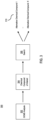
- FIG. 3 illustrates an example diagram of a data flow 300 that may represent an algorithm to form the basis of programming a computer to implement a method to find alternative chemical compounds with structural and functional properties similar to that of a particular (target) chemical compound, according to an embodiment.
- GCMS techniques are used to perform GCMS analysis on food items (e.g., food items in the food item database 122) to determine molecular compositions of these food items, at 302.
- a combined compound list, generated from the GCMS analysis, for each food item is stored in the food item database 122.
- a particular chemical compound is identified for replacement, at 304.
- the particular chemical compound is identified from a combined compound list of a food item that is selected from the food item database 122.
- the particular chemical compound is a chemical compound to be replaced.
- the particular chemical compound is received from the client computer 104 and transmitted to the server computer 106.
- a search is performed, by the server computer 106, to suggest one or more alternative chemical compounds based on the particular chemical compound of the food item that is to be replaced, at 306.
- Each alternative chemical compound recreates functional properties, such as flavor, smell, texture, etc., of the particular chemical compound that is present in the food item.
- each of the source compound embeddings in the embedding database 126 is compared with the compound embedding for the particular chemical compound to find those that are closest to the compound embedding for the particular chemical compound using a distance metric, such cosine similarity.
- One or more alternative chemical compounds that may be used as a replacement or substitute of the particular chemical compound are output, at 310.
- the one or more alternative chemical components, with or without plant-based ingredients that contain the alternative chemical compounds, may be transmitted to the client computer 104 for display.
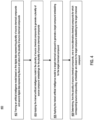
- FIG. 4 illustrates an example method 400 to suggest chemical compounds as substitutes for a chemical compound that is present in a food item, in accordance with some embodiments.
- FIG. 4 may be used as a basis to code the method 400 as one or more computer programs or other software elements that a server computer can execute or host.
- an artificial intelligence model is trained based on first digital data representing plurality of source chemical compounds and second digital data representing flavors and odors of the plurality of source chemical compounds.
- the artificial intelligence model is the neural network based model that includes two parts: the graph neural network 202 and the feed forward network 204.
- the plurality of source chemical compounds is at least a subset of the source chemical compounds in the source compound database 124.
- the source compound database 124 includes associations between the plurality of source chemical compounds and their flavors and odors and associations between the plurality of source compounds and natural ingredients that contain them.
- the artificial intelligence model is trained by transforming each of the plurality of source chemical compounds into a graph that includes nodes and edges.
- Each node in the graph represents an atom in the molecule.
- Each edge in the graph represents a bond between two atoms in the molecule.
- Each of the nodes in the graph is initialized with a set of one or more features defining an atom, such as atomic weight, that is corresponds with the node.
- the features may be obtained from an open source cheminformatics software package, such as RDKit, that contains basic information about atoms and chemical compounds.
- a graph neural network is applied on the graph. Multiple iterations of message passing between the nodes is performed on the graph so that the nodes understand more about their own features and that of their neighboring nodes, which creates a more accurate and fuller representation of the graph.
- a representation of a graph is generated, and the representation of the graph is matched with the second digital data.
- the representation of the graph may be generated by performing a computation on node representations of the nodes in the graph, and the representation is subsequently matched with flavors and odors of the source chemical compound associated with the graph.
- the trained artificial intelligence model is applied to the plurality of source chemical compounds to generate a plurality of source compound embeddings for the plurality of source chemical compounds.
- the plurality of source compound embeddings is retrieved from the dense layers of the feed forward network. For example, the plurality of source compound embeddings generated or output by the second to last dense layer (e.g., by last intermediate layer) of the feed forward network may be retrieved.
- the trained artificial intelligence model is applied to a target chemical compound to generate a target compound embedding for the target chemical compound.
- the target chemical compound is a chemical compound that is present in a particular food item.
- the target compound embedding is retrieved from the dense layers of the feed forward network.
- the target compound embedding generated or output by the second to last dense layer (e.g., by last intermediate layer) of the feed forward network may be retrieved.
- the target chemical compound may be identified from a list of chemical compounds associated with the particular food item.
- the list of chemical compounds may be generated from an GCMS analysis on the particular food item.
- Each of the chemical compounds in the list of chemical compounds is a chemical compound that is present in the particular food item.
- one or more alternative chemical compounds for which corresponding source compound embeddings that are closest to the target compound embedding for the target chemical compound are determined from the plurality of source chemical compounds.
- Each of the one or more alternative chemical compounds determined at step 408 is a suitable chemical compound to can be used to replace the target chemical compound as it recreates functional properties of the target chemical compound.
- the number of alternative chemical compounds determined at step 408 may be specified by a user.
- one or more plant-based ingredients containing the one or more alternative chemical compounds may be determined such as by referencing the source compound database 124.
- Each chemical compound in the source compound database 124 is associated with one or more plant-based ingredients that contain that chemical compound.
- a supervised neural network based model is trained to learn representations of compounds in a continuous space where distances between them can be determined (calculated) to suggest similar compounds.
- the techniques described herein are implemented by at least one computing device.
- the techniques may be implemented in whole or in part using a combination of at least one server computer and/or other computing devices that are coupled using a network, such as a packet data network.
- the computing devices may be hard-wired to perform the techniques or may include digital electronic devices such as at least one application-specific integrated circuit (ASIC) or field programmable gate array (FPGA) that is persistently programmed to perform the techniques or may include at least one general purpose hardware processor programmed to perform the techniques pursuant to program instructions in firmware, memory, other storage, or a combination.
- ASIC application-specific integrated circuit
- FPGA field programmable gate array
- Such computing devices may also combine custom hard-wired logic, ASICs, or FPGAs with custom programming to accomplish the described techniques.
- the computing devices may be server computers, workstations, personal computers, portable computer systems, handheld devices, mobile computing devices, wearable devices, body mounted or implantable devices, smartphones, smart appliances, internetworking devices, autonomous or semi-autonomous devices such as robots or unmanned ground or aerial vehicles, any other electronic device that incorporates hard-wired and/or program logic to implement the described techniques, one or more virtual computing machines or instances in a data center, and/or a network of server computers and/or personal computers.
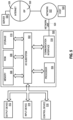
- FIG. 5 is a block diagram that illustrates an example computer system with which an embodiment may be implemented.
- a computer system 500 and instructions for implementing the disclosed technologies in hardware, software, or a combination of hardware and software are represented schematically, for example as boxes and circles, at the same level of detail that is commonly used by persons of ordinary skill in the art to which this disclosure pertains for communicating about computer architecture and computer systems implementations.
- Computer system 500 includes an input/output (I/O) subsystem 502 which may include a bus and/or other communication mechanism(s) for communicating information and/or instructions between the components of the computer system 500 over electronic signal paths.
- the I/O subsystem 502 may include an I/O controller, a memory controller and at least one I/O port.
- the electronic signal paths are represented schematically in the drawings, for example as lines, unidirectional arrows, or bidirectional arrows.
- At least one hardware processor 504 is coupled to I/O subsystem 502 for processing information and instructions.
- Hardware processor 504 may include, for example, a general-purpose microprocessor or microcontroller and/or a special-purpose microprocessor such as an embedded system or a graphics processing unit (GPU) or a digital signal processor or ARM processor.
- Processor 504 may comprise an integrated arithmetic logic unit (ALU) or may be coupled to a separate ALU.
- ALU arithmetic logic unit
- Computer system 500 includes one or more units of memory 506, such as a main memory, which is coupled to I/O subsystem 502 for electronically digitally storing data and instructions to be executed by processor 504.
- Memory 506 may include volatile memory such as various forms of random-access memory (RAM) or other dynamic storage device.
- RAM random-access memory
- Memory 506 also may be used for storing temporary variables or other intermediate information during execution of instructions to be executed by processor 504.
- Such instructions when stored in non-transitory computer-readable storage media accessible to processor 504, can render computer system 500 into a special-purpose machine that is customized to perform the operations specified in the instructions.
- Computer system 500 further includes non-volatile memory such as read only memory (ROM) 508 or other static storage device coupled to I/O subsystem 502 for storing information and instructions for processor 504.
- the ROM 508 may include various forms of programmable ROM (PROM) such as erasable PROM (EPROM) or electrically erasable PROM (EEPROM).
- a unit of persistent storage 510 may include various forms of non-volatile RAM (NVRAM), such as FLASH memory, or solid-state storage, magnetic disk, or optical disk such as CD-ROM or DVD-ROM and may be coupled to I/O subsystem 502 for storing information and instructions.
- Storage 510 is an example of a non-transitory computer-readable medium that may be used to store instructions and data which when executed by the processor 504 cause performing computer-implemented methods to execute the techniques herein.
- the instructions in memory 506, ROM 508 or storage 510 may comprise one or more sets of instructions that are organized as modules, methods, objects, functions, routines, or calls.
- the instructions may be organized as one or more computer programs, operating system services, or application programs including mobile apps.
- the instructions may comprise an operating system and/or system software; one or more libraries to support multimedia, programming or other functions; data protocol instructions or stacks to implement TCP/IP, HTTP or other communication protocols; file format processing instructions to parse or render files coded using HTML, XML, JPEG, MPEG or PNG; user interface instructions to render or interpret commands for a graphical user interface (GUI), command-line interface or text user interface; application software such as an office suite, internet access applications, design and manufacturing applications, graphics applications, audio applications, software engineering applications, educational applications, games or miscellaneous applications.
- GUI graphical user interface
- the instructions may implement a web server, web application server or web client.
- the instructions may be organized as a presentation layer, application layer and data storage layer such as a relational database system using structured query language (SQL) or no SQL, an object store, a graph database, a flat file system or other data storage.
- SQL structured query language
- object store e.g., a graph database
- flat file system e.g., a flat file system
- Computer system 500 may be coupled via I/O subsystem 502 to at least one output device 512.
- output device 512 is a digital computer display. Examples of a display that may be used in various embodiments include a touch screen display or a light-emitting diode (LED) display or a liquid crystal display (LCD) or an e-paper display.
- Computer system 500 may include other type(s) of output devices 512, alternatively or in addition to a display device. Examples of other output devices 512 include printers, ticket printers, plotters, projectors, sound cards or video cards, speakers, buzzers or piezoelectric devices or other audible devices, lamps or LED or LCD indicators, haptic devices, actuators, or servos.
- At least one input device 514 is coupled to I/O subsystem 502 for communicating signals, data, command selections or gestures to processor 504.
- input devices 514 include touch screens, microphones, still and video digital cameras, alphanumeric and other keys, keypads, keyboards, graphics tablets, image scanners, joysticks, clocks, switches, buttons, dials, slides, and/or various types of sensors such as force sensors, motion sensors, heat sensors, accelerometers, gyroscopes, and inertial measurement unit (IMU) sensors and/or various types of transceivers such as wireless, such as cellular or Wi-Fi, radio frequency (RF) or infrared (IR) transceivers and Global Positioning System (GPS) transceivers.
- RF radio frequency
- IR infrared
- GPS Global Positioning System
- control device 516 may perform cursor control or other automated control functions such as navigation in a graphical interface on a display screen, alternatively or in addition to input functions.
- Control device 516 may be a touchpad, a mouse, a trackball, or cursor direction keys for communicating direction information and command selections to processor 504 and for controlling cursor movement on display.
- the input device may have at least two degrees of freedom in two axes, a first axis (e.g., x) and a second axis (e.g., y), that allows the device to specify positions in a plane.
- An input device is a wired, wireless, or optical control device such as a joystick, wand, console, steering wheel, pedal, gearshift mechanism or other type of control device.
- An input device 514 may include a combination of multiple different input devices, such as a video camera and a depth sensor.
- computer system 500 may comprise an internet of things (IoT) device in which one or more of the output device 512, input device 514, and control device 516 are omitted.
- the input device 514 may comprise one or more cameras, motion detectors, thermometers, microphones, seismic detectors, other sensors or detectors, measurement devices or encoders and the output device 512 may comprise a special-purpose display such as a single-line LED or LCD display, one or more indicators, a display panel, a meter, a valve, a solenoid, an actuator or a servo.
- IoT internet of things
- input device 514 may comprise a global positioning system (GPS) receiver coupled to a GPS module that is capable of triangulating to a plurality of GPS satellites, determining and generating geo-location or position data such as latitude-longitude values for a geophysical location of the computer system 500.
- Output device 512 may include hardware, software, firmware and interfaces for generating position reporting packets, notifications, pulse or heartbeat signals, or other recurring data transmissions that specify a position of the computer system 500, alone or in combination with other application-specific data, directed toward host 524 or server 530.
- Computer system 500 may implement the techniques described herein using customized hard-wired logic, at least one ASIC or FPGA, firmware and/or program instructions or logic which when loaded and used or executed in combination with the computer system causes or programs the computer system to operate as a special-purpose machine. According to one embodiment, the techniques herein are performed by computer system 500 in response to processor 504 executing at least one sequence of at least one instruction contained in main memory 506. Such instructions may be read into main memory 506 from another storage medium, such as storage 510. Execution of the sequences of instructions contained in main memory 506 causes processor 504 to perform the process steps described herein. In alternative embodiments, hard-wired circuitry may be used in place of or in combination with software instructions.
- Non-volatile media includes, for example, optical or magnetic disks, such as storage 510.
- Volatile media includes dynamic memory, such as memory 506.
- Common forms of storage media include, for example, a hard disk, solid state drive, flash drive, magnetic data storage medium, any optical or physical data storage medium, memory chip, or the like.
- Storage media is distinct from but may be used in conjunction with transmission media.
- Transmission media participates in transferring information between storage media.
- transmission media includes coaxial cables, copper wire and fiber optics, including the wires that comprise a bus of I/O subsystem 502.
- transmission media can also take the form of acoustic or light waves, such as those generated during radio-wave and infra-red data communications.
- Various forms of media may be involved in carrying at least one sequence of at least one instruction to processor 504 for execution.
- the instructions may initially be carried on a magnetic disk or solid-state drive of a remote computer.
- the remote computer can load the instructions into its dynamic memory and send the instructions over a communication link such as a fiber optic or coaxial cable or telephone line using a modem.
- a modem or router local to computer system 500 can receive the data on the communication link and convert the data to a format that can be read by computer system 500.
- a receiver such as a radio frequency antenna or an infrared detector can receive the data carried in a wireless or optical signal and appropriate circuitry can provide the data to I/O subsystem 502 such as place the data on a bus.
- I/O subsystem 502 carries the data to memory 506, from which processor 504 retrieves and executes the instructions.
- the instructions received by memory 506 may optionally be stored on storage 510 either before or after execution by processor 504.
- Computer system 500 also includes a communication interface 518 coupled to bus 502.
- Communication interface 518 provides a two-way data communication coupling to network link(s) 520 that are directly or indirectly connected to at least one communication networks, such as a network 522 or a public or private cloud on the Internet.
- communication interface 518 may be an Ethernet networking interface, integrated-services digital network (ISDN) card, cable modem, satellite modem, or a modem to provide a data communication connection to a corresponding type of communications line, for example an Ethernet cable or a metal cable of any kind or a fiber-optic line or a telephone line.
- Network 522 broadly represents a local area network (LAN), wide-area network (WAN), campus network, internetwork, or any combination thereof.
- Communication interface 518 may comprise a LAN card to provide a data communication connection to a compatible LAN, or a cellular radiotelephone interface that is wired to send or receive cellular data according to cellular radiotelephone wireless networking standards, or a satellite radio interface that is wired to send or receive digital data according to satellite wireless networking standards.
- communication interface 518 sends and receives electrical, electromagnetic, or optical signals over signal paths that carry digital data streams representing various types of information.
- Network link 520 typically provides electrical, electromagnetic, or optical data communication directly or through at least one network to other data devices, using, for example, satellite, cellular, Wi-Fi, or BLUETOOTH technology.
- network link 520 may provide a connection through a network 522 to a host computer 524.
- network link 520 may provide a connection through network 522 or to other computing devices via internetworking devices and/or computers that are operated by an Internet Service Provider (ISP) 526.
- ISP 526 provides data communication services through a world-wide packet data communication network represented as internet 528.
- a server computer 530 may be coupled to internet 528.
- Server 530 broadly represents any computer, data center, virtual machine, or virtual computing instance with or without a hypervisor, or computer executing a containerized program system such as DOCKER or KUBERNETES.
- Server 530 may represent an electronic digital service that is implemented using more than one computer or instance and that is accessed and used by transmitting web services requests, uniform resource locator (URL) strings with parameters in HTTP payloads, API calls, app services calls, or other service calls.
- URL uniform resource locator
- Computer system 500 and server 530 may form elements of a distributed computing system that includes other computers, a processing cluster, server farm or other organization of computers that cooperate to perform tasks or execute applications or services.
- Server 530 may comprise one or more sets of instructions that are organized as modules, methods, objects, functions, routines, or calls. The instructions may be organized as one or more computer programs, operating system services, or application programs including mobile apps.
- the instructions may comprise an operating system and/or system software; one or more libraries to support multimedia, programming or other functions; data protocol instructions or stacks to implement TCP/IP, HTTP or other communication protocols; file format processing instructions to parse or render files coded using HTML, XML, JPEG, MPEG or PNG; user interface instructions to render or interpret commands for a graphical user interface (GUI), command-line interface or text user interface; application software such as an office suite, internet access applications, design and manufacturing applications, graphics applications, audio applications, software engineering applications, educational applications, games or miscellaneous applications.
- Server 530 may comprise a web application server that hosts a presentation layer, application layer and data storage layer such as a relational database system using structured query language (SQL) or no SQL, an object store, a graph database, a flat file system or other data storage.
- SQL structured query language
- Computer system 500 can send messages and receive data and instructions, including program code, through the network(s), network link 520 and communication interface 518.
- a server 530 might transmit a requested code for an application program through Internet 528, ISP 526, local network 522 and communication interface 518.
- the received code may be executed by processor 504 as it is received, and/or stored in storage 510, or other non-volatile storage for later execution.
- the execution of instructions as described in this section may implement a process in the form of an instance of a computer program that is being executed and consisting of program code and its current activity.
- a process may be made up of multiple threads of execution that execute instructions concurrently.
- a computer program is a passive collection of instructions, while a process may be the actual execution of those instructions.
- Several processes may be associated with the same program; for example, opening up several instances of the same program often means more than one process is being executed. Multitasking may be implemented to allow multiple processes to share processor 504.
- computer system 500 may be programmed to implement multitasking to allow each processor to switch between tasks that are being executed without having to wait for each task to finish.
- switches may be performed when tasks perform input/output operations, when a task indicates that it can be switched, or on hardware interrupts.
- Time-sharing may be implemented to allow fast response for interactive user applications by rapidly performing context switches to provide the appearance of concurrent execution of multiple processes simultaneously.
- an operating system may prevent direct communication between independent processes, providing strictly mediated and controlled inter-process communication functionality.
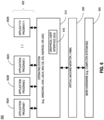
- FIG. 6 is a block diagram of a basic software system 600 that may be employed for controlling the operation of computing device 500.
- Software system 600 and its components, including their connections, relationships, and functions, is meant to be exemplary only, and not meant to limit implementations of the example embodiment(s).
- Other software systems suitable for implementing the example embodiment(s) may have different components, including components with different connections, relationships, and functions.
- Software system 600 is provided for directing the operation of computing device 500.
- Software system 600 which may be stored in system memory (RAM) 506 and on fixed storage (e.g., hard disk or flash memory) 510, includes a kernel or operating system (OS) 610.
- RAM system memory
- fixed storage e.g., hard disk or flash memory
- OS operating system
- the OS 610 manages low-level aspects of computer operation, including managing execution of processes, memory allocation, file input and output (I/O), and device I/O.
- One or more application programs represented as 602A, 602B, 602C ... 602N, may be "loaded” (e.g., transferred from fixed storage 510 into memory 506) for execution by the system 600.
- the applications or other software intended for use on device 600 may also be stored as a set of downloadable computer-executable instructions, for example, for downloading and installation from an Internet location (e.g., a Web server, an app store, or other online service).
- Software system 600 includes a graphical user interface (GUI) 615, for receiving user commands and data in a graphical (e.g., "point-and-click” or "touch gesture") fashion. These inputs, in turn, may be acted upon by the system 600 in accordance with instructions from operating system 610 and/or application(s) 602.
- GUI 615 also serves to display the results of operation from the OS 610 and application(s) 602, whereupon the user may supply additional inputs or terminate the session (e.g., log off).
- OS 610 can execute directly on the bare hardware 620 (e.g., processor(s) 504) of device 500.
- bare hardware 620 e.g., processor(s) 504
- a hypervisor or virtual machine monitor (VMM) 630 may be interposed between the bare hardware 620 and the OS 610.
- VMM 630 acts as a software "cushion" or virtualization layer between the OS 610 and the bare hardware 620 of the device 500.
- VMM 630 instantiates and runs one or more virtual machine instances ("guest machines"). Each guest machine comprises a "guest” operating system, such as OS 610, and one or more applications, such as application(s) 602, designed to execute on the guest operating system.
- the VMM 630 presents the guest operating systems with a virtual operating platform and manages the execution of the guest operating systems.
- the VMM 630 may allow a guest operating system to run as if it is running on the bare hardware 620 of device 500 directly. In these instances, the same version of the guest operating system configured to execute on the bare hardware 620 directly may also execute on VMM 630 without modification or reconfiguration. In other words, VMM 630 may provide full hardware and CPU virtualization to a guest operating system in some instances.
- a guest operating system may be specially designed or configured to execute on VMM 630 for efficiency.
- the guest operating system is "aware" that it executes on a virtual machine monitor.
- VMM 630 may provide para-virtualization to a guest operating system in some instances.
- the above-described basic computer hardware and software is presented for purpose of illustrating the basic underlying computer components that may be employed for implementing the example embodiment(s).
- the example embodiment(s), however, are not necessarily limited to any particular computing environment or computing device configuration. Instead, the example embodiment(s) may be implemented in any type of system architecture or processing environment that one skilled in the art, in light of this disclosure, would understand as capable of supporting the features and functions of the example embodiment(s) presented herein.
Landscapes
- Engineering & Computer Science (AREA)
- Theoretical Computer Science (AREA)
- Physics & Mathematics (AREA)
- Life Sciences & Earth Sciences (AREA)
- Computing Systems (AREA)
- Health & Medical Sciences (AREA)
- General Health & Medical Sciences (AREA)
- Artificial Intelligence (AREA)
- Data Mining & Analysis (AREA)
- Evolutionary Computation (AREA)
- Software Systems (AREA)
- Bioinformatics & Cheminformatics (AREA)
- Chemical & Material Sciences (AREA)
- General Engineering & Computer Science (AREA)
- Biophysics (AREA)
- Bioinformatics & Computational Biology (AREA)
- General Physics & Mathematics (AREA)
- Mathematical Physics (AREA)
- Computational Linguistics (AREA)
- Crystallography & Structural Chemistry (AREA)
- Molecular Biology (AREA)
- Biomedical Technology (AREA)
- Spectroscopy & Molecular Physics (AREA)
- Medical Informatics (AREA)
- Biotechnology (AREA)
- Computer Vision & Pattern Recognition (AREA)
- Databases & Information Systems (AREA)
- Evolutionary Biology (AREA)
- Medicinal Chemistry (AREA)
- Epidemiology (AREA)
- Public Health (AREA)
- Bioethics (AREA)
- Pharmacology & Pharmacy (AREA)
- Information Retrieval, Db Structures And Fs Structures Therefor (AREA)
- Management, Administration, Business Operations System, And Electronic Commerce (AREA)
- Medical Treatment And Welfare Office Work (AREA)
- Seasonings (AREA)
Description
- One technical field of the present disclosure is artificial intelligence and machine learning, as applied to food. Another technical field is food science. The disclosure relates, in particular, to use of machine learning to suggest alternative chemical compounds that can be used to recreate functional properties of chemical compounds that are present in products, such as food items.
- The approaches described in this section are approaches that could be pursued, but not necessarily approaches that have been previously conceived or pursued. Therefore, unless otherwise indicated, it should not be assumed that any of the approaches described in this section qualify as prior art merely by virtue of their inclusion in this section.
- Today, many negative consequences of use of animals in the food industry are known, such as deforestation, pollution, human health conditions, and allergies, among others. In contrast, a plant-based diet is associated with improved health and well-being and reduces risk of diseases. Not only is a plant-based diet only good for human health but it is also good for the Earth's health. Research has shown that production of plant-based food items generates less greenhouse emissions and require less energy, water, and land than production of animal-based food items. There are plant alternatives to animal-based food items. For example, plant alternatives to meat include veggie burgers and other vegan meat food items. However, these alternatives do not match the taste and texture of meat.
- Accordingly, there is a need for improved techniques to mimic a food item, such as an animal-based food item, by matching sensory attributes as much as possible. Unfortunately, many techniques for development of new foods rely upon time-consuming, inaccurate, manual laboratory work in which different ingredients are combined in different ways and tested. These approaches are inefficient, involve extensive time to develop a single successful food formula, and waste physical resources.
-
US10957424B1 -
US2017/220558A1 in an abstract states that "A first food ingredient may be received. The first food ingredient may comprise a first plurality of chemical constituents. A plurality of candidate food ingredient substitutes may be received. Each candidate food ingredient substitute may comprise a second plurality of chemical constituents. For each of the plurality of candidate food ingredient substitutes, a quantity of the second plurality of chemical constituents that match the first plurality of chemical constituents may be determined. One or more food ingredient substitutes may be identified based on at least the quantity of the second plurality of chemical constituents that match the first plurality of chemical constituents." -
US2019/228855A1 in an abstract states that "Systems and methods for improving food-related personalization for a user including generating a recipe database including a set of recipe data structures; deriving a recipe vector representation of the recipe data structures; determining a set of user food preferences; extracting a set of recipe vector constraints from the set of user food preferences; determining a personalized food plan for the user, including automatically selecting a subset of the set of recipe data structures associated with recipe vector representations that satisfy the set of recipe vector constraints; determining fulfillment parameters for grocery items associated with the personalized food plan; and automatically facilitating fulfillment of grocery items associated with the personalized food plan based on the fulfillment parameters." -
US2020/365053A1 in an abstract states that "Systems and methods to mimic a target food item using artificial intelligence are disclosed. The system can learn from open source and proprietary databases. A prediction model can be trained using features of the source ingredients to match those of the given target food item. A formula comprising a combination of most relevant source ingredients and their proportions can be determined using the trained prediction model. A set of existing recipes can be used as a dataset to train a recurrent neural network (RNN) and/or other suitable models. The RNN can be used to determine a recipe to mimic the target food item. The recipe may comprise a cooking process for the set of ingredients in the formula and can be cooked by a chef. The recipe may be further modified as necessary based on human feedback on sensorial descriptors." -
US2017/139902A1 in an abstract states that "Mechanisms are provided for implementing a recipe modification system. The recipe modification system receives a request to modify an existing recipe from a requestor. The request identifies the existing recipe and an ingredient to be added to the existing recipe. The recipe modification system identifies a cluster of recipe elements associated with the ingredient to be added to the existing recipe and selects a representative member recipe element of the cluster. The recipe modification system modifies the existing recipe based on the selected representative member recipe element and generates a natural language text for the modified recipe based on the existing recipe and the selected representative member recipe element. The recipe modification system outputs the natural language text for the modified recipe to the requestor. " - The present invention is set out in the independent claims, with some optional features set out in the claims dependent thereto.
- The appended claims may serve as a summary of the invention.
- The present invention is illustrated by way of example, and not by way of limitation, in the figures of the accompanying drawings and in which like reference numerals refer to similar elements and in which:
-
FIG. 1 illustrates an example networked computer system with which various embodiments may be practiced. -
FIG. 2 illustrates an architecture of an example artificial intelligence model in accordance with some embodiments. -
FIG. 3 illustrates an example diagram of a data flow in accordance with some embodiments. -
FIG. 4 illustrates an example method to suggest chemical compounds as substitutes for a chemical compound that is present in a product, in accordance with some embodiments. -
FIG. 5 illustrates a block diagram of a computing device in which the example embodiment(s) of the present invention may be embodied. -
FIG. 6 illustrates a block diagram of a basic software system for controlling the operation of a computing device. - In the following description, for the purposes of explanation, numerous specific details are set forth in order to provide a thorough understanding of the present invention. It will be apparent, however, that the present invention may be practiced without these specific details. In other instances, well-known structures and devices are shown in block diagram form in order to avoid unnecessarily obscuring the present invention.
- Embodiments are described herein in sections according to the following outline:
- 1.0 GENERAL OVERVIEW
- 2.0 STRUCTURAL OVERVIEW
- 3.0 FUNCTIONAL OVERVIEW
- 3.1 COMPOUND EMBEDDING GENERATOR
- 3.1.1 GRAPH NEURAL NETWORK
- 3.1.2 FEED FORWARD NETWORK
- 3.1.3 COMPOUND EMBEDDINGS
- 3.2 COMPOUND SEARCHER
- 3.1 COMPOUND EMBEDDING GENERATOR
- 4.0 EXAMPLE SEARCH FLOW
- 5.0 PROCEDURAL OVERVIEW
- 6.0 HARDWARE OVERVIEW
- 7.0 SOFTWARE OVERVIEW
- 8.0 OTHER ASPECTS OF DISCLOSURE
- Computer-implemented techniques for generating alternative chemical compounds that can be used to recreate or mimic flavors of target chemical compounds using artificial intelligence are disclosed.
- In some embodiments, a neural network based model is trained on source chemical compounds and their corresponding flavors and odors. The trained neural network based model generates source compound embeddings of the source chemical compounds. The trained neural network based model generates a target compound embedding of a target chemical compound that is present in a food item. From the source compound embeddings, one or more alternative chemical compounds of the source chemical compounds that are closest to the target chemical compound, based on a distance metric, may be determined. Each alternative chemical compound may be used to recreate the flavor of the target chemical compound.
- In an embodiment, a computer-implemented method of suggesting chemical compounds as substitutes for a chemical compound that is present in a food item, comprising: training an artificial intelligence model based on first digital data representing plurality of source chemical compounds and second digital data representing flavors and odors of the plurality of source chemical compounds; applying the trained artificial intelligence model to the plurality of source chemical compounds to generate a plurality of source compound embeddings for the plurality of source chemical compounds; applying the trained artificial intelligence model to a target chemical compound to generate a target compound embedding for the target chemical compound, the target chemical compound is a chemical compound that is present in a particular food item; determining, from the plurality of source chemical compounds, one or more alternative chemical compounds for which corresponding source compounding embeddings are closest to the target compound embedding for the target chemical compound.
- All embodiments disclosed and claimed herein are directed to a computer-implemented programmed processes that interact with digital data to provide a practical application of computing technology to the problem of generating alternative chemical compounds that can be used to recreate functional (e.g., sensorial) properties, such as flavor, texture, etc., of target chemical compounds that may be expensive or can only be found from an animal source. The disclosure is not intended to encompass techniques for organizing human activity, for performing mental processes, or for performing a mathematical concept, and any interpretation of the claims to encompass such techniques would be unreasonable based upon the disclosure as a whole.
- Other embodiments, aspects, and features will become apparent from the reminder of the disclosure as a whole.
-
FIG. 1 illustrates an examplenetworked computer system 100 with which various embodiments may be practiced.FIG. 1 is shown in simplified, schematic format for purposes of illustrating a clear example and other embodiments may include more, fewer, or different elements.FIG. 1 , and the other drawing figures and all of the description and claims in this disclosure, are intended to present, disclose, and claim a technical system and technical methods comprising specially programmed computers, using a special-purpose distributed computer system design and instructions that are programmed to execute the functions that are described. These elements execute functions that have not been available before to provide a practical application of computing technology to the problem of generating alternative chemical compounds that can be used to recreate functional (e.g., sensorial) properties, such as flavor, texture, etc., of target chemical compounds in food items. In this manner, the disclosure presents a technical solution to a technical problem, and any interpretation of the disclosure or claims to cover any judicial exception to patent eligibility, such as an abstract idea, mental process, method of organizing human activity or mathematical algorithm, has no support in this disclosure and is erroneous. - In the example
FIG. 1 , thenetworked computer system 100 comprises a client computer(s) 104, aserver computer 106, a data repository(ies) 120, which are communicatively coupled directly or indirectly via one ormore networks 102. In an embodiment, theserver computer 106 broadly represents one or more computers, such as one or more desktop computers, server computers, a server farm, a cloud computing platform (like AMAZON EC2® cloud computing platform, GOOGLE CLOUD® cloud computing platform, container orchestration (KUBERNETES® container orchestration, DOCKER® container orchestration, etc.)), or a parallel computer, virtual computing instances in public or private datacenters, and/or instances of a server-based application. - The
server computer 106 includes one or more computer programs or sequences of program instructions that is organized to implement compound embedding generating functions and compound searching functions. Programs or sequences of instructions organized to implement the compound embedding generating functions may be referred to herein as acompound embedding generator 108. Programs or sequences of instructions organized to implement the compound generating functions may be referred to herein as acompound searcher 110. - In an embodiment, the
compound embedding generator 108 is programmed to generate a compound embedding for a chemical compound. A compound embedding is an encoded representation of a chemical compound and provides information regarding similarities between the structure of the chemical compound and odors and flavors of the chemical compound. As further discussed below, thecompound embedding generator 108 may be applied to each source chemical compound from a source compound database and to any of the chemical compounds present in a food item. - In an embodiment, the
compound searcher 110 is programmed to suggest (determine, generate, predict) one or more alternative chemical compounds for a food item based on a particular chemical compound present in the food item that has been selected for replacement. Each alternative chemical compound recreates functional properties, such as flavor, smell, texture, etc., of that particular chemical compound. - In some embodiments, to provide modularity and separation of function, the
compound embedding generator 108 and thecompound searcher 110 are implemented as a logically separate program, process or library. - The
server computer 106 also includes receiving instructions (not illustrated) and displaying instructions (not illustrated). The receiving instructions are programmed to receive data from aclient computer 104 and/or adata repository 120 for further processing. For example, the receiving instructions may be programmed for receiving user input, such as user input specifying food items, chemical compounds, a number of suggested alternative compounds to be generated, etc. The displaying instructions are programmed to cause one or more computing devices, such as aclient computer 104 to display a graphical user interface (GUI) including content, such as content fromdata repository 120 and/or generated by thecompound embedding generator 108 and thecompound searcher 110. Other sets of instructions may be included to form a complete system such as an operating system, utility libraries, a presentation layer, database interface layer and so forth. - Computer executable instructions described herein may be in machine executable code in the instruction set of a CPU and may have been compiled based upon source code written in Python, JAVA, C, C++, OBJECTIVE-C, or any other human-readable programming language or environment, alone or in combination with scripts in JAVASCRIPT, other scripting languages and other programming source text. In another embodiment, the programmed instructions also may represent one or more files or projects of source code that are digitally stored in a mass storage device such as non-volatile RAM or disk storage, in the systems of
FIG. 1 or a separate repository system, which when compiled or interpreted cause generating executable instructions which when executed cause the computer to perform the functions or operations that are described herein with reference to those instructions. In other words, the figure may represent the manner in which programmers or software developers organize and arrange source code for later compilation into an executable, or interpretation into bytecode or the equivalent, for execution by theserver computer 106. - The
server computer 106 may be coupled to thedata repository 120 that includes afood item database 122, asource compound database 124, and an embeddingdatabase 126. As used herein, the term "database" refers to a corpus of data, organized or unorganized, in any format, with or without a particular interface for accessing the corpus of data. Eachdatabase - The
food item database 122 includes a plurality of food items and information about the plurality of food item. A food item in thefood item database 122 may be plant-based or animal-based. An example plant-based food item is tofu. An example animal-based food item is pulled pork. - Each food item in the
food item database 122 is associated with gas chromatography mass spectrometry (GCMS) data obtained using GCMS techniques. GCMS techniques may be used to perform a GCMS analysis on a food item to determine the molecular composition of a food item. GCMS data may include one or more readouts, with each of the one or more readouts including a list of chemical compounds of the food item. For example, a first readout may include a human-verified list of chemical compounds, and a second readout may include a software-produced list of chemical compounds. - In an embodiment, the human-verified list of chemical compounds for the food item may include compound data, odor threshold data, and concentration data. The human-verified list of chemical compounds may stem from a predetermined list of chemical compounds with known odor thresholds. An odor threshold represents the lowest concentration of a chemical compound required for a human to be able to detect it within a solution, such as water with parts per billion as the unit. (It is noted that odors are relevant when creating a flavor. Studies suggest that odor is the dominant role in our experience of food.) A lab technician may check the existence of each chemical compound from the predetermined list by analyzing the retention time of the compound and the presence of its ions within the corresponding GCMS spectrum, and may determine the concentration of each of those chemical compounds in the food item by comparing it with the spectrum of an added baseline sample.
- In an embodiment, the software-produced list of chemical compounds for the food item may include compound data, concentration data, and confidence data. The compound data and concentration data in the software-produced list are similarly configured as the compound data and concentration data in the human-verified list, in that the compound data includes chemical compounds that are present in the food item and the concentration data includes the concentration of each of those chemical compounds that are present in the food item. The confidence data in the software-produced list includes a score for each chemical compound indicating the likelihood of that chemical compound being present in the food item. The chemical compounds are automatically found by a GCMS software.
- The readouts from the GCMS analysis are combined into a compound list for the food item, with chemical compounds from the first readout (e.g., human-verified list of compounds) weighted higher than chemical compounds from the second readout (e.g., software produced list of compounds) as odor thresholds of the chemical compounds from the second readout may be unknown and/or the confidence may be lower. The compound list also includes the concentration of each of the chemical compounds in the list.
- In an embodiment, the compound list is presented, for example, in a GUI, to a user to select therefrom a target chemical compound for replacement. In an embodiment, each chemical compound in the list may be ranked by its ratio between odor threshold and concentration of that chemical compound. As such, since the second readout is not associated with odor thresholds, and as such the importance of each chemical compound from the second readout is unknown, chemical compounds from the second readout are ranked lower than chemical compounds from the first readout and are at the end of the combined compound list.
- Each chemical compound in the combined compound list may be associated with a simplified molecular-input line-entry system (SMILES) based notation describing its corresponding structure, although other suitable notations that allow for chemical information processing are also contemplated. For example, the compound structure of vanillin may be represented as O=Cc1ccc(O)c(OC)c1COc1cc(C=O)ccc1O.
- The combined compound list associated with each food item is stored in the
food item database 122. - The
source compound database 124 includes a plurality of source chemical compounds and information about the plurality of source chemical compounds, including structural and organoleptic information. Thesource compound database 124 also includes associations between the plurality of source chemical compounds and ingredients that contain them. In an embodiment, the ingredients associated with the plurality of source chemical compounds are natural ingredients. Associations with natural ingredients are useful for multiple reasons. First, using natural ingredients rather than flavorings are preferable for consumer transparency and provides potential for novel ingredient combinations. Secondly, compounds used in flavorings must be able to be extracted from natural ingredients to be considered a "Natural Flavor." Therefore, associations with natural ingredients can help flavorists select potential natural sources from which to extract flavorings. In an embodiment, the ingredients associated with the plurality of source chemical compounds are plant-based ingredients. - In an embodiment, data in the
source compound database 124 may be obtained from different sources of knowledge, including open source databases such as the FlavorDB database, the FooDB database, the Good Scents Company database, or the like. Table 1 shows example information associated with each source chemical compound stored in thesource compound database 124.Table 1 Compound Information Description Properties Structural information, class, category Databases Database identifier in various databases (web sources) Synonyms Set of synonyms Flavors Tags, descriptions, type Odors Tags, descriptions, type, strength, substantivitv Ingredients Natural ingredients the compound is found in - The source chemical compound may be compounds certified by the Flavor & Extract Manufacturers Association (FEMA) and, as such, may be used by flavor houses to recreate flavors, as these source chemical compounds are certified GRAS (generally regarded as safe). Each source chemical compound in the
source compound database 124 may be associated with a SMILES based notation describing its corresponding structure, although other suitable notations that allow for chemical information processing are also contemplated. A training dataset, for training thecompound embedding generator 108, includes compound structures and corresponding flavor tags and/or odor tags of at least a subset of the source chemical compounds from thesource compound database 124. - In an embodiment, the embedding
database 126 includes compound embeddings generated by thecompound embedding generator 108. The compound embeddings include source compound embeddings that correspond with source chemical compounds in the training dataset. The source compound embeddings that correspond with the source chemical compounds in the training dataset are used by thecompound searcher 110 to suggest (determine, generate, predict) one or more alternative chemical compounds for a food item, where each of the alternative chemical compounds can be a substitute or replacement of a particular chemical compound that is present in the food item. - The
network 102 broadly represents a combination of one or more local area networks (LANs), wide area networks (WANs), metropolitan area networks (MANs), global interconnected internetworks, such as the public internet, or a combination thereof. Each such network may use or execute stored programs that implement internetworking protocols according to standards such as the Open Systems Interconnect (OSI) multi-layer networking model, including but not limited to Transmission Control Protocol (TCP) or User Datagram Protocol (UDP), Internet Protocol (IP), Hypertext Transfer Protocol (HTTP), and so forth. All computers described herein may be configured to connect to thenetwork 102 and the disclosure presumes that all elements ofFIG. 1 are communicatively coupled via thenetwork 102. The various elements depicted inFIG. 1 may also communicate with each other via direct communications links that are not depicted inFIG. 1 for purposes of explanation. - The
server computer 106 is accessible over thenetwork 102 by aclient computer 104 to request alternative chemical compounds for a particular chemical compound that is present a food item to recreate functional properties of that particular chemical compound. Theclient computer 104 may comprise a desktop computer, laptop computer, tablet computer, smartphone, or any other type of computing device that allows access to theserver computer 106. The elements inFIG. 1 are intended to represent one workable embodiment but are not intended to constrain or limit the number of elements that could be used in other embodiments. - The
server computer 106, including thecompound embedding generator 108 and thecompound searcher 110, and thedata repository 120 interoperate programmatically in an unconventional manner to generate alternative chemical compounds for a particular chemical compound that is present a food item to recreate functional properties of that particular chemical compound. - In an embodiment, the
compound embedding generator 108 includes an artificial intelligence model that is trained to learn representations of chemical compounds (compound embeddings) in a continuous space where distances between chemical compounds can be determined. An example artificial intelligence model is a neural network based model.FIG. 2 illustrates the architecture ofartificial intelligence model 200 in accordance with some embodiments. The training dataset for training theartificial intelligence model 200 includes compound structures and corresponding flavor tags and/or odor tags of at least a subset of source chemical compounds from thesource compound database 124. Theartificial intelligence model 200 includes two parts: a graphneural network 202 and a feedforward network 204. The feedforward network 204 includes dense layers of varying sizes. By training theartificial intelligence model 200 to predict flavors and odors, intermediate layers of the feedforward network 204 will contain information that pertains both to compound structures and associated flavors and odors. - During training, a notation suitable for processing, such as the SMILES notation, of the molecular structure of each molecule (chemical compound) 206 from the training dataset is transformed into a graph. A graph is a data structure comprising nodes and edges connected together to represent information. Each node in the graph represents an atom in the molecule. Each of the nodes in the graph is initialized with a set of one or more features defining an atom, such as atomic weight, valence, and hybridization type, that corresponds with the node. The features may be obtained from an open source cheminformatics software package, such as RDKit, that contains basic information about atoms and chemical compounds. An edge between two nodes in the graph represent a bond between the atoms corresponding with the nodes.
- The graph
neural network 202 operates on the graph after the nodes in the graph are initialized. The graphneural network 202 performs message passing (neighborhood aggregation) between the nodes. Message passing involves pushing weights from each node to neighboring nodes that are connected via edges to that node, thus updating the internal representation for that node. Message passing is performed, in parallel, on all nodes in the graph, as information in layer L+1 depend on information in layer L. Through N iterations (e.g., N=5), the nodes know more about their own features and that of their neighboring nodes, which creates a more accurate or fuller representation of the graph (e.g., each node has more information about its neighboring nodes), where N is a hyperparameter. At the end of the message passing, each node will have a unique representation that is informed by the unique structure of the molecule. - After N iterations, a representation of the graph is an input to the feed
forward network 204. A computation on all node representations is performed to obtain a vector V that represents the graph. In an embodiment, the mean of all node representations is calculated as the output of the graphneural network 202, which is input to the feedforward network 204. - The feed
forward network 204 includes layers of varying sizes. In the feedforward network 204, information, such as vector V associated with a source chemical compound, moves in a forward direction between the layers. During training, the feedforward network 204 uses a learning algorithm, such as gradient descent, to modify parameters (e.g., a set of weights, bias thresholds) of the feedforward network 204. The gradient descent may be based on batch gradient descent, stochastic gradient descent, or mini-batch gradient descent. - The feed
forward network 204 receives vector V associated with the source chemical compound as input data and predicts flavors and odors asoutput data 208. In an embodiment, the feedforward network 204 is programmed to have an input layer, one or more intermediate layers, and an output layer. The size of the input data is the same as the size of the input layer. The input layer of the feed forward network is programmed to receive and pass the input data to the next layer of the feed forward network. The intermediate layers are programmed to perform intermediate processing or computation and transfer the weights from one layer to the next layer. Information generated at the lastintermediate layer 210 is passed to the output layer for classification. The output layer uses a softmax function that maps the output of the intermediate layer immediately preceding it to theoutput data 208 of the feedforward network 204. - In an embodiment, the learning algorithm of the feed
forward network 204 may be programmed as a supervised learning algorithm. As described above, the training data includes compound structures and corresponding flavor tags and/or odor tags of at least a subset of source chemical compounds from thesource compound database 124. Vector V associated with the structure of a source chemical compound, as an input during training, is associated with a known target. The known target includes tagged flavors and tagged odors. The feedforward network 204 is trained by re-adjusting the set of weights and bias thresholds such that the output data of the feedforward network 204, given the input data, matches the known target. Cross-entropy or mean squared error may be used as a loss function of the feedforward network 204. - After the
compound embedding generator 108 is trained, thecompound embedding generator 108 is applied to each of the source chemical compound in the training dataset. Since the intermediate layers of the feedforward network 204 include a distillation of structural information that are pertinent to compound flavor, compound embeddings may be retrieved or extracted from an intermediate layer of the feedforward network 204. Compound embeddings provide information regarding similarities between compound structures and compound flavors. It is noted that the closer an intermediate layer is to the output layer, the more accurate that intermediate layer is with regards to classification. In an embodiment, source compound embeddings generated by the last intermediate layer (shown in thicker lines inFIG. 2 ) before the output layer are retrieved. However, source compound embeddings generated by any intermediate layer may be retrieved. Source compound embeddings corresponding with the source chemical compounds in the training dataset are stored in the embeddingdatabase 126. - Similarly, the
compound embedding generator 108 is applied to a particular chemical compound of a food item that is to be replaced. The particular chemical compound may selected from a combined compound list for the food item. Compound embedding corresponding to the particular chemical compound of the food item generated by the last intermediate layer before the output layer is retrieved. - To find alternative chemical compounds that can be used to recreate the flavors of the particular chemical compound of the food item, the
compound searcher 110 searches from all source compound embeddings in the embeddingdatabase 126 to find top-K chemical compounds that are similar (closest) to compound embedding of the particular chemical compound using a distance metric. Example distance metric is cosine similarity or Euclidean similarity. Each of the top-K chemical compounds is similar to the particular chemical compound with regards to structural and functional features. This is useful if the particular compound in the food item is expensive or can only be found from an animal source. - For illustration purposes, assume a user selects ortho-gualacol, shown in Table 2, as a target chemical compound to find alternatives for. Table 3 shows top 5 alternative chemical compounds that found to be the closest to the embedding for ortho-gualacol by cosine similarity.
Table 2 Compound Name CAS No. Formula Kingdom Flavor Type Odor Type Odor/Flavor Tags Ortho-gualacol 90-05-1 C7 H8 O2 Organic compounds Woody Phenolic ["phenolic", "meaty", "vanilla", "spicy", ...] Table 3 Compound Name CAS No. Formula Kingdom Flavor Type Odor Type Odor/Flavor Tags Methyl salicylate 119-36-8 C8 H8 O3 Organic compounds Minty Minty ["aromatic", "balsamic", "caramellic", ...] Orthodimethyl h... 91-16-7 C8 H10 O2 Organic compounds - Vanilla ["woody", "musty", "phenolic", "earthy", ...] 2,6-dimethoxypl... 91-10-1 C8 H10 03 Organic compounds Medicin al Smoky ["balsamic", "woody", "smoky", "medicinal", ...] Orthoanisaldehyde 135-02-4 C8 H8 02 Carbonyls, aldehydes Anisic Anisic ["musty", "guaiacol", "powdery", "hawthorn", ...] Ortho-methyl ani... 578-58-5 C8 H10 O Phenols Campho reous Naphthy 1 ["wood", "warm", "nutty", "naphthyl", ...] - After the alternative chemical compounds are suggested, plant-based ingredients that contain the alternative chemical compounds may be found by referencing the
source compound database 124. In an embodiment, the alternative chemical compounds and/or corresponding plant-based ingredients may be returned as a result to the user. -
FIG. 3 illustrates an example diagram of adata flow 300 that may represent an algorithm to form the basis of programming a computer to implement a method to find alternative chemical compounds with structural and functional properties similar to that of a particular (target) chemical compound, according to an embodiment. - GCMS techniques are used to perform GCMS analysis on food items (e.g., food items in the food item database 122) to determine molecular compositions of these food items, at 302. A combined compound list, generated from the GCMS analysis, for each food item is stored in the
food item database 122. - A particular chemical compound is identified for replacement, at 304. In an embodiment, the particular chemical compound is identified from a combined compound list of a food item that is selected from the
food item database 122. The particular chemical compound is a chemical compound to be replaced. In an embodiment, the particular chemical compound is received from theclient computer 104 and transmitted to theserver computer 106. - A search is performed, by the
server computer 106, to suggest one or more alternative chemical compounds based on the particular chemical compound of the food item that is to be replaced, at 306. Each alternative chemical compound recreates functional properties, such as flavor, smell, texture, etc., of the particular chemical compound that is present in the food item. In an embodiment, each of the source compound embeddings in the embeddingdatabase 126 is compared with the compound embedding for the particular chemical compound to find those that are closest to the compound embedding for the particular chemical compound using a distance metric, such cosine similarity. - One or more alternative chemical compounds that may be used as a replacement or substitute of the particular chemical compound are output, at 310. In an embodiment, the one or more alternative chemical components, with or without plant-based ingredients that contain the alternative chemical compounds, may be transmitted to the
client computer 104 for display. -
FIG. 4 illustrates anexample method 400 to suggest chemical compounds as substitutes for a chemical compound that is present in a food item, in accordance with some embodiments.FIG. 4 may be used as a basis to code themethod 400 as one or more computer programs or other software elements that a server computer can execute or host. - At
step 402, an artificial intelligence model is trained based on first digital data representing plurality of source chemical compounds and second digital data representing flavors and odors of the plurality of source chemical compounds. For example, the artificial intelligence model is the neural network based model that includes two parts: the graphneural network 202 and the feedforward network 204. The plurality of source chemical compounds is at least a subset of the source chemical compounds in thesource compound database 124. Thesource compound database 124 includes associations between the plurality of source chemical compounds and their flavors and odors and associations between the plurality of source compounds and natural ingredients that contain them. - In an embodiment, the artificial intelligence model is trained by transforming each of the plurality of source chemical compounds into a graph that includes nodes and edges. Each node in the graph represents an atom in the molecule. Each edge in the graph represents a bond between two atoms in the molecule. Each of the nodes in the graph is initialized with a set of one or more features defining an atom, such as atomic weight, that is corresponds with the node. The features may be obtained from an open source cheminformatics software package, such as RDKit, that contains basic information about atoms and chemical compounds.
- A graph neural network is applied on the graph. Multiple iterations of message passing between the nodes is performed on the graph so that the nodes understand more about their own features and that of their neighboring nodes, which creates a more accurate and fuller representation of the graph.
- After the graph neural network performs multiple iterations of message passing, layers of the graph neural network are processed through dense layers of a feed forward network. In an embodiment, a representation of a graph is generated, and the representation of the graph is matched with the second digital data. For example, the representation of the graph may be generated by performing a computation on node representations of the nodes in the graph, and the representation is subsequently matched with flavors and odors of the source chemical compound associated with the graph.
- At
step 404, the trained artificial intelligence model is applied to the plurality of source chemical compounds to generate a plurality of source compound embeddings for the plurality of source chemical compounds. In an embodiment, the plurality of source compound embeddings is retrieved from the dense layers of the feed forward network. For example, the plurality of source compound embeddings generated or output by the second to last dense layer (e.g., by last intermediate layer) of the feed forward network may be retrieved. - At
step 406, the trained artificial intelligence model is applied to a target chemical compound to generate a target compound embedding for the target chemical compound. The target chemical compound is a chemical compound that is present in a particular food item. In an embodiment, the target compound embedding is retrieved from the dense layers of the feed forward network. In an embodiment, the target compound embedding generated or output by the second to last dense layer (e.g., by last intermediate layer) of the feed forward network may be retrieved. - In an embodiment, the target chemical compound may be identified from a list of chemical compounds associated with the particular food item. The list of chemical compounds may be generated from an GCMS analysis on the particular food item. Each of the chemical compounds in the list of chemical compounds is a chemical compound that is present in the particular food item.
- At
step 408, one or more alternative chemical compounds for which corresponding source compound embeddings that are closest to the target compound embedding for the target chemical compound, are determined from the plurality of source chemical compounds. Each of the one or more alternative chemical compounds determined atstep 408 is a suitable chemical compound to can be used to replace the target chemical compound as it recreates functional properties of the target chemical compound. In an embodiment, the number of alternative chemical compounds determined atstep 408 may be specified by a user. - In an embodiment, one or more plant-based ingredients containing the one or more alternative chemical compounds may be determined such as by referencing the
source compound database 124. Each chemical compound in thesource compound database 124 is associated with one or more plant-based ingredients that contain that chemical compound. - Techniques described herein speeds up research and development by suggesting alternative compounds that can be used to recreate functional properties, such as flavor, smell, texture, etc., of target compounds in food items, on which to experiment and eliminates human bias in experimentation by relying only on data for suggestions. A supervised neural network based model is trained to learn representations of compounds in a continuous space where distances between them can be determined (calculated) to suggest similar compounds.
- While the techniques have been discussed with regards to compound replacement in food items, embodiments are not limited to this example. The techniques may be applied to compound replacement in fragrances, drugs, supplements, and other suitable products.
- According to one embodiment, the techniques described herein are implemented by at least one computing device. The techniques may be implemented in whole or in part using a combination of at least one server computer and/or other computing devices that are coupled using a network, such as a packet data network. The computing devices may be hard-wired to perform the techniques or may include digital electronic devices such as at least one application-specific integrated circuit (ASIC) or field programmable gate array (FPGA) that is persistently programmed to perform the techniques or may include at least one general purpose hardware processor programmed to perform the techniques pursuant to program instructions in firmware, memory, other storage, or a combination. Such computing devices may also combine custom hard-wired logic, ASICs, or FPGAs with custom programming to accomplish the described techniques. The computing devices may be server computers, workstations, personal computers, portable computer systems, handheld devices, mobile computing devices, wearable devices, body mounted or implantable devices, smartphones, smart appliances, internetworking devices, autonomous or semi-autonomous devices such as robots or unmanned ground or aerial vehicles, any other electronic device that incorporates hard-wired and/or program logic to implement the described techniques, one or more virtual computing machines or instances in a data center, and/or a network of server computers and/or personal computers.
-
FIG. 5 is a block diagram that illustrates an example computer system with which an embodiment may be implemented. In the example ofFIG. 5 , acomputer system 500 and instructions for implementing the disclosed technologies in hardware, software, or a combination of hardware and software, are represented schematically, for example as boxes and circles, at the same level of detail that is commonly used by persons of ordinary skill in the art to which this disclosure pertains for communicating about computer architecture and computer systems implementations. -
Computer system 500 includes an input/output (I/O)subsystem 502 which may include a bus and/or other communication mechanism(s) for communicating information and/or instructions between the components of thecomputer system 500 over electronic signal paths. The I/O subsystem 502 may include an I/O controller, a memory controller and at least one I/O port. The electronic signal paths are represented schematically in the drawings, for example as lines, unidirectional arrows, or bidirectional arrows. - At least one
hardware processor 504 is coupled to I/O subsystem 502 for processing information and instructions.Hardware processor 504 may include, for example, a general-purpose microprocessor or microcontroller and/or a special-purpose microprocessor such as an embedded system or a graphics processing unit (GPU) or a digital signal processor or ARM processor.Processor 504 may comprise an integrated arithmetic logic unit (ALU) or may be coupled to a separate ALU. -
Computer system 500 includes one or more units ofmemory 506, such as a main memory, which is coupled to I/O subsystem 502 for electronically digitally storing data and instructions to be executed byprocessor 504.Memory 506 may include volatile memory such as various forms of random-access memory (RAM) or other dynamic storage device.Memory 506 also may be used for storing temporary variables or other intermediate information during execution of instructions to be executed byprocessor 504. Such instructions, when stored in non-transitory computer-readable storage media accessible toprocessor 504, can rendercomputer system 500 into a special-purpose machine that is customized to perform the operations specified in the instructions. -
Computer system 500 further includes non-volatile memory such as read only memory (ROM) 508 or other static storage device coupled to I/O subsystem 502 for storing information and instructions forprocessor 504. TheROM 508 may include various forms of programmable ROM (PROM) such as erasable PROM (EPROM) or electrically erasable PROM (EEPROM). A unit ofpersistent storage 510 may include various forms of non-volatile RAM (NVRAM), such as FLASH memory, or solid-state storage, magnetic disk, or optical disk such as CD-ROM or DVD-ROM and may be coupled to I/O subsystem 502 for storing information and instructions.Storage 510 is an example of a non-transitory computer-readable medium that may be used to store instructions and data which when executed by theprocessor 504 cause performing computer-implemented methods to execute the techniques herein. - The instructions in
memory 506,ROM 508 orstorage 510 may comprise one or more sets of instructions that are organized as modules, methods, objects, functions, routines, or calls. The instructions may be organized as one or more computer programs, operating system services, or application programs including mobile apps. The instructions may comprise an operating system and/or system software; one or more libraries to support multimedia, programming or other functions; data protocol instructions or stacks to implement TCP/IP, HTTP or other communication protocols; file format processing instructions to parse or render files coded using HTML, XML, JPEG, MPEG or PNG; user interface instructions to render or interpret commands for a graphical user interface (GUI), command-line interface or text user interface; application software such as an office suite, internet access applications, design and manufacturing applications, graphics applications, audio applications, software engineering applications, educational applications, games or miscellaneous applications. The instructions may implement a web server, web application server or web client. The instructions may be organized as a presentation layer, application layer and data storage layer such as a relational database system using structured query language (SQL) or no SQL, an object store, a graph database, a flat file system or other data storage. -
Computer system 500 may be coupled via I/O subsystem 502 to at least oneoutput device 512. In one embodiment,output device 512 is a digital computer display. Examples of a display that may be used in various embodiments include a touch screen display or a light-emitting diode (LED) display or a liquid crystal display (LCD) or an e-paper display.Computer system 500 may include other type(s) ofoutput devices 512, alternatively or in addition to a display device. Examples ofother output devices 512 include printers, ticket printers, plotters, projectors, sound cards or video cards, speakers, buzzers or piezoelectric devices or other audible devices, lamps or LED or LCD indicators, haptic devices, actuators, or servos. - At least one
input device 514 is coupled to I/O subsystem 502 for communicating signals, data, command selections or gestures toprocessor 504. Examples ofinput devices 514 include touch screens, microphones, still and video digital cameras, alphanumeric and other keys, keypads, keyboards, graphics tablets, image scanners, joysticks, clocks, switches, buttons, dials, slides, and/or various types of sensors such as force sensors, motion sensors, heat sensors, accelerometers, gyroscopes, and inertial measurement unit (IMU) sensors and/or various types of transceivers such as wireless, such as cellular or Wi-Fi, radio frequency (RF) or infrared (IR) transceivers and Global Positioning System (GPS) transceivers. - Another type of input device is a
control device 516, which may perform cursor control or other automated control functions such as navigation in a graphical interface on a display screen, alternatively or in addition to input functions.Control device 516 may be a touchpad, a mouse, a trackball, or cursor direction keys for communicating direction information and command selections toprocessor 504 and for controlling cursor movement on display. The input device may have at least two degrees of freedom in two axes, a first axis (e.g., x) and a second axis (e.g., y), that allows the device to specify positions in a plane. Another type of input device is a wired, wireless, or optical control device such as a joystick, wand, console, steering wheel, pedal, gearshift mechanism or other type of control device. Aninput device 514 may include a combination of multiple different input devices, such as a video camera and a depth sensor. - In another embodiment,
computer system 500 may comprise an internet of things (IoT) device in which one or more of theoutput device 512,input device 514, andcontrol device 516 are omitted. Or, in such an embodiment, theinput device 514 may comprise one or more cameras, motion detectors, thermometers, microphones, seismic detectors, other sensors or detectors, measurement devices or encoders and theoutput device 512 may comprise a special-purpose display such as a single-line LED or LCD display, one or more indicators, a display panel, a meter, a valve, a solenoid, an actuator or a servo. - When
computer system 500 is a mobile computing device,input device 514 may comprise a global positioning system (GPS) receiver coupled to a GPS module that is capable of triangulating to a plurality of GPS satellites, determining and generating geo-location or position data such as latitude-longitude values for a geophysical location of thecomputer system 500.Output device 512 may include hardware, software, firmware and interfaces for generating position reporting packets, notifications, pulse or heartbeat signals, or other recurring data transmissions that specify a position of thecomputer system 500, alone or in combination with other application-specific data, directed towardhost 524 orserver 530. -
Computer system 500 may implement the techniques described herein using customized hard-wired logic, at least one ASIC or FPGA, firmware and/or program instructions or logic which when loaded and used or executed in combination with the computer system causes or programs the computer system to operate as a special-purpose machine. According to one embodiment, the techniques herein are performed bycomputer system 500 in response toprocessor 504 executing at least one sequence of at least one instruction contained inmain memory 506. Such instructions may be read intomain memory 506 from another storage medium, such asstorage 510. Execution of the sequences of instructions contained inmain memory 506 causesprocessor 504 to perform the process steps described herein. In alternative embodiments, hard-wired circuitry may be used in place of or in combination with software instructions. - The term "storage media" as used herein refers to any non-transitory media that store data and/or instructions that cause a machine to operation in a specific fashion. Such storage media may comprise non-volatile media and/or volatile media. Non-volatile media includes, for example, optical or magnetic disks, such as
storage 510. Volatile media includes dynamic memory, such asmemory 506. Common forms of storage media include, for example, a hard disk, solid state drive, flash drive, magnetic data storage medium, any optical or physical data storage medium, memory chip, or the like. - Storage media is distinct from but may be used in conjunction with transmission media. Transmission media participates in transferring information between storage media. For example, transmission media includes coaxial cables, copper wire and fiber optics, including the wires that comprise a bus of I/
O subsystem 502. Transmission media can also take the form of acoustic or light waves, such as those generated during radio-wave and infra-red data communications. - Various forms of media may be involved in carrying at least one sequence of at least one instruction to
processor 504 for execution. For example, the instructions may initially be carried on a magnetic disk or solid-state drive of a remote computer. The remote computer can load the instructions into its dynamic memory and send the instructions over a communication link such as a fiber optic or coaxial cable or telephone line using a modem. A modem or router local tocomputer system 500 can receive the data on the communication link and convert the data to a format that can be read bycomputer system 500. For instance, a receiver such as a radio frequency antenna or an infrared detector can receive the data carried in a wireless or optical signal and appropriate circuitry can provide the data to I/O subsystem 502 such as place the data on a bus. I/O subsystem 502 carries the data tomemory 506, from whichprocessor 504 retrieves and executes the instructions. The instructions received bymemory 506 may optionally be stored onstorage 510 either before or after execution byprocessor 504. -
Computer system 500 also includes acommunication interface 518 coupled tobus 502.Communication interface 518 provides a two-way data communication coupling to network link(s) 520 that are directly or indirectly connected to at least one communication networks, such as anetwork 522 or a public or private cloud on the Internet. For example,communication interface 518 may be an Ethernet networking interface, integrated-services digital network (ISDN) card, cable modem, satellite modem, or a modem to provide a data communication connection to a corresponding type of communications line, for example an Ethernet cable or a metal cable of any kind or a fiber-optic line or a telephone line.Network 522 broadly represents a local area network (LAN), wide-area network (WAN), campus network, internetwork, or any combination thereof.Communication interface 518 may comprise a LAN card to provide a data communication connection to a compatible LAN, or a cellular radiotelephone interface that is wired to send or receive cellular data according to cellular radiotelephone wireless networking standards, or a satellite radio interface that is wired to send or receive digital data according to satellite wireless networking standards. In any such implementation,communication interface 518 sends and receives electrical, electromagnetic, or optical signals over signal paths that carry digital data streams representing various types of information. - Network link 520 typically provides electrical, electromagnetic, or optical data communication directly or through at least one network to other data devices, using, for example, satellite, cellular, Wi-Fi, or BLUETOOTH technology. For example,
network link 520 may provide a connection through anetwork 522 to ahost computer 524. - Furthermore,
network link 520 may provide a connection throughnetwork 522 or to other computing devices via internetworking devices and/or computers that are operated by an Internet Service Provider (ISP) 526.ISP 526 provides data communication services through a world-wide packet data communication network represented asinternet 528. Aserver computer 530 may be coupled tointernet 528.Server 530 broadly represents any computer, data center, virtual machine, or virtual computing instance with or without a hypervisor, or computer executing a containerized program system such as DOCKER or KUBERNETES.Server 530 may represent an electronic digital service that is implemented using more than one computer or instance and that is accessed and used by transmitting web services requests, uniform resource locator (URL) strings with parameters in HTTP payloads, API calls, app services calls, or other service calls.Computer system 500 andserver 530 may form elements of a distributed computing system that includes other computers, a processing cluster, server farm or other organization of computers that cooperate to perform tasks or execute applications or services.Server 530 may comprise one or more sets of instructions that are organized as modules, methods, objects, functions, routines, or calls. The instructions may be organized as one or more computer programs, operating system services, or application programs including mobile apps. The instructions may comprise an operating system and/or system software; one or more libraries to support multimedia, programming or other functions; data protocol instructions or stacks to implement TCP/IP, HTTP or other communication protocols; file format processing instructions to parse or render files coded using HTML, XML, JPEG, MPEG or PNG; user interface instructions to render or interpret commands for a graphical user interface (GUI), command-line interface or text user interface; application software such as an office suite, internet access applications, design and manufacturing applications, graphics applications, audio applications, software engineering applications, educational applications, games or miscellaneous applications.Server 530 may comprise a web application server that hosts a presentation layer, application layer and data storage layer such as a relational database system using structured query language (SQL) or no SQL, an object store, a graph database, a flat file system or other data storage. -
Computer system 500 can send messages and receive data and instructions, including program code, through the network(s),network link 520 andcommunication interface 518. In the Internet example, aserver 530 might transmit a requested code for an application program throughInternet 528,ISP 526,local network 522 andcommunication interface 518. The received code may be executed byprocessor 504 as it is received, and/or stored instorage 510, or other non-volatile storage for later execution. - The execution of instructions as described in this section may implement a process in the form of an instance of a computer program that is being executed and consisting of program code and its current activity. Depending on the operating system (OS), a process may be made up of multiple threads of execution that execute instructions concurrently. In this context, a computer program is a passive collection of instructions, while a process may be the actual execution of those instructions. Several processes may be associated with the same program; for example, opening up several instances of the same program often means more than one process is being executed. Multitasking may be implemented to allow multiple processes to share
processor 504. While eachprocessor 504 or core of the processor executes a single task at a time,computer system 500 may be programmed to implement multitasking to allow each processor to switch between tasks that are being executed without having to wait for each task to finish. In an embodiment, switches may be performed when tasks perform input/output operations, when a task indicates that it can be switched, or on hardware interrupts. Time-sharing may be implemented to allow fast response for interactive user applications by rapidly performing context switches to provide the appearance of concurrent execution of multiple processes simultaneously. In an embodiment, for security and reliability, an operating system may prevent direct communication between independent processes, providing strictly mediated and controlled inter-process communication functionality. -
FIG. 6 is a block diagram of abasic software system 600 that may be employed for controlling the operation ofcomputing device 500.Software system 600 and its components, including their connections, relationships, and functions, is meant to be exemplary only, and not meant to limit implementations of the example embodiment(s). Other software systems suitable for implementing the example embodiment(s) may have different components, including components with different connections, relationships, and functions. -
Software system 600 is provided for directing the operation ofcomputing device 500.Software system 600, which may be stored in system memory (RAM) 506 and on fixed storage (e.g., hard disk or flash memory) 510, includes a kernel or operating system (OS) 610. - The
OS 610 manages low-level aspects of computer operation, including managing execution of processes, memory allocation, file input and output (I/O), and device I/O. One or more application programs, represented as 602A, 602B, 602C ... 602N, may be "loaded" (e.g., transferred from fixedstorage 510 into memory 506) for execution by thesystem 600. The applications or other software intended for use ondevice 600 may also be stored as a set of downloadable computer-executable instructions, for example, for downloading and installation from an Internet location (e.g., a Web server, an app store, or other online service). -
Software system 600 includes a graphical user interface (GUI) 615, for receiving user commands and data in a graphical (e.g., "point-and-click" or "touch gesture") fashion. These inputs, in turn, may be acted upon by thesystem 600 in accordance with instructions fromoperating system 610 and/or application(s) 602. TheGUI 615 also serves to display the results of operation from theOS 610 and application(s) 602, whereupon the user may supply additional inputs or terminate the session (e.g., log off). -
OS 610 can execute directly on the bare hardware 620 (e.g., processor(s) 504) ofdevice 500. Alternatively, a hypervisor or virtual machine monitor (VMM) 630 may be interposed between thebare hardware 620 and theOS 610. In this configuration,VMM 630 acts as a software "cushion" or virtualization layer between theOS 610 and thebare hardware 620 of thedevice 500. -
VMM 630 instantiates and runs one or more virtual machine instances ("guest machines"). Each guest machine comprises a "guest" operating system, such asOS 610, and one or more applications, such as application(s) 602, designed to execute on the guest operating system. TheVMM 630 presents the guest operating systems with a virtual operating platform and manages the execution of the guest operating systems. - In some instances, the
VMM 630 may allow a guest operating system to run as if it is running on thebare hardware 620 ofdevice 500 directly. In these instances, the same version of the guest operating system configured to execute on thebare hardware 620 directly may also execute onVMM 630 without modification or reconfiguration. In other words,VMM 630 may provide full hardware and CPU virtualization to a guest operating system in some instances. - In other instances, a guest operating system may be specially designed or configured to execute on
VMM 630 for efficiency. In these instances, the guest operating system is "aware" that it executes on a virtual machine monitor. In other words,VMM 630 may provide para-virtualization to a guest operating system in some instances. - The above-described basic computer hardware and software is presented for purpose of illustrating the basic underlying computer components that may be employed for implementing the example embodiment(s). The example embodiment(s), however, are not necessarily limited to any particular computing environment or computing device configuration. Instead, the example embodiment(s) may be implemented in any type of system architecture or processing environment that one skilled in the art, in light of this disclosure, would understand as capable of supporting the features and functions of the example embodiment(s) presented herein.
- Although some of the figures described in the foregoing specification include flow diagrams with steps that are shown in an order, the steps may be performed in any order, and are not limited to the order shown in those flowcharts. Additionally, some steps may be optional, may be performed multiple times, and/or may be performed by different components. All steps, operations and functions of a flow diagram that are described herein are intended to indicate operations that are performed using programming in a special-purpose computer or general-purpose computer, in various embodiments. In other words, each flow diagram in this disclosure, in combination with the related text herein, is a guide, plan or specification of all or part of an algorithm for programming a computer to execute the functions that are described. The level of skill in the field associated with this disclosure is known to be high, and therefore the flow diagrams and related text in this disclosure have been prepared to convey information at a level of sufficiency and detail that is normally expected in the field when skilled persons communicate among themselves with respect to programs, algorithms and their implementation.
- In the foregoing specification, the example embodiment(s) of the present invention have been described with reference to numerous specific details. However, the details may vary from implementation to implementation according to the requirements of the particular implement at hand. The example embodiment(s) are, accordingly, to be regarded in an illustrative rather than a restrictive sense.
Claims (14)
- A computer-implemented method of suggesting chemical compounds as substitutes for a chemical compound that is present in a food item, comprising:training an artificial intelligence model based on first digital data representing plurality of source chemical compounds and second digital data representing flavors and odors of the plurality of source chemical compounds, wherein the artificial intelligence model is a neural network based model including a graph neural network (202) and a feed forward network (204);applying the trained artificial intelligence model to the plurality of source chemical compounds to generate a plurality of source compound embeddings for the plurality of source chemical compounds;performing gas chromatography mass spectrometry (GCMS) analysis on the particular food item; andgenerating, from the GCMS analysis, a list of chemical compounds, wherein each of the chemical compounds in the list of chemical compounds is a chemical compound present in the particular food item;applying the trained artificial intelligence model to a target chemical compound to generate a target compound embedding for the target chemical compound, the target chemical compound is a chemical compound that is present in a particular food item, wherein the target chemical compound is identified from the list of chemical compounds; anddetermining, from the plurality of source chemical compounds, one or more alternative chemical compounds for which corresponding source compound embeddings are closest to the target compound embedding for the target chemical compound.
- The method of Claim 1, wherein training the artificial intelligence model comprises:transforming each of the plurality of source chemical compounds into a graph that includes nodes and edges;applying the graph neural network on the graph;processing an output from layers of the graph neural network through dense layers of a feed forward network.
- The method of Claim 2, wherein processing the output from the layers of the graph neural network comprises:generating a representation of the graph;matching the representation of the graph with the second digital data.
- The method of Claim 3, wherein generating the representation of the graph comprises performing a computation on node representations of the nodes in the graph.
- The method of Claim 2, wherein the plurality of source compound embeddings for the plurality of source chemical compounds and the target compound embedding for the target chemical compound are retrieved from the dense layers of the feed forward network.
- The method of Claim 1, wherein the one or more alternative chemical compounds are determined using a distance metric.
- The method of Claim 1, further comprising determining one or more plant-based ingredients containing the one or more alternative chemical compounds.
- One or more non-transitory computer-readable storage media storing one or more instructions programmed for suggesting chemical compounds as substitutes for a chemical compound that is present in a product, when executed by one or more computing devices, cause:training an artificial intelligence model based on first digital data representing plurality of source chemical compounds and second digital data representing functional properties of the plurality of source chemical compounds, wherein the artificial intelligence model is a neural network based model including a graph neural network (202) and a feed forward network (204);applying the trained artificial intelligence model to the plurality of source chemical compounds to generate a plurality of source compound embeddings for the plurality of source chemical compounds;performing gas chromatography mass spectrometry (GCMS) analysis on the particular food item;generating, from the GCMS analysis, a list of chemical compounds, wherein each of the chemical compounds in the list of chemical compounds is a chemical compound present in the particular food item;applying the trained artificial intelligence model to a target chemical compound to generate a target compound embedding for the target chemical compound, the target chemical compound is a chemical compound that is present in a particular product, wherein the target chemical compound is identified from the list of chemical compounds; anddetermining, from the plurality of source chemical compounds, one or more alternative chemical compounds for which corresponding source compound embeddings are closest to the target compound embedding for the target chemical compound.
- The one or more non-transitory computer-readable storage media of Claim 8, wherein training the artificial intelligence model comprises:transforming each of the plurality of source chemical compounds into a graph that includes nodes and edges;applying the graph neural network on the graph;processing an output from layers of the graph neural network through dense layers of a feed forward network.
- The one or more non-transitory computer-readable storage media of Claim 9, wherein processing the output from the layers of the graph neural network comprises:generating a representation of the graph;matching the representation of the graph with the second digital data.
- The one or more non-transitory computer-readable storage media of Claim 10, wherein generating the representation of the graph comprises performing a computation on node representations of the nodes in the graph.
- The one or more non-transitory computer-readable storage media of Claim 9, wherein the plurality of source compound embeddings for the plurality of source chemical compounds and the target compound embedding for the target chemical compound are retrieved from the dense layers of the feed forward network.
- The one or more non-transitory computer-readable storage media of Claim 8, further cause one or more computing devices to perform the method of claim 6 or 7.
- A computing system comprising one or more processors and one or more computer-readable media storing instructions that, when executed by the one or more processors, cause the one or more processors to perform the method of any of claims 1 to 7.
Applications Claiming Priority (2)
| Application Number | Priority Date | Filing Date | Title |
|---|---|---|---|
| US17/351,069 US11348664B1 (en) | 2021-06-17 | 2021-06-17 | Machine learning driven chemical compound replacement technology |
| PCT/US2022/018483 WO2022265698A1 (en) | 2021-06-17 | 2022-03-02 | Machine learning driven chemical compound replacement technology |
Publications (3)
| Publication Number | Publication Date |
|---|---|
| EP4133426A1 EP4133426A1 (en) | 2023-02-15 |
| EP4133426A4 EP4133426A4 (en) | 2023-10-11 |
| EP4133426B1 true EP4133426B1 (en) | 2024-08-21 |
Family
ID=81756655
Family Applications (1)
| Application Number | Title | Priority Date | Filing Date |
|---|---|---|---|
| EP22741686.4A Active EP4133426B1 (en) | 2021-06-17 | 2022-03-02 | Machine learning driven chemical compound replacement technology |
Country Status (3)
| Country | Link |
|---|---|
| US (2) | US11348664B1 (en) |
| EP (1) | EP4133426B1 (en) |
| WO (1) | WO2022265698A1 (en) |
Families Citing this family (16)
| Publication number | Priority date | Publication date | Assignee | Title |
|---|---|---|---|---|
| US11164478B2 (en) | 2019-05-17 | 2021-11-02 | NotCo Delaware, LLC | Systems and methods to mimic target food items using artificial intelligence |
| CA3140835C (en) | 2019-08-08 | 2023-05-16 | NotCo Delaware, LLC | Method of classifying flavors |
| EP4118658B1 (en) * | 2020-06-26 | 2025-08-06 | Google LLC | Retrosynthesis using neural networks |
| US10962473B1 (en) | 2020-11-05 | 2021-03-30 | NotCo Delaware, LLC | Protein secondary structure prediction |
| US11514350B1 (en) | 2021-05-04 | 2022-11-29 | NotCo Delaware, LLC | Machine learning driven experimental design for food technology |
| US11404144B1 (en) | 2021-11-04 | 2022-08-02 | NotCo Delaware, LLC | Systems and methods to suggest chemical compounds using artificial intelligence |
| US11373107B1 (en) | 2021-11-04 | 2022-06-28 | NotCo Delaware, LLC | Systems and methods to suggest source ingredients using artificial intelligence |
| US20230223101A1 (en) | 2022-01-10 | 2023-07-13 | Climax Foods Inc. | Compositions and methods for acylated consumables |
| WO2023154345A1 (en) | 2022-02-09 | 2023-08-17 | Climax Foods Inc. | System and method for sensory characterization |
| US12587274B2 (en) | 2023-03-28 | 2026-03-24 | Quantum Generative Materials Llc | Satellite optimization management system based on natural language input and artificial intelligence |
| US11982661B1 (en) | 2023-05-30 | 2024-05-14 | NotCo Delaware, LLC | Sensory transformer method of generating ingredients and formulas |
| US12603701B2 (en) | 2023-12-27 | 2026-04-14 | Quantum Generative Materials Llc | Distributed satellite constellation management and control system |
| US12627372B2 (en) | 2023-12-27 | 2026-05-12 | Quantum Generative Materials Llc | Advanced mission control predictive systems for low earth orbit semi-autonomous satellites |
| US12368503B2 (en) | 2023-12-27 | 2025-07-22 | Quantum Generative Materials Llc | Intent-based satellite transmit management based on preexisting historical location and machine learning |
| US20250336486A1 (en) * | 2024-04-25 | 2025-10-30 | Microsoft Technology Licensing, Llc | Chemical search query using vector database |
| US20260066062A1 (en) * | 2024-09-05 | 2026-03-05 | Microsoft Technology Licensing, Llc | Chemical similarity search using fine-tuned neural network |
Citations (4)
| Publication number | Priority date | Publication date | Assignee | Title |
|---|---|---|---|---|
| WO2013035070A1 (en) | 2011-09-07 | 2013-03-14 | Yeda Research And Development Co. Ltd. | Olfactory signature and odorant mixture having the same |
| US20190133162A1 (en) | 2014-03-31 | 2019-05-09 | Impossible Foods Inc. | Ground meat replicas |
| WO2019200021A1 (en) | 2018-04-10 | 2019-10-17 | Koniku Inc. | Universal odor code systems and odor encoding devices |
| WO2020163860A1 (en) | 2019-02-08 | 2020-08-13 | Google Llc | Systems and methods for predicting the olfactory properties of molecules using machine learning |
Family Cites Families (43)
| Publication number | Priority date | Publication date | Assignee | Title |
|---|---|---|---|---|
| US6721754B1 (en) * | 1999-04-28 | 2004-04-13 | Arena Pharmaceuticals, Inc. | System and method for database similarity join |
| US6993512B2 (en) | 2001-06-05 | 2006-01-31 | Basf Corporation | System and method for converting a color formula using an artificial intelligence based conversion model |
| AU2002367716A1 (en) | 2001-09-04 | 2003-10-20 | North Carolina State University | Single pass attenuated total reflection infrared analysis identifying protein secondary structure, surface charge and binding affinity |
| AU2003901196A0 (en) | 2003-03-17 | 2003-04-03 | Commonwealth Scientific And Industrial Research Organisation | Analysis method |
| WO2004095319A2 (en) | 2003-04-23 | 2004-11-04 | Polyone Corporation | Digitally mapped formulaic color space and method of making and using same |
| US20090055247A1 (en) | 2007-08-23 | 2009-02-26 | Jay Andrew Jackson | System and method for classification of beverages |
| BRPI0911795A2 (en) * | 2008-04-04 | 2015-08-04 | Firmenich & Cie | Flavor Modifier Product |
| US8419433B2 (en) | 2008-04-15 | 2013-04-16 | International Business Machines Corporation | Monitoring recipe preparation using interactive cooking device |
| US8647121B1 (en) | 2008-10-17 | 2014-02-11 | Yottamark, Inc. | Food item grading |
| US8775341B1 (en) | 2010-10-26 | 2014-07-08 | Michael Lamport Commons | Intelligent control with hierarchical stacked neural networks |
| US20140220217A1 (en) | 2011-07-12 | 2014-08-07 | Maraxi, Inc. | Method and compositions for consumables |
| MX2014004004A (en) | 2011-10-05 | 2015-01-14 | Cireca Theranostics Llc | METHOD AND SYSTEM FOR ANALYZING BIOLOGICAL SPECIMENS THROUGH SPECTRAL IMAGES. |
| US20130149679A1 (en) | 2011-12-12 | 2013-06-13 | Yukie J. Tokuda | System and methods for virtual cooking with recipe optimization |
| WO2013126887A2 (en) | 2012-02-24 | 2013-08-29 | Jerry Wolfe | System and method for providing flavor advisement and enhancement |
| WO2016010097A1 (en) | 2014-07-17 | 2016-01-21 | 富士電機株式会社 | Semiconductor device and semiconductor device manufacturing method |
| AU2015331579A1 (en) | 2014-10-17 | 2017-05-25 | Cireca Theranostics, Llc | Methods and systems for classifying biological samples, including optimization of analyses and use of correlation |
| US9734436B2 (en) | 2015-06-05 | 2017-08-15 | At&T Intellectual Property I, L.P. | Hash codes for images |
| CN109153980B (en) | 2015-10-22 | 2023-04-14 | 布罗德研究所有限公司 | Type VI-B CRISPR enzymes and systems |
| US20170116517A1 (en) | 2015-10-27 | 2017-04-27 | International Business Machines Corporation | System and method for generating material compositions |
| US9870550B2 (en) | 2015-11-12 | 2018-01-16 | International Business Machines Corporation | Modifying existing recipes to incorporate additional or replace existing ingredients |
| CN106874921B (en) | 2015-12-11 | 2020-12-04 | 清华大学 | Image classification method and device |
| US9519620B1 (en) | 2016-01-29 | 2016-12-13 | International Business Machines Corporation | Identifying substitute ingredients using a natural language processing system |
| SG11201806963PA (en) | 2016-02-19 | 2018-09-27 | Just Inc | Functional mung bean-derived compositions |
| US10332276B2 (en) | 2016-05-24 | 2019-06-25 | International Business Machines Corporation | Predicting a chromatic identity of an existing recipe and modifying the existing recipe to meet a desired set of colors by replacing existing elements of the recipe |
| US11042811B2 (en) | 2016-10-05 | 2021-06-22 | D-Wave Systems Inc. | Discrete variational auto-encoder systems and methods for machine learning using adiabatic quantum computers |
| US20180203921A1 (en) | 2017-01-17 | 2018-07-19 | Xerox Corporation | Semantic search in document review on a tangible user interface |
| US10769523B2 (en) | 2017-04-05 | 2020-09-08 | International Business Machines Corporation | Using analytics to determine dining venue based on group preferences |
| WO2019043951A1 (en) * | 2017-09-04 | 2019-03-07 | キユーピー株式会社 | Food composition containing cells of acetic acid bacterium, and method for producing same |
| US10839151B2 (en) | 2017-12-05 | 2020-11-17 | myFavorEats Ltd. | Systems and methods for automatic analysis of text-based food-recipes |
| KR102329592B1 (en) | 2017-12-30 | 2021-11-19 | 미디어 그룹 코 엘티디 | Food preparation methods and systems based on ingredient recognition |
| US10776856B2 (en) | 2018-01-25 | 2020-09-15 | Kraft Foods Group Brands Llc | Method and system for improving food-related personalization |
| US10720235B2 (en) | 2018-01-25 | 2020-07-21 | Kraft Foods Group Brands Llc | Method and system for preference-driven food personalization |
| US20190295440A1 (en) | 2018-03-23 | 2019-09-26 | Nutrino Health Ltd. | Systems and methods for food analysis, personalized recommendations and health management |
| JP2020165847A (en) | 2019-03-29 | 2020-10-08 | 株式会社島津製作所 | Food quality judgment method and food quality judgment device |
| US11164478B2 (en) | 2019-05-17 | 2021-11-02 | NotCo Delaware, LLC | Systems and methods to mimic target food items using artificial intelligence |
| US10515715B1 (en) | 2019-06-25 | 2019-12-24 | Colgate-Palmolive Company | Systems and methods for evaluating compositions |
| CA3140835C (en) | 2019-08-08 | 2023-05-16 | NotCo Delaware, LLC | Method of classifying flavors |
| US10970621B1 (en) | 2019-10-08 | 2021-04-06 | Notco Deleware, Llc | Methods to predict food color and recommend changes to achieve a target food color |
| US10915818B1 (en) | 2020-07-08 | 2021-02-09 | NotCo Delaware, LLC | Latent space method of generating food formulas |
| US11164069B1 (en) | 2020-07-08 | 2021-11-02 | NotCo Delaware, LLC | Controllable formula generation |
| US10984145B1 (en) | 2020-07-21 | 2021-04-20 | Citrine Informatics, Inc. | Using machine learning to explore formulations recipes with new ingredients |
| US10957424B1 (en) | 2020-08-10 | 2021-03-23 | NotCo Delaware, LLC | Neural network method of generating food formulas |
| US10962473B1 (en) | 2020-11-05 | 2021-03-30 | NotCo Delaware, LLC | Protein secondary structure prediction |
-
2021
- 2021-06-17 US US17/351,069 patent/US11348664B1/en active Active
-
2022
- 2022-03-02 EP EP22741686.4A patent/EP4133426B1/en active Active
- 2022-03-02 WO PCT/US2022/018483 patent/WO2022265698A1/en not_active Ceased
- 2022-04-05 US US17/713,390 patent/US20220406417A1/en not_active Abandoned
Patent Citations (4)
| Publication number | Priority date | Publication date | Assignee | Title |
|---|---|---|---|---|
| WO2013035070A1 (en) | 2011-09-07 | 2013-03-14 | Yeda Research And Development Co. Ltd. | Olfactory signature and odorant mixture having the same |
| US20190133162A1 (en) | 2014-03-31 | 2019-05-09 | Impossible Foods Inc. | Ground meat replicas |
| WO2019200021A1 (en) | 2018-04-10 | 2019-10-17 | Koniku Inc. | Universal odor code systems and odor encoding devices |
| WO2020163860A1 (en) | 2019-02-08 | 2020-08-13 | Google Llc | Systems and methods for predicting the olfactory properties of molecules using machine learning |
Non-Patent Citations (12)
| Title |
|---|
| "Dissertation", 25 April 2019, HARVARD UNIVERSITY, Cambridge, Massachusetts, USA, article SANCHEZ LENGELING BENJAMIN MANUEL: "Towards Inverse Design in Chemistry: Machine Learning Applications in Predictive and Generative Models", pages: 1 - 246, XP093280830 |
| "PhD Thesis", 13 January 2021, UNIVERSITÀ DEGLI STUDI DI MESSINA, Italy, article GIOCASTRO BARBARA: "Optimization, Evaluation and Use of Advanced Gas Chromatography-Mass Spectrometry Methods within the Context of Food Analysis", pages: 1 - 204, XP093280841 |
| ANONYMOUS: "Feedforward neural network", WIKIPEDIA, 7 May 2021 (2021-05-07), pages 1 - 4, XP093280930, Retrieved from the Internet <URL:https://en.wikipedia.org/w/index.php?title=Feedforward_neural_network&oldid=1021889859> |
| ANONYMOUS: "Layer (deep learning)", WIKIPEDIA, 5 May 2021 (2021-05-05), pages 1 - 3, XP093280868, Retrieved from the Internet <URL:https://en.wikipedia.org/w/index.php?title=Layer_(deep_learning)&oldid=1021579399> |
| BENJAMIN SANCHEZ-LENGELING; JENNIFER N. WEI; BRIAN K. LEE; RICHARD C. GERKIN; AL\'AN ASPURU-GUZIK; ALEXANDER B. WILTSCHKO: "Machine Learning for Scent: Learning Generalizable Perceptual Representations of Small Molecules", ARXIV.ORG, CORNELL UNIVERSITY LIBRARY, 201 OLIN LIBRARY CORNELL UNIVERSITY ITHACA, NY 14853, 23 October 2019 (2019-10-23), 201 Olin Library Cornell University Ithaca, NY 14853 , XP081519777 |
| D16 - Application EP 22741686.4 (i.e. PCT/US2022/018483) as filed |
| DYMERSKI TOMASZ: "Two-Dimensional Gas Chromatography Coupled With Mass Spectrometry in Food Analysis", CRITICAL REVIEWS IN ANALYTICAL CHEMISTRY., CRC PRESS INC., BOCA RATON, FL., US, vol. 48, no. 4, 4 July 2018 (2018-07-04), US , pages 252 - 278, XP093280863, ISSN: 1040-8347, DOI: 10.1080/10408347.2017.1411248 |
| GARG NEELANSH, SETHUPATHY APUROOP, TUWANI RUDRAKSH, NK RAKHI, DOKANIA SHUBHAM, IYER ARVIND, GUPTA AYUSHI, AGRAWAL SHUBHRA, SINGH N: "FlavorDB: a database of flavor molecules", NUCLEIC ACIDS RESEARCH, OXFORD UNIVERSITY PRESS, GB, vol. 46, no. D1, 4 January 2018 (2018-01-04), GB , pages D1210 - D1216, XP093280837, ISSN: 0305-1048, DOI: 10.1093/nar/gkx957 |
| MWITI DERRICK : "The Essential Guide to GNN (Graph Neural Networks)", INTEL® TIBER™ AI STUDIO, 14 April 2021 (2021-04-14), pages 1 - 8, XP093280925, Retrieved from the Internet <URL:https://cnvrg.io/graph-neural-networks/> |
| SABATÉ JOAN, SORET SAM: "Sustainability of plant-based diets: back to the future", AMERICAN JOURNAL OF CLINICAL NUTRITION, ELSEVIER, vol. 100, no. Suppl. 1, 1 July 2014 (2014-07-01) - 26 February 2013 (2013-02-26), pages 476S - 482S, XP093280870, ISSN: 0002-9165, DOI: 10.3945/ajcn.113.071522 |
| SANTO RAYCHEL E., KIM BRENT F., GOLDMAN SARAH E., DUTKIEWICZ JAN, BIEHL ERIN M. B., BLOEM MARTIN W., NEFF RONI A., NACHMAN KEEVE E: "Considering Plant-Based Meat Substitutes and Cell-Based Meats: A Public Health and Food Systems Perspective", FRONTIERS IN SUSTAINABLE FOOD SYSTEMS, vol. 4, 31 August 2020 (2020-08-31), XP093280878, ISSN: 2571-581X, DOI: 10.3389/fsufs.2020.00134 |
| WANG SHUQI; CHEN HAITAO; SUN BAOGUO: "Recent progress in food flavor analysis using gas chromatography–ion mobility spectrometry (GC–IMS)", FOOD CHEMISTRY, ELSEVIER LTD., NL, vol. 315, 7 January 2020 (2020-01-07), NL , XP086041072, ISSN: 0308-8146, DOI: 10.1016/j.foodchem.2019.126158 |
Also Published As
| Publication number | Publication date |
|---|---|
| WO2022265698A1 (en) | 2022-12-22 |
| US20220406417A1 (en) | 2022-12-22 |
| EP4133426A1 (en) | 2023-02-15 |
| US11348664B1 (en) | 2022-05-31 |
| EP4133426A4 (en) | 2023-10-11 |
Similar Documents
| Publication | Publication Date | Title |
|---|---|---|
| US11348664B1 (en) | Machine learning driven chemical compound replacement technology | |
| US12205682B2 (en) | Systems and methods to suggest chemical compounds using artificial intelligence | |
| CA3218273C (en) | Formula and recipe generation with feedback loop | |
| US11741383B2 (en) | Systems and methods to suggest source ingredients using artificial intelligence | |
| US10915818B1 (en) | Latent space method of generating food formulas | |
| US20230099733A1 (en) | Protein secondary structure prediction | |
| US20220012566A1 (en) | Controllable formula generation | |
| US11631034B2 (en) | Method of classifying flavors | |
| EP4162493A1 (en) | Neural network method of generating food formulas | |
| US11514350B1 (en) | Machine learning driven experimental design for food technology | |
| EP4471666A1 (en) | Sensory transformer method of generating candidate food ingredients and food formulas with the candidate ingredients | |
| Zhang et al. | AMPSeek: A workflow for predicting antimicrobial peptide activity, three‐dimensional structure, and toxicity |
Legal Events
| Date | Code | Title | Description |
|---|---|---|---|
| STAA | Information on the status of an ep patent application or granted ep patent |
Free format text: STATUS: UNKNOWN |
|
| STAA | Information on the status of an ep patent application or granted ep patent |
Free format text: STATUS: THE INTERNATIONAL PUBLICATION HAS BEEN MADE |
|
| PUAI | Public reference made under article 153(3) epc to a published international application that has entered the european phase |
Free format text: ORIGINAL CODE: 0009012 |
|
| STAA | Information on the status of an ep patent application or granted ep patent |
Free format text: STATUS: REQUEST FOR EXAMINATION WAS MADE |
|
| 17P | Request for examination filed |
Effective date: 20220729 |
|
| AK | Designated contracting states |
Kind code of ref document: A1 Designated state(s): AL AT BE BG CH CY CZ DE DK EE ES FI FR GB GR HR HU IE IS IT LI LT LU LV MC MK MT NL NO PL PT RO RS SE SI SK SM TR |
|
| P01 | Opt-out of the competence of the unified patent court (upc) registered |
Effective date: 20230528 |
|
| REG | Reference to a national code |
Ref country code: DE Ref legal event code: R079 Free format text: PREVIOUS MAIN CLASS: G06N0003080000 Ref country code: DE Ref legal event code: R079 Ref document number: 602022005529 Country of ref document: DE Free format text: PREVIOUS MAIN CLASS: G06N0003080000 Ipc: G16C0020400000 |
|
| STAA | Information on the status of an ep patent application or granted ep patent |
Free format text: STATUS: EXAMINATION IS IN PROGRESS |
|
| A4 | Supplementary search report drawn up and despatched |
Effective date: 20230907 |
|
| RIC1 | Information provided on ipc code assigned before grant |
Ipc: G16C 20/70 20190101ALN20230901BHEP Ipc: G16C 20/30 20190101ALN20230901BHEP Ipc: G06N 5/022 20230101ALI20230901BHEP Ipc: G06N 3/084 20230101ALI20230901BHEP Ipc: G06N 3/045 20230101ALI20230901BHEP Ipc: G06N 3/042 20230101ALI20230901BHEP Ipc: G16C 20/40 20190101AFI20230901BHEP |
|
| 17Q | First examination report despatched |
Effective date: 20230919 |
|
| GRAP | Despatch of communication of intention to grant a patent |
Free format text: ORIGINAL CODE: EPIDOSNIGR1 |
|
| STAA | Information on the status of an ep patent application or granted ep patent |
Free format text: STATUS: GRANT OF PATENT IS INTENDED |
|
| RIC1 | Information provided on ipc code assigned before grant |
Ipc: G16C 20/70 20190101ALN20240222BHEP Ipc: G16C 20/30 20190101ALN20240222BHEP Ipc: G06N 5/022 20230101ALI20240222BHEP Ipc: G06N 3/084 20230101ALI20240222BHEP Ipc: G06N 3/045 20230101ALI20240222BHEP Ipc: G06N 3/042 20230101ALI20240222BHEP Ipc: G16C 20/40 20190101AFI20240222BHEP |
|
| DAV | Request for validation of the european patent (deleted) | ||
| DAX | Request for extension of the european patent (deleted) | ||
| INTG | Intention to grant announced |
Effective date: 20240311 |
|
| GRAS | Grant fee paid |
Free format text: ORIGINAL CODE: EPIDOSNIGR3 |
|
| GRAA | (expected) grant |
Free format text: ORIGINAL CODE: 0009210 |
|
| STAA | Information on the status of an ep patent application or granted ep patent |
Free format text: STATUS: THE PATENT HAS BEEN GRANTED |
|
| AK | Designated contracting states |
Kind code of ref document: B1 Designated state(s): AL AT BE BG CH CY CZ DE DK EE ES FI FR GB GR HR HU IE IS IT LI LT LU LV MC MK MT NL NO PL PT RO RS SE SI SK SM TR |
|
| REG | Reference to a national code |
Ref country code: GB Ref legal event code: FG4D |
|
| REG | Reference to a national code |
Ref country code: CH Ref legal event code: EP |
|
| REG | Reference to a national code |
Ref country code: IE Ref legal event code: FG4D |
|
| REG | Reference to a national code |
Ref country code: DE Ref legal event code: R096 Ref document number: 602022005529 Country of ref document: DE |
|
| REG | Reference to a national code |
Ref country code: LT Ref legal event code: MG9D |
|
| REG | Reference to a national code |
Ref country code: NL Ref legal event code: MP Effective date: 20240821 |
|
| PG25 | Lapsed in a contracting state [announced via postgrant information from national office to epo] |
Ref country code: NO Free format text: LAPSE BECAUSE OF FAILURE TO SUBMIT A TRANSLATION OF THE DESCRIPTION OR TO PAY THE FEE WITHIN THE PRESCRIBED TIME-LIMIT Effective date: 20241121 |
|
| REG | Reference to a national code |
Ref country code: AT Ref legal event code: MK05 Ref document number: 1716338 Country of ref document: AT Kind code of ref document: T Effective date: 20240821 |
|
| PG25 | Lapsed in a contracting state [announced via postgrant information from national office to epo] |
Ref country code: NL Free format text: LAPSE BECAUSE OF FAILURE TO SUBMIT A TRANSLATION OF THE DESCRIPTION OR TO PAY THE FEE WITHIN THE PRESCRIBED TIME-LIMIT Effective date: 20240821 Ref country code: PL Free format text: LAPSE BECAUSE OF FAILURE TO SUBMIT A TRANSLATION OF THE DESCRIPTION OR TO PAY THE FEE WITHIN THE PRESCRIBED TIME-LIMIT Effective date: 20240821 Ref country code: GR Free format text: LAPSE BECAUSE OF FAILURE TO SUBMIT A TRANSLATION OF THE DESCRIPTION OR TO PAY THE FEE WITHIN THE PRESCRIBED TIME-LIMIT Effective date: 20241122 Ref country code: FI Free format text: LAPSE BECAUSE OF FAILURE TO SUBMIT A TRANSLATION OF THE DESCRIPTION OR TO PAY THE FEE WITHIN THE PRESCRIBED TIME-LIMIT Effective date: 20240821 Ref country code: PT Free format text: LAPSE BECAUSE OF FAILURE TO SUBMIT A TRANSLATION OF THE DESCRIPTION OR TO PAY THE FEE WITHIN THE PRESCRIBED TIME-LIMIT Effective date: 20241223 |
|
| PG25 | Lapsed in a contracting state [announced via postgrant information from national office to epo] |
Ref country code: BG Free format text: LAPSE BECAUSE OF FAILURE TO SUBMIT A TRANSLATION OF THE DESCRIPTION OR TO PAY THE FEE WITHIN THE PRESCRIBED TIME-LIMIT Effective date: 20240821 |
|
| PG25 | Lapsed in a contracting state [announced via postgrant information from national office to epo] |
Ref country code: LV Free format text: LAPSE BECAUSE OF FAILURE TO SUBMIT A TRANSLATION OF THE DESCRIPTION OR TO PAY THE FEE WITHIN THE PRESCRIBED TIME-LIMIT Effective date: 20240821 |
|
| PG25 | Lapsed in a contracting state [announced via postgrant information from national office to epo] |
Ref country code: AT Free format text: LAPSE BECAUSE OF FAILURE TO SUBMIT A TRANSLATION OF THE DESCRIPTION OR TO PAY THE FEE WITHIN THE PRESCRIBED TIME-LIMIT Effective date: 20240821 Ref country code: IS Free format text: LAPSE BECAUSE OF FAILURE TO SUBMIT A TRANSLATION OF THE DESCRIPTION OR TO PAY THE FEE WITHIN THE PRESCRIBED TIME-LIMIT Effective date: 20241221 |
|
| PG25 | Lapsed in a contracting state [announced via postgrant information from national office to epo] |
Ref country code: HR Free format text: LAPSE BECAUSE OF FAILURE TO SUBMIT A TRANSLATION OF THE DESCRIPTION OR TO PAY THE FEE WITHIN THE PRESCRIBED TIME-LIMIT Effective date: 20240821 |
|
| PG25 | Lapsed in a contracting state [announced via postgrant information from national office to epo] |
Ref country code: RS Free format text: LAPSE BECAUSE OF FAILURE TO SUBMIT A TRANSLATION OF THE DESCRIPTION OR TO PAY THE FEE WITHIN THE PRESCRIBED TIME-LIMIT Effective date: 20241121 Ref country code: ES Free format text: LAPSE BECAUSE OF FAILURE TO SUBMIT A TRANSLATION OF THE DESCRIPTION OR TO PAY THE FEE WITHIN THE PRESCRIBED TIME-LIMIT Effective date: 20240821 |
|
| PG25 | Lapsed in a contracting state [announced via postgrant information from national office to epo] |
Ref country code: RS Free format text: LAPSE BECAUSE OF FAILURE TO SUBMIT A TRANSLATION OF THE DESCRIPTION OR TO PAY THE FEE WITHIN THE PRESCRIBED TIME-LIMIT Effective date: 20241121 Ref country code: PT Free format text: LAPSE BECAUSE OF FAILURE TO SUBMIT A TRANSLATION OF THE DESCRIPTION OR TO PAY THE FEE WITHIN THE PRESCRIBED TIME-LIMIT Effective date: 20241223 Ref country code: PL Free format text: LAPSE BECAUSE OF FAILURE TO SUBMIT A TRANSLATION OF THE DESCRIPTION OR TO PAY THE FEE WITHIN THE PRESCRIBED TIME-LIMIT Effective date: 20240821 Ref country code: NO Free format text: LAPSE BECAUSE OF FAILURE TO SUBMIT A TRANSLATION OF THE DESCRIPTION OR TO PAY THE FEE WITHIN THE PRESCRIBED TIME-LIMIT Effective date: 20241121 Ref country code: NL Free format text: LAPSE BECAUSE OF FAILURE TO SUBMIT A TRANSLATION OF THE DESCRIPTION OR TO PAY THE FEE WITHIN THE PRESCRIBED TIME-LIMIT Effective date: 20240821 Ref country code: LV Free format text: LAPSE BECAUSE OF FAILURE TO SUBMIT A TRANSLATION OF THE DESCRIPTION OR TO PAY THE FEE WITHIN THE PRESCRIBED TIME-LIMIT Effective date: 20240821 Ref country code: IS Free format text: LAPSE BECAUSE OF FAILURE TO SUBMIT A TRANSLATION OF THE DESCRIPTION OR TO PAY THE FEE WITHIN THE PRESCRIBED TIME-LIMIT Effective date: 20241221 Ref country code: HR Free format text: LAPSE BECAUSE OF FAILURE TO SUBMIT A TRANSLATION OF THE DESCRIPTION OR TO PAY THE FEE WITHIN THE PRESCRIBED TIME-LIMIT Effective date: 20240821 Ref country code: GR Free format text: LAPSE BECAUSE OF FAILURE TO SUBMIT A TRANSLATION OF THE DESCRIPTION OR TO PAY THE FEE WITHIN THE PRESCRIBED TIME-LIMIT Effective date: 20241122 Ref country code: FI Free format text: LAPSE BECAUSE OF FAILURE TO SUBMIT A TRANSLATION OF THE DESCRIPTION OR TO PAY THE FEE WITHIN THE PRESCRIBED TIME-LIMIT Effective date: 20240821 Ref country code: ES Free format text: LAPSE BECAUSE OF FAILURE TO SUBMIT A TRANSLATION OF THE DESCRIPTION OR TO PAY THE FEE WITHIN THE PRESCRIBED TIME-LIMIT Effective date: 20240821 Ref country code: BG Free format text: LAPSE BECAUSE OF FAILURE TO SUBMIT A TRANSLATION OF THE DESCRIPTION OR TO PAY THE FEE WITHIN THE PRESCRIBED TIME-LIMIT Effective date: 20240821 Ref country code: AT Free format text: LAPSE BECAUSE OF FAILURE TO SUBMIT A TRANSLATION OF THE DESCRIPTION OR TO PAY THE FEE WITHIN THE PRESCRIBED TIME-LIMIT Effective date: 20240821 |
|
| PG25 | Lapsed in a contracting state [announced via postgrant information from national office to epo] |
Ref country code: SM Free format text: LAPSE BECAUSE OF FAILURE TO SUBMIT A TRANSLATION OF THE DESCRIPTION OR TO PAY THE FEE WITHIN THE PRESCRIBED TIME-LIMIT Effective date: 20240821 Ref country code: DK Free format text: LAPSE BECAUSE OF FAILURE TO SUBMIT A TRANSLATION OF THE DESCRIPTION OR TO PAY THE FEE WITHIN THE PRESCRIBED TIME-LIMIT Effective date: 20240821 Ref country code: RO Free format text: LAPSE BECAUSE OF FAILURE TO SUBMIT A TRANSLATION OF THE DESCRIPTION OR TO PAY THE FEE WITHIN THE PRESCRIBED TIME-LIMIT Effective date: 20240821 |
|
| PG25 | Lapsed in a contracting state [announced via postgrant information from national office to epo] |
Ref country code: EE Free format text: LAPSE BECAUSE OF FAILURE TO SUBMIT A TRANSLATION OF THE DESCRIPTION OR TO PAY THE FEE WITHIN THE PRESCRIBED TIME-LIMIT Effective date: 20240821 |
|
| PG25 | Lapsed in a contracting state [announced via postgrant information from national office to epo] |
Ref country code: CZ Free format text: LAPSE BECAUSE OF FAILURE TO SUBMIT A TRANSLATION OF THE DESCRIPTION OR TO PAY THE FEE WITHIN THE PRESCRIBED TIME-LIMIT Effective date: 20240821 |
|
| PG25 | Lapsed in a contracting state [announced via postgrant information from national office to epo] |
Ref country code: SK Free format text: LAPSE BECAUSE OF FAILURE TO SUBMIT A TRANSLATION OF THE DESCRIPTION OR TO PAY THE FEE WITHIN THE PRESCRIBED TIME-LIMIT Effective date: 20240821 Ref country code: IT Free format text: LAPSE BECAUSE OF FAILURE TO SUBMIT A TRANSLATION OF THE DESCRIPTION OR TO PAY THE FEE WITHIN THE PRESCRIBED TIME-LIMIT Effective date: 20240821 |
|
| REG | Reference to a national code |
Ref country code: DE Ref legal event code: R026 Ref document number: 602022005529 Country of ref document: DE |
|
| PLBI | Opposition filed |
Free format text: ORIGINAL CODE: 0009260 |
|
| PLAX | Notice of opposition and request to file observation + time limit sent |
Free format text: ORIGINAL CODE: EPIDOSNOBS2 |
|
| 26 | Opposition filed |
Opponent name: HAMPTON KNOWLES LIMITED Effective date: 20250520 |
|
| PGFP | Annual fee paid to national office [announced via postgrant information from national office to epo] |
Ref country code: CH Payment date: 20250401 Year of fee payment: 4 |
|
| PG25 | Lapsed in a contracting state [announced via postgrant information from national office to epo] |
Ref country code: SE Free format text: LAPSE BECAUSE OF FAILURE TO SUBMIT A TRANSLATION OF THE DESCRIPTION OR TO PAY THE FEE WITHIN THE PRESCRIBED TIME-LIMIT Effective date: 20240821 |
|
| REG | Reference to a national code |
Ref country code: DE Ref legal event code: R119 Ref document number: 602022005529 Country of ref document: DE |
|
| PLBB | Reply of patent proprietor to notice(s) of opposition received |
Free format text: ORIGINAL CODE: EPIDOSNOBS3 |
|
| PG25 | Lapsed in a contracting state [announced via postgrant information from national office to epo] |
Ref country code: MC Free format text: LAPSE BECAUSE OF FAILURE TO SUBMIT A TRANSLATION OF THE DESCRIPTION OR TO PAY THE FEE WITHIN THE PRESCRIBED TIME-LIMIT Effective date: 20240821 |
|
| PG25 | Lapsed in a contracting state [announced via postgrant information from national office to epo] |
Ref country code: LU Free format text: LAPSE BECAUSE OF NON-PAYMENT OF DUE FEES Effective date: 20250302 |
|
| REG | Reference to a national code |
Ref country code: BE Ref legal event code: MM Effective date: 20250331 |
|
| PG25 | Lapsed in a contracting state [announced via postgrant information from national office to epo] |
Ref country code: DE Free format text: LAPSE BECAUSE OF NON-PAYMENT OF DUE FEES Effective date: 20251001 |
|
| PG25 | Lapsed in a contracting state [announced via postgrant information from national office to epo] |
Ref country code: BE Free format text: LAPSE BECAUSE OF NON-PAYMENT OF DUE FEES Effective date: 20250331 |
|
| PG25 | Lapsed in a contracting state [announced via postgrant information from national office to epo] |
Ref country code: IE Free format text: LAPSE BECAUSE OF NON-PAYMENT OF DUE FEES Effective date: 20250302 |
|
| REG | Reference to a national code |
Ref country code: CH Ref legal event code: U11 Free format text: ST27 STATUS EVENT CODE: U-0-0-U10-U11 (AS PROVIDED BY THE NATIONAL OFFICE) Effective date: 20260401 |
|
| PGFP | Annual fee paid to national office [announced via postgrant information from national office to epo] |
Ref country code: FR Payment date: 20260331 Year of fee payment: 5 |