EP4132243B1 - Drivetrain and electric vehicle - Google Patents
Drivetrain and electric vehicle Download PDFInfo
- Publication number
- EP4132243B1 EP4132243B1 EP21789519.2A EP21789519A EP4132243B1 EP 4132243 B1 EP4132243 B1 EP 4132243B1 EP 21789519 A EP21789519 A EP 21789519A EP 4132243 B1 EP4132243 B1 EP 4132243B1
- Authority
- EP
- European Patent Office
- Prior art keywords
- functional unit
- circulation channel
- housing
- radiator
- disposed
- Prior art date
- Legal status (The legal status is an assumption and is not a legal conclusion. Google has not performed a legal analysis and makes no representation as to the accuracy of the status listed.)
- Active
Links
Images


Classifications
-
- H—ELECTRICITY
- H05—ELECTRIC TECHNIQUES NOT OTHERWISE PROVIDED FOR
- H05K—PRINTED CIRCUITS; CASINGS OR CONSTRUCTIONAL DETAILS OF ELECTRIC APPARATUS; MANUFACTURE OF ASSEMBLAGES OF ELECTRICAL COMPONENTS
- H05K7/00—Constructional details common to different types of electric apparatus
- H05K7/20—Modifications to facilitate cooling, ventilating, or heating
- H05K7/2089—Modifications to facilitate cooling, ventilating, or heating for power electronics, e.g. for inverters for controlling motor
- H05K7/20927—Liquid coolant without phase change
-
- B—PERFORMING OPERATIONS; TRANSPORTING
- B60—VEHICLES IN GENERAL
- B60K—ARRANGEMENT OR MOUNTING OF PROPULSION UNITS OR OF TRANSMISSIONS IN VEHICLES; ARRANGEMENT OR MOUNTING OF PLURAL DIVERSE PRIME-MOVERS IN VEHICLES; AUXILIARY DRIVES FOR VEHICLES; INSTRUMENTATION OR DASHBOARDS FOR VEHICLES; ARRANGEMENTS IN CONNECTION WITH COOLING, AIR INTAKE, GAS EXHAUST OR FUEL SUPPLY OF PROPULSION UNITS IN VEHICLES
- B60K11/00—Arrangement in connection with cooling of propulsion units
- B60K11/02—Arrangement in connection with cooling of propulsion units with liquid cooling
-
- B—PERFORMING OPERATIONS; TRANSPORTING
- B60—VEHICLES IN GENERAL
- B60K—ARRANGEMENT OR MOUNTING OF PROPULSION UNITS OR OF TRANSMISSIONS IN VEHICLES; ARRANGEMENT OR MOUNTING OF PLURAL DIVERSE PRIME-MOVERS IN VEHICLES; AUXILIARY DRIVES FOR VEHICLES; INSTRUMENTATION OR DASHBOARDS FOR VEHICLES; ARRANGEMENTS IN CONNECTION WITH COOLING, AIR INTAKE, GAS EXHAUST OR FUEL SUPPLY OF PROPULSION UNITS IN VEHICLES
- B60K11/00—Arrangement in connection with cooling of propulsion units
- B60K11/02—Arrangement in connection with cooling of propulsion units with liquid cooling
- B60K11/04—Arrangement or mounting of radiators, radiator shutters, or radiator blinds
-
- B—PERFORMING OPERATIONS; TRANSPORTING
- B60—VEHICLES IN GENERAL
- B60K—ARRANGEMENT OR MOUNTING OF PROPULSION UNITS OR OF TRANSMISSIONS IN VEHICLES; ARRANGEMENT OR MOUNTING OF PLURAL DIVERSE PRIME-MOVERS IN VEHICLES; AUXILIARY DRIVES FOR VEHICLES; INSTRUMENTATION OR DASHBOARDS FOR VEHICLES; ARRANGEMENTS IN CONNECTION WITH COOLING, AIR INTAKE, GAS EXHAUST OR FUEL SUPPLY OF PROPULSION UNITS IN VEHICLES
- B60K1/00—Arrangement or mounting of electrical propulsion units
- B60K2001/003—Arrangement or mounting of electrical propulsion units with means for cooling the electrical propulsion units
-
- B—PERFORMING OPERATIONS; TRANSPORTING
- B60—VEHICLES IN GENERAL
- B60K—ARRANGEMENT OR MOUNTING OF PROPULSION UNITS OR OF TRANSMISSIONS IN VEHICLES; ARRANGEMENT OR MOUNTING OF PLURAL DIVERSE PRIME-MOVERS IN VEHICLES; AUXILIARY DRIVES FOR VEHICLES; INSTRUMENTATION OR DASHBOARDS FOR VEHICLES; ARRANGEMENTS IN CONNECTION WITH COOLING, AIR INTAKE, GAS EXHAUST OR FUEL SUPPLY OF PROPULSION UNITS IN VEHICLES
- B60K1/00—Arrangement or mounting of electrical propulsion units
- B60K2001/003—Arrangement or mounting of electrical propulsion units with means for cooling the electrical propulsion units
- B60K2001/006—Arrangement or mounting of electrical propulsion units with means for cooling the electrical propulsion units the electric motors
-
- B—PERFORMING OPERATIONS; TRANSPORTING
- B60—VEHICLES IN GENERAL
- B60L—PROPULSION OF ELECTRICALLY-PROPELLED VEHICLES; SUPPLYING ELECTRIC POWER FOR AUXILIARY EQUIPMENT OF ELECTRICALLY-PROPELLED VEHICLES; ELECTRODYNAMIC BRAKE SYSTEMS FOR VEHICLES IN GENERAL; MAGNETIC SUSPENSION OR LEVITATION FOR VEHICLES; MONITORING OPERATING VARIABLES OF ELECTRICALLY-PROPELLED VEHICLES; ELECTRIC SAFETY DEVICES FOR ELECTRICALLY-PROPELLED VEHICLES
- B60L2240/00—Control parameters of input or output; Target parameters
- B60L2240/40—Drive Train control parameters
- B60L2240/42—Drive Train control parameters related to electric machines
- B60L2240/425—Temperature
-
- B—PERFORMING OPERATIONS; TRANSPORTING
- B60—VEHICLES IN GENERAL
- B60Y—INDEXING SCHEME RELATING TO ASPECTS CROSS-CUTTING VEHICLE TECHNOLOGY
- B60Y2200/00—Type of vehicle
- B60Y2200/90—Vehicles comprising electric prime movers
- B60Y2200/91—Electric vehicles
-
- B—PERFORMING OPERATIONS; TRANSPORTING
- B60—VEHICLES IN GENERAL
- B60Y—INDEXING SCHEME RELATING TO ASPECTS CROSS-CUTTING VEHICLE TECHNOLOGY
- B60Y2400/00—Special features of vehicle units
- B60Y2400/61—Arrangements of controllers for electric machines, e.g. inverters
-
- Y—GENERAL TAGGING OF NEW TECHNOLOGICAL DEVELOPMENTS; GENERAL TAGGING OF CROSS-SECTIONAL TECHNOLOGIES SPANNING OVER SEVERAL SECTIONS OF THE IPC; TECHNICAL SUBJECTS COVERED BY FORMER USPC CROSS-REFERENCE ART COLLECTIONS [XRACs] AND DIGESTS
- Y02—TECHNOLOGIES OR APPLICATIONS FOR MITIGATION OR ADAPTATION AGAINST CLIMATE CHANGE
- Y02T—CLIMATE CHANGE MITIGATION TECHNOLOGIES RELATED TO TRANSPORTATION
- Y02T10/00—Road transport of goods or passengers
- Y02T10/60—Other road transportation technologies with climate change mitigation effect
- Y02T10/64—Electric machine technologies in electromobility
Definitions
- This application relates to the field of vehicles, and in particular, to a powertrain and an electric vehicle.
- a solution of integration (referred to as a powertrain) of a motor, a reducer, and a motor control unit (MCU) is adopted for a power drive system of an electric vehicle, to make the structure more compact and the weight lighter.
- a powertrain the inside of the motor is cooled by oil, the heated oil is cooled by a heat exchanger, and a component such as a power device in the MCU is cooled by a liquid cooling cold plate.
- the heat exchanger is externally disposed on a housing of the motor, hot oil in the motor is introduced into an internal circulation channel of the heat exchanger, cold water is introduced into an external circulation channel, and the oil exchanges heat with the water for cooling.
- the heat exchanger cools the oil in the motor alone, and an external cooling surface of the heat exchanger is exposed to the air, and is not fully used.
- the entire powertrain is not compact in structure and occupies relatively large space.
- CN 205213192 U discloses a cooling housing and a motor controller having the cooling housing.
- the housing includes adjacent side walls one and two.
- Two guide tubes are installed on the first side wall, and a cooling water path for fluid circulation is provided in the second side wall. Both ends of the cooling water path are connected to the two guide tubes respectively.
- the cooling water path is divided into a plurality of flow channels, and the flow channels located at both ends of the cooling water path are channel-shaped.
- a number of heat-conducting columns are provided in at least one of the remaining flow channels, and each heat-conducting column extends from the inside of the housing into the corresponding flow channel.
- WO 2019/091351 A1 discloses a motor comprising a motor body and an oil cooling mechanism.
- the oil cooling mechanism comprises: a stator cooling oil tank provided on a first inner wall of a housing opposite to a stator; a winding cooling oil tank provided on the upper part of a second inner wall of the housing opposite to an end winding, the winding cooling oil tank communicating with the stator cooling oil tank; an oil inlet channel provided on the upper part of the housing, the oil inlet channel communicating with the stator cooling oil tank; and an oil outlet channel provided on the lower part of the housing, an annular space between the oil outlet channel and the stator cooling oil tank communicating with an annular space between the housing and the end winding.
- this application provides a powertrain and an electric vehicle, so that an external cooling surface of a heat exchanger can be fully used to improve utilization efficiency of the heat exchanger and heat dissipation of a motor control unit, a structure is more compact, and space is saved.
- the invention is set out by the appended claims.
- an embodiment of this application provides a powertrain, including: a motor control unit including a housing and a first functional unit disposed in the housing and capable of generating heat during operation; and a heat exchanger disposed in the housing, where the heat exchanger includes a first circulation channel for a first cooling medium to circulate and a second circulation channel for a second cooling medium to circulate, wherein the first circulation channel is arranged to cool the second circulation channel, where the first circulation channel has a first external cooling surface, and the first circulation channel conducts heat with the first functional unit at the first external cooling surface; and the first circulation channel has a second external cooling surface, and the first circulation channel conducts heat with an inner surface of the housing at the second external cooling surface.
- a first heat conduction interface material is disposed between the first external cooling surface and the first functional unit; and/or a second heat conduction interface material is disposed between the second external cooling surface and the inner surface of the housing.
- the motor control unit further includes a second functional unit disposed in the housing
- the powertrain further includes a radiator disposed in the housing, and the radiator conducts heat with the second functional unit and the first functional unit.
- the second functional unit is a power module and includes at least one of a MOSFET, a GTO, and an IGBT.
- a third heat conduction interface material is disposed between the radiator and the second functional unit; and/or a fourth heat conduction interface material is disposed between the radiator and the first functional unit.
- the first functional unit is disposed between the heat exchanger and the radiator; or the radiator is disposed between the heat exchanger and the first functional unit, and a part of the radiator conducts heat with the first external cooling surface.
- the first circulation channel is provided with a first outlet and a first inlet
- the second circulation channel is provided with a third outlet and a third inlet
- the first outlet, the first inlet, the third outlet, and the third inlet extend out of the housing
- the radiator is provided with a second outlet and a second inlet, and the second outlet and the second inlet extend out of the housing.
- a pipeline of the radiator communicates with the first circulation channel, the second circulation channel is provided with a third outlet and a third inlet, the first circulation channel is provided with a fourth outlet, the radiator is provided with a fourth inlet, and the fourth outlet, the fourth inlet, the third outlet, and the third inlet extend out of the housing.
- the radiator and the heat exchanger are integrally made.
Landscapes
- Engineering & Computer Science (AREA)
- Chemical & Material Sciences (AREA)
- Combustion & Propulsion (AREA)
- Transportation (AREA)
- Mechanical Engineering (AREA)
- Microelectronics & Electronic Packaging (AREA)
- Physics & Mathematics (AREA)
- Thermal Sciences (AREA)
- Cooling, Air Intake And Gas Exhaust, And Fuel Tank Arrangements In Propulsion Units (AREA)
- Electric Propulsion And Braking For Vehicles (AREA)
Description
- This application relates to the field of vehicles, and in particular, to a powertrain and an electric vehicle.
- A solution of integration (referred to as a powertrain) of a motor, a reducer, and a motor control unit (MCU) is adopted for a power drive system of an electric vehicle, to make the structure more compact and the weight lighter. In addition, in the powertrain, the inside of the motor is cooled by oil, the heated oil is cooled by a heat exchanger, and a component such as a power device in the MCU is cooled by a liquid cooling cold plate.
- In the existing powertrain, the heat exchanger is externally disposed on a housing of the motor, hot oil in the motor is introduced into an internal circulation channel of the heat exchanger, cold water is introduced into an external circulation channel, and the oil exchanges heat with the water for cooling. The heat exchanger cools the oil in the motor alone, and an external cooling surface of the heat exchanger is exposed to the air, and is not fully used. In addition, the entire powertrain is not compact in structure and occupies relatively large space.
-
CN 205213192 U discloses a cooling housing and a motor controller having the cooling housing. The housing includes adjacent side walls one and two. Two guide tubes are installed on the first side wall, and a cooling water path for fluid circulation is provided in the second side wall. Both ends of the cooling water path are connected to the two guide tubes respectively. The cooling water path is divided into a plurality of flow channels, and the flow channels located at both ends of the cooling water path are channel-shaped. A number of heat-conducting columns are provided in at least one of the remaining flow channels, and each heat-conducting column extends from the inside of the housing into the corresponding flow channel. -
WO 2019/091351 A1 discloses a motor comprising a motor body and an oil cooling mechanism. The oil cooling mechanism comprises: a stator cooling oil tank provided on a first inner wall of a housing opposite to a stator; a winding cooling oil tank provided on the upper part of a second inner wall of the housing opposite to an end winding, the winding cooling oil tank communicating with the stator cooling oil tank; an oil inlet channel provided on the upper part of the housing, the oil inlet channel communicating with the stator cooling oil tank; and an oil outlet channel provided on the lower part of the housing, an annular space between the oil outlet channel and the stator cooling oil tank communicating with an annular space between the housing and the end winding. - To overcome the foregoing problems existing in a conventional technology, this application provides a powertrain and an electric vehicle, so that an external cooling surface of a heat exchanger can be fully used to improve utilization efficiency of the heat exchanger and heat dissipation of a motor control unit, a structure is more compact, and space is saved. The invention is set out by the appended claims.
- Therefore, the following technical solutions are used in embodiments of this application:
According to a first aspect, an embodiment of this application provides a powertrain, including: a motor control unit including a housing and a first functional unit disposed in the housing and capable of generating heat during operation; and a heat exchanger disposed in the housing, where the heat exchanger includes a first circulation channel for a first cooling medium to circulate and a second circulation channel for a second cooling medium to circulate, wherein the first circulation channel is arranged to cool the second circulation channel, where the first circulation channel has a first external cooling surface, and the first circulation channel conducts heat with the first functional unit at the first external cooling surface; and the first circulation channel has a second external cooling surface, and the first circulation channel conducts heat with an inner surface of the housing at the second external cooling surface. - Optionally, a first heat conduction interface material is disposed between the first external cooling surface and the first functional unit; and/or a second heat conduction interface material is disposed between the second external cooling surface and the inner surface of the housing.
- Optionally, the motor control unit further includes a second functional unit disposed in the housing, the powertrain further includes a radiator disposed in the housing, and the radiator conducts heat with the second functional unit and the first functional unit.
- Optionally, the second functional unit is a power module and includes at least one of a MOSFET, a GTO, and an IGBT. Optionally, a third heat conduction interface material is disposed between the radiator and the second functional unit; and/or a fourth heat conduction interface material is disposed between the radiator and the first functional unit.
- Optionally, the first functional unit is disposed between the heat exchanger and the radiator; or the radiator is disposed between the heat exchanger and the first functional unit, and a part of the radiator conducts heat with the first external cooling surface.
- Optionally, the first circulation channel is provided with a first outlet and a first inlet, the second circulation channel is provided with a third outlet and a third inlet, and the first outlet, the first inlet, the third outlet, and the third inlet extend out of the housing; and the radiator is provided with a second outlet and a second inlet, and the second outlet and the second inlet extend out of the housing.
- Optionally, a pipeline of the radiator communicates with the first circulation channel, the second circulation channel is provided with a third outlet and a third inlet, the first circulation channel is provided with a fourth outlet, the radiator is provided with a fourth inlet, and the fourth outlet, the fourth inlet, the third outlet, and the third inlet extend out of the housing.
- Optionally, the radiator and the heat exchanger are integrally made.
- Optionally, the radiator includes a first cooling fin and a second cooling fin that are spaced and connected to each other, and the second functional unit is disposed between the first cooling fin and the second cooling fin.
- Optionally, the first functional unit includes a bus capacitor.
- According to a second aspect, an embodiment of this application provides an electric vehicle including the powertrain according to the first aspect.
- In the foregoing technical solution, because the heat exchanger is disposed in the housing of the motor control unit, and the first circulation channel of the heat exchanger for the cooling medium to circulate has the first external cooling surface and/or the second external cooling surface, so that the first external cooling surface can be in heat conduction and contact with the first functional unit to cool the first functional unit, and the second external cooling surface can be in heat conduction and contact with the inner surface of the housing to cool the housing. Compared with a solution in which an oil-water heat exchanger is externally disposed on a motor housing, the foregoing solution of this application in which the heat exchanger is integrated into the motor control unit (that is, the heat exchanger is disposed in the housing of the motor control unit) enables the external cooling surface of the heat exchanger to be fully used to improve utilization efficiency of the heat exchanger and heat dissipation of the motor control unit, a structure is more compact, and space is saved.
- Other features and advantages of this application are described in detail in the subsequent part of description of embodiments.
- The following briefly describes the accompanying drawings used to describe embodiments or the conventional technology.
-
FIG. 1 is a schematic diagram of a structure of a powertrain according toEmbodiment 1 of this application; -
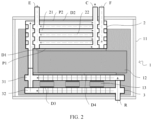
FIG. 2 is a schematic diagram of a structure of a powertrain according toEmbodiment 2 of this application; and -
FIG. 3 is a schematic diagram of a structure of a powertrain according toEmbodiment 3 of this application. - The following describes the technical solutions in embodiments of this application with reference to accompanying drawings in embodiments of this application.
- In descriptions of this application, locations or location relationships indicated by terms "center", "up", "down", "in front of", "behind", "left", "right", "vertical", "horizontal", "top", "bottom", "inside", "outside", and the like are based on locations or location relationships shown in the accompanying drawings, and are merely intended for ease of describing this application and simplifying descriptions, instead of indicating or implying that a mentioned apparatus or component needs to be provided on a specific location or constructed and operated on a specific location, and therefore shall not be understood as limitations on this application.
- In the descriptions of this application, it should be noted that, unless otherwise clearly specified and limited, terms "mount", "link", and "connect" should be understood in a broad sense, for example, may mean a fixed connection, may be a detachable connection, or may be a butt joint connection or an integrated connection. Persons of ordinary skill in the art can understand specific meanings of the foregoing terms in this application based on specific cases.
- In the descriptions of this specification, the described specific features, structures, materials, or characteristics may be combined in a proper manner in any one or more of embodiments or examples.
-
FIG. 1 is a schematic diagram of a structure of a powertrain according toEmbodiment 1 of this application. As shown inFIG. 1 , the powertrain includes amotor control unit 1 and aheat exchanger 2. Themotor control unit 1 includes ahousing 11 and a firstfunctional unit 12 disposed in thehousing 11 and capable of generating heat during operation. Theheat exchanger 2 is disposed in thehousing 11, and theheat exchanger 2 includes afirst circulation channel 21 for a first cooling medium to circulate and asecond circulation channel 22 for a second cooling medium to circulate. The first cooling medium may be water, and the second cooling medium may be oil for circulating inside a motor to cool the motor. In this case, theheat exchanger 2 may be an oil-water heat exchanger. Thefirst circulation channel 21 may be disposed around the outside of thesecond circulation channel 22, so that thefirst circulation channel 21 can sufficiently cool thesecond circulation channel 22. In addition, in theheat exchanger 2, a path indicated by a solid arrow is a flow path of the first cooling medium such as water in thefirst circulation channel 21, while a path indicated by a dashed arrow is a flow path of the second cooling medium such as oil in thesecond circulation channel 22, and the flow path of the cooling water is opposite to that of the oil, to fully exchange heat. Thefirst circulation channel 21 may have a first external cooling surface P1, and thefirst circulation channel 21 is in heat conduction and contact with the firstfunctional unit 12 at the first external cooling surface P1. In this way, the first external cooling surface P1 may be used to cool the firstfunctional unit 12, to dissipate heat generated by the firstfunctional unit 12 as quickly as possible, thereby preventing the firstfunctional unit 12 from overheating and ensuring normal operation of the firstfunctional unit 12. Alternatively, thefirst circulation channel 21 may have a second external cooling surface P2, and thefirst circulation channel 21 is in heat conduction and contact with an inner surface of thehousing 11 at the second external cooling surface P2. In this way, the second external cooling surface P2 may be used to cool thehousing 11, to dissipate heat generated by thehousing 11 as quickly as possible, thereby preventing thehousing 11 from overheating, dissipating the heat inside thehousing 11 as quickly as possible, and lowering an ambient temperature inside thehousing 11, thereby ensuring that a device such as the firstfunctional unit 12 in thehousing 11 can operate normally. - It may be understood that the
first circulation channel 21 may have both the first external cooling surface P1 and the second external cooling surface P2. For example, inFIG. 1 , the first external cooling surface P1 and the second external cooling surface P2 may be two opposite surfaces of theheat exchanger 2. In addition, in case of need, thefirst circulation channel 21 may have more cooling surfaces. - In the foregoing technical solution, the
heat exchanger 2 is disposed in thehousing 11 of themotor control unit 1, and thefirst circulation channel 21 of theheat exchanger 2 for the cooling medium to circulate has the first external cooling surface P1 and/or the second external cooling surface P2, so that the first external cooling surface P1 can be in heat conduction and contact with the firstfunctional unit 12 to cool the firstfunctional unit 12, and the second external cooling surface P2 can be in heat conduction and contact with the inner surface of thehousing 11 to cool thehousing 11. Compared with a solution in which an oil-water heat exchanger is externally disposed on a motor housing, the foregoing solution of this application in which the heat exchanger is integrated into the motor control unit (that is, the heat exchanger is disposed in the housing of the motor control unit) enables the external cooling surface of the heat exchanger to be fully used to improve utilization efficiency of the heat exchanger and heat dissipation of the motor control unit, a structure is more compact, and space is saved. - Still refer to
FIG. 1 . To improve an effect of heat conduction between the first external cooling surface P1 and the firstfunctional unit 12, optionally, a first heat conduction interface material D1 is disposed between the first external cooling surface P1 and the firstfunctional unit 12. Similarly, to improve an effect of heat conduction between the second external cooling surface P2 and thehousing 11, a second heat conduction interface material D2 is disposed between the second external cooling surface P2 and the inner surface of thehousing 11. - In addition, the
motor control unit 1 further includes a secondfunctional unit 13 disposed in thehousing 11. The secondfunctional unit 13 may be a power module, such as an insulated gate bipolar transistor (IGBT), a metal-oxide-semiconductor field-effect transistor (MOSFET), or a gate turn-off thyristor (GTO). - The powertrain further includes a
radiator 3 disposed in thehousing 11, and theradiator 3 is in heat conduction and contact with the secondfunctional unit 13 and the firstfunctional unit 12. A path indicated by a solid arrow in theradiator 3 is a flow path of a cooling medium. It should be noted that the firstfunctional unit 12 may be a device other than the second functional unit. Optionally, the firstfunctional unit 12 includes a bus capacitor. - In this case, the
radiator 3 cools the secondfunctional unit 13 and the first functional unit 12 (such as a capacitor) in themotor control unit 1 by using a cooling medium (such as water) to lower temperatures of the secondfunctional unit 13 and the firstfunctional unit 12. Theheat exchanger 2 exchanges heat with and cools the oil in the motor by using the cooling water in thefirst circulation channel 21. In addition, the first external cooling surface P1 of thefirst circulation channel 21 of theheat exchanger 2 may cool and dissipate heat of the firstfunctional unit 12 in thehousing 11 of themotor control unit 1, and the second external cooling surface P2 of thefirst circulation channel 21 of theheat exchanger 2 may dissipate heat of thehousing 11 of themotor control unit 1, thereby improving utilization efficiency of theheat exchanger 2, improving heat dissipation of themotor control unit 1, and lowering an internal ambient temperature of themotor control unit 1. In addition, integrating theheat exchanger 2 into themotor control unit 1 may further improve an integration degree, make the structure more compact, and save space. - Further, the
radiator 3 may include afirst cooling fin 31 and asecond cooling fin 32 that are spaced and connected to each other, and the secondfunctional unit 13 is disposed between thefirst cooling fin 31 and thesecond cooling fin 32. In this way, thefirst cooling fin 31 and thesecond cooling fin 32 may better cool and dissipate heat of the secondfunctional unit 13. - To improve an effect of heat conduction between the
radiator 3 and the secondfunctional unit 13, a third heat conduction interface material D3 may be disposed between theradiator 3 and the secondfunctional unit 13. Similarly, to improve an effect of heat conduction between theradiator 3 and the firstfunctional unit 12, a fourth heat conduction interface material D4 may be disposed between theradiator 3 and the firstfunctional unit 12. - In addition, in the powertrain of
Embodiment 1 shown inFIG. 1 , the firstfunctional unit 12 is disposed between theheat exchanger 2 and theradiator 3. In this case, thefirst circulation channel 21 may be provided with a first outlet C1 and a first inlet R1, thesecond circulation channel 22 may be provided with a third outlet E and a third inlet F, and the first outlet C1, the first inlet R1, the third outlet E, and the third inlet F extend out of thehousing 11. Theradiator 3 may be provided with a second outlet C2 and a second inlet R2, and the second outlet C2 and the second inlet R2 extend out of thehousing 11. -
FIG. 2 is a schematic diagram of a structure of a powertrain according toEmbodiment 2 of this application. The powertrain ofEmbodiment 2 shown inFIG. 2 differs from the powertrain ofEmbodiment 1 shown inFIG. 1 in that a pipeline of theradiator 3 communicates with thefirst circulation channel 21 of theheat exchanger 2. In this case, the flow path of the cooling medium in the first circulation channel 21 (the path indicated by the solid arrow) and the flow path of the oil in the second circulation channel 22 (the path indicated by the dashed arrow) are opposite to each other, to fully exchange heat. Thesecond circulation channel 22 of theheat exchanger 2 may be provided with a third outlet E and a third inlet F, thefirst circulation channel 21 may be provided with a fourth outlet C, theradiator 3 may be provided with a fourth inlet R, and the fourth outlet C, the fourth inlet R, the third outlet E, and the third inlet F extend out of thehousing 11. In this way, after entering from the fourth inlet R on theradiator 3, the cooling medium first circulates in theradiator 3 to cool and dissipate heat of the secondfunctional unit 13 and the first functional unit 12 (such as a capacitor) in themotor control unit 1, then enters thefirst circulation channel 21 of theheat exchanger 2 to exchange heat with the oil in thesecond circulation channel 22 of theheat exchanger 2, and finally flows out from the fourth outlet C on thefirst circulation channel 21. Compared with that of the powertrain ofEmbodiment 1, in a cooling system of this solution, one outlet and one inlet are reduced, that is, a quantity of cooling interfaces is reduced, which facilitates installation and can reduce costs. - Still refer to
FIG. 2 . In this case, thefirst cooling fin 31 and thesecond cooling fin 32 may have a same structure. In this way, thefirst cooling fin 31 and thesecond cooling fin 32 of the secondfunctional unit 13 may be designed into a structure in a normalized manner, so that thefirst cooling fin 31 and thesecond cooling fin 32 can be manufactured in a same process, which reduces costs. -
FIG. 3 is a schematic diagram of a structure of a powertrain according toEmbodiment 3 of this application. As shown inFIG. 3 , theradiator 3 is disposed between theheat exchanger 2 and the firstfunctional unit 12, and a part of theradiator 3 may be in heat conduction and contact with the first external cooling surface P1. In this case, theradiator 3 and theheat exchanger 2 may be integrally made. That is, theradiator 3 and theheat exchanger 2 may be integrated together as a heat dissipation component. This can reduce a processing and manufacturing time, reduce a quantity of cooling interfaces and components, and make installation more convenient. - In addition, the powertrain of
Embodiment 3 shown inFIG. 3 is similar to the powertrain ofEmbodiment 2 shown inFIG. 2 in that theradiator 3 communicates with thefirst circulation channel 21 of theheat exchanger 2. However, in the powertrain ofEmbodiment 3 shown inFIG. 3 , because theradiator 3 may be directly disposed at the bottom of theheat exchanger 2, the cooling medium may directly enter thefirst circulation channel 21 of theheat exchanger 2 from theradiator 3, to exchange heat with and cool the oil in thesecond circulation channel 22 of theheat exchanger 2. In the powertrain ofEmbodiment 2 shown inFIG. 2 , because the firstfunctional unit 12 is disposed between theheat exchanger 2 and theradiator 3, that is, theheat exchanger 2 and theradiator 3 are spaced, the cooling medium needs to pass through a pipeline after coming out of theradiator 3, and then enters thefirst circulation channel 21 of theheat exchanger 2. - An embodiment of this application further provides an electric vehicle including the foregoing powertrain. Because the electric vehicle includes the powertrain, the electric vehicle has all or at least some advantages of the powertrain.
Claims (12)
- A powertrain, comprising:a motor control unit (1) comprising a housing (11) and a first functional unit (12) disposed in the housing (11) and capable of generating heat during operation; anda heat exchanger (2) disposed in the housing (11), wherein the heat exchanger (2) comprises a first circulation channel (21) for a first cooling medium to circulate and a second circulation channel (22) for a second cooling medium to circulate, wherein the first circulation channel (21) is arranged to cool the second circulation channel (22), wherein the first circulation channel (21) has a first external cooling surface (P1), and the first circulation channel (21) conducts heat with the first functional unit (12) at the first external cooling surface (P1); and the first circulation channel (21) has a second external cooling surface (P2), and the first circulation channel (21) conducts heat with an inner surface of the housing (11) at the second external cooling surface (P2).
- The powertrain according to claim 1, whereina first heat conduction interface material (D1) is disposed between the first external cooling surface (P1) and the first functional unit (12); and/ora second heat conduction interface material (D2) is disposed between the second external cooling surface (P2) and the inner surface of the housing (11).
- The powertrain according to claim 1, wherein the motor control unit (1) further comprises a second functional unit (13) disposed in the housing (11), the powertrain further comprises a radiator (3) disposed in the housing (11), and the radiator (3) conducts heat with the second functional unit (13) and the first functional unit (12).
- The powertrain according to claim 3, wherein the second functional unit (13) is a power module and comprises at least one of a MOSFET, a GTO and an IGBT.
- The powertrain according to claim 3, whereina third heat conduction interface material (D3) is disposed between the radiator (3) and the second functional unit (13); and/ora fourth heat conduction interface material (D4) is disposed between the radiator (3) and the first functional unit (12).
- The powertrain according to any one of claims 3 to 5, whereinthe first functional unit (12) is disposed between the heat exchanger (2) and the radiator (3); orthe radiator (3) is disposed between the heat exchanger (2) and the first functional unit (12), and a part of the radiator (3) conducts heat with the first external cooling surface (P1).
- The powertrain according to claim 6, whereinthe first circulation channel (21) is provided with a first outlet (C1) and a first inlet (R1), the second circulation channel (22) is provided with a third outlet (E) and a third inlet (F), and the first outlet (C1), the first inlet (R1), the third outlet (E), and the third inlet (F) extend out of the housing (11); andthe radiator (3) is provided with a second outlet (C2) and a second inlet (R2), and the second outlet (C2) and the second inlet (R2) extend out of the housing (11).
- The powertrain according to claim 6, wherein a pipeline of the radiator (3) communicates with the first circulation channel (21), the second circulation channel (22) is provided with a third outlet (E) and a third inlet (F), the first circulation channel (21) is provided with a fourth outlet (C), the radiator (3) is provided with a fourth inlet (R), and the fourth outlet (C), the fourth inlet (R), the third outlet (E), and the third inlet (F) extend out of the housing (11).
- The powertrain according to claim 8, wherein the radiator (3) and the heat exchanger (2) are integrally made.
- The powertrain according to claim 3, wherein the radiator (3) comprises a first cooling fin (31) and a second cooling fin (32) that are spaced and connected to each other, and the second functional unit (13) is disposed between the first cooling fin (31) and the second cooling fin (32).
- The powertrain according to any one of claims 7 to 10, wherein the first functional unit (12) comprises a bus capacitor.
- An electric vehicle, comprising the powertrain according to any one of claims 1 to 11.
Applications Claiming Priority (2)
| Application Number | Priority Date | Filing Date | Title |
|---|---|---|---|
| CN202020579731.7U CN212529295U (en) | 2020-04-17 | 2020-04-17 | Power assembly and electric automobile |
| PCT/CN2021/071105 WO2021208537A1 (en) | 2020-04-17 | 2021-01-11 | Drivetrain and electric vehicle |
Publications (3)
| Publication Number | Publication Date |
|---|---|
| EP4132243A1 EP4132243A1 (en) | 2023-02-08 |
| EP4132243A4 EP4132243A4 (en) | 2023-09-27 |
| EP4132243B1 true EP4132243B1 (en) | 2025-06-25 |
Family
ID=74520443
Family Applications (1)
| Application Number | Title | Priority Date | Filing Date |
|---|---|---|---|
| EP21789519.2A Active EP4132243B1 (en) | 2020-04-17 | 2021-01-11 | Drivetrain and electric vehicle |
Country Status (4)
| Country | Link |
|---|---|
| US (1) | US12337674B2 (en) |
| EP (1) | EP4132243B1 (en) |
| CN (1) | CN212529295U (en) |
| WO (1) | WO2021208537A1 (en) |
Families Citing this family (3)
| Publication number | Priority date | Publication date | Assignee | Title |
|---|---|---|---|---|
| CN115489289B (en) * | 2022-08-31 | 2025-04-08 | 华为数字能源技术有限公司 | Power assembly and mechanical equipment |
| JP2025040480A (en) * | 2023-09-12 | 2025-03-25 | 三菱電機モビリティ株式会社 | Electric vehicle drive unit |
| CN222432057U (en) * | 2024-01-23 | 2025-02-07 | 华为数字能源技术有限公司 | Powertrain and Electric Vehicles |
Family Cites Families (9)
| Publication number | Priority date | Publication date | Assignee | Title |
|---|---|---|---|---|
| US8485931B1 (en) * | 2012-12-06 | 2013-07-16 | GM Global Technology Operations LLC | Multiplexed fluid control circuit |
| US9414520B2 (en) * | 2013-05-28 | 2016-08-09 | Hamilton Sundstrand Corporation | Immersion cooled motor controller |
| JP2017047698A (en) * | 2015-08-31 | 2017-03-09 | Ntn株式会社 | Electric car |
| CN205213192U (en) * | 2015-11-25 | 2016-05-04 | 阳光电源股份有限公司 | Cool off casing and have said machine controller who cools off casing |
| CN109756056A (en) * | 2017-11-07 | 2019-05-14 | 华为技术有限公司 | Motor, power assembly, power-equipment and motor cooling means |
| CN108691762B (en) | 2018-03-30 | 2022-12-06 | 中国北方车辆研究所 | Heat dissipation device for oil pump |
| CN109588019A (en) * | 2018-12-29 | 2019-04-05 | 江苏金丰机电有限公司 | It is a kind of with the electric machine controller for following liquid cooling structure |
| CN209949748U (en) * | 2019-04-08 | 2020-01-14 | 珠海英搏尔电气股份有限公司 | Cooling bridge, motor controller, power assembly and electric vehicle |
| CN210167914U (en) * | 2019-09-12 | 2020-03-20 | 厦门唯质电气科技有限公司 | Cooling structure of integrated generator controller for new energy vehicle |
-
2020
- 2020-04-17 CN CN202020579731.7U patent/CN212529295U/en active Active
-
2021
- 2021-01-11 WO PCT/CN2021/071105 patent/WO2021208537A1/en not_active Ceased
- 2021-01-11 EP EP21789519.2A patent/EP4132243B1/en active Active
-
2022
- 2022-10-17 US US17/966,980 patent/US12337674B2/en active Active
Also Published As
| Publication number | Publication date |
|---|---|
| US12337674B2 (en) | 2025-06-24 |
| US20230040642A1 (en) | 2023-02-09 |
| WO2021208537A1 (en) | 2021-10-21 |
| CN212529295U (en) | 2021-02-12 |
| EP4132243A1 (en) | 2023-02-08 |
| EP4132243A4 (en) | 2023-09-27 |
Similar Documents
| Publication | Publication Date | Title |
|---|---|---|
| EP4132243B1 (en) | Drivetrain and electric vehicle | |
| KR102719122B1 (en) | Integrated thermal management module for vehicle | |
| KR100689939B1 (en) | drive | |
| KR100614011B1 (en) | Drive device | |
| KR100689940B1 (en) | drive | |
| CN205282525U (en) | Tray, power battery package and electric motor car | |
| WO2018168088A1 (en) | Cooling system | |
| JP2024527266A (en) | Electric vehicle and its thermal management device | |
| CN101009253A (en) | Radiating fin and cooling device | |
| JP3710804B2 (en) | Hybrid vehicle cooling system | |
| CN215321890U (en) | Integrated core body for liquid heating and refrigerating heat exchange and heating and refrigerating heat exchange assembly | |
| CN119342751A (en) | Heat dissipation components and power conversion equipment | |
| EP4338716A1 (en) | Controller for cool and warm dual system | |
| WO2025036378A1 (en) | Hub assembly and vehicle | |
| CN118201792A (en) | Coolant distribution device for a motor vehicle and motor vehicle having a coolant distribution device | |
| CN213638697U (en) | Heating device cooling device and electric control equipment | |
| CN114714889B (en) | Integrated vehicle radiator and vehicle | |
| JP2005344524A (en) | Hybrid vehicle cooling system | |
| CN116940058A (en) | Motor controller, electric drive assembly and vehicle | |
| CN113306360A (en) | Integrated core body for liquid heating and refrigerating heat exchange and heating and refrigerating heat exchange assembly | |
| KR102920855B1 (en) | Power module cooling device and power converter equipped with the same | |
| CN206180747U (en) | A cooling body for motor and motor drive | |
| CN117386483B (en) | An oil cooler assembly | |
| CN218301153U (en) | Drive device and vehicle with same | |
| CN216958226U (en) | Heat radiation structure and have sealed casing's equipment |
Legal Events
| Date | Code | Title | Description |
|---|---|---|---|
| STAA | Information on the status of an ep patent application or granted ep patent |
Free format text: STATUS: THE INTERNATIONAL PUBLICATION HAS BEEN MADE |
|
| PUAI | Public reference made under article 153(3) epc to a published international application that has entered the european phase |
Free format text: ORIGINAL CODE: 0009012 |
|
| STAA | Information on the status of an ep patent application or granted ep patent |
Free format text: STATUS: REQUEST FOR EXAMINATION WAS MADE |
|
| 17P | Request for examination filed |
Effective date: 20221026 |
|
| AK | Designated contracting states |
Kind code of ref document: A1 Designated state(s): AL AT BE BG CH CY CZ DE DK EE ES FI FR GB GR HR HU IE IS IT LI LT LU LV MC MK MT NL NO PL PT RO RS SE SI SK SM TR |
|
| DAV | Request for validation of the european patent (deleted) | ||
| DAX | Request for extension of the european patent (deleted) | ||
| A4 | Supplementary search report drawn up and despatched |
Effective date: 20230823 |
|
| RIC1 | Information provided on ipc code assigned before grant |
Ipc: B60K 1/00 20060101ALI20230818BHEP Ipc: B60K 11/02 20060101ALI20230818BHEP Ipc: B60K 11/04 20060101ALI20230818BHEP Ipc: H02K 9/19 20060101ALI20230818BHEP Ipc: H02K 5/20 20060101ALI20230818BHEP Ipc: H05K 7/20 20060101AFI20230818BHEP |
|
| GRAP | Despatch of communication of intention to grant a patent |
Free format text: ORIGINAL CODE: EPIDOSNIGR1 |
|
| STAA | Information on the status of an ep patent application or granted ep patent |
Free format text: STATUS: GRANT OF PATENT IS INTENDED |
|
| INTG | Intention to grant announced |
Effective date: 20250218 |
|
| RIC1 | Information provided on ipc code assigned before grant |
Ipc: B60K 1/00 20060101ALI20250210BHEP Ipc: B60K 11/02 20060101ALI20250210BHEP Ipc: B60K 11/04 20060101ALI20250210BHEP Ipc: H02K 9/19 20060101ALI20250210BHEP Ipc: H02K 5/20 20060101ALI20250210BHEP Ipc: H05K 7/20 20060101AFI20250210BHEP |
|
| GRAS | Grant fee paid |
Free format text: ORIGINAL CODE: EPIDOSNIGR3 |
|
| GRAA | (expected) grant |
Free format text: ORIGINAL CODE: 0009210 |
|
| STAA | Information on the status of an ep patent application or granted ep patent |
Free format text: STATUS: THE PATENT HAS BEEN GRANTED |
|
| P01 | Opt-out of the competence of the unified patent court (upc) registered |
Free format text: CASE NUMBER: APP_20284/2025 Effective date: 20250429 |
|
| AK | Designated contracting states |
Kind code of ref document: B1 Designated state(s): AL AT BE BG CH CY CZ DE DK EE ES FI FR GB GR HR HU IE IS IT LI LT LU LV MC MK MT NL NO PL PT RO RS SE SI SK SM TR |
|
| REG | Reference to a national code |
Ref country code: GB Ref legal event code: FG4D |
|
| REG | Reference to a national code |
Ref country code: CH Ref legal event code: EP |
|
| REG | Reference to a national code |
Ref country code: CH Ref legal event code: EP |
|
| REG | Reference to a national code |
Ref country code: IE Ref legal event code: FG4D |
|
| REG | Reference to a national code |
Ref country code: DE Ref legal event code: R096 Ref document number: 602021032965 Country of ref document: DE |
|
| PG25 | Lapsed in a contracting state [announced via postgrant information from national office to epo] |
Ref country code: FI Free format text: LAPSE BECAUSE OF FAILURE TO SUBMIT A TRANSLATION OF THE DESCRIPTION OR TO PAY THE FEE WITHIN THE PRESCRIBED TIME-LIMIT Effective date: 20250625 |
|
| REG | Reference to a national code |
Ref country code: LT Ref legal event code: MG9D |
|
| PG25 | Lapsed in a contracting state [announced via postgrant information from national office to epo] |
Ref country code: NO Free format text: LAPSE BECAUSE OF FAILURE TO SUBMIT A TRANSLATION OF THE DESCRIPTION OR TO PAY THE FEE WITHIN THE PRESCRIBED TIME-LIMIT Effective date: 20250925 Ref country code: GR Free format text: LAPSE BECAUSE OF FAILURE TO SUBMIT A TRANSLATION OF THE DESCRIPTION OR TO PAY THE FEE WITHIN THE PRESCRIBED TIME-LIMIT Effective date: 20250926 |
|
| PG25 | Lapsed in a contracting state [announced via postgrant information from national office to epo] |
Ref country code: BG Free format text: LAPSE BECAUSE OF FAILURE TO SUBMIT A TRANSLATION OF THE DESCRIPTION OR TO PAY THE FEE WITHIN THE PRESCRIBED TIME-LIMIT Effective date: 20250625 |
|
| PG25 | Lapsed in a contracting state [announced via postgrant information from national office to epo] |
Ref country code: HR Free format text: LAPSE BECAUSE OF FAILURE TO SUBMIT A TRANSLATION OF THE DESCRIPTION OR TO PAY THE FEE WITHIN THE PRESCRIBED TIME-LIMIT Effective date: 20250625 |
|
| PG25 | Lapsed in a contracting state [announced via postgrant information from national office to epo] |
Ref country code: RS Free format text: LAPSE BECAUSE OF FAILURE TO SUBMIT A TRANSLATION OF THE DESCRIPTION OR TO PAY THE FEE WITHIN THE PRESCRIBED TIME-LIMIT Effective date: 20250925 |
|
| PG25 | Lapsed in a contracting state [announced via postgrant information from national office to epo] |
Ref country code: LV Free format text: LAPSE BECAUSE OF FAILURE TO SUBMIT A TRANSLATION OF THE DESCRIPTION OR TO PAY THE FEE WITHIN THE PRESCRIBED TIME-LIMIT Effective date: 20250625 |
|
| REG | Reference to a national code |
Ref country code: NL Ref legal event code: MP Effective date: 20250625 |
|
| PG25 | Lapsed in a contracting state [announced via postgrant information from national office to epo] |
Ref country code: NL Free format text: LAPSE BECAUSE OF FAILURE TO SUBMIT A TRANSLATION OF THE DESCRIPTION OR TO PAY THE FEE WITHIN THE PRESCRIBED TIME-LIMIT Effective date: 20250625 |
|
| PG25 | Lapsed in a contracting state [announced via postgrant information from national office to epo] |
Ref country code: PT Free format text: LAPSE BECAUSE OF FAILURE TO SUBMIT A TRANSLATION OF THE DESCRIPTION OR TO PAY THE FEE WITHIN THE PRESCRIBED TIME-LIMIT Effective date: 20251027 |
|
| REG | Reference to a national code |
Ref country code: AT Ref legal event code: MK05 Ref document number: 1808056 Country of ref document: AT Kind code of ref document: T Effective date: 20250625 |
|
| PG25 | Lapsed in a contracting state [announced via postgrant information from national office to epo] |
Ref country code: IS Free format text: LAPSE BECAUSE OF FAILURE TO SUBMIT A TRANSLATION OF THE DESCRIPTION OR TO PAY THE FEE WITHIN THE PRESCRIBED TIME-LIMIT Effective date: 20251025 |
|
| PGFP | Annual fee paid to national office [announced via postgrant information from national office to epo] |
Ref country code: GB Payment date: 20251204 Year of fee payment: 6 |
|
| PG25 | Lapsed in a contracting state [announced via postgrant information from national office to epo] |
Ref country code: AT Free format text: LAPSE BECAUSE OF FAILURE TO SUBMIT A TRANSLATION OF THE DESCRIPTION OR TO PAY THE FEE WITHIN THE PRESCRIBED TIME-LIMIT Effective date: 20250625 Ref country code: SM Free format text: LAPSE BECAUSE OF FAILURE TO SUBMIT A TRANSLATION OF THE DESCRIPTION OR TO PAY THE FEE WITHIN THE PRESCRIBED TIME-LIMIT Effective date: 20250625 |
|
| PG25 | Lapsed in a contracting state [announced via postgrant information from national office to epo] |
Ref country code: CZ Free format text: LAPSE BECAUSE OF FAILURE TO SUBMIT A TRANSLATION OF THE DESCRIPTION OR TO PAY THE FEE WITHIN THE PRESCRIBED TIME-LIMIT Effective date: 20250625 |
|
| PG25 | Lapsed in a contracting state [announced via postgrant information from national office to epo] |
Ref country code: PL Free format text: LAPSE BECAUSE OF FAILURE TO SUBMIT A TRANSLATION OF THE DESCRIPTION OR TO PAY THE FEE WITHIN THE PRESCRIBED TIME-LIMIT Effective date: 20250625 |
|
| PG25 | Lapsed in a contracting state [announced via postgrant information from national office to epo] |
Ref country code: EE Free format text: LAPSE BECAUSE OF FAILURE TO SUBMIT A TRANSLATION OF THE DESCRIPTION OR TO PAY THE FEE WITHIN THE PRESCRIBED TIME-LIMIT Effective date: 20250625 |
|
| PG25 | Lapsed in a contracting state [announced via postgrant information from national office to epo] |
Ref country code: SK Free format text: LAPSE BECAUSE OF FAILURE TO SUBMIT A TRANSLATION OF THE DESCRIPTION OR TO PAY THE FEE WITHIN THE PRESCRIBED TIME-LIMIT Effective date: 20250625 |
|
| PG25 | Lapsed in a contracting state [announced via postgrant information from national office to epo] |
Ref country code: ES Free format text: LAPSE BECAUSE OF FAILURE TO SUBMIT A TRANSLATION OF THE DESCRIPTION OR TO PAY THE FEE WITHIN THE PRESCRIBED TIME-LIMIT Effective date: 20250625 |
|
| PG25 | Lapsed in a contracting state [announced via postgrant information from national office to epo] |
Ref country code: DK Free format text: LAPSE BECAUSE OF FAILURE TO SUBMIT A TRANSLATION OF THE DESCRIPTION OR TO PAY THE FEE WITHIN THE PRESCRIBED TIME-LIMIT Effective date: 20250625 |
|
| PGFP | Annual fee paid to national office [announced via postgrant information from national office to epo] |
Ref country code: DE Payment date: 20251203 Year of fee payment: 6 |
|
| PG25 | Lapsed in a contracting state [announced via postgrant information from national office to epo] |
Ref country code: IT Free format text: LAPSE BECAUSE OF FAILURE TO SUBMIT A TRANSLATION OF THE DESCRIPTION OR TO PAY THE FEE WITHIN THE PRESCRIBED TIME-LIMIT Effective date: 20250625 |
|
| PLBE | No opposition filed within time limit |
Free format text: ORIGINAL CODE: 0009261 |
|
| STAA | Information on the status of an ep patent application or granted ep patent |
Free format text: STATUS: NO OPPOSITION FILED WITHIN TIME LIMIT |