EP4132105A1 - Cell reselection method and electronic device - Google Patents
Cell reselection method and electronic device Download PDFInfo
- Publication number
- EP4132105A1 EP4132105A1 EP21774880.5A EP21774880A EP4132105A1 EP 4132105 A1 EP4132105 A1 EP 4132105A1 EP 21774880 A EP21774880 A EP 21774880A EP 4132105 A1 EP4132105 A1 EP 4132105A1
- Authority
- EP
- European Patent Office
- Prior art keywords
- target cell
- cell
- electronic device
- threshold
- offset value
- Prior art date
- Legal status (The legal status is an assumption and is not a legal conclusion. Google has not performed a legal analysis and makes no representation as to the accuracy of the status listed.)
- Pending
Links
Images


Classifications
-
- H—ELECTRICITY
- H04—ELECTRIC COMMUNICATION TECHNIQUE
- H04W—WIRELESS COMMUNICATION NETWORKS
- H04W36/00—Hand-off or reselection arrangements
- H04W36/0005—Control or signalling for completing the hand-off
- H04W36/0083—Determination of parameters used for hand-off, e.g. generation or modification of neighbour cell lists
- H04W36/0085—Hand-off measurements
-
- H—ELECTRICITY
- H04—ELECTRIC COMMUNICATION TECHNIQUE
- H04W—WIRELESS COMMUNICATION NETWORKS
- H04W36/00—Hand-off or reselection arrangements
- H04W36/0005—Control or signalling for completing the hand-off
- H04W36/0083—Determination of parameters used for hand-off, e.g. generation or modification of neighbour cell lists
- H04W36/00838—Resource reservation for handover
-
- H—ELECTRICITY
- H04—ELECTRIC COMMUNICATION TECHNIQUE
- H04W—WIRELESS COMMUNICATION NETWORKS
- H04W36/00—Hand-off or reselection arrangements
- H04W36/08—Reselecting an access point
-
- H—ELECTRICITY
- H04—ELECTRIC COMMUNICATION TECHNIQUE
- H04W—WIRELESS COMMUNICATION NETWORKS
- H04W36/00—Hand-off or reselection arrangements
- H04W36/24—Reselection being triggered by specific parameters
- H04W36/249—Reselection being triggered by specific parameters according to timing information
-
- H—ELECTRICITY
- H04—ELECTRIC COMMUNICATION TECHNIQUE
- H04W—WIRELESS COMMUNICATION NETWORKS
- H04W36/00—Hand-off or reselection arrangements
- H04W36/24—Reselection being triggered by specific parameters
- H04W36/30—Reselection being triggered by specific parameters by measured or perceived connection quality data
- H04W36/302—Reselection being triggered by specific parameters by measured or perceived connection quality data due to low signal strength
-
- Y—GENERAL TAGGING OF NEW TECHNOLOGICAL DEVELOPMENTS; GENERAL TAGGING OF CROSS-SECTIONAL TECHNOLOGIES SPANNING OVER SEVERAL SECTIONS OF THE IPC; TECHNICAL SUBJECTS COVERED BY FORMER USPC CROSS-REFERENCE ART COLLECTIONS [XRACs] AND DIGESTS
- Y02—TECHNOLOGIES OR APPLICATIONS FOR MITIGATION OR ADAPTATION AGAINST CLIMATE CHANGE
- Y02D—CLIMATE CHANGE MITIGATION TECHNOLOGIES IN INFORMATION AND COMMUNICATION TECHNOLOGIES [ICT], I.E. INFORMATION AND COMMUNICATION TECHNOLOGIES AIMING AT THE REDUCTION OF THEIR OWN ENERGY USE
- Y02D30/00—Reducing energy consumption in communication networks
- Y02D30/70—Reducing energy consumption in communication networks in wireless communication networks
Definitions
- Embodiments of the present invention relate to the field of communications technologies, and in particular, to a cell reselection method and an electronic device.
- an electronic device In real network scenarios, an electronic device often performs ping-pong reselection in multiple cells due to network configuration or signal fluctuation.
- ping-pong reselection In a standby state, ping-pong reselection also increases power consumption.
- ping-pong reselection on a secondary card also affects a data service of a main card. Especially, the impact on a service with delay sensitivity, such as a game service is large.
- Embodiments of the present invention provide a cell reselection method and an electronic device, to solve the problem that the power consumption of the electronic device increases and a data service is affected due to ping-pong reselection.
- an embodiment of the present invention provides a cell reselection method, applied to an electronic device, and the method includes:
- an electronic device including:
- an embodiment of the present invention provides an electronic device, including a processor, a memory, and a program that is stored in the memory and that can run on the processor, and when the program is executed by the processor, steps of the cell reselection method provided in the first aspect are implemented.
- an embodiment of the present invention provides a computer-readable storage medium, where the computer-readable storage medium stores a computer program, and when the computer program is executed by a processor, steps of the cell reselection method provided in the first aspect are implemented.
- the target cell is determined from the multiple cells, and the offset value is set. Based on the offset value, the electronic device accesses the target cell through reselection calculation. In this way, when ping-pong reselection occurs, the electronic device determines the target cell from multiple cells and accesses the target cell through optimization processing, thereby reducing the power consumption of the electronic device and reducing the data service delay.
- the term such as "exemplary” or “for example” is used to represent an example, an instance, or a description. Any embodiment or design solution described as “exemplary” or “for example” in the embodiments of the present invention should not be construed as being more preferred or advantageous than other embodiments or design solutions. To be precise, the use of the term such as “exemplary” or “for example” is intended to present a related concept in a specific manner.
- the technology described in this specification is not limited to the 5th-generation (5th-generation, 5G) system and subsequent evolved communications systems as well as LTE/LTE-advanced (LTE-Advanced, LTE-A) systems, and may also be applied to various wireless communications systems such as code division multiple access (Code Division Multiple Access, CDMA), time division multiple access (Time Division Multiple Access, TDMA), frequency division multiple access (Frequency Division Multiple Access, FDMA), orthogonal frequency division multiple access (Orthogonal Frequency Division Multiple Access, OFDMA), and single-carrier frequency-division multiple access (Single-carrier Frequency-Division Multiple Access, SC-FDMA) systems, and other systems.
- code division multiple access Code Division Multiple Access
- TDMA time division multiple access
- FDMA frequency division multiple access
- OFDMA Orthogonal frequency division multiple access
- SC-FDMA single-carrier frequency-division multiple access
- the terms “system” and “network” are often interchangeably used.
- the CDMA system can implement radio technologies such as CDMA2000 and universal terrestrial radio access (Universal Terrestrial Radio Access, UTRA).
- UTRA includes wideband CDMA (Wideband Code Division Multiple Access, WCDMA) and another CDMA variation.
- the TDMA system may implement a radio technology such as Global System for Mobile Communication (Global System for Mobile Communication, GSM).
- GSM Global System for Mobile Communication
- An OFDMA system may implement radio technologies such as ultra mobile broadband (Ultra Mobile Broadband, UMB), evolved-UTRA (Evolved-UTRA, E-UTRA), IEEE802.11 (Wi-Fi), IEEE 802.16 (WiMAX), IEEE 802.20, Flash-OFDM and the like.
- UTRA and E-UTRA are parts of a universal mobile telecommunications system (Universal Mobile Telecommunications System, UMTS).
- LTE and more advanced LTE (such as LTE-A) are new UMTS versions that use E-UTRA.
- UTRA, E-UTRA, UMTS, LTE, LTE-A, and GSM are described in a document of an organization named "3rd Generation Partnership Project” (3rd Generation Partnership Project, 3GPP).
- CDMA2000 and UMB are described in the documents of the organization named the "3rd Generation Partnership Project 2" (3GPP2).
- the technologies described in this specification may be used in the systems and radio technologies mentioned above, and may also be used in another system and radio technology.
- the electronic device provided in this embodiment of the present invention may be a mobile phone, a tablet computer, a notebook computer, an ultra-mobile personal computer (Ultra-Mobile Personal Computer, UMPC), a netbook, a personal digital assistant (Personal Digital Assistant, PDA), or the like.
- UMPC Ultra-Mobile Personal Computer
- PDA Personal Digital Assistant
- Cell reselection refers to a process in which an electronic device selects a best cell to provide a service signal by monitoring signal quality of neighboring cells and the current cell in an idle mode.
- the signal quality and level of a neighboring cell satisfy the S criterion (Srxlev) and satisfy a reselection decision criterion, the electronic device accesses the cell to camp.
- the radio resource control (Radio Resource Control, RRC) layer calculates Srxlev according to a reference signal received power (Reference Signal Received Power, RSRP) measurement result, and compares the measurement result with an intra-frequency measurement start threshold (Sintrasearch) and an inter-frequency/inter-system measurement start threshold (Snonintrasearch) as a condition for determining whether to start neighboring cell measurement.
- RRC Radio Resource Control
- Srxlev in cell selection.
- S criterion RSRP value of the measured cell ⁇ minimum reception level usually 0 ⁇ 128 dbm + minimum reception level offset usually 0 ⁇ power compensation usually 0
- Srxlev Qrxlevmeas ⁇ qRxLevMin + qRxLevMinOffset ⁇ pCompensation .
- an embodiment of the present invention provides a cell reselection method.
- the method is performed by an electronic device, and the method includes the following steps: Step 101: Obtain a number of reselections in a case of detecting that the electronic device performs ping-pong reselection in multiple cells.
- the electronic device when the electronic device detects that ping-pong reselection is performed in multiple cells, the number of times of reselection is recorded.
- the number of reselections is a number of times of camping on a cell with the largest number of times of camping among the multiple cells. Specifically, within a fixed period of time, the electronic device performs ping-pong reselection among multiple cells, and the number of times of camping corresponding to the cell with the largest number of times of camping in reselection is used as the number of reselections.
- multiple cells include cells A, B, and C, and the corresponding ping-pong reselection process is A->B->A->C->A, where cell A has the largest number of times of camping. Therefore, the obtained number of reselections is 3.
- Step 102 In a case that the number of reselections reaches a preset number of times, determine a target cell among the multiple cells.
- the cell reselection method of the embodiments of the present invention can be applied to an electronic device as an optimization function, and the number of reselections obtained in step 101 can be used as a triggering condition for starting optimization.
- the target cell when the number of reselections reaches a preset number of times, the target cell is determined from the multiple cells, and the target cell may be called an optimized cell.
- Reference signal received power (Reference Signal Received Power, RSRP) fluctuation of the target cell is less than a preset fluctuation threshold, and reference signal received quality (Reference Signal Received Quality, RSRQ) is greater than a first threshold within the camping period.
- the first threshold value may be recorded as Q1; and the target cell is determined based on the RSRP fluctuation and the RSRQ.
- the above-mentioned RSRP fluctuation calculation can be implemented by an existing calculation method, for example, calculation based on relaxed monitoring.
- Step 103 Set an offset value.
- Step 104 Access the target cell according to the offset value.
- the electronic device after the target cell is determined, the electronic device needs to camp on the target cell. Considering that the electronic device selects the camping cell from multiple cells according to a preset algorithm, it is necessary to set the offset value.
- the offset value is used for the electronic device to use the determined target cell as the camping cell through calculation in the process of selecting the camping cell.
- intra-frequency reselection calculation in the intra-frequency reselection, signals of the intra-frequency cells are sorted, and a cell with the highest ranking is a cell that needs to be reselected), it is set that the cell signal of the target cell is increased by the offset value, so that the cell signal of the target cell ranks the highest, where the offset value is greater than 0, that is, the RSRP of the target cell is increased by the offset value H>0.
- H needs to be increased for the target cell.
- a cell signal of a cell other than the target cell is increased by the offset value, so that the cell signal of the target cell ranks the highest, where the offset value is less than 0, that is, the cell signals of other cells are reduced, so that the cell signal of the target cell ranks the highest.
- inter-frequency reselection calculation in inter-frequency reselection, it is determined based on whether the signal of the inter-frequency cell meets the network configuration threshold, a network configuration threshold of a cell other than the target cell is increased by the offset value, so that a network configuration threshold of the target cell is the highest, where the offset value is less than 0.
- the target cell is determined from the multiple cells, and the offset value is set. Based on the offset value, the electronic device accesses the target cell through reselection calculation. In this way, when ping-pong reselection occurs, the electronic device determines the target cell from multiple cells and accesses the target cell through optimization processing, thereby reducing the power consumption of the electronic device and reducing the data service delay. Besides, the mobility of the electronic device is not affected.
- an embodiment of the present invention provides another cell reselection method.
- the method is performed by an electronic device, and includes the following steps:
- the camping cell may be affected by factors such as weather, environment, and network device status, which may cause signal fluctuation, it is necessary to continuously monitor the signal status of the target cell after the target cell is reselected in an optimized way.
- Step 205 Determine whether the target cell satisfies a preset camping condition, and if yes, perform step 205; otherwise return to perform step 201.
- the target cell when the target cell does not meet the preset camping condition, the target cell is canceled, that is, the optimization stops.
- the target cell is previously determined to be cell A, and when it is detected that cell A does not meet the preset camping condition, the electronic device cancels the optimization, cell A is no longer the target cell, and the electronic device returns to step 201 to re-start the optimization to select a new target cell.
- the above-mentioned preset camping condition includes at least one of the following:
- the target cell satisfies the camping condition: RSRQ>Q2 and RSRP>P. Once the condition is not satisfied, stop the optimization immediately.
- the SNR can also be considered, and the signal quality of the target cell can be determined based on the SNR or RSRQ.
- Step 206 Within a preset time period, determine whether the RSRQ of the target cell is continuously greater than a third threshold, and if yes, return to perform step 205; otherwise, return to perform step 201.
- the target cell when the target cell satisfies the preset camping condition, it continues to be detected whether the RSRQ of the target cell is continuously greater than the third threshold within a preset time period, and the third threshold value may be denoted as Q3, and if not, stop the optimization and return to perform step 201 to re-start the optimization to select a new target cell. If yes, return to perform step 205 to continue to determine whether the target cell satisfies the preset camping condition.
- the third threshold is greater than the second threshold, that is, Q3>Q2
- Q2 is used such that when the RSRQ of the target cell suddenly becomes very poor, the electronic device needs to stop the optimization immediately
- Q3 is used such that when finding that the current target cell is always bad, the electronic device stops optimization.
- the electronic device determines whether the target cell is suitable for continuing to camp according to the signal state of the target cell accessed by the electronic device, and the reselection of the target cell is performed when it is determined that the target cell is not suitable for continuing to camp, so that the electronic device can flexibly perform cell reselection to effectively reduce power consumption of electronic device and reduce the data service delay.
- an embodiment of the present invention provides an electronic device 300, including:
- the multiple cells are intra-frequency cells; and the access module 304 is further configured to:
- the multiple cells are inter-frequency cells; the access module 304 is further configured to: in inter-frequency reselection calculation, increase a network configuration threshold of a cell other than the target cell by the offset value, so that a network configuration threshold of the target cell is the highest, where the offset value is less than 0.
- the electronic device further includes:
- the preset camping condition includes at least one of the following:
- RSRQ is greater than a second threshold
- the electronic device further includes:
- the target cell is determined from the multiple cells, and the offset value is set. Based on the offset value, the electronic device accesses the target cell through reselection calculation. In this way, when ping-pong reselection occurs, the electronic device determines the target cell from multiple cells and accesses the target cell through optimization processing, thereby reducing the power consumption of the electronic device and reducing the data service delay.
- FIG. 4 is a schematic structural diagram of hardware of an electronic device implementing the embodiments of the present invention.
- the electronic device 400 includes but is not limited to: a radio frequency unit 401, a network module 402, an audio output unit 403, an input unit 404, a sensor 405, a display unit 406, a user input unit 407, an interface unit 408, a memory 409, a processor 410, a power supply 411, and other components.
- a structure of the electronic device shown in FIG. 4 constitutes no limitation on the electronic device, and the electronic device may include more or fewer components than those shown in the figure, or have a combination of some components, or have a different component arrangement.
- the electronic device includes, but is not limited to, a mobile phone, a tablet computer, a notebook computer, a palmtop computer, a vehicle-mounted terminal, a wearable device, a pedometer, or the like.
- a computer program is stored in the memory 409 and can run on the processor 410, and when the computer program is executed by the processor 410, the following steps are performed: in a case of detecting that the electronic device performs ping-pong reselection in multiple cells, obtaining a number of reselections, where the number of reselections is a number of times of camping on a cell with the largest number of times of camping among the multiple cells;
- the target cell is determined from the multiple cells, and the offset value is set. Based on the offset value, the electronic device accesses the target cell through reselection calculation. In this way, when ping-pong reselection occurs, the electronic device determines the target cell from multiple cells and accesses the target cell through optimization processing, thereby reducing the power consumption of the electronic device and reducing the data service delay.
- the radio frequency unit 401 may be configured to receive and send information or receive and send a signal in a call process. Specifically, after downlink data from a base station is received, the processor 410 processes the downlink data. In addition, uplink data is sent to the base station.
- the radio frequency unit 401 includes but is not limited to an antenna, at least one amplifier, a transceiver, a coupler, a low noise amplifier, a duplexer, and the like.
- the radio frequency unit 401 may communicate with a network and another device through a wireless communications system.
- the electronic device provides users with wireless broadband Internet access through the network module 402, for example, helps users receive and send e-mails, browse web pages, and access streaming media.
- the audio output unit 403 may convert audio data received by the radio frequency unit 401 or the network module 402 or stored in the memory 409 into an audio signal and output the audio signal as a sound.
- the audio output unit 403 may further provide an audio output (for example, a call signal received voice, or a message received voice) related to a specific function implemented by the electronic device 400.
- the audio output unit 403 includes a speaker, a buzzer, a telephone receiver, and the like.
- the input unit 404 is configured to receive an audio signal or a video signal.
- the input unit 404 may include a graphics processing unit (Graphics Processing Unit, GPU) 4041 and a microphone 4042.
- the graphics processing unit 4041 processes image data of a static image or video obtained by an image capture apparatus (for example, a camera) in a video capture mode or an image capture mode.
- a processed image frame may be displayed on the display unit 406.
- the image frame processed by the graphics processing unit 4041 may be stored in the memory 409 (or another storage medium) or sent by using the radio frequency unit 401 or the network module 402.
- the microphone 4042 may receive a sound and can process such sound into audio data. Processed audio data may be converted, in a call mode, into a format that can be sent to a mobile communication base station by using the radio frequency unit 401 for output.
- the electronic device 400 further includes at least one sensor 405 such as a light sensor, a motion sensor, and another sensor.
- the light sensor includes an ambient light sensor and a proximity sensor.
- the ambient light sensor may adjust luminance of the display panel 4061 based on brightness of ambient light.
- the proximity sensor may turn off the display panel 4061 and/or backlight when the electronic device 400 moves to an ear.
- an accelerometer sensor may detect magnitude of acceleration in various directions (usually three axes), may detect magnitude and the direction of gravity when stationary, may be configured to identify electronic device postures (such as switching between a landscape mode and a portrait mode, related games, and magnetometer posture calibration), may perform functions related to vibration identification (such as a pedometer and a knock), and the like.
- the sensor 405 may further include a fingerprint sensor, a pressure sensor, an iris sensor, a molecular sensor, a gyroscope, a barometer, a hygrometer, a thermometer, an infrared sensor, or the like. Details are not described herein again.
- the display unit 406 is configured to display information input by a user or information provided for a user.
- the display unit 406 may include a display panel 4061, and the display panel 4061 may be configured in a form of a liquid crystal display (Liquid Crystal Display, LCD), an organic light-emitting diode (Organic Light-Emitting Diode, OLED), or the like.
- LCD Liquid Crystal Display
- OLED Organic Light-Emitting Diode
- the user input unit 407 may be configured to: receive entered digital or character information, and generate key signal input related to a user setting and function control of the electronic device.
- the user input unit 407 includes a touch panel 4071 and another input device 4072.
- the touch panel 4071 also called a touch screen, may collect touch operation on or near the touch panel by users (for example, operation on the touch panel 4071 or near the touch panel 4071 by fingers or any suitable objects or accessories such as a touch pen by the users).
- the touch panel 4071 may include two parts: a touch detection apparatus and a touch controller.
- the touch detection apparatus detects a touch location of the user, detects a signal brought by the touch operation, and sends the signal to the touch controller.
- the touch controller receives touch information from the touch detection apparatus, converts the touch information into touch point coordinates, and sends the touch point coordinates to the processor 410, and receives and executes a command sent by the processor 410.
- the touch panel 4071 may be implemented by using a plurality of types such as a resistive type, a capacitive type, an infrared ray, and a surface acoustic wave.
- the user input unit 407 may include other input devices 4072 in addition to the touch panel 4071.
- the another input device 4072 may include but is not limited to: a physical keyboard, a function button (such as a volume control button, a switch button), a trackball, a mouse, and a joystick, which is not described herein.
- the touch panel 4071 may cover the display panel 4061. After detecting the touch operation on or near the touch panel 4071, the touch panel 4071 transmits the touch operation to the processor 410 to determine a type of a touch event, and then the processor 410 provides corresponding visual output on the display panel 4061 based on the type of the touch event.
- the touch panel 4071 and the display panel 4061 are configured as two independent components to implement input and output functions of the electronic device, in some embodiments, the touch panel 4071 and the display panel 4061 can be integrated to implement the input and output functions of the electronic device. Details are not limited herein.
- the interface unit 408 is an interface for connecting an external apparatus with the electronic device 400.
- the external apparatus may include a wired or wireless headset jack, an external power supply (or a battery charger) port, a wired or wireless data port, a storage card port, a port for connecting an apparatus having an identification module, an audio input/output (I/O) port, a video I/O port, a headset jack, or the like.
- the interface unit 408 may be configured to receive input (for example, data information and power) from an external apparatus and transmit the received input to one or more elements in the electronic device 400 or may be configured to transmit data between the electronic device 400 and an external apparatus.
- the memory 409 may be configured to store a software program and various data.
- the memory 409 may mainly include a program storage area and a data storage area.
- the program storage area may store an operating system, an application required by at least one function (for example, a sound play function or an image display function), and the like.
- the data storage area may store data (for example, audio data or an address book) or the like created based on use of the mobile phone.
- the memory 409 may include a high-speed random access memory, and may further include a nonvolatile memory, for example, at least one magnetic disk storage device, a flash storage device, or another volatile solid-state storage device.
- the processor 410 is a control center of the electronic device, connects all parts of the entire electronic device by using various interfaces and lines, and performs various functions of the electronic device and data processing by running or executing a software program and/or a module that are/is stored in the memory 409 and by invoking data stored in the memory 409, to overall monitor the electronic device.
- the processor 410 may include one or more processing units.
- an application processor and a modem processor may be integrated into the processor 410.
- the application processor mainly processes an operating system, a user interface, an application, and the like.
- the modem processor mainly processes wireless communications. It can be understood that, alternatively, the modem processor may not be integrated into the processor 410.
- the electronic device 400 may further include the power supply 411 (for example, a battery) supplying power to each component.
- the power supply 411 may be logically connected to the processor 410 by using a power management system, so as to implement functions such as charging management, discharging management, and power consumption management by using the power management system.
- the electronic device 400 includes some function modules not shown, and details are not described herein.
- an embodiment of the present invention further provides an electronic device, including a processor, a memory, and a computer program stored in the memory and executable on the processor.
- the computer program implements, when executed by the processor, each process of the foregoing method embodiments shown in FIG. 1 and FIG. 2 , and a same technical effect can be achieved. To avoid repetition, details are not described herein.
- the embodiments of the present invention further provide a computer-readable storage medium.
- the computer-readable storage medium stores a computer program, and when the computer program is executed by a processor, the processes in the method embodiments shown in FIG. 1 and FIG. 2 are implemented, and a same technical effect can be achieved. To avoid repetition, details are not described herein.
- the computer-readable storage medium is, for example, a read-only memory (Read-Only Memory, ROM), a random access memory (Random Access Memory, RAM), a magnetic disk, or an optical disc.
- the method in the foregoing embodiment may be implemented by software in addition to a necessary universal hardware platform or by hardware only. In most circumstances, the former is a preferred implementation.
- the technical solutions of the present invention essentially or the part contributing to the prior art may be implemented in a form of a software product.
- the computer software product is stored in a storage medium (for example, a ROM/RAM, a magnetic disk, or an optical disc), and includes several instructions for instructing an electronic device (which may be a mobile phone, a computer, a server, an air conditioner, a network device, or the like) to perform the methods described in the embodiments of the present invention.
Landscapes
- Engineering & Computer Science (AREA)
- Computer Networks & Wireless Communication (AREA)
- Signal Processing (AREA)
- Mobile Radio Communication Systems (AREA)
- Medicines Containing Antibodies Or Antigens For Use As Internal Diagnostic Agents (AREA)
Abstract
Description
- This application claims priority to
Chinese Patent Application No. 202010212374.5 filed in China on March 24, 2020 - Embodiments of the present invention relate to the field of communications technologies, and in particular, to a cell reselection method and an electronic device.
- In real network scenarios, an electronic device often performs ping-pong reselection in multiple cells due to network configuration or signal fluctuation.
- In a standby state, ping-pong reselection also increases power consumption. When the electronic device is in a dual-card scenario, ping-pong reselection on a secondary card also affects a data service of a main card. Especially, the impact on a service with delay sensitivity, such as a game service is large.
- Embodiments of the present invention provide a cell reselection method and an electronic device, to solve the problem that the power consumption of the electronic device increases and a data service is affected due to ping-pong reselection.
- According to a first aspect, an embodiment of the present invention provides a cell reselection method, applied to an electronic device, and the method includes:
- in a case of detecting that the electronic device performs ping-pong reselection in multiple cells, obtaining a number of reselections, where the number of reselections is a number of times of camping on a cell with the largest number of times of camping among the multiple cells;
- in a case that the number of reselections reaches a preset number of times, determining a target cell among the multiple cells, where reference signal received power RSRP fluctuation of the target cell is less than a preset fluctuation threshold, and reference signal received quality RSRQ within a camping period is greater than a first threshold;
- setting an offset value; and
- accessing the target cell according to the offset value.
- According to a second aspect, an embodiment of the present invention provides an electronic device, including:
- an obtaining module, configured to: in a case of detecting that the electronic device performs ping-pong reselection in multiple cells, obtain a number of reselections, where the number of reselections is a number of times of camping on a cell with the largest number of times of camping among the multiple cells;
- a determining module, configured to: in a case that the number of reselections reaches a preset number of times, determine a target cell among the multiple cells, where reference signal received power RSRP fluctuation of the target cell is less than a preset fluctuation threshold, and reference signal received quality RSRQ within a camping period is greater than a first threshold;
- a setting module, configured to set an offset value; and
- an access module, configured to access the target cell according to the offset value.
- According to a third aspect, an embodiment of the present invention provides an electronic device, including a processor, a memory, and a program that is stored in the memory and that can run on the processor, and when the program is executed by the processor, steps of the cell reselection method provided in the first aspect are implemented.
- According to a fourth aspect, an embodiment of the present invention provides a computer-readable storage medium, where the computer-readable storage medium stores a computer program, and when the computer program is executed by a processor, steps of the cell reselection method provided in the first aspect are implemented.
- In the embodiments of the present invention, when the number of ping-pong reselections reaches the preset number of times, the target cell is determined from the multiple cells, and the offset value is set. Based on the offset value, the electronic device accesses the target cell through reselection calculation. In this way, when ping-pong reselection occurs, the electronic device determines the target cell from multiple cells and accesses the target cell through optimization processing, thereby reducing the power consumption of the electronic device and reducing the data service delay.
- To describe the technical solutions in embodiments of the present invention more clearly, the following briefly describes the accompanying drawings required for describing the embodiments of the present invention. Apparently, the accompanying drawings in the following description show merely some embodiments of the present invention, and a person of ordinary skill in the art may still derive another drawing from these accompanying drawings without creative efforts.
-
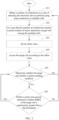
FIG. 1 is a schematic flowchart 1 of a cell reselection method according to an embodiment of the present invention; -
FIG. 2 is a schematic flowchart 2 of a cell reselection method according to an embodiment of the present invention; -
FIG. 3 is a schematic structural diagram 1 of an electronic device according to an embodiment of the present invention; and -
FIG. 4 is a schematic structural diagram 2 of an electronic device according to an embodiment of the present invention. - The following clearly and completely describes the technical solutions in the embodiments of the present invention with reference to the accompanying drawings in the embodiments of the present invention. Apparently, the described embodiments are some rather than all of the embodiments of the present invention. Based on the embodiments of the present invention, all other embodiments obtained by a person of ordinary skill in the art without creative efforts fall within the protection scope of the present invention.
- In the embodiments of the present invention, the term such as "exemplary" or "for example" is used to represent an example, an instance, or a description. Any embodiment or design solution described as "exemplary" or "for example" in the embodiments of the present invention should not be construed as being more preferred or advantageous than other embodiments or design solutions. To be precise, the use of the term such as "exemplary" or "for example" is intended to present a related concept in a specific manner.
- It should be noted that in this specification, relational terms such as "first" and "second" are used only to differentiate the same names, and do not imply a relation or sequence between these names.
- The technology described in this specification is not limited to the 5th-generation (5th-generation, 5G) system and subsequent evolved communications systems as well as LTE/LTE-advanced (LTE-Advanced, LTE-A) systems, and may also be applied to various wireless communications systems such as code division multiple access (Code Division Multiple Access, CDMA), time division multiple access (Time Division Multiple Access, TDMA), frequency division multiple access (Frequency Division Multiple Access, FDMA), orthogonal frequency division multiple access (Orthogonal Frequency Division Multiple Access, OFDMA), and single-carrier frequency-division multiple access (Single-carrier Frequency-Division Multiple Access, SC-FDMA) systems, and other systems.
- The terms "system" and "network" are often interchangeably used. The CDMA system can implement radio technologies such as CDMA2000 and universal terrestrial radio access (Universal Terrestrial Radio Access, UTRA). UTRA includes wideband CDMA (Wideband Code Division Multiple Access, WCDMA) and another CDMA variation. The TDMA system may implement a radio technology such as Global System for Mobile Communication (Global System for Mobile Communication, GSM). An OFDMA system may implement radio technologies such as ultra mobile broadband (Ultra Mobile Broadband, UMB), evolved-UTRA (Evolved-UTRA, E-UTRA), IEEE802.11 (Wi-Fi), IEEE 802.16 (WiMAX), IEEE 802.20, Flash-OFDM and the like. UTRA and E-UTRA are parts of a universal mobile telecommunications system (Universal Mobile Telecommunications System, UMTS). LTE and more advanced LTE (such as LTE-A) are new UMTS versions that use E-UTRA. UTRA, E-UTRA, UMTS, LTE, LTE-A, and GSM are described in a document of an organization named "3rd Generation Partnership Project" (3rd Generation Partnership Project, 3GPP). CDMA2000 and UMB are described in the documents of the organization named the "3rd Generation Partnership Project 2" (3GPP2). The technologies described in this specification may be used in the systems and radio technologies mentioned above, and may also be used in another system and radio technology.
- The electronic device provided in this embodiment of the present invention may be a mobile phone, a tablet computer, a notebook computer, an ultra-mobile personal computer (Ultra-Mobile Personal Computer, UMPC), a netbook, a personal digital assistant (Personal Digital Assistant, PDA), or the like.
- To better understand the method of the embodiments of the present invention, the following technical contents are first described:
- Cell reselection refers to a process in which an electronic device selects a best cell to provide a service signal by monitoring signal quality of neighboring cells and the current cell in an idle mode. When the signal quality and level of a neighboring cell satisfy the S criterion (Srxlev) and satisfy a reselection decision criterion, the electronic device accesses the cell to camp.
- After the electronic device successfully camps on the cell, the electronic device continues to measure the cell. The radio resource control (Radio Resource Control, RRC) layer calculates Srxlev according to a reference signal received power (Reference Signal Received Power, RSRP) measurement result, and compares the measurement result with an intra-frequency measurement start threshold (Sintrasearch) and an inter-frequency/inter-system measurement start threshold (Snonintrasearch) as a condition for determining whether to start neighboring cell measurement.
- LTE cell reselection measurement criteria:
- 1. When priorities of cells indicated by a system message are higher than that of a serving cell, the electronic device always measures these high-priority cells.
- 2. For intra-frequency/same-priority cells, if the serving cell is greater than or equal to Sintrasearch, the electronic device performs measurement, and if the serving cell is less than Sintrasearch, the electronic device does not perform measurement.
- 3. When priorities of cells indicated by a system message are lower than that of the serving cell, if an S value of the serving cell is less than or equal to Snonintrasearch, the electronic device performs measurement, and if the S value of the serving cell is greater than Snonintrasearch, the electronic device does not perform measurement.
- 4. If a Snonintrasearch parameter is not broadcast in a system message, the electronic device starts inter-frequency cell measurement.
- The above S value is Srxlev in cell selection.


- Referring to
FIG. 1 , an embodiment of the present invention provides a cell reselection method. The method is performed by an electronic device, and the method includes the following steps:
Step 101: Obtain a number of reselections in a case of detecting that the electronic device performs ping-pong reselection in multiple cells. - In this embodiment of the present invention, when the electronic device detects that ping-pong reselection is performed in multiple cells, the number of times of reselection is recorded.
- The number of reselections is a number of times of camping on a cell with the largest number of times of camping among the multiple cells. Specifically, within a fixed period of time, the electronic device performs ping-pong reselection among multiple cells, and the number of times of camping corresponding to the cell with the largest number of times of camping in reselection is used as the number of reselections. For example, multiple cells include cells A, B, and C, and the corresponding ping-pong reselection process is A->B->A->C->A, where cell A has the largest number of times of camping. Therefore, the obtained number of reselections is 3.
- Step 102: In a case that the number of reselections reaches a preset number of times, determine a target cell among the multiple cells.
- It can be understood that the cell reselection method of the embodiments of the present invention can be applied to an electronic device as an optimization function, and the number of reselections obtained in
step 101 can be used as a triggering condition for starting optimization. - In this embodiment of the present invention, when the number of reselections reaches a preset number of times, the target cell is determined from the multiple cells, and the target cell may be called an optimized cell.
- Reference signal received power (Reference Signal Received Power, RSRP) fluctuation of the target cell is less than a preset fluctuation threshold, and reference signal received quality (Reference Signal Received Quality, RSRQ) is greater than a first threshold within the camping period. The first threshold value may be recorded as Q1; and the target cell is determined based on the RSRP fluctuation and the RSRQ.
- The above-mentioned RSRP fluctuation calculation can be implemented by an existing calculation method, for example, calculation based on relaxed monitoring.
- Relaxed monitoring satisfies the following condition:

- Relaxed monitoring satisfies the following scenario:
- Srxlev = current Srxlev value (dB) of the serving cell.
- SrxlevRef = reference Srxlev value (dB) of the serving cell, which is set as follows:
- after selecting or reselecting a new cell, or
- if (Srxlev - SrxlevRef) > 0, or
- if TSearchDeltaP relaxed monitoring criteria have not been met:
- the electronic device sets the value of SrxlevRef to the current Srxlev value of the serving cell;
- if TSearchDeltaP = 5 minutes, or if eDRX is configured and the eDRX cycle length exceeds 5 minutes, it is the eDRX cycle length.
- Step 103: Set an offset value.
- Step 104: Access the target cell according to the offset value.
- In the embodiments of the present invention, after the target cell is determined, the electronic device needs to camp on the target cell. Considering that the electronic device selects the camping cell from multiple cells according to a preset algorithm, it is necessary to set the offset value. The offset value is used for the electronic device to use the determined target cell as the camping cell through calculation in the process of selecting the camping cell.
- In some embodiments, when multiple cells are intra-frequency cells:
- In intra-frequency reselection calculation (in the intra-frequency reselection, signals of the intra-frequency cells are sorted, and a cell with the highest ranking is a cell that needs to be reselected), it is set that the cell signal of the target cell is increased by the offset value, so that the cell signal of the target cell ranks the highest, where the offset value is greater than 0, that is, the RSRP of the target cell is increased by the offset value H>0. When the electronic device calculates whether the reselection meets the condition, H needs to be increased for the target cell.
- Alternatively, in intra-frequency reselection calculation, it is set that a cell signal of a cell other than the target cell is increased by the offset value, so that the cell signal of the target cell ranks the highest, where the offset value is less than 0, that is, the cell signals of other cells are reduced, so that the cell signal of the target cell ranks the highest.
- In some embodiments, when multiple cells are inter-frequency cells:
In inter-frequency reselection calculation (in inter-frequency reselection, it is determined based on whether the signal of the inter-frequency cell meets the network configuration threshold), a network configuration threshold of a cell other than the target cell is increased by the offset value, so that a network configuration threshold of the target cell is the highest, where the offset value is less than 0. - In the embodiments of the present invention, when the number of ping-pong reselections reaches the preset number of times, the target cell is determined from the multiple cells, and the offset value is set. Based on the offset value, the electronic device accesses the target cell through reselection calculation. In this way, when ping-pong reselection occurs, the electronic device determines the target cell from multiple cells and accesses the target cell through optimization processing, thereby reducing the power consumption of the electronic device and reducing the data service delay. Besides, the mobility of the electronic device is not affected.
- Referring to
FIG. 2 , an embodiment of the present invention provides another cell reselection method. The method is performed by an electronic device, and includes the following steps: - Step 201: Obtain a number of reselections in a case of detecting that the electronic device performs ping-pong reselection in multiple cells.
- Step 202: In a case that the number of reselections reaches a preset number of times, determine a target cell among the multiple cells.
- Step 203: Set an offset value.
- Step 204: Access the target cell according to the offset value.
- For the description of the
above steps 201 to 204, reference may be made to the description of thesteps 101 to 104 inFIG. 1 , and details are not repeated herein. - Considering that the camping cell may be affected by factors such as weather, environment, and network device status, which may cause signal fluctuation, it is necessary to continuously monitor the signal status of the target cell after the target cell is reselected in an optimized way.
- Step 205: Determine whether the target cell satisfies a preset camping condition, and if yes, perform
step 205; otherwise return to performstep 201. - In the embodiments of the present invention, when the target cell does not meet the preset camping condition, the target cell is canceled, that is, the optimization stops. For example, the target cell is previously determined to be cell A, and when it is detected that cell A does not meet the preset camping condition, the electronic device cancels the optimization, cell A is no longer the target cell, and the electronic device returns to step 201 to re-start the optimization to select a new target cell.
- In some embodiments, the above-mentioned preset camping condition includes at least one of the following:
- RSRQ is greater than a second threshold, where the second threshold can be denoted as Q2;
- a signal-to-noise ratio (SNR) is greater than a preset SNR value; and
- RSRP is greater than a preset power value, where the preset power value may be denoted as P.
- In the embodiments of the present invention, it is determined whether the target cell satisfies the camping condition: RSRQ>Q2 and RSRP>P. Once the condition is not satisfied, stop the optimization immediately. Alternatively, the SNR can also be considered, and the signal quality of the target cell can be determined based on the SNR or RSRQ.
- Step 206: Within a preset time period, determine whether the RSRQ of the target cell is continuously greater than a third threshold, and if yes, return to perform
step 205; otherwise, return to performstep 201. - In the embodiments of the present invention, when the target cell satisfies the preset camping condition, it continues to be detected whether the RSRQ of the target cell is continuously greater than the third threshold within a preset time period, and the third threshold value may be denoted as Q3, and if not, stop the optimization and return to perform
step 201 to re-start the optimization to select a new target cell. If yes, return to performstep 205 to continue to determine whether the target cell satisfies the preset camping condition. - It should be noted that the third threshold is greater than the second threshold, that is, Q3>Q2, Q2 is used such that when the RSRQ of the target cell suddenly becomes very poor, the electronic device needs to stop the optimization immediately, and Q3 is used such that when finding that the current target cell is always bad, the electronic device stops optimization.
- In the embodiments of the present invention, it is determined whether the target cell is suitable for continuing to camp according to the signal state of the target cell accessed by the electronic device, and the reselection of the target cell is performed when it is determined that the target cell is not suitable for continuing to camp, so that the electronic device can flexibly perform cell reselection to effectively reduce power consumption of electronic device and reduce the data service delay.
- As shown in
FIG. 3 , an embodiment of the present invention provides anelectronic device 300, including: - an obtaining
module 301, configured to: in a case of detecting that the electronic device performs ping-pong reselection in multiple cells, obtain a number of reselections, where the number of reselections is a number of times of camping on a cell with the largest number of times of camping among the multiple cells; - a determining
module 302, configured to: in a case that the number of reselections reaches a preset number of times, determine a target cell among the multiple cells, where reference signal received power RSRP fluctuation of the target cell is less than a preset fluctuation threshold, and reference signal received quality RSRQ within a camping period is greater than a first threshold; - a
setting module 303, configured to set an offset value; and - an
access module 304, configured to access the target cell according to the offset value. - Optionally, the multiple cells are intra-frequency cells; and
theaccess module 304 is further configured to: - in intra-frequency reselection calculation, set that the cell signal of the target cell is increased by the offset value, so that the cell signal of the target cell ranks the highest, where the offset value is greater than 0;
- or in intra-frequency reselection calculation, set that a cell signal of a cell other than the target cell is increased by the offset value, so that the cell signal of the target cell ranks the highest, where the offset value is less than 0.
- Optionally, the multiple cells are inter-frequency cells;
theaccess module 304 is further configured to:
in inter-frequency reselection calculation, increase a network configuration threshold of a cell other than the target cell by the offset value, so that a network configuration threshold of the target cell is the highest, where the offset value is less than 0. - Optionally, the electronic device further includes:
- a first determining module, configured to determine whether the target cell satisfies a preset camping condition; and
- in a case that the target cell does not meet the camping condition, the first determining module is further configured to instruct the obtaining module to perform again the step of obtaining a number of reselections in a case of detecting that the electronic device performs ping-pong reselection in multiple cells; where
- The preset camping condition includes at least one of the following:
- RSRQ is greater than a second threshold;
- a signal-to-noise ratio SNR is greater than a preset SNR value; and
- RSRP is greater than a preset power value.
- Optionally, the electronic device further includes:
- a second determining module, configured to: within a preset time period, determine whether RSRQ of the target cell is continuously greater than a third threshold, where the third threshold is greater than the second threshold;
- in a case that the RSRQ is continuously greater than the third threshold within the preset time period, the first determining module is further configured to perform again the step of determining whether the target cell satisfies the preset camping condition; and
- in a case that the RSRQ is not continuously greater than the third threshold within the preset time period, the first determining module is further configured to instruct the obtaining module to perform again the step of obtaining a number of reselections in a case of detecting that the electronic device performs ping-pong reselection in multiple cells.
- In the embodiments of the present invention, when the number of ping-pong reselections reaches the preset number of times, the target cell is determined from the multiple cells, and the offset value is set. Based on the offset value, the electronic device accesses the target cell through reselection calculation. In this way, when ping-pong reselection occurs, the electronic device determines the target cell from multiple cells and accesses the target cell through optimization processing, thereby reducing the power consumption of the electronic device and reducing the data service delay.
-
FIG. 4 is a schematic structural diagram of hardware of an electronic device implementing the embodiments of the present invention. As shown in the figure, theelectronic device 400 includes but is not limited to: aradio frequency unit 401, anetwork module 402, anaudio output unit 403, aninput unit 404, asensor 405, adisplay unit 406, auser input unit 407, aninterface unit 408, amemory 409, aprocessor 410, apower supply 411, and other components. A person skilled in the art may understand that a structure of the electronic device shown inFIG. 4 constitutes no limitation on the electronic device, and the electronic device may include more or fewer components than those shown in the figure, or have a combination of some components, or have a different component arrangement. In this embodiment of the present disclosure, the electronic device includes, but is not limited to, a mobile phone, a tablet computer, a notebook computer, a palmtop computer, a vehicle-mounted terminal, a wearable device, a pedometer, or the like. - Preferably, a computer program is stored in the
memory 409 and can run on theprocessor 410, and when the computer program is executed by theprocessor 410, the following steps are performed: in a case of detecting that the electronic device performs ping-pong reselection in multiple cells, obtaining a number of reselections, where the number of reselections is a number of times of camping on a cell with the largest number of times of camping among the multiple cells; - in a case that the number of reselections reaches a preset number of times, determining a target cell among the multiple cells, where reference signal received power RSRP fluctuation of the target cell is less than a preset fluctuation threshold, and reference signal received quality RSRQ within a camping period is greater than a first threshold;
- setting an offset value; and
- accessing the target cell according to the offset value.
- In the embodiments of the present invention, when the number of ping-pong reselections reaches the preset number of times, the target cell is determined from the multiple cells, and the offset value is set. Based on the offset value, the electronic device accesses the target cell through reselection calculation. In this way, when ping-pong reselection occurs, the electronic device determines the target cell from multiple cells and accesses the target cell through optimization processing, thereby reducing the power consumption of the electronic device and reducing the data service delay.
- It should be understood that, in this embodiment of the present invention, the
radio frequency unit 401 may be configured to receive and send information or receive and send a signal in a call process. Specifically, after downlink data from a base station is received, theprocessor 410 processes the downlink data. In addition, uplink data is sent to the base station. Usually, theradio frequency unit 401 includes but is not limited to an antenna, at least one amplifier, a transceiver, a coupler, a low noise amplifier, a duplexer, and the like. In addition, theradio frequency unit 401 may communicate with a network and another device through a wireless communications system. - The electronic device provides users with wireless broadband Internet access through the
network module 402, for example, helps users receive and send e-mails, browse web pages, and access streaming media. - The
audio output unit 403 may convert audio data received by theradio frequency unit 401 or thenetwork module 402 or stored in thememory 409 into an audio signal and output the audio signal as a sound. In addition, theaudio output unit 403 may further provide an audio output (for example, a call signal received voice, or a message received voice) related to a specific function implemented by theelectronic device 400. Theaudio output unit 403 includes a speaker, a buzzer, a telephone receiver, and the like. - The
input unit 404 is configured to receive an audio signal or a video signal. Theinput unit 404 may include a graphics processing unit (Graphics Processing Unit, GPU) 4041 and amicrophone 4042. Thegraphics processing unit 4041 processes image data of a static image or video obtained by an image capture apparatus (for example, a camera) in a video capture mode or an image capture mode. A processed image frame may be displayed on thedisplay unit 406. The image frame processed by thegraphics processing unit 4041 may be stored in the memory 409 (or another storage medium) or sent by using theradio frequency unit 401 or thenetwork module 402. Themicrophone 4042 may receive a sound and can process such sound into audio data. Processed audio data may be converted, in a call mode, into a format that can be sent to a mobile communication base station by using theradio frequency unit 401 for output. - The
electronic device 400 further includes at least onesensor 405 such as a light sensor, a motion sensor, and another sensor. Specifically, the light sensor includes an ambient light sensor and a proximity sensor. The ambient light sensor may adjust luminance of thedisplay panel 4061 based on brightness of ambient light. The proximity sensor may turn off thedisplay panel 4061 and/or backlight when theelectronic device 400 moves to an ear. As a motion sensor, an accelerometer sensor may detect magnitude of acceleration in various directions (usually three axes), may detect magnitude and the direction of gravity when stationary, may be configured to identify electronic device postures (such as switching between a landscape mode and a portrait mode, related games, and magnetometer posture calibration), may perform functions related to vibration identification (such as a pedometer and a knock), and the like. Thesensor 405 may further include a fingerprint sensor, a pressure sensor, an iris sensor, a molecular sensor, a gyroscope, a barometer, a hygrometer, a thermometer, an infrared sensor, or the like. Details are not described herein again. - The
display unit 406 is configured to display information input by a user or information provided for a user. Thedisplay unit 406 may include adisplay panel 4061, and thedisplay panel 4061 may be configured in a form of a liquid crystal display (Liquid Crystal Display, LCD), an organic light-emitting diode (Organic Light-Emitting Diode, OLED), or the like. - The
user input unit 407 may be configured to: receive entered digital or character information, and generate key signal input related to a user setting and function control of the electronic device. Specifically, theuser input unit 407 includes atouch panel 4071 and anotherinput device 4072. Thetouch panel 4071, also called a touch screen, may collect touch operation on or near the touch panel by users (for example, operation on thetouch panel 4071 or near thetouch panel 4071 by fingers or any suitable objects or accessories such as a touch pen by the users). Thetouch panel 4071 may include two parts: a touch detection apparatus and a touch controller. The touch detection apparatus detects a touch location of the user, detects a signal brought by the touch operation, and sends the signal to the touch controller. The touch controller receives touch information from the touch detection apparatus, converts the touch information into touch point coordinates, and sends the touch point coordinates to theprocessor 410, and receives and executes a command sent by theprocessor 410. In addition, thetouch panel 4071 may be implemented by using a plurality of types such as a resistive type, a capacitive type, an infrared ray, and a surface acoustic wave. Theuser input unit 407 may includeother input devices 4072 in addition to thetouch panel 4071. Specifically, the anotherinput device 4072 may include but is not limited to: a physical keyboard, a function button (such as a volume control button, a switch button), a trackball, a mouse, and a joystick, which is not described herein. - Further, the
touch panel 4071 may cover thedisplay panel 4061. After detecting the touch operation on or near thetouch panel 4071, thetouch panel 4071 transmits the touch operation to theprocessor 410 to determine a type of a touch event, and then theprocessor 410 provides corresponding visual output on thedisplay panel 4061 based on the type of the touch event. Although inFIG. 4 , thetouch panel 4071 and thedisplay panel 4061 are configured as two independent components to implement input and output functions of the electronic device, in some embodiments, thetouch panel 4071 and thedisplay panel 4061 can be integrated to implement the input and output functions of the electronic device. Details are not limited herein. - The
interface unit 408 is an interface for connecting an external apparatus with theelectronic device 400. For example, the external apparatus may include a wired or wireless headset jack, an external power supply (or a battery charger) port, a wired or wireless data port, a storage card port, a port for connecting an apparatus having an identification module, an audio input/output (I/O) port, a video I/O port, a headset jack, or the like. Theinterface unit 408 may be configured to receive input (for example, data information and power) from an external apparatus and transmit the received input to one or more elements in theelectronic device 400 or may be configured to transmit data between theelectronic device 400 and an external apparatus. - The
memory 409 may be configured to store a software program and various data. Thememory 409 may mainly include a program storage area and a data storage area. The program storage area may store an operating system, an application required by at least one function (for example, a sound play function or an image display function), and the like. The data storage area may store data (for example, audio data or an address book) or the like created based on use of the mobile phone. In addition, thememory 409 may include a high-speed random access memory, and may further include a nonvolatile memory, for example, at least one magnetic disk storage device, a flash storage device, or another volatile solid-state storage device. - The
processor 410 is a control center of the electronic device, connects all parts of the entire electronic device by using various interfaces and lines, and performs various functions of the electronic device and data processing by running or executing a software program and/or a module that are/is stored in thememory 409 and by invoking data stored in thememory 409, to overall monitor the electronic device. Optionally, theprocessor 410 may include one or more processing units. Preferably, an application processor and a modem processor may be integrated into theprocessor 410. The application processor mainly processes an operating system, a user interface, an application, and the like. The modem processor mainly processes wireless communications. It can be understood that, alternatively, the modem processor may not be integrated into theprocessor 410. - The
electronic device 400 may further include the power supply 411 (for example, a battery) supplying power to each component. Preferably, thepower supply 411 may be logically connected to theprocessor 410 by using a power management system, so as to implement functions such as charging management, discharging management, and power consumption management by using the power management system. - In addition, the
electronic device 400 includes some function modules not shown, and details are not described herein. - Preferably, an embodiment of the present invention further provides an electronic device, including a processor, a memory, and a computer program stored in the memory and executable on the processor. The computer program implements, when executed by the processor, each process of the foregoing method embodiments shown in
FIG. 1 andFIG. 2 , and a same technical effect can be achieved. To avoid repetition, details are not described herein. - The embodiments of the present invention further provide a computer-readable storage medium. The computer-readable storage medium stores a computer program, and when the computer program is executed by a processor, the processes in the method embodiments shown in
FIG. 1 andFIG. 2 are implemented, and a same technical effect can be achieved. To avoid repetition, details are not described herein. The computer-readable storage medium is, for example, a read-only memory (Read-Only Memory, ROM), a random access memory (Random Access Memory, RAM), a magnetic disk, or an optical disc. - It should be noted that in this specification, the term "include", "including", or any other variant is intended to cover non-exclusive inclusion, so that a process, method, article, or apparatus that includes a series of elements includes not only those elements but also other elements that are not explicitly listed, or includes elements inherent to such a process, method, article, or apparatus. An element limited by "includes a ..." does not, without more constraints, preclude the presence of additional identical elements in the process, method, article, or apparatus that includes the element.
- Based on the descriptions of the foregoing implementations, a person skilled in the art may clearly understand that the method in the foregoing embodiment may be implemented by software in addition to a necessary universal hardware platform or by hardware only. In most circumstances, the former is a preferred implementation. Based on such an understanding, the technical solutions of the present invention essentially or the part contributing to the prior art may be implemented in a form of a software product. The computer software product is stored in a storage medium (for example, a ROM/RAM, a magnetic disk, or an optical disc), and includes several instructions for instructing an electronic device (which may be a mobile phone, a computer, a server, an air conditioner, a network device, or the like) to perform the methods described in the embodiments of the present invention.
- The embodiments of the present invention are described with reference to the accompanying drawings. However, the present invention is not limited to the foregoing specific implementations. The foregoing specific implementations are merely examples, but are not limiting. A person of ordinary skill in the art may make many forms without departing from the objective and the scope of the claims of the present invention, and these forms all fall within the protection scope of the present invention.
- The foregoing descriptions are merely specific implementations of this application, but are not intended to limit the protection scope of this application. Any variation or replacement within the technical scope disclosed in this application shall fall within the protection scope of this application. Therefore, the protection scope of this application shall be subject to the protection scope of the claims.
Claims (10)
- A cell reselection method, applied to an electronic device, comprising:in a case of detecting that the electronic device performs ping-pong reselection in multiple cells, obtaining a number of reselections, where the number of reselections is a number of times of camping on a cell with the largest number of times of camping among the multiple cells;in a case that the number of reselections reaches a preset number of times, determining a target cell among the multiple cells, where reference signal received power RSRP fluctuation of the target cell is less than a preset fluctuation threshold, and reference signal received quality RSRQ within a camping period is greater than a first threshold;setting an offset value; andaccessing the target cell according to the offset value.
- The method according to claim 1, whereinthe multiple cells are intra-frequency cells; andthe accessing the target cell according to the offset value comprises:in intra-frequency reselection calculation, setting that the cell signal of the target cell is increased by the offset value, so that the cell signal of the target cell ranks the highest, wherein the offset value is greater than 0;or in intra-frequency reselection calculation, setting that a cell signal of a cell other than the target cell is increased by the offset value, so that the cell signal of the target cell ranks the highest, wherein the offset value is less than 0.
- The method according to claim 1, whereinthe multiple cells are inter-frequency cells; andthe accessing the target cell according to the offset value comprises:
in inter-frequency reselection calculation, increasing a network configuration threshold of a cell other than the target cell by the offset value, so that a network configuration threshold of the target cell is the highest, wherein the offset value is less than 0. - The method according to claim 1, wherein after the accessing the target cell according to the offset value, the method further comprises:determining whether the target cell satisfies a preset camping condition; andin a case that the target cell does not meet the camping condition, performing again the step of obtaining a number of reselections in a case of detecting that the electronic device performs ping-pong reselection in multiple cells; whereinthe preset camping condition comprises at least one of the following:RSRQ is greater than a second threshold;a signal-to-noise ratio SNR is greater than a preset SNR value; andRSRP is greater than a preset power value.
- The method according to claim 4, wherein in a case that the target cell satisfies the camping condition, the method further comprises:within a preset time period, determining whether RSRQ of the target cell is continuously greater than a third threshold, wherein the third threshold is greater than the second threshold;in a case that the RSRQ is continuously greater than the third threshold within the preset time period, performing again the step of determining whether the target cell satisfies the preset camping condition; andin a case that the RSRQ is not continuously greater than the third threshold within the preset time period, performing again the step of obtaining a number of reselections in a case of detecting that the electronic device performs ping-pong reselection in multiple cells.
- An electronic device, comprising:an obtaining module, configured to: in a case of detecting that the electronic device performs ping-pong reselection in multiple cells, obtain a number of reselections, wherein the number of reselections is a number of times of camping on a cell with the largest number of times of camping among the multiple cells;a determining module, configured to: in a case that the number of reselections reaches a preset number of times, determine a target cell among the multiple cells, wherein reference signal received power RSRP fluctuation of the target cell is less than a preset fluctuation threshold, and reference signal received quality RSRQ within a camping period is greater than a first threshold;a setting module, configured to set an offset value; andan access module, configured to access the target cell according to the offset value.
- The electronic device according to claim 6, whereinthe multiple cells are intra-frequency cells; andthe access module is further configured to:in intra-frequency reselection calculation, set that the cell signal of the target cell is increased by the offset value, so that the cell signal of the target cell ranks the highest, wherein the offset value is greater than 0;or in intra-frequency reselection calculation, set that a cell signal of a cell other than the target cell is increased by the offset value, so that the cell signal of the target cell ranks the highest, wherein the offset value is less than 0.
- The electronic device according to claim 6, whereinthe multiple cells are inter-frequency cells; andthe access module is further configured to:
in inter-frequency reselection calculation, increase a network configuration threshold of a cell other than the target cell by the offset value, so that a network configuration threshold of the target cell is the highest, wherein the offset value is less than 0. - The electronic device according to claim 6, further comprising:a first determining module, configured to determine whether the target cell satisfies a preset camping condition; andin a case that the target cell does not meet the camping condition, the first determining module is further configured to instruct the obtaining module to perform again the step of obtaining a number of reselections in a case of detecting that the electronic device performs ping-pong reselection in multiple cells; whereinthe preset camping condition comprises at least one of the following:RSRQ is greater than a second threshold;a signal-to-noise ratio SNR is greater than a preset SNR value; andRSRP is greater than a preset power value.
- The electronic device according to claim 9, further comprising:a second determining module, configured to: within a preset time period, determine whether RSRQ of the target cell is continuously greater than a third threshold, wherein the third threshold is greater than the second threshold;in a case that the RSRQ is continuously greater than the third threshold within the preset time period, the first determining module is further configured to perform again the step of determining whether the target cell satisfies the preset camping condition; andin a case that the RSRQ is not continuously greater than the third threshold within the preset time period, the first determining module is further configured to instruct the obtaining module to perform again the step of obtaining a number of reselections in a case of detecting that the electronic device performs ping-pong reselection in multiple cells.
Applications Claiming Priority (2)
| Application Number | Priority Date | Filing Date | Title |
|---|---|---|---|
| CN202010212374.5A CN111314985B (en) | 2020-03-24 | 2020-03-24 | Cell reselection method and electronic equipment |
| PCT/CN2021/081286 WO2021190374A1 (en) | 2020-03-24 | 2021-03-17 | Cell reselection method and electronic device |
Publications (2)
| Publication Number | Publication Date |
|---|---|
| EP4132105A1 true EP4132105A1 (en) | 2023-02-08 |
| EP4132105A4 EP4132105A4 (en) | 2023-08-16 |
Family
ID=71162470
Family Applications (1)
| Application Number | Title | Priority Date | Filing Date |
|---|---|---|---|
| EP21774880.5A Pending EP4132105A4 (en) | 2020-03-24 | 2021-03-17 | CELL RESELECTION METHOD AND ELECTRONIC DEVICE |
Country Status (6)
| Country | Link |
|---|---|
| US (1) | US12342231B2 (en) |
| EP (1) | EP4132105A4 (en) |
| JP (1) | JP7343711B2 (en) |
| KR (1) | KR102660228B1 (en) |
| CN (1) | CN111314985B (en) |
| WO (1) | WO2021190374A1 (en) |
Families Citing this family (8)
| Publication number | Priority date | Publication date | Assignee | Title |
|---|---|---|---|---|
| CN111314985B (en) * | 2020-03-24 | 2022-03-22 | 维沃移动通信有限公司 | Cell reselection method and electronic equipment |
| CN112333734B (en) * | 2020-11-04 | 2022-11-18 | 维沃移动通信有限公司 | Serving cell switching method and device |
| CN112654076B (en) * | 2020-12-24 | 2022-11-01 | 三川智慧科技股份有限公司 | 5G network frequency point access method |
| US12526645B2 (en) * | 2021-06-30 | 2026-01-13 | Jio Platforms Limited | System and method for computing user correlated network score in a telecom area |
| CN114710815B (en) * | 2022-03-14 | 2024-04-23 | 北京小米移动软件有限公司 | Cell residence method and device, terminal and computer readable storage medium |
| CN114727349B (en) * | 2022-06-01 | 2022-10-25 | 荣耀终端有限公司 | Method, device and storage medium for cell reselection |
| CN115175262B (en) * | 2022-07-27 | 2023-04-21 | 上海移芯通信科技有限公司 | Cell reselection control method, system, terminal of Internet of things and storage medium |
| CN116261190B (en) * | 2022-12-30 | 2026-04-03 | 中国联合网络通信集团有限公司 | Method, apparatus and storage medium for generating notification messages |
Family Cites Families (32)
| Publication number | Priority date | Publication date | Assignee | Title |
|---|---|---|---|---|
| JP2006157217A (en) * | 2004-11-26 | 2006-06-15 | Nec Corp | Apparatus for cell reselection, mobile communication terminal, method for cell reselection, program and recording medium |
| WO2006096036A1 (en) * | 2005-03-10 | 2006-09-14 | Samsung Electronics Co., Ltd. | Cell reselection method and apparatus for preventing ping-pong in a mobile communications system |
| JP2012109640A (en) * | 2009-03-16 | 2012-06-07 | Mitsubishi Electric Corp | Mobile communication system |
| JP2010258735A (en) * | 2009-04-24 | 2010-11-11 | Nec Corp | Portable telephone set and control program |
| CN102088744A (en) * | 2009-12-08 | 2011-06-08 | 上海摩波彼克半导体有限公司 | Method for realizing quick cell reselection for mobile equipment in mobile communication system |
| KR101722204B1 (en) * | 2010-04-27 | 2017-04-03 | 삼성전자주식회사 | Apparatus and method for providing handover support inforamtion in mobile communication system |
| CA2805037A1 (en) * | 2010-07-14 | 2012-01-19 | Research In Motion Limited | Idle mode hybrid mobility procedures in a heterogeneous network |
| CN101984711B (en) * | 2010-11-16 | 2015-08-26 | 中兴通讯股份有限公司 | A kind of method and wireless communication terminal controlling cell reselection |
| KR20120099568A (en) * | 2011-01-18 | 2012-09-11 | 삼성전자주식회사 | Method and apparatus for measuring interference when there are a plurality of heterogeneous communication modules in a terminal in a wireless communication system |
| US8948767B2 (en) | 2012-01-25 | 2015-02-03 | Alcatel Lucent | Method and apparatus for dynamically modifying cell reselection and/or handover parameters |
| US9426713B2 (en) * | 2012-03-15 | 2016-08-23 | Qualcomm Incorporated | Apparatus and method of inter-radio access technology measurement scheduling based on an undetected frequency |
| GB2493605B (en) * | 2012-07-13 | 2013-08-07 | Renesas Mobile Corp | Method, apparatus and computer program for cell measurements and evaluation |
| GB2507514A (en) * | 2012-10-31 | 2014-05-07 | Nec Corp | Providing measurement reports for relay cells |
| WO2014137127A1 (en) | 2013-03-04 | 2014-09-12 | 엘지전자 주식회사 | Cell reselection method and user equipment therefor |
| US20140274063A1 (en) * | 2013-03-15 | 2014-09-18 | Qualcomm Incorporated | System and method for mitigating ping-pong handovers and cell reselections |
| US20150004979A1 (en) * | 2013-06-26 | 2015-01-01 | Sharp Kabushiki Kaisha | Hetnet measurement and reporting enhancement |
| WO2015010287A1 (en) * | 2013-07-24 | 2015-01-29 | 华为技术有限公司 | Cell reselection method, device and system |
| US9398500B2 (en) * | 2014-05-08 | 2016-07-19 | Intel IP Corporation | Systems, methods, and devices for cell selection based on prioritized nodes |
| US9877257B2 (en) * | 2015-06-22 | 2018-01-23 | Qualcomm Incorporated | Performance improvements for high gain devices |
| EP3353913A4 (en) * | 2015-09-24 | 2019-07-31 | Ntt Docomo, Inc. | RADIO BASE STATION, AND USER EQUIPMENT |
| WO2017054986A1 (en) * | 2015-09-28 | 2017-04-06 | British Telecommunications Public Limited Company | Cellular telecommunications network |
| CN106714246A (en) * | 2015-11-12 | 2017-05-24 | 中兴通讯股份有限公司 | Base station and cell switching method and device |
| US9924426B2 (en) * | 2016-06-06 | 2018-03-20 | Futurewei Technologies, Inc. | Apparatus, computer program, and method for criteria-based conditional cell reselection |
| WO2018090172A1 (en) * | 2016-11-15 | 2018-05-24 | 华为技术有限公司 | Method for determining cell, terminal device and network device |
| CN110381546B (en) * | 2018-04-13 | 2021-07-16 | 中国移动通信有限公司研究院 | A method, terminal and network device for cell reselection |
| CN113660704B (en) | 2018-06-21 | 2022-11-25 | 展讯通信(上海)有限公司 | Cell reselection method and device and user equipment |
| CN109348516A (en) * | 2018-10-15 | 2019-02-15 | 奇酷互联网络科技(深圳)有限公司 | Mobile terminal and prevent the method, apparatus of network pingpang handoff, storage medium |
| CN109600806B (en) * | 2018-12-25 | 2021-04-20 | 深圳市万普拉斯科技有限公司 | Network switching method and device, computer equipment and storage medium |
| CN110602728B (en) * | 2019-08-28 | 2023-02-03 | 维沃移动通信有限公司 | Ping-pong state determination method, information receiving method, terminal and network side equipment |
| CN110650509A (en) * | 2019-09-12 | 2020-01-03 | 维沃移动通信有限公司 | A state processing method for electronic equipment and electronic equipment |
| EP4084541A4 (en) * | 2020-01-14 | 2023-01-11 | Huawei Technologies Co., Ltd. | COMMUNICATION METHOD AND APPARATUS |
| CN111314985B (en) * | 2020-03-24 | 2022-03-22 | 维沃移动通信有限公司 | Cell reselection method and electronic equipment |
-
2020
- 2020-03-24 CN CN202010212374.5A patent/CN111314985B/en active Active
-
2021
- 2021-03-17 WO PCT/CN2021/081286 patent/WO2021190374A1/en not_active Ceased
- 2021-03-17 KR KR1020227026682A patent/KR102660228B1/en active Active
- 2021-03-17 JP JP2022547800A patent/JP7343711B2/en active Active
- 2021-03-17 EP EP21774880.5A patent/EP4132105A4/en active Pending
-
2022
- 2022-09-22 US US17/951,067 patent/US12342231B2/en active Active
Also Published As
| Publication number | Publication date |
|---|---|
| CN111314985B (en) | 2022-03-22 |
| EP4132105A4 (en) | 2023-08-16 |
| KR102660228B1 (en) | 2024-04-25 |
| CN111314985A (en) | 2020-06-19 |
| KR20220123448A (en) | 2022-09-06 |
| JP7343711B2 (en) | 2023-09-12 |
| JP2023512553A (en) | 2023-03-27 |
| US20230012980A1 (en) | 2023-01-19 |
| WO2021190374A1 (en) | 2021-09-30 |
| US12342231B2 (en) | 2025-06-24 |
Similar Documents
| Publication | Publication Date | Title |
|---|---|---|
| US12342231B2 (en) | Cell reselection method and electronic device | |
| CN110035447B (en) | A measurement configuration method and terminal device | |
| US12219412B2 (en) | Method for reporting state information, terminal, and network device | |
| CN112188577A (en) | Cell residence method, device, terminal equipment and computer readable storage medium | |
| US20210360645A1 (en) | Measurement method, terminal, measurement indication method, and network-side device | |
| US12245092B2 (en) | Communications network switching method, terminal device, and medium | |
| US12317106B2 (en) | Processing method for terminal measurement and terminal | |
| US12177654B2 (en) | Cell selection or reselection method and device, and terminal | |
| WO2020078257A1 (en) | Mobile terminal, network ping-pong handover prevention method and apparatus, and storage medium | |
| US12200803B2 (en) | Connection management method, terminal, and network side device | |
| CN107333324A (en) | A kind of network selecting method, equipment and computer-readable recording medium | |
| US11564143B2 (en) | Method for cell management, terminal, and network-side device | |
| CN109195191B (en) | Cell reselection control method and terminal | |
| CN107155203A (en) | Residence reselecting, device and computer-readable recording medium | |
| CN111615160A (en) | Cell reselection method and terminal device | |
| CN112654072A (en) | Cell residence method, equipment and system | |
| CN110505664A (en) | A kind of parameter regulation means, device, terminal and storage medium | |
| KR102831635B1 (en) | Handover method, configuration method, terminal and network equipment | |
| CN112752317A (en) | Service cell selection method, device, terminal equipment and storage medium | |
| US12035415B2 (en) | Information sharing method and user equipment | |
| CN112566206B (en) | Cell change control method, cell change control device, terminal device and storage medium | |
| CN110139328B (en) | Cell adjusting method of mobile terminal, mobile terminal and storage medium | |
| HK40067216A (en) | Status information reporting method, terminal and network device |
Legal Events
| Date | Code | Title | Description |
|---|---|---|---|
| STAA | Information on the status of an ep patent application or granted ep patent |
Free format text: STATUS: THE INTERNATIONAL PUBLICATION HAS BEEN MADE |
|
| PUAI | Public reference made under article 153(3) epc to a published international application that has entered the european phase |
Free format text: ORIGINAL CODE: 0009012 |
|
| STAA | Information on the status of an ep patent application or granted ep patent |
Free format text: STATUS: REQUEST FOR EXAMINATION WAS MADE |
|
| 17P | Request for examination filed |
Effective date: 20220823 |
|
| AK | Designated contracting states |
Kind code of ref document: A1 Designated state(s): AL AT BE BG CH CY CZ DE DK EE ES FI FR GB GR HR HU IE IS IT LI LT LU LV MC MK MT NL NO PL PT RO RS SE SI SK SM TR |
|
| DAV | Request for validation of the european patent (deleted) | ||
| DAX | Request for extension of the european patent (deleted) | ||
| A4 | Supplementary search report drawn up and despatched |
Effective date: 20230713 |
|
| RIC1 | Information provided on ipc code assigned before grant |
Ipc: H04W 36/00 20090101ALI20230707BHEP Ipc: H04W 36/30 20090101ALI20230707BHEP Ipc: H04W 36/24 20090101ALI20230707BHEP Ipc: H04W 36/08 20090101AFI20230707BHEP |
|
| STAA | Information on the status of an ep patent application or granted ep patent |
Free format text: STATUS: EXAMINATION IS IN PROGRESS |
|
| 17Q | First examination report despatched |
Effective date: 20250319 |