EP4132067A1 - Camping method and apparatus, and terminal - Google Patents
Camping method and apparatus, and terminal Download PDFInfo
- Publication number
- EP4132067A1 EP4132067A1 EP21809569.3A EP21809569A EP4132067A1 EP 4132067 A1 EP4132067 A1 EP 4132067A1 EP 21809569 A EP21809569 A EP 21809569A EP 4132067 A1 EP4132067 A1 EP 4132067A1
- Authority
- EP
- European Patent Office
- Prior art keywords
- camping
- state
- region
- terminal
- priority parameter
- Prior art date
- Legal status (The legal status is an assumption and is not a legal conclusion. Google has not performed a legal analysis and makes no representation as to the accuracy of the status listed.)
- Pending
Links
Images

Classifications
-
- H—ELECTRICITY
- H04—ELECTRIC COMMUNICATION TECHNIQUE
- H04W—WIRELESS COMMUNICATION NETWORKS
- H04W24/00—Supervisory, monitoring or testing arrangements
- H04W24/02—Arrangements for optimising operational condition
-
- H—ELECTRICITY
- H04—ELECTRIC COMMUNICATION TECHNIQUE
- H04W—WIRELESS COMMUNICATION NETWORKS
- H04W48/00—Access restriction; Network selection; Access point selection
- H04W48/20—Selecting an access point
-
- H—ELECTRICITY
- H04—ELECTRIC COMMUNICATION TECHNIQUE
- H04W—WIRELESS COMMUNICATION NETWORKS
- H04W36/00—Hand-off or reselection arrangements
- H04W36/0005—Control or signalling for completing the hand-off
- H04W36/0011—Control or signalling for completing the hand-off for data sessions of end-to-end connection
-
- H—ELECTRICITY
- H04—ELECTRIC COMMUNICATION TECHNIQUE
- H04W—WIRELESS COMMUNICATION NETWORKS
- H04W36/00—Hand-off or reselection arrangements
- H04W36/0005—Control or signalling for completing the hand-off
- H04W36/0083—Determination of parameters used for hand-off, e.g. generation or modification of neighbour cell lists
- H04W36/00835—Determination of neighbour cell lists
-
- H—ELECTRICITY
- H04—ELECTRIC COMMUNICATION TECHNIQUE
- H04W—WIRELESS COMMUNICATION NETWORKS
- H04W36/00—Hand-off or reselection arrangements
- H04W36/24—Reselection being triggered by specific parameters
- H04W36/32—Reselection being triggered by specific parameters by location or mobility data, e.g. speed data
- H04W36/322—Reselection being triggered by specific parameters by location or mobility data, e.g. speed data by location data
-
- H—ELECTRICITY
- H04—ELECTRIC COMMUNICATION TECHNIQUE
- H04W—WIRELESS COMMUNICATION NETWORKS
- H04W48/00—Access restriction; Network selection; Access point selection
- H04W48/18—Selecting a network or a communication service
Definitions
- This application relates to the field of communications technologies, and in particular, to a camping method, an apparatus and a terminal.
- a terminal may frequently move in different regions, such as moving from a first region to a second region, and also frequently switches in different states, such as switching from a first state to a second state.
- regions such as moving from a first region to a second region
- states such as switching from a first state to a second state.
- the terminal directly uses a camping configuration parameter before the moving or switching. This makes the camping of the terminal prone to errors, thereby affecting performance of the terminal.
- Embodiments of this application provide a camping method, an apparatus and a terminal, which can resolve a problem that camping of the terminal is prone to errors, thereby affecting performance of the terminal.
- an embodiment of this application provides a camping method, applied to a terminal and including:
- an embodiment of this application provides a camping apparatus, including:
- an embodiment of this application provides a terminal, including a memory, a processor, and a program or an instruction stored in the memory and executable on the processor, where when the program or the instruction is executed by the processor, the steps of the foregoing camping method provided in this application are implemented.
- an embodiment of this application provides a readable storage medium, where the readable storage medium stores a program or an instruction, and when the program or the instruction is executed by a processor, the steps of the foregoing camping method provided in this application are implemented.
- an embodiment of this application provides a chip, where the chip includes a processor and a communications interface, the communications interface is coupled to the processor, and the processor is configured to execute a program or an instruction, to implement the steps of the camping method provided in this application.
- an embodiment of this application provides a computer software product, where the computer software product is stored in a non-volatile storage medium, and the software product is configured to be executed by at least one processor, to implement the steps of the camping method provided in this application.
- an embodiment of this application provides a terminal, where the terminal is configured to perform the camping method provided in this application.
- the first event is performed, where the first event includes the terminal moving from the first region to the second region, or the terminal switching from the first state to the second state; and if the first camping priority parameter of the terminal is inapplicable to the second region or the second state, the first camping is performed in the second region or the second state, where the first camping does not use the first camping priority parameter, and the first camping priority parameter includes: a camping priority parameter used by the terminal in the first region, or a camping priority parameter used by the terminal in the first state. In this way, after the terminal moves or switches, the terminal does not use the camping priority parameter that is inapplicable to the region or the state after the switching, so as to avoid errors of the camping of the terminal, thereby improving performance of the terminal.
- the word such as “example” or “for example” is used to represent giving an example, an illustration, or a description. Any embodiment or design scheme described as “an example of” or “for example” in the embodiments of this application should not be explained as being more preferred or having more advantages than another embodiment or design scheme. To be precise, the use of the term such as “exemplary” or “for example” is intended to present a related concept in a specific manner.
- a method for uplink transmission, an apparatus, and a terminal provided in the embodiments of this application may be applied to a wireless communications system.
- the wireless communications system may be a new radio (New Radio, NR) system, or other systems, such as an evolved long term evolution (Evolved Long Term Evolution, eLTE) system or a long term evolution (Long Term Evolution, LTE) system, or a subsequent evolved communications system.
- the method and the apparatus may be applied to an unlicensed band (Unlicensed Band) in the foregoing wireless communications system.
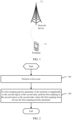
- FIG. 1 is a structural diagram of a network system to which an embodiment of this application may be applied.
- the network system includes a terminal 11 and a network device 12.
- the terminal 11 may be a user terminal (User Equipment, UE) or another terminal-side device, for example, a mobile phone, a tablet personal computer (Tablet Personal Computer), a laptop computer (Laptop Computer), a personal digital assistant (personal digital assistant, PDA), a mobile Internet device (Mobile Internet Device, MID), a wearable device (Wearable Device), and a robot.
- UE User Equipment
- PDA personal digital assistant
- Mobile Internet device Mobile Internet Device
- MID mobile Internet Device
- Wearable Device wearable Device
- robot a specific type of the terminal 11 is not limited in the embodiments of this application.
- the network device 12 may be a 4G (4 th Generation, 4G) base station, a 5G (5 th Generation, 5G) base station, or a base station of a later version, or a base station in another communications system, or is referred to as a NodeB, or an evolved NodeB, or a transmission and reception point (Transmission Reception Point, TRP), or an access point (Access Point, AP), or another term in the art, provided that a same technical effect is achieved.
- the network device is not limited to a specific technical term.
- the network device 12 may be a master node (Master Node, MN) or a secondary node (Secondary Node, SN).
- the 5G base station is merely used as an example, but the network device is not limited to any specific type.
- FIG. 2 is a flowchart of a camping method according to an embodiment of this application. The method is applied to a terminal. As shown in FIG. 2 , the method includes the following steps.
- Step 201 Perform a first event, where the first event includes the terminal moving from a first region to a second region, or the terminal switching from a first state to a second state.
- the terminal moving from a first region to a second region may be that the terminal moves in different location regions, different system regions, different device regions, or the like.
- the terminal switching from a first state to a second state may be that the terminal switches between different states, for example, the terminal switches from an inactive state (INACTIVE state) to an idle state (Idle state).
- Step 202 If a first camping priority parameter of the terminal is inapplicable to the second region or the second state, perform first camping in the second region or the second state, where the first camping does not use the first camping priority parameter, and the first camping priority parameter includes: a camping priority parameter used by the terminal in the first region, or a camping priority parameter used by the terminal in the first state.
- That the first camping priority parameter of the terminal is inapplicable to the second region or the second state may be that a range in which the first camping priority parameter is applicable does not include the second region or the second state.
- the first camping priority parameter may be configured for the terminal by a network side, for example, the first camping priority parameter is configured for the terminal in advance.
- the camping priority parameter used by the terminal in the first region may be that the first camping priority parameter is applicable to the first region, and when the terminal is in the first region, the terminal uses the camping priority parameter to perform camping.
- the camping priority parameter used by the terminal in the first state may be that the first camping priority parameter is applicable to the first state, and when the terminal is in the first state, the terminal uses the camping priority parameter to perform camping.
- the region and/or state to which the camping priority parameter is applicable is configured by a network or pre-agreed
- the region and/or state to which the first camping priority parameter is applicable is configured by a network or pre-agreed.
- the foregoing configuration by a network may be configured through a dedicated message or a broadcast message.
- the foregoing pre-agreement may be agreed by a protocol, or agreed in advance by the terminal and a network device.
- the camping priority parameter may carry indication information of the applicable region and/or state.
- the performing first camping in the second region or the second state, where the first camping does not use the first camping priority parameter may be performing the first camping in the second region or the second state by using another camping priority parameter, or performing camping without using a priority parameter, that is, normal camping.
- the camping priority parameter in this embodiment of this application may include priorities of different network slices, for example, the first camping priority parameter indicates that a network slice (slice) 1 of the first region is a first priority, and a slice 2 of the first region is a second priority, or the first camping priority parameter indicates that a frequency (frequency, Fq) 1 of the first region is the first priority, and a frequency (Fq) 2 of the first region is the second priority.
- the specific content of the camping priority parameter is not limited in the embodiments of this application, for example, it may also be a priority of a cell, a network device, a tracking area (Tracking Area, TA), a radio access network (Radio Access Network, RAN), a radio access technology (Radio Access Technology, RAT) or a public land mobile network (Public Land Mobile Network, PLMN).
- TA Track Area
- RAN Radio Access Network
- RAT Radio Access Technology
- PLMN Public Land Mobile Network
- the network slice may include a network slice of a RAN and/or a network slice of a core network.
- the foregoing steps can implement that after the terminal moves or switches, the terminal does not use the camping priority parameter that is inapplicable to the region or the state after the switching, so as to avoid errors of the camping of the terminal and improve performance of the terminal.
- the method further includes: if the first camping priority parameter of the terminal is inapplicable to the second region or the second state, deleting the first camping priority parameter.
- the deleting the first camping priority parameter may include that the terminal deletes the first camping priority parameter by itself; or the deleting the first camping priority parameter may include that the terminal, based on a priority parameter deletion configuration configured in advance by a network, deletes the first camping priority parameter.
- the first camping priority parameter is deleted, a storage space of the terminal can be saved. Complexity of the camping of the terminal may further be reduced, because it can be determined whether the camping priority parameter is applicable.
- the terminal performs camping in the first region or in the first state (for example, INACTIVE or Idle) based on the camping priority parameter configured by the network.
- the terminal moves to a new region or the terminal changes a state, for example, the terminal moves to the second region or switches to the second state
- the terminal determines whether the camping priority parameter is applicable to the second region or the second state. If the camping priority parameter is inapplicable to the second region or the second state, the terminal deletes the camping priority parameter, and if no priority parameter is configured for the terminal in the second region or the second state, the terminal uses normal camping.
- the performing first camping in the second region or the second state includes:
- the second camping priority parameter is a camping priority parameter applicable to the second region or the second state.
- a region and/or a state to which the second camping priority parameter is applicable is configured by the network or pre-agreed.
- the second camping priority parameter may be configured in advance by the network for the terminal.
- the foregoing normal camping without using a camping priority parameter means that the camping priority parameter is not used during a process of the camping.
- the camping is called normal camping.
- the camping may be performed based on a measurement result, for example, the camping may be performed based on a measurement result of an inter-frequency network frequency and/or a heterogeneous network frequency.
- the camping may be performed based on a camping criterion of a protocol agreement, for example, the camping may be performed based on a S criterion of the protocol agreement.
- the first region and the second state are one of the following:
- the different cells may mean that the first region and the second region are regions in the different cells.
- the coverage regions of different network devices may mean that the first region and the second region are regions of the different network devices.
- the regions of different TAs may mean that the first region and the second region are regions of the different TAs.
- the regions of different RANs may mean that the first region and the second region are regions of the different RANs.
- the regions of different radio access technologies many mean that the first region and the second region are regions of the different RATs, for example, the first region is a network region in LTE, while the second region is a network region in NR or a network region in a WLAN, and specifically, it may be understood that network types of the first region and the second region are different.
- the regions of different PLMNs may mean that the first region and the second region are regions of the different PLMNs.
- the camping priority parameter configured by the network for the terminal includes:
- the slice may include a RAN slice and/or a core network slice.
- Levels of the regions may include: a cell, a base station, a TA, a RAN, a RAT, or a PLMN.
- the terminal performs camping in the first region based on a slice camping priority parameter configured by the network.
- the terminal moves to a new region, for example, the second region, the terminal determines whether the slice priority parameter is applicable to the second region.
- the terminal deletes the priority parameter. If the priority parameter is not configured for the terminal in the second region, the terminal uses the normal camping.
- the switching from a first state to a second state includes one of the following:
- the camping priority parameter used by the terminal in the first region includes:
- the priority parameter may be configured using network handover or a frequency as a unit.
- the priority parameter is configured using a frequency as a unit (that is, Per frequency).
- the network configures a camping priority for the terminal, for example:
- Level of the regions may include a TA, a RAN, a RAT or a PLMN.
- the camping is performed in the first region based on a Fq camping priority parameter configured by the network.
- the terminal moves to a new region, for example, the second region, the terminal determines whether the Fq priority parameter is applicable to the second region. If the priority parameter is inapplicable to the second region, the terminal deletes the priority parameter. If the priority parameter is not configured for the terminal in the second region, the terminal uses the normal camping.
- the camping priority parameter used by the terminal in the first state includes at least one of the following:
- the foregoing objects may include at least one of the following: a network slice, a cell, a network device, a TA, a RAN, a RAT, and a PLMN.
- the camping priority may be configured for the network slice, the cell, the network device, the TA, the RAN, the RAT, and the PLMN.
- a camping priority of the TA may be a camping priority of a tracking area code (Tracking Area Code, TAC), because different TAs may be identified by the TAC.
- TAC Tracking Area Code
- the first event includes the terminal switching from the first state to the second state
- the terminal switching from the first state to the second state includes that when moving from the first region to the second region, the terminal switches from the first state to the second state
- the method further includes: if a third camping priority parameter of the terminal is applicable to the second state, but inapplicable to the second region, performing second camping in the second state, where the second camping does not use the third camping priority parameter.
- This implementation can determine whether the camping priority parameter is applicable to the corresponding state and region separately if there is movement between regions when the state is switched. If the state is applicable, but the region is inapplicable, the camping priority parameter is not used. If the third camping priority parameter of the terminal is applicable to the second state and the second region, the camping is performed in the second state based on the third camping priority parameter.
- the network configures a state camping priority parameter for the terminal.
- the state camping priority parameter may include a state camping priority parameter of a network slice, a cell, a base station, a TAC, a RAN, a RAT, or a PLMN.
- the terminal When a parameter of a state camping priority is configured by the network, the terminal enters an INACTIVE state or an Idle state, and the terminal camps on a region designated based on the state camping priority parameter.
- the state camping priority parameter includes:
- the terminal enters the Idle or INACTIVE state based on the state camping priority parameter configured by the network.
- the terminal determines whether the state priority parameter is applicable to the second region 2.
- the terminal determines whether the state camping priority parameter is applicable.
- the terminal deletes the priority parameter.
- the terminal uses the normal camping.
- the first event includes the terminal moving from a first region to a second region
- the terminal moving from a first region to a second region includes that: when switching from the first state to the second state, the terminal moves from the first region to the second region
- the method further includes: if a fourth camping priority parameter of the terminal is applicable to the second region, but inapplicable to the second state, performing third camping in the second region, where the third camping does not use the fourth camping priority parameter.
- the camping priority parameter when the camping priority parameter is applicable to the second region, but inapplicable to the second state, the camping priority parameter is not used, thereby avoiding errors of the camping.
- the method further includes: if a network indicates through broadcast that the second region or the second state supports a fifth camping priority parameter, performing camping by using the fifth camping priority parameter in the second region or the second state.
- the fifth camping priority parameter may be a special camping priority parameter, for example, a special frequency camping priority parameter.
- the foregoing network indication may be an indication by the network through a broadcast message. For example, the network indicates whether this region supports use of a special frequency priority parameter through a broadcast message. If so, the terminal continues to use the special frequency priority parameter when the terminal reselects this cell.
- the fifth camping priority parameter may also be applicable to the first region or the first state, for example, the network indicates through broadcast in the first cell that the fifth camping priority parameter is supported.
- the fifth camping priority parameter is not used to perform camping.
- the fifth camping priority parameter may be configured in advance for the terminal, or may be a special camping priority parameter is agreed in advance by a protocol.
- the first event is performed, where the first event includes the terminal moving from the first region to the second region, or the terminal switching from the first state to the second state; and if the first camping priority parameter of the terminal is inapplicable to the second region or the second state, the first camping in the second region or the second state is performed, where the first camping does not use the first camping priority parameter, and the first camping priority parameter includes: a camping priority parameter used by the terminal in the first region, or a camping priority parameter used by the terminal in the first state. In this way, after the terminal moves or switches, the terminal does not use the camping priority parameter that is inapplicable to the region or the state after the switching, so as to avoid errors of the camping of the terminal, thereby improving performance of the terminal.
- FIG. 3 is a structural diagram of a camping apparatus applied to a terminal according to an embodiment of this application.
- the camping apparatus 300 includes:
- the apparatus further includes: a deletion module 303, configured to, if the first camping priority parameter of the terminal is inapplicable to the second region or the second state, delete the first camping priority parameter.
- a deletion module 303 configured to, if the first camping priority parameter of the terminal is inapplicable to the second region or the second state, delete the first camping priority parameter.
- the deleting the first camping priority parameter includes:
- the performing first camping in the second region or the second state includes:
- the second camping priority parameter is a camping priority parameter applicable to the second region or the second state.
- first region and the second region are one of the following:
- the switching from a first state to a second state includes one of the following:
- the camping priority parameter used by the terminal in the first region includes at least one of the following:
- the camping priority parameter used by the terminal in the first state includes at least one of the following:
- the object includes at least one of the following: a network slice, a cell, a network device, a TA, a RAN, a RAT, and a PLMN.
- the first event includes the terminal switching from a first state to a second state, where the terminal switching from a first state to a second state includes that when moving from the first region to the second region, the terminal switches from the first state to the second state.
- the apparatus further includes: a second camping module 304, configured to, if a third camping priority parameter of the terminal is applicable to the second state, but inapplicable to the second region, perform second camping in the second state, where the second camping does not use the third camping priority parameter.
- the first event includes the terminal moving from a first region to a second region, where the terminal moving from a first region to a second region includes that when switching from the first state to the second state, the terminal moves from the first region to the second region.
- the apparatus further includes: a third camping module 305, configured to, if a fourth camping priority parameter of the terminal is applicable to the second region, but inapplicable to the second state, perform third camping in the second region, where the third camping does not use the fourth camping priority parameter.
- a region and/or a state to which the first camping priority parameter is applicable is configured by a network or pre-agreed.
- the apparatus further includes: a fourth camping module 306, configured to, if a network indicates through broadcast that the second region or the second state supports a fifth camping priority parameter, perform camping by using the fifth camping priority parameter in the second region or the second state.
- a fourth camping module 306 configured to, if a network indicates through broadcast that the second region or the second state supports a fifth camping priority parameter, perform camping by using the fifth camping priority parameter in the second region or the second state.
- An information obtaining apparatus provided in this embodiment of this application can implement the processes implemented in the method embodiment in FIG. 2 , thereby improving performance of the terminal. To avoid repetition, details are not described herein again.
- the camping apparatus in this embodiment of this application may be an apparatus, or may be a component, an integrated circuit, or a chip in a terminal.
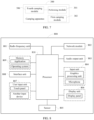
- FIG. 8 is a schematic diagram of a hardware structure of a terminal according to an embodiment of this application.
- the terminal 800 includes but is not limited to components such as a radio frequency unit 801, a network module 802, an audio output unit 803, an input unit 804, a sensor 805, a display unit 806, a user input unit 807, an interface unit 808, a memory 809, and a processor 810.
- the terminal 800 may further include a power supply (for example, a battery) that supplies power to the components.
- the power supply may be logically connected to the processor 810 through a power management system, so as to implement functions such as charging management, discharging management, and power consumption management through the power management system.
- a structure of the electronic device shown in FIG. 8 does not constitute a limitation on the electronic device, and may include more or fewer parts than those shown in the figure, or combine some components, or have different part arrangements. Details are not described herein again.
- the radio frequency unit 801 or the processor 810 is configured to perform a first event, where the first event includes the terminal moving from a first region to a second region, or the terminal switching from a first state to a second state.
- the radio frequency unit 801 is configured to, if a first camping priority parameter of the terminal is inapplicable to the second region or the second state, perform first camping in the second region or the second state, where the first camping does not use the first camping priority parameter, and the first camping priority parameter includes: a camping priority parameter used by the terminal in the first region, or a camping priority parameter used by the terminal in the first state.
- the radio frequency unit 801 or the processor 810 is further configured to: if the first camping priority parameter of the terminal is inapplicable to the second region or the second state, delete the first camping priority parameter.
- the deleting the first camping priority parameter includes:
- the performing first camping in the second region or the second state includes:
- the second camping priority parameter is a camping priority parameter applicable to the second region or the second state.
- first region and the second region are one of the following:
- the switching from a first state to a second state includes one of the following:
- the camping priority parameter used by the terminal in the first region includes at least one of the following:
- the camping priority parameter used by the terminal in the first state includes at least one of the following:
- the object includes at least one of the following: a network slice, a cell, a network device, a TA, a RAN, a RAT, and a PLMN.
- the first event includes the terminal switching from a first state to a second state, where the terminal switching from a first state to a second state includes that when moving from the first region to the second region, the terminal switches from the first state to the second state.
- the radio frequency unit 801 is further configured to: if a third camping priority parameter of the terminal is applicable to the second state, but inapplicable to the second region, perform second camping in the second state, where the second camping does not use the third camping priority parameter.
- the first event includes the terminal moving from a first region to a second region, where the terminal moving from a first region to a second region includes that when switching from the first state to the second state, the terminal moves from the first region to the second region.
- the radio frequency unit 801 is further configured to: if a fourth camping priority parameter of the terminal is applicable to the second region, but inapplicable to the second state, perform third camping in the second region, where the third camping does not use the fourth camping priority parameter.
- a region and/or a state to which the first camping priority parameter is applicable is configured by a network or pre-agreed.
- the radio frequency unit 801 is further configured to: if a network indicates through broadcast that the second region or the second state supports a fifth camping priority parameter, perform camping by using the fifth camping priority parameter in the second region or the second state.
- the foregoing terminal can improve performance of the terminal.
- an embodiment of this application further provides a terminal, including a processor 810, a memory 809, and a program or an instruction stored in the memory 809 and executable on the processor 810.
- a terminal including a processor 810, a memory 809, and a program or an instruction stored in the memory 809 and executable on the processor 810.
- the program or the instruction is executed by the processor 810, the processes of the foregoing camping method embodiments are implemented, with the same technical effects achieved. To avoid repetition, details are not described herein again.
- An embodiment of this application further provides a readable storage medium, where the readable storage medium stores a program or an instruction, and when the program or the instruction is executed by a processor, the procedures of the foregoing camping method embodiments are implemented, with the same technical effects. To avoid repetition, details are not described herein.
- the processor is the processor in the terminal or network device described in the foregoing embodiment.
- the readable storage medium includes a computer-readable storage medium such as a computer read-only memory (Read-Only Memory, ROM), a random access memory (Random Access Memory, RAM), a magnetic disk, or an optical disc.
- An embodiment of this application also provides a chip.
- the chip includes a processor and a communications interface, and the communications interface is coupled to the processor.
- the processor is configured to execute a program or an instruction to implement various processes of the foregoing camping method embodiment, with the same technical effects achieved. To avoid repetition, details are not described herein again.
- the chip mentioned in this embodiment of this application may also be referred to as a system-level chip, a system chip, a system on chip, a system-on-a-chip chip, and the like.
- the disclosed apparatus and method may be implemented in another manner.
- the described apparatus embodiment is merely an example.
- the unit division is merely logical function division.
- multiple units or components may be combined or integrated into another system, or some features may be ignored or not performed.
- the displayed or discussed mutual couplings or direct couplings or communication connections may be implemented through some interfaces.
- the indirect couplings or communication connections between the apparatuses or units may be implemented in electronic, mechanical, or other forms.
- the units described as separate parts may or may not be physically separate, and parts displayed as units may or may not be physical units, may be located in one place, or may be distributed on multiple network units. Some or all of the units may be selected based on an actual requirement to implement the objectives of the solutions in the embodiments.
- functional units in the embodiments of the present disclosure may be integrated into one processing unit, or each unit may exist separately physically, or two or more units may be integrated into one unit.
- the method in the foregoing embodiment may be implemented by software in addition to a necessary universal hardware platform or by hardware only. In most circumstances, the former is a preferred implementation. Based on such an understanding, the technical solutions of this application essentially or the part contributing to the prior art may be implemented in a form of a software product.
- the computer software product is stored in a storage medium (such as a ROM/RAM, a hard disk, or an optical disc), and includes several instructions for instructing a terminal (which may be mobile phone, a computer, a server, an air conditioner, a network device, or the like) to perform the methods described in the embodiments of this application.
- the program may be stored in a computer readable storage medium.
- the foregoing storage medium may be a magnetic disc, an optical disc, a read-only memory (Read-Only Memory, ROM), a random access memory (Random Access Memory, RAM), or the like.
- modules, units, and subunits may be implemented in one or more application specific integrated circuits (Application Specific Integrated Circuits, ASIC), a digital signal processor (Digital Signal Processor, DSP), a digital signal processing device (DSP Device, DSPD), a programmable logic device (Programmable Logic Device, PLD), a field-programmable gate array (Field-Programmable Gate Array, FPGA), a general-purpose processor, a controller, a microcontroller, a microprocessor, another electronic unit for implementing the functions of the present disclosure, or a combination thereof.
- ASIC Application Specific Integrated Circuits
- DSP Digital Signal Processor
- DSP Device digital signal processing device
- PLD programmable logic device
- FPGA Field-Programmable Gate Array
- the techniques described in the embodiments of the present disclosure may be implemented by modules (for example, processes and functions) that perform the functions described in the embodiments of the present disclosure.
- the software code may be stored in a memory and executed by a processor.
- the memory may be implemented in or outside the processor.
Landscapes
- Engineering & Computer Science (AREA)
- Computer Networks & Wireless Communication (AREA)
- Signal Processing (AREA)
- Computer Security & Cryptography (AREA)
- Mobile Radio Communication Systems (AREA)
- Telephonic Communication Services (AREA)
Abstract
Description
- This application claims priority to
Chinese Patent Application No. 202010421206.7, filed on May 18, 2020 - This application relates to the field of communications technologies, and in particular, to a camping method, an apparatus and a terminal.
- In practical applications, a terminal may frequently move in different regions, such as moving from a first region to a second region, and also frequently switches in different states, such as switching from a first state to a second state. However, currently, after the terminal moves to a region or switches a state, when the terminal performs camping, the terminal directly uses a camping configuration parameter before the moving or switching. This makes the camping of the terminal prone to errors, thereby affecting performance of the terminal.
- Embodiments of this application provide a camping method, an apparatus and a terminal, which can resolve a problem that camping of the terminal is prone to errors, thereby affecting performance of the terminal.
- According to a first aspect, an embodiment of this application provides a camping method, applied to a terminal and including:
- performing a first event, where the first event includes the terminal moving from a first region to a second region, or the terminal switching from a first state to a second state; and
- if a first camping priority parameter of the terminal is inapplicable to the second region or the second state, performing first camping in the second region or the second state, where the first camping does not use the first camping priority parameter, and the first camping priority parameter includes: a camping priority parameter used by the terminal in the first region, or a camping priority parameter used by the terminal in the first state.
- According to a second aspect, an embodiment of this application provides a camping apparatus, including:
- a performing module, configured to perform a first event, where the first event includes the terminal moving from a first region to a second region, or the terminal switching from a first state to a second state; and
- a first camping module, configured to, if a first camping priority parameter of the terminal is inapplicable to the second region or the second state, perform first camping in the second region or the second state, where the first camping does not use the first camping priority parameter, and the first camping priority parameter includes: a camping priority parameter used by the terminal in the first region, or a camping priority parameter used by the terminal in the first state.
- According to a third aspect, an embodiment of this application provides a terminal, including a memory, a processor, and a program or an instruction stored in the memory and executable on the processor, where when the program or the instruction is executed by the processor, the steps of the foregoing camping method provided in this application are implemented.
- According to a fourth aspect, an embodiment of this application provides a readable storage medium, where the readable storage medium stores a program or an instruction, and when the program or the instruction is executed by a processor, the steps of the foregoing camping method provided in this application are implemented.
- According to a fifth aspect, an embodiment of this application provides a chip, where the chip includes a processor and a communications interface, the communications interface is coupled to the processor, and the processor is configured to execute a program or an instruction, to implement the steps of the camping method provided in this application.
- According to a sixth aspect, an embodiment of this application provides a computer software product, where the computer software product is stored in a non-volatile storage medium, and the software product is configured to be executed by at least one processor, to implement the steps of the camping method provided in this application.
- According to a seventh aspect, an embodiment of this application provides a terminal, where the terminal is configured to perform the camping method provided in this application.
- In the embodiments of this application, the first event is performed, where the first event includes the terminal moving from the first region to the second region, or the terminal switching from the first state to the second state; and if the first camping priority parameter of the terminal is inapplicable to the second region or the second state, the first camping is performed in the second region or the second state, where the first camping does not use the first camping priority parameter, and the first camping priority parameter includes: a camping priority parameter used by the terminal in the first region, or a camping priority parameter used by the terminal in the first state. In this way, after the terminal moves or switches, the terminal does not use the camping priority parameter that is inapplicable to the region or the state after the switching, so as to avoid errors of the camping of the terminal, thereby improving performance of the terminal.
-
-
FIG. 1 is a structural diagram of a network system to which an embodiment of this application may be applied; -
FIG. 2 is a flowchart of a camping method according to an embodiment of this application; -
FIG. 3 is a structural diagram of a camping apparatus according to an embodiment of this application; -
FIG. 4 is a structural diagram of another camping apparatus according to an embodiment of this application; -
FIG. 5 is a structural diagram of another camping apparatus according to an embodiment of this application; -
FIG. 6 is a structural diagram of another camping apparatus according to an embodiment of this application; -
FIG. 7 is a structural diagram of another camping apparatus according to an embodiment of this application; and -
FIG. 8 is a structural diagram of a terminal according to an embodiment of this application. - The following clearly and completely describes the technical solutions in the embodiments of this application with reference to the accompanying drawings in the embodiments of this application. Apparently, the described embodiments are some but not all of the embodiments of this application. All other embodiments obtained by a person of ordinary skill in the art based on the embodiments of this application without creative efforts shall fall within the protection scope of this application.
- The term "comprise/include" and any other variants in the description and the claims of this application mean to cover the non-exclusive inclusion, for example, a process, method, system, product, or device that includes a list of steps or units and is not necessarily limited to those steps or units, but may include other steps or units not expressly listed or inherent to such a process, method, product, or device. In addition, "and/or" used in the description and the claims means at least one of the connected objects. For example, A and/or B represents the following three cases: Only A exists, only B exists, and both A and B exist.
- In the embodiments of this application, the word such as "example" or "for example" is used to represent giving an example, an illustration, or a description. Any embodiment or design scheme described as "an example of" or "for example" in the embodiments of this application should not be explained as being more preferred or having more advantages than another embodiment or design scheme. To be precise, the use of the term such as "exemplary" or "for example" is intended to present a related concept in a specific manner.
- The following describes the embodiments of this application with reference to the accompanying drawings. A method for uplink transmission, an apparatus, and a terminal provided in the embodiments of this application may be applied to a wireless communications system. The wireless communications system may be a new radio (New Radio, NR) system, or other systems, such as an evolved long term evolution (Evolved Long Term Evolution, eLTE) system or a long term evolution (Long Term Evolution, LTE) system, or a subsequent evolved communications system. Further, the method and the apparatus may be applied to an unlicensed band (Unlicensed Band) in the foregoing wireless communications system.
- Referring to
FIG. 1, FIG. 1 is a structural diagram of a network system to which an embodiment of this application may be applied. As shown inFIG. 1 , the network system includes aterminal 11 and anetwork device 12. Theterminal 11 may be a user terminal (User Equipment, UE) or another terminal-side device, for example, a mobile phone, a tablet personal computer (Tablet Personal Computer), a laptop computer (Laptop Computer), a personal digital assistant (personal digital assistant, PDA), a mobile Internet device (Mobile Internet Device, MID), a wearable device (Wearable Device), and a robot. It should be noted that a specific type of theterminal 11 is not limited in the embodiments of this application. Thenetwork device 12 may be a 4G (4th Generation, 4G) base station, a 5G (5th Generation, 5G) base station, or a base station of a later version, or a base station in another communications system, or is referred to as a NodeB, or an evolved NodeB, or a transmission and reception point (Transmission Reception Point, TRP), or an access point (Access Point, AP), or another term in the art, provided that a same technical effect is achieved. The network device is not limited to a specific technical term. In addition, thenetwork device 12 may be a master node (Master Node, MN) or a secondary node (Secondary Node, SN). It should be noted that, in the embodiments of this application, the 5G base station is merely used as an example, but the network device is not limited to any specific type. - Referring to
FIG. 2, FIG. 2 is a flowchart of a camping method according to an embodiment of this application. The method is applied to a terminal. As shown inFIG. 2 , the method includes the following steps. - Step 201: Perform a first event, where the first event includes the terminal moving from a first region to a second region, or the terminal switching from a first state to a second state.
- The terminal moving from a first region to a second region may be that the terminal moves in different location regions, different system regions, different device regions, or the like.
- The terminal switching from a first state to a second state may be that the terminal switches between different states, for example, the terminal switches from an inactive state (INACTIVE state) to an idle state (Idle state).
- Step 202: If a first camping priority parameter of the terminal is inapplicable to the second region or the second state, perform first camping in the second region or the second state, where the first camping does not use the first camping priority parameter, and the first camping priority parameter includes: a camping priority parameter used by the terminal in the first region, or a camping priority parameter used by the terminal in the first state.
- That the first camping priority parameter of the terminal is inapplicable to the second region or the second state may be that a range in which the first camping priority parameter is applicable does not include the second region or the second state. In addition, the first camping priority parameter may be configured for the terminal by a network side, for example, the first camping priority parameter is configured for the terminal in advance.
- The camping priority parameter used by the terminal in the first region may be that the first camping priority parameter is applicable to the first region, and when the terminal is in the first region, the terminal uses the camping priority parameter to perform camping.
- The camping priority parameter used by the terminal in the first state may be that the first camping priority parameter is applicable to the first state, and when the terminal is in the first state, the terminal uses the camping priority parameter to perform camping.
- If the first camping priority parameter of the terminal is inapplicable to the second region or the second state, that the first camping is performed in the second region or the second state may be that if the terminal moves from the first region to the second region, and the first camping priority parameter is inapplicable to the second region, the first camping is performed in the second region, and the first camping does not use the first camping priority parameter, or that if the terminal moves from the first region to the second state, and the first camping priority parameter is inapplicable to the second state, the first camping is performed in the second state, and the first camping does not use the first camping priority parameter.
- Optionally, in this embodiment of this application, the region and/or state to which the camping priority parameter is applicable is configured by a network or pre-agreed, for example, the region and/or state to which the first camping priority parameter is applicable is configured by a network or pre-agreed. The foregoing configuration by a network may be configured through a dedicated message or a broadcast message. The foregoing pre-agreement may be agreed by a protocol, or agreed in advance by the terminal and a network device. Certainly, in this embodiment of this application, this is not limited, for example, the camping priority parameter may carry indication information of the applicable region and/or state.
- In addition, the performing first camping in the second region or the second state, where the first camping does not use the first camping priority parameter may be performing the first camping in the second region or the second state by using another camping priority parameter, or performing camping without using a priority parameter, that is, normal camping.
- Optionally, the camping priority parameter in this embodiment of this application may include priorities of different network slices, for example, the first camping priority parameter indicates that a network slice (slice) 1 of the first region is a first priority, and a slice 2 of the first region is a second priority, or the first camping priority parameter indicates that a frequency (frequency, Fq) 1 of the first region is the first priority, and a frequency (Fq) 2 of the first region is the second priority. Certainly, it should be noted that the specific content of the camping priority parameter is not limited in the embodiments of this application, for example, it may also be a priority of a cell, a network device, a tracking area (Tracking Area, TA), a radio access network (Radio Access Network, RAN), a radio access technology (Radio Access Technology, RAT) or a public land mobile network (Public Land Mobile Network, PLMN).
- In this embodiment of this application, the network slice may include a network slice of a RAN and/or a network slice of a core network.
- In this embodiment of this application, the foregoing steps can implement that after the terminal moves or switches, the terminal does not use the camping priority parameter that is inapplicable to the region or the state after the switching, so as to avoid errors of the camping of the terminal and improve performance of the terminal.
- In an optional implementation, after the performing a first event, the method further includes:
if the first camping priority parameter of the terminal is inapplicable to the second region or the second state, deleting the first camping priority parameter. - The deleting the first camping priority parameter may include that the terminal deletes the first camping priority parameter by itself; or the deleting the first camping priority parameter may include that the terminal, based on a priority parameter deletion configuration configured in advance by a network, deletes the first camping priority parameter.
- That the terminal deletes the first camping priority parameter by itself may be that the terminal does not perform deletion based on the network configuration, for example, the terminal can select a to-be-deleted camping priority parameter. That the terminal, based on a priority parameter deletion configuration configured in advance by a network, deletes the first camping priority parameter may be that the network side configures the terminal with a configuration for deleting priority parameter, and the terminal deletes the camping priority parameter based on this configuration.
- In this implementation, because the first camping priority parameter is deleted, a storage space of the terminal can be saved. Complexity of the camping of the terminal may further be reduced, because it can be determined whether the camping priority parameter is applicable.
- For example, the terminal performs camping in the first region or in the first state (for example, INACTIVE or Idle) based on the camping priority parameter configured by the network. When the terminal moves to a new region or the terminal changes a state, for example, the terminal moves to the second region or switches to the second state, the terminal determines whether the camping priority parameter is applicable to the second region or the second state. If the camping priority parameter is inapplicable to the second region or the second state, the terminal deletes the camping priority parameter, and if no priority parameter is configured for the terminal in the second region or the second state, the terminal uses normal camping.
- In an optional implementation, the performing first camping in the second region or the second state includes:
- in a case that the terminal is configured with a second camping priority parameter, using the second camping priority parameter to perform the first camping in the second region or the second state; or
- in a case that the terminal is not configured with the second camping priority parameter, performing the first camping in the second region or the second state, where the first camping is normal camping without using a camping priority parameter.
- The second camping priority parameter is a camping priority parameter applicable to the second region or the second state.
- A region and/or a state to which the second camping priority parameter is applicable is configured by the network or pre-agreed. In addition, the second camping priority parameter may be configured in advance by the network for the terminal.
- The foregoing normal camping without using a camping priority parameter means that the camping priority parameter is not used during a process of the camping. The camping is called normal camping. The camping may be performed based on a measurement result, for example, the camping may be performed based on a measurement result of an inter-frequency network frequency and/or a heterogeneous network frequency. Specifically, the camping may be performed based on a camping criterion of a protocol agreement, for example, the camping may be performed based on a S criterion of the protocol agreement.
- In an optional implementation, the first region and the second state are one of the following:
- different cells;
- coverage regions of different network devices;
- regions of different TAs;
- regions of different RANs;
- regions of different RATs; and
- regions of different PLMNs.
- The different cells may mean that the first region and the second region are regions in the different cells. The coverage regions of different network devices may mean that the first region and the second region are regions of the different network devices. The regions of different TAs may mean that the first region and the second region are regions of the different TAs. The regions of different RANs may mean that the first region and the second region are regions of the different RANs. The regions of different radio access technologies many mean that the first region and the second region are regions of the different RATs, for example, the first region is a network region in LTE, while the second region is a network region in NR or a network region in a WLAN, and specifically, it may be understood that network types of the first region and the second region are different. The regions of different PLMNs may mean that the first region and the second region are regions of the different PLMNs.
- For example, in a certain region of a network, the camping priority parameter configured by the network for the terminal includes:
- a first camping priority parameter: a slice 1 in the first region is a first priority, and a slice 2 is a second priority; and
- a first camping priority parameter: a slice 2 in the second region is the first priority, and the slice 1 is the second priority.
- The slice may include a RAN slice and/or a core network slice.
- Levels of the regions may include:
a cell, a base station, a TA, a RAN, a RAT, or a PLMN. - The terminal performs camping in the first region based on a slice camping priority parameter configured by the network. When the terminal moves to a new region, for example, the second region, the terminal determines whether the slice priority parameter is applicable to the second region.
- If the priority parameter is inapplicable to the second region, the terminal deletes the priority parameter. If the priority parameter is not configured for the terminal in the second region, the terminal uses the normal camping.
- In an optional implementation, the switching from a first state to a second state includes one of the following:
- switching from an inactive state to an idle state;
- switching from a connected state to an idle state;
- switching from a connected state to an inactive state; and
- switching from an idle state to an inactive state.
- In this implementation, using inapplicable camping priority parameters can be avoided when switching states.
- In an optional implementation, the camping priority parameter used by the terminal in the first region includes:
- a camping priority of at least one network slice; and
- a camping priority of at least one frequency.
- Further, in this implementation, the priority parameter may be configured using network handover or a frequency as a unit.
- The following is an example in which the priority parameter is configured using a frequency as a unit (that is, Per frequency).
- In a certain region of the network, the network configures a camping priority for the terminal, for example:
- a first camping priority parameter: a Fq 1 in a first region 1 is a first priority, and a Fq 2 is a second priority; and
- a second camping priority parameter: a Fq 2 in the second region is the first priority, and the Fq 1 is the second priority.
- Level of the regions may include a TA, a RAN, a RAT or a PLMN.
- The camping is performed in the first region based on a Fq camping priority parameter configured by the network. When the terminal moves to a new region, for example, the second region, the terminal determines whether the Fq priority parameter is applicable to the second region. If the priority parameter is inapplicable to the second region, the terminal deletes the priority parameter. If the priority parameter is not configured for the terminal in the second region, the terminal uses the normal camping.
- In an optional implementation, the camping priority parameter used by the terminal in the first state includes at least one of the following:
- a camping priority of at least one object; and
- a camping priority of at least one frequency.
- The foregoing objects may include at least one of the following:
a network slice, a cell, a network device, a TA, a RAN, a RAT, and a PLMN. - In this way, the camping priority may be configured for the network slice, the cell, the network device, the TA, the RAN, the RAT, and the PLMN. A camping priority of the TA may be a camping priority of a tracking area code (Tracking Area Code, TAC), because different TAs may be identified by the TAC.
- In an optional implementation, the first event includes the terminal switching from the first state to the second state, and the terminal switching from the first state to the second state includes that when moving from the first region to the second region, the terminal switches from the first state to the second state, and the method further includes:
if a third camping priority parameter of the terminal is applicable to the second state, but inapplicable to the second region, performing second camping in the second state, where the second camping does not use the third camping priority parameter. - This implementation can determine whether the camping priority parameter is applicable to the corresponding state and region separately if there is movement between regions when the state is switched. If the state is applicable, but the region is inapplicable, the camping priority parameter is not used. If the third camping priority parameter of the terminal is applicable to the second state and the second region, the camping is performed in the second state based on the third camping priority parameter.
- For example, in a certain region of the network, the network configures a state camping priority parameter for the terminal. The state camping priority parameter may include a state camping priority parameter of a network slice, a cell, a base station, a TAC, a RAN, a RAT, or a PLMN.
- When a parameter of a state camping priority is configured by the network, the terminal enters an INACTIVE state or an Idle state, and the terminal camps on a region designated based on the state camping priority parameter. For example, the state camping priority parameter includes:
- a first camping priority parameter: when the terminal enters the INACTIVE state, a slice 1 is a first priority, and a slice 2 is a second priority; and
- a first camping priority parameter: when the terminal enters the Idle state, the slice 2 is the first priority, and the slice 1 is the second priority.
- The terminal enters the Idle or INACTIVE state based on the state camping priority parameter configured by the network.
- When the terminal moves to a new region, for example, the second region, the terminal determines whether the state priority parameter is applicable to the second region 2.
- Alternatively, when the terminal switches from the INACTIVE state to the Idle state, the terminal determines whether the state camping priority parameter is applicable.
- If the state camping priority parameter is inapplicable to the Idle state, the terminal deletes the priority parameter.
- If the priority parameter is not configured for the terminal in the second region, the terminal uses the normal camping.
- In an optional implementation, the first event includes the terminal moving from a first region to a second region, and the terminal moving from a first region to a second region includes that: when switching from the first state to the second state, the terminal moves from the first region to the second region, and the method further includes:
if a fourth camping priority parameter of the terminal is applicable to the second region, but inapplicable to the second state, performing third camping in the second region, where the third camping does not use the fourth camping priority parameter. - In this implementation, when the camping priority parameter is applicable to the second region, but inapplicable to the second state, the camping priority parameter is not used, thereby avoiding errors of the camping.
- In an optional implementation, after the performing a first event, the method further includes:
if a network indicates through broadcast that the second region or the second state supports a fifth camping priority parameter, performing camping by using the fifth camping priority parameter in the second region or the second state. - The fifth camping priority parameter may be a special camping priority parameter, for example, a special frequency camping priority parameter. The foregoing network indication may be an indication by the network through a broadcast message. For example, the network indicates whether this region supports use of a special frequency priority parameter through a broadcast message. If so, the terminal continues to use the special frequency priority parameter when the terminal reselects this cell.
- Further, the fifth camping priority parameter may also be applicable to the first region or the first state, for example, the network indicates through broadcast in the first cell that the fifth camping priority parameter is supported.
- If the network broadcasts that the fifth camping priority parameter is not supported, the fifth camping priority parameter is not used to perform camping.
- In this implementation, because the network only needs to broadcast whether to indicate the fifth camping priority parameter, thereby saving signaling overhead. Further, the fifth camping priority parameter may be configured in advance for the terminal, or may be a special camping priority parameter is agreed in advance by a protocol.
- In this embodiment of this application, the first event is performed, where the first event includes the terminal moving from the first region to the second region, or the terminal switching from the first state to the second state; and if the first camping priority parameter of the terminal is inapplicable to the second region or the second state, the first camping in the second region or the second state is performed, where the first camping does not use the first camping priority parameter, and the first camping priority parameter includes: a camping priority parameter used by the terminal in the first region, or a camping priority parameter used by the terminal in the first state. In this way, after the terminal moves or switches, the terminal does not use the camping priority parameter that is inapplicable to the region or the state after the switching, so as to avoid errors of the camping of the terminal, thereby improving performance of the terminal.
- Referring to
FIG. 3, FIG. 3 is a structural diagram of a camping apparatus applied to a terminal according to an embodiment of this application. As shown inFIG. 3 , thecamping apparatus 300 includes: - a performing
module 301, configured to perform a first event, where the first event includes the terminal moving from a first region to a second region, or the terminal switching from a first state to a second state; and - a
first camping module 302, configured to, if a first camping priority parameter of the terminal is inapplicable to the second region or the second state, perform first camping in the second region or the second state, where the first camping does not use the first camping priority parameter, and the first camping priority parameter includes: a camping priority parameter used by the terminal in the first region, or a camping priority parameter used by the terminal in the first state. - Optionally, as shown in
FIG. 4 , the apparatus further includes:
adeletion module 303, configured to, if the first camping priority parameter of the terminal is inapplicable to the second region or the second state, delete the first camping priority parameter. - Optionally, the deleting the first camping priority parameter includes:
- that the terminal deletes the first camping priority parameter by itself; or
- that the terminal, based on a priority parameter deletion configuration configured in advance by a network, deletes the first camping priority parameter.
- Optionally, the performing first camping in the second region or the second state includes:
- in a case that the terminal is configured with a second camping priority parameter, using the second camping priority parameter to perform the first camping in the second region or the second state; or
- in a case that the terminal is not configured with a second camping priority parameter, performing the first camping in the second region or the second state, where the first camping is normal camping without using a camping priority parameter.
- The second camping priority parameter is a camping priority parameter applicable to the second region or the second state.
- Optionally, the first region and the second region are one of the following:
- different cells;
- coverage regions of different network devices;
- regions of different tracking areas TAs;
- regions of different radio access networks RANs;
- regions of different radio access technologies; and
- regions of different public land mobile networks PLMNs.
- Optionally, the switching from a first state to a second state includes one of the following:
- switching from an inactive state to an idle state;
- switching from a connected state to an idle state;
- switching from a connected state to an inactive state; and
- switching from an idle state to an inactive state.
- Optionally, the camping priority parameter used by the terminal in the first region includes at least one of the following:
- a camping priority of at least one network slice; and
- a camping priority of at least one frequency.
- Optionally, the camping priority parameter used by the terminal in the first state includes at least one of the following:
- a camping priority of at least one object; and
- a camping priority of at least one frequency.
- Optionally, the object includes at least one of the following:
a network slice, a cell, a network device, a TA, a RAN, a RAT, and a PLMN. - Optionally, the first event includes the terminal switching from a first state to a second state, where the terminal switching from a first state to a second state includes that when moving from the first region to the second region, the terminal switches from the first state to the second state. As shown in
FIG. 5 , the apparatus further includes:
asecond camping module 304, configured to, if a third camping priority parameter of the terminal is applicable to the second state, but inapplicable to the second region, perform second camping in the second state, where the second camping does not use the third camping priority parameter. - Optionally, the first event includes the terminal moving from a first region to a second region, where the terminal moving from a first region to a second region includes that when switching from the first state to the second state, the terminal moves from the first region to the second region. As shown in
FIG. 6 , the apparatus further includes:
athird camping module 305, configured to, if a fourth camping priority parameter of the terminal is applicable to the second region, but inapplicable to the second state, perform third camping in the second region, where the third camping does not use the fourth camping priority parameter. - Optionally, a region and/or a state to which the first camping priority parameter is applicable is configured by a network or pre-agreed.
- Optionally, after performing a first event, as shown in
FIG. 7 , the apparatus further includes:
afourth camping module 306, configured to, if a network indicates through broadcast that the second region or the second state supports a fifth camping priority parameter, perform camping by using the fifth camping priority parameter in the second region or the second state. - An information obtaining apparatus provided in this embodiment of this application can implement the processes implemented in the method embodiment in
FIG. 2 , thereby improving performance of the terminal. To avoid repetition, details are not described herein again. - It should be noted that the camping apparatus in this embodiment of this application may be an apparatus, or may be a component, an integrated circuit, or a chip in a terminal.
-
FIG. 8 is a schematic diagram of a hardware structure of a terminal according to an embodiment of this application. - The terminal 800 includes but is not limited to components such as a
radio frequency unit 801, anetwork module 802, anaudio output unit 803, aninput unit 804, asensor 805, adisplay unit 806, auser input unit 807, aninterface unit 808, amemory 809, and aprocessor 810. - Persons skilled in the art can understand that the terminal 800 may further include a power supply (for example, a battery) that supplies power to the components. The power supply may be logically connected to the
processor 810 through a power management system, so as to implement functions such as charging management, discharging management, and power consumption management through the power management system. A structure of the electronic device shown inFIG. 8 does not constitute a limitation on the electronic device, and may include more or fewer parts than those shown in the figure, or combine some components, or have different part arrangements. Details are not described herein again. - The
radio frequency unit 801 or theprocessor 810 is configured to perform a first event, where the first event includes the terminal moving from a first region to a second region, or the terminal switching from a first state to a second state. - The
radio frequency unit 801 is configured to, if a first camping priority parameter of the terminal is inapplicable to the second region or the second state, perform first camping in the second region or the second state, where the first camping does not use the first camping priority parameter, and the first camping priority parameter includes: a camping priority parameter used by the terminal in the first region, or a camping priority parameter used by the terminal in the first state. - Optionally, after the performing a first event, the
radio frequency unit 801 or theprocessor 810 is further configured to:
if the first camping priority parameter of the terminal is inapplicable to the second region or the second state, delete the first camping priority parameter. - Optionally, the deleting the first camping priority parameter includes:
- that the terminal deletes the first camping priority parameter by itself; or
- that the terminal, based on a priority parameter deletion configuration configured in advance by a network, deletes the first camping priority parameter.
- Optionally, the performing first camping in the second region or the second state includes:
- in a case that the terminal is configured with a second camping priority parameter, using the second camping priority parameter to perform the first camping in the second region or the second state; or
- in a case that the terminal is not configured with a second camping priority parameter, performing the first camping in the second region or the second state, where the first camping is normal camping without using a camping priority parameter.
- The second camping priority parameter is a camping priority parameter applicable to the second region or the second state.
- Optionally, the first region and the second region are one of the following:
- different cells;
- coverage regions of different network devices;
- regions of different tracking areas TAs;
- regions of different radio access networks RANs;
- regions of different radio access technologies; and
- regions of different public land mobile networks PLMNs.
- Optionally, the switching from a first state to a second state includes one of the following:
- switching from an inactive state to an idle state;
- switching from a connected state to an idle state;
- switching from a connected state to an inactive state; and
- switching from an idle state to an inactive state.
- Optionally, the camping priority parameter used by the terminal in the first region includes at least one of the following:
- a camping priority of at least one network slice; and
- a camping priority of at least one frequency.
- Optionally, the camping priority parameter used by the terminal in the first state includes at least one of the following:
- a camping priority of at least one object; and
- a camping priority of at least one frequency.
- Optionally, the object includes at least one of the following:
a network slice, a cell, a network device, a TA, a RAN, a RAT, and a PLMN. - Optionally, the first event includes the terminal switching from a first state to a second state, where the terminal switching from a first state to a second state includes that when moving from the first region to the second region, the terminal switches from the first state to the second state. The
radio frequency unit 801 is further configured to:
if a third camping priority parameter of the terminal is applicable to the second state, but inapplicable to the second region, perform second camping in the second state, where the second camping does not use the third camping priority parameter. - Optionally, the first event includes the terminal moving from a first region to a second region, where the terminal moving from a first region to a second region includes that when switching from the first state to the second state, the terminal moves from the first region to the second region. The
radio frequency unit 801 is further configured to:
if a fourth camping priority parameter of the terminal is applicable to the second region, but inapplicable to the second state, perform third camping in the second region, where the third camping does not use the fourth camping priority parameter. - Optionally, a region and/or a state to which the first camping priority parameter is applicable is configured by a network or pre-agreed.
- Optionally, after the performing a first event, the
radio frequency unit 801 is further configured to:
if a network indicates through broadcast that the second region or the second state supports a fifth camping priority parameter, perform camping by using the fifth camping priority parameter in the second region or the second state. - The foregoing terminal can improve performance of the terminal.
- Optionally, an embodiment of this application further provides a terminal, including a
processor 810, amemory 809, and a program or an instruction stored in thememory 809 and executable on theprocessor 810. When the program or the instruction is executed by theprocessor 810, the processes of the foregoing camping method embodiments are implemented, with the same technical effects achieved. To avoid repetition, details are not described herein again. - An embodiment of this application further provides a readable storage medium, where the readable storage medium stores a program or an instruction, and when the program or the instruction is executed by a processor, the procedures of the foregoing camping method embodiments are implemented, with the same technical effects. To avoid repetition, details are not described herein.
- The processor is the processor in the terminal or network device described in the foregoing embodiment. The readable storage medium includes a computer-readable storage medium such as a computer read-only memory (Read-Only Memory, ROM), a random access memory (Random Access Memory, RAM), a magnetic disk, or an optical disc.
- An embodiment of this application also provides a chip. The chip includes a processor and a communications interface, and the communications interface is coupled to the processor. The processor is configured to execute a program or an instruction to implement various processes of the foregoing camping method embodiment, with the same technical effects achieved. To avoid repetition, details are not described herein again.
- It should be understood that the chip mentioned in this embodiment of this application may also be referred to as a system-level chip, a system chip, a system on chip, a system-on-a-chip chip, and the like.
- It should be noted that, in this specification, the terms "include", "comprise", or their any other variant is intended to cover a non-exclusive inclusion, so that a process, a method, an article, or an apparatus that includes a list of elements not only includes those elements but also includes other elements which are not expressly listed, or further includes elements inherent to such process, method, article, or apparatus. An element limited by "includes a ..." does not, without more constraints, preclude the presence of additional identical elements in the process, method, article, or apparatus that includes the element. In addition, it should be noted that the scope of the method and the apparatus in the embodiments of this application is not limited to performing functions in an illustrated or discussed sequence, and may further include performing functions in a basically simultaneous manner or in a reverse sequence according to the functions concerned. For example, the described method may be performed in an order different from that described, and the steps may be added, omitted, or combined. In addition, features described with reference to some examples may be combined in other examples.
- A person of ordinary skill in the art may recognize that, with reference to the examples described in the embodiments disclosed herein, units and algorithm steps may be implemented by electronic hardware or a combination of computer software and electronic hardware. Whether these functions are implemented by using hardware or software depends on the specific application and design constraints of the technical solution. A person skilled in the art may use different methods for each particular application to implement the described functions, but such implementation shall not be considered to be outside the scope of the present disclosure.
- It may be clearly understood by a person skilled in the art that, for convenience and brevity of description, for a specific working process of the foregoing described system, apparatus, and unit, reference may be made to a corresponding process in the foregoing method embodiments, and details are not described herein again.
- In the embodiments provided in this application, it should be understood that the disclosed apparatus and method may be implemented in another manner. For example, the described apparatus embodiment is merely an example. For example, the unit division is merely logical function division. In actual implementation, there may be another division manner. For example, multiple units or components may be combined or integrated into another system, or some features may be ignored or not performed. In addition, the displayed or discussed mutual couplings or direct couplings or communication connections may be implemented through some interfaces. The indirect couplings or communication connections between the apparatuses or units may be implemented in electronic, mechanical, or other forms.
- The units described as separate parts may or may not be physically separate, and parts displayed as units may or may not be physical units, may be located in one place, or may be distributed on multiple network units. Some or all of the units may be selected based on an actual requirement to implement the objectives of the solutions in the embodiments.
- In addition, functional units in the embodiments of the present disclosure may be integrated into one processing unit, or each unit may exist separately physically, or two or more units may be integrated into one unit.
- Based on the descriptions of the foregoing implementations, a person skilled in the art may clearly understand that the method in the foregoing embodiment may be implemented by software in addition to a necessary universal hardware platform or by hardware only. In most circumstances, the former is a preferred implementation. Based on such an understanding, the technical solutions of this application essentially or the part contributing to the prior art may be implemented in a form of a software product. The computer software product is stored in a storage medium (such as a ROM/RAM, a hard disk, or an optical disc), and includes several instructions for instructing a terminal (which may be mobile phone, a computer, a server, an air conditioner, a network device, or the like) to perform the methods described in the embodiments of this application.
- A person of ordinary skill in the art may understand that all or some of the processes in the methods in the foregoing embodiments may be implemented by using a computer program to control related hardware. The program may be stored in a computer readable storage medium. When the program is executed, the processes in the foregoing methods embodiments may be performed. The foregoing storage medium may be a magnetic disc, an optical disc, a read-only memory (Read-Only Memory, ROM), a random access memory (Random Access Memory, RAM), or the like.
- It may be understood that the embodiments described in the embodiments of the present disclosure may be implemented by hardware, software, firmware, middleware, microcode, or a combination thereof. For implementation with hardware, modules, units, and subunits may be implemented in one or more application specific integrated circuits (Application Specific Integrated Circuits, ASIC), a digital signal processor (Digital Signal Processor, DSP), a digital signal processing device (DSP Device, DSPD), a programmable logic device (Programmable Logic Device, PLD), a field-programmable gate array (Field-Programmable Gate Array, FPGA), a general-purpose processor, a controller, a microcontroller, a microprocessor, another electronic unit for implementing the functions of the present disclosure, or a combination thereof.
- For software implementations, the techniques described in the embodiments of the present disclosure may be implemented by modules (for example, processes and functions) that perform the functions described in the embodiments of the present disclosure. The software code may be stored in a memory and executed by a processor. The memory may be implemented in or outside the processor.
- The embodiments of this application are described above with reference to the accompanying drawings, but this application is not limited to the above specific implementations, and the above specific implementations are only illustrative and not restrictive. Under the enlightenment of this application, those of ordinary skill in the art can make many forms without departing from the purpose of this application and the protection scope of the claims, all of which fall within the protection of this application.
Claims (21)
- A camping method, applied to a terminal and comprising:performing a first event, wherein the first event comprises the terminal moving from a first region to a second region, or the terminal switching from a first state to a second state; andif a first camping priority parameter of the terminal is inapplicable to the second region or the second state, performing first camping in the second region or the second state, wherein the first camping does not use the first camping priority parameter, and the first camping priority parameter comprises: a camping priority parameter used by the terminal in the first region, or a camping priority parameter used by the terminal in the first state.
- The method according to claim 1, wherein after the performing a first event, the method further comprises:
if the first camping priority parameter of the terminal is inapplicable to the second region or the second state, deleting the first camping priority parameter. - The method according to claim 2, wherein the deleting the first camping priority parameter comprises:that the terminal deletes the first camping priority parameter by itself; orthat the terminal, based on a priority parameter deletion configuration configured in advance by a network, deletes the first camping priority parameter.
- The method according to claim 1, wherein the performing first camping in the second region or the second state comprises:in a case that the terminal is configured with a second camping priority parameter, using the second camping priority parameter to perform the first camping in the second region or the second state; orin a case that the terminal is not configured with a second camping priority parameter, performing the first camping in the second region or the second state, wherein the first camping is normal camping without using a camping priority parameter; whereinthe second camping priority parameter is a camping priority parameter applicable to the second region or the second state.
- The method according to any one of claims 1 to 4, wherein the first region and the second region are one of following:different cells;coverage regions of different network devices;regions of different tracking areas TAs;regions of different radio access networks RANs;regions of different radio access technologies; andregions of different public land mobile networks PLMNs.
- The method according to any one of claims 1 to 4, wherein the switching from a first state to a second state comprises one of following:switching from an inactive state to an idle state;switching from a connected state to an idle state;switching from a connected state to an inactive state; andswitching from an idle state to an inactive state.
- The method according to any one of claims 1 to 4, wherein the camping priority parameter used by the terminal in the first region comprises at least one of following:a camping priority of at least one network slice; anda camping priority of at least one frequency.
- The method according to any one of claims 1 to 4, wherein the camping priority parameter used by the terminal in the first state comprises at least one of following:a camping priority of at least one object; anda camping priority of at least one frequency.
- The method according to claim 8, wherein the object comprises at least one of following:
a network slice, a cell, a network device, a TA, a RAN, a RAT, and a PLMN. - The method according to any one of claims 1 to 4, wherein the first event comprises the terminal switching from a first state to a second state, and the terminal switching from a first state to a second state comprises that when moving from the first region to the second region, the terminal switches from the first state to the second state, and the method further comprises:
if a third camping priority parameter of the terminal is applicable to the second state, but inapplicable to the second region, performing second camping in the second state, wherein the second camping does not use the third camping priority parameter. - The method according to any one of claims 1 to 4, wherein the first event comprises the terminal moving from a first region to a second region, and the terminal moving from a first region to a second region comprises that when switching from the first state to the second state, the terminal moves from the first region to the second region, and the method further comprises:
if a fourth camping priority parameter of the terminal is applicable to the second region, but inapplicable to the second state, performing third camping in the second region, wherein the third camping does not use the fourth camping priority parameter. - The method according to any one of claims 1 to 4, wherein a region and/or a state to which the first camping priority parameter is applicable is configured by a network or pre-agreed.
- The method according to any one of claims 1 to 4, wherein after the performing a first event, the method further comprises:
if a network indicates through broadcast that the second region or the second state supports a fifth camping priority parameter, performing camping by using the fifth camping priority parameter in the second region or the second state. - A camping apparatus, applied to a terminal and comprising:a performing module, configured to perform a first event, wherein the first event comprises the terminal moving from a first region to a second region, or the terminal switching from a first state to a second state; anda first camping module, configured to, if a first camping priority parameter of the terminal is inapplicable to the second region or the second state, perform first camping in the second region or the second state, wherein the first camping does not use the first camping priority parameter, and the first camping priority parameter comprises: a camping priority parameter used by the terminal in the first region, or a camping priority parameter used by the terminal in the first state.
- The apparatus according to claim 14, further comprising:
a deletion module, configured to, if the first camping priority parameter of the terminal is inapplicable to the second region or the second state, delete the camping priority parameter. - The apparatus according to claim 14, wherein the first camping module is configured to, in a case that the terminal is configured with a second camping priority parameter, use the second camping priority parameter to perform the first camping in the second region or the second state; orthe first camping module is configured to, in a case that the terminal is not configured with a second camping priority parameter, perform the first camping in the second region or the second state, and the first camping is normal camping without using a camping priority parameter; whereinthe second camping priority parameter is a camping priority parameter applicable to the second region or the second state.
- A terminal, comprising a memory, a processor, and a program or an instruction stored in the memory and executable on the processor, wherein when the program or the instruction is executed by the processor, steps of the camping method according to any one of claims 1 to 13 are implemented.
- A readable storage medium, wherein the readable storage medium stores a program or an instruction, and when the program or the instruction is executed by a processor, steps of the camping method according to any one of claims 1 to 13 are implemented.
- A chip, wherein the chip comprises a processor and a communications interface, the communications interface is coupled to the processor, and the processor is configured to execute a program or an instruction, to implement steps of the camping method according to any one of claims 1 to 13.
- A computer software product, wherein the computer software product is stored in a non-volatile storage medium, and the software product is executed by at least one processor, to implement steps of the camping method according to any one of claims 1 to 13.
- A terminal, wherein the terminal is configured to implement steps of the camping method according to any one of claims 1 to 13.
Applications Claiming Priority (2)
| Application Number | Priority Date | Filing Date | Title |
|---|---|---|---|
| CN202010421206.7A CN113691996B (en) | 2020-05-18 | 2020-05-18 | Residence method, residence device and residence terminal |
| PCT/CN2021/094242 WO2021233271A1 (en) | 2020-05-18 | 2021-05-18 | Camping method and apparatus, and terminal |
Publications (2)
| Publication Number | Publication Date |
|---|---|
| EP4132067A1 true EP4132067A1 (en) | 2023-02-08 |
| EP4132067A4 EP4132067A4 (en) | 2023-08-09 |
Family
ID=78575623
Family Applications (1)
| Application Number | Title | Priority Date | Filing Date |
|---|---|---|---|
| EP21809569.3A Pending EP4132067A4 (en) | 2020-05-18 | 2021-05-18 | OCCUPANCY METHOD AND APPARATUS, AND TERMINAL |
Country Status (4)
| Country | Link |
|---|---|
| US (1) | US12389289B2 (en) |
| EP (1) | EP4132067A4 (en) |
| CN (1) | CN113691996B (en) |
| WO (1) | WO2021233271A1 (en) |
Family Cites Families (65)
| Publication number | Priority date | Publication date | Assignee | Title |
|---|---|---|---|---|
| EP2512186A1 (en) * | 2007-06-18 | 2012-10-17 | Interdigital Technology Corporation | Method for inter-radio access technology cell reselection |
| US8280377B2 (en) * | 2007-10-05 | 2012-10-02 | Lg Electronics Inc. | Method of performing cell reselection in wireless communication system |
| KR20090045039A (en) * | 2007-10-30 | 2009-05-07 | 엘지전자 주식회사 | Cell reselection based on priority |
| US8660009B2 (en) * | 2008-01-30 | 2014-02-25 | Telefonaktiebolaget L M Ericsson (Publ) | Core network processing load reduction |
| JP2011530866A (en) * | 2008-08-06 | 2011-12-22 | インターデイジタル パテント ホールディングス インコーポレイテッド | Procedure for operating in LTE standby mode |
| US20110317654A1 (en) * | 2009-03-13 | 2011-12-29 | Panasonic Corporation | Wireless transceiver, wireless base station, wireless terminal, and wireless communication system |
| GB2472596A (en) * | 2009-08-11 | 2011-02-16 | Nec Corp | A system to coordinate the changing of handover/cell reselection parameters between e-utran and non e-utran rats to reduce repeated handover /cell reselection |
| CN102668643B (en) * | 2009-10-30 | 2016-03-02 | 诺基亚技术有限公司 | Idle pulley the line is busy priority |
| US8780775B2 (en) * | 2010-05-28 | 2014-07-15 | Intel Corporation | Method and device for reducing power drain while camped on a wireless local area network |
| GB2485854B (en) * | 2011-04-01 | 2013-01-09 | Renesas Mobile Corp | Fast reselection between different radio access technology networks |
| US20120252452A1 (en) * | 2011-04-01 | 2012-10-04 | Renesas Mobile Corporation | Fast Reselection Between Different Radio Access Technology Networks |
| US9485630B2 (en) * | 2011-04-28 | 2016-11-01 | Nokia Solutions And Networks Oy | Methods and devices for enabling reception of a specific service for terminals in idle mode |
| KR101935785B1 (en) * | 2011-08-16 | 2019-04-03 | 삼성전자 주식회사 | Method and appratus for receiving multimedia broadcast/multicast service in mobile communication system |
| WO2013086366A2 (en) * | 2011-12-08 | 2013-06-13 | Interdigital Patent Holdings, Inc. | METHOD AND APPARATUS FOR ADVANCED TOPOLOGY (AT) POLICY MANAGEMENT FOR DIRECT COMMUNICATION BETWEEN WIRELESS TRANSMIT/RECEIVE UNITS (WTRUs) |
| US20130189987A1 (en) * | 2012-01-23 | 2013-07-25 | Qualcomm Incorporated | User equipment centric mechanism for enabling 2g/3g preferred camping |
| EP2632205B1 (en) * | 2012-02-24 | 2018-08-22 | BlackBerry Limited | Monitoring neighbour cells |
| US9479955B2 (en) * | 2012-03-30 | 2016-10-25 | Qualcomm Incorporated | Dynamic measurement rates to speed up cell reselections |
| US8934899B2 (en) * | 2012-05-08 | 2015-01-13 | Blackberry Limited | Apparatus and method for high priority search on RRC state change |
| WO2014026324A1 (en) * | 2012-08-14 | 2014-02-20 | Qualcomm Incorporated | Inter-network communication to avoid ping-ponging inter-rat idle reselection |
| JP5990335B2 (en) * | 2012-10-30 | 2016-09-14 | エルジー エレクトロニクス インコーポレイティド | Cell reselection method based on priority handling in wireless communication system and apparatus supporting the same |
| EP3005794B1 (en) * | 2013-05-30 | 2019-02-20 | Nokia Technologies OY | Method and apparatus for facilitating interworking of cellular radio access networks and wireless local area networks |
| US9107123B2 (en) * | 2013-08-06 | 2015-08-11 | Futurewei Technologies, Inc. | Systems and methods for limiting mobile device measurements for cell reselection and handover |
| US9730147B2 (en) * | 2013-09-11 | 2017-08-08 | Blackberry Limited | Higher priority network scanning |
| US10652725B2 (en) * | 2014-01-24 | 2020-05-12 | Telefonaktiebolaget Lm Ericsson (Publ) | Obtaining and using D2D related information to perform mobility operation(s) |
| US20150271721A1 (en) * | 2014-03-24 | 2015-09-24 | Qualcomm Incorporated | Method and apparatus for an improved acquisition mechanism |
| US20160021673A1 (en) * | 2014-07-18 | 2016-01-21 | Qualcomm Incorporated | Ims based wwan-wlan mobility |
| JP6538865B2 (en) * | 2014-11-06 | 2019-07-03 | 華為技術有限公司Huawei Technologies Co.,Ltd. | Method and apparatus for cell selection and reselection |
| WO2016181040A1 (en) * | 2015-05-13 | 2016-11-17 | Nokia Solutions And Networks Oy | Cell reselection control mechanism in multi-connectivity communication mode |
| US10470196B2 (en) * | 2015-08-21 | 2019-11-05 | Hfi Innovation Inc. | Method for load redistribution in mobile communication systems |
| CN106550420A (en) * | 2015-09-23 | 2017-03-29 | 深圳市中兴微电子技术有限公司 | Realize the method and apparatus that enhanced multimedia broadcast multicast service is continuously received |
| US20170238221A1 (en) * | 2016-02-12 | 2017-08-17 | Qualcomm Incorporated | Cell avoidance associated with lower layer failures |
| WO2017214935A1 (en) * | 2016-06-16 | 2017-12-21 | 华为技术有限公司 | Cell reselection method, frequency channel number information management method, and apparatus |
| WO2018084593A1 (en) * | 2016-11-03 | 2018-05-11 | 주식회사 케이티 | Method for processing data on basis of network slice, and apparatus therefor |
| KR102108871B1 (en) * | 2016-11-03 | 2020-05-12 | 주식회사 케이티 | Methods for processing a data based Network Slice and Apparatuses thereof |
| CN106879009B (en) * | 2017-03-24 | 2020-03-20 | 电信科学技术研究院 | Cell reselection method, user equipment and network side equipment |
| US10673541B2 (en) * | 2017-06-02 | 2020-06-02 | Apple Inc. | Methods, systems and apparatus for mitigating wireless connection degradation due to wireless charging |
| CN109151939B (en) * | 2017-06-16 | 2021-08-20 | 华为技术有限公司 | Adjustment method, terminal and network device |
| CN112055392B (en) * | 2017-08-09 | 2022-07-01 | 维沃移动通信有限公司 | Mobility management method, user equipment and network side equipment |
| WO2019051811A1 (en) * | 2017-09-15 | 2019-03-21 | Oppo广东移动通信有限公司 | Method for configuring frequency priority, terminal device, base station, and core network device |
| CN111742575B (en) * | 2017-11-15 | 2023-05-30 | 联想(北京)有限公司 | Method and device for mobility mechanism in scenarios including EPC and 5GC |
| CN109996332B (en) * | 2018-01-03 | 2021-01-08 | 维沃移动通信有限公司 | Method and device for residing |
| CN108200622B (en) * | 2018-02-09 | 2020-09-25 | 维沃移动通信有限公司 | Cell reselection method and mobile terminal |
| KR102327208B1 (en) * | 2018-02-13 | 2021-11-16 | 삼성전자주식회사 | Method and apparatus for cell reselection in wireless communication system |
| WO2019169359A1 (en) * | 2018-03-02 | 2019-09-06 | Futurewei Technologies, Inc. | System and method for hierarchical paging, cell selection and cell reselection |
| JP7094382B2 (en) * | 2018-05-07 | 2022-07-01 | テレフオンアクチーボラゲット エルエム エリクソン(パブル) | How to suspend inactivity on resume and resume inactivity on suspend |
| US10681559B2 (en) * | 2018-06-29 | 2020-06-09 | Verizon Patent And Licensing Inc. | Method and system for supporting voice calls in 5G new radio environments |
| US11864181B2 (en) * | 2018-09-20 | 2024-01-02 | Lg Electronics Inc. | Method whereby sidelink terminal transmits pscch in wireless communications system, and device therefor |
| PL3677089T3 (en) * | 2018-09-25 | 2021-08-02 | Telefonaktiebolaget Lm Ericsson (Publ) | Resume request followed by release and redirect |
| CN110958652B (en) * | 2018-09-27 | 2021-10-26 | 华为技术有限公司 | Cell reselection method and communication device |
| US12089141B2 (en) * | 2018-11-01 | 2024-09-10 | Huawei Technologies Co., Ltd. | Method for quickly searching for high-RAT network, and terminal device |
| US20220094481A1 (en) * | 2018-11-10 | 2022-03-24 | Lg Electronics Inc. | Method and apparatus for transmitting feedback signal by means of sidelink terminal in wireless communication system |
| US11770782B2 (en) * | 2018-12-24 | 2023-09-26 | Lg Electronics Inc. | Method and apparatus for transmitting and receiving signals by side link terminal in wireless communication system |
| US12133197B2 (en) * | 2019-01-11 | 2024-10-29 | Lg Electronics Inc. | Method and apparatus for sidelink terminal to transmit signal in wireless communication system |
| US11985095B2 (en) * | 2019-02-01 | 2024-05-14 | Lg Electronics Inc. | Method and apparatus for transmitting signal by side link terminal in wireless communication system |
| EP3917207B1 (en) * | 2019-02-15 | 2023-05-03 | Guangdong Oppo Mobile Telecommunications Corp., Ltd. | Terminal measurement method and apparatus |
| EP3949521B1 (en) * | 2019-03-28 | 2024-05-01 | Telefonaktiebolaget Lm Ericsson (Publ) | Method and apparatus for cell selection in a wireless communication network |
| CN114930916B (en) * | 2019-11-13 | 2024-09-17 | 瑞典爱立信有限公司 | UE group-based cell reselection |
| KR102932742B1 (en) * | 2020-01-20 | 2026-02-27 | 지티이 코포레이션 | Method for slice specific information |
| CN121692076A (en) * | 2020-02-17 | 2026-03-17 | 华为技术有限公司 | Communication method and communication device |
| EP4118885A1 (en) * | 2020-03-13 | 2023-01-18 | IPLA Holdings Inc. | Ran slicing |
| US11722935B2 (en) * | 2020-03-16 | 2023-08-08 | FG Innovation Company Limited | Wireless communication method and user equipment for non-public network control mechanisms |
| JP7499871B2 (en) * | 2020-03-31 | 2024-06-14 | テレフオンアクチーボラゲット エルエム エリクソン(パブル) | Method for network guided WD cell reselection |
| CN115380567B (en) * | 2020-04-08 | 2025-11-18 | 夏普株式会社 | Methods and user equipment for cell (re)selection |
| US11638189B2 (en) * | 2020-04-27 | 2023-04-25 | Verizon Patent And Licensing Inc. | System and method for minimizing transitions between core networks |
| WO2021217672A1 (en) * | 2020-04-30 | 2021-11-04 | 华为技术有限公司 | Load control method for network slice and related product |
-
2020
- 2020-05-18 CN CN202010421206.7A patent/CN113691996B/en active Active
-
2021
- 2021-05-18 WO PCT/CN2021/094242 patent/WO2021233271A1/en not_active Ceased
- 2021-05-18 EP EP21809569.3A patent/EP4132067A4/en active Pending
-
2022
- 2022-11-16 US US17/988,694 patent/US12389289B2/en active Active
Also Published As
| Publication number | Publication date |
|---|---|
| CN113691996A (en) | 2021-11-23 |
| CN113691996B (en) | 2024-04-19 |
| US12389289B2 (en) | 2025-08-12 |
| WO2021233271A1 (en) | 2021-11-25 |
| EP4132067A4 (en) | 2023-08-09 |
| US20230075381A1 (en) | 2023-03-09 |
Similar Documents
| Publication | Publication Date | Title |
|---|---|---|
| EP3528543A1 (en) | Cell reselection method and apparatus | |
| US10531379B2 (en) | Inter-RAT coverage determination for energy saving management | |
| US12096297B2 (en) | Cell selection method, network device and terminal | |
| US8478273B2 (en) | Method and apparatus for intelligently reporting neighbor information to facilitate automatic neighbor relations | |
| US11265773B2 (en) | Cell re-selection while inactive | |
| US11234175B2 (en) | Method for selecting cell, terminal device, and network device | |
| EP3461184B1 (en) | Cell reselection method, frequency channel number information management method, and apparatus | |
| US20230262559A1 (en) | Method for network access control, terminal, and readable storage medium | |
| US20240340735A1 (en) | Bwp switching method and apparatus, and terminal | |
| US20240334274A1 (en) | Method and apparatus for neighbouring cell measurement | |
| CN116367246A (en) | Cell selection or reselection method, device, terminal and readable storage medium | |
| AU2018441777A1 (en) | Neighbor relationship maintenance method and apparatus, and network device | |
| US20200120533A1 (en) | Adjustment method, terminal, and network device | |
| US12389289B2 (en) | Camping method, apparatus and terminal | |
| CN119629726A (en) | Terminal resident method, device, terminal and network side equipment |
Legal Events
| Date | Code | Title | Description |
|---|---|---|---|
| STAA | Information on the status of an ep patent application or granted ep patent |
Free format text: STATUS: THE INTERNATIONAL PUBLICATION HAS BEEN MADE |
|
| PUAI | Public reference made under article 153(3) epc to a published international application that has entered the european phase |
Free format text: ORIGINAL CODE: 0009012 |
|
| STAA | Information on the status of an ep patent application or granted ep patent |
Free format text: STATUS: REQUEST FOR EXAMINATION WAS MADE |
|
| 17P | Request for examination filed |
Effective date: 20221024 |
|
| AK | Designated contracting states |
Kind code of ref document: A1 Designated state(s): AL AT BE BG CH CY CZ DE DK EE ES FI FR GB GR HR HU IE IS IT LI LT LU LV MC MK MT NL NO PL PT RO RS SE SI SK SM TR |
|
| REG | Reference to a national code |
Ref country code: DE Ref legal event code: R079 Free format text: PREVIOUS MAIN CLASS: H04W0024020000 Ipc: H04W0048200000 |
|
| A4 | Supplementary search report drawn up and despatched |
Effective date: 20230707 |
|
| RIC1 | Information provided on ipc code assigned before grant |
Ipc: H04W 48/18 20090101ALN20230703BHEP Ipc: H04W 48/20 20090101AFI20230703BHEP |
|
| DAV | Request for validation of the european patent (deleted) | ||
| DAX | Request for extension of the european patent (deleted) | ||
| STAA | Information on the status of an ep patent application or granted ep patent |
Free format text: STATUS: EXAMINATION IS IN PROGRESS |
|
| 17Q | First examination report despatched |
Effective date: 20251111 |