EP4132029A1 - Identification information update method, terminal and network device - Google Patents
Identification information update method, terminal and network device Download PDFInfo
- Publication number
- EP4132029A1 EP4132029A1 EP21776113.9A EP21776113A EP4132029A1 EP 4132029 A1 EP4132029 A1 EP 4132029A1 EP 21776113 A EP21776113 A EP 21776113A EP 4132029 A1 EP4132029 A1 EP 4132029A1
- Authority
- EP
- European Patent Office
- Prior art keywords
- source
- terminal
- sidelink
- message
- unicast link
- Prior art date
- Legal status (The legal status is an assumption and is not a legal conclusion. Google has not performed a legal analysis and makes no representation as to the accuracy of the status listed.)
- Granted
Links
Images


Classifications
-
- H—ELECTRICITY
- H04—ELECTRIC COMMUNICATION TECHNIQUE
- H04W—WIRELESS COMMUNICATION NETWORKS
- H04W76/00—Connection management
- H04W76/10—Connection setup
-
- H—ELECTRICITY
- H04—ELECTRIC COMMUNICATION TECHNIQUE
- H04W—WIRELESS COMMUNICATION NETWORKS
- H04W76/00—Connection management
- H04W76/10—Connection setup
- H04W76/11—Allocation or use of connection identifiers
-
- H—ELECTRICITY
- H04—ELECTRIC COMMUNICATION TECHNIQUE
- H04W—WIRELESS COMMUNICATION NETWORKS
- H04W12/00—Security arrangements; Authentication; Protecting privacy or anonymity
- H04W12/06—Authentication
-
- H—ELECTRICITY
- H04—ELECTRIC COMMUNICATION TECHNIQUE
- H04W—WIRELESS COMMUNICATION NETWORKS
- H04W76/00—Connection management
- H04W76/10—Connection setup
- H04W76/14—Direct-mode setup
-
- H—ELECTRICITY
- H04—ELECTRIC COMMUNICATION TECHNIQUE
- H04W—WIRELESS COMMUNICATION NETWORKS
- H04W76/00—Connection management
- H04W76/30—Connection release
-
- H—ELECTRICITY
- H04—ELECTRIC COMMUNICATION TECHNIQUE
- H04W—WIRELESS COMMUNICATION NETWORKS
- H04W76/00—Connection management
- H04W76/30—Connection release
- H04W76/34—Selective release of ongoing connections
-
- H—ELECTRICITY
- H04—ELECTRIC COMMUNICATION TECHNIQUE
- H04W—WIRELESS COMMUNICATION NETWORKS
- H04W92/00—Interfaces specially adapted for wireless communication networks
- H04W92/16—Interfaces between hierarchically similar devices
- H04W92/18—Interfaces between hierarchically similar devices between terminal devices
Definitions
- Embodiments of the present invention relate to the field of communications technologies, and in particular, to an identifier information updating method, a terminal, and a network device.
- a first terminal used as an initiating end sends a sidelink establishment request message in a broadcast manner, where the sidelink establishment request message carries a source layer 2 identifier (source L2 ID) of the first terminal.
- source L2 ID source layer 2 identifier
- a second terminal used as a receiving end replies to the first terminal with a sidelink accept message, where a destination layer 2 identifier (Destination L2 ID) used in the sidelink accept message is the source L2 ID of the first terminal.
- Destination L2 ID destination layer 2 identifier
- the source L2 ID of the first terminal is directly exposed to other user equipment (User Equipment, UE) or a third-party device. This makes transmit-end UE having privatized configuration be at risk of tracking and recognition.
- UE User Equipment
- Objectives of embodiments of the present invention are to provide an identifier information updating method, a terminal, and a network device, to prevent an initiating end of a PC5 unicast connection from being tracked and recognized.
- an identifier information updating method is provided. The method is performed by a first terminal and includes: sending a second source L2 ID of the first terminal to a second terminal, where the second source L2 ID is different from a first source L2 ID used in a sidelink establishment request message.
- an identifier information updating method is provided. The method is performed by a second terminal and includes: receiving a second source L2 ID that is of a first terminal and that is sent by the first terminal, where the second source L2 ID is different from a first source L2 ID used in a sidelink establishment request message.
- a terminal includes a processing module, configured to send a second source L2 ID of a first terminal to a second terminal, where the second source L2 ID is different from a first source L2 ID used in a sidelink establishment request message.
- a mobile terminal includes an execution module, configured to receive a second source L2 ID that is of a first terminal and that is sent by the first terminal, where the second source L2 ID is different from a first source L2 ID used in a sidelink establishment request message.
- a terminal includes a processor, a memory, and a computer program stored in the memory and executable by the processor, where when the computer program is executed by the processor, the steps of the identifier information updating method in the first aspect or the second aspect are implemented.
- a computer-readable storage medium stores a computer program, where when the computer program is executed by a processor, the steps of the identifier information updating method in the first aspect or the second aspect are implemented.
- a second source L2 ID of a first terminal is sent to a second terminal, where the second source L2 ID is different from a first source L2 ID used in a sidelink establishment request message, so that an initiating end of a PC5 unicast connection can be prevented from being tracked and recognized.
- LTE Long Term Evolution
- FDD Frequency Division Duplex
- TDD Time Division Duplex
- UMTS Universal Mobile Telecommunications System
- WiMAX worldwide interoperability for microwave access
- 5G Fifth Generation
- NR New Radio
- a terminal may include but is not limited to a mobile station (Mobile Station, MS), a mobile terminal (Mobile Terminal), a mobile telephone (Mobile Telephone), user equipment (User Equipment, UE), a handset (handset), portable equipment (portable equipment), a vehicle (vehicle), and the like.
- the terminal may communicate with one or more core networks by using a radio access network (Radio Access Network, RAN).
- Radio Access Network RAN
- the terminal may be a mobile phone (or referred to as a "cellular" phone), or a computer having a wireless communication function; or the terminal may be a portable, pocket-sized, handheld, computer built-in, or in-vehicle mobile apparatus.
- a network device is an apparatus that is deployed in the radio access network and that is used to provide a wireless communication function for the terminal.
- the network device may be a base station, and the base station may include various types of macro base stations, micro base stations, relay stations, access points, or the like.
- names of devices having a base station function may be different.
- the network device in an LTE network, the network device is referred to as an evolved NodeB (Evolved NodeB, eNB or eNodeB); and in a 3rd Generation (3rd Generation, 3G) network, the network device is referred to as a NodeB or a network device in the subsequent evolved communications system.
- the terms do not constitute a limitation.
- an embodiment of the present invention provides an identifier information updating method 100.
- the method may be performed by a terminal device.
- the method may be performed by software or hardware installed on the terminal device.
- the method includes the following steps.
- S 112 A first terminal sends a second source L2 ID of the first terminal to a second terminal.
- the first terminal used as an initiating end sends a sidelink establishment request message in a broadcast manner, where the sidelink establishment request message carries a first source L2 ID of the first terminal.
- the sidelink establishment request message carries a first source L2 ID of the first terminal.
- the second source L2 ID is different from the first source L2 ID used in the sidelink establishment request message. In this way, a source L2 ID of the first terminal is updated.
- the sidelink establishment request message may also be referred to as a direct communication request message or the like;
- the source L2 ID may also be referred to as an L2 ID or the like; and "first" and “second” are merely used for distinguishing but impose no actual limitation.
- the second terminal receives the second source L2 ID that is of the first terminal and that is sent by the first terminal.
- the second source L2 ID is different from the first source L2 ID used in the sidelink establishment request message.
- a second source L2 ID of a first terminal is sent to a second terminal, where the second source L2 ID is different from a first source L2 ID used in a sidelink establishment request message, so that a source L2 ID of an initiating end of a PC5 unicast connection can be updated, to protect the initiating end of the PC5 unicast connection from being tracked and recognized.
- an embodiment of the present invention provides an identifier information updating method 200.
- the method may be performed by a terminal device.
- the method may be performed by software or hardware installed on the terminal device.
- the method includes the following steps.
- S212 A first terminal sends a second source L2 ID of the first terminal to a second terminal.
- the first terminal used as an initiating end sends a sidelink establishment request message in a broadcast manner, and receives a sidelink authentication request message sent by the second terminal, where the sidelink establishment request message carries a first source L2 ID of the first terminal.
- the first source L2 ID of the first terminal is directly exposed to other UE or a third-party device, which makes the first terminal be at risk of tracking and recognition.
- the first terminal sends a sidelink authentication response message to the second terminal, and receives a sidelink security mode command message sent by the second terminal.
- the first terminal sends a sidelink security mode complete message to the second terminal, where the second source L2 ID is carried in the sidelink security mode complete message, and is different from the first source L2 ID used in the sidelink establishment request message. In this way, a source L2 ID of the first terminal is updated.
- the sidelink security mode complete message may include an information element corresponding to the second source L2 ID.
- the information element corresponding to the second source L2 ID may be added to the sidelink security mode complete message.
- an information element "L2 ID (L2 ID)" is added to content of the sidelink security mode complete message, where an existence form of the information element is "optional (optional)", a format of the information element is "type value (type value)", and a length of the information element is 24-bit (bit) or the like.
- the second terminal receives the second source L2 ID that is of the first terminal and that is sent by the first terminal.
- the second terminal receives the sidelink security mode complete message sent by the first terminal, to receive the second source L2 ID of the first terminal.
- S224 The second terminal updates, to the second source L2 ID, a destination L2 ID stored in a unicast link text, and sends a PC5 unicast link message based on the second source L2 ID.
- the second terminal uses the second source L2 ID as a destination L2 ID when sending a sidelink establishment accept message to the first terminal.
- the sidelink establishment accept message carries the second source L2 ID.
- the sidelink establishment accept message may also be referred to as a direct communication accept message or the like.
- S214 The first terminal receives the PC5 unicast link message.
- the first terminal receives the sidelink establishment accept message sent by the second terminal, where a destination L2 ID used in the sidelink establishment accept message is the second source L2 ID. In this way, the first terminal and the second terminal complete a subsequent PC5 unicast link establishment process based on the second source L2 ID used after updating.
- a PC5 unicast link release process is initiated when a received sidelink establishment accept message does not use the second source L2 ID as a destination L2 ID.
- a sidelink release request message carries a cause value of releasing, where a cause indicated by the cause value of releasing is an identifier being not updated.
- a PC5 unicast link identifier update process is initiated, and the second source L2 ID is carried in a sidelink identifier update request message.
- a second source L2 ID of a first terminal is sent to a second terminal, where the second source L2 ID is different from a first source L2 ID used in a sidelink establishment request message, so that a source L2 ID of an initiating end of a PC5 unicast connection can be updated, to protect the initiating end of the PC5 unicast connection from being tracked and recognized.
- a PC5 unicast link release process is initiated when a received sidelink establishment accept message does not use a second source L2 ID as a destination L2 ID, so that a PC5 unicast link can be released when a source L2 ID of an initiating end of a PC5 unicast connection is not updated, to protect the initiating end of the PC5 unicast connection from being tracked and recognized.
- a PC5 unicast link identifier update process is initiated, and the second source L2 ID is carried in a sidelink identifier update request message, so that a source L2 ID of an initiating end of a PC5 unicast connection can be updated, to protect the initiating end of the PC5 unicast connection from being tracked and recognized.
- an embodiment of the present invention provides an identifier information updating method 300.
- the method may be performed by a terminal device.
- the method may be performed by software or hardware installed on the terminal device.
- the method includes the following steps.
- S312 A first terminal sends a second source L2 ID of the first terminal to a second terminal.
- the first terminal used as an initiating end sends a sidelink establishment request message in a broadcast manner, and receives a sidelink authentication request message sent by the second terminal, where the sidelink establishment request message carries a first source L2 ID of the first terminal.
- the first source L2 ID of the first terminal is directly exposed to other UE or a third-party device, which makes the first terminal be at risk of tracking and recognition.
- the first terminal sends a sidelink authentication response message to the second terminal, where the second source L2 ID is carried in the sidelink authentication response message, and is different from the first source L2 ID used in the sidelink establishment request message. In this way, a source L2 ID of the first terminal is updated.
- the sidelink authentication response message may include an information element corresponding to the second source L2 ID.
- the information element corresponding to the second source L2 ID may be added to the sidelink authentication response message.
- an information element "L2 ID (L2 ID)" may be added, where an existence form of the information element is "optional (optional)", a format of the information element is “type value (type value)”, and a length of the information element is 24-bit (bit) or the like.
- the second terminal receives the second source L2 ID that is of the first terminal and that is sent by the first terminal.
- the second terminal receives the sidelink authentication response message sent by the first terminal, to receive the second source L2 ID of the first terminal.
- S324 The second terminal updates, to the second source L2 ID, a destination L2 ID stored in a unicast link text, and sends a PC5 unicast link message based on the second source L2 ID.
- the second terminal uses the second source L2 ID as a destination L2 ID when sending a sidelink security mode command message to the first terminal.
- the sidelink security mode command message carries the second source L2 ID.
- S314 The first terminal receives the PC5 unicast link message.
- the first terminal receives the sidelink security mode command message sent by the second terminal, where a destination L2 ID used in the sidelink security mode command message is the second source L2 ID. Then, in an implementation, the first terminal sends a sidelink security mode complete message to the second terminal, and receives a sidelink establishment accept message sent by the second terminal. In this way, the first terminal and the second terminal complete a subsequent PC5 unicast link establishment process based on the second source L2 ID used after updating.
- the first terminal terminates a PC5 unicast link establishment process when a received sidelink security mode command message does not use the second source L2 ID as a destination L2 ID.
- a second source L2 ID of a first terminal is sent to a second terminal, where the second source L2 ID is different from a first source L2 ID used in a sidelink establishment request message, so that a source L2 ID of an initiating end of a PC5 unicast connection can be updated, to protect the initiating end of the PC5 unicast connection from being tracked and recognized.
- a second source L2 ID is carried in a sidelink security mode complete message or a sidelink authentication response message, and a PC5 unicast link establishment process is completed based on the second source L2 ID after the second source L2 ID is sent to a second terminal, so that a PC5 unicast link can be established, and an initiating end of a PC5 unicast connection can be prevented from being tracked and recognized.
- a PC5 unicast link establishment process is terminated when a received sidelink security mode command message does not use a second source L2 ID as a destination L2 ID, so that when a source L2 ID of an initiating end of a PC5 unicast connection is not updated, the initiating end of the PC5 unicast connection can be protected from being tracked and recognized.
- an embodiment of the present invention provides an identifier information updating method 400.
- the method may be performed by a terminal device.
- the method may be performed by software or hardware installed on the terminal device.
- the method includes the following steps.
- a first terminal After a PC5 unicast link establishment process is completed or a sidelink establishment accept message is received, a first terminal immediately initiates a PC5 unicast link identifier update process, carries a second source L2 ID in a sidelink identifier update request message, and sends the sidelink identifier update request message to a second terminal.
- the PC5 unicast link establishment process may include the following steps:
- the first terminal used as an initiating end sends a sidelink establishment request message in a broadcast manner, and receives a sidelink authentication request message sent by the second terminal, where the sidelink establishment request message carries a first source L2 ID of the first terminal.
- the first terminal sends a sidelink authentication response message to the second terminal, and receives a sidelink security mode command message sent by the second terminal.
- the first terminal sends a sidelink security mode complete message to the second terminal, and receives a sidelink establishment accept message sent by the second terminal.
- the first terminal After receiving the sidelink establishment accept message of the second terminal, the first terminal immediately initiates the PC5 unicast link identifier update process, carries the second source L2 ID in the sidelink identifier update request message, and sends the sidelink identifier update request message to the second terminal.
- the second source L2 ID is different from the first source L2 ID used in the sidelink establishment request message. In this way, a source L2 ID of the first terminal is updated.
- the sidelink identifier update request message includes an information element corresponding to the second source L2 ID.
- the information element corresponding to the second source L2 ID is written into the sidelink authentication response message.
- an information element "L2 ID (L2 ID)" is written, where an existence form of the information element is “optional (optional)", a format of the information element is “type value (type value)”, and a length of the information element is 24-bit (bit).
- the second source L2 ID is carried in a sidelink identifier update request message.
- a PC5 unicast link identifier update process is initiated, a second source L2 ID is carried in a sidelink identifier update request message, and the sidelink identifier update request message is sent to a second terminal, so that a source L2 ID of an initiating end of a PC5 unicast connection can be updated, to protect the initiating end of the PC5 unicast connection from being tracked and recognized.
- the identifier information updating method according to the embodiments of the present invention is described in detail above with reference to FIG. 1 to FIG. 4 .
- the terminal according to the embodiments of the present invention is described in detail below with reference to FIG. 5 .
- FIG. 5 is a schematic structural diagram of a terminal according to an embodiment of the present invention. As shown in FIG. 5 , the terminal 500 includes a processing module 510.
- the processing module 510 is configured to send a second source L2 ID of a first terminal to a second terminal, where the second source L2 ID is different from a first source L2 ID used in a sidelink establishment request message.
- the second source L2 ID is carried in a sidelink security mode complete message or a sidelink authentication response message.
- the processing module 510 is further configured to complete a PC5 unicast link establishment process based on the second source L2 ID after the second source L2 ID is sent to the second terminal.
- the processing module 510 is further configured to receive a sidelink security mode command message or a sidelink establishment accept message sent by the second terminal, where a destination L2 ID used in the sidelink security mode command message or the sidelink establishment accept message is the second source L2 ID.
- the sidelink security mode command message or the sidelink establishment accept message carries the second source L2 ID.
- the sidelink security mode complete message or the sidelink authentication response message includes an information element corresponding to the second source L2 ID.
- the processing module 510 is further configured to terminate a PC5 unicast link establishment process when a received sidelink security mode command message does not use the second source L2 ID as a destination L2 ID.
- the processing module 510 is further configured to: initiate a PC5 unicast link release process when a received sidelink establishment accept message does not use the second source L2 ID as a destination L2 ID; or when a received sidelink establishment accept message does not use the second source L2 ID as a destination L2 ID, initiate a PC5 unicast link identifier update process, and carry the second source L2 ID in a sidelink identifier update request message.
- the sidelink release request message carries a cause value of releasing, where a cause indicated by the cause value of releasing is an identifier being not updated.
- the processing module 510 is configured to: after a PC5 unicast link establishment process is completed, initiate a PC5 unicast link identifier update process, carry the second source L2 ID in a sidelink identifier update request message, and send the sidelink identifier update request message to the second terminal.
- terminal 500 refers to the flows performed by the first terminal in the methods 100 to 400 according to the embodiments of the present invention. Furthermore, each unit/module in the terminal 500 and the above other operations and/or functions are used to implement corresponding flows performed by the first terminal in the methods 100 to 400, and the same or equivalent technical effect can be achieved. For brevity, details are not described herein again.
- FIG. 6 is a schematic structural diagram of a network device according to an embodiment of the present invention. As shown in FIG. 6 , the network device 600 includes an execution module 610.
- the execution module 610 is configured to receive a second source L2 ID that is of a first terminal and that is sent by the first terminal, where the second source L2 ID is different from a first source L2 ID used in a sidelink establishment request message.
- the second source L2 ID is carried in a sidelink security mode complete message or a sidelink authentication response message.
- the execution module 610 is further configured to complete a PC5 unicast link establishment process based on the second source L2 ID after receiving the second source L2 ID that is of the first terminal and that is sent by the first terminal.
- the execution module 610 is configured to: update, to the second source L2 ID, a destination L2 ID stored in a unicast link text, and send a PC5 unicast link message based on the second source L2 ID.
- the execution module 610 is configured to use the second source L2 ID as a destination L2 ID when sending a sidelink security mode command message or a sidelink establishment accept message to the first terminal.
- the sidelink security mode command message or the sidelink establishment accept message carries the second source L2 ID.
- the sidelink security mode complete message or the sidelink authentication response message includes an information element corresponding to the second source L2 ID.
- the execution module 610 is configured to: after a PC5 unicast link establishment process is completed, receive the second source L2 ID sent by the first terminal.
- the second source L2 ID is carried in a sidelink identifier update request message.
- the network device 600 refers to the flows performed by the second terminal in the methods 100 to 400 according to the embodiments of the present invention. Furthermore, each unit/module in the network device 600 and the above other operations and/or functions are used to implement corresponding flows performed by the second terminal in the methods 100 to 400, and the same or equivalent technical effect can be achieved. For brevity, details are not described herein again.
- FIG. 7 is a block diagram of a terminal according to another embodiment of the present invention.
- the terminal 700 includes: at least one processor 701, a memory 702, at least one network interface 704, and a user interface 703.
- Various components of the terminal 700 are coupled by using a bus system 705.
- the bus system 705 is configured to implement connection and communication between these components.
- the bus system 705 further includes a power bus, a control bus, and a status signal bus.
- various buses are marked as the bus system 705 in FIG. 7 .
- the user interface 703 may include a display, a keyboard, a clicking device (for example, a mouse or a trackball (trackball)), a touch panel, a touchscreen, or the like.
- a clicking device for example, a mouse or a trackball (trackball)
- a touch panel for example, a touchscreen, or the like.
- the memory 702 in this embodiment of the present invention may be a volatile memory or a non-volatile memory, or may include both a volatile memory and a non-volatile memory.
- the nonvolatile memory may be a read-only memory (Read-Only Memory, ROM), a programmable ROM (Programmable ROM, PROM), an erasable PROM (Erasable PROM, EPROM), an electrically EPROM (Electrically EPROM, EEPROM), or a flash memory.
- the volatile memory may be a random access memory (Random Access Memory, RAM), used as an external cache.
- RAMs may be used, for example, a static random access memory (Static RAM, SRAM), a dynamic random access memory (Dynamic RAM, DRAM), a synchronous dynamic random access memory (Synchronous DRAM, SDRAM), a double data rate synchronous dynamic random access memory (Double Data Rate SDRAM, DDRSDRAM), an enhanced synchronous dynamic random access memory (Enhanced SDRAM, ESDRAM), a synchlink dynamic random access memory (Synchlink DRAM, SLDRAM), and a direct rambus random access memory (Direct Rambus RAM, DRRAM).
- Static RAM, SRAM static random access memory
- DRAM dynamic random access memory
- DRAM synchronous dynamic random access memory
- SDRAM double data rate synchronous dynamic random access memory
- Double Data Rate SDRAM Double Data Rate SDRAM
- ESDRAM enhanced synchronous dynamic random access memory
- Synchlink DRAM, SLDRAM synchlink dynamic random access memory
- Direct Rambus RAM Direct Rambus RAM
- the memory 702 stores the following elements: an executable module or a data structure, a subset thereof, or an extended set thereof: an operating system 7021 and an application program 7022.
- the operating system 7021 includes various system programs, for example, a framework layer, a kernel library layer, and a driver layer, and is configured to implement various basic services and process hardware-based tasks.
- the application program 7022 includes various application programs, for example, a media player (Media Player) and a browser (Browser), and is used to implement various application services.
- a program for implementing the method in this embodiment of the present invention may be included in the application program 7022.
- the terminal 700 further includes a computer program stored in the memory 702 and executable by the processor 701.
- the computer program is executed by the processor 701, the steps performed by the first terminal or the second terminal in the methods 100 to 400 are implemented.
- the method disclosed in the above embodiments of the present invention may be performed by the processor 701, or implemented by the processor 701.
- the processor 701 may be an integrated circuit chip, and has a signal processing capability. In an implementation process, the steps in the above methods may be completed by using an integrated logic circuit of hardware in the processor 701 or an instruction in a form of software.
- the processor 701 may be a general-purpose processor, a digital signal processor (Digital Signal Processor, DSP), an application-specific integrated circuit (Application-Specific Integrated Circuit, ASIC), a field programmable gate array (Field Programmable Gate Array, FPGA), another programmable logic device, a discrete gate, a transistor logic device, or a discrete hardware component.
- DSP Digital Signal Processor
- ASIC Application-Specific Integrated Circuit
- FPGA Field Programmable Gate Array
- the processor can implement or execute the methods, steps, and logical block diagrams that are disclosed in the embodiments of the present invention.
- the general-purpose processor may be a microprocessor, any conventional processor, or the like.
- the steps of the method disclosed with reference to the embodiments of the present invention may be directly performed by a hardware decoding processor, or may be performed by using a combination of hardware and software modules in a decoding processor.
- the software module may be located in a computer-readable storage medium that is mature in the art, such as a random access memory, a flash memory, a read-only memory, a programmable read-only memory, an electrically erasable programmable memory, or a register.
- the computer-readable storage medium is located in the memory 702.
- the processor 701 reads information in the memory 702 and completes the steps in the above method in combination with hardware of the processor.
- the computer-readable storage medium stores a computer program. When the computer program is executed by the processor 701, the steps performed by the first terminal or the second terminal in the methods 100 to 400 are implemented.
- the embodiments described in the embodiments of the present invention may be implemented by hardware, software, firmware, middleware, microcode, or a combination thereof.
- the processing unit may be implemented in one or more application-specific integrated circuits (Application Specific Integrated Circuits, ASIC), a digital signal processor (Digital Signal Processor, DSP), a digital signal processing device (DSP Device, DSPD), a programmable logic device (Programmable Logic Device, PLD), a field-programmable gate array (Field-Programmable Gate Array, FPGA), a general-purpose processor, a controller, a micro-controller, a microprocessor, another electronic unit for implementing the functions of the present application, or a combination thereof.
- ASIC Application Specific Integrated Circuits
- DSP Digital Signal Processor
- DSP Device digital signal processing device
- PLD programmable logic device
- FPGA field-programmable gate array
- a general-purpose processor a controller, a micro-controller, a microprocessor, another electronic unit for implementing
- the technology described in the embodiments of the present invention may be implemented by modules (for example, processes or functions) that perform the functions described in the embodiments of the present invention.
- Software code may be stored in the memory and executed by the processor.
- the memory may be implemented in or outside the processor.
- the terminal 700 can implement each process implemented by the terminal in the above embodiments, and the same or equivalent technical effect can be achieved. To avoid repetition, details are not described herein again.
- An embodiment of the present invention further provides a computer-readable storage medium.
- the computer-readable storage medium stores a computer program.
- the computer program is executed by a processor, the steps performed by the first terminal or the second terminal in the above method embodiments 100 to 400 are implemented, and the same technical effect can be achieved. To avoid repetition, details are not described herein again.
- the computer-readable storage medium is, for example, a read-only memory (Read-Only Memory, ROM for short), a random access memory (Random Access Memory, RAM for short), a magnetic disk, or an optical disk.
- the computer software product is stored in a storage medium (such as a ROM/RAM, a hard disk, or an optical disc), and includes several instructions for instructing a terminal (which may be mobile phone, a computer, a server, an air conditioner, a network device, or the like) to perform the methods described in the embodiments of the present invention.
- a storage medium such as a ROM/RAM, a hard disk, or an optical disc
Landscapes
- Engineering & Computer Science (AREA)
- Computer Networks & Wireless Communication (AREA)
- Signal Processing (AREA)
- Computer Security & Cryptography (AREA)
- Mobile Radio Communication Systems (AREA)
Abstract
Description
- The present invention claims priority to
Chinese Patent Application No. 202010220980.1, filed with the China National Intellectual Property Administration on March 24, 2020 - Embodiments of the present invention relate to the field of communications technologies, and in particular, to an identifier information updating method, a terminal, and a network device.
- In a PC5 unicast connection establishment process, a first terminal used as an initiating end sends a sidelink establishment request message in a broadcast manner, where the sidelink establishment request message carries a source layer 2 identifier (source L2 ID) of the first terminal. When accepting establishment of a PC5 communications link, a second terminal used as a receiving end replies to the first terminal with a sidelink accept message, where a destination layer 2 identifier (Destination L2 ID) used in the sidelink accept message is the source L2 ID of the first terminal.
- Because the sidelink establishment request message of the first terminal is sent in the broadcast manner, the source L2 ID of the first terminal is directly exposed to other user equipment (User Equipment, UE) or a third-party device. This makes transmit-end UE having privatized configuration be at risk of tracking and recognition.
- Objectives of embodiments of the present invention are to provide an identifier information updating method, a terminal, and a network device, to prevent an initiating end of a PC5 unicast connection from being tracked and recognized.
- According to a first aspect, an identifier information updating method is provided. The method is performed by a first terminal and includes: sending a second source L2 ID of the first terminal to a second terminal, where the second source L2 ID is different from a first source L2 ID used in a sidelink establishment request message.
- According to a second aspect, an identifier information updating method is provided. The method is performed by a second terminal and includes: receiving a second source L2 ID that is of a first terminal and that is sent by the first terminal, where the second source L2 ID is different from a first source L2 ID used in a sidelink establishment request message.
- According to a third aspect, a terminal is provided. The terminal includes a processing module, configured to send a second source L2 ID of a first terminal to a second terminal, where the second source L2 ID is different from a first source L2 ID used in a sidelink establishment request message.
- According to a fourth aspect, a mobile terminal is provided. The mobile terminal includes an execution module, configured to receive a second source L2 ID that is of a first terminal and that is sent by the first terminal, where the second source L2 ID is different from a first source L2 ID used in a sidelink establishment request message.
- According to a fifth aspect, a terminal is provided. The terminal includes a processor, a memory, and a computer program stored in the memory and executable by the processor, where when the computer program is executed by the processor, the steps of the identifier information updating method in the first aspect or the second aspect are implemented.
- According to a sixth aspect, a computer-readable storage medium is provided. The computer-readable storage medium stores a computer program, where when the computer program is executed by a processor, the steps of the identifier information updating method in the first aspect or the second aspect are implemented.
- According to the identifier information updating method, the terminal, and the network device provided in the embodiments of the present invention, a second source L2 ID of a first terminal is sent to a second terminal, where the second source L2 ID is different from a first source L2 ID used in a sidelink establishment request message, so that an initiating end of a PC5 unicast connection can be prevented from being tracked and recognized.
- The accompanying drawings illustrated herein are provided to further understand the present application and form a part of the present application. The exemplary embodiments of the present application and the descriptions thereof are used to explain the present application and do not constitute an improper limitation on the present application. In the accompanying drawings:
-
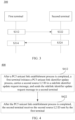
FIG. 1 is a schematic flowchart of an identifier information updating method according to an embodiment of the present invention; -
FIG. 2 is a schematic flowchart of an identifier information updating method according to another embodiment of the present invention; -
FIG. 3 is a schematic flowchart of an identifier information updating method according to still another embodiment of the present invention; -
FIG. 4 is a schematic flowchart of an identifier information updating method according to yet another embodiment of the present invention; -
FIG. 5 is a schematic structural diagram of a terminal according to an embodiment of the present invention; -
FIG. 6 is a schematic structural diagram of a terminal according to another embodiment of the present invention; and -
FIG. 7 is a schematic structural diagram of a terminal according to still another embodiment of the present invention. - To make the objectives, technical solutions, and advantages of this application clearer, the following clearly and completely describes the technical solutions of this application with reference to the specific embodiments of this application and the corresponding accompanying drawings. Apparently, the described embodiments are merely some rather than all of the embodiments of this application. All other embodiments obtained by a person of ordinary skill in the art based on the embodiments of this application without creative efforts shall fall within the protection scope of this application. The term "and/or" in the embodiments of this specification indicates at least one of the former item and the latter item.
- It should be understood that the technical solutions in the embodiments of the present invention may be performed by various communications systems, such as a long term evolution (Long Term Evolution, LTE) system, an LTE frequency division duplex (Frequency Division Duplex, FDD) system, an LTE time division duplex (Time Division Duplex, TDD) system, a universal mobile telecommunications system (Universal Mobile Telecommunications System, UMTS) or a worldwide interoperability for microwave access (Worldwide Interoperability for Microwave Access, WiMAX) communications system, a 5G system, a new radio (New Radio, NR) system, or a subsequent evolved communications system.
- In the embodiments of the present invention, a terminal may include but is not limited to a mobile station (Mobile Station, MS), a mobile terminal (Mobile Terminal), a mobile telephone (Mobile Telephone), user equipment (User Equipment, UE), a handset (handset), portable equipment (portable equipment), a vehicle (vehicle), and the like. The terminal may communicate with one or more core networks by using a radio access network (Radio Access Network, RAN). For example, the terminal may be a mobile phone (or referred to as a "cellular" phone), or a computer having a wireless communication function; or the terminal may be a portable, pocket-sized, handheld, computer built-in, or in-vehicle mobile apparatus.
- In the embodiments of the present invention, a network device is an apparatus that is deployed in the radio access network and that is used to provide a wireless communication function for the terminal. The network device may be a base station, and the base station may include various types of macro base stations, micro base stations, relay stations, access points, or the like. In systems using different radio access technologies, names of devices having a base station function may be different. For example, in an LTE network, the network device is referred to as an evolved NodeB (Evolved NodeB, eNB or eNodeB); and in a 3rd Generation (3rd Generation, 3G) network, the network device is referred to as a NodeB or a network device in the subsequent evolved communications system. However, the terms do not constitute a limitation.
- As shown in
FIG. 1 , an embodiment of the present invention provides an identifierinformation updating method 100. The method may be performed by a terminal device. In other words, the method may be performed by software or hardware installed on the terminal device. The method includes the following steps. - S 112: A first terminal sends a second source L2 ID of the first terminal to a second terminal.
- Before this step, in a PC5 unicast connection establishment process, the first terminal used as an initiating end sends a sidelink establishment request message in a broadcast manner, where the sidelink establishment request message carries a first source L2 ID of the first terminal. As a result, the first source L2 ID of the first terminal is directly exposed to other LTE or a third-party device, which makes the first terminal be at risk of tracking and recognition.
- In this step, the second source L2 ID is different from the first source L2 ID used in the sidelink establishment request message. In this way, a source L2 ID of the first terminal is updated.
- In addition, the sidelink establishment request message may also be referred to as a direct communication request message or the like; the source L2 ID may also be referred to as an L2 ID or the like; and "first" and "second" are merely used for distinguishing but impose no actual limitation.
- S 122: The second terminal receives the second source L2 ID that is of the first terminal and that is sent by the first terminal.
- The second source L2 ID is different from the first source L2 ID used in the sidelink establishment request message.
- Therefore, according to the identifier information updating method provided in this embodiment of the present invention, a second source L2 ID of a first terminal is sent to a second terminal, where the second source L2 ID is different from a first source L2 ID used in a sidelink establishment request message, so that a source L2 ID of an initiating end of a PC5 unicast connection can be updated, to protect the initiating end of the PC5 unicast connection from being tracked and recognized.
- As shown in
FIG. 2 , an embodiment of the present invention provides an identifierinformation updating method 200. The method may be performed by a terminal device. In other words, the method may be performed by software or hardware installed on the terminal device. The method includes the following steps. - S212: A first terminal sends a second source L2 ID of the first terminal to a second terminal.
- Before this step, in a PC5 unicast connection establishment process, the first terminal used as an initiating end sends a sidelink establishment request message in a broadcast manner, and receives a sidelink authentication request message sent by the second terminal, where the sidelink establishment request message carries a first source L2 ID of the first terminal. As a result, the first source L2 ID of the first terminal is directly exposed to other UE or a third-party device, which makes the first terminal be at risk of tracking and recognition. Then, the first terminal sends a sidelink authentication response message to the second terminal, and receives a sidelink security mode command message sent by the second terminal.
- In an implementation, in this step, the first terminal sends a sidelink security mode complete message to the second terminal, where the second source L2 ID is carried in the sidelink security mode complete message, and is different from the first source L2 ID used in the sidelink establishment request message. In this way, a source L2 ID of the first terminal is updated.
- In an implementation, the sidelink security mode complete message may include an information element corresponding to the second source L2 ID. In other words, the information element corresponding to the second source L2 ID may be added to the sidelink security mode complete message. For example, an information element "L2 ID (L2 ID)" is added to content of the sidelink security mode complete message, where an existence form of the information element is "optional (optional)", a format of the information element is "type value (type value)", and a length of the information element is 24-bit (bit) or the like.
- S222: The second terminal receives the second source L2 ID that is of the first terminal and that is sent by the first terminal.
- The second terminal receives the sidelink security mode complete message sent by the first terminal, to receive the second source L2 ID of the first terminal.
- S224: The second terminal updates, to the second source L2 ID, a destination L2 ID stored in a unicast link text, and sends a PC5 unicast link message based on the second source L2 ID.
- In an implementation, the second terminal uses the second source L2 ID as a destination L2 ID when sending a sidelink establishment accept message to the first terminal. In an implementation, the sidelink establishment accept message carries the second source L2 ID. The sidelink establishment accept message may also be referred to as a direct communication accept message or the like.
- S214: The first terminal receives the PC5 unicast link message.
- In an implementation, the first terminal receives the sidelink establishment accept message sent by the second terminal, where a destination L2 ID used in the sidelink establishment accept message is the second source L2 ID. In this way, the first terminal and the second terminal complete a subsequent PC5 unicast link establishment process based on the second source L2 ID used after updating.
- In another implementation, a PC5 unicast link release process is initiated when a received sidelink establishment accept message does not use the second source L2 ID as a destination L2 ID. In an implementation, a sidelink release request message carries a cause value of releasing, where a cause indicated by the cause value of releasing is an identifier being not updated.
- In still another implementation, when a received sidelink establishment accept message does not use the second source L2 ID as a destination L2 ID, a PC5 unicast link identifier update process is initiated, and the second source L2 ID is carried in a sidelink identifier update request message.
- Therefore, according to the identifier information updating method provided in this embodiment of the present invention, a second source L2 ID of a first terminal is sent to a second terminal, where the second source L2 ID is different from a first source L2 ID used in a sidelink establishment request message, so that a source L2 ID of an initiating end of a PC5 unicast connection can be updated, to protect the initiating end of the PC5 unicast connection from being tracked and recognized.
- According to the identifier information updating method provided in this embodiment of the present invention, a PC5 unicast link release process is initiated when a received sidelink establishment accept message does not use a second source L2 ID as a destination L2 ID, so that a PC5 unicast link can be released when a source L2 ID of an initiating end of a PC5 unicast connection is not updated, to protect the initiating end of the PC5 unicast connection from being tracked and recognized.
- According to the identifier information updating method provided in this embodiment of the present invention, when a received sidelink establishment accept message does not use a second source L2 ID as a destination L2 ID, a PC5 unicast link identifier update process is initiated, and the second source L2 ID is carried in a sidelink identifier update request message, so that a source L2 ID of an initiating end of a PC5 unicast connection can be updated, to protect the initiating end of the PC5 unicast connection from being tracked and recognized.
- As shown in
FIG. 3 , an embodiment of the present invention provides an identifierinformation updating method 300. The method may be performed by a terminal device. In other words, the method may be performed by software or hardware installed on the terminal device. The method includes the following steps. - S312: A first terminal sends a second source L2 ID of the first terminal to a second terminal.
- Before this step, in a PC5 unicast connection establishment process, the first terminal used as an initiating end sends a sidelink establishment request message in a broadcast manner, and receives a sidelink authentication request message sent by the second terminal, where the sidelink establishment request message carries a first source L2 ID of the first terminal. As a result, the first source L2 ID of the first terminal is directly exposed to other UE or a third-party device, which makes the first terminal be at risk of tracking and recognition.
- In an implementation, in this step, the first terminal sends a sidelink authentication response message to the second terminal, where the second source L2 ID is carried in the sidelink authentication response message, and is different from the first source L2 ID used in the sidelink establishment request message. In this way, a source L2 ID of the first terminal is updated.
- In an implementation, the sidelink authentication response message may include an information element corresponding to the second source L2 ID. In other words, the information element corresponding to the second source L2 ID may be added to the sidelink authentication response message. For example, an information element "L2 ID (L2 ID)" may be added, where an existence form of the information element is "optional (optional)", a format of the information element is "type value (type value)", and a length of the information element is 24-bit (bit) or the like.
- S322: The second terminal receives the second source L2 ID that is of the first terminal and that is sent by the first terminal.
- The second terminal receives the sidelink authentication response message sent by the first terminal, to receive the second source L2 ID of the first terminal.
- S324: The second terminal updates, to the second source L2 ID, a destination L2 ID stored in a unicast link text, and sends a PC5 unicast link message based on the second source L2 ID.
- In an implementation, the second terminal uses the second source L2 ID as a destination L2 ID when sending a sidelink security mode command message to the first terminal.
- In an implementation, the sidelink security mode command message carries the second source L2 ID.
- S314: The first terminal receives the PC5 unicast link message.
- In an implementation, the first terminal receives the sidelink security mode command message sent by the second terminal, where a destination L2 ID used in the sidelink security mode command message is the second source L2 ID. Then, in an implementation, the first terminal sends a sidelink security mode complete message to the second terminal, and receives a sidelink establishment accept message sent by the second terminal. In this way, the first terminal and the second terminal complete a subsequent PC5 unicast link establishment process based on the second source L2 ID used after updating.
- In another implementation, the first terminal terminates a PC5 unicast link establishment process when a received sidelink security mode command message does not use the second source L2 ID as a destination L2 ID.
- Therefore, according to the identifier information updating method provided in this embodiment of the present invention, a second source L2 ID of a first terminal is sent to a second terminal, where the second source L2 ID is different from a first source L2 ID used in a sidelink establishment request message, so that a source L2 ID of an initiating end of a PC5 unicast connection can be updated, to protect the initiating end of the PC5 unicast connection from being tracked and recognized.
- According to the identifier information updating method provided in this embodiment of the present invention, a second source L2 ID is carried in a sidelink security mode complete message or a sidelink authentication response message, and a PC5 unicast link establishment process is completed based on the second source L2 ID after the second source L2 ID is sent to a second terminal, so that a PC5 unicast link can be established, and an initiating end of a PC5 unicast connection can be prevented from being tracked and recognized.
- According to the identifier information updating method provided in this embodiment of the present invention, a PC5 unicast link establishment process is terminated when a received sidelink security mode command message does not use a second source L2 ID as a destination L2 ID, so that when a source L2 ID of an initiating end of a PC5 unicast connection is not updated, the initiating end of the PC5 unicast connection can be protected from being tracked and recognized.
- As shown in
FIG. 4 , an embodiment of the present invention provides an identifierinformation updating method 400. The method may be performed by a terminal device. In other words, the method may be performed by software or hardware installed on the terminal device. The method includes the following steps. - S412: After a PC5 unicast link establishment process is completed or a sidelink establishment accept message is received, a first terminal immediately initiates a PC5 unicast link identifier update process, carries a second source L2 ID in a sidelink identifier update request message, and sends the sidelink identifier update request message to a second terminal.
- The PC5 unicast link establishment process may include the following steps: The first terminal used as an initiating end sends a sidelink establishment request message in a broadcast manner, and receives a sidelink authentication request message sent by the second terminal, where the sidelink establishment request message carries a first source L2 ID of the first terminal. The first terminal sends a sidelink authentication response message to the second terminal, and receives a sidelink security mode command message sent by the second terminal. The first terminal sends a sidelink security mode complete message to the second terminal, and receives a sidelink establishment accept message sent by the second terminal.
- After receiving the sidelink establishment accept message of the second terminal, the first terminal immediately initiates the PC5 unicast link identifier update process, carries the second source L2 ID in the sidelink identifier update request message, and sends the sidelink identifier update request message to the second terminal. The second source L2 ID is different from the first source L2 ID used in the sidelink establishment request message. In this way, a source L2 ID of the first terminal is updated.
- In an implementation, the sidelink identifier update request message includes an information element corresponding to the second source L2 ID. In other words, the information element corresponding to the second source L2 ID is written into the sidelink authentication response message. For example, an information element "L2 ID (L2 ID)" is written, where an existence form of the information element is "optional (optional)", a format of the information element is "type value (type value)", and a length of the information element is 24-bit (bit).
- S422: After the PC5 unicast link establishment process is completed, the second terminal receives the second source L2 ID sent by the first terminal.
- In an implementation, the second source L2 ID is carried in a sidelink identifier update request message.
- Therefore, according to the identifier information updating method provided in this embodiment of the present invention, after a PC5 unicast link establishment process is completed, a PC5 unicast link identifier update process is initiated, a second source L2 ID is carried in a sidelink identifier update request message, and the sidelink identifier update request message is sent to a second terminal, so that a source L2 ID of an initiating end of a PC5 unicast connection can be updated, to protect the initiating end of the PC5 unicast connection from being tracked and recognized.
- The identifier information updating method according to the embodiments of the present invention is described in detail above with reference to
FIG. 1 to FIG. 4 . The terminal according to the embodiments of the present invention is described in detail below with reference toFIG. 5 . -
FIG. 5 is a schematic structural diagram of a terminal according to an embodiment of the present invention. As shown inFIG. 5 , the terminal 500 includes aprocessing module 510. - The
processing module 510 is configured to send a second source L2 ID of a first terminal to a second terminal, where the second source L2 ID is different from a first source L2 ID used in a sidelink establishment request message. - In an implementation, the second source L2 ID is carried in a sidelink security mode complete message or a sidelink authentication response message. The
processing module 510 is further configured to complete a PC5 unicast link establishment process based on the second source L2 ID after the second source L2 ID is sent to the second terminal. - In an implementation, the
processing module 510 is further configured to receive a sidelink security mode command message or a sidelink establishment accept message sent by the second terminal, where a destination L2 ID used in the sidelink security mode command message or the sidelink establishment accept message is the second source L2 ID. - In an implementation, the sidelink security mode command message or the sidelink establishment accept message carries the second source L2 ID.
- In an implementation, the sidelink security mode complete message or the sidelink authentication response message includes an information element corresponding to the second source L2 ID.
- In an implementation, after sending the second source L2 ID to the second terminal, the
processing module 510 is further configured to terminate a PC5 unicast link establishment process when a received sidelink security mode command message does not use the second source L2 ID as a destination L2 ID. - In an implementation, after sending the second source L2 ID to the second terminal, the
processing module 510 is further configured to: initiate a PC5 unicast link release process when a received sidelink establishment accept message does not use the second source L2 ID as a destination L2 ID; or when a received sidelink establishment accept message does not use the second source L2 ID as a destination L2 ID, initiate a PC5 unicast link identifier update process, and carry the second source L2 ID in a sidelink identifier update request message. - In an implementation, the sidelink release request message carries a cause value of releasing, where a cause indicated by the cause value of releasing is an identifier being not updated.
- In an implementation, the
processing module 510 is configured to: after a PC5 unicast link establishment process is completed, initiate a PC5 unicast link identifier update process, carry the second source L2 ID in a sidelink identifier update request message, and send the sidelink identifier update request message to the second terminal. - For the terminal 500 according to this embodiment of the present invention, refer to the flows performed by the first terminal in the
methods 100 to 400 according to the embodiments of the present invention. Furthermore, each unit/module in the terminal 500 and the above other operations and/or functions are used to implement corresponding flows performed by the first terminal in themethods 100 to 400, and the same or equivalent technical effect can be achieved. For brevity, details are not described herein again. -
FIG. 6 is a schematic structural diagram of a network device according to an embodiment of the present invention. As shown inFIG. 6 , thenetwork device 600 includes anexecution module 610. - The
execution module 610 is configured to receive a second source L2 ID that is of a first terminal and that is sent by the first terminal, where the second source L2 ID is different from a first source L2 ID used in a sidelink establishment request message. - In an implementation, the second source L2 ID is carried in a sidelink security mode complete message or a sidelink authentication response message. The
execution module 610 is further configured to complete a PC5 unicast link establishment process based on the second source L2 ID after receiving the second source L2 ID that is of the first terminal and that is sent by the first terminal. - In an implementation, the
execution module 610 is configured to: update, to the second source L2 ID, a destination L2 ID stored in a unicast link text, and send a PC5 unicast link message based on the second source L2 ID. - In an implementation, the
execution module 610 is configured to use the second source L2 ID as a destination L2 ID when sending a sidelink security mode command message or a sidelink establishment accept message to the first terminal. - In an implementation, the sidelink security mode command message or the sidelink establishment accept message carries the second source L2 ID.
- In an implementation, the sidelink security mode complete message or the sidelink authentication response message includes an information element corresponding to the second source L2 ID.
- In an implementation, the
execution module 610 is configured to: after a PC5 unicast link establishment process is completed, receive the second source L2 ID sent by the first terminal. - In an implementation, the second source L2 ID is carried in a sidelink identifier update request message.
- For the
network device 600 according to this embodiment of the present invention, refer to the flows performed by the second terminal in themethods 100 to 400 according to the embodiments of the present invention. Furthermore, each unit/module in thenetwork device 600 and the above other operations and/or functions are used to implement corresponding flows performed by the second terminal in themethods 100 to 400, and the same or equivalent technical effect can be achieved. For brevity, details are not described herein again. -
FIG. 7 is a block diagram of a terminal according to another embodiment of the present invention. As shown inFIG. 7 , the terminal 700 includes: at least oneprocessor 701, amemory 702, at least onenetwork interface 704, and auser interface 703. Various components of the terminal 700 are coupled by using abus system 705. It may be understood that thebus system 705 is configured to implement connection and communication between these components. In addition to a data bus, thebus system 705 further includes a power bus, a control bus, and a status signal bus. However, for clear description, various buses are marked as thebus system 705 inFIG. 7 . - The
user interface 703 may include a display, a keyboard, a clicking device (for example, a mouse or a trackball (trackball)), a touch panel, a touchscreen, or the like. - It may be understood that the
memory 702 in this embodiment of the present invention may be a volatile memory or a non-volatile memory, or may include both a volatile memory and a non-volatile memory. The nonvolatile memory may be a read-only memory (Read-Only Memory, ROM), a programmable ROM (Programmable ROM, PROM), an erasable PROM (Erasable PROM, EPROM), an electrically EPROM (Electrically EPROM, EEPROM), or a flash memory. The volatile memory may be a random access memory (Random Access Memory, RAM), used as an external cache. Through exemplary but not restrictive description, many forms of RAMs may be used, for example, a static random access memory (Static RAM, SRAM), a dynamic random access memory (Dynamic RAM, DRAM), a synchronous dynamic random access memory (Synchronous DRAM, SDRAM), a double data rate synchronous dynamic random access memory (Double Data Rate SDRAM, DDRSDRAM), an enhanced synchronous dynamic random access memory (Enhanced SDRAM, ESDRAM), a synchlink dynamic random access memory (Synchlink DRAM, SLDRAM), and a direct rambus random access memory (Direct Rambus RAM, DRRAM). Thememory 702 of the system and method described in the embodiments of the present invention is intended to include but is not limited to these and any other suitable type of memory. - In some implementations, the
memory 702 stores the following elements: an executable module or a data structure, a subset thereof, or an extended set thereof: anoperating system 7021 and anapplication program 7022. - The
operating system 7021 includes various system programs, for example, a framework layer, a kernel library layer, and a driver layer, and is configured to implement various basic services and process hardware-based tasks. Theapplication program 7022 includes various application programs, for example, a media player (Media Player) and a browser (Browser), and is used to implement various application services. A program for implementing the method in this embodiment of the present invention may be included in theapplication program 7022. - In this embodiment of the present invention, the terminal 700 further includes a computer program stored in the
memory 702 and executable by theprocessor 701. When the computer program is executed by theprocessor 701, the steps performed by the first terminal or the second terminal in themethods 100 to 400 are implemented. - The method disclosed in the above embodiments of the present invention may be performed by the
processor 701, or implemented by theprocessor 701. Theprocessor 701 may be an integrated circuit chip, and has a signal processing capability. In an implementation process, the steps in the above methods may be completed by using an integrated logic circuit of hardware in theprocessor 701 or an instruction in a form of software. Theprocessor 701 may be a general-purpose processor, a digital signal processor (Digital Signal Processor, DSP), an application-specific integrated circuit (Application-Specific Integrated Circuit, ASIC), a field programmable gate array (Field Programmable Gate Array, FPGA), another programmable logic device, a discrete gate, a transistor logic device, or a discrete hardware component. The processor can implement or execute the methods, steps, and logical block diagrams that are disclosed in the embodiments of the present invention. The general-purpose processor may be a microprocessor, any conventional processor, or the like. The steps of the method disclosed with reference to the embodiments of the present invention may be directly performed by a hardware decoding processor, or may be performed by using a combination of hardware and software modules in a decoding processor. The software module may be located in a computer-readable storage medium that is mature in the art, such as a random access memory, a flash memory, a read-only memory, a programmable read-only memory, an electrically erasable programmable memory, or a register. The computer-readable storage medium is located in thememory 702. Theprocessor 701 reads information in thememory 702 and completes the steps in the above method in combination with hardware of the processor. Specifically, the computer-readable storage medium stores a computer program. When the computer program is executed by theprocessor 701, the steps performed by the first terminal or the second terminal in themethods 100 to 400 are implemented. - It may be understood that the embodiments described in the embodiments of the present invention may be implemented by hardware, software, firmware, middleware, microcode, or a combination thereof. For implementation with hardware, the processing unit may be implemented in one or more application-specific integrated circuits (Application Specific Integrated Circuits, ASIC), a digital signal processor (Digital Signal Processor, DSP), a digital signal processing device (DSP Device, DSPD), a programmable logic device (Programmable Logic Device, PLD), a field-programmable gate array (Field-Programmable Gate Array, FPGA), a general-purpose processor, a controller, a micro-controller, a microprocessor, another electronic unit for implementing the functions of the present application, or a combination thereof.
- For implementation with software, the technology described in the embodiments of the present invention may be implemented by modules (for example, processes or functions) that perform the functions described in the embodiments of the present invention. Software code may be stored in the memory and executed by the processor. The memory may be implemented in or outside the processor.
- The terminal 700 can implement each process implemented by the terminal in the above embodiments, and the same or equivalent technical effect can be achieved. To avoid repetition, details are not described herein again.
- An embodiment of the present invention further provides a computer-readable storage medium. The computer-readable storage medium stores a computer program. When the computer program is executed by a processor, the steps performed by the first terminal or the second terminal in the
above method embodiments 100 to 400 are implemented, and the same technical effect can be achieved. To avoid repetition, details are not described herein again. The computer-readable storage medium is, for example, a read-only memory (Read-Only Memory, ROM for short), a random access memory (Random Access Memory, RAM for short), a magnetic disk, or an optical disk. - It should be noted that, in this specification, the terms "include", "comprise", or their any other variant is intended to cover a non-exclusive inclusion, so that a process, a method, an article, or an apparatus that includes a list of elements not only includes those elements but also includes other elements which are not expressly listed, or further includes elements inherent to such process, method, article, or apparatus. Without more restrictions, an element defined by a phrase "including a ......" does not exclude presence of other identical elements in the process, method, article, or apparatus that includes the very element.
- By means of the above descriptions of the embodiments, a person skilled in the art may clearly understand that the method in the above embodiments may be implemented by software in addition to a necessary universal hardware platform. Certainly, the method in the above embodiments may also be implemented by hardware. However, in many cases, the former is a preferred embodiment. Based on such an understanding, the technical solutions of the present invention essentially or the part contributing to the prior art may be implemented in a form of a software product. The computer software product is stored in a storage medium (such as a ROM/RAM, a hard disk, or an optical disc), and includes several instructions for instructing a terminal (which may be mobile phone, a computer, a server, an air conditioner, a network device, or the like) to perform the methods described in the embodiments of the present invention.
- The embodiments of the present invention are described above with reference to the accompanying drawings, but the present invention is not limited to the above specific implementations. The above specific implementations are merely exemplary instead of restrictive. Under enlightenment of the present invention, a person of ordinary skill in the art may make many forms without departing from the objective of the present invention and the protection scope of claims, all of which fall within the protection of the present invention.
Claims (21)
- An identifier information updating method, performed by a first terminal and comprising:
sending a second source layer 2 identifier (source L2 ID) of the first terminal to a second terminal, wherein the second source L2 ID is different from a first source L2 ID used in a sidelink establishment request message. - The method according to claim 1, wherein the second source L2 ID is carried in a sidelink security mode complete message or a sidelink authentication response message, and after the sending a second source L2 ID to a second terminal, the method further comprises:
completing a PC5 unicast link establishment process based on the second source L2 ID. - The method according to claim 2, wherein the completing a PC5 unicast link establishment process based on the second source L2 ID comprises:
receiving a sidelink security mode command message or a sidelink establishment accept message sent by the second terminal, wherein a destination layer 2 identifier (destination L2 ID) used in the sidelink security mode command message or the sidelink establishment accept message is the second source L2 ID. - The method according to claim 3, wherein the sidelink security mode command message or the sidelink establishment accept message carries the second source L2 ID.
- The method according to claim 3, wherein the sidelink security mode complete message or the sidelink authentication response message comprises an information element corresponding to the second source L2 ID.
- The method according to claim 1, wherein after the sending a second source L2 ID to a second terminal, the method further comprises:
terminating a PC5 unicast link establishment process when a received sidelink security mode command message does not use the second source L2 ID as a destination L2 ID. - The method according to claim 1, wherein after the sending a second source L2 ID to a second terminal, the method further comprises:initiating a PC5 unicast link release process when a received sidelink establishment accept message does not use the second source L2 ID as a destination L2 ID;
orwhen a received sidelink establishment accept message does not use the second source L2 ID as a destination L2 ID, initiating a PC5 unicast link identifier update process, and carrying the second source L2 ID in a sidelink identifier update request message. - The method according to claim 7, wherein a sidelink release request message carries a cause value of releasing, wherein a cause indicated by the cause value of releasing is an identifier being not updated.
- The method according to claim 1, wherein the sending a second source L2 ID to a second terminal comprises:
after a PC5 unicast link establishment process is completed, initiating a PC5 unicast link identifier update process, carrying the second source L2 ID in a sidelink identifier update request message, and sending the sidelink identifier update request message to the second terminal. - An identifier information updating method, performed by a second terminal and comprising:
receiving a second source L2 ID that is of a first terminal and that is sent by the first terminal, wherein the second source L2 ID is different from a first source L2 ID used in a sidelink establishment request message. - The method according to claim 10, wherein the second source L2 ID is carried in a sidelink security mode complete message or a sidelink authentication response message, and after the receiving a second source L2 ID that is of a first terminal and that is sent by the first terminal, the method further comprises:
completing a PC5 unicast link establishment process based on the second source L2 ID. - The method according to claim 11, wherein the completing a PC5 unicast link establishment process based on the second source L2 ID comprises:updating, to the second source L2 ID, a destination L2 ID stored in a unicast link text; andsending a PC5 unicast link message based on the second source L2 ID.
- The method according to claim 12, wherein the sending a PC5 unicast link message based on the second source L2 ID comprises:
using the second source L2 ID as a destination L2 ID when sending a sidelink security mode command message or a sidelink establishment accept message to the first terminal. - The method according to claim 13, wherein the sidelink security mode command message or the sidelink establishment accept message carries the second source L2 ID.
- The method according to claim 13, wherein the sidelink security mode complete message or the sidelink authentication response message comprises an information element corresponding to the second source L2 ID.
- The method according to claim 10, wherein the receiving a second source L2 ID that is of a first terminal and that is sent by the first terminal comprises:
after a PC5 unicast link establishment process is completed, receiving the second source L2 ID sent by the first terminal. - The method according to claim 16, wherein the second source L2 ID is carried in a sidelink identifier update request message.
- A mobile terminal, comprising:
a processing module, configured to send a second source L2 ID of a first terminal to a second terminal, wherein the second source L2 ID is different from a first source L2 ID used in a sidelink establishment request message. - A mobile terminal, comprising:
an execution module, configured to receive a second source L2 ID that is of a first terminal and that is sent by the first terminal, wherein the second source L2 ID is different from a first source L2 ID used in a sidelink establishment request message. - A terminal, comprising a memory, a processor, and a computer program stored in the memory and executable by the processor, wherein when the computer program is executed by the processor, the steps of the identifier information updating method according to any one of claims 1 to 9 are implemented, or the steps of the identifier information updating method according to any one of claims 10 to 17 are implemented.
- A computer-readable storage medium, storing a computer program, wherein when the computer program is executed by a processor, the steps of the identifier information updating method according to any one of claims 1 to 9 are implemented, or the steps of the identifier information updating method according to any one of claims 10 to 17 are implemented.
Applications Claiming Priority (2)
| Application Number | Priority Date | Filing Date | Title |
|---|---|---|---|
| CN202010220980.1A CN113453379B (en) | 2020-03-24 | 2020-03-24 | Method, terminal and network equipment for updating identification information |
| PCT/CN2021/082364 WO2021190497A1 (en) | 2020-03-24 | 2021-03-23 | Identification information update method, terminal and network device |
Publications (3)
| Publication Number | Publication Date |
|---|---|
| EP4132029A1 true EP4132029A1 (en) | 2023-02-08 |
| EP4132029A4 EP4132029A4 (en) | 2023-07-05 |
| EP4132029B1 EP4132029B1 (en) | 2026-02-11 |
Family
ID=77807041
Family Applications (1)
| Application Number | Title | Priority Date | Filing Date |
|---|---|---|---|
| EP21776113.9A Active EP4132029B1 (en) | 2020-03-24 | 2021-03-23 | Identification information update method, terminal and network device |
Country Status (5)
| Country | Link |
|---|---|
| US (1) | US20230019994A1 (en) |
| EP (1) | EP4132029B1 (en) |
| CN (1) | CN113453379B (en) |
| ES (1) | ES3065287T3 (en) |
| WO (1) | WO2021190497A1 (en) |
Families Citing this family (3)
| Publication number | Priority date | Publication date | Assignee | Title |
|---|---|---|---|---|
| US20230232472A1 (en) * | 2020-08-06 | 2023-07-20 | Qualcomm Incorporated | Cross-link interference (cli) measurement based sidelink establishment |
| CN116074918A (en) * | 2021-11-04 | 2023-05-05 | 维沃移动通信有限公司 | Method for Determining Layer 2 Identification and Terminal Equipment |
| US20250048348A1 (en) * | 2023-08-01 | 2025-02-06 | Qualcomm Incorporated | Reference signal for initial beam-pairing with resource coordination among user equipments |
Family Cites Families (5)
| Publication number | Priority date | Publication date | Assignee | Title |
|---|---|---|---|---|
| US9497682B2 (en) * | 2013-06-07 | 2016-11-15 | Intel Corporation | Central processing unit and methods for supporting coordinated multipoint transmission in an LTE network |
| WO2016131193A1 (en) * | 2015-02-17 | 2016-08-25 | 华为技术有限公司 | Service discovery method and device in neighbor awareness network |
| WO2019216641A1 (en) * | 2018-05-08 | 2019-11-14 | 엘지전자 주식회사 | Method for transmitting v2x data in wireless communication system, and device therefor |
| HUE069348T2 (en) * | 2018-06-22 | 2025-03-28 | Interdigital Patent Holdings Inc | Procedures for ensuring data protection on WTRUs using PC5 communications |
| US11457335B2 (en) * | 2018-09-06 | 2022-09-27 | Qualcomm Incorporated | Link identity determination and signaling |
-
2020
- 2020-03-24 CN CN202010220980.1A patent/CN113453379B/en active Active
-
2021
- 2021-03-23 WO PCT/CN2021/082364 patent/WO2021190497A1/en not_active Ceased
- 2021-03-23 ES ES21776113T patent/ES3065287T3/en active Active
- 2021-03-23 EP EP21776113.9A patent/EP4132029B1/en active Active
-
2022
- 2022-09-16 US US17/946,209 patent/US20230019994A1/en active Pending
Also Published As
| Publication number | Publication date |
|---|---|
| ES3065287T3 (en) | 2026-05-05 |
| WO2021190497A1 (en) | 2021-09-30 |
| US20230019994A1 (en) | 2023-01-19 |
| CN113453379A (en) | 2021-09-28 |
| EP4132029B1 (en) | 2026-02-11 |
| CN113453379B (en) | 2023-05-16 |
| EP4132029A4 (en) | 2023-07-05 |
Similar Documents
| Publication | Publication Date | Title |
|---|---|---|
| US20230019994A1 (en) | Identifier information updating method, terminal, and network device | |
| US11206537B2 (en) | Session activation method, apparatus, and system | |
| US11147116B2 (en) | Apparatuses and methods for handling a non-integrity-protected reject message | |
| EP3678449B1 (en) | Connection management method and user equipment | |
| CN111343567A (en) | Disconnected state uplink positioning method and device | |
| CN103209444B (en) | A kind of method and apparatus of resource release | |
| EP3879897B1 (en) | Wireless communication methods, terminal device and network device | |
| EP3914014B1 (en) | Wireless communication methods, devices and computer-readable storage medium | |
| CN115442794B (en) | SIM toolkit scheduling for multiple enabled ESIM profiles | |
| US20260075587A1 (en) | Service indication method and device | |
| US20220132590A1 (en) | Random access message transmission method and device | |
| US20210168707A1 (en) | Wireless communication method and terminal device | |
| CN113411911B (en) | An identification update method and device | |
| US20200322795A1 (en) | Apparatuses and methods for alignment of common non access stratum (nas) security context | |
| EP3709580A1 (en) | Wireless communication system, security proxy device and relay device | |
| US12200804B2 (en) | Context fetch procedure for inactive direct data transmission | |
| WO2020259410A1 (en) | Method for obtaining timing advance and devices | |
| KR101838772B1 (en) | Method, apparatus and computer program product for security configuration coordination during a cell update procedure | |
| CN111800889A (en) | A method, terminal device and network device for processing a protocol data unit session | |
| CN111800789B (en) | A method for configuring PC5 connection, terminal equipment and network equipment | |
| HK40066270A (en) | Service indication method and device | |
| CN113676995A (en) | Terminal call processing method and device, terminal equipment and network equipment | |
| CN107548052A (en) | A kind of short message final calling method, device and mobile terminal based on cdma network |
Legal Events
| Date | Code | Title | Description |
|---|---|---|---|
| STAA | Information on the status of an ep patent application or granted ep patent |
Free format text: STATUS: THE INTERNATIONAL PUBLICATION HAS BEEN MADE |
|
| PUAI | Public reference made under article 153(3) epc to a published international application that has entered the european phase |
Free format text: ORIGINAL CODE: 0009012 |
|
| STAA | Information on the status of an ep patent application or granted ep patent |
Free format text: STATUS: REQUEST FOR EXAMINATION WAS MADE |
|
| 17P | Request for examination filed |
Effective date: 20221010 |
|
| AK | Designated contracting states |
Kind code of ref document: A1 Designated state(s): AL AT BE BG CH CY CZ DE DK EE ES FI FR GB GR HR HU IE IS IT LI LT LU LV MC MK MT NL NO PL PT RO RS SE SI SK SM TR |
|
| DAV | Request for validation of the european patent (deleted) | ||
| DAX | Request for extension of the european patent (deleted) | ||
| A4 | Supplementary search report drawn up and despatched |
Effective date: 20230607 |
|
| RIC1 | Information provided on ipc code assigned before grant |
Ipc: H04W 12/00 20210101ALI20230601BHEP Ipc: H04W 92/18 20090101ALI20230601BHEP Ipc: H04W 76/14 20180101ALI20230601BHEP Ipc: H04W 76/11 20180101ALI20230601BHEP Ipc: H04W 4/40 20180101AFI20230601BHEP |
|
| STAA | Information on the status of an ep patent application or granted ep patent |
Free format text: STATUS: EXAMINATION IS IN PROGRESS |
|
| 17Q | First examination report despatched |
Effective date: 20240604 |
|
| GRAP | Despatch of communication of intention to grant a patent |
Free format text: ORIGINAL CODE: EPIDOSNIGR1 |
|
| STAA | Information on the status of an ep patent application or granted ep patent |
Free format text: STATUS: GRANT OF PATENT IS INTENDED |
|
| INTG | Intention to grant announced |
Effective date: 20251110 |
|
| GRAS | Grant fee paid |
Free format text: ORIGINAL CODE: EPIDOSNIGR3 |
|
| GRAA | (expected) grant |
Free format text: ORIGINAL CODE: 0009210 |
|
| STAA | Information on the status of an ep patent application or granted ep patent |
Free format text: STATUS: THE PATENT HAS BEEN GRANTED |
|
| AK | Designated contracting states |
Kind code of ref document: B1 Designated state(s): AL AT BE BG CH CY CZ DE DK EE ES FI FR GB GR HR HU IE IS IT LI LT LU LV MC MK MT NL NO PL PT RO RS SE SI SK SM TR |
|
| REG | Reference to a national code |
Ref country code: CH Ref legal event code: F10 Free format text: ST27 STATUS EVENT CODE: U-0-0-F10-F00 (AS PROVIDED BY THE NATIONAL OFFICE) Effective date: 20260211 Ref country code: GB Ref legal event code: FG4D |
|
| REG | Reference to a national code |
Ref country code: DE Ref legal event code: R096 Ref document number: 602021047772 Country of ref document: DE |
|
| REG | Reference to a national code |
Ref country code: IE Ref legal event code: FG4D |
|
| PGFP | Annual fee paid to national office [announced via postgrant information from national office to epo] |
Ref country code: NL Payment date: 20260213 Year of fee payment: 6 |
|
| REG | Reference to a national code |
Ref country code: NL Ref legal event code: FP |
|
| PGFP | Annual fee paid to national office [announced via postgrant information from national office to epo] |
Ref country code: GB Payment date: 20260213 Year of fee payment: 6 |
|
| PGFP | Annual fee paid to national office [announced via postgrant information from national office to epo] |
Ref country code: DE Payment date: 20260204 Year of fee payment: 6 |
|
| PGFP | Annual fee paid to national office [announced via postgrant information from national office to epo] |
Ref country code: IT Payment date: 20260312 Year of fee payment: 6 |
|
| PGFP | Annual fee paid to national office [announced via postgrant information from national office to epo] |
Ref country code: FR Payment date: 20260209 Year of fee payment: 6 |
|
| REG | Reference to a national code |
Ref country code: ES Ref legal event code: FG2A Ref document number: 3065287 Country of ref document: ES Kind code of ref document: T3 Effective date: 20260505 |