EP4132022A1 - Multicast and broadcast service communication method, apparatus, electronic device, and storage medium - Google Patents
Multicast and broadcast service communication method, apparatus, electronic device, and storage medium Download PDFInfo
- Publication number
- EP4132022A1 EP4132022A1 EP21865758.3A EP21865758A EP4132022A1 EP 4132022 A1 EP4132022 A1 EP 4132022A1 EP 21865758 A EP21865758 A EP 21865758A EP 4132022 A1 EP4132022 A1 EP 4132022A1
- Authority
- EP
- European Patent Office
- Prior art keywords
- mbs
- service
- rule
- request message
- functional entity
- Prior art date
- Legal status (The legal status is an assumption and is not a legal conclusion. Google has not performed a legal analysis and makes no representation as to the accuracy of the status listed.)
- Pending
Links
Images



Classifications
-
- H—ELECTRICITY
- H04—ELECTRIC COMMUNICATION TECHNIQUE
- H04W—WIRELESS COMMUNICATION NETWORKS
- H04W4/00—Services specially adapted for wireless communication networks; Facilities therefor
- H04W4/06—Selective distribution of broadcast services, e.g. multimedia broadcast multicast service [MBMS]; Services to user groups; One-way selective calling services
-
- H—ELECTRICITY
- H04—ELECTRIC COMMUNICATION TECHNIQUE
- H04W—WIRELESS COMMUNICATION NETWORKS
- H04W4/00—Services specially adapted for wireless communication networks; Facilities therefor
- H04W4/02—Services making use of location information
- H04W4/021—Services related to particular areas, e.g. point of interest [POI] services, venue services or geofences
-
- H—ELECTRICITY
- H04—ELECTRIC COMMUNICATION TECHNIQUE
- H04W—WIRELESS COMMUNICATION NETWORKS
- H04W64/00—Locating users or terminals or network equipment for network management purposes, e.g. mobility management
- H04W64/006—Locating users or terminals or network equipment for network management purposes, e.g. mobility management with additional information processing, e.g. for direction or speed determination
-
- H—ELECTRICITY
- H04—ELECTRIC COMMUNICATION TECHNIQUE
- H04W—WIRELESS COMMUNICATION NETWORKS
- H04W76/00—Connection management
- H04W76/10—Connection setup
- H04W76/15—Setup of multiple wireless link connections
-
- H—ELECTRICITY
- H04—ELECTRIC COMMUNICATION TECHNIQUE
- H04W—WIRELESS COMMUNICATION NETWORKS
- H04W76/00—Connection management
- H04W76/40—Connection management for selective distribution or broadcast
-
- H—ELECTRICITY
- H04—ELECTRIC COMMUNICATION TECHNIQUE
- H04W—WIRELESS COMMUNICATION NETWORKS
- H04W4/00—Services specially adapted for wireless communication networks; Facilities therefor
- H04W4/06—Selective distribution of broadcast services, e.g. multimedia broadcast multicast service [MBMS]; Services to user groups; One-way selective calling services
- H04W4/08—User group management
-
- H—ELECTRICITY
- H04—ELECTRIC COMMUNICATION TECHNIQUE
- H04W—WIRELESS COMMUNICATION NETWORKS
- H04W64/00—Locating users or terminals or network equipment for network management purposes, e.g. mobility management
- H04W64/003—Locating users or terminals or network equipment for network management purposes, e.g. mobility management locating network equipment
Definitions
- the present disclosure relates to the field of computer and communication technologies, and specifically, to a multicast and broadcast service.
- the current 5G multicast and broadcast service (MBS) system does not meet the requirements of supporting a serving region of an MBS service. Furthermore, access of the MBS service is implemented through a control plane, resulting in extra signaling load in the 5G MBS system.
- Embodiments of the present disclosure provide a communication method and a communication apparatus for a multicast and broadcast service, an electronic device, and a computer-readable storage medium, which can not only meet the requirement of supporting a serving region of a multicast and broadcast service (MBS) service, but also implement access of the MBS service through a user plane, thus reducing a signaling load of a 5G MBS system.
- MBS multicast and broadcast service
- a communication method for a multicast and broadcast service includes: receiving an MBS rule issued by a policy control functional entity, the MBS rule being generated by the policy control functional entity based on a service request message transmitted by an application functional entity, and the service request message including information of an MBS serving region; determining whether the user terminal is located in the MBS serving region according to the MBS rule and position information of the user terminal; and accessing an MBS service in the MBS serving region if determining that the user terminal is located in the MBS serving region.
- a communication method for a multicast and broadcast service includes: generating a service request message, the service request message including information of an MBS serving region, the service request message being used for triggering a policy control functional entity to generate an MBS rule for a user terminal, and the MBS rule being used for instructing the user terminal to access the MBS service in the MBS serving region; and transmitting the service request message to the policy control functional entity.
- a communication method for a multicast and broadcast service includes: receiving a service request message transmitted by an application functional entity, the service request message including information of an MBS serving region; generating an MBS rule for a user terminal in response to the service request message, the MBS rule being used for instructing the user terminal to access an MBS service in the MBS serving region; and transmitting the MBS rule to the user terminal.
- a communication apparatus for a multicast and broadcast service includes: an MBS rule receiving module, configured to receive an MBS rule issued by a policy control functional entity, the MBS rule being generated by the policy control functional entity based on a service request message transmitted by an application functional entity, and the service request message including information of an MBS serving region; a serving region determining module, configured to determine whether the user terminal is located in the MBS serving region according to the MBS rule and position information of the user terminal; and an MBS service accessing module, configured to access an MBS service in the MBS serving region if the serving region determining module determines that the user terminal is located in the MBS serving region.
- a communication apparatus for a multicast and broadcast service includes: a service request message generation module, configured to generate a service request message, the service request message including information of an MBS serving region, the service request message being used for triggering a policy control functional entity to generate an MBS rule for a user terminal, and the MBS rule being used for instructing the user terminal to access the MBS service in the MBS serving region; and a service request message transmission module, configured to transmit the service request message to the policy control functional entity.
- a communication apparatus for a multicast and broadcast service includes: a service request message receiving module, configured to receive a service request message transmitted by an application functional entity, the service request message including information of an MBS serving region; a service request message response module, configured to generate an MBS rule for a user terminal in response to the service request message, the MBS rule being used for instructing the user terminal to access an MBS service in the MBS serving region; and an MBS rule transmission module, configured to transmit the MBS rule to the user terminal.
- an electronic device includes a processor and a memory, the memory storing computer-readable instructions, and the computer-readable instructions, when executed by the processor, implementing the communication method for a multicast and broadcast service described in the foregoing aspects.
- a computer-readable storage medium stores a computer program, the computer program, when executed by a processor of a computer, causing the computer to perform the communication method for a multicast and broadcast service described in the foregoing aspects.
- a computer program product or a computer program is provided, the computer program product or the computer program including computer instructions, and the computer instructions being stored in a computer-readable storage medium.
- a processor of a computer device reads the computer instructions from the computer-readable storage medium, and executes the computer instructions, to cause the computer device to perform the communication method for a multicast and broadcast service described in the foregoing aspects.
- the application functional entity transmits the service request message to the policy control functional entity, and the service request message includes the information of the MBS serving region.
- the policy control functional entity generates the MBS rule according to the received service request message, and transmits the MBS rule to the user terminal.
- the MBS rule is used for instructing the user terminal located in the MBS serving region to access the MBS service. Therefore, when the user terminal wants to access the MBS service, the user terminal determines whether it is located in the MBS serving region according to the MBS rule. In the case of positive determination, the user terminal can join the MBS service by joining an existing MBS session in the MBS service or creating a new MBS session.
- the user terminal located in the MBS serving region can access the MBS service, thereby supporting restriction on the MBS serving region.
- the user terminal located in the MBS serving region can actively access to the MBS service according to the MBS rule, which can avoid using the control plane to access the MBS service, so as to avoid extra signaling load in the 5G MBS system.
- the block diagrams shown in the accompanying drawings are merely functional entities and do not necessarily correspond to physically independent entities. That is, the functional entities may be implemented in a software form, or in one or more hardware modules or integrated circuits, or in different networks and/or processor apparatuses and/or microcontroller apparatuses.
- plural of mentioned in the present disclosure means two or more.
- the term “and/or” describes an association relationship for describing associated objects and represents that three relationships may exist. For example, A and/or B may represent the following three cases: Only A exists, both A and B exist, and only B exists.
- the character “/” generally indicates an "or" relationship between the associated objects.
- FIG. 1 is a schematic diagram of a 5G (the 5 th Generation Mobile Communication Technology) network architecture defined in TS23.501 section of the 3GPP (3rd Generation Partnership Project) protocol.
- 5G the 5 th Generation Mobile Communication Technology
- 3GPP 3rd Generation Partnership Project
- a 5G mobile communication network includes functional entities such as UE (User Equipment), (R)AN ((Radio) Access Network), UPF (User Plane Function), AMF (Access and Mobility Management Function), SMF (Session Management Function), AF (Application Function), PCF (Policy Control Function).
- the AMF, SMF and UPF mainly constitute a 5G core network.
- the AMF is mainly responsible for UE access and mobility management
- the SMF is mainly responsible for service session management
- the UPF is mainly responsible for data packet routing and forwarding between the (R)AN and DN (Data Network).
- the various functional entities mentioned above may be configured in or implemented through a communication device.
- the communication device may be a server.
- the server may be an independent physical server, or may be a server cluster or distributed system formed by a plurality of physical servers, or may be a cloud server providing a cloud computing service.
- the technical solutions of the embodiments of the present disclosure is proposed based on the 5G network architecture shown in FIG. 1 , and specifically, an implementation flow of supporting an MBS serving region in the 5G mobile communication network is provided.
- the UE is controlled to access an MBS service through a user plane, thereby avoiding a problem of extra signaling load in a 5G network caused by controlling the UE to join the MBS service through a control plane in the related art.
- a network function may be expanded or added. This solution can be implemented in the newly added network function for achieving a similar function, that is, the execution body of the added function in this solution is not limited.
- FIG. 2 is a schematic flowchart of a service supporting an MBS serving region under the 5G mobile communication network according to an exemplary embodiment.
- the AF first sends a service request message to the PCF (as in step 1a or step 1b shown in FIG. 2 ).
- the service request message may specifically include an IP (Internet Protocol) address of the MBS service, information of QoS (Quality of Service) requirements, information of the MBS serving region, and AF identification information. If serving time of the MBS service is specific time, the service request message further includes information of MBS effective serving time. If the MBS service is specifically a multicast service, the service request message further includes multicast group identification information.
- IP Internet Protocol
- QoS Quality of Service
- the service request information further includes subdivided differentiator information, such as information of a DSCP (Differentiated Services Code Point) or TOS (Type of Service)/TC (Traffic Class) field, so as to indicate QoS requirements of different types of service flows in the same MBS session by using ATC used for identifying different service flows and carried in the TOS/TC field information.
- DSCP Differentiated Services Code Point
- TOS Type of Service
- TCS Traffic Class
- the serving region of the MBS service and the effective serving time of the MBS service are independent of each other. In some embodiments, if the serving time of the MBS service is specific time, but the serving region is not limited, a corresponding service request message includes information of the MBS effective serving time and does not include information of the MBS serving region.
- the AF may directly transmit the service request message to the PCF (for example, step 1b in FIG. 2 ), or the AF may transmit the service request message to an NEF (Network Exposure Function), so as to forward the service request message to the PCF based on the NEF (for example, step 1a in FIG. 2 ).
- NEF Network Exposure Function
- the AF may select the way of transmitting the service request message to the PCF according to conditions such as a network deployment condition in the 5G mobile communication network, and whether the AF is trusted by the 5G mobile communication network. For example, if the AF is trusted by the 5G mobile communication network, the AF directly transmits the service request message to the PCF, but the embodiments are not limited thereto.
- the NEF performs authentication on the MBS service request initiated by the AF according to the AF identification information included in the service request message. If the authentication succeeds, it means that the NEF accepts the MBS service request, and thus forwards the service request message to the PCF. Furthermore, the NEF also interacts with UDR (User Data Repository), to configure and store information of a multicast group. If the authentication fails, the NEF rejects the MBS service request initiated by the AF, and transmits a rejection notification message to the AF.
- the rejection notification message may include a rejection reason value.
- the PCF According to the received service request message, the PCF generates a PCC (Policy Control and Charging) rule corresponding to the MBS service requested by the AF, and generates an MBS rule for the UE.
- the MBS rule includes an MBS service policy (for example, step 2 in FIG. 2 ).
- the MBS rule may include information such as traffic description information, routing information, effective region and/or effective time of the MBS service policy.
- the traffic description information may include information such as application description information, IP address of the MBS service, domain name information, multicast group identification information, connection attribute (used for indicating broadcast service or multicast service).
- the routing information may include information such as S-NSSAI (Single Network Slice Selection Assistance Information) and DNN (Data Network Name).
- the effective region of the MBS service policy corresponds to information of the MBS serving region included in the service request message transmitted by the AF
- the effective time of the MBS service policy corresponds to information of the MBS effective serving time included in the service request message transmitted by the AF.
- the PCF further generates a URSP (user equipment routing selection policy) rule according to the received service request message, and the URSP rule includes the MBS rule, so the URSP rule also includes the MBS service policy.
- URSP user equipment routing selection policy
- the PCF may trigger establishment of the MBS session based on a request from the AF. Specifically, the PCF may transmit the generated PCC rule to the SMF, and the SMF establishes an MBS session corresponding to the MBS service according to the received PCC rule.
- the MBS session only includes a user plane connection from the (R)AN to an anchor UPF. That is, when the MBS session only includes one UPF, user plane connection of the MBS session only includes an N3 connection between the (R)AN and the anchor UPF.
- the MBS session includes a plurality of UPFs
- the user plane connection of the MBS session includes both the N3 connection between the (R)AN and the UPF and N9 connections between the UPFs.
- a process that the SMF establishes the MBS session corresponding to the MBS service according to the received PCC rule is implemented by using functional entities of PCF, UPF, SMF, AMF and (R)AN (for example, step 3 in FIG. 2 ).
- the PCF may obtain SMF information related to the MBS service by interacting with UDM (Unified Data Management), and the SMF may also interact with the UDM to obtain AMF information related to the MBS service.
- UDM Unified Data Management
- the PCF After the MBS session is created, the PCF returns a response message of the MBS service request to the AF (for example, step 4 in FIG. 2 ).
- the service response message includes entry information of the MBS service, which is used for informing the AF that the response to the service request message has been completed.
- the service response message may include a DNAI (DN Access Identifier) and/or address information of the UPF.
- the PCF may not trigger the establishment of the MBS session after receiving the service request message transmitted by the AF. Specifically, after the PCF completes generation of the MBS rule and the PCC rule, the PCF returns a notification message for the service request message to the AF, where the notification message instructs the PCF to receive or reject the MBS service request initiated by the AF.
- the PCF transmits a service response message indicating that a session is established, to the AF after a corresponding session is established.
- the service response message includes the entry information of the MBS service, which is used for informing the AF that the response to the MBS service requested by the service request message has been completed.
- the service response message may include a DNAI (DN Access Identifier) and/or address information of the UPF.
- a plurality of MBS sessions can be created in the 5G mobile communication network.
- the PCF transmits the MBS rule or the URSP rule (for example, step 6 of FIG. 2 ) to the UE.
- the mobility management state of the UE is understood as a management state of whether the UE is registered in a mobile network, or a management state of an NAS connection between the UE and a mobile core network control plane AMF, and the like.
- the UE can obtain an effective serving region of the MBS service according to the received MBS rule or URSP rule, and the UE can determine whether it is located in the effective serving region of the MBS service according to its own position information.
- the MBS service policy includes the MBS effective serving time, so the UE can further know the effective serving time of the MBS service according to the received MBS rule or URSP rule.
- the UE can access the MBS service in the effective serving region and the effective serving time of the MBS service.
- a flow that the UE accesses the MBS service may be as follows.
- the UE determines whether an MBS session corresponding to a target MBS service to be accessed by the UE exists in the 5G mobile communication network according to the received MBS rule or URSP rule. If determining that the MBS session exists, the UE joins the MBS session to access the target MBS service in the joined MBS session (for example, step 7 of FIG. 2 ). If determining that the MBS session corresponding to the target MBS service does not exist, the UE initiates an MBS session creation request for the target MBS service, to create a new MBS session in the 5G mobile communication network.
- the UE transmits a session joining request message for the MBS to the UPF.
- the session joining request message may be an IGMP (Internet Group Management Protocol) message.
- the UPF After receiving the session joining request message, the UPF transmits a first notification message to the SMF, to inform the SMF that a new UE requests to join the MBS session corresponding to the target MBS service, thereby enabling the UE to join the MBS session.
- IGMP Internet Group Management Protocol
- the UPF after receiving the session joining request message, the UPF further transmits a second notification message to a service server AS corresponding to the target MBS service, to inform the AS that a new UE accesses the target MBS service.
- the AS may issue index report request information to the UE accessing the target MBS service.
- the 5G MBS system can not only meet the requirements of supporting the effective serving region and the effective serving time of the MBS service, but also meet the requirement that the MBS service server can sense that the UE joins the MBS.
- the MBS service server can sense that the UE joins the MBS.
- signaling load of the 5G MBS system can be reduced.
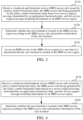
- FIG. 3 is a flowchart of a communication method for a multicast and broadcast service according to an exemplary embodiment of the present disclosure.
- the communication method for a multicast and broadcast service may be performed by UE in the 5G mobile communication network shown in FIG. 1 .
- the communication method for a multicast and broadcast service includes at least S110 to S130, which are described in detail as follows.
- MBS multicast and broadcast service
- the user terminal involved in a communication process of the MBS service is referred to as UE for short
- the user plane functional entity is referred to as UPF for short
- the access and mobility management functional entity is referred to as AMF for short
- the session management functional entity is referred to as SMF for short
- the application functional entity is referred to as AF for short
- the policy control functional entity is referred to as PCF for short.
- the PCF after receiving the service request message transmitted by the AF, the PCF generates the MBS rule according to the service request message, and transmits the generated MBS rule to the UE, so that the UE can receive the MBS rule issued by the PCF.
- the PCF after receiving the service request message transmitted by the AF, the PCF generates the URSP rule according to the service request message, and issues the URSP rule to the UE. Because the URSP rule includes the MBS rule, the UE can receive the MBS rule issued by the PCF.
- the service request message includes the information of the MBS serving region, so the MBS rule generated by the PCF according to the service request message also includes the MBS serving region.
- the service request message may further include the information of the MBS effective serving time, so the MBS rule generated by the PCF may further include the MBS effective serving time.
- the UE may receive the MBS rule issued by the PCF when registered in the mobile communication network. In some other embodiments, the UE may receive the MBS rule issued by the PCF when the UE has been registered in the mobile communication network and moved to the MBS serving region.
- the mobile communication network may be the 5G mobile communication network.
- S120 Determine whether the user terminal is located in the MBS serving region according to the MBS rule and position information of the user terminal.
- the MBS rule includes the MBS serving region, so the UE can compare its own position information with the MBS serving region included in the MBS rule, to determine whether the UE is located in the MBS serving region.
- the position of the UE is in the MBS serving region, it is determined that the UE is located in the MBS serving region, and the UE can access a corresponding MBS service. If the position of the UE is not in the MBS serving region, it is determined that the UE is not located in the MBS serving region, and the UE cannot access the corresponding MBS service.
- the position information of the UE may be GPS (Global Positioning System) position data obtained by the UE based on a GPS module configured for the UE, or may be position information that can be recognized by the 5G mobile communication network, such as cell information, tracking region information, and the like.
- the MBS serving region may be an effective position range corresponding to the MBS, which may be, for example, GPS position data, or may be position information that can be recognized by the 5G mobile communication network, such as cell information, tracking region information, and the like.
- S130 Access an MBS service in the MBS serving region if determining that the user terminal is located in the MBS serving region.
- the UE determines that it is located in a serving region of an MBS service, it means that the UE meets a restriction condition of a corresponding MBS service for the MBS serving region, so the UE can access the MBS service in the MBS serving region.
- the UE determines a target MBS service to be accessed, it determines whether an MBS session corresponding to the target MBS service exists in the mobile communication network according to the MBS rule issued by the PCF. If the UE determines that the MBS session exists, it joins the MBS session, to access the target MBS service.
- the MBS session corresponding to the target MBS service in the mobile communication network is an MBS session created in the mobile communication network through the SMF after the PCF generates a PCC rule corresponding to the target MBS service according to the service request information corresponding to the target MBS service transmitted by the AF and the PCF transmits the PCC rule to the SMF.
- the MBS session only includes the user plane connection from the (R)AN to the anchor UPF. That is, when the MBS session only includes one UPF, the user plane connection of the MBS session only includes an N3 connection between the (R)AN and the anchor UPF.
- the MBS session includes a plurality of UPFs, the user plane connection of the MBS session includes both the N3 connection between the (R)AN and the UPF and N9 connections between the UPFs.
- the UE transmits a session joining request message for joining the MBS session to the UPF, so as to trigger the UPF to transmit the first notification message to the SMF through the session joining request message, where the first notification message is used for indicating that a new UE requests to join the MBS session.
- the SMF performs corresponding control processing on the MBS session according to the received first notification message, to control the UE to join the MBS session.
- the session joining request message may further be used for triggering the UPF to transmit the second notification message indicating that the UE accesses the target MBS service to the service server AS corresponding to the target MBS service.
- the AS may transmit the index report request information to the UE, thereby meeting a requirement that the AS can sense that the UE joins the MBS service.
- the UE initiates the MBS session creation request for the target MBS service, to request to create the MBS session corresponding to the target MBS service in the mobile communication network.
- the UE can access the target MBS service when joining the created MBS session.
- the method provided in the embodiment achieves restriction on the serving region of the MBS service, and only the UE located in the MBS serving region can join the MBS session corresponding to the MBS serving region, so as to access a corresponding MBS service based on the joined MBS session.
- the UE actively accesses the MBS service based on the MBS rule issued by the PCF, so that the joining in the MBS service is achieved through the user plane, thereby reducing the signaling load of the mobile communication network.
- FIG. 4 is a flowchart of a communication method for a multicast and broadcast service according to another exemplary embodiment of the present disclosure.
- the communication method for a multicast and broadcast service may be performed by AF in the 5G mobile communication network shown in FIG. 1 .
- the communication method for a multicast and broadcast service includes at least S210 to S220, which are described in detail as follows.
- S210 Generate a service request message, the service request message including information of an MBS serving region, the service request message being used for triggering a policy control functional entity to generate an MBS rule for a user terminal, and the MBS rule being used for instructing the user terminal to access the MBS service in the MBS serving region.
- the AF in order to meet the requirements of supporting the serving region of the MBS service, the AF needs to transmit the service request message to the PCF, to trigger the PCF to generate the MBS rule for the UE through the service request message.
- the service request message is generated by the AF according to relevant information of the MBS service to be requested in the mobile communication network. Specifically, if the MBS service requested by the AF has a specific serving region, the service request message includes the information of the MBS serving region, so that the MBS rule generated by the PCF also includes the information of the MBS serving region, where the MBS rule is used for instructing the UE to access the MBS service in the MBS serving region.
- the service request message includes the information of the MBS effective serving time, so the MBS rule generated by the PCF further includes the information of the MBS effective serving time, where the MBS rule is used for instructing the UE to access the MBS service in the MBS serving region and in the MBS effective serving time.
- the service request message may further include information of an IP address and QoS requirement of the MBS service requested by the AF, so that the PCF generates a PCC rule of the MBS service according to the information of the IP address and QoS requirement of the MBS service included in the service request message.
- the PCC rule is used for controlling the SMF to manage the MBS session.
- the PCC rule is used for controlling the SMF to create an MBS session corresponding to the MBS service requested by the AF in the mobile communication network.
- the service request message may further include the AF identification information.
- the AF may directly transmit the generated service request message to the PCF, or the AF may transmit the service request message to the NEF, to forward the service request message to the PCF based on the NEF.
- the AF may select a specific manner of transmitting the service request message to the PCF according to network deployment of the mobile communication network or whether the AF is trusted by the PCF. This is not limited in this embodiment.
- the service request message transmitted by the AF to the NEF is forwarded to the PCF after the NEF performs authentication on the MBS service requested by the AF. Specifically, after receiving the service request message transmitted by the AF, the NEF performs authentication on the MBS service requested by the AF according to the AF identification information included in the service request message. If the authentication succeeds, it means that the NEF receives the request of the AF and forwards the service request message to the PCF.
- the PCF after the service request message from the AF is transmitted to the PCF, the PCF generates the MBS rule or the URSP rule of the MBS service requested by the AF according to the received service request message, the URSP rule including the MBS rule, and also generates the PCC rule of the MBS service, to trigger the UE to access the MBS service in the MBS serving region through the MBS rule or the URSP rule, and controls the SMF to create the MBS session corresponding to the MBS service requested by the AF in the mobile communication network through the PCC rule, so as to meet the requirements of supporting the MBS serving region and reduce the signaling load of the mobile communication network.
- FIG. 5 is a flowchart of a communication method for a multicast and broadcast service according to another exemplary embodiment of the present disclosure.
- the communication method for a multicast and broadcast service may be performed by PCF in the 5G mobile communication network shown in FIG. 1 .
- the communication method for a multicast and broadcast service includes at least S310 to S330, which are described in detail as follows.
- S310 Receive a service request message transmitted by an application functional entity, the service request message including information of an MBS serving region.
- the service request message received by the PCF may be directly or indirectly transmitted by the AF. For example, after the AF transmits the service request message to the NEF, the service request message is forwarded to the PCF based on the NEF.
- the information of the MBS serving region in the service request message transmitted by the AF and received by the PCF may include a position range, indicating that the MBS service requested by the AF can provide service within the position range. If the MBS service requested by the AF also has the specific serving time, the service request message further includes the information of the effective serving time of the MBS service.
- S320 Generate an MBS rule for a user terminal in response to the service request message, the MBS rule being used for instructing the user terminal to access an MBS service in the MBS serving region.
- the PCF In response to the received service request message, the PCF generates an MBS rule for the UE.
- the MBS rule includes the MBS service policy, which may include, for example, traffic description information, routing information, effective region/effective time of the MBS service policy, and the like.
- the traffic description information may include application description information, IP address of the MBS service, domain name information, multicast group identification information, connection attribute or the like.
- the routing information may include S-NSSAI, DNN, or the like.
- the effective region/effective time of the MBS service policy corresponds to information of the MBS serving region and information of the MBS effective serving time included in the service request message transmitted by the AF.
- the PCF may generate a URSP rule for the UE in response to the service request message.
- the URSP rule includes the MBS rule, and the MBS rule in the URSP rule is used for indicating that the UE is allowed to access the MBS service in the MBS serving region.
- the PCF may directly transmit the MSB rule to the UE, or may transmit the generated URSP rule to the UE. Because the URSP rule includes the MBS rule, the UE can receive the MBS rule.
- the PCF may transmit the MBS rule or the URSP rule to the UE when detecting that the UE is registered in the mobile communication network; or transmit the MBS rule or the URSP rule to the UE when detecting that the UE is registered in the mobile communication network and moves to the MBS serving region; or transmit the MBS rule or the URSP rule to the UE when the UE has been registered in the 5G mobile communication network and moved to the MBS serving region, and the mobility management state of the UE is changed to the connected state.
- This is not limited in the embodiment.
- the service request message may further include information of an IP address and QoS requirement of the MBS service requested by the AF, so that the PCF generates a PCC rule of the MBS service according to the information of the IP address and QoS requirement of the MBS service included in the service request message.
- the PCC rule is used for controlling the SMF to manage the MBS session.
- the PCC rule is used for controlling the SMF to create an MBS session corresponding to the MBS service in the mobile communication network.
- the MBS session only includes the user plane connection from the (R)AN to the anchor UPF. That is, when the MBS session only includes one UPF, the user plane connection of the MBS session only includes an N3 connection between the (R)AN and the anchor UPF.
- the MBS session includes a plurality of UPFs
- the user plane connection of the MBS session includes both the N3 connection between the (R)AN and the UPF and N9 connections between the UPFs.
- the UE determines whether it is located in the MBS serving region according to the received MBS rule or the URSP rule and its own position information. If determining that the UE is in the MBS serving region, the UE accesses a corresponding MBS service in the MBS serving region. Specifically, the UE joins the MBS session corresponding to the MBS service in the MBS serving region, to access the MBS service. Therefore, this embodiment can meet the requirements of supporting the MBS serving region. Furthermore, the joining the MBS service through the user plane can reduce the signaling load of the mobile communication network. When there is no established MBS session in the MBS serving region, the UE initiates an MBS session establishing process.
- FIG. 6 is a block diagram of a communication apparatus for a multicast and broadcast service according to an exemplary embodiment.
- the exemplary communication apparatus 400 of a multicast and broadcast service may be specifically configured on the UE in the 5G mobile communication network shown in FIG. 1 .
- the communication apparatus 400 of a multicast and broadcast service may include: an MBS rule receiving module 410, a serving region determining module 420, and an MBS service processing module 430.
- the MBS rule receiving module 410 is configured to receive an MBS rule issued by a policy control functional entity, the MBS rule being generated by the policy control functional entity based on a service request message transmitted by an application functional entity, and the service request message including information of an MBS serving region.
- the serving region determining module 420 is configured to determine whether the user terminal is located in the MBS serving region according to the MBS rule and position information of the user terminal.
- the MBS service processing module 430 is configured to access an MBS service in the MBS serving region if determining that the user terminal is located in the MBS serving region.
- the MBS service processing module 430 includes an MBS session determining unit, an MBS session joining unit, and an MBS session creation unit.
- the MBS session determining unit is configured to determine, according to the MBS rule and a target MBS service to be accessed by the user terminal, whether an MBS session corresponding to the target MBS service exists.
- the MBS session joining unit is configured to join the MBS session to access the target MBS service if determining that the MBS session exists.
- the MBS session creation unit is configured to initiate an MBS session creation request for the target MBS service if it is determined that the MBS session does not exist.
- the MBS session joining unit is configured to transmit a session joining request message for joining the MBS session to the user plane functional entity.
- the session joining request message is used for triggering the user plane functional entity to transmit to the session management functional entity a first notification message indicating that the user terminal requests to join the MBS session, or used for triggering the user plane functional entity to transmit to a service server corresponding the target MBS service a second notification message indicating that the user terminal accesses the target MBS service.
- the MBS rule receiving module 410 is configured to receive a user equipment routing selection policy (URSP) rule supporting a multicast service and issued by the policy control functional entity, the URSP rule including the MBS rule.
- URSP user equipment routing selection policy
- the MBS rule receiving module 410 is configured to receive the MBS rule issued by the policy control functional entity when the UE is registered in a mobile communication network; or receive the MBS rule issued by the policy control functional entity when the UE has been registered in the mobile communication network and moved to the MBS serving region; or receive the MBS rule issued by the policy control functional entity when the UE has been registered in the mobile communication network and moved to the MBS serving region and a mobility management state is changed to a connected state.
- FIG. 7 is a block diagram of a communication apparatus for a multicast and broadcast service according to another exemplary embodiment.
- the exemplary communication apparatus 500 of a multicast and broadcast service may be specifically configured on the AF in the 5G mobile communication network shown in FIG. 1 .
- the communication apparatus 500 of a multicast and broadcast service may include a service request message generation module 510 and a service request message transmission module 520.
- the service request message generation module 510 is configured to generate a service request message.
- the service request message includes information of an MBS serving region, and the service request message is used for triggering a policy control functional entity to generate an MBS rule for a user terminal and a PCC rule for MBS session management.
- the MBS rule is used for instructing the user terminal to access the MBS service in the MBS serving region, and the PCC rule is used for controlling the SMF to manage a corresponding MBS session.
- the service request message transmission module 520 is configured to transmit the service request message to the policy control functional entity.
- the service request message transmission module 520 is configured to transmit the service request message to the policy control functional entity, or transmit the service request message to a network exposure functional entity, where the network exposure functional entity forwards the service request message to the policy control functional entity.
- the service request message further includes information of MBS effective serving time
- the MBS rule is further used for instructing the user terminal to access the MBS service in the MBS serving region and in the MBS effective serving time.
- FIG. 8 is a block diagram of a communication apparatus for a multicast and broadcast service according to another exemplary embodiment.
- the exemplary communication apparatus 600 of a multicast and broadcast service may be specifically configured on the PCF in the 5G mobile communication network shown in FIG. 1 .
- the communication apparatus 600 of a multicast and broadcast service may include a service request message receiving module 610, a service request message response module 620, and an MBS rule transmission module 630.
- the service request message receiving module 610 is configured to receive a service request message transmitted by an application functional entity, the service request message including information of an MBS serving region.
- the service request message response module 620 is configured to generate an MBS rule for a user terminal in response to the service request message, the MBS rule being used for instructing the user terminal to access an MBS service in the MBS serving region.
- the MBS rule transmission module 630 is configured to transmit the MBS rule to the user terminal.
- the communication apparatus 600 of a multicast and broadcast service further includes a PCC rule generation module and a PCC rule transmission module.
- the PCC rule generation module is configured to generate a policy control and charging (PCC) rule in response to the service request message, the PCC rule being used for controlling a session management functional entity to manage an MBS session.
- the PCC rule transmission module is configured to transmit the PCC rule to the session management functional entity.
- the embodiments of the present disclosure further provide an electronic device.
- the electronic device includes a processor and a memory, the memory storing computer-readable instructions, and the computer-readable instructions, when executed by the processor, implementing the communication method for a multicast and broadcast service described above.
- FIG. 9 is a schematic structural diagram of a computer system adapted to implement the electronic device according to an embodiment of the present disclosure.
- the computer system 1600 of the electronic device shown in FIG. 9 is merely an example, and does not constitute any limitation on functions and use ranges of the embodiments of the present disclosure.
- the computer system 1600 includes a central processing unit (CPU) 1601, which may perform various suitable actions and processing, for example, the method described in the foregoing embodiments, based on a program stored in a read-only memory (ROM) 1602 or a program loaded from a storage part 1608 into a random access memory (RAM) 1603.
- the RAM 1603 further stores various programs and data required for operating the system.
- the CPU 1601, the ROM 1602, and the RAM 1603 are connected to each other through a bus 1604.
- An input/output (I/O) interface 1605 is also connected to the bus 1604.
- the following components are connected to the I/O interface 1605: an input part 1606 including a keyboard and a mouse, etc.; an output part 1607 including a cathode ray tube (CRT), a liquid crystal display (LCD), a speaker, or the like; a storage part 1608 including hard disk, etc.; and a communication part 1609 including a network interface card such as a local area network (LAN) card, a modem, or the like.
- the communication part 1609 performs communication processing by using a network such as the Internet.
- a driver 1610 is also connected to the I/O interface 1605 as required.
- a removable medium 1611 such as a magnetic disk, an optical disc, a magneto-optical disk, or a semiconductor memory, is installed on the driver 1610 as required, so that a computer program read from the removable medium is installed into the storage part 1608 as required.
- an embodiment of the present disclosure includes a computer program product.
- the computer program product includes a computer program stored in a computer-readable medium.
- the computer program includes a computer program used for performing a method shown in the flowchart.
- the computer program may be downloaded and installed through the communication part 1609 from a network, and/or installed from the removable medium 1611.
- the various functions defined in the system of the present disclosure are executed.
- the computer-readable medium shown in the embodiments of the present disclosure may be a computer-readable signal medium or a computer-readable storage medium or any combination thereof.
- the computer-readable storage medium may be, for example, an electrical, magnetic, optical, electromagnetic, infrared, or semiconductor system, apparatus, or device, or any combination thereof. More specific examples of the computer-readable storage medium may include, but are not limited to: an electrical connection having one or more wires, a portable computer magnetic disk, a hard disk, a random access memory (RAM), a read-only memory (ROM), an erasable programmable read-only memory (EPROM), a flash memory, an optical fiber, a compact disk read-only memory (CD-ROM), an optical storage device, a magnetic storage device, or any appropriate combination thereof.
- the computer-readable storage medium may be any tangible medium including or storing a program, and the program may be used by or used in combination with an instruction execution system, apparatus, or device.
- a computer-readable signal medium may include a data signal in a baseband or propagated as a part of a carrier wave, the data signal carrying a computer-readable program.
- a data signal propagated in such a way may assume a plurality of forms, including, but not limited to, an electromagnetic signal, an optical signal, or any appropriate combination thereof.
- the computer-readable signal medium may further be any computer-readable medium in addition to a computer-readable storage medium.
- the computer-readable medium may send, propagate, or transmit a program that is used by or used in combination with an instruction execution system, apparatus, or device.
- the computer program included in the computer-readable medium may be transmitted using any suitable medium, including but not limited to: a wireless medium, a wired medium, and the like, or any suitable combination thereof.
- Each box in a flowchart or a block diagram may represent a module, a program segment, or a part of code.
- the module, the program segment, or the part of code includes one or more executable instructions used for implementing designated logic functions.
- functions annotated in blocks may alternatively occur in a sequence different from that annotated in an accompanying drawing. For example, actually two blocks shown in succession may be performed basically in parallel, and sometimes the two blocks may be performed in a reverse sequence. This is determined by a related function.
- Each block in a block diagram and/or a flowchart and a combination of blocks in the block diagram and/or the flowchart may be implemented by using a dedicated hardware-based system configured to perform a specified function or operation, or may be implemented by using a combination of dedicated hardware and a computer instruction.
- a related unit described in the embodiments of the present disclosure may be implemented in a software manner, or may be implemented in a hardware manner, and the unit described may also be set in a processor. Names of the units do not constitute a limitation on the units.
- the computer-readable storage medium stores a computer program, the computer program, when executed by a processor, implementing the communication method for a multicast and broadcast service described above.
- the computer-readable medium may be included in the electronic device described in the foregoing embodiments, or may exist independently and is not disposed in the electronic device.
- Another aspect of the present disclosure further provides a computer program product or a computer program, the computer program product or the computer program including computer instructions, the computer instructions being stored in a computer-readable storage medium.
- a processor of a computer device reads the computer instructions from the computer-readable storage medium, and executes the computer instructions, to cause the computer device to perform the communication method for a multicast and broadcast service provided in the foregoing embodiments.
Landscapes
- Engineering & Computer Science (AREA)
- Computer Networks & Wireless Communication (AREA)
- Signal Processing (AREA)
- Multimedia (AREA)
- Mobile Radio Communication Systems (AREA)
Abstract
Description
- The present disclosure claims priority to
Chinese Patent Application No. 202010939112.9, entitled "MULTICAST AND BROADCAST SERVICE COMMUNICATION METHOD, APPARATUS, ELECTRONIC DEVICE, AND STORAGE MEDIUM" and filed with the China National Intellectual Property Administration on September 8, 2020 - The present disclosure relates to the field of computer and communication technologies, and specifically, to a multicast and broadcast service.
- The current 5G multicast and broadcast service (MBS) system does not meet the requirements of supporting a serving region of an MBS service. Furthermore, access of the MBS service is implemented through a control plane, resulting in extra signaling load in the 5G MBS system.
- Embodiments of the present disclosure provide a communication method and a communication apparatus for a multicast and broadcast service, an electronic device, and a computer-readable storage medium, which can not only meet the requirement of supporting a serving region of a multicast and broadcast service (MBS) service, but also implement access of the MBS service through a user plane, thus reducing a signaling load of a 5G MBS system.
- Other features and advantages of the present disclosure become clear from the following detailed description, or may be learned in part through practice of the present disclosure.
- According to an aspect of the embodiments of the present disclosure, a communication method for a multicast and broadcast service is provided. The method includes: receiving an MBS rule issued by a policy control functional entity, the MBS rule being generated by the policy control functional entity based on a service request message transmitted by an application functional entity, and the service request message including information of an MBS serving region; determining whether the user terminal is located in the MBS serving region according to the MBS rule and position information of the user terminal; and accessing an MBS service in the MBS serving region if determining that the user terminal is located in the MBS serving region.
- According to an aspect of the present disclosure, a communication method for a multicast and broadcast service is further provided. The method includes: generating a service request message, the service request message including information of an MBS serving region, the service request message being used for triggering a policy control functional entity to generate an MBS rule for a user terminal, and the MBS rule being used for instructing the user terminal to access the MBS service in the MBS serving region; and transmitting the service request message to the policy control functional entity.
- According to an aspect of the present disclosure, a communication method for a multicast and broadcast service is provided. The method includes: receiving a service request message transmitted by an application functional entity, the service request message including information of an MBS serving region; generating an MBS rule for a user terminal in response to the service request message, the MBS rule being used for instructing the user terminal to access an MBS service in the MBS serving region; and transmitting the MBS rule to the user terminal.
- According to an aspect of the present disclosure, a communication apparatus for a multicast and broadcast service is provided. The apparatus includes: an MBS rule receiving module, configured to receive an MBS rule issued by a policy control functional entity, the MBS rule being generated by the policy control functional entity based on a service request message transmitted by an application functional entity, and the service request message including information of an MBS serving region; a serving region determining module, configured to determine whether the user terminal is located in the MBS serving region according to the MBS rule and position information of the user terminal; and an MBS service accessing module, configured to access an MBS service in the MBS serving region if the serving region determining module determines that the user terminal is located in the MBS serving region.
- According to an aspect of the present disclosure, a communication apparatus for a multicast and broadcast service is further provided. The apparatus includes: a service request message generation module, configured to generate a service request message, the service request message including information of an MBS serving region, the service request message being used for triggering a policy control functional entity to generate an MBS rule for a user terminal, and the MBS rule being used for instructing the user terminal to access the MBS service in the MBS serving region; and a service request message transmission module, configured to transmit the service request message to the policy control functional entity.
- According to an aspect of the present disclosure, a communication apparatus for a multicast and broadcast service is further provided. The apparatus includes: a service request message receiving module, configured to receive a service request message transmitted by an application functional entity, the service request message including information of an MBS serving region; a service request message response module, configured to generate an MBS rule for a user terminal in response to the service request message, the MBS rule being used for instructing the user terminal to access an MBS service in the MBS serving region; and an MBS rule transmission module, configured to transmit the MBS rule to the user terminal.
- According to an aspect of the present disclosure, an electronic device is provided. The electronic device includes a processor and a memory, the memory storing computer-readable instructions, and the computer-readable instructions, when executed by the processor, implementing the communication method for a multicast and broadcast service described in the foregoing aspects.
- According to an aspect of the present disclosure, a computer-readable storage medium is provided. The computer-readable storage medium stores a computer program, the computer program, when executed by a processor of a computer, causing the computer to perform the communication method for a multicast and broadcast service described in the foregoing aspects.
- According to an aspect of the embodiments of the present disclosure, a computer program product or a computer program is provided, the computer program product or the computer program including computer instructions, and the computer instructions being stored in a computer-readable storage medium. A processor of a computer device reads the computer instructions from the computer-readable storage medium, and executes the computer instructions, to cause the computer device to perform the communication method for a multicast and broadcast service described in the foregoing aspects.
- In the technical solutions provided in some embodiments of the present disclosure, the application functional entity transmits the service request message to the policy control functional entity, and the service request message includes the information of the MBS serving region. The policy control functional entity generates the MBS rule according to the received service request message, and transmits the MBS rule to the user terminal. The MBS rule is used for instructing the user terminal located in the MBS serving region to access the MBS service. Therefore, when the user terminal wants to access the MBS service, the user terminal determines whether it is located in the MBS serving region according to the MBS rule. In the case of positive determination, the user terminal can join the MBS service by joining an existing MBS session in the MBS service or creating a new MBS session.
- Therefore, in the technical solutions provided in the embodiments of the present disclosure, only the user terminal located in the MBS serving region can access the MBS service, thereby supporting restriction on the MBS serving region. In addition, the user terminal located in the MBS serving region can actively access to the MBS service according to the MBS rule, which can avoid using the control plane to access the MBS service, so as to avoid extra signaling load in the 5G MBS system.
- It is to be understood that the foregoing general description and the following detailed description are merely exemplary and explanatory and are not intended to limit the present disclosure.
- The accompanying drawings herein are included in the specification and form a part of the specification, illustrate embodiments consistent with the present disclosure, and are configured to explain principles of the present disclosure together with the specification. Obviously, the accompanying drawings in the following description are merely some embodiments of the present disclosure. For a person of ordinary skill in the art, other accompanying drawings can be obtained based on the accompanying drawings without creative efforts.
-
FIG. 1 is a schematic diagram of a 5G mobile communication network architecture according to an exemplary embodiment. -
FIG. 2 is a schematic flowchart of a service supporting an MBS serving region under the 5G mobile communication network according to an exemplary embodiment. -
FIG. 3 is a flowchart of a communication method for a multicast and broadcast service according to an exemplary embodiment. -
FIG. 4 is a flowchart of another communication method for a multicast and broadcast service according to an exemplary embodiment. -
FIG. 5 is a flowchart of another communication method for a multicast and broadcast service according to an exemplary embodiment. -
FIG. 6 is a block diagram of a communication apparatus for a multicast and broadcast service according to an exemplary embodiment. -
FIG. 7 is a block diagram of another communication apparatus for a multicast and broadcast service according to an exemplary embodiment. -
FIG. 8 is a block diagram of another communication apparatus for a multicast and broadcast service according to an exemplary embodiment. -
FIG. 9 is a schematic structural diagram of an electronic device according to an exemplary embodiment. - Exemplary implementations are now described more comprehensively with reference to the accompanying drawings. However, the examples of implementations may be implemented in multiple forms, and it is not to be understood as being limited to the examples of implementations described herein. Conversely, the implementations are provided to make the present disclosure more comprehensive and complete, and comprehensively convey the idea of the examples of the implementations to a person skilled in the art.
- In addition, the described features, structures, or characteristics may be combined in one or more embodiments in any appropriate manner. In the following descriptions, more specific details are provided to provide a comprehensive understanding of the embodiments of the present disclosure. However, a person skilled in the art is to be aware that, the technical solutions in the present disclosure may be implemented without one or more of the specific details, or another method, unit, apparatus, or step may be used. In other cases, well-known methods, apparatuses, implementations, or operations are not shown or described in detail, to avoid obscuring aspects of the present disclosure.
- The block diagrams shown in the accompanying drawings are merely functional entities and do not necessarily correspond to physically independent entities. That is, the functional entities may be implemented in a software form, or in one or more hardware modules or integrated circuits, or in different networks and/or processor apparatuses and/or microcontroller apparatuses.
- The flowcharts shown in the accompanying drawings are merely examples for descriptions, do not need to include all content and operations/steps, and do not need to be performed in the described orders either. For example, some operations/steps may be further divided, while some operations/steps may be combined or partially combined. Therefore, an actual execution order may change according to an actual case.
- The term "plurality of" mentioned in the present disclosure means two or more. The term "and/or" describes an association relationship for describing associated objects and represents that three relationships may exist. For example, A and/or B may represent the following three cases: Only A exists, both A and B exist, and only B exists. The character "/" generally indicates an "or" relationship between the associated objects.
-
FIG. 1 is a schematic diagram of a 5G (the 5th Generation Mobile Communication Technology) network architecture defined in TS23.501 section of the 3GPP (3rd Generation Partnership Project) protocol. - As shown in
FIG. 1 , a 5G mobile communication network includes functional entities such as UE (User Equipment), (R)AN ((Radio) Access Network), UPF (User Plane Function), AMF (Access and Mobility Management Function), SMF (Session Management Function), AF (Application Function), PCF (Policy Control Function). The AMF, SMF and UPF mainly constitute a 5G core network. The AMF is mainly responsible for UE access and mobility management, the SMF is mainly responsible for service session management, and the UPF is mainly responsible for data packet routing and forwarding between the (R)AN and DN (Data Network). The various functional entities mentioned above may be configured in or implemented through a communication device. The communication device may be a server. The server may be an independent physical server, or may be a server cluster or distributed system formed by a plurality of physical servers, or may be a cloud server providing a cloud computing service. - The technical solutions of the embodiments of the present disclosure is proposed based on the 5G network architecture shown in
FIG. 1 , and specifically, an implementation flow of supporting an MBS serving region in the 5G mobile communication network is provided. In the implementation flow, the UE is controlled to access an MBS service through a user plane, thereby avoiding a problem of extra signaling load in a 5G network caused by controlling the UE to join the MBS service through a control plane in the related art. When the 5G network architecture supports the MBS service, a network function may be expanded or added. This solution can be implemented in the newly added network function for achieving a similar function, that is, the execution body of the added function in this solution is not limited. -
FIG. 2 is a schematic flowchart of a service supporting an MBS serving region under the 5G mobile communication network according to an exemplary embodiment. As shown inFIG. 2 , in this exemplary service process, the AF first sends a service request message to the PCF (as instep 1a or step 1b shown inFIG. 2 ). - The service request message may specifically include an IP (Internet Protocol) address of the MBS service, information of QoS (Quality of Service) requirements, information of the MBS serving region, and AF identification information. If serving time of the MBS service is specific time, the service request message further includes information of MBS effective serving time. If the MBS service is specifically a multicast service, the service request message further includes multicast group identification information. If the MBS service has subdivided different QoS requirements, the service request information further includes subdivided differentiator information, such as information of a DSCP (Differentiated Services Code Point) or TOS (Type of Service)/TC (Traffic Class) field, so as to indicate QoS requirements of different types of service flows in the same MBS session by using ATC used for identifying different service flows and carried in the TOS/TC field information.
- The serving region of the MBS service and the effective serving time of the MBS service are independent of each other. In some embodiments, if the serving time of the MBS service is specific time, but the serving region is not limited, a corresponding service request message includes information of the MBS effective serving time and does not include information of the MBS serving region.
- There may be at least two ways for the AF to transmit the service request message to the PCF. As shown in
FIG. 2 , the AF may directly transmit the service request message to the PCF (for example, step 1b inFIG. 2 ), or the AF may transmit the service request message to an NEF (Network Exposure Function), so as to forward the service request message to the PCF based on the NEF (for example,step 1a inFIG. 2 ). In practices, the AF may select the way of transmitting the service request message to the PCF according to conditions such as a network deployment condition in the 5G mobile communication network, and whether the AF is trusted by the 5G mobile communication network. For example, if the AF is trusted by the 5G mobile communication network, the AF directly transmits the service request message to the PCF, but the embodiments are not limited thereto. - In an embodiment in which the service request message is transmitted by AF to the NEF, and forwarded to the PCF based on the NEF, after receiving the service request message transmitted by the AF, the NEF performs authentication on the MBS service request initiated by the AF according to the AF identification information included in the service request message. If the authentication succeeds, it means that the NEF accepts the MBS service request, and thus forwards the service request message to the PCF. Furthermore, the NEF also interacts with UDR (User Data Repository), to configure and store information of a multicast group. If the authentication fails, the NEF rejects the MBS service request initiated by the AF, and transmits a rejection notification message to the AF. The rejection notification message may include a rejection reason value.
- According to the received service request message, the PCF generates a PCC (Policy Control and Charging) rule corresponding to the MBS service requested by the AF, and generates an MBS rule for the UE. The MBS rule includes an MBS service policy (for example,
step 2 inFIG. 2 ). For example, the MBS rule may include information such as traffic description information, routing information, effective region and/or effective time of the MBS service policy. The traffic description information may include information such as application description information, IP address of the MBS service, domain name information, multicast group identification information, connection attribute (used for indicating broadcast service or multicast service). The routing information may include information such as S-NSSAI (Single Network Slice Selection Assistance Information) and DNN (Data Network Name). The effective region of the MBS service policy corresponds to information of the MBS serving region included in the service request message transmitted by the AF, and the effective time of the MBS service policy corresponds to information of the MBS effective serving time included in the service request message transmitted by the AF. - In some exemplary embodiments, the PCF further generates a URSP (user equipment routing selection policy) rule according to the received service request message, and the URSP rule includes the MBS rule, so the URSP rule also includes the MBS service policy.
- In some embodiments, the PCF may trigger establishment of the MBS session based on a request from the AF. Specifically, the PCF may transmit the generated PCC rule to the SMF, and the SMF establishes an MBS session corresponding to the MBS service according to the received PCC rule. The MBS session only includes a user plane connection from the (R)AN to an anchor UPF. That is, when the MBS session only includes one UPF, user plane connection of the MBS session only includes an N3 connection between the (R)AN and the anchor UPF. When the MBS session includes a plurality of UPFs, the user plane connection of the MBS session includes both the N3 connection between the (R)AN and the UPF and N9 connections between the UPFs.
- As shown in
FIG. 2 , a process that the SMF establishes the MBS session corresponding to the MBS service according to the received PCC rule is implemented by using functional entities of PCF, UPF, SMF, AMF and (R)AN (for example, step 3 inFIG. 2 ). In the process of establishing the MBS session, the PCF may obtain SMF information related to the MBS service by interacting with UDM (Unified Data Management), and the SMF may also interact with the UDM to obtain AMF information related to the MBS service. The establishing process of the MBS session is not limited in this embodiment. - After the MBS session is created, the PCF returns a response message of the MBS service request to the AF (for example,
step 4 inFIG. 2 ). The service response message includes entry information of the MBS service, which is used for informing the AF that the response to the service request message has been completed. The service response message may include a DNAI (DN Access Identifier) and/or address information of the UPF. - In another embodiment, the PCF may not trigger the establishment of the MBS session after receiving the service request message transmitted by the AF. Specifically, after the PCF completes generation of the MBS rule and the PCC rule, the PCF returns a notification message for the service request message to the AF, where the notification message instructs the PCF to receive or reject the MBS service request initiated by the AF. When the UE triggers establishment of a session of the MBS service requested by the AF, the PCF transmits a service response message indicating that a session is established, to the AF after a corresponding session is established. The service response message includes the entry information of the MBS service, which is used for informing the AF that the response to the MBS service requested by the service request message has been completed. The service response message may include a DNAI (DN Access Identifier) and/or address information of the UPF.
- It can be seen that, through the above process, if the AF transmits a plurality of service request messages or transmits a service request message for requesting a plurality of MBS services to the PCF, a plurality of MBS sessions can be created in the 5G mobile communication network.
- When the UE is registered in the 5G mobile communication network, or when the UE has been registered in the 5G mobile communication network and moved to the MBS serving region, or when the UE has been registered in the 5G mobile communication network and moved to the MBS serving region and a mobility management state of the UE is changed to a connected state (for example, step 5 of
FIG. 2 ), the PCF transmits the MBS rule or the URSP rule (for example,step 6 ofFIG. 2 ) to the UE. The mobility management state of the UE is understood as a management state of whether the UE is registered in a mobile network, or a management state of an NAS connection between the UE and a mobile core network control plane AMF, and the like. When the mobility management state is changed to the connected state, applications of various network services of the UE can be guaranteed. - Because the MBS rule or URSP rule includes the MBS service policy and the MBS service policy includes the MBS serving region, the UE can obtain an effective serving region of the MBS service according to the received MBS rule or URSP rule, and the UE can determine whether it is located in the effective serving region of the MBS service according to its own position information. In addition, in a case that the MBS service has specific restrictions on serving time, the MBS service policy includes the MBS effective serving time, so the UE can further know the effective serving time of the MBS service according to the received MBS rule or URSP rule.
- If the UE is located in the effective serving region of the MBS service, and the current time is also in the effective serving time of the MBS service, the UE can access the MBS service in the effective serving region and the effective serving time of the MBS service.
- Exemplarily, a flow that the UE accesses the MBS service may be as follows. When the UE is to access an MBS service, it determines whether an MBS session corresponding to a target MBS service to be accessed by the UE exists in the 5G mobile communication network according to the received MBS rule or URSP rule. If determining that the MBS session exists, the UE joins the MBS session to access the target MBS service in the joined MBS session (for example, step 7 of
FIG. 2 ). If determining that the MBS session corresponding to the target MBS service does not exist, the UE initiates an MBS session creation request for the target MBS service, to create a new MBS session in the 5G mobile communication network. - Specifically, after the UE determines that the MBS session corresponding to the target MBS service exists, the UE transmits a session joining request message for the MBS to the UPF. The session joining request message may be an IGMP (Internet Group Management Protocol) message. After receiving the session joining request message, the UPF transmits a first notification message to the SMF, to inform the SMF that a new UE requests to join the MBS session corresponding to the target MBS service, thereby enabling the UE to join the MBS session.
- In some other embodiments, after receiving the session joining request message, the UPF further transmits a second notification message to a service server AS corresponding to the target MBS service, to inform the AS that a new UE accesses the target MBS service. After receiving the second notification message, the AS may issue index report request information to the UE accessing the target MBS service.
- Therefore, based on a service process shown in
FIG. 2 , the 5G MBS system can not only meet the requirements of supporting the effective serving region and the effective serving time of the MBS service, but also meet the requirement that the MBS service server can sense that the UE joins the MBS. Compared with controlling the UE to access the MBS service through the control plane, in this embodiment, because the UE actively accesses the MBS service through the user plane based on the MBS rule or URSP rule issued by the PCF, signaling load of the 5G MBS system can be reduced. -
FIG. 3 is a flowchart of a communication method for a multicast and broadcast service according to an exemplary embodiment of the present disclosure. The communication method for a multicast and broadcast service may be performed by UE in the 5G mobile communication network shown inFIG. 1 . The communication method for a multicast and broadcast service includes at least S110 to S130, which are described in detail as follows. - S110. Receive a multicast and broadcast service (MBS) rule issued by a policy control functional entity, the MBS rule being generated by the policy control functional entity based on a service request message transmitted by an application functional entity, and the service request message including information of an MBS serving region.
- In this embodiment, the user terminal involved in a communication process of the MBS service is referred to as UE for short, the user plane functional entity is referred to as UPF for short, the access and mobility management functional entity is referred to as AMF for short, the session management functional entity is referred to as SMF for short, the application functional entity is referred to as AF for short, and the policy control functional entity is referred to as PCF for short.
- In the following embodiments, for abbreviations of functional entities included in the mobile communication network and involved in the communication process of the MBS service, one may refer to abbreviations of functional entities listed in this embodiment, which can also correspond to functional entities having the same functions added in the 5G network architecture.
- In some embodiments, after receiving the service request message transmitted by the AF, the PCF generates the MBS rule according to the service request message, and transmits the generated MBS rule to the UE, so that the UE can receive the MBS rule issued by the PCF. In another embodiment, after receiving the service request message transmitted by the AF, the PCF generates the URSP rule according to the service request message, and issues the URSP rule to the UE. Because the URSP rule includes the MBS rule, the UE can receive the MBS rule issued by the PCF.
- The service request message includes the information of the MBS serving region, so the MBS rule generated by the PCF according to the service request message also includes the MBS serving region. The service request message may further include the information of the MBS effective serving time, so the MBS rule generated by the PCF may further include the MBS effective serving time.
- In some embodiments, the UE may receive the MBS rule issued by the PCF when registered in the mobile communication network. In some other embodiments, the UE may receive the MBS rule issued by the PCF when the UE has been registered in the mobile communication network and moved to the MBS serving region. The mobile communication network may be the 5G mobile communication network.
- S120. Determine whether the user terminal is located in the MBS serving region according to the MBS rule and position information of the user terminal.
- As mentioned above, the MBS rule includes the MBS serving region, so the UE can compare its own position information with the MBS serving region included in the MBS rule, to determine whether the UE is located in the MBS serving region.
- If the position of the UE is in the MBS serving region, it is determined that the UE is located in the MBS serving region, and the UE can access a corresponding MBS service. If the position of the UE is not in the MBS serving region, it is determined that the UE is not located in the MBS serving region, and the UE cannot access the corresponding MBS service.
- Exemplarily, the position information of the UE may be GPS (Global Positioning System) position data obtained by the UE based on a GPS module configured for the UE, or may be position information that can be recognized by the 5G mobile communication network, such as cell information, tracking region information, and the like. The MBS serving region may be an effective position range corresponding to the MBS, which may be, for example, GPS position data, or may be position information that can be recognized by the 5G mobile communication network, such as cell information, tracking region information, and the like.
- S130. Access an MBS service in the MBS serving region if determining that the user terminal is located in the MBS serving region.
- In this embodiment, if the UE determines that it is located in a serving region of an MBS service, it means that the UE meets a restriction condition of a corresponding MBS service for the MBS serving region, so the UE can access the MBS service in the MBS serving region.
- When the UE determines a target MBS service to be accessed, it determines whether an MBS session corresponding to the target MBS service exists in the mobile communication network according to the MBS rule issued by the PCF. If the UE determines that the MBS session exists, it joins the MBS session, to access the target MBS service.
- The MBS session corresponding to the target MBS service in the mobile communication network is an MBS session created in the mobile communication network through the SMF after the PCF generates a PCC rule corresponding to the target MBS service according to the service request information corresponding to the target MBS service transmitted by the AF and the PCF transmits the PCC rule to the SMF. The MBS session only includes the user plane connection from the (R)AN to the anchor UPF. That is, when the MBS session only includes one UPF, the user plane connection of the MBS session only includes an N3 connection between the (R)AN and the anchor UPF. When the MBS session includes a plurality of UPFs, the user plane connection of the MBS session includes both the N3 connection between the (R)AN and the UPF and N9 connections between the UPFs.
- The UE transmits a session joining request message for joining the MBS session to the UPF, so as to trigger the UPF to transmit the first notification message to the SMF through the session joining request message, where the first notification message is used for indicating that a new UE requests to join the MBS session. The SMF performs corresponding control processing on the MBS session according to the received first notification message, to control the UE to join the MBS session.
- In another embodiment, the session joining request message may further be used for triggering the UPF to transmit the second notification message indicating that the UE accesses the target MBS service to the service server AS corresponding to the target MBS service. After receiving the second notification message, the AS may transmit the index report request information to the UE, thereby meeting a requirement that the AS can sense that the UE joins the MBS service.
- If determining that the MBS session corresponding to the target MBS service does not exist in the mobile communication network, the UE initiates the MBS session creation request for the target MBS service, to request to create the MBS session corresponding to the target MBS service in the mobile communication network. The UE can access the target MBS service when joining the created MBS session.
- It can be seen that, the method provided in the embodiment achieves restriction on the serving region of the MBS service, and only the UE located in the MBS serving region can join the MBS session corresponding to the MBS serving region, so as to access a corresponding MBS service based on the joined MBS session. The UE actively accesses the MBS service based on the MBS rule issued by the PCF, so that the joining in the MBS service is achieved through the user plane, thereby reducing the signaling load of the mobile communication network.
-
FIG. 4 is a flowchart of a communication method for a multicast and broadcast service according to another exemplary embodiment of the present disclosure. The communication method for a multicast and broadcast service may be performed by AF in the 5G mobile communication network shown inFIG. 1 . The communication method for a multicast and broadcast service includes at least S210 to S220, which are described in detail as follows. - S210. Generate a service request message, the service request message including information of an MBS serving region, the service request message being used for triggering a policy control functional entity to generate an MBS rule for a user terminal, and the MBS rule being used for instructing the user terminal to access the MBS service in the MBS serving region.
- As described in the foregoing embodiments, in order to meet the requirements of supporting the serving region of the MBS service, the AF needs to transmit the service request message to the PCF, to trigger the PCF to generate the MBS rule for the UE through the service request message.
- The service request message is generated by the AF according to relevant information of the MBS service to be requested in the mobile communication network. Specifically, if the MBS service requested by the AF has a specific serving region, the service request message includes the information of the MBS serving region, so that the MBS rule generated by the PCF also includes the information of the MBS serving region, where the MBS rule is used for instructing the UE to access the MBS service in the MBS serving region.
- If the MBS service requested by the AF has specific serving time, the service request message includes the information of the MBS effective serving time, so the MBS rule generated by the PCF further includes the information of the MBS effective serving time, where the MBS rule is used for instructing the UE to access the MBS service in the MBS serving region and in the MBS effective serving time.
- The service request message may further include information of an IP address and QoS requirement of the MBS service requested by the AF, so that the PCF generates a PCC rule of the MBS service according to the information of the IP address and QoS requirement of the MBS service included in the service request message. The PCC rule is used for controlling the SMF to manage the MBS session. For example, the PCC rule is used for controlling the SMF to create an MBS session corresponding to the MBS service requested by the AF in the mobile communication network. In some embodiments, the service request message may further include the AF identification information.
- S220. Transmit the service request message to the policy control functional entity.
- In this embodiment, the AF may directly transmit the generated service request message to the PCF, or the AF may transmit the service request message to the NEF, to forward the service request message to the PCF based on the NEF. In practices, the AF may select a specific manner of transmitting the service request message to the PCF according to network deployment of the mobile communication network or whether the AF is trusted by the PCF. This is not limited in this embodiment.
- In some embodiments, the service request message transmitted by the AF to the NEF is forwarded to the PCF after the NEF performs authentication on the MBS service requested by the AF. Specifically, after receiving the service request message transmitted by the AF, the NEF performs authentication on the MBS service requested by the AF according to the AF identification information included in the service request message. If the authentication succeeds, it means that the NEF receives the request of the AF and forwards the service request message to the PCF.
- As described in the foregoing embodiments, after the service request message from the AF is transmitted to the PCF, the PCF generates the MBS rule or the URSP rule of the MBS service requested by the AF according to the received service request message, the URSP rule including the MBS rule, and also generates the PCC rule of the MBS service, to trigger the UE to access the MBS service in the MBS serving region through the MBS rule or the URSP rule, and controls the SMF to create the MBS session corresponding to the MBS service requested by the AF in the mobile communication network through the PCC rule, so as to meet the requirements of supporting the MBS serving region and reduce the signaling load of the mobile communication network.
- For the detailed flow after the AF transmits the service request message to the PCF, one may refer to contents described in the foregoing embodiments and the following embodiments. Details are not repeated herein.
-
FIG. 5 is a flowchart of a communication method for a multicast and broadcast service according to another exemplary embodiment of the present disclosure. The communication method for a multicast and broadcast service may be performed by PCF in the 5G mobile communication network shown inFIG. 1 . The communication method for a multicast and broadcast service includes at least S310 to S330, which are described in detail as follows. - S310. Receive a service request message transmitted by an application functional entity, the service request message including information of an MBS serving region.
- In this embodiment, the service request message received by the PCF may be directly or indirectly transmitted by the AF. For example, after the AF transmits the service request message to the NEF, the service request message is forwarded to the PCF based on the NEF.
- The information of the MBS serving region in the service request message transmitted by the AF and received by the PCF may include a position range, indicating that the MBS service requested by the AF can provide service within the position range. If the MBS service requested by the AF also has the specific serving time, the service request message further includes the information of the effective serving time of the MBS service.
- S320. Generate an MBS rule for a user terminal in response to the service request message, the MBS rule being used for instructing the user terminal to access an MBS service in the MBS serving region.
- In response to the received service request message, the PCF generates an MBS rule for the UE. The MBS rule includes the MBS service policy, which may include, for example, traffic description information, routing information, effective region/effective time of the MBS service policy, and the like. The traffic description information may include application description information, IP address of the MBS service, domain name information, multicast group identification information, connection attribute or the like. The routing information may include S-NSSAI, DNN, or the like. The effective region/effective time of the MBS service policy corresponds to information of the MBS serving region and information of the MBS effective serving time included in the service request message transmitted by the AF.
- Alternatively, the PCF may generate a URSP rule for the UE in response to the service request message. The URSP rule includes the MBS rule, and the MBS rule in the URSP rule is used for indicating that the UE is allowed to access the MBS service in the MBS serving region.
- S330. Transmit the MBS rule to the user terminal.
- In this embodiment, the PCF may directly transmit the MSB rule to the UE, or may transmit the generated URSP rule to the UE. Because the URSP rule includes the MBS rule, the UE can receive the MBS rule.
- In addition, the PCF may transmit the MBS rule or the URSP rule to the UE when detecting that the UE is registered in the mobile communication network; or transmit the MBS rule or the URSP rule to the UE when detecting that the UE is registered in the mobile communication network and moves to the MBS serving region; or transmit the MBS rule or the URSP rule to the UE when the UE has been registered in the 5G mobile communication network and moved to the MBS serving region, and the mobility management state of the UE is changed to the connected state. This is not limited in the embodiment.
- In another embodiment, the service request message may further include information of an IP address and QoS requirement of the MBS service requested by the AF, so that the PCF generates a PCC rule of the MBS service according to the information of the IP address and QoS requirement of the MBS service included in the service request message. The PCC rule is used for controlling the SMF to manage the MBS session. For example, the PCC rule is used for controlling the SMF to create an MBS session corresponding to the MBS service in the mobile communication network. The MBS session only includes the user plane connection from the (R)AN to the anchor UPF. That is, when the MBS session only includes one UPF, the user plane connection of the MBS session only includes an N3 connection between the (R)AN and the anchor UPF. When the MBS session includes a plurality of UPFs, the user plane connection of the MBS session includes both the N3 connection between the (R)AN and the UPF and N9 connections between the UPFs.
- As described in the foregoing embodiments, after the PCF issues the MBS rule or the URSP rule to the UE, the UE determines whether it is located in the MBS serving region according to the received MBS rule or the URSP rule and its own position information. If determining that the UE is in the MBS serving region, the UE accesses a corresponding MBS service in the MBS serving region. Specifically, the UE joins the MBS session corresponding to the MBS service in the MBS serving region, to access the MBS service. Therefore, this embodiment can meet the requirements of supporting the MBS serving region. Furthermore, the joining the MBS service through the user plane can reduce the signaling load of the mobile communication network. When there is no established MBS session in the MBS serving region, the UE initiates an MBS session establishing process.
-
FIG. 6 is a block diagram of a communication apparatus for a multicast and broadcast service according to an exemplary embodiment. Theexemplary communication apparatus 400 of a multicast and broadcast service may be specifically configured on the UE in the 5G mobile communication network shown inFIG. 1 . - As shown in
FIG. 6 , in an exemplary embodiment, thecommunication apparatus 400 of a multicast and broadcast service may include: an MBSrule receiving module 410, a servingregion determining module 420, and an MBSservice processing module 430. The MBSrule receiving module 410 is configured to receive an MBS rule issued by a policy control functional entity, the MBS rule being generated by the policy control functional entity based on a service request message transmitted by an application functional entity, and the service request message including information of an MBS serving region. The servingregion determining module 420 is configured to determine whether the user terminal is located in the MBS serving region according to the MBS rule and position information of the user terminal. The MBSservice processing module 430 is configured to access an MBS service in the MBS serving region if determining that the user terminal is located in the MBS serving region. - In another exemplary embodiment, the MBS
service processing module 430 includes an MBS session determining unit, an MBS session joining unit, and an MBS session creation unit. The MBS session determining unit is configured to determine, according to the MBS rule and a target MBS service to be accessed by the user terminal, whether an MBS session corresponding to the target MBS service exists. The MBS session joining unit is configured to join the MBS session to access the target MBS service if determining that the MBS session exists. The MBS session creation unit is configured to initiate an MBS session creation request for the target MBS service if it is determined that the MBS session does not exist. - In another exemplary embodiment, the MBS session joining unit is configured to transmit a session joining request message for joining the MBS session to the user plane functional entity. The session joining request message is used for triggering the user plane functional entity to transmit to the session management functional entity a first notification message indicating that the user terminal requests to join the MBS session, or used for triggering the user plane functional entity to transmit to a service server corresponding the target MBS service a second notification message indicating that the user terminal accesses the target MBS service.
- In another exemplary embodiment, the MBS
rule receiving module 410 is configured to receive a user equipment routing selection policy (URSP) rule supporting a multicast service and issued by the policy control functional entity, the URSP rule including the MBS rule. - In another exemplary embodiment, the MBS
rule receiving module 410 is configured to receive the MBS rule issued by the policy control functional entity when the UE is registered in a mobile communication network; or receive the MBS rule issued by the policy control functional entity when the UE has been registered in the mobile communication network and moved to the MBS serving region; or receive the MBS rule issued by the policy control functional entity when the UE has been registered in the mobile communication network and moved to the MBS serving region and a mobility management state is changed to a connected state. -
FIG. 7 is a block diagram of a communication apparatus for a multicast and broadcast service according to another exemplary embodiment. Theexemplary communication apparatus 500 of a multicast and broadcast service may be specifically configured on the AF in the 5G mobile communication network shown inFIG. 1 . - As shown in
FIG. 7 , in an exemplary embodiment, thecommunication apparatus 500 of a multicast and broadcast service may include a service requestmessage generation module 510 and a service requestmessage transmission module 520. The service requestmessage generation module 510 is configured to generate a service request message. The service request message includes information of an MBS serving region, and the service request message is used for triggering a policy control functional entity to generate an MBS rule for a user terminal and a PCC rule for MBS session management. The MBS rule is used for instructing the user terminal to access the MBS service in the MBS serving region, and the PCC rule is used for controlling the SMF to manage a corresponding MBS session. The service requestmessage transmission module 520 is configured to transmit the service request message to the policy control functional entity. - In another exemplary embodiment, the service request
message transmission module 520 is configured to transmit the service request message to the policy control functional entity, or transmit the service request message to a network exposure functional entity, where the network exposure functional entity forwards the service request message to the policy control functional entity. - In another exemplary embodiment, the service request message further includes information of MBS effective serving time, and the MBS rule is further used for instructing the user terminal to access the MBS service in the MBS serving region and in the MBS effective serving time.
-
FIG. 8 is a block diagram of a communication apparatus for a multicast and broadcast service according to another exemplary embodiment. Theexemplary communication apparatus 600 of a multicast and broadcast service may be specifically configured on the PCF in the 5G mobile communication network shown inFIG. 1 . - As shown in
FIG. 8 , in an exemplary embodiment, thecommunication apparatus 600 of a multicast and broadcast service may include a service requestmessage receiving module 610, a service requestmessage response module 620, and an MBSrule transmission module 630. The service requestmessage receiving module 610 is configured to receive a service request message transmitted by an application functional entity, the service request message including information of an MBS serving region. The service requestmessage response module 620 is configured to generate an MBS rule for a user terminal in response to the service request message, the MBS rule being used for instructing the user terminal to access an MBS service in the MBS serving region. The MBSrule transmission module 630 is configured to transmit the MBS rule to the user terminal. - In another exemplary embodiment, the
communication apparatus 600 of a multicast and broadcast service further includes a PCC rule generation module and a PCC rule transmission module. The PCC rule generation module is configured to generate a policy control and charging (PCC) rule in response to the service request message, the PCC rule being used for controlling a session management functional entity to manage an MBS session. The PCC rule transmission module is configured to transmit the PCC rule to the session management functional entity. - The apparatus and the method provided in the foregoing embodiments belong to the same concept. The specific manners of performing operations by the modules and units have been described in detail in the method embodiments, and details are not repeated herein.
- The embodiments of the present disclosure further provide an electronic device. The electronic device includes a processor and a memory, the memory storing computer-readable instructions, and the computer-readable instructions, when executed by the processor, implementing the communication method for a multicast and broadcast service described above.
-
FIG. 9 is a schematic structural diagram of a computer system adapted to implement the electronic device according to an embodiment of the present disclosure. - The
computer system 1600 of the electronic device shown inFIG. 9 is merely an example, and does not constitute any limitation on functions and use ranges of the embodiments of the present disclosure. - As shown in
FIG. 9 , thecomputer system 1600 includes a central processing unit (CPU) 1601, which may perform various suitable actions and processing, for example, the method described in the foregoing embodiments, based on a program stored in a read-only memory (ROM) 1602 or a program loaded from astorage part 1608 into a random access memory (RAM) 1603. TheRAM 1603 further stores various programs and data required for operating the system. TheCPU 1601, theROM 1602, and theRAM 1603 are connected to each other through abus 1604. An input/output (I/O)interface 1605 is also connected to thebus 1604. - The following components are connected to the I/O interface 1605: an input part 1606 including a keyboard and a mouse, etc.; an
output part 1607 including a cathode ray tube (CRT), a liquid crystal display (LCD), a speaker, or the like; astorage part 1608 including hard disk, etc.; and acommunication part 1609 including a network interface card such as a local area network (LAN) card, a modem, or the like. Thecommunication part 1609 performs communication processing by using a network such as the Internet. Adriver 1610 is also connected to the I/O interface 1605 as required. A removable medium 1611, such as a magnetic disk, an optical disc, a magneto-optical disk, or a semiconductor memory, is installed on thedriver 1610 as required, so that a computer program read from the removable medium is installed into thestorage part 1608 as required. - Particularly, according to an embodiment of the present disclosure, the above processes with reference to the flowcharts may be implemented as computer software programs. For example, an embodiment of the present disclosure includes a computer program product. The computer program product includes a computer program stored in a computer-readable medium. The computer program includes a computer program used for performing a method shown in the flowchart. In such an embodiment, the computer program may be downloaded and installed through the
communication part 1609 from a network, and/or installed from theremovable medium 1611. When the computer program is executed by theCPU 1601, the various functions defined in the system of the present disclosure are executed. - The computer-readable medium shown in the embodiments of the present disclosure may be a computer-readable signal medium or a computer-readable storage medium or any combination thereof. The computer-readable storage medium may be, for example, an electrical, magnetic, optical, electromagnetic, infrared, or semiconductor system, apparatus, or device, or any combination thereof. More specific examples of the computer-readable storage medium may include, but are not limited to: an electrical connection having one or more wires, a portable computer magnetic disk, a hard disk, a random access memory (RAM), a read-only memory (ROM), an erasable programmable read-only memory (EPROM), a flash memory, an optical fiber, a compact disk read-only memory (CD-ROM), an optical storage device, a magnetic storage device, or any appropriate combination thereof. In the present disclosure, the computer-readable storage medium may be any tangible medium including or storing a program, and the program may be used by or used in combination with an instruction execution system, apparatus, or device. In the present disclosure, a computer-readable signal medium may include a data signal in a baseband or propagated as a part of a carrier wave, the data signal carrying a computer-readable program. A data signal propagated in such a way may assume a plurality of forms, including, but not limited to, an electromagnetic signal, an optical signal, or any appropriate combination thereof. The computer-readable signal medium may further be any computer-readable medium in addition to a computer-readable storage medium. The computer-readable medium may send, propagate, or transmit a program that is used by or used in combination with an instruction execution system, apparatus, or device. The computer program included in the computer-readable medium may be transmitted using any suitable medium, including but not limited to: a wireless medium, a wired medium, and the like, or any suitable combination thereof.
- The flowcharts and block diagrams in the accompanying drawings illustrate possible system architectures, functions, and operations that may be implemented by a system, a method, and a computer program product according to various embodiments of the present disclosure. Each box in a flowchart or a block diagram may represent a module, a program segment, or a part of code. The module, the program segment, or the part of code includes one or more executable instructions used for implementing designated logic functions. In some implementations used as substitutes, functions annotated in blocks may alternatively occur in a sequence different from that annotated in an accompanying drawing. For example, actually two blocks shown in succession may be performed basically in parallel, and sometimes the two blocks may be performed in a reverse sequence. This is determined by a related function. Each block in a block diagram and/or a flowchart and a combination of blocks in the block diagram and/or the flowchart may be implemented by using a dedicated hardware-based system configured to perform a specified function or operation, or may be implemented by using a combination of dedicated hardware and a computer instruction.
- A related unit described in the embodiments of the present disclosure may be implemented in a software manner, or may be implemented in a hardware manner, and the unit described may also be set in a processor. Names of the units do not constitute a limitation on the units.
- Another aspect of the present disclosure further provides a computer-readable storage medium. The computer-readable storage medium stores a computer program, the computer program, when executed by a processor, implementing the communication method for a multicast and broadcast service described above. The computer-readable medium may be included in the electronic device described in the foregoing embodiments, or may exist independently and is not disposed in the electronic device.
- Another aspect of the present disclosure further provides a computer program product or a computer program, the computer program product or the computer program including computer instructions, the computer instructions being stored in a computer-readable storage medium. A processor of a computer device reads the computer instructions from the computer-readable storage medium, and executes the computer instructions, to cause the computer device to perform the communication method for a multicast and broadcast service provided in the foregoing embodiments.
- What is described above is merely exemplary embodiments of the present disclosure, and is not intended to limit the embodiments of the present disclosure. A person of ordinary skill in the art can easily make equivalent changes or modifications according to the main concept and spirit of the present disclosure. Therefore, the protection scope of the present disclosure is subject to the protection scope specified in the claims.
Claims (17)
- A communication method for a multicast and broadcast service, the method being performed by a user terminal and comprising:receiving a multicast and broadcast service, MBS, rule issued by a policy control functional entity, the MBS rule being generated by the policy control functional entity based on a service request message transmitted by an application functional entity, and the service request message comprising information of an MBS serving region;determining whether the user terminal is located in the MBS serving region according to the MBS rule and position information of the user terminal; andaccessing an MBS service in the MBS serving region if determining that the user terminal is located in the MBS serving region.
- The method according to claim 1, wherein the accessing an MBS service in the MBS serving region comprises:determining, according to the MBS rule and a target MBS service to be accessed by the user terminal, whether an MBS session corresponding to the target MBS service exists; andjoining the MBS session to access the target MBS service if determining that the MBS session exists.
- The method according to claim 2, further comprising:
initiating an MBS session creation request for the target MBS service if determining that the MBS session does not exist. - The method according to claim 2, wherein the joining the MBS session comprises:
transmitting to a user plane functional entity a session joining request message for joining the MBS session, the session joining request message being used for triggering the user plane functional entity to transmit to a session management functional entity a first notification message used for indicating that the user terminal requests to join the MBS session. - The method according to claim 4, wherein the session joining request message is further used for triggering the user plane functional entity to transmit, to a service server corresponding to the target MBS service, a second notification message indicating that the user terminal accesses the target MBS service.
- The method according to claim 1, wherein the receiving an MBS rule issued by a policy control functional entity comprises:
receiving a user equipment routing selection policy (URSP) rule supporting a multicast service and issued by the policy control functional entity, the URSP rule comprising the MBS rule. - The method according to claim 1, wherein the receiving an MBS rule issued by a policy control functional entity comprises:receiving the MBS rule issued by the policy control functional entity when the user terminal is registered in a mobile communication network; orreceiving the MBS rule issued by the policy control functional entity when the user terminal has been registered in the mobile communication network and moved to the MBS serving region; orreceiving the MBS rule issued by the policy control functional entity when the user terminal has been registered in the mobile communication network and moved to the MBS serving region, and a mobility management state of the user terminal is changed to a connected state.
- A communication method for a multicast and broadcast service, the method being performed by an application functional entity, and comprising:generating a service request message, the service request message comprising information of a multicast and broadcast service, MBS, serving region, the service request message being used for triggering a policy control functional entity to generate an MBS rule for a user terminal, and the MBS rule being used for instructing the user terminal to access the MBS service in the MBS serving region; andtransmitting the service request message to the policy control functional entity.
- The method according to claim 8, wherein the transmitting the service request message to the policy control functional entity comprises:transmitting the service request message to the policy control functional entity directly; ortransmitting the service request message to a network exposure functional entity, to forward the service request message to the policy control functional entity based on the network exposure functional entity.
- The method according to claim 8, wherein the service request message further comprises information of MBS effective serving time, and the MBS rule is further used for instructing the user terminal to access the MBS service in the MBS serving region and in the MBS effective serving time.
- A communication method for a multicast and broadcast service, the method being performed by a policy control functional entity, and comprising:receiving a service request message transmitted by an application functional entity, the service request message comprising information of a multicast and broadcast service, MBS, serving region;generating an MBS rule for a user terminal in response to the service request message, the MBS rule being used for instructing the user terminal to access an MBS service in the MBS serving region; andtransmitting the MBS rule to the user terminal.
- The method according to claim 11, further comprising:generating a policy control and charging, PCC, rule in response to the service request message, the PCC rule being used for controlling a session management functional entity to manage an MBS session; andtransmitting the PCC rule to the session management functional entity.
- A communication apparatus for a multicast and broadcast service, comprising:a multicast and broadcast service, MBS, rule receiving module, configured to receive an MBS rule issued by a policy control functional entity, the MBS rule being generated by the policy control functional entity based on a service request message transmitted by an application functional entity, and the service request message comprising information of an MBS serving region;a serving region determining module, configured to determine whether the user terminal is located in the MBS serving region according to the MBS rule and position information of the user terminal; andan MBS service processing module, configured to access an MBS service in the MBS serving region if the serving region determining module determines that the user terminal is located in the MBS serving region.
- A communication apparatus for a multicast and broadcast service, comprising:a generation module, configured to generate a service request message, the service request message comprising information of a multicast and broadcast service, MBS, serving region, the service request message being used for triggering a policy control functional entity to generate an MBS rule for a user terminal, and the MBS rule being used for instructing the user terminal to access the MBS service in the MBS serving region; anda transmission module, configured to transmit the service request message to the policy control functional entity.
- A communication apparatus for a multicast and broadcast service, comprising:a receiving module, configured to receive a service request message transmitted by an application functional entity, the service request message comprising information of a multicast and broadcast service, MBS, serving region;a generation module, configured to generate an MBS rule for a user terminal in response to the service request message, the MBS rule being used for instructing the user terminal to access an MBS service in the MBS serving region; anda transmission module, configured to transmit the MBS rule to the user terminal.
- An electronic device, comprising:a memory storing computer-readable instructions; anda processor, configured to read the computer-readable instructions stored in the memory, to perform the communication method for a multicast and broadcast service according to any one of claims 1 to 12.
- A computer-readable storage medium, storing a computer program, the computer program, when executed by a processor of a computer, causing the computer to perform the communication method for a multicast and broadcast service according to any one of claims 1 to 12.
Applications Claiming Priority (2)
| Application Number | Priority Date | Filing Date | Title |
|---|---|---|---|
| CN202010939112.9A CN112073919B (en) | 2020-09-08 | 2020-09-08 | Communication method and device for multicast broadcast service, electronic equipment and storage medium |
| PCT/CN2021/111400 WO2022052702A1 (en) | 2020-09-08 | 2021-08-09 | Multicast and broadcast service communication method, apparatus, electronic device, and storage medium |
Publications (2)
| Publication Number | Publication Date |
|---|---|
| EP4132022A1 true EP4132022A1 (en) | 2023-02-08 |
| EP4132022A4 EP4132022A4 (en) | 2023-11-15 |
Family
ID=73662979
Family Applications (1)
| Application Number | Title | Priority Date | Filing Date |
|---|---|---|---|
| EP21865758.3A Pending EP4132022A4 (en) | 2020-09-08 | 2021-08-09 | BROADCAST/MULTICAST SERVICE COMMUNICATION METHOD, APPARATUS, ELECTRONIC DEVICE AND STORAGE MEDIUM |
Country Status (6)
| Country | Link |
|---|---|
| US (1) | US12418776B2 (en) |
| EP (1) | EP4132022A4 (en) |
| JP (1) | JP7412593B2 (en) |
| KR (1) | KR102644453B1 (en) |
| CN (1) | CN112073919B (en) |
| WO (1) | WO2022052702A1 (en) |
Families Citing this family (13)
| Publication number | Priority date | Publication date | Assignee | Title |
|---|---|---|---|---|
| CN113068135B (en) * | 2020-01-02 | 2022-07-19 | 维沃移动通信有限公司 | Multicast service processing method, multicast service configuration method and related equipment |
| CN112073919B (en) | 2020-09-08 | 2024-03-01 | 腾讯科技(深圳)有限公司 | Communication method and device for multicast broadcast service, electronic equipment and storage medium |
| CN114650576B (en) * | 2020-12-18 | 2024-09-17 | 维沃移动通信有限公司 | Network function selection method and network functions |
| CN112954615B (en) * | 2021-02-10 | 2023-05-23 | 腾讯科技(深圳)有限公司 | Communication method, device, medium and electronic equipment for multicast broadcast service |
| CN115038050B (en) * | 2021-03-05 | 2023-09-05 | 中国移动通信有限公司研究院 | Service notification method, device, equipment and readable storage medium |
| CN115086896A (en) * | 2021-03-12 | 2022-09-20 | 中国移动通信有限公司研究院 | Control method, device, equipment and readable storage medium |
| CN113115299B (en) * | 2021-03-22 | 2022-11-18 | 中国联合网络通信集团有限公司 | URSP rule updating method and device |
| CN115396823B (en) * | 2021-05-19 | 2024-09-10 | 华为技术有限公司 | A method and communication device for transmitting business data |
| CN115714958B (en) * | 2021-08-10 | 2026-04-21 | 华为技术有限公司 | A data communication method and apparatus |
| CN115706932B (en) * | 2021-08-10 | 2025-11-18 | 华为技术有限公司 | A method and apparatus for configuring an MBS session |
| WO2025156093A1 (en) * | 2024-01-22 | 2025-07-31 | Nec Corporation | Devices and methods of communication |
| WO2025162619A1 (en) * | 2024-01-30 | 2025-08-07 | Telefonaktiebolaget Lm Ericsson (Publ) | Improved multicast-broadcast service (mbs) |
| JP2025139799A (en) * | 2024-03-13 | 2025-09-29 | シャープ株式会社 | Terminal device, method, and integrated circuit |
Family Cites Families (17)
| Publication number | Priority date | Publication date | Assignee | Title |
|---|---|---|---|---|
| US7391724B2 (en) * | 2002-10-09 | 2008-06-24 | Spyder Navigations, L.L.C. | System and method with policy control function for multimedia broadcast/multicast system services |
| KR20130085855A (en) * | 2012-01-20 | 2013-07-30 | 한국전자통신연구원 | Apparatus and method for configuring dynamic mbs zone for macro-diversity gain in cellular system |
| CN109769150B (en) * | 2017-11-09 | 2021-02-23 | 华为技术有限公司 | Method and equipment for transmitting multicast service |
| CN110366131B (en) * | 2018-04-09 | 2021-02-12 | 华为技术有限公司 | Method and device for transmitting data |
| US10904947B2 (en) * | 2018-05-16 | 2021-01-26 | Huawei Technologies Co., Ltd. | Message and system for application function influence on traffic routing |
| CN110972078A (en) | 2018-09-30 | 2020-04-07 | 华为技术有限公司 | Method for transmitting multicast/broadcast service, core network element and terminal equipment |
| CN111988828B (en) | 2018-11-23 | 2021-08-10 | 腾讯科技(深圳)有限公司 | Method, device and equipment for acquiring routing strategy |
| KR20210027976A (en) * | 2019-09-03 | 2021-03-11 | 삼성전자주식회사 | Method and apparatus for providing multicast and broadcast service in mobile communication network |
| KR20210055546A (en) * | 2019-11-07 | 2021-05-17 | 삼성전자주식회사 | Apparatus and method for establishing an mbs service session for providing an mbs service in a wireless communication system |
| CN112788543B (en) * | 2019-11-07 | 2023-04-07 | 华为技术有限公司 | Communication method, device and equipment |
| CN115361656A (en) * | 2019-11-07 | 2022-11-18 | 华为技术有限公司 | Communication method, device and equipment |
| US11831458B2 (en) * | 2019-11-19 | 2023-11-28 | Intel Corporation | Provisioning of multicast and broadcast services with different quality of service levels |
| CN116962994A (en) * | 2020-05-13 | 2023-10-27 | 腾讯科技(深圳)有限公司 | Multicast communication method, device, computer readable medium and electronic equipment |
| US20230209446A1 (en) * | 2020-05-22 | 2023-06-29 | Lg Electronics Inc. | Multicast-related communication |
| EP4197169A1 (en) * | 2020-08-12 | 2023-06-21 | InterDigital Patent Holdings, Inc. | Multicast-broadcast services support for network relay |
| WO2022035177A1 (en) * | 2020-08-12 | 2022-02-17 | Samsung Electronics Co., Ltd. | Method and device for providing local mbs in wireless communication system |
| CN112073919B (en) * | 2020-09-08 | 2024-03-01 | 腾讯科技(深圳)有限公司 | Communication method and device for multicast broadcast service, electronic equipment and storage medium |
-
2020
- 2020-09-08 CN CN202010939112.9A patent/CN112073919B/en active Active
-
2021
- 2021-08-09 EP EP21865758.3A patent/EP4132022A4/en active Pending
- 2021-08-09 KR KR1020227037983A patent/KR102644453B1/en active Active
- 2021-08-09 WO PCT/CN2021/111400 patent/WO2022052702A1/en not_active Ceased
- 2021-08-09 JP JP2022563468A patent/JP7412593B2/en active Active
-
2022
- 2022-11-07 US US17/982,289 patent/US12418776B2/en active Active
Also Published As
| Publication number | Publication date |
|---|---|
| CN112073919B (en) | 2024-03-01 |
| JP7412593B2 (en) | 2024-01-12 |
| KR20220162762A (en) | 2022-12-08 |
| KR102644453B1 (en) | 2024-03-08 |
| US20230055967A1 (en) | 2023-02-23 |
| EP4132022A4 (en) | 2023-11-15 |
| US12418776B2 (en) | 2025-09-16 |
| JP2023522114A (en) | 2023-05-26 |
| CN112073919A (en) | 2020-12-11 |
| WO2022052702A1 (en) | 2022-03-17 |
Similar Documents
| Publication | Publication Date | Title |
|---|---|---|
| EP4132022A1 (en) | Multicast and broadcast service communication method, apparatus, electronic device, and storage medium | |
| JP7047113B2 (en) | Methods, Devices and Systems for Guaranteeing Service Level Agreements for Applications | |
| US12004264B2 (en) | Session management method, device, and system | |
| JP7641359B2 (en) | SESSION UPDATE METHOD, TERMINAL AND NETWORK SIDE DEVICE | |
| EP4014545A1 (en) | Devices and methods for supporting handover of ue | |
| US20230078344A1 (en) | Switching control method and apparatus for service server, electronic device, and storage medium | |
| CN112533177A (en) | Method, device, apparatus and medium for providing and discovering moving edge calculation | |
| WO2023124635A1 (en) | Information processing method, network element, storage medium, and program product | |
| EP3934286B1 (en) | Charging method and device | |
| CN113472724B (en) | Network authentication method, equipment and system | |
| WO2021083033A1 (en) | Method and device for determining intermediate session management function i-smf | |
| CN116367225A (en) | Processing method, device and storage medium for service discovery | |
| US20220225459A1 (en) | Communication network component and method for handling a service request | |
| EP4503681A1 (en) | Offload processing method, and device and storage medium | |
| CN119544677B (en) | Session establishment method, device, equipment and storage medium | |
| CN112104464B (en) | A method, device and system for transmitting background traffic transmission information | |
| CN112954668A (en) | Communication method, device and equipment | |
| WO2024149102A1 (en) | Link processing method and apparatus, and terminal | |
| KR20200116843A (en) | Non-ip data delivery authorization update method and connection release method for non-ip data delivery, and device for performing the method | |
| JP2024523637A (en) | Location service entity selection method, apparatus, electronic device, and readable storage medium - Patents.com | |
| HK40035426A (en) | Communication method and apparatus of multicast broadcast business, electronic device and storage medium | |
| HK40035426B (en) | Communication method and apparatus of multicast broadcast business, electronic device and storage medium | |
| WO2021052601A1 (en) | Method, apparatus and computer program for edge computing application discovery | |
| CN119383570A (en) | Terminal access method, device, system and storage medium | |
| WO2024051663A1 (en) | Data channel establishment method, and first terminal and second terminal |
Legal Events
| Date | Code | Title | Description |
|---|---|---|---|
| STAA | Information on the status of an ep patent application or granted ep patent |
Free format text: STATUS: THE INTERNATIONAL PUBLICATION HAS BEEN MADE |
|
| PUAI | Public reference made under article 153(3) epc to a published international application that has entered the european phase |
Free format text: ORIGINAL CODE: 0009012 |
|
| STAA | Information on the status of an ep patent application or granted ep patent |
Free format text: STATUS: REQUEST FOR EXAMINATION WAS MADE |
|
| 17P | Request for examination filed |
Effective date: 20221103 |
|
| AK | Designated contracting states |
Kind code of ref document: A1 Designated state(s): AL AT BE BG CH CY CZ DE DK EE ES FI FR GB GR HR HU IE IS IT LI LT LU LV MC MK MT NL NO PL PT RO RS SE SI SK SM TR |
|
| A4 | Supplementary search report drawn up and despatched |
Effective date: 20231013 |
|
| RIC1 | Information provided on ipc code assigned before grant |
Ipc: H04W 76/40 20180101ALI20231009BHEP Ipc: H04W 64/00 20090101ALI20231009BHEP Ipc: H04W 4/08 20090101ALI20231009BHEP Ipc: H04W 4/021 20180101ALI20231009BHEP Ipc: H04W 76/15 20180101ALI20231009BHEP Ipc: H04W 4/06 20090101AFI20231009BHEP |
|
| DAV | Request for validation of the european patent (deleted) | ||
| DAX | Request for extension of the european patent (deleted) |