EP4131590B1 - Square-type secondary battery and method for manufacturing same - Google Patents
Square-type secondary battery and method for manufacturing same Download PDFInfo
- Publication number
- EP4131590B1 EP4131590B1 EP21777133.6A EP21777133A EP4131590B1 EP 4131590 B1 EP4131590 B1 EP 4131590B1 EP 21777133 A EP21777133 A EP 21777133A EP 4131590 B1 EP4131590 B1 EP 4131590B1
- Authority
- EP
- European Patent Office
- Prior art keywords
- discharge valve
- gas discharge
- sealing plate
- thin portion
- negative electrode
- Prior art date
- Legal status (The legal status is an assumption and is not a legal conclusion. Google has not performed a legal analysis and makes no representation as to the accuracy of the status listed.)
- Active
Links
Images



Classifications
-
- H—ELECTRICITY
- H01—ELECTRIC ELEMENTS
- H01M—PROCESSES OR MEANS, e.g. BATTERIES, FOR THE DIRECT CONVERSION OF CHEMICAL ENERGY INTO ELECTRICAL ENERGY
- H01M50/00—Constructional details or processes of manufacture of the non-active parts of electrochemical cells other than fuel cells, e.g. hybrid cells
- H01M50/10—Primary casings; Jackets or wrappings
- H01M50/147—Lids or covers
-
- H—ELECTRICITY
- H01—ELECTRIC ELEMENTS
- H01M—PROCESSES OR MEANS, e.g. BATTERIES, FOR THE DIRECT CONVERSION OF CHEMICAL ENERGY INTO ELECTRICAL ENERGY
- H01M10/00—Secondary cells; Manufacture thereof
- H01M10/04—Construction or manufacture in general
-
- H—ELECTRICITY
- H01—ELECTRIC ELEMENTS
- H01M—PROCESSES OR MEANS, e.g. BATTERIES, FOR THE DIRECT CONVERSION OF CHEMICAL ENERGY INTO ELECTRICAL ENERGY
- H01M10/00—Secondary cells; Manufacture thereof
- H01M10/04—Construction or manufacture in general
- H01M10/049—Processes for forming or storing electrodes in the battery container
-
- H—ELECTRICITY
- H01—ELECTRIC ELEMENTS
- H01M—PROCESSES OR MEANS, e.g. BATTERIES, FOR THE DIRECT CONVERSION OF CHEMICAL ENERGY INTO ELECTRICAL ENERGY
- H01M10/00—Secondary cells; Manufacture thereof
- H01M10/05—Accumulators with non-aqueous electrolyte
- H01M10/052—Li-accumulators
-
- H—ELECTRICITY
- H01—ELECTRIC ELEMENTS
- H01M—PROCESSES OR MEANS, e.g. BATTERIES, FOR THE DIRECT CONVERSION OF CHEMICAL ENERGY INTO ELECTRICAL ENERGY
- H01M50/00—Constructional details or processes of manufacture of the non-active parts of electrochemical cells other than fuel cells, e.g. hybrid cells
- H01M50/10—Primary casings; Jackets or wrappings
- H01M50/102—Primary casings; Jackets or wrappings characterised by their shape or physical structure
- H01M50/103—Primary casings; Jackets or wrappings characterised by their shape or physical structure prismatic or rectangular
-
- H—ELECTRICITY
- H01—ELECTRIC ELEMENTS
- H01M—PROCESSES OR MEANS, e.g. BATTERIES, FOR THE DIRECT CONVERSION OF CHEMICAL ENERGY INTO ELECTRICAL ENERGY
- H01M50/00—Constructional details or processes of manufacture of the non-active parts of electrochemical cells other than fuel cells, e.g. hybrid cells
- H01M50/10—Primary casings; Jackets or wrappings
- H01M50/131—Primary casings; Jackets or wrappings characterised by physical properties, e.g. gas permeability, size or heat resistance
- H01M50/133—Thickness
-
- H—ELECTRICITY
- H01—ELECTRIC ELEMENTS
- H01M—PROCESSES OR MEANS, e.g. BATTERIES, FOR THE DIRECT CONVERSION OF CHEMICAL ENERGY INTO ELECTRICAL ENERGY
- H01M50/00—Constructional details or processes of manufacture of the non-active parts of electrochemical cells other than fuel cells, e.g. hybrid cells
- H01M50/10—Primary casings; Jackets or wrappings
- H01M50/14—Primary casings; Jackets or wrappings for protecting against damage caused by external factors
-
- H—ELECTRICITY
- H01—ELECTRIC ELEMENTS
- H01M—PROCESSES OR MEANS, e.g. BATTERIES, FOR THE DIRECT CONVERSION OF CHEMICAL ENERGY INTO ELECTRICAL ENERGY
- H01M50/00—Constructional details or processes of manufacture of the non-active parts of electrochemical cells other than fuel cells, e.g. hybrid cells
- H01M50/10—Primary casings; Jackets or wrappings
- H01M50/147—Lids or covers
- H01M50/148—Lids or covers characterised by their shape
- H01M50/15—Lids or covers characterised by their shape for prismatic or rectangular cells
-
- H—ELECTRICITY
- H01—ELECTRIC ELEMENTS
- H01M—PROCESSES OR MEANS, e.g. BATTERIES, FOR THE DIRECT CONVERSION OF CHEMICAL ENERGY INTO ELECTRICAL ENERGY
- H01M50/00—Constructional details or processes of manufacture of the non-active parts of electrochemical cells other than fuel cells, e.g. hybrid cells
- H01M50/10—Primary casings; Jackets or wrappings
- H01M50/172—Arrangements of electric connectors penetrating the casing
- H01M50/174—Arrangements of electric connectors penetrating the casing adapted for the shape of the cells
- H01M50/176—Arrangements of electric connectors penetrating the casing adapted for the shape of the cells for prismatic or rectangular cells
-
- H—ELECTRICITY
- H01—ELECTRIC ELEMENTS
- H01M—PROCESSES OR MEANS, e.g. BATTERIES, FOR THE DIRECT CONVERSION OF CHEMICAL ENERGY INTO ELECTRICAL ENERGY
- H01M50/00—Constructional details or processes of manufacture of the non-active parts of electrochemical cells other than fuel cells, e.g. hybrid cells
- H01M50/30—Arrangements for facilitating escape of gases
-
- H—ELECTRICITY
- H01—ELECTRIC ELEMENTS
- H01M—PROCESSES OR MEANS, e.g. BATTERIES, FOR THE DIRECT CONVERSION OF CHEMICAL ENERGY INTO ELECTRICAL ENERGY
- H01M50/00—Constructional details or processes of manufacture of the non-active parts of electrochemical cells other than fuel cells, e.g. hybrid cells
- H01M50/30—Arrangements for facilitating escape of gases
- H01M50/342—Non-re-sealable arrangements
-
- H—ELECTRICITY
- H01—ELECTRIC ELEMENTS
- H01M—PROCESSES OR MEANS, e.g. BATTERIES, FOR THE DIRECT CONVERSION OF CHEMICAL ENERGY INTO ELECTRICAL ENERGY
- H01M50/00—Constructional details or processes of manufacture of the non-active parts of electrochemical cells other than fuel cells, e.g. hybrid cells
- H01M50/30—Arrangements for facilitating escape of gases
- H01M50/342—Non-re-sealable arrangements
- H01M50/3425—Non-re-sealable arrangements in the form of rupturable membranes or weakened parts, e.g. pierced with the aid of a sharp member
-
- H—ELECTRICITY
- H01—ELECTRIC ELEMENTS
- H01M—PROCESSES OR MEANS, e.g. BATTERIES, FOR THE DIRECT CONVERSION OF CHEMICAL ENERGY INTO ELECTRICAL ENERGY
- H01M50/00—Constructional details or processes of manufacture of the non-active parts of electrochemical cells other than fuel cells, e.g. hybrid cells
- H01M50/50—Current conducting connections for cells or batteries
- H01M50/531—Electrode connections inside a battery casing
-
- H—ELECTRICITY
- H01—ELECTRIC ELEMENTS
- H01M—PROCESSES OR MEANS, e.g. BATTERIES, FOR THE DIRECT CONVERSION OF CHEMICAL ENERGY INTO ELECTRICAL ENERGY
- H01M50/00—Constructional details or processes of manufacture of the non-active parts of electrochemical cells other than fuel cells, e.g. hybrid cells
- H01M50/50—Current conducting connections for cells or batteries
- H01M50/531—Electrode connections inside a battery casing
- H01M50/536—Electrode connections inside a battery casing characterised by the method of fixing the leads to the electrodes, e.g. by welding
-
- H—ELECTRICITY
- H01—ELECTRIC ELEMENTS
- H01M—PROCESSES OR MEANS, e.g. BATTERIES, FOR THE DIRECT CONVERSION OF CHEMICAL ENERGY INTO ELECTRICAL ENERGY
- H01M50/00—Constructional details or processes of manufacture of the non-active parts of electrochemical cells other than fuel cells, e.g. hybrid cells
- H01M50/50—Current conducting connections for cells or batteries
- H01M50/543—Terminals
- H01M50/547—Terminals characterised by the disposition of the terminals on the cells
- H01M50/55—Terminals characterised by the disposition of the terminals on the cells on the same side of the cell
-
- H—ELECTRICITY
- H01—ELECTRIC ELEMENTS
- H01M—PROCESSES OR MEANS, e.g. BATTERIES, FOR THE DIRECT CONVERSION OF CHEMICAL ENERGY INTO ELECTRICAL ENERGY
- H01M50/00—Constructional details or processes of manufacture of the non-active parts of electrochemical cells other than fuel cells, e.g. hybrid cells
- H01M50/50—Current conducting connections for cells or batteries
- H01M50/543—Terminals
- H01M50/552—Terminals characterised by their shape
- H01M50/553—Terminals adapted for prismatic, pouch or rectangular cells
-
- H—ELECTRICITY
- H01—ELECTRIC ELEMENTS
- H01M—PROCESSES OR MEANS, e.g. BATTERIES, FOR THE DIRECT CONVERSION OF CHEMICAL ENERGY INTO ELECTRICAL ENERGY
- H01M50/00—Constructional details or processes of manufacture of the non-active parts of electrochemical cells other than fuel cells, e.g. hybrid cells
- H01M50/50—Current conducting connections for cells or batteries
- H01M50/543—Terminals
- H01M50/564—Terminals characterised by their manufacturing process
- H01M50/566—Terminals characterised by their manufacturing process by welding, soldering or brazing
-
- H—ELECTRICITY
- H01—ELECTRIC ELEMENTS
- H01M—PROCESSES OR MEANS, e.g. BATTERIES, FOR THE DIRECT CONVERSION OF CHEMICAL ENERGY INTO ELECTRICAL ENERGY
- H01M50/00—Constructional details or processes of manufacture of the non-active parts of electrochemical cells other than fuel cells, e.g. hybrid cells
- H01M50/50—Current conducting connections for cells or batteries
- H01M50/572—Means for preventing undesired use or discharge
- H01M50/574—Devices or arrangements for the interruption of current
- H01M50/578—Devices or arrangements for the interruption of current in response to pressure
-
- H—ELECTRICITY
- H01—ELECTRIC ELEMENTS
- H01M—PROCESSES OR MEANS, e.g. BATTERIES, FOR THE DIRECT CONVERSION OF CHEMICAL ENERGY INTO ELECTRICAL ENERGY
- H01M2200/00—Safety devices for primary or secondary batteries
- H01M2200/20—Pressure-sensitive devices
-
- Y—GENERAL TAGGING OF NEW TECHNOLOGICAL DEVELOPMENTS; GENERAL TAGGING OF CROSS-SECTIONAL TECHNOLOGIES SPANNING OVER SEVERAL SECTIONS OF THE IPC; TECHNICAL SUBJECTS COVERED BY FORMER USPC CROSS-REFERENCE ART COLLECTIONS [XRACs] AND DIGESTS
- Y02—TECHNOLOGIES OR APPLICATIONS FOR MITIGATION OR ADAPTATION AGAINST CLIMATE CHANGE
- Y02E—REDUCTION OF GREENHOUSE GAS [GHG] EMISSIONS, RELATED TO ENERGY GENERATION, TRANSMISSION OR DISTRIBUTION
- Y02E60/00—Enabling technologies; Technologies with a potential or indirect contribution to GHG emissions mitigation
- Y02E60/10—Energy storage using batteries
-
- Y—GENERAL TAGGING OF NEW TECHNOLOGICAL DEVELOPMENTS; GENERAL TAGGING OF CROSS-SECTIONAL TECHNOLOGIES SPANNING OVER SEVERAL SECTIONS OF THE IPC; TECHNICAL SUBJECTS COVERED BY FORMER USPC CROSS-REFERENCE ART COLLECTIONS [XRACs] AND DIGESTS
- Y02—TECHNOLOGIES OR APPLICATIONS FOR MITIGATION OR ADAPTATION AGAINST CLIMATE CHANGE
- Y02P—CLIMATE CHANGE MITIGATION TECHNOLOGIES IN THE PRODUCTION OR PROCESSING OF GOODS
- Y02P70/00—Climate change mitigation technologies in the production process for final industrial or consumer products
- Y02P70/50—Manufacturing or production processes characterised by the final manufactured product
Definitions
- the present disclosure relates to a rectangular secondary battery and the method for manufacturing the same.
- a secondary battery such as a lithium ion secondary battery has such a structure that an electrode body including a positive electrode plate and a negative electrode plate is housed together with an electrolytic solution in a battery case.
- Patent Document 1 discloses a rectangular secondary battery configured such that a wound electrode body is housed in a rectangular battery case. Ends (electrode foil) of positive and negative electrode plates protruding from both end portions of the electrode body in a winding axis direction are each connected to external terminals fixed to a sealing plate through current collectors.
- the sealing plate is provided with a gas discharge valve, and when a gas pressure exceeds a predetermined value, the gas discharge valve is ruptured to release gas generated in the battery to the outside of the battery.
- PATENT DOCUMENT 1 Japanese Unexamined Patent Publication No. 2013-54821
- JP 2007 179793 A relates to a sealed battery lid having a thin wall portion and an insulating sealing member for fixing an electrode terminal by insert molding, which prevents cleavage of the thin wall portion during manufacturing.
- US 9 548 481 B2 relates to a battery module with a cap assembly structure having a good process stability when manufacturing the battery module.
- a joint method by ultrasonic welding has been known as the method for joining the ends of the positive and negative electrode plates and the current collectors.
- Ultrasonic welding is performed in such a manner that vibration energy of ultrasonic waves is applied to joint surfaces while the end of the positive or negative electrode plate and the current collector are sandwiched by a hom and an anvil.
- the vibration energy needs to be high.
- the current collector is connected to the external terminal fixed to the sealing plate.
- ultrasonic vibration applied to the current collector propagates to the gas discharge valve provided at the sealing plate by way of the external terminal and the sealing plate.
- the gas discharge valve is ruptured by the ultrasonic vibration having propagated to the gas discharge valve by way of the current collector.
- a rectangular secondary battery includes an electrode body including a positive electrode plate and a negative electrode plate, a rectangular battery case having an opening and housing the electrode body, a sealing plate sealing the opening, a current collector extending on an end side of the sealing plate in a longitudinal direction thereof and joined, by ultrasonic welding, to an end of the positive electrode plate or the negative electrode plate, and an external terminal provided outside the sealing plate and connected to the current collector.
- the sealing plate has a gas discharge valve ruptured when the internal gas pressure of the battery case has reached a predetermined value or greater, and a thin portion formed between the external terminal and the gas discharge valve and formed thicker than the gas discharge valve, wherein when the smallest distance between any two points of the gas discharge valve and the external terminal is H and the distance between the gas discharge valve and the thin portion is h, h/H ⁇ 0.2 is satisfied.
- the method for manufacturing a rectangular secondary battery according to the present invention is the method for manufacturing a rectangular secondary battery configured such that an electrode body including a positive electrode plate and a negative electrode plate is housed in a rectangular battery case.
- the method includes a step of attaching an external terminal and a current collector connected to the external terminal to a sealing plate for sealing an opening of the battery case, a step of joining, by ultrasonic welding, the current collector extending on an end side of the sealing plate in a longitudinal direction thereof to an end of the positive electrode plate or the negative electrode plate, and a step of housing the electrode body in the battery case and sealing the opening of the battery case with the sealing plate.
- the sealing plate has a gas discharge valve ruptured when an intemal gas pressure of the battery case has reached a predetermined value or greater, and a thin portion formed between the external terminal and the gas discharge valve and formed thicker than the gas discharge valve, wherein when the smallest distance between any two points of the gas discharge valve and the external terminal is H and the distance between the gas discharge valve and the thin portion is h, h/H ⁇ 0.2 is satisfied.
- the rectangular secondary battery configured so that vibration propagating to the gas discharge valve by way of the current collectors can be absorbed when the ends of the positive and negative electrode plates and the current collectors are joined by ultrasonic welding.
- FIG. 1 is views schematically showing a configuration of a rectangular secondary battery in one embodiment of the present disclosure
- FIG. 1(a) is a plan view
- FIG. 1(b) is a sectional view along an Ib-Ib line of FIG. 1(a)
- FIG. 1(c) is a sectional view along an Ic-Ic line of FIG. 1(b) .
- a rectangular secondary battery 10 in the present embodiment is configured such that an electrode body 11 as a power generation element is housed together with an electrolytic solution in a rectangular battery case 20. An opening of the battery case 20 is sealed with a sealing plate 21.
- the electrode body 11 has such a structure that a positive electrode plate and a negative electrode plate are stacked or wound with a separator interposed therebetween.
- the positive electrode plate is configured such that a positive electrode active material layer is provided on surfaces of a positive electrode core.
- the negative electrode plate is configured such that a negative electrode active material layer is provided on surfaces of a negative electrode core.
- Each of the positive and negative electrode plates has, at end portions in a longitudinal direction of the sealing plate 21, ends 12, 13 formed with no active material layer.
- the ends 12, 13 of the positive and negative electrode plates are, in a bundled state, joined to positive and negative electrode current collectors 16, 17 by ultrasonic welding.
- the materials of the positive and negative electrode current collectors 16, 17 are not particularly limited, but are preferably the same materials as those of the positive and negative electrode cores. With this configuration, the ends 12, 13 of the positive and negative electrode plates and the current collectors 16, 17 can be easily welded by ultrasonic welding.
- the positive electrode current collector 16 is preferably made of aluminum or aluminum alloy
- the negative electrode current collector 17 is preferably made of copper or copper alloy.
- the positive and negative electrode current collectors 16, 17 are each connected to positive and negative electrode external terminals 14, 15 provided outside the sealing plate 21.
- the external terminals 14, 15 are each insulated from the sealing plate 21 by insulating members 18, 19.
- the sealing plate 21 is provided with a gas discharge valve 22.
- the gas discharge valve 22 is ruptured when the internal gas pressure of the battery case 20 has increased to a predetermined value or greater, thereby releasing gas from the battery.
- the gas discharge valve 22 includes a thin portion thinner than other portions of the sealing plate 21.
- the sealing plate 21 has a thin portion 23, 24 formed between each of the positive and negative electrode external terminals 14, 15 and the gas discharge valve 22 and formed thicker than the gas discharge valve 22.
- the thickness of the thin portion 23, 24 is set to such a size that the thin portion 23, 24 is not ruptured in advance of the gas discharge valve 22 when the internal gas pressure of the battery case 20 has increased to the predetermined value or greater.
- the current collectors 16, 17 forming current paths from the positive and negative electrode plates to the external terminals 14, 15 also need to be increased in thickness in order to reduce the resistance.
- the thicknesses of the current collector 16, 17 increase, vibration energy when the ends 12, 13 of the positive and negative electrode plates and the current collectors 16, 17 are welded by ultrasonic welding increases.
- the thin portion 23, 24 is provided between the external terminal 14, 15 and the gas discharge valve 22, and therefore, the ultrasonic vibration propagating from the external terminal 14, 15 to the gas discharge valve 22 by way of the sealing plate 21 is absorbed by the thin portion 23, 24.
- the ultrasonic vibration having propagated to the external terminals 14, 15 from the current collectors 16, 17 propagates to the gas discharge valve 22 by way of the sealing plate 21. Since the thin portions 23, 24 provided at the sealing plate 21 are thinner than other portions of the sealing plate 21, the thin portions 23, 24 have a lower flexural rigidity than those of other portions of the sealing plate 21.
- a transverse wave of the ultrasonic vibration is a torsional wave, and therefore, the ultrasonic vibration is attenuated at a portion with a low flexural rigidity, i.e., the thin portions 23, 24, in the course of propagating in the sealing plate 21.
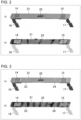
- FIGS. 2 and 3 are views showing analysis results, which are obtained by simulation, of the amount of deformation of the sealing plate 21 when the ultrasonic vibration propagates in the sealing plate 21.
- FIG. 2(a) is a view in a case where no thin portion is provided at the sealing plate 21, and FIG. 2(b) two-dimensionally shows, by the shade of color, displacement of the sealing plate 21 in a thickness direction thereof when the ultrasonic vibration is applied to the negative electrode current collector 17.
- FIG. 3(a) is a view in a case where the thin portions 23, 24 are provided at the sealing plate 21, and FIG. 3(b) two-dimensionally shows, by the shade of color, the displacement of the sealing plate 21 in the thickness direction thereof when the ultrasonic vibration is applied to the negative electrode current collector 17. Note that the thin portion 23, 24 was arranged substantially in the middle between the gas discharge valve 22 and the external terminal 14, 15.
- the simulation was conducted using a direct frequency response analysis by means of an analysis model of a fine element method solver (ANSYS).
- the sealing plate 21 was made of aluminum (A1050) so as to have a thickness of 1.4 mm, a width of 11.7 mm, and a length of 119 mm.
- the thin portion 24 was formed in an oval shape so as to have a thickness of 0.1 mm, a width of 5.58 mm, and a length of 9 mm.
- the frequency of the ultrasonic vibration applied to the negative electrode current collector 17 was 20 kHz, and the amplitude of the ultrasonic vibration was 0.03 mm.
- FIG. 4 is a graph showing a relationship between the displacement of the sealing plate 21 in the thickness direction thereof and a distance from a center portion of the sealing plate 21 when the ultrasonic vibration is applied to the negative electrode current collector 17.
- the displacement in the thickness direction as described herein indicates displacement along the center axis J of the sealing plate 21.
- a curved line indicated by an arrow P shows a graph in a case where the thin portion 24 is not provided
- a curved line indicated by an arrow Q shows a graph in a case where the thin portion 24 is provided.
- FIG. 4 shows that the displacement of the sealing plate 21 in the thickness direction thereof greatly decreases in a region A between the center portion of the sealing plate 21 and the thin portion 24 in the case (the curved line Q) of providing the thin portion 24 than in the case (the curved line P) of not providing the thin portion 24. That is, it shows that the thin portion 24 is provided at the sealing plate 21 so that the ultrasonic vibration propagating from the external terminal 15 to the gas discharge valve 22 by way of the sealing plate 21 can be absorbed by the thin portion 24.
- an effect of absorbing the ultrasonic vibration by the thin portions 23, 24 depends on the degree of decline in the flexural rigidity of the sealing plate 21.
- at least t ⁇ 0.8T is preferable and t ⁇ 0.5T is more preferable when the thickness of the sealing plate 21 is T and the thickness of the thin portion 23, 24 is t.
- the thickness t of the thin portion 23, 24 is preferably 0.2T ⁇ t. Note that the thickness of the gas discharge valve 22 is normally set to equal to or less than 1/10 of the thickness of the sealing plate 21, and therefore, if the thickness t of the thin portion 23, 24 is set to 0.2T, the thin portion 23, 24 is not ruptured in advance of the gas discharge valve 22.
- the thickness of a thinnest portion is defined as the thickness of the thin portion 23, 24.
- the thickness of a thinnest portion is defined as the thickness of the gas discharge valve 22.
- FIG. 5 is views showing one example of the thin portion 23, 24, FIG. 5(a) is a plan view, and FIG. 5(b) is a sectional view along a Vb-Vb line of FIG. 5(a) .
- the thin portion 23, 24 is an oval extending in a width direction of the sealing plate 21.
- the thin portion 23, 24 in such a shape can be formed by pressing, for example.
- the thin portion 23, 24 may be divided in the width direction of the sealing plate 21. Alternatively, multiple thin portions 23, 24 may be provided between the external terminal 14, 15 and the gas discharge valve 22.
- the length W of the thin portion 24 (only the negative electrode side thin portion is shown) in the width direction of the sealing plate 21 is preferably longer than the length L of the gas discharge valve 22 in the width direction of the sealing plate 21.
- the thin portion 24 wider than the gas discharge valve 22 is provided before the gas discharge valve 22, and therefore, functions as a bulwark against the ultrasonic vibration propagating to the gas discharge valve 22.
- the ultrasonic vibration propagating to the gas discharge valve 22 can be more effectively attenuated.
- FIG. 7 is a view and a graph showing results, which are obtained by simulation, of a change in the maximum stress value on the gas discharge valve 22 when the position of the thin portion 23, 24 provided between the external terminal 14, 15 and the gas discharge valve 22 has changed.
- FIG. 7(a) is a view showing the arrangement position of the thin portion 24 when a distance between an end portion of the gas discharge valve 22 and an end portion of the insulating member 19 is H' and a distance between the end portion of the gas discharge valve 22 and the thin portion 24 is h.
- the thin portion 24 is arranged between the end portion of the gas discharge valve 22 and the end portion of the insulating member 19.
- FIG. 7(b) is a graph showing a change in the maximum stress value on the gas discharge valve 22 when h/H' has changed. Note that simulation conditions were the same as those shown in FIGS. 2 and 3 . Moreover, a line indicated by an arrow S indicates the maximum stress value in a case where the thin portion 24 is not provided.
- FIG. 7(b) shows that within a range in which h/H ⁇ 0.2 is satisfied, the maximum stress value on the gas discharge valve 22 decreases as compared to the maximum stress value in the case of not providing the thin portion 24.
- the gas discharge valve 22 originally having a low flexural rigidity and the thin portion 24 purposefully provided as a portion having a low flexural rigidity become similar to each other as a portion having a low flexural rigidity, and for this reason, an effect produced by the thin portion 24 is reduced.
- the thin portion 23, 24 is preferably arranged at a position satisfying h/H' ⁇ 0.2. Considering formability of the thin portion 23, 24, h/H' ⁇ 0.8 is preferably satisfied.
- the external terminals 14, 15 and the current collectors 16, 17 connected to the external terminals 14, 15 are attached to the sealing plate 21 for sealing the opening of the battery case 20.
- the sealing plate 21 is formed with the gas discharge valve 22 and the thin portions 23, 24 in advance.
- the electrode body 11 is arranged such a position that the ends 12, 13 of the positive and negative electrode plates overlap with the current collectors 16, 17, and the ends 12, 13 of the positive and negative electrode plates and the current collectors 16, 17 are ultrasonic-welded at welding portions 40, 41 by a normal method.
- the sealing plate 21 is provided with the thin portions 23, 24, the ultrasonic vibration propagating from the current collectors 16, 17 to the gas discharge valve 22 by way of the external terminals 14, 15 and the sealing plate 21 is absorbed by the thin portions 23, 24.
- rupture of the gas discharge valve 22 when the ends 12, 13 of the positive and negative electrode plates and the current collectors 16, 17 are welded by ultrasonic welding can be prevented.
- the electrode body 11 attached to the sealing plate 21 is housed in the rectangular battery case 20, and thereafter, the sealing plate 21 is welded to an opening edge of the battery case 20. In this manner, the rectangular secondary battery is completed.
- the type of rectangular secondary battery in the present embodiment is not particularly limited, and for example, is applicable to a lithium ion secondary battery, a nickel-hydrogen secondary battery, etc.
Landscapes
- Chemical & Material Sciences (AREA)
- Chemical Kinetics & Catalysis (AREA)
- Electrochemistry (AREA)
- General Chemical & Material Sciences (AREA)
- Engineering & Computer Science (AREA)
- Manufacturing & Machinery (AREA)
- Gas Exhaust Devices For Batteries (AREA)
- Connection Of Batteries Or Terminals (AREA)
Description
- The present disclosure relates to a rectangular secondary battery and the method for manufacturing the same.
- A secondary battery such as a lithium ion secondary battery has such a structure that an electrode body including a positive electrode plate and a negative electrode plate is housed together with an electrolytic solution in a battery case.
-
Patent Document 1 discloses a rectangular secondary battery configured such that a wound electrode body is housed in a rectangular battery case. Ends (electrode foil) of positive and negative electrode plates protruding from both end portions of the electrode body in a winding axis direction are each connected to external terminals fixed to a sealing plate through current collectors. The sealing plate is provided with a gas discharge valve, and when a gas pressure exceeds a predetermined value, the gas discharge valve is ruptured to release gas generated in the battery to the outside of the battery. - PATENT DOCUMENT 1:
Japanese Unexamined Patent Publication No. 2013-54821 -
JP 2007 179793 A -
US 9 548 481 B2 - A joint method by ultrasonic welding has been known as the method for joining the ends of the positive and negative electrode plates and the current collectors. Ultrasonic welding is performed in such a manner that vibration energy of ultrasonic waves is applied to joint surfaces while the end of the positive or negative electrode plate and the current collector are sandwiched by a hom and an anvil.
- It is necessary to reduce a battery intemal resistance in a high-power battery in order to obtain sufficient output characteristics. For this reason, the resistance also needs to be reduced for the current collectors forming current paths from the positive and negative electrode plates to the external terminals. Thus, the thickness of the current collector needs to be increased.
- If the thickness of the current collector is increased, in a case where the ends of the positive and negative electrode plates and the current collectors are joined by ultrasonic welding, the vibration energy needs to be high. The current collector is connected to the external terminal fixed to the sealing plate. Thus, ultrasonic vibration applied to the current collector propagates to the gas discharge valve provided at the sealing plate by way of the external terminal and the sealing plate. As a result, there is a probability that when the vibration energy upon ultrasonic welding has increased, the gas discharge valve is ruptured by the ultrasonic vibration having propagated to the gas discharge valve by way of the current collector.
- The invention is as set out in the independent claims, further aspects of the invention are outlined in the dependent claims. Embodiments that do not fall within the scope of the claims do not describe part of the invention.
- A rectangular secondary battery according to the present invention includes an electrode body including a positive electrode plate and a negative electrode plate, a rectangular battery case having an opening and housing the electrode body, a sealing plate sealing the opening, a current collector extending on an end side of the sealing plate in a longitudinal direction thereof and joined, by ultrasonic welding, to an end of the positive electrode plate or the negative electrode plate, and an external terminal provided outside the sealing plate and connected to the current collector. The sealing plate has a gas discharge valve ruptured when the internal gas pressure of the battery case has reached a predetermined value or greater, and a thin portion formed between the external terminal and the gas discharge valve and formed thicker than the gas discharge valve, wherein when the smallest distance between any two points of the gas discharge valve and the external terminal is H and the distance between the gas discharge valve and the thin portion is h, h/H ≥ 0.2 is satisfied.
- The method for manufacturing a rectangular secondary battery according to the present invention is the method for manufacturing a rectangular secondary battery configured such that an electrode body including a positive electrode plate and a negative electrode plate is housed in a rectangular battery case. The method includes a step of attaching an external terminal and a current collector connected to the external terminal to a sealing plate for sealing an opening of the battery case, a step of joining, by ultrasonic welding, the current collector extending on an end side of the sealing plate in a longitudinal direction thereof to an end of the positive electrode plate or the negative electrode plate, and a step of housing the electrode body in the battery case and sealing the opening of the battery case with the sealing plate. The sealing plate has a gas discharge valve ruptured when an intemal gas pressure of the battery case has reached a predetermined value or greater, and a thin portion formed between the external terminal and the gas discharge valve and formed thicker than the gas discharge valve, wherein when the smallest distance between any two points of the gas discharge valve and the external terminal is H and the distance between the gas discharge valve and the thin portion is h, h/H ≥ 0.2 is satisfied.
- According to the present invention, the rectangular secondary battery configured so that vibration propagating to the gas discharge valve by way of the current collectors can be absorbed when the ends of the positive and negative electrode plates and the current collectors are joined by ultrasonic welding.
-
- [
FIG. 1] FIG. 1 is views schematically showing a configuration of a rectangular secondary battery in one embodiment of the present disclosure,FIG. 1(a) is a plan view,FIG. 1(b) is a sectional view along an Ib-Ib line ofFIG. 1(a), and FIG. 1(c) is a sectional view along an Ic-Ic line ofFIG. 1(b) . - [
FIG. 2] FIG. 2 is views showing results, which are obtained by simulation, of analysis of the amount of deformation of a sealing plate when ultrasonic vibration propagates in the sealing plate. - [
FIG. 3] FIG. 3 is views showing results, which are obtained by simulation, of analysis of the amount of deformation of the sealing plate when the ultrasonic vibration propagates in the sealing plate. - [
FIG. 4] FIG. 4 is a graph showing a relationship between displacement of the sealing plate in a thickness direction thereof and a distance from a center portion of the sealing plate when the ultrasonic vibration is applied to a negative electrode current collector. - [
FIG. 5] FIG. 5 is views showing a configuration of a thin portion,FIG. 5(a) is a plan view, andFIG. 5(b) is a sectional view along a Vb-Vb line ofFIG. 5(a) . - [
FIG. 6] FIG. 6 is a plan view showing the configuration of the thin portion. - [
FIG. 7] FIG. 7 is a view and a graph showing results, which are obtained by simulation, of a change in the maximum stress value on the gas discharge valve when the position of the thin portion provided between the external terminal and the gas discharge valve has changed. - [
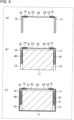
FIG. 8] FIG. 8 is views for describing the method for manufacturing the rectangular secondary battery according to the present embodiment. - Hereinafter, an embodiment of the present disclosure will be described in detail with reference to the drawings. Note that the present invention is not limited to the embodiment below. Moreover, changes can be made as necessary without departing from a scope in which advantageous effects of the present disclosure are produced.
-
FIG. 1 is views schematically showing a configuration of a rectangular secondary battery in one embodiment of the present disclosure,FIG. 1(a) is a plan view,FIG. 1(b) is a sectional view along an Ib-Ib line ofFIG. 1(a), and FIG. 1(c) is a sectional view along an Ic-Ic line ofFIG. 1(b) . - As shown in
FIGS. 1(a) to 1(c) , a rectangularsecondary battery 10 in the present embodiment is configured such that anelectrode body 11 as a power generation element is housed together with an electrolytic solution in arectangular battery case 20. An opening of thebattery case 20 is sealed with asealing plate 21. - The
electrode body 11 has such a structure that a positive electrode plate and a negative electrode plate are stacked or wound with a separator interposed therebetween. The positive electrode plate is configured such that a positive electrode active material layer is provided on surfaces of a positive electrode core. The negative electrode plate is configured such that a negative electrode active material layer is provided on surfaces of a negative electrode core. - Each of the positive and negative electrode plates has, at end portions in a longitudinal direction of the
sealing plate 21,ends ends current collectors - The materials of the positive and negative electrode
current collectors ends current collectors current collector 16 is preferably made of aluminum or aluminum alloy, and the negative electrodecurrent collector 17 is preferably made of copper or copper alloy. - The positive and negative electrode
current collectors external terminals sealing plate 21. Theexternal terminals sealing plate 21 by insulatingmembers - The
sealing plate 21 is provided with agas discharge valve 22. Thegas discharge valve 22 is ruptured when the internal gas pressure of thebattery case 20 has increased to a predetermined value or greater, thereby releasing gas from the battery. Thegas discharge valve 22 includes a thin portion thinner than other portions of thesealing plate 21. - In the present embodiment, the
sealing plate 21 has athin portion external terminals gas discharge valve 22 and formed thicker than thegas discharge valve 22. The thickness of thethin portion thin portion gas discharge valve 22 when the internal gas pressure of thebattery case 20 has increased to the predetermined value or greater. - As described above, it is necessary to reduce a battery internal resistance in a high-power battery in order to obtain sufficient output characteristics. For this reason, the
current collectors external terminals current collector ends current collectors - Meanwhile, when the
ends current collectors current collectors gas discharge valve 22 provided at thesealing plate 21 by way of theexternal terminals sealing plate 21. As a result, there is a probability that when the vibration energy upon ultrasonic welding has increased, thegas discharge valve 22 is ruptured due to the ultrasonic vibration having propagated to thegas discharge valve 22 by way of thecurrent collectors - In the present embodiment, the
thin portion external terminal gas discharge valve 22, and therefore, the ultrasonic vibration propagating from theexternal terminal gas discharge valve 22 by way of the sealingplate 21 is absorbed by thethin portion - The ultrasonic vibration having propagated to the
external terminals current collectors gas discharge valve 22 by way of the sealingplate 21. Since thethin portions plate 21 are thinner than other portions of the sealingplate 21, thethin portions plate 21. A transverse wave of the ultrasonic vibration is a torsional wave, and therefore, the ultrasonic vibration is attenuated at a portion with a low flexural rigidity, i.e., thethin portions plate 21. As a result, the attenuated ultrasonic vibration propagates to thegas discharge valve 22, and therefore, excessive stress due to the ultrasonic vibration is not applied to thegas discharge valve 22. As a result, rupture of thegas discharge valve 22 due to the ultrasonic vibration having propagated to thegas discharge valve 22 by way of thecurrent collectors -
FIGS. 2 and 3 are views showing analysis results, which are obtained by simulation, of the amount of deformation of the sealingplate 21 when the ultrasonic vibration propagates in the sealingplate 21. -
FIG. 2(a) is a view in a case where no thin portion is provided at the sealingplate 21, andFIG. 2(b) two-dimensionally shows, by the shade of color, displacement of the sealingplate 21 in a thickness direction thereof when the ultrasonic vibration is applied to the negative electrodecurrent collector 17. -
FIG. 3(a) is a view in a case where thethin portions plate 21, andFIG. 3(b) two-dimensionally shows, by the shade of color, the displacement of the sealingplate 21 in the thickness direction thereof when the ultrasonic vibration is applied to the negative electrodecurrent collector 17. Note that thethin portion gas discharge valve 22 and theexternal terminal - The simulation was conducted using a direct frequency response analysis by means of an analysis model of a fine element method solver (ANSYS). The sealing
plate 21 was made of aluminum (A1050) so as to have a thickness of 1.4 mm, a width of 11.7 mm, and a length of 119 mm. - The
thin portion 24 was formed in an oval shape so as to have a thickness of 0.1 mm, a width of 5.58 mm, and a length of 9 mm. The frequency of the ultrasonic vibration applied to the negative electrodecurrent collector 17 was 20 kHz, and the amplitude of the ultrasonic vibration was 0.03 mm. -
FIG. 4 is a graph showing a relationship between the displacement of the sealingplate 21 in the thickness direction thereof and a distance from a center portion of the sealingplate 21 when the ultrasonic vibration is applied to the negative electrodecurrent collector 17. The displacement in the thickness direction as described herein indicates displacement along the center axis J of the sealingplate 21. - In
FIG. 4 , a curved line indicated by an arrow P shows a graph in a case where thethin portion 24 is not provided, and a curved line indicated by an arrow Q shows a graph in a case where thethin portion 24 is provided. -
FIG. 4 shows that the displacement of the sealingplate 21 in the thickness direction thereof greatly decreases in a region A between the center portion of the sealingplate 21 and thethin portion 24 in the case (the curved line Q) of providing thethin portion 24 than in the case (the curved line P) of not providing thethin portion 24. That is, it shows that thethin portion 24 is provided at the sealingplate 21 so that the ultrasonic vibration propagating from theexternal terminal 15 to thegas discharge valve 22 by way of the sealingplate 21 can be absorbed by thethin portion 24. - In the present embodiment, an effect of absorbing the ultrasonic vibration by the
thin portions plate 21. Thus, in order to obtain a sufficient absorption effect, at least t ≤ 0.8T is preferable and t ≤ 0.5T is more preferable when the thickness of the sealingplate 21 is T and the thickness of thethin portion - If the thickness of the
thin portion plate 21 is distorted at thethin portion battery case 20 is deformed. For this reason, the thickness t of thethin portion gas discharge valve 22 is normally set to equal to or less than 1/10 of the thickness of the sealingplate 21, and therefore, if the thickness t of thethin portion thin portion gas discharge valve 22. - Note that in a case where the thickness of the
thin portion thin portion gas discharge valve 22 is not uniform, the thickness of a thinnest portion is defined as the thickness of thegas discharge valve 22. - In the present embodiment, the shape of the
thin portion FIG. 5 is views showing one example of thethin portion FIG. 5(a) is a plan view, andFIG. 5(b) is a sectional view along a Vb-Vb line ofFIG. 5(a) . Thethin portion plate 21. Thethin portion thin portion plate 21. Alternatively, multiplethin portions external terminal gas discharge valve 22. - As shown in
FIG. 6 , the length W of the thin portion 24 (only the negative electrode side thin portion is shown) in the width direction of the sealingplate 21 is preferably longer than the length L of thegas discharge valve 22 in the width direction of the sealingplate 21. Thethin portion 24 wider than thegas discharge valve 22 is provided before thegas discharge valve 22, and therefore, functions as a bulwark against the ultrasonic vibration propagating to thegas discharge valve 22. Thus, the ultrasonic vibration propagating to thegas discharge valve 22 can be more effectively attenuated. -
FIG. 7 is a view and a graph showing results, which are obtained by simulation, of a change in the maximum stress value on thegas discharge valve 22 when the position of thethin portion external terminal gas discharge valve 22 has changed. -
FIG. 7(a) is a view showing the arrangement position of thethin portion 24 when a distance between an end portion of thegas discharge valve 22 and an end portion of the insulatingmember 19 is H' and a distance between the end portion of thegas discharge valve 22 and thethin portion 24 is h. In this case, thethin portion 24 is arranged between the end portion of thegas discharge valve 22 and the end portion of the insulatingmember 19. -
FIG. 7(b) is a graph showing a change in the maximum stress value on thegas discharge valve 22 when h/H' has changed. Note that simulation conditions were the same as those shown inFIGS. 2 and 3 . Moreover, a line indicated by an arrow S indicates the maximum stress value in a case where thethin portion 24 is not provided. -
FIG. 7(b) shows that within a range in which h/H ≥ 0.2 is satisfied, the maximum stress value on thegas discharge valve 22 decreases as compared to the maximum stress value in the case of not providing thethin portion 24. - On the other hand, if the position of the
thin portion 24 is too close to the gas discharge valve 22 (h/H < 0.2), thegas discharge valve 22 originally having a low flexural rigidity and thethin portion 24 purposefully provided as a portion having a low flexural rigidity become similar to each other as a portion having a low flexural rigidity, and for this reason, an effect produced by thethin portion 24 is reduced. - If the position of the
thin portion 24 is too close to the insulating member 19 (h/H' > 0.8), it is difficult to form thethin portion 24 at the sealingplate 21 by, e.g., pressing. - Thus, when the distance between the
gas discharge valve 22 and the insulatingmember gas discharge valve 22 and thethin portion thin portion thin portion - Note that the above-described simulation was conducted taking the distance between the end portion of the
gas discharge valve 22 and the end portion of the insulatingmember 19 as H', but results similar to those ofFIG. 7(b) were obtained taking a distance between the end portion of thegas discharge valve 22 and an end portion of theexternal terminal 15 as H as shown inFIG. 7(a) . - Next, the method for manufacturing the rectangular secondary battery according to the present embodiment will be described with reference to
FIG. 8 . - First, as shown in
FIG. 8(a) , theexternal terminals current collectors external terminals plate 21 for sealing the opening of thebattery case 20. The sealingplate 21 is formed with thegas discharge valve 22 and thethin portions - Next, as shown in
FIG. 8(b) , theelectrode body 11 is arranged such a position that the ends 12, 13 of the positive and negative electrode plates overlap with thecurrent collectors ends current collectors welding portions plate 21 is provided with thethin portions current collectors gas discharge valve 22 by way of theexternal terminals plate 21 is absorbed by thethin portions gas discharge valve 22 when the ends 12, 13 of the positive and negative electrode plates and thecurrent collectors - Finally, as shown in
FIG. 8(c) , theelectrode body 11 attached to the sealingplate 21 is housed in therectangular battery case 20, and thereafter, the sealingplate 21 is welded to an opening edge of thebattery case 20. In this manner, the rectangular secondary battery is completed. - The present disclosure has been described above with reference to the preferable embodiment, but such description is not limitative and various modifications can be made, needless to say.
- The type of rectangular secondary battery in the present embodiment is not particularly limited, and for example, is applicable to a lithium ion secondary battery, a nickel-hydrogen secondary battery, etc.
-
- 10
- Rectangular Secondary Battery
- 11
- Electrode Body
- 12
- Sealing Plate
- 12, 13
- Ends of Positive and Negative Electrode Plates
- 14, 15
- External Terminal
- 16, 17
- Current Collector
- 18, 19
- Insulating Member
- 20
- Battery Case
- 21
- Sealing Plate
- 22
- Gas Discharge Valve
- 23, 24
- Thin Portion
Claims (4)
- A rectangular secondary battery (10) comprising:an electrode body (11) including a positive electrode plate (12) and a negative electrode plate (13);a rectangular battery case (20) having an opening and housing the electrode body (11);a sealing plate (21) sealing the opening;a current collector (16, 17) extending on an end side of the sealing plate (21) in a longitudinal direction thereof and joined, by ultrasonic welding, to an end of the positive electrode plate (12) or the negative electrode plate (13); andan external terminal (14, 15) provided outside the sealing plate (21) and connected to the current collector (16, 17),wherein the sealing plate (21) hasa gas discharge valve (22) ruptured when an internal gas pressure of the battery case (20) has reached a predetermined value or greater, anda thin portion (23, 24) formed between the external terminal (14, 15) and the gas discharge valve (22) and formed thicker than the gas discharge valve (22);wherein, when the smallest distance between any two points of the gas discharge valve (22) and the external terminal (14, 15) is H and the distance between the gas discharge valve (22) and the thin portion (23, 24) is h, h/H ≥ 0.2 is satisfied.
- The rectangular secondary battery (10) of claim 1, wherein
when a thickness of the sealing plate (21) is T and a thickness of the thin portion (23, 24) is t, 0.2T ≤ t ≤ 0.8T is satisfied. - The rectangular secondary battery (10) of claim 1, wherein
a length of the thin portion (23, 24) in a sealing plate (21) width direction is longer than a length of the gas discharge valve (22) in the sealing plate (21) width direction. - A method for manufacturing a rectangular secondary battery (10) configured such that an electrode body (11) including a positive electrode plate (12) and a negative electrode plate (13) is housed in a rectangular battery case (20), comprising:a step of attaching an external terminal (14, 15) and a current collector (16, 17) connected to the external terminal (14, 15) to a sealing plate (21) for sealing an opening of the battery case (20);a step of joining, by ultrasonic welding, the current collector (16, 17) extending on an end side of the sealing plate (21) in a longitudinal direction thereof to an end of the positive electrode plate (12) or the negative electrode plate (13); anda step of housing the electrode body (11) in the battery case (20) and sealing the opening of the battery case (20) with the sealing plate (21),wherein the sealing plate (21) hasa gas discharge valve (22) ruptured when an internal gas pressure of the battery case (20) has reached a predetermined value or greater, anda thin portion (23, 24) formed between the external terminal (14, 15) and the gas discharge valve (22) and formed thicker than the gas discharge valve (22);wherein, when the smallest distance between any two points of the gas discharge valve (22) and the external terminal (14, 15) is H and the distance between the gas discharge valve (22) and the thin portion (23, 24) is h, h/H ≥ 0.2 is satisfied.
Applications Claiming Priority (2)
| Application Number | Priority Date | Filing Date | Title |
|---|---|---|---|
| JP2020058248 | 2020-03-27 | ||
| PCT/JP2021/001687 WO2021192544A1 (en) | 2020-03-27 | 2021-01-19 | Square-type secondary battery and method for manufacturing same |
Publications (3)
| Publication Number | Publication Date |
|---|---|
| EP4131590A1 EP4131590A1 (en) | 2023-02-08 |
| EP4131590A4 EP4131590A4 (en) | 2023-10-11 |
| EP4131590B1 true EP4131590B1 (en) | 2025-03-05 |
Family
ID=77891321
Family Applications (1)
| Application Number | Title | Priority Date | Filing Date |
|---|---|---|---|
| EP21777133.6A Active EP4131590B1 (en) | 2020-03-27 | 2021-01-19 | Square-type secondary battery and method for manufacturing same |
Country Status (5)
| Country | Link |
|---|---|
| US (1) | US20240291083A1 (en) |
| EP (1) | EP4131590B1 (en) |
| JP (1) | JP7615123B2 (en) |
| CN (1) | CN115210941B (en) |
| WO (1) | WO2021192544A1 (en) |
Families Citing this family (3)
| Publication number | Priority date | Publication date | Assignee | Title |
|---|---|---|---|---|
| CN217427007U (en) * | 2022-06-15 | 2022-09-13 | 宁德时代新能源科技股份有限公司 | Pressure release structure, battery monomer, battery and power consumption device |
| KR20240022061A (en) * | 2022-08-11 | 2024-02-20 | 주식회사 엘지에너지솔루션 | Stack type electrode assembly having improved cell capacity |
| JP2025185386A (en) * | 2024-06-10 | 2025-12-22 | プライムプラネットエナジー&ソリューションズ株式会社 | Prismatic energy storage device |
Family Cites Families (12)
| Publication number | Priority date | Publication date | Assignee | Title |
|---|---|---|---|---|
| JPH11297292A (en) * | 1998-04-08 | 1999-10-29 | Alps Electric Co Ltd | Hermetic device with safety valve |
| US6562508B1 (en) * | 1998-09-03 | 2003-05-13 | Sanyo Electric Co., Ltd | Secondary cell |
| JP2007179793A (en) * | 2005-12-27 | 2007-07-12 | Denso Corp | Sealed battery lid |
| JP4759075B2 (en) * | 2009-06-04 | 2011-08-31 | トヨタ自動車株式会社 | Sealed battery and vehicle equipped with the sealed battery |
| KR101201743B1 (en) | 2011-04-07 | 2012-11-15 | 에스비리모티브 주식회사 | Rechargeable battery |
| JP5250138B2 (en) * | 2011-08-09 | 2013-07-31 | 日新製鋼株式会社 | Battery case lid |
| KR101595672B1 (en) | 2011-08-09 | 2016-02-18 | 도요타지도샤가부시키가이샤 | Battery and battery manufacturing method |
| JP2013054821A (en) | 2011-08-31 | 2013-03-21 | Sanyo Electric Co Ltd | Square secondary battery |
| JPWO2014069575A1 (en) | 2012-11-02 | 2016-09-08 | 株式会社豊田自動織機 | Power storage device and method for manufacturing power storage device |
| KR20140101228A (en) * | 2013-02-08 | 2014-08-19 | 삼성에스디아이 주식회사 | Battery module |
| JP6260093B2 (en) * | 2013-03-19 | 2018-01-17 | 株式会社Gsユアサ | Electricity storage element |
| JP2018125110A (en) | 2017-01-31 | 2018-08-09 | 日立オートモティブシステムズ株式会社 | Secondary battery |
-
2021
- 2021-01-19 JP JP2022509314A patent/JP7615123B2/en active Active
- 2021-01-19 EP EP21777133.6A patent/EP4131590B1/en active Active
- 2021-01-19 WO PCT/JP2021/001687 patent/WO2021192544A1/en not_active Ceased
- 2021-01-19 US US17/913,768 patent/US20240291083A1/en active Pending
- 2021-01-19 CN CN202180018243.6A patent/CN115210941B/en active Active
Also Published As
| Publication number | Publication date |
|---|---|
| WO2021192544A1 (en) | 2021-09-30 |
| CN115210941B (en) | 2024-05-14 |
| US20240291083A1 (en) | 2024-08-29 |
| JPWO2021192544A1 (en) | 2021-09-30 |
| EP4131590A1 (en) | 2023-02-08 |
| CN115210941A (en) | 2022-10-18 |
| EP4131590A4 (en) | 2023-10-11 |
| JP7615123B2 (en) | 2025-01-16 |
Similar Documents
| Publication | Publication Date | Title |
|---|---|---|
| EP3800718B1 (en) | Secondary battery, device, and manufacturing method for secondary battery | |
| EP3910724B1 (en) | Secondary battery, battery module, and device for using secondary battery as power source | |
| JP6582489B2 (en) | Square secondary battery and battery pack using the same | |
| JP6599129B2 (en) | Rectangular secondary battery, assembled battery using the same, and manufacturing method thereof | |
| JP6891930B2 (en) | Square secondary battery and assembled battery using it | |
| EP4131590B1 (en) | Square-type secondary battery and method for manufacturing same | |
| JP6550848B2 (en) | Prismatic secondary battery | |
| CN110326133A (en) | Square secondary battery and method for manufacturing the same | |
| JP7781934B2 (en) | Prismatic secondary battery and battery pack using the same | |
| JP2006012831A (en) | Secondary battery, secondary battery cap assembly, and secondary battery safety valve mounting method | |
| KR20050098318A (en) | Electrodes assembly and secondary battery using the same | |
| US12407059B2 (en) | Gas discharge valve of battery and battery | |
| US11626647B2 (en) | Energy storage device and energy storage apparatus comprising a gas release valve having a plurality of branch points | |
| JP6641842B2 (en) | Prismatic rechargeable battery | |
| JP7110010B2 (en) | secondary battery | |
| JP7782062B2 (en) | Secondary battery and method of manufacturing the same | |
| JP7442269B2 (en) | secondary battery | |
| EP4037092B1 (en) | Secondary battery | |
| US20240405382A1 (en) | Secondary battery | |
| US12525651B2 (en) | Rectangular secondary battery | |
| JP2019186232A (en) | Manufacturing method for square secondary battery |
Legal Events
| Date | Code | Title | Description |
|---|---|---|---|
| STAA | Information on the status of an ep patent application or granted ep patent |
Free format text: STATUS: THE INTERNATIONAL PUBLICATION HAS BEEN MADE |
|
| PUAI | Public reference made under article 153(3) epc to a published international application that has entered the european phase |
Free format text: ORIGINAL CODE: 0009012 |
|
| STAA | Information on the status of an ep patent application or granted ep patent |
Free format text: STATUS: REQUEST FOR EXAMINATION WAS MADE |
|
| 17P | Request for examination filed |
Effective date: 20221010 |
|
| AK | Designated contracting states |
Kind code of ref document: A1 Designated state(s): AL AT BE BG CH CY CZ DE DK EE ES FI FR GB GR HR HU IE IS IT LI LT LU LV MC MK MT NL NO PL PT RO RS SE SI SK SM TR |
|
| DAV | Request for validation of the european patent (deleted) | ||
| DAX | Request for extension of the european patent (deleted) | ||
| A4 | Supplementary search report drawn up and despatched |
Effective date: 20230911 |
|
| RIC1 | Information provided on ipc code assigned before grant |
Ipc: H01M 50/536 20210101ALI20230905BHEP Ipc: H01M 50/342 20210101ALI20230905BHEP Ipc: H01M 50/147 20210101AFI20230905BHEP |
|
| STAA | Information on the status of an ep patent application or granted ep patent |
Free format text: STATUS: EXAMINATION IS IN PROGRESS |
|
| 17Q | First examination report despatched |
Effective date: 20240412 |
|
| GRAP | Despatch of communication of intention to grant a patent |
Free format text: ORIGINAL CODE: EPIDOSNIGR1 |
|
| STAA | Information on the status of an ep patent application or granted ep patent |
Free format text: STATUS: GRANT OF PATENT IS INTENDED |
|
| INTG | Intention to grant announced |
Effective date: 20241021 |
|
| GRAS | Grant fee paid |
Free format text: ORIGINAL CODE: EPIDOSNIGR3 |
|
| GRAA | (expected) grant |
Free format text: ORIGINAL CODE: 0009210 |
|
| STAA | Information on the status of an ep patent application or granted ep patent |
Free format text: STATUS: THE PATENT HAS BEEN GRANTED |
|
| AK | Designated contracting states |
Kind code of ref document: B1 Designated state(s): AL AT BE BG CH CY CZ DE DK EE ES FI FR GB GR HR HU IE IS IT LI LT LU LV MC MK MT NL NO PL PT RO RS SE SI SK SM TR |
|
| REG | Reference to a national code |
Ref country code: GB Ref legal event code: FG4D |
|
| REG | Reference to a national code |
Ref country code: CH Ref legal event code: EP |
|
| REG | Reference to a national code |
Ref country code: IE Ref legal event code: FG4D |
|
| REG | Reference to a national code |
Ref country code: DE Ref legal event code: R096 Ref document number: 602021027223 Country of ref document: DE |
|
| PG25 | Lapsed in a contracting state [announced via postgrant information from national office to epo] |
Ref country code: RS Free format text: LAPSE BECAUSE OF FAILURE TO SUBMIT A TRANSLATION OF THE DESCRIPTION OR TO PAY THE FEE WITHIN THE PRESCRIBED TIME-LIMIT Effective date: 20250605 |
|
| PG25 | Lapsed in a contracting state [announced via postgrant information from national office to epo] |
Ref country code: FI Free format text: LAPSE BECAUSE OF FAILURE TO SUBMIT A TRANSLATION OF THE DESCRIPTION OR TO PAY THE FEE WITHIN THE PRESCRIBED TIME-LIMIT Effective date: 20250305 |
|
| REG | Reference to a national code |
Ref country code: NL Ref legal event code: MP Effective date: 20250305 |
|
| PG25 | Lapsed in a contracting state [announced via postgrant information from national office to epo] |
Ref country code: ES Free format text: LAPSE BECAUSE OF FAILURE TO SUBMIT A TRANSLATION OF THE DESCRIPTION OR TO PAY THE FEE WITHIN THE PRESCRIBED TIME-LIMIT Effective date: 20250305 |
|
| REG | Reference to a national code |
Ref country code: LT Ref legal event code: MG9D |
|
| PG25 | Lapsed in a contracting state [announced via postgrant information from national office to epo] |
Ref country code: NO Free format text: LAPSE BECAUSE OF FAILURE TO SUBMIT A TRANSLATION OF THE DESCRIPTION OR TO PAY THE FEE WITHIN THE PRESCRIBED TIME-LIMIT Effective date: 20250605 |
|
| PG25 | Lapsed in a contracting state [announced via postgrant information from national office to epo] |
Ref country code: HR Free format text: LAPSE BECAUSE OF FAILURE TO SUBMIT A TRANSLATION OF THE DESCRIPTION OR TO PAY THE FEE WITHIN THE PRESCRIBED TIME-LIMIT Effective date: 20250305 |
|
| PG25 | Lapsed in a contracting state [announced via postgrant information from national office to epo] |
Ref country code: LV Free format text: LAPSE BECAUSE OF FAILURE TO SUBMIT A TRANSLATION OF THE DESCRIPTION OR TO PAY THE FEE WITHIN THE PRESCRIBED TIME-LIMIT Effective date: 20250305 |
|
| PG25 | Lapsed in a contracting state [announced via postgrant information from national office to epo] |
Ref country code: BG Free format text: LAPSE BECAUSE OF FAILURE TO SUBMIT A TRANSLATION OF THE DESCRIPTION OR TO PAY THE FEE WITHIN THE PRESCRIBED TIME-LIMIT Effective date: 20250305 Ref country code: GR Free format text: LAPSE BECAUSE OF FAILURE TO SUBMIT A TRANSLATION OF THE DESCRIPTION OR TO PAY THE FEE WITHIN THE PRESCRIBED TIME-LIMIT Effective date: 20250606 |
|
| REG | Reference to a national code |
Ref country code: AT Ref legal event code: MK05 Ref document number: 1773809 Country of ref document: AT Kind code of ref document: T Effective date: 20250305 |
|
| PG25 | Lapsed in a contracting state [announced via postgrant information from national office to epo] |
Ref country code: NL Free format text: LAPSE BECAUSE OF FAILURE TO SUBMIT A TRANSLATION OF THE DESCRIPTION OR TO PAY THE FEE WITHIN THE PRESCRIBED TIME-LIMIT Effective date: 20250305 |
|
| PG25 | Lapsed in a contracting state [announced via postgrant information from national office to epo] |
Ref country code: SE Free format text: LAPSE BECAUSE OF FAILURE TO SUBMIT A TRANSLATION OF THE DESCRIPTION OR TO PAY THE FEE WITHIN THE PRESCRIBED TIME-LIMIT Effective date: 20250305 |
|
| PG25 | Lapsed in a contracting state [announced via postgrant information from national office to epo] |
Ref country code: SM Free format text: LAPSE BECAUSE OF FAILURE TO SUBMIT A TRANSLATION OF THE DESCRIPTION OR TO PAY THE FEE WITHIN THE PRESCRIBED TIME-LIMIT Effective date: 20250305 |
|
| PG25 | Lapsed in a contracting state [announced via postgrant information from national office to epo] |
Ref country code: PT Free format text: LAPSE BECAUSE OF FAILURE TO SUBMIT A TRANSLATION OF THE DESCRIPTION OR TO PAY THE FEE WITHIN THE PRESCRIBED TIME-LIMIT Effective date: 20250707 |
|
| PG25 | Lapsed in a contracting state [announced via postgrant information from national office to epo] |
Ref country code: PL Free format text: LAPSE BECAUSE OF FAILURE TO SUBMIT A TRANSLATION OF THE DESCRIPTION OR TO PAY THE FEE WITHIN THE PRESCRIBED TIME-LIMIT Effective date: 20250305 Ref country code: IT Free format text: LAPSE BECAUSE OF FAILURE TO SUBMIT A TRANSLATION OF THE DESCRIPTION OR TO PAY THE FEE WITHIN THE PRESCRIBED TIME-LIMIT Effective date: 20250305 |
|
| PG25 | Lapsed in a contracting state [announced via postgrant information from national office to epo] |
Ref country code: AT Free format text: LAPSE BECAUSE OF FAILURE TO SUBMIT A TRANSLATION OF THE DESCRIPTION OR TO PAY THE FEE WITHIN THE PRESCRIBED TIME-LIMIT Effective date: 20250305 |
|
| PG25 | Lapsed in a contracting state [announced via postgrant information from national office to epo] |
Ref country code: CZ Free format text: LAPSE BECAUSE OF FAILURE TO SUBMIT A TRANSLATION OF THE DESCRIPTION OR TO PAY THE FEE WITHIN THE PRESCRIBED TIME-LIMIT Effective date: 20250305 Ref country code: EE Free format text: LAPSE BECAUSE OF FAILURE TO SUBMIT A TRANSLATION OF THE DESCRIPTION OR TO PAY THE FEE WITHIN THE PRESCRIBED TIME-LIMIT Effective date: 20250305 |
|
| PG25 | Lapsed in a contracting state [announced via postgrant information from national office to epo] |
Ref country code: RO Free format text: LAPSE BECAUSE OF FAILURE TO SUBMIT A TRANSLATION OF THE DESCRIPTION OR TO PAY THE FEE WITHIN THE PRESCRIBED TIME-LIMIT Effective date: 20250305 |
|
| PG25 | Lapsed in a contracting state [announced via postgrant information from national office to epo] |
Ref country code: SK Free format text: LAPSE BECAUSE OF FAILURE TO SUBMIT A TRANSLATION OF THE DESCRIPTION OR TO PAY THE FEE WITHIN THE PRESCRIBED TIME-LIMIT Effective date: 20250305 |
|
| PG25 | Lapsed in a contracting state [announced via postgrant information from national office to epo] |
Ref country code: IS Free format text: LAPSE BECAUSE OF FAILURE TO SUBMIT A TRANSLATION OF THE DESCRIPTION OR TO PAY THE FEE WITHIN THE PRESCRIBED TIME-LIMIT Effective date: 20250705 |
|
| REG | Reference to a national code |
Ref country code: DE Ref legal event code: R097 Ref document number: 602021027223 Country of ref document: DE |
|
| PLBE | No opposition filed within time limit |
Free format text: ORIGINAL CODE: 0009261 |
|
| STAA | Information on the status of an ep patent application or granted ep patent |
Free format text: STATUS: NO OPPOSITION FILED WITHIN TIME LIMIT |
|
| PG25 | Lapsed in a contracting state [announced via postgrant information from national office to epo] |
Ref country code: DK Free format text: LAPSE BECAUSE OF FAILURE TO SUBMIT A TRANSLATION OF THE DESCRIPTION OR TO PAY THE FEE WITHIN THE PRESCRIBED TIME-LIMIT Effective date: 20250305 |
|
| REG | Reference to a national code |
Ref country code: CH Ref legal event code: L10 Free format text: ST27 STATUS EVENT CODE: U-0-0-L10-L00 (AS PROVIDED BY THE NATIONAL OFFICE) Effective date: 20260114 |
|
| 26N | No opposition filed |
Effective date: 20251208 |
|
| PGFP | Annual fee paid to national office [announced via postgrant information from national office to epo] |
Ref country code: GB Payment date: 20260123 Year of fee payment: 6 |
|
| PGFP | Annual fee paid to national office [announced via postgrant information from national office to epo] |
Ref country code: DE Payment date: 20260121 Year of fee payment: 6 |
|
| PGFP | Annual fee paid to national office [announced via postgrant information from national office to epo] |
Ref country code: FR Payment date: 20260123 Year of fee payment: 6 |