EP4131056A1 - Device, method and program for creating training data - Google Patents
Device, method and program for creating training data Download PDFInfo
- Publication number
- EP4131056A1 EP4131056A1 EP20933231.1A EP20933231A EP4131056A1 EP 4131056 A1 EP4131056 A1 EP 4131056A1 EP 20933231 A EP20933231 A EP 20933231A EP 4131056 A1 EP4131056 A1 EP 4131056A1
- Authority
- EP
- European Patent Office
- Prior art keywords
- expression
- data generation
- learning data
- sentence
- generation device
- Prior art date
- Legal status (The legal status is an assumption and is not a legal conclusion. Google has not performed a legal analysis and makes no representation as to the accuracy of the status listed.)
- Pending
Links
Images




Classifications
-
- G—PHYSICS
- G06—COMPUTING OR CALCULATING; COUNTING
- G06F—ELECTRIC DIGITAL DATA PROCESSING
- G06F40/00—Handling natural language data
- G06F40/20—Natural language analysis
- G06F40/205—Parsing
- G06F40/216—Parsing using statistical methods
-
- G—PHYSICS
- G06—COMPUTING OR CALCULATING; COUNTING
- G06F—ELECTRIC DIGITAL DATA PROCESSING
- G06F18/00—Pattern recognition
- G06F18/20—Analysing
- G06F18/21—Design or setup of recognition systems or techniques; Extraction of features in feature space; Blind source separation
- G06F18/214—Generating training patterns; Bootstrap methods, e.g. bagging or boosting
-
- G—PHYSICS
- G06—COMPUTING OR CALCULATING; COUNTING
- G06F—ELECTRIC DIGITAL DATA PROCESSING
- G06F18/00—Pattern recognition
- G06F18/20—Analysing
- G06F18/21—Design or setup of recognition systems or techniques; Extraction of features in feature space; Blind source separation
- G06F18/217—Validation; Performance evaluation; Active pattern learning techniques
-
- G—PHYSICS
- G06—COMPUTING OR CALCULATING; COUNTING
- G06F—ELECTRIC DIGITAL DATA PROCESSING
- G06F18/00—Pattern recognition
- G06F18/20—Analysing
- G06F18/22—Matching criteria, e.g. proximity measures
-
- G—PHYSICS
- G06—COMPUTING OR CALCULATING; COUNTING
- G06F—ELECTRIC DIGITAL DATA PROCESSING
- G06F40/00—Handling natural language data
- G06F40/20—Natural language analysis
- G06F40/268—Morphological analysis
-
- G—PHYSICS
- G06—COMPUTING OR CALCULATING; COUNTING
- G06F—ELECTRIC DIGITAL DATA PROCESSING
- G06F40/00—Handling natural language data
- G06F40/20—Natural language analysis
- G06F40/279—Recognition of textual entities
- G06F40/284—Lexical analysis, e.g. tokenisation or collocates
-
- G—PHYSICS
- G06—COMPUTING OR CALCULATING; COUNTING
- G06F—ELECTRIC DIGITAL DATA PROCESSING
- G06F40/00—Handling natural language data
- G06F40/20—Natural language analysis
- G06F40/279—Recognition of textual entities
- G06F40/289—Phrasal analysis, e.g. finite state techniques or chunking
-
- G—PHYSICS
- G06—COMPUTING OR CALCULATING; COUNTING
- G06F—ELECTRIC DIGITAL DATA PROCESSING
- G06F40/00—Handling natural language data
- G06F40/30—Semantic analysis
-
- G—PHYSICS
- G06—COMPUTING OR CALCULATING; COUNTING
- G06F—ELECTRIC DIGITAL DATA PROCESSING
- G06F40/00—Handling natural language data
- G06F40/40—Processing or translation of natural language
- G06F40/55—Rule-based translation
- G06F40/56—Natural language generation
-
- G—PHYSICS
- G06—COMPUTING OR CALCULATING; COUNTING
- G06N—COMPUTING ARRANGEMENTS BASED ON SPECIFIC COMPUTATIONAL MODELS
- G06N20/00—Machine learning
-
- G—PHYSICS
- G06—COMPUTING OR CALCULATING; COUNTING
- G06N—COMPUTING ARRANGEMENTS BASED ON SPECIFIC COMPUTATIONAL MODELS
- G06N5/00—Computing arrangements using knowledge-based models
- G06N5/02—Knowledge representation; Symbolic representation
- G06N5/022—Knowledge engineering; Knowledge acquisition
Definitions
- the present disclosure relates to a learning data generation device, a learning data generation method and a learning data generation program.
- causal relationship expression There are technologies for automatically acquiring an expression that is included in a text and describes a causal relationship (referred to as a "causal relationship expression"). There are roughly two types of technologies for acquiring causal relationship expressions.
- a first technology is a technology using no training data, as typified by a technology of acquiring causal relationship expressions by using specific keywords or templates. For example, a technology using clue expressions such as "for” and “from” implying the existence of a causal relationship expression corresponds to the first technology.
- a second technology is a technology using training data, as typified by a technology of collecting sentences including a causal relationship expression and sentences including no causal relationship expression and executing text classification by use of machine learning.
- a technology using an input text and a label indicating the position of a cause or a result in the input text and estimating a causal relationship part in the text by means of sequence labeling typified by Conditional Random. Field (CRF) corresponds to the second technology.
- CRF Conditional Random. Field
- First data are positive examples.
- Second data are negative examples.
- a text including no causal relationship expression or a text provided with a label indicating that neither a cause nor a result exists in a certain part in the text is a negative example.
- Patent Reference 1 proposes a technology in which a causal relationship expression estimation model that has been learned by using training data automatically collected by using keywords, templates or the like is used for estimating a relationship between phrases.
- the clue expressions implying the existence of a causal relationship expression are used for acquiring the positive examples. For example, in a case of a sentence "The ground gets wet because it rains.”, a clue expression "because” is used and a cause expression ("it rains"), a result expression ("the ground gets wet”) and the clue expression (“because”) are acquired.
- an element as a cause expression or a result expression is replaced randomly.
- Patent Reference 1 Japanese Patent Application Publication No. 2019-153093
- the negative example acquisition method described in the Patent Reference 1 is simple and convenient since negative examples can be collected by randomly replacing a cause element or a result element among elements acquired in positive examples.
- the negative examples acquired by this method have undergone insufficient examination regarding appropriateness of the acquired example, and thus there is a possibility that data not being a negative example or data inappropriate as Japanese language is acquired as a negative example.
- consideration will be given here to a case where an example "crops increase” is generated as the result of randomly replacing the result expression element in the situation where the cause expression ("it rains") and the result expression ("the ground gets wet") have been acquired as a positive example.
- “Crops increase because it rains.” is acquired as a negative example.
- the acquired result expression is considered to have a causal relationship, and thus it may be impossible to regard the acquired negative example as an appropriate negative example.
- the negative example acquisition method described in the Patent Reference 1 has a problem in that there is a possibility that an inappropriate example is acquired as a negative example.
- An object of the present disclosure which has been made to resolve the above-described problem, is to inhibit the generation of inappropriate negative examples.
- a learning data generation device includes a phrase extraction unit that extracts a cause expression and a result expression from an input text and a phrase modification unit that generates a modified text by at least one of a method of interchanging the cause expression and the result expression and a method of specifying one of the cause expression and the result expression as a modification target sentence and replacing the modification target sentence with a replacement candidate sentence dissimilar to the modification target sentence.
- a learning data generation method is a method executed by a learning data generation device, including a step of extracting a cause expression and a result expression from an input text and a step of generating a modified text by at least one of a method of interchanging the cause expression and the result expression and a method of specifying one of the cause expression and the result expression as a modification target sentence and replacing the modification target sentence with a replacement candidate sentence dissimilar to the modification target sentence.
- the generation of inappropriate negative examples can be inhibited.
- a learning data generation device, a learning data generation method and a learning data generation program according to each embodiment will be described below with reference to the drawings.
- components identical or similar to each other are assigned the same reference character.
- the following embodiments are just examples and it is possible to appropriately combine embodiments and appropriately modify each embodiment.
- Fig. 1 is a functional block diagram schematically showing the configuration of a learning data generation device 1 according to a first embodiment.
- the learning data generation device 1 is a device capable of executing a learning data generation method according to the first embodiment.
- the learning data generation device 1 can also be a computer as an information processing device capable of executing a learning data generation program according to the first embodiment.
- the learning data generation device 1 includes a phrase extraction unit 14 and a phrase modification unit 15.
- the learning data generation device 1 may include an input unit 11, a basic analysis unit 12, a clue expression storage unit 13, an example validity evaluation data storage unit 16 and an example validity evaluation unit 17.
- the input unit 11 receives an input text.
- the input text is, for example, a text including a causal relationship expression acquired based on a clue expression.
- the causal relationship expression is an expression included in a text and describing a causal relationship.
- the basic analysis unit 12 space-writes the causal relationship expression received by the input unit 11 in terms of unit expressions such as morphemes.
- the unit expression is a morpheme, a word including one or more morphemes, or the like.
- space-write means to describe a text by placing a space as punctuation between terms. In cases where the input text is a text already space-written like an English text, the process of the basic analysis unit 12 may be left out.
- the clue expression storage unit 13 is a storage device storing a clue expression database (clue expression DB) accumulating a plurality of clue expressions.
- the "clue expression” means an expression that works as a clue for finding a particular part in a text, which is referred to also as a "connective expression”.
- the stored clue expressions can be any variety of expressions as long as a relationship between phrases implies a causal relationship, such as "since", "because” and "due to”.
- the clue expressions are predetermined expressions indicating a relationship between phrases, and include conjunctives such as “and” (e.g., " ⁇ and then"), “supposing” (e.g., “supposing that ⁇ ") , "in case” (e.g., “in case of ⁇ "), "when” (e.g., “when you did ⁇ "), "at the time” (e.g., “at the time of ⁇ "), “if” (e.g., "if you do ⁇ "), "since” (e.g., “since it is ⁇ ") and “though” (e.g., "even though you did ⁇ ”).
- the clue expression storage unit 13 can also be a storage device outside the learning data generation device 1.
- the clue expression storage unit 13 can also be a storage device provided in a network communicatively connected to the learning data generation device 1.
- the phrase extraction unit 14 extracts a cause expression and a result expression based on a clue expression that is included in the already space-written causal relationship expression generated by the basic analysis unit 12 (i.e., space-written input text) and has already been stored in the clue expression storage unit 13. Namely, the phrase extraction unit 14 extracts a cause expression, a result expression and a clue expression. For example, from the text "The ground gets wet because it rains.”, based on the clue expression "because", the phrase extraction unit 14 extracts the cause expression ("it rains"), the result expression ("the ground gets wet”) and the clue expression ("because”).
- the phrase modification unit 15 includes a cause result interchange unit 151 that generates a negative example candidate of the causal relationship expression (i. e., modified text) by interchanging the cause expression and the result expression extracted by the phrase extraction unit 14. Since the cause and the result are irreversible in many cases, it can be expected that an appropriate negative example is acquired from the modified text. For example, if the cause expression ("it rains") and the result expression ("the ground gets wet") in the text "The ground gets wet because it rains.” are interchanged, a modified text "It rains because the ground gets wet.” as a negative example candidate is generated. Also in cases of the English language, the negative example candidate is generated by a similar process.
- a cause result interchange unit 151 that generates a negative example candidate of the causal relationship expression (i. e., modified text) by interchanging the cause expression and the result expression extracted by the phrase extraction unit 14. Since the cause and the result are irreversible in many cases, it can be expected that an appropriate negative example is acquired from the modified text. For example,
- the example validity evaluation data storage unit 16 is a storage device storing an example validity evaluation database (example validity evaluation DB) accumulating a plurality of negative example candidates of causal relationship expressions.
- the example validity evaluation DB stores, for example, a great amount of texts existing on the Web.
- the example validity evaluation data storage unit 16 stores the example validity evaluation DB for the purpose of confirming that the negative example candidate of the causal relationship expression generated by the cause result interchange unit 151 does not exist as a text.
- the example validity evaluation data storage unit 16 can also be a storage device outside the learning data generation device 1. Further, the example validity evaluation data storage unit 16 can also be a storage device provided in a network communicatively connected to the learning data generation device 1.
- the example validity evaluation unit 17 confirms that the negative example candidate of the causal relationship expression (i.e., modified text) generated by the cause result interchange unit 151 has not been stored in the example validity evaluation data storage unit 16 and thereby confirms that the example is an appropriate negative example. Specifically, the example validity evaluation unit 17 checks whether the negative example candidate of the causal relationship expression is appropriate as a negative example or not based on whether or not the same or similar text exists in the example validity evaluation data storage unit 16. When no text identical or similar to the negative example candidate of the causal relationship expression has been stored in the example validity evaluation data storage unit 16, the example validity evaluation unit 17 outputs the negative example candidate as an appropriate negative example. When a text identical or similar to the negative example candidate of the causal relationship expression has been stored in the example validity evaluation data storage unit 16, the example validity evaluation unit 17 outputs the negative example candidate as an inappropriate negative example.
- Fig. 2 is a diagram showing an example of the hardware configuration of the learning data generation device 1 according to the first embodiment.
- the learning data generation device 1 is, for example, a processing circuit including a memory 102 such as a RAM (Random Access Memory) that stores and develops a software program such as the learning data generation program and a processor 101 as an information processing unit that executes the program.
- the learning data generation device 1 is a computer, for example.
- the learning data generation device 1 includes a mouse 103 that receives inputs from a user, a keyboard 104, a display device 105 for presenting the user with an output result from the example validity evaluation unit 17 and the like, and an auxiliary storage device 106 that includes a record medium storing a software program for implementing the functions of the learning data generation device 1 or reads and writes information from/to the record medium.
- the auxiliary storage device 106 is the clue expression storage unit 13 and the example validity evaluation data storage unit 16 shown in Fig. 1 , for example.
- the auxiliary storage device 106 is a hard disk drive or an SSD (Solid State Drive), for example.
- the mouse 103, the keyboard 104, the display device 105 and the auxiliary storage device 106 can also be external devices connected to the learning data generation device 1.
- the auxiliary storage device 106 can be a storage device existing in a cloud communicable via a communication interface.
- an auxiliary storage device storing the software program and an auxiliary storage device storing other data may be provided as separate storage devices.
- the whole or part of the learning data generation device 1 may also be implemented by a processing circuit such as an Application-Specific Integrated Circuit (ASIC).
- ASIC Application-Specific Integrated Circuit
- each functional block shown in Fig. 1 may be implemented by an electric circuit.
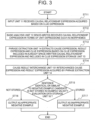
- Fig. 3 is a flowchart showing the operation of the learning data generation device 1 according to the first embodiment. The operation of each functional block shown in Fig. 1 will be described below by using the flowchart of Fig. 3 .
- the input unit 11 receives a text (i.e., input text) including a causal relationship expression acquired based on a clue expression.
- the acquired causal relationship expression is an expression including a connective expression ("because") implying the existence of a causal relationship expression, such as "The ground gets wet because it rains.”
- the text including a causal relationship expression can be either of an arbitrary text inputted by the user by using the mouse or the keyboard, a text registered as a positive example in a database (DB) indicating causal relationships, and a text stored in the example validity evaluation data storage unit 16 which will be described later.
- DB database
- the basic analysis unit 12 space-writes the causal relationship expression in units of morphemes or the like. For example, the basic analysis unit 12 segments a sentence "The ground gets wet because it rains.” (amegafurunodejimenganureru) received by the input unit 11 in units of words and thereby acquires a sentence in units of words, such as "The/ ground/ gets/ wet/ because/ it/ rains.” (ame/ga/furu/node/jimen/ga/nureru).
- the basic analysis unit 12 may segment the sentence in units of words based on the space punctuation.
- the clue expressions stored in the clue expression storage unit 13 are expressions with which the relationship between phrases implies a causal relationship, such as "since", “because” and “due to” .
- step ST13 the phrase extraction unit 14 extracts a cause expression and a result expression based on the clue expression DB stored in the clue expression storage unit 13. For example, from the input text "The ground gets wet because it rains.”, based on the clue expression "because", the phrase extraction unit 14 acquires the cause expression "it rains”, the result expression “the ground gets wet” and the clue expression "because”. In the case of the English language, from the original sentence (e.g., "The ground gets wet because it rains.") included in the input text, based on the clue expression "because", the phrase extraction unit 14 extracts the cause expression "it rains” and the result expression "the ground gets wet”.
- the cause result interchange unit 151 of the phrase modification unit 15 generates a negative example candidate of the causal relationship expression (i.e., modified text) by interchanging the cause expression and the result expression acquired by the phrase extraction unit 14. For example, a sentence “It rains because the ground gets wet.” is generated from “it rains" (cause expression), "the ground gets wet” (result expression) and "because” (clue expression). Since the cause and the result are irreversible in many cases, the possibility of acquiring an appropriate negative example is high. In the case of the English language, the cause result interchange unit 151 generates the negative example candidate by a similar process.
- step ST15 the example validity evaluation unit 17 checks whether the negative example candidate of the causal relationship expression is appropriate as a negative example or not based on whether or not the same or similar sentence exists in the example validity evaluation DB of the example validity evaluation data storage unit 16.
- a sentence written on the Web is highly likely to be a sentence recorded by a writer as a correct sentence that makes sense. Further, there exist a great amount of sentences on the Web. In consideration of these facts, when the negative example candidate of the causal relationship expression generated by the cause result interchange unit 151 is a sentence that makes sense, there is a high possibility that the same or similar sentence exists in the example validity evaluation DB of the example validity evaluation data storage unit 16.
- the negative example candidate of the causal relationship expression generated by the cause result interchange unit 151 when the negative example candidate of the causal relationship expression generated by the cause result interchange unit 151 is not a sentence that makes sense, it can be considered that the same or similar sentence does not exist in the example validity evaluation DB of the example validity evaluation data storage unit 16.
- the negative example candidate of the causal relationship expression generated by the cause result interchange unit 151 exists in the example validity evaluation DB or not, there is a high possibility that it can be guaranteed that the negative example candidate is an appropriate negative example, that is, a text that does not appropriately make sense (not in a causal relationship).
- the example validity evaluation unit 17 checks whether the same or similar sentence exists in the example validity evaluation DB of the example validity evaluation data storage unit 16 or not, speeding up of this search is possible depending on the search method. For example, the presence/absence of a similar sentence can be checked at high speed by using a search method based on an inverted index as typified by Elasticsearch. In contrast, when using a method like that described in Non-patent Reference 1 in which the search is made by using the degree of similarity between a search sentence and a search target sentence, the check can be made while expanding the targets for the similar sentences even though the speed decreases.
- Non-patent Reference 1 Song, Y. and Roth, D., "Unsupervised Sparse Vector Densification for Short Text Similarity", Proceedings of Conference, The 2015 Conference of the North American Chapter of the Association for Computational Linguistics: Human Language Technologies, 2015, pp.1275-1280
- the cause result interchange unit 151 is capable of acquiring a negative example candidate just by executing the process of interchanging the cause expression and the result expression extracted from the input text by the phrase extraction unit 14, that is, interchanging phrases.
- the example validity evaluation unit 17 judges whether the negative example candidate is an appropriate negative example or not, appropriate negative examples in the learning data for analyzing the causal relationship can be generated efficiently.
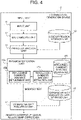
- Fig. 4 is a functional block diagram schematically showing the configuration of a learning data generation device 2 according to a second embodiment.
- the learning data generation device 2 according to the second embodiment differs from the learning data generation device 1 according to the first embodiment in the configuration of a phrase modification unit 15a.
- the phrase modification unit 15a in the second embodiment includes a replacement candidate sentence storage unit 152 storing a replacement candidate sentence database (replacement candidate sentence DB), a replacement candidate sentence extraction unit 153, and a replacement candidate sentence replacement unit 154.
- the phrase modification unit 15a generates a negative example candidate as the modified text by specifying one of the cause expression and the result expression as a modification target sentence and replacing the modification target sentence with a replacement candidate sentence dissimilar to the modification target sentence.
- the replacement candidate sentence storage unit 152 has stored a variety of sentences as the replacement candidate sentence database (replacement candidate sentence DB).
- the replacement candidate sentence extraction unit 153 specifies one of the cause expression and the result expression extracted by the phrase extraction unit 14 as the modification target sentence and extracts a replacement candidate sentence, as a sentence dissimilar to the modification target sentence, from the replacement candidate sentence DB of the replacement candidate sentence storage unit 152.
- the replacement candidate sentence replacement unit 154 generates the modified text by replacing modification target sentence with the replacement candidate sentence extracted by the replacement candidate sentence extraction unit 153.
- the replacement candidate sentence storage unit 152 can also be a storage device outside the learning data generation device 2. Further, the replacement candidate sentence storage unit 152 can also be a storage device provided in a network communicatively connected to the learning data generation device 2.
- the configuration of the learning data generation device 2 is the same as the configuration of the learning data generation device 1. Further, the hardware configuration of the learning data generation device 2 in the second embodiment is the same as that shown in Fig. 2 .
- Fig. 5 is a flowchart showing the operation of the learning data generation device 2 according to the second embodiment.
- the process of Fig. 5 differs from the process of Fig. 3 in steps ST21 and ST22.
- the other steps are the same as those in Fig. 3 .
- the steps ST21 and ST22 will be described below.
- the replacement candidate sentence extraction unit 153 extracts a sentence dissimilar to the result expression from the replacement candidate sentence storage unit 152.
- the cause expression "it rains”, the result expression “the ground gets wet” and the clue expression "because” have been extracted by the phrase extraction unit 14.
- the replacement candidate sentence extraction unit 153 extracts a sentence "a ladder collapses” dissimilar to the result expression "the ground gets wet” from the replacement candidate sentence storage unit 152.
- the replacement candidate sentence extraction unit 153 extracts a sentence dissimilar to the cause expression from the replacement candidate sentence storage unit 152.
- the replacement candidate sentence extraction unit 153 as the method of calculating the degree of similarity between sentences for the extraction of the sentence dissimilar to the result expression or the sentence dissimilar to the cause expression, it is possible to use a method described in Non-patent Reference 2 or an equivalent statistical method directly calculating the degree of similarity between sentences. Alternatively, as the method of calculating the degree of similarity between sentences, it is also possible to use a statistical method calculating the degree of similarity between sentences based on word similarity, equivalent to the method of the Non-patent Reference 1.
- the judgment on the degree of similarity between sentences (criterion for judging that the negative example candidate is an appropriate negative example) by the replacement candidate sentence extraction unit 153 is determined based on an arbitrarily set threshold value.
- the threshold value may be either dynamically determined according to an input or fixed at a constant number.
- the replacement candidate sentence extraction unit 153 by setting the threshold value low, an appropriate negative example dissimilar to the original cause or result can be generated. In contrast, by setting the threshold value high, a lot of examples can be acquired even though the examples can be similar to the original cause. In the replacement candidate sentence extraction unit 153, by setting the threshold value high, it also becomes possible to extract an appropriate positive example similar to the original cause.
- Non-patent Reference 2 Le, Q. and Mikolov, T., "Distributed Representations of Sentences and Documents", International Conference on Machine Learning, 2014, pp.1188-1196
- the replacement candidate sentence replacement unit 154 specifies one of the cause expression and the result expression acquired by the phrase extraction unit 14 as the modification target sentence and replaces the modification target sentence with the replacement candidate sentence, as a sentence dissimilar to the modification target sentence, extracted by the replacement candidate sentence extraction unit 153.
- the cause expression "it rains”, the result expression “the ground gets wet” and the clue expression "because” have been extracted by the phrase extraction unit 14.
- the replacement candidate sentence "a ladder collapses” as a sentence dissimilar to the result expression has been extracted by the replacement candidate sentence extraction unit 153.
- the replacement candidate sentence replacement unit 154 replaces the result expression with the replacement candidate sentence "a ladder collapses" dissimilar to the extracted result expression.
- the replacement candidate sentence replacement unit 154 generates a text obtained by replacing the modification target sentence as one of the cause expression and the result expression in the input text with the replacement candidate sentence as a sentence dissimilar to the modification target sentence. Accordingly, an appropriate negative example can be generated. Especially, since a text dissimilar to the cause expression or the result expression is acquired from the replacement candidate sentence storage unit 152, a lot of dissimilar texts corresponding to one cause expression or result expression can be extracted and a lot of negative examples can be generated efficiently from one input text inputted to the input unit 11.
- the replacement candidate sentence extraction unit 153 by setting a threshold value in regard to the degree of similarity of a target sentence that should be extracted, it is possible to realize negative example generation flexibly meeting a request, such as generating a negative example with high reliability or generating a lot of negative examples.
- Fig. 6 is a functional block diagram schematically showing the configuration of a learning data generation device 3 according to a third embodiment.
- the learning data generation device 3 according to the third embodiment is a device having both of the function of the learning data generation device 1 according to the first embodiment and the function of the learning data generation device 2 according to the second embodiment.
- the learning data generation device 3 according to the third embodiment differs from the learning data generation devices 1 and 2 according to the first and second embodiments in the configuration of a phrase modification unit 15b.
- the phrase modification unit 15b in the third embodiment includes the cause result interchange unit 151 included in the learning data generation device 1 and the replacement candidate sentence storage unit 152, the replacement candidate sentence extraction unit 153 and the replacement candidate sentence replacement unit 154 included in the learning data generation device 2.
- the phrase modification unit 15b generates the modified text by at least one of the method of interchanging the cause expression and the result expression and the method of specifying one of the cause expression and the result expression as the modification target sentence and replacing the modification target sentence with a replacement candidate sentence dissimilar to the modification target sentence.
- the configuration of the learning data generation device 3 is the same as the configuration of the learning data generation device 1 or 2. Further, the hardware configuration of the learning data generation device 3 in the third embodiment is the same as that shown in Fig. 2 .
- Fig. 7 is a flowchart showing the operation of the learning data generation device 3 according to the third embodiment.
- the process of Fig. 7 differs from the process of Fig. 3 or Fig. 5 in including step ST31.
- the other steps are the same as those in Fig. 3 or Fig. 5 .
- the step ST31 will be described below.
- the phrase modification unit 15b selects whether to make the cause result interchange unit 151 generate the negative example candidate by the interchange of the cause expression and the result expression or to make the replacement candidate sentence replacement unit 154 generate the negative example candidate by replacing the modification target sentence as one of the cause expression and the result expression with the replacement candidate sentence.
- the phrase modification unit 15b it is also possible for the phrase modification unit 15b to execute these two processes in sequence.
- Which of the cause result interchange unit 151 and the replacement candidate sentence replacement unit 154 should be used may be either previously determined and fixed or dynamically determined depending on the type of the sentence.
- the negative example generation can be switched between the generation by the cause result interchange unit 151 by interchanging the cause expression and the result expression and the generation by the replacement candidate sentence replacement unit 154 by replacing the modification target sentence as one of the cause expression and the result expression with the replacement candidate sentence as a dissimilar sentence, and thus negative examples in the learning data suitable for the purpose can be generated.
- a negative example in regard to all the fields relevant to the input texts can be generated quickly by executing the process of interchanging the cause and the result by the cause result interchange unit 151.
- negative examples related to a desired field can be generated efficiently by executing the replacement with the replacement candidate sentence as a dissimilar sentence by the replacement candidate sentence replacement unit 154.
- 1-3 learning data generation device
- 11 input unit
- 12 basic analysis unit
- 13 clue expression storage unit
- 14 phrase extraction unit
- 15, 15a, 15b phrase modification unit
- 151 cause result interchange unit
- 152 replacement candidate sentence storage unit
- 153 replacement candidate sentence extraction unit
- 154 replacement candidate sentence replacement unit
- 1.6 example validity evaluation data storage unit
- 17 example validity evaluation unit.
Landscapes
- Engineering & Computer Science (AREA)
- Theoretical Computer Science (AREA)
- General Engineering & Computer Science (AREA)
- Physics & Mathematics (AREA)
- Artificial Intelligence (AREA)
- General Physics & Mathematics (AREA)
- Computational Linguistics (AREA)
- Data Mining & Analysis (AREA)
- General Health & Medical Sciences (AREA)
- Health & Medical Sciences (AREA)
- Audiology, Speech & Language Pathology (AREA)
- Evolutionary Computation (AREA)
- Software Systems (AREA)
- Computer Vision & Pattern Recognition (AREA)
- Life Sciences & Earth Sciences (AREA)
- Mathematical Physics (AREA)
- Computing Systems (AREA)
- Bioinformatics & Cheminformatics (AREA)
- Bioinformatics & Computational Biology (AREA)
- Evolutionary Biology (AREA)
- Probability & Statistics with Applications (AREA)
- Medical Informatics (AREA)
- Machine Translation (AREA)
- Biomedical Technology (AREA)
- Biophysics (AREA)
- Molecular Biology (AREA)
Abstract
Description
- The present disclosure relates to a learning data generation device, a learning data generation method and a learning data generation program.
- There are technologies for automatically acquiring an expression that is included in a text and describes a causal relationship (referred to as a "causal relationship expression"). There are roughly two types of technologies for acquiring causal relationship expressions. A first technology is a technology using no training data, as typified by a technology of acquiring causal relationship expressions by using specific keywords or templates. For example, a technology using clue expressions such as "for" and "from" implying the existence of a causal relationship expression corresponds to the first technology. A second technology is a technology using training data, as typified by a technology of collecting sentences including a causal relationship expression and sentences including no causal relationship expression and executing text classification by use of machine learning. For example, a technology using an input text and a label indicating the position of a cause or a result in the input text and estimating a causal relationship part in the text by means of sequence labeling typified by Conditional Random. Field (CRF) corresponds to the second technology. These two types of technologies are not contrary to each other, rather they are in a complementary relationship. Namely, the two types of technologies are used in ways such as acquiring a causal relationship expression estimation model by means of machine learning by using training data automatically collected by using keywords, templates or the like.
- As the training data collected by using keywords, templates or the like, two types of data have to be collected. First data are positive examples. In the technology of automatically acquiring causal relationship expressions, a text including a causal relationship expression or a text provided with a label indicating that a cause or a result exists in a certain part in the text is a positive example. Second data are negative examples. In the technology of automatically acquiring causal relationship expressions, a text including no causal relationship expression or a text provided with a label indicating that neither a cause nor a result exists in a certain part in the text is a negative example.
-
Patent Reference 1 proposes a technology in which a causal relationship expression estimation model that has been learned by using training data automatically collected by using keywords, templates or the like is used for estimating a relationship between phrases. In thePatent Reference 1, the clue expressions implying the existence of a causal relationship expression are used for acquiring the positive examples. For example, in a case of a sentence "The ground gets wet because it rains.", a clue expression "because" is used and a cause expression ("it rains"), a result expression ("the ground gets wet") and the clue expression ("because") are acquired. On the other hand, for acquiring a negative example, among elements acquired in a positive example, an element as a cause expression or a result expression is replaced randomly. For example, in the case where the cause expression ("it rains") and the result expression ("the ground gets wet") have been acquired, the cause expression ("it rains") and a randomly replaced result expression "fall down from a ladder") are acquired as a negative example. As above, in thePatent Reference 1, both of positive examples and negative examples can be acquired automatically. - Patent Reference 1:
Japanese Patent Application Publication No. 2019-153093 - The negative example acquisition method described in the
Patent Reference 1 is simple and convenient since negative examples can be collected by randomly replacing a cause element or a result element among elements acquired in positive examples. However, the negative examples acquired by this method have undergone insufficient examination regarding appropriateness of the acquired example, and thus there is a possibility that data not being a negative example or data inappropriate as Japanese language is acquired as a negative example. For example, consideration will be given here to a case where an example "crops increase" is generated as the result of randomly replacing the result expression element in the situation where the cause expression ("it rains") and the result expression ("the ground gets wet") have been acquired as a positive example. In thePatent Reference 1, "Crops increase because it rains." is acquired as a negative example. On the other hand, as viewed from human eyes, the acquired result expression is considered to have a causal relationship, and thus it may be impossible to regard the acquired negative example as an appropriate negative example. As above, the negative example acquisition method described in thePatent Reference 1 has a problem in that there is a possibility that an inappropriate example is acquired as a negative example. - An object of the present disclosure, which has been made to resolve the above-described problem, is to inhibit the generation of inappropriate negative examples.
- A learning data generation device according to the present disclosure includes a phrase extraction unit that extracts a cause expression and a result expression from an input text and a phrase modification unit that generates a modified text by at least one of a method of interchanging the cause expression and the result expression and a method of specifying one of the cause expression and the result expression as a modification target sentence and replacing the modification target sentence with a replacement candidate sentence dissimilar to the modification target sentence.
- A learning data generation method according to the present disclosure is a method executed by a learning data generation device, including a step of extracting a cause expression and a result expression from an input text and a step of generating a modified text by at least one of a method of interchanging the cause expression and the result expression and a method of specifying one of the cause expression and the result expression as a modification target sentence and replacing the modification target sentence with a replacement candidate sentence dissimilar to the modification target sentence.
- According to the present disclosure, the generation of inappropriate negative examples can be inhibited.
-
-
Fig. 1 is a functional block diagram schematically showing the configuration of a learning data generation device according to a first embodiment. -
Fig. 2 is a diagram showing an example of the hardware configuration of the learning data generation device according to the first embodiment. -
Fig. 3 is a flowchart showing the operation of the learning data generation device according to the first embodiment. -
Fig. 4 is a functional block diagram schematically showing the configuration of a learning data generation device according to a second embodiment. -
Fig. 5 is a flowchart showing the operation of the learning data generation device according to the second embodiment. -
Fig. 6 is a functional block diagram schematically showing the configuration of a learning data generation device according to a third embodiment. -
Fig. 7 is a flowchart showing the operation of the learning data generation device according to the third embodiment. - A learning data generation device, a learning data generation method and a learning data generation program according to each embodiment will be described below with reference to the drawings. In the drawings, components identical or similar to each other are assigned the same reference character. The following embodiments are just examples and it is possible to appropriately combine embodiments and appropriately modify each embodiment.
-
Fig. 1 is a functional block diagram schematically showing the configuration of a learningdata generation device 1 according to a first embodiment. The learningdata generation device 1 is a device capable of executing a learning data generation method according to the first embodiment. The learningdata generation device 1 can also be a computer as an information processing device capable of executing a learning data generation program according to the first embodiment. As shown inFig. 1 , the learningdata generation device 1 includes aphrase extraction unit 14 and aphrase modification unit 15. Further, the learningdata generation device 1 may include aninput unit 11, abasic analysis unit 12, a clueexpression storage unit 13, an example validity evaluationdata storage unit 16 and an examplevalidity evaluation unit 17. - The
input unit 11 receives an input text. The input text is, for example, a text including a causal relationship expression acquired based on a clue expression. The causal relationship expression is an expression included in a text and describing a causal relationship. - The
basic analysis unit 12 space-writes the causal relationship expression received by theinput unit 11 in terms of unit expressions such as morphemes. The unit expression is a morpheme, a word including one or more morphemes, or the like. To "space-write" means to describe a text by placing a space as punctuation between terms. In cases where the input text is a text already space-written like an English text, the process of thebasic analysis unit 12 may be left out. - The clue
expression storage unit 13 is a storage device storing a clue expression database (clue expression DB) accumulating a plurality of clue expressions. The "clue expression" means an expression that works as a clue for finding a particular part in a text, which is referred to also as a "connective expression". The stored clue expressions can be any variety of expressions as long as a relationship between phrases implies a causal relationship, such as "since", "because" and "due to". For example, the clue expressions are predetermined expressions indicating a relationship between phrases, and include conjunctives such as "and" (e.g., "∼∼ and then"), "supposing" (e.g., "supposing that ∼∼") , "in case" (e.g., "in case of ∼∼"), "when" (e.g., "when you did ∼∼"), "at the time" (e.g., "at the time of ∼∼"), "if" (e.g., "if you do ~~"), "since" (e.g., "since it is ~~") and "though" (e.g., "even though you did ∼∼"). Incidentally, the clueexpression storage unit 13 can also be a storage device outside the learningdata generation device 1. Further, the clueexpression storage unit 13 can also be a storage device provided in a network communicatively connected to the learningdata generation device 1. - The
phrase extraction unit 14 extracts a cause expression and a result expression based on a clue expression that is included in the already space-written causal relationship expression generated by the basic analysis unit 12 (i.e., space-written input text) and has already been stored in the clueexpression storage unit 13. Namely, thephrase extraction unit 14 extracts a cause expression, a result expression and a clue expression. For example, from the text "The ground gets wet because it rains.", based on the clue expression "because", thephrase extraction unit 14 extracts the cause expression ("it rains"), the result expression ("the ground gets wet") and the clue expression ("because"). - The
phrase modification unit 15 includes a causeresult interchange unit 151 that generates a negative example candidate of the causal relationship expression (i. e., modified text) by interchanging the cause expression and the result expression extracted by thephrase extraction unit 14. Since the cause and the result are irreversible in many cases, it can be expected that an appropriate negative example is acquired from the modified text. For example, if the cause expression ("it rains") and the result expression ("the ground gets wet") in the text "The ground gets wet because it rains." are interchanged, a modified text "It rains because the ground gets wet." as a negative example candidate is generated. Also in cases of the English language, the negative example candidate is generated by a similar process. - The example validity evaluation
data storage unit 16 is a storage device storing an example validity evaluation database (example validity evaluation DB) accumulating a plurality of negative example candidates of causal relationship expressions. The example validity evaluation DB stores, for example, a great amount of texts existing on the Web. Namely, the example validity evaluationdata storage unit 16 stores the example validity evaluation DB for the purpose of confirming that the negative example candidate of the causal relationship expression generated by the causeresult interchange unit 151 does not exist as a text. Incidentally, the example validity evaluationdata storage unit 16 can also be a storage device outside the learningdata generation device 1. Further, the example validity evaluationdata storage unit 16 can also be a storage device provided in a network communicatively connected to the learningdata generation device 1. - The example
validity evaluation unit 17 confirms that the negative example candidate of the causal relationship expression (i.e., modified text) generated by the causeresult interchange unit 151 has not been stored in the example validity evaluationdata storage unit 16 and thereby confirms that the example is an appropriate negative example. Specifically, the examplevalidity evaluation unit 17 checks whether the negative example candidate of the causal relationship expression is appropriate as a negative example or not based on whether or not the same or similar text exists in the example validity evaluationdata storage unit 16. When no text identical or similar to the negative example candidate of the causal relationship expression has been stored in the example validity evaluationdata storage unit 16, the examplevalidity evaluation unit 17 outputs the negative example candidate as an appropriate negative example. When a text identical or similar to the negative example candidate of the causal relationship expression has been stored in the example validity evaluationdata storage unit 16, the examplevalidity evaluation unit 17 outputs the negative example candidate as an inappropriate negative example. -
Fig. 2 is a diagram showing an example of the hardware configuration of the learningdata generation device 1 according to the first embodiment. The learningdata generation device 1 is, for example, a processing circuit including amemory 102 such as a RAM (Random Access Memory) that stores and develops a software program such as the learning data generation program and aprocessor 101 as an information processing unit that executes the program. The learningdata generation device 1 is a computer, for example. The learningdata generation device 1 includes amouse 103 that receives inputs from a user, akeyboard 104, adisplay device 105 for presenting the user with an output result from the examplevalidity evaluation unit 17 and the like, and anauxiliary storage device 106 that includes a record medium storing a software program for implementing the functions of the learningdata generation device 1 or reads and writes information from/to the record medium. Theauxiliary storage device 106 is the clueexpression storage unit 13 and the example validity evaluationdata storage unit 16 shown inFig. 1 , for example. Theauxiliary storage device 106 is a hard disk drive or an SSD (Solid State Drive), for example. Incidentally, themouse 103, thekeyboard 104, thedisplay device 105 and theauxiliary storage device 106 can also be external devices connected to the learningdata generation device 1. For example, theauxiliary storage device 106 can be a storage device existing in a cloud communicable via a communication interface. Further, an auxiliary storage device storing the software program and an auxiliary storage device storing other data may be provided as separate storage devices. - Furthermore, the whole or part of the learning
data generation device 1 may also be implemented by a processing circuit such as an Application-Specific Integrated Circuit (ASIC). For example, each functional block shown inFig. 1 may be implemented by an electric circuit. -
Fig. 3 is a flowchart showing the operation of the learningdata generation device 1 according to the first embodiment. The operation of each functional block shown inFig. 1 will be described below by using the flowchart ofFig. 3 . - In step ST11, the
input unit 11 receives a text (i.e., input text) including a causal relationship expression acquired based on a clue expression. Here, the acquired causal relationship expression is an expression including a connective expression ("because") implying the existence of a causal relationship expression, such as "The ground gets wet because it rains.". Incidentally, the text including a causal relationship expression can be either of an arbitrary text inputted by the user by using the mouse or the keyboard, a text registered as a positive example in a database (DB) indicating causal relationships, and a text stored in the example validity evaluationdata storage unit 16 which will be described later. - In step ST12, the
basic analysis unit 12 space-writes the causal relationship expression in units of morphemes or the like. For example, thebasic analysis unit 12 segments a sentence "The ground gets wet because it rains." (amegafurunodejimenganureru) received by theinput unit 11 in units of words and thereby acquires a sentence in units of words, such as "The/ ground/ gets/ wet/ because/ it/ rains." (ame/ga/furu/node/jimen/ga/nureru). Incidentally, for languages in which punctuation between words is represented by a space such as the English language, thebasic analysis unit 12 may segment the sentence in units of words based on the space punctuation. - The clue expressions stored in the clue
expression storage unit 13 are expressions with which the relationship between phrases implies a causal relationship, such as "since", "because" and "due to" . - In step ST13, the
phrase extraction unit 14 extracts a cause expression and a result expression based on the clue expression DB stored in the clueexpression storage unit 13. For example, from the input text "The ground gets wet because it rains.", based on the clue expression "because", thephrase extraction unit 14 acquires the cause expression "it rains", the result expression "the ground gets wet" and the clue expression "because". In the case of the English language, from the original sentence (e.g., "The ground gets wet because it rains.") included in the input text, based on the clue expression "because", thephrase extraction unit 14 extracts the cause expression "it rains" and the result expression "the ground gets wet". - In step ST14, the cause
result interchange unit 151 of thephrase modification unit 15 generates a negative example candidate of the causal relationship expression (i.e., modified text) by interchanging the cause expression and the result expression acquired by thephrase extraction unit 14. For example, a sentence "It rains because the ground gets wet." is generated from "it rains" (cause expression), "the ground gets wet" (result expression) and "because" (clue expression). Since the cause and the result are irreversible in many cases, the possibility of acquiring an appropriate negative example is high. In the case of the English language, the causeresult interchange unit 151 generates the negative example candidate by a similar process. - In step ST15, the example
validity evaluation unit 17 checks whether the negative example candidate of the causal relationship expression is appropriate as a negative example or not based on whether or not the same or similar sentence exists in the example validity evaluation DB of the example validity evaluationdata storage unit 16. A sentence written on the Web is highly likely to be a sentence recorded by a writer as a correct sentence that makes sense. Further, there exist a great amount of sentences on the Web. In consideration of these facts, when the negative example candidate of the causal relationship expression generated by the causeresult interchange unit 151 is a sentence that makes sense, there is a high possibility that the same or similar sentence exists in the example validity evaluation DB of the example validity evaluationdata storage unit 16. In contrast, when the negative example candidate of the causal relationship expression generated by the causeresult interchange unit 151 is not a sentence that makes sense, it can be considered that the same or similar sentence does not exist in the example validity evaluation DB of the example validity evaluationdata storage unit 16. As above, by checking whether the negative example candidate of the causal relationship expression generated by the causeresult interchange unit 151 exists in the example validity evaluation DB or not, there is a high possibility that it can be guaranteed that the negative example candidate is an appropriate negative example, that is, a text that does not appropriately make sense (not in a causal relationship). - Incidentally, while the example
validity evaluation unit 17 checks whether the same or similar sentence exists in the example validity evaluation DB of the example validity evaluationdata storage unit 16 or not, speeding up of this search is possible depending on the search method. For example, the presence/absence of a similar sentence can be checked at high speed by using a search method based on an inverted index as typified by Elasticsearch. In contrast, when using a method like that described inNon-patent Reference 1 in which the search is made by using the degree of similarity between a search sentence and a search target sentence, the check can be made while expanding the targets for the similar sentences even though the speed decreases. - Non-patent Reference 1: Song, Y. and Roth, D., "Unsupervised Sparse Vector Densification for Short Text Similarity", Proceedings of Conference, The 2015 Conference of the North American Chapter of the Association for Computational Linguistics: Human Language Technologies, 2015, pp.1275-1280
- As described above, with the learning
data generation device 1 according to the first embodiment, the causeresult interchange unit 151 is capable of acquiring a negative example candidate just by executing the process of interchanging the cause expression and the result expression extracted from the input text by thephrase extraction unit 14, that is, interchanging phrases. - Further, since the example
validity evaluation unit 17 judges whether the negative example candidate is an appropriate negative example or not, appropriate negative examples in the learning data for analyzing the causal relationship can be generated efficiently. -
Fig. 4 is a functional block diagram schematically showing the configuration of a learningdata generation device 2 according to a second embodiment. The learningdata generation device 2 according to the second embodiment differs from the learningdata generation device 1 according to the first embodiment in the configuration of aphrase modification unit 15a. Thephrase modification unit 15a in the second embodiment includes a replacement candidatesentence storage unit 152 storing a replacement candidate sentence database (replacement candidate sentence DB), a replacement candidatesentence extraction unit 153, and a replacement candidatesentence replacement unit 154. Thephrase modification unit 15a generates a negative example candidate as the modified text by specifying one of the cause expression and the result expression as a modification target sentence and replacing the modification target sentence with a replacement candidate sentence dissimilar to the modification target sentence. - The replacement candidate
sentence storage unit 152 has stored a variety of sentences as the replacement candidate sentence database (replacement candidate sentence DB). The replacement candidatesentence extraction unit 153 specifies one of the cause expression and the result expression extracted by thephrase extraction unit 14 as the modification target sentence and extracts a replacement candidate sentence, as a sentence dissimilar to the modification target sentence, from the replacement candidate sentence DB of the replacement candidatesentence storage unit 152. The replacement candidatesentence replacement unit 154 generates the modified text by replacing modification target sentence with the replacement candidate sentence extracted by the replacement candidatesentence extraction unit 153. Incidentally, the replacement candidatesentence storage unit 152 can also be a storage device outside the learningdata generation device 2. Further, the replacement candidatesentence storage unit 152 can also be a storage device provided in a network communicatively connected to the learningdata generation device 2. - Except for the above-described features, the configuration of the learning
data generation device 2 is the same as the configuration of the learningdata generation device 1. Further, the hardware configuration of the learningdata generation device 2 in the second embodiment is the same as that shown inFig. 2 . -
Fig. 5 is a flowchart showing the operation of the learningdata generation device 2 according to the second embodiment. The process ofFig. 5 differs from the process ofFig. 3 in steps ST21 and ST22. The other steps are the same as those inFig. 3 . Thus, the steps ST21 and ST22 will be described below. - In the step ST21, the replacement candidate
sentence extraction unit 153 extracts a sentence dissimilar to the result expression from the replacement candidatesentence storage unit 152. For example, it is assumed here that the cause expression "it rains", the result expression "the ground gets wet" and the clue expression "because" have been extracted by thephrase extraction unit 14. In this case, the replacement candidatesentence extraction unit 153 extracts a sentence "a ladder collapses" dissimilar to the result expression "the ground gets wet" from the replacement candidatesentence storage unit 152. Similarly, the replacement candidatesentence extraction unit 153 extracts a sentence dissimilar to the cause expression from the replacement candidatesentence storage unit 152. - In the replacement candidate
sentence extraction unit 153, as the method of calculating the degree of similarity between sentences for the extraction of the sentence dissimilar to the result expression or the sentence dissimilar to the cause expression, it is possible to use a method described inNon-patent Reference 2 or an equivalent statistical method directly calculating the degree of similarity between sentences. Alternatively, as the method of calculating the degree of similarity between sentences, it is also possible to use a statistical method calculating the degree of similarity between sentences based on word similarity, equivalent to the method of theNon-patent Reference 1. The judgment on the degree of similarity between sentences (criterion for judging that the negative example candidate is an appropriate negative example) by the replacement candidatesentence extraction unit 153 is determined based on an arbitrarily set threshold value. The threshold value may be either dynamically determined according to an input or fixed at a constant number. - In the replacement candidate
sentence extraction unit 153, by setting the threshold value low, an appropriate negative example dissimilar to the original cause or result can be generated. In contrast, by setting the threshold value high, a lot of examples can be acquired even though the examples can be similar to the original cause. In the replacement candidatesentence extraction unit 153, by setting the threshold value high, it also becomes possible to extract an appropriate positive example similar to the original cause. - Non-patent Reference 2: Le, Q. and Mikolov, T., "Distributed Representations of Sentences and Documents", International Conference on Machine Learning, 2014, pp.1188-1196
- In the step ST22, the replacement candidate
sentence replacement unit 154 specifies one of the cause expression and the result expression acquired by thephrase extraction unit 14 as the modification target sentence and replaces the modification target sentence with the replacement candidate sentence, as a sentence dissimilar to the modification target sentence, extracted by the replacement candidatesentence extraction unit 153. For example, it is assumed here that the cause expression "it rains", the result expression "the ground gets wet" and the clue expression "because" have been extracted by thephrase extraction unit 14. Further, it is assumed here that the replacement candidate sentence "a ladder collapses" as a sentence dissimilar to the result expression has been extracted by the replacement candidatesentence extraction unit 153. The replacement candidatesentence replacement unit 154 replaces the result expression with the replacement candidate sentence "a ladder collapses" dissimilar to the extracted result expression. In the case where an element as the cause expression or the result expression is replaced with a dissimilar example, it can be expected that an example in which no causal relationship holds is more likely to be acquired compared to cases where the element is replaced with a similar example. Thus, it can be expected that an appropriate negative example can be generated. For example, "the ground gets wet" and "a ladder collapses" are judged to be dissimilar sentences, and thus the modified text is outputted from thephrase modification unit 15a as an appropriate negative example. In contrast, for example, "the ground gets wet" and "crops increase" include words similar to each other such as ground and crops, and thus the modified text is outputted from thephrase modification unit 15a as an inappropriate negative example. - As described above, with the learning
data generation device 2 according to the second embodiment, the replacement candidatesentence replacement unit 154 generates a text obtained by replacing the modification target sentence as one of the cause expression and the result expression in the input text with the replacement candidate sentence as a sentence dissimilar to the modification target sentence. Accordingly, an appropriate negative example can be generated. Especially, since a text dissimilar to the cause expression or the result expression is acquired from the replacement candidatesentence storage unit 152, a lot of dissimilar texts corresponding to one cause expression or result expression can be extracted and a lot of negative examples can be generated efficiently from one input text inputted to theinput unit 11. - Further, in the replacement candidate
sentence extraction unit 153, by setting a threshold value in regard to the degree of similarity of a target sentence that should be extracted, it is possible to realize negative example generation flexibly meeting a request, such as generating a negative example with high reliability or generating a lot of negative examples. -
Fig. 6 is a functional block diagram schematically showing the configuration of a learningdata generation device 3 according to a third embodiment. The learningdata generation device 3 according to the third embodiment is a device having both of the function of the learningdata generation device 1 according to the first embodiment and the function of the learningdata generation device 2 according to the second embodiment. The learningdata generation device 3 according to the third embodiment differs from the learningdata generation devices phrase modification unit 15b. Thephrase modification unit 15b in the third embodiment includes the causeresult interchange unit 151 included in the learningdata generation device 1 and the replacement candidatesentence storage unit 152, the replacement candidatesentence extraction unit 153 and the replacement candidatesentence replacement unit 154 included in the learningdata generation device 2. Thephrase modification unit 15b generates the modified text by at least one of the method of interchanging the cause expression and the result expression and the method of specifying one of the cause expression and the result expression as the modification target sentence and replacing the modification target sentence with a replacement candidate sentence dissimilar to the modification target sentence. - Except for the above-described features, the configuration of the learning
data generation device 3 is the same as the configuration of the learningdata generation device data generation device 3 in the third embodiment is the same as that shown inFig. 2 . -
Fig. 7 is a flowchart showing the operation of the learningdata generation device 3 according to the third embodiment. The process ofFig. 7 differs from the process ofFig. 3 orFig. 5 in including step ST31. The other steps are the same as those inFig. 3 orFig. 5 . Thus, the step ST31 will be described below. - In the step ST31, the
phrase modification unit 15b selects whether to make the causeresult interchange unit 151 generate the negative example candidate by the interchange of the cause expression and the result expression or to make the replacement candidatesentence replacement unit 154 generate the negative example candidate by replacing the modification target sentence as one of the cause expression and the result expression with the replacement candidate sentence. However, it is also possible for thephrase modification unit 15b to execute these two processes in sequence. - Which of the cause
result interchange unit 151 and the replacement candidatesentence replacement unit 154 should be used may be either previously determined and fixed or dynamically determined depending on the type of the sentence. - As described above, in the learning
data generation device 3 according to the third embodiment, the negative example generation can be switched between the generation by the causeresult interchange unit 151 by interchanging the cause expression and the result expression and the generation by the replacement candidatesentence replacement unit 154 by replacing the modification target sentence as one of the cause expression and the result expression with the replacement candidate sentence as a dissimilar sentence, and thus negative examples in the learning data suitable for the purpose can be generated. - For example, in cases where a plurality of input texts are received and these input texts are relevant to a plurality of fields (e.g., fields of weather, medical treatment, diet, etc.), a negative example in regard to all the fields relevant to the input texts can be generated quickly by executing the process of interchanging the cause and the result by the cause
result interchange unit 151. - In cases where it is desired to generate a great amount of negative examples related to a particular field, negative examples related to a desired field can be generated efficiently by executing the replacement with the replacement candidate sentence as a dissimilar sentence by the replacement candidate
sentence replacement unit 154. - 1-3: learning data generation device, 11: input unit, 12: basic analysis unit, 13: clue expression storage unit, 14: phrase extraction unit, 15, 15a, 15b: phrase modification unit, 151: cause result interchange unit, 152: replacement candidate sentence storage unit, 153: replacement candidate sentence extraction unit, 154: replacement candidate sentence replacement unit, 1.6: example validity evaluation data storage unit, 17: example validity evaluation unit.
Claims (13)
- A learning data generation device comprising:a phrase extraction unit that extracts a cause expression and a result expression from an input text; anda phrase modification unit that generates a modified text by at least one of a method of interchanging the cause expression and the result expression and a method of specifying one of the cause expression and the result expression as a modification target sentence and replacing the modification target sentence with a replacement candidate sentence dissimilar to the modification target sentence.
- The learning data generation device according to claim 1, wherein the phrase extraction unit extracts a clue expression from the input text and extracts the cause expression and the result expression based on the clue expression.
- The learning data generation device according to claim 2, wherein the phrase extraction unit extracts the clue expression by referring to a clue expression database accumulating a plurality of clue expressions.
- The learning data generation device according to claim 3, comprising a clue expression storage unit storing the clue expression database.
- The learning data generation device according to any one of claims 1 to 4, wherein the phrase modification unitextracts the replacement candidate sentence dissimilar to the modification target sentence from a replacement candidate sentence database accumulating a plurality of replacement candidate sentences, andreplaces the modification target sentence with the extracted replacement candidate sentence.
- The learning data generation device according to claim 5, wherein the phrase modification unit obtains a degree of similarity between the modification target sentence and a text in the replacement candidate sentence database and extracts the replacement candidate sentence based on a result obtained by comparing the degree of similarity with a predetermined threshold value.
- The learning data generation device according to claim 5 or 6, comprising a replacement candidate sentence storage unit storing the replacement candidate sentence database.
- The learning data generation device according to any one of claims 1 to 7, further comprising an example validity evaluation unit that confirms that no text identical or similar to the modified text is stored in an example validity evaluation database accumulating a plurality of negative example candidates of causal relationship expressions and evaluates the modified text as an appropriate negative example when no text identical or similar to the modified text is stored in the example validity evaluation database.
- The learning data generation device according to claim 8, comprising an example validity evaluation data storage unit storing the example validity evaluation database.
- The learning data generation device according to any one of claims 1 to 9, further comprising a basic analysis unit that segments the input text into a plurality of unit expressions,
wherein the phrase extraction unit extracts the cause expression and the result expression from the input text segmented into the unit expressions. - The learning data generation device according to claim 10, wherein the unit expression is a morpheme or a word including one or more morphemes.
- A learning data generation method executed by a learning data generation device, comprising:a step of extracting a cause expression and a result expression from an input text; anda step of generating a modified text by at least one of a method of interchanging the cause expression and the result expression and a method of specifying one of the cause expression and the result expression as a modification target sentence and replacing the modification target sentence with a replacement candidate sentence dissimilar to the modification target sentence.
- A learning data generation program that causes a computer to execute:a process of extracting a cause expression and a result expression from an input text; anda process of generating a modified text by at least one of a method of interchanging the cause expression and the result expression and a method of specifying one of the cause expression and the result expression as a modification target sentence and replacing the modification target sentence with a replacement candidate sentence dissimilar to the modification target sentence.
Applications Claiming Priority (1)
| Application Number | Priority Date | Filing Date | Title |
|---|---|---|---|
| PCT/JP2020/018299 WO2021220478A1 (en) | 2020-04-30 | 2020-04-30 | Device, method and program for creating training data |
Publications (2)
| Publication Number | Publication Date |
|---|---|
| EP4131056A1 true EP4131056A1 (en) | 2023-02-08 |
| EP4131056A4 EP4131056A4 (en) | 2023-04-26 |
Family
ID=78331894
Family Applications (1)
| Application Number | Title | Priority Date | Filing Date |
|---|---|---|---|
| EP20933231.1A Pending EP4131056A4 (en) | 2020-04-30 | 2020-04-30 | DEVICE, METHOD AND PROGRAM FOR CREATING LEARNING DATA |
Country Status (5)
| Country | Link |
|---|---|
| EP (1) | EP4131056A4 (en) |
| JP (1) | JP7106036B2 (en) |
| KR (1) | KR102635118B1 (en) |
| CN (1) | CN115443465A (en) |
| WO (1) | WO2021220478A1 (en) |
Family Cites Families (9)
| Publication number | Priority date | Publication date | Assignee | Title |
|---|---|---|---|---|
| JP4321336B2 (en) * | 2004-04-15 | 2009-08-26 | 富士ゼロックス株式会社 | Natural language processing system, natural language processing method, and computer program |
| JP4778474B2 (en) * | 2007-05-14 | 2011-09-21 | 日本電信電話株式会社 | Question answering apparatus, question answering method, question answering program, and recording medium recording the program |
| JP5682448B2 (en) * | 2011-05-20 | 2015-03-11 | 日本電気株式会社 | Causal word pair extraction device, causal word pair extraction method, and causal word pair extraction program |
| JP6618735B2 (en) * | 2015-08-31 | 2019-12-11 | 国立研究開発法人情報通信研究機構 | Question answering system training apparatus and computer program therefor |
| JP6721179B2 (en) * | 2016-10-05 | 2020-07-08 | 国立研究開発法人情報通信研究機構 | Causal relationship recognition device and computer program therefor |
| JP6715758B2 (en) * | 2016-12-26 | 2020-07-01 | Kddi株式会社 | Classifier generation device, classifier generation method, and computer program |
| JP7139626B2 (en) * | 2018-03-02 | 2022-09-21 | 日本電信電話株式会社 | Phrase generation relationship estimation model learning device, phrase generation device, method, and program |
| JP7091742B2 (en) * | 2018-03-16 | 2022-06-28 | 富士通株式会社 | Training data generation method and training data generation program |
| CN110705255B (en) * | 2019-10-12 | 2021-05-25 | 京东数字科技控股有限公司 | Method and device for detecting association relation between sentences |
-
2020
- 2020-04-30 WO PCT/JP2020/018299 patent/WO2021220478A1/en not_active Ceased
- 2020-04-30 JP JP2022515994A patent/JP7106036B2/en active Active
- 2020-04-30 EP EP20933231.1A patent/EP4131056A4/en active Pending
- 2020-04-30 CN CN202080099932.XA patent/CN115443465A/en active Pending
- 2020-04-30 KR KR1020227036107A patent/KR102635118B1/en active Active
Also Published As
| Publication number | Publication date |
|---|---|
| JPWO2021220478A1 (en) | 2021-11-04 |
| US20230045484A1 (en) | 2023-02-09 |
| JP7106036B2 (en) | 2022-07-25 |
| EP4131056A4 (en) | 2023-04-26 |
| KR102635118B1 (en) | 2024-02-07 |
| CN115443465A (en) | 2022-12-06 |
| KR20220145422A (en) | 2022-10-28 |
| WO2021220478A1 (en) | 2021-11-04 |
Similar Documents
| Publication | Publication Date | Title |
|---|---|---|
| US11544459B2 (en) | Method and apparatus for determining feature words and server | |
| US11645475B2 (en) | Translation processing method and storage medium | |
| CN111444723B (en) | Information extraction method, computer device, and storage medium | |
| CN109766438B (en) | Resume information extraction method, resume information extraction device, computer equipment and storage medium | |
| US10740545B2 (en) | Information extraction from open-ended schema-less tables | |
| KR101509727B1 (en) | Apparatus for creating alignment corpus based on unsupervised alignment and method thereof, and apparatus for performing morphological analysis of non-canonical text using the alignment corpus and method thereof | |
| CN110427612B (en) | Entity disambiguation method, device, equipment and storage medium based on multiple languages | |
| WO2017177809A1 (en) | Word segmentation method and system for language text | |
| KR101724398B1 (en) | A generation system and method of a corpus for named-entity recognition using knowledge bases | |
| CN111046660B (en) | Method and device for identifying text professional terms | |
| CN111191446A (en) | Interactive information processing method and device, computer equipment and storage medium | |
| CN107148624A (en) | Method of preprocessing text and preprocessing system for performing the method | |
| CN112307183B (en) | Search data identification method, apparatus, electronic device and computer storage medium | |
| Moradi et al. | A hybrid approach for Persian named entity recognition | |
| CN112926297A (en) | Method, apparatus, device and storage medium for processing information | |
| CN114661917A (en) | Text amplification method, system, computer device and readable storage medium | |
| CN114547301A (en) | Document processing method, document processing device, recognition model training equipment and storage medium | |
| US11455812B2 (en) | Extracting non-textual data from documents via machine learning | |
| WO2021230054A1 (en) | Sentence extraction device and sentence extraction method | |
| CN113505889B (en) | Processing method and device of mapping knowledge base, computer equipment and storage medium | |
| CN119358544B (en) | Model training methods, classification and feature extraction methods, devices, equipment and media | |
| US12619680B2 (en) | Learning data generation device, method, and record medium for storing program | |
| Ehsani et al. | Disambiguating main POS tags for Turkish | |
| US20230045484A1 (en) | Learning data generation device, method, and record medium for storing program | |
| CN113282717A (en) | Method and device for extracting entity relationship in text, electronic equipment and storage medium |
Legal Events
| Date | Code | Title | Description |
|---|---|---|---|
| STAA | Information on the status of an ep patent application or granted ep patent |
Free format text: STATUS: THE INTERNATIONAL PUBLICATION HAS BEEN MADE |
|
| PUAI | Public reference made under article 153(3) epc to a published international application that has entered the european phase |
Free format text: ORIGINAL CODE: 0009012 |
|
| STAA | Information on the status of an ep patent application or granted ep patent |
Free format text: STATUS: REQUEST FOR EXAMINATION WAS MADE |
|
| 17P | Request for examination filed |
Effective date: 20221024 |
|
| AK | Designated contracting states |
Kind code of ref document: A1 Designated state(s): AL AT BE BG CH CY CZ DE DK EE ES FI FR GB GR HR HU IE IS IT LI LT LU LV MC MK MT NL NO PL PT RO RS SE SI SK SM TR |
|
| REG | Reference to a national code |
Ref country code: DE Ref legal event code: R079 Free format text: PREVIOUS MAIN CLASS: G06F0040216000 Ipc: G06F0040289000 |
|
| A4 | Supplementary search report drawn up and despatched |
Effective date: 20230328 |
|
| RIC1 | Information provided on ipc code assigned before grant |
Ipc: G06F 40/284 20200101ALN20230322BHEP Ipc: G06F 40/30 20200101ALI20230322BHEP Ipc: G06F 40/289 20200101AFI20230322BHEP |
|
| DAV | Request for validation of the european patent (deleted) | ||
| DAX | Request for extension of the european patent (deleted) |