EP4131048A1 - Random media access control address with fast reconnection mechanism - Google Patents
Random media access control address with fast reconnection mechanism Download PDFInfo
- Publication number
- EP4131048A1 EP4131048A1 EP22188522.1A EP22188522A EP4131048A1 EP 4131048 A1 EP4131048 A1 EP 4131048A1 EP 22188522 A EP22188522 A EP 22188522A EP 4131048 A1 EP4131048 A1 EP 4131048A1
- Authority
- EP
- European Patent Office
- Prior art keywords
- pmkid
- mac address
- mixed
- station
- generate
- Prior art date
- Legal status (The legal status is an assumption and is not a legal conclusion. Google has not performed a legal analysis and makes no representation as to the accuracy of the status listed.)
- Withdrawn
Links
Images




Classifications
-
- H—ELECTRICITY
- H04—ELECTRIC COMMUNICATION TECHNIQUE
- H04W—WIRELESS COMMUNICATION NETWORKS
- H04W12/00—Security arrangements; Authentication; Protecting privacy or anonymity
- H04W12/50—Secure pairing of devices
-
- H—ELECTRICITY
- H04—ELECTRIC COMMUNICATION TECHNIQUE
- H04W—WIRELESS COMMUNICATION NETWORKS
- H04W12/00—Security arrangements; Authentication; Protecting privacy or anonymity
- H04W12/04—Key management, e.g. using generic bootstrapping architecture [GBA]
- H04W12/043—Key management, e.g. using generic bootstrapping architecture [GBA] using a trusted network node as an anchor
- H04W12/0431—Key distribution or pre-distribution; Key agreement
-
- G—PHYSICS
- G06—COMPUTING OR CALCULATING; COUNTING
- G06F—ELECTRIC DIGITAL DATA PROCESSING
- G06F21/00—Security arrangements for protecting computers, components thereof, programs or data against unauthorised activity
- G06F21/60—Protecting data
- G06F21/62—Protecting access to data via a platform, e.g. using keys or access control rules
- G06F21/6218—Protecting access to data via a platform, e.g. using keys or access control rules to a system of files or objects, e.g. local or distributed file system or database
-
- H—ELECTRICITY
- H04—ELECTRIC COMMUNICATION TECHNIQUE
- H04L—TRANSMISSION OF DIGITAL INFORMATION, e.g. TELEGRAPHIC COMMUNICATION
- H04L61/00—Network arrangements, protocols or services for addressing or naming
- H04L61/58—Caching of addresses or names
-
- H—ELECTRICITY
- H04—ELECTRIC COMMUNICATION TECHNIQUE
- H04L—TRANSMISSION OF DIGITAL INFORMATION, e.g. TELEGRAPHIC COMMUNICATION
- H04L63/00—Network architectures or network communication protocols for network security
- H04L63/04—Network architectures or network communication protocols for network security for providing a confidential data exchange among entities communicating through data packet networks
- H04L63/0407—Network architectures or network communication protocols for network security for providing a confidential data exchange among entities communicating through data packet networks wherein the identity of one or more communicating identities is hidden
-
- H—ELECTRICITY
- H04—ELECTRIC COMMUNICATION TECHNIQUE
- H04L—TRANSMISSION OF DIGITAL INFORMATION, e.g. TELEGRAPHIC COMMUNICATION
- H04L63/00—Network architectures or network communication protocols for network security
- H04L63/04—Network architectures or network communication protocols for network security for providing a confidential data exchange among entities communicating through data packet networks
- H04L63/0407—Network architectures or network communication protocols for network security for providing a confidential data exchange among entities communicating through data packet networks wherein the identity of one or more communicating identities is hidden
- H04L63/0414—Network architectures or network communication protocols for network security for providing a confidential data exchange among entities communicating through data packet networks wherein the identity of one or more communicating identities is hidden during transmission, i.e. party's identity is protected against eavesdropping, e.g. by using temporary identifiers, but is known to the other party or parties involved in the communication
-
- H—ELECTRICITY
- H04—ELECTRIC COMMUNICATION TECHNIQUE
- H04L—TRANSMISSION OF DIGITAL INFORMATION, e.g. TELEGRAPHIC COMMUNICATION
- H04L63/00—Network architectures or network communication protocols for network security
- H04L63/04—Network architectures or network communication protocols for network security for providing a confidential data exchange among entities communicating through data packet networks
- H04L63/0407—Network architectures or network communication protocols for network security for providing a confidential data exchange among entities communicating through data packet networks wherein the identity of one or more communicating identities is hidden
- H04L63/0421—Anonymous communication, i.e. the party's identifiers are hidden from the other party or parties, e.g. using an anonymizer
-
- H—ELECTRICITY
- H04—ELECTRIC COMMUNICATION TECHNIQUE
- H04L—TRANSMISSION OF DIGITAL INFORMATION, e.g. TELEGRAPHIC COMMUNICATION
- H04L63/00—Network architectures or network communication protocols for network security
- H04L63/04—Network architectures or network communication protocols for network security for providing a confidential data exchange among entities communicating through data packet networks
- H04L63/0428—Network architectures or network communication protocols for network security for providing a confidential data exchange among entities communicating through data packet networks wherein the data content is protected, e.g. by encrypting or encapsulating the payload
- H04L63/0435—Network architectures or network communication protocols for network security for providing a confidential data exchange among entities communicating through data packet networks wherein the data content is protected, e.g. by encrypting or encapsulating the payload wherein the sending and receiving network entities apply symmetric encryption, i.e. same key used for encryption and decryption
-
- H—ELECTRICITY
- H04—ELECTRIC COMMUNICATION TECHNIQUE
- H04L—TRANSMISSION OF DIGITAL INFORMATION, e.g. TELEGRAPHIC COMMUNICATION
- H04L63/00—Network architectures or network communication protocols for network security
- H04L63/08—Network architectures or network communication protocols for network security for authentication of entities
- H04L63/0876—Network architectures or network communication protocols for network security for authentication of entities based on the identity of the terminal or configuration, e.g. MAC address, hardware or software configuration or device fingerprint
-
- H—ELECTRICITY
- H04—ELECTRIC COMMUNICATION TECHNIQUE
- H04W—WIRELESS COMMUNICATION NETWORKS
- H04W12/00—Security arrangements; Authentication; Protecting privacy or anonymity
- H04W12/02—Protecting privacy or anonymity, e.g. protecting personally identifiable information [PII]
-
- H—ELECTRICITY
- H04—ELECTRIC COMMUNICATION TECHNIQUE
- H04W—WIRELESS COMMUNICATION NETWORKS
- H04W12/00—Security arrangements; Authentication; Protecting privacy or anonymity
- H04W12/03—Protecting confidentiality, e.g. by encryption
-
- H—ELECTRICITY
- H04—ELECTRIC COMMUNICATION TECHNIQUE
- H04W—WIRELESS COMMUNICATION NETWORKS
- H04W12/00—Security arrangements; Authentication; Protecting privacy or anonymity
- H04W12/04—Key management, e.g. using generic bootstrapping architecture [GBA]
- H04W12/041—Key generation or derivation
-
- H—ELECTRICITY
- H04—ELECTRIC COMMUNICATION TECHNIQUE
- H04W—WIRELESS COMMUNICATION NETWORKS
- H04W12/00—Security arrangements; Authentication; Protecting privacy or anonymity
- H04W12/08—Access security
-
- H—ELECTRICITY
- H04—ELECTRIC COMMUNICATION TECHNIQUE
- H04W—WIRELESS COMMUNICATION NETWORKS
- H04W12/00—Security arrangements; Authentication; Protecting privacy or anonymity
- H04W12/12—Detection or prevention of fraud
- H04W12/121—Wireless intrusion detection systems [WIDS]; Wireless intrusion prevention systems [WIPS]
- H04W12/122—Counter-measures against attacks; Protection against rogue devices
-
- H—ELECTRICITY
- H04—ELECTRIC COMMUNICATION TECHNIQUE
- H04W—WIRELESS COMMUNICATION NETWORKS
- H04W12/00—Security arrangements; Authentication; Protecting privacy or anonymity
- H04W12/60—Context-dependent security
- H04W12/69—Identity-dependent
-
- H—ELECTRICITY
- H04—ELECTRIC COMMUNICATION TECHNIQUE
- H04W—WIRELESS COMMUNICATION NETWORKS
- H04W12/00—Security arrangements; Authentication; Protecting privacy or anonymity
- H04W12/60—Context-dependent security
- H04W12/69—Identity-dependent
- H04W12/73—Access point logical identity
-
- H—ELECTRICITY
- H04—ELECTRIC COMMUNICATION TECHNIQUE
- H04W—WIRELESS COMMUNICATION NETWORKS
- H04W80/00—Wireless network protocols or protocol adaptations to wireless operation
- H04W80/02—Data link layer protocols
-
- H—ELECTRICITY
- H04—ELECTRIC COMMUNICATION TECHNIQUE
- H04L—TRANSMISSION OF DIGITAL INFORMATION, e.g. TELEGRAPHIC COMMUNICATION
- H04L2101/00—Indexing scheme associated with group H04L61/00
- H04L2101/60—Types of network addresses
- H04L2101/618—Details of network addresses
- H04L2101/622—Layer-2 addresses, e.g. medium access control [MAC] addresses
-
- H—ELECTRICITY
- H04—ELECTRIC COMMUNICATION TECHNIQUE
- H04W—WIRELESS COMMUNICATION NETWORKS
- H04W84/00—Network topologies
- H04W84/02—Hierarchically pre-organised networks, e.g. paging networks, cellular networks, WLAN [Wireless Local Area Network] or WLL [Wireless Local Loop]
- H04W84/10—Small scale networks; Flat hierarchical networks
- H04W84/12—WLAN [Wireless Local Area Networks]
Definitions
- the present invention related to a wireless communication method.
- a media access control (MAC) address is a unique string of letters and numbers that is used to identify a device on a network and allow it to communicate with other devices.
- MAC addresses are usually assigned when the device is manufactured, and they generally do not change when moving from one network to another. In other words, MAC addresses have historically been static and unique to each device. However, because an access point (AP) or any Wi-Fi sniffer can monitor device locations without user consent by means of MAC addresses, the unique MAC address may have a bad impact on user privacy.
- AP access point
- Wi-Fi sniffer can monitor device locations without user consent by means of MAC addresses, the unique MAC address may have a bad impact on user privacy.
- a MAC address randomization is provided to allow the user device to connect to the AP by using different MAC addresses, that is the MAC address randomization can prevent listeners from using the MAC addresses to build a history of device activity.
- the MAC address randomization can increase user privacy, however, some fast reconnection mechanisms such as pairwise master key security association (PMKSA) caching may not be used.
- PMKSA pairwise master key security association
- the device when a device connects to the AP for the first time, the device initiates an 802.1X/Simultaneous Authentication of Equals (SAE) authentication with the AP, and after the authentication succeeds, the device and the AP save derived pairwise master key (PMK) and pairwise master key identifier (PMKID) in internal caches, wherein the PMK and PMKID are associated with the MAC address of the device. Then, if the device is disconnected from the AP for some reason, and the device needs to reconnect to the AP, the device can simply use the PMK and PMKID to reconnect to the AP without the 802.1X/SAE authentication, if the device has the same MAC address. Therefore, if the device uses different MAC address to reconnect to the AP, the method of using PMKSA caching for reconnection will fail, and the 802.1X/SAE authentication that has taking a long time needs to be performed again.
- SAE 802.1X/Simultaneous Authentication of Equal
- a wireless communication method of a station comprises the steps of: wireless connecting to an AP by using a first MAC address, and performing authentication to generate a PMK and a PMKID; if the connection with the AP interrupted, and the station tries to reconnect to the AP, generating an association request comprising information of a second MAC address of the station and the PMKID, wherein the association request does not comprise the first MAC address of the station; and transmitting the association request to the AP.
- a wireless communication method of an access point comprises the steps of: establishing a cache table comprising a plurality of reference media access control address and corresponding pairwise master keys and reference pairwise master key identifiers; receiving an association request from a station; reading a MAC address of the station and a PMKID from the association request; if the MAC address of the station and the PMKID do not match items of the cache table, performing a calculation on the PMKID to obtain an original PMKID; determining if the original PMKID matches any one of the reference PMKIDs within the cache table; and if the original PMKID matches one reference PMKID within the cache table, determining that the reference MAC recorded in the cache table and the MAC address belong to the same station.
- FIG. 1 is a diagram illustrating a wireless communication system according to one embodiment of the present invention.
- the wireless communication system comprises an AP 110 and a plurality of stations STA1 - STAn, wherein the AP 110 comprises a processor 112 and a wireless communication module 114.
- each of the stations STA1 - STAn can be a cell phone, a tablet, a notebook, or any other electronic device capable of wirelessly communicating with the AP 110.
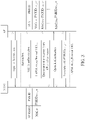
- FIG. 2 is a flowchart of a method for establishing a link between the station STA1 and the AP 110 with SAE authentication according to one embodiment of the present invention.
- the station STA1 starts to connect to the AP 110, and the station STA1 and the AP 110 perform the SAE authentication to establish a link.
- the PMK is generally derived by the station STA1 and the AP 110 , and a PMKID corresponding to the station STA1 and the AP 110 is also calculated, wherein the collection of the above information is called PMKSA.
- the station STA1 stores a basic service set identifier (BSSID) of the AP 110 (i.e.
- BSSID basic service set identifier
- the AP 110 stores the MAC address MAC STA1 of the station STA1 and the corresponding PMKID (PMKID STA1_AP ) in a cache table, wherein the cache table also comprises MAC addresses of the other stations and the corresponding PMKID, for example, the cache table further comprises MAC STA2 and PMKID STA2_AP for station STA2 and MAC STAn and PMKID STAn_AP for station STAn.
- the MAC addresses and the PMKIDs stored in the cache table of the AP 110 may be called the reference MAC addresses and reference PMKIDs, respectively. It is noted that the SAE authentication and the generation of the PMK/PMKID are known by a person skilled in the art, so the relevant descriptions are omitted here.
- the station STA1 and the AP 110 perform association and extensible authentication protocol over LAN (EAPOL) 4-way for the further communications between the station STA1 and the AP 110.
- EAPOL association and extensible authentication protocol over LAN
- the step for deriving the PMKSA shown in FIG. 2 uses SAE authentication. And the step for deriving the PMKSA may be 802.1X authentication as shown in FIG. 3 , that the PMKSA is established between the station STA1 and a back-end EAP authentication server.
- the station STA1 disconnects from the AP 110 for some reasons, for example, the station STA1 is taken away from the AP 110. Then, if station STA1 is taken to a place close to the AP 110, the station STA1 will automatically reconnect to the AP 110.
- the station STA1 may use a random MAC address to connect to the AP 110, that is the MAC address used by the station STA1 in this reconnection process is different from the MAC address MAC STA1 used in the previous connection.
- the station STA1 uses different MAC address
- the station STA1 and the AP 110 can use an open authentication and PMKSA caching, without using the 802.1X/SAE authentication, to establish the connection in a fast way.
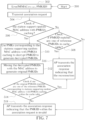
- FIG. 4 shows a flowchart of a method for establishing the connection between the station STA1 and the AP 110 by using PMKSA caching according to one embodiment of the present invention.
- Step 300 the flow starts.
- Step 302 the station STA1 mixes the new MAC address MAC STA1new with PMKID STA1_AP to generate a mixed PMKID, wherein the station STA1 may perform an exclusive or (XOR) operations on the new MAC address and PMKID STA1_AP to generate a mixed PMKID. Then, the station STA1 uses the PMK to encrypt the mixed PMKID to generate an encrypted PMKID.
- the station STA1 uses the PMK to encrypt the mixed PMKID to generate an encrypted PMKID.
- Step 304 the station STA1 sends an association request to the AP 110, wherein a PMKID field of the association request comprises the encrypted PMKID generated in Step 302. It is noted that the association request comprises the new MAC address MAC STA1new of the station STA1, but does not comprise the previous MAC address MAC STA1 for the device privacy.
- Step 306 the AP 110 receives the association request of the station STA1, and the AP 110 determines if the PMKID within the PMKID filed (i.e., the encrypted PMKID) matches any one of the PMKIDs within the cache table shown in FIG. 2 and FIG. 3 , if yes, the flow enters Step 314; and if not, the flow enters Step 306.
- the PMKID filed of the association request comprises the encrypted PMKID generated by using mixing step and the encryption step
- the PMKID within the association request will not match any one of the PMKID STA1_AP , PMKID STA2_AP , ..., PMKID STAn_AP within the cache table.
- Step 308 the AP 110 sequentially uses the PMKs of the stations to decrypt the PMKID to generate decrypted PMKIDs.
- the AP 110 may use the PMK of the station STA1 to decrypt the PMKID to generate a first decrypted PMKID, use the PMK of the station STA2 to decrypt the PMKID to generate a second decrypted PMKID, ..., and use the PMK of the station STAn to decrypt the PMKID to generate an n th decrypted PMKID.
- the first decrypted PMKID generated by using the PMK of the station STA1 should be equal to the mixed PMKID generated in Step 302.
- Step 310 for every decrypted PMKID generated in Step 308, the AP 110 mixes the decrypted PMKID with the new MAC address MAC STA1new (e.g., using XOR operations) to generate an original PMKID, and the AP 110 determines if any one of the original PMKIDs matches one of the PMKID STA1_AP , PMKID STA2_AP , ..., PMKID STAn_AP within the cache table, If yes, the flow enters Step 314; and if not, the flow enters Step 316.
- the original PMKID generated by using the PMK of the station STA1 should be equal to the PMKID STA1_AP .
- Steps 308 and Step 310 can be combined as one step, and once the AP 110 finds that the current processed original PMKID matches one of the PMKID STA1_AP , PMKID STA2_AP , ..., PMKID STAn_AP within the cache table, the AP 110 can stop using the remaining PMK to decrypt the PMKID.
- the original PMKID generated by using the PMK of the station STA1 is equal to the PMKID STA1_AP located in a first row of the cache table, so the AP 110 does not need to use the PMK of any one of the other stations STA2 - STAn to decrypt the PMKID.
- Step 314 the AP 110 sends an association response the station STA1, wherein a status code of the association response records that the reconnection succeeds.
- the AP 110 updates the cache table by replacing MAC STA1 by MAC STA1new .
- Step 316 the AP 110 sends an association response the station STA1, wherein the status code of the association response records that the PMKID within the association request is invalid.
- the station STA1 and the AP 110 can directly perform EAPOL 4-way for the further communications between the station STA1 and the AP 110, without performing the 802.1X/SAE authentication.
- the station can effectively use the MAC address randomization and PMKSA caching to reconnect to the AP 110, without performing the 802.1X/SAE authentication. Therefore, the station will have a shorter connection time.
- the encryption operation in Step 302 and the decryption operation in Step 308 are optional, that is the PMKID field of the association request sent by the station STA1 comprises the mixed PMKID generated by mixing the new MAC address MAC STA1new with PMKID STA1_AP , and the AP 110 mixes the PMKID with the new MAC address MAC STA1new to generate an original PMKID.
- This alternative design shall fall within the scope of the present invention.
- FIG. 5 is a flowchart of a method for establishing a link between the station STA1 and the AP 110 with SAE authentication according to another embodiment of the present invention.
- the station STA1 starts to connect to the AP 110, and the station STA1 and the AP 110 perform the SAE authentication to establish a link.
- the PMK is generally derived by the station STA1 and the AP 110 , and a PMKID corresponding to the station STA1 and the AP 110 is also calculated, wherein the collection of the above information is called PMKSA.
- the station STA1 stores a BSSID of the AP 110 (i.e.
- the AP 110 stores the MAC address MAC STA1 of the station STA1 and the corresponding PMKID (PMKID STA1_AP ) in a cache table, wherein the cache table also comprises MAC addresses of the other stations and the corresponding PMKID, for example, the cache table further comprises MAC STA2 and PMKID STA2_AP for station STA2 and MAC STAn and PMKID STAn_AP for station STAn.
- beacons or probe requests responses from the AP 110 may have a vendor information element indicating that the AP 110 supports the random MAC address with PMKSA caching mechanism, and the association request from the station STA1 may also have a vendor information element indicating that the station STA1 supports the random MAC address with PMKSA caching mechanism. Therefore, the AP 110 can mark the station(s) supporting this mechanism in the cache table.
- the station STA1 and the AP 110 perform association and extensible authentication protocol over LAN (EAPOL) 4-way for the further communications between the station STA1 and the AP 110.
- EAPOL association and extensible authentication protocol over LAN
- the step for deriving the PMKSA shown in FIG. 5 uses SAE authentication. And the step for deriving the PMKSA may be 802.1X authentication as shown in FIG. 5 , that the PMKSA is established between the station STA1 and a back-end EAP authentication server.
- the station STA1 disconnects from the AP 110 for some reasons, for example, the station STA1 is taken away from the AP 110. Then, if station STA1 is taken to a place close to the AP 110, the station STA1 will automatically connect to the AP 110.
- the station STA1 may use a random MAC address to connect to the AP 110, that is the MAC address used by the station STA1 in this reconnection process is different from the MAC address MAC STA1 used in the previous connection.
- the station STA1 uses different MAC address
- the station STA1 and the AP 110 can use an open authentication and PMKSA caching, without using the 802.1X/SAE authentication, to establish the connection in a fast way.
- FIG. 7 shows a flowchart of a method for establishing the connection between the station STA1 and the AP 110 by using PMKSA caching according to one embodiment of the present invention.
- Step 500 the flow starts.
- Step 502 the station STA1 mixes the new MAC address MAC STA1new with PMKID STA1_AP to generate a mixed PMKID, wherein the station STA1 may perform an exclusive or (XOR) operations on the new MAC address and PMKID STA1_AP to generate a mixed PMKID. Then, the station STA1 uses the PMK to encrypt the mixed PMKID to generate an encrypted PMKID.
- the station STA1 uses the PMK to encrypt the mixed PMKID to generate an encrypted PMKID.
- the station STA1 sends an association request to the AP 110, wherein a PMKID field of the association request comprises the encrypted PMKID generated in Step 502. It is noted that the association request comprises the new MAC address MAC STA1new of the station STA1, but does not comprise the previous MAC address MAC STA1 for the device privacy. Furthermore, the association request from the station STA1 has the vendor information element indicating that the station STA1 supports the random MAC address with PMKSA caching mechanism.
- Step 506 the AP 110 referring to the vendor information element within the association request to determine if the station STA1 supports the random MAC address with PMKSA caching mechanism, if yes, the flow enters Step 510; and if not, the flow enters Step 508.
- Step 508 the AP 110 determines if the PMKID within the PMKID filed matches any one of the PMKIDs within the cache table shown in FIG. 5 and FIG. 6 , if yes, the flow enters Step 516; and if not, the flow enters Step 518.
- the AP 110 refers to the cache table to select at least a portion of the station(s) supporting the random MAC address with PMKSA caching mechanism, and the AP 110 sequentially uses the PMKs of the selected stations to decrypt the PMKID to generate decrypted PMKIDs. Specifically, the AP 110 may use the PMK of the station STA1 to decrypt the PMKID to generate a first decrypted PMKID, and use the PMK of the station STAn to decrypt the PMKID to generate an n th decrypted PMKID. In this embodiment, the first decrypted PMKID generated by using the PMK of the station STA1 should be equal to the mixed PMKID generated in Step 502.
- Step 512 for every decrypted PMKID generated in Step 510, the AP 110 mixes the decrypted PMKID with the new MAC address MAC STA1new (e.g., using XOR operations) to generate an original PMKID, and in Step 514, the AP 110 determines if any one of the original PMKIDs matches one of the PMKID STA1_AP , PMKID STA2_AP , ..., PMKID STAn_AP corresponding to the stations supporting random MAC address with PMKSA caching within the cache table, If yes, the flow enters Step 516; and if not, the flow enters Step 518.
- the original PMKID generated by using the PMK of the station STA1 should be equal to the PMKID STA1_AP .
- Steps 510 and Step 512 can be combined as one step, and once the AP 110 finds that the current processed original PMKID matches one of the PMKID STA1_AP , PMKID STA2_AP , ..., PMKID STAn_AP within the cache table, the AP 110 can stop using the remaining PMK to decrypt the PMKID.
- the original PMKID generated by using the PMK of the station STA1 is equal to the PMKID STA1_AP located in a first row of the cache table, so the AP 110 does not need to use the PMK of any one of the other stations STA2 - STAn to decrypt the PMKID.
- Step 516 the AP sends an association response the station STA1, wherein a status code of the association response records that the reconnection succeeds.
- the AP 110 updates the cache table by replacing MAC STA1 by MAC STA1new .
- Step 518 the AP sends an association response the station STA1, wherein the status code of the association response records that the PMKID within the association request is invalid.
- the station STA1 and the AP 110 can directly perform EAPOL 4-way for the further communications between the station STA1 and the AP 110, without performing the 802.1X/SAE authentication.
- the encryption operation in Step 502 and the decryption operation in Step 510 are optional, that is the PMKID field of the association request sent by the station STA1 comprises the mixed PMKID generated by mixing the new MAC address MAC STA1new with PMKID STA1_AP , and the AP 110 mixes the PMKID with the new MAC address MAC STA1new to generate an original PMKID.
- This alternative design shall fall within the scope of the present invention.
- the station can effectively use the MAC address randomization and PMKSA caching to reconnect to the AP 110, without performing the 802.1X/SAE authentication, and the AP 110 can use PMKs of only a portion of the stations to decrypt the PMKID . Therefore, the station will have a shorter connection time.
- the station compared with the embodiment shown in FIG.
- the AP 110 for association request comprising the vendor information indicating that the station supporting the random MAC address with PMKSA caching, the AP 110 only need to process those PMKs/PMKIDs corresponding to the stations supporting random MAC address with PMKSA caching instead of processing all PMKs/PMKIDs in the cache table during Step 510, Step 512 and Step 514. Therefore, the reconnection time can be further shortened.
Landscapes
- Engineering & Computer Science (AREA)
- Computer Security & Cryptography (AREA)
- Computer Networks & Wireless Communication (AREA)
- Signal Processing (AREA)
- Computer Hardware Design (AREA)
- General Engineering & Computer Science (AREA)
- Computing Systems (AREA)
- Theoretical Computer Science (AREA)
- Databases & Information Systems (AREA)
- Software Systems (AREA)
- Physics & Mathematics (AREA)
- General Health & Medical Sciences (AREA)
- General Physics & Mathematics (AREA)
- Bioethics (AREA)
- Power Engineering (AREA)
- Health & Medical Sciences (AREA)
- Mobile Radio Communication Systems (AREA)
- Small-Scale Networks (AREA)
- Radar Systems Or Details Thereof (AREA)
Abstract
The present invention provides a wireless communication method of an access point (110). The wireless communication method comprises the steps of: establishing a cache table comprising a plurality of reference MAC and corresponding PMKs and reference PMKIDs; receiving an association request from a station (STA1); reading a MAC address of the station and a PMKID from the association request; if the MAC address of the station and the PMKID do not match items of the cache table, performing a calculation on the PMKID to obtain an original PMKID; determining if the original PMKID matches any one of the reference PMKIDs within the cache table; and if the original PMKID matches one reference PMKID within the cache table, determining that the reference MAC recorded in the cache table and the MAC address belong to the same station.
Description
- The present invention related to a wireless communication method.
- A media access control (MAC) address is a unique string of letters and numbers that is used to identify a device on a network and allow it to communicate with other devices. MAC addresses are usually assigned when the device is manufactured, and they generally do not change when moving from one network to another. In other words, MAC addresses have historically been static and unique to each device. However, because an access point (AP) or any Wi-Fi sniffer can monitor device locations without user consent by means of MAC addresses, the unique MAC address may have a bad impact on user privacy.
- To solve this problem, a MAC address randomization is provided to allow the user device to connect to the AP by using different MAC addresses, that is the MAC address randomization can prevent listeners from using the MAC addresses to build a history of device activity. Although the MAC address randomization can increase user privacy, however, some fast reconnection mechanisms such as pairwise master key security association (PMKSA) caching may not be used. Specifically, when a device connects to the AP for the first time, the device initiates an 802.1X/Simultaneous Authentication of Equals (SAE) authentication with the AP, and after the authentication succeeds, the device and the AP save derived pairwise master key (PMK) and pairwise master key identifier (PMKID) in internal caches, wherein the PMK and PMKID are associated with the MAC address of the device. Then, if the device is disconnected from the AP for some reason, and the device needs to reconnect to the AP, the device can simply use the PMK and PMKID to reconnect to the AP without the 802.1X/SAE authentication, if the device has the same MAC address. Therefore, if the device uses different MAC address to reconnect to the AP, the method of using PMKSA caching for reconnection will fail, and the 802.1X/SAE authentication that has taking a long time needs to be performed again.
- It is therefore an objective of the preset invention to provide a method that allows the device to use MAC address randomization and PMKSA caching to reconnect to the AP, to solve the above-mentioned problems.
- This is achieved by a wireless communication method according to claim 1, and a wireless communication method according to claim 7. The dependent claims pertain to corresponding further developments and improvements.
- As will be seen more clearly from the detailed description following below, a wireless communication method of a station comprises the steps of: wireless connecting to an AP by using a first MAC address, and performing authentication to generate a PMK and a PMKID; if the connection with the AP interrupted, and the station tries to reconnect to the AP, generating an association request comprising information of a second MAC address of the station and the PMKID, wherein the association request does not comprise the first MAC address of the station; and transmitting the association request to the AP.
- As will be seen more clearly from the detailed description following below, a wireless communication method of an access point comprises the steps of: establishing a cache table comprising a plurality of reference media access control address and corresponding pairwise master keys and reference pairwise master key identifiers; receiving an association request from a station; reading a MAC address of the station and a PMKID from the association request; if the MAC address of the station and the PMKID do not match items of the cache table, performing a calculation on the PMKID to obtain an original PMKID; determining if the original PMKID matches any one of the reference PMKIDs within the cache table; and if the original PMKID matches one reference PMKID within the cache table, determining that the reference MAC recorded in the cache table and the MAC address belong to the same station.
-
-
FIG. 1 is a diagram illustrating a wireless communication system according to one embodiment of the present invention. -
FIG. 2 is a flowchart of a method for establishing a link between the station and the AP with SAE authentication according to one embodiment of the present invention. -
FIG. 3 is a flowchart of a method for establishing a link between the station and the AP with 802.1X authentication according to one embodiment of the present invention. -
FIG. 4 is a flowchart of a method for establishing the connection between the station and the AP by using PMKSA caching according to one embodiment of the present invention. -
FIG. 5 is a flowchart of a method for establishing a link between the station and the AP with SAE authentication according to another embodiment of the present invention. -
FIG. 6 is a flowchart of a method for establishing a link between the station and the AP with 802.1X authentication according to another embodiment of the present invention. -
FIG. 7 is a flowchart of a method for establishing the connection between the station and the AP by using PMKSA caching according to another embodiment of the present invention. - Certain terms are used throughout the following description and claims to refer to particular system components. As one skilled in the art will appreciate, manufacturers may refer to a component by different names. This document does not intend to distinguish between components that differ in name but not function. In the following discussion and in the claims, the terms "including" and "comprising" are used in an open-ended fashion, and thus should be interpreted to mean "including, but not limited to ...". The terms "couple" and "couples" are intended to mean either an indirect or a direct electrical connection. Thus, if a first device couples to a second device, that connection may be through a direct electrical connection, or through an indirect electrical connection via other devices and connections.
-
FIG. 1 is a diagram illustrating a wireless communication system according to one embodiment of the present invention. As shown inFIG. 1 , the wireless communication system comprises anAP 110 and a plurality of stations STA1 - STAn, wherein the AP 110 comprises aprocessor 112 and awireless communication module 114. In this embodiment, each of the stations STA1 - STAn can be a cell phone, a tablet, a notebook, or any other electronic device capable of wirelessly communicating with the AP 110. -
FIG. 2 is a flowchart of a method for establishing a link between the station STA1 and theAP 110 with SAE authentication according to one embodiment of the present invention. As shown inFIG. 2 , initially the station STA1 starts to connect to the AP 110, and the station STA1 and the AP 110 perform the SAE authentication to establish a link. After the authentication succeeds, the PMK is generally derived by the station STA1 and the AP 110 , and a PMKID corresponding to the station STA1 and the AP 110 is also calculated, wherein the collection of the above information is called PMKSA. Then, the station STA1 stores a basic service set identifier (BSSID) of the AP 110 (i.e. the MAC address of the AP 110, MACAP) and the PMKID corresponding to the station STA1 and the AP 110 (PMKIDSTA1_AP); and theAP 110 stores the MAC address MACSTA1 of the station STA1 and the corresponding PMKID (PMKIDSTA1_AP) in a cache table, wherein the cache table also comprises MAC addresses of the other stations and the corresponding PMKID, for example, the cache table further comprises MACSTA2 and PMKIDSTA2_AP for station STA2 and MACSTAn and PMKIDSTAn_AP for station STAn. In the following descriptions, the MAC addresses and the PMKIDs stored in the cache table of the AP 110 may be called the reference MAC addresses and reference PMKIDs, respectively. It is noted that the SAE authentication and the generation of the PMK/PMKID are known by a person skilled in the art, so the relevant descriptions are omitted here. - Then, the station STA1 and the AP 110 perform association and extensible authentication protocol over LAN (EAPOL) 4-way for the further communications between the station STA1 and the AP 110.
- The step for deriving the PMKSA shown in
FIG. 2 uses SAE authentication. And the step for deriving the PMKSA may be 802.1X authentication as shown inFIG. 3 , that the PMKSA is established between the station STA1 and a back-end EAP authentication server. - In this case, the station STA1 disconnects from the AP 110 for some reasons, for example, the station STA1 is taken away from the AP 110. Then, if station STA1 is taken to a place close to the AP 110, the station STA1 will automatically reconnect to the AP 110. In addition, in order to provide a better privacy, the station STA1 may use a random MAC address to connect to the AP 110, that is the MAC address used by the station STA1 in this reconnection process is different from the MAC address MACSTA1 used in the previous connection. In this embodiment, although the station STA1 uses different MAC address, the station STA1 and the AP 110 can use an open authentication and PMKSA caching, without using the 802.1X/SAE authentication, to establish the connection in a fast way. In detail, referring to
FIG. 4 , which shows a flowchart of a method for establishing the connection between the station STA1 and theAP 110 by using PMKSA caching according to one embodiment of the present invention. InStep 300, the flow starts. InStep 302, the station STA1 mixes the new MAC address MACSTA1new with PMKIDSTA1_AP to generate a mixed PMKID, wherein the station STA1 may perform an exclusive or (XOR) operations on the new MAC address and PMKIDSTA1_AP to generate a mixed PMKID. Then, the station STA1 uses the PMK to encrypt the mixed PMKID to generate an encrypted PMKID. - In
Step 304, the station STA1 sends an association request to the AP 110, wherein a PMKID field of the association request comprises the encrypted PMKID generated inStep 302. It is noted that the association request comprises the new MAC address MACSTA1new of the station STA1, but does not comprise the previous MAC address MACSTA1 for the device privacy. - In
Step 306, the AP 110 receives the association request of the station STA1, and the AP 110 determines if the PMKID within the PMKID filed (i.e., the encrypted PMKID) matches any one of the PMKIDs within the cache table shown inFIG. 2 andFIG. 3 , if yes, the flow entersStep 314; and if not, the flow entersStep 306. In this embodiment, because the PMKID filed of the association request comprises the encrypted PMKID generated by using mixing step and the encryption step, the PMKID within the association request will not match any one of the PMKIDSTA1_AP, PMKIDSTA2_AP, ..., PMKIDSTAn_AP within the cache table. -
Step 308, the AP 110 sequentially uses the PMKs of the stations to decrypt the PMKID to generate decrypted PMKIDs. Specifically, the AP 110 may use the PMK of the station STA1 to decrypt the PMKID to generate a first decrypted PMKID, use the PMK of the station STA2 to decrypt the PMKID to generate a second decrypted PMKID, ..., and use the PMK of the station STAn to decrypt the PMKID to generate an nth decrypted PMKID. In this embodiment, the first decrypted PMKID generated by using the PMK of the station STA1 should be equal to the mixed PMKID generated inStep 302. - In
Step 310, for every decrypted PMKID generated inStep 308, the AP 110 mixes the decrypted PMKID with the new MAC address MACSTA1new (e.g., using XOR operations) to generate an original PMKID, and theAP 110 determines if any one of the original PMKIDs matches one of the PMKIDSTA1_AP, PMKIDSTA2_AP, ..., PMKIDSTAn_AP within the cache table, If yes, the flow entersStep 314; and if not, the flow entersStep 316. In this embodiment, the original PMKID generated by using the PMK of the station STA1 should be equal to the PMKIDSTA1_AP. - It is noted that the
Steps 308 andStep 310 can be combined as one step, and once the AP 110 finds that the current processed original PMKID matches one of the PMKIDSTA1_AP, PMKIDSTA2_AP, ..., PMKIDSTAn_AP within the cache table, theAP 110 can stop using the remaining PMK to decrypt the PMKID. Specifically, in this embodiment, the original PMKID generated by using the PMK of the station STA1 is equal to the PMKIDSTA1_AP located in a first row of the cache table, so theAP 110 does not need to use the PMK of any one of the other stations STA2 - STAn to decrypt the PMKID. - In
Step 314, the AP 110 sends an association response the station STA1, wherein a status code of the association response records that the reconnection succeeds. In addition, theAP 110 updates the cache table by replacing MACSTA1 by MACSTA1new. - In
Step 316, theAP 110 sends an association response the station STA1, wherein the status code of the association response records that the PMKID within the association request is invalid. - In this embodiment, after the
Step 314, because the station STA1 successfully connects to theAP 110 by using PMKSA caching, the station STA1 and theAP 110 can directly perform EAPOL 4-way for the further communications between the station STA1 and theAP 110, without performing the 802.1X/SAE authentication. - In light of above, in the embodiment shown in
FIG. 2 ,FIG. 3 andFIG. 4 , the station can effectively use the MAC address randomization and PMKSA caching to reconnect to theAP 110, without performing the 802.1X/SAE authentication. Therefore, the station will have a shorter connection time. - It is noted that the encryption operation in
Step 302 and the decryption operation inStep 308 are optional, that is the PMKID field of the association request sent by the station STA1 comprises the mixed PMKID generated by mixing the new MAC address MACSTA1new with PMKIDSTA1_AP, and theAP 110 mixes the PMKID with the new MAC address MACSTA1new to generate an original PMKID. This alternative design shall fall within the scope of the present invention. -
FIG. 5 is a flowchart of a method for establishing a link between the station STA1 and theAP 110 with SAE authentication according to another embodiment of the present invention. As shown inFIG. 5 , initially the station STA1 starts to connect to theAP 110, and the station STA1 and theAP 110 perform the SAE authentication to establish a link. After the authentication succeeds, the PMK is generally derived by the station STA1 and theAP 110 , and a PMKID corresponding to the station STA1 and theAP 110 is also calculated, wherein the collection of the above information is called PMKSA. Then, the station STA1 stores a BSSID of the AP 110 (i.e. the MAC address of theAP 110, MACAP) and the PMKID corresponding to the station STA1 and the AP 110 (PMKIDSTA1_AP); and theAP 110 stores the MAC address MACSTA1 of the station STA1 and the corresponding PMKID (PMKIDSTA1_AP) in a cache table, wherein the cache table also comprises MAC addresses of the other stations and the corresponding PMKID, for example, the cache table further comprises MACSTA2 and PMKIDSTA2_AP for station STA2 and MACSTAn and PMKIDSTAn_AP for station STAn. In addition, in the communications between the station STA1 and theAP 110, beacons or probe requests responses from theAP 110 may have a vendor information element indicating that theAP 110 supports the random MAC address with PMKSA caching mechanism, and the association request from the station STA1 may also have a vendor information element indicating that the station STA1 supports the random MAC address with PMKSA caching mechanism. Therefore, theAP 110 can mark the station(s) supporting this mechanism in the cache table. - Then, the station STA1 and the
AP 110 perform association and extensible authentication protocol over LAN (EAPOL) 4-way for the further communications between the station STA1 and theAP 110. - The step for deriving the PMKSA shown in
FIG. 5 uses SAE authentication. And the step for deriving the PMKSA may be 802.1X authentication as shown inFIG. 5 , that the PMKSA is established between the station STA1 and a back-end EAP authentication server. - In this case, the station STA1 disconnects from the
AP 110 for some reasons, for example, the station STA1 is taken away from theAP 110. Then, if station STA1 is taken to a place close to theAP 110, the station STA1 will automatically connect to theAP 110. In addition, in order to provide a better privacy, the station STA1 may use a random MAC address to connect to theAP 110, that is the MAC address used by the station STA1 in this reconnection process is different from the MAC address MACSTA1 used in the previous connection. In this embodiment, although the station STA1 uses different MAC address, the station STA1 and theAP 110 can use an open authentication and PMKSA caching, without using the 802.1X/SAE authentication, to establish the connection in a fast way. In detail, referring toFIG. 7 , which shows a flowchart of a method for establishing the connection between the station STA1 and theAP 110 by using PMKSA caching according to one embodiment of the present invention. InStep 500, the flow starts. InStep 502, the station STA1 mixes the new MAC address MACSTA1new with PMKIDSTA1_AP to generate a mixed PMKID, wherein the station STA1 may perform an exclusive or (XOR) operations on the new MAC address and PMKIDSTA1_AP to generate a mixed PMKID. Then, the station STA1 uses the PMK to encrypt the mixed PMKID to generate an encrypted PMKID. - In
Step 504, the station STA1 sends an association request to theAP 110, wherein a PMKID field of the association request comprises the encrypted PMKID generated inStep 502. It is noted that the association request comprises the new MAC address MACSTA1new of the station STA1, but does not comprise the previous MAC address MACSTA1 for the device privacy. Furthermore, the association request from the station STA1 has the vendor information element indicating that the station STA1 supports the random MAC address with PMKSA caching mechanism. - In
Step 506, theAP 110 referring to the vendor information element within the association request to determine if the station STA1 supports the random MAC address with PMKSA caching mechanism, if yes, the flow entersStep 510; and if not, the flow entersStep 508. - In
Step 508, theAP 110 determines if the PMKID within the PMKID filed matches any one of the PMKIDs within the cache table shown inFIG. 5 andFIG. 6 , if yes, the flow entersStep 516; and if not, the flow entersStep 518. -
Step 510, theAP 110 refers to the cache table to select at least a portion of the station(s) supporting the random MAC address with PMKSA caching mechanism, and theAP 110 sequentially uses the PMKs of the selected stations to decrypt the PMKID to generate decrypted PMKIDs. Specifically, theAP 110 may use the PMK of the station STA1 to decrypt the PMKID to generate a first decrypted PMKID, and use the PMK of the station STAn to decrypt the PMKID to generate an nth decrypted PMKID. In this embodiment, the first decrypted PMKID generated by using the PMK of the station STA1 should be equal to the mixed PMKID generated inStep 502. - In
Step 512, for every decrypted PMKID generated inStep 510, theAP 110 mixes the decrypted PMKID with the new MAC address MACSTA1new (e.g., using XOR operations) to generate an original PMKID, and inStep 514, theAP 110 determines if any one of the original PMKIDs matches one of the PMKIDSTA1_AP, PMKIDSTA2_AP, ..., PMKIDSTAn_AP corresponding to the stations supporting random MAC address with PMKSA caching within the cache table, If yes, the flow entersStep 516; and if not, the flow entersStep 518. In this embodiment, the original PMKID generated by using the PMK of the station STA1 should be equal to the PMKIDSTA1_AP. - It is noted that the
Steps 510 andStep 512 can be combined as one step, and once theAP 110 finds that the current processed original PMKID matches one of the PMKIDSTA1_AP, PMKIDSTA2_AP, ..., PMKIDSTAn_AP within the cache table, theAP 110 can stop using the remaining PMK to decrypt the PMKID. Specifically, in this embodiment, the original PMKID generated by using the PMK of the station STA1 is equal to the PMKIDSTA1_AP located in a first row of the cache table, so theAP 110 does not need to use the PMK of any one of the other stations STA2 - STAn to decrypt the PMKID. - In
Step 516, the AP sends an association response the station STA1, wherein a status code of the association response records that the reconnection succeeds. In addition, theAP 110 updates the cache table by replacing MACSTA1 by MACSTA1new. - In
Step 518, the AP sends an association response the station STA1, wherein the status code of the association response records that the PMKID within the association request is invalid. - In this embodiment, after the
Step 516, because the station STA1 successfully connects to theAP 110 by using PMKSA caching, the station STA1 and theAP 110 can directly perform EAPOL 4-way for the further communications between the station STA1 and theAP 110, without performing the 802.1X/SAE authentication. - It is noted that the encryption operation in
Step 502 and the decryption operation inStep 510 are optional, that is the PMKID field of the association request sent by the station STA1 comprises the mixed PMKID generated by mixing the new MAC address MACSTA1new with PMKIDSTA1_AP, and theAP 110 mixes the PMKID with the new MAC address MACSTA1new to generate an original PMKID. This alternative design shall fall within the scope of the present invention. - In light of above, in the embodiment shown in
FIG. 5 ,FIG. 6 andFIG. 7 , the station can effectively use the MAC address randomization and PMKSA caching to reconnect to theAP 110, without performing the 802.1X/SAE authentication, and theAP 110 can use PMKs of only a portion of the stations to decrypt the PMKID . Therefore, the station will have a shorter connection time. In addition, compared with the embodiment shown inFIG. 4 , for association request comprising the vendor information indicating that the station supporting the random MAC address with PMKSA caching, theAP 110 only need to process those PMKs/PMKIDs corresponding to the stations supporting random MAC address with PMKSA caching instead of processing all PMKs/PMKIDs in the cache table duringStep 510,Step 512 andStep 514. Therefore, the reconnection time can be further shortened.
Claims (15)
- A wireless communication method of a station (STA1), comprising:connecting to an access point (AP) (110) by using a first media access control (MAC) address, and performing authentication to generate a pairwise master key (PMK) and a pairwise master key identifier (PMKID);if the connection with the AP (110) is interrupted, and the station tries to reconnect to the AP (110), generating an association request comprising information of a second MAC address of the station and the PMKID, wherein the association request does not comprise the first MAC address of the station; andtransmitting the association request to the AP (110).
- The wireless communication method of claim 1, wherein the step of generating the association request comprising information of the second MAC address of the station and the PMKID comprises:mixing the second MAC address with the PMKID to generate a mixed PMKID; andgenerating the association request comprising the mixed PMKID.
- The wireless communication method of claim 2, wherein the step of mixing the second MAC address with the PMKID to generate the mixed PMKID comprises:
performing a mixing operation on the second MAC address and the PMKID to generate the mixed PMKID; wherein the PMKID is obtained if the mixing operation is performed on the mixed PMKID and the second MAC address. - The wireless communication method of claim 1, wherein the step of generating the association request comprising information of the second MAC address of the station and the PMKID comprises:mixing the second MAC address with the PMKID to generate a mixed PMKID;using the PMK to encrypt the mixed PMKID to generate an encrypted PMKID; andgenerating the association request comprising the encrypted PMKID.
- The wireless communication method of claim 4, wherein the step of mixing the second MAC address with the PMKID to generate the mixed PMKID comprises:
performing a mixing operation on the second MAC address with the PMKID to generate the mixed PMKID, wherein the PMKID is obtained if the mixing operation is performed on the mixed PMKID and the second MAC address. - The wireless communication method of claim 1, wherein the association request further comprises information element indicating that the station supports a random MAC address with PMKSA caching mechanism.
- A wireless communication method of an access point (110), comprising:establishing a cache table comprising a plurality of reference media access control (MAC) address and corresponding pairwise master keys (PMKs) and reference pairwise master key identifiers (PMKIDs);receiving an association request from a station (STA1);reading a MAC address of the station and a PMKID from the association request;if the MAC address of the station (STA1) and the PMKID do not match content of the cache table, performing a calculation on the PMKID to obtain an original PMKID;determining if the original PMKID matches any one of the reference PMKIDs within the cache table; andif the original PMKID matches one reference PMKID within the cache table, determining that the reference MAC recorded in the cache table and the MAC address belong to the same station.
- The wireless communication method of claim 7, wherein the step of performing the calculation on the PMKID to obtain the original PMKID comprises:
mixing the MAC address with the PMKID to generate a mixed PMKID to serve as the original PMKID. - The wireless communication method of claim 8, wherein the step of mixing the MAC address with the PMKID to generate the mixed PMKID to serve as the original PMKID comprises:
performing a mixing operation on the MAC address and the PMKID to generate a mixed PMKID to serve as the original PMKID, wherein the PMKID is obtained if the mixing operation is performed on the mixed PMKID and the MAC address. - The wireless communication method of claim 7, wherein the step of performing the calculation on the PMKID to obtain the original PMKID comprises:using at least one of the PMKs of the cache table to decrypt the PMKID to generate decrypted PMKID(s); andmixing the MAC address with the PMKID(s) to generate mixed PMKID(s) to serve as the original PMKID.
- The wireless communication method of claim 10, wherein the step of mixing the MAC address with the PMKID(s) to generate the mixed PMKID(s) to serve as the original PMKID comprises the step of:
performing a mixing operation on the MAC address with the PMKID(s) to generate the mixed PMKID(s) to serve as the original PMKID, wherein the PMKID(s) is/are obtained if the mixing operation is performed on the mixed PMKID(s) and the MAC address. - The wireless communication method of claim 7, further comprising:
if the original PMKID matches one reference PMKID within the cache table, using the MAC address recorded in the association request to update the reference MAC recorded in the cache table. - The wireless communication method of claim 7, wherein the cache table further comprises if stations corresponding to the reference MAC addresses support a random MAC address with PMKSA caching mechanism.
- The wireless communication method of claim 13, wherein the step of performing the calculation on the PMKID to obtain the original PMKID comprises:referring to the cache table to select at least one of the stations that supports the random MAC address with PMKSA caching mechanism;using the PMK(s) corresponding to the selected stations to decrypt the PMKID to generate decrypted PMKID(s); andmixing the MAC address with the PMKID(s) to generate mixed PMKID(s) to serve as the original PMKID.
- The wireless communication method of claim 14, wherein the step of mixing the MAC address with the PMKID(s) to generate the mixed PMKID(s) to serve as the original PMKID comprises the step of:
performing a mixing operation on the MAC address with the PMKID(s) to generate the mixed PMKID(s) to serve as the original PMKID, wherein the PMKID(s) is/are obtained if the mixing operation is performed on the mixed PMKID(s) and the MAC address.
Applications Claiming Priority (1)
| Application Number | Priority Date | Filing Date | Title |
|---|---|---|---|
| US17/394,338 US12041442B2 (en) | 2021-08-04 | 2021-08-04 | Random media access control address with fast reconnection mechanism |
Publications (1)
| Publication Number | Publication Date |
|---|---|
| EP4131048A1 true EP4131048A1 (en) | 2023-02-08 |
Family
ID=83081619
Family Applications (1)
| Application Number | Title | Priority Date | Filing Date |
|---|---|---|---|
| EP22188522.1A Withdrawn EP4131048A1 (en) | 2021-08-04 | 2022-08-03 | Random media access control address with fast reconnection mechanism |
Country Status (4)
| Country | Link |
|---|---|
| US (1) | US12041442B2 (en) |
| EP (1) | EP4131048A1 (en) |
| CN (1) | CN115706982B (en) |
| TW (1) | TWI772211B (en) |
Cited By (1)
| Publication number | Priority date | Publication date | Assignee | Title |
|---|---|---|---|---|
| WO2025099004A1 (en) * | 2023-11-10 | 2025-05-15 | Canon Kabushiki Kaisha | Method and apparatus for operating with enhanced data privacy features for stations implementing changing mac address |
Families Citing this family (6)
| Publication number | Priority date | Publication date | Assignee | Title |
|---|---|---|---|---|
| WO2023043635A1 (en) * | 2021-09-15 | 2023-03-23 | Arris Enterprises Llc | A utilizing aid to set a station mac address in a wlan system |
| US12034695B2 (en) * | 2022-02-16 | 2024-07-09 | Cisco Technology, Inc. | Wireless client media access control (MAC) address collision avoidance |
| US12170714B2 (en) * | 2023-01-19 | 2024-12-17 | VMware LLC | Cross host beacon probing in a virtualized computing system |
| GB2632637A (en) * | 2023-07-28 | 2025-02-19 | Canon Kk | Method and apparatus for performing an enhanced fast BSS transition for CPE stations implementing changing MAC address |
| US20250211566A1 (en) * | 2023-12-23 | 2025-06-26 | Cisco Technology, Inc. | Avoiding collisions without ap coordination |
| GB202400503D0 (en) * | 2024-01-12 | 2024-02-28 | Canon Kk | Method and apparatus for operating with enhanced data privacy features for stations implementing changing MAC address |
Family Cites Families (7)
| Publication number | Priority date | Publication date | Assignee | Title |
|---|---|---|---|---|
| JP5952427B2 (en) | 2012-01-11 | 2016-07-13 | インターデイジタル パテント ホールディングス インコーポレイテッド | Method and apparatus for accelerated link setup between an STA and an access point of an IEEE 802.11 network |
| WO2014028691A1 (en) | 2012-08-15 | 2014-02-20 | Interdigital Patent Holdings, Inc. | Enhancements to enable fast security setup |
| CN103888941B (en) * | 2012-12-20 | 2018-03-06 | 新华三技术有限公司 | The method and device that a kind of wireless network keys are consulted |
| US9883384B2 (en) * | 2014-07-16 | 2018-01-30 | Qualcomm Incorporated | UE-based network subscription management |
| CN114513330A (en) * | 2019-04-24 | 2022-05-17 | 华为技术有限公司 | Parameter sending method and device |
| US11849344B2 (en) * | 2020-05-15 | 2023-12-19 | Cisco Technology, Inc. | Dynamic media access control addresses in a wireless network |
| US12452660B2 (en) * | 2021-06-25 | 2025-10-21 | Intel Corporation | 4-way handshake optimization |
-
2021
- 2021-08-04 US US17/394,338 patent/US12041442B2/en active Active
- 2021-10-08 CN CN202111172756.0A patent/CN115706982B/en active Active
- 2021-10-27 TW TW110139828A patent/TWI772211B/en active
-
2022
- 2022-08-03 EP EP22188522.1A patent/EP4131048A1/en not_active Withdrawn
Non-Patent Citations (4)
| Title |
|---|
| ANONYMOUS: "802.11 WLAN Roaming and Fast-Secure Roaming on CUWN", IEEE, 29 August 2019 (2019-08-29), pages 1 - 52, XP055953386 * |
| NOKIA NETWORKS: "Security and authentication in LWA", vol. RAN WG2, no. Anaheim, USA; 20151116 - 20151120, 6 November 2015 (2015-11-06), XP051024579, Retrieved from the Internet <URL:http://www.3gpp.org/ftp/tsg_ran/WG2_RL2/TSGR2_92/Docs/> [retrieved on 20151106] * |
| PO-KAI HUANG (INTEL): "Privacy Enhancement to avoid Element Fingerprint", vol. 802.11bi, 13 May 2021 (2021-05-13), pages 1 - 10, XP068181703, Retrieved from the Internet <URL:https://mentor.ieee.org/802.11/dcn/21/11-21-0839-00-00bi-privacy-enhancement-to-avoid-element-fingerprint.pptx> [retrieved on 20210513] * |
| THOMAS DERHAM (BROADCOM): "PMKSA caching and MAC randomization", vol. 802.11m, no. 3, 15 May 2019 (2019-05-15), pages 1 - 18, XP068151306, Retrieved from the Internet <URL:https://mentor.ieee.org/802.11/dcn/19/11-19-0586-03-000m-pmksa-caching-and-mac-randomization.docx> [retrieved on 20190515] * |
Cited By (1)
| Publication number | Priority date | Publication date | Assignee | Title |
|---|---|---|---|---|
| WO2025099004A1 (en) * | 2023-11-10 | 2025-05-15 | Canon Kabushiki Kaisha | Method and apparatus for operating with enhanced data privacy features for stations implementing changing mac address |
Also Published As
| Publication number | Publication date |
|---|---|
| TWI772211B (en) | 2022-07-21 |
| CN115706982B (en) | 2026-04-24 |
| US12041442B2 (en) | 2024-07-16 |
| US20230043950A1 (en) | 2023-02-09 |
| TW202308421A (en) | 2023-02-16 |
| CN115706982A (en) | 2023-02-17 |
Similar Documents
| Publication | Publication Date | Title |
|---|---|---|
| US12041442B2 (en) | Random media access control address with fast reconnection mechanism | |
| JP5189066B2 (en) | User authentication method, authentication system, terminal device and authentication device in terminal device | |
| US8554830B2 (en) | Systems and methods for wireless network selection | |
| JP3869392B2 (en) | User authentication method in public wireless LAN service system and recording medium storing program for causing computer to execute the method | |
| US8931067B2 (en) | Enabling seamless offloading between wireless local-area networks in fixed mobile convergence systems | |
| US8046583B2 (en) | Wireless terminal | |
| US8191124B2 (en) | Systems and methods for acquiring network credentials | |
| KR101101738B1 (en) | Authentication in Communication Systems | |
| US20110016309A1 (en) | Cryptographic communication system and gateway device | |
| US20060073811A1 (en) | System and method for authentication in a mobile communications system | |
| US20110047603A1 (en) | Systems and Methods for Obtaining Network Credentials | |
| US20140023194A1 (en) | Managing User Access in a Communications Network | |
| EP2206400A1 (en) | Systems and methods for wireless network selection | |
| US20050071682A1 (en) | Layer 2 switch device with verification management table | |
| EP2060050A2 (en) | Systems and methods for acquiring network credentials | |
| US20060268743A1 (en) | Information portable terminal apparatus and wireless communication system | |
| US20220295281A1 (en) | System, module, circuitry and method | |
| CN101268669B (en) | Method and mobility anchor point for authenticating updates from mobile node | |
| JP6621146B2 (en) | COMMUNICATION DEVICE, COMMUNICATION TERMINAL, COMMUNICATION SYSTEM, COMMUNICATION CONTROL METHOD, AND COMMUNICATION CONTROL PROGRAM | |
| US20220150219A1 (en) | Information processing apparatus, non-transitory computer readable medium, and communication system | |
| KR100667186B1 (en) | Apparatus and Method for Implementing Authentication System for Wireless Mobile Terminal | |
| CN106878989B (en) | Access control method and device | |
| EP4546944A1 (en) | Supporting multiple pre-shared keys in wi-fi networks | |
| US20250133395A1 (en) | Supporting multiple pre-shared keys in wi-fi networks | |
| CN118158066A (en) | User escape method and BRAS equipment |
Legal Events
| Date | Code | Title | Description |
|---|---|---|---|
| PUAI | Public reference made under article 153(3) epc to a published international application that has entered the european phase |
Free format text: ORIGINAL CODE: 0009012 |
|
| STAA | Information on the status of an ep patent application or granted ep patent |
Free format text: STATUS: THE APPLICATION HAS BEEN PUBLISHED |
|
| AK | Designated contracting states |
Kind code of ref document: A1 Designated state(s): AL AT BE BG CH CY CZ DE DK EE ES FI FR GB GR HR HU IE IS IT LI LT LU LV MC MK MT NL NO PL PT RO RS SE SI SK SM TR |
|
| P01 | Opt-out of the competence of the unified patent court (upc) registered |
Effective date: 20230607 |
|
| STAA | Information on the status of an ep patent application or granted ep patent |
Free format text: STATUS: THE APPLICATION IS DEEMED TO BE WITHDRAWN |
|
| 18D | Application deemed to be withdrawn |
Effective date: 20230809 |