EP4130659B1 - Agricultural traveling vehicle, control device, and program - Google Patents
Agricultural traveling vehicle, control device, and program Download PDFInfo
- Publication number
- EP4130659B1 EP4130659B1 EP21776910.8A EP21776910A EP4130659B1 EP 4130659 B1 EP4130659 B1 EP 4130659B1 EP 21776910 A EP21776910 A EP 21776910A EP 4130659 B1 EP4130659 B1 EP 4130659B1
- Authority
- EP
- European Patent Office
- Prior art keywords
- ridge
- agricultural vehicle
- point group
- data
- basis
- Prior art date
- Legal status (The legal status is an assumption and is not a legal conclusion. Google has not performed a legal analysis and makes no representation as to the accuracy of the status listed.)
- Active
Links
Images




Classifications
-
- G—PHYSICS
- G05—CONTROLLING; REGULATING
- G05D—SYSTEMS FOR CONTROLLING OR REGULATING NON-ELECTRIC VARIABLES
- G05D1/00—Control of position, course, altitude or attitude of land, water, air or space vehicles, e.g. using automatic pilots
- G05D1/02—Control of position or course in two dimensions
- G05D1/021—Control of position or course in two dimensions specially adapted to land vehicles
- G05D1/0212—Control of position or course in two dimensions specially adapted to land vehicles with means for defining a desired trajectory
- G05D1/0214—Control of position or course in two dimensions specially adapted to land vehicles with means for defining a desired trajectory in accordance with safety or protection criteria, e.g. avoiding hazardous areas
-
- G—PHYSICS
- G05—CONTROLLING; REGULATING
- G05D—SYSTEMS FOR CONTROLLING OR REGULATING NON-ELECTRIC VARIABLES
- G05D1/00—Control of position, course, altitude or attitude of land, water, air or space vehicles, e.g. using automatic pilots
- G05D1/02—Control of position or course in two dimensions
- G05D1/021—Control of position or course in two dimensions specially adapted to land vehicles
- G05D1/0231—Control of position or course in two dimensions specially adapted to land vehicles using optical position detecting means
- G05D1/0238—Control of position or course in two dimensions specially adapted to land vehicles using optical position detecting means using obstacle or wall sensors
- G05D1/024—Control of position or course in two dimensions specially adapted to land vehicles using optical position detecting means using obstacle or wall sensors in combination with a laser
-
- A—HUMAN NECESSITIES
- A01—AGRICULTURE; FORESTRY; ANIMAL HUSBANDRY; HUNTING; TRAPPING; FISHING
- A01B—SOIL WORKING IN AGRICULTURE OR FORESTRY; PARTS, DETAILS, OR ACCESSORIES OF AGRICULTURAL MACHINES OR IMPLEMENTS, IN GENERAL
- A01B69/00—Steering of agricultural machines or implements; Guiding agricultural machines or implements on a desired track
- A01B69/007—Steering or guiding of agricultural vehicles, e.g. steering of the tractor to keep the plough in the furrow
- A01B69/008—Steering or guiding of agricultural vehicles, e.g. steering of the tractor to keep the plough in the furrow automatic
-
- G—PHYSICS
- G01—MEASURING; TESTING
- G01C—MEASURING DISTANCES, LEVELS OR BEARINGS; SURVEYING; NAVIGATION; GYROSCOPIC INSTRUMENTS; PHOTOGRAMMETRY OR VIDEOGRAMMETRY
- G01C7/00—Tracing profiles
- G01C7/02—Tracing profiles of land surfaces
- G01C7/04—Tracing profiles of land surfaces involving a vehicle which moves along the profile to be traced
-
- G—PHYSICS
- G01—MEASURING; TESTING
- G01S—RADIO DIRECTION-FINDING; RADIO NAVIGATION; DETERMINING DISTANCE OR VELOCITY BY USE OF RADIO WAVES; LOCATING OR PRESENCE-DETECTING BY USE OF THE REFLECTION OR RERADIATION OF RADIO WAVES; ANALOGOUS ARRANGEMENTS USING OTHER WAVES
- G01S17/00—Systems using the reflection or reradiation of electromagnetic waves other than radio waves, e.g. lidar systems
- G01S17/88—Lidar systems specially adapted for specific applications
-
- G—PHYSICS
- G01—MEASURING; TESTING
- G01S—RADIO DIRECTION-FINDING; RADIO NAVIGATION; DETERMINING DISTANCE OR VELOCITY BY USE OF RADIO WAVES; LOCATING OR PRESENCE-DETECTING BY USE OF THE REFLECTION OR RERADIATION OF RADIO WAVES; ANALOGOUS ARRANGEMENTS USING OTHER WAVES
- G01S17/00—Systems using the reflection or reradiation of electromagnetic waves other than radio waves, e.g. lidar systems
- G01S17/88—Lidar systems specially adapted for specific applications
- G01S17/89—Lidar systems specially adapted for specific applications for mapping or imaging
-
- G—PHYSICS
- G01—MEASURING; TESTING
- G01S—RADIO DIRECTION-FINDING; RADIO NAVIGATION; DETERMINING DISTANCE OR VELOCITY BY USE OF RADIO WAVES; LOCATING OR PRESENCE-DETECTING BY USE OF THE REFLECTION OR RERADIATION OF RADIO WAVES; ANALOGOUS ARRANGEMENTS USING OTHER WAVES
- G01S7/00—Details of systems according to groups G01S13/00, G01S15/00, G01S17/00
- G01S7/48—Details of systems according to groups G01S13/00, G01S15/00, G01S17/00 of systems according to group G01S17/00
- G01S7/4802—Details of systems according to groups G01S13/00, G01S15/00, G01S17/00 of systems according to group G01S17/00 using analysis of echo signal for target characterisation; Target signature; Target cross-section
-
- G—PHYSICS
- G05—CONTROLLING; REGULATING
- G05D—SYSTEMS FOR CONTROLLING OR REGULATING NON-ELECTRIC VARIABLES
- G05D1/00—Control of position, course, altitude or attitude of land, water, air or space vehicles, e.g. using automatic pilots
- G05D1/02—Control of position or course in two dimensions
- G05D1/021—Control of position or course in two dimensions specially adapted to land vehicles
- G05D1/0212—Control of position or course in two dimensions specially adapted to land vehicles with means for defining a desired trajectory
- G05D1/0223—Control of position or course in two dimensions specially adapted to land vehicles with means for defining a desired trajectory involving speed control of the vehicle
-
- G—PHYSICS
- G05—CONTROLLING; REGULATING
- G05D—SYSTEMS FOR CONTROLLING OR REGULATING NON-ELECTRIC VARIABLES
- G05D1/00—Control of position, course, altitude or attitude of land, water, air or space vehicles, e.g. using automatic pilots
- G05D1/02—Control of position or course in two dimensions
- G05D1/021—Control of position or course in two dimensions specially adapted to land vehicles
- G05D1/0231—Control of position or course in two dimensions specially adapted to land vehicles using optical position detecting means
-
- G—PHYSICS
- G05—CONTROLLING; REGULATING
- G05D—SYSTEMS FOR CONTROLLING OR REGULATING NON-ELECTRIC VARIABLES
- G05D1/00—Control of position, course, altitude or attitude of land, water, air or space vehicles, e.g. using automatic pilots
- G05D1/20—Control system inputs
- G05D1/24—Arrangements for determining position or orientation
- G05D1/246—Arrangements for determining position or orientation using environment maps, e.g. simultaneous localisation and mapping [SLAM]
- G05D1/2462—Arrangements for determining position or orientation using environment maps, e.g. simultaneous localisation and mapping [SLAM] using feature-based mapping
-
- G—PHYSICS
- G05—CONTROLLING; REGULATING
- G05D—SYSTEMS FOR CONTROLLING OR REGULATING NON-ELECTRIC VARIABLES
- G05D1/00—Control of position, course, altitude or attitude of land, water, air or space vehicles, e.g. using automatic pilots
- G05D1/20—Control system inputs
- G05D1/24—Arrangements for determining position or orientation
- G05D1/247—Arrangements for determining position or orientation using signals provided by artificial sources external to the vehicle, e.g. navigation beacons
- G05D1/249—Arrangements for determining position or orientation using signals provided by artificial sources external to the vehicle, e.g. navigation beacons from positioning sensors located off-board the vehicle, e.g. from cameras
-
- G—PHYSICS
- G05—CONTROLLING; REGULATING
- G05D—SYSTEMS FOR CONTROLLING OR REGULATING NON-ELECTRIC VARIABLES
- G05D1/00—Control of position, course, altitude or attitude of land, water, air or space vehicles, e.g. using automatic pilots
- G05D1/60—Intended control result
- G05D1/617—Safety or protection, e.g. defining protection zones around obstacles or avoiding hazards
-
- G—PHYSICS
- G05—CONTROLLING; REGULATING
- G05D—SYSTEMS FOR CONTROLLING OR REGULATING NON-ELECTRIC VARIABLES
- G05D1/00—Control of position, course, altitude or attitude of land, water, air or space vehicles, e.g. using automatic pilots
- G05D1/60—Intended control result
- G05D1/65—Following a desired speed profile
-
- A—HUMAN NECESSITIES
- A01—AGRICULTURE; FORESTRY; ANIMAL HUSBANDRY; HUNTING; TRAPPING; FISHING
- A01B—SOIL WORKING IN AGRICULTURE OR FORESTRY; PARTS, DETAILS, OR ACCESSORIES OF AGRICULTURAL MACHINES OR IMPLEMENTS, IN GENERAL
- A01B69/00—Steering of agricultural machines or implements; Guiding agricultural machines or implements on a desired track
- A01B69/001—Steering by means of optical assistance, e.g. television cameras
-
- G—PHYSICS
- G01—MEASURING; TESTING
- G01S—RADIO DIRECTION-FINDING; RADIO NAVIGATION; DETERMINING DISTANCE OR VELOCITY BY USE OF RADIO WAVES; LOCATING OR PRESENCE-DETECTING BY USE OF THE REFLECTION OR RERADIATION OF RADIO WAVES; ANALOGOUS ARRANGEMENTS USING OTHER WAVES
- G01S17/00—Systems using the reflection or reradiation of electromagnetic waves other than radio waves, e.g. lidar systems
- G01S17/02—Systems using the reflection of electromagnetic waves other than radio waves
- G01S17/06—Systems determining position data of a target
- G01S17/08—Systems determining position data of a target for measuring distance only
- G01S17/10—Systems determining position data of a target for measuring distance only using transmission of interrupted, pulse-modulated waves
Definitions
- a conventional agricultural vehicle measures a distance between a ridge and an ultrasonic sensor provided in the agricultural vehicle, and controls a position of the agricultural vehicle in the left-right direction on the basis of the measured distance.
- the conventional agricultural vehicle has a problem that the agricultural vehicle frequently moves in the left-right direction when a part of the ridge is collapsed or the ridge is uneven.
- a control device is a control device for controlling an agricultural vehicle that travels in a field where a ridge is formed
- the control device includes a direction identifying data generator that generates direction identifying data including at least a portion of acquired point group data indicating a position of a region including the ridge in front of the agricultural vehicle in a traveling direction, a direction identification part that identifies a direction of the ridge on the basis of the direction identifying data, and a travel control part that controls the agricultural vehicle such that the agricultural vehicle travels along the direction of the ridge identified by the direction identification part.
- the direction identifying data generator may generate the direction identifying data by selecting the portion of the point group data corresponding to the predetermined range lower than the upper surface of the ridge, from among the point group data included in the three-dimensional data.
- the control device may further include an unevenness identification part that identifies unevenness in a furrow between a plurality of the ridges on the basis of the acquired point group data, and a mechanism control part that controls a height of an actuating mechanism operating above the ridge with respect to the agricultural vehicle on the basis of the unevenness identified by the unevenness identification part.
- the control device may further include a mechanism control part that controls a position of an actuating mechanism, in the left-right direction, that operates above the ridge with respect to the agricultural vehicle on the basis of the direction of the ridge identified by the direction identification part.
- An agricultural vehicle is an agricultural vehicle that travels in a field where a ridge is formed, the agricultural vehicle includes a control device that controls the agricultural vehicle, and a laser irradiation device that transmits acquired point group data acquired by radiating pulsed laser light in front of the agricultural vehicle in a traveling direction, to the control device, wherein the control device includes a direction identifying data generator that generates direction identifying data including at least a portion of the acquired point group data indicating a position of a region including the ridge in front of the agricultural vehicle in a traveling direction, a direction identification part that identifies a direction of the ridge on the basis of the direction identifying data, and a travel control part that controls the agricultural vehicle such that the agricultural vehicle travels along the direction of the ridge identified by the direction identification part.
- the control device includes a direction identifying data generator that generates direction identifying data including at least a portion of the acquired point group data indicating a position of a region including the ridge in front of the agricultural vehicle in a traveling direction, a direction identification
- the laser irradiation device 4 is a device that radiates a pulsed laser light to the front of the agricultural vehicle S in the traveling direction, and is a Light Detection and Ranging (LiDAR) device, for example.
- the laser irradiation device 4 is fixed to the front face of the main body 1 and radiates laser light in a plurality of directions towards the ridge and the furrow in front of the agricultural vehicle S to detect the laser light reflected by the ridge and the furrow.
- the laser irradiation device 4 switches the direction in which the laser light is radiated at every predetermined period of time, for example.
- the control device 5 is a device that controls a traveling direction of the agricultural vehicle S, and is a computer that operates by executing a program, for example.
- the control device 5 analyzes the point group data acquired from the laser irradiation device 4 to identify the direction of the ridge, and controls the orientation of the wheel 3 such that the agricultural vehicle S travels in the identified direction.
- control device 5 the configuration and operations of the control device 5 will be described in detail.
- the data acquisition part 521 acquires the point group data generated by the laser irradiation device 4, from the laser irradiation device 4.
- the data acquisition part 521 notifies the three-dimensional data generator 522 of the acquired point group data.
- the data acquisition part 521 may acquire the point group data associated with time information at a predetermined interval, and may store the point group data that the data acquisition part 521 acquired (hereinafter, sometimes referred to as "acquired point group data") in the storage 51 in association with the time information.
- the three-dimensional data generator 522 generates three-dimensional data by calculating coordinates of point data in the three-dimensional space in which the traveling direction of the agricultural vehicle S is the X direction, the left-right direction is the Y direction, and the height direction is the Z direction. It should be noted that the three-dimensional data generator 522 may remove point data that deviates from a predetermined range in the Z direction as noise.
- the direction identifying data generator 523 generates direction identifying data including at least a part of the acquired point group data indicating the position of the region including the ridge in the front of the agricultural vehicle S in the traveling direction.
- the direction identifying data generator 523 generates direction identifying data including point group data corresponding to a predetermined range effective for identifying the direction of the ridge, for example.
- the direction identifying data generator 523 generates direction identifying data on the basis of acquired point group data acquired by radiating a pulsed laser light with the laser irradiation device 4, for example.
- the direction identifying data generator 523 generates the direction identifying data used to identify the direction of the ridge by extracting a portion of the point group data corresponding to a predetermined range effective for identifying the direction of the ridge from the point group data included in the three-dimensional data generated on the basis of the acquired point group data, for example.
- the direction identifying data generator 523 notifies the direction identification part 524 of the generated direction identifying data.
- the direction identifying data generator 523 generates direction identifying data as shown in FIG. 3(c) by selecting point group data within a range defined by an upper surface and a lower surface parallel to a horizontal surface (e.g., a surface bordering the uppermost ends of the four wheels 3) in the agricultural vehicle S, for example.
- the direction identifying data generator 523 may generate a plurality of pieces of direction identifying data including pieces of point group data corresponding to a plurality of predetermined ranges lower than the ridge, with each piece of point group data corresponding to the same height range.
- the travel control part 525 controls the agricultural vehicle S such that the agricultural vehicle S travels along the direction of the ridge identified by the direction identification part 524.
- the travel control part 525 controls the direction and the speed of the wheels 3 of the agricultural vehicle S on the basis of the direction of the ridge.
- the travel control part 525 controls the rotational speed or the orientation of each of the wheel 3L and the wheel 3R such that the agricultural vehicle S travels along the direction of the ridge notified from the direction identification part 524.
- the data acquisition part 521 acquires point group data at a predetermined interval (S11).
- the three-dimensional data generator 522 generates three-dimensional data on the basis of the point group data acquired by the data acquisition part 521 (S12), and the direction identifying data generator 523 generates direction identifying data by selecting point group data corresponding to a position lower than the upper surface of the ridge in the three-dimensional data (S13).
- the direction identification part 524 identifies the direction of the ridge by identifying the boundary position between the ridge and the furrow on the basis of the direction identifying data (S14).
- the travel control part 525 controls the traveling direction of the agricultural vehicle S such that the agricultural vehicle S travels in the direction identified by the direction identification part 524 (S15).
- FIG. 6 shows a configuration of a variation example of the control device 5.
- the control device 5 shown in FIG. 6 is different from the control device 5 shown in FIG. 2 in that the control device 5 further includes an unevenness identification part 526 and a mechanism control part 527, and is the same in other respects.
- the unevenness identification part 526 identifies an unevenness of the furrow between a plurality of ridges on the basis of the acquired point group data acquired by the data acquisition part 521. On the basis of the position in the height direction of the point group data included in the three-dimensional data generated by the three-dimensional data generator 522 on the basis of the acquired point group data, the unevenness identification part 526 identifies the unevenness by identifying the height of each of a plurality of positions on the furrow in the traveling direction, with the lowest position on the furrow as a reference, for example.
- the mechanism control part 527 controls the height of the actuating mechanism 2 which operates above the ridge in the agricultural vehicle S, on the basis of the unevenness identified by the unevenness identification part 526.
- the position of the actuating mechanism 2 in the height direction also varies as the position of the agricultural vehicle S in the height direction varies due to the unevenness of the furrow, the height of the actuating mechanism 2 with respect to the position of the crop may vary. Due to this, if the actuating mechanism 2 has a mechanism for cutting a root of the crop, a furrow having a convex portion would cause the crop to be cut at a position higher than the root of the crop, for example.
- control device 5 shown in FIG. 6 need not include the unevenness identification part 526, and the mechanism control part 527 may control the position of the actuating mechanism 2 in the left-right direction on the basis of the direction of the ridge identified by the direction identification part 524.
- the mechanism control part 527 changes the position of the actuating mechanism 2 used for spraying agrochemicals, in the left-right direction, or changes the position of a mechanism for cutting the root of the crop, in the left-right direction, for example.
- the mechanism control part 527 may change the position of the actuating mechanism 2 in the left-right direction on condition that the traveling direction of the agricultural vehicle S and the direction of the ridge deviate from each other by a threshold or more.
- control device 5 may have a communication function of transmitting and receiving data to and from an electronic device driving the wheel 3, and the travel control part 525 may control the traveling direction of the agricultural vehicle S by transmitting data indicating the traveling direction to the electronic device.
- the control device 5 is a smartphone, a tablet, or a personal computer, for example.
- the direction identification part 524 of the agricultural vehicle Sb may identify the traveling direction using the acquired point group data, the three-dimensional data, or the direction identifying data at a timing delayed by a time determined on the basis of the distance between the agricultural vehicle S and the agricultural vehicle Sb, and the speed of the agricultural vehicle Sb, from when the acquired point group data, the three-dimensional data, or the direction identifying data is received from the agricultural vehicle S.
- the agricultural vehicle S transmits the acquired point group data, the three-dimensional data, or the direction identifying data to the agricultural vehicle Sb, thereby allowing the agricultural vehicle Sb to travel along the direction of the ridge even if the laser irradiation device 4 is not included in the agricultural vehicle Sb.
- the direction identification part 524 may identify the direction of the tunnel as the direction of the ridge, for example.
Landscapes
- Engineering & Computer Science (AREA)
- Physics & Mathematics (AREA)
- Radar, Positioning & Navigation (AREA)
- Remote Sensing (AREA)
- General Physics & Mathematics (AREA)
- Aviation & Aerospace Engineering (AREA)
- Automation & Control Theory (AREA)
- Life Sciences & Earth Sciences (AREA)
- Electromagnetism (AREA)
- Computer Networks & Wireless Communication (AREA)
- Mechanical Engineering (AREA)
- Soil Sciences (AREA)
- Environmental Sciences (AREA)
- Multimedia (AREA)
- Optics & Photonics (AREA)
- Guiding Agricultural Machines (AREA)
- Control Of Position, Course, Altitude, Or Attitude Of Moving Bodies (AREA)
- Length Measuring Devices By Optical Means (AREA)
Description
- The present disclosure relates to an agricultural vehicle, a control device, and a program for controlling the agricultural vehicle.
- Conventionally, there is known an agricultural vehicle that detects a position of a ridge in a width direction in a field and travels while controlling a position of the vehicle in a width direction on the basis of the detected position (see, e.g., Patent document 1).
- Further,
Patent document 2 discloses a device on a mobile agricultural machine for contactless scanning of contours extending over the ground, such as the contour of a swath of crop material. In this case there is used a laser distance measuring device consisting of a laser beam transmitting and receiving device which determines the distance from a contour point by measuring the running time of a laser scanning beam emitted and reflected at the contour point. The laser scanning beams are pivoted within a certain angular range stepwise or continuously in a scanning beam plane. In this case the laser distance measuring device is mounted with an orientation on the agricultural machinery such that the scanning beam plane is inclined to the ground at an acute angle forwards in the direction of travel. With the aid of an analyzer, the position of the contour point corresponding to each pivot angle, based upon the measured distance and the arrangement and orientation of the laser distance measuring device on the agricultural machine, can be determined. -
- Patent Document 1:
Japanese Unexamined Patent Application Publication No. 2019-062816 - Patent Document 2:
US 6 389 785 B1 - The invention is set forth in the
independent claims dependent claims 3 to 11. A conventional agricultural vehicle measures a distance between a ridge and an ultrasonic sensor provided in the agricultural vehicle, and controls a position of the agricultural vehicle in the left-right direction on the basis of the measured distance. Thus, the conventional agricultural vehicle has a problem that the agricultural vehicle frequently moves in the left-right direction when a part of the ridge is collapsed or the ridge is uneven. - The present disclosure focuses on these points, and an object of the present disclosure is to improve stability when the agricultural vehicle travels along a direction of the ridge.
- A control device according to the first embodiment of the present disclosure is a control device for controlling an agricultural vehicle that travels in a field where a ridge is formed, the control device includes a direction identifying data generator that generates direction identifying data including at least a portion of acquired point group data indicating a position of a region including the ridge in front of the agricultural vehicle in a traveling direction, a direction identification part that identifies a direction of the ridge on the basis of the direction identifying data, and a travel control part that controls the agricultural vehicle such that the agricultural vehicle travels along the direction of the ridge identified by the direction identification part.
- The control device may further include a three-dimensional data generator that generates three-dimensional data indicating a three-dimensional geometry of the region on the basis of the point group data, wherein the direction identifying data generator may generate the direction identifying data by extracting a portion of the point group data corresponding to a predetermined range effective for identifying the direction of the ridge, from among the point group data included in the three-dimensional data.
- The acquired point group data may be data acquired by radiating a pulsed laser light from a laser light irradiation source, and the three-dimensional data generator may generate the three-dimensional data corresponding to the three-dimensional geometry of the region with a horizontal plane as a reference by converting the position of the acquired point group data in three-dimensional space on the basis of the relationship between the position of the laser light irradiation source and the irradiation position of the laser light.
- The direction identifying data generator may generate the direction identifying data by selecting the portion of the point group data corresponding to the predetermined range lower than the upper surface of the ridge, from among the point group data included in the three-dimensional data.
- The control device may further include an unevenness identification part that identifies unevenness in a furrow between a plurality of the ridges on the basis of the acquired point group data, and a mechanism control part that controls a height of an actuating mechanism operating above the ridge with respect to the agricultural vehicle on the basis of the unevenness identified by the unevenness identification part.
- The control device may further include a mechanism control part that controls a position of an actuating mechanism, in the left-right direction, that operates above the ridge with respect to the agricultural vehicle on the basis of the direction of the ridge identified by the direction identification part.
- The direction identifying data generator may generate the direction identifying data by selecting the point group data within a range defined by an upper surface and a lower surface parallel to a horizontal plane of the agricultural vehicle.
- The direction identifying data generator may generate a plurality of pieces of the direction identifying data including the point group data corresponding to a plurality of predetermined ranges lower than the ridge, with each piece of the point group data corresponding to the same height range, and the direction identification part may identify the direction of the ridge on the basis of the plurality of pieces of direction identifying data.
- The direction identification part may identify the direction of the ridge on the basis of a direction of an outline of a region formed by the point group data corresponding to a predetermined height included in the direction identifying data.
- The travel control part may control an orientation and a speed of a wheel of the agricultural vehicle on the basis of the direction of the ridge.
- The direction identification part may further identify a distance between the wheel and the ridge on the basis of the direction identifying data, and the travel control part may control the orientation and the speed of the wheel of the agricultural vehicle on the basis of the distance identified by the direction identification part.
- The travel control part may stop the agricultural vehicle when the direction identification part is unable to identify the direction of the ridge.
- The control device may further include a communication part that transmits the acquired point group data to another agricultural vehicle traveling behind the agricultural vehicle.
- An agricultural vehicle according to the second embodiment of the present disclosure is an agricultural vehicle that travels in a field where a ridge is formed, the agricultural vehicle includes a control device that controls the agricultural vehicle, and a laser irradiation device that transmits acquired point group data acquired by radiating pulsed laser light in front of the agricultural vehicle in a traveling direction, to the control device, wherein the control device includes a direction identifying data generator that generates direction identifying data including at least a portion of the acquired point group data indicating a position of a region including the ridge in front of the agricultural vehicle in a traveling direction, a direction identification part that identifies a direction of the ridge on the basis of the direction identifying data, and a travel control part that controls the agricultural vehicle such that the agricultural vehicle travels along the direction of the ridge identified by the direction identification part.
- A program according to the third embodiment of the present disclosure causes a computer to operate as a direction identifying data generator that generates direction identifying data including at least a portion of acquired point group data indicating a position of a region including a ridge in front of an agricultural vehicle, in a traveling direction, that travels in a field where the ridge is formed, a direction identification part that identifies a direction of the ridge on the basis of the direction identifying data, and a travel control part that controls the agricultural vehicle such that the agricultural vehicle travels along the direction of the ridge identified by the direction identification part.
- According to the present disclosure, stability of the agricultural vehicle when traveling along the direction of the ridge can be improved.
-
-
FIG. 1 is a schematic diagram of an appearance of an agricultural vehicle. -
FIG. 2 shows a configuration of a control device. -
FIG. 3 is a schematic diagram of point group data. -
FIG. 4 is a schematic diagram for explaining an operation in which a three-dimensional data generator generates three-dimensional data. -
FIG. 5 is a flowchart showing a flow of a process in the control device. -
FIG. 6 shows a configuration of a variation example of the control device. -
FIG. 7 shows another example of the control device. -
FIG. 1 shows a schematic diagram of an appearance of an agricultural vehicle S. The agricultural vehicle S is a vehicle that travels in a field where a ridge is formed, and is used for farm work (for example, an operation of seeding, spraying agrochemicals, watering, cutting and monitoring) for growing and harvesting crops in the field. The agricultural vehicle S automatically travels along the ridge. The agricultural vehicle S includes a main body 1, anactuating mechanism 2, wheels 3 (awheel 3L and awheel 3R), alaser irradiation device 4, and acontrol device 5. It should be noted that although twowheels 3 are shown inFIG. 1 , it is assumed that the agricultural vehicle S has fourwheels 3 including front wheels and rear wheels. The number of thewheels 3 is arbitrary. - Although the shape of the main body 1 is arbitrary, the main body 1 shown in
FIG. 1 has a symmetrical shape. The main body 1 has theactuating mechanism 2 which has a width in the left-right direction larger than the width of the ridge and moves above the ridge. Theactuating mechanism 2 is formed by a mechanical component, such as an actuator which operates to cut off crops planted in the ridge or to harvest crops. - The
wheels 3 are provided to both sides of the main body 1 and move in furrows formed between ridges. The space between thewheel 3L and thewheel 3R may be adjustable in accordance with the width of the ridge (that is, the space between the furrows). - The
laser irradiation device 4 is a device that radiates a pulsed laser light to the front of the agricultural vehicle S in the traveling direction, and is a Light Detection and Ranging (LiDAR) device, for example. Thelaser irradiation device 4 is fixed to the front face of the main body 1 and radiates laser light in a plurality of directions towards the ridge and the furrow in front of the agricultural vehicle S to detect the laser light reflected by the ridge and the furrow. Thelaser irradiation device 4 switches the direction in which the laser light is radiated at every predetermined period of time, for example. - The
laser irradiation device 4 identifies positions where the laser light has been reflected by the ridge and the furrow, and generates point group data corresponding to the positions where the laser light has been reflected. The point group data includes information indicating the relationship between the central direction of a range in which thelaser irradiation device 4 radiates the laser light and the position where the laser light has been reflected (e.g., an angle with respect to the central direction), and a distance between thelaser irradiation device 4 and the position where the laser light has been reflected. An irradiation time of one pulse of the laser light may be any length, and is 1 ns, for example, although the irradiation time affects the required resolution of the position and the distance. - The
control device 5 is a device that controls a traveling direction of the agricultural vehicle S, and is a computer that operates by executing a program, for example. Thecontrol device 5 analyzes the point group data acquired from thelaser irradiation device 4 to identify the direction of the ridge, and controls the orientation of thewheel 3 such that the agricultural vehicle S travels in the identified direction. - Hereinafter, the configuration and operations of the
control device 5 will be described in detail. -
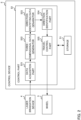
FIG. 2 shows a configuration of thecontrol device 5. Thecontrol device 5 includes astorage 51 and acontrol part 52. - The
storage 51 includes a storage medium, such as a Read Only Memory (ROM), a Random Access Memory (RAM), or a hard disk. Thestorage 51 stores the point group data generated by thelaser irradiation device 4. In addition, thestorage 51 stores a program to be executed by thecontrol part 52. - The
control part 52 is a Central Processing Unit (CPU), for example. Thecontrol part 52 functions as adata acquisition part 521, a three-dimensional data generator 522, a direction identifyingdata generator 523, adirection identification part 524, and atravel control part 525 by executing a program stored in thestorage 51. - The
data acquisition part 521 acquires the point group data generated by thelaser irradiation device 4, from thelaser irradiation device 4. Thedata acquisition part 521 notifies the three-dimensional data generator 522 of the acquired point group data. Thedata acquisition part 521 may acquire the point group data associated with time information at a predetermined interval, and may store the point group data that thedata acquisition part 521 acquired (hereinafter, sometimes referred to as "acquired point group data") in thestorage 51 in association with the time information. - The three-
dimensional data generator 522 generates three-dimensional data indicating the three-dimensional geometry of an area irradiated with the laser light by thelaser irradiation device 4, on the basis of the point group data acquired via thedata acquisition part 521. The three-dimensional data generator 522 generates three-dimensional data on the basis of the point group data acquired by thedata acquisition part 521 over a predetermined period of time. The predetermined period of time is a time required for thedata acquisition part 521 to acquire a sufficient amount of point group data for thedirection identification part 524 to identify the direction of the ridge. - On the basis of the relationship between the position of the laser light irradiation source and the irradiation position of the laser light in the
laser irradiation device 4, the three-dimensional data generator 522 generates three-dimensional data corresponding to a three-dimensional geometry of a region with a horizontal plane as a reference by converting the position of the acquired point group data in a three-dimensional space. Specifically, the three-dimensional data generator 522 generates three-dimensional data in which multiple coordinates of the irradiation position that are the same height in the height direction of the agricultural vehicle S are represented by the same value. -
FIG. 3 is a schematic diagram of the point group data. The region surrounded by a dotted line inFIG. 3(a) indicates a region including the acquired point group data acquired by thedata acquisition part 521, and is indicated with density corresponding to the distance from the irradiation source of thelaser irradiation device 4 to the position irradiated with the laser light, or the reflectance of the laser light. InFIG. 3 , the larger the distance from the irradiation source of thelaser irradiation device 4 to the position irradiated with the laser light is, the lighter the indicated color is. -
FIG. 3(b) is a schematic diagram showing a state where the three-dimensional data generated by the three-dimensional data generator 522 is recognized from the horizontal direction (e.g., the direction of the traveling surface).FIG. 3(c) is a schematic diagram showing a state where the point group data in a height range (Δh) surrounded by two one-dot chain lines in the three-dimensional data shown inFIG. 3(b) is recognized from above. -
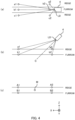
FIG. 4 is a schematic diagram for explaining an operation in which the three-dimensional data generator 522 generates three-dimensional data.FIG. 4(a) shows a state where a part of the point group data is recognized from above the field, andFIG. 4(b) shows a state where a part of the point group data is recognized in the horizontal direction. In the figures, broken lines indicate laser lights, and a circle indicates a piece of point data in the point group data. The sign L0 inFIG. 4(a) and FIG.4(b) indicates the position of the laser light irradiation source, and the one-dot chain line indicates a central direction C of a laser light irradiation range. - The pieces of point data a1, b1, and c1 correspond to positions furthest from the
laser irradiation device 4 in the laser light irradiation range, and the pieces of point data a2, b2, and c2 correspond to positions closest to thelaser irradiation device 4 in the laser light irradiation range. The pieces of point data a1, c1, a2, and c2 correspond to positions at which the ridges are irradiated with the laser light, and the pieces of point data b1 and b2 correspond to positions at which the furrow is irradiated with the laser light. In the acquired point group data, a position of each piece of point data is represented on the basis of the distance from the irradiation source L0 and the angle from a central irradiation direction C of the laser light, for example. - Since the
laser irradiation device 4 radiates the laser light in an inclined direction, the point data a1 is located above the central irradiation direction C, and the point data a2 is located below the central irradiation direction C with the central irradiation direction C of the laser light as a reference, although in fact the pieces of point data a1 and a2 are at the same height. Similarly, although in fact the pieces of point data b1 and b2 are at the same height, the point data b1 is located above the central irradiation direction C, and the point data b2 is located below the central irradiation direction C. Accordingly, the three-dimensional data generator 522 generates three-dimensional data by converting the coordinates of these pieces of point data into coordinates in the three-dimensional space in which the traveling direction of the agricultural vehicle S is the horizontal direction. - To generate three-dimensional data, the three-
dimensional data generator 522 first extracts acquired point group data within a predetermined range in the depth direction or the width direction. Subsequently, on the basis of each position of a plurality of pieces of point data included in the acquired point group data that was extracted, the three-dimensional data generator 522 identifies a position that is the center of the plurality of pieces of point data (e.g., the central position M inFIG.4 ). The three-dimensional data generator 522 then generates three-dimensional data by rotating the coordinates of the acquired point group data, with the identified central position M as a rotation center. That is, the three-dimensional data generator 522 generates three-dimensional data by calculating coordinates of point data in the three-dimensional space in which the traveling direction of the agricultural vehicle S is the X direction, the left-right direction is the Y direction, and the height direction is the Z direction. It should be noted that the three-dimensional data generator 522 may remove point data that deviates from a predetermined range in the Z direction as noise. - In an example shown in
FIG. 4(c) , the three-dimensional data generator 522 converts the coordinates of the point data a1 into A1, and converts the coordinates of the point data a2 into A2 in which the coordinates in the Z direction and Y direction are the same as those of A1 and the coordinate in the X direction is different from that of A1. The three-dimensional data generator 522 converts the coordinates of the point data b1 into B1 in which the coordinate in the X direction is the same as that of A1 and coordinates in the Y direction and the Z direction are different from those of A1. The three-dimensional data generator 522 notifies the direction identifyingdata generator 523 of the generated three-dimensional data in this manner. - The direction identifying
data generator 523 generates direction identifying data including at least a part of the acquired point group data indicating the position of the region including the ridge in the front of the agricultural vehicle S in the traveling direction. The direction identifyingdata generator 523 generates direction identifying data including point group data corresponding to a predetermined range effective for identifying the direction of the ridge, for example. The direction identifyingdata generator 523 generates direction identifying data on the basis of acquired point group data acquired by radiating a pulsed laser light with thelaser irradiation device 4, for example. The direction identifyingdata generator 523 generates the direction identifying data used to identify the direction of the ridge by extracting a portion of the point group data corresponding to a predetermined range effective for identifying the direction of the ridge from the point group data included in the three-dimensional data generated on the basis of the acquired point group data, for example. The direction identifyingdata generator 523 notifies thedirection identification part 524 of the generated direction identifying data. - As an example, the direction identifying
data generator 523 generates the direction identifying data by selecting the point group data corresponding to a predetermined range lower than the upper surface of the ridge from among the point group data included in the three-dimensional data. The predetermined range is a range of height between the lowest position in the ridge and the lowest position in the furrow, for example. Since the direction identifyingdata generator 523 generates the direction identifying data using the point group data in a range lower than the upper surface of the ridge in this manner, the point group data generated by irradiating crops planted on the ridge is not included in the direction identifying data, and so the accuracy of identifying the direction of the ridge is improved. Further, even in a case where the ridge is provided with a tunnel or a supporting pole, the upper portion of the ridge is missing, or irregular reflection occurs above the ridge, the accuracy of identifying the direction of the ridge is improved. - The direction identifying
data generator 523 generates direction identifying data as shown inFIG. 3(c) by selecting point group data within a range defined by an upper surface and a lower surface parallel to a horizontal surface (e.g., a surface bordering the uppermost ends of the four wheels 3) in the agricultural vehicle S, for example. The direction identifyingdata generator 523 may generate a plurality of pieces of direction identifying data including pieces of point group data corresponding to a plurality of predetermined ranges lower than the ridge, with each piece of point group data corresponding to the same height range. The direction identifyingdata generator 523 generates a plurality of pieces of direction identifying data corresponding to a range including a straight line connecting a plurality ofwheels 3L on the left side of the agricultural vehicle S and a range including a straight line connecting a plurality ofwheels 3R on the right side of the agricultural vehicle S, for example. - It should be noted that a method by which the direction identifying
data generator 523 generates the direction identifying data is arbitrary. The direction identifyingdata generator 523 may generate the direction identifying data by calculating the slope of an approximate curve based on a portion of points extracted from a plurality of points included in the point group data, for example. In this case, the direction identifyingdata generator 523 may calculate inclinations of a plurality of pieces of triangle-shaped polygon data formed by three close points to generate statistical values of a plurality of calculated inclinations as direction identifying data. Further, from among a plurality of templates of the direction identifying data indicating the shape of the ridge, the direction identifyingdata generator 523 may select the template of the direction identifying data that matches the largest number of point groups. - The
direction identification part 524 identifies the direction of the ridge on the basis of the direction identifying data generated by the direction identifyingdata generator 523. Thedirection identification part 524 identifies the direction of the ridge by calculating an approximate straight line using a method such as a least-squares method or a robust estimation method on the basis of point group data corresponding to a predetermined height included in the direction identifying data, for example. Thedirection identification part 524 calculates an approximate straight line of the region in the longitudinal direction surrounded by the outline of the region including the point group data, thereby identifying the direction of the region with the same height, for example. - The
direction identification part 524 determines that a region with a height equal to or greater than a predetermined height is a region of the ridge and a region with a height less than the predetermined height is a region of the furrow, among the regions in which the direction is identified. Thedirection identification part 524 identifies the longitudinal directions of the identified ridge and furrow as the direction of the ridge and the direction of the furrow. - When the direction identifying
data generator 523 generates a plurality of pieces of direction identifying data, thedirection identification part 524 identifies the direction of the ridge on the basis of each of the plurality of pieces of direction identifying data. Thedirection identification part 524 identifies a statistical value (e.g., an average value or a median value) of the direction of the ridge identified on the basis of each of the plurality of pieces of direction identifying data as the direction of the ridge, thereby reducing the influence of measurement error. - The
direction identification part 524 may further identify the distance between thewheel 3 and the ridge on the basis of the direction identifying data. Thedirection identification part 524 identifies the distance between i) the boundary defined by the identified region of the ridge and the identified region of the furrow and ii) the position of the right side or the position of the left side of thewheel 3, as the distance between thewheel 3 and the ridge. Thedirection identification part 524 notifies thetravel control part 525 of the identified direction of the ridge or the direction of the furrow and the distance between thewheel 3 and the ridge. - The
travel control part 525 controls the agricultural vehicle S such that the agricultural vehicle S travels along the direction of the ridge identified by thedirection identification part 524. Thetravel control part 525 controls the direction and the speed of thewheels 3 of the agricultural vehicle S on the basis of the direction of the ridge. Thetravel control part 525 controls the rotational speed or the orientation of each of thewheel 3L and thewheel 3R such that the agricultural vehicle S travels along the direction of the ridge notified from thedirection identification part 524. - Further, the
travel control part 525 may control the rotational speed or the orientation of thewheels 3 of the agricultural vehicle S on the basis of the distance identified by thedirection identification part 524. Thetravel control part 525 controls the rotational speed or the orientation of thewheels 3 such that the distance between awheel 3 and the ridge is within a predetermined range, for example. - Specifically, when the
travel control part 525 detects that the distance between thewheel 3L and the ridge becomes larger than the predetermined range, thetravel control part 525 changes the rotational speed of thewheel 3L to be greater than the rotational speed of thewheel 3R, or changes the orientation of thewheels 3 such that the distance between awheel 3 and the ridge becomes smaller. Since thetravel control part 525 operates in this manner, the agricultural vehicle S travels along the direction of the ridge. In addition, when the distance between awheel 3 and the ridge is out of the predetermined range due to the change in the direction of the ridge, the agricultural vehicle S can quickly change the traveling direction to travel along the direction of the ridge. - It should be noted that when the
direction identification part 524 is unable to identify the direction of the ridge, thetravel control part 525 stops the agricultural vehicle S. Thetravel control part 525 may switch to traveling based on radio waves received from a GPS satellite when thedirection identification part 524 is unable to identify the direction of the ridge. In a state where thedirection identification part 524 is unable to identify the direction of the ridge, e.g., when the ridge is collapsed, thetravel control part 525 operating in this manner makes it possible to prevent further collapse of the ridge resulting from the travel of the agricultural vehicle S. -
FIG. 5 is a flowchart showing a flow of a process in thecontrol device 5. The flowchart shown inFIG. 5 starts at the time when thecontrol part 52 is activated. - The
data acquisition part 521 acquires point group data at a predetermined interval (S11). The three-dimensional data generator 522 generates three-dimensional data on the basis of the point group data acquired by the data acquisition part 521 (S12), and the direction identifyingdata generator 523 generates direction identifying data by selecting point group data corresponding to a position lower than the upper surface of the ridge in the three-dimensional data (S13). - The
direction identification part 524 identifies the direction of the ridge by identifying the boundary position between the ridge and the furrow on the basis of the direction identifying data (S14). Thetravel control part 525 controls the traveling direction of the agricultural vehicle S such that the agricultural vehicle S travels in the direction identified by the direction identification part 524 (S15). - The
control part 52 monitors whether or not an instruction to stop the operation has been received (S16), and repeats the process from S11 to S16 until receiving the instruction to stop the operation (NO in S16). When the instruction to stop has been received (YES in S16), thecontrol part 52 ends the operation. -
FIG. 6 shows a configuration of a variation example of thecontrol device 5. Thecontrol device 5 shown inFIG. 6 is different from thecontrol device 5 shown inFIG. 2 in that thecontrol device 5 further includes anunevenness identification part 526 and amechanism control part 527, and is the same in other respects. - The
unevenness identification part 526 identifies an unevenness of the furrow between a plurality of ridges on the basis of the acquired point group data acquired by thedata acquisition part 521. On the basis of the position in the height direction of the point group data included in the three-dimensional data generated by the three-dimensional data generator 522 on the basis of the acquired point group data, theunevenness identification part 526 identifies the unevenness by identifying the height of each of a plurality of positions on the furrow in the traveling direction, with the lowest position on the furrow as a reference, for example. - The
mechanism control part 527 controls the height of theactuating mechanism 2 which operates above the ridge in the agricultural vehicle S, on the basis of the unevenness identified by theunevenness identification part 526. When the position of theactuating mechanism 2 in the height direction also varies as the position of the agricultural vehicle S in the height direction varies due to the unevenness of the furrow, the height of theactuating mechanism 2 with respect to the position of the crop may vary. Due to this, if theactuating mechanism 2 has a mechanism for cutting a root of the crop, a furrow having a convex portion would cause the crop to be cut at a position higher than the root of the crop, for example. - On the other hand, since the
mechanism control part 527 controls theactuating mechanism 2 such that the position of theactuating mechanism 2 in the height direction is within a fixed range in accordance with the unevenness of the furrow, the height of theactuating mechanism 2 with respect to the position of the crop does not vary. As a result, when theactuating mechanism 2 has a mechanism for cutting the root of the crop, theactuating mechanism 2 can cut the crop at approximately the same position. - It should be noted that the
control device 5 shown inFIG. 6 need not include theunevenness identification part 526, and themechanism control part 527 may control the position of theactuating mechanism 2 in the left-right direction on the basis of the direction of the ridge identified by thedirection identification part 524. When the direction of the ridge varies by a threshold or more, themechanism control part 527 changes the position of theactuating mechanism 2 used for spraying agrochemicals, in the left-right direction, or changes the position of a mechanism for cutting the root of the crop, in the left-right direction, for example. Themechanism control part 527 may change the position of theactuating mechanism 2 in the left-right direction on condition that the traveling direction of the agricultural vehicle S and the direction of the ridge deviate from each other by a threshold or more. - Although a case where the
control device 5 is included in the agricultural vehicle S has been described in the above description, thecontrol device 5 need not be included in the agricultural vehicle S. Thecontrol device 5 may have a communication function of transmitting and receiving data to and from an electronic device driving thewheel 3, and thetravel control part 525 may control the traveling direction of the agricultural vehicle S by transmitting data indicating the traveling direction to the electronic device. In this case, thecontrol device 5 is a smartphone, a tablet, or a personal computer, for example. - In the above description, a case where the
travel control part 525 controls the position of the agricultural vehicle S in the left-right direction on the basis of the direction of the ridge identified by thedirection identification part 524 has been described, but thetravel control part 525 may perform other controls on the basis of the direction of the ridge identified by thedirection identification part 524. Thetravel control part 525 controls travel torque of the agricultural vehicle S on the basis of the direction of the ridge, for example. Specifically, thetravel control part 525 increases the travel torque when the direction of the ridge or furrow identified by thedirection identification part 524 is inclined upward (that is, an upward slope) more than the travel torque when the direction of the ridge or furrow is inclined downward (that is, a downward slope). Since thetravel control part 525 operates in this manner, the traveling speed of the agricultural vehicle S is stabilized regardless of the slopes of the field. - In the above description, the direction identifying
data generator 523 generated direction identifying data including a portion of the point group data included in the three-dimensional data generated by the three-dimensional data generator 522, but the direction identifyingdata generator 523 may use the acquired point group data acquired by thedata acquisition part 521 itself as the direction identifying data. In this case, thelaser irradiation device 4 radiates laser light only over a range with a preset height (e.g., a range lower than the crops planted in the ridge). A process of converting the three-dimensional data into the direction identifying data becomes unnecessary since thelaser irradiation device 4 and the direction identifyingdata generator 523 operate in this manner, making it possible to shorten the time required for thedirection identification part 524 to identify the direction of the ridge. -
FIG. 7 shows another example of thecontrol device 5. Thecontrol device 5 shown inFIG. 7 is different from thecontrol device 5 shown inFIG. 2 in that thecontrol device 5 shown inFIG. 7 further includes acommunication part 53, and is the same in other respects. - The
communication part 53 has a wireless communication unit for transmitting and receiving data to and from another agricultural vehicle Sb traveling behind the agricultural vehicle S, for example. Thecommunication part 53 transmits acquired point group data acquired from thelaser irradiation device 4 to this other agricultural vehicle Sb traveling behind the agricultural vehicle S. - The agricultural vehicle Sb includes a control part which functions as a three-
dimensional data generator 522, a direction identifyingdata generator 523, adirection identification part 524, and atravel control part 525. The agricultural vehicle Sb identifies the traveling direction on the basis of the acquired point group data received from the agricultural vehicle S, and travels in the identified direction. The agricultural vehicle S may transmit the three-dimensional data or the direction identifying data to the agricultural vehicle Sb via thecommunication part 53, and the agricultural vehicle Sb may travel on the basis of the received three-dimensional data or direction identifying data. - The
direction identification part 524 of the agricultural vehicle Sb may identify the traveling direction using the acquired point group data, the three-dimensional data, or the direction identifying data at a timing delayed by a time determined on the basis of the distance between the agricultural vehicle S and the agricultural vehicle Sb, and the speed of the agricultural vehicle Sb, from when the acquired point group data, the three-dimensional data, or the direction identifying data is received from the agricultural vehicle S. Thus, the agricultural vehicle S transmits the acquired point group data, the three-dimensional data, or the direction identifying data to the agricultural vehicle Sb, thereby allowing the agricultural vehicle Sb to travel along the direction of the ridge even if thelaser irradiation device 4 is not included in the agricultural vehicle Sb. - In the above description, it is assumed that only the crops are planted in the ridge, but an object other than the crops may be put in the ridge. When a tunnel covering the crops is formed, the
direction identification part 524 may identify the direction of the tunnel as the direction of the ridge, for example. - In such a case, it is assumed that the
direction identification part 524 is unable to identify the direction of the ridge. When thedirection identification part 524 is unable to identify the direction of the ridge, the direction identifyingdata generator 523 may expand the range of the point group data used as the direction identifying data. - In the above description, a case where a
laser irradiation device 4 changes the irradiation direction of the laser light has been described, but thelaser irradiation device 4 may be provided with multiple light sources, arranged in the height direction of the agricultural vehicle, that radiate the laser light in the horizontal direction, and a point group may be acquired as a result of radiating the laser light in the horizontal direction with these multiple light sources. - In the above description, a case where the agricultural vehicle S has the
laser irradiation device 4 and the direction of the ridge is identified on the basis of the point group data generated on the basis of the laser light radiated by thelaser irradiation device 4 has been described. Using the laser light enables the agricultural vehicle S to drive autonomously and to perform farm work regardless of weather and the like, even on rainy days or in poor visibility. However, means for acquiring the point group data by the agricultural vehicle S is not limited to thelaser irradiation device 4, and may be means capable of acquiring the shape of the ridge as the point group data. The agricultural vehicle S may acquire point group data with a stereo camera (a compound-eye camera) capable of generating distance data indicating a distance to a subject, for example. - When the agricultural vehicle S has a stereo camera, the stereo camera identifies the distance from the camera to the subject on the basis of the distance between two pixels (parallax) corresponding to the position of the same subject in two captured images obtained by photographing the front of the agricultural vehicle S with two cameras, for example. The stereo camera inputs data, indicating the distance from the camera to the subject corresponding to each pixel as point group data, into the
control device 5. The three-dimensional data generator 522 generates three-dimensional data indicating a three-dimensional geometry of a region corresponding to the imaging range of the stereo camera. As just described, even when the agricultural vehicle S has a stereo camera, the direction of the ridge can be identified by a similar process as in a case where the agricultural vehicle S has thelaser irradiation device 4. - As described above, the agricultural vehicle S is provided with the
laser irradiation device 4 that radiates pulsed laser light to the front in the traveling direction. Thecontrol device 5 identifies the direction of the ridge in the field where the agricultural vehicle S travels, on the basis of the point group data acquired by thelaser irradiation device 4 that radiates the laser light, and controls the agricultural vehicle S such that the agricultural vehicle S travels in the identified direction. Having such a configuration, the agricultural vehicle S can travel on the basis of the direction of the identified ridge, and therefore the agricultural vehicle can travel along the direction of the ridge without frequently moving in the left-right direction when a part of the ridge is collapsed or the ridge is uneven. - Further, since the agricultural vehicle S can change the travel torque in accordance with the slope by detecting a change of the ridge and the furrow in the height direction, the traveling performance can be improved. Further, the agricultural vehicle S can stop when there is a steep downward slope by detecting a change of the ridge and the furrow in the height direction, thereby improving safety.
- The present disclosure is explained on the basis of the exemplary embodiments.
-
- 1 main body
- 2 actuating mechanism
- 3 wheel
- 4 laser irradiation device
- 5 control device
- 51 storage
- 52 control part
- 521 data acquisition part
- 522 three-dimensional data generator
- 523 direction identifying data generator
- 524 direction identification part
- 525 travel control part
- 526 unevenness identification part
- 527 mechanism control part
Claims (15)
- A control device (5) for controlling an agricultural vehicle that travels in a field where a ridge is formed, the control device (5) comprising:a direction identifying data generator (523) that generates direction identifying data including at least a portion of acquired point group data indicating a position of a region including the ridge in front of the agricultural vehicle in a traveling direction;a direction identification part (524) that identifies a direction of the ridge on the basis of the direction identifying data; anda travel control part (525) that controls the agricultural vehicle such that the agricultural vehicle travels along the direction of the ridge identified by the direction identification part (524),characterized in that
the control device comprising a three-dimensional data generator that generates three-dimensional data indicating a three-dimensional geometry of the region on the basis of the point group data, whereinthe direction identifying data generator generates the direction identifying data by extracting a portion of the point group data corresponding to a predetermined range effective for identifying the direction of the ridge, from among the point group data included in the three-dimensional data,the acquired point group data is data acquired by radiating a pulsed laser light from a laser light irradiation source, andthe three-dimensional data generator generates the three-dimensional data corresponding to the three-dimensional geometry of the region with a horizontal plane as a reference by converting the position of the acquired point group data in three-dimensional space on the basis of the relationship between the position of the laser light irradiation source and the irradiation position of the laser light. - A control device for controlling an agricultural vehicle that travels in a field where a ridge is formed, the control device comprising:a direction identifying data generator that generates direction identifying data including at least a portion of acquired point group data indicating a position of a region including the ridge in front of the agricultural vehicle in a traveling direction;a direction identification part that identifies a direction of the ridge on the basis of the direction identifying data; anda travel control part that controls the agricultural vehicle such that the agricultural vehicle travels along the direction of the ridge identified by the direction identification part,characterized in thatthe control device comprising a three-dimensional data generator that generates three-dimensional data indicating a three-dimensional geometry of the region on the basis of the point group data, whereinthe direction identifying data generator generates the direction identifying data by extracting a portion of the point group data corresponding to a predetermined range effective for identifying the direction of the ridge, from among the point group data included in the three-dimensional data,wherein the predetermined range is lower than the upper surface of the ridge.
- The control device (5) according to claim 1 or 2, further comprising:an unevenness identification part (526) that identifies unevenness in a furrow between a plurality of the ridges on the basis of the acquired point group data; anda mechanism control part (527) that controls a height of an actuating mechanism (2) operating above the ridge with respect to the agricultural vehicle on the basis of the unevenness identified by the unevenness identification part (526).
- The control device (5) according to claim 1 or 2, further comprising:
a mechanism control part (527) that controls a position of an actuating mechanism (2), in the left-right direction, that operates above the ridge with respect to the agricultural vehicle on the basis of the direction of the ridge identified by the direction identification part (524). - The control device (5) according to any one of claims 1 to 4, wherein
the direction identifying data generator (523) generates the direction identifying data by selecting the point group data within a range defined by an upper surface and a lower surface parallel to a horizontal plane of the agricultural vehicle. - The control device (5) according to any one of claims 1 to 5, whereinthe direction identifying data generator (523) generates a plurality of pieces of the direction identifying data including the point group data corresponding to a plurality of predetermined ranges lower than the ridge, with each piece of the point group data corresponding to the same height range, andthe direction identification part (524) identifies the direction of the ridge on the basis of the plurality of pieces of direction identifying data.
- The control device (5) according to any one of claims 1 to 6, wherein
the direction identification part (524) identifies the direction of the ridge on the basis of a direction of an outline of a region formed by the point group data corresponding to a predetermined height included in the direction identifying data. - The control device (5) according to any one of claims 1 to 7, wherein
the travel control part (525) controls an orientation and a speed of a wheel (3) of the agricultural vehicle on the basis of the direction of the ridge. - The control device (5) according to claim 8, whereinthe direction identification part (524) further identifies a distance between the wheel (3) and the ridge on the basis of the direction identifying data, andthe travel control part (525) controls the orientation and the speed of the wheel (3) of the agricultural vehicle on the basis of the distance identified by the direction identification part (524).
- The control device (5) according to any one of claims 1 to 9, wherein
the travel control part (525) stops the agricultural vehicle when the direction identification part (524) is unable to identify the direction of the ridge. - The control device (5) according to any one of claims 1 to 10, further comprising:a communication part that transmits the acquired point group data to another agricultural vehicle traveling behind the agricultural vehicle.
- A control device for controlling an agricultural vehicle that travels in a field where a ridge is formed, the control device comprising:a direction identifying data generator that generates direction identifying data including at least a portion of acquired point group data indicating a position of a region including the ridge in front of the agricultural vehicle in a traveling direction;a direction identification part that identifies a direction of the ridge on the basis of the direction identifying data; anda travel control part that controls the agricultural vehicle such that the agricultural vehicle travels along the direction of the ridge identified by the direction identification part,characterized in thatthe direction identifying data generator generates a plurality of pieces of the direction identifying data including the point group data corresponding to a plurality of predetermined ranges lower than the ridge, with each piece of the point group data corresponding to the same height range, andthe direction identification part identifies the direction of the ridge on the basis of the plurality of pieces of direction identifying data.
- A control device for controlling an agricultural vehicle that travels in a field where a ridge is formed, the control device comprising:a direction identifying data generator that generates direction identifying data including at least a portion of acquired point group data indicating a position of a region including the ridge in front of the agricultural vehicle in a traveling direction;a direction identification part that identifies a direction of the ridge on the basis of the direction identifying data; anda travel control part that controls the agricultural vehicle such that the agricultural vehicle travels along the direction of the ridge identified by the direction identification part,
characterized in thatthe direction identification part identifies the direction of the ridge on the basis of a direction of an outline of a region formed by the point group data corresponding to a predetermined height included in the direction identifying data. - A control device for controlling an agricultural vehicle that travels in a field where a ridge is formed, the control device comprising:a direction identifying data generator that generates direction identifying data including at least a portion of acquired point group data indicating a position of a region including the ridge in front of the agricultural vehicle in a traveling direction;a direction identification part that identifies a direction of the ridge on the basis of the direction identifying data; anda travel control part that controls the agricultural vehicle such that the agricultural vehicle travels along the direction of the ridge identified by the direction identification part,
characterized in thatthe travel control part controls an orientation and a speed of a wheel of the agricultural vehicle on the basis of the direction of the ridge,the direction identification part further identifies a distance between the wheel and the ridge on the basis of the direction identifying data, andthe travel control part controls the orientation and the speed of the wheel of the agricultural vehicle on the basis of the distance identified by the direction identification part. - An agricultural vehicle that travels in a field where a ridge is formed, the agricultural vehicle comprising:a control device (5) for controlling the agricultural vehicle, anda laser irradiation device (4) that transmits acquired point group data acquired by radiating pulsed laser light in front of the agricultural vehicle in a traveling direction, to the control device (5), whereinthe control device (5) includes:a direction identifying data generator (523) that generates direction identifying data including at least a portion of the acquired point group data indicating a position of a region including the ridge in front of the agricultural vehicle in a traveling direction;a direction identification part (524) that identifies a direction of the ridge on the basis of the direction identifying data; anda travel control part (525) that controls the agricultural vehicle such that the agricultural vehicle travels along the direction of the ridge identified by the direction identification part (524),characterized in that
the control device comprising a three-dimensional data generator that generates three-dimensional data indicating a three-dimensional geometry of the region on the basis of the point group data, whereinthe direction identifying data generator generates the direction identifying data by extracting a portion of the point group data corresponding to a predetermined range effective for identifying the direction of the ridge, from among the point group data included in the three-dimensional data,the acquired point group data is data acquired by radiating a pulsed laser light from a laser light irradiation source, andthe three-dimensional data generator generates the three-dimensional data corresponding to the three-dimensional geometry of the region with a horizontal plane as a reference by converting the position of the acquired point group data in three-dimensional space on the basis of the relationship between the position of the laser light irradiation source and the irradiation position of the laser light.
Applications Claiming Priority (2)
| Application Number | Priority Date | Filing Date | Title |
|---|---|---|---|
| JP2020056603A JP6700500B1 (en) | 2020-03-26 | 2020-03-26 | Agricultural work vehicle, control device and program |
| PCT/JP2021/003714 WO2021192624A1 (en) | 2020-03-26 | 2021-02-02 | Agricultural traveling vehicle, control device, and program |
Publications (4)
| Publication Number | Publication Date |
|---|---|
| EP4130659A1 EP4130659A1 (en) | 2023-02-08 |
| EP4130659A4 EP4130659A4 (en) | 2023-09-20 |
| EP4130659B1 true EP4130659B1 (en) | 2025-04-09 |
| EP4130659C0 EP4130659C0 (en) | 2025-04-09 |
Family
ID=70776065
Family Applications (1)
| Application Number | Title | Priority Date | Filing Date |
|---|---|---|---|
| EP21776910.8A Active EP4130659B1 (en) | 2020-03-26 | 2021-02-02 | Agricultural traveling vehicle, control device, and program |
Country Status (5)
| Country | Link |
|---|---|
| US (2) | US12228935B2 (en) |
| EP (1) | EP4130659B1 (en) |
| JP (2) | JP6700500B1 (en) |
| CN (1) | CN115038932A (en) |
| WO (1) | WO2021192624A1 (en) |
Families Citing this family (8)
| Publication number | Priority date | Publication date | Assignee | Title |
|---|---|---|---|---|
| JP2022029732A (en) * | 2020-08-05 | 2022-02-18 | ヤンマーホールディングス株式会社 | Autonomous driving system for agricultural work vehicles |
| JP7499107B2 (en) * | 2020-08-05 | 2024-06-13 | ヤンマーホールディングス株式会社 | Autonomous Driving System for Agricultural Vehicles |
| JP2022185955A (en) * | 2021-06-03 | 2022-12-15 | カワサキ機工株式会社 | Farm field management device and farming management method using the same |
| JP7641889B2 (en) * | 2021-12-28 | 2025-03-07 | 株式会社クボタ | system |
| JP7829514B2 (en) * | 2023-04-20 | 2026-03-13 | 株式会社クボタ | agricultural vehicle |
| EP4737132A1 (en) * | 2023-06-27 | 2026-05-06 | Kubota Corporation | Work vehicle |
| JP2026007236A (en) | 2024-07-02 | 2026-01-16 | 株式会社クボタ | Determination system and determination method |
| JP2026007235A (en) | 2024-07-02 | 2026-01-16 | 株式会社クボタ | Determination system and determination method |
Citations (1)
| Publication number | Priority date | Publication date | Assignee | Title |
|---|---|---|---|---|
| US6389785B1 (en) * | 1997-06-24 | 2002-05-21 | Claas Selbstfahrende Erntemaschinen Gmbh | Contour scanning apparatus for agricultural machinery |
Family Cites Families (15)
| Publication number | Priority date | Publication date | Assignee | Title |
|---|---|---|---|---|
| DK173577B1 (en) * | 2000-01-12 | 2001-03-19 | Eco Dan Aps | Method for detecting a track in the form of an elongated furrow or back in a field, combination of an agricultural implement |
| JP2006101816A (en) * | 2004-10-08 | 2006-04-20 | Univ Of Tokyo | Steering control method and apparatus |
| JP4873686B2 (en) * | 2006-01-11 | 2012-02-08 | 株式会社前川製作所 | Agricultural material for agricultural work support equipment, farmland using the agricultural material, and method for recognizing the direction of travel of the agricultural work support equipment in the farmland |
| JP5796947B2 (en) * | 2010-10-08 | 2015-10-21 | 三菱重工業株式会社 | Autonomous traveling control device and autonomous traveling vehicle equipped with the same |
| JP2016012348A (en) * | 2014-06-04 | 2016-01-21 | 株式会社リコー | Information processing apparatus, robot, and program |
| JP6418604B2 (en) * | 2015-04-30 | 2018-11-07 | 国立大学法人 鹿児島大学 | Working machine and control method thereof |
| EP3642683B1 (en) * | 2017-06-22 | 2022-12-14 | Agjunction LLC | 3-d image system for vehicle control |
| JP6458258B1 (en) * | 2017-09-29 | 2019-01-30 | 株式会社 日本計器鹿児島製作所 | Traveling position recognition system, agricultural traveling vehicle, and unmanned automated traveling vehicle |
| JP2019135963A (en) * | 2018-02-09 | 2019-08-22 | 井関農機株式会社 | Work vehicle |
| AU2019301524B2 (en) * | 2018-07-07 | 2025-05-08 | Peloton Technology, Inc. | Control of automated following in vehicle convoys |
| WO2020014527A1 (en) * | 2018-07-11 | 2020-01-16 | Raven Industries, Inc. | Calibrating a crop row computer vision system |
| KR102262845B1 (en) * | 2018-09-12 | 2021-06-09 | 한국로봇융합연구원 | Apparatus for controlling movement of mobile robot and thereof method |
| WO2020076616A1 (en) * | 2018-10-08 | 2020-04-16 | Advanced Farm Technologies, Inc. | Autonomous crop harvester |
| US11602093B2 (en) * | 2019-06-11 | 2023-03-14 | Cnh Industrial America Llc | System and method for controlling the operation of a seed-planting implement based on topographical features present within a field |
| US11503756B2 (en) * | 2019-09-25 | 2022-11-22 | Cnh Industrial America Llc | System and method for determining soil levelness using spectral analysis |
-
2020
- 2020-03-26 JP JP2020056603A patent/JP6700500B1/en active Active
- 2020-04-30 JP JP2020080097A patent/JP7252636B2/en active Active
-
2021
- 2021-02-02 EP EP21776910.8A patent/EP4130659B1/en active Active
- 2021-02-02 WO PCT/JP2021/003714 patent/WO2021192624A1/en not_active Ceased
- 2021-02-02 CN CN202180007821.6A patent/CN115038932A/en active Pending
-
2022
- 2022-09-08 US US17/940,850 patent/US12228935B2/en active Active
-
2025
- 2025-01-08 US US19/013,570 patent/US20250147510A1/en active Pending
Patent Citations (1)
| Publication number | Priority date | Publication date | Assignee | Title |
|---|---|---|---|---|
| US6389785B1 (en) * | 1997-06-24 | 2002-05-21 | Claas Selbstfahrende Erntemaschinen Gmbh | Contour scanning apparatus for agricultural machinery |
Also Published As
| Publication number | Publication date |
|---|---|
| US20250147510A1 (en) | 2025-05-08 |
| JP6700500B1 (en) | 2020-05-27 |
| EP4130659A1 (en) | 2023-02-08 |
| JP2021153466A (en) | 2021-10-07 |
| US20230004162A1 (en) | 2023-01-05 |
| CN115038932A (en) | 2022-09-09 |
| JP2021153567A (en) | 2021-10-07 |
| EP4130659A4 (en) | 2023-09-20 |
| US12228935B2 (en) | 2025-02-18 |
| JP7252636B2 (en) | 2023-04-05 |
| WO2021192624A1 (en) | 2021-09-30 |
| EP4130659C0 (en) | 2025-04-09 |
Similar Documents
| Publication | Publication Date | Title |
|---|---|---|
| EP4130659B1 (en) | Agricultural traveling vehicle, control device, and program | |
| RU2215389C2 (en) | Apparatus and method for non-contact identification of tillage boundaries or related setting values | |
| CN101977491B (en) | Method and device for steering second agricultural machine, which can be steered to drive over field parallel to first agricultural machine | |
| EP3342274B1 (en) | Sensor fusion-based swath profile | |
| US20220000025A1 (en) | Surroundings detection device for agricultural work machines | |
| US20100063681A1 (en) | Method and arrangement for the steering of a vehicle | |
| US20170357267A1 (en) | Autonomous work vehicle obstacle detection system | |
| US20180325012A1 (en) | Agricultural system | |
| BR102014027364B1 (en) | cutting height measurement and control system for a basic harvester, method, and harvester | |
| JP7572555B2 (en) | Row detection system, agricultural machine equipped with a row detection system, and row detection method | |
| JP7767423B2 (en) | Row detection system, agricultural machine equipped with a row detection system, and row detection method | |
| KR20210048552A (en) | Road detection method for vehicles equipped with LIDAR sensor | |
| JP2022095980A (en) | Sensor controller | |
| US20230403964A1 (en) | Method for Estimating a Course of Plant Rows | |
| US20240423108A1 (en) | Systems devices and methods for agricultural weeding | |
| JP7735430B2 (en) | agricultural machinery | |
| CN116300960B (en) | Robot and map construction and positioning method thereof | |
| HK40080101A (en) | Agricultural traveling vehicle, control device, and program | |
| JP7821820B2 (en) | agricultural machinery | |
| US20250280749A1 (en) | Implement control for agricultural vehicles | |
| CN118731962A (en) | Vehicle ranging method, system, vehicle and storage medium | |
| CN119984057A (en) | A method for detecting cutting width of a combine harvester |
Legal Events
| Date | Code | Title | Description |
|---|---|---|---|
| STAA | Information on the status of an ep patent application or granted ep patent |
Free format text: STATUS: THE INTERNATIONAL PUBLICATION HAS BEEN MADE |
|
| PUAI | Public reference made under article 153(3) epc to a published international application that has entered the european phase |
Free format text: ORIGINAL CODE: 0009012 |
|
| STAA | Information on the status of an ep patent application or granted ep patent |
Free format text: STATUS: REQUEST FOR EXAMINATION WAS MADE |
|
| 17P | Request for examination filed |
Effective date: 20220921 |
|
| AK | Designated contracting states |
Kind code of ref document: A1 Designated state(s): AL AT BE BG CH CY CZ DE DK EE ES FI FR GB GR HR HU IE IS IT LI LT LU LV MC MK MT NL NO PL PT RO RS SE SI SK SM TR |
|
| DAV | Request for validation of the european patent (deleted) | ||
| DAX | Request for extension of the european patent (deleted) | ||
| A4 | Supplementary search report drawn up and despatched |
Effective date: 20230823 |
|
| RIC1 | Information provided on ipc code assigned before grant |
Ipc: G01S 7/48 20060101ALI20230817BHEP Ipc: G01S 17/89 20200101ALI20230817BHEP Ipc: G01S 17/88 20060101ALI20230817BHEP Ipc: G01S 17/10 20200101ALI20230817BHEP Ipc: A01B 69/04 20060101ALI20230817BHEP Ipc: G05D 1/02 20200101ALI20230817BHEP Ipc: A01B 69/00 20060101ALI20230817BHEP Ipc: G01C 7/04 20060101AFI20230817BHEP |
|
| STAA | Information on the status of an ep patent application or granted ep patent |
Free format text: STATUS: EXAMINATION IS IN PROGRESS |
|
| 17Q | First examination report despatched |
Effective date: 20240405 |
|
| REG | Reference to a national code |
Ref country code: DE Ref legal event code: R079 Free format text: PREVIOUS MAIN CLASS: G01C0007040000 Ipc: G05D0001000000 Ref country code: DE Ref legal event code: R079 Ref document number: 602021028978 Country of ref document: DE Free format text: PREVIOUS MAIN CLASS: G01C0007040000 Ipc: G05D0001000000 |
|
| RIC1 | Information provided on ipc code assigned before grant |
Ipc: G01S 17/89 20200101ALI20240910BHEP Ipc: G01S 17/88 20060101ALI20240910BHEP Ipc: G01S 17/10 20200101ALI20240910BHEP Ipc: G01S 7/48 20060101ALI20240910BHEP Ipc: G01C 7/04 20060101ALI20240910BHEP Ipc: A01B 69/00 20060101ALI20240910BHEP Ipc: A01B 69/04 20060101ALI20240910BHEP Ipc: G05D 1/00 20060101AFI20240910BHEP |
|
| GRAP | Despatch of communication of intention to grant a patent |
Free format text: ORIGINAL CODE: EPIDOSNIGR1 |
|
| STAA | Information on the status of an ep patent application or granted ep patent |
Free format text: STATUS: GRANT OF PATENT IS INTENDED |
|
| INTG | Intention to grant announced |
Effective date: 20241104 |
|
| GRAS | Grant fee paid |
Free format text: ORIGINAL CODE: EPIDOSNIGR3 |
|
| GRAA | (expected) grant |
Free format text: ORIGINAL CODE: 0009210 |
|
| STAA | Information on the status of an ep patent application or granted ep patent |
Free format text: STATUS: THE PATENT HAS BEEN GRANTED |
|
| AK | Designated contracting states |
Kind code of ref document: B1 Designated state(s): AL AT BE BG CH CY CZ DE DK EE ES FI FR GB GR HR HU IE IS IT LI LT LU LV MC MK MT NL NO PL PT RO RS SE SI SK SM TR |
|
| RAP3 | Party data changed (applicant data changed or rights of an application transferred) |
Owner name: LEGMIN INC. |
|
| REG | Reference to a national code |
Ref country code: GB Ref legal event code: FG4D |
|
| RIN1 | Information on inventor provided before grant (corrected) |
Inventor name: KIYOKAWA SHUHEI Inventor name: YAMAZAKI TAISUKE Inventor name: MARUYAMA HIROSATO Inventor name: NARUSE TAKAHIRO |
|
| REG | Reference to a national code |
Ref country code: CH Ref legal event code: EP |
|
| REG | Reference to a national code |
Ref country code: DE Ref legal event code: R096 Ref document number: 602021028978 Country of ref document: DE |
|
| REG | Reference to a national code |
Ref country code: IE Ref legal event code: FG4D |
|
| U01 | Request for unitary effect filed |
Effective date: 20250508 |
|
| U07 | Unitary effect registered |
Designated state(s): AT BE BG DE DK EE FI FR IT LT LU LV MT NL PT RO SE SI Effective date: 20250515 |
|
| PG25 | Lapsed in a contracting state [announced via postgrant information from national office to epo] |
Ref country code: ES Free format text: LAPSE BECAUSE OF FAILURE TO SUBMIT A TRANSLATION OF THE DESCRIPTION OR TO PAY THE FEE WITHIN THE PRESCRIBED TIME-LIMIT Effective date: 20250409 |
|
| PG25 | Lapsed in a contracting state [announced via postgrant information from national office to epo] |
Ref country code: NO Free format text: LAPSE BECAUSE OF FAILURE TO SUBMIT A TRANSLATION OF THE DESCRIPTION OR TO PAY THE FEE WITHIN THE PRESCRIBED TIME-LIMIT Effective date: 20250709 Ref country code: GR Free format text: LAPSE BECAUSE OF FAILURE TO SUBMIT A TRANSLATION OF THE DESCRIPTION OR TO PAY THE FEE WITHIN THE PRESCRIBED TIME-LIMIT Effective date: 20250710 |
|
| PG25 | Lapsed in a contracting state [announced via postgrant information from national office to epo] |
Ref country code: PL Free format text: LAPSE BECAUSE OF FAILURE TO SUBMIT A TRANSLATION OF THE DESCRIPTION OR TO PAY THE FEE WITHIN THE PRESCRIBED TIME-LIMIT Effective date: 20250409 |
|
| PG25 | Lapsed in a contracting state [announced via postgrant information from national office to epo] |
Ref country code: HR Free format text: LAPSE BECAUSE OF FAILURE TO SUBMIT A TRANSLATION OF THE DESCRIPTION OR TO PAY THE FEE WITHIN THE PRESCRIBED TIME-LIMIT Effective date: 20250409 |
|
| PG25 | Lapsed in a contracting state [announced via postgrant information from national office to epo] |
Ref country code: RS Free format text: LAPSE BECAUSE OF FAILURE TO SUBMIT A TRANSLATION OF THE DESCRIPTION OR TO PAY THE FEE WITHIN THE PRESCRIBED TIME-LIMIT Effective date: 20250709 |
|
| PG25 | Lapsed in a contracting state [announced via postgrant information from national office to epo] |
Ref country code: IS Free format text: LAPSE BECAUSE OF FAILURE TO SUBMIT A TRANSLATION OF THE DESCRIPTION OR TO PAY THE FEE WITHIN THE PRESCRIBED TIME-LIMIT Effective date: 20250809 |
|
| PG25 | Lapsed in a contracting state [announced via postgrant information from national office to epo] |
Ref country code: SM Free format text: LAPSE BECAUSE OF FAILURE TO SUBMIT A TRANSLATION OF THE DESCRIPTION OR TO PAY THE FEE WITHIN THE PRESCRIBED TIME-LIMIT Effective date: 20250409 |
|
| PG25 | Lapsed in a contracting state [announced via postgrant information from national office to epo] |
Ref country code: CZ Free format text: LAPSE BECAUSE OF FAILURE TO SUBMIT A TRANSLATION OF THE DESCRIPTION OR TO PAY THE FEE WITHIN THE PRESCRIBED TIME-LIMIT Effective date: 20250409 |
|
| PG25 | Lapsed in a contracting state [announced via postgrant information from national office to epo] |
Ref country code: SK Free format text: LAPSE BECAUSE OF FAILURE TO SUBMIT A TRANSLATION OF THE DESCRIPTION OR TO PAY THE FEE WITHIN THE PRESCRIBED TIME-LIMIT Effective date: 20250409 |
|
| PLBE | No opposition filed within time limit |
Free format text: ORIGINAL CODE: 0009261 |
|
| STAA | Information on the status of an ep patent application or granted ep patent |
Free format text: STATUS: NO OPPOSITION FILED WITHIN TIME LIMIT |
|
| REG | Reference to a national code |
Ref country code: CH Ref legal event code: L10 Free format text: ST27 STATUS EVENT CODE: U-0-0-L10-L00 (AS PROVIDED BY THE NATIONAL OFFICE) Effective date: 20260218 |
|
| 26N | No opposition filed |
Effective date: 20260112 |
|
| U20 | Renewal fee for the european patent with unitary effect paid |
Year of fee payment: 6 Effective date: 20260225 |
|
| PGFP | Annual fee paid to national office [announced via postgrant information from national office to epo] |
Ref country code: GB Payment date: 20260220 Year of fee payment: 6 |