EP4129425A1 - Information processing device and image distribution method - Google Patents
Information processing device and image distribution method Download PDFInfo
- Publication number
- EP4129425A1 EP4129425A1 EP21776334.1A EP21776334A EP4129425A1 EP 4129425 A1 EP4129425 A1 EP 4129425A1 EP 21776334 A EP21776334 A EP 21776334A EP 4129425 A1 EP4129425 A1 EP 4129425A1
- Authority
- EP
- European Patent Office
- Prior art keywords
- image
- game
- audio
- distribution
- microphone
- Prior art date
- Legal status (The legal status is an assumption and is not a legal conclusion. Google has not performed a legal analysis and makes no representation as to the accuracy of the status listed.)
- Pending
Links
Images





Classifications
-
- G—PHYSICS
- G06—COMPUTING OR CALCULATING; COUNTING
- G06F—ELECTRIC DIGITAL DATA PROCESSING
- G06F3/00—Input arrangements for transferring data to be processed into a form capable of being handled by the computer; Output arrangements for transferring data from processing unit to output unit, e.g. interface arrangements
- G06F3/01—Input arrangements or combined input and output arrangements for interaction between user and computer
- G06F3/048—Interaction techniques based on graphical user interfaces [GUI]
- G06F3/0481—Interaction techniques based on graphical user interfaces [GUI] based on specific properties of the displayed interaction object or a metaphor-based environment, e.g. interaction with desktop elements like windows or icons, or assisted by a cursor's changing behaviour or appearance
-
- A—HUMAN NECESSITIES
- A63—SPORTS; GAMES; AMUSEMENTS
- A63F—CARD, BOARD, OR ROULETTE GAMES; INDOOR GAMES USING SMALL MOVING PLAYING BODIES; VIDEO GAMES; GAMES NOT OTHERWISE PROVIDED FOR
- A63F13/00—Video games, i.e. games using an electronically generated display having two or more dimensions
- A63F13/85—Providing additional services to players
- A63F13/86—Watching games played by other players
-
- A—HUMAN NECESSITIES
- A63—SPORTS; GAMES; AMUSEMENTS
- A63F—CARD, BOARD, OR ROULETTE GAMES; INDOOR GAMES USING SMALL MOVING PLAYING BODIES; VIDEO GAMES; GAMES NOT OTHERWISE PROVIDED FOR
- A63F13/00—Video games, i.e. games using an electronically generated display having two or more dimensions
- A63F13/20—Input arrangements for video game devices
- A63F13/21—Input arrangements for video game devices characterised by their sensors, purposes or types
- A63F13/215—Input arrangements for video game devices characterised by their sensors, purposes or types comprising means for detecting acoustic signals, e.g. using a microphone
-
- A—HUMAN NECESSITIES
- A63—SPORTS; GAMES; AMUSEMENTS
- A63F—CARD, BOARD, OR ROULETTE GAMES; INDOOR GAMES USING SMALL MOVING PLAYING BODIES; VIDEO GAMES; GAMES NOT OTHERWISE PROVIDED FOR
- A63F13/00—Video games, i.e. games using an electronically generated display having two or more dimensions
- A63F13/30—Interconnection arrangements between game servers and game devices; Interconnection arrangements between game devices; Interconnection arrangements between game servers
- A63F13/35—Details of game servers
-
- A—HUMAN NECESSITIES
- A63—SPORTS; GAMES; AMUSEMENTS
- A63F—CARD, BOARD, OR ROULETTE GAMES; INDOOR GAMES USING SMALL MOVING PLAYING BODIES; VIDEO GAMES; GAMES NOT OTHERWISE PROVIDED FOR
- A63F13/00—Video games, i.e. games using an electronically generated display having two or more dimensions
- A63F13/50—Controlling the output signals based on the game progress
- A63F13/54—Controlling the output signals based on the game progress involving acoustic signals, e.g. for simulating revolutions per minute [RPM] dependent engine sounds in a driving game or reverberation against a virtual wall
-
- G—PHYSICS
- G06—COMPUTING OR CALCULATING; COUNTING
- G06F—ELECTRIC DIGITAL DATA PROCESSING
- G06F3/00—Input arrangements for transferring data to be processed into a form capable of being handled by the computer; Output arrangements for transferring data from processing unit to output unit, e.g. interface arrangements
- G06F3/16—Sound input; Sound output
- G06F3/165—Management of the audio stream, e.g. setting of volume, audio stream path
-
- A—HUMAN NECESSITIES
- A63—SPORTS; GAMES; AMUSEMENTS
- A63F—CARD, BOARD, OR ROULETTE GAMES; INDOOR GAMES USING SMALL MOVING PLAYING BODIES; VIDEO GAMES; GAMES NOT OTHERWISE PROVIDED FOR
- A63F13/00—Video games, i.e. games using an electronically generated display having two or more dimensions
- A63F13/80—Special adaptations for executing a specific game genre or game mode
- A63F13/812—Ball games, e.g. soccer or baseball
-
- A—HUMAN NECESSITIES
- A63—SPORTS; GAMES; AMUSEMENTS
- A63F—CARD, BOARD, OR ROULETTE GAMES; INDOOR GAMES USING SMALL MOVING PLAYING BODIES; VIDEO GAMES; GAMES NOT OTHERWISE PROVIDED FOR
- A63F2300/00—Features of games using an electronically generated display having two or more dimensions, e.g. on a television screen, showing representations related to the game
- A63F2300/50—Features of games using an electronically generated display having two or more dimensions, e.g. on a television screen, showing representations related to the game characterized by details of game servers
- A63F2300/57—Features of games using an electronically generated display having two or more dimensions, e.g. on a television screen, showing representations related to the game characterized by details of game servers details of game services offered to the player
- A63F2300/577—Features of games using an electronically generated display having two or more dimensions, e.g. on a television screen, showing representations related to the game characterized by details of game servers details of game services offered to the player for watching a game played by other players
-
- A—HUMAN NECESSITIES
- A63—SPORTS; GAMES; AMUSEMENTS
- A63F—CARD, BOARD, OR ROULETTE GAMES; INDOOR GAMES USING SMALL MOVING PLAYING BODIES; VIDEO GAMES; GAMES NOT OTHERWISE PROVIDED FOR
- A63F2300/00—Features of games using an electronically generated display having two or more dimensions, e.g. on a television screen, showing representations related to the game
- A63F2300/80—Features of games using an electronically generated display having two or more dimensions, e.g. on a television screen, showing representations related to the game specially adapted for executing a specific type of game
- A63F2300/8011—Ball
Definitions
- the present invention relates to a technique of distributing an image.
- PTL 1 discloses a system in which a display image including a game image of a game being played by a distribution user is distributed to viewing users through a shared server. During distribution of the display image, when the distribution user operates a predetermined button of a game controller, a menu image is displayed in place of the game image on an output device of the distribution user. At this time, a distribution processing unit does not distribute the display image including the menu image but distributes a standby image that is different from the display image. In the system disclosed in PTL 1, a standby image including a message "PLEASE WAIT A LITTLE" is displayed on a display device of each viewing user until distribution of the game image is resumed.
- Distribution of a game image is temporarily stopped for various reasons. Providing a plurality of types of modes of temporarily stopping distribution of the game image makes it possible for the distribution user to temporarily stop distribution of the game image in a distribution stop mode suitable for a situation of the distribution user.
- the present invention has an object to provide a technique for enhancing usability of an image sharing system of distributing a game image to a viewing user.
- an information processing device includes a game image generation unit configured to generate a game image, a game audio generation unit configured to generate a game audio, an audio acquiring unit configured to acquire a microphone audio input to a microphone, a distribution processing unit configured to distribute the microphone audio, the game audio, and the game image, and an accepting unit configured to accept an operation made by a user.
- the distribution processing unit operates in either a first mode in which a first standby image is distributed and the microphone audio is distributed as well or a second mode in which a second standby image is distributed but the microphone audio is not distributed.
- An image distribution method includes a step of generating a game image, a step of generating a game audio, a step of acquiring a microphone audio input to a microphone, a step of distributing the microphone audio, the game audio, and the game image, a step of accepting a predetermined operation during the distribution of the microphone audio, the game audio, and the game image, and a step of executing, after the predetermined operation is accepted, either a first mode in which a first standby image is distributed and the microphone audio is distributed as well or a second mode in which a second standby image is distributed but the microphone audio is not distributed.
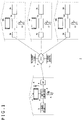
- FIG. 1 is a diagram depicting an image sharing system 1 according to an embodiment of the present invention.
- the image sharing system 1 realizes an environment in which a user A as a distributor performs live distribution of a game image and audio (a game image and game audio) during a play and other viewing users B, C, and D view the game image and audio.
- the image sharing system 1 includes an information processing device 10 operated by the distribution user A, information processing terminals 12b, 12c, and 12d operated by the respective viewing users B, C, and D (hereinafter referred to as an "information processing terminal 12" when not particularly distinguished from each other), a management server 5, and a shared server 11, and they are connected to one another through a network 3 such as the Internet.
- the viewing users B, C, and D are merely examples and not limited to three.
- the viewing users are not limited to users who have registered as a friend of the distribution user A and may be an unspecified user who can access the shared server 11.
- a configuration of the information processing terminal 12 of each of the viewing users may be the same as a configuration of the information processing device 10 of the distribution user A in the embodiment.
- the configuration of the periphery of the information processing device 10 of the distribution user A will be described below as a representative example.
- An access point (hereinafter referred to as an "AP") 8 has functions of a wireless access point and a router, and the information processing device 10 connects to the AP 8 in a wireless or a wired manner to communicatably connect to the management server 5, the shared server 11, and the information processing terminal 12 on the network 3.
- An input device 6 which is operated by a user establishes connection to the information processing device 10 in a wireless or a wired manner and outputs operation information regarding an operation made by the user to the information processing device 10.
- the information processing device 10 reflects the operation information on processing of system software or application software, and causes an output device 4 to output a result of the processing.
- the information processing device 10 may be a game device which executes a game program, and the input device 6 may be a game controller.
- the input device 6 includes a plurality of input sections such as a plurality of push-type operation buttons, an analog stick capable of inputting an analog quantity, and a rotary button.
- An auxiliary storage device 2 is a storage such as a hard disk drive (HDD) or a solid state drive (SSD) and may be a built-in type storage device, or may be an external storage device connected to the information processing device 10 by a universal serial bus (USB) or the like.
- the output device 4 may be a television set having a display which outputs an image and a loudspeaker which outputs audio.
- the output device 4 may alternatively be a head-mounted display.
- a camera 7 captures a space in which the user is present.
- An ambient sound is input to a microphone 9, and the microphone 9 generates an audio signal.
- a voice of the user is input to the microphone 9, and the microphone 9 supplies a microphone audio signal (hereinafter, simply referred to as a "microphone audio" as well) to the information processing device 10.
- the information processing device 10 performs streaming distribution of a game image of a game being played by the user A to the shared server 11 to broadcast the game image to the information processing terminal 12 which accesses the shared server 11.
- the image sharing system 1 in the embodiment works as a game image distribution system.
- the information processing terminal 12 may be a stationary game console which is the same as the information processing device 10, or may be a portable terminal device such as a smartphone or a tablet.
- the management server 5 provides a network service to the user of the information processing device 10 and to the user of the information processing terminal 12.
- the management server 5 manages network accounts for identifying the users, and each user uses own network account to sign in to the network service. By signing in to the network service, the user can register save data of a game or a virtual award article (trophy) acquired during a gameplay into the management server 5.
- the management server 5 manages an activity of the user who signs in to the network service.
- the activity of the user includes an action of the user in the game, a result obtained by the action of the user, and a state of the user in the game or a session.
- the management server 5 provides information regarding the activity of the user to the information processing device 10 of the user or the information processing terminal 12.
- the user A plays a game by operating the input device 6, and a game image during the play (hereinafter also referred to as a "play image”) is displayed on the output device 4.
- the play image is also distributed to the information processing terminals 12b, 12c, and 12d of the respective viewing users through the shared server 11 from the information processing device 10, so that the play image is displayed on each of output devices 14b, 14c, and 14d (hereinafter referred to as an "output device 14" when not particularly distinguished from each other).
- a resolution of the play image to be distributed may be set lower than a resolution of the play image to be displayed on the output device 4.
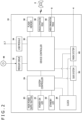
- FIG. 2 depicts a hardware configuration of the information processing device 10.
- the information processing device 10 includes a main power supply button 20, a power ON light emitting diode (LED) 21, a standby LED 22, a system controller 24, a clock 26, a device controller 30, a medium drive 32, a USB module 34, a flash memory 36, a wireless communication module 38, a wired communication module 40, a sub system 50, and a main system 60.
- the main system 60 includes a main central processing unit (CPU), a memory as a main storage device, a memory controller, a graphics processing unit (GPU), and the like.
- the GPU is mainly used in arithmetic processing for a game program. These functions may be configured as a system-on-chip and formed on one chip.
- the main CPU has a function of executing a game program recorded in the auxiliary storage device 2 or a read-only memory (ROM) medium 44.
- the sub system 50 includes a sub CPU, a memory as a main storage device, a memory controller, and the like.
- the sub system 50 does not include a GPU. Further, the sub system 50 does not have a function of executing a game program.
- the number of circuit gates of the sub CPU is smaller than the number of circuit gates of the main CPU, and the operation power consumption of the sub CPU is lower than that of the main CPU.
- the sub CPU operates while the main CPU is in a standby state, and the processing functions of the sub CPU are limited in order to suppress the power consumption of the sub CPU low.
- the main power supply button 20 is an input unit on which operation input is made by the user, and is provided on a front face of a housing of the information processing device 10.
- the main power supply button 20 is operated to turn on or off the power supply to the main system 60 of the information processing device 10.
- the power ON LED 21 is lit when the main power supply button 20 is turned on, and the standby LED 22 is lit when the main power supply button 20 is turned off.
- the system controller 24 detects pressing of the main power supply button 20 by the user. When the main power supply button 20 is pressed while the main power supply is in an off-state, then the system controller 24 acquires the pressing operation as an "on-instruction.” Conversely, when the main power supply button 20 is pressed while the main power supply is in an on-state, the system controller 24 then acquires the pressing operation as an "off-instruction.”
- the clock 26 is a real time clock, and generates date and time information at present and supplies the generated information to the system controller 24, the sub system 50, and the main system 60.
- the device controller 30 is configured as a large-scale integrated (LSI) circuit which executes delivery of information between devices like a south bridge. As depicted in FIG. 2 , such devices as the system controller 24, the medium drive 32, the USB module 34, the flash memory 36, the wireless communication module 38, the wired communication module 40, the sub system 50, and the main system 60 are connected to the device controller 30.
- the device controller 30 absorbs a difference in electric characteristic and a difference in data transfer rate between the devices and controls a timing of data transfer.
- the medium drive 32 is a drive device which loads the ROM medium 44 on which application software of a game or the like and license information are recorded, and which drives the ROM medium 44 to read out a program, data, and the like from the ROM medium 44.
- the ROM medium 44 may be a read-only recording medium such as an optical disc, a magneto-optical disc, or a Blu-ray disc.
- the USB module 34 is a module to be connected to an external device by a USB cable.
- the USB module 34 may be connected to the auxiliary storage device 2 and the camera 7 by a USB cable.
- the flash memory 36 is an auxiliary storage device which configures an internal storage.
- the wireless communication module 38 wirelessly communicates, for example, with the input device 6 by use of a communication protocol such as a Bluetooth (registered trademark) protocol or Institute of Electrical and Electronics Engineers (IEEE) 802.11 protocol.
- the wired communication module 40 communicates with an external device in a wired manner and is connected to the outside network through the AP 8.
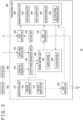
- FIG. 3 depicts functional blocks of the information processing device 10 which works as a distribution device for streaming data.
- the information processing device 10 includes a processing unit 100, a communication unit 102, and an accepting unit 104.
- the processing unit 100 includes an execution unit 110, an information acquiring unit 116, a camera image supplying unit 118, a setting unit 120, a system image generation unit 122, an audio supplying unit 124, an image processing unit 130, an audio providing unit 132, a frame buffer unit 140, and a sharing processing unit 150.
- the execution unit 110 includes a game image generation unit 112 and a game audio generation unit 114.
- the frame buffer unit 140 includes a plurality of frame buffers, such as a game buffer 142 and a system buffer 144.
- the game buffer 142 includes a plurality of frame buffers
- the system buffer 144 includes one frame buffer.
- the sharing processing unit 150 includes an image acquiring unit 152, an audio acquiring unit 154, a distribution processing unit 156, and a setting image generation unit 158.
- elements indicated as functional blocks for performing various processing operations can be configured by hardware such as a circuit block, a memory, or other LSI or implemented by software such as system software or a game program loaded into the memory.
- these functional blocks may variously be implemented by hardware only, by software only, or by a combination of hardware and software.
- the functional blocks are not limited to any of these.
- the communication unit 102 receives operation information obtained as a result of operation made by the user on the input unit of the input device 6 and receives information regarding activities of the user from the management server 5.
- the communication unit 102 also transmits the image and audio data generated in the processing unit 100 to the shared server 11. It is assumed that the communication unit 102 has the functional blocks of the wireless communication module 38 and wired communication module 40 depicted in FIG. 2 .
- the accepting unit 104 is disposed between the communication unit 102 and the processing unit 100 and transmits data or information to and from the communication unit 102 and the processing unit 100.
- the accepting unit 104 supplies the accepted operation information to predetermined functional blocks of the processing unit 100.
- the execution unit 110 executes a game program (hereinafter referred to simply as a "game” in some cases).
- the functional block provided as the execution unit 110 is realized by software such as the system software or the game software, the hardware such as the GPU, or the like.
- the game image generation unit 112 When receiving a result of the execution of the game program, the game image generation unit 112 generates image data of the game, and the game audio generation unit 114 generates audio data of the game.
- the game is merely an example of an application, and the execution unit 110 may execute an application other than a game.
- the execution unit 110 executes a game program and executes arithmetic processing to move a game character in a virtual space on the basis of the operation information that the user A inputs to the input device 6.
- the game image generation unit 112 includes a GPU which executes rendering processing or the like, and receives a result of the arithmetic processing in the virtual space to generate game image data from a viewpoint position (virtual camera) in the virtual space.
- the game audio generation unit 114 generates game audio data in the virtual space.
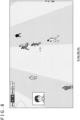
- FIG. 4 is a diagram depicting an example of a game screen displayed on the output device 4 of the user A. This game screen is the game screen prior to streaming distribution.
- the game image generation unit 112 generates a game image and stores the generated game image in the game buffer 142.
- the game audio generation unit 114 generates game audio and supplies the generated game audio to the audio providing unit 132.
- the game buffer 142 in the embodiment includes a plurality of frame buffers, and the game image generation unit 112 can generate a plurality of game images as many as the frame buffers as the upper limit.
- the game image generation unit 112 in a case in which the game buffer 142 has three frame buffers, the game image generation unit 112 generates one main image including a background image and a character image, and two sub images including supplemental information for game progress, and stores each image in corresponding one of the frame buffers.
- the sub image may be a map image indicating a position of an opponent team in a competitive game or may be a list image of information regarding weapons that the player can use.
- the image processing unit 130 merges three game images which are stored in the three frame buffers, to generate a display image. Note that the game image generation unit 112 does not need to generate three game images. For example, the game image generation unit 112 is only required to generate one main image and use one frame buffer and may not use the two other frame buffers.
- the image processing unit 130 provides the display image to the output device 4, and the audio providing unit 132 provides the game audio to the output device 4.
- the output device 4 outputs the game image and the game audio, and the user A plays the game while viewing the game image and audio output from the output device 4.
- the sharing processing unit 150 performs a process for sharing image and audio data of the game being played by the user A with another user through the shared server 11.
- Users who access the shared server 11 are not limited to the friends of the user A, and may include unspecified users who use the service of the shared server 11.
- the sharing process of the game image and audio data is started at a time when the user A has operated a specified input button (SHARE button) provided in the input device 6, as a trigger, and the setting image generation unit 158 generates an input image indicating options regarding sharing of the image and audio data.
- SHARE button specified input button
- FIG. 5 depicts an example of an input screen indicating the options in the sharing process.
- the setting image generation unit 158 generates an input image indicating the options in the sharing process and stores the generated input image in the system buffer 144.
- the image processing unit 130 reads out the input image from the system buffer 144 to display the read input image on the output device 4.
- the option “UPLOAD VIDEO CLIP” is a graphical user interface (GUI) element for designating that an image recorded in the auxiliary storage device 2 is to be uploaded to the shared server 11.
- the option “UPLOAD SCREENSHOT” is a GUI element for designating that an image of a screenshot is to be uploaded to the shared server 11.
- the option “BROADCAST GAMEPLAY” is a GUI element for designating that the image and audio data of the game is to be relayed on a real time basis through the shared server 11.
- the user A operates the input device 6 to move a selection frame 200, and then selects any one of the GUI elements and presses an ENTER button, thereby executing the sharing process selected.
- the GUI element "BROADCASTS GAMEPLAY" is assumed to be selected. Note that, after this GUI element is selected, the setting image generation unit 158 displays a setting screen for selecting setting information in broadcast distribution on the output device 4.
- FIG. 6 depicts an example of the setting screen to be displayed in a case in which "BROADCASTS GAMEPLAY" is selected.
- This setting screen includes the following items for setting a distribution mode of the broadcast.
- a check box "INCLUDE VIDEO FROM CAMERA IN BROADCAST" may be in a selected state by default.
- the user A does not want to distribute a camera image (an image captured by the camera)
- the user A cancels the selection of the check box.
- the option "INCLUDE VIDEO FROM CAMERA IN BROADCAST" is selected, another option for setting a display position of the camera image may be provided, and the user A may be allowed to designate the display position of the camera image.
- a check box "INCLUDE MICROPHONE AUDIO IN BROADCAST" may be in a selected state by default.
- the user A does not want to distribute a microphone audio, the user A cancels the selection of the check box.
- a check box "DISPLAY COMMENT ON SCREEN" may be in a selected state by default. When the user A does not want display of any comment, the user A cancels the selection of the check box.
- the user A can select a resolution equal to or lower than a resolution of the game image to be displayed on the output device 4.
- a resolution of the distribution image the resolution lower than the resolution of the game image displayed on the output device 4 may be set by default.
- the setting unit 120 sets contents selected by the user A in the items (a), (b), (c), and (d), regarding streaming distribution. Specifically, when the user A arranges a frame 202 on "START BROADCASTING" and presses the ENTER button of the input device 6, the setting unit 120 registers the contents selected by the user A in the items (a), (b), (c), and (d) in the auxiliary storage device 2, as the setting information of the streaming distribution, supplying the setting information to the system image generation unit 122 and the audio supplying unit 124.
- FIG. 7 depicts an example of a system image generated by the system image generation unit 122.
- the camera image supplying unit 118 supplies the camera image captured by the camera 7 to the system image generation unit 122, and the system image generation unit 122 generates a system image including the camera image, and then, the generated system image is stored in the system buffer 144.
- the system image generation unit 122 includes system software, and in the embodiment, a system image means an image generated by the system software.
- FIG. 8 depicts an example of a screen displayed on the output devices of the user A and the viewing users during streaming distribution.
- the image processing unit 130 merges the game image read out from the game buffer 142 and the system image read out from the system buffer 144, to generate a display image.
- the image processing unit 130 outputs the generated display image to the output device 4 and the sharing processing unit 150.
- the audio providing unit 132 outputs the game audio generated by the game audio generation unit 114 to the output device 4 and the sharing processing unit 150.
- the audio supplying unit 124 acquires the microphone audio input to the microphone 9 and supplies the acquired microphone audio to the sharing processing unit 150.
- the image acquiring unit 152 acquires the game image provided by the image processing unit 130.
- the audio acquiring unit 154 acquires the game audio provided by the audio providing unit 132 and the microphone audio supplied by the audio supplying unit 124.
- the game image acquired by the image acquiring unit 152 and the game audio and the microphone audio which are acquired by the audio acquiring unit 154 are a distribution image and a distribution audio that are to be distributed to the shared server 11, respectively.
- the distribution processing unit 156 adjusts the quality of each of the distribution image and the distribution audio thus acquired as needed, encodes them, and distributes the encoded microphone audio data, game audio data, and game image data to the shared server 11 by streaming.
- the game image and the game audio viewed by the user A who plays the game are distributed by streaming as they are, while the quality of each of the game image and the game audio has some change. Accordingly, the viewing users can access the shared server 11 from the information processing terminals 12 to view the same game image and the same game audio as the user A.
- the information processing device 10 automatically stops streaming distribution of the game image and audio.
- the user A causes the output device 4 to display the menu screen.
- the information processing device 10 has a function of automatically stopping the streaming distribution of the game image and audio to prevent leakage of the personal information.
- the accepting unit 104 accepts the operation as an operation for displaying a system image, and the system image generation unit 122 generates the system image which is a menu image.
- the generated system image is stored in the system buffer 144, merged into the display image by the image processing unit 130, and displayed on the output device 4.
- FIG. 9 illustrates an example of the menu screen.
- the system image generation unit 122 generates a menu image (system image) in which a plurality of menu icons is arranged on a lower part of the screen and GUI elements 300a to 300e in a card-like shape are arranged on a middle part of the screen.
- Each of the GUI elements has information regarding an activity of the user A displayed therein.
- the information acquiring unit 116 requests provision of the information regarding the activity of the user A to the management server 5.
- the information acquiring unit 116 includes status information of the user A in the request of the provision of the information.
- the status information is information indicating a current situation of the user A, and is information indicating that the user A is distributing the game image and audio by streaming.
- the management server 5 manages pieces of information regarding various activities on the user A in association with the status of the user A.
- the management server 5 recognizes that the user A is distributing the game image and audio by streaming, the management server 5 sends the activity information associated with the streaming distribution status of the user A to the information processing device 10.
- This activity information includes at least information regarding distribution, for example, a game title being distributed, a period of distribution time taken so far, and the like.
- the information acquiring unit 116 acquires the activity information
- the information acquiring unit 116 provides the acquired information to the system image generation unit 122, and the system image generation unit 122 causes contents of the activity information to be included in the plurality of GUI elements 300.
- the image processing unit 130 generates a display image obtained by overlapping the system image with the game image.
- the image processing unit 130 may generate the display image including the system image only, without overlapping the system image with the game image.
- the GUI element 300a including at least the information regarding distribution is displayed on the menu screen.
- the GUI element 300a includes an elapsed time since the start of the distribution (25 minutes and 16 seconds), mode information 304a indicating the current distribution mode, and the game title 306.
- the microphone icon 302 represents an on-state or an off-state of distribution of the microphone audio
- the microphone icon 302 illustrated in FIG. 9 represents the on-state of distribution of the microphone audio.
- the accepting unit 104 accepts the operation for displaying the system image, and the distribution processing unit 156 then operates in either the first mode or the second mode as follows.
- the distribution processing unit 156 distributes not only a first standby image, instead of the game image, but also the microphone audio.
- the distribution processing unit 156 distributes a second standby image instead of the game image and does not distribute the microphone audio.
- the game image and the game audio are not distributed.
- the camera image included in the game image is not distributed as well.
- the first standby image and the second standby image may be the same. However, in order to represent a difference between the two modes, it may be preferred that the first standby image and the second standby image be different from each other.
- the user A can select the first mode or the second mode by operating a button of the input device 6, when the streaming distribution of the game image and audio is being stopped.
- the accepting unit 104 accepts the operation for displaying the system image
- the system image generation unit 122 generates the menu image
- the image processing unit 130 displays the menu screen illustrated in FIG. 9 . It is to be noted that the camera image that has been displayed before the display of the menu screen is dramatically displayed as if the camera image were drawn into the GUI element 300. Accordingly, the user A recognizes switching from the game screen to the system screen.
- the distribution processing unit 156 operates in the first mode, that is, in a mode in which, while the first standby image is distributed instead of the game image, the microphone audio is also distributed but the game audio is not distributed.
- the microphone icon 302 illustrated in FIG. 9 indicates that the microphone audio is being distributed, and the mode information 304a represents that the standby image and the microphone audio are being distributed.
- FIG. 10 illustrates an example of a screen to be displayed on an output device of each viewing user in the first mode.
- the first standby image indicating that distribution of the game image and audio is temporarily stopped is displayed on the output device 14.
- the first mode is an operation mode to be used when the streaming distribution of the game image and audio is resumed immediately after the user A carries out a desired operation on the menu screen.
- the menu image cannot be distributed in terms of protection of personal information, it is set such that the microphone audio is allowed to be distributed in order to be able to notify the viewing user that the user A will resume the streaming distribution immediately.
- the user A may want to leave his/her seat for a while, keeping the distribution channel as it is, in some cases. In such a case, the second mode is used.
- a square button to which a function of turning off distribution of the microphone audio is allocated is indicated.
- the accepting unit 104 accepts pressing operation of the square button, that is, an operation for switching to the second mode
- the distribution processing unit 156 operates in the second mode. Specifically, the distribution processing unit 156 operates in the mode of distributing the second standby image but not distributing the microphone audio and the game audio.
- FIG. 11 illustrates an example of a screen to be displayed on the output device of each viewing user in the second mode.
- the second standby image for giving an explanation that distribution of the game image and audio is stopped and the microphone of the distributer is turned off is displayed.
- the viewing user recognizes that the distribution user A takes a rest or the like, since the voice from the distribution user A is muted. Note that the viewing user A may be able to freely customize the second standby image.
- FIG. 12 illustrates an example of a screen to be displayed on the output device of the distribution user in the second mode.
- the microphone icon 302 illustrated in FIG. 12 indicates that the microphone audio is not distributed, and the mode information 304b represents that only the standby image is being distributed.
- the square button to which a function of turning on distribution of the microphone audio is allocated is indicated.
- the accepting unit 104 accepts pressing operation of the square button, that is, an operation for switching to the first mode
- the distribution processing unit 156 operates in the first mode, that is, in a mode of distributing the first standby image and the microphone audio.
- the accepting unit 104 accepts the operation as an operation for turning off display of the system image, and the system image generation unit 122 ends generation of the system image.
- the image processing unit 130 ends the merging process of the system image and the game image and generates a display image (see FIG. 8 ) including the game image and the camera image.
- the image processing unit 130 may display a message indicating that the streaming distribution has not been able to be resumed yet, in such a manner as to overlap the message with the display image.
- the present invention is applicable to the technical field regarding distribution of an image.
Landscapes
- Engineering & Computer Science (AREA)
- Multimedia (AREA)
- Human Computer Interaction (AREA)
- Theoretical Computer Science (AREA)
- Physics & Mathematics (AREA)
- General Engineering & Computer Science (AREA)
- General Physics & Mathematics (AREA)
- General Health & Medical Sciences (AREA)
- Audiology, Speech & Language Pathology (AREA)
- Health & Medical Sciences (AREA)
- Acoustics & Sound (AREA)
- Information Transfer Between Computers (AREA)
- User Interface Of Digital Computer (AREA)
- Two-Way Televisions, Distribution Of Moving Picture Or The Like (AREA)
Abstract
Description
- The present invention relates to a technique of distributing an image.
- PTL 1 discloses a system in which a display image including a game image of a game being played by a distribution user is distributed to viewing users through a shared server. During distribution of the display image, when the distribution user operates a predetermined button of a game controller, a menu image is displayed in place of the game image on an output device of the distribution user. At this time, a distribution processing unit does not distribute the display image including the menu image but distributes a standby image that is different from the display image. In the system disclosed in
PTL 1, a standby image including a message "PLEASE WAIT A LITTLE" is displayed on a display device of each viewing user until distribution of the game image is resumed. - [PTL 1]
WO 2014/068806A - Distribution of a game image is temporarily stopped for various reasons. Providing a plurality of types of modes of temporarily stopping distribution of the game image makes it possible for the distribution user to temporarily stop distribution of the game image in a distribution stop mode suitable for a situation of the distribution user.
- In view of this, the present invention has an object to provide a technique for enhancing usability of an image sharing system of distributing a game image to a viewing user.
- To solve the above-mentioned problem, an information processing device according a mode of the present invention includes a game image generation unit configured to generate a game image, a game audio generation unit configured to generate a game audio, an audio acquiring unit configured to acquire a microphone audio input to a microphone, a distribution processing unit configured to distribute the microphone audio, the game audio, and the game image, and an accepting unit configured to accept an operation made by a user. During distribution of the microphone audio, the game audio, and the game image, after the accepting unit accepts a predetermined operation, the distribution processing unit operates in either a first mode in which a first standby image is distributed and the microphone audio is distributed as well or a second mode in which a second standby image is distributed but the microphone audio is not distributed.
- An image distribution method according another mode of the present invention includes a step of generating a game image, a step of generating a game audio, a step of acquiring a microphone audio input to a microphone, a step of distributing the microphone audio, the game audio, and the game image, a step of accepting a predetermined operation during the distribution of the microphone audio, the game audio, and the game image, and a step of executing, after the predetermined operation is accepted, either a first mode in which a first standby image is distributed and the microphone audio is distributed as well or a second mode in which a second standby image is distributed but the microphone audio is not distributed.
- Note that any combinations of the above components and conversions of the expressions of the present invention between a method, a device, a system, a recording medium, a computer program, and the like are also effective as modes of the present invention.
-
- [
FIG. 1 ]
FIG. 1 is a diagram depicting an image sharing system according to an embodiment of the present invention. - [
FIG. 2 ]
FIG. 2 is a diagram depicting a hardware configuration of an information processing device. - [
FIG. 3 ]
FIG. 3 is a diagram depicting functional blocks of the information processing device. - [
FIG. 4 ]
FIG. 4 is a diagram depicting an example of a game screen. - [
FIG. 5 ]
FIG. 5 is a diagram depicting an example of an input screen indicating options of a sharing process. - [
FIG. 6 ]
FIG. 6 is a diagram depicting an example of a setting screen. - [
FIG. 7 ]
FIG. 7 is a diagram depicting an example of a system image. - [
FIG. 8 ]
FIG. 8 is a diagram depicting an example of a screen to be displayed on an output device. - [
FIG. 9 ]
FIG. 9 is a diagram depicting an example of a menu screen. - [
FIG. 10 ]
FIG. 10 is a diagram depicting an example of a screen to be displayed on an output device of each viewing user. - [
FIG. 11 ]
FIG. 11 is a diagram depicting another example of a screen to be displayed on an output device of each viewing user. - [
FIG. 12 ]
FIG. 12 is a diagram depicting an example of a screen to be displayed on an output device of a distribution user. -
FIG. 1 is a diagram depicting animage sharing system 1 according to an embodiment of the present invention. Theimage sharing system 1 realizes an environment in which a user A as a distributor performs live distribution of a game image and audio (a game image and game audio) during a play and other viewing users B, C, and D view the game image and audio. Theimage sharing system 1 includes aninformation processing device 10 operated by the distribution user A,information processing terminals management server 5, and a shared server 11, and they are connected to one another through anetwork 3 such as the Internet. Here, the viewing users B, C, and D are merely examples and not limited to three. Also, the viewing users are not limited to users who have registered as a friend of the distribution user A and may be an unspecified user who can access the shared server 11. - A configuration of the information processing terminal 12 of each of the viewing users may be the same as a configuration of the
information processing device 10 of the distribution user A in the embodiment. The configuration of the periphery of theinformation processing device 10 of the distribution user A will be described below as a representative example. - An access point (hereinafter referred to as an "AP") 8 has functions of a wireless access point and a router, and the
information processing device 10 connects to theAP 8 in a wireless or a wired manner to communicatably connect to themanagement server 5, the shared server 11, and the information processing terminal 12 on thenetwork 3. - An
input device 6 which is operated by a user establishes connection to theinformation processing device 10 in a wireless or a wired manner and outputs operation information regarding an operation made by the user to theinformation processing device 10. When receiving the operation information from theinput device 6, theinformation processing device 10 reflects the operation information on processing of system software or application software, and causes anoutput device 4 to output a result of the processing. In the embodiment, theinformation processing device 10 may be a game device which executes a game program, and theinput device 6 may be a game controller. Theinput device 6 includes a plurality of input sections such as a plurality of push-type operation buttons, an analog stick capable of inputting an analog quantity, and a rotary button. - An auxiliary storage device 2 is a storage such as a hard disk drive (HDD) or a solid state drive (SSD) and may be a built-in type storage device, or may be an external storage device connected to the
information processing device 10 by a universal serial bus (USB) or the like. Theoutput device 4 may be a television set having a display which outputs an image and a loudspeaker which outputs audio. Theoutput device 4 may alternatively be a head-mounted display. Acamera 7 captures a space in which the user is present. An ambient sound is input to amicrophone 9, and themicrophone 9 generates an audio signal. In the embodiment, a voice of the user is input to themicrophone 9, and themicrophone 9 supplies a microphone audio signal (hereinafter, simply referred to as a "microphone audio" as well) to theinformation processing device 10. - The
information processing device 10 performs streaming distribution of a game image of a game being played by the user A to the shared server 11 to broadcast the game image to the information processing terminal 12 which accesses the shared server 11. Thus, theimage sharing system 1 in the embodiment works as a game image distribution system. Note that the information processing terminal 12 may be a stationary game console which is the same as theinformation processing device 10, or may be a portable terminal device such as a smartphone or a tablet. - The
management server 5 provides a network service to the user of theinformation processing device 10 and to the user of the information processing terminal 12. Themanagement server 5 manages network accounts for identifying the users, and each user uses own network account to sign in to the network service. By signing in to the network service, the user can register save data of a game or a virtual award article (trophy) acquired during a gameplay into themanagement server 5. - The
management server 5 manages an activity of the user who signs in to the network service. The activity of the user includes an action of the user in the game, a result obtained by the action of the user, and a state of the user in the game or a session. In response to a request from the user, themanagement server 5 provides information regarding the activity of the user to theinformation processing device 10 of the user or the information processing terminal 12. - In the embodiment, the user A plays a game by operating the
input device 6, and a game image during the play (hereinafter also referred to as a "play image") is displayed on theoutput device 4. At this time, the play image is also distributed to theinformation processing terminals information processing device 10, so that the play image is displayed on each ofoutput devices output device 4. -
FIG. 2 depicts a hardware configuration of theinformation processing device 10. Theinformation processing device 10 includes a mainpower supply button 20, a power ON light emitting diode (LED) 21, a standby LED 22, asystem controller 24, aclock 26, adevice controller 30, amedium drive 32, aUSB module 34, aflash memory 36, awireless communication module 38, awired communication module 40, asub system 50, and amain system 60. - The
main system 60 includes a main central processing unit (CPU), a memory as a main storage device, a memory controller, a graphics processing unit (GPU), and the like. The GPU is mainly used in arithmetic processing for a game program. These functions may be configured as a system-on-chip and formed on one chip. The main CPU has a function of executing a game program recorded in the auxiliary storage device 2 or a read-only memory (ROM)medium 44. - The
sub system 50 includes a sub CPU, a memory as a main storage device, a memory controller, and the like. Thesub system 50 does not include a GPU. Further, thesub system 50 does not have a function of executing a game program. The number of circuit gates of the sub CPU is smaller than the number of circuit gates of the main CPU, and the operation power consumption of the sub CPU is lower than that of the main CPU. The sub CPU operates while the main CPU is in a standby state, and the processing functions of the sub CPU are limited in order to suppress the power consumption of the sub CPU low. - The main
power supply button 20 is an input unit on which operation input is made by the user, and is provided on a front face of a housing of theinformation processing device 10. The mainpower supply button 20 is operated to turn on or off the power supply to themain system 60 of theinformation processing device 10. The power ONLED 21 is lit when the mainpower supply button 20 is turned on, and the standby LED 22 is lit when the mainpower supply button 20 is turned off. - The
system controller 24 detects pressing of the mainpower supply button 20 by the user. When the mainpower supply button 20 is pressed while the main power supply is in an off-state, then thesystem controller 24 acquires the pressing operation as an "on-instruction." Conversely, when the mainpower supply button 20 is pressed while the main power supply is in an on-state, thesystem controller 24 then acquires the pressing operation as an "off-instruction." - The
clock 26 is a real time clock, and generates date and time information at present and supplies the generated information to thesystem controller 24, thesub system 50, and themain system 60. Thedevice controller 30 is configured as a large-scale integrated (LSI) circuit which executes delivery of information between devices like a south bridge. As depicted inFIG. 2 , such devices as thesystem controller 24, themedium drive 32, theUSB module 34, theflash memory 36, thewireless communication module 38, thewired communication module 40, thesub system 50, and themain system 60 are connected to thedevice controller 30. Thedevice controller 30 absorbs a difference in electric characteristic and a difference in data transfer rate between the devices and controls a timing of data transfer. - The
medium drive 32 is a drive device which loads theROM medium 44 on which application software of a game or the like and license information are recorded, and which drives theROM medium 44 to read out a program, data, and the like from theROM medium 44. TheROM medium 44 may be a read-only recording medium such as an optical disc, a magneto-optical disc, or a Blu-ray disc. - The
USB module 34 is a module to be connected to an external device by a USB cable. TheUSB module 34 may be connected to the auxiliary storage device 2 and thecamera 7 by a USB cable. Theflash memory 36 is an auxiliary storage device which configures an internal storage. Thewireless communication module 38 wirelessly communicates, for example, with theinput device 6 by use of a communication protocol such as a Bluetooth (registered trademark) protocol or Institute of Electrical and Electronics Engineers (IEEE) 802.11 protocol. Thewired communication module 40 communicates with an external device in a wired manner and is connected to the outside network through theAP 8. -
FIG. 3 depicts functional blocks of theinformation processing device 10 which works as a distribution device for streaming data. Theinformation processing device 10 includes aprocessing unit 100, acommunication unit 102, and an acceptingunit 104. Theprocessing unit 100 includes anexecution unit 110, aninformation acquiring unit 116, a cameraimage supplying unit 118, asetting unit 120, a systemimage generation unit 122, anaudio supplying unit 124, animage processing unit 130, anaudio providing unit 132, aframe buffer unit 140, and asharing processing unit 150. - The
execution unit 110 includes a gameimage generation unit 112 and a gameaudio generation unit 114. Theframe buffer unit 140 includes a plurality of frame buffers, such as agame buffer 142 and asystem buffer 144. In the embodiment, thegame buffer 142 includes a plurality of frame buffers, and thesystem buffer 144 includes one frame buffer. Thesharing processing unit 150 includes animage acquiring unit 152, anaudio acquiring unit 154, adistribution processing unit 156, and a settingimage generation unit 158. - In
FIG. 3 , elements indicated as functional blocks for performing various processing operations can be configured by hardware such as a circuit block, a memory, or other LSI or implemented by software such as system software or a game program loaded into the memory. Thus, it will be understood by those skilled in the art that these functional blocks may variously be implemented by hardware only, by software only, or by a combination of hardware and software. The functional blocks are not limited to any of these. - The
communication unit 102 receives operation information obtained as a result of operation made by the user on the input unit of theinput device 6 and receives information regarding activities of the user from themanagement server 5. Thecommunication unit 102 also transmits the image and audio data generated in theprocessing unit 100 to the shared server 11. It is assumed that thecommunication unit 102 has the functional blocks of thewireless communication module 38 andwired communication module 40 depicted inFIG. 2 . - The accepting
unit 104 is disposed between thecommunication unit 102 and theprocessing unit 100 and transmits data or information to and from thecommunication unit 102 and theprocessing unit 100. When accepting operation information of theinput device 6 through thecommunication unit 102, the acceptingunit 104 supplies the accepted operation information to predetermined functional blocks of theprocessing unit 100. - The
execution unit 110 executes a game program (hereinafter referred to simply as a "game" in some cases). The functional block provided as theexecution unit 110 is realized by software such as the system software or the game software, the hardware such as the GPU, or the like. When receiving a result of the execution of the game program, the gameimage generation unit 112 generates image data of the game, and the gameaudio generation unit 114 generates audio data of the game. Note that the game is merely an example of an application, and theexecution unit 110 may execute an application other than a game. - During a gameplay by the user A, the
execution unit 110 executes a game program and executes arithmetic processing to move a game character in a virtual space on the basis of the operation information that the user A inputs to theinput device 6. The gameimage generation unit 112 includes a GPU which executes rendering processing or the like, and receives a result of the arithmetic processing in the virtual space to generate game image data from a viewpoint position (virtual camera) in the virtual space. Moreover, the gameaudio generation unit 114 generates game audio data in the virtual space. -
FIG. 4 is a diagram depicting an example of a game screen displayed on theoutput device 4 of the user A. This game screen is the game screen prior to streaming distribution. During a gameplay of the user A, the gameimage generation unit 112 generates a game image and stores the generated game image in thegame buffer 142. In addition, the gameaudio generation unit 114 generates game audio and supplies the generated game audio to theaudio providing unit 132. - The
game buffer 142 in the embodiment includes a plurality of frame buffers, and the gameimage generation unit 112 can generate a plurality of game images as many as the frame buffers as the upper limit. For example, in a case in which thegame buffer 142 has three frame buffers, the gameimage generation unit 112 generates one main image including a background image and a character image, and two sub images including supplemental information for game progress, and stores each image in corresponding one of the frame buffers. For example, the sub image may be a map image indicating a position of an opponent team in a competitive game or may be a list image of information regarding weapons that the player can use. Theimage processing unit 130 merges three game images which are stored in the three frame buffers, to generate a display image. Note that the gameimage generation unit 112 does not need to generate three game images. For example, the gameimage generation unit 112 is only required to generate one main image and use one frame buffer and may not use the two other frame buffers. - The
image processing unit 130 provides the display image to theoutput device 4, and theaudio providing unit 132 provides the game audio to theoutput device 4. Theoutput device 4 outputs the game image and the game audio, and the user A plays the game while viewing the game image and audio output from theoutput device 4. - Hereinafter, the sharing process in the embodiment will be described.
- The
sharing processing unit 150 performs a process for sharing image and audio data of the game being played by the user A with another user through the shared server 11. Users who access the shared server 11 are not limited to the friends of the user A, and may include unspecified users who use the service of the shared server 11. The sharing process of the game image and audio data is started at a time when the user A has operated a specified input button (SHARE button) provided in theinput device 6, as a trigger, and the settingimage generation unit 158 generates an input image indicating options regarding sharing of the image and audio data. -
FIG. 5 depicts an example of an input screen indicating the options in the sharing process. The settingimage generation unit 158 generates an input image indicating the options in the sharing process and stores the generated input image in thesystem buffer 144. Theimage processing unit 130 reads out the input image from thesystem buffer 144 to display the read input image on theoutput device 4. - On this input screen, three options regarding the sharing of the image and audio data are indicated. The option "UPLOAD VIDEO CLIP" is a graphical user interface (GUI) element for designating that an image recorded in the auxiliary storage device 2 is to be uploaded to the shared server 11. The option "UPLOAD SCREENSHOT" is a GUI element for designating that an image of a screenshot is to be uploaded to the shared server 11. The option "BROADCAST GAMEPLAY" is a GUI element for designating that the image and audio data of the game is to be relayed on a real time basis through the shared server 11. The user A operates the
input device 6 to move aselection frame 200, and then selects any one of the GUI elements and presses an ENTER button, thereby executing the sharing process selected. - In this embodiment, the GUI element "BROADCASTS GAMEPLAY" is assumed to be selected. Note that, after this GUI element is selected, the setting
image generation unit 158 displays a setting screen for selecting setting information in broadcast distribution on theoutput device 4. -
FIG. 6 depicts an example of the setting screen to be displayed in a case in which "BROADCASTS GAMEPLAY" is selected. This setting screen includes the following items for setting a distribution mode of the broadcast. - With respect to the item (a), a check box "INCLUDE VIDEO FROM CAMERA IN BROADCAST" may be in a selected state by default. When the user A does not want to distribute a camera image (an image captured by the camera), the user A cancels the selection of the check box. Note that, in a case in which the option "INCLUDE VIDEO FROM CAMERA IN BROADCAST" is selected, another option for setting a display position of the camera image may be provided, and the user A may be allowed to designate the display position of the camera image.
- With respect to the item (b), a check box "INCLUDE MICROPHONE AUDIO IN BROADCAST" may be in a selected state by default. When the user A does not want to distribute a microphone audio, the user A cancels the selection of the check box.
- With respect to the item (c), a check box "DISPLAY COMMENT ON SCREEN" may be in a selected state by default. When the user A does not want display of any comment, the user A cancels the selection of the check box.
- With respect to the item (d), the user A can select a resolution equal to or lower than a resolution of the game image to be displayed on the
output device 4. As a resolution of the distribution image, the resolution lower than the resolution of the game image displayed on theoutput device 4 may be set by default. - As described above, the
setting unit 120 sets contents selected by the user A in the items (a), (b), (c), and (d), regarding streaming distribution. Specifically, when the user A arranges aframe 202 on "START BROADCASTING" and presses the ENTER button of theinput device 6, thesetting unit 120 registers the contents selected by the user A in the items (a), (b), (c), and (d) in the auxiliary storage device 2, as the setting information of the streaming distribution, supplying the setting information to the systemimage generation unit 122 and theaudio supplying unit 124. - In the following, a distribution process in a case in which "INCLUDE VIDEO FROM CAMERA IN BROADCAST" is set in the item (a) and "INCLUDE MICROPHONE AUDIO IN BROADCAST" is set in the item (b) will be described.
-
FIG. 7 depicts an example of a system image generated by the systemimage generation unit 122. During streaming distribution, the cameraimage supplying unit 118 supplies the camera image captured by thecamera 7 to the systemimage generation unit 122, and the systemimage generation unit 122 generates a system image including the camera image, and then, the generated system image is stored in thesystem buffer 144. The systemimage generation unit 122 includes system software, and in the embodiment, a system image means an image generated by the system software. -
FIG. 8 depicts an example of a screen displayed on the output devices of the user A and the viewing users during streaming distribution. Theimage processing unit 130 merges the game image read out from thegame buffer 142 and the system image read out from thesystem buffer 144, to generate a display image. Theimage processing unit 130 outputs the generated display image to theoutput device 4 and thesharing processing unit 150. Theaudio providing unit 132 outputs the game audio generated by the gameaudio generation unit 114 to theoutput device 4 and thesharing processing unit 150. Theaudio supplying unit 124 acquires the microphone audio input to themicrophone 9 and supplies the acquired microphone audio to thesharing processing unit 150. - In the
sharing processing unit 150, theimage acquiring unit 152 acquires the game image provided by theimage processing unit 130. Theaudio acquiring unit 154 acquires the game audio provided by theaudio providing unit 132 and the microphone audio supplied by theaudio supplying unit 124. The game image acquired by theimage acquiring unit 152 and the game audio and the microphone audio which are acquired by theaudio acquiring unit 154 are a distribution image and a distribution audio that are to be distributed to the shared server 11, respectively. Thedistribution processing unit 156 adjusts the quality of each of the distribution image and the distribution audio thus acquired as needed, encodes them, and distributes the encoded microphone audio data, game audio data, and game image data to the shared server 11 by streaming. Thus, in theimage sharing system 1, the game image and the game audio viewed by the user A who plays the game are distributed by streaming as they are, while the quality of each of the game image and the game audio has some change. Accordingly, the viewing users can access the shared server 11 from the information processing terminals 12 to view the same game image and the same game audio as the user A. - Hereinafter, a case in which the
information processing device 10 automatically stops streaming distribution of the game image and audio will be described. As an example, it is assumed that, while the game image and audio are distributed by streaming, the user A causes theoutput device 4 to display the menu screen. - Various types of personal information are included on the menu screen, in some cases, and accordingly, distributing the menu screen including the personal information to unspecified viewing users is not preferable. In view of this, when displaying the menu screen, the
information processing device 10 has a function of automatically stopping the streaming distribution of the game image and audio to prevent leakage of the personal information. - In the
information processing device 10, when a predetermined button (for example, a HOME button) of theinput device 6 is operated, the acceptingunit 104 accepts the operation as an operation for displaying a system image, and the systemimage generation unit 122 generates the system image which is a menu image. The generated system image is stored in thesystem buffer 144, merged into the display image by theimage processing unit 130, and displayed on theoutput device 4. -
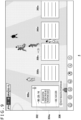
FIG. 9 illustrates an example of the menu screen. The systemimage generation unit 122 generates a menu image (system image) in which a plurality of menu icons is arranged on a lower part of the screen andGUI elements 300a to 300e in a card-like shape are arranged on a middle part of the screen. Each of the GUI elements has information regarding an activity of the user A displayed therein. - When the accepting
unit 104 accepts an operation of the predetermined button (HOME button) while the game image and audio are distributed by streaming, theinformation acquiring unit 116 requests provision of the information regarding the activity of the user A to themanagement server 5. At this time, theinformation acquiring unit 116 includes status information of the user A in the request of the provision of the information. The status information is information indicating a current situation of the user A, and is information indicating that the user A is distributing the game image and audio by streaming. - The
management server 5 manages pieces of information regarding various activities on the user A in association with the status of the user A. When themanagement server 5 recognizes that the user A is distributing the game image and audio by streaming, themanagement server 5 sends the activity information associated with the streaming distribution status of the user A to theinformation processing device 10. This activity information includes at least information regarding distribution, for example, a game title being distributed, a period of distribution time taken so far, and the like. When theinformation acquiring unit 116 acquires the activity information, theinformation acquiring unit 116 provides the acquired information to the systemimage generation unit 122, and the systemimage generation unit 122 causes contents of the activity information to be included in the plurality ofGUI elements 300. - In the embodiment, the
image processing unit 130 generates a display image obtained by overlapping the system image with the game image. In another example, theimage processing unit 130 may generate the display image including the system image only, without overlapping the system image with the game image. - As illustrated in
FIG. 9 , theGUI element 300a including at least the information regarding distribution is displayed on the menu screen. In this example, theGUI element 300a includes an elapsed time since the start of the distribution (25 minutes and 16 seconds),mode information 304a indicating the current distribution mode, and thegame title 306. Themicrophone icon 302 represents an on-state or an off-state of distribution of the microphone audio, and themicrophone icon 302 illustrated inFIG. 9 represents the on-state of distribution of the microphone audio. - While the microphone audio, the game audio, and the game image are being distributed, the accepting
unit 104 accepts the operation for displaying the system image, and thedistribution processing unit 156 then operates in either the first mode or the second mode as follows. - In the first mode, the
distribution processing unit 156 distributes not only a first standby image, instead of the game image, but also the microphone audio. - In the first mode, the
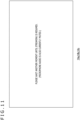
distribution processing unit 156 distributes a second standby image instead of the game image and does not distribute the microphone audio. - In both the first mode and the second mode, the game image and the game audio are not distributed. Also, the camera image included in the game image is not distributed as well. The first standby image and the second standby image may be the same. However, in order to represent a difference between the two modes, it may be preferred that the first standby image and the second standby image be different from each other. The user A can select the first mode or the second mode by operating a button of the
input device 6, when the streaming distribution of the game image and audio is being stopped. - During the streaming distribution, when the accepting
unit 104 accepts the operation for displaying the system image, the systemimage generation unit 122 generates the menu image, and theimage processing unit 130 displays the menu screen illustrated inFIG. 9 . It is to be noted that the camera image that has been displayed before the display of the menu screen is dramatically displayed as if the camera image were drawn into theGUI element 300. Accordingly, the user A recognizes switching from the game screen to the system screen. - At this time, the
distribution processing unit 156 operates in the first mode, that is, in a mode in which, while the first standby image is distributed instead of the game image, the microphone audio is also distributed but the game audio is not distributed. Themicrophone icon 302 illustrated inFIG. 9 indicates that the microphone audio is being distributed, and themode information 304a represents that the standby image and the microphone audio are being distributed. -
FIG. 10 illustrates an example of a screen to be displayed on an output device of each viewing user in the first mode. On the output device 14, the first standby image indicating that distribution of the game image and audio is temporarily stopped is displayed. The first mode is an operation mode to be used when the streaming distribution of the game image and audio is resumed immediately after the user A carries out a desired operation on the menu screen. Although the menu image cannot be distributed in terms of protection of personal information, it is set such that the microphone audio is allowed to be distributed in order to be able to notify the viewing user that the user A will resume the streaming distribution immediately. - In contrast, the user A may want to leave his/her seat for a while, keeping the distribution channel as it is, in some cases. In such a case, the second mode is used.
- Below the
GUI element 300a inFIG. 9 , a square button to which a function of turning off distribution of the microphone audio is allocated is indicated. When the menu image illustrated inFIG. 9 is being displayed, the acceptingunit 104 accepts pressing operation of the square button, that is, an operation for switching to the second mode, thedistribution processing unit 156 operates in the second mode. Specifically, thedistribution processing unit 156 operates in the mode of distributing the second standby image but not distributing the microphone audio and the game audio. -
FIG. 11 illustrates an example of a screen to be displayed on the output device of each viewing user in the second mode. On the output device 14, the second standby image for giving an explanation that distribution of the game image and audio is stopped and the microphone of the distributer is turned off is displayed. The viewing user recognizes that the distribution user A takes a rest or the like, since the voice from the distribution user A is muted. Note that the viewing user A may be able to freely customize the second standby image. -
FIG. 12 illustrates an example of a screen to be displayed on the output device of the distribution user in the second mode. In theGUI element 300a, themicrophone icon 302 illustrated inFIG. 12 indicates that the microphone audio is not distributed, and themode information 304b represents that only the standby image is being distributed. - Below the
GUI element 300a inFIG. 12 , the square button to which a function of turning on distribution of the microphone audio is allocated is indicated. When the menu image illustrated inFIG. 12 is being displayed, the acceptingunit 104 accepts pressing operation of the square button, that is, an operation for switching to the first mode, thedistribution processing unit 156 operates in the first mode, that is, in a mode of distributing the first standby image and the microphone audio. - Note that, when the user A operates a predetermined button (HOME button) of the
input device 6 on the menu screen illustrated inFIG. 12 , the acceptingunit 104 accepts the operation as an operation for turning off display of the system image, and the systemimage generation unit 122 ends generation of the system image. Hence, theimage processing unit 130 ends the merging process of the system image and the game image and generates a display image (seeFIG. 8 ) including the game image and the camera image. Suppose that there is a condition that the HOME button is required to be operated during display of the menu screen in the first mode in order to resume the streaming distribution. Under such a condition, even if the HOME button is operated during display of the menu screen in the second mode, the streaming distribution cannot be resumed. In view of this, theimage processing unit 130 may display a message indicating that the streaming distribution has not been able to be resumed yet, in such a manner as to overlap the message with the display image. - The present invention has been described above on the basis of embodiment thereof. The foregoing embodiment is illustrative, and it is to be understood by those skilled in the art that combinations of constituent elements and processing processes of the embodiment are susceptible of various modifications and that such modifications also fall within the scope of the present invention.
- The present invention is applicable to the technical field regarding distribution of an image.
-
- 1:
- Image sharing system
- 10:
- Information processing device
- 11:
- Shared server
- 100:
- Processing unit
- 102:
- Communication unit
- 104:
- Accepting unit
- 110:
- Execution unit
- 112:
- Game image generation unit
- 114:
- Game audio generation unit
- 116:
- Information acquiring unit
- 118:
- Camera image supplying unit
- 120:
- Setting unit
- 122:
- System image generation unit
- 124:
- Audio supplying unit
- 130:
- Image processing unit
- 132:
- Audio providing unit
- 140:
- Frame buffer unit
- 142:
- Game buffer
- 144:
- System buffer
- 150:
- Sharing processing unit
- 152:
- Image acquiring unit
- 154:
- Audio acquiring unit
- 156:
- Distribution processing unit
- 158:
- Setting image generation unit
Claims (6)
- An information processing device comprising:a game image generation unit configured to generate a game image;a game audio generation unit configured to generate a game audio;an audio acquiring unit configured to acquire a microphone audio input to a microphone;a distribution processing unit configured to distribute the microphone audio, the game audio, and the game image; andan accepting unit configured to accept an operation made by a user, wherein,during distribution of the microphone audio, the game audio, and the game image, after the accepting unit accepts a predetermined operation, the distribution processing unit operates in either a first mode in which a first standby image is distributed and the microphone audio is distributed as well or a second mode in which a second standby image is distributed but the microphone audio is not distributed.
- The information processing device according to claim 1,
wherein
the first standby image and the second standby image are different from each other. - The information processing device according to claim 1 or 2, further comprising:
an image processing unit configured to generate a display image including at least information regarding distribution, when the accepting unit accepts a display operation of a system image that is different from the game image, wherein, during distribution of the microphone audio, the game audio, and the game image, when the accepting unit accepts the display operation of the system image, the distribution processing unit operates in the first mode to distribute the first standby image and the microphone audio. - The information processing device according to claim 3, wherein,
when the image processing unit causes an output device to display the display image including at least the information regarding the distribution and the accepting unit accepts a switching operation to the second mode, the distribution processing unit operates in the second mode to distribute the second standby image. - An image distribution method comprising:a step of generating a game image;a step of generating a game audio;a step of acquiring a microphone audio input to a microphone;a step of distributing the microphone audio, the game audio, and the game image;a step of accepting a predetermined operation during the distribution of the microphone audio, the game audio, and the game image; anda step of executing, after the predetermined operation is accepted, either a first mode in which a first standby image is distributed and the microphone audio is distributed as well or a second mode in which a second standby image is distributed but the microphone audio is not distributed.
- A program causing a computer to implement:a function of generating a game image;a function of generating a game audio;a function of acquiring a microphone audio input to a microphone;a function of distributing the microphone audio, the game audio, and the game image;a function of accepting a predetermined operation during the distribution of the microphone audio, the game audio, and the game image; anda function of executing, after the predetermined operation is accepted, either a first mode in which a first standby image is distributed and the microphone audio is distributed as well or a second mode in which a second standby image is distributed but the microphone audio is not distributed.
Applications Claiming Priority (2)
| Application Number | Priority Date | Filing Date | Title |
|---|---|---|---|
| JP2020056771A JP7365952B2 (en) | 2020-03-26 | 2020-03-26 | Information processing device and image distribution method |
| PCT/JP2021/011301 WO2021193400A1 (en) | 2020-03-26 | 2021-03-19 | Information processing device and image distribution method |
Publications (2)
| Publication Number | Publication Date |
|---|---|
| EP4129425A1 true EP4129425A1 (en) | 2023-02-08 |
| EP4129425A4 EP4129425A4 (en) | 2024-04-03 |
Family
ID=77891706
Family Applications (1)
| Application Number | Title | Priority Date | Filing Date |
|---|---|---|---|
| EP21776334.1A Pending EP4129425A4 (en) | 2020-03-26 | 2021-03-19 | Information processing device and image distribution method |
Country Status (4)
| Country | Link |
|---|---|
| US (1) | US12268968B2 (en) |
| EP (1) | EP4129425A4 (en) |
| JP (1) | JP7365952B2 (en) |
| WO (1) | WO2021193400A1 (en) |
Families Citing this family (5)
| Publication number | Priority date | Publication date | Assignee | Title |
|---|---|---|---|---|
| USD1103199S1 (en) * | 2020-10-05 | 2025-11-25 | Sony Interactive Entertainment Inc. | Display screen with animated graphical user interface |
| USD1103201S1 (en) | 2020-10-05 | 2025-11-25 | Sony Interactive Entertainment Inc. | Display screen with animated graphical user interface |
| JP7835979B2 (en) * | 2022-05-10 | 2026-03-26 | 株式会社カプコン | Computer programs and computer devices |
| JP2024072123A (en) | 2022-11-15 | 2024-05-27 | キヤノン株式会社 | Imaging device, control method and program |
| US12090403B1 (en) * | 2023-11-17 | 2024-09-17 | Build A Rocket Boy Games Ltd. | Audio signal generation |
Family Cites Families (4)
| Publication number | Priority date | Publication date | Assignee | Title |
|---|---|---|---|---|
| EP2916558B1 (en) * | 2012-11-05 | 2022-03-09 | Sony Interactive Entertainment Inc. | Information processing device |
| US9795871B2 (en) * | 2014-04-15 | 2017-10-24 | Microsoft Technology Licensing, Llc | Positioning a camera video overlay on gameplay video |
| US11036458B2 (en) * | 2015-10-14 | 2021-06-15 | Google Llc | User interface for screencast applications |
| US10987595B1 (en) * | 2016-03-31 | 2021-04-27 | Amazon Technologies, Inc. | Game publisher and broadcaster integration platform |
-
2020
- 2020-03-26 JP JP2020056771A patent/JP7365952B2/en active Active
-
2021
- 2021-03-19 EP EP21776334.1A patent/EP4129425A4/en active Pending
- 2021-03-19 US US17/909,461 patent/US12268968B2/en active Active
- 2021-03-19 WO PCT/JP2021/011301 patent/WO2021193400A1/en not_active Ceased
Also Published As
| Publication number | Publication date |
|---|---|
| JP7365952B2 (en) | 2023-10-20 |
| JP2021153813A (en) | 2021-10-07 |
| EP4129425A4 (en) | 2024-04-03 |
| WO2021193400A1 (en) | 2021-09-30 |
| US12268968B2 (en) | 2025-04-08 |
| US20230110447A1 (en) | 2023-04-13 |
Similar Documents
| Publication | Publication Date | Title |
|---|---|---|
| US12268968B2 (en) | Information processing device and image distribution method | |
| US10751631B2 (en) | Information processing apparatus and viewing request transmission method | |
| US11351467B2 (en) | Information processing apparatus and game image distributing method | |
| US11534687B2 (en) | Information processing apparatus and application image distribution method | |
| US12330059B2 (en) | Information processing device and image display method | |
| US11954772B2 (en) | Information processing device and image generating method for managing placement of user images | |
| US10514750B2 (en) | Information processor and image generation method | |
| US11338211B2 (en) | Information processing apparatus and game image distributing method | |
| TWI858060B (en) | Information processing device, image display method and non-transitory computer-readable medium | |
| US11904247B2 (en) | Information processing apparatus and image display method for superimposing another image on a content image | |
| US12138538B2 (en) | Information processing apparatus and game image distributing method | |
| US10088888B2 (en) | Information processor, image generation method, and program | |
| JP7351945B2 (en) | Information processing device and game image display method | |
| US11944909B2 (en) | Information processing device, information processing system, and application screen image displaying method | |
| JP2019021088A (en) | Information processing apparatus and information display control method |
Legal Events
| Date | Code | Title | Description |
|---|---|---|---|
| STAA | Information on the status of an ep patent application or granted ep patent |
Free format text: STATUS: THE INTERNATIONAL PUBLICATION HAS BEEN MADE |
|
| PUAI | Public reference made under article 153(3) epc to a published international application that has entered the european phase |
Free format text: ORIGINAL CODE: 0009012 |
|
| STAA | Information on the status of an ep patent application or granted ep patent |
Free format text: STATUS: REQUEST FOR EXAMINATION WAS MADE |
|
| 17P | Request for examination filed |
Effective date: 20220822 |
|
| AK | Designated contracting states |
Kind code of ref document: A1 Designated state(s): AL AT BE BG CH CY CZ DE DK EE ES FI FR GB GR HR HU IE IS IT LI LT LU LV MC MK MT NL NO PL PT RO RS SE SI SK SM TR |
|
| DAV | Request for validation of the european patent (deleted) | ||
| DAX | Request for extension of the european patent (deleted) | ||
| A4 | Supplementary search report drawn up and despatched |
Effective date: 20240305 |
|
| RIC1 | Information provided on ipc code assigned before grant |
Ipc: A63F 13/812 20140101ALI20240228BHEP Ipc: G06F 3/0481 20130101ALI20240228BHEP Ipc: G06F 3/16 20060101ALI20240228BHEP Ipc: G06F 3/0484 20130101ALI20240228BHEP Ipc: A63F 13/86 20140101ALI20240228BHEP Ipc: A63F 13/54 20140101ALI20240228BHEP Ipc: A63F 13/215 20140101AFI20240228BHEP |