EP4125075A1 - Virtual escape, instructor, maintenance and skills training, physical fitness, augmented strength exoskeleton - Google Patents
Virtual escape, instructor, maintenance and skills training, physical fitness, augmented strength exoskeleton Download PDFInfo
- Publication number
- EP4125075A1 EP4125075A1 EP22187219.5A EP22187219A EP4125075A1 EP 4125075 A1 EP4125075 A1 EP 4125075A1 EP 22187219 A EP22187219 A EP 22187219A EP 4125075 A1 EP4125075 A1 EP 4125075A1
- Authority
- EP
- European Patent Office
- Prior art keywords
- exoskeleton
- user
- control system
- operating modes
- operably connected
- Prior art date
- Legal status (The legal status is an assumption and is not a legal conclusion. Google has not performed a legal analysis and makes no representation as to the accuracy of the status listed.)
- Withdrawn
Links
Images



Classifications
-
- A—HUMAN NECESSITIES
- A61—MEDICAL OR VETERINARY SCIENCE; HYGIENE
- A61H—PHYSICAL THERAPY APPARATUS, e.g. DEVICES FOR LOCATING OR STIMULATING REFLEX POINTS IN THE BODY; ARTIFICIAL RESPIRATION; MASSAGE; BATHING DEVICES FOR SPECIAL THERAPEUTIC OR HYGIENIC PURPOSES OR SPECIFIC PARTS OF THE BODY
- A61H3/00—Appliances for aiding patients or disabled persons to walk about
-
- G—PHYSICS
- G09—EDUCATION; CRYPTOGRAPHY; DISPLAY; ADVERTISING; SEALS
- G09B—EDUCATIONAL OR DEMONSTRATION APPLIANCES; APPLIANCES FOR TEACHING, OR COMMUNICATING WITH, THE BLIND, DEAF OR MUTE; MODELS; PLANETARIA; GLOBES; MAPS; DIAGRAMS
- G09B19/00—Teaching not covered by other main groups of this subclass
- G09B19/003—Repetitive work cycles; Sequence of movements
- G09B19/0038—Sports
-
- A—HUMAN NECESSITIES
- A61—MEDICAL OR VETERINARY SCIENCE; HYGIENE
- A61H—PHYSICAL THERAPY APPARATUS, e.g. DEVICES FOR LOCATING OR STIMULATING REFLEX POINTS IN THE BODY; ARTIFICIAL RESPIRATION; MASSAGE; BATHING DEVICES FOR SPECIAL THERAPEUTIC OR HYGIENIC PURPOSES OR SPECIFIC PARTS OF THE BODY
- A61H1/00—Apparatus for passive exercising; Vibrating apparatus; Chiropractic devices, e.g. body impacting devices, external devices for briefly extending or aligning unbroken bones
- A61H1/02—Stretching or bending or torsioning apparatus for exercising
- A61H1/0214—Stretching or bending or torsioning apparatus for exercising by rotating cycling movement
-
- B—PERFORMING OPERATIONS; TRANSPORTING
- B25—HAND TOOLS; PORTABLE POWER-DRIVEN TOOLS; MANIPULATORS
- B25J—MANIPULATORS; CHAMBERS PROVIDED WITH MANIPULATION DEVICES
- B25J9/00—Program-controlled manipulators
- B25J9/0006—Exoskeletons, i.e. resembling a human figure
-
- A—HUMAN NECESSITIES
- A61—MEDICAL OR VETERINARY SCIENCE; HYGIENE
- A61H—PHYSICAL THERAPY APPARATUS, e.g. DEVICES FOR LOCATING OR STIMULATING REFLEX POINTS IN THE BODY; ARTIFICIAL RESPIRATION; MASSAGE; BATHING DEVICES FOR SPECIAL THERAPEUTIC OR HYGIENIC PURPOSES OR SPECIFIC PARTS OF THE BODY
- A61H2201/00—Characteristics of apparatus not provided for in the preceding codes
- A61H2201/50—Control means thereof
- A61H2201/5007—Control means thereof computer controlled
-
- A—HUMAN NECESSITIES
- A61—MEDICAL OR VETERINARY SCIENCE; HYGIENE
- A61H—PHYSICAL THERAPY APPARATUS, e.g. DEVICES FOR LOCATING OR STIMULATING REFLEX POINTS IN THE BODY; ARTIFICIAL RESPIRATION; MASSAGE; BATHING DEVICES FOR SPECIAL THERAPEUTIC OR HYGIENIC PURPOSES OR SPECIFIC PARTS OF THE BODY
- A61H2201/00—Characteristics of apparatus not provided for in the preceding codes
- A61H2201/50—Control means thereof
- A61H2201/5023—Interfaces to the user
- A61H2201/5035—Several programs selectable
-
- A—HUMAN NECESSITIES
- A63—SPORTS; GAMES; AMUSEMENTS
- A63B—APPARATUS FOR PHYSICAL TRAINING, GYMNASTICS, SWIMMING, CLIMBING, OR FENCING; BALL GAMES; TRAINING EQUIPMENT
- A63B21/00—Exercising apparatus for developing or strengthening the muscles or joints of the body by working against a counterforce, with or without measuring devices
-
- A—HUMAN NECESSITIES
- A63—SPORTS; GAMES; AMUSEMENTS
- A63B—APPARATUS FOR PHYSICAL TRAINING, GYMNASTICS, SWIMMING, CLIMBING, OR FENCING; BALL GAMES; TRAINING EQUIPMENT
- A63B21/00—Exercising apparatus for developing or strengthening the muscles or joints of the body by working against a counterforce, with or without measuring devices
- A63B21/00058—Mechanical means for varying the resistance
-
- A—HUMAN NECESSITIES
- A63—SPORTS; GAMES; AMUSEMENTS
- A63B—APPARATUS FOR PHYSICAL TRAINING, GYMNASTICS, SWIMMING, CLIMBING, OR FENCING; BALL GAMES; TRAINING EQUIPMENT
- A63B21/00—Exercising apparatus for developing or strengthening the muscles or joints of the body by working against a counterforce, with or without measuring devices
- A63B21/00181—Exercising apparatus for developing or strengthening the muscles or joints of the body by working against a counterforce, with or without measuring devices comprising additional means assisting the user to overcome part of the resisting force, i.e. assisted-active exercising
-
- G—PHYSICS
- G06—COMPUTING OR CALCULATING; COUNTING
- G06F—ELECTRIC DIGITAL DATA PROCESSING
- G06F3/00—Input arrangements for transferring data to be processed into a form capable of being handled by the computer; Output arrangements for transferring data from processing unit to output unit, e.g. interface arrangements
- G06F3/01—Input arrangements or combined input and output arrangements for interaction between user and computer
- G06F3/011—Arrangements for interaction with the human body, e.g. for user immersion in virtual reality
Definitions
- Exemplary embodiments pertain to the art of exoskeletons.
- the shift towards deep-space, long-duration missions, and the increase in commercialization of space travel motivate the need for training, maintenance, and physical fitness technology.
- the reduced gravity experienced during space travel, especially during such longer duration missions causes muscle and bone atrophy in humans, which can be reduced by employing exercise.
- the existing technology for exercise includes a combination of several machines or apparatus with limited capability.
- the art would well receive a single solution for exercise, training, virtual escape, and lift assistance, solving a broad range of technical problems encountered during long duration space missions.
- an exoskeleton system includes an exoskeleton securable to a user, and a control system operably connected to the exoskeleton.
- the control system is configured to selectably operate the exoskeleton in two or more preconfigured operating modes.
- one of the two or more preconfigured operating modes is an activity simulation mode wherein the controller commands the exoskeleton to provide resistance and/or feedback to the user to simulate an activity.
- another of the two or more preconfigured operating modes is strength enhancement of the user.
- the activity is one of walking running, swimming or cycling.
- one of the two or more preconfigured operating modes is simulation of a low or zero gravity environment.
- a virtual reality apparatus is configured to be worn by the user and operably connected to the control system.
- control system is secured to the exoskeleton.
- the exoskeleton includes a plurality of actuators operably connected to and controlled by the control system.
- a method of operating an exoskeleton includes an exoskeleton securable to a user, and selecting one of two or more preconfigured operating modes of the exoskeleton via user input to a control system operably connected to the exoskeleton.
- one of the two or more preconfigured operating modes is an activity simulation mode wherein the controller commands the exoskeleton to provide resistance and/or feedback to the user to simulate an activity.
- another of the two or more preconfigured operating modes is strength enhancement of the user.
- the activity is one of walking running, swimming or cycling.
- one of the two or more preconfigured operating modes is simulation of a low or zero gravity environment.
- a virtual reality apparatus is configured to be worn by the user and is operably connected to the control system.
- control system is secured to the exoskeleton.
- the exoskeleton includes a plurality of actuators operably connected to and controlled by the control system.
- an exoskeleton 10 worn by a user 12, such as an astronaut or other user.
- the exoskeleton 10 includes a support portion 14, for example, a spine, secured to the user 12 via one or more attachments points 16 at a back of the user 12.
- a plurality of limbs 18 extend from the support portion 14 along, for example, arms 20 and/or legs 22 of the user 12.
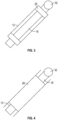
- the limbs 18 are secured to the user 12 by, for example, straps 24 such as shown in FIG. 3 or sleeves 26 such as shown in FIG. 4 . While straps 24 and sleeves 26 are illustrated herein, one skilled in the art will readily appreciate that other apparatus to secure the exoskeleton 10 to the user 12.
- the limbs 18 are configured to extend along the arms 20 and /or legs 22 of the user 12, and may also include hand portions 28, such as gloves, secured to one or more hands 30 of the user 12.
- the exoskeleton 10 includes a plurality of joints 32 in, for example, the limbs 18, that correspond to a shoulder, knee, elbow, wrist, ankle, hip or the like of the user 12.
- the exoskeleton 10 includes a plurality of actuators 34 to drive movement of the limbs 18 at the joints 32.
- the actuators 34 are located at the joints 32, while in other embodiments the actuators 34 remotely from the joints 32.
- the actuators 34 are operably connected to a control system 36 that commands operation of the actuators 34 depending on an operational mode of the exoskeleton 10.
- the control system 36 is wirelessly connected to the plurality of actuators 34, and further may be located on the exoskeleton 10, for example, on the support portion 14 such as shown in FIG. 1 , or may be located remotely from the exoskeleton 10.
- the exoskeleton 10 of the present disclosure incorporates haptic feedback, virtual reality simulation, and smart health monitoring, as discussed with reference to the modes.
- Exoskeleton 10 is programmed to not only reduce loads to create augmented strength for the user 12, but to create resistance against movement, simulating realistic, even Earth-like, activities.
- This single machine can provide a wide variety of simulated exercises and hobbies, health and exercise tracking, visually and physically realistic on-mission training exercises, augmented strength upon arrival to space destination, and a virtual escape from space to better crew moral and mental health, depending on an operational mode or program selected at the control system 36.
- the exoskeleton 10 is utilized to enhance strength by commanding the actuators 34 to move the limbs 18 in cooperative movements with the user 12. For example, when the user 12 raises an arm 20 or leg 22, the actuators 34 are commanded to concurrently move the respective limbs 18 of the exoskeleton 10 in the same direction. Thus, the force of the actuators 34 is additive to the force applied by the user 12.
- This strength-assist mode decreases resistance for the user 12 and is useful for working in a space environment and/or on Earth.
- the exoskeleton 10 is utilized to simulate exercises, hobbies or other activities.
- one such activity may be swimming.
- the control system 36 is programmed to utilize the actuators 34 to provide resistance and/or feedback to the user 12 through the exoskeleton that simulates the effects of gravity, water, etc. when performing a swimming activity on Earth. While swimming is shown as an illustrative example in FIG. 5 , one skilled in the art will readily appreciate that other activities, such as walking, running, cycling, hiking, strength training, etc. may be simulated by the exoskeleton 10 by accessing a selected program of the control system 36.
- the exoskeleton 10 is paired or otherwise connected to a device 42 such as an app on a smartphone or a nearby laptop computer, and exercises performed by the user 12 can be tracked via motion of the exoskeleton 10.
- a device 42 such as an app on a smartphone or a nearby laptop computer
- exercises performed by the user 12 can be tracked via motion of the exoskeleton 10.
- One or more sensors 40 disposed at the exoskeleton may be used for smart health monitoring and may track biometric information such as heart rate, respiration, or the like.
- VR virtual reality
- the user may perform selected exercises or other activities in a virtual environment remote from the space environment, which has benefits in claustrophobia and./or boredom relief and other mental health benefits to the user 12.
- the exoskeleton 10 may be utilized to simulate low or zero gravity while on Earth allowing the user 12 to train for tasks to be performed in space utilizing the exoskeleton 10.
- the exoskeleton 10 provides feedback and/or strength enhancement needed to simulate the low or zero gravity environment as well as resistance and/or feedback to simulate the task the user 12 is training to perform.
- the use of the exoskeleton 10 may be combined with the use of the VR device 38 and/or sound for increasingly immersive experience for the user 12 while performing a selected activity.
- Training can be completed while on the mission. That is, extravehicular activities (EVAs) are typically rehearsed prior to execution. If the user 12, an astronaut or space traveler, is on the space station, in a habitat, or in a space transport vehicle, etc., he/she can use the exoskeleton 12 to rehearse the EVA. Using the exoskeleton 12 in this manner can reduce risk and increase mission success. Furthermore, the exoskeleton 12 may be utilized to learn new skills or other activities.
- EVAs extravehicular activities
- the exoskeleton 10 system disclosed herein is a multi-purpose, multi-use tool, which when compared to existing tools and methods offers far increased and unique capabilities, while still realizing a reduction in complexity for the user and also a reduction in system volume.
Landscapes
- Health & Medical Sciences (AREA)
- Engineering & Computer Science (AREA)
- Life Sciences & Earth Sciences (AREA)
- Epidemiology (AREA)
- Veterinary Medicine (AREA)
- Public Health (AREA)
- General Health & Medical Sciences (AREA)
- Animal Behavior & Ethology (AREA)
- Rehabilitation Therapy (AREA)
- Physical Education & Sports Medicine (AREA)
- Pain & Pain Management (AREA)
- Business, Economics & Management (AREA)
- Entrepreneurship & Innovation (AREA)
- Mechanical Engineering (AREA)
- Robotics (AREA)
- Physics & Mathematics (AREA)
- Theoretical Computer Science (AREA)
- General Physics & Mathematics (AREA)
- Educational Technology (AREA)
- Educational Administration (AREA)
- Rehabilitation Tools (AREA)
- Manipulator (AREA)
Abstract
Description
- Exemplary embodiments pertain to the art of exoskeletons. The shift towards deep-space, long-duration missions, and the increase in commercialization of space travel motivate the need for training, maintenance, and physical fitness technology. The reduced gravity experienced during space travel, especially during such longer duration missions causes muscle and bone atrophy in humans, which can be reduced by employing exercise. The existing technology for exercise includes a combination of several machines or apparatus with limited capability. The art would well receive a single solution for exercise, training, virtual escape, and lift assistance, solving a broad range of technical problems encountered during long duration space missions.
- In one aspect, an exoskeleton system includes an exoskeleton securable to a user, and a control system operably connected to the exoskeleton. The control system is configured to selectably operate the exoskeleton in two or more preconfigured operating modes.
- In embodiments, one of the two or more preconfigured operating modes is an activity simulation mode wherein the controller commands the exoskeleton to provide resistance and/or feedback to the user to simulate an activity.
- In embodiments, another of the two or more preconfigured operating modes is strength enhancement of the user.
- In embodiments, the activity is one of walking running, swimming or cycling.
- In embodiments, one of the two or more preconfigured operating modes is simulation of a low or zero gravity environment.
- In embodiments, a virtual reality apparatus is configured to be worn by the user and operably connected to the control system.
- In embodiments, the control system is secured to the exoskeleton.
- In embodiments, the exoskeleton includes a plurality of actuators operably connected to and controlled by the control system.
- In another aspect, a method of operating an exoskeleton includes an exoskeleton securable to a user, and selecting one of two or more preconfigured operating modes of the exoskeleton via user input to a control system operably connected to the exoskeleton.
- In embodiments, one of the two or more preconfigured operating modes is an activity simulation mode wherein the controller commands the exoskeleton to provide resistance and/or feedback to the user to simulate an activity.
- In embodiments, another of the two or more preconfigured operating modes is strength enhancement of the user.
- In embodiments, the activity is one of walking running, swimming or cycling.
- In embodiments, one of the two or more preconfigured operating modes is simulation of a low or zero gravity environment.
- In embodiments, a virtual reality apparatus is configured to be worn by the user and is operably connected to the control system.
- In embodiments, the control system is secured to the exoskeleton.
- In embodiments, the exoskeleton includes a plurality of actuators operably connected to and controlled by the control system.
- The following descriptions should not be considered limiting in any way. With reference to the accompanying drawings, like elements are numbered alike:
-
FIG. 1 is a schematic illustration of an embodiment of an exoskeleton system; -
FIG. 2 is a schematic illustration of an embodiment of an exoskeleton system worn by a user; -
FIG. 3 is a schematic illustration of an embodiment of securing of an exoskeleton to a user; -
FIG. 4 is a schematic illustration of another embodiment of securing of an exoskeleton to a user; and -
FIG. 5 is another schematic illustration of an exoskeleton system according to one or more embodiments. - A detailed description of one or more embodiments of the disclosed apparatus and method are presented herein by way of exemplification and not limitation with reference to the Figures.
- Referring now to
FIGs. 1 and2 , illustrated is an embodiment of anexoskeleton 10 worn by auser 12, such as an astronaut or other user. Theexoskeleton 10 includes asupport portion 14, for example, a spine, secured to theuser 12 via one ormore attachments points 16 at a back of theuser 12. A plurality oflimbs 18 extend from thesupport portion 14 along, for example,arms 20 and/orlegs 22 of theuser 12. Thelimbs 18 are secured to theuser 12 by, for example,straps 24 such as shown inFIG. 3 orsleeves 26 such as shown inFIG. 4 . Whilestraps 24 andsleeves 26 are illustrated herein, one skilled in the art will readily appreciate that other apparatus to secure theexoskeleton 10 to theuser 12. - Referring again to
FIGs. 1 and2 , thelimbs 18 are configured to extend along thearms 20 and /orlegs 22 of theuser 12, and may also includehand portions 28, such as gloves, secured to one ormore hands 30 of theuser 12. Theexoskeleton 10 includes a plurality ofjoints 32 in, for example, thelimbs 18, that correspond to a shoulder, knee, elbow, wrist, ankle, hip or the like of theuser 12. Theexoskeleton 10 includes a plurality ofactuators 34 to drive movement of thelimbs 18 at thejoints 32. In some embodiments, theactuators 34 are located at thejoints 32, while in other embodiments theactuators 34 remotely from thejoints 32. Theactuators 34 are operably connected to acontrol system 36 that commands operation of theactuators 34 depending on an operational mode of theexoskeleton 10. In some embodiments, thecontrol system 36 is wirelessly connected to the plurality ofactuators 34, and further may be located on theexoskeleton 10, for example, on thesupport portion 14 such as shown inFIG. 1 , or may be located remotely from theexoskeleton 10. - The
exoskeleton 10 of the present disclosure incorporates haptic feedback, virtual reality simulation, and smart health monitoring, as discussed with reference to the modes.Exoskeleton 10 is programmed to not only reduce loads to create augmented strength for theuser 12, but to create resistance against movement, simulating realistic, even Earth-like, activities. This single machine can provide a wide variety of simulated exercises and hobbies, health and exercise tracking, visually and physically realistic on-mission training exercises, augmented strength upon arrival to space destination, and a virtual escape from space to better crew moral and mental health, depending on an operational mode or program selected at thecontrol system 36. - In a first operating mode, the
exoskeleton 10 is utilized to enhance strength by commanding theactuators 34 to move thelimbs 18 in cooperative movements with theuser 12. For example, when theuser 12 raises anarm 20 orleg 22, theactuators 34 are commanded to concurrently move therespective limbs 18 of theexoskeleton 10 in the same direction. Thus, the force of theactuators 34 is additive to the force applied by theuser 12. This strength-assist mode decreases resistance for theuser 12 and is useful for working in a space environment and/or on Earth. - In a second operating mode, the
exoskeleton 10 is utilized to simulate exercises, hobbies or other activities. For example, as shown inFIG. 5 , one such activity may be swimming. Thecontrol system 36 is programmed to utilize theactuators 34 to provide resistance and/or feedback to theuser 12 through the exoskeleton that simulates the effects of gravity, water, etc. when performing a swimming activity on Earth. While swimming is shown as an illustrative example inFIG. 5 , one skilled in the art will readily appreciate that other activities, such as walking, running, cycling, hiking, strength training, etc. may be simulated by theexoskeleton 10 by accessing a selected program of thecontrol system 36. Use of this mode may be particularly beneficial during extended time space missions to prevent muscle and bone deterioration and to additionally provide mental health benefits to theuser 12. In some embodiments, theexoskeleton 10 is paired or otherwise connected to adevice 42 such as an app on a smartphone or a nearby laptop computer, and exercises performed by theuser 12 can be tracked via motion of theexoskeleton 10. One ormore sensors 40 disposed at the exoskeleton may be used for smart health monitoring and may track biometric information such as heart rate, respiration, or the like. - When combined with the use of a virtual reality (VR)
device 38 such as a headset and/or sound, the user may perform selected exercises or other activities in a virtual environment remote from the space environment, which has benefits in claustrophobia and./or boredom relief and other mental health benefits to theuser 12. - In a third mode, the
exoskeleton 10 may be utilized to simulate low or zero gravity while on Earth allowing theuser 12 to train for tasks to be performed in space utilizing theexoskeleton 10. In this mode, theexoskeleton 10 provides feedback and/or strength enhancement needed to simulate the low or zero gravity environment as well as resistance and/or feedback to simulate the task theuser 12 is training to perform. In any mode of operation of theexoskeleton 10, the use of theexoskeleton 10 may be combined with the use of theVR device 38 and/or sound for increasingly immersive experience for theuser 12 while performing a selected activity. - Training can be completed while on the mission. That is, extravehicular activities (EVAs) are typically rehearsed prior to execution. If the
user 12, an astronaut or space traveler, is on the space station, in a habitat, or in a space transport vehicle, etc., he/she can use theexoskeleton 12 to rehearse the EVA. Using theexoskeleton 12 in this manner can reduce risk and increase mission success. Furthermore, theexoskeleton 12 may be utilized to learn new skills or other activities. - The
exoskeleton 10 system disclosed herein is a multi-purpose, multi-use tool, which when compared to existing tools and methods offers far increased and unique capabilities, while still realizing a reduction in complexity for the user and also a reduction in system volume. - The term "about" is intended to include the degree of error associated with measurement of the particular quantity based upon the equipment available at the time of filing the application.
- The terminology used herein is for the purpose of describing particular embodiments only and is not intended to be limiting of the present disclosure. As used herein, the singular forms "a", "an" and "the" are intended to include the plural forms as well, unless the context clearly indicates otherwise. It will be further understood that the terms "comprises" and/or "comprising," when used in this specification, specify the presence of stated features, integers, steps, operations, elements, and/or components, but do not preclude the presence or addition of one or more other features, integers, steps, operations, element components, and/or groups thereof.
- While the present disclosure has been described with reference to an exemplary embodiment or embodiments, it will be understood by those skilled in the art that various changes may be made without departing from the scope of the invention as defined by the claims. In addition, many modifications may be made to adapt a particular situation or material to the teachings of the present disclosure without departing from the scope of the claims. Therefore, it is intended that the present disclosure not be limited to the particular embodiment disclosed as the best mode contemplated for carrying out this present disclosure, but that the present disclosure will include all embodiments falling within the scope of the claims.
Claims (15)
- An exoskeleton system, comprising:an exoskeleton securable (10) to a user (12); anda control system (36) operably connected to the exoskeleton, the control system configured to selectably operate the exoskeleton in two or more preconfigured operating modes, wherein the two or more preconfigured operating modes include a mode to provide resistance to the user and a mode to decrease resistance felt by the user.
- The exoskeleton system of claim 1, wherein one of the two or more preconfigured operating modes is an activity simulation mode wherein the controller commands the exoskeleton to provide resistance and/or feedback to the user to simulate an activity.
- The exoskeleton system of claim 2, wherein another of the two or more preconfigured operating modes is strength enhancement of the user.
- The exoskeleton system of claim 2, wherein the activity is one of walking running, swimming or cycling.
- The exoskeleton system of claim 1, wherein one of the two or more preconfigured operating modes is simulation of a low or zero gravity environment.
- The exoskeleton system of any preceding claim, further comprising a virtual reality apparatus (38) configured to be worn by the user and operably connected to the control system.
- The exoskeleton system of any preceding claim, wherein the control system is secured to the exoskeleton.
- The exoskeleton system of any preceding claim, wherein the exoskeleton includes a plurality of actuators operably connected to and controlled by the control system.
- A method of operating an exoskeleton (10) securable to a user, the method comprising:
selecting one of two or more preconfigured operating modes of the exoskeleton via user input to a control system (36) operably connected to the exoskeleton (10), wherein the two or more preconfigured operating modes include a mode to provide resistance to the user and a mode to decrease resistance felt by the user (12). - The method of claim 9, wherein one of the two or more preconfigured operating modes is an activity simulation mode wherein the controller commands the exoskeleton to provide resistance and/or feedback to the user to simulate an activity, or wherein one of the two or more preconfigured operating modes is simulation of a low or zero gravity environment.
- The method of claim 10, wherein another of the two or more preconfigured operating modes is strength enhancement of the user.
- The method of claim 10, wherein the activity is one of walking running, swimming or cycling.
- The method of any of claims 9 to 12, further comprising a virtual reality apparatus (38) configured to be worn by the user and operably connected to the control system.
- The method of any of claims 9 to 13, wherein the control system is secured to the exoskeleton.
- The method of any of claims 9 to 14, wherein the exoskeleton includes a plurality of actuators operably connected to and controlled by the control system.
Applications Claiming Priority (1)
| Application Number | Priority Date | Filing Date | Title |
|---|---|---|---|
| US17/388,216 US20230030163A1 (en) | 2021-07-29 | 2021-07-29 | Virtual escape, instructor, maintenance and skills training, physical fitness, augmented strength exoskeleton |
Publications (1)
| Publication Number | Publication Date |
|---|---|
| EP4125075A1 true EP4125075A1 (en) | 2023-02-01 |
Family
ID=82748484
Family Applications (1)
| Application Number | Title | Priority Date | Filing Date |
|---|---|---|---|
| EP22187219.5A Withdrawn EP4125075A1 (en) | 2021-07-29 | 2022-07-27 | Virtual escape, instructor, maintenance and skills training, physical fitness, augmented strength exoskeleton |
Country Status (2)
| Country | Link |
|---|---|
| US (1) | US20230030163A1 (en) |
| EP (1) | EP4125075A1 (en) |
Families Citing this family (1)
| Publication number | Priority date | Publication date | Assignee | Title |
|---|---|---|---|---|
| WO2025093775A1 (en) | 2023-11-02 | 2025-05-08 | Vrije Universiteit Brussel | An exoskeleton for musculoskeletal support and assistance |
Citations (1)
| Publication number | Priority date | Publication date | Assignee | Title |
|---|---|---|---|---|
| RU2738489C1 (en) * | 2020-04-03 | 2020-12-14 | Общество с ограниченной ответственностью "Центр тренажеростроения и подготовки персонала" | Educational training-simulator complex for cosmonaut preparation for intra-ship activity |
Family Cites Families (7)
| Publication number | Priority date | Publication date | Assignee | Title |
|---|---|---|---|---|
| US6966882B2 (en) * | 2002-11-25 | 2005-11-22 | Tibion Corporation | Active muscle assistance device and method |
| US8152699B1 (en) * | 2008-06-19 | 2012-04-10 | Arrowhead Center, Inc. | Apparatus and method for reduced-gravity simulation |
| US20110067157A1 (en) * | 2009-09-19 | 2011-03-24 | Quan Xiao | Method and apparatus for Variable G force experience and creating immersive VR sensations |
| US9072941B2 (en) * | 2011-08-11 | 2015-07-07 | The Charles Stark Draper Laboratory, Inc. | Exoskeleton suit for adaptive resistance to movement |
| US10028880B2 (en) * | 2013-03-08 | 2018-07-24 | Kyushu University, National University Corporation | Hand exoskeleton device |
| US10092205B2 (en) * | 2013-07-03 | 2018-10-09 | University Of Houston System | Methods for closed-loop neural-machine interface systems for the control of wearable exoskeletons and prosthetic devices |
| US9782322B2 (en) * | 2015-07-16 | 2017-10-10 | Honda Motor Co., Ltd. | Resistive exoskeleton control design framework |
-
2021
- 2021-07-29 US US17/388,216 patent/US20230030163A1/en not_active Abandoned
-
2022
- 2022-07-27 EP EP22187219.5A patent/EP4125075A1/en not_active Withdrawn
Patent Citations (1)
| Publication number | Priority date | Publication date | Assignee | Title |
|---|---|---|---|---|
| RU2738489C1 (en) * | 2020-04-03 | 2020-12-14 | Общество с ограниченной ответственностью "Центр тренажеростроения и подготовки персонала" | Educational training-simulator complex for cosmonaut preparation for intra-ship activity |
Non-Patent Citations (2)
| Title |
|---|
| REA ROCHELLE ET AL: "X1: A Robotic Exoskeleton for In-Space Countermeasures and Dynamometry", AIAA SPACE 2013 CONFERENCE AND EXPOSITION, 10 September 2013 (2013-09-10), Reston, Virginia, pages 1 - 8, XP055981092, ISBN: 978-1-62410-239-4, DOI: 10.2514/6.2013-5510 * |
| SZONDY DAVID: "NASA developing exoskeleton for astronauts and the earthbound", 13 October 2012 (2012-10-13), pages 1 - 15, XP055981077, Retrieved from the Internet <URL:https://newatlas.com/x1-exoskeleton/24525/> [retrieved on 20221114] * |
Also Published As
| Publication number | Publication date |
|---|---|
| US20230030163A1 (en) | 2023-02-02 |
Similar Documents
| Publication | Publication Date | Title |
|---|---|---|
| Nelson et al. | Petman: A humanoid robot for testing chemical protective clothing | |
| US20190021937A1 (en) | Motion system with plurality of stewart platform based actuators | |
| Goza et al. | Telepresence control of the NASA/DARPA robonaut on a mobility platform | |
| Vukobratovic | When were active exoskeletons actually born? | |
| JP2019020670A (en) | Experienced operation teaching system | |
| RU2738489C1 (en) | Educational training-simulator complex for cosmonaut preparation for intra-ship activity | |
| US20230030163A1 (en) | Virtual escape, instructor, maintenance and skills training, physical fitness, augmented strength exoskeleton | |
| He et al. | Design and development of a locomotion interface for virtual reality lower-body haptic interaction | |
| Guatibonza et al. | Kinematic and dynamic modeling of a 5-bar assistive device for knee rehabilitation | |
| Decker et al. | A hand exoskeleton device for robot assisted sensory-motor training after stroke | |
| Yoo et al. | Recent progress and development of the humanoid robot HanSaRam | |
| JP5176805B2 (en) | Strength training equipment | |
| Lu et al. | A new active body weight support system capable of virtually offloading partial body mass | |
| US20180065246A1 (en) | System for Cooperation Between a Human and a Robotic Device | |
| Fu et al. | A bilateral six degree of freedom cable-driven upper body exosuit | |
| KR20190031936A (en) | Rehabilitation exercise based on random error signal and controlling method thereof | |
| Karpushkin et al. | Structural model of software and hardware platform for the training complex based on a controlled treadmill | |
| Veneva et al. | Exoskeleton with soft actuation and haptic interface | |
| Thompson et al. | Integrated biomechanical modeling of lower body exercises on the advanced resistive exercise device (ARED) using LifeMOD® | |
| Lu et al. | Virtually offloading body mass for rehabilitation: A simulation study | |
| Chen et al. | Hybrid control for human-powered augmentation exoskeleton | |
| Zhang et al. | Personalized and Adaptive Virtual Reality Training for Physically Coupled Robots in Construction | |
| Myllymaa et al. | RehApp–A Wearable Haptic System for Rehabilitation and Sports Training | |
| Devos | The Development and Testing of a Gyroscope-Based Neck Strengthening Rehabilitation Device | |
| Estep | Human Performance in Spacesuits and Exploration Operations |
Legal Events
| Date | Code | Title | Description |
|---|---|---|---|
| PUAI | Public reference made under article 153(3) epc to a published international application that has entered the european phase |
Free format text: ORIGINAL CODE: 0009012 |
|
| STAA | Information on the status of an ep patent application or granted ep patent |
Free format text: STATUS: THE APPLICATION HAS BEEN PUBLISHED |
|
| AK | Designated contracting states |
Kind code of ref document: A1 Designated state(s): AL AT BE BG CH CY CZ DE DK EE ES FI FR GB GR HR HU IE IS IT LI LT LU LV MC MK MT NL NO PL PT RO RS SE SI SK SM TR |
|
| STAA | Information on the status of an ep patent application or granted ep patent |
Free format text: STATUS: REQUEST FOR EXAMINATION WAS MADE |
|
| 17P | Request for examination filed |
Effective date: 20230801 |
|
| RBV | Designated contracting states (corrected) |
Designated state(s): AL AT BE BG CH CY CZ DE DK EE ES FI FR GB GR HR HU IE IS IT LI LT LU LV MC MK MT NL NO PL PT RO RS SE SI SK SM TR |
|
| STAA | Information on the status of an ep patent application or granted ep patent |
Free format text: STATUS: EXAMINATION IS IN PROGRESS |
|
| 17Q | First examination report despatched |
Effective date: 20250718 |
|
| STAA | Information on the status of an ep patent application or granted ep patent |
Free format text: STATUS: THE APPLICATION IS DEEMED TO BE WITHDRAWN |
|
| 18D | Application deemed to be withdrawn |
Effective date: 20251119 |