EP4125028A1 - Method and system to generate pricing for charging electric vehicles - Google Patents
Method and system to generate pricing for charging electric vehicles Download PDFInfo
- Publication number
- EP4125028A1 EP4125028A1 EP22181584.8A EP22181584A EP4125028A1 EP 4125028 A1 EP4125028 A1 EP 4125028A1 EP 22181584 A EP22181584 A EP 22181584A EP 4125028 A1 EP4125028 A1 EP 4125028A1
- Authority
- EP
- European Patent Office
- Prior art keywords
- charging
- pool
- aggregator
- demand
- agent
- Prior art date
- Legal status (The legal status is an assumption and is not a legal conclusion. Google has not performed a legal analysis and makes no representation as to the accuracy of the status listed.)
- Granted
Links
Images






Classifications
-
- G—PHYSICS
- G06—COMPUTING OR CALCULATING; COUNTING
- G06Q—INFORMATION AND COMMUNICATION TECHNOLOGY [ICT] SPECIALLY ADAPTED FOR ADMINISTRATIVE, COMMERCIAL, FINANCIAL, MANAGERIAL OR SUPERVISORY PURPOSES; SYSTEMS OR METHODS SPECIALLY ADAPTED FOR ADMINISTRATIVE, COMMERCIAL, FINANCIAL, MANAGERIAL OR SUPERVISORY PURPOSES, NOT OTHERWISE PROVIDED FOR
- G06Q50/00—Information and communication technology [ICT] specially adapted for implementation of business processes of specific business sectors, e.g. utilities or tourism
- G06Q50/40—Business processes related to the transportation industry
-
- G—PHYSICS
- G06—COMPUTING OR CALCULATING; COUNTING
- G06Q—INFORMATION AND COMMUNICATION TECHNOLOGY [ICT] SPECIALLY ADAPTED FOR ADMINISTRATIVE, COMMERCIAL, FINANCIAL, MANAGERIAL OR SUPERVISORY PURPOSES; SYSTEMS OR METHODS SPECIALLY ADAPTED FOR ADMINISTRATIVE, COMMERCIAL, FINANCIAL, MANAGERIAL OR SUPERVISORY PURPOSES, NOT OTHERWISE PROVIDED FOR
- G06Q30/00—Commerce
- G06Q30/02—Marketing; Price estimation or determination; Fundraising
- G06Q30/0201—Market modelling; Market analysis; Collecting market data
- G06Q30/0206—Price or cost determination based on market factors
-
- G—PHYSICS
- G06—COMPUTING OR CALCULATING; COUNTING
- G06Q—INFORMATION AND COMMUNICATION TECHNOLOGY [ICT] SPECIALLY ADAPTED FOR ADMINISTRATIVE, COMMERCIAL, FINANCIAL, MANAGERIAL OR SUPERVISORY PURPOSES; SYSTEMS OR METHODS SPECIALLY ADAPTED FOR ADMINISTRATIVE, COMMERCIAL, FINANCIAL, MANAGERIAL OR SUPERVISORY PURPOSES, NOT OTHERWISE PROVIDED FOR
- G06Q10/00—Administration; Management
- G06Q10/06—Resources, workflows, human or project management; Enterprise or organisation planning; Enterprise or organisation modelling
- G06Q10/063—Operations research, analysis or management
-
- G—PHYSICS
- G06—COMPUTING OR CALCULATING; COUNTING
- G06Q—INFORMATION AND COMMUNICATION TECHNOLOGY [ICT] SPECIALLY ADAPTED FOR ADMINISTRATIVE, COMMERCIAL, FINANCIAL, MANAGERIAL OR SUPERVISORY PURPOSES; SYSTEMS OR METHODS SPECIALLY ADAPTED FOR ADMINISTRATIVE, COMMERCIAL, FINANCIAL, MANAGERIAL OR SUPERVISORY PURPOSES, NOT OTHERWISE PROVIDED FOR
- G06Q50/00—Information and communication technology [ICT] specially adapted for implementation of business processes of specific business sectors, e.g. utilities or tourism
- G06Q50/06—Energy or water supply
-
- Y—GENERAL TAGGING OF NEW TECHNOLOGICAL DEVELOPMENTS; GENERAL TAGGING OF CROSS-SECTIONAL TECHNOLOGIES SPANNING OVER SEVERAL SECTIONS OF THE IPC; TECHNICAL SUBJECTS COVERED BY FORMER USPC CROSS-REFERENCE ART COLLECTIONS [XRACs] AND DIGESTS
- Y02—TECHNOLOGIES OR APPLICATIONS FOR MITIGATION OR ADAPTATION AGAINST CLIMATE CHANGE
- Y02T—CLIMATE CHANGE MITIGATION TECHNOLOGIES RELATED TO TRANSPORTATION
- Y02T10/00—Road transport of goods or passengers
- Y02T10/60—Other road transportation technologies with climate change mitigation effect
- Y02T10/70—Energy storage systems for electromobility, e.g. batteries
-
- Y—GENERAL TAGGING OF NEW TECHNOLOGICAL DEVELOPMENTS; GENERAL TAGGING OF CROSS-SECTIONAL TECHNOLOGIES SPANNING OVER SEVERAL SECTIONS OF THE IPC; TECHNICAL SUBJECTS COVERED BY FORMER USPC CROSS-REFERENCE ART COLLECTIONS [XRACs] AND DIGESTS
- Y02—TECHNOLOGIES OR APPLICATIONS FOR MITIGATION OR ADAPTATION AGAINST CLIMATE CHANGE
- Y02T—CLIMATE CHANGE MITIGATION TECHNOLOGIES RELATED TO TRANSPORTATION
- Y02T10/00—Road transport of goods or passengers
- Y02T10/60—Other road transportation technologies with climate change mitigation effect
- Y02T10/7072—Electromobility specific charging systems or methods for batteries, ultracapacitors, supercapacitors or double-layer capacitors
-
- Y—GENERAL TAGGING OF NEW TECHNOLOGICAL DEVELOPMENTS; GENERAL TAGGING OF CROSS-SECTIONAL TECHNOLOGIES SPANNING OVER SEVERAL SECTIONS OF THE IPC; TECHNICAL SUBJECTS COVERED BY FORMER USPC CROSS-REFERENCE ART COLLECTIONS [XRACs] AND DIGESTS
- Y02—TECHNOLOGIES OR APPLICATIONS FOR MITIGATION OR ADAPTATION AGAINST CLIMATE CHANGE
- Y02T—CLIMATE CHANGE MITIGATION TECHNOLOGIES RELATED TO TRANSPORTATION
- Y02T90/00—Enabling technologies or technologies with a potential or indirect contribution to GHG emissions mitigation
- Y02T90/10—Technologies relating to charging of electric vehicles
- Y02T90/12—Electric charging stations
Definitions
- the disclosure herein generally relates to electric vehicles, and, more particularly, to method and system to generate pricing for charging electric vehicles.
- Electric vehicle charging stations connect electric vehicles (e.g., electric battery powered vehicles, plug in hybrid electric vehicles, etc.) to the electric power supply network for the purpose of charging batteries (or other electrical storage devices) of electric vehicles (EV).
- MURB Multi-unit residential building
- MURB residents are the upcoming segment of electric vehicle owners and potential buyers in several countries. Such MURB residents mostly rely on public chargers, which currently handle only 5% of the EV charging needs.
- Early adopters of EV typically had private charging infrastructure and with increase in EV owners residing in MURB access to public EV supply equipment (EVSE) which is fast becoming important.
- EVSE public EV supply equipment
- access to charging through EVSE is the most essential condition for EV adoption in wide network.
- EVSE deployment has a feedback bootstrapping dependency with EV adoption and either may lead or lag the other.
- efficient management of existing public EVSE is critically important.
- public chargers may not be able to match such operations scaled without extensive deployments.
- this may not only lead to a demand-supply mismatch in the short-term but impacts the growth of EV adoption in long term.
- dynamic pricing is a widely used control tool, but often lacks in making informed pricing decisions to maximize aggregator revenue for business growth.
- DM demand management
- surge pricing can either reduce the demand (demand-response) to meet the supply; or augment the supply to meet the demand; or both.
- Most of the conventional techniques have considered pricing for EV charging to varying degrees of abstraction and assumptions/knowledge/models about both EV users (e.g., state of charge or SoC) and operators (e.g., availability).
- a system for generate pricing for charging electric vehicles includes receiving by an electric vehicle (EV) charging aggregator having an RL agent, a user request comprising an EV charging demand request and a time of day to generate an EV charging price to maximize revenue of the EV charging aggregator. Further, model using a state generator, a state of the RL agent for processing the user request and assigning a reward to the RL agent for the performed action.
- EV electric vehicle
- a state generator for processing the user request and assigning a reward to the RL agent for the performed action.
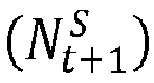
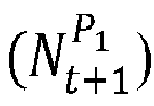
- the EV charging price for the user request to maximize revenue of the EV charging aggregator by, computing (i) an actual demand pool ( P 1 ) based on a next time step of actual demand pool size N t + 1 P 1 , (ii) a service pool (S) based on a next time step of service pool size N t S , (iii) a total number of currently available EV chargers ( K t ) , and (iv) a time of day ( t d ) of the user request.
- the state of the RL agent includes (i) the actual demand pool size N t P 1 , (ii) the service pool size N t S , (iii) the total number of currently available EV chargers ( K t ) at current time step, and (iv) the time of day ( t d ) of the user request.
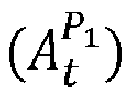
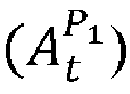
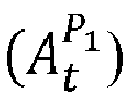
- the actual demand pool size computed for the next time step N t + 1 P 1 is the sum of current time of the actual demand pool size N t P 1 , which (i) increases by raised user requests A t P 1 arriving from the tentative demand pool ( P 2 ) into the actual demand pool ( P 1 ), and (ii) decreases by the raised user requests A t P 1 for the accepted offered price arriving into the service pool S, and D t R the user rejected offered prices.
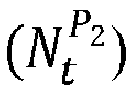
- the tentative demand pool size computed for the next time step N t + 1 P 2 is a sum of current time of the tentative demand pool size N t P 2 which (i) increases by an exogeneous variable and a total number of rejected EV charging demand requests price offers D t R and, (ii) decreases by raised user requests A t P 1 to enter the actual demand pool ( P 1 ).
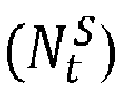
- the service pool for the next time step N t + 1 S increases by users who start EV charging A t S and decreases by D t S users finishing their EV charging and leaving the EV charging aggregator.
- K t +1 predicting the total number of chargers for the next time step ( K t +1 ) traces the total number of available chargers as current users starting EV charging A t S and previous users finishing EV charging D t S , and the change observed in the number of active private chargers ⁇ K t Private depending on the offered price ( p t ).
- a method for generating pricing for charging electric vehicles includes receiving by an electric vehicle (EV) charging aggregator having an RL agent, a user request comprising an EV charging demand request and a time of day to generate an EV charging price to maximize revenue of the EV charging aggregator. Further, model using a state generator, a state of the RL agent for processing the user request and assigning a reward to the RL agent for the performed action.
- EV electric vehicle
- the EV charging price for the user request to maximize revenue of the EV charging aggregator by, computing (i) an actual demand pool ( P 1 ) based on a next time step of actual demand pool size N t + 1 P 1 , (ii) a service pool (S) based on a next time step of service pool size N t S , (iii) a total number of currently available EV chargers ( K t ) , and (iv) a time of day ( t d ) of the user request.
- the state of the RL agent includes (i) the actual demand pool size N t P 1 , (ii) the service pool size N t S , (iii) the total number of currently available EV chargers ( K t ) at current time step, and (iv) the time of day ( t d ) of the user request.
- the actual demand pool size computed for the next time step N t + 1 P 1 is the sum of current time of the actual demand pool size N t P 1 , which (i) increases by raised user requests A t P 1 arriving from the tentative demand pool ( P 2 ) into the actual demand pool ( P 1 ), and (ii) decreases by the raised user requests A t P 1 for the accepted offered price arriving into the service pool S, and D t R the user rejected offered prices.
- the tentative demand pool size computed for the next time step N t + 1 P 2 is a sum of current time of the tentative demand pool size N t P 2 , which (i) increases by an exogeneous variable and a total number of rejected EV charging demand requests price offers D t R and, (ii) decreases by raised user requests A t P 1 , to enter the actual demand pool ( P 1 ).
- the service pool for the next time step N t + 1 S increases by users who start EV charging A t S and decreases by D t S users finishing their EV charging and leaving the EV charging aggregator.
- K t +1 predicting the total number of chargers for the next time step ( K t +1 ) traces the total number of available chargers as current users starting EV charging A t S and previous users finishing EV charging D t S , and the change observed in the number of active private chargers ⁇ K t Private depending on the offered price ( p t ).
- a non-transitory computer readable medium provides one or more non-transitory machine-readable information storage mediums comprising one or more instructions, which when executed by one or more hardware processors perform actions includes an I/O interface and a memory coupled to the processor is capable of executing programmed instructions stored in the processor in the memory to receiving by an electric vehicle (EV) charging aggregator having an RL agent, a user request comprising an EV charging demand request and a time of day to generate an EV charging price to maximize revenue of the EV charging aggregator. Further, model using a state generator, a state of the RL agent for processing the user request and assigning a reward to the RL agent for the performed action.
- EV electric vehicle
- the EV charging price for the user request to maximize revenue of the EV charging aggregator by, computing (i) an actual demand pool ( P 1 ) based on a next time step of actual demand pool size N t + 1 P 1 , (ii) a service pool (S) based on a next time step of service pool size N t S , (iii) a total number of currently available EV chargers ( K t ) , and (iv) a time of day ( t d ) of the user request.
- the state of the RL agent includes (i) the actual demand pool size N t P 1 , (ii) the service pool size N t S , (iii) the total number of currently available EV chargers ( K t ) at current time step, and (iv) the time of day ( t d ) of the user request.
- the actual demand pool size computed for the next time step N t + 1 P 1 is the sum of current time of the actual demand pool size N t P 1 , which (i) increases by raised user requests A t P 1 arriving from the tentative demand pool ( P 2 ) into the actual demand pool ( P 1 ), and (ii) decreases by the raised user requests A t P 1 for the accepted offered price arriving into the service pool S, and D t R the user rejected offered prices.
- the tentative demand pool size computed for the next time step N t + 1 P 2 is a sum of current time of the tentative demand pool size N t P 2 , which (i) increases by an exogeneous variable and a total number of rejected EV charging demand requests price offers D t R and, (ii) decreases by raised user requests A t P 1 , to enter the actual demand pool ( P 1 ).
- the service pool for the next time step N t + 1 S increases by users who start EV charging A t S and decreases by D t S users finishing their EV charging and leaving the EV charging aggregator.
- K t +1 predicting the total number of chargers for the next time step ( K t +1 ) traces the total number of available chargers as current users starting EV charging A t S and previous users finishing EV charging D t S , and the change observed in the number of active private chargers ⁇ K t Private depending on the offered price ( p t ).
- Embodiments herein provide a method and system to generate pricing for charging electric vehicles (EV).
- the method disclosed enables generation of dynamic pricing policies to maximize aggregator revenue based on a stochastic model constraints and user behavioral models.
- the system includes an EV charging aggregator having a reinforcement learning (RL) agent which processes user request.
- Each user request comprises an EV charging demand request to charge EVs from electric vehicle supplier equipment (EVSE).
- EVSE electric vehicle supplier equipment
- the state of the RL agent is spatially tagged with the EV demand request and the availability of EVSE.
- the RL agent learns to map actions of the user request to maximize aggregator revenue for which a reward is assigned to the RL agent based on the performed action.
- EV charging pricing policy dynamically adapts to user behaviors at a demand side and a supply side.
- Realistic management of EVSE spatio temporal variations for the user request demands to the driving patterns for accurate estimation and adapting the demand elasticity of EV charging.
- the reward is assigned dynamically to the RL agent for price management.
- the RL agent is well trained and implemented using a Deep Q-Network (DQN).
- DQN Deep Q-Network
- the present disclosure utilizes the RL agent to overcome these challenges of dynamic pricing for EV charging acting as the service aggregator.
- the method of the present disclosure is evaluated on real-world traffic patterns for the city of example (Luxembourg) by augmenting the Luxembourg SUMO (Simulation of Urban Mobility) traffic scenario (LuST) simulator with EV charging demand models.
- the method matches the performance of popular price-based control approaches, without making any explicit assumptions.
- SoC based charging completion policy represent the present disclosure obtains 35% more revenue than other compared baselines.
- FIG. 1 through FIG.5F where similar reference characters denote corresponding features consistently throughout the figures, there are shown preferred embodiments and these embodiments are described in the context of the following exemplary system and/or method.
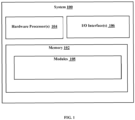
- FIG. 1 illustrates an exemplary block diagram of a system (alternatively referred as EV charging management system), in accordance with some embodiments of the present disclosure.
- the EV charging management system 100 includes processor (s) 104, communication interface (s), alternatively referred as or input/output (I/O) interface(s) 106, and one or more data storage devices or memory 102 operatively coupled to the processor (s) 104.
- the system 100, with the processor(s) is configured to execute functions of one or more functional blocks of the system 100.
- the processor (s) 104 can be one or more hardware processors 104.
- the one or more hardware processors 104 can be implemented as one or more microprocessors, microcomputers, microcontrollers, digital signal processors, central processing units, state machines, logic circuitries, and/or any devices that manipulate signals based on operational instructions.
- the processor(s) 104 is configured to fetch and execute computer-readable instructions stored in the memory.
- the system 100 can be implemented in a variety of computing systems, such as laptop computers, notebooks, 10 hand-held devices, workstations, mainframe computers, servers, a network cloud, and the like.
- the I/O interface(s) 106 can include a variety of software and hardware interfaces, for example, a web interface, a graphical user interface, and the like and can facilitate multiple communications within a wide variety of networks N/W and protocol types, including wired networks, for example, LAN, cable, etc., and wireless networks, such as WLAN, cellular, or satellite.
- the I/O interface (s) 106 can include one or more ports for connecting a number of devices (nodes) of the system 100 to one another or to another server.
- the memory 102 may include any computer-readable medium known in the art including, for example, volatile memory, such as static random-access memory (SRAM) and dynamic random-access memory (DRAM), and/or non-volatile memory, such as read only memory (ROM), erasable programmable ROM, flash memories, hard disks, optical disks, and magnetic tapes.
- volatile memory such as static random-access memory (SRAM) and dynamic random-access memory (DRAM)
- non-volatile memory such as read only memory (ROM), erasable programmable ROM, flash memories, hard disks, optical disks, and magnetic tapes.
- the modules 108 can be an Integrated Circuit (IC) (not shown), external to the memory 102, implemented using a Field-Programmable Gate Array (FPGA) or an Application-Specific Integrated Circuit (ASIC).
- FPGA Field-Programmable Gate Array
- ASIC Application-Specific Integrated Circuit
- FIG.2A illustrates a public EV supply equipment for the demand EV profiles in discrete time steps using the system of FIG. 1 , in accordance with some embodiments of the present disclosure.
- FIG.2A describes the challenge of pricing EV charging from a different perspective that drives any technology adoption in practice user behavior. EV users prefer to align their charging with convenient points in their driving patterns unless they are forced to charge immediately due to a critically low stochastic model constraints.
- a complementary aspect was considered in augmenting the supply-side of EVSE by incentivizing private garage owners to allow public charging. The key insight was that the behavior of private garage owners to charge at night; could be leveraged to augment supply during peak demand for EVSE charging during the day.
- the present disclosure dynamically generates EV charging pricing policy that can adapt to user behaviors at the demand-side and potentially the supply- side without any a priori knowledge. Pricing of EV charging for dynamic management is nontrivial for several reasons. Firstly, the demand for EV charging varies in space and time. If private garages participate in public charging, the supply-side also varies in space and time. Second, explicit, and accurate modeling of user behavior to price is challenging. Specifically, some users might prefer the nearest EVSE at any price; while others might be more sensitive to price and willing to drive around; and so on. Third, state of charge (SoC) in EVs may not be known to the EVSE operators till the start of charging. In other words, the propensity of the user to charge due to critically low SoC is not known when setting the price. Finally, the EVSE operator may also need to consider any time-of-day variations in pricing when procuring electricity in bulk from the utility company.
- SoC state of charge
- FIG. 2B illustrates a functional architecture to generate pricing for charging EV using the system of FIG. 1 , in accordance with some embodiments of the present disclosure.
- the system includes an EV charging aggregator having an RL agent, a tentative demand pool, an actual demand pool, and a service pool.
- the system involves three primary stake holders comprising firstly a demand side having EV users requesting efficient charging at lowest possible price, secondly a supply side which includes a public or private EVSE operators, and thirdly an EV charging aggregator which acts as intermediator between the demand side and the supply side.
- the RL agent acts as an EV aggregator to a set of EVSEs spread across a city.
- the RL agent addresses the problem of dynamic pricing for EV charging by observing the state and decides a control action.
- the system implements the action and provides the reward to the RL agent.
- the RL agent learns to map actions to the observed state maximizes the rewards earned over the training period which complements several existing approaches that use assumptions or models about user behaviors.
- the action taken by the RL is to decide the price to be offered to users. Users are assigned to the nearest available EVSE separately outside the system.
- the reward to the RL agent would be the total revenue obtained in that timestep of the control action.
- the action taken by the RL agent is to decide the price to be offered to user request. Further, the reward to the RL agent would be the total revenue obtained in the timestep of the control action.
- a low price may be accepted by many users, but the revenue would be limited by the number of EVSEs.
- a high price may be rejected by many users, and the revenue and utilization would substantially fall.
- the RL agent learns to price appropriately to maximize revenue based on the demand elasticity of the user population.
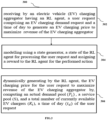
- FIG. 3 illustrates a flow diagram illustrating the method for maximizing EV aggregator revenue by generating pricing for EV charging using the system of FIG. 1 , in accordance with some embodiments of the present disclosure.
- the system 100 comprises one or more data storage devices or the memory 102 operatively coupled to the processor(s) 104 and is configured to store instructions for execution of steps of the method 300 by the processor(s) or one or more hardware processors 104.
- the steps of the method 300 of the present disclosure will now be explained with reference to the components or blocks of the system 100 as depicted in FIG.1 and the steps of flow diagram as depicted in FIG.3 .
- the one or more hardware processors 104 receive, via an electric vehicle (EV) charging aggregator having an RL agent, a user request comprising an EV charging demand request and a time of day to generate an EV charging price to maximize revenue of the EV charging aggregator.
- EV electric vehicle
- the RL agent responds with a price. The EV users can decide either accept the offered price and proceed to charging or reject the price and try again later in the day.
- the model for users accepting the offered model is parametrized, stochastic, and hidden from the EV charging aggregator.
- the EV charging demand requests would be GPS location stamped; and the EV charging aggregator obtains the current availability status of all participating EVSEs.
- the one or more hardware processors 104 models, by using a state generator, a state of the RL agent for processing the user request and assigning a reward to the RL agent for the performed action.
- a state generator a state of the RL agent for processing the user request and assigning a reward to the RL agent for the performed action.
- the system state includes the details about the actual demand pool and the service pool.
- the state of the RL agent includes (i) the actual demand pool size N t P 1 , (ii) the service pool size N t S , (iii) the total number of currently available EV chargers ( K t ) at current time step, and (iv) the user request time of day ( t d ).
- EVs user requests fall into one of three demand queues: (1) a tentative demand pool ( P 2 ), (2) an actual demand pool ( P 1 ), and (3) a service pool S.
- S t N t P 1 N t S K t t d
- the one or more hardware processors 104 dynamically generate, via the RL agent, the EV charging price for the user request to maximize revenue of the EV charging aggregator by, computing (i) an actual demand pool ( P 1 ) based on a next time step of actual demand pool size N t + 1 P 1 , (ii) a service pool (S) based on a next time step of service pool size N t S , (iii) a total number of currently available EV chargers ( K t ) , and (iv) a time of day ( t d ) of the user request.
- P 1 an actual demand pool
- S service pool
- K t total number of currently available EV chargers
- t d a time of day
- FIG.4A and FIG.4B illustrate a behavior model of EV users and private EVSE suppliers using the system of FIG.1 , in accordance with some embodiments of the present disclosure.
- all EV users whose stochastic model constraints is less than 70% can raise a charging request.
- Such users are referred to as the tentative demand pool.
- Users who request charging are added to the actual demand pool; and offered a price ( p t ).
- the user either accepts ( p t ) and moves to the service pool; or rejects ( p t ) and goes back to the tentative demand pool.
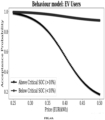
- the acceptance or rejection is a probabilistic event that is modeled as shown in FIG.4A .
- the X-axis is the offered price (between 0.25-0.5 EUR/kWh); and the Y-axis shows the probability of acceptance. If the SoC is not in critical state (i.e., SoC > 10%), the probability of acceptance at a lower price ( p t ) is higher. As the SoC depletes and goes below a critical level (i.e., SoC ⁇ 10%), users would accept an arbitrarily high offered price.
- FIG.4B shows a similar probability of supply for private garages where the acceptance to join the system is higher when the price is above an expected threshold (i.e., 30% more than the minimum charging cost at public chargers).
- the transport simulator acts as an integrator for the EV model for Tesla Model-S (85 kWh RWD) and the system model is integrated with SUMO (Simulation of Urban Mobility).
- LuST Lombourg SUMO traffic scenario
- the LuST scenario inserts roughly 176, 000 cars into the simulation over its 24 hours duration.
- the method randomly chooses 4% of cars as EVs, in order to maintain the population of simulated EVs consistent with the statistics reported for Luxembourg city. Out of this pool, the randomly marked 42% as garage-orphaned electric cars, which charge on-the-go using public chargers.
- the RL agent is implemented using the TensorFlow framework.
- the details about the neural network architecture and the hyperparameters used in the learning and testing are as follows: (i) DQN (Deep Q-Network) architecture: (4,64,64,50); (ii) optimizer: Adam; (iii) learning rate: 0.001; (iv) discount factor: 0.8; (v) mini batch size: 64; (vi) replay buffer size: 10% of training epochs; (vii) exploration factor: 0.95 to 0.05 (decay in steps of 0.05); (viii) training epochs per episode: 288. The training consisted of 40 episodes and testing 10 episodes, where 1 episode is the same as 1 day.
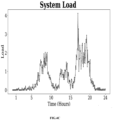
- FIG.4C and FIG.4D illustrate graphical representation of system load vs predicted price maximizing EV aggregator revenue using the system of FIG.1 , in accordance with some embodiments of the present disclosure.
- FIG.4C shows a basic test of the price predicted by the RL agent against the charging load experienced by the system. From the FIG.5C it is observed that the price varies with the load; except for
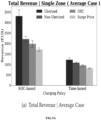
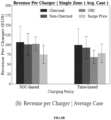
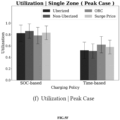
- FIG.5A to FIG.5F illustrates performance of the RL agent with various (business) metrics compared during peak hours and on average for generating pricing for EV charging aggregators for maximizing revenue using the system of FIG.1 , in accordance with some embodiments of the present disclosure.
- FIG.5A to FIG.5F shows the performance of the RL agent in terms of business metrics.
- FIG.5A to FIG.5C plot the total revenue, revenue per charger, and utilization, respectively, for the average case, while the same metrics are shown in FIG.5D to FIG.5F for the peak case.
- For the SOC-based charging policy on average, it is observed that the RL agent gets 35% more revenue than all other baselines. Since the utilization of the chargers is almost similar across all cases ( FIG.
- the revenue increase is not only due to a greater number of chargers in the system, but also from a higher average revenue per charger ( FIG. 5B ). However, this does not hold good in the peak case, where the higher revenue of the RL agent is primarily from using a larger pool of available chargers.
- the system For the time-based charging policy where every EV can charge for a predefined short time-period, the system is able to service charging requests at a faster rate. Therefore, for the same demand profile, it brings down the load on the system by making chargers more available. In this case, compared to other baselines, the RL agent gets an additional revenue of 3-10%.
- the embodiments of present disclosure herein address unresolved problem of charging electric vehicles.
- the embodiments thus provide method and system to generate pricing for charging electric vehicles.
- the embodiments herein further provide dynamically generates pricing policies to maximize aggregator revenue based on a stochastic model constraints and user behavioral models.
- the EV charging aggregator having an RL agent receives user requests to generate pricing based on a tentative demand pool, an actual demand pool, and a service pool.
- the method learns the pricing policies that maximize the aggregate revenue but without making any assumptions about the stochastic dynamics of the system, or data availability, or user behavioral models.
- Such computer-readable storage means contain program-code means for implementation of one or more steps of the method, when the program runs on a server or mobile device or any suitable programmable device.
- the hardware device can be any kind of device which can be programmed including e.g., any kind of computer like a server or a personal computer, or the like, or any combination thereof.
- the device may also include means which could be e.g., hardware means like e.g., an application-specific integrated circuit (ASIC), a field-programmable gate array (FPGA), or a combination of hardware and software means, e.g., an ASIC and an FPGA, or at least one microprocessor and at least one memory with software processing components located therein.
- the means can include both hardware means, and software means.
- the method embodiments described herein could be implemented in hardware and software.
- the device may also include software means. Alternatively, the embodiments may be implemented on different hardware devices, e.g., using a plurality of CPUs.
- the embodiments herein can comprise hardware and software elements.
- the embodiments that are implemented in software include but are not limited to, firmware, resident software, microcode, etc.
- the functions performed by various components described herein may be implemented in other components or combinations of other components.
- a computer-usable or computer readable medium can be any apparatus that can comprise, store, communicate, propagate, or transport the program for use by or in connection with the instruction execution system, apparatus, or device.
- a computer-readable storage medium refers to any type of physical memory on which information or data readable by a processor may be stored.
- a computer-readable storage medium may store instructions for execution by one or more processors, including instructions for causing the processor(s) to perform steps or stages consistent with the embodiments described herein.
- the term "computer-readable medium” should be understood to include tangible items and exclude carrier waves and transient signals, i.e., be non-transitory. Examples include random access memory (RAM), read-only memory (ROM), volatile memory, nonvolatile memory, hard drives, CD ROMs, DVDs, flash drives, disks, and any other known physical storage media.
Landscapes
- Business, Economics & Management (AREA)
- Engineering & Computer Science (AREA)
- Strategic Management (AREA)
- Development Economics (AREA)
- Economics (AREA)
- Finance (AREA)
- Accounting & Taxation (AREA)
- Entrepreneurship & Innovation (AREA)
- Physics & Mathematics (AREA)
- General Physics & Mathematics (AREA)
- Marketing (AREA)
- Theoretical Computer Science (AREA)
- General Business, Economics & Management (AREA)
- Human Resources & Organizations (AREA)
- Game Theory and Decision Science (AREA)
- Tourism & Hospitality (AREA)
- Health & Medical Sciences (AREA)
- Data Mining & Analysis (AREA)
- General Health & Medical Sciences (AREA)
- Primary Health Care (AREA)
- Water Supply & Treatment (AREA)
- Public Health (AREA)
- Educational Administration (AREA)
- Operations Research (AREA)
- Quality & Reliability (AREA)
- Charge And Discharge Circuits For Batteries Or The Like (AREA)
Abstract
Description
- The present application claims priority from
Indian patent application no. 202121033775, filed on July 27, 2021 - The disclosure herein generally relates to electric vehicles, and, more particularly, to method and system to generate pricing for charging electric vehicles.
- Electric vehicle charging stations connect electric vehicles (e.g., electric battery powered vehicles, plug in hybrid electric vehicles, etc.) to the electric power supply network for the purpose of charging batteries (or other electrical storage devices) of electric vehicles (EV). Multi-unit residential building (MURB) residents are the upcoming segment of electric vehicle owners and potential buyers in several countries. Such MURB residents mostly rely on public chargers, which currently handle only 5% of the EV charging needs. Early adopters of EV typically had private charging infrastructure and with increase in EV owners residing in MURB access to public EV supply equipment (EVSE) which is fast becoming important. However, access to charging through EVSE is the most essential condition for EV adoption in wide network. Most importantly, EVSE deployment has a feedback bootstrapping dependency with EV adoption and either may lead or lag the other. To sustain a virtuous cycle in the joint adoption of EVs and EVSEs, efficient management of existing public EVSE is critically important. With EVs becoming more mainstream, public chargers may not be able to match such operations scaled without extensive deployments. Also, this may not only lead to a demand-supply mismatch in the short-term but impacts the growth of EV adoption in long term. For managing such demand supply mismatch, dynamic pricing is a widely used control tool, but often lacks in making informed pricing decisions to maximize aggregator revenue for business growth.
- Most of the conventional systems need efficiency in EVSE particularly during peak demand and even with the presence of fast charging, a single user typically takes around 30 minutes for one charging session and so, the EVSE can typically serve only 16 EVs during normal working hours. From a user's perspective, an ideal experience would be zero wait availability of public charging at a reasonable cost. From the EVSE operator's perspective, there would be high utilization of the infrastructure that maximizes revenue and margin. To maximize the overall system utility from both these user and system perspectives, a demand management (DM) approach in dynamic or surge pricing for EV charging is essentially required. In general, surge pricing can either reduce the demand (demand-response) to meet the supply; or augment the supply to meet the demand; or both. Most of the conventional techniques have considered pricing for EV charging to varying degrees of abstraction and assumptions/knowledge/models about both EV users (e.g., state of charge or SoC) and operators (e.g., availability).
- Embodiments of the present disclosure present technological improvements as solutions to one or more of the above-mentioned technical problems recognized by the inventors in conventional systems. For example, in one embodiment, a system for generate pricing for charging electric vehicles is provided. The system includes receiving by an electric vehicle (EV) charging aggregator having an RL agent, a user request comprising an EV charging demand request and a time of day to generate an EV charging price to maximize revenue of the EV charging aggregator. Further, model using a state generator, a state of the RL agent for processing the user request and assigning a reward to the RL agent for the performed action. Then, dynamically generating by the RL agent, the EV charging price for the user request to maximize revenue of the EV charging aggregator by, computing (i) an actual demand pool (P 1) based on a next time step of actual demand pool size


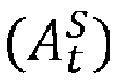
- The state of the RL agent includes (i) the actual demand pool size


- In another aspect, a method for generating pricing for charging electric vehicles is provided. The method includes receiving by an electric vehicle (EV) charging aggregator having an RL agent, a user request comprising an EV charging demand request and a time of day to generate an EV charging price to maximize revenue of the EV charging aggregator. Further, model using a state generator, a state of the RL agent for processing the user request and assigning a reward to the RL agent for the performed action. Then, dynamically generating by the RL agent, the EV charging price for the user request to maximize revenue of the EV charging aggregator by, computing (i) an actual demand pool (P 1) based on a next time step of actual demand pool size


- The state of the RL agent includes (i) the actual demand pool size


- In yet another aspect, a non-transitory computer readable medium provides one or more non-transitory machine-readable information storage mediums comprising one or more instructions, which when executed by one or more hardware processors perform actions includes an I/O interface and a memory coupled to the processor is capable of executing programmed instructions stored in the processor in the memory to receiving by an electric vehicle (EV) charging aggregator having an RL agent, a user request comprising an EV charging demand request and a time of day to generate an EV charging price to maximize revenue of the EV charging aggregator. Further, model using a state generator, a state of the RL agent for processing the user request and assigning a reward to the RL agent for the performed action. Then, dynamically generating by the RL agent, the EV charging price for the user request to maximize revenue of the EV charging aggregator by, computing (i) an actual demand pool (P 1) based on a next time step of actual demand pool size


- The state of the RL agent includes (i) the actual demand pool size




- It is to be understood that both the foregoing general description and the following detailed description are exemplary and explanatory only and are not restrictive of the invention, as claimed.
- The accompanying drawings, which are incorporated in and constitute a part of this disclosure, illustrate exemplary embodiments and, together with the description, serve to explain the disclosed principles:
-
FIG. 1 illustrates an exemplary block diagram of a system (alternatively referred as EV charging management system), in accordance with some embodiments of the present disclosure. -
FIG.2A illustrates a public EV supply equipment for the demand EV profiles in discrete time steps using the system ofFIG. 1 , in accordance with some embodiments of the present disclosure. -
FIG. 2B illustrates a functional architecture to generate pricing for charging EV using the system ofFIG. 1 , in accordance with some embodiments of the present disclosure. -
FIG. 3 illustrates a flow diagram illustrating the method for maximizing EV aggregator revenue by generating pricing for EV charging using the system ofFIG. 1 , in accordance with some embodiments of the present disclosure. -
FIG.4A andFIG.4B illustrates a behavior model of EV users and private EVSE suppliers using the system ofFIG.1 , in accordance with some embodiments of the present disclosure. -
FIG.4C andFIG.4D illustrates graphical representation of system load vs predicted price maximizing EV aggregator revenue using the system ofFIG. 1 , in accordance with some embodiments of the present disclosure. -
FIG.5A to FIG.5F illustrates performance of the RL agent with various business metrics compared during peak hours and on average for generating pricing for EV charging aggregators for maximizing revenue using the system ofFIG.1 , in accordance with some embodiments of the present disclosure. - Exemplary embodiments are described with reference to the accompanying drawings. In the figures, the left-most digit(s) of a reference number identifies the figure in which the reference number first appears. Wherever convenient, the same reference numbers are used throughout the drawings to refer to the same or like parts. While examples and features of disclosed principles are described herein, modifications, adaptations, and other implementations are possible without departing from the scope of the disclosed embodiments.
- Embodiments herein provide a method and system to generate pricing for charging electric vehicles (EV). The method disclosed, enables generation of dynamic pricing policies to maximize aggregator revenue based on a stochastic model constraints and user behavioral models. The system includes an EV charging aggregator having a reinforcement learning (RL) agent which processes user request. Each user request comprises an EV charging demand request to charge EVs from electric vehicle supplier equipment (EVSE). The state of the RL agent is spatially tagged with the EV demand request and the availability of EVSE. The RL agent learns to map actions of the user request to maximize aggregator revenue for which a reward is assigned to the RL agent based on the performed action. EV charging pricing policy dynamically adapts to user behaviors at a demand side and a supply side. Realistic management of EVSE, spatio temporal variations for the user request demands to the driving patterns for accurate estimation and adapting the demand elasticity of EV charging. Based on the state space representation, the reward is assigned dynamically to the RL agent for price management. The RL agent is well trained and implemented using a Deep Q-Network (DQN). The present disclosure generates pricing dynamically appropriately to the user request maximizing the aggregator revenue for demand elasticity of the user population.
- To manage the demand supply mismatch, dynamic pricing is a widely used control tool, but it is often difficult to make informed pricing decisions: (i) when there is variability (both) in demand and supply; (ii) when the user's spatiotemporal behavior and price elasticity is unknown; (iii) when charging preconditions (such as state-of-charge) are not freely available. The present disclosure utilizes the RL agent to overcome these challenges of dynamic pricing for EV charging acting as the service aggregator. The method of the present disclosure is evaluated on real-world traffic patterns for the city of example (Luxembourg) by augmenting the Luxembourg SUMO (Simulation of Urban Mobility) traffic scenario (LuST) simulator with EV charging demand models. The method matches the performance of popular price-based control approaches, without making any explicit assumptions. In the case of SoC based charging completion policy, represent the present disclosure obtains 35% more revenue than other compared baselines.
- Referring now to the drawings, and more particularly to
FIG. 1 through FIG.5F , where similar reference characters denote corresponding features consistently throughout the figures, there are shown preferred embodiments and these embodiments are described in the context of the following exemplary system and/or method. -
FIG. 1 illustrates an exemplary block diagram of a system (alternatively referred as EV charging management system), in accordance with some embodiments of the present disclosure. In an embodiment, the EVcharging management system 100 includes processor (s) 104, communication interface (s), alternatively referred as or input/output (I/O) interface(s) 106, and one or more data storage devices ormemory 102 operatively coupled to the processor (s) 104. Thesystem 100, with the processor(s) is configured to execute functions of one or more functional blocks of thesystem 100. Referring to the components of thesystem 100, in an embodiment, the processor (s) 104 can be one ormore hardware processors 104. In an embodiment, the one ormore hardware processors 104 can be implemented as one or more microprocessors, microcomputers, microcontrollers, digital signal processors, central processing units, state machines, logic circuitries, and/or any devices that manipulate signals based on operational instructions. Among other capabilities, the processor(s) 104 is configured to fetch and execute computer-readable instructions stored in the memory. In an embodiment, thesystem 100 can be implemented in a variety of computing systems, such as laptop computers, notebooks, 10 hand-held devices, workstations, mainframe computers, servers, a network cloud, and the like. - The I/O interface(s) 106 can include a variety of software and hardware interfaces, for example, a web interface, a graphical user interface, and the like and can facilitate multiple communications within a wide variety of networks N/W and protocol types, including wired networks, for example, LAN, cable, etc., and wireless networks, such as WLAN, cellular, or satellite. In an embodiment, the I/O interface (s) 106 can include one or more ports for connecting a number of devices (nodes) of the
system 100 to one another or to another server. Thememory 102 may include any computer-readable medium known in the art including, for example, volatile memory, such as static random-access memory (SRAM) and dynamic random-access memory (DRAM), and/or non-volatile memory, such as read only memory (ROM), erasable programmable ROM, flash memories, hard disks, optical disks, and magnetic tapes. Themodules 108 can be an Integrated Circuit (IC) (not shown), external to thememory 102, implemented using a Field-Programmable Gate Array (FPGA) or an Application-Specific Integrated Circuit (ASIC). The names (or expressions or terms) of the modules of functional block within themodules 108 referred herein, are used for explanation and are not construed to be limitation(s). -
FIG.2A illustrates a public EV supply equipment for the demand EV profiles in discrete time steps using the system ofFIG. 1 , in accordance with some embodiments of the present disclosure.FIG.2A describes the challenge of pricing EV charging from a different perspective that drives any technology adoption in practice user behavior. EV users prefer to align their charging with convenient points in their driving patterns unless they are forced to charge immediately due to a critically low stochastic model constraints. A complementary aspect was considered in augmenting the supply-side of EVSE by incentivizing private garage owners to allow public charging. The key insight was that the behavior of private garage owners to charge at night; could be leveraged to augment supply during peak demand for EVSE charging during the day. The present disclosure dynamically generates EV charging pricing policy that can adapt to user behaviors at the demand-side and potentially the supply- side without any a priori knowledge. Pricing of EV charging for dynamic management is nontrivial for several reasons. Firstly, the demand for EV charging varies in space and time. If private garages participate in public charging, the supply-side also varies in space and time. Second, explicit, and accurate modeling of user behavior to price is challenging. Specifically, some users might prefer the nearest EVSE at any price; while others might be more sensitive to price and willing to drive around; and so on. Third, state of charge (SoC) in EVs may not be known to the EVSE operators till the start of charging. In other words, the propensity of the user to charge due to critically low SoC is not known when setting the price. Finally, the EVSE operator may also need to consider any time-of-day variations in pricing when procuring electricity in bulk from the utility company. -
FIG. 2B illustrates a functional architecture to generate pricing for charging EV using the system ofFIG. 1 , in accordance with some embodiments of the present disclosure. The system includes an EV charging aggregator having an RL agent, a tentative demand pool, an actual demand pool, and a service pool. The system involves three primary stake holders comprising firstly a demand side having EV users requesting efficient charging at lowest possible price, secondly a supply side which includes a public or private EVSE operators, and thirdly an EV charging aggregator which acts as intermediator between the demand side and the supply side. The RL agent acts as an EV aggregator to a set of EVSEs spread across a city. The RL agent addresses the problem of dynamic pricing for EV charging by observing the state and decides a control action. The system implements the action and provides the reward to the RL agent. The RL agent learns to map actions to the observed state maximizes the rewards earned over the training period which complements several existing approaches that use assumptions or models about user behaviors. The action taken by the RL is to decide the price to be offered to users. Users are assigned to the nearest available EVSE separately outside the system. The reward to the RL agent would be the total revenue obtained in that timestep of the control action. The action taken by the RL agent is to decide the price to be offered to user request. Further, the reward to the RL agent would be the total revenue obtained in the timestep of the control action. Here, a low price may be accepted by many users, but the revenue would be limited by the number of EVSEs. A high price may be rejected by many users, and the revenue and utilization would substantially fall. In such scenarios, the RL agent learns to price appropriately to maximize revenue based on the demand elasticity of the user population. -
FIG. 3 illustrates a flow diagram illustrating the method for maximizing EV aggregator revenue by generating pricing for EV charging using the system ofFIG. 1 , in accordance with some embodiments of the present disclosure. In an embodiment, thesystem 100 comprises one or more data storage devices or thememory 102 operatively coupled to the processor(s) 104 and is configured to store instructions for execution of steps of themethod 300 by the processor(s) or one ormore hardware processors 104. The steps of themethod 300 of the present disclosure will now be explained with reference to the components or blocks of thesystem 100 as depicted inFIG.1 and the steps of flow diagram as depicted inFIG.3 . Although process steps, method steps, techniques or the like may be described in a sequential order, such processes, methods and techniques may be configured to work in alternate orders. In other words, any sequence or order of steps that may be described does not necessarily indicate a requirement that the steps to be performed in that order. The steps of processes described herein may be performed in any order practical. Further, some steps may be performed simultaneously. - Referring now to the steps of the
method 300, atstep 302, the one ormore hardware processors 104 receive, via an electric vehicle (EV) charging aggregator having an RL agent, a user request comprising an EV charging demand request and a time of day to generate an EV charging price to maximize revenue of the EV charging aggregator. Considering an example, where EV users go about their daily routines make the EV charging demand request to the EV charging aggregator depending upon the time of day and the stochastic model constraints which is unknown to the RL agent. On receiving the EV charging demand request, the RL agent responds with a price. The EV users can decide either accept the offered price and proceed to charging or reject the price and try again later in the day. Again, the model for users accepting the offered model is parametrized, stochastic, and hidden from the EV charging aggregator. The EV charging demand requests would be GPS location stamped; and the EV charging aggregator obtains the current availability status of all participating EVSEs. - Referring now to the steps of the
method 300, atstep 304, the one ormore hardware processors 104, models, by using a state generator, a state of the RL agent for processing the user request and assigning a reward to the RL agent for the performed action. Referring now to the above example, a city is considered as one large block, a single RL agent can serve the target environment based on the system load. Intuitively, to get a sense of the load on the system, the system state includes the details about the actual demand pool and the service pool. Once the user makes the request, they finish charging or decide to leave the charging process users can be tracked. Therefore, estimate of the demand pool sizes NX for the actual demand pool and the service pools can be collected. The state of the RL agent includes (i) the actual demand pool size

Table 1 - Variable Definitions Symbol Meaning Type Time t Time instant when decisions are made td Time of day [t, t+1] Execution window for decisions made at t [1, T] Decision horizon Supply Kt # Of chargers available (as supply) t 
Change in # of private chargers [t, t+1] Demand P 2, P 1 ,S Tentative demand pool, Actual pool, Service pool NX Size of pool X t AQ Arrivals into P 2 from outside due to SoC Q [t, t + 1] A P 1 Arrivals into P 1 from P 2 due to Q and td [t, t + 1] AS Arrivals into S from P 1 due to price acceptance [t, t + 1] DR Departures from P 1 due to price rejection [t, t + 1] DS Departures from S after service [t, t + 1] Aggregator Pt Price offered t User Qi SoC of EV i t pi Price at which EV i charging 
Session duration of EV i charging Ii 1 (EV i is charging) t equation 1,
- Referring now to the steps of the
method 300, atstep 306, the one ormore hardware processors 104, dynamically generate, via the RL agent, the EV charging price for the user request to maximize revenue of the EV charging aggregator by, computing (i) an actual demand pool (P 1) based on a next time step of actual demand pool size

- Step 1 : The actual demand pool size computed for the next time step


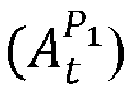


equation 2,
- Step 2: The tentative demand pool size computed for the next time step


equation 3,
- Step 3: The service pool computed for the next time step


- Step 4: The total number of chargers predicted for the next time step (K t+1) traces the total number of available chargers as current users starting EV charging


equation 5,
- Step 5: The total number of users computed
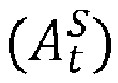
equation 6,
- Step 6: Maximizing the EV charging aggregator revenue is the product of total revenue counted over all the user requests and the users accepting the pricing offers as denoted below in equation 7,

-
FIG.4A andFIG.4B illustrate a behavior model of EV users and private EVSE suppliers using the system ofFIG.1 , in accordance with some embodiments of the present disclosure. In the experimental analysis set-up, all EV users whose stochastic model constraints is less than 70% can raise a charging request. Such users are referred to as the tentative demand pool. Users who request charging are added to the actual demand pool; and offered a price (pt ). The user either accepts (pt ) and moves to the service pool; or rejects (pt ) and goes back to the tentative demand pool. The acceptance or rejection is a probabilistic event that is modeled as shown inFIG.4A . The X-axis is the offered price (between 0.25-0.5 EUR/kWh); and the Y-axis shows the probability of acceptance. If the SoC is not in critical state (i.e., SoC > 10%), the probability of acceptance at a lower price (pt ) is higher. As the SoC depletes and goes below a critical level (i.e., SoC < 10%), users would accept an arbitrarily high offered price.FIG.4B shows a similar probability of supply for private garages where the acceptance to join the system is higher when the price is above an expected threshold (i.e., 30% more than the minimum charging cost at public chargers). - In one embodiment, the transport simulator acts as an integrator for the EV model for Tesla Model-S (85 kWh RWD) and the system model is integrated with SUMO (Simulation of Urban Mobility). LuST (Luxembourg SUMO traffic scenario) that simulates the traffic in the city of Luxembourg. The Luxembourg city map and its household demographics from OpenStreetMap (state of the art technique), and public charging locations from Open Charge Map (state of the art technique). The LuST scenario inserts roughly 176, 000 cars into the simulation over its 24 hours duration. The method randomly chooses 4% of cars as EVs, in order to maintain the population of simulated EVs consistent with the statistics reported for Luxembourg city. Out of this pool, the randomly marked 42% as garage-orphaned electric cars, which charge on-the-go using public chargers.
- The RL agent is implemented using the TensorFlow framework. The details about the neural network architecture and the hyperparameters used in the learning and testing are as follows: (i) DQN (Deep Q-Network) architecture: (4,64,64,50); (ii) optimizer: Adam; (iii) learning rate: 0.001; (iv) discount factor: 0.8; (v) mini batch size: 64; (vi) replay buffer size: 10% of training epochs; (vii) exploration factor: 0.95 to 0.05 (decay in steps of 0.05); (viii) training epochs per episode: 288. The training consisted of 40 episodes and testing 10 episodes, where 1 episode is the same as 1 day.
-
FIG.4C andFIG.4D illustrate graphical representation of system load vs predicted price maximizing EV aggregator revenue using the system ofFIG.1 , in accordance with some embodiments of the present disclosure.FIG.4C shows a basic test of the price predicted by the RL agent against the charging load experienced by the system. From theFIG.5C it is observed that the price varies with the load; except for - the early hours of the day (midnight to 5AM). This happens since very few charging requests are received during this time, and they are mostly from EVs with below critical SoC levels. Therefore, to maximize the revenue, the agent decides to keep the price high. Considering the business metrics of aggregate revenue
- per charger, and utilization are analyzed. The method of the present disclosure is compared against the following three baselines where the supply-side consists of only public chargers, (i) In the first baseline, the RL agent takes the state inputs capture the information of available public chargers with the same action space and reward signal, (ii) In the second baseline, an online competitive algorithm for sequential EV arrivals but assumes that SoCs are known, and (iii) In the third baseline (heuristics-I), which surges by two times the base price when load exceeds 1.
-
FIG.5A to FIG.5F illustrates performance of the RL agent with various (business) metrics compared during peak hours and on average for generating pricing for EV charging aggregators for maximizing revenue using the system ofFIG.1 , in accordance with some embodiments of the present disclosure.FIG.5A to FIG.5F shows the performance of the RL agent in terms of business metrics.FIG.5A to FIG.5C plot the total revenue, revenue per charger, and utilization, respectively, for the average case, while the same metrics are shown inFIG.5D to FIG.5F for the peak case. For the SOC-based charging policy, on average, it is observed that the RL agent gets 35% more revenue than all other baselines. Since the utilization of the chargers is almost similar
across all cases (FIG. 5C ), the revenue increase is not only due to a greater number of chargers in the system, but also from a higher average revenue per charger (FIG. 5B ). However, this does not hold good in the peak case, where the higher revenue of the RL agent is primarily from using a larger pool of available chargers. For the time-based charging policy where every EV can charge for a predefined short time-period, the system is able to service charging requests at a faster rate. Therefore, for the same demand profile, it brings down the load on the system by making chargers more available. In this case, compared to other baselines, the RL agent gets an additional revenue of 3-10%. - The written description describes the subject matter herein to enable any person skilled in the art to make and use the embodiments. The scope of the subject matter embodiments is defined by the claims and may include other modifications that occur to those skilled in the art. Such other modifications are intended to be within the scope of the claims if they have similar elements that do not differ from the literal language of the claims or if they include equivalent elements with insubstantial differences from the literal language of the claims.
- The embodiments of present disclosure herein address unresolved problem of charging electric vehicles. The embodiments, thus provide method and system to generate pricing for charging electric vehicles. Moreover, the embodiments herein further provide dynamically generates pricing policies to maximize aggregator revenue based on a stochastic model constraints and user behavioral models. The EV charging aggregator having an RL agent receives user requests to generate pricing based on a tentative demand pool, an actual demand pool, and a service pool. The method learns the pricing policies that maximize the aggregate revenue but without making any assumptions about the stochastic dynamics of the system, or data availability, or user behavioral models.
- It is to be understood that the scope of the protection is extended to such a program and in addition to a computer-readable means having a message therein; such computer-readable storage means contain program-code means for implementation of one or more steps of the method, when the program runs on a server or mobile device or any suitable programmable device. The hardware device can be any kind of device which can be programmed including e.g., any kind of computer like a server or a personal computer, or the like, or any combination thereof. The device may also include means which could be e.g., hardware means like e.g., an application-specific integrated circuit (ASIC), a field-programmable gate array (FPGA), or a combination of hardware and software means, e.g., an ASIC and an FPGA, or at least one microprocessor and at least one memory with software processing components located therein. Thus, the means can include both hardware means, and software means. The method embodiments described herein could be implemented in hardware and software. The device may also include software means. Alternatively, the embodiments may be implemented on different hardware devices, e.g., using a plurality of CPUs.
- The embodiments herein can comprise hardware and software elements. The embodiments that are implemented in software include but are not limited to, firmware, resident software, microcode, etc. The functions performed by various components described herein may be implemented in other components or combinations of other components. For the purposes of this description, a computer-usable or computer readable medium can be any apparatus that can comprise, store, communicate, propagate, or transport the program for use by or in connection with the instruction execution system, apparatus, or device.
- The illustrated steps are set out to explain the exemplary embodiments shown, and it should be anticipated that ongoing technological development will change the manner in which particular functions are performed. These examples are presented herein for purposes of illustration, and not limitation. Further, the boundaries of the functional building blocks have been arbitrarily defined herein for the convenience of the description. Alternative boundaries can be defined so long as the specified functions and relationships thereof are appropriately performed. Alternatives (including equivalents, extensions, variations, deviations, etc., of those described herein) will be apparent to persons skilled in the relevant art(s) based on the teachings contained herein. Such alternatives fall within the scope of the disclosed embodiments. Also, the words "comprising," "having," "containing," and "including," and other similar forms are intended to be equivalent in meaning and be open ended in that an item or items following any one of these words is not meant to be an exhaustive listing of such item or items, or meant to be limited to only the listed item or items. It must also be noted that as used herein and in the appended claims, the singular forms "a," "an," and "the" include plural references unless the context clearly dictates otherwise.
- Furthermore, one or more computer-readable storage media may be utilized in implementing embodiments consistent with the present disclosure. A computer-readable storage medium refers to any type of physical memory on which information or data readable by a processor may be stored. Thus, a computer-readable storage medium may store instructions for execution by one or more processors, including instructions for causing the processor(s) to perform steps or stages consistent with the embodiments described herein. The term "computer-readable medium" should be understood to include tangible items and exclude carrier waves and transient signals, i.e., be non-transitory. Examples include random access memory (RAM), read-only memory (ROM), volatile memory, nonvolatile memory, hard drives, CD ROMs, DVDs, flash drives, disks, and any other known physical storage media.
- It is intended that the disclosure and examples be considered as exemplary only, with a true scope of disclosed embodiments being indicated by the following claims.
Claims (15)
- A processor implemented method to generate pricing for charging electric vehicles, the method comprising:receiving by an electric vehicle (EV) charging aggregator having an RL agent via one or more hardware processors, a user request comprising an EV charging demand request and a time of day to generate an EV charging price to maximize revenue of the EV charging aggregator;modelling using a state generator, via the one or more hardware processors, a state of the RL agent for processing the user request and assigning a reward to the RL agent for the performed action; anddynamically generating by the RL agent, via the one or more hardware processors, the EV charging price for the user request to maximize revenue of the EV charging aggregator by, computing (i) an actual demand pool (P 1 ) based on a next time step of actual demand pool size


- The processor implemented method as claimed in claim 1, wherein the state of the RL agent includes (i) the actual demand pool size


- The processor implemented method as claimed in claim 1, wherein computing the actual demand pool size for the next time step



- The processor implemented method as claimed in claim 1, wherein computing the tentative demand pool size for the next time step


- The processor implemented method as claimed in claim 1, wherein computing the service pool for the next time step


- The processor implemented method as claimed in claim 1, wherein predicting the total number of chargers for the next time step (K t+1) traces the total number of available chargers as current users starting EV charging


- The processor implemented method as claimed in claim 1, wherein maximizing the EV charging aggregator revenue is the product of total revenue counted over all the user requests and the users accepting the pricing offers.
- A system to generate pricing for charging electric vehicles, comprising:a memory (102) storing instructions;one or more communication interfaces (106); andone or more hardware processors (104) coupled to the memory (102) via the one or more communication interfaces (106), wherein the one or more hardware processors (104) are configured by the instructions to:receive via an electric vehicle (EV) charging aggregator having an RL agent, a user request comprising an EV charging demand request and a time of day to generate an EV charging price to maximize revenue of the EV charging aggregator;model using a state generator, a state of the RL agent for processing the user request and assigning a reward to the RL agent for the performed action; anddynamically generate by the RL agent, the EV charging price for the user request to maximize revenue of the EV charging aggregator by, computing (i) an actual demand pool (P 1) based on a next time step of actual demand pool size

- The system as claimed in claim 8, wherein the state of the RL agent includes (i) the actual demand pool size


- The system as claimed in claim 8, wherein computing the actual demand pool size for the next time step




- The system as claimed in claim 8, wherein computing the tentative demand pool size for the next time step


- The system as claimed in claim 8, wherein computing the service pool for the next time step


- One or more non-transitory machine-readable information storage mediums comprising one or more instructions which when executed by one or more hardware processors perform actions comprising:receiving via an electric vehicle (EV) charging aggregator having an RL agent, a user request comprising an EV charging demand request and a time of day to generate an EV charging price to maximize revenue of the EV charging aggregator;modelling by using a state generator, a state of the RL agent for processing the user request and assigning a reward to the RL agent for the performed action; anddynamically generating by the RL agent, the EV charging price for the user request to maximize revenue of the EV charging aggregator by, computing (i) an actual demand pool (P 1) based on a next time step of actual demand pool size

- The one or more non-transitory machine-readable information storage mediums of claim 13, wherein the state of the RL agent includes (i) the actual demand pool size


- The one or more non-transitory machine-readable information storage mediums of claim 13, wherein computing the actual demand pool size for the next time step


Applications Claiming Priority (1)
| Application Number | Priority Date | Filing Date | Title |
|---|---|---|---|
| IN202121033775 | 2021-07-27 |
Publications (3)
| Publication Number | Publication Date |
|---|---|
| EP4125028A1 true EP4125028A1 (en) | 2023-02-01 |
| EP4125028C0 EP4125028C0 (en) | 2024-11-13 |
| EP4125028B1 EP4125028B1 (en) | 2024-11-13 |
Family
ID=82403689
Family Applications (1)
| Application Number | Title | Priority Date | Filing Date |
|---|---|---|---|
| EP22181584.8A Active EP4125028B1 (en) | 2021-07-27 | 2022-06-28 | Method and system to generate pricing for charging electric vehicles |
Country Status (2)
| Country | Link |
|---|---|
| US (1) | US20230063075A1 (en) |
| EP (1) | EP4125028B1 (en) |
Families Citing this family (3)
| Publication number | Priority date | Publication date | Assignee | Title |
|---|---|---|---|---|
| JP7729279B2 (en) * | 2022-08-01 | 2025-08-26 | トヨタ自動車株式会社 | Servers and Power Conditioning Systems |
| US12115874B2 (en) * | 2022-08-16 | 2024-10-15 | GM Global Technology Operations LLC | Dynamic multiple bi-directional supply and demand matching for EV charging |
| CN118037334A (en) * | 2024-04-11 | 2024-05-14 | 国网江苏省电力有限公司电力科学研究院 | A dynamic pricing method and related device for electric vehicle charging |
Citations (1)
| Publication number | Priority date | Publication date | Assignee | Title |
|---|---|---|---|---|
| KR20190133567A (en) * | 2018-05-23 | 2019-12-03 | 광주과학기술원 | an electric vehicle charging optimal management system |
Family Cites Families (7)
| Publication number | Priority date | Publication date | Assignee | Title |
|---|---|---|---|---|
| US20120296794A1 (en) * | 2011-05-18 | 2012-11-22 | General Electric Company | Systems and Methods for Auctioning Charging Times for Electric Vehicles |
| CN104981958B (en) * | 2012-07-23 | 2018-01-19 | 康奈尔大学 | Large-Scale Charging of Electric Vehicle Systems |
| WO2016183014A1 (en) * | 2015-05-08 | 2016-11-17 | Faa, Llc | Battery charging stations and associated methods of use |
| CN110549896B (en) * | 2019-08-28 | 2022-08-02 | 哈尔滨工程大学 | A charging station selection method based on reinforcement learning |
| CN110414750B (en) * | 2019-08-28 | 2022-04-05 | 哈尔滨工程大学 | Electric vehicle real-time charging station selection method based on deep reinforcement learning |
| CN112419064B (en) * | 2020-12-07 | 2022-02-08 | 中山大学 | Energy transaction method, device and equipment based on deep reinforcement learning and alliance chain |
| EP4356496A1 (en) * | 2021-06-14 | 2024-04-24 | Volta Charging, LLC | Machine learning for optimization of power distribution to electric vehicle charging ports |
-
2022
- 2022-06-28 EP EP22181584.8A patent/EP4125028B1/en active Active
- 2022-07-01 US US17/810,456 patent/US20230063075A1/en not_active Abandoned
Patent Citations (1)
| Publication number | Priority date | Publication date | Assignee | Title |
|---|---|---|---|---|
| KR20190133567A (en) * | 2018-05-23 | 2019-12-03 | 광주과학기술원 | an electric vehicle charging optimal management system |
Non-Patent Citations (2)
| Title |
|---|
| ABDULLAH HEBA M ET AL: "Reinforcement Learning Based EV Charging Management Systems-A Review", IEEE ACCESS, IEEE, USA, vol. 9, 8 March 2021 (2021-03-08), pages 41506 - 41531, XP011844679, DOI: 10.1109/ACCESS.2021.3064354 * |
| DIMITROV STOYAN ET AL: "Reinforcement Learning Based Algorithm for the Maximization of EV Charging Station Revenue", 2014 INTERNATIONAL CONFERENCE ON MATHEMATICS AND COMPUTERS IN SCIENCES AND IN INDUSTRY, IEEE, 13 September 2014 (2014-09-13), pages 235 - 239, XP032738356, DOI: 10.1109/MCSI.2014.54 * |
Also Published As
| Publication number | Publication date |
|---|---|
| EP4125028C0 (en) | 2024-11-13 |
| EP4125028B1 (en) | 2024-11-13 |
| US20230063075A1 (en) | 2023-03-02 |
Similar Documents
| Publication | Publication Date | Title |
|---|---|---|
| US20230063075A1 (en) | Method and system to generate pricing for charging electric vehicles | |
| Fotouhi et al. | A general model for EV drivers’ charging behavior | |
| US12115874B2 (en) | Dynamic multiple bi-directional supply and demand matching for EV charging | |
| Shi et al. | ParkCrowd: Reliable crowdsensing for aggregation and dissemination of parking space information | |
| CN111868539A (en) | Deterioration estimation device, computer program, and degradation estimation method | |
| CN111868540A (en) | Deterioration estimation device, computer program, and degradation estimation method | |
| EP3482997A1 (en) | Electric vehicle based micro grid identification for on-demand power supply | |
| CN111775765A (en) | Vehicle and battery matching method, device, system and readable storage medium | |
| CN116894549A (en) | Scheduling method and device for shared charger baby and electronic equipment | |
| Sun et al. | A graphical game approach to electrical vehicle charging scheduling: Correlated equilibrium and latency minimization | |
| CN115700717A (en) | A power distribution analysis method based on electric vehicle power demand | |
| CN109978241B (en) | Method and device for determining charging load of electric automobile | |
| EP4300387A1 (en) | Optimal intraday scheduling of aggregated distributed energy resources (ders) | |
| CN116039439A (en) | Battery charging method and computer-readable storage medium in power station | |
| Walraven et al. | Planning Under Uncertainty for Aggregated Electric Vehicle Charging with Renewable Energy Supply. | |
| EP4293585B1 (en) | Systems and methods for generating optimal intraday bids and operating schedules for distributed energy resources | |
| CN119359063A (en) | Electric vehicle charging and discharging scheduling strategy generation method | |
| CN114358855B (en) | Charging pricing method, server, system, equipment and medium | |
| CN113408822B (en) | Charging area charging margin evaluation method, system, equipment and storage medium | |
| Yu et al. | Learning to price vehicle service with unknown demand | |
| CN115545588A (en) | Fixed energy storage system location determination method, device, electronic equipment and storage medium | |
| EP4610597A1 (en) | Method and system for optimizing power procurement for enterprises with electrical vehicle fleet charging load | |
| US20260099787A1 (en) | Method and system for energy cost optimization framework for a logistic enterprise | |
| Deng et al. | Harmonizing Time-of-Use Pricing and Rigid Driver Schedule in Battery Swapping Service | |
| US12584647B2 (en) | Method and system for jointly controlling electric vehicle-heating, ventilation, and air conditioning system of building |
Legal Events
| Date | Code | Title | Description |
|---|---|---|---|
| PUAI | Public reference made under article 153(3) epc to a published international application that has entered the european phase |
Free format text: ORIGINAL CODE: 0009012 |
|
| STAA | Information on the status of an ep patent application or granted ep patent |
Free format text: STATUS: THE APPLICATION HAS BEEN PUBLISHED |
|
| AK | Designated contracting states |
Kind code of ref document: A1 Designated state(s): AL AT BE BG CH CY CZ DE DK EE ES FI FR GB GR HR HU IE IS IT LI LT LU LV MC MK MT NL NO PL PT RO RS SE SI SK SM TR |
|
| STAA | Information on the status of an ep patent application or granted ep patent |
Free format text: STATUS: REQUEST FOR EXAMINATION WAS MADE |
|
| 17P | Request for examination filed |
Effective date: 20230413 |
|
| RBV | Designated contracting states (corrected) |
Designated state(s): AL AT BE BG CH CY CZ DE DK EE ES FI FR GB GR HR HU IE IS IT LI LT LU LV MC MK MT NL NO PL PT RO RS SE SI SK SM TR |
|
| REG | Reference to a national code |
Ref country code: DE Ref legal event code: R079 Free format text: PREVIOUS MAIN CLASS: G06Q0050300000 Ipc: G06Q0010063000 Ref document number: 602022007632 Country of ref document: DE |
|
| GRAP | Despatch of communication of intention to grant a patent |
Free format text: ORIGINAL CODE: EPIDOSNIGR1 |
|
| STAA | Information on the status of an ep patent application or granted ep patent |
Free format text: STATUS: GRANT OF PATENT IS INTENDED |
|
| GRAS | Grant fee paid |
Free format text: ORIGINAL CODE: EPIDOSNIGR3 |
|
| GRAA | (expected) grant |
Free format text: ORIGINAL CODE: 0009210 |
|
| STAA | Information on the status of an ep patent application or granted ep patent |
Free format text: STATUS: THE PATENT HAS BEEN GRANTED |
|
| RIC1 | Information provided on ipc code assigned before grant |
Ipc: G06Q 50/40 20240101ALI20240916BHEP Ipc: G06Q 50/06 20120101ALI20240916BHEP Ipc: G06Q 30/0201 20230101ALI20240916BHEP Ipc: G06Q 10/063 20230101AFI20240916BHEP |
|
| INTG | Intention to grant announced |
Effective date: 20240930 |
|
| AK | Designated contracting states |
Kind code of ref document: B1 Designated state(s): AL AT BE BG CH CY CZ DE DK EE ES FI FR GB GR HR HU IE IS IT LI LT LU LV MC MK MT NL NO PL PT RO RS SE SI SK SM TR |
|
| REG | Reference to a national code |
Ref country code: GB Ref legal event code: FG4D |
|
| REG | Reference to a national code |
Ref country code: CH Ref legal event code: EP |
|
| REG | Reference to a national code |
Ref country code: IE Ref legal event code: FG4D |
|
| REG | Reference to a national code |
Ref country code: DE Ref legal event code: R096 Ref document number: 602022007632 Country of ref document: DE |
|
| U01 | Request for unitary effect filed |
Effective date: 20241113 |
|
| U07 | Unitary effect registered |
Designated state(s): AT BE BG DE DK EE FI FR IT LT LU LV MT NL PT RO SE SI Effective date: 20241119 |
|
| PG25 | Lapsed in a contracting state [announced via postgrant information from national office to epo] |
Ref country code: HR Free format text: LAPSE BECAUSE OF FAILURE TO SUBMIT A TRANSLATION OF THE DESCRIPTION OR TO PAY THE FEE WITHIN THE PRESCRIBED TIME-LIMIT Effective date: 20241113 Ref country code: IS Free format text: LAPSE BECAUSE OF FAILURE TO SUBMIT A TRANSLATION OF THE DESCRIPTION OR TO PAY THE FEE WITHIN THE PRESCRIBED TIME-LIMIT Effective date: 20250313 |
|
| PG25 | Lapsed in a contracting state [announced via postgrant information from national office to epo] |
Ref country code: ES Free format text: LAPSE BECAUSE OF FAILURE TO SUBMIT A TRANSLATION OF THE DESCRIPTION OR TO PAY THE FEE WITHIN THE PRESCRIBED TIME-LIMIT Effective date: 20241113 |
|
| PG25 | Lapsed in a contracting state [announced via postgrant information from national office to epo] |
Ref country code: NO Free format text: LAPSE BECAUSE OF FAILURE TO SUBMIT A TRANSLATION OF THE DESCRIPTION OR TO PAY THE FEE WITHIN THE PRESCRIBED TIME-LIMIT Effective date: 20250213 |
|
| PG25 | Lapsed in a contracting state [announced via postgrant information from national office to epo] |
Ref country code: GR Free format text: LAPSE BECAUSE OF FAILURE TO SUBMIT A TRANSLATION OF THE DESCRIPTION OR TO PAY THE FEE WITHIN THE PRESCRIBED TIME-LIMIT Effective date: 20250214 |
|
| PG25 | Lapsed in a contracting state [announced via postgrant information from national office to epo] |
Ref country code: PL Free format text: LAPSE BECAUSE OF FAILURE TO SUBMIT A TRANSLATION OF THE DESCRIPTION OR TO PAY THE FEE WITHIN THE PRESCRIBED TIME-LIMIT Effective date: 20241113 |
|
| PG25 | Lapsed in a contracting state [announced via postgrant information from national office to epo] |
Ref country code: RS Free format text: LAPSE BECAUSE OF FAILURE TO SUBMIT A TRANSLATION OF THE DESCRIPTION OR TO PAY THE FEE WITHIN THE PRESCRIBED TIME-LIMIT Effective date: 20250213 |
|
| PG25 | Lapsed in a contracting state [announced via postgrant information from national office to epo] |
Ref country code: SM Free format text: LAPSE BECAUSE OF FAILURE TO SUBMIT A TRANSLATION OF THE DESCRIPTION OR TO PAY THE FEE WITHIN THE PRESCRIBED TIME-LIMIT Effective date: 20241113 |
|
| PG25 | Lapsed in a contracting state [announced via postgrant information from national office to epo] |
Ref country code: SK Free format text: LAPSE BECAUSE OF FAILURE TO SUBMIT A TRANSLATION OF THE DESCRIPTION OR TO PAY THE FEE WITHIN THE PRESCRIBED TIME-LIMIT Effective date: 20241113 |
|
| PG25 | Lapsed in a contracting state [announced via postgrant information from national office to epo] |
Ref country code: CZ Free format text: LAPSE BECAUSE OF FAILURE TO SUBMIT A TRANSLATION OF THE DESCRIPTION OR TO PAY THE FEE WITHIN THE PRESCRIBED TIME-LIMIT Effective date: 20241113 |
|
| U20 | Renewal fee for the european patent with unitary effect paid |
Year of fee payment: 4 Effective date: 20250624 |
|
| PLBE | No opposition filed within time limit |
Free format text: ORIGINAL CODE: 0009261 |
|
| STAA | Information on the status of an ep patent application or granted ep patent |
Free format text: STATUS: NO OPPOSITION FILED WITHIN TIME LIMIT |
|
| PGFP | Annual fee paid to national office [announced via postgrant information from national office to epo] |
Ref country code: CH Payment date: 20250701 Year of fee payment: 4 |
|
| 26N | No opposition filed |
Effective date: 20250814 |
|
| PG25 | Lapsed in a contracting state [announced via postgrant information from national office to epo] |
Ref country code: MC Free format text: LAPSE BECAUSE OF FAILURE TO SUBMIT A TRANSLATION OF THE DESCRIPTION OR TO PAY THE FEE WITHIN THE PRESCRIBED TIME-LIMIT Effective date: 20241113 |
|
| PG25 | Lapsed in a contracting state [announced via postgrant information from national office to epo] |
Ref country code: IE Free format text: LAPSE BECAUSE OF NON-PAYMENT OF DUE FEES Effective date: 20250628 |