EP4124466A1 - Sanitary sleeve for a handheld item - Google Patents
Sanitary sleeve for a handheld item Download PDFInfo
- Publication number
- EP4124466A1 EP4124466A1 EP21188865.6A EP21188865A EP4124466A1 EP 4124466 A1 EP4124466 A1 EP 4124466A1 EP 21188865 A EP21188865 A EP 21188865A EP 4124466 A1 EP4124466 A1 EP 4124466A1
- Authority
- EP
- European Patent Office
- Prior art keywords
- layers
- layer
- sanitary
- sanitary sleeve
- sleeve
- Prior art date
- Legal status (The legal status is an assumption and is not a legal conclusion. Google has not performed a legal analysis and makes no representation as to the accuracy of the status listed.)
- Pending
Links
Images




Classifications
-
- B—PERFORMING OPERATIONS; TRANSPORTING
- B43—WRITING OR DRAWING IMPLEMENTS; BUREAU ACCESSORIES
- B43K—IMPLEMENTS FOR WRITING OR DRAWING
- B43K19/00—Non-propelling pencils; Styles; Crayons; Chalks
- B43K19/14—Sheathings
- B43K19/145—Sheathings with paper sheaths
-
- B—PERFORMING OPERATIONS; TRANSPORTING
- B25—HAND TOOLS; PORTABLE POWER-DRIVEN TOOLS; MANIPULATORS
- B25G—HANDLES FOR HAND IMPLEMENTS
- B25G1/00—Handle constructions
- B25G1/10—Handle constructions characterised by material or shape
-
- B—PERFORMING OPERATIONS; TRANSPORTING
- B43—WRITING OR DRAWING IMPLEMENTS; BUREAU ACCESSORIES
- B43K—IMPLEMENTS FOR WRITING OR DRAWING
- B43K23/00—Holders or connectors for writing implements; Means for protecting the writing-points
-
- B—PERFORMING OPERATIONS; TRANSPORTING
- B43—WRITING OR DRAWING IMPLEMENTS; BUREAU ACCESSORIES
- B43K—IMPLEMENTS FOR WRITING OR DRAWING
- B43K23/00—Holders or connectors for writing implements; Means for protecting the writing-points
- B43K23/016—Holders for crayons or chalks
-
- B—PERFORMING OPERATIONS; TRANSPORTING
- B43—WRITING OR DRAWING IMPLEMENTS; BUREAU ACCESSORIES
- B43K—IMPLEMENTS FOR WRITING OR DRAWING
- B43K29/00—Combinations of writing implements with other articles
-
- B—PERFORMING OPERATIONS; TRANSPORTING
- B43—WRITING OR DRAWING IMPLEMENTS; BUREAU ACCESSORIES
- B43K—IMPLEMENTS FOR WRITING OR DRAWING
- B43K29/00—Combinations of writing implements with other articles
- B43K29/007—Combinations of writing implements with other articles with advertising means
-
- B—PERFORMING OPERATIONS; TRANSPORTING
- B43—WRITING OR DRAWING IMPLEMENTS; BUREAU ACCESSORIES
- B43K—IMPLEMENTS FOR WRITING OR DRAWING
- B43K29/00—Combinations of writing implements with other articles
- B43K29/12—Combinations of writing implements with other articles with memorandum appliances
Definitions
- the present disclosure relates generally to the field of sanitization. Particularly, the present disclosure relates to a sanitary device configured for use on a handheld item. More specifically, the present disclosure relates to a sanitary device configured for use on a stationary item, such as a writing instrument.
- Contagious diseases such as the flu, colds, strep throat, viruses and the like are often transmitted from an infected person to another person directly and indirectly.
- a contagious disease may be transmitted directly from person to person via respiration when people are physically close and inhale droplets and particles that infected people release as they breathe, talk, cough, sneeze, sing, and the like.
- a contagious disease may be transmitted indirectly when a person touches a contaminated surface or object before touching their own mouth, nose, and/or eyes.
- Handheld items particularly stationary items, such as a writing instrument
- a stationary item may become a vehicle for direct and/or indirect transmission of a contagious disease.
- Traditional solutions may include applying a sanitizing gel or spray directly to a stationary item, which results in a messy, slippery, and/or overall unpleasant experience for a user. Additionally, application of the sanitizing gel or spray directly to the stationary item may be inconsistent, as sanitizing gel or spray may be unavailable or areas of the stationary item may be missed. Further, because the surface of a stationary item has not changed after being sanitized, a user may be led to believe that the stationary item is still unsanitary.
- a sanitary sleeve configured for use on a stationary item.
- the sanitary sleeve comprises a body configured to be grasped by a hand of a user, the body extending from a first end toward a second end along an axis, the body including a plurality of layers configured to be removed, and the plurality of layers including at least a first layer and a second layer, and wherein removal of the first layer of the plurality of layers exposes the second layer of the plurality of layers.
- each layer of the plurality of layers is wrapped against one or more layer of the plurality of layers in a surface-to-surface relationship.
- each layer of the plurality of layers is wrapped radially about the axis.
- each layer of the plurality of layers is elastically deformable.
- the first end of the body defines an entry opening configured for the stationary item to extend through.
- the body is configured to define a space extending from the first end of the body toward the second end of the body and the space is configured to receive the stationary item.
- the second end of the body defines an exit opening configured to allow the stationary item to protrude out of the body.
- an applicator tube is configured to be positioned within the space defined by the body, and the applicator tube is configured to receive the stationary item.
- the applicator tube is elastically deformable.
- each layer of the plurality of layers has a thickness within a range of 10 ⁇ m to 100 ⁇ m.
- each layer of the plurality of layers includes a pull tab configured to be pulled by the user.
- each layer of the plurality of layers includes a sanitary agent configured to sanitize the hand of the user.
- a stationary item comprises a housing and the sanitary sleeve according to any aspect disclosed herein surrounding the housing of the stationary item.
- a method of sanitizing a stationary item comprises providing the sanitary sleeve according to any aspect disclosed herein and removing the first layer of the plurality of layers of the body.
- removing the first layer of the plurality of layers includes pulling the first layer of the plurality of layers away from the second layer of the plurality of layers.
- the sanitary sleeve, the stationary item, and the method for sanitizing a stationary item allows a user to sanitize the stationary item by changing and/or removing a potentially contaminated surface of the stationary item, without direct application of gels or sprays to the stationary item, in a hassle-free and convenient manner.
- a sanitary sleeve (also referred to herein as a "sanitary device") configured for use on a stationary item, a stationary item, and a method of sanitizing a stationary item according to aspects of the disclosure will now be described with reference to Figures 1-9 .
- Like numerals represent like parts, and the sanitary sleeve will generally be referred to by the reference numeral 10.
- the sanitary sleeve 10 is described with reference to specific examples, it should be understood that modifications and changes may be made to these examples without going beyond the general scope as defined by the claims. In particular, individual characteristics of the various embodiments shown and/or mentioned herein may be combined in additional embodiments.
- first the terms “first,” “second,” etc. may be used herein to describe various elements, components, regions, layers, sections, and/or parameters, these elements, components, regions, layers, sections, and/or parameters should not be limited by these terms. These terms are only used to distinguish one element, component, region, layer, or section from another region, layer, or section. Thus, a first element, component, region, layer, or section discussed herein could be termed a second element, component, region, layer, or section without departing from the teachings of the present disclosure.
- the sanitary sleeve 10 is configured for use on a handheld item.
- the sanitary sleeve 10 is configured for use on a stationary and/or craft item, such as a writing instrument (see Figure 1 ), a paintbrush, a glue stick 130 (see Figure 8 ), a paper cutter, an eraser, a protractor, and the like.
- the sanitary sleeve 10 is configured for use on a writing instrument 100. Additionally or alternatively, it is contemplated that the sanitary sleeve 10 may be part of the writing instrument 100.
- the sanitary sleeve 10 will be discussed herein as being configured for use on and/or a part of the writing instrument 100, however, it should be understood that other uses may be possible. It is contemplated that the term "writing instrument” may be understood herein as a pen, pencil, mechanical pencil, marker, highlighter, and/or any other tool capable of being used to produce writing and/or drawing (e.g. figures, characters, lines, forms, and/or the like) upon a surface.
- the writing instrument 100 may include a cylindrical housing 110 (constructed of plastic, metal, wood, and/or the like) configured to be grasped by a hand of a user and to surround a writing medium (such as ink, graphite, and/or the like) (not shown) and a writing tip and/or nib 120 configured to transfer the writing medium to a surface.
- a writing medium such as ink, graphite, and/or the like
- the sanitary sleeve 10 includes a body 20 that extends from a first end 22 toward a second end 24 along an axis A-A. Additionally, the body extends radially outwardly from the axis A-A, between the first end 22 of the body 20 and the second end 24 of the body 20. It is contemplated that the terms “outwardly” and/or “outer” as used herein may be understood to mean a direction away the axis A-A and the terms “inwardly” and/or “inward” as used herein may be understood to mean a direction toward the axis A-A.
- the body 20 may be configured to include a contour having an ergonomic design so that the sanitary sleeve 10 is comfortable to the user, when grasped by the hand of the user.
- the body 20 includes a plurality of layers 30.
- the plurality of layers 30 includes at least a first layer 32 of the body 20 and a second layer 34 of the body 20.
- the first layer 32 is a layer of the plurality of layers 30 that is an outermost layer of the plurality of layers 30.
- the first layer 32 of the plurality of layers 30 is a layer of the body 20 that is capable of coming into contact with and/or being grasped by the hand of the user.
- the second layer 34 is a layer of the plurality of layers 30 that is directly inward and/or beneath the first layer 32 of the plurality of layers 30.
- the first layer 32 of the plurality of layers 30 may be contiguous with the second layer 34 of the plurality of layers 30. Additionally, the first layer 32 may fully cover the second layer 34 and/or remaining layers of the plurality of layers 30.
- the body 20 may include an amount of layers 30 within a range of 5 to 150, particularly the body 20 may include 100 layers.
- Each layer of the plurality of layers 30 includes substantially the same construction.
- each layer of the plurality of layers 30 is constructed as a film (also may be referred to herein as a "membrane").
- each layer of the plurality of layers 30 may be configured as a thin film.
- each layer of the plurality of layers 30 may be constructed to have a thickness within a range of 10 ⁇ m to 100 ⁇ m, particularly each layer may have a thickness of 20 ⁇ m.
- layers 30 having different thicknesses may also be possible.
- each layer of the plurality of layers 30 as a thin film allows the body 20 to include a sufficient amount of layers without substantially altering and/or distorting a shape and/or contour of the writing instrument 100.
- the body 20 including 100 layers having a thickness of 20 ⁇ m increases a thickness of the writing instrument 100 by 2mm. Accordingly, a feel of the writing instrument 100 including the sanitary sleeve 10 within the hand of the user is not substantially altered and/or distorted, in contrast with a feel of the writing instrument 100 without the sanitary sleeve 10 within the hand of the user.
- each layer of the plurality of layers 30 may be configured to be elastically deformable. Additionally, each layer of the plurality of layers 30 may be configured to be substantially impermeable.
- each layer of the plurality of layers 30 may be constructed of an elastically deformable and/or substantially impermeable material, such as polyethylene (PE), polypropylene (PP), polyethylene terephthalate (PET), and/or the like. Additionally or alternatively, each layer of the plurality of layers 30 may be thermoformable. Including layers 30 of the body 20 that are configured to be elastically deformable allows the sanitary sleeve 10 to expand and contract to fit and/or be secured onto housings 110 of writing instruments 100 of multiple sizes and/or shapes.
- PE polyethylene
- PP polypropylene
- PET polyethylene terephthalate
- each layer of the plurality of layers 30 may be configured to be elastically deformable.
- Including layers 30 of the body 20 that are configured to be substantially impermeable reduces a probability that a harmful pathogen is able to pass from one layer of the plurality of layers 30 to another, such as from the first layer 32 of the plurality of layers 30 to the second layer 34 of the plurality of layers 30.
- each layer of the plurality of layers 30 may be configured to sanitize the hand of the user.
- each layer of the plurality of layers 30 may include a sanitizing agent.
- the sanitizing agent may include silver, copper, zinc pyrithione, selenium, quaternary ammonium, and/or any other substance capable of sanitizing the hand of the user.
- Including layers 30 that are configured to sanitize the hand of the user helps to reduce the transmission of contagious disease by eliminating harmful pathogens that may be present on the hand of the user.
- including layers 30 of the body 20 that are configured to sanitize the hand of the user allows the sanitizing agent to be applied to the writing instrument 100, without the user having to directly apply gels or sprays to the writing instrument 100, thereby improving consistency and convenience of the application of the sanitizing agent to the writing instrument 100.
- the sanitary sleeve 10 is configured to receive and/or surround the writing instrument 100, so that the sanitary sleeve 10 is secured to the writing instrument 100.
- the body 20 is configured to define a space 36 extending from the first end 22 of the body 20 to the second end 24 of the body 20.
- the space 36 defined by the body 20 is configured to receive and/or surround the writing instrument 100.
- the body 20 is configured to define a first opening (also referred to herein as an "entry opening") 26 at the first end 22 of the body 20 and a second opening (also referred to herein as an "exit opening") 28 at the second end 24 of the body 20.
- first opening 26 and the second opening 28 defined by the body 20 are in communication with the space 36 defined by the body 20.
- the first opening 26 defined by the body 20 is configured to allow the writing instrument 100 to extend into the space 36 defined by the body 20.
- the second opening 28 defined by the body 20 is configured to allow the writing instrument 100 to protrude out of the body 20.
- the writing instrument 100 may be inserted through the first opening 26 defined by the body 20 and pushed through the space 36 defined by the body 20, so that the nib 120 of the writing instrument 100 protrudes out of the second opening 28 defined by the body 20.
- the sanitary sleeve 10 surrounds the housing of the writing instrument 100, while the nib 120 is exposed and/or free to transfer the writing medium to a surface.
- the body 20 of the sanitary sleeve 10 may directly receive and/or surround the writing instrument 100, such that the plurality of layers 30 are wrapped against the housing 110 of the writing instrument 100.
- the space 36 defined by the body 20 may be configured to receive an applicator tube 40.
- the applicator tube 40 may be configured to extend between the first end 22 of the body 20 and the second end 24 of the body 20. Additionally, the applicator tube 40 is configured to receive and/or surround the writing instrument 100, thereby securing the body 20 of the sanitary sleeve 10 to the writing instrument 100. Inclusion of the applicator tube 40 within the space 36 defined by the body 20 helps to retain the shape of the body 20.
- the applicator tube 40 may be configured to be elastically deformable.
- the applicator tube 40 may be constructed of an elastically deformable material, such as rubber. Including an applicator tube 40 that is configured to be elastically deformable within the space 36 defined by the body 20 allows the sanitary sleeve 10 to fit and/or be secured onto housings 110 of writing instruments 100 of multiple sizes. In examples, it is contemplated that the plurality of layers 30 may be each wrapped and/or wound onto the housing of the writing instrument 100, as opposed to the writing instrument 100 being inserted into a fully-assembled body 20 of the sanitary sleeve 10.
- each layer of the plurality of layers 30 is configured to be wrapped against one or more layer contiguously in a surface-to-surface relationship.
- the first layer 32 of the plurality of layers 30 is only wrapped against the second layer 34 of the plurality of layers 30.
- the second layer 34 of the plurality of layers 30 is wrapped against and/or sandwiched between the first layer 32 of the plurality of layers 30 and a layer of the plurality of layers 30 directly inward and/or beneath the second layer 34 of the plurality of layers 30.
- one or more layer of the plurality of layers 30 that are inward and/or beneath the second layer 34 of the plurality of layers 30 may be wrapped against and/or sandwiched between the second layer 34 and/or other layers of the plurality of layers 30. Additionally, an innermost layer 38 of the plurality of layers 30 is wrapped against and/or sandwiched between a layer of the plurality of layers 30 directly outward of the innermost layer 38 and the applicator tube 40 and/or the writing instrument 100.
- the plurality of layers 30 are wrapped against each other radially about the axis A-A. Additionally, the plurality of layers 30 are wrapped against each other such that the body 20 of the sanitary sleeve 10 is configured to be cylindrical in shape. To this end, as shown in Figures 1-2 , 5 , and 7-8 , each layer of the plurality of layers 30 may be wrapped about the axis A-A in a helical arrangement. In this arrangement, each layer of the plurality of layers 30 includes edges that extend about the axis A-A helically.
- each layer of the plurality of layers 30 may be wrapped about the axis A-A such that each layer of the plurality of layers 30 includes edges that extend about the axis A-A axially.
- Configuring the body 20 to be cylindrical in shape allows a shape of the sanitary sleeve 10 to be consistent with a shape of the writing instrument 100, so as to not alter and/or distort the feel of the writing instrument 100 within the hand of the user.
- An inner side of each layer of the plurality of layers 30 may be configured to be adhesive.
- the inner side of each layer may include an adhesive substance, such as glue and/or any substance sufficient to maintain a bond between materials.
- each layer of the plurality of layers 30 may be configured as an individual layer that is separate from the other layers of the plurality of layers 30. Configuring each layer of the plurality of layers 30 as an individual, separate layer improves the removability of each layer of the plurality of layers 30 from the body 20. In examples, each layer of the plurality of layers 30 may be configured to be connected to one or more layer of the plurality of layers 30.
- each layer may include one or more perforation (see Figure 9 ) between one or more layer of the plurality of layers 30, such that the each layer of the plurality of layers 30 is connected to one or more layer of the plurality of layers 30, and such that each layer of the plurality of layers 30 maintains removability from an adjoining layer of the plurality of layers 30 and/or the body 20.
- Configuring each layer of the plurality of layers 30 to be connected to one or more layers of the plurality of layers 30 improves ease and/or cost of manufacturing of the sanitary sleeve 10.
- each layer of the plurality of layers 30 is configured to be removed from the body 20 and/or the remaining layers of the plurality of layers 30 of the body 20.
- the plurality of layers 30 are configured to be removed one at a time.
- the first layer 32 of the plurality of layers 30 is pulled outwardly by the user, in a direction away from the axis A-A.
- the first layer 32 of the plurality of layers 30 is pulled outwardly by the user, in a direction away from the second layer 34.
- first layer and second layer are merely designations for a position of a layer of the plurality of layers 30 throughout the body 20.
- first layer 32 is removed, the second layer 34 is now the outermost layer of the plurality of layers 30 and effectively becomes the first layer 32.
- second layer 34 becomes the first layer 32, a layer of the plurality of layers 30 directly inward and/or beneath the former second layer 34 (now first layer 32) becomes the second layer 34.
- each layer of the plurality of layers 30 may include a pull tab 60.
- the pull tab 60 is configured to be grasped by the hand of the user.
- Including the pull tab 60 on each layer of the plurality of layers 30 improves the ease of removal of the first layer 32 of the plurality of layers 30 by the user. Additionally, including the pull tab 60 on each layer of the plurality of layers 30 helps to ensure that the user does not touch the second layer 34 of the plurality of layers 30 when removing the first layer 32 of the plurality of layers 30, thereby maintaining the effect of sanitization of the writing instrument 100 by the sanitary sleeve 10. Removal of the first layer 32 of the plurality of layers 30 exposes the second layer 34 of the plurality of layers 30.
- removal of the first layer 32 of the plurality of layers 30 allows the user to effectively sanitize the writing instrument 100 by changing and/or removing a surface (the first layer 32) of the writing instrument 100, which may have been contaminated by the user (or a previous user), without direct application of gels or sprays to the handheld item, thereby improving convenience.
Landscapes
- Engineering & Computer Science (AREA)
- Mechanical Engineering (AREA)
- Pens And Brushes (AREA)
- Coating Apparatus (AREA)
Abstract
Description
- The present disclosure relates generally to the field of sanitization. Particularly, the present disclosure relates to a sanitary device configured for use on a handheld item. More specifically, the present disclosure relates to a sanitary device configured for use on a stationary item, such as a writing instrument.
- Contagious diseases, such as the flu, colds, strep throat, viruses and the like are often transmitted from an infected person to another person directly and indirectly. For example, a contagious disease may be transmitted directly from person to person via respiration when people are physically close and inhale droplets and particles that infected people release as they breathe, talk, cough, sneeze, sing, and the like. Additionally, a contagious disease may be transmitted indirectly when a person touches a contaminated surface or object before touching their own mouth, nose, and/or eyes.
- Handheld items, particularly stationary items, such as a writing instrument, are often used and shared by several people and/or placed on various surfaces in a given area. A person using the stationary item, and the various surfaces in which the stationary item is placed, may be infected and/or contaminated, respectively. As such, a stationary item may become a vehicle for direct and/or indirect transmission of a contagious disease.
- Traditional solutions may include applying a sanitizing gel or spray directly to a stationary item, which results in a messy, slippery, and/or overall unpleasant experience for a user. Additionally, application of the sanitizing gel or spray directly to the stationary item may be inconsistent, as sanitizing gel or spray may be unavailable or areas of the stationary item may be missed. Further, because the surface of a stationary item has not changed after being sanitized, a user may be led to believe that the stationary item is still unsanitary.
- It is desirable to provide a sanitary device configured for use on a handheld item, which allows a user to sanitize the handheld item by changing and/or removing a potentially contaminated surface of the handheld item, without direct application of gels or sprays to the handheld item, in a hassle-free and convenient manner.
- According to aspects of the present disclosure, a sanitary sleeve configured for use on a stationary item is provided. The sanitary sleeve comprises a body configured to be grasped by a hand of a user, the body extending from a first end toward a second end along an axis, the body including a plurality of layers configured to be removed, and the plurality of layers including at least a first layer and a second layer, and wherein removal of the first layer of the plurality of layers exposes the second layer of the plurality of layers.
- According to aspects of the present disclosure, each layer of the plurality of layers is wrapped against one or more layer of the plurality of layers in a surface-to-surface relationship.
- According to aspects of the present disclosure, each layer of the plurality of layers is wrapped radially about the axis.
- According to aspects of the present disclosure, each layer of the plurality of layers is elastically deformable.
- According to aspects of the present disclosure, the first end of the body defines an entry opening configured for the stationary item to extend through.
- According to aspects of the present disclosure, the body is configured to define a space extending from the first end of the body toward the second end of the body and the space is configured to receive the stationary item.
- According to aspects of the present disclosure, the second end of the body defines an exit opening configured to allow the stationary item to protrude out of the body.
- According to aspects of the present disclosure, an applicator tube is configured to be positioned within the space defined by the body, and the applicator tube is configured to receive the stationary item.
- According to aspects of the present disclosure, the applicator tube is elastically deformable.
- According to aspects of the present disclosure, each layer of the plurality of layers has a thickness within a range of 10µm to 100µm.
- According to aspects of the present disclosure, each layer of the plurality of layers includes a pull tab configured to be pulled by the user.
- According to aspects of the present disclosure, each layer of the plurality of layers includes a sanitary agent configured to sanitize the hand of the user.
- According to aspects of the present disclosure, a stationary item is provided. The stationary item comprises a housing and the sanitary sleeve according to any aspect disclosed herein surrounding the housing of the stationary item.
- According to aspects of the present disclosure, a method of sanitizing a stationary item is provided. The method comprises providing the sanitary sleeve according to any aspect disclosed herein and removing the first layer of the plurality of layers of the body.
- According to aspects of the present disclosure, removing the first layer of the plurality of layers includes pulling the first layer of the plurality of layers away from the second layer of the plurality of layers.
- In the manner described and according to aspects illustrated herein, the sanitary sleeve, the stationary item, and the method for sanitizing a stationary item allows a user to sanitize the stationary item by changing and/or removing a potentially contaminated surface of the stationary item, without direct application of gels or sprays to the stationary item, in a hassle-free and convenient manner.
- Aspects of an embodiment will be described in reference to the drawings, where like numerals reflect like elements:
-
Figure 1 is a perspective view of a sanitary sleeve, included on a writing instrument, according to aspects of the disclosure; -
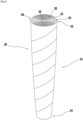
Figure 2 is a perspective view of the sanitary sleeve according toFigure 1 ; -
Figure 3 is a cross-sectional view of the sanitary sleeve according toFigure 1 , taken along an axis A-A; -
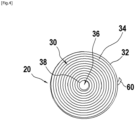
Figure 4 is a top view of the sanitary sleeve according toFigure 1 ; -
Figure 5 is a perspective view of the sanitary sleeve according toFigure 1 , including an applicator tube according to aspects of the disclosure; -
Figure 6 is a cross-sectional view of the sanitary sleeve and the applicator tube according toFigure 5 , taken along the axis A-A; -
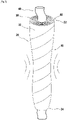
Figure 7 is a perspective view of the sanitary sleeve according toFigure 1 , illustrating removal of a first layer of the sanitary sleeve by a user according to aspects of the disclosure; -
Figure 8 is a perspective view of the sanitary sleeve according toFigure 1 , included on a glue stick according to aspects of the disclosure; and -
Figure 9 is a perspective view of the sanitary sleeve according toFigure 1 , illustrating an alternative arrangement of a plurality of layers of the sanitary sleeve according to aspects of the disclosure. - An embodiment of a sanitary sleeve (also referred to herein as a "sanitary device") configured for use on a stationary item, a stationary item, and a method of sanitizing a stationary item according to aspects of the disclosure will now be described with reference to
Figures 1-9 . Like numerals represent like parts, and the sanitary sleeve will generally be referred to by thereference numeral 10. Although thesanitary sleeve 10 is described with reference to specific examples, it should be understood that modifications and changes may be made to these examples without going beyond the general scope as defined by the claims. In particular, individual characteristics of the various embodiments shown and/or mentioned herein may be combined in additional embodiments. Consequently, the description and the drawings should be considered in a sense that is illustrative rather than restrictive. The Figures, which are not necessarily to scale, depict illustrative aspects and are not intended to limit the scope of the disclosure. The illustrative aspects depicted are intended only as exemplary. - The term "exemplary" is used in the sense of "example," rather than "ideal." While aspects of the disclosure are amenable to various modifications and alternative forms, specifics thereof have been shown by way of example in the drawings and will be described in detail. It should be understood, however, that the intention is not to limit aspects of the disclosure to the particular embodiment(s) described. On the contrary, the intention of this disclosure is to cover all modifications, equivalents, and alternatives falling within the scope of the disclosure.
- Various materials, methods of construction and methods of fastening will be discussed in the context of the disclosed embodiment(s). Those skilled in the art will recognize known substitutes for the materials, construction methods, and fastening methods, all of which are contemplated as compatible with the disclosed embodiment(s) and are intended to be encompassed by the appended claims.
- As used in this disclosure and the appended claims, the singular forms "a," "an," and "the" include plural referents unless the content clearly dictates otherwise. As used in this disclosure and the appended claims, the term "or" is generally employed in its sense including "and/or" unless the content clearly dictates otherwise.
- Throughout the description, including the claims, the terms "comprising a," "including a," and "having a" should be understood as being synonymous with "comprising one or more," "including one or more," and "having one or more" unless otherwise stated. In addition, any range set forth in the description, including the claims should be understood as including its end value(s) unless otherwise stated. Specific values for described elements should be understood to be within accepted manufacturing or industry tolerances known to one of skill in the art, and any use of the terms "substantially," "approximately," and "generally" should be understood to mean falling within such accepted tolerances.
- When an element or feature is referred to herein as being "on," "engaged to," "connected to," or "coupled to" another element or feature, it may be directly on, engaged, connected, or coupled to the other element or feature, or intervening elements or features may be present. In contrast, when an element or feature is referred to as being "directly on," "directly engaged to," "directly connected to," or "directly coupled to" another element or feature, there may be no intervening elements or features present. Other words used to describe the relationship between elements or features should be interpreted in a like fashion (e.g., "between" versus "directly between," "adjacent" versus "directly adjacent," etc.).
- Spatially relative terms, such as "top," "bottom," "middle," "inner," "outer," "beneath," "below," "lower," "above," "upper," and the like, may be used herein for ease of description to describe one element or feature's relationship to another element(s) or feature(s) as illustrated in the drawings. Spatially relative terms may be intended to encompass different orientations of a device in use or operation in addition to the orientation depicted in the drawings. For example, if the device in the drawings is turned over, elements described as "below" or "beneath" other elements or features would then be oriented "above" the other elements or features. Thus, the example term "below" can encompass both an orientation of above and below. The device may be otherwise oriented (rotated 90 degrees or at other orientations) and the spatially relative descriptors used herein interpreted accordingly.
- Although the terms "first," "second," etc. may be used herein to describe various elements, components, regions, layers, sections, and/or parameters, these elements, components, regions, layers, sections, and/or parameters should not be limited by these terms. These terms are only used to distinguish one element, component, region, layer, or section from another region, layer, or section. Thus, a first element, component, region, layer, or section discussed herein could be termed a second element, component, region, layer, or section without departing from the teachings of the present disclosure.
- As shown in
Figures 1 and8 , thesanitary sleeve 10 is configured for use on a handheld item. In particular, thesanitary sleeve 10 is configured for use on a stationary and/or craft item, such as a writing instrument (seeFigure 1 ), a paintbrush, a glue stick 130 (seeFigure 8 ), a paper cutter, an eraser, a protractor, and the like. Specifically, in the disclosed embodiment, thesanitary sleeve 10 is configured for use on awriting instrument 100. Additionally or alternatively, it is contemplated that thesanitary sleeve 10 may be part of thewriting instrument 100. Accordingly, thesanitary sleeve 10 will be discussed herein as being configured for use on and/or a part of thewriting instrument 100, however, it should be understood that other uses may be possible. It is contemplated that the term "writing instrument" may be understood herein as a pen, pencil, mechanical pencil, marker, highlighter, and/or any other tool capable of being used to produce writing and/or drawing (e.g. figures, characters, lines, forms, and/or the like) upon a surface. Additionally, as shown inFigure 1 , thewriting instrument 100 may include a cylindrical housing 110 (constructed of plastic, metal, wood, and/or the like) configured to be grasped by a hand of a user and to surround a writing medium (such as ink, graphite, and/or the like) (not shown) and a writing tip and/ornib 120 configured to transfer the writing medium to a surface. - As shown in
Figures 1-3 and5-9 , thesanitary sleeve 10 includes abody 20 that extends from afirst end 22 toward asecond end 24 along an axis A-A. Additionally, the body extends radially outwardly from the axis A-A, between thefirst end 22 of thebody 20 and thesecond end 24 of thebody 20. It is contemplated that the terms "outwardly" and/or "outer" as used herein may be understood to mean a direction away the axis A-A and the terms "inwardly" and/or "inward" as used herein may be understood to mean a direction toward the axis A-A. Thebody 20 may be configured to include a contour having an ergonomic design so that thesanitary sleeve 10 is comfortable to the user, when grasped by the hand of the user. - As shown in
Figures 2-9 , thebody 20 includes a plurality oflayers 30. As such, the plurality oflayers 30 includes at least afirst layer 32 of thebody 20 and asecond layer 34 of thebody 20. In the disclosed embodiment, thefirst layer 32 is a layer of the plurality oflayers 30 that is an outermost layer of the plurality oflayers 30. Accordingly, thefirst layer 32 of the plurality oflayers 30 is a layer of thebody 20 that is capable of coming into contact with and/or being grasped by the hand of the user. In the disclosed embodiment, thesecond layer 34 is a layer of the plurality oflayers 30 that is directly inward and/or beneath thefirst layer 32 of the plurality oflayers 30. In the disclosed embodiment, thefirst layer 32 of the plurality oflayers 30 may be contiguous with thesecond layer 34 of the plurality oflayers 30. Additionally, thefirst layer 32 may fully cover thesecond layer 34 and/or remaining layers of the plurality oflayers 30. - In the disclosed embodiment, the
body 20 may include an amount oflayers 30 within a range of 5 to 150, particularly thebody 20 may include 100 layers. Each layer of the plurality oflayers 30 includes substantially the same construction. In the disclosed embodiment, each layer of the plurality oflayers 30 is constructed as a film (also may be referred to herein as a "membrane"). Particularly, each layer of the plurality oflayers 30 may be configured as a thin film. To this end, each layer of the plurality oflayers 30 may be constructed to have a thickness within a range of 10µm to 100µm, particularly each layer may have a thickness of 20µm. However, in examples, it is contemplated that layers 30 having different thicknesses may also be possible. Configuring each layer of the plurality oflayers 30 as a thin film allows thebody 20 to include a sufficient amount of layers without substantially altering and/or distorting a shape and/or contour of thewriting instrument 100. For example, thebody 20 including 100 layers having a thickness of 20µm increases a thickness of thewriting instrument 100 by 2mm. Accordingly, a feel of thewriting instrument 100 including thesanitary sleeve 10 within the hand of the user is not substantially altered and/or distorted, in contrast with a feel of thewriting instrument 100 without thesanitary sleeve 10 within the hand of the user. Additionally, each layer of the plurality oflayers 30 may be configured to be elastically deformable. Additionally, each layer of the plurality oflayers 30 may be configured to be substantially impermeable. To this end, each layer of the plurality oflayers 30 may be constructed of an elastically deformable and/or substantially impermeable material, such as polyethylene (PE), polypropylene (PP), polyethylene terephthalate (PET), and/or the like. Additionally or alternatively, each layer of the plurality oflayers 30 may be thermoformable. Includinglayers 30 of thebody 20 that are configured to be elastically deformable allows thesanitary sleeve 10 to expand and contract to fit and/or be secured ontohousings 110 of writinginstruments 100 of multiple sizes and/or shapes. Additionally, includinglayers 30 of thebody 20 that are configured to be elastically deformable allows each layer of the plurality oflayers 30 to be easily peeled away from thebody 20 and/or the remaining layers of the plurality oflayers 30. Includinglayers 30 of thebody 20 that are configured to be substantially impermeable reduces a probability that a harmful pathogen is able to pass from one layer of the plurality oflayers 30 to another, such as from thefirst layer 32 of the plurality oflayers 30 to thesecond layer 34 of the plurality oflayers 30. Additionally, each layer of the plurality oflayers 30 may be configured to sanitize the hand of the user. To this end, each layer of the plurality oflayers 30 may include a sanitizing agent. In particular, the sanitizing agent may include silver, copper, zinc pyrithione, selenium, quaternary ammonium, and/or any other substance capable of sanitizing the hand of the user. Includinglayers 30 that are configured to sanitize the hand of the user helps to reduce the transmission of contagious disease by eliminating harmful pathogens that may be present on the hand of the user. Additionally, includinglayers 30 of thebody 20 that are configured to sanitize the hand of the user allows the sanitizing agent to be applied to thewriting instrument 100, without the user having to directly apply gels or sprays to thewriting instrument 100, thereby improving consistency and convenience of the application of the sanitizing agent to thewriting instrument 100. - As shown in
Figure 1 , thesanitary sleeve 10 is configured to receive and/or surround thewriting instrument 100, so that thesanitary sleeve 10 is secured to thewriting instrument 100. To this end, as shown inFigures 3 and6 , thebody 20 is configured to define aspace 36 extending from thefirst end 22 of thebody 20 to thesecond end 24 of thebody 20. Thespace 36 defined by thebody 20 is configured to receive and/or surround thewriting instrument 100. Additionally, thebody 20 is configured to define a first opening (also referred to herein as an "entry opening") 26 at thefirst end 22 of thebody 20 and a second opening (also referred to herein as an "exit opening") 28 at thesecond end 24 of thebody 20. Each of thefirst opening 26 and thesecond opening 28 defined by thebody 20 are in communication with thespace 36 defined by thebody 20. In this manner, thefirst opening 26 defined by thebody 20 is configured to allow thewriting instrument 100 to extend into thespace 36 defined by thebody 20. Additionally, thesecond opening 28 defined by thebody 20 is configured to allow thewriting instrument 100 to protrude out of thebody 20. Accordingly, thewriting instrument 100 may be inserted through thefirst opening 26 defined by thebody 20 and pushed through thespace 36 defined by thebody 20, so that thenib 120 of thewriting instrument 100 protrudes out of thesecond opening 28 defined by thebody 20. In this manner, thesanitary sleeve 10 surrounds the housing of thewriting instrument 100, while thenib 120 is exposed and/or free to transfer the writing medium to a surface. - As shown in
Figure 1 , thebody 20 of thesanitary sleeve 10 may directly receive and/or surround thewriting instrument 100, such that the plurality oflayers 30 are wrapped against thehousing 110 of thewriting instrument 100. In examples, as shown inFigures 5-6 , thespace 36 defined by thebody 20 may be configured to receive anapplicator tube 40. Theapplicator tube 40 may be configured to extend between thefirst end 22 of thebody 20 and thesecond end 24 of thebody 20. Additionally, theapplicator tube 40 is configured to receive and/or surround thewriting instrument 100, thereby securing thebody 20 of thesanitary sleeve 10 to thewriting instrument 100. Inclusion of theapplicator tube 40 within thespace 36 defined by thebody 20 helps to retain the shape of thebody 20. Additionally, inclusion of theapplicator tube 40 within thespace 36 defined by thebody 20 improves application and removal of thesanitary sleeve 10 to and from thewriting instrument 100. Additionally or alternatively, theapplicator tube 40 may be configured to be elastically deformable. To this end, theapplicator tube 40 may be constructed of an elastically deformable material, such as rubber. Including anapplicator tube 40 that is configured to be elastically deformable within thespace 36 defined by thebody 20 allows thesanitary sleeve 10 to fit and/or be secured ontohousings 110 of writinginstruments 100 of multiple sizes. In examples, it is contemplated that the plurality oflayers 30 may be each wrapped and/or wound onto the housing of thewriting instrument 100, as opposed to thewriting instrument 100 being inserted into a fully-assembledbody 20 of thesanitary sleeve 10. - As shown in
Figures 3-4 and6 , each layer of the plurality oflayers 30 is configured to be wrapped against one or more layer contiguously in a surface-to-surface relationship. For example, thefirst layer 32 of the plurality oflayers 30 is only wrapped against thesecond layer 34 of the plurality oflayers 30. However, thesecond layer 34 of the plurality oflayers 30 is wrapped against and/or sandwiched between thefirst layer 32 of the plurality oflayers 30 and a layer of the plurality oflayers 30 directly inward and/or beneath thesecond layer 34 of the plurality oflayers 30. Additionally, one or more layer of the plurality oflayers 30 that are inward and/or beneath thesecond layer 34 of the plurality oflayers 30 may be wrapped against and/or sandwiched between thesecond layer 34 and/or other layers of the plurality oflayers 30. Additionally, aninnermost layer 38 of the plurality oflayers 30 is wrapped against and/or sandwiched between a layer of the plurality oflayers 30 directly outward of theinnermost layer 38 and theapplicator tube 40 and/or thewriting instrument 100. - In the disclosed embodiment, the plurality of
layers 30 are wrapped against each other radially about the axis A-A. Additionally, the plurality oflayers 30 are wrapped against each other such that thebody 20 of thesanitary sleeve 10 is configured to be cylindrical in shape. To this end, as shown inFigures 1-2 ,5 , and7-8 , each layer of the plurality oflayers 30 may be wrapped about the axis A-A in a helical arrangement. In this arrangement, each layer of the plurality oflayers 30 includes edges that extend about the axis A-A helically. In examples, as shown inFigure 9 , each layer of the plurality oflayers 30 may be wrapped about the axis A-A such that each layer of the plurality oflayers 30 includes edges that extend about the axis A-A axially. Configuring thebody 20 to be cylindrical in shape allows a shape of thesanitary sleeve 10 to be consistent with a shape of thewriting instrument 100, so as to not alter and/or distort the feel of thewriting instrument 100 within the hand of the user. An inner side of each layer of the plurality oflayers 30 may be configured to be adhesive. To this end, the inner side of each layer may include an adhesive substance, such as glue and/or any substance sufficient to maintain a bond between materials. Configuring the inner side of each layer of the plurality oflayers 30 to be adhesive helps to hold the plurality oflayers 30 together and/or maintain the form of thebody 20. Additionally, each layer of the plurality oflayers 30 may be configured as an individual layer that is separate from the other layers of the plurality oflayers 30. Configuring each layer of the plurality oflayers 30 as an individual, separate layer improves the removability of each layer of the plurality oflayers 30 from thebody 20. In examples, each layer of the plurality oflayers 30 may be configured to be connected to one or more layer of the plurality oflayers 30. To this end, each layer may include one or more perforation (seeFigure 9 ) between one or more layer of the plurality oflayers 30, such that the each layer of the plurality oflayers 30 is connected to one or more layer of the plurality oflayers 30, and such that each layer of the plurality oflayers 30 maintains removability from an adjoining layer of the plurality oflayers 30 and/or thebody 20. Configuring each layer of the plurality oflayers 30 to be connected to one or more layers of the plurality oflayers 30 improves ease and/or cost of manufacturing of thesanitary sleeve 10. - As shown in
Figure 7 , each layer of the plurality oflayers 30 is configured to be removed from thebody 20 and/or the remaining layers of the plurality oflayers 30 of thebody 20. In the disclosed embodiment, the plurality oflayers 30 are configured to be removed one at a time. As shown inFigures 7 and9 , for removal from thebody 20, thefirst layer 32 of the plurality oflayers 30 is pulled outwardly by the user, in a direction away from the axis A-A. Alternatively stated, for removal from thebody 20, thefirst layer 32 of the plurality oflayers 30 is pulled outwardly by the user, in a direction away from thesecond layer 34. It should be understood that the terms "first layer" and "second layer" are merely designations for a position of a layer of the plurality oflayers 30 throughout thebody 20. For example, once thefirst layer 32 is removed, thesecond layer 34 is now the outermost layer of the plurality oflayers 30 and effectively becomes thefirst layer 32. Additionally, once thesecond layer 34 becomes thefirst layer 32, a layer of the plurality oflayers 30 directly inward and/or beneath the former second layer 34 (now first layer 32) becomes thesecond layer 34. As shown inFigure 1-2 ,4-5 , and7-9 , each layer of the plurality oflayers 30 may include apull tab 60. Thepull tab 60 is configured to be grasped by the hand of the user. Including thepull tab 60 on each layer of the plurality oflayers 30 improves the ease of removal of thefirst layer 32 of the plurality oflayers 30 by the user. Additionally, including thepull tab 60 on each layer of the plurality oflayers 30 helps to ensure that the user does not touch thesecond layer 34 of the plurality oflayers 30 when removing thefirst layer 32 of the plurality oflayers 30, thereby maintaining the effect of sanitization of thewriting instrument 100 by thesanitary sleeve 10. Removal of thefirst layer 32 of the plurality oflayers 30 exposes thesecond layer 34 of the plurality oflayers 30. As thesecond layer 34 is unused and/or has not previously been touched by the user (or a previous user), removal of thefirst layer 32 of the plurality oflayers 30 allows the user to effectively sanitize thewriting instrument 100 by changing and/or removing a surface (the first layer 32) of thewriting instrument 100, which may have been contaminated by the user (or a previous user), without direct application of gels or sprays to the handheld item, thereby improving convenience. - Although the present disclosure herein has been described with reference to particular embodiments, it is to be understood that these embodiments are merely illustrative of the principles and applications of the present disclosure.
- It is intended that the specification and examples be considered as exemplary only, with a true scope of the disclosure being indicated by the following claims.
- Additionally, all of the disclosed features of an apparatus may be transposed, alone or in combination, to a method and vice versa.
Claims (15)
- A sanitary sleeve (10) configured for use on a stationary item (100), the sanitary sleeve comprising:a body (20) configured to be grasped by a hand of a user, the body extending from a first end (22) toward a second end (24) along an axis (A-A), the body including a plurality of layers (30) configured to be removed, and the plurality of layers including at least a first layer (32) and a second layer (34); andwherein removal of the first layer (32) of the plurality of layers (30) exposes the second layer (34) of the plurality of layers.
- The sanitary sleeve (10) according to claim 1, wherein each layer of the plurality of layers (30) is wrapped against one or more layer of the plurality of layers in a surface-to-surface relationship.
- The sanitary (10) sleeve according to any of claims 1-2, wherein each layer of the plurality of layers (30) is wrapped radially about the axis (A-A).
- The sanitary sleeve (10) according to any of claims 1-3, wherein each layer of the plurality of layers (30) is elastically deformable.
- The sanitary sleeve (10) according to any of claims 1-4, wherein the first end (22) of the body (20) defines an entry opening (26) configured for the stationary item (100) to extend through.
- The sanitary sleeve (10) according to any of claims 1-5, wherein the body (20) is configured to define a space (36) extending from the first end (22) of the body toward the second end (24) of the body and the space is configured to receive the stationary item (100).
- The sanitary sleeve (10) according to claim 6, wherein the second end (24) of the body (20) defines an exit opening (28) configured to allow the stationary item (100) to protrude out of the body.
- The sanitary sleeve (10) according to any of claims 6-7, wherein an applicator tube (40) is configured to be positioned within the space (36) defined by the body (20), and the applicator tube (40) is configured to receive the stationary item (100).
- The sanitary sleeve (10) according to claim 8, wherein the applicator tube (40) is elastically deformable.
- The sanitary sleeve (10) according to any of claims 1-9, wherein each layer of the plurality of layers (30) has a thickness within a range of 10µm to 100µm.
- The sanitary sleeve (10) according to any of claims 1-10, wherein each layer of the plurality of layers (30) includes a pull tab (60) configured to be pulled by the user.
- The sanitary sleeve (10) according to any of claims 1-11, wherein each layer of the plurality of layers (100) includes a sanitary agent configured to sanitize the hand of the user.
- A stationary item (100) comprising:a housing (110); andthe sanitary sleeve (10) according to any of claims 1-12 surrounding the housing (110) of the stationary item (100).
- A method of sanitizing a stationary item (100), the method comprising:providing the sanitary sleeve (10) according to any of claims 1-12; andremoving the first layer (32) of the plurality of layers (30) of the body (20).
- The method according to claim 14, wherein removing the first layer (32) of the plurality of layers (30) includes pulling the first layer of the plurality of layers away from the second layer (34) of the plurality of layers.
Priority Applications (2)
| Application Number | Priority Date | Filing Date | Title |
|---|---|---|---|
| EP21188865.6A EP4124466A1 (en) | 2021-07-30 | 2021-07-30 | Sanitary sleeve for a handheld item |
| US17/870,049 US20230036149A1 (en) | 2021-07-30 | 2022-07-21 | Sanitary sleeve for a handheld item |
Applications Claiming Priority (1)
| Application Number | Priority Date | Filing Date | Title |
|---|---|---|---|
| EP21188865.6A EP4124466A1 (en) | 2021-07-30 | 2021-07-30 | Sanitary sleeve for a handheld item |
Publications (1)
| Publication Number | Publication Date |
|---|---|
| EP4124466A1 true EP4124466A1 (en) | 2023-02-01 |
Family
ID=77155712
Family Applications (1)
| Application Number | Title | Priority Date | Filing Date |
|---|---|---|---|
| EP21188865.6A Pending EP4124466A1 (en) | 2021-07-30 | 2021-07-30 | Sanitary sleeve for a handheld item |
Country Status (2)
| Country | Link |
|---|---|
| US (1) | US20230036149A1 (en) |
| EP (1) | EP4124466A1 (en) |
Citations (3)
| Publication number | Priority date | Publication date | Assignee | Title |
|---|---|---|---|---|
| DE4340539A1 (en) * | 1993-11-29 | 1995-06-01 | Hans Juergen Urbscheit | Writing implement or package with elongated stem |
| US20080043048A1 (en) * | 2005-04-27 | 2008-02-21 | Timothy Howard Yoder | Sanitary disposable writing instrument, method of making, and dispenser therefore |
| US20140348564A1 (en) * | 2013-05-24 | 2014-11-27 | Nichiolas Leo Vleisides | Writing instrument sheath |
Family Cites Families (1)
| Publication number | Priority date | Publication date | Assignee | Title |
|---|---|---|---|---|
| US7548374B2 (en) * | 2006-06-07 | 2009-06-16 | Genie Lens Technologies, Llc | Packaging system providing spatial or focusing gaps between lenticular lenses and paired interlaced images |
-
2021
- 2021-07-30 EP EP21188865.6A patent/EP4124466A1/en active Pending
-
2022
- 2022-07-21 US US17/870,049 patent/US20230036149A1/en not_active Abandoned
Patent Citations (3)
| Publication number | Priority date | Publication date | Assignee | Title |
|---|---|---|---|---|
| DE4340539A1 (en) * | 1993-11-29 | 1995-06-01 | Hans Juergen Urbscheit | Writing implement or package with elongated stem |
| US20080043048A1 (en) * | 2005-04-27 | 2008-02-21 | Timothy Howard Yoder | Sanitary disposable writing instrument, method of making, and dispenser therefore |
| US20140348564A1 (en) * | 2013-05-24 | 2014-11-27 | Nichiolas Leo Vleisides | Writing instrument sheath |
Also Published As
| Publication number | Publication date |
|---|---|
| US20230036149A1 (en) | 2023-02-02 |
Similar Documents
| Publication | Publication Date | Title |
|---|---|---|
| AU754700B2 (en) | Writing instrument with finger gripping device | |
| US5470162A (en) | Ergonomic hand-held implement | |
| US20110123253A1 (en) | Illustrating tool | |
| US20230069394A1 (en) | Tattoo pen systems and methods | |
| US10702042B2 (en) | Apparatus and method for applying cosmetic eyebrows | |
| US20150352891A1 (en) | Grip for hand-held tools and method of using the same | |
| US9333796B2 (en) | Fingertip mountable writing instrument | |
| US6942408B2 (en) | Marking device, a method of using the same and an accessory kit for the marking device | |
| US20230036149A1 (en) | Sanitary sleeve for a handheld item | |
| TWI533850B (en) | Tampons for tampons | |
| US20190037996A1 (en) | Nail art palette | |
| KR20110003944U (en) | A pen with air ventilating means | |
| JP6043566B2 (en) | Tampon applicator | |
| JP3082596U (en) | Dirt prevention writing aid slider | |
| JP4218497B2 (en) | Writing instrument | |
| US20160236506A1 (en) | Writing Instrument Having A Replaceable Sleeve | |
| JP3098191U (en) | Writing instrument grip and its set | |
| CA2538337C (en) | Writing instrument with finger gripping device | |
| EP4140763A1 (en) | A writing instrument and method thereof | |
| JP3077016U (en) | Writing implement | |
| KR100615459B1 (en) | Disposable finger covers | |
| WO2005044589A2 (en) | Paper handling aid | |
| JP4282355B2 (en) | Writing instrument | |
| JP2001191681A (en) | Grip for writing utensil | |
| JP2023117802A (en) | ballpoint pen |
Legal Events
| Date | Code | Title | Description |
|---|---|---|---|
| PUAI | Public reference made under article 153(3) epc to a published international application that has entered the european phase |
Free format text: ORIGINAL CODE: 0009012 |
|
| STAA | Information on the status of an ep patent application or granted ep patent |
Free format text: STATUS: THE APPLICATION HAS BEEN PUBLISHED |
|
| AK | Designated contracting states |
Kind code of ref document: A1 Designated state(s): AL AT BE BG CH CY CZ DE DK EE ES FI FR GB GR HR HU IE IS IT LI LT LU LV MC MK MT NL NO PL PT RO RS SE SI SK SM TR |
|
| STAA | Information on the status of an ep patent application or granted ep patent |
Free format text: STATUS: REQUEST FOR EXAMINATION WAS MADE |
|
| 17P | Request for examination filed |
Effective date: 20230728 |
|
| RBV | Designated contracting states (corrected) |
Designated state(s): AL AT BE BG CH CY CZ DE DK EE ES FI FR GB GR HR HU IE IS IT LI LT LU LV MC MK MT NL NO PL PT RO RS SE SI SK SM TR |
|
| STAA | Information on the status of an ep patent application or granted ep patent |
Free format text: STATUS: THE APPLICATION IS DEEMED TO BE WITHDRAWN |